

Poems in this theme
Romantic Love
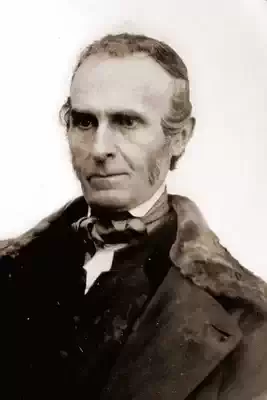
John Greenleaf Whittier
The New Wife and the Old
The New Wife and the Old
Dark the halls, and cold the feast,
Gone the bridemaids, gone the priest.
All is over, all is done,
Twain of yesterday are one!
Blooming girl and manhood gray,
Autumn in the arms of May!
Hushed within and hushed without,
Dancing feet and wrestlers' shout;
Dies the bonfire on the hill;
All is dark and all is still,
Save the starlight, save the breeze
Moaning through the graveyard trees,
And the great sea-waves below,
Pulse of the midnight beating slow.
From the brief dream of a bride
She hath wakened, at his side.
With half-uttered shriek and start,Feels
she not his beating heart?
And the pressure of his arm,
And his breathing near and warm?
Lightly from the bridal bed
Springs that fair dishevelled head,
And a feeling, new, intense,
Half of shame, half innocence,
Maiden fear and wonder speaks
Through her lips and changing cheeks.
From the oaken mantel glowing,
Faintest light the lamp is throwing
On the mirror's antique mould,
High-backed chair, and wainscot old,
And, through faded curtains stealing,
His dark sleeping face revealing.
Listless lies the strong man there,
Silver-streaked his careless hair;
Lips of love have left no trace
On that hard and haughty face;
And that forehead's knitted thought
Love's soft hand hath not unwrought.
'Yet,' she sighs, 'he loves me well,
More than these calm lips will tell.
Stooping to my lowly state,
He hath made me rich and great,
And I bless him, though he be
Hard and stern to all save me!'
While she speaketh, falls the light
O'er her fingers small and white;
Gold and gem, and costly ring
Back the timid lustre fling,Love's
selectest gifts, and rare,
His proud hand had fastened there.
Gratefully she marks the glow
From those tapering lines of snow;
Fondly o'er the sleeper bending
His black hair with golden blending,
In her soft and light caress,
Cheek and lip together press.
Ha!-that start of horror! why
That wild stare and wilder cry,
Full of terror, full of pain?
Is there madness in her brain?
Hark! that gasping, hoarse and low,
'Spare me,-spare me,-let me go!'
God have mercy!-icy cold
Spectral hands her own enfold,
Drawing silently from them
Love's fair gifts of gold and gem.
'Waken! save me!' still as death
At her side he slumbereth.
Ring and bracelet all are gone,
And that ice-cold hand withdrawn;
But she hears a murmur low,
Full of sweetness, full of woe,
Half a sigh and half a moan
'Fear not! give the dead her own!'
Ah!-the dead wife's voice she knows!
That cold hand whose pressure froze,
Once in warmest life had borne
Gem and band her own hath worn.
'Wake thee! wake thee!' Lo, his eyes
Open with a dull surprise.
In his arms the strong man folds her,
Closer to his breast he holds her;
Trembling limbs his own are meeting,
And he feels her heart's quick beating
'Nay, my dearest, why this fear?'
'Hush!' she saith, 'the dead is here!'
'Nay, a dream,-an idle dream.'
But before the lamp's pale gleam
Tremblingly her hand she raises.
There no more the diamond blazes,
Clasp of pearl, or ring of gold,'
Ah!' she sighs, 'her hand was cold!'
Broken words of cheer he saith,
But his dark lip quivereth,
And as o'er the past he thinketh,
From his young wife's arms he shrinketh;
Can those soft arms round him lie,
Underneath his dead wife's eye?
She her fair young head can rest
Soothed and childlike on his breast,
And in trustful innocence
Draw new strength and courage thence;
He, the proud man, feels within
But the cowardice of sin!
She can murmur in her thought
Simple prayers her mother taught,
And His blessed angels call,
Whose great love is over all;
He, alone, in prayerless pride,
Meets the dark Past at her side!
One, who living shrank with dread
From his look, or word, or tread,
Unto whom her early grave
Was as freedom to the slave,
Moves him at this midnight hour,
With the dead's unconscious power!
Ah, the dead, the unforgot!
From their solemn homes of thought,
Where the cypress shadows blend
Darkly over foe and friend,
Or in love or sad rebuke,
Back upon the living look.
And the tenderest ones and weakest,
Who their wrongs have borne the meekest,
Lifting from those dark, still places,
Sweet and sad-remembered faces,
O'er the guilty hearts behind
An unwitting triumph find.
Dark the halls, and cold the feast,
Gone the bridemaids, gone the priest.
All is over, all is done,
Twain of yesterday are one!
Blooming girl and manhood gray,
Autumn in the arms of May!
Hushed within and hushed without,
Dancing feet and wrestlers' shout;
Dies the bonfire on the hill;
All is dark and all is still,
Save the starlight, save the breeze
Moaning through the graveyard trees,
And the great sea-waves below,
Pulse of the midnight beating slow.
From the brief dream of a bride
She hath wakened, at his side.
With half-uttered shriek and start,Feels
she not his beating heart?
And the pressure of his arm,
And his breathing near and warm?
Lightly from the bridal bed
Springs that fair dishevelled head,
And a feeling, new, intense,
Half of shame, half innocence,
Maiden fear and wonder speaks
Through her lips and changing cheeks.
From the oaken mantel glowing,
Faintest light the lamp is throwing
On the mirror's antique mould,
High-backed chair, and wainscot old,
And, through faded curtains stealing,
His dark sleeping face revealing.
Listless lies the strong man there,
Silver-streaked his careless hair;
Lips of love have left no trace
On that hard and haughty face;
And that forehead's knitted thought
Love's soft hand hath not unwrought.
'Yet,' she sighs, 'he loves me well,
More than these calm lips will tell.
Stooping to my lowly state,
He hath made me rich and great,
And I bless him, though he be
Hard and stern to all save me!'
While she speaketh, falls the light
O'er her fingers small and white;
Gold and gem, and costly ring
Back the timid lustre fling,Love's
selectest gifts, and rare,
His proud hand had fastened there.
Gratefully she marks the glow
From those tapering lines of snow;
Fondly o'er the sleeper bending
His black hair with golden blending,
In her soft and light caress,
Cheek and lip together press.
Ha!-that start of horror! why
That wild stare and wilder cry,
Full of terror, full of pain?
Is there madness in her brain?
Hark! that gasping, hoarse and low,
'Spare me,-spare me,-let me go!'
God have mercy!-icy cold
Spectral hands her own enfold,
Drawing silently from them
Love's fair gifts of gold and gem.
'Waken! save me!' still as death
At her side he slumbereth.
Ring and bracelet all are gone,
And that ice-cold hand withdrawn;
But she hears a murmur low,
Full of sweetness, full of woe,
Half a sigh and half a moan
'Fear not! give the dead her own!'
Ah!-the dead wife's voice she knows!
That cold hand whose pressure froze,
Once in warmest life had borne
Gem and band her own hath worn.
'Wake thee! wake thee!' Lo, his eyes
Open with a dull surprise.
In his arms the strong man folds her,
Closer to his breast he holds her;
Trembling limbs his own are meeting,
And he feels her heart's quick beating
'Nay, my dearest, why this fear?'
'Hush!' she saith, 'the dead is here!'
'Nay, a dream,-an idle dream.'
But before the lamp's pale gleam
Tremblingly her hand she raises.
There no more the diamond blazes,
Clasp of pearl, or ring of gold,'
Ah!' she sighs, 'her hand was cold!'
Broken words of cheer he saith,
But his dark lip quivereth,
And as o'er the past he thinketh,
From his young wife's arms he shrinketh;
Can those soft arms round him lie,
Underneath his dead wife's eye?
She her fair young head can rest
Soothed and childlike on his breast,
And in trustful innocence
Draw new strength and courage thence;
He, the proud man, feels within
But the cowardice of sin!
She can murmur in her thought
Simple prayers her mother taught,
And His blessed angels call,
Whose great love is over all;
He, alone, in prayerless pride,
Meets the dark Past at her side!
One, who living shrank with dread
From his look, or word, or tread,
Unto whom her early grave
Was as freedom to the slave,
Moves him at this midnight hour,
With the dead's unconscious power!
Ah, the dead, the unforgot!
From their solemn homes of thought,
Where the cypress shadows blend
Darkly over foe and friend,
Or in love or sad rebuke,
Back upon the living look.
And the tenderest ones and weakest,
Who their wrongs have borne the meekest,
Lifting from those dark, still places,
Sweet and sad-remembered faces,
O'er the guilty hearts behind
An unwitting triumph find.
215
John Greenleaf Whittier
Marguerite
Marguerite
MASSACHUSETTS BAY, 1760.
THE robins sang in the orchard, the buds into
blossoms grew;
Little of human sorrow the buds and the robins
knew!
Sick, in an alien household, the poor French
neutral lay;
Into her lonesome garret fell the light of the April
day,
Through the dusty window, curtained by the spider's
warp and woof,
On the loose-laid floor of hemlock, on oaken ribs
of roof,
The bedquilt's faded patchwork, the teacups on the
stand,
The wheel with flaxen tangle, as it dropped from
her sick hand.
What to her was the song of the robin, or warm
morning light,
As she lay in the trance of the dying, heedless of
sound or sight?
Done was the work of her bands, she had eaten her
bitter bread;
The world of the alien people lay behind her dim
and dead.
But her soul went back to its child-time; she saw
the sun o'erflow
With gold the Basin of Minas, and set over
Gaspereau;
The low, bare flats at ebb-tide, the rush of the sea
at flood,
Through inlet and creek and river, from dike to
upland wood;
The gulls in the red of morning, the fish-hawk's
rise and fall,
The drift of the fog in moonshine, over the dark
coast-wall.
She saw the face of her mother, she heard the song
she sang;
And far off, faintly, slowly, the bell for vespers
rang.
By her bed the hard-faced mistress sat, smoothing
the wrinkled sheet,
Peering into the face, so helpless, and feeling the
ice-cold feet.
With a vague remorse atoning for her greed and
long abuse,
By care no longer heeded and pity too late for use.
Up the stairs of the garret softly the son of the
mistress stepped,
Leaned over the head-board, covering his face with
his hands, and wept.
Outspake the mother, who watched him sharply,
with brow a-frown
'What! love you the Papist, the beggar, the
charge of the town?'
Be she Papist or beggar who lies here, I know
and God knows
I love her, and fain would go with her wherever
she goes!
'O mother! that sweet face came pleading, for
love so athirst.
You saw but the town-charge; I knew her God's
angel at first.'
Shaking her gray head, the mistress hushed down
a bitter cry;
And awed by the silence and shadow of death
drawing nigh,
She murmured a psalm of the Bible; but closer
the young girl pressed,
With the last of her life in her fingers, the cross
to her breast.
'My son, come away,' cried the mother, her voice
cruel grown.
'She is joined to her idols, like Ephraim; let her
alone!'
But he knelt with his hand on her forehead, his
lips to her ear,
And he called back the soul that was passing
'Marguerite, do you hear?'
She paused on the threshold of Heaven; love, pity,
surprise,
Wistful, tender, lit up for an instant the cloud of
her eyes.
With his heart on his lips he kissed her, but never
her cheek grew red,
And the words the living long for he spake in the
ear of the dead.
And the robins sang in the orchard, where buds to
blossoms grew;
Of the folded hands and the still face never the
robins knew!
MASSACHUSETTS BAY, 1760.
THE robins sang in the orchard, the buds into
blossoms grew;
Little of human sorrow the buds and the robins
knew!
Sick, in an alien household, the poor French
neutral lay;
Into her lonesome garret fell the light of the April
day,
Through the dusty window, curtained by the spider's
warp and woof,
On the loose-laid floor of hemlock, on oaken ribs
of roof,
The bedquilt's faded patchwork, the teacups on the
stand,
The wheel with flaxen tangle, as it dropped from
her sick hand.
What to her was the song of the robin, or warm
morning light,
As she lay in the trance of the dying, heedless of
sound or sight?
Done was the work of her bands, she had eaten her
bitter bread;
The world of the alien people lay behind her dim
and dead.
But her soul went back to its child-time; she saw
the sun o'erflow
With gold the Basin of Minas, and set over
Gaspereau;
The low, bare flats at ebb-tide, the rush of the sea
at flood,
Through inlet and creek and river, from dike to
upland wood;
The gulls in the red of morning, the fish-hawk's
rise and fall,
The drift of the fog in moonshine, over the dark
coast-wall.
She saw the face of her mother, she heard the song
she sang;
And far off, faintly, slowly, the bell for vespers
rang.
By her bed the hard-faced mistress sat, smoothing
the wrinkled sheet,
Peering into the face, so helpless, and feeling the
ice-cold feet.
With a vague remorse atoning for her greed and
long abuse,
By care no longer heeded and pity too late for use.
Up the stairs of the garret softly the son of the
mistress stepped,
Leaned over the head-board, covering his face with
his hands, and wept.
Outspake the mother, who watched him sharply,
with brow a-frown
'What! love you the Papist, the beggar, the
charge of the town?'
Be she Papist or beggar who lies here, I know
and God knows
I love her, and fain would go with her wherever
she goes!
'O mother! that sweet face came pleading, for
love so athirst.
You saw but the town-charge; I knew her God's
angel at first.'
Shaking her gray head, the mistress hushed down
a bitter cry;
And awed by the silence and shadow of death
drawing nigh,
She murmured a psalm of the Bible; but closer
the young girl pressed,
With the last of her life in her fingers, the cross
to her breast.
'My son, come away,' cried the mother, her voice
cruel grown.
'She is joined to her idols, like Ephraim; let her
alone!'
But he knelt with his hand on her forehead, his
lips to her ear,
And he called back the soul that was passing
'Marguerite, do you hear?'
She paused on the threshold of Heaven; love, pity,
surprise,
Wistful, tender, lit up for an instant the cloud of
her eyes.
With his heart on his lips he kissed her, but never
her cheek grew red,
And the words the living long for he spake in the
ear of the dead.
And the robins sang in the orchard, where buds to
blossoms grew;
Of the folded hands and the still face never the
robins knew!
273
John Greenleaf Whittier
King Volmer and Elsie
King Volmer and Elsie
After the Danish of Christian Winter
Where, over heathen doom-rings and gray stones of the Horg,
In its little Christian city stands the church of Vordingborg,
In merry mood King Volmer sat, forgetful of his power,
As idle as the Goose of Gold that brooded on his tower.
Out spake the King to Henrik, his young and faithful squire
'Dar'st trust thy little Elsie, the maid of thy desire?'
'Of all the men in Denmark she loveth only me
As true to me is Elsie as thy Lily is to thee.'
Loud laughed the king: 'To-morrow shall bring another day,
When I myself will test her; she will not say me nay.'
Thereat the lords and gallants, that round about him stood,
Wagged all their heads in concert and smiled as courtiers should.
The gray lark sings o'er Vordingborg, and on the ancient town
From the tall tower of Valdemar the Golden Goose looks down;
The yellow grain is waving in the pleasant wind of morn,
The wood resounds with cry of hounds and blare of hunter's horn.
In the garden of her father little Elsie sits and spins,
And, singing with the early birds, her daily task, begins.
Gay tulips bloom and sweet mint curls around her garden-bower,
But she is sweeter than the mint and fairer than the flower.
About her form her kirtle blue clings lovingly, and, white
As snow, her loose sleeves only leave her small, round wrists in sight;
Below, the modest petticoat can only half conceal
The motion of the lightest foot that ever turned a wheel.
The cat sits purring at her side, bees hum in sunshine warm;
But, look! she starts, she lifts her face, she shades it with her arm.
And, hark! a train of horsemen, with sound of dog and horn,
Come leaping o'er the ditches, come trampling down the corn!
Merrily rang the bridle-reins, and scarf and plume streamed gay,
As fast beside her father's gate the riders held their way;
And one was brave in scarlet cloak, with golden spur on heel,
And, as he checked his foaming steed, the maiden checked her wheel.
'All hail among thy roses, the fairest rose to me!
For weary months in secret my heart has longed for thee!'
What noble knight was this? What words for modest maiden's ear?
She dropped a lowly courtesy of bashfulness and fear.
She lifted up her spinning-wheel; she fain would seek the door,
Trembling in every limb, her cheek with blushes crimsoned o'er.
'Nay, fear me not,' the rider said, 'I offer heart and hand,
Bear witness these good Danish knights who round about me stand.
'I grant you time to think of this, to answer as you may,
For to-morrow, little Elsie, shall bring another day.'
He spake the old phrase slyly as, glancing round his train,
He saw his merry followers seek to hide their smiles in vain.
'The snow of pearls I'll scatter in your curls of golden hair,
I'll line with furs the velvet of the kirtle that you wear;
All precious gems shall twine your neck; and in a chariot gay
You shall ride, my little Elsie, behind four steeds of gray.
'And harps shall sound, and flutes shall play, and brazen lamps shall glow;
On marble floors your feet shall weave the dances to and fro.
At frosty eventide for us the blazing hearth shall shine,
While, at our ease, we play at draughts, and drink the blood-red wine.'
Then Elsie raised her head and met her wooer face to face;
A roguish smile shone in her eye and on her lip found place.
Back from her low white forehead the curls of gold she threw,
And lifted up her eyes to his, steady and clear and blue.
'I am a lowly peasant, and you a gallant knight;
I will not trust a love that soon may cool and turn to slight.
If you would wed me henceforth be a peasant, not a lord;
I bid you hang upon the wall your tried and trusty sword.'
'To please you, Elsie, I will lay keen Dynadel away,
And in its place will swing the scythe and mow your father's hay.'
'Nay, but your gallant scarlet cloak my eyes can never bear;
A Vadmal coat, so plain and gray, is all that you must wear.'
'Well, Vadmal will I wear for you,' the rider gayly spoke,
'And on the Lord's high altar I'll lay my scarlet cloak.'
'But mark,' she said, 'no stately horse my peasant love must ride,
A yoke of steers before the plough is all that he must guide.'
The knight looked down upon his steed: 'Well, let him wander free
No other man must ride the horse that has been backed by me.
Henceforth I'll tread the furrow and to my oxen talk,
If only little Elsie beside my plough will walk.'
'You must take from out your cellar cask of wine and flask and can;
The homely mead I brew you may serve a peasant man.'
'Most willingly, fair Elsie, I'll drink that mead of thine,
And leave my minstrel's thirsty throat to drain my generous wine.'
'Now break your shield asunder, and shatter sign and boss,
Unmeet for peasant-wedded arms, your knightly knee across.
And pull me down your castle from top to basement wall,
And let your plough trace furrows in the ruins of your hall!'
Then smiled he with a lofty pride; right well at last he knew
The maiden of the spinning-wheel was to her troth. plight true.
'Ah, roguish little Elsie! you act your part full well
You know that I must bear my shield and in my castle dwell!
'The lions ramping on that shield between the hearts aflame
Keep watch o'er Denmark's honor, and guard her ancient name.
'For know that I am Volmer; I dwell in yonder towers,
Who ploughs them ploughs up Denmark, this goodly home of ours'.
'I tempt no more, fair Elsie! your heart I know is true;
Would God that all our maidens were good and pure as you!
Well have you pleased your monarch, and he shall well repay;
God's peace! Farewell! To-morrow will bring another day!'
He lifted up his bridle hand, he spurred his good steed then,
And like a whirl-blast swept away with all his gallant men.
The steel hoofs beat the rocky path; again on winds of morn
The wood resounds with cry of hounds and blare of hunter's horn.
'Thou true and ever faithful!' the listening Henrik cried;
And, leaping o'er the green hedge, he stood by Elsie's side.
None saw the fond embracing, save, shining from afar,
The Golden Goose that watched them from the tower of Valdemar.
O darling girls of Denmark! of all the flowers that throng
Her vales of spring the fairest, I sing for you my song.
No praise as yours so bravely rewards the singer's skill;
Thank God! of maids like Elsie the land has plenty still!
After the Danish of Christian Winter
Where, over heathen doom-rings and gray stones of the Horg,
In its little Christian city stands the church of Vordingborg,
In merry mood King Volmer sat, forgetful of his power,
As idle as the Goose of Gold that brooded on his tower.
Out spake the King to Henrik, his young and faithful squire
'Dar'st trust thy little Elsie, the maid of thy desire?'
'Of all the men in Denmark she loveth only me
As true to me is Elsie as thy Lily is to thee.'
Loud laughed the king: 'To-morrow shall bring another day,
When I myself will test her; she will not say me nay.'
Thereat the lords and gallants, that round about him stood,
Wagged all their heads in concert and smiled as courtiers should.
The gray lark sings o'er Vordingborg, and on the ancient town
From the tall tower of Valdemar the Golden Goose looks down;
The yellow grain is waving in the pleasant wind of morn,
The wood resounds with cry of hounds and blare of hunter's horn.
In the garden of her father little Elsie sits and spins,
And, singing with the early birds, her daily task, begins.
Gay tulips bloom and sweet mint curls around her garden-bower,
But she is sweeter than the mint and fairer than the flower.
About her form her kirtle blue clings lovingly, and, white
As snow, her loose sleeves only leave her small, round wrists in sight;
Below, the modest petticoat can only half conceal
The motion of the lightest foot that ever turned a wheel.
The cat sits purring at her side, bees hum in sunshine warm;
But, look! she starts, she lifts her face, she shades it with her arm.
And, hark! a train of horsemen, with sound of dog and horn,
Come leaping o'er the ditches, come trampling down the corn!
Merrily rang the bridle-reins, and scarf and plume streamed gay,
As fast beside her father's gate the riders held their way;
And one was brave in scarlet cloak, with golden spur on heel,
And, as he checked his foaming steed, the maiden checked her wheel.
'All hail among thy roses, the fairest rose to me!
For weary months in secret my heart has longed for thee!'
What noble knight was this? What words for modest maiden's ear?
She dropped a lowly courtesy of bashfulness and fear.
She lifted up her spinning-wheel; she fain would seek the door,
Trembling in every limb, her cheek with blushes crimsoned o'er.
'Nay, fear me not,' the rider said, 'I offer heart and hand,
Bear witness these good Danish knights who round about me stand.
'I grant you time to think of this, to answer as you may,
For to-morrow, little Elsie, shall bring another day.'
He spake the old phrase slyly as, glancing round his train,
He saw his merry followers seek to hide their smiles in vain.
'The snow of pearls I'll scatter in your curls of golden hair,
I'll line with furs the velvet of the kirtle that you wear;
All precious gems shall twine your neck; and in a chariot gay
You shall ride, my little Elsie, behind four steeds of gray.
'And harps shall sound, and flutes shall play, and brazen lamps shall glow;
On marble floors your feet shall weave the dances to and fro.
At frosty eventide for us the blazing hearth shall shine,
While, at our ease, we play at draughts, and drink the blood-red wine.'
Then Elsie raised her head and met her wooer face to face;
A roguish smile shone in her eye and on her lip found place.
Back from her low white forehead the curls of gold she threw,
And lifted up her eyes to his, steady and clear and blue.
'I am a lowly peasant, and you a gallant knight;
I will not trust a love that soon may cool and turn to slight.
If you would wed me henceforth be a peasant, not a lord;
I bid you hang upon the wall your tried and trusty sword.'
'To please you, Elsie, I will lay keen Dynadel away,
And in its place will swing the scythe and mow your father's hay.'
'Nay, but your gallant scarlet cloak my eyes can never bear;
A Vadmal coat, so plain and gray, is all that you must wear.'
'Well, Vadmal will I wear for you,' the rider gayly spoke,
'And on the Lord's high altar I'll lay my scarlet cloak.'
'But mark,' she said, 'no stately horse my peasant love must ride,
A yoke of steers before the plough is all that he must guide.'
The knight looked down upon his steed: 'Well, let him wander free
No other man must ride the horse that has been backed by me.
Henceforth I'll tread the furrow and to my oxen talk,
If only little Elsie beside my plough will walk.'
'You must take from out your cellar cask of wine and flask and can;
The homely mead I brew you may serve a peasant man.'
'Most willingly, fair Elsie, I'll drink that mead of thine,
And leave my minstrel's thirsty throat to drain my generous wine.'
'Now break your shield asunder, and shatter sign and boss,
Unmeet for peasant-wedded arms, your knightly knee across.
And pull me down your castle from top to basement wall,
And let your plough trace furrows in the ruins of your hall!'
Then smiled he with a lofty pride; right well at last he knew
The maiden of the spinning-wheel was to her troth. plight true.
'Ah, roguish little Elsie! you act your part full well
You know that I must bear my shield and in my castle dwell!
'The lions ramping on that shield between the hearts aflame
Keep watch o'er Denmark's honor, and guard her ancient name.
'For know that I am Volmer; I dwell in yonder towers,
Who ploughs them ploughs up Denmark, this goodly home of ours'.
'I tempt no more, fair Elsie! your heart I know is true;
Would God that all our maidens were good and pure as you!
Well have you pleased your monarch, and he shall well repay;
God's peace! Farewell! To-morrow will bring another day!'
He lifted up his bridle hand, he spurred his good steed then,
And like a whirl-blast swept away with all his gallant men.
The steel hoofs beat the rocky path; again on winds of morn
The wood resounds with cry of hounds and blare of hunter's horn.
'Thou true and ever faithful!' the listening Henrik cried;
And, leaping o'er the green hedge, he stood by Elsie's side.
None saw the fond embracing, save, shining from afar,
The Golden Goose that watched them from the tower of Valdemar.
O darling girls of Denmark! of all the flowers that throng
Her vales of spring the fairest, I sing for you my song.
No praise as yours so bravely rewards the singer's skill;
Thank God! of maids like Elsie the land has plenty still!
337
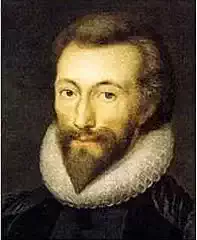
John Donne
To His Mistress Going to Bed
To His Mistress Going to Bed
Come, Madam, come, all rest my powers defy,
Until I labour, I in labour lie.
The foe oft-times having the foe in sight,
Is tired with standing though they never fight.
Off with that girdle, like heaven's zone glistering,
But a far fairer world encompassing.
Unpin that spangled breastplate which you wear,
That th' eyes of busy fools may be stopped there.
Unlace yourself, for that harmonious chime
Tells me from you, that now 'tis your bed time.
Off with that happy busk, which I envy,
That still can be, and still can stand so nigh.
Your gown going off, such beauteous state reveals,
As when from flowery meads th' hill's shadow steals.
Off with that wiry coronet and show
The hairy diadem which on you doth grow;
Now off with those shoes, and then safely tread
In this love's hallowed temple, this soft bed.
In such white robes heaven's angels used to be
Received by men; thou angel bring'st with thee
A heaven like Mahomet's paradise; and though
Ill spirits walk in white, we easily know
By this these angels from an evil sprite,
Those set our hairs, but these our flesh upright.
License my roving hands, and let them go
Before, behind, between, above, below.
O my America, my new found land,
My kingdom, safeliest when with one man manned,
My mine of precious stones, my empery,
How blessed am I in this discovering thee!
To enter in these bonds, is to be free;
Then where my hand is set, my seal shall be.
Full nakedness, all joys are due to thee
As souls unbodied, bodies unclothed must be,
To taste whole joys. Gems which you women use
Are like Atlanta's balls, cast in men's views,
That when a fool's eye lighteth on a gem,
His earthly soul may covet theirs, not them.
Like pictures, or like books' gay coverings made
For laymen, are all women thus arrayed;
Themselves are mystic books, which only we
Whom their imputed grace will dignify
Must see revealed. Then since I may know,
As liberally, as to a midwife, show
Thyself: cast all, yea, this white linen hence,
Here is no penance, much less innocence.
To teach thee, I am naked first, why then
What needst thou have more covering than a man.
Come, Madam, come, all rest my powers defy,
Until I labour, I in labour lie.
The foe oft-times having the foe in sight,
Is tired with standing though they never fight.
Off with that girdle, like heaven's zone glistering,
But a far fairer world encompassing.
Unpin that spangled breastplate which you wear,
That th' eyes of busy fools may be stopped there.
Unlace yourself, for that harmonious chime
Tells me from you, that now 'tis your bed time.
Off with that happy busk, which I envy,
That still can be, and still can stand so nigh.
Your gown going off, such beauteous state reveals,
As when from flowery meads th' hill's shadow steals.
Off with that wiry coronet and show
The hairy diadem which on you doth grow;
Now off with those shoes, and then safely tread
In this love's hallowed temple, this soft bed.
In such white robes heaven's angels used to be
Received by men; thou angel bring'st with thee
A heaven like Mahomet's paradise; and though
Ill spirits walk in white, we easily know
By this these angels from an evil sprite,
Those set our hairs, but these our flesh upright.
License my roving hands, and let them go
Before, behind, between, above, below.
O my America, my new found land,
My kingdom, safeliest when with one man manned,
My mine of precious stones, my empery,
How blessed am I in this discovering thee!
To enter in these bonds, is to be free;
Then where my hand is set, my seal shall be.
Full nakedness, all joys are due to thee
As souls unbodied, bodies unclothed must be,
To taste whole joys. Gems which you women use
Are like Atlanta's balls, cast in men's views,
That when a fool's eye lighteth on a gem,
His earthly soul may covet theirs, not them.
Like pictures, or like books' gay coverings made
For laymen, are all women thus arrayed;
Themselves are mystic books, which only we
Whom their imputed grace will dignify
Must see revealed. Then since I may know,
As liberally, as to a midwife, show
Thyself: cast all, yea, this white linen hence,
Here is no penance, much less innocence.
To teach thee, I am naked first, why then
What needst thou have more covering than a man.
289
John Donne
The Sun Rising
The Sun Rising
Busy old fool, unruly Sun,
Why dost thou thus,
Through windows, and through curtains, call on
us?
Must to thy motions lovers' seasons run?
Saucy pedantic wretch, go chide
Late schoolboys, and sour prentices,
Go tell court-huntsmen that the king will ride,
Call country ants to harvest offices,
Love, all alike, no season knows, nor clime,
Nor hours, days, months, which are the rags of
time.
Thy beams, so reverend and strong
Why shouldst thou think?
I could eclipse and cloud them with a wink,
But that I would not lose her sight so long:
If her eyes have not blinded thine,
Look, and tomorrow late, tell me
Whether both the'Indias of spice and mine
Be where thou leftst them, or lie here with me.
Ask for those kings whom thou saw'st yesterday,
And thou shalt hear: 'All here in one bed lay.'
She'is all states, and all princes I,
Nothing else is.
Princes do but play us; compar'd to this,
All honour's mimic, all wealth alchemy.
Thou, sun, art half as happy'as we,
In that the world's contracted thus;
Thine age asks ease, and since thy duties be
To warm the world, that's done in warming us.
Shine here to us, and thou art everywhere;
This bed thy centre is, these walls, thy sphere.
Busy old fool, unruly Sun,
Why dost thou thus,
Through windows, and through curtains, call on
us?
Must to thy motions lovers' seasons run?
Saucy pedantic wretch, go chide
Late schoolboys, and sour prentices,
Go tell court-huntsmen that the king will ride,
Call country ants to harvest offices,
Love, all alike, no season knows, nor clime,
Nor hours, days, months, which are the rags of
time.
Thy beams, so reverend and strong
Why shouldst thou think?
I could eclipse and cloud them with a wink,
But that I would not lose her sight so long:
If her eyes have not blinded thine,
Look, and tomorrow late, tell me
Whether both the'Indias of spice and mine
Be where thou leftst them, or lie here with me.
Ask for those kings whom thou saw'st yesterday,
And thou shalt hear: 'All here in one bed lay.'
She'is all states, and all princes I,
Nothing else is.
Princes do but play us; compar'd to this,
All honour's mimic, all wealth alchemy.
Thou, sun, art half as happy'as we,
In that the world's contracted thus;
Thine age asks ease, and since thy duties be
To warm the world, that's done in warming us.
Shine here to us, and thou art everywhere;
This bed thy centre is, these walls, thy sphere.
440
John Donne
The Legacy
The Legacy
When I died last, and, Dear, I die
As often as from thee I go,
Though it be but an hour ago,
And Lovers' hours be full eternity,
I can remember yet, that I
Something did say, and something did bestow;
Though I be dead, which sent me, I should be
Mine own executor and legacy.
I heard me say, "Tell her anon,
That myself, that is you, not I,
Did kill me," and when I felt me die,
I bid me send my heart, when I was gone,
But alas could there find none,
When I had ripp'd me, and search'd where hearts should lie;
It kill'd me again, that I who still was true,
In life, in my last will should cozen you.
Yet I found something like a heart,
But colors it, and corners had,
It was not good, it was not bad,
It was intire to none, and few had part.
As good as could be made by art
It seem'd, and therefore for our losses sad,
I meant to send this heart in stead of mine,
But oh, no man could hold it, for 'twas thine.
When I died last, and, Dear, I die
As often as from thee I go,
Though it be but an hour ago,
And Lovers' hours be full eternity,
I can remember yet, that I
Something did say, and something did bestow;
Though I be dead, which sent me, I should be
Mine own executor and legacy.
I heard me say, "Tell her anon,
That myself, that is you, not I,
Did kill me," and when I felt me die,
I bid me send my heart, when I was gone,
But alas could there find none,
When I had ripp'd me, and search'd where hearts should lie;
It kill'd me again, that I who still was true,
In life, in my last will should cozen you.
Yet I found something like a heart,
But colors it, and corners had,
It was not good, it was not bad,
It was intire to none, and few had part.
As good as could be made by art
It seem'd, and therefore for our losses sad,
I meant to send this heart in stead of mine,
But oh, no man could hold it, for 'twas thine.
457
John Donne
The Paradox
The Paradox
No Lover saith, I love, nor any other
Can judge a perfect Lover;
Hee thinkes that else none can, nor will agree
That any loves but hee;
I cannot say I'lov'd. for who can say
Hee was kill'd yesterday?
Lover withh excesse of heat, more yong than old,
Death kills with too much cold;
Wee dye but once, and who lov'd last did die,
Hee that saith twice, doth lye:
For though hee seeme to move, and stirre a while,
It doth the sense beguile.
Such life is like the light which bideth yet
When the lights life is set,
Or like the heat, which fire in solid matter
Leave behinde, two houres after.
Once I lov's and dy'd; and am now become
Mine Epitaph and Tombe.
Here dead men speake their last, and so do I;
Love-slaine, loe, here I lye.
No Lover saith, I love, nor any other
Can judge a perfect Lover;
Hee thinkes that else none can, nor will agree
That any loves but hee;
I cannot say I'lov'd. for who can say
Hee was kill'd yesterday?
Lover withh excesse of heat, more yong than old,
Death kills with too much cold;
Wee dye but once, and who lov'd last did die,
Hee that saith twice, doth lye:
For though hee seeme to move, and stirre a while,
It doth the sense beguile.
Such life is like the light which bideth yet
When the lights life is set,
Or like the heat, which fire in solid matter
Leave behinde, two houres after.
Once I lov's and dy'd; and am now become
Mine Epitaph and Tombe.
Here dead men speake their last, and so do I;
Love-slaine, loe, here I lye.
367
John Donne
The Flea
The Flea
Mark but this flea, and mark in this,
How little that which thou deny'st me is;
It sucked me first, and now sucks thee,
And in this flea, our two bloods mingled be;
Thou knowest that this cannot be said
A sin, nor shame, nor loss of maidenhead.
Yet this enjoys before it woo,
And pampered, swells with one blood made of two,
And this, alas, is more than we would do.
Oh stay, three lives in one flea spare,
Where we almost, yea, more than married are.
This flea is you and I, and this
Our marriage bed, and marriage temple is;
Though parents grudge, and you, we are met
And cloistered in these living walls of jet.
Though use make you apt to kill me,
Let not to that self murder added be,
And sacrilege, three sins in killing three.
Cruel and sudden, hast thou since
Purpled thy nail in blood of innocence?
Wherein could this flea guilty be
Except in that drop which it sucked from thee?
Yet thou triumph'st, and sayest that thou
Find'st not thyself, nor me, the weaker now.
'Tis true, then learn how false fears be;
Just so much honor, when thou yieldst to me,
Will waste, as this flea's death took life from thee.
Mark but this flea, and mark in this,
How little that which thou deny'st me is;
It sucked me first, and now sucks thee,
And in this flea, our two bloods mingled be;
Thou knowest that this cannot be said
A sin, nor shame, nor loss of maidenhead.
Yet this enjoys before it woo,
And pampered, swells with one blood made of two,
And this, alas, is more than we would do.
Oh stay, three lives in one flea spare,
Where we almost, yea, more than married are.
This flea is you and I, and this
Our marriage bed, and marriage temple is;
Though parents grudge, and you, we are met
And cloistered in these living walls of jet.
Though use make you apt to kill me,
Let not to that self murder added be,
And sacrilege, three sins in killing three.
Cruel and sudden, hast thou since
Purpled thy nail in blood of innocence?
Wherein could this flea guilty be
Except in that drop which it sucked from thee?
Yet thou triumph'st, and sayest that thou
Find'st not thyself, nor me, the weaker now.
'Tis true, then learn how false fears be;
Just so much honor, when thou yieldst to me,
Will waste, as this flea's death took life from thee.
269
John Donne
The Ecstasy
The Ecstasy
Where, like a pillow on a bed
A pregnant bank swell'd up to rest
The violet's reclining head,
Sat we two, one another's best.
Our hands were firmly cemented
With a fast balm, which thence did spring;
Our eye-beams twisted, and did thread
Our eyes upon one double string;
So to'intergraft our hands, as yet
Was all the means to make us one,
And pictures in our eyes to get
Was all our propagation.
As 'twixt two equal armies fate
Suspends uncertain victory,
Our souls (which to advance their state
Were gone out) hung 'twixt her and me.
And whilst our souls negotiate there,
We like sepulchral statues lay;
All day, the same our postures were,
And we said nothing, all the day.
If any, so by love refin'd
That he soul's language understood,
And by good love were grown all mind,
Within convenient distance stood,
He (though he knew not which soul spake,
Because both meant, both spake the same)
Might thence a new concoction take
And part far purer than he came.
This ecstasy doth unperplex,
We said, and tell us what we love;
We see by this it was not sex,
We see we saw not what did move;
But as all several souls contain
Mixture of things, they know not what,
Love these mix'd souls doth mix again
And makes both one, each this and that.
A single violet transplant,
The strength, the colour, and the size,
(All which before was poor and scant)
Redoubles still, and multiplies.
When love with one another so
Interinanimates two souls,
That abler soul, which thence doth flow,
Defects of loneliness controls.
We then, who are this new soul, know
Of what we are compos'd and made,
For th' atomies of which we grow
Are souls. whom no change can invade.
But oh alas, so long, so far,
Our bodies why do we forbear?
They'are ours, though they'are not we; we are
The intelligences, they the spheres.
We owe them thanks, because they thus
Did us, to us, at first convey,
Yielded their senses' force to us,
Nor are dross to us, but allay.
On man heaven's influence works not so,
But that it first imprints the air;
So soul into the soul may flow,
Though it to body first repair.
As our blood labors to beget
Spirits, as like souls as it can,
Because such fingers need to knit
That subtle knot which makes us man,
So must pure lovers' souls descend
T' affections, and to faculties,
Which sense may reach and apprehend,
Else a great prince in prison lies.
To'our bodies turn we then, that so
Weak men on love reveal'd may look;
Love's mysteries in souls do grow,
But yet the body is his book.
And if some lover, such as we,
Have heard this dialogue of one,
Let him still mark us, he shall see
Small change, when we'are to bodies gone.
Where, like a pillow on a bed
A pregnant bank swell'd up to rest
The violet's reclining head,
Sat we two, one another's best.
Our hands were firmly cemented
With a fast balm, which thence did spring;
Our eye-beams twisted, and did thread
Our eyes upon one double string;
So to'intergraft our hands, as yet
Was all the means to make us one,
And pictures in our eyes to get
Was all our propagation.
As 'twixt two equal armies fate
Suspends uncertain victory,
Our souls (which to advance their state
Were gone out) hung 'twixt her and me.
And whilst our souls negotiate there,
We like sepulchral statues lay;
All day, the same our postures were,
And we said nothing, all the day.
If any, so by love refin'd
That he soul's language understood,
And by good love were grown all mind,
Within convenient distance stood,
He (though he knew not which soul spake,
Because both meant, both spake the same)
Might thence a new concoction take
And part far purer than he came.
This ecstasy doth unperplex,
We said, and tell us what we love;
We see by this it was not sex,
We see we saw not what did move;
But as all several souls contain
Mixture of things, they know not what,
Love these mix'd souls doth mix again
And makes both one, each this and that.
A single violet transplant,
The strength, the colour, and the size,
(All which before was poor and scant)
Redoubles still, and multiplies.
When love with one another so
Interinanimates two souls,
That abler soul, which thence doth flow,
Defects of loneliness controls.
We then, who are this new soul, know
Of what we are compos'd and made,
For th' atomies of which we grow
Are souls. whom no change can invade.
But oh alas, so long, so far,
Our bodies why do we forbear?
They'are ours, though they'are not we; we are
The intelligences, they the spheres.
We owe them thanks, because they thus
Did us, to us, at first convey,
Yielded their senses' force to us,
Nor are dross to us, but allay.
On man heaven's influence works not so,
But that it first imprints the air;
So soul into the soul may flow,
Though it to body first repair.
As our blood labors to beget
Spirits, as like souls as it can,
Because such fingers need to knit
That subtle knot which makes us man,
So must pure lovers' souls descend
T' affections, and to faculties,
Which sense may reach and apprehend,
Else a great prince in prison lies.
To'our bodies turn we then, that so
Weak men on love reveal'd may look;
Love's mysteries in souls do grow,
But yet the body is his book.
And if some lover, such as we,
Have heard this dialogue of one,
Let him still mark us, he shall see
Small change, when we'are to bodies gone.
369
John Donne
The Canonization
The Canonization
For God's sake hold your tongue, and let me love,
Or chide my palsy, or my gout,
My five grey hairs, or ruin'd fortune flout,
With wealth your state, your mind with arts improve,
Take you a course, get you a place,
Observe his Honour, or his Grace,
Or the King's real, or his stamped face
Contemplate, what you will, approve,
So you will let me love.
Alas, alas, who's injur'd by my love?
What merchant's ships have my sighs drown'd?
Who says my tears have overflow'd his ground?
When did my colds a forward spring remove?
When did the heats which my veins fill
Add one more to the plaguy bill?
Soldiers find wars, and lawyers find out still
Litigious men, which quarrels move,
Though she and I do love.
Call us what you will, we are made such by love;
Call her one, me another fly,
We are tapers too, and at our own cost die,
And we in us find th' eagle and the dove.
The phoenix riddle hath more wit
By us; we two being one, are it.
So, to one neutral thing both sexes fit,
We die and rise the same, and prove
Mysterious by this love.
We can die by it, if not live by love,
And if unfit for tombs and hearse
Our legend be, it will be fit for verse;
And if no piece of chronicle we prove,
We'll build in sonnets pretty rooms;
As well a well-wrought urn becomes
The greatest ashes, as half-acre tombs,
And by these hymns all shall approve
Us canoniz'd for love;
And thus invoke us: "You, whom reverend love
Made one another's hermitage;
You, to whom love was peace, that now is rage;
Who did the whole world's soul contract, and drove
Into the glasses of your eyes
(So made such mirrors, and such spies,
That they did all to you epitomize)
Countries, towns, courts: beg from above
A pattern of your love!"
For God's sake hold your tongue, and let me love,
Or chide my palsy, or my gout,
My five grey hairs, or ruin'd fortune flout,
With wealth your state, your mind with arts improve,
Take you a course, get you a place,
Observe his Honour, or his Grace,
Or the King's real, or his stamped face
Contemplate, what you will, approve,
So you will let me love.
Alas, alas, who's injur'd by my love?
What merchant's ships have my sighs drown'd?
Who says my tears have overflow'd his ground?
When did my colds a forward spring remove?
When did the heats which my veins fill
Add one more to the plaguy bill?
Soldiers find wars, and lawyers find out still
Litigious men, which quarrels move,
Though she and I do love.
Call us what you will, we are made such by love;
Call her one, me another fly,
We are tapers too, and at our own cost die,
And we in us find th' eagle and the dove.
The phoenix riddle hath more wit
By us; we two being one, are it.
So, to one neutral thing both sexes fit,
We die and rise the same, and prove
Mysterious by this love.
We can die by it, if not live by love,
And if unfit for tombs and hearse
Our legend be, it will be fit for verse;
And if no piece of chronicle we prove,
We'll build in sonnets pretty rooms;
As well a well-wrought urn becomes
The greatest ashes, as half-acre tombs,
And by these hymns all shall approve
Us canoniz'd for love;
And thus invoke us: "You, whom reverend love
Made one another's hermitage;
You, to whom love was peace, that now is rage;
Who did the whole world's soul contract, and drove
Into the glasses of your eyes
(So made such mirrors, and such spies,
That they did all to you epitomize)
Countries, towns, courts: beg from above
A pattern of your love!"
350
John Donne
The Bait
The Bait
Come live with me, and be my love,
And we will some new pleasures prove
Of golden sands, and crystal brooks,
With silken lines, and silver hooks.
There will the river whispering run
Warm'd by thy eyes, more than the sun;
And there the 'enamour'd fish will stay,
Begging themselves they may betray.
When thou wilt swim in that live bath,
Each fish, which every channel hath,
Will amorously to thee swim,
Gladder to catch thee, than thou him.
If thou, to be so seen, be'st loth,
By sun or moon, thou dark'nest both,
And if myself have leave to see,
I need not their light having thee.
Let others freeze with angling reeds,
And cut their legs with shells and weeds,
Or treacherously poor fish beset,
With strangling snare, or windowy net.
Let coarse bold hands from slimy nest
The bedded fish in banks out-wrest;
Or curious traitors, sleeve-silk flies,
Bewitch poor fishes' wand'ring eyes.
For thee, thou need'st no such deceit,
For thou thyself art thine own bait:
That fish, that is not catch'd thereby,
Alas, is wiser far than I.
Come live with me, and be my love,
And we will some new pleasures prove
Of golden sands, and crystal brooks,
With silken lines, and silver hooks.
There will the river whispering run
Warm'd by thy eyes, more than the sun;
And there the 'enamour'd fish will stay,
Begging themselves they may betray.
When thou wilt swim in that live bath,
Each fish, which every channel hath,
Will amorously to thee swim,
Gladder to catch thee, than thou him.
If thou, to be so seen, be'st loth,
By sun or moon, thou dark'nest both,
And if myself have leave to see,
I need not their light having thee.
Let others freeze with angling reeds,
And cut their legs with shells and weeds,
Or treacherously poor fish beset,
With strangling snare, or windowy net.
Let coarse bold hands from slimy nest
The bedded fish in banks out-wrest;
Or curious traitors, sleeve-silk flies,
Bewitch poor fishes' wand'ring eyes.
For thee, thou need'st no such deceit,
For thou thyself art thine own bait:
That fish, that is not catch'd thereby,
Alas, is wiser far than I.
368
John Donne
That Time and Absence proves Rather helps than hurts to loves
That Time and Absence proves Rather helps than hurts to loves
ABSENCE, hear thou my protestation
Against thy strength,
Distance and length:
Do what thou canst for alteration,
For hearts of truest mettle
Absence doth join and Time doth settle.
Who loves a mistress of such quality,
His mind hath found
Affection's ground
Beyond time, place, and all mortality.
To hearts that cannot vary
Absence is present, Time doth tarry.
My senses want their outward motion
Which now within
Reason doth win,
Redoubled by her secret notion:
Like rich men that take pleasure
In hiding more than handling treasure.
By Absence this good means I gain,
That I can catch her
Where none can watch her,
In some close corner of my brain:
There I embrace and kiss her,
And so enjoy her and none miss her.
ABSENCE, hear thou my protestation
Against thy strength,
Distance and length:
Do what thou canst for alteration,
For hearts of truest mettle
Absence doth join and Time doth settle.
Who loves a mistress of such quality,
His mind hath found
Affection's ground
Beyond time, place, and all mortality.
To hearts that cannot vary
Absence is present, Time doth tarry.
My senses want their outward motion
Which now within
Reason doth win,
Redoubled by her secret notion:
Like rich men that take pleasure
In hiding more than handling treasure.
By Absence this good means I gain,
That I can catch her
Where none can watch her,
In some close corner of my brain:
There I embrace and kiss her,
And so enjoy her and none miss her.
326
John Donne
Sweetest Love, I do not go
Sweetest Love, I do not go
Sweetest love, I do not go,
For weariness of thee,
Nor in hope the world can show
A fitter love for me;
But since that I
Must die at last, 'tis best
To use myself in jest
Thus by feign'd deaths to die.
Yesternight the sun went hence,
And yet is here today;
He hath no desire nor sense,
Nor half so short a way:
Then fear not me,
But believe that I shall make
Speedier journeys, since I take
More wings and spurs than he.
O how feeble is man's power,
That if good fortune fall,
Cannot add another hour,
Nor a lost hour recall!
But come bad chance,
And we join to'it our strength,
And we teach it art and length,
Itself o'er us to'advance.
When thou sigh'st, thou sigh'st not wind,
But sigh'st my soul away;
When thou weep'st, unkindly kind,
My life's blood doth decay.
It cannot be
That thou lov'st me, as thou say'st,
If in thine my life thou waste,
That art the best of me.
Let not thy divining heart
Forethink me any ill;
Destiny may take thy part,
And may thy fears fulfil;
But think that we
Are but turn'd aside to sleep;
They who one another keep
Alive, ne'er parted be.
Sweetest love, I do not go,
For weariness of thee,
Nor in hope the world can show
A fitter love for me;
But since that I
Must die at last, 'tis best
To use myself in jest
Thus by feign'd deaths to die.
Yesternight the sun went hence,
And yet is here today;
He hath no desire nor sense,
Nor half so short a way:
Then fear not me,
But believe that I shall make
Speedier journeys, since I take
More wings and spurs than he.
O how feeble is man's power,
That if good fortune fall,
Cannot add another hour,
Nor a lost hour recall!
But come bad chance,
And we join to'it our strength,
And we teach it art and length,
Itself o'er us to'advance.
When thou sigh'st, thou sigh'st not wind,
But sigh'st my soul away;
When thou weep'st, unkindly kind,
My life's blood doth decay.
It cannot be
That thou lov'st me, as thou say'st,
If in thine my life thou waste,
That art the best of me.
Let not thy divining heart
Forethink me any ill;
Destiny may take thy part,
And may thy fears fulfil;
But think that we
Are but turn'd aside to sleep;
They who one another keep
Alive, ne'er parted be.
344
John Donne
Pyramus and Thisbe
Pyramus and Thisbe
Two, by themselves, each other, love and fear,
Slain, cruel friends, by parting have join'd here.
Two, by themselves, each other, love and fear,
Slain, cruel friends, by parting have join'd here.
279
John Donne
Epithalamion Made At Lincoln's Inn
Epithalamion Made At Lincoln's Inn
I
HAIL sun-beams in the east are spread ;
Leave, leave, fair bride, your solitary bed ;
No more shall you return to it alone ;
It nurseth sadness, and your body's print,
Like to a grave, the yielding down doth dint ;
You, and your other you, meet there anon.
Put forth, put forth, that warm balm-breathing thigh,
Which when next time you in these sheets will smother,
There it must meet another,
Which never was, but must be, oft, more nigh.
Come glad from thence, go gladder than you came ;
To-day put on perfection, and a woman's name.
Daughters of London, you which be
Our golden mines, and furnish'd treasury ;
You which are angels, yet still bring with you
Thousands of angels on your marriage days ;
Help with your presence, and devise to praise
These rites, which also unto you grow due ;
Conceitedly dress her, and be assign'd,
By you fit place for every flower and jewel ;
Make her for love fit fuel,
As gay as Flora and as rich as Ind ;
So may she, fair and rich in nothing lame,
To-day put on perfection, and a woman's name.
And you frolic patricians,
Sons of those senators, wealth's deep oceans ;
Ye painted courtiers, barrels of other's wits ;
Ye countrymen, who but your beasts love none ;
Ye of those fellowships, whereof he's one,
Of study and play made strange hermaphrodites,
Here shine ; this bridegroom to the temple bring.
Lo, in yon path which store of strew'd flowers graceth,
The sober virgin paceth ;
Except my sight fail, 'tis no other thing.
Weep not, nor blush, here is no grief nor shame,
To-day put on perfection, and a woman's name.
Thy two-leaved gates, fair temple, unfold,
And these two in thy sacred bosom hold,
Till mystically join'd but one they be ;
Then may thy lean and hunger-starvèd womb
Long time expect their bodies, and their tomb,
Long after their own parents fatten thee.
All elder claims, and all cold barrenness,
All yielding to new loves, be far for ever,
Which might these two dissever ;
Always, all th'other may each one possess ;
For the best bride, best worthy of praise and fame,
To-day puts on perfection, and a woman's name.
Winter days bring much delight,
Not for themselves, but for they soon bring night ;
Other sweets wait thee than these diverse meats,
Other disports than dancing jollities,
Other love-tricks than glancing with the eyes,
But that the sun still in our half sphere sweats ;
He flies in winter, but he now stands still.
Yet shadows turn ; noon point he hath attain'd ;
His steeds will be restrain'd,
But gallop lively down the western hill.
Thou shalt, when he hath run the heaven's half frame,
To-night put on perfection, and a woman's name.
The amorous evening star is rose,
Why then should not our amorous star inclose
Herself in her wish'd bed ? Release your strings,
Musicians ; and dancers take some truce
With these your pleasing labours, for great use
As much weariness as perfection brings.
You, and not only you, but all toil'd beasts
Rest duly ; at night all their toils are dispensed ;
But in their beds commenced
Are other labours, and more dainty feasts.
She goes a maid, who, lest she turn the same,
To-night puts on perfection, and a woman's name.
Thy virgin's girdle now untie,
And in thy nuptial bed, love's altar, lie
A pleasing sacrifice ; now dispossess
Thee of these chains and robes, which were put on
To adorn the day, not thee ; for thou, alone,
Like virtue and truth, art best in nakedness.
This bed is only to virginity
A grave, but to a better state, a cradle.
Till now thou wast but able
To be, what now thou art ; then, that by thee
No more be said, “ I may be,” but, “ I am,”
To-night put on perfection, and a woman's name.
Even like a faithful man content,
That this life for a better should be spent,
So she a mother's rich stile doth prefer,
And at the bridegroom's wish'd approach doth lie,
Like an appointed lamb, when tenderly
The priest comes on his knees to embowel her.
Now sleep or watch with more joy ; and, O light
Of heaven, to-morrow rise thou hot, and early ;
This sun will love so dearly
Her rest, that long, long we shall want her sight.
Wonders are wrought, for she, which had no maim,
To-night puts on perfection, and a woman's name.
I
HAIL sun-beams in the east are spread ;
Leave, leave, fair bride, your solitary bed ;
No more shall you return to it alone ;
It nurseth sadness, and your body's print,
Like to a grave, the yielding down doth dint ;
You, and your other you, meet there anon.
Put forth, put forth, that warm balm-breathing thigh,
Which when next time you in these sheets will smother,
There it must meet another,
Which never was, but must be, oft, more nigh.
Come glad from thence, go gladder than you came ;
To-day put on perfection, and a woman's name.
Daughters of London, you which be
Our golden mines, and furnish'd treasury ;
You which are angels, yet still bring with you
Thousands of angels on your marriage days ;
Help with your presence, and devise to praise
These rites, which also unto you grow due ;
Conceitedly dress her, and be assign'd,
By you fit place for every flower and jewel ;
Make her for love fit fuel,
As gay as Flora and as rich as Ind ;
So may she, fair and rich in nothing lame,
To-day put on perfection, and a woman's name.
And you frolic patricians,
Sons of those senators, wealth's deep oceans ;
Ye painted courtiers, barrels of other's wits ;
Ye countrymen, who but your beasts love none ;
Ye of those fellowships, whereof he's one,
Of study and play made strange hermaphrodites,
Here shine ; this bridegroom to the temple bring.
Lo, in yon path which store of strew'd flowers graceth,
The sober virgin paceth ;
Except my sight fail, 'tis no other thing.
Weep not, nor blush, here is no grief nor shame,
To-day put on perfection, and a woman's name.
Thy two-leaved gates, fair temple, unfold,
And these two in thy sacred bosom hold,
Till mystically join'd but one they be ;
Then may thy lean and hunger-starvèd womb
Long time expect their bodies, and their tomb,
Long after their own parents fatten thee.
All elder claims, and all cold barrenness,
All yielding to new loves, be far for ever,
Which might these two dissever ;
Always, all th'other may each one possess ;
For the best bride, best worthy of praise and fame,
To-day puts on perfection, and a woman's name.
Winter days bring much delight,
Not for themselves, but for they soon bring night ;
Other sweets wait thee than these diverse meats,
Other disports than dancing jollities,
Other love-tricks than glancing with the eyes,
But that the sun still in our half sphere sweats ;
He flies in winter, but he now stands still.
Yet shadows turn ; noon point he hath attain'd ;
His steeds will be restrain'd,
But gallop lively down the western hill.
Thou shalt, when he hath run the heaven's half frame,
To-night put on perfection, and a woman's name.
The amorous evening star is rose,
Why then should not our amorous star inclose
Herself in her wish'd bed ? Release your strings,
Musicians ; and dancers take some truce
With these your pleasing labours, for great use
As much weariness as perfection brings.
You, and not only you, but all toil'd beasts
Rest duly ; at night all their toils are dispensed ;
But in their beds commenced
Are other labours, and more dainty feasts.
She goes a maid, who, lest she turn the same,
To-night puts on perfection, and a woman's name.
Thy virgin's girdle now untie,
And in thy nuptial bed, love's altar, lie
A pleasing sacrifice ; now dispossess
Thee of these chains and robes, which were put on
To adorn the day, not thee ; for thou, alone,
Like virtue and truth, art best in nakedness.
This bed is only to virginity
A grave, but to a better state, a cradle.
Till now thou wast but able
To be, what now thou art ; then, that by thee
No more be said, “ I may be,” but, “ I am,”
To-night put on perfection, and a woman's name.
Even like a faithful man content,
That this life for a better should be spent,
So she a mother's rich stile doth prefer,
And at the bridegroom's wish'd approach doth lie,
Like an appointed lamb, when tenderly
The priest comes on his knees to embowel her.
Now sleep or watch with more joy ; and, O light
Of heaven, to-morrow rise thou hot, and early ;
This sun will love so dearly
Her rest, that long, long we shall want her sight.
Wonders are wrought, for she, which had no maim,
To-night puts on perfection, and a woman's name.
455
John Donne
Elegy XX (Alternate) Love's War
Elegy XX (Alternate) Love's War
Till I have peace with thee, warr other Men,
And when I have peace, can I leave thee then?
All other Warrs are scrupulous; Only thou
0 fayr free Citty, maist thyselfe allow
To any one: In Flanders, who can tell
Whether the Master presse; or men rebell?
Only we know, that which all Ideots say,
They beare most blows which come to part the fray.
France in her lunatique giddines did hate
Ever our men, yea and our God of late;
Yet she relyes upon our Angels well,
Which nere returne; no more than they which fell.
Sick Ireland is with a strange warr possest
Like to an Ague; now raging, now at rest;
Which time will cure: yet it must doe her good
If she were purg'd, and her head vayne let blood.
And Midas joyes our Spanish journeys give,
We touch all gold, but find no food to live.
And I should be in the hott parching clime,
To dust and ashes turn'd before my time.
To mew me in a Ship, is to inthrall
Mee in a prison, that weare like to fall;
Or in a Cloyster; save that there men dwell
In a calme heaven, here in a swaggering hell.
Long voyages are long consumptions,
And ships are carts for executions.
Yea they are Deaths; Is't not all one to flye
Into an other World, as t'is to dye?
Here lett mee warr; in these armes lett mee lye;
Here lett mee parle, batter, bleede, and dye.
Thyne armes imprison me, and myne armes thee,
Thy hart thy ransome is, take myne for mee.
Other men war that they their rest may gayne;
But wee will rest that wee may fight agayne.
Those warrs the ignorant, these th'experienc'd love,
There wee are alwayes under, here above.
There Engins farr off breed a just true feare,
Neere thrusts, pikes, stabs, yea bullets hurt not here.
There lyes are wrongs; here safe uprightly ly;
Tltere men kill men, we'will make one by and by,
Thou nothing; I not halfe so much shall do
In these Warrs, as they may which from us two
Shall spring. Thousands wee see which travaile not
To warrs; But stay swords, armes, and shott
To make at home; And shall not I do then
More glorious service, staying to make men?
Till I have peace with thee, warr other Men,
And when I have peace, can I leave thee then?
All other Warrs are scrupulous; Only thou
0 fayr free Citty, maist thyselfe allow
To any one: In Flanders, who can tell
Whether the Master presse; or men rebell?
Only we know, that which all Ideots say,
They beare most blows which come to part the fray.
France in her lunatique giddines did hate
Ever our men, yea and our God of late;
Yet she relyes upon our Angels well,
Which nere returne; no more than they which fell.
Sick Ireland is with a strange warr possest
Like to an Ague; now raging, now at rest;
Which time will cure: yet it must doe her good
If she were purg'd, and her head vayne let blood.
And Midas joyes our Spanish journeys give,
We touch all gold, but find no food to live.
And I should be in the hott parching clime,
To dust and ashes turn'd before my time.
To mew me in a Ship, is to inthrall
Mee in a prison, that weare like to fall;
Or in a Cloyster; save that there men dwell
In a calme heaven, here in a swaggering hell.
Long voyages are long consumptions,
And ships are carts for executions.
Yea they are Deaths; Is't not all one to flye
Into an other World, as t'is to dye?
Here lett mee warr; in these armes lett mee lye;
Here lett mee parle, batter, bleede, and dye.
Thyne armes imprison me, and myne armes thee,
Thy hart thy ransome is, take myne for mee.
Other men war that they their rest may gayne;
But wee will rest that wee may fight agayne.
Those warrs the ignorant, these th'experienc'd love,
There wee are alwayes under, here above.
There Engins farr off breed a just true feare,
Neere thrusts, pikes, stabs, yea bullets hurt not here.
There lyes are wrongs; here safe uprightly ly;
Tltere men kill men, we'will make one by and by,
Thou nothing; I not halfe so much shall do
In these Warrs, as they may which from us two
Shall spring. Thousands wee see which travaile not
To warrs; But stay swords, armes, and shott
To make at home; And shall not I do then
More glorious service, staying to make men?
304
John Donne
Elegy XVII: On His Mistress
Elegy XVII: On His Mistress
By our first strange and fatal interview,
By all desires which thereof did ensue,
By our long starving hopes, by that remorse
Which my words masculine persuasive force
Begot in thee, and by the memory
Of hurts, which spies and rivals threaten'd me,
I calmly beg. But by thy father's wrath,
By all pains, which want and divorcement hath,
I conjure thee, and all the oaths which I
And thou have sworn to seal joint constancy,
Here I unswear, and overswear them thus ;
Thou shalt not love by ways so dangerous.
Temper, O fair love, love's impetuous rage ;
Be my true mistress still, not my feign'd page.
I'll go, and, by thy kind leave, leave behind
Thee, only worthy to nurse in my mind
Thirst to come back ; O ! if thou die before,
My soul from other lands to thee shall soar.
Thy else almighty beauty cannot move
Rage from the seas, nor thy love teach them love,
Nor tame wild Boreas' harshness ; thou hast read
How roughly he in pieces shivered
Fair Orithea, whom he swore he loved.
Fall ill or good, 'tis madness to have proved
Dangers unurged ; feed on this flattery,
That absent lovers one in th' other be.
Dissemble nothing, not a boy, nor change
Thy body's habit, nor mind ; be not strange
To thyself only. All will spy in thy face
A blushing womanly discovering grace.
Richly clothed apes are call'd apes, and as soon
Eclipsed as bright, we call the moon the moon.
Men of France, changeable chameleons,
Spitals of diseases, shops of fashions,
Love's fuellers, and the rightest company
Of players, which upon the world's stage be,
Will quickly know thee, and no less, alas !
Th' indifferent Italian, as we pass
His warm land, well content to think thee page,
Will hunt thee with such lust, and hideous rage,
As Lot's fair guests were vex'd. But none of these
Nor spongy hydroptic Dutch shall thee displease,
If thou stay here. O stay here, for for thee
England is only a worthy gallery,
To walk in expectation, till from thence
Our greatest king call thee to his presence.
When I am gone, dream me some happiness ;
Nor let thy looks our long-hid love confess ;
Nor praise, nor dispraise me, nor bless nor curse
Openly love's force, nor in bed fright thy nurse
With midnight's startings, crying out, O ! O !
Nurse, O ! my love is slain ; I saw him go
O'er the white Alps alone ; I saw him, I,
Assail'd, fight, taken, stabb'd, bleed, fall, and die.
Augur me better chance, except dread Jove
Think it enough for me to have had thy love.
By our first strange and fatal interview,
By all desires which thereof did ensue,
By our long starving hopes, by that remorse
Which my words masculine persuasive force
Begot in thee, and by the memory
Of hurts, which spies and rivals threaten'd me,
I calmly beg. But by thy father's wrath,
By all pains, which want and divorcement hath,
I conjure thee, and all the oaths which I
And thou have sworn to seal joint constancy,
Here I unswear, and overswear them thus ;
Thou shalt not love by ways so dangerous.
Temper, O fair love, love's impetuous rage ;
Be my true mistress still, not my feign'd page.
I'll go, and, by thy kind leave, leave behind
Thee, only worthy to nurse in my mind
Thirst to come back ; O ! if thou die before,
My soul from other lands to thee shall soar.
Thy else almighty beauty cannot move
Rage from the seas, nor thy love teach them love,
Nor tame wild Boreas' harshness ; thou hast read
How roughly he in pieces shivered
Fair Orithea, whom he swore he loved.
Fall ill or good, 'tis madness to have proved
Dangers unurged ; feed on this flattery,
That absent lovers one in th' other be.
Dissemble nothing, not a boy, nor change
Thy body's habit, nor mind ; be not strange
To thyself only. All will spy in thy face
A blushing womanly discovering grace.
Richly clothed apes are call'd apes, and as soon
Eclipsed as bright, we call the moon the moon.
Men of France, changeable chameleons,
Spitals of diseases, shops of fashions,
Love's fuellers, and the rightest company
Of players, which upon the world's stage be,
Will quickly know thee, and no less, alas !
Th' indifferent Italian, as we pass
His warm land, well content to think thee page,
Will hunt thee with such lust, and hideous rage,
As Lot's fair guests were vex'd. But none of these
Nor spongy hydroptic Dutch shall thee displease,
If thou stay here. O stay here, for for thee
England is only a worthy gallery,
To walk in expectation, till from thence
Our greatest king call thee to his presence.
When I am gone, dream me some happiness ;
Nor let thy looks our long-hid love confess ;
Nor praise, nor dispraise me, nor bless nor curse
Openly love's force, nor in bed fright thy nurse
With midnight's startings, crying out, O ! O !
Nurse, O ! my love is slain ; I saw him go
O'er the white Alps alone ; I saw him, I,
Assail'd, fight, taken, stabb'd, bleed, fall, and die.
Augur me better chance, except dread Jove
Think it enough for me to have had thy love.
342
John Donne
Elegy XVI: On His Mistress
Elegy XVI: On His Mistress
By our first strange and fatal interview,
By all desires which thereof did ensue,
By our long starving hopes, by that remorse
Which my words' masculine persuasive force
Begot in thee, and by the memory
Of hurts, which spies and rivals threatened me,
I calmly beg: but by thy father's wrath,
By all pains, which want and divorcement hath,
I conjure thee, and all the oaths which I
And thou have sworn to seal joint constancy,
Here I unswear, and overswear them thus,
Thou shalt not love by ways so dangerous.
Temper, O fair Love, love's impetuous rage,
Be my true Mistress still, not my feigned Page;
I'll go, and, by thy kind leave, leave behind
Thee, only worthy to nurse in my mind
Thirst to come back; O if thou die before,
My soul from other lands to thee shall soar.
Thy (else Almighty) beauty cannot move
Rage from the Seas, nor thy love teach them love,
Nor tame wild Boreas' harshness; thou hast read
How roughly he in pieces shivered
Fair Orithea, wbom he swore he loved.
Fall ill or good, 'tis madness to have proved
Dangers unurged; feed on this flattery,
That absent Lovers one in th' other be.
Dissemble nothing, not a boy, nor change
Thy body's habit, nor mind's; be not strange
To thyself only; all will spy in thy face
A blushing womanly discovering grace;
Ricbly clothed Apes are called Apes, and as soon
Eclipsed as bright we call the Moon the Moon.
Men of France, changeable chameleons,
Spitals of diseases, shops of fashions,
Love's fuellers, and the rightest company
Of Players, which upon the world's stage be,
Will quickly know thee, and no less, alas!
Th' indifferent Italian, as we pass
His warm land, well content to think thee Page,
Will hunt thee with such lust, and hideous rage,
As Lot's fair guests were vexed. But none of these
Nor spongy hydroptic Dutch shall thee displease,
If thou stay here. O stay here, for, for thee
England is only a worthy gallery,
To walk in expectation, till from thence
Our greatest King call thee to his presence.
When I am gone, dream me some happiness,
Nor let thy looks our long-hid love confess,
Nor praise, nor dispraise me, nor bless nor curse
Openly love's force, nor in bed fright thy Nurse
With midnight's startings, crying out-oh, oh
Nurse, O my love is slain, I saw him go
O'er the white Alps alone; I saw him, I,
Assailed, fight, taken, stabbed, bleed, fall, and die.
Augur me better chance, except dread Jove
Think it enough for me t' have had thy love.
By our first strange and fatal interview,
By all desires which thereof did ensue,
By our long starving hopes, by that remorse
Which my words' masculine persuasive force
Begot in thee, and by the memory
Of hurts, which spies and rivals threatened me,
I calmly beg: but by thy father's wrath,
By all pains, which want and divorcement hath,
I conjure thee, and all the oaths which I
And thou have sworn to seal joint constancy,
Here I unswear, and overswear them thus,
Thou shalt not love by ways so dangerous.
Temper, O fair Love, love's impetuous rage,
Be my true Mistress still, not my feigned Page;
I'll go, and, by thy kind leave, leave behind
Thee, only worthy to nurse in my mind
Thirst to come back; O if thou die before,
My soul from other lands to thee shall soar.
Thy (else Almighty) beauty cannot move
Rage from the Seas, nor thy love teach them love,
Nor tame wild Boreas' harshness; thou hast read
How roughly he in pieces shivered
Fair Orithea, wbom he swore he loved.
Fall ill or good, 'tis madness to have proved
Dangers unurged; feed on this flattery,
That absent Lovers one in th' other be.
Dissemble nothing, not a boy, nor change
Thy body's habit, nor mind's; be not strange
To thyself only; all will spy in thy face
A blushing womanly discovering grace;
Ricbly clothed Apes are called Apes, and as soon
Eclipsed as bright we call the Moon the Moon.
Men of France, changeable chameleons,
Spitals of diseases, shops of fashions,
Love's fuellers, and the rightest company
Of Players, which upon the world's stage be,
Will quickly know thee, and no less, alas!
Th' indifferent Italian, as we pass
His warm land, well content to think thee Page,
Will hunt thee with such lust, and hideous rage,
As Lot's fair guests were vexed. But none of these
Nor spongy hydroptic Dutch shall thee displease,
If thou stay here. O stay here, for, for thee
England is only a worthy gallery,
To walk in expectation, till from thence
Our greatest King call thee to his presence.
When I am gone, dream me some happiness,
Nor let thy looks our long-hid love confess,
Nor praise, nor dispraise me, nor bless nor curse
Openly love's force, nor in bed fright thy Nurse
With midnight's startings, crying out-oh, oh
Nurse, O my love is slain, I saw him go
O'er the white Alps alone; I saw him, I,
Assailed, fight, taken, stabbed, bleed, fall, and die.
Augur me better chance, except dread Jove
Think it enough for me t' have had thy love.
306
John Donne
Break of Day
Break of Day
'Tis true, 'tis day; what though it be?
O wilt thou therefore rise from me?
Why should we rise, because 'tis light?
Did we lie down, because 'twas night?
Love which in spite of darkness brought us hither
Should in despite of light keep us together.
Light hath no tongue, but is all eye;
If it could speak as well as spy,
This were the worst that it could say -
That being well, I fain would stay,
And that I loved my heart and honour so,
That I would not from her, that had them, go.
Must business thee from hence remove?
Oh, that's the worst disease of love!
The poor, the foul, the false, love can
Admit, but not the busied man.
He which hath business, and makes love, doth do
Such wrong as when a married man doth woo.
'Tis true, 'tis day; what though it be?
O wilt thou therefore rise from me?
Why should we rise, because 'tis light?
Did we lie down, because 'twas night?
Love which in spite of darkness brought us hither
Should in despite of light keep us together.
Light hath no tongue, but is all eye;
If it could speak as well as spy,
This were the worst that it could say -
That being well, I fain would stay,
And that I loved my heart and honour so,
That I would not from her, that had them, go.
Must business thee from hence remove?
Oh, that's the worst disease of love!
The poor, the foul, the false, love can
Admit, but not the busied man.
He which hath business, and makes love, doth do
Such wrong as when a married man doth woo.
338
John Donne
A Lecture Upon The Shadow
A Lecture Upon The Shadow
Stand still, and I will read to thee
A lecture, love, in love's philosophy.
These three hours that we have spent,
Walking here, two shadows went
Along with us, which we ourselves produc'd.
But, now the sun is just above our head,
We do those shadows tread,
And to brave clearness all things are reduc'd.
So whilst our infant loves did grow,
Disguises did, and shadows, flow
From us, and our cares; but now 'tis not so.
That love has not attain'd the high'st degree,
Which is still diligent lest others see.
Except our loves at this noon stay,
We shall new shadows make the other way.
As the first were made to blind
Others, these which come behind
Will work upon ourselves, and blind our eyes.
If our loves faint, and westwardly decline,
To me thou, falsely, thine,
And I to thee mine actions shall disguise.
The morning shadows wear away,
But these grow longer all the day;
But oh, love's day is short, if love decay.
Love is a growing, or full constant light,
And his first minute, after noon, is night.
Stand still, and I will read to thee
A lecture, love, in love's philosophy.
These three hours that we have spent,
Walking here, two shadows went
Along with us, which we ourselves produc'd.
But, now the sun is just above our head,
We do those shadows tread,
And to brave clearness all things are reduc'd.
So whilst our infant loves did grow,
Disguises did, and shadows, flow
From us, and our cares; but now 'tis not so.
That love has not attain'd the high'st degree,
Which is still diligent lest others see.
Except our loves at this noon stay,
We shall new shadows make the other way.
As the first were made to blind
Others, these which come behind
Will work upon ourselves, and blind our eyes.
If our loves faint, and westwardly decline,
To me thou, falsely, thine,
And I to thee mine actions shall disguise.
The morning shadows wear away,
But these grow longer all the day;
But oh, love's day is short, if love decay.
Love is a growing, or full constant light,
And his first minute, after noon, is night.
343
John Donne
A dialogue between Sir Henry Wootton and Mr. Donne
A dialogue between Sir Henry Wootton and Mr. Donne
[W.]
IF her disdain least change in you can move,
You do not love,
For when that hope gives fuel to the fire,
You sell desire.
Love is not love, but given free ;
And so is mine ; so should yours be.
[D.]
Her heart, that weeps to hear of others' moan,
To mine is stone.
Her eyes, that weep a stranger's eyes to see,
Joy to wound me.
Yet I so well affect each part,
As—caused by them—I love my smart.
[W.]
Say her disdainings justly must be graced
With name of chaste ;
And that she frowns lest longing should exceed,
And raging breed ;
So her disdains can ne'er offend,
Unless self-love take private end.
[D.]
'Tis love breeds love in me, and cold disdain
Kills that again,
As water causeth fire to fret and fume,
Till all consume.
Who can of love more rich gift make,
That to Love's self for love's own sake?
I'll never dig in quarry of an heart
To have no part,
Nor roast in fiery eyes, which always are
Canicular.
Who this way would a lover prove,
May show his patience, not his love.
A frown may be sometimes for physic good,
But not for food ;
And for that raging humour there is sure
A gentler cure.
Why bar you love of private end,
Which never should to public tend?
[W.]
IF her disdain least change in you can move,
You do not love,
For when that hope gives fuel to the fire,
You sell desire.
Love is not love, but given free ;
And so is mine ; so should yours be.
[D.]
Her heart, that weeps to hear of others' moan,
To mine is stone.
Her eyes, that weep a stranger's eyes to see,
Joy to wound me.
Yet I so well affect each part,
As—caused by them—I love my smart.
[W.]
Say her disdainings justly must be graced
With name of chaste ;
And that she frowns lest longing should exceed,
And raging breed ;
So her disdains can ne'er offend,
Unless self-love take private end.
[D.]
'Tis love breeds love in me, and cold disdain
Kills that again,
As water causeth fire to fret and fume,
Till all consume.
Who can of love more rich gift make,
That to Love's self for love's own sake?
I'll never dig in quarry of an heart
To have no part,
Nor roast in fiery eyes, which always are
Canicular.
Who this way would a lover prove,
May show his patience, not his love.
A frown may be sometimes for physic good,
But not for food ;
And for that raging humour there is sure
A gentler cure.
Why bar you love of private end,
Which never should to public tend?
269
John Clare
Thou Flower Of Summer
Thou Flower Of Summer
When in summer thou walkest
In the meads by the river,
And to thyself talkest,
Dost thou think of one ever--
A lost and a lorn one
That adores thee and loves thee?
And when happy morn's gone,
And nature's calm moves thee,
Leaving thee to thy sleep like an angel at rest,
Does the one who adores thee still live in thy breast?
Does nature eer give thee
Love's past happy vision,
And wrap thee and leave thee
In fancies elysian?
Thy beauty I clung to,
As leaves to the tree;
When thou fair and young too
Looked lightly on me,
Till love came upon thee like the sun to the west
And shed its perfuming and bloom on thy breast.
When in summer thou walkest
In the meads by the river,
And to thyself talkest,
Dost thou think of one ever--
A lost and a lorn one
That adores thee and loves thee?
And when happy morn's gone,
And nature's calm moves thee,
Leaving thee to thy sleep like an angel at rest,
Does the one who adores thee still live in thy breast?
Does nature eer give thee
Love's past happy vision,
And wrap thee and leave thee
In fancies elysian?
Thy beauty I clung to,
As leaves to the tree;
When thou fair and young too
Looked lightly on me,
Till love came upon thee like the sun to the west
And shed its perfuming and bloom on thy breast.
337
John Clare
Summer
Summer
Come we to the summer, to the summer we will come,
For the woods are full of bluebells and the hedges full of bloom,
And the crow is on the oak a-building of her nest,
And love is burning diamonds in my true lover's breast;
She sits beneath the whitethorn a-plaiting of her hair,
And I will to my true lover with a fond request repair;
I will look upon her face, I will in her beauty rest,
And lay my aching weariness upon her lovely breast.
The clock-a-clay is creeping on the open bloom of May,
The merry bee is trampling the pinky threads all day,
And the chaffinch it is brooding on its grey mossy nest
In the whitethorn bush where I will lean upon my lover's breast;
I'll lean upon her breast and I'll whisper in her ear
That I cannot get a wink o'sleep for thinking of my dear;
I hunger at my meat and I daily fade away
Like the hedge rose that is broken in the heat of the day.
Come we to the summer, to the summer we will come,
For the woods are full of bluebells and the hedges full of bloom,
And the crow is on the oak a-building of her nest,
And love is burning diamonds in my true lover's breast;
She sits beneath the whitethorn a-plaiting of her hair,
And I will to my true lover with a fond request repair;
I will look upon her face, I will in her beauty rest,
And lay my aching weariness upon her lovely breast.
The clock-a-clay is creeping on the open bloom of May,
The merry bee is trampling the pinky threads all day,
And the chaffinch it is brooding on its grey mossy nest
In the whitethorn bush where I will lean upon my lover's breast;
I'll lean upon her breast and I'll whisper in her ear
That I cannot get a wink o'sleep for thinking of my dear;
I hunger at my meat and I daily fade away
Like the hedge rose that is broken in the heat of the day.
367
John Clare
Song #4
Song #4
I wish I was where I would be,
With love alone to dwell,
Was I but her or she but me,
Then love would all be well.
I wish to send my thoughts to her
As quick as thoughts can fly,
But as the winds the waters stir
The mirrors change and fly.
I wish I was where I would be,
With love alone to dwell,
Was I but her or she but me,
Then love would all be well.
I wish to send my thoughts to her
As quick as thoughts can fly,
But as the winds the waters stir
The mirrors change and fly.
22