

Poems
Death and Mourning
Poems in this topic

Wilfred Owen
The Young Soldier
The Young Soldier
It is not death
Without hereafter
To one in dearth
Of life and its laughter,
Nor the sweet murder
Dealt slow and even
Unto the martyr
Smiling at heaven:
It is the smile
Faint as a (waning) myth,
Faint, and exceeding small
On a boy's murdered mouth.
It is not death
Without hereafter
To one in dearth
Of life and its laughter,
Nor the sweet murder
Dealt slow and even
Unto the martyr
Smiling at heaven:
It is the smile
Faint as a (waning) myth,
Faint, and exceeding small
On a boy's murdered mouth.
133
Wilfred Owen
The Send-off
The Send-off
Down the close, darkening lanes they sang their way
To the siding-shed,
And lined the train with faces grimly gay.
Their breasts were stuck all white with wreath and spray
As men's are, dead.
Dull porters watched them, and a casual tramp
Stood staring hard,
Sorry to miss them from the upland camp.
Then, unmoved, signals nodded, and a lamp
Winked to the guard.
So secretly, like wrongs hushed-up, they went.
They were not ours:
We never heard to which front these were sent.
Nor there if they yet mock what women meant
Who gave them flowers.
Shall they return to beatings of great bells
In wild trainloads?
A few, a few, too few for drums and yells,
May creep back, silent, to still village wells
Up half-known roads.
Down the close, darkening lanes they sang their way
To the siding-shed,
And lined the train with faces grimly gay.
Their breasts were stuck all white with wreath and spray
As men's are, dead.
Dull porters watched them, and a casual tramp
Stood staring hard,
Sorry to miss them from the upland camp.
Then, unmoved, signals nodded, and a lamp
Winked to the guard.
So secretly, like wrongs hushed-up, they went.
They were not ours:
We never heard to which front these were sent.
Nor there if they yet mock what women meant
Who gave them flowers.
Shall they return to beatings of great bells
In wild trainloads?
A few, a few, too few for drums and yells,
May creep back, silent, to still village wells
Up half-known roads.
427
Wilfred Owen
The Show
The Show
My soul looked down from a vague height with Death,
As unremembering how I rose or why,
And saw a sad land, weak with sweats of dearth,
Gray, cratered like the moon with hollow woe,
And fitted with great pocks and scabs of plaques.
Across its beard, that horror of harsh wire,
There moved thin caterpillars, slowly uncoiled.
It seemed they pushed themselves to be as plugs
Of ditches, where they writhed and shrivelled, killed.
By them had slimy paths been trailed and scraped
Round myriad warts that might be little hills.
From gloom's last dregs these long-strung creatures crept,
And vanished out of dawn down hidden holes.
(And smell came up from those foul openings
As out of mouths, or deep wounds deepening.)
On dithering feet upgathered, more and more,
Brown strings towards strings of gray, with bristling spines,
All migrants from green fields, intent on mire.
Those that were gray, of more abundant spawns,
Ramped on the rest and ate them and were eaten.
I saw their bitten backs curve, loop, and straighten,
I watched those agonies curl, lift, and flatten.
Whereat, in terror what that sight might mean,
I reeled and shivered earthward like a feather.
And Death fell with me, like a deepening moan.
And He, picking a manner of worm, which half had hid
Its bruises in the earth, but crawled no further,
Showed me its feet, the feet of many men,
And the fresh-severed head of it, my head.
My soul looked down from a vague height with Death,
As unremembering how I rose or why,
And saw a sad land, weak with sweats of dearth,
Gray, cratered like the moon with hollow woe,
And fitted with great pocks and scabs of plaques.
Across its beard, that horror of harsh wire,
There moved thin caterpillars, slowly uncoiled.
It seemed they pushed themselves to be as plugs
Of ditches, where they writhed and shrivelled, killed.
By them had slimy paths been trailed and scraped
Round myriad warts that might be little hills.
From gloom's last dregs these long-strung creatures crept,
And vanished out of dawn down hidden holes.
(And smell came up from those foul openings
As out of mouths, or deep wounds deepening.)
On dithering feet upgathered, more and more,
Brown strings towards strings of gray, with bristling spines,
All migrants from green fields, intent on mire.
Those that were gray, of more abundant spawns,
Ramped on the rest and ate them and were eaten.
I saw their bitten backs curve, loop, and straighten,
I watched those agonies curl, lift, and flatten.
Whereat, in terror what that sight might mean,
I reeled and shivered earthward like a feather.
And Death fell with me, like a deepening moan.
And He, picking a manner of worm, which half had hid
Its bruises in the earth, but crawled no further,
Showed me its feet, the feet of many men,
And the fresh-severed head of it, my head.
151
Wilfred Owen
Strange Meeting
Strange Meeting
It seemed that out of the battle I escaped
Down some profound dull tunnel, long since scooped
Through granites which Titanic wars had groined.
Yet also there encumbered sleepers groaned,
Too fast in thought or death to be bestirred.
Then, as I probed them, one sprang up, and stared
With piteous recognition in fixed eyes,
Lifting distressful hands as if to bless.
And by his smile, I knew that sullen hall;
With a thousand fears that vision's face was grained;
Yet no blood reached there from the upper ground,
And no guns thumped, or down the fluies made moan.
"Strange, friend," I said, "Here is no cause to mourn."
"None," said the other, "Save the undone years,
The hopelessness. Whatever hope is yours,
Was my life also; I went hunting wild
After the wildest beauty in the world,
Which lies not calm in eyes, or braided hair,
But mocks the steady running of the hour,
And if it grieves, grieves richlier than here.
For by my glee might many men have laughed,
And of my weeping something has been left,
Which must die now. I mean the truth untold,
The pity of war, the pity war distilled.
Now men will go content with what we spoiled.
Or, discontent, boil bloody, and be spilled.
They will be swift with swiftness of the tigress,
None will break ranks, though nations trek from progress.
Courage was mine, and I had mystery;
Wisdom was mine, and I had mastery;
To miss the march of this retreating world
Into vain citadels that are not walled.
Then, when much blood had clogged their chariot-wheels
I would go up and wash them from sweet wells,
Even with truths that lie too deep for taint.
I would have poured my spirit without stint
But not through wounds; not on the cess of war.
Foreheads of men have bled where no wounds were.
I am the enemy you killed, my friend.
I knew you in this dark; for so you frowned
Yesterday through me as you jabbed and killed.
I parried; but my hands were loath and cold.
Let us sleep now ...
It seemed that out of the battle I escaped
Down some profound dull tunnel, long since scooped
Through granites which Titanic wars had groined.
Yet also there encumbered sleepers groaned,
Too fast in thought or death to be bestirred.
Then, as I probed them, one sprang up, and stared
With piteous recognition in fixed eyes,
Lifting distressful hands as if to bless.
And by his smile, I knew that sullen hall;
With a thousand fears that vision's face was grained;
Yet no blood reached there from the upper ground,
And no guns thumped, or down the fluies made moan.
"Strange, friend," I said, "Here is no cause to mourn."
"None," said the other, "Save the undone years,
The hopelessness. Whatever hope is yours,
Was my life also; I went hunting wild
After the wildest beauty in the world,
Which lies not calm in eyes, or braided hair,
But mocks the steady running of the hour,
And if it grieves, grieves richlier than here.
For by my glee might many men have laughed,
And of my weeping something has been left,
Which must die now. I mean the truth untold,
The pity of war, the pity war distilled.
Now men will go content with what we spoiled.
Or, discontent, boil bloody, and be spilled.
They will be swift with swiftness of the tigress,
None will break ranks, though nations trek from progress.
Courage was mine, and I had mystery;
Wisdom was mine, and I had mastery;
To miss the march of this retreating world
Into vain citadels that are not walled.
Then, when much blood had clogged their chariot-wheels
I would go up and wash them from sweet wells,
Even with truths that lie too deep for taint.
I would have poured my spirit without stint
But not through wounds; not on the cess of war.
Foreheads of men have bled where no wounds were.
I am the enemy you killed, my friend.
I knew you in this dark; for so you frowned
Yesterday through me as you jabbed and killed.
I parried; but my hands were loath and cold.
Let us sleep now ...
750
Wilfred Owen
Hospital Barge
Hospital Barge
Budging the sluggard ripples of the Somme,
A barge round old Cérisy slowly slewed.
Softly her engines down the current screwed,
And chuckled softly with contented hum,
Till fairy tinklings struck their croonings dumb.
The waters rumpling at the stern subdued;
The lock-gate took her bulging amplitude;
Gently from out the gurgling lock she swum.
One reading by that calm bank shaded eyes
To watch her lessening westward quietly.
Then, as she neared the bend, her funnel screamed.
And that long lamentation made him wise
How unto Avalon, in agony,
Kings passed in the dark barge, which Merlin dreamed.
Budging the sluggard ripples of the Somme,
A barge round old Cérisy slowly slewed.
Softly her engines down the current screwed,
And chuckled softly with contented hum,
Till fairy tinklings struck their croonings dumb.
The waters rumpling at the stern subdued;
The lock-gate took her bulging amplitude;
Gently from out the gurgling lock she swum.
One reading by that calm bank shaded eyes
To watch her lessening westward quietly.
Then, as she neared the bend, her funnel screamed.
And that long lamentation made him wise
How unto Avalon, in agony,
Kings passed in the dark barge, which Merlin dreamed.
167
Wilfred Owen
Futility
Futility
Move him into the sun--
Gently its touch awoke him once,
At home, whispering of fields unsown.
Always it awoke him, even in France,
Until this morning and this snow.
If anything might rouse him now
The kind old sun will know.
Think how it wakes the seeds--
Woke, once, the clays of a cold star.
Are limbs so dear-achieved, are sides
Full-nerved,--still warm,--too hard to stir?
Was it for this the clay grew tall?
--O what made fatuous sunbeams toil
To break earth's sleep at all?
Move him into the sun--
Gently its touch awoke him once,
At home, whispering of fields unsown.
Always it awoke him, even in France,
Until this morning and this snow.
If anything might rouse him now
The kind old sun will know.
Think how it wakes the seeds--
Woke, once, the clays of a cold star.
Are limbs so dear-achieved, are sides
Full-nerved,--still warm,--too hard to stir?
Was it for this the clay grew tall?
--O what made fatuous sunbeams toil
To break earth's sleep at all?
375
Wilfred Owen
Elegy in April and September
Elegy in April and September
Hush, thrush! Hush, missen-thrush, I listen...
I heard the flush of footsteps through the loose leaves,
And a low whistle by the water's brim.
Still! Daffodil! Nay, hail me not so gaily,-
Your gay gold lily daunts me and deceives,
Who follow gleams more golden and more slim.
Look, brook! O run and look, O run!
The vain reeds shook? - Yet search till gray sea heaves,
And I will stray among these fields for him.
Gaze, daisy! Stare through haze and glare,
And mark the hazardous stars all dawns and eves,
For my eye withers, and his star wanes dim.
Close, rose, and droop, heliotrope,
And shudder, hope! The shattering winter blows.
Drop, heliotrope, and close, rose...
Mourn, corn, and sigh, rye.
Men garner you, but youth's head lies forlorn.
Sigh, rye, and mourn, corn...
Brood, wood, and muse, yews,
The ways gods use we have not understood.
Muse, yews, and brood, wood...
Hush, thrush! Hush, missen-thrush, I listen...
I heard the flush of footsteps through the loose leaves,
And a low whistle by the water's brim.
Still! Daffodil! Nay, hail me not so gaily,-
Your gay gold lily daunts me and deceives,
Who follow gleams more golden and more slim.
Look, brook! O run and look, O run!
The vain reeds shook? - Yet search till gray sea heaves,
And I will stray among these fields for him.
Gaze, daisy! Stare through haze and glare,
And mark the hazardous stars all dawns and eves,
For my eye withers, and his star wanes dim.
Close, rose, and droop, heliotrope,
And shudder, hope! The shattering winter blows.
Drop, heliotrope, and close, rose...
Mourn, corn, and sigh, rye.
Men garner you, but youth's head lies forlorn.
Sigh, rye, and mourn, corn...
Brood, wood, and muse, yews,
The ways gods use we have not understood.
Muse, yews, and brood, wood...
168
Wilfred Owen
Conscious
Conscious
His fingers wake, and flutter up the bed.
His eyes come open with a pull of will,
Helped by the yellow may-flowers by his head.
A blind-cord drawls across the window-sill . . .
How smooth the floor of the ward is! what a rug!
And who's that talking, somewhere out of sight?
Why are they laughing? What's inside that jug?
"Nurse! Doctor!" "Yes; all right, all right."
But sudden dusk bewilders all the air --
There seems no time to want a drink of water.
Nurse looks so far away. And everywhere
Music and roses burnt through crimson slaughter.
Cold; cold; he's cold; and yet so hot:
And there's no light to see the voices by --
No time to dream, and ask -- he knows not what.
His fingers wake, and flutter up the bed.
His eyes come open with a pull of will,
Helped by the yellow may-flowers by his head.
A blind-cord drawls across the window-sill . . .
How smooth the floor of the ward is! what a rug!
And who's that talking, somewhere out of sight?
Why are they laughing? What's inside that jug?
"Nurse! Doctor!" "Yes; all right, all right."
But sudden dusk bewilders all the air --
There seems no time to want a drink of water.
Nurse looks so far away. And everywhere
Music and roses burnt through crimson slaughter.
Cold; cold; he's cold; and yet so hot:
And there's no light to see the voices by --
No time to dream, and ask -- he knows not what.
162
Wilfred Owen
A Terre
A Terre
(Being the philosophy of many Soldiers.)
Sit on the bed; I'm blind, and three parts shell,
Be careful; can't shake hands now; never shall.
Both arms have mutinied against me -- brutes.
My fingers fidget like ten idle brats.
I tried to peg out soldierly -- no use!
One dies of war like any old disease.
This bandage feels like pennies on my eyes.
I have my medals? -- Discs to make eyes close.
My glorious ribbons? -- Ripped from my own back
In scarlet shreds. (That's for your poetry book.)
A short life and a merry one, my brick!
We used to say we'd hate to live dead old, --
Yet now . . . I'd willingly be puffy, bald,
And patriotic. Buffers catch from boys
At least the jokes hurled at them. I suppose
Little I'd ever teach a son, but hitting,
Shooting, war, hunting, all the arts of hurting.
Well, that's what I learnt, -- that, and making money.
Your fifty years ahead seem none too many?
Tell me how long I've got? God! For one year
To help myself to nothing more than air!
One Spring! Is one too good to spare, too long?
Spring wind would work its own way to my lung,
And grow me legs as quick as lilac-shoots.
My servant's lamed, but listen how he shouts!
When I'm lugged out, he'll still be good for that.
Here in this mummy-case, you know, I've thought
How well I might have swept his floors for ever,
I'd ask no night off when the bustle's over,
Enjoying so the dirt. Who's prejudiced
Against a grimed hand when his own's quite dust,
Less live than specks that in the sun-shafts turn,
Less warm than dust that mixes with arms' tan?
I'd love to be a sweep, now, black as Town,
Yes, or a muckman. Must I be his load?
O Life, Life, let me breathe, -- a dug-out rat!
Not worse than ours the existences rats lead --
Nosing along at night down some safe vat,
They find a shell-proof home before they rot.
Dead men may envy living mites in cheese,
Or good germs even. Microbes have their joys,
And subdivide, and never come to death,
Certainly flowers have the easiest time on earth.
"I shall be one with nature, herb, and stone."
Shelley would tell me. Shelley would be stunned;
The dullest Tommy hugs that fancy now.
"Pushing up daisies," is their creed, you know.
To grain, then, go my fat, to buds my sap,
For all the usefulness there is in soap.
D'you think the Boche will ever stew man-soup?
Some day, no doubt, if . . .
Friend, be very sure
I shall be better off with plants that share
More peaceably the meadow and the shower.
Soft rains will touch me, -- as they could touch once,
And nothing but the sun shall make me ware.
Your guns may crash around me. I'll not hear;
Or, if I wince, I shall not know I wince.
Don't take my soul's poor comfort for your jest.
Soldiers may grow a soul when turned to fronds,
But here the thing's best left at home with friends.
My soul's a little grief, grappling your chest,
To climb your throat on sobs; easily chased
On other sighs and wiped by fresher winds.
Carry my crying spirit till it's weaned
To do without what blood remained these wounds.
(Being the philosophy of many Soldiers.)
Sit on the bed; I'm blind, and three parts shell,
Be careful; can't shake hands now; never shall.
Both arms have mutinied against me -- brutes.
My fingers fidget like ten idle brats.
I tried to peg out soldierly -- no use!
One dies of war like any old disease.
This bandage feels like pennies on my eyes.
I have my medals? -- Discs to make eyes close.
My glorious ribbons? -- Ripped from my own back
In scarlet shreds. (That's for your poetry book.)
A short life and a merry one, my brick!
We used to say we'd hate to live dead old, --
Yet now . . . I'd willingly be puffy, bald,
And patriotic. Buffers catch from boys
At least the jokes hurled at them. I suppose
Little I'd ever teach a son, but hitting,
Shooting, war, hunting, all the arts of hurting.
Well, that's what I learnt, -- that, and making money.
Your fifty years ahead seem none too many?
Tell me how long I've got? God! For one year
To help myself to nothing more than air!
One Spring! Is one too good to spare, too long?
Spring wind would work its own way to my lung,
And grow me legs as quick as lilac-shoots.
My servant's lamed, but listen how he shouts!
When I'm lugged out, he'll still be good for that.
Here in this mummy-case, you know, I've thought
How well I might have swept his floors for ever,
I'd ask no night off when the bustle's over,
Enjoying so the dirt. Who's prejudiced
Against a grimed hand when his own's quite dust,
Less live than specks that in the sun-shafts turn,
Less warm than dust that mixes with arms' tan?
I'd love to be a sweep, now, black as Town,
Yes, or a muckman. Must I be his load?
O Life, Life, let me breathe, -- a dug-out rat!
Not worse than ours the existences rats lead --
Nosing along at night down some safe vat,
They find a shell-proof home before they rot.
Dead men may envy living mites in cheese,
Or good germs even. Microbes have their joys,
And subdivide, and never come to death,
Certainly flowers have the easiest time on earth.
"I shall be one with nature, herb, and stone."
Shelley would tell me. Shelley would be stunned;
The dullest Tommy hugs that fancy now.
"Pushing up daisies," is their creed, you know.
To grain, then, go my fat, to buds my sap,
For all the usefulness there is in soap.
D'you think the Boche will ever stew man-soup?
Some day, no doubt, if . . .
Friend, be very sure
I shall be better off with plants that share
More peaceably the meadow and the shower.
Soft rains will touch me, -- as they could touch once,
And nothing but the sun shall make me ware.
Your guns may crash around me. I'll not hear;
Or, if I wince, I shall not know I wince.
Don't take my soul's poor comfort for your jest.
Soldiers may grow a soul when turned to fronds,
But here the thing's best left at home with friends.
My soul's a little grief, grappling your chest,
To climb your throat on sobs; easily chased
On other sighs and wiped by fresher winds.
Carry my crying spirit till it's weaned
To do without what blood remained these wounds.
164
Wilfred Owen
[I Saw His Round Mouth's Crimson]
[I Saw His Round Mouth's Crimson]
[I saw his round mouth's crimson deepen as it fell],
Like a Sun, in his last deep hour;
Watched the magnificent recession of farewell,
Clouding, half gleam, half glower,
And a last splendour burn the heavens of his cheek.
And in his eyes
The cold stars lighting, very old and bleak,
In different skies.
[I saw his round mouth's crimson deepen as it fell],
Like a Sun, in his last deep hour;
Watched the magnificent recession of farewell,
Clouding, half gleam, half glower,
And a last splendour burn the heavens of his cheek.
And in his eyes
The cold stars lighting, very old and bleak,
In different skies.
164
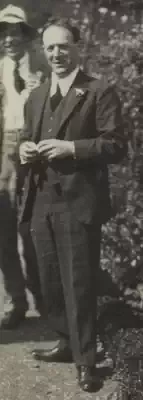
Walter de la Mare
The Song of Finis
The Song of Finis
At the edge of All the Ages
A Knight sate on his steed,
His armor red and thin with rust
His soul from sorrow freed;
And he lifted up his visor
From a face of skin and bone,
And his horse turned head and whinnied
As the twain stood there alone.
No bird above that steep of time
Sang of a livelong quest;
No wind breathed,
Rest:
"Lone for an end!" cried Knight to steed,
Loosed an eager rein--
Charged with his challenge into space:
And quiet did quiet remain.
At the edge of All the Ages
A Knight sate on his steed,
His armor red and thin with rust
His soul from sorrow freed;
And he lifted up his visor
From a face of skin and bone,
And his horse turned head and whinnied
As the twain stood there alone.
No bird above that steep of time
Sang of a livelong quest;
No wind breathed,
Rest:
"Lone for an end!" cried Knight to steed,
Loosed an eager rein--
Charged with his challenge into space:
And quiet did quiet remain.
321
Walter de la Mare
The Keys of Morning
The Keys of Morning
While at her bedroom window once,
Learning her task for school,
Little Louisa lonely sat
In the morning clear and cool,
She slanted her small bead-brown eyes
Across the empty street,
And saw Death softly watching her
In the sunshine pale and sweet.
His was a long lean sallow face;
He sat with half-shut eyes,
Like a old sailor in a ship
Becalmed 'neath tropic skies.
Beside him in the dust he had set
His staff and shady hat;
These, peeping small, Louisa saw
Quite clearly where she sat -
The thinness of his coal-black locks,
His hands so long and lean
They scarcely seemed to grasp at all
The keys that hung between:
Both were of gold, but one was small,
And with this last did he
Wag in the air, as if to say,
"Come hither, child, to me!"
Louisa laid her lesson book
On the cold window-sill;
And in the sleepy sunshine house
Went softly down, until
She stood in the half-opened door,
And peeped. But strange to say
Where Death just now had sunning sat
Only a shadow lay:
Just the tall chimney's round-topped cowl,
And the small sun behind,
Had with its shadow in the dust
Called sleepy Death to mind.
But most she thought how strange it was
Two keys that he should bear,
And that, when beckoning, he should wag
The littlest in the air.
While at her bedroom window once,
Learning her task for school,
Little Louisa lonely sat
In the morning clear and cool,
She slanted her small bead-brown eyes
Across the empty street,
And saw Death softly watching her
In the sunshine pale and sweet.
His was a long lean sallow face;
He sat with half-shut eyes,
Like a old sailor in a ship
Becalmed 'neath tropic skies.
Beside him in the dust he had set
His staff and shady hat;
These, peeping small, Louisa saw
Quite clearly where she sat -
The thinness of his coal-black locks,
His hands so long and lean
They scarcely seemed to grasp at all
The keys that hung between:
Both were of gold, but one was small,
And with this last did he
Wag in the air, as if to say,
"Come hither, child, to me!"
Louisa laid her lesson book
On the cold window-sill;
And in the sleepy sunshine house
Went softly down, until
She stood in the half-opened door,
And peeped. But strange to say
Where Death just now had sunning sat
Only a shadow lay:
Just the tall chimney's round-topped cowl,
And the small sun behind,
Had with its shadow in the dust
Called sleepy Death to mind.
But most she thought how strange it was
Two keys that he should bear,
And that, when beckoning, he should wag
The littlest in the air.
299
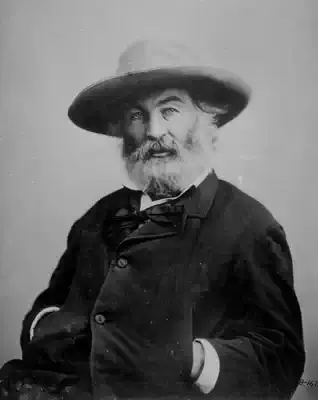
Walt Whitman
When Lilacs Last in the Dooryard Bloom'd
When Lilacs Last in the Dooryard Bloom'd
from Memories of President Lincoln
1
When lilacs last in the dooryard bloom'd,
And the great star early droop'd in the western sky in the night,
I mourn'd, and yet shall mourn with ever-returning spring.
Ever-returning spring, trinity sure to me you bring,
Lilac blooming perennial and drooping star in the west,
And thought of him I love.
2
O powerful western fallen star!
O shades of night -- O moody, tearful night!
O great star disappear'd -- O the black murk that hides the star!
O cruel hands that hold me powerless -- O helpless soul of me!
O harsh surrounding cloud that will not free my soul.
3
In the dooryard fronting an old farm-house near the white-wash'd palings,
Stands the lilac-bush tall-growing with heart-shaped leaves of rich green,
With many a pointed blossom rising delicate, with the perfume strong I love,
With every leaf a miracle -- and from this bush in the dooryard,
With delicate-color'd blossoms and heart-shaped leaves of rich green,
A sprig with its flower I break.
4
In the swamp in secluded recesses,
A shy and hidden bird is warbling a song.
Solitary the thrush,
The hermit withdrawn to himself, avoiding the settlements,
Sings by himself a song.
Song of the bleeding throat,
Death's outlet song of life, (for well dear brother I know,
If thou wast not granted to sing, thou would'st surely die.)
5
Over the breast of the spring, the land, amid cities,
Amid lanes and through old woods, where lately the violets peep'd from the ground,
spotting the gray debris,
Amid the grass in the fields each side of the lanes, passing the endless grass,
Passing the yellow-spear'd wheat, every grain from its shroud in the dark-brown fields
uprisen,
Passing the apple-tree blows of white and pink in the orchards,
Carrying a corpse to where it shall rest in the grave,
Night and day journeys a coffin.
6
Coffin that passes through lanes and streets,
Through day and night with the great cloud darkening the land,
With the pomp of the inloop'd flags with the cities draped in black,
With the show of the States themselves as of crepe-veil'd women standing,
With processions long and winding and the flambeaus of the night,
With the countless torches lit, with the silent sea of faces and the unbared heads,
With the waiting depot, the arriving coffin, and the sombre faces,
With dirges through the night, with the thousand voices rising strong and solemn,
With all the mournful voices of the dirges pour'd around the coffin,
The dim-lit churches and the shuddering organs -- where amid these you journey,
With the tolling bells' perpetual clang,
Here, coffin that slowly passes,
I give you a sprig of lilac.
7
(Nor for you, for one alone,
Blossoms and branches green to coffins all I bring,
For fresh as the morning, thus would I chant a song for you O sane and sacred death.
All over bouquets of roses,
O death, I cover you with roses and early lilies,
But mostly and now the lilac that blooms the first,
Copious I break, I break the sprigs from the bushes,
With loaded arms I come, pouring for you,
For you and the coffins all of you, O death.)
8
O western orb sailing the heaven,
Now I know what you must have meant as a month since I walk'd,
As I walk'd in silence the transparent shadowy night,
As I saw you had something to tell as you bent to me night after night,
As you droop'd from the sky low down as if to my side, (while the other stars all look'd
on,)
As we wander'd together the solemn night, (for something I know not what kept me
from sleep,)
As the night advanced, and I saw on the rim of the west how full you were of woe,
As I stood on the rising ground in the breeze in the cool transparent night,
As I watch'd where you pass'd and was lost in the netherward black of the night,
As my soul in its trouble dissatisfied sank, as where you sad orb,
Concluded, dropt in the night, and was gone.
9
Sing on there in the swamp,
O singer bashful and tender, I hear your notes, I hear your call,
I hear, I come presently, I understand you,
But a moment I linger, for the lustrous star has detain'd me,
The star my departing comrade holds and detains me.
10
O how shall I warble myself for the dead one there I loved?
And how shall I deck my soul for the large sweet soul that has gone?
And what shall my perfume be for the grave of him I love?
Sea-winds blown from the east and west,
Blown from the Eastern sea and blown from the Western sea, till there on the prairies
meeting,
These and with these and the breath of my chant,
I'll perfume the grave of him I love.
11
O what shall I hang on the chamber walls?
And what shall the pictures be that I hang on the walls,
To adorn the burial-house of him I love?
Pictures of growing spring and farms and homes,
With the Fourth-month eve at sundown, and the gray smoke lucid and bright,
With floods of the yellow gold of the gorgeous, indolent, sinking sun, burning,
expanding the air,
With the fresh sweet herbage under foot, and the pale green leaves of the trees
prolific,
In the distance of the flowing glaze, the breast of the river, with a wind-dapple here
and there,
With ranging hills on the banks, with many a line against the sky, and shadows,
And the city at hand with dwellings so dense, and stacks of chimneys,
And all the scenes of life and the workshops, and the workmen homeward returning.
12
Lo, body and soul -- this land,
My own Manhattan with spires, and the sparkling and hurrying tides, and the ships,
The varied and ample land, the South and the North in the light, Ohio's shores and
flashing Missouri,
And ever the far-spreading prairies cover'd with grass and corn.
Lo, the most excellent sun so calm and haughty,
The violet and purple morn with just-felt breezes,
The gentle soft-born measureless light,
The miracle spreading bathing all, the fulfill'd noon,
The coming eve delicious, the welcome night and the stars,
Over my cities shining all, enveloping man and land.
13
Sing on, sing on, you gray-brown bird,
Sing from the swamps, the recesses, pour your chant from the bushes,
Limitless out of the dusk, out of the cedars and pines.
Sing on dearest brother, warble your reedy song,
Loud human song, with voice of uttermost woe.
O liquid and free and tender!
O wild and loose to my soul -- O wondrous singer!
You only I hear -- yet the star holds me, (but will soon depart,)
Yet the lilac with mastering odor holds me.
14
Now while I sat in the day and look'd forth,
In the close of the day with its light and the fields of spring, and the farmers preparing
their crops,
In the large unconscious scenery of my land with its lakes and forests,
In the heavenly aerial beauty, (after the perturb'd winds and storms,)
Under the arching heavens of the afternoon swift passing, and the voices of children
and women,
The many-moving sea-tides, and I saw the ships how they sail'd,
And the summer approaching with richness, and the fields all busy with labor,
And the infinite separate houses, how they all went on, each with its meals and minutia
of daily usages,
And the streets how their throbbings throbb'd, and the cities pent -- lo, then and there,
Falling upon them all and among them all, enveloping me with the rest,
Appear'd the cloud, appear'd the long black trail,
And I knew death, its thought, and the sacred knowledge of death.
Then with the knowledge of death as walking one side of me,
And the thought of death close-walking the other side of me,
And I in the middle as with companions, and as holding the hands of companions,
I fled forth to the hiding receiving night that talks not,
Down to the shores of the water, the path by the swamp in the dimness,
To the solemn shadowy cedars and the ghostly pines so still.
And the singer so shy to the rest receiv'd me,
The gray-brown bird I know received us comrades three,
And he sang the carol of death, and a verse for him I love.
>From deep secluded recesses,
>From the fragrant cedars and the ghostly pines so still,
Came the carol of the bird.
And the charm of the carol rapt me,
As I held as if by their hands my comrades in the night,
And the voice of my spirit tallied the song of the bird.
Come lovely and soothing death,
Undulate round the world, serenely arriving, arriving,
In the day, in the night, to all, to each,
Sooner or later delicate death.
Prais'd be the fathomless universe,
For life and joy, and for objects and knowledge curious,
And for love, sweet love -- but praise! praise! praise!
For the sure-enwinding arms of cool-enfolding death.
Dark mother always gliding near with soft feet,
Have none chanted for thee a chant of fullest welcome?
Then I chant it for thee, I glorify thee above all,
I bring thee a song that when thou must indeed come, come unfalteringly.
Approach strong deliveress,
When it is so, when you have taken them I joyously sing the dead,
Lost in the loving floating ocean of thee,
Laved in the flood of thy bliss, O death.
From me to thee glad serenades,
Dances for thee I propose saluting thee, adornments and feastings for thee,
And the sights of the open landscape and the high-spread sky are fitting,
And life and the fields, and the huge and thoughtful night.
The night in silence under many a star,
The ocean shore and the husky whispering wave whose voice I know,
And the soul turning to thee O vast and well-veil'd death,
And the body gratefully nestling close to thee.
Over the treetops I float thee a song,
Over the rising and sinking waves, over the myriad fields and the prairies wide,
Over the dense-packed cities and all the teeming wharves and ways,
I float this carol with joy, with joy to thee O death.
15
To the tally of my soul,
Loud and strong kept up the gray-brown bird,
With pure deliberate notes spreading filling the night.
Loud in the pines and cedars dim,
Clear in the freshness moist and the swamp-perfume,
And I with my comrades there in the night.
While my sight that was bound in my eyes unclosed,
As to long panoramas of visions.
And I saw askant the armies,
I saw as in noiseless dreams hundreds of battle-flags,
Borne through the smoke of the battles and pierced with missiles I saw them,
And carried hither and yon through the smoke and torn and bloody,
And at last but a few shreds left on the staffs, (all in silence,)
And the staffs all splinter'd and broken.
I saw battle-corpses, myriads of them,
And the white skeletons of young men, I saw them,
I saw the debris and debris of all the dead soldiers of the war,
But I saw they were not as was thought,
They themselves were fully at rest, they suffer'd not,
The living remain'd and suffer'd, the mother suffer'd,
And the wife and the child and the musing comrade suffer'd,
And the armies that remain'd suffer'd.
16
Passing the visions, passing the night,
Passing, unloosing the hold of my comrades' hands,
Passing the song of the hermit bird and the tallying song of my soul,
Victorious song, death's outlet song, yet varying ever-altering song,
As low and wailing, yet clear the notes, rising and falling, flooding the night,
Sadly sinking and fainting, as warning and warning, and yet again bursting with joy,
Covering the earth and filling the spread of the heaven,
As that powerful psalm in the night I heard from recesses,
Passing, I leave thee lilac with heart-shaped leaves,
I leave thee there in the door-yard, blooming, returning with spring.
I cease from my song for thee,
From my gaze on thee in the west, fronting the west, communing with thee,
O comrade lustrous with silver face in the night.
Yet each to keep and all, retrievements out of the night,
The song, the wondrous chant of the gray-brown bird,
And the tallying chant, the echo arous'd in my soul,
With the lustrous and drooping star with the countenance full of woe,
With the holders holding my hand nearing the call of the bird,
Comrades mine and I in the midst, and their memory ever to keep for the dead I loved
so well,
For the sweetest, wisest soul of all my days and lands -- and this for his dear sake,
Lilac and star and bird twined with the chant of my soul,
There in the fragrant pines and the cedars dusk and dim.
from Memories of President Lincoln
1
When lilacs last in the dooryard bloom'd,
And the great star early droop'd in the western sky in the night,
I mourn'd, and yet shall mourn with ever-returning spring.
Ever-returning spring, trinity sure to me you bring,
Lilac blooming perennial and drooping star in the west,
And thought of him I love.
2
O powerful western fallen star!
O shades of night -- O moody, tearful night!
O great star disappear'd -- O the black murk that hides the star!
O cruel hands that hold me powerless -- O helpless soul of me!
O harsh surrounding cloud that will not free my soul.
3
In the dooryard fronting an old farm-house near the white-wash'd palings,
Stands the lilac-bush tall-growing with heart-shaped leaves of rich green,
With many a pointed blossom rising delicate, with the perfume strong I love,
With every leaf a miracle -- and from this bush in the dooryard,
With delicate-color'd blossoms and heart-shaped leaves of rich green,
A sprig with its flower I break.
4
In the swamp in secluded recesses,
A shy and hidden bird is warbling a song.
Solitary the thrush,
The hermit withdrawn to himself, avoiding the settlements,
Sings by himself a song.
Song of the bleeding throat,
Death's outlet song of life, (for well dear brother I know,
If thou wast not granted to sing, thou would'st surely die.)
5
Over the breast of the spring, the land, amid cities,
Amid lanes and through old woods, where lately the violets peep'd from the ground,
spotting the gray debris,
Amid the grass in the fields each side of the lanes, passing the endless grass,
Passing the yellow-spear'd wheat, every grain from its shroud in the dark-brown fields
uprisen,
Passing the apple-tree blows of white and pink in the orchards,
Carrying a corpse to where it shall rest in the grave,
Night and day journeys a coffin.
6
Coffin that passes through lanes and streets,
Through day and night with the great cloud darkening the land,
With the pomp of the inloop'd flags with the cities draped in black,
With the show of the States themselves as of crepe-veil'd women standing,
With processions long and winding and the flambeaus of the night,
With the countless torches lit, with the silent sea of faces and the unbared heads,
With the waiting depot, the arriving coffin, and the sombre faces,
With dirges through the night, with the thousand voices rising strong and solemn,
With all the mournful voices of the dirges pour'd around the coffin,
The dim-lit churches and the shuddering organs -- where amid these you journey,
With the tolling bells' perpetual clang,
Here, coffin that slowly passes,
I give you a sprig of lilac.
7
(Nor for you, for one alone,
Blossoms and branches green to coffins all I bring,
For fresh as the morning, thus would I chant a song for you O sane and sacred death.
All over bouquets of roses,
O death, I cover you with roses and early lilies,
But mostly and now the lilac that blooms the first,
Copious I break, I break the sprigs from the bushes,
With loaded arms I come, pouring for you,
For you and the coffins all of you, O death.)
8
O western orb sailing the heaven,
Now I know what you must have meant as a month since I walk'd,
As I walk'd in silence the transparent shadowy night,
As I saw you had something to tell as you bent to me night after night,
As you droop'd from the sky low down as if to my side, (while the other stars all look'd
on,)
As we wander'd together the solemn night, (for something I know not what kept me
from sleep,)
As the night advanced, and I saw on the rim of the west how full you were of woe,
As I stood on the rising ground in the breeze in the cool transparent night,
As I watch'd where you pass'd and was lost in the netherward black of the night,
As my soul in its trouble dissatisfied sank, as where you sad orb,
Concluded, dropt in the night, and was gone.
9
Sing on there in the swamp,
O singer bashful and tender, I hear your notes, I hear your call,
I hear, I come presently, I understand you,
But a moment I linger, for the lustrous star has detain'd me,
The star my departing comrade holds and detains me.
10
O how shall I warble myself for the dead one there I loved?
And how shall I deck my soul for the large sweet soul that has gone?
And what shall my perfume be for the grave of him I love?
Sea-winds blown from the east and west,
Blown from the Eastern sea and blown from the Western sea, till there on the prairies
meeting,
These and with these and the breath of my chant,
I'll perfume the grave of him I love.
11
O what shall I hang on the chamber walls?
And what shall the pictures be that I hang on the walls,
To adorn the burial-house of him I love?
Pictures of growing spring and farms and homes,
With the Fourth-month eve at sundown, and the gray smoke lucid and bright,
With floods of the yellow gold of the gorgeous, indolent, sinking sun, burning,
expanding the air,
With the fresh sweet herbage under foot, and the pale green leaves of the trees
prolific,
In the distance of the flowing glaze, the breast of the river, with a wind-dapple here
and there,
With ranging hills on the banks, with many a line against the sky, and shadows,
And the city at hand with dwellings so dense, and stacks of chimneys,
And all the scenes of life and the workshops, and the workmen homeward returning.
12
Lo, body and soul -- this land,
My own Manhattan with spires, and the sparkling and hurrying tides, and the ships,
The varied and ample land, the South and the North in the light, Ohio's shores and
flashing Missouri,
And ever the far-spreading prairies cover'd with grass and corn.
Lo, the most excellent sun so calm and haughty,
The violet and purple morn with just-felt breezes,
The gentle soft-born measureless light,
The miracle spreading bathing all, the fulfill'd noon,
The coming eve delicious, the welcome night and the stars,
Over my cities shining all, enveloping man and land.
13
Sing on, sing on, you gray-brown bird,
Sing from the swamps, the recesses, pour your chant from the bushes,
Limitless out of the dusk, out of the cedars and pines.
Sing on dearest brother, warble your reedy song,
Loud human song, with voice of uttermost woe.
O liquid and free and tender!
O wild and loose to my soul -- O wondrous singer!
You only I hear -- yet the star holds me, (but will soon depart,)
Yet the lilac with mastering odor holds me.
14
Now while I sat in the day and look'd forth,
In the close of the day with its light and the fields of spring, and the farmers preparing
their crops,
In the large unconscious scenery of my land with its lakes and forests,
In the heavenly aerial beauty, (after the perturb'd winds and storms,)
Under the arching heavens of the afternoon swift passing, and the voices of children
and women,
The many-moving sea-tides, and I saw the ships how they sail'd,
And the summer approaching with richness, and the fields all busy with labor,
And the infinite separate houses, how they all went on, each with its meals and minutia
of daily usages,
And the streets how their throbbings throbb'd, and the cities pent -- lo, then and there,
Falling upon them all and among them all, enveloping me with the rest,
Appear'd the cloud, appear'd the long black trail,
And I knew death, its thought, and the sacred knowledge of death.
Then with the knowledge of death as walking one side of me,
And the thought of death close-walking the other side of me,
And I in the middle as with companions, and as holding the hands of companions,
I fled forth to the hiding receiving night that talks not,
Down to the shores of the water, the path by the swamp in the dimness,
To the solemn shadowy cedars and the ghostly pines so still.
And the singer so shy to the rest receiv'd me,
The gray-brown bird I know received us comrades three,
And he sang the carol of death, and a verse for him I love.
>From deep secluded recesses,
>From the fragrant cedars and the ghostly pines so still,
Came the carol of the bird.
And the charm of the carol rapt me,
As I held as if by their hands my comrades in the night,
And the voice of my spirit tallied the song of the bird.
Come lovely and soothing death,
Undulate round the world, serenely arriving, arriving,
In the day, in the night, to all, to each,
Sooner or later delicate death.
Prais'd be the fathomless universe,
For life and joy, and for objects and knowledge curious,
And for love, sweet love -- but praise! praise! praise!
For the sure-enwinding arms of cool-enfolding death.
Dark mother always gliding near with soft feet,
Have none chanted for thee a chant of fullest welcome?
Then I chant it for thee, I glorify thee above all,
I bring thee a song that when thou must indeed come, come unfalteringly.
Approach strong deliveress,
When it is so, when you have taken them I joyously sing the dead,
Lost in the loving floating ocean of thee,
Laved in the flood of thy bliss, O death.
From me to thee glad serenades,
Dances for thee I propose saluting thee, adornments and feastings for thee,
And the sights of the open landscape and the high-spread sky are fitting,
And life and the fields, and the huge and thoughtful night.
The night in silence under many a star,
The ocean shore and the husky whispering wave whose voice I know,
And the soul turning to thee O vast and well-veil'd death,
And the body gratefully nestling close to thee.
Over the treetops I float thee a song,
Over the rising and sinking waves, over the myriad fields and the prairies wide,
Over the dense-packed cities and all the teeming wharves and ways,
I float this carol with joy, with joy to thee O death.
15
To the tally of my soul,
Loud and strong kept up the gray-brown bird,
With pure deliberate notes spreading filling the night.
Loud in the pines and cedars dim,
Clear in the freshness moist and the swamp-perfume,
And I with my comrades there in the night.
While my sight that was bound in my eyes unclosed,
As to long panoramas of visions.
And I saw askant the armies,
I saw as in noiseless dreams hundreds of battle-flags,
Borne through the smoke of the battles and pierced with missiles I saw them,
And carried hither and yon through the smoke and torn and bloody,
And at last but a few shreds left on the staffs, (all in silence,)
And the staffs all splinter'd and broken.
I saw battle-corpses, myriads of them,
And the white skeletons of young men, I saw them,
I saw the debris and debris of all the dead soldiers of the war,
But I saw they were not as was thought,
They themselves were fully at rest, they suffer'd not,
The living remain'd and suffer'd, the mother suffer'd,
And the wife and the child and the musing comrade suffer'd,
And the armies that remain'd suffer'd.
16
Passing the visions, passing the night,
Passing, unloosing the hold of my comrades' hands,
Passing the song of the hermit bird and the tallying song of my soul,
Victorious song, death's outlet song, yet varying ever-altering song,
As low and wailing, yet clear the notes, rising and falling, flooding the night,
Sadly sinking and fainting, as warning and warning, and yet again bursting with joy,
Covering the earth and filling the spread of the heaven,
As that powerful psalm in the night I heard from recesses,
Passing, I leave thee lilac with heart-shaped leaves,
I leave thee there in the door-yard, blooming, returning with spring.
I cease from my song for thee,
From my gaze on thee in the west, fronting the west, communing with thee,
O comrade lustrous with silver face in the night.
Yet each to keep and all, retrievements out of the night,
The song, the wondrous chant of the gray-brown bird,
And the tallying chant, the echo arous'd in my soul,
With the lustrous and drooping star with the countenance full of woe,
With the holders holding my hand nearing the call of the bird,
Comrades mine and I in the midst, and their memory ever to keep for the dead I loved
so well,
For the sweetest, wisest soul of all my days and lands -- and this for his dear sake,
Lilac and star and bird twined with the chant of my soul,
There in the fragrant pines and the cedars dusk and dim.
360
Walt Whitman
Virgil Strange I Kept On The Field
Virgil Strange I Kept On The Field
VIGIL strange I kept on the field one night:
When you, my son and my comrade, dropt at my side that day,
One look I but gave, which your dear eyes return'd, with a look I
shall never forget;
One touch of your hand to mine, O boy, reach'd up as you lay on the
ground;
Then onward I sped in the battle, the even-contested battle;
Till late in the night reliev'd, to the place at last again I made my
way;
Found you in death so cold, dear comrade--found your body, son of
responding kisses, (never again on earth responding;)
Bared your face in the starlight--curious the scene--cool blew the
moderate night-wind;
Long there and then in vigil I stood, dimly around me the battlefield
spreading;
Vigil wondrous and vigil sweet, there in the fragrant silent
night; 10
But not a tear fell, not even a long-drawn sigh--Long, long I gazed;
Then on the earth partially reclining, sat by your side, leaning my
chin in my hands;
Passing sweet hours, immortal and mystic hours with you, dearest
comrade--Not a tear, not a word;
Vigil of silence, love and death--vigil for you my son and my
soldier,
As onward silently stars aloft, eastward new ones upward stole;
Vigil final for you, brave boy, (I could not save you, swift was your
death,
I faithfully loved you and cared for you living--I think we shall
surely meet again;)
Till at latest lingering of the night, indeed just as the dawn
appear'd,
My comrade I wrapt in his blanket, envelop'd well his form,
Folded the blanket well, tucking it carefully over head, and
carefully under feet; 20
And there and then, and bathed by the rising sun, my son in his
grave, in his rude-dug grave I deposited;
Ending my vigil strange with that--vigil of night and battlefield
dim;
Vigil for boy of responding kisses, (never again on earth
responding;)
Vigil for comrade swiftly slain--vigil I never forget, how as day
brighten'd,
I rose from the chill ground, and folded my soldier well in his
blanket,
And buried him where he fell.
VIGIL strange I kept on the field one night:
When you, my son and my comrade, dropt at my side that day,
One look I but gave, which your dear eyes return'd, with a look I
shall never forget;
One touch of your hand to mine, O boy, reach'd up as you lay on the
ground;
Then onward I sped in the battle, the even-contested battle;
Till late in the night reliev'd, to the place at last again I made my
way;
Found you in death so cold, dear comrade--found your body, son of
responding kisses, (never again on earth responding;)
Bared your face in the starlight--curious the scene--cool blew the
moderate night-wind;
Long there and then in vigil I stood, dimly around me the battlefield
spreading;
Vigil wondrous and vigil sweet, there in the fragrant silent
night; 10
But not a tear fell, not even a long-drawn sigh--Long, long I gazed;
Then on the earth partially reclining, sat by your side, leaning my
chin in my hands;
Passing sweet hours, immortal and mystic hours with you, dearest
comrade--Not a tear, not a word;
Vigil of silence, love and death--vigil for you my son and my
soldier,
As onward silently stars aloft, eastward new ones upward stole;
Vigil final for you, brave boy, (I could not save you, swift was your
death,
I faithfully loved you and cared for you living--I think we shall
surely meet again;)
Till at latest lingering of the night, indeed just as the dawn
appear'd,
My comrade I wrapt in his blanket, envelop'd well his form,
Folded the blanket well, tucking it carefully over head, and
carefully under feet; 20
And there and then, and bathed by the rising sun, my son in his
grave, in his rude-dug grave I deposited;
Ending my vigil strange with that--vigil of night and battlefield
dim;
Vigil for boy of responding kisses, (never again on earth
responding;)
Vigil for comrade swiftly slain--vigil I never forget, how as day
brighten'd,
I rose from the chill ground, and folded my soldier well in his
blanket,
And buried him where he fell.
379
Walt Whitman
The Wound Dresser
The Wound Dresser
1
AN old man bending, I come, among new faces,
Years looking backward, resuming, in answer to children,
Come tell us, old man, as from young men and maidens that love me;
(Arous'd and angry, I'd thought to beat the alarum, and urge relentless war,
but soon my fingers fail'd me, my face droop'd and I resign'd myself,
To sit by the wounded and soothe them, or silently watch the dead
Years hence of these scenes, of these furious passions, these chances,
Of unsurpass’d heroes, (was one side so brave? the other was equally brave
Now be witness again—paint the mightiest armies of earth;
Of those armies so rapid, so wondrous, what saw you to tell us?
What stays with you latest and deepest? of curious panics,
Of hard-fought engagements, or sieges tremendous, what deepest remains?
2
O maidens and young men I love, and that love me,
What you ask of my days, those the strangest and sudden your talking recalls;
Soldier alert I arrive, after a long march, cover’d with sweat and dust;
In the nick of time I come, plunge in the fight, loudly shout in the rush of successful
charge;
Enter the captur’d works.... yet lo! like a swift-running river, they fade;
Pass and are gone, they fade—I dwell not on soldiers’ perils or soldiers’ joys;
(Both I remember well—many the hardships, few the joys, yet I was content.)
But in silence, in dreams’ projections,
While the world of gain and appearance and mirth goes on,
So soon what is over forgotten, and waves wash the imprints off the sand,
With hinged knees returning, I enter the doors—(while for you up there,
Whoever you are, follow me without noise, and be of strong heart.)
3
Bearing the bandages, water and sponge,
Straight and swift to my wounded I go,
Where they lie on the ground, after the battle brought in;
Where their priceless blood reddens the grass, the ground;
Or to the rows of the hospital tent, or under the roof’d hospital;
To the long rows of cots, up and down, each side, I return;
To each and all, one after another, I draw near—not one do I miss;
An attendant follows, holding a tray—he carries a refuse pail,
Soon to be fill’d with clotted rags and blood, emptied and fill’d again.
I onward go, I stop,
With hinged knees and steady hand, to dress wounds;
I am firm with each—the pangs are sharp, yet unavoidable;
One turns to me his appealing eyes—(poor boy! I never knew you,
Yet I think I could not refuse this moment to die for you, if that would save you.)
On, on I go!—(open doors of time! open hospital doors!)
The crush’d head I dress, (poor crazed hand, tear not the bandage away
The neck of the cavalry-man, with the bullet through and through, I examine;
Hard the breathing rattles, quite glazed already the eye, yet life struggles hard;
(Come, sweet death! be persuaded, O beautiful death!
In mercy come quickly.)
From the stump of the arm, the amputated hand,
I undo the clotted lint, remove the slough, wash off the matter and blood;
Back on his pillow the soldier bends, with curv’d neck, and side-falling head;
His eyes are closed, his face is pale, he dares not look on the bloody stump,
And has not yet look’d on it.
I dress a wound in the side, deep, deep;
But a day or two more—for see, the frame all wasted already, and sinking,
And the yellow-blue countenance see.
I dress the perforated shoulder, the foot with the bullet wound,
Cleanse the one with a gnawing and putrid gangrene, so sickening, so offensive,
While the attendant stands behind aside me, holding the tray and pail.
I am faithful, I do not give out;
The fractur’d thigh, the knee, the wound in the abdomen,
These and more I dress with impassive hand, (yet deep in my breast a fire, a burning
flame.)
4
Thus in silence, in dreams’ projections,
Returning, resuming, I thread my way through the hospitals;
The hurt and wounded I pacify with soothing hand,
I sit by the restless all the dark night—some are so young;
Some suffer so much—I recall the experience sweet and sad;
(Many a soldier’s loving arms about this neck have cross’d and rested,
Many a soldier’s kiss dwells on these bearded lips.)
1
AN old man bending, I come, among new faces,
Years looking backward, resuming, in answer to children,
Come tell us, old man, as from young men and maidens that love me;
(Arous'd and angry, I'd thought to beat the alarum, and urge relentless war,
but soon my fingers fail'd me, my face droop'd and I resign'd myself,
To sit by the wounded and soothe them, or silently watch the dead
Years hence of these scenes, of these furious passions, these chances,
Of unsurpass’d heroes, (was one side so brave? the other was equally brave
Now be witness again—paint the mightiest armies of earth;
Of those armies so rapid, so wondrous, what saw you to tell us?
What stays with you latest and deepest? of curious panics,
Of hard-fought engagements, or sieges tremendous, what deepest remains?
2
O maidens and young men I love, and that love me,
What you ask of my days, those the strangest and sudden your talking recalls;
Soldier alert I arrive, after a long march, cover’d with sweat and dust;
In the nick of time I come, plunge in the fight, loudly shout in the rush of successful
charge;
Enter the captur’d works.... yet lo! like a swift-running river, they fade;
Pass and are gone, they fade—I dwell not on soldiers’ perils or soldiers’ joys;
(Both I remember well—many the hardships, few the joys, yet I was content.)
But in silence, in dreams’ projections,
While the world of gain and appearance and mirth goes on,
So soon what is over forgotten, and waves wash the imprints off the sand,
With hinged knees returning, I enter the doors—(while for you up there,
Whoever you are, follow me without noise, and be of strong heart.)
3
Bearing the bandages, water and sponge,
Straight and swift to my wounded I go,
Where they lie on the ground, after the battle brought in;
Where their priceless blood reddens the grass, the ground;
Or to the rows of the hospital tent, or under the roof’d hospital;
To the long rows of cots, up and down, each side, I return;
To each and all, one after another, I draw near—not one do I miss;
An attendant follows, holding a tray—he carries a refuse pail,
Soon to be fill’d with clotted rags and blood, emptied and fill’d again.
I onward go, I stop,
With hinged knees and steady hand, to dress wounds;
I am firm with each—the pangs are sharp, yet unavoidable;
One turns to me his appealing eyes—(poor boy! I never knew you,
Yet I think I could not refuse this moment to die for you, if that would save you.)
On, on I go!—(open doors of time! open hospital doors!)
The crush’d head I dress, (poor crazed hand, tear not the bandage away
The neck of the cavalry-man, with the bullet through and through, I examine;
Hard the breathing rattles, quite glazed already the eye, yet life struggles hard;
(Come, sweet death! be persuaded, O beautiful death!
In mercy come quickly.)
From the stump of the arm, the amputated hand,
I undo the clotted lint, remove the slough, wash off the matter and blood;
Back on his pillow the soldier bends, with curv’d neck, and side-falling head;
His eyes are closed, his face is pale, he dares not look on the bloody stump,
And has not yet look’d on it.
I dress a wound in the side, deep, deep;
But a day or two more—for see, the frame all wasted already, and sinking,
And the yellow-blue countenance see.
I dress the perforated shoulder, the foot with the bullet wound,
Cleanse the one with a gnawing and putrid gangrene, so sickening, so offensive,
While the attendant stands behind aside me, holding the tray and pail.
I am faithful, I do not give out;
The fractur’d thigh, the knee, the wound in the abdomen,
These and more I dress with impassive hand, (yet deep in my breast a fire, a burning
flame.)
4
Thus in silence, in dreams’ projections,
Returning, resuming, I thread my way through the hospitals;
The hurt and wounded I pacify with soothing hand,
I sit by the restless all the dark night—some are so young;
Some suffer so much—I recall the experience sweet and sad;
(Many a soldier’s loving arms about this neck have cross’d and rested,
Many a soldier’s kiss dwells on these bearded lips.)
623
Walt Whitman
The Sleepers
The Sleepers
I WANDER all night in my vision,
Stepping with light feet, swiftly and noiselessly stepping and
stopping,
Bending with open eyes over the shut eyes of sleepers,
Wandering and confused, lost to myself, ill-assorted, contradictory,
Pausing, gazing, bending, and stopping.
How solemn they look there, stretch'd and still!
How quiet they breathe, the little children in their cradles!
The wretched features of ennuyés, the white features of
corpses, the livid faces of drunkards, the sick-gray faces of
onanists,
The gash'd bodies on battle-fields, the insane in their strong-door'd
rooms, the sacred idiots, the new-born emerging from gates, and
the dying emerging from gates,
The night pervades them and infolds them. 10
The married couple sleep calmly in their bed--he with his palm on the
hip of the wife, and she with her palm on the hip of the
husband,
The sisters sleep lovingly side by side in their bed,
The men sleep lovingly side by side in theirs,
And the mother sleeps, with her little child carefully wrapt.
The blind sleep, and the deaf and dumb sleep,
The prisoner sleeps well in the prison--the run-away son sleeps;
The murderer that is to be hung next day--how does he sleep?
And the murder'd person--how does he sleep?
The female that loves unrequited sleeps,
And the male that loves unrequited sleeps, 20
The head of the money-maker that plotted all day sleeps,
And the enraged and treacherous dispositions--all, all sleep.
I stand in the dark with drooping eyes by the worst-suffering and the
most restless,
I pass my hands soothingly to and fro a few inches from them,
The restless sink in their beds--they fitfully sleep.
Now I pierce the darkness--new beings appear,
The earth recedes from me into the night,
I saw that it was beautiful, and I see that what is not the earth is
beautiful.
I go from bedside to bedside--I sleep close with the other sleepers,
each in turn,
I dream in my dream all the dreams of the other dreamers, 30
And I become the other dreamers.
I am a dance--Play up, there! the fit is whirling me fast!
I am the ever-laughing--it is new moon and twilight,
I see the hiding of douceurs--I see nimble ghosts whichever way I
look,
Cache, and cache again, deep in the ground and sea, and where it is
neither ground or sea.
Well do they do their jobs, those journeymen divine,
Only from me can they hide nothing, and would not if they could,
I reckon I am their boss, and they make me a pet besides,
And surround me and lead me, and run ahead when I walk,
To lift their cunning covers, to signify me with stretch'd arms, and
resume the way; 40
Onward we move! a gay gang of blackguards! with mirth-shouting music,
and wild-flapping pennants of joy!
I am the actor, the actress, the voter, the politician;
The emigrant and the exile, the criminal that stood in the box,
He who has been famous, and he who shall be famous after to-day,
The stammerer, the well-form'd person, the wasted or feeble person.
I am she who adorn'd herself and folded her hair expectantly,
My truant lover has come, and it is dark.
Double yourself and receive me, darkness!
Receive me and my lover too--he will not let me go without him.
I roll myself upon you, as upon a bed--I resign myself to the
dusk. 50
He whom I call answers me, and takes the place of my lover,
He rises with me silently from the bed.
Darkness! you are gentler than my lover--his flesh was sweaty and
panting,
I feel the hot moisture yet that he left me.
My hands are spread forth, I pass them in all directions,
I would sound up the shadowy shore to which you are journeying.
Be careful, darkness! already, what was it touch'd me?
I thought my lover had gone, else darkness and he are one,
I hear the heart-beat--I follow, I fade away.
O hot-cheek'd and blushing! O foolish hectic! 60
O for pity's sake, no one must see me now! my clothes were stolen
while I was abed,
Now I am thrust forth, where shall I run?
Pier that I saw dimly last night, when I look'd from the windows!
Pier out from the main, let me catch myself with you, and stay--I
will not chafe you,
I feel ashamed to go naked about the world.
I am curious to know where my feet stand--and what this is flooding
me, childhood or manhood--and the hunger that crosses the
bridge between.
The cloth laps a first sweet eating and drinking,
Laps life-swelling yolks--laps ear of rose-corn, milky and just
ripen'd;
The white teeth stay, and the boss-tooth advances in darkness,
And liquor is spill'd on lips and bosoms by touching glasses, and the
best liquor afterward. 70
I descend my western course, my sinews are flaccid,
Perfume and youth course through me, and I am their wake.
It is my face yellow and wrinkled, instead of the old woman's,
I sit low in a straw-bottom chair, and carefully darn my grandson's
stockings.
It is I too, the sleepless widow, looking out on the winter midnight,
I see the sparkles of starshine on the icy and pallid earth.
A shroud I see, and I am the shroud--I wrap a body, and lie in the
coffin,
It is dark here under ground--it is not evil or pain here--it is
blank here, for reasons.
It seems to me that everything in the light and air ought to be
happy,
Whoever is not in his coffin and the dark grave, let him know he has
enough. 80
I see a beautiful gigantic swimmer, swimming naked through the eddies
of the sea,
His brown hair lies close and even to his head--he strikes out with
courageous arms--he urges himself with his legs,
I see his white body--I see his undaunted eyes,
I hate the swift-running eddies that would dash him head-foremost on
the rocks.
What are you doing, you ruffianly red-trickled waves?
Will you kill the courageous giant? Will you kill him in the prime of
his middle age?
Steady and long he struggles,
He is baffled, bang'd, bruis'd--he holds out while his strength holds
out,
The slapping eddies are spotted with his blood--they bear him away-they
roll him, swing him, turn him,
His beautiful body is borne in the circling eddies, it is continually
bruis'd on rocks, 90
Swiftly and out of sight is borne the brave corpse.
I turn, but do not extricate myself,
Confused, a past-reading, another, but with darkness yet.
The beach is cut by the razory ice-wind--the wreck-guns sound,
The tempest lulls--the moon comes floundering through the drifts.
I look where the ship helplessly heads end on--I hear the burst as
she strikes--I hear the howls of dismay--they grow fainter and
fainter.
I cannot aid with my wringing fingers,
I can but rush to the surf, and let it drench me and freeze upon me.
I search with the crowd--not one of the company is wash'd to us
alive;
In the morning I help pick up the dead and lay them in rows in a
barn. 100
Now of the older war-days, the defeat at Brooklyn,
Washington stands inside the lines--he stands on the intrench'd
hills, amid a crowd of officers,
His face is cold and damp--he cannot repress the weeping drops,
He lifts the glass perpetually to his eyes--the color is blanch'd
from his cheeks,
He sees the slaughter of the southern braves confided to him by their
parents.
The same, at last and at last, when peace is declared,
He stands in the room of the old tavern--the well-belov'd soldiers
all pass through,
The officers speechless and slow draw near in their turns,
The chief encircles their necks with his arm, and kisses them on the
cheek,
He kisses lightly the wet cheeks one after another--he shakes hands,
and bids good-by to the army. 110
Now I tell what my mother told me to-day as we sat at dinner
together,
Of when she was a nearly grown girl, living home with her parents on
the old homestead.
A red squaw came one breakfast time to the old homestead,
On her back she carried a bundle of rushes for rush-bottoming chairs,
Her hair, straight, shiny, coarse, black, profuse, half-envelop'd her
face,
Her step was free and elastic, and her voice sounded exquisitely as
she spoke.
My mother look'd in delight and amazement at the stranger,
She look'd at the freshness of her tall-borne face, and full and
pliant limbs,
The more she look'd upon her, she loved her,
Never before had she seen such wonderful beauty and purity, 120
She made her sit on a bench by the jamb of the fireplace--she cook'd
food for her,
She had no work to give her, but she gave her remembrance and
fondness.
The red squaw staid all the forenoon, and toward the middle of the
afternoon she went away,
O my mother was loth to have her go away!
All the week she thought of her--she watch'd for her many a month,
She remember'd her many a winter and many a summer,
But the red squaw never came, nor was heard of there again.
Now Lucifer was not dead--or if he was, I am his sorrowful terrible
heir;
I have been wrong'd--I am oppress'd--I hate him that oppresses me,
I will either destroy him, or he shall release me. 130
Damn him! how he does defile me!
How he informs against my brother and sister, and takes pay for their
blood!
How he laughs when I look down the bend, after the steamboat that
carries away my woman!
Now the vast dusk bulk that is the whale's bulk, it seems mine;
Warily, sportsman! though I lie so sleepy and sluggish, the tap of my
flukes is death.
A show of the summer softness! a contact of something unseen! an
amour of the light and air!
I am jealous, and overwhelm'd with friendliness,
And will go gallivant with the light and air myself,
And have an unseen something to be in contact with them also.
O love and summer! you are in the dreams, and in me! 140
Autumn and winter are in the dreams--the farmer goes with his thrift,
The droves and crops increase, and the barns are well-fill'd.
Elements merge in the night--ships make tacks in the dreams,
The sailor sails--the exile returns home,
The fugitive returns unharm'd--the immigrant is back beyond months
and years,
The poor Irishman lives in the simple house of his childhood, with
the well-known neighbors and faces,
They warmly welcome him--he is barefoot again, he forgets he is well
off;
The Dutchman voyages home, and the Scotchman and Welshman voyage
home, and the native of the Mediterranean voyages home,
To every port of England, France, Spain, enter well-fill'd ships,
The Swiss foots it toward his hills--the Prussian goes his way, the
Hungarian his way, and the Pole his way, 150
The Swede returns, and the Dane and Norwegian return.
The homeward bound, and the outward bound,
The beautiful lost swimmer, the ennuyé, the onanist, the
female that loves unrequited, the money-maker,
The actor and actress, those through with their parts, and those
waiting to commence,
The affectionate boy, the husband and wife, the voter, the nominee
that is chosen, and the nominee that has fail'd,
The great already known, and the great any time after to-day,
The stammerer, the sick, the perfect-form'd, the homely,
The criminal that stood in the box, the judge that sat and sentenced
him, the fluent lawyers, the jury, the audience,
The laugher and weeper, the dancer, the midnight widow, the red
squaw,
The consumptive, the erysipelite, the idiot, he that is wrong'd, 160
The antipodes, and every one between this and them in the dark,
I swear they are averaged now--one is no better than the other,
The night and sleep have liken'd them and restored them.
I swear they are all beautiful;
Every one that sleeps is beautiful--everything in the dim light is
beautiful,
The wildest and bloodiest is over, and all is peace.
Peace is always beautiful, The myth of heaven indicates peace and
night.
The myth of heaven indicates the Soul;
The Soul is always beautiful--it appears more or it appears less--it
comes, or it lags behind, 170
It comes from its embower'd garden, and looks pleasantly on itself,
and encloses the world,
Perfect and clean the genitals previously jetting, and perfect and
clean the womb cohering,
The head well-grown, proportion'd and plumb, and the bowels and
joints proportion'd and plumb.
The Soul is always beautiful,
The universe is duly in order, everything is in its place,
What has arrived is in its place, and what waits is in its place;
The twisted skull waits, the watery or rotten blood waits,
The child of the glutton or venerealee waits long, and the child of
the drunkard waits long, and the drunkard himself waits long,
The sleepers that lived and died wait--the far advanced are to go on
in their turns, and the far behind are to come on in their
turns,
The diverse shall be no less diverse, but they shall flow and unite-they
unite now. 180
The sleepers are very beautiful as they lie unclothed,
They flow hand in hand over the whole earth, from east to west, as
they lie unclothed,
The Asiatic and African are hand in hand--the European and American
are hand in hand,
Learn'd and unlearn'd are hand in hand, and male and female are hand
in hand,
The bare arm of the girl crosses the bare breast of her lover--they
press close without lust--his lips press her neck,
The father holds his grown or ungrown son in his arms with
measureless love, and the son holds the father in his arms with
measureless love,
The white hair of the mother shines on the white wrist of the
daughter,
The breath of the boy goes with the breath of the man, friend is
inarm'd by friend,
The scholar kisses the teacher, and the teacher kisses the scholar-the
wrong'd is made right,
The call of the slave is one with the master's call, and the master
salutes the slave, 190
The felon steps forth from the prison--the insane becomes sane--the
suffering of sick persons is reliev'd,
The sweatings and fevers stop--the throat that was unsound is sound-the
lungs of the consumptive are resumed--the poor distress'd
head is free,
The joints of the rheumatic move as smoothly as ever, and smoother
than ever,
Stiflings and passages open--the paralyzed become supple,
The swell'd and convuls'd and congested awake to themselves in
condition,
They pass the invigoration of the night, and the chemistry of the
night, and awake.
I too pass from the night,
I stay a while away, O night, but I return to you again, and love
you.
Why should I be afraid to trust myself to you?
I am not afraid--I have been well brought forward by you; 200
I love the rich running day, but I do not desert her in whom I lay so
long,
I know not how I came of you, and I know not where I go with you--but
I know I came well, and shall go well.
I will stop only a time with the night, and rise betimes;
I will duly pass the day, O my mother, and duly return to you.
I WANDER all night in my vision,
Stepping with light feet, swiftly and noiselessly stepping and
stopping,
Bending with open eyes over the shut eyes of sleepers,
Wandering and confused, lost to myself, ill-assorted, contradictory,
Pausing, gazing, bending, and stopping.
How solemn they look there, stretch'd and still!
How quiet they breathe, the little children in their cradles!
The wretched features of ennuyés, the white features of
corpses, the livid faces of drunkards, the sick-gray faces of
onanists,
The gash'd bodies on battle-fields, the insane in their strong-door'd
rooms, the sacred idiots, the new-born emerging from gates, and
the dying emerging from gates,
The night pervades them and infolds them. 10
The married couple sleep calmly in their bed--he with his palm on the
hip of the wife, and she with her palm on the hip of the
husband,
The sisters sleep lovingly side by side in their bed,
The men sleep lovingly side by side in theirs,
And the mother sleeps, with her little child carefully wrapt.
The blind sleep, and the deaf and dumb sleep,
The prisoner sleeps well in the prison--the run-away son sleeps;
The murderer that is to be hung next day--how does he sleep?
And the murder'd person--how does he sleep?
The female that loves unrequited sleeps,
And the male that loves unrequited sleeps, 20
The head of the money-maker that plotted all day sleeps,
And the enraged and treacherous dispositions--all, all sleep.
I stand in the dark with drooping eyes by the worst-suffering and the
most restless,
I pass my hands soothingly to and fro a few inches from them,
The restless sink in their beds--they fitfully sleep.
Now I pierce the darkness--new beings appear,
The earth recedes from me into the night,
I saw that it was beautiful, and I see that what is not the earth is
beautiful.
I go from bedside to bedside--I sleep close with the other sleepers,
each in turn,
I dream in my dream all the dreams of the other dreamers, 30
And I become the other dreamers.
I am a dance--Play up, there! the fit is whirling me fast!
I am the ever-laughing--it is new moon and twilight,
I see the hiding of douceurs--I see nimble ghosts whichever way I
look,
Cache, and cache again, deep in the ground and sea, and where it is
neither ground or sea.
Well do they do their jobs, those journeymen divine,
Only from me can they hide nothing, and would not if they could,
I reckon I am their boss, and they make me a pet besides,
And surround me and lead me, and run ahead when I walk,
To lift their cunning covers, to signify me with stretch'd arms, and
resume the way; 40
Onward we move! a gay gang of blackguards! with mirth-shouting music,
and wild-flapping pennants of joy!
I am the actor, the actress, the voter, the politician;
The emigrant and the exile, the criminal that stood in the box,
He who has been famous, and he who shall be famous after to-day,
The stammerer, the well-form'd person, the wasted or feeble person.
I am she who adorn'd herself and folded her hair expectantly,
My truant lover has come, and it is dark.
Double yourself and receive me, darkness!
Receive me and my lover too--he will not let me go without him.
I roll myself upon you, as upon a bed--I resign myself to the
dusk. 50
He whom I call answers me, and takes the place of my lover,
He rises with me silently from the bed.
Darkness! you are gentler than my lover--his flesh was sweaty and
panting,
I feel the hot moisture yet that he left me.
My hands are spread forth, I pass them in all directions,
I would sound up the shadowy shore to which you are journeying.
Be careful, darkness! already, what was it touch'd me?
I thought my lover had gone, else darkness and he are one,
I hear the heart-beat--I follow, I fade away.
O hot-cheek'd and blushing! O foolish hectic! 60
O for pity's sake, no one must see me now! my clothes were stolen
while I was abed,
Now I am thrust forth, where shall I run?
Pier that I saw dimly last night, when I look'd from the windows!
Pier out from the main, let me catch myself with you, and stay--I
will not chafe you,
I feel ashamed to go naked about the world.
I am curious to know where my feet stand--and what this is flooding
me, childhood or manhood--and the hunger that crosses the
bridge between.
The cloth laps a first sweet eating and drinking,
Laps life-swelling yolks--laps ear of rose-corn, milky and just
ripen'd;
The white teeth stay, and the boss-tooth advances in darkness,
And liquor is spill'd on lips and bosoms by touching glasses, and the
best liquor afterward. 70
I descend my western course, my sinews are flaccid,
Perfume and youth course through me, and I am their wake.
It is my face yellow and wrinkled, instead of the old woman's,
I sit low in a straw-bottom chair, and carefully darn my grandson's
stockings.
It is I too, the sleepless widow, looking out on the winter midnight,
I see the sparkles of starshine on the icy and pallid earth.
A shroud I see, and I am the shroud--I wrap a body, and lie in the
coffin,
It is dark here under ground--it is not evil or pain here--it is
blank here, for reasons.
It seems to me that everything in the light and air ought to be
happy,
Whoever is not in his coffin and the dark grave, let him know he has
enough. 80
I see a beautiful gigantic swimmer, swimming naked through the eddies
of the sea,
His brown hair lies close and even to his head--he strikes out with
courageous arms--he urges himself with his legs,
I see his white body--I see his undaunted eyes,
I hate the swift-running eddies that would dash him head-foremost on
the rocks.
What are you doing, you ruffianly red-trickled waves?
Will you kill the courageous giant? Will you kill him in the prime of
his middle age?
Steady and long he struggles,
He is baffled, bang'd, bruis'd--he holds out while his strength holds
out,
The slapping eddies are spotted with his blood--they bear him away-they
roll him, swing him, turn him,
His beautiful body is borne in the circling eddies, it is continually
bruis'd on rocks, 90
Swiftly and out of sight is borne the brave corpse.
I turn, but do not extricate myself,
Confused, a past-reading, another, but with darkness yet.
The beach is cut by the razory ice-wind--the wreck-guns sound,
The tempest lulls--the moon comes floundering through the drifts.
I look where the ship helplessly heads end on--I hear the burst as
she strikes--I hear the howls of dismay--they grow fainter and
fainter.
I cannot aid with my wringing fingers,
I can but rush to the surf, and let it drench me and freeze upon me.
I search with the crowd--not one of the company is wash'd to us
alive;
In the morning I help pick up the dead and lay them in rows in a
barn. 100
Now of the older war-days, the defeat at Brooklyn,
Washington stands inside the lines--he stands on the intrench'd
hills, amid a crowd of officers,
His face is cold and damp--he cannot repress the weeping drops,
He lifts the glass perpetually to his eyes--the color is blanch'd
from his cheeks,
He sees the slaughter of the southern braves confided to him by their
parents.
The same, at last and at last, when peace is declared,
He stands in the room of the old tavern--the well-belov'd soldiers
all pass through,
The officers speechless and slow draw near in their turns,
The chief encircles their necks with his arm, and kisses them on the
cheek,
He kisses lightly the wet cheeks one after another--he shakes hands,
and bids good-by to the army. 110
Now I tell what my mother told me to-day as we sat at dinner
together,
Of when she was a nearly grown girl, living home with her parents on
the old homestead.
A red squaw came one breakfast time to the old homestead,
On her back she carried a bundle of rushes for rush-bottoming chairs,
Her hair, straight, shiny, coarse, black, profuse, half-envelop'd her
face,
Her step was free and elastic, and her voice sounded exquisitely as
she spoke.
My mother look'd in delight and amazement at the stranger,
She look'd at the freshness of her tall-borne face, and full and
pliant limbs,
The more she look'd upon her, she loved her,
Never before had she seen such wonderful beauty and purity, 120
She made her sit on a bench by the jamb of the fireplace--she cook'd
food for her,
She had no work to give her, but she gave her remembrance and
fondness.
The red squaw staid all the forenoon, and toward the middle of the
afternoon she went away,
O my mother was loth to have her go away!
All the week she thought of her--she watch'd for her many a month,
She remember'd her many a winter and many a summer,
But the red squaw never came, nor was heard of there again.
Now Lucifer was not dead--or if he was, I am his sorrowful terrible
heir;
I have been wrong'd--I am oppress'd--I hate him that oppresses me,
I will either destroy him, or he shall release me. 130
Damn him! how he does defile me!
How he informs against my brother and sister, and takes pay for their
blood!
How he laughs when I look down the bend, after the steamboat that
carries away my woman!
Now the vast dusk bulk that is the whale's bulk, it seems mine;
Warily, sportsman! though I lie so sleepy and sluggish, the tap of my
flukes is death.
A show of the summer softness! a contact of something unseen! an
amour of the light and air!
I am jealous, and overwhelm'd with friendliness,
And will go gallivant with the light and air myself,
And have an unseen something to be in contact with them also.
O love and summer! you are in the dreams, and in me! 140
Autumn and winter are in the dreams--the farmer goes with his thrift,
The droves and crops increase, and the barns are well-fill'd.
Elements merge in the night--ships make tacks in the dreams,
The sailor sails--the exile returns home,
The fugitive returns unharm'd--the immigrant is back beyond months
and years,
The poor Irishman lives in the simple house of his childhood, with
the well-known neighbors and faces,
They warmly welcome him--he is barefoot again, he forgets he is well
off;
The Dutchman voyages home, and the Scotchman and Welshman voyage
home, and the native of the Mediterranean voyages home,
To every port of England, France, Spain, enter well-fill'd ships,
The Swiss foots it toward his hills--the Prussian goes his way, the
Hungarian his way, and the Pole his way, 150
The Swede returns, and the Dane and Norwegian return.
The homeward bound, and the outward bound,
The beautiful lost swimmer, the ennuyé, the onanist, the
female that loves unrequited, the money-maker,
The actor and actress, those through with their parts, and those
waiting to commence,
The affectionate boy, the husband and wife, the voter, the nominee
that is chosen, and the nominee that has fail'd,
The great already known, and the great any time after to-day,
The stammerer, the sick, the perfect-form'd, the homely,
The criminal that stood in the box, the judge that sat and sentenced
him, the fluent lawyers, the jury, the audience,
The laugher and weeper, the dancer, the midnight widow, the red
squaw,
The consumptive, the erysipelite, the idiot, he that is wrong'd, 160
The antipodes, and every one between this and them in the dark,
I swear they are averaged now--one is no better than the other,
The night and sleep have liken'd them and restored them.
I swear they are all beautiful;
Every one that sleeps is beautiful--everything in the dim light is
beautiful,
The wildest and bloodiest is over, and all is peace.
Peace is always beautiful, The myth of heaven indicates peace and
night.
The myth of heaven indicates the Soul;
The Soul is always beautiful--it appears more or it appears less--it
comes, or it lags behind, 170
It comes from its embower'd garden, and looks pleasantly on itself,
and encloses the world,
Perfect and clean the genitals previously jetting, and perfect and
clean the womb cohering,
The head well-grown, proportion'd and plumb, and the bowels and
joints proportion'd and plumb.
The Soul is always beautiful,
The universe is duly in order, everything is in its place,
What has arrived is in its place, and what waits is in its place;
The twisted skull waits, the watery or rotten blood waits,
The child of the glutton or venerealee waits long, and the child of
the drunkard waits long, and the drunkard himself waits long,
The sleepers that lived and died wait--the far advanced are to go on
in their turns, and the far behind are to come on in their
turns,
The diverse shall be no less diverse, but they shall flow and unite-they
unite now. 180
The sleepers are very beautiful as they lie unclothed,
They flow hand in hand over the whole earth, from east to west, as
they lie unclothed,
The Asiatic and African are hand in hand--the European and American
are hand in hand,
Learn'd and unlearn'd are hand in hand, and male and female are hand
in hand,
The bare arm of the girl crosses the bare breast of her lover--they
press close without lust--his lips press her neck,
The father holds his grown or ungrown son in his arms with
measureless love, and the son holds the father in his arms with
measureless love,
The white hair of the mother shines on the white wrist of the
daughter,
The breath of the boy goes with the breath of the man, friend is
inarm'd by friend,
The scholar kisses the teacher, and the teacher kisses the scholar-the
wrong'd is made right,
The call of the slave is one with the master's call, and the master
salutes the slave, 190
The felon steps forth from the prison--the insane becomes sane--the
suffering of sick persons is reliev'd,
The sweatings and fevers stop--the throat that was unsound is sound-the
lungs of the consumptive are resumed--the poor distress'd
head is free,
The joints of the rheumatic move as smoothly as ever, and smoother
than ever,
Stiflings and passages open--the paralyzed become supple,
The swell'd and convuls'd and congested awake to themselves in
condition,
They pass the invigoration of the night, and the chemistry of the
night, and awake.
I too pass from the night,
I stay a while away, O night, but I return to you again, and love
you.
Why should I be afraid to trust myself to you?
I am not afraid--I have been well brought forward by you; 200
I love the rich running day, but I do not desert her in whom I lay so
long,
I know not how I came of you, and I know not where I go with you--but
I know I came well, and shall go well.
I will stop only a time with the night, and rise betimes;
I will duly pass the day, O my mother, and duly return to you.
539
Walt Whitman
The Last Invocation
The Last Invocation
At the last, tenderly,
From the walls of the powerful fortress'd house,
From the clasp of the knitted locks, from the keep of the well-closed doors,
Let me be wafted.
Let me glide noiselessly forth;
With the key of softness unlock the locks--with a whisper,
Set open the doors O soul.
Tenderly--be not impatient,
(Strong is your hold, O mortal flesh,
Strong is your hold O love.)
At the last, tenderly,
From the walls of the powerful fortress'd house,
From the clasp of the knitted locks, from the keep of the well-closed doors,
Let me be wafted.
Let me glide noiselessly forth;
With the key of softness unlock the locks--with a whisper,
Set open the doors O soul.
Tenderly--be not impatient,
(Strong is your hold, O mortal flesh,
Strong is your hold O love.)
380
Walt Whitman
Scented Herbage Of My Breast
Scented Herbage Of My Breast
SCENTED herbage of my breast,
Leaves from you I yield, I write, to be perused best afterwards,
Tomb-leaves, body-leaves, growing up above me, above death,
Perennial roots, tall leaves--O the winter shall not freeze you,
delicate leaves,
Every year shall you bloom again--out from where you retired, you
shall emerge again;
O I do not know whether many, passing by, will discover you, or
inhale your faint odor--but I believe a few will;
O slender leaves! O blossoms of my blood! I permit you to tell, in
your own way, of the heart that is under you;
O burning and throbbing--surely all will one day be accomplish'd;
O I do not know what you mean, there underneath yourselves--you are
not happiness,
You are often more bitter than I can bear--you burn and sting me, 10
Yet you are very beautiful to me, you faint-tinged roots--you make me
think of Death,
Death is beautiful from you--(what indeed is finally beautiful,
except Death and Love?)
--O I think it is not for life I am chanting here my chant of
lovers--I think it must be for Death,
For how calm, how solemn it grows, to ascend to the atmosphere of
lovers,
Death or life I am then indifferent--my Soul declines to prefer,
I am not sure but the high Soul of lovers welcomes death most;
Indeed, O Death, I think now these leaves mean precisely the same as
you mean;
Grow up taller, sweet leaves, that I may see! grow up out of my
breast!
Spring away from the conceal'd heart there!
Do not fold yourself so in your pink-tinged roots, timid leaves! 20
Do not remain down there so ashamed, herbage of my breast!
Come, I am determin'd to unbare this broad breast of mine--I have
long enough stifled and choked:
--Emblematic and capricious blade, I leave you--now you serve me not;
Away! I will say what I have to say, by itself,
I will escape from the sham that was proposed to me,
I will sound myself and comrades only--I will never again utter a
call, only their call,
I will raise, with it, immortal reverberations through The States,
I will give an example to lovers, to take permanent shape and will
through The States;
Through me shall the words be said to make death exhilarating;
Give me your tone therefore, O Death, that I may accord with it, 30
Give me yourself--for I see that you belong to me now above all, and
are folded inseparably together--you Love and Death are;
Nor will I allow you to balk me any more with what I was calling
life,
For now it is convey'd to me that you are the purports essential,
That you hide in these shifting forms of life, for reasons--and that
they are mainly for you,
That you, beyond them, come forth, to remain, the real reality,
That behind the mask of materials you patiently wait, no matter how
long,
That you will one day, perhaps, take control of all,
That you will perhaps dissipate this entire show of appearance,
That may-be you are what it is all for--but it does not last so very
long;
But you will last very long. 40
SCENTED herbage of my breast,
Leaves from you I yield, I write, to be perused best afterwards,
Tomb-leaves, body-leaves, growing up above me, above death,
Perennial roots, tall leaves--O the winter shall not freeze you,
delicate leaves,
Every year shall you bloom again--out from where you retired, you
shall emerge again;
O I do not know whether many, passing by, will discover you, or
inhale your faint odor--but I believe a few will;
O slender leaves! O blossoms of my blood! I permit you to tell, in
your own way, of the heart that is under you;
O burning and throbbing--surely all will one day be accomplish'd;
O I do not know what you mean, there underneath yourselves--you are
not happiness,
You are often more bitter than I can bear--you burn and sting me, 10
Yet you are very beautiful to me, you faint-tinged roots--you make me
think of Death,
Death is beautiful from you--(what indeed is finally beautiful,
except Death and Love?)
--O I think it is not for life I am chanting here my chant of
lovers--I think it must be for Death,
For how calm, how solemn it grows, to ascend to the atmosphere of
lovers,
Death or life I am then indifferent--my Soul declines to prefer,
I am not sure but the high Soul of lovers welcomes death most;
Indeed, O Death, I think now these leaves mean precisely the same as
you mean;
Grow up taller, sweet leaves, that I may see! grow up out of my
breast!
Spring away from the conceal'd heart there!
Do not fold yourself so in your pink-tinged roots, timid leaves! 20
Do not remain down there so ashamed, herbage of my breast!
Come, I am determin'd to unbare this broad breast of mine--I have
long enough stifled and choked:
--Emblematic and capricious blade, I leave you--now you serve me not;
Away! I will say what I have to say, by itself,
I will escape from the sham that was proposed to me,
I will sound myself and comrades only--I will never again utter a
call, only their call,
I will raise, with it, immortal reverberations through The States,
I will give an example to lovers, to take permanent shape and will
through The States;
Through me shall the words be said to make death exhilarating;
Give me your tone therefore, O Death, that I may accord with it, 30
Give me yourself--for I see that you belong to me now above all, and
are folded inseparably together--you Love and Death are;
Nor will I allow you to balk me any more with what I was calling
life,
For now it is convey'd to me that you are the purports essential,
That you hide in these shifting forms of life, for reasons--and that
they are mainly for you,
That you, beyond them, come forth, to remain, the real reality,
That behind the mask of materials you patiently wait, no matter how
long,
That you will one day, perhaps, take control of all,
That you will perhaps dissipate this entire show of appearance,
That may-be you are what it is all for--but it does not last so very
long;
But you will last very long. 40
368
Walt Whitman
President Lincoln's Burial Hymn
President Lincoln's Burial Hymn
When Lilacs Last in the Door-yard Bloom'd
WHEN lilacs last in the door-yard bloom'd,
And the great star early droop'd in the western sky in the night,
I mourn'd--and yet shall mourn with ever-returning spring.
O ever-returning spring! trinity sure to me you bring;
Lilac blooming perennial, and drooping star in the west,
And thought of him I love.
O powerful, western, fallen star!
O shades of night! O moody, tearful night!
O great star disappear'd! O the black murk that hides the star!
O cruel hands that hold me powerless! O helpless soul of me! 10
O harsh surrounding cloud, that will not free my soul!
In the door-yard fronting an old farm-house, near the white-wash'd
palings,
Stands the lilac bush, tall-growing, with heart-shaped leaves of rich
green,
With many a pointed blossom, rising, delicate, with the perfume
strong I love,
With every leaf a miracle......and from this bush in the door-yard,
With delicate-color'd blossoms, and heart-shaped leaves of rich
green,
A sprig, with its flower, I break.
In the swamp, in secluded recesses,
A shy and hidden bird is warbling a song.
Solitary, the thrush, 20
The hermit, withdrawn to himself, avoiding the settlements,
Sings by himself a song.
Song of the bleeding throat!
Death's outlet song of life--(for well, dear brother, I know
If thou wast not gifted to sing, thou would'st surely die.)
Over the breast of the spring, the land, amid cities,
Amid lanes, and through old woods, (where lately the violets peep'd
from the ground, spotting the gray debris;)
Amid the grass in the fields each side of the lanes--passing the
endless grass;
Passing the yellow-spear'd wheat, every grain from its shroud in the
dark-brown fields uprising;
Passing the apple-tree blows of white and pink in the orchards; 30
Carrying a corpse to where it shall rest in the grave,
Night and day journeys a coffin.
Coffin that passes through lanes and streets,
Through day and night, with the great cloud darkening the land,
With the pomp of the inloop'd flags, with the cities draped in black,
With the show of the States themselves, as of crape-veil'd women,
standing,
With processions long and winding, and the flambeaus of the night,
With the countless torches lit--with the silent sea of faces, and the
unbared heads,
With the waiting depot, the arriving coffin, and the sombre faces,
With dirges through the night, with the thousand voices rising strong
and solemn; 40
With all the mournful voices of the dirges, pour'd around the coffin,
The dim-lit churches and the shuddering organs--Where amid these you
journey,
With the tolling, tolling bells' perpetual clang;
Here! coffin that slowly passes,
I give you my sprig of lilac.
(Nor for you, for one, alone;
Blossoms and branches green to coffins all I bring:
For fresh as the morning--thus would I carol a song for you, O sane
and sacred death.
All over bouquets of roses,
O death! I cover you over with roses and early lilies; 50
But mostly and now the lilac that blooms the first,
Copious, I break, I break the sprigs from the bushes;
With loaded arms I come, pouring for you,
For you, and the coffins all of you, O death.)
O western orb, sailing the heaven!
Now I know what you must have meant, as a month since we walk'd,
As we walk'd up and down in the dark blue so mystic,
As we walk'd in silence the transparent shadowy night,
As I saw you had something to tell, as you bent to me night after
night,
As you droop'd from the sky low down, as if to my side, (while the
other stars all look'd on;) 60
As we wander'd together the solemn night, (for something, I know not
what, kept me from sleep;)
As the night advanced, and I saw on the rim of the west, ere you
went, how full you were of woe;
As I stood on the rising ground in the breeze, in the cold
transparent night,
As I watch'd where you pass'd and was lost in the netherward black of
the night,
As my soul, in its trouble, dissatisfied, sank, as where you, sad
orb,
Concluded, dropt in the night, and was gone.
Sing on, there in the swamp!
O singer bashful and tender! I hear your notes--I hear your call;
I hear--I come presently--I understand you;
But a moment I linger--for the lustrous star has detain'd me; 70
The star, my departing comrade, holds and detains me.
O how shall I warble myself for the dead one there I loved?
And how shall I deck my song for the large sweet soul that has gone?
And what shall my perfume be, for the grave of him I love?
Sea-winds, blown from east and west,
Blown from the eastern sea, and blown from the western sea, till
there on the prairies meeting:
These, and with these, and the breath of my chant,
I perfume the grave of him I love.
O what shall I hang on the chamber walls?
And what shall the pictures be that I hang on the walls, 80
To adorn the burial-house of him I love?
Pictures of growing spring, and farms, and homes,
With the Fourth-month eve at sundown, and the gray smoke lucid and
bright,
With floods of the yellow gold of the gorgeous, indolent, sinking
sun, burning, expanding the air;
With the fresh sweet herbage under foot, and the pale green leaves of
the trees prolific;
In the distance the flowing glaze, the breast of the river, with a
wind-dapple here and there;
With ranging hills on the banks, with many a line against the sky,
and shadows;
And the city at hand, with dwellings so dense, and stacks of
chimneys,
And all the scenes of life, and the workshops, and the workmen
homeward returning.
Lo! body and soul! this land! 90
Mighty Manhattan, with spires, and the sparkling and hurrying tides,
and the ships;
The varied and ample land--the South and the North in the light-Ohio's
shores, and flashing Missouri,
And ever the far-spreading prairies, cover'd with grass and corn.
Lo! the most excellent sun, so calm and haughty;
The violet and purple morn, with just-felt breezes;
The gentle, soft-born, measureless light;
The miracle, spreading, bathing all--the fulfill'd noon;
The coming eve, delicious--the welcome night, and the stars,
Over my cities shining all, enveloping man and land.
Sing on! sing on, you gray-brown bird! 100
Sing from the swamps, the recesses--pour your chant from the bushes;
Limitless out of the dusk, out of the cedars and pines.
Sing on, dearest brother--warble your reedy song;
Loud human song, with voice of uttermost woe.
O liquid, and free, and tender!
O wild and loose to my soul! O wondrous singer!
You only I hear......yet the star holds me, (but will soon depart;)
Yet the lilac, with mastering odor, holds me.
Now while I sat in the day, and look'd forth,
In the close of the day, with its light, and the fields of spring,
and the farmer preparing his crops, 110
In the large unconscious scenery of my land, with its lakes and
forests,
In the heavenly aerial beauty, (after the perturb'd winds, and the
storms;)
Under the arching heavens of the afternoon swift passing, and the
voices of children and women,
The many-moving sea-tides,--and I saw the ships how they sail'd,
And the summer approaching with richness, and the fields all busy
with labor,
And the infinite separate houses, how they all went on, each with its
meals and minutia of daily usages;
And the streets, how their throbbings throbb'd, and the cities pent-lo!
then and there,
Falling upon them all, and among them all, enveloping me with the
rest,
Appear'd the cloud, appear'd the long black trail;
And I knew Death, its thought, and the sacred knowledge of death. 120
Then with the knowledge of death as walking one side of me,
And the thought of death close-walking the other side of me,
And I in the middle, as with companions, and as holding the hands of
companions,
I fled forth to the hiding receiving night, that talks not,
Down to the shores of the water, the path by the swamp in the
dimness,
To the solemn shadowy cedars, and ghostly pines so still.
And the singer so shy to the rest receiv'd me;
The gray-brown bird I know, receiv'd us comrades three;
And he sang what seem'd the carol of death, and a verse for him I
love.
From deep secluded recesses, 130
From the fragrant cedars, and the ghostly pines so still,
Came the carol of the bird.
And the charm of the carol rapt me,
As I held, as if by their hands, my comrades in the night;
And the voice of my spirit tallied the song of the bird.
DEATH CAROL.
Come, lovely and soothing Death,
Undulate round the world, serenely arriving, arriving,
In the day, in the night, to all, to each,
Sooner or later, delicate Death.
Prais'd be the fathomless universe, 140
For life and joy, and for objects and knowledge curious;
And for love, sweet love--But praise! praise! praise!
For the sure-enwinding arms of cool-enfolding Death.
Dark Mother, always gliding near, with soft feet,
Have none chanted for thee a chant of fullest welcome?
Then I chant it for thee--I glorify thee above all;
I bring thee a song that when thou must indeed come, come
unfalteringly.
Approach, strong Deliveress!
When it is so--when thou hast taken them, I joyously sing the dead,
Lost in the loving, floating ocean of thee, 150
Laved in the flood of thy bliss, O Death.
From me to thee glad serenades,
Dances for thee I propose, saluting thee--adornments and feastings
for thee;
And the sights of the open landscape, and the high-spread sky, are
fitting,
And life and the fields, and the huge and thoughtful night.
The night, in silence, under many a star;
The ocean shore, and the husky whispering wave, whose voice I know;
And the soul turning to thee, O vast and well-veil'd Death,
And the body gratefully nestling close to thee.
Over the tree-tops I float thee a song! 160
Over the rising and sinking waves--over the myriad fields, and the
prairies wide;
Over the dense-pack'd cities all, and the teeming wharves and ways,
I float this carol with joy, with joy to thee, O Death!
To the tally of my soul,
Loud and strong kept up the gray-brown bird,
With pure, deliberate notes, spreading, filling the night.
Loud in the pines and cedars dim,
Clear in the freshness moist, and the swamp-perfume;
And I with my comrades there in the night.
While my sight that was bound in my eyes unclosed, 170
As to long panoramas of visions.
I saw askant the armies;
And I saw, as in noiseless dreams, hundreds of battle-flags;
Borne through the smoke of the battles, and pierc'd with missiles, I
saw them,
And carried hither and yon through the smoke, and torn and bloody;
And at last but a few shreds left on the staffs, (and all in
silence,)
And the staffs all splinter'd and broken.
I saw battle-corpses, myriads of them,
And the white skeletons of young men--I saw them;
I saw the debris and debris of all the dead soldiers of the war; 180
But I saw they were not as was thought;
They themselves were fully at rest--they suffer'd not;
The living remain'd and suffer'd--the mother suffer'd,
And the wife and the child, and the musing comrade suffer'd,
And the armies that remain'd suffer'd.
Passing the visions, passing the night;
Passing, unloosing the hold of my comrades' hands;
Passing the song of the hermit bird, and the tallying song of my
soul,
(Victorious song, death's outlet song, yet varying, ever-altering
song,
As low and wailing, yet clear the notes, rising and falling, flooding
the night, 190
Sadly sinking and fainting, as warning and warning, and yet again
bursting with joy,
Covering the earth, and filling the spread of the heaven,
As that powerful psalm in the night I heard from recesses,)
Passing, I leave thee, lilac with heart-shaped leaves;
I leave thee there in the door-yard, blooming, returning with spring,
I cease from my song for thee;
From my gaze on thee in the west, fronting the west, communing with
thee,
O comrade lustrous, with silver face in the night.
Yet each I keep, and all, retrievements out of the night;
The song, the wondrous chant of the gray-brown bird, 200
And the tallying chant, the echo arous'd in my soul,
With the lustrous and drooping star, with the countenance full of
woe,
With the lilac tall, and its blossoms of mastering odor;
With the holders holding my hand, nearing the call of the bird,
Comrades mine, and I in the midst, and their memory ever I keep--for
the dead I loved so well;
For the sweetest, wisest soul of all my days and lands...and this for
his dear sake;
Lilac and star and bird, twined with the chant of my soul,
There in the fragrant pines, and the cedars dusk and dim.
When Lilacs Last in the Door-yard Bloom'd
WHEN lilacs last in the door-yard bloom'd,
And the great star early droop'd in the western sky in the night,
I mourn'd--and yet shall mourn with ever-returning spring.
O ever-returning spring! trinity sure to me you bring;
Lilac blooming perennial, and drooping star in the west,
And thought of him I love.
O powerful, western, fallen star!
O shades of night! O moody, tearful night!
O great star disappear'd! O the black murk that hides the star!
O cruel hands that hold me powerless! O helpless soul of me! 10
O harsh surrounding cloud, that will not free my soul!
In the door-yard fronting an old farm-house, near the white-wash'd
palings,
Stands the lilac bush, tall-growing, with heart-shaped leaves of rich
green,
With many a pointed blossom, rising, delicate, with the perfume
strong I love,
With every leaf a miracle......and from this bush in the door-yard,
With delicate-color'd blossoms, and heart-shaped leaves of rich
green,
A sprig, with its flower, I break.
In the swamp, in secluded recesses,
A shy and hidden bird is warbling a song.
Solitary, the thrush, 20
The hermit, withdrawn to himself, avoiding the settlements,
Sings by himself a song.
Song of the bleeding throat!
Death's outlet song of life--(for well, dear brother, I know
If thou wast not gifted to sing, thou would'st surely die.)
Over the breast of the spring, the land, amid cities,
Amid lanes, and through old woods, (where lately the violets peep'd
from the ground, spotting the gray debris;)
Amid the grass in the fields each side of the lanes--passing the
endless grass;
Passing the yellow-spear'd wheat, every grain from its shroud in the
dark-brown fields uprising;
Passing the apple-tree blows of white and pink in the orchards; 30
Carrying a corpse to where it shall rest in the grave,
Night and day journeys a coffin.
Coffin that passes through lanes and streets,
Through day and night, with the great cloud darkening the land,
With the pomp of the inloop'd flags, with the cities draped in black,
With the show of the States themselves, as of crape-veil'd women,
standing,
With processions long and winding, and the flambeaus of the night,
With the countless torches lit--with the silent sea of faces, and the
unbared heads,
With the waiting depot, the arriving coffin, and the sombre faces,
With dirges through the night, with the thousand voices rising strong
and solemn; 40
With all the mournful voices of the dirges, pour'd around the coffin,
The dim-lit churches and the shuddering organs--Where amid these you
journey,
With the tolling, tolling bells' perpetual clang;
Here! coffin that slowly passes,
I give you my sprig of lilac.
(Nor for you, for one, alone;
Blossoms and branches green to coffins all I bring:
For fresh as the morning--thus would I carol a song for you, O sane
and sacred death.
All over bouquets of roses,
O death! I cover you over with roses and early lilies; 50
But mostly and now the lilac that blooms the first,
Copious, I break, I break the sprigs from the bushes;
With loaded arms I come, pouring for you,
For you, and the coffins all of you, O death.)
O western orb, sailing the heaven!
Now I know what you must have meant, as a month since we walk'd,
As we walk'd up and down in the dark blue so mystic,
As we walk'd in silence the transparent shadowy night,
As I saw you had something to tell, as you bent to me night after
night,
As you droop'd from the sky low down, as if to my side, (while the
other stars all look'd on;) 60
As we wander'd together the solemn night, (for something, I know not
what, kept me from sleep;)
As the night advanced, and I saw on the rim of the west, ere you
went, how full you were of woe;
As I stood on the rising ground in the breeze, in the cold
transparent night,
As I watch'd where you pass'd and was lost in the netherward black of
the night,
As my soul, in its trouble, dissatisfied, sank, as where you, sad
orb,
Concluded, dropt in the night, and was gone.
Sing on, there in the swamp!
O singer bashful and tender! I hear your notes--I hear your call;
I hear--I come presently--I understand you;
But a moment I linger--for the lustrous star has detain'd me; 70
The star, my departing comrade, holds and detains me.
O how shall I warble myself for the dead one there I loved?
And how shall I deck my song for the large sweet soul that has gone?
And what shall my perfume be, for the grave of him I love?
Sea-winds, blown from east and west,
Blown from the eastern sea, and blown from the western sea, till
there on the prairies meeting:
These, and with these, and the breath of my chant,
I perfume the grave of him I love.
O what shall I hang on the chamber walls?
And what shall the pictures be that I hang on the walls, 80
To adorn the burial-house of him I love?
Pictures of growing spring, and farms, and homes,
With the Fourth-month eve at sundown, and the gray smoke lucid and
bright,
With floods of the yellow gold of the gorgeous, indolent, sinking
sun, burning, expanding the air;
With the fresh sweet herbage under foot, and the pale green leaves of
the trees prolific;
In the distance the flowing glaze, the breast of the river, with a
wind-dapple here and there;
With ranging hills on the banks, with many a line against the sky,
and shadows;
And the city at hand, with dwellings so dense, and stacks of
chimneys,
And all the scenes of life, and the workshops, and the workmen
homeward returning.
Lo! body and soul! this land! 90
Mighty Manhattan, with spires, and the sparkling and hurrying tides,
and the ships;
The varied and ample land--the South and the North in the light-Ohio's
shores, and flashing Missouri,
And ever the far-spreading prairies, cover'd with grass and corn.
Lo! the most excellent sun, so calm and haughty;
The violet and purple morn, with just-felt breezes;
The gentle, soft-born, measureless light;
The miracle, spreading, bathing all--the fulfill'd noon;
The coming eve, delicious--the welcome night, and the stars,
Over my cities shining all, enveloping man and land.
Sing on! sing on, you gray-brown bird! 100
Sing from the swamps, the recesses--pour your chant from the bushes;
Limitless out of the dusk, out of the cedars and pines.
Sing on, dearest brother--warble your reedy song;
Loud human song, with voice of uttermost woe.
O liquid, and free, and tender!
O wild and loose to my soul! O wondrous singer!
You only I hear......yet the star holds me, (but will soon depart;)
Yet the lilac, with mastering odor, holds me.
Now while I sat in the day, and look'd forth,
In the close of the day, with its light, and the fields of spring,
and the farmer preparing his crops, 110
In the large unconscious scenery of my land, with its lakes and
forests,
In the heavenly aerial beauty, (after the perturb'd winds, and the
storms;)
Under the arching heavens of the afternoon swift passing, and the
voices of children and women,
The many-moving sea-tides,--and I saw the ships how they sail'd,
And the summer approaching with richness, and the fields all busy
with labor,
And the infinite separate houses, how they all went on, each with its
meals and minutia of daily usages;
And the streets, how their throbbings throbb'd, and the cities pent-lo!
then and there,
Falling upon them all, and among them all, enveloping me with the
rest,
Appear'd the cloud, appear'd the long black trail;
And I knew Death, its thought, and the sacred knowledge of death. 120
Then with the knowledge of death as walking one side of me,
And the thought of death close-walking the other side of me,
And I in the middle, as with companions, and as holding the hands of
companions,
I fled forth to the hiding receiving night, that talks not,
Down to the shores of the water, the path by the swamp in the
dimness,
To the solemn shadowy cedars, and ghostly pines so still.
And the singer so shy to the rest receiv'd me;
The gray-brown bird I know, receiv'd us comrades three;
And he sang what seem'd the carol of death, and a verse for him I
love.
From deep secluded recesses, 130
From the fragrant cedars, and the ghostly pines so still,
Came the carol of the bird.
And the charm of the carol rapt me,
As I held, as if by their hands, my comrades in the night;
And the voice of my spirit tallied the song of the bird.
DEATH CAROL.
Come, lovely and soothing Death,
Undulate round the world, serenely arriving, arriving,
In the day, in the night, to all, to each,
Sooner or later, delicate Death.
Prais'd be the fathomless universe, 140
For life and joy, and for objects and knowledge curious;
And for love, sweet love--But praise! praise! praise!
For the sure-enwinding arms of cool-enfolding Death.
Dark Mother, always gliding near, with soft feet,
Have none chanted for thee a chant of fullest welcome?
Then I chant it for thee--I glorify thee above all;
I bring thee a song that when thou must indeed come, come
unfalteringly.
Approach, strong Deliveress!
When it is so--when thou hast taken them, I joyously sing the dead,
Lost in the loving, floating ocean of thee, 150
Laved in the flood of thy bliss, O Death.
From me to thee glad serenades,
Dances for thee I propose, saluting thee--adornments and feastings
for thee;
And the sights of the open landscape, and the high-spread sky, are
fitting,
And life and the fields, and the huge and thoughtful night.
The night, in silence, under many a star;
The ocean shore, and the husky whispering wave, whose voice I know;
And the soul turning to thee, O vast and well-veil'd Death,
And the body gratefully nestling close to thee.
Over the tree-tops I float thee a song! 160
Over the rising and sinking waves--over the myriad fields, and the
prairies wide;
Over the dense-pack'd cities all, and the teeming wharves and ways,
I float this carol with joy, with joy to thee, O Death!
To the tally of my soul,
Loud and strong kept up the gray-brown bird,
With pure, deliberate notes, spreading, filling the night.
Loud in the pines and cedars dim,
Clear in the freshness moist, and the swamp-perfume;
And I with my comrades there in the night.
While my sight that was bound in my eyes unclosed, 170
As to long panoramas of visions.
I saw askant the armies;
And I saw, as in noiseless dreams, hundreds of battle-flags;
Borne through the smoke of the battles, and pierc'd with missiles, I
saw them,
And carried hither and yon through the smoke, and torn and bloody;
And at last but a few shreds left on the staffs, (and all in
silence,)
And the staffs all splinter'd and broken.
I saw battle-corpses, myriads of them,
And the white skeletons of young men--I saw them;
I saw the debris and debris of all the dead soldiers of the war; 180
But I saw they were not as was thought;
They themselves were fully at rest--they suffer'd not;
The living remain'd and suffer'd--the mother suffer'd,
And the wife and the child, and the musing comrade suffer'd,
And the armies that remain'd suffer'd.
Passing the visions, passing the night;
Passing, unloosing the hold of my comrades' hands;
Passing the song of the hermit bird, and the tallying song of my
soul,
(Victorious song, death's outlet song, yet varying, ever-altering
song,
As low and wailing, yet clear the notes, rising and falling, flooding
the night, 190
Sadly sinking and fainting, as warning and warning, and yet again
bursting with joy,
Covering the earth, and filling the spread of the heaven,
As that powerful psalm in the night I heard from recesses,)
Passing, I leave thee, lilac with heart-shaped leaves;
I leave thee there in the door-yard, blooming, returning with spring,
I cease from my song for thee;
From my gaze on thee in the west, fronting the west, communing with
thee,
O comrade lustrous, with silver face in the night.
Yet each I keep, and all, retrievements out of the night;
The song, the wondrous chant of the gray-brown bird, 200
And the tallying chant, the echo arous'd in my soul,
With the lustrous and drooping star, with the countenance full of
woe,
With the lilac tall, and its blossoms of mastering odor;
With the holders holding my hand, nearing the call of the bird,
Comrades mine, and I in the midst, and their memory ever I keep--for
the dead I loved so well;
For the sweetest, wisest soul of all my days and lands...and this for
his dear sake;
Lilac and star and bird, twined with the chant of my soul,
There in the fragrant pines, and the cedars dusk and dim.
419
Walt Whitman
Portals
Portals
WHAT are those of the known, but to ascend and enter the Unknown?
And what are those of life, but for Death?
WHAT are those of the known, but to ascend and enter the Unknown?
And what are those of life, but for Death?
341
Walt Whitman
Pensive On Her Dead Gazing, I Heard The Mother Of All
Pensive On Her Dead Gazing, I Heard The Mother Of All
PENSIVE, on her dead gazing, I heard the Mother of All,
Desperate, on the torn bodies, on the forms covering the battle
fields gazing;
(As the last gun ceased--but the scent of the powder-smoke linger'd;)
As she call'd to her earth with mournful voice while she stalk'd:
Absorb them well, O my earth, she cried--I charge you, lose not my
sons! lose not an atom;
And you streams, absorb them well, taking their dear blood;
And you local spots, and you airs that swim above lightly,
And all you essences of soil and growth--and you, my rivers' depths;
And you, mountain sides--and the woods where my dear children's
blood, trickling, redden'd;
And you trees, down in your roots, to bequeath to all future
trees, 10
My dead absorb--my young men's beautiful bodies absorb--and their
precious, precious, precious blood;
Which holding in trust for me, faithfully back again give me, many a
year hence,
In unseen essence and odor of surface and grass, centuries hence;
In blowing airs from the fields, back again give me my darlings--give
my immortal heroes;
Exhale me them centuries hence--breathe me their breath--let not an
atom be lost;
O years and graves! O air and soil! O my dead, an aroma sweet!
Exhale them perennial, sweet death, years, centuries hence.
PENSIVE, on her dead gazing, I heard the Mother of All,
Desperate, on the torn bodies, on the forms covering the battle
fields gazing;
(As the last gun ceased--but the scent of the powder-smoke linger'd;)
As she call'd to her earth with mournful voice while she stalk'd:
Absorb them well, O my earth, she cried--I charge you, lose not my
sons! lose not an atom;
And you streams, absorb them well, taking their dear blood;
And you local spots, and you airs that swim above lightly,
And all you essences of soil and growth--and you, my rivers' depths;
And you, mountain sides--and the woods where my dear children's
blood, trickling, redden'd;
And you trees, down in your roots, to bequeath to all future
trees, 10
My dead absorb--my young men's beautiful bodies absorb--and their
precious, precious, precious blood;
Which holding in trust for me, faithfully back again give me, many a
year hence,
In unseen essence and odor of surface and grass, centuries hence;
In blowing airs from the fields, back again give me my darlings--give
my immortal heroes;
Exhale me them centuries hence--breathe me their breath--let not an
atom be lost;
O years and graves! O air and soil! O my dead, an aroma sweet!
Exhale them perennial, sweet death, years, centuries hence.
382
Walt Whitman
In Midnight Sleep
In Midnight Sleep
IN midnight sleep, of many a face of anguish,
Of the look at first of the mortally wounded--of that indescribable
look;
Of the dead on their backs, with arms extended wide,
I dream, I dream, I dream.
Of scenes of nature, fields and mountains;
Of skies, so beauteous after a storm--and at night the moon so
unearthly bright,
Shining sweetly, shining down, where we dig the trenches and gather
the heaps,
I dream, I dream, I dream.
Long, long have they pass'd--faces and trenches and fields;
Where through the carnage I moved with a callous composure--or away
from the fallen,
Onward I sped at the time--But now of their forms at night,
I dream, I dream, I dream. 10
IN midnight sleep, of many a face of anguish,
Of the look at first of the mortally wounded--of that indescribable
look;
Of the dead on their backs, with arms extended wide,
I dream, I dream, I dream.
Of scenes of nature, fields and mountains;
Of skies, so beauteous after a storm--and at night the moon so
unearthly bright,
Shining sweetly, shining down, where we dig the trenches and gather
the heaps,
I dream, I dream, I dream.
Long, long have they pass'd--faces and trenches and fields;
Where through the carnage I moved with a callous composure--or away
from the fallen,
Onward I sped at the time--But now of their forms at night,
I dream, I dream, I dream. 10
438
Walt Whitman
Hush'd Be the Camps Today
Hush'd Be the Camps Today
Hush'd be the camps today,
And soldiers let us drape our war-worn weapons,
And each with musing soul retire to celebrate,
Our dear commander's death.
No more for him life's stormy conflicts,
Nor victory, nor defeat--no more time's dark events,
Charging like ceaseless clouds across the sky.
But sing poet in our name,
Sing of the love we bore him--because you, dweller in camps, know it truly.
As they invault the coffin there,
Sing--as they close the doors of earth upon him--one verse,
For the heavy hearts of soldiers.
Hush'd be the camps today,
And soldiers let us drape our war-worn weapons,
And each with musing soul retire to celebrate,
Our dear commander's death.
No more for him life's stormy conflicts,
Nor victory, nor defeat--no more time's dark events,
Charging like ceaseless clouds across the sky.
But sing poet in our name,
Sing of the love we bore him--because you, dweller in camps, know it truly.
As they invault the coffin there,
Sing--as they close the doors of earth upon him--one verse,
For the heavy hearts of soldiers.
451
Walt Whitman
Despairing Cries
Despairing Cries
DESPAIRING cries float ceaselessly toward me, day and night,
The sad voice of Death--the call of my nearest lover, putting forth,
alarmed, uncertain,
This sea I am quickly to sail, come tell me,
Come tell me where I am speeding--tell me my destination.
I understand your anguish, but I cannot help you,
I approach, hear, behold--the sad mouth, the look out of the eyes,
your mute inquiry,
Whither I go from the bed I now recline on, come tell me;
Old age, alarmed, uncertain--A young woman's voice appealing to me,
for comfort,
A young man's voice, Shall I not escape?
DESPAIRING cries float ceaselessly toward me, day and night,
The sad voice of Death--the call of my nearest lover, putting forth,
alarmed, uncertain,
This sea I am quickly to sail, come tell me,
Come tell me where I am speeding--tell me my destination.
I understand your anguish, but I cannot help you,
I approach, hear, behold--the sad mouth, the look out of the eyes,
your mute inquiry,
Whither I go from the bed I now recline on, come tell me;
Old age, alarmed, uncertain--A young woman's voice appealing to me,
for comfort,
A young man's voice, Shall I not escape?
434