

Poems in this theme
Death and Mourning

Ella Wheeler Wilcox
If I Should Die
If I Should Die
If I should die, how kind you all would grow!
In that strange hour I would not have one foe.
There are no words too beautiful to say
Of one who goes forevermore away
Across that ebbing tide which has no flow.
With what new lustre my good deeds would glow!
If faults were mine, no one would call them so,
Or speak of me in aught but praise that day,
If I should die.
Ah, friends! before my listening ear lies low,
While I can hear and understand, bestow
That gentle treatment and fond love, I pray,
The lustre of whose late though radiant way
Would gild my grave with mocking light, I know,
If I should die.
If I should die, how kind you all would grow!
In that strange hour I would not have one foe.
There are no words too beautiful to say
Of one who goes forevermore away
Across that ebbing tide which has no flow.
With what new lustre my good deeds would glow!
If faults were mine, no one would call them so,
Or speak of me in aught but praise that day,
If I should die.
Ah, friends! before my listening ear lies low,
While I can hear and understand, bestow
That gentle treatment and fond love, I pray,
The lustre of whose late though radiant way
Would gild my grave with mocking light, I know,
If I should die.
434
Ella Wheeler Wilcox
Haunted
Haunted
What are these nameless mysteries,
These subtleties of life and death,
That bring before our spirit eyes
The loved and lost; or, like a breath
Of lightest air, will touch the cheek,
And yet a wordless language speak?
In every breeze that blows, to-day,
One voice seems speaking unto me;
And north or south, whichever way
I turn my gaze, one face I see,
And closely, closely at my side
A mystic shadow seems to glide.
A motley crowd we move among,
We surge on with the mighty mass,
And yet no one in all the throng
Looks strangely on us as we pass.
No eye but mine own seems to see
The nameless thing that walks by me.
I cannot touch a proffered hand
But this strange shadow glides between.
Why came he from the spirit land?
What brought him from the world unseen?
Why am I troubled and oppressed
By the vague presence of my guest?
He was my friend! I should rejoice!
I loved him once! Why do I fear?
And yet I shudder as his voice
Speaks in the wind. I feel him near,
This restless spirit of the dead,
And shiver with a nameless dread.
I loved him once; he was my friend;
He held the first place in my heart,
And might have held it to the end.
But our two ways spread wide apart:
I kept the path upon the hill,
And he went down and down, until
He reached the depths of sin and shame,
And died as sots and drunkards die.
I ceased to even speak his name.
God knows I never thought that I,
Who blamed his lack of moral strength,
Might answer for his fall, at length!
O restless dead, lost friend of mine!
I might have saved you, had I tried.
I saw you lift the glass of wine,
And, seeing, had I warned you, cried,
'Touch not, taste not the drink accursed!'
I might have saved you from the thirst
That swallowed up your brain and soul.
But nay! I scorned you when you fell,
And, looking upward to my goal,
Left you to stagger down to hell.
Accusing spirit of the dead,
Your presence fills my heart with dread!
What are these nameless mysteries,
These subtleties of life and death,
That bring before our spirit eyes
The loved and lost; or, like a breath
Of lightest air, will touch the cheek,
And yet a wordless language speak?
In every breeze that blows, to-day,
One voice seems speaking unto me;
And north or south, whichever way
I turn my gaze, one face I see,
And closely, closely at my side
A mystic shadow seems to glide.
A motley crowd we move among,
We surge on with the mighty mass,
And yet no one in all the throng
Looks strangely on us as we pass.
No eye but mine own seems to see
The nameless thing that walks by me.
I cannot touch a proffered hand
But this strange shadow glides between.
Why came he from the spirit land?
What brought him from the world unseen?
Why am I troubled and oppressed
By the vague presence of my guest?
He was my friend! I should rejoice!
I loved him once! Why do I fear?
And yet I shudder as his voice
Speaks in the wind. I feel him near,
This restless spirit of the dead,
And shiver with a nameless dread.
I loved him once; he was my friend;
He held the first place in my heart,
And might have held it to the end.
But our two ways spread wide apart:
I kept the path upon the hill,
And he went down and down, until
He reached the depths of sin and shame,
And died as sots and drunkards die.
I ceased to even speak his name.
God knows I never thought that I,
Who blamed his lack of moral strength,
Might answer for his fall, at length!
O restless dead, lost friend of mine!
I might have saved you, had I tried.
I saw you lift the glass of wine,
And, seeing, had I warned you, cried,
'Touch not, taste not the drink accursed!'
I might have saved you from the thirst
That swallowed up your brain and soul.
But nay! I scorned you when you fell,
And, looking upward to my goal,
Left you to stagger down to hell.
Accusing spirit of the dead,
Your presence fills my heart with dread!
359
Ella Wheeler Wilcox
From the Grave
From the Grave
When the first sere leaves of the year were falling,
I heard, with a heart that was strangely thrilled,
Out of the grave of a dead Past calling,
A voice I fancied forever stilled.
All through winter and spring and summer,
Silence hung over that grave like a pall,
But, borne on the breath of the last sad comer,
I listen again to the old-time call.
It is only a love of a by-gone season,
A senseless folly that mocked at me
A reckless passion that lacked all reason,
So I killed it, and hid it where none could see.
I smothered it first to stop its crying,
Then stabbed it through with a good sharp blade,
And cold and pallid I saw it lying,
And deep—ah' deep was the grave I made.
But now I know that there is no killing
A thing like Love, for it laughs at Death.
There is no hushing, there is no stilling
That which is part of your life and breath.
You may bury it deep, and leave behind you
The land, the people, that knew your slain;
It will push the sods from its grave, and find you
On wastes of water or desert plain.
You may hear but tongues of a foreign people,
You may list to sounds that are strange and new;
But, clear as a silver bell in a steeple,
That voice from the grave shall call to you.
You may rouse your pride, you may use your reason.
And seem for a space to slay Love so;
But, all in its own good time and season,
It will rise and follow wherever you go.
You shall sit sometimes, when the leaves are falling,
Alone with your heart, as I sit to-day,
And hear that voice from your dead Past calling
Out of the graves that you hid away.
When the first sere leaves of the year were falling,
I heard, with a heart that was strangely thrilled,
Out of the grave of a dead Past calling,
A voice I fancied forever stilled.
All through winter and spring and summer,
Silence hung over that grave like a pall,
But, borne on the breath of the last sad comer,
I listen again to the old-time call.
It is only a love of a by-gone season,
A senseless folly that mocked at me
A reckless passion that lacked all reason,
So I killed it, and hid it where none could see.
I smothered it first to stop its crying,
Then stabbed it through with a good sharp blade,
And cold and pallid I saw it lying,
And deep—ah' deep was the grave I made.
But now I know that there is no killing
A thing like Love, for it laughs at Death.
There is no hushing, there is no stilling
That which is part of your life and breath.
You may bury it deep, and leave behind you
The land, the people, that knew your slain;
It will push the sods from its grave, and find you
On wastes of water or desert plain.
You may hear but tongues of a foreign people,
You may list to sounds that are strange and new;
But, clear as a silver bell in a steeple,
That voice from the grave shall call to you.
You may rouse your pride, you may use your reason.
And seem for a space to slay Love so;
But, all in its own good time and season,
It will rise and follow wherever you go.
You shall sit sometimes, when the leaves are falling,
Alone with your heart, as I sit to-day,
And hear that voice from your dead Past calling
Out of the graves that you hid away.
491
Ella Wheeler Wilcox
Fame
Fame
If I should die, to-day,
To-morrow, maybe, the world would see
Would waken from sleep, and say,
"Why here was talent! why here was worth!
Why here was a luminous light o' the earth.
A soul as free
As the winds of the sea:
To whom was given
A dower of heaven.
And fame, and name, and glory belongs
To this dead singer of living songs.
Bring hither a wreath, for the bride of death!"
And so they would praise me, and so they would raise me
Mayhap, a column, high over the bed
Where I should be lying, all cold and dead.
But I am a living poet!
Walking abroad in the sunlight of God,
Not lying asleep, where the clay worms creep,
And the cold world will not show it,
E'en when it sees that my song should please;
But sneering says: "Avaunt, with thy lays
Do not sing them, and do not bring them
Into this rustling, bustling life.
We have no time, for a jingling rhyme,
In this scene of hurrying, worrying strife."
And so I say, there is but one way
To win me a name, and bring me fame.
And that is, to die, and be buried low,
When the world would praise me, an hour or so.
If I should die, to-day,
To-morrow, maybe, the world would see
Would waken from sleep, and say,
"Why here was talent! why here was worth!
Why here was a luminous light o' the earth.
A soul as free
As the winds of the sea:
To whom was given
A dower of heaven.
And fame, and name, and glory belongs
To this dead singer of living songs.
Bring hither a wreath, for the bride of death!"
And so they would praise me, and so they would raise me
Mayhap, a column, high over the bed
Where I should be lying, all cold and dead.
But I am a living poet!
Walking abroad in the sunlight of God,
Not lying asleep, where the clay worms creep,
And the cold world will not show it,
E'en when it sees that my song should please;
But sneering says: "Avaunt, with thy lays
Do not sing them, and do not bring them
Into this rustling, bustling life.
We have no time, for a jingling rhyme,
In this scene of hurrying, worrying strife."
And so I say, there is but one way
To win me a name, and bring me fame.
And that is, to die, and be buried low,
When the world would praise me, an hour or so.
489
Ella Wheeler Wilcox
Fading*
Fading*
She sits beside the window. All who pass
Turn once again to gaze on her sweet face.
She is so fair; but soon, too soon, alas,
To lie down in her last resting-place.
No gems are brighter than her sparkling eyes,
Her brow like polished marble, white and fair -
Her cheeks are glowing as the sunset skies You
would not dream that Death was lurking there.
But, Oh! he lingers closely at her side,
And when the forest dons her Autumn dress,
We know that he will claim her as his bride,
And earth will number one fair spirit less.
She sees the meadow robed in richest green The
laughing stream - the willows bending o'er.
With tear-dimmed eyes she views each sylvan scene,
And thinks earth never was so fair before.
We do not sigh for heaven, till we have known
Something of sorrow, something of grief and woe,
And as a summer day her life has flown.
Oh, can we wonder she is loth to go?
She has no friends in heaven: all are here.
No lost one waits her in that unknown land,
And life grows doubly, trebly sweet and dear
As day by day she nears the mystic strand.
We love her and we grieve to see her go.
But it is Christ who calls her to His breast,
And He shall greet her, and she soon shall know
The joys of souls that dwell among the blest.
She sits beside the window. All who pass
Turn once again to gaze on her sweet face.
She is so fair; but soon, too soon, alas,
To lie down in her last resting-place.
No gems are brighter than her sparkling eyes,
Her brow like polished marble, white and fair -
Her cheeks are glowing as the sunset skies You
would not dream that Death was lurking there.
But, Oh! he lingers closely at her side,
And when the forest dons her Autumn dress,
We know that he will claim her as his bride,
And earth will number one fair spirit less.
She sees the meadow robed in richest green The
laughing stream - the willows bending o'er.
With tear-dimmed eyes she views each sylvan scene,
And thinks earth never was so fair before.
We do not sigh for heaven, till we have known
Something of sorrow, something of grief and woe,
And as a summer day her life has flown.
Oh, can we wonder she is loth to go?
She has no friends in heaven: all are here.
No lost one waits her in that unknown land,
And life grows doubly, trebly sweet and dear
As day by day she nears the mystic strand.
We love her and we grieve to see her go.
But it is Christ who calls her to His breast,
And He shall greet her, and she soon shall know
The joys of souls that dwell among the blest.
404
Ella Wheeler Wilcox
Daft
Daft
In the warm yellow smile of the morning,
She stands at the lattice pane,
And watches the strong young binders
Stride down to the fields of grain.
And she counts them over and over
As they pass her cottage door:
Are they six, she counts them seven;
Are they seven, she counts one more.
When the sun swings high in the heavens,
And the reapers go shouting home,
She calls to the household, saying,
'Make haste! for the binders have come
And Johnnie will want his dinner He
was always a hungry child';
And they answer, 'Yes, it ia waiting';
Then tell you, 'Her brain is wild.'
Again, in the hush of the evening,
When the work of the day is done,
And the binders go singing homeward
In the last red rays of the sun,
She will sit at the threshold waiting,
And with her withered face lights with joy:
'Come, Johnnie, ' she says, as they pass her,
'Come into the house, my boy.'
Five summers ago her Johnnie
Went out in the smile of the morn,
Singing across the meadow,
Striding down through the corn -
He towered above the binders,
Walking on either side,
And the mother's heart within her
Swelled with exultant pride.
For he was the light of the household His
brown eyes were wells of truth,
And his face was the face of the morning,
Lit with its pure, fresh youth,
And his song rang out from the hilltops
Like the mellow blast of a horn,
And he strode o'er the fresh shorn meadows,
And down through the rows of corn.
But hushed were the voices of singing,
Hushed by the presence of death,
As back to the cottage they bore him In
the noontide's scorching breath,
For the heat of the sun had slain him,
Had smitten the heart in his breast,
And he who towered above them
Lay lower than all the rest.
The grain grows ripe in the sunshine,
And the summers ebb and flow,
And the binders stride to their labour
And sing as they come and go;
But never again from the hilltops
Echoes the voice like a horn;
Never up from the meadows,
Never back from the corn.
Yet the poor, crazed brain of the mother
Fancies him always near;
She is blest in her strange delusion,
For she knoweth no pain nor fear,
And always she counts the binders
As they pass by her cottage door;
Are they six, she counts them seven;
Are they seven, she counts one more.
In the warm yellow smile of the morning,
She stands at the lattice pane,
And watches the strong young binders
Stride down to the fields of grain.
And she counts them over and over
As they pass her cottage door:
Are they six, she counts them seven;
Are they seven, she counts one more.
When the sun swings high in the heavens,
And the reapers go shouting home,
She calls to the household, saying,
'Make haste! for the binders have come
And Johnnie will want his dinner He
was always a hungry child';
And they answer, 'Yes, it ia waiting';
Then tell you, 'Her brain is wild.'
Again, in the hush of the evening,
When the work of the day is done,
And the binders go singing homeward
In the last red rays of the sun,
She will sit at the threshold waiting,
And with her withered face lights with joy:
'Come, Johnnie, ' she says, as they pass her,
'Come into the house, my boy.'
Five summers ago her Johnnie
Went out in the smile of the morn,
Singing across the meadow,
Striding down through the corn -
He towered above the binders,
Walking on either side,
And the mother's heart within her
Swelled with exultant pride.
For he was the light of the household His
brown eyes were wells of truth,
And his face was the face of the morning,
Lit with its pure, fresh youth,
And his song rang out from the hilltops
Like the mellow blast of a horn,
And he strode o'er the fresh shorn meadows,
And down through the rows of corn.
But hushed were the voices of singing,
Hushed by the presence of death,
As back to the cottage they bore him In
the noontide's scorching breath,
For the heat of the sun had slain him,
Had smitten the heart in his breast,
And he who towered above them
Lay lower than all the rest.
The grain grows ripe in the sunshine,
And the summers ebb and flow,
And the binders stride to their labour
And sing as they come and go;
But never again from the hilltops
Echoes the voice like a horn;
Never up from the meadows,
Never back from the corn.
Yet the poor, crazed brain of the mother
Fancies him always near;
She is blest in her strange delusion,
For she knoweth no pain nor fear,
And always she counts the binders
As they pass by her cottage door;
Are they six, she counts them seven;
Are they seven, she counts one more.
424
Ella Wheeler Wilcox
Beyond
Beyond
It seemeth such a little way to me
Across to that strange country – the Beyond;
And yet, not strange, for it has grown to be
The home of those whom I am so fond,
They make it seem familiar and most dear,
As journeying friends bring distant regions near.
So close it lies, that when my sight is clear
I think I almost see the gleaming strand.
I know I feel those who have gone from here
Come near enough sometimes, to touch my hand.
I often think, but for our veiled eyes,
We should find heaven right round about us lies.
I cannot make it seem a day to dread,
When from this dear earth I shall journey out
To that still dear country of the dead,
And join the lost ones, so long dreamed about.
I love this world, yet shall I love to go
And meet the friends who wait for me, I know.
I never stand above a bier and see
The seal of death set on some well-loved face
But that I think ‘One more to welcome me,
When I shall cross the intervening space
Between this land and that one “over there”;
One more to make the strange Beyond seem fair.’
And so for me there is no sting to death,
And so the grave has lost its victory.
It is but crossing – with a bated breath,
And white, set face – a little strip of sea,
To find the loved ones waiting on the shore,
More beautiful, more precious than before.
It seemeth such a little way to me
Across to that strange country – the Beyond;
And yet, not strange, for it has grown to be
The home of those whom I am so fond,
They make it seem familiar and most dear,
As journeying friends bring distant regions near.
So close it lies, that when my sight is clear
I think I almost see the gleaming strand.
I know I feel those who have gone from here
Come near enough sometimes, to touch my hand.
I often think, but for our veiled eyes,
We should find heaven right round about us lies.
I cannot make it seem a day to dread,
When from this dear earth I shall journey out
To that still dear country of the dead,
And join the lost ones, so long dreamed about.
I love this world, yet shall I love to go
And meet the friends who wait for me, I know.
I never stand above a bier and see
The seal of death set on some well-loved face
But that I think ‘One more to welcome me,
When I shall cross the intervening space
Between this land and that one “over there”;
One more to make the strange Beyond seem fair.’
And so for me there is no sting to death,
And so the grave has lost its victory.
It is but crossing – with a bated breath,
And white, set face – a little strip of sea,
To find the loved ones waiting on the shore,
More beautiful, more precious than before.
370
Ella Wheeler Wilcox
An Empty Crib
An Empty Crib
Beside a crib that holds a baby’s stocking,
A tattered picture book, a broken toy,
A sleeping mother dreams that she is rocking
Her fair-haired cherub boy.
Upon the cradle’s side her light touch keeping,
She gently rocks it, crooning low a song;
And smiles to think her little one is sleeping,
So peacefully and long.
Step light, breathe low, break not her rapturous dreaming,
Wake not the sleeper from her trance of joy,
For never more save in sweet slumber-seeming
Will she watch o’er her little boy.
God pity her when from her dream Elysian
She wakes to see the empty crib, and weep;
Knowing her joy was but a sleeper’s vision,
Tread lightly – let her sleep.
Beside a crib that holds a baby’s stocking,
A tattered picture book, a broken toy,
A sleeping mother dreams that she is rocking
Her fair-haired cherub boy.
Upon the cradle’s side her light touch keeping,
She gently rocks it, crooning low a song;
And smiles to think her little one is sleeping,
So peacefully and long.
Step light, breathe low, break not her rapturous dreaming,
Wake not the sleeper from her trance of joy,
For never more save in sweet slumber-seeming
Will she watch o’er her little boy.
God pity her when from her dream Elysian
She wakes to see the empty crib, and weep;
Knowing her joy was but a sleeper’s vision,
Tread lightly – let her sleep.
360
Ella Wheeler Wilcox
Always At Sea
Always At Sea
Always at sea I think about the dead.
On barques invisible they seem to sail
The self-same course; and from the decks cry 'Hail'!
Then I recall old words that they have said,
And see their faces etched upon the mist-
Dear faces I have kissed.
Always the dead seem very close at sea.
The coarse vibrations of the earth debar
Our spirit friends from coming where we are.
But through God's ether, unimpeded, free,
They wing their way, the ocean deeps above-
And find the hearts that love.
Always at sea my dead come very near.
A growing host; some old in spirit lore,
And some who crossed to find the other shore
But yesterday. All, all, I see and hear
With inner senses, while the voice of faith
Proclaims-there is no death.
Always at sea I think about the dead.
On barques invisible they seem to sail
The self-same course; and from the decks cry 'Hail'!
Then I recall old words that they have said,
And see their faces etched upon the mist-
Dear faces I have kissed.
Always the dead seem very close at sea.
The coarse vibrations of the earth debar
Our spirit friends from coming where we are.
But through God's ether, unimpeded, free,
They wing their way, the ocean deeps above-
And find the hearts that love.
Always at sea my dead come very near.
A growing host; some old in spirit lore,
And some who crossed to find the other shore
But yesterday. All, all, I see and hear
With inner senses, while the voice of faith
Proclaims-there is no death.
309

Elizabeth Bishop
Suicide of a Moderate Dictator
Suicide of a Moderate Dictator
This is a day when truths will out, perhaps;
leak from the dangling telephone earphones
sapping the festooned switchboards' strength;
fall from the windows, blow from off the sills,
—the vague, slight unremarkable contents
of emptying ash-trays; rub off on our fingers
like ink from the un-proof-read newspapers,
crocking the way the unfocused photographs
of crooked faces do that soil our coats,
our tropical-weight coats, like slapped-at moths.
Today's a day when those who work
are idling. Those who played must work
and hurry, too, to get it done,
with little dignity or none.
The newspapers are sold; the kiosk shutters
crash down. But anyway, in the night
the headlines wrote themselves, see, on the streets
and sidewalks everywhere; a sediment's splashed
even to the first floors of apartment houses.
This is a day that's beautiful as well,
and warm and clear. At seven o'clock I saw
the dogs being walked along the famous beach
as usual, in a shiny gray-green dawn,
leaving their paw prints draining in the wet.
The line of breakers was steady and the pinkish,
segmented rainbow steadily hung above it.
At eight two little boys were flying kites.
This is a day when truths will out, perhaps;
leak from the dangling telephone earphones
sapping the festooned switchboards' strength;
fall from the windows, blow from off the sills,
—the vague, slight unremarkable contents
of emptying ash-trays; rub off on our fingers
like ink from the un-proof-read newspapers,
crocking the way the unfocused photographs
of crooked faces do that soil our coats,
our tropical-weight coats, like slapped-at moths.
Today's a day when those who work
are idling. Those who played must work
and hurry, too, to get it done,
with little dignity or none.
The newspapers are sold; the kiosk shutters
crash down. But anyway, in the night
the headlines wrote themselves, see, on the streets
and sidewalks everywhere; a sediment's splashed
even to the first floors of apartment houses.
This is a day that's beautiful as well,
and warm and clear. At seven o'clock I saw
the dogs being walked along the famous beach
as usual, in a shiny gray-green dawn,
leaving their paw prints draining in the wet.
The line of breakers was steady and the pinkish,
segmented rainbow steadily hung above it.
At eight two little boys were flying kites.
530
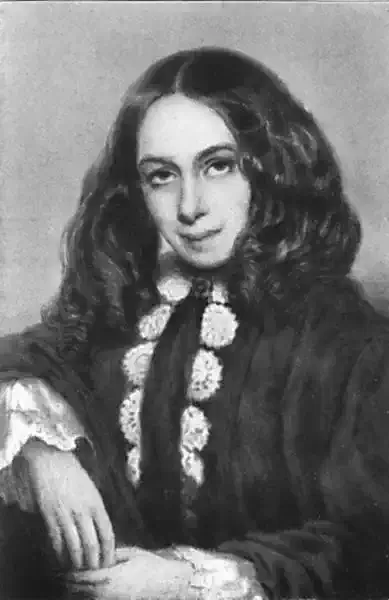
Elizabeth Barrett Browning
XXXV
XXXV
If I leave all for thee, wilt thou exchange
And be all to me ? Shall I never miss
Home-talk and blessing and the common kiss
That comes to each in turn, nor count it strange,
When I look up, to drop on a new range
Of walls and floors, another home than this ?
Nay, wilt thou fill that place by me which is
Filled by dead eyes too tender to know change ?
That 's hardest. If to conquer love, has tried,
To conquer grief, tries more, as all things prove;
For grief indeed is love and grief beside.
Alas, I have grieved sol am hard to love.
Yet love me--wilt thou ? Open thine heart wide,
And fold within the wet wings of thy dove.
If I leave all for thee, wilt thou exchange
And be all to me ? Shall I never miss
Home-talk and blessing and the common kiss
That comes to each in turn, nor count it strange,
When I look up, to drop on a new range
Of walls and floors, another home than this ?
Nay, wilt thou fill that place by me which is
Filled by dead eyes too tender to know change ?
That 's hardest. If to conquer love, has tried,
To conquer grief, tries more, as all things prove;
For grief indeed is love and grief beside.
Alas, I have grieved sol am hard to love.
Yet love me--wilt thou ? Open thine heart wide,
And fold within the wet wings of thy dove.
379
Elizabeth Barrett Browning
The Look
The Look
The Saviour looked on Peter. Ay, no word,
No gesture of reproach; the Heavens serene
Though heavy with armed justice, did not lean
Their thunders that way: the forsaken Lord
Looked only, on the traitor. None record
What that look was, none guess; for those who have seen
Wronged lovers loving through a death-pang keen,
Or pale-cheeked martyrs smiling to a sword,
Have missed Jehovah at the judgment-call.
And Peter, from the height of blasphemy-'
I never knew this man '--did quail and fall
As knowing straight THAT GOD; and turned free
And went out speechless from the face of all
And filled the silenc, weeping bitterly.
The Saviour looked on Peter. Ay, no word,
No gesture of reproach; the Heavens serene
Though heavy with armed justice, did not lean
Their thunders that way: the forsaken Lord
Looked only, on the traitor. None record
What that look was, none guess; for those who have seen
Wronged lovers loving through a death-pang keen,
Or pale-cheeked martyrs smiling to a sword,
Have missed Jehovah at the judgment-call.
And Peter, from the height of blasphemy-'
I never knew this man '--did quail and fall
As knowing straight THAT GOD; and turned free
And went out speechless from the face of all
And filled the silenc, weeping bitterly.
431
Elizabeth Barrett Browning
Tears
Tears
THANK God, bless God, all ye who suffer not
More grief than ye can weep for. That is well--
That is light grieving ! lighter, none befell
Since Adam forfeited the primal lot.
Tears ! what are tears ? The babe weeps in its cot,
The mother singing, at her marriage-bell
The bride weeps, and before the oracle
Of high-faned hills the poet has forgot
Such moisture on his cheeks. Thank God for grace,
Ye who weep only ! If, as some have done,
Ye grope tear-blinded in a desert place
And touch but tombs,--look up I those tears will run
Soon in long rivers down the lifted face,
And leave the vision clear for stars and sun
THANK God, bless God, all ye who suffer not
More grief than ye can weep for. That is well--
That is light grieving ! lighter, none befell
Since Adam forfeited the primal lot.
Tears ! what are tears ? The babe weeps in its cot,
The mother singing, at her marriage-bell
The bride weeps, and before the oracle
Of high-faned hills the poet has forgot
Such moisture on his cheeks. Thank God for grace,
Ye who weep only ! If, as some have done,
Ye grope tear-blinded in a desert place
And touch but tombs,--look up I those tears will run
Soon in long rivers down the lifted face,
And leave the vision clear for stars and sun
456
Elizabeth Barrett Browning
Stanzas on the Death of Lord Byron
Stanzas on the Death of Lord Byron
He was, and is not! Graecia's trembling shore,
Sighing through all her palmy groves, shall tell
That Harold's pilgrimage at last is o'er—
Mute the impassioned tongue, and tuneful shell,
That erst was wont in noblest strains to swell—
Hush'd the proud shouts that rode Aegaea's wave!
For lo! the great Deliv'rer breathes farewell!
Gives to the world his mem'ry and a grave—
Expiring in the land he only lived to save!
Mourn, Hellas, mourn! and o'er thy widow'd brow,
For aye, the cypress wreath of sorrow twine;
And in thy new-form'd beauty, desolate, throw
The fresh-cull'd flowers on his sepulchral shrine.
Yes! let that heart whose fervour was all thine,
In consecrated urn lamented be!
That generous heart where genius thrill'd divine,
Hath spent its last most glorious throb for thee—
Then sank amid the storm that made thy children free!
Britannia's Poet! Graecia's hero, sleeps!
And Freedom, bending o'er the breathless clay,
Lifts up her voice, and in her anguish weeps!
For us, a night hath clouded o'er our day,
And hush'd the lips that breath'd our fairest lay.
Alas! and must the British lyre resound
A requiem, while the spirit wings away
Of him who on its strings such music found,
And taught its startling chords to give so sweet a sound!
The theme grows sadder — but my soul shall find
A language in those tears! No more — no more!
Soon, 'midst the shriekings of the tossing wind,
The 'dark blue depths' he sang of, shall have bore
Our all of Byron to his native shore!
His grave is thick with voices — to the ear
Murm'ring an awful tale of greatness o'er;
But Memory strives with Death, and lingering near,
Shall consecrate the dust of Harold's lonely bier!
He was, and is not! Graecia's trembling shore,
Sighing through all her palmy groves, shall tell
That Harold's pilgrimage at last is o'er—
Mute the impassioned tongue, and tuneful shell,
That erst was wont in noblest strains to swell—
Hush'd the proud shouts that rode Aegaea's wave!
For lo! the great Deliv'rer breathes farewell!
Gives to the world his mem'ry and a grave—
Expiring in the land he only lived to save!
Mourn, Hellas, mourn! and o'er thy widow'd brow,
For aye, the cypress wreath of sorrow twine;
And in thy new-form'd beauty, desolate, throw
The fresh-cull'd flowers on his sepulchral shrine.
Yes! let that heart whose fervour was all thine,
In consecrated urn lamented be!
That generous heart where genius thrill'd divine,
Hath spent its last most glorious throb for thee—
Then sank amid the storm that made thy children free!
Britannia's Poet! Graecia's hero, sleeps!
And Freedom, bending o'er the breathless clay,
Lifts up her voice, and in her anguish weeps!
For us, a night hath clouded o'er our day,
And hush'd the lips that breath'd our fairest lay.
Alas! and must the British lyre resound
A requiem, while the spirit wings away
Of him who on its strings such music found,
And taught its startling chords to give so sweet a sound!
The theme grows sadder — but my soul shall find
A language in those tears! No more — no more!
Soon, 'midst the shriekings of the tossing wind,
The 'dark blue depths' he sang of, shall have bore
Our all of Byron to his native shore!
His grave is thick with voices — to the ear
Murm'ring an awful tale of greatness o'er;
But Memory strives with Death, and lingering near,
Shall consecrate the dust of Harold's lonely bier!
537
Elizabeth Barrett Browning
Sonnets from the Portuguese ii
Sonnets from the Portuguese ii
UNLIKE are we, unlike, O princely Heart!
Unlike our uses and our destinies.
Our ministering two angels look surprise
On one another, as they strike athwart
Their wings in passing. Thou, bethink thee, art
A guest for queens to social pageantries,
With gages from a hundred brighter eyes
Than tears even can make mine, to play thy part
Of chief musician. What hast thou to do
With looking from the lattice-lights at me--
A poor, tired, wandering singer, singing through
The dark, and leaning up a cypress tree?
The chrism is on thine head--on mine the dew-And
Death must dig the level where these agree.
UNLIKE are we, unlike, O princely Heart!
Unlike our uses and our destinies.
Our ministering two angels look surprise
On one another, as they strike athwart
Their wings in passing. Thou, bethink thee, art
A guest for queens to social pageantries,
With gages from a hundred brighter eyes
Than tears even can make mine, to play thy part
Of chief musician. What hast thou to do
With looking from the lattice-lights at me--
A poor, tired, wandering singer, singing through
The dark, and leaning up a cypress tree?
The chrism is on thine head--on mine the dew-And
Death must dig the level where these agree.
456
Elizabeth Barrett Browning
Sonnet XXXV: If I Leave All for Thee
Sonnet XXXV: If I Leave All for Thee
If I leave all for thee, wilt thou exchange
And be all to me? Shall I never miss
Home-talk and blessings and the common kiss
That comes to each in turn, nor count it strange,
When I look up, to drop on a new range
Of walls and floors, another home than this?
Nay, wilt thou fill that place by me which is
Filled by dead eyes too tender to know change?
That's hardest. If to conquer love, has tried,
To conquer grief, tries more, as all things prove;
For grief indeed is love and grief beside.
Alas, I have grieved so I am hard to love.
Yet love me--wilt thou? Open thine heart wide,
And fold within the wet wings of thy dove.
If I leave all for thee, wilt thou exchange
And be all to me? Shall I never miss
Home-talk and blessings and the common kiss
That comes to each in turn, nor count it strange,
When I look up, to drop on a new range
Of walls and floors, another home than this?
Nay, wilt thou fill that place by me which is
Filled by dead eyes too tender to know change?
That's hardest. If to conquer love, has tried,
To conquer grief, tries more, as all things prove;
For grief indeed is love and grief beside.
Alas, I have grieved so I am hard to love.
Yet love me--wilt thou? Open thine heart wide,
And fold within the wet wings of thy dove.
416
Elizabeth Barrett Browning
Sonnet XVIII: I Never Gave a Lock of Hair
Sonnet XVIII: I Never Gave a Lock of Hair
I never gave a lock of hair away
To a man, dearest, except this to thee,
Which now upon my fingers thoughtfully,
I ring out to the full brown length and say
Take it. My day of youth went yesterday;
My hair no longer bounds to my foot's glee,
Nor plant I it from rose or myrtle-tree,
As girls do, any more: it only may
Now shade on two pale cheeks the mark of tears,
Taught drooping from the head that hangs aside
Through sorrow's trick. I thought the funeral-shears
Would take this first, but Love is justified,--
Take it thou,--finding pure, from all those years,
The kiss my mother left here when she died.
I never gave a lock of hair away
To a man, dearest, except this to thee,
Which now upon my fingers thoughtfully,
I ring out to the full brown length and say
Take it. My day of youth went yesterday;
My hair no longer bounds to my foot's glee,
Nor plant I it from rose or myrtle-tree,
As girls do, any more: it only may
Now shade on two pale cheeks the mark of tears,
Taught drooping from the head that hangs aside
Through sorrow's trick. I thought the funeral-shears
Would take this first, but Love is justified,--
Take it thou,--finding pure, from all those years,
The kiss my mother left here when she died.
419
Elizabeth Barrett Browning
Sonnet 18 - I never gave a lock of hair away
Sonnet 18 - I never gave a lock of hair away
XVIII
I never gave a lock of hair away
To a man, Dearest, except this to thee,
Which now upon my fingers thoughtfully,
I ring out to the full brown length and say
'Take it.' My day of youth went yesterday;
My hair no longer bounds to my foot's glee,
Nor plant I it from rose or myrtle-tree,
As girls do, any more: it only may
Now shade on two pale cheeks the mark of tears,
Taught drooping from the head that hangs aside
Through sorrow's trick. I thought the funeral-shears
Would take this first, but Love is justified,-
Take it thou,-finding pure, from all those years,
The kiss my mother left here when she died.
XVIII
I never gave a lock of hair away
To a man, Dearest, except this to thee,
Which now upon my fingers thoughtfully,
I ring out to the full brown length and say
'Take it.' My day of youth went yesterday;
My hair no longer bounds to my foot's glee,
Nor plant I it from rose or myrtle-tree,
As girls do, any more: it only may
Now shade on two pale cheeks the mark of tears,
Taught drooping from the head that hangs aside
Through sorrow's trick. I thought the funeral-shears
Would take this first, but Love is justified,-
Take it thou,-finding pure, from all those years,
The kiss my mother left here when she died.
383
Elizabeth Barrett Browning
Rosalind's Scroll
Rosalind's Scroll
I LEFT thee last, a child at heart,
A woman scarce in years:
I come to thee, a solemn corpse
Which neither feels nor fears.
I have no breath to use in sighs;
They laid the dead-weights on mine eyes
To seal them safe from tears.
Look on me with thine own calm look:
I meet it calm as thou.
No look of thine can change this smile,
Or break thy sinful vow:
I tell thee that my poor scorn'd heart
Is of thine earth--thine earth--a part:
It cannot vex thee now.
I have pray'd for thee with bursting sob
When passion's course was free;
I have pray'd for thee with silent lips
In the anguish none could see;
They whisper'd oft, 'She sleepeth soft'-But
I only pray'd for thee.
Go to! I pray for thee no more:
The corpse's tongue is still;
Its folded fingers point to heaven,
But point there stiff and chill:
No farther wrong, no farther woe
Hath licence from the sin below
Its tranquil heart to thrill.
I charge thee, by the living's prayer,
And the dead's silentness,
To wring from out thy soul a cry
Which God shall hear and bless!
Lest Heaven's own palm droop in my hand,
And pale among the saints I stand,
A saint companionless.
I LEFT thee last, a child at heart,
A woman scarce in years:
I come to thee, a solemn corpse
Which neither feels nor fears.
I have no breath to use in sighs;
They laid the dead-weights on mine eyes
To seal them safe from tears.
Look on me with thine own calm look:
I meet it calm as thou.
No look of thine can change this smile,
Or break thy sinful vow:
I tell thee that my poor scorn'd heart
Is of thine earth--thine earth--a part:
It cannot vex thee now.
I have pray'd for thee with bursting sob
When passion's course was free;
I have pray'd for thee with silent lips
In the anguish none could see;
They whisper'd oft, 'She sleepeth soft'-But
I only pray'd for thee.
Go to! I pray for thee no more:
The corpse's tongue is still;
Its folded fingers point to heaven,
But point there stiff and chill:
No farther wrong, no farther woe
Hath licence from the sin below
Its tranquil heart to thrill.
I charge thee, by the living's prayer,
And the dead's silentness,
To wring from out thy soul a cry
Which God shall hear and bless!
Lest Heaven's own palm droop in my hand,
And pale among the saints I stand,
A saint companionless.
410
Elizabeth Barrett Browning
I
I
I thought once how Theocritus had sung
Of the sweet years, the dear and wished-for years,
Who each one in a gracious hand appears
To bear a gift for mortals, old or young:
And, as I mused it in his antique tongue,
I saw, in gradual vision through my tears,
The sweet, sad years, the melancholy years,
Those of my own life, who by turns had flung
A shadow across me. Straightway I was 'ware,
So weeping, how a mystic Shape did move
Behind me, and drew me backward by the hair:
And a voice said in mastery, while I strove,-'
Guess now who holds thee ? '--' Death,' I said. But, there,
The silver answer rang,--' Not Death, but Love.'
I thought once how Theocritus had sung
Of the sweet years, the dear and wished-for years,
Who each one in a gracious hand appears
To bear a gift for mortals, old or young:
And, as I mused it in his antique tongue,
I saw, in gradual vision through my tears,
The sweet, sad years, the melancholy years,
Those of my own life, who by turns had flung
A shadow across me. Straightway I was 'ware,
So weeping, how a mystic Shape did move
Behind me, and drew me backward by the hair:
And a voice said in mastery, while I strove,-'
Guess now who holds thee ? '--' Death,' I said. But, there,
The silver answer rang,--' Not Death, but Love.'
451
Elizabeth Barrett Browning
III
III
Unlike are we, unlike, O princely Heart !
Unlike our uses and our destinies.
Our ministering two angels look surprise
On one another, as they strike athwart
Their wings in passing. Thou, bethink thee, art
A guest for queens to social pageantries,
With gages from a hundred brighter eyes
Than tears even can make mine, to play thy part
Of chief musician. What hast thou to do
With looking from the lattice-lights at me,
A poor, tired, wandering singer, singing through
The dark, and leaning up a cypress tree ?
The chrism is on thine head,--on mine, the dew,--
And Death must dig the level where these agree.
Unlike are we, unlike, O princely Heart !
Unlike our uses and our destinies.
Our ministering two angels look surprise
On one another, as they strike athwart
Their wings in passing. Thou, bethink thee, art
A guest for queens to social pageantries,
With gages from a hundred brighter eyes
Than tears even can make mine, to play thy part
Of chief musician. What hast thou to do
With looking from the lattice-lights at me,
A poor, tired, wandering singer, singing through
The dark, and leaning up a cypress tree ?
The chrism is on thine head,--on mine, the dew,--
And Death must dig the level where these agree.
484
Elizabeth Barrett Browning
Futurity
Futurity
AND, O beloved voices, upon which
Ours passionately call because erelong
Ye brake off in the middle of that song
We sang together softly, to enrich
The poor world with the sense of love, and witch,
The heart out of things evil,--I am strong,
Knowing ye are not lost for aye among
The hills, with last year's thrush. God keeps a niche
In Heaven to hold our idols; and albeit
He brake them to our faces and denied
That our close kisses should impair their white,
I know we shall behold them raised, complete,
The dust swept from their beauty,--glorified
New Memnons singing in the great God-light.
AND, O beloved voices, upon which
Ours passionately call because erelong
Ye brake off in the middle of that song
We sang together softly, to enrich
The poor world with the sense of love, and witch,
The heart out of things evil,--I am strong,
Knowing ye are not lost for aye among
The hills, with last year's thrush. God keeps a niche
In Heaven to hold our idols; and albeit
He brake them to our faces and denied
That our close kisses should impair their white,
I know we shall behold them raised, complete,
The dust swept from their beauty,--glorified
New Memnons singing in the great God-light.
509
Elizabeth Barrett Browning
De Profundis
De Profundis
I
The face, which, duly as the sun,
Rose up for me with life begun,
To mark all bright hours of the day
With hourly love, is dimmed away—
And yet my days go on, go on.
II
The tongue which, like a stream, could run
Smooth music from the roughest stone,
And every morning with ' Good day'
Make each day good, is hushed away,
And yet my days go on, go on.
III
The heart which, like a staff, was one
For mine to lean and rest upon,
The strongest on the longest day
With steadfast love, is caught away,
And yet my days go on, go on.
IV
And cold before my summer's done,
And deaf in Nature's general tune,
And fallen too low for special fear,
And here, with hope no longer here,
While the tears drop, my days go on.
V
The world goes whispering to its own,
‘This anguish pierces to the bone;’
And tender friends go sighing round,
‘What love can ever cure this wound ?'
My days go on, my days go on.
VI
The past rolls forward on the sun
And makes all night. O dreams begun,
Not to be ended! Ended bliss,
And life that will not end in this!
My days go on, my days go on.
VII
Breath freezes on my lips to moan:
As one alone, once not alone,
I sit and knock at Nature's door,
Heart-bare, heart-hungry, very poor,
Whose desolated days go on.
VIII
I knock and cry, —Undone, undone!
Is there no help, no comfort, —none?
No gleaning in the wide wheat plains
Where others drive their loaded wains?
My vacant days go on, go on.
IX
This Nature, though the snows be down,
Thinks kindly of the bird of June:
The little red hip on the tree
Is ripe for such. What is for me,
Whose days so winterly go on?
X
No bird am I, to sing in June,
And dare not ask an equal boon.
Good nests and berries red are Nature's
To give away to better creatures, —
And yet my days go on, go on.
XI
I ask less kindness to be done, —
Only to loose these pilgrim shoon,
(Too early worn and grimed) with sweet
Cool deadly touch to these tired feet.
Till days go out which now go on.
XII
Only to lift the turf unmown
From off the earth where it has grown,
Some cubit-space, and say ‘Behold,
Creep in, poor Heart, beneath that fold,
Forgetting how the days go on.’
XIII
What harm would that do? Green anon
The sward would quicken, overshone
By skies as blue; and crickets might
Have leave to chirp there day and night
While my new rest went on, went on.
XIV
From gracious Nature have I won
Such liberal bounty? may I run
So, lizard-like, within her side,
And there be safe, who now am tried
By days that painfully go on?
XV
—A Voice reproves me thereupon,
More sweet than Nature's when the drone
Of bees is sweetest, and more deep
Than when the rivers overleap
The shuddering pines, and thunder on.
XVI
God's Voice, not Nature's! Night and noon
He sits upon the great white throne
And listens for the creatures' praise.
What babble we of days and days?
The Day-spring He, whose days go on.
XVII
He reigns above, He reigns alone;
Systems burn out and have his throne;
Fair mists of seraphs melt and fall
Around Him, changeless amid all,
Ancient of Days, whose days go on.
XVIII
He reigns below, He reigns alone,
And, having life in love forgone
Beneath the crown of sovran thorns,
He reigns the Jealous God. Who mourns
Or rules with Him, while days go on?
XIX
By anguish which made pale the sun,
I hear Him charge his saints that none
Among his creatures anywhere
Blaspheme against Him with despair,
However darkly days go on.
XX
Take from my head the thorn-wreath brown!
No mortal grief deserves that crown.
O supreme Love, chief misery,
The sharp regalia are for Thee
Whose days eternally go on!
XXI
For us, —whatever's undergone,
Thou knowest, willest what is done,
Grief may be joy misunderstood;
Only the Good discerns the good.
I trust Thee while my days go on.
XXII
Whatever's lost, it first was won;
We will not struggle nor impugn.
Perhaps the cup was broken here,
That Heaven's new wine might show more clear.
I praise Thee while my days go on.
XXIII
I praise Thee while my days go on;
I love Thee while my days go on:
Through dark and dearth, through fire and frost,
With emptied arms and treasure lost,
I thank Thee while my days go on.
XXIV
And having in thy life-depth thrown
Being and suffering (which are one),
As a child drops his pebble small
Down some deep well, and hears it fall
Smiling—so I. THY DAYS GO ON.
I
The face, which, duly as the sun,
Rose up for me with life begun,
To mark all bright hours of the day
With hourly love, is dimmed away—
And yet my days go on, go on.
II
The tongue which, like a stream, could run
Smooth music from the roughest stone,
And every morning with ' Good day'
Make each day good, is hushed away,
And yet my days go on, go on.
III
The heart which, like a staff, was one
For mine to lean and rest upon,
The strongest on the longest day
With steadfast love, is caught away,
And yet my days go on, go on.
IV
And cold before my summer's done,
And deaf in Nature's general tune,
And fallen too low for special fear,
And here, with hope no longer here,
While the tears drop, my days go on.
V
The world goes whispering to its own,
‘This anguish pierces to the bone;’
And tender friends go sighing round,
‘What love can ever cure this wound ?'
My days go on, my days go on.
VI
The past rolls forward on the sun
And makes all night. O dreams begun,
Not to be ended! Ended bliss,
And life that will not end in this!
My days go on, my days go on.
VII
Breath freezes on my lips to moan:
As one alone, once not alone,
I sit and knock at Nature's door,
Heart-bare, heart-hungry, very poor,
Whose desolated days go on.
VIII
I knock and cry, —Undone, undone!
Is there no help, no comfort, —none?
No gleaning in the wide wheat plains
Where others drive their loaded wains?
My vacant days go on, go on.
IX
This Nature, though the snows be down,
Thinks kindly of the bird of June:
The little red hip on the tree
Is ripe for such. What is for me,
Whose days so winterly go on?
X
No bird am I, to sing in June,
And dare not ask an equal boon.
Good nests and berries red are Nature's
To give away to better creatures, —
And yet my days go on, go on.
XI
I ask less kindness to be done, —
Only to loose these pilgrim shoon,
(Too early worn and grimed) with sweet
Cool deadly touch to these tired feet.
Till days go out which now go on.
XII
Only to lift the turf unmown
From off the earth where it has grown,
Some cubit-space, and say ‘Behold,
Creep in, poor Heart, beneath that fold,
Forgetting how the days go on.’
XIII
What harm would that do? Green anon
The sward would quicken, overshone
By skies as blue; and crickets might
Have leave to chirp there day and night
While my new rest went on, went on.
XIV
From gracious Nature have I won
Such liberal bounty? may I run
So, lizard-like, within her side,
And there be safe, who now am tried
By days that painfully go on?
XV
—A Voice reproves me thereupon,
More sweet than Nature's when the drone
Of bees is sweetest, and more deep
Than when the rivers overleap
The shuddering pines, and thunder on.
XVI
God's Voice, not Nature's! Night and noon
He sits upon the great white throne
And listens for the creatures' praise.
What babble we of days and days?
The Day-spring He, whose days go on.
XVII
He reigns above, He reigns alone;
Systems burn out and have his throne;
Fair mists of seraphs melt and fall
Around Him, changeless amid all,
Ancient of Days, whose days go on.
XVIII
He reigns below, He reigns alone,
And, having life in love forgone
Beneath the crown of sovran thorns,
He reigns the Jealous God. Who mourns
Or rules with Him, while days go on?
XIX
By anguish which made pale the sun,
I hear Him charge his saints that none
Among his creatures anywhere
Blaspheme against Him with despair,
However darkly days go on.
XX
Take from my head the thorn-wreath brown!
No mortal grief deserves that crown.
O supreme Love, chief misery,
The sharp regalia are for Thee
Whose days eternally go on!
XXI
For us, —whatever's undergone,
Thou knowest, willest what is done,
Grief may be joy misunderstood;
Only the Good discerns the good.
I trust Thee while my days go on.
XXII
Whatever's lost, it first was won;
We will not struggle nor impugn.
Perhaps the cup was broken here,
That Heaven's new wine might show more clear.
I praise Thee while my days go on.
XXIII
I praise Thee while my days go on;
I love Thee while my days go on:
Through dark and dearth, through fire and frost,
With emptied arms and treasure lost,
I thank Thee while my days go on.
XXIV
And having in thy life-depth thrown
Being and suffering (which are one),
As a child drops his pebble small
Down some deep well, and hears it fall
Smiling—so I. THY DAYS GO ON.
478
Elizabeth Barrett Browning
Aurora Leigh (excerpts)
Aurora Leigh (excerpts)
[Book 1]
I am like,
They tell me, my dear father. Broader brows
Howbeit, upon a slenderer undergrowth
Of delicate features, -- paler, near as grave ;
But then my mother's smile breaks up the whole,
And makes it better sometimes than itself.
So, nine full years, our days were hid with God
Among his mountains : I was just thirteen,
Still growing like the plants from unseen roots
In tongue-tied Springs, -- and suddenly awoke
To full life and life 's needs and agonies,
With an intense, strong, struggling heart beside
A stone-dead father. Life, struck sharp on death,
Makes awful lightning. His last word was, `Love --'
`Love, my child, love, love !' -- (then he had done with grief)
`Love, my child.' Ere I answered he was gone,
And none was left to love in all the world.
There, ended childhood. What succeeded next
I recollect as, after fevers, men
Thread back the passage of delirium,
Missing the turn still, baffled by the door ;
Smooth endless days, notched here and there with knives ;
A weary, wormy darkness, spurr'd i' the flank
With flame, that it should eat and end itself
Like some tormented scorpion. Then at last
I do remember clearly, how there came
A stranger with authority, not right,
(I thought not) who commanded, caught me up
From old Assunta's neck ; how, with a shriek,
She let me go, -- while I, with ears too full
Of my father's silence, to shriek back a word,
In all a child's astonishment at grief
Stared at the wharf-edge where she stood and moaned,
My poor Assunta, where she stood and moaned !
The white walls, the blue hills, my Italy,
Drawn backward from the shuddering steamer-deck,
Like one in anger drawing back her skirts
Which supplicants catch at. Then the bitter sea
Inexorably pushed between us both,
And sweeping up the ship with my despair
Threw us out as a pasture to the stars.
Ten nights and days we voyaged on the deep ;
Ten nights and days, without the common face
Of any day or night ; the moon and sun
Cut off from the green reconciling earth,
To starve into a blind ferocity
And glare unnatural ; the very sky
(Dropping its bell-net down upon the sea
As if no human heart should 'scape alive,)
Bedraggled with the desolating salt,
Until it seemed no more that holy heaven
To which my father went. All new and strange
The universe turned stranger, for a child.
Then, land ! -- then, England ! oh, the frosty cliffs
Looked cold upon me. Could I find a home
Among those mean red houses through the fog ?
And when I heard my father's language first
From alien lips which had no kiss for mine
I wept aloud, then laughed, then wept, then wept,
And some one near me said the child was mad
Through much sea-sickness. The train swept us on.
Was this my father's England ? the great isle ?
The ground seemed cut up from the fellowship
Of verdure, field from field, as man from man ;
The skies themselves looked low and positive,
As almost you could touch them with a hand,
And dared to do it they were so far off
From God's celestial crystals ; all things blurred
And dull and vague. Did Shakspeare and his mates
Absorb the light here ? -- not a hill or stone
With heart to strike a radiant colour up
Or active outline on the indifferent air.
I think I see my father's sister stand
Upon the hall-step of her country-house
To give me welcome. She stood straight and calm,
Her somewhat narrow forehead braided tight
As if for taming accidental thoughts
From possible pulses ; brown hair pricked with grey
By frigid use of life, (she was not old
Although my father's elder by a year)
A nose drawn sharply yet in delicate lines ;
A close mild mouth, a little soured about
The ends, through speaking unrequited loves
Or peradventure niggardly half-truths ;
Eyes of no colour, -- once they might have smiled,
But never, never have forgot themselves
In smiling ; cheeks, in which was yet a rose
Of perished summers, like a rose in a book,
Kept more for ruth than pleasure, -- if past bloom,
Past fading also.
She had lived, we'll say,
A harmless life, she called a virtuous life,
A quiet life, which was not life at all,
(But that, she had not lived enough to know)
Between the vicar and the country squires,
The lord-lieutenant looking down sometimes
From the empyrean to assure their souls
Against chance-vulgarisms, and, in the abyss
The apothecary, looked on once a year
To prove their soundness of humility.
The poor-club exercised her Christian gifts
Of knitting stockings, stitching petticoats,
Because we are of one flesh after all
And need one flannel (with a proper sense
Of difference in the quality) -- and still
The book-club, guarded from your modern trick
Of shaking dangerous questions from the crease,
Preserved her intellectual. She had lived
A sort of cage-bird life, born in a cage,
Accounting that to leap from perch to perch
Was act and joy enough for any bird.
Dear heaven, how silly are the things that live
In thickets, and eat berries !
I, alas,
A wild bird scarcely fledged, was brought to her cage,
And she was there to meet me. Very kind.
Bring the clean water, give out the fresh seed.
She stood upon the steps to welcome me,
Calm, in black garb. I clung about her neck, --
Young babes, who catch at every shred of wool
To draw the new light closer, catch and cling
Less blindly. In my ears, my father's word
Hummed ignorantly, as the sea in shells,
`Love, love, my child.' She, black there with my grief,
Might feel my love -- she was his sister once,
I clung to her. A moment, she seemed moved,
Kissed me with cold lips, suffered me to cling,
And drew me feebly through the hall into
The room she sate in.
There, with some strange spasm
Of pain and passion, she wrung loose my hands
Imperiously, and held me at arm's length,
And with two grey-steel naked-bladed eyes
Searched through my face, -- ay, stabbed it through and through,
Through brows and cheeks and chin, as if to find
A wicked murderer in my innocent face,
If not here, there perhaps. Then, drawing breath,
She struggled for her ordinary calm
And missed it rather, -- told me not to shrink,
As if she had told me not to lie or swear, -
`She loved my father, and would love me too
As long as I deserved it.' Very kind.
[Book 5]
AURORA LEIGH, be humble. Shall I hope
To speak my poems in mysterious tune
With man and nature ? -- with the lava-lymph
That trickles from successive galaxies
Still drop by drop adown the finger of God
In still new worlds ? -- with summer-days in this ?
That scarce dare breathe they are so beautiful ?--
With spring's delicious trouble in the ground,
Tormented by the quickened blood of roots,
And softly pricked by golden crocus-sheaves
In token of the harvest-time of flowers ?--
With winters and with autumns, -- and beyond,
With the human heart's large seasons, when it hopes
And fears, joys, grieves, and loves ? -- with all that strain
Of sexual passion, which devours the flesh
In a sacrament of souls ? with mother's breasts
Which, round the new-made creatures hanging there,
Throb luminous and harmonious like pure spheres ? --
With multitudinous life, and finally
With the great escapings of ecstatic souls,
Who, in a rush of too long prisoned flame,
Their radiant faces upward, burn away
This dark of the body, issuing on a world,
Beyond our mortal ? -- can I speak my verse
Sp plainly in tune to these things and the rest,
That men shall feel it catch them on the quick,
As having the same warrant over them
To hold and move them if they will or no,
Alike imperious as the primal rhythm
Of that theurgic nature ? I must fail,
Who fail at the beginning to hold and move
One man, -- and he my cousin, and he my friend,
And he born tender, made intelligent,
Inclined to ponder the precipitous sides
Of difficult questions ; yet, obtuse to me,
Of me, incurious ! likes me very well,
And wishes me a paradise of good,
Good looks, good means, and good digestion, -- ay,
But otherwise evades me, puts me off
With kindness, with a tolerant gentleness, --
Too light a book for a grave man's reading ! Go,
Aurora Leigh : be humble.
There it is,
We women are too apt to look to One,
Which proves a certain impotence in art.
We strain our natures at doing something great,
Far less because it 's something great to do,
Than haply that we, so, commend ourselves
As being not small, and more appreciable
To some one friend. We must have mediators
Betwixt our highest conscience and the judge ;
Some sweet saint's blood must quicken in our palms
Or all the life in heaven seems slow and cold :
Good only being perceived as the end of good,
And God alone pleased, -- that's too poor, we think,
And not enough for us by any means.
Ay, Romney, I remember, told me once
We miss the abstract when we comprehend.
We miss it most when we aspire, -- and fail.
Yet, so, I will not. -- This vile woman's way
Of trailing garments, shall not trip me up :
I 'll have no traffic with the personal thought
In art's pure temple. Must I work in vain,
Without the approbation of a man ?
It cannot be ; it shall not. Fame itself,
That approbation of the general race,
Presents a poor end, (though the arrow speed,
Shot straight with vigorous finger to the white,)
And the highest fame was never reached except
By what was aimed above it. Art for art,
And good for God Himself, the essential Good !
We 'll keep our aims sublime, our eyes erect,
Although our woman-hands should shake and fail ;
And if we fail .. But must we ? -
Shall I fail ?
The Greeks said grandly in their tragic phrase,
`Let no one be called happy till his death.'
To which I add, -- Let no one till his death
Be called unhappy. Measure not the work
Until the day 's out and the labour done,
Then bring your gauges. If the day's work 's scant,
Why, call it scant ; affect no compromise ;
And, in that we have nobly striven at least,
Deal with us nobly, women though we be.
And honour us with truth if not with praise.
[Book 1]
I am like,
They tell me, my dear father. Broader brows
Howbeit, upon a slenderer undergrowth
Of delicate features, -- paler, near as grave ;
But then my mother's smile breaks up the whole,
And makes it better sometimes than itself.
So, nine full years, our days were hid with God
Among his mountains : I was just thirteen,
Still growing like the plants from unseen roots
In tongue-tied Springs, -- and suddenly awoke
To full life and life 's needs and agonies,
With an intense, strong, struggling heart beside
A stone-dead father. Life, struck sharp on death,
Makes awful lightning. His last word was, `Love --'
`Love, my child, love, love !' -- (then he had done with grief)
`Love, my child.' Ere I answered he was gone,
And none was left to love in all the world.
There, ended childhood. What succeeded next
I recollect as, after fevers, men
Thread back the passage of delirium,
Missing the turn still, baffled by the door ;
Smooth endless days, notched here and there with knives ;
A weary, wormy darkness, spurr'd i' the flank
With flame, that it should eat and end itself
Like some tormented scorpion. Then at last
I do remember clearly, how there came
A stranger with authority, not right,
(I thought not) who commanded, caught me up
From old Assunta's neck ; how, with a shriek,
She let me go, -- while I, with ears too full
Of my father's silence, to shriek back a word,
In all a child's astonishment at grief
Stared at the wharf-edge where she stood and moaned,
My poor Assunta, where she stood and moaned !
The white walls, the blue hills, my Italy,
Drawn backward from the shuddering steamer-deck,
Like one in anger drawing back her skirts
Which supplicants catch at. Then the bitter sea
Inexorably pushed between us both,
And sweeping up the ship with my despair
Threw us out as a pasture to the stars.
Ten nights and days we voyaged on the deep ;
Ten nights and days, without the common face
Of any day or night ; the moon and sun
Cut off from the green reconciling earth,
To starve into a blind ferocity
And glare unnatural ; the very sky
(Dropping its bell-net down upon the sea
As if no human heart should 'scape alive,)
Bedraggled with the desolating salt,
Until it seemed no more that holy heaven
To which my father went. All new and strange
The universe turned stranger, for a child.
Then, land ! -- then, England ! oh, the frosty cliffs
Looked cold upon me. Could I find a home
Among those mean red houses through the fog ?
And when I heard my father's language first
From alien lips which had no kiss for mine
I wept aloud, then laughed, then wept, then wept,
And some one near me said the child was mad
Through much sea-sickness. The train swept us on.
Was this my father's England ? the great isle ?
The ground seemed cut up from the fellowship
Of verdure, field from field, as man from man ;
The skies themselves looked low and positive,
As almost you could touch them with a hand,
And dared to do it they were so far off
From God's celestial crystals ; all things blurred
And dull and vague. Did Shakspeare and his mates
Absorb the light here ? -- not a hill or stone
With heart to strike a radiant colour up
Or active outline on the indifferent air.
I think I see my father's sister stand
Upon the hall-step of her country-house
To give me welcome. She stood straight and calm,
Her somewhat narrow forehead braided tight
As if for taming accidental thoughts
From possible pulses ; brown hair pricked with grey
By frigid use of life, (she was not old
Although my father's elder by a year)
A nose drawn sharply yet in delicate lines ;
A close mild mouth, a little soured about
The ends, through speaking unrequited loves
Or peradventure niggardly half-truths ;
Eyes of no colour, -- once they might have smiled,
But never, never have forgot themselves
In smiling ; cheeks, in which was yet a rose
Of perished summers, like a rose in a book,
Kept more for ruth than pleasure, -- if past bloom,
Past fading also.
She had lived, we'll say,
A harmless life, she called a virtuous life,
A quiet life, which was not life at all,
(But that, she had not lived enough to know)
Between the vicar and the country squires,
The lord-lieutenant looking down sometimes
From the empyrean to assure their souls
Against chance-vulgarisms, and, in the abyss
The apothecary, looked on once a year
To prove their soundness of humility.
The poor-club exercised her Christian gifts
Of knitting stockings, stitching petticoats,
Because we are of one flesh after all
And need one flannel (with a proper sense
Of difference in the quality) -- and still
The book-club, guarded from your modern trick
Of shaking dangerous questions from the crease,
Preserved her intellectual. She had lived
A sort of cage-bird life, born in a cage,
Accounting that to leap from perch to perch
Was act and joy enough for any bird.
Dear heaven, how silly are the things that live
In thickets, and eat berries !
I, alas,
A wild bird scarcely fledged, was brought to her cage,
And she was there to meet me. Very kind.
Bring the clean water, give out the fresh seed.
She stood upon the steps to welcome me,
Calm, in black garb. I clung about her neck, --
Young babes, who catch at every shred of wool
To draw the new light closer, catch and cling
Less blindly. In my ears, my father's word
Hummed ignorantly, as the sea in shells,
`Love, love, my child.' She, black there with my grief,
Might feel my love -- she was his sister once,
I clung to her. A moment, she seemed moved,
Kissed me with cold lips, suffered me to cling,
And drew me feebly through the hall into
The room she sate in.
There, with some strange spasm
Of pain and passion, she wrung loose my hands
Imperiously, and held me at arm's length,
And with two grey-steel naked-bladed eyes
Searched through my face, -- ay, stabbed it through and through,
Through brows and cheeks and chin, as if to find
A wicked murderer in my innocent face,
If not here, there perhaps. Then, drawing breath,
She struggled for her ordinary calm
And missed it rather, -- told me not to shrink,
As if she had told me not to lie or swear, -
`She loved my father, and would love me too
As long as I deserved it.' Very kind.
[Book 5]
AURORA LEIGH, be humble. Shall I hope
To speak my poems in mysterious tune
With man and nature ? -- with the lava-lymph
That trickles from successive galaxies
Still drop by drop adown the finger of God
In still new worlds ? -- with summer-days in this ?
That scarce dare breathe they are so beautiful ?--
With spring's delicious trouble in the ground,
Tormented by the quickened blood of roots,
And softly pricked by golden crocus-sheaves
In token of the harvest-time of flowers ?--
With winters and with autumns, -- and beyond,
With the human heart's large seasons, when it hopes
And fears, joys, grieves, and loves ? -- with all that strain
Of sexual passion, which devours the flesh
In a sacrament of souls ? with mother's breasts
Which, round the new-made creatures hanging there,
Throb luminous and harmonious like pure spheres ? --
With multitudinous life, and finally
With the great escapings of ecstatic souls,
Who, in a rush of too long prisoned flame,
Their radiant faces upward, burn away
This dark of the body, issuing on a world,
Beyond our mortal ? -- can I speak my verse
Sp plainly in tune to these things and the rest,
That men shall feel it catch them on the quick,
As having the same warrant over them
To hold and move them if they will or no,
Alike imperious as the primal rhythm
Of that theurgic nature ? I must fail,
Who fail at the beginning to hold and move
One man, -- and he my cousin, and he my friend,
And he born tender, made intelligent,
Inclined to ponder the precipitous sides
Of difficult questions ; yet, obtuse to me,
Of me, incurious ! likes me very well,
And wishes me a paradise of good,
Good looks, good means, and good digestion, -- ay,
But otherwise evades me, puts me off
With kindness, with a tolerant gentleness, --
Too light a book for a grave man's reading ! Go,
Aurora Leigh : be humble.
There it is,
We women are too apt to look to One,
Which proves a certain impotence in art.
We strain our natures at doing something great,
Far less because it 's something great to do,
Than haply that we, so, commend ourselves
As being not small, and more appreciable
To some one friend. We must have mediators
Betwixt our highest conscience and the judge ;
Some sweet saint's blood must quicken in our palms
Or all the life in heaven seems slow and cold :
Good only being perceived as the end of good,
And God alone pleased, -- that's too poor, we think,
And not enough for us by any means.
Ay, Romney, I remember, told me once
We miss the abstract when we comprehend.
We miss it most when we aspire, -- and fail.
Yet, so, I will not. -- This vile woman's way
Of trailing garments, shall not trip me up :
I 'll have no traffic with the personal thought
In art's pure temple. Must I work in vain,
Without the approbation of a man ?
It cannot be ; it shall not. Fame itself,
That approbation of the general race,
Presents a poor end, (though the arrow speed,
Shot straight with vigorous finger to the white,)
And the highest fame was never reached except
By what was aimed above it. Art for art,
And good for God Himself, the essential Good !
We 'll keep our aims sublime, our eyes erect,
Although our woman-hands should shake and fail ;
And if we fail .. But must we ? -
Shall I fail ?
The Greeks said grandly in their tragic phrase,
`Let no one be called happy till his death.'
To which I add, -- Let no one till his death
Be called unhappy. Measure not the work
Until the day 's out and the labour done,
Then bring your gauges. If the day's work 's scant,
Why, call it scant ; affect no compromise ;
And, in that we have nobly striven at least,
Deal with us nobly, women though we be.
And honour us with truth if not with praise.
526