

Poems in this theme
Death and Mourning
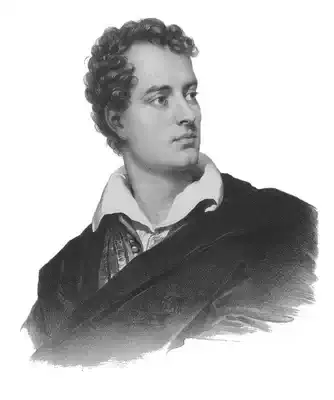
Lord Byron
The Destruction of Sennacherib
The Destruction of Sennacherib
The Assyrian came down like the wolf on the fold,
And his cohorts were gleaming in purple and gold;
And the sheen of their spears was like stars on the sea,
When the blue wave rolls nightly on deep Galilee.
Like the leaves of the forest when Summer is green,
That host with their banners at sunset were seen:
Like the leaves of the forest when Autumn hath blown,
That host on the morrow lay withered and strown.
For the Angel of Death spread his wings on the blast,
And breathed in the face of the foe as he passed;
And the eyes of the sleepers waxed deadly and chill,
And their hearts but once heaved, and for ever grew still!
And there lay the steed with his nostril all wide,
But through it there rolled not the breath of his pride;
And the foam of his gasping lay white on the turf,
And cold as the spray of the rockbeating
surf.
And there lay the rider distorted and pale,
With the dew on his brow, and the rust on his mail:
And the tents were all silent, the banners alone,
The lances unlifted, the trumpet unblown.
And the widows of Ashur are loud in their wail,
And the idols are broke in the temple of Baal;
And the might of the Gentile, unsmote by the sword,
Hath melted like snow in the glance of the Lord!
The Assyrian came down like the wolf on the fold,
And his cohorts were gleaming in purple and gold;
And the sheen of their spears was like stars on the sea,
When the blue wave rolls nightly on deep Galilee.
Like the leaves of the forest when Summer is green,
That host with their banners at sunset were seen:
Like the leaves of the forest when Autumn hath blown,
That host on the morrow lay withered and strown.
For the Angel of Death spread his wings on the blast,
And breathed in the face of the foe as he passed;
And the eyes of the sleepers waxed deadly and chill,
And their hearts but once heaved, and for ever grew still!
And there lay the steed with his nostril all wide,
But through it there rolled not the breath of his pride;
And the foam of his gasping lay white on the turf,
And cold as the spray of the rockbeating
surf.
And there lay the rider distorted and pale,
With the dew on his brow, and the rust on his mail:
And the tents were all silent, the banners alone,
The lances unlifted, the trumpet unblown.
And the widows of Ashur are loud in their wail,
And the idols are broke in the temple of Baal;
And the might of the Gentile, unsmote by the sword,
Hath melted like snow in the glance of the Lord!
647
Lord Byron
Substitute For An Epitaph
Substitute For An Epitaph
Kind Reader! take your choice to cry or laugh;
Here HAROLD lies, but where's his Epitaph?
If such you seek, try Westminster, and view
Ten thousand just as fit for him as you.
Athens
Kind Reader! take your choice to cry or laugh;
Here HAROLD lies, but where's his Epitaph?
If such you seek, try Westminster, and view
Ten thousand just as fit for him as you.
Athens
440
Lord Byron
Saul
Saul
Thou whose spell can raise the dead,
Bid the prophet's form appear.
'Samuel, raise thy buried head!
King, behold the phantom seer!'
Earth yawn'd; he stood the centre of a cloud:
Light changed its hue, retiring from his shroud.
Death stood all glassy in his fixed eye:
His hand was wither'd, and his veins were dry;
His foot, in bony whiteness, glitter'd there,
Shrunken and sinewless, and ghastly bare;
From lips that moved not and unbreathing frame,
Like cavern'd winds, the hollow acccents came.
Saul saw, and fell to earth, as falls the oak,
At once, and blasted by the thunderstroke.
'Why is my sleep disquieted?
Who is he that calls the dead?
Is it thou, O King? Behold,
Bloodless are these limbs, and cold:
Such are mine; and such shall be
Thine tomorrow,
when with me:
Ere the coming day is done,
Such shalt thou be, such thy son.
Fare thee well, bur for a day,
Then we mix our mouldering clay.
Thou, thy race, lie pale and low,
Pierced by shafts of many a bow;
And the falchion by thy side
To thy heart thy hand shall guide:
Crownless, breathless, headless fall,
Son and sire, the house of Saul!'
Thou whose spell can raise the dead,
Bid the prophet's form appear.
'Samuel, raise thy buried head!
King, behold the phantom seer!'
Earth yawn'd; he stood the centre of a cloud:
Light changed its hue, retiring from his shroud.
Death stood all glassy in his fixed eye:
His hand was wither'd, and his veins were dry;
His foot, in bony whiteness, glitter'd there,
Shrunken and sinewless, and ghastly bare;
From lips that moved not and unbreathing frame,
Like cavern'd winds, the hollow acccents came.
Saul saw, and fell to earth, as falls the oak,
At once, and blasted by the thunderstroke.
'Why is my sleep disquieted?
Who is he that calls the dead?
Is it thou, O King? Behold,
Bloodless are these limbs, and cold:
Such are mine; and such shall be
Thine tomorrow,
when with me:
Ere the coming day is done,
Such shalt thou be, such thy son.
Fare thee well, bur for a day,
Then we mix our mouldering clay.
Thou, thy race, lie pale and low,
Pierced by shafts of many a bow;
And the falchion by thy side
To thy heart thy hand shall guide:
Crownless, breathless, headless fall,
Son and sire, the house of Saul!'
571
Lord Byron
On The Day Of The Destruction Of Jerusalem By Titus
On The Day Of The Destruction Of Jerusalem By Titus
From the last hill that looks on thy once holy dome,
I beheld thee, oh Sion! when render'd to Rome:
'Twas thy last sun went down, and the flames of thy fall
Flash'd back on the last glance I gave to thy wall.
I look'd for thy temple, I look'd for my home,
And forgot for a moment my bondage to come;
I beheld but the deathfire
that fed on thy fane,
And the fastfetter'd
hands that made vengeance in vain.
Oh many an eve, the high spot whence I gazed
Had reflected the last beam of day as it blazed;
While I stood on the height, and beheld the decline
Of the rays from the mountain that shone on thy shrine.
And now on that mountain I stood on that day,
But I mark'd not the twilight beam melting away;
Oh! would that the lightning had glared in its stead,
And the thunderbolt burst on the conqueror's head!
But the gods of the Pagan shall never profane
The shrine where Jehovah disdain'd not to reign;
And scatter'd and scorn'd as thy people may be,
Our worship, oh Father! is only for thee.
From the last hill that looks on thy once holy dome,
I beheld thee, oh Sion! when render'd to Rome:
'Twas thy last sun went down, and the flames of thy fall
Flash'd back on the last glance I gave to thy wall.
I look'd for thy temple, I look'd for my home,
And forgot for a moment my bondage to come;
I beheld but the deathfire
that fed on thy fane,
And the fastfetter'd
hands that made vengeance in vain.
Oh many an eve, the high spot whence I gazed
Had reflected the last beam of day as it blazed;
While I stood on the height, and beheld the decline
Of the rays from the mountain that shone on thy shrine.
And now on that mountain I stood on that day,
But I mark'd not the twilight beam melting away;
Oh! would that the lightning had glared in its stead,
And the thunderbolt burst on the conqueror's head!
But the gods of the Pagan shall never profane
The shrine where Jehovah disdain'd not to reign;
And scatter'd and scorn'd as thy people may be,
Our worship, oh Father! is only for thee.
471
Lord Byron
On A Nun
On A Nun
Of two fair virgins, modest, though admired,
Heaven made us happy; and now, wretched sires,
Heaven for a nobler doom their worth desires,
And gazing upon either, both required.
Mine, while the torch of Hymen newly fired
Becomes extinguish'd, soon too
soon expires:
But thine, within the closing grate retired,
Eternal captive, to her God aspires.
But thou at least from out the jealous door,
Which shuts between your never meeting
eyes,
May'st hear her sweet and pious voice once more:
I to the marble, where my daughter lies,
Rush, the
swoln flood of bitterness I pour,
And knock, and knock, and knock but none replies.
Of two fair virgins, modest, though admired,
Heaven made us happy; and now, wretched sires,
Heaven for a nobler doom their worth desires,
And gazing upon either, both required.
Mine, while the torch of Hymen newly fired
Becomes extinguish'd, soon too
soon expires:
But thine, within the closing grate retired,
Eternal captive, to her God aspires.
But thou at least from out the jealous door,
Which shuts between your never meeting
eyes,
May'st hear her sweet and pious voice once more:
I to the marble, where my daughter lies,
Rush, the
swoln flood of bitterness I pour,
And knock, and knock, and knock but none replies.
440
Lord Byron
Oh! Weep For Those
Oh! Weep For Those
I.
Oh! Weep for those that wept by Babel's stream,
Whose shrines are desolate, whose land a dream,
Weep for the harp of Judah's broken shellMournwhere
their God that dweltthe
Godless dwell!
II.
And where shall Israel lave her bleeding feet?
And when shall Zion's songs agains seem sweet?
And Judah's melody once more rejoice
The hearts that leap'd before its heavenly voice?
III.
Tribes of the wandering foot and weary breast!
How shall ye flee away and be at rest!
The wilddove
hath her nestthe
fox his caveMankind
their CountryIsrael
but the grave.
I.
Oh! Weep for those that wept by Babel's stream,
Whose shrines are desolate, whose land a dream,
Weep for the harp of Judah's broken shellMournwhere
their God that dweltthe
Godless dwell!
II.
And where shall Israel lave her bleeding feet?
And when shall Zion's songs agains seem sweet?
And Judah's melody once more rejoice
The hearts that leap'd before its heavenly voice?
III.
Tribes of the wandering foot and weary breast!
How shall ye flee away and be at rest!
The wilddove
hath her nestthe
fox his caveMankind
their CountryIsrael
but the grave.
690
Lord Byron
Monody On The Death Of The Right Hon. R. B. Sheridan
Monody On The Death Of The Right Hon. R. B. Sheridan
When the last sunshine of expiring day
In summer's twilight weeps itself away,
Who hath not felt the softness of the hour
Sink on the heart, as dew along the flower?
With a pure feeling which absorbs and awes
While Nature makes that melancholy pause,
Her breathing moment on the bridge where Time
Of light and darkness forms an arch sublime,
Who hath not shared that calm, so still and deep,
The voiceless thought which would not speak but weep,
A holy concord, and a bright regret,
A glorious sympathy with suns that set?
'Tis not harsh sorrow, but a tenderer woe,
Nameless, but dear to gentle hearts below,
Felt without bitterness, but full and clear,
A sweet dejection, a transparent tear,
Unmix'd with worldly grief or selfish stain,
Shed without shame, and secret without pain.
Even as the tenderness that hour instils
When Summer's day declines along the hills.
So feels the fulness of our heart and eyes
When all of Genius which can perish dies.
A mighty Spirit is eclipsed a
Power
Hath pass'd from day to darkness to
whose hour
Of light no likeness is bequeath'd no
name,
Focus at once of all the rays of Fame!
The flash of Wit, the bright Intelligence,
The beam of Song, the blaze of Eloquence,
Set with their Sun, but still have left behind
The enduring produce of immortal Mind;
Fruits of a genial morn, and glorious noon,
A deathless part of him who died too soon.
But small that portion of the wondrous whole,
These sparkling segments of that circling soul,
Which all embraced, and lighten'd over all,
To cheer, to pierce, to please, or to appal.
From the charm'd council to the festive board,
Of human feelings the unbounded lord;
In whose acclaim the loftiest voices vied,
The praised, the proud, who made his praise their pride.
When the loud cry of trampled Hindostan
Arose to Heaven in her appeal from man,
His was the thunder, his the avenging rod,
The wrath the
delegated voice of God!
Which shook the nations through his lips, and blazed
Till vanquish 'd senates trembled as they praised.
And here, oh! here, where yet all young and warm,
The gay creations of is spirit charm,
The matchless dialogue, the deathless wit,
Which knew not what it was to intermit;
The glowing portraits, fresh from life, that bring
Home to our hearts the truth from which they spring;
These wondrous beings of his fancy, wrought
To fulness by the fiat of his thought,
Here in their first abode you still may meet,
Bright with the hues of his Promethean heat;
A halo of the light of other days,
Which still the splendour of its orb betrays.
But should there be to whom the fatal blight
Of failing Wisdom yields a base delight,
Men who exult when minds of heavenly tone
Jar in the music which was born their own,
Still let them pause ah!
little do they know
That what to them seem'd Vice might be but Woo.
Hard is his fate on whom the public gaze
Is fix'd for ever to detract or praise;
Repose denies her requiem to his name,
And Folly loves the martyrdom of Fame.
The secret enemy whose sleepless eye
Stands sentinel, accuser, judge, and spy,
The foe, the fool, the jealous, and the vain,
The envious who but breathe in others' pain,
Behold the host! delighting to deprave,
Who track the steps of Glory to the grave,
Watch every fault that daring Genius owes
Half to the ardour which its birth bestows,
Distort the troth, accumulate the lie,
And pile the pyramid of Calumny!
These are his portion but
if join'd to these
Gaunt Poverty should league with deep Disease,
If the high Spirit must forget to soar,
And stoop to strive with Misery at the door,
To soothe Indignity and
face to face
Meet sordid Rage, and wrestle with Disgrace,
To find in Hope but the renew'd caress,
The serpentfold
of further Faithlessness:If
such may be the ills which men assail,
What marvel if at last the mightiest fail?
Breasts to whom all the strength of feeling given
Bear hearts electriccharged
with fire from Heaven,
Black with the rude collision inly torn,
By clouds surrounded, and on whirlwinds
borne,
Driven o'er the lowering atmosphere that nurst
Thoughts which have turn'd to thunderscorch, and burst.
But far from us and from our mimic scene
Such things should be if
such have ever been
Ours be the gentler wish, the kinder task,
To give the tribute Glory need not ask,
To mourn the vanish'd beam, and add our mite
Of praise in payment of a long delight.
Ye Orators! whom yet our councils yield,
Mourn for the veteran Hero of your field!
The worthy rival of the wondrous Three!
Whose words were sparks of Immortality!
Ye Bards! to whom the Drama's muse is dear,
He was your Masteremulate
him her!
Ye men of wit and social eloquence!
He was your brother bear
his ashes hence!
While Powers of mind almost of boundless range,
Complete in kind, as various in their change,
While Eloquence, Wit, Poesy, and Mirth,
That humbler Harmonist of care on Earth,
Survive within our souls while
lives our sense
Of pride in Merit's proud preeminence,
Long shall we seek his likeness, long in vain,
And turn to all of him which may remain,
Sighing that nature form'd but one such man,
And broke the die in
moulding Sheridan!
When the last sunshine of expiring day
In summer's twilight weeps itself away,
Who hath not felt the softness of the hour
Sink on the heart, as dew along the flower?
With a pure feeling which absorbs and awes
While Nature makes that melancholy pause,
Her breathing moment on the bridge where Time
Of light and darkness forms an arch sublime,
Who hath not shared that calm, so still and deep,
The voiceless thought which would not speak but weep,
A holy concord, and a bright regret,
A glorious sympathy with suns that set?
'Tis not harsh sorrow, but a tenderer woe,
Nameless, but dear to gentle hearts below,
Felt without bitterness, but full and clear,
A sweet dejection, a transparent tear,
Unmix'd with worldly grief or selfish stain,
Shed without shame, and secret without pain.
Even as the tenderness that hour instils
When Summer's day declines along the hills.
So feels the fulness of our heart and eyes
When all of Genius which can perish dies.
A mighty Spirit is eclipsed a
Power
Hath pass'd from day to darkness to
whose hour
Of light no likeness is bequeath'd no
name,
Focus at once of all the rays of Fame!
The flash of Wit, the bright Intelligence,
The beam of Song, the blaze of Eloquence,
Set with their Sun, but still have left behind
The enduring produce of immortal Mind;
Fruits of a genial morn, and glorious noon,
A deathless part of him who died too soon.
But small that portion of the wondrous whole,
These sparkling segments of that circling soul,
Which all embraced, and lighten'd over all,
To cheer, to pierce, to please, or to appal.
From the charm'd council to the festive board,
Of human feelings the unbounded lord;
In whose acclaim the loftiest voices vied,
The praised, the proud, who made his praise their pride.
When the loud cry of trampled Hindostan
Arose to Heaven in her appeal from man,
His was the thunder, his the avenging rod,
The wrath the
delegated voice of God!
Which shook the nations through his lips, and blazed
Till vanquish 'd senates trembled as they praised.
And here, oh! here, where yet all young and warm,
The gay creations of is spirit charm,
The matchless dialogue, the deathless wit,
Which knew not what it was to intermit;
The glowing portraits, fresh from life, that bring
Home to our hearts the truth from which they spring;
These wondrous beings of his fancy, wrought
To fulness by the fiat of his thought,
Here in their first abode you still may meet,
Bright with the hues of his Promethean heat;
A halo of the light of other days,
Which still the splendour of its orb betrays.
But should there be to whom the fatal blight
Of failing Wisdom yields a base delight,
Men who exult when minds of heavenly tone
Jar in the music which was born their own,
Still let them pause ah!
little do they know
That what to them seem'd Vice might be but Woo.
Hard is his fate on whom the public gaze
Is fix'd for ever to detract or praise;
Repose denies her requiem to his name,
And Folly loves the martyrdom of Fame.
The secret enemy whose sleepless eye
Stands sentinel, accuser, judge, and spy,
The foe, the fool, the jealous, and the vain,
The envious who but breathe in others' pain,
Behold the host! delighting to deprave,
Who track the steps of Glory to the grave,
Watch every fault that daring Genius owes
Half to the ardour which its birth bestows,
Distort the troth, accumulate the lie,
And pile the pyramid of Calumny!
These are his portion but
if join'd to these
Gaunt Poverty should league with deep Disease,
If the high Spirit must forget to soar,
And stoop to strive with Misery at the door,
To soothe Indignity and
face to face
Meet sordid Rage, and wrestle with Disgrace,
To find in Hope but the renew'd caress,
The serpentfold
of further Faithlessness:If
such may be the ills which men assail,
What marvel if at last the mightiest fail?
Breasts to whom all the strength of feeling given
Bear hearts electriccharged
with fire from Heaven,
Black with the rude collision inly torn,
By clouds surrounded, and on whirlwinds
borne,
Driven o'er the lowering atmosphere that nurst
Thoughts which have turn'd to thunderscorch, and burst.
But far from us and from our mimic scene
Such things should be if
such have ever been
Ours be the gentler wish, the kinder task,
To give the tribute Glory need not ask,
To mourn the vanish'd beam, and add our mite
Of praise in payment of a long delight.
Ye Orators! whom yet our councils yield,
Mourn for the veteran Hero of your field!
The worthy rival of the wondrous Three!
Whose words were sparks of Immortality!
Ye Bards! to whom the Drama's muse is dear,
He was your Masteremulate
him her!
Ye men of wit and social eloquence!
He was your brother bear
his ashes hence!
While Powers of mind almost of boundless range,
Complete in kind, as various in their change,
While Eloquence, Wit, Poesy, and Mirth,
That humbler Harmonist of care on Earth,
Survive within our souls while
lives our sense
Of pride in Merit's proud preeminence,
Long shall we seek his likeness, long in vain,
And turn to all of him which may remain,
Sighing that nature form'd but one such man,
And broke the die in
moulding Sheridan!
445
Lord Byron
Lines Written Beneath An Elm In The Churchyard Of Harrow On The Hill, Sept.
Lines Written Beneath An Elm In The Churchyard Of Harrow On The Hill, Sept.
2, 1807
Spot of my youth! whose hoary branches sigh,
Swept by the breeze that fans thy cloudless sky;
Where now alone I muse, who oft have trod,
With those I loved, thy soft and verdant sod;
With those who, scattered far, perchance deplore,
Like me, the happy scenes they knew before:
Oh! as I trace again thy winding hill,
Mine eyes admire, my heart adores thee still,
Thou drooping Elm! beneath whose boughs I lay,
And frequent mused the twilight hours away;
Where, as they once were wont, my limbs recline,
But ah! without the thoughts which then were mine.
How do thy branches, moaning to the blast,
Invite the bosom to recall the past,
And seem to whisper, as the gently swell,
'Take, while thou canst, a lingering, last farewell!'
When fate shall chill, at length, this fevered breast,
And calm its cares and passions into rest,
Oft have I thought, 'twould soothe my dying hour,—
If aught may soothe when life resigns her power,—
To know some humbler grave, some narrow cell,
Would hide my bosom where it loved to dwell.
With this fond dream, methinks, 'twere sweet to die—
And here it lingered, here my heart might lie;
Here might I sleep, where all my hopes arose,
Scene of my youth, and couch of my repose;
For ever stretched beneath this mantling shade,
Pressed by the turf where once my childhood played;
Wrapped by the soil that veils the spot I loved,
Mixed with the earth o'er which my footsteps moved;
Blest by the tongues that charmed my youthful ear,
Mourned by the few my soul acknowledged here;
Deplored by those in early days allied,
And unremembered by the world beside.
2, 1807
Spot of my youth! whose hoary branches sigh,
Swept by the breeze that fans thy cloudless sky;
Where now alone I muse, who oft have trod,
With those I loved, thy soft and verdant sod;
With those who, scattered far, perchance deplore,
Like me, the happy scenes they knew before:
Oh! as I trace again thy winding hill,
Mine eyes admire, my heart adores thee still,
Thou drooping Elm! beneath whose boughs I lay,
And frequent mused the twilight hours away;
Where, as they once were wont, my limbs recline,
But ah! without the thoughts which then were mine.
How do thy branches, moaning to the blast,
Invite the bosom to recall the past,
And seem to whisper, as the gently swell,
'Take, while thou canst, a lingering, last farewell!'
When fate shall chill, at length, this fevered breast,
And calm its cares and passions into rest,
Oft have I thought, 'twould soothe my dying hour,—
If aught may soothe when life resigns her power,—
To know some humbler grave, some narrow cell,
Would hide my bosom where it loved to dwell.
With this fond dream, methinks, 'twere sweet to die—
And here it lingered, here my heart might lie;
Here might I sleep, where all my hopes arose,
Scene of my youth, and couch of my repose;
For ever stretched beneath this mantling shade,
Pressed by the turf where once my childhood played;
Wrapped by the soil that veils the spot I loved,
Mixed with the earth o'er which my footsteps moved;
Blest by the tongues that charmed my youthful ear,
Mourned by the few my soul acknowledged here;
Deplored by those in early days allied,
And unremembered by the world beside.
413
Lord Byron
In The Valley Of The Waters
In The Valley Of The Waters
In the valley of the waters we wept o'er the day
When the host of the stranger made Salem his prey,
And our heads on our bosoms all droopingly lay,
And our hearts were so full of the land far away.
The song they demanded in vainit
lay still
In our souls as the wind that died on the hill;
They called for the harpbut
our blood they shall spill
Ere our right hand shall teach them one tone of our skill.
All stringlessly hung on the willow's sad tree,
As dead as her dead leaf those mute harps must be;
Our hands may be fetter'dour
tears still are free,
For our God and our gloryand,
Sion!Oh,
thee.
In the valley of the waters we wept o'er the day
When the host of the stranger made Salem his prey,
And our heads on our bosoms all droopingly lay,
And our hearts were so full of the land far away.
The song they demanded in vainit
lay still
In our souls as the wind that died on the hill;
They called for the harpbut
our blood they shall spill
Ere our right hand shall teach them one tone of our skill.
All stringlessly hung on the willow's sad tree,
As dead as her dead leaf those mute harps must be;
Our hands may be fetter'dour
tears still are free,
For our God and our gloryand,
Sion!Oh,
thee.
557
Lord Byron
If That High World
If That High World
If that high world, which lies beyond
Our own, surviving Love endears;
If there the cherish'd heart be fond,
The eye the same, except in tears How
welcome those untrodden spheres!
How sweet this very your to die!
To soar from earth and find all fears
Lost in thy light Eternity!
It must be so: 'tis not for self
That we so tremble on the brink;
And striving to o'erleap the gulf,
Yet cling to Being's severing link.
Oh! in that future let us think
To hold each heart the heart that shares;
With them the immortal waters drink,
And soul in soul grow deathless theirs
If that high world, which lies beyond
Our own, surviving Love endears;
If there the cherish'd heart be fond,
The eye the same, except in tears How
welcome those untrodden spheres!
How sweet this very your to die!
To soar from earth and find all fears
Lost in thy light Eternity!
It must be so: 'tis not for self
That we so tremble on the brink;
And striving to o'erleap the gulf,
Yet cling to Being's severing link.
Oh! in that future let us think
To hold each heart the heart that shares;
With them the immortal waters drink,
And soul in soul grow deathless theirs
519
Lord Byron
Epitaph On John Adams, Of Southwell - A Carrier, Who Died Of Drunkenness
Epitaph On John Adams, Of Southwell - A Carrier, Who Died Of Drunkenness
JOHN ADAMS lies here, of the parish of Southwell,
A Carrier who carried his can to his mouth well:
He carried so much, and he carried so fast,
He could carry no more‑so was carried at last;
For, the liquor he drank, being too much for one,
He could not carry off,so
he's now carrion.
JOHN ADAMS lies here, of the parish of Southwell,
A Carrier who carried his can to his mouth well:
He carried so much, and he carried so fast,
He could carry no more‑so was carried at last;
For, the liquor he drank, being too much for one,
He could not carry off,so
he's now carrion.
481
Lord Byron
Epitaph For William Pitt
Epitaph For William Pitt
With death doom'd to grapple,
Beneath this cold slab, he
Who lied in the Chapel
Now lies in the Abbey.
With death doom'd to grapple,
Beneath this cold slab, he
Who lied in the Chapel
Now lies in the Abbey.
455
Lord Byron
Epitaph
Epitaph
Posterity will ne'er survey
A nobler grave than this:
Here lie the bones of Castlereagh:
Stop, traveler
Posterity will ne'er survey
A nobler grave than this:
Here lie the bones of Castlereagh:
Stop, traveler
453
Lord Byron
Don Juan: Canto The Fourteenth
Don Juan: Canto The Fourteenth
If from great nature's or our own abyss
Of thought we could but snatch a certainty,
Perhaps mankind might find the path they missBut
then 'twould spoil much good philosophy.
One system eats another up, and this
Much as old Saturn ate his progeny;
For when his pious consort gave him stones
In lieu of sons, of these he made no bones.
But System doth reverse the Titan's breakfast,
And eats her parents, albeit the digestion
Is difficult. Pray tell me, can you make fast,
After due search, your faith to any question?
Look back o'er ages, ere unto the stake fast
You bind yourself, and call some mode the best one.
Nothing more true than not to trust your senses;
And yet what are your other evidences?
For me, I know nought; nothing I deny,
Admit, reject, contemn; and what know you,
Except perhaps that you were born to die?
And both may after all turn out untrue.
An age may come, Font of Eternity,
When nothing shall be either old or new.
Death, so call'd, is a thing which makes men weep,
And yet a third of life is pass'd in sleep.
A sleep without dreams, after a rough day
Of toil, is what we covet most; and yet
How clay shrinks back from more quiescent clay!
The very Suicide that pays his debt
At once without instalments (an old way
Of paying debts, which creditors regret)
Lets out impatiently his rushing breath,
Less from disgust of life than dread of death.
'Tis round him, near him, here, there, every where;
And there's a courage which grows out of fear,
Perhaps of all most desperate, which will dare
The worst to know it:when
the mountains rear
Their peaks beneath your human foot, and there
You look down o'er the precipice, and drear
The gulf of rock yawns,you
can't gaze a minute
Without an awful wish to plunge within it.
'Tis true, you don't but,
pale and struck with terror,
Retire: but look into your past impression!
And you will find, though shuddering at the mirror
Of your own thoughts, in all their selfconfession,
The lurking bias, be it truth or error,
To the unknown; a secret prepossession,
To plunge with all your fears but
where? You know not,
And that's the reason why you do or
do not.
But what's this to the purpose? you will say.
Gent. reader, nothing; a mere speculation,
For which my sole excuse is '
tis my way;
Sometimes with and sometimes without occasion
I write what's uppermost, without delay:
This narrative is not meant for narration,
But a mere airy and fantastic basis,
To build up common things with common places.
You know, or don't know, that great Bacon saith,
'Fling up a straw, 'twill show the way the wind blows;'
And such a straw, borne on by human breath,
Is poesy, according as the mind glows;
A paper kite which flies 'twixt life and death,
A shadow which the onward soul behind throws:
And mine's a bubble, not blown up for praise,
But just to play with, as an infant plays.
The world is all before me or
behind;
For I have seen a portion of that same,
And quite enough for me to keep in mind;Of
passions, too, I have proved enough to blame,
To the great pleasure of our friends, mankind,
Who like to mix some slight alloy with fame;
For I was rather famous in my time,
Until I fairly knock'd it up with rhyme.
I have brought this world about my ears, and eke
The other; that's to say, the clergy, who
Upon my head have bid their thunders break
In pious libels by no means a few.
And yet I can't help scribbling once a week,
Tiring old readers, nor discovering new.
In youth I wrote because my mind was full,
And now because I feel it growing dull.
But 'why then publish?'There
are no rewards
Of fame or profit when the world grows weary.
I ask in turn,Why
do you play at cards?
Why drink? Why read?To
make some hour less dreary.
It occupies me to turn back regards
On what I've seen or ponder'd, sad or cheery;
And what I write I cast upon the stream,
To swim or sink I
have had at least my dream.
I think that were I certain of success,
I hardly could compose another line:
So long I've battled either more or less,
That no defeat can drive me from the Nine.
This feeling 'tis not easy to express,
And yet 'tis not affected, I opine.
In play, there are two pleasures for your choosing The
one is winning, and the other losing.
Besides, my Muse by no means deals in fiction:
She gathers a repertory of facts,
Of course with some reserve and slight restriction,
But mostly sings of human things and acts And
that's one cause she meets with contradiction;
For too much truth, at first sight, ne'er attracts;
And were her object only what's call'd glory,
With more ease too she 'd tell a different story.
Love, war, a tempest surely
there 's variety;
Also a seasoning slight of lucubration;
A bird'seye
view, too, of that wild, Society;
A slight glance thrown on men of every station.
If you have nought else, here 's at least satiety
Both in performance and in preparation;
And though these lines should only line portmanteaus,
Trade will be all the better for these Cantos.
The portion of this world which I at present
Have taken up to fill the following sermon,
Is one of which there's no description recent.
The reason why is easy to determine:
Although it seems both prominent and pleasant,
There is a sameness in its gems and ermine,
A dull and family likeness through all ages,
Of no great promise for poetic pages.
With much to excite, there's little to exalt;
Nothing that speaks to all men and all times;
A sort of varnish over every fault;
A kind of commonplace,
even in their crimes;
Factitious passions, wit without much salt,
A want of that true nature which sublimes
Whate'er it shows with truth; a smooth monotony
Of character, in those at least who have got any.
Sometimes, indeed, like soldiers off parade,
They break their ranks and gladly leave the drill;
But then the rollcall
draws them back afraid,
And they must be or seem what they were: still
Doubtless it is a brilliant masquerade;
But when of the first sight you have had your fill,
It palls at
least it did so upon me,
This paradise of pleasure and ennui.
When we have made our love, and gamed our gaming,
Drest, voted, shone, and, may be, something more;
With dandies dined; heard senators declaiming;
Seen beauties brought to market by the score,
Sad rakes to sadder husbands chastely taming;
There's little left but to be bored or bore.
Witness those 'cidevant
jeunes hommes' who stem
The stream, nor leave the world which leaveth them.
'Tis said indeed
a general complaint That
no one has succeeded in describing
The monde, exactly as they ought to paint:
Some say, that authors only snatch, by bribing
The porter, some slight scandals strange and quaint,
To furnish matter for their moral gibing;
And that their books have but one style in common My
lady's prattle, filter'd through her woman.
But this can't well be true, just now; for writers
Are grown of the beau monde a part potential:
I've seen them balance even the scale with fighters,
Especially when young, for that's essential.
Why do their sketches fail them as inditers
Of what they deem themselves most consequential,
The real portrait of the highest tribe?
'Tis that, in fact, there's little to describe.
'Haud ignara loquor;' these are Nugae, 'quarum
Pars parva fui,' but still art and part.
Now I could much more easily sketch a harem,
A battle, wreck, or history of the heart,
Than these things; and besides, I wish to spare 'em,
For reasons which I choose to keep apart.
'Vetabo Cereris sacrum qui vulgarit'
Which means that vulgar people must not share it.
And therefore what I throw off is ideal Lower'd,
leaven'd, like a history of freemasons;
Which bears the same relation to the real,
As Captain Parry's voyage may do to Jason's.
The grand arcanum's not for men to see all;
My music has some mystic diapasons;
And there is much which could not be appreciated
In any manner by the uninitiated.
Alas! worlds fall and
woman, since she fell'd
The world (as, since that history less polite
Than true, hath been a creed so strictly held)
Has not yet given up the practice quite.
Poor thing of usages! coerced, compell'd,
Victim when wrong, and martyr oft when right,
Condemn'd to childbed,
as men for their sins
Have shaving too entail'd upon their chins,
A daily plague, which in the aggregate
May average on the whole with parturition.
But as to women, who can penetrate
The real sufferings of their she condition?
Man's very sympathy with their estate
Has much of selfishness, and more suspicion.
Their love, their virtue, beauty, education,
But form good housekeepers, to breed a nation.
All this were very well, and can't be better;
But even this is difficult, Heaven knows,
So many troubles from her birth beset her,
Such small distinction between friends and foes,
The gilding wears so soon from off her fetter,
That but
ask any woman if she'd choose
(Take her at thirty, that is) to have been
Female or male? a schoolboy or a queen?
'Petticoat influence' is a great reproach,
Which even those who obey would fain be thought
To fly from, as from hungry pikes a roach;
But since beneath it upon earth we are brought,
By various joltings of life's hackney coach,
I for one venerate a petticoatA
garment of a mystical sublimity,
No matter whether russet, silk, or dimity.
Much I respect, and much I have adored,
In my young days, that chaste and goodly veil,
Which holds a treasure, like a miser's hoard,
And more attracts by all it doth concealA
golden scabbard on a Damasque sword,
A loving letter with a mystic seal,
A cure for grief for
what can ever rankle
Before a petticoat and peeping ankle?
And when upon a silent, sullen day,
With a sirocco, for example, blowing,
When even the sea looks dim with all its spray,
And sulkily the river's ripple's flowing,
And the sky shows that very ancient gray,
The sober, sad antithesis to glowing,'
Tis pleasant, if then any thing is pleasant,
To catch a glimpse even of a pretty peasant.
We left our heroes and our heroines
In that fair clime which don't depend on climate,
Quite independent of the Zodiac's signs,
Though certainly more difficult to rhyme at,
Because the sun, and stars, and aught that shines,
Mountains, and all we can be most sublime at,
Are there oft dull and dreary as a dun Whether
a sky's or tradesman's is all one.
An indoor
life is less poetical;
And out of door hath showers, and mists, and sleet,
With which I could not brew a pastoral.
But be it as it may, a bard must meet
All difficulties, whether great or small,
To spoil his undertaking or complete,
And work away like spirit upon matter,
Embarrass'd somewhat both with fire and water.
Juan in
this respect, at least, like saints Was
all things unto people of all sorts,
And lived contentedly, without complaints,
In camps, in ships, in cottages, or courts Born
with that happy soul which seldom faints,
And mingling modestly in toils or sports.
He likewise could be most things to all women,
Without the coxcombry of certain she men.
A fox hunt
to a foreigner is strange;
'T is also subject to the double danger
Of tumbling first, and having in exchange
Some pleasant jesting at the awkward stranger:
But Juan had been early taught to range
The wilds, as doth an Arab turn'd avenger,
So that his horse, or charger, hunter, hack,
Knew that he had a rider on his back.
And now in this new field, with some applause,
He clear'd hedge, ditch, and double post, and rail,
And never craned, and made but few 'faux pas,'
And only fretted when the scent 'gan fail.
He broke, 'tis true, some statutes of the laws
Of hunting for
the sagest youth is frail;
Rode o'er the hounds, it may be, now and then,
And once o'er several country gentlemen.
But on the whole, to general admiration
He acquitted both himself and horse: the squires
Marvell'd at merit of another nation;
The boors cried 'Dang it? who'd have thought it?'Sires,
The Nestors of the sporting generation,
Swore praises, and recall'd their former fires;
The huntsman's self relented to a grin,
And rated him almost a whipperin.
Such were his trophiesnot
of spear and shield,
But leaps, and bursts, and sometimes foxes' brushes;
Yet I must own,although
in this I yield
To patriot sympathy a Briton's blushes,He
thought at heart like courtly Chesterfield,
Who, after a long chase o'er hills, dales, bushes,
And what not, though he rode beyond all price,
Ask'd next day, 'If men ever hunted twice?'
He also had a quality uncommon
To early risers after a long chase,
Who wake in winter ere the cock can summon
December's drowsy day to his dull race,A
quality agreeable to woman,
When her soft, liquid words run on apace,
Who likes a listener, whether saint or sinner,He
did not fall asleep just after dinner;
But, light and airy, stood on the alert,
And shone in the best part of dialogue,
By humouring always what they might assert,
And listening to the topics most in vogue;
Now grave, now gay, but never dull or pert;
And smiling but in secretcunning
rogue!
He ne'er presumed to make an error clearer;In
short, there never was a better hearer.
And then he danced;all
foreigners excel
The serious Angles in the eloquence
Of pantomime;he
danced, I say, right well,
With emphasis, and also with good senseA
thing in footing indispensable;
He danced without theatrical pretence,
Not like a balletmaster
in the van
Of his drill'd nymphs, but like a gentleman.
Chaste were his steps, each kept within due bound,
And elegance was sprinkled o'er his figure;
Like swift Camilla, he scarce skimm'd the ground,
And rather held in than put forth his vigour;
And then he had an ear for music's sound,
Which might defy a crotchet critic's rigour.
Such classic passans
flawsset
off our hero,
He glanced like a personified Bolero;
Or, like a flying Hour before Aurora,
In Guido's famous fresco which alone
Is worth a tour to Rome, although no more a
Remnant were there of the old world's sole throne.
The 'tout ensemble' of his movements wore a
Grace of the soft ideal, seldom shown,
And ne'er to be described; for to the dolour
Of bards and prosers, words are void of colour.
No marvel then he was a favourite;
A full grown
Cupid, very much admired;
A little spoilt, but by no means so quite;
At least he kept his vanity retired.
Such was his tact, he could alike delight
The chaste, and those who are not so much inspired.
The Duchess of FitzFulke,
who loved 'tracasserie,'
Began to treat him with some small 'agacerie.'
She was a fine and somewhat fullblown
blonde,
Desirable, distinguish'd, celebrated
For several winters in the grand, grand monde.
I'd rather not say what might be related
Of her exploits, for this were ticklish ground;
Besides there might be falsehood in what's stated:
Her late performance had been a dead set
At Lord Augustus FitzPlantagenet.
This noble personage began to look
A little black upon this new flirtation;
But such small licences must lovers brook,
Mere freedoms of the female corporation.
Woe to the man who ventures a rebuke!
'Twill but precipitate a situation
Extremely disagreeable, but common
To calculators when they count on woman.
The circle smiled, then whisper'd, and then sneer'd;
The Misses bridled, and the matrons frown'd;
Some hoped things might not turn out as they fear'd;
Some would not deem such women could be found;
Some ne'er believed one half of what they heard;
Some look'd perplex'd, and others look'd profound;
And several pitied with sincere regret
Poor Lord Augustus FitzPlantagenet.
But what is odd, none ever named the duke,
Who, one might think, was something in the affair;
True, he was absent, and, 'twas rumour'd, took
But small concern about the when, or where,
Or what his consort did: if he could brook
Her gaieties, none had a right to stare:
Theirs was that best of unions, past all doubt,
Which never meets, and therefore can't fall out.
But, oh! that I should ever pen so sad a line!
Fired with an abstract love of virtue, she,
My Dian of the Ephesians, Lady Adeline,
Began to think the duchess' conduct free;
Regretting much that she had chosen so bad a line,
And waxing chiller in her courtesy,
Look'd grave and pale to see her friend's fragility,
For which most friends reserve their sensibility.
There's nought in this bad world like sympathy:
'Tis so becoming to the soul and face,
Sets to soft music the harmonious sigh,
And robes sweet friendship in a Brussels lace.
Without a friend, what were humanity,
To hunt our errors up with a good grace?
Consoling us with '
Would you had thought twice!
Ah, if you had but follow'd my advice!'
O job! you had two friends: one's quite enough,
Especially when we are ill at ease;
They are but bad pilots when the weather's rough,
Doctors less famous for their cures than fees.
Let no man grumble when his friends fall off,
As they will do like leaves at the first breeze:
When your affairs come round, one way or t'other,
Go to the coffeehouse,
and take another.
But this is not my maxim: had it been,
Some heartaches
had been spared me: yet I care notI
would not be a tortoise in his screen
Of stubborn shell, which waves and weather wear not.
'Tis better on the whole to have felt and seen
That which humanity may bear, or bear not:
'Twill teach discernment to the sensitive,
And not to pour their ocean in a sieve.
Of all the horrid, hideous notes of woe,
Sadder than owlsongs
or the midnight blast,
Is that portentous phrase, 'I told you so,'
Utter'd by friends, those prophets of the past,
Who, 'stead of saying what you now should do,
Own they foresaw that you would fall at last,
And solace your slight lapse 'gainst 'bonos mores,'
With a long memorandum of old stories.
The Lady Adeline's serene severity
Was not confined to feeling for her friend,
Whose fame she rather doubted with posterity,
Unless her habits should begin to mend:
But Juan also shared in her austerity,
But mix'd with pity, pure as e'er was penn'd:
His inexperience moved her gentle ruth,
And (as her junior by six weeks) his youth.
These forty days' advantage of her yearsAnd
hers were those which can face calculation,
Boldly referring to the list of peers
And noble births, nor dread the enumerationGave
her a right to have maternal fears
For a young gentleman's fit education,
Though she was far from that leap year, whose leap,
In female dates, strikes Time all of a heap.
This may be fix'd at somewhere before thirtySay
sevenandtwenty;
for I never knew
The strictest in chronology and virtue
Advance beyond, while they could pass for new.
O Time! why dost not pause? Thy scythe, so dirty
With rust, should surely cease to hack and hew.
Reset it; shave more smoothly, also slower,
If but to keep thy credit as a mower.
But Adeline was far from that ripe age,
Whose ripeness is but bitter at the best:
'Twas rather her experience made her sage,
For she had seen the world and stood its test,
As I have said inI
forget what page;
My Muse despises reference, as you have guess'd
By this time;but
strike six from seven and
twenty,
And you will find her sum of years in plenty.
At sixteen she came out; presented, vaunted,
She put all coronets into commotion:
At seventeen, too, the world was still enchanted
With the new Venus of their brilliant ocean:
At eighteen, though below her feet still panted
A hecatomb of suitors with devotion,
She had consented to create again
That Adam, call'd 'The happiest of men.'
Since then she had sparkled through three glowing winters,
Admired, adored; but also so correct,
That she had puzzled all the acutest hinters,
Without the apparel of being circumspect:
They could not even glean the slightest splinters
From off the marble, which had no defect.
She had also snatch'd a moment since her marriage
To bear a son and heir and
one miscarriage.
Fondly the wheeling fireflies
flew around her,
Those little glitterers of the London night;
But none of these possess'd a sting to wound her She
was a pitch beyond a coxcomb's flight.
Perhaps she wish'd an aspirant profounder;
But whatsoe'er she wish'd, she acted right;
And whether coldness, pride, or virtue dignify
A woman, so she's good, what does it signify?
I hate a motive, like a lingering bottle
Which with the landlord makes too long a stand,
Leaving allclaretless
the unmoisten'd throttle,
Especially with politics on hand;
I hate it, as I hate a drove of cattle,
Who whirl the dust as simooms whirl the sand;
I hate it, as I hate an argument,
A laureate's ode, or servile peer's 'content.'
'Tis sad to hack into the roots of things,
They are so much intertwisted with the earth;
So that the branch a goodly verdure flings,
I reck not if an acorn gave it birth.
To trace all actions to their secret springs
Would make indeed some melancholy mirth;
But this is not at present my concern,
And I refer you to wise Oxenstiern.
With the kind view of saving an eclat,
Both to the duchess and diplomatist,
The Lady Adeline, as soon's she saw
That Juan was unlikely to resist
(For foreigners don't know that a faux pas
In England ranks quite on a different list
From those of other lands unblest with juries,
Whose verdict for such sin a certain cure is);
The Lady Adeline resolved to take
Such measures as she thought might best impede
The farther progress of this sad mistake.
She thought with some simplicity indeed;
But innocence is bold even at the stake,
And simple in the world, and doth not need
Nor use those palisades by dames erected,
Whose virtue lies in never being detected.
It was not that she fear'd the very worst:
His Grace was an enduring, married man,
And was not likely all at once to burst
Into a scene, and swell the clients' clan
Of Doctors' Commons: but she dreaded first
The magic of her Grace's talisman,
And next a quarrel (as he seem'd to fret)
With Lord Augustus FitzPlantagenet.
Her Grace, too, pass'd for being an intrigante,
And somewhat mechante in her amorous sphere;
One of those pretty, precious plagues, which haunt
A lover with caprices soft and dear,
That like to make a quarrel, when they can't
Find one, each day of the delightful year;
Bewitching, torturing, as they freeze or glow,
And what
is worst of all won't
let you go:
The sort of thing to turn a young man's head,
Or make a Werter of him in the end.
No wonder then a purer soul should dread
This sort of chaste liaison for a friend;
It were much better to be wed or dead,
Than wear a heart a woman loves to rend.
'T is best to pause, and think, ere you rush on,
If that a 'bonne fortune' be really 'bonne.'
And first, in the o'erflowing of her heart,
Which really knew or thought it knew no guile,
She call'd her husband now and then apart,
And bade him counsel Juan. With a smile
Lord Henry heard her plans of artless art
To wean Don Juan from the siren's wile;
And answer'd, like a statesman or a prophet,
In such guise that she could make nothing of it.
Firstly, he said, 'he never interfered
In any body's business but the king's:'
Next, that 'he never judged from what appear'd,
Without strong reason, of those sort of things:'
Thirdly, that 'Juan had more brain than beard,
And was not to be held in leading strings;'
And fourthly, what need hardly be said twice,
'That good but rarely came from good advice.'
And, therefore, doubtless to approve the truth
Of the last axiom, he advised his spouse
To leave the parties to themselves, forsooth At
least as far as bienseance allows:
That time would temper Juan's faults of youth;
That young men rarely made monastic vows;
That opposition only more attaches But
here a messenger brought in despatches:
And being of the council call'd 'the Privy,'
Lord Henry walk'd into his cabinet,
To furnish matter for some future Livy
To tell how he reduced the nation's debt;
And if their full contents I do not give ye,
It is because I do not know them yet;
But I shall add them in a brief appendix,
To come between mine epic and its index.
But ere he went, he added a slight hint,
Another gentle commonplace
or two,
Such as are coin'd in conversation's mint,
And pass, for want of better, though not new:
Then broke his packet, to see what was in 't,
And having casually glanced it through,
Retired; and, as went out, calmly kiss'd her,
Less like a young wife than an aged sister.
He was a cold, good, honourable man,
Proud of his birth, and proud of every thing;
A goodly spirit for a state divan,
A figure fit to walk before a king;
Tall, stately, form'd to lead the courtly van
On birthdays, glorious with a star and string;
The very model of a chamberlainAnd
such I mean to make him when I reign.
But there was something wanting on the wholeI
don't know what, and therefore cannot tellWhich
pretty womenthe
sweet souls!call
soul.
Certes it was not body; he was well
Proportion'd, as a poplar or a pole,
A handsome man, that human miracle;
And in each circumstance of love or war
Had still preserved his perpendicular.
Still there was something wanting, as I've said That
undefinable 'Je ne scais quoi,'
Which, for what I know, may of yore have led
To Homer's Iliad, since it drew to Troy
The Greek Eve, Helen, from the Spartan's bed;
Though on the whole, no doubt, the Dardan boy
Was much inferior to King Menelaus:But
thus it is some women will betray us.
There is an awkward thing which much perplexes,
Unless like wise Tiresias we had proved
By turns the difference of the several sexes;
Neither can show quite how they would be loved.
The sensual for a short time but connects us,
The sentimental boasts to be unmoved;
But both together form a kind of centaur,
Upon whose back 'tis better not to venture.
A something allsufficient
for the heart
Is that for which the sex are always seeking:
But how to fill up that same vacant part?
There lies the ruband
this they are but weak in.
Frail mariners afloat without a chart,
They run before the wind through high seas breaking;
And when they have made the shore through every shock,
'Tis odd, or odds, it may turn out a rock.
There is a flower call'd 'Love in Idleness,'
For which see Shakspeare's everblooming garden;I
will not make his great description less,
And beg his British godship's humble pardon,
If in my extremity of rhyme's distress,
I touch a single leaf where he is warden;But
though the flower is different, with the French
Or Swiss Rousseau, cry 'Voila la Pervenche!'
Eureka! I have found it! What I mean
To say is, not that love is idleness,
But that in love such idleness has been
An accessory, as I have cause to guess.
Hard labour's an indifferent gobetween;
Your men of business are not apt to express
Much passion, since the merchantship,
the Argo,
Convey'd Medea as her supercargo.
'Beatus ille procul!' from 'negotiis,'
Saith Horace; the great little poet's wrong;
His other maxim, 'Noscitur a sociis,'
Is much more to the purpose of his song;
Though even that were sometimes too ferocious,
Unless good company be kept too long;
But, in his teeth, whate'er their state or station,
Thrice happy they who have an occupation!
Adam exchanged his Paradise for ploughing,
Eve made up millinery with fig leaves The
earliest knowledge from the tree so knowing,
As far as I know, that the church receives:
And since that time it need not cost much showing,
That many of the ills o'er which man grieves,
And still more women, spring from not employing
Some hours to make the remnant worth enjoying.
And hence high life is oft a dreary void,
A rack of pleasures, where we must invent
A something wherewithal to be annoy'd.
Bards may sing what they please about Content;
Contented, when translated, means but cloy'd;
And hence arise the woes of sentiment,
Blue devils, and blue stockings,
and romances
Reduced to practice, and perform'd like dances.
I do declare, upon an affidavit,
Romances I ne'er read like those I have seen;
Nor, if unto the world I ever gave it,
Would some believe that such a tale had been:
But such intent I never had, nor have it;
Some truths are better kept behind a screen,
Especially when they would look like lies;
I therefore deal in generalities.
'An oyster may be cross'd in love,'and
why?
Because he mopeth idly in his shell,
And heaves a lonely subterraqueous sigh,
Much as a monk may do within his cell:
And apropos
of monks, their piety
With sloth hath found it difficult to dwell;
Those vegetables of the Catholic creed
Are apt exceedingly to run to seed.
O Wilberforce! thou man of black renown,
Whose merit none enough can sing or say,
Thou hast struck one immense Colossus down,
Thou moral Washington of Africa!
But there's another little thing, I own,
Which you should perpetrate some summer's day,
And set the other halt of earth to rights;
You have freed the blacks now
pray shut up the whites.
Shut up the baldcoot
bully Alexander!
Ship off the Holy Three to Senegal;
Teach them that 'sauce for goose is sauce for gander,'
And ask them how they like to be in thrall?
Shut up each high heroic salamander,
Who eats fire gratis (since the pay's but small);
Shut up no,
not the King, but the Pavilion,
Or else 'twill cost us all another million.
Shut up the world at large, let Bedlam out;
And you will be perhaps surprised to find
All things pursue exactly the same route,
As now with those of soi disant
sound mind.
This I could prove beyond a single doubt,
Were there a jot of sense among mankind;
But till that point d'appui is found, alas!
Like Archimedes, I leave earth as 'twas.
Our gentle Adeline had one defectHer
heart was vacant, though a splendid mansion;
Her conduct had been perfectly correct,
As she had seen nought claiming its expansion.
A wavering spirit may be easier wreck'd,
Because 'tis frailer, doubtless, than a stanch one;
But when the latter works its own undoing,
Its inner crash is like an earthquake's ruin.
She loved her lord, or thought so; but that love
Cost her an effort, which is a sad toil,
The stone of Sisyphus, if once we move
Our feelings 'gainst the nature of the soil.
She had nothing to complain of, or reprove,
No bickerings, no connubial turmoil:
Their union was a model to behold,
Serene and noble,conjugal,
but cold.
There was no great disparity of years,
Though much in temper; but they never clash'd:
They moved like stars united in their spheres,
Or like the Rhone by Leman's waters wash'd,
Where mingled and yet separate appears
The river from the lake, all bluely dash'd
Through the serene and placid glassy deep,
Which fain would lull its riverchild
to sleep.
Now when she once had ta'en an interest
In any thing, however she might flatter
Herself that her intentions were the best,
Intense intentions are a dangerous matter:
Impressions were much stronger than she guess'd,
And gather'd as they run like growing water
Upon her mind; the more so, as her breast
Was not at first too readily impress'd.
But when it was, she had that lurking demon
Of double nature, and thus doubly named Firmness
yclept in heroes, kings, and seamen,
That is, when they succeed; but greatly blamed
As obstinacy, both in men and women,
Whene'er their triumph pales, or star is tamed:And
'twill perplex the casuist in morality
To fix the due bounds of this dangerous quality.
Had Buonaparte won at Waterloo,
It had been firmness; now 'tis pertinacity:
Must the event decide between the two?
I leave it to your people of sagacity
To draw the line between the false and true,
If such can e'er be drawn by man's capacity:
My business is with Lady Adeline,
Who in her way too was a heroine.
She knew not her own heart; then how should I?
I think not she was then in love with Juan:
If so, she would have had the strength to fly
The wild sensation, unto her a new one:
She merely felt a common sympathy
(I will not say it was a false or true one)
In him, because she thought he was in danger,Her
husband's friend, her own, young, and a stranger,
She was, or thought she was, his friend and
this
Without the farce of friendship, or romance
Of Platonism, which leads so oft amiss
Ladies who have studied friendship but in France,
Or Germany, where people purely kiss.
To thus much Adeline would not advance;
But of such friendship as man's may to man be
She was as capable as woman can be.
No doubt the secret influence of the sex
Will there, as also in the ties of blood,
An innocent predominance annex,
And tune the concord to a finer mood.
If free from passion, which all friendship checks,
And your true feelings fully understood,
No friend like to a woman earth discovers,
So that you have not been nor will be lovers.
Love bears within its breast the very germ
Of change; and how should this be otherwise?
That violent things more quickly find a term
Is shown through nature's whole analogies;
And how should the most fierce of all be firm?
Would you have endless lightning in the skies?
Methinks Love's very title says enough:
How should 'the tender passion' e'er be tough?
Alas! by all experience, seldom yet
(I merely quote what I have heard from many)
Had lovers not some reason to regret
The passion which made Solomon a zany.
I've also seen some wives (not to forget
The marriage state, the best or worst of any)
Who were the very paragons of wives,
Yet made the misery of at least two lives.
I've also seen some female friends ('tis odd,
But trueas,
if expedient, I could prove)
That faithful were through thick and thin, abroad,
At home, far more than ever yet was LoveWho
did not quit me when Oppression trod
Upon me; whom no scandal could remove;
Who fought, and fight, in absence, too, my battles,
Despite the snake Society's loud rattles.
Whether Don Juan and chaste Adeline
Grew friends in this or any other sense,
Will be discuss'd hereafter, I opine:
At present I am glad of a pretence
To leave them hovering, as the effect is fine,
And keeps the atrocious reader in suspense;
The surest way for ladies and for books
To bait their tender, or their tenter, hooks.
Whether they rode, or walk'd, or studied Spanish
To read Don Quixote in the original,
A pleasure before which all others vanish;
Whether their talk was of the kind call'd 'small,'
Or serious, are the topics I must banish
To the next Canto; where perhaps I shall
Say something to the purpose, and display
Considerable talent in my way.
Above all, I beg all men to forbear
Anticipating aught about the matter:
They'll only make mistakes about the fair,
And Juan too, especially the latter.
And I shall take a much more serious air
Than I have yet done, in this epic satire.
It is not clear that Adeline and Juan
Will fall; but if they do, 'twill be their ruin.
But great things spring from little:Would
you think,
That in our youth, as dangerous a passion
As e'er brought man and woman to the brink
Of ruin, rose from such a slight occasion,
As few would ever dream could form the link
Of such a sentimental situation?
You'll never guess, I 'll bet you millions, milliardsIt
all sprung from a harmless game at billiards.
'Tis strange,but
true; for truth is always strange;
Stranger than fiction; if it could be told,
How much would novels gain by the exchange!
How differently the world would men behold!
How oft would vice and virtue places change!
The new world would be nothing to the old,
If some Columbus of the moral seas
Would show mankind their souls' antipodes.
What 'antres vast and deserts idle' then
Would be discover'd in the human soul!
What icebergs in the hearts of mighty men,
With selflove
in the centre as their pole!
What Anthropophagi are nine of ten
Of those who hold the kingdoms in control
Were things but only call'd by their right name,
Caesar himself would be ashamed of fame.
If from great nature's or our own abyss
Of thought we could but snatch a certainty,
Perhaps mankind might find the path they missBut
then 'twould spoil much good philosophy.
One system eats another up, and this
Much as old Saturn ate his progeny;
For when his pious consort gave him stones
In lieu of sons, of these he made no bones.
But System doth reverse the Titan's breakfast,
And eats her parents, albeit the digestion
Is difficult. Pray tell me, can you make fast,
After due search, your faith to any question?
Look back o'er ages, ere unto the stake fast
You bind yourself, and call some mode the best one.
Nothing more true than not to trust your senses;
And yet what are your other evidences?
For me, I know nought; nothing I deny,
Admit, reject, contemn; and what know you,
Except perhaps that you were born to die?
And both may after all turn out untrue.
An age may come, Font of Eternity,
When nothing shall be either old or new.
Death, so call'd, is a thing which makes men weep,
And yet a third of life is pass'd in sleep.
A sleep without dreams, after a rough day
Of toil, is what we covet most; and yet
How clay shrinks back from more quiescent clay!
The very Suicide that pays his debt
At once without instalments (an old way
Of paying debts, which creditors regret)
Lets out impatiently his rushing breath,
Less from disgust of life than dread of death.
'Tis round him, near him, here, there, every where;
And there's a courage which grows out of fear,
Perhaps of all most desperate, which will dare
The worst to know it:when
the mountains rear
Their peaks beneath your human foot, and there
You look down o'er the precipice, and drear
The gulf of rock yawns,you
can't gaze a minute
Without an awful wish to plunge within it.
'Tis true, you don't but,
pale and struck with terror,
Retire: but look into your past impression!
And you will find, though shuddering at the mirror
Of your own thoughts, in all their selfconfession,
The lurking bias, be it truth or error,
To the unknown; a secret prepossession,
To plunge with all your fears but
where? You know not,
And that's the reason why you do or
do not.
But what's this to the purpose? you will say.
Gent. reader, nothing; a mere speculation,
For which my sole excuse is '
tis my way;
Sometimes with and sometimes without occasion
I write what's uppermost, without delay:
This narrative is not meant for narration,
But a mere airy and fantastic basis,
To build up common things with common places.
You know, or don't know, that great Bacon saith,
'Fling up a straw, 'twill show the way the wind blows;'
And such a straw, borne on by human breath,
Is poesy, according as the mind glows;
A paper kite which flies 'twixt life and death,
A shadow which the onward soul behind throws:
And mine's a bubble, not blown up for praise,
But just to play with, as an infant plays.
The world is all before me or
behind;
For I have seen a portion of that same,
And quite enough for me to keep in mind;Of
passions, too, I have proved enough to blame,
To the great pleasure of our friends, mankind,
Who like to mix some slight alloy with fame;
For I was rather famous in my time,
Until I fairly knock'd it up with rhyme.
I have brought this world about my ears, and eke
The other; that's to say, the clergy, who
Upon my head have bid their thunders break
In pious libels by no means a few.
And yet I can't help scribbling once a week,
Tiring old readers, nor discovering new.
In youth I wrote because my mind was full,
And now because I feel it growing dull.
But 'why then publish?'There
are no rewards
Of fame or profit when the world grows weary.
I ask in turn,Why
do you play at cards?
Why drink? Why read?To
make some hour less dreary.
It occupies me to turn back regards
On what I've seen or ponder'd, sad or cheery;
And what I write I cast upon the stream,
To swim or sink I
have had at least my dream.
I think that were I certain of success,
I hardly could compose another line:
So long I've battled either more or less,
That no defeat can drive me from the Nine.
This feeling 'tis not easy to express,
And yet 'tis not affected, I opine.
In play, there are two pleasures for your choosing The
one is winning, and the other losing.
Besides, my Muse by no means deals in fiction:
She gathers a repertory of facts,
Of course with some reserve and slight restriction,
But mostly sings of human things and acts And
that's one cause she meets with contradiction;
For too much truth, at first sight, ne'er attracts;
And were her object only what's call'd glory,
With more ease too she 'd tell a different story.
Love, war, a tempest surely
there 's variety;
Also a seasoning slight of lucubration;
A bird'seye
view, too, of that wild, Society;
A slight glance thrown on men of every station.
If you have nought else, here 's at least satiety
Both in performance and in preparation;
And though these lines should only line portmanteaus,
Trade will be all the better for these Cantos.
The portion of this world which I at present
Have taken up to fill the following sermon,
Is one of which there's no description recent.
The reason why is easy to determine:
Although it seems both prominent and pleasant,
There is a sameness in its gems and ermine,
A dull and family likeness through all ages,
Of no great promise for poetic pages.
With much to excite, there's little to exalt;
Nothing that speaks to all men and all times;
A sort of varnish over every fault;
A kind of commonplace,
even in their crimes;
Factitious passions, wit without much salt,
A want of that true nature which sublimes
Whate'er it shows with truth; a smooth monotony
Of character, in those at least who have got any.
Sometimes, indeed, like soldiers off parade,
They break their ranks and gladly leave the drill;
But then the rollcall
draws them back afraid,
And they must be or seem what they were: still
Doubtless it is a brilliant masquerade;
But when of the first sight you have had your fill,
It palls at
least it did so upon me,
This paradise of pleasure and ennui.
When we have made our love, and gamed our gaming,
Drest, voted, shone, and, may be, something more;
With dandies dined; heard senators declaiming;
Seen beauties brought to market by the score,
Sad rakes to sadder husbands chastely taming;
There's little left but to be bored or bore.
Witness those 'cidevant
jeunes hommes' who stem
The stream, nor leave the world which leaveth them.
'Tis said indeed
a general complaint That
no one has succeeded in describing
The monde, exactly as they ought to paint:
Some say, that authors only snatch, by bribing
The porter, some slight scandals strange and quaint,
To furnish matter for their moral gibing;
And that their books have but one style in common My
lady's prattle, filter'd through her woman.
But this can't well be true, just now; for writers
Are grown of the beau monde a part potential:
I've seen them balance even the scale with fighters,
Especially when young, for that's essential.
Why do their sketches fail them as inditers
Of what they deem themselves most consequential,
The real portrait of the highest tribe?
'Tis that, in fact, there's little to describe.
'Haud ignara loquor;' these are Nugae, 'quarum
Pars parva fui,' but still art and part.
Now I could much more easily sketch a harem,
A battle, wreck, or history of the heart,
Than these things; and besides, I wish to spare 'em,
For reasons which I choose to keep apart.
'Vetabo Cereris sacrum qui vulgarit'
Which means that vulgar people must not share it.
And therefore what I throw off is ideal Lower'd,
leaven'd, like a history of freemasons;
Which bears the same relation to the real,
As Captain Parry's voyage may do to Jason's.
The grand arcanum's not for men to see all;
My music has some mystic diapasons;
And there is much which could not be appreciated
In any manner by the uninitiated.
Alas! worlds fall and
woman, since she fell'd
The world (as, since that history less polite
Than true, hath been a creed so strictly held)
Has not yet given up the practice quite.
Poor thing of usages! coerced, compell'd,
Victim when wrong, and martyr oft when right,
Condemn'd to childbed,
as men for their sins
Have shaving too entail'd upon their chins,
A daily plague, which in the aggregate
May average on the whole with parturition.
But as to women, who can penetrate
The real sufferings of their she condition?
Man's very sympathy with their estate
Has much of selfishness, and more suspicion.
Their love, their virtue, beauty, education,
But form good housekeepers, to breed a nation.
All this were very well, and can't be better;
But even this is difficult, Heaven knows,
So many troubles from her birth beset her,
Such small distinction between friends and foes,
The gilding wears so soon from off her fetter,
That but
ask any woman if she'd choose
(Take her at thirty, that is) to have been
Female or male? a schoolboy or a queen?
'Petticoat influence' is a great reproach,
Which even those who obey would fain be thought
To fly from, as from hungry pikes a roach;
But since beneath it upon earth we are brought,
By various joltings of life's hackney coach,
I for one venerate a petticoatA
garment of a mystical sublimity,
No matter whether russet, silk, or dimity.
Much I respect, and much I have adored,
In my young days, that chaste and goodly veil,
Which holds a treasure, like a miser's hoard,
And more attracts by all it doth concealA
golden scabbard on a Damasque sword,
A loving letter with a mystic seal,
A cure for grief for
what can ever rankle
Before a petticoat and peeping ankle?
And when upon a silent, sullen day,
With a sirocco, for example, blowing,
When even the sea looks dim with all its spray,
And sulkily the river's ripple's flowing,
And the sky shows that very ancient gray,
The sober, sad antithesis to glowing,'
Tis pleasant, if then any thing is pleasant,
To catch a glimpse even of a pretty peasant.
We left our heroes and our heroines
In that fair clime which don't depend on climate,
Quite independent of the Zodiac's signs,
Though certainly more difficult to rhyme at,
Because the sun, and stars, and aught that shines,
Mountains, and all we can be most sublime at,
Are there oft dull and dreary as a dun Whether
a sky's or tradesman's is all one.
An indoor
life is less poetical;
And out of door hath showers, and mists, and sleet,
With which I could not brew a pastoral.
But be it as it may, a bard must meet
All difficulties, whether great or small,
To spoil his undertaking or complete,
And work away like spirit upon matter,
Embarrass'd somewhat both with fire and water.
Juan in
this respect, at least, like saints Was
all things unto people of all sorts,
And lived contentedly, without complaints,
In camps, in ships, in cottages, or courts Born
with that happy soul which seldom faints,
And mingling modestly in toils or sports.
He likewise could be most things to all women,
Without the coxcombry of certain she men.
A fox hunt
to a foreigner is strange;
'T is also subject to the double danger
Of tumbling first, and having in exchange
Some pleasant jesting at the awkward stranger:
But Juan had been early taught to range
The wilds, as doth an Arab turn'd avenger,
So that his horse, or charger, hunter, hack,
Knew that he had a rider on his back.
And now in this new field, with some applause,
He clear'd hedge, ditch, and double post, and rail,
And never craned, and made but few 'faux pas,'
And only fretted when the scent 'gan fail.
He broke, 'tis true, some statutes of the laws
Of hunting for
the sagest youth is frail;
Rode o'er the hounds, it may be, now and then,
And once o'er several country gentlemen.
But on the whole, to general admiration
He acquitted both himself and horse: the squires
Marvell'd at merit of another nation;
The boors cried 'Dang it? who'd have thought it?'Sires,
The Nestors of the sporting generation,
Swore praises, and recall'd their former fires;
The huntsman's self relented to a grin,
And rated him almost a whipperin.
Such were his trophiesnot
of spear and shield,
But leaps, and bursts, and sometimes foxes' brushes;
Yet I must own,although
in this I yield
To patriot sympathy a Briton's blushes,He
thought at heart like courtly Chesterfield,
Who, after a long chase o'er hills, dales, bushes,
And what not, though he rode beyond all price,
Ask'd next day, 'If men ever hunted twice?'
He also had a quality uncommon
To early risers after a long chase,
Who wake in winter ere the cock can summon
December's drowsy day to his dull race,A
quality agreeable to woman,
When her soft, liquid words run on apace,
Who likes a listener, whether saint or sinner,He
did not fall asleep just after dinner;
But, light and airy, stood on the alert,
And shone in the best part of dialogue,
By humouring always what they might assert,
And listening to the topics most in vogue;
Now grave, now gay, but never dull or pert;
And smiling but in secretcunning
rogue!
He ne'er presumed to make an error clearer;In
short, there never was a better hearer.
And then he danced;all
foreigners excel
The serious Angles in the eloquence
Of pantomime;he
danced, I say, right well,
With emphasis, and also with good senseA
thing in footing indispensable;
He danced without theatrical pretence,
Not like a balletmaster
in the van
Of his drill'd nymphs, but like a gentleman.
Chaste were his steps, each kept within due bound,
And elegance was sprinkled o'er his figure;
Like swift Camilla, he scarce skimm'd the ground,
And rather held in than put forth his vigour;
And then he had an ear for music's sound,
Which might defy a crotchet critic's rigour.
Such classic passans
flawsset
off our hero,
He glanced like a personified Bolero;
Or, like a flying Hour before Aurora,
In Guido's famous fresco which alone
Is worth a tour to Rome, although no more a
Remnant were there of the old world's sole throne.
The 'tout ensemble' of his movements wore a
Grace of the soft ideal, seldom shown,
And ne'er to be described; for to the dolour
Of bards and prosers, words are void of colour.
No marvel then he was a favourite;
A full grown
Cupid, very much admired;
A little spoilt, but by no means so quite;
At least he kept his vanity retired.
Such was his tact, he could alike delight
The chaste, and those who are not so much inspired.
The Duchess of FitzFulke,
who loved 'tracasserie,'
Began to treat him with some small 'agacerie.'
She was a fine and somewhat fullblown
blonde,
Desirable, distinguish'd, celebrated
For several winters in the grand, grand monde.
I'd rather not say what might be related
Of her exploits, for this were ticklish ground;
Besides there might be falsehood in what's stated:
Her late performance had been a dead set
At Lord Augustus FitzPlantagenet.
This noble personage began to look
A little black upon this new flirtation;
But such small licences must lovers brook,
Mere freedoms of the female corporation.
Woe to the man who ventures a rebuke!
'Twill but precipitate a situation
Extremely disagreeable, but common
To calculators when they count on woman.
The circle smiled, then whisper'd, and then sneer'd;
The Misses bridled, and the matrons frown'd;
Some hoped things might not turn out as they fear'd;
Some would not deem such women could be found;
Some ne'er believed one half of what they heard;
Some look'd perplex'd, and others look'd profound;
And several pitied with sincere regret
Poor Lord Augustus FitzPlantagenet.
But what is odd, none ever named the duke,
Who, one might think, was something in the affair;
True, he was absent, and, 'twas rumour'd, took
But small concern about the when, or where,
Or what his consort did: if he could brook
Her gaieties, none had a right to stare:
Theirs was that best of unions, past all doubt,
Which never meets, and therefore can't fall out.
But, oh! that I should ever pen so sad a line!
Fired with an abstract love of virtue, she,
My Dian of the Ephesians, Lady Adeline,
Began to think the duchess' conduct free;
Regretting much that she had chosen so bad a line,
And waxing chiller in her courtesy,
Look'd grave and pale to see her friend's fragility,
For which most friends reserve their sensibility.
There's nought in this bad world like sympathy:
'Tis so becoming to the soul and face,
Sets to soft music the harmonious sigh,
And robes sweet friendship in a Brussels lace.
Without a friend, what were humanity,
To hunt our errors up with a good grace?
Consoling us with '
Would you had thought twice!
Ah, if you had but follow'd my advice!'
O job! you had two friends: one's quite enough,
Especially when we are ill at ease;
They are but bad pilots when the weather's rough,
Doctors less famous for their cures than fees.
Let no man grumble when his friends fall off,
As they will do like leaves at the first breeze:
When your affairs come round, one way or t'other,
Go to the coffeehouse,
and take another.
But this is not my maxim: had it been,
Some heartaches
had been spared me: yet I care notI
would not be a tortoise in his screen
Of stubborn shell, which waves and weather wear not.
'Tis better on the whole to have felt and seen
That which humanity may bear, or bear not:
'Twill teach discernment to the sensitive,
And not to pour their ocean in a sieve.
Of all the horrid, hideous notes of woe,
Sadder than owlsongs
or the midnight blast,
Is that portentous phrase, 'I told you so,'
Utter'd by friends, those prophets of the past,
Who, 'stead of saying what you now should do,
Own they foresaw that you would fall at last,
And solace your slight lapse 'gainst 'bonos mores,'
With a long memorandum of old stories.
The Lady Adeline's serene severity
Was not confined to feeling for her friend,
Whose fame she rather doubted with posterity,
Unless her habits should begin to mend:
But Juan also shared in her austerity,
But mix'd with pity, pure as e'er was penn'd:
His inexperience moved her gentle ruth,
And (as her junior by six weeks) his youth.
These forty days' advantage of her yearsAnd
hers were those which can face calculation,
Boldly referring to the list of peers
And noble births, nor dread the enumerationGave
her a right to have maternal fears
For a young gentleman's fit education,
Though she was far from that leap year, whose leap,
In female dates, strikes Time all of a heap.
This may be fix'd at somewhere before thirtySay
sevenandtwenty;
for I never knew
The strictest in chronology and virtue
Advance beyond, while they could pass for new.
O Time! why dost not pause? Thy scythe, so dirty
With rust, should surely cease to hack and hew.
Reset it; shave more smoothly, also slower,
If but to keep thy credit as a mower.
But Adeline was far from that ripe age,
Whose ripeness is but bitter at the best:
'Twas rather her experience made her sage,
For she had seen the world and stood its test,
As I have said inI
forget what page;
My Muse despises reference, as you have guess'd
By this time;but
strike six from seven and
twenty,
And you will find her sum of years in plenty.
At sixteen she came out; presented, vaunted,
She put all coronets into commotion:
At seventeen, too, the world was still enchanted
With the new Venus of their brilliant ocean:
At eighteen, though below her feet still panted
A hecatomb of suitors with devotion,
She had consented to create again
That Adam, call'd 'The happiest of men.'
Since then she had sparkled through three glowing winters,
Admired, adored; but also so correct,
That she had puzzled all the acutest hinters,
Without the apparel of being circumspect:
They could not even glean the slightest splinters
From off the marble, which had no defect.
She had also snatch'd a moment since her marriage
To bear a son and heir and
one miscarriage.
Fondly the wheeling fireflies
flew around her,
Those little glitterers of the London night;
But none of these possess'd a sting to wound her She
was a pitch beyond a coxcomb's flight.
Perhaps she wish'd an aspirant profounder;
But whatsoe'er she wish'd, she acted right;
And whether coldness, pride, or virtue dignify
A woman, so she's good, what does it signify?
I hate a motive, like a lingering bottle
Which with the landlord makes too long a stand,
Leaving allclaretless
the unmoisten'd throttle,
Especially with politics on hand;
I hate it, as I hate a drove of cattle,
Who whirl the dust as simooms whirl the sand;
I hate it, as I hate an argument,
A laureate's ode, or servile peer's 'content.'
'Tis sad to hack into the roots of things,
They are so much intertwisted with the earth;
So that the branch a goodly verdure flings,
I reck not if an acorn gave it birth.
To trace all actions to their secret springs
Would make indeed some melancholy mirth;
But this is not at present my concern,
And I refer you to wise Oxenstiern.
With the kind view of saving an eclat,
Both to the duchess and diplomatist,
The Lady Adeline, as soon's she saw
That Juan was unlikely to resist
(For foreigners don't know that a faux pas
In England ranks quite on a different list
From those of other lands unblest with juries,
Whose verdict for such sin a certain cure is);
The Lady Adeline resolved to take
Such measures as she thought might best impede
The farther progress of this sad mistake.
She thought with some simplicity indeed;
But innocence is bold even at the stake,
And simple in the world, and doth not need
Nor use those palisades by dames erected,
Whose virtue lies in never being detected.
It was not that she fear'd the very worst:
His Grace was an enduring, married man,
And was not likely all at once to burst
Into a scene, and swell the clients' clan
Of Doctors' Commons: but she dreaded first
The magic of her Grace's talisman,
And next a quarrel (as he seem'd to fret)
With Lord Augustus FitzPlantagenet.
Her Grace, too, pass'd for being an intrigante,
And somewhat mechante in her amorous sphere;
One of those pretty, precious plagues, which haunt
A lover with caprices soft and dear,
That like to make a quarrel, when they can't
Find one, each day of the delightful year;
Bewitching, torturing, as they freeze or glow,
And what
is worst of all won't
let you go:
The sort of thing to turn a young man's head,
Or make a Werter of him in the end.
No wonder then a purer soul should dread
This sort of chaste liaison for a friend;
It were much better to be wed or dead,
Than wear a heart a woman loves to rend.
'T is best to pause, and think, ere you rush on,
If that a 'bonne fortune' be really 'bonne.'
And first, in the o'erflowing of her heart,
Which really knew or thought it knew no guile,
She call'd her husband now and then apart,
And bade him counsel Juan. With a smile
Lord Henry heard her plans of artless art
To wean Don Juan from the siren's wile;
And answer'd, like a statesman or a prophet,
In such guise that she could make nothing of it.
Firstly, he said, 'he never interfered
In any body's business but the king's:'
Next, that 'he never judged from what appear'd,
Without strong reason, of those sort of things:'
Thirdly, that 'Juan had more brain than beard,
And was not to be held in leading strings;'
And fourthly, what need hardly be said twice,
'That good but rarely came from good advice.'
And, therefore, doubtless to approve the truth
Of the last axiom, he advised his spouse
To leave the parties to themselves, forsooth At
least as far as bienseance allows:
That time would temper Juan's faults of youth;
That young men rarely made monastic vows;
That opposition only more attaches But
here a messenger brought in despatches:
And being of the council call'd 'the Privy,'
Lord Henry walk'd into his cabinet,
To furnish matter for some future Livy
To tell how he reduced the nation's debt;
And if their full contents I do not give ye,
It is because I do not know them yet;
But I shall add them in a brief appendix,
To come between mine epic and its index.
But ere he went, he added a slight hint,
Another gentle commonplace
or two,
Such as are coin'd in conversation's mint,
And pass, for want of better, though not new:
Then broke his packet, to see what was in 't,
And having casually glanced it through,
Retired; and, as went out, calmly kiss'd her,
Less like a young wife than an aged sister.
He was a cold, good, honourable man,
Proud of his birth, and proud of every thing;
A goodly spirit for a state divan,
A figure fit to walk before a king;
Tall, stately, form'd to lead the courtly van
On birthdays, glorious with a star and string;
The very model of a chamberlainAnd
such I mean to make him when I reign.
But there was something wanting on the wholeI
don't know what, and therefore cannot tellWhich
pretty womenthe
sweet souls!call
soul.
Certes it was not body; he was well
Proportion'd, as a poplar or a pole,
A handsome man, that human miracle;
And in each circumstance of love or war
Had still preserved his perpendicular.
Still there was something wanting, as I've said That
undefinable 'Je ne scais quoi,'
Which, for what I know, may of yore have led
To Homer's Iliad, since it drew to Troy
The Greek Eve, Helen, from the Spartan's bed;
Though on the whole, no doubt, the Dardan boy
Was much inferior to King Menelaus:But
thus it is some women will betray us.
There is an awkward thing which much perplexes,
Unless like wise Tiresias we had proved
By turns the difference of the several sexes;
Neither can show quite how they would be loved.
The sensual for a short time but connects us,
The sentimental boasts to be unmoved;
But both together form a kind of centaur,
Upon whose back 'tis better not to venture.
A something allsufficient
for the heart
Is that for which the sex are always seeking:
But how to fill up that same vacant part?
There lies the ruband
this they are but weak in.
Frail mariners afloat without a chart,
They run before the wind through high seas breaking;
And when they have made the shore through every shock,
'Tis odd, or odds, it may turn out a rock.
There is a flower call'd 'Love in Idleness,'
For which see Shakspeare's everblooming garden;I
will not make his great description less,
And beg his British godship's humble pardon,
If in my extremity of rhyme's distress,
I touch a single leaf where he is warden;But
though the flower is different, with the French
Or Swiss Rousseau, cry 'Voila la Pervenche!'
Eureka! I have found it! What I mean
To say is, not that love is idleness,
But that in love such idleness has been
An accessory, as I have cause to guess.
Hard labour's an indifferent gobetween;
Your men of business are not apt to express
Much passion, since the merchantship,
the Argo,
Convey'd Medea as her supercargo.
'Beatus ille procul!' from 'negotiis,'
Saith Horace; the great little poet's wrong;
His other maxim, 'Noscitur a sociis,'
Is much more to the purpose of his song;
Though even that were sometimes too ferocious,
Unless good company be kept too long;
But, in his teeth, whate'er their state or station,
Thrice happy they who have an occupation!
Adam exchanged his Paradise for ploughing,
Eve made up millinery with fig leaves The
earliest knowledge from the tree so knowing,
As far as I know, that the church receives:
And since that time it need not cost much showing,
That many of the ills o'er which man grieves,
And still more women, spring from not employing
Some hours to make the remnant worth enjoying.
And hence high life is oft a dreary void,
A rack of pleasures, where we must invent
A something wherewithal to be annoy'd.
Bards may sing what they please about Content;
Contented, when translated, means but cloy'd;
And hence arise the woes of sentiment,
Blue devils, and blue stockings,
and romances
Reduced to practice, and perform'd like dances.
I do declare, upon an affidavit,
Romances I ne'er read like those I have seen;
Nor, if unto the world I ever gave it,
Would some believe that such a tale had been:
But such intent I never had, nor have it;
Some truths are better kept behind a screen,
Especially when they would look like lies;
I therefore deal in generalities.
'An oyster may be cross'd in love,'and
why?
Because he mopeth idly in his shell,
And heaves a lonely subterraqueous sigh,
Much as a monk may do within his cell:
And apropos
of monks, their piety
With sloth hath found it difficult to dwell;
Those vegetables of the Catholic creed
Are apt exceedingly to run to seed.
O Wilberforce! thou man of black renown,
Whose merit none enough can sing or say,
Thou hast struck one immense Colossus down,
Thou moral Washington of Africa!
But there's another little thing, I own,
Which you should perpetrate some summer's day,
And set the other halt of earth to rights;
You have freed the blacks now
pray shut up the whites.
Shut up the baldcoot
bully Alexander!
Ship off the Holy Three to Senegal;
Teach them that 'sauce for goose is sauce for gander,'
And ask them how they like to be in thrall?
Shut up each high heroic salamander,
Who eats fire gratis (since the pay's but small);
Shut up no,
not the King, but the Pavilion,
Or else 'twill cost us all another million.
Shut up the world at large, let Bedlam out;
And you will be perhaps surprised to find
All things pursue exactly the same route,
As now with those of soi disant
sound mind.
This I could prove beyond a single doubt,
Were there a jot of sense among mankind;
But till that point d'appui is found, alas!
Like Archimedes, I leave earth as 'twas.
Our gentle Adeline had one defectHer
heart was vacant, though a splendid mansion;
Her conduct had been perfectly correct,
As she had seen nought claiming its expansion.
A wavering spirit may be easier wreck'd,
Because 'tis frailer, doubtless, than a stanch one;
But when the latter works its own undoing,
Its inner crash is like an earthquake's ruin.
She loved her lord, or thought so; but that love
Cost her an effort, which is a sad toil,
The stone of Sisyphus, if once we move
Our feelings 'gainst the nature of the soil.
She had nothing to complain of, or reprove,
No bickerings, no connubial turmoil:
Their union was a model to behold,
Serene and noble,conjugal,
but cold.
There was no great disparity of years,
Though much in temper; but they never clash'd:
They moved like stars united in their spheres,
Or like the Rhone by Leman's waters wash'd,
Where mingled and yet separate appears
The river from the lake, all bluely dash'd
Through the serene and placid glassy deep,
Which fain would lull its riverchild
to sleep.
Now when she once had ta'en an interest
In any thing, however she might flatter
Herself that her intentions were the best,
Intense intentions are a dangerous matter:
Impressions were much stronger than she guess'd,
And gather'd as they run like growing water
Upon her mind; the more so, as her breast
Was not at first too readily impress'd.
But when it was, she had that lurking demon
Of double nature, and thus doubly named Firmness
yclept in heroes, kings, and seamen,
That is, when they succeed; but greatly blamed
As obstinacy, both in men and women,
Whene'er their triumph pales, or star is tamed:And
'twill perplex the casuist in morality
To fix the due bounds of this dangerous quality.
Had Buonaparte won at Waterloo,
It had been firmness; now 'tis pertinacity:
Must the event decide between the two?
I leave it to your people of sagacity
To draw the line between the false and true,
If such can e'er be drawn by man's capacity:
My business is with Lady Adeline,
Who in her way too was a heroine.
She knew not her own heart; then how should I?
I think not she was then in love with Juan:
If so, she would have had the strength to fly
The wild sensation, unto her a new one:
She merely felt a common sympathy
(I will not say it was a false or true one)
In him, because she thought he was in danger,Her
husband's friend, her own, young, and a stranger,
She was, or thought she was, his friend and
this
Without the farce of friendship, or romance
Of Platonism, which leads so oft amiss
Ladies who have studied friendship but in France,
Or Germany, where people purely kiss.
To thus much Adeline would not advance;
But of such friendship as man's may to man be
She was as capable as woman can be.
No doubt the secret influence of the sex
Will there, as also in the ties of blood,
An innocent predominance annex,
And tune the concord to a finer mood.
If free from passion, which all friendship checks,
And your true feelings fully understood,
No friend like to a woman earth discovers,
So that you have not been nor will be lovers.
Love bears within its breast the very germ
Of change; and how should this be otherwise?
That violent things more quickly find a term
Is shown through nature's whole analogies;
And how should the most fierce of all be firm?
Would you have endless lightning in the skies?
Methinks Love's very title says enough:
How should 'the tender passion' e'er be tough?
Alas! by all experience, seldom yet
(I merely quote what I have heard from many)
Had lovers not some reason to regret
The passion which made Solomon a zany.
I've also seen some wives (not to forget
The marriage state, the best or worst of any)
Who were the very paragons of wives,
Yet made the misery of at least two lives.
I've also seen some female friends ('tis odd,
But trueas,
if expedient, I could prove)
That faithful were through thick and thin, abroad,
At home, far more than ever yet was LoveWho
did not quit me when Oppression trod
Upon me; whom no scandal could remove;
Who fought, and fight, in absence, too, my battles,
Despite the snake Society's loud rattles.
Whether Don Juan and chaste Adeline
Grew friends in this or any other sense,
Will be discuss'd hereafter, I opine:
At present I am glad of a pretence
To leave them hovering, as the effect is fine,
And keeps the atrocious reader in suspense;
The surest way for ladies and for books
To bait their tender, or their tenter, hooks.
Whether they rode, or walk'd, or studied Spanish
To read Don Quixote in the original,
A pleasure before which all others vanish;
Whether their talk was of the kind call'd 'small,'
Or serious, are the topics I must banish
To the next Canto; where perhaps I shall
Say something to the purpose, and display
Considerable talent in my way.
Above all, I beg all men to forbear
Anticipating aught about the matter:
They'll only make mistakes about the fair,
And Juan too, especially the latter.
And I shall take a much more serious air
Than I have yet done, in this epic satire.
It is not clear that Adeline and Juan
Will fall; but if they do, 'twill be their ruin.
But great things spring from little:Would
you think,
That in our youth, as dangerous a passion
As e'er brought man and woman to the brink
Of ruin, rose from such a slight occasion,
As few would ever dream could form the link
Of such a sentimental situation?
You'll never guess, I 'll bet you millions, milliardsIt
all sprung from a harmless game at billiards.
'Tis strange,but
true; for truth is always strange;
Stranger than fiction; if it could be told,
How much would novels gain by the exchange!
How differently the world would men behold!
How oft would vice and virtue places change!
The new world would be nothing to the old,
If some Columbus of the moral seas
Would show mankind their souls' antipodes.
What 'antres vast and deserts idle' then
Would be discover'd in the human soul!
What icebergs in the hearts of mighty men,
With selflove
in the centre as their pole!
What Anthropophagi are nine of ten
Of those who hold the kingdoms in control
Were things but only call'd by their right name,
Caesar himself would be ashamed of fame.
521
Lord Byron
Bright Be The Place Of Thy Soul!
Bright Be The Place Of Thy Soul!
Bright be the place of thy soul!
No lovelier spirit than thine
E'er burst from its mortal control
In the orbs of the blessed to shine.
On earth thou wert all but divine,
As thy soul shall immortally be;
And our sorrow may cease to repine,
When we know that thy God is with thee.
Light be the turf of thy tomb!
May its verdure like emeralds be:
There should not be the shadow of gloom
In aught that reminds us of thee.
Young flowers and an evergreen tree
May spring from the spot of thy rest:
But nor cypress nor yew let us see;
For why should we mourn for the blest?
Bright be the place of thy soul!
No lovelier spirit than thine
E'er burst from its mortal control
In the orbs of the blessed to shine.
On earth thou wert all but divine,
As thy soul shall immortally be;
And our sorrow may cease to repine,
When we know that thy God is with thee.
Light be the turf of thy tomb!
May its verdure like emeralds be:
There should not be the shadow of gloom
In aught that reminds us of thee.
Young flowers and an evergreen tree
May spring from the spot of thy rest:
But nor cypress nor yew let us see;
For why should we mourn for the blest?
470
Lord Byron
Adrian's Address To His Soul When Dying
Adrian's Address To His Soul When Dying
Ah! gentle, fleeting, wav'ring sprite,
Friend and associate of this clay!
To what unknown region borne,
Wilt thou now wing thy distant flight?
No more with wonted humour gay,
But pallid, cheerless, and forlorn.
[Animula! vagula, blandula,
Hospes comesque corporis,
Quæ nunc abibis in locaPallidula,
rigida, nudula,
Nec, ut soles, dabis jocos?]
Ah! gentle, fleeting, wav'ring sprite,
Friend and associate of this clay!
To what unknown region borne,
Wilt thou now wing thy distant flight?
No more with wonted humour gay,
But pallid, cheerless, and forlorn.
[Animula! vagula, blandula,
Hospes comesque corporis,
Quæ nunc abibis in locaPallidula,
rigida, nudula,
Nec, ut soles, dabis jocos?]
330
Lord Byron
A Fragment: When, To Their Airy Hall
A Fragment: When, To Their Airy Hall
When, to their airy hall, my father's voice
Shall call my spirit, joyful in their choice;
When, poised upon the gale, my form shall ride,
Or, dark in mist, descend the mountains side;
Oh! may my shade behold no sculptured urns,
To mark the spot where earth to earth returns!
No lengthen'd scroll, no praiseencumber'd
stone;
My epitaph shall be my name alone:
If that with honour fail to crown my clay,
Oh! may no other fame my deeds repay!
That, only that, shall single out the spot;
By that remember'd, or with that forgot.
When, to their airy hall, my father's voice
Shall call my spirit, joyful in their choice;
When, poised upon the gale, my form shall ride,
Or, dark in mist, descend the mountains side;
Oh! may my shade behold no sculptured urns,
To mark the spot where earth to earth returns!
No lengthen'd scroll, no praiseencumber'd
stone;
My epitaph shall be my name alone:
If that with honour fail to crown my clay,
Oh! may no other fame my deeds repay!
That, only that, shall single out the spot;
By that remember'd, or with that forgot.
395
Federico García Lorca
Lament for Ignacio Sánchez Mejías
Lament for Ignacio Sánchez Mejías
1. Cogida and death
At five in the afternoon.
It was exactly five in the afternoon.
A boy brought the white sheet
at five in the afternoon.
A frail of lime ready prepared
at five in the afternoon.
The rest was death, and death alone.
The wind carried away the cottonwool
at five in the afternoon.
And the oxide scattered crystal and nickel
at five in the afternoon.
Now the dove and the leopard wrestle
at five in the afternoon.
And a thigh with a desolated horn
at five in the afternoon.
The bass-string struck up
at five in the afternoon.
Arsenic bells and smoke
at five in the afternoon.
Groups of silence in the corners
at five in the afternoon.
And the bull alone with a high heart!
At five in the afternoon.
When the sweat of snow was coming
at five in the afternoon,
when the bull ring was covered with iodine
at five in the afternoon.
Death laid eggs in the wound
at five in the afternoon.
At five in the afternoon.
At five o'clock in the afternoon.
A coffin on wheels is his bed
at five in the afternoon.
Bones and flutes resound in his ears
at five in the afternoon.
Now the bull was bellowing through his forehead
at five in the afternoon.
The room was iridiscent with agony
at five in the afternoon.
In the distance the gangrene now comes
at five in the afternoon.
Horn of the lily through green groins
at five in the afternoon.
The wounds were burning like suns
at five in the afternoon.
At five in the afternoon.
Ah, that fatal five in the afternoon!
It was five by all the clocks!
It was five in the shade of the afternoon!
2. The Spilled Blood
I will not see it!
Tell the moon to come,
for I do not want to see the blood
of Ignacio on the sand.
I will not see it!
The moon wide open.
Horse of still clouds,
and the grey bull ring of dreams
with willows in the barreras.
I will not see it!
Let my memory kindle!
Warm the jasmines
of such minute whiteness!
I will not see it!
The cow of the ancient world
passed har sad tongue
over a snout of blood
spilled on the sand,
and the bulls of Guisando,
partly death and partly stone,
bellowed like two centuries
sated with threading the earth.
No.
I will not see it!
Ignacio goes up the tiers
with all his death on his shoulders.
He sought for the dawn
but the dawn was no more.
He seeks for his confident profile
and the dream bewilders him
He sought for his beautiful body
and encountered his opened blood
Do not ask me to see it!
I do not want to hear it spurt
each time with less strength:
that spurt that illuminates
the tiers of seats, and spills
over the cordury and the leather
of a thirsty multiude.
Who shouts that I should come near!
Do not ask me to see it!
His eyes did not close
when he saw the horns near,
but the terrible mothers
lifted their heads.
And across the ranches,
an air of secret voices rose,
shouting to celestial bulls,
herdsmen of pale mist.
There was no prince in Sevilla
who could compare to him,
nor sword like his sword
nor heart so true.
Like a river of lions
was his marvellous strength,
and like a marble toroso
his firm drawn moderation.
The air of Andalusian Rome
gilded his head
where his smile was a spikenard
of wit and intelligence.
What a great torero in the ring!
What a good peasant in the sierra!
How gentle with the sheaves!
How hard with the spurs!
How tender with the dew!
How dazzling the fiesta!
How tremendous with the final
banderillas of darkness!
But now he sleeps without end.
Now the moss and the grass
open with sure fingers
the flower of his skull.
And now his blood comes out singing;
singing along marshes and meadows,
sliden on frozen horns,
faltering soulles in the mist
stoumbling over a thousand hoofs
like a long, dark, sad tongue,
to form a pool of agony
close to the starry Guadalquivir.
Oh, white wall of Spain!
Oh, black bull of sorrow!
Oh, hard blood of Ignacio!
Oh, nightingale of his veins!
No.
I will not see it!
No chalice can contain it,
no swallows can drink it,
no frost of light can cool it,
nor song nor deluge og white lilies,
no glass can cover mit with silver.
No.
I will not see it!
3. The Laid Out Body
Stone is a forehead where dreames grieve
without curving waters and frozen cypresses.
Stone is a shoulder on which to bear Time
with trees formed of tears and ribbons and planets.
I have seen grey showers move towards the waves
raising their tender riddle arms,
to avoid being caught by lying stone
which loosens their limbs without soaking their blood.
For stone gathers seed and clouds,
skeleton larks and wolves of penumbra:
but yields not sounds nor crystals nor fire,
only bull rings and bull rings and more bull rings without walls.
Now, Ignacio the well born lies on the stone.
All is finished. What is happening! Contemplate his face:
death has covered him with pale sulphur
and has place on him the head of dark minotaur.
All is finished. The rain penetrates his mouth.
The air, as if mad, leaves his sunken chest,
and Love, soaked through with tears of snow,
warms itself on the peak of the herd.
What is they saying? A stenching silence settles down.
We are here with a body laid out which fades away,
with a pure shape which had nightingales
and we see it being filled with depthless holes.
Who creases the shroud? What he says is not true!
Nobody sings here, nobody weeps in the corner,
nobody pricks the spurs, nor terrifies the serpent.
Here I want nothing else but the round eyes
to see his body without a chance of rest.
Here I want to see those men of hard voice.
Those that break horses and dominate rivers;
those men of sonorous skeleton who sing
with a mouth full of sun and flint.
Here I want to see them. Before the stone.
Before this body with broken reins.
I want to know from them the way out
for this captain stripped down by death.
I want them to show me a lament like a river
wich will have sweet mists and deep shores,
to take the body of Ignacio where it looses itself
without hearing the double planting of the bulls.
Loses itself in the round bull ring of the moon
which feigns in its youth a sad quiet bull,
loses itself in the night without song of fishes
and in the white thicket of frozen smoke.
I don't want to cover his face with handkerchiefs
that he may get used to the death he carries.
Go, Ignacio, feel not the hot bellowing
Sleep, fly, rest: even the sea dies!
4. Absent Soul
The bull does not know you, nor the fig tree,
nor the horses, nor the ants in your own house.
The child and the afternoon do not know you
because you have dead forever.
The shoulder of the stone does not know you
nor the black silk, where you are shuttered.
Your silent memory does not know you
because you have died forever
The autumn will come with small white snails,
misty grapes and clustered hills,
but no one will look into your eyes
because you have died forever.
Because you have died for ever,
like all the dead of the earth,
like all the dead who are forgotten
in a heap of lifeless dogs.
Nobady knows you. No. But I sing of you.
For posterity I sing of your profile and grace.
Of the signal maturity of your understanding.
Of your appetite for death and the taste of its mouth.
Of the sadness of your once valiant gaiety.
It will be a long time, if ever, before there is born
an Andalusian so true, so rich in adventure.
I sing of his elegance with words that groan,
and I remember a sad breeze through the olive trees.
1. Cogida and death
At five in the afternoon.
It was exactly five in the afternoon.
A boy brought the white sheet
at five in the afternoon.
A frail of lime ready prepared
at five in the afternoon.
The rest was death, and death alone.
The wind carried away the cottonwool
at five in the afternoon.
And the oxide scattered crystal and nickel
at five in the afternoon.
Now the dove and the leopard wrestle
at five in the afternoon.
And a thigh with a desolated horn
at five in the afternoon.
The bass-string struck up
at five in the afternoon.
Arsenic bells and smoke
at five in the afternoon.
Groups of silence in the corners
at five in the afternoon.
And the bull alone with a high heart!
At five in the afternoon.
When the sweat of snow was coming
at five in the afternoon,
when the bull ring was covered with iodine
at five in the afternoon.
Death laid eggs in the wound
at five in the afternoon.
At five in the afternoon.
At five o'clock in the afternoon.
A coffin on wheels is his bed
at five in the afternoon.
Bones and flutes resound in his ears
at five in the afternoon.
Now the bull was bellowing through his forehead
at five in the afternoon.
The room was iridiscent with agony
at five in the afternoon.
In the distance the gangrene now comes
at five in the afternoon.
Horn of the lily through green groins
at five in the afternoon.
The wounds were burning like suns
at five in the afternoon.
At five in the afternoon.
Ah, that fatal five in the afternoon!
It was five by all the clocks!
It was five in the shade of the afternoon!
2. The Spilled Blood
I will not see it!
Tell the moon to come,
for I do not want to see the blood
of Ignacio on the sand.
I will not see it!
The moon wide open.
Horse of still clouds,
and the grey bull ring of dreams
with willows in the barreras.
I will not see it!
Let my memory kindle!
Warm the jasmines
of such minute whiteness!
I will not see it!
The cow of the ancient world
passed har sad tongue
over a snout of blood
spilled on the sand,
and the bulls of Guisando,
partly death and partly stone,
bellowed like two centuries
sated with threading the earth.
No.
I will not see it!
Ignacio goes up the tiers
with all his death on his shoulders.
He sought for the dawn
but the dawn was no more.
He seeks for his confident profile
and the dream bewilders him
He sought for his beautiful body
and encountered his opened blood
Do not ask me to see it!
I do not want to hear it spurt
each time with less strength:
that spurt that illuminates
the tiers of seats, and spills
over the cordury and the leather
of a thirsty multiude.
Who shouts that I should come near!
Do not ask me to see it!
His eyes did not close
when he saw the horns near,
but the terrible mothers
lifted their heads.
And across the ranches,
an air of secret voices rose,
shouting to celestial bulls,
herdsmen of pale mist.
There was no prince in Sevilla
who could compare to him,
nor sword like his sword
nor heart so true.
Like a river of lions
was his marvellous strength,
and like a marble toroso
his firm drawn moderation.
The air of Andalusian Rome
gilded his head
where his smile was a spikenard
of wit and intelligence.
What a great torero in the ring!
What a good peasant in the sierra!
How gentle with the sheaves!
How hard with the spurs!
How tender with the dew!
How dazzling the fiesta!
How tremendous with the final
banderillas of darkness!
But now he sleeps without end.
Now the moss and the grass
open with sure fingers
the flower of his skull.
And now his blood comes out singing;
singing along marshes and meadows,
sliden on frozen horns,
faltering soulles in the mist
stoumbling over a thousand hoofs
like a long, dark, sad tongue,
to form a pool of agony
close to the starry Guadalquivir.
Oh, white wall of Spain!
Oh, black bull of sorrow!
Oh, hard blood of Ignacio!
Oh, nightingale of his veins!
No.
I will not see it!
No chalice can contain it,
no swallows can drink it,
no frost of light can cool it,
nor song nor deluge og white lilies,
no glass can cover mit with silver.
No.
I will not see it!
3. The Laid Out Body
Stone is a forehead where dreames grieve
without curving waters and frozen cypresses.
Stone is a shoulder on which to bear Time
with trees formed of tears and ribbons and planets.
I have seen grey showers move towards the waves
raising their tender riddle arms,
to avoid being caught by lying stone
which loosens their limbs without soaking their blood.
For stone gathers seed and clouds,
skeleton larks and wolves of penumbra:
but yields not sounds nor crystals nor fire,
only bull rings and bull rings and more bull rings without walls.
Now, Ignacio the well born lies on the stone.
All is finished. What is happening! Contemplate his face:
death has covered him with pale sulphur
and has place on him the head of dark minotaur.
All is finished. The rain penetrates his mouth.
The air, as if mad, leaves his sunken chest,
and Love, soaked through with tears of snow,
warms itself on the peak of the herd.
What is they saying? A stenching silence settles down.
We are here with a body laid out which fades away,
with a pure shape which had nightingales
and we see it being filled with depthless holes.
Who creases the shroud? What he says is not true!
Nobody sings here, nobody weeps in the corner,
nobody pricks the spurs, nor terrifies the serpent.
Here I want nothing else but the round eyes
to see his body without a chance of rest.
Here I want to see those men of hard voice.
Those that break horses and dominate rivers;
those men of sonorous skeleton who sing
with a mouth full of sun and flint.
Here I want to see them. Before the stone.
Before this body with broken reins.
I want to know from them the way out
for this captain stripped down by death.
I want them to show me a lament like a river
wich will have sweet mists and deep shores,
to take the body of Ignacio where it looses itself
without hearing the double planting of the bulls.
Loses itself in the round bull ring of the moon
which feigns in its youth a sad quiet bull,
loses itself in the night without song of fishes
and in the white thicket of frozen smoke.
I don't want to cover his face with handkerchiefs
that he may get used to the death he carries.
Go, Ignacio, feel not the hot bellowing
Sleep, fly, rest: even the sea dies!
4. Absent Soul
The bull does not know you, nor the fig tree,
nor the horses, nor the ants in your own house.
The child and the afternoon do not know you
because you have dead forever.
The shoulder of the stone does not know you
nor the black silk, where you are shuttered.
Your silent memory does not know you
because you have died forever
The autumn will come with small white snails,
misty grapes and clustered hills,
but no one will look into your eyes
because you have died forever.
Because you have died for ever,
like all the dead of the earth,
like all the dead who are forgotten
in a heap of lifeless dogs.
Nobady knows you. No. But I sing of you.
For posterity I sing of your profile and grace.
Of the signal maturity of your understanding.
Of your appetite for death and the taste of its mouth.
Of the sadness of your once valiant gaiety.
It will be a long time, if ever, before there is born
an Andalusian so true, so rich in adventure.
I sing of his elegance with words that groan,
and I remember a sad breeze through the olive trees.
784
Federico García Lorca
Gacela of the Dark Death
Gacela of the Dark Death
I want to sleep the dream of the apples,
to withdraw from the tumult of cemetries.
I want to sleep the dream of that child
who wanted to cut his heart on the high seas.
I don't want to hear again that the dead do not lose their blood,
that the putrid mouth goes on asking for water.
I don't want to learn of the tortures of the grass,
nor of the moon with a serpent's mouth
that labors before dawn.
I want to sleep awhile,
awhile, a minute, a century;
but all must know that I have not died;
that there is a stable of gold in my lips;
that I am the small friend of the West wing;
that I am the intense shadows of my tears.
Cover me at dawn with a veil,
because dawn will throw fistfuls of ants at me,
and wet with hard water my shoes
so that the pincers of the scorpion slide.
For I want to sleep the dream of the apples,
to learn a lament that will cleanse me to earth;
for I want to live with that dark child
who wanted to cut his heart on the high seas.
I want to sleep the dream of the apples,
to withdraw from the tumult of cemetries.
I want to sleep the dream of that child
who wanted to cut his heart on the high seas.
I don't want to hear again that the dead do not lose their blood,
that the putrid mouth goes on asking for water.
I don't want to learn of the tortures of the grass,
nor of the moon with a serpent's mouth
that labors before dawn.
I want to sleep awhile,
awhile, a minute, a century;
but all must know that I have not died;
that there is a stable of gold in my lips;
that I am the small friend of the West wing;
that I am the intense shadows of my tears.
Cover me at dawn with a veil,
because dawn will throw fistfuls of ants at me,
and wet with hard water my shoes
so that the pincers of the scorpion slide.
For I want to sleep the dream of the apples,
to learn a lament that will cleanse me to earth;
for I want to live with that dark child
who wanted to cut his heart on the high seas.
759
Federico García Lorca
City That Does Not Sleep
City That Does Not Sleep
In the sky there is nobody asleep. Nobody, nobody.
Nobody is asleep.
The creatures of the moon sniff and prowl about their cabins.
The living iguanas will come and bite the men who do not dream,
and the man who rushes out with his spirit broken will meet on the
street corner
the unbelievable alligator quiet beneath the tender protest of the
stars.
Nobody is asleep on earth. Nobody, nobody.
Nobody is asleep.
In a graveyard far off there is a corpse
who has moaned for three years
because of a dry countryside on his knee;
and that boy they buried this morning cried so much
it was necessary to call out the dogs to keep him quiet.
Life is not a dream. Careful! Careful! Careful!
We fall down the stairs in order to eat the moist earth
or we climb to the knife edge of the snow with the voices of the dead
dahlias.
But forgetfulness does not exist, dreams do not exist;
flesh exists. Kisses tie our mouths
in a thicket of new veins,
and whoever his pain pains will feel that pain forever
and whoever is afraid of death will carry it on his shoulders.
One day
the horses will live in the saloons
and the enraged ants
will throw themselves on the yellow skies that take refuge in the
eyes of cows.
Another day
we will watch the preserved butterflies rise from the dead
and still walking through a country of gray sponges and silent boats
we will watch our ring flash and roses spring from our tongue.
Careful! Be careful! Be careful!
The men who still have marks of the claw and the thunderstorm,
and that boy who cries because he has never heard of the invention
of the bridge,
or that dead man who possesses now only his head and a shoe,
we must carry them to the wall where the iguanas and the snakes
are waiting,
where the bear's teeth are waiting,
where the mummified hand of the boy is waiting,
and the hair of the camel stands on end with a violent blue shudder.
Nobody is sleeping in the sky. Nobody, nobody.
Nobody is sleeping.
If someone does close his eyes,
a whip, boys, a whip!
Let there be a landscape of open eyes
and bitter wounds on fire.
No one is sleeping in this world. No one, no one.
I have said it before.
No one is sleeping.
But if someone grows too much moss on his temples during the
night,
open the stage trapdoors so he can see in the moonlight
the lying goblets, and the poison, and the skull of the theaters.
In the sky there is nobody asleep. Nobody, nobody.
Nobody is asleep.
The creatures of the moon sniff and prowl about their cabins.
The living iguanas will come and bite the men who do not dream,
and the man who rushes out with his spirit broken will meet on the
street corner
the unbelievable alligator quiet beneath the tender protest of the
stars.
Nobody is asleep on earth. Nobody, nobody.
Nobody is asleep.
In a graveyard far off there is a corpse
who has moaned for three years
because of a dry countryside on his knee;
and that boy they buried this morning cried so much
it was necessary to call out the dogs to keep him quiet.
Life is not a dream. Careful! Careful! Careful!
We fall down the stairs in order to eat the moist earth
or we climb to the knife edge of the snow with the voices of the dead
dahlias.
But forgetfulness does not exist, dreams do not exist;
flesh exists. Kisses tie our mouths
in a thicket of new veins,
and whoever his pain pains will feel that pain forever
and whoever is afraid of death will carry it on his shoulders.
One day
the horses will live in the saloons
and the enraged ants
will throw themselves on the yellow skies that take refuge in the
eyes of cows.
Another day
we will watch the preserved butterflies rise from the dead
and still walking through a country of gray sponges and silent boats
we will watch our ring flash and roses spring from our tongue.
Careful! Be careful! Be careful!
The men who still have marks of the claw and the thunderstorm,
and that boy who cries because he has never heard of the invention
of the bridge,
or that dead man who possesses now only his head and a shoe,
we must carry them to the wall where the iguanas and the snakes
are waiting,
where the bear's teeth are waiting,
where the mummified hand of the boy is waiting,
and the hair of the camel stands on end with a violent blue shudder.
Nobody is sleeping in the sky. Nobody, nobody.
Nobody is sleeping.
If someone does close his eyes,
a whip, boys, a whip!
Let there be a landscape of open eyes
and bitter wounds on fire.
No one is sleeping in this world. No one, no one.
I have said it before.
No one is sleeping.
But if someone grows too much moss on his temples during the
night,
open the stage trapdoors so he can see in the moonlight
the lying goblets, and the poison, and the skull of the theaters.
925

Ezra Pound
The Social Order
The Social Order
I
This government official
Whose wife is several years his senior,
Has such a caressing air
When he shakes hands with young ladies.
II
(Pompes Funèbres)
This old lady,
Who was fcso old that she was an atheist',
Is now surrounded
By six candles and a crucifix,
While the second wife of a nephew
Makes hay with the things in her house.
Her two cats
Go before her into Avernus;
A sort of chloroformed suttee,
And it is to be hoped that their spirits will walk
With their tails up,
And with a plaintive, gentle mewing,
For it is certain that she has left on this earth
No sound
Save a squabble of female connections,
I
This government official
Whose wife is several years his senior,
Has such a caressing air
When he shakes hands with young ladies.
II
(Pompes Funèbres)
This old lady,
Who was fcso old that she was an atheist',
Is now surrounded
By six candles and a crucifix,
While the second wife of a nephew
Makes hay with the things in her house.
Her two cats
Go before her into Avernus;
A sort of chloroformed suttee,
And it is to be hoped that their spirits will walk
With their tails up,
And with a plaintive, gentle mewing,
For it is certain that she has left on this earth
No sound
Save a squabble of female connections,
453
Ezra Pound
The Coming Of War: Actaeon
The Coming Of War: Actaeon
An image of Lethe,
and the fields
Full of faint light
but golden,
Gray cliffs,
and beneath them
A sea
Harsher than granite,
unstill, never ceasing;
High forms
with the movement of gods,
Perilous aspect;
And one said:
'This is Actaeon.'
Actaeon of golden greaves!
Over fair meadows,
Over the cool face of that field,
Unstill, ever moving
Hosts of an ancient people,
The silent cortège.
An image of Lethe,
and the fields
Full of faint light
but golden,
Gray cliffs,
and beneath them
A sea
Harsher than granite,
unstill, never ceasing;
High forms
with the movement of gods,
Perilous aspect;
And one said:
'This is Actaeon.'
Actaeon of golden greaves!
Over fair meadows,
Over the cool face of that field,
Unstill, ever moving
Hosts of an ancient people,
The silent cortège.
347
Ezra Pound
Song in the Manner of Housman
Song in the Manner of Housman
O woe, woe,
People are born and die,
We also shall be dead pretty soon
Therefore let us act as if we were
dead already.
The bird sits on the hawthorn tree
But he dies also, presently.
Some lads get hung, and some get shot.
Woeful is this human lot.
Woe! woe, etcetera . . . .
London is a woeful place,
Shropshire is much pleasanter.
Then let us smile a little space
Upon fond nature's morbid grace.
Oh, Woe, woe, woe, etcetera . . .
O woe, woe,
People are born and die,
We also shall be dead pretty soon
Therefore let us act as if we were
dead already.
The bird sits on the hawthorn tree
But he dies also, presently.
Some lads get hung, and some get shot.
Woeful is this human lot.
Woe! woe, etcetera . . . .
London is a woeful place,
Shropshire is much pleasanter.
Then let us smile a little space
Upon fond nature's morbid grace.
Oh, Woe, woe, woe, etcetera . . .
438
Ezra Pound
Prayer For His Lady’s Life
Prayer For His Lady’s Life
FROM PROPERTIUS, ELEGIAE, LIB. III, 26
Here let thy clemency, Persephone, hold firm,
Do thou, Pluto, bring here no greater harshness.
So many thousand beauties are gone down to Avernus,
Ye might let one remain above with us.
With you is lope, with you the white-gleaming Tyro,
With you is Europa and the shameless Pasiphae,
And all the fair from Troy and all from Achaia,
From the sundered realms, of Thebes and of aged Priamus;
And all the maidens of Rome, as many as they were,
They died and the greed of your flame consumes them.
Here let thy clemency, Persephone, hold firm.
Do thou, Pluto, bring here no greater harshness.
So many thousandfair are gone down to Avernus,
Ye might let one remain above with us.
FROM PROPERTIUS, ELEGIAE, LIB. III, 26
Here let thy clemency, Persephone, hold firm,
Do thou, Pluto, bring here no greater harshness.
So many thousand beauties are gone down to Avernus,
Ye might let one remain above with us.
With you is lope, with you the white-gleaming Tyro,
With you is Europa and the shameless Pasiphae,
And all the fair from Troy and all from Achaia,
From the sundered realms, of Thebes and of aged Priamus;
And all the maidens of Rome, as many as they were,
They died and the greed of your flame consumes them.
Here let thy clemency, Persephone, hold firm.
Do thou, Pluto, bring here no greater harshness.
So many thousandfair are gone down to Avernus,
Ye might let one remain above with us.
469