

Poems in this theme
Death and Mourning
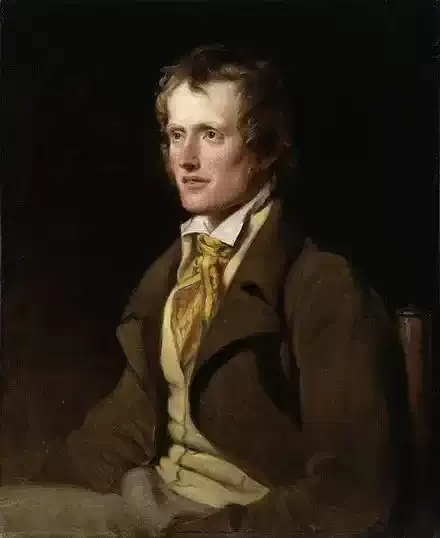
John Clare
An Invite, to Eternity
An Invite, to Eternity
Wilt thou go with me, sweet maid,
Say, maiden, wilt thou go with me
Through the valley-depths of shade,
Of night and dark obscurity;
Where the path has lost its way,
Where the sun forgets the day,
Where there's nor life nor light to see,
Sweet maiden, wilt thou go with me!
Where stones will turn to flooding streams,
Where plains will rise like ocean waves,
Where life will fade like visioned dreams
And mountains darken into caves,
Say, maiden, wilt thou go with me
Through this sad non-identity,
Where parents live and are forgot,
And sisters live and know us not!
Say, maiden; wilt thou go with me
In this strange death of life to be,
To live in death and be the same,
Without this life or home or name,
At once to be and not to be -
That was and is not -yet to see
Things pass like shadows, and the sky
Above, below, around us lie?
Wilt thou go with me, sweet maid,
Say, maiden, wilt thou go with me
Through the valley-depths of shade,
Of night and dark obscurity;
Where the path has lost its way,
Where the sun forgets the day,
Where there's nor life nor light to see,
Sweet maiden, wilt thou go with me!
Where stones will turn to flooding streams,
Where plains will rise like ocean waves,
Where life will fade like visioned dreams
And mountains darken into caves,
Say, maiden, wilt thou go with me
Through this sad non-identity,
Where parents live and are forgot,
And sisters live and know us not!
Say, maiden; wilt thou go with me
In this strange death of life to be,
To live in death and be the same,
Without this life or home or name,
At once to be and not to be -
That was and is not -yet to see
Things pass like shadows, and the sky
Above, below, around us lie?
389
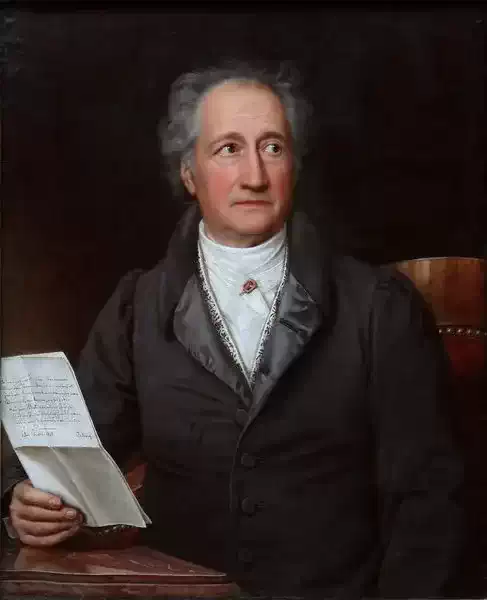
Johann Wolfgang von Goethe
Venetian Epigrams I
Venetian Epigrams I
Sarcophagi, urns, were all covered with lifelike scenes,
fauns dancing with girls from a Bacchanalian choir,
paired-off, goat-footed creatures puffing their cheeks,
forcing ear-splitting notes from the blaring horns.
Cymbals and drumbeats, the marble is seen and is heard.
How delightful the fruit in the beaks of fluttering birds!
No startling noise can scare them, or scare away love,
Amor, whose torch waves more gladly in this happy throng.
So fullness overcomes death, and the ashes within
seem still, in their silent house, to feel love’s delight.
So may the Poet’s sarcophagus be adorned,
with this book the writer has filled with the beauty of life.
Sarcophagi, urns, were all covered with lifelike scenes,
fauns dancing with girls from a Bacchanalian choir,
paired-off, goat-footed creatures puffing their cheeks,
forcing ear-splitting notes from the blaring horns.
Cymbals and drumbeats, the marble is seen and is heard.
How delightful the fruit in the beaks of fluttering birds!
No startling noise can scare them, or scare away love,
Amor, whose torch waves more gladly in this happy throng.
So fullness overcomes death, and the ashes within
seem still, in their silent house, to feel love’s delight.
So may the Poet’s sarcophagus be adorned,
with this book the writer has filled with the beauty of life.
409
Johann Wolfgang von Goethe
The Death Of The Fly
The Death Of The Fly
WITH eagerness he drinks the treach'rous potion,
Nor stops to rest, by the first taste misled;
Sweet is the draught, but soon all power of motion
He finds has from his tender members fled;
No longer has he strength to plume his wing,
No longer strength to raise his head, poor thing!
E'en in enjoyment's hour his life he loses,
His little foot to bear his weight refuses;
So on he sips, and ere his draught is o'er,
Death veils his thousand eyes for evermore.
WITH eagerness he drinks the treach'rous potion,
Nor stops to rest, by the first taste misled;
Sweet is the draught, but soon all power of motion
He finds has from his tender members fled;
No longer has he strength to plume his wing,
No longer strength to raise his head, poor thing!
E'en in enjoyment's hour his life he loses,
His little foot to bear his weight refuses;
So on he sips, and ere his draught is o'er,
Death veils his thousand eyes for evermore.
363
Johann Wolfgang von Goethe
The Brethren
The Brethren
SLUMBER and Sleep, two brethren ordain'd by the gods to their service,
Were by Prometheus implored, comfort to give to his race;
But though so light to the gods, too heavy for man was their burden,
We in their slumber find sleep, we in their sleep meet with death.
SLUMBER and Sleep, two brethren ordain'd by the gods to their service,
Were by Prometheus implored, comfort to give to his race;
But though so light to the gods, too heavy for man was their burden,
We in their slumber find sleep, we in their sleep meet with death.
350
Johann Wolfgang von Goethe
Sameness
Sameness
Over all hilltops
is peace
in all the treetops
you feel
barely a breeze;
The birds in the forest have
stopped their song
Wait, before long
you too will be still.
Over all hilltops
is peace
in all the treetops
you feel
barely a breeze;
The birds in the forest have
stopped their song
Wait, before long
you too will be still.
418
Johann Wolfgang von Goethe
Lines On Seeing Schiller's Skull
Lines On Seeing Schiller's Skull
WITHIN a gloomy charnel-house one day
I view'd the countless skulls, so strangely mated,
And of old times I thought, that now were grey.
Close pack'd they stand, that once so fiercely hated,
And hardy bones, that to the death contended,
Are lying cross'd,--to lie for ever, fated.
What held those crooked shoulder-blades suspended?
No one now asks; and limbs with vigour fired,
The hand, the foot--their use in life is ended.
Vainly ye sought the tomb for rest when tired;
Peace in the grave may not be yours; ye're driven
Back into daylight by a force inspired;
But none can love the wither'd husk, though even
A glorious noble kernel it contained.
To me, an adept, was the writing given
Which not to all its holy sense explained,
When 'mid the crowd, their icy shadows flinging,
I saw a form, that glorious still remained.
And even there, where mould and damp were clinging,
Gave me a blest, a rapture-fraught emotion,
As though from death a living fount were springing.
What mystic joy I felt! What rapt devotion!
That form, how pregnant with a godlike trace!
A look, how did it whirl me tow'rd that ocean
Whose rolling billows mightier shapes embrace!
Mysterious vessel! Oracle how dear!
Even to grasp thee is my hand too base,
Except to steal thee from thy prison here
With pious purpose, and devoutly go
Back to the air, free thoughts, and sunlight clear.
What greater gain in life can man e'er know
Than when God-Nature will to him explain
How into Spirit steadfastness may flow,
How steadfast, too, the Spirit-Born remain.
WITHIN a gloomy charnel-house one day
I view'd the countless skulls, so strangely mated,
And of old times I thought, that now were grey.
Close pack'd they stand, that once so fiercely hated,
And hardy bones, that to the death contended,
Are lying cross'd,--to lie for ever, fated.
What held those crooked shoulder-blades suspended?
No one now asks; and limbs with vigour fired,
The hand, the foot--their use in life is ended.
Vainly ye sought the tomb for rest when tired;
Peace in the grave may not be yours; ye're driven
Back into daylight by a force inspired;
But none can love the wither'd husk, though even
A glorious noble kernel it contained.
To me, an adept, was the writing given
Which not to all its holy sense explained,
When 'mid the crowd, their icy shadows flinging,
I saw a form, that glorious still remained.
And even there, where mould and damp were clinging,
Gave me a blest, a rapture-fraught emotion,
As though from death a living fount were springing.
What mystic joy I felt! What rapt devotion!
That form, how pregnant with a godlike trace!
A look, how did it whirl me tow'rd that ocean
Whose rolling billows mightier shapes embrace!
Mysterious vessel! Oracle how dear!
Even to grasp thee is my hand too base,
Except to steal thee from thy prison here
With pious purpose, and devoutly go
Back to the air, free thoughts, and sunlight clear.
What greater gain in life can man e'er know
Than when God-Nature will to him explain
How into Spirit steadfastness may flow,
How steadfast, too, the Spirit-Born remain.
339
Johann Wolfgang von Goethe
Death-Lament Of The Noble Wife Of Asan Aga
Death-Lament Of The Noble Wife Of Asan Aga
WHAT is yonder white thing in the forest?
Is it snow, or can it swans perchance be?
Were it snow, ere this it had been melted,
Were it swans, they all away had hastend.
Snow, in truth, it is not, swans it is not,
'Tis the shining tents of Asan Aga.
He within is lying, sorely wounded;
To him come his mother and his sister;
Bashfully his wife delays to come there.
When the torment of his wounds had lessen'd,
To his faithful wife he sent this message:
"At my court no longer dare to tarry,
At my court, or e'en amongst my people."
When the woman heard this cruel message,
Mute and full of sorrow stood that true one.
At the doors she hears the feet of horses,
And bethinks that Asan comes--her husband,
To the tower she springs, to leap thence headlong,
Her two darling daughters follow sadly,
And whilst weeping bitter tears, exclaim they:
These are not our father Asan's horses;
'Tis thy brother Pintorowich coming!"
So the wife of Asan turns to meet him,
Clasps her arms in anguish round her brother:
"See thy sister's sad disgrace, oh brother!
How I'm banish'd--mother of five children!"
Silently her brother from his wallet,
Wrapp'd in deep red-silk, and ready written,
Draweth forth the letter of divorcement,
To return home to her mother's dwelling,
Free to be another's wife thenceforward.
When the woman saw that mournful letter,
Fervently she kiss'd her two sons' foreheads,
And her two girls' cheeks with fervour kiss'd she,
But she from the suckling in the cradle
Could not tear herself, so deep her sorrow!
So she's torn thence by her fiery brother,
On his nimble steed he lifts her quickly,
And so hastens, with the heart-sad woman,
Straightway tow'rd his father's lofty dwelling.
Short the time was--seven days had pass'd not,--
Yet enough 'twas; many mighty princes
Sought the woman in her widow's-mourning.
Sought the woman,--as their wife they sought her.
And the mightiest was Imoski's Cadi,
And the woman weeping begg'd her brother:
By thy life, my brother, I entreat thee,
Let me not another's wife be ever,
Lest my heart be broken at the image
Of my poor, my dearly-cherish'd children!"
To her prayer her brother would not hearken,
Fix'd to wed her to Imoski's Cadi.
Yet the good one ceaselessly implored him:
"Send, at least a letter, oh, my brother,
With this message to Imoski's Cadi:
'The young widow sends thee friendly greeting;
Earnestly she prays thee, through this letter,
That, when thou com'st hither, with thy Suatians,
A long veil thou'lt bring me, 'neath whose shadow
I may hide, when near the house of Asan,
And not see my dearly cherish'd orphans.'"
Scarcely had the Cadi read this letter,
Than he gather'd all his Suatians round him,
And then tow'rd the bride his course directed,
And the veil she ask'd for, took he with him.
Happily they reach'd the princess' dwelling,
From the dwelling happily they led her.
But when they approach'd the house of Asan,
Lo! the children saw from high their mother,
And they shouted: "To thy halls return thou!
Eat thy supper with thy darling children!"
Mournfully the wife of Asan heard it,
Tow'rd the Suatian prince then turn'd she, saying:
"Let, I pray, the Suatians and the horses
At the loved ones' door a short time tarry,
That I may give presents to my children."
And before the loved ones' door they tarried,
And she presents gave to her poor children,
To the boys gave gold-embroider'd buskins,
To the girls gave long and costly dresses,
To the suckling, helpless in the cradle,
Gave a garment, to be worn hereafter.
This aside saw Father Asan Aga,--
Sadly cried he to his darling children:
"Hither come, ye dear unhappy infants,
For your mother's breast is turn'd to iron,
Lock'd for ever, closed to all compassion!"
When the wife of Asan heard him speak thus,
On the ground, all pale and trembling, fell she,
And her spirit fled her sorrowing bosom,
When she saw her children flying from her.
WHAT is yonder white thing in the forest?
Is it snow, or can it swans perchance be?
Were it snow, ere this it had been melted,
Were it swans, they all away had hastend.
Snow, in truth, it is not, swans it is not,
'Tis the shining tents of Asan Aga.
He within is lying, sorely wounded;
To him come his mother and his sister;
Bashfully his wife delays to come there.
When the torment of his wounds had lessen'd,
To his faithful wife he sent this message:
"At my court no longer dare to tarry,
At my court, or e'en amongst my people."
When the woman heard this cruel message,
Mute and full of sorrow stood that true one.
At the doors she hears the feet of horses,
And bethinks that Asan comes--her husband,
To the tower she springs, to leap thence headlong,
Her two darling daughters follow sadly,
And whilst weeping bitter tears, exclaim they:
These are not our father Asan's horses;
'Tis thy brother Pintorowich coming!"
So the wife of Asan turns to meet him,
Clasps her arms in anguish round her brother:
"See thy sister's sad disgrace, oh brother!
How I'm banish'd--mother of five children!"
Silently her brother from his wallet,
Wrapp'd in deep red-silk, and ready written,
Draweth forth the letter of divorcement,
To return home to her mother's dwelling,
Free to be another's wife thenceforward.
When the woman saw that mournful letter,
Fervently she kiss'd her two sons' foreheads,
And her two girls' cheeks with fervour kiss'd she,
But she from the suckling in the cradle
Could not tear herself, so deep her sorrow!
So she's torn thence by her fiery brother,
On his nimble steed he lifts her quickly,
And so hastens, with the heart-sad woman,
Straightway tow'rd his father's lofty dwelling.
Short the time was--seven days had pass'd not,--
Yet enough 'twas; many mighty princes
Sought the woman in her widow's-mourning.
Sought the woman,--as their wife they sought her.
And the mightiest was Imoski's Cadi,
And the woman weeping begg'd her brother:
By thy life, my brother, I entreat thee,
Let me not another's wife be ever,
Lest my heart be broken at the image
Of my poor, my dearly-cherish'd children!"
To her prayer her brother would not hearken,
Fix'd to wed her to Imoski's Cadi.
Yet the good one ceaselessly implored him:
"Send, at least a letter, oh, my brother,
With this message to Imoski's Cadi:
'The young widow sends thee friendly greeting;
Earnestly she prays thee, through this letter,
That, when thou com'st hither, with thy Suatians,
A long veil thou'lt bring me, 'neath whose shadow
I may hide, when near the house of Asan,
And not see my dearly cherish'd orphans.'"
Scarcely had the Cadi read this letter,
Than he gather'd all his Suatians round him,
And then tow'rd the bride his course directed,
And the veil she ask'd for, took he with him.
Happily they reach'd the princess' dwelling,
From the dwelling happily they led her.
But when they approach'd the house of Asan,
Lo! the children saw from high their mother,
And they shouted: "To thy halls return thou!
Eat thy supper with thy darling children!"
Mournfully the wife of Asan heard it,
Tow'rd the Suatian prince then turn'd she, saying:
"Let, I pray, the Suatians and the horses
At the loved ones' door a short time tarry,
That I may give presents to my children."
And before the loved ones' door they tarried,
And she presents gave to her poor children,
To the boys gave gold-embroider'd buskins,
To the girls gave long and costly dresses,
To the suckling, helpless in the cradle,
Gave a garment, to be worn hereafter.
This aside saw Father Asan Aga,--
Sadly cried he to his darling children:
"Hither come, ye dear unhappy infants,
For your mother's breast is turn'd to iron,
Lock'd for ever, closed to all compassion!"
When the wife of Asan heard him speak thus,
On the ground, all pale and trembling, fell she,
And her spirit fled her sorrowing bosom,
When she saw her children flying from her.
378
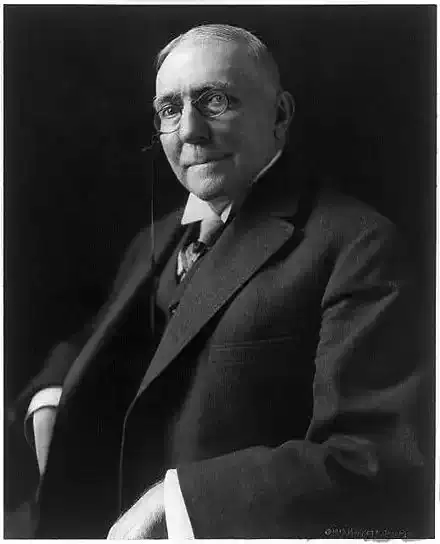
James Whitcomb Riley
When The Hearse Comes Back
When The Hearse Comes Back
A thing 'at's 'bout as tryin' as a healthy man kin meet
Is some poor feller's funeral a-joggin' 'long the street:
The slow hearse and the hosses-- slow enough, to say at least,
Fer to even tax the patience of gentleman deceased!
The low scrunch of the gravel-- and the slow grind of the wheels--,
The slow, slow go of ev'ry woe 'at ev'rybody feels!
So I ruther like the contrast when I hear the whip-lash crack
A quickstep fer the hosses,
When the
Hearse
Comes
Back!
Meet it goin' to'rds the cimet'ry, you'll want to drap yer eyes--
But ef the plumes don't fetch you, it'll ketch you otherwise-You'll
haf to see the caskit, though you'd ort to look away
And 'conomize and save yer sighs fer any other day!
Yer sympathizin' won't wake up the sleeper from his rest--
Yer tears won't thaw them hands o' his 'at's froze acrost his breast!
And this is why-- when airth and sky's a gittin blurred and black--
I like the flash and hurry
When the
Hearse
Comes
Back!
It's not 'cause I don't 'preciate it ain't no time fer jokes,
Ner 'cause I' got no common human feelin' fer the folks--;
I've went to funerals myse'f, and tuk on some, perhaps--
Fer my hearth's 'bout as mal'able as any other chap's--,
I've buried father, mother-- But I'll haf to jes' git you
To 'excuse me,' as the feller says--. The p'int I'm drivin' to
Is simply when we're plum broke down and all knocked out o' whack,
It he'ps to shape us up like,
When the
Hearse
Comes
Back!
The idy! Wadin round here over shoe-mouth deep in woe,
When they's a graded 'pike o' joy and sunshine don't you know!
When evening strikes the pastur', cows'll pull out fer the bars,
And skittish-like from out the night'll prance the happy stars.
And so when my time comes to die, and I've got ary friend
'At wants expressed my last request-- I'll mebby, rickommend
To drive slow, ef they haf to, goin' 'long the out'ard track,
But I'll smile and say, 'You speed 'em
When the
Hearse
Comes
Back!'
A thing 'at's 'bout as tryin' as a healthy man kin meet
Is some poor feller's funeral a-joggin' 'long the street:
The slow hearse and the hosses-- slow enough, to say at least,
Fer to even tax the patience of gentleman deceased!
The low scrunch of the gravel-- and the slow grind of the wheels--,
The slow, slow go of ev'ry woe 'at ev'rybody feels!
So I ruther like the contrast when I hear the whip-lash crack
A quickstep fer the hosses,
When the
Hearse
Comes
Back!
Meet it goin' to'rds the cimet'ry, you'll want to drap yer eyes--
But ef the plumes don't fetch you, it'll ketch you otherwise-You'll
haf to see the caskit, though you'd ort to look away
And 'conomize and save yer sighs fer any other day!
Yer sympathizin' won't wake up the sleeper from his rest--
Yer tears won't thaw them hands o' his 'at's froze acrost his breast!
And this is why-- when airth and sky's a gittin blurred and black--
I like the flash and hurry
When the
Hearse
Comes
Back!
It's not 'cause I don't 'preciate it ain't no time fer jokes,
Ner 'cause I' got no common human feelin' fer the folks--;
I've went to funerals myse'f, and tuk on some, perhaps--
Fer my hearth's 'bout as mal'able as any other chap's--,
I've buried father, mother-- But I'll haf to jes' git you
To 'excuse me,' as the feller says--. The p'int I'm drivin' to
Is simply when we're plum broke down and all knocked out o' whack,
It he'ps to shape us up like,
When the
Hearse
Comes
Back!
The idy! Wadin round here over shoe-mouth deep in woe,
When they's a graded 'pike o' joy and sunshine don't you know!
When evening strikes the pastur', cows'll pull out fer the bars,
And skittish-like from out the night'll prance the happy stars.
And so when my time comes to die, and I've got ary friend
'At wants expressed my last request-- I'll mebby, rickommend
To drive slow, ef they haf to, goin' 'long the out'ard track,
But I'll smile and say, 'You speed 'em
When the
Hearse
Comes
Back!'
285
James Whitcomb Riley
When Old Jack Died
When Old Jack Died
I.
When old Jack died, we staid from school (they said,
At home, we needn't go that day), and none
Of us ate any breakfast--only one,
And that was Papa--and his eyes were red
When he came round where we were, by the shed
Where Jack was lying, half way in the sun
And half way in the shade. When we begun
To cry out loud, Pa turned and dropped his head
And went away; and Mamma, she went back
Into the kitchen. Then, for a long while,
All to ourselves, like, we stood there and cried.
We thought so many good things of Old Jack,
And funny things--although we didn't smile--We
couldn't only cry when Old Jack died.
II.
When Old Jack died, it seemed a human friend
Had suddenly gone from us; that some face
That we had loved to fondle and embrace
From babyhood, no more would condescend
To smile on us forever. We might bend
With tearful eyes above him, interlace
Our chubby fingers o'er him, romp and race,
Plead with him, call and coax--aye, we might send
The old halloo up for him, whistle, hist,
(If sobs had let us) or, as wildly vain,
Snapped thumbs, called 'speak,' and he had not replied;
We might have gone down on our knees and kissed
The tousled ears, and yet they must remain
Deaf, motionless, we knew--when Old Jack died.
III.
When Old Jack died, it seemed to us, some way,
That all the other dogs in town were pained
With our bereavement, and some that were chained,
Even, unslipped their collars on that day
To visit Jack in state, as though to pay
A last, sad tribute there, while neighbors craned
Their heads above the high board fence, and deigned
To sigh 'Poor dog!' remembering how they
Had cuffed him, when alive, perchance, because,
For love of them he leaped to lick their hands--
Now, that he could not, were they satisfied?
We children thought that, as we crossed his paws,
And o'er his grave, 'way down the bottom-lands,
Wrote 'Our First Love Lies Here,' when Old Jack died.
I.
When old Jack died, we staid from school (they said,
At home, we needn't go that day), and none
Of us ate any breakfast--only one,
And that was Papa--and his eyes were red
When he came round where we were, by the shed
Where Jack was lying, half way in the sun
And half way in the shade. When we begun
To cry out loud, Pa turned and dropped his head
And went away; and Mamma, she went back
Into the kitchen. Then, for a long while,
All to ourselves, like, we stood there and cried.
We thought so many good things of Old Jack,
And funny things--although we didn't smile--We
couldn't only cry when Old Jack died.
II.
When Old Jack died, it seemed a human friend
Had suddenly gone from us; that some face
That we had loved to fondle and embrace
From babyhood, no more would condescend
To smile on us forever. We might bend
With tearful eyes above him, interlace
Our chubby fingers o'er him, romp and race,
Plead with him, call and coax--aye, we might send
The old halloo up for him, whistle, hist,
(If sobs had let us) or, as wildly vain,
Snapped thumbs, called 'speak,' and he had not replied;
We might have gone down on our knees and kissed
The tousled ears, and yet they must remain
Deaf, motionless, we knew--when Old Jack died.
III.
When Old Jack died, it seemed to us, some way,
That all the other dogs in town were pained
With our bereavement, and some that were chained,
Even, unslipped their collars on that day
To visit Jack in state, as though to pay
A last, sad tribute there, while neighbors craned
Their heads above the high board fence, and deigned
To sigh 'Poor dog!' remembering how they
Had cuffed him, when alive, perchance, because,
For love of them he leaped to lick their hands--
Now, that he could not, were they satisfied?
We children thought that, as we crossed his paws,
And o'er his grave, 'way down the bottom-lands,
Wrote 'Our First Love Lies Here,' when Old Jack died.
283
James Whitcomb Riley
When Bessie Died
When Bessie Died
If from your own the dimpled hands had slipped,
And ne'er would nestle in your palm again;
If the white feet into the grave had tripped--'
When Bessie died--
We braided the brown hair, and tied
It just as her own little hands
Had fastened back the silken strands
A thousand times-- the crimson bit
Of ribbon woven into it
That she had worn with childish pride--
Smoothed down the dainty bow-- and cried
When Bessie died.
When Bessie died--
We drew the nursery blinds aside,
And as the morning in the room
Burst like a primrose into bloom,
Her pet canary's cage we hung
Where she might hear him when he sung--
And yet not any note he tried,
Though she lay listening folded-eyed.
When Bessie died--
We writhed in prayer unsatisfied:
We begged of God, and He did smile
In silence on us all the while;
And we did see Him, through our tears,
Enfolding that fair form of hers,
She laughing back against His love
The kisses had nothing of--
And death to us He still denied,
When Bessie died--
When Bessie died.
If from your own the dimpled hands had slipped,
And ne'er would nestle in your palm again;
If the white feet into the grave had tripped--'
When Bessie died--
We braided the brown hair, and tied
It just as her own little hands
Had fastened back the silken strands
A thousand times-- the crimson bit
Of ribbon woven into it
That she had worn with childish pride--
Smoothed down the dainty bow-- and cried
When Bessie died.
When Bessie died--
We drew the nursery blinds aside,
And as the morning in the room
Burst like a primrose into bloom,
Her pet canary's cage we hung
Where she might hear him when he sung--
And yet not any note he tried,
Though she lay listening folded-eyed.
When Bessie died--
We writhed in prayer unsatisfied:
We begged of God, and He did smile
In silence on us all the while;
And we did see Him, through our tears,
Enfolding that fair form of hers,
She laughing back against His love
The kisses had nothing of--
And death to us He still denied,
When Bessie died--
When Bessie died.
268
James Whitcomb Riley
Three Dead Friends
Three Dead Friends
Always suddenly they are gone--
The friends we trusted and held secure--
Suddenly we are gazing on,
Not a _smiling_ face, but the marble-pure
Dead mask of a face that nevermore
To a smile of ours will make reply--
The lips close-locked as the eyelids are-Gone--
swift as the flash of the molten ore
A meteor pours through a midnight sky,
Leaving it blind of a single star.
Tell us, O Death, Remorseless Might!
What is this old, unescapable ire
You wreak on us?--from the birth of light
Till the world be charred to a core of fire!
We do no evil thing to you--
We seek to evade you--that is all--
That is your will--you will not be known
Of men. What, then, would you have us do?--
Cringe, and wait till your vengeance fall,
And your graves be fed, and the trumpet blown?
You desire no friends; but _we_--O we
Need them so, as we falter here,
Fumbling through each new vacancy,
As each is stricken that we hold dear.
One you struck but a year ago;
And one not a month ago; and one-(
God's vast pity!)--and one lies now
Where the widow wails, in her nameless woe,
And the soldiers pace, with the sword and gun,
Where the comrade sleeps, with the laureled brow.
And what did the first?--that wayward soul,
Clothed of sorrow, yet nude of sin,
And with all hearts bowed in the strange control
Of the heavenly voice of his violin.
Why, it was music the way he _stood_,
So grand was the poise of the head and so
Full was the figure of majesty!--
One heard with the eyes, as a deaf man would,
And with all sense brimmed to the overflow
With tears of anguish and ecstasy.
And what did the girl, with the great warm light
Of genius sunning her eyes of blue,
With her heart so pure, and her soul so white--
What, O Death, did she do to you?
Through field and wood as a child she strayed,
As Nature, the dear sweet mother led;
While from her canvas, mirrored back,
Glimmered the stream through the everglade
Where the grapevine trailed from the trees to wed
Its likeness of emerald, blue and black.
And what did he, who, the last of these,
Faced you, with never a fear, O Death?
Did you hate _him_ that he loved the breeze,
And the morning dews, and the rose's breath?
Did you hate him that he answered not
Your hate again--but turned, instead,
His only hate on his country's wrongs?
Well--you possess him, dead!--but what
Of the good he wrought? With laureled head
He bides with us in his deeds and songs.
Laureled, first, that he bravely fought,
And forged a way to our flag's release;
Laureled, next--for the harp he taught
To wake glad songs in the days of peace--
Songs of the woodland haunts he held
As close in his love as they held their bloom
In their inmost bosoms of leaf and vine--
Songs that echoed, and pulsed and welled
Through the town's pent streets, and the sick child's room,
Pure as a shower in soft sunshine.
Claim them, Death; yet their fame endures,
What friend next will you rend from us
In that cold, pitiless way of yours,
And leave us a grief more dolorous?
Speak to us!--tell us, O Dreadful Power!--
Are we to have not a lone friend left?--
Since, frozen, sodden, or green the sod,--
In every second of every hour,
_Some one_, Death, you have left thus bereft,
Half inaudibly shrieks to God.
Always suddenly they are gone--
The friends we trusted and held secure--
Suddenly we are gazing on,
Not a _smiling_ face, but the marble-pure
Dead mask of a face that nevermore
To a smile of ours will make reply--
The lips close-locked as the eyelids are-Gone--
swift as the flash of the molten ore
A meteor pours through a midnight sky,
Leaving it blind of a single star.
Tell us, O Death, Remorseless Might!
What is this old, unescapable ire
You wreak on us?--from the birth of light
Till the world be charred to a core of fire!
We do no evil thing to you--
We seek to evade you--that is all--
That is your will--you will not be known
Of men. What, then, would you have us do?--
Cringe, and wait till your vengeance fall,
And your graves be fed, and the trumpet blown?
You desire no friends; but _we_--O we
Need them so, as we falter here,
Fumbling through each new vacancy,
As each is stricken that we hold dear.
One you struck but a year ago;
And one not a month ago; and one-(
God's vast pity!)--and one lies now
Where the widow wails, in her nameless woe,
And the soldiers pace, with the sword and gun,
Where the comrade sleeps, with the laureled brow.
And what did the first?--that wayward soul,
Clothed of sorrow, yet nude of sin,
And with all hearts bowed in the strange control
Of the heavenly voice of his violin.
Why, it was music the way he _stood_,
So grand was the poise of the head and so
Full was the figure of majesty!--
One heard with the eyes, as a deaf man would,
And with all sense brimmed to the overflow
With tears of anguish and ecstasy.
And what did the girl, with the great warm light
Of genius sunning her eyes of blue,
With her heart so pure, and her soul so white--
What, O Death, did she do to you?
Through field and wood as a child she strayed,
As Nature, the dear sweet mother led;
While from her canvas, mirrored back,
Glimmered the stream through the everglade
Where the grapevine trailed from the trees to wed
Its likeness of emerald, blue and black.
And what did he, who, the last of these,
Faced you, with never a fear, O Death?
Did you hate _him_ that he loved the breeze,
And the morning dews, and the rose's breath?
Did you hate him that he answered not
Your hate again--but turned, instead,
His only hate on his country's wrongs?
Well--you possess him, dead!--but what
Of the good he wrought? With laureled head
He bides with us in his deeds and songs.
Laureled, first, that he bravely fought,
And forged a way to our flag's release;
Laureled, next--for the harp he taught
To wake glad songs in the days of peace--
Songs of the woodland haunts he held
As close in his love as they held their bloom
In their inmost bosoms of leaf and vine--
Songs that echoed, and pulsed and welled
Through the town's pent streets, and the sick child's room,
Pure as a shower in soft sunshine.
Claim them, Death; yet their fame endures,
What friend next will you rend from us
In that cold, pitiless way of yours,
And leave us a grief more dolorous?
Speak to us!--tell us, O Dreadful Power!--
Are we to have not a lone friend left?--
Since, frozen, sodden, or green the sod,--
In every second of every hour,
_Some one_, Death, you have left thus bereft,
Half inaudibly shrieks to God.
305
James Whitcomb Riley
The Stepmother
The Stepmother
First she come to our house,
Tommy run and hid;
And Emily and Bob and me
We cried jus' like we did
When Mother died,--and we all said
'At we all wisht 'at we was dead!
And Nurse she couldn't stop us,
And Pa he tried and tried,--
We sobbed and shook and wouldn't look,
But only cried and cried;
And nen someone--we couldn't jus'
Tell who--was cryin' same as us!
Our Stepmother! Yes, it was her,
Her arms around us all-'
Cause Tom slid down the bannister
And peeked in from the hall.--
And we all love her, too, because
She's purt nigh good as Mother was!
First she come to our house,
Tommy run and hid;
And Emily and Bob and me
We cried jus' like we did
When Mother died,--and we all said
'At we all wisht 'at we was dead!
And Nurse she couldn't stop us,
And Pa he tried and tried,--
We sobbed and shook and wouldn't look,
But only cried and cried;
And nen someone--we couldn't jus'
Tell who--was cryin' same as us!
Our Stepmother! Yes, it was her,
Her arms around us all-'
Cause Tom slid down the bannister
And peeked in from the hall.--
And we all love her, too, because
She's purt nigh good as Mother was!
305
James Whitcomb Riley
The Singer
The Singer
While with Ambition's hectic flame
He wastes the midnight oil,
And dreams, high-throned on heights of fame,
To rest him from his toil,-
Death's Angel, like a vast eclipse,
Above him spreads her wings,
And fans the embers of his lips
To ashes as he sings.
While with Ambition's hectic flame
He wastes the midnight oil,
And dreams, high-throned on heights of fame,
To rest him from his toil,-
Death's Angel, like a vast eclipse,
Above him spreads her wings,
And fans the embers of his lips
To ashes as he sings.
237
James Whitcomb Riley
Over The Eyes Of Gladness
Over The Eyes Of Gladness
'The voice of One hath spoken,
And the bended reed is bruised--
The golden bowl is broken,
And the silver cord is loosed.'
Over the eyes of gladness
The lids of sorrow fall,
And the light of mirth is darkened
Under the funeral pall.
The hearts that throbbed with rapture
In dreams of the future years,
Are wakened from their slumbers,
And their visions drowned in tears.
. . . . . . .
Two buds on the bough in the morning--
Twin buds in the smiling sun,
But the frost of death has fallen
And blighted the bloom of one.
One leaf of life still folded
Has fallen from the stem,
Leaving the symbol teaching
There still are two of them,--
For though--through Time's gradations,
The LIVING bud may burst,--
The WITHERED one is gathered,
And blooms in Heaven first.
'The voice of One hath spoken,
And the bended reed is bruised--
The golden bowl is broken,
And the silver cord is loosed.'
Over the eyes of gladness
The lids of sorrow fall,
And the light of mirth is darkened
Under the funeral pall.
The hearts that throbbed with rapture
In dreams of the future years,
Are wakened from their slumbers,
And their visions drowned in tears.
. . . . . . .
Two buds on the bough in the morning--
Twin buds in the smiling sun,
But the frost of death has fallen
And blighted the bloom of one.
One leaf of life still folded
Has fallen from the stem,
Leaving the symbol teaching
There still are two of them,--
For though--through Time's gradations,
The LIVING bud may burst,--
The WITHERED one is gathered,
And blooms in Heaven first.
285
James Whitcomb Riley
Our Little Girl
Our Little Girl
Her heart knew naught of sorrow,
Nor the vaguest taint of sin-'
Twas an ever-blooming blossom
Of the purity within:
And her hands knew only touches
Of the mother's gentle care,
And the kisses and caresses
Through the interludes of prayer.
Her baby-feet had journeyed
Such a little distance here,
They could have found no briers
In the path to interfere;
The little cross she carried
Could not weary her, we know,
For it lay as lightly on her
As a shadow on the snow.
And yet the way before us--
O how empty now and drear!--
How ev'n the dews of roses
Seem as dripping tears for her!
And the song-birds all seem crying,
As the winds cry and the rain,
All sobbingly,--'We want--we want
Our little girl again!'
Her heart knew naught of sorrow,
Nor the vaguest taint of sin-'
Twas an ever-blooming blossom
Of the purity within:
And her hands knew only touches
Of the mother's gentle care,
And the kisses and caresses
Through the interludes of prayer.
Her baby-feet had journeyed
Such a little distance here,
They could have found no briers
In the path to interfere;
The little cross she carried
Could not weary her, we know,
For it lay as lightly on her
As a shadow on the snow.
And yet the way before us--
O how empty now and drear!--
How ev'n the dews of roses
Seem as dripping tears for her!
And the song-birds all seem crying,
As the winds cry and the rain,
All sobbingly,--'We want--we want
Our little girl again!'
291
James Whitcomb Riley
May I Not Weep With You
May I Not Weep With You
Let me come in where you sit weeping—aye,
Let me, who have not any child to die,
Weep with you for the little one whose love
I have known nothing of.
The little arms that slowly, slowly loosed
Then- pressure round your neck—the hands you vised
To kiss—such arms—such hands—I never knew,
May I not weep with you?
Fain would I be of service—say something
Between the tears, that would be comforting,
But Oh! so sadder than yourself am I,
Who have not any child to die!
Let me come in where you sit weeping—aye,
Let me, who have not any child to die,
Weep with you for the little one whose love
I have known nothing of.
The little arms that slowly, slowly loosed
Then- pressure round your neck—the hands you vised
To kiss—such arms—such hands—I never knew,
May I not weep with you?
Fain would I be of service—say something
Between the tears, that would be comforting,
But Oh! so sadder than yourself am I,
Who have not any child to die!
218
James Whitcomb Riley
In The Dark
In The Dark
O in the depths of midnight
What fancies haunt the brain!
When even the sigh of the sleeper
Sounds like a sob of pain.
A sense of awe and of wonder
I may never well define,--
For the thoughts that come in the shadows
Never come in the shine.
The old clock down in the parlor
Like a sleepless mourner grieves,
And the seconds drip in the silence
As the rain drips from the eaves.
And I think of the hands that signal
The hours there in the gloom,
And wonder what angel watchers
Wait in the darkened room.
And I think of the smiling faces
That used to watch and wait,
Till the click of the clock was answered
By the click of the opening gate.--
They are not there now in the evening--
Morning or noon--not there;
Yet I know that they keep their vigil,
And wait for me Somewhere.
O in the depths of midnight
What fancies haunt the brain!
When even the sigh of the sleeper
Sounds like a sob of pain.
A sense of awe and of wonder
I may never well define,--
For the thoughts that come in the shadows
Never come in the shine.
The old clock down in the parlor
Like a sleepless mourner grieves,
And the seconds drip in the silence
As the rain drips from the eaves.
And I think of the hands that signal
The hours there in the gloom,
And wonder what angel watchers
Wait in the darkened room.
And I think of the smiling faces
That used to watch and wait,
Till the click of the clock was answered
By the click of the opening gate.--
They are not there now in the evening--
Morning or noon--not there;
Yet I know that they keep their vigil,
And wait for me Somewhere.
291
James Whitcomb Riley
Harlie
Harlie
Fold the little waxen hands
Lightly. Let your warmest tears
Speak regrets, but never fears,--
Heaven understands!
Let the sad heart, o'er the tomb,
Lift again and burst in bloom
Fragrant with a prayer as sweet
As the lily at your feet.
Bend and kiss the folded eyes--
They are only feigning sleep
While their truant glances peep
Into Paradise.
See, the face, though cold and white,
Holds a hint of some delight
E'en with Death, whose finger-tips
Rest upon the frozen lips.
When, within the years to come,
Vanished echoes live once more--
Pattering footsteps on the floor,
And the sounds of home,--
Let your arms in fancy fold
Little Harlie as of old--
As of old and as he waits
At the City's golden gates.
Fold the little waxen hands
Lightly. Let your warmest tears
Speak regrets, but never fears,--
Heaven understands!
Let the sad heart, o'er the tomb,
Lift again and burst in bloom
Fragrant with a prayer as sweet
As the lily at your feet.
Bend and kiss the folded eyes--
They are only feigning sleep
While their truant glances peep
Into Paradise.
See, the face, though cold and white,
Holds a hint of some delight
E'en with Death, whose finger-tips
Rest upon the frozen lips.
When, within the years to come,
Vanished echoes live once more--
Pattering footsteps on the floor,
And the sounds of home,--
Let your arms in fancy fold
Little Harlie as of old--
As of old and as he waits
At the City's golden gates.
283
James Whitcomb Riley
By Her White Bed
By Her White Bed
By her white bed I muse a little space:
She fell asleep--not very long ago,--
And yet the grass was here and not the snow--
The leaf, the bud, the blossom, and--her face!-Midsummer's
heaven above us, and the grace
Of Lovers own day, from dawn to afterglow;
The fireflies' glimmering, and the sweet and low
Plaint of the whip-poor-wills, and every place
In thicker twilight for the roses' scent.
Then _night_.--She slept--in such tranquility,
I walk atiptoe still, nor _dare_ to weep,
Feeling, in all this hush, she rests content--
That though God stood to wake her for me, she
Would mutely plead: 'Nay, Lord! Let _him_ so sleep.'
By her white bed I muse a little space:
She fell asleep--not very long ago,--
And yet the grass was here and not the snow--
The leaf, the bud, the blossom, and--her face!-Midsummer's
heaven above us, and the grace
Of Lovers own day, from dawn to afterglow;
The fireflies' glimmering, and the sweet and low
Plaint of the whip-poor-wills, and every place
In thicker twilight for the roses' scent.
Then _night_.--She slept--in such tranquility,
I walk atiptoe still, nor _dare_ to weep,
Feeling, in all this hush, she rests content--
That though God stood to wake her for me, she
Would mutely plead: 'Nay, Lord! Let _him_ so sleep.'
297
James Whitcomb Riley
At Crown Hill
At Crown Hill
Leave him here in the fresh
greening grasses and trees
And the symbols of love, and the solace of these-
The saintly white lilies and blossoms he keeps
In endless caress as
he breathlessly sleeps.
The tears of our eyes wrong the scene of his rest,
For the sky's at its clearest-the sun's at its best-
The earth at its greenest- its wild bud and bloom
At its sweetest-and sweetest its honey'd perfume.
Home! Home!-Leave him here in his lordly estate,
And with never a tear as we turn from the gate!
Turn back to the home that will know him no more,-
The vines at the window-the sun through the door,-
Nor sound of his voice, nor the light of his face!...
But the birds will sing on, and the rose, in his place,
Will tenderly smile til we daringly feign
He is home with us still, though the tremulous rain
Of our tears reappear, and again all is bloom,
And all prayerless we sob in the long-darkened room.
Heaven portions it thus-the old mystery dim,-
It is midnight to us-it is morning to him
Leave him here in the fresh
greening grasses and trees
And the symbols of love, and the solace of these-
The saintly white lilies and blossoms he keeps
In endless caress as
he breathlessly sleeps.
The tears of our eyes wrong the scene of his rest,
For the sky's at its clearest-the sun's at its best-
The earth at its greenest- its wild bud and bloom
At its sweetest-and sweetest its honey'd perfume.
Home! Home!-Leave him here in his lordly estate,
And with never a tear as we turn from the gate!
Turn back to the home that will know him no more,-
The vines at the window-the sun through the door,-
Nor sound of his voice, nor the light of his face!...
But the birds will sing on, and the rose, in his place,
Will tenderly smile til we daringly feign
He is home with us still, though the tremulous rain
Of our tears reappear, and again all is bloom,
And all prayerless we sob in the long-darkened room.
Heaven portions it thus-the old mystery dim,-
It is midnight to us-it is morning to him
287
Horácio
BkII:XIV Eheu Fugaces
BkII:XIV Eheu Fugaces
Oh how the years fly, Postumus, Postumus,
they’re slipping away, virtue brings no respite
from the wrinkles that furrow our brow,
impending old age, Death the invincible:
not even, my friend, if with three hundred bulls
every day, you appease pitiless Pluto,
jailor of three-bodied Geryon,
who imprisons Tityos by the sad
stream, that every one of us must sail over,
whoever we are that enjoy earth’s riches,
whether we’re wealthy, or whether we are
the most destitute of humble farmers.
In vain we’ll escape from bloodiest warfare,
from the breakers’ roar in the Adriatic,
in vain, on the autumn seas, we’ll fear
the southerly that shatters our bodies:
We’re destined to gaze at Cocytus, winding,
dark languid river: the infamous daughters
of Danaus: and at Sisyphus,
son of Aeolus, condemned to long toil.
We’re destined to leave earth, home, our loving wife,
nor will a single tree, that you planted here,
follow you, it’s briefly-known master,
except for the much-detested cypress.
A worthier heir will drink your Caecuban,
that cellar a hundred keys are protecting,
and stain the street with a vintage wine,
finer than those at the Pontiff’s table.
Oh how the years fly, Postumus, Postumus,
they’re slipping away, virtue brings no respite
from the wrinkles that furrow our brow,
impending old age, Death the invincible:
not even, my friend, if with three hundred bulls
every day, you appease pitiless Pluto,
jailor of three-bodied Geryon,
who imprisons Tityos by the sad
stream, that every one of us must sail over,
whoever we are that enjoy earth’s riches,
whether we’re wealthy, or whether we are
the most destitute of humble farmers.
In vain we’ll escape from bloodiest warfare,
from the breakers’ roar in the Adriatic,
in vain, on the autumn seas, we’ll fear
the southerly that shatters our bodies:
We’re destined to gaze at Cocytus, winding,
dark languid river: the infamous daughters
of Danaus: and at Sisyphus,
son of Aeolus, condemned to long toil.
We’re destined to leave earth, home, our loving wife,
nor will a single tree, that you planted here,
follow you, it’s briefly-known master,
except for the much-detested cypress.
A worthier heir will drink your Caecuban,
that cellar a hundred keys are protecting,
and stain the street with a vintage wine,
finer than those at the Pontiff’s table.
273
Horácio
BkI:XXIV A Lament For Quintilius
BkI:XXIV A Lament For Quintilius
What limit, or restraint, should we show at the loss
of so dear a life? Melpomene, teach me, Muse,
a song of mourning, you, whom the Father granted
a clear voice, the sound of the lyre.
Does endless sleep lie heavy on Quintilius,
now? When will Honour, and unswerving Loyalty,
that is sister to Justice, and our naked Truth,
ever discover his equal?
Many are the good men who weep for his dying,
none of them, Virgil, weep more profusely than you.
Piously, you ask the gods for him, alas, in vain:
not so was he given to us.
Even if you played on the Thracian lyre, listened
to by the trees, more sweetly than Orpheus could,
would life then return, to that empty phantom,
once Mercury, with fearsome wand,
who won’t simply re-open the gates of Fate
at our bidding, has gathered him to the dark throng?
It is hard: but patience makes more tolerable
whatever wrong’s to be righted.
What limit, or restraint, should we show at the loss
of so dear a life? Melpomene, teach me, Muse,
a song of mourning, you, whom the Father granted
a clear voice, the sound of the lyre.
Does endless sleep lie heavy on Quintilius,
now? When will Honour, and unswerving Loyalty,
that is sister to Justice, and our naked Truth,
ever discover his equal?
Many are the good men who weep for his dying,
none of them, Virgil, weep more profusely than you.
Piously, you ask the gods for him, alas, in vain:
not so was he given to us.
Even if you played on the Thracian lyre, listened
to by the trees, more sweetly than Orpheus could,
would life then return, to that empty phantom,
once Mercury, with fearsome wand,
who won’t simply re-open the gates of Fate
at our bidding, has gathered him to the dark throng?
It is hard: but patience makes more tolerable
whatever wrong’s to be righted.
223
Homero
The Iliad: Book 24
The Iliad: Book 24
The assembly now broke up and the people went their ways each to his
own ship. There they made ready their supper, and then bethought
them of the blessed boon of sleep; but Achilles still wept for
thinking of his dear comrade, and sleep, before whom all things bow,
could take no hold upon him. This way and that did he turn as he
yearned after the might and manfulness of Patroclus; he thought of all
they had done together, and all they had gone through both on the
field of battle and on the waves of the weary sea. As he dwelt on
these things he wept bitterly and lay now on his side, now on his
back, and now face downwards, till at last he rose and went out as one
distraught to wander upon the seashore. Then, when he saw dawn
breaking over beach and sea, he yoked his horses to his chariot, and
bound the body of Hector behind it that he might drag it about. Thrice
did he drag it round the tomb of the son of Menoetius, and then went
back into his tent, leaving the body on the ground full length and
with its face downwards. But Apollo would not suffer it to be
disfigured, for he pitied the man, dead though he now was; therefore
he shielded him with his golden aegis continually, that he might
take no hurt while Achilles was dragging him.
Thus shamefully did Achilles in his fury dishonour Hector; but the
blessed gods looked down in pity from heaven, and urged Mercury,
slayer of Argus, to steal the body. All were of this mind save only
Juno, Neptune, and Jove's grey-eyed daughter, who persisted in the
hate which they had ever borne towards Ilius with Priam and his
people; for they forgave not the wrong done them by Alexandrus in
disdaining the goddesses who came to him when he was in his
sheepyards, and preferring her who had offered him a wanton to his
ruin.
When, therefore, the morning of the twelfth day had now come,
Phoebus Apollo spoke among the immortals saying, "You gods ought to be
ashamed of yourselves; you are cruel and hard-hearted. Did not
Hector burn you thigh-bones of heifers and of unblemished goats? And
now dare you not rescue even his dead body, for his wife to look upon,
with his mother and child, his father Priam, and his people, who would
forthwith commit him to the flames, and give him his due funeral
rites? So, then, you would all be on the side of mad Achilles, who
knows neither right nor ruth? He is like some savage lion that in
the pride of his great strength and daring springs upon men's flocks
and gorges on them. Even so has Achilles flung aside all pity, and all
that conscience which at once so greatly banes yet greatly boons him
that will heed it. man may lose one far dearer than Achilles has losta
son, it may be, or a brother born from his own mother's womb; yet
when he has mourned him and wept over him he will let him bide, for it
takes much sorrow to kill a man; whereas Achilles, now that he has
slain noble Hector, drags him behind his chariot round the tomb of his
comrade. It were better of him, and for him, that he should not do so,
for brave though he be we gods may take it ill that he should vent his
fury upon dead clay."
Juno spoke up in a rage. "This were well," she cried, "O lord of the
silver bow, if you would give like honour to Hector and to Achilles;
but Hector was mortal and suckled at a woman's breast, whereas
Achilles is the offspring of a goddess whom I myself reared and
brought up. I married her to Peleus, who is above measure dear to
the immortals; you gods came all of you to her wedding; you feasted
along with them yourself and brought your lyre- false, and fond of low
company, that you have ever been."
Then said Jove, "Juno, be not so bitter. Their honour shall not be
equal, but of all that dwell in Ilius, Hector was dearest to the gods,
as also to myself, for his offerings never failed me. Never was my
altar stinted of its dues, nor of the drink-offerings and savour of
sacrifice which we claim of right. I shall therefore permit the body
of mighty Hector to be stolen; and yet this may hardly be without
Achilles coming to know it, for his mother keeps night and day
beside him. Let some one of you, therefore, send Thetis to me, and I
will impart my counsel to her, namely that Achilles is to accept a
ransom from Priam, and give up the body."
On this Iris fleet as the wind went forth to carry his message. Down
she plunged into the dark sea midway between Samos and rocky Imbrus;
the waters hissed as they closed over her, and she sank into the
bottom as the lead at the end of an ox-horn, that is sped to carry
death to fishes. She found Thetis sitting in a great cave with the
other sea-goddesses gathered round her; there she sat in the midst
of them weeping for her noble son who was to fall far from his own
land, on the rich plains of Troy. Iris went up to her and said,
"Rise Thetis; Jove, whose counsels fail not, bids you come to him."
And Thetis answered, "Why does the mighty god so bid me? I am in great
grief, and shrink from going in and out among the immortals. Still,
I will go, and the word that he may speak shall not be spoken in
vain."
The goddess took her dark veil, than which there can be no robe more
sombre, and went forth with fleet Iris leading the way before her. The
waves of the sea opened them a path, and when they reached the shore
they flew up into the heavens, where they found the all-seeing son
of Saturn with the blessed gods that live for ever assembled near him.
Minerva gave up her seat to her, and she sat down by the side of
father Jove. Juno then placed a fair golden cup in her hand, and spoke
to her in words of comfort, whereon Thetis drank and gave her back the
cup; and the sire of gods and men was the first to speak.
"So, goddess," said he, "for all your sorrow, and the grief that I
well know reigns ever in your heart, you have come hither to
Olympus, and I will tell you why I have sent for you. This nine days
past the immortals have been quarrelling about Achilles waster of
cities and the body of Hector. The gods would have Mercury slayer of
Argus steal the body, but in furtherance of our peace and amity
henceforward, I will concede such honour to your son as I will now
tell you. Go, then, to the host and lay these commands upon him; say
that the gods are angry with him, and that I am myself more angry than
them all, in that he keeps Hector at the ships and will not give him
up. He may thus fear me and let the body go. At the same time I will
send Iris to great Priam to bid him go to the ships of the Achaeans,
and ransom his son, taking with him such gifts for Achilles as may
give him satisfaction.
Silver-footed Thetis did as the god had told her, and forthwith down
she darted from the topmost summits of Olympus. She went to her
son's tents where she found him grieving bitterly, while his trusty
comrades round him were busy preparing their morning meal, for which
they had killed a great woolly sheep. His mother sat down beside him
and caressed him with her hand saying, "My son, how long will you keep
on thus grieving and making moan? You are gnawing at your own heart,
and think neither of food nor of woman's embraces; and yet these too
were well, for you have no long time to live, and death with the
strong hand of fate are already close beside you. Now, therefore, heed
what I say, for I come as a messenger from Jove; he says that the gods
are angry with you, and himself more angry than them all, in that
you keep Hector at the ships and will not give him up. Therefore let
him go, and accept a ransom for his body."
And Achilles answered, "So be it. If Olympian Jove of his own motion
thus commands me, let him that brings the ransom bear the body away."
Thus did mother and son talk together at the ships in long discourse
with one another. Meanwhile the son of Saturn sent Iris to the
strong city of Ilius. "Go," said he, "fleet Iris, from the mansions of
Olympus, and tell King Priam in Ilius, that he is to go to the ships
of the Achaeans and free the body of his dear son. He is to take
such gifts with him as shall give satisfaction to Achilles, and he
is to go alone, with no other Trojan, save only some honoured
servant who may drive his mules and waggon, and bring back the body of
him whom noble Achilles has slain. Let him have no thought nor fear of
death in his heart, for we will send the slayer of Argus to escort
him, and bring him within the tent of Achilles. Achilles will not kill
him nor let another do so, for he will take heed to his ways and sin
not, and he will entreat a suppliant with all honourable courtesy."
On this Iris, fleet as the wind, sped forth to deliver her
message. She went to Priam's house, and found weeping and
lamentation therein. His sons were seated round their father in the
outer courtyard, and their raiment was wet with tears: the old man sat
in the midst of them with his mantle wrapped close about his body, and
his head and neck all covered with the filth which he had clutched
as he lay grovelling in the mire. His daughters and his sons' wives
went wailing about the house, as they thought of the many and brave
men who lay dead, slain by the Argives. The messenger of Jove stood by
Priam and spoke softly to him, but fear fell upon him as she did so.
"Take heart," she said, "Priam offspring of Dardanus, take heart and
fear not. I bring no evil tidings, but am minded well towards you. I
come as a messenger from Jove, who though he be not near, takes
thought for you and pities you. The lord of Olympus bids you go and
ransom noble Hector, and take with you such gifts as shall give
satisfaction to Achilles. You are to go alone, with no Trojan, save
only some honoured servant who may drive your mules and waggon, and
bring back to the city the body of him whom noble Achilles has
slain. You are to have no thought, nor fear of death, for Jove will
send the slayer of Argus to escort you. When he has brought you within
Achilles' tent, Achilles will not kill you nor let another do so,
for he will take heed to his ways and sin not, and he will entreat a
suppliant with all honourable courtesy."
Iris went her way when she had thus spoken, and Priam told his
sons to get a mule-waggon ready, and to make the body of the waggon
fast upon the top of its bed. Then he went down into his fragrant
store-room, high-vaulted, and made of cedar-wood, where his many
treasures were kept, and he called Hecuba his wife. "Wife," said he,
"a messenger has come to me from Olympus, and has told me to go to the
ships of the Achaeans to ransom my dear son, taking with me such gifts
as shall give satisfaction to Achilles. What think you of this matter?
for my own part I am greatly moved to pass through the of the Achaeans
and go to their ships."
His wife cried aloud as she heard him, and said, "Alas, what has
become of that judgement for which you have been ever famous both
among strangers and your own people? How can you venture alone to
the ships of the Achaeans, and look into the face of him who has slain
so many of your brave sons? You must have iron courage, for if the
cruel savage sees you and lays hold on you, he will know neither
respect nor pity. Let us then weep Hector from afar here in our own
house, for when I gave him birth the threads of overruling fate were
spun for him that dogs should eat his flesh far from his parents, in
the house of that terrible man on whose liver I would fain fasten
and devour it. Thus would I avenge my son, who showed no cowardice
when Achilles slew him, and thought neither of Right nor of avoiding
battle as he stood in defence of Trojan men and Trojan women."
Then Priam said, "I would go, do not therefore stay me nor be as a
bird of ill omen in my house, for you will not move me. Had it been
some mortal man who had sent me some prophet or priest who divines
from sacrifice- I should have deemed him false and have given him no
heed; but now I have heard the goddess and seen her face to face,
therefore I will go and her saying shall not be in vain. If it be my
fate to die at the ships of the Achaeans even so would I have it;
let Achilles slay me, if I may but first have taken my son in my
arms and mourned him to my heart's comforting."
So saying he lifted the lids of his chests, and took out twelve
goodly vestments. He took also twelve cloaks of single fold, twelve
rugs, twelve fair mantles, and an equal number of shirts. He weighed
out ten talents of gold, and brought moreover two burnished tripods,
four cauldrons, and a very beautiful cup which the Thracians had given
him when he had gone to them on an embassy; it was very precious,
but he grudged not even this, so eager was he to ransom the body of
his son. Then he chased all the Trojans from the court and rebuked
them with words of anger. "Out," he cried, "shame and disgrace to me
that you are. Have you no grief in your own homes that you are come to
plague me here? Is it a small thing, think you, that the son of Saturn
has sent this sorrow upon me, to lose the bravest of my sons? Nay, you
shall prove it in person, for now he is gone the Achaeans will have
easier work in killing you. As for me, let me go down within the house
of Hades, ere mine eyes behold the sacking and wasting of the city."
He drove the men away with his staff, and they went forth as the old
man sped them. Then he called to his sons, upbraiding Helenus,
Paris, noble Agathon, Pammon, Antiphonus, Polites of the loud
battle-cry, Deiphobus, Hippothous, and Dius. These nine did the old
man call near him. "Come to me at once," he cried, "worthless sons who
do me shame; would that you had all been killed at the ships rather
than Hector. Miserable man that I am, I have had the bravest sons in
all Troy- noble Nestor, Troilus the dauntless charioteer, and Hector
who was a god among men, so that one would have thought he was son
to an immortal- yet there is not one of them left. Mars has slain them
and those of whom I am ashamed are alone left me. Liars, and light
of foot, heroes of the dance, robbers of lambs and kids from your
own people, why do you not get a waggon ready for me at once, and
put all these things upon it that I may set out on my way?"
Thus did he speak, and they feared the rebuke of their father.
They brought out a strong mule-waggon, newly made, and set the body of
the waggon fast on its bed. They took the mule-yoke from the peg on
which it hung, a yoke of boxwood with a knob on the top of it and
rings for the reins to go through. Then they brought a yoke-band
eleven cubits long, to bind the yoke to the pole; they bound it on
at the far end of the pole, and put the ring over the upright pin
making it fast with three turns of the band on either side the knob,
and bending the thong of the yoke beneath it. This done, they
brought from the store-chamber the rich ransom that was to purchase
the body of Hector, and they set it all orderly on the waggon; then
they yoked the strong harness-mules which the Mysians had on a time
given as a goodly present to Priam; but for Priam himself they yoked
horses which the old king had bred, and kept for own use.
Thus heedfully did Priam and his servant see to the yolking of their
cars at the palace. Then Hecuba came to them all sorrowful, with a
golden goblet of wine in her right hand, that they might make a
drink-offering before they set out. She stood in front of the horses
and said, "Take this, make a drink-offering to father Jove, and
since you are minded to go to the ships in spite of me, pray that
you may come safely back from the hands of your enemies. Pray to the
son of Saturn lord of the whirlwind, who sits on Ida and looks down
over all Troy, pray him to send his swift messenger on your right
hand, the bird of omen which is strongest and most dear to him of
all birds, that you may see it with your own eyes and trust it as
you go forth to the ships of the Danaans. If all-seeing Jove will
not send you this messenger, however set upon it you may be, I would
not have you go to the ships of the Argives."
And Priam answered, "Wife, I will do as you desire me; it is well to
lift hands in prayer to Jove, if so be he may have mercy upon me."
With this the old man bade the serving-woman pour pure water over
his hands, and the woman came, bearing the water in a bowl. He
washed his hands and took the cup from his wife; then he made the
drink-offering and prayed, standing in the middle of the courtyard and
turning his eyes to heaven. "Father Jove," he said, "that rulest
from Ida, most glorious and most great, grant that I may be received
kindly and compassionately in the tents of Achilles; and send your
swift messenger upon my right hand, the bird of omen which is
strongest and most dear to you of all birds, that I may see it with my
own eyes and trust it as I go forth to the ships of the Danaans."
So did he pray, and Jove the lord of counsel heard his prayer.
Forthwith he sent an eagle, the most unerring portent of all birds
that fly, the dusky hunter that men also call the Black Eagle. His
wings were spread abroad on either side as wide as the well-made and
well-bolted door of a rich man's chamber. He came to them flying
over the city upon their right hands, and when they saw him they
were glad and their hearts took comfort within them. The old man
made haste to mount his chariot, and drove out through the inner
gateway and under the echoing gatehouse of the outer court. Before him
went the mules drawing the four-wheeled waggon, and driven by wise
Idaeus; behind these were the horses, which the old man lashed with
his whip and drove swiftly through the city, while his friends
followed after, wailing and lamenting for him as though he were on his
road to death. As soon as they had come down from the city and had
reached the plain, his sons and sons-in-law who had followed him
went back to Ilius.
But Priam and Idaeus as they showed out upon the plain did not
escape the ken of all-seeing Jove, who looked down upon the old man
and pitied him; then he spoke to his son Mercury and said, "Mercury,
for it is you who are the most disposed to escort men on their way,
and to hear those whom you will hear, go, and so conduct Priam to
the ships of the Achaeans that no other of the Danaans shall see him
nor take note of him until he reach the son of Peleus."
Thus he spoke and Mercury, guide and guardian, slayer of Argus,
did as he was told. Forthwith he bound on his glittering golden
sandals with which he could fly like the wind over land and sea; he
took the wand with which he seals men's eyes in sleep, or wakes them
just as he pleases, and flew holding it in his hand till he came to
Troy and to the Hellespont. To look at, he was like a young man of
noble birth in the hey-day of his youth and beauty with the down
just coming upon his face.
Now when Priam and Idaeus had driven past the great tomb of Ilius,
they stayed their mules and horses that they might drink in the river,
for the shades of night were falling, when, therefore, Idaeus saw
Mercury standing near them he said to Priam, "Take heed, descendant of
Dardanus; here is matter which demands consideration. I see a man
who I think will presently fall upon us; let us fly with our horses,
or at least embrace his knees and implore him to take compassion
upon us?
When he heard this the old man's heart failed him, and he was in
great fear; he stayed where he was as one dazed, and the hair stood on
end over his whole body; but the bringer of good luck came up to him
and took him by the hand, saying, "Whither, father, are you thus
driving your mules and horses in the dead of night when other men
are asleep? Are you not afraid of the fierce Achaeans who are hard
by you, so cruel and relentless? Should some one of them see you
bearing so much treasure through the darkness of the flying night,
what would not your state then be? You are no longer young, and he who
is with you is too old to protect you from those who would attack you.
For myself, I will do you no harm, and I will defend you from any
one else, for you remind me of my own father."
And Priam answered, "It is indeed as you say, my dear son;
nevertheless some god has held his hand over me, in that he has sent
such a wayfarer as yourself to meet me so Opportunely; you are so
comely in mien and figure, and your judgement is so excellent that you
must come of blessed parents."
Then said the slayer of Argus, guide and guardian, "Sir, all that
you have said is right; but tell me and tell me true, are you taking
this rich treasure to send it to a foreign people where it may be
safe, or are you all leaving strong Ilius in dismay now that your
son has fallen who was the bravest man among you and was never lacking
in battle with the Achaeans?"
And Priam said, "Wo are you, my friend, and who are your parents,
that you speak so truly about the fate of my unhappy son?"
The slayer of Argus, guide and guardian, answered him, "Sir, you
would prove me, that you question me about noble Hector. Many a time
have I set eyes upon him in battle when he was driving the Argives
to their ships and putting them to the sword. We stood still and
marvelled, for Achilles in his anger with the son of Atreus suffered
us not to fight. I am his squire, and came with him in the same
ship. I am a Myrmidon, and my father's name is Polyctor: he is a
rich man and about as old as you are; he has six sons besides
myself, and I am the seventh. We cast lots, and it fell upon me to
sail hither with Achilles. I am now come from the ships on to the
plain, for with daybreak the Achaeans will set battle in array about
the city. They chafe at doing nothing, and are so eager that their
princes cannot hold them back."
Then answered Priam, "If you are indeed the squire of Achilles son
of Peleus, tell me now the Whole truth. Is my son still at the
ships, or has Achilles hewn him limb from limb, and given him to his
hounds?"
"Sir," replied the slayer of Argus, guide and guardian, "neither
hounds nor vultures have yet devoured him; he is still just lying at
the tents by the ship of Achilles, and though it is now twelve days
that he has lain there, his flesh is not wasted nor have the worms
eaten him although they feed on warriors. At daybreak Achilles drags
him cruelly round the sepulchre of his dear comrade, but it does him
no hurt. You should come yourself and see how he lies fresh as dew,
with the blood all washed away, and his wounds every one of them
closed though many pierced him with their spears. Such care have the
blessed gods taken of your brave son, for he was dear to them beyond
all measure."
The old man was comforted as he heard him and said, "My son, see
what a good thing it is to have made due offerings to the immortals;
for as sure as that he was born my son never forgot the gods that hold
Olympus, and now they requite it to him even in death. Accept
therefore at my hands this goodly chalice; guard me and with
heaven's help guide me till I come to the tent of the son of Peleus."
Then answered the slayer of Argus, guide and guardian, "Sir, you are
tempting me and playing upon my youth, but you shall not move me,
for you are offering me presents without the knowledge of Achilles
whom I fear and hold it great guiltless to defraud, lest some evil
presently befall me; but as your guide I would go with you even to
Argos itself, and would guard you so carefully whether by sea or land,
that no one should attack you through making light of him who was with
you."
The bringer of good luck then sprang on to the chariot, and
seizing the whip and reins he breathed fresh spirit into the mules and
horses. When they reached the trench and the wall that was before
the ships, those who were on guard had just been getting their
suppers, and the slayer of Argus threw them all into a deep sleep.
Then he drew back the bolts to open the gates, and took Priam inside
with the treasure he had upon his waggon. Ere long they came to the
lofty dwelling of the son of Peleus for which the Myrmidons had cut
pine and which they had built for their king; when they had built it
they thatched it with coarse tussock-grass which they had mown out
on the plain, and all round it they made a large courtyard, which
was fenced with stakes set close together. The gate was barred with
a single bolt of pine which it took three men to force into its place,
and three to draw back so as to open the gate, but Achilles could draw
it by himself. Mercury opened the gate for the old man, and brought in
the treasure that he was taking with him for the son of Peleus. Then
he sprang from the chariot on to the ground and said, "Sir, it is I,
immortal Mercury, that am come with you, for my father sent me to
escort you. I will now leave you, and will not enter into the presence
of Achilles, for it might anger him that a god should befriend
mortal men thus openly. Go you within, and embrace the knees of the
son of Peleus: beseech him by his father, his lovely mother, and his
son; thus you may move him."
With these words Mercury went back to high Olympus. Priam sprang
from his chariot to the ground, leaving Idaeus where he was, in charge
of the mules and horses. The old man went straight into the house
where Achilles, loved of the gods, was sitting. There he found him
with his men seated at a distance from him: only two, the hero
Automedon, and Alcimus of the race of Mars, were busy in attendance
about his person, for he had but just done eating and drinking, and
the table was still there. King Priam entered without their seeing
him, and going right up to Achilles he clasped his knees and kissed
the dread murderous hands that had slain so many of his sons.
As when some cruel spite has befallen a man that he should have
killed some one in his own country, and must fly to a great man's
protection in a land of strangers, and all marvel who see him, even so
did Achilles marvel as he beheld Priam. The others looked one to
another and marvelled also, but Priam besought Achilles saying, "Think
of your father, O Achilles like unto the gods, who is such even as I
am, on the sad threshold of old age. It may be that those who dwell
near him harass him, and there is none to keep war and ruin from
him. Yet when he hears of you being still alive, he is glad, and his
days are full of hope that he shall see his dear son come home to
him from Troy; but I, wretched man that I am, had the bravest in all
Troy for my sons, and there is not one of them left. I had fifty
sons when the Achaeans came here; nineteen of them were from a
single womb, and the others were borne to me by the women of my
household. The greater part of them has fierce Mars laid low, and
Hector, him who was alone left, him who was the guardian of the city
and ourselves, him have you lately slain; therefore I am now come to
the ships of the Achaeans to ransom his body from you with a great
ransom. Fear, O Achilles, the wrath of heaven; think on your own
father and have compassion upon me, who am the more pitiable, for I
have steeled myself as no man yet has ever steeled himself before
me, and have raised to my lips the hand of him who slew my son."
Thus spoke Priam, and the heart of Achilles yearned as he
bethought him of his father. He took the old man's hand and moved
him gently away. The two wept bitterly- Priam, as he lay at
Achilles' feet, weeping for Hector, and Achilles now for his father
and now for Patroclous, till the house was filled with their
lamentation. But when Achilles was now sated with grief and had
unburthened the bitterness of his sorrow, he left his seat and
raised the old man by the hand, in pity for his white hair and
beard; then he said, "Unhappy man, you have indeed been greatly
daring; how could you venture to come alone to the ships of the
Achaeans, and enter the presence of him who has slain so many of
your brave sons? You must have iron courage: sit now upon this seat,
and for all our grief we will hide our sorrows in our hearts, for
weeping will not avail us. The immortals know no care, yet the lot
they spin for man is full of sorrow; on the floor of Jove's palace
there stand two urns, the one filled with evil gifts, and the other
with good ones. He for whom Jove the lord of thunder mixes the gifts
he sends, will meet now with good and now with evil fortune; but he to
whom Jove sends none but evil gifts will be pointed at by the finger
of scorn, the hand of famine will pursue him to the ends of the world,
and he will go up and down the face of the earth, respected neither by
gods nor men. Even so did it befall Peleus; the gods endowed him
with all good things from his birth upwards, for he reigned over the
Myrmidons excelling all men in prosperity and wealth, and mortal
though he was they gave him a goddess for his bride. But even on him
too did heaven send misfortune, for there is no race of royal children
born to him in his house, save one son who is doomed to die all
untimely; nor may I take care of him now that he is growing old, for I
must stay here at Troy to be the bane of you and your children. And
you too, O Priam, I have heard that you were aforetime happy. They say
that in wealth and plenitude of offspring you surpassed all that is in
Lesbos, the realm of Makar to the northward, Phrygia that is more
inland, and those that dwell upon the great Hellespont; but from the
day when the dwellers in heaven sent this evil upon you, war and
slaughter have been about your city continually. Bear up against it,
and let there be some intervals in your sorrow. Mourn as you may for
your brave son, you will take nothing by it. You cannot raise him from
the dead, ere you do so yet another sorrow shall befall you."
And Priam answered, "O king, bid me not be seated, while Hector is
still lying uncared for in your tents, but accept the great ransom
which I have brought you, and give him to me at once that I may look
upon him. May you prosper with the ransom and reach your own land in
safety, seeing that you have suffered me to live and to look upon
the light of the sun."
Achilles looked at him sternly and said, "Vex me, sir, no longer;
I am of myself minded to give up the body of Hector. My mother,
daughter of the old man of the sea, came to me from Jove to bid me
deliver it to you. Moreover I know well, O Priam, and you cannot
hide it, that some god has brought you to the ships of the Achaeans,
for else, no man however strong and in his prime would dare to come to
our host; he could neither pass our guard unseen, nor draw the bolt of
my gates thus easily; therefore, provoke me no further, lest I sin
against the word of Jove, and suffer you not, suppliant though you
are, within my tents."
The old man feared him and obeyed. Then the son of Peleus sprang
like a lion through the door of his house, not alone, but with him
went his two squires Automedon and Alcimus who were closer to him than
any others of his comrades now that Patroclus was no more. These
unyoked the horses and mules, and bade Priam's herald and attendant be
seated within the house. They lifted the ransom for Hector's body from
the waggon. but they left two mantles and a goodly shirt, that
Achilles might wrap the body in them when he gave it to be taken home.
Then he called to his servants and ordered them to wash the body and
anoint it, but he first took it to a place where Priam should not
see it, lest if he did so, he should break out in the bitterness of
his grief, and enrage Achilles, who might then kill him and sin
against the word of Jove. When the servants had washed the body and
anointed it, and had wrapped it in a fair shirt and mantle, Achilles
himself lifted it on to a bier, and he and his men then laid it on the
waggon. He cried aloud as he did so and called on the name of his dear
comrade, "Be not angry with me, Patroclus," he said, "if you hear even
in the house of Hades that I have given Hector to his father for a
ransom. It has been no unworthy one, and I will share it equitably
with you."
Achilles then went back into the tent and took his place on the
richly inlaid seat from which he had risen, by the wall that was at
right angles to the one against which Priam was sitting. "Sir," he
said, "your son is now laid upon his bier and is ransomed according to
desire; you shall look upon him when you him away at daybreak; for the
present let us prepare our supper. Even lovely Niobe had to think
about eating, though her twelve children- six daughters and six
lusty sons- had been all slain in her house. Apollo killed the sons
with arrows from his silver bow, to punish Niobe, and Diana slew the
daughters, because Niobe had vaunted herself against Leto; she said
Leto had borne two children only, whereas she had herself borne
many- whereon the two killed the many. Nine days did they lie
weltering, and there was none to bury them, for the son of Saturn
turned the people into stone; but on the tenth day the gods in
heaven themselves buried them, and Niobe then took food, being worn
out with weeping. They say that somewhere among the rocks on the
mountain pastures of Sipylus, where the nymphs live that haunt the
river Achelous, there, they say, she lives in stone and still nurses
the sorrows sent upon her by the hand of heaven. Therefore, noble sir,
let us two now take food; you can weep for your dear son hereafter
as you are bearing him back to Ilius- and many a tear will he cost
you."
With this Achilles sprang from his seat and killed a sheep of
silvery whiteness, which his followers skinned and made ready all in
due order. They cut the meat carefully up into smaller pieces, spitted
them, and drew them off again when they were well roasted. Automedon
brought bread in fair baskets and served it round the table, while
Achilles dealt out the meat, and they laid their hands on the good
things that were before them. As soon as they had had enough to eat
and drink, Priam, descendant of Dardanus, marvelled at the strength
and beauty of Achilles for he was as a god to see, and Achilles
marvelled at Priam as he listened to him and looked upon his noble
presence. When they had gazed their fill Priam spoke first. "And
now, O king," he said, "take me to my couch that we may lie down and
enjoy the blessed boon of sleep. Never once have my eyes been closed
from the day your hands took the life of my son; I have grovelled
without ceasing in the mire of my stable-yard, making moan and
brooding over my countless sorrows. Now, moreover, I have eaten
bread and drunk wine; hitherto I have tasted nothing."
As he spoke Achilles told his men and the women-servants to set beds
in the room that was in the gatehouse, and make them with good red
rugs, and spread coverlets on the top of them with woollen cloaks
for Priam and Idaeus to wear. So the maids went out carrying a torch
and got the two beds ready in all haste. Then Achilles said laughingly
to Priam, "Dear sir, you shall lie outside, lest some counsellor of
those who in due course keep coming to advise with me should see you
here in the darkness of the flying night, and tell it to Agamemnon.
This might cause delay in the delivery of the body. And now tell me
and tell me true, for how many days would you celebrate the funeral
rites of noble Hector? Tell me, that I may hold aloof from war and
restrain the host."
And Priam answered, "Since, then, you suffer me to bury my noble son
with all due rites, do thus, Achilles, and I shall be grateful. You
know how we are pent up within our city; it is far for us to fetch
wood from the mountain, and the people live in fear. Nine days,
therefore, will we mourn Hector in my house; on the tenth day we
will bury him and there shall be a public feast in his honour; on
the eleventh we will build a mound over his ashes, and on the twelfth,
if there be need, we will fight."
And Achilles answered, "All, King Priam, shall be as you have
said. I will stay our fighting for as long a time as you have named."
As he spoke he laid his hand on the old man's right wrist, in
token that he should have no fear; thus then did Priam and his
attendant sleep there in the forecourt, full of thought, while
Achilles lay in an inner room of the house, with fair Briseis by his
side.
And now both gods and mortals were fast asleep through the
livelong night, but upon Mercury alone, the bringer of good luck,
sleep could take no hold for he was thinking all the time how to get
King Priam away from the ships without his being seen by the strong
force of sentinels. He hovered therefore over Priam's head and said,
"Sir, now that Achilles has spared your life, you seem to have no fear
about sleeping in the thick of your foes. You have paid a great
ransom, and have received the body of your son; were you still alive
and a prisoner the sons whom you have left at home would have to
give three times as much to free you; and so it would be if
Agamemnon and the other Achaeans were to know of your being here."
When he heard this the old man was afraid and roused his servant.
Mercury then yoked their horses and mules, and drove them quickly
through the host so that no man perceived them. When they came to
the ford of eddying Xanthus, begotten of immortal Jove, Mercury went
back to high Olympus, and dawn in robe of saffron began to break
over all the land. Priam and Idaeus then drove on toward the city
lamenting and making moan, and the mules drew the body of Hector. No
one neither man nor woman saw them, till Cassandra, fair as golden
Venus standing on Pergamus, caught sight of her dear father in his
chariot, and his servant that was the city's herald with him. Then she
saw him that was lying upon the bier, drawn by the mules, and with a
loud cry she went about the city saying, "Come hither Trojans, men and
women, and look on Hector; if ever you rejoiced to see him coming from
battle when he was alive, look now on him that was the glory of our
city and all our people."
At this there was not man nor woman left in the city, so great a
sorrow had possessed them. Hard by the gates they met Priam as he
was bringing in the body. Hector's wife and his mother were the
first to mourn him: they flew towards the waggon and laid their
hands upon his head, while the crowd stood weeping round them. They
would have stayed before the gates, weeping and lamenting the livelong
day to the going down of the sun, had not Priam spoken to them from
the chariot and said, "Make way for the mules to pass you.
Afterwards when I have taken the body home you shall have your fill of
weeping."
On this the people stood asunder, and made a way for the waggon.
When they had borne the body within the house they laid it upon a
bed and seated minstrels round it to lead the dirge, whereon the women
joined in the sad music of their lament. Foremost among them all
Andromache led their wailing as she clasped the head of mighty
Hector in her embrace. "Husband," she cried, "you have died young, and
leave me in your house a widow; he of whom we are the ill-starred
parents is still a mere child, and I fear he may not reach manhood.
Ere he can do so our city will be razed and overthrown, for you who
watched over it are no more- you who were its saviour, the guardian of
our wives and children. Our women will be carried away captives to the
ships, and I among them; while you, my child, who will be with me will
be put to some unseemly tasks, working for a cruel master. Or, may be,
some Achaean will hurl you (O miserable death) from our walls, to
avenge some brother, son, or father whom Hector slew; many of them
have indeed bitten the dust at his hands, for your father's hand in
battle was no light one. Therefore do the people mourn him. You have
left, O Hector, sorrow unutterable to your parents, and my own grief
is greatest of all, for you did not stretch forth your arms and
embrace me as you lay dying, nor say to me any words that might have
lived with me in my tears night and day for evermore."
Bitterly did she weep the while, and the women joined in her lament.
Hecuba in her turn took up the strains of woe. "Hector," she cried,
"dearest to me of all my children. So long as you were alive the
gods loved you well, and even in death they have not been utterly
unmindful of you; for when Achilles took any other of my sons, he
would sell him beyond the seas, to Samos Imbrus or rugged Lemnos;
and when he had slain you too with his sword, many a time did he
drag you round the sepulchre of his comrade- though this could not
give him life- yet here you lie all fresh as dew, and comely as one
whom Apollo has slain with his painless shafts."
Thus did she too speak through her tears with bitter moan, and
then Helen for a third time took up the strain of lamentation.
"Hector," said she, "dearest of all my brothers-in-law-for I am wife
to Alexandrus who brought me hither to Troy- would that I had died ere
he did so- twenty years are come and gone since I left my home and
came from over the sea, but I have never heard one word of insult or
unkindness from you. When another would chide with me, as it might
be one of your brothers or sisters or of your brothers' wives, or my
mother-in-law- for Priam was as kind to me as though he were my own
father- you would rebuke and check them with words of gentleness and
goodwill. Therefore my tears flow both for you and for my unhappy
self, for there is no one else in Troy who is kind to me, but all
shrink and shudder as they go by me."
She wept as she spoke and the vast crowd that was gathered round her
joined in her lament. Then King Priam spoke to them saying, "Bring
wood, O Trojans, to the city, and fear no cunning ambush of the
Argives, for Achilles when he dismissed me from the ships gave me
his word that they should not attack us until the morning of the
twelfth day."
Forthwith they yoked their oxen and mules and gathered together
before the city. Nine days long did they bring in great heaps wood,
and on the morning of the tenth day with many tears they took trave
Hector forth, laid his dead body upon the summit of the pile, and
set the fire thereto. Then when the child of morning rosy-fingered
dawn appeared on the eleventh day, the people again assembled, round
the pyre of mighty Hector. When they were got together, they first
quenched the fire with wine wherever it was burning, and then his
brothers and comrades with many a bitter tear gathered his white
bones, wrapped them in soft robes of purple, and laid them in a golden
urn, which they placed in a grave and covered over with large stones
set close together. Then they built a barrow hurriedly over it keeping
guard on every side lest the Achaeans should attack them before they
had finished. When they had heaped up the barrow they went back
again into the city, and being well assembled they held high feast
in the house of Priam their king.
Thus, then, did they celebrate the funeral of Hector tamer of
horses.
-THE END-
Translated by Samuel Butler
The assembly now broke up and the people went their ways each to his
own ship. There they made ready their supper, and then bethought
them of the blessed boon of sleep; but Achilles still wept for
thinking of his dear comrade, and sleep, before whom all things bow,
could take no hold upon him. This way and that did he turn as he
yearned after the might and manfulness of Patroclus; he thought of all
they had done together, and all they had gone through both on the
field of battle and on the waves of the weary sea. As he dwelt on
these things he wept bitterly and lay now on his side, now on his
back, and now face downwards, till at last he rose and went out as one
distraught to wander upon the seashore. Then, when he saw dawn
breaking over beach and sea, he yoked his horses to his chariot, and
bound the body of Hector behind it that he might drag it about. Thrice
did he drag it round the tomb of the son of Menoetius, and then went
back into his tent, leaving the body on the ground full length and
with its face downwards. But Apollo would not suffer it to be
disfigured, for he pitied the man, dead though he now was; therefore
he shielded him with his golden aegis continually, that he might
take no hurt while Achilles was dragging him.
Thus shamefully did Achilles in his fury dishonour Hector; but the
blessed gods looked down in pity from heaven, and urged Mercury,
slayer of Argus, to steal the body. All were of this mind save only
Juno, Neptune, and Jove's grey-eyed daughter, who persisted in the
hate which they had ever borne towards Ilius with Priam and his
people; for they forgave not the wrong done them by Alexandrus in
disdaining the goddesses who came to him when he was in his
sheepyards, and preferring her who had offered him a wanton to his
ruin.
When, therefore, the morning of the twelfth day had now come,
Phoebus Apollo spoke among the immortals saying, "You gods ought to be
ashamed of yourselves; you are cruel and hard-hearted. Did not
Hector burn you thigh-bones of heifers and of unblemished goats? And
now dare you not rescue even his dead body, for his wife to look upon,
with his mother and child, his father Priam, and his people, who would
forthwith commit him to the flames, and give him his due funeral
rites? So, then, you would all be on the side of mad Achilles, who
knows neither right nor ruth? He is like some savage lion that in
the pride of his great strength and daring springs upon men's flocks
and gorges on them. Even so has Achilles flung aside all pity, and all
that conscience which at once so greatly banes yet greatly boons him
that will heed it. man may lose one far dearer than Achilles has losta
son, it may be, or a brother born from his own mother's womb; yet
when he has mourned him and wept over him he will let him bide, for it
takes much sorrow to kill a man; whereas Achilles, now that he has
slain noble Hector, drags him behind his chariot round the tomb of his
comrade. It were better of him, and for him, that he should not do so,
for brave though he be we gods may take it ill that he should vent his
fury upon dead clay."
Juno spoke up in a rage. "This were well," she cried, "O lord of the
silver bow, if you would give like honour to Hector and to Achilles;
but Hector was mortal and suckled at a woman's breast, whereas
Achilles is the offspring of a goddess whom I myself reared and
brought up. I married her to Peleus, who is above measure dear to
the immortals; you gods came all of you to her wedding; you feasted
along with them yourself and brought your lyre- false, and fond of low
company, that you have ever been."
Then said Jove, "Juno, be not so bitter. Their honour shall not be
equal, but of all that dwell in Ilius, Hector was dearest to the gods,
as also to myself, for his offerings never failed me. Never was my
altar stinted of its dues, nor of the drink-offerings and savour of
sacrifice which we claim of right. I shall therefore permit the body
of mighty Hector to be stolen; and yet this may hardly be without
Achilles coming to know it, for his mother keeps night and day
beside him. Let some one of you, therefore, send Thetis to me, and I
will impart my counsel to her, namely that Achilles is to accept a
ransom from Priam, and give up the body."
On this Iris fleet as the wind went forth to carry his message. Down
she plunged into the dark sea midway between Samos and rocky Imbrus;
the waters hissed as they closed over her, and she sank into the
bottom as the lead at the end of an ox-horn, that is sped to carry
death to fishes. She found Thetis sitting in a great cave with the
other sea-goddesses gathered round her; there she sat in the midst
of them weeping for her noble son who was to fall far from his own
land, on the rich plains of Troy. Iris went up to her and said,
"Rise Thetis; Jove, whose counsels fail not, bids you come to him."
And Thetis answered, "Why does the mighty god so bid me? I am in great
grief, and shrink from going in and out among the immortals. Still,
I will go, and the word that he may speak shall not be spoken in
vain."
The goddess took her dark veil, than which there can be no robe more
sombre, and went forth with fleet Iris leading the way before her. The
waves of the sea opened them a path, and when they reached the shore
they flew up into the heavens, where they found the all-seeing son
of Saturn with the blessed gods that live for ever assembled near him.
Minerva gave up her seat to her, and she sat down by the side of
father Jove. Juno then placed a fair golden cup in her hand, and spoke
to her in words of comfort, whereon Thetis drank and gave her back the
cup; and the sire of gods and men was the first to speak.
"So, goddess," said he, "for all your sorrow, and the grief that I
well know reigns ever in your heart, you have come hither to
Olympus, and I will tell you why I have sent for you. This nine days
past the immortals have been quarrelling about Achilles waster of
cities and the body of Hector. The gods would have Mercury slayer of
Argus steal the body, but in furtherance of our peace and amity
henceforward, I will concede such honour to your son as I will now
tell you. Go, then, to the host and lay these commands upon him; say
that the gods are angry with him, and that I am myself more angry than
them all, in that he keeps Hector at the ships and will not give him
up. He may thus fear me and let the body go. At the same time I will
send Iris to great Priam to bid him go to the ships of the Achaeans,
and ransom his son, taking with him such gifts for Achilles as may
give him satisfaction.
Silver-footed Thetis did as the god had told her, and forthwith down
she darted from the topmost summits of Olympus. She went to her
son's tents where she found him grieving bitterly, while his trusty
comrades round him were busy preparing their morning meal, for which
they had killed a great woolly sheep. His mother sat down beside him
and caressed him with her hand saying, "My son, how long will you keep
on thus grieving and making moan? You are gnawing at your own heart,
and think neither of food nor of woman's embraces; and yet these too
were well, for you have no long time to live, and death with the
strong hand of fate are already close beside you. Now, therefore, heed
what I say, for I come as a messenger from Jove; he says that the gods
are angry with you, and himself more angry than them all, in that
you keep Hector at the ships and will not give him up. Therefore let
him go, and accept a ransom for his body."
And Achilles answered, "So be it. If Olympian Jove of his own motion
thus commands me, let him that brings the ransom bear the body away."
Thus did mother and son talk together at the ships in long discourse
with one another. Meanwhile the son of Saturn sent Iris to the
strong city of Ilius. "Go," said he, "fleet Iris, from the mansions of
Olympus, and tell King Priam in Ilius, that he is to go to the ships
of the Achaeans and free the body of his dear son. He is to take
such gifts with him as shall give satisfaction to Achilles, and he
is to go alone, with no other Trojan, save only some honoured
servant who may drive his mules and waggon, and bring back the body of
him whom noble Achilles has slain. Let him have no thought nor fear of
death in his heart, for we will send the slayer of Argus to escort
him, and bring him within the tent of Achilles. Achilles will not kill
him nor let another do so, for he will take heed to his ways and sin
not, and he will entreat a suppliant with all honourable courtesy."
On this Iris, fleet as the wind, sped forth to deliver her
message. She went to Priam's house, and found weeping and
lamentation therein. His sons were seated round their father in the
outer courtyard, and their raiment was wet with tears: the old man sat
in the midst of them with his mantle wrapped close about his body, and
his head and neck all covered with the filth which he had clutched
as he lay grovelling in the mire. His daughters and his sons' wives
went wailing about the house, as they thought of the many and brave
men who lay dead, slain by the Argives. The messenger of Jove stood by
Priam and spoke softly to him, but fear fell upon him as she did so.
"Take heart," she said, "Priam offspring of Dardanus, take heart and
fear not. I bring no evil tidings, but am minded well towards you. I
come as a messenger from Jove, who though he be not near, takes
thought for you and pities you. The lord of Olympus bids you go and
ransom noble Hector, and take with you such gifts as shall give
satisfaction to Achilles. You are to go alone, with no Trojan, save
only some honoured servant who may drive your mules and waggon, and
bring back to the city the body of him whom noble Achilles has
slain. You are to have no thought, nor fear of death, for Jove will
send the slayer of Argus to escort you. When he has brought you within
Achilles' tent, Achilles will not kill you nor let another do so,
for he will take heed to his ways and sin not, and he will entreat a
suppliant with all honourable courtesy."
Iris went her way when she had thus spoken, and Priam told his
sons to get a mule-waggon ready, and to make the body of the waggon
fast upon the top of its bed. Then he went down into his fragrant
store-room, high-vaulted, and made of cedar-wood, where his many
treasures were kept, and he called Hecuba his wife. "Wife," said he,
"a messenger has come to me from Olympus, and has told me to go to the
ships of the Achaeans to ransom my dear son, taking with me such gifts
as shall give satisfaction to Achilles. What think you of this matter?
for my own part I am greatly moved to pass through the of the Achaeans
and go to their ships."
His wife cried aloud as she heard him, and said, "Alas, what has
become of that judgement for which you have been ever famous both
among strangers and your own people? How can you venture alone to
the ships of the Achaeans, and look into the face of him who has slain
so many of your brave sons? You must have iron courage, for if the
cruel savage sees you and lays hold on you, he will know neither
respect nor pity. Let us then weep Hector from afar here in our own
house, for when I gave him birth the threads of overruling fate were
spun for him that dogs should eat his flesh far from his parents, in
the house of that terrible man on whose liver I would fain fasten
and devour it. Thus would I avenge my son, who showed no cowardice
when Achilles slew him, and thought neither of Right nor of avoiding
battle as he stood in defence of Trojan men and Trojan women."
Then Priam said, "I would go, do not therefore stay me nor be as a
bird of ill omen in my house, for you will not move me. Had it been
some mortal man who had sent me some prophet or priest who divines
from sacrifice- I should have deemed him false and have given him no
heed; but now I have heard the goddess and seen her face to face,
therefore I will go and her saying shall not be in vain. If it be my
fate to die at the ships of the Achaeans even so would I have it;
let Achilles slay me, if I may but first have taken my son in my
arms and mourned him to my heart's comforting."
So saying he lifted the lids of his chests, and took out twelve
goodly vestments. He took also twelve cloaks of single fold, twelve
rugs, twelve fair mantles, and an equal number of shirts. He weighed
out ten talents of gold, and brought moreover two burnished tripods,
four cauldrons, and a very beautiful cup which the Thracians had given
him when he had gone to them on an embassy; it was very precious,
but he grudged not even this, so eager was he to ransom the body of
his son. Then he chased all the Trojans from the court and rebuked
them with words of anger. "Out," he cried, "shame and disgrace to me
that you are. Have you no grief in your own homes that you are come to
plague me here? Is it a small thing, think you, that the son of Saturn
has sent this sorrow upon me, to lose the bravest of my sons? Nay, you
shall prove it in person, for now he is gone the Achaeans will have
easier work in killing you. As for me, let me go down within the house
of Hades, ere mine eyes behold the sacking and wasting of the city."
He drove the men away with his staff, and they went forth as the old
man sped them. Then he called to his sons, upbraiding Helenus,
Paris, noble Agathon, Pammon, Antiphonus, Polites of the loud
battle-cry, Deiphobus, Hippothous, and Dius. These nine did the old
man call near him. "Come to me at once," he cried, "worthless sons who
do me shame; would that you had all been killed at the ships rather
than Hector. Miserable man that I am, I have had the bravest sons in
all Troy- noble Nestor, Troilus the dauntless charioteer, and Hector
who was a god among men, so that one would have thought he was son
to an immortal- yet there is not one of them left. Mars has slain them
and those of whom I am ashamed are alone left me. Liars, and light
of foot, heroes of the dance, robbers of lambs and kids from your
own people, why do you not get a waggon ready for me at once, and
put all these things upon it that I may set out on my way?"
Thus did he speak, and they feared the rebuke of their father.
They brought out a strong mule-waggon, newly made, and set the body of
the waggon fast on its bed. They took the mule-yoke from the peg on
which it hung, a yoke of boxwood with a knob on the top of it and
rings for the reins to go through. Then they brought a yoke-band
eleven cubits long, to bind the yoke to the pole; they bound it on
at the far end of the pole, and put the ring over the upright pin
making it fast with three turns of the band on either side the knob,
and bending the thong of the yoke beneath it. This done, they
brought from the store-chamber the rich ransom that was to purchase
the body of Hector, and they set it all orderly on the waggon; then
they yoked the strong harness-mules which the Mysians had on a time
given as a goodly present to Priam; but for Priam himself they yoked
horses which the old king had bred, and kept for own use.
Thus heedfully did Priam and his servant see to the yolking of their
cars at the palace. Then Hecuba came to them all sorrowful, with a
golden goblet of wine in her right hand, that they might make a
drink-offering before they set out. She stood in front of the horses
and said, "Take this, make a drink-offering to father Jove, and
since you are minded to go to the ships in spite of me, pray that
you may come safely back from the hands of your enemies. Pray to the
son of Saturn lord of the whirlwind, who sits on Ida and looks down
over all Troy, pray him to send his swift messenger on your right
hand, the bird of omen which is strongest and most dear to him of
all birds, that you may see it with your own eyes and trust it as
you go forth to the ships of the Danaans. If all-seeing Jove will
not send you this messenger, however set upon it you may be, I would
not have you go to the ships of the Argives."
And Priam answered, "Wife, I will do as you desire me; it is well to
lift hands in prayer to Jove, if so be he may have mercy upon me."
With this the old man bade the serving-woman pour pure water over
his hands, and the woman came, bearing the water in a bowl. He
washed his hands and took the cup from his wife; then he made the
drink-offering and prayed, standing in the middle of the courtyard and
turning his eyes to heaven. "Father Jove," he said, "that rulest
from Ida, most glorious and most great, grant that I may be received
kindly and compassionately in the tents of Achilles; and send your
swift messenger upon my right hand, the bird of omen which is
strongest and most dear to you of all birds, that I may see it with my
own eyes and trust it as I go forth to the ships of the Danaans."
So did he pray, and Jove the lord of counsel heard his prayer.
Forthwith he sent an eagle, the most unerring portent of all birds
that fly, the dusky hunter that men also call the Black Eagle. His
wings were spread abroad on either side as wide as the well-made and
well-bolted door of a rich man's chamber. He came to them flying
over the city upon their right hands, and when they saw him they
were glad and their hearts took comfort within them. The old man
made haste to mount his chariot, and drove out through the inner
gateway and under the echoing gatehouse of the outer court. Before him
went the mules drawing the four-wheeled waggon, and driven by wise
Idaeus; behind these were the horses, which the old man lashed with
his whip and drove swiftly through the city, while his friends
followed after, wailing and lamenting for him as though he were on his
road to death. As soon as they had come down from the city and had
reached the plain, his sons and sons-in-law who had followed him
went back to Ilius.
But Priam and Idaeus as they showed out upon the plain did not
escape the ken of all-seeing Jove, who looked down upon the old man
and pitied him; then he spoke to his son Mercury and said, "Mercury,
for it is you who are the most disposed to escort men on their way,
and to hear those whom you will hear, go, and so conduct Priam to
the ships of the Achaeans that no other of the Danaans shall see him
nor take note of him until he reach the son of Peleus."
Thus he spoke and Mercury, guide and guardian, slayer of Argus,
did as he was told. Forthwith he bound on his glittering golden
sandals with which he could fly like the wind over land and sea; he
took the wand with which he seals men's eyes in sleep, or wakes them
just as he pleases, and flew holding it in his hand till he came to
Troy and to the Hellespont. To look at, he was like a young man of
noble birth in the hey-day of his youth and beauty with the down
just coming upon his face.
Now when Priam and Idaeus had driven past the great tomb of Ilius,
they stayed their mules and horses that they might drink in the river,
for the shades of night were falling, when, therefore, Idaeus saw
Mercury standing near them he said to Priam, "Take heed, descendant of
Dardanus; here is matter which demands consideration. I see a man
who I think will presently fall upon us; let us fly with our horses,
or at least embrace his knees and implore him to take compassion
upon us?
When he heard this the old man's heart failed him, and he was in
great fear; he stayed where he was as one dazed, and the hair stood on
end over his whole body; but the bringer of good luck came up to him
and took him by the hand, saying, "Whither, father, are you thus
driving your mules and horses in the dead of night when other men
are asleep? Are you not afraid of the fierce Achaeans who are hard
by you, so cruel and relentless? Should some one of them see you
bearing so much treasure through the darkness of the flying night,
what would not your state then be? You are no longer young, and he who
is with you is too old to protect you from those who would attack you.
For myself, I will do you no harm, and I will defend you from any
one else, for you remind me of my own father."
And Priam answered, "It is indeed as you say, my dear son;
nevertheless some god has held his hand over me, in that he has sent
such a wayfarer as yourself to meet me so Opportunely; you are so
comely in mien and figure, and your judgement is so excellent that you
must come of blessed parents."
Then said the slayer of Argus, guide and guardian, "Sir, all that
you have said is right; but tell me and tell me true, are you taking
this rich treasure to send it to a foreign people where it may be
safe, or are you all leaving strong Ilius in dismay now that your
son has fallen who was the bravest man among you and was never lacking
in battle with the Achaeans?"
And Priam said, "Wo are you, my friend, and who are your parents,
that you speak so truly about the fate of my unhappy son?"
The slayer of Argus, guide and guardian, answered him, "Sir, you
would prove me, that you question me about noble Hector. Many a time
have I set eyes upon him in battle when he was driving the Argives
to their ships and putting them to the sword. We stood still and
marvelled, for Achilles in his anger with the son of Atreus suffered
us not to fight. I am his squire, and came with him in the same
ship. I am a Myrmidon, and my father's name is Polyctor: he is a
rich man and about as old as you are; he has six sons besides
myself, and I am the seventh. We cast lots, and it fell upon me to
sail hither with Achilles. I am now come from the ships on to the
plain, for with daybreak the Achaeans will set battle in array about
the city. They chafe at doing nothing, and are so eager that their
princes cannot hold them back."
Then answered Priam, "If you are indeed the squire of Achilles son
of Peleus, tell me now the Whole truth. Is my son still at the
ships, or has Achilles hewn him limb from limb, and given him to his
hounds?"
"Sir," replied the slayer of Argus, guide and guardian, "neither
hounds nor vultures have yet devoured him; he is still just lying at
the tents by the ship of Achilles, and though it is now twelve days
that he has lain there, his flesh is not wasted nor have the worms
eaten him although they feed on warriors. At daybreak Achilles drags
him cruelly round the sepulchre of his dear comrade, but it does him
no hurt. You should come yourself and see how he lies fresh as dew,
with the blood all washed away, and his wounds every one of them
closed though many pierced him with their spears. Such care have the
blessed gods taken of your brave son, for he was dear to them beyond
all measure."
The old man was comforted as he heard him and said, "My son, see
what a good thing it is to have made due offerings to the immortals;
for as sure as that he was born my son never forgot the gods that hold
Olympus, and now they requite it to him even in death. Accept
therefore at my hands this goodly chalice; guard me and with
heaven's help guide me till I come to the tent of the son of Peleus."
Then answered the slayer of Argus, guide and guardian, "Sir, you are
tempting me and playing upon my youth, but you shall not move me,
for you are offering me presents without the knowledge of Achilles
whom I fear and hold it great guiltless to defraud, lest some evil
presently befall me; but as your guide I would go with you even to
Argos itself, and would guard you so carefully whether by sea or land,
that no one should attack you through making light of him who was with
you."
The bringer of good luck then sprang on to the chariot, and
seizing the whip and reins he breathed fresh spirit into the mules and
horses. When they reached the trench and the wall that was before
the ships, those who were on guard had just been getting their
suppers, and the slayer of Argus threw them all into a deep sleep.
Then he drew back the bolts to open the gates, and took Priam inside
with the treasure he had upon his waggon. Ere long they came to the
lofty dwelling of the son of Peleus for which the Myrmidons had cut
pine and which they had built for their king; when they had built it
they thatched it with coarse tussock-grass which they had mown out
on the plain, and all round it they made a large courtyard, which
was fenced with stakes set close together. The gate was barred with
a single bolt of pine which it took three men to force into its place,
and three to draw back so as to open the gate, but Achilles could draw
it by himself. Mercury opened the gate for the old man, and brought in
the treasure that he was taking with him for the son of Peleus. Then
he sprang from the chariot on to the ground and said, "Sir, it is I,
immortal Mercury, that am come with you, for my father sent me to
escort you. I will now leave you, and will not enter into the presence
of Achilles, for it might anger him that a god should befriend
mortal men thus openly. Go you within, and embrace the knees of the
son of Peleus: beseech him by his father, his lovely mother, and his
son; thus you may move him."
With these words Mercury went back to high Olympus. Priam sprang
from his chariot to the ground, leaving Idaeus where he was, in charge
of the mules and horses. The old man went straight into the house
where Achilles, loved of the gods, was sitting. There he found him
with his men seated at a distance from him: only two, the hero
Automedon, and Alcimus of the race of Mars, were busy in attendance
about his person, for he had but just done eating and drinking, and
the table was still there. King Priam entered without their seeing
him, and going right up to Achilles he clasped his knees and kissed
the dread murderous hands that had slain so many of his sons.
As when some cruel spite has befallen a man that he should have
killed some one in his own country, and must fly to a great man's
protection in a land of strangers, and all marvel who see him, even so
did Achilles marvel as he beheld Priam. The others looked one to
another and marvelled also, but Priam besought Achilles saying, "Think
of your father, O Achilles like unto the gods, who is such even as I
am, on the sad threshold of old age. It may be that those who dwell
near him harass him, and there is none to keep war and ruin from
him. Yet when he hears of you being still alive, he is glad, and his
days are full of hope that he shall see his dear son come home to
him from Troy; but I, wretched man that I am, had the bravest in all
Troy for my sons, and there is not one of them left. I had fifty
sons when the Achaeans came here; nineteen of them were from a
single womb, and the others were borne to me by the women of my
household. The greater part of them has fierce Mars laid low, and
Hector, him who was alone left, him who was the guardian of the city
and ourselves, him have you lately slain; therefore I am now come to
the ships of the Achaeans to ransom his body from you with a great
ransom. Fear, O Achilles, the wrath of heaven; think on your own
father and have compassion upon me, who am the more pitiable, for I
have steeled myself as no man yet has ever steeled himself before
me, and have raised to my lips the hand of him who slew my son."
Thus spoke Priam, and the heart of Achilles yearned as he
bethought him of his father. He took the old man's hand and moved
him gently away. The two wept bitterly- Priam, as he lay at
Achilles' feet, weeping for Hector, and Achilles now for his father
and now for Patroclous, till the house was filled with their
lamentation. But when Achilles was now sated with grief and had
unburthened the bitterness of his sorrow, he left his seat and
raised the old man by the hand, in pity for his white hair and
beard; then he said, "Unhappy man, you have indeed been greatly
daring; how could you venture to come alone to the ships of the
Achaeans, and enter the presence of him who has slain so many of
your brave sons? You must have iron courage: sit now upon this seat,
and for all our grief we will hide our sorrows in our hearts, for
weeping will not avail us. The immortals know no care, yet the lot
they spin for man is full of sorrow; on the floor of Jove's palace
there stand two urns, the one filled with evil gifts, and the other
with good ones. He for whom Jove the lord of thunder mixes the gifts
he sends, will meet now with good and now with evil fortune; but he to
whom Jove sends none but evil gifts will be pointed at by the finger
of scorn, the hand of famine will pursue him to the ends of the world,
and he will go up and down the face of the earth, respected neither by
gods nor men. Even so did it befall Peleus; the gods endowed him
with all good things from his birth upwards, for he reigned over the
Myrmidons excelling all men in prosperity and wealth, and mortal
though he was they gave him a goddess for his bride. But even on him
too did heaven send misfortune, for there is no race of royal children
born to him in his house, save one son who is doomed to die all
untimely; nor may I take care of him now that he is growing old, for I
must stay here at Troy to be the bane of you and your children. And
you too, O Priam, I have heard that you were aforetime happy. They say
that in wealth and plenitude of offspring you surpassed all that is in
Lesbos, the realm of Makar to the northward, Phrygia that is more
inland, and those that dwell upon the great Hellespont; but from the
day when the dwellers in heaven sent this evil upon you, war and
slaughter have been about your city continually. Bear up against it,
and let there be some intervals in your sorrow. Mourn as you may for
your brave son, you will take nothing by it. You cannot raise him from
the dead, ere you do so yet another sorrow shall befall you."
And Priam answered, "O king, bid me not be seated, while Hector is
still lying uncared for in your tents, but accept the great ransom
which I have brought you, and give him to me at once that I may look
upon him. May you prosper with the ransom and reach your own land in
safety, seeing that you have suffered me to live and to look upon
the light of the sun."
Achilles looked at him sternly and said, "Vex me, sir, no longer;
I am of myself minded to give up the body of Hector. My mother,
daughter of the old man of the sea, came to me from Jove to bid me
deliver it to you. Moreover I know well, O Priam, and you cannot
hide it, that some god has brought you to the ships of the Achaeans,
for else, no man however strong and in his prime would dare to come to
our host; he could neither pass our guard unseen, nor draw the bolt of
my gates thus easily; therefore, provoke me no further, lest I sin
against the word of Jove, and suffer you not, suppliant though you
are, within my tents."
The old man feared him and obeyed. Then the son of Peleus sprang
like a lion through the door of his house, not alone, but with him
went his two squires Automedon and Alcimus who were closer to him than
any others of his comrades now that Patroclus was no more. These
unyoked the horses and mules, and bade Priam's herald and attendant be
seated within the house. They lifted the ransom for Hector's body from
the waggon. but they left two mantles and a goodly shirt, that
Achilles might wrap the body in them when he gave it to be taken home.
Then he called to his servants and ordered them to wash the body and
anoint it, but he first took it to a place where Priam should not
see it, lest if he did so, he should break out in the bitterness of
his grief, and enrage Achilles, who might then kill him and sin
against the word of Jove. When the servants had washed the body and
anointed it, and had wrapped it in a fair shirt and mantle, Achilles
himself lifted it on to a bier, and he and his men then laid it on the
waggon. He cried aloud as he did so and called on the name of his dear
comrade, "Be not angry with me, Patroclus," he said, "if you hear even
in the house of Hades that I have given Hector to his father for a
ransom. It has been no unworthy one, and I will share it equitably
with you."
Achilles then went back into the tent and took his place on the
richly inlaid seat from which he had risen, by the wall that was at
right angles to the one against which Priam was sitting. "Sir," he
said, "your son is now laid upon his bier and is ransomed according to
desire; you shall look upon him when you him away at daybreak; for the
present let us prepare our supper. Even lovely Niobe had to think
about eating, though her twelve children- six daughters and six
lusty sons- had been all slain in her house. Apollo killed the sons
with arrows from his silver bow, to punish Niobe, and Diana slew the
daughters, because Niobe had vaunted herself against Leto; she said
Leto had borne two children only, whereas she had herself borne
many- whereon the two killed the many. Nine days did they lie
weltering, and there was none to bury them, for the son of Saturn
turned the people into stone; but on the tenth day the gods in
heaven themselves buried them, and Niobe then took food, being worn
out with weeping. They say that somewhere among the rocks on the
mountain pastures of Sipylus, where the nymphs live that haunt the
river Achelous, there, they say, she lives in stone and still nurses
the sorrows sent upon her by the hand of heaven. Therefore, noble sir,
let us two now take food; you can weep for your dear son hereafter
as you are bearing him back to Ilius- and many a tear will he cost
you."
With this Achilles sprang from his seat and killed a sheep of
silvery whiteness, which his followers skinned and made ready all in
due order. They cut the meat carefully up into smaller pieces, spitted
them, and drew them off again when they were well roasted. Automedon
brought bread in fair baskets and served it round the table, while
Achilles dealt out the meat, and they laid their hands on the good
things that were before them. As soon as they had had enough to eat
and drink, Priam, descendant of Dardanus, marvelled at the strength
and beauty of Achilles for he was as a god to see, and Achilles
marvelled at Priam as he listened to him and looked upon his noble
presence. When they had gazed their fill Priam spoke first. "And
now, O king," he said, "take me to my couch that we may lie down and
enjoy the blessed boon of sleep. Never once have my eyes been closed
from the day your hands took the life of my son; I have grovelled
without ceasing in the mire of my stable-yard, making moan and
brooding over my countless sorrows. Now, moreover, I have eaten
bread and drunk wine; hitherto I have tasted nothing."
As he spoke Achilles told his men and the women-servants to set beds
in the room that was in the gatehouse, and make them with good red
rugs, and spread coverlets on the top of them with woollen cloaks
for Priam and Idaeus to wear. So the maids went out carrying a torch
and got the two beds ready in all haste. Then Achilles said laughingly
to Priam, "Dear sir, you shall lie outside, lest some counsellor of
those who in due course keep coming to advise with me should see you
here in the darkness of the flying night, and tell it to Agamemnon.
This might cause delay in the delivery of the body. And now tell me
and tell me true, for how many days would you celebrate the funeral
rites of noble Hector? Tell me, that I may hold aloof from war and
restrain the host."
And Priam answered, "Since, then, you suffer me to bury my noble son
with all due rites, do thus, Achilles, and I shall be grateful. You
know how we are pent up within our city; it is far for us to fetch
wood from the mountain, and the people live in fear. Nine days,
therefore, will we mourn Hector in my house; on the tenth day we
will bury him and there shall be a public feast in his honour; on
the eleventh we will build a mound over his ashes, and on the twelfth,
if there be need, we will fight."
And Achilles answered, "All, King Priam, shall be as you have
said. I will stay our fighting for as long a time as you have named."
As he spoke he laid his hand on the old man's right wrist, in
token that he should have no fear; thus then did Priam and his
attendant sleep there in the forecourt, full of thought, while
Achilles lay in an inner room of the house, with fair Briseis by his
side.
And now both gods and mortals were fast asleep through the
livelong night, but upon Mercury alone, the bringer of good luck,
sleep could take no hold for he was thinking all the time how to get
King Priam away from the ships without his being seen by the strong
force of sentinels. He hovered therefore over Priam's head and said,
"Sir, now that Achilles has spared your life, you seem to have no fear
about sleeping in the thick of your foes. You have paid a great
ransom, and have received the body of your son; were you still alive
and a prisoner the sons whom you have left at home would have to
give three times as much to free you; and so it would be if
Agamemnon and the other Achaeans were to know of your being here."
When he heard this the old man was afraid and roused his servant.
Mercury then yoked their horses and mules, and drove them quickly
through the host so that no man perceived them. When they came to
the ford of eddying Xanthus, begotten of immortal Jove, Mercury went
back to high Olympus, and dawn in robe of saffron began to break
over all the land. Priam and Idaeus then drove on toward the city
lamenting and making moan, and the mules drew the body of Hector. No
one neither man nor woman saw them, till Cassandra, fair as golden
Venus standing on Pergamus, caught sight of her dear father in his
chariot, and his servant that was the city's herald with him. Then she
saw him that was lying upon the bier, drawn by the mules, and with a
loud cry she went about the city saying, "Come hither Trojans, men and
women, and look on Hector; if ever you rejoiced to see him coming from
battle when he was alive, look now on him that was the glory of our
city and all our people."
At this there was not man nor woman left in the city, so great a
sorrow had possessed them. Hard by the gates they met Priam as he
was bringing in the body. Hector's wife and his mother were the
first to mourn him: they flew towards the waggon and laid their
hands upon his head, while the crowd stood weeping round them. They
would have stayed before the gates, weeping and lamenting the livelong
day to the going down of the sun, had not Priam spoken to them from
the chariot and said, "Make way for the mules to pass you.
Afterwards when I have taken the body home you shall have your fill of
weeping."
On this the people stood asunder, and made a way for the waggon.
When they had borne the body within the house they laid it upon a
bed and seated minstrels round it to lead the dirge, whereon the women
joined in the sad music of their lament. Foremost among them all
Andromache led their wailing as she clasped the head of mighty
Hector in her embrace. "Husband," she cried, "you have died young, and
leave me in your house a widow; he of whom we are the ill-starred
parents is still a mere child, and I fear he may not reach manhood.
Ere he can do so our city will be razed and overthrown, for you who
watched over it are no more- you who were its saviour, the guardian of
our wives and children. Our women will be carried away captives to the
ships, and I among them; while you, my child, who will be with me will
be put to some unseemly tasks, working for a cruel master. Or, may be,
some Achaean will hurl you (O miserable death) from our walls, to
avenge some brother, son, or father whom Hector slew; many of them
have indeed bitten the dust at his hands, for your father's hand in
battle was no light one. Therefore do the people mourn him. You have
left, O Hector, sorrow unutterable to your parents, and my own grief
is greatest of all, for you did not stretch forth your arms and
embrace me as you lay dying, nor say to me any words that might have
lived with me in my tears night and day for evermore."
Bitterly did she weep the while, and the women joined in her lament.
Hecuba in her turn took up the strains of woe. "Hector," she cried,
"dearest to me of all my children. So long as you were alive the
gods loved you well, and even in death they have not been utterly
unmindful of you; for when Achilles took any other of my sons, he
would sell him beyond the seas, to Samos Imbrus or rugged Lemnos;
and when he had slain you too with his sword, many a time did he
drag you round the sepulchre of his comrade- though this could not
give him life- yet here you lie all fresh as dew, and comely as one
whom Apollo has slain with his painless shafts."
Thus did she too speak through her tears with bitter moan, and
then Helen for a third time took up the strain of lamentation.
"Hector," said she, "dearest of all my brothers-in-law-for I am wife
to Alexandrus who brought me hither to Troy- would that I had died ere
he did so- twenty years are come and gone since I left my home and
came from over the sea, but I have never heard one word of insult or
unkindness from you. When another would chide with me, as it might
be one of your brothers or sisters or of your brothers' wives, or my
mother-in-law- for Priam was as kind to me as though he were my own
father- you would rebuke and check them with words of gentleness and
goodwill. Therefore my tears flow both for you and for my unhappy
self, for there is no one else in Troy who is kind to me, but all
shrink and shudder as they go by me."
She wept as she spoke and the vast crowd that was gathered round her
joined in her lament. Then King Priam spoke to them saying, "Bring
wood, O Trojans, to the city, and fear no cunning ambush of the
Argives, for Achilles when he dismissed me from the ships gave me
his word that they should not attack us until the morning of the
twelfth day."
Forthwith they yoked their oxen and mules and gathered together
before the city. Nine days long did they bring in great heaps wood,
and on the morning of the tenth day with many tears they took trave
Hector forth, laid his dead body upon the summit of the pile, and
set the fire thereto. Then when the child of morning rosy-fingered
dawn appeared on the eleventh day, the people again assembled, round
the pyre of mighty Hector. When they were got together, they first
quenched the fire with wine wherever it was burning, and then his
brothers and comrades with many a bitter tear gathered his white
bones, wrapped them in soft robes of purple, and laid them in a golden
urn, which they placed in a grave and covered over with large stones
set close together. Then they built a barrow hurriedly over it keeping
guard on every side lest the Achaeans should attack them before they
had finished. When they had heaped up the barrow they went back
again into the city, and being well assembled they held high feast
in the house of Priam their king.
Thus, then, did they celebrate the funeral of Hector tamer of
horses.
-THE END-
Translated by Samuel Butler
164
Homero
The Iliad: Book 19
The Iliad: Book 19
Now when Dawn in robe of saffron was hasting from the streams of
Oceanus, to bring light to mortals and immortals, Thetis reached the
ships with the armour that the god had given her. She found her son
fallen about the body of Patroclus and weeping bitterly. Many also
of his followers were weeping round him, but when the goddess came
among them she clasped his hand in her own, saying, "My son, grieve as
we may we must let this man lie, for it is by heaven's will that he
has fallen; now, therefore, accept from Vulcan this rich and goodly
armour, which no man has ever yet borne upon his shoulders."
As she spoke she set the armour before Achilles, and it rang out
bravely as she did so. The Myrmidons were struck with awe, and none
dared look full at it, for they were afraid; but Achilles was roused
to still greater fury, and his eyes gleamed with a fierce light, for
he was glad when he handled the splendid present which the god had
made him. Then, as soon as he had satisfied himself with looking at
it, he said to his mother, "Mother, the god has given me armour,
meet handiwork for an immortal and such as no living could have
fashioned; I will now arm, but I much fear that flies will settle upon
the son of Menoetius and breed worms about his wounds, so that his
body, now he is dead, will be disfigured and the flesh will rot."
Silver-footed Thetis answered, "My son, be not disquieted about this
matter. I will find means to protect him from the swarms of noisome
flies that prey on the bodies of men who have been killed in battle.
He may lie for a whole year, and his flesh shall still be as sound
as ever, or even sounder. Call, therefore, the Achaean heroes in
assembly; unsay your anger against Agamemnon; arm at once, and fight
with might and main."
As she spoke she put strength and courage into his heart, and she
then dropped ambrosia and red nectar into the wounds of Patroclus,
that his body might suffer no change.
Then Achilles went out upon the seashore, and with a loud cry called
on the Achaean heroes. On this even those who as yet had stayed always
at the ships, the pilots and helmsmen, and even the stewards who
were about the ships and served out rations, all came to the place
of assembly because Achilles had shown himself after having held aloof
so long from fighting. Two sons of Mars, Ulysses and the son of
Tydeus, came limping, for their wounds still pained them; nevertheless
they came, and took their seats in the front row of the assembly. Last
of all came Agamemnon, king of men, he too wounded, for Coon son of
Antenor had struck him with a spear in battle.
When the Achaeans were got together Achilles rose and said, "Son
of Atreus, surely it would have been better alike for both you and me,
when we two were in such high anger about Briseis, surely it would
have been better, had Diana's arrow slain her at the ships on the
day when I took her after having sacked Lyrnessus. For so, many an
Achaean the less would have bitten dust before the foe in the days
of my anger. It has been well for Hector and the Trojans, but the
Achaeans will long indeed remember our quarrel. Now, however, let it
be, for it is over. If we have been angry, necessity has schooled
our anger. I put it from me: I dare not nurse it for ever;
therefore, bid the Achaeans arm forthwith that I may go out against
the Trojans, and learn whether they will be in a mind to sleep by
the ships or no. Glad, I ween, will he be to rest his knees who may
fly my spear when I wield it."
Thus did he speak, and the Achaeans rejoiced in that he had put away
his anger.
Then Agamemnon spoke, rising in his place, and not going into the
middle of the assembly. "Danaan heroes," said he, "servants of Mars,
it is well to listen when a man stands up to speak, and it is not
seemly to interrupt him, or it will go hard even with a practised
speaker. Who can either hear or speak in an uproar? Even the finest
orator will be disconcerted by it. I will expound to the son of
Peleus, and do you other Achaeans heed me and mark me well. Often have
the Achaeans spoken to me of this matter and upbraided me, but it
was not I that did it: Jove, and Fate, and Erinys that walks in
darkness struck me mad when we were assembled on the day that I took
from Achilles the meed that had been awarded to him. What could I
do? All things are in the hand of heaven, and Folly, eldest of
Jove's daughters, shuts men's eyes to their destruction. She walks
delicately, not on the solid earth, but hovers over the heads of men
to make them stumble or to ensnare them.
"Time was when she fooled Jove himself, who they say is greatest
whether of gods or men; for Juno, woman though she was, beguiled him
on the day when Alcmena was to bring forth mighty Hercules in the fair
city of Thebes. He told it out among the gods saying, 'Hear me all
gods and goddesses, that I may speak even as I am minded; this day
shall an Ilithuia, helper of women who are in labour, bring a man
child into the world who shall be lord over all that dwell about him
who are of my blood and lineage.' Then said Juno all crafty and full
of guile, 'You will play false, and will not hold to your word.
Swear me, O Olympian, swear me a great oath, that he who shall this
day fall between the feet of a woman, shall be lord over all that
dwell about him who are of your blood and lineage.'
"Thus she spoke, and Jove suspected her not, but swore the great
oath, to his much ruing thereafter. For Juno darted down from the high
summit of Olympus, and went in haste to Achaean Argos where she knew
that the noble wife of Sthenelus son of Perseus then was. She being
with child and in her seventh month, Juno brought the child to birth
though there was a month still wanting, but she stayed the offspring
of Alcmena, and kept back the Ilithuiae. Then she went to tell Jove
the son of Saturn, and said, 'Father Jove, lord of the lightning- I
have a word for your ear. There is a fine child born this day,
Eurystheus, son to Sthenelus the son of Perseus; he is of your
lineage; it is well, therefore, that he should reign over the
Argives.'
"On this Jove was stung to the very quick, and in his rage he caught
Folly by the hair, and swore a great oath that never should she
again invade starry heaven and Olympus, for she was the bane of all.
Then he whirled her round with a twist of his hand, and flung her down
from heaven so that she fell on to the fields of mortal men; and he
was ever angry with her when he saw his son groaning under the cruel
labours that Eurystheus laid upon him. Even so did I grieve when
mighty Hector was killing the Argives at their ships, and all the time
I kept thinking of Folly who had so baned me. I was blind, and Jove
robbed me of my reason; I will now make atonement, and will add much
treasure by way of amends. Go, therefore, into battle, you and your
people with you. I will give you all that Ulysses offered you
yesterday in your tents: or if it so please you, wait, though you
would fain fight at once, and my squires shall bring the gifts from my
ship, that you may see whether what I give you is enough."
And Achilles answered, "Son of Atreus, king of men Agamemnon, you
can give such gifts as you think proper, or you can withhold them:
it is in your own hands. Let us now set battle in array; it is not
well to tarry talking about trifles, for there is a deed which is as
yet to do. Achilles shall again be seen fighting among the foremost,
and laying low the ranks of the Trojans: bear this in mind each one of
you when he is fighting."
Then Ulysses said, "Achilles, godlike and brave, send not the
Achaeans thus against Ilius to fight the Trojans fasting, for the
battle will be no brief one, when it is once begun, and heaven has
filled both sides with fury; bid them first take food both bread and
wine by the ships, for in this there is strength and stay. No man
can do battle the livelong day to the going down of the sun if he is
without food; however much he may want to fight his strength will fail
him before he knows it; hunger and thirst will find him out, and his
limbs will grow weary under him. But a man can fight all day if he
is full fed with meat and wine; his heart beats high, and his strength
will stay till he has routed all his foes; therefore, send the
people away and bid them prepare their meal; King Agamemnon will bring
out the gifts in presence of the assembly, that all may see them and
you may be satisfied. Moreover let him swear an oath before the
Argives that he has never gone up into the couch of Briseis, nor
been with her after the manner of men and women; and do you, too, show
yourself of a gracious mind; let Agamemnon entertain you in his
tents with a feast of reconciliation, that so you may have had your
dues in full. As for you, son of Atreus, treat people more righteously
in future; it is no disgrace even to a king that he should make amends
if he was wrong in the first instance."
And King Agamemnon answered, "Son of Laertes, your words please me
well, for throughout you have spoken wisely. I will swear as you would
have me do; I do so of my own free will, neither shall I take the name
of heaven in vain. Let, then, Achilles wait, though he would fain
fight at once, and do you others wait also, till the gifts come from
my tent and we ratify the oath with sacrifice. Thus, then, do I charge
you: take some noble young Achaeans with you, and bring from my
tents the gifts that I promised yesterday to Achilles, and bring the
women also; furthermore let Talthybius find me a boar from those
that are with the host, and make it ready for sacrifice to Jove and to
the sun."
Then said Achilles, "Son of Atreus, king of men Agamemnon, see to
these matters at some other season, when there is breathing time and
when I am calmer. Would you have men eat while the bodies of those
whom Hector son of Priam slew are still lying mangled upon the
plain? Let the sons of the Achaeans, say I, fight fasting and
without food, till we have avenged them; afterwards at the going
down of the sun let them eat their fill. As for me, Patroclus is lying
dead in my tent, all hacked and hewn, with his feet to the door, and
his comrades are mourning round him. Therefore I can take thought of
nothing save only slaughter and blood and the rattle in the throat
of the dying."
Ulysses answered, "Achilles, son of Peleus, mightiest of all the
Achaeans, in battle you are better than I, and that more than a
little, but in counsel I am much before you, for I am older and of
greater knowledge. Therefore be patient under my words. Fighting is
a thing of which men soon surfeit, and when Jove, who is wars steward,
weighs the upshot, it may well prove that the straw which our
sickles have reaped is far heavier than the grain. It may not be
that the Achaeans should mourn the dead with their bellies; day by day
men fall thick and threefold continually; when should we have
respite from our sorrow? Let us mourn our dead for a day and bury them
out of sight and mind, but let those of us who are left eat and
drink that we may arm and fight our foes more fiercely. In that hour
let no man hold back, waiting for a second summons; such summons shall
bode ill for him who is found lagging behind at our ships; let us
rather sally as one man and loose the fury of war upon the Trojans."
When he had thus spoken he took with him the sons of Nestor, with
Meges son of Phyleus, Thoas, Meriones, Lycomedes son of Creontes,
and Melanippus, and went to the tent of Agamemnon son of Atreus. The
word was not sooner said than the deed was done: they brought out
the seven tripods which Agamemnon had promised, with the twenty
metal cauldrons and the twelve horses; they also brought the women
skilled in useful arts, seven in number, with Briseis, which made
eight. Ulysses weighed out the ten talents of gold and then led the
way back, while the young Achaeans brought the rest of the gifts,
and laid them in the middle of the assembly.
Agamemnon then rose, and Talthybius whose voice was like that of a
god came to him with the boar. The son of Atreus drew the knife
which he wore by the scabbard of his mighty sword, and began by
cutting off some bristles from the boar, lifting up his hands in
prayer as he did so. The other Achaeans sat where they were all silent
and orderly to hear the king, and Agamemnon looked into the vault of
heaven and prayed saying, "I call Jove the first and mightiest of
all gods to witness, I call also Earth and Sun and the Erinyes who
dwell below and take vengeance on him who shall swear falsely, that
I have laid no hand upon the girl Briseis, neither to take her to my
bed nor otherwise, but that she has remained in my tents inviolate. If
I swear falsely may heaven visit me with all the penalties which it
metes out to those who perjure themselves."
He cut the boar's throat as he spoke, whereon Talthybius whirled
it round his head, and flung it into the wide sea to feed the
fishes. Then Achilles also rose and said to the Argives, "Father Jove,
of a truth you blind men's eyes and bane them. The son of Atreus had
not else stirred me to so fierce an anger, nor so stubbornly taken
Briseis from me against my will. Surely Jove must have counselled
the destruction of many an Argive. Go, now, and take your food that we
may begin fighting."
On this he broke up the assembly, and every man went back to his own
ship. The Myrmidons attended to the presents and took them away to the
ship of Achilles. They placed them in his tents, while the
stable-men drove the horses in among the others.
Briseis, fair as Venus, when she saw the mangled body of
Patroclus, flung herself upon it and cried aloud, tearing her
breast, her neck, and her lovely face with both her hands. Beautiful
as a goddess she wept and said, "Patroclus, dearest friend, when I
went hence I left you living; I return, O prince, to find you dead;
thus do fresh sorrows multiply upon me one after the other. I saw
him to whom my father and mother married me, cut down before our city,
and my three own dear brothers perished with him on the self-same day;
but you, Patroclus, even when Achilles slew my husband and sacked
the city of noble Mynes, told me that I was not to weep, for you
said you would make Achilles marry me, and take me back with him to
Phthia, we should have a wedding feast among the Myrmidons. You were
always kind to me and I shall never cease to grieve for you."
She wept as she spoke, and the women joined in her lament-making
as though their tears were for Patroclus, but in truth each was
weeping for her own sorrows. The elders of the Achaeans gathered round
Achilles and prayed him to take food, but he groaned and would not
do so. "I pray you," said he, "if any comrade will hear me, bid me
neither eat nor drink, for I am in great heaviness, and will stay
fasting even to the going down of the sun."
On this he sent the other princes away, save only the two sons of
Atreus and Ulysses, Nestor, Idomeneus, and the knight Phoenix, who
stayed behind and tried to comfort him in the bitterness of his
sorrow: but he would not be comforted till he should have flung
himself into the jaws of battle, and he fetched sigh on sigh, thinking
ever of Patroclus. Then he said
"Hapless and dearest comrade, you it was who would get a good dinner
ready for me at once and without delay when the Achaeans were
hasting to fight the Trojans; now, therefore, though I have meat and
drink in my tents, yet will I fast for sorrow. Grief greater than this
I could not know, not even though I were to hear of the death of my
father, who is now in Phthia weeping for the loss of me his son, who
am here fighting the Trojans in a strange land for the accursed sake
of Helen, nor yet though I should hear that my son is no more- he
who is being brought up in Scyros- if indeed Neoptolemus is still
living. Till now I made sure that I alone was to fall here at Troy
away from Argos, while you were to return to Phthia, bring back my son
with you in your own ship, and show him all my property, my
bondsmen, and the greatness of my house- for Peleus must surely be
either dead, or what little life remains to him is oppressed alike
with the infirmities of age and ever present fear lest he should
hear the sad tidings of my death."
He wept as he spoke, and the elders sighed in concert as each
thought on what he had left at home behind him. The son of Saturn
looked down with pity upon them, and said presently to Minerva, "My
child, you have quite deserted your hero; is he then gone so clean out
of your recollection? There he sits by the ships all desolate for
the loss of his dear comrade, and though the others are gone to
their dinner he will neither eat nor drink. Go then and drop nectar
and ambrosia into his breast, that he may know no hunger."
With these words he urged Minerva, who was already of the same mind.
She darted down from heaven into the air like some falcon sailing on
his broad wings and screaming. Meanwhile the Achaeans were arming
throughout the host, and when Minerva had dropped nectar and
ambrosia into Achilles so that no cruel hunger should cause his
limbs to fail him, she went back to the house of her mighty father.
Thick as the chill snow-flakes shed from the hand of Jove and borne on
the keen blasts of the north wind, even so thick did the gleaming
helmets, the bossed shields, the strongly plated breastplates, and the
ashen spears stream from the ships. The sheen pierced the sky, the
whole land was radiant with their flashing armour, and the sound of
the tramp of their treading rose from under their feet. In the midst
of them all Achilles put on his armour; he gnashed his teeth, his eyes
gleamed like fire, for his grief was greater than he could bear. Thus,
then, full of fury against the Trojans, did he don the gift of the
god, the armour that Vulcan had made him.
First he put on the goodly greaves fitted with ancle-clasps, and
next he did on the breastplate about his chest. He slung the
silver-studded sword of bronze about his shoulders, and then took up
the shield so great and strong that shone afar with a splendour as
of the moon. As the light seen by sailors from out at sea, when men
have lit a fire in their homestead high up among the mountains, but
the sailors are carried out to sea by wind and storm far from the
haven where they would be- even so did the gleam of Achilles' wondrous
shield strike up into the heavens. He lifted the redoubtable helmet,
and set it upon his head, from whence it shone like a star, and the
golden plumes which Vulcan had set thick about the ridge of the
helmet, waved all around it. Then Achilles made trial of himself in
his armour to see whether it fitted him, so that his limbs could
play freely under it, and it seemed to buoy him up as though it had
been wings.
He also drew his father's spear out of the spear-stand, a spear so
great and heavy and strong that none of the Achaeans save only
Achilles had strength to wield it; this was the spear of Pelian ash
from the topmost ridges of Mt. Pelion, which Chiron had once given
to Peleus, fraught with the death of heroes. Automedon and Alcimus
busied themselves with the harnessing of his horses; they made the
bands fast about them, and put the bit in their mouths, drawing the
reins back towards the chariot. Automedon, whip in hand, sprang up
behind the horses, and after him Achilles mounted in full armour,
resplendent as the sun-god Hyperion. Then with a loud voice he
chided with his father's horses saying, "Xanthus and Balius, famed
offspring of Podarge- this time when we have done fighting be sure and
bring your driver safely back to the host of the Achaeans, and do
not leave him dead on the plain as you did Patroclus."
Then fleet Xanthus answered under the yoke- for white-armed Juno had
endowed him with human speech- and he bowed his head till his mane
touched the ground as it hung down from under the yoke-band. "Dread
Achilles," said he, "we will indeed save you now, but the day of
your death is near, and the blame will not be ours, for it will be
heaven and stern fate that will destroy you. Neither was it through
any sloth or slackness on our part that the Trojans stripped Patroclus
of his armour; it was the mighty god whom lovely Leto bore that slew
him as he fought among the foremost, and vouchsafed a triumph to
Hector. We two can fly as swiftly as Zephyrus who they say is fleetest
of all winds; nevertheless it is your doom to fall by the hand of a
man and of a god."
When he had thus said the Erinyes stayed his speech, and Achilles
answered him in great sadness, saying, "Why, O Xanthus, do you thus
foretell my death? You need not do so, for I well know that I am to
fall here, far from my dear father and mother; none the more, however,
shall I stay my hand till I have given the Trojans their fill of
fighting."
So saying, with a loud cry he drove his horses to the front.
Translated by Samuel Butler
Now when Dawn in robe of saffron was hasting from the streams of
Oceanus, to bring light to mortals and immortals, Thetis reached the
ships with the armour that the god had given her. She found her son
fallen about the body of Patroclus and weeping bitterly. Many also
of his followers were weeping round him, but when the goddess came
among them she clasped his hand in her own, saying, "My son, grieve as
we may we must let this man lie, for it is by heaven's will that he
has fallen; now, therefore, accept from Vulcan this rich and goodly
armour, which no man has ever yet borne upon his shoulders."
As she spoke she set the armour before Achilles, and it rang out
bravely as she did so. The Myrmidons were struck with awe, and none
dared look full at it, for they were afraid; but Achilles was roused
to still greater fury, and his eyes gleamed with a fierce light, for
he was glad when he handled the splendid present which the god had
made him. Then, as soon as he had satisfied himself with looking at
it, he said to his mother, "Mother, the god has given me armour,
meet handiwork for an immortal and such as no living could have
fashioned; I will now arm, but I much fear that flies will settle upon
the son of Menoetius and breed worms about his wounds, so that his
body, now he is dead, will be disfigured and the flesh will rot."
Silver-footed Thetis answered, "My son, be not disquieted about this
matter. I will find means to protect him from the swarms of noisome
flies that prey on the bodies of men who have been killed in battle.
He may lie for a whole year, and his flesh shall still be as sound
as ever, or even sounder. Call, therefore, the Achaean heroes in
assembly; unsay your anger against Agamemnon; arm at once, and fight
with might and main."
As she spoke she put strength and courage into his heart, and she
then dropped ambrosia and red nectar into the wounds of Patroclus,
that his body might suffer no change.
Then Achilles went out upon the seashore, and with a loud cry called
on the Achaean heroes. On this even those who as yet had stayed always
at the ships, the pilots and helmsmen, and even the stewards who
were about the ships and served out rations, all came to the place
of assembly because Achilles had shown himself after having held aloof
so long from fighting. Two sons of Mars, Ulysses and the son of
Tydeus, came limping, for their wounds still pained them; nevertheless
they came, and took their seats in the front row of the assembly. Last
of all came Agamemnon, king of men, he too wounded, for Coon son of
Antenor had struck him with a spear in battle.
When the Achaeans were got together Achilles rose and said, "Son
of Atreus, surely it would have been better alike for both you and me,
when we two were in such high anger about Briseis, surely it would
have been better, had Diana's arrow slain her at the ships on the
day when I took her after having sacked Lyrnessus. For so, many an
Achaean the less would have bitten dust before the foe in the days
of my anger. It has been well for Hector and the Trojans, but the
Achaeans will long indeed remember our quarrel. Now, however, let it
be, for it is over. If we have been angry, necessity has schooled
our anger. I put it from me: I dare not nurse it for ever;
therefore, bid the Achaeans arm forthwith that I may go out against
the Trojans, and learn whether they will be in a mind to sleep by
the ships or no. Glad, I ween, will he be to rest his knees who may
fly my spear when I wield it."
Thus did he speak, and the Achaeans rejoiced in that he had put away
his anger.
Then Agamemnon spoke, rising in his place, and not going into the
middle of the assembly. "Danaan heroes," said he, "servants of Mars,
it is well to listen when a man stands up to speak, and it is not
seemly to interrupt him, or it will go hard even with a practised
speaker. Who can either hear or speak in an uproar? Even the finest
orator will be disconcerted by it. I will expound to the son of
Peleus, and do you other Achaeans heed me and mark me well. Often have
the Achaeans spoken to me of this matter and upbraided me, but it
was not I that did it: Jove, and Fate, and Erinys that walks in
darkness struck me mad when we were assembled on the day that I took
from Achilles the meed that had been awarded to him. What could I
do? All things are in the hand of heaven, and Folly, eldest of
Jove's daughters, shuts men's eyes to their destruction. She walks
delicately, not on the solid earth, but hovers over the heads of men
to make them stumble or to ensnare them.
"Time was when she fooled Jove himself, who they say is greatest
whether of gods or men; for Juno, woman though she was, beguiled him
on the day when Alcmena was to bring forth mighty Hercules in the fair
city of Thebes. He told it out among the gods saying, 'Hear me all
gods and goddesses, that I may speak even as I am minded; this day
shall an Ilithuia, helper of women who are in labour, bring a man
child into the world who shall be lord over all that dwell about him
who are of my blood and lineage.' Then said Juno all crafty and full
of guile, 'You will play false, and will not hold to your word.
Swear me, O Olympian, swear me a great oath, that he who shall this
day fall between the feet of a woman, shall be lord over all that
dwell about him who are of your blood and lineage.'
"Thus she spoke, and Jove suspected her not, but swore the great
oath, to his much ruing thereafter. For Juno darted down from the high
summit of Olympus, and went in haste to Achaean Argos where she knew
that the noble wife of Sthenelus son of Perseus then was. She being
with child and in her seventh month, Juno brought the child to birth
though there was a month still wanting, but she stayed the offspring
of Alcmena, and kept back the Ilithuiae. Then she went to tell Jove
the son of Saturn, and said, 'Father Jove, lord of the lightning- I
have a word for your ear. There is a fine child born this day,
Eurystheus, son to Sthenelus the son of Perseus; he is of your
lineage; it is well, therefore, that he should reign over the
Argives.'
"On this Jove was stung to the very quick, and in his rage he caught
Folly by the hair, and swore a great oath that never should she
again invade starry heaven and Olympus, for she was the bane of all.
Then he whirled her round with a twist of his hand, and flung her down
from heaven so that she fell on to the fields of mortal men; and he
was ever angry with her when he saw his son groaning under the cruel
labours that Eurystheus laid upon him. Even so did I grieve when
mighty Hector was killing the Argives at their ships, and all the time
I kept thinking of Folly who had so baned me. I was blind, and Jove
robbed me of my reason; I will now make atonement, and will add much
treasure by way of amends. Go, therefore, into battle, you and your
people with you. I will give you all that Ulysses offered you
yesterday in your tents: or if it so please you, wait, though you
would fain fight at once, and my squires shall bring the gifts from my
ship, that you may see whether what I give you is enough."
And Achilles answered, "Son of Atreus, king of men Agamemnon, you
can give such gifts as you think proper, or you can withhold them:
it is in your own hands. Let us now set battle in array; it is not
well to tarry talking about trifles, for there is a deed which is as
yet to do. Achilles shall again be seen fighting among the foremost,
and laying low the ranks of the Trojans: bear this in mind each one of
you when he is fighting."
Then Ulysses said, "Achilles, godlike and brave, send not the
Achaeans thus against Ilius to fight the Trojans fasting, for the
battle will be no brief one, when it is once begun, and heaven has
filled both sides with fury; bid them first take food both bread and
wine by the ships, for in this there is strength and stay. No man
can do battle the livelong day to the going down of the sun if he is
without food; however much he may want to fight his strength will fail
him before he knows it; hunger and thirst will find him out, and his
limbs will grow weary under him. But a man can fight all day if he
is full fed with meat and wine; his heart beats high, and his strength
will stay till he has routed all his foes; therefore, send the
people away and bid them prepare their meal; King Agamemnon will bring
out the gifts in presence of the assembly, that all may see them and
you may be satisfied. Moreover let him swear an oath before the
Argives that he has never gone up into the couch of Briseis, nor
been with her after the manner of men and women; and do you, too, show
yourself of a gracious mind; let Agamemnon entertain you in his
tents with a feast of reconciliation, that so you may have had your
dues in full. As for you, son of Atreus, treat people more righteously
in future; it is no disgrace even to a king that he should make amends
if he was wrong in the first instance."
And King Agamemnon answered, "Son of Laertes, your words please me
well, for throughout you have spoken wisely. I will swear as you would
have me do; I do so of my own free will, neither shall I take the name
of heaven in vain. Let, then, Achilles wait, though he would fain
fight at once, and do you others wait also, till the gifts come from
my tent and we ratify the oath with sacrifice. Thus, then, do I charge
you: take some noble young Achaeans with you, and bring from my
tents the gifts that I promised yesterday to Achilles, and bring the
women also; furthermore let Talthybius find me a boar from those
that are with the host, and make it ready for sacrifice to Jove and to
the sun."
Then said Achilles, "Son of Atreus, king of men Agamemnon, see to
these matters at some other season, when there is breathing time and
when I am calmer. Would you have men eat while the bodies of those
whom Hector son of Priam slew are still lying mangled upon the
plain? Let the sons of the Achaeans, say I, fight fasting and
without food, till we have avenged them; afterwards at the going
down of the sun let them eat their fill. As for me, Patroclus is lying
dead in my tent, all hacked and hewn, with his feet to the door, and
his comrades are mourning round him. Therefore I can take thought of
nothing save only slaughter and blood and the rattle in the throat
of the dying."
Ulysses answered, "Achilles, son of Peleus, mightiest of all the
Achaeans, in battle you are better than I, and that more than a
little, but in counsel I am much before you, for I am older and of
greater knowledge. Therefore be patient under my words. Fighting is
a thing of which men soon surfeit, and when Jove, who is wars steward,
weighs the upshot, it may well prove that the straw which our
sickles have reaped is far heavier than the grain. It may not be
that the Achaeans should mourn the dead with their bellies; day by day
men fall thick and threefold continually; when should we have
respite from our sorrow? Let us mourn our dead for a day and bury them
out of sight and mind, but let those of us who are left eat and
drink that we may arm and fight our foes more fiercely. In that hour
let no man hold back, waiting for a second summons; such summons shall
bode ill for him who is found lagging behind at our ships; let us
rather sally as one man and loose the fury of war upon the Trojans."
When he had thus spoken he took with him the sons of Nestor, with
Meges son of Phyleus, Thoas, Meriones, Lycomedes son of Creontes,
and Melanippus, and went to the tent of Agamemnon son of Atreus. The
word was not sooner said than the deed was done: they brought out
the seven tripods which Agamemnon had promised, with the twenty
metal cauldrons and the twelve horses; they also brought the women
skilled in useful arts, seven in number, with Briseis, which made
eight. Ulysses weighed out the ten talents of gold and then led the
way back, while the young Achaeans brought the rest of the gifts,
and laid them in the middle of the assembly.
Agamemnon then rose, and Talthybius whose voice was like that of a
god came to him with the boar. The son of Atreus drew the knife
which he wore by the scabbard of his mighty sword, and began by
cutting off some bristles from the boar, lifting up his hands in
prayer as he did so. The other Achaeans sat where they were all silent
and orderly to hear the king, and Agamemnon looked into the vault of
heaven and prayed saying, "I call Jove the first and mightiest of
all gods to witness, I call also Earth and Sun and the Erinyes who
dwell below and take vengeance on him who shall swear falsely, that
I have laid no hand upon the girl Briseis, neither to take her to my
bed nor otherwise, but that she has remained in my tents inviolate. If
I swear falsely may heaven visit me with all the penalties which it
metes out to those who perjure themselves."
He cut the boar's throat as he spoke, whereon Talthybius whirled
it round his head, and flung it into the wide sea to feed the
fishes. Then Achilles also rose and said to the Argives, "Father Jove,
of a truth you blind men's eyes and bane them. The son of Atreus had
not else stirred me to so fierce an anger, nor so stubbornly taken
Briseis from me against my will. Surely Jove must have counselled
the destruction of many an Argive. Go, now, and take your food that we
may begin fighting."
On this he broke up the assembly, and every man went back to his own
ship. The Myrmidons attended to the presents and took them away to the
ship of Achilles. They placed them in his tents, while the
stable-men drove the horses in among the others.
Briseis, fair as Venus, when she saw the mangled body of
Patroclus, flung herself upon it and cried aloud, tearing her
breast, her neck, and her lovely face with both her hands. Beautiful
as a goddess she wept and said, "Patroclus, dearest friend, when I
went hence I left you living; I return, O prince, to find you dead;
thus do fresh sorrows multiply upon me one after the other. I saw
him to whom my father and mother married me, cut down before our city,
and my three own dear brothers perished with him on the self-same day;
but you, Patroclus, even when Achilles slew my husband and sacked
the city of noble Mynes, told me that I was not to weep, for you
said you would make Achilles marry me, and take me back with him to
Phthia, we should have a wedding feast among the Myrmidons. You were
always kind to me and I shall never cease to grieve for you."
She wept as she spoke, and the women joined in her lament-making
as though their tears were for Patroclus, but in truth each was
weeping for her own sorrows. The elders of the Achaeans gathered round
Achilles and prayed him to take food, but he groaned and would not
do so. "I pray you," said he, "if any comrade will hear me, bid me
neither eat nor drink, for I am in great heaviness, and will stay
fasting even to the going down of the sun."
On this he sent the other princes away, save only the two sons of
Atreus and Ulysses, Nestor, Idomeneus, and the knight Phoenix, who
stayed behind and tried to comfort him in the bitterness of his
sorrow: but he would not be comforted till he should have flung
himself into the jaws of battle, and he fetched sigh on sigh, thinking
ever of Patroclus. Then he said
"Hapless and dearest comrade, you it was who would get a good dinner
ready for me at once and without delay when the Achaeans were
hasting to fight the Trojans; now, therefore, though I have meat and
drink in my tents, yet will I fast for sorrow. Grief greater than this
I could not know, not even though I were to hear of the death of my
father, who is now in Phthia weeping for the loss of me his son, who
am here fighting the Trojans in a strange land for the accursed sake
of Helen, nor yet though I should hear that my son is no more- he
who is being brought up in Scyros- if indeed Neoptolemus is still
living. Till now I made sure that I alone was to fall here at Troy
away from Argos, while you were to return to Phthia, bring back my son
with you in your own ship, and show him all my property, my
bondsmen, and the greatness of my house- for Peleus must surely be
either dead, or what little life remains to him is oppressed alike
with the infirmities of age and ever present fear lest he should
hear the sad tidings of my death."
He wept as he spoke, and the elders sighed in concert as each
thought on what he had left at home behind him. The son of Saturn
looked down with pity upon them, and said presently to Minerva, "My
child, you have quite deserted your hero; is he then gone so clean out
of your recollection? There he sits by the ships all desolate for
the loss of his dear comrade, and though the others are gone to
their dinner he will neither eat nor drink. Go then and drop nectar
and ambrosia into his breast, that he may know no hunger."
With these words he urged Minerva, who was already of the same mind.
She darted down from heaven into the air like some falcon sailing on
his broad wings and screaming. Meanwhile the Achaeans were arming
throughout the host, and when Minerva had dropped nectar and
ambrosia into Achilles so that no cruel hunger should cause his
limbs to fail him, she went back to the house of her mighty father.
Thick as the chill snow-flakes shed from the hand of Jove and borne on
the keen blasts of the north wind, even so thick did the gleaming
helmets, the bossed shields, the strongly plated breastplates, and the
ashen spears stream from the ships. The sheen pierced the sky, the
whole land was radiant with their flashing armour, and the sound of
the tramp of their treading rose from under their feet. In the midst
of them all Achilles put on his armour; he gnashed his teeth, his eyes
gleamed like fire, for his grief was greater than he could bear. Thus,
then, full of fury against the Trojans, did he don the gift of the
god, the armour that Vulcan had made him.
First he put on the goodly greaves fitted with ancle-clasps, and
next he did on the breastplate about his chest. He slung the
silver-studded sword of bronze about his shoulders, and then took up
the shield so great and strong that shone afar with a splendour as
of the moon. As the light seen by sailors from out at sea, when men
have lit a fire in their homestead high up among the mountains, but
the sailors are carried out to sea by wind and storm far from the
haven where they would be- even so did the gleam of Achilles' wondrous
shield strike up into the heavens. He lifted the redoubtable helmet,
and set it upon his head, from whence it shone like a star, and the
golden plumes which Vulcan had set thick about the ridge of the
helmet, waved all around it. Then Achilles made trial of himself in
his armour to see whether it fitted him, so that his limbs could
play freely under it, and it seemed to buoy him up as though it had
been wings.
He also drew his father's spear out of the spear-stand, a spear so
great and heavy and strong that none of the Achaeans save only
Achilles had strength to wield it; this was the spear of Pelian ash
from the topmost ridges of Mt. Pelion, which Chiron had once given
to Peleus, fraught with the death of heroes. Automedon and Alcimus
busied themselves with the harnessing of his horses; they made the
bands fast about them, and put the bit in their mouths, drawing the
reins back towards the chariot. Automedon, whip in hand, sprang up
behind the horses, and after him Achilles mounted in full armour,
resplendent as the sun-god Hyperion. Then with a loud voice he
chided with his father's horses saying, "Xanthus and Balius, famed
offspring of Podarge- this time when we have done fighting be sure and
bring your driver safely back to the host of the Achaeans, and do
not leave him dead on the plain as you did Patroclus."
Then fleet Xanthus answered under the yoke- for white-armed Juno had
endowed him with human speech- and he bowed his head till his mane
touched the ground as it hung down from under the yoke-band. "Dread
Achilles," said he, "we will indeed save you now, but the day of
your death is near, and the blame will not be ours, for it will be
heaven and stern fate that will destroy you. Neither was it through
any sloth or slackness on our part that the Trojans stripped Patroclus
of his armour; it was the mighty god whom lovely Leto bore that slew
him as he fought among the foremost, and vouchsafed a triumph to
Hector. We two can fly as swiftly as Zephyrus who they say is fleetest
of all winds; nevertheless it is your doom to fall by the hand of a
man and of a god."
When he had thus said the Erinyes stayed his speech, and Achilles
answered him in great sadness, saying, "Why, O Xanthus, do you thus
foretell my death? You need not do so, for I well know that I am to
fall here, far from my dear father and mother; none the more, however,
shall I stay my hand till I have given the Trojans their fill of
fighting."
So saying, with a loud cry he drove his horses to the front.
Translated by Samuel Butler
151