

Poems in this theme
Memories and Recollections
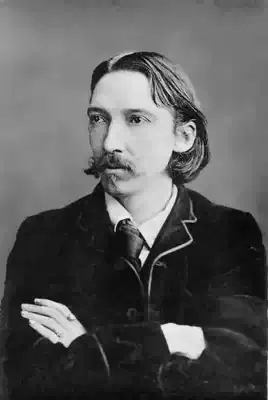
Robert Louis Stevenson
I Dreamed Of Forest Alleys fair
I Dreamed Of Forest Alleys fair
I.
I DREAMED of forest alleys fair
And fields of gray-flowered grass,
Where by the yellow summer moon
My Jenny seemed to pass.
I dreamed the yellow summer moon,
Behind a cedar wood,
Lay white on fields of rippling grass
Where I and Jenny stood.
I dreamed - but fallen through my dream,
In a rainy land I lie
Where wan wet morning crowns the hills
Of grim reality.
II.
I am as one that keeps awake
All night in the month of June,
That lies awake in bed to watch
The trees and great white moon.
For memories of love are more
Than the white moon there above,
And dearer than quiet moonshine
Are the thoughts of her I love.
III.
Last night I lingered long without
My last of loves to see.
Alas! the moon-white window-panes
Stared blindly back on me.
To-day I hold her very hand,
Her very waist embrace -
Like clouds across a pool, I read
Her thoughts upon her face.
And yet, as now, through her clear eyes
I seek the inner shrine -
I stoop to read her virgin heart
In doubt if it be mine -
O looking long and fondly thus,
What vision should I see?
No vision, but my own white face
That grins and mimics me.
IV.
Once more upon the same old seat
In the same sunshiny weather,
The elm-trees' shadows at their feet
And foliage move together.
The shadows shift upon the grass,
The dial point creeps on;
The clear sun shines, the loiterers pass,
As then they passed and shone.
But now deep sleep is on my heart,
Deep sleep and perfect rest.
Hope's flutterings now disturb no more
The quiet of my breast.
I.
I DREAMED of forest alleys fair
And fields of gray-flowered grass,
Where by the yellow summer moon
My Jenny seemed to pass.
I dreamed the yellow summer moon,
Behind a cedar wood,
Lay white on fields of rippling grass
Where I and Jenny stood.
I dreamed - but fallen through my dream,
In a rainy land I lie
Where wan wet morning crowns the hills
Of grim reality.
II.
I am as one that keeps awake
All night in the month of June,
That lies awake in bed to watch
The trees and great white moon.
For memories of love are more
Than the white moon there above,
And dearer than quiet moonshine
Are the thoughts of her I love.
III.
Last night I lingered long without
My last of loves to see.
Alas! the moon-white window-panes
Stared blindly back on me.
To-day I hold her very hand,
Her very waist embrace -
Like clouds across a pool, I read
Her thoughts upon her face.
And yet, as now, through her clear eyes
I seek the inner shrine -
I stoop to read her virgin heart
In doubt if it be mine -
O looking long and fondly thus,
What vision should I see?
No vision, but my own white face
That grins and mimics me.
IV.
Once more upon the same old seat
In the same sunshiny weather,
The elm-trees' shadows at their feet
And foliage move together.
The shadows shift upon the grass,
The dial point creeps on;
The clear sun shines, the loiterers pass,
As then they passed and shone.
But now deep sleep is on my heart,
Deep sleep and perfect rest.
Hope's flutterings now disturb no more
The quiet of my breast.
329
Robert Louis Stevenson
Historical Associations
Historical Associations
Dear Uncle Jim. this garden ground
That now you smoke your pipe around,
has seen immortal actions done
And valiant battles lost and won.
Here we had best on tip-toe tread,
While I for safety march ahead,
For this is that enchanted ground
Where all who loiter slumber sound.
Here is the sea, here is the sand,
Here is the simple Shepherd's Land,
Here are the fairy hollyhocks,
And there are Ali Baba's rocks.
But yonder, see! apart and high,
Frozen Siberia lies; where I,
With Robert Bruce William Tell,
Was bound by an enchanter's spell.
Dear Uncle Jim. this garden ground
That now you smoke your pipe around,
has seen immortal actions done
And valiant battles lost and won.
Here we had best on tip-toe tread,
While I for safety march ahead,
For this is that enchanted ground
Where all who loiter slumber sound.
Here is the sea, here is the sand,
Here is the simple Shepherd's Land,
Here are the fairy hollyhocks,
And there are Ali Baba's rocks.
But yonder, see! apart and high,
Frozen Siberia lies; where I,
With Robert Bruce William Tell,
Was bound by an enchanter's spell.
373
Robert Louis Stevenson
Duddingstone
Duddingstone
WITH caws and chirrupings, the woods
In this thin sun rejoice.
The Psalm seems but the little kirk
That sings with its own voice.
The cloud-rifts share their amber light
With the surface of the mere -
I think the very stones are glad
To feel each other near.
Once more my whole heart leaps and swells
And gushes o'er with glee;
The fingers of the sun and shade
Touch music stops in me.
Now fancy paints that bygone day
When you were here, my fair -
The whole lake rang with rapid skates
In the windless winter air.
You leaned to me, I leaned to you,
Our course was smooth as flight -
We steered - a heel-touch to the left,
A heel-touch to the right.
We swung our way through flying men,
Your hand lay fast in mine:
We saw the shifting crowd dispart,
The level ice-reach shine.
I swear by yon swan-travelled lake,
By yon calm hill above,
I swear had we been drowned that day
We had been drowned in love.
WITH caws and chirrupings, the woods
In this thin sun rejoice.
The Psalm seems but the little kirk
That sings with its own voice.
The cloud-rifts share their amber light
With the surface of the mere -
I think the very stones are glad
To feel each other near.
Once more my whole heart leaps and swells
And gushes o'er with glee;
The fingers of the sun and shade
Touch music stops in me.
Now fancy paints that bygone day
When you were here, my fair -
The whole lake rang with rapid skates
In the windless winter air.
You leaned to me, I leaned to you,
Our course was smooth as flight -
We steered - a heel-touch to the left,
A heel-touch to the right.
We swung our way through flying men,
Your hand lay fast in mine:
We saw the shifting crowd dispart,
The level ice-reach shine.
I swear by yon swan-travelled lake,
By yon calm hill above,
I swear had we been drowned that day
We had been drowned in love.
321
Robert Louis Stevenson
Air Of Diabelli's
Air Of Diabelli's
CALL it to mind, O my love.
Dear were your eyes as the day,
Bright as the day and the sky;
Like the stream of gold and the sky above,
Dear were your eyes in the grey.
We have lived, my love, O, we have lived, my love!
Now along the silent river, azure
Through the sky's inverted image,
Softly swam the boat that bore our love,
Swiftly ran the shallow of our love
Through the heaven's inverted image,
In the reedy mazes round the river.
See along the silent river,
See of old the lover's shallop steer.
Berried brake and reedy island,
Heaven below and only heaven above.
Through the sky's inverted image
Swiftly swam the boat that bore our love.
Berried brake and reedy island,
Mirrored flower and shallop gliding by.
All the earth and all the sky were ours,
Silent sat the wafted lovers,
Bound with grain and watched by all the sky,
Hand to hand and eye to . . . eye.
Days of April, airs of Eden,
Call to mind how bright the vanished angel hours,
Golden hours of evening,
When our boat drew homeward filled with flowers.
O darling, call them to mind; love the past, my love.
Days of April, airs of Eden.
How the glory died through golden hours,
And the shining moon arising;
How the boat drew homeward filled with flowers.
Age and winter close us slowly in.
Level river, cloudless heaven,
Islanded reed mazes, silver weirs;
How the silent boat with silver
Threads the inverted forest as she goes,
Broke the trembling green of mirrored trees.
O, remember, and remember
How the berries hung in garlands.
Still in the river see the shallop floats.
Hark! Chimes the falling oar.
Still in the mind
Hark to the song of the past!
Dream, and they pass in their dreams.
Those that loved of yore, O those that loved of yore!
Hark through the stillness, O darling, hark!
Through it all the ear of the mind
Knows the boat of love. Hark!
Chimes the falling oar.
O half in vain they grew old.
Now the halcyon days are over,
Age and winter close us slowly round,
And these sounds at fall of even
Dim the sight and muffle all the sound.
And at the married fireside, sleep of soul and sleep of fancy,
Joan and Darby.
Silence of the world without a sound;
And beside the winter faggot
Joan and Darby sit and dose and dream and wake -
Dream they hear the flowing, singing river,
See the berries in the island brake;
Dream they hear the weir,
See the gliding shallop mar the stream.
Hark! in your dreams do you hear?
Snow has filled the drifted forest;
Ice has bound the . . . stream.
Frost has bound our flowing river;
Snow has whitened all our island brake.
Berried brake and reedy island,
Heaven below and only heaven above azure
Through the sky's inverted image
Safely swam the boat that bore our love.
Dear were your eyes as the day,
Bright ran the stream, bright hung the sky above.
Days of April, airs of Eden.
How the glory died through golden hours,
And the shining moon arising,
How the boat drew homeward filled with flowers.
Bright were your eyes in the night:
We have lived, my love;
O, we have loved, my love.
Now the . . . days are over,
Age and winter close us slowly round.
Vainly time departs, and vainly
Age and winter come and close us round.
Hark the river's long continuous sound.
Hear the river ripples in the reeds.
Lo, in dreams they see their shallop
Run the lilies down and drown the weeds
Mid the sound of crackling faggots.
So in dreams the new created
Happy past returns, to-day recedes,
And they hear once more,
From the old years,
Yesterday returns, to-day recedes,
And they hear with aged hearing warbles
Love's own river ripple in the weeds.
And again the lover's shallop;
Lo, the shallop sheds the streaming weeds;
And afar in foreign countries
In the ears of aged lovers.
And again in winter evens
Starred with lilies . . . with stirring weeds.
In these ears of aged lovers
Love's own river ripples in the reeds.
CALL it to mind, O my love.
Dear were your eyes as the day,
Bright as the day and the sky;
Like the stream of gold and the sky above,
Dear were your eyes in the grey.
We have lived, my love, O, we have lived, my love!
Now along the silent river, azure
Through the sky's inverted image,
Softly swam the boat that bore our love,
Swiftly ran the shallow of our love
Through the heaven's inverted image,
In the reedy mazes round the river.
See along the silent river,
See of old the lover's shallop steer.
Berried brake and reedy island,
Heaven below and only heaven above.
Through the sky's inverted image
Swiftly swam the boat that bore our love.
Berried brake and reedy island,
Mirrored flower and shallop gliding by.
All the earth and all the sky were ours,
Silent sat the wafted lovers,
Bound with grain and watched by all the sky,
Hand to hand and eye to . . . eye.
Days of April, airs of Eden,
Call to mind how bright the vanished angel hours,
Golden hours of evening,
When our boat drew homeward filled with flowers.
O darling, call them to mind; love the past, my love.
Days of April, airs of Eden.
How the glory died through golden hours,
And the shining moon arising;
How the boat drew homeward filled with flowers.
Age and winter close us slowly in.
Level river, cloudless heaven,
Islanded reed mazes, silver weirs;
How the silent boat with silver
Threads the inverted forest as she goes,
Broke the trembling green of mirrored trees.
O, remember, and remember
How the berries hung in garlands.
Still in the river see the shallop floats.
Hark! Chimes the falling oar.
Still in the mind
Hark to the song of the past!
Dream, and they pass in their dreams.
Those that loved of yore, O those that loved of yore!
Hark through the stillness, O darling, hark!
Through it all the ear of the mind
Knows the boat of love. Hark!
Chimes the falling oar.
O half in vain they grew old.
Now the halcyon days are over,
Age and winter close us slowly round,
And these sounds at fall of even
Dim the sight and muffle all the sound.
And at the married fireside, sleep of soul and sleep of fancy,
Joan and Darby.
Silence of the world without a sound;
And beside the winter faggot
Joan and Darby sit and dose and dream and wake -
Dream they hear the flowing, singing river,
See the berries in the island brake;
Dream they hear the weir,
See the gliding shallop mar the stream.
Hark! in your dreams do you hear?
Snow has filled the drifted forest;
Ice has bound the . . . stream.
Frost has bound our flowing river;
Snow has whitened all our island brake.
Berried brake and reedy island,
Heaven below and only heaven above azure
Through the sky's inverted image
Safely swam the boat that bore our love.
Dear were your eyes as the day,
Bright ran the stream, bright hung the sky above.
Days of April, airs of Eden.
How the glory died through golden hours,
And the shining moon arising,
How the boat drew homeward filled with flowers.
Bright were your eyes in the night:
We have lived, my love;
O, we have loved, my love.
Now the . . . days are over,
Age and winter close us slowly round.
Vainly time departs, and vainly
Age and winter come and close us round.
Hark the river's long continuous sound.
Hear the river ripples in the reeds.
Lo, in dreams they see their shallop
Run the lilies down and drown the weeds
Mid the sound of crackling faggots.
So in dreams the new created
Happy past returns, to-day recedes,
And they hear once more,
From the old years,
Yesterday returns, to-day recedes,
And they hear with aged hearing warbles
Love's own river ripple in the weeds.
And again the lover's shallop;
Lo, the shallop sheds the streaming weeds;
And afar in foreign countries
In the ears of aged lovers.
And again in winter evens
Starred with lilies . . . with stirring weeds.
In these ears of aged lovers
Love's own river ripples in the reeds.
360

Robert Frost
They Were Welcome To Their Belief
They Were Welcome To Their Belief
Grief may have thought it was grief.
Care may have thought it was care.
They were welcome to their belief,
The overimportant pair.
No, it took all the snows that clung
To the low roof over his bed,
Beginning when he was young,
To induce the one snow on his head.
But whenever the roof camme white
The head in the dark below
Was a shade less the color of night,
A shade more the color of snow.
Grief may have thought it was grief.
Care may have thought it was care.
But neither one was the thief
Of his raven color of hair.
Grief may have thought it was grief.
Care may have thought it was care.
They were welcome to their belief,
The overimportant pair.
No, it took all the snows that clung
To the low roof over his bed,
Beginning when he was young,
To induce the one snow on his head.
But whenever the roof camme white
The head in the dark below
Was a shade less the color of night,
A shade more the color of snow.
Grief may have thought it was grief.
Care may have thought it was care.
But neither one was the thief
Of his raven color of hair.
452
Robert Frost
The Span Of Life
The Span Of Life
The old dog barks backwards without getting up.
I can remember when he was a pup.
Anonymous submission.
The old dog barks backwards without getting up.
I can remember when he was a pup.
Anonymous submission.
363
Robert Frost
In a Disused Graveyard
In a Disused Graveyard
The living come with grassy tread
To read the gravestones on the hill;
The graveyard draws the living still,
But never anymore the dead.
The verses in it say and say:
"The ones who living come today
To read the stones and go away
Tomorrow dead will come to stay."
So sure of death the marbles rhyme,
Yet can't help marking all the time
How no one dead will seem to come.
What is it men are shrinking from?
It would be easy to be clever
And tell the stones: Men hate to die
And have stopped dying now forever.
I think they would believe the lie.
The living come with grassy tread
To read the gravestones on the hill;
The graveyard draws the living still,
But never anymore the dead.
The verses in it say and say:
"The ones who living come today
To read the stones and go away
Tomorrow dead will come to stay."
So sure of death the marbles rhyme,
Yet can't help marking all the time
How no one dead will seem to come.
What is it men are shrinking from?
It would be easy to be clever
And tell the stones: Men hate to die
And have stopped dying now forever.
I think they would believe the lie.
428
Robert Frost
Ghost House
Ghost House
I dwell in a lonely house I know
That vanished many a summer ago,
And left no trace but the cellar walls,
And a cellar in which the daylight falls,
And the purple-stemmed wild raspberries grow.
O'er ruined fences the grape-vines shield
The woods come back to the mowing field;
The orchard tree has grown one copse
Of new wood and old where the woodpecker chops;
The footpath down to the well is healed.
I dwell with a strangely aching heart
In that vanished abode there far apart
On that disused and forgotten road
That has no dust-bath now for the toad.
Night comes; the black bats tumble and dart;
The whippoorwill is coming to shout
And hush and cluck and flutter about:
I hear him begin far enough away
Full many a time to say his say
Before he arrives to say it out.
It is under the small, dim, summer star.
I know not who these mute folk are
Who share the unlit place with me--
Those stones out under the low-limbed tree
Doubtless bear names that the mosses mar.
They are tireless folk, but slow and sad,
Though two, close-keeping, are lass and lad,--
With none among them that ever sings,
And yet, in view of how many things,
As sweet companions as might be had.
I dwell in a lonely house I know
That vanished many a summer ago,
And left no trace but the cellar walls,
And a cellar in which the daylight falls,
And the purple-stemmed wild raspberries grow.
O'er ruined fences the grape-vines shield
The woods come back to the mowing field;
The orchard tree has grown one copse
Of new wood and old where the woodpecker chops;
The footpath down to the well is healed.
I dwell with a strangely aching heart
In that vanished abode there far apart
On that disused and forgotten road
That has no dust-bath now for the toad.
Night comes; the black bats tumble and dart;
The whippoorwill is coming to shout
And hush and cluck and flutter about:
I hear him begin far enough away
Full many a time to say his say
Before he arrives to say it out.
It is under the small, dim, summer star.
I know not who these mute folk are
Who share the unlit place with me--
Those stones out under the low-limbed tree
Doubtless bear names that the mosses mar.
They are tireless folk, but slow and sad,
Though two, close-keeping, are lass and lad,--
With none among them that ever sings,
And yet, in view of how many things,
As sweet companions as might be had.
558
Robert Frost
After Apple-Picking
After Apple-Picking
My long two-pointed ladder's sticking through a tree
Toward heaven still,
And there's a barrel that I didn't fill
Beside it, and there may be two or three
Apples I didn't pick upon some bough.
But I am done with apple-picking now.
Essence of winter sleep is on the night,
The scent of apples: I am drowsing off.
I cannot rub the strangeness from my sight
I got from looking through a pane of glass
I skimmed this morning from the drinking trough
And held against the world of hoary grass.
It melted, and I let it fall and break.
But I was well
Upon my way to sleep before it fell,
And I could tell
What form my dreaming was about to take.
Magnified apples appear and disappear,
Stem end and blossom end,
And every fleck of russet showing clear.
My instep arch not only keeps the ache,
It keeps the pressure of a ladder-round.
I feel the ladder sway as the boughs bend.
And I keep hearing from the cellar bin
The rumbling sound
Of load on load of apples coming in.
For I have had too much
Of apple-picking: I am overtired
Of the great harvest I myself desired.
There were ten thousand thousand fruit to touch,
Cherish in hand, lift down, and not let fall.
For all
That struck the earth,
No matter if not bruised or spiked with stubble,
Went surely to the cider-apple heap
As of no worth.
One can see what will trouble
This sleep of mine, whatever sleep it is.
Were he not gone,
The woodchuck could say whether it's like his
Long sleep, as I describe its coming on,
Or just some human sleep.
My long two-pointed ladder's sticking through a tree
Toward heaven still,
And there's a barrel that I didn't fill
Beside it, and there may be two or three
Apples I didn't pick upon some bough.
But I am done with apple-picking now.
Essence of winter sleep is on the night,
The scent of apples: I am drowsing off.
I cannot rub the strangeness from my sight
I got from looking through a pane of glass
I skimmed this morning from the drinking trough
And held against the world of hoary grass.
It melted, and I let it fall and break.
But I was well
Upon my way to sleep before it fell,
And I could tell
What form my dreaming was about to take.
Magnified apples appear and disappear,
Stem end and blossom end,
And every fleck of russet showing clear.
My instep arch not only keeps the ache,
It keeps the pressure of a ladder-round.
I feel the ladder sway as the boughs bend.
And I keep hearing from the cellar bin
The rumbling sound
Of load on load of apples coming in.
For I have had too much
Of apple-picking: I am overtired
Of the great harvest I myself desired.
There were ten thousand thousand fruit to touch,
Cherish in hand, lift down, and not let fall.
For all
That struck the earth,
No matter if not bruised or spiked with stubble,
Went surely to the cider-apple heap
As of no worth.
One can see what will trouble
This sleep of mine, whatever sleep it is.
Were he not gone,
The woodchuck could say whether it's like his
Long sleep, as I describe its coming on,
Or just some human sleep.
457
Robert Frost
A Patch of Old Snow
A Patch of Old Snow
There's a patch of old snow in a corner
That I should have guessed
Was a blow-away paper the rain
Had brought to rest.
It is speckled with grime as if
Small print overspread it,
The news of a day I've forgotten --
If I ever read it.
There's a patch of old snow in a corner
That I should have guessed
Was a blow-away paper the rain
Had brought to rest.
It is speckled with grime as if
Small print overspread it,
The news of a day I've forgotten --
If I ever read it.
388
Robert Frost
A Cliff Dwelling
A Cliff Dwelling
There sandy seems the golden sky
And golden seems the sandy plain.
No habitation meets the eye
Unless in the horizon rim,
Some halfway up the limestone wall,
That spot of black is not a stain
Or shadow, but a cavern hole,
Where someone used to climb and crawl
To rest from his besetting fears.
I see the callus on his soul
The disappearing last of him
And of his race starvation slim,
Oh years ago - ten thousand years.
There sandy seems the golden sky
And golden seems the sandy plain.
No habitation meets the eye
Unless in the horizon rim,
Some halfway up the limestone wall,
That spot of black is not a stain
Or shadow, but a cavern hole,
Where someone used to climb and crawl
To rest from his besetting fears.
I see the callus on his soul
The disappearing last of him
And of his race starvation slim,
Oh years ago - ten thousand years.
397
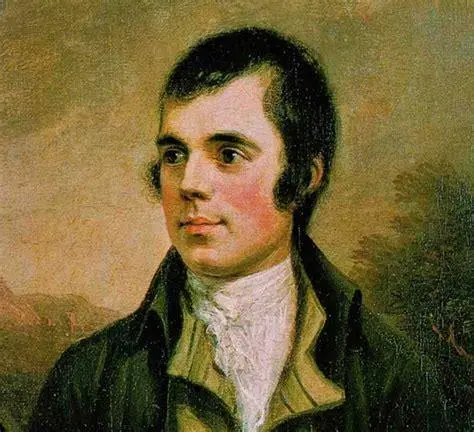
Robert Burns
The Auld Farmer's New-Year-Morning Salutation to His Auld Mare , Maggie
The Auld Farmer's New-Year-Morning Salutation to His Auld Mare , Maggie
A Guide New-year I wish thee, Maggie!
Hae, there's a ripp to thy auld baggie:
Tho' thou's howe-backit now, an' knaggie,
I've seen the day
There could hae gaen like ony staggie,
Out-owre the lay.
Tho' now thou's dowie, stiff an' crazy,
An' thy auld hide as white's a daisie,
I've seen the dappl't, sleek an' glaizie,
A bonie gray:
He should been tight that daur't to raize thee,
Ance in a day.
Thou ance was i' the foremost rank,
A filly buirdly, steeve an' swank;
An' set weel down a shapely shank,
As e'er tread yird;
An' could hae flown out-owre a stank,
Like ony bird.
It's now some nine-an'-twenty year,
Sin' thou was my guid-father's mear;
He gied me thee, o' tocher clear,
An' fifty mark;
Tho' it was sma', 'twas weel-won gear,
An' thou was stark.
When first I gaed to woo my Jenny,
Ye then was trotting wi' your minnie:
Tho' ye was trickie, slee, an funnie,
Ye ne'er was donsie;
But hamely, tawie, quiet, an' cannie,
An' unco sonsie.
That day, ye pranc'd wi' muckle pride,
When ye bure hame my bonie bride:
An' sweet an' gracefu' she did ride,
Wi' maiden air!
Kyle-Stewart I could bragged wide
For sic a pair.
Tho' now ye dow but hoyte and hobble,
An' wintle like a saumont coble,
That day, ye was a jinker noble,
For heels an' win'!
An' ran them till they a' did wauble,
Far, far, behin'!
When thou an' I were young an' skeigh
An' stable-meals at fairs were dreigh,
How thou wad prance, and snore, an' skreigh
An' tak the road!
Town's-bodies ran, an' stood abeigh,
An' ca't thee mad.
When thou was corn't, an' I was mellow,
We took the road aye like a swallow:
At brooses thou had ne'er a fellow,
For pith an' speed;
But ev'ry tail thou pay't them hollow,
Whare'er thou gaed.
The sma', droop-rumpl't, hunter cattle
Might aiblins waurt thee for a brattle;
But sax Scotch mile, thou try't their mettle,
An' gar't them whaizle:
Nae whip nor spur, but just a wattle
O' saugh or hazel.
Thou was a noble fittie-lan',
As e'er in tug or tow was drawn!
Aft thee an' I, in aught hours' gaun,
In guid March-weather,
Hae turn'd sax rood beside our han',
For days thegither.
Thou never braing't, an' fetch't, an' fliskit;
But thy auld tail thou wad hae whiskit,
An' spread abreed thy weel-fill'd brisket,
Wi' pith an' power;
Till sprittie knowes wad rair't an' riskit
An' slypet owre.
When frosts lay lang, an' snaws were deep,
An' threaten'd labour back to keep,
I gied thy cog a wee bit heap
Aboon the timmer:
I ken'd my Maggie wad na sleep,
For that, or simmer.
In cart or car thou never reestit;
The steyest brae thou wad hae fac't it;
Thou never lap, an' sten't, and breastit,
Then stood to blaw;
But just thy step a wee thing hastit,
Thou snoov't awa.
My pleugh is now thy bairn-time a',
Four gallant brutes as e'er did draw;
Forbye sax mae I've sell't awa,
That thou hast nurst:
They drew me thretteen pund an' twa,
The vera warst.
Mony a sair daurk we twa hae wrought,
An' wi' the weary warl' fought!
An' mony an anxious day, I thought
We wad be beat!
Yet here to crazy age we're brought,
Wi' something yet.
An' think na', my auld trusty servan',
That now perhaps thou's less deservin,
An' thy auld days may end in starvin;
For my last fow,
A heapit stimpart, I'll reserve ane
Laid by for you.
We've worn to crazy years thegither;
We'll toyte about wi' ane anither;
Wi' tentie care I'll flit thy tether
To some hain'd rig,
Whare ye may nobly rax your leather,
Wi' sma' fatigue.
A Guide New-year I wish thee, Maggie!
Hae, there's a ripp to thy auld baggie:
Tho' thou's howe-backit now, an' knaggie,
I've seen the day
There could hae gaen like ony staggie,
Out-owre the lay.
Tho' now thou's dowie, stiff an' crazy,
An' thy auld hide as white's a daisie,
I've seen the dappl't, sleek an' glaizie,
A bonie gray:
He should been tight that daur't to raize thee,
Ance in a day.
Thou ance was i' the foremost rank,
A filly buirdly, steeve an' swank;
An' set weel down a shapely shank,
As e'er tread yird;
An' could hae flown out-owre a stank,
Like ony bird.
It's now some nine-an'-twenty year,
Sin' thou was my guid-father's mear;
He gied me thee, o' tocher clear,
An' fifty mark;
Tho' it was sma', 'twas weel-won gear,
An' thou was stark.
When first I gaed to woo my Jenny,
Ye then was trotting wi' your minnie:
Tho' ye was trickie, slee, an funnie,
Ye ne'er was donsie;
But hamely, tawie, quiet, an' cannie,
An' unco sonsie.
That day, ye pranc'd wi' muckle pride,
When ye bure hame my bonie bride:
An' sweet an' gracefu' she did ride,
Wi' maiden air!
Kyle-Stewart I could bragged wide
For sic a pair.
Tho' now ye dow but hoyte and hobble,
An' wintle like a saumont coble,
That day, ye was a jinker noble,
For heels an' win'!
An' ran them till they a' did wauble,
Far, far, behin'!
When thou an' I were young an' skeigh
An' stable-meals at fairs were dreigh,
How thou wad prance, and snore, an' skreigh
An' tak the road!
Town's-bodies ran, an' stood abeigh,
An' ca't thee mad.
When thou was corn't, an' I was mellow,
We took the road aye like a swallow:
At brooses thou had ne'er a fellow,
For pith an' speed;
But ev'ry tail thou pay't them hollow,
Whare'er thou gaed.
The sma', droop-rumpl't, hunter cattle
Might aiblins waurt thee for a brattle;
But sax Scotch mile, thou try't their mettle,
An' gar't them whaizle:
Nae whip nor spur, but just a wattle
O' saugh or hazel.
Thou was a noble fittie-lan',
As e'er in tug or tow was drawn!
Aft thee an' I, in aught hours' gaun,
In guid March-weather,
Hae turn'd sax rood beside our han',
For days thegither.
Thou never braing't, an' fetch't, an' fliskit;
But thy auld tail thou wad hae whiskit,
An' spread abreed thy weel-fill'd brisket,
Wi' pith an' power;
Till sprittie knowes wad rair't an' riskit
An' slypet owre.
When frosts lay lang, an' snaws were deep,
An' threaten'd labour back to keep,
I gied thy cog a wee bit heap
Aboon the timmer:
I ken'd my Maggie wad na sleep,
For that, or simmer.
In cart or car thou never reestit;
The steyest brae thou wad hae fac't it;
Thou never lap, an' sten't, and breastit,
Then stood to blaw;
But just thy step a wee thing hastit,
Thou snoov't awa.
My pleugh is now thy bairn-time a',
Four gallant brutes as e'er did draw;
Forbye sax mae I've sell't awa,
That thou hast nurst:
They drew me thretteen pund an' twa,
The vera warst.
Mony a sair daurk we twa hae wrought,
An' wi' the weary warl' fought!
An' mony an anxious day, I thought
We wad be beat!
Yet here to crazy age we're brought,
Wi' something yet.
An' think na', my auld trusty servan',
That now perhaps thou's less deservin,
An' thy auld days may end in starvin;
For my last fow,
A heapit stimpart, I'll reserve ane
Laid by for you.
We've worn to crazy years thegither;
We'll toyte about wi' ane anither;
Wi' tentie care I'll flit thy tether
To some hain'd rig,
Whare ye may nobly rax your leather,
Wi' sma' fatigue.
322
Robert Burns
Auld Farmer's New-Year-Morning Salutation to His Auld Mare, Maggie On
Auld Farmer's New-Year-Morning Salutation to His Auld Mare, Maggie On
giving her the accustomed ripp of corn to hansel in the New-Year, The
A Guide New-year I wish thee, Maggie!
Hae, there's a ripp to thy auld baggie:
Tho' thou's howe-backit now, an' knaggie,
I've seen the day
There could hae gaen like ony staggie,
Out-owre the lay.
Tho' now thou's dowie, stiff an' crazy,
An' thy auld hide as white's a daisie,
I've seen the dappl't, sleek an' glaizie,
A bonie gray:
He should been tight that daur't to raize thee,
Ance in a day.
Thou ance was i' the foremost rank,
A filly buirdly, steeve an' swank;
An' set weel down a shapely shank,
As e'er tread yird;
An' could hae flown out-owre a stank,
Like ony bird.
It's now some nine-an'-twenty year,
Sin' thou was my guid-father's mear;
He gied me thee, o' tocher clear,
An' fifty mark;
Tho' it was sma', 'twas weel-won gear,
An' thou was stark.
When first I gaed to woo my Jenny,
Ye then was trotting wi' your minnie:
Tho' ye was trickie, slee, an funnie,
Ye ne'er was donsie;
But hamely, tawie, quiet, an' cannie,
An' unco sonsie.
That day, ye pranc'd wi' muckle pride,
When ye bure hame my bonie bride:
An' sweet an' gracefu' she did ride,
Wi' maiden air!
Kyle-Stewart I could bragged wide
For sic a pair.
Tho' now ye dow but hoyte and hobble,
An' wintle like a saumont coble,
That day, ye was a jinker noble,
For heels an' win'!
An' ran them till they a' did wauble,
Far, far, behin'!
When thou an' I were young an' skeigh
An' stable-meals at fairs were dreigh,
How thou wad prance, and snore, an' skreigh
An' tak the road!
Town's-bodies ran, an' stood abeigh,
An' ca't thee mad.
When thou was corn't, an' I was mellow,
We took the road aye like a swallow:
At brooses thou had ne'er a fellow,
For pith an' speed;
But ev'ry tail thou pay't them hollow,
Whare'er thou gaed.
The sma', droop-rumpl't, hunter cattle
Might aiblins waurt thee for a brattle;
But sax Scotch mile, thou try't their mettle,
An' gar't them whaizle:
Nae whip nor spur, but just a wattle
O' saugh or hazel.
Thou was a noble fittie-lan',
As e'er in tug or tow was drawn!
Aft thee an' I, in aught hours' gaun,
In guid March-weather,
Hae turn'd sax rood beside our han',
For days thegither.
Thou never braing't, an' fetch't, an' fliskit;
But thy auld tail thou wad hae whiskit,
An' spread abreed thy weel-fill'd brisket,
Wi' pith an' power;
Till sprittie knowes wad rair't an' riskit
An' slypet owre.
When frosts lay lang, an' snaws were deep,
An' threaten'd labour back to keep,
I gied thy cog a wee bit heap
Aboon the timmer:
I ken'd my Maggie wad na sleep,
For that, or simmer.
In cart or car thou never reestit;
The steyest brae thou wad hae fac't it;
Thou never lap, an' sten't, and breastit,
Then stood to blaw;
But just thy step a wee thing hastit,
Thou snoov't awa.
My pleugh is now thy bairn-time a',
Four gallant brutes as e'er did draw;
Forbye sax mae I've sell't awa,
That thou hast nurst:
They drew me thretteen pund an' twa,
The vera warst.
Mony a sair daurk we twa hae wrought,
An' wi' the weary warl' fought!
An' mony an anxious day, I thought
We wad be beat!
Yet here to crazy age we're brought,
Wi' something yet.
An' think na', my auld trusty servan',
That now perhaps thou's less deservin,
An' thy auld days may end in starvin;
For my last fow,
A heapit stimpart, I'll reserve ane
Laid by for you.
We've worn to crazy years thegither;
We'll toyte about wi' ane anither;
Wi' tentie care I'll flit thy tether
To some hain'd rig,
Whare ye may nobly rax your leather,
Wi' sma' fatigue.
giving her the accustomed ripp of corn to hansel in the New-Year, The
A Guide New-year I wish thee, Maggie!
Hae, there's a ripp to thy auld baggie:
Tho' thou's howe-backit now, an' knaggie,
I've seen the day
There could hae gaen like ony staggie,
Out-owre the lay.
Tho' now thou's dowie, stiff an' crazy,
An' thy auld hide as white's a daisie,
I've seen the dappl't, sleek an' glaizie,
A bonie gray:
He should been tight that daur't to raize thee,
Ance in a day.
Thou ance was i' the foremost rank,
A filly buirdly, steeve an' swank;
An' set weel down a shapely shank,
As e'er tread yird;
An' could hae flown out-owre a stank,
Like ony bird.
It's now some nine-an'-twenty year,
Sin' thou was my guid-father's mear;
He gied me thee, o' tocher clear,
An' fifty mark;
Tho' it was sma', 'twas weel-won gear,
An' thou was stark.
When first I gaed to woo my Jenny,
Ye then was trotting wi' your minnie:
Tho' ye was trickie, slee, an funnie,
Ye ne'er was donsie;
But hamely, tawie, quiet, an' cannie,
An' unco sonsie.
That day, ye pranc'd wi' muckle pride,
When ye bure hame my bonie bride:
An' sweet an' gracefu' she did ride,
Wi' maiden air!
Kyle-Stewart I could bragged wide
For sic a pair.
Tho' now ye dow but hoyte and hobble,
An' wintle like a saumont coble,
That day, ye was a jinker noble,
For heels an' win'!
An' ran them till they a' did wauble,
Far, far, behin'!
When thou an' I were young an' skeigh
An' stable-meals at fairs were dreigh,
How thou wad prance, and snore, an' skreigh
An' tak the road!
Town's-bodies ran, an' stood abeigh,
An' ca't thee mad.
When thou was corn't, an' I was mellow,
We took the road aye like a swallow:
At brooses thou had ne'er a fellow,
For pith an' speed;
But ev'ry tail thou pay't them hollow,
Whare'er thou gaed.
The sma', droop-rumpl't, hunter cattle
Might aiblins waurt thee for a brattle;
But sax Scotch mile, thou try't their mettle,
An' gar't them whaizle:
Nae whip nor spur, but just a wattle
O' saugh or hazel.
Thou was a noble fittie-lan',
As e'er in tug or tow was drawn!
Aft thee an' I, in aught hours' gaun,
In guid March-weather,
Hae turn'd sax rood beside our han',
For days thegither.
Thou never braing't, an' fetch't, an' fliskit;
But thy auld tail thou wad hae whiskit,
An' spread abreed thy weel-fill'd brisket,
Wi' pith an' power;
Till sprittie knowes wad rair't an' riskit
An' slypet owre.
When frosts lay lang, an' snaws were deep,
An' threaten'd labour back to keep,
I gied thy cog a wee bit heap
Aboon the timmer:
I ken'd my Maggie wad na sleep,
For that, or simmer.
In cart or car thou never reestit;
The steyest brae thou wad hae fac't it;
Thou never lap, an' sten't, and breastit,
Then stood to blaw;
But just thy step a wee thing hastit,
Thou snoov't awa.
My pleugh is now thy bairn-time a',
Four gallant brutes as e'er did draw;
Forbye sax mae I've sell't awa,
That thou hast nurst:
They drew me thretteen pund an' twa,
The vera warst.
Mony a sair daurk we twa hae wrought,
An' wi' the weary warl' fought!
An' mony an anxious day, I thought
We wad be beat!
Yet here to crazy age we're brought,
Wi' something yet.
An' think na', my auld trusty servan',
That now perhaps thou's less deservin,
An' thy auld days may end in starvin;
For my last fow,
A heapit stimpart, I'll reserve ane
Laid by for you.
We've worn to crazy years thegither;
We'll toyte about wi' ane anither;
Wi' tentie care I'll flit thy tether
To some hain'd rig,
Whare ye may nobly rax your leather,
Wi' sma' fatigue.
297
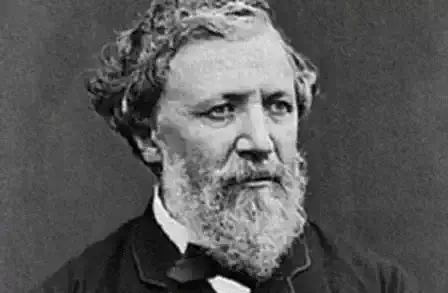
Robert Browning
The Italian In England
The Italian In England
That second time they hunted me
From hill to plain, from shore to sea,
And Austria, hounding far and wide
Her blood-hounds thro' the country-side,
Breathed hot and instant on my trace,---
I made six days a hiding-place
Of that dry green old aqueduct
Where I and Charles, when boys, have plucked
The fire-flies from the roof above,
Bright creeping thro' the moss they love:
---How long it seems since Charles was lost!
Six days the soldiers crossed and crossed
The country in my very sight;
And when that peril ceased at night,
The sky broke out in red dismay
With signal fires; well, there I lay
Close covered o'er in my recess,
Up to the neck in ferns and cress,
Thinking on Metternich our friend,
And Charles's miserable end,
And much beside, two days; the third,
Hunger o'ercame me when I heard
The peasants from the village go
To work among the maize; you know,
With us in Lombardy, they bring
Provisions packed on mules, a string
With little bells that cheer their task,
And casks, and boughs on every cask
To keep the sun's heat from the wine;
These I let pass in jingling line,
And, close on them, dear noisy crew,
The peasants from the village, too;
For at the very rear would troop
Their wives and sisters in a group
To help, I knew. When these had passed,
I threw my glove to strike the last,
Taking the chance: she did not start,
Much less cry out, but stooped apart,
One instant rapidly glanced round,
And saw me beckon from the ground.
A wild bush grows and hides my crypt;
She picked my glove up while she stripped
A branch off, then rejoined the rest
With that; my glove lay in her breast.
Then I drew breath; they disappeared:
It was for Italy I feared.
An hour, and she returned alone
Exactly where my glove was thrown.
Meanwhile came many thoughts: on me
Rested the hopes of Italy.
I had devised a certain tale
Which, when 'twas told her, could not fail
Persuade a peasant of its truth;
I meant to call a freak of youth
This hiding, and give hopes of pay,
And no temptation to betray.
But when I saw that woman's face,
Its calm simplicity of grace,
Our Italy's own attitude
In which she walked thus far, and stood,
Planting each naked foot so firm,
To crush the snake and spare the worm---
At first sight of her eyes, I said,
``I am that man upon whose head
``They fix the price, because I hate
``The Austrians over us: the State
``Will give you gold---oh, gold so much!---
``If you betray me to their clutch,
``And be your death, for aught I know,
``If once they find you saved their foe.
``Now, you must bring me food and drink,
``And also paper, pen and ink,
``And carry safe what I shall write
``To Padua, which you'll reach at night
``Before the duomo shuts; go in,
``And wait till Tenebr begin;
``Walk to the third confessional,
``Between the pillar and the wall,
``And kneeling whisper, _Whence comes peace?_
``Say it a second time, then cease;
``And if the voice inside returns,
``_From Christ and Freedom; what concerns
``The cause of Peace?_---for answer, slip
``My letter where you placed your lip;
``Then come back happy we have done
``Our mother service---I, the son,
``As you the daughter of our land!''
Three mornings more, she took her stand
In the same place, with the same eyes:
I was no surer of sun-rise
That of her coming. We conferred
Of her own prospects, and I heard
She had a lover---stout and tall,
She said---then let her eyelids fall,
``He could do much''---as if some doubt
Entered her heart,---then, passing out,
``She could not speak for others, who
``Had other thoughts; herself she knew:''
And so she brought me drink and food.
After four days, the scouts pursued
Another path; at last arrived
The help my Paduan friends contrived
To furnish me: she brought the news.
For the first time I could not choose
But kiss her hand, and lay my own
Upon her head---``This faith was shown
``To Italy, our mother; she
``Uses my hand and blesses thee.''
She followed down to the sea-shore;
I left and never saw her more.
How very long since I have thought
Concerning---much less wished for---aught
Beside the good of Italy,
For which I live and mean to die!
I never was in love; and since
Charles proved false, what shall now convince.
My inmost heart I have a friend?
However, if I pleased to spend
Real wishes on myself---say, three---
I know at least what one should be.
I would grasp Metternich until
I felt his red wet throat distil
In blood thro' these two hands. And next,
---Nor much for that am I perplexed---
Charles, perjured traitor, for his part,
Should die slow of a broken heart
Under his new employer. Last
---Ah, there, what should I wish? For fast
Do I grow old and out of strength.
If I resolved to seek at length
My father's house again, how scared
They all would look, and unprepared!
My brothers live in Austria's pay
---Disowned me long ago, men say;
And all my early mates who used
To praise me so---perhaps induced
More than one early step of mine---
Are turning wise: while some opine
``Freedom grows license,'' some suspect
``Haste breeds delay,'' and recollect
They always said, such premature
Beginnings never could endure!
So, with a sullen ``All's for best,''
The land seems settling to its rest.
I think then, I should wish to stand
This evening in that dear, lost land,
Over the sea the thousand miles,
And know if yet that woman smiles
With the calm smile; some little farm
She lives in there, no doubt: what harm
If I sat on the door-side bench,
And, while her spindle made a trench
Fantastically in the dust,
Inquired of all her fortunes---just
Her children's ages and their names,
And what may be the husband's aims
For each of them. I'd talk this out,
And sit there, for an hour about,
Then kiss her hand once more, and lay
Mine on her head, and go my way.
So much for idle wishing---how
It steals the time! To business now.
That second time they hunted me
From hill to plain, from shore to sea,
And Austria, hounding far and wide
Her blood-hounds thro' the country-side,
Breathed hot and instant on my trace,---
I made six days a hiding-place
Of that dry green old aqueduct
Where I and Charles, when boys, have plucked
The fire-flies from the roof above,
Bright creeping thro' the moss they love:
---How long it seems since Charles was lost!
Six days the soldiers crossed and crossed
The country in my very sight;
And when that peril ceased at night,
The sky broke out in red dismay
With signal fires; well, there I lay
Close covered o'er in my recess,
Up to the neck in ferns and cress,
Thinking on Metternich our friend,
And Charles's miserable end,
And much beside, two days; the third,
Hunger o'ercame me when I heard
The peasants from the village go
To work among the maize; you know,
With us in Lombardy, they bring
Provisions packed on mules, a string
With little bells that cheer their task,
And casks, and boughs on every cask
To keep the sun's heat from the wine;
These I let pass in jingling line,
And, close on them, dear noisy crew,
The peasants from the village, too;
For at the very rear would troop
Their wives and sisters in a group
To help, I knew. When these had passed,
I threw my glove to strike the last,
Taking the chance: she did not start,
Much less cry out, but stooped apart,
One instant rapidly glanced round,
And saw me beckon from the ground.
A wild bush grows and hides my crypt;
She picked my glove up while she stripped
A branch off, then rejoined the rest
With that; my glove lay in her breast.
Then I drew breath; they disappeared:
It was for Italy I feared.
An hour, and she returned alone
Exactly where my glove was thrown.
Meanwhile came many thoughts: on me
Rested the hopes of Italy.
I had devised a certain tale
Which, when 'twas told her, could not fail
Persuade a peasant of its truth;
I meant to call a freak of youth
This hiding, and give hopes of pay,
And no temptation to betray.
But when I saw that woman's face,
Its calm simplicity of grace,
Our Italy's own attitude
In which she walked thus far, and stood,
Planting each naked foot so firm,
To crush the snake and spare the worm---
At first sight of her eyes, I said,
``I am that man upon whose head
``They fix the price, because I hate
``The Austrians over us: the State
``Will give you gold---oh, gold so much!---
``If you betray me to their clutch,
``And be your death, for aught I know,
``If once they find you saved their foe.
``Now, you must bring me food and drink,
``And also paper, pen and ink,
``And carry safe what I shall write
``To Padua, which you'll reach at night
``Before the duomo shuts; go in,
``And wait till Tenebr begin;
``Walk to the third confessional,
``Between the pillar and the wall,
``And kneeling whisper, _Whence comes peace?_
``Say it a second time, then cease;
``And if the voice inside returns,
``_From Christ and Freedom; what concerns
``The cause of Peace?_---for answer, slip
``My letter where you placed your lip;
``Then come back happy we have done
``Our mother service---I, the son,
``As you the daughter of our land!''
Three mornings more, she took her stand
In the same place, with the same eyes:
I was no surer of sun-rise
That of her coming. We conferred
Of her own prospects, and I heard
She had a lover---stout and tall,
She said---then let her eyelids fall,
``He could do much''---as if some doubt
Entered her heart,---then, passing out,
``She could not speak for others, who
``Had other thoughts; herself she knew:''
And so she brought me drink and food.
After four days, the scouts pursued
Another path; at last arrived
The help my Paduan friends contrived
To furnish me: she brought the news.
For the first time I could not choose
But kiss her hand, and lay my own
Upon her head---``This faith was shown
``To Italy, our mother; she
``Uses my hand and blesses thee.''
She followed down to the sea-shore;
I left and never saw her more.
How very long since I have thought
Concerning---much less wished for---aught
Beside the good of Italy,
For which I live and mean to die!
I never was in love; and since
Charles proved false, what shall now convince.
My inmost heart I have a friend?
However, if I pleased to spend
Real wishes on myself---say, three---
I know at least what one should be.
I would grasp Metternich until
I felt his red wet throat distil
In blood thro' these two hands. And next,
---Nor much for that am I perplexed---
Charles, perjured traitor, for his part,
Should die slow of a broken heart
Under his new employer. Last
---Ah, there, what should I wish? For fast
Do I grow old and out of strength.
If I resolved to seek at length
My father's house again, how scared
They all would look, and unprepared!
My brothers live in Austria's pay
---Disowned me long ago, men say;
And all my early mates who used
To praise me so---perhaps induced
More than one early step of mine---
Are turning wise: while some opine
``Freedom grows license,'' some suspect
``Haste breeds delay,'' and recollect
They always said, such premature
Beginnings never could endure!
So, with a sullen ``All's for best,''
The land seems settling to its rest.
I think then, I should wish to stand
This evening in that dear, lost land,
Over the sea the thousand miles,
And know if yet that woman smiles
With the calm smile; some little farm
She lives in there, no doubt: what harm
If I sat on the door-side bench,
And, while her spindle made a trench
Fantastically in the dust,
Inquired of all her fortunes---just
Her children's ages and their names,
And what may be the husband's aims
For each of them. I'd talk this out,
And sit there, for an hour about,
Then kiss her hand once more, and lay
Mine on her head, and go my way.
So much for idle wishing---how
It steals the time! To business now.
333
Robert Browning
Evelyn Hope
Evelyn Hope
I.
Beautiful Evelyn Hope is dead!
Sit and watch by her side an hour.
That is her book-shelf, this her bed;
She plucked that piece of geranium-flower,
Beginning to die too, in the glass;
Little has yet been changed, I think:
The shutters are shut, no light may pass
Save two long rays thro' the hinge's chink.
II.
Sixteen years old, when she died!
Perhaps she had scarcely heard my name;
It was not her time to love; beside,
Her life had many a hope and aim,
Duties enough and little cares,
And now was quiet, now astir,
Till God's hand beckoned unawares,---
And the sweet white brow is all of her.
III.
Is it too late then, Evelyn Hope?
What, your soul was pure and true,
The good stars met in your horoscope,
Made you of spirit, fire and dew---
And, just because I was thrice as old
And our paths in the world diverged so wide,
Each was nought to each, must I be told?
We were fellow mortals, nought beside?
IV.
No, indeed! for God above
Is great to grant, as mighty to make,
And creates the love to reward the love:
I claim you still, for my own love's sake!
Delayed it may be for more lives yet,
Through worlds I shall traverse, not a few:
Much is to learn, much to forget
Ere the time be come for taking you.
V.
But the time will come,---at last it will,
When, Evelyn Hope, what meant (I shall say)
In the lower earth, in the years long still,
That body and soul so pure and gay?
Why your hair was amber, I shall divine,
And your mouth of your own geranium's red---
And what you would do with me, in fine,
In the new life come in the old one's stead.
VI.
I have lived (I shall say) so much since then,
Given up myself so many times,
Gained me the gains of various men,
Ransacked the ages, spoiled the climes;
Yet one thing, one, in my soul's full scope,
Either I missed or itself missed me:
And I want and find you, Evelyn Hope!
What is the issue? let us see!
VII.
I loved you, Evelyn, all the while.
My heart seemed full as it could hold?
There was place and to spare for the frank young smile,
And the red young mouth, and the hair's young gold.
So, hush,---I will give you this leaf to keep:
See, I shut it inside the sweet cold hand!
There, that is our secret: go to sleep!
You will wake, and remember, and understand.
I.
Beautiful Evelyn Hope is dead!
Sit and watch by her side an hour.
That is her book-shelf, this her bed;
She plucked that piece of geranium-flower,
Beginning to die too, in the glass;
Little has yet been changed, I think:
The shutters are shut, no light may pass
Save two long rays thro' the hinge's chink.
II.
Sixteen years old, when she died!
Perhaps she had scarcely heard my name;
It was not her time to love; beside,
Her life had many a hope and aim,
Duties enough and little cares,
And now was quiet, now astir,
Till God's hand beckoned unawares,---
And the sweet white brow is all of her.
III.
Is it too late then, Evelyn Hope?
What, your soul was pure and true,
The good stars met in your horoscope,
Made you of spirit, fire and dew---
And, just because I was thrice as old
And our paths in the world diverged so wide,
Each was nought to each, must I be told?
We were fellow mortals, nought beside?
IV.
No, indeed! for God above
Is great to grant, as mighty to make,
And creates the love to reward the love:
I claim you still, for my own love's sake!
Delayed it may be for more lives yet,
Through worlds I shall traverse, not a few:
Much is to learn, much to forget
Ere the time be come for taking you.
V.
But the time will come,---at last it will,
When, Evelyn Hope, what meant (I shall say)
In the lower earth, in the years long still,
That body and soul so pure and gay?
Why your hair was amber, I shall divine,
And your mouth of your own geranium's red---
And what you would do with me, in fine,
In the new life come in the old one's stead.
VI.
I have lived (I shall say) so much since then,
Given up myself so many times,
Gained me the gains of various men,
Ransacked the ages, spoiled the climes;
Yet one thing, one, in my soul's full scope,
Either I missed or itself missed me:
And I want and find you, Evelyn Hope!
What is the issue? let us see!
VII.
I loved you, Evelyn, all the while.
My heart seemed full as it could hold?
There was place and to spare for the frank young smile,
And the red young mouth, and the hair's young gold.
So, hush,---I will give you this leaf to keep:
See, I shut it inside the sweet cold hand!
There, that is our secret: go to sleep!
You will wake, and remember, and understand.
721
Robert Browning
Earth's Immortalities
Earth's Immortalities
FAME.
See, as the prettiest graves will do in time,
Our poet's wants the freshness of its prime;
Spite of the sexton's browsing horse, the sods
Have struggled through its binding osier rods;
Headstone and half-sunk footstone lean awry,
Wanting the brick-work promised by-and-by;
How the minute grey lichens, plate o'er plate,
Have softened down the crisp-cut name and date!
LOVE.
So, the year's done with
(_Love me for ever!_)
All March begun with,
April's endeavour;
May-wreaths that bound me
June needs must sever;
Now snows fall round me,
Quenching June's fever---
(_Love me for ever!_)
FAME.
See, as the prettiest graves will do in time,
Our poet's wants the freshness of its prime;
Spite of the sexton's browsing horse, the sods
Have struggled through its binding osier rods;
Headstone and half-sunk footstone lean awry,
Wanting the brick-work promised by-and-by;
How the minute grey lichens, plate o'er plate,
Have softened down the crisp-cut name and date!
LOVE.
So, the year's done with
(_Love me for ever!_)
All March begun with,
April's endeavour;
May-wreaths that bound me
June needs must sever;
Now snows fall round me,
Quenching June's fever---
(_Love me for ever!_)
295
Robert Browning
By The Fire-Side
By The Fire-Side
I.
How well I know what I mean to do
When the long dark autumn-evenings come:
And where, my soul, is thy pleasant hue?
With the music of all thy voices, dumb
In life's November too!
II.
I shall be found by the fire, suppose,
O'er a great wise book as beseemeth age,
While the shutters flap as the cross-wind blows
And I turn the page, and I turn the page,
Not verse now, only prose!
III.
Till the young ones whisper, finger on lip,
``There he is at it, deep in Greek:
``Now then, or never, out we slip
``To cut from the hazels by the creek
``A mainmast for our ship!''
IV.
I shall be at it indeed, my friends:
Greek puts already on either side
Such a branch-work forth as soon extends
To a vista opening far and wide,
And I pass out where it ends.
V.
The outside-frame, like your hazel-trees:
But the inside-archway widens fast,
And a rarer sort succeeds to these,
And we slope to Italy at last
And youth, by green degrees.
VI.
I follow wherever I am led,
Knowing so well the leader's hand:
Oh woman-country, wooed not wed,
Loved all the more by earth's male-lands,
Laid to their hearts instead!
VII.
Look at the ruined chapel again
Half-way up in the Alpine gorge!
Is that a tower, I point you plain,
Or is it a mill, or an iron-forge
Breaks solitude in vain?
VIII.
A turn, and we stand in the heart of things:
The woods are round us, heaped and dim;
From slab to slab how it slips and springs,
The thread of water single and slim,
Through the ravage some torrent brings!
IX.
Does it feed the little lake below?
That speck of white just on its marge
Is Pella; see, in the evening-glow,
How sharp the silver spear-heads charge
When Alp meets heaven in snow!
X.
On our other side is the straight-up rock;
And a path is kept 'twixt the gorge and it
By boulder-stones where lichens mock
The marks on a moth, and small ferns fit
Their teeth to the polished block.
XI.
Oh the sense of the yellow mountain-flowers,
And thorny balls, each three in one,
The chestnuts throw on our path in showers!
For the drop of the woodland fruit's begun,
These early November hours,
XII.
That crimson the creeper's leaf across
Like a splash of blood, intense, abrupt,
O'er a shield else gold from rim to boss,
And lay it for show on the fairy-cupped
Elf-needled mat of moss,
XIII.
By the rose-flesh mushrooms, undivulged
Last evening---nay, in to-day's first dew
Yon sudden coral nipple bulged,
Where a freaked fawn-coloured flaky crew
Of toadstools peep indulged.
XIV.
And yonder, at foot of the fronting ridge
That takes the turn to a range beyond,
Is the chapel reached by the one-arched bridge
Where the water is stopped in a stagnant pond
Danced over by the midge.
XV.
The chapel and bridge are of stone alike,
Blackish-grey and mostly wet;
Cut hemp-stalks steep in the narrow dyke.
See here again, how the lichens fret
And the roots of the ivy strike!
XVI.
Poor little place, where its one priest comes
On a festa-day, if he comes at all,
To the dozen folk from their scattered homes,
Gathered within that precinct small
By the dozen ways one roams---
XVII.
To drop from the charcoal-burners' huts,
Or climb from the hemp-dressers' low shed,
Leave the grange where the woodman stores his nuts,
Or the wattled cote where the fowlers spread
Their gear on the rock's bare juts.
XVIII.
It has some pretension too, this front,
With its bit of fresco half-moon-wise
Set over the porch, Art's early wont:
'Tis John in the Desert, I surmise,
But has borne the weather's brunt---
XIX.
Not from the fault of the builder, though,
For a pent-house properly projects
Where three carved beams make a certain show,
Dating---good thought of our architect's---
'Five, six, nine, he lets you know.
XX.
And all day long a bird sings there,
And a stray sheep drinks at the pond at times;
The place is silent and aware;
It has had its scenes, its joys and crimes,
But that is its own affair.
XXI.
My perfect wife, my Leonor,
Oh heart, my own, oh eyes, mine too,
Whom else could I dare look backward for,
With whom beside should I dare pursue
The path grey heads abhor?
XXII.
For it leads to a crag's sheer edge with them;
Youth, flowery all the way, there stops---
Not they; age threatens and they contemn,
Till they reach the gulf wherein youth drops,
One inch from life's safe hem!
XXIII.
With me, youth led ... I will speak now,
No longer watch you as you sit
Reading by fire-light, that great brow
And the spirit-small hand propping it,
Mutely, my heart knows how---
XXIV.
When, if I think but deep enough,
You are wont to answer, prompt as rhyme;
And you, too, find without rebuff
Response your soul seeks many a time
Piercing its fine flesh-stuff.
XXV.
My own, confirm me! If I tread
This path back, is it not in pride
To think how little I dreamed it led
To an age so blest that, by its side,
Youth seems the waste instead?
XXVI.
My own, see where the years conduct!
At first, 'twas something our two souls
Should mix as mists do; each is sucked
In each now: on, the new stream rolls,
Whatever rocks obstruct.
XXVII.
Think, when our one soul understands
The great Word which makes all things new,
When earth breaks up and heaven expands,
How will the change strike me and you
ln the house not made with hands?
XXVIII.
Oh I must feel your brain prompt mine,
Your heart anticipate my heart,
You must be just before, in fine,
See and make me see, for your part,
New depths of the divine!
XXIX.
But who could have expected this
When we two drew together first
Just for the obvious human bliss,
To satisfy life's daily thirst
With a thing men seldom miss?
XXX.
Come back with me to the first of all,
Let us lean and love it over again,
Let us now forget and now recall,
Break the rosary in a pearly rain,
And gather what we let fall!
XXXI.
What did I say?---that a small bird sings
All day long, save when a brown pair
Of hawks from the wood float with wide wings
Strained to a bell: 'gainst noon-day glare
You count the streaks and rings.
XXXII.
But at afternoon or almost eve
'Tis better; then the silence grows
To that degree, you half believe
It must get rid of what it knows,
Its bosom does so heave.
XXXIII.
Hither we walked then, side by side,
Arm in arm and cheek to cheek,
And still I questioned or replied,
While my heart, convulsed to really speak,
Lay choking in its pride.
XXXIV.
Silent the crumbling bridge we cross,
And pity and praise the chapel sweet,
And care about the fresco's loss,
And wish for our souls a like retreat,
And wonder at the moss.
XXXV.
Stoop and kneel on the settle under,
Look through the window's grated square:
Nothing to see! For fear of plunder,
The cross is down and the altar bare,
As if thieves don't fear thunder.
XXXVI.
We stoop and look in through the grate,
See the little porch and rustic door,
Read duly the dead builder's date;
Then cross the bridge that we crossed before,
Take the path again---but wait!
XXXVII.
Oh moment, one and infinite!
The water slips o'er stock and stone;
The West is tender, hardly bright:
How grey at once is the evening grown---
One star, its chrysolite!
XXXVIII.
We two stood there with never a third,
But each by each, as each knew well:
The sights we saw and the sounds we heard,
The lights and the shades made up a spell
Till the trouble grew and stirred.
XXXIX.
Oh, the little more, and how much it is!
And the little less, and what worlds away!
How a sound shall quicken content to bliss,
Or a breath suspend the blood's best play,
And life be a proof of this!
XL.
Had she willed it, still had stood the screen
So slight, so sure, 'twixt my love and her:
I could fix her face with a guard between,
And find her soul as when friends confer,
Friends---lovers that might have been.
XLI.
For my heart had a touch of the woodland-time,
Wanting to sleep now over its best.
Shake the whole tree in the summer-prime,
But bring to the Iast leaf no such test!
``Hold the last fast!'' runs the rhyme.
XLII.
For a chance to make your little much,
To gain a lover and lose a friend,
Venture the tree and a myriad such,
When nothing you mar but the year can mend:
But a last leaf---fear to touch!
XLIII.
Yet should it unfasten itself and fall
Eddying down till it find your face
At some slight wind---best chance of all!
Be your heart henceforth its dwelling-place
You trembled to forestall!
XLIV.
Worth how well, those dark grey eyes,
That hair so dark and dear, how worth
That a man should strive and agonize,
And taste a veriest hell on earth
For the hope of such a prize!
XIIV.
You might have turned and tried a man,
Set him a space to weary and wear,
And prove which suited more your plan,
His best of hope or his worst despair,
Yet end as he began.
XLVI.
But you spared me this, like the heart you are,
And filled my empty heart at a word.
If two lives join, there is oft a scar,
They are one and one, with a shadowy third;
One near one is too far.
XLVII.
A moment after, and hands unseen
Were hanging the night around us fast
But we knew that a bar was broken between
Life and life: we were mixed at last
In spite of the mortal screen.
XLVIII.
The forests had done it; there they stood;
We caught for a moment the powers at play:
They had mingled us so, for once and good,
Their work was done---we might go or stay,
They relapsed to their ancient mood.
XLIX.
How the world is made for each of us!
How all we perceive and know in it
Tends to some moment's product thus,
When a soul declares itself---to wit,
By its fruit, the thing it does
L.
Be hate that fruit or love that fruit,
It forwards the general deed of man,
And each of the Many helps to recruit
The life of the race by a general plan;
Each living his own, to boot.
LI.
I am named and known by that moment's feat;
There took my station and degree;
So grew my own small life complete,
As nature obtained her best of me---
One born to love you, sweet!
LII.
And to watch you sink by the fire-side now
Back again, as you mutely sit
Musing by fire-light, that great brow
And the spirit-small hand propping it,
Yonder, my heart knows how!
LIII.
So, earth has gained by one man the more,
And the gain of earth must be heaven's gain too;
And the whole is well worth thinking o'er
When autumn comes: which I mean to do
One day, as I said before.
I.
How well I know what I mean to do
When the long dark autumn-evenings come:
And where, my soul, is thy pleasant hue?
With the music of all thy voices, dumb
In life's November too!
II.
I shall be found by the fire, suppose,
O'er a great wise book as beseemeth age,
While the shutters flap as the cross-wind blows
And I turn the page, and I turn the page,
Not verse now, only prose!
III.
Till the young ones whisper, finger on lip,
``There he is at it, deep in Greek:
``Now then, or never, out we slip
``To cut from the hazels by the creek
``A mainmast for our ship!''
IV.
I shall be at it indeed, my friends:
Greek puts already on either side
Such a branch-work forth as soon extends
To a vista opening far and wide,
And I pass out where it ends.
V.
The outside-frame, like your hazel-trees:
But the inside-archway widens fast,
And a rarer sort succeeds to these,
And we slope to Italy at last
And youth, by green degrees.
VI.
I follow wherever I am led,
Knowing so well the leader's hand:
Oh woman-country, wooed not wed,
Loved all the more by earth's male-lands,
Laid to their hearts instead!
VII.
Look at the ruined chapel again
Half-way up in the Alpine gorge!
Is that a tower, I point you plain,
Or is it a mill, or an iron-forge
Breaks solitude in vain?
VIII.
A turn, and we stand in the heart of things:
The woods are round us, heaped and dim;
From slab to slab how it slips and springs,
The thread of water single and slim,
Through the ravage some torrent brings!
IX.
Does it feed the little lake below?
That speck of white just on its marge
Is Pella; see, in the evening-glow,
How sharp the silver spear-heads charge
When Alp meets heaven in snow!
X.
On our other side is the straight-up rock;
And a path is kept 'twixt the gorge and it
By boulder-stones where lichens mock
The marks on a moth, and small ferns fit
Their teeth to the polished block.
XI.
Oh the sense of the yellow mountain-flowers,
And thorny balls, each three in one,
The chestnuts throw on our path in showers!
For the drop of the woodland fruit's begun,
These early November hours,
XII.
That crimson the creeper's leaf across
Like a splash of blood, intense, abrupt,
O'er a shield else gold from rim to boss,
And lay it for show on the fairy-cupped
Elf-needled mat of moss,
XIII.
By the rose-flesh mushrooms, undivulged
Last evening---nay, in to-day's first dew
Yon sudden coral nipple bulged,
Where a freaked fawn-coloured flaky crew
Of toadstools peep indulged.
XIV.
And yonder, at foot of the fronting ridge
That takes the turn to a range beyond,
Is the chapel reached by the one-arched bridge
Where the water is stopped in a stagnant pond
Danced over by the midge.
XV.
The chapel and bridge are of stone alike,
Blackish-grey and mostly wet;
Cut hemp-stalks steep in the narrow dyke.
See here again, how the lichens fret
And the roots of the ivy strike!
XVI.
Poor little place, where its one priest comes
On a festa-day, if he comes at all,
To the dozen folk from their scattered homes,
Gathered within that precinct small
By the dozen ways one roams---
XVII.
To drop from the charcoal-burners' huts,
Or climb from the hemp-dressers' low shed,
Leave the grange where the woodman stores his nuts,
Or the wattled cote where the fowlers spread
Their gear on the rock's bare juts.
XVIII.
It has some pretension too, this front,
With its bit of fresco half-moon-wise
Set over the porch, Art's early wont:
'Tis John in the Desert, I surmise,
But has borne the weather's brunt---
XIX.
Not from the fault of the builder, though,
For a pent-house properly projects
Where three carved beams make a certain show,
Dating---good thought of our architect's---
'Five, six, nine, he lets you know.
XX.
And all day long a bird sings there,
And a stray sheep drinks at the pond at times;
The place is silent and aware;
It has had its scenes, its joys and crimes,
But that is its own affair.
XXI.
My perfect wife, my Leonor,
Oh heart, my own, oh eyes, mine too,
Whom else could I dare look backward for,
With whom beside should I dare pursue
The path grey heads abhor?
XXII.
For it leads to a crag's sheer edge with them;
Youth, flowery all the way, there stops---
Not they; age threatens and they contemn,
Till they reach the gulf wherein youth drops,
One inch from life's safe hem!
XXIII.
With me, youth led ... I will speak now,
No longer watch you as you sit
Reading by fire-light, that great brow
And the spirit-small hand propping it,
Mutely, my heart knows how---
XXIV.
When, if I think but deep enough,
You are wont to answer, prompt as rhyme;
And you, too, find without rebuff
Response your soul seeks many a time
Piercing its fine flesh-stuff.
XXV.
My own, confirm me! If I tread
This path back, is it not in pride
To think how little I dreamed it led
To an age so blest that, by its side,
Youth seems the waste instead?
XXVI.
My own, see where the years conduct!
At first, 'twas something our two souls
Should mix as mists do; each is sucked
In each now: on, the new stream rolls,
Whatever rocks obstruct.
XXVII.
Think, when our one soul understands
The great Word which makes all things new,
When earth breaks up and heaven expands,
How will the change strike me and you
ln the house not made with hands?
XXVIII.
Oh I must feel your brain prompt mine,
Your heart anticipate my heart,
You must be just before, in fine,
See and make me see, for your part,
New depths of the divine!
XXIX.
But who could have expected this
When we two drew together first
Just for the obvious human bliss,
To satisfy life's daily thirst
With a thing men seldom miss?
XXX.
Come back with me to the first of all,
Let us lean and love it over again,
Let us now forget and now recall,
Break the rosary in a pearly rain,
And gather what we let fall!
XXXI.
What did I say?---that a small bird sings
All day long, save when a brown pair
Of hawks from the wood float with wide wings
Strained to a bell: 'gainst noon-day glare
You count the streaks and rings.
XXXII.
But at afternoon or almost eve
'Tis better; then the silence grows
To that degree, you half believe
It must get rid of what it knows,
Its bosom does so heave.
XXXIII.
Hither we walked then, side by side,
Arm in arm and cheek to cheek,
And still I questioned or replied,
While my heart, convulsed to really speak,
Lay choking in its pride.
XXXIV.
Silent the crumbling bridge we cross,
And pity and praise the chapel sweet,
And care about the fresco's loss,
And wish for our souls a like retreat,
And wonder at the moss.
XXXV.
Stoop and kneel on the settle under,
Look through the window's grated square:
Nothing to see! For fear of plunder,
The cross is down and the altar bare,
As if thieves don't fear thunder.
XXXVI.
We stoop and look in through the grate,
See the little porch and rustic door,
Read duly the dead builder's date;
Then cross the bridge that we crossed before,
Take the path again---but wait!
XXXVII.
Oh moment, one and infinite!
The water slips o'er stock and stone;
The West is tender, hardly bright:
How grey at once is the evening grown---
One star, its chrysolite!
XXXVIII.
We two stood there with never a third,
But each by each, as each knew well:
The sights we saw and the sounds we heard,
The lights and the shades made up a spell
Till the trouble grew and stirred.
XXXIX.
Oh, the little more, and how much it is!
And the little less, and what worlds away!
How a sound shall quicken content to bliss,
Or a breath suspend the blood's best play,
And life be a proof of this!
XL.
Had she willed it, still had stood the screen
So slight, so sure, 'twixt my love and her:
I could fix her face with a guard between,
And find her soul as when friends confer,
Friends---lovers that might have been.
XLI.
For my heart had a touch of the woodland-time,
Wanting to sleep now over its best.
Shake the whole tree in the summer-prime,
But bring to the Iast leaf no such test!
``Hold the last fast!'' runs the rhyme.
XLII.
For a chance to make your little much,
To gain a lover and lose a friend,
Venture the tree and a myriad such,
When nothing you mar but the year can mend:
But a last leaf---fear to touch!
XLIII.
Yet should it unfasten itself and fall
Eddying down till it find your face
At some slight wind---best chance of all!
Be your heart henceforth its dwelling-place
You trembled to forestall!
XLIV.
Worth how well, those dark grey eyes,
That hair so dark and dear, how worth
That a man should strive and agonize,
And taste a veriest hell on earth
For the hope of such a prize!
XIIV.
You might have turned and tried a man,
Set him a space to weary and wear,
And prove which suited more your plan,
His best of hope or his worst despair,
Yet end as he began.
XLVI.
But you spared me this, like the heart you are,
And filled my empty heart at a word.
If two lives join, there is oft a scar,
They are one and one, with a shadowy third;
One near one is too far.
XLVII.
A moment after, and hands unseen
Were hanging the night around us fast
But we knew that a bar was broken between
Life and life: we were mixed at last
In spite of the mortal screen.
XLVIII.
The forests had done it; there they stood;
We caught for a moment the powers at play:
They had mingled us so, for once and good,
Their work was done---we might go or stay,
They relapsed to their ancient mood.
XLIX.
How the world is made for each of us!
How all we perceive and know in it
Tends to some moment's product thus,
When a soul declares itself---to wit,
By its fruit, the thing it does
L.
Be hate that fruit or love that fruit,
It forwards the general deed of man,
And each of the Many helps to recruit
The life of the race by a general plan;
Each living his own, to boot.
LI.
I am named and known by that moment's feat;
There took my station and degree;
So grew my own small life complete,
As nature obtained her best of me---
One born to love you, sweet!
LII.
And to watch you sink by the fire-side now
Back again, as you mutely sit
Musing by fire-light, that great brow
And the spirit-small hand propping it,
Yonder, my heart knows how!
LIII.
So, earth has gained by one man the more,
And the gain of earth must be heaven's gain too;
And the whole is well worth thinking o'er
When autumn comes: which I mean to do
One day, as I said before.
483
Robert Browning
Heap cassia, sandal-buds and stripes
"Heap cassia, sandal-buds and stripes"
Heap cassia, sandal-buds and stripes
Of labdanum, and aloe-balls,
Smeared with dull nard an Indian wipes
From out her hair: such balsam falls
Down sea-side mountain pedestals,
From tree-tops where tired winds are fain,
Spent with the vast and howling main,
To treasure half their island-gain.
And strew faint sweetness from some old
Egyptian's fine worm-eaten shroud
Which breaks to dust when once unrolled;
Or shredded perfume, like a cloud
From closet long to quiet vowed,
With mothed and dropping arras hung,
Mouldering her lute and books among,
As when a queen, long dead, was young.
Heap cassia, sandal-buds and stripes
Of labdanum, and aloe-balls,
Smeared with dull nard an Indian wipes
From out her hair: such balsam falls
Down sea-side mountain pedestals,
From tree-tops where tired winds are fain,
Spent with the vast and howling main,
To treasure half their island-gain.
And strew faint sweetness from some old
Egyptian's fine worm-eaten shroud
Which breaks to dust when once unrolled;
Or shredded perfume, like a cloud
From closet long to quiet vowed,
With mothed and dropping arras hung,
Mouldering her lute and books among,
As when a queen, long dead, was young.
248
Ralph Waldo Emerson
The Forerunners
The Forerunners
Long I followed happy guides,—
I could never reach their sides.
Their step is forth, and, ere the day,
Breaks up their leaguer, and away.
Keen my sense, my heart was young,
Right goodwill my sinews strung,
But no speed of mine avails
To hunt upon their shining trails.
On and away, their hasting feet
Make the morning proud and sweet.
Flowers they strew, I catch the scent,
Or tone of silver instrument
Leaves on the wind melodious trace,
Yet I could never see their face.
On eastern hills I see their smokes
Mixed with mist by distant lochs.
I meet many travellers
Who the road had surely kept,—
They saw not my fine revellers,—
These had crossed them while they slept.
Some had heard their fair report
In the country or the court.
Fleetest couriers alive
Never yet could once arrive,
As they went or they returned,
At the house where these sojourned.
Sometimes their strong speed they slacken,
Though they are not overtaken:
In sleep, their jubilant troop is near,
I tuneful voices overhear,
It may be in wood or waste,—
At unawares 'tis come and passed.
Their near camp my spirit knows
By signs gracious as rainbows.
I thenceforward and long after
Listen for their harplike laughter,
And carry in my heart for days
Peace that hallows rudest ways.—
Long I followed happy guides,—
I could never reach their sides.
Their step is forth, and, ere the day,
Breaks up their leaguer, and away.
Keen my sense, my heart was young,
Right goodwill my sinews strung,
But no speed of mine avails
To hunt upon their shining trails.
On and away, their hasting feet
Make the morning proud and sweet.
Flowers they strew, I catch the scent,
Or tone of silver instrument
Leaves on the wind melodious trace,
Yet I could never see their face.
On eastern hills I see their smokes
Mixed with mist by distant lochs.
I meet many travellers
Who the road had surely kept,—
They saw not my fine revellers,—
These had crossed them while they slept.
Some had heard their fair report
In the country or the court.
Fleetest couriers alive
Never yet could once arrive,
As they went or they returned,
At the house where these sojourned.
Sometimes their strong speed they slacken,
Though they are not overtaken:
In sleep, their jubilant troop is near,
I tuneful voices overhear,
It may be in wood or waste,—
At unawares 'tis come and passed.
Their near camp my spirit knows
By signs gracious as rainbows.
I thenceforward and long after
Listen for their harplike laughter,
And carry in my heart for days
Peace that hallows rudest ways.—
277
Ralph Waldo Emerson
Dirge
Dirge
Knows he who tills this lonely field
To reap its scanty corn,
What mystic fruit his acres yield
At midnight and at morn?
In the long sunny afternoon,
The plain was full of ghosts,
I wandered up, I wandered down,
Beset by pensive hosts.
The winding Concord gleamed below,
Pouring as wide a flood
As when my brothers long ago,
Came with me to the wood.
But they are gone,— the holy ones,
Who trod with me this lonely vale,
The strong, star-bright companions
Are silent, low, and pale.
My good, my noble, in their prime,
Who made this world the feast it was,
Who learned with me the lore of time,
Who loved this dwelling-place.
They took this valley for their toy,
They played with it in every mood,
A cell for prayer, a hall for joy,
They treated nature as they would.
They colored the horizon round,
Stars flamed and faded as they bade,
All echoes hearkened for their sound,
They made the woodlands glad or mad.
I touch this flower of silken leaf
Which once our childhood knew
Its soft leaves wound me with a grief
Whose balsam never grew.
Hearken to yon pine warbler
Singing aloft in the tree;
Hearest thou, O traveller!
What he singeth to me?
Not unless God made sharp thine ear
With sorrow such as mine,
Out of that delicate lay couldst thou
The heavy dirge divine.
Go, lonely man, it saith,
They loved thee from their birth,
Their hands were pure, and pure their faith,
There are no such hearts on earth.
Ye drew one mother's milk,
One chamber held ye all;
A very tender history
Did in your childhood fall.
Ye cannot unlock your heart,
The key is gone with them;
The silent organ loudest chants
The master's requiem.
Knows he who tills this lonely field
To reap its scanty corn,
What mystic fruit his acres yield
At midnight and at morn?
In the long sunny afternoon,
The plain was full of ghosts,
I wandered up, I wandered down,
Beset by pensive hosts.
The winding Concord gleamed below,
Pouring as wide a flood
As when my brothers long ago,
Came with me to the wood.
But they are gone,— the holy ones,
Who trod with me this lonely vale,
The strong, star-bright companions
Are silent, low, and pale.
My good, my noble, in their prime,
Who made this world the feast it was,
Who learned with me the lore of time,
Who loved this dwelling-place.
They took this valley for their toy,
They played with it in every mood,
A cell for prayer, a hall for joy,
They treated nature as they would.
They colored the horizon round,
Stars flamed and faded as they bade,
All echoes hearkened for their sound,
They made the woodlands glad or mad.
I touch this flower of silken leaf
Which once our childhood knew
Its soft leaves wound me with a grief
Whose balsam never grew.
Hearken to yon pine warbler
Singing aloft in the tree;
Hearest thou, O traveller!
What he singeth to me?
Not unless God made sharp thine ear
With sorrow such as mine,
Out of that delicate lay couldst thou
The heavy dirge divine.
Go, lonely man, it saith,
They loved thee from their birth,
Their hands were pure, and pure their faith,
There are no such hearts on earth.
Ye drew one mother's milk,
One chamber held ye all;
A very tender history
Did in your childhood fall.
Ye cannot unlock your heart,
The key is gone with them;
The silent organ loudest chants
The master's requiem.
310
Rabindranath Tagore
The Gardener LV: It Was Mid-Day
The Gardener LV: It Was Mid-Day
It was mid-day when you went
away .
The sun was strong in the sky.
I had done my work and sat alone
on my balcony when you went away.
Fitful gusts came winnowing
through the smells of may distant
fields.
The doves cooed tireless in the shade,
and a bee strayed in my room humming
the news of many distant fields.
The village slept in the noonday
heat. The road lay deserted.
In sudden fits the rustling of the
leaves rose and died.
I gazed at the sky and wove in the
blue the letters of a name I had known,
while the village slept in the noonday
heat.
I had forgotten to braid my hair.
The languid breeze played with it upon
my cheek.
The river ran unruffled under the
shady bank.
The lazy white clouds did not move.
I had forgotten to braid my hair.
It was mid-day when you went
away.
The dust of the road was hot and
the fields panting.
The doves cooed among the dense
leaves.
I was alone in my balcony when you
went away.
It was mid-day when you went
away .
The sun was strong in the sky.
I had done my work and sat alone
on my balcony when you went away.
Fitful gusts came winnowing
through the smells of may distant
fields.
The doves cooed tireless in the shade,
and a bee strayed in my room humming
the news of many distant fields.
The village slept in the noonday
heat. The road lay deserted.
In sudden fits the rustling of the
leaves rose and died.
I gazed at the sky and wove in the
blue the letters of a name I had known,
while the village slept in the noonday
heat.
I had forgotten to braid my hair.
The languid breeze played with it upon
my cheek.
The river ran unruffled under the
shady bank.
The lazy white clouds did not move.
I had forgotten to braid my hair.
It was mid-day when you went
away.
The dust of the road was hot and
the fields panting.
The doves cooed among the dense
leaves.
I was alone in my balcony when you
went away.
489
Rabindranath Tagore
Signet of Eternity
Signet of Eternity
The day was when I did not keep myself in readiness for thee;
and entering my heart unbidden even as one of the common crowd,
unknown to me, my king, thou didst press the signet of eternity upon
many a fleeting moment of my life.
And today when by chance I light upon them and see thy signature,
I find they have lain scattered in the dust mixed with the memory of
joys and sorrows of my trivial days forgotten.
Thou didst not turn in contempt from my childish play among dust,
and the steps that I heard in my playroom
are the same that are echoing from star to star.
The day was when I did not keep myself in readiness for thee;
and entering my heart unbidden even as one of the common crowd,
unknown to me, my king, thou didst press the signet of eternity upon
many a fleeting moment of my life.
And today when by chance I light upon them and see thy signature,
I find they have lain scattered in the dust mixed with the memory of
joys and sorrows of my trivial days forgotten.
Thou didst not turn in contempt from my childish play among dust,
and the steps that I heard in my playroom
are the same that are echoing from star to star.
498
Rabindranath Tagore
I Found A Few Old Letters
I Found A Few Old Letters
XIV
I found a few old letters of mine carefully hidden in thy box—a few small toys for thy
memory to play with. With a timorous heart thou didst try to steal these trifles from
the turbulent stream of time which washes away planets and stars, and didst say,
“These are only mine!” Alas, there is no one now who can claim them—who is able to
pay their price; yet they are still here. Is there no love in this world to rescue thee
from utter loss, even like this love of thine that saved these letters with such fond
care?
O woman, thou camest for a moment to my side and touched me with the great
mystery of the woman that there is in the heart of creation—she who ever gives back
to God his own outflow of sweetness; who is the eternal love and beauty and youth;
who dances in bubbling streams and sings in the morning light; who with heaving
waves suckles the thirsty earth and whose mercy melts in rain; in whom the eternal
one breaks in two in joy that can contain itself no more and overflows in the pain of
love.
XIV
I found a few old letters of mine carefully hidden in thy box—a few small toys for thy
memory to play with. With a timorous heart thou didst try to steal these trifles from
the turbulent stream of time which washes away planets and stars, and didst say,
“These are only mine!” Alas, there is no one now who can claim them—who is able to
pay their price; yet they are still here. Is there no love in this world to rescue thee
from utter loss, even like this love of thine that saved these letters with such fond
care?
O woman, thou camest for a moment to my side and touched me with the great
mystery of the woman that there is in the heart of creation—she who ever gives back
to God his own outflow of sweetness; who is the eternal love and beauty and youth;
who dances in bubbling streams and sings in the morning light; who with heaving
waves suckles the thirsty earth and whose mercy melts in rain; in whom the eternal
one breaks in two in joy that can contain itself no more and overflows in the pain of
love.
466
Rabindranath Tagore
Farewell
Farewell
I have got my leave. Bid me farewell, my brothers!
I bow to you all and take my departure.
Here I give back the keys of my door
---and I give up all claims to my house.
I only ask for last kind words from you.
We were neighbors for long,
but I received more than I could give.
Now the day has dawned
and the lamp that lit my dark corner is out.
A summons has come and I am ready for my journey.
I have got my leave. Bid me farewell, my brothers!
I bow to you all and take my departure.
Here I give back the keys of my door
---and I give up all claims to my house.
I only ask for last kind words from you.
We were neighbors for long,
but I received more than I could give.
Now the day has dawned
and the lamp that lit my dark corner is out.
A summons has come and I am ready for my journey.
876