

Poems in this theme
Memories and Recollections

Robert W. Service
The Trapper's Christmas Eve
The Trapper's Christmas Eve
It's mighty lonesome-like and drear.
Above the Wild the moon rides high,
And shows up sharp and needle-clear
The emptiness of earth and sky;
No happy homes with love a-glow;
No Santa Claus to make believe:
Just snow and snow, and then more snow;
It's Christmas Eve, it's Christmas Eve.
And here am I where all things end,
And Undesirables are hurled;
A poor old man without a friend,
Forgot and dead to all the world;
Clean out of sight and out of mind . . .
Well, maybe it is better so;
We all in life our level find,
And mine, I guess, is pretty low.
Yet as I sit with pipe alight
Beside the cabin-fir
take to-night
The backward trail of fifty year.
The school-house and the Christmas tree;
The children with their cheeks a-glow;
Two bright blue eyes that smile on me . . .
Just half a century ago.
Again (it's maybe forty years),
With faith and trust almost divine,
These same blue eyes, abrim with tears,
Through depths of love look into mine.
A parting, tender, soft and low,
With arms that cling and lips that cleave . . .
Ah me! it's all so long ago,
Yet seems so sweet this Christmas Eve.
Just thirty years ago, again . . .
We say a bitter, last good-bye;
Our lips are white with wrath and pain;
Our little children cling and cry.
Whose was the fault? it matters not,
For man and woman both deceive;
It's buried now and all forgot,
Forgiven, too, this Christmas Eve.
And she (God pity me) is dead;
Our children men and women grown.
I like to think that they are wed,
With little children of their own,
That crowd around their Christmas tree . . .
I would not ever have them grieve,
Or shed a single tear for me,
To mar their joy this Christmas Eve.
Stripped to the buff and gaunt and still
Lies all the land in grim distress.
Like lost soul wailing, long and shrill,
A wolf-howl cleaves the emptiness.
Then hushed as Death is everything.
The moon rides haggard and forlorn . . .
"O hark the herald angels sing!"
God bless all men -- it's Christmas morn.
It's mighty lonesome-like and drear.
Above the Wild the moon rides high,
And shows up sharp and needle-clear
The emptiness of earth and sky;
No happy homes with love a-glow;
No Santa Claus to make believe:
Just snow and snow, and then more snow;
It's Christmas Eve, it's Christmas Eve.
And here am I where all things end,
And Undesirables are hurled;
A poor old man without a friend,
Forgot and dead to all the world;
Clean out of sight and out of mind . . .
Well, maybe it is better so;
We all in life our level find,
And mine, I guess, is pretty low.
Yet as I sit with pipe alight
Beside the cabin-fir
take to-night
The backward trail of fifty year.
The school-house and the Christmas tree;
The children with their cheeks a-glow;
Two bright blue eyes that smile on me . . .
Just half a century ago.
Again (it's maybe forty years),
With faith and trust almost divine,
These same blue eyes, abrim with tears,
Through depths of love look into mine.
A parting, tender, soft and low,
With arms that cling and lips that cleave . . .
Ah me! it's all so long ago,
Yet seems so sweet this Christmas Eve.
Just thirty years ago, again . . .
We say a bitter, last good-bye;
Our lips are white with wrath and pain;
Our little children cling and cry.
Whose was the fault? it matters not,
For man and woman both deceive;
It's buried now and all forgot,
Forgiven, too, this Christmas Eve.
And she (God pity me) is dead;
Our children men and women grown.
I like to think that they are wed,
With little children of their own,
That crowd around their Christmas tree . . .
I would not ever have them grieve,
Or shed a single tear for me,
To mar their joy this Christmas Eve.
Stripped to the buff and gaunt and still
Lies all the land in grim distress.
Like lost soul wailing, long and shrill,
A wolf-howl cleaves the emptiness.
Then hushed as Death is everything.
The moon rides haggard and forlorn . . .
"O hark the herald angels sing!"
God bless all men -- it's Christmas morn.
184
Robert W. Service
The Record
The Record
Fearing that she might go one day
With some fine fellow of her choice,
I called her from her childish play,
And made a record of her voice.
And now that she is truly gone,
I hear it sweet and crystal clear
From out my wheezy gramophone:
"I love you, Daddy dear."
Indeed it's true she went away,
But Oh she went all, all alone;
Into the dark she went for aye,
Poor little mite! ere girlhood grown.
Ah that I could with her have gone!
But this is all I have to show -
A ghost voice on a gramophone:
"Dear Dad, I love you so."
The saddest part of loss 'tis said,
Is that time tempers our regret;
But that is treason to the dead I'll
not forget, I'll not forget.
Sole souvenir of golden years,
'Twas best to break this disc in two,
And spare myself a spate of tears . . .
But this I cannot do.
So I will play it every day,
And it will seem that she is near,
And once again I'll hear her say:
I love you so, Oh Daddy dear."
And then her kiss - a stab of woe.
The record ends . . . I breathe a plea:
"Oh God, speed me to where I know
Wee lass, you wait for me."
Fearing that she might go one day
With some fine fellow of her choice,
I called her from her childish play,
And made a record of her voice.
And now that she is truly gone,
I hear it sweet and crystal clear
From out my wheezy gramophone:
"I love you, Daddy dear."
Indeed it's true she went away,
But Oh she went all, all alone;
Into the dark she went for aye,
Poor little mite! ere girlhood grown.
Ah that I could with her have gone!
But this is all I have to show -
A ghost voice on a gramophone:
"Dear Dad, I love you so."
The saddest part of loss 'tis said,
Is that time tempers our regret;
But that is treason to the dead I'll
not forget, I'll not forget.
Sole souvenir of golden years,
'Twas best to break this disc in two,
And spare myself a spate of tears . . .
But this I cannot do.
So I will play it every day,
And it will seem that she is near,
And once again I'll hear her say:
I love you so, Oh Daddy dear."
And then her kiss - a stab of woe.
The record ends . . . I breathe a plea:
"Oh God, speed me to where I know
Wee lass, you wait for me."
161
Robert W. Service
The Portrait
The Portrait
The portrait there above my bed
They tell me is a work of art;
My Wife,--since twenty years she's dead:
Her going nearly broke my heart.
Alas! No little ones we had
To light our hearth with joy and glee;
Yet as I linger lone and sad
I know she's waiting me.
The picture? Sargent painted it,
And it has starred in many a show.
Her eyes are on me where I sit,
And follow me where'er I go.
She'll smile like that when I am gone,
And I am frail and oh so ill!
Aye, when I'm waxen, cold and wan,
Lo! She'll be smiling still.
So I have bade them slash in strips
That relic of my paradise.
Let flame destroy those lovely lips
And char the starlight of her eyes!
No human gaze shall ever see
Her beauty,--stranger heart to stir:
Nay, her last smile shall be for me,
My last look be for her.
The portrait there above my bed
They tell me is a work of art;
My Wife,--since twenty years she's dead:
Her going nearly broke my heart.
Alas! No little ones we had
To light our hearth with joy and glee;
Yet as I linger lone and sad
I know she's waiting me.
The picture? Sargent painted it,
And it has starred in many a show.
Her eyes are on me where I sit,
And follow me where'er I go.
She'll smile like that when I am gone,
And I am frail and oh so ill!
Aye, when I'm waxen, cold and wan,
Lo! She'll be smiling still.
So I have bade them slash in strips
That relic of my paradise.
Let flame destroy those lovely lips
And char the starlight of her eyes!
No human gaze shall ever see
Her beauty,--stranger heart to stir:
Nay, her last smile shall be for me,
My last look be for her.
217
Robert W. Service
The March Of The Dead
The March Of The Dead
The cruel war was over -- oh, the triumph was so sweet!
We watched the troops returning, through our tears;
There was triumph, triumph, triumph down the scarlet glittering street,
And you scarce could hear the music for the cheers.
And you scarce could see the house-tops for the flags that flew between;
The bells were pealing madly to the sky;
And everyone was shouting for the Soldiers of the Queen,
And the glory of an age was passing by.
And then there came a shadow, swift and sudden, dark and drear;
The bells were silent, not an echo stirred.
The flags were drooping sullenly, the men forgot to cheer;
We waited, and we never spoke a word.
The sky grew darker, darker, till from out the gloomy rack
There came a voice that checked the heart with dread:
"Tear down, tear down your bunting now, and hang up sable black;
They are coming -- it's the Army of the Dead."
They were coming, they were coming, gaunt and ghastly, sad and slow;
They were coming, all the crimson wrecks of pride;
With faces seared, and cheeks red smeared, and haunting eyes of woe,
And clotted holes the khaki couldn't hide.
Oh, the clammy brow of anguish! the livid, foam-flecked lips!
The reeling ranks of ruin swept along!
The limb that trailed, the hand that failed, the bloody finger tips!
And oh, the dreary rhythm of their song!
"They left us on the veldt-side, but we felt we couldn't stop
On this, our England's crowning festal day;
We're the men of Magersfontein, we're the men of Spion Kop,
Colenso -- we're the men who had to pay.
We're the men who paid the blood-price. Shall the grave be all our gain?
You owe us. Long and heavy is the score.
Then cheer us for our glory now, and cheer us for our pain,
And cheer us as ye never cheered before."
The folks were white and stricken, and each tongue seemed weighted with lead;
Each heart was clutched in hollow hand of ice;
And every eye was staring at the horror of the dead,
The pity of the men who paid the price.
They were come, were come to mock us, in the first flush of our peace;
Through writhing lips their teeth were all agleam;
They were coming in their thousands -- oh, would they never cease!
I closed my eyes, and then -- it was a dream.
There was triumph, triumph, triumph down the scarlet gleaming street;
The town was mad; a man was like a boy.
A thousand flags were flaming where the sky and city meet;
A thousand bells were thundering the joy.
There was music, mirth and sunshine; but some eyes shone with regret;
And while we stun with cheers our homing braves,
O God, in Thy great mercy, let us nevermore forget
The graves they left behind, the bitter graves.
The cruel war was over -- oh, the triumph was so sweet!
We watched the troops returning, through our tears;
There was triumph, triumph, triumph down the scarlet glittering street,
And you scarce could hear the music for the cheers.
And you scarce could see the house-tops for the flags that flew between;
The bells were pealing madly to the sky;
And everyone was shouting for the Soldiers of the Queen,
And the glory of an age was passing by.
And then there came a shadow, swift and sudden, dark and drear;
The bells were silent, not an echo stirred.
The flags were drooping sullenly, the men forgot to cheer;
We waited, and we never spoke a word.
The sky grew darker, darker, till from out the gloomy rack
There came a voice that checked the heart with dread:
"Tear down, tear down your bunting now, and hang up sable black;
They are coming -- it's the Army of the Dead."
They were coming, they were coming, gaunt and ghastly, sad and slow;
They were coming, all the crimson wrecks of pride;
With faces seared, and cheeks red smeared, and haunting eyes of woe,
And clotted holes the khaki couldn't hide.
Oh, the clammy brow of anguish! the livid, foam-flecked lips!
The reeling ranks of ruin swept along!
The limb that trailed, the hand that failed, the bloody finger tips!
And oh, the dreary rhythm of their song!
"They left us on the veldt-side, but we felt we couldn't stop
On this, our England's crowning festal day;
We're the men of Magersfontein, we're the men of Spion Kop,
Colenso -- we're the men who had to pay.
We're the men who paid the blood-price. Shall the grave be all our gain?
You owe us. Long and heavy is the score.
Then cheer us for our glory now, and cheer us for our pain,
And cheer us as ye never cheered before."
The folks were white and stricken, and each tongue seemed weighted with lead;
Each heart was clutched in hollow hand of ice;
And every eye was staring at the horror of the dead,
The pity of the men who paid the price.
They were come, were come to mock us, in the first flush of our peace;
Through writhing lips their teeth were all agleam;
They were coming in their thousands -- oh, would they never cease!
I closed my eyes, and then -- it was a dream.
There was triumph, triumph, triumph down the scarlet gleaming street;
The town was mad; a man was like a boy.
A thousand flags were flaming where the sky and city meet;
A thousand bells were thundering the joy.
There was music, mirth and sunshine; but some eyes shone with regret;
And while we stun with cheers our homing braves,
O God, in Thy great mercy, let us nevermore forget
The graves they left behind, the bitter graves.
161
Robert W. Service
The Living Dead
The Living Dead
Since I have come to years sedate
I see with more and more acumen
The bitter irony of Fate,
The vanity of all things human.
Why, just to-day some fellow said,
As I surveyed Fame's outer portal:
"By gad! I thought that you were dead."
Poor me, who dreamed to be immortal!
But that's the way with many men
Whose name one fancied time-defying;
We thought that they were dust and then
We found them living by their dying.
Like dogs we penmen have our day,
To brief best-sellerdom elected;
And then, "thumbs down," we slink away
And die forgotten and neglected.
Ah well, my lyric fling I've had;
A thousand bits of verse I've minted;
And some, alas! were very bad,
And some, alack! were best unprinted.
But if I've made my muse a bawd
(Since I am earthy as a ditch is),
I'll answer humbly to my God:
Most men at times have toyed with bitches.
Yes, I have played with Lady Rhyme,
And had a long and lovely innings;
And when the Umpire calls my time
I'll blandly quit and take my winnings.
I'll hie me to some Sleepydale,
And feed the ducks and pat the poodles,
And prime my paunch with cakes and ale,
And blether with the village noodles.
And then some day you'll idly scan
The Times obituary column,
And say: "Dear me, the poor old man!"
And for a moment you'll look solemn.
"So all this time he's been alive -
In realms of rhyme a second-rater . . .
But gad! to live to ninety-five:
Let's toast his ghost - a sherry, waiter!"
Since I have come to years sedate
I see with more and more acumen
The bitter irony of Fate,
The vanity of all things human.
Why, just to-day some fellow said,
As I surveyed Fame's outer portal:
"By gad! I thought that you were dead."
Poor me, who dreamed to be immortal!
But that's the way with many men
Whose name one fancied time-defying;
We thought that they were dust and then
We found them living by their dying.
Like dogs we penmen have our day,
To brief best-sellerdom elected;
And then, "thumbs down," we slink away
And die forgotten and neglected.
Ah well, my lyric fling I've had;
A thousand bits of verse I've minted;
And some, alas! were very bad,
And some, alack! were best unprinted.
But if I've made my muse a bawd
(Since I am earthy as a ditch is),
I'll answer humbly to my God:
Most men at times have toyed with bitches.
Yes, I have played with Lady Rhyme,
And had a long and lovely innings;
And when the Umpire calls my time
I'll blandly quit and take my winnings.
I'll hie me to some Sleepydale,
And feed the ducks and pat the poodles,
And prime my paunch with cakes and ale,
And blether with the village noodles.
And then some day you'll idly scan
The Times obituary column,
And say: "Dear me, the poor old man!"
And for a moment you'll look solemn.
"So all this time he's been alive -
In realms of rhyme a second-rater . . .
But gad! to live to ninety-five:
Let's toast his ghost - a sherry, waiter!"
247
Robert W. Service
The Little Old Log Cabin
The Little Old Log Cabin
When a man gits on his uppers in a hard-pan sort of town,
An' he ain't got nothin' comin' an' he can't afford ter eat,
An' he's in a fix for lodgin' an' he wanders up an' down,
An' you'd fancy he'd been boozin', he's so locoed 'bout the feet;
When he's feelin' sneakin' sorry an' his belt is hangin' slack,
An' his face is peaked an' gray-like an' his heart gits down an' whines,
Then he's apt ter git a-thinkin' an' a-wishin' he was back
In the little ol' log cabin in the shadder of the pines.
When he's on the blazin' desert an' his canteen's sprung a leak,
An' he's all alone an' crazy an' he's crawlin' like a snail,
An' his tongue's so black an' swollen that it hurts him fer to speak,
An' he gouges down fer water an' the raven's on his trail;
When he's done with care and cursin' an' he feels more like to cry,
An' he sees ol' Death a-grinnin' an' he thinks upon his crimes,
Then he's like ter hev' a vision, as he settles down ter die,
Of the little ol' log cabin an' the roses an' the vines.
Oh, the little ol' log cabin, it's a solemn shinin' mark,
When a feller gits ter sinnin' an' a-goin' ter the wall,
An' folks don't understand him an' he's gropin' in the dark,
An' he's sick of bein' cursed at an' he's longin' fer his call!
When the sun of life's a-sinkin' you can see it 'way above,
On the hill from out the shadder in a glory 'gin the sky,
An' your mother's voice is callin', an' her arms are stretched in love,
An' somehow you're glad you're goin', an' you ain't a-scared to die;
When you'll be like a kid again an' nestle to her breast,
An' never leave its shelter, an' forget, an' love, an' rest.
When a man gits on his uppers in a hard-pan sort of town,
An' he ain't got nothin' comin' an' he can't afford ter eat,
An' he's in a fix for lodgin' an' he wanders up an' down,
An' you'd fancy he'd been boozin', he's so locoed 'bout the feet;
When he's feelin' sneakin' sorry an' his belt is hangin' slack,
An' his face is peaked an' gray-like an' his heart gits down an' whines,
Then he's apt ter git a-thinkin' an' a-wishin' he was back
In the little ol' log cabin in the shadder of the pines.
When he's on the blazin' desert an' his canteen's sprung a leak,
An' he's all alone an' crazy an' he's crawlin' like a snail,
An' his tongue's so black an' swollen that it hurts him fer to speak,
An' he gouges down fer water an' the raven's on his trail;
When he's done with care and cursin' an' he feels more like to cry,
An' he sees ol' Death a-grinnin' an' he thinks upon his crimes,
Then he's like ter hev' a vision, as he settles down ter die,
Of the little ol' log cabin an' the roses an' the vines.
Oh, the little ol' log cabin, it's a solemn shinin' mark,
When a feller gits ter sinnin' an' a-goin' ter the wall,
An' folks don't understand him an' he's gropin' in the dark,
An' he's sick of bein' cursed at an' he's longin' fer his call!
When the sun of life's a-sinkin' you can see it 'way above,
On the hill from out the shadder in a glory 'gin the sky,
An' your mother's voice is callin', an' her arms are stretched in love,
An' somehow you're glad you're goin', an' you ain't a-scared to die;
When you'll be like a kid again an' nestle to her breast,
An' never leave its shelter, an' forget, an' love, an' rest.
194
Robert W. Service
Teddy Bear
Teddy Bear
O Teddy Bear! with your head awry
And your comical twisted smile,
You rub your eyes -- do you wonder why
You've slept such a long, long while?
As you lay so still in the cupboard dim,
And you heard on the roof the rain,
Were you thinking . . . what has become of him?
And when will he play again?
Do you sometimes long for a chubby hand,
And a voice so sweetly shrill?
O Teddy Bear! don't you understand
Why the house is awf'ly still?
You sit with your muzzle propped on your paws,
And your whimsical face askew.
Don't wait, don't wait for your friend . . . because
He's sleeping and dreaming too.
Aye, sleeping long. . . . You remember how
He stabbed our hearts with his cries?
And oh, the dew of pain on his brow,
And the deeps of pain in his eyes!
And, Teddy Bear! you remember, too,
As he sighed and sank to his rest,
How all of a sudden he smiled to you,
And he clutched you close to his breast.
I'll put you away, little Teddy Bear,
In the cupboard far from my sight;
Maybe he'll come and he'll kiss you there,
A wee white ghost in the night.
But me, I'll live with my love and pain
A weariful lifetime through;
And my Hope: will I see him again, again?
Ah, God! If I only knew!
O Teddy Bear! with your head awry
And your comical twisted smile,
You rub your eyes -- do you wonder why
You've slept such a long, long while?
As you lay so still in the cupboard dim,
And you heard on the roof the rain,
Were you thinking . . . what has become of him?
And when will he play again?
Do you sometimes long for a chubby hand,
And a voice so sweetly shrill?
O Teddy Bear! don't you understand
Why the house is awf'ly still?
You sit with your muzzle propped on your paws,
And your whimsical face askew.
Don't wait, don't wait for your friend . . . because
He's sleeping and dreaming too.
Aye, sleeping long. . . . You remember how
He stabbed our hearts with his cries?
And oh, the dew of pain on his brow,
And the deeps of pain in his eyes!
And, Teddy Bear! you remember, too,
As he sighed and sank to his rest,
How all of a sudden he smiled to you,
And he clutched you close to his breast.
I'll put you away, little Teddy Bear,
In the cupboard far from my sight;
Maybe he'll come and he'll kiss you there,
A wee white ghost in the night.
But me, I'll live with my love and pain
A weariful lifetime through;
And my Hope: will I see him again, again?
Ah, God! If I only knew!
242
Robert W. Service
Song Of The Sardine
Song Of The Sardine
A fat man sat in an orchestra stall and his cheeks were wet with tears,
As he gazed at the primadonna tall, whom he hadn't seen in years.
"Oh don't you remember" he murmured low "that Spring in Montparnasse,
When hand in hand we used to go to our nightly singing class.
Ah me those days so gay and glad, so full of hope and cheer.
And that little super that we had of tinned sardines and beer.
When you looked so like a little queen with your proud and haughty air,
That I took from the box the last sardine and I twined it in your hair."
Alas I am only a stockbroker now while you are high and great,
The laurels of fame adorn your brow while on you Princes wait.
And as I sit so sadly here and list to your thrilling tones,
You cannot remember I sadly fear if my name is Smith or jones.
Yet Oh those days of long ago, when I had scarce a sou.
And as my bitter tears down flow I think again of you.
And once again I seem to see that mad of sweet sixteen,
Within whose tresses tenderly I twined that bright sardine.
Chorus:
Oh that sardine in your hair, I can see it shining there,
As I took it from its box, And I twined it in your locks.
Silver sardine in your hair. Like a jewel rich and rare,
Oh that little silver sardine in your hair.
A fat man sat in an orchestra stall and his cheeks were wet with tears,
As he gazed at the primadonna tall, whom he hadn't seen in years.
"Oh don't you remember" he murmured low "that Spring in Montparnasse,
When hand in hand we used to go to our nightly singing class.
Ah me those days so gay and glad, so full of hope and cheer.
And that little super that we had of tinned sardines and beer.
When you looked so like a little queen with your proud and haughty air,
That I took from the box the last sardine and I twined it in your hair."
Alas I am only a stockbroker now while you are high and great,
The laurels of fame adorn your brow while on you Princes wait.
And as I sit so sadly here and list to your thrilling tones,
You cannot remember I sadly fear if my name is Smith or jones.
Yet Oh those days of long ago, when I had scarce a sou.
And as my bitter tears down flow I think again of you.
And once again I seem to see that mad of sweet sixteen,
Within whose tresses tenderly I twined that bright sardine.
Chorus:
Oh that sardine in your hair, I can see it shining there,
As I took it from its box, And I twined it in your locks.
Silver sardine in your hair. Like a jewel rich and rare,
Oh that little silver sardine in your hair.
205
Robert W. Service
New Year's Eve
New Year's Eve
It's cruel cold on the water-front, silent and dark and drear;
Only the black tide weltering, only the hissing snow;
And I, alone, like a storm-tossed wreck, on this night of the glad New Year,
Shuffling along in the icy wind, ghastly and gaunt and slow.
They're playing a tune in McGuffy's saloon, and it's cheery and bright in there
(God! but I'm weak -- since the bitter dawn, and never a bite of food);
I'll just go over and slip inside -- I mustn't give way to despair -Perhaps
I can bum a little booze if the boys are feeling good.
They'll jeer at me, and they'll sneer at me, and they'll call me a whiskey soak;
("Have a drink? Well, thankee kindly, sir, I don't mind if I do.")
A drivelling, dirty, gin-joint fiend, the butt of the bar-room joke;
Sunk and sodden and hopeless -- "Another? Well, here's to you!"
McGuffy is showing a bunch of the boys how Bob Fitzsimmons hit;
The barman is talking of Tammany Hall, and why the ward boss got fired.
I'll just sneak into a corner and they'll let me alone a bit;
The room is reeling round and round . . .O God! but I'm tired, I'm tired. . . .
* * * * *
Roses she wore on her breast that night. Oh, but their scent was sweet!
Alone we sat on the balcony, and the fan-palms arched above;
The witching strain of a waltz by Strauss came up to our cool retreat,
And I prisoned her little hand in mine, and I whispered my plea of love.
Then sudden the laughter died on her lips, and lowly she bent her head;
And oh, there came in the deep, dark eyes a look that was heaven to see;
And the moments went, and I waited there, and never a word was said,
And she plucked from her bosom a rose of red and shyly gave it to me.
Then the music swelled to a crash of joy, and the lights blazed up like day,
And I held her fast to my throbbing heart, and I kissed her bonny brow.
"She is mine, she is mine for evermore!" the violins seemed to say,
And the bells were ringing the New Year in -- O God! I can hear them now.
Don't you remember that long, last waltz, with its sobbing, sad refrain?
Don't you remember that last good-by, and the dear eyes dim with tears?
Don't you remember that golden dream, with never a hint of pain,
Of lives that would blend like an angel-song in the bliss of the coming years?
Oh, what have I lost! What have I lost! Ethel, forgive, forgive!
The red, red rose is faded now, and it's fifty years ago.
'Twere better to die a thousand deaths than live each day as I live!
I have sinned, I have sunk to the lowest depths -- but oh, I have suffered so!
Hark! Oh, hark! I can hear the bells! . . . Look! I can see her there,
Fair as a dream . . . but it fades . . . And now -- I can hear the dreadful hum
Of the crowded court . . . See! the Judge looks down . . .
NOT GUILTY, my Lord, I swear . . .
The bells -- I can hear the bells again! . . . Ethel, I come, I come! . . .
* * * * *
"Rouse up, old man, it's twelve o'clock. You can't sleep here, you know.
Say! ain't you got no sentiment? Lift up your muddled head;
Have a drink to the glad New Year, a drop before you go -You
darned old dirty hobo . . . My God! Here, boys! He's DEAD!"
It's cruel cold on the water-front, silent and dark and drear;
Only the black tide weltering, only the hissing snow;
And I, alone, like a storm-tossed wreck, on this night of the glad New Year,
Shuffling along in the icy wind, ghastly and gaunt and slow.
They're playing a tune in McGuffy's saloon, and it's cheery and bright in there
(God! but I'm weak -- since the bitter dawn, and never a bite of food);
I'll just go over and slip inside -- I mustn't give way to despair -Perhaps
I can bum a little booze if the boys are feeling good.
They'll jeer at me, and they'll sneer at me, and they'll call me a whiskey soak;
("Have a drink? Well, thankee kindly, sir, I don't mind if I do.")
A drivelling, dirty, gin-joint fiend, the butt of the bar-room joke;
Sunk and sodden and hopeless -- "Another? Well, here's to you!"
McGuffy is showing a bunch of the boys how Bob Fitzsimmons hit;
The barman is talking of Tammany Hall, and why the ward boss got fired.
I'll just sneak into a corner and they'll let me alone a bit;
The room is reeling round and round . . .O God! but I'm tired, I'm tired. . . .
* * * * *
Roses she wore on her breast that night. Oh, but their scent was sweet!
Alone we sat on the balcony, and the fan-palms arched above;
The witching strain of a waltz by Strauss came up to our cool retreat,
And I prisoned her little hand in mine, and I whispered my plea of love.
Then sudden the laughter died on her lips, and lowly she bent her head;
And oh, there came in the deep, dark eyes a look that was heaven to see;
And the moments went, and I waited there, and never a word was said,
And she plucked from her bosom a rose of red and shyly gave it to me.
Then the music swelled to a crash of joy, and the lights blazed up like day,
And I held her fast to my throbbing heart, and I kissed her bonny brow.
"She is mine, she is mine for evermore!" the violins seemed to say,
And the bells were ringing the New Year in -- O God! I can hear them now.
Don't you remember that long, last waltz, with its sobbing, sad refrain?
Don't you remember that last good-by, and the dear eyes dim with tears?
Don't you remember that golden dream, with never a hint of pain,
Of lives that would blend like an angel-song in the bliss of the coming years?
Oh, what have I lost! What have I lost! Ethel, forgive, forgive!
The red, red rose is faded now, and it's fifty years ago.
'Twere better to die a thousand deaths than live each day as I live!
I have sinned, I have sunk to the lowest depths -- but oh, I have suffered so!
Hark! Oh, hark! I can hear the bells! . . . Look! I can see her there,
Fair as a dream . . . but it fades . . . And now -- I can hear the dreadful hum
Of the crowded court . . . See! the Judge looks down . . .
NOT GUILTY, my Lord, I swear . . .
The bells -- I can hear the bells again! . . . Ethel, I come, I come! . . .
* * * * *
"Rouse up, old man, it's twelve o'clock. You can't sleep here, you know.
Say! ain't you got no sentiment? Lift up your muddled head;
Have a drink to the glad New Year, a drop before you go -You
darned old dirty hobo . . . My God! Here, boys! He's DEAD!"
253
Robert W. Service
My Tails
My Tails
I haven't worn my evening dress
For nearly twenty years;
Oh I'm unsocial, I confess,
A hermit, it appears.
So much moth-balled it's but away,
And though wee wifie wails,
Never unto my dimmest day
I'll don my tails.
How slim and trim I looked in them,
Though I was sixty old;
And now their sleekness I condemn
To lie in rigid fold.
I have a portrait of myself
Proud-printed in the Press,
In garb now doomed to wardrobe shelf,-My
evening dress.
So let this be my last request,
That when I come to die,
In tails I may be deftly drest,
With white waistcoat and tie.
No, not for me a vulgar shroud
My carcass to caress;--
Oh let me do my coffin proud
In evening dress!
I haven't worn my evening dress
For nearly twenty years;
Oh I'm unsocial, I confess,
A hermit, it appears.
So much moth-balled it's but away,
And though wee wifie wails,
Never unto my dimmest day
I'll don my tails.
How slim and trim I looked in them,
Though I was sixty old;
And now their sleekness I condemn
To lie in rigid fold.
I have a portrait of myself
Proud-printed in the Press,
In garb now doomed to wardrobe shelf,-My
evening dress.
So let this be my last request,
That when I come to die,
In tails I may be deftly drest,
With white waistcoat and tie.
No, not for me a vulgar shroud
My carcass to caress;--
Oh let me do my coffin proud
In evening dress!
183
Robert W. Service
My Library
My Library
Like prim Professor of a College
I primed my shelves with books of knowledge;
And now I stand before them dumb,
Just like a child that sucks its thumb,
And stares forlorn and turns away,
With dolls or painted bricks to play.
They glour at me, my tomes of learning.
"You dolt!" they jibe; "you undiscerning
Moronic oaf, you make a fuss,
With highbrow swank selecting us;
Saying: "I'll read you all some day' -
And now you yawn and turn away.
"Unwanted wait we with our store
Of facts and philosophic lore;
The scholarship of all the ages
Snug packed within our uncut pages;
The mystery of all mankind
In part revealed - but you are blind.
"You have no time to read, you tell us;
Oh, do not think that we are jealous
Of all the trash that wins your favour,
The flimsy fiction that you savour:
We only beg that sometimes you
Will spare us just an hour or two.
"For all the minds that went to make us
Are dust if folk like you forsake us,
And they can only live again
By virtue of your kindling brain;
In magice print they packed their best:
Come - try their wisdom to digest. . . ."
Said I: "Alas! I am not able;
I lay my cards upon the table,
And with deep shame and blame avow
I am too old to read you now;
So I will lock you in glass cases
And shun your sad, reproachful faces."
* * * * * * * * *
My library is noble planned,
Yet in it desolate I stand;
And though my thousand books I prize,
Feeling a witling in their eyes,
I turn from them in weariness
To wallow in the Daily Press.
For, oh, I never, never will
The noble field of knowledge till:
I pattern words with artful tricks,
As children play with painted bricks,
And realize with futile woe,
Nothing I know - nor want to know.
My library has windowed nooks;
And so I turn from arid books
To vastitude of sea and sky,
And like a child content am I
With peak and plain and brook and tree,
Crying: "Behold! the books for me:
Nature, be thou my Library!"
Like prim Professor of a College
I primed my shelves with books of knowledge;
And now I stand before them dumb,
Just like a child that sucks its thumb,
And stares forlorn and turns away,
With dolls or painted bricks to play.
They glour at me, my tomes of learning.
"You dolt!" they jibe; "you undiscerning
Moronic oaf, you make a fuss,
With highbrow swank selecting us;
Saying: "I'll read you all some day' -
And now you yawn and turn away.
"Unwanted wait we with our store
Of facts and philosophic lore;
The scholarship of all the ages
Snug packed within our uncut pages;
The mystery of all mankind
In part revealed - but you are blind.
"You have no time to read, you tell us;
Oh, do not think that we are jealous
Of all the trash that wins your favour,
The flimsy fiction that you savour:
We only beg that sometimes you
Will spare us just an hour or two.
"For all the minds that went to make us
Are dust if folk like you forsake us,
And they can only live again
By virtue of your kindling brain;
In magice print they packed their best:
Come - try their wisdom to digest. . . ."
Said I: "Alas! I am not able;
I lay my cards upon the table,
And with deep shame and blame avow
I am too old to read you now;
So I will lock you in glass cases
And shun your sad, reproachful faces."
* * * * * * * * *
My library is noble planned,
Yet in it desolate I stand;
And though my thousand books I prize,
Feeling a witling in their eyes,
I turn from them in weariness
To wallow in the Daily Press.
For, oh, I never, never will
The noble field of knowledge till:
I pattern words with artful tricks,
As children play with painted bricks,
And realize with futile woe,
Nothing I know - nor want to know.
My library has windowed nooks;
And so I turn from arid books
To vastitude of sea and sky,
And like a child content am I
With peak and plain and brook and tree,
Crying: "Behold! the books for me:
Nature, be thou my Library!"
213
Robert W. Service
Kings Must Die
Kings Must Die
Alphonso Rex who died in Rome
Was quite a fistful as a kid;
For when I visited his home,
That gorgeous palace in Madrid,
The grinning guide-chap showed me where
He rode his bronco up the stair.
That stairway grand of marbled might,
The most majestic in the land,
In statured splendour, flight on flight,
He urged his steed with whip in hand.
No lackey could restrain him for
He gained the gilded corridor.
He burst into the Royal suite,
And like a cowboy whooped with glee;
Dodging the charger's flying feet
The Chamberlain was shocked to see:
Imagine how it must have been a
Grief to Mother Queen Christina!
And so through sheer magnificence
I roamed from stately room to room,
Yet haunted ever by the sense
Of tragical dynastic doom.
The walls were wailing: Kings must die,
Being plain blokes like you and I.
Well, here's the moral to my rhyme:
When memories more worthy fade
We find that whimsically Time
Conserves some crazy escapade.
So as I left I stood to stare
With humorous enjoyment where
Alphonso crashed the Palace stair.
Alphonso Rex who died in Rome
Was quite a fistful as a kid;
For when I visited his home,
That gorgeous palace in Madrid,
The grinning guide-chap showed me where
He rode his bronco up the stair.
That stairway grand of marbled might,
The most majestic in the land,
In statured splendour, flight on flight,
He urged his steed with whip in hand.
No lackey could restrain him for
He gained the gilded corridor.
He burst into the Royal suite,
And like a cowboy whooped with glee;
Dodging the charger's flying feet
The Chamberlain was shocked to see:
Imagine how it must have been a
Grief to Mother Queen Christina!
And so through sheer magnificence
I roamed from stately room to room,
Yet haunted ever by the sense
Of tragical dynastic doom.
The walls were wailing: Kings must die,
Being plain blokes like you and I.
Well, here's the moral to my rhyme:
When memories more worthy fade
We find that whimsically Time
Conserves some crazy escapade.
So as I left I stood to stare
With humorous enjoyment where
Alphonso crashed the Palace stair.
226
Robert W. Service
Jim
Jim
Never knew Jim, did you? Our boy Jim?
Bless you, there was the likely lad;
Supple and straight and long of limb,
Clean as a whistle, and just as glad.
Always laughing, wasn't he, dad?
Joy, pure joy to the heart of him,
And, oh, but the soothering ways he had,
Jim, our Jim!
But I see him best as a tiny tot,
A bonny babe, though it's me that speaks;
Laughing there in his little cot,
With his sunny hair and his apple cheeks.
And my! but the blue, blue eyes he'd got,
And just where his wee mouth dimpled dim
Such a fairy mark like a beauty spot -
That was Jim.
Oh, the war, the war! How my eyes were wet!
But he says: "Don't be sorrowing, mother dear;
You never knew me to fail you yet,
And I'll be back in a year, a year."
'Twas at Mons he fell, in the first attack;
For so they said, and their eyes were dim;
But I laughed in their faces: "He'll come back,
Will my Jim."
Now, we'd been wedded for twenty year,
And Jim was the only one we'd had;
So when I whispered in father's ear,
He wouldn't believe me -- would you, dad?
There! I must hurry . . . hear him cry?
My new little baby. . . . See! that's him.
What are we going to call him? Why,
Jim, just Jim.
Jim! For look at him laughing there
In the same old way in his tiny cot,
With his rosy cheeks and his sunny hair,
And look, just look . . . his beauty spot
In the selfsame place. . . . Oh, I can't explain,
And of course you think it's a mother's whim,
But I know, I know it's my boy again,
Same wee Jim.
Just come back as he said he would;
Come with his love and his heart of glee.
Oh, I cried and I cried, but the Lord was good;
From the shadow of Death he set Jim free.
So I'll have him all over again, you see.
Can you wonder my mother-heart's a-brim?
Oh, how happy we're going to be!
Aren't we, Jim?
Never knew Jim, did you? Our boy Jim?
Bless you, there was the likely lad;
Supple and straight and long of limb,
Clean as a whistle, and just as glad.
Always laughing, wasn't he, dad?
Joy, pure joy to the heart of him,
And, oh, but the soothering ways he had,
Jim, our Jim!
But I see him best as a tiny tot,
A bonny babe, though it's me that speaks;
Laughing there in his little cot,
With his sunny hair and his apple cheeks.
And my! but the blue, blue eyes he'd got,
And just where his wee mouth dimpled dim
Such a fairy mark like a beauty spot -
That was Jim.
Oh, the war, the war! How my eyes were wet!
But he says: "Don't be sorrowing, mother dear;
You never knew me to fail you yet,
And I'll be back in a year, a year."
'Twas at Mons he fell, in the first attack;
For so they said, and their eyes were dim;
But I laughed in their faces: "He'll come back,
Will my Jim."
Now, we'd been wedded for twenty year,
And Jim was the only one we'd had;
So when I whispered in father's ear,
He wouldn't believe me -- would you, dad?
There! I must hurry . . . hear him cry?
My new little baby. . . . See! that's him.
What are we going to call him? Why,
Jim, just Jim.
Jim! For look at him laughing there
In the same old way in his tiny cot,
With his rosy cheeks and his sunny hair,
And look, just look . . . his beauty spot
In the selfsame place. . . . Oh, I can't explain,
And of course you think it's a mother's whim,
But I know, I know it's my boy again,
Same wee Jim.
Just come back as he said he would;
Come with his love and his heart of glee.
Oh, I cried and I cried, but the Lord was good;
From the shadow of Death he set Jim free.
So I'll have him all over again, you see.
Can you wonder my mother-heart's a-brim?
Oh, how happy we're going to be!
Aren't we, Jim?
238
Robert W. Service
Ghosts
Ghosts
I to a crumpled cabin came
upon a hillside high,
And with me was a withered dame
As weariful as I.
"It used to be our home," she said;
"How well I remember well!
Oh that our happy hearth should be
Today an empty shell!"
The door was flailing in the storm
That deafed us with its din;
The roof that kept us once so warm
Now let the snow-drift in.
The floor sagged to the sod below,
The walls caved crazily;
We only heard the wind of woe
Where once was glow and glee.
So there we stood disconsolate
Beneath the Midnight Dome,
And ancient miner and his mate,
Before our wedded home,
Where we had know such love and cheer . . .
I sighed, then soft she said:
"Do not regret - remember, dear,
We, too, are dead."
I to a crumpled cabin came
upon a hillside high,
And with me was a withered dame
As weariful as I.
"It used to be our home," she said;
"How well I remember well!
Oh that our happy hearth should be
Today an empty shell!"
The door was flailing in the storm
That deafed us with its din;
The roof that kept us once so warm
Now let the snow-drift in.
The floor sagged to the sod below,
The walls caved crazily;
We only heard the wind of woe
Where once was glow and glee.
So there we stood disconsolate
Beneath the Midnight Dome,
And ancient miner and his mate,
Before our wedded home,
Where we had know such love and cheer . . .
I sighed, then soft she said:
"Do not regret - remember, dear,
We, too, are dead."
251
Robert W. Service
Dance-Hall Girls
Dance-Hall Girls
Where are the dames I used to know
In Dawson in the days of yore?
Alas, it's fifty years ago,
And most, I guess, have "gone before."
The swinging scythe is swift to mow
Alike the gallant and the fair;
And even I, with gouty toe,
Am glad to fill a rocking chair.
Ah me, I fear each gaysome girl
Who in champagne I used to toast,
or cozen in the waltz's whirl,
In now alas, a wistful ghost.
Oh where is Touch The Button Nell?
Or Minnie Dale or Rosa Lee,
Or Lorna Doone or Daisy Bell?
And where is Montreal Maree?
Fair ladies of my lusty youth,
I fear that you are dead and gone:
Where's Gertie of the Diamond Tooth,
And where the Mare of Oregon?
What's come of Violet de Vere,
Claw-fingered Kate and Gumboot Sue?
They've crossed the Great Divide, I fear;
Remembered now by just a few.
A few who like myself can see
Through half a century of haze
A heap of goodness in their glee
And kindness in their wanton ways.
Alas, my sourdough days are dead,
Yet let me toss a tankard down . . .
Here's hoping that you wed and bred,
And lives of circumspection led,
Gay dance-hall girls o Dawson Town!
Where are the dames I used to know
In Dawson in the days of yore?
Alas, it's fifty years ago,
And most, I guess, have "gone before."
The swinging scythe is swift to mow
Alike the gallant and the fair;
And even I, with gouty toe,
Am glad to fill a rocking chair.
Ah me, I fear each gaysome girl
Who in champagne I used to toast,
or cozen in the waltz's whirl,
In now alas, a wistful ghost.
Oh where is Touch The Button Nell?
Or Minnie Dale or Rosa Lee,
Or Lorna Doone or Daisy Bell?
And where is Montreal Maree?
Fair ladies of my lusty youth,
I fear that you are dead and gone:
Where's Gertie of the Diamond Tooth,
And where the Mare of Oregon?
What's come of Violet de Vere,
Claw-fingered Kate and Gumboot Sue?
They've crossed the Great Divide, I fear;
Remembered now by just a few.
A few who like myself can see
Through half a century of haze
A heap of goodness in their glee
And kindness in their wanton ways.
Alas, my sourdough days are dead,
Yet let me toss a tankard down . . .
Here's hoping that you wed and bred,
And lives of circumspection led,
Gay dance-hall girls o Dawson Town!
188
Robert W. Service
Book Lover
Book Lover
I keep collecting books I know
I'll never, never read;
My wife and daughter tell me so,
And yet I never head.
"Please make me," says some wistful tome,
"A wee bit of yourself."
And so I take my treasure home,
And tuck it in a shelf.
And now my very shelves complain;
They jam and over-spill.
They say: "Why don't you ease our strain?"
"some day," I say, "I will."
So book by book they plead and sigh;
I pick and dip and scan;
Then put them back, distrest that I
Am such a busy man.
Now, there's my Boswell and my Sterne,
my Gibbon and Defoe;
To savour Swift I'll never learn,
Montaigne I may not know.
On Bacon I will never sup,
For Shakespeare I've no time;
Because I'm busy making up
These jingly bits of rhyme.
Chekov is caviare to me,
While Stendhal makes me snore;
Poor Proust is not my cup of tea,
And Balzac is a bore.
I have their books, I love their names,
And yet alas! they head,
With Lawrence, Joyce and Henry James,
My Roster of Unread.
I think it would be very well
If I commit a crime,
And get put in a prison cell
And not allowed to rhyme;
Yet given all these worthy books
According to my need,
I now caress with loving looks,
But never, never read.
I keep collecting books I know
I'll never, never read;
My wife and daughter tell me so,
And yet I never head.
"Please make me," says some wistful tome,
"A wee bit of yourself."
And so I take my treasure home,
And tuck it in a shelf.
And now my very shelves complain;
They jam and over-spill.
They say: "Why don't you ease our strain?"
"some day," I say, "I will."
So book by book they plead and sigh;
I pick and dip and scan;
Then put them back, distrest that I
Am such a busy man.
Now, there's my Boswell and my Sterne,
my Gibbon and Defoe;
To savour Swift I'll never learn,
Montaigne I may not know.
On Bacon I will never sup,
For Shakespeare I've no time;
Because I'm busy making up
These jingly bits of rhyme.
Chekov is caviare to me,
While Stendhal makes me snore;
Poor Proust is not my cup of tea,
And Balzac is a bore.
I have their books, I love their names,
And yet alas! they head,
With Lawrence, Joyce and Henry James,
My Roster of Unread.
I think it would be very well
If I commit a crime,
And get put in a prison cell
And not allowed to rhyme;
Yet given all these worthy books
According to my need,
I now caress with loving looks,
But never, never read.
191
Robert W. Service
At Thirty-Five
At Thirty-Five
Three score and ten, the psalmist saith,
And half my course is well-nigh run;
I've had my flout at dusty death,
I've had my whack of feast and fun.
I've mocked at those who prate and preach;
I've laughed with any man alive;
But now with sobered heart I reach
The Great Divide of Thirty-five.
And looking back I must confess
I've little cause to feel elate.
I've played the mummer more or less;
I fumbled fortune, flouted fate.
I've vastly dreamed and little done;
I've idly watched my brothers strive:
Oh, I have loitered in the sun
By primrose paths to Thirty-five!
And those who matched me in the race,
Well, some are out and trampled down;
The others jog with sober pace;
Yet one wins delicate renown.
O midnight feast and famished dawn!
O gay, hard life, with hope alive!
O golden youth, forever gone,
How sweet you seem at Thirty-five!
Each of our lives is just a book
As absolute as Holy Writ;
We humbly read, and may not look
Ahead, nor change one word of it.
And here are joys and here are pains;
And here we fail and here we thrive;
O wondrous volume! what remains
When we reach chapter Thirty-five?
The very best, I dare to hope,
Ere Fate writes Finis to the tome;
A wiser head, a wider scope,
And for the gipsy heart, a home;
A songful home, with loved ones near,
With joy, with sunshine all alive:
Watch me grow younger every year --
Old Age! thy name is Thirty-five!
Three score and ten, the psalmist saith,
And half my course is well-nigh run;
I've had my flout at dusty death,
I've had my whack of feast and fun.
I've mocked at those who prate and preach;
I've laughed with any man alive;
But now with sobered heart I reach
The Great Divide of Thirty-five.
And looking back I must confess
I've little cause to feel elate.
I've played the mummer more or less;
I fumbled fortune, flouted fate.
I've vastly dreamed and little done;
I've idly watched my brothers strive:
Oh, I have loitered in the sun
By primrose paths to Thirty-five!
And those who matched me in the race,
Well, some are out and trampled down;
The others jog with sober pace;
Yet one wins delicate renown.
O midnight feast and famished dawn!
O gay, hard life, with hope alive!
O golden youth, forever gone,
How sweet you seem at Thirty-five!
Each of our lives is just a book
As absolute as Holy Writ;
We humbly read, and may not look
Ahead, nor change one word of it.
And here are joys and here are pains;
And here we fail and here we thrive;
O wondrous volume! what remains
When we reach chapter Thirty-five?
The very best, I dare to hope,
Ere Fate writes Finis to the tome;
A wiser head, a wider scope,
And for the gipsy heart, a home;
A songful home, with loved ones near,
With joy, with sunshine all alive:
Watch me grow younger every year --
Old Age! thy name is Thirty-five!
177
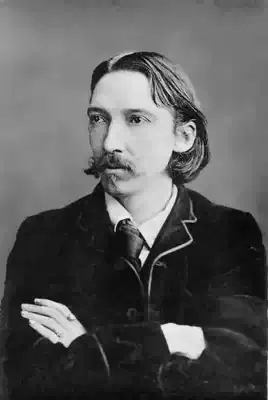
Robert Louis Stevenson
To Willie and Henrietta
To Willie and Henrietta
If two may read aright
These rhymes of old delight
And house and garden play,
You too, my cousins, and you only, may.
You in a garden green
With me were king and queen,
Were hunter, soldier, tar,
And all the thousand things that children are.
Now in the elders' seat
We rest with quiet feet,
And from the window-bay
We watch the children, our successors, play.
"Time was," the golden head
Irrevocably said;
But time which one can bind,
While flowing fast away, leaves love behind.
If two may read aright
These rhymes of old delight
And house and garden play,
You too, my cousins, and you only, may.
You in a garden green
With me were king and queen,
Were hunter, soldier, tar,
And all the thousand things that children are.
Now in the elders' seat
We rest with quiet feet,
And from the window-bay
We watch the children, our successors, play.
"Time was," the golden head
Irrevocably said;
But time which one can bind,
While flowing fast away, leaves love behind.
362
Robert Louis Stevenson
To My Mother
To My Mother
You too, my mother, read my rhymes
For love of unforgotten times,
And you may chance to hear once more
The little feet along the floor.
You too, my mother, read my rhymes
For love of unforgotten times,
And you may chance to hear once more
The little feet along the floor.
291
Robert Louis Stevenson
To Any Reader
To Any Reader
As from the house your mother sees
You playing round the garden trees,
So you may see, if you will look
Through the windows of this book,
Another child, far, far away,
And in another garden, play.
But do not think you can at all,
By knocking on the window, call
That child to hear you. He intent
Is all on his play-business bent.
He does not hear; he will not look,
Nor yet be lured out of this book.
For, long ago, the truth to say,
He has grown up and gone away,
And it is but a child of air
That lingers in the garden there.
As from the house your mother sees
You playing round the garden trees,
So you may see, if you will look
Through the windows of this book,
Another child, far, far away,
And in another garden, play.
But do not think you can at all,
By knocking on the window, call
That child to hear you. He intent
Is all on his play-business bent.
He does not hear; he will not look,
Nor yet be lured out of this book.
For, long ago, the truth to say,
He has grown up and gone away,
And it is but a child of air
That lingers in the garden there.
363
Robert Louis Stevenson
The Dumb Soldier
The Dumb Soldier
When the grass was closely mown,
Walking on the lawn alone,
In the turf a hole I found
And hid a soldier underground.
Spring and daisies came apace;
Grasses hid my hiding-place;
Grasses run like a green sea
O'er the lawn up to my knee.
Under grass alone he lies,
Looking up with leaden eyes,
Scarlet coat and pointed gun,
To the stars and to the sun.
When the grass is ripe like grain,
When the scythe is stoned again,
When the lawn is shaven clear,
Then my hole shall reappear.
I shall find him, never fear,
I shall find my grenadier;
But, for all that's gone and come,
I shall find my soldier dumb.
He has lived, a little thing,
In the grassy woods of spring;
Done, if he could tell me true,
Just as I should like to do.
He has seen the starry hours
And the springing of the flowers;
And the fairy things that pass
In the forests of the grass.
In the silence he has heard
Talking bee and ladybird,
And the butterfly has flown
O'er him as he lay alone.
Not a word will he disclose,
Not a word of all he knows.
I must lay him on the shelf,
And make up the tale myself.
When the grass was closely mown,
Walking on the lawn alone,
In the turf a hole I found
And hid a soldier underground.
Spring and daisies came apace;
Grasses hid my hiding-place;
Grasses run like a green sea
O'er the lawn up to my knee.
Under grass alone he lies,
Looking up with leaden eyes,
Scarlet coat and pointed gun,
To the stars and to the sun.
When the grass is ripe like grain,
When the scythe is stoned again,
When the lawn is shaven clear,
Then my hole shall reappear.
I shall find him, never fear,
I shall find my grenadier;
But, for all that's gone and come,
I shall find my soldier dumb.
He has lived, a little thing,
In the grassy woods of spring;
Done, if he could tell me true,
Just as I should like to do.
He has seen the starry hours
And the springing of the flowers;
And the fairy things that pass
In the forests of the grass.
In the silence he has heard
Talking bee and ladybird,
And the butterfly has flown
O'er him as he lay alone.
Not a word will he disclose,
Not a word of all he knows.
I must lay him on the shelf,
And make up the tale myself.
316
Robert Louis Stevenson
The Clock's Clear Voice Into The Clearer Air
The Clock's Clear Voice Into The Clearer Air
THE cock's clear voice into the clearer air
Where westward far I roam,
Mounts with a thrill of hope,
Falls with a sigh of home.
A rural sentry, he from farm and field
The coming morn descries,
And, mankind's bugler, wakes
The camp of enterprise.
He sings the morn upon the westward hills
Strange and remote and wild;
He sings it in the land
Where once I was a child.
He brings to me dear voices of the past,
The old land and the years:
My father calls for me,
My weeping spirit hears.
Fife, fife, into the golden air, O bird,
And sing the morning in;
For the old days are past
And new days begin.
THE cock's clear voice into the clearer air
Where westward far I roam,
Mounts with a thrill of hope,
Falls with a sigh of home.
A rural sentry, he from farm and field
The coming morn descries,
And, mankind's bugler, wakes
The camp of enterprise.
He sings the morn upon the westward hills
Strange and remote and wild;
He sings it in the land
Where once I was a child.
He brings to me dear voices of the past,
The old land and the years:
My father calls for me,
My weeping spirit hears.
Fife, fife, into the golden air, O bird,
And sing the morning in;
For the old days are past
And new days begin.
373
Robert Louis Stevenson
Sonnet III
Sonnet III
I have a hoard of treasure in my breast;
The grange of memory steams against the door,
Full of my bygone lifetime's garnered store -
Old pleasures crowned with sorrow for a zest,
Old sorrow grown a joy, old penance blest,
Chastened remembrance of the sins of yore
That, like a new evangel, more and more
Supports our halting will toward the best.
Ah! what to us the barren after years
May bring of joy or sorrow, who can tell?
O, knowing not, who cares? It may be well
That we shall find old pleasures and old fears,
And our remembered childhood seen thro' tears,
The best of Heaven and the worst of Hell.
I have a hoard of treasure in my breast;
The grange of memory steams against the door,
Full of my bygone lifetime's garnered store -
Old pleasures crowned with sorrow for a zest,
Old sorrow grown a joy, old penance blest,
Chastened remembrance of the sins of yore
That, like a new evangel, more and more
Supports our halting will toward the best.
Ah! what to us the barren after years
May bring of joy or sorrow, who can tell?
O, knowing not, who cares? It may be well
That we shall find old pleasures and old fears,
And our remembered childhood seen thro' tears,
The best of Heaven and the worst of Hell.
374
Robert Louis Stevenson
Picture-Books in Winter
Picture-Books in Winter
Summer fading, winter comes--
Frosty mornings, tingling thumbs,
Window robins, winter rooks,
And the picture story-books.
Water now is turned to stone
Nurse and I can walk upon;
Still we find the flowing brooks
In the picture story-books.
All the pretty things put by,
Wait upon the children's eye,
Sheep and shepherds, trees and crooks,
In the picture story-books.
We may see how all things are
Seas and cities, near and far,
And the flying fairies' looks,
In the picture story-books.
How am I to sing your praise,
Happy chimney-corner days,
Sitting safe in nursery nooks,
Reading picture story-books?
Summer fading, winter comes--
Frosty mornings, tingling thumbs,
Window robins, winter rooks,
And the picture story-books.
Water now is turned to stone
Nurse and I can walk upon;
Still we find the flowing brooks
In the picture story-books.
All the pretty things put by,
Wait upon the children's eye,
Sheep and shepherds, trees and crooks,
In the picture story-books.
We may see how all things are
Seas and cities, near and far,
And the flying fairies' looks,
In the picture story-books.
How am I to sing your praise,
Happy chimney-corner days,
Sitting safe in nursery nooks,
Reading picture story-books?
418