

Poems in this theme
Memories and Recollections
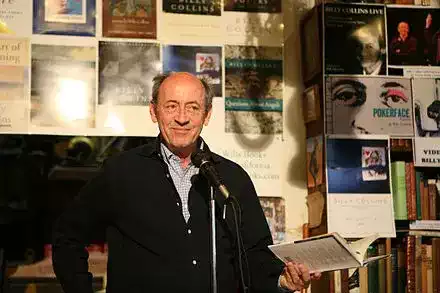
Billy Collins
Fishing On The Susquehanna In July
Fishing On The Susquehanna In July
I have never been fishing on the Susquehanna
or on any river for that matter
to be perfectly honest.
Not in July or any month
have I had the pleasure -- if it is a pleasure -of
fishing on the Susquehanna.
I am more likely to be found
in a quiet room like this one -a
painting of a woman on the wall,
a bowl of tangerines on the table -trying
to manufacture the sensation
of fishing on the Susquehanna.
There is little doubt
that others have been fishing
on the Susquehanna,
rowing upstream in a wooden boat,
sliding the oars under the water
then raising them to drip in the light.
But the nearest I have ever come to
fishing on the Susquehanna
was one afternoon in a museum in Philadelphia,
when I balanced a little egg of time
in front of a painting
in which that river curled around a bend
under a blue cloud-ruffled sky,
dense trees along the banks,
and a fellow with a red bandana
sitting in a small, green
flat-bottom boat
holding the thin whip of a pole.
That is something I am unlikely
ever to do, I remember
saying to myself and the person next to me.
Then I blinked and moved on
to other American scenes
of haystacks, water whitening over rocks,
even one of a brown hare
who seemed so wired with alertness
I imagined him springing right out of the frame.
I have never been fishing on the Susquehanna
or on any river for that matter
to be perfectly honest.
Not in July or any month
have I had the pleasure -- if it is a pleasure -of
fishing on the Susquehanna.
I am more likely to be found
in a quiet room like this one -a
painting of a woman on the wall,
a bowl of tangerines on the table -trying
to manufacture the sensation
of fishing on the Susquehanna.
There is little doubt
that others have been fishing
on the Susquehanna,
rowing upstream in a wooden boat,
sliding the oars under the water
then raising them to drip in the light.
But the nearest I have ever come to
fishing on the Susquehanna
was one afternoon in a museum in Philadelphia,
when I balanced a little egg of time
in front of a painting
in which that river curled around a bend
under a blue cloud-ruffled sky,
dense trees along the banks,
and a fellow with a red bandana
sitting in a small, green
flat-bottom boat
holding the thin whip of a pole.
That is something I am unlikely
ever to do, I remember
saying to myself and the person next to me.
Then I blinked and moved on
to other American scenes
of haystacks, water whitening over rocks,
even one of a brown hare
who seemed so wired with alertness
I imagined him springing right out of the frame.
277
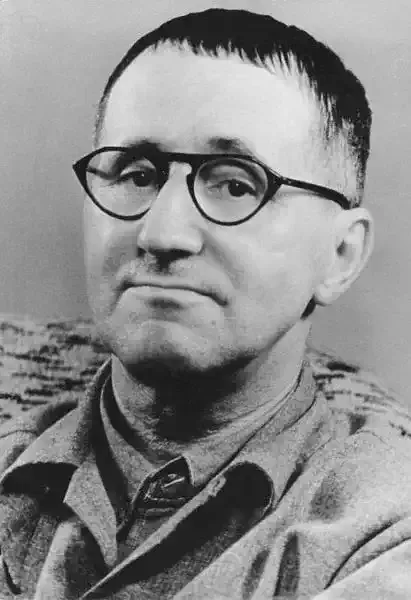
Bertolt Brecht
Ich habe dich nie je so geliebt...
Ich habe dich nie je so geliebt...
[Original]
Ich habe dich nie je so geliebt, ma soeur
Als wie ich fortging von dir in jenem Abendrot.
Der Wald schluckte mich, der blaue Wald, ma soeur
Über dem immer schon die bleichen Gestirne im Westen standen.
Ich lachte kein klein wenig, gar nicht, ma soeur
Der ich spielend dunklem Schicksal entgegenging -W&
auml;hrend schon die Gesichter hinter mir
Langsam im Abend des blauen Walds verblaßten.
Alles war schön an diesem einzigen Abend, ma soeur
Nachher nie wieder und nie zuvor --
Freilich: mir blieben nur mehr die großen Vögel
Die abends im dunklen Himmel Hunger haben.
[Translation]
I never loved you more, ma soeur
Than as I walked away from you that evening.
The forest swallowed me, the blue forest, ma soeur
The blue forest and above it pale stars in the west.
I did not laugh, not one little bit, ma soeur
As I playfully walked towards a dark fate --
While the faces behind me
Slowly paled in the evening of the blue forest.
Everything was grand that one night, ma soeur
Never thereafter and never before --
I admit it: I was left with nothing but the big birds
And their hungry cries in the dark evening sky.
[Original]
Ich habe dich nie je so geliebt, ma soeur
Als wie ich fortging von dir in jenem Abendrot.
Der Wald schluckte mich, der blaue Wald, ma soeur
Über dem immer schon die bleichen Gestirne im Westen standen.
Ich lachte kein klein wenig, gar nicht, ma soeur
Der ich spielend dunklem Schicksal entgegenging -W&
auml;hrend schon die Gesichter hinter mir
Langsam im Abend des blauen Walds verblaßten.
Alles war schön an diesem einzigen Abend, ma soeur
Nachher nie wieder und nie zuvor --
Freilich: mir blieben nur mehr die großen Vögel
Die abends im dunklen Himmel Hunger haben.
[Translation]
I never loved you more, ma soeur
Than as I walked away from you that evening.
The forest swallowed me, the blue forest, ma soeur
The blue forest and above it pale stars in the west.
I did not laugh, not one little bit, ma soeur
As I playfully walked towards a dark fate --
While the faces behind me
Slowly paled in the evening of the blue forest.
Everything was grand that one night, ma soeur
Never thereafter and never before --
I admit it: I was left with nothing but the big birds
And their hungry cries in the dark evening sky.
481
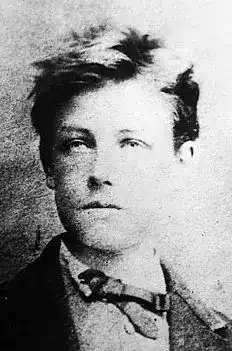
Arthur Rimbaud
The Sideboard
The Sideboard
It is a high, carved sideboard made of oak.
The dark old wood, like old folks, seems kind;
Its drawers are open, and its odours soak
The darkness with the scent of strong old wine.
Its drawers are full, a final resting place
For scented, yellowed linens, scraps of clothes
Foe wives or children, worn and faded bows,
Grandmothers' collars made of figured lace;
There you will find old medals, locks of grey
Or yellow hair, and portraits, and a dried bouquet
Whose perfume mingles with the smell of fruit.
-O sideboard of old, you know a great deal more
And could tell us your tales, yet you stand mute
As we slowly open your old dark door.
It is a high, carved sideboard made of oak.
The dark old wood, like old folks, seems kind;
Its drawers are open, and its odours soak
The darkness with the scent of strong old wine.
Its drawers are full, a final resting place
For scented, yellowed linens, scraps of clothes
Foe wives or children, worn and faded bows,
Grandmothers' collars made of figured lace;
There you will find old medals, locks of grey
Or yellow hair, and portraits, and a dried bouquet
Whose perfume mingles with the smell of fruit.
-O sideboard of old, you know a great deal more
And could tell us your tales, yet you stand mute
As we slowly open your old dark door.
474
Arthur Rimbaud
Fairy
Fairy
For Helen, in the virgin shadows and the
impassive radiance in astral silence,
ornamental saps conspired.
Summer's ardour was confided
to silent birds and due indolence
to a priceless mourning boat
through gulfs of dead loves
and fallen perfumes.
-After the moment of the woods women's song
to the rumble of the torrent in the ruin of the wood,
of the tinkle of the cowbells to the echo of the vales,
and the cries of the steppes.
-For Helen's childhood, furs and shadows trembled,
and the breast of the poor and the legends of heaven.
And her eyes and her dance superior
even to the precious radiance,
to cold influences, to the pleasure of the unique
setting and the unique hour.
For Helen, in the virgin shadows and the
impassive radiance in astral silence,
ornamental saps conspired.
Summer's ardour was confided
to silent birds and due indolence
to a priceless mourning boat
through gulfs of dead loves
and fallen perfumes.
-After the moment of the woods women's song
to the rumble of the torrent in the ruin of the wood,
of the tinkle of the cowbells to the echo of the vales,
and the cries of the steppes.
-For Helen's childhood, furs and shadows trembled,
and the breast of the poor and the legends of heaven.
And her eyes and her dance superior
even to the precious radiance,
to cold influences, to the pleasure of the unique
setting and the unique hour.
1,158
Arthur Rimbaud
Departure
Departure
Everything seen...
The vision gleams in every air.
Everything had...
The far sound of cities, in the evening,
In sunlight, and always.
Everything known...
O Tumult! O Visions! These are the stops of life.
Departure in affection, and shining sounds.
Everything seen...
The vision gleams in every air.
Everything had...
The far sound of cities, in the evening,
In sunlight, and always.
Everything known...
O Tumult! O Visions! These are the stops of life.
Departure in affection, and shining sounds.
741

Anne Brontë
The Arbour
The Arbour
I'll rest me in this sheltered bower,
And look upon the clear blue sky
That smiles upon me through the trees,
Which stand so thickly clustering by;
And view their green and glossy leaves,
All glistening in the sunshine fair;
And list the rustling of their boughs,
So softly whispering through the air.
And while my ear drinks in the sound,
My winged soul shall fly away;
Reviewing long departed years
As one mild, beaming, autumn day;
And soaring on to future scenes,
Like hills and woods, and valleys green,
All basking in the summer's sun,
But distant still, and dimly seen.
Oh, list! 'tis summer's very breath
That gently shakes the rustling trees But
look! the snow is on the ground How
can I think of scenes like these?
'Tis but the frost that clears the air,
And gives the sky that lovely blue;
They're smiling in a winter's sun,
Those evergreens of sombre hue.
And winter's chill is on my heart How
can I dream of future bliss?
How can my spirit soar away,
Confined by such a chain as this?
I'll rest me in this sheltered bower,
And look upon the clear blue sky
That smiles upon me through the trees,
Which stand so thickly clustering by;
And view their green and glossy leaves,
All glistening in the sunshine fair;
And list the rustling of their boughs,
So softly whispering through the air.
And while my ear drinks in the sound,
My winged soul shall fly away;
Reviewing long departed years
As one mild, beaming, autumn day;
And soaring on to future scenes,
Like hills and woods, and valleys green,
All basking in the summer's sun,
But distant still, and dimly seen.
Oh, list! 'tis summer's very breath
That gently shakes the rustling trees But
look! the snow is on the ground How
can I think of scenes like these?
'Tis but the frost that clears the air,
And gives the sky that lovely blue;
They're smiling in a winter's sun,
Those evergreens of sombre hue.
And winter's chill is on my heart How
can I dream of future bliss?
How can my spirit soar away,
Confined by such a chain as this?
94
Anne Brontë
Severed and Gone
Severed and Gone
Severed and gone, so many years!
And art thou still so dear to me,
That throbbing heart and burning tears
Can witness how I cling to thee?
I know that in the narrow tomb
The form I loved was buried deep,
And left, in silence and in gloom,
To slumber out its dreamless sleep.
I know the corner where it lies,
Is but a dreary place of rest:
The charnel moisture never dries
From the dark flagstones o'er its breast,
For there the sunbeams never shine,
Nor ever breathes the freshening air,
But
not for this do I repine;
For my beloved is not there.
O, no! I do not think of thee
As festering there in slow decay: '
Tis this sole thought oppresses me,
That thou art gone so far away.
For ever gone; for I, by night,
Have prayed, within my silent room,
That Heaven would grant a burst of light
Its cheerless darkness to illume;
And give thee to my longing eyes,
A moment, as thou shinest now,
Fresh from thy mansion in the skies,
With all its glories on thy brow.
Wild was the wish, intense the gaze
I fixed upon the murky air,
Expecting, half, a kindling blaze
Would strike my raptured vision there,
A shape these human nerves would thrill,
A majesty that might appal,
Did not thy earthly likeness, still,
Gleam softly, gladly, through it all.
False hope! vain prayer! it might not be
That thou shouldst visit earth again.
I called on Heaven I
called on thee,
And watched, and waited all
in vain.
Had I one shining tress of thine,
How it would bless these longing eyes!
Or if thy pictured form were mine,
What gold should rob me of the prize?
A few cold words on yonder stone,
A corpse as cold as they can be Vain
words, and mouldering dust, alone Can
this be all that's left of thee?
O, no! thy spirit lingers still
Where'er thy sunny smile was seen:
There's less of darkness, less of chill
On earth, than if thou hadst not been.
Thou breathest in my bosom yet,
And dwellest in my beating heart;
And, while I cannot quite forget,
Thou, darling, canst not quite depart.
Though, freed from sin, and grief, and pain
Thou drinkest now the bliss of Heaven,
Thou didst not visit earth in vain;
And from us, yet, thou art not riven.
Life seems more sweet that thou didst live,
And men more true that thou wert one:
Nothing is lost that thou didst give,
Nothing destroyed that thou hast done.
Earth hath received thine earthly part;
Thine heavenly flame has heavenward flown;
But both still linger in my heart,
Still live, and not in mine alone.
Severed and gone, so many years!
And art thou still so dear to me,
That throbbing heart and burning tears
Can witness how I cling to thee?
I know that in the narrow tomb
The form I loved was buried deep,
And left, in silence and in gloom,
To slumber out its dreamless sleep.
I know the corner where it lies,
Is but a dreary place of rest:
The charnel moisture never dries
From the dark flagstones o'er its breast,
For there the sunbeams never shine,
Nor ever breathes the freshening air,
But
not for this do I repine;
For my beloved is not there.
O, no! I do not think of thee
As festering there in slow decay: '
Tis this sole thought oppresses me,
That thou art gone so far away.
For ever gone; for I, by night,
Have prayed, within my silent room,
That Heaven would grant a burst of light
Its cheerless darkness to illume;
And give thee to my longing eyes,
A moment, as thou shinest now,
Fresh from thy mansion in the skies,
With all its glories on thy brow.
Wild was the wish, intense the gaze
I fixed upon the murky air,
Expecting, half, a kindling blaze
Would strike my raptured vision there,
A shape these human nerves would thrill,
A majesty that might appal,
Did not thy earthly likeness, still,
Gleam softly, gladly, through it all.
False hope! vain prayer! it might not be
That thou shouldst visit earth again.
I called on Heaven I
called on thee,
And watched, and waited all
in vain.
Had I one shining tress of thine,
How it would bless these longing eyes!
Or if thy pictured form were mine,
What gold should rob me of the prize?
A few cold words on yonder stone,
A corpse as cold as they can be Vain
words, and mouldering dust, alone Can
this be all that's left of thee?
O, no! thy spirit lingers still
Where'er thy sunny smile was seen:
There's less of darkness, less of chill
On earth, than if thou hadst not been.
Thou breathest in my bosom yet,
And dwellest in my beating heart;
And, while I cannot quite forget,
Thou, darling, canst not quite depart.
Though, freed from sin, and grief, and pain
Thou drinkest now the bliss of Heaven,
Thou didst not visit earth in vain;
And from us, yet, thou art not riven.
Life seems more sweet that thou didst live,
And men more true that thou wert one:
Nothing is lost that thou didst give,
Nothing destroyed that thou hast done.
Earth hath received thine earthly part;
Thine heavenly flame has heavenward flown;
But both still linger in my heart,
Still live, and not in mine alone.
83
Anne Brontë
Self Communion
Self Communion
'The mist is resting on the hill;
The smoke is hanging in the air;
The very clouds are standing still:
A breathless calm broods everywhere.
Thou pilgrim through this vale of tears,
Thou, too, a little moment cease
Thy anxious toil and fluttering fears,
And rest thee, for a while, in peace.'
'I would, but Time keeps working still
And moving on for good or ill:
He will not rest or stay.
In pain or ease, in smiles or tears,
He still keeps adding to my years
And stealing life away.
His footsteps in the ceaseless sound
Of yonder clock I seem to hear,
That through this stillness so profound
Distinctly strikes the vacant ear.
For ever striding on and on,
He pauses not by night or day;
And all my life will soon be gone
As these past years have slipped away.
He took my childhood long ago,
And then my early youth; and lo,
He steals away my prime!
I cannot see how fast it goes,
But well my inward spirit knows
The wasting power of time.'
'Time steals thy moments, drinks thy breath,
Changes and wastes thy mortal frame;
But though he gives the clay to death,
He cannot touch the inward flame.
Nay, though he steals thy years away,
Their memory is left thee still,
And every month and every day
Leaves some effect of good or ill.
The wise will find in Memory's store
A help for that which lies before
To guide their course aright;
Then, hush thy plaints and calm thy fears;
Look back on these departed years,
And, say, what meets thy sight?'
'I see, far back, a helpless child,
Feeble and full of causeless fears,
Simple and easily beguiled
To credit all it hears.
More timid than the wild wooddove,
Yet trusting to another's care,
And finding in protecting love
Its only refuge from despair, Its
only balm for every woe,
The only bliss its soul can know;
Still hiding in its breast.
A tender heart too prone to weep,
A love so earnest, strong, and deep
It could not be expressed.
Poor helpless thing! what can it do
Life's stormy cares and toils among; How
tread this weary desert through
That awes the brave and tires the strong?
Where shall it centre so much trust
Where truth maintains so little sway,
Where seeming fruit is bitter dust,
And kisses oft to death betray?
How oft must sin and falsehood grieve
A heart so ready to believe,
And willing to admire!
With strength so feeble, fears so strong,
Amid this selfish bustling throng,
How will it faint and tire!
That tender love so warm and deep,
How can it flourish here below?
What bitter floods of tears must steep
The stony soil where it would grow!
O earth! a rocky breast is thine A
hard soil and a cruel clime,
Where tender plants must droop and pine,
Or alter with transforming time.
That soul, that clings to sympathy,
As ivy clasps the forest tree,
How can it stand alone?
That heart so prone to overflow
E'en at the thought of others' woe,
How will it bear its own?
How, if a sparrow's death can wring
Such bitter tearfloods
from the eye,
Will it behold the suffering
Of struggling, lost humanity?
The torturing pain, the pining grief,
The sindegraded
misery,
The anguish that defies relief?'
'Look back again What
dost thou see?'
'I see one kneeling on the sod,
With infant hands upraised to Heaven,
A young heart feeling after God,
Oft baffled, never backward driven.
Mistaken oft, and oft astray,
It strives to find the narrow way,
But gropes and toils alone:
That inner life of strife and tears,
Of kindling hopes and lowering fears
To none but God is known.
'Tis better thus; for man would scorn
Those childish prayers, those artless cries,
That darkling spirit tossed and torn,
But God will not despise!
We may regret such waste of tears
Such darkly toiling misery,
Such 'wildering doubts and harrowing fears,
Where joy and thankfulness should be;
But wait, and Heaven will send relief.
Let patience have her perfect work:
Lo, strength and wisdom spring from grief,
And joys behind afflictions lurk!
It asked for light, and it is heard;
God grants that struggling soul repose
And, guided by His holy word,
It wiser than its teachers grows.
It gains the upward path at length,
And passes on from strength to strength,
Leaning on Heaven the while:
Night's shades departing one by one,
It sees at last the rising sun,
And feels his cheering smile.
In all its darkness and distress
For light it sought, to God it cried;
And through the pathless wilderness,
He was its comfort and its guide.'
'So was it, and so will it be:
Thy God will guide and strengthen thee;
His goodness cannot fail.
The sun that on thy morning rose
Will light thee to the evening's close,
Whatever storms assail.'
'God alters not; but Time on me
A wide and wondrous change has wrought:
And in these parted years I see
Cause for grave care and saddening thought.
I see that time, and toil, and truth,
An inward hardness can impart, Can
freeze the generous blood of youth,
And steel full fast the tender heart.'
'Bless God for that divine decree! That
hardness comes with misery,
And suffering deadens pain;
That at the frequent sight of woe
E'en Pity's tears forget to flow,
If reason still remain!
Reason, with conscience by her side,
But gathers strength from toil and truth;
And she will prove a surer guide
Than those sweet instincts of our youth.
Thou that hast known such anguish sore
In weeping where thou couldst not bless,
Canst thou that softness so deplore That
suffering, shrinking tenderness?
Thou that hast felt what cankering care
A loving heart is doomed to bear,
Say, how canst thou regret
That fires unfed must fall away,
Long droughts can dry the softest clay,
And cold will cold beget?'
'Nay, but 'tis hard to feel that chill
Come creeping o'er the shuddering heart.
Love may be full of pain, but still,
'Tis sad to see it so depart, To
watch that fire whose genial glow
Was formed to comfort and to cheer,
For want of fuel, fading so,
Sinking to embers dull and drear, To
see the soft soil turned to stone
For lack of kindly showers, To
see those yearnings of the breast,
Pining to bless and to be blessed,
Drop withered, frozen one by one,
Till, centred in itself alone,
It wastes its blighted powers.
Oh, I have known a wondrous joy
In early friendship's pure delight, A
genial bliss that could not cloy My
sun by day, my moon by night.
Absence, indeed, was sore distress,
And thought of death was anguish keen,
And there was cruel bitterness
When jarring discords rose between;
And sometimes it was grief to know
My fondness was but half returned.
But this was nothing to the woe
With which another truth was learned: That
I must check, or nurse apart,
Full many an impulse of the heart
And many a darling thought:
What my soul worshipped, sought, and prized,
Were slighted, questioned, or despised;
This pained me more than aught.
And as my love the warmer glowed
The deeper would that anguish sink,
That this dark stream between us flowed,
Though both stood bending o'er its brink;
Until, as last, I learned to bear
A colder heart within my breast;
To share such thoughts as I could share,
And calmly keep the rest.
I saw that they were sundered now,
The trees that at the root were one:
They yet might mingle leaf and bough,
But still the stems must stand alone.
O love is sweet of every kind!
'Tis sweet the helpless to befriend,
To watch the young unfolding mind,
To guide, to shelter, and defend:
To lavish tender toil and care,
And ask for nothing back again,
But that our smiles a blessing bear
And all our toil be not in vain.
And sweeter far than words can tell
Their love whose ardent bosoms swell
With thoughts they need not hide;
Where fortune frowns not on their joy,
And Prudence seeks not to destroy,
Nor Reason to deride.
Whose love may freely gush and flow,
Unchecked, unchilled by doubt or fear,
For in their inmost hearts they know
It is not vainly nourished there.
They know that in a kindred breast
Their long desires have found a home,
Where heart and soul may kindly rest,
Weary and lorn no more to roam.
Their dreams of bliss were not in vain,
As they love they are loved again,
And they can bless as they are blessed.
O vainly might I seek to show
The joys from happy love that flow!
The warmest words are all too cold
The secret transports to unfold
Of simplest word or softest sigh,
Or from the glancing of an eye
To say what rapture beams;
One look that bids our fears depart,
And well assures the trusting heart.
It beats not in the world alone Such
speechless rapture I have known,
But only in my dreams.
My life has been a morning sky
Where Hope her rainbow glories cast
O'er kindling vapours far and nigh:
And, if the colours faded fast,
Ere one bright hue had died away
Another o'er its ashes gleamed;
And if the lower clouds were grey,
The mists above more brightly beamed.
But not for long; at
length behold,
Those tints less warm, less radiant grew;
Till but one streak of paly gold
Glimmered through clouds of saddening hue.
And I am calmly waiting, now,
To see that also pass away,
And leave, above the dark hill's brow,
A rayless arch of sombre grey.'
'So must it fare with all thy race
Who seek in earthly things their joy:
So fading hopes lost hopes shall chase
Till Disappointment all destroy.
But they that fix their hopes on high
Shall, in the bluerefulgent
sky,
The sun's transcendent light,
Behold a purer, deeper glow
Than these uncertain gleams can show,
However fair or bright.
O weak of heart! why thus deplore
That Truth will Fancy's dreams destroy?
Did I not tell thee, years before,
Life was for labour, not for joy?
Cease, selfish spirit, to repine;
O'er thine own ills no longer grieve;
Lo, there are sufferings worse than thine,
Which thou mayst labour to relieve.
If Time indeed too swiftly flies,
Gird on thine armour, haste, arise,
For thou hast much to do; To
lighten woe, to trample sin,
And foes without and foes within
To combat and subdue.
Earth hath too much of sin and pain:
The bitter cup the
binding chain
Dost thou indeed lament?
Let not thy weary spirit sink;
But strive not
by one drop or link
The evil to augment.
Strive rather thou, by peace and joy,
The bitter poison to destroy,
The cruel chain to break.
O strive! and if thy strength be small,
Strive yet the more, and spend it all
For Love and Wisdom's sake!'
'O I have striven both hard and long
But many are my foes and strong.
My gains are light my
progress slow;
For hard's the way I have to go,
And my worst enemies, I know,
Are these within my breast;
And it is hard to toil for aye, Through
sultry noon and twilight grey
To toil and never rest.'
'There is a rest beyond the grave,
A lasting rest from pain and sin,
Where dwell the faithful and the brave;
But they must strive who seek to win.'
"Show me that rest I
ask no more.
Oh, drive these misty doubts away;
And let me see that sunny shore,
However far away!
However wide this rolling sea,
However wild my passage be,
Howe'er my bark be tempest tossed,
May it but reach that haven fair,
May I but land and wander there,
With those that I have loved and lost:
With such a glorious hope in view,
I'll gladly toil and suffer too.
Rest without toil I would not ask;
I would not shun the hardest task:
Toil is my glory Grief
my gain,
If God's approval they obtain.
Could I but hear my Saviour say, "
I know thy patience and thy love;
How thou hast held the narrow way,
For my sake laboured night and day,
And watched, and striven with them that strove;
And still hast borne, and didst not faint," Oh,
this would be reward indeed!'
'Press forward, then, without complaint;
Labour and love and
such shall be thy meed.'
'The mist is resting on the hill;
The smoke is hanging in the air;
The very clouds are standing still:
A breathless calm broods everywhere.
Thou pilgrim through this vale of tears,
Thou, too, a little moment cease
Thy anxious toil and fluttering fears,
And rest thee, for a while, in peace.'
'I would, but Time keeps working still
And moving on for good or ill:
He will not rest or stay.
In pain or ease, in smiles or tears,
He still keeps adding to my years
And stealing life away.
His footsteps in the ceaseless sound
Of yonder clock I seem to hear,
That through this stillness so profound
Distinctly strikes the vacant ear.
For ever striding on and on,
He pauses not by night or day;
And all my life will soon be gone
As these past years have slipped away.
He took my childhood long ago,
And then my early youth; and lo,
He steals away my prime!
I cannot see how fast it goes,
But well my inward spirit knows
The wasting power of time.'
'Time steals thy moments, drinks thy breath,
Changes and wastes thy mortal frame;
But though he gives the clay to death,
He cannot touch the inward flame.
Nay, though he steals thy years away,
Their memory is left thee still,
And every month and every day
Leaves some effect of good or ill.
The wise will find in Memory's store
A help for that which lies before
To guide their course aright;
Then, hush thy plaints and calm thy fears;
Look back on these departed years,
And, say, what meets thy sight?'
'I see, far back, a helpless child,
Feeble and full of causeless fears,
Simple and easily beguiled
To credit all it hears.
More timid than the wild wooddove,
Yet trusting to another's care,
And finding in protecting love
Its only refuge from despair, Its
only balm for every woe,
The only bliss its soul can know;
Still hiding in its breast.
A tender heart too prone to weep,
A love so earnest, strong, and deep
It could not be expressed.
Poor helpless thing! what can it do
Life's stormy cares and toils among; How
tread this weary desert through
That awes the brave and tires the strong?
Where shall it centre so much trust
Where truth maintains so little sway,
Where seeming fruit is bitter dust,
And kisses oft to death betray?
How oft must sin and falsehood grieve
A heart so ready to believe,
And willing to admire!
With strength so feeble, fears so strong,
Amid this selfish bustling throng,
How will it faint and tire!
That tender love so warm and deep,
How can it flourish here below?
What bitter floods of tears must steep
The stony soil where it would grow!
O earth! a rocky breast is thine A
hard soil and a cruel clime,
Where tender plants must droop and pine,
Or alter with transforming time.
That soul, that clings to sympathy,
As ivy clasps the forest tree,
How can it stand alone?
That heart so prone to overflow
E'en at the thought of others' woe,
How will it bear its own?
How, if a sparrow's death can wring
Such bitter tearfloods
from the eye,
Will it behold the suffering
Of struggling, lost humanity?
The torturing pain, the pining grief,
The sindegraded
misery,
The anguish that defies relief?'
'Look back again What
dost thou see?'
'I see one kneeling on the sod,
With infant hands upraised to Heaven,
A young heart feeling after God,
Oft baffled, never backward driven.
Mistaken oft, and oft astray,
It strives to find the narrow way,
But gropes and toils alone:
That inner life of strife and tears,
Of kindling hopes and lowering fears
To none but God is known.
'Tis better thus; for man would scorn
Those childish prayers, those artless cries,
That darkling spirit tossed and torn,
But God will not despise!
We may regret such waste of tears
Such darkly toiling misery,
Such 'wildering doubts and harrowing fears,
Where joy and thankfulness should be;
But wait, and Heaven will send relief.
Let patience have her perfect work:
Lo, strength and wisdom spring from grief,
And joys behind afflictions lurk!
It asked for light, and it is heard;
God grants that struggling soul repose
And, guided by His holy word,
It wiser than its teachers grows.
It gains the upward path at length,
And passes on from strength to strength,
Leaning on Heaven the while:
Night's shades departing one by one,
It sees at last the rising sun,
And feels his cheering smile.
In all its darkness and distress
For light it sought, to God it cried;
And through the pathless wilderness,
He was its comfort and its guide.'
'So was it, and so will it be:
Thy God will guide and strengthen thee;
His goodness cannot fail.
The sun that on thy morning rose
Will light thee to the evening's close,
Whatever storms assail.'
'God alters not; but Time on me
A wide and wondrous change has wrought:
And in these parted years I see
Cause for grave care and saddening thought.
I see that time, and toil, and truth,
An inward hardness can impart, Can
freeze the generous blood of youth,
And steel full fast the tender heart.'
'Bless God for that divine decree! That
hardness comes with misery,
And suffering deadens pain;
That at the frequent sight of woe
E'en Pity's tears forget to flow,
If reason still remain!
Reason, with conscience by her side,
But gathers strength from toil and truth;
And she will prove a surer guide
Than those sweet instincts of our youth.
Thou that hast known such anguish sore
In weeping where thou couldst not bless,
Canst thou that softness so deplore That
suffering, shrinking tenderness?
Thou that hast felt what cankering care
A loving heart is doomed to bear,
Say, how canst thou regret
That fires unfed must fall away,
Long droughts can dry the softest clay,
And cold will cold beget?'
'Nay, but 'tis hard to feel that chill
Come creeping o'er the shuddering heart.
Love may be full of pain, but still,
'Tis sad to see it so depart, To
watch that fire whose genial glow
Was formed to comfort and to cheer,
For want of fuel, fading so,
Sinking to embers dull and drear, To
see the soft soil turned to stone
For lack of kindly showers, To
see those yearnings of the breast,
Pining to bless and to be blessed,
Drop withered, frozen one by one,
Till, centred in itself alone,
It wastes its blighted powers.
Oh, I have known a wondrous joy
In early friendship's pure delight, A
genial bliss that could not cloy My
sun by day, my moon by night.
Absence, indeed, was sore distress,
And thought of death was anguish keen,
And there was cruel bitterness
When jarring discords rose between;
And sometimes it was grief to know
My fondness was but half returned.
But this was nothing to the woe
With which another truth was learned: That
I must check, or nurse apart,
Full many an impulse of the heart
And many a darling thought:
What my soul worshipped, sought, and prized,
Were slighted, questioned, or despised;
This pained me more than aught.
And as my love the warmer glowed
The deeper would that anguish sink,
That this dark stream between us flowed,
Though both stood bending o'er its brink;
Until, as last, I learned to bear
A colder heart within my breast;
To share such thoughts as I could share,
And calmly keep the rest.
I saw that they were sundered now,
The trees that at the root were one:
They yet might mingle leaf and bough,
But still the stems must stand alone.
O love is sweet of every kind!
'Tis sweet the helpless to befriend,
To watch the young unfolding mind,
To guide, to shelter, and defend:
To lavish tender toil and care,
And ask for nothing back again,
But that our smiles a blessing bear
And all our toil be not in vain.
And sweeter far than words can tell
Their love whose ardent bosoms swell
With thoughts they need not hide;
Where fortune frowns not on their joy,
And Prudence seeks not to destroy,
Nor Reason to deride.
Whose love may freely gush and flow,
Unchecked, unchilled by doubt or fear,
For in their inmost hearts they know
It is not vainly nourished there.
They know that in a kindred breast
Their long desires have found a home,
Where heart and soul may kindly rest,
Weary and lorn no more to roam.
Their dreams of bliss were not in vain,
As they love they are loved again,
And they can bless as they are blessed.
O vainly might I seek to show
The joys from happy love that flow!
The warmest words are all too cold
The secret transports to unfold
Of simplest word or softest sigh,
Or from the glancing of an eye
To say what rapture beams;
One look that bids our fears depart,
And well assures the trusting heart.
It beats not in the world alone Such
speechless rapture I have known,
But only in my dreams.
My life has been a morning sky
Where Hope her rainbow glories cast
O'er kindling vapours far and nigh:
And, if the colours faded fast,
Ere one bright hue had died away
Another o'er its ashes gleamed;
And if the lower clouds were grey,
The mists above more brightly beamed.
But not for long; at
length behold,
Those tints less warm, less radiant grew;
Till but one streak of paly gold
Glimmered through clouds of saddening hue.
And I am calmly waiting, now,
To see that also pass away,
And leave, above the dark hill's brow,
A rayless arch of sombre grey.'
'So must it fare with all thy race
Who seek in earthly things their joy:
So fading hopes lost hopes shall chase
Till Disappointment all destroy.
But they that fix their hopes on high
Shall, in the bluerefulgent
sky,
The sun's transcendent light,
Behold a purer, deeper glow
Than these uncertain gleams can show,
However fair or bright.
O weak of heart! why thus deplore
That Truth will Fancy's dreams destroy?
Did I not tell thee, years before,
Life was for labour, not for joy?
Cease, selfish spirit, to repine;
O'er thine own ills no longer grieve;
Lo, there are sufferings worse than thine,
Which thou mayst labour to relieve.
If Time indeed too swiftly flies,
Gird on thine armour, haste, arise,
For thou hast much to do; To
lighten woe, to trample sin,
And foes without and foes within
To combat and subdue.
Earth hath too much of sin and pain:
The bitter cup the
binding chain
Dost thou indeed lament?
Let not thy weary spirit sink;
But strive not
by one drop or link
The evil to augment.
Strive rather thou, by peace and joy,
The bitter poison to destroy,
The cruel chain to break.
O strive! and if thy strength be small,
Strive yet the more, and spend it all
For Love and Wisdom's sake!'
'O I have striven both hard and long
But many are my foes and strong.
My gains are light my
progress slow;
For hard's the way I have to go,
And my worst enemies, I know,
Are these within my breast;
And it is hard to toil for aye, Through
sultry noon and twilight grey
To toil and never rest.'
'There is a rest beyond the grave,
A lasting rest from pain and sin,
Where dwell the faithful and the brave;
But they must strive who seek to win.'
"Show me that rest I
ask no more.
Oh, drive these misty doubts away;
And let me see that sunny shore,
However far away!
However wide this rolling sea,
However wild my passage be,
Howe'er my bark be tempest tossed,
May it but reach that haven fair,
May I but land and wander there,
With those that I have loved and lost:
With such a glorious hope in view,
I'll gladly toil and suffer too.
Rest without toil I would not ask;
I would not shun the hardest task:
Toil is my glory Grief
my gain,
If God's approval they obtain.
Could I but hear my Saviour say, "
I know thy patience and thy love;
How thou hast held the narrow way,
For my sake laboured night and day,
And watched, and striven with them that strove;
And still hast borne, and didst not faint," Oh,
this would be reward indeed!'
'Press forward, then, without complaint;
Labour and love and
such shall be thy meed.'
85
Anne Brontë
Memory
Memory
Brightly the sun of summer shone,
Green fields and waving woods upon,
And soft winds wandered by;
Above, a sky of purest blue,
Around, bright flowers of loveliest hue,
Allured the gazer's eye.
But what were all these charms to me,
When one sweet breath of memory
Came gently wafting by?
I closed my eyes against the day,
And called my willing soul away,
From earth, and air, and sky;
That I might simply fancy there
One little flower a
primrose fair,
Just opening into sight;
As in the days of infancy,
An opening primrose seemed to me
A source of strange delight.
Sweet Memory! ever smile on me;
Nature's chief beauties spring from thee,
Oh, still thy tribute bring!
Still make the golden crocus shine
Among the flowers the most divine,
The glory of the spring.
Still in the wallflower's
fragrance dwell;
And hover round the slight blue bell,
My childhood's darling flower.
Smile on the little daisy still,
The buttercup's bright goblet fill
With all thy former power.
For ever hang thy dreamy spell
Round mountain star and heather bell,
And do not pass away
From sparkling frost, or wreathed snow,
And whisper when the wild winds blow,
Or rippling waters play.
Is childhood, then, so all divine?
Or Memory, is the glory thine,
That haloes thus the past?
Not all divine; its pangs of grief,
(Although, perchance, their stay be brief,)
Are bitter while they last.
Nor is the glory all thine own,
For on our earliest joys alone
That holy light is cast.
With such a ray, no spell of thine
Can make our later pleasures shine,
Though long ago they passed.
Acton
Brightly the sun of summer shone,
Green fields and waving woods upon,
And soft winds wandered by;
Above, a sky of purest blue,
Around, bright flowers of loveliest hue,
Allured the gazer's eye.
But what were all these charms to me,
When one sweet breath of memory
Came gently wafting by?
I closed my eyes against the day,
And called my willing soul away,
From earth, and air, and sky;
That I might simply fancy there
One little flower a
primrose fair,
Just opening into sight;
As in the days of infancy,
An opening primrose seemed to me
A source of strange delight.
Sweet Memory! ever smile on me;
Nature's chief beauties spring from thee,
Oh, still thy tribute bring!
Still make the golden crocus shine
Among the flowers the most divine,
The glory of the spring.
Still in the wallflower's
fragrance dwell;
And hover round the slight blue bell,
My childhood's darling flower.
Smile on the little daisy still,
The buttercup's bright goblet fill
With all thy former power.
For ever hang thy dreamy spell
Round mountain star and heather bell,
And do not pass away
From sparkling frost, or wreathed snow,
And whisper when the wild winds blow,
Or rippling waters play.
Is childhood, then, so all divine?
Or Memory, is the glory thine,
That haloes thus the past?
Not all divine; its pangs of grief,
(Although, perchance, their stay be brief,)
Are bitter while they last.
Nor is the glory all thine own,
For on our earliest joys alone
That holy light is cast.
With such a ray, no spell of thine
Can make our later pleasures shine,
Though long ago they passed.
Acton
104
Anne Brontë
Farewell
Farewell
Farewell to thee! but not farewell
To all my fondest thoughts of thee:
Within my heart they still shall dwell;
And they shall cheer and comfort me.
O, beautiful, and full of grace!
If thou hadst never met mine eye,
I had not dreamed a living face
Could fancied charms so far outvie.
If I may ne'er behold again
That form and face so dear to me,
Nor hear thy voice, still would I fain
Preserve, for aye, their memory.
That voice, the magic of whose tone
Can wake an echo in my breast,
Creating feelings that, alone,
Can make my tranced spirit blest.
That laughing eye, whose sunny beam
My memory would not cherish less; And
oh, that smile! whose joyous gleam
Nor mortal language can express.
Adieu, but let me cherish, still,
The hope with which I cannot part.
Contempt may wound, and coldness chill,
But still it lingers in my heart.
And who can tell but Heaven, at last,
May answer all my thousand prayers,
And bid the future pay the past
With joy for anguish, smiles for tears?
Farewell to thee! but not farewell
To all my fondest thoughts of thee:
Within my heart they still shall dwell;
And they shall cheer and comfort me.
O, beautiful, and full of grace!
If thou hadst never met mine eye,
I had not dreamed a living face
Could fancied charms so far outvie.
If I may ne'er behold again
That form and face so dear to me,
Nor hear thy voice, still would I fain
Preserve, for aye, their memory.
That voice, the magic of whose tone
Can wake an echo in my breast,
Creating feelings that, alone,
Can make my tranced spirit blest.
That laughing eye, whose sunny beam
My memory would not cherish less; And
oh, that smile! whose joyous gleam
Nor mortal language can express.
Adieu, but let me cherish, still,
The hope with which I cannot part.
Contempt may wound, and coldness chill,
But still it lingers in my heart.
And who can tell but Heaven, at last,
May answer all my thousand prayers,
And bid the future pay the past
With joy for anguish, smiles for tears?
78
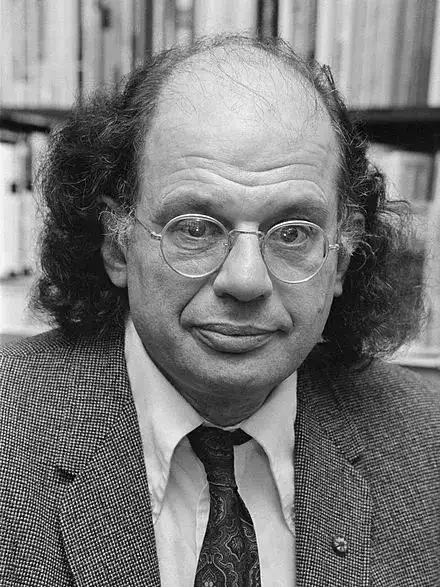
Allen Ginsberg
To Aunt Rose
To Aunt Rose
Aunt Rose—now—might I see you
with your thin face and buck tooth smile and pain
of rheumatism—and a long black heavy shoe
for your bony left leg
limping down the long hall in Newark on the running carpet
past the black grand piano
in the day room
where the parties were
and I sang Spanish loyalist songs
in a high squeaky voice
(hysterical) the committee listening
while you limped around the room
collected the money—
Aunt Honey, Uncle Sam, a stranger with a cloth arm
in his pocket
and huge young bald head
of Abraham Lincoln Brigade
—your long sad face
your tears of sexual frustration
(what smothered sobs and bony hips
under the pillows of Osborne Terrace)
—the time I stood on the toilet seat naked
and you powdered my thighs with calamine
against the poison ivy—my tender
and shamed first black curled hairs
what were you thinking in secret heart then
knowing me a man already—
and I an ignorant girl of family silence on the thin pedestal
of my legs in the bathroom—Museum of Newark.
Aunt Rose
Hitler is dead, Hitler is in Eternity; Hitler is with
Tamburlane and Emily Brontë
Though I see you walking still, a ghost on Osborne Terrace
down the long dark hall to the front door
limping a little with a pinched smile
in what must have been a silken
flower dress
welcoming my father, the Poet, on his visit to Newark
—see you arriving in the living room
dancing on your crippled leg
and clapping hands his book
had been accepted by Liveright
Hitler is dead and Liveright’s gone out of business
The Attic of the Past and Everlasting Minute are out of print
Uncle Harry sold his last silk stocking
Claire quit interpretive dancing school
Buba sits a wrinkled monument in Old
Ladies Home blinking at new babies
last time I saw you was the hospital
pale skull protruding under ashen skin
blue veined unconscious girl
in an oxygen tent
the war in Spain has ended long ago
Aunt Rose
Aunt Rose—now—might I see you
with your thin face and buck tooth smile and pain
of rheumatism—and a long black heavy shoe
for your bony left leg
limping down the long hall in Newark on the running carpet
past the black grand piano
in the day room
where the parties were
and I sang Spanish loyalist songs
in a high squeaky voice
(hysterical) the committee listening
while you limped around the room
collected the money—
Aunt Honey, Uncle Sam, a stranger with a cloth arm
in his pocket
and huge young bald head
of Abraham Lincoln Brigade
—your long sad face
your tears of sexual frustration
(what smothered sobs and bony hips
under the pillows of Osborne Terrace)
—the time I stood on the toilet seat naked
and you powdered my thighs with calamine
against the poison ivy—my tender
and shamed first black curled hairs
what were you thinking in secret heart then
knowing me a man already—
and I an ignorant girl of family silence on the thin pedestal
of my legs in the bathroom—Museum of Newark.
Aunt Rose
Hitler is dead, Hitler is in Eternity; Hitler is with
Tamburlane and Emily Brontë
Though I see you walking still, a ghost on Osborne Terrace
down the long dark hall to the front door
limping a little with a pinched smile
in what must have been a silken
flower dress
welcoming my father, the Poet, on his visit to Newark
—see you arriving in the living room
dancing on your crippled leg
and clapping hands his book
had been accepted by Liveright
Hitler is dead and Liveright’s gone out of business
The Attic of the Past and Everlasting Minute are out of print
Uncle Harry sold his last silk stocking
Claire quit interpretive dancing school
Buba sits a wrinkled monument in Old
Ladies Home blinking at new babies
last time I saw you was the hospital
pale skull protruding under ashen skin
blue veined unconscious girl
in an oxygen tent
the war in Spain has ended long ago
Aunt Rose
765
Allen Ginsberg
Kaddish, Part I
Kaddish, Part I
Strange now to think of you, gone without corsets & eyes, while I walk on
the sunny pavement of Greenwich Village.
downtown Manhattan, clear winter noon, and I've been up all night, talking,
talking, reading the Kaddish aloud, listening to Ray Charles blues
shout blind on the phonograph
the rhythm the rhythm--and your memory in my head three years after-And
read Adonais' last triumphant stanzas aloud--wept, realizing
how we suffer--
And how Death is that remedy all singers dream of, sing, remember,
prophesy as in the Hebrew Anthem, or the Buddhist Book of Answers--
and my own imagination of a withered leaf--at dawn--
Dreaming back thru life, Your time--and mine accelerating toward Apocalypse,
the final moment--the flower burning in the Day--and what comes after,
looking back on the mind itself that saw an American city
a flash away, and the great dream of Me or China, or you and a phantom
Russia, or a crumpled bed that never existed-
like a poem in the dark--escaped back to Oblivion--
No more to say, and nothing to weep for but the Beings in the Dream,
trapped in its disappearance,
sighing, screaming with it, buying and selling pieces of phantom, worshipping
each other,
worshipping the God included in it all--longing or inevitability?--while it
lasts, a Vision--anything more?
It leaps about me, as I go out and walk the street, look back over my shoulder,
Seventh Avenue, the battlements of window office buildings shouldering
each other high, under a cloud, tall as the sky an instant--and
the sky above--an old blue place.
or down the Avenue to the south, to--as I walk toward the Lower East Side
--where you walked 50 years ago, little girl--from Russia, eating the
first poisonous tomatoes of America frightened on the dock
then struggling in the crowds of Orchard Street toward what?--toward
Newark-
toward candy store, first home-made sodas of the century, hand-churned ice
cream in backroom on musty brownfloor boards--
Toward education marriage nervous breakdown, operation, teaching school,
and learning to be mad, in a dream--what is this life?
Toward the Key in the window--and the great Key lays its head of light
on top of Manhattan, and over the floor, and lays down on the
sidewalk--in a single vast beam, moving, as I walk down First toward
the Yiddish Theater--and the place of poverty
you knew, and I know, but without caring now--Strange to have moved
thru Paterson, and the West, and Europe and here again,
with the cries of Spaniards now in the doorstops doors and dark boys on
the street, firs escapes old as you
--Tho you're not old now, that's left here with me--
Myself, anyhow, maybe as old as the universe--and I guess that dies with
us--enough to cancel all that comes--What came is gone forever
every time-
That's good!That leaves it open for no regret--no fear radiators, lacklove,
torture even toothache in the end--
Though while it comes it is a lion that eats the soul--and the lamb, the soul,
in us, alas, offering itself in sacrifice to change's fierce hunger--hair
and teeth--and the roar of bonepain, skull bare, break rib, rot-skin,
braintricked Implacability.
Ai! ai!we do worse! We are in a fix!And you're out, Death let you out,
Death had the Mercy, you're done with your century, done with
God, done with the path thru it--Done with yourself at last--Pure
--Back to the Babe dark before your Father, before us all--before the
world--
There, rest.No more suffering for you.I know where you've gone, it's good.
No more flowers in the summer fields of New York, no joy now, no more
fear of Louis,
and no more of his sweetness and glasses, his high school decades, debts,
loves, frightened telephone calls, conception beds, relatives, hands--
No more of sister Elanor,--she gone before you--we kept it secret you
killed her--or she killed herself to bear with you--an arthritic heart
--But Death's killed you both--No matter--
Nor your memory of your mother, 1915 tears in silent movies weeks and
weeks--forgetting, agrieve watching Marie Dressler address humanity,
Chaplin dance in youth,
or Boris Godunov, Chaliapin's at the Met, halling his voice of a weeping Czar
--by standing room with Elanor & Max--watching also the Capital
ists take seats in Orchestra, white furs, diamonds,
with the YPSL's hitch-hiking thru Pennsylvania, in black baggy gym skirts
pants, photograph of 4 girls holding each other round the waste, and
laughing eye, too coy, virginal solitude of 1920
all girls grown old, or dead now, and that long hair in the grave--lucky to
have husbands later--
You made it--I came too--Eugene my brother before (still grieving now and
will gream on to his last stiff hand, as he goes thru his cancer--or kill
--later perhaps--soon he will think--)
And it's the last moment I remember, which I see them all, thru myself, now
--tho not you
I didn't foresee what you felt--what more hideous gape of bad mouth came
first--to you--and were you prepared?
To go where?In that Dark--that--in that God? a radiance? A Lord in the
Void?Like an eye in the black cloud in a dream?Adonoi at last, with
you?
Beyond my remembrance! Incapable to guess! Not merely the yellow skull
in the grave, or a box of worm dust, and a stained ribbon--Deathshead
with Halo?can you believe it?
Is it only the sun that shines once for the mind, only the flash of existence,
than none ever was?
Nothing beyond what we have--what you had--that so pitiful--yet Triumph,
to have been here, and changed, like a tree, broken, or flower--fed to the
ground--but made, with its petals, colored, thinking Great Universe,
shaken, cut in the head, leaf stript, hid in an egg crate hospital, cloth
wrapped, sore--freaked in the moon brain, Naughtless.
No flower like that flower, which knew itself in the garden, and fought the
knife--lost
Cut down by an idiot Snowman's icy--even in the Spring--strange ghost
thought some--Death--Sharp icicle in his hand--crowned with old
roses--a dog for his eyes--cock of a sweatshop--heart of electric
irons.
All the accumulations of life, that wear us out--clocks, bodies, consciousness,
shoes, breasts--begotten sons--your Communism--'Paranoia' into
hospitals.
You once kicked Elanor in the leg, she died of heart failure later.You of
stroke.Asleep?within a year, the two of you, sisters in death.Is
Elanor happy?
Max grieves alive in an office on Lower Broadway, lone large mustache over
midnight Accountings, not sure.His life passes--as he sees--and
what does he doubt now?Still dream of making money, or that might
have made money, hired nurse, had children, found even your Immortality,
Naomi?
I'll see him soon.Now I've got to cut through to talk to you as I didn't
when you had a mouth.
Forever.And we're bound for that, Forever like Emily Dickinson's horses
--headed to the End.
They know the way--These Steeds--run faster than we think--it's our own
life they cross--and take with them.
Magnificent, mourned no more, marred of heart, mind behind, married
dreamed, mortal changed--Ass and face done with murder.
In the world, given, flower maddened, made no Utopia, shut under
pine, almed in Earth, blamed in Lone, Jehovah, accept.
Nameless, One Faced, Forever beyond me, beginningless, endless,
Father in death.Tho I am not there for this Prophecy, I am unmarried, I'm
hymnless, I'm Heavenless, headless in blisshood I would still adore
Thee, Heaven, after Death, only One blessed in Nothingness, not
light or darkness, Dayless Eternity-Take
this, this Psalm, from me, burst from my hand in a day, some
of my Time, now given to Nothing--to praise Thee--But Death
This is the end, the redemption from Wilderness, way for the Wonderer,
House sought for All, black handkerchief washed clean by weeping
--page beyond Psalm--Last change of mine and Naomi--to God's perfect
Darkness--Death, stay thy phantoms!
II
Over and over--refrain--of the Hospitals--still haven't written your
history--leave it abstract--a few images
run thru the mind--like the saxophone chorus of houses and years-remembrance
of electrical shocks.
By long nites as a child in Paterson apartment, watching over your
nervousness--you were fat--your next move-
By that afternoon I stayed home from school to take care of you-once
and for all--when I vowed forever that once man disagreed with my
opinion of the cosmos, I was lost-
By my later burden--vow to illuminate mankind--this is release of
particulars--(mad as you)--(sanity a trick of agreement)-But
you stared out the window on the Broadway Church corner, and
spied a mystical assassin from Newark,
So phoned the Doctor--'OK go way for a rest'--so I put on my coat
and walked you downstreet--On the way a grammarschool boy screamed,
unaccountably--'Where you goin Lady to Death'? I shuddered-
and you covered your nose with motheaten fur collar, gas mask
against poison sneaked into downtown atmosphere, sprayed by Grandma-
And was the driver of the cheesebox Public Service bus a member of
the gang?You shuddered at his face, I could hardly get you on--to New
York, very Times Square, to grab another Greyhound--
Strange now to think of you, gone without corsets & eyes, while I walk on
the sunny pavement of Greenwich Village.
downtown Manhattan, clear winter noon, and I've been up all night, talking,
talking, reading the Kaddish aloud, listening to Ray Charles blues
shout blind on the phonograph
the rhythm the rhythm--and your memory in my head three years after-And
read Adonais' last triumphant stanzas aloud--wept, realizing
how we suffer--
And how Death is that remedy all singers dream of, sing, remember,
prophesy as in the Hebrew Anthem, or the Buddhist Book of Answers--
and my own imagination of a withered leaf--at dawn--
Dreaming back thru life, Your time--and mine accelerating toward Apocalypse,
the final moment--the flower burning in the Day--and what comes after,
looking back on the mind itself that saw an American city
a flash away, and the great dream of Me or China, or you and a phantom
Russia, or a crumpled bed that never existed-
like a poem in the dark--escaped back to Oblivion--
No more to say, and nothing to weep for but the Beings in the Dream,
trapped in its disappearance,
sighing, screaming with it, buying and selling pieces of phantom, worshipping
each other,
worshipping the God included in it all--longing or inevitability?--while it
lasts, a Vision--anything more?
It leaps about me, as I go out and walk the street, look back over my shoulder,
Seventh Avenue, the battlements of window office buildings shouldering
each other high, under a cloud, tall as the sky an instant--and
the sky above--an old blue place.
or down the Avenue to the south, to--as I walk toward the Lower East Side
--where you walked 50 years ago, little girl--from Russia, eating the
first poisonous tomatoes of America frightened on the dock
then struggling in the crowds of Orchard Street toward what?--toward
Newark-
toward candy store, first home-made sodas of the century, hand-churned ice
cream in backroom on musty brownfloor boards--
Toward education marriage nervous breakdown, operation, teaching school,
and learning to be mad, in a dream--what is this life?
Toward the Key in the window--and the great Key lays its head of light
on top of Manhattan, and over the floor, and lays down on the
sidewalk--in a single vast beam, moving, as I walk down First toward
the Yiddish Theater--and the place of poverty
you knew, and I know, but without caring now--Strange to have moved
thru Paterson, and the West, and Europe and here again,
with the cries of Spaniards now in the doorstops doors and dark boys on
the street, firs escapes old as you
--Tho you're not old now, that's left here with me--
Myself, anyhow, maybe as old as the universe--and I guess that dies with
us--enough to cancel all that comes--What came is gone forever
every time-
That's good!That leaves it open for no regret--no fear radiators, lacklove,
torture even toothache in the end--
Though while it comes it is a lion that eats the soul--and the lamb, the soul,
in us, alas, offering itself in sacrifice to change's fierce hunger--hair
and teeth--and the roar of bonepain, skull bare, break rib, rot-skin,
braintricked Implacability.
Ai! ai!we do worse! We are in a fix!And you're out, Death let you out,
Death had the Mercy, you're done with your century, done with
God, done with the path thru it--Done with yourself at last--Pure
--Back to the Babe dark before your Father, before us all--before the
world--
There, rest.No more suffering for you.I know where you've gone, it's good.
No more flowers in the summer fields of New York, no joy now, no more
fear of Louis,
and no more of his sweetness and glasses, his high school decades, debts,
loves, frightened telephone calls, conception beds, relatives, hands--
No more of sister Elanor,--she gone before you--we kept it secret you
killed her--or she killed herself to bear with you--an arthritic heart
--But Death's killed you both--No matter--
Nor your memory of your mother, 1915 tears in silent movies weeks and
weeks--forgetting, agrieve watching Marie Dressler address humanity,
Chaplin dance in youth,
or Boris Godunov, Chaliapin's at the Met, halling his voice of a weeping Czar
--by standing room with Elanor & Max--watching also the Capital
ists take seats in Orchestra, white furs, diamonds,
with the YPSL's hitch-hiking thru Pennsylvania, in black baggy gym skirts
pants, photograph of 4 girls holding each other round the waste, and
laughing eye, too coy, virginal solitude of 1920
all girls grown old, or dead now, and that long hair in the grave--lucky to
have husbands later--
You made it--I came too--Eugene my brother before (still grieving now and
will gream on to his last stiff hand, as he goes thru his cancer--or kill
--later perhaps--soon he will think--)
And it's the last moment I remember, which I see them all, thru myself, now
--tho not you
I didn't foresee what you felt--what more hideous gape of bad mouth came
first--to you--and were you prepared?
To go where?In that Dark--that--in that God? a radiance? A Lord in the
Void?Like an eye in the black cloud in a dream?Adonoi at last, with
you?
Beyond my remembrance! Incapable to guess! Not merely the yellow skull
in the grave, or a box of worm dust, and a stained ribbon--Deathshead
with Halo?can you believe it?
Is it only the sun that shines once for the mind, only the flash of existence,
than none ever was?
Nothing beyond what we have--what you had--that so pitiful--yet Triumph,
to have been here, and changed, like a tree, broken, or flower--fed to the
ground--but made, with its petals, colored, thinking Great Universe,
shaken, cut in the head, leaf stript, hid in an egg crate hospital, cloth
wrapped, sore--freaked in the moon brain, Naughtless.
No flower like that flower, which knew itself in the garden, and fought the
knife--lost
Cut down by an idiot Snowman's icy--even in the Spring--strange ghost
thought some--Death--Sharp icicle in his hand--crowned with old
roses--a dog for his eyes--cock of a sweatshop--heart of electric
irons.
All the accumulations of life, that wear us out--clocks, bodies, consciousness,
shoes, breasts--begotten sons--your Communism--'Paranoia' into
hospitals.
You once kicked Elanor in the leg, she died of heart failure later.You of
stroke.Asleep?within a year, the two of you, sisters in death.Is
Elanor happy?
Max grieves alive in an office on Lower Broadway, lone large mustache over
midnight Accountings, not sure.His life passes--as he sees--and
what does he doubt now?Still dream of making money, or that might
have made money, hired nurse, had children, found even your Immortality,
Naomi?
I'll see him soon.Now I've got to cut through to talk to you as I didn't
when you had a mouth.
Forever.And we're bound for that, Forever like Emily Dickinson's horses
--headed to the End.
They know the way--These Steeds--run faster than we think--it's our own
life they cross--and take with them.
Magnificent, mourned no more, marred of heart, mind behind, married
dreamed, mortal changed--Ass and face done with murder.
In the world, given, flower maddened, made no Utopia, shut under
pine, almed in Earth, blamed in Lone, Jehovah, accept.
Nameless, One Faced, Forever beyond me, beginningless, endless,
Father in death.Tho I am not there for this Prophecy, I am unmarried, I'm
hymnless, I'm Heavenless, headless in blisshood I would still adore
Thee, Heaven, after Death, only One blessed in Nothingness, not
light or darkness, Dayless Eternity-Take
this, this Psalm, from me, burst from my hand in a day, some
of my Time, now given to Nothing--to praise Thee--But Death
This is the end, the redemption from Wilderness, way for the Wonderer,
House sought for All, black handkerchief washed clean by weeping
--page beyond Psalm--Last change of mine and Naomi--to God's perfect
Darkness--Death, stay thy phantoms!
II
Over and over--refrain--of the Hospitals--still haven't written your
history--leave it abstract--a few images
run thru the mind--like the saxophone chorus of houses and years-remembrance
of electrical shocks.
By long nites as a child in Paterson apartment, watching over your
nervousness--you were fat--your next move-
By that afternoon I stayed home from school to take care of you-once
and for all--when I vowed forever that once man disagreed with my
opinion of the cosmos, I was lost-
By my later burden--vow to illuminate mankind--this is release of
particulars--(mad as you)--(sanity a trick of agreement)-But
you stared out the window on the Broadway Church corner, and
spied a mystical assassin from Newark,
So phoned the Doctor--'OK go way for a rest'--so I put on my coat
and walked you downstreet--On the way a grammarschool boy screamed,
unaccountably--'Where you goin Lady to Death'? I shuddered-
and you covered your nose with motheaten fur collar, gas mask
against poison sneaked into downtown atmosphere, sprayed by Grandma-
And was the driver of the cheesebox Public Service bus a member of
the gang?You shuddered at his face, I could hardly get you on--to New
York, very Times Square, to grab another Greyhound--
754
Allen Ginsberg
Hospital Window
Hospital Window
At gauzy dusk, thin haze like cigarette smoke
ribbons past Chrysler Building's silver fins
tapering delicately needletopped, Empire State's
taller antenna filmed milky lit amid blocks
black and white apartmenting veil'd sky over Manhattan,
offices new built dark glassed in blueish heaven--The East
50's & 60's covered with castles & watertowers, seven storied
tar-topped house-banks over York Avenue, late may-green trees
surrounding Rockefellers' blue domed medical arbor--
Geodesic science at the waters edge--Cars running up
East River Drive, & parked at N.Y. Hospital's oval door
where perfect tulips flower the health of a thousand sick souls
trembling inside hospital rooms. Triboro bridge steel-spiked
penthouse orange roofs, sunset tinges the river and in a few
Bronx windows, some magnesium vapor brilliances're
spotted five floors above E 59th St under grey painted bridge
trestles. Way downstream along the river, as Monet saw Thames
100 years ago, Con Edison smokestacks 14th street,
& Brooklyn Bridge's skeined dim in modern mists--
Pipes sticking up to sky nine smokestacks huge visible--
U.N. Building hangs under an orange crane, & red lights on
vertical avenues below the trees turn green at the nod
of a skull with a mild nerve ache. Dim dharma, I return
to this spectacle after weeks of poisoned lassitude, my thighs
belly chest & arms covered with poxied welts,
head pains fading back of the neck, right eyebrow cheek
mouth paralyzed--from taking the wrong medicine, sweated
too much in the forehead helpless, covered my rage from
gorge to prostate with grinding jaw and tightening anus
not released the weeping scream of horror at robot Mayaguez
World self ton billions metal grief unloaded
Pnom Penh to Nakon Thanom, Santiago & Tehran.
Fresh warm breeze in the window, day's release
>from pain, cars float downside the bridge trestle
and uncounted building-wall windows multiplied a mile
deep into ash-delicate sky beguile
my empty mind. A seagull passes alone wings
spread silent over roofs.
At gauzy dusk, thin haze like cigarette smoke
ribbons past Chrysler Building's silver fins
tapering delicately needletopped, Empire State's
taller antenna filmed milky lit amid blocks
black and white apartmenting veil'd sky over Manhattan,
offices new built dark glassed in blueish heaven--The East
50's & 60's covered with castles & watertowers, seven storied
tar-topped house-banks over York Avenue, late may-green trees
surrounding Rockefellers' blue domed medical arbor--
Geodesic science at the waters edge--Cars running up
East River Drive, & parked at N.Y. Hospital's oval door
where perfect tulips flower the health of a thousand sick souls
trembling inside hospital rooms. Triboro bridge steel-spiked
penthouse orange roofs, sunset tinges the river and in a few
Bronx windows, some magnesium vapor brilliances're
spotted five floors above E 59th St under grey painted bridge
trestles. Way downstream along the river, as Monet saw Thames
100 years ago, Con Edison smokestacks 14th street,
& Brooklyn Bridge's skeined dim in modern mists--
Pipes sticking up to sky nine smokestacks huge visible--
U.N. Building hangs under an orange crane, & red lights on
vertical avenues below the trees turn green at the nod
of a skull with a mild nerve ache. Dim dharma, I return
to this spectacle after weeks of poisoned lassitude, my thighs
belly chest & arms covered with poxied welts,
head pains fading back of the neck, right eyebrow cheek
mouth paralyzed--from taking the wrong medicine, sweated
too much in the forehead helpless, covered my rage from
gorge to prostate with grinding jaw and tightening anus
not released the weeping scream of horror at robot Mayaguez
World self ton billions metal grief unloaded
Pnom Penh to Nakon Thanom, Santiago & Tehran.
Fresh warm breeze in the window, day's release
>from pain, cars float downside the bridge trestle
and uncounted building-wall windows multiplied a mile
deep into ash-delicate sky beguile
my empty mind. A seagull passes alone wings
spread silent over roofs.
651
Allen Ginsberg
Haiku (Never Published)
Haiku (Never Published)
Drinking my tea
Without sugarNo
difference.
The sparrow shits
upside down
--ah! my brain & eggs
Mayan head in a
Pacific driftwood bole
--Someday I'll live in N.Y.
Looking over my shoulder
my behind was covered
with cherry blossoms.
Winter Haiku
I didn't know the names
of the flowers--now
my garden is gone.
I slapped the mosquito
and missed.
What made me do that?
Reading haiku
I am unhappy,
longing for the Nameless.
A frog floating
in the drugstore jar:
summer rain on grey pavements.
(after Shiki)
On the porch
in my shorts;
auto lights in the rain.
Another year
has past-the world
is no different.
The first thing I looked for
in my old garden was
The Cherry Tree.
My old desk:
the first thing I looked for
in my house.
My early journal:
the first thing I found
in my old desk.
My mother's ghost:
the first thing I found
in the living room.
I quit shaving
but the eyes that glanced at me
remained in the mirror.
The madman
emerges from the movies:
the street at lunchtime.
Cities of boys
are in their graves,
and in this town...
Lying on my side
in the void:
the breath in my nose.
On the fifteenth floor
the dog chews a bone-
Screech of taxicabs.
A hardon in New York,
a boy
in San Fransisco.
The moon over the roof,
worms in the garden.
I rent this house.
[Haiku composed in the backyard cottage at 1624
Milvia Street, Berkeley 1955, while reading R.H.
Blyth's 4 volumes, "Haiku."]
Drinking my tea
Without sugarNo
difference.
The sparrow shits
upside down
--ah! my brain & eggs
Mayan head in a
Pacific driftwood bole
--Someday I'll live in N.Y.
Looking over my shoulder
my behind was covered
with cherry blossoms.
Winter Haiku
I didn't know the names
of the flowers--now
my garden is gone.
I slapped the mosquito
and missed.
What made me do that?
Reading haiku
I am unhappy,
longing for the Nameless.
A frog floating
in the drugstore jar:
summer rain on grey pavements.
(after Shiki)
On the porch
in my shorts;
auto lights in the rain.
Another year
has past-the world
is no different.
The first thing I looked for
in my old garden was
The Cherry Tree.
My old desk:
the first thing I looked for
in my house.
My early journal:
the first thing I found
in my old desk.
My mother's ghost:
the first thing I found
in the living room.
I quit shaving
but the eyes that glanced at me
remained in the mirror.
The madman
emerges from the movies:
the street at lunchtime.
Cities of boys
are in their graves,
and in this town...
Lying on my side
in the void:
the breath in my nose.
On the fifteenth floor
the dog chews a bone-
Screech of taxicabs.
A hardon in New York,
a boy
in San Fransisco.
The moon over the roof,
worms in the garden.
I rent this house.
[Haiku composed in the backyard cottage at 1624
Milvia Street, Berkeley 1955, while reading R.H.
Blyth's 4 volumes, "Haiku."]
593
Allen Ginsberg
Feb. 29, 1958
Feb. 29, 1958
Last nite I dreamed of T.S. Eliot
welcoming me to the land of dream
Sofas couches fog in England
Tea in his digs Chelsea rainbows
curtains on his windows, fog seeping in
the chimney but a nice warm house
and an incredibly sweet hooknosed
Eliot he loved me, put me up,
gave me a couch to sleep on,
conversed kindly, took me serious
asked my opinion on Mayakovsky
I read him Corso Creeley Kerouac
advised Burroughs Olson Huncke
the bearded lady in the Zoo, the
intelligent puma in Mexico City
6 chorus boys from Zanzibar
who chanted in wornout polygot
Swahili, and the rippling rythyms
of Ma Rainey and Vachel Lindsay.
On the Isle of the Queen
we had a long evening's conversation
Then he tucked me in my long
red underwear under a silken
blanket by the fire on the sofa
gave me English Hottie
and went off sadly to his bed,
Saying ah Ginsberg I am glad
to have met a fine young man like you.
At last, I woke ashamed of myself.
Is he that good and kind? Am I that great?
What's my motive dreaming his
manna? What English Department
would that impress? What failure
to be perfect prophet's made up here?
I dream of my kindness to T.S. Eliot
wanting to be a historical poet
and share in his finance of Imageryoverambitious
dream of eccentric boy.
God forbid my evil dreams come true.
Last nite I dreamed of Allen Ginsberg.
T.S. Eliot would've been ashamed of me.
Last nite I dreamed of T.S. Eliot
welcoming me to the land of dream
Sofas couches fog in England
Tea in his digs Chelsea rainbows
curtains on his windows, fog seeping in
the chimney but a nice warm house
and an incredibly sweet hooknosed
Eliot he loved me, put me up,
gave me a couch to sleep on,
conversed kindly, took me serious
asked my opinion on Mayakovsky
I read him Corso Creeley Kerouac
advised Burroughs Olson Huncke
the bearded lady in the Zoo, the
intelligent puma in Mexico City
6 chorus boys from Zanzibar
who chanted in wornout polygot
Swahili, and the rippling rythyms
of Ma Rainey and Vachel Lindsay.
On the Isle of the Queen
we had a long evening's conversation
Then he tucked me in my long
red underwear under a silken
blanket by the fire on the sofa
gave me English Hottie
and went off sadly to his bed,
Saying ah Ginsberg I am glad
to have met a fine young man like you.
At last, I woke ashamed of myself.
Is he that good and kind? Am I that great?
What's my motive dreaming his
manna? What English Department
would that impress? What failure
to be perfect prophet's made up here?
I dream of my kindness to T.S. Eliot
wanting to be a historical poet
and share in his finance of Imageryoverambitious
dream of eccentric boy.
God forbid my evil dreams come true.
Last nite I dreamed of Allen Ginsberg.
T.S. Eliot would've been ashamed of me.
729
Allen Ginsberg
Death & Fame
Death & Fame
When I die
I don't care what happens to my body
throw ashes in the air, scatter 'em in East River
bury an urn in Elizabeth New Jersey, B'nai Israel Cemetery
But l want a big funeral
St. Patrick's Cathedral, St. Mark's Church, the largest synagogue in
Manhattan
First, there's family, brother, nephews, spry aged Edith stepmother
96, Aunt Honey from old Newark,
Doctor Joel, cousin Mindy, brother Gene one eyed one ear'd, sisterin-
law blonde Connie, five nephews, stepbrothers & sisters
their grandchildren,
companion Peter Orlovsky, caretakers Rosenthal & Hale, Bill Morgan--
Next, teacher Trungpa Vajracharya's ghost mind, Gelek Rinpoche,
there Sakyong Mipham, Dalai Lama alert, chance visiting
America, Satchitananda Swami
Shivananda, Dehorahava Baba, Karmapa XVI, Dudjom Rinpoche,
Katagiri & Suzuki Roshi's phantoms
Baker, Whalen, Daido Loorie, Qwong, Frail White-haired Kapleau
Roshis, Lama Tarchen --
Then, most important, lovers over half-century
Dozens, a hundred, more, older fellows bald & rich
young boys met naked recently in bed, crowds surprised to see each
other, innumerable, intimate, exchanging memories
"He taught me to meditate, now I'm an old veteran of the thousand
day retreat --"
"I played music on subway platforms, I'm straight but loved him he
loved me"
"I felt more love from him at 19 than ever from anyone"
"We'd lie under covers gossip, read my poetry, hug & kiss belly to belly
arms round each other"
"I'd always get into his bed with underwear on & by morning my
skivvies would be on the floor"
"Japanese, always wanted take it up my bum with a master"
"We'd talk all night about Kerouac & Cassady sit Buddhalike then
sleep in his captain's bed."
"He seemed to need so much affection, a shame not to make him happy"
"I was lonely never in bed nude with anyone before, he was so gentle my
stomach
shuddered when he traced his finger along my abdomen nipple to hips-- "
"All I did was lay back eyes closed, he'd bring me to come with mouth
& fingers along my waist"
"He gave great head"
So there be gossip from loves of 1948, ghost of Neal Cassady commingling
with flesh and youthful blood of 1997
and surprise -- "You too? But I thought you were straight!"
"I am but Ginsberg an exception, for some reason he pleased me."
"I forgot whether I was straight gay queer or funny, was myself, tender
and affectionate to be kissed on the top of my head,
my forehead throat heart & solar plexus, mid-belly. on my prick,
tickled with his tongue my behind"
"I loved the way he'd recite 'But at my back allways hear/ time's winged
chariot hurrying near,' heads together, eye to eye, on a
pillow --"
Among lovers one handsome youth straggling the rear
"I studied his poetry class, 17 year-old kid, ran some errands to his
walk-up flat,
seduced me didn't want to, made me come, went home, never saw him
again never wanted to... "
"He couldn't get it up but loved me," "A clean old man." "He made
sure I came first"
This the crowd most surprised proud at ceremonial place of honor--
Then poets & musicians -- college boys' grunge bands -- age-old rock
star Beatles, faithful guitar accompanists, gay classical conductors,
unknown high Jazz music composers, funky trumpeters,
bowed bass & french horn black geniuses, folksinger
fiddlers with dobro tamborine harmonica mandolin autoharp
pennywhistles & kazoos
Next, artist Italian romantic realists schooled in mystic 60's India,
Late fauve Tuscan painter-poets, Classic draftsman Massachusets
surreal jackanapes with continental wives, poverty
sketchbook gesso oil watercolor masters from American
provinces
Then highschool teachers, lonely Irish librarians, delicate bibliophiles,
sex liberation troops nay armies, ladies of either sex
"I met him dozens of times he never remembered my name I loved
him anyway, true artist"
"Nervous breakdown after menopause, his poetry humor saved me
from suicide hospitals"
"Charmant, genius with modest manners, washed sink, dishes my
studio guest a week in Budapest"
Thousands of readers, "Howl changed my life in Libertyville Illinois"
"I saw him read Montclair State Teachers College decided be a poet-- "
"He turned me on, I started with garage rock sang my songs in Kansas
City"
"Kaddish made me weep for myself & father alive in Nevada City"
"Father Death comforted me when my sister died Boston l982"
"I read what he said in a newsmagazine, blew my mind, realized
others like me out there"
Deaf & Dumb bards with hand signing quick brilliant gestures
Then Journalists, editors's secretaries, agents, portraitists & photography
aficionados, rock critics, cultured laborors, cultural
historians come to witness the historic funeral
Super-fans, poetasters, aging Beatnicks & Deadheads, autographhunters,
distinguished paparazzi, intelligent gawkers
Everyone knew they were part of 'History" except the deceased
who never knew exactly what was happening even when I was alive
February 22, 1997
When I die
I don't care what happens to my body
throw ashes in the air, scatter 'em in East River
bury an urn in Elizabeth New Jersey, B'nai Israel Cemetery
But l want a big funeral
St. Patrick's Cathedral, St. Mark's Church, the largest synagogue in
Manhattan
First, there's family, brother, nephews, spry aged Edith stepmother
96, Aunt Honey from old Newark,
Doctor Joel, cousin Mindy, brother Gene one eyed one ear'd, sisterin-
law blonde Connie, five nephews, stepbrothers & sisters
their grandchildren,
companion Peter Orlovsky, caretakers Rosenthal & Hale, Bill Morgan--
Next, teacher Trungpa Vajracharya's ghost mind, Gelek Rinpoche,
there Sakyong Mipham, Dalai Lama alert, chance visiting
America, Satchitananda Swami
Shivananda, Dehorahava Baba, Karmapa XVI, Dudjom Rinpoche,
Katagiri & Suzuki Roshi's phantoms
Baker, Whalen, Daido Loorie, Qwong, Frail White-haired Kapleau
Roshis, Lama Tarchen --
Then, most important, lovers over half-century
Dozens, a hundred, more, older fellows bald & rich
young boys met naked recently in bed, crowds surprised to see each
other, innumerable, intimate, exchanging memories
"He taught me to meditate, now I'm an old veteran of the thousand
day retreat --"
"I played music on subway platforms, I'm straight but loved him he
loved me"
"I felt more love from him at 19 than ever from anyone"
"We'd lie under covers gossip, read my poetry, hug & kiss belly to belly
arms round each other"
"I'd always get into his bed with underwear on & by morning my
skivvies would be on the floor"
"Japanese, always wanted take it up my bum with a master"
"We'd talk all night about Kerouac & Cassady sit Buddhalike then
sleep in his captain's bed."
"He seemed to need so much affection, a shame not to make him happy"
"I was lonely never in bed nude with anyone before, he was so gentle my
stomach
shuddered when he traced his finger along my abdomen nipple to hips-- "
"All I did was lay back eyes closed, he'd bring me to come with mouth
& fingers along my waist"
"He gave great head"
So there be gossip from loves of 1948, ghost of Neal Cassady commingling
with flesh and youthful blood of 1997
and surprise -- "You too? But I thought you were straight!"
"I am but Ginsberg an exception, for some reason he pleased me."
"I forgot whether I was straight gay queer or funny, was myself, tender
and affectionate to be kissed on the top of my head,
my forehead throat heart & solar plexus, mid-belly. on my prick,
tickled with his tongue my behind"
"I loved the way he'd recite 'But at my back allways hear/ time's winged
chariot hurrying near,' heads together, eye to eye, on a
pillow --"
Among lovers one handsome youth straggling the rear
"I studied his poetry class, 17 year-old kid, ran some errands to his
walk-up flat,
seduced me didn't want to, made me come, went home, never saw him
again never wanted to... "
"He couldn't get it up but loved me," "A clean old man." "He made
sure I came first"
This the crowd most surprised proud at ceremonial place of honor--
Then poets & musicians -- college boys' grunge bands -- age-old rock
star Beatles, faithful guitar accompanists, gay classical conductors,
unknown high Jazz music composers, funky trumpeters,
bowed bass & french horn black geniuses, folksinger
fiddlers with dobro tamborine harmonica mandolin autoharp
pennywhistles & kazoos
Next, artist Italian romantic realists schooled in mystic 60's India,
Late fauve Tuscan painter-poets, Classic draftsman Massachusets
surreal jackanapes with continental wives, poverty
sketchbook gesso oil watercolor masters from American
provinces
Then highschool teachers, lonely Irish librarians, delicate bibliophiles,
sex liberation troops nay armies, ladies of either sex
"I met him dozens of times he never remembered my name I loved
him anyway, true artist"
"Nervous breakdown after menopause, his poetry humor saved me
from suicide hospitals"
"Charmant, genius with modest manners, washed sink, dishes my
studio guest a week in Budapest"
Thousands of readers, "Howl changed my life in Libertyville Illinois"
"I saw him read Montclair State Teachers College decided be a poet-- "
"He turned me on, I started with garage rock sang my songs in Kansas
City"
"Kaddish made me weep for myself & father alive in Nevada City"
"Father Death comforted me when my sister died Boston l982"
"I read what he said in a newsmagazine, blew my mind, realized
others like me out there"
Deaf & Dumb bards with hand signing quick brilliant gestures
Then Journalists, editors's secretaries, agents, portraitists & photography
aficionados, rock critics, cultured laborors, cultural
historians come to witness the historic funeral
Super-fans, poetasters, aging Beatnicks & Deadheads, autographhunters,
distinguished paparazzi, intelligent gawkers
Everyone knew they were part of 'History" except the deceased
who never knew exactly what was happening even when I was alive
February 22, 1997
598
Alice Walker
Turning Madness Into Flowers #1
Turning Madness Into Flowers #1
If my sorrow were deeper
I'd be, along with you, under
the ocean's floor;
but today I learn that the oil
that pools beneath the ocean floor
is essence
residue
remains
of all our
relations
all
our ancestors who have died and turned to oil
without our witness
eons ago.
We've always belonged to them.
Speaking for you, hanging, weeping, over the water's edge
as well as for myself.
It is our grief
heavy, relentless,
trudging
us, however resistant,
to the decaying and rotten
bottom of things:
our grief bringing
us home.
If my sorrow were deeper
I'd be, along with you, under
the ocean's floor;
but today I learn that the oil
that pools beneath the ocean floor
is essence
residue
remains
of all our
relations
all
our ancestors who have died and turned to oil
without our witness
eons ago.
We've always belonged to them.
Speaking for you, hanging, weeping, over the water's edge
as well as for myself.
It is our grief
heavy, relentless,
trudging
us, however resistant,
to the decaying and rotten
bottom of things:
our grief bringing
us home.
18
Alice Walker
Remember
Remember
Remember
When we ended
It all
-for a weekend&
how
We knew?
You took
The tea bowl
That I
Broke
In
Carelessness
To glue together
Again
At your
House.
Remember
When we ended
It all
-for a weekend&
how
We knew?
You took
The tea bowl
That I
Broke
In
Carelessness
To glue together
Again
At your
House.
226
Alice Walker
I Will Keep Broken Things
I Will Keep Broken Things
I will keep
Broken
Things:
The big clay
Pot
With raised
Iguanas
Chasing
Their
Tails;
Two
Of their
Wise
Heads
Sheared
Off;
I will keep
Broken
things:
The old
Slave
Market
Basket
Brought
To my
Door
By Mississippi
A jagged
Hole
Gouged
In its sturdy
Dark
Oak
Side.
I will keep
Broken
things:
The memory
Of
Those
Long
Delicious
Night
Swims
With
You;
I will keep
Broken
things:
In my house
There
Remains
An
Honored
Shelf
On which
I will
Keep
Broken
Things.
Their beauty
Is
They
Need
Not
Ever
Be
'fixed.'
I will keep
Your
Wild
Free
Laughter
Though
It is now
Missing
Its
Reassuring
And
Graceful
Hinge.
I will keep
Broken
Things:
Thank you
So much!
I will keep
Broken
Things.
I will keep
You:
Pilgrim
Of
Sorrow.
I will keep
Myself.
I will keep
Broken
Things:
The big clay
Pot
With raised
Iguanas
Chasing
Their
Tails;
Two
Of their
Wise
Heads
Sheared
Off;
I will keep
Broken
things:
The old
Slave
Market
Basket
Brought
To my
Door
By Mississippi
A jagged
Hole
Gouged
In its sturdy
Dark
Oak
Side.
I will keep
Broken
things:
The memory
Of
Those
Long
Delicious
Night
Swims
With
You;
I will keep
Broken
things:
In my house
There
Remains
An
Honored
Shelf
On which
I will
Keep
Broken
Things.
Their beauty
Is
They
Need
Not
Ever
Be
'fixed.'
I will keep
Your
Wild
Free
Laughter
Though
It is now
Missing
Its
Reassuring
And
Graceful
Hinge.
I will keep
Broken
Things:
Thank you
So much!
I will keep
Broken
Things.
I will keep
You:
Pilgrim
Of
Sorrow.
I will keep
Myself.
420
Alfred Lord Tennyson
The Splendor Falls
The Splendor Falls
The splendor falls on castle walls
And snowy summits old in story:
The long light shakes across the lakes
And the wild cataract leaps in glory.
Blow, bugle, blow, set the wild echoes flying,
Blow, bugle; answer, echoes dying, dying, dying.
O hark, O hear! how thin and clear,
And thinner, clearer, farther going!
O sweet and far from cliff and scar
The horns of Elfland faintly blowing!
Blow, let us hear the purple glens replying,
Blow, bugle; answer, echoes dying, dying, dying.
O love they die in yon rich sky,
They faint on hill or field, or river:
Our echoes roll from soul to soul,
And grow forever and forever.
Blow, bugle, blow, set the wild echoes flying,
And answer, echoes, answer, dying, dying, dying.
The splendor falls on castle walls
And snowy summits old in story:
The long light shakes across the lakes
And the wild cataract leaps in glory.
Blow, bugle, blow, set the wild echoes flying,
Blow, bugle; answer, echoes dying, dying, dying.
O hark, O hear! how thin and clear,
And thinner, clearer, farther going!
O sweet and far from cliff and scar
The horns of Elfland faintly blowing!
Blow, let us hear the purple glens replying,
Blow, bugle; answer, echoes dying, dying, dying.
O love they die in yon rich sky,
They faint on hill or field, or river:
Our echoes roll from soul to soul,
And grow forever and forever.
Blow, bugle, blow, set the wild echoes flying,
And answer, echoes, answer, dying, dying, dying.
470
Alfred Lord Tennyson
The Princess: A Medley: As thro' the land
The Princess: A Medley: As thro' the land
As thro' the land at eve we went,
And pluck'd the ripen'd ears,
We fell out, my wife and I,
O we fell out I know not why,
And kiss'd again with tears.
And blessings on the falling out
That all the more endears,
When we fall out with those we love
And kiss again with tears!
For when we came where lies the child
We lost in other years,
There above the little grave,
O there above the little grave,
We kiss'd again with tears.
As thro' the land at eve we went,
And pluck'd the ripen'd ears,
We fell out, my wife and I,
O we fell out I know not why,
And kiss'd again with tears.
And blessings on the falling out
That all the more endears,
When we fall out with those we love
And kiss again with tears!
For when we came where lies the child
We lost in other years,
There above the little grave,
O there above the little grave,
We kiss'd again with tears.
388
Alfred Lord Tennyson
The Princess (prologue)
The Princess (prologue)
Sir Walter Vivian all a summer's day
Gave his broad lawns until the set of sun
Up to the people: thither flocked at noon
His tenants, wife and child, and thither half
The neighbouring borough with their Institute
Of which he was the patron. I was there
From college, visiting the son,--the son
A Walter too,--with others of our set,
Five others: we were seven at Vivian-place.
And me that morning Walter showed the house,
Greek, set with busts: from vases in the hall
Flowers of all heavens, and lovelier than their names,
Grew side by side; and on the pavement lay
Carved stones of the Abbey-ruin in the park,
Huge Ammonites, and the first bones of Time;
And on the tables every clime and age
Jumbled together; celts and calumets,
Claymore and snowshoe, toys in lava, fans
Of sandal, amber, ancient rosaries,
Laborious orient ivory sphere in sphere,
The cursed Malayan crease, and battle-clubs
From the isles of palm: and higher on the walls,
Betwixt the monstrous horns of elk and deer,
His own forefathers' arms and armour hung.
And 'this' he said 'was Hugh's at Agincourt;
And that was old Sir Ralph's at Ascalon:
A good knight he! we keep a chronicle
With all about him'--which he brought, and I
Dived in a hoard of tales that dealt with knights,
Half-legend, half-historic, counts and kings
Who laid about them at their wills and died;
And mixt with these, a lady, one that armed
Her own fair head, and sallying through the gate,
Had beat her foes with slaughter from her walls.
'O miracle of women,' said the book,
'O noble heart who, being strait-besieged
By this wild king to force her to his wish,
Nor bent, nor broke, nor shunned a soldier's death,
But now when all was lost or seemed as lost--
Her stature more than mortal in the burst
Of sunrise, her arm lifted, eyes on fire--
Brake with a blast of trumpets from the gate,
And, falling on them like a thunderbolt,
She trampled some beneath her horses' heels,
And some were whelmed with missiles of the wall,
And some were pushed with lances from the rock,
And part were drowned within the whirling brook:
O miracle of noble womanhood!'
So sang the gallant glorious chronicle;
And, I all rapt in this, 'Come out,' he said,
'To the Abbey: there is Aunt Elizabeth
And sister Lilia with the rest.' We went
(I kept the book and had my finger in it)
Down through the park: strange was the sight to me;
For all the sloping pasture murmured, sown
With happy faces and with holiday.
There moved the multitude, a thousand heads:
The patient leaders of their Institute
Taught them with facts. One reared a font of stone
And drew, from butts of water on the slope,
The fountain of the moment, playing, now
A twisted snake, and now a rain of pearls,
Or steep-up spout whereon the gilded ball
Danced like a wisp: and somewhat lower down
A man with knobs and wires and vials fired
A cannon: Echo answered in her sleep
From hollow fields: and here were telescopes
For azure views; and there a group of girls
In circle waited, whom the electric shock
Dislinked with shrieks and laughter: round the lake
A little clock-work steamer paddling plied
And shook the lilies: perched about the knolls
A dozen angry models jetted steam:
A petty railway ran: a fire-balloon
Rose gem-like up before the dusky groves
And dropt a fairy parachute and past:
And there through twenty posts of telegraph
They flashed a saucy message to and fro
Between the mimic stations; so that sport
Went hand in hand with Science; otherwhere
Pure sport; a herd of boys with clamour bowled
And stumped the wicket; babies rolled about
Like tumbled fruit in grass; and men and maids
Arranged a country dance, and flew through light
And shadow, while the twangling violin
Struck up with Soldier-laddie, and overhead
The broad ambrosial aisles of lofty lime
Made noise with bees and breeze from end to end.
Strange was the sight and smacking of the time;
And long we gazed, but satiated at length
Came to the ruins. High-arched and ivy-claspt,
Of finest Gothic lighter than a fire,
Through one wide chasm of time and frost they gave
The park, the crowd, the house; but all within
The sward was trim as any garden lawn:
And here we lit on Aunt Elizabeth,
And Lilia with the rest, and lady friends
From neighbour seats: and there was Ralph himself,
A broken statue propt against the wall,
As gay as any. Lilia, wild with sport,
Half child half woman as she was, had wound
A scarf of orange round the stony helm,
And robed the shoulders in a rosy silk,
That made the old warrior from his ivied nook
Glow like a sunbeam: near his tomb a feast
Shone, silver-set; about it lay the guests,
And there we joined them: then the maiden Aunt
Took this fair day for text, and from it preached
An universal culture for the crowd,
And all things great; but we, unworthier, told
Of college: he had climbed across the spikes,
And he had squeezed himself betwixt the bars,
And he had breathed the Proctor's dogs; and one
Discussed his tutor, rough to common men,
But honeying at the whisper of a lord;
And one the Master, as a rogue in grain
Veneered with sanctimonious theory.
But while they talked, above their heads I saw
The feudal warrior lady-clad; which brought
My book to mind: and opening this I read
Of old Sir Ralph a page or two that rang
With tilt and tourney; then the tale of her
That drove her foes with slaughter from her walls,
And much I praised her nobleness, and 'Where,'
Asked Walter, patting Lilia's head (she lay
Beside him) 'lives there such a woman now?'
Quick answered Lilia 'There are thousands now
Such women, but convention beats them down:
It is but bringing up; no more than that:
You men have done it: how I hate you all!
Ah, were I something great! I wish I were
Some might poetess, I would shame you then,
That love to keep us children! O I wish
That I were some great princess, I would build
Far off from men a college like a man's,
And I would teach them all that men are taught;
We are twice as quick!' And here she shook aside
The hand that played the patron with her curls.
And one said smiling 'Pretty were the sight
If our old halls could change their sex, and flaunt
With prudes for proctors, dowagers for deans,
And sweet girl-graduates in their golden hair.
I think they should not wear our rusty gowns,
But move as rich as Emperor-moths, or Ralph
Who shines so in the corner; yet I fear,
If there were many Lilias in the brood,
However deep you might embower the nest,
Some boy would spy it.'
At this upon the sward
She tapt her tiny silken-sandaled foot:
'That's your light way; but I would make it death
For any male thing but to peep at us.'
Petulant she spoke, and at herself she laughed;
A rosebud set with little wilful thorns,
And sweet as English air could make her, she:
But Walter hailed a score of names upon her,
And 'petty Ogress', and 'ungrateful Puss',
And swore he longed at college, only longed,
All else was well, for she-society.
They boated and they cricketed; they talked
At wine, in clubs, of art, of politics;
They lost their weeks; they vext the souls of deans;
They rode; they betted; made a hundred friends,
And caught the blossom of the flying terms,
But missed the mignonette of Vivian-place,
The little hearth-flower Lilia. Thus he spoke,
Part banter, part affection.
'True,' she said,
'We doubt not that. O yes, you missed us much.
I'll stake my ruby ring upon it you did.'
She held it out; and as a parrot turns
Up through gilt wires a crafty loving eye,
And takes a lady's finger with all care,
And bites it for true heart and not for harm,
So he with Lilia's. Daintily she shrieked
And wrung it. 'Doubt my word again!' he said.
'Come, listen! here is proof that you were missed:
We seven stayed at Christmas up to read;
And there we took one tutor as to read:
The hard-grained Muses of the cube and square
Were out of season: never man, I think,
So mouldered in a sinecure as he:
For while our cloisters echoed frosty feet,
And our long walks were stript as bare as brooms,
We did but talk you over, pledge you all
In wassail; often, like as many girls--
Sick for the hollies and the yews of home--
As many little trifling Lilias--played
Charades and riddles as at Christmas here,
And ~what's my thought~ and ~when~ and ~where~ and ~how~,
As here at Christmas.'
She remembered that:
A pleasant game, she thought: she liked it more
Than magic music, forfeits, all the rest.
But these--what kind of tales did men tell men,
She wondered, by themselves?
A half-disdain
Perched on the pouted blossom of her lips:
And Walter nodded at me; '~He~ began,
The rest would follow, each in turn; and so
We forged a sevenfold story. Kind? what kind?
Chimeras, crotchets, Christmas solecisms,
Seven-headed monsters only made to kill
Time by the fire in winter.'
'Kill him now,
The tyrant! kill him in the summer too,'
Said Lilia; 'Why not now?' the maiden Aunt.
'Why not a summer's as a winter's tale?
A tale for summer as befits the time,
And something it should be to suit the place,
Heroic, for a hero lies beneath,
Grave, solemn!'
Walter warped his mouth at this
To something so mock-solemn, that I laughed
And Lilia woke with sudden-thrilling mirth
An echo like a ghostly woodpecker,
Hid in the ruins; till the maiden Aunt
(A little sense of wrong had touched her face
With colour) turned to me with 'As you will;
Heroic if you will, or what you will,
Or be yourself you hero if you will.'
'Take Lilia, then, for heroine' clamoured he,
'And make her some great Princess, six feet high,
Grand, epic, homicidal; and be you
The Prince to win her!'
'Then follow me, the Prince,'
I answered, 'each be hero in his turn!
Seven and yet one, like shadows in a dream.--
Heroic seems our Princess as required--
But something made to suit with Time and place,
A Gothic ruin and a Grecian house,
A talk of college and of ladies' rights,
A feudal knight in silken masquerade,
And, yonder, shrieks and strange experiments
For which the good Sir Ralph had burnt them all--
This ~were~ a medley! we should have him back
Who told the "Winter's tale" to do it for us.
No matter: we will say whatever comes.
And let the ladies sing us, if they will,
From time to time, some ballad or a song
To give us breathing-space.'
So I began,
And the rest followed: and the women sang
Between the rougher voices of the men,
Like linnets in the pauses of the wind:
And here I give the story and the songs.
Sir Walter Vivian all a summer's day
Gave his broad lawns until the set of sun
Up to the people: thither flocked at noon
His tenants, wife and child, and thither half
The neighbouring borough with their Institute
Of which he was the patron. I was there
From college, visiting the son,--the son
A Walter too,--with others of our set,
Five others: we were seven at Vivian-place.
And me that morning Walter showed the house,
Greek, set with busts: from vases in the hall
Flowers of all heavens, and lovelier than their names,
Grew side by side; and on the pavement lay
Carved stones of the Abbey-ruin in the park,
Huge Ammonites, and the first bones of Time;
And on the tables every clime and age
Jumbled together; celts and calumets,
Claymore and snowshoe, toys in lava, fans
Of sandal, amber, ancient rosaries,
Laborious orient ivory sphere in sphere,
The cursed Malayan crease, and battle-clubs
From the isles of palm: and higher on the walls,
Betwixt the monstrous horns of elk and deer,
His own forefathers' arms and armour hung.
And 'this' he said 'was Hugh's at Agincourt;
And that was old Sir Ralph's at Ascalon:
A good knight he! we keep a chronicle
With all about him'--which he brought, and I
Dived in a hoard of tales that dealt with knights,
Half-legend, half-historic, counts and kings
Who laid about them at their wills and died;
And mixt with these, a lady, one that armed
Her own fair head, and sallying through the gate,
Had beat her foes with slaughter from her walls.
'O miracle of women,' said the book,
'O noble heart who, being strait-besieged
By this wild king to force her to his wish,
Nor bent, nor broke, nor shunned a soldier's death,
But now when all was lost or seemed as lost--
Her stature more than mortal in the burst
Of sunrise, her arm lifted, eyes on fire--
Brake with a blast of trumpets from the gate,
And, falling on them like a thunderbolt,
She trampled some beneath her horses' heels,
And some were whelmed with missiles of the wall,
And some were pushed with lances from the rock,
And part were drowned within the whirling brook:
O miracle of noble womanhood!'
So sang the gallant glorious chronicle;
And, I all rapt in this, 'Come out,' he said,
'To the Abbey: there is Aunt Elizabeth
And sister Lilia with the rest.' We went
(I kept the book and had my finger in it)
Down through the park: strange was the sight to me;
For all the sloping pasture murmured, sown
With happy faces and with holiday.
There moved the multitude, a thousand heads:
The patient leaders of their Institute
Taught them with facts. One reared a font of stone
And drew, from butts of water on the slope,
The fountain of the moment, playing, now
A twisted snake, and now a rain of pearls,
Or steep-up spout whereon the gilded ball
Danced like a wisp: and somewhat lower down
A man with knobs and wires and vials fired
A cannon: Echo answered in her sleep
From hollow fields: and here were telescopes
For azure views; and there a group of girls
In circle waited, whom the electric shock
Dislinked with shrieks and laughter: round the lake
A little clock-work steamer paddling plied
And shook the lilies: perched about the knolls
A dozen angry models jetted steam:
A petty railway ran: a fire-balloon
Rose gem-like up before the dusky groves
And dropt a fairy parachute and past:
And there through twenty posts of telegraph
They flashed a saucy message to and fro
Between the mimic stations; so that sport
Went hand in hand with Science; otherwhere
Pure sport; a herd of boys with clamour bowled
And stumped the wicket; babies rolled about
Like tumbled fruit in grass; and men and maids
Arranged a country dance, and flew through light
And shadow, while the twangling violin
Struck up with Soldier-laddie, and overhead
The broad ambrosial aisles of lofty lime
Made noise with bees and breeze from end to end.
Strange was the sight and smacking of the time;
And long we gazed, but satiated at length
Came to the ruins. High-arched and ivy-claspt,
Of finest Gothic lighter than a fire,
Through one wide chasm of time and frost they gave
The park, the crowd, the house; but all within
The sward was trim as any garden lawn:
And here we lit on Aunt Elizabeth,
And Lilia with the rest, and lady friends
From neighbour seats: and there was Ralph himself,
A broken statue propt against the wall,
As gay as any. Lilia, wild with sport,
Half child half woman as she was, had wound
A scarf of orange round the stony helm,
And robed the shoulders in a rosy silk,
That made the old warrior from his ivied nook
Glow like a sunbeam: near his tomb a feast
Shone, silver-set; about it lay the guests,
And there we joined them: then the maiden Aunt
Took this fair day for text, and from it preached
An universal culture for the crowd,
And all things great; but we, unworthier, told
Of college: he had climbed across the spikes,
And he had squeezed himself betwixt the bars,
And he had breathed the Proctor's dogs; and one
Discussed his tutor, rough to common men,
But honeying at the whisper of a lord;
And one the Master, as a rogue in grain
Veneered with sanctimonious theory.
But while they talked, above their heads I saw
The feudal warrior lady-clad; which brought
My book to mind: and opening this I read
Of old Sir Ralph a page or two that rang
With tilt and tourney; then the tale of her
That drove her foes with slaughter from her walls,
And much I praised her nobleness, and 'Where,'
Asked Walter, patting Lilia's head (she lay
Beside him) 'lives there such a woman now?'
Quick answered Lilia 'There are thousands now
Such women, but convention beats them down:
It is but bringing up; no more than that:
You men have done it: how I hate you all!
Ah, were I something great! I wish I were
Some might poetess, I would shame you then,
That love to keep us children! O I wish
That I were some great princess, I would build
Far off from men a college like a man's,
And I would teach them all that men are taught;
We are twice as quick!' And here she shook aside
The hand that played the patron with her curls.
And one said smiling 'Pretty were the sight
If our old halls could change their sex, and flaunt
With prudes for proctors, dowagers for deans,
And sweet girl-graduates in their golden hair.
I think they should not wear our rusty gowns,
But move as rich as Emperor-moths, or Ralph
Who shines so in the corner; yet I fear,
If there were many Lilias in the brood,
However deep you might embower the nest,
Some boy would spy it.'
At this upon the sward
She tapt her tiny silken-sandaled foot:
'That's your light way; but I would make it death
For any male thing but to peep at us.'
Petulant she spoke, and at herself she laughed;
A rosebud set with little wilful thorns,
And sweet as English air could make her, she:
But Walter hailed a score of names upon her,
And 'petty Ogress', and 'ungrateful Puss',
And swore he longed at college, only longed,
All else was well, for she-society.
They boated and they cricketed; they talked
At wine, in clubs, of art, of politics;
They lost their weeks; they vext the souls of deans;
They rode; they betted; made a hundred friends,
And caught the blossom of the flying terms,
But missed the mignonette of Vivian-place,
The little hearth-flower Lilia. Thus he spoke,
Part banter, part affection.
'True,' she said,
'We doubt not that. O yes, you missed us much.
I'll stake my ruby ring upon it you did.'
She held it out; and as a parrot turns
Up through gilt wires a crafty loving eye,
And takes a lady's finger with all care,
And bites it for true heart and not for harm,
So he with Lilia's. Daintily she shrieked
And wrung it. 'Doubt my word again!' he said.
'Come, listen! here is proof that you were missed:
We seven stayed at Christmas up to read;
And there we took one tutor as to read:
The hard-grained Muses of the cube and square
Were out of season: never man, I think,
So mouldered in a sinecure as he:
For while our cloisters echoed frosty feet,
And our long walks were stript as bare as brooms,
We did but talk you over, pledge you all
In wassail; often, like as many girls--
Sick for the hollies and the yews of home--
As many little trifling Lilias--played
Charades and riddles as at Christmas here,
And ~what's my thought~ and ~when~ and ~where~ and ~how~,
As here at Christmas.'
She remembered that:
A pleasant game, she thought: she liked it more
Than magic music, forfeits, all the rest.
But these--what kind of tales did men tell men,
She wondered, by themselves?
A half-disdain
Perched on the pouted blossom of her lips:
And Walter nodded at me; '~He~ began,
The rest would follow, each in turn; and so
We forged a sevenfold story. Kind? what kind?
Chimeras, crotchets, Christmas solecisms,
Seven-headed monsters only made to kill
Time by the fire in winter.'
'Kill him now,
The tyrant! kill him in the summer too,'
Said Lilia; 'Why not now?' the maiden Aunt.
'Why not a summer's as a winter's tale?
A tale for summer as befits the time,
And something it should be to suit the place,
Heroic, for a hero lies beneath,
Grave, solemn!'
Walter warped his mouth at this
To something so mock-solemn, that I laughed
And Lilia woke with sudden-thrilling mirth
An echo like a ghostly woodpecker,
Hid in the ruins; till the maiden Aunt
(A little sense of wrong had touched her face
With colour) turned to me with 'As you will;
Heroic if you will, or what you will,
Or be yourself you hero if you will.'
'Take Lilia, then, for heroine' clamoured he,
'And make her some great Princess, six feet high,
Grand, epic, homicidal; and be you
The Prince to win her!'
'Then follow me, the Prince,'
I answered, 'each be hero in his turn!
Seven and yet one, like shadows in a dream.--
Heroic seems our Princess as required--
But something made to suit with Time and place,
A Gothic ruin and a Grecian house,
A talk of college and of ladies' rights,
A feudal knight in silken masquerade,
And, yonder, shrieks and strange experiments
For which the good Sir Ralph had burnt them all--
This ~were~ a medley! we should have him back
Who told the "Winter's tale" to do it for us.
No matter: we will say whatever comes.
And let the ladies sing us, if they will,
From time to time, some ballad or a song
To give us breathing-space.'
So I began,
And the rest followed: and the women sang
Between the rougher voices of the men,
Like linnets in the pauses of the wind:
And here I give the story and the songs.
517
Alfred Lord Tennyson
The Grandmother
The Grandmother
I.
And Willy, my eldest-born, is gone, you say, little Anne?
Ruddy and white, and strong on his legs, he looks like a man.
And Willy's wife has written: she never was over-wise,
Never the wife for Willy: he would n't take my advice.
II.
For, Annie, you see, her father was not the man to save,
Had n't a head to manage, and drank himself into his grave.
Pretty enough, very pretty! but I was against it for one.
Eh!--but he would n't hear me--and Willy, you say, is gone.
III.
Willy, my beauty, my eldest-born, the flower of the flock;
Never a man could fling him: for Willy stood like a rock.
`Here's a leg for a babe of a week!' says doctor; and he would be bound,
There was not his like that year in twenty parishes round.
IV.
Strong of his hands, and strong on his legs, but still of his tongue!
I ought to have gone before him: I wonder he went so young.
I cannot cry for him, Annie: I have not long to stay;
Perhaps I shall see him the sooner, for he lived far away.
V.
Why do you look at me, Annie? you think I am hard and cold;
But all my children have gone before me, I am so old:
I cannot weep for Willy, nor can I weep for the rest;
Only at your age, Annie, I could have wept with the best.
VI.
For I remember a quarrel I had with your father, my dear,
All for a slanderous story, that cost me many a tear.
I mean your grandfather, Annie: it cost me a world of woe,
Seventy years ago, my darling, seventy years ago.
VII.
For Jenny, my cousin, had come to the place, and I knew right well
That Jenny had tript in her time: I knew, but I would not tell.
And she to be coming and slandering me, the base little liar!
But the tongue is a fire as you know, my dear, the tongue is a fire.
VIII.
And the parson made it his text that week, and he said likewise,
That a lie which is half a truth is ever the blackest of lies,
That a lie which is all a lie may be met and fought with outright,
But a lie which is part a truth is a harder matter to fight.
IX.
And Willy had not been down to the farm for a week and a day;
And all things look'd half-dead, tho' it was the middle of May.
Jenny, to slander me, who knew what Jenny had been!
But soiling another, Annie, will never make oneself clean.
X.
And I cried myself well-nigh blind, and all of an evening late
I climb'd to the top of the garth, and stood by the road at the gate.
The moon like a rick on fire was rising over the dale,
And whit, whit, whit, in the bush beside me chirrupt the nightingale.
XI.
All of a sudden he stopt: there past by the gate of the farm,
Willy,--he did n't see me,--and Jenny hung on his arm.
Out into the road I started, and spoke I scarce knew how;
Ah, there's no fool like the old one -- it makes me angry now.
XII.
Willy stood up like a man, and look'd the thing that he meant;
Jenny, the viper, made me a mocking courtesy and went.
And I said, `Let us part: in a hundred years it'll all be the same,
You cannot love me at all, if you love not my good name.'
XIII.
And he turn'd, and I saw his eyes all wet, in the sweet moonshine:
Sweetheart, I love you so well that your good name is mine.
And what do I care for Jane, let her speak of you well of ill;
But marry me out of hand: we two shall be happy still.'
XIV.
`Marry you, Willy!' said I, `but I needs must speak my mind,
And I fear you'll listen to tales, be jealous and hard and unkind.'
But he turn'd and claspt me in his arms, and answer'd, `No, love, no;'
Seventy years ago, my darling, seventy years ago.
XV.
So Willy and I were wedded: I wore a lilac gown;
And the ringers rang with a will, and he gave the ringers a crown.
But the first that ever I bare was dead before he was born,
Shadow and shine is life, little Annie, flower and thorn.
XVI.
That was the first time, too, that ever I thought of death.
There lay the sweet little body that never had drawn a breath.
I had not wept, little Anne, not since I had been a wife;
But I wept like a child that day, for the babe had fought for his life.
XVII.
His dear little face was troubled, as if with anger or pain:
I look'd at the still little body--his trouble had all been in vain.
For Willy I cannot weep, I shall see him another morn:
But I wept like a child for the child that was dead before he was born.
XVIII.
But he cheer'd me, my good man, for he seldom said me nay:
Kind, like a man, was he; like a man, too, would have his way:
Never jealous--not he: we had many a happy year;
And he died, and I could not weep--my own time seem'd so near.
XIX.
But I wish'd it had been God's will that I, too, then could have died:
I began to be tired a little, and fain had slept at his side.
And that was ten years back, or more, if I don't forget:
But as to the children, Annie, they're all about me yet.
XX.
Pattering over the boards, my Annie who left me at two,
Patter she goes, my own little Annie, an Annie like you:
Pattering over the boards, she comes and goes at her will,
While Harry is in the five-acre and Charlie ploughing the hill.
XXI.
And Harry and Charlie, I hear them too--they sing to their team:
Often they come to the door in a pleasant kind of a dream.
They come and sit by my chair, they hover about my bed--
I am not always certain if they be alive or dead.
XXII.
And yet I know for a truth, there's none of them left alive;
For Harry went at sixty, your father at sixty- five:
And Willy, my eldest born, at nigh threescore and ten;
I knew them all as babies, and now they're elderly men.
XXIII.
For mine is a time of peace, it is not often I grieve;
I am oftener sitting at home in my father's farm at eve:
And the neighbors come and laugh and gossip, and so do I;
I find myself often laughing at things that have long gone by.
XXIV.
To be sure the preacher says, our sins should make us sad:
But mine is a time of peace, and there is Grace to be had;
And God, not man, is the Judge of us all when life shall cease;
And in this Book, little Annie, the message is one of Peace.
XXV.
And age is a time of peace, so it be free from pain,
And happy has been my life; but I would not live it again.
I seem to be tired a little, that's all, and long for rest;
Only at your age, Annie, I could have wept with the best.
XXVI.
So Willy has gone, my beauty, my eldest-born, my flower;
But how can I weep for Willy, he has but gone for an hour,--
Gone for a minute, my son, from this room into the next;
I, too, shall go in a minute. What time have I to be vext?
XXVII.
And Willy's wife has written, she never was over-wise.
Get me my glasses, Annie: thank God that I keep my eyes.
There is but a trifle left you, when I shall have past away.
But stay with the old woman now: you cannot have long to stay.
I.
And Willy, my eldest-born, is gone, you say, little Anne?
Ruddy and white, and strong on his legs, he looks like a man.
And Willy's wife has written: she never was over-wise,
Never the wife for Willy: he would n't take my advice.
II.
For, Annie, you see, her father was not the man to save,
Had n't a head to manage, and drank himself into his grave.
Pretty enough, very pretty! but I was against it for one.
Eh!--but he would n't hear me--and Willy, you say, is gone.
III.
Willy, my beauty, my eldest-born, the flower of the flock;
Never a man could fling him: for Willy stood like a rock.
`Here's a leg for a babe of a week!' says doctor; and he would be bound,
There was not his like that year in twenty parishes round.
IV.
Strong of his hands, and strong on his legs, but still of his tongue!
I ought to have gone before him: I wonder he went so young.
I cannot cry for him, Annie: I have not long to stay;
Perhaps I shall see him the sooner, for he lived far away.
V.
Why do you look at me, Annie? you think I am hard and cold;
But all my children have gone before me, I am so old:
I cannot weep for Willy, nor can I weep for the rest;
Only at your age, Annie, I could have wept with the best.
VI.
For I remember a quarrel I had with your father, my dear,
All for a slanderous story, that cost me many a tear.
I mean your grandfather, Annie: it cost me a world of woe,
Seventy years ago, my darling, seventy years ago.
VII.
For Jenny, my cousin, had come to the place, and I knew right well
That Jenny had tript in her time: I knew, but I would not tell.
And she to be coming and slandering me, the base little liar!
But the tongue is a fire as you know, my dear, the tongue is a fire.
VIII.
And the parson made it his text that week, and he said likewise,
That a lie which is half a truth is ever the blackest of lies,
That a lie which is all a lie may be met and fought with outright,
But a lie which is part a truth is a harder matter to fight.
IX.
And Willy had not been down to the farm for a week and a day;
And all things look'd half-dead, tho' it was the middle of May.
Jenny, to slander me, who knew what Jenny had been!
But soiling another, Annie, will never make oneself clean.
X.
And I cried myself well-nigh blind, and all of an evening late
I climb'd to the top of the garth, and stood by the road at the gate.
The moon like a rick on fire was rising over the dale,
And whit, whit, whit, in the bush beside me chirrupt the nightingale.
XI.
All of a sudden he stopt: there past by the gate of the farm,
Willy,--he did n't see me,--and Jenny hung on his arm.
Out into the road I started, and spoke I scarce knew how;
Ah, there's no fool like the old one -- it makes me angry now.
XII.
Willy stood up like a man, and look'd the thing that he meant;
Jenny, the viper, made me a mocking courtesy and went.
And I said, `Let us part: in a hundred years it'll all be the same,
You cannot love me at all, if you love not my good name.'
XIII.
And he turn'd, and I saw his eyes all wet, in the sweet moonshine:
Sweetheart, I love you so well that your good name is mine.
And what do I care for Jane, let her speak of you well of ill;
But marry me out of hand: we two shall be happy still.'
XIV.
`Marry you, Willy!' said I, `but I needs must speak my mind,
And I fear you'll listen to tales, be jealous and hard and unkind.'
But he turn'd and claspt me in his arms, and answer'd, `No, love, no;'
Seventy years ago, my darling, seventy years ago.
XV.
So Willy and I were wedded: I wore a lilac gown;
And the ringers rang with a will, and he gave the ringers a crown.
But the first that ever I bare was dead before he was born,
Shadow and shine is life, little Annie, flower and thorn.
XVI.
That was the first time, too, that ever I thought of death.
There lay the sweet little body that never had drawn a breath.
I had not wept, little Anne, not since I had been a wife;
But I wept like a child that day, for the babe had fought for his life.
XVII.
His dear little face was troubled, as if with anger or pain:
I look'd at the still little body--his trouble had all been in vain.
For Willy I cannot weep, I shall see him another morn:
But I wept like a child for the child that was dead before he was born.
XVIII.
But he cheer'd me, my good man, for he seldom said me nay:
Kind, like a man, was he; like a man, too, would have his way:
Never jealous--not he: we had many a happy year;
And he died, and I could not weep--my own time seem'd so near.
XIX.
But I wish'd it had been God's will that I, too, then could have died:
I began to be tired a little, and fain had slept at his side.
And that was ten years back, or more, if I don't forget:
But as to the children, Annie, they're all about me yet.
XX.
Pattering over the boards, my Annie who left me at two,
Patter she goes, my own little Annie, an Annie like you:
Pattering over the boards, she comes and goes at her will,
While Harry is in the five-acre and Charlie ploughing the hill.
XXI.
And Harry and Charlie, I hear them too--they sing to their team:
Often they come to the door in a pleasant kind of a dream.
They come and sit by my chair, they hover about my bed--
I am not always certain if they be alive or dead.
XXII.
And yet I know for a truth, there's none of them left alive;
For Harry went at sixty, your father at sixty- five:
And Willy, my eldest born, at nigh threescore and ten;
I knew them all as babies, and now they're elderly men.
XXIII.
For mine is a time of peace, it is not often I grieve;
I am oftener sitting at home in my father's farm at eve:
And the neighbors come and laugh and gossip, and so do I;
I find myself often laughing at things that have long gone by.
XXIV.
To be sure the preacher says, our sins should make us sad:
But mine is a time of peace, and there is Grace to be had;
And God, not man, is the Judge of us all when life shall cease;
And in this Book, little Annie, the message is one of Peace.
XXV.
And age is a time of peace, so it be free from pain,
And happy has been my life; but I would not live it again.
I seem to be tired a little, that's all, and long for rest;
Only at your age, Annie, I could have wept with the best.
XXVI.
So Willy has gone, my beauty, my eldest-born, my flower;
But how can I weep for Willy, he has but gone for an hour,--
Gone for a minute, my son, from this room into the next;
I, too, shall go in a minute. What time have I to be vext?
XXVII.
And Willy's wife has written, she never was over-wise.
Get me my glasses, Annie: thank God that I keep my eyes.
There is but a trifle left you, when I shall have past away.
But stay with the old woman now: you cannot have long to stay.
461
Alfred Lord Tennyson
Recollections of the Arabian Nights.
Recollections of the Arabian Nights.
When the breeze of a joyful dawn blew free
In the silken sail of infancy,
The tide of time flow'd back with me,
The forward-flowing tide of time;
And many a sheeny summer-morn,
Adown the Tigris I was borne,
By Bagdat's shrines of fretted gold,
High-walled gardens green and old;
True Mussulman was I and sworn,
For it was in the golden prime
Of good Haroun Alraschid.
Anight my shallop, rustling thro'
The low and bloomed foliage, drove
The fragrant, glistening deeps, and clove
The citron-shadows in the blue:
By garden porches on the brim,
The costly doors flung open wide,
Gold glittering thro' lamplight dim,
And broider'd sofas on each side:
In sooth it was a goodly time,
For it was in the golden prime
Of good Haroun Alraschid.
Often, where clear-stemm'd platans guard
The outlet, did I turn away
The boat-head down a broad canal
From the main river sluiced, where all
The sloping of the moon-lit sward
Was damask-work, and deep inlay
Of braided blooms unmown, which crept
Adown to where the water slept.
A goodly place, a goodly time,
For it was in the golden prime
Of good Haroun Alraschid.
A motion from the river won
Ridged the smooth level, bearing on
My shallop thro' the star-strown calm,
Until another night in night
I enter'd, from the clearer light,
Imbower'd vaults of pillar'd palm,
Imprisoning sweets, which, as they clomb
Heavenward, were stay'd beneath the dome
Of hollow boughs.--A goodly time,
For it was in the golden prime
Of good Haroun Alraschid.
Still onward; and the clear canal
Is rounded to as clear a lake.
From the green rivage many a fall
Of diamond rillets musical,
Thro' little crystal arches low
Down from the central fountain's flow
Fall'n silver-chiming, seem'd to shake
The sparkling flints beneath the prow.
A goodly place, a goodly time,
For it was in the golden prime
Of good Haroun Alraschid.
Above thro' many a bowery turn
A walk with vary-colour'd shells
Wander'd engrain'd. On either side
All round about the fragrant marge
From fluted vase, and brazen urn
In order, eastern flowers large,
Some dropping low their crimson bells
Half-closed, and others studded wide
With disks and tiars, fed the time
With odour in the golden prime
Of good Haroun Alraschid.
Far off, and where the lemon-grove
In closest coverture upsprung,
The living airs of middle night
Died round the bulbul as he sung;
Not he: but something which possess'd
The darkness of the world, delight,
Life, anguish, death, immortal love,
Ceasing not, mingled, unrepress'd,
Apart from place, withholding time,
But flattering the golden prime
Of good Haroun Alraschid.
Black the garden-bowers and grots
Slumber'd: the solemn palms were ranged
Above, unwoo'd of summer wind:
A sudden splendour from behind
Flush'd all the leaves with rich gold-green,
And, flowing rapidly between
Their interspaces, counterchanged
The level lake with diamond-plots
Of dark and bright. A lovely time,
For it was in the golden prime
Of good Haroun Alraschid.
Dark-blue the deep sphere overhead,
Distinct with vivid stars inlaid,
Grew darker from that under-flame:
So, leaping lightly from the boat,
With silver anchor left afloat,
In marvel whence that glory came
Upon me, as in sleep I sank
In cool soft turf upon the bank,
Entranced with that place and time,
So worthy of the golden prime
Of good Haroun Alraschid.
Thence thro' the garden I was drawn-A
realm of pleasance, many a mound,
And many a shadow-chequer'd lawn
Full of the city's stilly sound,
And deep myrrh-thickets blowing round
The stately cedar, tamarisks,
Thick rosaries of scented thorn,
Tall orient shrubs, and obelisks
Graven with emblems of the time,
In honour of the golden prime
Of good Haroun Alraschid.
With dazed vision unawares
From the long alley's latticed shade
Emerged, I came upon the great
Pavilion of the Caliphat.
Right to the carven cedarn doors,
Flung inward over spangled floors,
Broad-based flights of marble stairs
Ran up with golden balustrade,
After the fashion of the time,
And humour of the golden prime
Of good Haroun Alraschid.
The fourscore windows all alight
As with the quintessence of flame,
A million tapers flaring bright
From twisted silvers look'd to shame
The hollow-vaulted dark, and stream'd
Upon the mooned domes aloof
In inmost Bagdat, till there seem'd
Hundreds of crescents on the roof
Of night new-risen, that marvellous time,
To celebrate the golden prime
Of good Haroun Alraschid.
Then stole I up, and trancedly
Gazed on the Persian girl alone,
Serene with argent-lidded eyes
Amorous, and lashes like to rays
Of darkness, and a brow of pearl
Tressed with redolent ebony,
In many a dark delicious curl,
Flowing beneath her rose-hued zone;
The sweetest lady of the time,
Well worthy of the golden prime
Of good Haroun Alraschid.
Six columns, three on either side,
Pure silver, underpropt a rich
Throne of the massive ore, from which
Down-droop'd, in many a floating fold,
Engarlanded and diaper'd
With inwrought flowers, a cloth of gold.
Thereon, his deep eye laughter-stirr'd
With merriment of kingly pride,
Sole star of all that place and time,
I saw him--in his golden prime,
THE GOOD HAROUN ALRASCHID!
When the breeze of a joyful dawn blew free
In the silken sail of infancy,
The tide of time flow'd back with me,
The forward-flowing tide of time;
And many a sheeny summer-morn,
Adown the Tigris I was borne,
By Bagdat's shrines of fretted gold,
High-walled gardens green and old;
True Mussulman was I and sworn,
For it was in the golden prime
Of good Haroun Alraschid.
Anight my shallop, rustling thro'
The low and bloomed foliage, drove
The fragrant, glistening deeps, and clove
The citron-shadows in the blue:
By garden porches on the brim,
The costly doors flung open wide,
Gold glittering thro' lamplight dim,
And broider'd sofas on each side:
In sooth it was a goodly time,
For it was in the golden prime
Of good Haroun Alraschid.
Often, where clear-stemm'd platans guard
The outlet, did I turn away
The boat-head down a broad canal
From the main river sluiced, where all
The sloping of the moon-lit sward
Was damask-work, and deep inlay
Of braided blooms unmown, which crept
Adown to where the water slept.
A goodly place, a goodly time,
For it was in the golden prime
Of good Haroun Alraschid.
A motion from the river won
Ridged the smooth level, bearing on
My shallop thro' the star-strown calm,
Until another night in night
I enter'd, from the clearer light,
Imbower'd vaults of pillar'd palm,
Imprisoning sweets, which, as they clomb
Heavenward, were stay'd beneath the dome
Of hollow boughs.--A goodly time,
For it was in the golden prime
Of good Haroun Alraschid.
Still onward; and the clear canal
Is rounded to as clear a lake.
From the green rivage many a fall
Of diamond rillets musical,
Thro' little crystal arches low
Down from the central fountain's flow
Fall'n silver-chiming, seem'd to shake
The sparkling flints beneath the prow.
A goodly place, a goodly time,
For it was in the golden prime
Of good Haroun Alraschid.
Above thro' many a bowery turn
A walk with vary-colour'd shells
Wander'd engrain'd. On either side
All round about the fragrant marge
From fluted vase, and brazen urn
In order, eastern flowers large,
Some dropping low their crimson bells
Half-closed, and others studded wide
With disks and tiars, fed the time
With odour in the golden prime
Of good Haroun Alraschid.
Far off, and where the lemon-grove
In closest coverture upsprung,
The living airs of middle night
Died round the bulbul as he sung;
Not he: but something which possess'd
The darkness of the world, delight,
Life, anguish, death, immortal love,
Ceasing not, mingled, unrepress'd,
Apart from place, withholding time,
But flattering the golden prime
Of good Haroun Alraschid.
Black the garden-bowers and grots
Slumber'd: the solemn palms were ranged
Above, unwoo'd of summer wind:
A sudden splendour from behind
Flush'd all the leaves with rich gold-green,
And, flowing rapidly between
Their interspaces, counterchanged
The level lake with diamond-plots
Of dark and bright. A lovely time,
For it was in the golden prime
Of good Haroun Alraschid.
Dark-blue the deep sphere overhead,
Distinct with vivid stars inlaid,
Grew darker from that under-flame:
So, leaping lightly from the boat,
With silver anchor left afloat,
In marvel whence that glory came
Upon me, as in sleep I sank
In cool soft turf upon the bank,
Entranced with that place and time,
So worthy of the golden prime
Of good Haroun Alraschid.
Thence thro' the garden I was drawn-A
realm of pleasance, many a mound,
And many a shadow-chequer'd lawn
Full of the city's stilly sound,
And deep myrrh-thickets blowing round
The stately cedar, tamarisks,
Thick rosaries of scented thorn,
Tall orient shrubs, and obelisks
Graven with emblems of the time,
In honour of the golden prime
Of good Haroun Alraschid.
With dazed vision unawares
From the long alley's latticed shade
Emerged, I came upon the great
Pavilion of the Caliphat.
Right to the carven cedarn doors,
Flung inward over spangled floors,
Broad-based flights of marble stairs
Ran up with golden balustrade,
After the fashion of the time,
And humour of the golden prime
Of good Haroun Alraschid.
The fourscore windows all alight
As with the quintessence of flame,
A million tapers flaring bright
From twisted silvers look'd to shame
The hollow-vaulted dark, and stream'd
Upon the mooned domes aloof
In inmost Bagdat, till there seem'd
Hundreds of crescents on the roof
Of night new-risen, that marvellous time,
To celebrate the golden prime
Of good Haroun Alraschid.
Then stole I up, and trancedly
Gazed on the Persian girl alone,
Serene with argent-lidded eyes
Amorous, and lashes like to rays
Of darkness, and a brow of pearl
Tressed with redolent ebony,
In many a dark delicious curl,
Flowing beneath her rose-hued zone;
The sweetest lady of the time,
Well worthy of the golden prime
Of good Haroun Alraschid.
Six columns, three on either side,
Pure silver, underpropt a rich
Throne of the massive ore, from which
Down-droop'd, in many a floating fold,
Engarlanded and diaper'd
With inwrought flowers, a cloth of gold.
Thereon, his deep eye laughter-stirr'd
With merriment of kingly pride,
Sole star of all that place and time,
I saw him--in his golden prime,
THE GOOD HAROUN ALRASCHID!
423