

Poems in this theme
Memories and Recollections
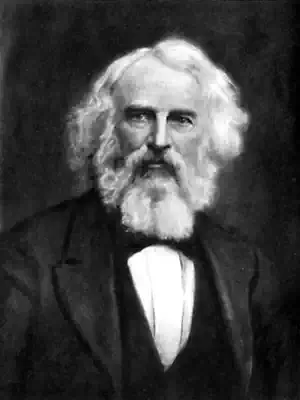
Henry Wadsworth Longfellow
Woods in Winter
Woods in Winter
When winter winds are piercing chill,
And through the hawthorn blows the gale,
With solemn feet I tread the hill,
That overbrows the lonely vale.
O'er the bare upland, and away
Through the long reach of desert woods,
The embracing sunbeams chastely play,
And gladden these deep solitudes.
Where, twisted round the barren oak,
The summer vine in beauty clung,
And summer winds the stillness broke,
The crystal icicle is hung.
Where, from their frozen urns, mute springs
Pour out the river's gradual tide,
Shrilly the skater's iron rings,
And voices fill the woodland side.
Alas! how changed from the fair scene,
When birds sang out their mellow lay,
And winds were soft, and woods were green,
And the song ceased not with the day!
But still wild music is abroad,
Pale, desert woods! within your crowd;
And gathering winds, in hoarse accord,
Amid the vocal reeds pipe loud.
Chill airs and wintry winds! my ear
Has grown familiar with your song;
I hear it in the opening year,
I listen, and it cheers me long.
When winter winds are piercing chill,
And through the hawthorn blows the gale,
With solemn feet I tread the hill,
That overbrows the lonely vale.
O'er the bare upland, and away
Through the long reach of desert woods,
The embracing sunbeams chastely play,
And gladden these deep solitudes.
Where, twisted round the barren oak,
The summer vine in beauty clung,
And summer winds the stillness broke,
The crystal icicle is hung.
Where, from their frozen urns, mute springs
Pour out the river's gradual tide,
Shrilly the skater's iron rings,
And voices fill the woodland side.
Alas! how changed from the fair scene,
When birds sang out their mellow lay,
And winds were soft, and woods were green,
And the song ceased not with the day!
But still wild music is abroad,
Pale, desert woods! within your crowd;
And gathering winds, in hoarse accord,
Amid the vocal reeds pipe loud.
Chill airs and wintry winds! my ear
Has grown familiar with your song;
I hear it in the opening year,
I listen, and it cheers me long.
406
Henry Wadsworth Longfellow
Voices Of The Night : Footsteps of Angels
Voices Of The Night : Footsteps of Angels
When the hours of Day are numbered,
And the voices of the Night
Wake the better soul, that slumbered,
To a holy, calm delight;
Ere the evening lamps are lighted,
And, like phantoms grim and tall,
Shadows from the fitful firelight
Dance upon the parlor wall;
Then the forms of the departed
Enter at the open door;
The beloved, the true-hearted,
Come to visit me once more;
He, the young and strong, who cherished
Noble longings for the strife,
By the roadside fell and perished,
Weary with the march of life!
They, the holy ones and weakly,
Who the cross of suffering bore,
Folded their pale hands so meekly,
Spake with us on earth no more!
And with them the Being Beauteous,
Who unto my youth was given,
More than all things else to love me,
And is now a saint in heaven.
With a slow and noiseless footstep
Comes that messenger divine,
Takes the vacant chair beside me,
Lays her gentle hand in mine.
And she sits and gazes at me
With those deep and tender eyes,
Like the stars, so still and saint-like,
Looking downward from the skies.
Uttered not, yet comprehended,
Is the spirit's voiceless prayer,
Soft rebukes, in blessings ended,
Breathing from her lips of air.
Oh, though oft depressed and lonely,
All my fears are laid aside,
If I but remember only
Such as these have lived and died!
When the hours of Day are numbered,
And the voices of the Night
Wake the better soul, that slumbered,
To a holy, calm delight;
Ere the evening lamps are lighted,
And, like phantoms grim and tall,
Shadows from the fitful firelight
Dance upon the parlor wall;
Then the forms of the departed
Enter at the open door;
The beloved, the true-hearted,
Come to visit me once more;
He, the young and strong, who cherished
Noble longings for the strife,
By the roadside fell and perished,
Weary with the march of life!
They, the holy ones and weakly,
Who the cross of suffering bore,
Folded their pale hands so meekly,
Spake with us on earth no more!
And with them the Being Beauteous,
Who unto my youth was given,
More than all things else to love me,
And is now a saint in heaven.
With a slow and noiseless footstep
Comes that messenger divine,
Takes the vacant chair beside me,
Lays her gentle hand in mine.
And she sits and gazes at me
With those deep and tender eyes,
Like the stars, so still and saint-like,
Looking downward from the skies.
Uttered not, yet comprehended,
Is the spirit's voiceless prayer,
Soft rebukes, in blessings ended,
Breathing from her lips of air.
Oh, though oft depressed and lonely,
All my fears are laid aside,
If I but remember only
Such as these have lived and died!
299
Henry Wadsworth Longfellow
To the River Charles
To the River Charles
River! that in silence windest
Through the meadows, bright and free,
Till at length thy rest thou findest
In the bosom of the sea!
Four long years of mingled feeling,
Half in rest, and half in strife,
I have seen thy waters stealing
Onward, like the stream of life.
Thou hast taught me, Silent River!
Many a lesson, deep and long;
Thou hast been a generous giver;
I can give thee but a song.
Oft in sadness and in illness,
I have watched thy current glide,
Till the beauty of its stillness
Overflowed me, like a tide.
And in better hours and brighter,
When I saw thy waters gleam,
I have felt my heart beat lighter,
And leap onward with thy stream.
Not for this alone I love thee,
Nor because thy waves of blue
From celestial seas above thee
Take their own celestial hue.
Where yon shadowy woodlands hide thee,
And thy waters disappear,
Friends I love have dwelt beside thee,
And have made thy margin dear.
More than this;--thy name reminds me
Of three friends, all true and tried;
And that name, like magic, binds me
Closer, closer to thy side.
Friends my soul with joy remembers!
How like quivering flames they start,
When I fan the living embers
On the hearth-stone of my heart!
'T is for this, thou Silent River!
That my spirit leans to thee;
Thou hast been a generous giver,
Take this idle song from me.
River! that in silence windest
Through the meadows, bright and free,
Till at length thy rest thou findest
In the bosom of the sea!
Four long years of mingled feeling,
Half in rest, and half in strife,
I have seen thy waters stealing
Onward, like the stream of life.
Thou hast taught me, Silent River!
Many a lesson, deep and long;
Thou hast been a generous giver;
I can give thee but a song.
Oft in sadness and in illness,
I have watched thy current glide,
Till the beauty of its stillness
Overflowed me, like a tide.
And in better hours and brighter,
When I saw thy waters gleam,
I have felt my heart beat lighter,
And leap onward with thy stream.
Not for this alone I love thee,
Nor because thy waves of blue
From celestial seas above thee
Take their own celestial hue.
Where yon shadowy woodlands hide thee,
And thy waters disappear,
Friends I love have dwelt beside thee,
And have made thy margin dear.
More than this;--thy name reminds me
Of three friends, all true and tried;
And that name, like magic, binds me
Closer, closer to thy side.
Friends my soul with joy remembers!
How like quivering flames they start,
When I fan the living embers
On the hearth-stone of my heart!
'T is for this, thou Silent River!
That my spirit leans to thee;
Thou hast been a generous giver,
Take this idle song from me.
363
Henry Wadsworth Longfellow
To an Old Danish Song-Book
To an Old Danish Song-Book
Welcome, my old friend,
Welcome to a foreign fireside,
While the sullen gales of autumn
Shake the windows.
The ungrateful world
Has, it seems, dealt harshly with thee,
Since, beneath the skies of Denmark,
First I met thee.
There are marks of age,
There are thumb-marks on thy margin,
Made by hands that clasped thee rudely,
At the alehouse.
Soiled and dull thou art;
Yellow are thy time-worn pages,
As the russet, rain-molested
Leaves of autumn.
Thou art stained with wine
Scattered from hilarious goblets,
As the leaves with the libations
Of Olympus.
Yet dost thou recall
Days departed, half-forgotten,
When in dreamy youth I wandered
By the Baltic,--
When I paused to hear
The old ballad of King Christian
Shouted from suburban taverns
In the twilight.
Thou recallest bards,
Who in solitary chambers,
And with hearts by passion wasted,
Wrote thy pages.
Thou recallest homes
Where thy songs of love and friendship
Made the gloomy Northern winter
Bright as summer.
Once some ancient Scald,
In his bleak, ancestral Iceland,
Chanted staves of these old ballads
To the Vikings.
Once in Elsinore,
At the court of old King Hamlet
Yorick and his boon companions
Sang these ditties.
Once Prince Frederick's Guard
Sang them in their smoky barracks;--
Suddenly the English cannon
Joined the chorus!
Peasants in the field,
Sailors on the roaring ocean,
Students, tradesmen, pale mechanics,
All have sung them.
Thou hast been their friend;
They, alas! have left thee friendless!
Yet at least by one warm fireside
Art thou welcome.
And, as swallows build
In these wide, old-fashioned chimneys,
So thy twittering songs shall nestle
In my bosom,--
Quiet, close, and warm,
Sheltered from all molestation,
And recalling by their voices
Youth and travel.
Welcome, my old friend,
Welcome to a foreign fireside,
While the sullen gales of autumn
Shake the windows.
The ungrateful world
Has, it seems, dealt harshly with thee,
Since, beneath the skies of Denmark,
First I met thee.
There are marks of age,
There are thumb-marks on thy margin,
Made by hands that clasped thee rudely,
At the alehouse.
Soiled and dull thou art;
Yellow are thy time-worn pages,
As the russet, rain-molested
Leaves of autumn.
Thou art stained with wine
Scattered from hilarious goblets,
As the leaves with the libations
Of Olympus.
Yet dost thou recall
Days departed, half-forgotten,
When in dreamy youth I wandered
By the Baltic,--
When I paused to hear
The old ballad of King Christian
Shouted from suburban taverns
In the twilight.
Thou recallest bards,
Who in solitary chambers,
And with hearts by passion wasted,
Wrote thy pages.
Thou recallest homes
Where thy songs of love and friendship
Made the gloomy Northern winter
Bright as summer.
Once some ancient Scald,
In his bleak, ancestral Iceland,
Chanted staves of these old ballads
To the Vikings.
Once in Elsinore,
At the court of old King Hamlet
Yorick and his boon companions
Sang these ditties.
Once Prince Frederick's Guard
Sang them in their smoky barracks;--
Suddenly the English cannon
Joined the chorus!
Peasants in the field,
Sailors on the roaring ocean,
Students, tradesmen, pale mechanics,
All have sung them.
Thou hast been their friend;
They, alas! have left thee friendless!
Yet at least by one warm fireside
Art thou welcome.
And, as swallows build
In these wide, old-fashioned chimneys,
So thy twittering songs shall nestle
In my bosom,--
Quiet, close, and warm,
Sheltered from all molestation,
And recalling by their voices
Youth and travel.
307
Henry Wadsworth Longfellow
The Village Blacksmith
The Village Blacksmith
Under a spreading chestnut tree
The village smithy stands;
The smith, a might man is he,
With large and sinewy hands;
And the muscles of his brawney arms
Are strong as iron bands.
His hair is crisp, and black, and long,
His face is like the tan;
His brow is wet with honest sweat,
He earns what'er he can,
And looks the whole word in the face,
For he owes not any man.
Week in, week out, from morn till night,
You can hear the bellows blow;
You can hear him swing his might sledge,
With measure beat and slow,
Like a sexton ringing the village bell,
When the evening sun is low.
And children coming home from school
Look in the open door;
They love to see the flaming forge,
And hear the bellows roar.
And catch the flaming sparks that fly
Like chaff from a threshing floor.
He goes on Sunday to the church,
And sits among his boys;
He hears the parson pray and preach,
He hears his daughter's voice,
Singing in the choir,
And it makes his heart rejoice.
It sounds to him like his mother's voice,
Singing in Paradise!
He needs must think of her once more,
How in the grave she lies;
And with his hard, rough hands he wipes
A tear out of his eyes.
Toiing, -- rejoicing, -- sorrowing,
Onward in life he goes;
Each morning sees some task begin,
Each evening sees it close;
Something attempted, something done,
Has earned his night's repose.
Thanks, thanks to thee, my worthy friend,
For the lesson thou has taught!
Thus at the flaming forge of life
Our fortunes must be wrought;
Thus on its sounding anvil shaped
Each burning deed and thought.
Under a spreading chestnut tree
The village smithy stands;
The smith, a might man is he,
With large and sinewy hands;
And the muscles of his brawney arms
Are strong as iron bands.
His hair is crisp, and black, and long,
His face is like the tan;
His brow is wet with honest sweat,
He earns what'er he can,
And looks the whole word in the face,
For he owes not any man.
Week in, week out, from morn till night,
You can hear the bellows blow;
You can hear him swing his might sledge,
With measure beat and slow,
Like a sexton ringing the village bell,
When the evening sun is low.
And children coming home from school
Look in the open door;
They love to see the flaming forge,
And hear the bellows roar.
And catch the flaming sparks that fly
Like chaff from a threshing floor.
He goes on Sunday to the church,
And sits among his boys;
He hears the parson pray and preach,
He hears his daughter's voice,
Singing in the choir,
And it makes his heart rejoice.
It sounds to him like his mother's voice,
Singing in Paradise!
He needs must think of her once more,
How in the grave she lies;
And with his hard, rough hands he wipes
A tear out of his eyes.
Toiing, -- rejoicing, -- sorrowing,
Onward in life he goes;
Each morning sees some task begin,
Each evening sees it close;
Something attempted, something done,
Has earned his night's repose.
Thanks, thanks to thee, my worthy friend,
For the lesson thou has taught!
Thus at the flaming forge of life
Our fortunes must be wrought;
Thus on its sounding anvil shaped
Each burning deed and thought.
334
Henry Wadsworth Longfellow
The Song Of Hiawatha XIV: Picture-Writing
The Song Of Hiawatha XIV: Picture-Writing
In those days said Hiawatha,
'Lo! how all things fade and perish!
From the memory of the old men
Pass away the great traditions,
The achievements of the warriors,
The adventures of the hunters,
All the wisdom of the Medas,
All the craft of the Wabenos,
All the marvellous dreams and visions
Of the Jossakeeds, the Prophets!
'Great men die and are forgotten,
Wise men speak; their words of wisdom
Perish in the ears that hear them,
Do not reach the generations
That, as yet unborn, are waiting
In the great, mysterious darkness
Of the speechless days that shall be!
'On the grave-posts of our fathers
Are no signs, no figures painted;
Who are in those graves we know not,
Only know they are our fathers.
Of what kith they are and kindred,
From what old, ancestral Totem,
Be it Eagle, Bear, or Beaver,
They descended, this we know not,
Only know they are our fathers.
'Face to face we speak together,
But we cannot speak when absent,
Cannot send our voices from us
To the friends that dwell afar off;
Cannot send a secret message,
But the bearer learns our secret,
May pervert it, may betray it,
May reveal it unto others.'
Thus said Hiawatha, walking
In the solitary forest,
Pondering, musing in the forest,
On the welfare of his people.
From his pouch he took his colors,
Took his paints of different colors,
On the smooth bark of a birch-tree
Painted many shapes and figures,
Wonderful and mystic figures,
And each figure had a meaning,
Each some word or thought suggested.
Gitche Manito the Mighty,
He, the Master of Life, was painted
As an egg, with points projecting
To the four winds of the heavens.
Everywhere is the Great Spirit,
Was the meaning of this symbol.
Gitche Manito the Mighty,
He the dreadful Spirit of Evil,
As a serpent was depicted,
As Kenabeek, the great serpent.
Very crafty, very cunning,
Is the creeping Spirit of Evil,
Was the meaning of this symbol.
Life and Death he drew as circles,
Life was white, but Death was darkened;
Sun and moon and stars he painted,
Man and beast, and fish and reptile,
Forests, mountains, lakes, and rivers.
For the earth he drew a straight line,
For the sky a bow above it;
White the space between for daytime,
Filled with little stars for night-time;
On the left a point for sunrise,
On the right a point for sunset,
On the top a point for noontide,
And for rain and cloudy weather
Waving lines descending from it.
Footprints pointing towards a wigwam
Were a sign of invitation,
Were a sign of guests assembling;
Bloody hands with palms uplifted
Were a symbol of destruction,
Were a hostile sign and symbol.
All these things did Hiawatha
Show unto his wondering people,
And interpreted their meaning,
And he said: 'Behold, your grave-posts
Have no mark, no sign, nor symbol,
Go and paint them all with figures;
Each one with its household symbol,
With its own ancestral Totem;
So that those who follow after
May distinguish them and know them.'
And they painted on the grave-posts
On the graves yet unforgotten,
Each his own ancestral Totem,
Each the symbol of his household;
Figures of the Bear and Reindeer,
Of the Turtle, Crane, and Beaver,
Each inverted as a token
That the owner was departed,
That the chief who bore the symbol
Lay beneath in dust and ashes.
And the Jossakeeds, the Prophets,
The Wabenos, the Magicians,
And the Medicine-men, the Medas,
Painted upon bark and deer-skin
Figures for the songs they chanted,
For each song a separate symbol,
Figures mystical and awful,
Figures strange and brightly colored;
And each figure had its meaning,
Each some magic song suggested.
The Great Spirit, the Creator,
Flashing light through all the heaven;
The Great Serpent, the Kenabeek,
With his bloody crest erected,
Creeping, looking into heaven;
In the sky the sun, that listens,
And the moon eclipsed and dying;
Owl and eagle, crane and hen-hawk,
And the cormorant, bird of magic;
Headless men, that walk the heavens,
Bodies lying pierced with arrows,
Bloody hands of death uplifted,
Flags on graves, and great war-captains
Grasping both the earth and heaven!
Such as these the shapes they painted
On the birch-bark and the deer-skin;
Songs of war and songs of hunting,
Songs of medicine and of magic,
All were written in these figures,
For each figure had its meaning,
Each its separate song recorded.
Nor forgotten was the Love-Song,
The most subtle of all medicines,
The most potent spell of magic,
Dangerous more than war or hunting!
Thus the Love-Song was recorded,
Symbol and interpretation.
First a human figure standing,
Painted in the brightest scarlet;
`T Is the lover, the musician,
And the meaning is, 'My painting
Makes me powerful over others.'
Then the figure seated, singing,
Playing on a drum of magic,
And the interpretation, 'Listen!
`T Is my voice you hear, my singing!'
Then the same red figure seated
In the shelter of a wigwam,
And the meaning of the symbol,
'I will come and sit beside you
In the mystery of my passion!'
Then two figures, man and woman,
Standing hand in hand together
With their hands so clasped together
That they seemed in one united,
And the words thus represented
Are, 'I see your heart within you,
And your cheeks are red with blushes!'
Next the maiden on an island,
In the centre of an Island;
And the song this shape suggested
Was, 'Though you were at a distance,
Were upon some far-off island,
Such the spell I cast upon you,
Such the magic power of passion,
I could straightway draw you to me!'
Then the figure of the maiden
Sleeping, and the lover near her,
Whispering to her in her slumbers,
Saying, 'Though you were far from me
In the land of Sleep and Silence,
Still the voice of love would reach you!'
And the last of all the figures
Was a heart within a circle,
Drawn within a magic circle;
And the image had this meaning:
'Naked lies your heart before me,
To your naked heart I whisper!'
Thus it was that Hiawatha,
In his wisdom, taught the people
All the mysteries of painting,
All the art of Picture-Writing,
On the smooth bark of the birch-tree,
On the white skin of the reindeer,
On the grave-posts of the village.
In those days said Hiawatha,
'Lo! how all things fade and perish!
From the memory of the old men
Pass away the great traditions,
The achievements of the warriors,
The adventures of the hunters,
All the wisdom of the Medas,
All the craft of the Wabenos,
All the marvellous dreams and visions
Of the Jossakeeds, the Prophets!
'Great men die and are forgotten,
Wise men speak; their words of wisdom
Perish in the ears that hear them,
Do not reach the generations
That, as yet unborn, are waiting
In the great, mysterious darkness
Of the speechless days that shall be!
'On the grave-posts of our fathers
Are no signs, no figures painted;
Who are in those graves we know not,
Only know they are our fathers.
Of what kith they are and kindred,
From what old, ancestral Totem,
Be it Eagle, Bear, or Beaver,
They descended, this we know not,
Only know they are our fathers.
'Face to face we speak together,
But we cannot speak when absent,
Cannot send our voices from us
To the friends that dwell afar off;
Cannot send a secret message,
But the bearer learns our secret,
May pervert it, may betray it,
May reveal it unto others.'
Thus said Hiawatha, walking
In the solitary forest,
Pondering, musing in the forest,
On the welfare of his people.
From his pouch he took his colors,
Took his paints of different colors,
On the smooth bark of a birch-tree
Painted many shapes and figures,
Wonderful and mystic figures,
And each figure had a meaning,
Each some word or thought suggested.
Gitche Manito the Mighty,
He, the Master of Life, was painted
As an egg, with points projecting
To the four winds of the heavens.
Everywhere is the Great Spirit,
Was the meaning of this symbol.
Gitche Manito the Mighty,
He the dreadful Spirit of Evil,
As a serpent was depicted,
As Kenabeek, the great serpent.
Very crafty, very cunning,
Is the creeping Spirit of Evil,
Was the meaning of this symbol.
Life and Death he drew as circles,
Life was white, but Death was darkened;
Sun and moon and stars he painted,
Man and beast, and fish and reptile,
Forests, mountains, lakes, and rivers.
For the earth he drew a straight line,
For the sky a bow above it;
White the space between for daytime,
Filled with little stars for night-time;
On the left a point for sunrise,
On the right a point for sunset,
On the top a point for noontide,
And for rain and cloudy weather
Waving lines descending from it.
Footprints pointing towards a wigwam
Were a sign of invitation,
Were a sign of guests assembling;
Bloody hands with palms uplifted
Were a symbol of destruction,
Were a hostile sign and symbol.
All these things did Hiawatha
Show unto his wondering people,
And interpreted their meaning,
And he said: 'Behold, your grave-posts
Have no mark, no sign, nor symbol,
Go and paint them all with figures;
Each one with its household symbol,
With its own ancestral Totem;
So that those who follow after
May distinguish them and know them.'
And they painted on the grave-posts
On the graves yet unforgotten,
Each his own ancestral Totem,
Each the symbol of his household;
Figures of the Bear and Reindeer,
Of the Turtle, Crane, and Beaver,
Each inverted as a token
That the owner was departed,
That the chief who bore the symbol
Lay beneath in dust and ashes.
And the Jossakeeds, the Prophets,
The Wabenos, the Magicians,
And the Medicine-men, the Medas,
Painted upon bark and deer-skin
Figures for the songs they chanted,
For each song a separate symbol,
Figures mystical and awful,
Figures strange and brightly colored;
And each figure had its meaning,
Each some magic song suggested.
The Great Spirit, the Creator,
Flashing light through all the heaven;
The Great Serpent, the Kenabeek,
With his bloody crest erected,
Creeping, looking into heaven;
In the sky the sun, that listens,
And the moon eclipsed and dying;
Owl and eagle, crane and hen-hawk,
And the cormorant, bird of magic;
Headless men, that walk the heavens,
Bodies lying pierced with arrows,
Bloody hands of death uplifted,
Flags on graves, and great war-captains
Grasping both the earth and heaven!
Such as these the shapes they painted
On the birch-bark and the deer-skin;
Songs of war and songs of hunting,
Songs of medicine and of magic,
All were written in these figures,
For each figure had its meaning,
Each its separate song recorded.
Nor forgotten was the Love-Song,
The most subtle of all medicines,
The most potent spell of magic,
Dangerous more than war or hunting!
Thus the Love-Song was recorded,
Symbol and interpretation.
First a human figure standing,
Painted in the brightest scarlet;
`T Is the lover, the musician,
And the meaning is, 'My painting
Makes me powerful over others.'
Then the figure seated, singing,
Playing on a drum of magic,
And the interpretation, 'Listen!
`T Is my voice you hear, my singing!'
Then the same red figure seated
In the shelter of a wigwam,
And the meaning of the symbol,
'I will come and sit beside you
In the mystery of my passion!'
Then two figures, man and woman,
Standing hand in hand together
With their hands so clasped together
That they seemed in one united,
And the words thus represented
Are, 'I see your heart within you,
And your cheeks are red with blushes!'
Next the maiden on an island,
In the centre of an Island;
And the song this shape suggested
Was, 'Though you were at a distance,
Were upon some far-off island,
Such the spell I cast upon you,
Such the magic power of passion,
I could straightway draw you to me!'
Then the figure of the maiden
Sleeping, and the lover near her,
Whispering to her in her slumbers,
Saying, 'Though you were far from me
In the land of Sleep and Silence,
Still the voice of love would reach you!'
And the last of all the figures
Was a heart within a circle,
Drawn within a magic circle;
And the image had this meaning:
'Naked lies your heart before me,
To your naked heart I whisper!'
Thus it was that Hiawatha,
In his wisdom, taught the people
All the mysteries of painting,
All the art of Picture-Writing,
On the smooth bark of the birch-tree,
On the white skin of the reindeer,
On the grave-posts of the village.
294
Henry Wadsworth Longfellow
The Seaside And The Fireside : Dedication
The Seaside And The Fireside : Dedication
As one who, walking in the twilight gloom,
Hears round about him voices as it darkens,
And seeing not the forms from which they come,
Pauses from time to time, and turns and hearkens;
So walking here in twilight, O my friends!
I hear your voices, softened by the distance,
And pause, and turn to listen, as each sends
His words of friendship, comfort, and assistance.
If any thought of mine, or sung or told,
Has ever given delight or consolation,
Ye have repaid me back a thousand-fold,
By every friendly sign and salutation.
Thanks for the sympathies that ye have shown!
Thanks for each kindly word, each silent token,
That teaches me, when seeming most alone,
Friends are around us, though no word be spoken.
Kind messages, that pass from land to land;
Kind letters, that betray the heart's deep history,
In which we feel the pressure of a hand,--
One touch of fire,--and all the rest is mystery!
The pleasant books, that silently among
Our household treasures take familiar places,
And are to us as if a living tongue
Spice from the printed leaves or pictured faces!
Perhaps on earth I never shall behold,
With eye of sense, your outward form and semblance;
Therefore to me ye never will grow old,
But live forever young in my remembrance!
Never grow old, nor change, nor pass away!
Your gentle voices will flow on forever,
When life grows bare and tarnished with decay,
As through a leafless landscape flows a river.
Not chance of birth or place has made us friends,
Being oftentimes of different tongues and nations,
But the endeavor for the selfsame ends,
With the same hopes, and fears, and aspirations.
Therefore I hope to join your seaside walk,
Saddened, and mostly silent, with emotion;
Not interrupting with intrusive talk
The grand, majestic symphonies of ocean.
Therefore I hope, as no unwelcome guest,
At your warm fireside, when the lamps are lighted,
To have my place reserved among the rest,
Nor stand as one unsought and uninvited!
As one who, walking in the twilight gloom,
Hears round about him voices as it darkens,
And seeing not the forms from which they come,
Pauses from time to time, and turns and hearkens;
So walking here in twilight, O my friends!
I hear your voices, softened by the distance,
And pause, and turn to listen, as each sends
His words of friendship, comfort, and assistance.
If any thought of mine, or sung or told,
Has ever given delight or consolation,
Ye have repaid me back a thousand-fold,
By every friendly sign and salutation.
Thanks for the sympathies that ye have shown!
Thanks for each kindly word, each silent token,
That teaches me, when seeming most alone,
Friends are around us, though no word be spoken.
Kind messages, that pass from land to land;
Kind letters, that betray the heart's deep history,
In which we feel the pressure of a hand,--
One touch of fire,--and all the rest is mystery!
The pleasant books, that silently among
Our household treasures take familiar places,
And are to us as if a living tongue
Spice from the printed leaves or pictured faces!
Perhaps on earth I never shall behold,
With eye of sense, your outward form and semblance;
Therefore to me ye never will grow old,
But live forever young in my remembrance!
Never grow old, nor change, nor pass away!
Your gentle voices will flow on forever,
When life grows bare and tarnished with decay,
As through a leafless landscape flows a river.
Not chance of birth or place has made us friends,
Being oftentimes of different tongues and nations,
But the endeavor for the selfsame ends,
With the same hopes, and fears, and aspirations.
Therefore I hope to join your seaside walk,
Saddened, and mostly silent, with emotion;
Not interrupting with intrusive talk
The grand, majestic symphonies of ocean.
Therefore I hope, as no unwelcome guest,
At your warm fireside, when the lamps are lighted,
To have my place reserved among the rest,
Nor stand as one unsought and uninvited!
347
Henry Wadsworth Longfellow
The Phantom Ship. (Birds Of Passage. Flight The First)
The Phantom Ship. (Birds Of Passage. Flight The First)
In Mather's Magnalia Christi,
Of the old colonial time,
May be found in prose the legend
That is here set down in rhyme.
A ship sailed from New Haven,
And the keen and frosty airs,
That filled her sails at parting,
Were heavy with good men's prayers.
'O Lord! if it be thy pleasure'--
Thus prayed the old divine-'
To bury our friends in the ocean,
Take them, for they are thine!'
But Master Lamberton muttered,
And under his breath said he,
'This ship is so crank and walty
I fear our grave she will be!'
And the ships that came from England,
When the winter months were gone,
Brought no tidings of this vessel
Nor of Master Lamberton.
This put the people to praying
That the Lord would let them hear
What in his greater wisdom
He had done with friends so dear.
And at last their prayers were answered:--
It was in the month of June,
An hour before the sunset
Of a windy afternoon,
When, steadily steering landward,
A ship was seen below,
And they knew it was Lamberton, Master,
Who sailed so long ago.
On she came, with a cloud of canvas,
Right against the wind that blew,
Until the eye could distinguish
The faces of the crew.
Then fell her straining topmasts,
Hanging tangled in the shrouds,
And her sails were loosened and lifted,
And blown away like clouds.
And the masts, with all their rigging,
Fell slowly, one by one,
And the hulk dilated and vanished,
As a sea-mist in the sun!
And the people who saw this marvel
Each said unto his friend,
That this was the mould of their vessel,
And thus her tragic end.
And the pastor of the village
Gave thanks to God in prayer,
That, to quiet their troubled spirits,
He had sent this Ship of Air.
In Mather's Magnalia Christi,
Of the old colonial time,
May be found in prose the legend
That is here set down in rhyme.
A ship sailed from New Haven,
And the keen and frosty airs,
That filled her sails at parting,
Were heavy with good men's prayers.
'O Lord! if it be thy pleasure'--
Thus prayed the old divine-'
To bury our friends in the ocean,
Take them, for they are thine!'
But Master Lamberton muttered,
And under his breath said he,
'This ship is so crank and walty
I fear our grave she will be!'
And the ships that came from England,
When the winter months were gone,
Brought no tidings of this vessel
Nor of Master Lamberton.
This put the people to praying
That the Lord would let them hear
What in his greater wisdom
He had done with friends so dear.
And at last their prayers were answered:--
It was in the month of June,
An hour before the sunset
Of a windy afternoon,
When, steadily steering landward,
A ship was seen below,
And they knew it was Lamberton, Master,
Who sailed so long ago.
On she came, with a cloud of canvas,
Right against the wind that blew,
Until the eye could distinguish
The faces of the crew.
Then fell her straining topmasts,
Hanging tangled in the shrouds,
And her sails were loosened and lifted,
And blown away like clouds.
And the masts, with all their rigging,
Fell slowly, one by one,
And the hulk dilated and vanished,
As a sea-mist in the sun!
And the people who saw this marvel
Each said unto his friend,
That this was the mould of their vessel,
And thus her tragic end.
And the pastor of the village
Gave thanks to God in prayer,
That, to quiet their troubled spirits,
He had sent this Ship of Air.
407
Henry Wadsworth Longfellow
The Old Clock on the Stairs
The Old Clock on the Stairs
Somewhat back from the village street
Stands the old-fashioned country-seat.
Across its antique portico
Tall poplar-trees their shadows throw;
And from its station in the hall
An ancient timepiece says to all, -
"Forever -- never!
Never -- forever!"
Half-way up the stairs it stands,
And points and beckons with its hands
From its case of massive oak,
Like a monk, who, under his cloak,
Crosses himself, and sighs, alas!
With sorrowful voice to all who pass, -
"Forever -- never!
Never -- forever!"
By day its voice is low and light;
But in the silent dead of night,
Distinct as a passing footstep's fall,
It echoes along the vacant hall,
Along the ceiling, along the floor,
And seems to say, at each chamber-door, -
"Forever -- never!
Never -- forever!"
Through days of sorrow and of mirth,
Through days of death and days of birth,
Through every swift vicissitude
Of changeful time, unchanged it has stood,
And as if, like God, it all things saw,
It calmly repeats those words of awe, -
"Forever -- never!
Never -- forever!"
In that mansion used to be
Free-hearted Hospitality;
His great fires up the chimney roared;
The stranger feasted at his board;
But, like the skeleton at the feast,
That warning timepiece never ceased, -
"Forever -- never!
Never -- forever!"
There groups of merry children played,
There youths and maidens dreaming strayed;
O precious hours! O golden prime,
And affluence of love and time!
Even as a miser counts his gold,
Those hours the ancient timepiece told, -
"Forever -- never!
Never -- forever!"
From that chamber, clothed in white,
The bride came forth on her wedding night;
There, in that silent room below,
The dead lay in his shroud of snow;
And in the hush that followed the prayer,
Was heard the old clock on the stair, -
"Forever -- never!
Never -- forever!"
All are scattered now and fled,
Some are married, some are dead;
And when I ask, with throbs of pain,
"Ah! when shall they all meet again?"
As in the days long since gone by,
The ancient timepiece makes reply, -
"Forever -- never!
Never -- forever!"
Never here, forever there,
Where all parting, pain, and care,
And death, and time shall disappear, -Forever
there, but never here!
The horologe of Eternity
Sayeth this incessantly, -
"Forever -- never!
Never -- forever!"
Somewhat back from the village street
Stands the old-fashioned country-seat.
Across its antique portico
Tall poplar-trees their shadows throw;
And from its station in the hall
An ancient timepiece says to all, -
"Forever -- never!
Never -- forever!"
Half-way up the stairs it stands,
And points and beckons with its hands
From its case of massive oak,
Like a monk, who, under his cloak,
Crosses himself, and sighs, alas!
With sorrowful voice to all who pass, -
"Forever -- never!
Never -- forever!"
By day its voice is low and light;
But in the silent dead of night,
Distinct as a passing footstep's fall,
It echoes along the vacant hall,
Along the ceiling, along the floor,
And seems to say, at each chamber-door, -
"Forever -- never!
Never -- forever!"
Through days of sorrow and of mirth,
Through days of death and days of birth,
Through every swift vicissitude
Of changeful time, unchanged it has stood,
And as if, like God, it all things saw,
It calmly repeats those words of awe, -
"Forever -- never!
Never -- forever!"
In that mansion used to be
Free-hearted Hospitality;
His great fires up the chimney roared;
The stranger feasted at his board;
But, like the skeleton at the feast,
That warning timepiece never ceased, -
"Forever -- never!
Never -- forever!"
There groups of merry children played,
There youths and maidens dreaming strayed;
O precious hours! O golden prime,
And affluence of love and time!
Even as a miser counts his gold,
Those hours the ancient timepiece told, -
"Forever -- never!
Never -- forever!"
From that chamber, clothed in white,
The bride came forth on her wedding night;
There, in that silent room below,
The dead lay in his shroud of snow;
And in the hush that followed the prayer,
Was heard the old clock on the stair, -
"Forever -- never!
Never -- forever!"
All are scattered now and fled,
Some are married, some are dead;
And when I ask, with throbs of pain,
"Ah! when shall they all meet again?"
As in the days long since gone by,
The ancient timepiece makes reply, -
"Forever -- never!
Never -- forever!"
Never here, forever there,
Where all parting, pain, and care,
And death, and time shall disappear, -Forever
there, but never here!
The horologe of Eternity
Sayeth this incessantly, -
"Forever -- never!
Never -- forever!"
359
Henry Wadsworth Longfellow
The Haunted Chamber. (Birds Of Passage. Flight The Third)
The Haunted Chamber. (Birds Of Passage. Flight The Third)
Each heart has its haunted chamber,
Where the silent moonlight falls!
On the floor are mysterious footsteps,
There are whispers along the walls!
And mine at times is haunted
By phantoms of the Past
As motionless as shadows
By the silent moonlight cast.
A form sits by the window,
That is not seen by day,
For as soon as the dawn approaches
It vanishes away.
It sits there in the moonlight
Itself as pale and still,
And points with its airy finger
Across the window-sill.
Without before the window,
There stands a gloomy pine,
Whose boughs wave upward and downward
As wave these thoughts of mine.
And underneath its branches
Is the grave of a little child,
Who died upon life's threshold,
And never wept nor smiled.
What are ye, O pallid phantoms!
That haunt my troubled brain?
That vanish when day approaches,
And at night return again?
What are ye, O pallid phantoms!
But the statues without breath,
That stand on the bridge overarching
The silent river of death?
Each heart has its haunted chamber,
Where the silent moonlight falls!
On the floor are mysterious footsteps,
There are whispers along the walls!
And mine at times is haunted
By phantoms of the Past
As motionless as shadows
By the silent moonlight cast.
A form sits by the window,
That is not seen by day,
For as soon as the dawn approaches
It vanishes away.
It sits there in the moonlight
Itself as pale and still,
And points with its airy finger
Across the window-sill.
Without before the window,
There stands a gloomy pine,
Whose boughs wave upward and downward
As wave these thoughts of mine.
And underneath its branches
Is the grave of a little child,
Who died upon life's threshold,
And never wept nor smiled.
What are ye, O pallid phantoms!
That haunt my troubled brain?
That vanish when day approaches,
And at night return again?
What are ye, O pallid phantoms!
But the statues without breath,
That stand on the bridge overarching
The silent river of death?
272
Henry Wadsworth Longfellow
The Bells Of San Blas
The Bells Of San Blas
What say the Bells of San Blas
To the ships that southward pass
From the harbor of Mazatlan?
To them it is nothing more
Than the sound of surf on the shore,--
Nothing more to master or man.
But to me, a dreamer of dreams,
To whom what is and what seems
Are often one and the same,--
The Bells of San Blas to me
Have a strange, wild melody,
And are something more than a name.
For bells are the voice of the church;
They have tones that touch and search
The hearts of young and old;
One sound to all, yet each
Lends a meaning to their speech,
And the meaning is manifold.
They are a voice of the Past,
Of an age that is fading fast,
Of a power austere and grand,
When the flag of Spain unfurled
Its folds o'er this western world,
And the Priest was lord of the land.
The chapel that once looked down
On the little seaport town
Has crumbled into the dust;
And on oaken beams below
The bells swing to and fro,
And are green with mould and rust.
'Is, then, the old faith dead,'
They say, 'and in its stead
Is some new faith proclaimed,
That we are forced to remain
Naked to sun and rain,
Unsheltered and ashamed?
'Once, in our tower aloof,
We rang over wall and roof
Our warnings and our complaints;
And round about us there
The white doves filled the air,
Like the white souls of the saints.
'The saints! Ah, have they grown
Forgetful of their own?
Are they asleep, or dead,
That open to the sky
Their ruined Missions lie,
No longer tenanted?
'Oh, bring us back once more
The vanished days of yore,
When the world with faith was filled;
Bring back the fervid zeal,
The hearts of fire and steel,
The hands that believe and build.
'Then from our tower again
We will send over land and main
Our voices of command,
Like exiled kings who return
To their thrones, and the people learn
That the Priest is lord of the land!'
O Bells of San Blas in vain
Ye call back the Past again;
The Past is deaf to your prayer!
Out of the shadows of night
The world rolls into light;
It is daybreak everywhere.
What say the Bells of San Blas
To the ships that southward pass
From the harbor of Mazatlan?
To them it is nothing more
Than the sound of surf on the shore,--
Nothing more to master or man.
But to me, a dreamer of dreams,
To whom what is and what seems
Are often one and the same,--
The Bells of San Blas to me
Have a strange, wild melody,
And are something more than a name.
For bells are the voice of the church;
They have tones that touch and search
The hearts of young and old;
One sound to all, yet each
Lends a meaning to their speech,
And the meaning is manifold.
They are a voice of the Past,
Of an age that is fading fast,
Of a power austere and grand,
When the flag of Spain unfurled
Its folds o'er this western world,
And the Priest was lord of the land.
The chapel that once looked down
On the little seaport town
Has crumbled into the dust;
And on oaken beams below
The bells swing to and fro,
And are green with mould and rust.
'Is, then, the old faith dead,'
They say, 'and in its stead
Is some new faith proclaimed,
That we are forced to remain
Naked to sun and rain,
Unsheltered and ashamed?
'Once, in our tower aloof,
We rang over wall and roof
Our warnings and our complaints;
And round about us there
The white doves filled the air,
Like the white souls of the saints.
'The saints! Ah, have they grown
Forgetful of their own?
Are they asleep, or dead,
That open to the sky
Their ruined Missions lie,
No longer tenanted?
'Oh, bring us back once more
The vanished days of yore,
When the world with faith was filled;
Bring back the fervid zeal,
The hearts of fire and steel,
The hands that believe and build.
'Then from our tower again
We will send over land and main
Our voices of command,
Like exiled kings who return
To their thrones, and the people learn
That the Priest is lord of the land!'
O Bells of San Blas in vain
Ye call back the Past again;
The Past is deaf to your prayer!
Out of the shadows of night
The world rolls into light;
It is daybreak everywhere.
319
Henry Wadsworth Longfellow
Tales Of A Wayside Inn : Part 3. Prelude
Tales Of A Wayside Inn : Part 3. Prelude
The evening came; the golden vane
A moment in the sunset glanced,
Then darkened, and then gleamed again,
As from the east the moon advanced
And touched it with a softer light;
While underneath, with flowing mane,
Upon the sign the Red Horse pranced,
And galloped forth into the night.
But brighter than the afternoon
That followed the dark day of rain,
And brighter than the golden vane
That glistened in the rising moon,
Within the ruddy fire-light gleamed;
And every separate window-pane,
Backed by the outer darkness, showed
A mirror, where the flamelets gleamed
And flickered to and fro, and seemed
A bonfire lighted in the road.
Amid the hospitable glow,
Like an old actor on the stage,
With the uncertain voice of age,
The singing chimney chanted low
The homely songs of long ago.
The voice that Ossian heard of yore,
When midnight winds were in his hall;
A ghostly and appealing call,
A sound of days that are no more!
And dark as Ossian sat the Jew,
And listened to the sound, and knew
The passing of the airy hosts,
The gray and misty cloud of ghosts
In their interminable flight;
And listening muttered in his beard,
With accent indistinct and weird,
'Who are ye, children of the Night?'
Beholding his mysterious face,
'Tell me,' the gay Sicilian said,
'Why was it that in breaking bread
At supper, you bent down your head
And, musing, paused a little space,
As one who says a silent grace?'
The Jew replied, with solemn air,
'I said the Manichaean's prayer.
It was his faith,--perhaps is mine,--
That life in all its forms is one,
And that its secret conduits run
Unseen, but in unbroken line,
From the great fountain-head divine
Through man and beast, through grain and grass.
Howe'er we struggle, strive, and cry,
From death there can be no escape,
And no escape from life, alas
Because we cannot die, but pass
From one into another shape:
It is but into life we die.
'Therefore the Manichaean said
This simple prayer on breaking bread,
Lest he with hasty hand or knife
Might wound the incarcerated life,
The soul in things that we call dead:
'I did not reap thee, did not bind thee,
I did not thrash thee, did not grind thee,
Nor did I in the oven bake thee!
It was not I, it was another
Did these things unto thee, O brother;
I only have thee, hold thee, break thee!''
'That birds have souls I can concede,'
The Poet cried, with glowing cheeks;
'The flocks that from their beds of reed
Uprising north or southward fly,
And flying write upon the sky
The biforked letter of the Greeks,
As hath been said by Rucellai;
All birds that sing or chirp or cry,
Even those migratory bands,
The minor poets of the air,
The plover, peep, and sanderling,
That hardly can be said to sing,
But pipe along the barren sands,--
All these have souls akin to ours;
So hath the lovely race of flowers:
Thus much I grant, but nothing more.
The rusty hinges of a door
Are not alive because they creak;
This chimney, with its dreary roar,
These rattling windows, do not speak!'
'To me they speak,' the Jew replied;
'And in the sounds that sink and soar,
I hear the voices of a tide
That breaks upon an unknown shore!'
Here the Sicilian interfered:
'That was your dream, then, as you dozed
A moment since, with eyes half-closed,
And murmured something in your beard.'
The Hebrew smiled, and answered, 'Nay;
Not that, but something very near;
Like, and yet not the same, may seem
The vision of my waking dream;
Before it wholly dies away,
Listen to me, and you shall hear.'
The evening came; the golden vane
A moment in the sunset glanced,
Then darkened, and then gleamed again,
As from the east the moon advanced
And touched it with a softer light;
While underneath, with flowing mane,
Upon the sign the Red Horse pranced,
And galloped forth into the night.
But brighter than the afternoon
That followed the dark day of rain,
And brighter than the golden vane
That glistened in the rising moon,
Within the ruddy fire-light gleamed;
And every separate window-pane,
Backed by the outer darkness, showed
A mirror, where the flamelets gleamed
And flickered to and fro, and seemed
A bonfire lighted in the road.
Amid the hospitable glow,
Like an old actor on the stage,
With the uncertain voice of age,
The singing chimney chanted low
The homely songs of long ago.
The voice that Ossian heard of yore,
When midnight winds were in his hall;
A ghostly and appealing call,
A sound of days that are no more!
And dark as Ossian sat the Jew,
And listened to the sound, and knew
The passing of the airy hosts,
The gray and misty cloud of ghosts
In their interminable flight;
And listening muttered in his beard,
With accent indistinct and weird,
'Who are ye, children of the Night?'
Beholding his mysterious face,
'Tell me,' the gay Sicilian said,
'Why was it that in breaking bread
At supper, you bent down your head
And, musing, paused a little space,
As one who says a silent grace?'
The Jew replied, with solemn air,
'I said the Manichaean's prayer.
It was his faith,--perhaps is mine,--
That life in all its forms is one,
And that its secret conduits run
Unseen, but in unbroken line,
From the great fountain-head divine
Through man and beast, through grain and grass.
Howe'er we struggle, strive, and cry,
From death there can be no escape,
And no escape from life, alas
Because we cannot die, but pass
From one into another shape:
It is but into life we die.
'Therefore the Manichaean said
This simple prayer on breaking bread,
Lest he with hasty hand or knife
Might wound the incarcerated life,
The soul in things that we call dead:
'I did not reap thee, did not bind thee,
I did not thrash thee, did not grind thee,
Nor did I in the oven bake thee!
It was not I, it was another
Did these things unto thee, O brother;
I only have thee, hold thee, break thee!''
'That birds have souls I can concede,'
The Poet cried, with glowing cheeks;
'The flocks that from their beds of reed
Uprising north or southward fly,
And flying write upon the sky
The biforked letter of the Greeks,
As hath been said by Rucellai;
All birds that sing or chirp or cry,
Even those migratory bands,
The minor poets of the air,
The plover, peep, and sanderling,
That hardly can be said to sing,
But pipe along the barren sands,--
All these have souls akin to ours;
So hath the lovely race of flowers:
Thus much I grant, but nothing more.
The rusty hinges of a door
Are not alive because they creak;
This chimney, with its dreary roar,
These rattling windows, do not speak!'
'To me they speak,' the Jew replied;
'And in the sounds that sink and soar,
I hear the voices of a tide
That breaks upon an unknown shore!'
Here the Sicilian interfered:
'That was your dream, then, as you dozed
A moment since, with eyes half-closed,
And murmured something in your beard.'
The Hebrew smiled, and answered, 'Nay;
Not that, but something very near;
Like, and yet not the same, may seem
The vision of my waking dream;
Before it wholly dies away,
Listen to me, and you shall hear.'
227
Henry Wadsworth Longfellow
Tales Of A Wayside Inn : Part 3. Interlude VI.
Tales Of A Wayside Inn : Part 3. Interlude VI.
'Now that is after my own heart,'
The Poet cried; 'one understands
Your swarthy hero Scanderbeg,
Gauntlet on hand and boot on leg,
And skilled in every warlike art,
Riding through his Albanian lands,
And following the auspicious star
That shone for him o'er Ak-Hissar.'
The Theologian added here
His word of praise not less sincere,
Although he ended with a jibe;
'The hero of romance and song
Was born,' he said, 'to right the wrong;
And I approve; but all the same
That bit of treason with the Scribe
Adds nothing to your hero's fame.'
The Student praised the good old times,
And liked the canter of the rhymes,
That had a hoofbeat in their sound;
But longed some further word to hear
Of the old chronicler Ben Meir,
And where his volume might he found.
The tall Musician walked the room
With folded arms and gleaming eyes,
As if he saw the Vikings rise,
Gigantic shadows in the gloom;
And much he talked of their emprise
And meteors seen in Northern skies,
And Heimdal's horn, and day of doom.
But the Sicilian laughed again;
'This is the time to laugh,' he said,
For the whole story he well knew
Was an invention of the Jew,
Spun from the cobwebs in his brain,
And of the same bright scarlet thread
As was the Tale of Kambalu.
Only the Landlord spake no word;
'T was doubtful whether he had heard
The tale at all, so full of care
Was he of his impending fate,
That, like the sword of Damocles,
Above his head hung blank and bare,
Suspended by a single hair,
So that he could not sit at ease,
But sighed and looked disconsolate,
And shifted restless in his chair,
Revolving how he might evade
The blow of the descending blade.
The Student came to his relief
By saying in his easy way
To the Musician: 'Calm your grief,
My fair Apollo of the North,
Balder the Beautiful and so forth;
Although your magic lyre or lute
With broken strings is lying mute,
Still you can tell some doleful tale
Of shipwreck in a midnight gale,
Or something of the kind to suit
The mood that we are in to-night
For what is marvellous and strange;
So give your nimble fancy range,
And we will follow in its flight.'
But the Musician shook his head;
'No tale I tell to-night,' he said,
'While my poor instrument lies there,
Even as a child with vacant stare
Lies in its little coffin dead.'
Yet, being urged, he said at last:
'There comes to me out of the Past
A voice, whose tones are sweet and wild,
Singing a song almost divine,
And with a tear in every line;
An ancient ballad, that my nurse
Sang to me when I was a child,
In accents tender as the verse;
And sometimes wept, and sometimes smiled
While singing it, to see arise
The look of wonder in my eyes,
And feel my heart with terror beat.
This simple ballad I retain
Clearly imprinted on my brain,
And as a tale will now repeat.'
'Now that is after my own heart,'
The Poet cried; 'one understands
Your swarthy hero Scanderbeg,
Gauntlet on hand and boot on leg,
And skilled in every warlike art,
Riding through his Albanian lands,
And following the auspicious star
That shone for him o'er Ak-Hissar.'
The Theologian added here
His word of praise not less sincere,
Although he ended with a jibe;
'The hero of romance and song
Was born,' he said, 'to right the wrong;
And I approve; but all the same
That bit of treason with the Scribe
Adds nothing to your hero's fame.'
The Student praised the good old times,
And liked the canter of the rhymes,
That had a hoofbeat in their sound;
But longed some further word to hear
Of the old chronicler Ben Meir,
And where his volume might he found.
The tall Musician walked the room
With folded arms and gleaming eyes,
As if he saw the Vikings rise,
Gigantic shadows in the gloom;
And much he talked of their emprise
And meteors seen in Northern skies,
And Heimdal's horn, and day of doom.
But the Sicilian laughed again;
'This is the time to laugh,' he said,
For the whole story he well knew
Was an invention of the Jew,
Spun from the cobwebs in his brain,
And of the same bright scarlet thread
As was the Tale of Kambalu.
Only the Landlord spake no word;
'T was doubtful whether he had heard
The tale at all, so full of care
Was he of his impending fate,
That, like the sword of Damocles,
Above his head hung blank and bare,
Suspended by a single hair,
So that he could not sit at ease,
But sighed and looked disconsolate,
And shifted restless in his chair,
Revolving how he might evade
The blow of the descending blade.
The Student came to his relief
By saying in his easy way
To the Musician: 'Calm your grief,
My fair Apollo of the North,
Balder the Beautiful and so forth;
Although your magic lyre or lute
With broken strings is lying mute,
Still you can tell some doleful tale
Of shipwreck in a midnight gale,
Or something of the kind to suit
The mood that we are in to-night
For what is marvellous and strange;
So give your nimble fancy range,
And we will follow in its flight.'
But the Musician shook his head;
'No tale I tell to-night,' he said,
'While my poor instrument lies there,
Even as a child with vacant stare
Lies in its little coffin dead.'
Yet, being urged, he said at last:
'There comes to me out of the Past
A voice, whose tones are sweet and wild,
Singing a song almost divine,
And with a tear in every line;
An ancient ballad, that my nurse
Sang to me when I was a child,
In accents tender as the verse;
And sometimes wept, and sometimes smiled
While singing it, to see arise
The look of wonder in my eyes,
And feel my heart with terror beat.
This simple ballad I retain
Clearly imprinted on my brain,
And as a tale will now repeat.'
281
Henry Wadsworth Longfellow
Tales Of A Wayside Inn : Part 3. Finale
Tales Of A Wayside Inn : Part 3. Finale
These are the tales those merry guests
Told to each other, well or ill;
Like summer birds that lift their crests
Above the borders of their nests
And twitter, and again are still.
These are the tales, or new or old,
In idle moments idly told;
Flowers of the field with petals thin,
Lilies that neither toil nor spin,
And tufts of wayside weeds and gorse
Hung in the parlor of the inn
Beneath the sign of the Red Horse.
And still, reluctant to retire,
The friends sat talking by the fire
And watched the smouldering embers burn
To ashes, and flash up again
Into a momentary glow,
Lingering like them when forced to go,
And going when they would remain;
For on the morrow they must turn
Their faces homeward, and the pain
Of parting touched with its unrest
A tender nerve in every breast.
But sleep at last the victory won;
They must be stirring with the sun,
And drowsily good night they said,
And went still gossiping to bed,
And left the parlor wrapped in gloom,
The only live thing in the room
Was the old clock, that in its pace
Kept time with the revolving spheres
And constellations in their flight,
And struck with its uplifted mace
The dark, unconscious hours of night,
To senseless and unlistening ears.
Uprose the sun; and every guest,
Uprisen, was soon equipped and dressed
For journeying home and city-ward;
The old stage-coach was at the door,
With horses harnessed, long before
The sunshine reached the withered sward
Beneath the oaks, whose branches hoar
Murmured: ?Farewell forevermore.?
?Farewell!? the portly Landlord cried;
?Farewell!? the parting guests replied,
But little thought that nevermore
Their feet would pass that thershold o?er;
That nevermore together there
Would they assemble, free from care,
To hear the oaks? mysterious roar,
And breathe the wholesome country air.
Where are they now? What lands and skies
Paint pictures in their friendly eyes?
What hope deludes, what promise cheers,
What pleasant voices fill their ears?
Two are beyond the salt sea waves,
And three already in their graves.
Perchance the living still may look
Into the pages of this book,
And see the days of long ago
Floating and fleeting to and fro,
As in the well-remembered brook
They saw the inverted landscape gleam,
And their own faces like a dream
Look up upon them from below.
These are the tales those merry guests
Told to each other, well or ill;
Like summer birds that lift their crests
Above the borders of their nests
And twitter, and again are still.
These are the tales, or new or old,
In idle moments idly told;
Flowers of the field with petals thin,
Lilies that neither toil nor spin,
And tufts of wayside weeds and gorse
Hung in the parlor of the inn
Beneath the sign of the Red Horse.
And still, reluctant to retire,
The friends sat talking by the fire
And watched the smouldering embers burn
To ashes, and flash up again
Into a momentary glow,
Lingering like them when forced to go,
And going when they would remain;
For on the morrow they must turn
Their faces homeward, and the pain
Of parting touched with its unrest
A tender nerve in every breast.
But sleep at last the victory won;
They must be stirring with the sun,
And drowsily good night they said,
And went still gossiping to bed,
And left the parlor wrapped in gloom,
The only live thing in the room
Was the old clock, that in its pace
Kept time with the revolving spheres
And constellations in their flight,
And struck with its uplifted mace
The dark, unconscious hours of night,
To senseless and unlistening ears.
Uprose the sun; and every guest,
Uprisen, was soon equipped and dressed
For journeying home and city-ward;
The old stage-coach was at the door,
With horses harnessed, long before
The sunshine reached the withered sward
Beneath the oaks, whose branches hoar
Murmured: ?Farewell forevermore.?
?Farewell!? the portly Landlord cried;
?Farewell!? the parting guests replied,
But little thought that nevermore
Their feet would pass that thershold o?er;
That nevermore together there
Would they assemble, free from care,
To hear the oaks? mysterious roar,
And breathe the wholesome country air.
Where are they now? What lands and skies
Paint pictures in their friendly eyes?
What hope deludes, what promise cheers,
What pleasant voices fill their ears?
Two are beyond the salt sea waves,
And three already in their graves.
Perchance the living still may look
Into the pages of this book,
And see the days of long ago
Floating and fleeting to and fro,
As in the well-remembered brook
They saw the inverted landscape gleam,
And their own faces like a dream
Look up upon them from below.
282
Henry Wadsworth Longfellow
Tales Of A Wayside Inn : Part 2. The Student's Second Tale; The Baron of St.
Tales Of A Wayside Inn : Part 2. The Student's Second Tale; The Baron of St.
Castine
Baron Castine of St. Castine
Has left his château in the Pyrenees,
And sailed across the western seas.
When he went away from his fair demesne
The birds were building, the woods were green;
And now the winds of winter blow
Round the turrets of the old château,
The birds are silent and unseen,
The leaves lie dead in the ravine,
And the Pyrenees are white with snow.
His father, lonely, old, and gray,
Sits by the fireside day by day,
Thinking ever one thought of care;
Through the southern windows, narrow and tall,
The sun shines into the ancient hall,
And makes a glory round his hair.
The house-dog, stretched beneath his chair,
Groans in his sleep as if in pain,
Then wakes, and yawns, and sleeps again,
So silent is it everywhere,--
So silent you can hear the mouse
Run and rummage along the beams
Behind the wainscot of the wall;
And the old man rouses from his dreams,
And wanders restless through the house,
As if he heard strange voices call.
His footsteps echo along the floor
Of a distant passage, and pause awhile;
He is standing by an open door
Looking long, with a sad, sweet smile,
Into the room of his absent son.
There is the bed on which he lay,
There are the pictures bright and gay,
Horses and hounds and sun-lit seas;
There are his powder-flask and gun,
And his hunting-knives in shape of a fan;
The chair by the window where he sat,
With the clouded tiger-skin for a mat,
Looking out on the Pyrenees,
Looking out on Mount Marboré
And the Seven Valleys of Lavedan.
Ah me! he turns away and sighs;
There is a mist before his eyes.
At night whatever the weather be,
Wind or rain or starry heaven,
Just as the clock is striking seven,
Those who look from the windows see
The village Curate, with lantern and maid,
Come through the gateway from the park
And cross the courtyard damp and dark,--
A ring of light in a ring of shade.
And now at the old man's side he stands,
His voice is cheery, his heart expands,
He gossips pleasantly, by the blaze
Of the fire of fagots, about old days,
And Cardinal Mazarin and the Fronde,
And the Cardinal's nieces fair and fond,
And what they did, and what they said,
When they heard his Eminence was dead.
And after a pause the old man says,
His mind still coming back again
To the one sad thought that haunts his brain,
'Are there any tidings from over sea?
Ah, why has that wild boy gone from me?'
And the Curate answers, looking down,
Harmless and docile as a lamb,
'Young blood! young blood! It must so be!'
And draws from the pocket of his gown
A handkerchief like an oriflamb,
And wipes his spectacles, and they play
Their little game of lansquenet
In silence for an hour or so,
Till the clock at nine strikes loud and clear
From the village lying asleep below,
And across the courtyard, into the dark
Of the winding pathway in the park,
Curate and lantern disappear,
And darkness reigns in the old château .
The ship has come back from over sea,
She has been signalled from below,
And into the harbor of Bordeaux
She sails with her gallant company.
But among them is nowhere seen
The brave young Baron of St. Castine;
He hath tarried behind, I ween,
In the beautiful land of Acadie!
And the father paces to and fro
Through the chambers of the old château ,
Waiting, waiting to hear the hum
Of wheels on the road that runs below,
Of servants hurrying here and there,
The voice in the courtyard, the step on the stair,
Waiting for some one who doth not come!
But letters there are, which the old man reads
To the Curate, when he comes at night
Word by word, as an acolyte
Repeats his prayers and tells his beads;
Letters full of the rolling sea,
Full of a young man's joy to be
Abroad in the world, alone and free;
Full of adventures and wonderful scenes
Of hunting the deer through forests vast
In the royal grant of Pierre du Gast;
Of nights in the tents of the Tarratines;
Of Madocawando the Indian chief,
And his daughters, glorious as queens,
And beautiful beyond belief;
And so soft the tones of their native tongue,
The words are not spoken, they are sung!
And the Curate listens, and smiling says:
'Ah yes, dear friend! in our young days
We should have liked to hunt the deer
All day amid those forest scenes,
And to sleep in the tents of the Tarratines;
But now it is better sitting here
Within four walls, and without the fear
Of losing our hearts to Indian queens;
For man is fire and woman is tow,
And the Somebody comes and begins to blow.'
Then a gleam of distrust and vague surmise
Shines in the father's gentle eyes,
As fire-light on a window-pane
Glimmers and vanishes again;
But naught he answers; he only sighs,
And for a moment bows his head;
Then, as their custom is, they play
Their little game of lansquenet,
And another day is with the dead.
Another day, and many a day
And many a week and month depart,
When a fatal letter wings its way
Across the sea, like a bird of prey,
And strikes and tears the old man's heart.
Lo! the young Baron of St. Castine,
Swift as the wind is, and as wild,
Has married a dusky Tarratine,
Has married Madocawando's child!
The letter drops from the father's hand;
Though the sinews of his heart are wrung,
He utters no cry, he breathes no prayer,
No malediction falls from his tongue;
But his stately figure, erect and grand,
Bends and sinks like a column of sand
In the whirlwind of his great despair.
Dying, yes, dying! His latest breath
Of parley at the door of death
Is a blessing on his wayward son.
Lower and lower on his breast
Sinks his gray head; he is at rest;
No longer he waits for any one.
For many a year the old château
Lies tenantless and desolate;
Rank grasses in the courtyard grow,
About its gables caws the crow;
Only the porter at the gate
Is left to guard it, and to wait
The coming of the rightful heir;
No other life or sound is there;
No more the Curate comes at night,
No more is seen the unsteady light,
Threading the alleys of the park;
The windows of the hall are dark,
The chambers dreary, cold, and bare!
At length, at last, when the winter is past,
And birds are building, and woods are green,
With flying skirts is the Curate seen
Speeding along the woodland way,
Humming gayly, 'No day is so long
But it comes at last to vesper-song.'
He stops at the porter's lodge to say
That at last the Baron of St. Castine
Is coming home with his Indian queen,
Is coming without a week's delay;
And all the house must be swept and clean,
And all things set in good array!
And the solemn porter shakes his head;
And the answer he makes is: 'Lackaday!
We will see, as the blind man said!'
Alert since first the day began,
The cock upon the village church
Looks northward from his airy perch,
As if beyond the ken of man
To see the ships come sailing on,
And pass the isle of Oléron,
And pass the Tower of Cordouan.
In the church below is cold in clay
The heart that would have leaped for joy?
O tender heart of truth and trust!?
To see the coming of that day;
In the church below the lips are dust;
Dust are the hands, and dust the feet,
That would have been so swift to meet
The coming of that wayward boy.
At night the front of the old château
Is a blaze of light above and below;
There's a sound of wheels and hoofs in the street,
A cracking of whips, and scamper of feet,
Bells are ringing, and horns are blown,
And the Baron hath come again to his own.
The Curate is waiting in the hall,
Most eager and alive of all
To welcome the Baron and Baroness;
But his mind is full of vague distress,
For he hath read in Jesuit books
Of those children of the wilderness,
And now, good, simple man! he looks
To see a painted savage stride
Into the room, with shoulders bare,
And eagle feathers in her hair,
And around her a robe of panther's hide.
Instead, he beholds with secret shame
A form of beauty undefined,
A loveliness with out a name,
Not of degree, but more of kind;
Nor bold nor shy, nor short nor tall,
But a new mingling of them all.
Yes, beautiful beyond belief,
Transfigured and transfused, he sees
The lady of the Pyrenees,
The daughter of the Indian chief.
Beneath the shadow of her hair
The gold-bronze color of the skin
Seems lighted by a fire within,
As when a burst of sunlight shines
Beneath a sombre grove of pines,--
A dusky splendor in the air.
The two small hands, that now are pressed
In his, seem made to be caressed,
They lie so warm and soft and still,
Like birds half hidden in a nest,
Trustful, and innocent of ill.
And ah! he cannot believe his ears
When her melodious voice he hears
Speaking his native Gascon tongue;
The words she utters seem to be
Part of some poem of Goudouli,
They are not spoken, they are sung!
And the Baron smiles, and says, 'You see,
I told you but the simple truth;
Ah, you may trust the eyes of youth!'
Down in the village day by day
The people gossip in their way,
And stared to see the Baroness pass
On Sunday morning to early Mass;
And when she kneeleth down to pray,
They wonder, and whisper together, and say,
'Surely this is no heathen lass!'
And in course of time they learn to bless
The Baron and the Baroness.
And in course of time the Curate learns
A secret so dreadful, that by turns
He is ice and fire, he freezes and burns.
The Baron at confession hath said,
That though this woman be his wife,
He hath wed her as the Indians wed,
He hath bought her for a gun and a knife!
And the Curate replies: 'O profligate,
O Prodigal Son! return once more
To the open arms and the open door
Of the Church, or ever it be too late.
Thank God, thy father did not live
To see what he could not forgive;
On thee, so reckless and perverse,
He left his blessing, not his curse.
But the nearer the dawn the darker the night,
And by going wrong all things come right;
Things have been mended that were worse,
And the worse, the nearer they are to mend.
For the sake of the living and the dead,
Thou shalt be wed as Christians wed,
And all things come to a happy end.'
O sun, that followest the night,
In yon blue sky, serene and pure,
And pourest thine impartial light
Alike on mountain and on moor,
Pause for a moment in thy course,
And bless the bridegroom and the bride!
O Gave, that from thy hidden source
In yon mysterious mountain-side
Pursuest thy wandering way alone,
And leaping down its steps of stone,
Along the meadow-lands demure
Stealest away to the Adour,
Pause for a moment in thy course
To bless the bridegroom and the bride!
The choir is singing the matin song,
The doors of the church are opened wide,
The people crowd, and press, and throng
To see the bridegroom and the bride.
They enter and pass along the nave;
They stand upon the father's grave;
The bells are ringing soft and slow;
The living above and the dead below
Give their blessing on one and twain;
The warm wind blows from the hills of Spain,
The birds are building, the leaves are green,
And Baron Castine of St. Castine
Hath come at last to his own again.
Castine
Baron Castine of St. Castine
Has left his château in the Pyrenees,
And sailed across the western seas.
When he went away from his fair demesne
The birds were building, the woods were green;
And now the winds of winter blow
Round the turrets of the old château,
The birds are silent and unseen,
The leaves lie dead in the ravine,
And the Pyrenees are white with snow.
His father, lonely, old, and gray,
Sits by the fireside day by day,
Thinking ever one thought of care;
Through the southern windows, narrow and tall,
The sun shines into the ancient hall,
And makes a glory round his hair.
The house-dog, stretched beneath his chair,
Groans in his sleep as if in pain,
Then wakes, and yawns, and sleeps again,
So silent is it everywhere,--
So silent you can hear the mouse
Run and rummage along the beams
Behind the wainscot of the wall;
And the old man rouses from his dreams,
And wanders restless through the house,
As if he heard strange voices call.
His footsteps echo along the floor
Of a distant passage, and pause awhile;
He is standing by an open door
Looking long, with a sad, sweet smile,
Into the room of his absent son.
There is the bed on which he lay,
There are the pictures bright and gay,
Horses and hounds and sun-lit seas;
There are his powder-flask and gun,
And his hunting-knives in shape of a fan;
The chair by the window where he sat,
With the clouded tiger-skin for a mat,
Looking out on the Pyrenees,
Looking out on Mount Marboré
And the Seven Valleys of Lavedan.
Ah me! he turns away and sighs;
There is a mist before his eyes.
At night whatever the weather be,
Wind or rain or starry heaven,
Just as the clock is striking seven,
Those who look from the windows see
The village Curate, with lantern and maid,
Come through the gateway from the park
And cross the courtyard damp and dark,--
A ring of light in a ring of shade.
And now at the old man's side he stands,
His voice is cheery, his heart expands,
He gossips pleasantly, by the blaze
Of the fire of fagots, about old days,
And Cardinal Mazarin and the Fronde,
And the Cardinal's nieces fair and fond,
And what they did, and what they said,
When they heard his Eminence was dead.
And after a pause the old man says,
His mind still coming back again
To the one sad thought that haunts his brain,
'Are there any tidings from over sea?
Ah, why has that wild boy gone from me?'
And the Curate answers, looking down,
Harmless and docile as a lamb,
'Young blood! young blood! It must so be!'
And draws from the pocket of his gown
A handkerchief like an oriflamb,
And wipes his spectacles, and they play
Their little game of lansquenet
In silence for an hour or so,
Till the clock at nine strikes loud and clear
From the village lying asleep below,
And across the courtyard, into the dark
Of the winding pathway in the park,
Curate and lantern disappear,
And darkness reigns in the old château .
The ship has come back from over sea,
She has been signalled from below,
And into the harbor of Bordeaux
She sails with her gallant company.
But among them is nowhere seen
The brave young Baron of St. Castine;
He hath tarried behind, I ween,
In the beautiful land of Acadie!
And the father paces to and fro
Through the chambers of the old château ,
Waiting, waiting to hear the hum
Of wheels on the road that runs below,
Of servants hurrying here and there,
The voice in the courtyard, the step on the stair,
Waiting for some one who doth not come!
But letters there are, which the old man reads
To the Curate, when he comes at night
Word by word, as an acolyte
Repeats his prayers and tells his beads;
Letters full of the rolling sea,
Full of a young man's joy to be
Abroad in the world, alone and free;
Full of adventures and wonderful scenes
Of hunting the deer through forests vast
In the royal grant of Pierre du Gast;
Of nights in the tents of the Tarratines;
Of Madocawando the Indian chief,
And his daughters, glorious as queens,
And beautiful beyond belief;
And so soft the tones of their native tongue,
The words are not spoken, they are sung!
And the Curate listens, and smiling says:
'Ah yes, dear friend! in our young days
We should have liked to hunt the deer
All day amid those forest scenes,
And to sleep in the tents of the Tarratines;
But now it is better sitting here
Within four walls, and without the fear
Of losing our hearts to Indian queens;
For man is fire and woman is tow,
And the Somebody comes and begins to blow.'
Then a gleam of distrust and vague surmise
Shines in the father's gentle eyes,
As fire-light on a window-pane
Glimmers and vanishes again;
But naught he answers; he only sighs,
And for a moment bows his head;
Then, as their custom is, they play
Their little game of lansquenet,
And another day is with the dead.
Another day, and many a day
And many a week and month depart,
When a fatal letter wings its way
Across the sea, like a bird of prey,
And strikes and tears the old man's heart.
Lo! the young Baron of St. Castine,
Swift as the wind is, and as wild,
Has married a dusky Tarratine,
Has married Madocawando's child!
The letter drops from the father's hand;
Though the sinews of his heart are wrung,
He utters no cry, he breathes no prayer,
No malediction falls from his tongue;
But his stately figure, erect and grand,
Bends and sinks like a column of sand
In the whirlwind of his great despair.
Dying, yes, dying! His latest breath
Of parley at the door of death
Is a blessing on his wayward son.
Lower and lower on his breast
Sinks his gray head; he is at rest;
No longer he waits for any one.
For many a year the old château
Lies tenantless and desolate;
Rank grasses in the courtyard grow,
About its gables caws the crow;
Only the porter at the gate
Is left to guard it, and to wait
The coming of the rightful heir;
No other life or sound is there;
No more the Curate comes at night,
No more is seen the unsteady light,
Threading the alleys of the park;
The windows of the hall are dark,
The chambers dreary, cold, and bare!
At length, at last, when the winter is past,
And birds are building, and woods are green,
With flying skirts is the Curate seen
Speeding along the woodland way,
Humming gayly, 'No day is so long
But it comes at last to vesper-song.'
He stops at the porter's lodge to say
That at last the Baron of St. Castine
Is coming home with his Indian queen,
Is coming without a week's delay;
And all the house must be swept and clean,
And all things set in good array!
And the solemn porter shakes his head;
And the answer he makes is: 'Lackaday!
We will see, as the blind man said!'
Alert since first the day began,
The cock upon the village church
Looks northward from his airy perch,
As if beyond the ken of man
To see the ships come sailing on,
And pass the isle of Oléron,
And pass the Tower of Cordouan.
In the church below is cold in clay
The heart that would have leaped for joy?
O tender heart of truth and trust!?
To see the coming of that day;
In the church below the lips are dust;
Dust are the hands, and dust the feet,
That would have been so swift to meet
The coming of that wayward boy.
At night the front of the old château
Is a blaze of light above and below;
There's a sound of wheels and hoofs in the street,
A cracking of whips, and scamper of feet,
Bells are ringing, and horns are blown,
And the Baron hath come again to his own.
The Curate is waiting in the hall,
Most eager and alive of all
To welcome the Baron and Baroness;
But his mind is full of vague distress,
For he hath read in Jesuit books
Of those children of the wilderness,
And now, good, simple man! he looks
To see a painted savage stride
Into the room, with shoulders bare,
And eagle feathers in her hair,
And around her a robe of panther's hide.
Instead, he beholds with secret shame
A form of beauty undefined,
A loveliness with out a name,
Not of degree, but more of kind;
Nor bold nor shy, nor short nor tall,
But a new mingling of them all.
Yes, beautiful beyond belief,
Transfigured and transfused, he sees
The lady of the Pyrenees,
The daughter of the Indian chief.
Beneath the shadow of her hair
The gold-bronze color of the skin
Seems lighted by a fire within,
As when a burst of sunlight shines
Beneath a sombre grove of pines,--
A dusky splendor in the air.
The two small hands, that now are pressed
In his, seem made to be caressed,
They lie so warm and soft and still,
Like birds half hidden in a nest,
Trustful, and innocent of ill.
And ah! he cannot believe his ears
When her melodious voice he hears
Speaking his native Gascon tongue;
The words she utters seem to be
Part of some poem of Goudouli,
They are not spoken, they are sung!
And the Baron smiles, and says, 'You see,
I told you but the simple truth;
Ah, you may trust the eyes of youth!'
Down in the village day by day
The people gossip in their way,
And stared to see the Baroness pass
On Sunday morning to early Mass;
And when she kneeleth down to pray,
They wonder, and whisper together, and say,
'Surely this is no heathen lass!'
And in course of time they learn to bless
The Baron and the Baroness.
And in course of time the Curate learns
A secret so dreadful, that by turns
He is ice and fire, he freezes and burns.
The Baron at confession hath said,
That though this woman be his wife,
He hath wed her as the Indians wed,
He hath bought her for a gun and a knife!
And the Curate replies: 'O profligate,
O Prodigal Son! return once more
To the open arms and the open door
Of the Church, or ever it be too late.
Thank God, thy father did not live
To see what he could not forgive;
On thee, so reckless and perverse,
He left his blessing, not his curse.
But the nearer the dawn the darker the night,
And by going wrong all things come right;
Things have been mended that were worse,
And the worse, the nearer they are to mend.
For the sake of the living and the dead,
Thou shalt be wed as Christians wed,
And all things come to a happy end.'
O sun, that followest the night,
In yon blue sky, serene and pure,
And pourest thine impartial light
Alike on mountain and on moor,
Pause for a moment in thy course,
And bless the bridegroom and the bride!
O Gave, that from thy hidden source
In yon mysterious mountain-side
Pursuest thy wandering way alone,
And leaping down its steps of stone,
Along the meadow-lands demure
Stealest away to the Adour,
Pause for a moment in thy course
To bless the bridegroom and the bride!
The choir is singing the matin song,
The doors of the church are opened wide,
The people crowd, and press, and throng
To see the bridegroom and the bride.
They enter and pass along the nave;
They stand upon the father's grave;
The bells are ringing soft and slow;
The living above and the dead below
Give their blessing on one and twain;
The warm wind blows from the hills of Spain,
The birds are building, the leaves are green,
And Baron Castine of St. Castine
Hath come at last to his own again.
350
Henry Wadsworth Longfellow
Tales Of A Wayside Inn : Part 1. Interlude III.
Tales Of A Wayside Inn : Part 1. Interlude III.
He ended: and a kind of spell
Upon the silent listeners fell.
His solemn manner and his words
Had touched the deep, mysterious chords
That vibrate in each human breast
Alike, but not alike confessed.
The spiritual world seemed near;
And close above them, full of fear,
Its awful adumbration passed,
A luminous shadow, vague and vast.
They almost feared to look, lest there,
Embodied from the impalpable air,
They might behold the Angel stand,
Holding the sword in his right hand.
At last, but in a voice subdued,
Not to disturb their dreamy mood,
Said the Sicilian: 'While you spoke,
Telling your legend marvellous,
Suddenly in my memory woke
The thought of one, now gone from us,--
An old Abate, meek and mild,
My friend and teacher, when a child,
Who sometimes in those days of old
The legend of an Angel told,
Which ran, as I remember, thus.'
He ended: and a kind of spell
Upon the silent listeners fell.
His solemn manner and his words
Had touched the deep, mysterious chords
That vibrate in each human breast
Alike, but not alike confessed.
The spiritual world seemed near;
And close above them, full of fear,
Its awful adumbration passed,
A luminous shadow, vague and vast.
They almost feared to look, lest there,
Embodied from the impalpable air,
They might behold the Angel stand,
Holding the sword in his right hand.
At last, but in a voice subdued,
Not to disturb their dreamy mood,
Said the Sicilian: 'While you spoke,
Telling your legend marvellous,
Suddenly in my memory woke
The thought of one, now gone from us,--
An old Abate, meek and mild,
My friend and teacher, when a child,
Who sometimes in those days of old
The legend of an Angel told,
Which ran, as I remember, thus.'
331
Henry Wadsworth Longfellow
My Lost Youth
My Lost Youth
Often I think of the beautiful town
That is seated by the sea;
Often in thought go up and down
The pleasant streets of that dear old town,
And my youth comes back to me.
And a verse of a Lapland song
Is haunting my memory still:
"A boy's will is the wind's will,
And the thoughts of youth are long, long thoughts."
I can see the shadowy lines of its trees,
And catch, in sudden gleams,
The sheen of the far-surrounding seas,
And islands that were the Hesperides
Of all my boyish dreams.
And the burden of that old song,
It murmurs and whispers still:
"A boy's will is the wind's will,
And the thoughts of youth are long, long thoughts."
I remember the black wharves and the ships,
And the sea-tides tossing free;
And Spanish sailors with bearded lips,
And the beauty and mystery of the ships,
And the magic of the sea.
And the voice of that wayward song
Is singing and saying still:
"A boy's will is the wind's will,
And the thoughts of youth are long, long thoughts."
I remember the bulwarks by the shore,
And the fort upon the hill;
The sunrise gun, with its hollow roar,
The drum-beat repeated o'er and o'er,
And the bugle wild and shrill.
And the music of that old song
Throbs in my memory still:
"A boy's will is the wind's will,
And the thoughts of youth are long, long thoughts."
I remember the sea-fight far away,
How it thundered o'er the tide!
And the dead captains, as they lay
In their graves, o'erlooking the tranquil bay
Where they in battle died.
And the sound of that mournful song
Goes through me with a thrill:
"A boy's will is the wind's will,
And the thoughts of youth are long, long thoughts."
I can see the breezy dome of groves,
The shadows of Deering's Woods;
And the friendships old and the early loves
Come back with a Sabbath sound, as of doves
In quiet neighborhoods.
And the verse of that sweet old song,
It flutters and murmurs still:
"A boy's will is the wind's will,
And the thoughts of youth are long, long thoughts."
I remember the gleams and glooms that dart
Across the school-boy's brain;
The song and the silence in the heart,
That in part are prophecies, and in part
Are longings wild and vain.
And the voice of that fitful song
Sings on, and is never still:
"A boy's will is the wind's will,
And the thoughts of youth are long, long thoughts."
There are things of which I may not speak;
There are dreams that cannot die;
There are thoughts that make the strong heart weak,
And bring a pallor into the cheek,
And a mist before the eye.
And the words of that fatal song
Come over me like a chill:
"A boy's will is the wind's will,
And the thoughts of youth are long, long thoughts."
Strange to me now are the forms I meet
When I visit the dear old town;
But the native air is pure and sweet,
And the trees that o'ershadow each well-known street,
As they balance up and down,
Are singing the beautiful song,
Are sighing and whispering still:
"A boy's will is the wind's will,
And the thoughts of youth are long, long thoughts."
And Deering's Woods are fresh and fair,
And with joy that is almost pain
My heart goes back to wander there,
And among the dreams of the days that were,
I find my lost youth again.
And the strange and beautiful song,
The groves are repeating it still:
"A boy's will is the wind's will,
And the thoughts of youth are long, long thoughts."
Often I think of the beautiful town
That is seated by the sea;
Often in thought go up and down
The pleasant streets of that dear old town,
And my youth comes back to me.
And a verse of a Lapland song
Is haunting my memory still:
"A boy's will is the wind's will,
And the thoughts of youth are long, long thoughts."
I can see the shadowy lines of its trees,
And catch, in sudden gleams,
The sheen of the far-surrounding seas,
And islands that were the Hesperides
Of all my boyish dreams.
And the burden of that old song,
It murmurs and whispers still:
"A boy's will is the wind's will,
And the thoughts of youth are long, long thoughts."
I remember the black wharves and the ships,
And the sea-tides tossing free;
And Spanish sailors with bearded lips,
And the beauty and mystery of the ships,
And the magic of the sea.
And the voice of that wayward song
Is singing and saying still:
"A boy's will is the wind's will,
And the thoughts of youth are long, long thoughts."
I remember the bulwarks by the shore,
And the fort upon the hill;
The sunrise gun, with its hollow roar,
The drum-beat repeated o'er and o'er,
And the bugle wild and shrill.
And the music of that old song
Throbs in my memory still:
"A boy's will is the wind's will,
And the thoughts of youth are long, long thoughts."
I remember the sea-fight far away,
How it thundered o'er the tide!
And the dead captains, as they lay
In their graves, o'erlooking the tranquil bay
Where they in battle died.
And the sound of that mournful song
Goes through me with a thrill:
"A boy's will is the wind's will,
And the thoughts of youth are long, long thoughts."
I can see the breezy dome of groves,
The shadows of Deering's Woods;
And the friendships old and the early loves
Come back with a Sabbath sound, as of doves
In quiet neighborhoods.
And the verse of that sweet old song,
It flutters and murmurs still:
"A boy's will is the wind's will,
And the thoughts of youth are long, long thoughts."
I remember the gleams and glooms that dart
Across the school-boy's brain;
The song and the silence in the heart,
That in part are prophecies, and in part
Are longings wild and vain.
And the voice of that fitful song
Sings on, and is never still:
"A boy's will is the wind's will,
And the thoughts of youth are long, long thoughts."
There are things of which I may not speak;
There are dreams that cannot die;
There are thoughts that make the strong heart weak,
And bring a pallor into the cheek,
And a mist before the eye.
And the words of that fatal song
Come over me like a chill:
"A boy's will is the wind's will,
And the thoughts of youth are long, long thoughts."
Strange to me now are the forms I meet
When I visit the dear old town;
But the native air is pure and sweet,
And the trees that o'ershadow each well-known street,
As they balance up and down,
Are singing the beautiful song,
Are sighing and whispering still:
"A boy's will is the wind's will,
And the thoughts of youth are long, long thoughts."
And Deering's Woods are fresh and fair,
And with joy that is almost pain
My heart goes back to wander there,
And among the dreams of the days that were,
I find my lost youth again.
And the strange and beautiful song,
The groves are repeating it still:
"A boy's will is the wind's will,
And the thoughts of youth are long, long thoughts."
329
Henry Wadsworth Longfellow
In The Harbour: Memories
In The Harbour: Memories
Oft I remember those I have known
In other days, to whom my heart was lead
As by a magnet, and who are not dead,
But absent, and their memories overgrown
With other thoughts and troubles of my own,
As graves with grasses are, and at their head
The stone with moss and lichens so o'er spread,
Nothing is legible but the name alone.
And is it so with them? After long years.
Do they remember me in the same way,
And is the memory pleasant as to me?
I fear to ask; yet wherefore are my fears?
Pleasures, like flowers, may wither and decay,
And yet the root perennial may be.
Oft I remember those I have known
In other days, to whom my heart was lead
As by a magnet, and who are not dead,
But absent, and their memories overgrown
With other thoughts and troubles of my own,
As graves with grasses are, and at their head
The stone with moss and lichens so o'er spread,
Nothing is legible but the name alone.
And is it so with them? After long years.
Do they remember me in the same way,
And is the memory pleasant as to me?
I fear to ask; yet wherefore are my fears?
Pleasures, like flowers, may wither and decay,
And yet the root perennial may be.
414
Henry Wadsworth Longfellow
In The Harbour: From The French
In The Harbour: From The French
Will ever the dear days come back again,
Those days of June, when lilacs were in bloom,
And bluebirds sang their sonnets in the gloom
Of leaves that roofed them in from sun or rain?
I know not; but a presence will remain
For ever and for ever in this room,
Formless, diffused in air, like a perfume,--
A phantom of the heart, and not the brain.
Delicious days! when every spoken word
Was like a foot-fall nearer and more near
And a mysterious knocking at the gate
Of the heart's secret places, and we heard
In the sweet tumult of delight and fear
A voice that whispered, 'Open, I cannot wait!'
Will ever the dear days come back again,
Those days of June, when lilacs were in bloom,
And bluebirds sang their sonnets in the gloom
Of leaves that roofed them in from sun or rain?
I know not; but a presence will remain
For ever and for ever in this room,
Formless, diffused in air, like a perfume,--
A phantom of the heart, and not the brain.
Delicious days! when every spoken word
Was like a foot-fall nearer and more near
And a mysterious knocking at the gate
Of the heart's secret places, and we heard
In the sweet tumult of delight and fear
A voice that whispered, 'Open, I cannot wait!'
296
Henry Wadsworth Longfellow
In The Harbour: Chimes
In The Harbour: Chimes
Sweet chimes! that in the loneliness of night
Salute the passing hour, and in the dark
And silent chambers of the household mark
The movements of the myriad orbs of light!
Through my closed eyelids, by the inner sight,
I see the constellations in the arc
Of their great circles moving on, and hark!
I almost hear them singing in their flight.
Better than sleep it is to lie awake,
O'er-canopied by the vast starry dome
Of the immeasurable sky; to feel
The slumbering world sink under us, and make
Hardly an eddy,--a mere rush of foam
On the great sea beneath a sinking keel.
Sweet chimes! that in the loneliness of night
Salute the passing hour, and in the dark
And silent chambers of the household mark
The movements of the myriad orbs of light!
Through my closed eyelids, by the inner sight,
I see the constellations in the arc
Of their great circles moving on, and hark!
I almost hear them singing in their flight.
Better than sleep it is to lie awake,
O'er-canopied by the vast starry dome
Of the immeasurable sky; to feel
The slumbering world sink under us, and make
Hardly an eddy,--a mere rush of foam
On the great sea beneath a sinking keel.
269
Henry Wadsworth Longfellow
In The Churchyard At Tarrytown
In The Churchyard At Tarrytown
Here lies the gentle humorist, who died
In the bright Indian Summer of his fame!
A simple stone, with but a date and name,
Marks his secluded resting-place beside
The river that he loved and glorified.
Here in the autumn of his days he came,
But the dry leaves of life were all aflame
With tints that brightened and were multiplied.
How sweet a life was his; how sweet a death!
Living, to wing with mirth the weary hours,
Or with romantic tales the heart to cheer;
Dying, to leave a memory like the breath
Of summers full of sunshine and of showers,
A grief and gladness in the atmosphere.
Here lies the gentle humorist, who died
In the bright Indian Summer of his fame!
A simple stone, with but a date and name,
Marks his secluded resting-place beside
The river that he loved and glorified.
Here in the autumn of his days he came,
But the dry leaves of life were all aflame
With tints that brightened and were multiplied.
How sweet a life was his; how sweet a death!
Living, to wing with mirth the weary hours,
Or with romantic tales the heart to cheer;
Dying, to leave a memory like the breath
Of summers full of sunshine and of showers,
A grief and gladness in the atmosphere.
294
Henry Wadsworth Longfellow
Holidays
Holidays
The holiest of all holidays are those
Kept by ourselves in silence and apart;
The secret anniversaries of the heart,
When the full river of feeling overflows;--
The happy days unclouded to their close;
The sudden joys that out of darkness start
As flames from ashes; swift desires that dart
Like swallows singing down each wind that blows!
White as the gleam of a receding sail,
White as a cloud that floats and fades in air,
White as the whitest lily on a stream,
These tender memories are;--a fairy tale
Of some enchanted land we know not where,
But lovely as a landscape in a dream.
The holiest of all holidays are those
Kept by ourselves in silence and apart;
The secret anniversaries of the heart,
When the full river of feeling overflows;--
The happy days unclouded to their close;
The sudden joys that out of darkness start
As flames from ashes; swift desires that dart
Like swallows singing down each wind that blows!
White as the gleam of a receding sail,
White as a cloud that floats and fades in air,
White as the whitest lily on a stream,
These tender memories are;--a fairy tale
Of some enchanted land we know not where,
But lovely as a landscape in a dream.
427
Henry Wadsworth Longfellow
Haunted Houses. (Birds Of Passage. Flight The First)
Haunted Houses. (Birds Of Passage. Flight The First)
All houses wherein men have lived and died
Are haunted houses. Through the open doors
The harmless phantoms on their errands glide,
With feet that make no sound upon the floors.
We meet them at the doorway, on the stair,
Along the passages they come and go,
Impalpable impressions on the air,
A sense of something moving to and fro.
There are more guests at table, than the hosts
Invited; the illuminated hall
Is thronged with quiet, inoffensive ghosts,
As silent as the pictures on the wall.
The stranger at my fireside cannot see
The forms I see, nor hear the sounds I hear;
He but perceives what is; while unto me
All that has been is visible and clear.
We have no title-deeds to house or lands;
Owners and occupants of earlier dates
From graves forgotten stretch their dusty hands,
And hold in mortmain still their old estates.
The spirit-world around this world of sense
Floats like an atmosphere, and everywhere
Wafts through these earthly mists and vapors dense
A vital breath of more ethereal air.
Our little lives are kept in equipoise
By opposite attractions and desires;
The struggle of the instinct that enjoys,
And the more noble instinct that aspires.
These perturbations, this perpetual jar
Of earthly wants and aspirations high,
Come from the influence of an unseen star,
An undiscovered planet in our sky.
And as the moon from some dark gate of cloud
Throws o'er the sea a floating bridge of light,
Across whose trembling planks our fancies crowd
Into the realm of mystery and night,--
So from the world of spirits there descends
A bridge of light, connecting it with this,
O'er whose unsteady floor, that sways and bends,
Wander our thoughts above the dark abyss.
All houses wherein men have lived and died
Are haunted houses. Through the open doors
The harmless phantoms on their errands glide,
With feet that make no sound upon the floors.
We meet them at the doorway, on the stair,
Along the passages they come and go,
Impalpable impressions on the air,
A sense of something moving to and fro.
There are more guests at table, than the hosts
Invited; the illuminated hall
Is thronged with quiet, inoffensive ghosts,
As silent as the pictures on the wall.
The stranger at my fireside cannot see
The forms I see, nor hear the sounds I hear;
He but perceives what is; while unto me
All that has been is visible and clear.
We have no title-deeds to house or lands;
Owners and occupants of earlier dates
From graves forgotten stretch their dusty hands,
And hold in mortmain still their old estates.
The spirit-world around this world of sense
Floats like an atmosphere, and everywhere
Wafts through these earthly mists and vapors dense
A vital breath of more ethereal air.
Our little lives are kept in equipoise
By opposite attractions and desires;
The struggle of the instinct that enjoys,
And the more noble instinct that aspires.
These perturbations, this perpetual jar
Of earthly wants and aspirations high,
Come from the influence of an unseen star,
An undiscovered planet in our sky.
And as the moon from some dark gate of cloud
Throws o'er the sea a floating bridge of light,
Across whose trembling planks our fancies crowd
Into the realm of mystery and night,--
So from the world of spirits there descends
A bridge of light, connecting it with this,
O'er whose unsteady floor, that sways and bends,
Wander our thoughts above the dark abyss.
609
Henry Wadsworth Longfellow
Flower-De-Luce: Hawthorne
Flower-De-Luce: Hawthorne
How beautiful it was, that one bright day
In the long week of rain!
Though all its splendor could not chase away
The omnipresent pain.
The lovely town was white with apple-blooms,
And the great elms o'erhead
Dark shadows wove on their aerial looms
Shot through with golden thread.
Across the meadows, by the gray old manse,
The historic river flowed:
I was as one who wanders in a trance,
Unconscious of his road.
The faces of familiar friends seemed strange;
Their voices I could hear,
And yet the words they uttered seemed to change
Their meaning to my ear.
For the one face I looked for was not there,
The one low voice was mute;
Only an unseen presence filled the air,
And baffled my pursuit.
Now I look back, and meadow, manse, and stream
Dimly my thought defines;
I only see--a dream within a dream--
The hill-top hearsed with pines.
I only hear above his place of rest
Their tender undertone,
The infinite longings of a troubled breast,
The voice so like his own.
There in seclusion and remote from men
The wizard hand lies cold,
Which at its topmost speed let fall the pen,
And left the tale half told.
Ah! who shall lift that wand of magic power,
And the lost clew regain?
The unfinished window in Aladdin's tower
Unfinished must remain!
How beautiful it was, that one bright day
In the long week of rain!
Though all its splendor could not chase away
The omnipresent pain.
The lovely town was white with apple-blooms,
And the great elms o'erhead
Dark shadows wove on their aerial looms
Shot through with golden thread.
Across the meadows, by the gray old manse,
The historic river flowed:
I was as one who wanders in a trance,
Unconscious of his road.
The faces of familiar friends seemed strange;
Their voices I could hear,
And yet the words they uttered seemed to change
Their meaning to my ear.
For the one face I looked for was not there,
The one low voice was mute;
Only an unseen presence filled the air,
And baffled my pursuit.
Now I look back, and meadow, manse, and stream
Dimly my thought defines;
I only see--a dream within a dream--
The hill-top hearsed with pines.
I only hear above his place of rest
Their tender undertone,
The infinite longings of a troubled breast,
The voice so like his own.
There in seclusion and remote from men
The wizard hand lies cold,
Which at its topmost speed let fall the pen,
And left the tale half told.
Ah! who shall lift that wand of magic power,
And the lost clew regain?
The unfinished window in Aladdin's tower
Unfinished must remain!
378