

Poems in this theme
Fear and Anxiety
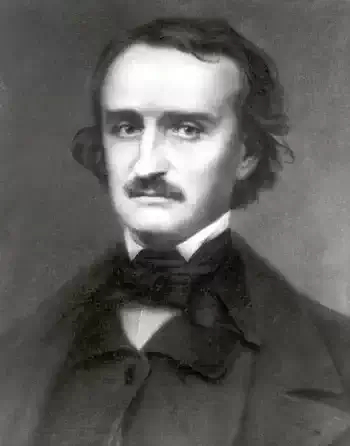
Edgar Allan Poe
Alone
Alone
From childhood's hour I have not been
As others were; I have not seen
As others saw; I could not bring
My passions from a common spring.
From the same source I have not taken
My sorrow; I could not awaken
My heart to joy at the same tone;
And all I loved, I loved alone.
Then- in my childhood, in the dawn
Of a most stormy life- was drawn
From every depth of good and ill
The mystery which binds me still:
From the torrent, or the fountain,
From the red cliff of the mountain,
From the sun that round me rolled
In its autumn tint of gold,
From the lightning in the sky
As it passed me flying by,
From the thunder and the storm,
And the cloud that took the form
(When the rest of Heaven was blue)
Of a demon in my view.
From childhood's hour I have not been
As others were; I have not seen
As others saw; I could not bring
My passions from a common spring.
From the same source I have not taken
My sorrow; I could not awaken
My heart to joy at the same tone;
And all I loved, I loved alone.
Then- in my childhood, in the dawn
Of a most stormy life- was drawn
From every depth of good and ill
The mystery which binds me still:
From the torrent, or the fountain,
From the red cliff of the mountain,
From the sun that round me rolled
In its autumn tint of gold,
From the lightning in the sky
As it passed me flying by,
From the thunder and the storm,
And the cloud that took the form
(When the rest of Heaven was blue)
Of a demon in my view.
503

Dylan Thomas
Why East Wind Chills
Why East Wind Chills
Why east wind chills and south wind cools
Shall not be known till windwell dries
And west's no longer drowned
In winds that bring the fruit and rind
Of many a hundred falls;
Why silk is soft and the stone wounds
The child shall question all his days,
Why night-time rain and the breast's blood
Both quench his thirst he'll have a black reply.
When cometh Jack Frost? the children ask.
Shall they clasp a comet in their fists?
Not till, from high and low, their dust
Sprinkles in children's eyes a long-last sleep
And dusk is crowded with the children's ghosts,
Shall a white answer echo from the rooftops.
All things are known: the stars' advice
Calls some content to travel with the winds,
Though what the stars ask as they round
Time upon time the towers of the skies
Is heard but little till the stars go out.
I hear content, and 'Be Content'
Ring like a handbell through the corridors,
And 'Know no answer,' and I know
No answer to the children's cry
Of echo's answer and the man of frost
And ghostly comets over the raised fists.
Why east wind chills and south wind cools
Shall not be known till windwell dries
And west's no longer drowned
In winds that bring the fruit and rind
Of many a hundred falls;
Why silk is soft and the stone wounds
The child shall question all his days,
Why night-time rain and the breast's blood
Both quench his thirst he'll have a black reply.
When cometh Jack Frost? the children ask.
Shall they clasp a comet in their fists?
Not till, from high and low, their dust
Sprinkles in children's eyes a long-last sleep
And dusk is crowded with the children's ghosts,
Shall a white answer echo from the rooftops.
All things are known: the stars' advice
Calls some content to travel with the winds,
Though what the stars ask as they round
Time upon time the towers of the skies
Is heard but little till the stars go out.
I hear content, and 'Be Content'
Ring like a handbell through the corridors,
And 'Know no answer,' and I know
No answer to the children's cry
Of echo's answer and the man of frost
And ghostly comets over the raised fists.
282
Dylan Thomas
Especially When the October Wind
Especially When the October Wind
Especially when the October wind
With frosty fingers punishes my hair,
Caught by the crabbing sun I walk on fire
And cast a shadow crab upon the land,
By the sea's side, hearing the noise of birds,
Hearing the raven cough in winter sticks,
My busy heart who shudders as she talks
Sheds the syllabic blood and drains her words.
Shut, too, in a tower of words, I mark
On the horizon walking like the trees
The wordy shapes of women, and the rows
Of the star-gestured children in the park.
Some let me make you of the vowelled beeches,
Some of the oaken voices, from the roots
Of many a thorny shire tell you notes,
Some let me make you of the water's speeches.
Behind a pot of ferns the wagging clock
Tells me the hour's word, the neural meaning
Flies on the shafted disk, declaims the morning
And tells the windy weather in the cock.
Some let me make you of the meadow's signs;
The signal grass that tells me all I know
Breaks with the wormy winter through the eye.
Some let me tell you of the raven's sins.
Especially when the October wind
(Some let me make you of autumnal spells,
The spider-tongued, and the loud hill of Wales)
With fists of turnips punishes the land,
Some let me make you of the heartless words.
The heart is drained that, spelling in the scurry
Of chemic blood, warned of the coming fury.
By the sea's side hear the dark-vowelled birds.
Especially when the October wind
With frosty fingers punishes my hair,
Caught by the crabbing sun I walk on fire
And cast a shadow crab upon the land,
By the sea's side, hearing the noise of birds,
Hearing the raven cough in winter sticks,
My busy heart who shudders as she talks
Sheds the syllabic blood and drains her words.
Shut, too, in a tower of words, I mark
On the horizon walking like the trees
The wordy shapes of women, and the rows
Of the star-gestured children in the park.
Some let me make you of the vowelled beeches,
Some of the oaken voices, from the roots
Of many a thorny shire tell you notes,
Some let me make you of the water's speeches.
Behind a pot of ferns the wagging clock
Tells me the hour's word, the neural meaning
Flies on the shafted disk, declaims the morning
And tells the windy weather in the cock.
Some let me make you of the meadow's signs;
The signal grass that tells me all I know
Breaks with the wormy winter through the eye.
Some let me tell you of the raven's sins.
Especially when the October wind
(Some let me make you of autumnal spells,
The spider-tongued, and the loud hill of Wales)
With fists of turnips punishes the land,
Some let me make you of the heartless words.
The heart is drained that, spelling in the scurry
Of chemic blood, warned of the coming fury.
By the sea's side hear the dark-vowelled birds.
287
Dylan Thomas
Ears in the Turrets Hear
Ears in the Turrets Hear
Ears in the turrets hear
Hands grumble on the door,
Eyes in the gables see
The fingers at the locks.
Shall I unbolt or stay
Alone till the day I die
Unseen by stranger-eyes
In this white house?
Hands, hold you poison or grapes?
Beyond this island bound
By a thin sea of flesh
And a bone coast,
The land lies out of sound
And the hills out of mind.
No birds or flying fish
Disturbs this island’s rest.
Ears in this island hear
The wind pass like a fire,
Eyes in this island see
Ships anchor off the bay.
Shall I run to the ships
With the wind in my hair,
Or stay till the day I die
And welcome no sailor?
Ships, hold you poison or grapes?
Hands grumble on the door,
Ships anchor off the bay,
Rain beats the sand and slates.
Shall I let in the stranger,
Shall I welcome the sailor,
Or stay till the day I die?
Hands of the stranger and holds of the ships,
Hold you poison or grapes?
Ears in the turrets hear
Hands grumble on the door,
Eyes in the gables see
The fingers at the locks.
Shall I unbolt or stay
Alone till the day I die
Unseen by stranger-eyes
In this white house?
Hands, hold you poison or grapes?
Beyond this island bound
By a thin sea of flesh
And a bone coast,
The land lies out of sound
And the hills out of mind.
No birds or flying fish
Disturbs this island’s rest.
Ears in this island hear
The wind pass like a fire,
Eyes in this island see
Ships anchor off the bay.
Shall I run to the ships
With the wind in my hair,
Or stay till the day I die
And welcome no sailor?
Ships, hold you poison or grapes?
Hands grumble on the door,
Ships anchor off the bay,
Rain beats the sand and slates.
Shall I let in the stranger,
Shall I welcome the sailor,
Or stay till the day I die?
Hands of the stranger and holds of the ships,
Hold you poison or grapes?
297
Dylan Thomas
Ghosts whooed like owls in the long nights when I dared not look over my shoulder;
Ghosts whooed like owls in the long nights when I dared not look over my shoulder;
animals lurked in the cubbyhole under the stairs and the gas meter ticked. And I
remember that we went singing carols once, when there wasn't the shaving of a moon
to light the flying streets. At the end of a long road was a drive that led to a large
house, and we stumbled up the darkness of the drive that night, each one of us afraid,
each one holding a stone in his hand in case, and all of us too brave to say a word. The
wind through the trees made noises as of old and unpleasant and maybe webfooted
men wheezing in caves. We reached the black bulk of the house. "What shall we give
them? Hark the Herald?"
"No," Jack said, "Good King Wencelas. I'll count three." One, two three, and we began
to sing, our voices high and seemingly distant in the snow-felted darkness round the
house that was occupied by nobody we knew. We stood close together, near the dark
door. Good King Wencelas looked out On the Feast of Stephen ... And then a small, dry
voice, like the voice of someone who has not spoken for a long time, joined our
singing: a small, dry, eggshell voice from the other side of the door: a small dry voice
through the keyhole. And when we stopped running we were outside our house; the
front room was lovely; balloons floated under the hot-water-bottle-gulping gas;
everything was good again and shone over the town.
"Perhaps it was a ghost," Jim said.
"Perhaps it was trolls," Dan said, who was always reading.
"Let's go in and see if there's any jelly left," Jack said. And we did that.
Always on Christmas night there was music. An uncle played the fiddle, a cousin sang
"Cherry Ripe," and another uncle sang "Drake's Drum." It was very warm in the little
house. Auntie Hannah, who had got on to the parsnip wine, sang a song about
Bleeding Hearts and Death, and then another in which she said her heart was like a
Bird's Nest; and then everybody laughed again; and then I went to bed. Looking
through my bedroom window, out into the moonlight and the unending smoke-colored
snow, I could see the lights in the windows of all the other houses on our hill and hear
the music rising from them up the long, steady falling night. I turned the gas down, I
got into bed. I said some words to the close and holy darkness, and then I slept.
animals lurked in the cubbyhole under the stairs and the gas meter ticked. And I
remember that we went singing carols once, when there wasn't the shaving of a moon
to light the flying streets. At the end of a long road was a drive that led to a large
house, and we stumbled up the darkness of the drive that night, each one of us afraid,
each one holding a stone in his hand in case, and all of us too brave to say a word. The
wind through the trees made noises as of old and unpleasant and maybe webfooted
men wheezing in caves. We reached the black bulk of the house. "What shall we give
them? Hark the Herald?"
"No," Jack said, "Good King Wencelas. I'll count three." One, two three, and we began
to sing, our voices high and seemingly distant in the snow-felted darkness round the
house that was occupied by nobody we knew. We stood close together, near the dark
door. Good King Wencelas looked out On the Feast of Stephen ... And then a small, dry
voice, like the voice of someone who has not spoken for a long time, joined our
singing: a small, dry, eggshell voice from the other side of the door: a small dry voice
through the keyhole. And when we stopped running we were outside our house; the
front room was lovely; balloons floated under the hot-water-bottle-gulping gas;
everything was good again and shone over the town.
"Perhaps it was a ghost," Jim said.
"Perhaps it was trolls," Dan said, who was always reading.
"Let's go in and see if there's any jelly left," Jack said. And we did that.
Always on Christmas night there was music. An uncle played the fiddle, a cousin sang
"Cherry Ripe," and another uncle sang "Drake's Drum." It was very warm in the little
house. Auntie Hannah, who had got on to the parsnip wine, sang a song about
Bleeding Hearts and Death, and then another in which she said her heart was like a
Bird's Nest; and then everybody laughed again; and then I went to bed. Looking
through my bedroom window, out into the moonlight and the unending smoke-colored
snow, I could see the lights in the windows of all the other houses on our hill and hear
the music rising from them up the long, steady falling night. I turned the gas down, I
got into bed. I said some words to the close and holy darkness, and then I slept.
341

D.H. Lawrence
Snake
Snake
A snake came to my water-trough
On a hot, hot day, and I in pyjamas for the heat,
To drink there.
In the deep, strange-scented shade of the great dark carob-tree
I came down the steps with my pitcher
And must wait, must stand and wait, for there he was at the trough before
me.
He reached down from a fissure in the earth-wall in the gloom
And trailed his yellow-brown slackness soft-bellied down, over the edge of
the stone trough
And rested his throat upon the stone bottom,
And where the water had dripped from the tap, in a small clearness,
He sipped with his straight mouth,
Softly drank through his straight gums, into his slack long body,
Silently.
Someone was before me at my water-trough,
And I, like a second comer, waiting.
He lifted his head from his drinking, as cattle do,
And looked at me vaguely, as drinking cattle do,
And flickered his two-forked tongue from his lips, and mused a moment,
And stooped and drank a little more,
Being earth-brown, earth-golden from the burning bowels of the earth
On the day of Sicilian July, with Etna smoking.
The voice of my education said to me
He must be killed,
For in Sicily the black, black snakes are innocent, the gold are venomous.
And voices in me said, If you were a man
You would take a stick and break him now, and finish him off.
But must I confess how I liked him,
How glad I was he had come like a guest in quiet, to drink at my water-trough
And depart peaceful, pacified, and thankless,
Into the burning bowels of this earth?
Was it cowardice, that I dared not kill him? Was it perversity, that I longed to talk to
him? Was it humility, to feel so honoured?
I felt so honoured.
And yet those voices:
If you were not afraid, you would kill him!
And truly I was afraid, I was most afraid, But even so, honoured still more
That he should seek my hospitality
From out the dark door of the secret earth.
He drank enough
And lifted his head, dreamily, as one who has drunken,
And flickered his tongue like a forked night on the air, so black,
Seeming to lick his lips,
And looked around like a god, unseeing, into the air,
And slowly turned his head,
And slowly, very slowly, as if thrice adream,
Proceeded to draw his slow length curving round
And climb again the broken bank of my wall-face.
And as he put his head into that dreadful hole,
And as he slowly drew up, snake-easing his shoulders, and entered farther,
A sort of horror, a sort of protest against his withdrawing into that horrid black hole,
Deliberately going into the blackness, and slowly drawing himself after,
Overcame me now his back was turned.
I looked round, I put down my pitcher,
I picked up a clumsy log
And threw it at the water-trough with a clatter.
I think it did not hit him,
But suddenly that part of him that was left behind convulsed in undignified haste.
Writhed like lightning, and was gone
Into the black hole, the earth-lipped fissure in the wall-front,
At which, in the intense still noon, I stared with fascination.
And immediately I regretted it.
I thought how paltry, how vulgar, what a mean act!
I despised myself and the voices of my accursed human education.
And I thought of the albatross
And I wished he would come back, my snake.
For he seemed to me again like a king,
Like a king in exile, uncrowned in the underworld,
Now due to be crowned again.
And so, I missed my chance with one of the lords
Of life.
And I have something to expiate:
A pettiness.
A snake came to my water-trough
On a hot, hot day, and I in pyjamas for the heat,
To drink there.
In the deep, strange-scented shade of the great dark carob-tree
I came down the steps with my pitcher
And must wait, must stand and wait, for there he was at the trough before
me.
He reached down from a fissure in the earth-wall in the gloom
And trailed his yellow-brown slackness soft-bellied down, over the edge of
the stone trough
And rested his throat upon the stone bottom,
And where the water had dripped from the tap, in a small clearness,
He sipped with his straight mouth,
Softly drank through his straight gums, into his slack long body,
Silently.
Someone was before me at my water-trough,
And I, like a second comer, waiting.
He lifted his head from his drinking, as cattle do,
And looked at me vaguely, as drinking cattle do,
And flickered his two-forked tongue from his lips, and mused a moment,
And stooped and drank a little more,
Being earth-brown, earth-golden from the burning bowels of the earth
On the day of Sicilian July, with Etna smoking.
The voice of my education said to me
He must be killed,
For in Sicily the black, black snakes are innocent, the gold are venomous.
And voices in me said, If you were a man
You would take a stick and break him now, and finish him off.
But must I confess how I liked him,
How glad I was he had come like a guest in quiet, to drink at my water-trough
And depart peaceful, pacified, and thankless,
Into the burning bowels of this earth?
Was it cowardice, that I dared not kill him? Was it perversity, that I longed to talk to
him? Was it humility, to feel so honoured?
I felt so honoured.
And yet those voices:
If you were not afraid, you would kill him!
And truly I was afraid, I was most afraid, But even so, honoured still more
That he should seek my hospitality
From out the dark door of the secret earth.
He drank enough
And lifted his head, dreamily, as one who has drunken,
And flickered his tongue like a forked night on the air, so black,
Seeming to lick his lips,
And looked around like a god, unseeing, into the air,
And slowly turned his head,
And slowly, very slowly, as if thrice adream,
Proceeded to draw his slow length curving round
And climb again the broken bank of my wall-face.
And as he put his head into that dreadful hole,
And as he slowly drew up, snake-easing his shoulders, and entered farther,
A sort of horror, a sort of protest against his withdrawing into that horrid black hole,
Deliberately going into the blackness, and slowly drawing himself after,
Overcame me now his back was turned.
I looked round, I put down my pitcher,
I picked up a clumsy log
And threw it at the water-trough with a clatter.
I think it did not hit him,
But suddenly that part of him that was left behind convulsed in undignified haste.
Writhed like lightning, and was gone
Into the black hole, the earth-lipped fissure in the wall-front,
At which, in the intense still noon, I stared with fascination.
And immediately I regretted it.
I thought how paltry, how vulgar, what a mean act!
I despised myself and the voices of my accursed human education.
And I thought of the albatross
And I wished he would come back, my snake.
For he seemed to me again like a king,
Like a king in exile, uncrowned in the underworld,
Now due to be crowned again.
And so, I missed my chance with one of the lords
Of life.
And I have something to expiate:
A pettiness.
199
D.H. Lawrence
In a Boat
In a Boat
See the stars, love,
In the water much clearer and brighter
Than those above us, and whiter,
Like nenuphars.
Star-shadows shine, love,
How many stars in your bowl?
How many shadows in your soul,
Only mine, love, mine?
When I move the oars, love,
See how the stars are tossed,
Distorted, the brightest lost.
—So that bright one of yours, love.
The poor waters spill
The stars, waters broken, forsaken.
—The heavens are not shaken, you say, love,
Its stars stand still.
There, did you see
That spark fly up at us; even
Stars are not safe in heaven.
—What of yours, then, love, yours?
What then, love, if soon
Your light be tossed over a wave?
Will you count the darkness a grave,
And swoon, love, swoon?
See the stars, love,
In the water much clearer and brighter
Than those above us, and whiter,
Like nenuphars.
Star-shadows shine, love,
How many stars in your bowl?
How many shadows in your soul,
Only mine, love, mine?
When I move the oars, love,
See how the stars are tossed,
Distorted, the brightest lost.
—So that bright one of yours, love.
The poor waters spill
The stars, waters broken, forsaken.
—The heavens are not shaken, you say, love,
Its stars stand still.
There, did you see
That spark fly up at us; even
Stars are not safe in heaven.
—What of yours, then, love, yours?
What then, love, if soon
Your light be tossed over a wave?
Will you count the darkness a grave,
And swoon, love, swoon?
248
D.H. Lawrence
Bat
Bat
At evening, sitting on this terrace,
When the sun from the west, beyond Pisa, beyond the mountains of Carrara
Departs, and the world is taken by surprise ...
When the tired flower of Florence is in gloom beneath the glowing
Brown hills surrounding ...
When under the arches of the Ponte Vecchio
A green light enters against stream, flush from the west,
Against the current of obscure Arno ...
Look up, and you see things flying
Between the day and the night;
Swallows with spools of dark thread sewing the shadows together.
A circle swoop, and a quick parabola under the bridge arches
Where light pushes through;
A sudden turning upon itself of a thing in the air.
A dip to the water.
And you think:
'The swallows are flying so late!'
Swallows?
Dark air-life looping
Yet missing the pure loop ...
A twitch, a twitter, an elastic shudder in flight
And serrated wings against the sky,
Like a glove, a black glove thrown up at the light,
And falling back.
Never swallows!
Bats!
The swallows are gone.
At a wavering instant the swallows gave way to bats
By the Ponte Vecchio ...
Changing guard.
Bats, and an uneasy creeping in one's scalp
As the bats swoop overhead!
Flying madly.
Pipistrello!
Black piper on an infinitesimal pipe.
Little lumps that fly in air and have voices indefinite, wildly vindictive;
Wings like bits of umbrella.
Bats!
Creatures that hang themselves up like an old rag, to sleep;
And disgustingly upside down.
Hanging upside down like rows of disgusting old rags
And grinning in their sleep.
Bats!
Not for me!
At evening, sitting on this terrace,
When the sun from the west, beyond Pisa, beyond the mountains of Carrara
Departs, and the world is taken by surprise ...
When the tired flower of Florence is in gloom beneath the glowing
Brown hills surrounding ...
When under the arches of the Ponte Vecchio
A green light enters against stream, flush from the west,
Against the current of obscure Arno ...
Look up, and you see things flying
Between the day and the night;
Swallows with spools of dark thread sewing the shadows together.
A circle swoop, and a quick parabola under the bridge arches
Where light pushes through;
A sudden turning upon itself of a thing in the air.
A dip to the water.
And you think:
'The swallows are flying so late!'
Swallows?
Dark air-life looping
Yet missing the pure loop ...
A twitch, a twitter, an elastic shudder in flight
And serrated wings against the sky,
Like a glove, a black glove thrown up at the light,
And falling back.
Never swallows!
Bats!
The swallows are gone.
At a wavering instant the swallows gave way to bats
By the Ponte Vecchio ...
Changing guard.
Bats, and an uneasy creeping in one's scalp
As the bats swoop overhead!
Flying madly.
Pipistrello!
Black piper on an infinitesimal pipe.
Little lumps that fly in air and have voices indefinite, wildly vindictive;
Wings like bits of umbrella.
Bats!
Creatures that hang themselves up like an old rag, to sleep;
And disgustingly upside down.
Hanging upside down like rows of disgusting old rags
And grinning in their sleep.
Bats!
Not for me!
268
D.H. Lawrence
Anxiety
Anxiety
The hoar-frost crumbles in the sun,
The crisping steam of a train
Melts in the air, while two black birds
Sweep past the window again.
Along the vacant road, a red
Bicycle approaches; I wait
In a thaw of anxiety, for the boy
To leap down at our gate.
He has passed us by; but is it
Relief that starts in my breast?
Or a deeper bruise of knowing that still
She has no rest.
The hoar-frost crumbles in the sun,
The crisping steam of a train
Melts in the air, while two black birds
Sweep past the window again.
Along the vacant road, a red
Bicycle approaches; I wait
In a thaw of anxiety, for the boy
To leap down at our gate.
He has passed us by; but is it
Relief that starts in my breast?
Or a deeper bruise of knowing that still
She has no rest.
249
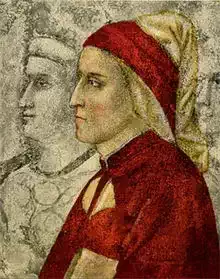
Dante Alighieri
Inferno Canto 01
Inferno Canto 01
Nel mezzo del cammin di nostra vita
mi ritrovai per una selva oscura
ché la diritta via era smarrita .
When I had journeyed half of our life's way,
I found myself within a shadowed forest,
for I had lost the path that does not stray.
Ahi quanto a dir qual era è cosa dura
esta selva selvaggia e aspra e forte
che nel pensier rinova la paura !
Ah, it is hard to speak of what it was,
that savage forest, dense and difficult,
which even in recall renews my fear:
Tant'è amara che poco è più morte;
ma per trattar del ben ch'i' vi trovai,
dirò de l'altre cose ch'i' v'ho scorte .
so bitter-death is hardly more severe!
But to retell the good discovered there,
I'll also tell the other things I saw.
Io non so ben ridir com'i' v'intrai,
tant'era pien di sonno a quel punto
che la verace via abbandonai .
I cannot clearly say how I had entered
the wood; I was so full of sleep just at
the point where I abandoned the true path.
Ma poi ch'i' fui al piè d'un colle giunto,
là dove terminava quella valle
che m'avea di paura il cor compunto ,
But when I'd reached the bottom of a hillit
rose along the boundary of the valley
that had harassed my heart with so much fear
guardai in alto, e vidi le sue spalle
vestite già de' raggi del pianeta
che mena dritto altrui per ogne calle .
I looked on high and saw its shoulders clothed
already by the rays of that same planet
which serves to lead men straight along all roads.
Allor fu la paura un poco queta
che nel lago del cor m'era durata
la notte ch'i' passai con tanta pieta .
At this my fear was somewhat quieted;
for through the night of sorrow I had spent,
the lake within my heart felt terror present.
E come quei che con lena affannata
uscito fuor del pelago a la riva
si volge a l'acqua perigliosa e guata ,
And just as he who, with exhausted breath,
having escaped from sea to shore, turns back
to watch the dangerous waters he has quit,
così l'animo mio, ch'ancor fuggiva,
si volse a retro a rimirar lo passo
che non lasciò già mai persona viva .
so did my spirit, still a fugitive,
turn back to look intently at the pass
that never has let any man survive.
Poi ch'èi posato un poco il corpo lasso,
ripresi via per la piaggia diserta,
sì che 'l piè fermo sempre era 'l più basso .
I let my tired body rest awhile.
Moving again, I tried the lonely slopemy
firm foot always was the one below.
Ed ecco, quasi al cominciar de l'erta,
una lonza leggera e presta molto,
che di pel macolato era coverta ;
And almost where the hillside starts to riselook
there!-a leopard, very quick and lithe,
a leopard covered with a spotted hide.
e non mi si partia dinanzi al volto,
anzi 'mpediva tanto il mio cammino,
ch'i' fui per ritornar più volte vòlto .
He did not disappear from sight, but stayed;
indeed, he so impeded my ascent
that I had often to turn back again.
Temp'era dal principio del mattino,
e 'l sol montava 'n sù con quelle stelle
ch'eran con lui quando l'amor divino
The time was the beginning of the morning;
the sun was rising now in fellowship
with the same stars that had escorted it
mosse di prima quelle cose belle;
sì ch'a bene sperar m'era cagione
di quella fiera a la gaetta pelle
when Divine Love first moved those things of beauty;
so that the hour and the gentle season
gave me good cause for hopefulness on seeing
l'ora del tempo e la dolce stagione;
ma non sì che paura non mi desse
la vista che m'apparve d'un leone .
that beast before me with his speckled skin;
but hope was hardly able to prevent
the fear I felt when I beheld a lion.
Questi parea che contra me venisse
con la test'alta e con rabbiosa fame,
sì che parea che l'aere ne tremesse .
His head held high and ravenous with hungereven
the air around him seemed to shudderthis
lion seemed to make his way against me.
Ed una lupa, che di tutte brame
sembiava carca ne la sua magrezza,
e molte genti fé già viver grame ,
And then a she-wolf showed herself; she seemed
to carry every craving in her leanness;
she had already brought despair to many.
questa mi porse tanto di gravezza
con la paura ch'uscia di sua vista,
ch'io perdei la speranza de l'altezza .
The very sight of her so weighted me
with fearfulness that I abandoned hope
of ever climbing up that mountain slope.
E qual è quei che volontieri acquista,
e giugne 'l tempo che perder lo face,
che 'n tutt'i suoi pensier piange e s'attrista ;
Even as he who glories while he gains
will, when the time has come to tally loss,
lament with every thought and turn despondent,
tal mi fece la bestia sanza pace,
che, venendomi 'ncontro, a poco a poco
mi ripigneva là dove 'l sol tace .
so was I when I faced that restless beast
which, even as she stalked me, step by step
had thrust me back to where the sun is speechless.
Mentre ch'i' rovinava in basso loco,
dinanzi a li occhi mi si fu offerto
chi per lungo silenzio parea fioco .
While I retreated down to lower ground,
before my eyes there suddenly appeared
one who seemed faint because of the long silence.
Quando vidi costui nel gran diserto,
«Miserere di me», gridai a lui,
«qual che tu sii, od ombra od omo certo !».
When I saw him in that vast wilderness,
"Have pity on me," were the words I cried,
"whatever you may be-a shade, a man."
Rispuosemi: «Non omo, omo già fui,
e li parenti miei furon lombardi,
mantoani per patria ambedui .
He answered me: "Not man; I once was man.
Both of my parents came from Lombardy,
and both claimed Mantua as native city.
Nacqui sub Iulio, ancor che fosse tardi,
e vissi a Roma sotto 'l buono Augusto
nel tempo de li dèi falsi e bugiardi .
And I was born, though late, sub Julio,
and lived in Rome under the good Augustusthe
season of the false and lying gods.
Poeta fui, e cantai di quel giusto
figliuol d'Anchise che venne di Troia,
poi che 'l superbo Ilión fu combusto .
I was a poet, and I sang the righteous
son of Anchises who had come from Troy
when flames destroyed the pride of Ilium.
Ma tu perché ritorni a tanta noia?
perché non sali il dilettoso monte
ch'è principio e cagion di tutta gioia? ».
But why do you return to wretchedness?
Why not climb up the mountain of delight,
the origin and cause of every joy?"
«Or se' tu quel Virgilio e quella fonte
che spandi di parlar sì largo fiume?»,
rispuos'io lui con vergognosa fronte .
"And are you then that Virgil, you the fountain
that freely pours so rich a stream of speech?"
I answered him with shame upon my brow.
«O de li altri poeti onore e lume
vagliami 'l lungo studio e 'l grande amore
che m'ha fatto cercar lo tuo volume .
"O light and honor of all other poets,
may my long study and the intense love
that made me search your volume serve me now.
Tu se' lo mio maestro e 'l mio autore;
tu se' solo colui da cu' io tolsi
lo bello stilo che m'ha fatto onore .
You are my master and my author, youthe
only one from whom my writing drew
the noble style for which I have been honored.
Vedi la bestia per cu' io mi volsi:
aiutami da lei, famoso saggio,
ch'ella mi fa tremar le vene e i polsi ».
You see the beast that made me turn aside;
help me, o famous sage, to stand against her,
for she has made my blood and pulses shudder,"
«A te convien tenere altro viaggio»,
rispuose poi che lagrimar mi vide,
«se vuo' campar d'esto loco selvaggio :
"It is another path that you must take,"
he answered when he saw my tearfulness,
"if you would leave this savage wilderness;
ché questa bestia, per la qual tu gride,
non lascia altrui passar per la sua via,
ma tanto lo 'mpedisce che l'uccide ;
the beast that is the cause of your outcry
allows no man to pass along her track,
but blocks him even to the point of death;
e ha natura sì malvagia e ria,
che mai non empie la bramosa voglia,
e dopo 'l pasto ha più fame che pria .
her nature is so squalid, so malicious
that she can never sate her greedy will;
when she has fed, she's hungrier than ever.
Molti son li animali a cui s'ammoglia,
e più saranno ancora, infin che 'l veltro
verrà, che la farà morir con doglia .
She mates with many living souls and shall
yet mate with many more, until the Greyhound
arrives, inflicting painful death on her.
Questi non ciberà terra né peltro,
ma sapienza, amore e virtute,
e sua nazion sarà tra feltro e feltro .
That Hound will never feed on land or pewter,
but find his fare in wisdom, love, and virtue;
his place of birth shall be between two felts.
Di quella umile Italia fia salute
per cui morì la vergine Cammilla,
Eurialo e Turno e Niso di ferute .
He will restore low-lying Italy for which
the maid Camilla died of wounds,
and Nisus, Turnus, and Euryalus.
Questi la caccerà per ogne villa,
fin che l'avrà rimessa ne lo 'nferno,
là onde 'nvidia prima dipartilla .
And he will hunt that beast through every city
until he thrusts her back again to Hell,
for which she was first sent above by envy.
Ond'io per lo tuo me' penso e discerno
che tu mi segui, e io sarò tua guida,
e trarrotti di qui per loco etterno ,
Therefore, I think and judge it best for you
to follow me, and I shall guide you, taking
you from this place through an eternal place,
ove udirai le disperate strida,
vedrai li antichi spiriti dolenti,
ch'a la seconda morte ciascun grida ;
where you shall hear the howls of desperation
and see the ancient spirits in their pain,
as each of them laments his second death;
e vederai color che son contenti
nel foco, perché speran di venire
quando che sia a le beate genti .
and you shall see those souls who are content
within the fire, for they hope to reachwhenever
that may be-the blessed people.
A le quai poi se tu vorrai salire,
anima fia a ciò più di me degna:
con lei ti lascerò nel mio partire ;
If you would then ascend as high as these,
a soul more worthy than I am will guide you;
I'll leave you in her care when I depart,
ché quello imperador che là sù regna,
perch'i' fu' ribellante a la sua legge,
non vuol che 'n sua città per me si vegna .
because that Emperor who reigns above,
since I have been rebellious to His law,
will not allow me entry to His city.
In tutte parti impera e quivi regge;
quivi è la sua città e l'alto seggio:
oh felice colui cu' ivi elegge! ».
He governs everywhere, but rules from there;
there is His city, His high capital:
o happy those He chooses to be there!"
E io a lui: «Poeta, io ti richeggio
per quello Dio che tu non conoscesti,
acciò ch'io fugga questo male e peggio ,
And I replied: "O poet-by that God
whom you had never come to know-I beg you,
that I may flee this evil and worse evils,
che tu mi meni là dov'or dicesti,
sì ch'io veggia la porta di san Pietro
e color cui tu fai cotanto mesti ».
to lead me to the place of which you spoke,
that I may see the gateway of Saint Peter
and those whom you describe as sorrowful."
Allor si mosse, e io li tenni dietro.
Then he set out, and I moved on behind him.
Nel mezzo del cammin di nostra vita
mi ritrovai per una selva oscura
ché la diritta via era smarrita .
When I had journeyed half of our life's way,
I found myself within a shadowed forest,
for I had lost the path that does not stray.
Ahi quanto a dir qual era è cosa dura
esta selva selvaggia e aspra e forte
che nel pensier rinova la paura !
Ah, it is hard to speak of what it was,
that savage forest, dense and difficult,
which even in recall renews my fear:
Tant'è amara che poco è più morte;
ma per trattar del ben ch'i' vi trovai,
dirò de l'altre cose ch'i' v'ho scorte .
so bitter-death is hardly more severe!
But to retell the good discovered there,
I'll also tell the other things I saw.
Io non so ben ridir com'i' v'intrai,
tant'era pien di sonno a quel punto
che la verace via abbandonai .
I cannot clearly say how I had entered
the wood; I was so full of sleep just at
the point where I abandoned the true path.
Ma poi ch'i' fui al piè d'un colle giunto,
là dove terminava quella valle
che m'avea di paura il cor compunto ,
But when I'd reached the bottom of a hillit
rose along the boundary of the valley
that had harassed my heart with so much fear
guardai in alto, e vidi le sue spalle
vestite già de' raggi del pianeta
che mena dritto altrui per ogne calle .
I looked on high and saw its shoulders clothed
already by the rays of that same planet
which serves to lead men straight along all roads.
Allor fu la paura un poco queta
che nel lago del cor m'era durata
la notte ch'i' passai con tanta pieta .
At this my fear was somewhat quieted;
for through the night of sorrow I had spent,
the lake within my heart felt terror present.
E come quei che con lena affannata
uscito fuor del pelago a la riva
si volge a l'acqua perigliosa e guata ,
And just as he who, with exhausted breath,
having escaped from sea to shore, turns back
to watch the dangerous waters he has quit,
così l'animo mio, ch'ancor fuggiva,
si volse a retro a rimirar lo passo
che non lasciò già mai persona viva .
so did my spirit, still a fugitive,
turn back to look intently at the pass
that never has let any man survive.
Poi ch'èi posato un poco il corpo lasso,
ripresi via per la piaggia diserta,
sì che 'l piè fermo sempre era 'l più basso .
I let my tired body rest awhile.
Moving again, I tried the lonely slopemy
firm foot always was the one below.
Ed ecco, quasi al cominciar de l'erta,
una lonza leggera e presta molto,
che di pel macolato era coverta ;
And almost where the hillside starts to riselook
there!-a leopard, very quick and lithe,
a leopard covered with a spotted hide.
e non mi si partia dinanzi al volto,
anzi 'mpediva tanto il mio cammino,
ch'i' fui per ritornar più volte vòlto .
He did not disappear from sight, but stayed;
indeed, he so impeded my ascent
that I had often to turn back again.
Temp'era dal principio del mattino,
e 'l sol montava 'n sù con quelle stelle
ch'eran con lui quando l'amor divino
The time was the beginning of the morning;
the sun was rising now in fellowship
with the same stars that had escorted it
mosse di prima quelle cose belle;
sì ch'a bene sperar m'era cagione
di quella fiera a la gaetta pelle
when Divine Love first moved those things of beauty;
so that the hour and the gentle season
gave me good cause for hopefulness on seeing
l'ora del tempo e la dolce stagione;
ma non sì che paura non mi desse
la vista che m'apparve d'un leone .
that beast before me with his speckled skin;
but hope was hardly able to prevent
the fear I felt when I beheld a lion.
Questi parea che contra me venisse
con la test'alta e con rabbiosa fame,
sì che parea che l'aere ne tremesse .
His head held high and ravenous with hungereven
the air around him seemed to shudderthis
lion seemed to make his way against me.
Ed una lupa, che di tutte brame
sembiava carca ne la sua magrezza,
e molte genti fé già viver grame ,
And then a she-wolf showed herself; she seemed
to carry every craving in her leanness;
she had already brought despair to many.
questa mi porse tanto di gravezza
con la paura ch'uscia di sua vista,
ch'io perdei la speranza de l'altezza .
The very sight of her so weighted me
with fearfulness that I abandoned hope
of ever climbing up that mountain slope.
E qual è quei che volontieri acquista,
e giugne 'l tempo che perder lo face,
che 'n tutt'i suoi pensier piange e s'attrista ;
Even as he who glories while he gains
will, when the time has come to tally loss,
lament with every thought and turn despondent,
tal mi fece la bestia sanza pace,
che, venendomi 'ncontro, a poco a poco
mi ripigneva là dove 'l sol tace .
so was I when I faced that restless beast
which, even as she stalked me, step by step
had thrust me back to where the sun is speechless.
Mentre ch'i' rovinava in basso loco,
dinanzi a li occhi mi si fu offerto
chi per lungo silenzio parea fioco .
While I retreated down to lower ground,
before my eyes there suddenly appeared
one who seemed faint because of the long silence.
Quando vidi costui nel gran diserto,
«Miserere di me», gridai a lui,
«qual che tu sii, od ombra od omo certo !».
When I saw him in that vast wilderness,
"Have pity on me," were the words I cried,
"whatever you may be-a shade, a man."
Rispuosemi: «Non omo, omo già fui,
e li parenti miei furon lombardi,
mantoani per patria ambedui .
He answered me: "Not man; I once was man.
Both of my parents came from Lombardy,
and both claimed Mantua as native city.
Nacqui sub Iulio, ancor che fosse tardi,
e vissi a Roma sotto 'l buono Augusto
nel tempo de li dèi falsi e bugiardi .
And I was born, though late, sub Julio,
and lived in Rome under the good Augustusthe
season of the false and lying gods.
Poeta fui, e cantai di quel giusto
figliuol d'Anchise che venne di Troia,
poi che 'l superbo Ilión fu combusto .
I was a poet, and I sang the righteous
son of Anchises who had come from Troy
when flames destroyed the pride of Ilium.
Ma tu perché ritorni a tanta noia?
perché non sali il dilettoso monte
ch'è principio e cagion di tutta gioia? ».
But why do you return to wretchedness?
Why not climb up the mountain of delight,
the origin and cause of every joy?"
«Or se' tu quel Virgilio e quella fonte
che spandi di parlar sì largo fiume?»,
rispuos'io lui con vergognosa fronte .
"And are you then that Virgil, you the fountain
that freely pours so rich a stream of speech?"
I answered him with shame upon my brow.
«O de li altri poeti onore e lume
vagliami 'l lungo studio e 'l grande amore
che m'ha fatto cercar lo tuo volume .
"O light and honor of all other poets,
may my long study and the intense love
that made me search your volume serve me now.
Tu se' lo mio maestro e 'l mio autore;
tu se' solo colui da cu' io tolsi
lo bello stilo che m'ha fatto onore .
You are my master and my author, youthe
only one from whom my writing drew
the noble style for which I have been honored.
Vedi la bestia per cu' io mi volsi:
aiutami da lei, famoso saggio,
ch'ella mi fa tremar le vene e i polsi ».
You see the beast that made me turn aside;
help me, o famous sage, to stand against her,
for she has made my blood and pulses shudder,"
«A te convien tenere altro viaggio»,
rispuose poi che lagrimar mi vide,
«se vuo' campar d'esto loco selvaggio :
"It is another path that you must take,"
he answered when he saw my tearfulness,
"if you would leave this savage wilderness;
ché questa bestia, per la qual tu gride,
non lascia altrui passar per la sua via,
ma tanto lo 'mpedisce che l'uccide ;
the beast that is the cause of your outcry
allows no man to pass along her track,
but blocks him even to the point of death;
e ha natura sì malvagia e ria,
che mai non empie la bramosa voglia,
e dopo 'l pasto ha più fame che pria .
her nature is so squalid, so malicious
that she can never sate her greedy will;
when she has fed, she's hungrier than ever.
Molti son li animali a cui s'ammoglia,
e più saranno ancora, infin che 'l veltro
verrà, che la farà morir con doglia .
She mates with many living souls and shall
yet mate with many more, until the Greyhound
arrives, inflicting painful death on her.
Questi non ciberà terra né peltro,
ma sapienza, amore e virtute,
e sua nazion sarà tra feltro e feltro .
That Hound will never feed on land or pewter,
but find his fare in wisdom, love, and virtue;
his place of birth shall be between two felts.
Di quella umile Italia fia salute
per cui morì la vergine Cammilla,
Eurialo e Turno e Niso di ferute .
He will restore low-lying Italy for which
the maid Camilla died of wounds,
and Nisus, Turnus, and Euryalus.
Questi la caccerà per ogne villa,
fin che l'avrà rimessa ne lo 'nferno,
là onde 'nvidia prima dipartilla .
And he will hunt that beast through every city
until he thrusts her back again to Hell,
for which she was first sent above by envy.
Ond'io per lo tuo me' penso e discerno
che tu mi segui, e io sarò tua guida,
e trarrotti di qui per loco etterno ,
Therefore, I think and judge it best for you
to follow me, and I shall guide you, taking
you from this place through an eternal place,
ove udirai le disperate strida,
vedrai li antichi spiriti dolenti,
ch'a la seconda morte ciascun grida ;
where you shall hear the howls of desperation
and see the ancient spirits in their pain,
as each of them laments his second death;
e vederai color che son contenti
nel foco, perché speran di venire
quando che sia a le beate genti .
and you shall see those souls who are content
within the fire, for they hope to reachwhenever
that may be-the blessed people.
A le quai poi se tu vorrai salire,
anima fia a ciò più di me degna:
con lei ti lascerò nel mio partire ;
If you would then ascend as high as these,
a soul more worthy than I am will guide you;
I'll leave you in her care when I depart,
ché quello imperador che là sù regna,
perch'i' fu' ribellante a la sua legge,
non vuol che 'n sua città per me si vegna .
because that Emperor who reigns above,
since I have been rebellious to His law,
will not allow me entry to His city.
In tutte parti impera e quivi regge;
quivi è la sua città e l'alto seggio:
oh felice colui cu' ivi elegge! ».
He governs everywhere, but rules from there;
there is His city, His high capital:
o happy those He chooses to be there!"
E io a lui: «Poeta, io ti richeggio
per quello Dio che tu non conoscesti,
acciò ch'io fugga questo male e peggio ,
And I replied: "O poet-by that God
whom you had never come to know-I beg you,
that I may flee this evil and worse evils,
che tu mi meni là dov'or dicesti,
sì ch'io veggia la porta di san Pietro
e color cui tu fai cotanto mesti ».
to lead me to the place of which you spoke,
that I may see the gateway of Saint Peter
and those whom you describe as sorrowful."
Allor si mosse, e io li tenni dietro.
Then he set out, and I moved on behind him.
256

Claude Mckay
Tormented
Tormented
I will not reason, wrestle here with you,
Though you pursue and worry me about;
As well put forth my swarthy arm to stop
The wild wind howling, darkly mad without.
The night is yours for revels; day will light.
I will not fight you, bold and tigerish,
For I am weak, while you are gaining strength;
Peace! cease tormenting me to have your wish.
But when you're filled and sated with the flesh,
I shall go swiftly to the silver stream,
To cleanse my body for the spirit's sake,
And sun my limbs, and close my eyes to dream.
I will not reason, wrestle here with you,
Though you pursue and worry me about;
As well put forth my swarthy arm to stop
The wild wind howling, darkly mad without.
The night is yours for revels; day will light.
I will not fight you, bold and tigerish,
For I am weak, while you are gaining strength;
Peace! cease tormenting me to have your wish.
But when you're filled and sated with the flesh,
I shall go swiftly to the silver stream,
To cleanse my body for the spirit's sake,
And sun my limbs, and close my eyes to dream.
504
Claude Mckay
Poetry
Poetry
Sometimes I tremble like a storm-swept flower,
And seek to hide my tortured soul from thee.
Bowing my head in deep humility
Before the silent thunder of thy power.
Sometimes I flee before thy blazing light,
As from the specter of pursuing death;
Intimidated lest thy mighty breath,
Windways, will sweep me into utter night.
For oh, I fear they will be swallowed up--
The loves which are to me of vital worth,
My passion and my pleasure in the earth--
And lost forever in thy magic cup!
I fear, I fear my truly human heart
Will perish on the altar-stone of art!
Sometimes I tremble like a storm-swept flower,
And seek to hide my tortured soul from thee.
Bowing my head in deep humility
Before the silent thunder of thy power.
Sometimes I flee before thy blazing light,
As from the specter of pursuing death;
Intimidated lest thy mighty breath,
Windways, will sweep me into utter night.
For oh, I fear they will be swallowed up--
The loves which are to me of vital worth,
My passion and my pleasure in the earth--
And lost forever in thy magic cup!
I fear, I fear my truly human heart
Will perish on the altar-stone of art!
387

Christina Rossetti
The Wind Has Such A Rainy Sound
The Wind Has Such A Rainy Sound
The wind has such a rainy sound
Moaning through the town,
The sea has such a windy sound, -
Will the ships go down?
The apples in the orchard
Tumble from their tree. -
Oh will the ships go down, go down,
In the windy sea?
The wind has such a rainy sound
Moaning through the town,
The sea has such a windy sound, -
Will the ships go down?
The apples in the orchard
Tumble from their tree. -
Oh will the ships go down, go down,
In the windy sea?
188
Christina Rossetti
Heart’s Chill Between
Heart’s Chill Between
I did not chide him, though I knew
That he was false to me.
Chide the exhaling of the dew,
The ebbing of the sea,
The fading of a rosy hue,—
But not inconstancy.
Why strive for love when love is o'er?
Why bind a restive heart?—
He never knew the pain I bore
In saying: 'We must part;
Let us be friends and nothing more.'
—Oh, woman's shallow art!
But it is over, it is done,—
I hardly heed it now;
So many weary years have run
Since then, I think not how
Things might have been,—but greet each one
With an unruffled brow.
What time I am where others be,
My heart seems very calm—
Stone calm; but if all go from me,
There comes a vague alarm,
A shrinking in the memory
From some forgotten harm.
And often through the long, long night,
Waking when none are near,
I feel my heart beat fast with fright,
Yet know not what I fear.
Oh how I long to see the light,
And the sweet birds to hear!
To have the sun upon my face,
To look up through the trees,
To walk forth in the open space
And listen to the breeze,—
And not to dream the burial-place
Is clogging my weak knees.
Sometimes I can nor weep nor pray,
But am half stupefied:
And then all those who see me say
Mine eyes are opened wide
And that my wits seem gone away—
Ah, would that I had died!
Would I could die and be at peace,
Or living could forget!
My grief nor grows nor doth decrease,
But ever is:—and yet
Methinks, now, that all this shall cease
Before the sun shall set.
I did not chide him, though I knew
That he was false to me.
Chide the exhaling of the dew,
The ebbing of the sea,
The fading of a rosy hue,—
But not inconstancy.
Why strive for love when love is o'er?
Why bind a restive heart?—
He never knew the pain I bore
In saying: 'We must part;
Let us be friends and nothing more.'
—Oh, woman's shallow art!
But it is over, it is done,—
I hardly heed it now;
So many weary years have run
Since then, I think not how
Things might have been,—but greet each one
With an unruffled brow.
What time I am where others be,
My heart seems very calm—
Stone calm; but if all go from me,
There comes a vague alarm,
A shrinking in the memory
From some forgotten harm.
And often through the long, long night,
Waking when none are near,
I feel my heart beat fast with fright,
Yet know not what I fear.
Oh how I long to see the light,
And the sweet birds to hear!
To have the sun upon my face,
To look up through the trees,
To walk forth in the open space
And listen to the breeze,—
And not to dream the burial-place
Is clogging my weak knees.
Sometimes I can nor weep nor pray,
But am half stupefied:
And then all those who see me say
Mine eyes are opened wide
And that my wits seem gone away—
Ah, would that I had died!
Would I could die and be at peace,
Or living could forget!
My grief nor grows nor doth decrease,
But ever is:—and yet
Methinks, now, that all this shall cease
Before the sun shall set.
192
Christina Rossetti
A Chill
A Chill
What can lambkins do
All the keen night through?
Nestle by their woolly mother
The careful ewe.
What can nestlings do
In the nightly dew?
Sleep beneath their mother's wing
Till day breaks anew.
If in a field or tree
There might only be
Such a warm soft sleeping-place
Found for me!
What can lambkins do
All the keen night through?
Nestle by their woolly mother
The careful ewe.
What can nestlings do
In the nightly dew?
Sleep beneath their mother's wing
Till day breaks anew.
If in a field or tree
There might only be
Such a warm soft sleeping-place
Found for me!
203
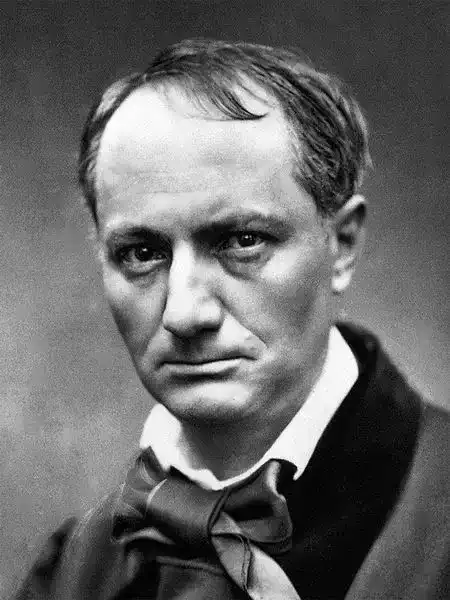
Charles Baudelaire
The Sick Muse
The Sick Muse
My impoverished muse, alas! What have you for me this morning?
Your empty eyes are stocked with nocturnal visions,
In your cheek's cold and taciturn reflection,
I see insanity and horror forming.
The green succubus and the red urchin,
Have they poured you fear and love from their urns?
The nightmare of a mutinous fist that despotically turns,
Does it drown you at the bottom of a loch beyond searching?
I wish that your breast exhaled the scent of sanity,
That your womb of thought was not a tomb more frequently
And that your Christian blood flowed around a buoy that was rhythmical,
Like the numberless sounds of antique syllables,
Where reigns in turn the father of songs,
Phoebus, and the great Pan, the harvest sovereign.
Translated by William A. Sigler
Submitted by Ryan McGuire
My impoverished muse, alas! What have you for me this morning?
Your empty eyes are stocked with nocturnal visions,
In your cheek's cold and taciturn reflection,
I see insanity and horror forming.
The green succubus and the red urchin,
Have they poured you fear and love from their urns?
The nightmare of a mutinous fist that despotically turns,
Does it drown you at the bottom of a loch beyond searching?
I wish that your breast exhaled the scent of sanity,
That your womb of thought was not a tomb more frequently
And that your Christian blood flowed around a buoy that was rhythmical,
Like the numberless sounds of antique syllables,
Where reigns in turn the father of songs,
Phoebus, and the great Pan, the harvest sovereign.
Translated by William A. Sigler
Submitted by Ryan McGuire
663
Charles Baudelaire
Overcast
Overcast
Are they blue, gray or green? Mysterious eyes
(as if in fact you were looking through a mist)
in alternation tender, dreamy, grim
to match the shiftless pallor of the sky.
That's what you're like- these warm white afternoons
which make the ravished heart dissolve in tears,
the nerves, inexplicably overwrought,
outrage the dozing mind.
Not always, though-sometimes
you're like the horizon when the sun
ignites our cloudy autumn-how you glow!
A sodden countryside in sudden rout,
turned incandescent by a changing wind.
Dangerous woman-demoralizing days!
Will I adore your killing frost as much,
and in that implacable winter, when it comes,
discover pleasures sharper than iron and ice?
Are they blue, gray or green? Mysterious eyes
(as if in fact you were looking through a mist)
in alternation tender, dreamy, grim
to match the shiftless pallor of the sky.
That's what you're like- these warm white afternoons
which make the ravished heart dissolve in tears,
the nerves, inexplicably overwrought,
outrage the dozing mind.
Not always, though-sometimes
you're like the horizon when the sun
ignites our cloudy autumn-how you glow!
A sodden countryside in sudden rout,
turned incandescent by a changing wind.
Dangerous woman-demoralizing days!
Will I adore your killing frost as much,
and in that implacable winter, when it comes,
discover pleasures sharper than iron and ice?
490
Charles Baudelaire
De Profundis Clamavi
De Profundis Clamavi
Have pity, You alone whom I adore
From down this black pit where my heart is sped,
A sombre universe ringed round with lead
Where fear and curses the long night explore.
Six months a cold sun hovers overhead;
The other six is night upon this land.
No beast; no stream; no wood; no leaves expand.
The desert Pole is not a waste so dead.
Now in the whole world there's no horror quite
so cold and cruel as this glacial sun,
So like old Chaos as this boundless night;
I envy the least animals that run,
Which can find respite in brute slumber drowned,
So slowly is the skein of time unwound.
Have pity, You alone whom I adore
From down this black pit where my heart is sped,
A sombre universe ringed round with lead
Where fear and curses the long night explore.
Six months a cold sun hovers overhead;
The other six is night upon this land.
No beast; no stream; no wood; no leaves expand.
The desert Pole is not a waste so dead.
Now in the whole world there's no horror quite
so cold and cruel as this glacial sun,
So like old Chaos as this boundless night;
I envy the least animals that run,
Which can find respite in brute slumber drowned,
So slowly is the skein of time unwound.
559

Carl Sandburg
The Hangman at Home
The Hangman at Home
What does a hangman think about
When he goes home at night from work?
When he sits down with his wife and
Children for a cup of coffee and a
Plate of ham and eggs, do they ask
Him if it was a good day's work
And everything went well or do they
Stay off some topics and kill about
The weather, baseball, politics
And the comic strips in the papers
And the movies? Do they look at his
Hands when he reaches for the coffee
Or the ham and eggs? If the little
Ones say, Daddy, play horse, here's
A rope--does he answer like a joke:
I seen enough rope for today?
Or does his face light up like a
Bonfire of joy and does he say:
It's a good and dandy world we live
'In. And if a white face moon looks
In through a window where a baby girl
Sleeps and the moon-gleams mix with
Baby ears and baby hair--the hangman--
How does he act then? It must be easy
For him. Anything is easy for a hangman,
I guess.
What does a hangman think about
When he goes home at night from work?
When he sits down with his wife and
Children for a cup of coffee and a
Plate of ham and eggs, do they ask
Him if it was a good day's work
And everything went well or do they
Stay off some topics and kill about
The weather, baseball, politics
And the comic strips in the papers
And the movies? Do they look at his
Hands when he reaches for the coffee
Or the ham and eggs? If the little
Ones say, Daddy, play horse, here's
A rope--does he answer like a joke:
I seen enough rope for today?
Or does his face light up like a
Bonfire of joy and does he say:
It's a good and dandy world we live
'In. And if a white face moon looks
In through a window where a baby girl
Sleeps and the moon-gleams mix with
Baby ears and baby hair--the hangman--
How does he act then? It must be easy
For him. Anything is easy for a hangman,
I guess.
330
Carl Sandburg
Lost
Lost
Desolate and lone
All night long on the lake
Where fog trails and mist creeps,
The whistle of a boat
Calls and cries unendingly,
Like some lost child
In tears and trouble
Hunting the harbor's breast
And the harbor's eyes.
Desolate and lone
All night long on the lake
Where fog trails and mist creeps,
The whistle of a boat
Calls and cries unendingly,
Like some lost child
In tears and trouble
Hunting the harbor's breast
And the harbor's eyes.
362
Boris Pasternak
So they begin. With two years gone...
So they begin. With two years gone...
So they begin. With two years gone
From nurse to countless tunes they scuttle.
They chirp and whistle. Then comes on
The third year, and they start to prattle.
So they begin to see and know.
In din of started turbines roaring
Mother seems not their mother now,
And you not you, and home is foreign.
What meaning has the menacing
Beauty beneath the lilac seated,
If to steal children's not the thing?
So first they fear that they are cheated.
So ripen fears. Can he endure
A star to beat him in successes,
When he's a Faust, a sorcerer?
So first his gipsy life progresses.
So from the fence where home should lie
In flight above are found to hover
Seas unexpected as a sigh.
So first iambics they discover.
So summer nights fall down and pray
'Thy will be done' where oats are sprouting,
And menace with your eyes the day.
So with the sun they start disputing.
So verses start them on their way.
So they begin. With two years gone
From nurse to countless tunes they scuttle.
They chirp and whistle. Then comes on
The third year, and they start to prattle.
So they begin to see and know.
In din of started turbines roaring
Mother seems not their mother now,
And you not you, and home is foreign.
What meaning has the menacing
Beauty beneath the lilac seated,
If to steal children's not the thing?
So first they fear that they are cheated.
So ripen fears. Can he endure
A star to beat him in successes,
When he's a Faust, a sorcerer?
So first his gipsy life progresses.
So from the fence where home should lie
In flight above are found to hover
Seas unexpected as a sigh.
So first iambics they discover.
So summer nights fall down and pray
'Thy will be done' where oats are sprouting,
And menace with your eyes the day.
So with the sun they start disputing.
So verses start them on their way.
462
Boris Pasternak
Here will be echoes in the mountains...
Here will be echoes in the mountains...
Here will be echoes in the mountains,
The distant landslides' rumbling boom,
The rocks, the dwellings in the village,
The sorry little inn, the gloom
Of something black beyond the Terek,
Clouds moving heavily. Up there
The day was breaking very slowly;
It dawned, but light was nowhere near.
One sensed the heaviness of darkness
For miles ahead around Kazbek
Wound on the heights: though some were trying
To throw the halter from their neck.
As if cemented in an oven,
In the strange substance of a dream,
A pot of poisoned food, the region
Of Daghestan there slowly steamed.
Its towering peaks towards us rolling,
All black from top to foot, it strained
To meet our car, if not with clashing
Of daggers, then with pouring rain.
The mountains were preparing trouble.
The handsome giants, fierce and black,
Each one more evil than the other
Were closing down upon our track.
Here will be echoes in the mountains,
The distant landslides' rumbling boom,
The rocks, the dwellings in the village,
The sorry little inn, the gloom
Of something black beyond the Terek,
Clouds moving heavily. Up there
The day was breaking very slowly;
It dawned, but light was nowhere near.
One sensed the heaviness of darkness
For miles ahead around Kazbek
Wound on the heights: though some were trying
To throw the halter from their neck.
As if cemented in an oven,
In the strange substance of a dream,
A pot of poisoned food, the region
Of Daghestan there slowly steamed.
Its towering peaks towards us rolling,
All black from top to foot, it strained
To meet our car, if not with clashing
Of daggers, then with pouring rain.
The mountains were preparing trouble.
The handsome giants, fierce and black,
Each one more evil than the other
Were closing down upon our track.
461
Boris Pasternak
A Sultrier Dawn
A Sultrier Dawn
All morning high up on the eaves
Above your window
A dove kept cooing.
Like shirtsleeves The boughs seemed frayed.
It drizzled. Clouds came low to raid
The dusty marketplace.
My anguish on a peddlar's tray
They rocked;
I was afraid.
I begged the clouds that they should stop.
It seemed that they could hear me.
Dawn was as grey as in the shrub
Grey prisoners' angry murmur.
I pleaded with them to bring near
The hour when I would hear
Tidbits of shattered songs
And your wash-basin's roar and splash
Like mountain torrents' headlong rush,
The heat of cheek and brow
On glass as hot as ice and on
The pier-glass table flow.
My plea could not be heard on high
Because the clouds
Talked much too loud
Behind their flag in powdered quiet
Wet like a heavy army coat,
Like threshed sheaves' dusty rub-a-dub
Or like a quarrel in the shrub.
I pleaded with themDon't
torment me!
I can't sleep.
But-it was drizzling; dragging feet,
The clouds marched down the dusty street
Like recruits from the village in the morning.
They dragged themselves along
An hour or an age,
Like prisoners of war,
Or like the dying wheeze:
'Nurse please,
Some water.'
All morning high up on the eaves
Above your window
A dove kept cooing.
Like shirtsleeves The boughs seemed frayed.
It drizzled. Clouds came low to raid
The dusty marketplace.
My anguish on a peddlar's tray
They rocked;
I was afraid.
I begged the clouds that they should stop.
It seemed that they could hear me.
Dawn was as grey as in the shrub
Grey prisoners' angry murmur.
I pleaded with them to bring near
The hour when I would hear
Tidbits of shattered songs
And your wash-basin's roar and splash
Like mountain torrents' headlong rush,
The heat of cheek and brow
On glass as hot as ice and on
The pier-glass table flow.
My plea could not be heard on high
Because the clouds
Talked much too loud
Behind their flag in powdered quiet
Wet like a heavy army coat,
Like threshed sheaves' dusty rub-a-dub
Or like a quarrel in the shrub.
I pleaded with themDon't
torment me!
I can't sleep.
But-it was drizzling; dragging feet,
The clouds marched down the dusty street
Like recruits from the village in the morning.
They dragged themselves along
An hour or an age,
Like prisoners of war,
Or like the dying wheeze:
'Nurse please,
Some water.'
556
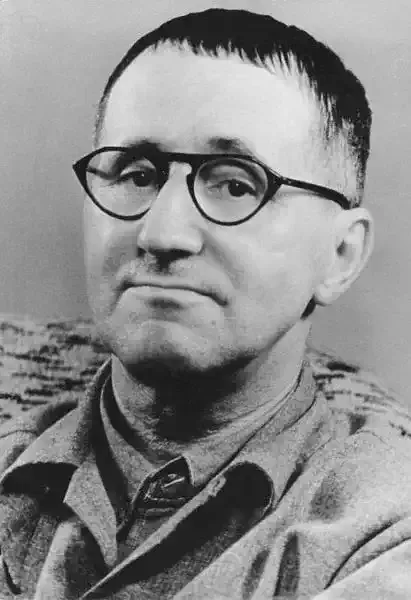
Bertolt Brecht
To Be Read in the Morning and at Night
To Be Read in the Morning and at Night
[Original]
Morgens und abends zu lesen
Der, den ich liebe
Hat mir gesagt
Daß er mich braucht.
Darum
Gebe ich auf mich acht
Sehe auf meinen Weg und
Fürchte von jedem Regentropfen
Daß er mich erschlagen könnte.
[Translation]
To read in the morning and at night
My love
Has told me
That he needs me.
That's why
I take good care of myself
Watch out where I'm going and
Fear that any drop of rain
Might kill me.
[Original]
Morgens und abends zu lesen
Der, den ich liebe
Hat mir gesagt
Daß er mich braucht.
Darum
Gebe ich auf mich acht
Sehe auf meinen Weg und
Fürchte von jedem Regentropfen
Daß er mich erschlagen könnte.
[Translation]
To read in the morning and at night
My love
Has told me
That he needs me.
That's why
I take good care of myself
Watch out where I'm going and
Fear that any drop of rain
Might kill me.
484