

Poems in this theme
Fear and Anxiety

Emily Dickinson
I lived on dread; to those who know
I lived on dread; to those who know
I lived on dread; to those who know
The stimulus there is
In danger, other impetus
Is numb and vital-less.
As't were a spur upon the soul,
A fear will urge it where
To go without the spectre's aid
Were challenging despair.
I lived on dread; to those who know
The stimulus there is
In danger, other impetus
Is numb and vital-less.
As't were a spur upon the soul,
A fear will urge it where
To go without the spectre's aid
Were challenging despair.
270
Emily Dickinson
I know some lonely Houses off the Road
I know some lonely Houses off the Road
289
I know some lonely Houses off the Road
A Robber'd like the look of-
Wooden barred,
And Windows hanging low,
Inviting to-
A Portico,
Where two could creepOne-
hand the Tools-
The other peep-
To make sure All's Asleep-
Old fashioned eyes-
Not easy to surprise!
How orderly the Kitchen'd look, by night,
With just a Clock-
But they could gag the Tick-
And Mice won't bark-
And so the Walls-don't tellNone-
will-
A pair of Spectacles ajar just stir-
An Almanac's aware-
Was it the Mat-winked,
Or a Nervous Star?
The Moon-slides down the stair,
To see who's there!
There's plunder-where-
Tankard, or SpoonEarring-
or Stone-
A Watch-Some Ancient Brooch
To match the Grandmama-
Staid sleeping-there
Day-rattles-too
Stealth's-slow-
The Sun has got as far
As the third Sycamore-
Screams Chanticleer
"Who's there"?
And Echoes-Trains away,
Sneer-"Where"!
While the old Couple, just astir,
Fancy the Sunrise-left the door ajar!
289
I know some lonely Houses off the Road
A Robber'd like the look of-
Wooden barred,
And Windows hanging low,
Inviting to-
A Portico,
Where two could creepOne-
hand the Tools-
The other peep-
To make sure All's Asleep-
Old fashioned eyes-
Not easy to surprise!
How orderly the Kitchen'd look, by night,
With just a Clock-
But they could gag the Tick-
And Mice won't bark-
And so the Walls-don't tellNone-
will-
A pair of Spectacles ajar just stir-
An Almanac's aware-
Was it the Mat-winked,
Or a Nervous Star?
The Moon-slides down the stair,
To see who's there!
There's plunder-where-
Tankard, or SpoonEarring-
or Stone-
A Watch-Some Ancient Brooch
To match the Grandmama-
Staid sleeping-there
Day-rattles-too
Stealth's-slow-
The Sun has got as far
As the third Sycamore-
Screams Chanticleer
"Who's there"?
And Echoes-Trains away,
Sneer-"Where"!
While the old Couple, just astir,
Fancy the Sunrise-left the door ajar!
373
Emily Dickinson
I had not minded—Walls
I had not minded—Walls
398
I had not minded—Walls—
Were Universe—one Rock—
And fr I heard his silver Call
The other side the Block—
I'd tunnel—till my Groove
Pushed sudden thro' to his—
Then my face take her Recompense—
The looking in his Eyes—
But 'tis a single Hair—
A filament—a law—
A Cobweb—wove in Adamant—
A Battlement—of Straw—
A limit like the Veil
Unto the Lady's face—
But every Mesh—a Citadel—
And Dragons—in the Crease—
398
I had not minded—Walls—
Were Universe—one Rock—
And fr I heard his silver Call
The other side the Block—
I'd tunnel—till my Groove
Pushed sudden thro' to his—
Then my face take her Recompense—
The looking in his Eyes—
But 'tis a single Hair—
A filament—a law—
A Cobweb—wove in Adamant—
A Battlement—of Straw—
A limit like the Veil
Unto the Lady's face—
But every Mesh—a Citadel—
And Dragons—in the Crease—
230
Emily Dickinson
Home
Home
Years I had been from home,
And now, before the door
I dared not open, lest a face
I never saw before
Stare vacant into mine
And ask my business there.
My business, - just a life I left,
Was such still dwelling there?
I fumbled at my nerve,
I scanned the windows near;
The silence like an ocean rolled,
And broke against my ear.
I laughed a wooden laugh
That I could fear a door,
Who danger and the dead had faced,
But never quaked before.
I fitted to the latch
My hand, with trembling care,
Lest back the awful door should spring,
And leave me standing there.
I moved my fingers off
As cautiously as glass,
And held my ears, and like a thief
Fled gasping from the house.
Years I had been from home,
And now, before the door
I dared not open, lest a face
I never saw before
Stare vacant into mine
And ask my business there.
My business, - just a life I left,
Was such still dwelling there?
I fumbled at my nerve,
I scanned the windows near;
The silence like an ocean rolled,
And broke against my ear.
I laughed a wooden laugh
That I could fear a door,
Who danger and the dead had faced,
But never quaked before.
I fitted to the latch
My hand, with trembling care,
Lest back the awful door should spring,
And leave me standing there.
I moved my fingers off
As cautiously as glass,
And held my ears, and like a thief
Fled gasping from the house.
311
Emily Dickinson
Distrustful of the Gentian
Distrustful of the Gentian
20
Distrustful of the Gentian-
And just to turn away,
The fluttering of her fringes
Child my perfidy-
Weary for my-----
I will singing go-
I shall not feel the sleet-then-
I shall not fear the snow.
Flees so the phantom meadow
Before the breathless Bee-
So bubble brooks in deserts
On Ears that dying lie-
Burn so the Evening Spires
To Eyes that Closing go-
Hangs so distant Heaven-
To a hand below.
20
Distrustful of the Gentian-
And just to turn away,
The fluttering of her fringes
Child my perfidy-
Weary for my-----
I will singing go-
I shall not feel the sleet-then-
I shall not fear the snow.
Flees so the phantom meadow
Before the breathless Bee-
So bubble brooks in deserts
On Ears that dying lie-
Burn so the Evening Spires
To Eyes that Closing go-
Hangs so distant Heaven-
To a hand below.
301
Emily Dickinson
An awful Tempest mashed the air
An awful Tempest mashed the air
198
An awful Tempest mashed the air-
The clouds were gaunt, and few-
A Black-as of a Spectre's Cloak
Hid Heaven and Earth from view.
The creatures chuckled on the Roofs-
And whistled in the air-
And shook their fists-
And gnashed their teeth-
And swung their frenzied hair.
The morning lit-the Birds arose-
The Monster's faded eyes
Turned slowly to his native coast-
And peace-was Paradise!
198
An awful Tempest mashed the air-
The clouds were gaunt, and few-
A Black-as of a Spectre's Cloak
Hid Heaven and Earth from view.
The creatures chuckled on the Roofs-
And whistled in the air-
And shook their fists-
And gnashed their teeth-
And swung their frenzied hair.
The morning lit-the Birds arose-
The Monster's faded eyes
Turned slowly to his native coast-
And peace-was Paradise!
289
Emily Dickinson
Adrift! A little boat adrift!
Adrift! A little boat adrift!
30
Adrift! A little boat adrift!
And night is coming down!
Will no one guide a little boat
Unto the nearest town?
So Sailors say-on yesterday-
Just as the dusk was brown
One little boat gave up its strife
And gurgled down and down.
So angels say-on yesterday-
Just as the dawn was red
One little boat-o'erspent with gales-
Retrimmed its masts-redecked its sails-
And shot-exultant on!
30
Adrift! A little boat adrift!
And night is coming down!
Will no one guide a little boat
Unto the nearest town?
So Sailors say-on yesterday-
Just as the dusk was brown
One little boat gave up its strife
And gurgled down and down.
So angels say-on yesterday-
Just as the dawn was red
One little boat-o'erspent with gales-
Retrimmed its masts-redecked its sails-
And shot-exultant on!
259
Emily Dickinson
A Secret told
A Secret told
381
A Secret told-
Ceases to be a Secret-then-
A Secret-keptThat-
can appal but One-
Better of it-continual be afraid-
Than it-
And Whom you told it to-beside-
381
A Secret told-
Ceases to be a Secret-then-
A Secret-keptThat-
can appal but One-
Better of it-continual be afraid-
Than it-
And Whom you told it to-beside-
330
Emily Dickinson
A doubt if it be Us
A doubt if it be Us
859
A doubt if it be Us
Assists the staggering Mind
In an extremer Anguish
Until it footing find.
An Unreality is lent,
A merciful Mirage
That makes the living possible
While it suspends the lives.
859
A doubt if it be Us
Assists the staggering Mind
In an extremer Anguish
Until it footing find.
An Unreality is lent,
A merciful Mirage
That makes the living possible
While it suspends the lives.
299
Emily Dickinson
A darting fear-a pomp-a tear
A darting fear-a pomp-a tear
87
A darting fear-a pomp-a tear-
A waking on a morn
To find that what one waked for,
Inhales the different dawn.
87
A darting fear-a pomp-a tear-
A waking on a morn
To find that what one waked for,
Inhales the different dawn.
435

Ella Wheeler Wilcox
Warning
Warning
High in the heavens I saw the moon this morning,
Albeit the sun shone bright;
Unto my soul it spoke, in voice of warning,
‘Remember Night! ’
High in the heavens I saw the moon this morning,
Albeit the sun shone bright;
Unto my soul it spoke, in voice of warning,
‘Remember Night! ’
313
Ella Wheeler Wilcox
The King Of Candyland
The King Of Candyland
Have you heard of the king of Candy land?
Well, listen while I sing,
He has pages on every hand,
For he is a mighty king,
And thousands of children bend the knee,
And bow to this ruler of high degree.
He has a smile, oh! like the sun!
And his face is round and bland,
His bright eyes twinkle and glow with fun,
As the children kiss his hand.
And everything toothsome, melting, sweet,
He scatters freely before their feet.
But wo! for the children who follow him,
With loving praises and laughter,
For he is a monster ugly and grim
That they go running after.
And when they get well into the chase
He lifts his masque and shows his face.
And ah! but that is a gruesome sight
For the followers of the king.
The cheeks grow pale that once were bright,
And they sob instead of sing.
And their teeth drop out and their eyes grow red,
And they cannot sleep when they go to bed.
And after they see the monster's face,
They have no peaceful hour.
And they have aches in every place,
And what was sweet seems sour.
Oh wo! for that sorrowful foolish band
Who follow the king of Candy land.
Have you heard of the king of Candy land?
Well, listen while I sing,
He has pages on every hand,
For he is a mighty king,
And thousands of children bend the knee,
And bow to this ruler of high degree.
He has a smile, oh! like the sun!
And his face is round and bland,
His bright eyes twinkle and glow with fun,
As the children kiss his hand.
And everything toothsome, melting, sweet,
He scatters freely before their feet.
But wo! for the children who follow him,
With loving praises and laughter,
For he is a monster ugly and grim
That they go running after.
And when they get well into the chase
He lifts his masque and shows his face.
And ah! but that is a gruesome sight
For the followers of the king.
The cheeks grow pale that once were bright,
And they sob instead of sing.
And their teeth drop out and their eyes grow red,
And they cannot sleep when they go to bed.
And after they see the monster's face,
They have no peaceful hour.
And they have aches in every place,
And what was sweet seems sour.
Oh wo! for that sorrowful foolish band
Who follow the king of Candy land.
362
Ella Wheeler Wilcox
Spectres
Spectres
How terrible these nights are when alone
With our scarred hearts, we sit in solitude,
And some old sorrow, to the world unknown,
Does suddenly with silent steps intrude.
After the guests departed, and the light
Burned dimly in my room, there came to me,
As noiselessly as shadows of the night,
The spectre of a woe that used to be.
Out of the gruesome darkness and the gloom
I saw it peering; and, in still despair,
I watched it gliding swift across the room,
Until it came and stood beside my chair.
Why, need I tell thee what its shape or name?
Thou hast thy secret hidden from the light:
And be it sin or sorrow, woe or shame,
Thou dost not like to meet it in the night.
And yet it comes. As certainly as death,
And far more cruel since death ends all pain,
On lonesome nights we feel its icy breath,
And turn and face the thing we fancied slain.
With shrinking hearts, we view the ghastly shape;
We look into its eyes with fear and dread,
And know that we can never more escape
Until the grave doth fold us with the dead.
On the swift maelstrom of the eddying world
We hurl our woes, and think they are no more.
But round and round by dizzy billows whirled,
They reach out sinewy arms and swim to shore.
How terrible these nights are when alone
With our scarred hearts, we sit in solitude,
And some old sorrow, to the world unknown,
Does suddenly with silent steps intrude.
After the guests departed, and the light
Burned dimly in my room, there came to me,
As noiselessly as shadows of the night,
The spectre of a woe that used to be.
Out of the gruesome darkness and the gloom
I saw it peering; and, in still despair,
I watched it gliding swift across the room,
Until it came and stood beside my chair.
Why, need I tell thee what its shape or name?
Thou hast thy secret hidden from the light:
And be it sin or sorrow, woe or shame,
Thou dost not like to meet it in the night.
And yet it comes. As certainly as death,
And far more cruel since death ends all pain,
On lonesome nights we feel its icy breath,
And turn and face the thing we fancied slain.
With shrinking hearts, we view the ghastly shape;
We look into its eyes with fear and dread,
And know that we can never more escape
Until the grave doth fold us with the dead.
On the swift maelstrom of the eddying world
We hurl our woes, and think they are no more.
But round and round by dizzy billows whirled,
They reach out sinewy arms and swim to shore.
386
Ella Wheeler Wilcox
Don't Tease The Lion
Don't Tease The Lion
If you saw a lion
Not within a cage,
Would you tease and fret him
Till he roared in rage?
Would you tempt his anger
And his savage power,
Knowing he could crush you,
Kill you, and devour?
Yet I know some people
Who, morn and noon and night,
Tease and fret with bitters
The lion-appetite.
It matters not what ails them,
For each disease and all
They seem to think there's healing
In demon alcohol.
So they fret the lion,
And anger him, until,
In his awful power,
He springs up to kill.
Let me warn you, children,
From this foolish way.
Do not tease the lion,
Nor tempt him any day.
Don't believe the doctors
If they say you need
Any wines or ciders;
For there are, indeed,
Better cures, and safer,
Than these drinks, that slay
More than a hundred people
Without fail each day.
If you saw a lion
Not within a cage,
Would you tease and fret him
Till he roared in rage?
Would you tempt his anger
And his savage power,
Knowing he could crush you,
Kill you, and devour?
Yet I know some people
Who, morn and noon and night,
Tease and fret with bitters
The lion-appetite.
It matters not what ails them,
For each disease and all
They seem to think there's healing
In demon alcohol.
So they fret the lion,
And anger him, until,
In his awful power,
He springs up to kill.
Let me warn you, children,
From this foolish way.
Do not tease the lion,
Nor tempt him any day.
Don't believe the doctors
If they say you need
Any wines or ciders;
For there are, indeed,
Better cures, and safer,
Than these drinks, that slay
More than a hundred people
Without fail each day.
392
Ella Wheeler Wilcox
About May
About May
One night Nurse Sleep held out her hand
To tired little May.
'Come, go with me to Wonderland,'
She said, 'I know the way.
Just rock-a-by-hum-m-m,
And lo! we come
To the place where the dream-girls play.'
But naughty May, she wriggled away
From Sleep's soft arms, and said:
'I must stay awake till I eat my cake,
And then I will go to bed;
With a by-lo, away I will go.'
But the good nurse shook her head.
She shook her head and away she sped,
While May sat munching her crumb.
But after the cake there came an ache,
Though May cried: 'Come, Sleep, come,
And it's oh! my! let us by-lo-by'-
All save the echoes were dumb.
She ran after Sleep toward Wonderland,
Ran till the morning light;
And just as she caught her and grasped her hand,
A nightmare gave her a fright.
And it's by-lo, I hope she'll know
Better another night.
One night Nurse Sleep held out her hand
To tired little May.
'Come, go with me to Wonderland,'
She said, 'I know the way.
Just rock-a-by-hum-m-m,
And lo! we come
To the place where the dream-girls play.'
But naughty May, she wriggled away
From Sleep's soft arms, and said:
'I must stay awake till I eat my cake,
And then I will go to bed;
With a by-lo, away I will go.'
But the good nurse shook her head.
She shook her head and away she sped,
While May sat munching her crumb.
But after the cake there came an ache,
Though May cried: 'Come, Sleep, come,
And it's oh! my! let us by-lo-by'-
All save the echoes were dumb.
She ran after Sleep toward Wonderland,
Ran till the morning light;
And just as she caught her and grasped her hand,
A nightmare gave her a fright.
And it's by-lo, I hope she'll know
Better another night.
388

Elizabeth Bishop
The Man-moth
The Man-moth
Here, above,
cracks in the buldings are filled with battered moonlight.
The whole shadow of Man is only as big as his hat.
It lies at his feet like a circle for a doll to stand on,
and he makes an inverted pin, the point magnetized to the moon.
He does not see the moon; he observes only her vast properties,
feeling the queer light on his hands, neither warm nor cold,
of a temperature impossible to records in thermometers.
But when the Man-Moth
pays his rare, although occasional, visits to the surface,
the moon looks rather different to him. He emerges
from an opening under the edge of one of the sidewalks
and nervously begins to scale the faces of the buildings.
He thinks the moon is a small hole at the top of the sky,
proving the sky quite useless for protection.
He trembles, but must investigate as high as he can climb.
Up the façades,
his shadow dragging like a photographer's cloth behind him
he climbs fearfully, thinking that this time he will manage
to push his small head through that round clean opening
and be forced through, as from a tube, in black scrolls on the light.
(Man, standing below him, has no such illusions.)
But what the Man-Moth fears most he must do, although
he fails, of course, and falls back scared but quite unhurt.
Then he returns
to the pale subways of cement he calls his home. He flits,
he flutters, and cannot get aboard the silent trains
fast enough to suit him. The doors close swiftly.
The Man-Moth always seats himself facing the wrong way
and the train starts at once at its full, terrible speed,
without a shift in gears or a gradation of any sort.
He cannot tell the rate at which he travels backwards.
Each night he must
be carried through artificial tunnels and dream recurrent dreams.
Just as the ties recur beneath his train, these underlie
his rushing brain. He does not dare look out the window,
for the third rail, the unbroken draught of poison,
runs there beside him. He regards it as a disease
he has inherited the susceptibility to. He has to keep
his hands in his pockets, as others must wear mufflers.
If you catch him,
hold up a flashlight to his eye. It's all dark pupil,
an entire night itself, whose haired horizon tightens
as he stares back, and closes up the eye. Then from the lids
one tear, his only possession, like the bee's sting, slips.
Slyly he palms it, and if you're not paying attention
he'll swallow it. However, if you watch, he'll hand it over,
cool as from underground springs and pure enough to drink.
Here, above,
cracks in the buldings are filled with battered moonlight.
The whole shadow of Man is only as big as his hat.
It lies at his feet like a circle for a doll to stand on,
and he makes an inverted pin, the point magnetized to the moon.
He does not see the moon; he observes only her vast properties,
feeling the queer light on his hands, neither warm nor cold,
of a temperature impossible to records in thermometers.
But when the Man-Moth
pays his rare, although occasional, visits to the surface,
the moon looks rather different to him. He emerges
from an opening under the edge of one of the sidewalks
and nervously begins to scale the faces of the buildings.
He thinks the moon is a small hole at the top of the sky,
proving the sky quite useless for protection.
He trembles, but must investigate as high as he can climb.
Up the façades,
his shadow dragging like a photographer's cloth behind him
he climbs fearfully, thinking that this time he will manage
to push his small head through that round clean opening
and be forced through, as from a tube, in black scrolls on the light.
(Man, standing below him, has no such illusions.)
But what the Man-Moth fears most he must do, although
he fails, of course, and falls back scared but quite unhurt.
Then he returns
to the pale subways of cement he calls his home. He flits,
he flutters, and cannot get aboard the silent trains
fast enough to suit him. The doors close swiftly.
The Man-Moth always seats himself facing the wrong way
and the train starts at once at its full, terrible speed,
without a shift in gears or a gradation of any sort.
He cannot tell the rate at which he travels backwards.
Each night he must
be carried through artificial tunnels and dream recurrent dreams.
Just as the ties recur beneath his train, these underlie
his rushing brain. He does not dare look out the window,
for the third rail, the unbroken draught of poison,
runs there beside him. He regards it as a disease
he has inherited the susceptibility to. He has to keep
his hands in his pockets, as others must wear mufflers.
If you catch him,
hold up a flashlight to his eye. It's all dark pupil,
an entire night itself, whose haired horizon tightens
as he stares back, and closes up the eye. Then from the lids
one tear, his only possession, like the bee's sting, slips.
Slyly he palms it, and if you're not paying attention
he'll swallow it. However, if you watch, he'll hand it over,
cool as from underground springs and pure enough to drink.
734
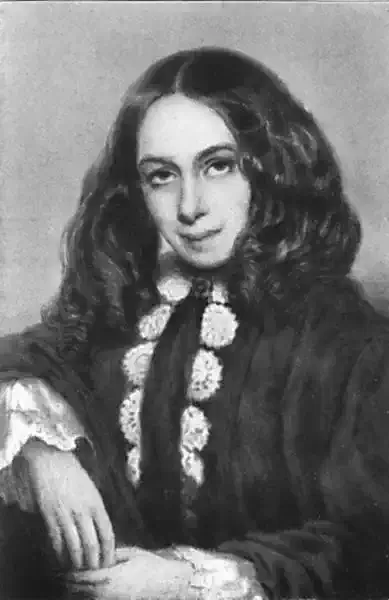
Elizabeth Barrett Browning
Sonnet XXXVI: When We Met First
Sonnet XXXVI: When We Met First
When we met first and loved, I did not build
Upon the event with marble. Could it mean
To last, a love set pendulous between
Sorrow and sorrow? Nay, I rather thrilled,
Distrusting every light that seemed to gild
The onward path, and feared to overlean
A finger even. And, though I have grown serene
And strong since then, I think that God has willed
A still renewable fear ... O love, O troth ...
Lest these enclasped hands should never hold,
This mutual kiss drop down between us both
As an unowned thing, once the lips being cold.
And Love, be false! if he, to keep one oath,
Must lose one joy, by his life's star foretold.
When we met first and loved, I did not build
Upon the event with marble. Could it mean
To last, a love set pendulous between
Sorrow and sorrow? Nay, I rather thrilled,
Distrusting every light that seemed to gild
The onward path, and feared to overlean
A finger even. And, though I have grown serene
And strong since then, I think that God has willed
A still renewable fear ... O love, O troth ...
Lest these enclasped hands should never hold,
This mutual kiss drop down between us both
As an unowned thing, once the lips being cold.
And Love, be false! if he, to keep one oath,
Must lose one joy, by his life's star foretold.
404
Elizabeth Barrett Browning
Sonnet 36 - When we met first and loved, I did not build
Sonnet 36 - When we met first and loved, I did not build
XXXVI
When we met first and loved, I did not build
Upon the event with marble. Could it mean
To last, a love set pendulous between
Sorrow and sorrow? Nay, I rather thrilled,
Distrusting every light that seemed to gild
The onward path, and feared to overlean
A finger even. And, though I have grown serene
And strong since then, I think that God has willed
A still renewable fear . . . O love, O troth . . .
Lest these enclasped hands should never hold,
This mutual kiss drop down between us both
As an unowned thing, once the lips being cold.
And Love, be false! if he, to keep one oath,
Must lose one joy, by his life's star foretold.
XXXVI
When we met first and loved, I did not build
Upon the event with marble. Could it mean
To last, a love set pendulous between
Sorrow and sorrow? Nay, I rather thrilled,
Distrusting every light that seemed to gild
The onward path, and feared to overlean
A finger even. And, though I have grown serene
And strong since then, I think that God has willed
A still renewable fear . . . O love, O troth . . .
Lest these enclasped hands should never hold,
This mutual kiss drop down between us both
As an unowned thing, once the lips being cold.
And Love, be false! if he, to keep one oath,
Must lose one joy, by his life's star foretold.
413
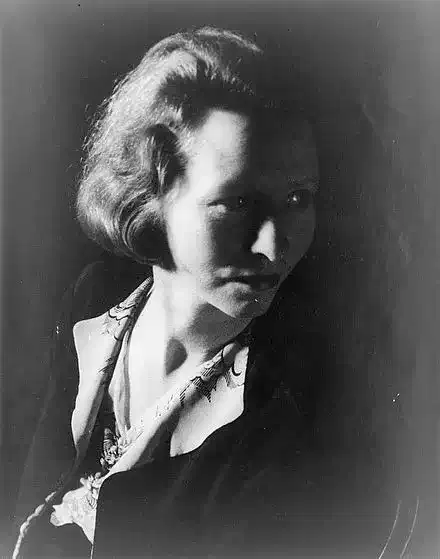
Edna St. Vincent Millay
Wraith
Wraith
"Thin Rain, whom are you haunting,
That you haunt my door?"
—Surely it is not I she's wanting;
Someone living here before—
"Nobody's in the house but me:
You may come in if you like and see."
Thin as thread, with exquisite fingers,—
Have you seen her, any of you?—
Grey shawl, and leaning on the wind,
And the garden showing through?
Glimmering eyes,—and silent, mostly,
Sort of a whisper, sort of a purr,
Asking something, asking it over,
If you get a sound from her.—
Ever see her, any of you?—
Strangest thing I've ever known,—
Every night since I moved in,
And I came to be alone.
"Thin Rain, hush with your knocking!
You may not come in!
This is I that you hear rocking;
Nobody's with me, nor has been!"
Curious, how she tried the window,—
Odd, the way she tries the door,—
Wonder just what sort of people
Could have had this house before . . .
"Thin Rain, whom are you haunting,
That you haunt my door?"
—Surely it is not I she's wanting;
Someone living here before—
"Nobody's in the house but me:
You may come in if you like and see."
Thin as thread, with exquisite fingers,—
Have you seen her, any of you?—
Grey shawl, and leaning on the wind,
And the garden showing through?
Glimmering eyes,—and silent, mostly,
Sort of a whisper, sort of a purr,
Asking something, asking it over,
If you get a sound from her.—
Ever see her, any of you?—
Strangest thing I've ever known,—
Every night since I moved in,
And I came to be alone.
"Thin Rain, hush with your knocking!
You may not come in!
This is I that you hear rocking;
Nobody's with me, nor has been!"
Curious, how she tried the window,—
Odd, the way she tries the door,—
Wonder just what sort of people
Could have had this house before . . .
382
Edna St. Vincent Millay
The Bean-Stalk
The Bean-Stalk
Ho, Giant! This is I!
I have built me a bean-stalk into your sky!
La,—but it's lovely, up so high!
This is how I came,—I put
Here my knee, there my foot,
Up and up, from shoot to shoot—
And the blessed bean-stalk thinning
Like the mischief all the time,
Till it took me rocking, spinning,
In a dizzy, sunny circle,
Making angles with the root,
Far and out above the cackle
Of the city I was born in,
Till the little dirty city
In the light so sheer and sunny
Shone as dazzling bright and pretty
As the money that you find
In a dream of finding money—
What a wind! What a morning!—
Till the tiny, shiny city,
When I shot a glance below,
Shaken with a giddy laughter,
Sick and blissfully afraid,
Was a dew-drop on a blade,
And a pair of moments after
Was the whirling guess I made,—
And the wind was like a whip
Cracking past my icy ears,
And my hair stood out behind,
And my eyes were full of tears,
Wide-open and cold,
More tears than they could hold,
The wind was blowing so,
And my teeth were in a row,
Dry and grinning,
And I felt my foot slip,
And I scratched the wind and whined,
And I clutched the stalk and jabbered,
With my eyes shut blind,—
What a wind! What a wind!
Your broad sky, Giant,
Is the shelf of a cupboard;
I make bean-stalks, I'm
A builder, like yourself,
But bean-stalks is my trade,
I couldn't make a shelf,
Don't know how they're made,
Now, a bean-stalk is more pliant—
La, what a climb!
Ho, Giant! This is I!
I have built me a bean-stalk into your sky!
La,—but it's lovely, up so high!
This is how I came,—I put
Here my knee, there my foot,
Up and up, from shoot to shoot—
And the blessed bean-stalk thinning
Like the mischief all the time,
Till it took me rocking, spinning,
In a dizzy, sunny circle,
Making angles with the root,
Far and out above the cackle
Of the city I was born in,
Till the little dirty city
In the light so sheer and sunny
Shone as dazzling bright and pretty
As the money that you find
In a dream of finding money—
What a wind! What a morning!—
Till the tiny, shiny city,
When I shot a glance below,
Shaken with a giddy laughter,
Sick and blissfully afraid,
Was a dew-drop on a blade,
And a pair of moments after
Was the whirling guess I made,—
And the wind was like a whip
Cracking past my icy ears,
And my hair stood out behind,
And my eyes were full of tears,
Wide-open and cold,
More tears than they could hold,
The wind was blowing so,
And my teeth were in a row,
Dry and grinning,
And I felt my foot slip,
And I scratched the wind and whined,
And I clutched the stalk and jabbered,
With my eyes shut blind,—
What a wind! What a wind!
Your broad sky, Giant,
Is the shelf of a cupboard;
I make bean-stalks, I'm
A builder, like yourself,
But bean-stalks is my trade,
I couldn't make a shelf,
Don't know how they're made,
Now, a bean-stalk is more pliant—
La, what a climb!
338
Edna St. Vincent Millay
Night Is My Sister, And How Deep In Love
Night Is My Sister, And How Deep In Love
Night is my sister, and how deep in love,
How drowned in love and weedily washed ashore,
There to be fretted by the drag and shove
At the tide's edge, I lie—these things and more:
Whose arm alone between me and the sand,
Whose voice alone, whose pitiful breath brought near,
Could thaw these nostrils and unlock this hand,
She could advise you, should you care to hear.
Small chance, however, in a storm so black,
A man will leave his friendly fire and snug
For a drowned woman's sake, and bring her back
To drip and scatter shells upon the rug.
No one but Night, with tears on her dark face,
Watches beside me in this windy place.
Night is my sister, and how deep in love,
How drowned in love and weedily washed ashore,
There to be fretted by the drag and shove
At the tide's edge, I lie—these things and more:
Whose arm alone between me and the sand,
Whose voice alone, whose pitiful breath brought near,
Could thaw these nostrils and unlock this hand,
She could advise you, should you care to hear.
Small chance, however, in a storm so black,
A man will leave his friendly fire and snug
For a drowned woman's sake, and bring her back
To drip and scatter shells upon the rug.
No one but Night, with tears on her dark face,
Watches beside me in this windy place.
351
Edna St. Vincent Millay
Assault
Assault
I
I had forgotten how the frogs must sound
After a year of silence, else I think
I should not so have ventured forth alone
At dusk upon this unfrequented road.
II
I am waylaid by Beauty. Who will walk
Between me and the crying of the frogs?
Oh, savage Beauty, suffer me to pass,
That am a timid woman, on her way
From one house to another!
I
I had forgotten how the frogs must sound
After a year of silence, else I think
I should not so have ventured forth alone
At dusk upon this unfrequented road.
II
I am waylaid by Beauty. Who will walk
Between me and the crying of the frogs?
Oh, savage Beauty, suffer me to pass,
That am a timid woman, on her way
From one house to another!
372
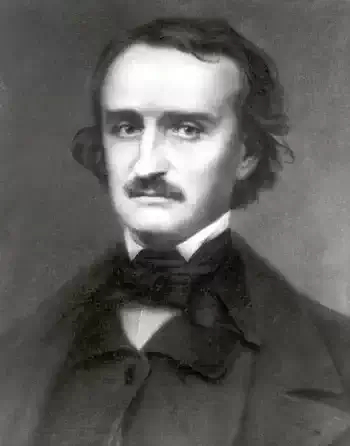
Edgar Allan Poe
To -- -- --. Ulalume: A Ballad
To -- -- --. Ulalume: A Ballad
The skies they were ashen and sober;
The leaves they were crisped and sereThe
leaves they were withering and sere;
It was night in the lonesome October
Of my most immemorial year;
It was hard by the dim lake of Auber,
In the misty mid region of WeirIt
was down by the dank tarn of Auber,
In the ghoul-haunted woodland of Weir.
Here once, through an alley Titanic,
Of cypress, I roamed with my SoulOf
cypress, with Psyche, my Soul.
There were days when my heart was volcanic
As the scoriac rivers that rollAs
the lavas that restlessly roll
Their sulphurous currents down Yaanek
In the ultimate climes of the poleThat
groan as they roll down Mount Yaanek
In the realms of the boreal pole.
Our talk had been serious and sober,
But our thoughts they were palsied and sereOur
memories were treacherous and sere
For we knew not the month was October,
And we marked not the night of the year(
Ah, night of all nights in the year!)
We noted not the dim lake of Auber(
Though once we had journeyed down here),
Remembered not the dank tarn of Auber,
Nor the ghoul-haunted woodland of Weir.
And now, as the night was senescent,
And star-dials pointed to mornAs
the star-dials hinted of morn
At the end of our path a liquescent
And nebulous lustre was born,
Out of which a miraculous crescent
Arose with a duplicate hornAstarte's
bediamonded crescent
Distinct with its duplicate horn.
And I said- 'She is warmer than Dian:
She rolls through an ether of sighsShe
revels in a region of sighs:
She has seen that the tears are not dry on
These cheeks, where the worm never dies,
And has come past the stars of the Lion,
To point us the path to the skiesTo
the Lethean peace of the skies
Come up, in despite of the Lion,
To shine on us with her bright eyes
Come up through the lair of the Lion,
With love in her luminous eyes.'
But Psyche, uplifting her finger,
Said- 'Sadly this star I mistrustHer
pallor I strangely mistrust:
Oh, hasten!- oh, let us not linger!
Oh, fly!- let us fly!- for we must.'
In terror she spoke, letting sink her
Wings until they trailed in the dust
In agony sobbed, letting sink her
Plumes till they trailed in the dustTill
they sorrowfully trailed in the dust.
I replied- 'This is nothing but dreaming:
Let us on by this tremulous light!
Let us bathe in this crystalline light!
Its Sybilic splendor is beaming
With Hope and in Beauty to-night:See!-
it flickers up the sky through the night!
Ah, we safely may trust to its gleaming,
And be sure it will lead us aright
We safely may trust to a gleaming
That cannot but guide us aright,
Since it flickers up to Heaven through the night.'
Thus I pacified Psyche and kissed her,
And tempted her out of her gloomAnd
conquered her scruples and gloom;
And we passed to the end of the vista,
But were stopped by the door of a tombBy
the door of a legended tomb;
And I said- 'What is written, sweet sister,
On the door of this legended tomb?'
She replied- 'Ulalume- Ulalume'
Tis the vault of thy lost Ulalume!'
Then my heart it grew ashen and sober
As the leaves that were crisped and sereAs
the leaves that were withering and sere
And I cried- 'It was surely October
On this very night of last year
That I journeyed- I journeyed down hereThat
I brought a dread burden down hereOn
this night of all nights in the year,
Ah, what demon has tempted me here?
Well I know, now, this dim lake of AuberThis
misty mid region of WeirWell
I know, now, this dank tarn of Auber,
This ghoul-haunted woodland of Weir.'
The skies they were ashen and sober;
The leaves they were crisped and sereThe
leaves they were withering and sere;
It was night in the lonesome October
Of my most immemorial year;
It was hard by the dim lake of Auber,
In the misty mid region of WeirIt
was down by the dank tarn of Auber,
In the ghoul-haunted woodland of Weir.
Here once, through an alley Titanic,
Of cypress, I roamed with my SoulOf
cypress, with Psyche, my Soul.
There were days when my heart was volcanic
As the scoriac rivers that rollAs
the lavas that restlessly roll
Their sulphurous currents down Yaanek
In the ultimate climes of the poleThat
groan as they roll down Mount Yaanek
In the realms of the boreal pole.
Our talk had been serious and sober,
But our thoughts they were palsied and sereOur
memories were treacherous and sere
For we knew not the month was October,
And we marked not the night of the year(
Ah, night of all nights in the year!)
We noted not the dim lake of Auber(
Though once we had journeyed down here),
Remembered not the dank tarn of Auber,
Nor the ghoul-haunted woodland of Weir.
And now, as the night was senescent,
And star-dials pointed to mornAs
the star-dials hinted of morn
At the end of our path a liquescent
And nebulous lustre was born,
Out of which a miraculous crescent
Arose with a duplicate hornAstarte's
bediamonded crescent
Distinct with its duplicate horn.
And I said- 'She is warmer than Dian:
She rolls through an ether of sighsShe
revels in a region of sighs:
She has seen that the tears are not dry on
These cheeks, where the worm never dies,
And has come past the stars of the Lion,
To point us the path to the skiesTo
the Lethean peace of the skies
Come up, in despite of the Lion,
To shine on us with her bright eyes
Come up through the lair of the Lion,
With love in her luminous eyes.'
But Psyche, uplifting her finger,
Said- 'Sadly this star I mistrustHer
pallor I strangely mistrust:
Oh, hasten!- oh, let us not linger!
Oh, fly!- let us fly!- for we must.'
In terror she spoke, letting sink her
Wings until they trailed in the dust
In agony sobbed, letting sink her
Plumes till they trailed in the dustTill
they sorrowfully trailed in the dust.
I replied- 'This is nothing but dreaming:
Let us on by this tremulous light!
Let us bathe in this crystalline light!
Its Sybilic splendor is beaming
With Hope and in Beauty to-night:See!-
it flickers up the sky through the night!
Ah, we safely may trust to its gleaming,
And be sure it will lead us aright
We safely may trust to a gleaming
That cannot but guide us aright,
Since it flickers up to Heaven through the night.'
Thus I pacified Psyche and kissed her,
And tempted her out of her gloomAnd
conquered her scruples and gloom;
And we passed to the end of the vista,
But were stopped by the door of a tombBy
the door of a legended tomb;
And I said- 'What is written, sweet sister,
On the door of this legended tomb?'
She replied- 'Ulalume- Ulalume'
Tis the vault of thy lost Ulalume!'
Then my heart it grew ashen and sober
As the leaves that were crisped and sereAs
the leaves that were withering and sere
And I cried- 'It was surely October
On this very night of last year
That I journeyed- I journeyed down hereThat
I brought a dread burden down hereOn
this night of all nights in the year,
Ah, what demon has tempted me here?
Well I know, now, this dim lake of AuberThis
misty mid region of WeirWell
I know, now, this dank tarn of Auber,
This ghoul-haunted woodland of Weir.'
292
Edgar Allan Poe
The Raven
The Raven
Once upon a midnight dreary, while I pondered, weak and weary,
Over many a quaint and curious volume of forgotten lore,
While I nodded, nearly napping, suddenly there came a tapping,
As of some one gently rapping, rapping at my chamber door.
''Tis some visitor,' I muttered, 'tapping at my chamber doorOnly
this, and nothing more.'
Ah, distinctly I remember it was in the bleak December,
And each separate dying ember wrought its ghost upon the floor.
Eagerly I wished the morrow;- vainly I had sought to borrow
From my books surcease of sorrow- sorrow for the lost Lenore
For the rare and radiant maiden whom the angels name LenoreNameless
here for evermore.
And the silken sad uncertain rustling of each purple curtain
Thrilled me- filled me with fantastic terrors never felt before;
So that now, to still the beating of my heart, I stood repeating,
''Tis some visitor entreating entrance at my chamber door
Some late visitor entreating entrance at my chamber door;This
it is, and nothing more.'
Presently my soul grew stronger; hesitating then no longer,
'Sir,' said I, 'or Madam, truly your forgiveness I implore;
But the fact is I was napping, and so gently you came rapping,
And so faintly you came tapping, tapping at my chamber door,
That I scarce was sure I heard you'- here I opened wide the door;Darkness
there, and nothing more.
Deep into that darkness peering, long I stood there wondering,
fearing,
Doubting, dreaming dreams no mortals ever dared to dream before;
But the silence was unbroken, and the stillness gave no token,
And the only word there spoken was the whispered word, 'Lenore!'
This I whispered, and an echo murmured back the word, 'Lenore!'Merely
this, and nothing more.
Back into the chamber turning, all my soul within me burning,
Soon again I heard a tapping somewhat louder than before.
'Surely,' said I, 'surely that is something at my window lattice:
Let me see, then, what thereat is, and this mystery explore
Let my heart be still a moment and this mystery explore;'
Tis the wind and nothing more.'
Open here I flung the shutter, when, with many a flirt and
flutter,
In there stepped a stately raven of the saintly days of yore;
Not the least obeisance made he; not a minute stopped or stayed
he;
But, with mien of lord or lady, perched above my chamber doorPerched
upon a bust of Pallas just above my chamber doorPerched,
and sat, and nothing more.
Then this ebony bird beguiling my sad fancy into smiling,
By the grave and stern decorum of the countenance it wore.
'Though thy crest be shorn and shaven, thou,' I said, 'art sure no
craven,
Ghastly grim and ancient raven wandering from the Nightly shoreTell
me what thy lordly name is on the Night's Plutonian shore!'
Quoth the Raven, 'Nevermore.'
Much I marvelled this ungainly fowl to hear discourse so plainly,
Though its answer little meaning- little relevancy bore;
For we cannot help agreeing that no living human being
Ever yet was blest with seeing bird above his chamber door
Bird or beast upon the sculptured bust above his chamber door,
With such name as 'Nevermore.'
But the raven, sitting lonely on the placid bust, spoke only
That one word, as if his soul in that one word he did outpour.
Nothing further then he uttered- not a feather then he flutteredTill
I scarcely more than muttered, 'other friends have flown
beforeOn
the morrow he will leave me, as my hopes have flown before.'
Then the bird said, 'Nevermore.'
Startled at the stillness broken by reply so aptly spoken,
'Doubtless,' said I, 'what it utters is its only stock and store,
Caught from some unhappy master whom unmerciful Disaster
Followed fast and followed faster till his songs one burden bore
Till the dirges of his Hope that melancholy burden bore
Of 'Never- nevermore'.'
But the Raven still beguiling all my fancy into smiling,
Straight I wheeled a cushioned seat in front of bird, and bust and
door;
Then upon the velvet sinking, I betook myself to linking
Fancy unto fancy, thinking what this ominous bird of yore
What this grim, ungainly, ghastly, gaunt and ominous bird of yore
Meant in croaking 'Nevermore.'
This I sat engaged in guessing, but no syllable expressing
To the fowl whose fiery eyes now burned into my bosom's core;
This and more I sat divining, with my head at ease reclining
On the cushion's velvet lining that the lamplight gloated o'er,
But whose velvet violet lining with the lamplight gloating o'er,
She shall press, ah, nevermore!
Then methought the air grew denser, perfumed from an unseen censer
Swung by Seraphim whose footfalls tinkled on the tufted floor.
'Wretch,' I cried, 'thy God hath lent thee- by these angels he
hath sent thee
Respite- respite and nepenthe, from thy memories of Lenore!
Quaff, oh quaff this kind nepenthe and forget this lost Lenore!'
Quoth the Raven, 'Nevermore.'
'Prophet!' said I, 'thing of evil!- prophet still, if bird or
devil!
Whether Tempter sent, or whether tempest tossed thee here ashore,
Desolate yet all undaunted, on this desert land enchantedOn
this home by horror haunted- tell me truly, I implore
Is there- is there balm in Gilead?- tell me- tell me, I implore!'
Quoth the Raven, 'Nevermore.'
'Prophet!' said I, 'thing of evil- prophet still, if bird or
devil!
By that Heaven that bends above us- by that God we both adoreTell
this soul with sorrow laden if, within the distant Aidenn,
It shall clasp a sainted maiden whom the angels name Lenore
Clasp a rare and radiant maiden whom the angels name Lenore.'
Quoth the Raven, 'Nevermore.'
'Be that word our sign in parting, bird or fiend,' I shrieked,
upstarting
'Get thee back into the tempest and the Night's Plutonian shore!
Leave no black plume as a token of that lie thy soul hath spoken!
Leave my loneliness unbroken!- quit the bust above my door!
Take thy beak from out my heart, and take thy form from off my
door!'
Quoth the Raven, 'Nevermore.'
And the Raven, never flitting, still is sitting, still is sitting
On the pallid bust of Pallas just above my chamber door;
And his eyes have all the seeming of a demon's that is dreaming,
And the lamplight o'er him streaming throws his shadow on the
floor;
And my soul from out that shadow that lies floating on the floor
Shall be lifted- nevermore!
Once upon a midnight dreary, while I pondered, weak and weary,
Over many a quaint and curious volume of forgotten lore,
While I nodded, nearly napping, suddenly there came a tapping,
As of some one gently rapping, rapping at my chamber door.
''Tis some visitor,' I muttered, 'tapping at my chamber doorOnly
this, and nothing more.'
Ah, distinctly I remember it was in the bleak December,
And each separate dying ember wrought its ghost upon the floor.
Eagerly I wished the morrow;- vainly I had sought to borrow
From my books surcease of sorrow- sorrow for the lost Lenore
For the rare and radiant maiden whom the angels name LenoreNameless
here for evermore.
And the silken sad uncertain rustling of each purple curtain
Thrilled me- filled me with fantastic terrors never felt before;
So that now, to still the beating of my heart, I stood repeating,
''Tis some visitor entreating entrance at my chamber door
Some late visitor entreating entrance at my chamber door;This
it is, and nothing more.'
Presently my soul grew stronger; hesitating then no longer,
'Sir,' said I, 'or Madam, truly your forgiveness I implore;
But the fact is I was napping, and so gently you came rapping,
And so faintly you came tapping, tapping at my chamber door,
That I scarce was sure I heard you'- here I opened wide the door;Darkness
there, and nothing more.
Deep into that darkness peering, long I stood there wondering,
fearing,
Doubting, dreaming dreams no mortals ever dared to dream before;
But the silence was unbroken, and the stillness gave no token,
And the only word there spoken was the whispered word, 'Lenore!'
This I whispered, and an echo murmured back the word, 'Lenore!'Merely
this, and nothing more.
Back into the chamber turning, all my soul within me burning,
Soon again I heard a tapping somewhat louder than before.
'Surely,' said I, 'surely that is something at my window lattice:
Let me see, then, what thereat is, and this mystery explore
Let my heart be still a moment and this mystery explore;'
Tis the wind and nothing more.'
Open here I flung the shutter, when, with many a flirt and
flutter,
In there stepped a stately raven of the saintly days of yore;
Not the least obeisance made he; not a minute stopped or stayed
he;
But, with mien of lord or lady, perched above my chamber doorPerched
upon a bust of Pallas just above my chamber doorPerched,
and sat, and nothing more.
Then this ebony bird beguiling my sad fancy into smiling,
By the grave and stern decorum of the countenance it wore.
'Though thy crest be shorn and shaven, thou,' I said, 'art sure no
craven,
Ghastly grim and ancient raven wandering from the Nightly shoreTell
me what thy lordly name is on the Night's Plutonian shore!'
Quoth the Raven, 'Nevermore.'
Much I marvelled this ungainly fowl to hear discourse so plainly,
Though its answer little meaning- little relevancy bore;
For we cannot help agreeing that no living human being
Ever yet was blest with seeing bird above his chamber door
Bird or beast upon the sculptured bust above his chamber door,
With such name as 'Nevermore.'
But the raven, sitting lonely on the placid bust, spoke only
That one word, as if his soul in that one word he did outpour.
Nothing further then he uttered- not a feather then he flutteredTill
I scarcely more than muttered, 'other friends have flown
beforeOn
the morrow he will leave me, as my hopes have flown before.'
Then the bird said, 'Nevermore.'
Startled at the stillness broken by reply so aptly spoken,
'Doubtless,' said I, 'what it utters is its only stock and store,
Caught from some unhappy master whom unmerciful Disaster
Followed fast and followed faster till his songs one burden bore
Till the dirges of his Hope that melancholy burden bore
Of 'Never- nevermore'.'
But the Raven still beguiling all my fancy into smiling,
Straight I wheeled a cushioned seat in front of bird, and bust and
door;
Then upon the velvet sinking, I betook myself to linking
Fancy unto fancy, thinking what this ominous bird of yore
What this grim, ungainly, ghastly, gaunt and ominous bird of yore
Meant in croaking 'Nevermore.'
This I sat engaged in guessing, but no syllable expressing
To the fowl whose fiery eyes now burned into my bosom's core;
This and more I sat divining, with my head at ease reclining
On the cushion's velvet lining that the lamplight gloated o'er,
But whose velvet violet lining with the lamplight gloating o'er,
She shall press, ah, nevermore!
Then methought the air grew denser, perfumed from an unseen censer
Swung by Seraphim whose footfalls tinkled on the tufted floor.
'Wretch,' I cried, 'thy God hath lent thee- by these angels he
hath sent thee
Respite- respite and nepenthe, from thy memories of Lenore!
Quaff, oh quaff this kind nepenthe and forget this lost Lenore!'
Quoth the Raven, 'Nevermore.'
'Prophet!' said I, 'thing of evil!- prophet still, if bird or
devil!
Whether Tempter sent, or whether tempest tossed thee here ashore,
Desolate yet all undaunted, on this desert land enchantedOn
this home by horror haunted- tell me truly, I implore
Is there- is there balm in Gilead?- tell me- tell me, I implore!'
Quoth the Raven, 'Nevermore.'
'Prophet!' said I, 'thing of evil- prophet still, if bird or
devil!
By that Heaven that bends above us- by that God we both adoreTell
this soul with sorrow laden if, within the distant Aidenn,
It shall clasp a sainted maiden whom the angels name Lenore
Clasp a rare and radiant maiden whom the angels name Lenore.'
Quoth the Raven, 'Nevermore.'
'Be that word our sign in parting, bird or fiend,' I shrieked,
upstarting
'Get thee back into the tempest and the Night's Plutonian shore!
Leave no black plume as a token of that lie thy soul hath spoken!
Leave my loneliness unbroken!- quit the bust above my door!
Take thy beak from out my heart, and take thy form from off my
door!'
Quoth the Raven, 'Nevermore.'
And the Raven, never flitting, still is sitting, still is sitting
On the pallid bust of Pallas just above my chamber door;
And his eyes have all the seeming of a demon's that is dreaming,
And the lamplight o'er him streaming throws his shadow on the
floor;
And my soul from out that shadow that lies floating on the floor
Shall be lifted- nevermore!
330