

Poems
Fear and Anxiety
Poems in this topic
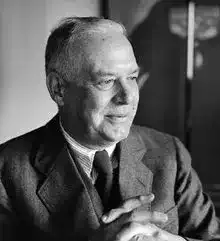
Wallace Stevens
Gray Room
Gray Room
Although you sit in a room that is gray,
Except for the silver
Of the straw-paper,
And pick
At your pale white gown;
Or lift one of the green beads
Of your necklace,
To let it fall;
Or gaze at your green fan
Printed with the red branches of a red willow;
Or, with one finger,
Move the leaf in the bowl--
The leaf that has fallen from the branches of the forsythia
Beside you...
What is all this?
I know how furiously your heart is beating.
Although you sit in a room that is gray,
Except for the silver
Of the straw-paper,
And pick
At your pale white gown;
Or lift one of the green beads
Of your necklace,
To let it fall;
Or gaze at your green fan
Printed with the red branches of a red willow;
Or, with one finger,
Move the leaf in the bowl--
The leaf that has fallen from the branches of the forsythia
Beside you...
What is all this?
I know how furiously your heart is beating.
286
Wallace Stevens
Domination Of Black
Domination Of Black
At night, by the fire,
The colors of the bushes
And of the fallen leaves,
Repeating themselves,
Turned in the room,
Like the leaves themselves
Turning in the wind.
Yes: but the color of the heavy hemlocks
Came striding.
And I remembered the cry of the peacocks.
The colors of their tails
Were like the leaves themselves
Turning in the wind,
In the twilight wind.
They swept over the room,
Just as they flew from the boughs of the hemlocks
Down to the ground.
I heard them cry -- the peacocks.
Was it a cry against the twilight
Or against the leaves themselves
Turning in the wind,
Turning as the flames
Turned in the fire,
Turning as the tails of the peacocks
Turned in the loud fire,
Loud as the hemlocks
Full of the cry of the peacocks?
Or was it a cry against the hemlocks?
Out of the window,
I saw how the planets gathered
Like the leaves themselves
Turning in the wind.
I saw how the night came,
Came striding like the color of the heavy hemlocks
I felt afraid.
And I remembered the cry of the peacocks.
At night, by the fire,
The colors of the bushes
And of the fallen leaves,
Repeating themselves,
Turned in the room,
Like the leaves themselves
Turning in the wind.
Yes: but the color of the heavy hemlocks
Came striding.
And I remembered the cry of the peacocks.
The colors of their tails
Were like the leaves themselves
Turning in the wind,
In the twilight wind.
They swept over the room,
Just as they flew from the boughs of the hemlocks
Down to the ground.
I heard them cry -- the peacocks.
Was it a cry against the twilight
Or against the leaves themselves
Turning in the wind,
Turning as the flames
Turned in the fire,
Turning as the tails of the peacocks
Turned in the loud fire,
Loud as the hemlocks
Full of the cry of the peacocks?
Or was it a cry against the hemlocks?
Out of the window,
I saw how the planets gathered
Like the leaves themselves
Turning in the wind.
I saw how the night came,
Came striding like the color of the heavy hemlocks
I felt afraid.
And I remembered the cry of the peacocks.
321
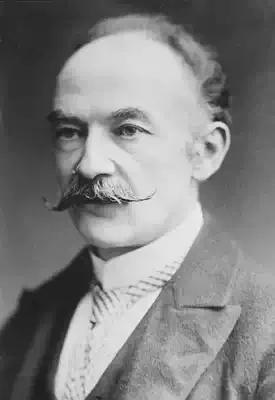
Thomas Hardy
The Going of the Battery Wives. (Lament)
The Going of the Battery Wives. (Lament)
I
O it was sad enough, weak enough, mad enough -
Light in their loving as soldiers can be -
First to risk choosing them, leave alone losing them
Now, in far battle, beyond the South Sea! . . .
II
- Rain came down drenchingly; but we unblenchingly
Trudged on beside them through mirk and through mire,
They stepping steadily--only too readily! -
Scarce as if stepping brought parting-time nigher.
III
Great guns were gleaming there, living things seeming there,
Cloaked in their tar-cloths, upmouthed to the night;
Wheels wet and yellow from axle to felloe,
Throats blank of sound, but prophetic to sight.
IV
Gas-glimmers drearily, blearily, eerily
Lit our pale faces outstretched for one kiss,
While we stood prest to them, with a last quest to them
Not to court perils that honour could miss.
V
Sharp were those sighs of ours, blinded these eyes of ours,
When at last moved away under the arch
All we loved. Aid for them each woman prayed for them,
Treading back slowly the track of their march.
VI
Someone said: "Nevermore will they come: evermore
Are they now lost to us." O it was wrong!
Though may be hard their ways, some Hand will guard their ways,
Bear them through safely, in brief time or long.
VII
- Yet, voices haunting us, daunting us, taunting us,
Hint in the night-time when life beats are low
Other and graver things . . . Hold we to braver things,
Wait we, in trust, what Time's fulness shall show.
I
O it was sad enough, weak enough, mad enough -
Light in their loving as soldiers can be -
First to risk choosing them, leave alone losing them
Now, in far battle, beyond the South Sea! . . .
II
- Rain came down drenchingly; but we unblenchingly
Trudged on beside them through mirk and through mire,
They stepping steadily--only too readily! -
Scarce as if stepping brought parting-time nigher.
III
Great guns were gleaming there, living things seeming there,
Cloaked in their tar-cloths, upmouthed to the night;
Wheels wet and yellow from axle to felloe,
Throats blank of sound, but prophetic to sight.
IV
Gas-glimmers drearily, blearily, eerily
Lit our pale faces outstretched for one kiss,
While we stood prest to them, with a last quest to them
Not to court perils that honour could miss.
V
Sharp were those sighs of ours, blinded these eyes of ours,
When at last moved away under the arch
All we loved. Aid for them each woman prayed for them,
Treading back slowly the track of their march.
VI
Someone said: "Nevermore will they come: evermore
Are they now lost to us." O it was wrong!
Though may be hard their ways, some Hand will guard their ways,
Bear them through safely, in brief time or long.
VII
- Yet, voices haunting us, daunting us, taunting us,
Hint in the night-time when life beats are low
Other and graver things . . . Hold we to braver things,
Wait we, in trust, what Time's fulness shall show.
232
Thomas Hardy
The Alarm
The Alarm
In Memory of one of the Writer's Family who was a Volunteer during the War
with Napoleon
In a ferny byway
Near the great South-Wessex Highway,
A homestead raised its breakfast-smoke aloft;
The dew-damps still lay steamless, for the sun had made no sky-way,
And twilight cloaked the croft.
'Twas hard to realize on
This snug side the mute horizon
That beyond it hostile armaments might steer,
Save from seeing in the porchway a fair woman weep with eyes on
A harnessed Volunteer.
In haste he'd flown there
To his comely wife alone there,
While marching south hard by, to still her fears,
For she soon would be a mother, and few messengers were known there
In these campaigning years.
'Twas time to be Good-bying,
Since the assembly-hour was nighing
In royal George's town at six that morn;
And betwixt its wharves and this retreat were ten good miles of hieing
Ere ring of bugle-horn.
"I've laid in food, Dear,
And broached the spiced and brewed, Dear;
And if our July hope should antedate,
Let the char-wench mount and gallop by the halterpath and wood, Dear,
And fetch assistance straight.
"As for Buonaparte, forget him;
He's not like to land! But let him,
Those strike with aim who strike for wives and sons!
And the war-boats built to float him; 'twere but wanted to upset him
A slat from Nelson's guns!
"But, to assure thee,
And of creeping fears to cure thee,
If he should be rumored anchoring in the Road,
Drive with the nurse to Kingsbere; and let nothing thence allure thee
Till we've him safe-bestowed.
"Now, to turn to marching matters:--
I've my knapsack, firelock, spatters,
Crossbelts, priming-horn, stock, bay'net, blackball, clay,
Pouch, magazine, flints, flint-box that at every quick-step clatters;
...My heart, Dear; that must stay!"
--With breathings broken
Farewell was kissed unspoken,
And they parted there as morning stroked the panes;
And the Volunteer went on, and turned, and twirled his glove for
token,
And took the coastward lanes.
When above He'th Hills he found him,
He saw, on gazing round him,
The Barrow-Beacon burning--burning low,
As if, perhaps, uplighted ever since he'd homeward bound him;
And it meant: Expect the Foe!
Leaving the byway,
And following swift the highway,
Car and chariot met he, faring fast inland;
"He's anchored, Soldier!" shouted some:
"God save thee, marching thy way,
Th'lt front him on the strand!"
He slowed; he stopped; he paltered
Awhile with self, and faltered,
"Why courting misadventure shoreward roam?
To Molly, surely! Seek the woods with her till times have altered;
Charity favors home.
"Else, my denying
He would come she'll read as lying--
Think the Barrow-Beacon must have met my eyes--
That my words were not unwareness, but deceit of her, while trying
My life to jeopardize.
"At home is stocked provision,
And to-night, without suspicion,
We might bear it with us to a covert near;
Such sin, to save a childing wife, would earn it Christ's remission,
Though none forgive it here!"
While thus he, thinking,
A little bird, quick drinking
Among the crowfoot tufts the river bore,
Was tangled in their stringy arms, and fluttered, well-nigh sinking,
Near him, upon the moor.
He stepped in, reached, and seized it,
And, preening, had released it
But that a thought of Holy Writ occurred,
And Signs Divine ere battle, till it seemed him Heaven had pleased it
As guide to send the bird.
"O Lord, direct me!...
Doth Duty now expect me
To march a-coast, or guard my weak ones near?
Give this bird a flight according, that I thence know to elect me
The southward or the rear."
He loosed his clasp; when, rising,
The bird--as if surmising--
Bore due to southward, crossing by the Froom,
And Durnover Great-Field and Fort, the soldier clear advising--
Prompted he wist by Whom.
Then on he panted
By grim Mai-Don, and slanted
Up the steep Ridge-way, hearkening betwixt whiles,
Till, nearing coast and harbor, he beheld the shore-line planted
With Foot and Horse for miles.
Mistrusting not the omen,
He gained the beach, where Yeomen,
Militia, Fencibles, and Pikemen bold,
With Regulars in thousands, were enmassed to meet the Foemen,
Whose fleet had not yet shoaled.
Captain and Colonel,
Sere Generals, Ensigns vernal,
Were there, of neighbor-natives, Michel, Smith,
Meggs, Bingham, Gambier, Cunningham, roused by the hued nocturnal
Swoop on their land and kith.
But Buonaparte still tarried;
His project had miscarried;
At the last hour, equipped for victory,
The fleet had paused; his subtle combinations had been parried
By British strategy.
Homeward returning
Anon, no beacons burning,
No alarms, the Volunteer, in modest bliss,
Te Deum sang with wife and friends: "We praise Thee, Lord, discerning
That Thou hast helped in this!"
In Memory of one of the Writer's Family who was a Volunteer during the War
with Napoleon
In a ferny byway
Near the great South-Wessex Highway,
A homestead raised its breakfast-smoke aloft;
The dew-damps still lay steamless, for the sun had made no sky-way,
And twilight cloaked the croft.
'Twas hard to realize on
This snug side the mute horizon
That beyond it hostile armaments might steer,
Save from seeing in the porchway a fair woman weep with eyes on
A harnessed Volunteer.
In haste he'd flown there
To his comely wife alone there,
While marching south hard by, to still her fears,
For she soon would be a mother, and few messengers were known there
In these campaigning years.
'Twas time to be Good-bying,
Since the assembly-hour was nighing
In royal George's town at six that morn;
And betwixt its wharves and this retreat were ten good miles of hieing
Ere ring of bugle-horn.
"I've laid in food, Dear,
And broached the spiced and brewed, Dear;
And if our July hope should antedate,
Let the char-wench mount and gallop by the halterpath and wood, Dear,
And fetch assistance straight.
"As for Buonaparte, forget him;
He's not like to land! But let him,
Those strike with aim who strike for wives and sons!
And the war-boats built to float him; 'twere but wanted to upset him
A slat from Nelson's guns!
"But, to assure thee,
And of creeping fears to cure thee,
If he should be rumored anchoring in the Road,
Drive with the nurse to Kingsbere; and let nothing thence allure thee
Till we've him safe-bestowed.
"Now, to turn to marching matters:--
I've my knapsack, firelock, spatters,
Crossbelts, priming-horn, stock, bay'net, blackball, clay,
Pouch, magazine, flints, flint-box that at every quick-step clatters;
...My heart, Dear; that must stay!"
--With breathings broken
Farewell was kissed unspoken,
And they parted there as morning stroked the panes;
And the Volunteer went on, and turned, and twirled his glove for
token,
And took the coastward lanes.
When above He'th Hills he found him,
He saw, on gazing round him,
The Barrow-Beacon burning--burning low,
As if, perhaps, uplighted ever since he'd homeward bound him;
And it meant: Expect the Foe!
Leaving the byway,
And following swift the highway,
Car and chariot met he, faring fast inland;
"He's anchored, Soldier!" shouted some:
"God save thee, marching thy way,
Th'lt front him on the strand!"
He slowed; he stopped; he paltered
Awhile with self, and faltered,
"Why courting misadventure shoreward roam?
To Molly, surely! Seek the woods with her till times have altered;
Charity favors home.
"Else, my denying
He would come she'll read as lying--
Think the Barrow-Beacon must have met my eyes--
That my words were not unwareness, but deceit of her, while trying
My life to jeopardize.
"At home is stocked provision,
And to-night, without suspicion,
We might bear it with us to a covert near;
Such sin, to save a childing wife, would earn it Christ's remission,
Though none forgive it here!"
While thus he, thinking,
A little bird, quick drinking
Among the crowfoot tufts the river bore,
Was tangled in their stringy arms, and fluttered, well-nigh sinking,
Near him, upon the moor.
He stepped in, reached, and seized it,
And, preening, had released it
But that a thought of Holy Writ occurred,
And Signs Divine ere battle, till it seemed him Heaven had pleased it
As guide to send the bird.
"O Lord, direct me!...
Doth Duty now expect me
To march a-coast, or guard my weak ones near?
Give this bird a flight according, that I thence know to elect me
The southward or the rear."
He loosed his clasp; when, rising,
The bird--as if surmising--
Bore due to southward, crossing by the Froom,
And Durnover Great-Field and Fort, the soldier clear advising--
Prompted he wist by Whom.
Then on he panted
By grim Mai-Don, and slanted
Up the steep Ridge-way, hearkening betwixt whiles,
Till, nearing coast and harbor, he beheld the shore-line planted
With Foot and Horse for miles.
Mistrusting not the omen,
He gained the beach, where Yeomen,
Militia, Fencibles, and Pikemen bold,
With Regulars in thousands, were enmassed to meet the Foemen,
Whose fleet had not yet shoaled.
Captain and Colonel,
Sere Generals, Ensigns vernal,
Were there, of neighbor-natives, Michel, Smith,
Meggs, Bingham, Gambier, Cunningham, roused by the hued nocturnal
Swoop on their land and kith.
But Buonaparte still tarried;
His project had miscarried;
At the last hour, equipped for victory,
The fleet had paused; his subtle combinations had been parried
By British strategy.
Homeward returning
Anon, no beacons burning,
No alarms, the Volunteer, in modest bliss,
Te Deum sang with wife and friends: "We praise Thee, Lord, discerning
That Thou hast helped in this!"
262
Thomas Hardy
She Hears the Storm
She Hears the Storm
There was a time in former years--
While my roof-tree was his--
When I should have been distressed by fears
At such a night as this!
I should have murmured anxiously,
'The prickling rain strikes cold;
His road is bare of hedge or tree,
And he is getting old.'
But now the fitful chimney-roar,
The drone of Thorncombe trees,
The Froom in flood upon the moor,
The mud of Mellstock Leaze,
The candle slanting sooty-wick'd,
The thuds upon the thatch,
The eaves drops on the window flicked,
The clanking garden-hatch,
And what they mean to wayfarers,
I scarcely heed or mind;
He has won that storm-tight roof of hers
Which Earth grants all her kind.
There was a time in former years--
While my roof-tree was his--
When I should have been distressed by fears
At such a night as this!
I should have murmured anxiously,
'The prickling rain strikes cold;
His road is bare of hedge or tree,
And he is getting old.'
But now the fitful chimney-roar,
The drone of Thorncombe trees,
The Froom in flood upon the moor,
The mud of Mellstock Leaze,
The candle slanting sooty-wick'd,
The thuds upon the thatch,
The eaves drops on the window flicked,
The clanking garden-hatch,
And what they mean to wayfarers,
I scarcely heed or mind;
He has won that storm-tight roof of hers
Which Earth grants all her kind.
245
Thomas Hardy
A Meeting With Despair
A Meeting With Despair
AS evening shaped I found me on a moor
Which sight could scarce sustain:
The black lean land, of featureless contour,
Was like a tract in pain.
"This scene, like my own life," I said, "is one
Where many glooms abide;
Toned by its fortune to a deadly dun--
Lightless on every side.
I glanced aloft and halted, pleasure-caught
To see the contrast there:
The ray-lit clouds gleamed glory; and I thought,
"There's solace everywhere!"
Then bitter self-reproaches as I stood
I dealt me silently
As one perverse--misrepresenting Good
In graceless mutiny.
Against the horizon's dim-descernèd wheel
A form rose, strange of mould:
That he was hideous, hopeless, I could feel
Rather than could behold.
"'Tis a dead spot, where even the light lies spent
To darkness!" croaked the Thing.
"Not if you look aloft!" said I, intent
On my new reasoning.
"Yea--but await awhile!" he cried. "Ho-ho!--
Look now aloft and see!"
I looked. There, too, sat night: Heaven's radiant show
Had gone. Then chuckled he.
AS evening shaped I found me on a moor
Which sight could scarce sustain:
The black lean land, of featureless contour,
Was like a tract in pain.
"This scene, like my own life," I said, "is one
Where many glooms abide;
Toned by its fortune to a deadly dun--
Lightless on every side.
I glanced aloft and halted, pleasure-caught
To see the contrast there:
The ray-lit clouds gleamed glory; and I thought,
"There's solace everywhere!"
Then bitter self-reproaches as I stood
I dealt me silently
As one perverse--misrepresenting Good
In graceless mutiny.
Against the horizon's dim-descernèd wheel
A form rose, strange of mould:
That he was hideous, hopeless, I could feel
Rather than could behold.
"'Tis a dead spot, where even the light lies spent
To darkness!" croaked the Thing.
"Not if you look aloft!" said I, intent
On my new reasoning.
"Yea--but await awhile!" he cried. "Ho-ho!--
Look now aloft and see!"
I looked. There, too, sat night: Heaven's radiant show
Had gone. Then chuckled he.
248
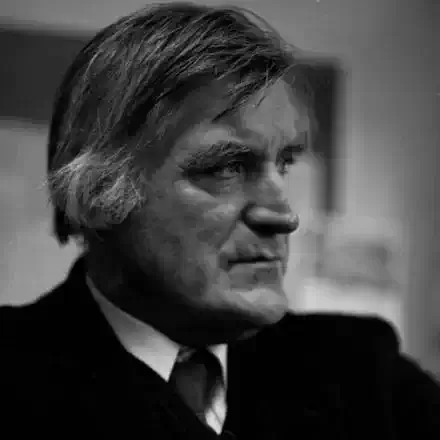
Ted Hughes
The Warm and the Cold
The Warm and the Cold
Freezing dusk is closing
Like a slow trap of steel
On trees and roads and hills and all
That can no longer feel.
But the carp is in its depth
Like a planet in its heaven.
And the badger in its bedding
Like a loaf in the oven.
And the butterfly in its mummy
Like a viol in its case.
And the owl in its feathers
Like a doll in its lace.
Freezing dusk has tightened
Like a nut screwed tight
On the starry aeroplane
Of the soaring night.
But the trout is in its hole
Like a chuckle in a sleeper.
The hare strays down the highway
Like a root going deeper.
The snail is dry in the outhouse
Like a seed in a sunflower.
The owl is pale on the gatepost
Like a clock on its tower.
Moonlight freezes the shaggy world
Like a mammoth of ice -
The past and the future
Are the jaws of a steel vice.
But the cod is in the tide-rip
Like a key in a purse.
The deer are on the bare-blown hill
Like smiles on a nurse.
The flies are behind the plaster
Like the lost score of a jig.
Sparrows are in the ivy-clump
Like money in a pig.
Such a frost
The flimsy moon
Has lost her wits.
A star falls.
The sweating farmers
Turn in their sleep
Like oxen on spits.
Freezing dusk is closing
Like a slow trap of steel
On trees and roads and hills and all
That can no longer feel.
But the carp is in its depth
Like a planet in its heaven.
And the badger in its bedding
Like a loaf in the oven.
And the butterfly in its mummy
Like a viol in its case.
And the owl in its feathers
Like a doll in its lace.
Freezing dusk has tightened
Like a nut screwed tight
On the starry aeroplane
Of the soaring night.
But the trout is in its hole
Like a chuckle in a sleeper.
The hare strays down the highway
Like a root going deeper.
The snail is dry in the outhouse
Like a seed in a sunflower.
The owl is pale on the gatepost
Like a clock on its tower.
Moonlight freezes the shaggy world
Like a mammoth of ice -
The past and the future
Are the jaws of a steel vice.
But the cod is in the tide-rip
Like a key in a purse.
The deer are on the bare-blown hill
Like smiles on a nurse.
The flies are behind the plaster
Like the lost score of a jig.
Sparrows are in the ivy-clump
Like money in a pig.
Such a frost
The flimsy moon
Has lost her wits.
A star falls.
The sweating farmers
Turn in their sleep
Like oxen on spits.
683
Ted Hughes
A Woman Unconscious
A Woman Unconscious
Russia and America circle each other;
Threats nudge an act that were without doubt
A melting of the mould in the mother,
Stones melting about the root.
The quick of the earth burned out:
The toil of all our ages a loss
With leaf and insect. Yet flitting thought
(Not to be thought ridiculous)
Shies from the world-cancelling black
Of its playing shadow: it has learned
That there's no trusting (trusting to luck)
Dates when the world's due to be burned;
That the future's no calamitous change
But a malingering of now,
Histories, towns, faces that no
Malice or accident much derange.
And though bomb be matched against bomb,
Though all mankind wince out and nothing endure --
Earth gone in an instant flare --
Did a lesser death come
Onto the white hospital bed
Where one, numb beyond her last of sense,
Closed her eyes on the world's evidence
And into pillows sunk her head.
Submitted by Andrew Mayers
Russia and America circle each other;
Threats nudge an act that were without doubt
A melting of the mould in the mother,
Stones melting about the root.
The quick of the earth burned out:
The toil of all our ages a loss
With leaf and insect. Yet flitting thought
(Not to be thought ridiculous)
Shies from the world-cancelling black
Of its playing shadow: it has learned
That there's no trusting (trusting to luck)
Dates when the world's due to be burned;
That the future's no calamitous change
But a malingering of now,
Histories, towns, faces that no
Malice or accident much derange.
And though bomb be matched against bomb,
Though all mankind wince out and nothing endure --
Earth gone in an instant flare --
Did a lesser death come
Onto the white hospital bed
Where one, numb beyond her last of sense,
Closed her eyes on the world's evidence
And into pillows sunk her head.
Submitted by Andrew Mayers
616

Spike Milligan
Maveric
Maveric
Maveric Prowles
Had Rumbling Bowles
That thundered in the night.
It shook the bedrooms all around
And gave the folks a fright.
The doctor called;
He was appalled
When through his stethoscope
He heard the sound of a baying hound,
And the acrid smell of smoke.
Was there a cure?
'The higher the fewer'
The learned doctor said,
Then turned poor Maveric inside out
And stood him on his head.
'Just as I though
You've been and caught
An Asiatic flu -
You musn't go near dogs I fear
Unless they come near you.'
Poor Maveric cried.
He went cross-eyed,
His legs went green and blue.
The doctor hit him with a club
And charged him one and two.
And so my friend
This is the end,
A warning to the few:
Stay clear of doctors to the end
Or they'll get rid of you.
Maveric Prowles
Had Rumbling Bowles
That thundered in the night.
It shook the bedrooms all around
And gave the folks a fright.
The doctor called;
He was appalled
When through his stethoscope
He heard the sound of a baying hound,
And the acrid smell of smoke.
Was there a cure?
'The higher the fewer'
The learned doctor said,
Then turned poor Maveric inside out
And stood him on his head.
'Just as I though
You've been and caught
An Asiatic flu -
You musn't go near dogs I fear
Unless they come near you.'
Poor Maveric cried.
He went cross-eyed,
His legs went green and blue.
The doctor hit him with a club
And charged him one and two.
And so my friend
This is the end,
A warning to the few:
Stay clear of doctors to the end
Or they'll get rid of you.
254

Siegfried Sassoon
To a Very Wise Man
To a Very Wise Man
I
Fires in the dark you build; tall quivering flames
In the huge midnight forest of the unknown.
Your soul is full of cities with dead names,
And blind-faced, earth-bound gods of bronze and stone
Whose priests and kings and lust-begotten lords
Watch the procession of their thundering hosts,
Or guard relentless fanes with flickering swords
And wizardry of ghosts.
II
In a strange house I woke; heard overhead
Hastily-thudding feet and a muffled scream...
(Is death like that?) ... I quaked uncomforted,
Striving to frame to-morrow in a dream
Of woods and sliding pools and cloudless day.
(You know how bees come into a twilight room
From dazzling afternoon, then sail away
Out of the curtained gloom.)
III
You understand my thoughts; though, when you think,
You’re out beyond the boundaries of my brain.
I’m but a bird at dawn that cries ‘chink, chink’—
A garden-bird that warbles in the rain.
And you’re the flying-man, the speck that steers
A careful course far down the verge of day,
Half-way across the world. Above the years
You soar ... Is death so bad? ... I wish you’d say.
I
Fires in the dark you build; tall quivering flames
In the huge midnight forest of the unknown.
Your soul is full of cities with dead names,
And blind-faced, earth-bound gods of bronze and stone
Whose priests and kings and lust-begotten lords
Watch the procession of their thundering hosts,
Or guard relentless fanes with flickering swords
And wizardry of ghosts.
II
In a strange house I woke; heard overhead
Hastily-thudding feet and a muffled scream...
(Is death like that?) ... I quaked uncomforted,
Striving to frame to-morrow in a dream
Of woods and sliding pools and cloudless day.
(You know how bees come into a twilight room
From dazzling afternoon, then sail away
Out of the curtained gloom.)
III
You understand my thoughts; though, when you think,
You’re out beyond the boundaries of my brain.
I’m but a bird at dawn that cries ‘chink, chink’—
A garden-bird that warbles in the rain.
And you’re the flying-man, the speck that steers
A careful course far down the verge of day,
Half-way across the world. Above the years
You soar ... Is death so bad? ... I wish you’d say.
89
Siegfried Sassoon
The Dug-out
The Dug-out
Why do you lie with your legs ungainly huddled,
And one arm bent across your sullen, cold,
Exhausted face? It hurts my heart to watch you,
Deep-shadowed from the candle's guttering gold;
And you wonder why I shake you by the shoulder;
Drowsy, you mumble and sigh and turn your head...
You are too young to fall asleep for ever;
And when you sleep you remind me of the dead.
Why do you lie with your legs ungainly huddled,
And one arm bent across your sullen, cold,
Exhausted face? It hurts my heart to watch you,
Deep-shadowed from the candle's guttering gold;
And you wonder why I shake you by the shoulder;
Drowsy, you mumble and sigh and turn your head...
You are too young to fall asleep for ever;
And when you sleep you remind me of the dead.
71
Siegfried Sassoon
The Death-Bed
The Death-Bed
He drowsed and was aware of silence heaped
Round him, unshaken as the steadfast walls;
Aqueous like floating rays of amber light,
Soaring and quivering in the wings of sleep.
Silence and safety; and his mortal shore
Lipped by the inward, moonless waves of death.
Someone was holding water to his mouth.
He swallowed, unresisting; moaned and dropped
Through crimson gloom to darkness; and forgot
The opiate throb and ache that was his wound.
Water—calm, sliding green above the weir.
Water—a sky-lit alley for his boat,
Bird- voiced, and bordered with reflected flowers
And shaken hues of summer; drifting down,
He dipped contented oars, and sighed, and slept.
Night, with a gust of wind, was in the ward,
Blowing the curtain to a glimmering curve.
Night. He was blind; he could not see the stars
Glinting among the wraiths of wandering cloud;
Queer blots of colour, purple, scarlet, green,
Flickered and faded in his drowning eyes.
Rain—he could hear it rustling through the dark;
Fragrance and passionless music woven as one;
Warm rain on drooping roses; pattering showers
That soak the woods; not the harsh rain that sweeps
Behind the thunder, but a trickling peace,
Gently and slowly washing life away.
He stirred, shifting his body; then the pain
Leapt like a prowling beast, and gripped and tore
His groping dreams with grinding claws and fangs.
But someone was beside him; soon he lay
Shuddering because that evil thing had passed.
And death, who'd stepped toward him, paused and stared.
Light many lamps and gather round his bed.
Lend him your eyes, warm blood, and will to live.
Speak to him; rouse him; you may save him yet.
He's young; he hated War; how should he die
When cruel old campaigners win safe through?
But death replied: 'I choose him.' So he went,
And there was silence in the summer night;
Silence and safety; and the veils of sleep.
Then, far away, the thudding of the guns.
He drowsed and was aware of silence heaped
Round him, unshaken as the steadfast walls;
Aqueous like floating rays of amber light,
Soaring and quivering in the wings of sleep.
Silence and safety; and his mortal shore
Lipped by the inward, moonless waves of death.
Someone was holding water to his mouth.
He swallowed, unresisting; moaned and dropped
Through crimson gloom to darkness; and forgot
The opiate throb and ache that was his wound.
Water—calm, sliding green above the weir.
Water—a sky-lit alley for his boat,
Bird- voiced, and bordered with reflected flowers
And shaken hues of summer; drifting down,
He dipped contented oars, and sighed, and slept.
Night, with a gust of wind, was in the ward,
Blowing the curtain to a glimmering curve.
Night. He was blind; he could not see the stars
Glinting among the wraiths of wandering cloud;
Queer blots of colour, purple, scarlet, green,
Flickered and faded in his drowning eyes.
Rain—he could hear it rustling through the dark;
Fragrance and passionless music woven as one;
Warm rain on drooping roses; pattering showers
That soak the woods; not the harsh rain that sweeps
Behind the thunder, but a trickling peace,
Gently and slowly washing life away.
He stirred, shifting his body; then the pain
Leapt like a prowling beast, and gripped and tore
His groping dreams with grinding claws and fangs.
But someone was beside him; soon he lay
Shuddering because that evil thing had passed.
And death, who'd stepped toward him, paused and stared.
Light many lamps and gather round his bed.
Lend him your eyes, warm blood, and will to live.
Speak to him; rouse him; you may save him yet.
He's young; he hated War; how should he die
When cruel old campaigners win safe through?
But death replied: 'I choose him.' So he went,
And there was silence in the summer night;
Silence and safety; and the veils of sleep.
Then, far away, the thudding of the guns.
72
Siegfried Sassoon
Suicide in the Trenches
Suicide in the Trenches
I knew a simple soldier boy
Who grinned at life in empty joy,
Slept soundly through the lonesome dark,
And whistled early with the lark.
In winter trenches, cowed and glum,
With crumps and lice and lack of rum,
He put a bullet through his brain.
No one spoke of him again.
You smug-faced crowds with kindling eye
Who cheer when soldier lads march by,
Sneak home and pray you'll never know
The hell where youth and laughter go.
I knew a simple soldier boy
Who grinned at life in empty joy,
Slept soundly through the lonesome dark,
And whistled early with the lark.
In winter trenches, cowed and glum,
With crumps and lice and lack of rum,
He put a bullet through his brain.
No one spoke of him again.
You smug-faced crowds with kindling eye
Who cheer when soldier lads march by,
Sneak home and pray you'll never know
The hell where youth and laughter go.
73
Siegfried Sassoon
Prelude to an Unwritten Masterpiece
Prelude to an Unwritten Masterpiece
You like my bird-sung gardens: wings and flowers;
Calm landscapes for emotion; star-lit lawns;
And Youth against the sun-rise ... ‘Not profound;
‘But such a haunting music in the sound:
‘Do it once more; it helps us to forget’.
Last night I dreamt an old recurring scene—
Some complex out of childhood; (sex, of course!)
I can’t remember how the trouble starts;
And then I’m running blindly in the sun
Down the old orchard, and there’s something cruel
Chasing me; someone roused to a grim pursuit
Of clumsy anger ... Crash! I’m through the fence
And thrusting wildly down the wood that’s dense
With woven green of safety; paths that wind
Moss-grown from glade to glade; and far behind,
One thwarted yell; then silence. I’ve escaped.
That’s where it used to stop. Last night I went
Onward until the trees were dark and huge,
And I was lost, cut off from all return
By swamps and birdless jungles. I’d no chance
Of getting home for tea. I woke with shivers,
And thought of crocodiles in crawling rivers.
Some day I’ll build (more ruggedly than Doughty)
A dark tremendous song you’ll never hear.
My beard will be a snow-storm, drifting whiter
On bowed, prophetic shoulders, year by year.
And some will say, ‘His work has grown so dreary.’
Others, ‘He used to be a charming writer’.
And you, my friend, will query—
‘Why can’t you cut it short, you pompous blighter?’
You like my bird-sung gardens: wings and flowers;
Calm landscapes for emotion; star-lit lawns;
And Youth against the sun-rise ... ‘Not profound;
‘But such a haunting music in the sound:
‘Do it once more; it helps us to forget’.
Last night I dreamt an old recurring scene—
Some complex out of childhood; (sex, of course!)
I can’t remember how the trouble starts;
And then I’m running blindly in the sun
Down the old orchard, and there’s something cruel
Chasing me; someone roused to a grim pursuit
Of clumsy anger ... Crash! I’m through the fence
And thrusting wildly down the wood that’s dense
With woven green of safety; paths that wind
Moss-grown from glade to glade; and far behind,
One thwarted yell; then silence. I’ve escaped.
That’s where it used to stop. Last night I went
Onward until the trees were dark and huge,
And I was lost, cut off from all return
By swamps and birdless jungles. I’d no chance
Of getting home for tea. I woke with shivers,
And thought of crocodiles in crawling rivers.
Some day I’ll build (more ruggedly than Doughty)
A dark tremendous song you’ll never hear.
My beard will be a snow-storm, drifting whiter
On bowed, prophetic shoulders, year by year.
And some will say, ‘His work has grown so dreary.’
Others, ‘He used to be a charming writer’.
And you, my friend, will query—
‘Why can’t you cut it short, you pompous blighter?’
127
Siegfried Sassoon
Middle-Ages
Middle-Ages
I heard a clash, and a cry,
And a horseman fleeing the wood.
The moon hid in a cloud.
Deep in shadow I stood.
‘Ugly work!’ thought I,
Holding my breath.
‘Men must be cruel and proud,
‘Jousting for death’.
With gusty glimmering shone
The moon; and the wind blew colder.
A man went over the hill,
Bent to his horse’s shoulder.
‘Time for me to be gone’...
Darkly I fled.
Owls in the wood were shrill,
And the moon sank red.
I heard a clash, and a cry,
And a horseman fleeing the wood.
The moon hid in a cloud.
Deep in shadow I stood.
‘Ugly work!’ thought I,
Holding my breath.
‘Men must be cruel and proud,
‘Jousting for death’.
With gusty glimmering shone
The moon; and the wind blew colder.
A man went over the hill,
Bent to his horse’s shoulder.
‘Time for me to be gone’...
Darkly I fled.
Owls in the wood were shrill,
And the moon sank red.
119
Siegfried Sassoon
Golgotha
Golgotha
Through darkness curves a spume of falling flares
That flood the field with shallow, blanching light.
The huddled sentry stares
On gloom at war with white,
And white receding slow, submerged in gloom.
Guns into mimic thunder burst and boom,
And mirthless laughter rakes the whistling night.
The sentry keeps his watch where no one stirs
But the brown rats, the nimble scavengers.
Through darkness curves a spume of falling flares
That flood the field with shallow, blanching light.
The huddled sentry stares
On gloom at war with white,
And white receding slow, submerged in gloom.
Guns into mimic thunder burst and boom,
And mirthless laughter rakes the whistling night.
The sentry keeps his watch where no one stirs
But the brown rats, the nimble scavengers.
89

Sarah Teasdale
The Lamp
The Lamp
If I can bear your love like a lamp before me,
When I go down the long steep Road of Darkness,
I shall not fear the everlasting shadows,
Nor cry in terror.
If I can find out God, then I shall find Him,
If none can find Him, then I shall sleep soundly,
Knowing how well on earth your love sufficed me,
A lamp in darkness.
If I can bear your love like a lamp before me,
When I go down the long steep Road of Darkness,
I shall not fear the everlasting shadows,
Nor cry in terror.
If I can find out God, then I shall find Him,
If none can find Him, then I shall sleep soundly,
Knowing how well on earth your love sufficed me,
A lamp in darkness.
384
Sarah Teasdale
At Sea
At Sea
In the pull of the wind I stand, lonely,
On the deck of a ship, rising, falling,
Wild night around me, wild water under me,
Whipped by the storm, screaming and calling.
Earth is hostile and the sea hostile,
Why do I look for a place to rest?
I must fight always and die fighting
With fear an unhealing wound in my breast.
In the pull of the wind I stand, lonely,
On the deck of a ship, rising, falling,
Wild night around me, wild water under me,
Whipped by the storm, screaming and calling.
Earth is hostile and the sea hostile,
Why do I look for a place to rest?
I must fight always and die fighting
With fear an unhealing wound in my breast.
497
Safo
He is more than a hero
He is more than a hero
He is more than a hero
he is a god in my eyes--
the man who is allowed
to sit beside you -- he
who listens intimately
to the sweet murmur of
your voice, the enticing
laughter that makes my own
heart beat fast. If I meet
you suddenly, I can'
speak -- my tongue is broken;
a thin flame runs under
my skin; seeing nothing,
hearing only my own ears
drumming, I drip with sweat;
trembling shakes my body
and I turn paler than
dry grass. At such times
death isn't far from me
He is more than a hero
he is a god in my eyes--
the man who is allowed
to sit beside you -- he
who listens intimately
to the sweet murmur of
your voice, the enticing
laughter that makes my own
heart beat fast. If I meet
you suddenly, I can'
speak -- my tongue is broken;
a thin flame runs under
my skin; seeing nothing,
hearing only my own ears
drumming, I drip with sweat;
trembling shakes my body
and I turn paler than
dry grass. At such times
death isn't far from me
478
Rupert Brooke
Flight
Flight
Voices out of the shade that cried,
And long noon in the hot calm places,
And children's play by the wayside,
And country eyes, and quiet faces --
All these were round my steady paces.
Those that I could have loved went by me;
Cool gardened homes slept in the sun;
I heard the whisper of water nigh me,
Saw hands that beckoned, shone, were gone
In the green and gold. And I went on.
For if my echoing footfall slept,
Soon a far whispering there'd be
Of a little lonely wind that crept
From tree to tree, and distantly
Followed me, followed me. . . .
But the blue vaporous end of day
Brought peace, and pursuit baffled quite,
Where between pine-woods dipped the way.
I turned, slipped in and out of sight.
I trod as quiet as the night.
The pine-boles kept perpetual hush;
And in the boughs wind never swirled.
I found a flowering lowly bush,
And bowed, slid in, and sighed and curled,
Hidden at rest from all the world.
Safe! I was safe, and glad, I knew!
Yet -- with cold heart and cold wet brows
I lay. And the dark fell. . . . There grew
Meward a sound of shaken boughs;
And ceased, above my intricate house;
And silence, silence, silence found me. . . .
I felt the unfaltering movement creep
Among the leaves. They shed around me
Calm clouds of scent, that I did weep;
And stroked my face. I fell asleep.
Voices out of the shade that cried,
And long noon in the hot calm places,
And children's play by the wayside,
And country eyes, and quiet faces --
All these were round my steady paces.
Those that I could have loved went by me;
Cool gardened homes slept in the sun;
I heard the whisper of water nigh me,
Saw hands that beckoned, shone, were gone
In the green and gold. And I went on.
For if my echoing footfall slept,
Soon a far whispering there'd be
Of a little lonely wind that crept
From tree to tree, and distantly
Followed me, followed me. . . .
But the blue vaporous end of day
Brought peace, and pursuit baffled quite,
Where between pine-woods dipped the way.
I turned, slipped in and out of sight.
I trod as quiet as the night.
The pine-boles kept perpetual hush;
And in the boughs wind never swirled.
I found a flowering lowly bush,
And bowed, slid in, and sighed and curled,
Hidden at rest from all the world.
Safe! I was safe, and glad, I knew!
Yet -- with cold heart and cold wet brows
I lay. And the dark fell. . . . There grew
Meward a sound of shaken boughs;
And ceased, above my intricate house;
And silence, silence, silence found me. . . .
I felt the unfaltering movement creep
Among the leaves. They shed around me
Calm clouds of scent, that I did weep;
And stroked my face. I fell asleep.
192
Rudyard Kipling
Tiger--Tiger!
Tiger--Tiger!
What of the hunting, hunter bold?
Brother, the watch was long and cold.
What of the quarry ye went to kill?
Brother, he crops in the jungle still.
Where is the power that made your pride?
Brother, it ebbs from my flank and side.
Where is the haste that ye hurry by?
Brother, I go to my lair to die!
What of the hunting, hunter bold?
Brother, the watch was long and cold.
What of the quarry ye went to kill?
Brother, he crops in the jungle still.
Where is the power that made your pride?
Brother, it ebbs from my flank and side.
Where is the haste that ye hurry by?
Brother, I go to my lair to die!
403
Rudyard Kipling
The Watcher
The Watcher
Put forth to watch, unschooled, alone,
'Twixt hostile earth and sky;
The mottled lizard 'neath the stone
Is wiser here than I.
What stir across the haze of heat?
What omen down the wind?
The buck that break before my feet--
They know, but I am blind!
Put forth to watch, unschooled, alone,
'Twixt hostile earth and sky;
The mottled lizard 'neath the stone
Is wiser here than I.
What stir across the haze of heat?
What omen down the wind?
The buck that break before my feet--
They know, but I am blind!
451
Rudyard Kipling
The Wet Litany
The Wet Litany
When the waters' countenance
Blurs 'twixt glance and second glance;
When our tattered smokes forerun
Ashen 'neath a silvered sun;
When the curtain of the haze
Shuts upon our helpless ways--
Hear the Channel Fleet at sea:
Libera nos Domine!
When the engines' bated pulse
Scarcely thrills the nosing hulls;
When the wash along the side
Sounds, a-sudden, magnified;
When the intolerable blast
Marks each blindfold minute passed;
When the fog-buoy's squattering flight
Guides us 'through the haggard night;
When the warning bugle blows;
When the lettered doorway's close;
When our brittle townships press,
Impotent, on emptiness;
When the unseen leadsmen lean
Questioning a deep unseen;
When their lessened count they tell
To a bridge invisible;
When the hid and perilous
Cliffs return our cry to us;
When the treble thickness spread
Swallows up our next-ahead;
When her sirens frightened whine
Shows her sheering out of line;
When--her passage undiscerned--
We must turn where she has turned,
Hear the Channel Fleet at sea:
Libera nos Domine!
When the waters' countenance
Blurs 'twixt glance and second glance;
When our tattered smokes forerun
Ashen 'neath a silvered sun;
When the curtain of the haze
Shuts upon our helpless ways--
Hear the Channel Fleet at sea:
Libera nos Domine!
When the engines' bated pulse
Scarcely thrills the nosing hulls;
When the wash along the side
Sounds, a-sudden, magnified;
When the intolerable blast
Marks each blindfold minute passed;
When the fog-buoy's squattering flight
Guides us 'through the haggard night;
When the warning bugle blows;
When the lettered doorway's close;
When our brittle townships press,
Impotent, on emptiness;
When the unseen leadsmen lean
Questioning a deep unseen;
When their lessened count they tell
To a bridge invisible;
When the hid and perilous
Cliffs return our cry to us;
When the treble thickness spread
Swallows up our next-ahead;
When her sirens frightened whine
Shows her sheering out of line;
When--her passage undiscerned--
We must turn where she has turned,
Hear the Channel Fleet at sea:
Libera nos Domine!
395
Rudyard Kipling
The Rout of the White Hussars
The Rout of the White Hussars
It was not in the open fight
We threw away the sword,
But in the lonely watching
In the darkness by the ford.
The waters lapped, the night-wind blew,
Full-armed the Fear was born and grew,
And we were flying ere we knew
From panic in the night.
It was not in the open fight
We threw away the sword,
But in the lonely watching
In the darkness by the ford.
The waters lapped, the night-wind blew,
Full-armed the Fear was born and grew,
And we were flying ere we knew
From panic in the night.
432