

Poems in this theme
Literature and Words
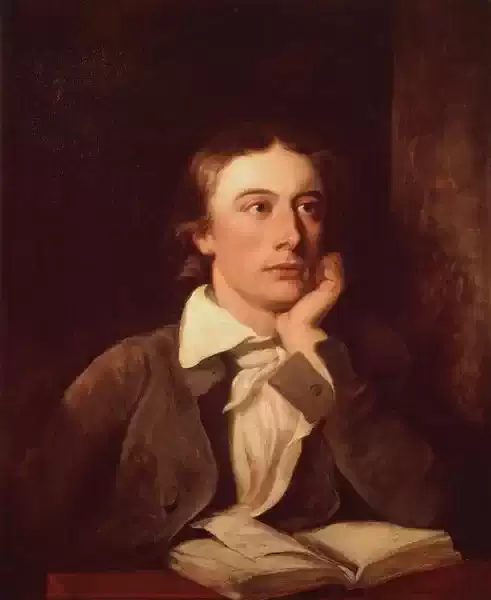
John Keats
When I Have Fears
When I Have Fears
When I have fears that I may cease to be
Before my pen has glean'd my teeming brain,
Before high-piled books, in charactery,
Hold like rich garners the full ripen'd grain;
When I behold, upon the night's starr'd face,
Huge cloudy symbols of a high romance,
And think that I may never live to trace
Their shadows, with the magic hand of chance;
And when I feel, fair creature of an hour,
That I shall never look upon thee more,
Never have relish in the faery power
Of unreflecting love;--then on the shore
Of the wide world I stand alone, and think
Till love and fame to nothingness do sink.
When I have fears that I may cease to be
Before my pen has glean'd my teeming brain,
Before high-piled books, in charactery,
Hold like rich garners the full ripen'd grain;
When I behold, upon the night's starr'd face,
Huge cloudy symbols of a high romance,
And think that I may never live to trace
Their shadows, with the magic hand of chance;
And when I feel, fair creature of an hour,
That I shall never look upon thee more,
Never have relish in the faery power
Of unreflecting love;--then on the shore
Of the wide world I stand alone, and think
Till love and fame to nothingness do sink.
464
John Keats
To Homer
To Homer
Standing aloof in giant ignorance,
Of thee I hear and of the Cyclades,
As one who sits ashore and longs perchance
To visit dolphin-coral in deep seas.
So thou wast blind;--but then the veil was rent,
For Jove uncurtain'd Heaven to let thee live,
And Neptune made for thee a spumy tent,
And Pan made sing for thee his forest-hive;
Aye on the shores of darkness there is light,
And precipices show untrodden green,
There is a budding morrow in midnight,
There is a triple sight in blindness keen;
Such seeing hadst thou, as it once befel
To Dian, Queen of Earth, and Heaven, and Hell.
Standing aloof in giant ignorance,
Of thee I hear and of the Cyclades,
As one who sits ashore and longs perchance
To visit dolphin-coral in deep seas.
So thou wast blind;--but then the veil was rent,
For Jove uncurtain'd Heaven to let thee live,
And Neptune made for thee a spumy tent,
And Pan made sing for thee his forest-hive;
Aye on the shores of darkness there is light,
And precipices show untrodden green,
There is a budding morrow in midnight,
There is a triple sight in blindness keen;
Such seeing hadst thou, as it once befel
To Dian, Queen of Earth, and Heaven, and Hell.
453
John Keats
To George Felton Mathew
To George Felton Mathew
Sweet are the pleasures that to verse belong,
And doubly sweet a brotherhood in song;
Nor can remembrance, Mathew! bring to view
A fate more pleasing, a delight more true
Than that in which the brother Poets joy'd,
Who with combined powers, their wit employ'd
To raise a trophy to the drama's muses.
The thought of this great partnership diffuses
Over the genius loving heart, a feeling
Of all that's high, and great, and good, and healing.
Too partial friend! fain would I follow thee
Past each horizon of fine poesy;
Fain would I echo back each pleasant note
As o'er Sicilian seas, clear anthems float
'Mong the light skimming gondolas far parted,
Just when the sun his farewell beam has darted:
But 'tis impossible, far different cares
Beckon me sternly from soft 'Lydian airs,'
And hold my faculties so long in thrall,
That I am oft in doubt whether at all
I shall again see Phoebus in the morning:
Or flush'd Aurora in the roseate dawning!
Or a white Naiad in a rippling stream;
Or a rapt seraph in a moonlight beam;
Or again witness what with thee I've seen,
The dew by fairy feet swept from the green,
After a night of some quaint jubilee
Which every elf and fay had come to see:
When bright processions took their airy march
Beneath the curved moon's triumphal arch.
But might I now each passing moment give
To the coy muse, with me she would not live
In this dark city, nor would condescend
'Mid contradictions her delights to lend.
Should e'er the fine-eyed maid to me be kind,
Ah! surely it must be whene'er I find
Some flowery spot, sequester'd, wild, romantic,
That often must have seen a poet frantic;
Where oaks, that erst the Druid knew, are growing,
And flowers, the glory of one day, are blowing;
Where the dark-leav'd laburnum's drooping clusters
Reflect athwart the stream their yellow lustres,
And intertwined the cassia's arms unite,
With its own drooping buds, but very white.
Where on one side are covert branches hung,
'Mong which the nightingales have always sung
In leafy quiet; where to pry, aloof,
Atween the pillars of the sylvan roof,
Would be to find where violet beds were nestling,
And where the bee with cowslip bells was wrestling.
There must be too a ruin dark, and gloomy,
To say 'joy not too much in all that's bloomy.'
Yet this is vain--O Mathew lend thy aid
To find a place where I may greet the maid--
Where we may soft humanity put on,
And sit, and rhyme and think on Chatterton;
And that warm-hearted Shakspeare sent to meet him
Four laurell'd spirits, heaven-ward to intreat him.
With reverence would we speak of all the sages
Who have left streaks of light athwart their ages:
And thou shouldst moralize on Milton's blindness,
And mourn the fearful dearth of human kindness
To those who strove with the bright golden wing
Of genius, to flap away each sting
Thrown by the pitiless world. We next could tell
Of those who in the cause of freedom fell;
Of our own Alfred, of Helvetian Tell;
Of him whose name to ev'ry heart's a solace,
High-minded and unbending William Wallace.
While to the rugged north our musing turns
We well might drop a tear for him, and Burns.
Felton! without incitements such as these,
How vain for me the niggard Muse to tease;
For thee, she will thy every dwelling grace,
And make 'a sunshine in a shady place:'
For thou wast once a flowret blooming wild,
Close to the source, bright, pure, and undefil'd,
Whence gush the streams of song: in happy hour
Came chaste Diana from her shady bower,
Just as the sun was from the east uprising;
And, as for him some gift she was devising,
Beheld thee, pluck'd thee, cast thee in the stream
To meet her glorious brother’s greeting beam.
I marvel much that thou hast never told
How, from a flower, into a fish of gold
Apollo chang'd thee; how thou next didst seem
A black-eyed swan upon the widening stream;
And when thou first didst in that mirror trace
The placid features of a human face:
That thou hast never told thy travels strange,
And all the wonders of the mazy range
O’er pebbly crystal, and o'er golden sands;
Kissing thy daily food from Naiad’s pearly hands.
Sweet are the pleasures that to verse belong,
And doubly sweet a brotherhood in song;
Nor can remembrance, Mathew! bring to view
A fate more pleasing, a delight more true
Than that in which the brother Poets joy'd,
Who with combined powers, their wit employ'd
To raise a trophy to the drama's muses.
The thought of this great partnership diffuses
Over the genius loving heart, a feeling
Of all that's high, and great, and good, and healing.
Too partial friend! fain would I follow thee
Past each horizon of fine poesy;
Fain would I echo back each pleasant note
As o'er Sicilian seas, clear anthems float
'Mong the light skimming gondolas far parted,
Just when the sun his farewell beam has darted:
But 'tis impossible, far different cares
Beckon me sternly from soft 'Lydian airs,'
And hold my faculties so long in thrall,
That I am oft in doubt whether at all
I shall again see Phoebus in the morning:
Or flush'd Aurora in the roseate dawning!
Or a white Naiad in a rippling stream;
Or a rapt seraph in a moonlight beam;
Or again witness what with thee I've seen,
The dew by fairy feet swept from the green,
After a night of some quaint jubilee
Which every elf and fay had come to see:
When bright processions took their airy march
Beneath the curved moon's triumphal arch.
But might I now each passing moment give
To the coy muse, with me she would not live
In this dark city, nor would condescend
'Mid contradictions her delights to lend.
Should e'er the fine-eyed maid to me be kind,
Ah! surely it must be whene'er I find
Some flowery spot, sequester'd, wild, romantic,
That often must have seen a poet frantic;
Where oaks, that erst the Druid knew, are growing,
And flowers, the glory of one day, are blowing;
Where the dark-leav'd laburnum's drooping clusters
Reflect athwart the stream their yellow lustres,
And intertwined the cassia's arms unite,
With its own drooping buds, but very white.
Where on one side are covert branches hung,
'Mong which the nightingales have always sung
In leafy quiet; where to pry, aloof,
Atween the pillars of the sylvan roof,
Would be to find where violet beds were nestling,
And where the bee with cowslip bells was wrestling.
There must be too a ruin dark, and gloomy,
To say 'joy not too much in all that's bloomy.'
Yet this is vain--O Mathew lend thy aid
To find a place where I may greet the maid--
Where we may soft humanity put on,
And sit, and rhyme and think on Chatterton;
And that warm-hearted Shakspeare sent to meet him
Four laurell'd spirits, heaven-ward to intreat him.
With reverence would we speak of all the sages
Who have left streaks of light athwart their ages:
And thou shouldst moralize on Milton's blindness,
And mourn the fearful dearth of human kindness
To those who strove with the bright golden wing
Of genius, to flap away each sting
Thrown by the pitiless world. We next could tell
Of those who in the cause of freedom fell;
Of our own Alfred, of Helvetian Tell;
Of him whose name to ev'ry heart's a solace,
High-minded and unbending William Wallace.
While to the rugged north our musing turns
We well might drop a tear for him, and Burns.
Felton! without incitements such as these,
How vain for me the niggard Muse to tease;
For thee, she will thy every dwelling grace,
And make 'a sunshine in a shady place:'
For thou wast once a flowret blooming wild,
Close to the source, bright, pure, and undefil'd,
Whence gush the streams of song: in happy hour
Came chaste Diana from her shady bower,
Just as the sun was from the east uprising;
And, as for him some gift she was devising,
Beheld thee, pluck'd thee, cast thee in the stream
To meet her glorious brother’s greeting beam.
I marvel much that thou hast never told
How, from a flower, into a fish of gold
Apollo chang'd thee; how thou next didst seem
A black-eyed swan upon the widening stream;
And when thou first didst in that mirror trace
The placid features of a human face:
That thou hast never told thy travels strange,
And all the wonders of the mazy range
O’er pebbly crystal, and o'er golden sands;
Kissing thy daily food from Naiad’s pearly hands.
447
John Keats
Spenserian Stanza. Written At The Close Of Canto II, Book V, Of
Spenserian Stanza. Written At The Close Of Canto II, Book V, Of
In after-time, a sage of mickle lore
Yclep'd Typographus, the Giant took,
And did refit his limbs as heretofore,
And made him read in many a learned book,
And into many a lively legend look;
Thereby in goodly themes so training him,
That all his brutishness he quite forsook,
When, meeting Artegall and Talus grim,
The one he struck stone-blind, the other's eyes wox dim.
In after-time, a sage of mickle lore
Yclep'd Typographus, the Giant took,
And did refit his limbs as heretofore,
And made him read in many a learned book,
And into many a lively legend look;
Thereby in goodly themes so training him,
That all his brutishness he quite forsook,
When, meeting Artegall and Talus grim,
The one he struck stone-blind, the other's eyes wox dim.
366
John Keats
Sonnet: Before He Went
Sonnet: Before He Went
BEFORE he went to feed with owls and bats
Nebuchadnezzar had an ugly dream,
Worse than an Hus'if's when she thinks her cream
Made a Naumachia for mice and rats.
So scared, he sent for that 'Good King of Cats'
Young Daniel, who soon did pluck away the beam
From out his eye, and said he did not deem
The sceptre worth a straw his Cushions old door-mats.
A horrid nightmare similar somewhat
Of late has haunted a most motley crew,
Most loggerheads and Chapmen we are told
That any Daniel tho' he be a sot
Can make the lying lips turn pale of hue
By belching out 'ye are that head of Gold.'
BEFORE he went to feed with owls and bats
Nebuchadnezzar had an ugly dream,
Worse than an Hus'if's when she thinks her cream
Made a Naumachia for mice and rats.
So scared, he sent for that 'Good King of Cats'
Young Daniel, who soon did pluck away the beam
From out his eye, and said he did not deem
The sceptre worth a straw his Cushions old door-mats.
A horrid nightmare similar somewhat
Of late has haunted a most motley crew,
Most loggerheads and Chapmen we are told
That any Daniel tho' he be a sot
Can make the lying lips turn pale of hue
By belching out 'ye are that head of Gold.'
448
John Keats
Sonnet. Written On A Blank Space At The End Of Chaucer's Tale Of 'The Floure
Sonnet. Written On A Blank Space At The End Of Chaucer's Tale Of 'The Floure
And The Lefe'
This pleasant tale is like a little copse:
The honied lines do freshly interlace,
To keep the reader in so sweet a place,
So that he here and there full hearted stops;
And oftentimes he feels the dewy drops
Come cool and suddenly against his face,
And by the wandering melody may trace
Which way the tender-legged linnet hops.
Oh! What a power hath white simplicity!
What mighty power has this gentle story!
I, that for ever feel athirst for glory,
Could at this moment be content to lie
Meekly upon the grass, as those whose sobbings
Were heard of none beside the mournful robbins.
And The Lefe'
This pleasant tale is like a little copse:
The honied lines do freshly interlace,
To keep the reader in so sweet a place,
So that he here and there full hearted stops;
And oftentimes he feels the dewy drops
Come cool and suddenly against his face,
And by the wandering melody may trace
Which way the tender-legged linnet hops.
Oh! What a power hath white simplicity!
What mighty power has this gentle story!
I, that for ever feel athirst for glory,
Could at this moment be content to lie
Meekly upon the grass, as those whose sobbings
Were heard of none beside the mournful robbins.
385
John Keats
Sonnet XI. On First Looking Into Chapman's Homer
Sonnet XI. On First Looking Into Chapman's Homer
Much have I travell'd in the realms of gold,
And many goodly states and kingdoms seen;
Round many western islands have I been
Which bards in fealty to Apollo hold.
Oft of one wide expanse had I been told
That deep-brow'd Homer ruled as his demesne;
Yet did I never breathe its pure serene
Till I heard Chapman speak out loud and bold:
Then felt I like some watcher of the skies
When a new planet swims into his ken;
Or like stout Cortez when with eagle eyes
He star'd at the Pacific -- and all his men
Look'd at each other with a wild surmise --
Silent, upon a peak in Darien.
Much have I travell'd in the realms of gold,
And many goodly states and kingdoms seen;
Round many western islands have I been
Which bards in fealty to Apollo hold.
Oft of one wide expanse had I been told
That deep-brow'd Homer ruled as his demesne;
Yet did I never breathe its pure serene
Till I heard Chapman speak out loud and bold:
Then felt I like some watcher of the skies
When a new planet swims into his ken;
Or like stout Cortez when with eagle eyes
He star'd at the Pacific -- and all his men
Look'd at each other with a wild surmise --
Silent, upon a peak in Darien.
431
John Keats
Sonnet IX. Keen, Fitful Gusts Are
Sonnet IX. Keen, Fitful Gusts Are
Keen, fitful gusts are whisp'ring here and there
Among the bushes half leafless, and dry;
The stars look very cold about the sky,
And I have many miles on foot to fare.
Yet feel I little of the cool bleak air,
Or of the dead leaves rustling drearily,
Or of those silver lamps that burn on high,
Or of the distance from home's pleasant lair:
For I am brimfull of the friendliness
That in a little cottage I have found;
Of fair-hair'd Milton's eloquent distress,
And all his love for gentle Lycid drown'd;
Of lovely Laura in her light green dress,
And faithful Petrarch gloriously crown'd.
Keen, fitful gusts are whisp'ring here and there
Among the bushes half leafless, and dry;
The stars look very cold about the sky,
And I have many miles on foot to fare.
Yet feel I little of the cool bleak air,
Or of the dead leaves rustling drearily,
Or of those silver lamps that burn on high,
Or of the distance from home's pleasant lair:
For I am brimfull of the friendliness
That in a little cottage I have found;
Of fair-hair'd Milton's eloquent distress,
And all his love for gentle Lycid drown'd;
Of lovely Laura in her light green dress,
And faithful Petrarch gloriously crown'd.
489
John Keats
Sonnet III. Written On The Day That Mr. Leigh Hunt Left Prison
Sonnet III. Written On The Day That Mr. Leigh Hunt Left Prison
What though, for showing truth to flatter'd state,
Kind Hunt was shut in prison, yet has he,
In his immortal spirit, been as free
As the sky-searching lark, and as elate.
Minion of grandeur! think you he did wait?
Think you he nought but prison-walls did see,
Till, so unwilling, thou unturn'dst the key?
Ah, no! far happier, nobler was his fate!
In Spenser's halls he stray'd, and bowers fair,
Culling enchanted flowers; and he flew
With daring Milton through the fields of air:
To regions of his own his genius true
Took happy flights. Who shall his fame impair
When thou art dead, and all thy wretched crew?
What though, for showing truth to flatter'd state,
Kind Hunt was shut in prison, yet has he,
In his immortal spirit, been as free
As the sky-searching lark, and as elate.
Minion of grandeur! think you he did wait?
Think you he nought but prison-walls did see,
Till, so unwilling, thou unturn'dst the key?
Ah, no! far happier, nobler was his fate!
In Spenser's halls he stray'd, and bowers fair,
Culling enchanted flowers; and he flew
With daring Milton through the fields of air:
To regions of his own his genius true
Took happy flights. Who shall his fame impair
When thou art dead, and all thy wretched crew?
448
John Keats
Sleep And Poetry
Sleep And Poetry
As I lay in my bed slepe full unmete
Was unto me, but why that I ne might
Rest I ne wist, for there n'as erthly wight
[As I suppose] had more of hertis ese
Than I, for I n'ad sicknesse nor disese. ~ Chaucer
What is more gentle than a wind in summer?
What is more soothing than the pretty hummer
That stays one moment in an open flower,
And buzzes cheerily from bower to bower?
What is more tranquil than a musk-rose blowing
In a green island, far from all men's knowing?
More healthful than the leafiness of dales?
More secret than a nest of nightingales?
More serene than Cordelia's countenance?
More full of visions than a high romance?
What, but thee Sleep? Soft closer of our eyes!
Low murmurer of tender lullabies!
Light hoverer around our happy pillows!
Wreather of poppy buds, and weeping willows!
Silent entangler of a beauty's tresses!
Most happy listener! when the morning blesses
Thee for enlivening all the cheerful eyes
That glance so brightly at the new sun-rise.
But what is higher beyond thought than thee?
Fresher than berries of a mountain tree?
More strange, more beautiful, more smooth, more regal,
Than wings of swans, than doves, than dim-seen eagle?
What is it? And to what shall I compare it?
It has a glory, and naught else can share it:
The thought thereof is awful, sweet, and holy,
Chasing away all worldliness and folly;
Coming sometimes like fearful claps of thunder,
Or the low rumblings earth's regions under;
And sometimes like a gentle whispering
Of all the secrets of some wond'rous thing
That breathes about us in the vacant air;
So that we look around with prying stare,
Perhaps to see shapes of light, aerial limning,
And catch soft floatings from a faint-heard hymning;
To see the laurel wreath, on high suspended,
That is to crown our name when life is ended.
Sometimes it gives a glory to the voice,
And from the heart up-springs, rejoice! rejoice!
Sounds which will reach the Framer of all things,
And die away in ardent mutterings.
No one who once the glorious sun has seen,
And all the clouds, and felt his bosom clean
For his great Maker's presence, but must know
What 'tis I mean, and feel his being glow:
Therefore no insult will I give his spirit,
By telling what he sees from native merit.
O Poesy! for thee I hold my pen
That am not yet a glorious denizen
Of thy wide heaven- Should I rather kneel
Upon some mountain-top until I feel
A glowing splendour round about me hung,
And echo back the voice of thine own tongue?
O Poesy! for thee I grasp my pen
That am not yet a glorious denizen
Of thy wide heaven; yet, to my ardent prayer,
Yield from thy sanctuary some clear air,
Smooth'd for intoxication by the breath
Of flowering bays, that I may die a death
Of luxury, and my young spirit follow
The morning sun-beams to the great Apollo
Like a fresh sacrifice; or, if I can bear
The o'erwhelming sweets, 'twill bring to me the fair
Visions of all places: a bowery nook
Will be elysium- an eternal book
Whence I may copy many a lovely saying
About the leaves, and flowers- about the playing
Of nymphs in woods, and fountains; and the shade
Keeping a silence round a sleeping maid;
And many a verse from so strange influence
That we must ever wonder how, and whence
It came. Also imaginings will hover
Round my fire-side, and haply there discover
Vistas of solemn beauty, where I'd wander
In happy silence, like the clear Meander
Through its lone vales; and where I found a spot
Of awfuller shade, or an enchanted grot,
Or a green hill o'erspread with chequer'd dress
Of flowers, and fearful from its loveliness,
Write on my tablets all that was permitted,
All that was for our human senses fitted.
Then the events of this wide world I'd seize
Like a strong giant, and my spirit teaze
Till at its shoulders it should proudly see
Wings to find out an immortality.
Stop and consider! life is but a day;
A fragile dew-drop on its perilous way
From a tree's summit; a poor Indian's sleep
While his boat hastens to the monstrous steep
Of Montmorenci. Why so sad a moan?
Life is the rose's hope while yet unblown;
The reading of an ever-changing tale;
The light uplifting of a maiden's veil;
A pigeon tumbling in clear summer air;
A laughing school-boy, without grief or care,
Riding the springy branches of an elm.
O for ten years, that I may overwhelm
Myself in poesy; so I may do the deed
That my own soul has to itself decreed.
Then will I pass the countries that I see
In long perspective, and continually
Taste their pure fountains. First the realm I'll pass
Of Flora, and old Pan: sleep in the grass,
Feed upon apples red, and strawberries,
And choose each pleasure that my fancy sees;
Catch the white-handed nymphs in shady places,
To woo sweet kisses from averted faces,-
Play with their fingers, touch their shoulders white
Into a pretty shrinking with a bite
As hard as lips can make it: till agreed,
A lovely tale of human life we'll read.
And one will teach a tame dove how it best
May fan the cool air gently o'er my rest;
Another, bending o'er her nimble tread,
Will set a green robe floating round her head,
And still will dance with ever varied ease,
Smiling upon the flowers and the trees:
Another will entice me on, and on
Through almond blossoms and rich cinnamon;
Till in the bosom of a leafy world
We rest in silence, like two gems upcurl'd
In the recesses of a pearly shell.
And can I ever bid these joys farewell?
Yes, I must pass them for a nobler life,
Where I may find the agonies, the strife
Of human hearts: for lo! I see afar,
O'ersailing the blue cragginess, a car
And steeds with streamy manes- the charioteer
Looks out upon the winds with glorious fear:
And now the numerous tramplings quiver lightly
Along a huge cloud's ridge; and now with sprightly
Wheel downward come they into fresher skies,
Tipt round with silver from the sun's bright eyes.
Still downward with capacious whirl they glide;
And now I see them on the green-hill's side
In breezy rest among the nodding stalks.
The charioteer with wond'rous gesture talks
To the trees and mountains; and there soon appear
Shapes of delight, of mystery, and fear,
Passing along before a dusky space
Made by some mighty oaks: as they would chase
Some ever- fleeting music on they sweep.
Lo! how they murmur, laugh, and smile, and weep:
Some with upholden hand and mouth severe;
Some with their faces muffled to the ear
Between their arms; some, clear in youthful bloom,
Go glad and smilingly athwart the gloom;
Some looking back, and some with upward gaze;
Yes, thousands in a thousand different ways
Flit onward- now a lovely wreath of girls
Dancing their sleek hair into tangled curls;
And now broad wings. Most awfully intent
The driver of those steeds is forward bent,
And seems to listen: O that I might know
All that he writes with such a hurrying glow.
The visions all are fled- the car is fled
Into the light of heaven, and in their stead
A sense of real things comes doubly strong,
And, like a muddy stream, would bear along
My soul to nothingness: but I will strive
Against all doubtings, and will keep alive
The thought of that same chariot, and the strange
Journey it went.
Is there so small a range
In the present strength of manhood, that the high
Imagination cannot freely fly
As she was wont of old? prepare her steeds,
Paw up against the light, and do strange deeds
Upon the clouds? Has she not shown us all?
From the clear space of ether, to the small
Breath of new buds unfolding? From the meaning
Of Jove's large eye-brow, to the tender greening
Of April meadows? Here her altar shone,
E'en in this isle; and who could paragon
The fervid choir that lifted up a noise
Of harmony, to where it aye will poise
Its mighty self of convoluting sound,
Huge as a planet, and like that roll round,
Eternally around a dizzy void?
Ay, in those days the Muses were nigh cloy'd
With honors; nor had any other care
Than to sing out and sooth their wavy hair.
Could all this be forgotten? Yes, a schism
Nurtured by foppery and barbarism,
Made great Apollo blush for this his land.
Men were thought wise who could not understand
His glories: with a puling infant's force
They sway'd about upon a rocking horse,
And thought it Pegasus. Ah dismal soul'd!
The winds of heaven blew, the ocean roll'd
Its gathering waves- ye felt it not. The blue
Bared its eternal bosom, and the dew
Of summer nights collected still to make
The morning precious: beauty was awake!
Why were ye not awake? But ye were dead
To things ye knew not of,- were closely wed
To musty laws lined out with wretched rule
And compass vile: so that ye taught a school
Of dolts to smooth, inlay, and clip, and fit,
Till, like the certain wands of Jacob's wit,
Their verses tallied. Easy was the task:
A thousand handicraftsmen wore the mask
Of Poesy. Ill-fated, impious race!
That blasphemed the bright Lyrist to his face,
And did not know it,- no, they went about,
Holding a poor, decrepid standard out
Mark'd with most flimsy mottos, and in large
The name of one Boileau!
O ye whose charge
It is to hover round our pleasant hills!
Whose congregated majesty so fills
My boundly reverence, that I cannot trace
Your hallowed names, in this unholy place,
So near those common folk; did not their shames
Affright you? Did our old lamenting Thames
Delight you? Did ye never cluster round
Delicious Avon, with a mournful sound,
And weep? Or did ye wholly bid adieu
To regions where no more the laurel grew?
Or did ye stay to give a welcoming
To some lone spirits who could proudly sing
Their youth away, and die? 'Twas even so:
But let me think away those times of woe:
Now 'tis a fairer season; ye have breathed
Rich benedictions o'er us; ye have wreathed
Fresh garlands: for sweet music has been heard
In many places;- some has been upstirr'd
From out its crystal dwelling in a lake,
By a swan's ebon bill; from a thick brake,
Nested and quiet in a valley mild,
Bubbles a pipe; fine sounds are floating wild
About the earth: happy are ye and glad.
These things are doubtless: yet in truth we've had
Strange thunders from the potency of song;
Mingled indeed with what is sweet and strong,
From majesty: but in clear truth the themes
Are ugly clubs, the Poets' Polyphemes
Disturbing the grand sea. A drainless shower
Of light is poesy; 'tis the supreme of power;
'Tis might half slumb'ring on its own right arm.
The very archings of her eye-lids charm
A thousand willing agents to obey,
And still she governs with the mildest sway:
But strength alone though of the Muses born
Is like a fallen angel: trees uptorn,
Darkness, and worms, and shrouds, and sepulchres
Delight it; for it feeds upon the burrs,
And thorns of life; forgetting the great end
Of poesy, that it should be a friend
To sooth the cares, and lift the thoughts of man.
Yet I rejoice: a myrtle fairer than
E'er grew in Paphos, from the bitter weeds
Lifts its sweet head into the air, and feeds
A silent space with ever sprouting green.
All tenderest birds there find a pleasant screen,
Creep through the shade with jaunty fluttering,
Nibble the little cupped flowers and sing.
Then let us clear away the choking thorns
From round its gentle stem; let the young fawns,
Yeaned in after times, when we are flown,
Find a fresh sward beneath it, overgrown
With simple flowers: let there nothing be
More boisterous than a lover's bended knee;
Nought more ungentle than the placid look
Of one who leans upon a closed book;
Nought more untranquil than the grassy slopes
Between two hills. All hail delightful hopes!
As she was wont, th' imagination
Into most lovely labyrinths will be gone,
And they shall be accounted poet kings
Who simply tell the most heart-easing things.
O may these joys be ripe before I die.
Will not some say that I presumptuously
Have spoken? that from hastening disgrace
'Twere better far to hide my foolish face?
That whining boyhood should with reverence bow
Ere the dread thunderbolt could reach? How!
If I do hide myself, it sure shall be
In the very fane, the light of Poesy:
If I do fall, at least I will be laid
Beneath the silence of a poplar shade;
And over me the grass shall be smooth shaven;
And there shall be a kind memorial graven.
But off Despondence! miserable bane!
They should not know thee, who athirst to gain
A noble end, are thirsty every hour.
What though I am not wealthy in the dower
Of spanning wisdom; though I do not know
The shiftings of the mighty winds that blow
Hither and thither all the changing thoughts
Of man: though no great minist'ring reason sorts
Out the dark mysteries of human souls
To clear conceiving: yet there ever rolls
A vast idea before me, and I glean
Therefrom my liberty; thence too I've seen
The end and aim of Poesy. 'Tis clear
As anything most true; as that the year
Is made of the four seasons- manifest
As a large cross, some old cathedral's crest,
Lifted to the white clouds. Therefore should I
Be but the essence of deformity,
A coward, did my very eye-lids wink
At speaking out what I have dared to think.
Ah! rather let me like a madman run
Over some precipice; let the hot sun
Melt my Dedalian wings, and drive me down
Convuls'd and headlong! Stay! an inward frown
Of conscience bids me be more calm awhile.
An ocean dim, sprinkled with many an isle,
Spreads awfully before me. How much toil!
How many days! what desperate turmoil!
Ere I can have explored its widenesses.
Ah, what a task! upon my bended knees,
I could unsay those- no, impossible!
Impossible!
For sweet relief I'll dwell
On humbler thoughts, and let this strange assay
Begun in gentleness die so away.
E'en now all tumult from my bosom fades:
I turn full hearted to the friendly aids
That smooth the path of honour; brotherhood,
And friendliness the nurse of mutual good.
The hearty grasp that sends a pleasant sonnet
Into the brain ere one can think upon it;
The silence when some rhymes are coming out;
And when they're come, the very pleasant rout:
The message certain to be done to-morrow.
'Tis perhaps as well that it should be to borrow
Some precious book from out its snug retreat,
To cluster round it when we next shall meet.
Scarce can I scribble on; for lovely airs
Are fluttering round the room like doves in pairs;
Many delights of that glad day recalling,
When first my senses caught their tender falling.
And with these airs come forms of elegance
Stooping their shoulders o'er a horse's prance,
Careless, and grand-fingers soft and round
Parting luxuriant curls;- and the swift bound
Of Bacchus from his chariot, when his eye
Made Ariadne's cheek look blushingly.
Thus I remember all the pleasant flow
Of words at opening a portfolio.
Things such as these are ever harbingers
To trains of peaceful images: the stirs
Of a swan's neck unseen among the rushes:
A linnet starting all about the bushes:
A butterfly, with golden wings broad parted,
Nestling a rose, convuls'd as though it smarted
With over pleasure- many, many more,
Might I indulge at large in all my store
Of luxuries: yet I must not forget
Sleep, quiet with his poppy coronet:
For what there may be worthy in these rhymes
I partly owe to him: and thus, the chimes
Of friendly voices had just given place
To as sweet a silence, when I 'gan retrace
The pleasant day, upon a couch at ease.
It was a poet's house who keeps the keys
Of pleasure's temple. Round about were hung
The glorious features of the bards who sung
In other ages- cold and sacred busts
Smiled at each other. Happy he who trusts
To clear Futurity his darling fame!
Then there were fauns and satyrs taking aim
At swelling apples with a frisky leap
And reaching fingers, 'mid a luscious heap
Of vine-leaves. Then there rose to view a fane
Of liny marble, and thereto a train
Of nymphs approaching fairly o'er the sward:
One, loveliest, holding her white hand toward
The dazzling sun-rise: two sisters sweet
Bending their graceful figures till they meet
Over the trippings of a little child:
And some are hearing, eagerly, the wild
Thrilling liquidity of dewy piping.
See, in another picture, nymphs are wiping
Cherishingly Diana's timorous limbs;-
A fold of lawny mantle dabbling swims
At the bath's edge, and keeps a gentle motion
With the subsiding crystal: as when ocean
Heaves calmly its broad swelling smoothness o'er
Its rocky marge, and balances once more
The patient weeds; that now unshent by foam
Feel all about their undulating home.
Sappho's meek head was there half smiling down
At nothing; just as though the earnest frown
Of over thinking had that moment gone
From off her brow, and left her all alone.
Great Alfred's too, with anxious, pitying eyes,
As if he always listened to the sighs
Of the goaded world; and Kosciusko's worn
By horrid suffrance- mightily forlorn.
Petrarch, outstepping from the shady green,
Starts at the sight of Laura; nor can wean
His eyes from her sweet face. Most happy they!
For over them was seen a free display
Of out-spread wings, and from between them shone
The face of Poesy: from off her throne
She overlook'd things that I scarce could tell.
The very sense of where I was might well
Keep Sleep aloof: but more than that there came
Thought after thought to nourish up the flame
Within my breast; so that the morning light
Surprised me even from a sleepless night;
And up I rose refresh'd, and glad, and gay,
Resolving to begin that very day
These lines; and howsoever they be done,
I leave them as a father does his son.
THE END
As I lay in my bed slepe full unmete
Was unto me, but why that I ne might
Rest I ne wist, for there n'as erthly wight
[As I suppose] had more of hertis ese
Than I, for I n'ad sicknesse nor disese. ~ Chaucer
What is more gentle than a wind in summer?
What is more soothing than the pretty hummer
That stays one moment in an open flower,
And buzzes cheerily from bower to bower?
What is more tranquil than a musk-rose blowing
In a green island, far from all men's knowing?
More healthful than the leafiness of dales?
More secret than a nest of nightingales?
More serene than Cordelia's countenance?
More full of visions than a high romance?
What, but thee Sleep? Soft closer of our eyes!
Low murmurer of tender lullabies!
Light hoverer around our happy pillows!
Wreather of poppy buds, and weeping willows!
Silent entangler of a beauty's tresses!
Most happy listener! when the morning blesses
Thee for enlivening all the cheerful eyes
That glance so brightly at the new sun-rise.
But what is higher beyond thought than thee?
Fresher than berries of a mountain tree?
More strange, more beautiful, more smooth, more regal,
Than wings of swans, than doves, than dim-seen eagle?
What is it? And to what shall I compare it?
It has a glory, and naught else can share it:
The thought thereof is awful, sweet, and holy,
Chasing away all worldliness and folly;
Coming sometimes like fearful claps of thunder,
Or the low rumblings earth's regions under;
And sometimes like a gentle whispering
Of all the secrets of some wond'rous thing
That breathes about us in the vacant air;
So that we look around with prying stare,
Perhaps to see shapes of light, aerial limning,
And catch soft floatings from a faint-heard hymning;
To see the laurel wreath, on high suspended,
That is to crown our name when life is ended.
Sometimes it gives a glory to the voice,
And from the heart up-springs, rejoice! rejoice!
Sounds which will reach the Framer of all things,
And die away in ardent mutterings.
No one who once the glorious sun has seen,
And all the clouds, and felt his bosom clean
For his great Maker's presence, but must know
What 'tis I mean, and feel his being glow:
Therefore no insult will I give his spirit,
By telling what he sees from native merit.
O Poesy! for thee I hold my pen
That am not yet a glorious denizen
Of thy wide heaven- Should I rather kneel
Upon some mountain-top until I feel
A glowing splendour round about me hung,
And echo back the voice of thine own tongue?
O Poesy! for thee I grasp my pen
That am not yet a glorious denizen
Of thy wide heaven; yet, to my ardent prayer,
Yield from thy sanctuary some clear air,
Smooth'd for intoxication by the breath
Of flowering bays, that I may die a death
Of luxury, and my young spirit follow
The morning sun-beams to the great Apollo
Like a fresh sacrifice; or, if I can bear
The o'erwhelming sweets, 'twill bring to me the fair
Visions of all places: a bowery nook
Will be elysium- an eternal book
Whence I may copy many a lovely saying
About the leaves, and flowers- about the playing
Of nymphs in woods, and fountains; and the shade
Keeping a silence round a sleeping maid;
And many a verse from so strange influence
That we must ever wonder how, and whence
It came. Also imaginings will hover
Round my fire-side, and haply there discover
Vistas of solemn beauty, where I'd wander
In happy silence, like the clear Meander
Through its lone vales; and where I found a spot
Of awfuller shade, or an enchanted grot,
Or a green hill o'erspread with chequer'd dress
Of flowers, and fearful from its loveliness,
Write on my tablets all that was permitted,
All that was for our human senses fitted.
Then the events of this wide world I'd seize
Like a strong giant, and my spirit teaze
Till at its shoulders it should proudly see
Wings to find out an immortality.
Stop and consider! life is but a day;
A fragile dew-drop on its perilous way
From a tree's summit; a poor Indian's sleep
While his boat hastens to the monstrous steep
Of Montmorenci. Why so sad a moan?
Life is the rose's hope while yet unblown;
The reading of an ever-changing tale;
The light uplifting of a maiden's veil;
A pigeon tumbling in clear summer air;
A laughing school-boy, without grief or care,
Riding the springy branches of an elm.
O for ten years, that I may overwhelm
Myself in poesy; so I may do the deed
That my own soul has to itself decreed.
Then will I pass the countries that I see
In long perspective, and continually
Taste their pure fountains. First the realm I'll pass
Of Flora, and old Pan: sleep in the grass,
Feed upon apples red, and strawberries,
And choose each pleasure that my fancy sees;
Catch the white-handed nymphs in shady places,
To woo sweet kisses from averted faces,-
Play with their fingers, touch their shoulders white
Into a pretty shrinking with a bite
As hard as lips can make it: till agreed,
A lovely tale of human life we'll read.
And one will teach a tame dove how it best
May fan the cool air gently o'er my rest;
Another, bending o'er her nimble tread,
Will set a green robe floating round her head,
And still will dance with ever varied ease,
Smiling upon the flowers and the trees:
Another will entice me on, and on
Through almond blossoms and rich cinnamon;
Till in the bosom of a leafy world
We rest in silence, like two gems upcurl'd
In the recesses of a pearly shell.
And can I ever bid these joys farewell?
Yes, I must pass them for a nobler life,
Where I may find the agonies, the strife
Of human hearts: for lo! I see afar,
O'ersailing the blue cragginess, a car
And steeds with streamy manes- the charioteer
Looks out upon the winds with glorious fear:
And now the numerous tramplings quiver lightly
Along a huge cloud's ridge; and now with sprightly
Wheel downward come they into fresher skies,
Tipt round with silver from the sun's bright eyes.
Still downward with capacious whirl they glide;
And now I see them on the green-hill's side
In breezy rest among the nodding stalks.
The charioteer with wond'rous gesture talks
To the trees and mountains; and there soon appear
Shapes of delight, of mystery, and fear,
Passing along before a dusky space
Made by some mighty oaks: as they would chase
Some ever- fleeting music on they sweep.
Lo! how they murmur, laugh, and smile, and weep:
Some with upholden hand and mouth severe;
Some with their faces muffled to the ear
Between their arms; some, clear in youthful bloom,
Go glad and smilingly athwart the gloom;
Some looking back, and some with upward gaze;
Yes, thousands in a thousand different ways
Flit onward- now a lovely wreath of girls
Dancing their sleek hair into tangled curls;
And now broad wings. Most awfully intent
The driver of those steeds is forward bent,
And seems to listen: O that I might know
All that he writes with such a hurrying glow.
The visions all are fled- the car is fled
Into the light of heaven, and in their stead
A sense of real things comes doubly strong,
And, like a muddy stream, would bear along
My soul to nothingness: but I will strive
Against all doubtings, and will keep alive
The thought of that same chariot, and the strange
Journey it went.
Is there so small a range
In the present strength of manhood, that the high
Imagination cannot freely fly
As she was wont of old? prepare her steeds,
Paw up against the light, and do strange deeds
Upon the clouds? Has she not shown us all?
From the clear space of ether, to the small
Breath of new buds unfolding? From the meaning
Of Jove's large eye-brow, to the tender greening
Of April meadows? Here her altar shone,
E'en in this isle; and who could paragon
The fervid choir that lifted up a noise
Of harmony, to where it aye will poise
Its mighty self of convoluting sound,
Huge as a planet, and like that roll round,
Eternally around a dizzy void?
Ay, in those days the Muses were nigh cloy'd
With honors; nor had any other care
Than to sing out and sooth their wavy hair.
Could all this be forgotten? Yes, a schism
Nurtured by foppery and barbarism,
Made great Apollo blush for this his land.
Men were thought wise who could not understand
His glories: with a puling infant's force
They sway'd about upon a rocking horse,
And thought it Pegasus. Ah dismal soul'd!
The winds of heaven blew, the ocean roll'd
Its gathering waves- ye felt it not. The blue
Bared its eternal bosom, and the dew
Of summer nights collected still to make
The morning precious: beauty was awake!
Why were ye not awake? But ye were dead
To things ye knew not of,- were closely wed
To musty laws lined out with wretched rule
And compass vile: so that ye taught a school
Of dolts to smooth, inlay, and clip, and fit,
Till, like the certain wands of Jacob's wit,
Their verses tallied. Easy was the task:
A thousand handicraftsmen wore the mask
Of Poesy. Ill-fated, impious race!
That blasphemed the bright Lyrist to his face,
And did not know it,- no, they went about,
Holding a poor, decrepid standard out
Mark'd with most flimsy mottos, and in large
The name of one Boileau!
O ye whose charge
It is to hover round our pleasant hills!
Whose congregated majesty so fills
My boundly reverence, that I cannot trace
Your hallowed names, in this unholy place,
So near those common folk; did not their shames
Affright you? Did our old lamenting Thames
Delight you? Did ye never cluster round
Delicious Avon, with a mournful sound,
And weep? Or did ye wholly bid adieu
To regions where no more the laurel grew?
Or did ye stay to give a welcoming
To some lone spirits who could proudly sing
Their youth away, and die? 'Twas even so:
But let me think away those times of woe:
Now 'tis a fairer season; ye have breathed
Rich benedictions o'er us; ye have wreathed
Fresh garlands: for sweet music has been heard
In many places;- some has been upstirr'd
From out its crystal dwelling in a lake,
By a swan's ebon bill; from a thick brake,
Nested and quiet in a valley mild,
Bubbles a pipe; fine sounds are floating wild
About the earth: happy are ye and glad.
These things are doubtless: yet in truth we've had
Strange thunders from the potency of song;
Mingled indeed with what is sweet and strong,
From majesty: but in clear truth the themes
Are ugly clubs, the Poets' Polyphemes
Disturbing the grand sea. A drainless shower
Of light is poesy; 'tis the supreme of power;
'Tis might half slumb'ring on its own right arm.
The very archings of her eye-lids charm
A thousand willing agents to obey,
And still she governs with the mildest sway:
But strength alone though of the Muses born
Is like a fallen angel: trees uptorn,
Darkness, and worms, and shrouds, and sepulchres
Delight it; for it feeds upon the burrs,
And thorns of life; forgetting the great end
Of poesy, that it should be a friend
To sooth the cares, and lift the thoughts of man.
Yet I rejoice: a myrtle fairer than
E'er grew in Paphos, from the bitter weeds
Lifts its sweet head into the air, and feeds
A silent space with ever sprouting green.
All tenderest birds there find a pleasant screen,
Creep through the shade with jaunty fluttering,
Nibble the little cupped flowers and sing.
Then let us clear away the choking thorns
From round its gentle stem; let the young fawns,
Yeaned in after times, when we are flown,
Find a fresh sward beneath it, overgrown
With simple flowers: let there nothing be
More boisterous than a lover's bended knee;
Nought more ungentle than the placid look
Of one who leans upon a closed book;
Nought more untranquil than the grassy slopes
Between two hills. All hail delightful hopes!
As she was wont, th' imagination
Into most lovely labyrinths will be gone,
And they shall be accounted poet kings
Who simply tell the most heart-easing things.
O may these joys be ripe before I die.
Will not some say that I presumptuously
Have spoken? that from hastening disgrace
'Twere better far to hide my foolish face?
That whining boyhood should with reverence bow
Ere the dread thunderbolt could reach? How!
If I do hide myself, it sure shall be
In the very fane, the light of Poesy:
If I do fall, at least I will be laid
Beneath the silence of a poplar shade;
And over me the grass shall be smooth shaven;
And there shall be a kind memorial graven.
But off Despondence! miserable bane!
They should not know thee, who athirst to gain
A noble end, are thirsty every hour.
What though I am not wealthy in the dower
Of spanning wisdom; though I do not know
The shiftings of the mighty winds that blow
Hither and thither all the changing thoughts
Of man: though no great minist'ring reason sorts
Out the dark mysteries of human souls
To clear conceiving: yet there ever rolls
A vast idea before me, and I glean
Therefrom my liberty; thence too I've seen
The end and aim of Poesy. 'Tis clear
As anything most true; as that the year
Is made of the four seasons- manifest
As a large cross, some old cathedral's crest,
Lifted to the white clouds. Therefore should I
Be but the essence of deformity,
A coward, did my very eye-lids wink
At speaking out what I have dared to think.
Ah! rather let me like a madman run
Over some precipice; let the hot sun
Melt my Dedalian wings, and drive me down
Convuls'd and headlong! Stay! an inward frown
Of conscience bids me be more calm awhile.
An ocean dim, sprinkled with many an isle,
Spreads awfully before me. How much toil!
How many days! what desperate turmoil!
Ere I can have explored its widenesses.
Ah, what a task! upon my bended knees,
I could unsay those- no, impossible!
Impossible!
For sweet relief I'll dwell
On humbler thoughts, and let this strange assay
Begun in gentleness die so away.
E'en now all tumult from my bosom fades:
I turn full hearted to the friendly aids
That smooth the path of honour; brotherhood,
And friendliness the nurse of mutual good.
The hearty grasp that sends a pleasant sonnet
Into the brain ere one can think upon it;
The silence when some rhymes are coming out;
And when they're come, the very pleasant rout:
The message certain to be done to-morrow.
'Tis perhaps as well that it should be to borrow
Some precious book from out its snug retreat,
To cluster round it when we next shall meet.
Scarce can I scribble on; for lovely airs
Are fluttering round the room like doves in pairs;
Many delights of that glad day recalling,
When first my senses caught their tender falling.
And with these airs come forms of elegance
Stooping their shoulders o'er a horse's prance,
Careless, and grand-fingers soft and round
Parting luxuriant curls;- and the swift bound
Of Bacchus from his chariot, when his eye
Made Ariadne's cheek look blushingly.
Thus I remember all the pleasant flow
Of words at opening a portfolio.
Things such as these are ever harbingers
To trains of peaceful images: the stirs
Of a swan's neck unseen among the rushes:
A linnet starting all about the bushes:
A butterfly, with golden wings broad parted,
Nestling a rose, convuls'd as though it smarted
With over pleasure- many, many more,
Might I indulge at large in all my store
Of luxuries: yet I must not forget
Sleep, quiet with his poppy coronet:
For what there may be worthy in these rhymes
I partly owe to him: and thus, the chimes
Of friendly voices had just given place
To as sweet a silence, when I 'gan retrace
The pleasant day, upon a couch at ease.
It was a poet's house who keeps the keys
Of pleasure's temple. Round about were hung
The glorious features of the bards who sung
In other ages- cold and sacred busts
Smiled at each other. Happy he who trusts
To clear Futurity his darling fame!
Then there were fauns and satyrs taking aim
At swelling apples with a frisky leap
And reaching fingers, 'mid a luscious heap
Of vine-leaves. Then there rose to view a fane
Of liny marble, and thereto a train
Of nymphs approaching fairly o'er the sward:
One, loveliest, holding her white hand toward
The dazzling sun-rise: two sisters sweet
Bending their graceful figures till they meet
Over the trippings of a little child:
And some are hearing, eagerly, the wild
Thrilling liquidity of dewy piping.
See, in another picture, nymphs are wiping
Cherishingly Diana's timorous limbs;-
A fold of lawny mantle dabbling swims
At the bath's edge, and keeps a gentle motion
With the subsiding crystal: as when ocean
Heaves calmly its broad swelling smoothness o'er
Its rocky marge, and balances once more
The patient weeds; that now unshent by foam
Feel all about their undulating home.
Sappho's meek head was there half smiling down
At nothing; just as though the earnest frown
Of over thinking had that moment gone
From off her brow, and left her all alone.
Great Alfred's too, with anxious, pitying eyes,
As if he always listened to the sighs
Of the goaded world; and Kosciusko's worn
By horrid suffrance- mightily forlorn.
Petrarch, outstepping from the shady green,
Starts at the sight of Laura; nor can wean
His eyes from her sweet face. Most happy they!
For over them was seen a free display
Of out-spread wings, and from between them shone
The face of Poesy: from off her throne
She overlook'd things that I scarce could tell.
The very sense of where I was might well
Keep Sleep aloof: but more than that there came
Thought after thought to nourish up the flame
Within my breast; so that the morning light
Surprised me even from a sleepless night;
And up I rose refresh'd, and glad, and gay,
Resolving to begin that very day
These lines; and howsoever they be done,
I leave them as a father does his son.
THE END
778
John Keats
On Sitting Down to Read King Lear Once Again
On Sitting Down to Read King Lear Once Again
O golden-tongued Romance with serene lute!
Fair plumed Syren! Queen of far away!
Leave melodizing on this wintry day,
Shut up thine olden pages, and be mute:
Adieu! for once again the fierce dispute,
Betwixt damnation and impassion'd clay
Must I burn through; once more humbly assay
The bitter-sweet of this Shakespearian fruit.
Chief Poet! and ye clouds of Albion,
Begetters of our deep eternal theme,
When through the old oak forest I am gone,
Let me not wander in a barren dream,
But when I am consumed in the fire,
Give me new Phoenix wings to fly at my desire.
O golden-tongued Romance with serene lute!
Fair plumed Syren! Queen of far away!
Leave melodizing on this wintry day,
Shut up thine olden pages, and be mute:
Adieu! for once again the fierce dispute,
Betwixt damnation and impassion'd clay
Must I burn through; once more humbly assay
The bitter-sweet of this Shakespearian fruit.
Chief Poet! and ye clouds of Albion,
Begetters of our deep eternal theme,
When through the old oak forest I am gone,
Let me not wander in a barren dream,
But when I am consumed in the fire,
Give me new Phoenix wings to fly at my desire.
383
John Keats
On First Looking Into Chapman's Homer
On First Looking Into Chapman's Homer
Much have I travell'd in the realms of gold,
And many goodly states and kingdoms seen;
Round many western islands have I been
Which bards in fealty to Apollo hold.
Oft of one wide expanse had I been told
That deep-brow'd Homer ruled as his demesne;
Yet did I never breathe its pure serene
Till I heard Chapman speak out loud and bold:
Then felt I like some watcher of the skies
When a new planet swims into his ken;
Or like stout Cortez when with eagle eyes
He star'd at the Pacific--and all his men
Look'd at each other with a wild surmise-Silent,
upon a peak in Darien.
Much have I travell'd in the realms of gold,
And many goodly states and kingdoms seen;
Round many western islands have I been
Which bards in fealty to Apollo hold.
Oft of one wide expanse had I been told
That deep-brow'd Homer ruled as his demesne;
Yet did I never breathe its pure serene
Till I heard Chapman speak out loud and bold:
Then felt I like some watcher of the skies
When a new planet swims into his ken;
Or like stout Cortez when with eagle eyes
He star'd at the Pacific--and all his men
Look'd at each other with a wild surmise-Silent,
upon a peak in Darien.
522
John Keats
Ode. Written On The Blank Page Before Beaumont And Fletcher's
Ode. Written On The Blank Page Before Beaumont And Fletcher's
Tragi-Comedy 'The Fair Maid Of The Inn'
Bards of Passion and of Mirth,
Ye have left your souls on earth!
Have ye souls in heaven too,
Doubled-lived in regions new?
Yes, and those of heaven commune
With the spheres of sun and moon;
With the noise of fountains wondrous,
And the parle of voices thund'rous;
With the whisper of heaven's trees
And one another, in soft ease
Seated on Elysian lawns
Browsed by none but Dian's fawns;
Underneath large blue-bells tented,
Where the daisies are rose-scented,
And the rose herself has got
Perfume which on earth is not;
Where the nightingale doth sing
Not a senseless, tranced thing,
But divine melodious truth;
Philosophic numbers smooth;
Tales and golden histories
Of heaven and its mysteries.
Thus ye live on high, and then
On the earth ye live again;
And the souls ye left behind you
Teach us, here, the way to find you,
Where your other souls are joying,
Never slumber'd, never cloying.
Here, your earth-born souls still speak
To mortals, of their little week;
Of their sorrows and delights;
Of their passions and their spites;
Of their glory and their shame;
What doth strengthen and what maim.
Thus ye teach us, every day,
Wisdom, though fled far away.
Bards of Passion and of Mirth,
Ye have left your souls on earth!
Ye have souls in heaven too,
Double-lived in regions new!
Tragi-Comedy 'The Fair Maid Of The Inn'
Bards of Passion and of Mirth,
Ye have left your souls on earth!
Have ye souls in heaven too,
Doubled-lived in regions new?
Yes, and those of heaven commune
With the spheres of sun and moon;
With the noise of fountains wondrous,
And the parle of voices thund'rous;
With the whisper of heaven's trees
And one another, in soft ease
Seated on Elysian lawns
Browsed by none but Dian's fawns;
Underneath large blue-bells tented,
Where the daisies are rose-scented,
And the rose herself has got
Perfume which on earth is not;
Where the nightingale doth sing
Not a senseless, tranced thing,
But divine melodious truth;
Philosophic numbers smooth;
Tales and golden histories
Of heaven and its mysteries.
Thus ye live on high, and then
On the earth ye live again;
And the souls ye left behind you
Teach us, here, the way to find you,
Where your other souls are joying,
Never slumber'd, never cloying.
Here, your earth-born souls still speak
To mortals, of their little week;
Of their sorrows and delights;
Of their passions and their spites;
Of their glory and their shame;
What doth strengthen and what maim.
Thus ye teach us, every day,
Wisdom, though fled far away.
Bards of Passion and of Mirth,
Ye have left your souls on earth!
Ye have souls in heaven too,
Double-lived in regions new!
437
John Keats
Ode To Apollo
Ode To Apollo
1.
In thy western halls of gold
When thou sittest in thy state,
Bards, that erst sublimely told
Heroic deeds, and sang of fate,
With fervour seize their adamantine lyres,
Whose chords are solid rays, and twinkle radiant fires.
2.
Here Homer with his nervous arms
Strikes the twanging harp of war,
And even the western splendour warms,
While the trumpets sound afar:
But, what creates the most intense surprise,
His soul looks out through renovated eyes.
3.
Then, through thy Temple wide, melodious swells
The sweet majestic tone of Maro's lyre:
The soul delighted on each accent dwells,-Enraptur'd
dwells,--not daring to respire,
The while he tells of grief around a funeral pyre.
4.
'Tis awful silence then again;
Expectant stand the spheres;
Breathless the laurell'd peers,
Nor move, till ends the lofty strain,
Nor move till Milton's tuneful thunders cease,
And leave once more the ravish'd heavens in peace.
5.
Thou biddest Shakespeare wave his hand,
And quickly forward spring
The Passions--a terrific band--
And each vibrates the string
That with its tyrant temper best accords,
While from their Master's lips pour forth the inspiring words.
6.
A silver trumpet Spenser blows,
And, as its martial notes to silence flee,
From a virgin chorus flows
A hymn in praise of spotless Chastity.
'Tis still! Wild warblings from the Aeolian lyre
Enchantment softly breathe, and tremblingly expire.
7.
Next thy Tasso's ardent numbers
Float along the pleased air,
Calling youth from idle slumbers,
Rousing them from Pleasure's lair:-www.
PoemHunter.com - The World's Poetry Archive
Then o'er the strings his fingers gently move,
And melt the soul to pity and to love.
8.
But when Thou joinest with the Nine,
And all the powers of song combine,
We listen here on earth:
Thy dying tones that fill the air,
And charm the ear of evening fair,
From thee, great God of Bards, receive their heavenly birth.
1.
In thy western halls of gold
When thou sittest in thy state,
Bards, that erst sublimely told
Heroic deeds, and sang of fate,
With fervour seize their adamantine lyres,
Whose chords are solid rays, and twinkle radiant fires.
2.
Here Homer with his nervous arms
Strikes the twanging harp of war,
And even the western splendour warms,
While the trumpets sound afar:
But, what creates the most intense surprise,
His soul looks out through renovated eyes.
3.
Then, through thy Temple wide, melodious swells
The sweet majestic tone of Maro's lyre:
The soul delighted on each accent dwells,-Enraptur'd
dwells,--not daring to respire,
The while he tells of grief around a funeral pyre.
4.
'Tis awful silence then again;
Expectant stand the spheres;
Breathless the laurell'd peers,
Nor move, till ends the lofty strain,
Nor move till Milton's tuneful thunders cease,
And leave once more the ravish'd heavens in peace.
5.
Thou biddest Shakespeare wave his hand,
And quickly forward spring
The Passions--a terrific band--
And each vibrates the string
That with its tyrant temper best accords,
While from their Master's lips pour forth the inspiring words.
6.
A silver trumpet Spenser blows,
And, as its martial notes to silence flee,
From a virgin chorus flows
A hymn in praise of spotless Chastity.
'Tis still! Wild warblings from the Aeolian lyre
Enchantment softly breathe, and tremblingly expire.
7.
Next thy Tasso's ardent numbers
Float along the pleased air,
Calling youth from idle slumbers,
Rousing them from Pleasure's lair:-www.
PoemHunter.com - The World's Poetry Archive
Then o'er the strings his fingers gently move,
And melt the soul to pity and to love.
8.
But when Thou joinest with the Nine,
And all the powers of song combine,
We listen here on earth:
Thy dying tones that fill the air,
And charm the ear of evening fair,
From thee, great God of Bards, receive their heavenly birth.
491
John Keats
Ode
Ode
Bards of Passion and of Mirth,
Ye have left your souls on earth!
Have ye souls in heaven too,
Double lived in regions new?
Yes, and those of heaven commune
With the spheres of sun and moon;
With the noise of fountains wound'rous,
And the parle of voices thund'rous;
With the whisper of heaven's trees
And one another, in soft ease.
Seated on Elysian lawns
Brows'd by none but Dian's fawns;
Underneath large blue-bells tented,
Where the daisies are rose-scented,
And the rose herself has got
Perfume which on earth is not;
Where the nightingale doth sing
Not a senseless, tranced thing,
But divine melodious truth;
Philosophic numbers smooth;
Tales and golden histories
Of heaven and its mysteries.
Thus ye live on high, and then
On the earth ye live again;
And the souls ye left behind you
Teach us, here, the way to find you,
Where your other souls are joying,
Never slumber'd, never cloying.
Here, your earth-born souls still speak
To mortals, of their little week;
Of their sorrows and delights;
Of their passions and their spites;
Of their glory and their shame;
What doth strengthen and what maim.
Thus ye teach us, every day,
Wisdom, though fled far away.
Bards of Passion and of Mirth,
Ye have left your souls on earth!
Ye have souls in heaven too,
Double-lived in regions new!
Bards of Passion and of Mirth,
Ye have left your souls on earth!
Have ye souls in heaven too,
Double lived in regions new?
Yes, and those of heaven commune
With the spheres of sun and moon;
With the noise of fountains wound'rous,
And the parle of voices thund'rous;
With the whisper of heaven's trees
And one another, in soft ease.
Seated on Elysian lawns
Brows'd by none but Dian's fawns;
Underneath large blue-bells tented,
Where the daisies are rose-scented,
And the rose herself has got
Perfume which on earth is not;
Where the nightingale doth sing
Not a senseless, tranced thing,
But divine melodious truth;
Philosophic numbers smooth;
Tales and golden histories
Of heaven and its mysteries.
Thus ye live on high, and then
On the earth ye live again;
And the souls ye left behind you
Teach us, here, the way to find you,
Where your other souls are joying,
Never slumber'd, never cloying.
Here, your earth-born souls still speak
To mortals, of their little week;
Of their sorrows and delights;
Of their passions and their spites;
Of their glory and their shame;
What doth strengthen and what maim.
Thus ye teach us, every day,
Wisdom, though fled far away.
Bards of Passion and of Mirth,
Ye have left your souls on earth!
Ye have souls in heaven too,
Double-lived in regions new!
495
John Keats
Lines Written In The Highlands After A Visit To Burns's Country
Lines Written In The Highlands After A Visit To Burns's Country
There is a charm in footing slow across a silent plain,
Where patriot battle has been fought, where glory had the gain;
There is a pleasure on the heath where Druids old have been,
Where mantles grey have rustled by and swept the nettles green;
There is a joy in every spot made known by times of old,
New to the feet, although each tale a hundred times be told;
There is a deeper joy than all, more solemn in the heart,
More parching to the tongue than all, of more divine a smart,
When weary steps forget themselves upon a pleasant turf,
Upon hot sand, or flinty road, or sea-shore iron scurf,
Toward the castle or the cot, where long ago was born
One who was great through mortal days, and died of fame unshorn.
Light heather-bells may tremble then, but they are far away;
Wood-lark may sing from sandy fern, -- the Sun may hear this lay;
Runnels may kiss the grass on shelves and shallows clear,
But their low voices are not heard, though come on travels drear;
Blood-red the Sun may set behind the black mountain peaks;
Blue tides may sluice and drench their time in caves and weedy creeks;
Eagles may seem to sleep wing-side upon the air;
Ring-dove may fly convuls'd across to some high-cedar'd lair;
But the forgotten eye is still fast lidded to the ground,
As Palmer's, that with weariness, mid-desert shrine hath found.
At such a time the soul's a child, in childhood is the brain;
Forgotten is the worldly heart -- alone, it beats in vain.--
Aye, if a madman could have leave to pass a healthful day
To tell his forehead's swoon and faint when first began decay,
He might make tremble many a one whose spirit had gone forth
To find a Bard's low cradle-place about the silent North!
Scanty the hour and few the steps, because a longer stay
Would bar return, and make a man forget his mortal way:
O horrible! to lose the sight of well remember'd face,
Of Brother's eyes, of Sister's brow -- constant to every place;
Filling the air, as on we move, with portraiture intense;
More warm than those heroic tints that pain a painter's sense,
When shapes of old come striding by, and visages of old,
Locks shining black, hair scanty grey, and passions manifold.
No, no, that horror cannot be, for at the cable's length
Man feels the gentle anchor pull and gladdens in its strength:--
One hour, half-idiot, he stands by mossy waterfall,
But in the very next he reads his soul's memorial:--
He reads it on the mountain's height, where chance he may sit down
Upon rough marble diadem -- that hill's eternal crown.
Yet be his anchor e'er so fast, room is there for a prayer
That man may never lose his mind on mountains black and bare;
That he may stray league after league some great birth-place to find
And keep his vision clear from speck, his inward sight unblind.
There is a charm in footing slow across a silent plain,
Where patriot battle has been fought, where glory had the gain;
There is a pleasure on the heath where Druids old have been,
Where mantles grey have rustled by and swept the nettles green;
There is a joy in every spot made known by times of old,
New to the feet, although each tale a hundred times be told;
There is a deeper joy than all, more solemn in the heart,
More parching to the tongue than all, of more divine a smart,
When weary steps forget themselves upon a pleasant turf,
Upon hot sand, or flinty road, or sea-shore iron scurf,
Toward the castle or the cot, where long ago was born
One who was great through mortal days, and died of fame unshorn.
Light heather-bells may tremble then, but they are far away;
Wood-lark may sing from sandy fern, -- the Sun may hear this lay;
Runnels may kiss the grass on shelves and shallows clear,
But their low voices are not heard, though come on travels drear;
Blood-red the Sun may set behind the black mountain peaks;
Blue tides may sluice and drench their time in caves and weedy creeks;
Eagles may seem to sleep wing-side upon the air;
Ring-dove may fly convuls'd across to some high-cedar'd lair;
But the forgotten eye is still fast lidded to the ground,
As Palmer's, that with weariness, mid-desert shrine hath found.
At such a time the soul's a child, in childhood is the brain;
Forgotten is the worldly heart -- alone, it beats in vain.--
Aye, if a madman could have leave to pass a healthful day
To tell his forehead's swoon and faint when first began decay,
He might make tremble many a one whose spirit had gone forth
To find a Bard's low cradle-place about the silent North!
Scanty the hour and few the steps, because a longer stay
Would bar return, and make a man forget his mortal way:
O horrible! to lose the sight of well remember'd face,
Of Brother's eyes, of Sister's brow -- constant to every place;
Filling the air, as on we move, with portraiture intense;
More warm than those heroic tints that pain a painter's sense,
When shapes of old come striding by, and visages of old,
Locks shining black, hair scanty grey, and passions manifold.
No, no, that horror cannot be, for at the cable's length
Man feels the gentle anchor pull and gladdens in its strength:--
One hour, half-idiot, he stands by mossy waterfall,
But in the very next he reads his soul's memorial:--
He reads it on the mountain's height, where chance he may sit down
Upon rough marble diadem -- that hill's eternal crown.
Yet be his anchor e'er so fast, room is there for a prayer
That man may never lose his mind on mountains black and bare;
That he may stray league after league some great birth-place to find
And keep his vision clear from speck, his inward sight unblind.
427
John Keats
Lines On Seeing A Lock Of Milton's Hair
Lines On Seeing A Lock Of Milton's Hair
Chief of organic Numbers!
Old Scholar of the Spheres!
Thy spirit never slumbers,
But rolls about our ears
For ever and for ever.
O, what a mad endeavour
Worketh he
Who, to thy sacred and ennobled hearse,
Would offer a burnt sacrifice of verse
And Melody!
How heavenward thou soundedst
Live Temple of sweet noise;
And discord unconfoundedst:
Giving delight new joys,
And Pleasure nobler pinions--
O where are thy Dominions!
Lend thine ear
To a young delian oath--aye, by thy soul,
By all that from thy mortal Lips did roll;
And by the Kernel of thine earthly Love,
Beauty, in things on earth and things above,
When every childish fashion
Has vanish'd from my rhyme
Will I grey-gone in passion
Give to an after-time
Hymning and harmony
Of thee, and of thy Words and of thy Life:
But vain is now the bruning and the strife--
Pangs are in vain -- until I grow high-rife
With Old Philosophy
And mad with glimpses at futurity!
For many years my offerings must be hush'd:
When I do speak I'll think upon this hour,
Because I feel my forehead hot and flush'd,
Even at the simplest vassal of thy Power,--
A Lock of thy bright hair!
Sudden it came,
And I was startled when I heard thy name
Coupled so unaware--
Yet, at the moment, temperate was my blood:
Methought I had beheld it from the flood.
Chief of organic Numbers!
Old Scholar of the Spheres!
Thy spirit never slumbers,
But rolls about our ears
For ever and for ever.
O, what a mad endeavour
Worketh he
Who, to thy sacred and ennobled hearse,
Would offer a burnt sacrifice of verse
And Melody!
How heavenward thou soundedst
Live Temple of sweet noise;
And discord unconfoundedst:
Giving delight new joys,
And Pleasure nobler pinions--
O where are thy Dominions!
Lend thine ear
To a young delian oath--aye, by thy soul,
By all that from thy mortal Lips did roll;
And by the Kernel of thine earthly Love,
Beauty, in things on earth and things above,
When every childish fashion
Has vanish'd from my rhyme
Will I grey-gone in passion
Give to an after-time
Hymning and harmony
Of thee, and of thy Words and of thy Life:
But vain is now the bruning and the strife--
Pangs are in vain -- until I grow high-rife
With Old Philosophy
And mad with glimpses at futurity!
For many years my offerings must be hush'd:
When I do speak I'll think upon this hour,
Because I feel my forehead hot and flush'd,
Even at the simplest vassal of thy Power,--
A Lock of thy bright hair!
Sudden it came,
And I was startled when I heard thy name
Coupled so unaware--
Yet, at the moment, temperate was my blood:
Methought I had beheld it from the flood.
413
John Keats
If By Dull Rhymes Our English Must Be Chain'd
If By Dull Rhymes Our English Must Be Chain'd
If by dull rhymes our English must be chain'd,
And, like Andromeda, the Sonnet sweet
Fetter'd, in spite of pained loveliness;
Let us find out, if we must be constrain'd,
Sandals more interwoven and complete
To fit the naked foot of poesy;
Let us inspect the lyre, and weigh the stress
Of every chord, and see what may be gain'd
By ear industrious, and attention meet:
Misers of sound and syllable, no less
Than Midas of his coinage, let us be
Jealous of dead leaves in the bay wreath crown;
So, if we may not let the Muse be free,
She will be bound with garlands of her own.
If by dull rhymes our English must be chain'd,
And, like Andromeda, the Sonnet sweet
Fetter'd, in spite of pained loveliness;
Let us find out, if we must be constrain'd,
Sandals more interwoven and complete
To fit the naked foot of poesy;
Let us inspect the lyre, and weigh the stress
Of every chord, and see what may be gain'd
By ear industrious, and attention meet:
Misers of sound and syllable, no less
Than Midas of his coinage, let us be
Jealous of dead leaves in the bay wreath crown;
So, if we may not let the Muse be free,
She will be bound with garlands of her own.
394
John Keats
Fragment. Where's The Poet?
Fragment. Where's The Poet?
Where's the Poet? show him! show him,
Muses nine! that I may know him.
'Tis the man who with a man
Is an equal, be he King,
Or poorest of the beggar-clan
Or any other wonderous thing
A man may be 'twixt ape and Plato;
'Tis the man who with a bird,
Wren or Eagle, finds his way to
All its instincts; he hath heard
The Lion's roaring, and can tell
What his horny throat expresseth,
And to him the Tiger's yell
Come articulate and presseth
Or his ear like mother-tongue.
Where's the Poet? show him! show him,
Muses nine! that I may know him.
'Tis the man who with a man
Is an equal, be he King,
Or poorest of the beggar-clan
Or any other wonderous thing
A man may be 'twixt ape and Plato;
'Tis the man who with a bird,
Wren or Eagle, finds his way to
All its instincts; he hath heard
The Lion's roaring, and can tell
What his horny throat expresseth,
And to him the Tiger's yell
Come articulate and presseth
Or his ear like mother-tongue.
347
John Keats
Fragment Of 'The Castle Builder.'
Fragment Of 'The Castle Builder.'
To-night I'll have my friar -- let me think
About my room, -- I'll have it in the pink;
It should be rich and sombre, and the moon,
Just in its mid-life in the midst of June,
Should look thro' four large windows and display
Clear, but for gold-fish vases in the way,
Their glassy diamonding on Turkish floor;
The tapers keep aside, an hour and more,
To see what else the moon alone can show;
While the night-breeze doth softly let us know
My terrace is well bower'd with oranges.
Upon the floor the dullest spirit sees
A guitar-ribband and a lady's glove
Beside a crumple-leaved tale of love;
A tambour-frame, with Venus sleeping there,
All finish'd but some ringlets of her hair;
A viol, bow-strings torn, cross-wise upon
A glorious folio of Anacreon;
A skull upon a mat of roses lying,
Ink'd purple with a song concerning dying;
An hour-glass on the turn, amid the trails
Of passion-flower; -- just in time there sails
A cloud across the moon, -- the lights bring in!
And see what more my phantasy can win.
It is a gorgeous room, but somewhat sad;
The draperies are so, as tho' they had
Been made for Cleopatra's winding-sheet;
And opposite the stedfast eye doth meet
A spacious looking-glass, upon whose face,
In letters raven-sombre, you may trace
Old 'Mene, Mene, Tekel Upharsin.'
Greek busts and statuary have ever been
Held, by the finest spirits, fitter far
Than vase grotesque and Siamesian jar;
Therefore 'tis sure a want of Attic taste
That I should rather love a Gothic waste
Of eyesight on cinque-coloured potter's clay,
Than on the marble fairness of old Greece.
My table-coverlits of Jason's fleece
And black Numidian sheep-wool should be wrought,
Gold, black, and heavy, from the Lama brought.
My ebon sofas should delicious be
With down from Leda's cygnet progeny.
My pictures all Salvator's, save a few
Of Titian's portraiture, and one, though new,
Of Haydon's in its fresh magnificence.
My wine -- O good! 'tis here at my desire,
And I must sit to supper with my friar.
To-night I'll have my friar -- let me think
About my room, -- I'll have it in the pink;
It should be rich and sombre, and the moon,
Just in its mid-life in the midst of June,
Should look thro' four large windows and display
Clear, but for gold-fish vases in the way,
Their glassy diamonding on Turkish floor;
The tapers keep aside, an hour and more,
To see what else the moon alone can show;
While the night-breeze doth softly let us know
My terrace is well bower'd with oranges.
Upon the floor the dullest spirit sees
A guitar-ribband and a lady's glove
Beside a crumple-leaved tale of love;
A tambour-frame, with Venus sleeping there,
All finish'd but some ringlets of her hair;
A viol, bow-strings torn, cross-wise upon
A glorious folio of Anacreon;
A skull upon a mat of roses lying,
Ink'd purple with a song concerning dying;
An hour-glass on the turn, amid the trails
Of passion-flower; -- just in time there sails
A cloud across the moon, -- the lights bring in!
And see what more my phantasy can win.
It is a gorgeous room, but somewhat sad;
The draperies are so, as tho' they had
Been made for Cleopatra's winding-sheet;
And opposite the stedfast eye doth meet
A spacious looking-glass, upon whose face,
In letters raven-sombre, you may trace
Old 'Mene, Mene, Tekel Upharsin.'
Greek busts and statuary have ever been
Held, by the finest spirits, fitter far
Than vase grotesque and Siamesian jar;
Therefore 'tis sure a want of Attic taste
That I should rather love a Gothic waste
Of eyesight on cinque-coloured potter's clay,
Than on the marble fairness of old Greece.
My table-coverlits of Jason's fleece
And black Numidian sheep-wool should be wrought,
Gold, black, and heavy, from the Lama brought.
My ebon sofas should delicious be
With down from Leda's cygnet progeny.
My pictures all Salvator's, save a few
Of Titian's portraiture, and one, though new,
Of Haydon's in its fresh magnificence.
My wine -- O good! 'tis here at my desire,
And I must sit to supper with my friar.
437
John Keats
Fragment of an Ode to Maia
Fragment of an Ode to Maia
MOTHER of Hermes! and still youthful Maia!
May I sing to thee
As thou wast hymned on the shores of Baiae?
Or may I woo thee
In earlier Sicilian? or thy smiles
Seek as they once were sought, in Grecian isles,
By bards who died content on pleasant sward,
Leaving great verse unto a little clan?
O give me their old vigour! and unheard
Save of the quiet primrose, and the span
Of heaven, and few ears,
Rounded by thee, my song should die away
Content as theirs,
Rich in the simple worship of a day.
MOTHER of Hermes! and still youthful Maia!
May I sing to thee
As thou wast hymned on the shores of Baiae?
Or may I woo thee
In earlier Sicilian? or thy smiles
Seek as they once were sought, in Grecian isles,
By bards who died content on pleasant sward,
Leaving great verse unto a little clan?
O give me their old vigour! and unheard
Save of the quiet primrose, and the span
Of heaven, and few ears,
Rounded by thee, my song should die away
Content as theirs,
Rich in the simple worship of a day.
384
John Keats
Epistle To My Brother George
Epistle To My Brother George
Full many a dreary hour have I past,
My brain bewildered, and my mind o'ercast
With heaviness; in seasons when I've thought
No spherey strains by me could e'er be caught
From the blue dome, though I to dimness gaze
On the far depth where sheeted lightning plays;
Or, on the wavy grass outstretched supinely,
Pry 'mong the stars, to strive to think divinely:
That I should never hear Apollo's song,
Though feathery clouds were floating all along
The purple west, and, two bright streaks between,
The golden lyre itself were dimly seen:
That the still murmur of the honey bee
Would never teach a rural song to me:
That the bright glance from beauty's eyelids slanting
Would never make a lay of mine enchanting,
Or warm my breast with ardour to unfold
Some tale of love and arms in time of old.
But there are times, when those that love the bay,
Fly from all sorrowing far, far away;
A sudden glow comes on them, nought they see
In water, earth, or air, but poesy.
It has been said, dear George, and true I hold it,
(For knightly Spenser to Libertas told it,)
That when a Poet is in such a trance,
In air her sees white coursers paw, and prance,
Bestridden of gay knights, in gay apparel,
Who at each other tilt in playful quarrel,
And what we, ignorantly, sheet-lightning call,
Is the swift opening of their wide portal,
When the bright warder blows his trumpet clear,
Whose tones reach nought on earth but Poet's ear.
When these enchanted portals open wide,
And through the light the horsemen swiftly glide,
The Poet's eye can reach those golden halls,
And view the glory of their festivals:
Their ladies fair, that in the distance seem
Fit for the silv'ring of a seraph's dream;
Their rich brimmed goblets, that incessant run
Like the bright spots that move about the sun;
And, when upheld, the wine from each bright jar
Pours with the lustre of a falling star.
Yet further off, are dimly seen their bowers,
Of which, no mortal eye can reach the flowers;
And 'tis right just, for well Apollo knows
'Twould make the Poet quarrel with the rose.
All that's revealed from that far seat of blisses
Is the clear fountains' interchanging kisses,
As gracefully descending, light and thin,
Like silver streaks across a dolphin's fin,
When he upswimmeth from the coral caves,
And sports with half his tail above the waves.
These wonders strange he sees, and many more,
Whose head is pregnant with poetic lore.
Should he upon an evening ramble fare
With forehead to the soothing breezes bare,
Would he nought see but the dark, silent blue
With all its diamonds trembling through and through?
Or the coy moon, when in the waviness
Of whitest clouds she does her beauty dress,
And staidly paces higher up, and higher,
Like a sweet nun in holy-day attire?
Ah, yes! much more would start into his sight-
The revelries and mysteries of night:
And should I ever see them, I will tell you
Such tales as needs must with amazement spell you.
These are the living pleasures of the bard:
But richer far posterity's reward.
What does he murmur with his latest breath,
While his proud eye looks though the film of death?
"What though I leave this dull and earthly mould,
Yet shall my spirit lofty converse hold
With after times.-The patriot shall feel
My stern alarum, and unsheath his steel;
Or, in the senate thunder out my numbers
To startle princes from their easy slumbers.
The sage will mingle with each moral theme
My happy thoughts sententious; he will teem
With lofty periods when my verses fire him,
And then I'll stoop from heaven to inspire him.
Lays have I left of such a dear delight
That maids will sing them on their bridal night.
Gay villagers, upon a morn of May,
When they have tired their gentle limbs with play
And formed a snowy circle on the grass,
And placed in midst of all that lovely lass
Who chosen is their queen,-with her fine head
Crowned with flowers purple, white, and red:
For there the lily, and the musk-rose, sighing,
Are emblems true of hapless lovers dying:
Between her breasts, that never yet felt trouble,
A bunch of violets full blown, and double,
Serenely sleep:-she from a casket takes
A little book,-and then a joy awakes
About each youthful heart,-with stifled cries,
And rubbing of white hands, and sparkling eyes:
For she's to read a tale of hopes, and fears;
One that I fostered in my youthful years:
The pearls, that on each glist'ning circlet sleep,
Must ever and anon with silent creep,
Lured by the innocent dimples. To sweet rest
Shall the dear babe, upon its mother's breast,
Be lulled with songs of mine. Fair world, adieu!
Thy dales, and hills, are fading from my view:
Swiftly I mount, upon wide spreading pinions,
Far from the narrow bound of thy dominions.
Full joy I feel, while thus I cleave the air,
That my soft verse will charm thy daughters fair,
And warm thy sons!" Ah, my dear friend and brother,
Could I, at once, my mad ambition smother,
For tasting joys like these, sure I should be
Happier, and dearer to society.
At times, 'tis true, I've felt relief from pain
When some bright thought has darted through my brain:
Through all that day I've felt a greater pleasure
Than if I'd brought to light a hidden treasure.
As to my sonnets, though none else should heed them,
I feel delighted, still, that you should read them.
Of late, too, I have had much calm enjoyment,
Stretched on the grass at my best loved employment
Of scribbling lines for you. These things I thought
While, in my face, the freshest breeze I caught.
E'en now I'm pillowed on a bed of flowers
That crowns a lofty clift, which proudly towers
Above the ocean-waves, The stalks, and blades,
Chequer my tablet with their quivering shades.
On one side is a field of drooping oats,
Through which the poppies show their scarlet coats;
So pert and useless, that they bring to mind
The scarlet coats that pester human-kind.
And on the other side, outspread, is seen
Ocean's blue mantle streaked with purple, and green.
Now 'tis I see a canvassed ship, and now
Mark the bright silver curling round her prow.
I see the lark dowm-dropping to his nest,
And the broad winged sea-gull never at rest;
For when no more he spreads his feathers free,
His breast is dancing on the restless sea.
Now I direct my eyes into the west,
Which at this moment is in sunbeams drest:
Why westward turn? 'Twas but to say adieu!
'Twas but to kiss my hand, dear George, to you!
Full many a dreary hour have I past,
My brain bewildered, and my mind o'ercast
With heaviness; in seasons when I've thought
No spherey strains by me could e'er be caught
From the blue dome, though I to dimness gaze
On the far depth where sheeted lightning plays;
Or, on the wavy grass outstretched supinely,
Pry 'mong the stars, to strive to think divinely:
That I should never hear Apollo's song,
Though feathery clouds were floating all along
The purple west, and, two bright streaks between,
The golden lyre itself were dimly seen:
That the still murmur of the honey bee
Would never teach a rural song to me:
That the bright glance from beauty's eyelids slanting
Would never make a lay of mine enchanting,
Or warm my breast with ardour to unfold
Some tale of love and arms in time of old.
But there are times, when those that love the bay,
Fly from all sorrowing far, far away;
A sudden glow comes on them, nought they see
In water, earth, or air, but poesy.
It has been said, dear George, and true I hold it,
(For knightly Spenser to Libertas told it,)
That when a Poet is in such a trance,
In air her sees white coursers paw, and prance,
Bestridden of gay knights, in gay apparel,
Who at each other tilt in playful quarrel,
And what we, ignorantly, sheet-lightning call,
Is the swift opening of their wide portal,
When the bright warder blows his trumpet clear,
Whose tones reach nought on earth but Poet's ear.
When these enchanted portals open wide,
And through the light the horsemen swiftly glide,
The Poet's eye can reach those golden halls,
And view the glory of their festivals:
Their ladies fair, that in the distance seem
Fit for the silv'ring of a seraph's dream;
Their rich brimmed goblets, that incessant run
Like the bright spots that move about the sun;
And, when upheld, the wine from each bright jar
Pours with the lustre of a falling star.
Yet further off, are dimly seen their bowers,
Of which, no mortal eye can reach the flowers;
And 'tis right just, for well Apollo knows
'Twould make the Poet quarrel with the rose.
All that's revealed from that far seat of blisses
Is the clear fountains' interchanging kisses,
As gracefully descending, light and thin,
Like silver streaks across a dolphin's fin,
When he upswimmeth from the coral caves,
And sports with half his tail above the waves.
These wonders strange he sees, and many more,
Whose head is pregnant with poetic lore.
Should he upon an evening ramble fare
With forehead to the soothing breezes bare,
Would he nought see but the dark, silent blue
With all its diamonds trembling through and through?
Or the coy moon, when in the waviness
Of whitest clouds she does her beauty dress,
And staidly paces higher up, and higher,
Like a sweet nun in holy-day attire?
Ah, yes! much more would start into his sight-
The revelries and mysteries of night:
And should I ever see them, I will tell you
Such tales as needs must with amazement spell you.
These are the living pleasures of the bard:
But richer far posterity's reward.
What does he murmur with his latest breath,
While his proud eye looks though the film of death?
"What though I leave this dull and earthly mould,
Yet shall my spirit lofty converse hold
With after times.-The patriot shall feel
My stern alarum, and unsheath his steel;
Or, in the senate thunder out my numbers
To startle princes from their easy slumbers.
The sage will mingle with each moral theme
My happy thoughts sententious; he will teem
With lofty periods when my verses fire him,
And then I'll stoop from heaven to inspire him.
Lays have I left of such a dear delight
That maids will sing them on their bridal night.
Gay villagers, upon a morn of May,
When they have tired their gentle limbs with play
And formed a snowy circle on the grass,
And placed in midst of all that lovely lass
Who chosen is their queen,-with her fine head
Crowned with flowers purple, white, and red:
For there the lily, and the musk-rose, sighing,
Are emblems true of hapless lovers dying:
Between her breasts, that never yet felt trouble,
A bunch of violets full blown, and double,
Serenely sleep:-she from a casket takes
A little book,-and then a joy awakes
About each youthful heart,-with stifled cries,
And rubbing of white hands, and sparkling eyes:
For she's to read a tale of hopes, and fears;
One that I fostered in my youthful years:
The pearls, that on each glist'ning circlet sleep,
Must ever and anon with silent creep,
Lured by the innocent dimples. To sweet rest
Shall the dear babe, upon its mother's breast,
Be lulled with songs of mine. Fair world, adieu!
Thy dales, and hills, are fading from my view:
Swiftly I mount, upon wide spreading pinions,
Far from the narrow bound of thy dominions.
Full joy I feel, while thus I cleave the air,
That my soft verse will charm thy daughters fair,
And warm thy sons!" Ah, my dear friend and brother,
Could I, at once, my mad ambition smother,
For tasting joys like these, sure I should be
Happier, and dearer to society.
At times, 'tis true, I've felt relief from pain
When some bright thought has darted through my brain:
Through all that day I've felt a greater pleasure
Than if I'd brought to light a hidden treasure.
As to my sonnets, though none else should heed them,
I feel delighted, still, that you should read them.
Of late, too, I have had much calm enjoyment,
Stretched on the grass at my best loved employment
Of scribbling lines for you. These things I thought
While, in my face, the freshest breeze I caught.
E'en now I'm pillowed on a bed of flowers
That crowns a lofty clift, which proudly towers
Above the ocean-waves, The stalks, and blades,
Chequer my tablet with their quivering shades.
On one side is a field of drooping oats,
Through which the poppies show their scarlet coats;
So pert and useless, that they bring to mind
The scarlet coats that pester human-kind.
And on the other side, outspread, is seen
Ocean's blue mantle streaked with purple, and green.
Now 'tis I see a canvassed ship, and now
Mark the bright silver curling round her prow.
I see the lark dowm-dropping to his nest,
And the broad winged sea-gull never at rest;
For when no more he spreads his feathers free,
His breast is dancing on the restless sea.
Now I direct my eyes into the west,
Which at this moment is in sunbeams drest:
Why westward turn? 'Twas but to say adieu!
'Twas but to kiss my hand, dear George, to you!
601
John Keats
Endymion: Book IV
Endymion: Book IV
Muse of my native land! loftiest Muse!
O first-born on the mountains! by the hues
Of heaven on the spiritual air begot:
Long didst thou sit alone in northern grot,
While yet our England was a wolfish den;
Before our forests heard the talk of men;
Before the first of Druids was a child;--
Long didst thou sit amid our regions wild
Rapt in a deep prophetic solitude.
There came an eastern voice of solemn mood:--
Yet wast thou patient. Then sang forth the Nine,
Apollo's garland:--yet didst thou divine
Such home-bred glory, that they cry'd in vain,
"Come hither, Sister of the Island!" Plain
Spake fair Ausonia; and once more she spake
A higher summons:--still didst thou betake
Thee to thy native hopes. O thou hast won
A full accomplishment! The thing is done,
Which undone, these our latter days had risen
On barren souls. Great Muse, thou know'st what prison
Of flesh and bone, curbs, and confines, and frets
Our spirit's wings: despondency besets
Our pillows; and the fresh to-morrow morn
Seems to give forth its light in very scorn
Of our dull, uninspired, snail-paced lives.
Long have I said, how happy he who shrives
To thee! But then I thought on poets gone,
And could not pray:--nor can I now--so on
I move to the end in lowliness of heart.---
"Ah, woe is me! that I should fondly part
From my dear native land! Ah, foolish maid!
Glad was the hour, when, with thee, myriads bade
Adieu to Ganges and their pleasant fields!
To one so friendless the clear freshet yields
A bitter coolness, the ripe grape is sour:
Yet I would have, great gods! but one short hour
Of native air--let me but die at home."
Endymion to heaven's airy dome
Was offering up a hecatomb of vows,
When these words reach'd him. Whereupon he bows
His head through thorny-green entanglement
Of underwood, and to the sound is bent,
Anxious as hind towards her hidden fawn.
"Is no one near to help me? No fair dawn
Of life from charitable voice? No sweet saying
To set my dull and sadden'd spirit playing?
No hand to toy with mine? No lips so sweet
That I may worship them? No eyelids meet
To twinkle on my bosom? No one dies
Before me, till from these enslaving eyes
Redemption sparkles!--I am sad and lost."
Thou, Carian lord, hadst better have been tost
Into a whirlpool. Vanish into air,
Warm mountaineer! for canst thou only bear
A woman's sigh alone and in distress?
See not her charms! Is Phoebe passionless?
Phoebe is fairer far--O gaze no more:--
Yet if thou wilt behold all beauty's store,
Behold her panting in the forest grass!
Do not those curls of glossy jet surpass
For tenderness the arms so idly lain
Amongst them? Feelest not a kindred pain,
To see such lovely eyes in swimming search
After some warm delight, that seems to perch
Dovelike in the dim cell lying beyond
Their upper lids?--Hist! "O for Hermes' wand
To touch this flower into human shape!
That woodland Hyacinthus could escape
From his green prison, and here kneeling down
Call me his queen, his second life's fair crown!
Ah me, how I could love!--My soul doth melt
For the unhappy youth--Love! I have felt
So faint a kindness, such a meek surrender
To what my own full thoughts had made too tender,
That but for tears my life had fled away!--
Ye deaf and senseless minutes of the day,
And thou, old forest, hold ye this for true,
There is no lightning, no authentic dew
But in the eye of love: there's not a sound,
Melodious howsoever, can confound
The heavens and earth in one to such a death
As doth the voice of love: there's not a breath
Will mingle kindly with the meadow air,
Till it has panted round, and stolen a share
Of passion from the heart!"-
Upon a bough
He leant, wretched. He surely cannot now
Thirst for another love: O impious,
That he can even dream upon it thus!--
Thought he, "Why am I not as are the dead,
Since to a woe like this I have been led
Through the dark earth, and through the wondrous sea?
Goddess! I love thee not the less: from thee
By Juno's smile I turn not--no, no, no--
While the great waters are at ebb and flow.--
I have a triple soul! O fond pretence--
For both, for both my love is so immense,
I feel my heart is cut in twain for them."
And so he groan'd, as one by beauty slain.
The lady's heart beat quick, and he could see
Her gentle bosom heave tumultuously.
He sprang from his green covert: there she lay,
Sweet as a muskrose upon new-made hay;
With all her limbs on tremble, and her eyes
Shut softly up alive. To speak he tries.
"Fair damsel, pity me! forgive that I
Thus violate thy bower's sanctity!
O pardon me, for I am full of grief--
Grief born of thee, young angel! fairest thief!
Who stolen hast away the wings wherewith
I was to top the heavens. Dear maid, sith
Thou art my executioner, and I feel
Loving and hatred, misery and weal,
Will in a few short hours be nothing to me,
And all my story that much passion slew me;
Do smile upon the evening of my days:
And, for my tortur'd brain begins to craze,
Be thou my nurse; and let me understand
How dying I shall kiss that lily hand.--
Dost weep for me? Then should I be content.
Scowl on, ye fates! until the firmament
Outblackens Erebus, and the full-cavern'd earth
Crumbles into itself. By the cloud girth
Of Jove, those tears have given me a thirst
To meet oblivion."--As her heart would burst
The maiden sobb'd awhile, and then replied:
"Why must such desolation betide
As that thou speakest of? Are not these green nooks
Empty of all misfortune? Do the brooks
Utter a gorgon voice? Does yonder thrush,
Schooling its half-fledg'd little ones to brush
About the dewy forest, whisper tales?--
Speak not of grief, young stranger, or cold snails
Will slime the rose to night. Though if thou wilt,
Methinks 'twould be a guilt--a very guilt--
Not to companion thee, and sigh away
The light--the dusk--the dark--till break of day!"
"Dear lady," said Endymion, "'tis past:
I love thee! and my days can never last.
That I may pass in patience still speak:
Let me have music dying, and I seek
No more delight--I bid adieu to all.
Didst thou not after other climates call,
And murmur about Indian streams?"--Then she,
Sitting beneath the midmost forest tree,
For pity sang this roundelay-----
"O Sorrow,
Why dost borrow
The natural hue of health, from vermeil lips?-To
give maiden blushes
To the white rose bushes?
Or is it thy dewy hand the daisy tips?
"O Sorrow,
Why dost borrow
The lustrous passion from a falcon-eye?-To
give the glow-worm light?
Or, on a moonless night,
To tinge, on syren shores, the salt sea-spry?
"O Sorrow,
Why dost borrow
The mellow ditties from a mourning tongue?-To
give at evening pale
Unto the nightingale,
That thou mayst listen the cold dews among?
"O Sorrow,
Why dost borrow
Heart's lightness from the merriment of May?-A
lover would not tread
A cowslip on the head,
Though he should dance from eve till peep of day-Nor
any drooping flower
Held sacred for thy bower,
Wherever he may sport himself and play.
"To Sorrow
I bade good-morrow,
And thought to leave her far away behind;
But cheerly, cheerly,
She loves me dearly;
She is so constant to me, and so kind:
I would deceive her
And so leave her,
But ah! she is so constant and so kind.
"Beneath my palm trees, by the river side,
I sat a weeping: in the whole world wide
There was no one to ask me why I wept,-
And so I kept
Brimming the water-lily cups with tears
Cold as my fears.
"Beneath my palm trees, by the river side,
I sat a weeping: what enamour'd bride,
Cheated by shadowy wooer from the clouds,
But hides and shrouds
Beneath dark palm trees by a river side?
"And as I sat, over the light blue hills
There came a noise of revellers: the rills
Into the wide stream came of purple hue-
'Twas Bacchus and his crew!
The earnest trumpet spake, and silver thrills
From kissing cymbals made a merry din-
'Twas Bacchus and his kin!
Like to a moving vintage down they came,
Crown'd with green leaves, and faces all on flame;
All madly dancing through the pleasant valley,
To scare thee, Melancholy!
O then, O then, thou wast a simple name!
And I forgot thee, as the berried holly
By shepherds is forgotten, when, in June,
Tall chesnuts keep away the sun and moon:-
I rush'd into the folly!
"Within his car, aloft, young Bacchus stood,
Trifling his ivy-dart, in dancing mood,
With sidelong laughing;
And little rills of crimson wine imbrued
His plump white arms, and shoulders, enough white
For Venus' pearly bite;
And near him rode Silenus on his ass,
Pelted with flowers as he on did pass
Tipsily quaffing.
"Whence came ye, merry Damsels! whence came ye!
So many, and so many, and such glee?
Why have ye left your bowers desolate,
Your lutes, and gentler fate?-‘
We follow Bacchus! Bacchus on the wing?
A conquering!
Bacchus, young Bacchus! good or ill betide,
We dance before him thorough kingdoms wide:--
Come hither, lady fair, and joined be
To our wild minstrelsy!'
"Whence came ye, jolly Satyrs! whence came ye!
So many, and so many, and such glee?
Why have ye left your forest haunts, why left
Your nuts in oak-tree cleft?-‘
For wine, for wine we left our kernel tree;
For wine we left our heath, and yellow brooms,
And cold mushrooms;
For wine we follow Bacchus through the earth;
Great God of breathless cups and chirping mirth!--
Come hither, lady fair, and joined be
To our mad minstrelsy!'
"Over wide streams and mountains great we went,
And, save when Bacchus kept his ivy tent,
Onward the tiger and the leopard pants,
With Asian elephants:
Onward these myriads--with song and dance,
With zebras striped, and sleek Arabians' prance,
Web-footed alligators, crocodiles,
Bearing upon their scaly backs, in files,
Plump infant laughers mimicking the coil
Of seamen, and stout galley-rowers' toil:
With toying oars and silken sails they glide,
Nor care for wind and tide.
"Mounted on panthers' furs and lions' manes,
From rear to van they scour about the plains;
A three days' journey in a moment done:
And always, at the rising of the sun,
About the wilds they hunt with spear and horn,
On spleenful unicorn.
"I saw Osirian Egypt kneel adown
Before the vine-wreath crown!
I saw parch'd Abyssinia rouse and sing
To the silver cymbals' ring!
I saw the whelming vintage hotly pierce
Old Tartary the fierce!
The kings of Inde their jewel-sceptres vail,
And from their treasures scatter pearled hail;
Great Brahma from his mystic heaven groans,
And all his priesthood moans;
Before young Bacchus' eye-wink turning pale.--
Into these regions came I following him,
Sick hearted, weary--so I took a whim
To stray away into these forests drear
Alone, without a peer:
And I have told thee all thou mayest hear.
"Young stranger!
I've been a ranger
In search of pleasure throughout every clime:
Alas! 'tis not for me!
Bewitch'd I sure must be,
To lose in grieving all my maiden prime.
"Come then, Sorrow!
Sweetest Sorrow!
Like an own babe I nurse thee on my breast:
I thought to leave thee
And deceive thee,
But now of all the world I love thee best.
"There is not one,
No, no, not one
But thee to comfort a poor lonely maid;
Thou art her mother,
And her brother,
Her playmate, and her wooer in the shade."
O what a sigh she gave in finishing,
And look, quite dead to every worldly thing!
Endymion could not speak, but gazed on her;
And listened to the wind that now did stir
About the crisped oaks full drearily,
Yet with as sweet a softness as might be
Remember'd from its velvet summer song.
At last he said: "Poor lady, how thus long
Have I been able to endure that voice?
Fair Melody! kind Syren! I've no choice;
I must be thy sad servant evermore:
I cannot choose but kneel here and adore.
Alas, I must not think--by Phoebe, no!
Let me not think, soft Angel! shall it be so?
Say, beautifullest, shall I never think?
O thou could'st foster me beyond the brink
Of recollection! make my watchful care
Close up its bloodshot eyes, nor see despair!
Do gently murder half my soul, and I
Shall feel the other half so utterly!-
I'm giddy at that cheek so fair and smooth;
O let it blush so ever! let it soothe
My madness! let it mantle rosy-warm
With the tinge of love, panting in safe alarm.--
This cannot be thy hand, and yet it is;
And this is sure thine other softling--this
Thine own fair bosom, and I am so near!
Wilt fall asleep? O let me sip that tear!
And whisper one sweet word that I may know
This is this world--sweet dewy blossom!"--Woe!
Woe! Woe to that Endymion! Where is he?--
Even these words went echoing dismally
Through the wide forest--a most fearful tone,
Like one repenting in his latest moan;
And while it died away a shade pass'd by,
As of a thunder cloud. When arrows fly
Through the thick branches, poor ring-doves sleek forth
Their timid necks and tremble; so these both
Leant to each other trembling, and sat so
Waiting for some destruction--when lo,
Foot-feather'd Mercury appear'd sublime
Beyond the tall tree tops; and in less time
Than shoots the slanted hail-storm, down he dropt
Towards the ground; but rested not, nor stopt
One moment from his home: only the sward
He with his wand light touch'd, and heavenward
Swifter than sight was gone--even before
The teeming earth a sudden witness bore
Of his swift magic. Diving swans appear
Above the crystal circlings white and clear;
And catch the cheated eye in wild surprise,
How they can dive in sight and unseen rise--
So from the turf outsprang two steeds jet-black,
Each with large dark blue wings upon his back.
The youth of Caria plac'd the lovely dame
On one, and felt himself in spleen to tame
The other's fierceness. Through the air they flew,
High as the eagles. Like two drops of dew
Exhal'd to Phoebus' lips, away they are gone,
Far from the earth away--unseen, alone,
Among cool clouds and winds, but that the free,
The buoyant life of song can floating be
Above their heads, and follow them untir'd.--
Muse of my native land, am I inspir'd?
This is the giddy air, and I must spread
Wide pinions to keep here; nor do I dread
Or height, or depth, or width, or any chance
Precipitous: I have beneath my glance
Those towering horses and their mournful freight.
Could I thus sail, and see, and thus await
Fearless for power of thought, without thine aid?--
There is a sleepy dusk, an odorous shade
From some approaching wonder, and behold
Those winged steeds, with snorting nostrils bold
Snuff at its faint extreme, and seem to tire,
Dying to embers from their native fire!
There curl'd a purple mist around them; soon,
It seem'd as when around the pale new moon
Sad Zephyr droops the clouds like weeping willow:
'Twas Sleep slow journeying with head on pillow.
For the first time, since he came nigh dead born
From the old womb of night, his cave forlorn
Had he left more forlorn; for the first time,
He felt aloof the day and morning's prime--
Because into his depth Cimmerian
There came a dream, shewing how a young man,
Ere a lean bat could plump its wintery skin,
Would at high Jove's empyreal footstool win
An immortality, and how espouse
Jove's daughter, and be reckon'd of his house.
Now was he slumbering towards heaven's gate,
That he might at the threshold one hour wait
To hear the marriage melodies, and then
Sink downward to his dusky cave again.
His litter of smooth semilucent mist,
Diversely ting'd with rose and amethyst,
Puzzled those eyes that for the centre sought;
And scarcely for one moment could be caught
His sluggish form reposing motionless.
Those two on winged steeds, with all the stress
Of vision search'd for him, as one would look
Athwart the sallows of a river nook
To catch a glance at silver throated eels,--
Or from old Skiddaw's top, when fog conceals
His rugged forehead in a mantle pale,
With an eye-guess towards some pleasant vale
Descry a favourite hamlet faint and far.
These raven horses, though they foster'd are
Of earth's splenetic fire, dully drop
Their full-veined ears, nostrils blood wide, and stop;
Upon the spiritless mist have they outspread
Their ample feathers, are in slumber dead,--
And on those pinions, level in mid air,
Endymion sleepeth and the lady fair.
Slowly they sail, slowly as icy isle
Upon a calm sea drifting: and meanwhile
The mournful wanderer dreams. Behold! he walks
On heaven's pavement; brotherly he talks
To divine powers: from his hand full fain
Juno's proud birds are pecking pearly grain:
He tries the nerve of Phoebus' golden bow,
And asketh where the golden apples grow:
Upon his arm he braces Pallas' shield,
And strives in vain to unsettle and wield
A Jovian thunderbolt: arch Hebe brings
A full-brimm'd goblet, dances lightly, sings
And tantalizes long; at last he drinks,
And lost in pleasure at her feet he sinks,
Touching with dazzled lips her starlight hand.
He blows a bugle,--an ethereal band
Are visible above: the Seasons four,-Green-
kyrtled Spring, flush Summer, golden store
In Autumn's sickle, Winter frosty hoar,
Join dance with shadowy Hours; while still the blast,
In swells unmitigated, still doth last
To sway their floating morris. "Whose is this?
Whose bugle?" he inquires: they smile--"O Dis!
Why is this mortal here? Dost thou not know
Its mistress' lips? Not thou?--'Tis Dian's: lo!
She rises crescented!" He looks, 'tis she,
His very goddess: good-bye earth, and sea,
And air, and pains, and care, and suffering;
Good-bye to all but love! Then doth he spring
Towards her, and awakes--and, strange, o'erhead,
Of those same fragrant exhalations bred,
Beheld awake his very dream: the gods
Stood smiling; merry Hebe laughs and nods;
And Phoebe bends towards him crescented.
O state perplexing! On the pinion bed,
Too well awake, he feels the panting side
Of his delicious lady. He who died
For soaring too audacious in the sun,
Where that same treacherous wax began to run,
Felt not more tongue-tied than Endymion.
His heart leapt up as to its rightful throne,
To that fair shadow'd passion puls'd its way--
Ah, what perplexity! Ah, well a day!
So fond, so beauteous was his bed-fellow,
He could not help but kiss her: then he grew
Awhile forgetful of all beauty save
Young Phoebe's, golden hair'd; and so 'gan crave
Forgiveness: yet he turn'd once more to look
At the sweet sleeper,--all his soul was shook,--
She press'd his hand in slumber; so once more
He could not help but kiss her and adore.
At this the shadow wept, melting away.
The Latmian started up: "Bright goddess, stay!
Search my most hidden breast! By truth's own tongue,
I have no dædale heart: why is it wrung
To desperation? Is there nought for me,
Upon the bourne of bliss, but misery?"
These words awoke the stranger of dark tresses:
Her dawning love-look rapt Endymion blesses
With 'haviour soft. Sleep yawned from underneath.
"Thou swan of Ganges, let us no more breathe
This murky phantasm! thou contented seem'st
Pillow'd in lovely idleness, nor dream'st
What horrors may discomfort thee and me.
Ah, shouldst thou die from my heart-treachery!--
Yet did she merely weep--her gentle soul
Hath no revenge in it: as it is whole
In tenderness, would I were whole in love!
Can I prize thee, fair maid, all price above,
Even when I feel as true as innocence?
I do, I do.--What is this soul then? Whence
Came it? It does not seem my own, and I
Have no self-passion or identity.
Some fearful end must be: where, where is it?
By Nemesis, I see my spirit flit
Alone about the dark--Forgive me, sweet:
Shall we away?" He rous'd the steeds: they beat
Their wings chivalrous into the clear air,
Leaving old Sleep within his vapoury lair.
The good-night blush of eve was waning slow,
And Vesper, risen star, began to throe
In the dusk heavens silvery, when they
Thus sprang direct towards the Galaxy.
Nor did speed hinder converse soft and strange--
Eternal oaths and vows they interchange,
In such wise, in such temper, so aloof
Up in the winds, beneath a starry roof,
So witless of their doom, that verily
'Tis well nigh past man's search their hearts to see;
Whether they wept, or laugh'd, or griev'd, or toy'd--
Most like with joy gone mad, with sorrow cloy'd.
Full facing their swift flight, from ebon streak,
The moon put forth a little diamond peak,
No bigger than an unobserved star,
Or tiny point of fairy scymetar;
Bright signal that she only stoop'd to tie
Her silver sandals, ere deliciously
She bow'd into the heavens her timid head.
Slowly she rose, as though she would have fled,
While to his lady meek the Carian turn'd,
To mark if her dark eyes had yet discern'd
This beauty in its birth--Despair! despair!
He saw her body fading gaunt and spare
In the cold moonshine. Straight he seiz'd her wrist;
It melted from his grasp: her hand he kiss'd,
And, horror! kiss'd his own--he was alone.
Her steed a little higher soar'd, and then
Dropt hawkwise to the earth. There lies a den,
Beyond the seeming confines of the space
Made for the soul to wander in and trace
Its own existence, of remotest glooms.
Dark regions are around it, where the tombs
Of buried griefs the spirit sees, but scarce
One hour doth linger weeping, for the pierce
Of new-born woe it feels more inly smart:
And in these regions many a venom'd dart
At random flies; they are the proper home
Of every ill: the man is yet to come
Who hath not journeyed in this native hell.
But few have ever felt how calm and well
Sleep may be had in that deep den of all.
There anguish does not sting; nor pleasure pall:
Woe-hurricanes beat ever at the gate,
Yet all is still within and desolate.
Beset with painful gusts, within ye hear
No sound so loud as when on curtain'd bier
The death-watch tick is stifled. Enter none
Who strive therefore: on the sudden it is won.
Just when the sufferer begins to burn,
Then it is free to him; and from an urn,
Still fed by melting ice, he takes a draught--
Young Semele such richness never quaft
In her maternal longing. Happy gloom!
Dark Paradise! where pale becomes the bloom
Of health by due; where silence dreariest
Is most articulate; where hopes infest;
Where those eyes are the brightest far that keep
Their lids shut longest in a dreamless sleep.
O happy spirit-home! O wondrous soul!
Pregnant with such a den to save the whole
In thine own depth. Hail, gentle Carian!
For, never since thy griefs and woes began,
Hast thou felt so content: a grievous feud
Hath let thee to this Cave of Quietude.
Aye, his lull'd soul was there, although upborne
With dangerous speed: and so he did not mourn
Because he knew not whither he was going.
So happy was he, not the aerial blowing
Of trumpets at clear parley from the east
Could rouse from that fine relish, that high feast.
They stung the feather'd horse: with fierce alarm
He flapp'd towards the sound. Alas, no charm
Could lift Endymion's head, or he had view'd
A skyey mask, a pinion'd multitude,--
And silvery was its passing: voices sweet
Warbling the while as if to lull and greet
The wanderer in his path. Thus warbled they,
While past the vision went in bright array.
"Who, who from Dian's feast would be away?
For all the golden bowers of the day
Are empty left? Who, who away would be
From Cynthia's wedding and festivity?
Not Hesperus: lo! upon his silver wings
He leans away for highest heaven and sings,
Snapping his lucid fingers merrily!--
Ah, Zephyrus! art here, and Flora too!
Ye tender bibbers of the rain and dew,
Young playmates of the rose and daffodil,
Be careful, ere ye enter in, to fill
Your baskets high
With fennel green, and balm, and golden pines,
Savory, latter-mint, and columbines,
Cool parsley, basil sweet, and sunny thyme;
Yea, every flower and leaf of every clime,
All gather'd in the dewy morning: hie
Away! fly, fly!--
Crystalline brother of the belt of heaven,
Aquarius! to whom king Jove has given
Two liquid pulse streams 'stead of feather'd wings,
Two fan-like fountains,--thine illuminings
For Dian play:
Dissolve the frozen purity of air;
Let thy white shoulders silvery and bare
Shew cold through watery pinions; make more bright
The Star-Queen's crescent on her marriage night:
Haste, haste away!--
Castor has tamed the planet Lion, see!
And of the Bear has Pollux mastery:
A third is in the race! who is the third,
Speeding away swift as the eagle bird?
The ramping Centaur!
The Lion's mane's on end: the Bear how fierce!
The Centaur's arrow ready seems to pierce
Some enemy: far forth his bow is bent
Into the blue of heaven. He'll be shent,
Pale unrelentor,
When he shall hear the wedding lutes a playing.--
Andromeda! sweet woman! why delaying
So timidly among the stars: come hither!
Join this bright throng, and nimbly follow whither
They all are going.
Danae's Son, before Jove newly bow'd,
Has wept for thee, calling to Jove aloud.
Thee, gentle lady, did he disenthral:
Ye shall for ever live and love, for all
Thy tears are flowing.--
By Daphne's fright, behold Apollo!--"
More
Endymion heard not: down his steed him bore,
Prone to the green head of a misty hill.
His first touch of the earth went nigh to kill.
"Alas!" said he, "were I but always borne
Through dangerous winds, had but my footsteps worn
A path in hell, for ever would I bless
Horrors which nourish an uneasiness
For my own sullen conquering: to him
Who lives beyond earth's boundary, grief is dim,
Sorrow is but a shadow: now I see
The grass; I feel the solid ground--Ah, me!
It is thy voice--divinest! Where?--who? who
Left thee so quiet on this bed of dew?
Behold upon this happy earth we are;
Let us ay love each other; let us fare
On forest-fruits, and never, never go
Among the abodes of mortals here below,
Or be by phantoms duped. O destiny!
Into a labyrinth now my soul would fly,
But with thy beauty will I deaden it.
Where didst thou melt too? By thee will I sit
For ever: let our fate stop here--a kid
I on this spot will offer: Pan will bid
Us live in peace, in love and peace among
His forest wildernesses. I have clung
To nothing, lov'd a nothing, nothing seen
Or felt but a great dream! O I have been
Presumptuous against love, against the sky,
Against all elements, against the tie
Of mortals each to each, against the blooms
Of flowers, rush of rivers, and the tombs
Of heroes gone! Against his proper glory
Has my own soul conspired: so my story
Will I to children utter, and repent.
There never liv'd a mortal man, who bent
His appetite beyond his natural sphere,
But starv'd and died. My sweetest Indian, here,
Here will I kneel, for thou redeemed hast
My life from too thin breathing: gone and past
Are cloudy phantasms. Caverns lone, farewel!
And air of visions, and the monstrous swell
Of visionary seas! No, never more
Shall airy voices cheat me to the shore
Of tangled wonder, breathless and aghast.
Adieu, my daintiest Dream! although so vast
My love is still for thee. The hour may come
When we shall meet in pure elysium.
On earth I may not love thee; and therefore
Doves will I offer up, and sweetest store
All through the teeming year: so thou wilt shine
On me, and on this damsel fair of mine,
And bless our simple lives. My Indian bliss!
My river-lily bud! one human kiss!
One sigh of real breath--one gentle squeeze,
Warm as a dove's nest among summer trees,
And warm with dew at ooze from living blood!
Whither didst melt? Ah, what of that!--all good
We'll talk about--no more of dreaming.--Now,
Where shall our dwelling be? Under the brow
Of some steep mossy hill, where ivy dun
Would hide us up, although spring leaves were none;
And where dark yew trees, as we rustle through,
Will drop their scarlet berry cups of dew?
O thou wouldst joy to live in such a place;
Dusk for our loves, yet light enough to grace
Those gentle limbs on mossy bed reclin'd:
For by one step the blue sky shouldst thou find,
And by another, in deep dell below,
See, through the trees, a little river go
All in its mid-day gold and glimmering.
Honey from out the gnarled hive I'll bring,
And apples, wan with sweetness, gather thee,--
Cresses that grow where no man may them see,
And sorrel untorn by the dew-claw'd stag:
Pipes will I fashion of the syrinx flag,
That thou mayst always know whither I roam,
When it shall please thee in our quiet home
To listen and think of love. Still let me speak;
Still let me dive into the joy I seek,--
For yet the past doth prison me. The rill,
Thou haply mayst delight in, will I fill
With fairy fishes from the mountain tarn,
And thou shalt feed them from the squirrel's barn.
Its bottom will I strew with amber shells,
And pebbles blue from deep enchanted wells.
Its sides I'll plant with dew-sweet eglantine,
And honeysuckles full of clear bee-wine.
I will entice this crystal rill to trace
Love's silver name upon the meadow's face.
I'll kneel to Vesta, for a flame of fire;
And to god Phoebus, for a golden lyre;
To Empress Dian, for a hunting spear;
To Vesper, for a taper silver-clear,
That I may see thy beauty through the night;
To Flora, and a nightingale shall light
Tame on thy finger; to the River-gods,
And they shall bring thee taper fishing-rods
Of gold, and lines of Naiads' long bright tress.
Heaven shield thee for thine utter loveliness!
Thy mossy footstool shall the altar be
'Fore which I'll bend, bending, dear love, to thee:
Those lips shall be my Delphos, and shall speak
Laws to my footsteps, colour to my cheek,
Trembling or stedfastness to this same voice,
And of three sweetest pleasurings the choice:
And that affectionate light, those diamond things,
Those eyes, those passions, those supreme pearl springs,
Shall be my grief, or twinkle me to pleasure.
Say, is not bliss within our perfect seisure?
O that I could not doubt?"
The mountaineer
Thus strove by fancies vain and crude to clear
His briar'd path to some tranquillity.
It gave bright gladness to his lady's eye,
And yet the tears she wept were tears of sorrow;
Answering thus, just as the golden morrow
Beam'd upward from the vallies of the east:
"O that the flutter of this heart had ceas'd,
Or the sweet name of love had pass'd away.
Young feather'd tyrant! by a swift decay
Wilt thou devote this body to the earth:
And I do think that at my very birth
I lisp'd thy blooming titles inwardly;
For at the first, first dawn and thought of thee,
With uplift hands I blest the stars of heaven.
Art thou not cruel? Ever have I striven
To think thee kind, but ah, it will not do!
When yet a child, I heard that kisses drew
Favour from thee, and so I kisses gave
To the void air, bidding them find out love:
But when I came to feel how far above
All fancy, pride, and fickle maidenhood,
All earthly pleasure, all imagin'd good,
Was the warm tremble of a devout kiss,--
Even then, that moment, at the thought of this,
Fainting I fell into a bed of flowers,
And languish'd there three days. Ye milder powers,
Am I not cruelly wrong'd? Believe, believe
Me, dear Endymion, were I to weave
With my own fancies garlands of sweet life,
Thou shouldst be one of all. Ah, bitter strife!
I may not be thy love: I am forbidden--
Indeed I am--thwarted, affrighted, chidden,
By things I trembled at, and gorgon wrath.
Twice hast thou ask'd whither I went: henceforth
Ask me no more! I may not utter it,
Nor may I be thy love. We might commit
Ourselves at once to vengeance; we might die;
We might embrace and die: voluptuous thought!
Enlarge not to my hunger, or I'm caught
In trammels of perverse deliciousness.
No, no, that shall not be: thee will I bless,
And bid a long adieu."
The Carian
No word return'd: both lovelorn, silent, wan,
Into the vallies green together went.
Far wandering, they were perforce content
To sit beneath a fair lone beechen tree;
Nor at each other gaz'd, but heavily
Por'd on its hazle cirque of shedded leaves.
Endymion! unhappy! it nigh grieves
Me to behold thee thus in last extreme:
Ensky'd ere this, but truly that I deem
Truth the best music in a first-born song.
Thy lute-voic'd brother will I sing ere long,
And thou shalt aid--hast thou not aided me?
Yes, moonlight Emperor! felicity
Has been thy meed for many thousand years;
Yet often have I, on the brink of tears,
Mourn'd as if yet thou wert a forester,--
Forgetting the old tale.
He did not stir
His eyes from the dead leaves, or one small pulse
Of joy he might have felt. The spirit culls
Unfaded amaranth, when wild it strays
Through the old garden-ground of boyish days.
A little onward ran the very stream
By which he took his first soft poppy dream;
And on the very bark 'gainst which he leant
A crescent he had carv'd, and round it spent
His skill in little stars. The teeming tree
Had swollen and green'd the pious charactery,
But not ta'en out. Why, there was not a slope
Up which he had not fear'd the antelope;
And not a tree, beneath whose rooty shade
He had not with his tamed leopards play'd.
Nor could an arrow light, or javelin,
Fly in the air where his had never been--
And yet he knew it not.
O treachery!
Why does his lady smile, pleasing her eye
With all his sorrowing? He sees her not.
But who so stares on him? His sister sure!
Peona of the woods!--Can she endure-Impossible--
how dearly they embrace!
His lady smiles; delight is in her face;
It is no treachery.
"Dear brother mine!
Endymion, weep not so! Why shouldst thou pine
When all great Latmos so exalt wilt be?
Thank the great gods, and look not bitterly;
And speak not one pale word, and sigh no more.
Sure I will not believe thou hast such store
Of grief, to last thee to my kiss again.
Thou surely canst not bear a mind in pain,
Come hand in hand with one so beautiful.
Be happy both of you! for I will pull
The flowers of autumn for your coronals.
Pan's holy priest for young Endymion calls;
And when he is restor'd, thou, fairest dame,
Shalt be our queen. Now, is it not a shame
To see ye thus,--not very, very sad?
Perhaps ye are too happy to be glad:
O feel as if it were a common day;
Free-voic'd as one who never was away.
No tongue shall ask, whence come ye? but ye shall
Be gods of your own rest imperial.
Not even I, for one whole month, will pry
Into the hours that have pass'd us by,
Since in my arbour I did sing to thee.
O Hermes! on this very night will be
A hymning up to Cynthia, queen of light;
For the soothsayers old saw yesternight
Good visions in the air,--whence will befal,
As say these sages, health perpetual
To shepherds and their flocks; and furthermore,
In Dian's face they read the gentle lore:
Therefore for her these vesper-carols are.
Our friends will all be there from nigh and far.
Many upon thy death have ditties made;
And many, even now, their foreheads shade
With cypress, on a day of sacrifice.
New singing for our maids shalt thou devise,
And pluck the sorrow from our huntsmen's brows.
Tell me, my lady-queen, how to espouse
This wayward brother to his rightful joys!
His eyes are on thee bent, as thou didst poise
His fate most goddess-like. Help me, I pray,
To lure--Endymion, dear brother, say
What ails thee?" He could bear no more, and so
Bent his soul fiercely like a spiritual bow,
And twang'd it inwardly, and calmly said:
"I would have thee my only friend, sweet maid!
My only visitor! not ignorant though,
That those deceptions which for pleasure go
'Mong men, are pleasures real as real may be:
But there are higher ones I may not see,
If impiously an earthly realm I take.
Since I saw thee, I have been wide awake
Night after night, and day by day, until
Of the empyrean I have drunk my fill.
Let it content thee, Sister, seeing me
More happy than betides mortality.
A hermit young, I'll live in mossy cave,
Where thou alone shalt come to me, and lave
Thy spirit in the wonders I shall tell.
Through me the shepherd realm shall prosper well;
For to thy tongue will I all health confide.
And, for my sake, let this young maid abide
With thee as a dear sister. Thou alone,
Peona, mayst return to me. I own
This may sound strangely: but when, dearest girl,
Thou seest it for my happiness, no pearl
Will trespass down those cheeks. Companion fair!
Wilt be content to dwell with her, to share
This sister's love with me?" Like one resign'd
And bent by circumstance, and thereby blind
In self-commitment, thus that meek unknown:
"Aye, but a buzzing by my ears has flown,
Of jubilee to Dian:--truth I heard!
Well then, I see there is no little bird,
Tender soever, but is Jove's own care.
Long have I sought for rest, and, unaware,
Behold I find it! so exalted too!
So after my own heart! I knew, I knew
There was a place untenanted in it:
In that same void white Chastity shall sit,
And monitor me nightly to lone slumber.
With sanest lips I vow me to the number
Of Dian's sisterhood; and, kind lady,
With thy good help, this very night shall see
My future days to her fane consecrate."
As feels a dreamer what doth most create
His own particular fright, so these three felt:
Or like one who, in after ages, knelt
To Lucifer or Baal, when he'd pine
After a little sleep: or when in mine
Far under-ground, a sleeper meets his friends
Who know him not. Each diligently bends
Towards common thoughts and things for very fear;
Striving their ghastly malady to cheer,
By thinking it a thing of yes and no,
That housewives talk of. But the spirit-blow
Was struck, and all were dreamers. At the last
Endymion said: "Are not our fates all cast?
Why stand we here? Adieu, ye tender pair!
Adieu!" Whereat those maidens, with wild stare,
Walk'd dizzily away. Pained and hot
His eyes went after them, until they got
Near to a cypress grove, whose deadly maw,
In one swift moment, would what then he saw
Engulph for ever. "Stay!" he cried, "ah, stay!
Turn, damsels! hist! one word I have to say.
Sweet Indian, I would see thee once again.
It is a thing I dote on: so I'd fain,
Peona, ye should hand in hand repair
Into those holy groves, that silent are
Behind great Dian's temple. I'll be yon,
At vesper's earliest twinkle--they are gone--
But once, once, once again--" At this he press'd
His hands against his face, and then did rest
His head upon a mossy hillock green,
And so remain'd as he a corpse had been
All the long day; save when he scantly lifted
His eyes abroad, to see how shadows shifted
With the slow move of time,--sluggish and weary
Until the poplar tops, in journey dreary,
Had reach'd the river's brim. Then up he rose,
And, slowly as that very river flows,
Walk'd towards the temple grove with this lament:
"Why such a golden eve? The breeze is sent
Careful and soft, that not a leaf may fall
Before the serene father of them all
Bows down his summer head below the west.
Now am I of breath, speech, and speed possest,
But at the setting I must bid adieu
To her for the last time. Night will strew
On the damp grass myriads of lingering leaves,
And with them shall I die; nor much it grieves
To die, when summer dies on the cold sward.
Why, I have been a butterfly, a lord
Of flowers, garlands, love-knots, silly posies,
Groves, meadows, melodies, and arbour roses;
My kingdom's at its death, and just it is
That I should die with it: so in all this
We miscal grief, bale, sorrow, heartbreak, woe,
What is there to plain of? By Titan's foe
I am but rightly serv'd." So saying, he
Tripp'd lightly on, in sort of deathful glee;
Laughing at the clear stream and setting sun,
As though they jests had been: nor had he done
His laugh at nature's holy countenance,
Until that grove appear'd, as if perchance,
And then his tongue with sober seemlihed
Gave utterance as he entered: "Ha!" I said,
"King of the butterflies; but by this gloom,
And by old Rhadamanthus' tongue of doom,
This dusk religion, pomp of solitude,
And the Promethean clay by thief endued,
By old Saturnus' forelock, by his head
Shook with eternal palsy, I did wed
Myself to things of light from infancy;
And thus to be cast out, thus lorn to die,
Is sure enough to make a mortal man
Grow impious." So he inwardly began
On things for which no wording can be found;
Deeper and deeper sinking, until drown'd
Beyond the reach of music: for the choir
Of Cynthia he heard not, though rough briar
Nor muffling thicket interpos'd to dull
The vesper hymn, far swollen, soft and full,
Through the dark pillars of those sylvan aisles.
He saw not the two maidens, nor their smiles,
Wan as primroses gather'd at midnight
By chilly finger'd spring. "Unhappy wight!
Endymion!" said Peona, "we are here!
What wouldst thou ere we all are laid on bier?"
Then he embrac'd her, and his lady's hand
Press'd, saying:" Sister, I would have command,
If it were heaven's will, on our sad fate."
At which that dark-eyed stranger stood elate
And said, in a new voice, but sweet as love,
To Endymion's amaze: "By Cupid's dove,
And so thou shalt! and by the lily truth
Of my own breast thou shalt, beloved youth!"
And as she spake, into her face there came
Light, as reflected from a silver flame:
Her long black hair swell'd ampler, in display
Full golden; in her eyes a brighter day
Dawn'd blue and full of love. Aye, he beheld
Phoebe, his passion! joyous she upheld
Her lucid bow, continuing thus; "Drear, drear
Has our delaying been; but foolish fear
Withheld me first; and then decrees of fate;
And then 'twas fit that from this mortal state
Thou shouldst, my love, by some unlook'd for change
Be spiritualiz'd. Peona, we shall range
These forests, and to thee they safe shall be
As was thy cradle; hither shalt thou flee
To meet us many a time." Next Cynthia bright
Peona kiss'd, and bless'd with fair good night:
Her brother kiss'd her too, and knelt adown
Before his goddess, in a blissful swoon.
She gave her fair hands to him, and behold,
Before three swiftest kisses he had told,
They vanish'd far away!--Peona went
Home through the gloomy wood in wonderment.
Muse of my native land! loftiest Muse!
O first-born on the mountains! by the hues
Of heaven on the spiritual air begot:
Long didst thou sit alone in northern grot,
While yet our England was a wolfish den;
Before our forests heard the talk of men;
Before the first of Druids was a child;--
Long didst thou sit amid our regions wild
Rapt in a deep prophetic solitude.
There came an eastern voice of solemn mood:--
Yet wast thou patient. Then sang forth the Nine,
Apollo's garland:--yet didst thou divine
Such home-bred glory, that they cry'd in vain,
"Come hither, Sister of the Island!" Plain
Spake fair Ausonia; and once more she spake
A higher summons:--still didst thou betake
Thee to thy native hopes. O thou hast won
A full accomplishment! The thing is done,
Which undone, these our latter days had risen
On barren souls. Great Muse, thou know'st what prison
Of flesh and bone, curbs, and confines, and frets
Our spirit's wings: despondency besets
Our pillows; and the fresh to-morrow morn
Seems to give forth its light in very scorn
Of our dull, uninspired, snail-paced lives.
Long have I said, how happy he who shrives
To thee! But then I thought on poets gone,
And could not pray:--nor can I now--so on
I move to the end in lowliness of heart.---
"Ah, woe is me! that I should fondly part
From my dear native land! Ah, foolish maid!
Glad was the hour, when, with thee, myriads bade
Adieu to Ganges and their pleasant fields!
To one so friendless the clear freshet yields
A bitter coolness, the ripe grape is sour:
Yet I would have, great gods! but one short hour
Of native air--let me but die at home."
Endymion to heaven's airy dome
Was offering up a hecatomb of vows,
When these words reach'd him. Whereupon he bows
His head through thorny-green entanglement
Of underwood, and to the sound is bent,
Anxious as hind towards her hidden fawn.
"Is no one near to help me? No fair dawn
Of life from charitable voice? No sweet saying
To set my dull and sadden'd spirit playing?
No hand to toy with mine? No lips so sweet
That I may worship them? No eyelids meet
To twinkle on my bosom? No one dies
Before me, till from these enslaving eyes
Redemption sparkles!--I am sad and lost."
Thou, Carian lord, hadst better have been tost
Into a whirlpool. Vanish into air,
Warm mountaineer! for canst thou only bear
A woman's sigh alone and in distress?
See not her charms! Is Phoebe passionless?
Phoebe is fairer far--O gaze no more:--
Yet if thou wilt behold all beauty's store,
Behold her panting in the forest grass!
Do not those curls of glossy jet surpass
For tenderness the arms so idly lain
Amongst them? Feelest not a kindred pain,
To see such lovely eyes in swimming search
After some warm delight, that seems to perch
Dovelike in the dim cell lying beyond
Their upper lids?--Hist! "O for Hermes' wand
To touch this flower into human shape!
That woodland Hyacinthus could escape
From his green prison, and here kneeling down
Call me his queen, his second life's fair crown!
Ah me, how I could love!--My soul doth melt
For the unhappy youth--Love! I have felt
So faint a kindness, such a meek surrender
To what my own full thoughts had made too tender,
That but for tears my life had fled away!--
Ye deaf and senseless minutes of the day,
And thou, old forest, hold ye this for true,
There is no lightning, no authentic dew
But in the eye of love: there's not a sound,
Melodious howsoever, can confound
The heavens and earth in one to such a death
As doth the voice of love: there's not a breath
Will mingle kindly with the meadow air,
Till it has panted round, and stolen a share
Of passion from the heart!"-
Upon a bough
He leant, wretched. He surely cannot now
Thirst for another love: O impious,
That he can even dream upon it thus!--
Thought he, "Why am I not as are the dead,
Since to a woe like this I have been led
Through the dark earth, and through the wondrous sea?
Goddess! I love thee not the less: from thee
By Juno's smile I turn not--no, no, no--
While the great waters are at ebb and flow.--
I have a triple soul! O fond pretence--
For both, for both my love is so immense,
I feel my heart is cut in twain for them."
And so he groan'd, as one by beauty slain.
The lady's heart beat quick, and he could see
Her gentle bosom heave tumultuously.
He sprang from his green covert: there she lay,
Sweet as a muskrose upon new-made hay;
With all her limbs on tremble, and her eyes
Shut softly up alive. To speak he tries.
"Fair damsel, pity me! forgive that I
Thus violate thy bower's sanctity!
O pardon me, for I am full of grief--
Grief born of thee, young angel! fairest thief!
Who stolen hast away the wings wherewith
I was to top the heavens. Dear maid, sith
Thou art my executioner, and I feel
Loving and hatred, misery and weal,
Will in a few short hours be nothing to me,
And all my story that much passion slew me;
Do smile upon the evening of my days:
And, for my tortur'd brain begins to craze,
Be thou my nurse; and let me understand
How dying I shall kiss that lily hand.--
Dost weep for me? Then should I be content.
Scowl on, ye fates! until the firmament
Outblackens Erebus, and the full-cavern'd earth
Crumbles into itself. By the cloud girth
Of Jove, those tears have given me a thirst
To meet oblivion."--As her heart would burst
The maiden sobb'd awhile, and then replied:
"Why must such desolation betide
As that thou speakest of? Are not these green nooks
Empty of all misfortune? Do the brooks
Utter a gorgon voice? Does yonder thrush,
Schooling its half-fledg'd little ones to brush
About the dewy forest, whisper tales?--
Speak not of grief, young stranger, or cold snails
Will slime the rose to night. Though if thou wilt,
Methinks 'twould be a guilt--a very guilt--
Not to companion thee, and sigh away
The light--the dusk--the dark--till break of day!"
"Dear lady," said Endymion, "'tis past:
I love thee! and my days can never last.
That I may pass in patience still speak:
Let me have music dying, and I seek
No more delight--I bid adieu to all.
Didst thou not after other climates call,
And murmur about Indian streams?"--Then she,
Sitting beneath the midmost forest tree,
For pity sang this roundelay-----
"O Sorrow,
Why dost borrow
The natural hue of health, from vermeil lips?-To
give maiden blushes
To the white rose bushes?
Or is it thy dewy hand the daisy tips?
"O Sorrow,
Why dost borrow
The lustrous passion from a falcon-eye?-To
give the glow-worm light?
Or, on a moonless night,
To tinge, on syren shores, the salt sea-spry?
"O Sorrow,
Why dost borrow
The mellow ditties from a mourning tongue?-To
give at evening pale
Unto the nightingale,
That thou mayst listen the cold dews among?
"O Sorrow,
Why dost borrow
Heart's lightness from the merriment of May?-A
lover would not tread
A cowslip on the head,
Though he should dance from eve till peep of day-Nor
any drooping flower
Held sacred for thy bower,
Wherever he may sport himself and play.
"To Sorrow
I bade good-morrow,
And thought to leave her far away behind;
But cheerly, cheerly,
She loves me dearly;
She is so constant to me, and so kind:
I would deceive her
And so leave her,
But ah! she is so constant and so kind.
"Beneath my palm trees, by the river side,
I sat a weeping: in the whole world wide
There was no one to ask me why I wept,-
And so I kept
Brimming the water-lily cups with tears
Cold as my fears.
"Beneath my palm trees, by the river side,
I sat a weeping: what enamour'd bride,
Cheated by shadowy wooer from the clouds,
But hides and shrouds
Beneath dark palm trees by a river side?
"And as I sat, over the light blue hills
There came a noise of revellers: the rills
Into the wide stream came of purple hue-
'Twas Bacchus and his crew!
The earnest trumpet spake, and silver thrills
From kissing cymbals made a merry din-
'Twas Bacchus and his kin!
Like to a moving vintage down they came,
Crown'd with green leaves, and faces all on flame;
All madly dancing through the pleasant valley,
To scare thee, Melancholy!
O then, O then, thou wast a simple name!
And I forgot thee, as the berried holly
By shepherds is forgotten, when, in June,
Tall chesnuts keep away the sun and moon:-
I rush'd into the folly!
"Within his car, aloft, young Bacchus stood,
Trifling his ivy-dart, in dancing mood,
With sidelong laughing;
And little rills of crimson wine imbrued
His plump white arms, and shoulders, enough white
For Venus' pearly bite;
And near him rode Silenus on his ass,
Pelted with flowers as he on did pass
Tipsily quaffing.
"Whence came ye, merry Damsels! whence came ye!
So many, and so many, and such glee?
Why have ye left your bowers desolate,
Your lutes, and gentler fate?-‘
We follow Bacchus! Bacchus on the wing?
A conquering!
Bacchus, young Bacchus! good or ill betide,
We dance before him thorough kingdoms wide:--
Come hither, lady fair, and joined be
To our wild minstrelsy!'
"Whence came ye, jolly Satyrs! whence came ye!
So many, and so many, and such glee?
Why have ye left your forest haunts, why left
Your nuts in oak-tree cleft?-‘
For wine, for wine we left our kernel tree;
For wine we left our heath, and yellow brooms,
And cold mushrooms;
For wine we follow Bacchus through the earth;
Great God of breathless cups and chirping mirth!--
Come hither, lady fair, and joined be
To our mad minstrelsy!'
"Over wide streams and mountains great we went,
And, save when Bacchus kept his ivy tent,
Onward the tiger and the leopard pants,
With Asian elephants:
Onward these myriads--with song and dance,
With zebras striped, and sleek Arabians' prance,
Web-footed alligators, crocodiles,
Bearing upon their scaly backs, in files,
Plump infant laughers mimicking the coil
Of seamen, and stout galley-rowers' toil:
With toying oars and silken sails they glide,
Nor care for wind and tide.
"Mounted on panthers' furs and lions' manes,
From rear to van they scour about the plains;
A three days' journey in a moment done:
And always, at the rising of the sun,
About the wilds they hunt with spear and horn,
On spleenful unicorn.
"I saw Osirian Egypt kneel adown
Before the vine-wreath crown!
I saw parch'd Abyssinia rouse and sing
To the silver cymbals' ring!
I saw the whelming vintage hotly pierce
Old Tartary the fierce!
The kings of Inde their jewel-sceptres vail,
And from their treasures scatter pearled hail;
Great Brahma from his mystic heaven groans,
And all his priesthood moans;
Before young Bacchus' eye-wink turning pale.--
Into these regions came I following him,
Sick hearted, weary--so I took a whim
To stray away into these forests drear
Alone, without a peer:
And I have told thee all thou mayest hear.
"Young stranger!
I've been a ranger
In search of pleasure throughout every clime:
Alas! 'tis not for me!
Bewitch'd I sure must be,
To lose in grieving all my maiden prime.
"Come then, Sorrow!
Sweetest Sorrow!
Like an own babe I nurse thee on my breast:
I thought to leave thee
And deceive thee,
But now of all the world I love thee best.
"There is not one,
No, no, not one
But thee to comfort a poor lonely maid;
Thou art her mother,
And her brother,
Her playmate, and her wooer in the shade."
O what a sigh she gave in finishing,
And look, quite dead to every worldly thing!
Endymion could not speak, but gazed on her;
And listened to the wind that now did stir
About the crisped oaks full drearily,
Yet with as sweet a softness as might be
Remember'd from its velvet summer song.
At last he said: "Poor lady, how thus long
Have I been able to endure that voice?
Fair Melody! kind Syren! I've no choice;
I must be thy sad servant evermore:
I cannot choose but kneel here and adore.
Alas, I must not think--by Phoebe, no!
Let me not think, soft Angel! shall it be so?
Say, beautifullest, shall I never think?
O thou could'st foster me beyond the brink
Of recollection! make my watchful care
Close up its bloodshot eyes, nor see despair!
Do gently murder half my soul, and I
Shall feel the other half so utterly!-
I'm giddy at that cheek so fair and smooth;
O let it blush so ever! let it soothe
My madness! let it mantle rosy-warm
With the tinge of love, panting in safe alarm.--
This cannot be thy hand, and yet it is;
And this is sure thine other softling--this
Thine own fair bosom, and I am so near!
Wilt fall asleep? O let me sip that tear!
And whisper one sweet word that I may know
This is this world--sweet dewy blossom!"--Woe!
Woe! Woe to that Endymion! Where is he?--
Even these words went echoing dismally
Through the wide forest--a most fearful tone,
Like one repenting in his latest moan;
And while it died away a shade pass'd by,
As of a thunder cloud. When arrows fly
Through the thick branches, poor ring-doves sleek forth
Their timid necks and tremble; so these both
Leant to each other trembling, and sat so
Waiting for some destruction--when lo,
Foot-feather'd Mercury appear'd sublime
Beyond the tall tree tops; and in less time
Than shoots the slanted hail-storm, down he dropt
Towards the ground; but rested not, nor stopt
One moment from his home: only the sward
He with his wand light touch'd, and heavenward
Swifter than sight was gone--even before
The teeming earth a sudden witness bore
Of his swift magic. Diving swans appear
Above the crystal circlings white and clear;
And catch the cheated eye in wild surprise,
How they can dive in sight and unseen rise--
So from the turf outsprang two steeds jet-black,
Each with large dark blue wings upon his back.
The youth of Caria plac'd the lovely dame
On one, and felt himself in spleen to tame
The other's fierceness. Through the air they flew,
High as the eagles. Like two drops of dew
Exhal'd to Phoebus' lips, away they are gone,
Far from the earth away--unseen, alone,
Among cool clouds and winds, but that the free,
The buoyant life of song can floating be
Above their heads, and follow them untir'd.--
Muse of my native land, am I inspir'd?
This is the giddy air, and I must spread
Wide pinions to keep here; nor do I dread
Or height, or depth, or width, or any chance
Precipitous: I have beneath my glance
Those towering horses and their mournful freight.
Could I thus sail, and see, and thus await
Fearless for power of thought, without thine aid?--
There is a sleepy dusk, an odorous shade
From some approaching wonder, and behold
Those winged steeds, with snorting nostrils bold
Snuff at its faint extreme, and seem to tire,
Dying to embers from their native fire!
There curl'd a purple mist around them; soon,
It seem'd as when around the pale new moon
Sad Zephyr droops the clouds like weeping willow:
'Twas Sleep slow journeying with head on pillow.
For the first time, since he came nigh dead born
From the old womb of night, his cave forlorn
Had he left more forlorn; for the first time,
He felt aloof the day and morning's prime--
Because into his depth Cimmerian
There came a dream, shewing how a young man,
Ere a lean bat could plump its wintery skin,
Would at high Jove's empyreal footstool win
An immortality, and how espouse
Jove's daughter, and be reckon'd of his house.
Now was he slumbering towards heaven's gate,
That he might at the threshold one hour wait
To hear the marriage melodies, and then
Sink downward to his dusky cave again.
His litter of smooth semilucent mist,
Diversely ting'd with rose and amethyst,
Puzzled those eyes that for the centre sought;
And scarcely for one moment could be caught
His sluggish form reposing motionless.
Those two on winged steeds, with all the stress
Of vision search'd for him, as one would look
Athwart the sallows of a river nook
To catch a glance at silver throated eels,--
Or from old Skiddaw's top, when fog conceals
His rugged forehead in a mantle pale,
With an eye-guess towards some pleasant vale
Descry a favourite hamlet faint and far.
These raven horses, though they foster'd are
Of earth's splenetic fire, dully drop
Their full-veined ears, nostrils blood wide, and stop;
Upon the spiritless mist have they outspread
Their ample feathers, are in slumber dead,--
And on those pinions, level in mid air,
Endymion sleepeth and the lady fair.
Slowly they sail, slowly as icy isle
Upon a calm sea drifting: and meanwhile
The mournful wanderer dreams. Behold! he walks
On heaven's pavement; brotherly he talks
To divine powers: from his hand full fain
Juno's proud birds are pecking pearly grain:
He tries the nerve of Phoebus' golden bow,
And asketh where the golden apples grow:
Upon his arm he braces Pallas' shield,
And strives in vain to unsettle and wield
A Jovian thunderbolt: arch Hebe brings
A full-brimm'd goblet, dances lightly, sings
And tantalizes long; at last he drinks,
And lost in pleasure at her feet he sinks,
Touching with dazzled lips her starlight hand.
He blows a bugle,--an ethereal band
Are visible above: the Seasons four,-Green-
kyrtled Spring, flush Summer, golden store
In Autumn's sickle, Winter frosty hoar,
Join dance with shadowy Hours; while still the blast,
In swells unmitigated, still doth last
To sway their floating morris. "Whose is this?
Whose bugle?" he inquires: they smile--"O Dis!
Why is this mortal here? Dost thou not know
Its mistress' lips? Not thou?--'Tis Dian's: lo!
She rises crescented!" He looks, 'tis she,
His very goddess: good-bye earth, and sea,
And air, and pains, and care, and suffering;
Good-bye to all but love! Then doth he spring
Towards her, and awakes--and, strange, o'erhead,
Of those same fragrant exhalations bred,
Beheld awake his very dream: the gods
Stood smiling; merry Hebe laughs and nods;
And Phoebe bends towards him crescented.
O state perplexing! On the pinion bed,
Too well awake, he feels the panting side
Of his delicious lady. He who died
For soaring too audacious in the sun,
Where that same treacherous wax began to run,
Felt not more tongue-tied than Endymion.
His heart leapt up as to its rightful throne,
To that fair shadow'd passion puls'd its way--
Ah, what perplexity! Ah, well a day!
So fond, so beauteous was his bed-fellow,
He could not help but kiss her: then he grew
Awhile forgetful of all beauty save
Young Phoebe's, golden hair'd; and so 'gan crave
Forgiveness: yet he turn'd once more to look
At the sweet sleeper,--all his soul was shook,--
She press'd his hand in slumber; so once more
He could not help but kiss her and adore.
At this the shadow wept, melting away.
The Latmian started up: "Bright goddess, stay!
Search my most hidden breast! By truth's own tongue,
I have no dædale heart: why is it wrung
To desperation? Is there nought for me,
Upon the bourne of bliss, but misery?"
These words awoke the stranger of dark tresses:
Her dawning love-look rapt Endymion blesses
With 'haviour soft. Sleep yawned from underneath.
"Thou swan of Ganges, let us no more breathe
This murky phantasm! thou contented seem'st
Pillow'd in lovely idleness, nor dream'st
What horrors may discomfort thee and me.
Ah, shouldst thou die from my heart-treachery!--
Yet did she merely weep--her gentle soul
Hath no revenge in it: as it is whole
In tenderness, would I were whole in love!
Can I prize thee, fair maid, all price above,
Even when I feel as true as innocence?
I do, I do.--What is this soul then? Whence
Came it? It does not seem my own, and I
Have no self-passion or identity.
Some fearful end must be: where, where is it?
By Nemesis, I see my spirit flit
Alone about the dark--Forgive me, sweet:
Shall we away?" He rous'd the steeds: they beat
Their wings chivalrous into the clear air,
Leaving old Sleep within his vapoury lair.
The good-night blush of eve was waning slow,
And Vesper, risen star, began to throe
In the dusk heavens silvery, when they
Thus sprang direct towards the Galaxy.
Nor did speed hinder converse soft and strange--
Eternal oaths and vows they interchange,
In such wise, in such temper, so aloof
Up in the winds, beneath a starry roof,
So witless of their doom, that verily
'Tis well nigh past man's search their hearts to see;
Whether they wept, or laugh'd, or griev'd, or toy'd--
Most like with joy gone mad, with sorrow cloy'd.
Full facing their swift flight, from ebon streak,
The moon put forth a little diamond peak,
No bigger than an unobserved star,
Or tiny point of fairy scymetar;
Bright signal that she only stoop'd to tie
Her silver sandals, ere deliciously
She bow'd into the heavens her timid head.
Slowly she rose, as though she would have fled,
While to his lady meek the Carian turn'd,
To mark if her dark eyes had yet discern'd
This beauty in its birth--Despair! despair!
He saw her body fading gaunt and spare
In the cold moonshine. Straight he seiz'd her wrist;
It melted from his grasp: her hand he kiss'd,
And, horror! kiss'd his own--he was alone.
Her steed a little higher soar'd, and then
Dropt hawkwise to the earth. There lies a den,
Beyond the seeming confines of the space
Made for the soul to wander in and trace
Its own existence, of remotest glooms.
Dark regions are around it, where the tombs
Of buried griefs the spirit sees, but scarce
One hour doth linger weeping, for the pierce
Of new-born woe it feels more inly smart:
And in these regions many a venom'd dart
At random flies; they are the proper home
Of every ill: the man is yet to come
Who hath not journeyed in this native hell.
But few have ever felt how calm and well
Sleep may be had in that deep den of all.
There anguish does not sting; nor pleasure pall:
Woe-hurricanes beat ever at the gate,
Yet all is still within and desolate.
Beset with painful gusts, within ye hear
No sound so loud as when on curtain'd bier
The death-watch tick is stifled. Enter none
Who strive therefore: on the sudden it is won.
Just when the sufferer begins to burn,
Then it is free to him; and from an urn,
Still fed by melting ice, he takes a draught--
Young Semele such richness never quaft
In her maternal longing. Happy gloom!
Dark Paradise! where pale becomes the bloom
Of health by due; where silence dreariest
Is most articulate; where hopes infest;
Where those eyes are the brightest far that keep
Their lids shut longest in a dreamless sleep.
O happy spirit-home! O wondrous soul!
Pregnant with such a den to save the whole
In thine own depth. Hail, gentle Carian!
For, never since thy griefs and woes began,
Hast thou felt so content: a grievous feud
Hath let thee to this Cave of Quietude.
Aye, his lull'd soul was there, although upborne
With dangerous speed: and so he did not mourn
Because he knew not whither he was going.
So happy was he, not the aerial blowing
Of trumpets at clear parley from the east
Could rouse from that fine relish, that high feast.
They stung the feather'd horse: with fierce alarm
He flapp'd towards the sound. Alas, no charm
Could lift Endymion's head, or he had view'd
A skyey mask, a pinion'd multitude,--
And silvery was its passing: voices sweet
Warbling the while as if to lull and greet
The wanderer in his path. Thus warbled they,
While past the vision went in bright array.
"Who, who from Dian's feast would be away?
For all the golden bowers of the day
Are empty left? Who, who away would be
From Cynthia's wedding and festivity?
Not Hesperus: lo! upon his silver wings
He leans away for highest heaven and sings,
Snapping his lucid fingers merrily!--
Ah, Zephyrus! art here, and Flora too!
Ye tender bibbers of the rain and dew,
Young playmates of the rose and daffodil,
Be careful, ere ye enter in, to fill
Your baskets high
With fennel green, and balm, and golden pines,
Savory, latter-mint, and columbines,
Cool parsley, basil sweet, and sunny thyme;
Yea, every flower and leaf of every clime,
All gather'd in the dewy morning: hie
Away! fly, fly!--
Crystalline brother of the belt of heaven,
Aquarius! to whom king Jove has given
Two liquid pulse streams 'stead of feather'd wings,
Two fan-like fountains,--thine illuminings
For Dian play:
Dissolve the frozen purity of air;
Let thy white shoulders silvery and bare
Shew cold through watery pinions; make more bright
The Star-Queen's crescent on her marriage night:
Haste, haste away!--
Castor has tamed the planet Lion, see!
And of the Bear has Pollux mastery:
A third is in the race! who is the third,
Speeding away swift as the eagle bird?
The ramping Centaur!
The Lion's mane's on end: the Bear how fierce!
The Centaur's arrow ready seems to pierce
Some enemy: far forth his bow is bent
Into the blue of heaven. He'll be shent,
Pale unrelentor,
When he shall hear the wedding lutes a playing.--
Andromeda! sweet woman! why delaying
So timidly among the stars: come hither!
Join this bright throng, and nimbly follow whither
They all are going.
Danae's Son, before Jove newly bow'd,
Has wept for thee, calling to Jove aloud.
Thee, gentle lady, did he disenthral:
Ye shall for ever live and love, for all
Thy tears are flowing.--
By Daphne's fright, behold Apollo!--"
More
Endymion heard not: down his steed him bore,
Prone to the green head of a misty hill.
His first touch of the earth went nigh to kill.
"Alas!" said he, "were I but always borne
Through dangerous winds, had but my footsteps worn
A path in hell, for ever would I bless
Horrors which nourish an uneasiness
For my own sullen conquering: to him
Who lives beyond earth's boundary, grief is dim,
Sorrow is but a shadow: now I see
The grass; I feel the solid ground--Ah, me!
It is thy voice--divinest! Where?--who? who
Left thee so quiet on this bed of dew?
Behold upon this happy earth we are;
Let us ay love each other; let us fare
On forest-fruits, and never, never go
Among the abodes of mortals here below,
Or be by phantoms duped. O destiny!
Into a labyrinth now my soul would fly,
But with thy beauty will I deaden it.
Where didst thou melt too? By thee will I sit
For ever: let our fate stop here--a kid
I on this spot will offer: Pan will bid
Us live in peace, in love and peace among
His forest wildernesses. I have clung
To nothing, lov'd a nothing, nothing seen
Or felt but a great dream! O I have been
Presumptuous against love, against the sky,
Against all elements, against the tie
Of mortals each to each, against the blooms
Of flowers, rush of rivers, and the tombs
Of heroes gone! Against his proper glory
Has my own soul conspired: so my story
Will I to children utter, and repent.
There never liv'd a mortal man, who bent
His appetite beyond his natural sphere,
But starv'd and died. My sweetest Indian, here,
Here will I kneel, for thou redeemed hast
My life from too thin breathing: gone and past
Are cloudy phantasms. Caverns lone, farewel!
And air of visions, and the monstrous swell
Of visionary seas! No, never more
Shall airy voices cheat me to the shore
Of tangled wonder, breathless and aghast.
Adieu, my daintiest Dream! although so vast
My love is still for thee. The hour may come
When we shall meet in pure elysium.
On earth I may not love thee; and therefore
Doves will I offer up, and sweetest store
All through the teeming year: so thou wilt shine
On me, and on this damsel fair of mine,
And bless our simple lives. My Indian bliss!
My river-lily bud! one human kiss!
One sigh of real breath--one gentle squeeze,
Warm as a dove's nest among summer trees,
And warm with dew at ooze from living blood!
Whither didst melt? Ah, what of that!--all good
We'll talk about--no more of dreaming.--Now,
Where shall our dwelling be? Under the brow
Of some steep mossy hill, where ivy dun
Would hide us up, although spring leaves were none;
And where dark yew trees, as we rustle through,
Will drop their scarlet berry cups of dew?
O thou wouldst joy to live in such a place;
Dusk for our loves, yet light enough to grace
Those gentle limbs on mossy bed reclin'd:
For by one step the blue sky shouldst thou find,
And by another, in deep dell below,
See, through the trees, a little river go
All in its mid-day gold and glimmering.
Honey from out the gnarled hive I'll bring,
And apples, wan with sweetness, gather thee,--
Cresses that grow where no man may them see,
And sorrel untorn by the dew-claw'd stag:
Pipes will I fashion of the syrinx flag,
That thou mayst always know whither I roam,
When it shall please thee in our quiet home
To listen and think of love. Still let me speak;
Still let me dive into the joy I seek,--
For yet the past doth prison me. The rill,
Thou haply mayst delight in, will I fill
With fairy fishes from the mountain tarn,
And thou shalt feed them from the squirrel's barn.
Its bottom will I strew with amber shells,
And pebbles blue from deep enchanted wells.
Its sides I'll plant with dew-sweet eglantine,
And honeysuckles full of clear bee-wine.
I will entice this crystal rill to trace
Love's silver name upon the meadow's face.
I'll kneel to Vesta, for a flame of fire;
And to god Phoebus, for a golden lyre;
To Empress Dian, for a hunting spear;
To Vesper, for a taper silver-clear,
That I may see thy beauty through the night;
To Flora, and a nightingale shall light
Tame on thy finger; to the River-gods,
And they shall bring thee taper fishing-rods
Of gold, and lines of Naiads' long bright tress.
Heaven shield thee for thine utter loveliness!
Thy mossy footstool shall the altar be
'Fore which I'll bend, bending, dear love, to thee:
Those lips shall be my Delphos, and shall speak
Laws to my footsteps, colour to my cheek,
Trembling or stedfastness to this same voice,
And of three sweetest pleasurings the choice:
And that affectionate light, those diamond things,
Those eyes, those passions, those supreme pearl springs,
Shall be my grief, or twinkle me to pleasure.
Say, is not bliss within our perfect seisure?
O that I could not doubt?"
The mountaineer
Thus strove by fancies vain and crude to clear
His briar'd path to some tranquillity.
It gave bright gladness to his lady's eye,
And yet the tears she wept were tears of sorrow;
Answering thus, just as the golden morrow
Beam'd upward from the vallies of the east:
"O that the flutter of this heart had ceas'd,
Or the sweet name of love had pass'd away.
Young feather'd tyrant! by a swift decay
Wilt thou devote this body to the earth:
And I do think that at my very birth
I lisp'd thy blooming titles inwardly;
For at the first, first dawn and thought of thee,
With uplift hands I blest the stars of heaven.
Art thou not cruel? Ever have I striven
To think thee kind, but ah, it will not do!
When yet a child, I heard that kisses drew
Favour from thee, and so I kisses gave
To the void air, bidding them find out love:
But when I came to feel how far above
All fancy, pride, and fickle maidenhood,
All earthly pleasure, all imagin'd good,
Was the warm tremble of a devout kiss,--
Even then, that moment, at the thought of this,
Fainting I fell into a bed of flowers,
And languish'd there three days. Ye milder powers,
Am I not cruelly wrong'd? Believe, believe
Me, dear Endymion, were I to weave
With my own fancies garlands of sweet life,
Thou shouldst be one of all. Ah, bitter strife!
I may not be thy love: I am forbidden--
Indeed I am--thwarted, affrighted, chidden,
By things I trembled at, and gorgon wrath.
Twice hast thou ask'd whither I went: henceforth
Ask me no more! I may not utter it,
Nor may I be thy love. We might commit
Ourselves at once to vengeance; we might die;
We might embrace and die: voluptuous thought!
Enlarge not to my hunger, or I'm caught
In trammels of perverse deliciousness.
No, no, that shall not be: thee will I bless,
And bid a long adieu."
The Carian
No word return'd: both lovelorn, silent, wan,
Into the vallies green together went.
Far wandering, they were perforce content
To sit beneath a fair lone beechen tree;
Nor at each other gaz'd, but heavily
Por'd on its hazle cirque of shedded leaves.
Endymion! unhappy! it nigh grieves
Me to behold thee thus in last extreme:
Ensky'd ere this, but truly that I deem
Truth the best music in a first-born song.
Thy lute-voic'd brother will I sing ere long,
And thou shalt aid--hast thou not aided me?
Yes, moonlight Emperor! felicity
Has been thy meed for many thousand years;
Yet often have I, on the brink of tears,
Mourn'd as if yet thou wert a forester,--
Forgetting the old tale.
He did not stir
His eyes from the dead leaves, or one small pulse
Of joy he might have felt. The spirit culls
Unfaded amaranth, when wild it strays
Through the old garden-ground of boyish days.
A little onward ran the very stream
By which he took his first soft poppy dream;
And on the very bark 'gainst which he leant
A crescent he had carv'd, and round it spent
His skill in little stars. The teeming tree
Had swollen and green'd the pious charactery,
But not ta'en out. Why, there was not a slope
Up which he had not fear'd the antelope;
And not a tree, beneath whose rooty shade
He had not with his tamed leopards play'd.
Nor could an arrow light, or javelin,
Fly in the air where his had never been--
And yet he knew it not.
O treachery!
Why does his lady smile, pleasing her eye
With all his sorrowing? He sees her not.
But who so stares on him? His sister sure!
Peona of the woods!--Can she endure-Impossible--
how dearly they embrace!
His lady smiles; delight is in her face;
It is no treachery.
"Dear brother mine!
Endymion, weep not so! Why shouldst thou pine
When all great Latmos so exalt wilt be?
Thank the great gods, and look not bitterly;
And speak not one pale word, and sigh no more.
Sure I will not believe thou hast such store
Of grief, to last thee to my kiss again.
Thou surely canst not bear a mind in pain,
Come hand in hand with one so beautiful.
Be happy both of you! for I will pull
The flowers of autumn for your coronals.
Pan's holy priest for young Endymion calls;
And when he is restor'd, thou, fairest dame,
Shalt be our queen. Now, is it not a shame
To see ye thus,--not very, very sad?
Perhaps ye are too happy to be glad:
O feel as if it were a common day;
Free-voic'd as one who never was away.
No tongue shall ask, whence come ye? but ye shall
Be gods of your own rest imperial.
Not even I, for one whole month, will pry
Into the hours that have pass'd us by,
Since in my arbour I did sing to thee.
O Hermes! on this very night will be
A hymning up to Cynthia, queen of light;
For the soothsayers old saw yesternight
Good visions in the air,--whence will befal,
As say these sages, health perpetual
To shepherds and their flocks; and furthermore,
In Dian's face they read the gentle lore:
Therefore for her these vesper-carols are.
Our friends will all be there from nigh and far.
Many upon thy death have ditties made;
And many, even now, their foreheads shade
With cypress, on a day of sacrifice.
New singing for our maids shalt thou devise,
And pluck the sorrow from our huntsmen's brows.
Tell me, my lady-queen, how to espouse
This wayward brother to his rightful joys!
His eyes are on thee bent, as thou didst poise
His fate most goddess-like. Help me, I pray,
To lure--Endymion, dear brother, say
What ails thee?" He could bear no more, and so
Bent his soul fiercely like a spiritual bow,
And twang'd it inwardly, and calmly said:
"I would have thee my only friend, sweet maid!
My only visitor! not ignorant though,
That those deceptions which for pleasure go
'Mong men, are pleasures real as real may be:
But there are higher ones I may not see,
If impiously an earthly realm I take.
Since I saw thee, I have been wide awake
Night after night, and day by day, until
Of the empyrean I have drunk my fill.
Let it content thee, Sister, seeing me
More happy than betides mortality.
A hermit young, I'll live in mossy cave,
Where thou alone shalt come to me, and lave
Thy spirit in the wonders I shall tell.
Through me the shepherd realm shall prosper well;
For to thy tongue will I all health confide.
And, for my sake, let this young maid abide
With thee as a dear sister. Thou alone,
Peona, mayst return to me. I own
This may sound strangely: but when, dearest girl,
Thou seest it for my happiness, no pearl
Will trespass down those cheeks. Companion fair!
Wilt be content to dwell with her, to share
This sister's love with me?" Like one resign'd
And bent by circumstance, and thereby blind
In self-commitment, thus that meek unknown:
"Aye, but a buzzing by my ears has flown,
Of jubilee to Dian:--truth I heard!
Well then, I see there is no little bird,
Tender soever, but is Jove's own care.
Long have I sought for rest, and, unaware,
Behold I find it! so exalted too!
So after my own heart! I knew, I knew
There was a place untenanted in it:
In that same void white Chastity shall sit,
And monitor me nightly to lone slumber.
With sanest lips I vow me to the number
Of Dian's sisterhood; and, kind lady,
With thy good help, this very night shall see
My future days to her fane consecrate."
As feels a dreamer what doth most create
His own particular fright, so these three felt:
Or like one who, in after ages, knelt
To Lucifer or Baal, when he'd pine
After a little sleep: or when in mine
Far under-ground, a sleeper meets his friends
Who know him not. Each diligently bends
Towards common thoughts and things for very fear;
Striving their ghastly malady to cheer,
By thinking it a thing of yes and no,
That housewives talk of. But the spirit-blow
Was struck, and all were dreamers. At the last
Endymion said: "Are not our fates all cast?
Why stand we here? Adieu, ye tender pair!
Adieu!" Whereat those maidens, with wild stare,
Walk'd dizzily away. Pained and hot
His eyes went after them, until they got
Near to a cypress grove, whose deadly maw,
In one swift moment, would what then he saw
Engulph for ever. "Stay!" he cried, "ah, stay!
Turn, damsels! hist! one word I have to say.
Sweet Indian, I would see thee once again.
It is a thing I dote on: so I'd fain,
Peona, ye should hand in hand repair
Into those holy groves, that silent are
Behind great Dian's temple. I'll be yon,
At vesper's earliest twinkle--they are gone--
But once, once, once again--" At this he press'd
His hands against his face, and then did rest
His head upon a mossy hillock green,
And so remain'd as he a corpse had been
All the long day; save when he scantly lifted
His eyes abroad, to see how shadows shifted
With the slow move of time,--sluggish and weary
Until the poplar tops, in journey dreary,
Had reach'd the river's brim. Then up he rose,
And, slowly as that very river flows,
Walk'd towards the temple grove with this lament:
"Why such a golden eve? The breeze is sent
Careful and soft, that not a leaf may fall
Before the serene father of them all
Bows down his summer head below the west.
Now am I of breath, speech, and speed possest,
But at the setting I must bid adieu
To her for the last time. Night will strew
On the damp grass myriads of lingering leaves,
And with them shall I die; nor much it grieves
To die, when summer dies on the cold sward.
Why, I have been a butterfly, a lord
Of flowers, garlands, love-knots, silly posies,
Groves, meadows, melodies, and arbour roses;
My kingdom's at its death, and just it is
That I should die with it: so in all this
We miscal grief, bale, sorrow, heartbreak, woe,
What is there to plain of? By Titan's foe
I am but rightly serv'd." So saying, he
Tripp'd lightly on, in sort of deathful glee;
Laughing at the clear stream and setting sun,
As though they jests had been: nor had he done
His laugh at nature's holy countenance,
Until that grove appear'd, as if perchance,
And then his tongue with sober seemlihed
Gave utterance as he entered: "Ha!" I said,
"King of the butterflies; but by this gloom,
And by old Rhadamanthus' tongue of doom,
This dusk religion, pomp of solitude,
And the Promethean clay by thief endued,
By old Saturnus' forelock, by his head
Shook with eternal palsy, I did wed
Myself to things of light from infancy;
And thus to be cast out, thus lorn to die,
Is sure enough to make a mortal man
Grow impious." So he inwardly began
On things for which no wording can be found;
Deeper and deeper sinking, until drown'd
Beyond the reach of music: for the choir
Of Cynthia he heard not, though rough briar
Nor muffling thicket interpos'd to dull
The vesper hymn, far swollen, soft and full,
Through the dark pillars of those sylvan aisles.
He saw not the two maidens, nor their smiles,
Wan as primroses gather'd at midnight
By chilly finger'd spring. "Unhappy wight!
Endymion!" said Peona, "we are here!
What wouldst thou ere we all are laid on bier?"
Then he embrac'd her, and his lady's hand
Press'd, saying:" Sister, I would have command,
If it were heaven's will, on our sad fate."
At which that dark-eyed stranger stood elate
And said, in a new voice, but sweet as love,
To Endymion's amaze: "By Cupid's dove,
And so thou shalt! and by the lily truth
Of my own breast thou shalt, beloved youth!"
And as she spake, into her face there came
Light, as reflected from a silver flame:
Her long black hair swell'd ampler, in display
Full golden; in her eyes a brighter day
Dawn'd blue and full of love. Aye, he beheld
Phoebe, his passion! joyous she upheld
Her lucid bow, continuing thus; "Drear, drear
Has our delaying been; but foolish fear
Withheld me first; and then decrees of fate;
And then 'twas fit that from this mortal state
Thou shouldst, my love, by some unlook'd for change
Be spiritualiz'd. Peona, we shall range
These forests, and to thee they safe shall be
As was thy cradle; hither shalt thou flee
To meet us many a time." Next Cynthia bright
Peona kiss'd, and bless'd with fair good night:
Her brother kiss'd her too, and knelt adown
Before his goddess, in a blissful swoon.
She gave her fair hands to him, and behold,
Before three swiftest kisses he had told,
They vanish'd far away!--Peona went
Home through the gloomy wood in wonderment.
622
John Keats
Endymion: Book II
Endymion: Book II
O Sovereign power of love! O grief! O balm!
All records, saving thine, come cool, and calm,
And shadowy, through the mist of passed years:
For others, good or bad, hatred and tears
Have become indolent; but touching thine,
One sigh doth echo, one poor sob doth pine,
One kiss brings honey-dew from buried days.
The woes of Troy, towers smothering o'er their blaze,
Stiff-holden shields, far-piercing spears, keen blades,
Struggling, and blood, and shrieks--all dimly fades
Into some backward corner of the brain;
Yet, in our very souls, we feel amain
The close of Troilus and Cressid sweet.
Hence, pageant history! hence, gilded cheat!
Swart planet in the universe of deeds!
Wide sea, that one continuous murmur breeds
Along the pebbled shore of memory!
Many old rotten-timber'd boats there be
Upon thy vaporous bosom, magnified
To goodly vessels; many a sail of pride,
And golden keel'd, is left unlaunch'd and dry.
But wherefore this? What care, though owl did fly
About the great Athenian admiral's mast?
What care, though striding Alexander past
The Indus with his Macedonian numbers?
Though old Ulysses tortured from his slumbers
The glutted Cyclops, what care?--Juliet leaning
Amid her window-flowers,--sighing,--weaning
Tenderly her fancy from its maiden snow,
Doth more avail than these: the silver flow
Of Hero's tears, the swoon of Imogen,
Fair Pastorella in the bandit's den,
Are things to brood on with more ardency
Than the death-day of empires. Fearfully
Must such conviction come upon his head,
Who, thus far, discontent, has dared to tread,
Without one muse's smile, or kind behest,
The path of love and poesy. But rest,
In chaffing restlessness, is yet more drear
Than to be crush'd, in striving to uprear
Love's standard on the battlements of song.
So once more days and nights aid me along,
Like legion'd soldiers.
Brain-sick shepherd-prince,
What promise hast thou faithful guarded since
The day of sacrifice? Or, have new sorrows
Come with the constant dawn upon thy morrows?
Alas! 'tis his old grief. For many days,
Has he been wandering in uncertain ways:
Through wilderness, and woods of mossed oaks;
Counting his woe-worn minutes, by the strokes
Of the lone woodcutter; and listening still,
Hour after hour, to each lush-leav'd rill.
Now he is sitting by a shady spring,
And elbow-deep with feverous fingering
Stems the upbursting cold: a wild rose tree
Pavilions him in bloom, and he doth see
A bud which snares his fancy: lo! but now
He plucks it, dips its stalk in the water: how!
It swells, it buds, it flowers beneath his sight;
And, in the middle, there is softly pight
A golden butterfly; upon whose wings
There must be surely character'd strange things,
For with wide eye he wonders, and smiles oft.
Lightly this little herald flew aloft,
Follow'd by glad Endymion's clasped hands:
Onward it flies. From languor's sullen bands
His limbs are loos'd, and eager, on he hies
Dazzled to trace it in the sunny skies.
It seem'd he flew, the way so easy was;
And like a new-born spirit did he pass
Through the green evening quiet in the sun,
O'er many a heath, through many a woodland dun,
Through buried paths, where sleepy twilight dreams
The summer time away. One track unseams
A wooded cleft, and, far away, the blue
Of ocean fades upon him; then, anew,
He sinks adown a solitary glen,
Where there was never sound of mortal men,
Saving, perhaps, some snow-light cadences
Melting to silence, when upon the breeze
Some holy bark let forth an anthem sweet,
To cheer itself to Delphi. Still his feet
Went swift beneath the merry-winged guide,
Until it reached a splashing fountain's side
That, near a cavern's mouth, for ever pour'd
Unto the temperate air: then high it soar'd,
And, downward, suddenly began to dip,
As if, athirst with so much toil, 'twould sip
The crystal spout-head: so it did, with touch
Most delicate, as though afraid to smutch
Even with mealy gold the waters clear.
But, at that very touch, to disappear
So fairy-quick, was strange! Bewildered,
Endymion sought around, and shook each bed
Of covert flowers in vain; and then he flung
Himself along the grass. What gentle tongue,
What whisperer disturb'd his gloomy rest?
It was a nymph uprisen to the breast
In the fountain's pebbly margin, and she stood
'Mong lilies, like the youngest of the brood.
To him her dripping hand she softly kist,
And anxiously began to plait and twist
Her ringlets round her fingers, saying: "Youth!
Too long, alas, hast thou starv'd on the ruth,
The bitterness of love: too long indeed,
Seeing thou art so gentle. Could I weed
Thy soul of care, by heavens, I would offer
All the bright riches of my crystal coffer
To Amphitrite; all my clear-eyed fish,
Golden, or rainbow-sided, or purplish,
Vermilion-tail'd, or finn'd with silvery gauze;
Yea, or my veined pebble-floor, that draws
A virgin light to the deep; my grotto-sands
Tawny and gold, ooz'd slowly from far lands
By my diligent springs; my level lilies, shells,
My charming rod, my potent river spells;
Yes, every thing, even to the pearly cup
Meander gave me,--for I bubbled up
To fainting creatures in a desert wild.
But woe is me, I am but as a child
To gladden thee; and all I dare to say,
Is, that I pity thee; that on this day
I've been thy guide; that thou must wander far
In other regions, past the scanty bar
To mortal steps, before thou cans't be ta'en
From every wasting sigh, from every pain,
Into the gentle bosom of thy love.
Why it is thus, one knows in heaven above:
But, a poor Naiad, I guess not. Farewel!
I have a ditty for my hollow cell."
Hereat, she vanished from Endymion's gaze,
Who brooded o'er the water in amaze:
The dashing fount pour'd on, and where its pool
Lay, half asleep, in grass and rushes cool,
Quick waterflies and gnats were sporting still,
And fish were dimpling, as if good nor ill
Had fallen out that hour. The wanderer,
Holding his forehead, to keep off the burr
Of smothering fancies, patiently sat down;
And, while beneath the evening's sleepy frown
Glow-worms began to trim their starry lamps,
Thus breath'd he to himself: "Whoso encamps
To take a fancied city of delight,
O what a wretch is he! and when 'tis his,
After long toil and travelling, to miss
The kernel of his hopes, how more than vile:
Yet, for him there's refreshment even in toil;
Another city doth he set about,
Free from the smallest pebble-bead of doubt
That he will seize on trickling honey-combs:
Alas, he finds them dry; and then he foams,
And onward to another city speeds.
But this is human life: the war, the deeds,
The disappointment, the anxiety,
Imagination's struggles, far and nigh,
All human; bearing in themselves this good,
That they are sill the air, the subtle food,
To make us feel existence, and to shew
How quiet death is. Where soil is men grow,
Whether to weeds or flowers; but for me,
There is no depth to strike in: I can see
Nought earthly worth my compassing; so stand
Upon a misty, jutting head of land--
Alone? No, no; and by the Orphean lute,
When mad Eurydice is listening to 't;
I'd rather stand upon this misty peak,
With not a thing to sigh for, or to seek,
But the soft shadow of my thrice-seen love,
Than be--I care not what. O meekest dove
Of heaven! O Cynthia, ten-times bright and fair!
From thy blue throne, now filling all the air,
Glance but one little beam of temper'd light
Into my bosom, that the dreadful might
And tyranny of love be somewhat scar'd!
Yet do not so, sweet queen; one torment spar'd,
Would give a pang to jealous misery,
Worse than the torment's self: but rather tie
Large wings upon my shoulders, and point out
My love's far dwelling. Though the playful rout
Of Cupids shun thee, too divine art thou,
Too keen in beauty, for thy silver prow
Not to have dipp'd in love's most gentle stream.
O be propitious, nor severely deem
My madness impious; for, by all the stars
That tend thy bidding, I do think the bars
That kept my spirit in are burst--that I
Am sailing with thee through the dizzy sky!
How beautiful thou art! The world how deep!
How tremulous-dazzlingly the wheels sweep
Around their axle! Then these gleaming reins,
How lithe! When this thy chariot attains
Is airy goal, haply some bower veils
Those twilight eyes? Those eyes!--my spirit fails--
Dear goddess, help! or the wide-gaping air
Will gulph me--help!"--At this with madden'd stare,
And lifted hands, and trembling lips he stood;
Like old Deucalion mountain'd o'er the flood,
Or blind Orion hungry for the morn.
And, but from the deep cavern there was borne
A voice, he had been froze to senseless stone;
Nor sigh of his, nor plaint, nor passion'd moan
Had more been heard. Thus swell'd it forth: "Descend,
Young mountaineer! descend where alleys bend
Into the sparry hollows of the world!
Oft hast thou seen bolts of the thunder hurl'd
As from thy threshold, day by day hast been
A little lower than the chilly sheen
Of icy pinnacles, and dipp'dst thine arms
Into the deadening ether that still charms
Their marble being: now, as deep profound
As those are high, descend! He ne'er is crown'd
With immortality, who fears to follow
Where airy voices lead: so through the hollow,
The silent mysteries of earth, descend!"
He heard but the last words, nor could contend
One moment in reflection: for he fled
Into the fearful deep, to hide his head
From the clear moon, the trees, and coming madness.
'Twas far too strange, and wonderful for sadness;
Sharpening, by degrees, his appetite
To dive into the deepest. Dark, nor light,
The region; nor bright, nor sombre wholly,
But mingled up; a gleaming melancholy;
A dusky empire and its diadems;
One faint eternal eventide of gems.
Aye, millions sparkled on a vein of gold,
Along whose track the prince quick footsteps told,
With all its lines abrupt and angular:
Out-shooting sometimes, like a meteor-star,
Through a vast antre; then the metal woof,
Like Vulcan's rainbow, with some monstrous roof
Curves hugely: now, far in the deep abyss,
It seems an angry lightning, and doth hiss
Fancy into belief: anon it leads
Through winding passages, where sameness breeds
Vexing conceptions of some sudden change;
Whether to silver grots, or giant range
Of sapphire columns, or fantastic bridge
Athwart a flood of crystal. On a ridge
Now fareth he, that o'er the vast beneath
Towers like an ocean-cliff, and whence he seeth
A hundred waterfalls, whose voices come
But as the murmuring surge. Chilly and numb
His bosom grew, when first he, far away,
Descried an orbed diamond, set to fray
Old darkness from his throne: 'twas like the sun
Uprisen o'er chaos: and with such a stun
Came the amazement, that, absorb'd in it,
He saw not fiercer wonders--past the wit
Of any spirit to tell, but one of those
Who, when this planet's sphering time doth close,
Will be its high remembrancers: who they?
The mighty ones who have made eternal day
For Greece and England. While astonishment
With deep-drawn sighs was quieting, he went
Into a marble gallery, passing through
A mimic temple, so complete and true
In sacred custom, that he well nigh fear'd
To search it inwards, whence far off appear'd,
Through a long pillar'd vista, a fair shrine,
And, just beyond, on light tiptoe divine,
A quiver'd Dian. Stepping awfully,
The youth approach'd; oft turning his veil'd eye
Down sidelong aisles, and into niches old.
And when, more near against the marble cold
He had touch'd his forehead, he began to thread
All courts and passages, where silence dead
Rous'd by his whispering footsteps murmured faint:
And long he travers'd to and fro, to acquaint
Himself with every mystery, and awe;
Till, weary, he sat down before the maw
Of a wide outlet, fathomless and dim
To wild uncertainty and shadows grim.
There, when new wonders ceas'd to float before,
And thoughts of self came on, how crude and sore
The journey homeward to habitual self!
A mad-pursuing of the fog-born elf,
Whose flitting lantern, through rude nettle-briar,
Cheats us into a swamp, into a fire,
Into the bosom of a hated thing.
What misery most drowningly doth sing
In lone Endymion's ear, now he has caught
The goal of consciousness? Ah, 'tis the thought,
The deadly feel of solitude: for lo!
He cannot see the heavens, nor the flow
Of rivers, nor hill-flowers running wild
In pink and purple chequer, nor, up-pil'd,
The cloudy rack slow journeying in the west,
Like herded elephants; nor felt, nor prest
Cool grass, nor tasted the fresh slumberous air;
But far from such companionship to wear
An unknown time, surcharg'd with grief, away,
Was now his lot. And must he patient stay,
Tracing fantastic figures with his spear?
"No!" exclaimed he, "why should I tarry here?"
No! loudly echoed times innumerable.
At which he straightway started, and 'gan tell
His paces back into the temple's chief;
Warming and glowing strong in the belief
Of help from Dian: so that when again
He caught her airy form, thus did he plain,
Moving more near the while. "O Haunter chaste
Of river sides, and woods, and heathy waste,
Where with thy silver bow and arrows keen
Art thou now forested? O woodland Queen,
What smoothest air thy smoother forehead woos?
Where dost thou listen to the wide halloos
Of thy disparted nymphs? Through what dark tree
Glimmers thy crescent? Wheresoe'er it be,
'Tis in the breath of heaven: thou dost taste
Freedom as none can taste it, nor dost waste
Thy loveliness in dismal elements;
But, finding in our green earth sweet contents,
There livest blissfully. Ah, if to thee
It feels Elysian, how rich to me,
An exil'd mortal, sounds its pleasant name!
Within my breast there lives a choking flame--
O let me cool it among the zephyr-boughs!
A homeward fever parches up my tongue--
O let me slake it at the running springs!
Upon my ear a noisy nothing rings--
O let me once more hear the linnet's note!
Before mine eyes thick films and shadows float--
O let me 'noint them with the heaven's light!
Dost thou now lave thy feet and ankles white?
O think how sweet to me the freshening sluice!
Dost thou now please thy thirst with berry-juice?
O think how this dry palate would rejoice!
If in soft slumber thou dost hear my voice,
Oh think how I should love a bed of flowers!--
Young goddess! let me see my native bowers!
Deliver me from this rapacious deep!"
Thus ending loudly, as he would o'erleap
His destiny, alert he stood: but when
Obstinate silence came heavily again,
Feeling about for its old couch of space
And airy cradle, lowly bow'd his face
Desponding, o'er the marble floor's cold thrill.
But 'twas not long; for, sweeter than the rill
To its old channel, or a swollen tide
To margin sallows, were the leaves he spied,
And flowers, and wreaths, and ready myrtle crowns
Up heaping through the slab: refreshment drowns
Itself, and strives its own delights to hide--
Nor in one spot alone; the floral pride
In a long whispering birth enchanted grew
Before his footsteps; as when heav'd anew
Old ocean rolls a lengthened wave to the shore,
Down whose green back the short-liv'd foam, all hoar,
Bursts gradual, with a wayward indolence.
Increasing still in heart, and pleasant sense,
Upon his fairy journey on he hastes;
So anxious for the end, he scarcely wastes
One moment with his hand among the sweets:
Onward he goes--he stops--his bosom beats
As plainly in his ear, as the faint charm
Of which the throbs were born. This still alarm,
This sleepy music, forc'd him walk tiptoe:
For it came more softly than the east could blow
Arion's magic to the Atlantic isles;
Or than the west, made jealous by the smiles
Of thron'd Apollo, could breathe back the lyre
To seas Ionian and Tyrian.
O did he ever live, that lonely man,
Who lov'd--and music slew not? 'Tis the pest
Of love, that fairest joys give most unrest;
That things of delicate and tenderest worth
Are swallow'd all, and made a seared dearth,
By one consuming flame: it doth immerse
And suffocate true blessings in a curse.
Half-happy, by comparison of bliss,
Is miserable. 'Twas even so with this
Dew-dropping melody, in the Carian's ear;
First heaven, then hell, and then forgotten clear,
Vanish'd in elemental passion.
And down some swart abysm he had gone,
Had not a heavenly guide benignant led
To where thick myrtle branches, 'gainst his head
Brushing, awakened: then the sounds again
Went noiseless as a passing noontide rain
Over a bower, where little space he stood;
For as the sunset peeps into a wood
So saw he panting light, and towards it went
Through winding alleys; and lo, wonderment!
Upon soft verdure saw, one here, one there,
Cupids a slumbering on their pinions fair.
After a thousand mazes overgone,
At last, with sudden step, he came upon
A chamber, myrtle wall'd, embowered high,
Full of light, incense, tender minstrelsy,
And more of beautiful and strange beside:
For on a silken couch of rosy pride,
In midst of all, there lay a sleeping youth
Of fondest beauty; fonder, in fair sooth,
Than sighs could fathom, or contentment reach:
And coverlids gold-tinted like the peach,
Or ripe October's faded marigolds,
Fell sleek about him in a thousand folds--
Not hiding up an Apollonian curve
Of neck and shoulder, nor the tenting swerve
Of knee from knee, nor ankles pointing light;
But rather, giving them to the filled sight
Officiously. Sideway his face repos'd
On one white arm, and tenderly unclos'd,
By tenderest pressure, a faint damask mouth
To slumbery pout; just as the morning south
Disparts a dew-lipp'd rose. Above his head,
Four lily stalks did their white honours wed
To make a coronal; and round him grew
All tendrils green, of every bloom and hue,
Together intertwin'd and trammel'd fresh:
The vine of glossy sprout; the ivy mesh,
Shading its Ethiop berries; and woodbine,
Of velvet leaves and bugle-blooms divine;
Convolvulus in streaked vases flush;
The creeper, mellowing for an autumn blush;
And virgin's bower, trailing airily;
With others of the sisterhood. Hard by,
Stood serene Cupids watching silently.
One, kneeling to a lyre, touch'd the strings,
Muffling to death the pathos with his wings;
And, ever and anon, uprose to look
At the youth's slumber; while another took
A willow-bough, distilling odorous dew,
And shook it on his hair; another flew
In through the woven roof, and fluttering-wise
Rain'd violets upon his sleeping eyes.
At these enchantments, and yet many more,
The breathless Latmian wonder'd o'er and o'er;
Until, impatient in embarrassment,
He forthright pass'd, and lightly treading went
To that same feather'd lyrist, who straightway,
Smiling, thus whisper'd: "Though from upper day
Thou art a wanderer, and thy presence here
Might seem unholy, be of happy cheer!
For 'tis the nicest touch of human honour,
When some ethereal and high-favouring donor
Presents immortal bowers to mortal sense;
As now 'tis done to thee, Endymion. Hence
Was I in no wise startled. So recline
Upon these living flowers. Here is wine,
Alive with sparkles--never, I aver,
Since Ariadne was a vintager,
So cool a purple: taste these juicy pears,
Sent me by sad Vertumnus, when his fears
Were high about Pomona: here is cream,
Deepening to richness from a snowy gleam;
Sweeter than that nurse Amalthea skimm'd
For the boy Jupiter: and here, undimm'd
By any touch, a bunch of blooming plums
Ready to melt between an infant's gums:
And here is manna pick'd from Syrian trees,
In starlight, by the three Hesperides.
Feast on, and meanwhile I will let thee know
Of all these things around us." He did so,
Still brooding o'er the cadence of his lyre;
And thus: "I need not any hearing tire
By telling how the sea-born goddess pin'd
For a mortal youth, and how she strove to bind
Him all in all unto her doting self.
Who would not be so prison'd? but, fond elf,
He was content to let her amorous plea
Faint through his careless arms; content to see
An unseiz'd heaven dying at his feet;
Content, O fool! to make a cold retreat,
When on the pleasant grass such love, lovelorn,
Lay sorrowing; when every tear was born
Of diverse passion; when her lips and eyes
Were clos'd in sullen moisture, and quick sighs
Came vex'd and pettish through her nostrils small.
Hush! no exclaim--yet, justly mightst thou call
Curses upon his head.--I was half glad,
But my poor mistress went distract and mad,
When the boar tusk'd him: so away she flew
To Jove's high throne, and by her plainings drew
Immortal tear-drops down the thunderer's beard;
Whereon, it was decreed he should be rear'd
Each summer time to life. Lo! this is he,
That same Adonis, safe in the privacy
Of this still region all his winter-sleep.
Aye, sleep; for when our love-sick queen did weep
Over his waned corse, the tremulous shower
Heal'd up the wound, and, with a balmy power,
Medicined death to a lengthened drowsiness:
The which she fills with visions, and doth dress
In all this quiet luxury; and hath set
Us young immortals, without any let,
To watch his slumber through. 'Tis well nigh pass'd,
Even to a moment's filling up, and fast
She scuds with summer breezes, to pant through
The first long kiss, warm firstling, to renew
Embower'd sports in Cytherea's isle.
Look! how those winged listeners all this while
Stand anxious: see! behold!"--This clamant word
Broke through the careful silence; for they heard
A rustling noise of leaves, and out there flutter'd
Pigeons and doves: Adonis something mutter'd,
The while one hand, that erst upon his thigh
Lay dormant, mov'd convuls'd and gradually
Up to his forehead. Then there was a hum
Of sudden voices, echoing, "Come! come!
Arise! awake! Clear summer has forth walk'd
Unto the clover-sward, and she has talk'd
Full soothingly to every nested finch:
Rise, Cupids! or we'll give the blue-bell pinch
To your dimpled arms. Once more sweet life begin!"
At this, from every side they hurried in,
Rubbing their sleepy eyes with lazy wrists,
And doubling overhead their little fists
In backward yawns. But all were soon alive:
For as delicious wine doth, sparkling, dive
In nectar'd clouds and curls through water fair,
So from the arbour roof down swell'd an air
Odorous and enlivening; making all
To laugh, and play, and sing, and loudly call
For their sweet queen: when lo! the wreathed green
Disparted, and far upward could be seen
Blue heaven, and a silver car, air-borne,
Whose silent wheels, fresh wet from clouds of morn,
Spun off a drizzling dew,--which falling chill
On soft Adonis' shoulders, made him still
Nestle and turn uneasily about.
Soon were the white doves plain, with necks stretch'd out,
And silken traces lighten'd in descent;
And soon, returning from love's banishment,
Queen Venus leaning downward open arm'd:
Her shadow fell upon his breast, and charm'd
A tumult to his heart, and a new life
Into his eyes. Ah, miserable strife,
But for her comforting! unhappy sight,
But meeting her blue orbs! Who, who can write
Of these first minutes? The unchariest muse
To embracements warm as theirs makes coy excuse.
O it has ruffled every spirit there,
Saving love's self, who stands superb to share
The general gladness: awfully he stands;
A sovereign quell is in his waving hands;
No sight can bear the lightning of his bow;
His quiver is mysterious, none can know
What themselves think of it; from forth his eyes
There darts strange light of varied hues and dyes:
A scowl is sometimes on his brow, but who
Look full upon it feel anon the blue
Of his fair eyes run liquid through their souls.
Endymion feels it, and no more controls
The burning prayer within him; so, bent low,
He had begun a plaining of his woe.
But Venus, bending forward, said: "My child,
Favour this gentle youth; his days are wild
With love--he--but alas! too well I see
Thou know'st the deepness of his misery.
Ah, smile not so, my son: I tell thee true,
That when through heavy hours I used to rue
The endless sleep of this new-born Adon',
This stranger ay I pitied. For upon
A dreary morning once I fled away
Into the breezy clouds, to weep and pray
For this my love: for vexing Mars had teaz'd
Me even to tears: thence, when a little eas'd,
Down-looking, vacant, through a hazy wood,
I saw this youth as he despairing stood:
Those same dark curls blown vagrant in the wind:
Those same full fringed lids a constant blind
Over his sullen eyes: I saw him throw
Himself on wither'd leaves, even as though
Death had come sudden; for no jot he mov'd,
Yet mutter'd wildly. I could hear he lov'd
Some fair immortal, and that his embrace
Had zoned her through the night. There is no trace
Of this in heaven: I have mark'd each cheek,
And find it is the vainest thing to seek;
And that of all things 'tis kept secretest.
Endymion! one day thou wilt be blest:
So still obey the guiding hand that fends
Thee safely through these wonders for sweet ends.
'Tis a concealment needful in extreme;
And if I guess'd not so, the sunny beam
Thou shouldst mount up to with me. Now adieu!
Here must we leave thee."--At these words up flew
The impatient doves, up rose the floating car,
Up went the hum celestial. High afar
The Latmian saw them minish into nought;
And, when all were clear vanish'd, still he caught
A vivid lightning from that dreadful bow.
When all was darkened, with Etnean throe
The earth clos'd--gave a solitary moan--
And left him once again in twilight lone.
He did not rave, he did not stare aghast,
For all those visions were o'ergone, and past,
And he in loneliness: he felt assur'd
Of happy times, when all he had endur'd
Would seem a feather to the mighty prize.
So, with unusual gladness, on he hies
Through caves, and palaces of mottled ore,
Gold dome, and crystal wall, and turquois floor,
Black polish'd porticos of awful shade,
And, at the last, a diamond balustrade,
Leading afar past wild magnificence,
Spiral through ruggedest loopholes, and thence
Stretching across a void, then guiding o'er
Enormous chasms, where, all foam and roar,
Streams subterranean tease their granite beds;
Then heighten'd just above the silvery heads
Of a thousand fountains, so that he could dash
The waters with his spear; but at the splash,
Done heedlessly, those spouting columns rose
Sudden a poplar's height, and 'gan to enclose
His diamond path with fretwork, streaming round
Alive, and dazzling cool, and with a sound,
Haply, like dolphin tumults, when sweet shells
Welcome the float of Thetis. Long he dwells
On this delight; for, every minute's space,
The streams with changed magic interlace:
Sometimes like delicatest lattices,
Cover'd with crystal vines; then weeping trees,
Moving about as in a gentle wind,
Which, in a wink, to watery gauze refin'd,
Pour'd into shapes of curtain'd canopies,
Spangled, and rich with liquid broideries
Of flowers, peacocks, swans, and naiads fair.
Swifter than lightning went these wonders rare;
And then the water, into stubborn streams
Collecting, mimick'd the wrought oaken beams,
Pillars, and frieze, and high fantastic roof,
Of those dusk places in times far aloof
Cathedrals call'd. He bade a loth farewel
To these founts Protean, passing gulph, and dell,
And torrent, and ten thousand jutting shapes,
Half seen through deepest gloom, and griesly gapes,
Blackening on every side, and overhead
A vaulted dome like Heaven's, far bespread
With starlight gems: aye, all so huge and strange,
The solitary felt a hurried change
Working within him into something dreary,-Vex'd
like a morning eagle, lost, and weary,
And purblind amid foggy, midnight wolds.
But he revives at once: for who beholds
New sudden things, nor casts his mental slough?
Forth from a rugged arch, in the dusk below,
Came mother Cybele! alone--alone--
In sombre chariot; dark foldings thrown
About her majesty, and front death-pale,
With turrets crown'd. Four maned lions hale
The sluggish wheels; solemn their toothed maws,
Their surly eyes brow-hidden, heavy paws
Uplifted drowsily, and nervy tails
Cowering their tawny brushes. Silent sails
This shadowy queen athwart, and faints away
In another gloomy arch.
Wherefore delay,
Young traveller, in such a mournful place?
Art thou wayworn, or canst not further trace
The diamond path? And does it indeed end
Abrupt in middle air? Yet earthward bend
Thy forehead, and to Jupiter cloud-borne
Call ardently! He was indeed wayworn;
Abrupt, in middle air, his way was lost;
To cloud-borne Jove he bowed, and there crost
Towards him a large eagle, 'twixt whose wings,
Without one impious word, himself he flings,
Committed to the darkness and the gloom:
Down, down, uncertain to what pleasant doom,
Swift as a fathoming plummet down he fell
Through unknown things; till exhaled asphodel,
And rose, with spicy fannings interbreath'd,
Came swelling forth where little caves were wreath'd
So thick with leaves and mosses, that they seem'd
Large honey-combs of green, and freshly teem'd
With airs delicious. In the greenest nook
The eagle landed him, and farewel took.
It was a jasmine bower, all bestrown
With golden moss. His every sense had grown
Ethereal for pleasure; 'bove his head
Flew a delight half-graspable; his tread
Was Hesperean; to his capable ears
Silence was music from the holy spheres;
A dewy luxury was in his eyes;
The little flowers felt his pleasant sighs
And stirr'd them faintly. Verdant cave and cell
He wander'd through, oft wondering at such swell
Of sudden exaltation: but, "Alas!
Said he, "will all this gush of feeling pass
Away in solitude? And must they wane,
Like melodies upon a sandy plain,
Without an echo? Then shall I be left
So sad, so melancholy, so bereft!
Yet still I feel immortal! O my love,
My breath of life, where art thou? High above,
Dancing before the morning gates of heaven?
Or keeping watch among those starry seven,
Old Atlas' children? Art a maid of the waters,
One of shell-winding Triton's bright-hair'd daughters?
Or art, impossible! a nymph of Dian's,
Weaving a coronal of tender scions
For very idleness? Where'er thou art,
Methinks it now is at my will to start
Into thine arms; to scare Aurora's train,
And snatch thee from the morning; o'er the main
To scud like a wild bird, and take thee off
From thy sea-foamy cradle; or to doff
Thy shepherd vest, and woo thee mid fresh leaves.
No, no, too eagerly my soul deceives
Its powerless self: I know this cannot be.
O let me then by some sweet dreaming flee
To her entrancements: hither sleep awhile!
Hither most gentle sleep! and soothing foil
For some few hours the coming solitude."
Thus spake he, and that moment felt endued
With power to dream deliciously; so wound
Through a dim passage, searching till he found
The smoothest mossy bed and deepest, where
He threw himself, and just into the air
Stretching his indolent arms, he took, O bliss!
A naked waist: "Fair Cupid, whence is this?"
A well-known voice sigh'd, "Sweetest, here am I!"
At which soft ravishment, with doating cry
They trembled to each other.--Helicon!
O fountain'd hill! Old Homer's Helicon!
That thou wouldst spout a little streamlet o'er
These sorry pages; then the verse would soar
And sing above this gentle pair, like lark
Over his nested young: but all is dark
Around thine aged top, and thy clear fount
Exhales in mists to heaven. Aye, the count
Of mighty Poets is made up; the scroll
Is folded by the Muses; the bright roll
Is in Apollo's hand: our dazed eyes
Have seen a new tinge in the western skies:
The world has done its duty. Yet, oh yet,
Although the sun of poesy is set,
These lovers did embrace, and we must weep
That there is no old power left to steep
A quill immortal in their joyous tears.
Long time in silence did their anxious fears
Question that thus it was; long time they lay
Fondling and kissing every doubt away;
Long time ere soft caressing sobs began
To mellow into words, and then there ran
Two bubbling springs of talk from their sweet lips.
"O known Unknown! from whom my being sips
Such darling essence, wherefore may I not
Be ever in these arms? in this sweet spot
Pillow my chin for ever? ever press
These toying hands and kiss their smooth excess?
Why not for ever and for ever feel
That breath about my eyes? Ah, thou wilt steal
Away from me again, indeed, indeed--
Thou wilt be gone away, and wilt not heed
My lonely madness. Speak, my kindest fair!
Is--is it to be so? No! Who will dare
To pluck thee from me? And, of thine own will,
Full well I feel thou wouldst not leave me. Still
Let me entwine thee surer, surer--now
How can we part? Elysium! who art thou?
Who, that thou canst not be for ever here,
Or lift me with thee to some starry sphere?
Enchantress! tell me by this soft embrace,
By the most soft completion of thy face,
Those lips, O slippery blisses, twinkling eyes,
And by these tenderest, milky sovereignties--
These tenderest, and by the nectar-wine,
The passion"--------"O lov'd Ida the divine!
Endymion! dearest! Ah, unhappy me!
His soul will 'scape us--O felicity!
How he does love me! His poor temples beat
To the very tune of love--how sweet, sweet, sweet.
Revive, dear youth, or I shall faint and die;
Revive, or these soft hours will hurry by
In tranced dulness; speak, and let that spell
Affright this lethargy! I cannot quell
Its heavy pressure, and will press at least
My lips to thine, that they may richly feast
Until we taste the life of love again.
What! dost thou move? dost kiss? O bliss! O pain!
I love thee, youth, more than I can conceive;
And so long absence from thee doth bereave
My soul of any rest: yet must I hence:
Yet, can I not to starry eminence
Uplift thee; nor for very shame can own
Myself to thee. Ah, dearest, do not groan
Or thou wilt force me from this secrecy,
And I must blush in heaven. O that I
Had done it already; that the dreadful smiles
At my lost brightness, my impassion'd wiles,
Had waned from Olympus' solemn height,
And from all serious Gods; that our delight
Was quite forgotten, save of us alone!
And wherefore so ashamed? 'Tis but to atone
For endless pleasure, by some coward blushes:
Yet must I be a coward!--Horror rushes
Too palpable before me--the sad look
Of Jove--Minerva's start--no bosom shook
With awe of purity--no Cupid pinion
In reverence veiled--my crystaline dominion
Half lost, and all old hymns made nullity!
But what is this to love? O I could fly
With thee into the ken of heavenly powers,
So thou wouldst thus, for many sequent hours,
Press me so sweetly. Now I swear at once
That I am wise, that Pallas is a dunce--
Perhaps her love like mine is but unknown--
O I do think that I have been alone
In chastity: yes, Pallas has been sighing,
While every eve saw me my hair uptying
With fingers cool as aspen leaves. Sweet love,
I was as vague as solitary dove,
Nor knew that nests were built. Now a soft kiss--
Aye, by that kiss, I vow an endless bliss,
An immortality of passion's thine:
Ere long I will exalt thee to the shine
Of heaven ambrosial; and we will shade
Ourselves whole summers by a river glade;
And I will tell thee stories of the sky,
And breathe thee whispers of its minstrelsy.
My happy love will overwing all bounds!
O let me melt into thee; let the sounds
Of our close voices marry at their birth;
Let us entwine hoveringly--O dearth
Of human words! roughness of mortal speech!
Lispings empyrean will I sometime teach
Thine honied tongue--lute-breathings, which I gasp
To have thee understand, now while I clasp
Thee thus, and weep for fondness--I am pain'd,
Endymion: woe! woe! is grief contain'd
In the very deeps of pleasure, my sole life?"--
Hereat, with many sobs, her gentle strife
Melted into a languor. He return'd
Entranced vows and tears.
Ye who have yearn'd
With too much passion, will here stay and pity,
For the mere sake of truth; as 'tis a ditty
Not of these days, but long ago 'twas told
By a cavern wind unto a forest old;
And then the forest told it in a dream
To a sleeping lake, whose cool and level gleam
A poet caught as he was journeying
To Phoebus' shrine; and in it he did fling
His weary limbs, bathing an hour's space,
And after, straight in that inspired place
He sang the story up into the air,
Giving it universal freedom. There
Has it been ever sounding for those ears
Whose tips are glowing hot. The legend cheers
Yon centinel stars; and he who listens to it
Must surely be self-doomed or he will rue it:
For quenchless burnings come upon the heart,
Made fiercer by a fear lest any part
Should be engulphed in the eddying wind.
As much as here is penn'd doth always find
A resting place, thus much comes clear and plain;
Anon the strange voice is upon the wane--
And 'tis but echo'd from departing sound,
That the fair visitant at last unwound
Her gentle limbs, and left the youth asleep.--
Thus the tradition of the gusty deep.
Now turn we to our former chroniclers.--
Endymion awoke, that grief of hers
Sweet paining on his ear: he sickly guess'd
How lone he was once more, and sadly press'd
His empty arms together, hung his head,
And most forlorn upon that widow'd bed
Sat silently. Love's madness he had known:
Often with more than tortured lion's groan
Moanings had burst from him; but now that rage
Had pass'd away: no longer did he wage
A rough-voic'd war against the dooming stars.
No, he had felt too much for such harsh jars:
The lyre of his soul Eolian tun'd
Forgot all violence, and but commun'd
With melancholy thought: O he had swoon'd
Drunken from pleasure's nipple; and his love
Henceforth was dove-like.--Loth was he to move
From the imprinted couch, and when he did,
'Twas with slow, languid paces, and face hid
In muffling hands. So temper'd, out he stray'd
Half seeing visions that might have dismay'd
Alecto's serpents; ravishments more keen
Than Hermes' pipe, when anxious he did lean
Over eclipsing eyes: and at the last
It was a sounding grotto, vaulted, vast,
O'er studded with a thousand, thousand pearls,
And crimson mouthed shells with stubborn curls,
Of every shape and size, even to the bulk
In which whales arbour close, to brood and sulk
Against an endless storm. Moreover too,
Fish-semblances, of green and azure hue,
Ready to snort their streams. In this cool wonder
Endymion sat down, and 'gan to ponder
On all his life: his youth, up to the day
When 'mid acclaim, and feasts, and garlands gay,
He stept upon his shepherd throne: the look
Of his white palace in wild forest nook,
And all the revels he had lorded there:
Each tender maiden whom he once thought fair,
With every friend and fellow-woodlander-Pass'd
like a dream before him. Then the spur
Of the old bards to mighty deeds: his plans
To nurse the golden age 'mong shepherd clans:
That wondrous night: the great Pan-festival:
His sister's sorrow; and his wanderings all,
Until into the earth's deep maw he rush'd:
Then all its buried magic, till it flush'd
High with excessive love. "And now," thought he,
"How long must I remain in jeopardy
Of blank amazements that amaze no more?
Now I have tasted her sweet soul to the core
All other depths are shallow: essences,
Once spiritual, are like muddy lees,
Meant but to fertilize my earthly root,
And make my branches lift a golden fruit
Into the bloom of heaven: other light,
Though it be quick and sharp enough to blight
The Olympian eagle's vision, is dark,
Dark as the parentage of chaos. Hark!
My silent thoughts are echoing from these shells;
Or they are but the ghosts, the dying swells
Of noises far away?--list!"--Hereupon
He kept an anxious ear. The humming tone
Came louder, and behold, there as he lay,
On either side outgush'd, with misty spray,
A copious spring; and both together dash'd
Swift, mad, fantastic round the rocks, and lash'd
Among the conchs and shells of the lofty grot,
Leaving a trickling dew. At last they shot
Down from the ceiling's height, pouring a noise
As of some breathless racers whose hopes poize
Upon the last few steps, and with spent force
Along the ground they took a winding course.
Endymion follow'd--for it seem'd that one
Ever pursued, the other strove to shun-Follow'd
their languid mazes, till well nigh
He had left thinking of the mystery,--
And was now rapt in tender hoverings
Over the vanish'd bliss. Ah! what is it sings
His dream away? What melodies are these?
They sound as through the whispering of trees,
Not native in such barren vaults. Give ear!
"O Arethusa, peerless nymph! why fear
Such tenderness as mine? Great Dian, why,
Why didst thou hear her prayer? O that I
Were rippling round her dainty fairness now,
Circling about her waist, and striving how
To entice her to a dive! then stealing in
Between her luscious lips and eyelids thin.
O that her shining hair was in the sun,
And I distilling from it thence to run
In amorous rillets down her shrinking form!
To linger on her lily shoulders, warm
Between her kissing breasts, and every charm
Touch raptur'd!--See how painfully I flow:
Fair maid, be pitiful to my great woe.
Stay, stay thy weary course, and let me lead,
A happy wooer, to the flowery mead
Where all that beauty snar'd me."--"Cruel god,
Desist! or my offended mistress' nod
Will stagnate all thy fountains:--tease me not
With syren words--Ah, have I really got
Such power to madden thee? And is it true--
Away, away, or I shall dearly rue
My very thoughts: in mercy then away,
Kindest Alpheus for should I obey
My own dear will, 'twould be a deadly bane."-"
O, Oread-Queen! would that thou hadst a pain
Like this of mine, then would I fearless turn
And be a criminal."--"Alas, I burn,
I shudder--gentle river, get thee hence.
Alpheus! thou enchanter! every sense
Of mine was once made perfect in these woods.
Fresh breezes, bowery lawns, and innocent floods,
Ripe fruits, and lonely couch, contentment gave;
But ever since I heedlessly did lave
In thy deceitful stream, a panting glow
Grew strong within me: wherefore serve me so,
And call it love? Alas, 'twas cruelty.
Not once more did I close my happy eyes
Amid the thrush's song. Away! Avaunt!
O 'twas a cruel thing."--"Now thou dost taunt
So softly, Arethusa, that I think
If thou wast playing on my shady brink,
Thou wouldst bathe once again. Innocent maid!
Stifle thine heart no more;--nor be afraid
Of angry powers: there are deities
Will shade us with their wings. Those fitful sighs
'Tis almost death to hear: O let me pour
A dewy balm upon them!--fear no more,
Sweet Arethusa! Dian's self must feel
Sometimes these very pangs. Dear maiden, steal
Blushing into my soul, and let us fly
These dreary caverns for the open sky.
I will delight thee all my winding course,
From the green sea up to my hidden source
About Arcadian forests; and will shew
The channels where my coolest waters flow
Through mossy rocks; where, 'mid exuberant green,
I roam in pleasant darkness, more unseen
Than Saturn in his exile; where I brim
Round flowery islands, and take thence a skim
Of mealy sweets, which myriads of bees
Buzz from their honied wings: and thou shouldst please
Thyself to choose the richest, where we might
Be incense-pillow'd every summer night.
Doff all sad fears, thou white deliciousness,
And let us be thus comforted; unless
Thou couldst rejoice to see my hopeless stream
Hurry distracted from Sol's temperate beam,
And pour to death along some hungry sands."-"
What can I do, Alpheus? Dian stands
Severe before me: persecuting fate!
Unhappy Arethusa! thou wast late
A huntress free in"--At this, sudden fell
Those two sad streams adown a fearful dell.
The Latmian listen'd, but he heard no more,
Save echo, faint repeating o'er and o'er
The name of Arethusa. On the verge
Of that dark gulph he wept, and said: "I urge
Thee, gentle Goddess of my pilgrimage,
By our eternal hopes, to soothe, to assuage,
If thou art powerful, these lovers pains;
And make them happy in some happy plains.
He turn'd--there was a whelming sound--he stept,
There was a cooler light; and so he kept
Towards it by a sandy path, and lo!
More suddenly than doth a moment go,
The visions of the earth were gone and fled--
He saw the giant sea above his head.
O Sovereign power of love! O grief! O balm!
All records, saving thine, come cool, and calm,
And shadowy, through the mist of passed years:
For others, good or bad, hatred and tears
Have become indolent; but touching thine,
One sigh doth echo, one poor sob doth pine,
One kiss brings honey-dew from buried days.
The woes of Troy, towers smothering o'er their blaze,
Stiff-holden shields, far-piercing spears, keen blades,
Struggling, and blood, and shrieks--all dimly fades
Into some backward corner of the brain;
Yet, in our very souls, we feel amain
The close of Troilus and Cressid sweet.
Hence, pageant history! hence, gilded cheat!
Swart planet in the universe of deeds!
Wide sea, that one continuous murmur breeds
Along the pebbled shore of memory!
Many old rotten-timber'd boats there be
Upon thy vaporous bosom, magnified
To goodly vessels; many a sail of pride,
And golden keel'd, is left unlaunch'd and dry.
But wherefore this? What care, though owl did fly
About the great Athenian admiral's mast?
What care, though striding Alexander past
The Indus with his Macedonian numbers?
Though old Ulysses tortured from his slumbers
The glutted Cyclops, what care?--Juliet leaning
Amid her window-flowers,--sighing,--weaning
Tenderly her fancy from its maiden snow,
Doth more avail than these: the silver flow
Of Hero's tears, the swoon of Imogen,
Fair Pastorella in the bandit's den,
Are things to brood on with more ardency
Than the death-day of empires. Fearfully
Must such conviction come upon his head,
Who, thus far, discontent, has dared to tread,
Without one muse's smile, or kind behest,
The path of love and poesy. But rest,
In chaffing restlessness, is yet more drear
Than to be crush'd, in striving to uprear
Love's standard on the battlements of song.
So once more days and nights aid me along,
Like legion'd soldiers.
Brain-sick shepherd-prince,
What promise hast thou faithful guarded since
The day of sacrifice? Or, have new sorrows
Come with the constant dawn upon thy morrows?
Alas! 'tis his old grief. For many days,
Has he been wandering in uncertain ways:
Through wilderness, and woods of mossed oaks;
Counting his woe-worn minutes, by the strokes
Of the lone woodcutter; and listening still,
Hour after hour, to each lush-leav'd rill.
Now he is sitting by a shady spring,
And elbow-deep with feverous fingering
Stems the upbursting cold: a wild rose tree
Pavilions him in bloom, and he doth see
A bud which snares his fancy: lo! but now
He plucks it, dips its stalk in the water: how!
It swells, it buds, it flowers beneath his sight;
And, in the middle, there is softly pight
A golden butterfly; upon whose wings
There must be surely character'd strange things,
For with wide eye he wonders, and smiles oft.
Lightly this little herald flew aloft,
Follow'd by glad Endymion's clasped hands:
Onward it flies. From languor's sullen bands
His limbs are loos'd, and eager, on he hies
Dazzled to trace it in the sunny skies.
It seem'd he flew, the way so easy was;
And like a new-born spirit did he pass
Through the green evening quiet in the sun,
O'er many a heath, through many a woodland dun,
Through buried paths, where sleepy twilight dreams
The summer time away. One track unseams
A wooded cleft, and, far away, the blue
Of ocean fades upon him; then, anew,
He sinks adown a solitary glen,
Where there was never sound of mortal men,
Saving, perhaps, some snow-light cadences
Melting to silence, when upon the breeze
Some holy bark let forth an anthem sweet,
To cheer itself to Delphi. Still his feet
Went swift beneath the merry-winged guide,
Until it reached a splashing fountain's side
That, near a cavern's mouth, for ever pour'd
Unto the temperate air: then high it soar'd,
And, downward, suddenly began to dip,
As if, athirst with so much toil, 'twould sip
The crystal spout-head: so it did, with touch
Most delicate, as though afraid to smutch
Even with mealy gold the waters clear.
But, at that very touch, to disappear
So fairy-quick, was strange! Bewildered,
Endymion sought around, and shook each bed
Of covert flowers in vain; and then he flung
Himself along the grass. What gentle tongue,
What whisperer disturb'd his gloomy rest?
It was a nymph uprisen to the breast
In the fountain's pebbly margin, and she stood
'Mong lilies, like the youngest of the brood.
To him her dripping hand she softly kist,
And anxiously began to plait and twist
Her ringlets round her fingers, saying: "Youth!
Too long, alas, hast thou starv'd on the ruth,
The bitterness of love: too long indeed,
Seeing thou art so gentle. Could I weed
Thy soul of care, by heavens, I would offer
All the bright riches of my crystal coffer
To Amphitrite; all my clear-eyed fish,
Golden, or rainbow-sided, or purplish,
Vermilion-tail'd, or finn'd with silvery gauze;
Yea, or my veined pebble-floor, that draws
A virgin light to the deep; my grotto-sands
Tawny and gold, ooz'd slowly from far lands
By my diligent springs; my level lilies, shells,
My charming rod, my potent river spells;
Yes, every thing, even to the pearly cup
Meander gave me,--for I bubbled up
To fainting creatures in a desert wild.
But woe is me, I am but as a child
To gladden thee; and all I dare to say,
Is, that I pity thee; that on this day
I've been thy guide; that thou must wander far
In other regions, past the scanty bar
To mortal steps, before thou cans't be ta'en
From every wasting sigh, from every pain,
Into the gentle bosom of thy love.
Why it is thus, one knows in heaven above:
But, a poor Naiad, I guess not. Farewel!
I have a ditty for my hollow cell."
Hereat, she vanished from Endymion's gaze,
Who brooded o'er the water in amaze:
The dashing fount pour'd on, and where its pool
Lay, half asleep, in grass and rushes cool,
Quick waterflies and gnats were sporting still,
And fish were dimpling, as if good nor ill
Had fallen out that hour. The wanderer,
Holding his forehead, to keep off the burr
Of smothering fancies, patiently sat down;
And, while beneath the evening's sleepy frown
Glow-worms began to trim their starry lamps,
Thus breath'd he to himself: "Whoso encamps
To take a fancied city of delight,
O what a wretch is he! and when 'tis his,
After long toil and travelling, to miss
The kernel of his hopes, how more than vile:
Yet, for him there's refreshment even in toil;
Another city doth he set about,
Free from the smallest pebble-bead of doubt
That he will seize on trickling honey-combs:
Alas, he finds them dry; and then he foams,
And onward to another city speeds.
But this is human life: the war, the deeds,
The disappointment, the anxiety,
Imagination's struggles, far and nigh,
All human; bearing in themselves this good,
That they are sill the air, the subtle food,
To make us feel existence, and to shew
How quiet death is. Where soil is men grow,
Whether to weeds or flowers; but for me,
There is no depth to strike in: I can see
Nought earthly worth my compassing; so stand
Upon a misty, jutting head of land--
Alone? No, no; and by the Orphean lute,
When mad Eurydice is listening to 't;
I'd rather stand upon this misty peak,
With not a thing to sigh for, or to seek,
But the soft shadow of my thrice-seen love,
Than be--I care not what. O meekest dove
Of heaven! O Cynthia, ten-times bright and fair!
From thy blue throne, now filling all the air,
Glance but one little beam of temper'd light
Into my bosom, that the dreadful might
And tyranny of love be somewhat scar'd!
Yet do not so, sweet queen; one torment spar'd,
Would give a pang to jealous misery,
Worse than the torment's self: but rather tie
Large wings upon my shoulders, and point out
My love's far dwelling. Though the playful rout
Of Cupids shun thee, too divine art thou,
Too keen in beauty, for thy silver prow
Not to have dipp'd in love's most gentle stream.
O be propitious, nor severely deem
My madness impious; for, by all the stars
That tend thy bidding, I do think the bars
That kept my spirit in are burst--that I
Am sailing with thee through the dizzy sky!
How beautiful thou art! The world how deep!
How tremulous-dazzlingly the wheels sweep
Around their axle! Then these gleaming reins,
How lithe! When this thy chariot attains
Is airy goal, haply some bower veils
Those twilight eyes? Those eyes!--my spirit fails--
Dear goddess, help! or the wide-gaping air
Will gulph me--help!"--At this with madden'd stare,
And lifted hands, and trembling lips he stood;
Like old Deucalion mountain'd o'er the flood,
Or blind Orion hungry for the morn.
And, but from the deep cavern there was borne
A voice, he had been froze to senseless stone;
Nor sigh of his, nor plaint, nor passion'd moan
Had more been heard. Thus swell'd it forth: "Descend,
Young mountaineer! descend where alleys bend
Into the sparry hollows of the world!
Oft hast thou seen bolts of the thunder hurl'd
As from thy threshold, day by day hast been
A little lower than the chilly sheen
Of icy pinnacles, and dipp'dst thine arms
Into the deadening ether that still charms
Their marble being: now, as deep profound
As those are high, descend! He ne'er is crown'd
With immortality, who fears to follow
Where airy voices lead: so through the hollow,
The silent mysteries of earth, descend!"
He heard but the last words, nor could contend
One moment in reflection: for he fled
Into the fearful deep, to hide his head
From the clear moon, the trees, and coming madness.
'Twas far too strange, and wonderful for sadness;
Sharpening, by degrees, his appetite
To dive into the deepest. Dark, nor light,
The region; nor bright, nor sombre wholly,
But mingled up; a gleaming melancholy;
A dusky empire and its diadems;
One faint eternal eventide of gems.
Aye, millions sparkled on a vein of gold,
Along whose track the prince quick footsteps told,
With all its lines abrupt and angular:
Out-shooting sometimes, like a meteor-star,
Through a vast antre; then the metal woof,
Like Vulcan's rainbow, with some monstrous roof
Curves hugely: now, far in the deep abyss,
It seems an angry lightning, and doth hiss
Fancy into belief: anon it leads
Through winding passages, where sameness breeds
Vexing conceptions of some sudden change;
Whether to silver grots, or giant range
Of sapphire columns, or fantastic bridge
Athwart a flood of crystal. On a ridge
Now fareth he, that o'er the vast beneath
Towers like an ocean-cliff, and whence he seeth
A hundred waterfalls, whose voices come
But as the murmuring surge. Chilly and numb
His bosom grew, when first he, far away,
Descried an orbed diamond, set to fray
Old darkness from his throne: 'twas like the sun
Uprisen o'er chaos: and with such a stun
Came the amazement, that, absorb'd in it,
He saw not fiercer wonders--past the wit
Of any spirit to tell, but one of those
Who, when this planet's sphering time doth close,
Will be its high remembrancers: who they?
The mighty ones who have made eternal day
For Greece and England. While astonishment
With deep-drawn sighs was quieting, he went
Into a marble gallery, passing through
A mimic temple, so complete and true
In sacred custom, that he well nigh fear'd
To search it inwards, whence far off appear'd,
Through a long pillar'd vista, a fair shrine,
And, just beyond, on light tiptoe divine,
A quiver'd Dian. Stepping awfully,
The youth approach'd; oft turning his veil'd eye
Down sidelong aisles, and into niches old.
And when, more near against the marble cold
He had touch'd his forehead, he began to thread
All courts and passages, where silence dead
Rous'd by his whispering footsteps murmured faint:
And long he travers'd to and fro, to acquaint
Himself with every mystery, and awe;
Till, weary, he sat down before the maw
Of a wide outlet, fathomless and dim
To wild uncertainty and shadows grim.
There, when new wonders ceas'd to float before,
And thoughts of self came on, how crude and sore
The journey homeward to habitual self!
A mad-pursuing of the fog-born elf,
Whose flitting lantern, through rude nettle-briar,
Cheats us into a swamp, into a fire,
Into the bosom of a hated thing.
What misery most drowningly doth sing
In lone Endymion's ear, now he has caught
The goal of consciousness? Ah, 'tis the thought,
The deadly feel of solitude: for lo!
He cannot see the heavens, nor the flow
Of rivers, nor hill-flowers running wild
In pink and purple chequer, nor, up-pil'd,
The cloudy rack slow journeying in the west,
Like herded elephants; nor felt, nor prest
Cool grass, nor tasted the fresh slumberous air;
But far from such companionship to wear
An unknown time, surcharg'd with grief, away,
Was now his lot. And must he patient stay,
Tracing fantastic figures with his spear?
"No!" exclaimed he, "why should I tarry here?"
No! loudly echoed times innumerable.
At which he straightway started, and 'gan tell
His paces back into the temple's chief;
Warming and glowing strong in the belief
Of help from Dian: so that when again
He caught her airy form, thus did he plain,
Moving more near the while. "O Haunter chaste
Of river sides, and woods, and heathy waste,
Where with thy silver bow and arrows keen
Art thou now forested? O woodland Queen,
What smoothest air thy smoother forehead woos?
Where dost thou listen to the wide halloos
Of thy disparted nymphs? Through what dark tree
Glimmers thy crescent? Wheresoe'er it be,
'Tis in the breath of heaven: thou dost taste
Freedom as none can taste it, nor dost waste
Thy loveliness in dismal elements;
But, finding in our green earth sweet contents,
There livest blissfully. Ah, if to thee
It feels Elysian, how rich to me,
An exil'd mortal, sounds its pleasant name!
Within my breast there lives a choking flame--
O let me cool it among the zephyr-boughs!
A homeward fever parches up my tongue--
O let me slake it at the running springs!
Upon my ear a noisy nothing rings--
O let me once more hear the linnet's note!
Before mine eyes thick films and shadows float--
O let me 'noint them with the heaven's light!
Dost thou now lave thy feet and ankles white?
O think how sweet to me the freshening sluice!
Dost thou now please thy thirst with berry-juice?
O think how this dry palate would rejoice!
If in soft slumber thou dost hear my voice,
Oh think how I should love a bed of flowers!--
Young goddess! let me see my native bowers!
Deliver me from this rapacious deep!"
Thus ending loudly, as he would o'erleap
His destiny, alert he stood: but when
Obstinate silence came heavily again,
Feeling about for its old couch of space
And airy cradle, lowly bow'd his face
Desponding, o'er the marble floor's cold thrill.
But 'twas not long; for, sweeter than the rill
To its old channel, or a swollen tide
To margin sallows, were the leaves he spied,
And flowers, and wreaths, and ready myrtle crowns
Up heaping through the slab: refreshment drowns
Itself, and strives its own delights to hide--
Nor in one spot alone; the floral pride
In a long whispering birth enchanted grew
Before his footsteps; as when heav'd anew
Old ocean rolls a lengthened wave to the shore,
Down whose green back the short-liv'd foam, all hoar,
Bursts gradual, with a wayward indolence.
Increasing still in heart, and pleasant sense,
Upon his fairy journey on he hastes;
So anxious for the end, he scarcely wastes
One moment with his hand among the sweets:
Onward he goes--he stops--his bosom beats
As plainly in his ear, as the faint charm
Of which the throbs were born. This still alarm,
This sleepy music, forc'd him walk tiptoe:
For it came more softly than the east could blow
Arion's magic to the Atlantic isles;
Or than the west, made jealous by the smiles
Of thron'd Apollo, could breathe back the lyre
To seas Ionian and Tyrian.
O did he ever live, that lonely man,
Who lov'd--and music slew not? 'Tis the pest
Of love, that fairest joys give most unrest;
That things of delicate and tenderest worth
Are swallow'd all, and made a seared dearth,
By one consuming flame: it doth immerse
And suffocate true blessings in a curse.
Half-happy, by comparison of bliss,
Is miserable. 'Twas even so with this
Dew-dropping melody, in the Carian's ear;
First heaven, then hell, and then forgotten clear,
Vanish'd in elemental passion.
And down some swart abysm he had gone,
Had not a heavenly guide benignant led
To where thick myrtle branches, 'gainst his head
Brushing, awakened: then the sounds again
Went noiseless as a passing noontide rain
Over a bower, where little space he stood;
For as the sunset peeps into a wood
So saw he panting light, and towards it went
Through winding alleys; and lo, wonderment!
Upon soft verdure saw, one here, one there,
Cupids a slumbering on their pinions fair.
After a thousand mazes overgone,
At last, with sudden step, he came upon
A chamber, myrtle wall'd, embowered high,
Full of light, incense, tender minstrelsy,
And more of beautiful and strange beside:
For on a silken couch of rosy pride,
In midst of all, there lay a sleeping youth
Of fondest beauty; fonder, in fair sooth,
Than sighs could fathom, or contentment reach:
And coverlids gold-tinted like the peach,
Or ripe October's faded marigolds,
Fell sleek about him in a thousand folds--
Not hiding up an Apollonian curve
Of neck and shoulder, nor the tenting swerve
Of knee from knee, nor ankles pointing light;
But rather, giving them to the filled sight
Officiously. Sideway his face repos'd
On one white arm, and tenderly unclos'd,
By tenderest pressure, a faint damask mouth
To slumbery pout; just as the morning south
Disparts a dew-lipp'd rose. Above his head,
Four lily stalks did their white honours wed
To make a coronal; and round him grew
All tendrils green, of every bloom and hue,
Together intertwin'd and trammel'd fresh:
The vine of glossy sprout; the ivy mesh,
Shading its Ethiop berries; and woodbine,
Of velvet leaves and bugle-blooms divine;
Convolvulus in streaked vases flush;
The creeper, mellowing for an autumn blush;
And virgin's bower, trailing airily;
With others of the sisterhood. Hard by,
Stood serene Cupids watching silently.
One, kneeling to a lyre, touch'd the strings,
Muffling to death the pathos with his wings;
And, ever and anon, uprose to look
At the youth's slumber; while another took
A willow-bough, distilling odorous dew,
And shook it on his hair; another flew
In through the woven roof, and fluttering-wise
Rain'd violets upon his sleeping eyes.
At these enchantments, and yet many more,
The breathless Latmian wonder'd o'er and o'er;
Until, impatient in embarrassment,
He forthright pass'd, and lightly treading went
To that same feather'd lyrist, who straightway,
Smiling, thus whisper'd: "Though from upper day
Thou art a wanderer, and thy presence here
Might seem unholy, be of happy cheer!
For 'tis the nicest touch of human honour,
When some ethereal and high-favouring donor
Presents immortal bowers to mortal sense;
As now 'tis done to thee, Endymion. Hence
Was I in no wise startled. So recline
Upon these living flowers. Here is wine,
Alive with sparkles--never, I aver,
Since Ariadne was a vintager,
So cool a purple: taste these juicy pears,
Sent me by sad Vertumnus, when his fears
Were high about Pomona: here is cream,
Deepening to richness from a snowy gleam;
Sweeter than that nurse Amalthea skimm'd
For the boy Jupiter: and here, undimm'd
By any touch, a bunch of blooming plums
Ready to melt between an infant's gums:
And here is manna pick'd from Syrian trees,
In starlight, by the three Hesperides.
Feast on, and meanwhile I will let thee know
Of all these things around us." He did so,
Still brooding o'er the cadence of his lyre;
And thus: "I need not any hearing tire
By telling how the sea-born goddess pin'd
For a mortal youth, and how she strove to bind
Him all in all unto her doting self.
Who would not be so prison'd? but, fond elf,
He was content to let her amorous plea
Faint through his careless arms; content to see
An unseiz'd heaven dying at his feet;
Content, O fool! to make a cold retreat,
When on the pleasant grass such love, lovelorn,
Lay sorrowing; when every tear was born
Of diverse passion; when her lips and eyes
Were clos'd in sullen moisture, and quick sighs
Came vex'd and pettish through her nostrils small.
Hush! no exclaim--yet, justly mightst thou call
Curses upon his head.--I was half glad,
But my poor mistress went distract and mad,
When the boar tusk'd him: so away she flew
To Jove's high throne, and by her plainings drew
Immortal tear-drops down the thunderer's beard;
Whereon, it was decreed he should be rear'd
Each summer time to life. Lo! this is he,
That same Adonis, safe in the privacy
Of this still region all his winter-sleep.
Aye, sleep; for when our love-sick queen did weep
Over his waned corse, the tremulous shower
Heal'd up the wound, and, with a balmy power,
Medicined death to a lengthened drowsiness:
The which she fills with visions, and doth dress
In all this quiet luxury; and hath set
Us young immortals, without any let,
To watch his slumber through. 'Tis well nigh pass'd,
Even to a moment's filling up, and fast
She scuds with summer breezes, to pant through
The first long kiss, warm firstling, to renew
Embower'd sports in Cytherea's isle.
Look! how those winged listeners all this while
Stand anxious: see! behold!"--This clamant word
Broke through the careful silence; for they heard
A rustling noise of leaves, and out there flutter'd
Pigeons and doves: Adonis something mutter'd,
The while one hand, that erst upon his thigh
Lay dormant, mov'd convuls'd and gradually
Up to his forehead. Then there was a hum
Of sudden voices, echoing, "Come! come!
Arise! awake! Clear summer has forth walk'd
Unto the clover-sward, and she has talk'd
Full soothingly to every nested finch:
Rise, Cupids! or we'll give the blue-bell pinch
To your dimpled arms. Once more sweet life begin!"
At this, from every side they hurried in,
Rubbing their sleepy eyes with lazy wrists,
And doubling overhead their little fists
In backward yawns. But all were soon alive:
For as delicious wine doth, sparkling, dive
In nectar'd clouds and curls through water fair,
So from the arbour roof down swell'd an air
Odorous and enlivening; making all
To laugh, and play, and sing, and loudly call
For their sweet queen: when lo! the wreathed green
Disparted, and far upward could be seen
Blue heaven, and a silver car, air-borne,
Whose silent wheels, fresh wet from clouds of morn,
Spun off a drizzling dew,--which falling chill
On soft Adonis' shoulders, made him still
Nestle and turn uneasily about.
Soon were the white doves plain, with necks stretch'd out,
And silken traces lighten'd in descent;
And soon, returning from love's banishment,
Queen Venus leaning downward open arm'd:
Her shadow fell upon his breast, and charm'd
A tumult to his heart, and a new life
Into his eyes. Ah, miserable strife,
But for her comforting! unhappy sight,
But meeting her blue orbs! Who, who can write
Of these first minutes? The unchariest muse
To embracements warm as theirs makes coy excuse.
O it has ruffled every spirit there,
Saving love's self, who stands superb to share
The general gladness: awfully he stands;
A sovereign quell is in his waving hands;
No sight can bear the lightning of his bow;
His quiver is mysterious, none can know
What themselves think of it; from forth his eyes
There darts strange light of varied hues and dyes:
A scowl is sometimes on his brow, but who
Look full upon it feel anon the blue
Of his fair eyes run liquid through their souls.
Endymion feels it, and no more controls
The burning prayer within him; so, bent low,
He had begun a plaining of his woe.
But Venus, bending forward, said: "My child,
Favour this gentle youth; his days are wild
With love--he--but alas! too well I see
Thou know'st the deepness of his misery.
Ah, smile not so, my son: I tell thee true,
That when through heavy hours I used to rue
The endless sleep of this new-born Adon',
This stranger ay I pitied. For upon
A dreary morning once I fled away
Into the breezy clouds, to weep and pray
For this my love: for vexing Mars had teaz'd
Me even to tears: thence, when a little eas'd,
Down-looking, vacant, through a hazy wood,
I saw this youth as he despairing stood:
Those same dark curls blown vagrant in the wind:
Those same full fringed lids a constant blind
Over his sullen eyes: I saw him throw
Himself on wither'd leaves, even as though
Death had come sudden; for no jot he mov'd,
Yet mutter'd wildly. I could hear he lov'd
Some fair immortal, and that his embrace
Had zoned her through the night. There is no trace
Of this in heaven: I have mark'd each cheek,
And find it is the vainest thing to seek;
And that of all things 'tis kept secretest.
Endymion! one day thou wilt be blest:
So still obey the guiding hand that fends
Thee safely through these wonders for sweet ends.
'Tis a concealment needful in extreme;
And if I guess'd not so, the sunny beam
Thou shouldst mount up to with me. Now adieu!
Here must we leave thee."--At these words up flew
The impatient doves, up rose the floating car,
Up went the hum celestial. High afar
The Latmian saw them minish into nought;
And, when all were clear vanish'd, still he caught
A vivid lightning from that dreadful bow.
When all was darkened, with Etnean throe
The earth clos'd--gave a solitary moan--
And left him once again in twilight lone.
He did not rave, he did not stare aghast,
For all those visions were o'ergone, and past,
And he in loneliness: he felt assur'd
Of happy times, when all he had endur'd
Would seem a feather to the mighty prize.
So, with unusual gladness, on he hies
Through caves, and palaces of mottled ore,
Gold dome, and crystal wall, and turquois floor,
Black polish'd porticos of awful shade,
And, at the last, a diamond balustrade,
Leading afar past wild magnificence,
Spiral through ruggedest loopholes, and thence
Stretching across a void, then guiding o'er
Enormous chasms, where, all foam and roar,
Streams subterranean tease their granite beds;
Then heighten'd just above the silvery heads
Of a thousand fountains, so that he could dash
The waters with his spear; but at the splash,
Done heedlessly, those spouting columns rose
Sudden a poplar's height, and 'gan to enclose
His diamond path with fretwork, streaming round
Alive, and dazzling cool, and with a sound,
Haply, like dolphin tumults, when sweet shells
Welcome the float of Thetis. Long he dwells
On this delight; for, every minute's space,
The streams with changed magic interlace:
Sometimes like delicatest lattices,
Cover'd with crystal vines; then weeping trees,
Moving about as in a gentle wind,
Which, in a wink, to watery gauze refin'd,
Pour'd into shapes of curtain'd canopies,
Spangled, and rich with liquid broideries
Of flowers, peacocks, swans, and naiads fair.
Swifter than lightning went these wonders rare;
And then the water, into stubborn streams
Collecting, mimick'd the wrought oaken beams,
Pillars, and frieze, and high fantastic roof,
Of those dusk places in times far aloof
Cathedrals call'd. He bade a loth farewel
To these founts Protean, passing gulph, and dell,
And torrent, and ten thousand jutting shapes,
Half seen through deepest gloom, and griesly gapes,
Blackening on every side, and overhead
A vaulted dome like Heaven's, far bespread
With starlight gems: aye, all so huge and strange,
The solitary felt a hurried change
Working within him into something dreary,-Vex'd
like a morning eagle, lost, and weary,
And purblind amid foggy, midnight wolds.
But he revives at once: for who beholds
New sudden things, nor casts his mental slough?
Forth from a rugged arch, in the dusk below,
Came mother Cybele! alone--alone--
In sombre chariot; dark foldings thrown
About her majesty, and front death-pale,
With turrets crown'd. Four maned lions hale
The sluggish wheels; solemn their toothed maws,
Their surly eyes brow-hidden, heavy paws
Uplifted drowsily, and nervy tails
Cowering their tawny brushes. Silent sails
This shadowy queen athwart, and faints away
In another gloomy arch.
Wherefore delay,
Young traveller, in such a mournful place?
Art thou wayworn, or canst not further trace
The diamond path? And does it indeed end
Abrupt in middle air? Yet earthward bend
Thy forehead, and to Jupiter cloud-borne
Call ardently! He was indeed wayworn;
Abrupt, in middle air, his way was lost;
To cloud-borne Jove he bowed, and there crost
Towards him a large eagle, 'twixt whose wings,
Without one impious word, himself he flings,
Committed to the darkness and the gloom:
Down, down, uncertain to what pleasant doom,
Swift as a fathoming plummet down he fell
Through unknown things; till exhaled asphodel,
And rose, with spicy fannings interbreath'd,
Came swelling forth where little caves were wreath'd
So thick with leaves and mosses, that they seem'd
Large honey-combs of green, and freshly teem'd
With airs delicious. In the greenest nook
The eagle landed him, and farewel took.
It was a jasmine bower, all bestrown
With golden moss. His every sense had grown
Ethereal for pleasure; 'bove his head
Flew a delight half-graspable; his tread
Was Hesperean; to his capable ears
Silence was music from the holy spheres;
A dewy luxury was in his eyes;
The little flowers felt his pleasant sighs
And stirr'd them faintly. Verdant cave and cell
He wander'd through, oft wondering at such swell
Of sudden exaltation: but, "Alas!
Said he, "will all this gush of feeling pass
Away in solitude? And must they wane,
Like melodies upon a sandy plain,
Without an echo? Then shall I be left
So sad, so melancholy, so bereft!
Yet still I feel immortal! O my love,
My breath of life, where art thou? High above,
Dancing before the morning gates of heaven?
Or keeping watch among those starry seven,
Old Atlas' children? Art a maid of the waters,
One of shell-winding Triton's bright-hair'd daughters?
Or art, impossible! a nymph of Dian's,
Weaving a coronal of tender scions
For very idleness? Where'er thou art,
Methinks it now is at my will to start
Into thine arms; to scare Aurora's train,
And snatch thee from the morning; o'er the main
To scud like a wild bird, and take thee off
From thy sea-foamy cradle; or to doff
Thy shepherd vest, and woo thee mid fresh leaves.
No, no, too eagerly my soul deceives
Its powerless self: I know this cannot be.
O let me then by some sweet dreaming flee
To her entrancements: hither sleep awhile!
Hither most gentle sleep! and soothing foil
For some few hours the coming solitude."
Thus spake he, and that moment felt endued
With power to dream deliciously; so wound
Through a dim passage, searching till he found
The smoothest mossy bed and deepest, where
He threw himself, and just into the air
Stretching his indolent arms, he took, O bliss!
A naked waist: "Fair Cupid, whence is this?"
A well-known voice sigh'd, "Sweetest, here am I!"
At which soft ravishment, with doating cry
They trembled to each other.--Helicon!
O fountain'd hill! Old Homer's Helicon!
That thou wouldst spout a little streamlet o'er
These sorry pages; then the verse would soar
And sing above this gentle pair, like lark
Over his nested young: but all is dark
Around thine aged top, and thy clear fount
Exhales in mists to heaven. Aye, the count
Of mighty Poets is made up; the scroll
Is folded by the Muses; the bright roll
Is in Apollo's hand: our dazed eyes
Have seen a new tinge in the western skies:
The world has done its duty. Yet, oh yet,
Although the sun of poesy is set,
These lovers did embrace, and we must weep
That there is no old power left to steep
A quill immortal in their joyous tears.
Long time in silence did their anxious fears
Question that thus it was; long time they lay
Fondling and kissing every doubt away;
Long time ere soft caressing sobs began
To mellow into words, and then there ran
Two bubbling springs of talk from their sweet lips.
"O known Unknown! from whom my being sips
Such darling essence, wherefore may I not
Be ever in these arms? in this sweet spot
Pillow my chin for ever? ever press
These toying hands and kiss their smooth excess?
Why not for ever and for ever feel
That breath about my eyes? Ah, thou wilt steal
Away from me again, indeed, indeed--
Thou wilt be gone away, and wilt not heed
My lonely madness. Speak, my kindest fair!
Is--is it to be so? No! Who will dare
To pluck thee from me? And, of thine own will,
Full well I feel thou wouldst not leave me. Still
Let me entwine thee surer, surer--now
How can we part? Elysium! who art thou?
Who, that thou canst not be for ever here,
Or lift me with thee to some starry sphere?
Enchantress! tell me by this soft embrace,
By the most soft completion of thy face,
Those lips, O slippery blisses, twinkling eyes,
And by these tenderest, milky sovereignties--
These tenderest, and by the nectar-wine,
The passion"--------"O lov'd Ida the divine!
Endymion! dearest! Ah, unhappy me!
His soul will 'scape us--O felicity!
How he does love me! His poor temples beat
To the very tune of love--how sweet, sweet, sweet.
Revive, dear youth, or I shall faint and die;
Revive, or these soft hours will hurry by
In tranced dulness; speak, and let that spell
Affright this lethargy! I cannot quell
Its heavy pressure, and will press at least
My lips to thine, that they may richly feast
Until we taste the life of love again.
What! dost thou move? dost kiss? O bliss! O pain!
I love thee, youth, more than I can conceive;
And so long absence from thee doth bereave
My soul of any rest: yet must I hence:
Yet, can I not to starry eminence
Uplift thee; nor for very shame can own
Myself to thee. Ah, dearest, do not groan
Or thou wilt force me from this secrecy,
And I must blush in heaven. O that I
Had done it already; that the dreadful smiles
At my lost brightness, my impassion'd wiles,
Had waned from Olympus' solemn height,
And from all serious Gods; that our delight
Was quite forgotten, save of us alone!
And wherefore so ashamed? 'Tis but to atone
For endless pleasure, by some coward blushes:
Yet must I be a coward!--Horror rushes
Too palpable before me--the sad look
Of Jove--Minerva's start--no bosom shook
With awe of purity--no Cupid pinion
In reverence veiled--my crystaline dominion
Half lost, and all old hymns made nullity!
But what is this to love? O I could fly
With thee into the ken of heavenly powers,
So thou wouldst thus, for many sequent hours,
Press me so sweetly. Now I swear at once
That I am wise, that Pallas is a dunce--
Perhaps her love like mine is but unknown--
O I do think that I have been alone
In chastity: yes, Pallas has been sighing,
While every eve saw me my hair uptying
With fingers cool as aspen leaves. Sweet love,
I was as vague as solitary dove,
Nor knew that nests were built. Now a soft kiss--
Aye, by that kiss, I vow an endless bliss,
An immortality of passion's thine:
Ere long I will exalt thee to the shine
Of heaven ambrosial; and we will shade
Ourselves whole summers by a river glade;
And I will tell thee stories of the sky,
And breathe thee whispers of its minstrelsy.
My happy love will overwing all bounds!
O let me melt into thee; let the sounds
Of our close voices marry at their birth;
Let us entwine hoveringly--O dearth
Of human words! roughness of mortal speech!
Lispings empyrean will I sometime teach
Thine honied tongue--lute-breathings, which I gasp
To have thee understand, now while I clasp
Thee thus, and weep for fondness--I am pain'd,
Endymion: woe! woe! is grief contain'd
In the very deeps of pleasure, my sole life?"--
Hereat, with many sobs, her gentle strife
Melted into a languor. He return'd
Entranced vows and tears.
Ye who have yearn'd
With too much passion, will here stay and pity,
For the mere sake of truth; as 'tis a ditty
Not of these days, but long ago 'twas told
By a cavern wind unto a forest old;
And then the forest told it in a dream
To a sleeping lake, whose cool and level gleam
A poet caught as he was journeying
To Phoebus' shrine; and in it he did fling
His weary limbs, bathing an hour's space,
And after, straight in that inspired place
He sang the story up into the air,
Giving it universal freedom. There
Has it been ever sounding for those ears
Whose tips are glowing hot. The legend cheers
Yon centinel stars; and he who listens to it
Must surely be self-doomed or he will rue it:
For quenchless burnings come upon the heart,
Made fiercer by a fear lest any part
Should be engulphed in the eddying wind.
As much as here is penn'd doth always find
A resting place, thus much comes clear and plain;
Anon the strange voice is upon the wane--
And 'tis but echo'd from departing sound,
That the fair visitant at last unwound
Her gentle limbs, and left the youth asleep.--
Thus the tradition of the gusty deep.
Now turn we to our former chroniclers.--
Endymion awoke, that grief of hers
Sweet paining on his ear: he sickly guess'd
How lone he was once more, and sadly press'd
His empty arms together, hung his head,
And most forlorn upon that widow'd bed
Sat silently. Love's madness he had known:
Often with more than tortured lion's groan
Moanings had burst from him; but now that rage
Had pass'd away: no longer did he wage
A rough-voic'd war against the dooming stars.
No, he had felt too much for such harsh jars:
The lyre of his soul Eolian tun'd
Forgot all violence, and but commun'd
With melancholy thought: O he had swoon'd
Drunken from pleasure's nipple; and his love
Henceforth was dove-like.--Loth was he to move
From the imprinted couch, and when he did,
'Twas with slow, languid paces, and face hid
In muffling hands. So temper'd, out he stray'd
Half seeing visions that might have dismay'd
Alecto's serpents; ravishments more keen
Than Hermes' pipe, when anxious he did lean
Over eclipsing eyes: and at the last
It was a sounding grotto, vaulted, vast,
O'er studded with a thousand, thousand pearls,
And crimson mouthed shells with stubborn curls,
Of every shape and size, even to the bulk
In which whales arbour close, to brood and sulk
Against an endless storm. Moreover too,
Fish-semblances, of green and azure hue,
Ready to snort their streams. In this cool wonder
Endymion sat down, and 'gan to ponder
On all his life: his youth, up to the day
When 'mid acclaim, and feasts, and garlands gay,
He stept upon his shepherd throne: the look
Of his white palace in wild forest nook,
And all the revels he had lorded there:
Each tender maiden whom he once thought fair,
With every friend and fellow-woodlander-Pass'd
like a dream before him. Then the spur
Of the old bards to mighty deeds: his plans
To nurse the golden age 'mong shepherd clans:
That wondrous night: the great Pan-festival:
His sister's sorrow; and his wanderings all,
Until into the earth's deep maw he rush'd:
Then all its buried magic, till it flush'd
High with excessive love. "And now," thought he,
"How long must I remain in jeopardy
Of blank amazements that amaze no more?
Now I have tasted her sweet soul to the core
All other depths are shallow: essences,
Once spiritual, are like muddy lees,
Meant but to fertilize my earthly root,
And make my branches lift a golden fruit
Into the bloom of heaven: other light,
Though it be quick and sharp enough to blight
The Olympian eagle's vision, is dark,
Dark as the parentage of chaos. Hark!
My silent thoughts are echoing from these shells;
Or they are but the ghosts, the dying swells
Of noises far away?--list!"--Hereupon
He kept an anxious ear. The humming tone
Came louder, and behold, there as he lay,
On either side outgush'd, with misty spray,
A copious spring; and both together dash'd
Swift, mad, fantastic round the rocks, and lash'd
Among the conchs and shells of the lofty grot,
Leaving a trickling dew. At last they shot
Down from the ceiling's height, pouring a noise
As of some breathless racers whose hopes poize
Upon the last few steps, and with spent force
Along the ground they took a winding course.
Endymion follow'd--for it seem'd that one
Ever pursued, the other strove to shun-Follow'd
their languid mazes, till well nigh
He had left thinking of the mystery,--
And was now rapt in tender hoverings
Over the vanish'd bliss. Ah! what is it sings
His dream away? What melodies are these?
They sound as through the whispering of trees,
Not native in such barren vaults. Give ear!
"O Arethusa, peerless nymph! why fear
Such tenderness as mine? Great Dian, why,
Why didst thou hear her prayer? O that I
Were rippling round her dainty fairness now,
Circling about her waist, and striving how
To entice her to a dive! then stealing in
Between her luscious lips and eyelids thin.
O that her shining hair was in the sun,
And I distilling from it thence to run
In amorous rillets down her shrinking form!
To linger on her lily shoulders, warm
Between her kissing breasts, and every charm
Touch raptur'd!--See how painfully I flow:
Fair maid, be pitiful to my great woe.
Stay, stay thy weary course, and let me lead,
A happy wooer, to the flowery mead
Where all that beauty snar'd me."--"Cruel god,
Desist! or my offended mistress' nod
Will stagnate all thy fountains:--tease me not
With syren words--Ah, have I really got
Such power to madden thee? And is it true--
Away, away, or I shall dearly rue
My very thoughts: in mercy then away,
Kindest Alpheus for should I obey
My own dear will, 'twould be a deadly bane."-"
O, Oread-Queen! would that thou hadst a pain
Like this of mine, then would I fearless turn
And be a criminal."--"Alas, I burn,
I shudder--gentle river, get thee hence.
Alpheus! thou enchanter! every sense
Of mine was once made perfect in these woods.
Fresh breezes, bowery lawns, and innocent floods,
Ripe fruits, and lonely couch, contentment gave;
But ever since I heedlessly did lave
In thy deceitful stream, a panting glow
Grew strong within me: wherefore serve me so,
And call it love? Alas, 'twas cruelty.
Not once more did I close my happy eyes
Amid the thrush's song. Away! Avaunt!
O 'twas a cruel thing."--"Now thou dost taunt
So softly, Arethusa, that I think
If thou wast playing on my shady brink,
Thou wouldst bathe once again. Innocent maid!
Stifle thine heart no more;--nor be afraid
Of angry powers: there are deities
Will shade us with their wings. Those fitful sighs
'Tis almost death to hear: O let me pour
A dewy balm upon them!--fear no more,
Sweet Arethusa! Dian's self must feel
Sometimes these very pangs. Dear maiden, steal
Blushing into my soul, and let us fly
These dreary caverns for the open sky.
I will delight thee all my winding course,
From the green sea up to my hidden source
About Arcadian forests; and will shew
The channels where my coolest waters flow
Through mossy rocks; where, 'mid exuberant green,
I roam in pleasant darkness, more unseen
Than Saturn in his exile; where I brim
Round flowery islands, and take thence a skim
Of mealy sweets, which myriads of bees
Buzz from their honied wings: and thou shouldst please
Thyself to choose the richest, where we might
Be incense-pillow'd every summer night.
Doff all sad fears, thou white deliciousness,
And let us be thus comforted; unless
Thou couldst rejoice to see my hopeless stream
Hurry distracted from Sol's temperate beam,
And pour to death along some hungry sands."-"
What can I do, Alpheus? Dian stands
Severe before me: persecuting fate!
Unhappy Arethusa! thou wast late
A huntress free in"--At this, sudden fell
Those two sad streams adown a fearful dell.
The Latmian listen'd, but he heard no more,
Save echo, faint repeating o'er and o'er
The name of Arethusa. On the verge
Of that dark gulph he wept, and said: "I urge
Thee, gentle Goddess of my pilgrimage,
By our eternal hopes, to soothe, to assuage,
If thou art powerful, these lovers pains;
And make them happy in some happy plains.
He turn'd--there was a whelming sound--he stept,
There was a cooler light; and so he kept
Towards it by a sandy path, and lo!
More suddenly than doth a moment go,
The visions of the earth were gone and fled--
He saw the giant sea above his head.
557