

Poems in this theme
Literature and Words
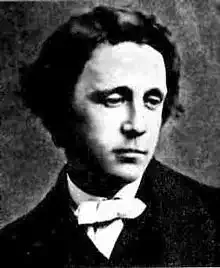
Lewis Carroll
The Palace of Humbug
The Palace of Humbug
Lays of Mystery,
Imagination, and Humor
Number 1
I dreamt I dwelt in marble halls,
And each damp thing that creeps and crawls
Went wobblewobble
on the walls.
Faint odours of departed cheese,
Blown on the dank, unwholesome breeze,
Awoke the never ending sneeze.
Strange pictures decked the arras drear,
Strange characters of woe and fear,
The humbugs of the social sphere.
One showed a vain and noisy prig,
That shouted empty words and big
At him that nodded in a wig.
And one, a dotard grim and gray,
Who wasteth childhood's happy day
In work more profitless than play.
Whose icy breast no pity warms,
Whose little victims sit in swarms,
And slowly sob on lower forms.
And one, a green thymehonoured
Bank,
Where flowers are growing wild and rank,
Like weeds that fringe a poisoned tank.
All birds of evil omen there
Flood with rich Notes the tainted air,
The witless wanderer to snare.
The fatal Notes neglected fall,
No creature heeds the treacherous call,
For all those goodly Strawn Baits Pall.
The wandering phantom broke and fled,
Straightway I saw within my head
A vision of a ghostly bed,
Where lay two worn decrepit men,
The fictions of a lawyer's pen,
Who never more might breathe again.
The servingman
of Richard Roe
Wept, inarticulate with woe:
She wept, that waiting on John Doe.
"Oh rouse", I urged, "the waning sense
With tales of tangled evidence,
Of suit, demurrer, and defence."
"Vain", she replied, "such mockeries:
For morbid fancies, such as these,
No suits can suit, no plea can please."
And bending o'er that man of straw,
She cried in grief and sudden awe,
Not inappropriately, "Law!"
The wellremembered
voice he knew,
He smiled, he faintly muttered "Sue!"
(Her very name was legal too.)
The night was fled, the dawn was nigh:
A hurricane went raving by,
And swept the Vision from mine eye.
Vanished that dim and ghostly bed,
(The hangings, tape; the tape was red happy
'Tis o'er, and Doe and Roe are dead!
Oh, yet my spirit inly crawls,
What time it shudderingly recalls
That horrid dream of marble halls!
Lays of Mystery,
Imagination, and Humor
Number 1
I dreamt I dwelt in marble halls,
And each damp thing that creeps and crawls
Went wobblewobble
on the walls.
Faint odours of departed cheese,
Blown on the dank, unwholesome breeze,
Awoke the never ending sneeze.
Strange pictures decked the arras drear,
Strange characters of woe and fear,
The humbugs of the social sphere.
One showed a vain and noisy prig,
That shouted empty words and big
At him that nodded in a wig.
And one, a dotard grim and gray,
Who wasteth childhood's happy day
In work more profitless than play.
Whose icy breast no pity warms,
Whose little victims sit in swarms,
And slowly sob on lower forms.
And one, a green thymehonoured
Bank,
Where flowers are growing wild and rank,
Like weeds that fringe a poisoned tank.
All birds of evil omen there
Flood with rich Notes the tainted air,
The witless wanderer to snare.
The fatal Notes neglected fall,
No creature heeds the treacherous call,
For all those goodly Strawn Baits Pall.
The wandering phantom broke and fled,
Straightway I saw within my head
A vision of a ghostly bed,
Where lay two worn decrepit men,
The fictions of a lawyer's pen,
Who never more might breathe again.
The servingman
of Richard Roe
Wept, inarticulate with woe:
She wept, that waiting on John Doe.
"Oh rouse", I urged, "the waning sense
With tales of tangled evidence,
Of suit, demurrer, and defence."
"Vain", she replied, "such mockeries:
For morbid fancies, such as these,
No suits can suit, no plea can please."
And bending o'er that man of straw,
She cried in grief and sudden awe,
Not inappropriately, "Law!"
The wellremembered
voice he knew,
He smiled, he faintly muttered "Sue!"
(Her very name was legal too.)
The night was fled, the dawn was nigh:
A hurricane went raving by,
And swept the Vision from mine eye.
Vanished that dim and ghostly bed,
(The hangings, tape; the tape was red happy
'Tis o'er, and Doe and Roe are dead!
Oh, yet my spirit inly crawls,
What time it shudderingly recalls
That horrid dream of marble halls!
198
Lewis Carroll
Preface to Hunting of the Snark
Preface to Hunting of the Snark
PREFACE
Ifand
the thing is wildly possiblethe
charge of writing
nonsense were ever brought against the author of this brief but
instructive poem, it would be based, I feel convinced, on the line
``Then the bowsprit got mixed with the rudder sometimes''
In view of this painful possibility, I will not (as I might) appeal
indignantly to my other writings as a proof that I am incapable of
such a deed: I will not (as I might) point to the strong moral
purpose of this poem itself, to the arithmetical principles so
cautiously inculcated in it, or to its noble teachings in Natural
HistoryI
will take the more prosaic course of simply explaining
how it happened.
The Bellman, who was almost morbidly sensitive about appearances,
used to have the bowsprit unshipped once or twice a week to be
revarnished, and it more than once happened, when the time came for
replacing it, that no one on board could remember which end of the
ship it belonged to. They knew it was not of the slightest use to
appeal to the Bellman about ithe
would only refer to his Naval
Code, and read out in pathetic tones Admiralty Instructions which
none of them had ever been able to understandso
it generally ended
in its being fastened on, anyhow, across the rudder. The helmsman
used to stand by with tears in his eyes: he knew it was all wrong,
but alas! Rule 42 of the Code, ``No one shall speak to the Man at the
Helm'', had been completed by the Bellman himself with the words
``and the Man at the Helm shall speak to no one''. So remonstrance
was impossible, and no steering could be done till the next
varnishing day. During these bewildering intervals the ship usually
sailed backwards.
This office was usually undertaken by the Boots, who found in it
a refuge from the Baker's constant complaints about the insufficient
blacking of his three pairs of boots.
As this poem is to some extent connected with the lay of the
Jabberwock, let me take this opportunity of answering a question that
has often been asked me, how to pronounce ``slithy toves''. The
``i'' in ``slithy'' is long, as in ``writhe''; and ``toves'' is
pronounced so as to rhyme with ``groves''. Again, the first ``o'' in
``borogoves'' is pronounced like the ``o'' in ``borrow''. I have
heard people try to give it the sound of the ``o'' in ``worry''.
Such is Human Perversity.
This also seems a fitting occasion to notice the other hard words in
that poem. HumptyDumpty's
theory, of two meanings packed into one
word like a portmanteau, seems to me the right explanation for all.
For instance, take the two words ``fuming'' and ``furious''. Make up
your mind that you will say both words, but leave it unsettled which
you will say first. Now open your mouth and speak. If your thoughts
incline ever so little towards ``fuming'', you will say
``fumingfurious'';
if they turn, by even a hair's breadth, towards
``furious'', you will say ``furiousfuming'';
but if you have that
rarest of gifts, a perfectly balanced mind, you will say
``frumious''.
Supposing that, when Pistol uttered the wellknown
words
``Under which king, Bezonian? Speak or die!''
Justice Shallow had felt certain that it was either William or
Richard, but had not been able to settle which, so that he could not
possibly say either name before the other, can it be doubted that,
rather than die, he would have gasped out ``Rilchiam!''.
'Lewis Carroll'
PREFACE
Ifand
the thing is wildly possiblethe
charge of writing
nonsense were ever brought against the author of this brief but
instructive poem, it would be based, I feel convinced, on the line
``Then the bowsprit got mixed with the rudder sometimes''
In view of this painful possibility, I will not (as I might) appeal
indignantly to my other writings as a proof that I am incapable of
such a deed: I will not (as I might) point to the strong moral
purpose of this poem itself, to the arithmetical principles so
cautiously inculcated in it, or to its noble teachings in Natural
HistoryI
will take the more prosaic course of simply explaining
how it happened.
The Bellman, who was almost morbidly sensitive about appearances,
used to have the bowsprit unshipped once or twice a week to be
revarnished, and it more than once happened, when the time came for
replacing it, that no one on board could remember which end of the
ship it belonged to. They knew it was not of the slightest use to
appeal to the Bellman about ithe
would only refer to his Naval
Code, and read out in pathetic tones Admiralty Instructions which
none of them had ever been able to understandso
it generally ended
in its being fastened on, anyhow, across the rudder. The helmsman
used to stand by with tears in his eyes: he knew it was all wrong,
but alas! Rule 42 of the Code, ``No one shall speak to the Man at the
Helm'', had been completed by the Bellman himself with the words
``and the Man at the Helm shall speak to no one''. So remonstrance
was impossible, and no steering could be done till the next
varnishing day. During these bewildering intervals the ship usually
sailed backwards.
This office was usually undertaken by the Boots, who found in it
a refuge from the Baker's constant complaints about the insufficient
blacking of his three pairs of boots.
As this poem is to some extent connected with the lay of the
Jabberwock, let me take this opportunity of answering a question that
has often been asked me, how to pronounce ``slithy toves''. The
``i'' in ``slithy'' is long, as in ``writhe''; and ``toves'' is
pronounced so as to rhyme with ``groves''. Again, the first ``o'' in
``borogoves'' is pronounced like the ``o'' in ``borrow''. I have
heard people try to give it the sound of the ``o'' in ``worry''.
Such is Human Perversity.
This also seems a fitting occasion to notice the other hard words in
that poem. HumptyDumpty's
theory, of two meanings packed into one
word like a portmanteau, seems to me the right explanation for all.
For instance, take the two words ``fuming'' and ``furious''. Make up
your mind that you will say both words, but leave it unsettled which
you will say first. Now open your mouth and speak. If your thoughts
incline ever so little towards ``fuming'', you will say
``fumingfurious'';
if they turn, by even a hair's breadth, towards
``furious'', you will say ``furiousfuming'';
but if you have that
rarest of gifts, a perfectly balanced mind, you will say
``frumious''.
Supposing that, when Pistol uttered the wellknown
words
``Under which king, Bezonian? Speak or die!''
Justice Shallow had felt certain that it was either William or
Richard, but had not been able to settle which, so that he could not
possibly say either name before the other, can it be doubted that,
rather than die, he would have gasped out ``Rilchiam!''.
'Lewis Carroll'
183
Lewis Carroll
I'll Tell Thee Everything I Can
I'll Tell Thee Everything I Can
I'll tell thee everything I can;
There's little to relate,
I saw an aged, aged man,
Asitting
on a gate.
'Who are you, aged man?' I said.
'And how is it you live?'
And his answer trickled through my head
Like water through a sieve.
He said, 'I look for butterflies
That sleep among the wheat;
I make them into muttonpies,
And sell them in the street.
I sell them unto men,' he said,
'Who sail on stormy seas;
And that's the way I get my bread
A trifle, if you please.'
But I was thinking of a plan
To dye one's whiskers green,
And always use so large a fan
That they could not be seen.
So, having no reply to give
To what the old man said,
I cried, 'Come, tell me how you live!'
And thumped him on the head.
His accents mild took up the tale;
He said, 'I go my ways,
And when I find a mountainrill,
I set it in a blaze;
And thence they make a stuff they call
Rowland's Macassar Oil
Yet twopencehalfpenny
is all
They give me for my toil.'
But I was thinking of a way
To feed one's self on batter,
And so go on from day to day
Getting a little fatter.
I shook him well from side to side,
Until his face was blue,
'Come, tell me how you live,' I cried,
'And what it is you do!'
He said, 'I hunt for haddocks' eyes
Among the heather bright,
And work them into waistcoatbuttons
In the silent night.
And these I do not sell for gold
Or coin of silvery shine,
But for a copper halfpenny,
And that will purchase nine.
'I sometimes dig for buttered rolls,
Or set limed twigs for crabs;
I sometimes search the grassy knolls
For wheels of hansomcabs.
And that's the way' (he gave a wink)
'By which I get my wealth
And very gladly will I drink
Your honor's noble health.'
I heard him then, for I had just
Completed my design
To keep the Menai bridge from rust
By boiling it in wine.
I thanked him much for telling me
The way he got his wealth,
But chiefly for his wish that he
Might drink my noble health.
And now, if e'er by chance I put
My fingers into glue,
Or madly squeeze a righthand
foot
Into a lefthand
shoe,
Or if I drop upon my toe
A very heavy weight,
I weep, for it reminds me so
Of that old man I used to know
Whose look was mild, whose speech was slow,
Whose hair was whiter than the snow,
Whose face was very like a crow,
With eyes, like cinders, all aglow,
Who seemed distracted with his woe,
Who rocked his body to and fro,
And muttered mumblingly and low,
As if his mouth were full of dough,
Who snorted like a buffalo
That summer evening long ago,
Asitting
on a gate.
I'll tell thee everything I can;
There's little to relate,
I saw an aged, aged man,
Asitting
on a gate.
'Who are you, aged man?' I said.
'And how is it you live?'
And his answer trickled through my head
Like water through a sieve.
He said, 'I look for butterflies
That sleep among the wheat;
I make them into muttonpies,
And sell them in the street.
I sell them unto men,' he said,
'Who sail on stormy seas;
And that's the way I get my bread
A trifle, if you please.'
But I was thinking of a plan
To dye one's whiskers green,
And always use so large a fan
That they could not be seen.
So, having no reply to give
To what the old man said,
I cried, 'Come, tell me how you live!'
And thumped him on the head.
His accents mild took up the tale;
He said, 'I go my ways,
And when I find a mountainrill,
I set it in a blaze;
And thence they make a stuff they call
Rowland's Macassar Oil
Yet twopencehalfpenny
is all
They give me for my toil.'
But I was thinking of a way
To feed one's self on batter,
And so go on from day to day
Getting a little fatter.
I shook him well from side to side,
Until his face was blue,
'Come, tell me how you live,' I cried,
'And what it is you do!'
He said, 'I hunt for haddocks' eyes
Among the heather bright,
And work them into waistcoatbuttons
In the silent night.
And these I do not sell for gold
Or coin of silvery shine,
But for a copper halfpenny,
And that will purchase nine.
'I sometimes dig for buttered rolls,
Or set limed twigs for crabs;
I sometimes search the grassy knolls
For wheels of hansomcabs.
And that's the way' (he gave a wink)
'By which I get my wealth
And very gladly will I drink
Your honor's noble health.'
I heard him then, for I had just
Completed my design
To keep the Menai bridge from rust
By boiling it in wine.
I thanked him much for telling me
The way he got his wealth,
But chiefly for his wish that he
Might drink my noble health.
And now, if e'er by chance I put
My fingers into glue,
Or madly squeeze a righthand
foot
Into a lefthand
shoe,
Or if I drop upon my toe
A very heavy weight,
I weep, for it reminds me so
Of that old man I used to know
Whose look was mild, whose speech was slow,
Whose hair was whiter than the snow,
Whose face was very like a crow,
With eyes, like cinders, all aglow,
Who seemed distracted with his woe,
Who rocked his body to and fro,
And muttered mumblingly and low,
As if his mouth were full of dough,
Who snorted like a buffalo
That summer evening long ago,
Asitting
on a gate.
190
Lewis Carroll
Fit the Sixth ( Hunting of the Snark )
Fit the Sixth ( Hunting of the Snark )
The Barrister's Dream
They sought it with thimbles, they sought it with care;
They pursued it with forks and hope;
They threatened its life with a railwayshare;
They charmed it with smiles and soap.
But the Barrister, weary of proving in vain
That the Beaver's lacemaking
was wrong,
Fell asleep, and in dreams saw the creature quite plain
That his fancy had dwelt on so long.
He dreamed that he stood in a shadowy Court,
Where the Snark, with a glass in its eye,
Dressed in gown, bands, and wig, was defending a pig
On the charge of deserting its sty.
The Witnesses proved, without error or flaw,
That the sty was deserted when found:
And the Judge kept explaining the state of the law
In a soft undercurrent
of sound.
The indictment had never been clearly expressed,
And it seemed that the Snark had begun,
And had spoken three hours, before any one guessed
What the pig was supposed to have done.
The Jury had each formed a different view
(Long before the indictment was read),
And they all spoke at once, so that none of them knew
One word that the others had said.
"You must know"
said the Judge: but the Snark exclaimed "Fudge!"
That statute is obsolete quite!
Let me tell you, my friends, the whole question depends
On an ancient manorial right.
"In the matter of Treason the pig would appear
To have aided, but scarcely abetted:
While the charge of Insolvency fails, it is clear,
If you grant the plea 'never indebted'.
"The fact of Desertion I will not dispute:
But its guilt, as I trust, is removed
(So far as relates to the costs of this suit)
By the Alibi which has been proved.
"My poor client's fate now depends on your votes."
Here the speaker sat down in his place,
And directed the Judge to refer to his notes
And briefly to sum up the case.
But the Judge said he never had summed up before;
So the Snark undertook it instead,
And summed it so well that it came to far more
Than the Witnesses ever had said!
When the verdict was called for, the Jury declined,
As the word was so puzzling to spell;
But they ventured to hope that the Snark wouldn't mind
Undertaking that duty as well.
So the Snark found the verdict, although, as it owned,
It was spent with the toils of the day:
When it said the word "GUILTY!" the Jury all groaned
And some of them fainted away.
Then the Snark pronounced sentence, the Judge being quite
Too nervous to utter a word:
When it rose to its feet, there was silence like night,
And the fall of a pin might be heard.
"Transportation for life" was the sentence it gave,
"And then to be fined forty pound."
The Jury all cheered, though the Judge said he feared
That the phrase was not legally sound.
But their wild exultation was suddenly checked
When the jailer informed them, with tears,
Such a sentence would not have the slightest effect,
As the pig had been dead for some years.
The Judge left the Court, looking deeply disgusted
But the Snark, though a little aghast,
As the lawyer to whom the defence was intrusted,
Went bellowing on to the last.
Thus the Barrister dreamed, while the bellowing seemed
To grow every moment more clear:
Till he woke to the knell of a furious bell,
Which the Bellman rang close at his ear.
The Barrister's Dream
They sought it with thimbles, they sought it with care;
They pursued it with forks and hope;
They threatened its life with a railwayshare;
They charmed it with smiles and soap.
But the Barrister, weary of proving in vain
That the Beaver's lacemaking
was wrong,
Fell asleep, and in dreams saw the creature quite plain
That his fancy had dwelt on so long.
He dreamed that he stood in a shadowy Court,
Where the Snark, with a glass in its eye,
Dressed in gown, bands, and wig, was defending a pig
On the charge of deserting its sty.
The Witnesses proved, without error or flaw,
That the sty was deserted when found:
And the Judge kept explaining the state of the law
In a soft undercurrent
of sound.
The indictment had never been clearly expressed,
And it seemed that the Snark had begun,
And had spoken three hours, before any one guessed
What the pig was supposed to have done.
The Jury had each formed a different view
(Long before the indictment was read),
And they all spoke at once, so that none of them knew
One word that the others had said.
"You must know"
said the Judge: but the Snark exclaimed "Fudge!"
That statute is obsolete quite!
Let me tell you, my friends, the whole question depends
On an ancient manorial right.
"In the matter of Treason the pig would appear
To have aided, but scarcely abetted:
While the charge of Insolvency fails, it is clear,
If you grant the plea 'never indebted'.
"The fact of Desertion I will not dispute:
But its guilt, as I trust, is removed
(So far as relates to the costs of this suit)
By the Alibi which has been proved.
"My poor client's fate now depends on your votes."
Here the speaker sat down in his place,
And directed the Judge to refer to his notes
And briefly to sum up the case.
But the Judge said he never had summed up before;
So the Snark undertook it instead,
And summed it so well that it came to far more
Than the Witnesses ever had said!
When the verdict was called for, the Jury declined,
As the word was so puzzling to spell;
But they ventured to hope that the Snark wouldn't mind
Undertaking that duty as well.
So the Snark found the verdict, although, as it owned,
It was spent with the toils of the day:
When it said the word "GUILTY!" the Jury all groaned
And some of them fainted away.
Then the Snark pronounced sentence, the Judge being quite
Too nervous to utter a word:
When it rose to its feet, there was silence like night,
And the fall of a pin might be heard.
"Transportation for life" was the sentence it gave,
"And then to be fined forty pound."
The Jury all cheered, though the Judge said he feared
That the phrase was not legally sound.
But their wild exultation was suddenly checked
When the jailer informed them, with tears,
Such a sentence would not have the slightest effect,
As the pig had been dead for some years.
The Judge left the Court, looking deeply disgusted
But the Snark, though a little aghast,
As the lawyer to whom the defence was intrusted,
Went bellowing on to the last.
Thus the Barrister dreamed, while the bellowing seemed
To grow every moment more clear:
Till he woke to the knell of a furious bell,
Which the Bellman rang close at his ear.
191
Lewis Carroll
Alice And The White Knight
Alice And The White Knight
Alice was walking beside the White Knight in Looking Glass Land.
'You are sad.' the Knight said in an anxious tone: 'let me sing you a song to comfort
you.'
'Is it very long?' Alice asked, for she had heard a good deal of poetry that day.
'It's long.' said the Knight, 'but it's very, very beautiful. Everybody that hears me sing
it either
it brings tears to their eyes, or else '
'Or else what?' said Alice, for the Knight had made a sudden pause.
'Or else it doesn't, you know. The name of the song is called 'Haddocks' Eyes.''
'Oh, that's the name of the song, is it?' Alice said, trying to feel interested.
'No, you don't understand,' the Knight said, looking a little vexed. 'That's what the
name
is called. The name really is 'The Aged, Aged Man.''
'Then I ought to have said 'That's what the song is called'?' Alice corrected herself.
'No you oughtn't: that's another thing. The song is called 'Ways and Means' but that's
only
what it's called, you know!'
'Well, what is the song then?' said Alice, who was by this time completely bewildered.
'I was coming to that,' the Knight said. 'The song really is 'Asitting
On a Gate': and the
tune's my own invention.'
So saying, he stopped his horse and let the reins fall on its neck: then slowly beating
time
with one hand, and with a faint smile lighting up his gentle, foolish face, he began:
I'll tell thee everything I can;
There's little to relate.
I saw an aged, aged man,
Asitting
on a gate.
'Who are you, aged man?' I said,
' And how is it you live?'
And his answer trickled through my head
like water through a sieve.
He said 'I look for butterflies
That sleep among the wheat:
I make them into mutton pies,
And sell them in the street.
I sell them unto men,' he said,
'Who sail on stormy seas;
And that's the way I get my bread
A trifle if you please.'
But I was thinking of a plan
To dye one's whiskers green,
And always use so large a fan
That they could not be seen.
So, having no reply to give
To what the old man said,
I cried, 'Come tell me how you live!'
And thumped him on the head.
His accents mild took up the tale:
He said, 'I go my ways,
And when I find a mountainrill,
I set it in a blaze;
And thence they make a stuff they call
Rowland's Macassar Oil Yet
twopencehalfpenny
is all
They give me for my toil.'
But I was thinking of a way
To feed one's self on batter,
And so go on from day to day
Getting a little fatter.
I shook him well from side to side
Until his face was blue:
'Come tell me how you live,' I cried,
'And what it is you do!'
He said 'I hunt for haddocks' eyes
Among the heather bright,
And work them into waistcoat buttons
In the silent night.
And these I do not sell for gold
Or coin of silvery shine,
But for a copper halfpenny,
And that will purchase nine.
'I sometimes dig for buttered rolls,
Or set limed twigs for crabs;
I sometimes search for grassy knolls
For wheels of hansomcabs.
And that's the way' (he gave a wink)
'By which I get my wealth And
very gladly will I drink
Your Honour's noble health.'
I heard him then, for I had just
Completed my design
To keep the Menai Bridge from rust
By boiling it in wine.
I thanked him much for telling me
The way he got his wealth,
But chiefly for the wish that he
Might drink my noble health.
And now if e'er by chance I put
My fingers into glue,
Or madly squeeze a righthand
foot
Into a lefthand
shoe,
Or if I drop upon my toe
A very heavy weight,
I weep, for it reminds me so
Of that old man I used to know Whose
look was mild, whose speech was slow
Whose hair was whiter than the snow,
Whose face was very like a crow,
With eyes, like cinders, all aglow,
Who seemed distracted with his woe,
Who rocked his body to and fro,
And muttered mumblingly and low,
As if his mouth were full of dough,
Who snorted like a buffalo That
summer evening long ago
Asitting
on a gate.
As the Knight sang the last words of the ballad, he gathered up the reins, and turned
his horse's head along the road by which they had come.
Alice was walking beside the White Knight in Looking Glass Land.
'You are sad.' the Knight said in an anxious tone: 'let me sing you a song to comfort
you.'
'Is it very long?' Alice asked, for she had heard a good deal of poetry that day.
'It's long.' said the Knight, 'but it's very, very beautiful. Everybody that hears me sing
it either
it brings tears to their eyes, or else '
'Or else what?' said Alice, for the Knight had made a sudden pause.
'Or else it doesn't, you know. The name of the song is called 'Haddocks' Eyes.''
'Oh, that's the name of the song, is it?' Alice said, trying to feel interested.
'No, you don't understand,' the Knight said, looking a little vexed. 'That's what the
name
is called. The name really is 'The Aged, Aged Man.''
'Then I ought to have said 'That's what the song is called'?' Alice corrected herself.
'No you oughtn't: that's another thing. The song is called 'Ways and Means' but that's
only
what it's called, you know!'
'Well, what is the song then?' said Alice, who was by this time completely bewildered.
'I was coming to that,' the Knight said. 'The song really is 'Asitting
On a Gate': and the
tune's my own invention.'
So saying, he stopped his horse and let the reins fall on its neck: then slowly beating
time
with one hand, and with a faint smile lighting up his gentle, foolish face, he began:
I'll tell thee everything I can;
There's little to relate.
I saw an aged, aged man,
Asitting
on a gate.
'Who are you, aged man?' I said,
' And how is it you live?'
And his answer trickled through my head
like water through a sieve.
He said 'I look for butterflies
That sleep among the wheat:
I make them into mutton pies,
And sell them in the street.
I sell them unto men,' he said,
'Who sail on stormy seas;
And that's the way I get my bread
A trifle if you please.'
But I was thinking of a plan
To dye one's whiskers green,
And always use so large a fan
That they could not be seen.
So, having no reply to give
To what the old man said,
I cried, 'Come tell me how you live!'
And thumped him on the head.
His accents mild took up the tale:
He said, 'I go my ways,
And when I find a mountainrill,
I set it in a blaze;
And thence they make a stuff they call
Rowland's Macassar Oil Yet
twopencehalfpenny
is all
They give me for my toil.'
But I was thinking of a way
To feed one's self on batter,
And so go on from day to day
Getting a little fatter.
I shook him well from side to side
Until his face was blue:
'Come tell me how you live,' I cried,
'And what it is you do!'
He said 'I hunt for haddocks' eyes
Among the heather bright,
And work them into waistcoat buttons
In the silent night.
And these I do not sell for gold
Or coin of silvery shine,
But for a copper halfpenny,
And that will purchase nine.
'I sometimes dig for buttered rolls,
Or set limed twigs for crabs;
I sometimes search for grassy knolls
For wheels of hansomcabs.
And that's the way' (he gave a wink)
'By which I get my wealth And
very gladly will I drink
Your Honour's noble health.'
I heard him then, for I had just
Completed my design
To keep the Menai Bridge from rust
By boiling it in wine.
I thanked him much for telling me
The way he got his wealth,
But chiefly for the wish that he
Might drink my noble health.
And now if e'er by chance I put
My fingers into glue,
Or madly squeeze a righthand
foot
Into a lefthand
shoe,
Or if I drop upon my toe
A very heavy weight,
I weep, for it reminds me so
Of that old man I used to know Whose
look was mild, whose speech was slow
Whose hair was whiter than the snow,
Whose face was very like a crow,
With eyes, like cinders, all aglow,
Who seemed distracted with his woe,
Who rocked his body to and fro,
And muttered mumblingly and low,
As if his mouth were full of dough,
Who snorted like a buffalo That
summer evening long ago
Asitting
on a gate.
As the Knight sang the last words of the ballad, he gathered up the reins, and turned
his horse's head along the road by which they had come.
186

Kabir
The Word
The Word
Find the word, understand the word,
Depend on the word;
The word is heaven and space, the word the earth,
The word the universe.
The word is in our ears, the word is on our tongues,
The word the idol.
The word is the holy book, the word is harmony,
The word is music.
The word is magic, the word the Guru.
The word is the body, the word is the spirit, the word is being,
The word Not-being.
The word is man, the word is woman,
The Worshipped Great.
The word is the seen and unseen, the word is the existent
And the non-existent.
Know the word, says Kabir,
The word is All-powerful.
Find the word, understand the word,
Depend on the word;
The word is heaven and space, the word the earth,
The word the universe.
The word is in our ears, the word is on our tongues,
The word the idol.
The word is the holy book, the word is harmony,
The word is music.
The word is magic, the word the Guru.
The word is the body, the word is the spirit, the word is being,
The word Not-being.
The word is man, the word is woman,
The Worshipped Great.
The word is the seen and unseen, the word is the existent
And the non-existent.
Know the word, says Kabir,
The word is All-powerful.
316

Joyce Kilmer
Waverley
Waverley
-
When, on a novel's newly printed page
We find a maudlin eulogy of sin,
And read of ways that harlots wander in,
And of sick souls that writhe in helpless rage;
Or when Romance, bespectacled and sage,
Taps on her desk and bids the class begin
To con the problems that have always been
Perplexed mankind's unhappy heritage;
Then in what robes of honor habited
The laureled wizard of the North appears!
Who raised Prince Charlie's cohorts from the dead,
Made Rose's mirth and Flora's noble tears,
And formed that shining legion at whose head
Rides Waverley, triumphant o'er the years!
-
When, on a novel's newly printed page
We find a maudlin eulogy of sin,
And read of ways that harlots wander in,
And of sick souls that writhe in helpless rage;
Or when Romance, bespectacled and sage,
Taps on her desk and bids the class begin
To con the problems that have always been
Perplexed mankind's unhappy heritage;
Then in what robes of honor habited
The laureled wizard of the North appears!
Who raised Prince Charlie's cohorts from the dead,
Made Rose's mirth and Flora's noble tears,
And formed that shining legion at whose head
Rides Waverley, triumphant o'er the years!
124
Joyce Kilmer
Poets
Poets
Vain is the chiming of forgotten bells
That the wind sways above a ruined shrine.
Vainer his voice in whom no longer dwells
Hunger that craves immortal Bread and Wine.
Light songs we breathe that perish with our breath
Out of our lips that have not kissed the rod.
They shall not live who have not tasted death.
They only sing who are struck dumb by God.
Vain is the chiming of forgotten bells
That the wind sways above a ruined shrine.
Vainer his voice in whom no longer dwells
Hunger that craves immortal Bread and Wine.
Light songs we breathe that perish with our breath
Out of our lips that have not kissed the rod.
They shall not live who have not tasted death.
They only sing who are struck dumb by God.
178
Joyce Kilmer
Old Poets
Old Poets
(For Robert Cortez Holliday)
If I should live in a forest
And sleep underneath a tree,
No grove of impudent saplings
Would make a home for me.
I'd go where the old oaks gather,
Serene and good and strong,
And they would not sigh and tremble
And vex me with a song.
The pleasantest sort of poet
Is the poet who's old and wise,
With an old white beard and wrinkles
About his kind old eyes.
For these young flippertigibbets
A-rhyming their hours away
They won't be still like honest men
And listen to what you say.
The young poet screams forever
About his sex and his soul;
But the old man listens, and smokes his pipe,
And polishes its bowl.
There should be a club for poets
Who have come to seventy year.
They should sit in a great hall drinking
Red wine and golden beer.
They would shuffle in of an evening,
Each one to his cushioned seat,
And there would be mellow talking
And silence rich and sweet.
There is no peace to be taken
With poets who are young,
For they worry about the wars to be fought
And the songs that must be sung.
But the old man knows that he's in his chair
And that God's on His throne in the sky.
So he sits by the fire in comfort
And he lets the world spin by.
(For Robert Cortez Holliday)
If I should live in a forest
And sleep underneath a tree,
No grove of impudent saplings
Would make a home for me.
I'd go where the old oaks gather,
Serene and good and strong,
And they would not sigh and tremble
And vex me with a song.
The pleasantest sort of poet
Is the poet who's old and wise,
With an old white beard and wrinkles
About his kind old eyes.
For these young flippertigibbets
A-rhyming their hours away
They won't be still like honest men
And listen to what you say.
The young poet screams forever
About his sex and his soul;
But the old man listens, and smokes his pipe,
And polishes its bowl.
There should be a club for poets
Who have come to seventy year.
They should sit in a great hall drinking
Red wine and golden beer.
They would shuffle in of an evening,
Each one to his cushioned seat,
And there would be mellow talking
And silence rich and sweet.
There is no peace to be taken
With poets who are young,
For they worry about the wars to be fought
And the songs that must be sung.
But the old man knows that he's in his chair
And that God's on His throne in the sky.
So he sits by the fire in comfort
And he lets the world spin by.
124
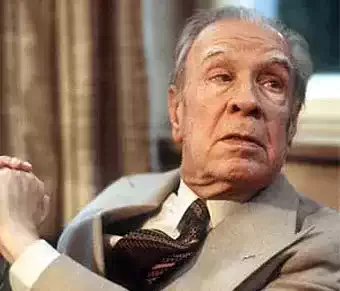
Jorge Luis Borges
The Art of Poetry
The Art of Poetry
To gaze at a river made of time and water
And remember Time is another river.
To know we stray like a river
and our faces vanish like water.
To feel that waking is another dream
that dreams of not dreaming and that the death
we fear in our bones is the death
that every night we call a dream.
To see in every day and year a symbol
of all the days of man and his years,
and convert the outrage of the years
into a music, a sound, and a symbol.
To see in death a dream, in the sunset
a golden sadness--such is poetry,
humble and immortal, poetry,
returning, like dawn and the sunset.
Sometimes at evening there's a face
that sees us from the deeps of a mirror.
Art must be that sort of mirror,
disclosing to each of us his face.
They say Ulysses, wearied of wonders,
wept with love on seeing Ithaca,
humble and green. Art is that Ithaca,
a green eternity, not wonders.
Art is endless like a river flowing,
passing, yet remaining, a mirror to the same
inconstant Heraclitus, who is the same
and yet another, like the river flowing.
To gaze at a river made of time and water
And remember Time is another river.
To know we stray like a river
and our faces vanish like water.
To feel that waking is another dream
that dreams of not dreaming and that the death
we fear in our bones is the death
that every night we call a dream.
To see in every day and year a symbol
of all the days of man and his years,
and convert the outrage of the years
into a music, a sound, and a symbol.
To see in death a dream, in the sunset
a golden sadness--such is poetry,
humble and immortal, poetry,
returning, like dawn and the sunset.
Sometimes at evening there's a face
that sees us from the deeps of a mirror.
Art must be that sort of mirror,
disclosing to each of us his face.
They say Ulysses, wearied of wonders,
wept with love on seeing Ithaca,
humble and green. Art is that Ithaca,
a green eternity, not wonders.
Art is endless like a river flowing,
passing, yet remaining, a mirror to the same
inconstant Heraclitus, who is the same
and yet another, like the river flowing.
823
Jorge Luis Borges
Art of Poetry, The
Art of Poetry, The
To gaze at a river made of time and water
And remember Time is another river.
To know we stray like a river
and our faces vanish like water.
To feel that waking is another dream
that dreams of not dreaming and that the death
we fear in our bones is the death
that every night we call a dream.
To see in every day and year a symbol
of all the days of man and his years,
and convert the outrage of the years
into a music, a sound, and a symbol.
To see in death a dream, in the sunset
a golden sadness--such is poetry,
humble and immortal, poetry,
returning, like dawn and the sunset.
Sometimes at evening there's a face
that sees us from the deeps of a mirror.
Art must be that sort of mirror,
disclosing to each of us his face.
They say Ulysses, wearied of wonders,
wept with love on seeing Ithaca,
humble and green. Art is that Ithaca,
a green eternity, not wonders.
Art is endless like a river flowing,
passing, yet remaining, a mirror to the same
inconstant Heraclitus, who is the same
and yet another, like the river flowing.
To gaze at a river made of time and water
And remember Time is another river.
To know we stray like a river
and our faces vanish like water.
To feel that waking is another dream
that dreams of not dreaming and that the death
we fear in our bones is the death
that every night we call a dream.
To see in every day and year a symbol
of all the days of man and his years,
and convert the outrage of the years
into a music, a sound, and a symbol.
To see in death a dream, in the sunset
a golden sadness--such is poetry,
humble and immortal, poetry,
returning, like dawn and the sunset.
Sometimes at evening there's a face
that sees us from the deeps of a mirror.
Art must be that sort of mirror,
disclosing to each of us his face.
They say Ulysses, wearied of wonders,
wept with love on seeing Ithaca,
humble and green. Art is that Ithaca,
a green eternity, not wonders.
Art is endless like a river flowing,
passing, yet remaining, a mirror to the same
inconstant Heraclitus, who is the same
and yet another, like the river flowing.
950

Jonathan Swift
To Stella On Her Birth-Day, 1721-2
To Stella On Her Birth-Day, 1721-2
While, Stella, to your lasting praise
The Muse her annual tribute pays,
While I assign myself a task
Which you expect, but scorn to ask;
If I perform this task with pain,
Let me of partial fate complain;
You every year the debt enlarge,
I grow less equal to the charge:
In you each virtue brighter shines,
But my poetic vein declines;
My harp will soon in vain be strung,
And all your virtues left unsung.
For none among the upstart race
Of poets dare assume my place;
Your worth will be to them unknown,
They must have Stellas of their own;
And thus, my stock of wit decay'd,
I dying leave the debt unpaid,
Unless Delany, as my heir,
Will answer for the whole arrear.
While, Stella, to your lasting praise
The Muse her annual tribute pays,
While I assign myself a task
Which you expect, but scorn to ask;
If I perform this task with pain,
Let me of partial fate complain;
You every year the debt enlarge,
I grow less equal to the charge:
In you each virtue brighter shines,
But my poetic vein declines;
My harp will soon in vain be strung,
And all your virtues left unsung.
For none among the upstart race
Of poets dare assume my place;
Your worth will be to them unknown,
They must have Stellas of their own;
And thus, my stock of wit decay'd,
I dying leave the debt unpaid,
Unless Delany, as my heir,
Will answer for the whole arrear.
213
Jonathan Swift
To Stella, Who Collected and Transcribed His Poems
To Stella, Who Collected and Transcribed His Poems
As, when a lofty pile is raised,
We never hear the workmen praised,
Who bring the lime, or place the stones;
But all admire Inigo Jones:
So, if this pile of scattered rhymes
Should be approved in aftertimes;
If it both pleases and endures,
The merit and the praise are yours.
Thou, Stella, wert no longer young,
When first for thee my harp was strung,
Without one word of Cupid's darts,
Of killing eyes, or bleeding hearts;
With friendship and esteem possest,
I ne'er admitted Love a guest.
In all the habitudes of life,
The friend, the mistress, and the wife,
Variety we still pursue,
In pleasure seek for something new;
Or else, comparing with the rest,
Take comfort that our own is best;
The best we value by the worst,
As tradesmen show their trash at first;
But his pursuits are at an end,
Whom Stella chooses for a friend.
A poet starving in a garret,
Invokes his mistress and his Muse,
And stays at home for want of shoes:
Should but his Muse descending drop
A slice of bread and mutton-chop;
Or kindly, when his credit's out,
Surprise him with a pint of stout;
Or patch his broken stocking soles;
Or send him in a peck of coals;
Exalted in his mighty mind,
He flies and leaves the stars behind;
Counts all his labours amply paid,
Adores her for the timely aid.
Or, should a porter make inquiries
For Chloe, Sylvia, Phillis, Iris;
Be told the lodging, lane, and sign,
The bowers that hold those nymphs divine;
Fair Chloe would perhaps be found
With footmen tippling under ground;
The charming Sylvia beating flax,
Her shoulders marked with bloody tracks;
Bright Phyllis mending ragged smocks:
And radiant Iris in the pox.
These are the goddesses enrolled
In Curll's collection, new and old,
Whose scoundrel fathers would not know 'em,
If they should meet them in a poem.
True poets can depress and raise,
Are lords of infamy and praise;
They are not scurrilous in satire,
Nor will in panegyric flatter.
Unjustly poets we asperse;
Truth shines the brighter clad in verse,
And all the fictions they pursue
Do but insinuate what is true.
Now, should my praises owe their truth
To beauty, dress, or paint, or youth,
What stoics call without our power,
They could not be ensured an hour;
'Twere grafting on an annual stock,
That must our expectation mock,
And, making one luxuriant shoot,
Die the next year for want of root:
Before I could my verses bring,
Perhaps you're quite another thing.
So Maevius, when he drained his skull
To celebrate some suburb trull,
His similes in order set,
And every crambo he could get;
Had gone through all the common-places
Worn out by wits, who rhyme on faces;
Before he could his poem close,
The lovely nymph had lost her nose.
Your virtues safely I commend;
They on no accidents depend:
Let malice look with all her eyes,
She dare not say the poet lies.
Stella, when you these lines transcribe,
Lest you should take them for a bribe,
Resolved to mortify your pride,
I'll here expose your weaker side.
Your spirits kindle to a flame,
Moved by the lightest touch of blame;
And when a friend in kindness tries
To show you where your error lies,
Conviction does but more incense;
Perverseness is your whole defence;
Truth, judgment, wit, give place to spite,
Regardless both of wrong and right;
Your virtues all suspended wait,
Till time has opened reason's gate;
And, what is worse, your passion bends
Its force against your nearest friends,
Which manners, decency, and pride,
Have taught from you the world to hide;
In vain; for see, your friend has brought
To public light your only fault;
And yet a fault we often find
Mixed in a noble, generous mind:
And may compare to Etna's fire,
Which, though with trembling, all admire;
The heat that makes the summit glow,
Enriching all the vales below.
Those who, in warmer climes, complain
From Phoebus' rays they suffer pain,
Must own that pain is largely paid
By generous wines beneath a shade.
Yet, when I find your passions rise,
And anger sparkling in your eyes,
I grieve those spirits should be spent,
For nobler ends by nature meant.
One passion, with a different turn,
Makes wit inflame, or anger burn:
So the sun's heat, with different powers,
Ripens the grape, the liquor sours:
Thus Ajax, when with rage possest,
By Pallas breathed into his breast,
His valour would no more employ,
Which might alone have conquered Troy;
But, blinded be resentment, seeks
For vengeance on his friends the Greeks.
You think this turbulence of blood
From stagnating preserves the flood,
Which, thus fermenting by degrees,
Exalts the spirits, sinks the lees.
Stella, for once your reason wrong;
For, should this ferment last too long,
By time subsiding, you may find
Nothing but acid left behind;
From passion you may then be freed,
When peevishness and spleen succeed.
Say, Stella, when you copy next,
Will you keep strictly to the text?
Dare you let these reproaches stand,
And to your failing set your hand?
Or, if these lines your anger fire,
Shall they in baser flames expire?
Whene'er they burn, if burn they must,
They'll prove my accusation just.
As, when a lofty pile is raised,
We never hear the workmen praised,
Who bring the lime, or place the stones;
But all admire Inigo Jones:
So, if this pile of scattered rhymes
Should be approved in aftertimes;
If it both pleases and endures,
The merit and the praise are yours.
Thou, Stella, wert no longer young,
When first for thee my harp was strung,
Without one word of Cupid's darts,
Of killing eyes, or bleeding hearts;
With friendship and esteem possest,
I ne'er admitted Love a guest.
In all the habitudes of life,
The friend, the mistress, and the wife,
Variety we still pursue,
In pleasure seek for something new;
Or else, comparing with the rest,
Take comfort that our own is best;
The best we value by the worst,
As tradesmen show their trash at first;
But his pursuits are at an end,
Whom Stella chooses for a friend.
A poet starving in a garret,
Invokes his mistress and his Muse,
And stays at home for want of shoes:
Should but his Muse descending drop
A slice of bread and mutton-chop;
Or kindly, when his credit's out,
Surprise him with a pint of stout;
Or patch his broken stocking soles;
Or send him in a peck of coals;
Exalted in his mighty mind,
He flies and leaves the stars behind;
Counts all his labours amply paid,
Adores her for the timely aid.
Or, should a porter make inquiries
For Chloe, Sylvia, Phillis, Iris;
Be told the lodging, lane, and sign,
The bowers that hold those nymphs divine;
Fair Chloe would perhaps be found
With footmen tippling under ground;
The charming Sylvia beating flax,
Her shoulders marked with bloody tracks;
Bright Phyllis mending ragged smocks:
And radiant Iris in the pox.
These are the goddesses enrolled
In Curll's collection, new and old,
Whose scoundrel fathers would not know 'em,
If they should meet them in a poem.
True poets can depress and raise,
Are lords of infamy and praise;
They are not scurrilous in satire,
Nor will in panegyric flatter.
Unjustly poets we asperse;
Truth shines the brighter clad in verse,
And all the fictions they pursue
Do but insinuate what is true.
Now, should my praises owe their truth
To beauty, dress, or paint, or youth,
What stoics call without our power,
They could not be ensured an hour;
'Twere grafting on an annual stock,
That must our expectation mock,
And, making one luxuriant shoot,
Die the next year for want of root:
Before I could my verses bring,
Perhaps you're quite another thing.
So Maevius, when he drained his skull
To celebrate some suburb trull,
His similes in order set,
And every crambo he could get;
Had gone through all the common-places
Worn out by wits, who rhyme on faces;
Before he could his poem close,
The lovely nymph had lost her nose.
Your virtues safely I commend;
They on no accidents depend:
Let malice look with all her eyes,
She dare not say the poet lies.
Stella, when you these lines transcribe,
Lest you should take them for a bribe,
Resolved to mortify your pride,
I'll here expose your weaker side.
Your spirits kindle to a flame,
Moved by the lightest touch of blame;
And when a friend in kindness tries
To show you where your error lies,
Conviction does but more incense;
Perverseness is your whole defence;
Truth, judgment, wit, give place to spite,
Regardless both of wrong and right;
Your virtues all suspended wait,
Till time has opened reason's gate;
And, what is worse, your passion bends
Its force against your nearest friends,
Which manners, decency, and pride,
Have taught from you the world to hide;
In vain; for see, your friend has brought
To public light your only fault;
And yet a fault we often find
Mixed in a noble, generous mind:
And may compare to Etna's fire,
Which, though with trembling, all admire;
The heat that makes the summit glow,
Enriching all the vales below.
Those who, in warmer climes, complain
From Phoebus' rays they suffer pain,
Must own that pain is largely paid
By generous wines beneath a shade.
Yet, when I find your passions rise,
And anger sparkling in your eyes,
I grieve those spirits should be spent,
For nobler ends by nature meant.
One passion, with a different turn,
Makes wit inflame, or anger burn:
So the sun's heat, with different powers,
Ripens the grape, the liquor sours:
Thus Ajax, when with rage possest,
By Pallas breathed into his breast,
His valour would no more employ,
Which might alone have conquered Troy;
But, blinded be resentment, seeks
For vengeance on his friends the Greeks.
You think this turbulence of blood
From stagnating preserves the flood,
Which, thus fermenting by degrees,
Exalts the spirits, sinks the lees.
Stella, for once your reason wrong;
For, should this ferment last too long,
By time subsiding, you may find
Nothing but acid left behind;
From passion you may then be freed,
When peevishness and spleen succeed.
Say, Stella, when you copy next,
Will you keep strictly to the text?
Dare you let these reproaches stand,
And to your failing set your hand?
Or, if these lines your anger fire,
Shall they in baser flames expire?
Whene'er they burn, if burn they must,
They'll prove my accusation just.
285
Jonathan Swift
The Dean’s Answer
The Dean’s Answer
The nymph who wrote this in an amorous fit,
I cannot but envy the pride of her wit,
Which thus she will venture profusely to throw
On so mean a design, and a subject so low.
For mean's her design, and her subject as mean,
The first but a rebus, the last but a dean.
A dean's but a parson: and what is a rebus?
A thing never known to the Muses or Phoebus.
The corruption of verse; for, when all is done,
It is but a paraphrase made on a pun.
But a genius like hers no subject can stifle,
It shows and discovers itself through a trifle.
By reading this trifle, I quickly began
To find her a great wit, but the dean a small man.
Rich ladies will furnish their garrets with stuff,
Which others for mantuas would think fine enough:
So the wit that is lavishly thrown away here,
Might furnish a second-rate poet a year.
Thus much for the verse, we proceed to the next,
Where the nymph has entirely forsaken her text:
Her fine panegyrics are quite out of season:
And what she describes to be merit, is treason:
The changes which faction has made in the state,
Have put the dean's politics quite out of date:
Now no one regards what he utters with freedom,
And, should he write pamphlets, no great man would read 'em;
And, should want or desert stand in need of his aid,
This racer would prove but a dull founder'd jade.
The nymph who wrote this in an amorous fit,
I cannot but envy the pride of her wit,
Which thus she will venture profusely to throw
On so mean a design, and a subject so low.
For mean's her design, and her subject as mean,
The first but a rebus, the last but a dean.
A dean's but a parson: and what is a rebus?
A thing never known to the Muses or Phoebus.
The corruption of verse; for, when all is done,
It is but a paraphrase made on a pun.
But a genius like hers no subject can stifle,
It shows and discovers itself through a trifle.
By reading this trifle, I quickly began
To find her a great wit, but the dean a small man.
Rich ladies will furnish their garrets with stuff,
Which others for mantuas would think fine enough:
So the wit that is lavishly thrown away here,
Might furnish a second-rate poet a year.
Thus much for the verse, we proceed to the next,
Where the nymph has entirely forsaken her text:
Her fine panegyrics are quite out of season:
And what she describes to be merit, is treason:
The changes which faction has made in the state,
Have put the dean's politics quite out of date:
Now no one regards what he utters with freedom,
And, should he write pamphlets, no great man would read 'em;
And, should want or desert stand in need of his aid,
This racer would prove but a dull founder'd jade.
250
Jonathan Swift
The Author Upon Himself
The Author Upon Himself
By an old ——pursued,
A crazy prelate, and a royal prude;
By dull divines, who look with envious eyes
On ev'ry genius that attempts to rise;
And pausing o'er a pipe, with doubtful nod,
Give hints, that poets ne'er believe in God.
So clowns on scholars as on wizards look,
And take a folio for a conj'ring book.
Swift had the sin of wit, no venial crime:
Nay, 'twas affirm'd, he sometimes dealt in rhyme;
Humour and mirth had place in all he writ;
He reconcil'd divinity and wit:
He moved and bow'd, and talk'd with too much grace;
Nor show'd the parson in his gait or face;
Despised luxurious wines and costly meat;
Yet still was at the tables of the great;
Frequented lords; saw those that saw the queen;
At Child's or Truby's, never once had been;
Where town and country vicars flock in tribes,
Secured by numbers from the laymen's gibes;
And deal in vices of the graver sort,
Tobacco, censure, coffee, pride, and port.
But, after sage monitions from his friends,
His talents to employ for nobler ends;
To better judgments willing to submit,
He turns to politics his dang'rous wit.
And now, the public Int'rest to support,
By Harley Swift invited, comes to court;
In favour grows with ministers of state;
Admitted private, when superiors wait:
And Harley, not ashamed his choice to own,
Takes him to Windsor in his coach alone.
At Windsor Swift no sooner can appear,
But St. John comes, and whispers in his ear:
The waiters stand in ranks: the yeomen cry,
Make room, as if a duke were passing by.
Now Finch alarms the lords: he hears for certain
This dang'rous priest is got behind the curtain.
Finch, famed for tedious elocution, proves
That Swift oils many a spring which Harley moves.
Walpole and Aislaby, to clear the doubt,
Inform the Commons, that the secret's out:
'A certain doctor is observed of late
To haunt a certain minister of state:
From whence with half an eye we may discover
The peace is made, and Perkin must come over.'
York is from Lambeth sent, to show the queen
A dang'rous treatise writ against the spleen;
Which, by the style, the matter, and the drift,
'Tis thought could be the work of none but Swift.
Poor York! the harmless tool of others' hate;
He sues for pardon, and repents too late.
Now angry Somerset her vengeance vows
On Swift's reproaches for her ******* spouse:
From her red locks her mouth with venom fills,
And thence into the royal ear instils.
The queen incensed, his services forgot,
Leaves him a victim to the vengeful Scot.
Now through the realm a proclamation spread,
To fix a price on his devoted head.
While innocent, he scorns ignoble flight;
His watchful friends preserve him by a sleight.
By Harley's favour once again he shines;
Is now caress'd by candidate divines,
Who change opinions with the changing scene:
Lord! how were they mistaken in the dean!
Now Delawar again familiar grows;
And in Swift's ear thrusts half his powder'd nose.
The Scottish nation, whom he durst offend,
Again apply that Swift would be their friend.
By faction tired, with grief he waits awhile,
His great contending friends to reconcile;
Performs what friendship, justice, truth require:
What could he more, but decently retire?
By an old ——pursued,
A crazy prelate, and a royal prude;
By dull divines, who look with envious eyes
On ev'ry genius that attempts to rise;
And pausing o'er a pipe, with doubtful nod,
Give hints, that poets ne'er believe in God.
So clowns on scholars as on wizards look,
And take a folio for a conj'ring book.
Swift had the sin of wit, no venial crime:
Nay, 'twas affirm'd, he sometimes dealt in rhyme;
Humour and mirth had place in all he writ;
He reconcil'd divinity and wit:
He moved and bow'd, and talk'd with too much grace;
Nor show'd the parson in his gait or face;
Despised luxurious wines and costly meat;
Yet still was at the tables of the great;
Frequented lords; saw those that saw the queen;
At Child's or Truby's, never once had been;
Where town and country vicars flock in tribes,
Secured by numbers from the laymen's gibes;
And deal in vices of the graver sort,
Tobacco, censure, coffee, pride, and port.
But, after sage monitions from his friends,
His talents to employ for nobler ends;
To better judgments willing to submit,
He turns to politics his dang'rous wit.
And now, the public Int'rest to support,
By Harley Swift invited, comes to court;
In favour grows with ministers of state;
Admitted private, when superiors wait:
And Harley, not ashamed his choice to own,
Takes him to Windsor in his coach alone.
At Windsor Swift no sooner can appear,
But St. John comes, and whispers in his ear:
The waiters stand in ranks: the yeomen cry,
Make room, as if a duke were passing by.
Now Finch alarms the lords: he hears for certain
This dang'rous priest is got behind the curtain.
Finch, famed for tedious elocution, proves
That Swift oils many a spring which Harley moves.
Walpole and Aislaby, to clear the doubt,
Inform the Commons, that the secret's out:
'A certain doctor is observed of late
To haunt a certain minister of state:
From whence with half an eye we may discover
The peace is made, and Perkin must come over.'
York is from Lambeth sent, to show the queen
A dang'rous treatise writ against the spleen;
Which, by the style, the matter, and the drift,
'Tis thought could be the work of none but Swift.
Poor York! the harmless tool of others' hate;
He sues for pardon, and repents too late.
Now angry Somerset her vengeance vows
On Swift's reproaches for her ******* spouse:
From her red locks her mouth with venom fills,
And thence into the royal ear instils.
The queen incensed, his services forgot,
Leaves him a victim to the vengeful Scot.
Now through the realm a proclamation spread,
To fix a price on his devoted head.
While innocent, he scorns ignoble flight;
His watchful friends preserve him by a sleight.
By Harley's favour once again he shines;
Is now caress'd by candidate divines,
Who change opinions with the changing scene:
Lord! how were they mistaken in the dean!
Now Delawar again familiar grows;
And in Swift's ear thrusts half his powder'd nose.
The Scottish nation, whom he durst offend,
Again apply that Swift would be their friend.
By faction tired, with grief he waits awhile,
His great contending friends to reconcile;
Performs what friendship, justice, truth require:
What could he more, but decently retire?
326
Jonathan Swift
On Ink
On Ink
I am jet black, as you may see,
The son of pitch and gloomy night:
Yet all that know me will agree,
I'm dead except I live in light.
Sometimes in panegyric high,
Like lofty Pindar, I can soar;
And raise a virgin to the sky,
Or sink her to a pocky whore.
My blood this day is very sweet,
To-morrow of a bitter juice;
Like milk, 'tis cried about the street,
And so applied to different use.
Most wondrous is my magic power:
For with one colour I can paint;
I'll make the devil a saint this hour,
Next make a devil of a saint.
Through distant regions I can fly,
Provide me but with paper wings;
And fairly show a reason why
There should be quarrels among kings:
And, after all, you'll think it odd,
When learned doctors will dispute,
That I should point the word of God,
And show where they can best confute.
Let lawyers bawl and strain their throats:
'Tis I that must the lands convey,
And strip their clients to their coats;
Nay, give their very souls away.
I am jet black, as you may see,
The son of pitch and gloomy night:
Yet all that know me will agree,
I'm dead except I live in light.
Sometimes in panegyric high,
Like lofty Pindar, I can soar;
And raise a virgin to the sky,
Or sink her to a pocky whore.
My blood this day is very sweet,
To-morrow of a bitter juice;
Like milk, 'tis cried about the street,
And so applied to different use.
Most wondrous is my magic power:
For with one colour I can paint;
I'll make the devil a saint this hour,
Next make a devil of a saint.
Through distant regions I can fly,
Provide me but with paper wings;
And fairly show a reason why
There should be quarrels among kings:
And, after all, you'll think it odd,
When learned doctors will dispute,
That I should point the word of God,
And show where they can best confute.
Let lawyers bawl and strain their throats:
'Tis I that must the lands convey,
And strip their clients to their coats;
Nay, give their very souls away.
289
Jonathan Swift
An Echo
An Echo
Never sleeping, still awake,
Pleasing most when most I speak;
The delight of old and young,
Though I speak without a tongue.
Nought but one thing can confound me,
Many voices joining round me;
Then I fret, and rave, and gabble,
Like the labourers of Babel.
Now I am a dog, or cow,
I can bark, or I can low;
I can bleat, or I can sing,
Like the warblers of the spring.
Let the lovesick bard complain,
And I mourn the cruel pain;
Let the happy swain rejoice,
And I join my helping voice:
Both are welcome, grief or joy,
I with either sport and toy.
Though a lady, I am stout,
Drums and trumpets bring me out:
Then I clash, and roar, and rattle,
Join in all the din of battle.
Jove, with all his loudest thunder,
When I'm vext, can't keep me under;
Yet so tender is my ear,
That the lowest voice I fear;
Much I dread the courtier's fate,
When his merit's out of date,
For I hate a silent breath,
And a whisper is my death.
Never sleeping, still awake,
Pleasing most when most I speak;
The delight of old and young,
Though I speak without a tongue.
Nought but one thing can confound me,
Many voices joining round me;
Then I fret, and rave, and gabble,
Like the labourers of Babel.
Now I am a dog, or cow,
I can bark, or I can low;
I can bleat, or I can sing,
Like the warblers of the spring.
Let the lovesick bard complain,
And I mourn the cruel pain;
Let the happy swain rejoice,
And I join my helping voice:
Both are welcome, grief or joy,
I with either sport and toy.
Though a lady, I am stout,
Drums and trumpets bring me out:
Then I clash, and roar, and rattle,
Join in all the din of battle.
Jove, with all his loudest thunder,
When I'm vext, can't keep me under;
Yet so tender is my ear,
That the lowest voice I fear;
Much I dread the courtier's fate,
When his merit's out of date,
For I hate a silent breath,
And a whisper is my death.
249
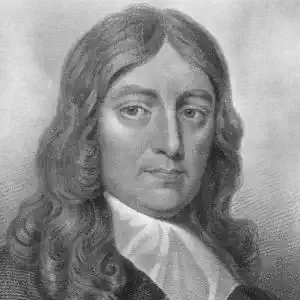
John Milton
To Mr. H. Lawes on His Airs
To Mr. H. Lawes on His Airs
Harry, whose tuneful and well-measured song
First taught our English music how to span
Words with just note and accent, not to scan
With Midas’ ears, committing short and long,
Thy worth and skill exempts thee from the throng,
With praise enough for Envy to look wan;
To after age thou shalt be writ the man
That with smooth air couldst humour best our tongue.
Thou honour’st Verse, and Verse must lend her wing
To honour thee, the priest of Phoebus’ quire,
That tunest their happiest lines in hymn or story.
Dante shall give Fame leave to set thee higher
Than his Casella, whom he wooed to sing,
Met in the milder shades of Purgatory.
Harry, whose tuneful and well-measured song
First taught our English music how to span
Words with just note and accent, not to scan
With Midas’ ears, committing short and long,
Thy worth and skill exempts thee from the throng,
With praise enough for Envy to look wan;
To after age thou shalt be writ the man
That with smooth air couldst humour best our tongue.
Thou honour’st Verse, and Verse must lend her wing
To honour thee, the priest of Phoebus’ quire,
That tunest their happiest lines in hymn or story.
Dante shall give Fame leave to set thee higher
Than his Casella, whom he wooed to sing,
Met in the milder shades of Purgatory.
501
John Milton
Sonnet 03
Sonnet 03
III
Qual in colle aspro, al imbrunir di sera
L'avezza giovinetta pastorella
Va bagnando l'herbetta strana e bella
Che mal si spande a disusata spera
Fuor di sua natia alma primavera,
Cosi Amor meco insu la lingua snella
Desta il fior novo di strania favella,
Mentre io di te, vezzosamente altera,
Canto, dal mio buon popol non inteso
E'l bel Tamigi cangio col bel Arno
Amor lo volse, ed io a l'altrui peso
Seppi ch' Amor cosa mai volse indarno.
Deh! foss' il mio cuor lento e'l duro seno
A chi pianta dal ciel si buon terreno.
III
Qual in colle aspro, al imbrunir di sera
L'avezza giovinetta pastorella
Va bagnando l'herbetta strana e bella
Che mal si spande a disusata spera
Fuor di sua natia alma primavera,
Cosi Amor meco insu la lingua snella
Desta il fior novo di strania favella,
Mentre io di te, vezzosamente altera,
Canto, dal mio buon popol non inteso
E'l bel Tamigi cangio col bel Arno
Amor lo volse, ed io a l'altrui peso
Seppi ch' Amor cosa mai volse indarno.
Deh! foss' il mio cuor lento e'l duro seno
A chi pianta dal ciel si buon terreno.
380
John Milton
Comus (excerpts)
Comus (excerpts)
SONG1Sweet
Echo, sweetest nymph that liv'st unseen
-
Within thy airy shell
-
By slow Meander's margent green,
-
And in the violet-imbroider'd vale
-
Where the love-lorn nightingale
-
Nightly to thee her sad song mourneth well:
-
Canst thou not tell me of a gentle pair
-
That likest thy Narcissus are?
-
O if thou have
-
Hid them in some flow'ry cave,
-
Tell me but where
-
Sweet Queen of Parley, Daughter of the Sphere,
-
So mayst thou be translated to the skies,
-
And give resounding grace to all heav'ns harmonies.
SONG
-
Sabrina fair
-
Listen where thou art sitting
-
Under the glassy, cool, translucent wave,
-
In twisted braids of lilies knitting
-
The loose train of thy amber-dropping hair;
-
Listen for dear honour's sake,
-
Goddess of the silver lake,
-
Listen and save.
-
Listen and appear to us
-
In name of great Oceanus,
-
By the earth-shaking Neptune's mace,
-
And Tethys' grave majestic pace;
-
By hoary Nereus' wrinkled look,
-
And the Carpathian wizard's hook;
-
By scaly Triton's winding shell,
-
And old soothsaying Glaucus' spell;
-
By Leucothea's lovely hands,
-
And her son that rules the strands;
-
By Thetis' tinsel-slipper'd feet,
-
And the songs of Sirens sweet;
-
By dead Parthenope's dear tomb,
-
And fair Ligea's golden comb,
-
Wherewith she sits on diamond rocks
-
Sleeking her soft alluring locks;
-
By all the nymphs that nightly dance
-
Upon thy streams with wily glance,
-
Rise, rise, and heave thy rosy head
-
From thy coral-pav'n bed,
-
And bridle in thy headlong wave,
-
Till thou our summons answer'd have.
-
Listen and save.
SABRINA RISES, ATTENDED BY WATER-NYMPHS, AND SINGS
-
By the rushy-fringed bank,
-
Where grows the willow and the osier dank,
-
My sliding chariot stays,
-
Thick set with agate, and the azurn sheen
-
Of turkis blue, and em'rald green
-
That in the channel strays,
-
Whilst from off the waters fleet
-
Thus I set my printless feet
-
O'er the cowslip's velvet head,
-
That bends not as I tread;
-
Gentle swain at thy request
-
I am here.
SONG1Sweet
Echo, sweetest nymph that liv'st unseen
-
Within thy airy shell
-
By slow Meander's margent green,
-
And in the violet-imbroider'd vale
-
Where the love-lorn nightingale
-
Nightly to thee her sad song mourneth well:
-
Canst thou not tell me of a gentle pair
-
That likest thy Narcissus are?
-
O if thou have
-
Hid them in some flow'ry cave,
-
Tell me but where
-
Sweet Queen of Parley, Daughter of the Sphere,
-
So mayst thou be translated to the skies,
-
And give resounding grace to all heav'ns harmonies.
SONG
-
Sabrina fair
-
Listen where thou art sitting
-
Under the glassy, cool, translucent wave,
-
In twisted braids of lilies knitting
-
The loose train of thy amber-dropping hair;
-
Listen for dear honour's sake,
-
Goddess of the silver lake,
-
Listen and save.
-
Listen and appear to us
-
In name of great Oceanus,
-
By the earth-shaking Neptune's mace,
-
And Tethys' grave majestic pace;
-
By hoary Nereus' wrinkled look,
-
And the Carpathian wizard's hook;
-
By scaly Triton's winding shell,
-
And old soothsaying Glaucus' spell;
-
By Leucothea's lovely hands,
-
And her son that rules the strands;
-
By Thetis' tinsel-slipper'd feet,
-
And the songs of Sirens sweet;
-
By dead Parthenope's dear tomb,
-
And fair Ligea's golden comb,
-
Wherewith she sits on diamond rocks
-
Sleeking her soft alluring locks;
-
By all the nymphs that nightly dance
-
Upon thy streams with wily glance,
-
Rise, rise, and heave thy rosy head
-
From thy coral-pav'n bed,
-
And bridle in thy headlong wave,
-
Till thou our summons answer'd have.
-
Listen and save.
SABRINA RISES, ATTENDED BY WATER-NYMPHS, AND SINGS
-
By the rushy-fringed bank,
-
Where grows the willow and the osier dank,
-
My sliding chariot stays,
-
Thick set with agate, and the azurn sheen
-
Of turkis blue, and em'rald green
-
That in the channel strays,
-
Whilst from off the waters fleet
-
Thus I set my printless feet
-
O'er the cowslip's velvet head,
-
That bends not as I tread;
-
Gentle swain at thy request
-
I am here.
625
John Milton
At A Vacation Exercise In The Colledge, Part Latin, Part English. The Latin
At A Vacation Exercise In The Colledge, Part Latin, Part English. The Latin
Speeches Ended, The English Thus Began
Hail native Language, that by sinews weak
Didst move my first endeavouring tongue to speak,
And mad'st imperfect words with childish tripps,
Half unpronounc't, slide through my infant-lipps,
Driving dum silence from the portal dore,
Where he had mutely sate two years before:
Here I salute thee and thy pardon ask,
That now I use thee in my latter task:
Small loss it is that thence can come unto thee,
I know my tongue but little Grace can do thee:
Thou needst not be ambitious to be first,
Believe me I have thither packt the worst:
And, if it happen as I did forecast,
The daintest dishes shall be serv'd up last.
I pray thee then deny me not thy aide
For this same small neglect that I have made:
But haste thee strait to do me once a Pleasure,
And from thy wardrope bring thy chiefest treasure;
Not those new fangled toys, and triming slight
Which takes our late fantasticks with delight,
But cull those richest Robes, and gay'st attire
Which deepest Spirits, and choicest Wits desire:
I have some naked thoughts that rove about
And loudly knock to have their passage out;
And wearie of their place do only stay
Till thou hast deck't them in thy best aray;
That so they may without suspect or fears
Fly swiftly to this fair Assembly's ears;
Yet I had rather if I were to chuse,
Thy service in some graver subject use,
Such as may make thee search thy coffers round
Before thou cloath my fancy in fit sound:
Such where the deep transported mind may scare
Above the wheeling poles, and at Heav'ns dore
Look in, and see each blissful Deitie
How he before the thunderous throne doth lie,
Listening to what unshorn Apollo sings
To th'touch of golden wires, while Hebe brings
Immortal Nectar to her Kingly Sire:
Then passing through the Spherse of watchful fire,
And mistie Regions of wide air next under,
And hills of Snow and lofts of piled Thunder,
May tell at length how green-ey'd Neptune raves,
In Heav'ns defiance mustering all his waves;
Then sing of secret things that came to pass
When Beldam Nature in her cradle was;
And last of Kings and Queens and Hero's old,
Such as the wise Demodocus once told
In solemn Songs at King Alcinous feast,
While sad Ulisses soul and all the rest
Are held with his melodious harmonie
In willing chains and sweet captivitie.
But fie my wandring Muse how thou dost stray!
Expectance calls thee now another way,
Thou know'st it must he now thy only bent
To keep in compass of thy Predicament:
Then quick about thy purpos'd business come,
That to the next I may resign my Roome
Then Ens is represented as Father of the Predicaments his ten
Sons, whereof the Eldest stood for Substance with his Canons,
which Ens thus speaking, explains.
Good luck befriend thee Son; for at thy birth
The Faiery Ladies daunc't upon the hearth;
Thy drowsie Nurse hath sworn she did them spie
Come tripping to the Room where thou didst lie;
And sweetly singing round about thy Bed
Strew all their blessings on thy sleeping Head.
She heard them give thee this, that thou should'st still
From eyes of mortals walk invisible,
Yet there is something that doth force my fear,
For once it was my dismal hap to hear
A Sybil old, bow-bent with crooked age,
That far events full wisely could presage,
And in Times long and dark Prospective Glass
Fore-saw what future dayes should bring to pass,
Your Son, said she, (nor can you it prevent)
Shall subject be to many an Accident.
O're all his Brethren he shall Reign as King,
Yet every one shall make him underling,
And those that cannot live from him asunder
Ungratefully shall strive to keep him under,
In worth and excellence he shall out-go them,
Yet being above them, he shall be below them;
From others he shall stand in need of nothing,
Yet on his Brothers shall depend for Cloathing.
To find a Foe it shall not be his hap,
And peace shall lull him in her flowry lap;
Yet shall he live in strife, and at his dore
Devouring war shall never cease to roare;
Yea it shall be his natural property
To harbour those that are at enmity.
What power, what force, what mighty spell, if not
Your learned hands, can loose this Gordian knot?
The next Quantity and Quality, spake in Prose, then Relation
was call'd by his Name.
Rivers arise; whether thou be the Son,
Of utmost Tweed, or Oose, or gulphie Dun,
Or Trent, who like some earth-born Giant spreads
His thirty Armes along the indented Meads,
Or sullen Mole that runneth underneath,
Or Severn swift, guilty of Maidens death,
Or Rockie Avon, or of Sedgie Lee,
Or Coaly Tine, or antient hallowed Dee,
Or Humber loud that keeps the Scythians Name,
Or Medway smooth, or Royal Towred Thame.
Speeches Ended, The English Thus Began
Hail native Language, that by sinews weak
Didst move my first endeavouring tongue to speak,
And mad'st imperfect words with childish tripps,
Half unpronounc't, slide through my infant-lipps,
Driving dum silence from the portal dore,
Where he had mutely sate two years before:
Here I salute thee and thy pardon ask,
That now I use thee in my latter task:
Small loss it is that thence can come unto thee,
I know my tongue but little Grace can do thee:
Thou needst not be ambitious to be first,
Believe me I have thither packt the worst:
And, if it happen as I did forecast,
The daintest dishes shall be serv'd up last.
I pray thee then deny me not thy aide
For this same small neglect that I have made:
But haste thee strait to do me once a Pleasure,
And from thy wardrope bring thy chiefest treasure;
Not those new fangled toys, and triming slight
Which takes our late fantasticks with delight,
But cull those richest Robes, and gay'st attire
Which deepest Spirits, and choicest Wits desire:
I have some naked thoughts that rove about
And loudly knock to have their passage out;
And wearie of their place do only stay
Till thou hast deck't them in thy best aray;
That so they may without suspect or fears
Fly swiftly to this fair Assembly's ears;
Yet I had rather if I were to chuse,
Thy service in some graver subject use,
Such as may make thee search thy coffers round
Before thou cloath my fancy in fit sound:
Such where the deep transported mind may scare
Above the wheeling poles, and at Heav'ns dore
Look in, and see each blissful Deitie
How he before the thunderous throne doth lie,
Listening to what unshorn Apollo sings
To th'touch of golden wires, while Hebe brings
Immortal Nectar to her Kingly Sire:
Then passing through the Spherse of watchful fire,
And mistie Regions of wide air next under,
And hills of Snow and lofts of piled Thunder,
May tell at length how green-ey'd Neptune raves,
In Heav'ns defiance mustering all his waves;
Then sing of secret things that came to pass
When Beldam Nature in her cradle was;
And last of Kings and Queens and Hero's old,
Such as the wise Demodocus once told
In solemn Songs at King Alcinous feast,
While sad Ulisses soul and all the rest
Are held with his melodious harmonie
In willing chains and sweet captivitie.
But fie my wandring Muse how thou dost stray!
Expectance calls thee now another way,
Thou know'st it must he now thy only bent
To keep in compass of thy Predicament:
Then quick about thy purpos'd business come,
That to the next I may resign my Roome
Then Ens is represented as Father of the Predicaments his ten
Sons, whereof the Eldest stood for Substance with his Canons,
which Ens thus speaking, explains.
Good luck befriend thee Son; for at thy birth
The Faiery Ladies daunc't upon the hearth;
Thy drowsie Nurse hath sworn she did them spie
Come tripping to the Room where thou didst lie;
And sweetly singing round about thy Bed
Strew all their blessings on thy sleeping Head.
She heard them give thee this, that thou should'st still
From eyes of mortals walk invisible,
Yet there is something that doth force my fear,
For once it was my dismal hap to hear
A Sybil old, bow-bent with crooked age,
That far events full wisely could presage,
And in Times long and dark Prospective Glass
Fore-saw what future dayes should bring to pass,
Your Son, said she, (nor can you it prevent)
Shall subject be to many an Accident.
O're all his Brethren he shall Reign as King,
Yet every one shall make him underling,
And those that cannot live from him asunder
Ungratefully shall strive to keep him under,
In worth and excellence he shall out-go them,
Yet being above them, he shall be below them;
From others he shall stand in need of nothing,
Yet on his Brothers shall depend for Cloathing.
To find a Foe it shall not be his hap,
And peace shall lull him in her flowry lap;
Yet shall he live in strife, and at his dore
Devouring war shall never cease to roare;
Yea it shall be his natural property
To harbour those that are at enmity.
What power, what force, what mighty spell, if not
Your learned hands, can loose this Gordian knot?
The next Quantity and Quality, spake in Prose, then Relation
was call'd by his Name.
Rivers arise; whether thou be the Son,
Of utmost Tweed, or Oose, or gulphie Dun,
Or Trent, who like some earth-born Giant spreads
His thirty Armes along the indented Meads,
Or sullen Mole that runneth underneath,
Or Severn swift, guilty of Maidens death,
Or Rockie Avon, or of Sedgie Lee,
Or Coaly Tine, or antient hallowed Dee,
Or Humber loud that keeps the Scythians Name,
Or Medway smooth, or Royal Towred Thame.
538
John Milton
An Epitaph on the Admirable Dramatic Poet W. Shakespeare
An Epitaph on the Admirable Dramatic Poet W. Shakespeare
What needs my Shakespeare for his honored bones
The labor of an age in piled stones?
Or that his hallowed reliques should be hid
Under a star-ypointing pyramid?
Dear son of Memory, great heir of Fame,
What need'st thou such weak witness of thy name?
Thou in our wonder and astonishment
Hast built thy self a livelong monument.
For whilst, to th' shame of slow-endeavoring art,
Thy easy numbers flow, and that each heart
Hath from the leaves of thy unvalued book
Those Delphic lines with deep impression took,
Then thou, our fancy of itself bereaving,
Dost make us marble with too much conceiving,
And so sepulchred in such pomp dost lie
That kings for such a tomb would wish to die.
What needs my Shakespeare for his honored bones
The labor of an age in piled stones?
Or that his hallowed reliques should be hid
Under a star-ypointing pyramid?
Dear son of Memory, great heir of Fame,
What need'st thou such weak witness of thy name?
Thou in our wonder and astonishment
Hast built thy self a livelong monument.
For whilst, to th' shame of slow-endeavoring art,
Thy easy numbers flow, and that each heart
Hath from the leaves of thy unvalued book
Those Delphic lines with deep impression took,
Then thou, our fancy of itself bereaving,
Dost make us marble with too much conceiving,
And so sepulchred in such pomp dost lie
That kings for such a tomb would wish to die.
494
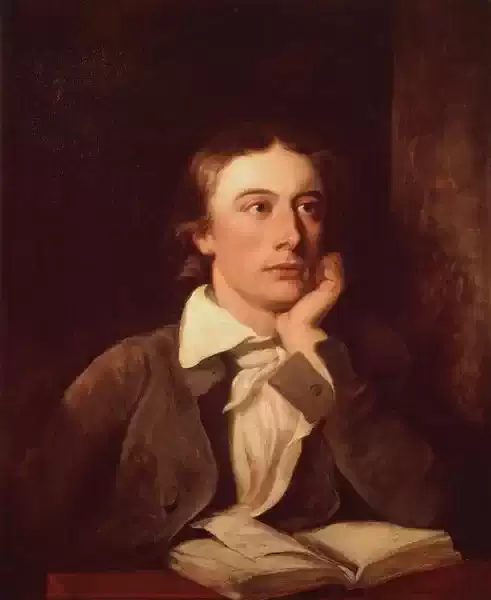
John Keats
Written on a Blank Space
Written on a Blank Space
This pleasant tale is like a little copse:
The honied lines so freshly interlace,
To keep the reader in so sweet a place,
So that he here and there full-hearted stops;
And oftentimes he feels the dewy drops
Come cool and suddenly against his face,
And, by the wandering melody, may trace
Which way the tender-legged linnet hops.
Oh! what a power has white Simplicity!
What mighty power has this gentle story!
I, that do ever feel athirst for glory,
Could at this moment be content to lie
Meekly upon the grass, as those whose sobbings
Were heard of none beside the mournful robins.
This pleasant tale is like a little copse:
The honied lines so freshly interlace,
To keep the reader in so sweet a place,
So that he here and there full-hearted stops;
And oftentimes he feels the dewy drops
Come cool and suddenly against his face,
And, by the wandering melody, may trace
Which way the tender-legged linnet hops.
Oh! what a power has white Simplicity!
What mighty power has this gentle story!
I, that do ever feel athirst for glory,
Could at this moment be content to lie
Meekly upon the grass, as those whose sobbings
Were heard of none beside the mournful robins.
381
John Keats
Written Before Re-Reading King Lear
Written Before Re-Reading King Lear
O golden-tongued Romance with serene lute!
Fair plumed Syren! Queen of far away!
Leave melodizing on this wintry day,
Shut up thine olden pages, and be mute.
Adieu! for once again the fierce dispute
Betwixt damnation and impassioned clay
Must I burn through; once more humbly assay
The bitter-sweet of this Shakespearian fruit.
Chief Poet! and ye clouds of Albion,
Begetters of our deep eternal theme,
When through the old oak Forest I am gone,
Let me not wander in a barren dream,
But when I am consumed in the Fire,
Give me new Phoenix wings to fly at my desire.
O golden-tongued Romance with serene lute!
Fair plumed Syren! Queen of far away!
Leave melodizing on this wintry day,
Shut up thine olden pages, and be mute.
Adieu! for once again the fierce dispute
Betwixt damnation and impassioned clay
Must I burn through; once more humbly assay
The bitter-sweet of this Shakespearian fruit.
Chief Poet! and ye clouds of Albion,
Begetters of our deep eternal theme,
When through the old oak Forest I am gone,
Let me not wander in a barren dream,
But when I am consumed in the Fire,
Give me new Phoenix wings to fly at my desire.
431