

Poems
Literature and Words
Poems in this topic

Robert W. Service
Shakespeare And Cervantes
Shakespeare And Cervantes
Obit 23rd April 1616
Is it not strange that on this common date,
Two titans of their age, aye of all Time,
Together should renounce this mortal state,
And rise like gods, unsullied and sublime?
Should mutually render up the ghost,
And hand n hand join Jove's celestial host?
What wondrous welcome from the scribes on high!
Homer and Virgil would be waiting there;
Plato and Aristotle standing nigh;
Petrarch and Dante greet the peerless pair:
And as in harmony they make their bow,
Horace might quip: "Great timing, you'll allow."
Imagine this transcendant team arrive
At some hilarious banquet of the gods!
Their nations battled when they were alive,
And they were bitter foes - but what's the odd?
Actor and soldier, happy hand in hand,
By death close-linked, like loving brothers stand.
But how diverse! Our Will had gold and gear,
Chattels and land, the starshine of success;
The bleak Castilian fought with casque and spear,
Passing his life in prisons - more or less.
The Bard of Avon was accounted rich;
Cervantes often bedded in a ditch.
Yet when I slough this flesh, if I could meet
By sweet, fantastic fate one of these two,
In languorous Elysian retreat,
Which would I choose? Fair reader, which would you?
Well, though our William more divinely wrote,
By gad! the lousy Spaniard has my vote.
Obit 23rd April 1616
Is it not strange that on this common date,
Two titans of their age, aye of all Time,
Together should renounce this mortal state,
And rise like gods, unsullied and sublime?
Should mutually render up the ghost,
And hand n hand join Jove's celestial host?
What wondrous welcome from the scribes on high!
Homer and Virgil would be waiting there;
Plato and Aristotle standing nigh;
Petrarch and Dante greet the peerless pair:
And as in harmony they make their bow,
Horace might quip: "Great timing, you'll allow."
Imagine this transcendant team arrive
At some hilarious banquet of the gods!
Their nations battled when they were alive,
And they were bitter foes - but what's the odd?
Actor and soldier, happy hand in hand,
By death close-linked, like loving brothers stand.
But how diverse! Our Will had gold and gear,
Chattels and land, the starshine of success;
The bleak Castilian fought with casque and spear,
Passing his life in prisons - more or less.
The Bard of Avon was accounted rich;
Cervantes often bedded in a ditch.
Yet when I slough this flesh, if I could meet
By sweet, fantastic fate one of these two,
In languorous Elysian retreat,
Which would I choose? Fair reader, which would you?
Well, though our William more divinely wrote,
By gad! the lousy Spaniard has my vote.
218
Robert W. Service
Poet's Path
Poet's Path
My garden hath a slender path
With ivy overgrown,
A secret place where once would pace
A pot all alone;
I see him now with fretted brow,
Plunged deep in thought;
And sometimes he would write maybe,
And sometimes he would not.
A verse a day he used to say
Keeps worry from the door;
Without the stink of printer's ink
How life would be a bore!
And so from chime of breakfast time
To supper he would beat
The pathway flat, a mossy mat
For his poetic feet.
He wrote, I'm told, of gods of old
And mythologic men;
Far better he had sung, maybe,
Of plain folks now and then;
With bitterness he would confess
Too lofty was his aim. . . .
And then with woe I saw him throw
His poems to the flame.
He went away one bitter day
When death was in the sky;
No further word I ever heard
Beyond his last goodbye.
Did battle grim take toll of him
In heaven-rocking wrath?
Oh did he write in starry flight
His name in flame on hell-brewed night?
... Well, there's my poet's path.
My garden hath a slender path
With ivy overgrown,
A secret place where once would pace
A pot all alone;
I see him now with fretted brow,
Plunged deep in thought;
And sometimes he would write maybe,
And sometimes he would not.
A verse a day he used to say
Keeps worry from the door;
Without the stink of printer's ink
How life would be a bore!
And so from chime of breakfast time
To supper he would beat
The pathway flat, a mossy mat
For his poetic feet.
He wrote, I'm told, of gods of old
And mythologic men;
Far better he had sung, maybe,
Of plain folks now and then;
With bitterness he would confess
Too lofty was his aim. . . .
And then with woe I saw him throw
His poems to the flame.
He went away one bitter day
When death was in the sky;
No further word I ever heard
Beyond his last goodbye.
Did battle grim take toll of him
In heaven-rocking wrath?
Oh did he write in starry flight
His name in flame on hell-brewed night?
... Well, there's my poet's path.
169
Robert W. Service
Picture Dealer
Picture Dealer
There were twin artists A. and B.
Who painted pictures two,
And hung them in my galley
For everyone to view;
The one exhibited by A.
The name "A Sphere" did bear,
While strangely brother B's display
Was catalogued: "A Square".
Now although A. (and this is queer)
Could squeeze a pretty tube,
The picture that he called a Sphere
Was blocky as a cube;
While B. (though no hint he disclosed
To pull the public leg)
The Square he placidly exposed
Was oval as an egg.
Thought I: To sell these pictures two
I never will be able;
There's only one thing I can do,
That's change around the label.
The rotund one I called a Sphere,
The cornered one a Square . . .
And yet, I thought: It's very queer,
Unbought they linger there.
Then strange as it may well appear,
Derision did I bare,
And blandly dubbed the Square a Sphere
And tabbed the Sphere a Square.
Behold the answer I had found,
For to my glad dismay
The curious came crowding round:
A sold the daubs next day.
Well, maybe A. and B. were right,
Not mugs like you and me,
With something missing in our sight
That only artists see.
So what it is and what it ain't
I'll never more discuss . . .
These guys believe in what they paint,
Or . . . are they spoofing us?
There were twin artists A. and B.
Who painted pictures two,
And hung them in my galley
For everyone to view;
The one exhibited by A.
The name "A Sphere" did bear,
While strangely brother B's display
Was catalogued: "A Square".
Now although A. (and this is queer)
Could squeeze a pretty tube,
The picture that he called a Sphere
Was blocky as a cube;
While B. (though no hint he disclosed
To pull the public leg)
The Square he placidly exposed
Was oval as an egg.
Thought I: To sell these pictures two
I never will be able;
There's only one thing I can do,
That's change around the label.
The rotund one I called a Sphere,
The cornered one a Square . . .
And yet, I thought: It's very queer,
Unbought they linger there.
Then strange as it may well appear,
Derision did I bare,
And blandly dubbed the Square a Sphere
And tabbed the Sphere a Square.
Behold the answer I had found,
For to my glad dismay
The curious came crowding round:
A sold the daubs next day.
Well, maybe A. and B. were right,
Not mugs like you and me,
With something missing in our sight
That only artists see.
So what it is and what it ain't
I'll never more discuss . . .
These guys believe in what they paint,
Or . . . are they spoofing us?
168
Robert W. Service
Noctambule
Noctambule
Zut! it's two o'clock.
See! the lights are jumping.
Finish up your bock,
Time we all were humping.
Waiters stack the chairs,
Pile them on the tables;
Let us to our lairs
Underneath the gables.
Up the old Boul' Mich'
Climb with steps erratic.
Steady . . . how I wish
I was in my attic!
Full am I with cheer;
In my heart the joy stirs;
Couldn't be the beer,
Must have been the oysters.
In obscene array
Garbage cans spill over;
How I wish that they
Smelled as sweet as clover!
Charing women wait;
Cafes drop their shutters;
Rats perambulate
Up and down the gutters.
Down the darkened street
Market carts are creeping;
Horse with wary feet,
Red-faced driver sleeping.
Loads of vivid greens,
Carrots, leeks, potatoes,
Cabbages and beans,
Turnips and tomatoes.
Pair of dapper chaps,
Cigarettes and sashes,
Stare at me, perhaps
Desperate Apachès.
"Needn't bother me,
Jolly well you know it;
Parceque je suis
Quartier Latin poet.
"Give you villanelles,
Madrigals and lyrics;
Ballades and rondels,
Odes and panegyrics.
Poet pinched and poor,
Pricked by cold and hunger;
Trouble's troubadour,
Misery's balladmonger."
Think how queer it is!
Every move I'm making,
Cosmic gravity's
Center I am shaking;
Oh, how droll to feel
(As I now am feeling),
Even as I reel,
All the world is reeling.
Reeling too the stars,
Neptune and Uranus,
Jupiter and Mars,
Mercury and Venus;
Suns and moons with me,
As I'm homeward straying,
All in sympathy
Swaying, swaying, swaying.
Lord! I've got a head.
Well, it's not surprising.
I must gain my bed
Ere the sun be rising;
When the merry lark
In the sky is soaring,
I'll refuse to hark,
I'll be snoring, snoring.
Strike a sulphur match . . .
Ha! at last my garret.
Fumble at the latch,
Close the door and bar it.
Bed, you graciously
Wait, despite my scorning . . .
So, bibaciously
Mad old world, good morning.
Zut! it's two o'clock.
See! the lights are jumping.
Finish up your bock,
Time we all were humping.
Waiters stack the chairs,
Pile them on the tables;
Let us to our lairs
Underneath the gables.
Up the old Boul' Mich'
Climb with steps erratic.
Steady . . . how I wish
I was in my attic!
Full am I with cheer;
In my heart the joy stirs;
Couldn't be the beer,
Must have been the oysters.
In obscene array
Garbage cans spill over;
How I wish that they
Smelled as sweet as clover!
Charing women wait;
Cafes drop their shutters;
Rats perambulate
Up and down the gutters.
Down the darkened street
Market carts are creeping;
Horse with wary feet,
Red-faced driver sleeping.
Loads of vivid greens,
Carrots, leeks, potatoes,
Cabbages and beans,
Turnips and tomatoes.
Pair of dapper chaps,
Cigarettes and sashes,
Stare at me, perhaps
Desperate Apachès.
"Needn't bother me,
Jolly well you know it;
Parceque je suis
Quartier Latin poet.
"Give you villanelles,
Madrigals and lyrics;
Ballades and rondels,
Odes and panegyrics.
Poet pinched and poor,
Pricked by cold and hunger;
Trouble's troubadour,
Misery's balladmonger."
Think how queer it is!
Every move I'm making,
Cosmic gravity's
Center I am shaking;
Oh, how droll to feel
(As I now am feeling),
Even as I reel,
All the world is reeling.
Reeling too the stars,
Neptune and Uranus,
Jupiter and Mars,
Mercury and Venus;
Suns and moons with me,
As I'm homeward straying,
All in sympathy
Swaying, swaying, swaying.
Lord! I've got a head.
Well, it's not surprising.
I must gain my bed
Ere the sun be rising;
When the merry lark
In the sky is soaring,
I'll refuse to hark,
I'll be snoring, snoring.
Strike a sulphur match . . .
Ha! at last my garret.
Fumble at the latch,
Close the door and bar it.
Bed, you graciously
Wait, despite my scorning . . .
So, bibaciously
Mad old world, good morning.
197
Robert W. Service
My Library
My Library
Like prim Professor of a College
I primed my shelves with books of knowledge;
And now I stand before them dumb,
Just like a child that sucks its thumb,
And stares forlorn and turns away,
With dolls or painted bricks to play.
They glour at me, my tomes of learning.
"You dolt!" they jibe; "you undiscerning
Moronic oaf, you make a fuss,
With highbrow swank selecting us;
Saying: "I'll read you all some day' -
And now you yawn and turn away.
"Unwanted wait we with our store
Of facts and philosophic lore;
The scholarship of all the ages
Snug packed within our uncut pages;
The mystery of all mankind
In part revealed - but you are blind.
"You have no time to read, you tell us;
Oh, do not think that we are jealous
Of all the trash that wins your favour,
The flimsy fiction that you savour:
We only beg that sometimes you
Will spare us just an hour or two.
"For all the minds that went to make us
Are dust if folk like you forsake us,
And they can only live again
By virtue of your kindling brain;
In magice print they packed their best:
Come - try their wisdom to digest. . . ."
Said I: "Alas! I am not able;
I lay my cards upon the table,
And with deep shame and blame avow
I am too old to read you now;
So I will lock you in glass cases
And shun your sad, reproachful faces."
* * * * * * * * *
My library is noble planned,
Yet in it desolate I stand;
And though my thousand books I prize,
Feeling a witling in their eyes,
I turn from them in weariness
To wallow in the Daily Press.
For, oh, I never, never will
The noble field of knowledge till:
I pattern words with artful tricks,
As children play with painted bricks,
And realize with futile woe,
Nothing I know - nor want to know.
My library has windowed nooks;
And so I turn from arid books
To vastitude of sea and sky,
And like a child content am I
With peak and plain and brook and tree,
Crying: "Behold! the books for me:
Nature, be thou my Library!"
Like prim Professor of a College
I primed my shelves with books of knowledge;
And now I stand before them dumb,
Just like a child that sucks its thumb,
And stares forlorn and turns away,
With dolls or painted bricks to play.
They glour at me, my tomes of learning.
"You dolt!" they jibe; "you undiscerning
Moronic oaf, you make a fuss,
With highbrow swank selecting us;
Saying: "I'll read you all some day' -
And now you yawn and turn away.
"Unwanted wait we with our store
Of facts and philosophic lore;
The scholarship of all the ages
Snug packed within our uncut pages;
The mystery of all mankind
In part revealed - but you are blind.
"You have no time to read, you tell us;
Oh, do not think that we are jealous
Of all the trash that wins your favour,
The flimsy fiction that you savour:
We only beg that sometimes you
Will spare us just an hour or two.
"For all the minds that went to make us
Are dust if folk like you forsake us,
And they can only live again
By virtue of your kindling brain;
In magice print they packed their best:
Come - try their wisdom to digest. . . ."
Said I: "Alas! I am not able;
I lay my cards upon the table,
And with deep shame and blame avow
I am too old to read you now;
So I will lock you in glass cases
And shun your sad, reproachful faces."
* * * * * * * * *
My library is noble planned,
Yet in it desolate I stand;
And though my thousand books I prize,
Feeling a witling in their eyes,
I turn from them in weariness
To wallow in the Daily Press.
For, oh, I never, never will
The noble field of knowledge till:
I pattern words with artful tricks,
As children play with painted bricks,
And realize with futile woe,
Nothing I know - nor want to know.
My library has windowed nooks;
And so I turn from arid books
To vastitude of sea and sky,
And like a child content am I
With peak and plain and brook and tree,
Crying: "Behold! the books for me:
Nature, be thou my Library!"
211
Robert W. Service
My Hundred Books
My Hundred Books
A thousand books my library
Contains;
And all are primed, it seems to me
With brains.
Mine are so few I scratch in thought
My head;
For just a hundred of the lot
I've read.
A hundred books, but of the best,
I can
With wisdom savour and digest
And scan.
Yet when afar from kin and kith
In nooks
Of quietness I'm happy with
Sweet books.
So as nine hundred at me stare
In vain,
My lack I'm wistfully aware
Of brain;
Yet as my leave of living ends,
With looks
Of love I view a hundred friends,
My books.
A thousand books my library
Contains;
And all are primed, it seems to me
With brains.
Mine are so few I scratch in thought
My head;
For just a hundred of the lot
I've read.
A hundred books, but of the best,
I can
With wisdom savour and digest
And scan.
Yet when afar from kin and kith
In nooks
Of quietness I'm happy with
Sweet books.
So as nine hundred at me stare
In vain,
My lack I'm wistfully aware
Of brain;
Yet as my leave of living ends,
With looks
Of love I view a hundred friends,
My books.
211
Robert W. Service
My Cross
My Cross
I wrote a poem to the moon
But no one noticed it;
Although I hoped that late or soon
Someone would praise a bit
Its purity and grace forlone,
Its beauty tulip-cool...
But as my poem died still-born,
I felt a fool.
I wrote a verse of vulgar trend
Spiced with an oath or two;
I tacked a snapper at the end
And called it Dan McGrew.
I spouted it to bar-room boys,
Full fifty years away;
Yet still with rude and ribald noise
It lives today.
'Tis bitter truth, but there you areThat's
how a name is made;
Write of a rose, a lark, a star,
You'll never make the grade.
But write of gutter and of grime,
Of pimp and prostitute,
The multitude will read your rhyme,
And pay to boot.
So what's the use to burn and bleed
And strive for beauty's sake?
No one your poetry will read,
Your heart will only break.
But set your song in vulgar pitch,
If rhyme you will not rue,
And make your heroine a bitch...
Like Lady Lou.
I wrote a poem to the moon
But no one noticed it;
Although I hoped that late or soon
Someone would praise a bit
Its purity and grace forlone,
Its beauty tulip-cool...
But as my poem died still-born,
I felt a fool.
I wrote a verse of vulgar trend
Spiced with an oath or two;
I tacked a snapper at the end
And called it Dan McGrew.
I spouted it to bar-room boys,
Full fifty years away;
Yet still with rude and ribald noise
It lives today.
'Tis bitter truth, but there you areThat's
how a name is made;
Write of a rose, a lark, a star,
You'll never make the grade.
But write of gutter and of grime,
Of pimp and prostitute,
The multitude will read your rhyme,
And pay to boot.
So what's the use to burn and bleed
And strive for beauty's sake?
No one your poetry will read,
Your heart will only break.
But set your song in vulgar pitch,
If rhyme you will not rue,
And make your heroine a bitch...
Like Lady Lou.
200
Robert W. Service
My Book
My Book
Before I drink myself to death,
God, let me finish up my Book!
At night, I fear, I fight for breath,
And wake up whiter than a spook;
And crawl off to a bistro near,
And drink until my brain is clear.
Rare Absinthe! Oh, it gives me strength
To write and write; and so I spend
Day after day, until at length
With joy and pain I'll write The End:
Then let this carcase rot; I give
The world my Book -- my Book will live.
For every line is tense with truth,
There's hope and joy on every page;
A cheer, a clarion call to Youth,
A hymn, a comforter to Age:
All's there that I was meant to be,
My part divine, the God in me.
It's of my life the golden sum;
Ah! who that reads this Book of mine,
In stormy centuries to come,
Will dream I rooted with the swine?
Behold! I give mankind my best:
What does it matter, all the rest?
It's this that makes sublime my day;
It's this that makes me struggle on.
Oh, let them mock my mortal clay,
My spirit's deathless as the dawn;
Oh, let them shudder as they look . . .
I'll be immortal in my Book.
And so beside the sullen Seine
I fight with dogs for filthy food,
Yet know that from my sin and pain
Will soar serene a Something Good;
Exultantly from shame and wrong
A Right, a Glory and a Song.
Before I drink myself to death,
God, let me finish up my Book!
At night, I fear, I fight for breath,
And wake up whiter than a spook;
And crawl off to a bistro near,
And drink until my brain is clear.
Rare Absinthe! Oh, it gives me strength
To write and write; and so I spend
Day after day, until at length
With joy and pain I'll write The End:
Then let this carcase rot; I give
The world my Book -- my Book will live.
For every line is tense with truth,
There's hope and joy on every page;
A cheer, a clarion call to Youth,
A hymn, a comforter to Age:
All's there that I was meant to be,
My part divine, the God in me.
It's of my life the golden sum;
Ah! who that reads this Book of mine,
In stormy centuries to come,
Will dream I rooted with the swine?
Behold! I give mankind my best:
What does it matter, all the rest?
It's this that makes sublime my day;
It's this that makes me struggle on.
Oh, let them mock my mortal clay,
My spirit's deathless as the dawn;
Oh, let them shudder as they look . . .
I'll be immortal in my Book.
And so beside the sullen Seine
I fight with dogs for filthy food,
Yet know that from my sin and pain
Will soar serene a Something Good;
Exultantly from shame and wrong
A Right, a Glory and a Song.
152
Robert W. Service
Lowly Laureate
Lowly Laureate
O Sacred Muse, my lyre excuse! -
My verse is vagrant singing;
Rhyme I invoke for simple folk
Of penny-wise upbringing:
For Grannies grey to paste away
Within an album cover;
For maids in class to primly pass,
And lads to linger over.
I take the clay of every day
And mould it in my fashion;
I seek to trace the commonplace
With humor and compassion.
Of earth am I, and meekly try
To be supremely human:
To please, I plan, the little man,
And win the little women.
No evil theme shall daunt my dream
Of fellow-love and pity;
I tune my lute to prostitute,
To priest I pipe my ditty.
Through gutter-grime be in my rhyme,
I bow to altars holy. . . .
Lord, humble me, so I may be
A Laureate of the Lowly.
O Sacred Muse, my lyre excuse! -
My verse is vagrant singing;
Rhyme I invoke for simple folk
Of penny-wise upbringing:
For Grannies grey to paste away
Within an album cover;
For maids in class to primly pass,
And lads to linger over.
I take the clay of every day
And mould it in my fashion;
I seek to trace the commonplace
With humor and compassion.
Of earth am I, and meekly try
To be supremely human:
To please, I plan, the little man,
And win the little women.
No evil theme shall daunt my dream
Of fellow-love and pity;
I tune my lute to prostitute,
To priest I pipe my ditty.
Through gutter-grime be in my rhyme,
I bow to altars holy. . . .
Lord, humble me, so I may be
A Laureate of the Lowly.
218
Robert W. Service
Longevity
Longevity
I watched one day a parrot grey - 'twas in a barber shop.
"Cuckold!" he cried, until I sighed: "You feathered devil, stop!"
Then balefully he looked at me, and slid along his perch,
With sneering eye that seemed to pry me very soul to search.
So fierce, so bold, so grim, so cold, so agate was his stare:
And then that bird I thought I heard this sentiment declare:
"As it appears, a hundred years a parrot may survive,
When you are gone I'll sit upon this perch and be alive.
In this same spot I'll drop my crot, and crack my sunflower seeds,
And cackle loud when in a shroud you rot beneath the weeds.
I'll carry on when carrion you lie beneath the yew;
With claw and beak my grub I'll seek when grubs are seeking you."
"Foul fowl! said I, "don't prophesy, I'll jolly well contrive
That when I rot in bone-yard lot you cease to be alive."
So I bespoke that barber bloke: "Joe, here's a five pound note.
It's crisp and new, and yours if you will slice that parrot's throat."
"In part," says he, "I must agree, for poor I be in pelf,
With right good will I'll take your bill, but - cut his throat yourself."
So it occurred I took that bird to my ancestral hall,
And there he sat and sniggered at the portraits on the wall.
I sought to cut his wind-pipe but he gave me such a peck,
So cross was I, I swore I'd try to wring his blasted neck;
When shrill he cried: "It's parrotcide what you propose to do;
For every time you make a rhyme you're just a parrot too."
Said I: "It's true. I bow to you. Poor parrots are we all."
And now I sense with reverence the wisdom of his poll.
For every time I want a rhyme he seems to find the word;
In any doubt he helps me out - a most amazing bird.
This line that lies before your eyes he helped me to indite;
I sling the ink but often think it's he who ought to write.
It's he who should in mystic mood concoct poetic screeds,
And I who ought to drop my crot and crackle sunflower seeds.
A parrot nears a hundred years (or so the legend goes),
So were I he this century I might see to its close.
Then I might swing within my ring while revolutions roar,
And watch a world to ruin hurled - and find it all a bore.
As upside-down I cling and clown, I might with parrot eyes
Blink blandly when excited men are moulding Paradise.
New Christs might die, while grimly I would croak and carry on,
Till gnarled and old I should behold the year TWO THOUSAND dawn.
But what a fate! How I should hate upon my perch to sit,
And nothing do to make anew a world for angels fit.
No, better far, though feeble are my lyric notes and flat,
Be dead and done than anyone who lives a life like that.
Though critic-scarred a humble bard I feel I'd rather be,
Than flap and flit and shriek and spit through all a century.
So feathered friend, until the end you may divide my den,
And make a mess, which (more or less) I clean up now and then.
But I prefer the doom to share of dead and gone compeers,
Than parrot be, and live to see ten times a hundred years.
I watched one day a parrot grey - 'twas in a barber shop.
"Cuckold!" he cried, until I sighed: "You feathered devil, stop!"
Then balefully he looked at me, and slid along his perch,
With sneering eye that seemed to pry me very soul to search.
So fierce, so bold, so grim, so cold, so agate was his stare:
And then that bird I thought I heard this sentiment declare:
"As it appears, a hundred years a parrot may survive,
When you are gone I'll sit upon this perch and be alive.
In this same spot I'll drop my crot, and crack my sunflower seeds,
And cackle loud when in a shroud you rot beneath the weeds.
I'll carry on when carrion you lie beneath the yew;
With claw and beak my grub I'll seek when grubs are seeking you."
"Foul fowl! said I, "don't prophesy, I'll jolly well contrive
That when I rot in bone-yard lot you cease to be alive."
So I bespoke that barber bloke: "Joe, here's a five pound note.
It's crisp and new, and yours if you will slice that parrot's throat."
"In part," says he, "I must agree, for poor I be in pelf,
With right good will I'll take your bill, but - cut his throat yourself."
So it occurred I took that bird to my ancestral hall,
And there he sat and sniggered at the portraits on the wall.
I sought to cut his wind-pipe but he gave me such a peck,
So cross was I, I swore I'd try to wring his blasted neck;
When shrill he cried: "It's parrotcide what you propose to do;
For every time you make a rhyme you're just a parrot too."
Said I: "It's true. I bow to you. Poor parrots are we all."
And now I sense with reverence the wisdom of his poll.
For every time I want a rhyme he seems to find the word;
In any doubt he helps me out - a most amazing bird.
This line that lies before your eyes he helped me to indite;
I sling the ink but often think it's he who ought to write.
It's he who should in mystic mood concoct poetic screeds,
And I who ought to drop my crot and crackle sunflower seeds.
A parrot nears a hundred years (or so the legend goes),
So were I he this century I might see to its close.
Then I might swing within my ring while revolutions roar,
And watch a world to ruin hurled - and find it all a bore.
As upside-down I cling and clown, I might with parrot eyes
Blink blandly when excited men are moulding Paradise.
New Christs might die, while grimly I would croak and carry on,
Till gnarled and old I should behold the year TWO THOUSAND dawn.
But what a fate! How I should hate upon my perch to sit,
And nothing do to make anew a world for angels fit.
No, better far, though feeble are my lyric notes and flat,
Be dead and done than anyone who lives a life like that.
Though critic-scarred a humble bard I feel I'd rather be,
Than flap and flit and shriek and spit through all a century.
So feathered friend, until the end you may divide my den,
And make a mess, which (more or less) I clean up now and then.
But I prefer the doom to share of dead and gone compeers,
Than parrot be, and live to see ten times a hundred years.
194
Robert W. Service
L'Escargot D'Or
L'Escargot D'Or
O Tavern of the Golden Snail!
Ten sous have I, so I'll regale;
Ten sous your amber brew to sip
(Eight for the bock and two the tip),
And so I'll sit the evening long,
And smoke my pipe and watch the throng,
The giddy crowd that drains and drinks,
I'll watch it quiet as a sphinx;
And who among them all shall buy
For ten poor sous such joy as I?
As I who, snugly tucked away,
Look on it all as on a play,
A frolic scene of love and fun,
To please an audience of One.
O Tavern of the Golden Snail!
You've stuff indeed for many a tale.
All eyes, all ears, I nothing miss:
Two lovers lean to clasp and kiss;
The merry students sing and shout,
The nimble garcons dart about;
Lo! here come Mimi and Musette
With: "S'il vous plait, une cigarette?"
Marcel and Rudolf, Shaunard too,
Behold the old rapscallion crew,
With flowing tie and shaggy head . . .
Who says Bohemia is dead?
Oh shades of Murger! prank and clown,
And I will watch and write it down.
O Tavern of the Golden Snail!
What crackling throats have gulped your ale!
What sons of Fame from far and near
Have glowed and mellowed in your cheer!
Within this corner where I sit
Banville and Coppée clashed their wit;
And hither too, to dream and drain,
And drown despair, came poor Verlaine.
Here Wilde would talk and Synge would muse,
Maybe like me with just ten sous.
Ah! one is lucky, is one not?
With ghosts so rare to drain a pot!
So may your custom never fail,
O Tavern of the Golden Snail!
O Tavern of the Golden Snail!
Ten sous have I, so I'll regale;
Ten sous your amber brew to sip
(Eight for the bock and two the tip),
And so I'll sit the evening long,
And smoke my pipe and watch the throng,
The giddy crowd that drains and drinks,
I'll watch it quiet as a sphinx;
And who among them all shall buy
For ten poor sous such joy as I?
As I who, snugly tucked away,
Look on it all as on a play,
A frolic scene of love and fun,
To please an audience of One.
O Tavern of the Golden Snail!
You've stuff indeed for many a tale.
All eyes, all ears, I nothing miss:
Two lovers lean to clasp and kiss;
The merry students sing and shout,
The nimble garcons dart about;
Lo! here come Mimi and Musette
With: "S'il vous plait, une cigarette?"
Marcel and Rudolf, Shaunard too,
Behold the old rapscallion crew,
With flowing tie and shaggy head . . .
Who says Bohemia is dead?
Oh shades of Murger! prank and clown,
And I will watch and write it down.
O Tavern of the Golden Snail!
What crackling throats have gulped your ale!
What sons of Fame from far and near
Have glowed and mellowed in your cheer!
Within this corner where I sit
Banville and Coppée clashed their wit;
And hither too, to dream and drain,
And drown despair, came poor Verlaine.
Here Wilde would talk and Synge would muse,
Maybe like me with just ten sous.
Ah! one is lucky, is one not?
With ghosts so rare to drain a pot!
So may your custom never fail,
O Tavern of the Golden Snail!
228
Robert W. Service
Inspiration
Inspiration
How often have I started out
With no thought in my noodle,
And wandered here and there about,
Where fancy bade me toddle;
Till feeling faunlike in my glee
I've voiced some gay distiches,
Returning joyfully to tea,
A poem in my britches.
A-squatting on a thymy slope
With vast of sky about me,
I've scribbled on an envelope
The rhymes the hills would shout me;
The couplets that the trees would call,
The lays the breezes proffered . . .
Oh no, I didn't think at all -
I took what Nature offered.
For that's the way you ought to write -
Without a trace of trouble;
Be super-charged with high delight
And let the words out-bubble;
Be voice of vale and wood and stream
Without design or proem:
Then rouse from out a golden dream
To find you've made a poem.
So I'll go forth with mind a blank,
And sea and sky will spell me;
And lolling on a thymy bank
I'll take down what they tell me;
As Mother Nature speaks to me
Her words I'll gaily docket,
So I'll come singing home to tea
A poem in my pocket.
How often have I started out
With no thought in my noodle,
And wandered here and there about,
Where fancy bade me toddle;
Till feeling faunlike in my glee
I've voiced some gay distiches,
Returning joyfully to tea,
A poem in my britches.
A-squatting on a thymy slope
With vast of sky about me,
I've scribbled on an envelope
The rhymes the hills would shout me;
The couplets that the trees would call,
The lays the breezes proffered . . .
Oh no, I didn't think at all -
I took what Nature offered.
For that's the way you ought to write -
Without a trace of trouble;
Be super-charged with high delight
And let the words out-bubble;
Be voice of vale and wood and stream
Without design or proem:
Then rouse from out a golden dream
To find you've made a poem.
So I'll go forth with mind a blank,
And sea and sky will spell me;
And lolling on a thymy bank
I'll take down what they tell me;
As Mother Nature speaks to me
Her words I'll gaily docket,
So I'll come singing home to tea
A poem in my pocket.
157
Robert W. Service
Hero Worship
Hero Worship
Said he: "You saw the Master clear;
By Rushy Pond alone he sat,
Serene and silent as a seer,
in tweedy coat and seedy hat.
you tell me you did not intrude,
(Although his book was in your hand,)
Upon his melancholy mood . . .
I do not understand.
"You did not tell him: 'I have come
From o'er the sea to speak to you.'
You did not dare, your lips were dumb . . .
You thought a little zephyr blew
From Rushy Pond a touch of him
You'll cherish to your dying day,
Perhaps with tears your eyes were dim . . .
And then - you went away.
"And down the years you will proclaim:
'O call me dullard, dub me dunce!
But let this be my meed of fame:
I looked on Thomas Hardy once.
Aye, by a stile I stood a span
And with these eyes did plainly see
A little, shrinking, shabby man . . .
But Oh a god to me!'"
Said I: "'Tis true, I scarce dared look,
yet he would have been kind, I'm sure;
But though I clutched his precious book
I feared to beg his signature.
Ah yes, my friend, I merit mirth.
You're bold, you have the right to laugh,
And if Christ came again to earth
You'd cadge his autograph."
Said he: "You saw the Master clear;
By Rushy Pond alone he sat,
Serene and silent as a seer,
in tweedy coat and seedy hat.
you tell me you did not intrude,
(Although his book was in your hand,)
Upon his melancholy mood . . .
I do not understand.
"You did not tell him: 'I have come
From o'er the sea to speak to you.'
You did not dare, your lips were dumb . . .
You thought a little zephyr blew
From Rushy Pond a touch of him
You'll cherish to your dying day,
Perhaps with tears your eyes were dim . . .
And then - you went away.
"And down the years you will proclaim:
'O call me dullard, dub me dunce!
But let this be my meed of fame:
I looked on Thomas Hardy once.
Aye, by a stile I stood a span
And with these eyes did plainly see
A little, shrinking, shabby man . . .
But Oh a god to me!'"
Said I: "'Tis true, I scarce dared look,
yet he would have been kind, I'm sure;
But though I clutched his precious book
I feared to beg his signature.
Ah yes, my friend, I merit mirth.
You're bold, you have the right to laugh,
And if Christ came again to earth
You'd cadge his autograph."
173
Robert W. Service
Forward
Forward
I've tinkered at my bits of rhymes
In weary, woeful, waiting times;
In doleful hours of battle-din,
Ere yet they brought the wounded in;
Through vigils of the fateful night,
In lousy barns by candle-light;
In dug-outs, sagging and aflood,
On stretchers stiff and bleared with blood;
By ragged grove, by ruined road,
By hearths accurst where Love abode;
By broken altars, blackened shrines
I've tinkered at my bits of rhymes.
I've solaced me with scraps of song
The desolated ways along:
Through sickly fields all shrapnel-sown,
And meadows reaped by death alone;
By blazing cross and splintered spire,
By headless Virgin in the mire;
By gardens gashed amid their bloom,
By gutted grave, by shattered tomb;
Beside the dying and the dead,
Where rocket green and rocket red,
In trembling pools of poising light,
With flowers of flame festoon the night.
Ah me! by what dark ways of wrong
I've cheered my heart with scraps of song.
So here's my sheaf of war-won verse,
And some is bad, and some is worse.
And if at times I curse a bit,
You needn't read that part of it;
For through it all like horror runs
The red resentment of the guns.
And you yourself would mutter when
You took the things that once were men,
And sped them through that zone of hate
To where the dripping surgeons wait;
And wonder too if in God's sight
War ever, ever can be right.
Yet may it not be, crime and war
But effort misdirected are?
And if there's good in war and crime,
There may be in my bits of rhyme,
My songs from out the slaughter mill:
So take or leave them as you will.
I've tinkered at my bits of rhymes
In weary, woeful, waiting times;
In doleful hours of battle-din,
Ere yet they brought the wounded in;
Through vigils of the fateful night,
In lousy barns by candle-light;
In dug-outs, sagging and aflood,
On stretchers stiff and bleared with blood;
By ragged grove, by ruined road,
By hearths accurst where Love abode;
By broken altars, blackened shrines
I've tinkered at my bits of rhymes.
I've solaced me with scraps of song
The desolated ways along:
Through sickly fields all shrapnel-sown,
And meadows reaped by death alone;
By blazing cross and splintered spire,
By headless Virgin in the mire;
By gardens gashed amid their bloom,
By gutted grave, by shattered tomb;
Beside the dying and the dead,
Where rocket green and rocket red,
In trembling pools of poising light,
With flowers of flame festoon the night.
Ah me! by what dark ways of wrong
I've cheered my heart with scraps of song.
So here's my sheaf of war-won verse,
And some is bad, and some is worse.
And if at times I curse a bit,
You needn't read that part of it;
For through it all like horror runs
The red resentment of the guns.
And you yourself would mutter when
You took the things that once were men,
And sped them through that zone of hate
To where the dripping surgeons wait;
And wonder too if in God's sight
War ever, ever can be right.
Yet may it not be, crime and war
But effort misdirected are?
And if there's good in war and crime,
There may be in my bits of rhyme,
My songs from out the slaughter mill:
So take or leave them as you will.
219
Robert W. Service
Farewell To Verse
Farewell To Verse
In youth when oft my muse was dumb,
My fancy nighly dead,
To make my inspiration come
I stood upon my head;
And thus I let the blood down flow
Into my cerebellum,
And published every Spring or so
Slim tomes in vellum.
Alas! I am rheumatic now,
Grey is my crown;
I can no more with brooding brow
Stand upside-down.
I fear I might in such a pose
Burst brain blood-vessel;
And that would be a woeful close
To my rhyme wrestle.
If to write verse I must reverse
I fear I'm stymied;
In ink of prose I must immerse
A pen de-rhymèd.
No more to spank the lyric lyre
Like Keats or Browning,
May I inspire the Sacred Fire
My Upside-downing.
In youth when oft my muse was dumb,
My fancy nighly dead,
To make my inspiration come
I stood upon my head;
And thus I let the blood down flow
Into my cerebellum,
And published every Spring or so
Slim tomes in vellum.
Alas! I am rheumatic now,
Grey is my crown;
I can no more with brooding brow
Stand upside-down.
I fear I might in such a pose
Burst brain blood-vessel;
And that would be a woeful close
To my rhyme wrestle.
If to write verse I must reverse
I fear I'm stymied;
In ink of prose I must immerse
A pen de-rhymèd.
No more to spank the lyric lyre
Like Keats or Browning,
May I inspire the Sacred Fire
My Upside-downing.
183
Robert W. Service
Ernie Pyle
Ernie Pyle
I wish I had a simple style
In writing verse,
As in his prose had Ernie Pyle,
So true and terse;
Springing so forthright from the heart
With guileless art.
I wish I could put back a dram
As Ernie could;
I wish that I could cuss and damn
As soldier should;
And fain with every verse would I
Ernie outvie.
Alas! I cannot claim his high
Humanity;
Nor emulate his pungent, dry
Profanity;
Nor share his love of common folk
Who bear life's yolk.
Oh Ernie, who on earth I knew
In war and wine,
Though frail of fame, in soul how you
Were pure and fine!
I'm proud that once when we were plastered
You called me 'bastard.'
I wish I had a simple style
In writing verse,
As in his prose had Ernie Pyle,
So true and terse;
Springing so forthright from the heart
With guileless art.
I wish I could put back a dram
As Ernie could;
I wish that I could cuss and damn
As soldier should;
And fain with every verse would I
Ernie outvie.
Alas! I cannot claim his high
Humanity;
Nor emulate his pungent, dry
Profanity;
Nor share his love of common folk
Who bear life's yolk.
Oh Ernie, who on earth I knew
In war and wine,
Though frail of fame, in soul how you
Were pure and fine!
I'm proud that once when we were plastered
You called me 'bastard.'
157
Robert W. Service
Boon Soul
Boon Soul
Behold! I'm old; my hair is white;
My eighty years are in the offing,
And sitting by the fire to-night
I sip a grog to ease my coughing.
It's true I'm raucous as a rook,
But feeling bibulously "bardy,"
These lines I'm scribbling in a book:
The verse complete of Thomas Hardy.
Although to-day he's read by few,
Him have I loved beyond all measure;
So here to-night I riffle through
His pages with the oldtime pleasure;
And with this book upon my knee,
(To-day so woefully neglected)
I muse and think how soon I'll be
Myself among the Great Rejected.
Yet as these lines with zest I write,
Although the hour for me is tardy,
I think: "Of all the world to-night
'Tis I alone am reading Hardy";
And now to me he seems so nigh
I feel I commune with his spirit,
And as none love him more than I,
Thereby I gain a modest merit.
Oh Brother Thomas, glad I'll be,
Though all the world may pass unheeding,
If some greybeard con over me,
As I to-night your rhymes are reading;
Saying: "Old Bastard, you and I
By sin are knit in mind and body. . . ."
So ere to hit the hay I hie
Your ghost I'll toast in midnight toddy.
Behold! I'm old; my hair is white;
My eighty years are in the offing,
And sitting by the fire to-night
I sip a grog to ease my coughing.
It's true I'm raucous as a rook,
But feeling bibulously "bardy,"
These lines I'm scribbling in a book:
The verse complete of Thomas Hardy.
Although to-day he's read by few,
Him have I loved beyond all measure;
So here to-night I riffle through
His pages with the oldtime pleasure;
And with this book upon my knee,
(To-day so woefully neglected)
I muse and think how soon I'll be
Myself among the Great Rejected.
Yet as these lines with zest I write,
Although the hour for me is tardy,
I think: "Of all the world to-night
'Tis I alone am reading Hardy";
And now to me he seems so nigh
I feel I commune with his spirit,
And as none love him more than I,
Thereby I gain a modest merit.
Oh Brother Thomas, glad I'll be,
Though all the world may pass unheeding,
If some greybeard con over me,
As I to-night your rhymes are reading;
Saying: "Old Bastard, you and I
By sin are knit in mind and body. . . ."
So ere to hit the hay I hie
Your ghost I'll toast in midnight toddy.
228
Robert W. Service
Book Lover
Book Lover
I keep collecting books I know
I'll never, never read;
My wife and daughter tell me so,
And yet I never head.
"Please make me," says some wistful tome,
"A wee bit of yourself."
And so I take my treasure home,
And tuck it in a shelf.
And now my very shelves complain;
They jam and over-spill.
They say: "Why don't you ease our strain?"
"some day," I say, "I will."
So book by book they plead and sigh;
I pick and dip and scan;
Then put them back, distrest that I
Am such a busy man.
Now, there's my Boswell and my Sterne,
my Gibbon and Defoe;
To savour Swift I'll never learn,
Montaigne I may not know.
On Bacon I will never sup,
For Shakespeare I've no time;
Because I'm busy making up
These jingly bits of rhyme.
Chekov is caviare to me,
While Stendhal makes me snore;
Poor Proust is not my cup of tea,
And Balzac is a bore.
I have their books, I love their names,
And yet alas! they head,
With Lawrence, Joyce and Henry James,
My Roster of Unread.
I think it would be very well
If I commit a crime,
And get put in a prison cell
And not allowed to rhyme;
Yet given all these worthy books
According to my need,
I now caress with loving looks,
But never, never read.
I keep collecting books I know
I'll never, never read;
My wife and daughter tell me so,
And yet I never head.
"Please make me," says some wistful tome,
"A wee bit of yourself."
And so I take my treasure home,
And tuck it in a shelf.
And now my very shelves complain;
They jam and over-spill.
They say: "Why don't you ease our strain?"
"some day," I say, "I will."
So book by book they plead and sigh;
I pick and dip and scan;
Then put them back, distrest that I
Am such a busy man.
Now, there's my Boswell and my Sterne,
my Gibbon and Defoe;
To savour Swift I'll never learn,
Montaigne I may not know.
On Bacon I will never sup,
For Shakespeare I've no time;
Because I'm busy making up
These jingly bits of rhyme.
Chekov is caviare to me,
While Stendhal makes me snore;
Poor Proust is not my cup of tea,
And Balzac is a bore.
I have their books, I love their names,
And yet alas! they head,
With Lawrence, Joyce and Henry James,
My Roster of Unread.
I think it would be very well
If I commit a crime,
And get put in a prison cell
And not allowed to rhyme;
Yet given all these worthy books
According to my need,
I now caress with loving looks,
But never, never read.
191
Robert W. Service
A Verseman's Apology
A Verseman's Apology
Alas! I am only a rhymer,
I don't know the meaning of Art;
But I learned in my little school primer
To love Eugene Field and Bret Harte.
I hailed Hoosier Ryley with pleasure,
To John Hay I took off my hat;
These fellows were right to my measure,
And I've never gone higher than that.
The Classics! Well, most of them bore me,
The Moderns I don't understand;
But I keep Burns, my kinsman before me,
And Kipling, my friend, is at hand.
They taught me my trade as I know it,
Yet though at their feet I have sat,
For God-sake don't call me a poet,
For I've never been guilty of that.
A rhyme-rustler, rugged and shameless,
A Bab Balladeer on the loose;
Of saccarine sonnets I'm blameless,
My model has been - Mother Goose.
And I fancy my grave-digger griping
As he gives my last lodging a pat:
"This guy wrote McGrew;
'Twas the best he could do" . . .
So I'll go to my maker with that.
Alas! I am only a rhymer,
I don't know the meaning of Art;
But I learned in my little school primer
To love Eugene Field and Bret Harte.
I hailed Hoosier Ryley with pleasure,
To John Hay I took off my hat;
These fellows were right to my measure,
And I've never gone higher than that.
The Classics! Well, most of them bore me,
The Moderns I don't understand;
But I keep Burns, my kinsman before me,
And Kipling, my friend, is at hand.
They taught me my trade as I know it,
Yet though at their feet I have sat,
For God-sake don't call me a poet,
For I've never been guilty of that.
A rhyme-rustler, rugged and shameless,
A Bab Balladeer on the loose;
Of saccarine sonnets I'm blameless,
My model has been - Mother Goose.
And I fancy my grave-digger griping
As he gives my last lodging a pat:
"This guy wrote McGrew;
'Twas the best he could do" . . .
So I'll go to my maker with that.
272
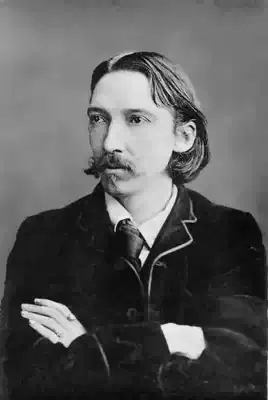
Robert Louis Stevenson
To the Muse
To the Muse
Resign the rhapsody, the dream,
To men of larger reach;
Be ours the quest of a plain theme,
The piety of speech.
As monkish scribes from morning break
Toiled till the close of light,
Nor thought a day too long to make
One line or letter bright:
We also with an ardent mind,
Time, wealth, and fame forgot,
Our glory in our patience find
And skim, and skim the pot:
Till last, when round the house we hear
The evensong of birds,
One corner of blue heaven appear
In our clear well of words.
Leave, leave it then, muse of my heart!
Sans finish and sans frame,
Leave unadorned by needless art
The picture as it came.
Resign the rhapsody, the dream,
To men of larger reach;
Be ours the quest of a plain theme,
The piety of speech.
As monkish scribes from morning break
Toiled till the close of light,
Nor thought a day too long to make
One line or letter bright:
We also with an ardent mind,
Time, wealth, and fame forgot,
Our glory in our patience find
And skim, and skim the pot:
Till last, when round the house we hear
The evensong of birds,
One corner of blue heaven appear
In our clear well of words.
Leave, leave it then, muse of my heart!
Sans finish and sans frame,
Leave unadorned by needless art
The picture as it came.
325
Robert Louis Stevenson
Thou Strainest Through The Mountain Fern
Thou Strainest Through The Mountain Fern
THOU strainest through the mountain fern,
A most exiguously thin Burn.
For all thy foam, for all thy din,
Thee shall the pallid lake inurn,
With well-a-day for Mr. Swin-Burne!
Take then this quarto in thy fin
And, O thou stoker huge and stern,
The whole affair, outside and in,
Burn!
But save the true poetic kin,
The works of Mr. Robert Burn'
And William Wordsworth upon Tin-Tern!
THOU strainest through the mountain fern,
A most exiguously thin Burn.
For all thy foam, for all thy din,
Thee shall the pallid lake inurn,
With well-a-day for Mr. Swin-Burne!
Take then this quarto in thy fin
And, O thou stoker huge and stern,
The whole affair, outside and in,
Burn!
But save the true poetic kin,
The works of Mr. Robert Burn'
And William Wordsworth upon Tin-Tern!
211
Robert Louis Stevenson
Tales Of Arabia
Tales Of Arabia
YES, friend, I own these tales of Arabia
Smile not, as smiled their flawless originals,
Age-old but yet untamed, for ages
Pass and the magic is undiminished.
Thus, friend, the tales of the old Camaralzaman,
Ayoub, the Slave of Love, or the Calendars,
Blind-eyed and ill-starred royal scions,
Charm us in age as they charmed in childhood.
Fair ones, beyond all numerability,
Beam from the palace, beam on humanity,
Bright-eyed, in truth, yet soul-less houris
Offering pleasure and only pleasure.
Thus they, the venal Muses Arabian,
Unlike, indeed, the nobler divinities,
Greek Gods or old time-honoured muses,
Easily proffer unloved caresses.
Lost, lost, the man who mindeth the minstrelsy;
Since still, in sandy, glittering pleasances,
Cold, stony fruits, gem-like but quite in-
Edible, flatter and wholly starve him.
YES, friend, I own these tales of Arabia
Smile not, as smiled their flawless originals,
Age-old but yet untamed, for ages
Pass and the magic is undiminished.
Thus, friend, the tales of the old Camaralzaman,
Ayoub, the Slave of Love, or the Calendars,
Blind-eyed and ill-starred royal scions,
Charm us in age as they charmed in childhood.
Fair ones, beyond all numerability,
Beam from the palace, beam on humanity,
Bright-eyed, in truth, yet soul-less houris
Offering pleasure and only pleasure.
Thus they, the venal Muses Arabian,
Unlike, indeed, the nobler divinities,
Greek Gods or old time-honoured muses,
Easily proffer unloved caresses.
Lost, lost, the man who mindeth the minstrelsy;
Since still, in sandy, glittering pleasances,
Cold, stony fruits, gem-like but quite in-
Edible, flatter and wholly starve him.
363
Robert Louis Stevenson
Still I Love To Rhyme
Still I Love To Rhyme
STILL I love to rhyme, and still more, rhyming, to wander
Far from the commoner way;
Old-time trills and falls by the brook-side still do I ponder,
Dreaming to-morrow to-day.
Come here, come, revive me, Sun-God, teach me, Apollo,
Measures descanted before;
Since I ancient verses, I emulous follow,
Prints in the marbles of yore.
Still strange, strange, they sound in old-young raiment invested,
Songs for the brain to forget -
Young song-birds elate to grave old temples benested
Piping and chirruping yet.
Thoughts? No thought has yet unskilled attempted to flutter
Trammelled so vilely in verse;
He who writes but aims at fame and his bread and his butter,
Won with a groan and a curse.
STILL I love to rhyme, and still more, rhyming, to wander
Far from the commoner way;
Old-time trills and falls by the brook-side still do I ponder,
Dreaming to-morrow to-day.
Come here, come, revive me, Sun-God, teach me, Apollo,
Measures descanted before;
Since I ancient verses, I emulous follow,
Prints in the marbles of yore.
Still strange, strange, they sound in old-young raiment invested,
Songs for the brain to forget -
Young song-birds elate to grave old temples benested
Piping and chirruping yet.
Thoughts? No thought has yet unskilled attempted to flutter
Trammelled so vilely in verse;
He who writes but aims at fame and his bread and his butter,
Won with a groan and a curse.
331
Robert Louis Stevenson
Come, Here Is Adieu To The City
Come, Here Is Adieu To The City
COME, here is adieu to the city
And hurrah for the country again.
The broad road lies before me
Watered with last night's rain.
The timbered country woos me
With many a high and bough;
And again in the shining fallows
The ploughman follows the plough.
The whole year's sweat and study,
And the whole year's sowing time,
Comes now to the perfect harvest,
And ripens now into rhyme.
For we that sow in the Autumn,
We reap our grain in the Spring,
And we that go sowing and weeping
Return to reap and sing.
COME, here is adieu to the city
And hurrah for the country again.
The broad road lies before me
Watered with last night's rain.
The timbered country woos me
With many a high and bough;
And again in the shining fallows
The ploughman follows the plough.
The whole year's sweat and study,
And the whole year's sowing time,
Comes now to the perfect harvest,
And ripens now into rhyme.
For we that sow in the Autumn,
We reap our grain in the Spring,
And we that go sowing and weeping
Return to reap and sing.
339