

Poems in this theme
Literature and Words
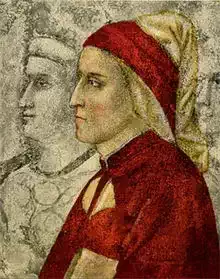
Dante Alighieri
Inferno Canto03
Inferno Canto03
Per me si va ne la città dolente,
per me si va ne l'etterno dolore,
per me si va tra la perduta gente .
THROUGH ME THE WAY INTO THE SUFFERING CITY,
THROUGH ME THE WAY TO THE ETERNAL PAIN,
THROUGH ME THE WAY THAT RUNS AMONG THE LOST.
Giustizia mosse il mio alto fattore:
fecemi la divina podestate,
la somma sapienza e 'l primo amore .
JUSTICE URGED ON MY HIGH ARTIFICER;
MY MAKER WAS DIVINE AUTHORITY,
THE HIGHEST WISDOM, AND THE PRIMAL LOVE.
Dinanzi a me non fuor cose create
se non etterne, e io etterno duro.
Lasciate ogne speranza, voi ch'intrate ".
BEFORE ME NOTHING BUT ETERNAL THINGS
WERE MADE, AND I ENDURE ETERNALLY.
ABANDON EVERY HOPE, WHO ENTER HERE.
Queste parole di colore oscuro
vid'io scritte al sommo d'una porta;
per ch'io: «Maestro, il senso lor m'è duro ».
These words-their aspect was obscure-I read
inscribed above a gateway, and I said:
"Master, their meaning is difficult for me."
Ed elli a me, come persona accorta:
«Qui si convien lasciare ogne sospetto;
ogne viltà convien che qui sia morta .
And he to me, as one who comprehends:
"Here one must leave behind all hesitation;
here every cowardice must meet its death.
Noi siam venuti al loco ov'i' t'ho detto
che tu vedrai le genti dolorose
c'hanno perduto il ben de l'intelletto ».
For we have reached the place of which I spoke,
where you will see the miserable people,
those who have lost the good of the intellect."
E poi che la sua mano a la mia puose
con lieto volto, ond'io mi confortai,
mi mise dentro a le segrete cose .
And when, with gladness in his face, he placed
his hand upon my own, to comfort me,
he drew me in among the hidden things.
Quivi sospiri, pianti e alti guai
risonavan per l'aere sanza stelle,
per ch'io al cominciar ne lagrimai .
Here sighs and lamentations and loud cries
were echoing across the starless air,
so that, as soon as I set out, I wept.
Diverse lingue, orribili favelle,
parole di dolore, accenti d'ira,
voci alte e fioche, e suon di man con elle
Strange utterances, horrible pronouncements,
accents of anger, words of suffering,
and voices shrill and faint, and beating hands
facevano un tumulto, il qual s'aggira
sempre in quell'aura sanza tempo tinta,
come la rena quando turbo spira .
all went to make a tumult that will whirl
forever through that turbid, timeless air,
like sand that eddies when a whirlwind swirls.
E io ch'avea d'error la testa cinta,
dissi: «Maestro, che è quel ch'i' odo?
e che gent'è che par nel duol sì vinta ?».
And I-my head oppressed by horror-said:
"Master, what is it that I hear? Who are
those people so defeated by their pain?"
Ed elli a me: «Questo misero modo
tegnon l'anime triste di coloro
che visser sanza 'nfamia e sanza lodo .
And he to me: "This miserable way
is taken by the sorry souls of those
who lived without disgrace and without praise.
Mischiate sono a quel cattivo coro
de li angeli che non furon ribelli
né fur fedeli a Dio, ma per sé fuoro .
They now commingle with the coward angels,
the company of those who were not rebels
nor faithful to their God, but stood apart.
Caccianli i ciel per non esser men belli,
né lo profondo inferno li riceve,
ch'alcuna gloria i rei avrebber d'elli ».
The heavens, that their beauty not be lessened,
have cast them out, nor will deep Hell receive themeven
the wicked cannot glory in them."
E io: «Maestro, che è tanto greve
a lor, che lamentar li fa sì forte?».
Rispuose: «Dicerolti molto breve .
And I: "What is it, master, that oppresses
these souls, compelling them to wail so loud?"
He answered: "I shall tell you in few words.
Questi non hanno speranza di morte
e la lor cieca vita è tanto bassa,
che 'nvidiosi son d'ogne altra sorte .
Those who are here can place no hope in death,
and their blind life is so abject that they
are envious of every other fate.
Fama di loro il mondo esser non lassa;
misericordia e giustizia li sdegna:
non ragioniam di lor, ma guarda e passa ».
The world will let no fame of theirs endure;
both justice and compassion must disdain them;
let us not talk of them, but look and pass."
E io, che riguardai, vidi una 'nsegna
che girando correva tanto ratta,
che d'ogne posa mi parea indegna ;
And I, looking more closely, saw a banner
that, as it wheeled about, raced on-so quick
that any respite seemed unsuited to it.
e dietro le venìa sì lunga tratta
di gente, ch'i' non averei creduto
che morte tanta n'avesse disfatta .
Behind that banner trailed so long a file
of people-I should never have believed
that death could have unmade so many souls.
Poscia ch'io v'ebbi alcun riconosciuto,
vidi e conobbi l'ombra di colui
che fece per viltade il gran rifiuto .
After I had identified a few,
I saw and recognized the shade of him
who made, through cowardice, the great refusal.
Incontanente intesi e certo fui
che questa era la setta d'i cattivi,
a Dio spiacenti e a' nemici sui .
At once I understood with certainty:
this company contained the cowardly,
hateful to God and to His enemies.
Questi sciaurati, che mai non fur vivi,
erano ignudi e stimolati molto
da mosconi e da vespe ch'eran ivi .
These wretched ones, who never were alive,
went naked and were stung again, again
by horseflies and by wasps that circled them.
Elle rigavan lor di sangue il volto,
che, mischiato di lagrime, a' lor piedi
da fastidiosi vermi era ricolto .
The insects streaked their faces with their blood,
which, mingled with their tears, fell at their feet,
where it was gathered up by sickening worms.
E poi ch'a riguardar oltre mi diedi,
vidi genti a la riva d'un gran fiume;
per ch'io dissi: «Maestro, or mi concedi
And then, looking beyond them, I could see
a crowd along the bank of a great river;
at which I said: "Allow me now to know
ch'i' sappia quali sono, e qual costume
le fa di trapassar parer sì pronte,
com'io discerno per lo fioco lume ».
who are these people-master-and what law
has made them seem so eager for the crossing,
as I can see despite the feeble light."
Ed elli a me: «Le cose ti fier conte
quando noi fermerem li nostri passi
su la trista riviera d'Acheronte ».
And he to me: "When we have stopped along
the melancholy shore of Acheron,
then all these matters will be plain to you."
Allor con li occhi vergognosi e bassi,
temendo no 'l mio dir li fosse grave,
infino al fiume del parlar mi trassi .
At that, with eyes ashamed, downcast, and fearing
that what I said had given him offense,
I did not speak until we reached the river.
Ed ecco verso noi venir per nave
un vecchio, bianco per antico pelo,
gridando: «Guai a voi, anime prave !
And here, advancing toward us, in a boat,
an aged man-his hair was white with yearswas
shouting: "Woe to you, corrupted souls!
Non isperate mai veder lo cielo:
i' vegno per menarvi a l'altra riva
ne le tenebre etterne, in caldo e 'n gelo .
Forget your hope of ever seeing Heaven:
I come to lead you to the other shore,
to the eternal dark, to fire and frost.
E tu che se' costì, anima viva,
pàrtiti da cotesti che son morti».
Ma poi che vide ch'io non mi partiva ,
And you approaching there, you living soul,
keep well away from these-they are the dead."
But when he saw I made no move to go,
disse: «Per altra via, per altri porti
verrai a piaggia, non qui, per passare:
più lieve legno convien che ti porti ».
he said: "Another way and other harborsnot
here-will bring you passage to your shore:
a lighter craft will have to carry you."
E 'l duca lui: «Caron, non ti crucciare:
vuolsi così colà dove si puote
ciò che si vuole, e più non dimandare ».
My guide then: "Charon, don't torment yourself:
our passage has been willed above, where One
can do what He has willed; and ask no more."
Quinci fuor quete le lanose gote
al nocchier de la livida palude,
che 'ntorno a li occhi avea di fiamme rote .
Now silence fell upon the wooly cheeks
of Charon, pilot of the livid marsh,
whose eyes were ringed about with wheels of flame.
Ma quell'anime, ch'eran lasse e nude,
cangiar colore e dibattero i denti,
ratto che 'nteser le parole crude .
But all those spirits, naked and exhausted,
had lost their color, and they gnashed their teeth
as soon as they heard Charon's cruel words;
Bestemmiavano Dio e lor parenti,
l'umana spezie e 'l loco e 'l tempo e 'l seme
di lor semenza e di lor nascimenti .
they execrated God and their own parents
and humankind, and then the place and time
of their conception's seed and of their birth.
Poi si ritrasser tutte quante insieme,
forte piangendo, a la riva malvagia
ch'attende ciascun uom che Dio non teme .
Then they forgathered, huddled in one throng,
weeping aloud along that wretched shore
which waits for all who have no fear of God.
Caron dimonio, con occhi di bragia,
loro accennando, tutte le raccoglie;
batte col remo qualunque s'adagia .
The demon Charon, with his eyes like embers,
by signaling to them, has all embark;
his oar strikes anyone who stretches out.
Come d'autunno si levan le foglie
l'una appresso de l'altra, fin che 'l ramo
vede a la terra tutte le sue spoglie ,
As, in the autumn, leaves detach themselves,
first one and then the other, till the bough
sees all its fallen garments on the ground,
Aen.VI.
similemente il mal seme d'Adamo
gittansi di quel lito ad una ad una,
per cenni come augel per suo richiamo .
similarly, the evil seed of Adam
descended from the shoreline one by one,
when signaled, as a falcon-called-will come.
Così sen vanno su per l'onda bruna,
e avanti che sien di là discese,
anche di qua nuova schiera s'auna .
So do they move across the darkened waters;
even before they reach the farther shore,
new ranks already gather on this bank.
«Figliuol mio», disse 'l maestro cortese,
«quelli che muoion ne l'ira di Dio
tutti convegnon qui d'ogne paese :
"My son," the gracious master said to me,
"those who have died beneath the wrath of God,
all these assemble here from every country;
e pronti sono a trapassar lo rio,
ché la divina giustizia li sprona,
sì che la tema si volve in disio .
and they are eager for the river crossing
because celestial justice spurs them on,
so that their fear is turned into desire.
Quinci non passa mai anima buona;
e però, se Caron di te si lagna,
ben puoi sapere omai che 'l suo dir suona ».
No good soul ever takes its passage here;
therefore, if Charon has complained of you,
by now you can be sure what his words mean."
Finito questo, la buia campagna
tremò sì forte, che de lo spavento
la mente di sudore ancor mi bagna .
And after this was said, the darkened plain
quaked so tremendously-the memory
of terror then, bathes me in sweat again.
La terra lagrimosa diede vento,
che balenò una luce vermiglia
la qual mi vinse ciascun sentimento ;
A whirlwind burst out of the tear-drenched earth,
a wind that crackled with a bloodred light,
a light that overcame all of my senses;
e caddi come l'uom cui sonno piglia.
and like a man whom sleep has seized, I fell.
Per me si va ne la città dolente,
per me si va ne l'etterno dolore,
per me si va tra la perduta gente .
THROUGH ME THE WAY INTO THE SUFFERING CITY,
THROUGH ME THE WAY TO THE ETERNAL PAIN,
THROUGH ME THE WAY THAT RUNS AMONG THE LOST.
Giustizia mosse il mio alto fattore:
fecemi la divina podestate,
la somma sapienza e 'l primo amore .
JUSTICE URGED ON MY HIGH ARTIFICER;
MY MAKER WAS DIVINE AUTHORITY,
THE HIGHEST WISDOM, AND THE PRIMAL LOVE.
Dinanzi a me non fuor cose create
se non etterne, e io etterno duro.
Lasciate ogne speranza, voi ch'intrate ".
BEFORE ME NOTHING BUT ETERNAL THINGS
WERE MADE, AND I ENDURE ETERNALLY.
ABANDON EVERY HOPE, WHO ENTER HERE.
Queste parole di colore oscuro
vid'io scritte al sommo d'una porta;
per ch'io: «Maestro, il senso lor m'è duro ».
These words-their aspect was obscure-I read
inscribed above a gateway, and I said:
"Master, their meaning is difficult for me."
Ed elli a me, come persona accorta:
«Qui si convien lasciare ogne sospetto;
ogne viltà convien che qui sia morta .
And he to me, as one who comprehends:
"Here one must leave behind all hesitation;
here every cowardice must meet its death.
Noi siam venuti al loco ov'i' t'ho detto
che tu vedrai le genti dolorose
c'hanno perduto il ben de l'intelletto ».
For we have reached the place of which I spoke,
where you will see the miserable people,
those who have lost the good of the intellect."
E poi che la sua mano a la mia puose
con lieto volto, ond'io mi confortai,
mi mise dentro a le segrete cose .
And when, with gladness in his face, he placed
his hand upon my own, to comfort me,
he drew me in among the hidden things.
Quivi sospiri, pianti e alti guai
risonavan per l'aere sanza stelle,
per ch'io al cominciar ne lagrimai .
Here sighs and lamentations and loud cries
were echoing across the starless air,
so that, as soon as I set out, I wept.
Diverse lingue, orribili favelle,
parole di dolore, accenti d'ira,
voci alte e fioche, e suon di man con elle
Strange utterances, horrible pronouncements,
accents of anger, words of suffering,
and voices shrill and faint, and beating hands
facevano un tumulto, il qual s'aggira
sempre in quell'aura sanza tempo tinta,
come la rena quando turbo spira .
all went to make a tumult that will whirl
forever through that turbid, timeless air,
like sand that eddies when a whirlwind swirls.
E io ch'avea d'error la testa cinta,
dissi: «Maestro, che è quel ch'i' odo?
e che gent'è che par nel duol sì vinta ?».
And I-my head oppressed by horror-said:
"Master, what is it that I hear? Who are
those people so defeated by their pain?"
Ed elli a me: «Questo misero modo
tegnon l'anime triste di coloro
che visser sanza 'nfamia e sanza lodo .
And he to me: "This miserable way
is taken by the sorry souls of those
who lived without disgrace and without praise.
Mischiate sono a quel cattivo coro
de li angeli che non furon ribelli
né fur fedeli a Dio, ma per sé fuoro .
They now commingle with the coward angels,
the company of those who were not rebels
nor faithful to their God, but stood apart.
Caccianli i ciel per non esser men belli,
né lo profondo inferno li riceve,
ch'alcuna gloria i rei avrebber d'elli ».
The heavens, that their beauty not be lessened,
have cast them out, nor will deep Hell receive themeven
the wicked cannot glory in them."
E io: «Maestro, che è tanto greve
a lor, che lamentar li fa sì forte?».
Rispuose: «Dicerolti molto breve .
And I: "What is it, master, that oppresses
these souls, compelling them to wail so loud?"
He answered: "I shall tell you in few words.
Questi non hanno speranza di morte
e la lor cieca vita è tanto bassa,
che 'nvidiosi son d'ogne altra sorte .
Those who are here can place no hope in death,
and their blind life is so abject that they
are envious of every other fate.
Fama di loro il mondo esser non lassa;
misericordia e giustizia li sdegna:
non ragioniam di lor, ma guarda e passa ».
The world will let no fame of theirs endure;
both justice and compassion must disdain them;
let us not talk of them, but look and pass."
E io, che riguardai, vidi una 'nsegna
che girando correva tanto ratta,
che d'ogne posa mi parea indegna ;
And I, looking more closely, saw a banner
that, as it wheeled about, raced on-so quick
that any respite seemed unsuited to it.
e dietro le venìa sì lunga tratta
di gente, ch'i' non averei creduto
che morte tanta n'avesse disfatta .
Behind that banner trailed so long a file
of people-I should never have believed
that death could have unmade so many souls.
Poscia ch'io v'ebbi alcun riconosciuto,
vidi e conobbi l'ombra di colui
che fece per viltade il gran rifiuto .
After I had identified a few,
I saw and recognized the shade of him
who made, through cowardice, the great refusal.
Incontanente intesi e certo fui
che questa era la setta d'i cattivi,
a Dio spiacenti e a' nemici sui .
At once I understood with certainty:
this company contained the cowardly,
hateful to God and to His enemies.
Questi sciaurati, che mai non fur vivi,
erano ignudi e stimolati molto
da mosconi e da vespe ch'eran ivi .
These wretched ones, who never were alive,
went naked and were stung again, again
by horseflies and by wasps that circled them.
Elle rigavan lor di sangue il volto,
che, mischiato di lagrime, a' lor piedi
da fastidiosi vermi era ricolto .
The insects streaked their faces with their blood,
which, mingled with their tears, fell at their feet,
where it was gathered up by sickening worms.
E poi ch'a riguardar oltre mi diedi,
vidi genti a la riva d'un gran fiume;
per ch'io dissi: «Maestro, or mi concedi
And then, looking beyond them, I could see
a crowd along the bank of a great river;
at which I said: "Allow me now to know
ch'i' sappia quali sono, e qual costume
le fa di trapassar parer sì pronte,
com'io discerno per lo fioco lume ».
who are these people-master-and what law
has made them seem so eager for the crossing,
as I can see despite the feeble light."
Ed elli a me: «Le cose ti fier conte
quando noi fermerem li nostri passi
su la trista riviera d'Acheronte ».
And he to me: "When we have stopped along
the melancholy shore of Acheron,
then all these matters will be plain to you."
Allor con li occhi vergognosi e bassi,
temendo no 'l mio dir li fosse grave,
infino al fiume del parlar mi trassi .
At that, with eyes ashamed, downcast, and fearing
that what I said had given him offense,
I did not speak until we reached the river.
Ed ecco verso noi venir per nave
un vecchio, bianco per antico pelo,
gridando: «Guai a voi, anime prave !
And here, advancing toward us, in a boat,
an aged man-his hair was white with yearswas
shouting: "Woe to you, corrupted souls!
Non isperate mai veder lo cielo:
i' vegno per menarvi a l'altra riva
ne le tenebre etterne, in caldo e 'n gelo .
Forget your hope of ever seeing Heaven:
I come to lead you to the other shore,
to the eternal dark, to fire and frost.
E tu che se' costì, anima viva,
pàrtiti da cotesti che son morti».
Ma poi che vide ch'io non mi partiva ,
And you approaching there, you living soul,
keep well away from these-they are the dead."
But when he saw I made no move to go,
disse: «Per altra via, per altri porti
verrai a piaggia, non qui, per passare:
più lieve legno convien che ti porti ».
he said: "Another way and other harborsnot
here-will bring you passage to your shore:
a lighter craft will have to carry you."
E 'l duca lui: «Caron, non ti crucciare:
vuolsi così colà dove si puote
ciò che si vuole, e più non dimandare ».
My guide then: "Charon, don't torment yourself:
our passage has been willed above, where One
can do what He has willed; and ask no more."
Quinci fuor quete le lanose gote
al nocchier de la livida palude,
che 'ntorno a li occhi avea di fiamme rote .
Now silence fell upon the wooly cheeks
of Charon, pilot of the livid marsh,
whose eyes were ringed about with wheels of flame.
Ma quell'anime, ch'eran lasse e nude,
cangiar colore e dibattero i denti,
ratto che 'nteser le parole crude .
But all those spirits, naked and exhausted,
had lost their color, and they gnashed their teeth
as soon as they heard Charon's cruel words;
Bestemmiavano Dio e lor parenti,
l'umana spezie e 'l loco e 'l tempo e 'l seme
di lor semenza e di lor nascimenti .
they execrated God and their own parents
and humankind, and then the place and time
of their conception's seed and of their birth.
Poi si ritrasser tutte quante insieme,
forte piangendo, a la riva malvagia
ch'attende ciascun uom che Dio non teme .
Then they forgathered, huddled in one throng,
weeping aloud along that wretched shore
which waits for all who have no fear of God.
Caron dimonio, con occhi di bragia,
loro accennando, tutte le raccoglie;
batte col remo qualunque s'adagia .
The demon Charon, with his eyes like embers,
by signaling to them, has all embark;
his oar strikes anyone who stretches out.
Come d'autunno si levan le foglie
l'una appresso de l'altra, fin che 'l ramo
vede a la terra tutte le sue spoglie ,
As, in the autumn, leaves detach themselves,
first one and then the other, till the bough
sees all its fallen garments on the ground,
Aen.VI.
similemente il mal seme d'Adamo
gittansi di quel lito ad una ad una,
per cenni come augel per suo richiamo .
similarly, the evil seed of Adam
descended from the shoreline one by one,
when signaled, as a falcon-called-will come.
Così sen vanno su per l'onda bruna,
e avanti che sien di là discese,
anche di qua nuova schiera s'auna .
So do they move across the darkened waters;
even before they reach the farther shore,
new ranks already gather on this bank.
«Figliuol mio», disse 'l maestro cortese,
«quelli che muoion ne l'ira di Dio
tutti convegnon qui d'ogne paese :
"My son," the gracious master said to me,
"those who have died beneath the wrath of God,
all these assemble here from every country;
e pronti sono a trapassar lo rio,
ché la divina giustizia li sprona,
sì che la tema si volve in disio .
and they are eager for the river crossing
because celestial justice spurs them on,
so that their fear is turned into desire.
Quinci non passa mai anima buona;
e però, se Caron di te si lagna,
ben puoi sapere omai che 'l suo dir suona ».
No good soul ever takes its passage here;
therefore, if Charon has complained of you,
by now you can be sure what his words mean."
Finito questo, la buia campagna
tremò sì forte, che de lo spavento
la mente di sudore ancor mi bagna .
And after this was said, the darkened plain
quaked so tremendously-the memory
of terror then, bathes me in sweat again.
La terra lagrimosa diede vento,
che balenò una luce vermiglia
la qual mi vinse ciascun sentimento ;
A whirlwind burst out of the tear-drenched earth,
a wind that crackled with a bloodred light,
a light that overcame all of my senses;
e caddi come l'uom cui sonno piglia.
and like a man whom sleep has seized, I fell.
236

Claude Mckay
To a Poet
To a Poet
There is a lovely noise about your name,
Above the shoutings of the city clear,
More than a moment's merriment, whose claim
Will greater grow with every mellowed year.
The people will not bear you down the street,
Dancing to the strong rhythm of your words,
The modern kings will throttle you to greet
The piping voice of artificial birds.
But the rare lonely spirits, even mine,
Who love the immortal music of all days,
Will see the glory of your trailing line,
The bedded beauty of your haunting lays.
There is a lovely noise about your name,
Above the shoutings of the city clear,
More than a moment's merriment, whose claim
Will greater grow with every mellowed year.
The people will not bear you down the street,
Dancing to the strong rhythm of your words,
The modern kings will throttle you to greet
The piping voice of artificial birds.
But the rare lonely spirits, even mine,
Who love the immortal music of all days,
Will see the glory of your trailing line,
The bedded beauty of your haunting lays.
317
Claude Mckay
O Word I Love to Sing
O Word I Love to Sing
O word I love to sing! thou art too tender
For all the passions agitating me;
For all my bitterness thou art too tender,
I cannot pour my red soul into thee.
O haunting melody! thou art too slender,
Too fragile like a globe of crystal glass;
For all my stormy thoughts thou art too slender,
The burden from my bosom will not pass.
O tender word! O melody so slender!
O tears of passion saturate with brine,
O words, unwilling words, ye can not render
My hatred for the foe of me and mine.
O word I love to sing! thou art too tender
For all the passions agitating me;
For all my bitterness thou art too tender,
I cannot pour my red soul into thee.
O haunting melody! thou art too slender,
Too fragile like a globe of crystal glass;
For all my stormy thoughts thou art too slender,
The burden from my bosom will not pass.
O tender word! O melody so slender!
O tears of passion saturate with brine,
O words, unwilling words, ye can not render
My hatred for the foe of me and mine.
382

Christina Rossetti
A Pin Has A Head, But Has No Hair
A Pin Has A Head, But Has No Hair
A pin has a head, but has no hair;
A clock has a face, but no mouth there;
Needles have eyes, but they cannot see;
A fly has a trunk without lock or key;
A timepiece may lose, but cannot win;
A corn-field dimples without a chin;
A hill has no leg, but has a foot;
A wine-glass a stem, but not a root;
A watch has hands, but no thumb or finger;
A boot has a tongue, but is no singer;
Rivers run, though they have no feet;
A saw has teeth, but it does not eat;
Ash-trees have keys, yet never a lock;
And baby crows, without being a cock.
A pin has a head, but has no hair;
A clock has a face, but no mouth there;
Needles have eyes, but they cannot see;
A fly has a trunk without lock or key;
A timepiece may lose, but cannot win;
A corn-field dimples without a chin;
A hill has no leg, but has a foot;
A wine-glass a stem, but not a root;
A watch has hands, but no thumb or finger;
A boot has a tongue, but is no singer;
Rivers run, though they have no feet;
A saw has teeth, but it does not eat;
Ash-trees have keys, yet never a lock;
And baby crows, without being a cock.
382

Carl Sandburg
They All Want to Play Hamlet
They All Want to Play Hamlet
They all want to play Hamlet.
They have not exactly seen their fathers killed
Nor their mothers in a frame-up to kill,
Nor an Ophelia lying with dust gagging the heart,
Not exactly the spinning circles of singing golden spiders,
Not exactly this have they got at nor the meaning of flowers--O flowers, flowers slung
by a dancing girl--in the saddest play the inkfish, Shakespeare ever wrote;
Yet they all want to play Hamlet because it is sad like all actors are sad and to stand by
an open grave with a joker's skull in the hand and then to say over slow and over slow
wise, keen, beautiful words asking the heart that's breaking, breaking,
This is something that calls and calls to their blood.
They are acting when they talk about it and they know it is acting to be particular
about it and yet: They all want to play Hamlet.
They all want to play Hamlet.
They have not exactly seen their fathers killed
Nor their mothers in a frame-up to kill,
Nor an Ophelia lying with dust gagging the heart,
Not exactly the spinning circles of singing golden spiders,
Not exactly this have they got at nor the meaning of flowers--O flowers, flowers slung
by a dancing girl--in the saddest play the inkfish, Shakespeare ever wrote;
Yet they all want to play Hamlet because it is sad like all actors are sad and to stand by
an open grave with a joker's skull in the hand and then to say over slow and over slow
wise, keen, beautiful words asking the heart that's breaking, breaking,
This is something that calls and calls to their blood.
They are acting when they talk about it and they know it is acting to be particular
about it and yet: They all want to play Hamlet.
383
Carl Sandburg
Interior
Interior
In the cool of the night time
The clocks pick off the points
And the mainsprings loosen.
They will need winding.
One of these days
they will need winding.
Rabelais in red boards,
Walt Whitman in green,
Hugo in ten-cent paper covers,
Here they stand on shelves
In the cool of the night time
And there is nothing . . . .
To be said against them . . . .
Or for them . . . .
In the cool of the night time
And the docks.
A man in pigeon-gray pyjamas.
The open window begins at his feet
And goes taller than his head.
Eight feet high is the pattern.
Moon and mist make an oblong layout.
Silver at the man's bare feet.
He swings one foot in a moon silver.
And it costs nothing.
(One more day of bread and work.
One more day . . . .so much rags .
The man barefoot in moon silver
Mutters "You" and "You"
To things hidden
In the cool of the night time,
In Rabelais, Whitman, Hugo,
In an oblong of moon mist.
Out from the window . . . . prairielands.
Moon mist whitens a golf ground.
Whiter yet is a limestone quarry.
The crickets keep on chirring.
Switch engines of the Great Western
Sidetrack box cars, make up trains
For Weehawken, Oskaloosa, Saskatchewan;
The cattle, the coal, the corn, must go
In the night . . . . on the prairielands.
Chuff-chuff go the pulses.
They beat in the cool of the night time.
Chuff-chuff and chuff-chuff . . . .
These heartbeats travel the night a mile
And touch the moon silver at the window
And the hones of the man.
It costs nothing.
Rabelais in red boards,
Whitman in green,
Hugo in ten-cent paper covers,
Here they stand on shelves
In the cool of the night time
And the clocks.
In the cool of the night time
The clocks pick off the points
And the mainsprings loosen.
They will need winding.
One of these days
they will need winding.
Rabelais in red boards,
Walt Whitman in green,
Hugo in ten-cent paper covers,
Here they stand on shelves
In the cool of the night time
And there is nothing . . . .
To be said against them . . . .
Or for them . . . .
In the cool of the night time
And the docks.
A man in pigeon-gray pyjamas.
The open window begins at his feet
And goes taller than his head.
Eight feet high is the pattern.
Moon and mist make an oblong layout.
Silver at the man's bare feet.
He swings one foot in a moon silver.
And it costs nothing.
(One more day of bread and work.
One more day . . . .so much rags .
The man barefoot in moon silver
Mutters "You" and "You"
To things hidden
In the cool of the night time,
In Rabelais, Whitman, Hugo,
In an oblong of moon mist.
Out from the window . . . . prairielands.
Moon mist whitens a golf ground.
Whiter yet is a limestone quarry.
The crickets keep on chirring.
Switch engines of the Great Western
Sidetrack box cars, make up trains
For Weehawken, Oskaloosa, Saskatchewan;
The cattle, the coal, the corn, must go
In the night . . . . on the prairielands.
Chuff-chuff go the pulses.
They beat in the cool of the night time.
Chuff-chuff and chuff-chuff . . . .
These heartbeats travel the night a mile
And touch the moon silver at the window
And the hones of the man.
It costs nothing.
Rabelais in red boards,
Whitman in green,
Hugo in ten-cent paper covers,
Here they stand on shelves
In the cool of the night time
And the clocks.
407
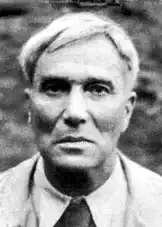
Boris Pasternak
To Anna Akhmatova
To Anna Akhmatova
I think I can call on words
that will last: you are there.
But if I can’t, no matter –
I’ll persist, I won’t care.
I hear the muttering of wet roofs,
pale eclogues from stones and kerb.
From the opening lines, that city,
is alive in each sound, each word.
You can’t leave town though it’s spring,
and your customers won’t wait.
Dawn glows, by lamplight sewing
with unbowed back, eyes wet.
Breathing the calm of far-off Ladoga,
stumbling towards the water.
There’s no relief from such trips.
The shallows smell mustier, darker.
The wind dances, it’s a walnut shell,
a glitter, the warm wind blows
branches and stars, lights, and views,
as the seamstress watches the flow.
Eyesight can be sharp, differently,
form be precise in varying ways,
but a solvent of acid power’s
out there under the white night’s blaze.
That’s how I see your face and look.
Not that pillar of salt, in mind,
in which five years ago you fixed
our fears of looking behind.
From your first verses where grains
of clear speech hardened, to the last,
your eye, the spark that shakes the wire,
makes all things quiver with the past.
I think I can call on words
that will last: you are there.
But if I can’t, no matter –
I’ll persist, I won’t care.
I hear the muttering of wet roofs,
pale eclogues from stones and kerb.
From the opening lines, that city,
is alive in each sound, each word.
You can’t leave town though it’s spring,
and your customers won’t wait.
Dawn glows, by lamplight sewing
with unbowed back, eyes wet.
Breathing the calm of far-off Ladoga,
stumbling towards the water.
There’s no relief from such trips.
The shallows smell mustier, darker.
The wind dances, it’s a walnut shell,
a glitter, the warm wind blows
branches and stars, lights, and views,
as the seamstress watches the flow.
Eyesight can be sharp, differently,
form be precise in varying ways,
but a solvent of acid power’s
out there under the white night’s blaze.
That’s how I see your face and look.
Not that pillar of salt, in mind,
in which five years ago you fixed
our fears of looking behind.
From your first verses where grains
of clear speech hardened, to the last,
your eye, the spark that shakes the wire,
makes all things quiver with the past.
669
Boris Pasternak
Beloved, with the spent and sickly fumes...
Beloved, with the spent and sickly fumes...
Beloved, with the spent and sickly fumes
Of rumour's cinders all the air is filled,
But you are the engrossing lexicon
Of fame mysterious and unrevealed,
And fame it is the soil's strong pull.
Would that I more erect were sprung!
But even so I shall be called
The native son of my own native tongue.
The poets' age no longer sets their rhyme,
Now, in the sweep of country plots and roads,
Lermontov is rhymed with summertime,
And Pushkin rhymes with geese and snow.
And my wish is that when we die,
Our circle closed, and hence depart,
We shall be set in closer rhyme
Than binds the auricle and the heart.
And may our harmony unified
Some listener's muffled ear caress
With all that we do now imbibe,
And shall draw in through mouths of grass.
Beloved, with the spent and sickly fumes
Of rumour's cinders all the air is filled,
But you are the engrossing lexicon
Of fame mysterious and unrevealed,
And fame it is the soil's strong pull.
Would that I more erect were sprung!
But even so I shall be called
The native son of my own native tongue.
The poets' age no longer sets their rhyme,
Now, in the sweep of country plots and roads,
Lermontov is rhymed with summertime,
And Pushkin rhymes with geese and snow.
And my wish is that when we die,
Our circle closed, and hence depart,
We shall be set in closer rhyme
Than binds the auricle and the heart.
And may our harmony unified
Some listener's muffled ear caress
With all that we do now imbibe,
And shall draw in through mouths of grass.
496
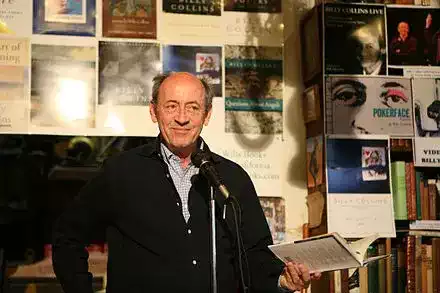
Billy Collins
Reading An Anthology Of Chinese Poems Of The Sung Dynasty, I Pause To
Reading An Anthology Of Chinese Poems Of The Sung Dynasty, I Pause To
Admire The Length And Clarity Of Their Titles
It seems these poets have nothing
up their ample sleeves
they turn over so many cards so early,
telling us before the first line
whether it is wet or dry,
night or day, the season the man is standing in,
even how much he has had to drink.
Maybe it is autumn and he is looking at a sparrow.
Maybe it is snowing on a town with a beautiful name.
"Viewing Peonies at the Temple of Good Fortune
on a Cloudy Afternoon" is one of Sun Tung Po's.
"Dipping Water from the River and Simmering Tea"
is another one, or just
"On a Boat, Awake at Night."
And Lu Yu takes the simple rice cake with
"In a Boat on a Summer Evening
I Heard the Cry of a Waterbird.
It Was Very Sad and Seemed To Be Saying
My Woman Is Cruel--Moved, I Wrote This Poem."
There is no iron turnstile to push against here
as with headings like "Vortex on a String,"
"The Horn of Neurosis," or whatever.
No confusingly inscribed welcome mat to puzzle over.
Instead, "I Walk Out on a Summer Morning
to the Sound of Birds and a Waterfall"
is a beaded curtain brushing over my shoulders.
And "Ten Days of Spring Rain Have Kept Me Indoors"
is a servant who shows me into the room
where a poet with a thin beard
is sitting on a mat with a jug of wine
whispering something about clouds and cold wind,
about sickness and the loss of friends.
How easy he has made it for me to enter here,
to sit down in a corner,
cross my legs like his, and listen.
Admire The Length And Clarity Of Their Titles
It seems these poets have nothing
up their ample sleeves
they turn over so many cards so early,
telling us before the first line
whether it is wet or dry,
night or day, the season the man is standing in,
even how much he has had to drink.
Maybe it is autumn and he is looking at a sparrow.
Maybe it is snowing on a town with a beautiful name.
"Viewing Peonies at the Temple of Good Fortune
on a Cloudy Afternoon" is one of Sun Tung Po's.
"Dipping Water from the River and Simmering Tea"
is another one, or just
"On a Boat, Awake at Night."
And Lu Yu takes the simple rice cake with
"In a Boat on a Summer Evening
I Heard the Cry of a Waterbird.
It Was Very Sad and Seemed To Be Saying
My Woman Is Cruel--Moved, I Wrote This Poem."
There is no iron turnstile to push against here
as with headings like "Vortex on a String,"
"The Horn of Neurosis," or whatever.
No confusingly inscribed welcome mat to puzzle over.
Instead, "I Walk Out on a Summer Morning
to the Sound of Birds and a Waterfall"
is a beaded curtain brushing over my shoulders.
And "Ten Days of Spring Rain Have Kept Me Indoors"
is a servant who shows me into the room
where a poet with a thin beard
is sitting on a mat with a jug of wine
whispering something about clouds and cold wind,
about sickness and the loss of friends.
How easy he has made it for me to enter here,
to sit down in a corner,
cross my legs like his, and listen.
260
Billy Collins
Dear Reader
Dear Reader
Baudelaire considers you his brother, and Fielding calls out to you every few
paragraphs as if to make sure you have not closed the book, and now I am
summoning you up again, attentive ghost, dark silent figure standing in the doorway
of these words.
Baudelaire considers you his brother, and Fielding calls out to you every few
paragraphs as if to make sure you have not closed the book, and now I am
summoning you up again, attentive ghost, dark silent figure standing in the doorway
of these words.
256
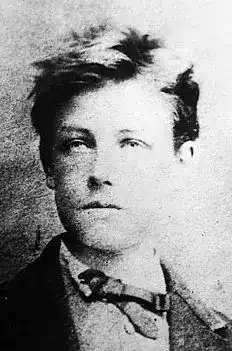
Arthur Rimbaud
What One Says To The Poet On The Subject Of Flowers
What One Says To The Poet On The Subject Of Flowers
I
Thus, ever, towards the azure night
Where there quivers a topaz sea,
Will function in your evening light
The Lilies, those clysters of ecstasy!
In our own age of sago, as they must,
Since all the Plants are workers first,
The Lilies will drink a blue disgust,
From your religious Prose, not verse!
– The Lily of Monsieur de Kerdrel
The sonnet of eighteen thirty, the plant,
That Lily, they bestow on ‘The Minstrel’
With the carnation and the amaranth!
Lilies! Lilies! You see never a one!
Yet in your Verses, like the Sinners’
Sleeves, those of soft-footed women,
Always those white flowers shiver!
Always, Dear, when you take a bathe,
Your Shirt with yellow armpits rots
Swells to the breeze of rising day,
Above the soiled forget-me-nots!
Love, only, through your nets
Smuggles Lilies – O unequal!
And the Woodland Violets,
The dark Nymphs’ sugary spittle!...
II
O Poets, if you could but own
To the red on the laurel’s firm stem
To the Roses, the Roses, blown,
With a thousand octaves swollen!
If BANVILLE could make them snow,
Blood-stained, whirling in gyrations,
Blacking the eye of that stranger so,
Who sees wicked interpretations!
In your forests, by your paths,
O so placid photographers!
Like the stoppers on carafes,
The Flora’s more or less diverse!
Always the vegetables, French,
Absurd, consumptive, up for a fight,
Bellies of basset hounds they drench,
Peacefully passed in evening light;
Always, after fearful drawings
Of blue Lotus or that Sunflower,
Pink prints, subjects befitting
Girls in communion’s sweet hour!
The Asoka Ode agrees with the
Loretto window stanza; showers
Of bright butterflies, heavy, flutter,
Dunging on the daisy flowers.
Old verdures, old braided ribbons!
O vegetable biscuit bakes!
Fantastic flowers of old Salons!
– For cockchafers, not rattlesnakes,
Those vegetable dolls in tears
Grandville would have mislaid
In the margin, sucking colours
From spiteful stars with eye-shades!
Yes, the drooling of your flutes
Produces precious sugar!
– Heaps of fried eggs in old boots,
Lily, Lilac, Rose, Asoka!...
III
O white Hunter, running through,
Stocking-less, the Panic field,
Shouldn’t you, couldn’t you
Acquire a little botany?
You’d have succeed, I’m afraid,
To russet Crickets, Spanish Fly,
Rio golds to Rhine blue, Norway
To Florida, in the blink of an eye:
But, Dear, art cannot, for us,
– It’s true – permit, it’s wrong,
To the astounding Eucalyptus,
Boa-Constrictors, hexameter-long;
There…! As if Mahogany
Served, even in our Guiana,
Only the Capuchin monkey
To ride the mad weight of liana!
– In short, a single Flower: is it,
Lily or Rosemary, live or dead,
Worth a spot of sea-gull’s shit,
Worth a candle drip, I said?
– And I mean what I say, mind!
Even you, squatting there, in one
Of those bamboo-huts – blind
Shut, behind brown Persian curtain –
You’d scrawl about things floral
Worthy of some wild Oise department!...
– Poet, yet that’s a rationale
No less laughable than it’s arrogant!
IV
Speak, not of pampas in the spring,
Black with terrible rebellions,
But of tobacco, cotton growing!
Speak of exotic harvest seasons!
Speak, white brow that Phoebus tanned,
Of how many dollars Pedro
Velasquez of Havana earned;
En-shit the Bay of Sorrento
Where in thousands rest the Swans;
Let your stanzas undertake
The draining of the mangrove swamps,
Filled with hydras, water-snakes!
Your quatrains plunge in blood-wet groves
Return, bringing Humanity
Diverse offerings, sugars, cloves,
Lozenges and rubber-trees!
Let us know if the yellowness
Of snowy Peaks, near the Tropic,
Is prolific insect’s nests
Or lichens microscopic!
Seek, O Hunter, our wish what’s more,
Diverse fragrant madders,
That, for our Army, Nature
Might cause to bloom in trousers!
Seek, beside the slumbering Glades,
Flowers that look like muzzles, oh,
Out of which drip gold pomades,
On the dark hide of the buffalo!
Seek wild fields, where in the Blue
Trembles the silver of pubescence,
Calyxes of fiery eggs that brew
Steeped in burning oily essence!
Seek the Thistle’s cotton-bin,
Whose downy wool ten asses
With ember eyes toil to spin!
Seek flowers which are chassis!
Yes, seek at the heart of black seams
Nigh-on stone-like flowers – marvels! –
That near their hard pale ovaries
Bear soft gemmiferous tonsils!
Serve us, O Crammer, as you can,
On a fine vermilion platter
Stews of syrupy Lilies, plan
To corrode our German silver!
V
Many will sing of Love sublime,
The thief of sombre Indulgence:
Not Renan, nor Murr the cat, I’m
Sure, know Thyrsi, blue, immense!
You’ll quicken, in our torpors,
Hysterias, through your fragrances;
Exalt us towards candours
Purer than Marys’ whitenesses…
Colonist! Trader! Medium!
Your Rhyme, pink, white, will be
A welling ray of sodium,
A well-tapped dripping rubber-tree!
From your dark Poems – Juggler!
Let dioptric white, green, red,
Burst out like strange flowers,
Electric butterflies instead!
See! It’s the Century of hell!
Telegraph poles will honour
– A lyre, where steel songs swell,
Your magnificent shoulder!
Rhyme us above all a version
On the ills of potato blight!
– And to aid the composition
Of Poems of mysterious light
To be read from Tréguier
To Paramaribo, don’t forget
To buy Tomes by Monsieur Figuier,
– Illustrated – from Monsieur Hachette!
I
Thus, ever, towards the azure night
Where there quivers a topaz sea,
Will function in your evening light
The Lilies, those clysters of ecstasy!
In our own age of sago, as they must,
Since all the Plants are workers first,
The Lilies will drink a blue disgust,
From your religious Prose, not verse!
– The Lily of Monsieur de Kerdrel
The sonnet of eighteen thirty, the plant,
That Lily, they bestow on ‘The Minstrel’
With the carnation and the amaranth!
Lilies! Lilies! You see never a one!
Yet in your Verses, like the Sinners’
Sleeves, those of soft-footed women,
Always those white flowers shiver!
Always, Dear, when you take a bathe,
Your Shirt with yellow armpits rots
Swells to the breeze of rising day,
Above the soiled forget-me-nots!
Love, only, through your nets
Smuggles Lilies – O unequal!
And the Woodland Violets,
The dark Nymphs’ sugary spittle!...
II
O Poets, if you could but own
To the red on the laurel’s firm stem
To the Roses, the Roses, blown,
With a thousand octaves swollen!
If BANVILLE could make them snow,
Blood-stained, whirling in gyrations,
Blacking the eye of that stranger so,
Who sees wicked interpretations!
In your forests, by your paths,
O so placid photographers!
Like the stoppers on carafes,
The Flora’s more or less diverse!
Always the vegetables, French,
Absurd, consumptive, up for a fight,
Bellies of basset hounds they drench,
Peacefully passed in evening light;
Always, after fearful drawings
Of blue Lotus or that Sunflower,
Pink prints, subjects befitting
Girls in communion’s sweet hour!
The Asoka Ode agrees with the
Loretto window stanza; showers
Of bright butterflies, heavy, flutter,
Dunging on the daisy flowers.
Old verdures, old braided ribbons!
O vegetable biscuit bakes!
Fantastic flowers of old Salons!
– For cockchafers, not rattlesnakes,
Those vegetable dolls in tears
Grandville would have mislaid
In the margin, sucking colours
From spiteful stars with eye-shades!
Yes, the drooling of your flutes
Produces precious sugar!
– Heaps of fried eggs in old boots,
Lily, Lilac, Rose, Asoka!...
III
O white Hunter, running through,
Stocking-less, the Panic field,
Shouldn’t you, couldn’t you
Acquire a little botany?
You’d have succeed, I’m afraid,
To russet Crickets, Spanish Fly,
Rio golds to Rhine blue, Norway
To Florida, in the blink of an eye:
But, Dear, art cannot, for us,
– It’s true – permit, it’s wrong,
To the astounding Eucalyptus,
Boa-Constrictors, hexameter-long;
There…! As if Mahogany
Served, even in our Guiana,
Only the Capuchin monkey
To ride the mad weight of liana!
– In short, a single Flower: is it,
Lily or Rosemary, live or dead,
Worth a spot of sea-gull’s shit,
Worth a candle drip, I said?
– And I mean what I say, mind!
Even you, squatting there, in one
Of those bamboo-huts – blind
Shut, behind brown Persian curtain –
You’d scrawl about things floral
Worthy of some wild Oise department!...
– Poet, yet that’s a rationale
No less laughable than it’s arrogant!
IV
Speak, not of pampas in the spring,
Black with terrible rebellions,
But of tobacco, cotton growing!
Speak of exotic harvest seasons!
Speak, white brow that Phoebus tanned,
Of how many dollars Pedro
Velasquez of Havana earned;
En-shit the Bay of Sorrento
Where in thousands rest the Swans;
Let your stanzas undertake
The draining of the mangrove swamps,
Filled with hydras, water-snakes!
Your quatrains plunge in blood-wet groves
Return, bringing Humanity
Diverse offerings, sugars, cloves,
Lozenges and rubber-trees!
Let us know if the yellowness
Of snowy Peaks, near the Tropic,
Is prolific insect’s nests
Or lichens microscopic!
Seek, O Hunter, our wish what’s more,
Diverse fragrant madders,
That, for our Army, Nature
Might cause to bloom in trousers!
Seek, beside the slumbering Glades,
Flowers that look like muzzles, oh,
Out of which drip gold pomades,
On the dark hide of the buffalo!
Seek wild fields, where in the Blue
Trembles the silver of pubescence,
Calyxes of fiery eggs that brew
Steeped in burning oily essence!
Seek the Thistle’s cotton-bin,
Whose downy wool ten asses
With ember eyes toil to spin!
Seek flowers which are chassis!
Yes, seek at the heart of black seams
Nigh-on stone-like flowers – marvels! –
That near their hard pale ovaries
Bear soft gemmiferous tonsils!
Serve us, O Crammer, as you can,
On a fine vermilion platter
Stews of syrupy Lilies, plan
To corrode our German silver!
V
Many will sing of Love sublime,
The thief of sombre Indulgence:
Not Renan, nor Murr the cat, I’m
Sure, know Thyrsi, blue, immense!
You’ll quicken, in our torpors,
Hysterias, through your fragrances;
Exalt us towards candours
Purer than Marys’ whitenesses…
Colonist! Trader! Medium!
Your Rhyme, pink, white, will be
A welling ray of sodium,
A well-tapped dripping rubber-tree!
From your dark Poems – Juggler!
Let dioptric white, green, red,
Burst out like strange flowers,
Electric butterflies instead!
See! It’s the Century of hell!
Telegraph poles will honour
– A lyre, where steel songs swell,
Your magnificent shoulder!
Rhyme us above all a version
On the ills of potato blight!
– And to aid the composition
Of Poems of mysterious light
To be read from Tréguier
To Paramaribo, don’t forget
To buy Tomes by Monsieur Figuier,
– Illustrated – from Monsieur Hachette!
659
Arthur Rimbaud
Stages (Scenes)
Stages (Scenes)
Ancient Comedy pursues its harmonies and divides its Idylls:
Raised platforms along the boulevards.
A long wooden pier the length of a rocky field in which
the barbarous crowd moves about under the denuded trees.
In corridors of black gauze, following the promenades
with their lanterns and their leaves.
Birds of the mysteries swoop down onto a masonry pontoon,
swayed by the sheltered archipelago of spectators' boats.
Operatic scenes with accompaniment of flute and drum
look down from slanting recesses contrived below
the ceilings around modern club rooms and halls of ancient Orient.
The fairy spectacle maneuvers at the top of an amphitheater
crowned with thickets,-- or moves and modulates for the Boeotians
in the shade of waving forest trees, on the edge of the cultivated fields.
The opera-comique is divided on a stage at the line of intersection
of ten partitions set up between the gallery and the footlights.
Ancient Comedy pursues its harmonies and divides its Idylls:
Raised platforms along the boulevards.
A long wooden pier the length of a rocky field in which
the barbarous crowd moves about under the denuded trees.
In corridors of black gauze, following the promenades
with their lanterns and their leaves.
Birds of the mysteries swoop down onto a masonry pontoon,
swayed by the sheltered archipelago of spectators' boats.
Operatic scenes with accompaniment of flute and drum
look down from slanting recesses contrived below
the ceilings around modern club rooms and halls of ancient Orient.
The fairy spectacle maneuvers at the top of an amphitheater
crowned with thickets,-- or moves and modulates for the Boeotians
in the shade of waving forest trees, on the edge of the cultivated fields.
The opera-comique is divided on a stage at the line of intersection
of ten partitions set up between the gallery and the footlights.
658

Anonymous
Riddle
Riddle
A moth, I thogh, munching a word.
How marvellously weird! a worm
Digesting a mans sayings -
A sneakthief nibbling in the shadows
At the shape of a poet`s thunderous phrases -
How unutterably strange!
And the pilfering parasite none the wiser
For the words he has swallowed.
A moth, I thogh, munching a word.
How marvellously weird! a worm
Digesting a mans sayings -
A sneakthief nibbling in the shadows
At the shape of a poet`s thunderous phrases -
How unutterably strange!
And the pilfering parasite none the wiser
For the words he has swallowed.
262
Anonymous
If All the World Were Paper
If All the World Were Paper
"If all the world were paper
And all the sea were ink,
If all the trees were bread and cheese
What would we do for drink?
If all the world were sand O,
Oh then what should we lack O,
if as they say there were no clay
How should we take Tobacco?
If all our vessels ran-a,
If none but had a crack-a,
If Spanish apes ate all the grapes
How should we do for sack-a?
If all the world were men
And men lived all in trenches,
And there were none but we alone,
How should we do for wenches?
If friars had no bald pates
Nor nuns had no dark cloisters,
If all the seas were beans and peas
How should we do for oysters?
If there had been no projects
Nor none that did great wrongs,
If fiddlers shall turn players all
How should we do for songs?
If all things were eternal
And nothing their end bringing,
If this should be, then how should we
Here make an end of singing?
"If all the world were paper
And all the sea were ink,
If all the trees were bread and cheese
What would we do for drink?
If all the world were sand O,
Oh then what should we lack O,
if as they say there were no clay
How should we take Tobacco?
If all our vessels ran-a,
If none but had a crack-a,
If Spanish apes ate all the grapes
How should we do for sack-a?
If all the world were men
And men lived all in trenches,
And there were none but we alone,
How should we do for wenches?
If friars had no bald pates
Nor nuns had no dark cloisters,
If all the seas were beans and peas
How should we do for oysters?
If there had been no projects
Nor none that did great wrongs,
If fiddlers shall turn players all
How should we do for songs?
If all things were eternal
And nothing their end bringing,
If this should be, then how should we
Here make an end of singing?
234
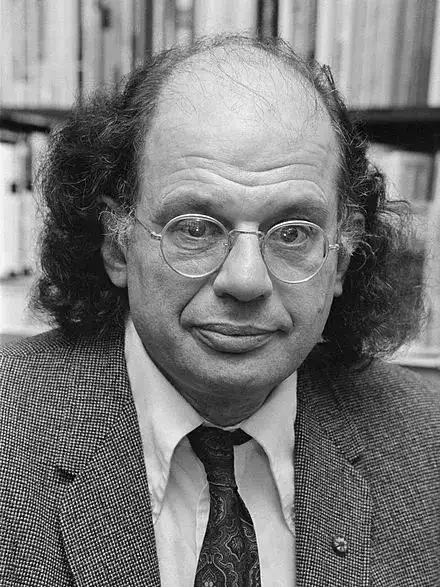
Allen Ginsberg
Psalm IV
Psalm IV
Now I'll record my secret vision, impossible sight of the face of God:
It was no dream, I lay broad waking on a fabulous couch in Harlem
having masturbated for no love, and read half naked an open book of Blake
on my lap
Lo & behold! I was thoughtless and turned a page and gazed on the living
Sun-flower
and heard a voice, it was Blake's, reciting in earthen measure:
the voice rose out of the page to my secret ear never heard before-
I lifted my eyes to the window, red walls of buildings flashed outside,
endless sky sad Eternity
sunlight gazing on the world, apartments of Harlem standing in the
universe-each
brick and cornice stained with intelligence like a vast living face-the
great brain unfolding and brooding in wilderness!--Now speaking
aloud with Blake's voice--
Love! thou patient presence & bone of the body! Father! thy careful
watching and waiting over my soul!
My son! My son! the endless ages have remembered me! My son! My son!
Time howled in anguish in my ear!
My son! My son! my father wept and held me in his dead arms.
Now I'll record my secret vision, impossible sight of the face of God:
It was no dream, I lay broad waking on a fabulous couch in Harlem
having masturbated for no love, and read half naked an open book of Blake
on my lap
Lo & behold! I was thoughtless and turned a page and gazed on the living
Sun-flower
and heard a voice, it was Blake's, reciting in earthen measure:
the voice rose out of the page to my secret ear never heard before-
I lifted my eyes to the window, red walls of buildings flashed outside,
endless sky sad Eternity
sunlight gazing on the world, apartments of Harlem standing in the
universe-each
brick and cornice stained with intelligence like a vast living face-the
great brain unfolding and brooding in wilderness!--Now speaking
aloud with Blake's voice--
Love! thou patient presence & bone of the body! Father! thy careful
watching and waiting over my soul!
My son! My son! the endless ages have remembered me! My son! My son!
Time howled in anguish in my ear!
My son! My son! my father wept and held me in his dead arms.
624
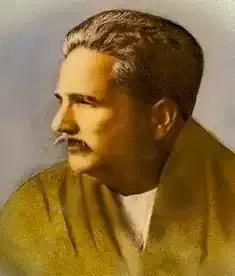
Muhammad Iqbal
Mirza Ghalib
Mirza Ghalib
Through you the secret was revealed to the human intellect
That innumerable enigmas are solved by human intellect
You were the complete soul, literary assembly was your body
You adorned as well as remained veiled from the assembly
Your eye is longing to witness that veiled Beauty
Which is veiled in everything as the pathos of life
The assemblage of existence is rich with your harp
As mountain's silence by the brook's melodious harp
The garden of your imagination bestows glory on the universe
From the field of your thought worlds grow like meadows
Life is concealed in the humor of your verse
Picture's lips move with your command of language
Speech is very proud of the elegance of your miraculous lips
Thurayyah is astonished at your style's elegance
Beloved of literature itself loves your style
Delhi's bud is mocking at the rose of Shiraz
Ah! You are resting in the midst of Delhi's ruins
Your counterpart is resting in the Weimar's garden
Matching you in literary elegance is not possible
Till maturity of thought and imagination are combined
Ah! What has befallen the land of India!
Ah! The inspirer of the super-critical eye!
The lock of Urdu's hair still craves for combing
This candle still craves for moth's heart-felt pathos
O Jahanabad! O cradle of learning and art
Your entire super-structure is a silent lament
The sun and the moon are asleep in every speck of your dust
Though innumerable other gems are also hidden in your dust
Does another world-famous person like him also lie buried in you?
Does another gem like him also lie concealed in you?
Through you the secret was revealed to the human intellect
That innumerable enigmas are solved by human intellect
You were the complete soul, literary assembly was your body
You adorned as well as remained veiled from the assembly
Your eye is longing to witness that veiled Beauty
Which is veiled in everything as the pathos of life
The assemblage of existence is rich with your harp
As mountain's silence by the brook's melodious harp
The garden of your imagination bestows glory on the universe
From the field of your thought worlds grow like meadows
Life is concealed in the humor of your verse
Picture's lips move with your command of language
Speech is very proud of the elegance of your miraculous lips
Thurayyah is astonished at your style's elegance
Beloved of literature itself loves your style
Delhi's bud is mocking at the rose of Shiraz
Ah! You are resting in the midst of Delhi's ruins
Your counterpart is resting in the Weimar's garden
Matching you in literary elegance is not possible
Till maturity of thought and imagination are combined
Ah! What has befallen the land of India!
Ah! The inspirer of the super-critical eye!
The lock of Urdu's hair still craves for combing
This candle still craves for moth's heart-felt pathos
O Jahanabad! O cradle of learning and art
Your entire super-structure is a silent lament
The sun and the moon are asleep in every speck of your dust
Though innumerable other gems are also hidden in your dust
Does another world-famous person like him also lie buried in you?
Does another gem like him also lie concealed in you?
251
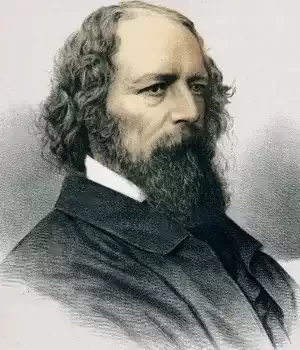
Alfred Lord Tennyson
To Virgil, Written at the Request of the Mantuans for the N
To Virgil, Written at the Request of the Mantuans for the N
Roman Virgil, thou that singest
Ilion's lofty temples robed in fire,
Ilion falling, Rome arising,
wars, and filial faith, and Dido's pyre;
Landscape-lover, lord of language
more than he that sang the "Works and Days,"
All the chosen coin of fancy
flashing out from many a golden phrase;
Thou that singest wheat and woodland,
tilth and vineyard, hive and horse and herd;
All the charm of all the Muses
often flowering in a lonely word;
Poet of the happy Tityrus
piping underneath his beechen bowers;
Poet of the poet-satyr
whom the laughing shepherd bound with flowers;
Chanter of the Pollio, glorying
in the blissful years again to be,
Summers of the snakeless meadow,
unlaborious earth and oarless sea;
Thou that seëst Universal
Nature moved by Universal Mind;
Thou majestic in thy sadness
at the doubtful doom of human kind;
Light among the vanish'd ages;
star that gildest yet this phantom shore;
Golden branch amid the shadows,
kings and realms that pass to rise no more;
Now thy Forum roars no longer,
fallen every purple Cæsar's dome-Tho'
thine ocean-roll of rhythm
sound forever of Imperial Rome-
Now the Rome of slaves hath perish'd,
and the Rome of freemen holds her place,
I, from out the Northern Island
sunder'd once from all the human race,
I salute thee, Mantovano,
I that loved thee since my day began,
Wielder of the stateliest measure
ever moulded by the lips of man.
Roman Virgil, thou that singest
Ilion's lofty temples robed in fire,
Ilion falling, Rome arising,
wars, and filial faith, and Dido's pyre;
Landscape-lover, lord of language
more than he that sang the "Works and Days,"
All the chosen coin of fancy
flashing out from many a golden phrase;
Thou that singest wheat and woodland,
tilth and vineyard, hive and horse and herd;
All the charm of all the Muses
often flowering in a lonely word;
Poet of the happy Tityrus
piping underneath his beechen bowers;
Poet of the poet-satyr
whom the laughing shepherd bound with flowers;
Chanter of the Pollio, glorying
in the blissful years again to be,
Summers of the snakeless meadow,
unlaborious earth and oarless sea;
Thou that seëst Universal
Nature moved by Universal Mind;
Thou majestic in thy sadness
at the doubtful doom of human kind;
Light among the vanish'd ages;
star that gildest yet this phantom shore;
Golden branch amid the shadows,
kings and realms that pass to rise no more;
Now thy Forum roars no longer,
fallen every purple Cæsar's dome-Tho'
thine ocean-roll of rhythm
sound forever of Imperial Rome-
Now the Rome of slaves hath perish'd,
and the Rome of freemen holds her place,
I, from out the Northern Island
sunder'd once from all the human race,
I salute thee, Mantovano,
I that loved thee since my day began,
Wielder of the stateliest measure
ever moulded by the lips of man.
445
Alfred Lord Tennyson
To Edward Lear: on His Travels in Greece
To Edward Lear: on His Travels in Greece
Illyrian woodlands, echoing falls
Of water, sheets of summer glass,
The long divine Peneian pass,
The vast Akrokeraunian walls,
Tomohrit, Athos, all things fair,
With such a pencil, such a pen,
You shadow forth to distant men,
I read and felt that I was there:
And trust me while I turn'd the page,
And track'd you still on classic ground,
I grew in gladness till I found
My spirits in the golden age.
For me the torrent ever pour'd
And glisten'd -- here and there alone
The broad-limb'd gods at random thrown
By fountain urns; -- and Naiads oar'd
A glimmering shoulder under gloom
Of cavern pillars; on the swell
The silver lily heaved and fell;
And many a slope was rich in bloom
From him that on the mountain lea
By dancing rivulets fed his flocks,
To him who sat upon the rocks,
And fluted to the morning sea.
Illyrian woodlands, echoing falls
Of water, sheets of summer glass,
The long divine Peneian pass,
The vast Akrokeraunian walls,
Tomohrit, Athos, all things fair,
With such a pencil, such a pen,
You shadow forth to distant men,
I read and felt that I was there:
And trust me while I turn'd the page,
And track'd you still on classic ground,
I grew in gladness till I found
My spirits in the golden age.
For me the torrent ever pour'd
And glisten'd -- here and there alone
The broad-limb'd gods at random thrown
By fountain urns; -- and Naiads oar'd
A glimmering shoulder under gloom
Of cavern pillars; on the swell
The silver lily heaved and fell;
And many a slope was rich in bloom
From him that on the mountain lea
By dancing rivulets fed his flocks,
To him who sat upon the rocks,
And fluted to the morning sea.
394
Alfred Lord Tennyson
The Lady of Shalott (1842)
The Lady of Shalott (1842)
PART I
On either side the river lie
Long fields of barley and of rye,
That clothe the wold and meet the sky;
And thro' the field the road runs by
To many-tower'd Camelot;
And up and down the people go,
Gazing where the lilies blow
Round an island there below,
The island of Shalott.
Willows whiten, aspens quiver,
Little breezes dusk and shiver
Thro' the wave that runs for ever
By the island in the river
Flowing down to Camelot.
Four gray walls, and four gray towers,
Overlook a space of flowers,
And the silent isle imbowers
The Lady of Shalott.
By the margin, willow veil'd,
Slide the heavy barges trail'd
By slow horses; and unhail'd
The shallop flitteth silken-sail'd
Skimming down to Camelot:
But who hath seen her wave her hand?
Or at the casement seen her stand?
Or is she known in all the land,
The Lady of Shalott?
Only reapers, reaping early
In among the bearded barley,
Hear a song that echoes cheerly
From the river winding clearly,
Down to tower'd Camelot:
And by the moon the reaper weary,
Piling sheaves in uplands airy,
Listening, whispers " 'Tis the fairy
Lady of Shalott."PART II
There she weaves by night and day
A magic web with colours gay.
She has heard a whisper say,
A curse is on her if she stay
To look down to Camelot.
She knows not what the curse may be,
And so she weaveth steadily,
And little other care hath she,
The Lady of Shalott.
And moving thro' a mirror clear
That hangs before her all the year,
Shadows of the world appear.
There she sees the highway near
Winding down to Camelot:
There the river eddy whirls,
And there the surly village-churls,
And the red cloaks of market girls,
Pass onward from Shalott.
Sometimes a troop of damsels glad,
An abbot on an ambling pad,
Sometimes a curly shepherd-lad,
Or long-hair'd page in crimson clad,
Goes by to tower'd Camelot;
And sometimes thro' the mirror blue
The knights come riding two and two:
She hath no loyal knight and true,
The Lady of Shalott.
But in her web she still delights
To weave the mirror's magic sights,
For often thro' the silent nights
A funeral, with plumes and lights
And music, went to Camelot:
Or when the moon was overhead,
Came two young lovers lately wed:
"I am half sick of shadows," said
The Lady of Shalott.PART III
A bow-shot from her bower-eaves,
He rode between the barley-sheaves,
The sun came dazzling thro' the leaves,
And flamed upon the brazen greaves
Of bold Sir Lancelot.
A red-cross knight for ever kneel'd
To a lady in his shield,
That sparkled on the yellow field,
Beside remote Shalott.
The gemmy bridle glitter'd free,
Like to some branch of stars we see
Hung in the golden Galaxy.
The bridle bells rang merrily
As he rode down to Camelot:
And from his blazon'd baldric slung
A mighty silver bugle hung,
And as he rode his armour rung,
Beside remote Shalott.
All in the blue unclouded weather
Thick-jewell'd shone the saddle-leather,
The helmet and the helmet-feather
Burn'd like one burning flame together,
As he rode down to Camelot.
As often thro' the purple night,
Below the starry clusters bright,
Some bearded meteor, trailing light,
Moves over still Shalott.
His broad clear brow in sunlight glow'd;
On burnish'd hooves his war-horse trode;
From underneath his helmet flow'd
His coal-black curls as on he rode,
As he rode down to Camelot.
From the bank and from the river
He flash'd into the crystal mirror,
"Tirra lirra," by the river
Sang Sir Lancelot.
She left the web, she left the loom,
She made three paces thro' the room,
She saw the water-lily bloom,
She saw the helmet and the plume,
She look'd down to Camelot.
Out flew the web and floated wide;
The mirror crack'd from side to side;
"The curse is come upon me," cried
The Lady of Shalott.PART IV
In the stormy east-wind straining,
The pale yellow woods were waning,
The broad stream in his banks complaining,
Heavily the low sky raining
Over tower'd Camelot;
Down she came and found a boat
Beneath a willow left afloat,
And round about the prow she wrote
The Lady of Shalott.
And down the river's dim expanse
Like some bold seër in a trance,
Seeing all his own mischance-With
a glassy countenance
Did she look to Camelot.
And at the closing of the day
She loosed the chain, and down she lay;
The broad stream bore her far away,
The Lady of Shalott.
Lying, robed in snowy white
That loosely flew to left and right-The
leaves upon her falling light-Thro'
the noises of the night
She floated down to Camelot:
And as the boat-head wound along
The willowy hills and fields among,
They heard her singing her last song,
The Lady of Shalott.
Heard a carol, mournful, holy,
Chanted loudly, chanted lowly,
Till her blood was frozen slowly,
And her eyes were darken'd wholly,
Turn'd to tower'd Camelot.
For ere she reach'd upon the tide
The first house by the water-side,
Singing in her song she died,
The Lady of Shalott.
Under tower and balcony,
By garden-wall and gallery,
A gleaming shape she floated by,
Dead-pale between the houses high,
Silent into Camelot.
Out upon the wharfs they came,
Knight and burgher, lord and dame,
And round the prow they read her name,
The Lady of Shalott.
Who is this? and what is here?
And in the lighted palace near
Died the sound of royal cheer;
And they cross'd themselves for fear,
All the knights at Camelot:
But Lancelot mused a little space;
He said, "She has a lovely face;
God in his mercy lend her grace,
The Lady of Shalott."
PART I
On either side the river lie
Long fields of barley and of rye,
That clothe the wold and meet the sky;
And thro' the field the road runs by
To many-tower'd Camelot;
And up and down the people go,
Gazing where the lilies blow
Round an island there below,
The island of Shalott.
Willows whiten, aspens quiver,
Little breezes dusk and shiver
Thro' the wave that runs for ever
By the island in the river
Flowing down to Camelot.
Four gray walls, and four gray towers,
Overlook a space of flowers,
And the silent isle imbowers
The Lady of Shalott.
By the margin, willow veil'd,
Slide the heavy barges trail'd
By slow horses; and unhail'd
The shallop flitteth silken-sail'd
Skimming down to Camelot:
But who hath seen her wave her hand?
Or at the casement seen her stand?
Or is she known in all the land,
The Lady of Shalott?
Only reapers, reaping early
In among the bearded barley,
Hear a song that echoes cheerly
From the river winding clearly,
Down to tower'd Camelot:
And by the moon the reaper weary,
Piling sheaves in uplands airy,
Listening, whispers " 'Tis the fairy
Lady of Shalott."PART II
There she weaves by night and day
A magic web with colours gay.
She has heard a whisper say,
A curse is on her if she stay
To look down to Camelot.
She knows not what the curse may be,
And so she weaveth steadily,
And little other care hath she,
The Lady of Shalott.
And moving thro' a mirror clear
That hangs before her all the year,
Shadows of the world appear.
There she sees the highway near
Winding down to Camelot:
There the river eddy whirls,
And there the surly village-churls,
And the red cloaks of market girls,
Pass onward from Shalott.
Sometimes a troop of damsels glad,
An abbot on an ambling pad,
Sometimes a curly shepherd-lad,
Or long-hair'd page in crimson clad,
Goes by to tower'd Camelot;
And sometimes thro' the mirror blue
The knights come riding two and two:
She hath no loyal knight and true,
The Lady of Shalott.
But in her web she still delights
To weave the mirror's magic sights,
For often thro' the silent nights
A funeral, with plumes and lights
And music, went to Camelot:
Or when the moon was overhead,
Came two young lovers lately wed:
"I am half sick of shadows," said
The Lady of Shalott.PART III
A bow-shot from her bower-eaves,
He rode between the barley-sheaves,
The sun came dazzling thro' the leaves,
And flamed upon the brazen greaves
Of bold Sir Lancelot.
A red-cross knight for ever kneel'd
To a lady in his shield,
That sparkled on the yellow field,
Beside remote Shalott.
The gemmy bridle glitter'd free,
Like to some branch of stars we see
Hung in the golden Galaxy.
The bridle bells rang merrily
As he rode down to Camelot:
And from his blazon'd baldric slung
A mighty silver bugle hung,
And as he rode his armour rung,
Beside remote Shalott.
All in the blue unclouded weather
Thick-jewell'd shone the saddle-leather,
The helmet and the helmet-feather
Burn'd like one burning flame together,
As he rode down to Camelot.
As often thro' the purple night,
Below the starry clusters bright,
Some bearded meteor, trailing light,
Moves over still Shalott.
His broad clear brow in sunlight glow'd;
On burnish'd hooves his war-horse trode;
From underneath his helmet flow'd
His coal-black curls as on he rode,
As he rode down to Camelot.
From the bank and from the river
He flash'd into the crystal mirror,
"Tirra lirra," by the river
Sang Sir Lancelot.
She left the web, she left the loom,
She made three paces thro' the room,
She saw the water-lily bloom,
She saw the helmet and the plume,
She look'd down to Camelot.
Out flew the web and floated wide;
The mirror crack'd from side to side;
"The curse is come upon me," cried
The Lady of Shalott.PART IV
In the stormy east-wind straining,
The pale yellow woods were waning,
The broad stream in his banks complaining,
Heavily the low sky raining
Over tower'd Camelot;
Down she came and found a boat
Beneath a willow left afloat,
And round about the prow she wrote
The Lady of Shalott.
And down the river's dim expanse
Like some bold seër in a trance,
Seeing all his own mischance-With
a glassy countenance
Did she look to Camelot.
And at the closing of the day
She loosed the chain, and down she lay;
The broad stream bore her far away,
The Lady of Shalott.
Lying, robed in snowy white
That loosely flew to left and right-The
leaves upon her falling light-Thro'
the noises of the night
She floated down to Camelot:
And as the boat-head wound along
The willowy hills and fields among,
They heard her singing her last song,
The Lady of Shalott.
Heard a carol, mournful, holy,
Chanted loudly, chanted lowly,
Till her blood was frozen slowly,
And her eyes were darken'd wholly,
Turn'd to tower'd Camelot.
For ere she reach'd upon the tide
The first house by the water-side,
Singing in her song she died,
The Lady of Shalott.
Under tower and balcony,
By garden-wall and gallery,
A gleaming shape she floated by,
Dead-pale between the houses high,
Silent into Camelot.
Out upon the wharfs they came,
Knight and burgher, lord and dame,
And round the prow they read her name,
The Lady of Shalott.
Who is this? and what is here?
And in the lighted palace near
Died the sound of royal cheer;
And they cross'd themselves for fear,
All the knights at Camelot:
But Lancelot mused a little space;
He said, "She has a lovely face;
God in his mercy lend her grace,
The Lady of Shalott."
817
Alfred Lord Tennyson
Lancelot And Elaine
Lancelot And Elaine
Elaine the fair, Elaine the loveable,
Elaine, the lily maid of Astolat,
High in her chamber up a tower to the east
Guarded the sacred shield of Lancelot;
Which first she placed where the morning's earliest ray
Might strike it, and awake her with the gleam;
Then fearing rust or soilure fashioned for it
A case of silk, and braided thereupon
All the devices blazoned on the shield
In their own tinct, and added, of her wit,
A border fantasy of branch and flower,
And yellow-throated nestling in the nest.
Nor rested thus content, but day by day,
Leaving her household and good father, climbed
That eastern tower, and entering barred her door,
Stript off the case, and read the naked shield,
Now guessed a hidden meaning in his arms,
Now made a pretty history to herself
Of every dint a sword had beaten in it,
And every scratch a lance had made upon it,
Conjecturing when and where: this cut is fresh;
That ten years back; this dealt him at Caerlyle;
That at Caerleon; this at Camelot:
And ah God's mercy, what a stroke was there!
And here a thrust that might have killed, but God
Broke the strong lance, and rolled his enemy down,
And saved him: so she lived in fantasy.
How came the lily maid by that good shield
Of Lancelot, she that knew not even his name?
He left it with her, when he rode to tilt
For the great diamond in the diamond jousts,
Which Arthur had ordained, and by that name
Had named them, since a diamond was the prize.
For Arthur, long before they crowned him King,
Roving the trackless realms of Lyonnesse,
Had found a glen, gray boulder and black tarn.
A horror lived about the tarn, and clave
Like its own mists to all the mountain side:
For here two brothers, one a king, had met
And fought together; but their names were lost;
And each had slain his brother at a blow;
And down they fell and made the glen abhorred:
And there they lay till all their bones were bleached,
And lichened into colour with the crags:
And he, that once was king, had on a crown
Of diamonds, one in front, and four aside.
And Arthur came, and labouring up the pass,
All in a misty moonshine, unawares
Had trodden that crowned skeleton, and the skull
Brake from the nape, and from the skull the crown
Rolled into light, and turning on its rims
Fled like a glittering rivulet to the tarn:
And down the shingly scaur he plunged, and caught,
And set it on his head, and in his heart
Heard murmurs, 'Lo, thou likewise shalt be King.'
Thereafter, when a King, he had the gems
Plucked from the crown, and showed them to his knights,
Saying, 'These jewels, whereupon I chanced
Divinely, are the kingdom's, not the King's--
For public use: henceforward let there be,
Once every year, a joust for one of these:
For so by nine years' proof we needs must learn
Which is our mightiest, and ourselves shall grow
In use of arms and manhood, till we drive
The heathen, who, some say, shall rule the land
Hereafter, which God hinder.' Thus he spoke:
And eight years past, eight jousts had been, and still
Had Lancelot won the diamond of the year,
With purpose to present them to the Queen,
When all were won; but meaning all at once
To snare her royal fancy with a boon
Worth half her realm, had never spoken word.
Now for the central diamond and the last
And largest, Arthur, holding then his court
Hard on the river nigh the place which now
Is this world's hugest, let proclaim a joust
At Camelot, and when the time drew nigh
Spake (for she had been sick) to Guinevere,
'Are you so sick, my Queen, you cannot move
To these fair jousts?' 'Yea, lord,' she said, 'ye know it.'
'Then will ye miss,' he answered, 'the great deeds
Of Lancelot, and his prowess in the lists,
A sight ye love to look on.' And the Queen
Lifted her eyes, and they dwelt languidly
On Lancelot, where he stood beside the King.
He thinking that he read her meaning there,
'Stay with me, I am sick; my love is more
Than many diamonds,' yielded; and a heart
Love-loyal to the least wish of the Queen
(However much he yearned to make complete
The tale of diamonds for his destined boon)
Urged him to speak against the truth, and say,
'Sir King, mine ancient wound is hardly whole,
And lets me from the saddle;' and the King
Glanced first at him, then her, and went his way.
No sooner gone than suddenly she began:
'To blame, my lord Sir Lancelot, much to blame!
Why go ye not to these fair jousts? the knights
Are half of them our enemies, and the crowd
Will murmur, "Lo the shameless ones, who take
Their pastime now the trustful King is gone!"'
Then Lancelot vext at having lied in vain:
'Are ye so wise? ye were not once so wise,
My Queen, that summer, when ye loved me first.
Then of the crowd ye took no more account
Than of the myriad cricket of the mead,
When its own voice clings to each blade of grass,
And every voice is nothing. As to knights,
Them surely can I silence with all ease.
But now my loyal worship is allowed
Of all men: many a bard, without offence,
Has linked our names together in his lay,
Lancelot, the flower of bravery, Guinevere,
The pearl of beauty: and our knights at feast
Have pledged us in this union, while the King
Would listen smiling. How then? is there more?
Has Arthur spoken aught? or would yourself,
Now weary of my service and devoir,
Henceforth be truer to your faultless lord?'
She broke into a little scornful laugh:
'Arthur, my lord, Arthur, the faultless King,
That passionate perfection, my good lord--
But who can gaze upon the Sun in heaven?
He never spake word of reproach to me,
He never had a glimpse of mine untruth,
He cares not for me: only here today
There gleamed a vague suspicion in his eyes:
Some meddling rogue has tampered with him--else
Rapt in this fancy of his Table Round,
And swearing men to vows impossible,
To make them like himself: but, friend, to me
He is all fault who hath no fault at all:
For who loves me must have a touch of earth;
The low sun makes the colour: I am yours,
Not Arthur's, as ye know, save by the bond.
And therefore hear my words: go to the jousts:
The tiny-trumpeting gnat can break our dream
When sweetest; and the vermin voices here
May buzz so loud--we scorn them, but they sting.'
Then answered Lancelot, the chief of knights:
'And with what face, after my pretext made,
Shall I appear, O Queen, at Camelot, I
Before a King who honours his own word,
As if it were his God's?'
'Yea,' said the Queen,
'A moral child without the craft to rule,
Else had he not lost me: but listen to me,
If I must find you wit: we hear it said
That men go down before your spear at a touch,
But knowing you are Lancelot; your great name,
This conquers: hide it therefore; go unknown:
Win! by this kiss you will: and our true King
Will then allow your pretext, O my knight,
As all for glory; for to speak him true,
Ye know right well, how meek soe'er he seem,
No keener hunter after glory breathes.
He loves it in his knights more than himself:
They prove to him his work: win and return.'
Then got Sir Lancelot suddenly to horse,
Wroth at himself. Not willing to be known,
He left the barren-beaten thoroughfare,
Chose the green path that showed the rarer foot,
And there among the solitary downs,
Full often lost in fancy, lost his way;
Till as he traced a faintly-shadowed track,
That all in loops and links among the dales
Ran to the Castle of Astolat, he saw
Fired from the west, far on a hill, the towers.
Thither he made, and blew the gateway horn.
Then came an old, dumb, myriad-wrinkled man,
Who let him into lodging and disarmed.
And Lancelot marvelled at the wordless man;
And issuing found the Lord of Astolat
With two strong sons, Sir Torre and Sir Lavaine,
Moving to meet him in the castle court;
And close behind them stept the lily maid
Elaine, his daughter: mother of the house
There was not: some light jest among them rose
With laughter dying down as the great knight
Approached them: then the Lord of Astolat:
'Whence comes thou, my guest, and by what name
Livest thou between the lips? for by thy state
And presence I might guess thee chief of those,
After the King, who eat in Arthur's halls.
Him have I seen: the rest, his Table Round,
Known as they are, to me they are unknown.'
Then answered Sir Lancelot, the chief of knights:
'Known am I, and of Arthur's hall, and known,
What I by mere mischance have brought, my shield.
But since I go to joust as one unknown
At Camelot for the diamond, ask me not,
Hereafter ye shall know me--and the shield--
I pray you lend me one, if such you have,
Blank, or at least with some device not mine.'
Then said the Lord of Astolat, 'Here is Torre's:
Hurt in his first tilt was my son, Sir Torre.
And so, God wot, his shield is blank enough.
His ye can have.' Then added plain Sir Torre,
'Yea, since I cannot use it, ye may have it.'
Here laughed the father saying, 'Fie, Sir Churl,
Is that answer for a noble knight?
Allow him! but Lavaine, my younger here,
He is so full of lustihood, he will ride,
Joust for it, and win, and bring it in an hour,
And set it in this damsel's golden hair,
To make her thrice as wilful as before.'
'Nay, father, nay good father, shame me not
Before this noble knight,' said young Lavaine,
'For nothing. Surely I but played on Torre:
He seemed so sullen, vext he could not go:
A jest, no more! for, knight, the maiden dreamt
That some one put this diamond in her hand,
And that it was too slippery to be held,
And slipt and fell into some pool or stream,
The castle-well, belike; and then I said
That IF I went and IF I fought and won it
(But all was jest and joke among ourselves)
Then must she keep it safelier. All was jest.
But, father, give me leave, an if he will,
To ride to Camelot with this noble knight:
Win shall I not, but do my best to win:
Young as I am, yet would I do my best.'
'So will ye grace me,' answered Lancelot,
Smiling a moment, 'with your fellowship
O'er these waste downs whereon I lost myself,
Then were I glad of you as guide and friend:
And you shall win this diamond,--as I hear
It is a fair large diamond,--if ye may,
And yield it to this maiden, if ye will.'
'A fair large diamond,' added plain Sir Torre,
'Such be for queens, and not for simple maids.'
Then she, who held her eyes upon the ground,
Elaine, and heard her name so tost about,
Flushed slightly at the slight disparagement
Before the stranger knight, who, looking at her,
Full courtly, yet not falsely, thus returned:
'If what is fair be but for what is fair,
And only queens are to be counted so,
Rash were my judgment then, who deem this maid
Might wear as fair a jewel as is on earth,
Not violating the bond of like to like.'
He spoke and ceased: the lily maid Elaine,
Won by the mellow voice before she looked,
Lifted her eyes, and read his lineaments.
The great and guilty love he bare the Queen,
In battle with the love he bare his lord,
Had marred his face, and marked it ere his time.
Another sinning on such heights with one,
The flower of all the west and all the world,
Had been the sleeker for it: but in him
His mood was often like a fiend, and rose
And drove him into wastes and solitudes
For agony, who was yet a living soul.
Marred as he was, he seemed the goodliest man
That ever among ladies ate in hall,
And noblest, when she lifted up her eyes.
However marred, of more than twice her years,
Seamed with an ancient swordcut on the cheek,
And bruised and bronzed, she lifted up her eyes
And loved him, with that love which was her doom.
Then the great knight, the darling of the court,
Loved of the loveliest, into that rude hall
Stept with all grace, and not with half disdain
Hid under grace, as in a smaller time,
But kindly man moving among his kind:
Whom they with meats and vintage of their best
And talk and minstrel melody entertained.
And much they asked of court and Table Round,
And ever well and readily answered he:
But Lancelot, when they glanced at Guinevere,
Suddenly speaking of the wordless man,
Heard from the Baron that, ten years before,
The heathen caught and reft him of his tongue.
'He learnt and warned me of their fierce design
Against my house, and him they caught and maimed;
But I, my sons, and little daughter fled
From bonds or death, and dwelt among the woods
By the great river in a boatman's hut.
Dull days were those, till our good Arthur broke
The Pagan yet once more on Badon hill.'
'O there, great lord, doubtless,' Lavaine said, rapt
By all the sweet and sudden passion of youth
Toward greatness in its elder, 'you have fought.
O tell us--for we live apart--you know
Of Arthur's glorious wars.' And Lancelot spoke
And answered him at full, as having been
With Arthur in the fight which all day long
Rang by the white mouth of the violent Glem;
And in the four loud battles by the shore
Of Duglas; that on Bassa; then the war
That thundered in and out the gloomy skirts
Of Celidon the forest; and again
By castle Gurnion, where the glorious King
Had on his cuirass worn our Lady's Head,
Carved of one emerald centered in a sun
Of silver rays, that lightened as he breathed;
And at Caerleon had he helped his lord,
When the strong neighings of the wild white Horse
Set every gilded parapet shuddering;
And up in Agned-Cathregonion too,
And down the waste sand-shores of Trath Treroit,
Where many a heathen fell; 'and on the mount
Of Badon I myself beheld the King
Charge at the head of all his Table Round,
And all his legions crying Christ and him,
And break them; and I saw him, after, stand
High on a heap of slain, from spur to plume
Red as the rising sun with heathen blood,
And seeing me, with a great voice he cried,
"They are broken, they are broken!" for the King,
However mild he seems at home, nor cares
For triumph in our mimic wars, the jousts--
For if his own knight cast him down, he laughs
Saying, his knights are better men than he--
Yet in this heathen war the fire of God
Fills him: I never saw his like: there lives
No greater leader.'
While he uttered this,
Low to her own heart said the lily maid,
'Save your own great self, fair lord;' and when he fell
From talk of war to traits of pleasantry--
Being mirthful he, but in a stately kind--
She still took note that when the living smile
Died from his lips, across him came a cloud
Of melancholy severe, from which again,
Whenever in her hovering to and fro
The lily maid had striven to make him cheer,
There brake a sudden-beaming tenderness
Of manners and of nature: and she thought
That all was nature, all, perchance, for her.
And all night long his face before her lived,
As when a painter, poring on a face,
Divinely through all hindrance finds the man
Behind it, and so paints him that his face,
The shape and colour of a mind and life,
Lives for his children, ever at its best
And fullest; so the face before her lived,
Dark-splendid, speaking in the silence, full
Of noble things, and held her from her sleep.
Till rathe she rose, half-cheated in the thought
She needs must bid farewell to sweet Lavaine.
First in fear, step after step, she stole
Down the long tower-stairs, hesitating:
Anon, she heard Sir Lancelot cry in the court,
'This shield, my friend, where is it?' and Lavaine
Past inward, as she came from out the tower.
There to his proud horse Lancelot turned, and smoothed
The glossy shoulder, humming to himself.
Half-envious of the flattering hand, she drew
Nearer and stood. He looked, and more amazed
Than if seven men had set upon him, saw
The maiden standing in the dewy light.
He had not dreamed she was so beautiful.
Then came on him a sort of sacred fear,
For silent, though he greeted her, she stood
Rapt on his face as if it were a God's.
Suddenly flashed on her a wild desire,
That he should wear her favour at the tilt.
She braved a riotous heart in asking for it.
'Fair lord, whose name I know not--noble it is,
I well believe, the noblest--will you wear
My favour at this tourney?' 'Nay,' said he,
'Fair lady, since I never yet have worn
Favour of any lady in the lists.
Such is my wont, as those, who know me, know.'
'Yea, so,' she answered; 'then in wearing mine
Needs must be lesser likelihood, noble lord,
That those who know should know you.' And he turned
Her counsel up and down within his mind,
And found it true, and answered, 'True, my child.
Well, I will wear it: fetch it out to me:
What is it?' and she told him 'A red sleeve
Broidered with pearls,' and brought it: then he bound
Her token on his helmet, with a smile
Saying, 'I never yet have done so much
For any maiden living,' and the blood
Sprang to her face and filled her with delight;
But left her all the paler, when Lavaine
Returning brought the yet-unblazoned shield,
His brother's; which he gave to Lancelot,
Who parted with his own to fair Elaine:
'Do me this grace, my child, to have my shield
In keeping till I come.' 'A grace to me,'
She answered, 'twice today. I am your squire!'
Whereat Lavaine said, laughing, 'Lily maid,
For fear our people call you lily maid
In earnest, let me bring your colour back;
Once, twice, and thrice: now get you hence to bed:'
So kissed her, and Sir Lancelot his own hand,
And thus they moved away: she stayed a minute,
Then made a sudden step to the gate, and there--
Her bright hair blown about the serious face
Yet rosy-kindled with her brother's kiss--
Paused by the gateway, standing near the shield
In silence, while she watched their arms far-off
Sparkle, until they dipt below the downs.
Then to her tower she climbed, and took the shield,
There kept it, and so lived in fantasy.
Meanwhile the new companions past away
Far o'er the long backs of the bushless downs,
To where Sir Lancelot knew there lived a knight
Not far from Camelot, now for forty years
A hermit, who had prayed, laboured and prayed,
And ever labouring had scooped himself
In the white rock a chapel and a hall
On massive columns, like a shorecliff cave,
And cells and chambers: all were fair and dry;
The green light from the meadows underneath
Struck up and lived along the milky roofs;
And in the meadows tremulous aspen-trees
And poplars made a noise of falling showers.
And thither wending there that night they bode.
But when the next day broke from underground,
And shot red fire and shadows through the cave,
They rose, heard mass, broke fast, and rode away:
Then Lancelot saying, 'Hear, but hold my name
Hidden, you ride with Lancelot of the Lake,'
Abashed young Lavaine, whose instant reverence,
Dearer to true young hearts than their own praise,
But left him leave to stammer, 'Is it indeed?'
And after muttering 'The great Lancelot,
At last he got his breath and answered, 'One,
One have I seen--that other, our liege lord,
The dread Pendragon, Britain's King of kings,
Of whom the people talk mysteriously,
He will be there--then were I stricken blind
That minute, I might say that I had seen.'
So spake Lavaine, and when they reached the lists
By Camelot in the meadow, let his eyes
Run through the peopled gallery which half round
Lay like a rainbow fallen upon the grass,
Until they found the clear-faced King, who sat
Robed in red samite, easily to be known,
Since to his crown the golden dragon clung,
And down his robe the dragon writhed in gold,
And from the carven-work behind him crept
Two dragons gilded, sloping down to make
Arms for his chair, while all the rest of them
Through knots and loops and folds innumerable
Fled ever through the woodwork, till they found
The new design wherein they lost themselves,
Yet with all ease, so tender was the work:
And, in the costly canopy o'er him set,
Blazed the last diamond of the nameless king.
Then Lancelot answered young Lavaine and said,
'Me you call great: mine is the firmer seat,
The truer lance: but there is many a youth
Now crescent, who will come to all I am
And overcome it; and in me there dwells
No greatness, save it be some far-off touch
Of greatness to know well I am not great:
There is the man.' And Lavaine gaped upon him
As on a thing miraculous, and anon
The trumpets blew; and then did either side,
They that assailed, and they that held the lists,
Set lance in rest, strike spur, suddenly move,
Meet in the midst, and there so furiously
Shock, that a man far-off might well perceive,
If any man that day were left afield,
The hard earth shake, and a low thunder of arms.
And Lancelot bode a little, till he saw
Which were the weaker; then he hurled into it
Against the stronger: little need to speak
Of Lancelot in his glory! King, duke, earl,
Count, baron--whom he smote, he overthrew.
But in the field were Lancelot's kith and kin,
Ranged with the Table Round that held the lists,
Strong men, and wrathful that a stranger knight
Should do and almost overdo the deeds
Of Lancelot; and one said to the other, 'Lo!
What is he? I do not mean the force alone--
The grace and versatility of the man!
Is it not Lancelot?' 'When has Lancelot worn
Favour of any lady in the lists?
Not such his wont, as we, that know him, know.'
'How then? who then?' a fury seized them all,
A fiery family passion for the name
Of Lancelot, and a glory one with theirs.
They couched their spears and pricked their steeds, and thus,
Their plumes driven backward by the wind they made
In moving, all together down upon him
Bare, as a wild wave in the wide North-sea,
Green-glimmering toward the summit, bears, with all
Its stormy crests that smoke against the skies,
Down on a bark, and overbears the bark,
And him that helms it, so they overbore
Sir Lancelot and his charger, and a spear
Down-glancing lamed the charger, and a spear
Pricked sharply his own cuirass, and the head
Pierced through his side, and there snapt, and remained.
Then Sir Lavaine did well and worshipfully;
He bore a knight of old repute to the earth,
And brought his horse to Lancelot where he lay.
He up the side, sweating with agony, got,
But thought to do while he might yet endure,
And being lustily holpen by the rest,
His party,--though it seemed half-miracle
To those he fought with,--drave his kith and kin,
And all the Table Round that held the lists,
Back to the barrier; then the trumpets blew
Proclaiming his the prize, who wore the sleeve
Of scarlet, and the pearls; and all the knights,
His party, cried 'Advance and take thy prize
The diamond;' but he answered, 'Diamond me
No diamonds! for God's love, a little air!
Prize me no prizes, for my prize is death!
Hence will I, and I charge you, follow me not.'
He spoke, and vanished suddenly from the field
With young Lavaine into the poplar grove.
There from his charger down he slid, and sat,
Gasping to Sir Lavaine, 'Draw the lance-head:'
'Ah my sweet lord Sir Lancelot,' said Lavaine,
'I dread me, if I draw it, you will die.'
But he, 'I die already with it: draw-Draw,'--
and Lavaine drew, and Sir Lancelot gave
A marvellous great shriek and ghastly groan,
And half his blood burst forth, and down he sank
For the pure pain, and wholly swooned away.
Then came the hermit out and bare him in,
There stanched his wound; and there, in daily doubt
Whether to live or die, for many a week
Hid from the wide world's rumour by the grove
Of poplars with their noise of falling showers,
And ever-tremulous aspen-trees, he lay.
But on that day when Lancelot fled the lists,
His party, knights of utmost North and West,
Lords of waste marches, kings of desolate isles,
Came round their great Pendragon, saying to him,
'Lo, Sire, our knight, through whom we won the day,
Hath gone sore wounded, and hath left his prize
Untaken, crying that his prize is death.'
'Heaven hinder,' said the King, 'that such an one,
So great a knight as we have seen today--
He seemed to me another Lancelot--
Yea, twenty times I thought him Lancelot--
He must not pass uncared for. Wherefore, rise,
O Gawain, and ride forth and find the knight.
Wounded and wearied needs must he be near.
I charge you that you get at once to horse.
And, knights and kings, there breathes not one of you
Will deem this prize of ours is rashly given:
His prowess was too wondrous. We will do him
No customary honour: since the knight
Came not to us, of us to claim the prize,
Ourselves will send it after. Rise and take
This diamond, and deliver it, and return,
And bring us where he is, and how he fares,
And cease not from your quest until ye find.'
So saying, from the carven flower above,
To which it made a restless heart, he took,
And gave, the diamond: then from where he sat
At Arthur's right, with smiling face arose,
With smiling face and frowning heart, a Prince
In the mid might and flourish of his May,
Gawain, surnamed The Courteous, fair and strong,
And after Lancelot, Tristram, and Geraint
And Gareth, a good knight, but therewithal
Sir Modred's brother, and the child of Lot,
Nor often loyal to his word, and now
Wroth that the King's command to sally forth
In quest of whom he knew not, made him leave
The banquet, and concourse of knights and kings.
So all in wrath he got to horse and went;
While Arthur to the banquet, dark in mood,
Past, thinking 'Is it Lancelot who hath come
Despite the wound he spake of, all for gain
Of glory, and hath added wound to wound,
And ridden away to die?' So feared the King,
And, after two days' tarriance there, returned.
Then when he saw the Queen, embracing asked,
'Love, are you yet so sick?' 'Nay, lord,' she said.
'And where is Lancelot?' Then the Queen amazed,
'Was he not with you? won he not your prize?'
'Nay, but one like him.' 'Why that like was he.'
And when the King demanded how she knew,
Said, 'Lord, no sooner had ye parted from us,
Than Lancelot told me of a common talk
That men went down before his spear at a touch,
But knowing he was Lancelot; his great name
Conquered; and therefore would he hide his name
From all men, even the King, and to this end
Had made a pretext of a hindering wound,
That he might joust unknown of all, and learn
If his old prowess were in aught decayed;
And added, "Our true Arthur, when he learns,
Will well allow me pretext, as for gain
Of purer glory."'
Then replied the King:
'Far lovelier in our Lancelot had it been,
In lieu of idly dallying with the truth,
To have trusted me as he hath trusted thee.
Surely his King and most familiar friend
Might well have kept his secret. True, indeed,
Albeit I know my knights fantastical,
So fine a fear in our large Lancelot
Must needs have moved my laughter: now remains
But little cause for laughter: his own kin--
Ill news, my Queen, for all who love him, this!--
His kith and kin, not knowing, set upon him;
So that he went sore wounded from the field:
Yet good news too: for goodly hopes are mine
That Lancelot is no more a lonely heart.
He wore, against his wont, upon his helm
A sleeve of scarlet, broidered with great pearls,
Some gentle maiden's gift.'
'Yea, lord,' she said,
'Thy hopes are mine,' and saying that, she choked,
And sharply turned about to hide her face,
Past to her chamber, and there flung herself
Down on the great King's couch, and writhed upon it,
And clenched her fingers till they bit the palm,
And shrieked out 'Traitor' to the unhearing wall,
Then flashed into wild tears, and rose again,
And moved about her palace, proud and pale.
Gawain the while through all the region round
Rode with his diamond, wearied of the quest,
Touched at all points, except the poplar grove,
And came at last, though late, to Astolat:
Whom glittering in enamelled arms the maid
Glanced at, and cried, 'What news from Camelot, lord?
What of the knight with the red sleeve?' 'He won.'
'I knew it,' she said. 'But parted from the jousts
Hurt in the side,' whereat she caught her breath;
Through her own side she felt the sharp lance go;
Thereon she smote her hand: wellnigh she swooned:
And, while he gazed wonderingly at her, came
The Lord of Astolat out, to whom the Prince
Reported who he was, and on what quest
Sent, that he bore the prize and could not find
The victor, but had ridden a random round
To seek him, and had wearied of the search.
To whom the Lord of Astolat, 'Bide with us,
And ride no more at random, noble Prince!
Here was the knight, and here he left a shield;
This will he send or come for: furthermore
Our son is with him; we shall hear anon,
Needs must hear.' To this the courteous Prince
Accorded with his wonted courtesy,
Courtesy with a touch of traitor in it,
And stayed; and cast his eyes on fair Elaine:
Where could be found face daintier? then her shape
From forehead down to foot, perfect--again
From foot to forehead exquisitely turned:
'Well--if I bide, lo! this wild flower for me!'
And oft they met among the garden yews,
And there he set himself to play upon her
With sallying wit, free flashes from a height
Above her, graces of the court, and songs,
Sighs, and slow smiles, and golden eloquence
And amorous adulation, till the maid
Rebelled against it, saying to him, 'Prince,
O loyal nephew of our noble King,
Why ask you not to see the shield he left,
Whence you might learn his name? Why slight your King,
And lose the quest he sent you on, and prove
No surer than our falcon yesterday,
Who lost the hern we slipt her at, and went
To all the winds?' 'Nay, by mine head,' said he,
'I lose it, as we lose the lark in heaven,
O damsel, in the light of your blue eyes;
But an ye will it let me see the shield.'
And when the shield was brought, and Gawain saw
Sir Lancelot's azure lions, crowned with gold,
Ramp in the field, he smote his thigh, and mocked:
'Right was the King! our Lancelot! that true man!'
'And right was I,' she answered merrily, 'I,
Who dreamed my knight the greatest knight of all.'
'And if I dreamed,' said Gawain, 'that you love
This greatest knight, your pardon! lo, ye know it!
Speak therefore: shall I waste myself in vain?'
Full simple was her answer, 'What know I?
My brethren have been all my fellowship;
And I, when often they have talked of love,
Wished it had been my mother, for they talked,
Meseemed, of what they knew not; so myself--
I know not if I know what true love is,
But if I know, then, if I love not him,
I know there is none other I can love.'
'Yea, by God's death,' said he, 'ye love him well,
But would not, knew ye what all others know,
And whom he loves.' 'So be it,' cried Elaine,
And lifted her fair face and moved away:
But he pursued her, calling, 'Stay a little!
One golden minute's grace! he wore your sleeve:
Would he break faith with one I may not name?
Must our true man change like a leaf at last?
Nay--like enow: why then, far be it from me
To cross our mighty Lancelot in his loves!
And, damsel, for I deem you know full well
Where your great knight is hidden, let me leave
My quest with you; the diamond also: here!
For if you love, it will be sweet to give it;
And if he love, it will be sweet to have it
From your own hand; and whether he love or not,
A diamond is a diamond. Fare you well
A thousand times!--a thousand times farewell!
Yet, if he love, and his love hold, we two
May meet at court hereafter: there, I think,
So ye will learn the courtesies of the court,
We two shall know each other.'
Then he gave,
And slightly kissed the hand to which he gave,
The diamond, and all wearied of the quest
Leapt on his horse, and carolling as he went
A true-love ballad, lightly rode away.
Thence to the court he past; there told the King
What the King knew, 'Sir Lancelot is the knight.'
And added, 'Sire, my liege, so much I learnt;
But failed to find him, though I rode all round
The region: but I lighted on the maid
Whose sleeve he wore; she loves him; and to her,
Deeming our courtesy is the truest law,
I gave the diamond: she will render it;
For by mine head she knows his hiding-place.'
The seldom-frowning King frowned, and replied,
'Too courteous truly! ye shall go no more
On quest of mine, seeing that ye forget
Obedience is the courtesy due to kings.'
He spake and parted. Wroth, but all in awe,
For twenty strokes of the blood, without a word,
Lingered that other, staring after him;
Then shook his hair, strode off, and buzzed abroad
About the maid of Astolat, and her love.
All ears were pricked at once, all tongues were loosed:
'The maid of Astolat loves Sir Lancelot,
Sir Lancelot loves the maid of Astolat.'
Some read the King's face, some the Queen's, and all
Had marvel what the maid might be, but most
Predoomed her as unworthy. One old dame
Came suddenly on the Queen with the sharp news.
She, that had heard the noise of it before,
But sorrowing Lancelot should have stooped so low,
Marred her friend's aim with pale tranquillity.
So ran the tale like fire about the court,
Fire in dry stubble a nine-days' wonder flared:
Till even the knights at banquet twice or thrice
Forgot to drink to Lancelot and the Queen,
And pledging Lancelot and the lily maid
Smiled at each other, while the Queen, who sat
With lips severely placid, felt the knot
Climb in her throat, and with her feet unseen
Crushed the wild passion out against the floor
Beneath the banquet, where all the meats became
As wormwood, and she hated all who pledged.
But far away the maid in Astolat,
Her guiltless rival, she that ever kept
The one-day-seen Sir Lancelot in her heart,
Crept to her father, while he mused alone,
Sat on his knee, stroked his gray face and said,
'Father, you call me wilful, and the fault
Is yours who let me have my will, and now,
Sweet father, will you let me lose my wits?'
'Nay,' said he, 'surely.' 'Wherefore, let me hence,'
She answered, 'and find out our dear Lavaine.'
'Ye will not lose your wits for dear Lavaine:
Bide,' answered he: 'we needs must hear anon
Of him, and of that other.' 'Ay,' she said,
'And of that other, for I needs must hence
And find that other, wheresoe'er he be,
And with mine own hand give his diamond to him,
Lest I be found as faithless in the quest
As yon proud Prince who left the quest to me.
Sweet father, I behold him in my dreams
Gaunt as it were the skeleton of himself,
Death-pale, for lack of gentle maiden's aid.
The gentler-born the maiden, the more bound,
My father, to be sweet and serviceable
To noble knights in sickness, as ye know
When these have worn their tokens: let me hence
I pray you.' Then her father nodding said,
'Ay, ay, the diamond: wit ye well, my child,
Right fain were I to learn this knight were whole,
Being our greatest: yea, and you must give it--
And sure I think this fruit is hung too high
For any mouth to gape for save a queen's--
Nay, I mean nothing: so then, get you gone,
Being so very wilful you must go.'
Lightly, her suit allowed, she slipt away,
And while she made her ready for her ride,
Her father's latest word hummed in her ear,
'Being so very wilful you must go,'
And changed itself and echoed in her heart,
'Being so very wilful you must die.'
But she was happy enough and shook it off,
As we shake off the bee that buzzes at us;
And in her heart she answered it and said,
'What matter, so I help him back to life?'
Then far away with good Sir Torre for guide
Rode o'er the long backs of the bushless downs
To Camelot, and before the city-gates
Came on her brother with a happy face
Making a roan horse caper and curvet
For pleasure all about a field of flowers:
Whom when she saw, 'Lavaine,' she cried, 'Lavaine,
How fares my lord Sir Lancelot?' He amazed,
'Torre and Elaine! why here? Sir Lancelot!
How know ye my lord's name is Lancelot?'
But when the maid had told him all her tale,
Then turned Sir Torre, and being in his moods
Left them, and under the strange-statued gate,
Where Arthur's wars were rendered mystically,
Past up the still rich city to his kin,
His own far blood, which dwelt at Camelot;
And her, Lavaine across the poplar grove
Led to the caves: there first she saw the casque
Of Lancelot on the wall: her scarlet sleeve,
Though carved and cut, and half the pearls away,
Streamed from it still; and in her heart she laughed,
Because he had not loosed it from his helm,
But meant once more perchance to tourney in it.
And when they gained the cell wherein he slept,
His battle-writhen arms and mighty hands
Lay naked on the wolfskin, and a dream
Of dragging down his enemy made them move.
Then she that saw him lying unsleek, unshorn,
Gaunt as it were the skeleton of himself,
Uttered a little tender dolorous cry.
The sound not wonted in a place so still
Woke the sick knight, and while he rolled his eyes
Yet blank from sleep, she started to him, saying,
'Your prize the diamond sent you by the King:'
His eyes glistened: she fancied 'Is it for me?'
And when the maid had told him all the tale
Of King and Prince, the diamond sent, the quest
Assigned to her not worthy of it, she knelt
Full lowly by the corners of his bed,
And laid the diamond in his open hand.
Her face was near, and as we kiss the child
That does the task assigned, he kissed her face.
At once she slipt like water to the floor.
'Alas,' he said, 'your ride hath wearied you.
Rest must you have.' 'No rest for me,' she said;
'Nay, for near you, fair lord, I am at rest.'
What might she mean by that? his large black eyes,
Yet larger through his leanness, dwelt upon her,
Till all her heart's sad secret blazed itself
In the heart's colours on her simple face;
And Lancelot looked and was perplext in mind,
And being weak in body said no more;
But did not love the colour; woman's love,
Save one, he not regarded, and so turned
Sighing, and feigned a sleep until he slept.
Then rose Elaine and glided through the fields,
And past beneath the weirdly-sculptured gates
Far up the dim rich city to her kin;
There bode the night: but woke with dawn, and past
Down through the dim rich city to the fields,
Thence to the cave: so day by day she past
In either twilight ghost-like to and fro
Gliding, and every day she tended him,
And likewise many a night: and Lancelot
Would, though he called his wound a little hurt
Whereof he should be quickly whole, at times
Brain-feverous in his heat and agony, seem
Uncourteous, even he: but the meek maid
Sweetly forbore him ever, being to him
Meeker than any child to a rough nurse,
Milder than any mother to a sick child,
And never woman yet, since man's first fall,
Did kindlier unto man, but her deep love
Upbore her; till the hermit, skilled in all
The simples and the science of that time,
Told him that her fine care had saved his life.
And the sick man forgot her simple blush,
Would call her friend and sister, sweet Elaine,
Would listen for her coming and regret
Her parting step, and held her tenderly,
And loved her with all love except the love
Of man and woman when they love their best,
Closest and sweetest, and had died the death
In any knightly fashion for her sake.
And peradventure had he seen her first
She might have made this and that other world
Another world for the sick man; but now
The shackles of an old love straitened him,
His honour rooted in dishonour stood,
And faith unfaithful kept him falsely true.
Yet the great knight in his mid-sickness made
Full many a holy vow and pure resolve.
These, as but born of sickness, could not live:
For when the blood ran lustier in him again,
Full often the bright image of one face,
Making a treacherous quiet in his heart,
Dispersed his resolution like a cloud.
Then if the maiden, while that ghostly grace
Beamed on his fancy, spoke, he answered not,
Or short and coldly, and she knew right well
What the rough sickness meant, but what this meant
She knew not, and the sorrow dimmed her sight,
And drave her ere her time across the fields
Far into the rich city, where alone
She murmured, 'Vain, in vain: it cannot be.
He will not love me: how then? must I die?'
Then as a little helpless innocent bird,
That has but one plain passage of few notes,
Will sing the simple passage o'er and o'er
For all an April morning, till the ear
Wearies to hear it, so the simple maid
Went half the night repeating, 'Must I die?'
And now to right she turned, and now to left,
And found no ease in turning or in rest;
And 'Him or death,' she muttered, 'death or him,'
Again and like a burthen, 'Him or death.'
But when Sir Lancelot's deadly hurt was whole,
To Astolat returning rode the three.
There morn by morn, arraying her sweet self
In that wherein she deemed she looked her best,
She came before Sir Lancelot, for she thought
'If I be loved, these are my festal robes,
If not, the victim's flowers before he fall.'
And Lancelot ever prest upon the maid
That she should ask some goodly gift of him
For her own self or hers; 'and do not shun
To speak the wish most near to your true heart;
Such service have ye done me, that I make
My will of yours, and Prince and Lord am I
In mine own land, and what I will I can.'
Then like a ghost she lifted up her face,
But like a ghost without the power to speak.
And Lancelot saw that she withheld her wish,
And bode among them yet a little space
Till he should learn it; and one morn it chanced
He found her in among the garden yews,
And said, 'Delay no longer, speak your wish,
Seeing I go today:' then out she brake:
'Going? and we shall never see you more.
And I must die for want of one bold word.'
'Speak: that I live to hear,' he said, 'is yours.'
Then suddenly and passionately she spoke:
'I have gone mad. I love you: let me die.'
'Ah, sister,' answered Lancelot, 'what is this?'
And innocently extending her white arms,
'Your love,' she said, 'your love--to be your wife.'
And Lancelot answered, 'Had I chosen to wed,
I had been wedded earlier, sweet Elaine:
But now there never will be wife of mine.'
'No, no,' she cried, 'I care not to be wife,
But to be with you still, to see your face,
To serve you, and to follow you through the world.'
And Lancelot answered, 'Nay, the world, the world,
All ear and eye, with such a stupid heart
To interpret ear and eye, and such a tongue
To blare its own interpretation--nay,
Full ill then should I quit your brother's love,
And your good father's kindness.' And she said,
'Not to be with you, not to see your face--
Alas for me then, my good days are done.'
'Nay, noble maid,' he answered, 'ten times nay!
This is not love: but love's first flash in youth,
Most common: yea, I know it of mine own self:
And you yourself will smile at your own self
Hereafter, when you yield your flower of life
To one more fitly yours, not thrice your age:
And then will I, for true you are and sweet
Beyond mine old belief in womanhood,
More specially should your good knight be poor,
Endow you with broad land and territory
Even to the half my realm beyond the seas,
So that would make you happy: furthermore,
Even to the death, as though ye were my blood,
In all your quarrels will I be your knight.
This I will do, dear damsel, for your sake,
And more than this I cannot.'
While he spoke
She neither blushed nor shook, but deathly-pale
Stood grasping what was nearest, then replied:
'Of all this will I nothing;' and so fell,
And thus they bore her swooning to her tower.
Then spake, to whom through those black walls of yew
Their talk had pierced, her father: 'Ay, a flash,
I fear me, that will strike my blossom dead.
Too courteous are ye, fair Lord Lancelot.
I pray you, use some rough discourtesy
To blunt or break her passion.'
Lancelot said,
'That were against me: what I can I will;'
And there that day remained, and toward even
Sent for his shield: full meekly rose the maid,
Stript off the case, and gave the naked shield;
Then, when she heard his horse upon the stones,
Unclasping flung the casement back, and looked
Down on his helm, from which her sleeve had gone.
And Lancelot knew the little clinking sound;
And she by tact of love was well aware
That Lancelot knew that she was looking at him.
And yet he glanced not up, nor waved his hand,
Nor bad farewell, but sadly rode away.
This was the one discourtesy that he used.
So in her tower alone the maiden sat:
His very shield was gone; only the case,
Her own poor work, her empty labour, left.
But still she heard him, still his picture formed
And grew between her and the pictured wall.
Then came her father, saying in low tones,
'Have comfort,' whom she greeted quietly.
Then came her brethren saying, 'Peace to thee,
Sweet sister,' whom she answered with all calm.
But when they left her to herself again,
Death, like a friend's voice from a distant field
Approaching through the darkness, called; the owls
Wailing had power upon her, and she mixt
Her fancies with the sallow-rifted glooms
Of evening, and the moanings of the wind.
And in those days she made a little song,
And called her song 'The Song of Love and Death,'
And sang it: sweetly could she make and sing.
'Sweet is true love though given in vain, in vain;
And sweet is death who puts an end to pain:
I know not which is sweeter, no, not I.
'Love, art thou sweet? then bitter death must be:
Love, thou art bitter; sweet is death to me.
O Love, if death be sweeter, let me die.
'Sweet love, that seems not made to fade away,
Sweet death, that seems to make us loveless clay,
I know not which is sweeter, no, not I.
'I fain would follow love, if that could be;
I needs must follow death, who calls for me;
Call and I follow, I follow! let me die.'
High with the last line scaled her voice, and this,
All in a fiery dawning wild with wind
That shook her tower, the brothers heard, and thought
With shuddering, 'Hark the Phantom of the house
That ever shrieks before a death,' and called
The father, and all three in hurry and fear
Ran to her, and lo! the blood-red light of dawn
Flared on her face, she shrilling, 'Let me die!'
As when we dwell upon a word we know,
Repeating, till the word we know so well
Becomes a wonder, and we know not why,
So dwelt the father on her face, and thought
'Is this Elaine?' till back the maiden fell,
Then gave a languid hand to each, and lay,
Speaking a still good-morrow with her eyes.
At last she said, 'Sweet brothers, yesternight
I seemed a curious little maid again,
As happy as when we dwelt among the woods,
And when ye used to take me with the flood
Up the great river in the boatman's boat.
Only ye would not pass beyond the cape
That has the poplar on it: there ye fixt
Your limit, oft returning with the tide.
And yet I cried because ye would not pass
Beyond it, and far up the shining flood
Until we found the palace of the King.
And yet ye would not; but this night I dreamed
That I was all alone upon the flood,
And then I said, "Now shall I have my will:"
And there I woke, but still the wish remained.
So let me hence that I may pass at last
Beyond the poplar and far up the flood,
Until I find the palace of the King.
There will I enter in among them all,
And no man there will dare to mock at me;
But there the fine Gawain will wonder at me,
And there the great Sir Lancelot muse at me;
Gawain, who bad a thousand farewells to me,
Lancelot, who coldly went, nor bad me one:
And there the King will know me and my love,
And there the Queen herself will pity me,
And all the gentle court will welcome me,
And after my long voyage I shall rest!'
'Peace,' said her father, 'O my child, ye seem
Light-headed, for what force is yours to go
So far, being sick? and wherefore would ye look
On this proud fellow again, who scorns us all?'
Then the rough Torre began to heave and move,
And bluster into stormy sobs and say,
'I never loved him: an I meet with him,
I care not howsoever great he be,
Then will I strike at him and strike him down,
Give me good fortune, I will strike him dead,
For this discomfort he hath done the house.'
To whom the gentle sister made reply,
'Fret not yourself, dear brother, nor be wroth,
Seeing it is no more Sir Lancelot's fault
Not to love me, than it is mine to love
Him of all men who seems to me the highest.'
'Highest?' the father answered, echoing 'highest?'
(He meant to break the passion in her) 'nay,
Daughter, I know not what you call the highest;
But this I know, for all the people know it,
He loves the Queen, and in an open shame:
And she returns his love in open shame;
If this be high, what is it to be low?'
Then spake the lily maid of Astolat:
'Sweet father, all too faint and sick am I
For anger: these are slanders: never yet
Was noble man but made ignoble talk.
He makes no friend who never made a foe.
But now it is my glory to have loved
One peerless, without stain: so let me pass,
My father, howsoe'er I seem to you,
Not all unhappy, having loved God's best
And greatest, though my love had no return:
Yet, seeing you desire your child to live,
Thanks, but you work against your own desire;
For if I could believe the things you say
I should but die the sooner; wherefore cease,
Sweet father, and bid call the ghostly man
Hither, and let me shrive me clean, and die.'
So when the ghostly man had come and gone,
She with a face, bright as for sin forgiven,
Besought Lavaine to write as she devised
A letter, word for word; and when he asked
'Is it for Lancelot, is it for my dear lord?
Then will I bear it gladly;' she replied,
'For Lancelot and the Queen and all the world,
But I myself must bear it.' Then he wrote
The letter she devised; which being writ
And folded, 'O sweet father, tender and true,
Deny me not,' she said--'ye never yet
Denied my fancies--this, however strange,
My latest: lay the letter in my hand
A little ere I die, and close the hand
Upon it; I shall guard it even in death.
And when the heat is gone from out my heart,
Then take the little bed on which I died
For Lancelot's love, and deck it like the Queen's
For richness, and me also like the Queen
In all I have of rich, and lay me on it.
And let there be prepared a chariot-bier
To take me to the river, and a barge
Be ready on the river, clothed in black.
I go in state to court, to meet the Queen.
There surely I shall speak for mine own self,
And none of you can speak for me so well.
And therefore let our dumb old man alone
Go with me, he can steer and row, and he
Will guide me to that palace, to the doors.'
She ceased: her father promised; whereupon
She grew so cheerful that they deemed her death
Was rather in the fantasy than the blood.
But ten slow mornings past, and on the eleventh
Her father laid the letter in her hand,
And closed the hand upon it, and she died.
So that day there was dole in Astolat.
But when the next sun brake from underground,
Then, those two brethren slowly with bent brows
Accompanying, the sad chariot-bier
Past like a shadow through the field, that shone
Full-summer, to that stream whereon the barge,
Palled all its length in blackest samite, lay.
There sat the lifelong creature of the house,
Loyal, the dumb old servitor, on deck,
Winking his eyes, and twisted all his face.
So those two brethren from the chariot took
And on the black decks laid her in her bed,
Set in her hand a lily, o'er her hung
The silken case with braided blazonings,
And kissed her quiet brows, and saying to her
'Sister, farewell for ever,' and again
'Farewell, sweet sister,' parted all in tears.
Then rose the dumb old servitor, and the dead,
Oared by the dumb, went upward with the flood--
In her right hand the lily, in her left
The letter--all her bright hair streaming down--
And all the coverlid was cloth of gold
Drawn to her waist, and she herself in white
All but her face, and that clear-featured face
Was lovely, for she did not seem as dead,
But fast asleep, and lay as though she smiled.
That day Sir Lancelot at the palace craved
Audience of Guinevere, to give at last,
The price of half a realm, his costly gift,
Hard-won and hardly won with bruise and blow,
With deaths of others, and almost his own,
The nine-years-fought-for diamonds: for he saw
One of her house, and sent him to the Queen
Bearing his wish, whereto the Queen agreed
With such and so unmoved a majesty
She might have seemed her statue, but that he,
Low-drooping till he wellnigh kissed her feet
For loyal awe, saw with a sidelong eye
The shadow of some piece of pointed lace,
In the Queen's shadow, vibrate on the walls,
And parted, laughing in his courtly heart.
All in an oriel on the summer side,
Vine-clad, of Arthur's palace toward the stream,
They met, and Lancelot kneeling uttered, 'Queen,
Lady, my liege, in whom I have my joy,
Take, what I had not won except for you,
These jewels, and make me happy, making them
An armlet for the roundest arm on earth,
Or necklace for a neck to which the swan's
Is tawnier than her cygnet's: these are words:
Your beauty is your beauty, and I sin
In speaking, yet O grant my worship of it
Words, as we grant grief tears. Such sin in words
Perchance, we both can pardon: but, my Queen,
I hear of rumours flying through your court.
Our bond, as not the bond of man and wife,
Should have in it an absoluter trust
To make up that defect: let rumours be:
When did not rumours fly? these, as I trust
That you trust me in your own nobleness,
I may not well believe that you believe.'
While thus he spoke, half turned away, the Queen
Brake from the vast oriel-embowering vine
Leaf after leaf, and tore, and cast them off,
Till all the place whereon she stood was green;
Then, when he ceased, in one cold passive hand
Received at once and laid aside the gems
There on a table near her, and replied:
'It may be, I am quicker of belief
Than you believe me, Lancelot of the Lake.
Our bond is not the bond of man and wife.
This good is in it, whatsoe'er of ill,
It can be broken easier. I for you
This many a year have done despite and wrong
To one whom ever in my heart of hearts
I did acknowledge nobler. What are these?
Diamonds for me! they had been thrice their worth
Being your gift, had you not lost your own.
To loyal hearts the value of all gifts
Must vary as the giver's. Not for me!
For her! for your new fancy. Only this
Grant me, I pray you: have your joys apart.
I doubt not that however changed, you keep
So much of what is graceful: and myself
Would shun to break those bounds of courtesy
In which as Arthur's Queen I move and rule:
So cannot speak my mind. An end to this!
A strange one! yet I take it with Amen.
So pray you, add my diamonds to her pearls;
Deck her with these; tell her, she shines me down:
An armlet for an arm to which the Queen's
Is haggard, or a necklace for a neck
O as much fairer--as a faith once fair
Was richer than these diamonds--hers not mine--
Nay, by the mother of our Lord himself,
Or hers or mine, mine now to work my will--
She shall not have them.' Saying which
she seized,
And, through the casement standing wide for heat,
Flung them, and down they flashed, and smote the stream.
Then from the smitten surface flashed, as it were,
Diamonds to meet them, and they past away.
Then while Sir Lancelot leant, in half disdain
At love, life, all things, on the window ledge,
Close underneath his eyes, and right across
Where these had fallen, slowly past the barge.
Whereon the lily maid of Astolat
Lay smiling, like a star in blackest night.
But the wild Queen, who saw not, burst away
To weep and wail in secret; and the barge,
On to the palace-doorway sliding, paused.
There two stood armed, and kept the door; to whom,
All up the marble stair, tier over tier,
Were added mouths that gaped, and eyes that asked
'What is it?' but that oarsman's haggard face,
As hard and still as is the face that men
Shape to their fancy's eye from broken rocks
On some cliff-side, appalled them, and they said
'He is enchanted, cannot speak--and she,
Look how she sleeps--the Fairy Queen, so fair!
Yea, but how pale! what are they? flesh and blood?
Or come to take the King to Fairyland?
For some do hold our Arthur cannot die,
But that he passes into Fairyland.'
While thus they babbled of the King, the King
Came girt with knights: then turned the tongueless man
From the half-face to the full eye, and rose
And pointed to the damsel, and the doors.
So Arthur bad the meek Sir Percivale
And pure Sir Galahad to uplift the maid;
And reverently they bore her into hall.
Then came the fine Gawain and wondered at her,
And Lancelot later came and mused at her,
And last the Queen herself, and pitied her:
But Arthur spied the letter in her hand,
Stoopt, took, brake seal, and read it; this was all:
'Most noble lord, Sir Lancelot of the Lake,
I, sometime called the maid of Astolat,
Come, for you left me taking no farewell,
Hither, to take my last farewell of you.
I loved you, and my love had no return,
And therefore my true love has been my death.
And therefore to our Lady Guinevere,
And to all other ladies, I make moan:
Pray for my soul, and yield me burial.
Pray for my soul thou too, Sir Lancelot,
As thou art a knight peerless.'
Thus he read;
And ever in the reading, lords and dames
Wept, looking often from his face who read
To hers which lay so silent, and at times,
So touched were they, half-thinking that her lips,
Who had devised the letter, moved again.
Then freely spoke Sir Lancelot to them all:
'My lord liege Arthur, and all ye that hear,
Know that for this most gentle maiden's death
Right heavy am I; for good she was and true,
But loved me with a love beyond all love
In women, whomsoever I have known.
Yet to be loved makes not to love again;
Not at my years, however it hold in youth.
I swear by truth and knighthood that I gave
No cause, not willingly, for such a love:
To this I call my friends in testimony,
Her brethren, and her father, who himself
Besought me to be plain and blunt, and use,
To break her passion, some discourtesy
Against my nature: what I could, I did.
I left her and I bad her no farewell;
Though, had I dreamt the damsel would have died,
I might have put my wits to some rough use,
And helped her from herself.'
Then said the Queen
(Sea was her wrath, yet working after storm)
'Ye might at least have done her so much grace,
Fair lord, as would have helped her from her death.'
He raised his head, their eyes met and hers fell,
He adding,
'Queen, she would not be content
Save that I wedded her, which could not be.
Then might she follow me through the world, she asked;
It could not be. I told her that her love
Was but the flash of youth, would darken down
To rise hereafter in a stiller flame
Toward one more worthy of her--then would I,
More specially were he, she wedded, poor,
Estate them with large land and territory
In mine own realm beyond the narrow seas,
To keep them in all joyance: more than this
I could not; this she would not, and she died.'
He pausing, Arthur answered, 'O my knight,
It will be to thy worship, as my knight,
And mine, as head of all our Table Round,
To see that she be buried worshipfully.'
So toward that shrine which then in all the realm
Was richest, Arthur leading, slowly went
The marshalled Order of their Table Round,
And Lancelot sad beyond his wont, to see
The maiden buried, not as one unknown,
Nor meanly, but with gorgeous obsequies,
And mass, and rolling music, like a queen.
And when the knights had laid her comely head
Low in the dust of half-forgotten kings,
Then Arthur spake among them, 'Let her tomb
Be costly, and her image thereupon,
And let the shield of Lancelot at her feet
Be carven, and her lily in her hand.
And let the story of her dolorous voyage
For all true hearts be blazoned on her tomb
In letters gold and azure!' which was wrought
Thereafter; but when now the lords and dames
And people, from the high door streaming, brake
Disorderly, as homeward each, the Queen,
Who marked Sir Lancelot where he moved apart,
Drew near, and sighed in passing, 'Lancelot,
Forgive me; mine was jealousy in love.'
He answered with his eyes upon the ground,
'That is love's curse; pass on, my Queen, forgiven.'
But Arthur, who beheld his cloudy brows,
Approached him, and with full affection said,
'Lancelot, my Lancelot, thou in whom I have
Most joy and most affiance, for I know
What thou hast been in battle by my side,
And many a time have watched thee at the tilt
Strike down the lusty and long practised knight,
And let the younger and unskilled go by
To win his honour and to make his name,
And loved thy courtesies and thee, a man
Made to be loved; but now I would to God,
Seeing the homeless trouble in thine eyes,
Thou couldst have loved this maiden, shaped, it seems,
By God for thee alone, and from her face,
If one may judge the living by the dead,
Delicately pure and marvellously fair,
Who might have brought thee, now a lonely man
Wifeless and heirless, noble issue, sons
Born to the glory of thine name and fame,
My knight, the great Sir Lancelot of the Lake.'
Then answered Lancelot, 'Fair she was, my King,
Pure, as you ever wish your knights to be.
To doubt her fairness were to want an eye,
To doubt her pureness were to want a heart--
Yea, to be loved, if what is worthy love
Could bind him, but free love will not be bound.'
'Free love, so bound, were fre st,' said the King.
'Let love be free; free love is for the best:
And, after heaven, on our dull side of death,
What should be best, if not so pure a love
Clothed in so pure a loveliness? yet thee
She failed to bind, though being, as I think,
Unbound as yet, and gentle, as I know.'
And Lancelot answered nothing, but he went,
And at the inrunning of a little brook
Sat by the river in a cove, and watched
The high reed wave, and lifted up his eyes
And saw the barge that brought her moving down,
Far-off, a blot upon the stream, and said
Low in himself, 'Ah simple heart and sweet,
Ye loved me, damsel, surely with a love
Far tenderer than my Queen's. Pray for thy soul?
Ay, that will I. Farewell too--now at last--
Farewell, fair lily. "Jealousy in love?"
Not rather dead love's harsh heir, jealous pride?
Queen, if I grant the jealousy as of love,
May not your crescent fear for name and fame
Speak, as it waxes, of a love that wanes?
Why did the King dwell on my name to me?
Mine own name shames me, seeming a reproach,
Lancelot, whom the Lady of the Lake
Caught from his mother's arms--the wondrous one
Who passes through the vision of the night--
She chanted snatches of mysterious hymns
Heard on the winding waters, eve and morn
She kissed me saying, "Thou art fair, my child,
As a king's son," and often in her arms
She bare me, pacing on the dusky mere.
Would she had drowned me in it, where'er it be!
For what am I? what profits me my name
Of greatest knight? I fought for it, and have it:
Pleasure to have it, none; to lose it, pain;
Now grown a part of me: but what use in it?
To make men worse by making my sin known?
Or sin seem less, the sinner seeming great?
Alas for Arthur's greatest knight, a man
Not after Arthur's heart! I needs must break
These bonds that so defame me: not without
She wills it: would I, if she willed it? nay,
Who knows? but if I would not, then may God,
I pray him, send a sudden Angel down
To seize me by the hair and bear me far,
And fling me deep in that forgotten mere,
Among the tumbled fragments of the hills.'
So groaned Sir Lancelot in remorseful pain,
Not knowing he should die a holy man.
Elaine the fair, Elaine the loveable,
Elaine, the lily maid of Astolat,
High in her chamber up a tower to the east
Guarded the sacred shield of Lancelot;
Which first she placed where the morning's earliest ray
Might strike it, and awake her with the gleam;
Then fearing rust or soilure fashioned for it
A case of silk, and braided thereupon
All the devices blazoned on the shield
In their own tinct, and added, of her wit,
A border fantasy of branch and flower,
And yellow-throated nestling in the nest.
Nor rested thus content, but day by day,
Leaving her household and good father, climbed
That eastern tower, and entering barred her door,
Stript off the case, and read the naked shield,
Now guessed a hidden meaning in his arms,
Now made a pretty history to herself
Of every dint a sword had beaten in it,
And every scratch a lance had made upon it,
Conjecturing when and where: this cut is fresh;
That ten years back; this dealt him at Caerlyle;
That at Caerleon; this at Camelot:
And ah God's mercy, what a stroke was there!
And here a thrust that might have killed, but God
Broke the strong lance, and rolled his enemy down,
And saved him: so she lived in fantasy.
How came the lily maid by that good shield
Of Lancelot, she that knew not even his name?
He left it with her, when he rode to tilt
For the great diamond in the diamond jousts,
Which Arthur had ordained, and by that name
Had named them, since a diamond was the prize.
For Arthur, long before they crowned him King,
Roving the trackless realms of Lyonnesse,
Had found a glen, gray boulder and black tarn.
A horror lived about the tarn, and clave
Like its own mists to all the mountain side:
For here two brothers, one a king, had met
And fought together; but their names were lost;
And each had slain his brother at a blow;
And down they fell and made the glen abhorred:
And there they lay till all their bones were bleached,
And lichened into colour with the crags:
And he, that once was king, had on a crown
Of diamonds, one in front, and four aside.
And Arthur came, and labouring up the pass,
All in a misty moonshine, unawares
Had trodden that crowned skeleton, and the skull
Brake from the nape, and from the skull the crown
Rolled into light, and turning on its rims
Fled like a glittering rivulet to the tarn:
And down the shingly scaur he plunged, and caught,
And set it on his head, and in his heart
Heard murmurs, 'Lo, thou likewise shalt be King.'
Thereafter, when a King, he had the gems
Plucked from the crown, and showed them to his knights,
Saying, 'These jewels, whereupon I chanced
Divinely, are the kingdom's, not the King's--
For public use: henceforward let there be,
Once every year, a joust for one of these:
For so by nine years' proof we needs must learn
Which is our mightiest, and ourselves shall grow
In use of arms and manhood, till we drive
The heathen, who, some say, shall rule the land
Hereafter, which God hinder.' Thus he spoke:
And eight years past, eight jousts had been, and still
Had Lancelot won the diamond of the year,
With purpose to present them to the Queen,
When all were won; but meaning all at once
To snare her royal fancy with a boon
Worth half her realm, had never spoken word.
Now for the central diamond and the last
And largest, Arthur, holding then his court
Hard on the river nigh the place which now
Is this world's hugest, let proclaim a joust
At Camelot, and when the time drew nigh
Spake (for she had been sick) to Guinevere,
'Are you so sick, my Queen, you cannot move
To these fair jousts?' 'Yea, lord,' she said, 'ye know it.'
'Then will ye miss,' he answered, 'the great deeds
Of Lancelot, and his prowess in the lists,
A sight ye love to look on.' And the Queen
Lifted her eyes, and they dwelt languidly
On Lancelot, where he stood beside the King.
He thinking that he read her meaning there,
'Stay with me, I am sick; my love is more
Than many diamonds,' yielded; and a heart
Love-loyal to the least wish of the Queen
(However much he yearned to make complete
The tale of diamonds for his destined boon)
Urged him to speak against the truth, and say,
'Sir King, mine ancient wound is hardly whole,
And lets me from the saddle;' and the King
Glanced first at him, then her, and went his way.
No sooner gone than suddenly she began:
'To blame, my lord Sir Lancelot, much to blame!
Why go ye not to these fair jousts? the knights
Are half of them our enemies, and the crowd
Will murmur, "Lo the shameless ones, who take
Their pastime now the trustful King is gone!"'
Then Lancelot vext at having lied in vain:
'Are ye so wise? ye were not once so wise,
My Queen, that summer, when ye loved me first.
Then of the crowd ye took no more account
Than of the myriad cricket of the mead,
When its own voice clings to each blade of grass,
And every voice is nothing. As to knights,
Them surely can I silence with all ease.
But now my loyal worship is allowed
Of all men: many a bard, without offence,
Has linked our names together in his lay,
Lancelot, the flower of bravery, Guinevere,
The pearl of beauty: and our knights at feast
Have pledged us in this union, while the King
Would listen smiling. How then? is there more?
Has Arthur spoken aught? or would yourself,
Now weary of my service and devoir,
Henceforth be truer to your faultless lord?'
She broke into a little scornful laugh:
'Arthur, my lord, Arthur, the faultless King,
That passionate perfection, my good lord--
But who can gaze upon the Sun in heaven?
He never spake word of reproach to me,
He never had a glimpse of mine untruth,
He cares not for me: only here today
There gleamed a vague suspicion in his eyes:
Some meddling rogue has tampered with him--else
Rapt in this fancy of his Table Round,
And swearing men to vows impossible,
To make them like himself: but, friend, to me
He is all fault who hath no fault at all:
For who loves me must have a touch of earth;
The low sun makes the colour: I am yours,
Not Arthur's, as ye know, save by the bond.
And therefore hear my words: go to the jousts:
The tiny-trumpeting gnat can break our dream
When sweetest; and the vermin voices here
May buzz so loud--we scorn them, but they sting.'
Then answered Lancelot, the chief of knights:
'And with what face, after my pretext made,
Shall I appear, O Queen, at Camelot, I
Before a King who honours his own word,
As if it were his God's?'
'Yea,' said the Queen,
'A moral child without the craft to rule,
Else had he not lost me: but listen to me,
If I must find you wit: we hear it said
That men go down before your spear at a touch,
But knowing you are Lancelot; your great name,
This conquers: hide it therefore; go unknown:
Win! by this kiss you will: and our true King
Will then allow your pretext, O my knight,
As all for glory; for to speak him true,
Ye know right well, how meek soe'er he seem,
No keener hunter after glory breathes.
He loves it in his knights more than himself:
They prove to him his work: win and return.'
Then got Sir Lancelot suddenly to horse,
Wroth at himself. Not willing to be known,
He left the barren-beaten thoroughfare,
Chose the green path that showed the rarer foot,
And there among the solitary downs,
Full often lost in fancy, lost his way;
Till as he traced a faintly-shadowed track,
That all in loops and links among the dales
Ran to the Castle of Astolat, he saw
Fired from the west, far on a hill, the towers.
Thither he made, and blew the gateway horn.
Then came an old, dumb, myriad-wrinkled man,
Who let him into lodging and disarmed.
And Lancelot marvelled at the wordless man;
And issuing found the Lord of Astolat
With two strong sons, Sir Torre and Sir Lavaine,
Moving to meet him in the castle court;
And close behind them stept the lily maid
Elaine, his daughter: mother of the house
There was not: some light jest among them rose
With laughter dying down as the great knight
Approached them: then the Lord of Astolat:
'Whence comes thou, my guest, and by what name
Livest thou between the lips? for by thy state
And presence I might guess thee chief of those,
After the King, who eat in Arthur's halls.
Him have I seen: the rest, his Table Round,
Known as they are, to me they are unknown.'
Then answered Sir Lancelot, the chief of knights:
'Known am I, and of Arthur's hall, and known,
What I by mere mischance have brought, my shield.
But since I go to joust as one unknown
At Camelot for the diamond, ask me not,
Hereafter ye shall know me--and the shield--
I pray you lend me one, if such you have,
Blank, or at least with some device not mine.'
Then said the Lord of Astolat, 'Here is Torre's:
Hurt in his first tilt was my son, Sir Torre.
And so, God wot, his shield is blank enough.
His ye can have.' Then added plain Sir Torre,
'Yea, since I cannot use it, ye may have it.'
Here laughed the father saying, 'Fie, Sir Churl,
Is that answer for a noble knight?
Allow him! but Lavaine, my younger here,
He is so full of lustihood, he will ride,
Joust for it, and win, and bring it in an hour,
And set it in this damsel's golden hair,
To make her thrice as wilful as before.'
'Nay, father, nay good father, shame me not
Before this noble knight,' said young Lavaine,
'For nothing. Surely I but played on Torre:
He seemed so sullen, vext he could not go:
A jest, no more! for, knight, the maiden dreamt
That some one put this diamond in her hand,
And that it was too slippery to be held,
And slipt and fell into some pool or stream,
The castle-well, belike; and then I said
That IF I went and IF I fought and won it
(But all was jest and joke among ourselves)
Then must she keep it safelier. All was jest.
But, father, give me leave, an if he will,
To ride to Camelot with this noble knight:
Win shall I not, but do my best to win:
Young as I am, yet would I do my best.'
'So will ye grace me,' answered Lancelot,
Smiling a moment, 'with your fellowship
O'er these waste downs whereon I lost myself,
Then were I glad of you as guide and friend:
And you shall win this diamond,--as I hear
It is a fair large diamond,--if ye may,
And yield it to this maiden, if ye will.'
'A fair large diamond,' added plain Sir Torre,
'Such be for queens, and not for simple maids.'
Then she, who held her eyes upon the ground,
Elaine, and heard her name so tost about,
Flushed slightly at the slight disparagement
Before the stranger knight, who, looking at her,
Full courtly, yet not falsely, thus returned:
'If what is fair be but for what is fair,
And only queens are to be counted so,
Rash were my judgment then, who deem this maid
Might wear as fair a jewel as is on earth,
Not violating the bond of like to like.'
He spoke and ceased: the lily maid Elaine,
Won by the mellow voice before she looked,
Lifted her eyes, and read his lineaments.
The great and guilty love he bare the Queen,
In battle with the love he bare his lord,
Had marred his face, and marked it ere his time.
Another sinning on such heights with one,
The flower of all the west and all the world,
Had been the sleeker for it: but in him
His mood was often like a fiend, and rose
And drove him into wastes and solitudes
For agony, who was yet a living soul.
Marred as he was, he seemed the goodliest man
That ever among ladies ate in hall,
And noblest, when she lifted up her eyes.
However marred, of more than twice her years,
Seamed with an ancient swordcut on the cheek,
And bruised and bronzed, she lifted up her eyes
And loved him, with that love which was her doom.
Then the great knight, the darling of the court,
Loved of the loveliest, into that rude hall
Stept with all grace, and not with half disdain
Hid under grace, as in a smaller time,
But kindly man moving among his kind:
Whom they with meats and vintage of their best
And talk and minstrel melody entertained.
And much they asked of court and Table Round,
And ever well and readily answered he:
But Lancelot, when they glanced at Guinevere,
Suddenly speaking of the wordless man,
Heard from the Baron that, ten years before,
The heathen caught and reft him of his tongue.
'He learnt and warned me of their fierce design
Against my house, and him they caught and maimed;
But I, my sons, and little daughter fled
From bonds or death, and dwelt among the woods
By the great river in a boatman's hut.
Dull days were those, till our good Arthur broke
The Pagan yet once more on Badon hill.'
'O there, great lord, doubtless,' Lavaine said, rapt
By all the sweet and sudden passion of youth
Toward greatness in its elder, 'you have fought.
O tell us--for we live apart--you know
Of Arthur's glorious wars.' And Lancelot spoke
And answered him at full, as having been
With Arthur in the fight which all day long
Rang by the white mouth of the violent Glem;
And in the four loud battles by the shore
Of Duglas; that on Bassa; then the war
That thundered in and out the gloomy skirts
Of Celidon the forest; and again
By castle Gurnion, where the glorious King
Had on his cuirass worn our Lady's Head,
Carved of one emerald centered in a sun
Of silver rays, that lightened as he breathed;
And at Caerleon had he helped his lord,
When the strong neighings of the wild white Horse
Set every gilded parapet shuddering;
And up in Agned-Cathregonion too,
And down the waste sand-shores of Trath Treroit,
Where many a heathen fell; 'and on the mount
Of Badon I myself beheld the King
Charge at the head of all his Table Round,
And all his legions crying Christ and him,
And break them; and I saw him, after, stand
High on a heap of slain, from spur to plume
Red as the rising sun with heathen blood,
And seeing me, with a great voice he cried,
"They are broken, they are broken!" for the King,
However mild he seems at home, nor cares
For triumph in our mimic wars, the jousts--
For if his own knight cast him down, he laughs
Saying, his knights are better men than he--
Yet in this heathen war the fire of God
Fills him: I never saw his like: there lives
No greater leader.'
While he uttered this,
Low to her own heart said the lily maid,
'Save your own great self, fair lord;' and when he fell
From talk of war to traits of pleasantry--
Being mirthful he, but in a stately kind--
She still took note that when the living smile
Died from his lips, across him came a cloud
Of melancholy severe, from which again,
Whenever in her hovering to and fro
The lily maid had striven to make him cheer,
There brake a sudden-beaming tenderness
Of manners and of nature: and she thought
That all was nature, all, perchance, for her.
And all night long his face before her lived,
As when a painter, poring on a face,
Divinely through all hindrance finds the man
Behind it, and so paints him that his face,
The shape and colour of a mind and life,
Lives for his children, ever at its best
And fullest; so the face before her lived,
Dark-splendid, speaking in the silence, full
Of noble things, and held her from her sleep.
Till rathe she rose, half-cheated in the thought
She needs must bid farewell to sweet Lavaine.
First in fear, step after step, she stole
Down the long tower-stairs, hesitating:
Anon, she heard Sir Lancelot cry in the court,
'This shield, my friend, where is it?' and Lavaine
Past inward, as she came from out the tower.
There to his proud horse Lancelot turned, and smoothed
The glossy shoulder, humming to himself.
Half-envious of the flattering hand, she drew
Nearer and stood. He looked, and more amazed
Than if seven men had set upon him, saw
The maiden standing in the dewy light.
He had not dreamed she was so beautiful.
Then came on him a sort of sacred fear,
For silent, though he greeted her, she stood
Rapt on his face as if it were a God's.
Suddenly flashed on her a wild desire,
That he should wear her favour at the tilt.
She braved a riotous heart in asking for it.
'Fair lord, whose name I know not--noble it is,
I well believe, the noblest--will you wear
My favour at this tourney?' 'Nay,' said he,
'Fair lady, since I never yet have worn
Favour of any lady in the lists.
Such is my wont, as those, who know me, know.'
'Yea, so,' she answered; 'then in wearing mine
Needs must be lesser likelihood, noble lord,
That those who know should know you.' And he turned
Her counsel up and down within his mind,
And found it true, and answered, 'True, my child.
Well, I will wear it: fetch it out to me:
What is it?' and she told him 'A red sleeve
Broidered with pearls,' and brought it: then he bound
Her token on his helmet, with a smile
Saying, 'I never yet have done so much
For any maiden living,' and the blood
Sprang to her face and filled her with delight;
But left her all the paler, when Lavaine
Returning brought the yet-unblazoned shield,
His brother's; which he gave to Lancelot,
Who parted with his own to fair Elaine:
'Do me this grace, my child, to have my shield
In keeping till I come.' 'A grace to me,'
She answered, 'twice today. I am your squire!'
Whereat Lavaine said, laughing, 'Lily maid,
For fear our people call you lily maid
In earnest, let me bring your colour back;
Once, twice, and thrice: now get you hence to bed:'
So kissed her, and Sir Lancelot his own hand,
And thus they moved away: she stayed a minute,
Then made a sudden step to the gate, and there--
Her bright hair blown about the serious face
Yet rosy-kindled with her brother's kiss--
Paused by the gateway, standing near the shield
In silence, while she watched their arms far-off
Sparkle, until they dipt below the downs.
Then to her tower she climbed, and took the shield,
There kept it, and so lived in fantasy.
Meanwhile the new companions past away
Far o'er the long backs of the bushless downs,
To where Sir Lancelot knew there lived a knight
Not far from Camelot, now for forty years
A hermit, who had prayed, laboured and prayed,
And ever labouring had scooped himself
In the white rock a chapel and a hall
On massive columns, like a shorecliff cave,
And cells and chambers: all were fair and dry;
The green light from the meadows underneath
Struck up and lived along the milky roofs;
And in the meadows tremulous aspen-trees
And poplars made a noise of falling showers.
And thither wending there that night they bode.
But when the next day broke from underground,
And shot red fire and shadows through the cave,
They rose, heard mass, broke fast, and rode away:
Then Lancelot saying, 'Hear, but hold my name
Hidden, you ride with Lancelot of the Lake,'
Abashed young Lavaine, whose instant reverence,
Dearer to true young hearts than their own praise,
But left him leave to stammer, 'Is it indeed?'
And after muttering 'The great Lancelot,
At last he got his breath and answered, 'One,
One have I seen--that other, our liege lord,
The dread Pendragon, Britain's King of kings,
Of whom the people talk mysteriously,
He will be there--then were I stricken blind
That minute, I might say that I had seen.'
So spake Lavaine, and when they reached the lists
By Camelot in the meadow, let his eyes
Run through the peopled gallery which half round
Lay like a rainbow fallen upon the grass,
Until they found the clear-faced King, who sat
Robed in red samite, easily to be known,
Since to his crown the golden dragon clung,
And down his robe the dragon writhed in gold,
And from the carven-work behind him crept
Two dragons gilded, sloping down to make
Arms for his chair, while all the rest of them
Through knots and loops and folds innumerable
Fled ever through the woodwork, till they found
The new design wherein they lost themselves,
Yet with all ease, so tender was the work:
And, in the costly canopy o'er him set,
Blazed the last diamond of the nameless king.
Then Lancelot answered young Lavaine and said,
'Me you call great: mine is the firmer seat,
The truer lance: but there is many a youth
Now crescent, who will come to all I am
And overcome it; and in me there dwells
No greatness, save it be some far-off touch
Of greatness to know well I am not great:
There is the man.' And Lavaine gaped upon him
As on a thing miraculous, and anon
The trumpets blew; and then did either side,
They that assailed, and they that held the lists,
Set lance in rest, strike spur, suddenly move,
Meet in the midst, and there so furiously
Shock, that a man far-off might well perceive,
If any man that day were left afield,
The hard earth shake, and a low thunder of arms.
And Lancelot bode a little, till he saw
Which were the weaker; then he hurled into it
Against the stronger: little need to speak
Of Lancelot in his glory! King, duke, earl,
Count, baron--whom he smote, he overthrew.
But in the field were Lancelot's kith and kin,
Ranged with the Table Round that held the lists,
Strong men, and wrathful that a stranger knight
Should do and almost overdo the deeds
Of Lancelot; and one said to the other, 'Lo!
What is he? I do not mean the force alone--
The grace and versatility of the man!
Is it not Lancelot?' 'When has Lancelot worn
Favour of any lady in the lists?
Not such his wont, as we, that know him, know.'
'How then? who then?' a fury seized them all,
A fiery family passion for the name
Of Lancelot, and a glory one with theirs.
They couched their spears and pricked their steeds, and thus,
Their plumes driven backward by the wind they made
In moving, all together down upon him
Bare, as a wild wave in the wide North-sea,
Green-glimmering toward the summit, bears, with all
Its stormy crests that smoke against the skies,
Down on a bark, and overbears the bark,
And him that helms it, so they overbore
Sir Lancelot and his charger, and a spear
Down-glancing lamed the charger, and a spear
Pricked sharply his own cuirass, and the head
Pierced through his side, and there snapt, and remained.
Then Sir Lavaine did well and worshipfully;
He bore a knight of old repute to the earth,
And brought his horse to Lancelot where he lay.
He up the side, sweating with agony, got,
But thought to do while he might yet endure,
And being lustily holpen by the rest,
His party,--though it seemed half-miracle
To those he fought with,--drave his kith and kin,
And all the Table Round that held the lists,
Back to the barrier; then the trumpets blew
Proclaiming his the prize, who wore the sleeve
Of scarlet, and the pearls; and all the knights,
His party, cried 'Advance and take thy prize
The diamond;' but he answered, 'Diamond me
No diamonds! for God's love, a little air!
Prize me no prizes, for my prize is death!
Hence will I, and I charge you, follow me not.'
He spoke, and vanished suddenly from the field
With young Lavaine into the poplar grove.
There from his charger down he slid, and sat,
Gasping to Sir Lavaine, 'Draw the lance-head:'
'Ah my sweet lord Sir Lancelot,' said Lavaine,
'I dread me, if I draw it, you will die.'
But he, 'I die already with it: draw-Draw,'--
and Lavaine drew, and Sir Lancelot gave
A marvellous great shriek and ghastly groan,
And half his blood burst forth, and down he sank
For the pure pain, and wholly swooned away.
Then came the hermit out and bare him in,
There stanched his wound; and there, in daily doubt
Whether to live or die, for many a week
Hid from the wide world's rumour by the grove
Of poplars with their noise of falling showers,
And ever-tremulous aspen-trees, he lay.
But on that day when Lancelot fled the lists,
His party, knights of utmost North and West,
Lords of waste marches, kings of desolate isles,
Came round their great Pendragon, saying to him,
'Lo, Sire, our knight, through whom we won the day,
Hath gone sore wounded, and hath left his prize
Untaken, crying that his prize is death.'
'Heaven hinder,' said the King, 'that such an one,
So great a knight as we have seen today--
He seemed to me another Lancelot--
Yea, twenty times I thought him Lancelot--
He must not pass uncared for. Wherefore, rise,
O Gawain, and ride forth and find the knight.
Wounded and wearied needs must he be near.
I charge you that you get at once to horse.
And, knights and kings, there breathes not one of you
Will deem this prize of ours is rashly given:
His prowess was too wondrous. We will do him
No customary honour: since the knight
Came not to us, of us to claim the prize,
Ourselves will send it after. Rise and take
This diamond, and deliver it, and return,
And bring us where he is, and how he fares,
And cease not from your quest until ye find.'
So saying, from the carven flower above,
To which it made a restless heart, he took,
And gave, the diamond: then from where he sat
At Arthur's right, with smiling face arose,
With smiling face and frowning heart, a Prince
In the mid might and flourish of his May,
Gawain, surnamed The Courteous, fair and strong,
And after Lancelot, Tristram, and Geraint
And Gareth, a good knight, but therewithal
Sir Modred's brother, and the child of Lot,
Nor often loyal to his word, and now
Wroth that the King's command to sally forth
In quest of whom he knew not, made him leave
The banquet, and concourse of knights and kings.
So all in wrath he got to horse and went;
While Arthur to the banquet, dark in mood,
Past, thinking 'Is it Lancelot who hath come
Despite the wound he spake of, all for gain
Of glory, and hath added wound to wound,
And ridden away to die?' So feared the King,
And, after two days' tarriance there, returned.
Then when he saw the Queen, embracing asked,
'Love, are you yet so sick?' 'Nay, lord,' she said.
'And where is Lancelot?' Then the Queen amazed,
'Was he not with you? won he not your prize?'
'Nay, but one like him.' 'Why that like was he.'
And when the King demanded how she knew,
Said, 'Lord, no sooner had ye parted from us,
Than Lancelot told me of a common talk
That men went down before his spear at a touch,
But knowing he was Lancelot; his great name
Conquered; and therefore would he hide his name
From all men, even the King, and to this end
Had made a pretext of a hindering wound,
That he might joust unknown of all, and learn
If his old prowess were in aught decayed;
And added, "Our true Arthur, when he learns,
Will well allow me pretext, as for gain
Of purer glory."'
Then replied the King:
'Far lovelier in our Lancelot had it been,
In lieu of idly dallying with the truth,
To have trusted me as he hath trusted thee.
Surely his King and most familiar friend
Might well have kept his secret. True, indeed,
Albeit I know my knights fantastical,
So fine a fear in our large Lancelot
Must needs have moved my laughter: now remains
But little cause for laughter: his own kin--
Ill news, my Queen, for all who love him, this!--
His kith and kin, not knowing, set upon him;
So that he went sore wounded from the field:
Yet good news too: for goodly hopes are mine
That Lancelot is no more a lonely heart.
He wore, against his wont, upon his helm
A sleeve of scarlet, broidered with great pearls,
Some gentle maiden's gift.'
'Yea, lord,' she said,
'Thy hopes are mine,' and saying that, she choked,
And sharply turned about to hide her face,
Past to her chamber, and there flung herself
Down on the great King's couch, and writhed upon it,
And clenched her fingers till they bit the palm,
And shrieked out 'Traitor' to the unhearing wall,
Then flashed into wild tears, and rose again,
And moved about her palace, proud and pale.
Gawain the while through all the region round
Rode with his diamond, wearied of the quest,
Touched at all points, except the poplar grove,
And came at last, though late, to Astolat:
Whom glittering in enamelled arms the maid
Glanced at, and cried, 'What news from Camelot, lord?
What of the knight with the red sleeve?' 'He won.'
'I knew it,' she said. 'But parted from the jousts
Hurt in the side,' whereat she caught her breath;
Through her own side she felt the sharp lance go;
Thereon she smote her hand: wellnigh she swooned:
And, while he gazed wonderingly at her, came
The Lord of Astolat out, to whom the Prince
Reported who he was, and on what quest
Sent, that he bore the prize and could not find
The victor, but had ridden a random round
To seek him, and had wearied of the search.
To whom the Lord of Astolat, 'Bide with us,
And ride no more at random, noble Prince!
Here was the knight, and here he left a shield;
This will he send or come for: furthermore
Our son is with him; we shall hear anon,
Needs must hear.' To this the courteous Prince
Accorded with his wonted courtesy,
Courtesy with a touch of traitor in it,
And stayed; and cast his eyes on fair Elaine:
Where could be found face daintier? then her shape
From forehead down to foot, perfect--again
From foot to forehead exquisitely turned:
'Well--if I bide, lo! this wild flower for me!'
And oft they met among the garden yews,
And there he set himself to play upon her
With sallying wit, free flashes from a height
Above her, graces of the court, and songs,
Sighs, and slow smiles, and golden eloquence
And amorous adulation, till the maid
Rebelled against it, saying to him, 'Prince,
O loyal nephew of our noble King,
Why ask you not to see the shield he left,
Whence you might learn his name? Why slight your King,
And lose the quest he sent you on, and prove
No surer than our falcon yesterday,
Who lost the hern we slipt her at, and went
To all the winds?' 'Nay, by mine head,' said he,
'I lose it, as we lose the lark in heaven,
O damsel, in the light of your blue eyes;
But an ye will it let me see the shield.'
And when the shield was brought, and Gawain saw
Sir Lancelot's azure lions, crowned with gold,
Ramp in the field, he smote his thigh, and mocked:
'Right was the King! our Lancelot! that true man!'
'And right was I,' she answered merrily, 'I,
Who dreamed my knight the greatest knight of all.'
'And if I dreamed,' said Gawain, 'that you love
This greatest knight, your pardon! lo, ye know it!
Speak therefore: shall I waste myself in vain?'
Full simple was her answer, 'What know I?
My brethren have been all my fellowship;
And I, when often they have talked of love,
Wished it had been my mother, for they talked,
Meseemed, of what they knew not; so myself--
I know not if I know what true love is,
But if I know, then, if I love not him,
I know there is none other I can love.'
'Yea, by God's death,' said he, 'ye love him well,
But would not, knew ye what all others know,
And whom he loves.' 'So be it,' cried Elaine,
And lifted her fair face and moved away:
But he pursued her, calling, 'Stay a little!
One golden minute's grace! he wore your sleeve:
Would he break faith with one I may not name?
Must our true man change like a leaf at last?
Nay--like enow: why then, far be it from me
To cross our mighty Lancelot in his loves!
And, damsel, for I deem you know full well
Where your great knight is hidden, let me leave
My quest with you; the diamond also: here!
For if you love, it will be sweet to give it;
And if he love, it will be sweet to have it
From your own hand; and whether he love or not,
A diamond is a diamond. Fare you well
A thousand times!--a thousand times farewell!
Yet, if he love, and his love hold, we two
May meet at court hereafter: there, I think,
So ye will learn the courtesies of the court,
We two shall know each other.'
Then he gave,
And slightly kissed the hand to which he gave,
The diamond, and all wearied of the quest
Leapt on his horse, and carolling as he went
A true-love ballad, lightly rode away.
Thence to the court he past; there told the King
What the King knew, 'Sir Lancelot is the knight.'
And added, 'Sire, my liege, so much I learnt;
But failed to find him, though I rode all round
The region: but I lighted on the maid
Whose sleeve he wore; she loves him; and to her,
Deeming our courtesy is the truest law,
I gave the diamond: she will render it;
For by mine head she knows his hiding-place.'
The seldom-frowning King frowned, and replied,
'Too courteous truly! ye shall go no more
On quest of mine, seeing that ye forget
Obedience is the courtesy due to kings.'
He spake and parted. Wroth, but all in awe,
For twenty strokes of the blood, without a word,
Lingered that other, staring after him;
Then shook his hair, strode off, and buzzed abroad
About the maid of Astolat, and her love.
All ears were pricked at once, all tongues were loosed:
'The maid of Astolat loves Sir Lancelot,
Sir Lancelot loves the maid of Astolat.'
Some read the King's face, some the Queen's, and all
Had marvel what the maid might be, but most
Predoomed her as unworthy. One old dame
Came suddenly on the Queen with the sharp news.
She, that had heard the noise of it before,
But sorrowing Lancelot should have stooped so low,
Marred her friend's aim with pale tranquillity.
So ran the tale like fire about the court,
Fire in dry stubble a nine-days' wonder flared:
Till even the knights at banquet twice or thrice
Forgot to drink to Lancelot and the Queen,
And pledging Lancelot and the lily maid
Smiled at each other, while the Queen, who sat
With lips severely placid, felt the knot
Climb in her throat, and with her feet unseen
Crushed the wild passion out against the floor
Beneath the banquet, where all the meats became
As wormwood, and she hated all who pledged.
But far away the maid in Astolat,
Her guiltless rival, she that ever kept
The one-day-seen Sir Lancelot in her heart,
Crept to her father, while he mused alone,
Sat on his knee, stroked his gray face and said,
'Father, you call me wilful, and the fault
Is yours who let me have my will, and now,
Sweet father, will you let me lose my wits?'
'Nay,' said he, 'surely.' 'Wherefore, let me hence,'
She answered, 'and find out our dear Lavaine.'
'Ye will not lose your wits for dear Lavaine:
Bide,' answered he: 'we needs must hear anon
Of him, and of that other.' 'Ay,' she said,
'And of that other, for I needs must hence
And find that other, wheresoe'er he be,
And with mine own hand give his diamond to him,
Lest I be found as faithless in the quest
As yon proud Prince who left the quest to me.
Sweet father, I behold him in my dreams
Gaunt as it were the skeleton of himself,
Death-pale, for lack of gentle maiden's aid.
The gentler-born the maiden, the more bound,
My father, to be sweet and serviceable
To noble knights in sickness, as ye know
When these have worn their tokens: let me hence
I pray you.' Then her father nodding said,
'Ay, ay, the diamond: wit ye well, my child,
Right fain were I to learn this knight were whole,
Being our greatest: yea, and you must give it--
And sure I think this fruit is hung too high
For any mouth to gape for save a queen's--
Nay, I mean nothing: so then, get you gone,
Being so very wilful you must go.'
Lightly, her suit allowed, she slipt away,
And while she made her ready for her ride,
Her father's latest word hummed in her ear,
'Being so very wilful you must go,'
And changed itself and echoed in her heart,
'Being so very wilful you must die.'
But she was happy enough and shook it off,
As we shake off the bee that buzzes at us;
And in her heart she answered it and said,
'What matter, so I help him back to life?'
Then far away with good Sir Torre for guide
Rode o'er the long backs of the bushless downs
To Camelot, and before the city-gates
Came on her brother with a happy face
Making a roan horse caper and curvet
For pleasure all about a field of flowers:
Whom when she saw, 'Lavaine,' she cried, 'Lavaine,
How fares my lord Sir Lancelot?' He amazed,
'Torre and Elaine! why here? Sir Lancelot!
How know ye my lord's name is Lancelot?'
But when the maid had told him all her tale,
Then turned Sir Torre, and being in his moods
Left them, and under the strange-statued gate,
Where Arthur's wars were rendered mystically,
Past up the still rich city to his kin,
His own far blood, which dwelt at Camelot;
And her, Lavaine across the poplar grove
Led to the caves: there first she saw the casque
Of Lancelot on the wall: her scarlet sleeve,
Though carved and cut, and half the pearls away,
Streamed from it still; and in her heart she laughed,
Because he had not loosed it from his helm,
But meant once more perchance to tourney in it.
And when they gained the cell wherein he slept,
His battle-writhen arms and mighty hands
Lay naked on the wolfskin, and a dream
Of dragging down his enemy made them move.
Then she that saw him lying unsleek, unshorn,
Gaunt as it were the skeleton of himself,
Uttered a little tender dolorous cry.
The sound not wonted in a place so still
Woke the sick knight, and while he rolled his eyes
Yet blank from sleep, she started to him, saying,
'Your prize the diamond sent you by the King:'
His eyes glistened: she fancied 'Is it for me?'
And when the maid had told him all the tale
Of King and Prince, the diamond sent, the quest
Assigned to her not worthy of it, she knelt
Full lowly by the corners of his bed,
And laid the diamond in his open hand.
Her face was near, and as we kiss the child
That does the task assigned, he kissed her face.
At once she slipt like water to the floor.
'Alas,' he said, 'your ride hath wearied you.
Rest must you have.' 'No rest for me,' she said;
'Nay, for near you, fair lord, I am at rest.'
What might she mean by that? his large black eyes,
Yet larger through his leanness, dwelt upon her,
Till all her heart's sad secret blazed itself
In the heart's colours on her simple face;
And Lancelot looked and was perplext in mind,
And being weak in body said no more;
But did not love the colour; woman's love,
Save one, he not regarded, and so turned
Sighing, and feigned a sleep until he slept.
Then rose Elaine and glided through the fields,
And past beneath the weirdly-sculptured gates
Far up the dim rich city to her kin;
There bode the night: but woke with dawn, and past
Down through the dim rich city to the fields,
Thence to the cave: so day by day she past
In either twilight ghost-like to and fro
Gliding, and every day she tended him,
And likewise many a night: and Lancelot
Would, though he called his wound a little hurt
Whereof he should be quickly whole, at times
Brain-feverous in his heat and agony, seem
Uncourteous, even he: but the meek maid
Sweetly forbore him ever, being to him
Meeker than any child to a rough nurse,
Milder than any mother to a sick child,
And never woman yet, since man's first fall,
Did kindlier unto man, but her deep love
Upbore her; till the hermit, skilled in all
The simples and the science of that time,
Told him that her fine care had saved his life.
And the sick man forgot her simple blush,
Would call her friend and sister, sweet Elaine,
Would listen for her coming and regret
Her parting step, and held her tenderly,
And loved her with all love except the love
Of man and woman when they love their best,
Closest and sweetest, and had died the death
In any knightly fashion for her sake.
And peradventure had he seen her first
She might have made this and that other world
Another world for the sick man; but now
The shackles of an old love straitened him,
His honour rooted in dishonour stood,
And faith unfaithful kept him falsely true.
Yet the great knight in his mid-sickness made
Full many a holy vow and pure resolve.
These, as but born of sickness, could not live:
For when the blood ran lustier in him again,
Full often the bright image of one face,
Making a treacherous quiet in his heart,
Dispersed his resolution like a cloud.
Then if the maiden, while that ghostly grace
Beamed on his fancy, spoke, he answered not,
Or short and coldly, and she knew right well
What the rough sickness meant, but what this meant
She knew not, and the sorrow dimmed her sight,
And drave her ere her time across the fields
Far into the rich city, where alone
She murmured, 'Vain, in vain: it cannot be.
He will not love me: how then? must I die?'
Then as a little helpless innocent bird,
That has but one plain passage of few notes,
Will sing the simple passage o'er and o'er
For all an April morning, till the ear
Wearies to hear it, so the simple maid
Went half the night repeating, 'Must I die?'
And now to right she turned, and now to left,
And found no ease in turning or in rest;
And 'Him or death,' she muttered, 'death or him,'
Again and like a burthen, 'Him or death.'
But when Sir Lancelot's deadly hurt was whole,
To Astolat returning rode the three.
There morn by morn, arraying her sweet self
In that wherein she deemed she looked her best,
She came before Sir Lancelot, for she thought
'If I be loved, these are my festal robes,
If not, the victim's flowers before he fall.'
And Lancelot ever prest upon the maid
That she should ask some goodly gift of him
For her own self or hers; 'and do not shun
To speak the wish most near to your true heart;
Such service have ye done me, that I make
My will of yours, and Prince and Lord am I
In mine own land, and what I will I can.'
Then like a ghost she lifted up her face,
But like a ghost without the power to speak.
And Lancelot saw that she withheld her wish,
And bode among them yet a little space
Till he should learn it; and one morn it chanced
He found her in among the garden yews,
And said, 'Delay no longer, speak your wish,
Seeing I go today:' then out she brake:
'Going? and we shall never see you more.
And I must die for want of one bold word.'
'Speak: that I live to hear,' he said, 'is yours.'
Then suddenly and passionately she spoke:
'I have gone mad. I love you: let me die.'
'Ah, sister,' answered Lancelot, 'what is this?'
And innocently extending her white arms,
'Your love,' she said, 'your love--to be your wife.'
And Lancelot answered, 'Had I chosen to wed,
I had been wedded earlier, sweet Elaine:
But now there never will be wife of mine.'
'No, no,' she cried, 'I care not to be wife,
But to be with you still, to see your face,
To serve you, and to follow you through the world.'
And Lancelot answered, 'Nay, the world, the world,
All ear and eye, with such a stupid heart
To interpret ear and eye, and such a tongue
To blare its own interpretation--nay,
Full ill then should I quit your brother's love,
And your good father's kindness.' And she said,
'Not to be with you, not to see your face--
Alas for me then, my good days are done.'
'Nay, noble maid,' he answered, 'ten times nay!
This is not love: but love's first flash in youth,
Most common: yea, I know it of mine own self:
And you yourself will smile at your own self
Hereafter, when you yield your flower of life
To one more fitly yours, not thrice your age:
And then will I, for true you are and sweet
Beyond mine old belief in womanhood,
More specially should your good knight be poor,
Endow you with broad land and territory
Even to the half my realm beyond the seas,
So that would make you happy: furthermore,
Even to the death, as though ye were my blood,
In all your quarrels will I be your knight.
This I will do, dear damsel, for your sake,
And more than this I cannot.'
While he spoke
She neither blushed nor shook, but deathly-pale
Stood grasping what was nearest, then replied:
'Of all this will I nothing;' and so fell,
And thus they bore her swooning to her tower.
Then spake, to whom through those black walls of yew
Their talk had pierced, her father: 'Ay, a flash,
I fear me, that will strike my blossom dead.
Too courteous are ye, fair Lord Lancelot.
I pray you, use some rough discourtesy
To blunt or break her passion.'
Lancelot said,
'That were against me: what I can I will;'
And there that day remained, and toward even
Sent for his shield: full meekly rose the maid,
Stript off the case, and gave the naked shield;
Then, when she heard his horse upon the stones,
Unclasping flung the casement back, and looked
Down on his helm, from which her sleeve had gone.
And Lancelot knew the little clinking sound;
And she by tact of love was well aware
That Lancelot knew that she was looking at him.
And yet he glanced not up, nor waved his hand,
Nor bad farewell, but sadly rode away.
This was the one discourtesy that he used.
So in her tower alone the maiden sat:
His very shield was gone; only the case,
Her own poor work, her empty labour, left.
But still she heard him, still his picture formed
And grew between her and the pictured wall.
Then came her father, saying in low tones,
'Have comfort,' whom she greeted quietly.
Then came her brethren saying, 'Peace to thee,
Sweet sister,' whom she answered with all calm.
But when they left her to herself again,
Death, like a friend's voice from a distant field
Approaching through the darkness, called; the owls
Wailing had power upon her, and she mixt
Her fancies with the sallow-rifted glooms
Of evening, and the moanings of the wind.
And in those days she made a little song,
And called her song 'The Song of Love and Death,'
And sang it: sweetly could she make and sing.
'Sweet is true love though given in vain, in vain;
And sweet is death who puts an end to pain:
I know not which is sweeter, no, not I.
'Love, art thou sweet? then bitter death must be:
Love, thou art bitter; sweet is death to me.
O Love, if death be sweeter, let me die.
'Sweet love, that seems not made to fade away,
Sweet death, that seems to make us loveless clay,
I know not which is sweeter, no, not I.
'I fain would follow love, if that could be;
I needs must follow death, who calls for me;
Call and I follow, I follow! let me die.'
High with the last line scaled her voice, and this,
All in a fiery dawning wild with wind
That shook her tower, the brothers heard, and thought
With shuddering, 'Hark the Phantom of the house
That ever shrieks before a death,' and called
The father, and all three in hurry and fear
Ran to her, and lo! the blood-red light of dawn
Flared on her face, she shrilling, 'Let me die!'
As when we dwell upon a word we know,
Repeating, till the word we know so well
Becomes a wonder, and we know not why,
So dwelt the father on her face, and thought
'Is this Elaine?' till back the maiden fell,
Then gave a languid hand to each, and lay,
Speaking a still good-morrow with her eyes.
At last she said, 'Sweet brothers, yesternight
I seemed a curious little maid again,
As happy as when we dwelt among the woods,
And when ye used to take me with the flood
Up the great river in the boatman's boat.
Only ye would not pass beyond the cape
That has the poplar on it: there ye fixt
Your limit, oft returning with the tide.
And yet I cried because ye would not pass
Beyond it, and far up the shining flood
Until we found the palace of the King.
And yet ye would not; but this night I dreamed
That I was all alone upon the flood,
And then I said, "Now shall I have my will:"
And there I woke, but still the wish remained.
So let me hence that I may pass at last
Beyond the poplar and far up the flood,
Until I find the palace of the King.
There will I enter in among them all,
And no man there will dare to mock at me;
But there the fine Gawain will wonder at me,
And there the great Sir Lancelot muse at me;
Gawain, who bad a thousand farewells to me,
Lancelot, who coldly went, nor bad me one:
And there the King will know me and my love,
And there the Queen herself will pity me,
And all the gentle court will welcome me,
And after my long voyage I shall rest!'
'Peace,' said her father, 'O my child, ye seem
Light-headed, for what force is yours to go
So far, being sick? and wherefore would ye look
On this proud fellow again, who scorns us all?'
Then the rough Torre began to heave and move,
And bluster into stormy sobs and say,
'I never loved him: an I meet with him,
I care not howsoever great he be,
Then will I strike at him and strike him down,
Give me good fortune, I will strike him dead,
For this discomfort he hath done the house.'
To whom the gentle sister made reply,
'Fret not yourself, dear brother, nor be wroth,
Seeing it is no more Sir Lancelot's fault
Not to love me, than it is mine to love
Him of all men who seems to me the highest.'
'Highest?' the father answered, echoing 'highest?'
(He meant to break the passion in her) 'nay,
Daughter, I know not what you call the highest;
But this I know, for all the people know it,
He loves the Queen, and in an open shame:
And she returns his love in open shame;
If this be high, what is it to be low?'
Then spake the lily maid of Astolat:
'Sweet father, all too faint and sick am I
For anger: these are slanders: never yet
Was noble man but made ignoble talk.
He makes no friend who never made a foe.
But now it is my glory to have loved
One peerless, without stain: so let me pass,
My father, howsoe'er I seem to you,
Not all unhappy, having loved God's best
And greatest, though my love had no return:
Yet, seeing you desire your child to live,
Thanks, but you work against your own desire;
For if I could believe the things you say
I should but die the sooner; wherefore cease,
Sweet father, and bid call the ghostly man
Hither, and let me shrive me clean, and die.'
So when the ghostly man had come and gone,
She with a face, bright as for sin forgiven,
Besought Lavaine to write as she devised
A letter, word for word; and when he asked
'Is it for Lancelot, is it for my dear lord?
Then will I bear it gladly;' she replied,
'For Lancelot and the Queen and all the world,
But I myself must bear it.' Then he wrote
The letter she devised; which being writ
And folded, 'O sweet father, tender and true,
Deny me not,' she said--'ye never yet
Denied my fancies--this, however strange,
My latest: lay the letter in my hand
A little ere I die, and close the hand
Upon it; I shall guard it even in death.
And when the heat is gone from out my heart,
Then take the little bed on which I died
For Lancelot's love, and deck it like the Queen's
For richness, and me also like the Queen
In all I have of rich, and lay me on it.
And let there be prepared a chariot-bier
To take me to the river, and a barge
Be ready on the river, clothed in black.
I go in state to court, to meet the Queen.
There surely I shall speak for mine own self,
And none of you can speak for me so well.
And therefore let our dumb old man alone
Go with me, he can steer and row, and he
Will guide me to that palace, to the doors.'
She ceased: her father promised; whereupon
She grew so cheerful that they deemed her death
Was rather in the fantasy than the blood.
But ten slow mornings past, and on the eleventh
Her father laid the letter in her hand,
And closed the hand upon it, and she died.
So that day there was dole in Astolat.
But when the next sun brake from underground,
Then, those two brethren slowly with bent brows
Accompanying, the sad chariot-bier
Past like a shadow through the field, that shone
Full-summer, to that stream whereon the barge,
Palled all its length in blackest samite, lay.
There sat the lifelong creature of the house,
Loyal, the dumb old servitor, on deck,
Winking his eyes, and twisted all his face.
So those two brethren from the chariot took
And on the black decks laid her in her bed,
Set in her hand a lily, o'er her hung
The silken case with braided blazonings,
And kissed her quiet brows, and saying to her
'Sister, farewell for ever,' and again
'Farewell, sweet sister,' parted all in tears.
Then rose the dumb old servitor, and the dead,
Oared by the dumb, went upward with the flood--
In her right hand the lily, in her left
The letter--all her bright hair streaming down--
And all the coverlid was cloth of gold
Drawn to her waist, and she herself in white
All but her face, and that clear-featured face
Was lovely, for she did not seem as dead,
But fast asleep, and lay as though she smiled.
That day Sir Lancelot at the palace craved
Audience of Guinevere, to give at last,
The price of half a realm, his costly gift,
Hard-won and hardly won with bruise and blow,
With deaths of others, and almost his own,
The nine-years-fought-for diamonds: for he saw
One of her house, and sent him to the Queen
Bearing his wish, whereto the Queen agreed
With such and so unmoved a majesty
She might have seemed her statue, but that he,
Low-drooping till he wellnigh kissed her feet
For loyal awe, saw with a sidelong eye
The shadow of some piece of pointed lace,
In the Queen's shadow, vibrate on the walls,
And parted, laughing in his courtly heart.
All in an oriel on the summer side,
Vine-clad, of Arthur's palace toward the stream,
They met, and Lancelot kneeling uttered, 'Queen,
Lady, my liege, in whom I have my joy,
Take, what I had not won except for you,
These jewels, and make me happy, making them
An armlet for the roundest arm on earth,
Or necklace for a neck to which the swan's
Is tawnier than her cygnet's: these are words:
Your beauty is your beauty, and I sin
In speaking, yet O grant my worship of it
Words, as we grant grief tears. Such sin in words
Perchance, we both can pardon: but, my Queen,
I hear of rumours flying through your court.
Our bond, as not the bond of man and wife,
Should have in it an absoluter trust
To make up that defect: let rumours be:
When did not rumours fly? these, as I trust
That you trust me in your own nobleness,
I may not well believe that you believe.'
While thus he spoke, half turned away, the Queen
Brake from the vast oriel-embowering vine
Leaf after leaf, and tore, and cast them off,
Till all the place whereon she stood was green;
Then, when he ceased, in one cold passive hand
Received at once and laid aside the gems
There on a table near her, and replied:
'It may be, I am quicker of belief
Than you believe me, Lancelot of the Lake.
Our bond is not the bond of man and wife.
This good is in it, whatsoe'er of ill,
It can be broken easier. I for you
This many a year have done despite and wrong
To one whom ever in my heart of hearts
I did acknowledge nobler. What are these?
Diamonds for me! they had been thrice their worth
Being your gift, had you not lost your own.
To loyal hearts the value of all gifts
Must vary as the giver's. Not for me!
For her! for your new fancy. Only this
Grant me, I pray you: have your joys apart.
I doubt not that however changed, you keep
So much of what is graceful: and myself
Would shun to break those bounds of courtesy
In which as Arthur's Queen I move and rule:
So cannot speak my mind. An end to this!
A strange one! yet I take it with Amen.
So pray you, add my diamonds to her pearls;
Deck her with these; tell her, she shines me down:
An armlet for an arm to which the Queen's
Is haggard, or a necklace for a neck
O as much fairer--as a faith once fair
Was richer than these diamonds--hers not mine--
Nay, by the mother of our Lord himself,
Or hers or mine, mine now to work my will--
She shall not have them.' Saying which
she seized,
And, through the casement standing wide for heat,
Flung them, and down they flashed, and smote the stream.
Then from the smitten surface flashed, as it were,
Diamonds to meet them, and they past away.
Then while Sir Lancelot leant, in half disdain
At love, life, all things, on the window ledge,
Close underneath his eyes, and right across
Where these had fallen, slowly past the barge.
Whereon the lily maid of Astolat
Lay smiling, like a star in blackest night.
But the wild Queen, who saw not, burst away
To weep and wail in secret; and the barge,
On to the palace-doorway sliding, paused.
There two stood armed, and kept the door; to whom,
All up the marble stair, tier over tier,
Were added mouths that gaped, and eyes that asked
'What is it?' but that oarsman's haggard face,
As hard and still as is the face that men
Shape to their fancy's eye from broken rocks
On some cliff-side, appalled them, and they said
'He is enchanted, cannot speak--and she,
Look how she sleeps--the Fairy Queen, so fair!
Yea, but how pale! what are they? flesh and blood?
Or come to take the King to Fairyland?
For some do hold our Arthur cannot die,
But that he passes into Fairyland.'
While thus they babbled of the King, the King
Came girt with knights: then turned the tongueless man
From the half-face to the full eye, and rose
And pointed to the damsel, and the doors.
So Arthur bad the meek Sir Percivale
And pure Sir Galahad to uplift the maid;
And reverently they bore her into hall.
Then came the fine Gawain and wondered at her,
And Lancelot later came and mused at her,
And last the Queen herself, and pitied her:
But Arthur spied the letter in her hand,
Stoopt, took, brake seal, and read it; this was all:
'Most noble lord, Sir Lancelot of the Lake,
I, sometime called the maid of Astolat,
Come, for you left me taking no farewell,
Hither, to take my last farewell of you.
I loved you, and my love had no return,
And therefore my true love has been my death.
And therefore to our Lady Guinevere,
And to all other ladies, I make moan:
Pray for my soul, and yield me burial.
Pray for my soul thou too, Sir Lancelot,
As thou art a knight peerless.'
Thus he read;
And ever in the reading, lords and dames
Wept, looking often from his face who read
To hers which lay so silent, and at times,
So touched were they, half-thinking that her lips,
Who had devised the letter, moved again.
Then freely spoke Sir Lancelot to them all:
'My lord liege Arthur, and all ye that hear,
Know that for this most gentle maiden's death
Right heavy am I; for good she was and true,
But loved me with a love beyond all love
In women, whomsoever I have known.
Yet to be loved makes not to love again;
Not at my years, however it hold in youth.
I swear by truth and knighthood that I gave
No cause, not willingly, for such a love:
To this I call my friends in testimony,
Her brethren, and her father, who himself
Besought me to be plain and blunt, and use,
To break her passion, some discourtesy
Against my nature: what I could, I did.
I left her and I bad her no farewell;
Though, had I dreamt the damsel would have died,
I might have put my wits to some rough use,
And helped her from herself.'
Then said the Queen
(Sea was her wrath, yet working after storm)
'Ye might at least have done her so much grace,
Fair lord, as would have helped her from her death.'
He raised his head, their eyes met and hers fell,
He adding,
'Queen, she would not be content
Save that I wedded her, which could not be.
Then might she follow me through the world, she asked;
It could not be. I told her that her love
Was but the flash of youth, would darken down
To rise hereafter in a stiller flame
Toward one more worthy of her--then would I,
More specially were he, she wedded, poor,
Estate them with large land and territory
In mine own realm beyond the narrow seas,
To keep them in all joyance: more than this
I could not; this she would not, and she died.'
He pausing, Arthur answered, 'O my knight,
It will be to thy worship, as my knight,
And mine, as head of all our Table Round,
To see that she be buried worshipfully.'
So toward that shrine which then in all the realm
Was richest, Arthur leading, slowly went
The marshalled Order of their Table Round,
And Lancelot sad beyond his wont, to see
The maiden buried, not as one unknown,
Nor meanly, but with gorgeous obsequies,
And mass, and rolling music, like a queen.
And when the knights had laid her comely head
Low in the dust of half-forgotten kings,
Then Arthur spake among them, 'Let her tomb
Be costly, and her image thereupon,
And let the shield of Lancelot at her feet
Be carven, and her lily in her hand.
And let the story of her dolorous voyage
For all true hearts be blazoned on her tomb
In letters gold and azure!' which was wrought
Thereafter; but when now the lords and dames
And people, from the high door streaming, brake
Disorderly, as homeward each, the Queen,
Who marked Sir Lancelot where he moved apart,
Drew near, and sighed in passing, 'Lancelot,
Forgive me; mine was jealousy in love.'
He answered with his eyes upon the ground,
'That is love's curse; pass on, my Queen, forgiven.'
But Arthur, who beheld his cloudy brows,
Approached him, and with full affection said,
'Lancelot, my Lancelot, thou in whom I have
Most joy and most affiance, for I know
What thou hast been in battle by my side,
And many a time have watched thee at the tilt
Strike down the lusty and long practised knight,
And let the younger and unskilled go by
To win his honour and to make his name,
And loved thy courtesies and thee, a man
Made to be loved; but now I would to God,
Seeing the homeless trouble in thine eyes,
Thou couldst have loved this maiden, shaped, it seems,
By God for thee alone, and from her face,
If one may judge the living by the dead,
Delicately pure and marvellously fair,
Who might have brought thee, now a lonely man
Wifeless and heirless, noble issue, sons
Born to the glory of thine name and fame,
My knight, the great Sir Lancelot of the Lake.'
Then answered Lancelot, 'Fair she was, my King,
Pure, as you ever wish your knights to be.
To doubt her fairness were to want an eye,
To doubt her pureness were to want a heart--
Yea, to be loved, if what is worthy love
Could bind him, but free love will not be bound.'
'Free love, so bound, were fre st,' said the King.
'Let love be free; free love is for the best:
And, after heaven, on our dull side of death,
What should be best, if not so pure a love
Clothed in so pure a loveliness? yet thee
She failed to bind, though being, as I think,
Unbound as yet, and gentle, as I know.'
And Lancelot answered nothing, but he went,
And at the inrunning of a little brook
Sat by the river in a cove, and watched
The high reed wave, and lifted up his eyes
And saw the barge that brought her moving down,
Far-off, a blot upon the stream, and said
Low in himself, 'Ah simple heart and sweet,
Ye loved me, damsel, surely with a love
Far tenderer than my Queen's. Pray for thy soul?
Ay, that will I. Farewell too--now at last--
Farewell, fair lily. "Jealousy in love?"
Not rather dead love's harsh heir, jealous pride?
Queen, if I grant the jealousy as of love,
May not your crescent fear for name and fame
Speak, as it waxes, of a love that wanes?
Why did the King dwell on my name to me?
Mine own name shames me, seeming a reproach,
Lancelot, whom the Lady of the Lake
Caught from his mother's arms--the wondrous one
Who passes through the vision of the night--
She chanted snatches of mysterious hymns
Heard on the winding waters, eve and morn
She kissed me saying, "Thou art fair, my child,
As a king's son," and often in her arms
She bare me, pacing on the dusky mere.
Would she had drowned me in it, where'er it be!
For what am I? what profits me my name
Of greatest knight? I fought for it, and have it:
Pleasure to have it, none; to lose it, pain;
Now grown a part of me: but what use in it?
To make men worse by making my sin known?
Or sin seem less, the sinner seeming great?
Alas for Arthur's greatest knight, a man
Not after Arthur's heart! I needs must break
These bonds that so defame me: not without
She wills it: would I, if she willed it? nay,
Who knows? but if I would not, then may God,
I pray him, send a sudden Angel down
To seize me by the hair and bear me far,
And fling me deep in that forgotten mere,
Among the tumbled fragments of the hills.'
So groaned Sir Lancelot in remorseful pain,
Not knowing he should die a holy man.
722
Alfred Lord Tennyson
Hendecasyllabics
Hendecasyllabics
O you chorus of indolent reviewers,
Irresponsible, indolent reviewers,
Look, I come to the test, a tiny poem
All composed in a metre of Catullus,
All in quantity, careful of my motion,
Like the skater on ice that hardly bears him,
Lest I fall unawares before the people,
Waking laughter in indolent reviewers.
Should I flounder awhile without a tumble
Thro' this metrification of Catullus,
They should speak to me not without a welcome,
All that chorus of indolent reviewers.
Hard, hard, hard it is, only not to tumble,
So fantastical is the dainty meter.
Wherefore slight me not wholly, nor believe me
Too presumptuous, indolent reviewers.
O blatant Magazines, regard me rather Since
I blush to belaud myself a moment As
some rare little rose, a piece of inmost
Horticultural art, or half-coquette-like
Maiden, not to be greeted unbenignly.
O you chorus of indolent reviewers,
Irresponsible, indolent reviewers,
Look, I come to the test, a tiny poem
All composed in a metre of Catullus,
All in quantity, careful of my motion,
Like the skater on ice that hardly bears him,
Lest I fall unawares before the people,
Waking laughter in indolent reviewers.
Should I flounder awhile without a tumble
Thro' this metrification of Catullus,
They should speak to me not without a welcome,
All that chorus of indolent reviewers.
Hard, hard, hard it is, only not to tumble,
So fantastical is the dainty meter.
Wherefore slight me not wholly, nor believe me
Too presumptuous, indolent reviewers.
O blatant Magazines, regard me rather Since
I blush to belaud myself a moment As
some rare little rose, a piece of inmost
Horticultural art, or half-coquette-like
Maiden, not to be greeted unbenignly.
493
Alexander Pope
The Dunciad: Book II.
The Dunciad: Book II.
High on a gorgeous seat, that far out-shone
Henley's gilt tub, or Flecknoe's Irish throne,
Or that where on her Curlls the public pours,
All-bounteous, fragrant grains and golden showers,
Great Cibber sate: the proud Parnassian sneer,
The conscious simper, and the jealous leer,
Mix on his look: all eyes direct their rays
On him, and crowds turn coxcombs as they gaze.
His peers shine round him with reflected grace,
New edge their dulness, and new bronze their face.
So from the sun's broad beam, in shallow urns
Heaven's twinkling sparks draw light, and point their horns.
Not with more glee, by hands Pontific crown'd,
With scarlet hats wide-waving circled round,
Rome in her Capitol saw Querno sit,
Throned on seven hills, the Antichrist of wit.
And now the queen, to glad her sons, proclaims
By herald hawkers, high heroic games.
They summon all her race: an endless band
Pours forth, and leaves unpeopled half the land.
A motley mixture! in long wigs, in bags,
In silks, in crapes, in garters, and in rags,
From drawing-rooms, from colleges, from garrets,
On horse, on foot, in hacks, and gilded chariots:
All who true dunces in her cause appear'd,
And all who knew those dunces to reward.
Amid that area wide they took their stand,
Where the tall maypole once o'er-looked the Strand,
But now (so Anne and piety ordain)
A church collects the saints of Drury Lane.
With authors, stationers obey'd the call,
(The field of glory is a field for all).
Glory and gain the industrious tribe provoke;
And gentle Dulness ever loves a joke.
A poet's form she placed before their eyes,
And bade the nimblest racer seize the prize;
No meagre, muse-rid mope, adust and thin,
In a dun night-gown of his own loose skin;
But such a bulk as no twelve bards could raise,
Twelve starveling bards of these degenerate days.
All as a partridge plump, full-fed, and fair,
She form'd this image of well-bodied air;
With pert flat eyes she window'd well its head;
A brain of feathers, and a heart of lead;
And empty words she gave, and sounding strain,
But senseless, lifeless! idol void and vain!
Never was dash'd out, at one lucky hit,
A fool, so just a copy of a wit;
So like, that critics said, and courtiers swore,
A wit it was, and call'd the phantom More.
All gaze with ardour: some a poet's name,
Others a sword-knot and laced suit inflame.
But lofty Lintot in the circle rose:
'This prize is mine; who tempt it are my foes;
With me began this genius, and shall end.'
He spoke: and who with Lintot shall contend?
Fear held them mute. Alone, untaught to fear,
Stood dauntless Curll: 'Behold that rival here!
The race by vigour, not by vaunts is won;
So take the hindmost Hell.' He said, and run.
Swift as a bard the bailiff leaves behind,
He left huge Lintot, and out-stripp'd the wind.
As when a dab-chick waddles through the copse
On feet and wings, and flies, and wades, and hops:
So labouring on, with shoulders, hands, and head,
Wide as a wind-mill all his figure spread,
With arms expanded Bernard rows his state,
And left-legg'd Jacob seems to emulate.
Full in the middle way there stood a lake,
Which Curll's Corinna chanced that morn to make:
(Such was her wont, at early dawn to drop
Her evening cates before his neighbour's shop,)
Here fortuned Curll to slide; loud shout the band,
And Bernard! Bernard! rings through all the Strand.
Obscene with filth the miscreant lies bewray'd,
Fallen in the plash his wickedness had laid:
Then first (if poets aught of truth declare)
The caitiff vaticide conceived a prayer:
'Hear, Jove! whose name my bards and I adore,
As much at least as any god's, or more;
And him and his if more devotion warms,
Down with the Bible, up with the Pope's arms.'
A place there is, betwixt earth, air, and seas,
Where, from Ambrosia, Jove retires for ease.
There in his seat two spacious vents appear,
On this he sits, to that he leans his ear,
And hears the various vows of fond mankind;
Some beg an eastern, some a western wind:
All vain petitions, mounting to the sky,
With reams abundant this abode supply;
Amused he reads, and then returns the bills
Sign'd with that ichor which from gods distils.
In office here fair Cloacina stands,
And ministers to Jove with purest hands.
Forth from the heap she pick'd her votary's prayer,
And placed it next him, a distinction rare!
Oft had the goddess heard her servant's call,
From her black grottos near the Temple-wall,
Listening delighted to the jest unclean
Of link-boys vile, and watermen obscene;
Where as he fish'd her nether realms for wit,
She oft had favour'd him, and favours yet.
Renew'd by ordure's sympathetic force,
As oil'd with magic juices for the course,
Vigorous he rises; from the effluvia strong
Imbibes new life, and scours and stinks along;
Repasses Lintot, vindicates the race,
Nor heeds the brown dishonours of his face.
And now the victor stretch'd his eager hand
Where the tall Nothing stood, or seem'd to stand;
A shapeless shade, it melted from his sight,
Like forms in clouds, or visions of the night.
To seize his papers, Curll, was next thy care;
His papers light, fly diverse, toss'd in air;
Songs, sonnets, epigrams the winds uplift,
And whisk them back to Evans, Young, and Swift.
The embroider'd suit at least he deem'd his prey,
That suit an unpaid tailor snatch'd away.
No rag, no scrap, of all the beau, or wit,
That once so flutter'd, and that once so writ.
Heaven rings with laughter: of the laughter vain,
Dulness, good queen, repeats the jest again.
Three wicked imps, of her own Grub Street choir,
She deck'd like Congreve, Addison, and Prior;
Mears, Warner, Wilkins run: delusive thought!
Breval, Bond, Bezaleel, the varlets caught.
Curll stretches after Gay, but Gay is gone,
He grasps an empty Joseph for a John:
So Proteus, hunted in a nobler shape,
Became, when seized, a puppy, or an ape.
To him the goddess: 'Son! thy grief lay down,
And turn this whole illusion on the town:
As the sage dame, experienced in her trade,
By names of toasts retails each batter'd jade;
(Whence hapless Monsieur much complains at Paris
Of wrongs from duchesses and Lady Maries
Be thine, my stationer! this magic gift;
Cook shall be Prior, and Concanen, Swift:
So shall each hostile name become our own,
And we too boast our Garth and Addison.'
With that she gave him (piteous of his case,
Yet smiling at his rueful length of face)
A shaggy tapestry, worthy to be spread
On Codrus' old, or Dunton's modern bed;
Instructive work! whose wry-mouth'd portraiture
Display'd the fates her confessors endure.
Earless on high, stood unabash'd Defoe,
And Tutchin flagrant from the scourge below.
There Ridpath, Roper, cudgell'd might ye view,
The very worsted still look'd black and blue.
Himself among the storied chiefs he spies,
As, from the blanket, high in air he flies,
And oh! (he cried) what street, what lane but knows
Our purgings, pumpings, blanketings, and blows?
In every loom our labours shall be seen,
And the fresh vomit run for ever green!
See in the circle next, Eliza placed,
Two babes of love close clinging to her waist;
Fair as before her works she stands confess'd,
In flowers and pearls by bounteous Kirkall dress'd.
The goddess then: 'Who best can send on high
The salient spout, far-streaming to the sky;
His be yon Juno of majestic size,
With cow-like udders, and with ox-like eyes.
This China Jordan let the chief o'ercome
Replenish, not ingloriously, at home.'
Osborne and Curll accept the glorious strife,
(Though this his son dissuades, and that his wife
One on his manly confidence relies,
One on his vigour and superior size.
First Osborne lean'd against his letter'd post;
It rose, and labour'd to a curve at most.
So Jove's bright bow displays its watery round
(Sure sign, that no spectator shall be drown'd),
A second effort brought but new disgrace,
The wild meander wash'd the artist's face:
Thus the small jet, which hasty hands unlock,
Spurts in the gardener's eyes who turns the cock.
Not so from shameless Curll; impetuous spread
The stream, and smoking flourish'd o'er his head.
So (famed like thee for turbulence and horns)
Eridanus his humble fountain scorns;
Through half the heavens he pours the exalted urn;
His rapid waters in their passage burn.
Swift as it mounts, all follow with their eyes:
Still happy impudence obtains the prize.
Thou triumph'st, victor of the high-wrought day,
And the pleased dame, soft-smiling, lead'st away.
Osborne, through perfect modesty o'ercome,
Crown'd with the Jordan, walks contented home.
But now for authors nobler palms remain;
Room for my lord! three jockeys in his train;
Six huntsmen with a shout precede his chair:
He grins, and looks broad nonsense with a stare.
His honour's meaning Dulness thus express'd,
'He wins this patron, who can tickle best.'
He chinks his purse, and takes his seat of state:
With ready quills the dedicators wait;
Now at his head the dext'rous task commence,
And, instant, fancy feels the imputed sense;
Now gentle touches wanton o'er his face,
He struts Adonis, and affects grimace:
Rolli the feather to his ear conveys,
Then his nice taste directs our operas:
Bentley his mouth with classic flattery opes,
And the puff'd orator bursts out in tropes.
But Welsted most the poet's healing balm
Strives to extract from his soft, giving palm;
Unlucky Welsted! thy unfeeling master,
The more thou ticklest, gripes his fist the faster.
While thus each hand promotes the pleasing pain,
And quick sensations skip from vein to vein;
A youth unknown to Phoebus, in despair,
Puts his last refuge all in Heaven and prayer.
What force have pious vows! The Queen of Love
Her sister sends, her votaress, from above.
As taught by Venus, Paris learn'd the art
To touch Achilles' only tender part;
Secure, through her, the noble prize to carry,
He marches off, his Grace's secretary.
'Now turn to different sports (the goddess cries),
And learn, my sons, the wondrous power of noise.
To move, to raise, to ravish every heart,
With Shakspeare's nature, or with Jonson's art,
Let others aim: 'tis yours to shake the soul
With thunder rumbling from the mustard bowl,
With horns and trumpets now to madness swell,
Now sink in sorrows with a tolling bell;
Such happy arts attention can command,
When fancy flags, and sense is at a stand.
Improve we these. Three cat-calls be the bribe
Of him whose chattering shames the monkey tribe:
And his this drum whose hoarse heroic bass
Drowns the loud clarion of the braying ass.'
Now thousand tongues are heard in one loud din:
The monkey-mimics rush discordant in;
'Twas chattering, grinning, mouthing, jabbering all,
And noise and Norton, brangling and Breval,
Dennis and dissonance, and captious art,
And snip-snap short, and interruption smart,
And demonstration thin, and theses thick,
And major, minor, and conclusion quick.
'Hold' (cried the queen) 'a cat-call each shall win;
Equal your merits! equal is your din!
But that this well-disputed game may end,
Sound forth, nay brayers, and the welkin rend.'
As when the long-ear'd milky mothers wait
At some sick miser's triple-bolted gate,
For their defrauded, absent foals they make
A moan so loud, that all the guild awake;
Sore sighs Sir Gilbert, starting at the bray,
From dreams of millions, and three groats to pay.
So swells each windpipe; ass intones to ass,
Harmonic twang! of leather, horn, and brass;
Such as from labouring lungs the enthusiast blows,
High sound, attemper'd to the vocal nose,
Or such as bellow from the deep divine;
There, Webster! peal'd thy voice, and, Whitfield! thine.
But far o'er all, sonorous Blackmore's strain;
Walls, steeples, skies, bray back to him again.
In Tottenham fields, the brethren, with amaze,
Prick all their ears up, and forget to graze;
'Long Chancery Lane retentive rolls the sound,
And courts to courts return it round and round;
Thames wafts it thence to Rufus' roaring hall,
And Hungerford re-echoes bawl for bawl.
All hail him victor in both gifts of song,
Who sings so loudly, and who sings so long.
This labour past, by Bridewell all descend,
(As morning prayer, and flagellation end)
To where Fleet-ditch with disemboguing streams
Rolls the large tribute of dead dogs to Thames,
The king of dikes! than whom no sluice of mud
With deeper sable blots the silver flood.
'Here strip, my children! here at once leap in,
Here prove who best can dash through thick and thin,
And who the most in love of dirt excel,
Or dark dexterity of groping well.
Who flings most filth, and wide pollutes around
The stream, be his the weekly journals bound;
A pig of lead to him who dives the best;
A peck of coals a-piece shall glad the rest.'
In naked majesty Oldmixon stands,
And, Milo-like, surveys his arms and hands;
Then sighing, thus, 'And am I now threescore?
Ah why, ye gods! should two and two make four?'
He said, and climb'd a stranded lighter's height,
Shot to the black abyss, and plunged downright.
The senior's judgment all the crowd admire,
Who but to sink the deeper, rose the higher.
Next Smedley dived; slow circles dimpled o'er
The quaking mud, that closed, and oped no more.
All look, all sigh, and call on Smedley lost;
'Smedley!' in vain, resounds through all the coast.
Then Hill essay'd; scarce vanish'd out of sight,
He buoys up instant, and returns to light:
He bears no token of the sable streams,
And mounts far off among the swans of Thames.
True to the bottom, see Concanen creep,
A cold, long-winded, native of the deep:
If perseverance gain the diver's prize,
Not everlasting Blackmore this denies:
No noise, no stir, no motion can'st thou make,
The unconscious stream sleeps o'er thee like a lake.
Next plunged a feeble, but a desperate pack,
With each a sickly brother at his back:
Sons of a day! just buoyant on the flood,
Then number'd with the puppies in the mud.
Ask ye their names? I could as soon disclose
The names of these blind puppies as of those.
Fast by, like Niobe (her children gone)
Sits Mother Osborne, stupified to stone!
And monumental brass this record bears,
'These are,-ah no! these were, the gazetteers!'
Not so bold Arnall; with a weight of skull,
Furious he dives, precipitately dull.
Whirlpools and storms his circling arm invest,
With all the might of gravitation bless'd.
No crab more active in the dirty dance,
Downward to climb, and backward to advance.
He brings up half the bottom on his head,
And loudly claims the journals and the lead.
The plunging Prelate, and his ponderous Grace,
With holy envy gave one layman place.
When, lo! a burst of thunder shook the flood,
Slow rose a form, in majesty of mud:
Shaking the horrors of his sable brows,
And each ferocious feature grim with ooze.
Greater he looks, and more than mortal stares:
Then thus the wonders of the deep declares.
First he relates, how sinking to the chin,
Smit with his mien, the mud-nymphs suck'd him in:
How young Lutetia, softer than the down,
Nigrina black, and Merdamante brown,
Vied for his love in jetty bowers below,
As Hylas fair was ravish'd long ago.
Then sung, how, shown him by the nut-brown maids;
A branch of Styx here rises from the shades,
That, tinctured as it runs with Lethe's streams,
And wafting vapours from the land of dreams,
(As under seas Alpheus' secret sluice
Bears Pisa's offerings to his Arethuse,)
Pours into Thames: and hence the mingled wave
Intoxicates the pert, and lulls the grave:
Here brisker vapours o'er the Temple creep,
There, all from Paul's to Aldgate drink and sleep.
Thence to the banks where reverend bards repose,
They led him soft; each reverend bard arose;
And Milbourn chief, deputed by the rest,
Gave him the cassock, surcingle, and vest.
'Receive (he said) these robes which once were mine,
Dulness is sacred in a sound divine.'
He ceased, and spread the robe; the crowd confess
The reverend Flamen in his lengthen'd dress.
Around him wide a sable army stand,
A low-born, cell-bred, selfish, servile band,
Prompt or to guard or stab, to saint or damn,
Heaven's Swiss, who fight for any god, or man.
Through Lud's famed gates, along the well-known Fleet
Rolls the black troop, and overshades the street,
Till showers of sermons, characters, essays,
In circling fleeces whiten all the ways:
So clouds replenish'd from some bog below,
Mount in dark volumes, and descend in snow.
Here stopp'd the goddess; and in pomp proclaims
A gentler exercise to close the games.
'Ye critics! in whose heads, as equal scales,
I weigh what author's heaviness prevails,
Which most conduce to soothe the soul in slumbers,
My Henley's periods, or my Blackmore's numbers,
Attend the trial we propose to make:
If there be man, who o'er such works can wake,
Sleep's all-subduing charms who dares defy,
And boasts Ulysses' ear with Argus' eye;
To him we grant our amplest powers to sit
Judge of all present, past, and future wit;
To cavil, censure, dictate, right or wrong,
Full and eternal privilege of tongue.'
Three college Sophs, and three pert Templars came,
The same their talents, and their tastes the same;
Each prompt to query, answer, and debate,
And smit with love of poesy and prate.
The ponderous books two gentle readers bring;
The heroes sit, the vulgar form a ring.
The clamorous crowd is hush'd with mugs of mum,
Till all, tuned equal, send a general hum.
Then mount the clerks, and in one lazy tone
Through the long, heavy, painful page drawl on;
Soft creeping, words on words, the sense compose,
At every line they stretch, they yawn, they doze.
As to soft gales top-heavy pines bow low
Their heads, and lift them as they cease to blow,
Thus oft they rear, and oft the head decline,
As breathe, or pause, by fits, the airs divine;
And now to this side, now to that they nod,
As verse or prose infuse the drowsy god.
Thrice Budgell aim'd to speak, but thrice suppress'd
By potent Arthur, knock'd his chin and breast.
Toland and Tindal, prompt at priests to jeer,
Yet silent bow'd to Christ's no kingdom here.
Who sate the nearest, by the words o'ercome,
Slept first; the distant nodded to the hum.
Then down are roll'd the books; stretch'd o'er 'em lies
Each gentle clerk, and, muttering, seals his eyes,
As what a Dutchman plumps into the lakes,
One circle first, and then a second makes;
What Dulness dropp'd among her sons impress'd
Like motion from one circle to the rest;
So from the midmost the nutation spreads
Round and more round, o'er all the sea of heads.
At last Centlivre felt her voice to fail,
Motteux himself unfinished left his tale,
Boyer the state, and Law the stage gave o'er,
Morgan and Mandeville could prate no more;
Norton, from Daniel and Ostroea sprung,
Bless'd with his father's front and mother's tongue,
Hung silent down his never-blushing head;
And all was hush'd, as Polly's self lay dead.
Thus the soft gifts of sleep conclude the day,
And stretch'd on bulks, as usual, poets lay.
Why should I sing what bards the nightly Muse
Did slumbering visit, and convey to stews;
Who prouder march'd, with magistrates in state,
To some famed round-house, ever open gate!
How Henley lay inspired beside a sink,
And to mere mortals seem'd a priest in drink;
While others, timely, to the neighbouring Fleet
(Haunt of the Muses!) made their safe retreat?
High on a gorgeous seat, that far out-shone
Henley's gilt tub, or Flecknoe's Irish throne,
Or that where on her Curlls the public pours,
All-bounteous, fragrant grains and golden showers,
Great Cibber sate: the proud Parnassian sneer,
The conscious simper, and the jealous leer,
Mix on his look: all eyes direct their rays
On him, and crowds turn coxcombs as they gaze.
His peers shine round him with reflected grace,
New edge their dulness, and new bronze their face.
So from the sun's broad beam, in shallow urns
Heaven's twinkling sparks draw light, and point their horns.
Not with more glee, by hands Pontific crown'd,
With scarlet hats wide-waving circled round,
Rome in her Capitol saw Querno sit,
Throned on seven hills, the Antichrist of wit.
And now the queen, to glad her sons, proclaims
By herald hawkers, high heroic games.
They summon all her race: an endless band
Pours forth, and leaves unpeopled half the land.
A motley mixture! in long wigs, in bags,
In silks, in crapes, in garters, and in rags,
From drawing-rooms, from colleges, from garrets,
On horse, on foot, in hacks, and gilded chariots:
All who true dunces in her cause appear'd,
And all who knew those dunces to reward.
Amid that area wide they took their stand,
Where the tall maypole once o'er-looked the Strand,
But now (so Anne and piety ordain)
A church collects the saints of Drury Lane.
With authors, stationers obey'd the call,
(The field of glory is a field for all).
Glory and gain the industrious tribe provoke;
And gentle Dulness ever loves a joke.
A poet's form she placed before their eyes,
And bade the nimblest racer seize the prize;
No meagre, muse-rid mope, adust and thin,
In a dun night-gown of his own loose skin;
But such a bulk as no twelve bards could raise,
Twelve starveling bards of these degenerate days.
All as a partridge plump, full-fed, and fair,
She form'd this image of well-bodied air;
With pert flat eyes she window'd well its head;
A brain of feathers, and a heart of lead;
And empty words she gave, and sounding strain,
But senseless, lifeless! idol void and vain!
Never was dash'd out, at one lucky hit,
A fool, so just a copy of a wit;
So like, that critics said, and courtiers swore,
A wit it was, and call'd the phantom More.
All gaze with ardour: some a poet's name,
Others a sword-knot and laced suit inflame.
But lofty Lintot in the circle rose:
'This prize is mine; who tempt it are my foes;
With me began this genius, and shall end.'
He spoke: and who with Lintot shall contend?
Fear held them mute. Alone, untaught to fear,
Stood dauntless Curll: 'Behold that rival here!
The race by vigour, not by vaunts is won;
So take the hindmost Hell.' He said, and run.
Swift as a bard the bailiff leaves behind,
He left huge Lintot, and out-stripp'd the wind.
As when a dab-chick waddles through the copse
On feet and wings, and flies, and wades, and hops:
So labouring on, with shoulders, hands, and head,
Wide as a wind-mill all his figure spread,
With arms expanded Bernard rows his state,
And left-legg'd Jacob seems to emulate.
Full in the middle way there stood a lake,
Which Curll's Corinna chanced that morn to make:
(Such was her wont, at early dawn to drop
Her evening cates before his neighbour's shop,)
Here fortuned Curll to slide; loud shout the band,
And Bernard! Bernard! rings through all the Strand.
Obscene with filth the miscreant lies bewray'd,
Fallen in the plash his wickedness had laid:
Then first (if poets aught of truth declare)
The caitiff vaticide conceived a prayer:
'Hear, Jove! whose name my bards and I adore,
As much at least as any god's, or more;
And him and his if more devotion warms,
Down with the Bible, up with the Pope's arms.'
A place there is, betwixt earth, air, and seas,
Where, from Ambrosia, Jove retires for ease.
There in his seat two spacious vents appear,
On this he sits, to that he leans his ear,
And hears the various vows of fond mankind;
Some beg an eastern, some a western wind:
All vain petitions, mounting to the sky,
With reams abundant this abode supply;
Amused he reads, and then returns the bills
Sign'd with that ichor which from gods distils.
In office here fair Cloacina stands,
And ministers to Jove with purest hands.
Forth from the heap she pick'd her votary's prayer,
And placed it next him, a distinction rare!
Oft had the goddess heard her servant's call,
From her black grottos near the Temple-wall,
Listening delighted to the jest unclean
Of link-boys vile, and watermen obscene;
Where as he fish'd her nether realms for wit,
She oft had favour'd him, and favours yet.
Renew'd by ordure's sympathetic force,
As oil'd with magic juices for the course,
Vigorous he rises; from the effluvia strong
Imbibes new life, and scours and stinks along;
Repasses Lintot, vindicates the race,
Nor heeds the brown dishonours of his face.
And now the victor stretch'd his eager hand
Where the tall Nothing stood, or seem'd to stand;
A shapeless shade, it melted from his sight,
Like forms in clouds, or visions of the night.
To seize his papers, Curll, was next thy care;
His papers light, fly diverse, toss'd in air;
Songs, sonnets, epigrams the winds uplift,
And whisk them back to Evans, Young, and Swift.
The embroider'd suit at least he deem'd his prey,
That suit an unpaid tailor snatch'd away.
No rag, no scrap, of all the beau, or wit,
That once so flutter'd, and that once so writ.
Heaven rings with laughter: of the laughter vain,
Dulness, good queen, repeats the jest again.
Three wicked imps, of her own Grub Street choir,
She deck'd like Congreve, Addison, and Prior;
Mears, Warner, Wilkins run: delusive thought!
Breval, Bond, Bezaleel, the varlets caught.
Curll stretches after Gay, but Gay is gone,
He grasps an empty Joseph for a John:
So Proteus, hunted in a nobler shape,
Became, when seized, a puppy, or an ape.
To him the goddess: 'Son! thy grief lay down,
And turn this whole illusion on the town:
As the sage dame, experienced in her trade,
By names of toasts retails each batter'd jade;
(Whence hapless Monsieur much complains at Paris
Of wrongs from duchesses and Lady Maries
Be thine, my stationer! this magic gift;
Cook shall be Prior, and Concanen, Swift:
So shall each hostile name become our own,
And we too boast our Garth and Addison.'
With that she gave him (piteous of his case,
Yet smiling at his rueful length of face)
A shaggy tapestry, worthy to be spread
On Codrus' old, or Dunton's modern bed;
Instructive work! whose wry-mouth'd portraiture
Display'd the fates her confessors endure.
Earless on high, stood unabash'd Defoe,
And Tutchin flagrant from the scourge below.
There Ridpath, Roper, cudgell'd might ye view,
The very worsted still look'd black and blue.
Himself among the storied chiefs he spies,
As, from the blanket, high in air he flies,
And oh! (he cried) what street, what lane but knows
Our purgings, pumpings, blanketings, and blows?
In every loom our labours shall be seen,
And the fresh vomit run for ever green!
See in the circle next, Eliza placed,
Two babes of love close clinging to her waist;
Fair as before her works she stands confess'd,
In flowers and pearls by bounteous Kirkall dress'd.
The goddess then: 'Who best can send on high
The salient spout, far-streaming to the sky;
His be yon Juno of majestic size,
With cow-like udders, and with ox-like eyes.
This China Jordan let the chief o'ercome
Replenish, not ingloriously, at home.'
Osborne and Curll accept the glorious strife,
(Though this his son dissuades, and that his wife
One on his manly confidence relies,
One on his vigour and superior size.
First Osborne lean'd against his letter'd post;
It rose, and labour'd to a curve at most.
So Jove's bright bow displays its watery round
(Sure sign, that no spectator shall be drown'd),
A second effort brought but new disgrace,
The wild meander wash'd the artist's face:
Thus the small jet, which hasty hands unlock,
Spurts in the gardener's eyes who turns the cock.
Not so from shameless Curll; impetuous spread
The stream, and smoking flourish'd o'er his head.
So (famed like thee for turbulence and horns)
Eridanus his humble fountain scorns;
Through half the heavens he pours the exalted urn;
His rapid waters in their passage burn.
Swift as it mounts, all follow with their eyes:
Still happy impudence obtains the prize.
Thou triumph'st, victor of the high-wrought day,
And the pleased dame, soft-smiling, lead'st away.
Osborne, through perfect modesty o'ercome,
Crown'd with the Jordan, walks contented home.
But now for authors nobler palms remain;
Room for my lord! three jockeys in his train;
Six huntsmen with a shout precede his chair:
He grins, and looks broad nonsense with a stare.
His honour's meaning Dulness thus express'd,
'He wins this patron, who can tickle best.'
He chinks his purse, and takes his seat of state:
With ready quills the dedicators wait;
Now at his head the dext'rous task commence,
And, instant, fancy feels the imputed sense;
Now gentle touches wanton o'er his face,
He struts Adonis, and affects grimace:
Rolli the feather to his ear conveys,
Then his nice taste directs our operas:
Bentley his mouth with classic flattery opes,
And the puff'd orator bursts out in tropes.
But Welsted most the poet's healing balm
Strives to extract from his soft, giving palm;
Unlucky Welsted! thy unfeeling master,
The more thou ticklest, gripes his fist the faster.
While thus each hand promotes the pleasing pain,
And quick sensations skip from vein to vein;
A youth unknown to Phoebus, in despair,
Puts his last refuge all in Heaven and prayer.
What force have pious vows! The Queen of Love
Her sister sends, her votaress, from above.
As taught by Venus, Paris learn'd the art
To touch Achilles' only tender part;
Secure, through her, the noble prize to carry,
He marches off, his Grace's secretary.
'Now turn to different sports (the goddess cries),
And learn, my sons, the wondrous power of noise.
To move, to raise, to ravish every heart,
With Shakspeare's nature, or with Jonson's art,
Let others aim: 'tis yours to shake the soul
With thunder rumbling from the mustard bowl,
With horns and trumpets now to madness swell,
Now sink in sorrows with a tolling bell;
Such happy arts attention can command,
When fancy flags, and sense is at a stand.
Improve we these. Three cat-calls be the bribe
Of him whose chattering shames the monkey tribe:
And his this drum whose hoarse heroic bass
Drowns the loud clarion of the braying ass.'
Now thousand tongues are heard in one loud din:
The monkey-mimics rush discordant in;
'Twas chattering, grinning, mouthing, jabbering all,
And noise and Norton, brangling and Breval,
Dennis and dissonance, and captious art,
And snip-snap short, and interruption smart,
And demonstration thin, and theses thick,
And major, minor, and conclusion quick.
'Hold' (cried the queen) 'a cat-call each shall win;
Equal your merits! equal is your din!
But that this well-disputed game may end,
Sound forth, nay brayers, and the welkin rend.'
As when the long-ear'd milky mothers wait
At some sick miser's triple-bolted gate,
For their defrauded, absent foals they make
A moan so loud, that all the guild awake;
Sore sighs Sir Gilbert, starting at the bray,
From dreams of millions, and three groats to pay.
So swells each windpipe; ass intones to ass,
Harmonic twang! of leather, horn, and brass;
Such as from labouring lungs the enthusiast blows,
High sound, attemper'd to the vocal nose,
Or such as bellow from the deep divine;
There, Webster! peal'd thy voice, and, Whitfield! thine.
But far o'er all, sonorous Blackmore's strain;
Walls, steeples, skies, bray back to him again.
In Tottenham fields, the brethren, with amaze,
Prick all their ears up, and forget to graze;
'Long Chancery Lane retentive rolls the sound,
And courts to courts return it round and round;
Thames wafts it thence to Rufus' roaring hall,
And Hungerford re-echoes bawl for bawl.
All hail him victor in both gifts of song,
Who sings so loudly, and who sings so long.
This labour past, by Bridewell all descend,
(As morning prayer, and flagellation end)
To where Fleet-ditch with disemboguing streams
Rolls the large tribute of dead dogs to Thames,
The king of dikes! than whom no sluice of mud
With deeper sable blots the silver flood.
'Here strip, my children! here at once leap in,
Here prove who best can dash through thick and thin,
And who the most in love of dirt excel,
Or dark dexterity of groping well.
Who flings most filth, and wide pollutes around
The stream, be his the weekly journals bound;
A pig of lead to him who dives the best;
A peck of coals a-piece shall glad the rest.'
In naked majesty Oldmixon stands,
And, Milo-like, surveys his arms and hands;
Then sighing, thus, 'And am I now threescore?
Ah why, ye gods! should two and two make four?'
He said, and climb'd a stranded lighter's height,
Shot to the black abyss, and plunged downright.
The senior's judgment all the crowd admire,
Who but to sink the deeper, rose the higher.
Next Smedley dived; slow circles dimpled o'er
The quaking mud, that closed, and oped no more.
All look, all sigh, and call on Smedley lost;
'Smedley!' in vain, resounds through all the coast.
Then Hill essay'd; scarce vanish'd out of sight,
He buoys up instant, and returns to light:
He bears no token of the sable streams,
And mounts far off among the swans of Thames.
True to the bottom, see Concanen creep,
A cold, long-winded, native of the deep:
If perseverance gain the diver's prize,
Not everlasting Blackmore this denies:
No noise, no stir, no motion can'st thou make,
The unconscious stream sleeps o'er thee like a lake.
Next plunged a feeble, but a desperate pack,
With each a sickly brother at his back:
Sons of a day! just buoyant on the flood,
Then number'd with the puppies in the mud.
Ask ye their names? I could as soon disclose
The names of these blind puppies as of those.
Fast by, like Niobe (her children gone)
Sits Mother Osborne, stupified to stone!
And monumental brass this record bears,
'These are,-ah no! these were, the gazetteers!'
Not so bold Arnall; with a weight of skull,
Furious he dives, precipitately dull.
Whirlpools and storms his circling arm invest,
With all the might of gravitation bless'd.
No crab more active in the dirty dance,
Downward to climb, and backward to advance.
He brings up half the bottom on his head,
And loudly claims the journals and the lead.
The plunging Prelate, and his ponderous Grace,
With holy envy gave one layman place.
When, lo! a burst of thunder shook the flood,
Slow rose a form, in majesty of mud:
Shaking the horrors of his sable brows,
And each ferocious feature grim with ooze.
Greater he looks, and more than mortal stares:
Then thus the wonders of the deep declares.
First he relates, how sinking to the chin,
Smit with his mien, the mud-nymphs suck'd him in:
How young Lutetia, softer than the down,
Nigrina black, and Merdamante brown,
Vied for his love in jetty bowers below,
As Hylas fair was ravish'd long ago.
Then sung, how, shown him by the nut-brown maids;
A branch of Styx here rises from the shades,
That, tinctured as it runs with Lethe's streams,
And wafting vapours from the land of dreams,
(As under seas Alpheus' secret sluice
Bears Pisa's offerings to his Arethuse,)
Pours into Thames: and hence the mingled wave
Intoxicates the pert, and lulls the grave:
Here brisker vapours o'er the Temple creep,
There, all from Paul's to Aldgate drink and sleep.
Thence to the banks where reverend bards repose,
They led him soft; each reverend bard arose;
And Milbourn chief, deputed by the rest,
Gave him the cassock, surcingle, and vest.
'Receive (he said) these robes which once were mine,
Dulness is sacred in a sound divine.'
He ceased, and spread the robe; the crowd confess
The reverend Flamen in his lengthen'd dress.
Around him wide a sable army stand,
A low-born, cell-bred, selfish, servile band,
Prompt or to guard or stab, to saint or damn,
Heaven's Swiss, who fight for any god, or man.
Through Lud's famed gates, along the well-known Fleet
Rolls the black troop, and overshades the street,
Till showers of sermons, characters, essays,
In circling fleeces whiten all the ways:
So clouds replenish'd from some bog below,
Mount in dark volumes, and descend in snow.
Here stopp'd the goddess; and in pomp proclaims
A gentler exercise to close the games.
'Ye critics! in whose heads, as equal scales,
I weigh what author's heaviness prevails,
Which most conduce to soothe the soul in slumbers,
My Henley's periods, or my Blackmore's numbers,
Attend the trial we propose to make:
If there be man, who o'er such works can wake,
Sleep's all-subduing charms who dares defy,
And boasts Ulysses' ear with Argus' eye;
To him we grant our amplest powers to sit
Judge of all present, past, and future wit;
To cavil, censure, dictate, right or wrong,
Full and eternal privilege of tongue.'
Three college Sophs, and three pert Templars came,
The same their talents, and their tastes the same;
Each prompt to query, answer, and debate,
And smit with love of poesy and prate.
The ponderous books two gentle readers bring;
The heroes sit, the vulgar form a ring.
The clamorous crowd is hush'd with mugs of mum,
Till all, tuned equal, send a general hum.
Then mount the clerks, and in one lazy tone
Through the long, heavy, painful page drawl on;
Soft creeping, words on words, the sense compose,
At every line they stretch, they yawn, they doze.
As to soft gales top-heavy pines bow low
Their heads, and lift them as they cease to blow,
Thus oft they rear, and oft the head decline,
As breathe, or pause, by fits, the airs divine;
And now to this side, now to that they nod,
As verse or prose infuse the drowsy god.
Thrice Budgell aim'd to speak, but thrice suppress'd
By potent Arthur, knock'd his chin and breast.
Toland and Tindal, prompt at priests to jeer,
Yet silent bow'd to Christ's no kingdom here.
Who sate the nearest, by the words o'ercome,
Slept first; the distant nodded to the hum.
Then down are roll'd the books; stretch'd o'er 'em lies
Each gentle clerk, and, muttering, seals his eyes,
As what a Dutchman plumps into the lakes,
One circle first, and then a second makes;
What Dulness dropp'd among her sons impress'd
Like motion from one circle to the rest;
So from the midmost the nutation spreads
Round and more round, o'er all the sea of heads.
At last Centlivre felt her voice to fail,
Motteux himself unfinished left his tale,
Boyer the state, and Law the stage gave o'er,
Morgan and Mandeville could prate no more;
Norton, from Daniel and Ostroea sprung,
Bless'd with his father's front and mother's tongue,
Hung silent down his never-blushing head;
And all was hush'd, as Polly's self lay dead.
Thus the soft gifts of sleep conclude the day,
And stretch'd on bulks, as usual, poets lay.
Why should I sing what bards the nightly Muse
Did slumbering visit, and convey to stews;
Who prouder march'd, with magistrates in state,
To some famed round-house, ever open gate!
How Henley lay inspired beside a sink,
And to mere mortals seem'd a priest in drink;
While others, timely, to the neighbouring Fleet
(Haunt of the Muses!) made their safe retreat?
397
Alexander Pope
Sound and Sense
Sound and Sense
True ease in writing comes from art, not chance,
As those move easiest who have learned to dance.
'Tis not enough no harshness gives offense,
The sound must seem an echo to the sense:
Soft is the strain when Zephyr gently blows,
And the smooth stream in smoother numbers flows;
But when loud surges lash the sounding shore,
The hoarse, rough verse should like the torrent roar;
When Ajax strives some rock's vast weight to throw,
The line too labors, and the words move slow;
Not so, when swift Camilla scours the plain,
Flies o'er the unbending corn, and skims along the main.
Hear how Timotheus' varied lays surprise,
And bid alternate passions fall and rise!
True ease in writing comes from art, not chance,
As those move easiest who have learned to dance.
'Tis not enough no harshness gives offense,
The sound must seem an echo to the sense:
Soft is the strain when Zephyr gently blows,
And the smooth stream in smoother numbers flows;
But when loud surges lash the sounding shore,
The hoarse, rough verse should like the torrent roar;
When Ajax strives some rock's vast weight to throw,
The line too labors, and the words move slow;
Not so, when swift Camilla scours the plain,
Flies o'er the unbending corn, and skims along the main.
Hear how Timotheus' varied lays surprise,
And bid alternate passions fall and rise!
374
Alexander Pope
Occasioned By Some Verses of His Grace the Duke of Buckingham
Occasioned By Some Verses of His Grace the Duke of Buckingham
Muse, 'tis enough: at length thy labour ends,
And thou shalt live, for Buckingham commends.
Let Crowds and Critics now my verse assail,
Let Dennis write, and nameless numbers rail:
This more than pays whole years of thankless pain;
Time, health, and fortune are not lost in vain.
Sheffield approves, consenting Phoebus bends,
And I and Malice from this hour are friends.
Muse, 'tis enough: at length thy labour ends,
And thou shalt live, for Buckingham commends.
Let Crowds and Critics now my verse assail,
Let Dennis write, and nameless numbers rail:
This more than pays whole years of thankless pain;
Time, health, and fortune are not lost in vain.
Sheffield approves, consenting Phoebus bends,
And I and Malice from this hour are friends.
284