

Poems
Freedom
Poems in this topic
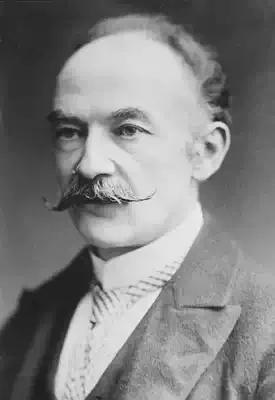
Thomas Hardy
The Caged Thrush Freed and Home Again (Villanelle)
The Caged Thrush Freed and Home Again (Villanelle)
"Men know but little more than we,
Who count us least of things terrene,
How happy days are made to be!
"Of such strange tidings what think ye,
O birds in brown that peck and preen?
Men know but little more than we!
"When I was borne from yonder tree
In bonds to them, I hoped to glean
How happy days are made to be,
"And want and wailing turned to glee;
Alas, despite their mighty mien
Men know but little more than we!
"They cannot change the Frost's decree,
They cannot keep the skies serene;
How happy days are made to be
"Eludes great Man's sagacity
No less than ours, O tribes in treen!
Men know but little more than we
How happy days are made to be."
"Men know but little more than we,
Who count us least of things terrene,
How happy days are made to be!
"Of such strange tidings what think ye,
O birds in brown that peck and preen?
Men know but little more than we!
"When I was borne from yonder tree
In bonds to them, I hoped to glean
How happy days are made to be,
"And want and wailing turned to glee;
Alas, despite their mighty mien
Men know but little more than we!
"They cannot change the Frost's decree,
They cannot keep the skies serene;
How happy days are made to be
"Eludes great Man's sagacity
No less than ours, O tribes in treen!
Men know but little more than we
How happy days are made to be."
190
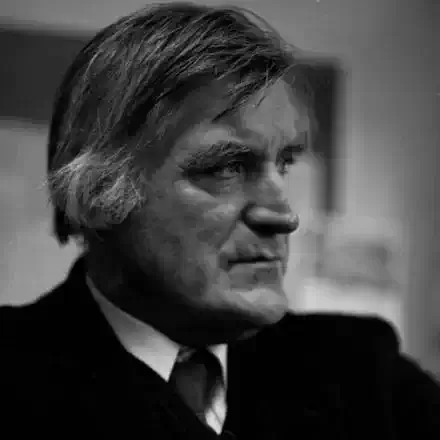
Ted Hughes
Macaw and Little Miss
Macaw and Little Miss
In a cage of wire-ribs
The size of a man's head, the macaw bristles in a staring
Combustion, suffers the stoking devils of his eyes.
In the old lady's parlour, where an aspidistra succumbs
To the musk of faded velvet, he hangs in clear flames,
Like a torturer's iron instrument preparing
With dense slow shudderings of greens, yellows, blues,
Crimsoning into the barbs:
Or like the smouldering head that hung
In Killdevil's brass kitchen, in irons, who had been
Volcano swearing to vomit the world away in black ash,
And would, one day; or a fugitive aristocrat
From some thunderous mythological hierarchy, caught
By a little boy with a crust and a bent pin,
Or snare of horsehair set for a song-thrush,
And put in a cage to sing.
The old lady who feeds him seeds
Has a grand-daughter. The girl calls him 'Poor Polly', pokes fun.
'Jolly Mop.' But lies under every full moon,
The spun glass of her body bared and so gleam-still
Her brimming eyes do not tremble or spill
The dream where the warrior comes, lightning and iron,
Smashing and burning and rending towards her loin:
Deep into her pillow her silence pleads.
All day he stares at his furnace
With eyes red-raw, but when she comes they close.
'Polly. Pretty Poll', she cajoles, and rocks him gently.
She caresses, whispers kisses. The blue lids stay shut.
She strikes the cage in a tantrum and swirls out:
Instantly beak, wings, talons crash
The bars in conflagration and frenzy,
And his shriek shakes the house.
In a cage of wire-ribs
The size of a man's head, the macaw bristles in a staring
Combustion, suffers the stoking devils of his eyes.
In the old lady's parlour, where an aspidistra succumbs
To the musk of faded velvet, he hangs in clear flames,
Like a torturer's iron instrument preparing
With dense slow shudderings of greens, yellows, blues,
Crimsoning into the barbs:
Or like the smouldering head that hung
In Killdevil's brass kitchen, in irons, who had been
Volcano swearing to vomit the world away in black ash,
And would, one day; or a fugitive aristocrat
From some thunderous mythological hierarchy, caught
By a little boy with a crust and a bent pin,
Or snare of horsehair set for a song-thrush,
And put in a cage to sing.
The old lady who feeds him seeds
Has a grand-daughter. The girl calls him 'Poor Polly', pokes fun.
'Jolly Mop.' But lies under every full moon,
The spun glass of her body bared and so gleam-still
Her brimming eyes do not tremble or spill
The dream where the warrior comes, lightning and iron,
Smashing and burning and rending towards her loin:
Deep into her pillow her silence pleads.
All day he stares at his furnace
With eyes red-raw, but when she comes they close.
'Polly. Pretty Poll', she cajoles, and rocks him gently.
She caresses, whispers kisses. The blue lids stay shut.
She strikes the cage in a tantrum and swirls out:
Instantly beak, wings, talons crash
The bars in conflagration and frenzy,
And his shriek shakes the house.
379

Siegfried Sassoon
Thrushes
Thrushes
Tossed on the glittering air they soar and skim,
Whose voices make the emptiness of light
A windy palace. Quavering from the brim
Of dawn, and bold with song at edge of night,
They clutch their leafy pinnacles and sing
Scornful of man, and from his toils aloof
Whose heart's a haunted woodland whispering;
Whose thoughts return on tempest-baffled wing;
Who hears the cry of God in everything,
And storms the gate of nothingness for proof.
Tossed on the glittering air they soar and skim,
Whose voices make the emptiness of light
A windy palace. Quavering from the brim
Of dawn, and bold with song at edge of night,
They clutch their leafy pinnacles and sing
Scornful of man, and from his toils aloof
Whose heart's a haunted woodland whispering;
Whose thoughts return on tempest-baffled wing;
Who hears the cry of God in everything,
And storms the gate of nothingness for proof.
89

Sarah Teasdale
Morning Song
Morning Song
A diamond of a morning
Waked me an hour too soon;
Dawn had taken in the stars
And left the faint white moon.
O white moon, you are lonely,
It is the same with me,
But we have the world to roam over,
Only the lonely are free.
A diamond of a morning
Waked me an hour too soon;
Dawn had taken in the stars
And left the faint white moon.
O white moon, you are lonely,
It is the same with me,
But we have the world to roam over,
Only the lonely are free.
468
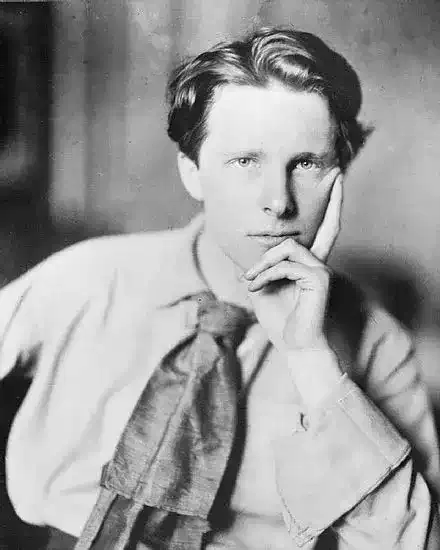
Rupert Brooke
Flight
Flight
Voices out of the shade that cried,
And long noon in the hot calm places,
And children's play by the wayside,
And country eyes, and quiet faces --
All these were round my steady paces.
Those that I could have loved went by me;
Cool gardened homes slept in the sun;
I heard the whisper of water nigh me,
Saw hands that beckoned, shone, were gone
In the green and gold. And I went on.
For if my echoing footfall slept,
Soon a far whispering there'd be
Of a little lonely wind that crept
From tree to tree, and distantly
Followed me, followed me. . . .
But the blue vaporous end of day
Brought peace, and pursuit baffled quite,
Where between pine-woods dipped the way.
I turned, slipped in and out of sight.
I trod as quiet as the night.
The pine-boles kept perpetual hush;
And in the boughs wind never swirled.
I found a flowering lowly bush,
And bowed, slid in, and sighed and curled,
Hidden at rest from all the world.
Safe! I was safe, and glad, I knew!
Yet -- with cold heart and cold wet brows
I lay. And the dark fell. . . . There grew
Meward a sound of shaken boughs;
And ceased, above my intricate house;
And silence, silence, silence found me. . . .
I felt the unfaltering movement creep
Among the leaves. They shed around me
Calm clouds of scent, that I did weep;
And stroked my face. I fell asleep.
Voices out of the shade that cried,
And long noon in the hot calm places,
And children's play by the wayside,
And country eyes, and quiet faces --
All these were round my steady paces.
Those that I could have loved went by me;
Cool gardened homes slept in the sun;
I heard the whisper of water nigh me,
Saw hands that beckoned, shone, were gone
In the green and gold. And I went on.
For if my echoing footfall slept,
Soon a far whispering there'd be
Of a little lonely wind that crept
From tree to tree, and distantly
Followed me, followed me. . . .
But the blue vaporous end of day
Brought peace, and pursuit baffled quite,
Where between pine-woods dipped the way.
I turned, slipped in and out of sight.
I trod as quiet as the night.
The pine-boles kept perpetual hush;
And in the boughs wind never swirled.
I found a flowering lowly bush,
And bowed, slid in, and sighed and curled,
Hidden at rest from all the world.
Safe! I was safe, and glad, I knew!
Yet -- with cold heart and cold wet brows
I lay. And the dark fell. . . . There grew
Meward a sound of shaken boughs;
And ceased, above my intricate house;
And silence, silence, silence found me. . . .
I felt the unfaltering movement creep
Among the leaves. They shed around me
Calm clouds of scent, that I did weep;
And stroked my face. I fell asleep.
192
Rupert Brooke
II: Safety
II: Safety
Dear! of all happy in the hour, most blest
He who has found our hid security,
Assured in the dark tides of the world that rest,
And heard our word, 'Who is so safe as we?'
We have found safety with all things undying,
The winds, and morning, tears of men and mirth,
The deep night, and birds singing, and clouds flying,
And sleep, and freedom, and the autumnal earth.
We have built a house that is not for Time's throwing.
We have gained a peace unshaken by pain for ever.
War knows no power. Safe shall be my going,
Secretly armed against all death's endeavour;
Safe though all safety's lost; safe where men fall;
And if these poor limbs die, safest of all.
Dear! of all happy in the hour, most blest
He who has found our hid security,
Assured in the dark tides of the world that rest,
And heard our word, 'Who is so safe as we?'
We have found safety with all things undying,
The winds, and morning, tears of men and mirth,
The deep night, and birds singing, and clouds flying,
And sleep, and freedom, and the autumnal earth.
We have built a house that is not for Time's throwing.
We have gained a peace unshaken by pain for ever.
War knows no power. Safe shall be my going,
Secretly armed against all death's endeavour;
Safe though all safety's lost; safe where men fall;
And if these poor limbs die, safest of all.
171
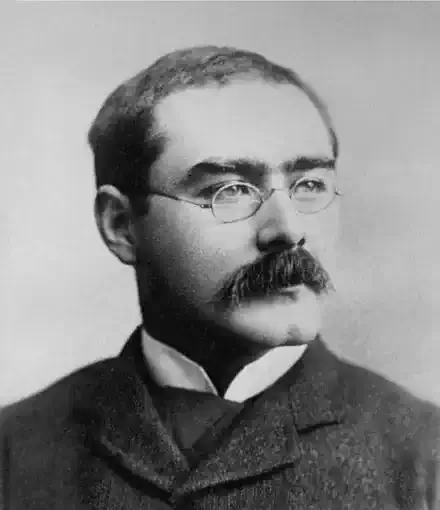
Rudyard Kipling
Toomai of the Elephants
Toomai of the Elephants
I will remember what I was. I am sick of rope and chain--
I will remember my old strength and all my forest-affairs.
I will not sell my back to man for a bundle of sugarcane.
I will go out to my own kind, and the wood-folk in their lairs.
I will go out until the day, until the morning break,
Out to the winds 'untainted kiss, the waters' clean caress.
I will forget my ankle-ring and snap my picket-stake.
I will revisit my lost loves, and playmates masterless!
I will remember what I was. I am sick of rope and chain--
I will remember my old strength and all my forest-affairs.
I will not sell my back to man for a bundle of sugarcane.
I will go out to my own kind, and the wood-folk in their lairs.
I will go out until the day, until the morning break,
Out to the winds 'untainted kiss, the waters' clean caress.
I will forget my ankle-ring and snap my picket-stake.
I will revisit my lost loves, and playmates masterless!
529
Rudyard Kipling
The Virginity
The Virginity
Try as he will, no man breaks wholly loose
From his first love, no matter who she be.
Oh, was there ever sailor free to choose,
That didn't settle somewhere near the sea?
Myself, it don't excite me nor amuse
To watch a pack o' shipping on the sea;
But I can understand my neighbour's views
From certain things which have occured to me.
Men must keep touch with things they used to use
To earn their living, even when they are free;
And so come back upon the least excuse --
Same as the sailor settled near the sea.
He knows he's never going on no cruise --
He knows he's done and finished with the sea;
And yet he likes to feel she's there to use --
If he should ask her -- as she used to be.
Even though she cost him all he had to lose,
Even though she made him sick to hear or see,
Still, what she left of him will mostly choose
Her skirts to sit by. How comes such to be?
Parsons in pulpits, tax-payers in pews,
Kings on your thrones, you know as well as me,
We've only one virginity to lose,
And where we lost it there our hearts will be!
Try as he will, no man breaks wholly loose
From his first love, no matter who she be.
Oh, was there ever sailor free to choose,
That didn't settle somewhere near the sea?
Myself, it don't excite me nor amuse
To watch a pack o' shipping on the sea;
But I can understand my neighbour's views
From certain things which have occured to me.
Men must keep touch with things they used to use
To earn their living, even when they are free;
And so come back upon the least excuse --
Same as the sailor settled near the sea.
He knows he's never going on no cruise --
He knows he's done and finished with the sea;
And yet he likes to feel she's there to use --
If he should ask her -- as she used to be.
Even though she cost him all he had to lose,
Even though she made him sick to hear or see,
Still, what she left of him will mostly choose
Her skirts to sit by. How comes such to be?
Parsons in pulpits, tax-payers in pews,
Kings on your thrones, you know as well as me,
We've only one virginity to lose,
And where we lost it there our hearts will be!
445
Rudyard Kipling
The Reeds of Runnymede
The Reeds of Runnymede
Magna Charta, June ,
At Runnymede, At Runnymede,
What say the reeds at Runnymede?
The lissom reeds that give and take,
That bend so far, but never break,
They keep the sleepy Thames awake
With tales of John at Runnymede.
At Runnymede, at Runnymede,
Oh, hear the reeds at Runnymede:--
"You mustn't sell, delay, deny,
A freeman's right or liberty.
It makes the stubborn Englishry,
We saw 'em roused at Runnymede!
"When through our ranks the Barons came,
With little thought of praise or blame,
But resolute to pay a game,
They lumbered up to Runnymede;
And there they launched in solid time
The first attack on Right Divine--
The curt, uncompromising 'Sign!'
That settled John at Runnymede.
"At Runnymede, at Runnymede,
Your rights were won at Runnymede!
No freeman shall be fined or bound,
Or dispossessed or freehold ground,
Except by lawful judgment found
And passed upon him by his peers.
Forget not, after all these years,
The Charter Signed at Runnymede."
And still when Mob or Monarch lays
Too rude hand on English ways,
The whisper wakes, the shudder plays,
Across the reeds at Runnymede.
And Tames, that knows the moods of kings,
And crowds and priests and suchlike things,
Rolls deep and dreadful as he brings
Their warning down from Runnymede!
Magna Charta, June ,
At Runnymede, At Runnymede,
What say the reeds at Runnymede?
The lissom reeds that give and take,
That bend so far, but never break,
They keep the sleepy Thames awake
With tales of John at Runnymede.
At Runnymede, at Runnymede,
Oh, hear the reeds at Runnymede:--
"You mustn't sell, delay, deny,
A freeman's right or liberty.
It makes the stubborn Englishry,
We saw 'em roused at Runnymede!
"When through our ranks the Barons came,
With little thought of praise or blame,
But resolute to pay a game,
They lumbered up to Runnymede;
And there they launched in solid time
The first attack on Right Divine--
The curt, uncompromising 'Sign!'
That settled John at Runnymede.
"At Runnymede, at Runnymede,
Your rights were won at Runnymede!
No freeman shall be fined or bound,
Or dispossessed or freehold ground,
Except by lawful judgment found
And passed upon him by his peers.
Forget not, after all these years,
The Charter Signed at Runnymede."
And still when Mob or Monarch lays
Too rude hand on English ways,
The whisper wakes, the shudder plays,
Across the reeds at Runnymede.
And Tames, that knows the moods of kings,
And crowds and priests and suchlike things,
Rolls deep and dreadful as he brings
Their warning down from Runnymede!
507
Rudyard Kipling
The Old Issue
The Old Issue
October , -- Outbreak of Boer War
Here is nothing new nor aught unproven," say the Trumpets,
"Many feet have worn it and the road is old indeed.
"It is the King--the King we schooled aforetime! "
(Trumpets in the marshes-in the eyot at Runnymede!)
"Here is neither haste, nor hate, nor anger," peal the Trumpets,
"Pardon for his penitence or pity for his fall.
"It is the King!"--inexorable Trumpets--
(Trumpets round the scaffold af the dawning by Whitehall!)
. . . . . . .
"He hath veiled the Crown And hid the Scepter," warn (he Trum pets,
"He hath changed the fashion of the lies that cloak his will.
"Hard die the Kings--ah hard--dooms hard!" declare the Trumpets,
Trumpets at the gang-plank where the brawling troop-decks fill!
Ancient and Unteachable, abide--abide the Trumpets!
Once again the Trumpets, for the shuddering ground-swell brings
Clamour over ocean of the harsh, pursuing Trumpets--
Trumpets of the Vanguard that have sworn no truce with Kings!
All we have of freedom, all we use or know--
This our fathers bought for us long and long ago.
Ancient Right unnoticed as the breath we draw--
Leave to live by no man's leave, underneath the Law.
Lance and torch and tumult, steel and grey-goose wing
Wrenched it, inch and ell and all, slowly from the king.
Till our fathers 'stablished,, after bloody years,
How our King is one with us, first among his peers.
So they bought us freedom-not at little cost--
Wherefore must we watch the King, lest our gain be lost.
Over all things certain, this is sure indeed,
Suffer not the old King: for we know the breed.
Give no ear to bondsmen bidding us endure.
Whining "He is weak and far"; crying "Time will cure."
(Time himself is witness, till the battle joins,
Deeper strikes the rottenness in the people's loins.)
Give no heed to bondsmen masking war with peace.
Suffer not the old King here or overseas.
They that beg us barter--wait his yielding mood--
Pledge the years we hold in trust-pawn our brother's blood--
Howso' great their clamour, whatsoe'er their claim,
Suffer not the old King under any name!
Here is naught unproven--here is naught to learn.
It is written what shall fall if the King return.
He shall mark our goings, question whence we came,
Set his guards about us, as in Freedom's name.
He shall take a tribute, toll of all our ware;
He shall change our gold for arms--arms we may not bear.
He shall break his Judges if they cross his word;
He shall rule above the Law calling on the Lord.
He shall peep and mutter; and the night shall bring
Watchers 'neath our window, lest we mock the King --
Hate and all division; hosts of hurrying spies;
Money poured in secret, carrion breeding flies.
Strangers of his counsel, hirelings of his pay,
These shall deal our Justice: sell-deny-delay.
We shall drink dishonour, we shall eat abuse
For the Land we look to--for the Tongue we use.
We shall take our station, dirt beneath his feet,
While his hired captains jeer us in the street.
Cruel in the shadow, crafty in the sun,
Far beyond his borders shall his teachings run.
Sloven, sullen, savage, secret, uncontrolled,
Laying on a new land evil of the old--
Long-forgotten bondage, dwarfing heart and brain--
All our fathers died to loose he shall bind again.
Here is nought at venture, random nor untrue
Swings the wheel full-circle, brims the cup anew.
Here is naught unproven, here is nothing hid:
Step for step and word for word--so the old Kings did!
Step by step, and word by word: who is ruled may read.
Suffer not the old Kings: for we know the breed--
All the right they promise--all the wrong they bring.
Stewards of the Judgment, suffer not this King!
October , -- Outbreak of Boer War
Here is nothing new nor aught unproven," say the Trumpets,
"Many feet have worn it and the road is old indeed.
"It is the King--the King we schooled aforetime! "
(Trumpets in the marshes-in the eyot at Runnymede!)
"Here is neither haste, nor hate, nor anger," peal the Trumpets,
"Pardon for his penitence or pity for his fall.
"It is the King!"--inexorable Trumpets--
(Trumpets round the scaffold af the dawning by Whitehall!)
. . . . . . .
"He hath veiled the Crown And hid the Scepter," warn (he Trum pets,
"He hath changed the fashion of the lies that cloak his will.
"Hard die the Kings--ah hard--dooms hard!" declare the Trumpets,
Trumpets at the gang-plank where the brawling troop-decks fill!
Ancient and Unteachable, abide--abide the Trumpets!
Once again the Trumpets, for the shuddering ground-swell brings
Clamour over ocean of the harsh, pursuing Trumpets--
Trumpets of the Vanguard that have sworn no truce with Kings!
All we have of freedom, all we use or know--
This our fathers bought for us long and long ago.
Ancient Right unnoticed as the breath we draw--
Leave to live by no man's leave, underneath the Law.
Lance and torch and tumult, steel and grey-goose wing
Wrenched it, inch and ell and all, slowly from the king.
Till our fathers 'stablished,, after bloody years,
How our King is one with us, first among his peers.
So they bought us freedom-not at little cost--
Wherefore must we watch the King, lest our gain be lost.
Over all things certain, this is sure indeed,
Suffer not the old King: for we know the breed.
Give no ear to bondsmen bidding us endure.
Whining "He is weak and far"; crying "Time will cure."
(Time himself is witness, till the battle joins,
Deeper strikes the rottenness in the people's loins.)
Give no heed to bondsmen masking war with peace.
Suffer not the old King here or overseas.
They that beg us barter--wait his yielding mood--
Pledge the years we hold in trust-pawn our brother's blood--
Howso' great their clamour, whatsoe'er their claim,
Suffer not the old King under any name!
Here is naught unproven--here is naught to learn.
It is written what shall fall if the King return.
He shall mark our goings, question whence we came,
Set his guards about us, as in Freedom's name.
He shall take a tribute, toll of all our ware;
He shall change our gold for arms--arms we may not bear.
He shall break his Judges if they cross his word;
He shall rule above the Law calling on the Lord.
He shall peep and mutter; and the night shall bring
Watchers 'neath our window, lest we mock the King --
Hate and all division; hosts of hurrying spies;
Money poured in secret, carrion breeding flies.
Strangers of his counsel, hirelings of his pay,
These shall deal our Justice: sell-deny-delay.
We shall drink dishonour, we shall eat abuse
For the Land we look to--for the Tongue we use.
We shall take our station, dirt beneath his feet,
While his hired captains jeer us in the street.
Cruel in the shadow, crafty in the sun,
Far beyond his borders shall his teachings run.
Sloven, sullen, savage, secret, uncontrolled,
Laying on a new land evil of the old--
Long-forgotten bondage, dwarfing heart and brain--
All our fathers died to loose he shall bind again.
Here is nought at venture, random nor untrue
Swings the wheel full-circle, brims the cup anew.
Here is naught unproven, here is nothing hid:
Step for step and word for word--so the old Kings did!
Step by step, and word by word: who is ruled may read.
Suffer not the old Kings: for we know the breed--
All the right they promise--all the wrong they bring.
Stewards of the Judgment, suffer not this King!
470
Rudyard Kipling
The Greek National Anthem
The Greek National Anthem
We knew thee of old,
Oh divinely restored,
By the light of thine eyes
And the light of thy Sword.
From the graves of our slain
Shall thy valour prevail
As we greet thee again --
Hail, Liberty! Hail!
Long time didst thou dwell
Mid the peoples that mourn,
Awaiting some voice
That should bid thee return.
Ah, slow broke that day
And no man dared call,
For the shadow of tyranny
Lay over all:
And we saw thee sad-eyed,
The tears on thy cheeks
While thy raiment was dyed
In the blood of the Greeks.
Yet, behold now thy sons
With impetuous breath
Go forth to the fight
Seeking Freedom or Death.
From the graves of our slain
Shall thy valour prevail
As we greet thee again
Hail, Liberty! Hail!
We knew thee of old,
Oh divinely restored,
By the light of thine eyes
And the light of thy Sword.
From the graves of our slain
Shall thy valour prevail
As we greet thee again --
Hail, Liberty! Hail!
Long time didst thou dwell
Mid the peoples that mourn,
Awaiting some voice
That should bid thee return.
Ah, slow broke that day
And no man dared call,
For the shadow of tyranny
Lay over all:
And we saw thee sad-eyed,
The tears on thy cheeks
While thy raiment was dyed
In the blood of the Greeks.
Yet, behold now thy sons
With impetuous breath
Go forth to the fight
Seeking Freedom or Death.
From the graves of our slain
Shall thy valour prevail
As we greet thee again
Hail, Liberty! Hail!
422
Rudyard Kipling
The First Chantey
The First Chantey
Mine was the woman to me, darkling I found her;
Haling her dumb from the camp, took her and bound her.
Hot rose her tribe on our track ere I had proved her;
Hearing her laugh in the gloom, greatly I loved her.
Swift through the forest we ran; none stood to guard us,
Few were my people and far; then the flood barred us --
Him we call Son of the Sea, sullen and swollen.
Panting we waited the death, stealer and stolen.
Yet ere they came to my lance laid for the slaughter,
Lightly she leaped to a log lapped in the water;
Holding on high and apart skins that arrayed her,
Called she the God of the Wind that He should aid her.
Life had the tree at that word (Praise we the Giver!)
Otter-like left he the bank for the full river.
Far fell their axes behind, flashing and ringing,
Wonder was on me and fear -- yet she was singing!
Low lay the land we had left. Now the blue bound us,
Even the Floor of the Gods level around us.
Whisper there was not, nor word, shadow nor showing,
Till the light stirred on the deep, glowing and growing.
Then did He leap to His place flaring from under,
He the Compeller, the Sun, bared to our wonder.
Nay, not a league from our eyes blinded with gazing,
Cleared He the gate of the world, huge and amazing!
This we beheld (and we live) -- the Pit of the Burning!
Then the God spoke to the tree for our returning;
Back to the beach of our flight, fearless and slowly,
Back to our slayers went he: but we were holy.
Men that were hot in that hunt, women that followed,
Babes that were promised our bones, trembled and wallowed:
Over the necks of the Tribe crouching and fawning --
Prophet and priestess we came back from the dawning!
Mine was the woman to me, darkling I found her;
Haling her dumb from the camp, took her and bound her.
Hot rose her tribe on our track ere I had proved her;
Hearing her laugh in the gloom, greatly I loved her.
Swift through the forest we ran; none stood to guard us,
Few were my people and far; then the flood barred us --
Him we call Son of the Sea, sullen and swollen.
Panting we waited the death, stealer and stolen.
Yet ere they came to my lance laid for the slaughter,
Lightly she leaped to a log lapped in the water;
Holding on high and apart skins that arrayed her,
Called she the God of the Wind that He should aid her.
Life had the tree at that word (Praise we the Giver!)
Otter-like left he the bank for the full river.
Far fell their axes behind, flashing and ringing,
Wonder was on me and fear -- yet she was singing!
Low lay the land we had left. Now the blue bound us,
Even the Floor of the Gods level around us.
Whisper there was not, nor word, shadow nor showing,
Till the light stirred on the deep, glowing and growing.
Then did He leap to His place flaring from under,
He the Compeller, the Sun, bared to our wonder.
Nay, not a league from our eyes blinded with gazing,
Cleared He the gate of the world, huge and amazing!
This we beheld (and we live) -- the Pit of the Burning!
Then the God spoke to the tree for our returning;
Back to the beach of our flight, fearless and slowly,
Back to our slayers went he: but we were holy.
Men that were hot in that hunt, women that followed,
Babes that were promised our bones, trembled and wallowed:
Over the necks of the Tribe crouching and fawning --
Prophet and priestess we came back from the dawning!
409
Rudyard Kipling
Poseidon's Law
Poseidon's Law
When the robust and Brass-bound Man commissioned first for sea
His fragile raft, Poseidon laughed, and "Mariner," said he,
"Behold, a Law immutable I lay on thee and thine,
That never shall ye act or tell a falsehood at my shrine.
"Let Zeus adjudge your landward kin whose votive meal and sale
At easy-cheated altars win oblivion for the fault,
But you the unhoodwinked wave shall test--the immediate gulf condemn--
Except ye owe the Fates a jest, be slow to jest with them.
Ye shall not clear by Greekly speech, nor cozen from your path
The twinkling shoal, the leeward beach, or Hadria's white-lipped wrath;
Nor tempt with painted cloth for wood my fraud-avenging hosts;
Nor make at all, or all make good, your bulwarks and your boasts.
Now and henceforward serve unshod, through wet and wakeful shifts,
A present and oppressive God, but take, to aid, my gifts--
The wide and windward-opening eye, the large and lavish hand,
The soul that cannot tell a lie--except upon the land!"
In dromond and in catafract--wet, wakeful, windward-eyed--
He kept Poseidon's Law intact (his ship and freight beside),
But, once discharged the dromond's hold, the bireme beached once more,
Splendaciously mendacious rolled the Brass-bound Man ashore....
The thranite now and thalamite are pressures low and high,
And where three hundred blades bit white the twin-propellers ply.
The God that hailed, the keel that sailed are changed beyond recall,
But the robust and Brass-bound Man he is not changed at all!
From Punt returned, from Phormio's Fleet, from Javan and Gadire,
He strongly occupies the seat about the tavern fire,
And, moist with much Falernian or smoked Massilian juice,
Revenges there the Brass-bound Man his long-enforced truce!
When the robust and Brass-bound Man commissioned first for sea
His fragile raft, Poseidon laughed, and "Mariner," said he,
"Behold, a Law immutable I lay on thee and thine,
That never shall ye act or tell a falsehood at my shrine.
"Let Zeus adjudge your landward kin whose votive meal and sale
At easy-cheated altars win oblivion for the fault,
But you the unhoodwinked wave shall test--the immediate gulf condemn--
Except ye owe the Fates a jest, be slow to jest with them.
Ye shall not clear by Greekly speech, nor cozen from your path
The twinkling shoal, the leeward beach, or Hadria's white-lipped wrath;
Nor tempt with painted cloth for wood my fraud-avenging hosts;
Nor make at all, or all make good, your bulwarks and your boasts.
Now and henceforward serve unshod, through wet and wakeful shifts,
A present and oppressive God, but take, to aid, my gifts--
The wide and windward-opening eye, the large and lavish hand,
The soul that cannot tell a lie--except upon the land!"
In dromond and in catafract--wet, wakeful, windward-eyed--
He kept Poseidon's Law intact (his ship and freight beside),
But, once discharged the dromond's hold, the bireme beached once more,
Splendaciously mendacious rolled the Brass-bound Man ashore....
The thranite now and thalamite are pressures low and high,
And where three hundred blades bit white the twin-propellers ply.
The God that hailed, the keel that sailed are changed beyond recall,
But the robust and Brass-bound Man he is not changed at all!
From Punt returned, from Phormio's Fleet, from Javan and Gadire,
He strongly occupies the seat about the tavern fire,
And, moist with much Falernian or smoked Massilian juice,
Revenges there the Brass-bound Man his long-enforced truce!
450
Rudyard Kipling
Chant-Pagan
Chant-Pagan
ENGLISH IRREGULAR, DISCHARGED
Me that 'ave been what I've been --
Me that 'ave gone where I've gone --
Me that 'ave seen what I've seen --
'Ow can I ever take on
With awful old England again,
An' 'ouses both sides of the street,
And 'edges two sides of the lane,
And the parson an' gentry between,
An' touchin' my 'at when we meet --
Me that 'ave been what I've been?
Me that 'ave watched 'arf a world
'Eave up all shiny with dew,
Kopje on kop to the sun,
An' as soon as the mist let 'em through
Our 'elios winkin' like fun --
Three sides of a ninety-mile square,
Over valleys as big as a shire --
"Are ye there? Are ye there? Are ye there?"
An' then the blind drum of our fire . . .
An' I'm rollin' 'is lawns for the Squire,
Me!
Me htat 'ave rode through the dark
Forty mile, often, on end,
Along the Ma'ollisberg Range,
With only the stars for my mark
An' only the night for my friend,
An' things runnin' off as you pass,
An' things jumpin' up in the grass,
An' the silence, the shine an' the size
Of the 'igh, unexpressible skies --
I am takin' some letters almost
As much as a mile to the post,
An' "mind you come back with the change!"
Me!
Me that saw Barberton took
When we dropped through the clouds on their 'ead,
An' they 'ove the guns over and fled --
Me that was through Di'mond I'll,
An' Pieters an' Springs an' Belfast --
From Dundee to Vereeniging all --
Me that stuck out to the last
(An' five bloomin' bars on my chest) --
I am doin' my Sunday-school best,
By the 'elp of the Squire an' 'is wife
(Not to mention the 'ousemaid an' cook),
To come in an' 'ands up an' be still,
An' honestly work for my bread,
My livin' in that state of life
To which it shall please God to call
Me!
Me that 'ave followed my trade
In the place where the Lightnin's are made;
"Twixt the Rains and the Sun and the Moon --
Me that lay down an' got up
Three years with the sky for my roof --
That 'ave ridden my 'unger an' thirst
Six thousand raw mile on the hoof,
With the Vaal and the Orange for cup,
An' the Brandwater Basin for dish, --
Oh! it's 'ard to be'ave as they wish
(Too 'ard, an' a little too soon),
I'll 'ave to think over it first --
Me!
I will arise an' get 'ence --
I will trek South and make sure
If it's only my fancy or not
That the sunshine of England is pale,
And the breezes of England are stale,
An' there's something' gone small with the lot.
For I know of a sun an' a wind,
An' some plains and a mountain be'ind,
An' some graves by a barb-wire fence,
An' a Dutchman I've fought 'oo might give
Me a job where I ever inclined
To look in an' offsaddle an' live
Where there's neither a road nor a tree --
But only my Maker an' me,
An I think it will kill me or cure,
So I think I will go there an' see.
ENGLISH IRREGULAR, DISCHARGED
Me that 'ave been what I've been --
Me that 'ave gone where I've gone --
Me that 'ave seen what I've seen --
'Ow can I ever take on
With awful old England again,
An' 'ouses both sides of the street,
And 'edges two sides of the lane,
And the parson an' gentry between,
An' touchin' my 'at when we meet --
Me that 'ave been what I've been?
Me that 'ave watched 'arf a world
'Eave up all shiny with dew,
Kopje on kop to the sun,
An' as soon as the mist let 'em through
Our 'elios winkin' like fun --
Three sides of a ninety-mile square,
Over valleys as big as a shire --
"Are ye there? Are ye there? Are ye there?"
An' then the blind drum of our fire . . .
An' I'm rollin' 'is lawns for the Squire,
Me!
Me htat 'ave rode through the dark
Forty mile, often, on end,
Along the Ma'ollisberg Range,
With only the stars for my mark
An' only the night for my friend,
An' things runnin' off as you pass,
An' things jumpin' up in the grass,
An' the silence, the shine an' the size
Of the 'igh, unexpressible skies --
I am takin' some letters almost
As much as a mile to the post,
An' "mind you come back with the change!"
Me!
Me that saw Barberton took
When we dropped through the clouds on their 'ead,
An' they 'ove the guns over and fled --
Me that was through Di'mond I'll,
An' Pieters an' Springs an' Belfast --
From Dundee to Vereeniging all --
Me that stuck out to the last
(An' five bloomin' bars on my chest) --
I am doin' my Sunday-school best,
By the 'elp of the Squire an' 'is wife
(Not to mention the 'ousemaid an' cook),
To come in an' 'ands up an' be still,
An' honestly work for my bread,
My livin' in that state of life
To which it shall please God to call
Me!
Me that 'ave followed my trade
In the place where the Lightnin's are made;
"Twixt the Rains and the Sun and the Moon --
Me that lay down an' got up
Three years with the sky for my roof --
That 'ave ridden my 'unger an' thirst
Six thousand raw mile on the hoof,
With the Vaal and the Orange for cup,
An' the Brandwater Basin for dish, --
Oh! it's 'ard to be'ave as they wish
(Too 'ard, an' a little too soon),
I'll 'ave to think over it first --
Me!
I will arise an' get 'ence --
I will trek South and make sure
If it's only my fancy or not
That the sunshine of England is pale,
And the breezes of England are stale,
An' there's something' gone small with the lot.
For I know of a sun an' a wind,
An' some plains and a mountain be'ind,
An' some graves by a barb-wire fence,
An' a Dutchman I've fought 'oo might give
Me a job where I ever inclined
To look in an' offsaddle an' live
Where there's neither a road nor a tree --
But only my Maker an' me,
An I think it will kill me or cure,
So I think I will go there an' see.
497
Rudyard Kipling
A Child's Garden
A Child's Garden
R. L. Stevenson
Now there is nothing wrong with me
Except -- I think it's called T.B.
And that is why I have to lay
Out in the garden all the day.
Our garden is not very wide
And cars go by on either side,
And make an angry-hooty noise
That rather startles little boys.
But worst of all is when they take
Me out in cars that growl and shake,
With charabancs so dreadful-near
I have to shut my eyes for fear.
But when I'm on my back again,
I watch the Croydon aeroplane
That flies across to France, and sings
Like hitting thick piano-strings.
When I am strong enough to do
The things I'm truly wishful to,
I'll never use a car or train
But always have an aeroplane;
And just go zooming round and round,
And frighten Nursey with the sound,
And see the angel-side of clouds,
And spit on all those motor-crowds!
R. L. Stevenson
Now there is nothing wrong with me
Except -- I think it's called T.B.
And that is why I have to lay
Out in the garden all the day.
Our garden is not very wide
And cars go by on either side,
And make an angry-hooty noise
That rather startles little boys.
But worst of all is when they take
Me out in cars that growl and shake,
With charabancs so dreadful-near
I have to shut my eyes for fear.
But when I'm on my back again,
I watch the Croydon aeroplane
That flies across to France, and sings
Like hitting thick piano-strings.
When I am strong enough to do
The things I'm truly wishful to,
I'll never use a car or train
But always have an aeroplane;
And just go zooming round and round,
And frighten Nursey with the sound,
And see the angel-side of clouds,
And spit on all those motor-crowds!
547
Rudyard Kipling
For All We Have and Are
"For All We Have and Are"
For all we have and are,
For all our children's fate,
Stand up and meet the war.
The Hun is at the gate!
Our world has passed away
In wantonness o'erthrown.
There is nothing left to-day
But steel and fire and stone.
Though all we knew depart,
The old commandments stand:
"In courage keep your heart,
In strength lift up your hand."
Once more we hear the word
That sickened earth of old:
"No law except the sword
Unsheathed and uncontrolled,"
Once more it knits mankind,
Once more the nations go
To meet and break and bind
A crazed and driven foe.
Comfort, content, delight --
The ages' slow-bought gain --
They shrivelled in a night,
Only ourselves remain
To face the naked days
In silent fortitude,
Through perils and dismays
Renewd and re-renewed.
Though all we made depart,
The old commandments stand:
"In patience keep your heart,
In strength lift up your hand."
No easy hopes or lies
Shall bring us to our goal,
But iron sacrifice
Of body, will, and soul.
There is but one task for all --
For each one life to give.
Who stands if freedom fall?
Who dies if England live?
For all we have and are,
For all our children's fate,
Stand up and meet the war.
The Hun is at the gate!
Our world has passed away
In wantonness o'erthrown.
There is nothing left to-day
But steel and fire and stone.
Though all we knew depart,
The old commandments stand:
"In courage keep your heart,
In strength lift up your hand."
Once more we hear the word
That sickened earth of old:
"No law except the sword
Unsheathed and uncontrolled,"
Once more it knits mankind,
Once more the nations go
To meet and break and bind
A crazed and driven foe.
Comfort, content, delight --
The ages' slow-bought gain --
They shrivelled in a night,
Only ourselves remain
To face the naked days
In silent fortitude,
Through perils and dismays
Renewd and re-renewed.
Though all we made depart,
The old commandments stand:
"In patience keep your heart,
In strength lift up your hand."
No easy hopes or lies
Shall bring us to our goal,
But iron sacrifice
Of body, will, and soul.
There is but one task for all --
For each one life to give.
Who stands if freedom fall?
Who dies if England live?
463

Robert W. Service
Wheels
Wheels
Since I am sick of Wheels
That jar my day,
Unto the hush that heals
I steal away.
Unto the core of Peace
Nature reveals,
I go to win release
From Wheels.
Let me beneath the moon
Take desert trail;
Or on some lost lagoon
Serenely sail;
Win to some peak the grey
Storm cloud conceals . . .
Life, let me get away
From Wheels!
Why was I born so late?
A skin-clad man
I should have shared the fate
Of mountain clan;
My quiet flock beside,
When silence steals,
Unshocked in eventide
By Wheels.
The Wheel is King today,
And speed's a god;
Yet when I see the way
My feet have trod,
Like pilgrims who to shrine
Of Beauty kneels,
I pray: O Peace divine
Damn Wheels!
Since I am sick of Wheels
That jar my day,
Unto the hush that heals
I steal away.
Unto the core of Peace
Nature reveals,
I go to win release
From Wheels.
Let me beneath the moon
Take desert trail;
Or on some lost lagoon
Serenely sail;
Win to some peak the grey
Storm cloud conceals . . .
Life, let me get away
From Wheels!
Why was I born so late?
A skin-clad man
I should have shared the fate
Of mountain clan;
My quiet flock beside,
When silence steals,
Unshocked in eventide
By Wheels.
The Wheel is King today,
And speed's a god;
Yet when I see the way
My feet have trod,
Like pilgrims who to shrine
Of Beauty kneels,
I pray: O Peace divine
Damn Wheels!
220
Robert W. Service
The Wildy Ones
The Wildy Ones
The sheep are in the silver wood,
The cows are in the broom;
The goats are in the wild mountain
And won't be home by noon.
My mother sang that olden tune
Most every night,
And to her newest she would croon
By candle light;
While cuddling in the velvet gloom
I'd dream of cows
That sought each dawn 'mid golden broom
To gently browse.
Or I would glimpse the silver wood,
The birchen glade,
Where pearly sheep in quiet mood
Cropped unafraid;
But how I loved in lapsing drowse
The mountain wild!
The goats were more than sheep and cows
To one wee child.
For cows and sheep are shelter-wise,
And love the lea;
While goats have starlight in their eyes,
In cragland free . . .
And now on edge of endless sleep
Wryly I note
How less I'm kin to kine and sheep
Than rebel goat!
The sheep are in the silver wood,
The cows are in the broom;
The goats are in the wild mountain
And won't be home by noon.
My mother sang that olden tune
Most every night,
And to her newest she would croon
By candle light;
While cuddling in the velvet gloom
I'd dream of cows
That sought each dawn 'mid golden broom
To gently browse.
Or I would glimpse the silver wood,
The birchen glade,
Where pearly sheep in quiet mood
Cropped unafraid;
But how I loved in lapsing drowse
The mountain wild!
The goats were more than sheep and cows
To one wee child.
For cows and sheep are shelter-wise,
And love the lea;
While goats have starlight in their eyes,
In cragland free . . .
And now on edge of endless sleep
Wryly I note
How less I'm kin to kine and sheep
Than rebel goat!
207
Robert W. Service
The Walkers
The Walkers
(He speaks.)
Walking, walking, oh, the joy of walking!
Swinging down the tawny lanes with head held high;
Striding up the green hills, through the heather stalking,
Swishing through the woodlands where the brown leaves lie;
Marveling at all things -- windmills gaily turning,
Apples for the cider-press, ruby-hued and gold;
Tails of rabbits twinkling, scarlet berries burning,
Wedge of geese high-flying in the sky's clear cold,
Light in little windows, field and furrow darkling;
Home again returning, hungry as a hawk;
Whistling up the garden, ruddy-cheeked and sparkling,
Oh, but I am happy as I walk, walk, walk!
(She speaks.)
Walking, walking, oh, the curse of walking!
Slouching round the grim square, shuffling up the street,
Slinking down the by-way, all my graces hawking,
Offering my body to each man I meet.
Peering in the gin-shop where the lads are drinking,
Trying to look gay-like, crazy with the blues;
Halting in a doorway, shuddering and shrinking
(Oh, my draggled feather and my thin, wet shoes).
Here's a drunken drover: "Hullo, there, old dearie!"
No, he only curses, can't be got to talk. . . .
On and on till daylight, famished, wet and weary,
God in Heaven help me as I walk, walk, walk!
(He speaks.)
Walking, walking, oh, the joy of walking!
Swinging down the tawny lanes with head held high;
Striding up the green hills, through the heather stalking,
Swishing through the woodlands where the brown leaves lie;
Marveling at all things -- windmills gaily turning,
Apples for the cider-press, ruby-hued and gold;
Tails of rabbits twinkling, scarlet berries burning,
Wedge of geese high-flying in the sky's clear cold,
Light in little windows, field and furrow darkling;
Home again returning, hungry as a hawk;
Whistling up the garden, ruddy-cheeked and sparkling,
Oh, but I am happy as I walk, walk, walk!
(She speaks.)
Walking, walking, oh, the curse of walking!
Slouching round the grim square, shuffling up the street,
Slinking down the by-way, all my graces hawking,
Offering my body to each man I meet.
Peering in the gin-shop where the lads are drinking,
Trying to look gay-like, crazy with the blues;
Halting in a doorway, shuddering and shrinking
(Oh, my draggled feather and my thin, wet shoes).
Here's a drunken drover: "Hullo, there, old dearie!"
No, he only curses, can't be got to talk. . . .
On and on till daylight, famished, wet and weary,
God in Heaven help me as I walk, walk, walk!
281
Robert W. Service
The Silent Ones
The Silent Ones
I'm just an ordinary chap
Who comes home to his tea,
And mostly I don't care a rap
What people think of me;
I do my job and take my pay,
And love of peace expound;
But as I go my patient way,
--Don't push me round.
Though I respect authority
And order never flout,
When Law and Justice disagree
You can include me out.
The Welfare State I tolerate
If it is kept in bound,
But if you wish to rouse my hate
--Just push me round.
And that's the way with lots of us:
We want to feel we're free;
So labour governments we cuss
And mock at monarchy.
Yea, we are men of secret mirth,
And fury seldom sound;
But if you value peace on earth
--Don't push us round.
I'm just an ordinary chap
Who comes home to his tea,
And mostly I don't care a rap
What people think of me;
I do my job and take my pay,
And love of peace expound;
But as I go my patient way,
--Don't push me round.
Though I respect authority
And order never flout,
When Law and Justice disagree
You can include me out.
The Welfare State I tolerate
If it is kept in bound,
But if you wish to rouse my hate
--Just push me round.
And that's the way with lots of us:
We want to feel we're free;
So labour governments we cuss
And mock at monarchy.
Yea, we are men of secret mirth,
And fury seldom sound;
But if you value peace on earth
--Don't push us round.
216
Robert W. Service
The Rover
The Rover
Oh, how good it is to be
Foot-loose and heart-free!
Just my dog and pipe and I, underneath the vast sky;
Trail to try and goal to win, white road and cool inn;
Fields to lure a lad afar, clear spring and still star;
Lilting feet that never tire, green dingle, fagot fire;
None to hurry, none to hold, heather hill and hushed fold;
Nature like a picture book, laughing leaf and bright brook;
Every day a jewel bright, set serenely in the night;
Every night a holy shrine, radiant for a day divine.
Weathered cheek and kindly eye, let the wanderer go by.
Woman-love and wistful heart, let the gipsy one depart.
For the farness and the road are his glory and his goad.
Oh, the lilt of youth and Spring! Eyes laugh and lips sing.
Yea, but it is good to be
Foot-loose and heart-free!
II
Yet how good it is to come
Home at last, home, home!
On the clover swings the bee, overhead's the hale tree;
Sky of turquoise gleams through, yonder glints the lake's blue.
In a hammock let's swing, weary of wandering;
Tired of wild, uncertain lands, strange faces, faint hands.
Has the wondrous world gone cold? Am I growing old, old?
Grey and weary . . . let me dream, glide on the tranquil stream.
Oh, what joyous days I've had, full, fervid, gay, glad!
Yet there comes a subtile change, let the stripling rove, range.
From sweet roving comes sweet rest, after all, home's best.
And if there's a little bit of woman-love with it,
I will count my life content, God-blest and well spent. . . .
Oh but it is good to be
Foot-loose and heart-free!
Yet how good it is to come
Home at last, home, home!
Oh, how good it is to be
Foot-loose and heart-free!
Just my dog and pipe and I, underneath the vast sky;
Trail to try and goal to win, white road and cool inn;
Fields to lure a lad afar, clear spring and still star;
Lilting feet that never tire, green dingle, fagot fire;
None to hurry, none to hold, heather hill and hushed fold;
Nature like a picture book, laughing leaf and bright brook;
Every day a jewel bright, set serenely in the night;
Every night a holy shrine, radiant for a day divine.
Weathered cheek and kindly eye, let the wanderer go by.
Woman-love and wistful heart, let the gipsy one depart.
For the farness and the road are his glory and his goad.
Oh, the lilt of youth and Spring! Eyes laugh and lips sing.
Yea, but it is good to be
Foot-loose and heart-free!
II
Yet how good it is to come
Home at last, home, home!
On the clover swings the bee, overhead's the hale tree;
Sky of turquoise gleams through, yonder glints the lake's blue.
In a hammock let's swing, weary of wandering;
Tired of wild, uncertain lands, strange faces, faint hands.
Has the wondrous world gone cold? Am I growing old, old?
Grey and weary . . . let me dream, glide on the tranquil stream.
Oh, what joyous days I've had, full, fervid, gay, glad!
Yet there comes a subtile change, let the stripling rove, range.
From sweet roving comes sweet rest, after all, home's best.
And if there's a little bit of woman-love with it,
I will count my life content, God-blest and well spent. . . .
Oh but it is good to be
Foot-loose and heart-free!
Yet how good it is to come
Home at last, home, home!
237
Robert W. Service
The Rhyme Of The Restless Ones
The Rhyme Of The Restless Ones
We couldn't sit and study for the law;
The stagnation of a bank we couldn't stand;
For our riot blood was surging, and we didn't need much urging
To excitements and excesses that are banned.
So we took to wine and drink and other things,
And the devil in us struggled to be free;
Till our friends rose up in wrath, and they pointed out the path,
And they paid our debts and packed us o'er the sea.
Oh, they shook us off and shipped us o'er the foam,
To the larger lands that lure a man to roam;
And we took the chance they gave
Of a far and foreign grave,
And we bade good-by for evermore to home.
And some of us are climbing on the peak,
And some of us are camping on the plain;
By pine and palm you'll find us, with never claim to bind us,
By track and trail you'll meet us once again.
We are the fated serfs to freedom -- sky and sea;
We have failed where slummy cities overflow;
But the stranger ways of earth know our pride and know our worth,
And we go into the dark as fighters go.
Yes, we go into the night as brave men go,
Though our faces they be often streaked with woe;
Yet we're hard as cats to kill,
And our hearts are reckless still,
And we've danced with death a dozen times or so.
And you'll find us in Alaska after gold,
And you'll find us herding cattle in the South.
We like strong drink and fun, and, when the race is run,
We often die with curses in our mouth.
We are wild as colts unbroke, but never mean.
Of our sins we've shoulders broad to bear the blame;
But we'll never stay in town and we'll never settle down,
And we'll never have an object or an aim.
No, there's that in us that time can never tame;
And life will always seem a careless game;
And they'd better far forget -Those
who say they love us yet --
Forget, blot out with bitterness our name.
We couldn't sit and study for the law;
The stagnation of a bank we couldn't stand;
For our riot blood was surging, and we didn't need much urging
To excitements and excesses that are banned.
So we took to wine and drink and other things,
And the devil in us struggled to be free;
Till our friends rose up in wrath, and they pointed out the path,
And they paid our debts and packed us o'er the sea.
Oh, they shook us off and shipped us o'er the foam,
To the larger lands that lure a man to roam;
And we took the chance they gave
Of a far and foreign grave,
And we bade good-by for evermore to home.
And some of us are climbing on the peak,
And some of us are camping on the plain;
By pine and palm you'll find us, with never claim to bind us,
By track and trail you'll meet us once again.
We are the fated serfs to freedom -- sky and sea;
We have failed where slummy cities overflow;
But the stranger ways of earth know our pride and know our worth,
And we go into the dark as fighters go.
Yes, we go into the night as brave men go,
Though our faces they be often streaked with woe;
Yet we're hard as cats to kill,
And our hearts are reckless still,
And we've danced with death a dozen times or so.
And you'll find us in Alaska after gold,
And you'll find us herding cattle in the South.
We like strong drink and fun, and, when the race is run,
We often die with curses in our mouth.
We are wild as colts unbroke, but never mean.
Of our sins we've shoulders broad to bear the blame;
But we'll never stay in town and we'll never settle down,
And we'll never have an object or an aim.
No, there's that in us that time can never tame;
And life will always seem a careless game;
And they'd better far forget -Those
who say they love us yet --
Forget, blot out with bitterness our name.
225
Robert W. Service
The Release
The Release
To-day within a grog-shop near
I saw a newly captured linnet,
Who beat against his cage in fear,
And fell exhausted every minute;
And when I asked the fellow there
If he to sell the bird were willing,
He told me with a careless air
That I could have it for a shilling.
And so I bought it, cage and all
(Although I went without my dinner),
And where some trees were fairly tall
And houses shrank and smoke was thinner,
The tiny door I open threw,
As down upon the grass I sank me:
Poor little chap! How quick he flew . . .
He didn't even wait to thank me.
Life's like a cage; we beat the bars,
We bruise our breasts, we struggle vainly;
Up to the glory of the stars
We strain with flutterings ungainly.
And then -- God opens wide the door;
Our wondrous wings are arched for flying;
We poise, we part, we sing, we soar . . .
Light, freedom, love. . . . Fools call it -- Dying.
To-day within a grog-shop near
I saw a newly captured linnet,
Who beat against his cage in fear,
And fell exhausted every minute;
And when I asked the fellow there
If he to sell the bird were willing,
He told me with a careless air
That I could have it for a shilling.
And so I bought it, cage and all
(Although I went without my dinner),
And where some trees were fairly tall
And houses shrank and smoke was thinner,
The tiny door I open threw,
As down upon the grass I sank me:
Poor little chap! How quick he flew . . .
He didn't even wait to thank me.
Life's like a cage; we beat the bars,
We bruise our breasts, we struggle vainly;
Up to the glory of the stars
We strain with flutterings ungainly.
And then -- God opens wide the door;
Our wondrous wings are arched for flying;
We poise, we part, we sing, we soar . . .
Light, freedom, love. . . . Fools call it -- Dying.
262
Robert W. Service
The Mystery Of Mister Smith
The Mystery Of Mister Smith
For supper we had curried tripe.
I washed the dishes, wound the clock;
Then for awhile I smoked my pipe -
Puff! Puff! We had no word of talk.
The Misses sewed - a sober pair;
Says I at last: "I need some air."
A don't know why I acted so;
I had no thought, no plot, no plan.
I did not really mean to go I'm
such a docile little man;
But suddenly I felt that I
Must change my life or I would die.
A sign I saw: A ROOM TO LET.
It had a musty, dusty smell;
It gloated gloom, it growled and yet
Somehow I felt I liked it well.
I paid the rent a month ahead:
That night I smoked my pipe in bed.
From out my world I disappeared;
My walk and talk changed over-night.
I bought black glasses, grew a beard -
Abysmally I dropped from sight;
Old Tax Collector, Mister Smith
Became a memory, a myth.
I see my wife in widow's weeds;
She's gained in weight since I have gone.
My pension serves her modest needs,
She keeps the old apartment on;
And living just a block away
I meet her nearly every day.
I hope she doesn't mourn too much;
She has a sad and worried look.
One day we passed and chanced to touch,
But as with sudden fear I shook,
So blankly in my face she peered,
I had to chuckle in my beard.
Oh, comfort is a blessed thing,
But forty years of it I had.
I never drank the wine of Spring,
No moon has ever made me mad.
I never clutched the skirts of Chance
Nor daftly dallied with Romance.
And that is why I seek to save
My soul before it is too late,
To put between me and the grave
A few years of fantastic fate:
I've won to happiness because
I've killed the man that once I was.
I've murdered Income Taxer Smith,
And now I'm Johnny Jones to you.
I have no home, no kin, no kith,
I do the things I want to do.
No matter though I've not a friend,
I've won to freedom in the end.
Bohemian born, I guess, was I;
And should my wife her widowhood
By wedlock end I will not sigh,
But pack my grip and go for good,
To live in lands where laws are lax,
And innocent of Income Tax.
For supper we had curried tripe.
I washed the dishes, wound the clock;
Then for awhile I smoked my pipe -
Puff! Puff! We had no word of talk.
The Misses sewed - a sober pair;
Says I at last: "I need some air."
A don't know why I acted so;
I had no thought, no plot, no plan.
I did not really mean to go I'm
such a docile little man;
But suddenly I felt that I
Must change my life or I would die.
A sign I saw: A ROOM TO LET.
It had a musty, dusty smell;
It gloated gloom, it growled and yet
Somehow I felt I liked it well.
I paid the rent a month ahead:
That night I smoked my pipe in bed.
From out my world I disappeared;
My walk and talk changed over-night.
I bought black glasses, grew a beard -
Abysmally I dropped from sight;
Old Tax Collector, Mister Smith
Became a memory, a myth.
I see my wife in widow's weeds;
She's gained in weight since I have gone.
My pension serves her modest needs,
She keeps the old apartment on;
And living just a block away
I meet her nearly every day.
I hope she doesn't mourn too much;
She has a sad and worried look.
One day we passed and chanced to touch,
But as with sudden fear I shook,
So blankly in my face she peered,
I had to chuckle in my beard.
Oh, comfort is a blessed thing,
But forty years of it I had.
I never drank the wine of Spring,
No moon has ever made me mad.
I never clutched the skirts of Chance
Nor daftly dallied with Romance.
And that is why I seek to save
My soul before it is too late,
To put between me and the grave
A few years of fantastic fate:
I've won to happiness because
I've killed the man that once I was.
I've murdered Income Taxer Smith,
And now I'm Johnny Jones to you.
I have no home, no kin, no kith,
I do the things I want to do.
No matter though I've not a friend,
I've won to freedom in the end.
Bohemian born, I guess, was I;
And should my wife her widowhood
By wedlock end I will not sigh,
But pack my grip and go for good,
To live in lands where laws are lax,
And innocent of Income Tax.
208