

Poems in this theme
Justice and Equality
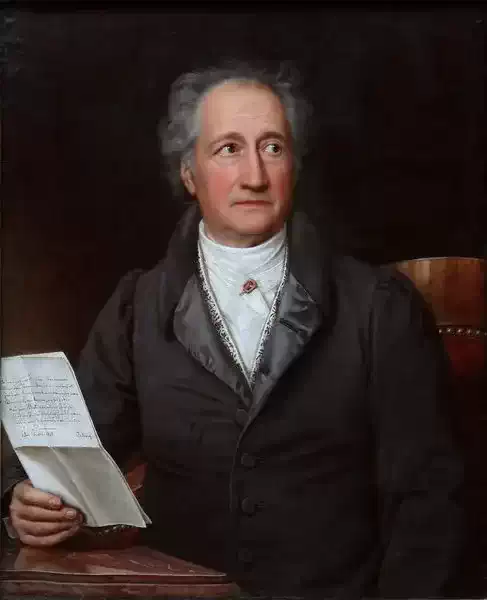
Johann Wolfgang von Goethe
The Pariah - Legend
The Pariah - Legend
WATER-FETCHING goes the noble
Brahmin's wife, so pure and lovely;
He is honour'd, void of blemish.
And of justice rigid, stern.
Daily from the sacred river
Brings she back refreshments precious;--
But where is the pail and pitcher?
She of neither stands in need.
For with pure heart, hands unsullied,
She the water lifts, and rolls it
To a wondrous ball of crystal
This she bears with gladsome bosom,
Modestly, with graceful motion,
To her husband in the house.
She to-day at dawn of morning
Praying comes to Ganges' waters,
Bends her o'er the glassy surface--
Sudden, in the waves reflected,
Flying swiftly far above her,
From the highest heavens descending,
She discerns the beauteous form
Of a youth divine, created
By the God's primeval wisdom
In his own eternal breast.
When she sees him, straightway feels she
Wondrous, new, confused sensations
In her inmost, deepest being;
Fain she'd linger o'er the vision,
Then repels it,--it returneth,--
And, perplex'd, she bends her flood-wards
With uncertain hands to draw it;
But, alas, she draws no more!
For the water's sacred billows
Seem to fly, to hasten from her;
She but sees the fearful chasm
Of a whirlpool black disclosed.
Arms drop down, and footsteps stumble,
Can this be the pathway homewards?
Shall she fly, or shall she tarry?
Can she think, when thought and counsel,
When assistance all are lost?
So before her spouse appears she--
On her looks he--look is judgment--
Proudly on the sword he seizes,
To the hill of death he drags her,
Where delinquents' blood pays forfeit.
What resistance could she offer?
What excuses could she proffer,
Guilty, knowing not her guilt?
And with bloody sword returns he,
Musing, to his silent dwelling,
When his son before him stands:
"Whose this blood? Oh, father! father!"
"The delinquent woman's!"--"Never!
For upon the sword it dries not,
Like the blood of the delinquent;
Fresh it flows, as from the wound.
Mother! mother! hither hasten!
Unjust never was my father,
Tell me what he now hath done."-"
Silence! silence! hers the blood is!"
"Whose, my father?"--"Silence! Silence!"
"What! oh what! my mother's blood!
What her crime? What did she? Answer!
Now, the sword! the sword now hold I;
Thou thy wife perchance might'st slaughter,
But my mother might'st not slay!
Through the flames the wife is able
Her beloved spouse to follow,
And his dear and only mother
Through the sword her faithful son."
"Stay! oh stay!" exclaim'd the father:
"Yet 'tis time, so hasten, hasten!
Join the head upon the body,
With the sword then touch the figure,
And, alive she'll follow thee."
Hastening, he, with breathless wonder,
Sees the bodies of two women
Lying crosswise, and their heads too;
Oh, what horror! which to choose!
Then his mother's head he seizes,--
Does not kiss it, deadly pale 'tis,--
On the nearest headless body
Puts it quickly, and then blesses
With the sword the pious work.
Then the giant form uprises,--
From the dear lips of his mother,
Lips all god-like--changeless--blissful,
Sound these words with horror fraught:
"Son, oh son! what overhast'ning!
Yonder is thy mother's body,
Near it lies the impious head
Of the woman who hath fallen
Victim to the judgment-sword!
To her body I am grafted
By thy hand for endless ages;
Wise in counsel, wild in action,
I shall be amongst the gods.
E'en the heav'nly boy's own image,
Though in eye and brow so lovely,
Sinking downwards to the bosom
Mad and raging lust will stir.
"'Twill return again for ever,
Ever rising, ever sinking,
Now obscured, and now transfigur'd,--
So great Brama hath ordain'd.
He 'twas sent the beauteous pinions,
Radiant face and slender members
Of the only God-begotten,
That I might be proved and tempted;
For from high descends temptation,
When the gods ordain it so.
And so I, the Brahmin woman,
With my head in Heaven reclining,
Must experience, as a Pariah,
The debasing power of earth.
Son, I send thee to thy father!
Comfort him! Let no sad penance,
Weak delay, or thought of merit,
Hold thee in the desert fast
Wander on through ev'ry nation,
Roam abroad throughout all ages,
And proclaim to e'en the meanest,
That great Brama hears his cry!
"None is in his eyes the meanest--
He whose limbs are lame and palsied,
He whose soul is wildly riven,
Worn with sorrow, hopeless, helpless,
Be he Brahmin, be he Pariah,
If tow'rd heaven he turns his gaze,
Will perceive, will learn to know it:
Thousand eyes are glowing yonder,
Thousand ears are calmly list'ning,
From which nought below is hid.
"If I to his throne soar upward,
If he sees my fearful figure
By his might transform'd to horror,
He for ever will lament it,--
May it to your good be found!
And I now will kindly warn him,
And I now will madly tell him
Whatsoe'er my mind conceiveth,
What within my bosom heaveth.
But my thoughts, my inmost feelings--
Those a secret shall remain."
WATER-FETCHING goes the noble
Brahmin's wife, so pure and lovely;
He is honour'd, void of blemish.
And of justice rigid, stern.
Daily from the sacred river
Brings she back refreshments precious;--
But where is the pail and pitcher?
She of neither stands in need.
For with pure heart, hands unsullied,
She the water lifts, and rolls it
To a wondrous ball of crystal
This she bears with gladsome bosom,
Modestly, with graceful motion,
To her husband in the house.
She to-day at dawn of morning
Praying comes to Ganges' waters,
Bends her o'er the glassy surface--
Sudden, in the waves reflected,
Flying swiftly far above her,
From the highest heavens descending,
She discerns the beauteous form
Of a youth divine, created
By the God's primeval wisdom
In his own eternal breast.
When she sees him, straightway feels she
Wondrous, new, confused sensations
In her inmost, deepest being;
Fain she'd linger o'er the vision,
Then repels it,--it returneth,--
And, perplex'd, she bends her flood-wards
With uncertain hands to draw it;
But, alas, she draws no more!
For the water's sacred billows
Seem to fly, to hasten from her;
She but sees the fearful chasm
Of a whirlpool black disclosed.
Arms drop down, and footsteps stumble,
Can this be the pathway homewards?
Shall she fly, or shall she tarry?
Can she think, when thought and counsel,
When assistance all are lost?
So before her spouse appears she--
On her looks he--look is judgment--
Proudly on the sword he seizes,
To the hill of death he drags her,
Where delinquents' blood pays forfeit.
What resistance could she offer?
What excuses could she proffer,
Guilty, knowing not her guilt?
And with bloody sword returns he,
Musing, to his silent dwelling,
When his son before him stands:
"Whose this blood? Oh, father! father!"
"The delinquent woman's!"--"Never!
For upon the sword it dries not,
Like the blood of the delinquent;
Fresh it flows, as from the wound.
Mother! mother! hither hasten!
Unjust never was my father,
Tell me what he now hath done."-"
Silence! silence! hers the blood is!"
"Whose, my father?"--"Silence! Silence!"
"What! oh what! my mother's blood!
What her crime? What did she? Answer!
Now, the sword! the sword now hold I;
Thou thy wife perchance might'st slaughter,
But my mother might'st not slay!
Through the flames the wife is able
Her beloved spouse to follow,
And his dear and only mother
Through the sword her faithful son."
"Stay! oh stay!" exclaim'd the father:
"Yet 'tis time, so hasten, hasten!
Join the head upon the body,
With the sword then touch the figure,
And, alive she'll follow thee."
Hastening, he, with breathless wonder,
Sees the bodies of two women
Lying crosswise, and their heads too;
Oh, what horror! which to choose!
Then his mother's head he seizes,--
Does not kiss it, deadly pale 'tis,--
On the nearest headless body
Puts it quickly, and then blesses
With the sword the pious work.
Then the giant form uprises,--
From the dear lips of his mother,
Lips all god-like--changeless--blissful,
Sound these words with horror fraught:
"Son, oh son! what overhast'ning!
Yonder is thy mother's body,
Near it lies the impious head
Of the woman who hath fallen
Victim to the judgment-sword!
To her body I am grafted
By thy hand for endless ages;
Wise in counsel, wild in action,
I shall be amongst the gods.
E'en the heav'nly boy's own image,
Though in eye and brow so lovely,
Sinking downwards to the bosom
Mad and raging lust will stir.
"'Twill return again for ever,
Ever rising, ever sinking,
Now obscured, and now transfigur'd,--
So great Brama hath ordain'd.
He 'twas sent the beauteous pinions,
Radiant face and slender members
Of the only God-begotten,
That I might be proved and tempted;
For from high descends temptation,
When the gods ordain it so.
And so I, the Brahmin woman,
With my head in Heaven reclining,
Must experience, as a Pariah,
The debasing power of earth.
Son, I send thee to thy father!
Comfort him! Let no sad penance,
Weak delay, or thought of merit,
Hold thee in the desert fast
Wander on through ev'ry nation,
Roam abroad throughout all ages,
And proclaim to e'en the meanest,
That great Brama hears his cry!
"None is in his eyes the meanest--
He whose limbs are lame and palsied,
He whose soul is wildly riven,
Worn with sorrow, hopeless, helpless,
Be he Brahmin, be he Pariah,
If tow'rd heaven he turns his gaze,
Will perceive, will learn to know it:
Thousand eyes are glowing yonder,
Thousand ears are calmly list'ning,
From which nought below is hid.
"If I to his throne soar upward,
If he sees my fearful figure
By his might transform'd to horror,
He for ever will lament it,--
May it to your good be found!
And I now will kindly warn him,
And I now will madly tell him
Whatsoe'er my mind conceiveth,
What within my bosom heaveth.
But my thoughts, my inmost feelings--
Those a secret shall remain."
408
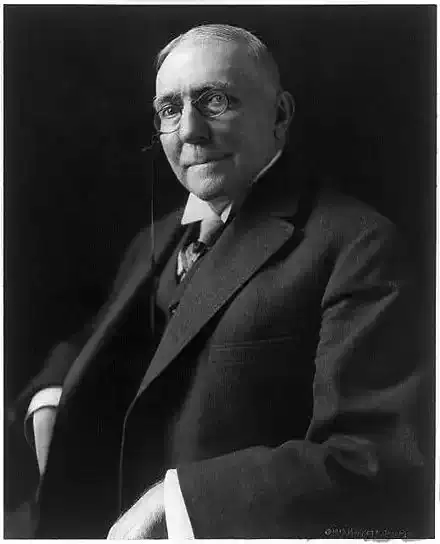
James Whitcomb Riley
Down On Wriggle Crick
Down On Wriggle Crick
'Best time to kill a hog's when he's fat.' --Old Saw.
Mostly folks is law-abidin'
Down on Wriggle Crick--,
Seein' they's no Squire residin'
In our bailywick;
No grand juries, no suppeenies,
Ner no vested rights to pick
Out yer man, jerk up and jail ef
He's outragin' Wriggle Crick!
Wriggle Crick hain't got no lawin',
Ner no suits to beat;
Ner no court-house gee-and-hawin'
Like a County-seat;
Hain't no waitin' round fer verdick,
Ner non-gittin' witness-fees;
Ner no thiefs 'at gits 'new heain's,'
By some lawyer slick as grease!
Wriggle Cricks's leadin' spirit
Is old Johnts Culwell--,
Keeps post-office, and right near it
Owns what's called 'The Grand Hotel--'
(Warehouse now--) buys wheat and ships it;
Gits out ties, and trades in stock,
And knows all the high-toned drummers
'Twixt South Bend and Mishawauk'
Last year comes along a feller--
Sharper 'an a lance-Stovepipe-
hat and silk umbreller,
And a boughten all-wool pants--,
Tinkerin of clocks and watches:
Says a trial's all he wants--
And rents out the tavern-office
Next to Uncle Johnts.
Well--. He tacked up his k'dentials,
And got down to biz--.
Captured Johnts by cuttin' stenchils
Fer them old wheat-sacks o' his--.
Fixed his clock, in the post-office--
Painted fer him, clean and slick,
'Crost his safe, in gold-leaf letters,
'J. Culwells's Wriggle Crick.'
Any kindo' job you keered to
Resk him with, and bring,
He'd fix fer you-- jest appeared to
Turn his hand to anything--!
Rings, er earbobs, er umbrellers--
Glue a cheer er chany doll--,
W'y, of all the beatin' fellers,
He Jest beat 'em all!
Made his friends, but wouldn't stop there--,
One mistake he learnt,
That was, sleepin' in his shop there--.
And one Sund'y night it burnt!
Come in one o' jest a-sweepin'
All the whole town high and dry--
And that feller, when they waked him,
Suffocatin', mighty nigh!
Johnts he drug him from the buildin',
He'pless-- 'peared to be--,
And the women and the childern
Drenchin' him with sympathy!
But I noticed Johnts helt on him
With a' extry lovin' grip,
And the men-folks gethered round him
In most warmest pardership!
That's the whole mess, grease-and-dopin'!
Johnt's safe was saved--,
But the lock was found sprung open,
And the inside caved.
Was no trial-- ner no jury--
Ner no jedge ner court-house-click--.
Circumstances alters cases
Down on Wriggle Crick!
'Best time to kill a hog's when he's fat.' --Old Saw.
Mostly folks is law-abidin'
Down on Wriggle Crick--,
Seein' they's no Squire residin'
In our bailywick;
No grand juries, no suppeenies,
Ner no vested rights to pick
Out yer man, jerk up and jail ef
He's outragin' Wriggle Crick!
Wriggle Crick hain't got no lawin',
Ner no suits to beat;
Ner no court-house gee-and-hawin'
Like a County-seat;
Hain't no waitin' round fer verdick,
Ner non-gittin' witness-fees;
Ner no thiefs 'at gits 'new heain's,'
By some lawyer slick as grease!
Wriggle Cricks's leadin' spirit
Is old Johnts Culwell--,
Keeps post-office, and right near it
Owns what's called 'The Grand Hotel--'
(Warehouse now--) buys wheat and ships it;
Gits out ties, and trades in stock,
And knows all the high-toned drummers
'Twixt South Bend and Mishawauk'
Last year comes along a feller--
Sharper 'an a lance-Stovepipe-
hat and silk umbreller,
And a boughten all-wool pants--,
Tinkerin of clocks and watches:
Says a trial's all he wants--
And rents out the tavern-office
Next to Uncle Johnts.
Well--. He tacked up his k'dentials,
And got down to biz--.
Captured Johnts by cuttin' stenchils
Fer them old wheat-sacks o' his--.
Fixed his clock, in the post-office--
Painted fer him, clean and slick,
'Crost his safe, in gold-leaf letters,
'J. Culwells's Wriggle Crick.'
Any kindo' job you keered to
Resk him with, and bring,
He'd fix fer you-- jest appeared to
Turn his hand to anything--!
Rings, er earbobs, er umbrellers--
Glue a cheer er chany doll--,
W'y, of all the beatin' fellers,
He Jest beat 'em all!
Made his friends, but wouldn't stop there--,
One mistake he learnt,
That was, sleepin' in his shop there--.
And one Sund'y night it burnt!
Come in one o' jest a-sweepin'
All the whole town high and dry--
And that feller, when they waked him,
Suffocatin', mighty nigh!
Johnts he drug him from the buildin',
He'pless-- 'peared to be--,
And the women and the childern
Drenchin' him with sympathy!
But I noticed Johnts helt on him
With a' extry lovin' grip,
And the men-folks gethered round him
In most warmest pardership!
That's the whole mess, grease-and-dopin'!
Johnt's safe was saved--,
But the lock was found sprung open,
And the inside caved.
Was no trial-- ner no jury--
Ner no jedge ner court-house-click--.
Circumstances alters cases
Down on Wriggle Crick!
302
Horácio
BkIII:XXIV Destructive Wealth
BkIII:XXIV Destructive Wealth
Though you’re richer than the untouched
riches of Araby, than wealthy India,
and you fill the land, and inshore
waters, with your deposits of builders’ rubble:
if dread Necessity fixes
her adamantine nails in your highest rooftops,
you’ll not free your spirit from fear,
nor free your very being from the noose of death.
Better to live like Scythians
in the Steppes, whose wagons haul their movable homes,
that’s custom, or the fierce Getae,
whose unallocated acres produce their fruits,
their harvests of rye, in common,
where cultivation’s not decided for more than
a year, and when one turn is done,
it’s carried on by other hands, as a duty.
There, as their own, the unselfish
women raise those children who have lost their mothers:
and the richly dowered wife never
rules her husband, or believes in shining lovers.
Their greatest dowry’s their parents’
virtue, and their own chastity, which is careful
of another’s husband, in pure
loyalty, sin is wrong and death’s its penalty.
O whoever would end impious
killing, and civil disorder, and would desire
to have ‘City Father’ inscribed
on their statues, let them be braver, and rein in
unbridled licence, and win fame
among posterity: since we, alas, for shame,
filled with envy, hate chaste virtue,
and only seek it when it’s hidden from our eyes.
What use are sad lamentations,
if crime is never suppressed by its punishment?
What use are all these empty laws
without the behaviour that should accompany them?
if neither those parts of the Earth
enclosed by heat, nor those far confines of the North,
snow frozen solid on the ground,
deter the trader, if cunning sailors conquer
the stormy seas, if poverty,
is considered a great disgrace, and directs us
to do and to bear everything,
and abandon the arduous paths of virtue?
Let’s send our jewels, our precious
stones, our destructive gold, to the Capitol, while
the crowd applauds, and raises its strident clamour,
or ship them to the nearest sea,
as causes of our deepest ills,
if we truly repent of all our wickedness.
Let the source of our perverted
greed be lost, and then let our inadequate minds
be trained in more serious things.
The inexperienced noble youth is unskilled
at staying in the saddle, he
fears to hunt, and he’s much better at playing games,
whether you order him to fool
with a Greek hoop, or you prefer forbidden dice,
while his father’s perjured trust cheats
his partner and his friends, hurrying to amass
money for his unworthy heir.
While it’s true that in this way his ill-gotten gains
increase, yet there’s always something
lacking in a fortune forever incomplete.
Though you’re richer than the untouched
riches of Araby, than wealthy India,
and you fill the land, and inshore
waters, with your deposits of builders’ rubble:
if dread Necessity fixes
her adamantine nails in your highest rooftops,
you’ll not free your spirit from fear,
nor free your very being from the noose of death.
Better to live like Scythians
in the Steppes, whose wagons haul their movable homes,
that’s custom, or the fierce Getae,
whose unallocated acres produce their fruits,
their harvests of rye, in common,
where cultivation’s not decided for more than
a year, and when one turn is done,
it’s carried on by other hands, as a duty.
There, as their own, the unselfish
women raise those children who have lost their mothers:
and the richly dowered wife never
rules her husband, or believes in shining lovers.
Their greatest dowry’s their parents’
virtue, and their own chastity, which is careful
of another’s husband, in pure
loyalty, sin is wrong and death’s its penalty.
O whoever would end impious
killing, and civil disorder, and would desire
to have ‘City Father’ inscribed
on their statues, let them be braver, and rein in
unbridled licence, and win fame
among posterity: since we, alas, for shame,
filled with envy, hate chaste virtue,
and only seek it when it’s hidden from our eyes.
What use are sad lamentations,
if crime is never suppressed by its punishment?
What use are all these empty laws
without the behaviour that should accompany them?
if neither those parts of the Earth
enclosed by heat, nor those far confines of the North,
snow frozen solid on the ground,
deter the trader, if cunning sailors conquer
the stormy seas, if poverty,
is considered a great disgrace, and directs us
to do and to bear everything,
and abandon the arduous paths of virtue?
Let’s send our jewels, our precious
stones, our destructive gold, to the Capitol, while
the crowd applauds, and raises its strident clamour,
or ship them to the nearest sea,
as causes of our deepest ills,
if we truly repent of all our wickedness.
Let the source of our perverted
greed be lost, and then let our inadequate minds
be trained in more serious things.
The inexperienced noble youth is unskilled
at staying in the saddle, he
fears to hunt, and he’s much better at playing games,
whether you order him to fool
with a Greek hoop, or you prefer forbidden dice,
while his father’s perjured trust cheats
his partner and his friends, hurrying to amass
money for his unworthy heir.
While it’s true that in this way his ill-gotten gains
increase, yet there’s always something
lacking in a fortune forever incomplete.
245
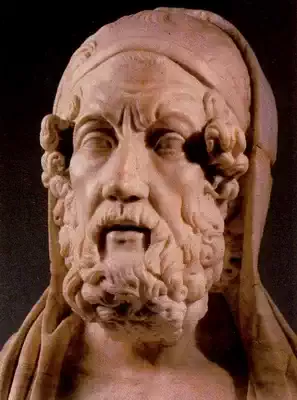
Homero
The Odyssey: Book 2
The Odyssey: Book 2
Now when the child of morning, rosy-fingered Dawn, appeared,
Telemachus rose and dressed himself. He bound his sandals on to his
comely feet, girded his sword about his shoulder, and left his room
looking like an immortal god. He at once sent the criers round to call
the people in assembly, so they called them and the people gathered
thereon; then, when they were got together, he went to the place of
assembly spear in hand- not alone, for his two hounds went with him.
Minerva endowed him with a presence of such divine comeliness that all
marvelled at him as he went by, and when he took his place' in his
father's seat even the oldest councillors made way for him.
Aegyptius, a man bent double with age, and of infinite experience,
the first to speak His son Antiphus had gone with Ulysses to Ilius,
land of noble steeds, but the savage Cyclops had killed him when
they were all shut up in the cave, and had cooked his last dinner
for him, He had three sons left, of whom two still worked on their
father's land, while the third, Eurynomus, was one of the suitors;
nevertheless their father could not get over the loss of Antiphus, and
was still weeping for him when he began his speech.
"Men of Ithaca," he said, "hear my words. From the day Ulysses
left us there has been no meeting of our councillors until now; who
then can it be, whether old or young, that finds it so necessary to
convene us? Has he got wind of some host approaching, and does he wish
to warn us, or would he speak upon some other matter of public moment?
I am sure he is an excellent person, and I hope Jove will grant him
his heart's desire."
Telemachus took this speech as of good omen and rose at once, for he
was bursting with what he had to say. He stood in the middle of the
assembly and the good herald Pisenor brought him his staff. Then,
turning to Aegyptius, "Sir," said he, "it is I, as you will shortly
learn, who have convened you, for it is I who am the most aggrieved. I
have not got wind of any host approaching about which I would warn
you, nor is there any matter of public moment on which I would
speak. My grieveance is purely personal, and turns on two great
misfortunes which have fallen upon my house. The first of these is the
loss of my excellent father, who was chief among all you here present,
and was like a father to every one of you; the second is much more
serious, and ere long will be the utter ruin of my estate. The sons of
all the chief men among you are pestering my mother to marry them
against her will. They are afraid to go to her father Icarius,
asking him to choose the one he likes best, and to provide marriage
gifts for his daughter, but day by day they keep hanging about my
father's house, sacrificing our oxen, sheep, and fat goats for their
banquets, and never giving so much as a thought to the quantity of
wine they drink. No estate can stand such recklessness; we have now no
Ulysses to ward off harm from our doors, and I cannot hold my own
against them. I shall never all my days be as good a man as he was,
still I would indeed defend myself if I had power to do so, for I
cannot stand such treatment any longer; my house is being disgraced
and ruined. Have respect, therefore, to your own consciences and to
public opinion. Fear, too, the wrath of heaven, lest the gods should
be displeased and turn upon you. I pray you by Jove and Themis, who is
the beginning and the end of councils, [do not] hold back, my friends,
and leave me singlehanded- unless it be that my brave father Ulysses
did some wrong to the Achaeans which you would now avenge on me, by
aiding and abetting these suitors. Moreover, if I am to be eaten out
of house and home at all, I had rather you did the eating
yourselves, for I could then take action against you to some
purpose, and serve you with notices from house to house till I got
paid in full, whereas now I have no remedy."
With this Telemachus dashed his staff to the ground and burst into
tears. Every one was very sorry for him, but they all sat still and no
one ventured to make him an angry answer, save only Antinous, who
spoke thus:
"Telemachus, insolent braggart that you are, how dare you try to
throw the blame upon us suitors? It is your mother's fault not ours,
for she is a very artful woman. This three years past, and close on
four, she has been driving us out of our minds, by encouraging each
one of us, and sending him messages without meaning one word of what
she says. And then there was that other trick she played us. She set
up a great tambour frame in her room, and began to work on an enormous
piece of fine needlework. 'Sweet hearts,' said she, 'Ulysses is indeed
dead, still do not press me to marry again immediately, wait- for I
would not have skill in needlework perish unrecorded- till I have
completed a pall for the hero Laertes, to be in readiness against
the time when death shall take him. He is very rich, and the women
of the place will talk if he is laid out without a pall.'
"This was what she said, and we assented; whereon we could see her
working on her great web all day long, but at night she would unpick
the stitches again by torchlight. She fooled us in this way for
three years and we never found her out, but as time wore on and she
was now in her fourth year, one of her maids who knew what she was
doing told us, and we caught her in the act of undoing her work, so
she had to finish it whether she would or no. The suitors,
therefore, make you this answer, that both you and the Achaeans may
understand-'Send your mother away, and bid her marry the man of her
own and of her father's choice'; for I do not know what will happen if
she goes on plaguing us much longer with the airs she gives herself on
the score of the accomplishments Minerva has taught her, and because
she is so clever. We never yet heard of such a woman; we know all
about Tyro, Alcmena, Mycene, and the famous women of old, but they
were nothing to your mother, any one of them. It was not fair of her
to treat us in that way, and as long as she continues in the mind with
which heaven has now endowed her, so long shall we go on eating up
your estate; and I do not see why she should change, for she gets
all the honour and glory, and it is you who pay for it, not she.
Understand, then, that we will not go back to our lands, neither
here nor elsewhere, till she has made her choice and married some
one or other of us."
Telemachus answered, "Antinous, how can I drive the mother who
bore me from my father's house? My father is abroad and we do not know
whether he is alive or dead. It will be hard on me if I have to pay
Icarius the large sum which I must give him if I insist on sending his
daughter back to him. Not only will he deal rigorously with me, but
heaven will also punish me; for my mother when she leaves the house
will calf on the Erinyes to avenge her; besides, it would not be a
creditable thing to do, and I will have nothing to say to it. If you
choose to take offence at this, leave the house and feast elsewhere at
one another's houses at your own cost turn and turn about. If, on
the other hand, you elect to persist in spunging upon one man,
heaven help me, but Jove shall reckon with you in full, and when you
fall in my father's house there shall be no man to avenge you."
As he spoke Jove sent two eagles from the top of the mountain, and
they flew on and on with the wind, sailing side by side in their own
lordly flight. When they were right over the middle of the assembly
they wheeled and circled about, beating the air with their wings and
glaring death into the eyes of them that were below; then, fighting
fiercely and tearing at one another, they flew off towards the right
over the town. The people wondered as they saw them, and asked each
other what an this might be; whereon Halitherses, who was the best
prophet and reader of omens among them, spoke to them plainly and in
all honesty, saying:
"Hear me, men of Ithaca, and I speak more particularly to the
suitors, for I see mischief brewing for them. Ulysses is not going
to be away much longer; indeed he is close at hand to deal out death
and destruction, not on them alone, but on many another of us who live
in Ithaca. Let us then be wise in time, and put a stop to this
wickedness before he comes. Let the suitors do so of their own accord;
it will be better for them, for I am not prophesying without due
knowledge; everything has happened to Ulysses as I foretold when the
Argives set out for Troy, and he with them. I said that after going
through much hardship and losing all his men he should come home again
in the twentieth year and that no one would know him; and now all this
is coming true."
Eurymachus son of Polybus then said, "Go home, old man, and prophesy
to your own children, or it may be worse for them. I can read these
omens myself much better than you can; birds are always flying about
in the sunshine somewhere or other, but they seldom mean anything.
Ulysses has died in a far country, and it is a pity you are not dead
along with him, instead of prating here about omens and adding fuel to
the anger of Telemachus which is fierce enough as it is. I suppose you
think he will give you something for your family, but I tell youand
it shall surely be- when an old man like you, who should know
better, talks a young one over till he becomes troublesome, in the
first place his young friend will only fare so much the worse- he will
take nothing by it, for the suitors will prevent this- and in the
next, we will lay a heavier fine, sir, upon yourself than you will
at all like paying, for it will bear hardly upon you. As for
Telemachus, I warn him in the presence of you all to send his mother
back to her father, who will find her a husband and provide her with
all the marriage gifts so dear a daughter may expect. Till we shall go
on harassing him with our suit; for we fear no man, and care neither
for him, with all his fine speeches, nor for any fortune-telling of
yours. You may preach as much as you please, but we shall only hate
you the more. We shall go back and continue to eat up Telemachus's
estate without paying him, till such time as his mother leaves off
tormenting us by keeping us day after day on the tiptoe of
expectation, each vying with the other in his suit for a prize of such
rare perfection. Besides we cannot go after the other women whom we
should marry in due course, but for the way in which she treats us."
Then Telemachus said, "Eurymachus, and you other suitors, I shall
say no more, and entreat you no further, for the gods and the people
of Ithaca now know my story. Give me, then, a ship and a crew of
twenty men to take me hither and thither, and I will go to Sparta
and to Pylos in quest of my father who has so long been missing.
Some one may tell me something, or (and people often hear things in
this way) some heaven-sent message may direct me. If I can hear of him
as alive and on his way home I will put up with the waste you
suitors will make for yet another twelve months. If on the other
hand I hear of his death, I will return at once, celebrate his funeral
rites with all due pomp, build a barrow to his memory, and make my
mother marry again."
With these words he sat down, and Mentor who had been a friend of
Ulysses, and had been left in charge of everything with full authority
over the servants, rose to speak. He, then, plainly and in all honesty
addressed them thus:
"Hear me, men of Ithaca, I hope that you may never have a kind and
well-disposed ruler any more, nor one who will govern you equitably; I
hope that all your chiefs henceforward may be cruel and unjust, for
there is not one of you but has forgotten Ulysses, who ruled you as
though he were your father. I am not half so angry with the suitors,
for if they choose to do violence in the naughtiness of their
hearts, and wager their heads that Ulysses will not return, they can
take the high hand and eat up his estate, but as for you others I am
shocked at the way in which you all sit still without even trying to
stop such scandalous goings on-which you could do if you chose, for
you are many and they are few."
Leiocritus, son of Evenor, answered him saying, "Mentor, what
folly is all this, that you should set the people to stay us? It is
a hard thing for one man to fight with many about his victuals. Even
though Ulysses himself were to set upon us while we are feasting in
his house, and do his best to oust us, his wife, who wants him back so
very badly, would have small cause for rejoicing, and his blood
would be upon his own head if he fought against such great odds. There
is no sense in what you have been saying. Now, therefore, do you
people go about your business, and let his father's old friends,
Mentor and Halitherses, speed this boy on his journey, if he goes at
all- which I do not think he will, for he is more likely to stay where
he is till some one comes and tells him something."
On this he broke up the assembly, and every man went back to his own
abode, while the suitors returned to the house of Ulysses.
Then Telemachus went all alone by the sea side, washed his hands
in the grey waves, and prayed to Minerva.
"Hear me," he cried, "you god who visited me yesterday, and bade
me sail the seas in search of my father who has so long been
missing. I would obey you, but the Achaeans, and more particularly the
wicked suitors, are hindering me that I cannot do so."
As he thus prayed, Minerva came close up to him in the likeness
and with the voice of Mentor. "Telemachus," said she, "if you are made
of the same stuff as your father you will be neither fool nor coward
henceforward, for Ulysses never broke his word nor left his work
half done. If, then, you take after him, your voyage will not be
fruitless, but unless you have the blood of Ulysses and of Penelope in
your veins I see no likelihood of your succeeding. Sons are seldom
as good men as their fathers; they are generally worse, not better;
still, as you are not going to be either fool or coward
henceforward, and are not entirely without some share of your father's
wise discernment, I look with hope upon your undertaking. But mind you
never make common cause with any of those foolish suitors, for they
have neither sense nor virtue, and give no thought to death and to the
doom that will shortly fall on one and all of them, so that they shall
perish on the same day. As for your voyage, it shall not be long
delayed; your father was such an old friend of mine that I will find
you a ship, and will come with you myself. Now, however, return
home, and go about among the suitors; begin getting provisions ready
for your voyage; see everything well stowed, the wine in jars, and the
barley meal, which is the staff of life, in leathern bags, while I
go round the town and beat up volunteers at once. There are many ships
in Ithaca both old and new; I will run my eye over them for you and
will choose the best; we will get her ready and will put out to sea
without delay."
Thus spoke Minerva daughter of Jove, and Telemachus lost no time
in doing as the goddess told him. He went moodily and found the
suitors flaying goats and singeing pigs in the outer court. Antinous
came up to him at once and laughed as he took his hand in his own,
saying, "Telemachus, my fine fire-eater, bear no more ill blood
neither in word nor deed, but eat and drink with us as you used to do.
The Achaeans will find you in everything- a ship and a picked crew
to boot- so that you can set sail for Pylos at once and get news of
your noble father."
"Antinous," answered Telemachus, "I cannot eat in peace, nor take
pleasure of any kind with such men as you are. Was it not enough
that you should waste so much good property of mine while I was yet
a boy? Now that I am older and know more about it, I am also stronger,
and whether here among this people, or by going to Pylos, I will do
you all the harm I can. I shall go, and my going will not be in vain
though, thanks to you suitors, I have neither ship nor crew of my own,
and must be passenger not captain."
As he spoke he snatched his hand from that of Antinous. Meanwhile
the others went on getting dinner ready about the buildings, jeering
at him tauntingly as they did so.
"Telemachus," said one youngster, "means to be the death of us; I
suppose he thinks he can bring friends to help him from Pylos, or
again from Sparta, where he seems bent on going. Or will he go to
Ephyra as well, for poison to put in our wine and kill us?"
Another said, "Perhaps if Telemachus goes on board ship, he will
be like his father and perish far from his friends. In this case we
should have plenty to do, for we could then divide up his property
amongst us: as for the house we can let his mother and the man who
marries her have that."
This was how they talked. But Telemachus went down into the lofty
and spacious store-room where his father's treasure of gold and bronze
lay heaped up upon the floor, and where the linen and spare clothes
were kept in open chests. Here, too, there was a store of fragrant
olive oil, while casks of old, well-ripened wine, unblended and fit
for a god to drink, were ranged against the wall in case Ulysses
should come home again after all. The room was closed with well-made
doors opening in the middle; moreover the faithful old house-keeper
Euryclea, daughter of Ops the son of Pisenor, was in charge of
everything both night and day. Telemachus called her to the store-room
and said:
"Nurse, draw me off some of the best wine you have, after what you
are keeping for my father's own drinking, in case, poor man, he should
escape death, and find his way home again after all. Let me have
twelve jars, and see that they all have lids; also fill me some
well-sewn leathern bags with barley meal- about twenty measures in
all. Get these things put together at once, and say nothing about
it. I will take everything away this evening as soon as my mother
has gone upstairs for the night. I am going to Sparta and to Pylos
to see if I can hear anything about the return of my dear father.
When Euryclea heard this she began to cry, and spoke fondly to
him, saying, "My dear child, what ever can have put such notion as
that into your head? Where in the world do you want to go to- you, who
are the one hope of the house? Your poor father is dead and gone in
some foreign country nobody knows where, and as soon as your back is
turned these wicked ones here will be scheming to get you put out of
the way, and will share all your possessions among themselves; stay
where you are among your own people, and do not go wandering and
worrying your life out on the barren ocean."
"Fear not, nurse," answered Telemachus, "my scheme is not without
heaven's sanction; but swear that you will say nothing about all
this to my mother, till I have been away some ten or twelve days,
unless she hears of my having gone, and asks you; for I do not want
her to spoil her beauty by crying."
The old woman swore most solemnly that she would not, and when she
had completed her oath, she began drawing off the wine into jars,
and getting the barley meal into the bags, while Telemachus went
back to the suitors.
Then Minerva bethought her of another matter. She took his shape,
and went round the town to each one of the crew, telling them to
meet at the ship by sundown. She went also to Noemon son of
Phronius, and asked him to let her have a ship- which he was very
ready to do. When the sun had set and darkness was over all the
land, she got the ship into the water, put all the tackle on board her
that ships generally carry, and stationed her at the end of the
harbour. Presently the crew came up, and the goddess spoke
encouragingly to each of them.
Furthermore she went to the house of Ulysses, and threw the
suitors into a deep slumber. She caused their drink to fuddle them,
and made them drop their cups from their hands, so that instead of
sitting over their wine, they went back into the town to sleep, with
their eyes heavy and full of drowsiness. Then she took the form and
voice of Mentor, and called Telemachus to come outside.
"Telemachus," said she, "the men are on board and at their oars,
waiting for you to give your orders, so make haste and let us be off."
On this she led the way, while Telemachus followed in her steps.
When they got to the ship they found the crew waiting by the water
side, and Telemachus said, "Now my men, help me to get the stores on
board; they are all put together in the cloister, and my mother does
not know anything about it, nor any of the maid servants except one."
With these words he led the way and the others followed after.
When they had brought the things as he told them, Telemachus went on
board, Minerva going before him and taking her seat in the stern of
the vessel, while Telemachus sat beside her. Then the men loosed the
hawsers and took their places on the benches. Minerva sent them a fair
wind from the West, that whistled over the deep blue waves whereon
Telemachus told them to catch hold of the ropes and hoist sail, and
they did as he told them. They set the mast in its socket in the cross
plank, raised it, and made it fast with the forestays; then they
hoisted their white sails aloft with ropes of twisted ox hide. As
the sail bellied out with the wind, the ship flew through the deep
blue water, and the foam hissed against her bows as she sped onward.
Then they made all fast throughout the ship, filled the mixing-bowls
to the brim, and made drink offerings to the immortal gods that are
from everlasting, but more particularly to the grey-eyed daughter of
Jove.
Thus, then, the ship sped on her way through the watches of the
night from dark till dawn.
Translated by Samuel Butler
Now when the child of morning, rosy-fingered Dawn, appeared,
Telemachus rose and dressed himself. He bound his sandals on to his
comely feet, girded his sword about his shoulder, and left his room
looking like an immortal god. He at once sent the criers round to call
the people in assembly, so they called them and the people gathered
thereon; then, when they were got together, he went to the place of
assembly spear in hand- not alone, for his two hounds went with him.
Minerva endowed him with a presence of such divine comeliness that all
marvelled at him as he went by, and when he took his place' in his
father's seat even the oldest councillors made way for him.
Aegyptius, a man bent double with age, and of infinite experience,
the first to speak His son Antiphus had gone with Ulysses to Ilius,
land of noble steeds, but the savage Cyclops had killed him when
they were all shut up in the cave, and had cooked his last dinner
for him, He had three sons left, of whom two still worked on their
father's land, while the third, Eurynomus, was one of the suitors;
nevertheless their father could not get over the loss of Antiphus, and
was still weeping for him when he began his speech.
"Men of Ithaca," he said, "hear my words. From the day Ulysses
left us there has been no meeting of our councillors until now; who
then can it be, whether old or young, that finds it so necessary to
convene us? Has he got wind of some host approaching, and does he wish
to warn us, or would he speak upon some other matter of public moment?
I am sure he is an excellent person, and I hope Jove will grant him
his heart's desire."
Telemachus took this speech as of good omen and rose at once, for he
was bursting with what he had to say. He stood in the middle of the
assembly and the good herald Pisenor brought him his staff. Then,
turning to Aegyptius, "Sir," said he, "it is I, as you will shortly
learn, who have convened you, for it is I who am the most aggrieved. I
have not got wind of any host approaching about which I would warn
you, nor is there any matter of public moment on which I would
speak. My grieveance is purely personal, and turns on two great
misfortunes which have fallen upon my house. The first of these is the
loss of my excellent father, who was chief among all you here present,
and was like a father to every one of you; the second is much more
serious, and ere long will be the utter ruin of my estate. The sons of
all the chief men among you are pestering my mother to marry them
against her will. They are afraid to go to her father Icarius,
asking him to choose the one he likes best, and to provide marriage
gifts for his daughter, but day by day they keep hanging about my
father's house, sacrificing our oxen, sheep, and fat goats for their
banquets, and never giving so much as a thought to the quantity of
wine they drink. No estate can stand such recklessness; we have now no
Ulysses to ward off harm from our doors, and I cannot hold my own
against them. I shall never all my days be as good a man as he was,
still I would indeed defend myself if I had power to do so, for I
cannot stand such treatment any longer; my house is being disgraced
and ruined. Have respect, therefore, to your own consciences and to
public opinion. Fear, too, the wrath of heaven, lest the gods should
be displeased and turn upon you. I pray you by Jove and Themis, who is
the beginning and the end of councils, [do not] hold back, my friends,
and leave me singlehanded- unless it be that my brave father Ulysses
did some wrong to the Achaeans which you would now avenge on me, by
aiding and abetting these suitors. Moreover, if I am to be eaten out
of house and home at all, I had rather you did the eating
yourselves, for I could then take action against you to some
purpose, and serve you with notices from house to house till I got
paid in full, whereas now I have no remedy."
With this Telemachus dashed his staff to the ground and burst into
tears. Every one was very sorry for him, but they all sat still and no
one ventured to make him an angry answer, save only Antinous, who
spoke thus:
"Telemachus, insolent braggart that you are, how dare you try to
throw the blame upon us suitors? It is your mother's fault not ours,
for she is a very artful woman. This three years past, and close on
four, she has been driving us out of our minds, by encouraging each
one of us, and sending him messages without meaning one word of what
she says. And then there was that other trick she played us. She set
up a great tambour frame in her room, and began to work on an enormous
piece of fine needlework. 'Sweet hearts,' said she, 'Ulysses is indeed
dead, still do not press me to marry again immediately, wait- for I
would not have skill in needlework perish unrecorded- till I have
completed a pall for the hero Laertes, to be in readiness against
the time when death shall take him. He is very rich, and the women
of the place will talk if he is laid out without a pall.'
"This was what she said, and we assented; whereon we could see her
working on her great web all day long, but at night she would unpick
the stitches again by torchlight. She fooled us in this way for
three years and we never found her out, but as time wore on and she
was now in her fourth year, one of her maids who knew what she was
doing told us, and we caught her in the act of undoing her work, so
she had to finish it whether she would or no. The suitors,
therefore, make you this answer, that both you and the Achaeans may
understand-'Send your mother away, and bid her marry the man of her
own and of her father's choice'; for I do not know what will happen if
she goes on plaguing us much longer with the airs she gives herself on
the score of the accomplishments Minerva has taught her, and because
she is so clever. We never yet heard of such a woman; we know all
about Tyro, Alcmena, Mycene, and the famous women of old, but they
were nothing to your mother, any one of them. It was not fair of her
to treat us in that way, and as long as she continues in the mind with
which heaven has now endowed her, so long shall we go on eating up
your estate; and I do not see why she should change, for she gets
all the honour and glory, and it is you who pay for it, not she.
Understand, then, that we will not go back to our lands, neither
here nor elsewhere, till she has made her choice and married some
one or other of us."
Telemachus answered, "Antinous, how can I drive the mother who
bore me from my father's house? My father is abroad and we do not know
whether he is alive or dead. It will be hard on me if I have to pay
Icarius the large sum which I must give him if I insist on sending his
daughter back to him. Not only will he deal rigorously with me, but
heaven will also punish me; for my mother when she leaves the house
will calf on the Erinyes to avenge her; besides, it would not be a
creditable thing to do, and I will have nothing to say to it. If you
choose to take offence at this, leave the house and feast elsewhere at
one another's houses at your own cost turn and turn about. If, on
the other hand, you elect to persist in spunging upon one man,
heaven help me, but Jove shall reckon with you in full, and when you
fall in my father's house there shall be no man to avenge you."
As he spoke Jove sent two eagles from the top of the mountain, and
they flew on and on with the wind, sailing side by side in their own
lordly flight. When they were right over the middle of the assembly
they wheeled and circled about, beating the air with their wings and
glaring death into the eyes of them that were below; then, fighting
fiercely and tearing at one another, they flew off towards the right
over the town. The people wondered as they saw them, and asked each
other what an this might be; whereon Halitherses, who was the best
prophet and reader of omens among them, spoke to them plainly and in
all honesty, saying:
"Hear me, men of Ithaca, and I speak more particularly to the
suitors, for I see mischief brewing for them. Ulysses is not going
to be away much longer; indeed he is close at hand to deal out death
and destruction, not on them alone, but on many another of us who live
in Ithaca. Let us then be wise in time, and put a stop to this
wickedness before he comes. Let the suitors do so of their own accord;
it will be better for them, for I am not prophesying without due
knowledge; everything has happened to Ulysses as I foretold when the
Argives set out for Troy, and he with them. I said that after going
through much hardship and losing all his men he should come home again
in the twentieth year and that no one would know him; and now all this
is coming true."
Eurymachus son of Polybus then said, "Go home, old man, and prophesy
to your own children, or it may be worse for them. I can read these
omens myself much better than you can; birds are always flying about
in the sunshine somewhere or other, but they seldom mean anything.
Ulysses has died in a far country, and it is a pity you are not dead
along with him, instead of prating here about omens and adding fuel to
the anger of Telemachus which is fierce enough as it is. I suppose you
think he will give you something for your family, but I tell youand
it shall surely be- when an old man like you, who should know
better, talks a young one over till he becomes troublesome, in the
first place his young friend will only fare so much the worse- he will
take nothing by it, for the suitors will prevent this- and in the
next, we will lay a heavier fine, sir, upon yourself than you will
at all like paying, for it will bear hardly upon you. As for
Telemachus, I warn him in the presence of you all to send his mother
back to her father, who will find her a husband and provide her with
all the marriage gifts so dear a daughter may expect. Till we shall go
on harassing him with our suit; for we fear no man, and care neither
for him, with all his fine speeches, nor for any fortune-telling of
yours. You may preach as much as you please, but we shall only hate
you the more. We shall go back and continue to eat up Telemachus's
estate without paying him, till such time as his mother leaves off
tormenting us by keeping us day after day on the tiptoe of
expectation, each vying with the other in his suit for a prize of such
rare perfection. Besides we cannot go after the other women whom we
should marry in due course, but for the way in which she treats us."
Then Telemachus said, "Eurymachus, and you other suitors, I shall
say no more, and entreat you no further, for the gods and the people
of Ithaca now know my story. Give me, then, a ship and a crew of
twenty men to take me hither and thither, and I will go to Sparta
and to Pylos in quest of my father who has so long been missing.
Some one may tell me something, or (and people often hear things in
this way) some heaven-sent message may direct me. If I can hear of him
as alive and on his way home I will put up with the waste you
suitors will make for yet another twelve months. If on the other
hand I hear of his death, I will return at once, celebrate his funeral
rites with all due pomp, build a barrow to his memory, and make my
mother marry again."
With these words he sat down, and Mentor who had been a friend of
Ulysses, and had been left in charge of everything with full authority
over the servants, rose to speak. He, then, plainly and in all honesty
addressed them thus:
"Hear me, men of Ithaca, I hope that you may never have a kind and
well-disposed ruler any more, nor one who will govern you equitably; I
hope that all your chiefs henceforward may be cruel and unjust, for
there is not one of you but has forgotten Ulysses, who ruled you as
though he were your father. I am not half so angry with the suitors,
for if they choose to do violence in the naughtiness of their
hearts, and wager their heads that Ulysses will not return, they can
take the high hand and eat up his estate, but as for you others I am
shocked at the way in which you all sit still without even trying to
stop such scandalous goings on-which you could do if you chose, for
you are many and they are few."
Leiocritus, son of Evenor, answered him saying, "Mentor, what
folly is all this, that you should set the people to stay us? It is
a hard thing for one man to fight with many about his victuals. Even
though Ulysses himself were to set upon us while we are feasting in
his house, and do his best to oust us, his wife, who wants him back so
very badly, would have small cause for rejoicing, and his blood
would be upon his own head if he fought against such great odds. There
is no sense in what you have been saying. Now, therefore, do you
people go about your business, and let his father's old friends,
Mentor and Halitherses, speed this boy on his journey, if he goes at
all- which I do not think he will, for he is more likely to stay where
he is till some one comes and tells him something."
On this he broke up the assembly, and every man went back to his own
abode, while the suitors returned to the house of Ulysses.
Then Telemachus went all alone by the sea side, washed his hands
in the grey waves, and prayed to Minerva.
"Hear me," he cried, "you god who visited me yesterday, and bade
me sail the seas in search of my father who has so long been
missing. I would obey you, but the Achaeans, and more particularly the
wicked suitors, are hindering me that I cannot do so."
As he thus prayed, Minerva came close up to him in the likeness
and with the voice of Mentor. "Telemachus," said she, "if you are made
of the same stuff as your father you will be neither fool nor coward
henceforward, for Ulysses never broke his word nor left his work
half done. If, then, you take after him, your voyage will not be
fruitless, but unless you have the blood of Ulysses and of Penelope in
your veins I see no likelihood of your succeeding. Sons are seldom
as good men as their fathers; they are generally worse, not better;
still, as you are not going to be either fool or coward
henceforward, and are not entirely without some share of your father's
wise discernment, I look with hope upon your undertaking. But mind you
never make common cause with any of those foolish suitors, for they
have neither sense nor virtue, and give no thought to death and to the
doom that will shortly fall on one and all of them, so that they shall
perish on the same day. As for your voyage, it shall not be long
delayed; your father was such an old friend of mine that I will find
you a ship, and will come with you myself. Now, however, return
home, and go about among the suitors; begin getting provisions ready
for your voyage; see everything well stowed, the wine in jars, and the
barley meal, which is the staff of life, in leathern bags, while I
go round the town and beat up volunteers at once. There are many ships
in Ithaca both old and new; I will run my eye over them for you and
will choose the best; we will get her ready and will put out to sea
without delay."
Thus spoke Minerva daughter of Jove, and Telemachus lost no time
in doing as the goddess told him. He went moodily and found the
suitors flaying goats and singeing pigs in the outer court. Antinous
came up to him at once and laughed as he took his hand in his own,
saying, "Telemachus, my fine fire-eater, bear no more ill blood
neither in word nor deed, but eat and drink with us as you used to do.
The Achaeans will find you in everything- a ship and a picked crew
to boot- so that you can set sail for Pylos at once and get news of
your noble father."
"Antinous," answered Telemachus, "I cannot eat in peace, nor take
pleasure of any kind with such men as you are. Was it not enough
that you should waste so much good property of mine while I was yet
a boy? Now that I am older and know more about it, I am also stronger,
and whether here among this people, or by going to Pylos, I will do
you all the harm I can. I shall go, and my going will not be in vain
though, thanks to you suitors, I have neither ship nor crew of my own,
and must be passenger not captain."
As he spoke he snatched his hand from that of Antinous. Meanwhile
the others went on getting dinner ready about the buildings, jeering
at him tauntingly as they did so.
"Telemachus," said one youngster, "means to be the death of us; I
suppose he thinks he can bring friends to help him from Pylos, or
again from Sparta, where he seems bent on going. Or will he go to
Ephyra as well, for poison to put in our wine and kill us?"
Another said, "Perhaps if Telemachus goes on board ship, he will
be like his father and perish far from his friends. In this case we
should have plenty to do, for we could then divide up his property
amongst us: as for the house we can let his mother and the man who
marries her have that."
This was how they talked. But Telemachus went down into the lofty
and spacious store-room where his father's treasure of gold and bronze
lay heaped up upon the floor, and where the linen and spare clothes
were kept in open chests. Here, too, there was a store of fragrant
olive oil, while casks of old, well-ripened wine, unblended and fit
for a god to drink, were ranged against the wall in case Ulysses
should come home again after all. The room was closed with well-made
doors opening in the middle; moreover the faithful old house-keeper
Euryclea, daughter of Ops the son of Pisenor, was in charge of
everything both night and day. Telemachus called her to the store-room
and said:
"Nurse, draw me off some of the best wine you have, after what you
are keeping for my father's own drinking, in case, poor man, he should
escape death, and find his way home again after all. Let me have
twelve jars, and see that they all have lids; also fill me some
well-sewn leathern bags with barley meal- about twenty measures in
all. Get these things put together at once, and say nothing about
it. I will take everything away this evening as soon as my mother
has gone upstairs for the night. I am going to Sparta and to Pylos
to see if I can hear anything about the return of my dear father.
When Euryclea heard this she began to cry, and spoke fondly to
him, saying, "My dear child, what ever can have put such notion as
that into your head? Where in the world do you want to go to- you, who
are the one hope of the house? Your poor father is dead and gone in
some foreign country nobody knows where, and as soon as your back is
turned these wicked ones here will be scheming to get you put out of
the way, and will share all your possessions among themselves; stay
where you are among your own people, and do not go wandering and
worrying your life out on the barren ocean."
"Fear not, nurse," answered Telemachus, "my scheme is not without
heaven's sanction; but swear that you will say nothing about all
this to my mother, till I have been away some ten or twelve days,
unless she hears of my having gone, and asks you; for I do not want
her to spoil her beauty by crying."
The old woman swore most solemnly that she would not, and when she
had completed her oath, she began drawing off the wine into jars,
and getting the barley meal into the bags, while Telemachus went
back to the suitors.
Then Minerva bethought her of another matter. She took his shape,
and went round the town to each one of the crew, telling them to
meet at the ship by sundown. She went also to Noemon son of
Phronius, and asked him to let her have a ship- which he was very
ready to do. When the sun had set and darkness was over all the
land, she got the ship into the water, put all the tackle on board her
that ships generally carry, and stationed her at the end of the
harbour. Presently the crew came up, and the goddess spoke
encouragingly to each of them.
Furthermore she went to the house of Ulysses, and threw the
suitors into a deep slumber. She caused their drink to fuddle them,
and made them drop their cups from their hands, so that instead of
sitting over their wine, they went back into the town to sleep, with
their eyes heavy and full of drowsiness. Then she took the form and
voice of Mentor, and called Telemachus to come outside.
"Telemachus," said she, "the men are on board and at their oars,
waiting for you to give your orders, so make haste and let us be off."
On this she led the way, while Telemachus followed in her steps.
When they got to the ship they found the crew waiting by the water
side, and Telemachus said, "Now my men, help me to get the stores on
board; they are all put together in the cloister, and my mother does
not know anything about it, nor any of the maid servants except one."
With these words he led the way and the others followed after.
When they had brought the things as he told them, Telemachus went on
board, Minerva going before him and taking her seat in the stern of
the vessel, while Telemachus sat beside her. Then the men loosed the
hawsers and took their places on the benches. Minerva sent them a fair
wind from the West, that whistled over the deep blue waves whereon
Telemachus told them to catch hold of the ropes and hoist sail, and
they did as he told them. They set the mast in its socket in the cross
plank, raised it, and made it fast with the forestays; then they
hoisted their white sails aloft with ropes of twisted ox hide. As
the sail bellied out with the wind, the ship flew through the deep
blue water, and the foam hissed against her bows as she sped onward.
Then they made all fast throughout the ship, filled the mixing-bowls
to the brim, and made drink offerings to the immortal gods that are
from everlasting, but more particularly to the grey-eyed daughter of
Jove.
Thus, then, the ship sped on her way through the watches of the
night from dark till dawn.
Translated by Samuel Butler
153
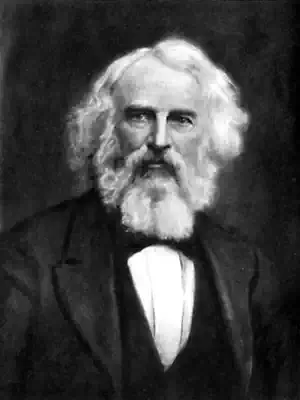
Henry Wadsworth Longfellow
To William E. Channing
To William E. Channing
The pages of thy book I read,
And as I closed each one,
My heart, responding, ever said,
"Servant of God! well done!"
Well done! Thy words are great and bold;
At times they seem to me,
Like Luther's, in the days of old,
Half-battles for the free.
Go on, until this land revokes
The old and chartered Lie,
The feudal curse, whose whips and yokes
Insult humanity.
A voice is ever at thy side
Speaking in tones of might,
Like the prophetic voice, that cried
To John in Patmos, "Write!"
Write! and tell out this bloody tale;
Record this dire eclipse,
This Day of Wrath, this Endless Wail,
This dread Apocalypse!
The pages of thy book I read,
And as I closed each one,
My heart, responding, ever said,
"Servant of God! well done!"
Well done! Thy words are great and bold;
At times they seem to me,
Like Luther's, in the days of old,
Half-battles for the free.
Go on, until this land revokes
The old and chartered Lie,
The feudal curse, whose whips and yokes
Insult humanity.
A voice is ever at thy side
Speaking in tones of might,
Like the prophetic voice, that cried
To John in Patmos, "Write!"
Write! and tell out this bloody tale;
Record this dire eclipse,
This Day of Wrath, this Endless Wail,
This dread Apocalypse!
421
Henry Wadsworth Longfellow
The Witnesses
The Witnesses
In Ocean's wide domains,
Half buried in the sands,
Lie skeletons in chains,
With shackled feet and hands.
Beyond the fall of dews,
Deeper than plummet lies,
Float ships, with all their crews,
No more to sink nor rise.
There the black Slave-ship swims,
Freighted with human forms,
Whose fettered, fleshless limbs
Are not the sport of storms.
These are the bones of Slaves;
They gleam from the abyss;
They cry, from yawning waves,
"We are the Witnesses!"
Within Earth's wide domains
Are markets for men's lives;
Their necks are galled with chains,
Their wrists are cramped with gyves.
Dead bodies, that the kite
In deserts makes its prey;
Murders, that with affright
Scare school-boys from their play!
All evil thoughts and deeds;
Anger, and lust, and pride;
The foulest, rankest weeds,
That choke Life's groaning tide!
These are the woes of Slaves;
They glare from the abyss;
They cry, from unknown graves,
"We are the Witnesses!"
In Ocean's wide domains,
Half buried in the sands,
Lie skeletons in chains,
With shackled feet and hands.
Beyond the fall of dews,
Deeper than plummet lies,
Float ships, with all their crews,
No more to sink nor rise.
There the black Slave-ship swims,
Freighted with human forms,
Whose fettered, fleshless limbs
Are not the sport of storms.
These are the bones of Slaves;
They gleam from the abyss;
They cry, from yawning waves,
"We are the Witnesses!"
Within Earth's wide domains
Are markets for men's lives;
Their necks are galled with chains,
Their wrists are cramped with gyves.
Dead bodies, that the kite
In deserts makes its prey;
Murders, that with affright
Scare school-boys from their play!
All evil thoughts and deeds;
Anger, and lust, and pride;
The foulest, rankest weeds,
That choke Life's groaning tide!
These are the woes of Slaves;
They glare from the abyss;
They cry, from unknown graves,
"We are the Witnesses!"
334
Henry Wadsworth Longfellow
The Slave In The Dismal Swamp
The Slave In The Dismal Swamp
In dark fens of the Dismal Swamp
The hunted Negro lay;
He saw the fire of the midnight camp,
And heard at times a horse's tramp
And a bloodhound's distant bay.
Where will-o'-the-wisps and glow-worms shine,
In bulrush and in brake;
Where waving mosses shroud the pine,
And the cedar grows, and the poisonous vine
Is spotted like the snake;
Where hardly a human foot could pass,
Or a human heart would dare,
On the quaking turf of the green morass
He crouched in the rank and tangled grass,
Like a wild beast in his lair.
A poor old slave, infirm and lame;
Great scars deformed his face;
On his forehead he bore the brand of shame,
And the rags, that hid his mangled frame,
Were the livery of disgrace.
All things above were bright and fair,
All things were glad and free;
Lithe squirrels darted here and there,
And wild birds filled the echoing air
With songs of Liberty!
On him alone was the doom of pain,
From the morning of his birth;
On him alone the curse of Cain
Fell, like a flail on the garnered grain,
And struck him to the earth!
In dark fens of the Dismal Swamp
The hunted Negro lay;
He saw the fire of the midnight camp,
And heard at times a horse's tramp
And a bloodhound's distant bay.
Where will-o'-the-wisps and glow-worms shine,
In bulrush and in brake;
Where waving mosses shroud the pine,
And the cedar grows, and the poisonous vine
Is spotted like the snake;
Where hardly a human foot could pass,
Or a human heart would dare,
On the quaking turf of the green morass
He crouched in the rank and tangled grass,
Like a wild beast in his lair.
A poor old slave, infirm and lame;
Great scars deformed his face;
On his forehead he bore the brand of shame,
And the rags, that hid his mangled frame,
Were the livery of disgrace.
All things above were bright and fair,
All things were glad and free;
Lithe squirrels darted here and there,
And wild birds filled the echoing air
With songs of Liberty!
On him alone was the doom of pain,
From the morning of his birth;
On him alone the curse of Cain
Fell, like a flail on the garnered grain,
And struck him to the earth!
306
Henry Wadsworth Longfellow
The Norman Baron
The Norman Baron
et plus profonde, ou l'interet et l'avarice parlent moins haut
que la raison, dans les instants de chagrin domestique, de
maladie, et de peril de mort, les nobles se repentirent de
posseder des serfs, comme d'une chose peu agreable a Dieu, qui
avait cree tous les hommes a son image.--THIERRY, Conquete de
l'Angleterre.
In his chamber, weak and dying,
Was the Norman baron lying;
Loud, without, the tempest thundered
And the castle-turret shook,
In this fight was Death the gainer,
Spite of vassal and retainer,
And the lands his sires had plundered,
Written in the Doomsday Book.
By his bed a monk was seated,
Who in humble voice repeated
Many a prayer and pater-noster,
From the missal on his knee;
And, amid the tempest pealing,
Sounds of bells came faintly stealing,
Bells, that from the neighboring kloster
Rang for the Nativity.
In the hall, the serf and vassal
Held, that night their Christmas wassail;
Many a carol, old and saintly,
Sang the minstrels and the waits;
And so loud these Saxon gleemen
Sang to slaves the songs of freemen,
That the storm was heard but faintly,
Knocking at the castle-gates.
Till at length the lays they chanted
Reached the chamber terror-haunted,
Where the monk, with accents holy,
Whispered at the baron's ear.
Tears upon his eyelids glistened,
As he paused awhile and listened,
And the dying baron slowly
Turned his weary head to hear.
"Wassail for the kingly stranger
Born and cradled in a manger!
King, like David, priest, like Aaron,
Christ is born to set us free!"
And the lightning showed the sainted
Figures on the casement painted,
And exclaimed the shuddering baron,
"Miserere, Domine!"
In that hour of deep contrition
He beheld, with clearer vision,
Through all outward show and fashion,
Justice, the Avenger, rise.
All the pomp of earth had vanished,
Falsehood and deceit were banished,
Reason spake more loud than passion,
And the truth wore no disguise.
Every vassal of his banner,
Every serf born to his manor,
All those wronged and wretched creatures,
By his hand were freed again.
And, as on the sacred missal
He recorded their dismissal,
Death relaxed his iron features,
And the monk replied, "Amen!"
Many centuries have been numbered
Since in death the baron slumbered
By the convent's sculptured portal,
Mingling with the common dust:
But the good deed, through the ages
Living in historic pages,
Brighter grows and gleams immortal,
Unconsumed by moth or rust.
et plus profonde, ou l'interet et l'avarice parlent moins haut
que la raison, dans les instants de chagrin domestique, de
maladie, et de peril de mort, les nobles se repentirent de
posseder des serfs, comme d'une chose peu agreable a Dieu, qui
avait cree tous les hommes a son image.--THIERRY, Conquete de
l'Angleterre.
In his chamber, weak and dying,
Was the Norman baron lying;
Loud, without, the tempest thundered
And the castle-turret shook,
In this fight was Death the gainer,
Spite of vassal and retainer,
And the lands his sires had plundered,
Written in the Doomsday Book.
By his bed a monk was seated,
Who in humble voice repeated
Many a prayer and pater-noster,
From the missal on his knee;
And, amid the tempest pealing,
Sounds of bells came faintly stealing,
Bells, that from the neighboring kloster
Rang for the Nativity.
In the hall, the serf and vassal
Held, that night their Christmas wassail;
Many a carol, old and saintly,
Sang the minstrels and the waits;
And so loud these Saxon gleemen
Sang to slaves the songs of freemen,
That the storm was heard but faintly,
Knocking at the castle-gates.
Till at length the lays they chanted
Reached the chamber terror-haunted,
Where the monk, with accents holy,
Whispered at the baron's ear.
Tears upon his eyelids glistened,
As he paused awhile and listened,
And the dying baron slowly
Turned his weary head to hear.
"Wassail for the kingly stranger
Born and cradled in a manger!
King, like David, priest, like Aaron,
Christ is born to set us free!"
And the lightning showed the sainted
Figures on the casement painted,
And exclaimed the shuddering baron,
"Miserere, Domine!"
In that hour of deep contrition
He beheld, with clearer vision,
Through all outward show and fashion,
Justice, the Avenger, rise.
All the pomp of earth had vanished,
Falsehood and deceit were banished,
Reason spake more loud than passion,
And the truth wore no disguise.
Every vassal of his banner,
Every serf born to his manor,
All those wronged and wretched creatures,
By his hand were freed again.
And, as on the sacred missal
He recorded their dismissal,
Death relaxed his iron features,
And the monk replied, "Amen!"
Many centuries have been numbered
Since in death the baron slumbered
By the convent's sculptured portal,
Mingling with the common dust:
But the good deed, through the ages
Living in historic pages,
Brighter grows and gleams immortal,
Unconsumed by moth or rust.
391
Henry Wadsworth Longfellow
Tales Of A Wayside Inn : Part 2. The Sicilian's Tale; The Bell of Atri
Tales Of A Wayside Inn : Part 2. The Sicilian's Tale; The Bell of Atri
At Atri in Abruzzo, a small town
Of ancient Roman date, but scant renown,
One of those little places that have run
Half up the hill, beneath a blazing sun,
And then sat down to rest, as if to say,
'I climb no farther upward, come what may,'--
The Re Giovanni, now unknown to fame,
So many monarchs since have borne the name,
Had a great bell hung in the market-place,
Beneath a roof, projecting some small space,
By way of shelter from the sun and rain.
Then rode he through the streets with all his train,
And, with the blast of trumpets loud and long,
Made proclamation, that whenever wrong
Was done to any man, he should but ring
The great bell in the square, and he, the King,
Would cause the Syndic to decide thereon.
Such was the proclamation of King John.
How swift the happy days in Atri sped,
What wrongs were righted, need not here be said.
Suffice it that, as all things must decay,
The hempen rope at length was worn away,
Unravelled at the end, and, strand by strand,
Loosened and wasted in the ringer's hand,
Till one, who noted this in passing by,
Mended the rope with braids of briony,
So that the leaves and tendrils of the vine
Hung like a votive garland at a shrine.
By chance it happened that in Atri dwelt
A knight, with spur on heel and sword in belt,
Who loved to hunt the wild-boar in the woods,
Who loved his falcons with their crimson hoods,
Who loved his hounds and horses, and all sports
And prodigalities of camps and courts;--
Loved, or had loved them; for at last, grown old,
His only passion was the love of gold.
He sold his horses, sold his hawks and hounds,
Rented his vineyards and his garden-grounds,
Kept but one steed, his favorite steed of all,
To starve and shiver in a naked stall,
And day by day sat brooding in his chair,
Devising plans how best to hoard and spare.
At length he said: 'What is the use or need
To keep at my own cost this lazy steed,
Eating his head off in my stables here,
When rents are low and provender is dear?
Let him go feed upon the public ways;
I want him only for the holidays.'
So the old steed was turned into the heat
Of the long, lonely, silent, shadeless street;
And wandered in suburban lanes forlorn,
Barked at by dogs, and torn by brier and thorn.
One afternoon, as in that sultry clime
It is the custom in the summer time,
With bolted doors and window-shutters closed,
The inhabitants of Atri slept or dozed;
When suddenly upon their senses fell
The loud alarm of the accusing bell!
The Syndic started from his deep repose,
Turned on his couch, and listened, and then rose
And donned his robes, and with reluctant pace
Went panting forth into the market-place,
Where the great bell upon its cross-beams swung,
Reiterating with persistent tongue,
In half-articulate jargon, the old song:
'Some one hath done a wrong, hath done a wrong!'
But ere he reached the belfry's light arcade
He saw, or thought he saw, beneath its shade,
No shape of human form of woman born,
But a poor steed dejected and forlorn,
Who with uplifted head and eager eye
Was tugging at the vines of briony.
'Domeneddio!' cried the Syndic straight,
'This is the Knight of Atri's steed of state!
He calls for justice, being sore distressed,
And pleads his cause as loudly as the best.'
Meanwhile from street and lane a noisy crowd
Had rolled together like a summer cloud,
And told the story of the wretched beast
In five-and-twenty different ways at least,
With much gesticulation and appeal
To heathen gods, in their excessive zeal.
The Knight was called and questioned; in reply
Did not confess the fact, did not deny;
Treated the matter as a pleasant jest,
And set at naught the Syndic and the rest,
Maintaining, in an angry undertone,
That he should do what pleased him with his own.
And thereupon the Syndic gravely read
The proclamation of the King; then said:
'Pride goeth forth on horseback grand and gay,
But cometh back on foot, and begs its way;
Fame is the fragrance of heroic deeds,
Of flowers of chivalry and not of weeds!
These are familiar proverbs; but I fear
They never yet have reached your knightly ear.
What fair renown, what honor, what repute
Can come to you from starving this poor brute?
He who serves well and speaks not, merits more
Than they who clamor loudest at the door.
Therefore the law decrees that as this steed
Served you in youth, henceforth you shall take heed
To comfort his old age, and to provide
Shelter in stall, and food and field beside.'
The Knight withdrew abashed; the people all
Led home the steed in triumph to his stall.
The King heard and approved, and laughed in glee,
And cried aloud: 'Right well it pleaseth me!
Church-bells at best but ring us to the door;
But go not in to mass; my bell doth more:
It cometh into court and pleads the cause
Of creatures dumb and unknown to the laws;
And this shall make, in every Christian clime,
The Bell of Atri famous for all time.'
At Atri in Abruzzo, a small town
Of ancient Roman date, but scant renown,
One of those little places that have run
Half up the hill, beneath a blazing sun,
And then sat down to rest, as if to say,
'I climb no farther upward, come what may,'--
The Re Giovanni, now unknown to fame,
So many monarchs since have borne the name,
Had a great bell hung in the market-place,
Beneath a roof, projecting some small space,
By way of shelter from the sun and rain.
Then rode he through the streets with all his train,
And, with the blast of trumpets loud and long,
Made proclamation, that whenever wrong
Was done to any man, he should but ring
The great bell in the square, and he, the King,
Would cause the Syndic to decide thereon.
Such was the proclamation of King John.
How swift the happy days in Atri sped,
What wrongs were righted, need not here be said.
Suffice it that, as all things must decay,
The hempen rope at length was worn away,
Unravelled at the end, and, strand by strand,
Loosened and wasted in the ringer's hand,
Till one, who noted this in passing by,
Mended the rope with braids of briony,
So that the leaves and tendrils of the vine
Hung like a votive garland at a shrine.
By chance it happened that in Atri dwelt
A knight, with spur on heel and sword in belt,
Who loved to hunt the wild-boar in the woods,
Who loved his falcons with their crimson hoods,
Who loved his hounds and horses, and all sports
And prodigalities of camps and courts;--
Loved, or had loved them; for at last, grown old,
His only passion was the love of gold.
He sold his horses, sold his hawks and hounds,
Rented his vineyards and his garden-grounds,
Kept but one steed, his favorite steed of all,
To starve and shiver in a naked stall,
And day by day sat brooding in his chair,
Devising plans how best to hoard and spare.
At length he said: 'What is the use or need
To keep at my own cost this lazy steed,
Eating his head off in my stables here,
When rents are low and provender is dear?
Let him go feed upon the public ways;
I want him only for the holidays.'
So the old steed was turned into the heat
Of the long, lonely, silent, shadeless street;
And wandered in suburban lanes forlorn,
Barked at by dogs, and torn by brier and thorn.
One afternoon, as in that sultry clime
It is the custom in the summer time,
With bolted doors and window-shutters closed,
The inhabitants of Atri slept or dozed;
When suddenly upon their senses fell
The loud alarm of the accusing bell!
The Syndic started from his deep repose,
Turned on his couch, and listened, and then rose
And donned his robes, and with reluctant pace
Went panting forth into the market-place,
Where the great bell upon its cross-beams swung,
Reiterating with persistent tongue,
In half-articulate jargon, the old song:
'Some one hath done a wrong, hath done a wrong!'
But ere he reached the belfry's light arcade
He saw, or thought he saw, beneath its shade,
No shape of human form of woman born,
But a poor steed dejected and forlorn,
Who with uplifted head and eager eye
Was tugging at the vines of briony.
'Domeneddio!' cried the Syndic straight,
'This is the Knight of Atri's steed of state!
He calls for justice, being sore distressed,
And pleads his cause as loudly as the best.'
Meanwhile from street and lane a noisy crowd
Had rolled together like a summer cloud,
And told the story of the wretched beast
In five-and-twenty different ways at least,
With much gesticulation and appeal
To heathen gods, in their excessive zeal.
The Knight was called and questioned; in reply
Did not confess the fact, did not deny;
Treated the matter as a pleasant jest,
And set at naught the Syndic and the rest,
Maintaining, in an angry undertone,
That he should do what pleased him with his own.
And thereupon the Syndic gravely read
The proclamation of the King; then said:
'Pride goeth forth on horseback grand and gay,
But cometh back on foot, and begs its way;
Fame is the fragrance of heroic deeds,
Of flowers of chivalry and not of weeds!
These are familiar proverbs; but I fear
They never yet have reached your knightly ear.
What fair renown, what honor, what repute
Can come to you from starving this poor brute?
He who serves well and speaks not, merits more
Than they who clamor loudest at the door.
Therefore the law decrees that as this steed
Served you in youth, henceforth you shall take heed
To comfort his old age, and to provide
Shelter in stall, and food and field beside.'
The Knight withdrew abashed; the people all
Led home the steed in triumph to his stall.
The King heard and approved, and laughed in glee,
And cried aloud: 'Right well it pleaseth me!
Church-bells at best but ring us to the door;
But go not in to mass; my bell doth more:
It cometh into court and pleads the cause
Of creatures dumb and unknown to the laws;
And this shall make, in every Christian clime,
The Bell of Atri famous for all time.'
249
Henry Van Dyke
A Scrap of Paper
A Scrap of Paper
"Will you go to war just for a scrap of paper?" -- Question
of the German Chancellor to the British Ambassador,
August 5, 1914.
A mocking question! Britain's answer came
Swift as the light and searching as the flame.
"Yes, for a scrap of paper we will fight
Till our last breath, and God defend the right!
"A scrap of paper where a name is set
Is strong as duty's pledge and honor's debt.
"A scrap of paper holds for man and wife
The sacrament of love, the bond of life.
"A scrap of paper may be Holy Writ
With God's eternal word to hallow it.
"A scrap of paper binds us both to stand
Defenders of a neutral neighbor land.
"By God, by faith, by honor, yes! We fight
To keep our name upon that paper white."
"Will you go to war just for a scrap of paper?" -- Question
of the German Chancellor to the British Ambassador,
August 5, 1914.
A mocking question! Britain's answer came
Swift as the light and searching as the flame.
"Yes, for a scrap of paper we will fight
Till our last breath, and God defend the right!
"A scrap of paper where a name is set
Is strong as duty's pledge and honor's debt.
"A scrap of paper holds for man and wife
The sacrament of love, the bond of life.
"A scrap of paper may be Holy Writ
With God's eternal word to hallow it.
"A scrap of paper binds us both to stand
Defenders of a neutral neighbor land.
"By God, by faith, by honor, yes! We fight
To keep our name upon that paper white."
354

Henry Lawson
Victory
Victory
The schools marched in procession in happiness and pride,
The city bands before them, the soldiers marched beside;
Oh, starched white frocks and sashes and suits that high schools wear,
The boy scout and the boy lout and all the rest were there,
And all flags save Australia's flag waved high in sun and air!
The Girls' High School, and Grammar School and colleges of stone
Flew all flags from their walls and towers – all flags except our own!
And down here in the alleys where Premiers never come,
Nor candidate, nor delegate, nor sound of fife and drum,
They packed them on the lorries, seared children of the slum.
Each face seemed soiled and faded, though scrubbed with household soap,
And older than a mother-face, but with less sign of hope:
The knowledge of things evil, of drunken wreck and hag,
Of sordid sounds and voices, the everlasting "nag" –
Oh, men without a battle-song! Oh, men without a flag!
They breed a nation's strength behind each shabby little door,
Where rent-collectors knock for aye, and Christ shall knock no more;
The sounds that hurt the mother's heart affright the children there –
Alarm-clocks on an empty tin, the tin tray on a chair;
For weary folk are hard to wake in hot and heavy air.
They sang in Pride's Procession that Mammon might endure –
Oh, wistful singing faces, the children of the poor!
Oh, hideous fiends of commerce! Oh, ghouls of business strife!
I wait the coming of the things to wake the land to life;
The flag without a cross or bar, the drum without a fife!
The schools marched in procession in happiness and pride,
The city bands before them, the soldiers marched beside;
Oh, starched white frocks and sashes and suits that high schools wear,
The boy scout and the boy lout and all the rest were there,
And all flags save Australia's flag waved high in sun and air!
The Girls' High School, and Grammar School and colleges of stone
Flew all flags from their walls and towers – all flags except our own!
And down here in the alleys where Premiers never come,
Nor candidate, nor delegate, nor sound of fife and drum,
They packed them on the lorries, seared children of the slum.
Each face seemed soiled and faded, though scrubbed with household soap,
And older than a mother-face, but with less sign of hope:
The knowledge of things evil, of drunken wreck and hag,
Of sordid sounds and voices, the everlasting "nag" –
Oh, men without a battle-song! Oh, men without a flag!
They breed a nation's strength behind each shabby little door,
Where rent-collectors knock for aye, and Christ shall knock no more;
The sounds that hurt the mother's heart affright the children there –
Alarm-clocks on an empty tin, the tin tray on a chair;
For weary folk are hard to wake in hot and heavy air.
They sang in Pride's Procession that Mammon might endure –
Oh, wistful singing faces, the children of the poor!
Oh, hideous fiends of commerce! Oh, ghouls of business strife!
I wait the coming of the things to wake the land to life;
The flag without a cross or bar, the drum without a fife!
313
Henry Lawson
The Triumph of the People
The Triumph of the People
LO, the gods of Vice and Mammon from their pinnacles are hurled
By the workers’ new religion, which is oldest in the world;
And the earth will feel her children treading firmly on the sod,
For the triumph of the People is the victory of God.
Not the victory of Churches, nor of Punishment and Wrath,
Not the triumph of the sceptic, throwing shadows on the path,
But of Christ and love and mercy o’er the Monarch and the Rod,
For the harvest of the Saviour is the aftermath of God.
O the Light of Revelation, since the reign of Care began,
Has been shining through the ages on the darkened eyes of man.
And the willing slave of Error—he is senseless as a clod—
For the simple Book of Nature is the written scroll of God.
Who will dare to say the sunlight on the pregnant Earth was shed
That the few might rest and fatten, while the many fight for bread?
Lo, there springs a common garden, where the foot of Greed hath trod,
For the victory of Labour was the prophecy of God.
Mother Earth, in coming seasons, shall fulfil her motherhood;
Then the children of her bosom never more shall want for food,
And oppression shall no longer grind the people iron-shod;
For the lifted hand of Labour is the upraised hand of God.
LO, the gods of Vice and Mammon from their pinnacles are hurled
By the workers’ new religion, which is oldest in the world;
And the earth will feel her children treading firmly on the sod,
For the triumph of the People is the victory of God.
Not the victory of Churches, nor of Punishment and Wrath,
Not the triumph of the sceptic, throwing shadows on the path,
But of Christ and love and mercy o’er the Monarch and the Rod,
For the harvest of the Saviour is the aftermath of God.
O the Light of Revelation, since the reign of Care began,
Has been shining through the ages on the darkened eyes of man.
And the willing slave of Error—he is senseless as a clod—
For the simple Book of Nature is the written scroll of God.
Who will dare to say the sunlight on the pregnant Earth was shed
That the few might rest and fatten, while the many fight for bread?
Lo, there springs a common garden, where the foot of Greed hath trod,
For the victory of Labour was the prophecy of God.
Mother Earth, in coming seasons, shall fulfil her motherhood;
Then the children of her bosom never more shall want for food,
And oppression shall no longer grind the people iron-shod;
For the lifted hand of Labour is the upraised hand of God.
284
Henry Lawson
The Spirits for Good
The Spirits for Good
We come with peace and reason,
We come with love and light,
To banish black self-treason
And everlasting night.
We know no god nor devil,
We neither drive nor lead—
We come to banish evil
In thought as well as deed.
And this our grandest mission,
And this our purest worth;
To banish superstition,
The blackest curse on earth.
We come to pass no sentence,
For ours is not the power—
The coward’s vain repentance
But wastes the waiting hour.
’Tis not for us to lengthen
The years of wasted lives;
We come to help and strengthen
The goodness that survives.
We promise nought hereafter,
We cannot conquer pain,
But work, and rest, and laughter,
Will soothe the tortured brain.
That which is lost, we cannot
Restore to any one—
But Truth and Right must triumph,
And Justice must be done!
We come in many guises;
But every one is plain
To each pure thought that rises
Again and yet again.
We are ourselves and human,
And ours our destiny;
The souls of Man and Woman
Divorced by Vanity.
We come with peace and reason,
We come with love and light,
To banish black self-treason
And everlasting night.
We know no god nor devil,
We neither drive nor lead—
We come to banish evil
In thought as well as deed.
And this our grandest mission,
And this our purest worth;
To banish superstition,
The blackest curse on earth.
We come to pass no sentence,
For ours is not the power—
The coward’s vain repentance
But wastes the waiting hour.
’Tis not for us to lengthen
The years of wasted lives;
We come to help and strengthen
The goodness that survives.
We promise nought hereafter,
We cannot conquer pain,
But work, and rest, and laughter,
Will soothe the tortured brain.
That which is lost, we cannot
Restore to any one—
But Truth and Right must triumph,
And Justice must be done!
We come in many guises;
But every one is plain
To each pure thought that rises
Again and yet again.
We are ourselves and human,
And ours our destiny;
The souls of Man and Woman
Divorced by Vanity.
234
Henry Lawson
The Patriotic League
The Patriotic League
Behold! the biased foes of Right
Are conscious of their danger,
They’re startled by the dawning light,
So very long a stranger.
And fearing for their rotting laws—
Whose reign is nearly ended—
To study out the People’s cause
At last they’ve condescended.
“And this they call the ‘People’s Cause’,
Why this is insurrection!
They would revoke the very laws
We made for our protection!
An equal right with us they claim!
They’ll rob us by and by, sir!
We’ll form a league and steal a name
And tell another lie, sir.”
They took to gloss a base intrigue
A name that was demotic.
They stole a name and formed a league
And called it “Patriotic”.
They’ve resurrected ancient lies—
The world had most forgotten—
The liars think the world will rise
To back a Cause that’s rotten.
I know their creed, and know it well,
Too mean are its creators
To hope for heaven, or fear the hell
They’d make for agitators.
Old as the hills—and quite as dense
Though shaking like a jelly.
Time honoured to magnificence,
Religion of the Belly!
Behold! the biased foes of Right
Are conscious of their danger,
They’re startled by the dawning light,
So very long a stranger.
And fearing for their rotting laws—
Whose reign is nearly ended—
To study out the People’s cause
At last they’ve condescended.
“And this they call the ‘People’s Cause’,
Why this is insurrection!
They would revoke the very laws
We made for our protection!
An equal right with us they claim!
They’ll rob us by and by, sir!
We’ll form a league and steal a name
And tell another lie, sir.”
They took to gloss a base intrigue
A name that was demotic.
They stole a name and formed a league
And called it “Patriotic”.
They’ve resurrected ancient lies—
The world had most forgotten—
The liars think the world will rise
To back a Cause that’s rotten.
I know their creed, and know it well,
Too mean are its creators
To hope for heaven, or fear the hell
They’d make for agitators.
Old as the hills—and quite as dense
Though shaking like a jelly.
Time honoured to magnificence,
Religion of the Belly!
284
Henry Lawson
The Legend of Mammon Castle
The Legend of Mammon Castle
IN THE days that will be olden after many years are gone,
Ere the world emerged from darkness floating out into the dawn,
On a mountain rising steeply from the depth of marsh and wood
Raised in scorn above the lowlands Mammon Castle proudly stood—
Mammon Castle, built of marble that was cut and reared with pain
By the poor and starving wretches who were serfs on that domain—
All the jewel-studded windows shone at sunset like a fire,
And a diamond was flashing from the needle of the spire.
Now the nobles held the castle by a title that was old,
And they drank from crystal goblets and they ate from plates of gold;
The coffers of the castle they were plenished by the thralls,
And many were the revels that were held in Mammon’s halls.
And the plunder from the toilers more than paid for silks and wine,
So the flower-beds were bordered with the jewels of the mine,
All the serfs were taught to worship both the lady and the lord,
And the nobles taught their children to be wiser far than God.
But a vassal preached sedition and in a gloomy hour
Came the wild and haggard vassals to the gate of Mammon Tower;
They asked for food and shelter and were answered by a blow,
And, rising in their anger, soon they laid the castle low.
The jewels of the castle went to buy the people bread,
And according to his labour was the toiler clothed and fed.
And with the wood and marble—my dreaming tells me so—
Many little homes were builded in the valleys down below.
IN THE days that will be olden after many years are gone,
Ere the world emerged from darkness floating out into the dawn,
On a mountain rising steeply from the depth of marsh and wood
Raised in scorn above the lowlands Mammon Castle proudly stood—
Mammon Castle, built of marble that was cut and reared with pain
By the poor and starving wretches who were serfs on that domain—
All the jewel-studded windows shone at sunset like a fire,
And a diamond was flashing from the needle of the spire.
Now the nobles held the castle by a title that was old,
And they drank from crystal goblets and they ate from plates of gold;
The coffers of the castle they were plenished by the thralls,
And many were the revels that were held in Mammon’s halls.
And the plunder from the toilers more than paid for silks and wine,
So the flower-beds were bordered with the jewels of the mine,
All the serfs were taught to worship both the lady and the lord,
And the nobles taught their children to be wiser far than God.
But a vassal preached sedition and in a gloomy hour
Came the wild and haggard vassals to the gate of Mammon Tower;
They asked for food and shelter and were answered by a blow,
And, rising in their anger, soon they laid the castle low.
The jewels of the castle went to buy the people bread,
And according to his labour was the toiler clothed and fed.
And with the wood and marble—my dreaming tells me so—
Many little homes were builded in the valleys down below.
207
Henry Lawson
The Labour Agitator
The Labour Agitator
LET the liar call me liar,
And the robber call me thief.
They can only fan the fire
That is born of my belief.
While I’m speaking, while I’m writing,
To reform the wrongful laws,
Well I know that I am fighting
For the grand old Cause.
See the army of the rebels
Marching on for evermore.
We are countless as the pebbles
That are strewn along the shore.
Agitating, agitating,
Till the Truth has sealed the fate
Of the wrongs that I am hating
With the grand old Hate.
Though no battle banner rustles
In a smoke that blurs the blue,
As when “heroes” poured from Brussels
To the field of Waterloo,
Though we do not hear the rattle
Of the rifles in the wars,
There is glory in the battle
For the grand old Cause.
See the army of the rebels
Marching on for evermore.
We are countless as the pebbles
That are strewn along the shore.
Agitating, agitating,
Till the Truth has sealed the fate
Of the wrongs that I am hating
With the grand old Hate.
No! I look not to the reaping
In the dynasty of men,
For I know that I’ll be sleeping
In a slandered grave e’er then.
Till his right to man is given
We’ll rebel, and we’ll rebel
As we would rebel in heaven
If it proved a hell.
See the army of the rebels
Marching on for evermore.
We are countless as the pebbles
That are strewn along the shore.
Agitating, agitating,
Till the Truth has sealed the fate
Of the wrongs that I am hating
With the grand old Hate.
No! There’s neither creed nor nation
Where the Labour flag’s unfurled,
For the Labour agitation
Breaks the barriers of the world.
Let the rulers fly in terror
With their scornful lips uncurled,
One by one the gods of error
From their thrones are hurled.
See the army of the rebels
Marching on for evermore.
We are countless as the pebbles
That are strewn along the shore.
Agitating, agitating,
Till the Truth has sealed the fate
Of the wrongs that I am hating
With the grand old Hate.
LET the liar call me liar,
And the robber call me thief.
They can only fan the fire
That is born of my belief.
While I’m speaking, while I’m writing,
To reform the wrongful laws,
Well I know that I am fighting
For the grand old Cause.
See the army of the rebels
Marching on for evermore.
We are countless as the pebbles
That are strewn along the shore.
Agitating, agitating,
Till the Truth has sealed the fate
Of the wrongs that I am hating
With the grand old Hate.
Though no battle banner rustles
In a smoke that blurs the blue,
As when “heroes” poured from Brussels
To the field of Waterloo,
Though we do not hear the rattle
Of the rifles in the wars,
There is glory in the battle
For the grand old Cause.
See the army of the rebels
Marching on for evermore.
We are countless as the pebbles
That are strewn along the shore.
Agitating, agitating,
Till the Truth has sealed the fate
Of the wrongs that I am hating
With the grand old Hate.
No! I look not to the reaping
In the dynasty of men,
For I know that I’ll be sleeping
In a slandered grave e’er then.
Till his right to man is given
We’ll rebel, and we’ll rebel
As we would rebel in heaven
If it proved a hell.
See the army of the rebels
Marching on for evermore.
We are countless as the pebbles
That are strewn along the shore.
Agitating, agitating,
Till the Truth has sealed the fate
Of the wrongs that I am hating
With the grand old Hate.
No! There’s neither creed nor nation
Where the Labour flag’s unfurled,
For the Labour agitation
Breaks the barriers of the world.
Let the rulers fly in terror
With their scornful lips uncurled,
One by one the gods of error
From their thrones are hurled.
See the army of the rebels
Marching on for evermore.
We are countless as the pebbles
That are strewn along the shore.
Agitating, agitating,
Till the Truth has sealed the fate
Of the wrongs that I am hating
With the grand old Hate.
257
Henry Lawson
The Hymn of the Socialists
The Hymn of the Socialists
By the bodies and minds and souls that rot in a common stye
In the city’s offal-holes, where the dregs of its horrors lie —
By the prayers that bubble out, but never ascend to God,
We swear the tyrants of earth to rout, with tongue and with pen and sword!
By the child that sees the light, where the pestilent air stagnates,
By the woman, worn and white, who under the street-lamp waits,
By the horror of vice that thrives in the dens of the wretched poor,
We swear to strike when the time arrives, for all that is good and pure!
By the rights that were always ours — the rights that we ne’er enjoyed,
And the gloomy cloud that lowers on the brow of the unemployed;
By the struggling mothers and wives — by girls in the streets of sin —
We swear to strike when the time arrives, for our kind and our kith and kin!
By our burning hate for men who rob us of ours by might,
And drive to the slum and den, the poor from the sun and light,
By the hell-born greed that drives our sons o’er the world to roam,
We swear to strike when the time arrives, and strike for our friends and home.
By the little of manhood left in a world of want and sin,
By the rift in the dark cloud’s brow where the light still struggles in,
By the love that scarce survives in a stream that is sluggish and thin,
We swear to work till the time arrives for ourselves and our kind and kin.
The little of love may dry in its stream that scarcely flows,
The little of manhood die and the rift in the dark clouds close,
And hope may vanish from earth and all that is pure and bright,
But we swear to strike eer that time has birth with the whole of our gathered might!
By the bodies and minds and souls that rot in a common stye
In the city’s offal-holes, where the dregs of its horrors lie —
By the prayers that bubble out, but never ascend to God,
We swear the tyrants of earth to rout, with tongue and with pen and sword!
By the child that sees the light, where the pestilent air stagnates,
By the woman, worn and white, who under the street-lamp waits,
By the horror of vice that thrives in the dens of the wretched poor,
We swear to strike when the time arrives, for all that is good and pure!
By the rights that were always ours — the rights that we ne’er enjoyed,
And the gloomy cloud that lowers on the brow of the unemployed;
By the struggling mothers and wives — by girls in the streets of sin —
We swear to strike when the time arrives, for our kind and our kith and kin!
By our burning hate for men who rob us of ours by might,
And drive to the slum and den, the poor from the sun and light,
By the hell-born greed that drives our sons o’er the world to roam,
We swear to strike when the time arrives, and strike for our friends and home.
By the little of manhood left in a world of want and sin,
By the rift in the dark cloud’s brow where the light still struggles in,
By the love that scarce survives in a stream that is sluggish and thin,
We swear to work till the time arrives for ourselves and our kind and kin.
The little of love may dry in its stream that scarcely flows,
The little of manhood die and the rift in the dark clouds close,
And hope may vanish from earth and all that is pure and bright,
But we swear to strike eer that time has birth with the whole of our gathered might!
208
Henry Lawson
The Briny Grave
The Briny Grave
You wonder why so many would be buried in the sea,
In this world of froth and bubble,
But I don’t wonder, for it seems to me
That it saves such a lot of trouble.
And there ain’t no undertaker—
Oh! there ain’t no order that your friends can give
On the quiet to the coffin-maker—
To a gimcrack coffin-maker,
They make no differ twixt the absentee swell
And the clerk that cut from a “shortage”—
Oh! there ain’t no pauper funer-el,
And there ain’t no “impressive cortege.”
It may be a chap from the for’ard crowd,
Or a member of the British Peerage,
But they sew his nibs in a canvas shroud
Just the same as the bloke from the steerage—
As that poor bloke from the steerage.
There ain’t no need for a gravedigger there,
For you dig your own grave! Lord love yer!
And there ain’t no use for a headstone fair
When the waters close above yer!
The little headstone where they come to weep,
May be right for the land’s dry-rotters,
But you rest just as sound when you’re anchored deep
With the pigiron at your trotters—
(Our fathers had iron at their trotters).
The sea is democratic the wide world round,
And it don’t give a hang for no man,
There ain’t no Church of England burial ground,
Nor yet there ain’t no Roman.
Orthodox and het’rodox by wreck-strewn cliffs,
At peace in the stormiest weather,
Might bob up and down like two brother “stiffs,”
And rest in one shark together—
And mix up their bones together.
The bare-headed skipper is as good any day
As an authorised shifter of sin is,
And the tear of shipmate is better anyway
Than the tear of the next-of-kin is.
It saves your friends, and it fills your needs,
It is best when all is reckoned,
And she can’t come there in her widder weeds,
With her eyes on a likely second—
And a spot for the likely second.
You wonder why so many would be buried in the sea,
In this world of froth and bubble,
But I don’t wonder, for it seems to me
That it saves such a lot of trouble.
And there ain’t no undertaker—
Oh! there ain’t no order that your friends can give
On the quiet to the coffin-maker—
To a gimcrack coffin-maker,
They make no differ twixt the absentee swell
And the clerk that cut from a “shortage”—
Oh! there ain’t no pauper funer-el,
And there ain’t no “impressive cortege.”
It may be a chap from the for’ard crowd,
Or a member of the British Peerage,
But they sew his nibs in a canvas shroud
Just the same as the bloke from the steerage—
As that poor bloke from the steerage.
There ain’t no need for a gravedigger there,
For you dig your own grave! Lord love yer!
And there ain’t no use for a headstone fair
When the waters close above yer!
The little headstone where they come to weep,
May be right for the land’s dry-rotters,
But you rest just as sound when you’re anchored deep
With the pigiron at your trotters—
(Our fathers had iron at their trotters).
The sea is democratic the wide world round,
And it don’t give a hang for no man,
There ain’t no Church of England burial ground,
Nor yet there ain’t no Roman.
Orthodox and het’rodox by wreck-strewn cliffs,
At peace in the stormiest weather,
Might bob up and down like two brother “stiffs,”
And rest in one shark together—
And mix up their bones together.
The bare-headed skipper is as good any day
As an authorised shifter of sin is,
And the tear of shipmate is better anyway
Than the tear of the next-of-kin is.
It saves your friends, and it fills your needs,
It is best when all is reckoned,
And she can’t come there in her widder weeds,
With her eyes on a likely second—
And a spot for the likely second.
252
Henry Lawson
The Australian Marseillaise
The Australian Marseillaise
Sing the strong, proud song of Labour,
Toss the ringing music high;
Liberty’s a nearer neighbour
Than she was in days gone by.
Workmen’s weary wives and daughters
Sing the songs of liberty;
Men hail men across the waters,
Men reply across the sea.
We are marching on and onward
To the silver-streak of dawn,
To the dynasty of mankind
We are marching on.
Long the rich have been protected
By the walls that can’t endure;
By the walls that they erected
To divide them from the poor.
Crumbling now, they should not trust them,
For their end is drawing near;
Walls of Cant and walls of Custom,
Walls of Ignorance and Fear.
Tyrants, grip your weapons firmer,
Grip them firmly by the helves;
For the poor begin to murmur
Loudly now among themselves.
Hear us dare to say that Heaven
Gave us equal rights with you,
Dare to say the world was given
Unto all and not the few.
Tell us that the law has risen,
Make us bend beneath its sway,
Throw our leaders into prison,
Wrong us in the light of day.
Drive us to our dens, forgetting
All our woe as greed forgets,
While our weapons we are whetting
On your levelled bayonets.
Treat us like the beasts you’d make us,
Pen us close in wretched sties.
’Til our patience shall forsake us,
And like wolves we will arise.
Louder still for this shall rattle
Rifle shots, and sword blades ring
On the blood-wet fields of battle
In the days of reckoning.
We shall rise to prove us human,
Worthy of a human life,
When our starved and maddened women
Lead our armies on to strife.
When our war hymns wake the valleys,
And the rushing missiles shriek
From your barricaded alleys,
’Til your cannon cease to speak.
Then when Mammon Castle crashes
To the earth and trampled lies,
Then from out the blood and ashes
True Republics shall arise.
Then the world shall rest a season
(First since first the world began)
In the reign of right and reason
And the dynasty of man.
Sing the strong, proud song of Labour,
Toss the ringing music high;
Liberty’s a nearer neighbour
Than she was in days gone by.
Workmen’s weary wives and daughters
Sing the songs of liberty;
Men hail men across the waters,
Men reply across the sea.
We are marching on and onward
To the silver-streak of dawn,
To the dynasty of mankind
We are marching on.
Long the rich have been protected
By the walls that can’t endure;
By the walls that they erected
To divide them from the poor.
Crumbling now, they should not trust them,
For their end is drawing near;
Walls of Cant and walls of Custom,
Walls of Ignorance and Fear.
Tyrants, grip your weapons firmer,
Grip them firmly by the helves;
For the poor begin to murmur
Loudly now among themselves.
Hear us dare to say that Heaven
Gave us equal rights with you,
Dare to say the world was given
Unto all and not the few.
Tell us that the law has risen,
Make us bend beneath its sway,
Throw our leaders into prison,
Wrong us in the light of day.
Drive us to our dens, forgetting
All our woe as greed forgets,
While our weapons we are whetting
On your levelled bayonets.
Treat us like the beasts you’d make us,
Pen us close in wretched sties.
’Til our patience shall forsake us,
And like wolves we will arise.
Louder still for this shall rattle
Rifle shots, and sword blades ring
On the blood-wet fields of battle
In the days of reckoning.
We shall rise to prove us human,
Worthy of a human life,
When our starved and maddened women
Lead our armies on to strife.
When our war hymns wake the valleys,
And the rushing missiles shriek
From your barricaded alleys,
’Til your cannon cease to speak.
Then when Mammon Castle crashes
To the earth and trampled lies,
Then from out the blood and ashes
True Republics shall arise.
Then the world shall rest a season
(First since first the world began)
In the reign of right and reason
And the dynasty of man.
256
Henry Lawson
Otherside
Otherside
Somewhere in the mystic future, on the road to Paradise,
There’s a very pleasant country that I’ve dreamed of once or twice,
It has inland towns, and cities by the ocean’s rocky shelves,
But the people of the country differ somewhat from ourselves;
It is many leagues beyond us, and they call it Otherside.
And there is among its people more Humanity than Pride.
Now, a social system never was complete, without a flaw,
And among the Othersiders there is love and gold and war.
But if one is fairly beaten he can turn upon the track,
For in such a case there isn’t any shame in going back;
And a broken-hearted mortal never thinks of suicide,
For he finds amongst his brothers more Humanity than Pride.
And the lords of that creation never scoff at simple things,
Never scorn the lad who’s tethered to his mother’s apron-strings.
He will speak of “home” and “mother” without shame when he’s inclined,
Yet the blow he strikes in battle mostly leaves a mark behind.
They are brave against invasion; they can die in Otherside,
Though there is among the people more Humanity than Pride.
Poets sing in simple language that a child might understand,
Yet their songs are sung for ages by the elders of the land;
And the people know that Freedom never shall be wanting guards,
For the foremost in the vanguard waves the banner of the Bards.
O the poets march together, and at home in peace abide,
For there is amongst the people more Humanity than Pride.
And when I am very weary, ’neath a load of “worldly care”,
There are times when I’ve a longing just to hump my bluey there;
But alone I could not reach it, for the track is barred to one—
I must take the nations with me—all mankind must go, or none—
And we’d trample one another on the way to Otherside,
For I find among my brothers less Humanity than Pride.
Somewhere in the mystic future, on the road to Paradise,
There’s a very pleasant country that I’ve dreamed of once or twice,
It has inland towns, and cities by the ocean’s rocky shelves,
But the people of the country differ somewhat from ourselves;
It is many leagues beyond us, and they call it Otherside.
And there is among its people more Humanity than Pride.
Now, a social system never was complete, without a flaw,
And among the Othersiders there is love and gold and war.
But if one is fairly beaten he can turn upon the track,
For in such a case there isn’t any shame in going back;
And a broken-hearted mortal never thinks of suicide,
For he finds amongst his brothers more Humanity than Pride.
And the lords of that creation never scoff at simple things,
Never scorn the lad who’s tethered to his mother’s apron-strings.
He will speak of “home” and “mother” without shame when he’s inclined,
Yet the blow he strikes in battle mostly leaves a mark behind.
They are brave against invasion; they can die in Otherside,
Though there is among the people more Humanity than Pride.
Poets sing in simple language that a child might understand,
Yet their songs are sung for ages by the elders of the land;
And the people know that Freedom never shall be wanting guards,
For the foremost in the vanguard waves the banner of the Bards.
O the poets march together, and at home in peace abide,
For there is amongst the people more Humanity than Pride.
And when I am very weary, ’neath a load of “worldly care”,
There are times when I’ve a longing just to hump my bluey there;
But alone I could not reach it, for the track is barred to one—
I must take the nations with me—all mankind must go, or none—
And we’d trample one another on the way to Otherside,
For I find among my brothers less Humanity than Pride.
258
Henry Lawson
One Hundred and Three
One Hundred and Three
With the frame of a man, and the face of a boy, and a manner strangely wild,
And the great, wide, wondering, innocent eyes of a silent-suffering child;
With his hideous dress and his heavy boots, he drags to Eternity—
And the Warder says, in a softened tone: ‘Keep step, One Hundred and Three.’
’Tis a ghastly travesty of drill—or a ghastly farce of work—
But One Hundred and Three, he catches step with a start, a shuffle and jerk.
’Tis slow starvation in separate cells, and a widow’s son is he,
And the widow, she drank before he was born—(Keep step, One Hundred and Three!)
They shut a man in the four-by-eight, with a six-inch slit for air,
Twenty-three hours of the twenty-four, to brood on his virtues there.
And the dead stone walls and the iron door close in as an iron band
On eyes that followed the distant haze far out on the level land.
Bread and water and hominy, and a scrag of meat and a spud,
A Bible and thin flat book of rules, to cool a strong man’s blood;
They take the spoon from the cell at night—and a stranger might think it odd;
But a man might sharpen it on the floor, and go to his own Great God.
One Hundred and Three, it is hard to believe that you saddled your horse at dawn;
There were girls that rode through the bush at eve, and girls who lolled on the lawn.
There were picnic parties in sunny bays, and ships on the shining sea;
There were foreign ports in the glorious days—(Hold up, One Hundred and Three!)
A man came out at exercise time from one of the cells to-day:
’Twas the ghastly spectre of one I knew, and I thought he was far away;
We dared not speak, but he signed ‘Farewell—fare—well,’ and I knew by this
And the number stamped on his clothes (not sewn) that a heavy sentence was his.
Where five men do the work of a boy, with warders not to see,
It is sad and bad and uselessly mad, it is ugly as it can be,
From the flower-beds laid to fit the gaol, in circle and line absurd,
To the gilded weathercock on the church, agape like a strangled bird.
Agape like a strangled bird in the sun, and I wonder what he could see?
The Fleet come in, and the Fleet go out? (Hold up, One Hundred and Three!)
The glorious sea, and the bays and Bush, and the distant mountains blue
(Keep step, keep step, One Hundred and Three, for my lines are halting too)
The great, round church with its volume of sound, where we dare not turn our eyes—
They take us there from our separate hells to sing of Paradise.
In all the creeds there is hope and doubt, but of this there is no doubt:
That starving prisoners faint in church, and the warders carry them out.
They double-lock at four o’clock and the warders leave their keys,
And the Governor strolls with a friend at eve through his stone conservatories;
Their window slits are like idiot mouths with square stone chins adrop,
And the weather-stains for the dribble, and the dead flat foreheads atop.
No light save the lights in the yard beneath the clustering lights of the Lord—
And the lights turned in to the window slits of the Observation Ward.
(They eat their meat with their fingers there in a madness starved and dull—
Oh! the padded cells and the “O—b—s” are nearly always full.)
Rules, regulations—red-tape and rules; all and alike they bind:
Under ‘separate treatment ’ place the deaf; in the dark cell shut the blind!
And somewhere down in his sandstone tomb, with never a word to save,
One Hundred and Three is keeping step, as he’ll keep it to his grave.
The press is printing its smug, smug lies, and paying its shameful debt—
It speaks of the comforts that prisoners have, and ‘holidays’ prisoners get.
The visitors come with their smug, smug smiles through the gaol on a working day,
And the public hears with its large, large ears what authorities have to say.
They lay their fingers on well-hosed walls, and they tread on the polished floor;
They peep in the generous shining cans with their ration Number Four.
And the visitors go with their smug, smug smiles; the reporters’ work is done;
Stand up! my men, who have done your time on ration Number One!
Speak up, my men! I was never the man to keep my own bed warm,
I have jogged with you round in the Fools’ Parade, and I’ve worn your uniform;
I’ve seen you live, and I’ve seen you die, and I’ve seen your reason fail—
I’ve smuggled tobacco and loosened my tongue—and I’ve been punished in gaol.
Ay! clang the spoon on the iron floor, and shove in the bread with your toe,
And shut with a bang the iron door, and clank the bolt—just so,
With an ignorant oath for a last good-night—or the voice of a filthy thought.
By the Gipsy Blood you have caught a man you’ll be sorry that ever you caught.
He shall be buried alive without meat, for a day and a night unheard
If he speak to a fellow prisoner, though he die for want of a word.
He shall be punished, and he shall be starved, and he shall in darkness rot,
He shall be murdered body and soul—and God said, ‘Thou shalt not!’
I’ve seen the remand-yard men go out, by the subway out of the yard—
And I’ve seen them come in with a foolish grin and a sentence of Three Years Hard.
They send a half-starved man to the court, where the hearts of men they carve—
Then feed him up in the hospital to give him the strength to starve.
You get the gaol-dust in your throat, in your skin the dead gaol-white;
You get the gaol-whine in your voice and in every letter you write.
And in your eyes comes the bright gaol-light—not the glare of the world’s distraught,
Not the hunted look, nor the guilty look, but the awful look of the Caught.
There was one I met—’twas a mate of mine—in a gaol that is known to us;
He died—and they said it was ‘heart disease’; but he died for want of a truss.
I’ve knelt at the head of the pallid dead, where the living dead were we,
And I’ve closed the yielding lids with my thumbs—(Keep step, One Hundred and
Three!)
A criminal face is rare in gaol, where all things else are ripe—
It is higher up in the social scale that you’ll find the criminal type.
But the kindness of man to man is great when penned in a sandstone pen—
The public call us the ‘criminal class,’ but the warders call us ‘the men.’
The brute is a brute, and a kind man kind, and the strong heart does not fail—
A crawler’s a crawler everywhere, but a man is a man in gaol!
For forced ‘desertion’ or drunkenness, or a law’s illegal debt,
While never a man who was a man was ‘reformed’ by punishment yet.
The champagne lady comes home from the course in charge of the criminal swell—
They carry her in from the motor car to the lift in the Grand Hotel.
But armed with the savage Habituals Act they are waiting for you and me,
And the drums, they are beating loud and near. (Keep step, One Hundred and Three!)
The clever scoundrels are all outside, and the moneyless mugs in gaol—
Men do twelve months for a mad wife’s lies or Life for a strumpet’s tale.
If the people knew what the warders know, and felt as the prisoners feel—
If the people knew, they would storm their gaols as they stormed the old Bastile.
And the cackling, screaming half-human hens who were never mothers nor wives
Would send their sisters to such a hell for the term of their natural lives,
Where laws are made in a Female Fit in the Land of the Crazy Fad,
And drunkards in judgment on drunkards sit and the mad condemn the mad.
The High Church service swells and swells where the tinted Christs look down—
It is easy to see who is weary and faint and weareth the thorny crown.
There are swift-made signs that are not to God, and they march us Hellward then.
It is hard to believe that we knelt as boys to ‘for ever and ever, Amen. ’
Warders and prisoners all alike in a dead rot dry and slow—
The author must not write for his own, and the tailor must not sew.
The billet-bound officers dare not speak and discharged men dare not tell
Though many and many an innocent man must brood in this barren hell.
We are most of us criminal, most of us mad, and we do what we can do.
(Remember the Observation Ward and Number Forty-Two.)
There are eyes that see through stone and iron, though the rest of the world be blind—
We are prisoners all in God’s Great Gaol, but the Governor, He is kind.
They crave for sunlight, they crave for meat, they crave for the might-have-been,
But the cruellest thing in the walls of a gaol is the craving for nicotine.
Yet the spirit of Christ is everywhere where the heart of a man can dwell,
It comes like tobacco in prison—or like news to the separate cell.
They have smuggled him out to the Hospital with no one to tell the tale,
But it’s little the doctors and nurses can do for the patient from Starvinghurst Gaol.
He cannot swallow the food they bring, for a gaol-starved man is he,
And the blanket and screen are ready to draw—(Keep step, One Hundred and Three!)
‘What were you doing, One Hundred and Three?’ and the answer is ‘Three years hard,
And a month to go’—and the whisper is low: ‘There’s the moonlight—out in the yard.’
The drums, they are beating far and low, and the footstep’s light and free,
And the angels are whispering over his bed: ‘Keep step, One Hundred and Three!’
With the frame of a man, and the face of a boy, and a manner strangely wild,
And the great, wide, wondering, innocent eyes of a silent-suffering child;
With his hideous dress and his heavy boots, he drags to Eternity—
And the Warder says, in a softened tone: ‘Keep step, One Hundred and Three.’
’Tis a ghastly travesty of drill—or a ghastly farce of work—
But One Hundred and Three, he catches step with a start, a shuffle and jerk.
’Tis slow starvation in separate cells, and a widow’s son is he,
And the widow, she drank before he was born—(Keep step, One Hundred and Three!)
They shut a man in the four-by-eight, with a six-inch slit for air,
Twenty-three hours of the twenty-four, to brood on his virtues there.
And the dead stone walls and the iron door close in as an iron band
On eyes that followed the distant haze far out on the level land.
Bread and water and hominy, and a scrag of meat and a spud,
A Bible and thin flat book of rules, to cool a strong man’s blood;
They take the spoon from the cell at night—and a stranger might think it odd;
But a man might sharpen it on the floor, and go to his own Great God.
One Hundred and Three, it is hard to believe that you saddled your horse at dawn;
There were girls that rode through the bush at eve, and girls who lolled on the lawn.
There were picnic parties in sunny bays, and ships on the shining sea;
There were foreign ports in the glorious days—(Hold up, One Hundred and Three!)
A man came out at exercise time from one of the cells to-day:
’Twas the ghastly spectre of one I knew, and I thought he was far away;
We dared not speak, but he signed ‘Farewell—fare—well,’ and I knew by this
And the number stamped on his clothes (not sewn) that a heavy sentence was his.
Where five men do the work of a boy, with warders not to see,
It is sad and bad and uselessly mad, it is ugly as it can be,
From the flower-beds laid to fit the gaol, in circle and line absurd,
To the gilded weathercock on the church, agape like a strangled bird.
Agape like a strangled bird in the sun, and I wonder what he could see?
The Fleet come in, and the Fleet go out? (Hold up, One Hundred and Three!)
The glorious sea, and the bays and Bush, and the distant mountains blue
(Keep step, keep step, One Hundred and Three, for my lines are halting too)
The great, round church with its volume of sound, where we dare not turn our eyes—
They take us there from our separate hells to sing of Paradise.
In all the creeds there is hope and doubt, but of this there is no doubt:
That starving prisoners faint in church, and the warders carry them out.
They double-lock at four o’clock and the warders leave their keys,
And the Governor strolls with a friend at eve through his stone conservatories;
Their window slits are like idiot mouths with square stone chins adrop,
And the weather-stains for the dribble, and the dead flat foreheads atop.
No light save the lights in the yard beneath the clustering lights of the Lord—
And the lights turned in to the window slits of the Observation Ward.
(They eat their meat with their fingers there in a madness starved and dull—
Oh! the padded cells and the “O—b—s” are nearly always full.)
Rules, regulations—red-tape and rules; all and alike they bind:
Under ‘separate treatment ’ place the deaf; in the dark cell shut the blind!
And somewhere down in his sandstone tomb, with never a word to save,
One Hundred and Three is keeping step, as he’ll keep it to his grave.
The press is printing its smug, smug lies, and paying its shameful debt—
It speaks of the comforts that prisoners have, and ‘holidays’ prisoners get.
The visitors come with their smug, smug smiles through the gaol on a working day,
And the public hears with its large, large ears what authorities have to say.
They lay their fingers on well-hosed walls, and they tread on the polished floor;
They peep in the generous shining cans with their ration Number Four.
And the visitors go with their smug, smug smiles; the reporters’ work is done;
Stand up! my men, who have done your time on ration Number One!
Speak up, my men! I was never the man to keep my own bed warm,
I have jogged with you round in the Fools’ Parade, and I’ve worn your uniform;
I’ve seen you live, and I’ve seen you die, and I’ve seen your reason fail—
I’ve smuggled tobacco and loosened my tongue—and I’ve been punished in gaol.
Ay! clang the spoon on the iron floor, and shove in the bread with your toe,
And shut with a bang the iron door, and clank the bolt—just so,
With an ignorant oath for a last good-night—or the voice of a filthy thought.
By the Gipsy Blood you have caught a man you’ll be sorry that ever you caught.
He shall be buried alive without meat, for a day and a night unheard
If he speak to a fellow prisoner, though he die for want of a word.
He shall be punished, and he shall be starved, and he shall in darkness rot,
He shall be murdered body and soul—and God said, ‘Thou shalt not!’
I’ve seen the remand-yard men go out, by the subway out of the yard—
And I’ve seen them come in with a foolish grin and a sentence of Three Years Hard.
They send a half-starved man to the court, where the hearts of men they carve—
Then feed him up in the hospital to give him the strength to starve.
You get the gaol-dust in your throat, in your skin the dead gaol-white;
You get the gaol-whine in your voice and in every letter you write.
And in your eyes comes the bright gaol-light—not the glare of the world’s distraught,
Not the hunted look, nor the guilty look, but the awful look of the Caught.
There was one I met—’twas a mate of mine—in a gaol that is known to us;
He died—and they said it was ‘heart disease’; but he died for want of a truss.
I’ve knelt at the head of the pallid dead, where the living dead were we,
And I’ve closed the yielding lids with my thumbs—(Keep step, One Hundred and
Three!)
A criminal face is rare in gaol, where all things else are ripe—
It is higher up in the social scale that you’ll find the criminal type.
But the kindness of man to man is great when penned in a sandstone pen—
The public call us the ‘criminal class,’ but the warders call us ‘the men.’
The brute is a brute, and a kind man kind, and the strong heart does not fail—
A crawler’s a crawler everywhere, but a man is a man in gaol!
For forced ‘desertion’ or drunkenness, or a law’s illegal debt,
While never a man who was a man was ‘reformed’ by punishment yet.
The champagne lady comes home from the course in charge of the criminal swell—
They carry her in from the motor car to the lift in the Grand Hotel.
But armed with the savage Habituals Act they are waiting for you and me,
And the drums, they are beating loud and near. (Keep step, One Hundred and Three!)
The clever scoundrels are all outside, and the moneyless mugs in gaol—
Men do twelve months for a mad wife’s lies or Life for a strumpet’s tale.
If the people knew what the warders know, and felt as the prisoners feel—
If the people knew, they would storm their gaols as they stormed the old Bastile.
And the cackling, screaming half-human hens who were never mothers nor wives
Would send their sisters to such a hell for the term of their natural lives,
Where laws are made in a Female Fit in the Land of the Crazy Fad,
And drunkards in judgment on drunkards sit and the mad condemn the mad.
The High Church service swells and swells where the tinted Christs look down—
It is easy to see who is weary and faint and weareth the thorny crown.
There are swift-made signs that are not to God, and they march us Hellward then.
It is hard to believe that we knelt as boys to ‘for ever and ever, Amen. ’
Warders and prisoners all alike in a dead rot dry and slow—
The author must not write for his own, and the tailor must not sew.
The billet-bound officers dare not speak and discharged men dare not tell
Though many and many an innocent man must brood in this barren hell.
We are most of us criminal, most of us mad, and we do what we can do.
(Remember the Observation Ward and Number Forty-Two.)
There are eyes that see through stone and iron, though the rest of the world be blind—
We are prisoners all in God’s Great Gaol, but the Governor, He is kind.
They crave for sunlight, they crave for meat, they crave for the might-have-been,
But the cruellest thing in the walls of a gaol is the craving for nicotine.
Yet the spirit of Christ is everywhere where the heart of a man can dwell,
It comes like tobacco in prison—or like news to the separate cell.
They have smuggled him out to the Hospital with no one to tell the tale,
But it’s little the doctors and nurses can do for the patient from Starvinghurst Gaol.
He cannot swallow the food they bring, for a gaol-starved man is he,
And the blanket and screen are ready to draw—(Keep step, One Hundred and Three!)
‘What were you doing, One Hundred and Three?’ and the answer is ‘Three years hard,
And a month to go’—and the whisper is low: ‘There’s the moonlight—out in the yard.’
The drums, they are beating far and low, and the footstep’s light and free,
And the angels are whispering over his bed: ‘Keep step, One Hundred and Three!’
229
Henry Lawson
Macleay Street and Red Rock Lane
Macleay Street and Red Rock Lane
Macleay Street looks to Mosman,
Across the other side,
With brave asphalted pavements
And roadway clean and wide.
Macleay Street hath its mansions,
Its grounds and greenery;
Macleay Street hath its terraces
As terraces should be.
Red Rock Lane looks to nowhere,
With pockets into hell;
Red Rock Lane is a horror
Of heat and dirt and smell.
Red Rock Lane hath its brothels,
Of houses one in three;
Red Rock Lane hath its corner pubs
As fourth-rate pubs should be.
Macleay Street, cool and quiet,
Is marked off from the town,
And standing in the centre
The tall arc lamps look down.
The jealous closed cabs vanish
That stole from out the row,
Fair women stroll bareheaded,
And theatre parties go.
Red Rock Lane, hot with riot,
Hides things that none should know;
The furtive couples vanish
Through doorways dark and low.
Lust, thievery, drink and madness
In one infernal stew—
And Mrs Johnson, raving,
Walks out—bareheaded too.
Macleay Street hath its swindles,
But on a public scale;
Macleay Street hath its razzles
Until the night grows pale.
Macleay Street hath its scandals,
But—only this is plain,
That nothing is a scandal
Down there in Red Rock Lane.
Macleay Street looks to Mosman
In morning’s rosy glow,
And freshly to the city
The summer-suited go
While wild-eyed, foul and shaking,
Red Rock Lane wakes again.
This morning at the Central
They’re fining Red Rock Lane.
The Central says “the risin’”,
“Seven days”, or what you will;
Macleay Street says, “Drive slowly”
When any one is ill.
The law sends Black Maria
When Red Rock Lane is dead.
But doctors come in motor cars
When Macleay Street’s got a head.
The grey-faced, weedy parents
Sunk in Red Rock Lane holes—
They worry, pinch, and perish
To save their children’s souls.
The fairy of Macleay Street
Shall never soil her hands—
Her Pa is independent,
Or high up in “the Lands”.
And—well, there seems no moral,
And nothing more to tell,
But because of that fierce sympathy
Of souls to souls in hell;
And because of that wild kindness
To souls in sordid pain,
My soul I’d rather venture
With some in Red Rock Lane.
Macleay Street looks to Mosman,
Across the other side,
With brave asphalted pavements
And roadway clean and wide.
Macleay Street hath its mansions,
Its grounds and greenery;
Macleay Street hath its terraces
As terraces should be.
Red Rock Lane looks to nowhere,
With pockets into hell;
Red Rock Lane is a horror
Of heat and dirt and smell.
Red Rock Lane hath its brothels,
Of houses one in three;
Red Rock Lane hath its corner pubs
As fourth-rate pubs should be.
Macleay Street, cool and quiet,
Is marked off from the town,
And standing in the centre
The tall arc lamps look down.
The jealous closed cabs vanish
That stole from out the row,
Fair women stroll bareheaded,
And theatre parties go.
Red Rock Lane, hot with riot,
Hides things that none should know;
The furtive couples vanish
Through doorways dark and low.
Lust, thievery, drink and madness
In one infernal stew—
And Mrs Johnson, raving,
Walks out—bareheaded too.
Macleay Street hath its swindles,
But on a public scale;
Macleay Street hath its razzles
Until the night grows pale.
Macleay Street hath its scandals,
But—only this is plain,
That nothing is a scandal
Down there in Red Rock Lane.
Macleay Street looks to Mosman
In morning’s rosy glow,
And freshly to the city
The summer-suited go
While wild-eyed, foul and shaking,
Red Rock Lane wakes again.
This morning at the Central
They’re fining Red Rock Lane.
The Central says “the risin’”,
“Seven days”, or what you will;
Macleay Street says, “Drive slowly”
When any one is ill.
The law sends Black Maria
When Red Rock Lane is dead.
But doctors come in motor cars
When Macleay Street’s got a head.
The grey-faced, weedy parents
Sunk in Red Rock Lane holes—
They worry, pinch, and perish
To save their children’s souls.
The fairy of Macleay Street
Shall never soil her hands—
Her Pa is independent,
Or high up in “the Lands”.
And—well, there seems no moral,
And nothing more to tell,
But because of that fierce sympathy
Of souls to souls in hell;
And because of that wild kindness
To souls in sordid pain,
My soul I’d rather venture
With some in Red Rock Lane.
187
Henry Lawson
Freedom on the Wallaby
Freedom on the Wallaby
Australia's a big country
An' Freedom's humping bluey,
An' Freedom's on the wallaby
Oh! don't you hear 'er cooey?
She's just begun to boomerang,
She'll knock the tyrants silly,
She's goin' to light another fire
And boil another billy.
Our fathers toiled for bitter bread
While loafers thrived beside 'em,
But food to eat and clothes to wear,
Their native land denied 'em.
An' so they left their native land
In spite of their devotion,
An' so they came, or if they stole,
Were sent across the ocean.
Then Freedom couldn't stand the glare
O' Royalty's regalia,
She left the loafers where they were,
An' came out to Australia.
But now across the mighty main
The chains have come ter bind her –
She little thought to see again
The wrongs she left behind her.
Our parents toil'd to make a home –
Hard grubbin 'twas an' clearin' –
They wasn't crowded much with lords
When they was pioneering.
But now that we have made the land
A garden full of promise,
Old Greed must crook 'is dirty hand
And come ter take it from us.
So we must fly a rebel flag,
As others did before us,
And we must sing a rebel song
And join in rebel chorus.
We'll make the tyrants feel the sting
O' those that they would throttle;
They needn't say the fault is ours
If blood should stain the wattle!
Australia's a big country
An' Freedom's humping bluey,
An' Freedom's on the wallaby
Oh! don't you hear 'er cooey?
She's just begun to boomerang,
She'll knock the tyrants silly,
She's goin' to light another fire
And boil another billy.
Our fathers toiled for bitter bread
While loafers thrived beside 'em,
But food to eat and clothes to wear,
Their native land denied 'em.
An' so they left their native land
In spite of their devotion,
An' so they came, or if they stole,
Were sent across the ocean.
Then Freedom couldn't stand the glare
O' Royalty's regalia,
She left the loafers where they were,
An' came out to Australia.
But now across the mighty main
The chains have come ter bind her –
She little thought to see again
The wrongs she left behind her.
Our parents toil'd to make a home –
Hard grubbin 'twas an' clearin' –
They wasn't crowded much with lords
When they was pioneering.
But now that we have made the land
A garden full of promise,
Old Greed must crook 'is dirty hand
And come ter take it from us.
So we must fly a rebel flag,
As others did before us,
And we must sing a rebel song
And join in rebel chorus.
We'll make the tyrants feel the sting
O' those that they would throttle;
They needn't say the fault is ours
If blood should stain the wattle!
259
Henry Lawson
Australia's Forgotten Flag
Australia's Forgotten Flag
Oh! the Cross of deepest blue,
With the bright stars shining through,
That was raised, my sons, for you,
On a skirt of purest whiteness long ago,
Long ago,
Long ago,
On the field of far Eureka long ago.
Oh! the girl that sewed the silk,
Blue as skies and white as milk,
(Jeanie Scotland – of that ilk)
In the hut there by Eureka long ago –
Years agone –
Auld Lang Syne –
With her young dead digger sweetheart on Eureka long ago.
Oh! the prayer the diggers said,
With the Southern Cross o'erhead!
It is whispered by the dead –
In the graveyard by Eureka whispered still –
Whispered still,
Murmured still,
By the shades that haunt Eureka murmured still.
Oh! the brother and the mate,
In the bonds of love and hate,
Ah! the help that came too late,
When the diggers marched from Creswick to the dawn,
Years agone!
Long years gone,
Oh! the midnight march from Creswick to Eureka and the dawn!
Few, and taken by surprise,
Oh! the mist that hid the skies –
And the steel in diggers' eyes –
Sunday morning in September long ago;
And they grapple and they strike –
With the pick-handle and pike –
Twenty minutes freed Australia at Eureka long ago.
For the leader won his crown,
Though the flag was trampled down,
For it rose in Melbourne town,
Oh, it rose in Melbourne city that same year,
With a clear
Ringing cheer
Oh! it floated high in Melbourne that same year.
When the London strikers starved,
While old England's roast was carved,
And our loaf with them was halved,
Then they bore our flag through London wreathed in flowers,
Wreathed in flowers,
Wreathed in flowers,
In the dreary streets of London, brightest spot in those dark hours.
They have stained it mongrel red,
And the stars are dull and dead,
With a northern cross instead,
Oh. the bloodstain like a red star long ago,
Long ago –
Long ago –
Oh! the red star that was bloodstain on the goldfields long ago.
We're divided – we are curst,
By the paltriest and worst,
Parties striving to be first.
But the shots from far Eureka echo yet,
Echo yet, –
Echo yet.
And they rattle round my window in the wet.
Flag and banner of my dreams!
The time is not as it seems,
And the tide of freedom streams
With the spirit of the people over all.
We shall raise the bright flag yet,
Ne'er to falter or forget,
And 'twill go through many battles ne'er to fall.
Oh! the Cross of deepest blue,
With the bright stars shining through,
That was raised, my sons, for you,
On a skirt of purest whiteness long ago,
Long ago,
Long ago,
On the field of far Eureka long ago.
Oh! the girl that sewed the silk,
Blue as skies and white as milk,
(Jeanie Scotland – of that ilk)
In the hut there by Eureka long ago –
Years agone –
Auld Lang Syne –
With her young dead digger sweetheart on Eureka long ago.
Oh! the prayer the diggers said,
With the Southern Cross o'erhead!
It is whispered by the dead –
In the graveyard by Eureka whispered still –
Whispered still,
Murmured still,
By the shades that haunt Eureka murmured still.
Oh! the brother and the mate,
In the bonds of love and hate,
Ah! the help that came too late,
When the diggers marched from Creswick to the dawn,
Years agone!
Long years gone,
Oh! the midnight march from Creswick to Eureka and the dawn!
Few, and taken by surprise,
Oh! the mist that hid the skies –
And the steel in diggers' eyes –
Sunday morning in September long ago;
And they grapple and they strike –
With the pick-handle and pike –
Twenty minutes freed Australia at Eureka long ago.
For the leader won his crown,
Though the flag was trampled down,
For it rose in Melbourne town,
Oh, it rose in Melbourne city that same year,
With a clear
Ringing cheer
Oh! it floated high in Melbourne that same year.
When the London strikers starved,
While old England's roast was carved,
And our loaf with them was halved,
Then they bore our flag through London wreathed in flowers,
Wreathed in flowers,
Wreathed in flowers,
In the dreary streets of London, brightest spot in those dark hours.
They have stained it mongrel red,
And the stars are dull and dead,
With a northern cross instead,
Oh. the bloodstain like a red star long ago,
Long ago –
Long ago –
Oh! the red star that was bloodstain on the goldfields long ago.
We're divided – we are curst,
By the paltriest and worst,
Parties striving to be first.
But the shots from far Eureka echo yet,
Echo yet, –
Echo yet.
And they rattle round my window in the wet.
Flag and banner of my dreams!
The time is not as it seems,
And the tide of freedom streams
With the spirit of the people over all.
We shall raise the bright flag yet,
Ne'er to falter or forget,
And 'twill go through many battles ne'er to fall.
276