

Poems in this theme
Platonic Love
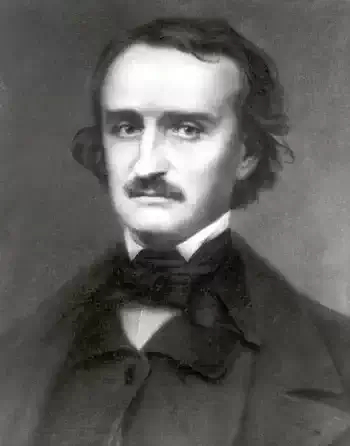
Edgar Allan Poe
To Helen - 1848
To Helen - 1848
I saw thee once- once only- years ago:
I must not say how many- but not many.
It was a July midnight; and from out
A full-orbed moon, that, like thine own soul, soaring,
Sought a precipitate pathway up through heaven,
There fell a silvery-silken veil of light,
With quietude, and sultriness, and slumber,
Upon the upturned faces of a thousand
Roses that grew in an enchanted garden,
Where no wind dared to stir, unless on tiptoe-
Fell on the upturn'd faces of these roses
That gave out, in return for the love-light,
Their odorous souls in an ecstatic death-
Fell on the upturn'd faces of these roses
That smiled and died in this parterre, enchanted
By thee, and by the poetry of thy presence.
Clad all in white, upon a violet bank
I saw thee half reclining; while the moon
Fell on the upturn'd faces of the roses,
And on thine own, upturn'd- alas, in sorrow!
Was it not Fate, that, on this July midnight-
Was it not Fate, (whose name is also Sorrow,)
That bade me pause before that garden-gate,
To breathe the incense of those slumbering roses?
No footstep stirred: the hated world an slept,
Save only thee and me. (Oh, Heaven!- oh, God!
How my heart beats in coupling those two words!)
Save only thee and me. I paused- I looked-
And in an instant all things disappeared.
(Ah, bear in mind this garden was enchanted!)
The pearly lustre of the moon went out:
The mossy banks and the meandering paths,
The happy flowers and the repining trees,
Were seen no more: the very roses' odors
Died in the arms of the adoring airs.
All- all expired save thee- save less than thou:
Save only the divine light in thine eyes-
Save but the soul in thine uplifted eyes.
I saw but them- they were the world to me!
I saw but them- saw only them for hours,
Saw only them until the moon went down.
What wild heart-histories seemed to he enwritten
Upon those crystalline, celestial spheres!
How dark a woe, yet how sublime a hope!
How silently serene a sea of pride!
How daring an ambition; yet how deep-
How fathomless a capacity for love!
But now, at length, dear Dian sank from sight,
Into a western couch of thunder-cloud;
And thou, a ghost, amid the entombing trees
Didst glide away. Only thine eyes remained;
They would not go- they never yet have gone;
Lighting my lonely pathway home that night,
They have not left me (as my hopes have) since;
They follow me- they lead me through the years.
They are my ministers- yet I their slave.
Their office is to illumine and enkindle-
My duty, to be saved by their bright light,
And purified in their electric fire,
And sanctified in their elysian fire.
They fill my soul with Beauty (which is Hope),
And are far up in Heaven- the stars I kneel to
In the sad, silent watches of my night;
While even in the meridian glare of day
I see them still- two sweetly scintillant
Venuses, unextinguished by the sun!
I saw thee once- once only- years ago:
I must not say how many- but not many.
It was a July midnight; and from out
A full-orbed moon, that, like thine own soul, soaring,
Sought a precipitate pathway up through heaven,
There fell a silvery-silken veil of light,
With quietude, and sultriness, and slumber,
Upon the upturned faces of a thousand
Roses that grew in an enchanted garden,
Where no wind dared to stir, unless on tiptoe-
Fell on the upturn'd faces of these roses
That gave out, in return for the love-light,
Their odorous souls in an ecstatic death-
Fell on the upturn'd faces of these roses
That smiled and died in this parterre, enchanted
By thee, and by the poetry of thy presence.
Clad all in white, upon a violet bank
I saw thee half reclining; while the moon
Fell on the upturn'd faces of the roses,
And on thine own, upturn'd- alas, in sorrow!
Was it not Fate, that, on this July midnight-
Was it not Fate, (whose name is also Sorrow,)
That bade me pause before that garden-gate,
To breathe the incense of those slumbering roses?
No footstep stirred: the hated world an slept,
Save only thee and me. (Oh, Heaven!- oh, God!
How my heart beats in coupling those two words!)
Save only thee and me. I paused- I looked-
And in an instant all things disappeared.
(Ah, bear in mind this garden was enchanted!)
The pearly lustre of the moon went out:
The mossy banks and the meandering paths,
The happy flowers and the repining trees,
Were seen no more: the very roses' odors
Died in the arms of the adoring airs.
All- all expired save thee- save less than thou:
Save only the divine light in thine eyes-
Save but the soul in thine uplifted eyes.
I saw but them- they were the world to me!
I saw but them- saw only them for hours,
Saw only them until the moon went down.
What wild heart-histories seemed to he enwritten
Upon those crystalline, celestial spheres!
How dark a woe, yet how sublime a hope!
How silently serene a sea of pride!
How daring an ambition; yet how deep-
How fathomless a capacity for love!
But now, at length, dear Dian sank from sight,
Into a western couch of thunder-cloud;
And thou, a ghost, amid the entombing trees
Didst glide away. Only thine eyes remained;
They would not go- they never yet have gone;
Lighting my lonely pathway home that night,
They have not left me (as my hopes have) since;
They follow me- they lead me through the years.
They are my ministers- yet I their slave.
Their office is to illumine and enkindle-
My duty, to be saved by their bright light,
And purified in their electric fire,
And sanctified in their elysian fire.
They fill my soul with Beauty (which is Hope),
And are far up in Heaven- the stars I kneel to
In the sad, silent watches of my night;
While even in the meridian glare of day
I see them still- two sweetly scintillant
Venuses, unextinguished by the sun!
281
Edgar Allan Poe
To F--S S. O--D
To F--S S. O--D
Thou wouldst be loved?- then let thy heart
From its present pathway part not!
Being everything which now thou art,
Be nothing which thou art not.
So with the world thy gentle ways,
Thy grace, thy more than beauty,
Shall be an endless theme of praise,
And love- a simple duty.
Thou wouldst be loved?- then let thy heart
From its present pathway part not!
Being everything which now thou art,
Be nothing which thou art not.
So with the world thy gentle ways,
Thy grace, thy more than beauty,
Shall be an endless theme of praise,
And love- a simple duty.
275
Edgar Allan Poe
To --
To --
The bowers whereat, in dreams, I see
The wantonest singing birds,
Are lips- and all thy melody
Of lip-begotten words
Thine eyes, in Heaven of heart enshrined,
Then desolately fall,
O God! on my funereal mind
Like starlight on a pall
Thy heart- thy heart!- I wake and sigh,
And sleep to dream till day
Of the truth that gold can never buyOf
the baubles that it may.
The bowers whereat, in dreams, I see
The wantonest singing birds,
Are lips- and all thy melody
Of lip-begotten words
Thine eyes, in Heaven of heart enshrined,
Then desolately fall,
O God! on my funereal mind
Like starlight on a pall
Thy heart- thy heart!- I wake and sigh,
And sleep to dream till day
Of the truth that gold can never buyOf
the baubles that it may.
233
Edgar Allan Poe
Impromptu - To Kate Carol
Impromptu - To Kate Carol
When from your gems of thought I turn
To those pure orbs, your heart to learn,
I scarce know which to prize most high —
The bright i-dea, or the bright dear-eye.
When from your gems of thought I turn
To those pure orbs, your heart to learn,
I scarce know which to prize most high —
The bright i-dea, or the bright dear-eye.
252

D.H. Lawrence
The Hands of the Betrothed
The Hands of the Betrothed
Her tawny eyes are onyx of thoughtlessness,
Hardened they are like gems in ancient modesty;
Yea, and her mouth’s prudent and crude caress
Means even less than her many words to me.
Though her kiss betrays me also this, this only
Consolation, that in her lips her blood at climax clips
Two wild, dumb paws in anguish on the lonely
Fruit of my heart, ere down, rebuked, it slips.
I know from her hardened lips that still her heart is
Hungry for me, yet if I put my hand in her breast
She puts me away, like a saleswoman whose mart is
Endangered by the pilferer on his quest.
But her hands are still the woman, the large, strong hands
Heavier than mine, yet like leverets caught in steel
When I hold them; my still soul understands
Their dumb confession of what her sort must feel.
For never her hands come nigh me but they lift
Like heavy birds from the morning stubble, to settle
Upon me like sleeping birds, like birds that shift
Uneasily in their sleep, disturbing my mettle.
How caressingly she lays her hand on my knee,
How strangely she tries to disown it, as it sinks
In my flesh and bone and forages into me,
How it stirs like a subtle stoat, whatever she thinks!
And often I see her clench her fingers tight
And thrust her fists suppressed in the folds of her skirt;
And sometimes, how she grasps her arms with her bright
Big hands, as if surely her arms did hurt.
And I have seen her stand all unaware
Pressing her spread hands over her breasts, as she
Would crush their mounds on her heart, to kill in there
The pain that is her simple ache for me.
Her strong hands take my part, the part of a man
To her; she crushes them into her bosom deep
Where I should lie, and with her own strong span
Closes her arms, that should fold me in sleep.
Ah, and she puts her hands upon the wall,
Presses them there, and kisses her bright hands,
Then lets her black hair loose, the darkness fall
About her from her maiden-folded bands.
And sits in her own dark night of her bitter hair
Dreaming—God knows of what, for to me she’s the same
Betrothed young lady who loves me, and takes care
Of her womanly virtue and of my good name.
Her tawny eyes are onyx of thoughtlessness,
Hardened they are like gems in ancient modesty;
Yea, and her mouth’s prudent and crude caress
Means even less than her many words to me.
Though her kiss betrays me also this, this only
Consolation, that in her lips her blood at climax clips
Two wild, dumb paws in anguish on the lonely
Fruit of my heart, ere down, rebuked, it slips.
I know from her hardened lips that still her heart is
Hungry for me, yet if I put my hand in her breast
She puts me away, like a saleswoman whose mart is
Endangered by the pilferer on his quest.
But her hands are still the woman, the large, strong hands
Heavier than mine, yet like leverets caught in steel
When I hold them; my still soul understands
Their dumb confession of what her sort must feel.
For never her hands come nigh me but they lift
Like heavy birds from the morning stubble, to settle
Upon me like sleeping birds, like birds that shift
Uneasily in their sleep, disturbing my mettle.
How caressingly she lays her hand on my knee,
How strangely she tries to disown it, as it sinks
In my flesh and bone and forages into me,
How it stirs like a subtle stoat, whatever she thinks!
And often I see her clench her fingers tight
And thrust her fists suppressed in the folds of her skirt;
And sometimes, how she grasps her arms with her bright
Big hands, as if surely her arms did hurt.
And I have seen her stand all unaware
Pressing her spread hands over her breasts, as she
Would crush their mounds on her heart, to kill in there
The pain that is her simple ache for me.
Her strong hands take my part, the part of a man
To her; she crushes them into her bosom deep
Where I should lie, and with her own strong span
Closes her arms, that should fold me in sleep.
Ah, and she puts her hands upon the wall,
Presses them there, and kisses her bright hands,
Then lets her black hair loose, the darkness fall
About her from her maiden-folded bands.
And sits in her own dark night of her bitter hair
Dreaming—God knows of what, for to me she’s the same
Betrothed young lady who loves me, and takes care
Of her womanly virtue and of my good name.
252
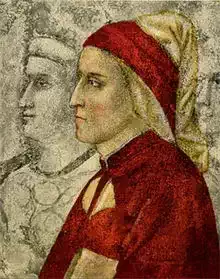
Dante Alighieri
There is a Gentle Thought
There is a Gentle Thought
There is a gentle thought that often springs
to life in me, because it speaks of you.
Its reasoning about love’s so sweet and true,
the heart is conquered, and accepts these things.
‘Who is this’ the mind enquires of the heart,
‘who comes here to seduce our intellect?
Is his power so great we must reject
every other intellectual art?
The heart replies ‘O, meditative mind
this is love’s messenger and newly sent
to bring me all Love’s words and desires.
His life, and all the strength that he can find,
from her sweet eyes are mercifully lent,
who feels compassion for our inner fires.’
There is a gentle thought that often springs
to life in me, because it speaks of you.
Its reasoning about love’s so sweet and true,
the heart is conquered, and accepts these things.
‘Who is this’ the mind enquires of the heart,
‘who comes here to seduce our intellect?
Is his power so great we must reject
every other intellectual art?
The heart replies ‘O, meditative mind
this is love’s messenger and newly sent
to bring me all Love’s words and desires.
His life, and all the strength that he can find,
from her sweet eyes are mercifully lent,
who feels compassion for our inner fires.’
285
Dante Alighieri
Sonnet: Spirit Of Love
Sonnet: Spirit Of Love
I felt a spirit of love begin to stir
Within my heart, long time unfelt till then;
And saw Love coming towards me fair and fain
(That I scarce knew him for his joyful cheer),
Saying, 'Be now indeed my worshipper!'
And in his speech he laughed and laughed again.
Then, while it was his pleasure to remain,
I chanced to look the way he had drawn near,
And saw the Ladies Joan and Beatrice
Approach me, this the other following,
One and a second marvel instantly.
And even as now my memory speaketh this,
Love spake it then: 'The first is christened Spring;
The second Love, she is so like to me.'
I felt a spirit of love begin to stir
Within my heart, long time unfelt till then;
And saw Love coming towards me fair and fain
(That I scarce knew him for his joyful cheer),
Saying, 'Be now indeed my worshipper!'
And in his speech he laughed and laughed again.
Then, while it was his pleasure to remain,
I chanced to look the way he had drawn near,
And saw the Ladies Joan and Beatrice
Approach me, this the other following,
One and a second marvel instantly.
And even as now my memory speaketh this,
Love spake it then: 'The first is christened Spring;
The second Love, she is so like to me.'
291
Dante Alighieri
Love and the Gentle Heart
Love and the Gentle Heart
Love and the gentle heart are one thing,
just as the poet says in his verse,
each from the other one as well divorced
as reason from the mind’s reasoning.
Nature craves love, and then creates love king,
and makes the heart a palace where he’ll stay,
perhaps a shorter or a longer day,
breathing quietly, gently slumbering.
Then beauty in a virtuous woman’s face
makes the eyes yearn, and strikes the heart,
so that the eyes’ desire’s reborn again,
and often, rooting there with longing, stays,
Till love, at last, out of its dreaming starts.
Woman’s moved likewise by a virtuous man.
Love and the gentle heart are one thing,
just as the poet says in his verse,
each from the other one as well divorced
as reason from the mind’s reasoning.
Nature craves love, and then creates love king,
and makes the heart a palace where he’ll stay,
perhaps a shorter or a longer day,
breathing quietly, gently slumbering.
Then beauty in a virtuous woman’s face
makes the eyes yearn, and strikes the heart,
so that the eyes’ desire’s reborn again,
and often, rooting there with longing, stays,
Till love, at last, out of its dreaming starts.
Woman’s moved likewise by a virtuous man.
286

Christina Rossetti
Maiden-Song
Maiden-Song
Long ago and long ago,
And long ago still,
There dwelt three merry maidens
Upon a distant hill.
One was tall Megan,
And one was dainty May,
But one was fair Margaret,
More fair than I can say,
Long ago and long ago.
When Megan plucked the thorny rose,
And when May pulled the brier,
Half the birds would swoop to see,
Half the beasts draw nigher;
Half the fishes of the streams
Would dart up to admire:
But when Margaret plucked a flag-flower,
Or poppy hot aflame,
All the beasts and all the birds
And all the fishes came
To her hand more soft than snow.
Strawberry leaves and May-dew
In brisk morning air,
Strawberry leaves and May-dew
Make maidens fair.
'I go for strawberry leaves,'
Megan said one day:
'Fair Margaret can bide at home,
But you come with me, May;
Up the hill and down the hill,
Along the winding way 30
You and I are used to go.'
So these two fair sisters
Went with innocent will
Up the hill and down again,
And round the homestead hill:
While the fairest sat at home,
Margaret like a queen,
Like a blush-rose, like the moon
In her heavenly sheen,
Fragrant-breathed as milky cow
Or field of blossoming bean,
Graceful as an ivy bough
Born to cling and lean;
Thus she sat to sing and sew.
When she raised her lustrous eyes
A beast peeped at the door;
When she downward cast her eyes
A fish gasped on the floor;
When she turned away her eyes
A bird perched on the sill,
Warbling out its heart of love,
Warbling warbling still,
With pathetic pleadings low.
Light-foot May with Megan
Sought the choicest spot,
Clothed with thyme-alternate grass:
Then, while day waxed hot,
Sat at ease to play and rest,
A gracious rest and play;
The loveliest maidens near or far,
When Margaret was away,
Who sat at home to sing and sew.
Sun-glow flushed their comely cheeks,
Wind-play tossed their hair,
Creeping things among the grass
Stroked them here and there;
Megan piped a merry note,
A fitful wayward lay,
While shrill as bird on topmost twig
Piped merry May;
Honey-smooth the double flow.
Sped a herdsman from the vale,
Mounting like a flame,
All on fire to hear and see,
With floating locks he came.
Looked neither north nor south,
Neither east nor west,
But sat him down at Megan's feet
As love-bird on his nest,
And wooed her with a silent awe,
With trouble not expressed;
She sang the tears into his eyes,
The heart out of his breast:
So he loved her, listening so.
She sang the heart out of his breast,
The words out of his tongue;
Hand and foot and pulse he paused
Till her song was sung.
Then he spoke up from his place
Simple words and true:
'Scanty goods have I to give,
Scanty skill to woo;
But I have a will to work,
And a heart for you:
Bid me stay or bid me go.'
Then Megan mused within herself:
'Better be first with him,
Than dwell where fairer Margaret sits,
Who shines my brightness dim,
For ever second where she sits,
However fair I be:
I will be lady of his love,
And he shall worship me;
I will be lady of his herds
And stoop to his degree,
At home where kids and fatlings grow.'
Sped a shepherd from the height
Headlong down to look,
(White lambs followed, lured by love
Of their shepherd's crook):
He turned neither east nor west,
Neither north nor south,
But knelt right down to May, for love
Of her sweet-singing mouth;
Forgot his flocks, his panting flocks
In parching hill-side drouth;
Forgot himself for weal or woe.
Trilled her song and swelled her song
With maiden coy caprice
In a labyrinth of throbs,
Pauses, cadences;
Clear-noted as a dropping brook,
Soft-noted like the bees,
Wild-noted as the shivering wind
Forlorn through forest trees:
Love-noted like the wood-pigeon
Who hides herself for love,
Yet cannot keep her secret safe,
But coos and coos thereof:
Thus the notes rang loud or low.
He hung breathless on her breath;
Speechless, who listened well;
Could not speak or think or wish
Till silence broke the spell.
Then he spoke, and spread his hands,
Pointing here and there:
'See my sheep and see the lambs,
Twin lambs which they bare.
All myself I offer you,
All my flocks and care,
Your sweet song hath moved me so.'
In her fluttered heart young May
Mused a dubious while:
'If he loves me as he says'--
Her lips curved with a smile:
'Where Margaret shines like the sun
I shine but like a moon;
If sister Megan makes her choice
I can make mine as soon;
At cockcrow we were sister-maids,
We may be brides at noon.'
Said Megan, 'Yes;' May said not 'No.'
Fair Margaret stayed alone at home,
Awhile she sang her song,
Awhile sat silent, then she thought:
'My sisters loiter long.'
That sultry noon had waned away,
Shadows had waxen great:
'Surely,' she thought within herself,
'My sisters loiter late.'
She rose, and peered out at the door,
With patient heart to wait,
And heard a distant nightingale
Complaining of its mate;
Then down the garden slope she walked,
Down to the garden gate,
Leaned on the rail and waited so.
The slope was lightened by her eyes
Like summer lightning fair,
Like rising of the haloed moon
Lightened her glimmering hair,
While her face lightened like the sun
Whose dawn is rosy white.
Thus crowned with maiden majesty
She peered into the night,
Looked up the hill and down the hill,
To left hand and to right,
Flashing like fire-flies to and fro.
Waiting thus in weariness
She marked the nightingale
Telling, if any one would heed,
Its old complaining tale.
Then lifted she her voice and sang,
Answering the bird:
Then lifted she her voice and sang,
Such notes were never heard
From any bird when Spring's in blow.
The king of all that country
Coursing far, coursing near,
Curbed his amber-bitted steed,
Coursed amain to hear;
All his princes in his train,
Squire, and knight, and peer,
With his crown upon his head,
His sceptre in his hand,
Down he fell at Margaret's knees
Lord king of all that land,
To her highness bending low.
Every beast and bird and fish
Came mustering to the sound,
Every man and every maid
From miles of country round:
Megan on her herdsman's arm,
With her shepherd May,
Flocks and herds trooped at their heels
Along the hill-side way;
No foot too feeble for the ascent,
Not any head too grey;
Some were swift and none were slow.
So Margaret sang her sisters home
In their marriage mirth;
Sang free birds out of the sky,
Beasts along the earth,
Sang up fishes of the deep--
All breathing things that move
Sang from far and sang from near
To her lovely love;
Sang together friend and foe;
Sang a golden-bearded king
Straightway to her feet,
Sang him silent where he knelt
In eager anguish sweet.
But when the clear voice died away,
When longest echoes died,
He stood up like a royal man
And claimed her for his bride.
So three maids were wooed and won
In a brief May-tide,
Long ago and long ago.
Long ago and long ago,
And long ago still,
There dwelt three merry maidens
Upon a distant hill.
One was tall Megan,
And one was dainty May,
But one was fair Margaret,
More fair than I can say,
Long ago and long ago.
When Megan plucked the thorny rose,
And when May pulled the brier,
Half the birds would swoop to see,
Half the beasts draw nigher;
Half the fishes of the streams
Would dart up to admire:
But when Margaret plucked a flag-flower,
Or poppy hot aflame,
All the beasts and all the birds
And all the fishes came
To her hand more soft than snow.
Strawberry leaves and May-dew
In brisk morning air,
Strawberry leaves and May-dew
Make maidens fair.
'I go for strawberry leaves,'
Megan said one day:
'Fair Margaret can bide at home,
But you come with me, May;
Up the hill and down the hill,
Along the winding way 30
You and I are used to go.'
So these two fair sisters
Went with innocent will
Up the hill and down again,
And round the homestead hill:
While the fairest sat at home,
Margaret like a queen,
Like a blush-rose, like the moon
In her heavenly sheen,
Fragrant-breathed as milky cow
Or field of blossoming bean,
Graceful as an ivy bough
Born to cling and lean;
Thus she sat to sing and sew.
When she raised her lustrous eyes
A beast peeped at the door;
When she downward cast her eyes
A fish gasped on the floor;
When she turned away her eyes
A bird perched on the sill,
Warbling out its heart of love,
Warbling warbling still,
With pathetic pleadings low.
Light-foot May with Megan
Sought the choicest spot,
Clothed with thyme-alternate grass:
Then, while day waxed hot,
Sat at ease to play and rest,
A gracious rest and play;
The loveliest maidens near or far,
When Margaret was away,
Who sat at home to sing and sew.
Sun-glow flushed their comely cheeks,
Wind-play tossed their hair,
Creeping things among the grass
Stroked them here and there;
Megan piped a merry note,
A fitful wayward lay,
While shrill as bird on topmost twig
Piped merry May;
Honey-smooth the double flow.
Sped a herdsman from the vale,
Mounting like a flame,
All on fire to hear and see,
With floating locks he came.
Looked neither north nor south,
Neither east nor west,
But sat him down at Megan's feet
As love-bird on his nest,
And wooed her with a silent awe,
With trouble not expressed;
She sang the tears into his eyes,
The heart out of his breast:
So he loved her, listening so.
She sang the heart out of his breast,
The words out of his tongue;
Hand and foot and pulse he paused
Till her song was sung.
Then he spoke up from his place
Simple words and true:
'Scanty goods have I to give,
Scanty skill to woo;
But I have a will to work,
And a heart for you:
Bid me stay or bid me go.'
Then Megan mused within herself:
'Better be first with him,
Than dwell where fairer Margaret sits,
Who shines my brightness dim,
For ever second where she sits,
However fair I be:
I will be lady of his love,
And he shall worship me;
I will be lady of his herds
And stoop to his degree,
At home where kids and fatlings grow.'
Sped a shepherd from the height
Headlong down to look,
(White lambs followed, lured by love
Of their shepherd's crook):
He turned neither east nor west,
Neither north nor south,
But knelt right down to May, for love
Of her sweet-singing mouth;
Forgot his flocks, his panting flocks
In parching hill-side drouth;
Forgot himself for weal or woe.
Trilled her song and swelled her song
With maiden coy caprice
In a labyrinth of throbs,
Pauses, cadences;
Clear-noted as a dropping brook,
Soft-noted like the bees,
Wild-noted as the shivering wind
Forlorn through forest trees:
Love-noted like the wood-pigeon
Who hides herself for love,
Yet cannot keep her secret safe,
But coos and coos thereof:
Thus the notes rang loud or low.
He hung breathless on her breath;
Speechless, who listened well;
Could not speak or think or wish
Till silence broke the spell.
Then he spoke, and spread his hands,
Pointing here and there:
'See my sheep and see the lambs,
Twin lambs which they bare.
All myself I offer you,
All my flocks and care,
Your sweet song hath moved me so.'
In her fluttered heart young May
Mused a dubious while:
'If he loves me as he says'--
Her lips curved with a smile:
'Where Margaret shines like the sun
I shine but like a moon;
If sister Megan makes her choice
I can make mine as soon;
At cockcrow we were sister-maids,
We may be brides at noon.'
Said Megan, 'Yes;' May said not 'No.'
Fair Margaret stayed alone at home,
Awhile she sang her song,
Awhile sat silent, then she thought:
'My sisters loiter long.'
That sultry noon had waned away,
Shadows had waxen great:
'Surely,' she thought within herself,
'My sisters loiter late.'
She rose, and peered out at the door,
With patient heart to wait,
And heard a distant nightingale
Complaining of its mate;
Then down the garden slope she walked,
Down to the garden gate,
Leaned on the rail and waited so.
The slope was lightened by her eyes
Like summer lightning fair,
Like rising of the haloed moon
Lightened her glimmering hair,
While her face lightened like the sun
Whose dawn is rosy white.
Thus crowned with maiden majesty
She peered into the night,
Looked up the hill and down the hill,
To left hand and to right,
Flashing like fire-flies to and fro.
Waiting thus in weariness
She marked the nightingale
Telling, if any one would heed,
Its old complaining tale.
Then lifted she her voice and sang,
Answering the bird:
Then lifted she her voice and sang,
Such notes were never heard
From any bird when Spring's in blow.
The king of all that country
Coursing far, coursing near,
Curbed his amber-bitted steed,
Coursed amain to hear;
All his princes in his train,
Squire, and knight, and peer,
With his crown upon his head,
His sceptre in his hand,
Down he fell at Margaret's knees
Lord king of all that land,
To her highness bending low.
Every beast and bird and fish
Came mustering to the sound,
Every man and every maid
From miles of country round:
Megan on her herdsman's arm,
With her shepherd May,
Flocks and herds trooped at their heels
Along the hill-side way;
No foot too feeble for the ascent,
Not any head too grey;
Some were swift and none were slow.
So Margaret sang her sisters home
In their marriage mirth;
Sang free birds out of the sky,
Beasts along the earth,
Sang up fishes of the deep--
All breathing things that move
Sang from far and sang from near
To her lovely love;
Sang together friend and foe;
Sang a golden-bearded king
Straightway to her feet,
Sang him silent where he knelt
In eager anguish sweet.
But when the clear voice died away,
When longest echoes died,
He stood up like a royal man
And claimed her for his bride.
So three maids were wooed and won
In a brief May-tide,
Long ago and long ago.
248

Charlotte Brontë
Preference
Preference
NOT in scorn do I reprove thee,
Not in pride thy vows I waive,
But, believe, I could not love thee,
Wert thou prince, and I a slave.
These, then, are thine oaths of passion ?
This, thy tenderness for me ?
Judged, even, by thine own confession,
Thou art steeped in perfidy.
Having vanquished, thou wouldst leave me !
Thus I read thee long ago;
Therefore, dared I not deceive thee,
Even with friendship's gentle show.
Therefore, with impassive coldness
Have I ever met thy gaze;
Though, full oft, with daring boldness,
Thou thine eyes to mine didst raise.
Why that smile ? Thou now art deeming
This my coldness all untrue,But
a mask of frozen seeming,
Hiding secret fires from view.
Touch my hand, thou selfdeceiver,
Naybe
calm, for I am so:
Does it burn ? Does my lip quiver ?
Has mine eye a troubled glow ?
Canst thou call a moment's colour
To my foreheadto
my cheek ?
Canst thou tinge their tranquil pallor
With one flattering, feverish streak?
Am I marble ? What ! no woman
Could so calm before thee stand ?
Nothing living, sentient, human,
Could so coldly take thy hand ?
Yesa
sister might, a mother:
My goodwill
is sisterly:
Dream not, then, I strive to smother
Fires that inly burn for thee.
Rave not, rage not, wrath is fruitless,
Fury cannot change my mind;
I but deem the feeling rootless
Which so whirls in passion's wind.
Can I love ? Oh, deeplytrulyWarmlyfondlybut
not thee;
And my love is answered duly,
With an equal energy.
Wouldst thou see thy rival ? Hasten,
Draw that curtain soft aside,
Look where yon thick branches chasten
Noon, with shades of eventide.
In that glade, where foliage blending
Forms a green arch overhead,
Sits thy rival thoughtful bending
O'er a stand with papers spread
Motionless, his fingers plying
That untired, unresting pen;
Time and tide unnoticed flying,
There he sitsthe
first of men !
Man of conscienceman
of reason;
Stern, perchance, but ever just;
Foe to falsehood, wrong, and treason,
Honour's shield, and virtue's trust !
Worker, thinker, firm defender
Of Heaven's truthman's
liberty;
Soul of ironproof
to slander,
Rock where founders tyranny.
Fame he seeks notbut
full surely
She will seek him, in his home;
This I know, and wait securely
For the atoning hour to come.
To that man my faith is given,
Therefore, soldier, cease to sue;
While God reigns in earth and heaven,
I to him will still be true !
NOT in scorn do I reprove thee,
Not in pride thy vows I waive,
But, believe, I could not love thee,
Wert thou prince, and I a slave.
These, then, are thine oaths of passion ?
This, thy tenderness for me ?
Judged, even, by thine own confession,
Thou art steeped in perfidy.
Having vanquished, thou wouldst leave me !
Thus I read thee long ago;
Therefore, dared I not deceive thee,
Even with friendship's gentle show.
Therefore, with impassive coldness
Have I ever met thy gaze;
Though, full oft, with daring boldness,
Thou thine eyes to mine didst raise.
Why that smile ? Thou now art deeming
This my coldness all untrue,But
a mask of frozen seeming,
Hiding secret fires from view.
Touch my hand, thou selfdeceiver,
Naybe
calm, for I am so:
Does it burn ? Does my lip quiver ?
Has mine eye a troubled glow ?
Canst thou call a moment's colour
To my foreheadto
my cheek ?
Canst thou tinge their tranquil pallor
With one flattering, feverish streak?
Am I marble ? What ! no woman
Could so calm before thee stand ?
Nothing living, sentient, human,
Could so coldly take thy hand ?
Yesa
sister might, a mother:
My goodwill
is sisterly:
Dream not, then, I strive to smother
Fires that inly burn for thee.
Rave not, rage not, wrath is fruitless,
Fury cannot change my mind;
I but deem the feeling rootless
Which so whirls in passion's wind.
Can I love ? Oh, deeplytrulyWarmlyfondlybut
not thee;
And my love is answered duly,
With an equal energy.
Wouldst thou see thy rival ? Hasten,
Draw that curtain soft aside,
Look where yon thick branches chasten
Noon, with shades of eventide.
In that glade, where foliage blending
Forms a green arch overhead,
Sits thy rival thoughtful bending
O'er a stand with papers spread
Motionless, his fingers plying
That untired, unresting pen;
Time and tide unnoticed flying,
There he sitsthe
first of men !
Man of conscienceman
of reason;
Stern, perchance, but ever just;
Foe to falsehood, wrong, and treason,
Honour's shield, and virtue's trust !
Worker, thinker, firm defender
Of Heaven's truthman's
liberty;
Soul of ironproof
to slander,
Rock where founders tyranny.
Fame he seeks notbut
full surely
She will seek him, in his home;
This I know, and wait securely
For the atoning hour to come.
To that man my faith is given,
Therefore, soldier, cease to sue;
While God reigns in earth and heaven,
I to him will still be true !
244
Charlotte Brontë
Gilbert
Gilbert
I. THE GARDEN.
ABOVE the city hung the moon,
Right o'er a plot of ground
Where flowers and orchardtrees
were fenced
With lofty walls around:
'Twas Gilbert's gardenthere,
tonight
Awhile he walked alone;
And, tired with sedentary toil,
Mused where the moonlight shone.
This garden, in a cityheart,
Lay still as houseless wild,
Though manywindowed
mansion fronts
Were round it closely piled;
But thick their walls, and those within
Lived lives by noise unstirred;
Like wafting of an angel's wing,
Time's flight by them was heard.
Some soft pianonotes
alone
Were sweet as faintly given,
Where ladies, doubtless, cheered the hearth
With song, that wintereven.
The city's manymingled
sounds
Rose like the hum of ocean;
They rather lulled the heart than roused
Its pulse to faster motion.
Gilbert has paced the single walk
An hour, yet is not weary;
And, though it be a winter night,
He feels nor cold nor dreary.
The prime of life is in his veins,
And sends his blood fast flowing,
And Fancy's fervour warms the thoughts
Now in his bosom glowing.
Those thoughts recur to early love,
Or what he love would name,
Though haply Gilbert's secret deeds
Might other title claim.
Such theme not oft his mind absorbs,
He to the world clings fast,
And too much for the present lives,
To linger o'er the past.
But now the evening's deep repose
Has glided to his soul;
That moonlight falls on Memory,
And shows her fading scroll.
One name appears in every line
The gentle rays shine o'er,
And still he smiles and still repeats
That one nameElinor.
There is no sorrow in his smile,
No kindness in his tone;
The triumph of a selfish heart
Speaks coldly there alone;
He says: ' She loved me more than life;
And truly it was sweet
To see so fair a woman kneel,
In bondage, at my feet.
There was a sort of quiet bliss
To be so deeply loved,
To gaze on trembling eagerness
And sit myself unmoved.
And when it pleased my pride to grant,
At last some rare caress,
To feel the fever of that hand
My fingers deigned to press.
'Twas sweet to see her strive to hide
What every glance revealed;
Endowed, the while, with despotmight
Her destiny to wield.
I knew myself no perfect man,
Nor, as she deemed, divine;
I knew that I was gloriousbut
By her reflected shine;
Her youth, her native energy,
Her powers newborn
and fresh,
'Twas these with Godhead sanctified
My sensual frame of flesh.
Yet, like a god did I descend
At last, to meet her love;
And, like a god, I then withdrew
To my own heaven above.
And never more could she invoke
My presence to her sphere;
No prayer, no plaint, no cry of hers
Could win my awful ear.
I knew her blinded constancy
Would ne'er my deeds betray,
And, calm in conscience, whole in heart,
I went my tranquil way.
Yet, sometimes, I still feel a wish,
The fond and flattering pain
Of passion's anguish to create,
In her young breast again.
Bright was the lustre of her eyes,
When they caught fire from mine;
If I had powerthis
very hour,
Again I 'd light their shine.
But where she is, or how she lives,
I have no clue to know;
I 've heard she long my absence pined,
And left her home in woe.
But busied, then, in gathering gold,
As I am busied now,
I could not turn from such pursuit,
To weep a broken vow.
Nor could I give to fatal risk
The fame I ever prized;
Even now, I fear, that precious fame
Is too much compromised.'
An inward trouble dims his eye,
Some riddle he would solve;
Some method to unloose a knot,
His anxious thoughts revolve.
He, pensive, leans against a tree,
A leafy evergreen,
The boughs, the moonlight, intercept,
And hide him like a screen;
He startsthe
tree shakes with his tremor,
Yet nothing near him pass'd,
He hurries up the garden alley,
In strangely sudden haste.
With shaking hand, he lifts the latchet,
Steps o'er the threshold stone;
The heavy door slips from his fingers,
It shuts, and he is gone.
What touched, transfixed, appalled, his soul ?
A nervous thought, no more;
'Twill sink like stone in placid pool,
And calm close smoothly o'er.
II. THE PARLOUR.
WARM is the parlour atmosphere,
Serene the lamp's soft light;
The vivid embers, red and clear,
Proclaim a frosty night.
Books, varied, on the table lie,
Three children o'er them bend,
And all, with curious, eager eye,
The turning leaf attend.
Picture and tale alternately
Their simple hearts delight,
And interest deep, and tempered glee,
Illume their aspects bright;
The parents, from their fireside place,
Behold that pleasant scene,
And joy is on the mother's face,
Pride, in the father's mien.
As Gilbert sees his blooming wife,
Beholds his children fair,
No thought has he of transient strife,
Or past, though piercing fear.
The voice of happy infancy
Lisps sweetly in his ear,
His wife, with pleased and peaceful eye,
Sits, kindly smiling, near.
The fire glows on her silken dress,
And shows its ample grace,
And warmly tints each hazel tress,
Curled soft around her face.
The beauty that in youth he wooed,
Is beauty still, unfaded,
The brow of ever placid mood
No churlish grief has shaded.
Prosperity, in Gilbert's home,
Abides, the guest of years;
There Want or Discord never come,
And seldom Toil or Tears.
The carpets bear the peaceful print
Of comfort's velvet tread,
And golden gleams from plenty sent,
In every nook are shed.
The very silken spaniel seems
Of quiet ease to tell,
As near its mistress' feet it dreams,
Sunk in a cushion's swell;
And smiles seem native to the eyes
Of those sweet children, three;
They have but looked on tranquil skies,
And know not misery.
Alas ! that misery should come
In such an hour as this;
Why could she not so calm a home
A little longer miss ?
But she is now within the door,
Her steps advancing glide;
Her sullen shade has crossed the floor,
She stands at Gilbert's side.
She lays her hand upon his heart,
It bounds with agony;
His fireside chair shakes with the start
That shook the garden tree.
His wife towards the children looks,
She does not mark his mien;
The children, bending o'er their books,
His terror have not seen.
In his own home, by his own hearth,
He sits in solitude,
And circled round with light and mirth,
Cold horror chills his blood.
His mind would hold with desperate clutch
The scene that round him lies;
Nochanged,
as by some wizard's touch,
The present prospect flies.
A tumult vaguea
viewless strife
His futile struggles crush;
'Twixt him and his, an unknown life
And unknown feelings rush.
He seesbut
scarce can language paint
The tissue Fancy weaves;
For words oft give but echo faint
Of thoughts the mind conceives.
Noise, tumult strange, and darkness dim,
Efface both light and quiet;
No shape is in those shadows grim,
No voice in that wild riot.
Sustained and strong, a wondrous blast
Above and round him blows;
A greenish gloom, dense overcast,
Each moment denser grows.
He nothing knowsnor
clearly sees,
Resistance checks his breath,
The high, impetuous, ceaseless breeze
Blows on him. cold as death.
And still the undulating gloom
Mocks sight with formless motion;
Was such sensation Jonah's doom,
Gulphed in the depths of ocean ?
Streaking the air, the nameless vision,
Fastdriven,
deepsounding,
flows;
Oh ! whence its source, and what its mission ?
How will its terrors close ?
Longsweeping,
rushing, vast and void,
The Universe it swallows;
And still the dark, devouring tide,
A Typhoon tempest follows.
More slow it rolls; its furious race
Sinks to a solemn gliding;
The stunning roar, the wind's wild chase,
To stillness are subsiding.
And, slowly borne along, a form
The shapeless chaos varies;
Poised in the eddy to the storm,
Before the eye it tarries.
A woman drownedsunk
in the deep,
On a long wave reclining;
The circling waters' crystal sweep,
Like glass, her shape enshrining;
Her pale dead face, to Gilbert turned,
Seems as in sleep reposing;
A feeble light, now first discerned,
The features well disclosing.
No effort from the haunted air
The ghastly scene could banish;
That hovering wave, arrested there,
Rolledthrobbedbut
did not vanish.
If Gilbert upward turned his gaze,
He saw the oceanshadow;
If he looked down, the endless seas
Lay green as summer meadow.
And straight before, the pale corpse lay,
Upborne by air or billow,
So near, he could have touched the spray
That churned around its pillow.
The hollow anguish of the face
Had moved a fiend to sorrow;
Not Death's fixed calm could rase the trace
Of suffering's deepworn
furrow.
All moved; a strong returning blast,
The mass of waters raising,
Bore wave and passive carcase past,
While Gilbert yet was gazing.
Deep in her isleconceiving
womb,
It seemed the Ocean thundered,
And soon, by realms of rushing gloom,
Were seer and phantom sundered.
Then swept some timbers from a wreck,
On following surges riding;
Then seaweed,
in the turbid rack
Uptorn, went slowly gliding.
The horrid shade, by slow degrees,
A beam of light defeated,
And then the roar of raving seas,
Fast, far, and faint, retreated.
And all was gonegone
like a mist,
Corse, billows, tempest, wreck;
Three children close to Gilbert prest
And clung around his neck.
Good night ! good night ! the prattlers said
And kissed their father's cheek;
'Twas now the hour their quiet bed
And placid rest to seek.
The mother with her offspring goes
To hear their evening prayer;
She nought of Gilbert's vision knows,
And nought of his despair.
Yet, pitying God, abridge the time
Of anguish, now his fate !
Though, haply, great has been his crime,
Thy mercy, too, is great.
Gilbert, at length, uplifts his head,
Bent for some moments low,
And there is neither grief nor dread
Upon his subtle brow.
For well can he his feelings task,
And well his looks command;
His features well his heart can mask,
With smiles and smoothness bland.
Gilbert has reasoned with his mindHe
says 'twas all a dream;
He strives his inward sight to blind
Against truth's inward beam.
He pitied not that shadowy thing,
When it was flesh and blood;
Nor now can pity's balmy spring
Refresh his arid mood.
' And if that dream has spoken truth,'
Thus musingly he says;
' If Elinor be dead, in sooth,
Such chance the shock repays:
A net was woven round my feet,
I scarce could further go,
Are Shame had forced a fast retreat,
Dishonour brought me low. '
' Conceal her, then, deep, silent Sea,
Give her a secret grave !
She sleeps in peace, and I am free,
No longer Terror's slave:
And homage still, from all the world,
Shall greet my spotless name,
Since surges break and waves are curled
Above its threatened shame.'
III. THE WELCOME HOME
ABOVE the city hangs the moon,
Some clouds are boding rain,
Gilbert, erewhile on journey gone,
Tonight
comes home again.
Ten years have passed above his head,
Each year has brought him gain;
His prosperous life has smoothly sped,
Without or tear or stain.
'Tis somewhat latethe
city clocks
Twelve deep vibrations toll,
As Gilbert at the portal knocks,
Which is his journey's goal.
The street is still and desolate,
The moon hid by a cloud;
Gilbert, impatient, will not wait,His
second knock peals loud.
The clocks are hushed; there's not a light
In any window nigh,
And not a single planet bright
Looks from the clouded sky;
The air is raw, the rain descends,
A bitter northwind
blows;
His cloak the traveller scarce defendsWill
not the door unclose ?
He knocks the third time, and the last;
His summons now they hear,
Within, a footstep, hurrying fast,
Is heard approaching near.
The bolt is drawn, the clanking chain
Falls to the floor of stone;
And Gilbert to his heart will strain
His wife and children soon.
The hand that lifts the latchet, holds
A candle to his sight,
And Gilbert, on the step, beholds
A woman, clad in white.
Lo ! water from her dripping dress
Runs on the streaming floor;
From every dark and clinging tress,
The drops incessant pour.
There's none but her to welcome him;
She holds the candle high,
And, motionless in form and limb,
Stands cold and silent nigh;
There's sand and seaweed
on her robe,
Her hollow eyes are blind;
No pulse in such a frame can throb,
No life is there defined.
Gilbert turned ashywhite,
but still
His lips vouchsafed no cry;
He spurred his strength and masterwill
To pass the figure by,
But, moving slow, it faced him straight,
It would not flinch nor quail:
Then first did Gilbert's strength abate,
His stony firmness quail.
He sank upon his knees and prayed;
The shape stood rigid there;
He called aloud for human aid,
No human aid was near.
An accent strange did thus repeat
Heaven's stern but just decree:
' The measure thou to her didst mete,
To thee shall measured be !'
Gilbert sprang from his bended knees,
By the pale spectre pushed,
And, wild as one whom demons seize,
Up the hallstaircase
rushed;
Entered his chambernear
the bed
Sheathed steel and firearms
hung
Impelled by maniac purpose dread,
He chose those stores among.
Across his throat, a keenedged
knife
With vigorous hand he drew;
The wound was widehis
outraged life
Rushed rash and redly through.
And thus died, by a shameful death,
A wise and worldly man,
Who never drew but selfish breath
Since first his life began.
I. THE GARDEN.
ABOVE the city hung the moon,
Right o'er a plot of ground
Where flowers and orchardtrees
were fenced
With lofty walls around:
'Twas Gilbert's gardenthere,
tonight
Awhile he walked alone;
And, tired with sedentary toil,
Mused where the moonlight shone.
This garden, in a cityheart,
Lay still as houseless wild,
Though manywindowed
mansion fronts
Were round it closely piled;
But thick their walls, and those within
Lived lives by noise unstirred;
Like wafting of an angel's wing,
Time's flight by them was heard.
Some soft pianonotes
alone
Were sweet as faintly given,
Where ladies, doubtless, cheered the hearth
With song, that wintereven.
The city's manymingled
sounds
Rose like the hum of ocean;
They rather lulled the heart than roused
Its pulse to faster motion.
Gilbert has paced the single walk
An hour, yet is not weary;
And, though it be a winter night,
He feels nor cold nor dreary.
The prime of life is in his veins,
And sends his blood fast flowing,
And Fancy's fervour warms the thoughts
Now in his bosom glowing.
Those thoughts recur to early love,
Or what he love would name,
Though haply Gilbert's secret deeds
Might other title claim.
Such theme not oft his mind absorbs,
He to the world clings fast,
And too much for the present lives,
To linger o'er the past.
But now the evening's deep repose
Has glided to his soul;
That moonlight falls on Memory,
And shows her fading scroll.
One name appears in every line
The gentle rays shine o'er,
And still he smiles and still repeats
That one nameElinor.
There is no sorrow in his smile,
No kindness in his tone;
The triumph of a selfish heart
Speaks coldly there alone;
He says: ' She loved me more than life;
And truly it was sweet
To see so fair a woman kneel,
In bondage, at my feet.
There was a sort of quiet bliss
To be so deeply loved,
To gaze on trembling eagerness
And sit myself unmoved.
And when it pleased my pride to grant,
At last some rare caress,
To feel the fever of that hand
My fingers deigned to press.
'Twas sweet to see her strive to hide
What every glance revealed;
Endowed, the while, with despotmight
Her destiny to wield.
I knew myself no perfect man,
Nor, as she deemed, divine;
I knew that I was gloriousbut
By her reflected shine;
Her youth, her native energy,
Her powers newborn
and fresh,
'Twas these with Godhead sanctified
My sensual frame of flesh.
Yet, like a god did I descend
At last, to meet her love;
And, like a god, I then withdrew
To my own heaven above.
And never more could she invoke
My presence to her sphere;
No prayer, no plaint, no cry of hers
Could win my awful ear.
I knew her blinded constancy
Would ne'er my deeds betray,
And, calm in conscience, whole in heart,
I went my tranquil way.
Yet, sometimes, I still feel a wish,
The fond and flattering pain
Of passion's anguish to create,
In her young breast again.
Bright was the lustre of her eyes,
When they caught fire from mine;
If I had powerthis
very hour,
Again I 'd light their shine.
But where she is, or how she lives,
I have no clue to know;
I 've heard she long my absence pined,
And left her home in woe.
But busied, then, in gathering gold,
As I am busied now,
I could not turn from such pursuit,
To weep a broken vow.
Nor could I give to fatal risk
The fame I ever prized;
Even now, I fear, that precious fame
Is too much compromised.'
An inward trouble dims his eye,
Some riddle he would solve;
Some method to unloose a knot,
His anxious thoughts revolve.
He, pensive, leans against a tree,
A leafy evergreen,
The boughs, the moonlight, intercept,
And hide him like a screen;
He startsthe
tree shakes with his tremor,
Yet nothing near him pass'd,
He hurries up the garden alley,
In strangely sudden haste.
With shaking hand, he lifts the latchet,
Steps o'er the threshold stone;
The heavy door slips from his fingers,
It shuts, and he is gone.
What touched, transfixed, appalled, his soul ?
A nervous thought, no more;
'Twill sink like stone in placid pool,
And calm close smoothly o'er.
II. THE PARLOUR.
WARM is the parlour atmosphere,
Serene the lamp's soft light;
The vivid embers, red and clear,
Proclaim a frosty night.
Books, varied, on the table lie,
Three children o'er them bend,
And all, with curious, eager eye,
The turning leaf attend.
Picture and tale alternately
Their simple hearts delight,
And interest deep, and tempered glee,
Illume their aspects bright;
The parents, from their fireside place,
Behold that pleasant scene,
And joy is on the mother's face,
Pride, in the father's mien.
As Gilbert sees his blooming wife,
Beholds his children fair,
No thought has he of transient strife,
Or past, though piercing fear.
The voice of happy infancy
Lisps sweetly in his ear,
His wife, with pleased and peaceful eye,
Sits, kindly smiling, near.
The fire glows on her silken dress,
And shows its ample grace,
And warmly tints each hazel tress,
Curled soft around her face.
The beauty that in youth he wooed,
Is beauty still, unfaded,
The brow of ever placid mood
No churlish grief has shaded.
Prosperity, in Gilbert's home,
Abides, the guest of years;
There Want or Discord never come,
And seldom Toil or Tears.
The carpets bear the peaceful print
Of comfort's velvet tread,
And golden gleams from plenty sent,
In every nook are shed.
The very silken spaniel seems
Of quiet ease to tell,
As near its mistress' feet it dreams,
Sunk in a cushion's swell;
And smiles seem native to the eyes
Of those sweet children, three;
They have but looked on tranquil skies,
And know not misery.
Alas ! that misery should come
In such an hour as this;
Why could she not so calm a home
A little longer miss ?
But she is now within the door,
Her steps advancing glide;
Her sullen shade has crossed the floor,
She stands at Gilbert's side.
She lays her hand upon his heart,
It bounds with agony;
His fireside chair shakes with the start
That shook the garden tree.
His wife towards the children looks,
She does not mark his mien;
The children, bending o'er their books,
His terror have not seen.
In his own home, by his own hearth,
He sits in solitude,
And circled round with light and mirth,
Cold horror chills his blood.
His mind would hold with desperate clutch
The scene that round him lies;
Nochanged,
as by some wizard's touch,
The present prospect flies.
A tumult vaguea
viewless strife
His futile struggles crush;
'Twixt him and his, an unknown life
And unknown feelings rush.
He seesbut
scarce can language paint
The tissue Fancy weaves;
For words oft give but echo faint
Of thoughts the mind conceives.
Noise, tumult strange, and darkness dim,
Efface both light and quiet;
No shape is in those shadows grim,
No voice in that wild riot.
Sustained and strong, a wondrous blast
Above and round him blows;
A greenish gloom, dense overcast,
Each moment denser grows.
He nothing knowsnor
clearly sees,
Resistance checks his breath,
The high, impetuous, ceaseless breeze
Blows on him. cold as death.
And still the undulating gloom
Mocks sight with formless motion;
Was such sensation Jonah's doom,
Gulphed in the depths of ocean ?
Streaking the air, the nameless vision,
Fastdriven,
deepsounding,
flows;
Oh ! whence its source, and what its mission ?
How will its terrors close ?
Longsweeping,
rushing, vast and void,
The Universe it swallows;
And still the dark, devouring tide,
A Typhoon tempest follows.
More slow it rolls; its furious race
Sinks to a solemn gliding;
The stunning roar, the wind's wild chase,
To stillness are subsiding.
And, slowly borne along, a form
The shapeless chaos varies;
Poised in the eddy to the storm,
Before the eye it tarries.
A woman drownedsunk
in the deep,
On a long wave reclining;
The circling waters' crystal sweep,
Like glass, her shape enshrining;
Her pale dead face, to Gilbert turned,
Seems as in sleep reposing;
A feeble light, now first discerned,
The features well disclosing.
No effort from the haunted air
The ghastly scene could banish;
That hovering wave, arrested there,
Rolledthrobbedbut
did not vanish.
If Gilbert upward turned his gaze,
He saw the oceanshadow;
If he looked down, the endless seas
Lay green as summer meadow.
And straight before, the pale corpse lay,
Upborne by air or billow,
So near, he could have touched the spray
That churned around its pillow.
The hollow anguish of the face
Had moved a fiend to sorrow;
Not Death's fixed calm could rase the trace
Of suffering's deepworn
furrow.
All moved; a strong returning blast,
The mass of waters raising,
Bore wave and passive carcase past,
While Gilbert yet was gazing.
Deep in her isleconceiving
womb,
It seemed the Ocean thundered,
And soon, by realms of rushing gloom,
Were seer and phantom sundered.
Then swept some timbers from a wreck,
On following surges riding;
Then seaweed,
in the turbid rack
Uptorn, went slowly gliding.
The horrid shade, by slow degrees,
A beam of light defeated,
And then the roar of raving seas,
Fast, far, and faint, retreated.
And all was gonegone
like a mist,
Corse, billows, tempest, wreck;
Three children close to Gilbert prest
And clung around his neck.
Good night ! good night ! the prattlers said
And kissed their father's cheek;
'Twas now the hour their quiet bed
And placid rest to seek.
The mother with her offspring goes
To hear their evening prayer;
She nought of Gilbert's vision knows,
And nought of his despair.
Yet, pitying God, abridge the time
Of anguish, now his fate !
Though, haply, great has been his crime,
Thy mercy, too, is great.
Gilbert, at length, uplifts his head,
Bent for some moments low,
And there is neither grief nor dread
Upon his subtle brow.
For well can he his feelings task,
And well his looks command;
His features well his heart can mask,
With smiles and smoothness bland.
Gilbert has reasoned with his mindHe
says 'twas all a dream;
He strives his inward sight to blind
Against truth's inward beam.
He pitied not that shadowy thing,
When it was flesh and blood;
Nor now can pity's balmy spring
Refresh his arid mood.
' And if that dream has spoken truth,'
Thus musingly he says;
' If Elinor be dead, in sooth,
Such chance the shock repays:
A net was woven round my feet,
I scarce could further go,
Are Shame had forced a fast retreat,
Dishonour brought me low. '
' Conceal her, then, deep, silent Sea,
Give her a secret grave !
She sleeps in peace, and I am free,
No longer Terror's slave:
And homage still, from all the world,
Shall greet my spotless name,
Since surges break and waves are curled
Above its threatened shame.'
III. THE WELCOME HOME
ABOVE the city hangs the moon,
Some clouds are boding rain,
Gilbert, erewhile on journey gone,
Tonight
comes home again.
Ten years have passed above his head,
Each year has brought him gain;
His prosperous life has smoothly sped,
Without or tear or stain.
'Tis somewhat latethe
city clocks
Twelve deep vibrations toll,
As Gilbert at the portal knocks,
Which is his journey's goal.
The street is still and desolate,
The moon hid by a cloud;
Gilbert, impatient, will not wait,His
second knock peals loud.
The clocks are hushed; there's not a light
In any window nigh,
And not a single planet bright
Looks from the clouded sky;
The air is raw, the rain descends,
A bitter northwind
blows;
His cloak the traveller scarce defendsWill
not the door unclose ?
He knocks the third time, and the last;
His summons now they hear,
Within, a footstep, hurrying fast,
Is heard approaching near.
The bolt is drawn, the clanking chain
Falls to the floor of stone;
And Gilbert to his heart will strain
His wife and children soon.
The hand that lifts the latchet, holds
A candle to his sight,
And Gilbert, on the step, beholds
A woman, clad in white.
Lo ! water from her dripping dress
Runs on the streaming floor;
From every dark and clinging tress,
The drops incessant pour.
There's none but her to welcome him;
She holds the candle high,
And, motionless in form and limb,
Stands cold and silent nigh;
There's sand and seaweed
on her robe,
Her hollow eyes are blind;
No pulse in such a frame can throb,
No life is there defined.
Gilbert turned ashywhite,
but still
His lips vouchsafed no cry;
He spurred his strength and masterwill
To pass the figure by,
But, moving slow, it faced him straight,
It would not flinch nor quail:
Then first did Gilbert's strength abate,
His stony firmness quail.
He sank upon his knees and prayed;
The shape stood rigid there;
He called aloud for human aid,
No human aid was near.
An accent strange did thus repeat
Heaven's stern but just decree:
' The measure thou to her didst mete,
To thee shall measured be !'
Gilbert sprang from his bended knees,
By the pale spectre pushed,
And, wild as one whom demons seize,
Up the hallstaircase
rushed;
Entered his chambernear
the bed
Sheathed steel and firearms
hung
Impelled by maniac purpose dread,
He chose those stores among.
Across his throat, a keenedged
knife
With vigorous hand he drew;
The wound was widehis
outraged life
Rushed rash and redly through.
And thus died, by a shameful death,
A wise and worldly man,
Who never drew but selfish breath
Since first his life began.
253
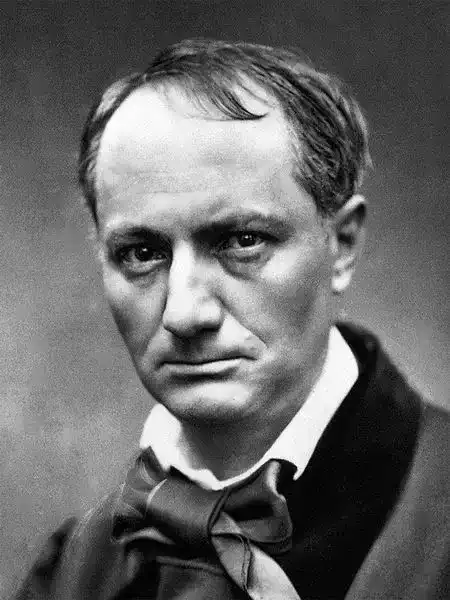
Charles Baudelaire
The Living Torch
The Living Torch
Those lit eyes go before me, in full view,
(Some cunning angel magnetised their light) -
Heavenly twins, yet my own brothers too,
Shaking their diamond blaze into my sight.
My steps from every trap or sin to save,
In the strait road of Beauty they conduct me,
They are my servants, and I am their slave,
Obedient in whatever they instruct me.
Delightful eyes, you burn with mystic rays
Like candles in broad day; red suns may blaze,
But cannot quench their still, fantastic light.
Those candles burn for death, but you for waking :
You sing the dawn that in my soul is breaking,
Stars which no sun could ever put to flight!
Those lit eyes go before me, in full view,
(Some cunning angel magnetised their light) -
Heavenly twins, yet my own brothers too,
Shaking their diamond blaze into my sight.
My steps from every trap or sin to save,
In the strait road of Beauty they conduct me,
They are my servants, and I am their slave,
Obedient in whatever they instruct me.
Delightful eyes, you burn with mystic rays
Like candles in broad day; red suns may blaze,
But cannot quench their still, fantastic light.
Those candles burn for death, but you for waking :
You sing the dawn that in my soul is breaking,
Stars which no sun could ever put to flight!
552
Charles Baudelaire
Beauty
Beauty
I am as lovely as a dream in stone;
My breast on which each finds his death in turn
Inspires the poet with a love as lone
As everlasting clay, and as taciturn.
Swan-white of heart, as sphinx no mortal knows,
My throne is in the heaven's azure deep;
I hate all movement that disturbs my pose;
I smile not ever, neither do I weep.
Before my monumental attitudes,
Taken from the proudest plastic arts,
My poets pray in austere studious moods,
For I, to fold enchantment round their hearts,
Have pools of light where beauty flames and dies,
The placid mirrors of my luminous eyes.
I am as lovely as a dream in stone;
My breast on which each finds his death in turn
Inspires the poet with a love as lone
As everlasting clay, and as taciturn.
Swan-white of heart, as sphinx no mortal knows,
My throne is in the heaven's azure deep;
I hate all movement that disturbs my pose;
I smile not ever, neither do I weep.
Before my monumental attitudes,
Taken from the proudest plastic arts,
My poets pray in austere studious moods,
For I, to fold enchantment round their hearts,
Have pools of light where beauty flames and dies,
The placid mirrors of my luminous eyes.
587

Carl Sandburg
Dream Girl
Dream Girl
You will come one day in a waver of love,
Tender as dew, impetuous as rain,
The tan of the sun will be on your skin,
The purr of the breeze in your murmuring speech,
You will pose with a hill-flower grace.
You will come, with your slim, expressive arms,
A poise of the head no sculptor has caught
And nuances spoken with shoulder and neck,
Your face in a pass-and-repass of moods
As many as skies in delicate change
Of cloud and blue and flimmering sun.
Yet,
You may not come, O girl of a dream,
We may but pass as the world goes by
And take from a look of eyes into eyes,
A film of hope and a memoried day.
You will come one day in a waver of love,
Tender as dew, impetuous as rain,
The tan of the sun will be on your skin,
The purr of the breeze in your murmuring speech,
You will pose with a hill-flower grace.
You will come, with your slim, expressive arms,
A poise of the head no sculptor has caught
And nuances spoken with shoulder and neck,
Your face in a pass-and-repass of moods
As many as skies in delicate change
Of cloud and blue and flimmering sun.
Yet,
You may not come, O girl of a dream,
We may but pass as the world goes by
And take from a look of eyes into eyes,
A film of hope and a memoried day.
364
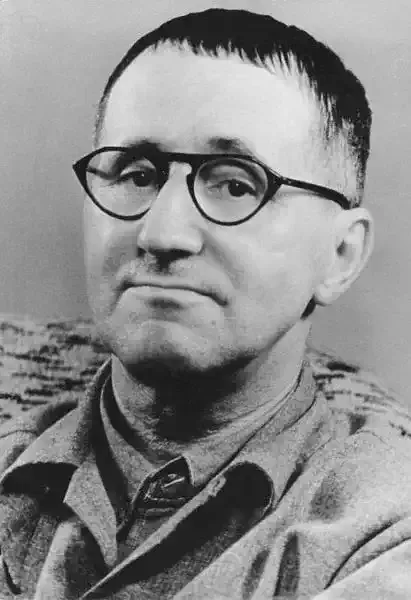
Bertolt Brecht
Fragen
Fragen
Schreib mir, was du anhast! Ist es warm?
Schreib mir, wie du liegst! Liegst du auch weich?
Schreib mir, wie du aussiehst! Ist´s noch gleich?
Schreib mir, was dir fehlt! Ist es mein Arm?
Schreib mir, wie´s dir geht! Verschont man dich?
Schreib mir, was sie treiben! Reicht dein Mut?
Schreib mir, was du tust! Ist es auch gut?
Schreib mir, woran denkst du? Bin es ich?
Freilich hab ich dir nur meine Fragen!
Und die Antwort hör ich, wie sie fällt!
Wenn du müd bist, kann ich dir nichts tragen.
Hungerst du, hab ich dir nichts zu Essen.
Und so bin ich grad wie aus der Welt
Nicht mehr da, als hätt ich dich vergessen.
Schreib mir, was du anhast! Ist es warm?
Schreib mir, wie du liegst! Liegst du auch weich?
Schreib mir, wie du aussiehst! Ist´s noch gleich?
Schreib mir, was dir fehlt! Ist es mein Arm?
Schreib mir, wie´s dir geht! Verschont man dich?
Schreib mir, was sie treiben! Reicht dein Mut?
Schreib mir, was du tust! Ist es auch gut?
Schreib mir, woran denkst du? Bin es ich?
Freilich hab ich dir nur meine Fragen!
Und die Antwort hör ich, wie sie fällt!
Wenn du müd bist, kann ich dir nichts tragen.
Hungerst du, hab ich dir nichts zu Essen.
Und so bin ich grad wie aus der Welt
Nicht mehr da, als hätt ich dich vergessen.
1,609
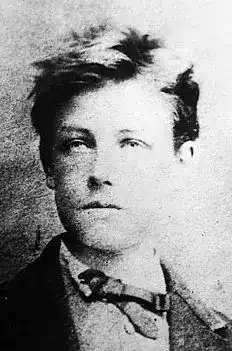
Arthur Rimbaud
L'Idole.. Sonnet Du Trou Du Cul
L'Idole.. Sonnet Du Trou Du Cul
Obscur et froncé comme un oeillet violet
Il respire, humblement tapi parmi la mousse.
Humide encor d'amour qui suit la fuite douce
Des Fesses blanches jusqu'au coeur de son ourlet.
Des filaments pareils à des larmes de lait
Ont pleuré, sous le vent cruel qui les repousse,
À travers de petits caillots de marne rousse
Pour s'aller perdre où la pente les appelait.
Mon Rêve s'aboucha souvent à sa ventouse ;
Mon âme, du coït matériel jalouse,
En fit son larmier fauve et son nid de sanglots.
C'est l'olive pâmée, et la flûte caline ;
C'est le tube où descend la céleste praline :
Chanaan féminin dans les moiteurs enclos !
Albert Mérat.
The Idol.
Sonnet to an Asshole
Dark and wrinkled like a purple pink
It breathes, nestling humbly among the still-damp
Froth of love that follows the gentle slope
Of the white buttocks to its crater's edge.
Filaments like tears of milk
Have wept in the cruel wind which pushes them back,
Across little clots of reddish marl
To lose themselves where the slope called them.
My dream has often kissed its opening;
My soul, jealous of physical coitus,
Has made this its fawn-coloured tear-bottle and its nest of sobs.
It is the rapturous olive and the wheedling flute,
The tube from which the heavenly burnt almond falls:
Feminine Canaan enclosed among moistures.
Albert Mérat.
P.V.-A.R.
Obscur et froncé comme un oeillet violet
Il respire, humblement tapi parmi la mousse.
Humide encor d'amour qui suit la fuite douce
Des Fesses blanches jusqu'au coeur de son ourlet.
Des filaments pareils à des larmes de lait
Ont pleuré, sous le vent cruel qui les repousse,
À travers de petits caillots de marne rousse
Pour s'aller perdre où la pente les appelait.
Mon Rêve s'aboucha souvent à sa ventouse ;
Mon âme, du coït matériel jalouse,
En fit son larmier fauve et son nid de sanglots.
C'est l'olive pâmée, et la flûte caline ;
C'est le tube où descend la céleste praline :
Chanaan féminin dans les moiteurs enclos !
Albert Mérat.
The Idol.
Sonnet to an Asshole
Dark and wrinkled like a purple pink
It breathes, nestling humbly among the still-damp
Froth of love that follows the gentle slope
Of the white buttocks to its crater's edge.
Filaments like tears of milk
Have wept in the cruel wind which pushes them back,
Across little clots of reddish marl
To lose themselves where the slope called them.
My dream has often kissed its opening;
My soul, jealous of physical coitus,
Has made this its fawn-coloured tear-bottle and its nest of sobs.
It is the rapturous olive and the wheedling flute,
The tube from which the heavenly burnt almond falls:
Feminine Canaan enclosed among moistures.
Albert Mérat.
P.V.-A.R.
718

Anonymous
There is a Lady sweet and kind, Thomas Ford's Music of Sundry Kinds
There is a Lady sweet and kind, Thomas Ford's Music of Sundry Kinds
THERE is a Lady sweet and kind,
Was never face so pleased my mind;
I did but see her passing by,
And yet I love her till I die.
Her gesture, motion, and her smiles,
Her wit, her voice my heart beguiles,
Beguiles my heart, I know not why,
And yet I love her till I die.
Cupid is winged and doth range,
Her country so my love doth change:
But change she earth, or change she sky,
Yet will I love her till I die.
THERE is a Lady sweet and kind,
Was never face so pleased my mind;
I did but see her passing by,
And yet I love her till I die.
Her gesture, motion, and her smiles,
Her wit, her voice my heart beguiles,
Beguiles my heart, I know not why,
And yet I love her till I die.
Cupid is winged and doth range,
Her country so my love doth change:
But change she earth, or change she sky,
Yet will I love her till I die.
290
Anonymous
Love not me for comely grace, John Wilbye's Second Set of Madrigals
Love not me for comely grace, John Wilbye's Second Set of Madrigals
LOVE not me for comely grace,
For my pleasing eye or face,
Nor for any outward part,
No, nor for a constant heart:
For these may fail or turn to ill,
So thou and I shall sever:
Keep, therefore, a true woman's eye,
And love me still but know not why--
So hast thou the same reason still
To doat upon me ever!
LOVE not me for comely grace,
For my pleasing eye or face,
Nor for any outward part,
No, nor for a constant heart:
For these may fail or turn to ill,
So thou and I shall sever:
Keep, therefore, a true woman's eye,
And love me still but know not why--
So hast thou the same reason still
To doat upon me ever!
226
Anonymous
Blow, Northern Wind
Blow, Northern Wind
ICHOT a burde in boure bryht,
That fully semly is on syht,
Menskful maiden of myht;
Feir ant fre to fonde;
In al this wurhliche won
A burde of blod ant of bon
Never yete y nuste non
Lussomore in londe.
Blou northerne wynd!
Send thou me my suetyng!
Blou northerne wynd! blou, blou, blou!
With lokkes lefliche ant longe,
With frount ant face feir to fonge,
With murthes monie mote heo monge,
That brid so breme in boure.
With lossom eye grete ant gode,
With browen blysfol under hode,
He that reste him on the Rode,
That leflych lyf honoure.
Blou northerne wynd, etc.
Hire lure lumes liht,
Ase a launterne a nyht,
Hire bleo blykyeth so bryht.
So feyr heo is ant fyn.
A suetly swyre heo hath to holde,
With armes shuldre ase mon wolde,
Ant fingres feyre forte folde,
God wolde hue were myn!
Blou northerne wynd, etc.
Heo is coral of godnesse,
Heo is rubie of ryhtfulnesse,
Heo is cristal of clannesse,
Ant baner of bealte.
Heo is lilie of largesse,
Heo is parvenke of prouesse,
Heo is solsecle of suetnesse,
Ant lady of lealte.
For hire love y carke ant care,
For hire love y droupne ant dare,
For hire love my blisse is bare
Ant al ich waxe won,
For hire love in slep y slake,
For hire love al nyht ich wake,
For hire love mournynge y make
More then eny mon.
Blou northerne wynd!
Send thou me my suetyng!
Blou northerne wynd! blou, blou, blou!
ICHOT a burde in boure bryht,
That fully semly is on syht,
Menskful maiden of myht;
Feir ant fre to fonde;
In al this wurhliche won
A burde of blod ant of bon
Never yete y nuste non
Lussomore in londe.
Blou northerne wynd!
Send thou me my suetyng!
Blou northerne wynd! blou, blou, blou!
With lokkes lefliche ant longe,
With frount ant face feir to fonge,
With murthes monie mote heo monge,
That brid so breme in boure.
With lossom eye grete ant gode,
With browen blysfol under hode,
He that reste him on the Rode,
That leflych lyf honoure.
Blou northerne wynd, etc.
Hire lure lumes liht,
Ase a launterne a nyht,
Hire bleo blykyeth so bryht.
So feyr heo is ant fyn.
A suetly swyre heo hath to holde,
With armes shuldre ase mon wolde,
Ant fingres feyre forte folde,
God wolde hue were myn!
Blou northerne wynd, etc.
Heo is coral of godnesse,
Heo is rubie of ryhtfulnesse,
Heo is cristal of clannesse,
Ant baner of bealte.
Heo is lilie of largesse,
Heo is parvenke of prouesse,
Heo is solsecle of suetnesse,
Ant lady of lealte.
For hire love y carke ant care,
For hire love y droupne ant dare,
For hire love my blisse is bare
Ant al ich waxe won,
For hire love in slep y slake,
For hire love al nyht ich wake,
For hire love mournynge y make
More then eny mon.
Blou northerne wynd!
Send thou me my suetyng!
Blou northerne wynd! blou, blou, blou!
313
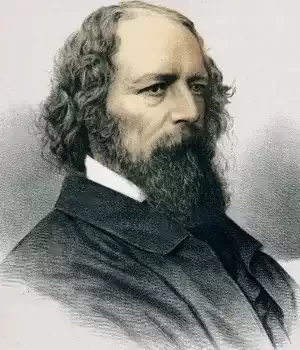
Alfred Lord Tennyson
The Lady of Shalott (1842)
The Lady of Shalott (1842)
PART I
On either side the river lie
Long fields of barley and of rye,
That clothe the wold and meet the sky;
And thro' the field the road runs by
To many-tower'd Camelot;
And up and down the people go,
Gazing where the lilies blow
Round an island there below,
The island of Shalott.
Willows whiten, aspens quiver,
Little breezes dusk and shiver
Thro' the wave that runs for ever
By the island in the river
Flowing down to Camelot.
Four gray walls, and four gray towers,
Overlook a space of flowers,
And the silent isle imbowers
The Lady of Shalott.
By the margin, willow veil'd,
Slide the heavy barges trail'd
By slow horses; and unhail'd
The shallop flitteth silken-sail'd
Skimming down to Camelot:
But who hath seen her wave her hand?
Or at the casement seen her stand?
Or is she known in all the land,
The Lady of Shalott?
Only reapers, reaping early
In among the bearded barley,
Hear a song that echoes cheerly
From the river winding clearly,
Down to tower'd Camelot:
And by the moon the reaper weary,
Piling sheaves in uplands airy,
Listening, whispers " 'Tis the fairy
Lady of Shalott."PART II
There she weaves by night and day
A magic web with colours gay.
She has heard a whisper say,
A curse is on her if she stay
To look down to Camelot.
She knows not what the curse may be,
And so she weaveth steadily,
And little other care hath she,
The Lady of Shalott.
And moving thro' a mirror clear
That hangs before her all the year,
Shadows of the world appear.
There she sees the highway near
Winding down to Camelot:
There the river eddy whirls,
And there the surly village-churls,
And the red cloaks of market girls,
Pass onward from Shalott.
Sometimes a troop of damsels glad,
An abbot on an ambling pad,
Sometimes a curly shepherd-lad,
Or long-hair'd page in crimson clad,
Goes by to tower'd Camelot;
And sometimes thro' the mirror blue
The knights come riding two and two:
She hath no loyal knight and true,
The Lady of Shalott.
But in her web she still delights
To weave the mirror's magic sights,
For often thro' the silent nights
A funeral, with plumes and lights
And music, went to Camelot:
Or when the moon was overhead,
Came two young lovers lately wed:
"I am half sick of shadows," said
The Lady of Shalott.PART III
A bow-shot from her bower-eaves,
He rode between the barley-sheaves,
The sun came dazzling thro' the leaves,
And flamed upon the brazen greaves
Of bold Sir Lancelot.
A red-cross knight for ever kneel'd
To a lady in his shield,
That sparkled on the yellow field,
Beside remote Shalott.
The gemmy bridle glitter'd free,
Like to some branch of stars we see
Hung in the golden Galaxy.
The bridle bells rang merrily
As he rode down to Camelot:
And from his blazon'd baldric slung
A mighty silver bugle hung,
And as he rode his armour rung,
Beside remote Shalott.
All in the blue unclouded weather
Thick-jewell'd shone the saddle-leather,
The helmet and the helmet-feather
Burn'd like one burning flame together,
As he rode down to Camelot.
As often thro' the purple night,
Below the starry clusters bright,
Some bearded meteor, trailing light,
Moves over still Shalott.
His broad clear brow in sunlight glow'd;
On burnish'd hooves his war-horse trode;
From underneath his helmet flow'd
His coal-black curls as on he rode,
As he rode down to Camelot.
From the bank and from the river
He flash'd into the crystal mirror,
"Tirra lirra," by the river
Sang Sir Lancelot.
She left the web, she left the loom,
She made three paces thro' the room,
She saw the water-lily bloom,
She saw the helmet and the plume,
She look'd down to Camelot.
Out flew the web and floated wide;
The mirror crack'd from side to side;
"The curse is come upon me," cried
The Lady of Shalott.PART IV
In the stormy east-wind straining,
The pale yellow woods were waning,
The broad stream in his banks complaining,
Heavily the low sky raining
Over tower'd Camelot;
Down she came and found a boat
Beneath a willow left afloat,
And round about the prow she wrote
The Lady of Shalott.
And down the river's dim expanse
Like some bold seër in a trance,
Seeing all his own mischance-With
a glassy countenance
Did she look to Camelot.
And at the closing of the day
She loosed the chain, and down she lay;
The broad stream bore her far away,
The Lady of Shalott.
Lying, robed in snowy white
That loosely flew to left and right-The
leaves upon her falling light-Thro'
the noises of the night
She floated down to Camelot:
And as the boat-head wound along
The willowy hills and fields among,
They heard her singing her last song,
The Lady of Shalott.
Heard a carol, mournful, holy,
Chanted loudly, chanted lowly,
Till her blood was frozen slowly,
And her eyes were darken'd wholly,
Turn'd to tower'd Camelot.
For ere she reach'd upon the tide
The first house by the water-side,
Singing in her song she died,
The Lady of Shalott.
Under tower and balcony,
By garden-wall and gallery,
A gleaming shape she floated by,
Dead-pale between the houses high,
Silent into Camelot.
Out upon the wharfs they came,
Knight and burgher, lord and dame,
And round the prow they read her name,
The Lady of Shalott.
Who is this? and what is here?
And in the lighted palace near
Died the sound of royal cheer;
And they cross'd themselves for fear,
All the knights at Camelot:
But Lancelot mused a little space;
He said, "She has a lovely face;
God in his mercy lend her grace,
The Lady of Shalott."
PART I
On either side the river lie
Long fields of barley and of rye,
That clothe the wold and meet the sky;
And thro' the field the road runs by
To many-tower'd Camelot;
And up and down the people go,
Gazing where the lilies blow
Round an island there below,
The island of Shalott.
Willows whiten, aspens quiver,
Little breezes dusk and shiver
Thro' the wave that runs for ever
By the island in the river
Flowing down to Camelot.
Four gray walls, and four gray towers,
Overlook a space of flowers,
And the silent isle imbowers
The Lady of Shalott.
By the margin, willow veil'd,
Slide the heavy barges trail'd
By slow horses; and unhail'd
The shallop flitteth silken-sail'd
Skimming down to Camelot:
But who hath seen her wave her hand?
Or at the casement seen her stand?
Or is she known in all the land,
The Lady of Shalott?
Only reapers, reaping early
In among the bearded barley,
Hear a song that echoes cheerly
From the river winding clearly,
Down to tower'd Camelot:
And by the moon the reaper weary,
Piling sheaves in uplands airy,
Listening, whispers " 'Tis the fairy
Lady of Shalott."PART II
There she weaves by night and day
A magic web with colours gay.
She has heard a whisper say,
A curse is on her if she stay
To look down to Camelot.
She knows not what the curse may be,
And so she weaveth steadily,
And little other care hath she,
The Lady of Shalott.
And moving thro' a mirror clear
That hangs before her all the year,
Shadows of the world appear.
There she sees the highway near
Winding down to Camelot:
There the river eddy whirls,
And there the surly village-churls,
And the red cloaks of market girls,
Pass onward from Shalott.
Sometimes a troop of damsels glad,
An abbot on an ambling pad,
Sometimes a curly shepherd-lad,
Or long-hair'd page in crimson clad,
Goes by to tower'd Camelot;
And sometimes thro' the mirror blue
The knights come riding two and two:
She hath no loyal knight and true,
The Lady of Shalott.
But in her web she still delights
To weave the mirror's magic sights,
For often thro' the silent nights
A funeral, with plumes and lights
And music, went to Camelot:
Or when the moon was overhead,
Came two young lovers lately wed:
"I am half sick of shadows," said
The Lady of Shalott.PART III
A bow-shot from her bower-eaves,
He rode between the barley-sheaves,
The sun came dazzling thro' the leaves,
And flamed upon the brazen greaves
Of bold Sir Lancelot.
A red-cross knight for ever kneel'd
To a lady in his shield,
That sparkled on the yellow field,
Beside remote Shalott.
The gemmy bridle glitter'd free,
Like to some branch of stars we see
Hung in the golden Galaxy.
The bridle bells rang merrily
As he rode down to Camelot:
And from his blazon'd baldric slung
A mighty silver bugle hung,
And as he rode his armour rung,
Beside remote Shalott.
All in the blue unclouded weather
Thick-jewell'd shone the saddle-leather,
The helmet and the helmet-feather
Burn'd like one burning flame together,
As he rode down to Camelot.
As often thro' the purple night,
Below the starry clusters bright,
Some bearded meteor, trailing light,
Moves over still Shalott.
His broad clear brow in sunlight glow'd;
On burnish'd hooves his war-horse trode;
From underneath his helmet flow'd
His coal-black curls as on he rode,
As he rode down to Camelot.
From the bank and from the river
He flash'd into the crystal mirror,
"Tirra lirra," by the river
Sang Sir Lancelot.
She left the web, she left the loom,
She made three paces thro' the room,
She saw the water-lily bloom,
She saw the helmet and the plume,
She look'd down to Camelot.
Out flew the web and floated wide;
The mirror crack'd from side to side;
"The curse is come upon me," cried
The Lady of Shalott.PART IV
In the stormy east-wind straining,
The pale yellow woods were waning,
The broad stream in his banks complaining,
Heavily the low sky raining
Over tower'd Camelot;
Down she came and found a boat
Beneath a willow left afloat,
And round about the prow she wrote
The Lady of Shalott.
And down the river's dim expanse
Like some bold seër in a trance,
Seeing all his own mischance-With
a glassy countenance
Did she look to Camelot.
And at the closing of the day
She loosed the chain, and down she lay;
The broad stream bore her far away,
The Lady of Shalott.
Lying, robed in snowy white
That loosely flew to left and right-The
leaves upon her falling light-Thro'
the noises of the night
She floated down to Camelot:
And as the boat-head wound along
The willowy hills and fields among,
They heard her singing her last song,
The Lady of Shalott.
Heard a carol, mournful, holy,
Chanted loudly, chanted lowly,
Till her blood was frozen slowly,
And her eyes were darken'd wholly,
Turn'd to tower'd Camelot.
For ere she reach'd upon the tide
The first house by the water-side,
Singing in her song she died,
The Lady of Shalott.
Under tower and balcony,
By garden-wall and gallery,
A gleaming shape she floated by,
Dead-pale between the houses high,
Silent into Camelot.
Out upon the wharfs they came,
Knight and burgher, lord and dame,
And round the prow they read her name,
The Lady of Shalott.
Who is this? and what is here?
And in the lighted palace near
Died the sound of royal cheer;
And they cross'd themselves for fear,
All the knights at Camelot:
But Lancelot mused a little space;
He said, "She has a lovely face;
God in his mercy lend her grace,
The Lady of Shalott."
817
Alfred Lord Tennyson
Sir Galahad
Sir Galahad
MY good blade carves the casques of men,
My tough lance thrusteth sure,
My strength is as the strength of ten,
Because my heart is pure.
The shattering trumpet shrilleth high,
The hard brands shiver on the steel,
The splinter'd spear-shafts crack and fly,
The horse and rider reel:
They reel, they roll in clanging lists,
And when the tide of combat stands,
Perfume and flowers fall in showers,
That lightly rain from ladies' hands.
How sweet are looks that ladies bend
On whom their favours fall !
For them I battle till the end,
To save from shame and thrall:
But all my heart is drawn above,
My knees are bow'd in crypt and shrine:
I never felt the kiss of love,
Nor maiden's hand in mine.
More bounteous aspects on me beam,
Me mightier transports move and thrill;
So keep I fair thro' faith and prayer
A virgin heart in work and will.
When down the stormy crescent goes,
A light before me swims,
Between dark stems the forest glows,
I hear a noise of hymns:
Then by some secret shrine I ride;
I hear a voice but none are there;
The stalls are void, the doors are wide,
The tapers burning fair.
Fair gleams the snowy altar-cloth,
The silver vessels sparkle clean,
The shrill bell rings, the censer swings,
And solemn chaunts resound between.
Sometimes on lonely mountain-meres
I find a magic bark;
I leap on board: no helmsman steers:
I float till all is dark.
A gentle sound, an awful light !
Three arngels bear the holy Grail:
With folded feet, in stoles of white,
On sleeping wings they sail.
Ah, blessed vision! blood of God!
My spirit beats her mortal bars,
As down dark tides the glory slides,
And star-like mingles with the stars.
When on my goodly charger borne
Thro' dreaming towns I go,
The cock crows ere the Christmas morn,
The streets are dumb with snow.
The tempest crackles on the leads,
And, ringing, springs from brand and mail;
But o'er the dark a glory spreads,
And gilds the driving hail.
I leave the plain, I climb the height;
No branchy thicket shelter yields;
But blessed forms in whistling storms
Fly o'er waste fens and windy fields.
A maiden knight--to me is given
Such hope, I know not fear;
I yearn to breathe the airs of heaven
That often meet me here.
I muse on joy that will not cease,
Pure spaces clothed in living beams,
Pure lilies of eternal peace,
Whose odours haunt my dreams;
And, stricken by an angel's hand,
This mortal armour that I wear,
This weight and size, this heart and eyes,
Are touch'd, are turn'd to finest air.
The clouds are broken in the sky,
And thro' the mountain-walls
A rolling organ-harmony
Swells up, and shakes and falls.
Then move the trees, the copses nod,
Wings flutter, voices hover clear:
'O just and faithful knight of God!
Ride on ! the prize is near.'
So pass I hostel, hall, and grange;
By bridge and ford, by park and pale,
All-arm'd I ride, whate'er betide,
Until I find the holy Grail.
MY good blade carves the casques of men,
My tough lance thrusteth sure,
My strength is as the strength of ten,
Because my heart is pure.
The shattering trumpet shrilleth high,
The hard brands shiver on the steel,
The splinter'd spear-shafts crack and fly,
The horse and rider reel:
They reel, they roll in clanging lists,
And when the tide of combat stands,
Perfume and flowers fall in showers,
That lightly rain from ladies' hands.
How sweet are looks that ladies bend
On whom their favours fall !
For them I battle till the end,
To save from shame and thrall:
But all my heart is drawn above,
My knees are bow'd in crypt and shrine:
I never felt the kiss of love,
Nor maiden's hand in mine.
More bounteous aspects on me beam,
Me mightier transports move and thrill;
So keep I fair thro' faith and prayer
A virgin heart in work and will.
When down the stormy crescent goes,
A light before me swims,
Between dark stems the forest glows,
I hear a noise of hymns:
Then by some secret shrine I ride;
I hear a voice but none are there;
The stalls are void, the doors are wide,
The tapers burning fair.
Fair gleams the snowy altar-cloth,
The silver vessels sparkle clean,
The shrill bell rings, the censer swings,
And solemn chaunts resound between.
Sometimes on lonely mountain-meres
I find a magic bark;
I leap on board: no helmsman steers:
I float till all is dark.
A gentle sound, an awful light !
Three arngels bear the holy Grail:
With folded feet, in stoles of white,
On sleeping wings they sail.
Ah, blessed vision! blood of God!
My spirit beats her mortal bars,
As down dark tides the glory slides,
And star-like mingles with the stars.
When on my goodly charger borne
Thro' dreaming towns I go,
The cock crows ere the Christmas morn,
The streets are dumb with snow.
The tempest crackles on the leads,
And, ringing, springs from brand and mail;
But o'er the dark a glory spreads,
And gilds the driving hail.
I leave the plain, I climb the height;
No branchy thicket shelter yields;
But blessed forms in whistling storms
Fly o'er waste fens and windy fields.
A maiden knight--to me is given
Such hope, I know not fear;
I yearn to breathe the airs of heaven
That often meet me here.
I muse on joy that will not cease,
Pure spaces clothed in living beams,
Pure lilies of eternal peace,
Whose odours haunt my dreams;
And, stricken by an angel's hand,
This mortal armour that I wear,
This weight and size, this heart and eyes,
Are touch'd, are turn'd to finest air.
The clouds are broken in the sky,
And thro' the mountain-walls
A rolling organ-harmony
Swells up, and shakes and falls.
Then move the trees, the copses nod,
Wings flutter, voices hover clear:
'O just and faithful knight of God!
Ride on ! the prize is near.'
So pass I hostel, hall, and grange;
By bridge and ford, by park and pale,
All-arm'd I ride, whate'er betide,
Until I find the holy Grail.
683
Alfred Lord Tennyson
Œnone
Œnone
There lies a vale in Ida, lovelier
Than all the valleys of Ionian hills.
The swimming vapour slopes athwart the glen,
Puts forth an arm, and creeps from pine to pine,
And loiters, slowly drawn. On either hand
The lawns and meadow-ledges midway down
Hang rich in flowers, and far below them roars
The long brook falling thro' the clov'n ravine
In cataract after cataract to the sea.
Behind the valley topmost Gargarus
Stands up and takes the morning: but in front
The gorges, opening wide apart, reveal
Troas and Ilion's column'd citadel,
The crown of Troas. Hither came at noon
Mournful Œnone, wandering forlorn
Of Paris, once her playmate on the hills.
Her cheek had lost the rose, and round her neck
Floated her hair or seem'd to float in rest.
She, leaning on a fragment twined with vine,
Sang to the stillness, till the mountain-shade
Sloped downward to her seat from the upper cliff.
"O mother Ida, many-fountain'd Ida,
Dear mother Ida, harken ere I die.
For now the noonday quiet holds the hill:
The grasshopper is silent in the grass:
The lizard, with his shadow on the stone,
Rests like a shadow, and the winds are dead.
The purple flower droops: the golden bee
Is lily-cradled: I alone awake.
My eyes are full of tears, my heart of love,
My heart is breaking, and my eyes are dim,
And I am all aweary of my life.
"O mother Ida, many-fountain'd Ida,
Dear mother Ida, harken ere I die.
Hear me, O Earth, hear me, O Hills, O Caves
That house the cold crown'd snake! O mountain brooks,
I am the daughter of a River-God,
Hear me, for I will speak, and build up all
My sorrow with my song, as yonder walls
Rose slowly to a music slowly breathed,
A cloud that gather'd shape: for it may be
That, while I speak of it, a little while
My heart may wander from its deeper woe.
"O mother Ida, many-fountain'd Ida,
Dear mother Ida, harken ere I die.
I waited underneath the dawning hills,
Aloft the mountain lawn was dewy-dark,
And dewy-dark aloft the mountain pine:
Beautiful Paris, evil-hearted Paris,
Leading a jet-black goat white-horn'd, white-hooved,
Came up from reedy Simois all alone.
"O mother Ida, harken ere I die.
Far-off the torrent call'd me from the cleft:
Far up the solitary morning smote
The streaks of virgin snow. With down-dropt eyes
I sat alone: white-breasted like a star
Fronting the dawn he moved; a leopard skin
Droop'd from his shoulder, but his sunny hair
Cluster'd about his temples like a God's:
And his cheek brighten'd as the foam-bow brightens
When the wind blows the foam, and all my heart
Went forth to embrace him coming ere he came.
"Dear mother Ida, harken ere I die.
He smiled, and opening out his milk-white palm
Disclosed a fruit of pure Hesperian gold,
That smelt ambrosially, and while I look'd
And listen'd, the full-flowing river of speech
Came down upon my heart. `My own Œnone,
Beautiful-brow'd Œnone, my own soul,
Behold this fruit, whose gleaming rind ingrav'n
"For the most fair," would seem to award it thine,
As lovelier than whatever Oread haunt
The knolls of Ida, loveliest in all grace
Of movement, and the charm of married brows.'
"Dear mother Ida, harken ere I die.
He prest the blossom of his lips to mine,
And added 'This was cast upon the board,
When all the full-faced presence of the Gods
Ranged in the halls of Peleus; whereupon
Rose feud, with question unto whom 'twere due:
But light-foot Iris brought it yester-eve,
Delivering that to me, by common voice
Elected umpire, Herè comes to-day,
Pallas and Aphroditè, claiming each
This meed of fairest. Thou, within the cave
Behind yon whispering tuft of oldest pine,
Mayst well behold them unbeheld, unheard
Hear all, and see thy Paris judge of Gods.'
"Dear mother Ida, harken ere I die.
It was the deep midnoon: one silvery cloud
Had lost his way between the piney sides
Of this long glen. Then to the bower they came,
Naked they came to that smooth-swarded bower,
And at their feet the crocus brake like fire,
Violet, amaracus, and asphodel,
Lotos and lilies: and a wind arose,
And overhead the wandering ivy and vine,
This way and that, in many a wild festoon
Ran riot, garlanding the gnarled boughs
With bunch and berry and flower thro' and thro'.
"O mother Ida, harken ere I die.
On the tree-tops a crested peacock lit,
And o'er him flow'd a golden cloud, and lean'd
Upon him, slowly dropping fragrant dew.
Then first I heard the voice of her, to whom
Coming thro' Heaven, like a light that grows
Larger and clearer, with one mind the Gods
Rise up for reverence. She to Paris made
Proffer of royal power, ample rule
Unquestion'd, overflowing revenue
Wherewith to embellish state, 'from many a vale
And river-sunder'd champaign clothed with corn,
Or labour'd mine undrainable of ore.
Honour,' she said, 'and homage, tax and toll,
From many an inland town and haven large,
Mast-throng'd beneath her shadowing citadel
In glassy bays among her tallest towers.'
"O mother Ida, harken ere I die.
Still she spake on and still she spake of power,
'Which in all action is the end of all;
Power fitted to the season; wisdom-bred
And throned of wisdom--from all neighbour crowns
Alliance and allegiance, till thy hand
Fail from the sceptre-staff. Such boon from me,
From me, Heaven's Queen, Paris, to thee king-born,
A shepherd all thy life but yet king-born,
Should come most welcome, seeing men, in power
Only, are likest Gods, who have attain'd
Rest in a happy place and quiet seats
Above the thunder, with undying bliss
In knowledge of their own supremacy.'
"Dear mother Ida, harken ere I die.
She ceased, and Paris held the costly fruit
Out at arm's-length, so much the thought of power
Flatter'd his spirit; but Pallas where she stood
Somewhat apart, her clear and bared limbs
O'erthwarted with the brazen-headed spear
Upon her pearly shoulder leaning cold,
The while, above, her full and earnest eye
Over her snow-cold breast and angry cheek
Kept watch, waiting decision, made reply.
"`Self-reverence, self-knowledge, self-control,
These three alone lead life to sovereign power.
Yet not for power (power of herself
Would come uncall'd for) but to live by law,
Acting the law we live by without fear;
And, because right is right, to follow right
Were wisdom in the scorn of consequence.'
"Dear mother Ida, harken ere I die.
Again she said: 'I woo thee not with gifts.
Sequel of guerdon could not alter me
To fairer. Judge thou me by what I am,
So shalt thou find me fairest. Yet, indeed,
If gazing on divinity disrobed
Thy mortal eyes are frail to judge of fair,
Unbias'd by self-profit, oh! rest thee sure
That I shall love thee well and cleave to thee,
So that my vigour, wedded to thy blood,
Shall strike within thy pulses, like a God's,
To push thee forward thro' a life of shocks,
Dangers, and deeds, until endurance grow
Sinew'd with action, and the full-grown will,
Circled thro' all experiences, pure law,
Commeasure perfect freedom.' Here she ceas'd
And Paris ponder'd, and I cried, 'O Paris,
Give it to Pallas!' but he heard me not,
Or hearing would not hear me, woe is me!
"O mother Ida, many-fountain'd Ida,
Dear mother Ida, harken ere I die.
Italian Aphroditè beautiful,
Fresh as the foam, new-bathed in Paphian wells,
With rosy slender fingers backward drew
From her warm brows and bosom her deep hair
Ambrosial, golden round her lucid throat
And shoulder: from the violets her light foot
Shone rosy-white, and o'er her rounded form
Between the shadows of the vine-bunches
Floated the glowing sunlights, as she moved.
"Dear mother Ida, harken ere I die.
She with a subtle smile in her mild eyes,
The herald of her triumph, drawing nigh
Half-whisper'd in his ear, 'I promise thee
The fairest and most loving wife in Greece.'
She spoke and laugh'd: I shut my sight for fear:
But when I look'd, Paris had raised his arm,
And I beheld great Herè's angry eyes,
As she withdrew into the golden cloud,
And I was left alone within the bower;
And from that time to this I am alone,
And I shall be alone until I die.
"Yet, mother Ida, harken ere I die.
Fairest--why fairest wife? am I not fair?
My love hath told me so a thousand times.
Methinks I must be fair, for yesterday,
When I past by, a wild and wanton pard,
Eyed like the evening star, with playful tail
Crouch'd fawning in the weed. Most loving is she?
Ah me, my mountain shepherd, that my arms
Were wound about thee, and my hot lips prest
Close, close to thine in that quick-falling dew
Of fruitful kisses, thick as Autumn rains
Flash in the pools of whirling Simois!
"O mother, hear me yet before I die.
They came, they cut away my tallest pines,
My tall dark pines, that plumed the craggy ledge
High over the blue gorge, and all between
The snowy peak and snow-white cataract
Foster'd the callow eaglet--from beneath
Whose thick mysterious boughs in the dark morn
The panther's roar came muffled, while I sat
Low in the valley. Never, never more
Shall lone Œnone see the morning mist
Sweep thro' them; never see them overlaid
With narrow moon-lit slips of silver cloud,
Between the loud stream and the trembling stars.
"O mother, hear me yet before I die.
I wish that somewhere in the ruin'd folds,
Among the fragments tumbled from the glens,
Or the dry thickets, I could meet with her
The Abominable, that uninvited came
Into the fair Pele{:i}an banquet-hall,
And cast the golden fruit upon the board,
And bred this change; that I might speak my mind,
And tell her to her face how much I hate
Her presence, hated both of Gods and men.
"O mother, hear me yet before I die.
Hath he not sworn his love a thousand times,
In this green valley, under this green hill,
Ev'n on this hand, and sitting on this stone?
Seal'd it with kisses? water'd it with tears?
O happy tears, and how unlike to these!
O happy Heaven, how canst thou see my face?
O happy earth, how canst thou bear my weight?
O death, death, death, thou ever-floating cloud,
There are enough unhappy on this earth,
Pass by the happy souls, that love to live:
I pray thee, pass before my light of life,
And shadow all my soul, that I may die.
Thou weighest heavy on the heart within,
Weigh heavy on my eyelids: let me die.
"O mother, hear me yet before I die.
I will not die alone, for fiery thoughts
Do shape themselves within me, more and more,
Whereof I catch the issue, as I hear
Dead sounds at night come from the inmost hills,
Like footsteps upon wool. I dimly see
My far-off doubtful purpose, as a mother
Conjectures of the features of her child
Ere it is born: her child!--a shudder comes
Across me: never child be born of me,
Unblest, to vex me with his father's eyes!
"O mother, hear me yet before I die.
Hear me, O earth. I will not die alone,
Lest their shrill happy laughter come to me
Walking the cold and starless road of death
Uncomforted, leaving my ancient love
With the Greek woman. I will rise and go
Down into Troy, and ere the stars come forth
Talk with the wild Cassandra, for she says
A fire dances before her, and a sound
Rings ever in her ears of armed men.
What this may be I know not, but I know
That, wheresoe'er I am by night and day,
All earth and air seem only burning fire."
There lies a vale in Ida, lovelier
Than all the valleys of Ionian hills.
The swimming vapour slopes athwart the glen,
Puts forth an arm, and creeps from pine to pine,
And loiters, slowly drawn. On either hand
The lawns and meadow-ledges midway down
Hang rich in flowers, and far below them roars
The long brook falling thro' the clov'n ravine
In cataract after cataract to the sea.
Behind the valley topmost Gargarus
Stands up and takes the morning: but in front
The gorges, opening wide apart, reveal
Troas and Ilion's column'd citadel,
The crown of Troas. Hither came at noon
Mournful Œnone, wandering forlorn
Of Paris, once her playmate on the hills.
Her cheek had lost the rose, and round her neck
Floated her hair or seem'd to float in rest.
She, leaning on a fragment twined with vine,
Sang to the stillness, till the mountain-shade
Sloped downward to her seat from the upper cliff.
"O mother Ida, many-fountain'd Ida,
Dear mother Ida, harken ere I die.
For now the noonday quiet holds the hill:
The grasshopper is silent in the grass:
The lizard, with his shadow on the stone,
Rests like a shadow, and the winds are dead.
The purple flower droops: the golden bee
Is lily-cradled: I alone awake.
My eyes are full of tears, my heart of love,
My heart is breaking, and my eyes are dim,
And I am all aweary of my life.
"O mother Ida, many-fountain'd Ida,
Dear mother Ida, harken ere I die.
Hear me, O Earth, hear me, O Hills, O Caves
That house the cold crown'd snake! O mountain brooks,
I am the daughter of a River-God,
Hear me, for I will speak, and build up all
My sorrow with my song, as yonder walls
Rose slowly to a music slowly breathed,
A cloud that gather'd shape: for it may be
That, while I speak of it, a little while
My heart may wander from its deeper woe.
"O mother Ida, many-fountain'd Ida,
Dear mother Ida, harken ere I die.
I waited underneath the dawning hills,
Aloft the mountain lawn was dewy-dark,
And dewy-dark aloft the mountain pine:
Beautiful Paris, evil-hearted Paris,
Leading a jet-black goat white-horn'd, white-hooved,
Came up from reedy Simois all alone.
"O mother Ida, harken ere I die.
Far-off the torrent call'd me from the cleft:
Far up the solitary morning smote
The streaks of virgin snow. With down-dropt eyes
I sat alone: white-breasted like a star
Fronting the dawn he moved; a leopard skin
Droop'd from his shoulder, but his sunny hair
Cluster'd about his temples like a God's:
And his cheek brighten'd as the foam-bow brightens
When the wind blows the foam, and all my heart
Went forth to embrace him coming ere he came.
"Dear mother Ida, harken ere I die.
He smiled, and opening out his milk-white palm
Disclosed a fruit of pure Hesperian gold,
That smelt ambrosially, and while I look'd
And listen'd, the full-flowing river of speech
Came down upon my heart. `My own Œnone,
Beautiful-brow'd Œnone, my own soul,
Behold this fruit, whose gleaming rind ingrav'n
"For the most fair," would seem to award it thine,
As lovelier than whatever Oread haunt
The knolls of Ida, loveliest in all grace
Of movement, and the charm of married brows.'
"Dear mother Ida, harken ere I die.
He prest the blossom of his lips to mine,
And added 'This was cast upon the board,
When all the full-faced presence of the Gods
Ranged in the halls of Peleus; whereupon
Rose feud, with question unto whom 'twere due:
But light-foot Iris brought it yester-eve,
Delivering that to me, by common voice
Elected umpire, Herè comes to-day,
Pallas and Aphroditè, claiming each
This meed of fairest. Thou, within the cave
Behind yon whispering tuft of oldest pine,
Mayst well behold them unbeheld, unheard
Hear all, and see thy Paris judge of Gods.'
"Dear mother Ida, harken ere I die.
It was the deep midnoon: one silvery cloud
Had lost his way between the piney sides
Of this long glen. Then to the bower they came,
Naked they came to that smooth-swarded bower,
And at their feet the crocus brake like fire,
Violet, amaracus, and asphodel,
Lotos and lilies: and a wind arose,
And overhead the wandering ivy and vine,
This way and that, in many a wild festoon
Ran riot, garlanding the gnarled boughs
With bunch and berry and flower thro' and thro'.
"O mother Ida, harken ere I die.
On the tree-tops a crested peacock lit,
And o'er him flow'd a golden cloud, and lean'd
Upon him, slowly dropping fragrant dew.
Then first I heard the voice of her, to whom
Coming thro' Heaven, like a light that grows
Larger and clearer, with one mind the Gods
Rise up for reverence. She to Paris made
Proffer of royal power, ample rule
Unquestion'd, overflowing revenue
Wherewith to embellish state, 'from many a vale
And river-sunder'd champaign clothed with corn,
Or labour'd mine undrainable of ore.
Honour,' she said, 'and homage, tax and toll,
From many an inland town and haven large,
Mast-throng'd beneath her shadowing citadel
In glassy bays among her tallest towers.'
"O mother Ida, harken ere I die.
Still she spake on and still she spake of power,
'Which in all action is the end of all;
Power fitted to the season; wisdom-bred
And throned of wisdom--from all neighbour crowns
Alliance and allegiance, till thy hand
Fail from the sceptre-staff. Such boon from me,
From me, Heaven's Queen, Paris, to thee king-born,
A shepherd all thy life but yet king-born,
Should come most welcome, seeing men, in power
Only, are likest Gods, who have attain'd
Rest in a happy place and quiet seats
Above the thunder, with undying bliss
In knowledge of their own supremacy.'
"Dear mother Ida, harken ere I die.
She ceased, and Paris held the costly fruit
Out at arm's-length, so much the thought of power
Flatter'd his spirit; but Pallas where she stood
Somewhat apart, her clear and bared limbs
O'erthwarted with the brazen-headed spear
Upon her pearly shoulder leaning cold,
The while, above, her full and earnest eye
Over her snow-cold breast and angry cheek
Kept watch, waiting decision, made reply.
"`Self-reverence, self-knowledge, self-control,
These three alone lead life to sovereign power.
Yet not for power (power of herself
Would come uncall'd for) but to live by law,
Acting the law we live by without fear;
And, because right is right, to follow right
Were wisdom in the scorn of consequence.'
"Dear mother Ida, harken ere I die.
Again she said: 'I woo thee not with gifts.
Sequel of guerdon could not alter me
To fairer. Judge thou me by what I am,
So shalt thou find me fairest. Yet, indeed,
If gazing on divinity disrobed
Thy mortal eyes are frail to judge of fair,
Unbias'd by self-profit, oh! rest thee sure
That I shall love thee well and cleave to thee,
So that my vigour, wedded to thy blood,
Shall strike within thy pulses, like a God's,
To push thee forward thro' a life of shocks,
Dangers, and deeds, until endurance grow
Sinew'd with action, and the full-grown will,
Circled thro' all experiences, pure law,
Commeasure perfect freedom.' Here she ceas'd
And Paris ponder'd, and I cried, 'O Paris,
Give it to Pallas!' but he heard me not,
Or hearing would not hear me, woe is me!
"O mother Ida, many-fountain'd Ida,
Dear mother Ida, harken ere I die.
Italian Aphroditè beautiful,
Fresh as the foam, new-bathed in Paphian wells,
With rosy slender fingers backward drew
From her warm brows and bosom her deep hair
Ambrosial, golden round her lucid throat
And shoulder: from the violets her light foot
Shone rosy-white, and o'er her rounded form
Between the shadows of the vine-bunches
Floated the glowing sunlights, as she moved.
"Dear mother Ida, harken ere I die.
She with a subtle smile in her mild eyes,
The herald of her triumph, drawing nigh
Half-whisper'd in his ear, 'I promise thee
The fairest and most loving wife in Greece.'
She spoke and laugh'd: I shut my sight for fear:
But when I look'd, Paris had raised his arm,
And I beheld great Herè's angry eyes,
As she withdrew into the golden cloud,
And I was left alone within the bower;
And from that time to this I am alone,
And I shall be alone until I die.
"Yet, mother Ida, harken ere I die.
Fairest--why fairest wife? am I not fair?
My love hath told me so a thousand times.
Methinks I must be fair, for yesterday,
When I past by, a wild and wanton pard,
Eyed like the evening star, with playful tail
Crouch'd fawning in the weed. Most loving is she?
Ah me, my mountain shepherd, that my arms
Were wound about thee, and my hot lips prest
Close, close to thine in that quick-falling dew
Of fruitful kisses, thick as Autumn rains
Flash in the pools of whirling Simois!
"O mother, hear me yet before I die.
They came, they cut away my tallest pines,
My tall dark pines, that plumed the craggy ledge
High over the blue gorge, and all between
The snowy peak and snow-white cataract
Foster'd the callow eaglet--from beneath
Whose thick mysterious boughs in the dark morn
The panther's roar came muffled, while I sat
Low in the valley. Never, never more
Shall lone Œnone see the morning mist
Sweep thro' them; never see them overlaid
With narrow moon-lit slips of silver cloud,
Between the loud stream and the trembling stars.
"O mother, hear me yet before I die.
I wish that somewhere in the ruin'd folds,
Among the fragments tumbled from the glens,
Or the dry thickets, I could meet with her
The Abominable, that uninvited came
Into the fair Pele{:i}an banquet-hall,
And cast the golden fruit upon the board,
And bred this change; that I might speak my mind,
And tell her to her face how much I hate
Her presence, hated both of Gods and men.
"O mother, hear me yet before I die.
Hath he not sworn his love a thousand times,
In this green valley, under this green hill,
Ev'n on this hand, and sitting on this stone?
Seal'd it with kisses? water'd it with tears?
O happy tears, and how unlike to these!
O happy Heaven, how canst thou see my face?
O happy earth, how canst thou bear my weight?
O death, death, death, thou ever-floating cloud,
There are enough unhappy on this earth,
Pass by the happy souls, that love to live:
I pray thee, pass before my light of life,
And shadow all my soul, that I may die.
Thou weighest heavy on the heart within,
Weigh heavy on my eyelids: let me die.
"O mother, hear me yet before I die.
I will not die alone, for fiery thoughts
Do shape themselves within me, more and more,
Whereof I catch the issue, as I hear
Dead sounds at night come from the inmost hills,
Like footsteps upon wool. I dimly see
My far-off doubtful purpose, as a mother
Conjectures of the features of her child
Ere it is born: her child!--a shudder comes
Across me: never child be born of me,
Unblest, to vex me with his father's eyes!
"O mother, hear me yet before I die.
Hear me, O earth. I will not die alone,
Lest their shrill happy laughter come to me
Walking the cold and starless road of death
Uncomforted, leaving my ancient love
With the Greek woman. I will rise and go
Down into Troy, and ere the stars come forth
Talk with the wild Cassandra, for she says
A fire dances before her, and a sound
Rings ever in her ears of armed men.
What this may be I know not, but I know
That, wheresoe'er I am by night and day,
All earth and air seem only burning fire."
14
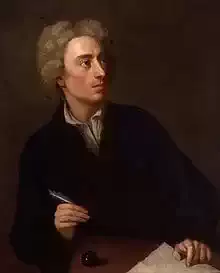
Alexander Pope
On a Fan of the Author's Design
On a Fan of the Author's Design
Come gentle Air! th' AEolian shepherd said,
While Procris panted in the secret shade:
Come, gentle Air, the fairer Delia cries,
While at her feet her swain expiring lies.
Lo the glad gales o'er all her beauties stray,
Breathe on her lips, and in her bosom play!
In Delia's hand this toy is fatal found,
Nor could that fabled dart more surely wound:
Both gifts destructive to the givers prove;
Alike both lovers fall by those they love.
Yet guiltless too this bright destroyer lives,
At random wounds, nor knows the wound she gives:
She views the story with attentive eyes,
And pities Procris, while her lover dies.
Come gentle Air! th' AEolian shepherd said,
While Procris panted in the secret shade:
Come, gentle Air, the fairer Delia cries,
While at her feet her swain expiring lies.
Lo the glad gales o'er all her beauties stray,
Breathe on her lips, and in her bosom play!
In Delia's hand this toy is fatal found,
Nor could that fabled dart more surely wound:
Both gifts destructive to the givers prove;
Alike both lovers fall by those they love.
Yet guiltless too this bright destroyer lives,
At random wounds, nor knows the wound she gives:
She views the story with attentive eyes,
And pities Procris, while her lover dies.
338
Alexander Pope
Eloisa to Abelard
Eloisa to Abelard
In these deep solitudes and awful cells,
Where heav'nly-pensive contemplation dwells,
And ever-musing melancholy reigns;
What means this tumult in a vestal's veins?
Why rove my thoughts beyond this last retreat?
Why feels my heart its long-forgotten heat?
Yet, yet I love!--From Abelard it came,
And Eloisa yet must kiss the name.
Dear fatal name! rest ever unreveal'd,
Nor pass these lips in holy silence seal'd.
Hide it, my heart, within that close disguise,
Where mix'd with God's, his lov'd idea lies:
O write it not, my hand--the name appears
Already written--wash it out, my tears!
In vain lost Eloisa weeps and prays,
Her heart still dictates, and her hand obeys.
Relentless walls! whose darksome round contains
Repentant sighs, and voluntary pains:
Ye rugged rocks! which holy knees have worn;
Ye grots and caverns shagg'd with horrid thorn!
Shrines! where their vigils pale-ey'd virgins keep,
And pitying saints, whose statues learn to weep!
Though cold like you, unmov'd, and silent grown,
I have not yet forgot myself to stone.
All is not Heav'n's while Abelard has part,
Still rebel nature holds out half my heart;
Nor pray'rs nor fasts its stubborn pulse restrain,
Nor tears, for ages, taught to flow in vain.
Soon as thy letters trembling I unclose,
That well-known name awakens all my woes.
Oh name for ever sad! for ever dear!
Still breath'd in sighs, still usher'd with a tear.
I tremble too, where'er my own I find,
Some dire misfortune follows close behind.
Line after line my gushing eyes o'erflow,
Led through a sad variety of woe:
Now warm in love, now with'ring in thy bloom,
Lost in a convent's solitary gloom!
There stern religion quench'd th' unwilling flame,
There died the best of passions, love and fame.
Yet write, oh write me all, that I may join
Griefs to thy griefs, and echo sighs to thine.
Nor foes nor fortune take this pow'r away;
And is my Abelard less kind than they?
Tears still are mine, and those I need not spare,
Love but demands what else were shed in pray'r;
No happier task these faded eyes pursue;
To read and weep is all they now can do.
Then share thy pain, allow that sad relief;
Ah, more than share it! give me all thy grief.
Heav'n first taught letters for some wretch's aid,
Some banish'd lover, or some captive maid;
They live, they speak, they breathe what love inspires,
Warm from the soul, and faithful to its fires,
The virgin's wish without her fears impart,
Excuse the blush, and pour out all the heart,
Speed the soft intercourse from soul to soul,
And waft a sigh from Indus to the Pole.
Thou know'st how guiltless first I met thy flame,
When Love approach'd me under Friendship's name;
My fancy form'd thee of angelic kind,
Some emanation of th' all-beauteous Mind.
Those smiling eyes, attemp'ring ev'ry day,
Shone sweetly lambent with celestial day.
Guiltless I gaz'd; heav'n listen'd while you sung;
And truths divine came mended from that tongue.
From lips like those what precept fail'd to move?
Too soon they taught me 'twas no sin to love.
Back through the paths of pleasing sense I ran,
Nor wish'd an Angel whom I lov'd a Man.
Dim and remote the joys of saints I see;
Nor envy them, that heav'n I lose for thee.
How oft, when press'd to marriage, have I said,
Curse on all laws but those which love has made!
Love, free as air, at sight of human ties,
Spreads his light wings, and in a moment flies,
Let wealth, let honour, wait the wedded dame,
August her deed, and sacred be her fame;
Before true passion all those views remove,
Fame, wealth, and honour! what are you to Love?
The jealous God, when we profane his fires,
Those restless passions in revenge inspires;
And bids them make mistaken mortals groan,
Who seek in love for aught but love alone.
Should at my feet the world's great master fall,
Himself, his throne, his world, I'd scorn 'em all:
Not Caesar's empress would I deign to prove;
No, make me mistress to the man I love;
If there be yet another name more free,
More fond than mistress, make me that to thee!
Oh happy state! when souls each other draw,
When love is liberty, and nature, law:
All then is full, possessing, and possess'd,
No craving void left aching in the breast:
Ev'n thought meets thought, ere from the lips it part,
And each warm wish springs mutual from the heart.
This sure is bliss (if bliss on earth there be)
And once the lot of Abelard and me.
Alas, how chang'd! what sudden horrors rise!
A naked lover bound and bleeding lies!
Where, where was Eloise? her voice, her hand,
Her poniard, had oppos'd the dire command.
Barbarian, stay! that bloody stroke restrain;
The crime was common, common be the pain.
I can no more; by shame, by rage suppress'd,
Let tears, and burning blushes speak the rest.
Canst thou forget that sad, that solemn day,
When victims at yon altar's foot we lay?
Canst thou forget what tears that moment fell,
When, warm in youth, I bade the world farewell?
As with cold lips I kiss'd the sacred veil,
The shrines all trembl'd, and the lamps grew pale:
Heav'n scarce believ'd the conquest it survey'd,
And saints with wonder heard the vows I made.
Yet then, to those dread altars as I drew,
Not on the Cross my eyes were fix'd, but you:
Not grace, or zeal, love only was my call,
And if I lose thy love, I lose my all.
Come! with thy looks, thy words, relieve my woe;
Those still at least are left thee to bestow.
Still on that breast enamour'd let me lie,
Still drink delicious poison from thy eye,
Pant on thy lip, and to thy heart be press'd;
Give all thou canst--and let me dream the rest.
Ah no! instruct me other joys to prize,
With other beauties charm my partial eyes,
Full in my view set all the bright abode,
And make my soul quit Abelard for God.
Ah, think at least thy flock deserves thy care,
Plants of thy hand, and children of thy pray'r.
From the false world in early youth they fled,
By thee to mountains, wilds, and deserts led.
You rais'd these hallow'd walls; the desert smil'd,
And Paradise was open'd in the wild.
No weeping orphan saw his father's stores
Our shrines irradiate, or emblaze the floors;
No silver saints, by dying misers giv'n,
Here brib'd the rage of ill-requited heav'n:
But such plain roofs as piety could raise,
And only vocal with the Maker's praise.
In these lone walls (their days eternal bound)
These moss-grown domes with spiry turrets crown'd,
Where awful arches make a noonday night,
And the dim windows shed a solemn light;
Thy eyes diffus'd a reconciling ray,
And gleams of glory brighten'd all the day.
But now no face divine contentment wears,
'Tis all blank sadness, or continual tears.
See how the force of others' pray'rs I try,
(O pious fraud of am'rous charity!)
But why should I on others' pray'rs depend?
Come thou, my father, brother, husband, friend!
Ah let thy handmaid, sister, daughter move,
And all those tender names in one, thy love!
The darksome pines that o'er yon rocks reclin'd
Wave high, and murmur to the hollow wind,
The wand'ring streams that shine between the hills,
The grots that echo to the tinkling rills,
The dying gales that pant upon the trees,
The lakes that quiver to the curling breeze;
No more these scenes my meditation aid,
Or lull to rest the visionary maid.
But o'er the twilight groves and dusky caves,
Long-sounding aisles, and intermingled graves,
Black Melancholy sits, and round her throws
A death-like silence, and a dread repose:
Her gloomy presence saddens all the scene,
Shades ev'ry flow'r, and darkens ev'ry green,
Deepens the murmur of the falling floods,
And breathes a browner horror on the woods.
Yet here for ever, ever must I stay;
Sad proof how well a lover can obey!
Death, only death, can break the lasting chain;
And here, ev'n then, shall my cold dust remain,
Here all its frailties, all its flames resign,
And wait till 'tis no sin to mix with thine.
Ah wretch! believ'd the spouse of God in vain,
Confess'd within the slave of love and man.
Assist me, Heav'n! but whence arose that pray'r?
Sprung it from piety, or from despair?
Ev'n here, where frozen chastity retires,
Love finds an altar for forbidden fires.
I ought to grieve, but cannot what I ought;
I mourn the lover, not lament the fault;
I view my crime, but kindle at the view,
Repent old pleasures, and solicit new;
Now turn'd to Heav'n, I weep my past offence,
Now think of thee, and curse my innocence.
Of all affliction taught a lover yet,
'Tis sure the hardest science to forget!
How shall I lose the sin, yet keep the sense,
And love th' offender, yet detest th' offence?
How the dear object from the crime remove,
Or how distinguish penitence from love?
Unequal task! a passion to resign,
For hearts so touch'd, so pierc'd, so lost as mine.
Ere such a soul regains its peaceful state,
How often must it love, how often hate!
How often hope, despair, resent, regret,
Conceal, disdain--do all things but forget.
But let Heav'n seize it, all at once 'tis fir'd;
Not touch'd, but rapt; not waken'd, but inspir'd!
Oh come! oh teach me nature to subdue,
Renounce my love, my life, myself--and you.
Fill my fond heart with God alone, for he
Alone can rival, can succeed to thee.
How happy is the blameless vestal's lot!
The world forgetting, by the world forgot.
Eternal sunshine of the spotless mind!
Each pray'r accepted, and each wish resign'd;
Labour and rest, that equal periods keep;
"Obedient slumbers that can wake and weep;"
Desires compos'd, affections ever ev'n,
Tears that delight, and sighs that waft to Heav'n.
Grace shines around her with serenest beams,
And whisp'ring angels prompt her golden dreams.
For her th' unfading rose of Eden blooms,
And wings of seraphs shed divine perfumes,
For her the Spouse prepares the bridal ring,
For her white virgins hymeneals sing,
To sounds of heav'nly harps she dies away,
And melts in visions of eternal day.
Far other dreams my erring soul employ,
Far other raptures, of unholy joy:
When at the close of each sad, sorrowing day,
Fancy restores what vengeance snatch'd away,
Then conscience sleeps, and leaving nature free,
All my loose soul unbounded springs to thee.
Oh curs'd, dear horrors of all-conscious night!
How glowing guilt exalts the keen delight!
Provoking Daemons all restraint remove,
And stir within me every source of love.
I hear thee, view thee, gaze o'er all thy charms,
And round thy phantom glue my clasping arms.
I wake--no more I hear, no more I view,
The phantom flies me, as unkind as you.
I call aloud; it hears not what I say;
I stretch my empty arms; it glides away.
To dream once more I close my willing eyes;
Ye soft illusions, dear deceits, arise!
Alas, no more--methinks we wand'ring go
Through dreary wastes, and weep each other's woe,
Where round some mould'ring tower pale ivy creeps,
And low-brow'd rocks hang nodding o'er the deeps.
Sudden you mount, you beckon from the skies;
Clouds interpose, waves roar, and winds arise.
I shriek, start up, the same sad prospect find,
And wake to all the griefs I left behind.
For thee the fates, severely kind, ordain
A cool suspense from pleasure and from pain;
Thy life a long, dead calm of fix'd repose;
No pulse that riots, and no blood that glows.
Still as the sea, ere winds were taught to blow,
Or moving spirit bade the waters flow;
Soft as the slumbers of a saint forgiv'n,
And mild as opening gleams of promis'd heav'n.
Come, Abelard! for what hast thou to dread?
The torch of Venus burns not for the dead.
Nature stands check'd; Religion disapproves;
Ev'n thou art cold--yet Eloisa loves.
Ah hopeless, lasting flames! like those that burn
To light the dead, and warm th' unfruitful urn.
What scenes appear where'er I turn my view?
The dear ideas, where I fly, pursue,
Rise in the grove, before the altar rise,
Stain all my soul, and wanton in my eyes.
I waste the matin lamp in sighs for thee,
Thy image steals between my God and me,
Thy voice I seem in ev'ry hymn to hear,
With ev'ry bead I drop too soft a tear.
When from the censer clouds of fragrance roll,
And swelling organs lift the rising soul,
One thought of thee puts all the pomp to flight,
Priests, tapers, temples, swim before my sight:
In seas of flame my plunging soul is drown'd,
While altars blaze, and angels tremble round.
While prostrate here in humble grief I lie,
Kind, virtuous drops just gath'ring in my eye,
While praying, trembling, in the dust I roll,
And dawning grace is op'ning on my soul:
Come, if thou dar'st, all charming as thou art!
Oppose thyself to Heav'n; dispute my heart;
Come, with one glance of those deluding eyes
Blot out each bright idea of the skies;
Take back that grace, those sorrows, and those tears;
Take back my fruitless penitence and pray'rs;
Snatch me, just mounting, from the blest abode;
Assist the fiends, and tear me from my God!
No, fly me, fly me, far as pole from pole;
Rise Alps between us! and whole oceans roll!
Ah, come not, write not, think not once of me,
Nor share one pang of all I felt for thee.
Thy oaths I quit, thy memory resign;
Forget, renounce me, hate whate'er was mine.
Fair eyes, and tempting looks (which yet I view!)
Long lov'd, ador'd ideas, all adieu!
Oh Grace serene! oh virtue heav'nly fair!
Divine oblivion of low-thoughted care!
Fresh blooming hope, gay daughter of the sky!
And faith, our early immortality!
Enter, each mild, each amicable guest;
Receive, and wrap me in eternal rest!
See in her cell sad Eloisa spread,
Propp'd on some tomb, a neighbour of the dead.
In each low wind methinks a spirit calls,
And more than echoes talk along the walls.
Here, as I watch'd the dying lamps around,
From yonder shrine I heard a hollow sound.
"Come, sister, come!" (it said, or seem'd to say)
"Thy place is here, sad sister, come away!
Once like thyself, I trembled, wept, and pray'd,
Love's victim then, though now a sainted maid:
But all is calm in this eternal sleep;
Here grief forgets to groan, and love to weep,
Ev'n superstition loses ev'ry fear:
For God, not man, absolves our frailties here."
I come, I come! prepare your roseate bow'rs,
Celestial palms, and ever-blooming flow'rs.
Thither, where sinners may have rest, I go,
Where flames refin'd in breasts seraphic glow:
Thou, Abelard! the last sad office pay,
And smooth my passage to the realms of day;
See my lips tremble, and my eye-balls roll,
Suck my last breath, and catch my flying soul!
Ah no--in sacred vestments may'st thou stand,
The hallow'd taper trembling in thy hand,
Present the cross before my lifted eye,
Teach me at once, and learn of me to die.
Ah then, thy once-lov'd Eloisa see!
It will be then no crime to gaze on me.
See from my cheek the transient roses fly!
See the last sparkle languish in my eye!
Till ev'ry motion, pulse, and breath be o'er;
And ev'n my Abelard be lov'd no more.
O Death all-eloquent! you only prove
What dust we dote on, when 'tis man we love.
Then too, when fate shall thy fair frame destroy,
(That cause of all my guilt, and all my joy)
In trance ecstatic may thy pangs be drown'd,
Bright clouds descend, and angels watch thee round,
From op'ning skies may streaming glories shine,
And saints embrace thee with a love like mine.
May one kind grave unite each hapless name,
And graft my love immortal on thy fame!
Then, ages hence, when all my woes are o'er,
When this rebellious heart shall beat no more;
If ever chance two wand'ring lovers brings
To Paraclete's white walls and silver springs,
O'er the pale marble shall they join their heads,
And drink the falling tears each other sheds;
Then sadly say, with mutual pity mov'd,
"Oh may we never love as these have lov'd!"
From the full choir when loud Hosannas rise,
And swell the pomp of dreadful sacrifice,
Amid that scene if some relenting eye
Glance on the stone where our cold relics lie,
Devotion's self shall steal a thought from Heav'n,
One human tear shall drop and be forgiv'n.
And sure, if fate some future bard shall join
In sad similitude of griefs to mine,
Condemn'd whole years in absence to deplore,
And image charms he must behold no more;
Such if there be, who loves so long, so well;
Let him our sad, our tender story tell;
The well-sung woes will soothe my pensive ghost;
He best can paint 'em, who shall feel 'em most.
In these deep solitudes and awful cells,
Where heav'nly-pensive contemplation dwells,
And ever-musing melancholy reigns;
What means this tumult in a vestal's veins?
Why rove my thoughts beyond this last retreat?
Why feels my heart its long-forgotten heat?
Yet, yet I love!--From Abelard it came,
And Eloisa yet must kiss the name.
Dear fatal name! rest ever unreveal'd,
Nor pass these lips in holy silence seal'd.
Hide it, my heart, within that close disguise,
Where mix'd with God's, his lov'd idea lies:
O write it not, my hand--the name appears
Already written--wash it out, my tears!
In vain lost Eloisa weeps and prays,
Her heart still dictates, and her hand obeys.
Relentless walls! whose darksome round contains
Repentant sighs, and voluntary pains:
Ye rugged rocks! which holy knees have worn;
Ye grots and caverns shagg'd with horrid thorn!
Shrines! where their vigils pale-ey'd virgins keep,
And pitying saints, whose statues learn to weep!
Though cold like you, unmov'd, and silent grown,
I have not yet forgot myself to stone.
All is not Heav'n's while Abelard has part,
Still rebel nature holds out half my heart;
Nor pray'rs nor fasts its stubborn pulse restrain,
Nor tears, for ages, taught to flow in vain.
Soon as thy letters trembling I unclose,
That well-known name awakens all my woes.
Oh name for ever sad! for ever dear!
Still breath'd in sighs, still usher'd with a tear.
I tremble too, where'er my own I find,
Some dire misfortune follows close behind.
Line after line my gushing eyes o'erflow,
Led through a sad variety of woe:
Now warm in love, now with'ring in thy bloom,
Lost in a convent's solitary gloom!
There stern religion quench'd th' unwilling flame,
There died the best of passions, love and fame.
Yet write, oh write me all, that I may join
Griefs to thy griefs, and echo sighs to thine.
Nor foes nor fortune take this pow'r away;
And is my Abelard less kind than they?
Tears still are mine, and those I need not spare,
Love but demands what else were shed in pray'r;
No happier task these faded eyes pursue;
To read and weep is all they now can do.
Then share thy pain, allow that sad relief;
Ah, more than share it! give me all thy grief.
Heav'n first taught letters for some wretch's aid,
Some banish'd lover, or some captive maid;
They live, they speak, they breathe what love inspires,
Warm from the soul, and faithful to its fires,
The virgin's wish without her fears impart,
Excuse the blush, and pour out all the heart,
Speed the soft intercourse from soul to soul,
And waft a sigh from Indus to the Pole.
Thou know'st how guiltless first I met thy flame,
When Love approach'd me under Friendship's name;
My fancy form'd thee of angelic kind,
Some emanation of th' all-beauteous Mind.
Those smiling eyes, attemp'ring ev'ry day,
Shone sweetly lambent with celestial day.
Guiltless I gaz'd; heav'n listen'd while you sung;
And truths divine came mended from that tongue.
From lips like those what precept fail'd to move?
Too soon they taught me 'twas no sin to love.
Back through the paths of pleasing sense I ran,
Nor wish'd an Angel whom I lov'd a Man.
Dim and remote the joys of saints I see;
Nor envy them, that heav'n I lose for thee.
How oft, when press'd to marriage, have I said,
Curse on all laws but those which love has made!
Love, free as air, at sight of human ties,
Spreads his light wings, and in a moment flies,
Let wealth, let honour, wait the wedded dame,
August her deed, and sacred be her fame;
Before true passion all those views remove,
Fame, wealth, and honour! what are you to Love?
The jealous God, when we profane his fires,
Those restless passions in revenge inspires;
And bids them make mistaken mortals groan,
Who seek in love for aught but love alone.
Should at my feet the world's great master fall,
Himself, his throne, his world, I'd scorn 'em all:
Not Caesar's empress would I deign to prove;
No, make me mistress to the man I love;
If there be yet another name more free,
More fond than mistress, make me that to thee!
Oh happy state! when souls each other draw,
When love is liberty, and nature, law:
All then is full, possessing, and possess'd,
No craving void left aching in the breast:
Ev'n thought meets thought, ere from the lips it part,
And each warm wish springs mutual from the heart.
This sure is bliss (if bliss on earth there be)
And once the lot of Abelard and me.
Alas, how chang'd! what sudden horrors rise!
A naked lover bound and bleeding lies!
Where, where was Eloise? her voice, her hand,
Her poniard, had oppos'd the dire command.
Barbarian, stay! that bloody stroke restrain;
The crime was common, common be the pain.
I can no more; by shame, by rage suppress'd,
Let tears, and burning blushes speak the rest.
Canst thou forget that sad, that solemn day,
When victims at yon altar's foot we lay?
Canst thou forget what tears that moment fell,
When, warm in youth, I bade the world farewell?
As with cold lips I kiss'd the sacred veil,
The shrines all trembl'd, and the lamps grew pale:
Heav'n scarce believ'd the conquest it survey'd,
And saints with wonder heard the vows I made.
Yet then, to those dread altars as I drew,
Not on the Cross my eyes were fix'd, but you:
Not grace, or zeal, love only was my call,
And if I lose thy love, I lose my all.
Come! with thy looks, thy words, relieve my woe;
Those still at least are left thee to bestow.
Still on that breast enamour'd let me lie,
Still drink delicious poison from thy eye,
Pant on thy lip, and to thy heart be press'd;
Give all thou canst--and let me dream the rest.
Ah no! instruct me other joys to prize,
With other beauties charm my partial eyes,
Full in my view set all the bright abode,
And make my soul quit Abelard for God.
Ah, think at least thy flock deserves thy care,
Plants of thy hand, and children of thy pray'r.
From the false world in early youth they fled,
By thee to mountains, wilds, and deserts led.
You rais'd these hallow'd walls; the desert smil'd,
And Paradise was open'd in the wild.
No weeping orphan saw his father's stores
Our shrines irradiate, or emblaze the floors;
No silver saints, by dying misers giv'n,
Here brib'd the rage of ill-requited heav'n:
But such plain roofs as piety could raise,
And only vocal with the Maker's praise.
In these lone walls (their days eternal bound)
These moss-grown domes with spiry turrets crown'd,
Where awful arches make a noonday night,
And the dim windows shed a solemn light;
Thy eyes diffus'd a reconciling ray,
And gleams of glory brighten'd all the day.
But now no face divine contentment wears,
'Tis all blank sadness, or continual tears.
See how the force of others' pray'rs I try,
(O pious fraud of am'rous charity!)
But why should I on others' pray'rs depend?
Come thou, my father, brother, husband, friend!
Ah let thy handmaid, sister, daughter move,
And all those tender names in one, thy love!
The darksome pines that o'er yon rocks reclin'd
Wave high, and murmur to the hollow wind,
The wand'ring streams that shine between the hills,
The grots that echo to the tinkling rills,
The dying gales that pant upon the trees,
The lakes that quiver to the curling breeze;
No more these scenes my meditation aid,
Or lull to rest the visionary maid.
But o'er the twilight groves and dusky caves,
Long-sounding aisles, and intermingled graves,
Black Melancholy sits, and round her throws
A death-like silence, and a dread repose:
Her gloomy presence saddens all the scene,
Shades ev'ry flow'r, and darkens ev'ry green,
Deepens the murmur of the falling floods,
And breathes a browner horror on the woods.
Yet here for ever, ever must I stay;
Sad proof how well a lover can obey!
Death, only death, can break the lasting chain;
And here, ev'n then, shall my cold dust remain,
Here all its frailties, all its flames resign,
And wait till 'tis no sin to mix with thine.
Ah wretch! believ'd the spouse of God in vain,
Confess'd within the slave of love and man.
Assist me, Heav'n! but whence arose that pray'r?
Sprung it from piety, or from despair?
Ev'n here, where frozen chastity retires,
Love finds an altar for forbidden fires.
I ought to grieve, but cannot what I ought;
I mourn the lover, not lament the fault;
I view my crime, but kindle at the view,
Repent old pleasures, and solicit new;
Now turn'd to Heav'n, I weep my past offence,
Now think of thee, and curse my innocence.
Of all affliction taught a lover yet,
'Tis sure the hardest science to forget!
How shall I lose the sin, yet keep the sense,
And love th' offender, yet detest th' offence?
How the dear object from the crime remove,
Or how distinguish penitence from love?
Unequal task! a passion to resign,
For hearts so touch'd, so pierc'd, so lost as mine.
Ere such a soul regains its peaceful state,
How often must it love, how often hate!
How often hope, despair, resent, regret,
Conceal, disdain--do all things but forget.
But let Heav'n seize it, all at once 'tis fir'd;
Not touch'd, but rapt; not waken'd, but inspir'd!
Oh come! oh teach me nature to subdue,
Renounce my love, my life, myself--and you.
Fill my fond heart with God alone, for he
Alone can rival, can succeed to thee.
How happy is the blameless vestal's lot!
The world forgetting, by the world forgot.
Eternal sunshine of the spotless mind!
Each pray'r accepted, and each wish resign'd;
Labour and rest, that equal periods keep;
"Obedient slumbers that can wake and weep;"
Desires compos'd, affections ever ev'n,
Tears that delight, and sighs that waft to Heav'n.
Grace shines around her with serenest beams,
And whisp'ring angels prompt her golden dreams.
For her th' unfading rose of Eden blooms,
And wings of seraphs shed divine perfumes,
For her the Spouse prepares the bridal ring,
For her white virgins hymeneals sing,
To sounds of heav'nly harps she dies away,
And melts in visions of eternal day.
Far other dreams my erring soul employ,
Far other raptures, of unholy joy:
When at the close of each sad, sorrowing day,
Fancy restores what vengeance snatch'd away,
Then conscience sleeps, and leaving nature free,
All my loose soul unbounded springs to thee.
Oh curs'd, dear horrors of all-conscious night!
How glowing guilt exalts the keen delight!
Provoking Daemons all restraint remove,
And stir within me every source of love.
I hear thee, view thee, gaze o'er all thy charms,
And round thy phantom glue my clasping arms.
I wake--no more I hear, no more I view,
The phantom flies me, as unkind as you.
I call aloud; it hears not what I say;
I stretch my empty arms; it glides away.
To dream once more I close my willing eyes;
Ye soft illusions, dear deceits, arise!
Alas, no more--methinks we wand'ring go
Through dreary wastes, and weep each other's woe,
Where round some mould'ring tower pale ivy creeps,
And low-brow'd rocks hang nodding o'er the deeps.
Sudden you mount, you beckon from the skies;
Clouds interpose, waves roar, and winds arise.
I shriek, start up, the same sad prospect find,
And wake to all the griefs I left behind.
For thee the fates, severely kind, ordain
A cool suspense from pleasure and from pain;
Thy life a long, dead calm of fix'd repose;
No pulse that riots, and no blood that glows.
Still as the sea, ere winds were taught to blow,
Or moving spirit bade the waters flow;
Soft as the slumbers of a saint forgiv'n,
And mild as opening gleams of promis'd heav'n.
Come, Abelard! for what hast thou to dread?
The torch of Venus burns not for the dead.
Nature stands check'd; Religion disapproves;
Ev'n thou art cold--yet Eloisa loves.
Ah hopeless, lasting flames! like those that burn
To light the dead, and warm th' unfruitful urn.
What scenes appear where'er I turn my view?
The dear ideas, where I fly, pursue,
Rise in the grove, before the altar rise,
Stain all my soul, and wanton in my eyes.
I waste the matin lamp in sighs for thee,
Thy image steals between my God and me,
Thy voice I seem in ev'ry hymn to hear,
With ev'ry bead I drop too soft a tear.
When from the censer clouds of fragrance roll,
And swelling organs lift the rising soul,
One thought of thee puts all the pomp to flight,
Priests, tapers, temples, swim before my sight:
In seas of flame my plunging soul is drown'd,
While altars blaze, and angels tremble round.
While prostrate here in humble grief I lie,
Kind, virtuous drops just gath'ring in my eye,
While praying, trembling, in the dust I roll,
And dawning grace is op'ning on my soul:
Come, if thou dar'st, all charming as thou art!
Oppose thyself to Heav'n; dispute my heart;
Come, with one glance of those deluding eyes
Blot out each bright idea of the skies;
Take back that grace, those sorrows, and those tears;
Take back my fruitless penitence and pray'rs;
Snatch me, just mounting, from the blest abode;
Assist the fiends, and tear me from my God!
No, fly me, fly me, far as pole from pole;
Rise Alps between us! and whole oceans roll!
Ah, come not, write not, think not once of me,
Nor share one pang of all I felt for thee.
Thy oaths I quit, thy memory resign;
Forget, renounce me, hate whate'er was mine.
Fair eyes, and tempting looks (which yet I view!)
Long lov'd, ador'd ideas, all adieu!
Oh Grace serene! oh virtue heav'nly fair!
Divine oblivion of low-thoughted care!
Fresh blooming hope, gay daughter of the sky!
And faith, our early immortality!
Enter, each mild, each amicable guest;
Receive, and wrap me in eternal rest!
See in her cell sad Eloisa spread,
Propp'd on some tomb, a neighbour of the dead.
In each low wind methinks a spirit calls,
And more than echoes talk along the walls.
Here, as I watch'd the dying lamps around,
From yonder shrine I heard a hollow sound.
"Come, sister, come!" (it said, or seem'd to say)
"Thy place is here, sad sister, come away!
Once like thyself, I trembled, wept, and pray'd,
Love's victim then, though now a sainted maid:
But all is calm in this eternal sleep;
Here grief forgets to groan, and love to weep,
Ev'n superstition loses ev'ry fear:
For God, not man, absolves our frailties here."
I come, I come! prepare your roseate bow'rs,
Celestial palms, and ever-blooming flow'rs.
Thither, where sinners may have rest, I go,
Where flames refin'd in breasts seraphic glow:
Thou, Abelard! the last sad office pay,
And smooth my passage to the realms of day;
See my lips tremble, and my eye-balls roll,
Suck my last breath, and catch my flying soul!
Ah no--in sacred vestments may'st thou stand,
The hallow'd taper trembling in thy hand,
Present the cross before my lifted eye,
Teach me at once, and learn of me to die.
Ah then, thy once-lov'd Eloisa see!
It will be then no crime to gaze on me.
See from my cheek the transient roses fly!
See the last sparkle languish in my eye!
Till ev'ry motion, pulse, and breath be o'er;
And ev'n my Abelard be lov'd no more.
O Death all-eloquent! you only prove
What dust we dote on, when 'tis man we love.
Then too, when fate shall thy fair frame destroy,
(That cause of all my guilt, and all my joy)
In trance ecstatic may thy pangs be drown'd,
Bright clouds descend, and angels watch thee round,
From op'ning skies may streaming glories shine,
And saints embrace thee with a love like mine.
May one kind grave unite each hapless name,
And graft my love immortal on thy fame!
Then, ages hence, when all my woes are o'er,
When this rebellious heart shall beat no more;
If ever chance two wand'ring lovers brings
To Paraclete's white walls and silver springs,
O'er the pale marble shall they join their heads,
And drink the falling tears each other sheds;
Then sadly say, with mutual pity mov'd,
"Oh may we never love as these have lov'd!"
From the full choir when loud Hosannas rise,
And swell the pomp of dreadful sacrifice,
Amid that scene if some relenting eye
Glance on the stone where our cold relics lie,
Devotion's self shall steal a thought from Heav'n,
One human tear shall drop and be forgiv'n.
And sure, if fate some future bard shall join
In sad similitude of griefs to mine,
Condemn'd whole years in absence to deplore,
And image charms he must behold no more;
Such if there be, who loves so long, so well;
Let him our sad, our tender story tell;
The well-sung woes will soothe my pensive ghost;
He best can paint 'em, who shall feel 'em most.
588