

Poems in this theme
Platonic Love

Emily Dickinson
Ah, Moon—and Star!
Ah, Moon—and Star!
240
Ah, Moon—and Star!
You are very far—
But were no one
Farther than you—
Do you think I'd stop
For a Firmament—
Or a Cubit—or so?
I could borrow a Bonnet
Of the Lark—
And a Chamois' Silver Boot—
And a stirrup of an Antelope—
And be with you—Tonight!
But, Moon, and Star,
Though you're very far—
There is one—farther than you—
He—is more than a firmament—from Me—
So I can never go!
240
Ah, Moon—and Star!
You are very far—
But were no one
Farther than you—
Do you think I'd stop
For a Firmament—
Or a Cubit—or so?
I could borrow a Bonnet
Of the Lark—
And a Chamois' Silver Boot—
And a stirrup of an Antelope—
And be with you—Tonight!
But, Moon, and Star,
Though you're very far—
There is one—farther than you—
He—is more than a firmament—from Me—
So I can never go!
225
Emily Dickinson
A Mien to move a Queen
A Mien to move a Queen
283
A Mien to move a Queen-
Half Child-Half Heroine-
An Orleans in the Eye
That puts its manner by
For humbler Company
When none are near
Even a Tear-
Its frequent Visitor-
A Bonnet like a Duke-
And yet a Wren's Peruke
Were not so shy
Of Goer by-
And Hands-so slight-
They would elate a Sprite
With Merriment-
A Voice that Alters-Low
And on the Ear can go
Like Let of Snow-
Or shift supreme-
As tone of Realm
On Subjects Diadem-
Too small-to fear-
Too distant-to endear-
And so Men Compromise
And just-revere-
283
A Mien to move a Queen-
Half Child-Half Heroine-
An Orleans in the Eye
That puts its manner by
For humbler Company
When none are near
Even a Tear-
Its frequent Visitor-
A Bonnet like a Duke-
And yet a Wren's Peruke
Were not so shy
Of Goer by-
And Hands-so slight-
They would elate a Sprite
With Merriment-
A Voice that Alters-Low
And on the Ear can go
Like Let of Snow-
Or shift supreme-
As tone of Realm
On Subjects Diadem-
Too small-to fear-
Too distant-to endear-
And so Men Compromise
And just-revere-
258

Ella Wheeler Wilcox
Two Roses
Two Roses
A humble wild-rose, pink and slender,
Was plucked and placed in a bright bouquet,
Beside a Jacqueminot’s royal splendour,
And both in my lady’s boudoir lay.
Said the haughty bud, in a tone of scorning,
‘I wonder why you are called a rose?
Your leaves will fade in a single morning;
No blood of mine in your pale cheek glows.
‘Your course green stalk shows dust of the highway,
You have no depths of fragrant bloom;
And what could you learn in a rustic byway
To fit you to lie in my lady’s room?
‘If called to adorn her warm, white bosom,
What have you to offer for such a place,
Beside my fragrant and splendid blossom,
Ripe with colour and rich with grace?
Said the sweet wild-rose, ‘Despite your dower
Of finer breeding and deeper hue,
Despite your beauty, fair, high-bred flower,
It is I who should lie on her breast, not you.
‘For small account is your hot-house glory
Beside the knowledge that came to me
When I heard by the wayside love’s old story
And felt the kiss of the amorous bee.’
A humble wild-rose, pink and slender,
Was plucked and placed in a bright bouquet,
Beside a Jacqueminot’s royal splendour,
And both in my lady’s boudoir lay.
Said the haughty bud, in a tone of scorning,
‘I wonder why you are called a rose?
Your leaves will fade in a single morning;
No blood of mine in your pale cheek glows.
‘Your course green stalk shows dust of the highway,
You have no depths of fragrant bloom;
And what could you learn in a rustic byway
To fit you to lie in my lady’s room?
‘If called to adorn her warm, white bosom,
What have you to offer for such a place,
Beside my fragrant and splendid blossom,
Ripe with colour and rich with grace?
Said the sweet wild-rose, ‘Despite your dower
Of finer breeding and deeper hue,
Despite your beauty, fair, high-bred flower,
It is I who should lie on her breast, not you.
‘For small account is your hot-house glory
Beside the knowledge that came to me
When I heard by the wayside love’s old story
And felt the kiss of the amorous bee.’
349
Ella Wheeler Wilcox
Sestina
Sestina
I wandered o'er the vast green plains of youth,
And searched for Pleasure. On a distant height
Fame's silhouette stood sharp against the skies.
Beyond vast crowds that thronged a broad highway
I caught the glimmer of a golden goal,
While from a blooming bower smiled siren Love.
Straight gazing in her eyes, I laughed at Love,
With all the haughty insolence of youth,
As past her bower I strode to seek my goal.
'Now will I climb to glory's dizzy height, '
I said, ' for there above the common way
Doth pleasure dwell companioned by the skies.'
But when I reached that summit near the skies,
So far from man I seemed, so far from Love'
Not here, ' I cried, 'doth Pleasure find her way, '
Seen from the distant borderland of youth.
Fame smiles upon us from her sun-kissed height,
But frowns in shadows when we reach the goal.
Then were mine eyes fixed on that glittering goal,
Dear to all sense-sunk souls beneath the skies.
Gold tempts the artist from the lofty height,
Gold lures the maiden from the arms of Love,
Gold buys the fresh ingenuous heart of youth,
'And gold, ' I said, 'will show me Pleasure's way.'
But ah! the soil and discord of that way,
Where savage hordes rushed headlong to the goal,
Dead to the best impulses of their youth,
Blind to the azure beauty of the skies;
Dulled to the voice of conscience and of love,
They wandered far from Truth's eternal height.
Then Truth spoke to me from that noble height,
Saying: 'Thou didst pass Pleasure on the way,
She with the yearning eyes so full of Love,
Whom thou disdained to seek for glory's goal.'
Two blending paths beneath God's arching skies
Lead straight to Pleasure. Ah, blind heart of youth,
Not up fame's height, not toward the base god's goal,
Doth Pleasure make her way, but 'neath calm skies
Where Duty walks with Love in endless youth.
I wandered o'er the vast green plains of youth,
And searched for Pleasure. On a distant height
Fame's silhouette stood sharp against the skies.
Beyond vast crowds that thronged a broad highway
I caught the glimmer of a golden goal,
While from a blooming bower smiled siren Love.
Straight gazing in her eyes, I laughed at Love,
With all the haughty insolence of youth,
As past her bower I strode to seek my goal.
'Now will I climb to glory's dizzy height, '
I said, ' for there above the common way
Doth pleasure dwell companioned by the skies.'
But when I reached that summit near the skies,
So far from man I seemed, so far from Love'
Not here, ' I cried, 'doth Pleasure find her way, '
Seen from the distant borderland of youth.
Fame smiles upon us from her sun-kissed height,
But frowns in shadows when we reach the goal.
Then were mine eyes fixed on that glittering goal,
Dear to all sense-sunk souls beneath the skies.
Gold tempts the artist from the lofty height,
Gold lures the maiden from the arms of Love,
Gold buys the fresh ingenuous heart of youth,
'And gold, ' I said, 'will show me Pleasure's way.'
But ah! the soil and discord of that way,
Where savage hordes rushed headlong to the goal,
Dead to the best impulses of their youth,
Blind to the azure beauty of the skies;
Dulled to the voice of conscience and of love,
They wandered far from Truth's eternal height.
Then Truth spoke to me from that noble height,
Saying: 'Thou didst pass Pleasure on the way,
She with the yearning eyes so full of Love,
Whom thou disdained to seek for glory's goal.'
Two blending paths beneath God's arching skies
Lead straight to Pleasure. Ah, blind heart of youth,
Not up fame's height, not toward the base god's goal,
Doth Pleasure make her way, but 'neath calm skies
Where Duty walks with Love in endless youth.
400
Ella Wheeler Wilcox
Platonic
Platonic
I knew it the first of the summer,
I knew it the same at the end,
That you and your love were plighted,
But couldn’t you be my friend?
Couldn’t we sit in the twilight,
Couldn’t we walk on the shore
With only a pleasant friendship
To bind us, and nothing more?
There was not a word of folly
Spoken between us two,
Though we lingered oft in the garden
Till the roses were wet with dew.
We touched on a thousand subjects –
The moon and the worlds above, -
And our talk was tinctured with science,
And everything else, save love.
A wholly Platonic friendship
You said I had proven to you
Could bind a man and a woman
The whole long season through,
With never a thought of flirting,
Though both were in their youth,
What would you have said, my lady,
If you had known the truth!
What would you have done, I wonder,
Had I gone on my knees to you
And told you my passionate story,
There in the dusk and the dew?
My burning, burdensome story,
Hidden and hushed so long –
My story of hopeless loving –
Say, would you have thought it wrong?
But I fought with my heart and conquered,
I hid my wound from sight;
You were going away in the morning,
And I said a calm goodnight.
But now when I sit in the twilight,
Or when I walk by the sea
That friendship, quite Platonic,
Comes surging over me.
And a passionate longing fills me
For the roses, the dusk, the dew;
For the beautiful summer vanished,
For the moonlight walks – and you.
I knew it the first of the summer,
I knew it the same at the end,
That you and your love were plighted,
But couldn’t you be my friend?
Couldn’t we sit in the twilight,
Couldn’t we walk on the shore
With only a pleasant friendship
To bind us, and nothing more?
There was not a word of folly
Spoken between us two,
Though we lingered oft in the garden
Till the roses were wet with dew.
We touched on a thousand subjects –
The moon and the worlds above, -
And our talk was tinctured with science,
And everything else, save love.
A wholly Platonic friendship
You said I had proven to you
Could bind a man and a woman
The whole long season through,
With never a thought of flirting,
Though both were in their youth,
What would you have said, my lady,
If you had known the truth!
What would you have done, I wonder,
Had I gone on my knees to you
And told you my passionate story,
There in the dusk and the dew?
My burning, burdensome story,
Hidden and hushed so long –
My story of hopeless loving –
Say, would you have thought it wrong?
But I fought with my heart and conquered,
I hid my wound from sight;
You were going away in the morning,
And I said a calm goodnight.
But now when I sit in the twilight,
Or when I walk by the sea
That friendship, quite Platonic,
Comes surging over me.
And a passionate longing fills me
For the roses, the dusk, the dew;
For the beautiful summer vanished,
For the moonlight walks – and you.
370
Ella Wheeler Wilcox
Over The Alley
Over The Alley
Here in my office I sit and write
Hour on hour, and day on day,
With no one to speak to from morn till night,
Though I have a neighbour just over the way.
Across the alley that yawns between
A maiden sits sewing the whole day long;
A face more lovely is seldom seen
In hall or castle or country throng.
Her curling tresses are golden brown;
Her eyes, I think, are violet blue,
Though her long, thick lashes are always down,
Jealously hiding the orbs from view;
Her neck is slender, and round, and white,
And this way and that way her soft hair blows,
As there in the window from morn till night,
She sits in her beauty, and sings and sews.
And I in my office chair, lounge and dream,
In an idle way, of a sweet 'might be, '
While the maid at her window sews her seam,
With never a glance or a thought for me.
Perhaps she is angry because I look
So long and so often across the way,
Over the top of my ledger-book;
But those stolen glances brighten the day.
And I am blameless of any wrong; She
is the transgressor, by sitting there
And making my eyes turn oft and long
To a face so delicate, pure and fair.
Work is forgotten; the page lies clean,
Untouched by the pen, while hours go by.
Oh, maid of the pensive air and mien!
Give me one glance of your violet eye.
Drop your thimble or spool of thread
Down in the alley, I pray, my sweet,
Or the comb or ribbon from that fair head,
That I may follow with nimble feet;
For how can I tell you my heart has gone
Across the alley, and lingers there,
Till I know your name, my beautiful one?
How could I venture, and how could I dare?
Just one day longer I'll wait and dream,
And then, if you grant me no other way,
I shall write you a letter: 'Maid of the seam,
You have stolen my property; now give pay,
Beautiful robber and charming thief!
Give me one glance for the deed you've done.'
Thus shall I tell you my loss and grief,
Over the alley, my beautiful one.
Here in my office I sit and write
Hour on hour, and day on day,
With no one to speak to from morn till night,
Though I have a neighbour just over the way.
Across the alley that yawns between
A maiden sits sewing the whole day long;
A face more lovely is seldom seen
In hall or castle or country throng.
Her curling tresses are golden brown;
Her eyes, I think, are violet blue,
Though her long, thick lashes are always down,
Jealously hiding the orbs from view;
Her neck is slender, and round, and white,
And this way and that way her soft hair blows,
As there in the window from morn till night,
She sits in her beauty, and sings and sews.
And I in my office chair, lounge and dream,
In an idle way, of a sweet 'might be, '
While the maid at her window sews her seam,
With never a glance or a thought for me.
Perhaps she is angry because I look
So long and so often across the way,
Over the top of my ledger-book;
But those stolen glances brighten the day.
And I am blameless of any wrong; She
is the transgressor, by sitting there
And making my eyes turn oft and long
To a face so delicate, pure and fair.
Work is forgotten; the page lies clean,
Untouched by the pen, while hours go by.
Oh, maid of the pensive air and mien!
Give me one glance of your violet eye.
Drop your thimble or spool of thread
Down in the alley, I pray, my sweet,
Or the comb or ribbon from that fair head,
That I may follow with nimble feet;
For how can I tell you my heart has gone
Across the alley, and lingers there,
Till I know your name, my beautiful one?
How could I venture, and how could I dare?
Just one day longer I'll wait and dream,
And then, if you grant me no other way,
I shall write you a letter: 'Maid of the seam,
You have stolen my property; now give pay,
Beautiful robber and charming thief!
Give me one glance for the deed you've done.'
Thus shall I tell you my loss and grief,
Over the alley, my beautiful one.
429
Ella Wheeler Wilcox
Love Song
Love Song
Once in the world’s first prime,
When nothing lived or stirred,
Nothing but new-born Time,
Nor was there even a bird –
The Silence spoke to a Star,
But do not dare repeat
What it said to its love afar:
It was too sweet, too sweet.
But there, in the fair world’s youth,
Ere sorrow had drawn breath,
When nothing was known but Truth,
Nor was there even death,
The Star to Silence wed,
And the Sun was priest that day,
And they made their bridal-bed
High in the Milky Way.
For the great white star had heard
Her silent lover’s speech;
It needed no passionate word
To pledge them each to each.
O lady fair and far,
Hear, oh, hear, and apply!
Thou the beautiful Star –
The voiceless silence, I.
Once in the world’s first prime,
When nothing lived or stirred,
Nothing but new-born Time,
Nor was there even a bird –
The Silence spoke to a Star,
But do not dare repeat
What it said to its love afar:
It was too sweet, too sweet.
But there, in the fair world’s youth,
Ere sorrow had drawn breath,
When nothing was known but Truth,
Nor was there even death,
The Star to Silence wed,
And the Sun was priest that day,
And they made their bridal-bed
High in the Milky Way.
For the great white star had heard
Her silent lover’s speech;
It needed no passionate word
To pledge them each to each.
O lady fair and far,
Hear, oh, hear, and apply!
Thou the beautiful Star –
The voiceless silence, I.
468
Ella Wheeler Wilcox
I Step Across The Mystic Border-Land
I Step Across The Mystic Border-Land
I step across the mystic border-land,
And look upon the wonder-world of Art.
How beautiful, how beautiful its hills!
And all its valleys, how surpassing fair!
The winding paths that lead up to the heights
Are polished by the footsteps of the great.
The mountain-peaks stand very near to God:
The chosen few whose feet have trod thereon
Have talked with Him. and with the angels walked.
Here are no sounds of discord-no profane
Or senseless gossip of unworthy things-
Only the songs of chisels and of pens,
Of busy brushes, and ecstatic strains
Of souls surcharged with music most divine.
Here is no idle sorrow, no poor grief
For any day or object left behind-
For time is counted precious, and herein
Is such complete abandonment of Self
That tears turn into rainbows, and enhance
The beauty of the land where all is fair,
Awed and afraid, I cross the border-land.
Oh, who am I, that I dare enter here
Where the great artists of the world have trod-
The genius-crowned aristocrats of Earth?
Only the singer of a little song;
Yet loving Art with such a mighty love
I hold it greater to have won a place
Just on the fair land's edge, to make my grave,
Than in the outer world of greed and gain
To sit upon a royal throne and reign.
I step across the mystic border-land,
And look upon the wonder-world of Art.
How beautiful, how beautiful its hills!
And all its valleys, how surpassing fair!
The winding paths that lead up to the heights
Are polished by the footsteps of the great.
The mountain-peaks stand very near to God:
The chosen few whose feet have trod thereon
Have talked with Him. and with the angels walked.
Here are no sounds of discord-no profane
Or senseless gossip of unworthy things-
Only the songs of chisels and of pens,
Of busy brushes, and ecstatic strains
Of souls surcharged with music most divine.
Here is no idle sorrow, no poor grief
For any day or object left behind-
For time is counted precious, and herein
Is such complete abandonment of Self
That tears turn into rainbows, and enhance
The beauty of the land where all is fair,
Awed and afraid, I cross the border-land.
Oh, who am I, that I dare enter here
Where the great artists of the world have trod-
The genius-crowned aristocrats of Earth?
Only the singer of a little song;
Yet loving Art with such a mighty love
I hold it greater to have won a place
Just on the fair land's edge, to make my grave,
Than in the outer world of greed and gain
To sit upon a royal throne and reign.
367
Ella Wheeler Wilcox
Gracia
Gracia
Nay, nay, Antonio! nay, thou shalt not blame her,
My Gracia, who hath so deserted me.
Thou art my friend, but if thou dost defame her
I shall not hesitate to challenge thee.
'Curse and forget her?' So I might another,
One not so bounteous-natured or so fair;
But she, Antonio, she was like no other—
I curse her not, because she was so rare.
She was made out of laughter and sweet kisses;
Not blood, but sunshine, through her blue veins ran
Her soul spilled over with its wealth of blisses;
She was too great for loving but a man.
None but a god could keep so rare a creature:
I blame her not for her inconstancy;
When I recall each radiant smile and feature,
I wonder she so long was true to me.
Call her not false or fickle. I, who love her,
Do hold her not unlike the royal sun,
That, all unmated, roams the wide world over
And lights all worlds, but lingers not with one.
If she were less a goddess, more a woman,
And so had dallied for a time with me,
And then had left me, I, who am but human,
Would slay her and her newer love, maybe.
But since she seeks Apollo, or another
Of those lost gods (and seeks him all in vain)
And has loved me as well as any other
Of her men loves, why, I do not complain.
Nay, nay, Antonio! nay, thou shalt not blame her,
My Gracia, who hath so deserted me.
Thou art my friend, but if thou dost defame her
I shall not hesitate to challenge thee.
'Curse and forget her?' So I might another,
One not so bounteous-natured or so fair;
But she, Antonio, she was like no other—
I curse her not, because she was so rare.
She was made out of laughter and sweet kisses;
Not blood, but sunshine, through her blue veins ran
Her soul spilled over with its wealth of blisses;
She was too great for loving but a man.
None but a god could keep so rare a creature:
I blame her not for her inconstancy;
When I recall each radiant smile and feature,
I wonder she so long was true to me.
Call her not false or fickle. I, who love her,
Do hold her not unlike the royal sun,
That, all unmated, roams the wide world over
And lights all worlds, but lingers not with one.
If she were less a goddess, more a woman,
And so had dallied for a time with me,
And then had left me, I, who am but human,
Would slay her and her newer love, maybe.
But since she seeks Apollo, or another
Of those lost gods (and seeks him all in vain)
And has loved me as well as any other
Of her men loves, why, I do not complain.
440
Ella Wheeler Wilcox
But One
But One
The year has but one June, dear friend;
The year has but one June;
And when that perfect month doth end,
The robin's song, though loud, though long,
Seems never quite in tune.
The rose, though still its blushing face
By bee and bird is seen,
May yet have lost that subtle grace—
That nameless spell the winds know
Which makes it garden's queen.
Life's perfect June, love's red, red rose,
Have burned and bloomed for me.
Though still youth's summer sunlight glows;
Though thou art kind, dear friend, I find
I have no heart for thee.
The year has but one June, dear friend;
The year has but one June;
And when that perfect month doth end,
The robin's song, though loud, though long,
Seems never quite in tune.
The rose, though still its blushing face
By bee and bird is seen,
May yet have lost that subtle grace—
That nameless spell the winds know
Which makes it garden's queen.
Life's perfect June, love's red, red rose,
Have burned and bloomed for me.
Though still youth's summer sunlight glows;
Though thou art kind, dear friend, I find
I have no heart for thee.
405
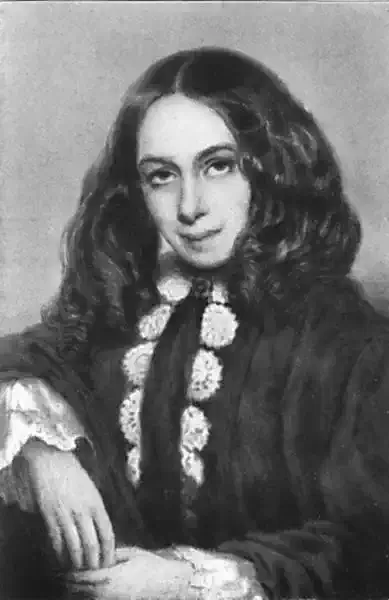
Elizabeth Barrett Browning
Sonnets from the Portuguese ii
Sonnets from the Portuguese ii
UNLIKE are we, unlike, O princely Heart!
Unlike our uses and our destinies.
Our ministering two angels look surprise
On one another, as they strike athwart
Their wings in passing. Thou, bethink thee, art
A guest for queens to social pageantries,
With gages from a hundred brighter eyes
Than tears even can make mine, to play thy part
Of chief musician. What hast thou to do
With looking from the lattice-lights at me--
A poor, tired, wandering singer, singing through
The dark, and leaning up a cypress tree?
The chrism is on thine head--on mine the dew-And
Death must dig the level where these agree.
UNLIKE are we, unlike, O princely Heart!
Unlike our uses and our destinies.
Our ministering two angels look surprise
On one another, as they strike athwart
Their wings in passing. Thou, bethink thee, art
A guest for queens to social pageantries,
With gages from a hundred brighter eyes
Than tears even can make mine, to play thy part
Of chief musician. What hast thou to do
With looking from the lattice-lights at me--
A poor, tired, wandering singer, singing through
The dark, and leaning up a cypress tree?
The chrism is on thine head--on mine the dew-And
Death must dig the level where these agree.
455
Elizabeth Barrett Browning
Sonnet XXVI: I Lived With Visions
Sonnet XXVI: I Lived With Visions
I lived with visions for my company
Instead of men and women, years ago,
And found them gentle mates, nor thought to know
A sweeter music than they played to me.
But soon their trailing purple was not free
Of this world's dust, their lutes did silent grow,
And I myself grew faint and blind below
Their vanishing eyes. Then thou didst come--to be,
Belovèd, what they seemed. Their shining fronts,
Their songs, their splendors (better, yet the same,
As river water hallowed into fonts),
Met in thee, and from out thee overcame
My soul with satisfaction of all wants:
Because God's gifts put man's best dreams to shame.
I lived with visions for my company
Instead of men and women, years ago,
And found them gentle mates, nor thought to know
A sweeter music than they played to me.
But soon their trailing purple was not free
Of this world's dust, their lutes did silent grow,
And I myself grew faint and blind below
Their vanishing eyes. Then thou didst come--to be,
Belovèd, what they seemed. Their shining fronts,
Their songs, their splendors (better, yet the same,
As river water hallowed into fonts),
Met in thee, and from out thee overcame
My soul with satisfaction of all wants:
Because God's gifts put man's best dreams to shame.
369
Elizabeth Barrett Browning
Sonnet XX: Belovèd, My Belovèd
Sonnet XX: Belovèd, My Belovèd
Belovèd, my Belovèd, when I think
That thou wast in the world a year ago,
What time I sat alone here in the snow
And saw no footprint, heard the silence sink
No moment at thy voice, but, link by link
Went counting all my chains as if that so
They never could fall off at any blow
Struck by thy possible hand,--why, thus I drink
Of life's great cup of wonder! Wonderful,
Never to feel thee thrill the day or night
With personal act or speech,--nor ever cull
Some prescience of thee with the blossoms white
Thou sawest growing! Atheists are as dull
Who cannot guess God's presence out of sight.
Belovèd, my Belovèd, when I think
That thou wast in the world a year ago,
What time I sat alone here in the snow
And saw no footprint, heard the silence sink
No moment at thy voice, but, link by link
Went counting all my chains as if that so
They never could fall off at any blow
Struck by thy possible hand,--why, thus I drink
Of life's great cup of wonder! Wonderful,
Never to feel thee thrill the day or night
With personal act or speech,--nor ever cull
Some prescience of thee with the blossoms white
Thou sawest growing! Atheists are as dull
Who cannot guess God's presence out of sight.
368
Elizabeth Barrett Browning
Sonnet XVII: My Poet, Thou Canst Touch
Sonnet XVII: My Poet, Thou Canst Touch
My poet, thou canst touch on all the notes
God set between his After and Before,
And strike up and strike off the general roar
Of the rushing worlds a melody that floats
In a serene air purely. Antidotes
Of medicated music, answering for
Mankind's forlornest uses, thou canst pour
From thence into their ears. God's will devotes
Thine to such ends, and mine to wait on thine.
How, Dearest, wilt thou have me for most use?
A hope, to sing by gladly? or a fine
Sad memory, with thy songs to interfuse?
A shade, in which to sing--of palm or pine?
A grave, on which to rest from singing? Choose.
My poet, thou canst touch on all the notes
God set between his After and Before,
And strike up and strike off the general roar
Of the rushing worlds a melody that floats
In a serene air purely. Antidotes
Of medicated music, answering for
Mankind's forlornest uses, thou canst pour
From thence into their ears. God's will devotes
Thine to such ends, and mine to wait on thine.
How, Dearest, wilt thou have me for most use?
A hope, to sing by gladly? or a fine
Sad memory, with thy songs to interfuse?
A shade, in which to sing--of palm or pine?
A grave, on which to rest from singing? Choose.
418
Elizabeth Barrett Browning
Sonnet XIV: If Thou Must Love Me
Sonnet XIV: If Thou Must Love Me
If thou must love me, let it be for nought
Except for love's sake only. Do not say
"I love her for her smile--her look--her way
Of speaking gently,--for a trick of thought
That falls in well with mine, and certes brought
A sense of pleasant ease on such a day" -
For these things in themselves, Beloved, may
Be changed, or change for thee,--and love, so wrought,
May be unwrought so. Neither love me for
Thine own dear pity's wiping my cheeks dry, -
A creature might forget to weep, who bore
Thy comfort long, and lose thy love thereby!
But love me for love's sake, that evermore
Thou may'st love on, through love's eternity.
If thou must love me, let it be for nought
Except for love's sake only. Do not say
"I love her for her smile--her look--her way
Of speaking gently,--for a trick of thought
That falls in well with mine, and certes brought
A sense of pleasant ease on such a day" -
For these things in themselves, Beloved, may
Be changed, or change for thee,--and love, so wrought,
May be unwrought so. Neither love me for
Thine own dear pity's wiping my cheeks dry, -
A creature might forget to weep, who bore
Thy comfort long, and lose thy love thereby!
But love me for love's sake, that evermore
Thou may'st love on, through love's eternity.
371
Elizabeth Barrett Browning
Sonnet IV
Sonnet IV
Thou hast thy calling to some palace-floor,
Most gracious singer of high poems ! where
The dancers will break footing, from the care
Of watching up thy pregnant lips for more.
And dost thou lift this house's latch too poor
For hand of thine ? and canst thou think and bear
To let thy music drop here unaware
In folds of golden fulness at my door ?
Look up and see the casement broken in,
The bats and owlets builders in the roof !
My cricket chirps against thy mandolin.
Hush, call no echo up in further proof
Of desolation ! there 's a voice within
That weeps . . . as thou must sing . . . alone, aloof
Thou hast thy calling to some palace-floor,
Most gracious singer of high poems ! where
The dancers will break footing, from the care
Of watching up thy pregnant lips for more.
And dost thou lift this house's latch too poor
For hand of thine ? and canst thou think and bear
To let thy music drop here unaware
In folds of golden fulness at my door ?
Look up and see the casement broken in,
The bats and owlets builders in the roof !
My cricket chirps against thy mandolin.
Hush, call no echo up in further proof
Of desolation ! there 's a voice within
That weeps . . . as thou must sing . . . alone, aloof
433
Elizabeth Barrett Browning
Sonnet IX
Sonnet IX
Can it be right to give what I can give ?
To let thee sit beneath the fall of tears
As salt as mine, and hear the sighing years
Re-sighing on my lips renunciative
Through those infrequent smiles which fail to live
For all thy adjurations ? O my fears,
That this can scarce be right ! We are not peers,
So to be lovers; and I own, and grieve,
That givers of such gifts as mine are, must
Be counted with the ungenerous. Out, alas !
I will not soil thy purple with my dust,
Nor breathe my poison on thy Venice-glass,
Nor give thee any love--which were unjust.
Beloved, I only love thee ! let it pass.
Can it be right to give what I can give ?
To let thee sit beneath the fall of tears
As salt as mine, and hear the sighing years
Re-sighing on my lips renunciative
Through those infrequent smiles which fail to live
For all thy adjurations ? O my fears,
That this can scarce be right ! We are not peers,
So to be lovers; and I own, and grieve,
That givers of such gifts as mine are, must
Be counted with the ungenerous. Out, alas !
I will not soil thy purple with my dust,
Nor breathe my poison on thy Venice-glass,
Nor give thee any love--which were unjust.
Beloved, I only love thee ! let it pass.
409
Elizabeth Barrett Browning
Sonnet 26 - I lived with visions for my company
Sonnet 26 - I lived with visions for my company
XXVI
I lived with visions for my company
Instead of men and women, years ago,
And found them gentle mates, nor thought to know
A sweeter music than they played to me.
But soon their trailing purple was not free
Of this world's dust, their lutes did silent grow,
And I myself grew faint and blind below
Their vanishing eyes. Then THOU didst come-to be,
Beloved, what they seemed. Their shining fronts,
Their songs, their splendors (better, yet the same,
As river-water hallowed into fonts),
Met in thee, and from out thee overcame
My soul with satisfaction of all wants:
Because God's gifts put man's best dreams to shame.
XXVI
I lived with visions for my company
Instead of men and women, years ago,
And found them gentle mates, nor thought to know
A sweeter music than they played to me.
But soon their trailing purple was not free
Of this world's dust, their lutes did silent grow,
And I myself grew faint and blind below
Their vanishing eyes. Then THOU didst come-to be,
Beloved, what they seemed. Their shining fronts,
Their songs, their splendors (better, yet the same,
As river-water hallowed into fonts),
Met in thee, and from out thee overcame
My soul with satisfaction of all wants:
Because God's gifts put man's best dreams to shame.
405
Elizabeth Barrett Browning
Sonnet 20 - Beloved, my Beloved, when I think
Sonnet 20 - Beloved, my Beloved, when I think
XX
Beloved, my Beloved, when I think
That thou wast in the world a year ago,
What time I sat alone here in the snow
And saw no footprint, heard the silence sink
No moment at thy voice, but, link by link,
Went counting all my chains as if that so
They never could fall off at any blow
Struck by thy possible hand,-why, thus I drink
Of life's great cup of wonder ! Wonderful,
Never to feel thee thrill the day or night
With personal act or speech,-nor ever cull
Some prescience of thee with the blossoms white
Thou sawest growing! Atheists are as dull,
Who cannot guess God's presence out of sight.
XX
Beloved, my Beloved, when I think
That thou wast in the world a year ago,
What time I sat alone here in the snow
And saw no footprint, heard the silence sink
No moment at thy voice, but, link by link,
Went counting all my chains as if that so
They never could fall off at any blow
Struck by thy possible hand,-why, thus I drink
Of life's great cup of wonder ! Wonderful,
Never to feel thee thrill the day or night
With personal act or speech,-nor ever cull
Some prescience of thee with the blossoms white
Thou sawest growing! Atheists are as dull,
Who cannot guess God's presence out of sight.
360
Elizabeth Barrett Browning
III
III
Unlike are we, unlike, O princely Heart !
Unlike our uses and our destinies.
Our ministering two angels look surprise
On one another, as they strike athwart
Their wings in passing. Thou, bethink thee, art
A guest for queens to social pageantries,
With gages from a hundred brighter eyes
Than tears even can make mine, to play thy part
Of chief musician. What hast thou to do
With looking from the lattice-lights at me,
A poor, tired, wandering singer, singing through
The dark, and leaning up a cypress tree ?
The chrism is on thine head,--on mine, the dew,--
And Death must dig the level where these agree.
Unlike are we, unlike, O princely Heart !
Unlike our uses and our destinies.
Our ministering two angels look surprise
On one another, as they strike athwart
Their wings in passing. Thou, bethink thee, art
A guest for queens to social pageantries,
With gages from a hundred brighter eyes
Than tears even can make mine, to play thy part
Of chief musician. What hast thou to do
With looking from the lattice-lights at me,
A poor, tired, wandering singer, singing through
The dark, and leaning up a cypress tree ?
The chrism is on thine head,--on mine, the dew,--
And Death must dig the level where these agree.
483
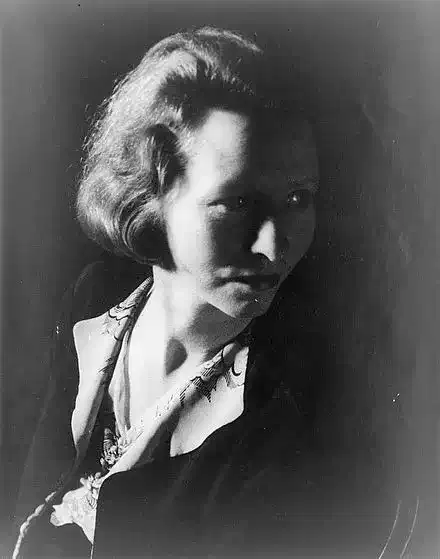
Edna St. Vincent Millay
Sonnet 01: Thou Art Not Lovelier Than Lilacs,—No
Sonnet 01: Thou Art Not Lovelier Than Lilacs,—No
Thou art not lovelier than lilacs,—no,
Nor honeysuckle; thou art not more fair
Than small white single poppies,—I can bear
Thy beauty; though I bend before thee, though
From left to right, not knowing where to go,
I turn my troubled eyes, nor here nor there
Find any refuge from thee, yet I swear
So has it been with mist,—with moonlight so.
Like him who day by day unto his draught
Of delicate poison adds him one drop more
Till he may drink unharmed the death of ten,
Even so, inured to beauty, who have quaffed
Each hour more deeply than the hour before,
I drink—and live—what has destroyed some men.
Thou art not lovelier than lilacs,—no,
Nor honeysuckle; thou art not more fair
Than small white single poppies,—I can bear
Thy beauty; though I bend before thee, though
From left to right, not knowing where to go,
I turn my troubled eyes, nor here nor there
Find any refuge from thee, yet I swear
So has it been with mist,—with moonlight so.
Like him who day by day unto his draught
Of delicate poison adds him one drop more
Till he may drink unharmed the death of ten,
Even so, inured to beauty, who have quaffed
Each hour more deeply than the hour before,
I drink—and live—what has destroyed some men.
272
Edna St. Vincent Millay
Daphne
Daphne
Why do you follow me?—
Any moment I can be
Nothing but a laurel-tree.
Any moment of the chase
I can leave you in my place
A pink bough for your embrace.
Yet if over hill and hollow
Still it is your will to follow,
I am off;—to heel, Apollo!
Why do you follow me?—
Any moment I can be
Nothing but a laurel-tree.
Any moment of the chase
I can leave you in my place
A pink bough for your embrace.
Yet if over hill and hollow
Still it is your will to follow,
I am off;—to heel, Apollo!
339
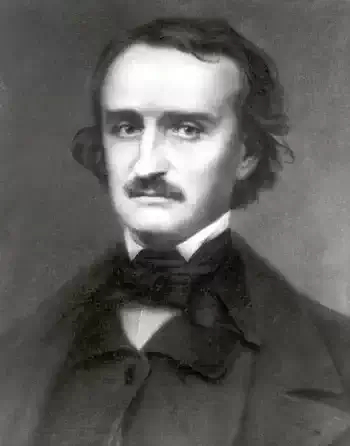
Edgar Allan Poe
To The River --
To The River --
Fair river! in thy bright, clear flow
Of crystal, wandering water,
Thou art an emblem of the glow
Of beauty- the unhidden heartThe
playful maziness of art
In old Alberto's daughter;
But when within thy wave she looksWhich
glistens then, and tremblesWhy,
then, the prettiest of brooks
Her worshipper resembles;
For in his heart, as in thy stream,
Her image deeply liesHis
heart which trembles at the beam
Of her soul-searching eyes.
Fair river! in thy bright, clear flow
Of crystal, wandering water,
Thou art an emblem of the glow
Of beauty- the unhidden heartThe
playful maziness of art
In old Alberto's daughter;
But when within thy wave she looksWhich
glistens then, and tremblesWhy,
then, the prettiest of brooks
Her worshipper resembles;
For in his heart, as in thy stream,
Her image deeply liesHis
heart which trembles at the beam
Of her soul-searching eyes.
223
Edgar Allan Poe
To Marie Louise (Shew)
To Marie Louise (Shew)
Of all who hail thy presence as the morning-
Of all to whom thine absence is the night-
The blotting utterly from out high heaven
The sacred sun- of all who, weeping, bless thee
Hourly for hope- for life- ah! above all,
For the resurrection of deep-buried faith
In Truth- in Virtue- in Humanity-
Of all who, on Despair's unhallowed bed
Lying down to die, have suddenly arisen
At thy soft-murmured words, 'Let there be light!'
At the soft-murmured words that were fulfilled
In the seraphic glancing of thine eyes-
Of all who owe thee most- whose gratitude
Nearest resembles worship- oh, remember
The truest- the most fervently devoted,
And think that these weak lines are written by him-
By him who, as he pens them, thrills to think
His spirit is communing with an angel's.
Of all who hail thy presence as the morning-
Of all to whom thine absence is the night-
The blotting utterly from out high heaven
The sacred sun- of all who, weeping, bless thee
Hourly for hope- for life- ah! above all,
For the resurrection of deep-buried faith
In Truth- in Virtue- in Humanity-
Of all who, on Despair's unhallowed bed
Lying down to die, have suddenly arisen
At thy soft-murmured words, 'Let there be light!'
At the soft-murmured words that were fulfilled
In the seraphic glancing of thine eyes-
Of all who owe thee most- whose gratitude
Nearest resembles worship- oh, remember
The truest- the most fervently devoted,
And think that these weak lines are written by him-
By him who, as he pens them, thrills to think
His spirit is communing with an angel's.
348