

Poems
Platonic Love
Poems in this topic
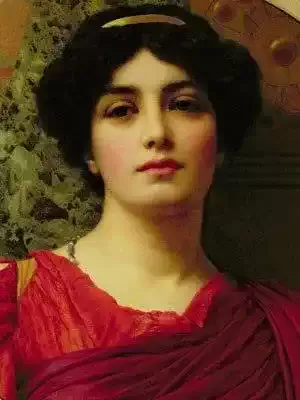
Safo
Cyprian, in my dream
Cyprian, in my dream
Cyprian, in my dream
the folds of a purple
kerchief shadowed
your cheeks --- the one
Timas one time sent,
a timid gift, all
the way from Phocaea
Sappho
tr. Barnard
Cyprian, in my dream
the folds of a purple
kerchief shadowed
your cheeks --- the one
Timas one time sent,
a timid gift, all
the way from Phocaea
Sappho
tr. Barnard
440
Safo
Anactoria
Anactoria
Yes, Atthis, you may be sure
Even in Sardis
Anactoria will think often of us
of the life we shared here, when you seemed
the Goddess incarnate
to her and your singing pleased her best
Now among Lydian women she in her
turn stands first as the redfingered
moon rising at sunset takes
precedence over stars around her;
her light spreads equally
on the salt sea and fields thick with bloom
Delicious dew pours down to freshen
roses, delicate thyme
and blossoming sweet clover; she wanders
aimlessly, thinking of gentle
Atthis, her heart hanging
heavy with longing in her little breast
She shouts aloud, Come! we know it;
thousand-eared night repeats that cry
across the sea shining between us
Sappho
tr. Barnard
Yes, Atthis, you may be sure
Even in Sardis
Anactoria will think often of us
of the life we shared here, when you seemed
the Goddess incarnate
to her and your singing pleased her best
Now among Lydian women she in her
turn stands first as the redfingered
moon rising at sunset takes
precedence over stars around her;
her light spreads equally
on the salt sea and fields thick with bloom
Delicious dew pours down to freshen
roses, delicate thyme
and blossoming sweet clover; she wanders
aimlessly, thinking of gentle
Atthis, her heart hanging
heavy with longing in her little breast
She shouts aloud, Come! we know it;
thousand-eared night repeats that cry
across the sea shining between us
Sappho
tr. Barnard
543
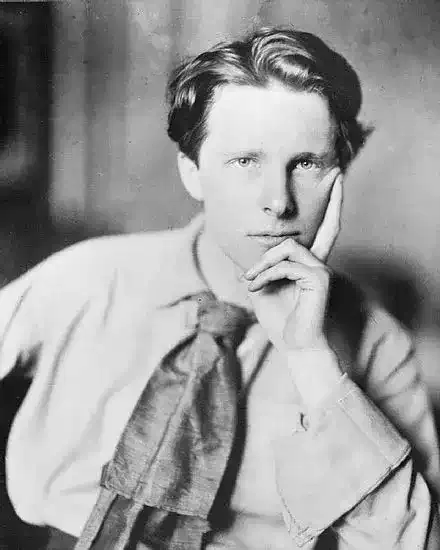
Rupert Brooke
The Charm
The Charm
In darkness the loud sea makes moan;
And earth is shaken, and all evils creep
About her ways.
Oh, now to know you sleep!
Out of the whirling blinding moil, alone,
Out of the slow grim fight,
One thought to wing -- to you, asleep,
In some cool room that's open to the night
Lying half-forward, breathing quietly,
One white hand on the white
Unrumpled sheet, and the ever-moving hair
Quiet and still at length! . . .
Your magic and your beauty and your strength,
Like hills at noon or sunlight on a tree,
Sleeping prevail in earth and air.
In the sweet gloom above the brown and white
Night benedictions hover; and the winds of night
Move gently round the room, and watch you there.
And through the dreadful hours
The trees and waters and the hills have kept
The sacred vigil while you slept,
And lay a way of dew and flowers
Where your feet, your morning feet, shall tread.
And still the darkness ebbs about your bed.
Quiet, and strange, and loving-kind, you sleep.
And holy joy about the earth is shed;
And holiness upon the deep.
In darkness the loud sea makes moan;
And earth is shaken, and all evils creep
About her ways.
Oh, now to know you sleep!
Out of the whirling blinding moil, alone,
Out of the slow grim fight,
One thought to wing -- to you, asleep,
In some cool room that's open to the night
Lying half-forward, breathing quietly,
One white hand on the white
Unrumpled sheet, and the ever-moving hair
Quiet and still at length! . . .
Your magic and your beauty and your strength,
Like hills at noon or sunlight on a tree,
Sleeping prevail in earth and air.
In the sweet gloom above the brown and white
Night benedictions hover; and the winds of night
Move gently round the room, and watch you there.
And through the dreadful hours
The trees and waters and the hills have kept
The sacred vigil while you slept,
And lay a way of dew and flowers
Where your feet, your morning feet, shall tread.
And still the darkness ebbs about your bed.
Quiet, and strange, and loving-kind, you sleep.
And holy joy about the earth is shed;
And holiness upon the deep.
182
Rupert Brooke
Goddess In The Wood, The
Goddess In The Wood, The
In a flowered dell the Lady Venus stood,
Amazed with sorrow. Down the morning one
Far golden horn in the gold of trees and sun
Rang out; and held; and died. . . . She thought the wood
Grew quieter. Wing, and leaf, and pool of light
Forgot to dance. Dumb lay the unfalling stream;
Life one eternal instant rose in dream
Clear out of time, poised on a golden height. . . .
Till a swift terror broke the abrupt hour.
The gold waves purled amidst the green above her;
And a bird sang. With one sharp-taken breath,
By sunlit branches and unshaken flower,
The immortal limbs flashed to the human lover,
And the immortal eyes to look on death.
In a flowered dell the Lady Venus stood,
Amazed with sorrow. Down the morning one
Far golden horn in the gold of trees and sun
Rang out; and held; and died. . . . She thought the wood
Grew quieter. Wing, and leaf, and pool of light
Forgot to dance. Dumb lay the unfalling stream;
Life one eternal instant rose in dream
Clear out of time, poised on a golden height. . . .
Till a swift terror broke the abrupt hour.
The gold waves purled amidst the green above her;
And a bird sang. With one sharp-taken breath,
By sunlit branches and unshaken flower,
The immortal limbs flashed to the human lover,
And the immortal eyes to look on death.
193
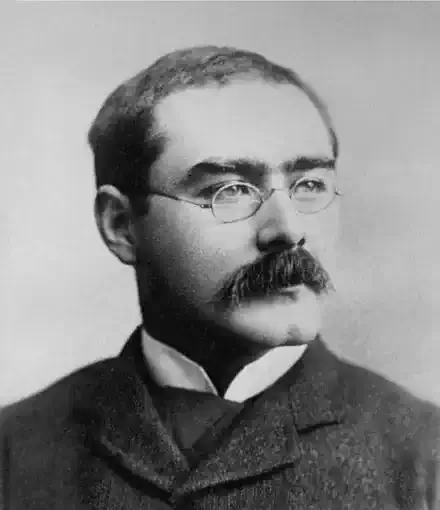
Rudyard Kipling
The Queen's Men
The Queen's Men
Valour and Innocence
Have latterly gone hence
To certain death by certain shame attended.
Envy--ah! even to tears! --
The fortune of their years
Which, though so few, yet so divinely ended.
Scarce had they lifted up
Life's full and fiery cup,
Than they had set it down untouched before them.
Before their day arose
They beckoned it to close--
Close in confusion and destruction o'er them.
They did not stay to ask
What prize should crown their task--
Well sure that prize was such as no man strives for;
But passed into eclipse,
Her kiss upon their lips--
Even Belphoebe's, whom they gave their lives for!
Valour and Innocence
Have latterly gone hence
To certain death by certain shame attended.
Envy--ah! even to tears! --
The fortune of their years
Which, though so few, yet so divinely ended.
Scarce had they lifted up
Life's full and fiery cup,
Than they had set it down untouched before them.
Before their day arose
They beckoned it to close--
Close in confusion and destruction o'er them.
They did not stay to ask
What prize should crown their task--
Well sure that prize was such as no man strives for;
But passed into eclipse,
Her kiss upon their lips--
Even Belphoebe's, whom they gave their lives for!
488
Rudyard Kipling
My Lady's Law
My Lady's Law
The Law whereby my lady moves
Was never Law to me,
But 'tis enough that she approves
Whatever Law it be.
For in that Law, and by that Law
My constant course I'll steer;
Not that I heed or deem it dread,
But that she holds it dear.
Tho' Asia sent for my content
Her richest argosies,
Those would I spurn, and bid return,
If that should give her ease.
With equal heart I'd watch depart
Each spiced sail from sight;
Sans bitterness, desiring less
Great gear than her delight.
Though Kings made swift with many a gift
My proven sword to hire--
I would not go nor serve 'em so--
Except at her desire.
With even mind, I'd put behind
Adventure and acclaim,
And clean give o'er, esteeming more
Her favour than my fame.
Yet such am I, yea, such am I--
Sore bond and freest free,
The Law that sways my lady's ways
Is mystery to me!
The Law whereby my lady moves
Was never Law to me,
But 'tis enough that she approves
Whatever Law it be.
For in that Law, and by that Law
My constant course I'll steer;
Not that I heed or deem it dread,
But that she holds it dear.
Tho' Asia sent for my content
Her richest argosies,
Those would I spurn, and bid return,
If that should give her ease.
With equal heart I'd watch depart
Each spiced sail from sight;
Sans bitterness, desiring less
Great gear than her delight.
Though Kings made swift with many a gift
My proven sword to hire--
I would not go nor serve 'em so--
Except at her desire.
With even mind, I'd put behind
Adventure and acclaim,
And clean give o'er, esteeming more
Her favour than my fame.
Yet such am I, yea, such am I--
Sore bond and freest free,
The Law that sways my lady's ways
Is mystery to me!
400

Robert W. Service
The Woman And The Angel
The Woman And The Angel
An angel was tired of heaven, as he lounged in the golden street;
His halo was tilted sideways, and his harp lay mute at his feet;
So the Master stooped in His pity, and gave him a pass to go,
For the space of a moon, to the earth-world, to mix with the men below.
He doffed his celestial garments, scarce waiting to lay them straight;
He bade good by to Peter, who stood by the golden gate;
The sexless singers of heaven chanted a fond farewell,
And the imps looked up as they pattered on the red-hot flags of hell.
Never was seen such an angel -- eyes of heavenly blue,
Features that shamed Apollo, hair of a golden hue;
The women simply adored him; his lips were like Cupid's bow;
But he never ventured to use them -- and so they voted him slow.
Till at last there came One Woman, a marvel of loveliness,
And she whispered to him: "Do you love me?" And he answered that woman, "Yes."
And she said: "Put your arms around me, and kiss me, and hold me -- so --"
But fiercely he drew back, saying: "This thing is wrong, and I know."
Then sweetly she mocked his scruples, and softly she him beguiled:
"You, who are verily man among men, speak with the tongue of a child.
We have outlived the old standards; we have burst, like an over-tight thong,
The ancient, outworn, Puritanic traditions of Right and Wrong."
Then the Master feared for His angel, and called him again to His side,
For oh, the woman was wondrous, and oh, the angel was tried!
And deep in his hell sang the Devil, and this was the strain of his song:
"The ancient, outworn, Puritanic traditions of Right and Wrong."
An angel was tired of heaven, as he lounged in the golden street;
His halo was tilted sideways, and his harp lay mute at his feet;
So the Master stooped in His pity, and gave him a pass to go,
For the space of a moon, to the earth-world, to mix with the men below.
He doffed his celestial garments, scarce waiting to lay them straight;
He bade good by to Peter, who stood by the golden gate;
The sexless singers of heaven chanted a fond farewell,
And the imps looked up as they pattered on the red-hot flags of hell.
Never was seen such an angel -- eyes of heavenly blue,
Features that shamed Apollo, hair of a golden hue;
The women simply adored him; his lips were like Cupid's bow;
But he never ventured to use them -- and so they voted him slow.
Till at last there came One Woman, a marvel of loveliness,
And she whispered to him: "Do you love me?" And he answered that woman, "Yes."
And she said: "Put your arms around me, and kiss me, and hold me -- so --"
But fiercely he drew back, saying: "This thing is wrong, and I know."
Then sweetly she mocked his scruples, and softly she him beguiled:
"You, who are verily man among men, speak with the tongue of a child.
We have outlived the old standards; we have burst, like an over-tight thong,
The ancient, outworn, Puritanic traditions of Right and Wrong."
Then the Master feared for His angel, and called him again to His side,
For oh, the woman was wondrous, and oh, the angel was tried!
And deep in his hell sang the Devil, and this was the strain of his song:
"The ancient, outworn, Puritanic traditions of Right and Wrong."
164
Robert W. Service
The Mountain And The Lake
The Mountain And The Lake
I know a mountain thrilling to the stars,
Peerless and pure, and pinnacled with snow;
Glimpsing the golden dawn o'er coral bars,
Flaunting the vanisht sunset's garnet glow;
Proudly patrician, passionless, serene;
Soaring in silvered steeps where cloud-surfs break;
Virgin and vestal -- Oh, a very Queen!
And at her feet there dreams a quiet lake.
My lake adores my mountain -- well I know,
For I have watched it from its dawn-dream start,
Stilling its mirror to her splendid snow,
Framing her image in its trembling heart;
Glassing her graciousness of greening wood,
Kissing her throne, melodiously mad,
Thrilling responsive to her every mood,
Gloomed with her sadness, gay when she is glad.
My lake has dreamed and loved since time was born;
Will love and dream till time shall cease to be;
Gazing to Her in worship half forlorn,
Who looks towards the stars and will not see --
My peerless mountain, splendid in her scorn. . . .
Alas! poor little lake! Alas! poor me!
I know a mountain thrilling to the stars,
Peerless and pure, and pinnacled with snow;
Glimpsing the golden dawn o'er coral bars,
Flaunting the vanisht sunset's garnet glow;
Proudly patrician, passionless, serene;
Soaring in silvered steeps where cloud-surfs break;
Virgin and vestal -- Oh, a very Queen!
And at her feet there dreams a quiet lake.
My lake adores my mountain -- well I know,
For I have watched it from its dawn-dream start,
Stilling its mirror to her splendid snow,
Framing her image in its trembling heart;
Glassing her graciousness of greening wood,
Kissing her throne, melodiously mad,
Thrilling responsive to her every mood,
Gloomed with her sadness, gay when she is glad.
My lake has dreamed and loved since time was born;
Will love and dream till time shall cease to be;
Gazing to Her in worship half forlorn,
Who looks towards the stars and will not see --
My peerless mountain, splendid in her scorn. . . .
Alas! poor little lake! Alas! poor me!
201
Robert W. Service
Moon-Lover
Moon-Lover
I
The Moon is like a ping-pong ball;
I lean against the orchard wall,
And see it soar into the void,
A silky sphere of celluloid.
Then fairy fire enkindles it,
Like gossamer by taper lit,
Until it glows above the trees
As mellow as a Cheddar cheese.
And up and up I watch it press
Into appalling loneliness;
Like realms of ice without a stain,
A corpse Moon come to life again.
Ruthless it drowns a sturdy star
That seeks its regal way to bar;
Seeming with conscious power to grow,
And sweeter, purer, gladder glow.
Dreaming serenely up the sky
Until exultantly on high,
It shimmers with superb delight,
The silver navel of the night.
II
I have a compact to commune
A monthly midnight with the Moon;
Into its face I stare and stare,
And find sweet understanding there.
As quiet as a toad I sit
And tell my tale of days to it;
The tessellated yarn I've spun
In thirty spells of star and sun.
And the Moon listens pensively,
As placid as a lamb to me;
Until I think there's just us two
In silver world of mist and dew.
In all of spangled space, but I
To stare moon-struck into the sky;
Of billion beings I alone
To praise the Moon as still as stone.
And seal a bond between us two,
Closer than mortal ever knew;
For as mute masses I intone
The Moon is mine and mine alone.
III
To know the Moon as few men may,
One must be just a little fey;
And for our friendship's sake I'm glad
That I am just a trifle mad.
And one with all the wild, wise things,
The furtive folk of fur and wings,
That hold the Moon within their eyes,
And make it nightly sacrifice.
O I will watch the maiden Moon
Dance on the sea with silver shoon;
But with the Queen Moon I will keep
My tryst when all the world's asleep.
As I have kept by land and sea
That tryst for half a century;
Entranced in sibylline suspense
Beyond a world of common-sense.
Until one night the Moon alone
Will look upon a graven stone. . . .
I wonder will it miss me then,
Its lover more than other men?
Or will my wistful ghost be there,
Down ages dim to stare and stare,
On silver nights without a stir--
The Moon's Eternal Worshipper?
I
The Moon is like a ping-pong ball;
I lean against the orchard wall,
And see it soar into the void,
A silky sphere of celluloid.
Then fairy fire enkindles it,
Like gossamer by taper lit,
Until it glows above the trees
As mellow as a Cheddar cheese.
And up and up I watch it press
Into appalling loneliness;
Like realms of ice without a stain,
A corpse Moon come to life again.
Ruthless it drowns a sturdy star
That seeks its regal way to bar;
Seeming with conscious power to grow,
And sweeter, purer, gladder glow.
Dreaming serenely up the sky
Until exultantly on high,
It shimmers with superb delight,
The silver navel of the night.
II
I have a compact to commune
A monthly midnight with the Moon;
Into its face I stare and stare,
And find sweet understanding there.
As quiet as a toad I sit
And tell my tale of days to it;
The tessellated yarn I've spun
In thirty spells of star and sun.
And the Moon listens pensively,
As placid as a lamb to me;
Until I think there's just us two
In silver world of mist and dew.
In all of spangled space, but I
To stare moon-struck into the sky;
Of billion beings I alone
To praise the Moon as still as stone.
And seal a bond between us two,
Closer than mortal ever knew;
For as mute masses I intone
The Moon is mine and mine alone.
III
To know the Moon as few men may,
One must be just a little fey;
And for our friendship's sake I'm glad
That I am just a trifle mad.
And one with all the wild, wise things,
The furtive folk of fur and wings,
That hold the Moon within their eyes,
And make it nightly sacrifice.
O I will watch the maiden Moon
Dance on the sea with silver shoon;
But with the Queen Moon I will keep
My tryst when all the world's asleep.
As I have kept by land and sea
That tryst for half a century;
Entranced in sibylline suspense
Beyond a world of common-sense.
Until one night the Moon alone
Will look upon a graven stone. . . .
I wonder will it miss me then,
Its lover more than other men?
Or will my wistful ghost be there,
Down ages dim to stare and stare,
On silver nights without a stir--
The Moon's Eternal Worshipper?
254
Robert W. Service
Hero Worship
Hero Worship
Said he: "You saw the Master clear;
By Rushy Pond alone he sat,
Serene and silent as a seer,
in tweedy coat and seedy hat.
you tell me you did not intrude,
(Although his book was in your hand,)
Upon his melancholy mood . . .
I do not understand.
"You did not tell him: 'I have come
From o'er the sea to speak to you.'
You did not dare, your lips were dumb . . .
You thought a little zephyr blew
From Rushy Pond a touch of him
You'll cherish to your dying day,
Perhaps with tears your eyes were dim . . .
And then - you went away.
"And down the years you will proclaim:
'O call me dullard, dub me dunce!
But let this be my meed of fame:
I looked on Thomas Hardy once.
Aye, by a stile I stood a span
And with these eyes did plainly see
A little, shrinking, shabby man . . .
But Oh a god to me!'"
Said I: "'Tis true, I scarce dared look,
yet he would have been kind, I'm sure;
But though I clutched his precious book
I feared to beg his signature.
Ah yes, my friend, I merit mirth.
You're bold, you have the right to laugh,
And if Christ came again to earth
You'd cadge his autograph."
Said he: "You saw the Master clear;
By Rushy Pond alone he sat,
Serene and silent as a seer,
in tweedy coat and seedy hat.
you tell me you did not intrude,
(Although his book was in your hand,)
Upon his melancholy mood . . .
I do not understand.
"You did not tell him: 'I have come
From o'er the sea to speak to you.'
You did not dare, your lips were dumb . . .
You thought a little zephyr blew
From Rushy Pond a touch of him
You'll cherish to your dying day,
Perhaps with tears your eyes were dim . . .
And then - you went away.
"And down the years you will proclaim:
'O call me dullard, dub me dunce!
But let this be my meed of fame:
I looked on Thomas Hardy once.
Aye, by a stile I stood a span
And with these eyes did plainly see
A little, shrinking, shabby man . . .
But Oh a god to me!'"
Said I: "'Tis true, I scarce dared look,
yet he would have been kind, I'm sure;
But though I clutched his precious book
I feared to beg his signature.
Ah yes, my friend, I merit mirth.
You're bold, you have the right to laugh,
And if Christ came again to earth
You'd cadge his autograph."
173
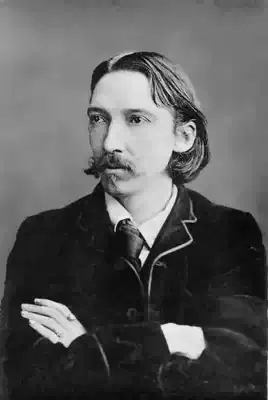
Robert Louis Stevenson
Ne Sit Ancillae Tibi Amor Pudor
Ne Sit Ancillae Tibi Amor Pudor
THERE'S just a twinkle in your eye
That seems to say I MIGHT, if I
Were only bold enough to try
An arm about your waist.
I hear, too, as you come and go,
That pretty nervous laugh, you know;
And then your cap is always so
Coquettishly displaced.
Your cap! the word's profanely said.
That little top-knot, white and red,
That quaintly crowns your graceful head,
No bigger than a flower,
Is set with such a witching art,
Is so provocatively smart,
I'd like to wear it on my heart,
An order for an hour!
O graceful housemaid, tall and fair,
I love your shy imperial air,
And always loiter on the stair
When you are going by.
A strict reserve the fates demand;
But, when to let you pass I stand,
Sometimes by chance I touch your hand
And sometimes catch your eye.
THERE'S just a twinkle in your eye
That seems to say I MIGHT, if I
Were only bold enough to try
An arm about your waist.
I hear, too, as you come and go,
That pretty nervous laugh, you know;
And then your cap is always so
Coquettishly displaced.
Your cap! the word's profanely said.
That little top-knot, white and red,
That quaintly crowns your graceful head,
No bigger than a flower,
Is set with such a witching art,
Is so provocatively smart,
I'd like to wear it on my heart,
An order for an hour!
O graceful housemaid, tall and fair,
I love your shy imperial air,
And always loiter on the stair
When you are going by.
A strict reserve the fates demand;
But, when to let you pass I stand,
Sometimes by chance I touch your hand
And sometimes catch your eye.
310

Robert Frost
A Dream Pang
A Dream Pang
I had withdrawn in forest, and my song
Was swallowed up in leaves that blew alway;
And to the forest edge you came one day
(This was my dream) and looked and pondered long,
But did not enter, though the wish was strong:
You shook your pensive head as who should say,
‘I dare not—too far in his footsteps stray—
He must seek me would he undo the wrong.
Not far, but near, I stood and saw it all
Behind low boughs the trees let down outside;
And the sweet pang it cost me not to call
And tell you that I saw does still abide.
But ’tis not true that thus I dwelt aloof,
For the wood wakes, and you are here for proof.
I had withdrawn in forest, and my song
Was swallowed up in leaves that blew alway;
And to the forest edge you came one day
(This was my dream) and looked and pondered long,
But did not enter, though the wish was strong:
You shook your pensive head as who should say,
‘I dare not—too far in his footsteps stray—
He must seek me would he undo the wrong.
Not far, but near, I stood and saw it all
Behind low boughs the trees let down outside;
And the sweet pang it cost me not to call
And tell you that I saw does still abide.
But ’tis not true that thus I dwelt aloof,
For the wood wakes, and you are here for proof.
474
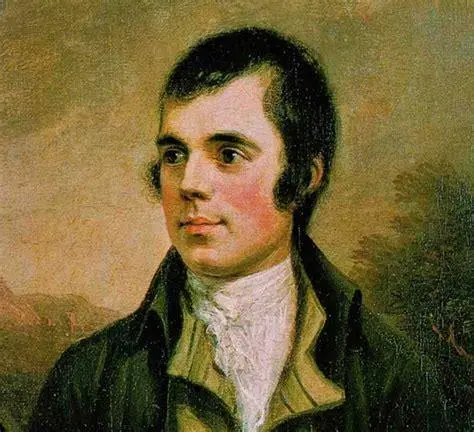
Robert Burns
O, Were My Love
O, Were My Love
O, were my love yon lilac fair
Wi' purple blossoms to the spring,
And I a bird to shelter there,
When wearied on my little wing.
How I wad mourn when it was torn
By Autumn wild and Winter rude!
But I wad sing on wanton wing
When youthfu May its bloom renew'd.
O, gin my love were yon red rose,
That grows upon the castle wa',
And I mysel a drap o' dew
Into her bonie breast to fa',
O, there, beyond expression blest,
I'd feast on beauty a' the night,
Seal'd on her silk-saft faulds to rest,
Till fley'd awa by Phoebus' light!
O, were my love yon lilac fair
Wi' purple blossoms to the spring,
And I a bird to shelter there,
When wearied on my little wing.
How I wad mourn when it was torn
By Autumn wild and Winter rude!
But I wad sing on wanton wing
When youthfu May its bloom renew'd.
O, gin my love were yon red rose,
That grows upon the castle wa',
And I mysel a drap o' dew
Into her bonie breast to fa',
O, there, beyond expression blest,
I'd feast on beauty a' the night,
Seal'd on her silk-saft faulds to rest,
Till fley'd awa by Phoebus' light!
269
Robert Burns
Bonnie Lesley
Bonnie Lesley
O SAW ye bonnie Lesley
As she gaed o'er the Border?
She 's gane, like Alexander,
To spread her conquests farther.
To see her is to love her,
And love but her for ever;
For Nature made her what she is,
And ne'er made sic anither!
Thou art a queen, fair Lesley,
Thy subjects we, before thee:
Thou art divine, fair Lesley,
The hearts o' men adore thee.
The Deil he couldna scaith thee,
Or aught that wad belang thee;
He'd look into thy bonnie face
And say, 'I canna wrang thee!'
The Powers aboon will tent thee,
Misfortune sha'na steer thee:
Thou'rt like themsel' sae lovely,
That ill they'll ne'er let near thee.
Return again, fair Lesley,
Return to Caledonie!
That we may brag we hae a lass
There 's nane again sae bonnie!
O SAW ye bonnie Lesley
As she gaed o'er the Border?
She 's gane, like Alexander,
To spread her conquests farther.
To see her is to love her,
And love but her for ever;
For Nature made her what she is,
And ne'er made sic anither!
Thou art a queen, fair Lesley,
Thy subjects we, before thee:
Thou art divine, fair Lesley,
The hearts o' men adore thee.
The Deil he couldna scaith thee,
Or aught that wad belang thee;
He'd look into thy bonnie face
And say, 'I canna wrang thee!'
The Powers aboon will tent thee,
Misfortune sha'na steer thee:
Thou'rt like themsel' sae lovely,
That ill they'll ne'er let near thee.
Return again, fair Lesley,
Return to Caledonie!
That we may brag we hae a lass
There 's nane again sae bonnie!
253
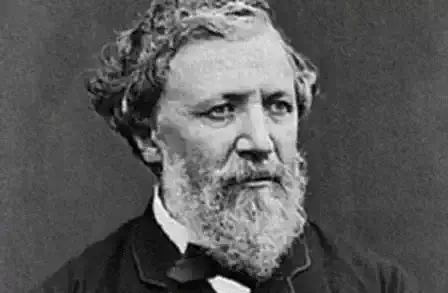
Robert Browning
The Guardian-Angel
The Guardian-Angel
A PICTURE AT FANO.
I.
Dear and great Angel, wouldst thou only leave
That child, when thou hast done with him, for me!
Let me sit all the day here, that when eve
Shall find performed thy special ministry,
And time come for departure, thou, suspending
Thy flight, mayst see another child for tending,
Another still, to quiet and retrieve.
II.
Then I shall feel thee step one step, no more,
From where thou standest now, to where I gaze,
---And suddenly my head is covered o'er
With those wings, white above the child who prays
Now on that tomb---and I shall feel thee guarding
Me, out of all the world; for me, discarding
Yon heaven thy home, that waits and opes its door.
III.
I would not look up thither past thy head
Because the door opes, like that child, I know,
For I should have thy gracious face instead,
Thou bird of God! And wilt thou bend me low
Like him, and lay, like his, my hands together,
And lift them up to pray, and gently tether
Me, as thy lamb there, with thy garment's spread?
IV.
If this was ever granted, I would rest
My bead beneath thine, while thy healing hands
Close-covered both my eyes beside thy breast,
Pressing the brain, which too much thought expands,
Back to its proper size again, and smoothing
Distortion down till every nerve had soothing,
And all lay quiet, happy and suppressed.
V.
How soon all worldly wrong would be repaired!
I think how I should view the earth and skies
And sea, when once again my brow was bared
After thy healing, with such different eyes.
O world, as God has made it! All is beauty:
And knowing this, is love, and love is duty.
What further may be sought for or declared?
VI.
Guercino drew this angel I saw teach
(Alfred, dear friend!)---that little child to pray,
Holding the little hands up, each to each
Pressed gently,---with his own head turned away
Over the earth where so much lay before him
Of work to do, though heaven was opening o'er him,
And he was left at Fano by the beach.
VII.
We were at Fano, and three times we went
To sit and see him in his chapel there,
And drink his beauty to our soul's content
---My angel with me too: and since I care
For dear Guercino's fame (to which in power
And glory comes this picture for a dower,
Fraught with a pathos so magnificent)---
VIII.
And since he did not work thus earnestly
At all times, and has else endured some wrong---
I took one thought his picture struck from me,
And spread it out, translating it to song.
My love is here. Where are you, dear old friend?
How rolls the Wairoa at your world's far end?
This is Ancona, yonder is the sea.
A PICTURE AT FANO.
I.
Dear and great Angel, wouldst thou only leave
That child, when thou hast done with him, for me!
Let me sit all the day here, that when eve
Shall find performed thy special ministry,
And time come for departure, thou, suspending
Thy flight, mayst see another child for tending,
Another still, to quiet and retrieve.
II.
Then I shall feel thee step one step, no more,
From where thou standest now, to where I gaze,
---And suddenly my head is covered o'er
With those wings, white above the child who prays
Now on that tomb---and I shall feel thee guarding
Me, out of all the world; for me, discarding
Yon heaven thy home, that waits and opes its door.
III.
I would not look up thither past thy head
Because the door opes, like that child, I know,
For I should have thy gracious face instead,
Thou bird of God! And wilt thou bend me low
Like him, and lay, like his, my hands together,
And lift them up to pray, and gently tether
Me, as thy lamb there, with thy garment's spread?
IV.
If this was ever granted, I would rest
My bead beneath thine, while thy healing hands
Close-covered both my eyes beside thy breast,
Pressing the brain, which too much thought expands,
Back to its proper size again, and smoothing
Distortion down till every nerve had soothing,
And all lay quiet, happy and suppressed.
V.
How soon all worldly wrong would be repaired!
I think how I should view the earth and skies
And sea, when once again my brow was bared
After thy healing, with such different eyes.
O world, as God has made it! All is beauty:
And knowing this, is love, and love is duty.
What further may be sought for or declared?
VI.
Guercino drew this angel I saw teach
(Alfred, dear friend!)---that little child to pray,
Holding the little hands up, each to each
Pressed gently,---with his own head turned away
Over the earth where so much lay before him
Of work to do, though heaven was opening o'er him,
And he was left at Fano by the beach.
VII.
We were at Fano, and three times we went
To sit and see him in his chapel there,
And drink his beauty to our soul's content
---My angel with me too: and since I care
For dear Guercino's fame (to which in power
And glory comes this picture for a dower,
Fraught with a pathos so magnificent)---
VIII.
And since he did not work thus earnestly
At all times, and has else endured some wrong---
I took one thought his picture struck from me,
And spread it out, translating it to song.
My love is here. Where are you, dear old friend?
How rolls the Wairoa at your world's far end?
This is Ancona, yonder is the sea.
315
Robert Browning
A Pretty Woman
A Pretty Woman
I.
That fawn-skin-dappled hair of hers,
And the blue eye
Dear and dewy,
And that infantine fresh air of hers!
II.
To think men cannot take you, Sweet,
And enfold you,
Ay, and hold you,
And so keep you what they make you, Sweet!
III
You like us for a glance, you know---
For a word's sake
Or a sword's sake,
All's the same, whate'er the chance, you know.
IV.
And in turn we make you ours, we say---
You and youth too,
Eyes and mouth too,
All the face composed of flowers, we say.
V.
All's our own, to make the most of, Sweet---
Sing and say for,
Watch and pray for,
Keep a secret or go boast of, Sweet!
VI.
But for loving, why, you would not, Sweet,
Though we prayed you,
Paid you, brayed you
in a mortar---for you could not, Sweet!
VII.
So, we leave the sweet face fondly there:
Be its beauty
Its sole duty!
Let all hope of grace beyond, lie there!
VIII.
And while the face lies quiet there,
Who shall wonder
That I ponder
A conclusion? I will try it there.
IX.
As,---why must one, for the love foregone,
Scout mere liking?
Thunder-striking
Earth,---the heaven, we looked above for, gone!
X.
Why, with beauty, needs there money be,
Love with liking?
Crush the fly-king
In his gauze, because no honey-bee?
XI.
May not liking be so simple-sweet,
If love grew there
'Twould undo there
All that breaks the cheek to dimples sweet?
XII.
Is the creature too imperfect,
Would you mend it
And so end it?
Since not all addition perfects aye!
XIII.
Or is it of its kind, perhaps,
Just perfection---
Whence, rejection
Of a grace not to its mind, perhaps?
XIV.
Shall we burn up, tread that face at once
Into tinder,
And so hinder
Sparks from kindling all the place at once?
XV.
Or else kiss away one's soul on her?
Your love-fancies!
---A sick man sees
Truer, when his hot eyes roll on her!
XVI.
Thus the craftsman thinks to grace the rose,---
Plucks a mould-flower
For his gold flower,
Uses fine things that efface the rose:
XVII.
Rosy rubies make its cup more rose,
Precious metals
Ape the petals,---
Last, some old king locks it up, morose!
XVIII.
Then how grace a rose? I know a way!
Leave it, rather.
Must you gather?
Smell, kiss, wear it---at last, throw away!
I.
That fawn-skin-dappled hair of hers,
And the blue eye
Dear and dewy,
And that infantine fresh air of hers!
II.
To think men cannot take you, Sweet,
And enfold you,
Ay, and hold you,
And so keep you what they make you, Sweet!
III
You like us for a glance, you know---
For a word's sake
Or a sword's sake,
All's the same, whate'er the chance, you know.
IV.
And in turn we make you ours, we say---
You and youth too,
Eyes and mouth too,
All the face composed of flowers, we say.
V.
All's our own, to make the most of, Sweet---
Sing and say for,
Watch and pray for,
Keep a secret or go boast of, Sweet!
VI.
But for loving, why, you would not, Sweet,
Though we prayed you,
Paid you, brayed you
in a mortar---for you could not, Sweet!
VII.
So, we leave the sweet face fondly there:
Be its beauty
Its sole duty!
Let all hope of grace beyond, lie there!
VIII.
And while the face lies quiet there,
Who shall wonder
That I ponder
A conclusion? I will try it there.
IX.
As,---why must one, for the love foregone,
Scout mere liking?
Thunder-striking
Earth,---the heaven, we looked above for, gone!
X.
Why, with beauty, needs there money be,
Love with liking?
Crush the fly-king
In his gauze, because no honey-bee?
XI.
May not liking be so simple-sweet,
If love grew there
'Twould undo there
All that breaks the cheek to dimples sweet?
XII.
Is the creature too imperfect,
Would you mend it
And so end it?
Since not all addition perfects aye!
XIII.
Or is it of its kind, perhaps,
Just perfection---
Whence, rejection
Of a grace not to its mind, perhaps?
XIV.
Shall we burn up, tread that face at once
Into tinder,
And so hinder
Sparks from kindling all the place at once?
XV.
Or else kiss away one's soul on her?
Your love-fancies!
---A sick man sees
Truer, when his hot eyes roll on her!
XVI.
Thus the craftsman thinks to grace the rose,---
Plucks a mould-flower
For his gold flower,
Uses fine things that efface the rose:
XVII.
Rosy rubies make its cup more rose,
Precious metals
Ape the petals,---
Last, some old king locks it up, morose!
XVIII.
Then how grace a rose? I know a way!
Leave it, rather.
Must you gather?
Smell, kiss, wear it---at last, throw away!
401
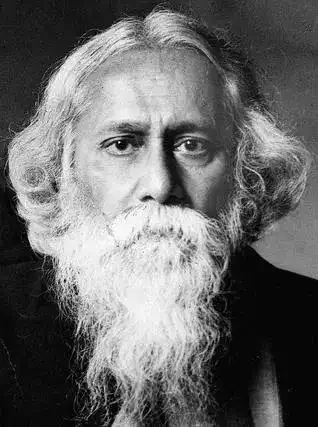
Rabindranath Tagore
The Gardener XXII: When She Passed by Me
The Gardener XXII: When She Passed by Me
When she passed by me with quick
steps, the end of her skirt touched
me.
From the unknown island of a
heart came a sudden warm breath of
spring.
A flutter of a flitting touch brushed
me and vanished in a moment, like a
torn flower petal blown in the breeze.
It fell upon my heart like a sigh of
her body and whisper of her heart.
When she passed by me with quick
steps, the end of her skirt touched
me.
From the unknown island of a
heart came a sudden warm breath of
spring.
A flutter of a flitting touch brushed
me and vanished in a moment, like a
torn flower petal blown in the breeze.
It fell upon my heart like a sigh of
her body and whisper of her heart.
504
Rabindranath Tagore
The Gardener XIII: I Asked Nothing
The Gardener XIII: I Asked Nothing
I asked nothing, only stood at the
edge of the wood behind the tree.
Languor was still upon the eyes
of the dawn, and the dew in the air.
The lazy smell of the damp grass
hung in the thin mist above the earth.
Under the banyan tree you were
milking the cow with your hands,
tender and fresh as butter.
And I was standing still.
I did not say a word. It was the
bird that sang unseen from the thicket.
The mango tree was shedding its
flowers upon the village road, and the
bees came humming one by one.
On the side of the pond the gate of
Shiva's temple was opened and the
worshipper had begun his chants.
With the vessel on your lap you
were milking the cow.
I stood with my empty can.
I did not come near you.
The sky woke with the sound of
the gong at the temple.
The dust was raised in the road
from the hoofs of the driven cattle.
With the gurgling pitchers at their
hips, women came from the river.
Your bracelets were jingling, and
foam brimming over the jar.
The morning wore on and I did not
come near you.
I asked nothing, only stood at the
edge of the wood behind the tree.
Languor was still upon the eyes
of the dawn, and the dew in the air.
The lazy smell of the damp grass
hung in the thin mist above the earth.
Under the banyan tree you were
milking the cow with your hands,
tender and fresh as butter.
And I was standing still.
I did not say a word. It was the
bird that sang unseen from the thicket.
The mango tree was shedding its
flowers upon the village road, and the
bees came humming one by one.
On the side of the pond the gate of
Shiva's temple was opened and the
worshipper had begun his chants.
With the vessel on your lap you
were milking the cow.
I stood with my empty can.
I did not come near you.
The sky woke with the sound of
the gong at the temple.
The dust was raised in the road
from the hoofs of the driven cattle.
With the gurgling pitchers at their
hips, women came from the river.
Your bracelets were jingling, and
foam brimming over the jar.
The morning wore on and I did not
come near you.
461
Rabindranath Tagore
Sit Smiling
Sit Smiling
I boasted among men that I had known you.
They see your pictures in all works of mine.
They come and ask me, `Who is he?'
I know not how to answer them. I say, `Indeed, I cannot tell.'
They blame me and they go away in scorn.
And you sit there smiling.
I put my tales of you into lasting songs.
The secret gushes out from my heart.
They come and ask me, `Tell me all your meanings.'
I know not how to answer them.
I say, `Ah, who knows what they mean!'
They smile and go away in utter scorn.
And you sit there smiling.
I boasted among men that I had known you.
They see your pictures in all works of mine.
They come and ask me, `Who is he?'
I know not how to answer them. I say, `Indeed, I cannot tell.'
They blame me and they go away in scorn.
And you sit there smiling.
I put my tales of you into lasting songs.
The secret gushes out from my heart.
They come and ask me, `Tell me all your meanings.'
I know not how to answer them.
I say, `Ah, who knows what they mean!'
They smile and go away in utter scorn.
And you sit there smiling.
575
Rabindranath Tagore
My Polar Star
My Polar Star
I have made You the polar star of my
existence; never again can I lose my way in the
voyage of life.
Wherever I go, You are always there to
shower your benefience all around me. Your face
is ever present before my mind's eyes.
If I lose sight of You even for a moment, I
almost lose my mind.
Whenever my heart is about to go astray, just
a glance of You makes it feel ashamed of itself.
I have made You the polar star of my
existence; never again can I lose my way in the
voyage of life.
Wherever I go, You are always there to
shower your benefience all around me. Your face
is ever present before my mind's eyes.
If I lose sight of You even for a moment, I
almost lose my mind.
Whenever my heart is about to go astray, just
a glance of You makes it feel ashamed of itself.
527
Rabindranath Tagore
Lover's Gifts XXXIX: There Is a Looker-On
Lover's Gifts XXXIX: There Is a Looker-On
There is a looker-on who sits behind my eyes. I seems he has seen
things in ages and worlds beyond memory's shore, and those
forgotten sights glisten on the grass and shiver on the leaves. He
has seen under new veils the face of the one beloved, in twilight
hours of many a nameless star. Therefore his sky seems to ache with
the pain of countless meetings and partings, and a longing pervades
this spring breeze, -the longing that is full of the whisper of
ages without beginning.
There is a looker-on who sits behind my eyes. I seems he has seen
things in ages and worlds beyond memory's shore, and those
forgotten sights glisten on the grass and shiver on the leaves. He
has seen under new veils the face of the one beloved, in twilight
hours of many a nameless star. Therefore his sky seems to ache with
the pain of countless meetings and partings, and a longing pervades
this spring breeze, -the longing that is full of the whisper of
ages without beginning.
463
Rabindranath Tagore
Little Of Me
Little Of Me
Let only that little be left of me
whereby I may name thee my all.
Let only that little be left of my will
whereby I may feel thee on every side,
and come to thee in everything,
and offer to thee my love every moment.
Let only that little be left of me
whereby I may never hide thee.
Let only that little of my fetters be left
whereby I am bound with thy will,
and thy purpose is carried out in my life---and that is the fetter of thy love.
Let only that little be left of me
whereby I may name thee my all.
Let only that little be left of my will
whereby I may feel thee on every side,
and come to thee in everything,
and offer to thee my love every moment.
Let only that little be left of me
whereby I may never hide thee.
Let only that little of my fetters be left
whereby I am bound with thy will,
and thy purpose is carried out in my life---and that is the fetter of thy love.
437
Rabindranath Tagore
Innermost One
Innermost One
He it is, the innermost one,
who awakens my being with his deep hidden touches.
He it is who puts his enchantment upon these eyes
and joyfully plays on the chords of my heart
in varied cadence of pleasure and pain.
He it is who weaves the web of this maya
in evanescent hues of gold and silver, blue and green,
and lets peep out through the folds his feet,
at whose touch I forget myself.
Days come and ages pass,
and it is ever he who moves my heart in many a name,
in many a guise, in many a rapture of joy and of sorrow.
He it is, the innermost one,
who awakens my being with his deep hidden touches.
He it is who puts his enchantment upon these eyes
and joyfully plays on the chords of my heart
in varied cadence of pleasure and pain.
He it is who weaves the web of this maya
in evanescent hues of gold and silver, blue and green,
and lets peep out through the folds his feet,
at whose touch I forget myself.
Days come and ages pass,
and it is ever he who moves my heart in many a name,
in many a guise, in many a rapture of joy and of sorrow.
617
Rabindranath Tagore
I Found A Few Old Letters
I Found A Few Old Letters
XIV
I found a few old letters of mine carefully hidden in thy box—a few small toys for thy
memory to play with. With a timorous heart thou didst try to steal these trifles from
the turbulent stream of time which washes away planets and stars, and didst say,
“These are only mine!” Alas, there is no one now who can claim them—who is able to
pay their price; yet they are still here. Is there no love in this world to rescue thee
from utter loss, even like this love of thine that saved these letters with such fond
care?
O woman, thou camest for a moment to my side and touched me with the great
mystery of the woman that there is in the heart of creation—she who ever gives back
to God his own outflow of sweetness; who is the eternal love and beauty and youth;
who dances in bubbling streams and sings in the morning light; who with heaving
waves suckles the thirsty earth and whose mercy melts in rain; in whom the eternal
one breaks in two in joy that can contain itself no more and overflows in the pain of
love.
XIV
I found a few old letters of mine carefully hidden in thy box—a few small toys for thy
memory to play with. With a timorous heart thou didst try to steal these trifles from
the turbulent stream of time which washes away planets and stars, and didst say,
“These are only mine!” Alas, there is no one now who can claim them—who is able to
pay their price; yet they are still here. Is there no love in this world to rescue thee
from utter loss, even like this love of thine that saved these letters with such fond
care?
O woman, thou camest for a moment to my side and touched me with the great
mystery of the woman that there is in the heart of creation—she who ever gives back
to God his own outflow of sweetness; who is the eternal love and beauty and youth;
who dances in bubbling streams and sings in the morning light; who with heaving
waves suckles the thirsty earth and whose mercy melts in rain; in whom the eternal
one breaks in two in joy that can contain itself no more and overflows in the pain of
love.
465