

Poems
Childhood
Poems in this topic

Emily Jane Brontë
Mild the mist upon the hill
Mild the mist upon the hill
Mild the mist upon the hill
Telling not of storms tomorrow;
No, the day has wept its fill,
Spent its store of silent sorrow.
O, I'm gone back to the days of youth,
I am a child once more,
And 'neath my father's sheltering roof
And near the old hall door
I watch this cloudy evening fall
After a day of rain;
Blue mists, sweet mists of summer pall
The horizon's mountain chain.
The damp stands on the long green grass
As thick as morning's tears,
And dreamy scents of fragrance pass
That breathe of other years.
Mild the mist upon the hill
Telling not of storms tomorrow;
No, the day has wept its fill,
Spent its store of silent sorrow.
O, I'm gone back to the days of youth,
I am a child once more,
And 'neath my father's sheltering roof
And near the old hall door
I watch this cloudy evening fall
After a day of rain;
Blue mists, sweet mists of summer pall
The horizon's mountain chain.
The damp stands on the long green grass
As thick as morning's tears,
And dreamy scents of fragrance pass
That breathe of other years.
1,251

Emily Dickinson
Of nearness to her sundered Things
Of nearness to her sundered Things
607
Of nearness to her sundered Things
The Soul has special times-
When Dimness-looks the OddityDistinctness-
easy-seems-
The Shapes we buried, dwell about,
Familiar, in the Rooms-
Untarnished by the Sepulchre,
The Mouldering Playmate comes-
In just the Jacket that he wore-
Long buttoned in the Mold
Since we-old mornings, Children-playedDivided-
by a world-
The Grave yields back her Robberies-
The Years, our pilfered Things-
Bright Knots of Apparitions
Salute us, with their wings-
As we-it were-that perishedThemself-
had just remained till we rejoin them-
And 'twas they, and not ourself
That mourned.
607
Of nearness to her sundered Things
The Soul has special times-
When Dimness-looks the OddityDistinctness-
easy-seems-
The Shapes we buried, dwell about,
Familiar, in the Rooms-
Untarnished by the Sepulchre,
The Mouldering Playmate comes-
In just the Jacket that he wore-
Long buttoned in the Mold
Since we-old mornings, Children-playedDivided-
by a world-
The Grave yields back her Robberies-
The Years, our pilfered Things-
Bright Knots of Apparitions
Salute us, with their wings-
As we-it were-that perishedThemself-
had just remained till we rejoin them-
And 'twas they, and not ourself
That mourned.
244
Emily Dickinson
It was given to me by the Gods
It was given to me by the Gods
454
It was given to me by the Gods-
When I was a little Girl-
They given us Presents most-you know-
When we are new-and small.
I kept it in my Hand-
I never put it down-
I did not dare to eat-or sleep-
For fear it would be gone-
I heard such words as "Rich"-
When hurrying to school-
From lips at Corners of the Streets-
And wrestled with a smile.
Rich! 'Twas Myself-was rich-
To take the name of Gold-
And Gold to own-in solid Bars-
The Difference-made me bold-
454
It was given to me by the Gods-
When I was a little Girl-
They given us Presents most-you know-
When we are new-and small.
I kept it in my Hand-
I never put it down-
I did not dare to eat-or sleep-
For fear it would be gone-
I heard such words as "Rich"-
When hurrying to school-
From lips at Corners of the Streets-
And wrestled with a smile.
Rich! 'Twas Myself-was rich-
To take the name of Gold-
And Gold to own-in solid Bars-
The Difference-made me bold-
272
Emily Dickinson
Arcturus is his other name
"Arcturus" is his other name
70
"Arcturus" is his other nameI'd
rather call him "Star."
It's very mean of Science
To go and interfere!
I slew a worm the other day-
A "Savant" passing by
Murmured "Resurgam"-"Centipede"!
"Oh Lord-how frail are we"!
I pull a flower from the woods-
A monster with a glass
Computes the stamens in a breath-
And has her in a "class"!
Whereas I took the Butterfly
Aforetime in my hat-
He sits erect in "Cabinets"-
The Clover bells forgot.
What once was "Heaven"
Is "Zenith" now-
Where I proposed to go
When Time's brief masquerade was done
Is mapped and charted too.
What if the poles should frisk about
And stand upon their heads!
I hope I'm ready for "the worst"-
Whatever prank betides!
Perhaps the "Kingdom of Heaven's" changed-
I hope the "Children" there Won't be "new fashioned" when I come-
And laugh at me-and stare-
I hope the Father in the skies
Will lift his little girl-
Old fashioned-naught-everything-
Over the stile of "Pearl."
70
"Arcturus" is his other nameI'd
rather call him "Star."
It's very mean of Science
To go and interfere!
I slew a worm the other day-
A "Savant" passing by
Murmured "Resurgam"-"Centipede"!
"Oh Lord-how frail are we"!
I pull a flower from the woods-
A monster with a glass
Computes the stamens in a breath-
And has her in a "class"!
Whereas I took the Butterfly
Aforetime in my hat-
He sits erect in "Cabinets"-
The Clover bells forgot.
What once was "Heaven"
Is "Zenith" now-
Where I proposed to go
When Time's brief masquerade was done
Is mapped and charted too.
What if the poles should frisk about
And stand upon their heads!
I hope I'm ready for "the worst"-
Whatever prank betides!
Perhaps the "Kingdom of Heaven's" changed-
I hope the "Children" there Won't be "new fashioned" when I come-
And laugh at me-and stare-
I hope the Father in the skies
Will lift his little girl-
Old fashioned-naught-everything-
Over the stile of "Pearl."
430

Ella Wheeler Wilcox
The Ah Goo Tongue
The Ah Goo Tongue
The queerest languages known to man,
Sanscrit, Hebrew, Hindoostan,
Are all translated and made as free
And comprehensive as A B C.
Yet the oldest language talked or sung,
The strange mysterious Ah Goo tongue,
The royal language of Babyland
No man living can understand.
Every soul in the world to-day
Was one time anchored in Babyland Bay,
And quarantined there for a year or more
Before he even could step on shore.
And everybody in Babyland Bay
Talks the Ah Goo tongue, so people say,
But once on land-why not a word
Do they understand of it when 'tis heard.
For the fairy rulers of Babyland
Who guard the kingdom on every hand,
Have willed that no one shall keep the key
Who crosses into the Grown-up Sea.
So the sweet court language has never been made
A common parlance of strife or trade,
But is kept in the kingdom where natives come
Versed in the language of Babydom.
They are all of them royal and that is how
The Grown-up people all kneel and bow,
When they hear that language talked or sung-
The strange mysterious Ah Goo tongue.
The queerest languages known to man,
Sanscrit, Hebrew, Hindoostan,
Are all translated and made as free
And comprehensive as A B C.
Yet the oldest language talked or sung,
The strange mysterious Ah Goo tongue,
The royal language of Babyland
No man living can understand.
Every soul in the world to-day
Was one time anchored in Babyland Bay,
And quarantined there for a year or more
Before he even could step on shore.
And everybody in Babyland Bay
Talks the Ah Goo tongue, so people say,
But once on land-why not a word
Do they understand of it when 'tis heard.
For the fairy rulers of Babyland
Who guard the kingdom on every hand,
Have willed that no one shall keep the key
Who crosses into the Grown-up Sea.
So the sweet court language has never been made
A common parlance of strife or trade,
But is kept in the kingdom where natives come
Versed in the language of Babydom.
They are all of them royal and that is how
The Grown-up people all kneel and bow,
When they hear that language talked or sung-
The strange mysterious Ah Goo tongue.
396
Ella Wheeler Wilcox
Peek-A-Boo
Peek-A-Boo
The cunningest thing that a baby can do
Is the very first time it plays peek-a-boo;
When it hides its pink little face in its hands,
And crows, and shows that it understands
What nurse, and mamma and papa, too,
Mean when they hide and cry, 'Peek-a-boo, peek-a-boo.'
Oh, what a wonderful thing it is,
When they find that baby can play like this;
And everyone listens, and thinks it true
That baby's gurgle means 'Peek-a-boo, peek-a-boo';
And over and over the changes are rung
On the marvelous infant who talks so young.
I wonder if any one ever knew
A baby that never played peek-a-boo, peek-a-boo.
'Tis old as the hills are. I believe
Cain was taught it by Mother Eve;
For Cain was an innocent baby, too,
And I am sure he played peek-a-boo, peek-a-boo.
And the whole world full of the children of men,
Have all of them played that game since then.
Kings and princes and beggars, too,
Everyone has played peek-a-boo, peek-a-boo.
Thief and robber and ruffian bold,
The crazy tramp and the drunkard old,
All have been babies who laughed and knew
How to hide, and play peek-a-boo, peek-a-boo.
The cunningest thing that a baby can do
Is the very first time it plays peek-a-boo;
When it hides its pink little face in its hands,
And crows, and shows that it understands
What nurse, and mamma and papa, too,
Mean when they hide and cry, 'Peek-a-boo, peek-a-boo.'
Oh, what a wonderful thing it is,
When they find that baby can play like this;
And everyone listens, and thinks it true
That baby's gurgle means 'Peek-a-boo, peek-a-boo';
And over and over the changes are rung
On the marvelous infant who talks so young.
I wonder if any one ever knew
A baby that never played peek-a-boo, peek-a-boo.
'Tis old as the hills are. I believe
Cain was taught it by Mother Eve;
For Cain was an innocent baby, too,
And I am sure he played peek-a-boo, peek-a-boo.
And the whole world full of the children of men,
Have all of them played that game since then.
Kings and princes and beggars, too,
Everyone has played peek-a-boo, peek-a-boo.
Thief and robber and ruffian bold,
The crazy tramp and the drunkard old,
All have been babies who laughed and knew
How to hide, and play peek-a-boo, peek-a-boo.
356
Ella Wheeler Wilcox
Now I lay Me
Now I lay Me
When I pass from earth away,
Palsied though I be and gray,
May my spirit keep so young
That my failing, faltering tongue
Frames that prayer so dear to me
Taught me at my mother's knee:
'Now I lay me down to sleep,'
(Passing to Eternal rest
On the loving parent breast)
'I pray the Lord my soul to keep;'
(From all danger safe and calm
In the hollow of His palm
'If I should die before I wake,'
(Drifting with a bated breath
Out of slumber into death,)
'I pray the Lord my soul to take.'
(From the body's claim set free
Sheltered in the Great to be.)
Simple prayer of trust and truth
Taught me in my early youth-
Let my soul its beauty keep
When I lay me down to sleep.
When I pass from earth away,
Palsied though I be and gray,
May my spirit keep so young
That my failing, faltering tongue
Frames that prayer so dear to me
Taught me at my mother's knee:
'Now I lay me down to sleep,'
(Passing to Eternal rest
On the loving parent breast)
'I pray the Lord my soul to keep;'
(From all danger safe and calm
In the hollow of His palm
'If I should die before I wake,'
(Drifting with a bated breath
Out of slumber into death,)
'I pray the Lord my soul to take.'
(From the body's claim set free
Sheltered in the Great to be.)
Simple prayer of trust and truth
Taught me in my early youth-
Let my soul its beauty keep
When I lay me down to sleep.
458
Ella Wheeler Wilcox
Dream Town
Dream Town
Now who is ready to go with me
Off and away to dream town?
Oh, such a journey as that will be,
All dressed in a snow white gown.
No shoe or stocking, they think it shocking
To wear such things in dream town street,
For it's paved with posies and leaves of roses,
So nothing can hurt your feet.
We leave our baggage and clothes behind
When we set out on this jaunt,
The folks who live there are very kind,
They give us whatever we want;
Sometimes a dolly we take, if she's jolly
And good all the day before.
But they've dolls without number in that land of slumber,
And of toys there's a wonderful store.
We shut up our eyes when we set out,
Though why I never have guessed,
There's some good reason I haven't a doubt,
Since every one says it is best.
I think we go faster and keep off disaster,
By folding our eyelids down;
By dropping that curtain I'm almost certain,
The sooner we get to dream town.
Just inside of the city gate,
Smiling and rosy and bright,
The boys and the girls of dream town wait
To play with us all the night.
So rocking and rocking, without shoe or stocking,
All dressed in a little white gown,
Singing and humming, we're coming, we're coming
Into the gates of dream town.
Now who is ready to go with me
Off and away to dream town?
Oh, such a journey as that will be,
All dressed in a snow white gown.
No shoe or stocking, they think it shocking
To wear such things in dream town street,
For it's paved with posies and leaves of roses,
So nothing can hurt your feet.
We leave our baggage and clothes behind
When we set out on this jaunt,
The folks who live there are very kind,
They give us whatever we want;
Sometimes a dolly we take, if she's jolly
And good all the day before.
But they've dolls without number in that land of slumber,
And of toys there's a wonderful store.
We shut up our eyes when we set out,
Though why I never have guessed,
There's some good reason I haven't a doubt,
Since every one says it is best.
I think we go faster and keep off disaster,
By folding our eyelids down;
By dropping that curtain I'm almost certain,
The sooner we get to dream town.
Just inside of the city gate,
Smiling and rosy and bright,
The boys and the girls of dream town wait
To play with us all the night.
So rocking and rocking, without shoe or stocking,
All dressed in a little white gown,
Singing and humming, we're coming, we're coming
Into the gates of dream town.
409
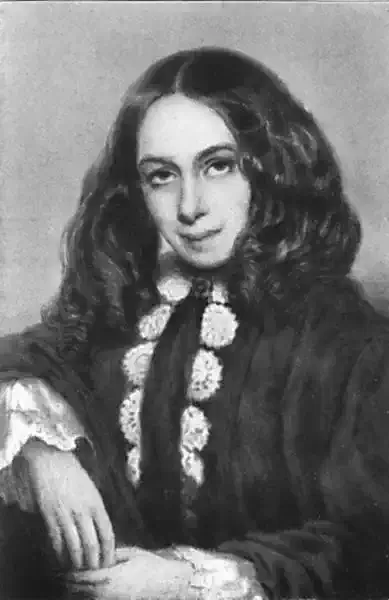
Elizabeth Barrett Browning
The Deserted Garden
The Deserted Garden
I mind me in the days departed,
How often underneath the sun
With childish bounds I used to run
To a garden long deserted.
The beds and walks were vanished quite;
And wheresoe'er had struck the spade,
The greenest grasses Nature laid
To sanctify her right.
I called the place my wilderness,
For no one entered there but I;
The sheep looked in, the grass to espy,
And passed it ne'ertheless.
The trees were interwoven wild,
And spread their boughs enough about
To keep both sheep and shepherd out,
But not a happy child.
Adventurous joy it was for me!
I crept beneath the boughs, and found
A circle smooth of mossy ground
Beneath a poplar tree.
Old garden rose-trees hedged it in,
Bedropt with roses waxen-white
Well satisfied with dew and light
And careless to be seen.
Long years ago it might befall,
When all the garden flowers were trim,
The grave old gardener prided him
On these the most of all.
Some lady, stately overmuch,
Here moving with a silken noise,
Has blushed beside them at the voice
That likened her to such.
And these, to make a diadem,
She often may have plucked and twined,
Half-smiling as it came to mind
That few would look at them.
Oh, little thought that lady proud,
A child would watch her fair white rose,
When buried lay her whiter brows,
And silk was changed for shroud!
Nor thought that gardener, (full of scorns
For men unlearned and simple phrase,)
A child would bring it all its praise
By creeping through the thorns!
To me upon my low moss seat,
Though never a dream the roses sent
Of science or love's compliment,
I ween they smelt as sweet.
It did not move my grief to see
The trace of human step departed:
Because the garden was deserted,
The blither place for me!
Friends, blame me not! a narrow ken
Has childhood 'twixt the sun and sward;
We draw the moral afterward,
We feel the gladness then.
And gladdest hours for me did glide
In silence at the rose-tree wall:
A thrush made gladness musical
Upon the other side.
Nor he nor I did e'er incline
To peck or pluck the blossoms white;
How should I know but roses might
Lead lives as glad as mine?
To make my hermit-home complete,
I brought dear water from the spring
Praised in its own low murmuring,
And cresses glossy wet.
And so, I thought, my likeness grew
(Without the melancholy tale)
To 'Gentle Hermit of the Dale,'
And Angelina too.
For oft I read within my nook
Such minstrel stories; till the breeze
Made sounds poetic in the trees,
And then I shut the book.
If I shut this wherein I write
I hear no more the wind athwart
Those trees, nor feel that childish heart
Delighting in delight.
My childhood from my life is parted,
My footstep from the moss which drew
Its fairy circle round: anew
The garden is deserted.
Another thrush may there rehearse
The madrigals which sweetest are;
No more for me! myself afar
Do sing a sadder verse.
Ah me, ah me! when erst I lay
In that child's-nest so greenly wrought,
I laughed unto myself and thought
'The time will pass away.'
And still I laughed, and did not fear
But that, whene'er was past away
The childish time, some happier play
My womanhood would cheer.
I knew the time would pass away,
And yet, beside the rose-tree wall,
Dear God, how seldom, if at all,
Did I look up to pray!
The time is past; and now that grows
The cypress high among the trees,
And I behold white sepulchres
As well as the white rose, --
When graver, meeker thoughts are given,
And I have learnt to lift my face,
Reminded how earth's greenest place
The color draws from heaven, --
It something saith for earthly pain,
But more for Heavenly promise free,
That I who was, would shrink to be
That happy child again.
I mind me in the days departed,
How often underneath the sun
With childish bounds I used to run
To a garden long deserted.
The beds and walks were vanished quite;
And wheresoe'er had struck the spade,
The greenest grasses Nature laid
To sanctify her right.
I called the place my wilderness,
For no one entered there but I;
The sheep looked in, the grass to espy,
And passed it ne'ertheless.
The trees were interwoven wild,
And spread their boughs enough about
To keep both sheep and shepherd out,
But not a happy child.
Adventurous joy it was for me!
I crept beneath the boughs, and found
A circle smooth of mossy ground
Beneath a poplar tree.
Old garden rose-trees hedged it in,
Bedropt with roses waxen-white
Well satisfied with dew and light
And careless to be seen.
Long years ago it might befall,
When all the garden flowers were trim,
The grave old gardener prided him
On these the most of all.
Some lady, stately overmuch,
Here moving with a silken noise,
Has blushed beside them at the voice
That likened her to such.
And these, to make a diadem,
She often may have plucked and twined,
Half-smiling as it came to mind
That few would look at them.
Oh, little thought that lady proud,
A child would watch her fair white rose,
When buried lay her whiter brows,
And silk was changed for shroud!
Nor thought that gardener, (full of scorns
For men unlearned and simple phrase,)
A child would bring it all its praise
By creeping through the thorns!
To me upon my low moss seat,
Though never a dream the roses sent
Of science or love's compliment,
I ween they smelt as sweet.
It did not move my grief to see
The trace of human step departed:
Because the garden was deserted,
The blither place for me!
Friends, blame me not! a narrow ken
Has childhood 'twixt the sun and sward;
We draw the moral afterward,
We feel the gladness then.
And gladdest hours for me did glide
In silence at the rose-tree wall:
A thrush made gladness musical
Upon the other side.
Nor he nor I did e'er incline
To peck or pluck the blossoms white;
How should I know but roses might
Lead lives as glad as mine?
To make my hermit-home complete,
I brought dear water from the spring
Praised in its own low murmuring,
And cresses glossy wet.
And so, I thought, my likeness grew
(Without the melancholy tale)
To 'Gentle Hermit of the Dale,'
And Angelina too.
For oft I read within my nook
Such minstrel stories; till the breeze
Made sounds poetic in the trees,
And then I shut the book.
If I shut this wherein I write
I hear no more the wind athwart
Those trees, nor feel that childish heart
Delighting in delight.
My childhood from my life is parted,
My footstep from the moss which drew
Its fairy circle round: anew
The garden is deserted.
Another thrush may there rehearse
The madrigals which sweetest are;
No more for me! myself afar
Do sing a sadder verse.
Ah me, ah me! when erst I lay
In that child's-nest so greenly wrought,
I laughed unto myself and thought
'The time will pass away.'
And still I laughed, and did not fear
But that, whene'er was past away
The childish time, some happier play
My womanhood would cheer.
I knew the time would pass away,
And yet, beside the rose-tree wall,
Dear God, how seldom, if at all,
Did I look up to pray!
The time is past; and now that grows
The cypress high among the trees,
And I behold white sepulchres
As well as the white rose, --
When graver, meeker thoughts are given,
And I have learnt to lift my face,
Reminded how earth's greenest place
The color draws from heaven, --
It something saith for earthly pain,
But more for Heavenly promise free,
That I who was, would shrink to be
That happy child again.
422

Dylan Thomas
Poem In October
Poem In October
It was my thirtieth year to heaven
Woke to my hearing from harbour and neighbour wood
And the mussel pooled and the heron
Priested shore
The morning beckon
With water praying and call of seagull and rook
And the knock of sailing boats on the net webbed wall
Myself to set foot
That second
In the still sleeping town and set forth.
My birthday began with the water-
Birds and the birds of the winged trees flying my name
Above the farms and the white horses
And I rose
In rainy autumn
And walked abroad in a shower of all my days.
High tide and the heron dived when I took the road
Over the border
And the gates
Of the town closed as the town awoke.
A springful of larks in a rolling
Cloud and the roadside bushes brimming with whistling
Blackbirds and the sun of October
Summery
On the hill's shoulder,
Here were fond climates and sweet singers suddenly
Come in the morning where I wandered and listened
To the rain wringing
Wind blow cold
In the wood faraway under me.
Pale rain over the dwindling harbour
And over the sea wet church the size of a snail
With its horns through mist and the castle
Brown as owls
But all the gardens
Of spring and summer were blooming in the tall tales
Beyond the border and under the lark full cloud.
There could I marvel
My birthday
Away but the weather turned around.
It turned away from the blithe country
And down the other air and the blue altered sky
Streamed again a wonder of summer
With apples
Pears and red currants
And I saw in the turning so clearly a child's
Forgotten mornings when he walked with his mother
Through the parables
Of sun light
And the legends of the green chapels
And the twice told fields of infancy
That his tears burned my cheeks and his heart moved in mine.
These were the woods the river and sea
Where a boy
In the listening
Summertime of the dead whispered the truth of his joy
To the trees and the stones and the fish in the tide.
And the mystery
Sang alive
Still in the water and singingbirds.
And there could I marvel my birthday
Away but the weather turned around. And the true
Joy of the long dead child sang burning
In the sun.
It was my thirtieth
Year to heaven stood there then in the summer noon
Though the town below lay leaved with October blood.
O may my heart's truth
Still be sung
On this high hill in a year's turning.
It was my thirtieth year to heaven
Woke to my hearing from harbour and neighbour wood
And the mussel pooled and the heron
Priested shore
The morning beckon
With water praying and call of seagull and rook
And the knock of sailing boats on the net webbed wall
Myself to set foot
That second
In the still sleeping town and set forth.
My birthday began with the water-
Birds and the birds of the winged trees flying my name
Above the farms and the white horses
And I rose
In rainy autumn
And walked abroad in a shower of all my days.
High tide and the heron dived when I took the road
Over the border
And the gates
Of the town closed as the town awoke.
A springful of larks in a rolling
Cloud and the roadside bushes brimming with whistling
Blackbirds and the sun of October
Summery
On the hill's shoulder,
Here were fond climates and sweet singers suddenly
Come in the morning where I wandered and listened
To the rain wringing
Wind blow cold
In the wood faraway under me.
Pale rain over the dwindling harbour
And over the sea wet church the size of a snail
With its horns through mist and the castle
Brown as owls
But all the gardens
Of spring and summer were blooming in the tall tales
Beyond the border and under the lark full cloud.
There could I marvel
My birthday
Away but the weather turned around.
It turned away from the blithe country
And down the other air and the blue altered sky
Streamed again a wonder of summer
With apples
Pears and red currants
And I saw in the turning so clearly a child's
Forgotten mornings when he walked with his mother
Through the parables
Of sun light
And the legends of the green chapels
And the twice told fields of infancy
That his tears burned my cheeks and his heart moved in mine.
These were the woods the river and sea
Where a boy
In the listening
Summertime of the dead whispered the truth of his joy
To the trees and the stones and the fish in the tide.
And the mystery
Sang alive
Still in the water and singingbirds.
And there could I marvel my birthday
Away but the weather turned around. And the true
Joy of the long dead child sang burning
In the sun.
It was my thirtieth
Year to heaven stood there then in the summer noon
Though the town below lay leaved with October blood.
O may my heart's truth
Still be sung
On this high hill in a year's turning.
346
Dylan Thomas
Ghosts whooed like owls in the long nights when I dared not look over my shoulder;
Ghosts whooed like owls in the long nights when I dared not look over my shoulder;
animals lurked in the cubbyhole under the stairs and the gas meter ticked. And I
remember that we went singing carols once, when there wasn't the shaving of a moon
to light the flying streets. At the end of a long road was a drive that led to a large
house, and we stumbled up the darkness of the drive that night, each one of us afraid,
each one holding a stone in his hand in case, and all of us too brave to say a word. The
wind through the trees made noises as of old and unpleasant and maybe webfooted
men wheezing in caves. We reached the black bulk of the house. "What shall we give
them? Hark the Herald?"
"No," Jack said, "Good King Wencelas. I'll count three." One, two three, and we began
to sing, our voices high and seemingly distant in the snow-felted darkness round the
house that was occupied by nobody we knew. We stood close together, near the dark
door. Good King Wencelas looked out On the Feast of Stephen ... And then a small, dry
voice, like the voice of someone who has not spoken for a long time, joined our
singing: a small, dry, eggshell voice from the other side of the door: a small dry voice
through the keyhole. And when we stopped running we were outside our house; the
front room was lovely; balloons floated under the hot-water-bottle-gulping gas;
everything was good again and shone over the town.
"Perhaps it was a ghost," Jim said.
"Perhaps it was trolls," Dan said, who was always reading.
"Let's go in and see if there's any jelly left," Jack said. And we did that.
Always on Christmas night there was music. An uncle played the fiddle, a cousin sang
"Cherry Ripe," and another uncle sang "Drake's Drum." It was very warm in the little
house. Auntie Hannah, who had got on to the parsnip wine, sang a song about
Bleeding Hearts and Death, and then another in which she said her heart was like a
Bird's Nest; and then everybody laughed again; and then I went to bed. Looking
through my bedroom window, out into the moonlight and the unending smoke-colored
snow, I could see the lights in the windows of all the other houses on our hill and hear
the music rising from them up the long, steady falling night. I turned the gas down, I
got into bed. I said some words to the close and holy darkness, and then I slept.
animals lurked in the cubbyhole under the stairs and the gas meter ticked. And I
remember that we went singing carols once, when there wasn't the shaving of a moon
to light the flying streets. At the end of a long road was a drive that led to a large
house, and we stumbled up the darkness of the drive that night, each one of us afraid,
each one holding a stone in his hand in case, and all of us too brave to say a word. The
wind through the trees made noises as of old and unpleasant and maybe webfooted
men wheezing in caves. We reached the black bulk of the house. "What shall we give
them? Hark the Herald?"
"No," Jack said, "Good King Wencelas. I'll count three." One, two three, and we began
to sing, our voices high and seemingly distant in the snow-felted darkness round the
house that was occupied by nobody we knew. We stood close together, near the dark
door. Good King Wencelas looked out On the Feast of Stephen ... And then a small, dry
voice, like the voice of someone who has not spoken for a long time, joined our
singing: a small, dry, eggshell voice from the other side of the door: a small dry voice
through the keyhole. And when we stopped running we were outside our house; the
front room was lovely; balloons floated under the hot-water-bottle-gulping gas;
everything was good again and shone over the town.
"Perhaps it was a ghost," Jim said.
"Perhaps it was trolls," Dan said, who was always reading.
"Let's go in and see if there's any jelly left," Jack said. And we did that.
Always on Christmas night there was music. An uncle played the fiddle, a cousin sang
"Cherry Ripe," and another uncle sang "Drake's Drum." It was very warm in the little
house. Auntie Hannah, who had got on to the parsnip wine, sang a song about
Bleeding Hearts and Death, and then another in which she said her heart was like a
Bird's Nest; and then everybody laughed again; and then I went to bed. Looking
through my bedroom window, out into the moonlight and the unending smoke-colored
snow, I could see the lights in the windows of all the other houses on our hill and hear
the music rising from them up the long, steady falling night. I turned the gas down, I
got into bed. I said some words to the close and holy darkness, and then I slept.
341

D.H. Lawrence
Baby Tortoise
Baby Tortoise
You know what it is to be born alone,
Baby tortoise!
The first day to heave your feet little by little from the shell,
Not yet awake,
And remain lapsed on earth,
Not quite alive.
A tiny, fragile, half-animate bean.
To open your tiny beak-mouth, that looks as if it would never open,
Like some iron door;
To lift the upper hawk-beak from the lower base
And reach your skinny little neck
And take your first bite at some dim bit of herbage,
Alone, small insect,
Tiny bright-eye,
Slow one.
To take your first solitary bite
And move on your slow, solitary hunt.
Your bright, dark little eye,
Your eye of a dark disturbed night,
Under its slow lid, tiny baby tortoise,
So indomitable.
No one ever heard you complain.
You draw your head forward, slowly, from your little wimple
And set forward, slow-dragging, on your four-pinned toes, Rowing slowly forward.
Whither away, small bird?
Rather like a baby working its limbs,
Except that you make slow, ageless progress
And a baby makes none.
The touch of sun excites you,
And the long ages, and the lingering chill
Make you pause to yawn,
Opening your impervious mouth,
Suddenly beak-shaped, and very wide, like some suddenly gaping pincers;
Soft red tongue, and hard thin gums,
Then close the wedge of your little mountain front,
Your face, baby tortoise.
Do you wonder at the world, as slowly you turn your head in its wimple
And look with laconic, black eyes?
Or is sleep coming over you again,
The non-life?
You are so hard to wake.
Are you able to wonder?
Or is it just your indomitable will and pride of the first life
Looking round
And slowly pitching itself against the inertia
Which had seemed invincible?
The vast inanimate,
And the fine brilliance of your so tiny eye,
Challenger.
Nay, tiny shell-bird,
What a huge vast inanimate it is, that you must row against,
What an incalculable inertia.
Challenger,
Little Ulysses, fore-runner,
No bigger than my thumb-nail,
Buon viaggio.
All animate creation on your shoulder,
Set forth, little Titan, under your battle-shield.
The ponderous, preponderate,
Inanimate universe;
And you are slowly moving, pioneer, you alone.
How vivid your travelling seems now, in the troubled sunshine,
Stoic, Ulyssean atom;
Suddenly hasty, reckless, on high toes.
Voiceless little bird,
Resting your head half out of your wimple
In the slow dignity of your eternal pause.
Alone, with no sense of being alone,
And hence six times more solitary;
Fulfilled of the slow passion of pitching through immemorial ages
Your little round house in the midst of chaos.
Over the garden earth,
Small bird,
Over the edge of all things.
Traveller,
With your tail tucked a little on one side
Like a gentleman in a long-skirted coat.
All life carried on your shoulder,
Invincible fore-runner.
You know what it is to be born alone,
Baby tortoise!
The first day to heave your feet little by little from the shell,
Not yet awake,
And remain lapsed on earth,
Not quite alive.
A tiny, fragile, half-animate bean.
To open your tiny beak-mouth, that looks as if it would never open,
Like some iron door;
To lift the upper hawk-beak from the lower base
And reach your skinny little neck
And take your first bite at some dim bit of herbage,
Alone, small insect,
Tiny bright-eye,
Slow one.
To take your first solitary bite
And move on your slow, solitary hunt.
Your bright, dark little eye,
Your eye of a dark disturbed night,
Under its slow lid, tiny baby tortoise,
So indomitable.
No one ever heard you complain.
You draw your head forward, slowly, from your little wimple
And set forward, slow-dragging, on your four-pinned toes, Rowing slowly forward.
Whither away, small bird?
Rather like a baby working its limbs,
Except that you make slow, ageless progress
And a baby makes none.
The touch of sun excites you,
And the long ages, and the lingering chill
Make you pause to yawn,
Opening your impervious mouth,
Suddenly beak-shaped, and very wide, like some suddenly gaping pincers;
Soft red tongue, and hard thin gums,
Then close the wedge of your little mountain front,
Your face, baby tortoise.
Do you wonder at the world, as slowly you turn your head in its wimple
And look with laconic, black eyes?
Or is sleep coming over you again,
The non-life?
You are so hard to wake.
Are you able to wonder?
Or is it just your indomitable will and pride of the first life
Looking round
And slowly pitching itself against the inertia
Which had seemed invincible?
The vast inanimate,
And the fine brilliance of your so tiny eye,
Challenger.
Nay, tiny shell-bird,
What a huge vast inanimate it is, that you must row against,
What an incalculable inertia.
Challenger,
Little Ulysses, fore-runner,
No bigger than my thumb-nail,
Buon viaggio.
All animate creation on your shoulder,
Set forth, little Titan, under your battle-shield.
The ponderous, preponderate,
Inanimate universe;
And you are slowly moving, pioneer, you alone.
How vivid your travelling seems now, in the troubled sunshine,
Stoic, Ulyssean atom;
Suddenly hasty, reckless, on high toes.
Voiceless little bird,
Resting your head half out of your wimple
In the slow dignity of your eternal pause.
Alone, with no sense of being alone,
And hence six times more solitary;
Fulfilled of the slow passion of pitching through immemorial ages
Your little round house in the midst of chaos.
Over the garden earth,
Small bird,
Over the edge of all things.
Traveller,
With your tail tucked a little on one side
Like a gentleman in a long-skirted coat.
All life carried on your shoulder,
Invincible fore-runner.
226

Claude Mckay
Flame-Heart
Flame-Heart
So much have I forgotten in ten years,
So much in ten brief years! I have forgot
What time the purple apples come to juice,
And what month brings the shy forget-me-not.
I have forgot the special, startling season
Of the pimento's flowering and fruiting;
What time of year the ground doves brown the fields
And fill the noonday with their curious fluting.
I have forgotten much, but still remember
The poinsettia's red, blood-red in warm December.
I still recall the honey-fever grass,
But cannot recollect the high days when
We rooted them out of the ping-wing path
To stop the mad bees in the rabbit pen.
I often try to think in what sweet month
The languid painted ladies used to dapple
The yellow by-road mazing from the main,
Sweet with the golden threads of the rose-apple.
I have forgotten--strange--but quite remember
The poinsettia's red, blood-red in warm December.
What weeks, what months, what time of the mild year
We cheated school to have our fling at tops?
What days our wine-thrilled bodies pulsed with joy
Feasting upon blackberries in the copse?
Oh some I know! I have embalmed the days,
Even the sacred moments when we played,
All innocent of passion, uncorrupt,
At noon and evening in the flame-heart's shade.
We were so happy, happy, I remember,
Beneath the poinsettia's red in warm December.
So much have I forgotten in ten years,
So much in ten brief years! I have forgot
What time the purple apples come to juice,
And what month brings the shy forget-me-not.
I have forgot the special, startling season
Of the pimento's flowering and fruiting;
What time of year the ground doves brown the fields
And fill the noonday with their curious fluting.
I have forgotten much, but still remember
The poinsettia's red, blood-red in warm December.
I still recall the honey-fever grass,
But cannot recollect the high days when
We rooted them out of the ping-wing path
To stop the mad bees in the rabbit pen.
I often try to think in what sweet month
The languid painted ladies used to dapple
The yellow by-road mazing from the main,
Sweet with the golden threads of the rose-apple.
I have forgotten--strange--but quite remember
The poinsettia's red, blood-red in warm December.
What weeks, what months, what time of the mild year
We cheated school to have our fling at tops?
What days our wine-thrilled bodies pulsed with joy
Feasting upon blackberries in the copse?
Oh some I know! I have embalmed the days,
Even the sacred moments when we played,
All innocent of passion, uncorrupt,
At noon and evening in the flame-heart's shade.
We were so happy, happy, I remember,
Beneath the poinsettia's red in warm December.
403

Christina Rossetti
Under The Rose
Under The Rose
'The iniquity of the fathers upon the children.'
Oh the rose of keenest thorn!
One hidden summer morn
Under the rose I was born.
I do not guess his name
Who wrought my Mother's shame,
And gave me life forlorn,
But my Mother, Mother, Mother,
I know her from all other.
My Mother pale and mild,
Fair as ever was seen,
She was but scarce sixteen,
Little more than a child,
When I was born
To work her scorn.
With secret bitter throes,
In a passion of secret woes,
She bore me under the rose.
One who my Mother nursed
Took me from the first:—
'O nurse, let me look upon
This babe that costs so dear;
To-morrow she will be gone:
Other mothers may keep
Their babes awake and asleep,
But I must not keep her here.'—
Whether I know or guess,
I know this not the less.
So I was sent away
That none might spy the truth:
And my childhood waxed to youth
And I left off childish play.
I never cared to play
With the village boys and girls;
And I think they thought me proud,
I found so little to say
And kept so from the crowd:
But I had the longest curls
And I had the largest eyes
And my teeth were small like pearls;
The girls might flout and scout me,
But the boys would hang about me
In sheepish mooning wise.
Our one-street village stood
A long mile from the town,
A mile of windy down
And bleak one-sided wood,
With not a single house.
Our town itself was small,
With just the common shops,
And throve in its small way.
Our neighbouring gentry reared
The good old-fashioned crops,
And made old-fashioned boasts
Of what John Bull would do
If Frenchman Frog appeared,
And drank old-fashioned toasts,
And made old-fashioned bows
To my Lady at the Hall.
My Lady at the Hall
Is grander than they all:
Hers is the oldest name
In all the neighbourhood;
But the race must die with her
Though she's a lofty dame,
For she's unmarried still.
Poor people say she's good
And has an open hand
As any in the land,
And she's the comforter
Of many sick and sad;
My nurse once said to me
That everything she had
Came of my Lady's bounty:
'Though she's greatest in the county
She's humble to the poor,
No beggar seeks her door
But finds help presently.
I pray both night and day
For her, and you must pray:
But she'll never feel distress
If needy folk can bless.'
I was a little maid
When here we came to live
From somewhere by the sea.
Men spoke a foreign tongue
There where we used to be
When I was merry and young,
Too young to feel afraid;
The fisher folk would give
A kind strange word to me,
There by the foreign sea:
I don't know where it was,
But I remember still
Our cottage on a hill,
And fields of flowering grass
On that fair foreign shore.
I liked my old home best,
But this was pleasant too:
So here we made our nest
And here I grew.
And now and then my Lady
In riding past our door
Would nod to Nurse and speak,
Or stoop and pat my cheek;
And I was always ready
To hold the field-gate wide
For my Lady to go through;
My Lady in her veil
So seldom put aside,
My Lady grave and pale.
I often sat to wonder
Who might my parents be,
For I knew of something under
My simple-seeming state.
Nurse never talked to me
Of mother or of father,
But watched me early and late
With kind suspicious cares:
Or not suspicious, rather
Anxious, as if she knew
Some secret I might gather
And smart for unawares.
Thus I grew.
But Nurse waxed old and grey,
Bent and weak with years.
There came a certain day
That she lay upon her bed
Shaking her palsied head,
With words she gasped to say
Which had to stay unsaid.
Then with a jerking hand
Held out so piteously
She gave a ring to me
Of gold wrought curiously,
A ring which she had worn
Since the day I was born,
She once had said to me:
I slipped it on my finger;
Her eyes were keen to linger
On my hand that slipped it on;
Then she sighed one rattling sigh
And stared on with sightless eye:—
The one who loved me was gone.
How long I stayed alone
With the corpse I never knew,
For I fainted dead as stone:
When I came to life once more
I was down upon the floor,
With neighbours making ado
To bring me back to life.
I heard the sexton's wife
Say: 'Up, my lad, and run
To tell it at the Hall;
She was my Lady's nurse,
And done can't be undone.
I'll watch by this poor lamb.
I guess my Lady's purse
Is always open to such:
I'd run up on my crutch
A cripple as I am,'
(For cramps had vexed her much)
'Rather than this dear heart
Lack one to take her part.'
For days day after day
On my weary bed I lay
Wishing the time would pass;
Oh, so wishing that I was
Likely to pass away:
For the one friend whom I knew
Was dead, I knew no other,
Neither father nor mother;
And I, what should I do?
One day the sexton's wife
Said: 'Rouse yourself, my dear:
My Lady has driven down
From the Hall into the town,
And we think she's coming here.
Cheer up, for life is life.'
But I would not look or speak,
Would not cheer up at all.
My tears were like to fall,
So I turned round to the wall
And hid my hollow cheek
Making as if I slept,
As silent as a stone,
And no one knew I wept.
What was my Lady to me,
The grand lady from the Hall?
She might come, or stay away,
I was sick at heart that day:
The whole world seemed to be
Nothing, just nothing to me,
For aught that I could see.
Yet I listened where I lay:
A bustle came below,
A clear voice said: 'I know;
I will see her first alone,
It may be less of a shock
If she's so weak to-day:'—
A light hand turned the lock,
A light step crossed the floor,
One sat beside my bed:
But never a word she said.
For me, my shyness grew
Each moment more and more:
So I said never a word
And neither looked nor stirred;
I think she must have heard
My heart go pit-a-pat:
Thus I lay, my Lady sat,
More than a mortal hour—
(I counted one and two
By the house-clock while I lay):
I seemed to have no power
To think of a thing to say,
Or do what I ought to do,
Or rouse myself to a choice.
At last she said: 'Margaret,
Won't you even look at me?'
A something in her voice
Forced my tears to fall at last,
Forced sobs from me thick and fast;
Something not of the past,
Yet stirring memory;
A something new, and yet
Not new, too sweet to last,
Which I never can forget.
I turned and stared at her:
Her cheek showed hollow-pale;
Her hair like mine was fair,
A wonderful fall of hair
That screened her like a veil;
But her height was statelier,
Her eyes had depth more deep;
I think they must have had
Always a something sad,
Unless they were asleep.
While I stared, my Lady took
My hand in her spare hand
Jewelled and soft and grand,
And looked with a long long look
Of hunger in my face;
As if she tried to trace
Features she ought to know,
And half hoped, half feared, to find.
Whatever was in her mind
She heaved a sigh at last,
And began to talk to me.
'Your nurse was my dear nurse,
And her nursling's dear,' said she:
'I never knew that she was worse
Till her poor life was past'
(Here my Lady's tears dropped fast):
'I might have been with her,
But she had no comforter.
She might have told me much
Which now I shall never know,
Never never shall know.'
She sat by me sobbing so,
And seemed so woe-begone,
That I laid one hand upon
Hers with a timid touch,
Scarce thinking what I did,
Not knowing what to say:
That moment her face was hid
In the pillow close by mine,
Her arm was flung over me,
She hugged me, sobbing so
As if her heart would break,
And kissed me where I lay.
After this she often came
To bring me fruit or wine,
Or sometimes hothouse flowers.
And at nights I lay awake
Often and often thinking
What to do for her sake.
Wet or dry it was the same:
She would come in at all hours,
Set me eating and drinking
And say I must grow strong;
At last the day seemed long
And home seemed scarcely home
If she did not come.
Well, I grew strong again:
In time of primroses,
I went to pluck them in the lane;
In time of nestling birds,
I heard them chirping round the house;
And all the herds
Were out at grass when I grew strong,
And days were waxen long,
And there was work for bees
Among the May-bush boughs,
And I had shot up tall,
And life felt after all
Pleasant, and not so long
When I grew strong.
I was going to the Hall
To be my Lady's maid:
'Her little friend,' she said to me,
'Almost her child,'
She said and smiled
Sighing painfully;
Blushing, with a second flush
As if she blushed to blush.
Friend, servant, child: just this
My standing at the Hall;
The other servants call me 'Miss,'
My Lady calls me 'Margaret,'
With her clear voice musical.
She never chides when I forget
This or that; she never chides.
Except when people come to stay,
(And that's not often) at the Hall,
I sit with her all day
And ride out when she rides.
She sings to me and makes me sing;
Sometimes I read to her,
Sometimes we merely sit and talk.
She noticed once my ring
And made me tell its history:
That evening in our garden walk
She said she should infer
The ring had been my father's first,
Then my mother's, given for me
To the nurse who nursed
My mother in her misery,
That so quite certainly
Some one might know me, who…
Then she was silent, and I too.
I hate when people come:
The women speak and stare
And mean to be so civil.
This one will stroke my hair,
That one will pat my cheek
And praise my Lady's kindness,
Expecting me to speak;
I like the proud ones best
Who sit as struck with blindness,
As if I wasn't there.
But if any gentleman
Is staying at the Hall
(Though few come prying here),
My Lady seems to fear
Some downright dreadful evil,
And makes me keep my room
As closely as she can:
So I hate when people come,
It is so troublesome.
In spite of all her care,
Sometimes to keep alive
I sometimes do contrive
To get out in the grounds
For a whiff of wholesome air,
Under the rose you know:
It's charming to break bounds,
Stolen waters are sweet,
And what's the good of feet
If for days they mustn't go?
Give me a longer tether,
Or I may break from it.
Now I have eyes and ears
And just some little wit:
'Almost my Lady's child;'
I recollect she smiled,
Sighed and blushed together;
Then her story of the ring
Sounds not improbable,
She told it me so well
It seemed the actual thing:—
Oh, keep your counsel close,
But I guess under the rose,
In long past summer weather
When the world was blossoming,
And the rose upon its thorn:
I guess not who he was
Flawed honour like a glass,
And made my life forlorn,
But my Mother, Mother, Mother,
Oh, I know her from all other.
My Lady, you might trust
Your daughter with your fame.
Trust me, I would not shame
Our honourable name,
For I have noble blood
Though I was bred in dust
And brought up in the mud.
I will not press my claim,
Just leave me where you will:
But you might trust your daughter,
For blood is thicker than water
And you're my mother still.
So my Lady holds her own
With condescending grace,
and fills her lofty place
With an untroubled face
As a queen may fill a throne.
While I could hint a tale—
(But then I am her child)—
Would make her quail;
Would set her in the dust,
Lorn with no comforter,
Her glorious hair defiled
And ashes on her cheek:
The decent world would thrust
Its finger out at her,
Not much displeased I think
To make a nine days' stir;
The decent world would sink
Its voice to speak of her.
Now this is what I mean
To do, no more, no less:
Never to speak, or show
Bare sign of what I know.
Let the blot pass unseen;
Yea, let her never guess
I hold the tangled clue
She huddles out of view.
Friend, servant, almost child,
So be it and nothing more
On this side of the grave.
Mother, in Paradise,
You'll see with clearer eyes;
Perhaps in this world even
When you are like to die
And face to face with Heaven
You'll drop for once the lie:
But you must drop the mask, not I.
My Lady promises
Two hundred pounds with me
Whenever I may wed
A man she can approve:
And since besides her bounty
I'm fairest in the county
(For so I've heard it said,
Though I don't vouch for this),
Her promised pounds may move
Some honest man to see
My virtues and my beauties;
Perhaps the rising grazier,
Or temperance publican,
May claim my wifely duties.
Meanwhile I wait their leisure
And grace-bestowing pleasure,
I wait the happy man;
But if I hold my head
And pitch my expectations
Just higher than their level,
They must fall back on patience:
I may not mean to wed,
Yet I'll be civil.
Now sometimes in a dream
My heart goes out of me
To build and scheme,
Till I sob after things that seem
So pleasant in a dream:
A home such as I see
My blessed neighbours live in
With father and with mother,
All proud of one another,
Named by one common name
From baby in the bud
To full-blown workman father;
It's little short of Heaven.
I'd give my gentle blood
To wash my special shame
And drown my private grudge;
I'd toil and moil much rather
The dingiest cottage drudge
Whose mother need not blush,
Than live here like a lady
And see my Mother flush
And hear her voice unsteady
Sometimes, yet never dare
Ask to share her care.
Of course the servants sneer
Behind my back at me;
Of course the village girls,
Who envy me my curls
And gowns and idleness,
Take comfort in a jeer;
Of course the ladies guess
Just so much of my history
As points the emphatic stress
With which they laud my Lady;
The gentlemen who catch
A casual glimpse of me
And turn again to see,
Their valets on the watch
To speak a word with me,
All know and sting me wild;
Till I am almost ready
To wish that I were dead,
No faces more to see,
No more words to be said,
My Mother safe at last
Disburdened of her child,
And the past past.
'All equal before God'—
Our Rector has it so,
And sundry sleepers nod:
It may be so; I know
All are not equal here,
And when the sleepers wake
They make a difference.
'All equal in the grave'—
That shows an obvious sense:
Yet something which I crave
Not death itself brings near;
Now should death half atone
For all my past; or make
The name I bear my own?
I love my dear old Nurse
Who loved me without gains;
I love my mistress even,
Friend, Mother, what you will:
But I could almost curse
My Father for his pains;
And sometimes at my prayer
Kneeling in sight of Heaven
I almost curse him still:
Why did he set his snare
To catch at unaware
My Mother's foolish youth;
Load me with shame that's hers,
And her with something worse,
A lifelong lie for truth?
I think my mind is fixed
On one point and made up:
To accept my lot unmixed;
Never to drug the cup
But drink it by myself.
I'll not be wooed for pelf;
I'll not blot out my shame
With any man's good name;
But nameless as I stand,
My hand is my own hand,
And nameless as I came
I go to the dark land.
'All equal in the grave'—
I bide my time till then:
'All equal before God'—
To-day I feel His rod,
To-morrow He may save:
Amen.
'The iniquity of the fathers upon the children.'
Oh the rose of keenest thorn!
One hidden summer morn
Under the rose I was born.
I do not guess his name
Who wrought my Mother's shame,
And gave me life forlorn,
But my Mother, Mother, Mother,
I know her from all other.
My Mother pale and mild,
Fair as ever was seen,
She was but scarce sixteen,
Little more than a child,
When I was born
To work her scorn.
With secret bitter throes,
In a passion of secret woes,
She bore me under the rose.
One who my Mother nursed
Took me from the first:—
'O nurse, let me look upon
This babe that costs so dear;
To-morrow she will be gone:
Other mothers may keep
Their babes awake and asleep,
But I must not keep her here.'—
Whether I know or guess,
I know this not the less.
So I was sent away
That none might spy the truth:
And my childhood waxed to youth
And I left off childish play.
I never cared to play
With the village boys and girls;
And I think they thought me proud,
I found so little to say
And kept so from the crowd:
But I had the longest curls
And I had the largest eyes
And my teeth were small like pearls;
The girls might flout and scout me,
But the boys would hang about me
In sheepish mooning wise.
Our one-street village stood
A long mile from the town,
A mile of windy down
And bleak one-sided wood,
With not a single house.
Our town itself was small,
With just the common shops,
And throve in its small way.
Our neighbouring gentry reared
The good old-fashioned crops,
And made old-fashioned boasts
Of what John Bull would do
If Frenchman Frog appeared,
And drank old-fashioned toasts,
And made old-fashioned bows
To my Lady at the Hall.
My Lady at the Hall
Is grander than they all:
Hers is the oldest name
In all the neighbourhood;
But the race must die with her
Though she's a lofty dame,
For she's unmarried still.
Poor people say she's good
And has an open hand
As any in the land,
And she's the comforter
Of many sick and sad;
My nurse once said to me
That everything she had
Came of my Lady's bounty:
'Though she's greatest in the county
She's humble to the poor,
No beggar seeks her door
But finds help presently.
I pray both night and day
For her, and you must pray:
But she'll never feel distress
If needy folk can bless.'
I was a little maid
When here we came to live
From somewhere by the sea.
Men spoke a foreign tongue
There where we used to be
When I was merry and young,
Too young to feel afraid;
The fisher folk would give
A kind strange word to me,
There by the foreign sea:
I don't know where it was,
But I remember still
Our cottage on a hill,
And fields of flowering grass
On that fair foreign shore.
I liked my old home best,
But this was pleasant too:
So here we made our nest
And here I grew.
And now and then my Lady
In riding past our door
Would nod to Nurse and speak,
Or stoop and pat my cheek;
And I was always ready
To hold the field-gate wide
For my Lady to go through;
My Lady in her veil
So seldom put aside,
My Lady grave and pale.
I often sat to wonder
Who might my parents be,
For I knew of something under
My simple-seeming state.
Nurse never talked to me
Of mother or of father,
But watched me early and late
With kind suspicious cares:
Or not suspicious, rather
Anxious, as if she knew
Some secret I might gather
And smart for unawares.
Thus I grew.
But Nurse waxed old and grey,
Bent and weak with years.
There came a certain day
That she lay upon her bed
Shaking her palsied head,
With words she gasped to say
Which had to stay unsaid.
Then with a jerking hand
Held out so piteously
She gave a ring to me
Of gold wrought curiously,
A ring which she had worn
Since the day I was born,
She once had said to me:
I slipped it on my finger;
Her eyes were keen to linger
On my hand that slipped it on;
Then she sighed one rattling sigh
And stared on with sightless eye:—
The one who loved me was gone.
How long I stayed alone
With the corpse I never knew,
For I fainted dead as stone:
When I came to life once more
I was down upon the floor,
With neighbours making ado
To bring me back to life.
I heard the sexton's wife
Say: 'Up, my lad, and run
To tell it at the Hall;
She was my Lady's nurse,
And done can't be undone.
I'll watch by this poor lamb.
I guess my Lady's purse
Is always open to such:
I'd run up on my crutch
A cripple as I am,'
(For cramps had vexed her much)
'Rather than this dear heart
Lack one to take her part.'
For days day after day
On my weary bed I lay
Wishing the time would pass;
Oh, so wishing that I was
Likely to pass away:
For the one friend whom I knew
Was dead, I knew no other,
Neither father nor mother;
And I, what should I do?
One day the sexton's wife
Said: 'Rouse yourself, my dear:
My Lady has driven down
From the Hall into the town,
And we think she's coming here.
Cheer up, for life is life.'
But I would not look or speak,
Would not cheer up at all.
My tears were like to fall,
So I turned round to the wall
And hid my hollow cheek
Making as if I slept,
As silent as a stone,
And no one knew I wept.
What was my Lady to me,
The grand lady from the Hall?
She might come, or stay away,
I was sick at heart that day:
The whole world seemed to be
Nothing, just nothing to me,
For aught that I could see.
Yet I listened where I lay:
A bustle came below,
A clear voice said: 'I know;
I will see her first alone,
It may be less of a shock
If she's so weak to-day:'—
A light hand turned the lock,
A light step crossed the floor,
One sat beside my bed:
But never a word she said.
For me, my shyness grew
Each moment more and more:
So I said never a word
And neither looked nor stirred;
I think she must have heard
My heart go pit-a-pat:
Thus I lay, my Lady sat,
More than a mortal hour—
(I counted one and two
By the house-clock while I lay):
I seemed to have no power
To think of a thing to say,
Or do what I ought to do,
Or rouse myself to a choice.
At last she said: 'Margaret,
Won't you even look at me?'
A something in her voice
Forced my tears to fall at last,
Forced sobs from me thick and fast;
Something not of the past,
Yet stirring memory;
A something new, and yet
Not new, too sweet to last,
Which I never can forget.
I turned and stared at her:
Her cheek showed hollow-pale;
Her hair like mine was fair,
A wonderful fall of hair
That screened her like a veil;
But her height was statelier,
Her eyes had depth more deep;
I think they must have had
Always a something sad,
Unless they were asleep.
While I stared, my Lady took
My hand in her spare hand
Jewelled and soft and grand,
And looked with a long long look
Of hunger in my face;
As if she tried to trace
Features she ought to know,
And half hoped, half feared, to find.
Whatever was in her mind
She heaved a sigh at last,
And began to talk to me.
'Your nurse was my dear nurse,
And her nursling's dear,' said she:
'I never knew that she was worse
Till her poor life was past'
(Here my Lady's tears dropped fast):
'I might have been with her,
But she had no comforter.
She might have told me much
Which now I shall never know,
Never never shall know.'
She sat by me sobbing so,
And seemed so woe-begone,
That I laid one hand upon
Hers with a timid touch,
Scarce thinking what I did,
Not knowing what to say:
That moment her face was hid
In the pillow close by mine,
Her arm was flung over me,
She hugged me, sobbing so
As if her heart would break,
And kissed me where I lay.
After this she often came
To bring me fruit or wine,
Or sometimes hothouse flowers.
And at nights I lay awake
Often and often thinking
What to do for her sake.
Wet or dry it was the same:
She would come in at all hours,
Set me eating and drinking
And say I must grow strong;
At last the day seemed long
And home seemed scarcely home
If she did not come.
Well, I grew strong again:
In time of primroses,
I went to pluck them in the lane;
In time of nestling birds,
I heard them chirping round the house;
And all the herds
Were out at grass when I grew strong,
And days were waxen long,
And there was work for bees
Among the May-bush boughs,
And I had shot up tall,
And life felt after all
Pleasant, and not so long
When I grew strong.
I was going to the Hall
To be my Lady's maid:
'Her little friend,' she said to me,
'Almost her child,'
She said and smiled
Sighing painfully;
Blushing, with a second flush
As if she blushed to blush.
Friend, servant, child: just this
My standing at the Hall;
The other servants call me 'Miss,'
My Lady calls me 'Margaret,'
With her clear voice musical.
She never chides when I forget
This or that; she never chides.
Except when people come to stay,
(And that's not often) at the Hall,
I sit with her all day
And ride out when she rides.
She sings to me and makes me sing;
Sometimes I read to her,
Sometimes we merely sit and talk.
She noticed once my ring
And made me tell its history:
That evening in our garden walk
She said she should infer
The ring had been my father's first,
Then my mother's, given for me
To the nurse who nursed
My mother in her misery,
That so quite certainly
Some one might know me, who…
Then she was silent, and I too.
I hate when people come:
The women speak and stare
And mean to be so civil.
This one will stroke my hair,
That one will pat my cheek
And praise my Lady's kindness,
Expecting me to speak;
I like the proud ones best
Who sit as struck with blindness,
As if I wasn't there.
But if any gentleman
Is staying at the Hall
(Though few come prying here),
My Lady seems to fear
Some downright dreadful evil,
And makes me keep my room
As closely as she can:
So I hate when people come,
It is so troublesome.
In spite of all her care,
Sometimes to keep alive
I sometimes do contrive
To get out in the grounds
For a whiff of wholesome air,
Under the rose you know:
It's charming to break bounds,
Stolen waters are sweet,
And what's the good of feet
If for days they mustn't go?
Give me a longer tether,
Or I may break from it.
Now I have eyes and ears
And just some little wit:
'Almost my Lady's child;'
I recollect she smiled,
Sighed and blushed together;
Then her story of the ring
Sounds not improbable,
She told it me so well
It seemed the actual thing:—
Oh, keep your counsel close,
But I guess under the rose,
In long past summer weather
When the world was blossoming,
And the rose upon its thorn:
I guess not who he was
Flawed honour like a glass,
And made my life forlorn,
But my Mother, Mother, Mother,
Oh, I know her from all other.
My Lady, you might trust
Your daughter with your fame.
Trust me, I would not shame
Our honourable name,
For I have noble blood
Though I was bred in dust
And brought up in the mud.
I will not press my claim,
Just leave me where you will:
But you might trust your daughter,
For blood is thicker than water
And you're my mother still.
So my Lady holds her own
With condescending grace,
and fills her lofty place
With an untroubled face
As a queen may fill a throne.
While I could hint a tale—
(But then I am her child)—
Would make her quail;
Would set her in the dust,
Lorn with no comforter,
Her glorious hair defiled
And ashes on her cheek:
The decent world would thrust
Its finger out at her,
Not much displeased I think
To make a nine days' stir;
The decent world would sink
Its voice to speak of her.
Now this is what I mean
To do, no more, no less:
Never to speak, or show
Bare sign of what I know.
Let the blot pass unseen;
Yea, let her never guess
I hold the tangled clue
She huddles out of view.
Friend, servant, almost child,
So be it and nothing more
On this side of the grave.
Mother, in Paradise,
You'll see with clearer eyes;
Perhaps in this world even
When you are like to die
And face to face with Heaven
You'll drop for once the lie:
But you must drop the mask, not I.
My Lady promises
Two hundred pounds with me
Whenever I may wed
A man she can approve:
And since besides her bounty
I'm fairest in the county
(For so I've heard it said,
Though I don't vouch for this),
Her promised pounds may move
Some honest man to see
My virtues and my beauties;
Perhaps the rising grazier,
Or temperance publican,
May claim my wifely duties.
Meanwhile I wait their leisure
And grace-bestowing pleasure,
I wait the happy man;
But if I hold my head
And pitch my expectations
Just higher than their level,
They must fall back on patience:
I may not mean to wed,
Yet I'll be civil.
Now sometimes in a dream
My heart goes out of me
To build and scheme,
Till I sob after things that seem
So pleasant in a dream:
A home such as I see
My blessed neighbours live in
With father and with mother,
All proud of one another,
Named by one common name
From baby in the bud
To full-blown workman father;
It's little short of Heaven.
I'd give my gentle blood
To wash my special shame
And drown my private grudge;
I'd toil and moil much rather
The dingiest cottage drudge
Whose mother need not blush,
Than live here like a lady
And see my Mother flush
And hear her voice unsteady
Sometimes, yet never dare
Ask to share her care.
Of course the servants sneer
Behind my back at me;
Of course the village girls,
Who envy me my curls
And gowns and idleness,
Take comfort in a jeer;
Of course the ladies guess
Just so much of my history
As points the emphatic stress
With which they laud my Lady;
The gentlemen who catch
A casual glimpse of me
And turn again to see,
Their valets on the watch
To speak a word with me,
All know and sting me wild;
Till I am almost ready
To wish that I were dead,
No faces more to see,
No more words to be said,
My Mother safe at last
Disburdened of her child,
And the past past.
'All equal before God'—
Our Rector has it so,
And sundry sleepers nod:
It may be so; I know
All are not equal here,
And when the sleepers wake
They make a difference.
'All equal in the grave'—
That shows an obvious sense:
Yet something which I crave
Not death itself brings near;
Now should death half atone
For all my past; or make
The name I bear my own?
I love my dear old Nurse
Who loved me without gains;
I love my mistress even,
Friend, Mother, what you will:
But I could almost curse
My Father for his pains;
And sometimes at my prayer
Kneeling in sight of Heaven
I almost curse him still:
Why did he set his snare
To catch at unaware
My Mother's foolish youth;
Load me with shame that's hers,
And her with something worse,
A lifelong lie for truth?
I think my mind is fixed
On one point and made up:
To accept my lot unmixed;
Never to drug the cup
But drink it by myself.
I'll not be wooed for pelf;
I'll not blot out my shame
With any man's good name;
But nameless as I stand,
My hand is my own hand,
And nameless as I came
I go to the dark land.
'All equal in the grave'—
I bide my time till then:
'All equal before God'—
To-day I feel His rod,
To-morrow He may save:
Amen.
232
Christina Rossetti
Maiden-Song
Maiden-Song
Long ago and long ago,
And long ago still,
There dwelt three merry maidens
Upon a distant hill.
One was tall Megan,
And one was dainty May,
But one was fair Margaret,
More fair than I can say,
Long ago and long ago.
When Megan plucked the thorny rose,
And when May pulled the brier,
Half the birds would swoop to see,
Half the beasts draw nigher;
Half the fishes of the streams
Would dart up to admire:
But when Margaret plucked a flag-flower,
Or poppy hot aflame,
All the beasts and all the birds
And all the fishes came
To her hand more soft than snow.
Strawberry leaves and May-dew
In brisk morning air,
Strawberry leaves and May-dew
Make maidens fair.
'I go for strawberry leaves,'
Megan said one day:
'Fair Margaret can bide at home,
But you come with me, May;
Up the hill and down the hill,
Along the winding way 30
You and I are used to go.'
So these two fair sisters
Went with innocent will
Up the hill and down again,
And round the homestead hill:
While the fairest sat at home,
Margaret like a queen,
Like a blush-rose, like the moon
In her heavenly sheen,
Fragrant-breathed as milky cow
Or field of blossoming bean,
Graceful as an ivy bough
Born to cling and lean;
Thus she sat to sing and sew.
When she raised her lustrous eyes
A beast peeped at the door;
When she downward cast her eyes
A fish gasped on the floor;
When she turned away her eyes
A bird perched on the sill,
Warbling out its heart of love,
Warbling warbling still,
With pathetic pleadings low.
Light-foot May with Megan
Sought the choicest spot,
Clothed with thyme-alternate grass:
Then, while day waxed hot,
Sat at ease to play and rest,
A gracious rest and play;
The loveliest maidens near or far,
When Margaret was away,
Who sat at home to sing and sew.
Sun-glow flushed their comely cheeks,
Wind-play tossed their hair,
Creeping things among the grass
Stroked them here and there;
Megan piped a merry note,
A fitful wayward lay,
While shrill as bird on topmost twig
Piped merry May;
Honey-smooth the double flow.
Sped a herdsman from the vale,
Mounting like a flame,
All on fire to hear and see,
With floating locks he came.
Looked neither north nor south,
Neither east nor west,
But sat him down at Megan's feet
As love-bird on his nest,
And wooed her with a silent awe,
With trouble not expressed;
She sang the tears into his eyes,
The heart out of his breast:
So he loved her, listening so.
She sang the heart out of his breast,
The words out of his tongue;
Hand and foot and pulse he paused
Till her song was sung.
Then he spoke up from his place
Simple words and true:
'Scanty goods have I to give,
Scanty skill to woo;
But I have a will to work,
And a heart for you:
Bid me stay or bid me go.'
Then Megan mused within herself:
'Better be first with him,
Than dwell where fairer Margaret sits,
Who shines my brightness dim,
For ever second where she sits,
However fair I be:
I will be lady of his love,
And he shall worship me;
I will be lady of his herds
And stoop to his degree,
At home where kids and fatlings grow.'
Sped a shepherd from the height
Headlong down to look,
(White lambs followed, lured by love
Of their shepherd's crook):
He turned neither east nor west,
Neither north nor south,
But knelt right down to May, for love
Of her sweet-singing mouth;
Forgot his flocks, his panting flocks
In parching hill-side drouth;
Forgot himself for weal or woe.
Trilled her song and swelled her song
With maiden coy caprice
In a labyrinth of throbs,
Pauses, cadences;
Clear-noted as a dropping brook,
Soft-noted like the bees,
Wild-noted as the shivering wind
Forlorn through forest trees:
Love-noted like the wood-pigeon
Who hides herself for love,
Yet cannot keep her secret safe,
But coos and coos thereof:
Thus the notes rang loud or low.
He hung breathless on her breath;
Speechless, who listened well;
Could not speak or think or wish
Till silence broke the spell.
Then he spoke, and spread his hands,
Pointing here and there:
'See my sheep and see the lambs,
Twin lambs which they bare.
All myself I offer you,
All my flocks and care,
Your sweet song hath moved me so.'
In her fluttered heart young May
Mused a dubious while:
'If he loves me as he says'--
Her lips curved with a smile:
'Where Margaret shines like the sun
I shine but like a moon;
If sister Megan makes her choice
I can make mine as soon;
At cockcrow we were sister-maids,
We may be brides at noon.'
Said Megan, 'Yes;' May said not 'No.'
Fair Margaret stayed alone at home,
Awhile she sang her song,
Awhile sat silent, then she thought:
'My sisters loiter long.'
That sultry noon had waned away,
Shadows had waxen great:
'Surely,' she thought within herself,
'My sisters loiter late.'
She rose, and peered out at the door,
With patient heart to wait,
And heard a distant nightingale
Complaining of its mate;
Then down the garden slope she walked,
Down to the garden gate,
Leaned on the rail and waited so.
The slope was lightened by her eyes
Like summer lightning fair,
Like rising of the haloed moon
Lightened her glimmering hair,
While her face lightened like the sun
Whose dawn is rosy white.
Thus crowned with maiden majesty
She peered into the night,
Looked up the hill and down the hill,
To left hand and to right,
Flashing like fire-flies to and fro.
Waiting thus in weariness
She marked the nightingale
Telling, if any one would heed,
Its old complaining tale.
Then lifted she her voice and sang,
Answering the bird:
Then lifted she her voice and sang,
Such notes were never heard
From any bird when Spring's in blow.
The king of all that country
Coursing far, coursing near,
Curbed his amber-bitted steed,
Coursed amain to hear;
All his princes in his train,
Squire, and knight, and peer,
With his crown upon his head,
His sceptre in his hand,
Down he fell at Margaret's knees
Lord king of all that land,
To her highness bending low.
Every beast and bird and fish
Came mustering to the sound,
Every man and every maid
From miles of country round:
Megan on her herdsman's arm,
With her shepherd May,
Flocks and herds trooped at their heels
Along the hill-side way;
No foot too feeble for the ascent,
Not any head too grey;
Some were swift and none were slow.
So Margaret sang her sisters home
In their marriage mirth;
Sang free birds out of the sky,
Beasts along the earth,
Sang up fishes of the deep--
All breathing things that move
Sang from far and sang from near
To her lovely love;
Sang together friend and foe;
Sang a golden-bearded king
Straightway to her feet,
Sang him silent where he knelt
In eager anguish sweet.
But when the clear voice died away,
When longest echoes died,
He stood up like a royal man
And claimed her for his bride.
So three maids were wooed and won
In a brief May-tide,
Long ago and long ago.
Long ago and long ago,
And long ago still,
There dwelt three merry maidens
Upon a distant hill.
One was tall Megan,
And one was dainty May,
But one was fair Margaret,
More fair than I can say,
Long ago and long ago.
When Megan plucked the thorny rose,
And when May pulled the brier,
Half the birds would swoop to see,
Half the beasts draw nigher;
Half the fishes of the streams
Would dart up to admire:
But when Margaret plucked a flag-flower,
Or poppy hot aflame,
All the beasts and all the birds
And all the fishes came
To her hand more soft than snow.
Strawberry leaves and May-dew
In brisk morning air,
Strawberry leaves and May-dew
Make maidens fair.
'I go for strawberry leaves,'
Megan said one day:
'Fair Margaret can bide at home,
But you come with me, May;
Up the hill and down the hill,
Along the winding way 30
You and I are used to go.'
So these two fair sisters
Went with innocent will
Up the hill and down again,
And round the homestead hill:
While the fairest sat at home,
Margaret like a queen,
Like a blush-rose, like the moon
In her heavenly sheen,
Fragrant-breathed as milky cow
Or field of blossoming bean,
Graceful as an ivy bough
Born to cling and lean;
Thus she sat to sing and sew.
When she raised her lustrous eyes
A beast peeped at the door;
When she downward cast her eyes
A fish gasped on the floor;
When she turned away her eyes
A bird perched on the sill,
Warbling out its heart of love,
Warbling warbling still,
With pathetic pleadings low.
Light-foot May with Megan
Sought the choicest spot,
Clothed with thyme-alternate grass:
Then, while day waxed hot,
Sat at ease to play and rest,
A gracious rest and play;
The loveliest maidens near or far,
When Margaret was away,
Who sat at home to sing and sew.
Sun-glow flushed their comely cheeks,
Wind-play tossed their hair,
Creeping things among the grass
Stroked them here and there;
Megan piped a merry note,
A fitful wayward lay,
While shrill as bird on topmost twig
Piped merry May;
Honey-smooth the double flow.
Sped a herdsman from the vale,
Mounting like a flame,
All on fire to hear and see,
With floating locks he came.
Looked neither north nor south,
Neither east nor west,
But sat him down at Megan's feet
As love-bird on his nest,
And wooed her with a silent awe,
With trouble not expressed;
She sang the tears into his eyes,
The heart out of his breast:
So he loved her, listening so.
She sang the heart out of his breast,
The words out of his tongue;
Hand and foot and pulse he paused
Till her song was sung.
Then he spoke up from his place
Simple words and true:
'Scanty goods have I to give,
Scanty skill to woo;
But I have a will to work,
And a heart for you:
Bid me stay or bid me go.'
Then Megan mused within herself:
'Better be first with him,
Than dwell where fairer Margaret sits,
Who shines my brightness dim,
For ever second where she sits,
However fair I be:
I will be lady of his love,
And he shall worship me;
I will be lady of his herds
And stoop to his degree,
At home where kids and fatlings grow.'
Sped a shepherd from the height
Headlong down to look,
(White lambs followed, lured by love
Of their shepherd's crook):
He turned neither east nor west,
Neither north nor south,
But knelt right down to May, for love
Of her sweet-singing mouth;
Forgot his flocks, his panting flocks
In parching hill-side drouth;
Forgot himself for weal or woe.
Trilled her song and swelled her song
With maiden coy caprice
In a labyrinth of throbs,
Pauses, cadences;
Clear-noted as a dropping brook,
Soft-noted like the bees,
Wild-noted as the shivering wind
Forlorn through forest trees:
Love-noted like the wood-pigeon
Who hides herself for love,
Yet cannot keep her secret safe,
But coos and coos thereof:
Thus the notes rang loud or low.
He hung breathless on her breath;
Speechless, who listened well;
Could not speak or think or wish
Till silence broke the spell.
Then he spoke, and spread his hands,
Pointing here and there:
'See my sheep and see the lambs,
Twin lambs which they bare.
All myself I offer you,
All my flocks and care,
Your sweet song hath moved me so.'
In her fluttered heart young May
Mused a dubious while:
'If he loves me as he says'--
Her lips curved with a smile:
'Where Margaret shines like the sun
I shine but like a moon;
If sister Megan makes her choice
I can make mine as soon;
At cockcrow we were sister-maids,
We may be brides at noon.'
Said Megan, 'Yes;' May said not 'No.'
Fair Margaret stayed alone at home,
Awhile she sang her song,
Awhile sat silent, then she thought:
'My sisters loiter long.'
That sultry noon had waned away,
Shadows had waxen great:
'Surely,' she thought within herself,
'My sisters loiter late.'
She rose, and peered out at the door,
With patient heart to wait,
And heard a distant nightingale
Complaining of its mate;
Then down the garden slope she walked,
Down to the garden gate,
Leaned on the rail and waited so.
The slope was lightened by her eyes
Like summer lightning fair,
Like rising of the haloed moon
Lightened her glimmering hair,
While her face lightened like the sun
Whose dawn is rosy white.
Thus crowned with maiden majesty
She peered into the night,
Looked up the hill and down the hill,
To left hand and to right,
Flashing like fire-flies to and fro.
Waiting thus in weariness
She marked the nightingale
Telling, if any one would heed,
Its old complaining tale.
Then lifted she her voice and sang,
Answering the bird:
Then lifted she her voice and sang,
Such notes were never heard
From any bird when Spring's in blow.
The king of all that country
Coursing far, coursing near,
Curbed his amber-bitted steed,
Coursed amain to hear;
All his princes in his train,
Squire, and knight, and peer,
With his crown upon his head,
His sceptre in his hand,
Down he fell at Margaret's knees
Lord king of all that land,
To her highness bending low.
Every beast and bird and fish
Came mustering to the sound,
Every man and every maid
From miles of country round:
Megan on her herdsman's arm,
With her shepherd May,
Flocks and herds trooped at their heels
Along the hill-side way;
No foot too feeble for the ascent,
Not any head too grey;
Some were swift and none were slow.
So Margaret sang her sisters home
In their marriage mirth;
Sang free birds out of the sky,
Beasts along the earth,
Sang up fishes of the deep--
All breathing things that move
Sang from far and sang from near
To her lovely love;
Sang together friend and foe;
Sang a golden-bearded king
Straightway to her feet,
Sang him silent where he knelt
In eager anguish sweet.
But when the clear voice died away,
When longest echoes died,
He stood up like a royal man
And claimed her for his bride.
So three maids were wooed and won
In a brief May-tide,
Long ago and long ago.
247

Carl Sandburg
Upstairs
Upstairs
I too have a garret of old playthings.
I have tin soldiers with broken arms upstairs.
I have a wagon and the wheels gone upstairs.
I have guns and a drum, a jumping-jack and a magic lantern.
And dust is on them and I never look at them upstairs.
I too have a garret of old playthings.
I too have a garret of old playthings.
I have tin soldiers with broken arms upstairs.
I have a wagon and the wheels gone upstairs.
I have guns and a drum, a jumping-jack and a magic lantern.
And dust is on them and I never look at them upstairs.
I too have a garret of old playthings.
323
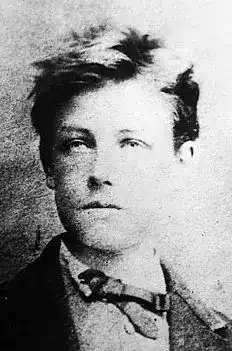
Arthur Rimbaud
The Seekers Of Lice
The Seekers Of Lice
When the child's forehead, full of red torments,
Implores the white swarm of indistinct dreams,
There come near his bed two tall charming sisters
With slim fingers that have silvery nails.
They seat the child in front of a wide open
Window where the blue air bathes a mass of flowers,
And in his heavy hair where the dew falls,
Move their delicate, fearful and enticing fingers.
He listens to the singing of their apprehensive breath
Which smells of long rosy plant honey,
And which at times a hiss interrupts, saliva
Caught on the lip or desire for kisses.
He hears their black eyelashes beating
in the perfumed Silence;
and their gentle electric fingers
Make in his half-drunken indolence the death of the little lice
Crackle under their royal nails.
Then the wine of Sloth rises in him,
The sigh of an harmonica which could bring on delerium;
The child feels, according to the slowness of the caresses,
Surging in him and dying continuously a desire to cry.
When the child's forehead, full of red torments,
Implores the white swarm of indistinct dreams,
There come near his bed two tall charming sisters
With slim fingers that have silvery nails.
They seat the child in front of a wide open
Window where the blue air bathes a mass of flowers,
And in his heavy hair where the dew falls,
Move their delicate, fearful and enticing fingers.
He listens to the singing of their apprehensive breath
Which smells of long rosy plant honey,
And which at times a hiss interrupts, saliva
Caught on the lip or desire for kisses.
He hears their black eyelashes beating
in the perfumed Silence;
and their gentle electric fingers
Make in his half-drunken indolence the death of the little lice
Crackle under their royal nails.
Then the wine of Sloth rises in him,
The sigh of an harmonica which could bring on delerium;
The child feels, according to the slowness of the caresses,
Surging in him and dying continuously a desire to cry.
467
Arthur Rimbaud
Poets At Seven Years
Poets At Seven Years
And the mother, closing the work-book
Went off, proud, satisfied, not seeing,
In the blue eyes, under the lumpy brow,
The soul of her child given over to loathing.
All day he sweated obedience: very
Intelligent: yet dark habits, certain traits
Seemed to show bitter hypocrisies at work!
In the shadow of corridors with damp paper,
He stuck out his tongue in passing, two fists
In his groin, seeing specks under his shut lids.
A doorway open to evening: by the light
You’d see him, high up, groaning on the railing
Under a void of light hung from the roof. In summer,
Especially, vanquished, stupefied, stubborn,
He’d shut himself in the toilet’s coolness:
He could think in peace there, sacrificing his nostrils.
When the small garden cleansed of the smell of day,
Filled with light, behind the house, in winter,
Lying at the foot of a wall, buried in clay
Rubbing his dazzled eyes hard, for the visions,
He listened to the scabbed espaliers creaking.
Pity! His only companions were those children
Bare-headed and puny, eyes sunk in their cheeks,
Hiding thin fingers yellow and black with mud
Under old clothes soiled with excrement,
Who talked with the sweetness of the simple-minded!
And if his mother took fright, surprising him
At his vile compassions: the child’s deep
Tenderness overcame her astonishment.
All fine. She’d had the blue look, – that lies!
At seven he was making novels about life
In the great desert, where ravished Freedom shines,
Forests, suns, riverbanks, savannahs! – He used
Illustrated weeklies where he saw, blushing,
Smiling Italian girls, and Spanish women.
When the daughter of next door workers came by,
Eight years old – in Indian prints, brown-eyed,
A little brute, and jumped him from behind,
Shaking out her tresses, in a corner,
And he was under her, he bit her buttocks,
Since she never wore knickers:
– And, bruised by her fists and heels,
Carried the taste of her back to his room.
He feared the pallid December Sundays,
When, hair slicked back, at a mahogany table,
He read from a Bible with cabbage-green margins:
Dreams oppressed him each night in the alcove.
He didn’t love God: rather those men in the dusk,
Returning, black, in smocks, to the outer suburbs
Where the town-crier, with a triple drum beat,
Made the crowds laugh and murmur at the edicts.
– He dreamed of the amorous prairies, where
Luminous swells, pure odours, gold pubescences,
Stirred in the calm there, and then took flight!
And above all how he savoured sombre things,
When, in his bare room behind closed shutters,
High, and blue, and pierced with acrid damp,
He read his novel, mooned over endlessly,
Full of drowned forests, leaden ochre skies,
Flowers of flesh opening in star-filled woods,
Dizziness, epilepsies, defeats, compassion!
– While the street noises rumbled on below,
Lying alone on pieces of unbleached canvas,
With a violent presentiment of setting sail!
And the mother, closing the work-book
Went off, proud, satisfied, not seeing,
In the blue eyes, under the lumpy brow,
The soul of her child given over to loathing.
All day he sweated obedience: very
Intelligent: yet dark habits, certain traits
Seemed to show bitter hypocrisies at work!
In the shadow of corridors with damp paper,
He stuck out his tongue in passing, two fists
In his groin, seeing specks under his shut lids.
A doorway open to evening: by the light
You’d see him, high up, groaning on the railing
Under a void of light hung from the roof. In summer,
Especially, vanquished, stupefied, stubborn,
He’d shut himself in the toilet’s coolness:
He could think in peace there, sacrificing his nostrils.
When the small garden cleansed of the smell of day,
Filled with light, behind the house, in winter,
Lying at the foot of a wall, buried in clay
Rubbing his dazzled eyes hard, for the visions,
He listened to the scabbed espaliers creaking.
Pity! His only companions were those children
Bare-headed and puny, eyes sunk in their cheeks,
Hiding thin fingers yellow and black with mud
Under old clothes soiled with excrement,
Who talked with the sweetness of the simple-minded!
And if his mother took fright, surprising him
At his vile compassions: the child’s deep
Tenderness overcame her astonishment.
All fine. She’d had the blue look, – that lies!
At seven he was making novels about life
In the great desert, where ravished Freedom shines,
Forests, suns, riverbanks, savannahs! – He used
Illustrated weeklies where he saw, blushing,
Smiling Italian girls, and Spanish women.
When the daughter of next door workers came by,
Eight years old – in Indian prints, brown-eyed,
A little brute, and jumped him from behind,
Shaking out her tresses, in a corner,
And he was under her, he bit her buttocks,
Since she never wore knickers:
– And, bruised by her fists and heels,
Carried the taste of her back to his room.
He feared the pallid December Sundays,
When, hair slicked back, at a mahogany table,
He read from a Bible with cabbage-green margins:
Dreams oppressed him each night in the alcove.
He didn’t love God: rather those men in the dusk,
Returning, black, in smocks, to the outer suburbs
Where the town-crier, with a triple drum beat,
Made the crowds laugh and murmur at the edicts.
– He dreamed of the amorous prairies, where
Luminous swells, pure odours, gold pubescences,
Stirred in the calm there, and then took flight!
And above all how he savoured sombre things,
When, in his bare room behind closed shutters,
High, and blue, and pierced with acrid damp,
He read his novel, mooned over endlessly,
Full of drowned forests, leaden ochre skies,
Flowers of flesh opening in star-filled woods,
Dizziness, epilepsies, defeats, compassion!
– While the street noises rumbled on below,
Lying alone on pieces of unbleached canvas,
With a violent presentiment of setting sail!
797
Arthur Rimbaud
Fairy
Fairy
For Helen, in the virgin shadows and the
impassive radiance in astral silence,
ornamental saps conspired.
Summer's ardour was confided
to silent birds and due indolence
to a priceless mourning boat
through gulfs of dead loves
and fallen perfumes.
-After the moment of the woods women's song
to the rumble of the torrent in the ruin of the wood,
of the tinkle of the cowbells to the echo of the vales,
and the cries of the steppes.
-For Helen's childhood, furs and shadows trembled,
and the breast of the poor and the legends of heaven.
And her eyes and her dance superior
even to the precious radiance,
to cold influences, to the pleasure of the unique
setting and the unique hour.
For Helen, in the virgin shadows and the
impassive radiance in astral silence,
ornamental saps conspired.
Summer's ardour was confided
to silent birds and due indolence
to a priceless mourning boat
through gulfs of dead loves
and fallen perfumes.
-After the moment of the woods women's song
to the rumble of the torrent in the ruin of the wood,
of the tinkle of the cowbells to the echo of the vales,
and the cries of the steppes.
-For Helen's childhood, furs and shadows trembled,
and the breast of the poor and the legends of heaven.
And her eyes and her dance superior
even to the precious radiance,
to cold influences, to the pleasure of the unique
setting and the unique hour.
1,157

Anne Brontë
Verses To A Child
Verses To A Child
1
O raise those eyes to me again
And smile again so joyously,
And fear not, love; it was not pain
Nor grief that drew these tears from me;
Beloved child, thou canst not tell
The thoughts that in my bosom dwell
Whene'er I look on thee!
2
Thou knowest not that a glance of thine
Can bring back long departed years
And that thy blue eyes' magic shine
Can overflow my own with tears,
And that each feature soft and fair
And every curl of golden hair,
Some sweet remembrance bears.
3
Just then thou didst recall to me
A distant long forgotten scene,
One smile, and one sweet word from thee
Dispelled the years that rolled between;
I was a little child again,
And every after joy and pain
Seemed never to have been.
4
Tall forest trees waved over me,
To hide me from the heat of day,
And by my side a child like thee
Among the summer flowerets lay.
He was thy sire, thou merry child.
Like thee he spoke, like thee he smiled,
Like thee he used to play.
5
O those were calm and happy days,
We loved each other fondly then;
But human love too soon decays,
And ours can never bloom again.
I never thought to see the day
When Florian's friendship would decay
Like those of colder men.
6
Now, Flora, thou hast but begun
To sail on life's deceitful sea,
O do not err as I have done,
For I have trusted foolishly;
The faith of every friend I loved
I never doubted till I proved
Their heart's inconstancy.
7
'Tis mournful to look back upon
Those long departed joys and cares,
But I will weep since thou alone
Art witness to my streaming tears.
This lingering love will not depart,
I cannot banish from my heart
The friend of childish years.
8
But though thy father loves me not,
Yet I shall still be loved by thee,
And though I am by him forgot,
Say wilt thou not remember me!
I will not cause thy heart to ache;
For thy regretted father's sake
I'll love and cherish thee.
Alexandrina Zenobia
1
O raise those eyes to me again
And smile again so joyously,
And fear not, love; it was not pain
Nor grief that drew these tears from me;
Beloved child, thou canst not tell
The thoughts that in my bosom dwell
Whene'er I look on thee!
2
Thou knowest not that a glance of thine
Can bring back long departed years
And that thy blue eyes' magic shine
Can overflow my own with tears,
And that each feature soft and fair
And every curl of golden hair,
Some sweet remembrance bears.
3
Just then thou didst recall to me
A distant long forgotten scene,
One smile, and one sweet word from thee
Dispelled the years that rolled between;
I was a little child again,
And every after joy and pain
Seemed never to have been.
4
Tall forest trees waved over me,
To hide me from the heat of day,
And by my side a child like thee
Among the summer flowerets lay.
He was thy sire, thou merry child.
Like thee he spoke, like thee he smiled,
Like thee he used to play.
5
O those were calm and happy days,
We loved each other fondly then;
But human love too soon decays,
And ours can never bloom again.
I never thought to see the day
When Florian's friendship would decay
Like those of colder men.
6
Now, Flora, thou hast but begun
To sail on life's deceitful sea,
O do not err as I have done,
For I have trusted foolishly;
The faith of every friend I loved
I never doubted till I proved
Their heart's inconstancy.
7
'Tis mournful to look back upon
Those long departed joys and cares,
But I will weep since thou alone
Art witness to my streaming tears.
This lingering love will not depart,
I cannot banish from my heart
The friend of childish years.
8
But though thy father loves me not,
Yet I shall still be loved by thee,
And though I am by him forgot,
Say wilt thou not remember me!
I will not cause thy heart to ache;
For thy regretted father's sake
I'll love and cherish thee.
Alexandrina Zenobia
87
Anne Brontë
Memory
Memory
Brightly the sun of summer shone,
Green fields and waving woods upon,
And soft winds wandered by;
Above, a sky of purest blue,
Around, bright flowers of loveliest hue,
Allured the gazer's eye.
But what were all these charms to me,
When one sweet breath of memory
Came gently wafting by?
I closed my eyes against the day,
And called my willing soul away,
From earth, and air, and sky;
That I might simply fancy there
One little flower a
primrose fair,
Just opening into sight;
As in the days of infancy,
An opening primrose seemed to me
A source of strange delight.
Sweet Memory! ever smile on me;
Nature's chief beauties spring from thee,
Oh, still thy tribute bring!
Still make the golden crocus shine
Among the flowers the most divine,
The glory of the spring.
Still in the wallflower's
fragrance dwell;
And hover round the slight blue bell,
My childhood's darling flower.
Smile on the little daisy still,
The buttercup's bright goblet fill
With all thy former power.
For ever hang thy dreamy spell
Round mountain star and heather bell,
And do not pass away
From sparkling frost, or wreathed snow,
And whisper when the wild winds blow,
Or rippling waters play.
Is childhood, then, so all divine?
Or Memory, is the glory thine,
That haloes thus the past?
Not all divine; its pangs of grief,
(Although, perchance, their stay be brief,)
Are bitter while they last.
Nor is the glory all thine own,
For on our earliest joys alone
That holy light is cast.
With such a ray, no spell of thine
Can make our later pleasures shine,
Though long ago they passed.
Acton
Brightly the sun of summer shone,
Green fields and waving woods upon,
And soft winds wandered by;
Above, a sky of purest blue,
Around, bright flowers of loveliest hue,
Allured the gazer's eye.
But what were all these charms to me,
When one sweet breath of memory
Came gently wafting by?
I closed my eyes against the day,
And called my willing soul away,
From earth, and air, and sky;
That I might simply fancy there
One little flower a
primrose fair,
Just opening into sight;
As in the days of infancy,
An opening primrose seemed to me
A source of strange delight.
Sweet Memory! ever smile on me;
Nature's chief beauties spring from thee,
Oh, still thy tribute bring!
Still make the golden crocus shine
Among the flowers the most divine,
The glory of the spring.
Still in the wallflower's
fragrance dwell;
And hover round the slight blue bell,
My childhood's darling flower.
Smile on the little daisy still,
The buttercup's bright goblet fill
With all thy former power.
For ever hang thy dreamy spell
Round mountain star and heather bell,
And do not pass away
From sparkling frost, or wreathed snow,
And whisper when the wild winds blow,
Or rippling waters play.
Is childhood, then, so all divine?
Or Memory, is the glory thine,
That haloes thus the past?
Not all divine; its pangs of grief,
(Although, perchance, their stay be brief,)
Are bitter while they last.
Nor is the glory all thine own,
For on our earliest joys alone
That holy light is cast.
With such a ray, no spell of thine
Can make our later pleasures shine,
Though long ago they passed.
Acton
102
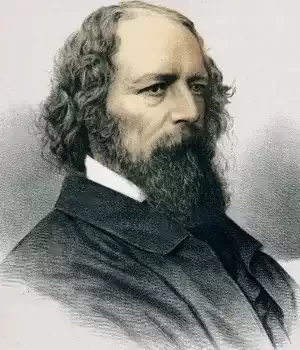
Alfred Lord Tennyson
Lilian
Lilian
I
Airy, Fairy Lilian,
Flitting, fairy Lilian,
When I ask her if she love me,
Claps her tiny hands above me,
Laughing all she can;
She 'll not tell me if she love me,
Cruel little Lilian.
II
When my passion seeks
Pleasance in love-sighs,
She, looking thro' and thro' me
Thoroughly to undo me,
Smiling, never speaks:
So innocent-arch, so cunning-simple,
From beneath her gathered wimple
Glancing with black-bearded eyes,
Till the lightning laughters dimple
The baby-roses in her cheeks;
Then away she flies.
III
Prythee weep, May Lilian!
Gaiety without eclipse
Whearieth me, May Lilian;
Thro' my every heart it thrilleth
When from crimson-threaded lips
Silver-treble laughter trilleth:
Prythee weep, May Lilian!
IV
Praying all I can,
If prayers will not hush thee,
Airy Lilian,
Like a rose-leaf I will crush thee,
Fairy Lilian.
I
Airy, Fairy Lilian,
Flitting, fairy Lilian,
When I ask her if she love me,
Claps her tiny hands above me,
Laughing all she can;
She 'll not tell me if she love me,
Cruel little Lilian.
II
When my passion seeks
Pleasance in love-sighs,
She, looking thro' and thro' me
Thoroughly to undo me,
Smiling, never speaks:
So innocent-arch, so cunning-simple,
From beneath her gathered wimple
Glancing with black-bearded eyes,
Till the lightning laughters dimple
The baby-roses in her cheeks;
Then away she flies.
III
Prythee weep, May Lilian!
Gaiety without eclipse
Whearieth me, May Lilian;
Thro' my every heart it thrilleth
When from crimson-threaded lips
Silver-treble laughter trilleth:
Prythee weep, May Lilian!
IV
Praying all I can,
If prayers will not hush thee,
Airy Lilian,
Like a rose-leaf I will crush thee,
Fairy Lilian.
496
Alfred Lord Tennyson
Enoch Arden
Enoch Arden
Long lines of cliff breaking have left a chasm;
And in the chasm are foam and yellow sands;
Beyond, red roofs about a narrow wharf
In cluster; then a moulder'd church; and higher
A long street climbs to one tall-tower'd mill;
And high in heaven behind it a gray down
With Danish barrows; and a hazelwood,
By autumn nutters haunted, flourishes
Green in a cuplike hollow of the down.
Here on this beach a hundred years ago,
Three children of three houses, Annie Lee,
The prettiest little damsel in the port,
And Philip Ray the miller's only son,
And Enoch Arden, a rough sailor's lad
Made orphan by a winter shipwreck, play'd
Among the waste and lumber of the shore,
Hard coils of cordage, swarthy fishing-nets,
Anchors of rusty fluke, and boats updrawn,
And built their castles of dissolving sand
To watch them overflow'd, or following up
And flying the white breaker, daily left
The little footprint daily wash'd away.
A narrow cave ran in beneath the cliff:
In this the children play'd at keeping house.
Enoch was host one day, Philip the next,
While Annie still was mistress; but at times
Enoch would hold possession for a week:
`This is my house and this my little wife.'
`Mine too' said Philip `turn and turn about:'
When, if they quarrell'd, Enoch stronger-made
Was master: then would Philip, his blue eyes
All flooded with the helpless wrath of tears,
Shriek out `I hate you, Enoch,' and at this
The little wife would weep for company,
And pray them not to quarrel for her sake,
And say she would be little wife to both.
But when the dawn of rosy childhood past,
And the new warmth of life's ascending sun
Was felt by either, either fixt his heart
On that one girl; and Enoch spoke his love,
But Philip loved in silence; and the girl
Seem'd kinder unto Philip than to him;
But she loved Enoch; tho' she knew it not,
And would if ask'd deny it. Enoch set
A purpose evermore before his eyes,
To hoard all savings to the uttermost,
To purchase his own boat, and make a home
For Annie: and so prosper'd that at last
A luckier or a bolder fisherman,
A carefuller in peril, did not breathe
For leagues along that breaker-beaten coast
Than Enoch. Likewise had he served a year
On board a merchantman, and made himself
Full sailor; and he thrice had pluck'd a life
From the dread sweep of the down-streaming seas:
And all me look'd upon him favorably:
And ere he touch'd his one-and-twentieth May
He purchased his own boat, and made a home
For Annie, neat and nestlike, halfway up
The narrow street that clamber'd toward the mill.
Then, on a golden autumn eventide,
The younger people making holiday,
With bag and sack and basket, great and small,
Went nutting to the hazels. Philip stay'd
(His father lying sick and needing him)
An hour behind; but as he climb'd the hill,
Just where the prone edge of the wood began
To feather toward the hollow, saw the pair,
Enoch and Annie, sitting hand-in-hand,
His large gray eyes and weather-beaten face
All-kindled by a still and sacred fire,
That burn'd as on an altar. Philip look'd,
And in their eyes and faces read his doom;
Then, as their faces drew together, groan'd,
And slipt aside, and like a wounded life
Crept down into the hollows of the wood;
There, while the rest were loud in merrymaking,
Had his dark hour unseen, and rose and past
Bearing a lifelong hunger in his heart.
So these were wed, and merrily rang the bells,
And merrily ran the years, seven happy years,
Seven happy years of health and competence,
And mutual love and honorable toil;
With children; first a daughter. In him woke,
With his first babe's first cry, the noble wish
To save all earnings to the uttermost,
And give his child a better bringing-up
Than his had been, or hers; a wish renew'd,
When two years after came a boy to be
The rosy idol of her solitudes,
While Enoch was abroad on wrathful seas,
Or often journeying landward; for in truth
Enoch's white horse, and Enoch's ocean-spoil
In ocean-smelling osier, and his face,
Rough-redden'd with a thousand winter gales,
Not only to the market-cross were known,
But in the leafy lanes behind the down,
Far as the portal-warding lion-whelp,
And peacock-yewtree of the lonely Hall,
Whose Friday fare was Enoch's ministering.
Then came a change, as all things human change.
Ten miles to northward of the narrow port
Open'd a larger haven: thither used
Enoch at times to go by land or sea;
And once when there, and clambering on a mast
In harbor, by mischance he slipt and fell:
A limb was broken when they lifted him;
And while he lay recovering there, his wife
Bore him another son, a sickly one:
Another hand crept too across his trade
Taking her bread and theirs: and on him fell,
Altho' a grave and staid God-fearing man,
Yet lying thus inactive, doubt and gloom.
He seem'd, as in a nightmare of the night,
To see his children leading evermore
Low miserable lives of hand-to-mouth,
And her, he loved, a beggar: then he pray'd
`Save them from this, whatever comes to me.'
And while he pray'd, the master of that ship
Enoch had served in, hearing his mischance,
Came, for he knew the man and valued him,
Reporting of his vessel China-bound,
And wanting yet a boatswain. Would he go?
There yet were many weeks before she sail'd,
Sail'd from this port. Would Enoch have the place?
And Enoch all at once assented to it,
Rejoicing at that answer to his prayer.
So now that the shadow of mischance appear'd
No graver than as when some little cloud
Cuts off the fiery highway of the sun,
And isles a light in the offing: yet the wife--
When he was gone--the children--what to do?
Then Enoch lay long-pondering on his plans;
To sell the boat--and yet he loved her well--
How many a rough sea had he weather'd in her!
He knew her, as a horseman knows his horse--
And yet to sell her--then with what she brought
Buy goods and stores--set Annie forth in trade
With all that seamen needed or their wives--
So might she keep the house while he was gone.
Should he not trade himself out yonder? go
This voyage more than once? yea twice or thrice--
As oft as needed--last, returning rich,
Become the master of a larger craft,
With fuller profits lead an easier life,
Have all his pretty young ones educated,
And pass his days in peace among his own.
Thus Enoch in his heart determined all:
Then moving homeward came on Annie pale,
Nursing the sickly babe, her latest-born.
Forward she started with a happy cry,
And laid the feeble infant in his arms;
Whom Enoch took, and handled all his limbs,
Appraised his weight and fondled fatherlike,
But had no heart to break his purposes
To Annie, till the morrow, when he spoke.
Then first since Enoch's golden ring had girt
Her finger, Annie fought against his will:
Yet not with brawling opposition she,
But manifold entreaties, many a tear,
Many a sad kiss by day and night renew'd
(Sure that all evil would come out of it)
Besought him, supplicating, if he cared
For here or his dear children, not to go.
He not for his own self caring but her,
Her and her children, let her plead in vain;
So grieving held his will, and bore it thro'.
For Enoch parted with his old sea-friend,
Bought Annie goods and stores, and set his hand
To fit their little streetward sitting-room
With shelf and corner for the goods and stores.
So all day long till Enoch's last at home,
Shaking their pretty cabin, hammer and axe,
Auger and saw, while Annie seem'd to hear
Her own death-scaffold raising, shrill'd and rang,
Till this was ended, and his careful hand,--
The space was narrow,--having order'd all
Almost as neat and close as Nature packs
Her blossom or her seedling, paused; and he,
Who needs would work for Annie to the last,
Ascending tired, heavily slept till morn.
And Enoch faced this morning of farewell
Brightly and boldly. All his Annie's fears,
Save, as his Annie's, were a laughter to him.
Yet Enoch as a brave God-fearing man
Bow'd himself down, and in that mystery
Where God-in-man is one with man-in-God,
Pray'd for a blessing on his wife and babes
Whatever came to him: and then he said
`Annie, this voyage by the grace of God
Will bring fair weather yet to all of us.
Keep a clean hearth and a clear fire for me,
For I'll be back, my girl, before you know it.'
Then lightly rocking baby's cradle `and he,
This pretty, puny, weakly little one,-Nay--
for I love him all the better for it--
God bless him, he shall sit upon my knees
And I will tell him tales of foreign parts,
And make him merry, when I come home again.
Come Annie, come, cheer up before I go.'
Him running on thus hopefully she heard,
And almost hoped herself; but when he turn'd
The current of his talk to graver things
In sailor fashion roughly sermonizing
On providence and trust in Heaven, she heard,
Heard and not heard him; as the village girl,
Who sets her pitcher underneath the spring,
Musing on him that used to fill it for her,
Hears and not hears, and lets it overflow.
At length she spoke `O Enoch, you are wise;
And yet for all your wisdom well know I
That I shall look upon your face no more.'
`Well then,' said Enoch, `I shall look on yours.
Annie, the ship I sail in passes here
(He named the day) get you a seaman's glass,
Spy out my face, and laugh at all your fears.'
But when the last of those last moments came,
`Annie my girl, cheer up, be comforted,
Look to the babes, and till I come again,
Keep everything shipshape, for I must go.
And fear no more for me; or if you fear
Cast all your cares on God; that anchor holds.
Is He not yonder in those uttermost
Parts of the morning? if I flee to these
Can I go from Him? and the sea is His,
The sea is His: He made it.'
Enoch rose,
Cast his strong arms about his drooping wife,
And kiss'd his wonder-stricken little ones;
But for the third, sickly one, who slept
After a night of feverous wakefulness,
When Annie would have raised him Enoch said
`Wake him not; let him sleep; how should this child
Remember this?' and kiss'ed him in his cot.
But Annie from her baby's forehead clipt
A tiny curl, and gave it: this he kept
Thro' all his future; but now hastily caught
His bundle, waved his hand, and went his way.
She when the day, that Enoch mention'd, came,
Borrow'd a glass, but all in vain: perhaps
She could not fix the glass to suit her eye;
Perhaps her eye was dim, hand tremulous;
She saw him not: and while he stood on deck
Waving, the moment and the vessel past.
Ev'n to the last dip of the vanishing sail
She watch'd it, and departed weeping for him;
Then, tho' she mourn'd his absence as his grave,
Set her sad will no less to chime with his,
But throve not in her trade, not being bred
To barter, nor compensating the want
By shrewdness, neither capable of lies,
Nor asking overmuch and taking less,
And still foreboding `what would Enoch say?'
For more than once, in days of difficulty
And pressure, had she sold her wares for less
Than what she gave in buying what she sold:
She fail'd and sadden'd knowing it; and thus,
Expectant of that news that never came,
Gain'd for here own a scanty sustenance,
And lived a life of silent melancholy.
Now the third child was sickly-born and grew
Yet sicklier, tho' the mother cared for it
With all a mother's care: nevertheless,
Whether her business often call'd her from it,
Or thro' the want of what it needed most,
Or means to pay the voice who best could tell
What most it needed--howsoe'er it was,
After a lingering,--ere she was aware,--
Like the caged bird escaping suddenly,
The little innocent soul flitted away.
In that same week when Annie buried it,
Philip's true heart, which hunger'd for her peace
(Since Enoch left he had not look'd upon her),
Smote him, as having kept aloof so long.
`Surely' said Philip `I may see her now,
May be some little comfort;' therefore went,
Past thro' the solitary room in front,
Paused for a moment at an inner door,
Then struck it thrice, and, no one opening,
Enter'd; but Annie, seated with her grief,
Fresh from the burial of her little one,
Cared not to look on any human face,
But turn'd her own toward the wall and wept.
Then Philip standing up said falteringly
`Annie, I came to ask a favor of you.'
He spoke; the passion in her moan'd reply
`Favor from one so sad and so forlorn
As I am!' half abash'd him; yet unask'd,
His bashfulness and tenderness at war,
He set himself beside her, saying to her:
`I came to speak to you of what he wish'd,
Enoch, your husband: I have ever said
You chose the best among us--a strong man:
For where he fixt his heart he set his hand
To do the thing he will'd, and bore it thro'.
And wherefore did he go this weary way,
And leave you lonely? not to see the world--
For pleasure?--nay, but for the wherewithal
To give his babes a better bringing-up
Than his had been, or yours: that was his wish.
And if he come again, vext will he be
To find the precious morning hours were lost.
And it would vex him even in his grave,
If he could know his babes were running wild
Like colts about the waste. So Annie, now--
Have we not known each other all our lives?
I do beseech you by the love you bear
Him and his children not to say me nay--
For, if you will, when Enoch comes again
Why then he shall repay me--if you will,
Annie--for I am rich and well-to-do.
Now let me put the boy and girl to school:
This is the favor that I came to ask.'
Then Annie with her brows against the wall
Answer'd `I cannot look you in the face;
I seem so foolish and so broken down.
When you came in my sorrow broke me down;
And now I think your kindness breaks me down;
But Enoch lives; that is borne in on me:
He will repay you: money can be repaid;
Not kindness such as yours.'
And Philip ask'd
`Then you will let me, Annie?'
There she turn'd,
She rose, and fixt her swimming eyes upon him,
And dwelt a moment on his kindly face,
Then calling down a blessing on his head
Caught at his hand and wrung it passionately,
And past into the little garth beyond.
So lifted up in spirit he moved away.
Then Philip put the boy and girl to school,
And bought them needful books, and everyway,
Like one who does his duty by his own,
Made himself theirs; and tho' for Annie's sake,
Fearing the lazy gossip of the port,
He oft denied his heart his dearest wish,
And seldom crost her threshold, yet he sent
Gifts by the children, garden-herbs and fruit,
The late and early roses from his wall,
Or conies from the down, and now and then,
With some pretext of fineness in the meal
To save the offence of charitable, flour
From his tall mill that whistled on the waste.
But Philip did not fathom Annie's mind:
Scarce could the woman when he came upon her,
Out of full heart and boundless gratitude
Light on a broken word to thank him with.
But Philip was her children's all-in-all;
From distant corners of the street they ran
To greet his hearty welcome heartily;
Lords of his house and of his mill were they;
Worried his passive ear with petty wrongs
Or pleasures, hung upon him, play'd with him
And call'd him Father Philip. Philip gain'd
As Enoch lost; for Enoch seem'd to them
Uncertain as a vision or a dream,
Faint as a figure seen in early dawn
Down at the far end of an avenue,
Going we know not where: and so ten years,
Since Enoch left his hearth and native land,
Fled forward, and no news of Enoch came.
It chanced one evening Annie's children long'd
To go with others, nutting to the wood,
And Annie would go with them; then they begg'd
For Father Philip (as they call'd him) too:
Him, like the working bee in blossom-dust,
Blanch'd with his mill, they found; and saying to him
`Come with us Father Philip' he denied;
But when the children pluck'd at him to go,
He laugh'd, and yielding readily to their wish,
For was not Annie with them? and they went.
But after scaling half the weary down,
Just where the prone edge of the wood began
To feather toward the hollow, all her force
Fail'd her; and sighing `let me rest' she said.
So Philip rested with her well-content;
While all the younger ones with jubilant cries
Broke from their elders, and tumultuously
Down thro' the whitening hazels made a plunge
To the bottom, and dispersed, and beat or broke
The lithe reluctant boughs to tear away
Their tawny clusters, crying to each other
And calling, here and there, about the wood.
But Philip sitting at her side forgot
Her presence, and remember'd one dark hour
Here in this wood, when like a wounded life
He crept into the shadow: at last he said
Lifting his honest forehead `Listen, Annie,
How merry they are down yonder in the wood.'
`Tired, Annie?' for she did not speak a word.
`Tired?' but her face had fall'n upon her hands;
At which, as with a kind anger in him,
`The ship was lost' he said `the ship was lost!
No more of that! why should you kill yourself
And make them orphans quite?' And Annie said
`I thought not of it: but--I known not why--
Their voices make me feel so solitary.'
Then Philip coming somewhat closer spoke.
`Annie, there is a thing upon my mind,
And it has been upon my mind so long,
That tho' I know not when it first came there,
I know that it will out at last. O Annie,
It is beyond all hope, against all chance,
That he who left you ten long years ago
Should still be living; well then--let me speak:
I grieve to see you poor and wanting help:
I cannot help you as I wish to do
Unless--they say that women are so quick--
Perhaps you know what I would have you know--
I wish you for my wife. I fain would prove
A father to your children: I do think
They love me as a father: I am sure
That I love them as if they were mine own;
And I believe, if you were fast my wife,
That after all these sad uncertain years,
We might be still as happy as God grants
To any of His creatures. Think upon it:
For I am well-to-do--no kin, no care,
No burthen, save my care for you and yours:
And we have known each other all our lives,
And I have loved you longer than you know.'
Then answer'd Annie; tenderly she spoke:
`You have been as God's good angel in our house.
God bless you for it, God reward you for it,
Philip, with something happier than myself.
Can one live twice? can you be ever loved
As Enoch was? what is it that you ask?'
`I am content' he answer'd `to be loved
A little after Enoch.' `O' she cried
Scared as it were `dear Philip, wait a while:
If Enoch comes--but Enoch will not come--
Yet wait a year, a year is not so long:
Surely I shall be wiser in a year:
O wait a little!' Philip sadly said
`Annie, as I have waited all my life
I well may wait a little.' `Nay' she cried
`I am bound: you have my promise--in a year:
Will you not bide your year as I bide mine?'
And Philip answer'd `I will bide my year.'
Here both were mute, till Philip glancing up
Beheld the dead flame of the fallen day
Pass from the Danish barrow overhead;
Then fearing night and chill for Annie rose,
And sent his voice beneath him thro' the wood.
Up came the children laden with their spoil;
Then all descended to the port, and there
At Annie's door he paused and gave his hand,
Saying gently `Annie, when I spoke to you,
That was your hour of weakness. I was wrong.
I am always bound to you, but you are free.'
Then Annie weeping answer'd `I am bound.'
She spoke; and in one moment as it were,
While yet she went about her household ways,
Ev'n as she dwelt upon his latest words,
That he had loved her longer than she knew,
That autumn into autumn flash'd again,
And there he stood once more before her face,
Claiming her promise. `Is it a year?' she ask'd.
`Yes, if the nuts' he said `be ripe again:
Come out and see.' But she--she put him off--
So much to look to--such a change--a month--
Give her a month--she knew that she was bound--
A month--no more. Then Philip with his eyes
Full of that lifelong hunger, and his voice
Shaking a little like a drunkard's hand,
`Take your own time, Annie, take your own time.'
And Annie could have wept for pity of him;
And yet she held him on delayingly
With many a scarce-believable excuse,
Trying his truth and his long-sufferance,
Till half-another year had slipt away.
By this the lazy gossips of the port,
Abhorrent of a calculation crost,
Began to chafe as at a personal wrong.
Some thought that Philip did but trifle with her;
Some that she but held off to draw him on;
And others laugh'd at her and Philip too,
As simple folks that knew not their own minds;
And one, in whom all evil fancies clung
Like serpent eggs together, laughingly
Would hint a worse in either. Her own son
Was silent, tho' he often look'd his wish;
But evermore the daughter prest upon her
To wed the man so dear to all of them
And lift the household out of poverty;
And Philip's rosy face contracting grew
Careworn and wan; and all these things fell on her
Sharp as reproach.
At last one night it chanced
That Annie could not sleep, but earnestly
Pray'd for a sign `my Enoch is he gone?'
Then compass'd round by the blind wall of night
Brook'd not the expectant terror of her heart,
Started from bed, and struck herself a light,
Then desperately seized the holy Book,
Suddenly set it wide to find a sign,
Suddenly put her finger on the text,
`Under a palmtree.' That was nothing to her:
No meaning there: she closed the book and slept:
When lo! her Enoch sitting on a height,
Under a palmtree, over him the Sun:
`He is gone' she thought `he is happy, he is singing
Hosanna in the highest: yonder shines
The Sun of Righteousness, and these be palms
Whereof the happy people strowing cried
"Hosanna in the highest!"' Here she woke,
Resolved, sent for him and said wildly to him
`There is no reason why we should not wed.'
`Then for God's sake,' he answer'd, `both our sakes,
So you will wed me, let it be at once.'
So these were wed and merrily rang the bells,
Merrily rang the bells and they were wed.
But never merrily beat Annie's heart.
A footstep seem'd to fall beside her path,
She knew not whence; a whisper in her ear,
She knew not what; nor loved she to be left
Alone at home, nor ventured out alone.
What ail'd her then, that ere she enter'd, often
Her hand dwelt lingeringly on the latch,
Fearing to enter: Philip thought he knew:
Such doubts and fears were common to her state,
Being with child: but when her child was born,
Then her new child was as herself renew'd,
Then the new mother came about her heart,
Then her good Philip was her all-in-all,
And that mysterious instinct wholly died.
And where was Enoch? prosperously sail'd
The ship `Good Fortune,' tho' at setting forth
The Biscay, roughly ridging eastward, shook
And almost overwhelm'd her, yet unvext
She slipt across the summer of the world,
Then after a long tumble about the Cape
And frequent interchange of foul and fair,
She passing thro' the summer world again,
The breath of heaven came continually
And sent her sweetly by the golden isles,
Till silent in her oriental haven.
There Enoch traded for himself, and bought
Quaint monsters for the market of those times,
A gilded dragon, also, for the babes.
Less lucky her home-voyage: at first indeed
Thro' many a fair sea-circle, day by day,
Scarce-rocking, her full-busted figure-head
Stared o'er the ripple feathering from her bows:
Then follow'd calms, and then winds variable,
Then baffling, a long course of them; and last
Storm, such as drove her under moonless heavens
Till hard upon the cry of `breakers' came
The crash of ruin, and the loss of all
But Enoch and two others. Half the night,
Buoy'd upon floating tackle and broken spars,
These drifted, stranding on an isle at morn
Rich, but loneliest in a lonely sea.
No want was there of human sustenance,
Soft fruitage, mighty nuts, and nourishing roots;
Nor save for pity was it hard to take
The helpless life so wild that it was tame.
There in a seaward-gazing mountain-gorge
They built, and thatch'd with leaves of palm, a hut,
Half hut, half native cavern. So the three,
Set in this Eden of all plenteousness,
Dwelt with eternal summer, ill-content.
For one, the youngest, hardly more than boy,
Hurt in that night of sudden ruin and wreck,
Lay lingering out a three-years' death-in-life.
They could not leave him. After he was gone,
The two remaining found a fallen stem;
And Enoch's comrade, careless of himself,
Fire-hollowing this in Indian fashion, fell
Sun-stricken, and that other lived alone.
In those two deaths he read God's warning `wait.'
The mountain wooded to the peak, the lawns
And winding glades high up like ways to Heaven,
The slender coco's drooping crown of plumes,
The lightning flash of insect and of bird,
The lustre of the long convolvuluses
That coil'd around the stately stems, and ran
Ev'n to the limit of the land, the glows
And glories of the broad belt of the world,
All these he saw; but what he fain had seen
He could not see, the kindly human face,
Nor ever hear a kindly voice, but heard
The myriad shriek of wheeling ocean-fowl,
The league-long roller thundering on the reef,
The moving whisper of huge trees that branch'd
And blossom'd in the zenith, or the sweep
Of some precipitous rivulet to the wave,
As down the shore he ranged, or all day long
Sat often in the seaward-gazing gorge,
A shipwreck'd sailor, waiting for a sail:
No sail from day to day, but every day
The sunrise broken into scarlet shafts
Among the palms and ferns and precipices;
The blaze upon the waters to the east;
The blaze upon his island overhead;
The blaze upon the waters to the west;
Then the great stars that globed themselves in Heaven,
The hollower-bellowing ocean, and again
The scarlet shafts of sunrise--but no sail.
There often as he watch'd or seem'd to watch,
So still, the golden lizard on him paused,
A phantom made of many phantoms moved
Before him haunting him, or he himself
Moved haunting people, things and places, known
Far in a darker isle beyond the line;
The babes, their babble, Annie, the small house,
The climbing street, the mill, the leafy lanes,
The peacock-yewtree and the lonely Hall,
The horse he drove, the boat he sold, the chill
November dawns and dewy-glooming downs,
The gentle shower, the smell of dying leaves,
And the low moan of leaden-color'd seas.
Once likewise, in the ringing of his ears,
Tho' faintly, merrily--far and far away--
He heard the pealing of his parish bells;
Then, tho' he knew not wherefore, started up
Shuddering, and when the beauteous hateful isle
Return'd upon him, had not his poor heart
Spoken with That, which being everywhere
Lets none, who speaks with Him, seem all alone,
Surely the man had died of solitude.
Thus over Enoch's early-silvering head
The sunny and rainy seasons came and went
Year after year. His hopes to see his own,
And pace the sacred old familiar fields,
Not yet had perish'd, when his lonely doom
Came suddenly to an end. Another ship
(She wanted water) blown by baffling winds,
Like the Good Fortune, from her destined course,
Stay'd by this isle, not knowing where she lay:
For since the mate had seen at early dawn
Across a break on the mist-wreathen isle
The silent water slipping from the hills,
They sent a crew that landing burst away
In search of stream or fount, and fill'd the shores
With clamor. Downward from his mountain gorge
Stept the long-hair'd long-bearded solitary,
Brown, looking hardly human, strangely clad,
Muttering and mumbling, idiotlike it seem'd,
With inarticulate rage, and making signs
They knew not what: and yet he led the way
To where the rivulets of sweet water ran;
And ever as he mingled with the crew,
And heard them talking, his long-bounden tongue
Was loosen'd, till he made them understand;
Whom, when their casks were fill'd they took aboard:
And there the tale he utter'd brokenly,
Scarce credited at first but more and more,
Amazed and melted all who listen'd to it:
And clothes they gave him and free passage home;
But oft he work'd among the rest and shook
His isolation from him. None of these
Came from his county, or could answer him,
If question'd, aught of what he cared to know.
And dull the voyage was with long delays,
The vessel scarce sea-worthy; but evermore
His fancy fled before the lazy wind
Returning, till beneath a clouded moon
He like a lover down thro' all his blood
Drew in the dewy meadowy morning-breath
Of England, blown across her ghostly wall:
And that same morning officers and men
Levied a kindly tax upon themselves,
Pitying the lonely man, and gave him it:
Then moving up the coast they landed him,
Ev'n in that harbor whence he sail'd before.
There Enoch spoke no word to anyone,
But homeward--home--what home? had he a home?
His home, he walk'd. Bright was that afternoon,
Sunny but chill; till drawn thro' either chasm,
Where either haven open'd on the deeps,
Roll'd a sea-haze and whelm'd the world in gray;
Cut off the length of highway on before,
And left but narrow breadth to left and right
Of wither'd holt or tilth or pasturage.
On the nigh-naked tree the Robin piped
Disconsolate, and thro' the dripping haze
The dead weight of the dead leaf bore it down.
Thicker the drizzle grew, deeper the gloom;
Last, as it seem'd, a great mist-blotted light
Flared on him, and he came upon the place.
Then down the long street having slowly stolen,
His heart foreshadowing all calamity,
His eyes upon the stones, he reach'd the home
Where Annie lived and loved him, and his babes
In those far-off seven happy years were born;
But finding neither light nor murmur there
(A bill of sale gleam'd thro' the drizzle) crept
Still downward thinking `dead or dead to me!'
Down to the pool and narrow wharf he went,
Seeking a tavern which of old he knew,
A front of timber-crost antiquity,
So propt, worm-eaten, ruinously old,
He thought it must have gone; but he was gone
Who kept it; and his widow, Miriam Lane,
With daily-dwindling profits held the house;
A haunt of brawling seamen once, but now
Stiller, with yet a bed for wandering men.
There Enoch rested silently many days.
But Miriam Lane was good and garrulous,
Nor let him be, but often breaking in,
Told him, with other annals of the port,
Not knowing--Enoch was so brown, so bow'd,
So broken--all the story of his house.
His baby's death, her growing poverty,
How Philip put her little ones to school,
And kept them in it, his long wooing her,
Her slow consent, and marriage, and the birth
Of Philip's child: and o'er his countenance
No shadow past, nor motion: anyone,
Regarding, well had deem'd he felt the tale
Less than the teller: only when she closed
`Enoch, poor man, was cast away and lost'
He, shaking his gray head pathetically,
Repeated muttering `cast away and lost;'
Again in deeper inward whispers `lost!'
But Enoch yearn'd to see her face again;
`If I might look on her sweet face gain
And know that she is happy.' So the thought
Haunted and harass'd him, and drove him forth,
At evening when the dull November day
Was growing duller twilight, to the hill.
There he sat down gazing on all below;
There did a thousand memories roll upon him,
Unspeakable for sadness. By and by
The ruddy square of comfortable light,
Far-blazing from the rear of Philip's house,
Allured him, as the beacon-blaze allures
The bird of passage, till he madly strikes
Against it, and beats out his weary life.
For Philip's dwelling fronted on the street,
The latest house to landward; but behind,
With one small gate that open'd on the waste,
Flourish'd a little garden square and wall'd:
And in it throve an ancient evergreen,
A yewtree, and all round it ran a walk
Of shingle, and a walk divided it:
But Enoch shunn'd the middle walk and stole
Up by the wall, behind the yew; and thence
That which he better might have shunn'd, if griefs
Like his have worse or better, Enoch saw.
For cups and silver on the burnish'd board
Sparkled and shone; so genial was the hearth:
And on the right hand of the hearth he saw
Philip, the slighted suitor of old times,
Stout, rosy, with his babe across his knees;
And o'er her second father stoopt a girl,
A later but a loftier Annie Lee,
Fair-hair'd and tall, and from her lifted hand
Dangled a length of ribbon and a ring
To tempt the babe, who rear'd his creasy arms,
Caught at and ever miss'd it, and they laugh'd:
And on the left hand of the hearth he saw
The mother glancing often toward her babe,
But turning now and then to speak with him,
Her son, who stood beside her tall and strong,
And saying that which pleased him, for he smiled.
Now when the dead man come to life beheld
His wife his wife no more, and saw the babe
Hers, yet not his, upon the father's knee,
And all the warmth, the peace, the happiness,
And his own children tall and beautiful,
And him, that other, reigning in his place,
Lord of his rights and of his children's love,--
Then he, tho' Miriam Lane had told him all,
Because things seen are mightier than things heard,
Stagger'd and shook, holding the branch, and fear'd
To send abroad a shrill and terrible cry,
Which in one moment, like the blast of doom,
Would shatter all the happiness of the hearth.
He therefore turning softly like a thief,
Lest the harsh shingle should grate underfoot,
And feeling all along the garden-wall,
Lest he should swoon and tumble and be found,
Crept to the gate, and open'd it, and closed,
As lightly as a sick man's chamber-door,
Behind him, and came out upon the waste.
And there he would have knelt, but that his knees
Were feeble, so that falling prone he dug
His fingers into the wet earth, and pray'd.
`Too hard to bear! why did they take me hence?
O God Almighty, blessed Saviour, Thou
That didst uphold me on my lonely isle,
Uphold me, Father, in my loneliness
A little longer! aid me, give me strength
Not to tell her, never to let her know.
Help me no to break in upon her peace.
My children too! must I not speak to these?
They know me not. I should betray myself.
Never: not father's kiss for me--the girl
So like her mother, and the boy, my son.'
There speech and thought and nature fail'd a little,
And he lay tranced; but when he rose and paced
Back toward his solitary home again,
All down the long and narrow street he went
Beating it in upon his weary brain,
As tho' it were the burthen of a song,
`Not to tell her, never to let her know.'
He was not all unhappy. His resolve
Upbore him, and firm faith, and evermore
Prayer from a living source within the will,
And beating up thro' all the bitter world,
Like fountains of sweet water in the sea,
Kept him a living soul. `This miller's wife'
He said to Miriam `that you told me of,
Has she no fear that her first husband lives?'
`Ay ay, poor soul' said Miriam, `fear enow!
If you could tell her you had seen him dead,
Why, that would be her comfort;' and he thought
`After the Lord has call'd me she shall know,
I wait His time' and Enoch set himself,
Scorning an alms, to work whereby to live.
Almost to all things could he turn his hand.
Cooper he was and carpenter, and wrought
To make the boatmen fishing-nets, or help'd
At lading and unlading the tall barks,
That brought the stinted commerce of those days;
Thus earn'd a scanty living for himself:
Yet since he did but labor for himself,
Work without hope, there was not life in it
Whereby the man could live; and as the year
Roll'd itself round again to meet the day
When Enoch had return'd, a languor came
Upon him, gentle sickness, gradually
Weakening the man, till he could do no more,
But kept the house, his chair, and last his bed.
And Enoch bore his weakness cheerfully.
For sure no gladlier does the stranded wreck
See thro' the gray skirts of a lifting squall
The boat that bears the hope of life approach
To save the life despair'd of, than he saw
Death dawning on him, and the close of all.
For thro' that dawning gleam'd a kindlier hope
On Enoch thinking `after I am gone,
Then may she learn I loved her to the last.'
He call'd aloud for Miriam Lane and said
`Woman, I have a secret--only swear,
Before I tell you--swear upon the book
Not to reveal it, till you see me dead.'
`Dead' clamor'd the good woman `hear him talk!
I warrant, man, that we shall bring you round.'
`Swear' add Enoch sternly `on the book.'
And on the book, half-frighted, Miriam swore.
Then Enoch rolling his gray eyes upon her,
`Did you know Enoch Arden of this town?'
`Know him?' she said `I knew him far away.
Ay, ay, I mind him coming down the street;
Held his head high, and cared for no man, he.'
Slowly and sadly Enoch answer'd her;
`His head is low, and no man cares for him.
I think I have not three days more to live;
I am the man.' At which the woman gave
A half-incredulous, half-hysterical cry.
`You Arden, you! nay,--sure he was a foot
Higher than you be.' Enoch said again
`My God has bow'd me down to what I am;
My grief and solitude have broken me;
Nevertheless, know that I am he
Who married--but that name has twice been changed--
I married her who married Philip Ray.
Sit, listen.' Then he told her of his voyage,
His wreck, his lonely life, his coming back,
His gazing in on Annie, his resolve,
And how he kept it. As the woman heard,
Fast flow'd the current of her easy tears,
While in her heart she yearn'd incessantly
To rush abroad all round the little haven,
Proclaiming Enoch Arden and his woes;
But awed and promise-bounded she forbore,
Saying only `See your bairns before you go!
Eh, let me fetch 'em, Arden,' and arose
Eager to bring them down, for Enoch hung
A moment on her words, but then replied.
`Woman, disturb me not now at the last,
But let me hold my purpose till I die.
Sit down again; mark me and understand,
While I have power to speak. I charge you now,
When you shall see her, tell her that I died
Blessing her, praying for her, loving her;
Save for the bar between us, loving her
As when she laid her head beside my own.
And tell my daughter Annie, whom I saw
So like her mother, that my latest breath
Was spent in blessing her and praying for her.
And tell my son that I died blessing him.
And say to Philip that I blest him too;
He never meant us any thing but good.
But if my children care to see me dead,
Who hardly saw me living, let them come,
I am their father; but she must not come,
For my dead face would vex her after-life.
And now there is but one of all my blood,
Who will embrace me in the world-to-be:
This hair is his: she cut it off and gave it,
And I have borne it with me all these years,
And thought to bear it with me to my grave;
But now my mind is changed, for I shall see him,
My babe in bliss: wherefore when I am gone,
Take, give her this, for it may comfort her:
It will moreover be a token to her,
That I am he.'
He ceased; and Miriam Lane
Made such a voluble answer promising all,
That once again he roll'd his eyes upon her
Repeating all he wish'd, and once again
She promised.
Then the third night after this,
While Enoch slumber'd motionless and pale,
And Miriam watch'd and dozed at intervals,
There came so loud a calling of the sea,
That all the houses in the haven rang.
He woke, he rose, he spread his arms abroad
Crying with a loud voice `a sail! a sail!
I am saved'; and so fell back and spoke no more.
So past the strong heroic soul away.
And when they buried him the little port
Had seldom seen a costlier funeral.
Long lines of cliff breaking have left a chasm;
And in the chasm are foam and yellow sands;
Beyond, red roofs about a narrow wharf
In cluster; then a moulder'd church; and higher
A long street climbs to one tall-tower'd mill;
And high in heaven behind it a gray down
With Danish barrows; and a hazelwood,
By autumn nutters haunted, flourishes
Green in a cuplike hollow of the down.
Here on this beach a hundred years ago,
Three children of three houses, Annie Lee,
The prettiest little damsel in the port,
And Philip Ray the miller's only son,
And Enoch Arden, a rough sailor's lad
Made orphan by a winter shipwreck, play'd
Among the waste and lumber of the shore,
Hard coils of cordage, swarthy fishing-nets,
Anchors of rusty fluke, and boats updrawn,
And built their castles of dissolving sand
To watch them overflow'd, or following up
And flying the white breaker, daily left
The little footprint daily wash'd away.
A narrow cave ran in beneath the cliff:
In this the children play'd at keeping house.
Enoch was host one day, Philip the next,
While Annie still was mistress; but at times
Enoch would hold possession for a week:
`This is my house and this my little wife.'
`Mine too' said Philip `turn and turn about:'
When, if they quarrell'd, Enoch stronger-made
Was master: then would Philip, his blue eyes
All flooded with the helpless wrath of tears,
Shriek out `I hate you, Enoch,' and at this
The little wife would weep for company,
And pray them not to quarrel for her sake,
And say she would be little wife to both.
But when the dawn of rosy childhood past,
And the new warmth of life's ascending sun
Was felt by either, either fixt his heart
On that one girl; and Enoch spoke his love,
But Philip loved in silence; and the girl
Seem'd kinder unto Philip than to him;
But she loved Enoch; tho' she knew it not,
And would if ask'd deny it. Enoch set
A purpose evermore before his eyes,
To hoard all savings to the uttermost,
To purchase his own boat, and make a home
For Annie: and so prosper'd that at last
A luckier or a bolder fisherman,
A carefuller in peril, did not breathe
For leagues along that breaker-beaten coast
Than Enoch. Likewise had he served a year
On board a merchantman, and made himself
Full sailor; and he thrice had pluck'd a life
From the dread sweep of the down-streaming seas:
And all me look'd upon him favorably:
And ere he touch'd his one-and-twentieth May
He purchased his own boat, and made a home
For Annie, neat and nestlike, halfway up
The narrow street that clamber'd toward the mill.
Then, on a golden autumn eventide,
The younger people making holiday,
With bag and sack and basket, great and small,
Went nutting to the hazels. Philip stay'd
(His father lying sick and needing him)
An hour behind; but as he climb'd the hill,
Just where the prone edge of the wood began
To feather toward the hollow, saw the pair,
Enoch and Annie, sitting hand-in-hand,
His large gray eyes and weather-beaten face
All-kindled by a still and sacred fire,
That burn'd as on an altar. Philip look'd,
And in their eyes and faces read his doom;
Then, as their faces drew together, groan'd,
And slipt aside, and like a wounded life
Crept down into the hollows of the wood;
There, while the rest were loud in merrymaking,
Had his dark hour unseen, and rose and past
Bearing a lifelong hunger in his heart.
So these were wed, and merrily rang the bells,
And merrily ran the years, seven happy years,
Seven happy years of health and competence,
And mutual love and honorable toil;
With children; first a daughter. In him woke,
With his first babe's first cry, the noble wish
To save all earnings to the uttermost,
And give his child a better bringing-up
Than his had been, or hers; a wish renew'd,
When two years after came a boy to be
The rosy idol of her solitudes,
While Enoch was abroad on wrathful seas,
Or often journeying landward; for in truth
Enoch's white horse, and Enoch's ocean-spoil
In ocean-smelling osier, and his face,
Rough-redden'd with a thousand winter gales,
Not only to the market-cross were known,
But in the leafy lanes behind the down,
Far as the portal-warding lion-whelp,
And peacock-yewtree of the lonely Hall,
Whose Friday fare was Enoch's ministering.
Then came a change, as all things human change.
Ten miles to northward of the narrow port
Open'd a larger haven: thither used
Enoch at times to go by land or sea;
And once when there, and clambering on a mast
In harbor, by mischance he slipt and fell:
A limb was broken when they lifted him;
And while he lay recovering there, his wife
Bore him another son, a sickly one:
Another hand crept too across his trade
Taking her bread and theirs: and on him fell,
Altho' a grave and staid God-fearing man,
Yet lying thus inactive, doubt and gloom.
He seem'd, as in a nightmare of the night,
To see his children leading evermore
Low miserable lives of hand-to-mouth,
And her, he loved, a beggar: then he pray'd
`Save them from this, whatever comes to me.'
And while he pray'd, the master of that ship
Enoch had served in, hearing his mischance,
Came, for he knew the man and valued him,
Reporting of his vessel China-bound,
And wanting yet a boatswain. Would he go?
There yet were many weeks before she sail'd,
Sail'd from this port. Would Enoch have the place?
And Enoch all at once assented to it,
Rejoicing at that answer to his prayer.
So now that the shadow of mischance appear'd
No graver than as when some little cloud
Cuts off the fiery highway of the sun,
And isles a light in the offing: yet the wife--
When he was gone--the children--what to do?
Then Enoch lay long-pondering on his plans;
To sell the boat--and yet he loved her well--
How many a rough sea had he weather'd in her!
He knew her, as a horseman knows his horse--
And yet to sell her--then with what she brought
Buy goods and stores--set Annie forth in trade
With all that seamen needed or their wives--
So might she keep the house while he was gone.
Should he not trade himself out yonder? go
This voyage more than once? yea twice or thrice--
As oft as needed--last, returning rich,
Become the master of a larger craft,
With fuller profits lead an easier life,
Have all his pretty young ones educated,
And pass his days in peace among his own.
Thus Enoch in his heart determined all:
Then moving homeward came on Annie pale,
Nursing the sickly babe, her latest-born.
Forward she started with a happy cry,
And laid the feeble infant in his arms;
Whom Enoch took, and handled all his limbs,
Appraised his weight and fondled fatherlike,
But had no heart to break his purposes
To Annie, till the morrow, when he spoke.
Then first since Enoch's golden ring had girt
Her finger, Annie fought against his will:
Yet not with brawling opposition she,
But manifold entreaties, many a tear,
Many a sad kiss by day and night renew'd
(Sure that all evil would come out of it)
Besought him, supplicating, if he cared
For here or his dear children, not to go.
He not for his own self caring but her,
Her and her children, let her plead in vain;
So grieving held his will, and bore it thro'.
For Enoch parted with his old sea-friend,
Bought Annie goods and stores, and set his hand
To fit their little streetward sitting-room
With shelf and corner for the goods and stores.
So all day long till Enoch's last at home,
Shaking their pretty cabin, hammer and axe,
Auger and saw, while Annie seem'd to hear
Her own death-scaffold raising, shrill'd and rang,
Till this was ended, and his careful hand,--
The space was narrow,--having order'd all
Almost as neat and close as Nature packs
Her blossom or her seedling, paused; and he,
Who needs would work for Annie to the last,
Ascending tired, heavily slept till morn.
And Enoch faced this morning of farewell
Brightly and boldly. All his Annie's fears,
Save, as his Annie's, were a laughter to him.
Yet Enoch as a brave God-fearing man
Bow'd himself down, and in that mystery
Where God-in-man is one with man-in-God,
Pray'd for a blessing on his wife and babes
Whatever came to him: and then he said
`Annie, this voyage by the grace of God
Will bring fair weather yet to all of us.
Keep a clean hearth and a clear fire for me,
For I'll be back, my girl, before you know it.'
Then lightly rocking baby's cradle `and he,
This pretty, puny, weakly little one,-Nay--
for I love him all the better for it--
God bless him, he shall sit upon my knees
And I will tell him tales of foreign parts,
And make him merry, when I come home again.
Come Annie, come, cheer up before I go.'
Him running on thus hopefully she heard,
And almost hoped herself; but when he turn'd
The current of his talk to graver things
In sailor fashion roughly sermonizing
On providence and trust in Heaven, she heard,
Heard and not heard him; as the village girl,
Who sets her pitcher underneath the spring,
Musing on him that used to fill it for her,
Hears and not hears, and lets it overflow.
At length she spoke `O Enoch, you are wise;
And yet for all your wisdom well know I
That I shall look upon your face no more.'
`Well then,' said Enoch, `I shall look on yours.
Annie, the ship I sail in passes here
(He named the day) get you a seaman's glass,
Spy out my face, and laugh at all your fears.'
But when the last of those last moments came,
`Annie my girl, cheer up, be comforted,
Look to the babes, and till I come again,
Keep everything shipshape, for I must go.
And fear no more for me; or if you fear
Cast all your cares on God; that anchor holds.
Is He not yonder in those uttermost
Parts of the morning? if I flee to these
Can I go from Him? and the sea is His,
The sea is His: He made it.'
Enoch rose,
Cast his strong arms about his drooping wife,
And kiss'd his wonder-stricken little ones;
But for the third, sickly one, who slept
After a night of feverous wakefulness,
When Annie would have raised him Enoch said
`Wake him not; let him sleep; how should this child
Remember this?' and kiss'ed him in his cot.
But Annie from her baby's forehead clipt
A tiny curl, and gave it: this he kept
Thro' all his future; but now hastily caught
His bundle, waved his hand, and went his way.
She when the day, that Enoch mention'd, came,
Borrow'd a glass, but all in vain: perhaps
She could not fix the glass to suit her eye;
Perhaps her eye was dim, hand tremulous;
She saw him not: and while he stood on deck
Waving, the moment and the vessel past.
Ev'n to the last dip of the vanishing sail
She watch'd it, and departed weeping for him;
Then, tho' she mourn'd his absence as his grave,
Set her sad will no less to chime with his,
But throve not in her trade, not being bred
To barter, nor compensating the want
By shrewdness, neither capable of lies,
Nor asking overmuch and taking less,
And still foreboding `what would Enoch say?'
For more than once, in days of difficulty
And pressure, had she sold her wares for less
Than what she gave in buying what she sold:
She fail'd and sadden'd knowing it; and thus,
Expectant of that news that never came,
Gain'd for here own a scanty sustenance,
And lived a life of silent melancholy.
Now the third child was sickly-born and grew
Yet sicklier, tho' the mother cared for it
With all a mother's care: nevertheless,
Whether her business often call'd her from it,
Or thro' the want of what it needed most,
Or means to pay the voice who best could tell
What most it needed--howsoe'er it was,
After a lingering,--ere she was aware,--
Like the caged bird escaping suddenly,
The little innocent soul flitted away.
In that same week when Annie buried it,
Philip's true heart, which hunger'd for her peace
(Since Enoch left he had not look'd upon her),
Smote him, as having kept aloof so long.
`Surely' said Philip `I may see her now,
May be some little comfort;' therefore went,
Past thro' the solitary room in front,
Paused for a moment at an inner door,
Then struck it thrice, and, no one opening,
Enter'd; but Annie, seated with her grief,
Fresh from the burial of her little one,
Cared not to look on any human face,
But turn'd her own toward the wall and wept.
Then Philip standing up said falteringly
`Annie, I came to ask a favor of you.'
He spoke; the passion in her moan'd reply
`Favor from one so sad and so forlorn
As I am!' half abash'd him; yet unask'd,
His bashfulness and tenderness at war,
He set himself beside her, saying to her:
`I came to speak to you of what he wish'd,
Enoch, your husband: I have ever said
You chose the best among us--a strong man:
For where he fixt his heart he set his hand
To do the thing he will'd, and bore it thro'.
And wherefore did he go this weary way,
And leave you lonely? not to see the world--
For pleasure?--nay, but for the wherewithal
To give his babes a better bringing-up
Than his had been, or yours: that was his wish.
And if he come again, vext will he be
To find the precious morning hours were lost.
And it would vex him even in his grave,
If he could know his babes were running wild
Like colts about the waste. So Annie, now--
Have we not known each other all our lives?
I do beseech you by the love you bear
Him and his children not to say me nay--
For, if you will, when Enoch comes again
Why then he shall repay me--if you will,
Annie--for I am rich and well-to-do.
Now let me put the boy and girl to school:
This is the favor that I came to ask.'
Then Annie with her brows against the wall
Answer'd `I cannot look you in the face;
I seem so foolish and so broken down.
When you came in my sorrow broke me down;
And now I think your kindness breaks me down;
But Enoch lives; that is borne in on me:
He will repay you: money can be repaid;
Not kindness such as yours.'
And Philip ask'd
`Then you will let me, Annie?'
There she turn'd,
She rose, and fixt her swimming eyes upon him,
And dwelt a moment on his kindly face,
Then calling down a blessing on his head
Caught at his hand and wrung it passionately,
And past into the little garth beyond.
So lifted up in spirit he moved away.
Then Philip put the boy and girl to school,
And bought them needful books, and everyway,
Like one who does his duty by his own,
Made himself theirs; and tho' for Annie's sake,
Fearing the lazy gossip of the port,
He oft denied his heart his dearest wish,
And seldom crost her threshold, yet he sent
Gifts by the children, garden-herbs and fruit,
The late and early roses from his wall,
Or conies from the down, and now and then,
With some pretext of fineness in the meal
To save the offence of charitable, flour
From his tall mill that whistled on the waste.
But Philip did not fathom Annie's mind:
Scarce could the woman when he came upon her,
Out of full heart and boundless gratitude
Light on a broken word to thank him with.
But Philip was her children's all-in-all;
From distant corners of the street they ran
To greet his hearty welcome heartily;
Lords of his house and of his mill were they;
Worried his passive ear with petty wrongs
Or pleasures, hung upon him, play'd with him
And call'd him Father Philip. Philip gain'd
As Enoch lost; for Enoch seem'd to them
Uncertain as a vision or a dream,
Faint as a figure seen in early dawn
Down at the far end of an avenue,
Going we know not where: and so ten years,
Since Enoch left his hearth and native land,
Fled forward, and no news of Enoch came.
It chanced one evening Annie's children long'd
To go with others, nutting to the wood,
And Annie would go with them; then they begg'd
For Father Philip (as they call'd him) too:
Him, like the working bee in blossom-dust,
Blanch'd with his mill, they found; and saying to him
`Come with us Father Philip' he denied;
But when the children pluck'd at him to go,
He laugh'd, and yielding readily to their wish,
For was not Annie with them? and they went.
But after scaling half the weary down,
Just where the prone edge of the wood began
To feather toward the hollow, all her force
Fail'd her; and sighing `let me rest' she said.
So Philip rested with her well-content;
While all the younger ones with jubilant cries
Broke from their elders, and tumultuously
Down thro' the whitening hazels made a plunge
To the bottom, and dispersed, and beat or broke
The lithe reluctant boughs to tear away
Their tawny clusters, crying to each other
And calling, here and there, about the wood.
But Philip sitting at her side forgot
Her presence, and remember'd one dark hour
Here in this wood, when like a wounded life
He crept into the shadow: at last he said
Lifting his honest forehead `Listen, Annie,
How merry they are down yonder in the wood.'
`Tired, Annie?' for she did not speak a word.
`Tired?' but her face had fall'n upon her hands;
At which, as with a kind anger in him,
`The ship was lost' he said `the ship was lost!
No more of that! why should you kill yourself
And make them orphans quite?' And Annie said
`I thought not of it: but--I known not why--
Their voices make me feel so solitary.'
Then Philip coming somewhat closer spoke.
`Annie, there is a thing upon my mind,
And it has been upon my mind so long,
That tho' I know not when it first came there,
I know that it will out at last. O Annie,
It is beyond all hope, against all chance,
That he who left you ten long years ago
Should still be living; well then--let me speak:
I grieve to see you poor and wanting help:
I cannot help you as I wish to do
Unless--they say that women are so quick--
Perhaps you know what I would have you know--
I wish you for my wife. I fain would prove
A father to your children: I do think
They love me as a father: I am sure
That I love them as if they were mine own;
And I believe, if you were fast my wife,
That after all these sad uncertain years,
We might be still as happy as God grants
To any of His creatures. Think upon it:
For I am well-to-do--no kin, no care,
No burthen, save my care for you and yours:
And we have known each other all our lives,
And I have loved you longer than you know.'
Then answer'd Annie; tenderly she spoke:
`You have been as God's good angel in our house.
God bless you for it, God reward you for it,
Philip, with something happier than myself.
Can one live twice? can you be ever loved
As Enoch was? what is it that you ask?'
`I am content' he answer'd `to be loved
A little after Enoch.' `O' she cried
Scared as it were `dear Philip, wait a while:
If Enoch comes--but Enoch will not come--
Yet wait a year, a year is not so long:
Surely I shall be wiser in a year:
O wait a little!' Philip sadly said
`Annie, as I have waited all my life
I well may wait a little.' `Nay' she cried
`I am bound: you have my promise--in a year:
Will you not bide your year as I bide mine?'
And Philip answer'd `I will bide my year.'
Here both were mute, till Philip glancing up
Beheld the dead flame of the fallen day
Pass from the Danish barrow overhead;
Then fearing night and chill for Annie rose,
And sent his voice beneath him thro' the wood.
Up came the children laden with their spoil;
Then all descended to the port, and there
At Annie's door he paused and gave his hand,
Saying gently `Annie, when I spoke to you,
That was your hour of weakness. I was wrong.
I am always bound to you, but you are free.'
Then Annie weeping answer'd `I am bound.'
She spoke; and in one moment as it were,
While yet she went about her household ways,
Ev'n as she dwelt upon his latest words,
That he had loved her longer than she knew,
That autumn into autumn flash'd again,
And there he stood once more before her face,
Claiming her promise. `Is it a year?' she ask'd.
`Yes, if the nuts' he said `be ripe again:
Come out and see.' But she--she put him off--
So much to look to--such a change--a month--
Give her a month--she knew that she was bound--
A month--no more. Then Philip with his eyes
Full of that lifelong hunger, and his voice
Shaking a little like a drunkard's hand,
`Take your own time, Annie, take your own time.'
And Annie could have wept for pity of him;
And yet she held him on delayingly
With many a scarce-believable excuse,
Trying his truth and his long-sufferance,
Till half-another year had slipt away.
By this the lazy gossips of the port,
Abhorrent of a calculation crost,
Began to chafe as at a personal wrong.
Some thought that Philip did but trifle with her;
Some that she but held off to draw him on;
And others laugh'd at her and Philip too,
As simple folks that knew not their own minds;
And one, in whom all evil fancies clung
Like serpent eggs together, laughingly
Would hint a worse in either. Her own son
Was silent, tho' he often look'd his wish;
But evermore the daughter prest upon her
To wed the man so dear to all of them
And lift the household out of poverty;
And Philip's rosy face contracting grew
Careworn and wan; and all these things fell on her
Sharp as reproach.
At last one night it chanced
That Annie could not sleep, but earnestly
Pray'd for a sign `my Enoch is he gone?'
Then compass'd round by the blind wall of night
Brook'd not the expectant terror of her heart,
Started from bed, and struck herself a light,
Then desperately seized the holy Book,
Suddenly set it wide to find a sign,
Suddenly put her finger on the text,
`Under a palmtree.' That was nothing to her:
No meaning there: she closed the book and slept:
When lo! her Enoch sitting on a height,
Under a palmtree, over him the Sun:
`He is gone' she thought `he is happy, he is singing
Hosanna in the highest: yonder shines
The Sun of Righteousness, and these be palms
Whereof the happy people strowing cried
"Hosanna in the highest!"' Here she woke,
Resolved, sent for him and said wildly to him
`There is no reason why we should not wed.'
`Then for God's sake,' he answer'd, `both our sakes,
So you will wed me, let it be at once.'
So these were wed and merrily rang the bells,
Merrily rang the bells and they were wed.
But never merrily beat Annie's heart.
A footstep seem'd to fall beside her path,
She knew not whence; a whisper in her ear,
She knew not what; nor loved she to be left
Alone at home, nor ventured out alone.
What ail'd her then, that ere she enter'd, often
Her hand dwelt lingeringly on the latch,
Fearing to enter: Philip thought he knew:
Such doubts and fears were common to her state,
Being with child: but when her child was born,
Then her new child was as herself renew'd,
Then the new mother came about her heart,
Then her good Philip was her all-in-all,
And that mysterious instinct wholly died.
And where was Enoch? prosperously sail'd
The ship `Good Fortune,' tho' at setting forth
The Biscay, roughly ridging eastward, shook
And almost overwhelm'd her, yet unvext
She slipt across the summer of the world,
Then after a long tumble about the Cape
And frequent interchange of foul and fair,
She passing thro' the summer world again,
The breath of heaven came continually
And sent her sweetly by the golden isles,
Till silent in her oriental haven.
There Enoch traded for himself, and bought
Quaint monsters for the market of those times,
A gilded dragon, also, for the babes.
Less lucky her home-voyage: at first indeed
Thro' many a fair sea-circle, day by day,
Scarce-rocking, her full-busted figure-head
Stared o'er the ripple feathering from her bows:
Then follow'd calms, and then winds variable,
Then baffling, a long course of them; and last
Storm, such as drove her under moonless heavens
Till hard upon the cry of `breakers' came
The crash of ruin, and the loss of all
But Enoch and two others. Half the night,
Buoy'd upon floating tackle and broken spars,
These drifted, stranding on an isle at morn
Rich, but loneliest in a lonely sea.
No want was there of human sustenance,
Soft fruitage, mighty nuts, and nourishing roots;
Nor save for pity was it hard to take
The helpless life so wild that it was tame.
There in a seaward-gazing mountain-gorge
They built, and thatch'd with leaves of palm, a hut,
Half hut, half native cavern. So the three,
Set in this Eden of all plenteousness,
Dwelt with eternal summer, ill-content.
For one, the youngest, hardly more than boy,
Hurt in that night of sudden ruin and wreck,
Lay lingering out a three-years' death-in-life.
They could not leave him. After he was gone,
The two remaining found a fallen stem;
And Enoch's comrade, careless of himself,
Fire-hollowing this in Indian fashion, fell
Sun-stricken, and that other lived alone.
In those two deaths he read God's warning `wait.'
The mountain wooded to the peak, the lawns
And winding glades high up like ways to Heaven,
The slender coco's drooping crown of plumes,
The lightning flash of insect and of bird,
The lustre of the long convolvuluses
That coil'd around the stately stems, and ran
Ev'n to the limit of the land, the glows
And glories of the broad belt of the world,
All these he saw; but what he fain had seen
He could not see, the kindly human face,
Nor ever hear a kindly voice, but heard
The myriad shriek of wheeling ocean-fowl,
The league-long roller thundering on the reef,
The moving whisper of huge trees that branch'd
And blossom'd in the zenith, or the sweep
Of some precipitous rivulet to the wave,
As down the shore he ranged, or all day long
Sat often in the seaward-gazing gorge,
A shipwreck'd sailor, waiting for a sail:
No sail from day to day, but every day
The sunrise broken into scarlet shafts
Among the palms and ferns and precipices;
The blaze upon the waters to the east;
The blaze upon his island overhead;
The blaze upon the waters to the west;
Then the great stars that globed themselves in Heaven,
The hollower-bellowing ocean, and again
The scarlet shafts of sunrise--but no sail.
There often as he watch'd or seem'd to watch,
So still, the golden lizard on him paused,
A phantom made of many phantoms moved
Before him haunting him, or he himself
Moved haunting people, things and places, known
Far in a darker isle beyond the line;
The babes, their babble, Annie, the small house,
The climbing street, the mill, the leafy lanes,
The peacock-yewtree and the lonely Hall,
The horse he drove, the boat he sold, the chill
November dawns and dewy-glooming downs,
The gentle shower, the smell of dying leaves,
And the low moan of leaden-color'd seas.
Once likewise, in the ringing of his ears,
Tho' faintly, merrily--far and far away--
He heard the pealing of his parish bells;
Then, tho' he knew not wherefore, started up
Shuddering, and when the beauteous hateful isle
Return'd upon him, had not his poor heart
Spoken with That, which being everywhere
Lets none, who speaks with Him, seem all alone,
Surely the man had died of solitude.
Thus over Enoch's early-silvering head
The sunny and rainy seasons came and went
Year after year. His hopes to see his own,
And pace the sacred old familiar fields,
Not yet had perish'd, when his lonely doom
Came suddenly to an end. Another ship
(She wanted water) blown by baffling winds,
Like the Good Fortune, from her destined course,
Stay'd by this isle, not knowing where she lay:
For since the mate had seen at early dawn
Across a break on the mist-wreathen isle
The silent water slipping from the hills,
They sent a crew that landing burst away
In search of stream or fount, and fill'd the shores
With clamor. Downward from his mountain gorge
Stept the long-hair'd long-bearded solitary,
Brown, looking hardly human, strangely clad,
Muttering and mumbling, idiotlike it seem'd,
With inarticulate rage, and making signs
They knew not what: and yet he led the way
To where the rivulets of sweet water ran;
And ever as he mingled with the crew,
And heard them talking, his long-bounden tongue
Was loosen'd, till he made them understand;
Whom, when their casks were fill'd they took aboard:
And there the tale he utter'd brokenly,
Scarce credited at first but more and more,
Amazed and melted all who listen'd to it:
And clothes they gave him and free passage home;
But oft he work'd among the rest and shook
His isolation from him. None of these
Came from his county, or could answer him,
If question'd, aught of what he cared to know.
And dull the voyage was with long delays,
The vessel scarce sea-worthy; but evermore
His fancy fled before the lazy wind
Returning, till beneath a clouded moon
He like a lover down thro' all his blood
Drew in the dewy meadowy morning-breath
Of England, blown across her ghostly wall:
And that same morning officers and men
Levied a kindly tax upon themselves,
Pitying the lonely man, and gave him it:
Then moving up the coast they landed him,
Ev'n in that harbor whence he sail'd before.
There Enoch spoke no word to anyone,
But homeward--home--what home? had he a home?
His home, he walk'd. Bright was that afternoon,
Sunny but chill; till drawn thro' either chasm,
Where either haven open'd on the deeps,
Roll'd a sea-haze and whelm'd the world in gray;
Cut off the length of highway on before,
And left but narrow breadth to left and right
Of wither'd holt or tilth or pasturage.
On the nigh-naked tree the Robin piped
Disconsolate, and thro' the dripping haze
The dead weight of the dead leaf bore it down.
Thicker the drizzle grew, deeper the gloom;
Last, as it seem'd, a great mist-blotted light
Flared on him, and he came upon the place.
Then down the long street having slowly stolen,
His heart foreshadowing all calamity,
His eyes upon the stones, he reach'd the home
Where Annie lived and loved him, and his babes
In those far-off seven happy years were born;
But finding neither light nor murmur there
(A bill of sale gleam'd thro' the drizzle) crept
Still downward thinking `dead or dead to me!'
Down to the pool and narrow wharf he went,
Seeking a tavern which of old he knew,
A front of timber-crost antiquity,
So propt, worm-eaten, ruinously old,
He thought it must have gone; but he was gone
Who kept it; and his widow, Miriam Lane,
With daily-dwindling profits held the house;
A haunt of brawling seamen once, but now
Stiller, with yet a bed for wandering men.
There Enoch rested silently many days.
But Miriam Lane was good and garrulous,
Nor let him be, but often breaking in,
Told him, with other annals of the port,
Not knowing--Enoch was so brown, so bow'd,
So broken--all the story of his house.
His baby's death, her growing poverty,
How Philip put her little ones to school,
And kept them in it, his long wooing her,
Her slow consent, and marriage, and the birth
Of Philip's child: and o'er his countenance
No shadow past, nor motion: anyone,
Regarding, well had deem'd he felt the tale
Less than the teller: only when she closed
`Enoch, poor man, was cast away and lost'
He, shaking his gray head pathetically,
Repeated muttering `cast away and lost;'
Again in deeper inward whispers `lost!'
But Enoch yearn'd to see her face again;
`If I might look on her sweet face gain
And know that she is happy.' So the thought
Haunted and harass'd him, and drove him forth,
At evening when the dull November day
Was growing duller twilight, to the hill.
There he sat down gazing on all below;
There did a thousand memories roll upon him,
Unspeakable for sadness. By and by
The ruddy square of comfortable light,
Far-blazing from the rear of Philip's house,
Allured him, as the beacon-blaze allures
The bird of passage, till he madly strikes
Against it, and beats out his weary life.
For Philip's dwelling fronted on the street,
The latest house to landward; but behind,
With one small gate that open'd on the waste,
Flourish'd a little garden square and wall'd:
And in it throve an ancient evergreen,
A yewtree, and all round it ran a walk
Of shingle, and a walk divided it:
But Enoch shunn'd the middle walk and stole
Up by the wall, behind the yew; and thence
That which he better might have shunn'd, if griefs
Like his have worse or better, Enoch saw.
For cups and silver on the burnish'd board
Sparkled and shone; so genial was the hearth:
And on the right hand of the hearth he saw
Philip, the slighted suitor of old times,
Stout, rosy, with his babe across his knees;
And o'er her second father stoopt a girl,
A later but a loftier Annie Lee,
Fair-hair'd and tall, and from her lifted hand
Dangled a length of ribbon and a ring
To tempt the babe, who rear'd his creasy arms,
Caught at and ever miss'd it, and they laugh'd:
And on the left hand of the hearth he saw
The mother glancing often toward her babe,
But turning now and then to speak with him,
Her son, who stood beside her tall and strong,
And saying that which pleased him, for he smiled.
Now when the dead man come to life beheld
His wife his wife no more, and saw the babe
Hers, yet not his, upon the father's knee,
And all the warmth, the peace, the happiness,
And his own children tall and beautiful,
And him, that other, reigning in his place,
Lord of his rights and of his children's love,--
Then he, tho' Miriam Lane had told him all,
Because things seen are mightier than things heard,
Stagger'd and shook, holding the branch, and fear'd
To send abroad a shrill and terrible cry,
Which in one moment, like the blast of doom,
Would shatter all the happiness of the hearth.
He therefore turning softly like a thief,
Lest the harsh shingle should grate underfoot,
And feeling all along the garden-wall,
Lest he should swoon and tumble and be found,
Crept to the gate, and open'd it, and closed,
As lightly as a sick man's chamber-door,
Behind him, and came out upon the waste.
And there he would have knelt, but that his knees
Were feeble, so that falling prone he dug
His fingers into the wet earth, and pray'd.
`Too hard to bear! why did they take me hence?
O God Almighty, blessed Saviour, Thou
That didst uphold me on my lonely isle,
Uphold me, Father, in my loneliness
A little longer! aid me, give me strength
Not to tell her, never to let her know.
Help me no to break in upon her peace.
My children too! must I not speak to these?
They know me not. I should betray myself.
Never: not father's kiss for me--the girl
So like her mother, and the boy, my son.'
There speech and thought and nature fail'd a little,
And he lay tranced; but when he rose and paced
Back toward his solitary home again,
All down the long and narrow street he went
Beating it in upon his weary brain,
As tho' it were the burthen of a song,
`Not to tell her, never to let her know.'
He was not all unhappy. His resolve
Upbore him, and firm faith, and evermore
Prayer from a living source within the will,
And beating up thro' all the bitter world,
Like fountains of sweet water in the sea,
Kept him a living soul. `This miller's wife'
He said to Miriam `that you told me of,
Has she no fear that her first husband lives?'
`Ay ay, poor soul' said Miriam, `fear enow!
If you could tell her you had seen him dead,
Why, that would be her comfort;' and he thought
`After the Lord has call'd me she shall know,
I wait His time' and Enoch set himself,
Scorning an alms, to work whereby to live.
Almost to all things could he turn his hand.
Cooper he was and carpenter, and wrought
To make the boatmen fishing-nets, or help'd
At lading and unlading the tall barks,
That brought the stinted commerce of those days;
Thus earn'd a scanty living for himself:
Yet since he did but labor for himself,
Work without hope, there was not life in it
Whereby the man could live; and as the year
Roll'd itself round again to meet the day
When Enoch had return'd, a languor came
Upon him, gentle sickness, gradually
Weakening the man, till he could do no more,
But kept the house, his chair, and last his bed.
And Enoch bore his weakness cheerfully.
For sure no gladlier does the stranded wreck
See thro' the gray skirts of a lifting squall
The boat that bears the hope of life approach
To save the life despair'd of, than he saw
Death dawning on him, and the close of all.
For thro' that dawning gleam'd a kindlier hope
On Enoch thinking `after I am gone,
Then may she learn I loved her to the last.'
He call'd aloud for Miriam Lane and said
`Woman, I have a secret--only swear,
Before I tell you--swear upon the book
Not to reveal it, till you see me dead.'
`Dead' clamor'd the good woman `hear him talk!
I warrant, man, that we shall bring you round.'
`Swear' add Enoch sternly `on the book.'
And on the book, half-frighted, Miriam swore.
Then Enoch rolling his gray eyes upon her,
`Did you know Enoch Arden of this town?'
`Know him?' she said `I knew him far away.
Ay, ay, I mind him coming down the street;
Held his head high, and cared for no man, he.'
Slowly and sadly Enoch answer'd her;
`His head is low, and no man cares for him.
I think I have not three days more to live;
I am the man.' At which the woman gave
A half-incredulous, half-hysterical cry.
`You Arden, you! nay,--sure he was a foot
Higher than you be.' Enoch said again
`My God has bow'd me down to what I am;
My grief and solitude have broken me;
Nevertheless, know that I am he
Who married--but that name has twice been changed--
I married her who married Philip Ray.
Sit, listen.' Then he told her of his voyage,
His wreck, his lonely life, his coming back,
His gazing in on Annie, his resolve,
And how he kept it. As the woman heard,
Fast flow'd the current of her easy tears,
While in her heart she yearn'd incessantly
To rush abroad all round the little haven,
Proclaiming Enoch Arden and his woes;
But awed and promise-bounded she forbore,
Saying only `See your bairns before you go!
Eh, let me fetch 'em, Arden,' and arose
Eager to bring them down, for Enoch hung
A moment on her words, but then replied.
`Woman, disturb me not now at the last,
But let me hold my purpose till I die.
Sit down again; mark me and understand,
While I have power to speak. I charge you now,
When you shall see her, tell her that I died
Blessing her, praying for her, loving her;
Save for the bar between us, loving her
As when she laid her head beside my own.
And tell my daughter Annie, whom I saw
So like her mother, that my latest breath
Was spent in blessing her and praying for her.
And tell my son that I died blessing him.
And say to Philip that I blest him too;
He never meant us any thing but good.
But if my children care to see me dead,
Who hardly saw me living, let them come,
I am their father; but she must not come,
For my dead face would vex her after-life.
And now there is but one of all my blood,
Who will embrace me in the world-to-be:
This hair is his: she cut it off and gave it,
And I have borne it with me all these years,
And thought to bear it with me to my grave;
But now my mind is changed, for I shall see him,
My babe in bliss: wherefore when I am gone,
Take, give her this, for it may comfort her:
It will moreover be a token to her,
That I am he.'
He ceased; and Miriam Lane
Made such a voluble answer promising all,
That once again he roll'd his eyes upon her
Repeating all he wish'd, and once again
She promised.
Then the third night after this,
While Enoch slumber'd motionless and pale,
And Miriam watch'd and dozed at intervals,
There came so loud a calling of the sea,
That all the houses in the haven rang.
He woke, he rose, he spread his arms abroad
Crying with a loud voice `a sail! a sail!
I am saved'; and so fell back and spoke no more.
So past the strong heroic soul away.
And when they buried him the little port
Had seldom seen a costlier funeral.
450
Previous
Page 5