

Poems
Childhood
Poems in this topic
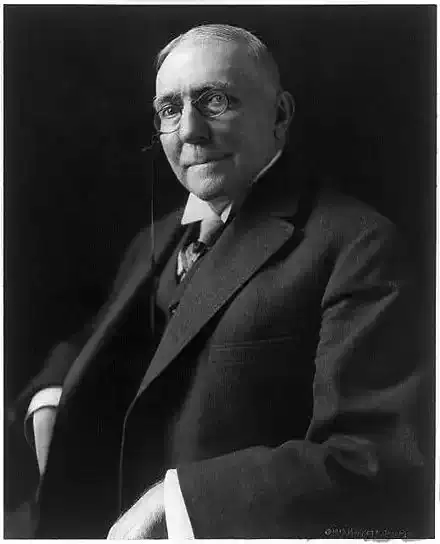
James Whitcomb Riley
Jack-In-The-Box
Jack-In-The-Box
_(Grandfather, musing.)_
In childish days! O memory,
You bring such curious things to me!--
Laughs to the lip--tears to the eye,
In looking on the gifts that lie
Like broken playthings scattered o'er
Imagination's nursery floor!
Did these old hands once click the key
That let 'Jack's' box-lid upward fly,
And that blear-eyed, fur-whiskered elf
Leap, as though frightened at himself,
And quiveringly lean and stare
At me, his jailer, laughing there?
A child then! Now--I only know
They call me very old; and so
They will not let me have my way,--
But uselessly I sit all day
Here by the chimney-jamb, and poke
The lazy fire, and smoke and smoke,
And watch the wreaths swoop up the flue,
And chuckle--ay, I often do--
Seeing again, all vividly,
Jack-in-the-box leap, as in glee
To see how much he looks like me!
... They talk. I can't hear what they say--
But I am glad, clean through and through
Sometimes, in fancying that they
Are saying, 'Sweet, that fancy strays
In age back to our childish days!'
_(Grandfather, musing.)_
In childish days! O memory,
You bring such curious things to me!--
Laughs to the lip--tears to the eye,
In looking on the gifts that lie
Like broken playthings scattered o'er
Imagination's nursery floor!
Did these old hands once click the key
That let 'Jack's' box-lid upward fly,
And that blear-eyed, fur-whiskered elf
Leap, as though frightened at himself,
And quiveringly lean and stare
At me, his jailer, laughing there?
A child then! Now--I only know
They call me very old; and so
They will not let me have my way,--
But uselessly I sit all day
Here by the chimney-jamb, and poke
The lazy fire, and smoke and smoke,
And watch the wreaths swoop up the flue,
And chuckle--ay, I often do--
Seeing again, all vividly,
Jack-in-the-box leap, as in glee
To see how much he looks like me!
... They talk. I can't hear what they say--
But I am glad, clean through and through
Sometimes, in fancying that they
Are saying, 'Sweet, that fancy strays
In age back to our childish days!'
280
James Whitcomb Riley
How John Quit The Farm
How John Quit The Farm
Nobody on the old farm here but Mother, me and John,
Except, of course, the extry he'p when harvest-time come on--
And then, I want to say to you, we _needed_ he'p about,
As you'd admit, ef you'd a-seen the way the crops turned out!
A better quarter-section, ner a richer soil warn't found
Than this-here old-home place o' ourn fer fifty miles around!--
The house was small--but plenty-big we found it from the day
That John--our only livin' son--packed up and went way.
You see, we tuck sich pride in John--his mother more 'n me-That's
natchurul; but _both_ of us was proud as proud could be;
Fer the boy, from a little chap, was most oncommon bright,
And seemed in work as well as play to take the same delight.
He allus went a-whistlin' round the place, as glad at heart
As robins up at five o'clock to git an airly start;
And many a time 'fore daylight Mother's waked me up to say-'
Jest listen, David!--listen!--Johnny's beat the birds to-day!'
High-sperited from boyhood, with a most inquirin' turn,--
He wanted to learn ever'thing on earth they was to learn:
He'd ast more plaguey questions in a mortal-minute here
Than his grandpap in Paradise could answer in a year!
And read! w'y, his own mother learnt him how to read and spell;
And 'The Childern of the Abbey'--w'y, he knowed that book as well
At fifteen as his parents!--and 'The Pilgrim's Progress,' too--
Jest knuckled down, the shaver did, and read 'em through and through!
At eighteen, Mother 'lowed the boy must have a better chance--
That we ort to educate him, under any circumstance;
And John he j'ined his mother, and they ding-donged and kep' on,
Tel I sent him off to school in town, half glad that he was gone.
But--I missed him--w'y of course I did!--The Fall and Winter through
I never built the kitchen-fire, er split a stick in two,
Er fed the stock, er butchered, er swung up a gambrel-pin,
But what I thought o' John, and wished that he was home agin.
He'd come, sometimes--on Sund'ys most--and stay the Sund'y out;
And on Thanksgivin'-Day he 'peared to like to be about:
But a change was workin' on him--he was stiller than before,
And did n't joke, ner laugh, ner sing and whistle any more.
And his talk was all so proper; and I noticed, with a sigh,
He was tryin' to raise side-whiskers, and had on a striped tie,
And a standin'-collar, ironed up as stiff and slick as bone;
And a breast-pin, and a watch and chain and plug-hat of his own.
But when Spring-weather opened out, and John was to come home
And he'p me through the season, I was glad to see him come;
But my happiness, that evening, with the settin' sun went down,
When he bragged of 'a position' that was offered him in town.
'But,' says I, 'you'll not accept it?' 'W'y, of course
I will,' says he.-'
This drudgin' on a farm,' he says, 'is not the life fer me;
I've set my stakes up higher,' he continued, light and gay,
'And town's the place fer me, and I'm a-goin' right away!'
And go he did!--his mother clingin' to him at the gate,
A-pleadin' and a-cryin'; but it hadn't any weight.
I was tranquiller, and told her 'twarn't no use to worry so,
And onclasped her arms from round his neck round mine--and let him go!
I felt a little bitter feelin' foolin' round about
The aidges of my conscience; but I didn't let it out;--
I simply retch out, trimbly-like, and tuck the boy's hand,
And though I did n't say a word, I knowed he'd understand.
And--well!--sence then the old home here was mighty lonesome, shore!
With me a-workin' in the field, and Mother at the door,
Her face ferever to'rds the town, and fadin' more and more---
Her only son nine miles away, a-clerkin' in a store!
The weeks and months dragged by us; and sometimes the boy would write
A letter to his mother, savin' that his work was light,
And not to feel oneasy about his health a bit--
Though his business was confinin', he was gittin' used to it.
And sometimes he would write and ast how _I_ was gittin' on,
And ef I had to pay out much fer he'p sence he was gone;
And how the hogs was doin', and the balance of the stock,
And talk on fer a page er two jest like he used to talk.
And he wrote, along 'fore harvest, that he guessed he would git home,
Fer business would, of course be dull in town.--But _didn't_ come:--
We got a postal later, sayin' when they had no trade
They filled the time 'invoicin' goods,' and that was why he staid.
And then he quit a-writin' altogether: Not a word--
Exceptin' what the neighbors brung who'd been to town and heard
What store John was clerkin' in, and went round to inquire
If they could buy their goods there less and sell their produce higher.
And so the Summer faded out, and Autumn wore away,
And a keener Winter never fetched around Thanksgivin'-Day!
The night before that day of thanks I'll never quite fergit,
The wind a-howlin' round the house--it makes me creepy yit!
And there set me and Mother--me a-twistin' at the prongs
Of a green scrub-ellum forestick with a vicious pair of tongs,
And Mother sayin', '_David! David!_' in a' undertone,
As though she thought that I was thinkin' bad-words unbeknown.
'I've dressed the turkey, David, fer to-morrow,' Mother said,
A-tryin' to wedge some pleasant subject in my stubborn head,-'
And the mince-meat I'm a-mixin' is perfection mighty nigh;
And the pound-cake is delicious-rich--' 'Who'll eat 'em?' I-says-I.
'The cramberries is drippin-sweet,' says Mother, runnin' on,
P'tendin' not to hear me;--'and somehow I thought of John
All the time they was a-jellin'--fer you know they allus was
His favour--he likes 'em so!' Says I, 'Well, s'pose he does?'
'Oh, nothin' much!' says Mother, with a quiet sort o' smile-'
This gentleman behind my cheer may tell you after while!'
And as I turned and looked around, some one riz up and leant
And put his arms round Mother's neck, and laughed in low content.
'It's _me_,' he says--'your fool-boy John, come back to shake your hand;
Set down with you, and talk with you, and make you understand
How dearer yit than all the world is this old home that we
Will spend Thanksgivin' in fer life--jest Mother, you and me!'
* * * * * *
Nobody on the old farm here but Mother, me and John,
Except of course the extry he'p, when harvest-time comes on;
And then, I want to say to you, we _need_ sich he'p about,
As you'd admit, ef you could see the way the crops turns out!
Nobody on the old farm here but Mother, me and John,
Except, of course, the extry he'p when harvest-time come on--
And then, I want to say to you, we _needed_ he'p about,
As you'd admit, ef you'd a-seen the way the crops turned out!
A better quarter-section, ner a richer soil warn't found
Than this-here old-home place o' ourn fer fifty miles around!--
The house was small--but plenty-big we found it from the day
That John--our only livin' son--packed up and went way.
You see, we tuck sich pride in John--his mother more 'n me-That's
natchurul; but _both_ of us was proud as proud could be;
Fer the boy, from a little chap, was most oncommon bright,
And seemed in work as well as play to take the same delight.
He allus went a-whistlin' round the place, as glad at heart
As robins up at five o'clock to git an airly start;
And many a time 'fore daylight Mother's waked me up to say-'
Jest listen, David!--listen!--Johnny's beat the birds to-day!'
High-sperited from boyhood, with a most inquirin' turn,--
He wanted to learn ever'thing on earth they was to learn:
He'd ast more plaguey questions in a mortal-minute here
Than his grandpap in Paradise could answer in a year!
And read! w'y, his own mother learnt him how to read and spell;
And 'The Childern of the Abbey'--w'y, he knowed that book as well
At fifteen as his parents!--and 'The Pilgrim's Progress,' too--
Jest knuckled down, the shaver did, and read 'em through and through!
At eighteen, Mother 'lowed the boy must have a better chance--
That we ort to educate him, under any circumstance;
And John he j'ined his mother, and they ding-donged and kep' on,
Tel I sent him off to school in town, half glad that he was gone.
But--I missed him--w'y of course I did!--The Fall and Winter through
I never built the kitchen-fire, er split a stick in two,
Er fed the stock, er butchered, er swung up a gambrel-pin,
But what I thought o' John, and wished that he was home agin.
He'd come, sometimes--on Sund'ys most--and stay the Sund'y out;
And on Thanksgivin'-Day he 'peared to like to be about:
But a change was workin' on him--he was stiller than before,
And did n't joke, ner laugh, ner sing and whistle any more.
And his talk was all so proper; and I noticed, with a sigh,
He was tryin' to raise side-whiskers, and had on a striped tie,
And a standin'-collar, ironed up as stiff and slick as bone;
And a breast-pin, and a watch and chain and plug-hat of his own.
But when Spring-weather opened out, and John was to come home
And he'p me through the season, I was glad to see him come;
But my happiness, that evening, with the settin' sun went down,
When he bragged of 'a position' that was offered him in town.
'But,' says I, 'you'll not accept it?' 'W'y, of course
I will,' says he.-'
This drudgin' on a farm,' he says, 'is not the life fer me;
I've set my stakes up higher,' he continued, light and gay,
'And town's the place fer me, and I'm a-goin' right away!'
And go he did!--his mother clingin' to him at the gate,
A-pleadin' and a-cryin'; but it hadn't any weight.
I was tranquiller, and told her 'twarn't no use to worry so,
And onclasped her arms from round his neck round mine--and let him go!
I felt a little bitter feelin' foolin' round about
The aidges of my conscience; but I didn't let it out;--
I simply retch out, trimbly-like, and tuck the boy's hand,
And though I did n't say a word, I knowed he'd understand.
And--well!--sence then the old home here was mighty lonesome, shore!
With me a-workin' in the field, and Mother at the door,
Her face ferever to'rds the town, and fadin' more and more---
Her only son nine miles away, a-clerkin' in a store!
The weeks and months dragged by us; and sometimes the boy would write
A letter to his mother, savin' that his work was light,
And not to feel oneasy about his health a bit--
Though his business was confinin', he was gittin' used to it.
And sometimes he would write and ast how _I_ was gittin' on,
And ef I had to pay out much fer he'p sence he was gone;
And how the hogs was doin', and the balance of the stock,
And talk on fer a page er two jest like he used to talk.
And he wrote, along 'fore harvest, that he guessed he would git home,
Fer business would, of course be dull in town.--But _didn't_ come:--
We got a postal later, sayin' when they had no trade
They filled the time 'invoicin' goods,' and that was why he staid.
And then he quit a-writin' altogether: Not a word--
Exceptin' what the neighbors brung who'd been to town and heard
What store John was clerkin' in, and went round to inquire
If they could buy their goods there less and sell their produce higher.
And so the Summer faded out, and Autumn wore away,
And a keener Winter never fetched around Thanksgivin'-Day!
The night before that day of thanks I'll never quite fergit,
The wind a-howlin' round the house--it makes me creepy yit!
And there set me and Mother--me a-twistin' at the prongs
Of a green scrub-ellum forestick with a vicious pair of tongs,
And Mother sayin', '_David! David!_' in a' undertone,
As though she thought that I was thinkin' bad-words unbeknown.
'I've dressed the turkey, David, fer to-morrow,' Mother said,
A-tryin' to wedge some pleasant subject in my stubborn head,-'
And the mince-meat I'm a-mixin' is perfection mighty nigh;
And the pound-cake is delicious-rich--' 'Who'll eat 'em?' I-says-I.
'The cramberries is drippin-sweet,' says Mother, runnin' on,
P'tendin' not to hear me;--'and somehow I thought of John
All the time they was a-jellin'--fer you know they allus was
His favour--he likes 'em so!' Says I, 'Well, s'pose he does?'
'Oh, nothin' much!' says Mother, with a quiet sort o' smile-'
This gentleman behind my cheer may tell you after while!'
And as I turned and looked around, some one riz up and leant
And put his arms round Mother's neck, and laughed in low content.
'It's _me_,' he says--'your fool-boy John, come back to shake your hand;
Set down with you, and talk with you, and make you understand
How dearer yit than all the world is this old home that we
Will spend Thanksgivin' in fer life--jest Mother, you and me!'
* * * * * *
Nobody on the old farm here but Mother, me and John,
Except of course the extry he'p, when harvest-time comes on;
And then, I want to say to you, we _need_ sich he'p about,
As you'd admit, ef you could see the way the crops turns out!
330
James Whitcomb Riley
Harlie
Harlie
Fold the little waxen hands
Lightly. Let your warmest tears
Speak regrets, but never fears,--
Heaven understands!
Let the sad heart, o'er the tomb,
Lift again and burst in bloom
Fragrant with a prayer as sweet
As the lily at your feet.
Bend and kiss the folded eyes--
They are only feigning sleep
While their truant glances peep
Into Paradise.
See, the face, though cold and white,
Holds a hint of some delight
E'en with Death, whose finger-tips
Rest upon the frozen lips.
When, within the years to come,
Vanished echoes live once more--
Pattering footsteps on the floor,
And the sounds of home,--
Let your arms in fancy fold
Little Harlie as of old--
As of old and as he waits
At the City's golden gates.
Fold the little waxen hands
Lightly. Let your warmest tears
Speak regrets, but never fears,--
Heaven understands!
Let the sad heart, o'er the tomb,
Lift again and burst in bloom
Fragrant with a prayer as sweet
As the lily at your feet.
Bend and kiss the folded eyes--
They are only feigning sleep
While their truant glances peep
Into Paradise.
See, the face, though cold and white,
Holds a hint of some delight
E'en with Death, whose finger-tips
Rest upon the frozen lips.
When, within the years to come,
Vanished echoes live once more--
Pattering footsteps on the floor,
And the sounds of home,--
Let your arms in fancy fold
Little Harlie as of old--
As of old and as he waits
At the City's golden gates.
283
James Whitcomb Riley
Green Fields And Running Brooks
Green Fields And Running Brooks
Ho! green fields and running brooks!
Knotted strings and fishing-hooks
Of the truant, stealing down
Weedy backways of the town.
Where the sunshine overlooks,
By green fields and running brooks,
All intruding guests of chance
With a golden tolerance,
Cooing doves, or pensive pair
Of picnickers, straying there--
By green fields and running brooks,
Sylvan shades and mossy nooks!
And--O Dreamer of the Days,
Murmurer of roundelays
All unsung of words or books,
Sing green fields and running brooks!
Ho! green fields and running brooks!
Knotted strings and fishing-hooks
Of the truant, stealing down
Weedy backways of the town.
Where the sunshine overlooks,
By green fields and running brooks,
All intruding guests of chance
With a golden tolerance,
Cooing doves, or pensive pair
Of picnickers, straying there--
By green fields and running brooks,
Sylvan shades and mossy nooks!
And--O Dreamer of the Days,
Murmurer of roundelays
All unsung of words or books,
Sing green fields and running brooks!
266
James Whitcomb Riley
Friday Afternoon
Friday Afternoon
To William Morris Pierson
[1868-1870]
Of the wealth of facts and fancies
That our memories may recall,
The old school-day romances
Are the dearest, after all!--.
When some sweet thought revises
The half-forgotten tune
That opened 'Exercises'
On 'Friday Afternoon.'
We seem to hear the clicking
Of the pencil and the pen,
And the solemn, ceaseless ticking
Of the timepiece ticking then;
And we note the watchful master,
As he waves the warning rod,
With our own heart beating faster
Than the boy's who threw the wad.
Some little hand uplifted,
And the creaking of a shoe:--
A problem left unsifted
For the teacher's hand to do:
The murmured hum of learning--
And the flutter of a book;
The smell of something burning,
And the school's inquiring look.
The bashful boy in blushes;
And the girl, with glancing eyes,
Who hides her smiles, and hushes
The laugh about to rise,--
Then, with a quick invention,
Assumes a serious face,
To meet the words, 'Attention!
Every scholar in his place!'
The opening song, page 20.--
Ah! dear old 'Golden Wreath,'
You willed your sweets in plenty;
And some who look beneath
The leaves of Time will linger,
And loving tears will start,
As Fancy trails her finger
O'er the index of the heart.
'Good News from Home'--We hear it
Welling tremulous, yet clear
And holy as the spirit
Of the song we used to hear-
'Good news for me' (A throbbing
And an aching melody)-'
Has come across the'--(sobbing,
Yea, and salty) 'dark blue sea!'
Or the paean 'Scotland's burning!'
With its mighty surge and swell
Of chorus, still returning
To its universal yell--
Till we're almost glad to drop to
Something sad and full of pain--
And 'Skip verse three,' and stop, too,
Ere our hearts are broke again.
Then 'the big girls'' compositions,
With their doubt, and hope, and glow
Of heart and face,--conditions
Of 'the big boys'--even so,--
When themes of 'Spring,' and 'Summer'
And of 'Fall,' and 'Winter-time'
Droop our heads and hold us dumber
Than the sleigh-bell's fancied chime.
Elocutionary science-(
Still in changeless infancy!)--
With its 'Cataline's Defiance,'
And 'The Banner of the Free':
Or, lured from Grandma's attic,
A ramshackle 'rocker' there,
Adds a skreek of the dramatic
To the poet's 'Old Arm-Chair.'
Or the 'Speech of Logan' shifts us
From the pathos, to the fire;
And Tell (with Gessler) lifts us
Many noble notches higher.--
Till a youngster, far from sunny,
With sad eyes of watery blue,
Winds up with something 'funny,'
Like 'Cock-a-doodle-do!'
Then a dialogue--selected
For its realistic worth:--
The Cruel Boy detected
With a turtle turned to earth
Back downward; and, in pleading,
The Good Boy--strangely gay
At such a sad proceeding--
Says, 'Turn him over, pray!'
So the exercises taper
Through gradations of delight
To the reading of 'The Paper,'
Which is entertaining--quite!
For it goes ahead and mentions
'If a certain Mr. O.
Has serious intentions
That he ought to tell her so.'
It also 'Asks permission
To intimate to 'John'
The dubious condition
Of the ground he's standing on';
And, dropping the suggestion
To 'mind what he's about,'
It stuns him with the question:
'Does his mother know he's out?'
And among the contributions
To this 'Academic Press'
Are 'Versified Effusions'
By--'Our lady editress'--
Which fact is proudly stated
By the CHIEF of the concern,-'
Though the verse communicated
Bears the pen-name 'Fanny Fern.' '
. . . . . .
When all has been recited,
And the teacher's bell is heard,
And visitors, invited,
Have dropped a kindly word,
A hush of holy feeling
Falls down upon us there,
As though the day were kneeling,
With the twilight for the prayer.
. . . . . .
Midst the wealth of facts and fancies
That our memories may recall,
Thus the old school-day romances
Are the dearest, after all!--
When some sweet thought revises
The half-forgotten tune
That opened 'Exercises,'
On 'Friday Afternoon.'
To William Morris Pierson
[1868-1870]
Of the wealth of facts and fancies
That our memories may recall,
The old school-day romances
Are the dearest, after all!--.
When some sweet thought revises
The half-forgotten tune
That opened 'Exercises'
On 'Friday Afternoon.'
We seem to hear the clicking
Of the pencil and the pen,
And the solemn, ceaseless ticking
Of the timepiece ticking then;
And we note the watchful master,
As he waves the warning rod,
With our own heart beating faster
Than the boy's who threw the wad.
Some little hand uplifted,
And the creaking of a shoe:--
A problem left unsifted
For the teacher's hand to do:
The murmured hum of learning--
And the flutter of a book;
The smell of something burning,
And the school's inquiring look.
The bashful boy in blushes;
And the girl, with glancing eyes,
Who hides her smiles, and hushes
The laugh about to rise,--
Then, with a quick invention,
Assumes a serious face,
To meet the words, 'Attention!
Every scholar in his place!'
The opening song, page 20.--
Ah! dear old 'Golden Wreath,'
You willed your sweets in plenty;
And some who look beneath
The leaves of Time will linger,
And loving tears will start,
As Fancy trails her finger
O'er the index of the heart.
'Good News from Home'--We hear it
Welling tremulous, yet clear
And holy as the spirit
Of the song we used to hear-
'Good news for me' (A throbbing
And an aching melody)-'
Has come across the'--(sobbing,
Yea, and salty) 'dark blue sea!'
Or the paean 'Scotland's burning!'
With its mighty surge and swell
Of chorus, still returning
To its universal yell--
Till we're almost glad to drop to
Something sad and full of pain--
And 'Skip verse three,' and stop, too,
Ere our hearts are broke again.
Then 'the big girls'' compositions,
With their doubt, and hope, and glow
Of heart and face,--conditions
Of 'the big boys'--even so,--
When themes of 'Spring,' and 'Summer'
And of 'Fall,' and 'Winter-time'
Droop our heads and hold us dumber
Than the sleigh-bell's fancied chime.
Elocutionary science-(
Still in changeless infancy!)--
With its 'Cataline's Defiance,'
And 'The Banner of the Free':
Or, lured from Grandma's attic,
A ramshackle 'rocker' there,
Adds a skreek of the dramatic
To the poet's 'Old Arm-Chair.'
Or the 'Speech of Logan' shifts us
From the pathos, to the fire;
And Tell (with Gessler) lifts us
Many noble notches higher.--
Till a youngster, far from sunny,
With sad eyes of watery blue,
Winds up with something 'funny,'
Like 'Cock-a-doodle-do!'
Then a dialogue--selected
For its realistic worth:--
The Cruel Boy detected
With a turtle turned to earth
Back downward; and, in pleading,
The Good Boy--strangely gay
At such a sad proceeding--
Says, 'Turn him over, pray!'
So the exercises taper
Through gradations of delight
To the reading of 'The Paper,'
Which is entertaining--quite!
For it goes ahead and mentions
'If a certain Mr. O.
Has serious intentions
That he ought to tell her so.'
It also 'Asks permission
To intimate to 'John'
The dubious condition
Of the ground he's standing on';
And, dropping the suggestion
To 'mind what he's about,'
It stuns him with the question:
'Does his mother know he's out?'
And among the contributions
To this 'Academic Press'
Are 'Versified Effusions'
By--'Our lady editress'--
Which fact is proudly stated
By the CHIEF of the concern,-'
Though the verse communicated
Bears the pen-name 'Fanny Fern.' '
. . . . . .
When all has been recited,
And the teacher's bell is heard,
And visitors, invited,
Have dropped a kindly word,
A hush of holy feeling
Falls down upon us there,
As though the day were kneeling,
With the twilight for the prayer.
. . . . . .
Midst the wealth of facts and fancies
That our memories may recall,
Thus the old school-day romances
Are the dearest, after all!--
When some sweet thought revises
The half-forgotten tune
That opened 'Exercises,'
On 'Friday Afternoon.'
341
James Whitcomb Riley
Fool-Youngens
Fool-Youngens
Me an' Bert an' Minnie-Belle
Knows a joke, an' we won't tell!
No, we don't--'cause we don't know
_Why_ we got to laughin' so;
But we got to laughin' so,
'We ist kep' a-laughin'.
Wind wuz blowin' in the tree--
An' wuz only ist us three
Playin' there; an' ever' one
Ketched each other, like we done,
Squintin' up there at the sun
Like we wuz a-laughin'.
Nothin' funny anyway;
But I laughed, an' so did they--
An' we all three laughed, an' nen
Squint' our eyes an' laugh' again:
Ner we didn't ist _p'ten'_--
We wuz _shore-'nough_ laughin'.
'We ist laugh' an' laugh', tel Bert
Say he _can't_ quit an' it hurt.
Nen I _howl_, an' Minnie-Belle
She tear up the grass a spell
An' ist stop her yeers an' _yell_
Like she'd _die_ a-laughin'.
Never sich fool-youngens yit!
Nothin' funny,--not a bit!--
But we laugh' so; tel we whoop'
Purt'-nigh like we have the croup--
All so hoarse we'd wheeze an' whoop
An' ist _choke_ a-laughin'.
Me an' Bert an' Minnie-Belle
Knows a joke, an' we won't tell!
No, we don't--'cause we don't know
_Why_ we got to laughin' so;
But we got to laughin' so,
'We ist kep' a-laughin'.
Wind wuz blowin' in the tree--
An' wuz only ist us three
Playin' there; an' ever' one
Ketched each other, like we done,
Squintin' up there at the sun
Like we wuz a-laughin'.
Nothin' funny anyway;
But I laughed, an' so did they--
An' we all three laughed, an' nen
Squint' our eyes an' laugh' again:
Ner we didn't ist _p'ten'_--
We wuz _shore-'nough_ laughin'.
'We ist laugh' an' laugh', tel Bert
Say he _can't_ quit an' it hurt.
Nen I _howl_, an' Minnie-Belle
She tear up the grass a spell
An' ist stop her yeers an' _yell_
Like she'd _die_ a-laughin'.
Never sich fool-youngens yit!
Nothin' funny,--not a bit!--
But we laugh' so; tel we whoop'
Purt'-nigh like we have the croup--
All so hoarse we'd wheeze an' whoop
An' ist _choke_ a-laughin'.
316
James Whitcomb Riley
Farmer Whipple--Bachelor
Farmer Whipple--Bachelor
It's a mystery to see me--a man o' fifty-four,
Who's lived a cross old bachelor fer thirty year' and more-A-
lookin' glad and smilin'! And they's none o' you can say
That you can guess the reason why I feel so good to-day!
I must tell you all about it! But I'll have to deviate
A little in beginnin', so's to set the matter straight
As to how it comes to happen that I never took a wife--
Kindo' 'crawfish' from the Present to the Springtime of my life!
I was brought up in the country: Of a family of five--
Three brothers and a sister--I'm the only one alive,--
Fer they all died little babies; and 'twas one o' Mother's ways,
You know, to want a daughter; so she took a girl to raise.
The sweetest little thing she was, with rosy cheeks, and fat--
We was little chunks o' shavers then about as high as that!
But someway we sort a' SUITED-like! and Mother she'd declare
She never laid her eyes on a more lovin' pair
Than WE was! So we growed up side by side fer thirteen year',
And every hour of it she growed to me more dear!-W'y,
even Father's dyin', as he did, I do believe
Warn't more affectin' to me than it was to see her grieve!
I was then a lad o' twenty; and I felt a flash o' pride
In thinkin' all depended on ME now to pervide
Fer Mother and fer Mary; and I went about the place
With sleeves rolled up--and workin', with a mighty smilin'
face.--
Fer SOMEPIN' ELSE was workin'! but not a word I said
Of a certain sort o' notion that was runnin' through my head,-'
Some day I'd maybe marry, and a BROTHER'S love was one
Thing--a LOVER'S was another!' was the way the notion run!
I remember onc't in harvest, when the 'cradle-in' ' was done,
(When the harvest of my summers mounted up to twenty-one),
I was ridin' home with Mary at the closin' o' the day-A-
chawin' straws and thinkin', in a lover's lazy way!
And Mary's cheeks was burnin' like the sunset down the lane:
I noticed she was thinkin', too, and ast her to explain.
Well--when she turned and KISSED ME, WITH HER ARMS AROUND
ME--LAW!
I'd a bigger load o' Heaven than I had a load o' straw!
I don't p'tend to learnin', but I'll tell you what's a fac',
They's a mighty truthful sayin' somers in a' almanac--
Er SOMERS--'bout 'puore happiness'--perhaps some folks'll laugh
At the idy--'only lastin' jest two seconds and a half.'-
But it's jest as true as preachin'!--fer that was a SISTER'S
kiss,
And a sister's lovin' confidence a-tellin' to me this:-'
SHE was happy, BEIN' PROMISED TO THE SON O' FARMER BROWN.'--
And my feelin's struck a pardnership with sunset and went down!
I don't know HOW I acted, and I don't know WHAT I said,--
Fer my heart seemed jest a-turnin' to an ice-cold lump o' lead;
And the hosses kind o'glimmered before me in the road,
And the lines fell from my fingers--And that was all I knowed-
Fer--well, I don't know HOW long--They's a dim rememberence
Of a sound o' snortin' horses, and a stake-and-ridered fence
A-whizzin' past, and wheat-sheaves a-dancin' in the air,
And Mary screamin' 'Murder!' and a-runnin' up to where
_I_ was layin' by the roadside, and the wagon upside down
A-leanin' on the gate-post, with the wheels a-whirlin' roun'!
And I tried to raise and meet her, but I couldn't, with a vague
Sort o' notion comin' to me that I had a broken leg.
Well, the women nussed me through it; but many a time I'd sigh
As I'd keep a-gittin' better instid o' goin' to die,
And wonder what was left ME worth livin' fer below,
When the girl I loved was married to another, don't you know!
And my thoughts was as rebellious as the folks was good and kind
When Brown and Mary married--Railly must 'a' been my MIND
Was kind o' out o' kilter!--fer I hated Brown, you see,
Worse'n PIZEN--and the feller whittled crutches out fer ME--
And done a thousand little ac's o' kindness and respec'--
And me a-wishin' all the time that I could break his neck!
My relief was like a mourner's when the funeral is done
When they moved to Illinois in the Fall o' Forty-one.
Then I went to work in airnest--I had nothin' much in view
But to drownd out rickollections--and it kep' me busy, too!
But I slowly thrived and prospered, tel Mother used to say
She expected yit to see me a wealthy man some day.
Then I'd think how little MONEY was, compared to happiness--
And who'd be left to use it when I died I couldn't guess!
But I've still kep' speculatin' and a-gainin' year by year,
Tel I'm payin' half the taxes in the county, mighty near!
Well!--A year ago er better, a letter comes to hand
Astin' how I'd like to dicker fer some Illinois land-'
The feller that had owned it,' it went ahead to state,
'Had jest deceased, insolvent, leavin' chance to speculate,'--
And then it closed by sayin' that I'd 'better come and see.'-
I'd never been West, anyhow--a'most too wild fer ME,
I'd allus had a notion; but a lawyer here in town
Said I'd find myself mistakend when I come to look around.
So I bids good-by to Mother, and I jumps aboard the train,
A-thinkin' what I'd bring her when I come back home again--
And ef she'd had an idy what the present was to be,
I think it's more'n likely she'd 'a' went along with me!
Cars is awful tejus ridin', fer all they go so fast!
But finally they called out my stoppin'-place at last:
And that night, at the tavern, I dreamp' I was a train
O' cars, and SKEERED at somepin', runnin' down a country lane!
Well, in the morning airly--after huntin' up the man--
The lawyer who was wantin' to swap the piece o' land--
We started fer the country; and I ast the history
Of the farm--its former owner--and so forth, etcetery!
And--well--it was interESTin'--I su'prised him, I suppose,
By the loud and frequent manner in which I blowed my nose!--
But his su'prise was greater, and it made him wonder more,
When I kissed and hugged the widder when she met us at the
door!--
IT WAS MARY: . . . They's a feelin' a-hidin' down in here--
Of course I can't explain it, ner ever make it clear.--
It was with us in that meetin', I don't want you to fergit!
And it makes me kind o'nervous when I think about it yit!
I BOUGHT that farm, and DEEDED it, afore I left the town
With 'title clear to mansions in the skies,' to Mary Brown!
And fu'thermore, I took her and the CHILDERN--fer you see,
They'd never seed their Grandma--and I fetched 'em home with me.
So NOW you've got an idy why a man o' fifty-four,
Who's lived a cross old bachelor fer thirty year' and more
Is a-lookin' glad and smilin'!--And I've jest come into town
To git a pair o' license fer to MARRY Mary Brown.
It's a mystery to see me--a man o' fifty-four,
Who's lived a cross old bachelor fer thirty year' and more-A-
lookin' glad and smilin'! And they's none o' you can say
That you can guess the reason why I feel so good to-day!
I must tell you all about it! But I'll have to deviate
A little in beginnin', so's to set the matter straight
As to how it comes to happen that I never took a wife--
Kindo' 'crawfish' from the Present to the Springtime of my life!
I was brought up in the country: Of a family of five--
Three brothers and a sister--I'm the only one alive,--
Fer they all died little babies; and 'twas one o' Mother's ways,
You know, to want a daughter; so she took a girl to raise.
The sweetest little thing she was, with rosy cheeks, and fat--
We was little chunks o' shavers then about as high as that!
But someway we sort a' SUITED-like! and Mother she'd declare
She never laid her eyes on a more lovin' pair
Than WE was! So we growed up side by side fer thirteen year',
And every hour of it she growed to me more dear!-W'y,
even Father's dyin', as he did, I do believe
Warn't more affectin' to me than it was to see her grieve!
I was then a lad o' twenty; and I felt a flash o' pride
In thinkin' all depended on ME now to pervide
Fer Mother and fer Mary; and I went about the place
With sleeves rolled up--and workin', with a mighty smilin'
face.--
Fer SOMEPIN' ELSE was workin'! but not a word I said
Of a certain sort o' notion that was runnin' through my head,-'
Some day I'd maybe marry, and a BROTHER'S love was one
Thing--a LOVER'S was another!' was the way the notion run!
I remember onc't in harvest, when the 'cradle-in' ' was done,
(When the harvest of my summers mounted up to twenty-one),
I was ridin' home with Mary at the closin' o' the day-A-
chawin' straws and thinkin', in a lover's lazy way!
And Mary's cheeks was burnin' like the sunset down the lane:
I noticed she was thinkin', too, and ast her to explain.
Well--when she turned and KISSED ME, WITH HER ARMS AROUND
ME--LAW!
I'd a bigger load o' Heaven than I had a load o' straw!
I don't p'tend to learnin', but I'll tell you what's a fac',
They's a mighty truthful sayin' somers in a' almanac--
Er SOMERS--'bout 'puore happiness'--perhaps some folks'll laugh
At the idy--'only lastin' jest two seconds and a half.'-
But it's jest as true as preachin'!--fer that was a SISTER'S
kiss,
And a sister's lovin' confidence a-tellin' to me this:-'
SHE was happy, BEIN' PROMISED TO THE SON O' FARMER BROWN.'--
And my feelin's struck a pardnership with sunset and went down!
I don't know HOW I acted, and I don't know WHAT I said,--
Fer my heart seemed jest a-turnin' to an ice-cold lump o' lead;
And the hosses kind o'glimmered before me in the road,
And the lines fell from my fingers--And that was all I knowed-
Fer--well, I don't know HOW long--They's a dim rememberence
Of a sound o' snortin' horses, and a stake-and-ridered fence
A-whizzin' past, and wheat-sheaves a-dancin' in the air,
And Mary screamin' 'Murder!' and a-runnin' up to where
_I_ was layin' by the roadside, and the wagon upside down
A-leanin' on the gate-post, with the wheels a-whirlin' roun'!
And I tried to raise and meet her, but I couldn't, with a vague
Sort o' notion comin' to me that I had a broken leg.
Well, the women nussed me through it; but many a time I'd sigh
As I'd keep a-gittin' better instid o' goin' to die,
And wonder what was left ME worth livin' fer below,
When the girl I loved was married to another, don't you know!
And my thoughts was as rebellious as the folks was good and kind
When Brown and Mary married--Railly must 'a' been my MIND
Was kind o' out o' kilter!--fer I hated Brown, you see,
Worse'n PIZEN--and the feller whittled crutches out fer ME--
And done a thousand little ac's o' kindness and respec'--
And me a-wishin' all the time that I could break his neck!
My relief was like a mourner's when the funeral is done
When they moved to Illinois in the Fall o' Forty-one.
Then I went to work in airnest--I had nothin' much in view
But to drownd out rickollections--and it kep' me busy, too!
But I slowly thrived and prospered, tel Mother used to say
She expected yit to see me a wealthy man some day.
Then I'd think how little MONEY was, compared to happiness--
And who'd be left to use it when I died I couldn't guess!
But I've still kep' speculatin' and a-gainin' year by year,
Tel I'm payin' half the taxes in the county, mighty near!
Well!--A year ago er better, a letter comes to hand
Astin' how I'd like to dicker fer some Illinois land-'
The feller that had owned it,' it went ahead to state,
'Had jest deceased, insolvent, leavin' chance to speculate,'--
And then it closed by sayin' that I'd 'better come and see.'-
I'd never been West, anyhow--a'most too wild fer ME,
I'd allus had a notion; but a lawyer here in town
Said I'd find myself mistakend when I come to look around.
So I bids good-by to Mother, and I jumps aboard the train,
A-thinkin' what I'd bring her when I come back home again--
And ef she'd had an idy what the present was to be,
I think it's more'n likely she'd 'a' went along with me!
Cars is awful tejus ridin', fer all they go so fast!
But finally they called out my stoppin'-place at last:
And that night, at the tavern, I dreamp' I was a train
O' cars, and SKEERED at somepin', runnin' down a country lane!
Well, in the morning airly--after huntin' up the man--
The lawyer who was wantin' to swap the piece o' land--
We started fer the country; and I ast the history
Of the farm--its former owner--and so forth, etcetery!
And--well--it was interESTin'--I su'prised him, I suppose,
By the loud and frequent manner in which I blowed my nose!--
But his su'prise was greater, and it made him wonder more,
When I kissed and hugged the widder when she met us at the
door!--
IT WAS MARY: . . . They's a feelin' a-hidin' down in here--
Of course I can't explain it, ner ever make it clear.--
It was with us in that meetin', I don't want you to fergit!
And it makes me kind o'nervous when I think about it yit!
I BOUGHT that farm, and DEEDED it, afore I left the town
With 'title clear to mansions in the skies,' to Mary Brown!
And fu'thermore, I took her and the CHILDERN--fer you see,
They'd never seed their Grandma--and I fetched 'em home with me.
So NOW you've got an idy why a man o' fifty-four,
Who's lived a cross old bachelor fer thirty year' and more
Is a-lookin' glad and smilin'!--And I've jest come into town
To git a pair o' license fer to MARRY Mary Brown.
374
James Whitcomb Riley
Company Manners
Company Manners
When Bess gave her Dollies a Tea, said she,-'
It's unpolite, when they's Company,
To say you've drinked _two_ cups, you see,--
But say you've drinked _a couple_ of tea.'
When Bess gave her Dollies a Tea, said she,-'
It's unpolite, when they's Company,
To say you've drinked _two_ cups, you see,--
But say you've drinked _a couple_ of tea.'
299
James Whitcomb Riley
An Out-Worn Sappho
An Out-Worn Sappho
How tired I am! I sink down all alone
Here by the wayside of the Present. Lo,
Even as a child I hide my face and moan--
A little girl that may no farther go;
The path above me only seems to grow
More rugged, climbing still, and ever briered
With keener thorns of pain than these below;
And O the bleeding feet that falter so
And are so very tired!
Why, I have journeyed from the far-off Lands
Of Babyhood--where baby-lilies blew
Their trumpets in mine ears, and filled my hands
With treasures of perfume and honey-dew,
And where the orchard shadows ever drew
Their cool arms round me when my cheeks were fired
With too much joy, and lulled mine eyelids to,
And only let the starshine trickle through
In sprays, when I was tired!
Yet I remember, when the butterfly
Went flickering about me like a flame
That quenched itself in roses suddenly,
How oft I wished that _I_ might blaze the same,
And in some rose-wreath nestle with my name,
While all the world looked on it and admired.--
Poor moth!--Along my wavering flight toward fame
The winds drive backward, and my wings are lame
And broken, bruised and tired!
I hardly know the path from those old times;
I know at first it was a smoother one
Than this that hurries past me now, and climbs
So high, its far cliffs even hide the sun
And shroud in gloom my journey scarce begun.
I could not do quite all the world required--
I could not do quite all I should have done,
And in my eagerness I have outrun
My strength--and I am tired....
Just tired! But when of old I had the stay
Of mother-hands, O very sweet indeed
It was to dream that all the weary way
I should but follow where I now must lead--
For long ago they left me in my need,
And, groping on alone, I tripped and mired
Among rank grasses where the serpents breed
In knotted coils about the feet of speed.--
There first it was I tired.
And yet I staggered on, and bore my load
Right gallantly: The sun, in summer-time,
In lazy belts came slipping down the road
To woo me on, with many a glimmering rhyme
Rained from the golden rim of some fair clime,
That, hovering beyond the clouds, inspired
My failing heart with fancies so sublime
I half forgot my path of dust and grime,
Though I was growing tired.
And there were many voices cheering me:
I listened to sweet praises where the wind
Went laughing o'er my shoulders gleefully
And scattering my love-songs far behind;--
Until, at last, I thought the world so kind--
So rich in all my yearning soul desired--
So generous--so loyally inclined,
I grew to love and trust it.... I was blind--
Yea, blind as I was tired!
And yet one hand held me in creature-touch:
And O, how fair it was, how true and strong,
How it did hold my heart up like a crutch,
Till, in my dreams, I joyed to walk along
The toilsome way, contented with a song-'
Twas all of earthly things I had acquired,
And 'twas enough, I feigned, or right or wrong,
Since, binding me to man--a mortal thong--
It stayed me, growing tired....
Yea, I had e'en resigned me to the strait
Of earthly rulership--had bowed my head
Acceptant of the master-mind--the great
One lover--lord of all,--the perfected
Kiss-comrade of my soul;--had stammering said
My prayers to him;--all--all that he desired
I rendered sacredly as we were wed.-Nay--
nay!--'twas but a myth I worshipped.--
And--God of love!--how tired!
For, O my friends, to lose the latest grasp--
To feel the last hope slipping from its hold--
To feel the one fond hand within your clasp
Fall slack, and loosen with a touch so cold
Its pressure may not warm you as of old
Before the light of love had thus expired--
To know your tears are worthless, though they rolled
Their torrents out in molten drops of gold.-God's
pity! I am tired!
And I must rest.--Yet do not say 'She _died_,'
In speaking of me, sleeping here alone.
I kiss the grassy grave I sink beside,
And close mine eyes in slumber all mine own:
Hereafter I shall neither sob nor moan
Nor murmur one complaint;--all I desired,
And failed in life to find, will now be known--
So let me dream. Good night! And on the stone
Say simply: She was tired.
How tired I am! I sink down all alone
Here by the wayside of the Present. Lo,
Even as a child I hide my face and moan--
A little girl that may no farther go;
The path above me only seems to grow
More rugged, climbing still, and ever briered
With keener thorns of pain than these below;
And O the bleeding feet that falter so
And are so very tired!
Why, I have journeyed from the far-off Lands
Of Babyhood--where baby-lilies blew
Their trumpets in mine ears, and filled my hands
With treasures of perfume and honey-dew,
And where the orchard shadows ever drew
Their cool arms round me when my cheeks were fired
With too much joy, and lulled mine eyelids to,
And only let the starshine trickle through
In sprays, when I was tired!
Yet I remember, when the butterfly
Went flickering about me like a flame
That quenched itself in roses suddenly,
How oft I wished that _I_ might blaze the same,
And in some rose-wreath nestle with my name,
While all the world looked on it and admired.--
Poor moth!--Along my wavering flight toward fame
The winds drive backward, and my wings are lame
And broken, bruised and tired!
I hardly know the path from those old times;
I know at first it was a smoother one
Than this that hurries past me now, and climbs
So high, its far cliffs even hide the sun
And shroud in gloom my journey scarce begun.
I could not do quite all the world required--
I could not do quite all I should have done,
And in my eagerness I have outrun
My strength--and I am tired....
Just tired! But when of old I had the stay
Of mother-hands, O very sweet indeed
It was to dream that all the weary way
I should but follow where I now must lead--
For long ago they left me in my need,
And, groping on alone, I tripped and mired
Among rank grasses where the serpents breed
In knotted coils about the feet of speed.--
There first it was I tired.
And yet I staggered on, and bore my load
Right gallantly: The sun, in summer-time,
In lazy belts came slipping down the road
To woo me on, with many a glimmering rhyme
Rained from the golden rim of some fair clime,
That, hovering beyond the clouds, inspired
My failing heart with fancies so sublime
I half forgot my path of dust and grime,
Though I was growing tired.
And there were many voices cheering me:
I listened to sweet praises where the wind
Went laughing o'er my shoulders gleefully
And scattering my love-songs far behind;--
Until, at last, I thought the world so kind--
So rich in all my yearning soul desired--
So generous--so loyally inclined,
I grew to love and trust it.... I was blind--
Yea, blind as I was tired!
And yet one hand held me in creature-touch:
And O, how fair it was, how true and strong,
How it did hold my heart up like a crutch,
Till, in my dreams, I joyed to walk along
The toilsome way, contented with a song-'
Twas all of earthly things I had acquired,
And 'twas enough, I feigned, or right or wrong,
Since, binding me to man--a mortal thong--
It stayed me, growing tired....
Yea, I had e'en resigned me to the strait
Of earthly rulership--had bowed my head
Acceptant of the master-mind--the great
One lover--lord of all,--the perfected
Kiss-comrade of my soul;--had stammering said
My prayers to him;--all--all that he desired
I rendered sacredly as we were wed.-Nay--
nay!--'twas but a myth I worshipped.--
And--God of love!--how tired!
For, O my friends, to lose the latest grasp--
To feel the last hope slipping from its hold--
To feel the one fond hand within your clasp
Fall slack, and loosen with a touch so cold
Its pressure may not warm you as of old
Before the light of love had thus expired--
To know your tears are worthless, though they rolled
Their torrents out in molten drops of gold.-God's
pity! I am tired!
And I must rest.--Yet do not say 'She _died_,'
In speaking of me, sleeping here alone.
I kiss the grassy grave I sink beside,
And close mine eyes in slumber all mine own:
Hereafter I shall neither sob nor moan
Nor murmur one complaint;--all I desired,
And failed in life to find, will now be known--
So let me dream. Good night! And on the stone
Say simply: She was tired.
283
James Whitcomb Riley
A Song Of Long Ago
A Song Of Long Ago
A song of Long Ago:
Sing it lightly--sing it low--
Sing it softly--like the lisping of the lips we used to know
When our baby-laughter spilled
From the glad hearts ever filled
With music blithe as robin ever trilled!
Let the fragrant summer-breeze,
And the leaves of locust-trees,
And the apple-buds and blossoms, and the wings of honey-bees,
All palpitate with glee,
Till the happy harmony
Brings back each childish joy to you and me.
Let the eyes of fancy turn
Where the tumbled pippins burn
Like embers in the orchard's lap of tangled grass and fern,--
There let the old path wind
In and out and on behind
The cider-press that chuckles as we grind.
Blend in the song the moan
Of the dove that grieves alone,
And the wild whir of the locust, and the bumble's drowsy drone;
And the low of cows that call
Through the pasture-bars when all
The landscape fades away at evenfall.
Then, far away and clear,
Through the dusky atmosphere,
Let the wailing of the kildee be the only sound we hear:
O sad and sweet and low
As the memory may know
Is the glad-pathetic song of Long Ago!
A song of Long Ago:
Sing it lightly--sing it low--
Sing it softly--like the lisping of the lips we used to know
When our baby-laughter spilled
From the glad hearts ever filled
With music blithe as robin ever trilled!
Let the fragrant summer-breeze,
And the leaves of locust-trees,
And the apple-buds and blossoms, and the wings of honey-bees,
All palpitate with glee,
Till the happy harmony
Brings back each childish joy to you and me.
Let the eyes of fancy turn
Where the tumbled pippins burn
Like embers in the orchard's lap of tangled grass and fern,--
There let the old path wind
In and out and on behind
The cider-press that chuckles as we grind.
Blend in the song the moan
Of the dove that grieves alone,
And the wild whir of the locust, and the bumble's drowsy drone;
And the low of cows that call
Through the pasture-bars when all
The landscape fades away at evenfall.
Then, far away and clear,
Through the dusky atmosphere,
Let the wailing of the kildee be the only sound we hear:
O sad and sweet and low
As the memory may know
Is the glad-pathetic song of Long Ago!
292
James Whitcomb Riley
A Home-Made Fairy Tale
A Home-Made Fairy Tale
Bud, come here to your uncle a spell,
And I'll tell you something you mustn't tell--
For it's a secret and shore-'nuf true,
And maybe I oughtn't to tell it to you--!
But out in the garden, under the shade
Of the apple-trees, where we romped and played
Till the moon was up, and you thought I'd gone
Fast asleep--, That was all put on!
For I was a-watchin' something queer
Goin' on there in the grass, my dear--!
'Way down deep in it, there I see
A little dude-Fairy who winked at me,
And snapped his fingers, and laughed as low
And fine as the whine of a mus-kee-to!
I kept still-- watchin' him closer-- and
I noticed a little guitar in his hand,
Which he leant 'ginst a little dead bee-- and laid
His cigarette down on a clean grass-blade,
And then climbed up on the shell of a snail--
Carefully dusting his swallowtail--
And pulling up, by a waxed web-thread,
This little guitar, you remember. I said!
And there he trinkled and trilled a tune--,
'My Love, so Fair, Tans in the Moon!'
Till presently, out of the clover-top
He seemed to be singing to, came k'pop!
The purtiest, daintiest Fairy face
In all this world, or any place!
Then the little ser'nader waved his hand,
As much as to say, 'We'll excuse you!' and
I heard, as I squinted my eyelids to,
A kiss like the drip of a drop of dew!
Bud, come here to your uncle a spell,
And I'll tell you something you mustn't tell--
For it's a secret and shore-'nuf true,
And maybe I oughtn't to tell it to you--!
But out in the garden, under the shade
Of the apple-trees, where we romped and played
Till the moon was up, and you thought I'd gone
Fast asleep--, That was all put on!
For I was a-watchin' something queer
Goin' on there in the grass, my dear--!
'Way down deep in it, there I see
A little dude-Fairy who winked at me,
And snapped his fingers, and laughed as low
And fine as the whine of a mus-kee-to!
I kept still-- watchin' him closer-- and
I noticed a little guitar in his hand,
Which he leant 'ginst a little dead bee-- and laid
His cigarette down on a clean grass-blade,
And then climbed up on the shell of a snail--
Carefully dusting his swallowtail--
And pulling up, by a waxed web-thread,
This little guitar, you remember. I said!
And there he trinkled and trilled a tune--,
'My Love, so Fair, Tans in the Moon!'
Till presently, out of the clover-top
He seemed to be singing to, came k'pop!
The purtiest, daintiest Fairy face
In all this world, or any place!
Then the little ser'nader waved his hand,
As much as to say, 'We'll excuse you!' and
I heard, as I squinted my eyelids to,
A kiss like the drip of a drop of dew!
349
James Whitcomb Riley
A Barefoot Boy
A Barefoot Boy
A barefoot boy! I mark him at his play --
For May is here once more, and so is he, --
His dusty trousers, rolled half to the knee,
And his bare ankles grimy, too, as they:
Cross-hatchings of the nettle, in array
Of feverish stripes, hint vividly to me
Of woody pathways winding endlessly
Along the creek, where even yesterday
He plunged his shrinking body -- gasped and shook --
Yet called the water 'warm,' with never lack
Of joy. And so, half enviously I look
Upon this graceless barefoot and his track, --
His toe stubbed -- ay, his big toe-nail knocked back
Like unto the clasp of an old pocketbook.
A barefoot boy! I mark him at his play --
For May is here once more, and so is he, --
His dusty trousers, rolled half to the knee,
And his bare ankles grimy, too, as they:
Cross-hatchings of the nettle, in array
Of feverish stripes, hint vividly to me
Of woody pathways winding endlessly
Along the creek, where even yesterday
He plunged his shrinking body -- gasped and shook --
Yet called the water 'warm,' with never lack
Of joy. And so, half enviously I look
Upon this graceless barefoot and his track, --
His toe stubbed -- ay, his big toe-nail knocked back
Like unto the clasp of an old pocketbook.
408
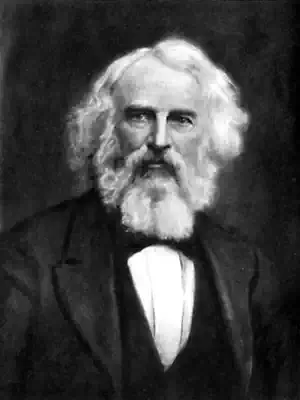
Henry Wadsworth Longfellow
Voices Of The Night : Prelude
Voices Of The Night : Prelude
Pleasant it was, when woods were green,
And winds were soft and low,
To lie amid some sylvan scene,
Where, the long drooping boughs between
Shadows dark and sunlight sheen
Alternate come and go;
Or where the denser grove receives
No sunlight from above
But the dark foliage interweaves
In one unbroken roof of leaves,
Underneath whose sloping eaves
The shadows hardly move.
Beneath some patriarchal tree
I lay upon the ground;
His hoary arms uplifted he,
And all the broad leaves over me
Clapped their little hands in glee,
With one continuous sound;--
A slumberous sound,--a sound that brings
The feelings of a dream,--
As of innumerable wings,
As, when a bell no longer swings,
Faint the hollow murmur rings
O'er meadow, lake, and stream.
And dreams of that which cannot die,
Bright visins, came to me,
As lapped in thought I used to lie,
And gaze into the summer sky,
Where the sailing clouds went by,
Like ships upon the sea;
Dreams that the soul of youth engage
Ere Fancy has been quelled;
Old legends of the monkish page.
Traditions of the saint and sage,
Tales that have the rime of age,
And chronicles of Eld.
And, loving still these quaint old themes,
Even in the city's throng
I feel the freshness of the streams,
That, crossed by shades and sunny gleams,
Water the green land of dreams,
The holy land of song.
Therefore, at Pentecost, which brings
The Spring, clothed like a bride,
When nestling buds unfold their wings,
And bishop's-caps have golden rings,
Musing upon many things,
I sought the woodlands wide.
The green trees whispered low and mild,
It was a sound of joy!
They were my playmates when a child
And rocked me in their arms so wild!
Still they looked at me and smiled
As if I were a boy;
And ever whispered, mild and low,
'Come, be a child once more!'
And waved their long arms to and fro,
And beckoned solemnly and slow;
O, I could not choose but go
Into the woodlands hoar;
Into the blithe and breathing air,
Into the solemn wood.
Solemn and silent everywhere!
Nature with folded hands seemed there,
Kneeling at her evening prayer!
Like one in prayer I stood.
Before me rose an avenue
Of tall and sombrous pines;
Abroad their fan-like branches grew,
And, where the sunshine darted throught
Spread a vapor soft and blue,
In long and sloping lines.
And, falling on my weary brain,
Like a fast-falling shower,
The dreams of youth came back again,
Low lispings of the summer rain,
Dropping on the ripened grain,
As once upon the flower.
Visions of childhood! Stay, O stay!
Ye were so sweet and wild!
And distant voices seemed to say,
'It cannot be! They pass away!
Other themes demand thy lay;
Thou art no more a child!
'The land of Song within thee lies,
Watered by living springs;
The lids of Fancy's sleepless eyes
Are gates unto that Paradise;
Holy thoughts, like stars, arise,
Its clouds are angels' wings.
'Learn, that henceforth thy song shall be
Not mountains capped with snow,
Nor forests sounding like the sea,
Nor rivers flowing ceaselessly,
Where the woodlands bend to see
The bending heavens below.
'There is a forest where the din
Of iron branches sounds!
A mighty river roara between,
And whosoever looks therein,
Sees the heavens all black with sin,--
Sees not ita depths, nor bounds.
'Athwart the swinging branches cast,
Soft rays of sunshine pour;
Then comes the fearful wintry blast;
Our hopes, like withered leaves, fall fast;
Pallid lips say, 'It is past!
We can return no more!'
'Look, then, into thine heart, and write!
Yes, into Life's deep stream!
All forms of sorrow and delight,
All solemn Voices of the Night,
That can soothe thee, or affright,--
Be these henceforth thy theme.'
Pleasant it was, when woods were green,
And winds were soft and low,
To lie amid some sylvan scene,
Where, the long drooping boughs between
Shadows dark and sunlight sheen
Alternate come and go;
Or where the denser grove receives
No sunlight from above
But the dark foliage interweaves
In one unbroken roof of leaves,
Underneath whose sloping eaves
The shadows hardly move.
Beneath some patriarchal tree
I lay upon the ground;
His hoary arms uplifted he,
And all the broad leaves over me
Clapped their little hands in glee,
With one continuous sound;--
A slumberous sound,--a sound that brings
The feelings of a dream,--
As of innumerable wings,
As, when a bell no longer swings,
Faint the hollow murmur rings
O'er meadow, lake, and stream.
And dreams of that which cannot die,
Bright visins, came to me,
As lapped in thought I used to lie,
And gaze into the summer sky,
Where the sailing clouds went by,
Like ships upon the sea;
Dreams that the soul of youth engage
Ere Fancy has been quelled;
Old legends of the monkish page.
Traditions of the saint and sage,
Tales that have the rime of age,
And chronicles of Eld.
And, loving still these quaint old themes,
Even in the city's throng
I feel the freshness of the streams,
That, crossed by shades and sunny gleams,
Water the green land of dreams,
The holy land of song.
Therefore, at Pentecost, which brings
The Spring, clothed like a bride,
When nestling buds unfold their wings,
And bishop's-caps have golden rings,
Musing upon many things,
I sought the woodlands wide.
The green trees whispered low and mild,
It was a sound of joy!
They were my playmates when a child
And rocked me in their arms so wild!
Still they looked at me and smiled
As if I were a boy;
And ever whispered, mild and low,
'Come, be a child once more!'
And waved their long arms to and fro,
And beckoned solemnly and slow;
O, I could not choose but go
Into the woodlands hoar;
Into the blithe and breathing air,
Into the solemn wood.
Solemn and silent everywhere!
Nature with folded hands seemed there,
Kneeling at her evening prayer!
Like one in prayer I stood.
Before me rose an avenue
Of tall and sombrous pines;
Abroad their fan-like branches grew,
And, where the sunshine darted throught
Spread a vapor soft and blue,
In long and sloping lines.
And, falling on my weary brain,
Like a fast-falling shower,
The dreams of youth came back again,
Low lispings of the summer rain,
Dropping on the ripened grain,
As once upon the flower.
Visions of childhood! Stay, O stay!
Ye were so sweet and wild!
And distant voices seemed to say,
'It cannot be! They pass away!
Other themes demand thy lay;
Thou art no more a child!
'The land of Song within thee lies,
Watered by living springs;
The lids of Fancy's sleepless eyes
Are gates unto that Paradise;
Holy thoughts, like stars, arise,
Its clouds are angels' wings.
'Learn, that henceforth thy song shall be
Not mountains capped with snow,
Nor forests sounding like the sea,
Nor rivers flowing ceaselessly,
Where the woodlands bend to see
The bending heavens below.
'There is a forest where the din
Of iron branches sounds!
A mighty river roara between,
And whosoever looks therein,
Sees the heavens all black with sin,--
Sees not ita depths, nor bounds.
'Athwart the swinging branches cast,
Soft rays of sunshine pour;
Then comes the fearful wintry blast;
Our hopes, like withered leaves, fall fast;
Pallid lips say, 'It is past!
We can return no more!'
'Look, then, into thine heart, and write!
Yes, into Life's deep stream!
All forms of sorrow and delight,
All solemn Voices of the Night,
That can soothe thee, or affright,--
Be these henceforth thy theme.'
315
Henry Wadsworth Longfellow
Childhood. (From The Danish)
Childhood. (From The Danish)
There was a time when I was very small,
When my whole frame was but an ell in height;
Sweetly, as I recall it, tears do fall,
And therefore I recall it with delight.
I sported in my tender mother's arms,
And rode a-horseback on best father's knee;
Alike were sorrows, passions and alarms,
And gold, and Greek, and love, unknown to me,
Then seemed to me this world far less in size,
Likewise it seemed to me less wicked far;
Like points in heaven, I saw the stars arise,
And longed for wings that I might catch a star.
I saw the moon behind the island fade,
And thought, 'Oh, were I on that island there,
I could find out of what the moon is made,
Find out how large it is, how round, how fair!'
Wondering, I saw God's sun, through western skies,
Sink in the ocean's golden lap at night,
And yet upon the morrow early rise,
And paint the eastern heaven with crimson light;
And thought of God, the gracious Heavenly Father,
Who made me, and that lovely sun on high,
And all those pearls of heaven thick-strung together,
Dropped, clustering, from his hand o'er all the sky.
With childish reverence, my young lips did say
The prayer my pious mother taught to me:
'O gentle God! oh, let me strive alway
Still to be wise, and good, and follow Thee!'
So prayed I for my father and my mother,
And for my sister, and for all the town;
The king I knew not, and the beggar-brother,
Who, bent with age, went, sighing, up and down.
They perished, the blithe days of boyhood perished,
And all the gladness, all the peace I knew!
Now have I but their memory, fondly cherished;--
God! may I never lose that too!
There was a time when I was very small,
When my whole frame was but an ell in height;
Sweetly, as I recall it, tears do fall,
And therefore I recall it with delight.
I sported in my tender mother's arms,
And rode a-horseback on best father's knee;
Alike were sorrows, passions and alarms,
And gold, and Greek, and love, unknown to me,
Then seemed to me this world far less in size,
Likewise it seemed to me less wicked far;
Like points in heaven, I saw the stars arise,
And longed for wings that I might catch a star.
I saw the moon behind the island fade,
And thought, 'Oh, were I on that island there,
I could find out of what the moon is made,
Find out how large it is, how round, how fair!'
Wondering, I saw God's sun, through western skies,
Sink in the ocean's golden lap at night,
And yet upon the morrow early rise,
And paint the eastern heaven with crimson light;
And thought of God, the gracious Heavenly Father,
Who made me, and that lovely sun on high,
And all those pearls of heaven thick-strung together,
Dropped, clustering, from his hand o'er all the sky.
With childish reverence, my young lips did say
The prayer my pious mother taught to me:
'O gentle God! oh, let me strive alway
Still to be wise, and good, and follow Thee!'
So prayed I for my father and my mother,
And for my sister, and for all the town;
The king I knew not, and the beggar-brother,
Who, bent with age, went, sighing, up and down.
They perished, the blithe days of boyhood perished,
And all the gladness, all the peace I knew!
Now have I but their memory, fondly cherished;--
God! may I never lose that too!
384
Henry Wadsworth Longfellow
By The Fireside : The Open Window
By The Fireside : The Open Window
The old house by the lindens
Stood silent in the shade,
And on the gravelled pathway
The light and shadow played.
I saw the nursery windows
Wide open to the air;
But the faces of the children,
They were no longer there.
The large Newfoundland house-dog
Was standing by the door;
He looked for his little playmates,
Who would return no more.
They walked not under the lindens,
They played not in the hall;
But shadow, and silence, and sadness
Were hanging over all.
The birds sang in the branches,
With sweet, familiar tone;
But the voices of the children
Will be heard in dreams alone!
And the boy that walked beside me,
He could not understand
Why closer in mine, ah! closer,
I pressed his warm, soft hand!
The old house by the lindens
Stood silent in the shade,
And on the gravelled pathway
The light and shadow played.
I saw the nursery windows
Wide open to the air;
But the faces of the children,
They were no longer there.
The large Newfoundland house-dog
Was standing by the door;
He looked for his little playmates,
Who would return no more.
They walked not under the lindens,
They played not in the hall;
But shadow, and silence, and sadness
Were hanging over all.
The birds sang in the branches,
With sweet, familiar tone;
But the voices of the children
Will be heard in dreams alone!
And the boy that walked beside me,
He could not understand
Why closer in mine, ah! closer,
I pressed his warm, soft hand!
294
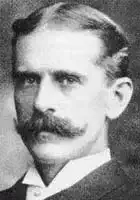
Henry Van Dyke
Music
Music
I
PRELUDE
Daughter of Psyche, pledge of that last night
When, pierced with pain and bitter-sweet delight,
She knew her Love and saw her Lord depart,
Then breathed her wonder and her woe forlorn
Into a single cry, and thou wast born?
Thou flower of rapture and thou fruit of grief;
Invisible enchantress of the heart;
Mistress of charms that bring relief
To sorrow, and to joy impart
A heavenly tone that keeps it undefiled,--
Thou art the child
Of Amor, and by right divine
A throne of love is thine,
Thou flower-folded, golden-girdled, star-crowned Queen,
Whose bridal beauty mortal eyes have never seen!
II
Thou art the Angel of the pool that sleeps,
While peace and joy lie hidden in its deeps,
Waiting thy touch to make the waters roll
In healing murmurs round the weary soul.
Ah, when wilt thou draw near,
Thou messenger of mercy robed in song?
My lonely heart has listened for thee long;
And now I seem to hear
Across the crowded market-place of life,
Thy measured foot-fall, ringing light and clear
Above the unmeaning noises and the unruly strife;
In quiet cadence, sweet and slow,
Serenely pacing to and fro,
Thy far-off steps are magical and dear.
Ah, turn this way, come close and speak to me!
>From this dull bed of languor set my spirit free,
And bid me rise, and let me walk awhile with thee
III
Where wilt thou lead me first?
In what still region
Of thy domain,
Whose provinces are legion,
Wilt thou restore me to myself again,
And quench my heart's long thirst?
I pray thee lay thy golden girdle down,
And put away thy starry crown:
For one dear restful hour
Assume a state more mild.
Clad only in thy blossom-broidered gown
That breathes familiar scent of many a flower,
Take the low path that leads thro' pastures green;
And though thou art a Queen,
Be Rosamund awhile, and in thy bower,
By tranquil love and simple joy beguiled,
Sing to my soul, as mother to her child.
IV
O lead me by the hand,
And let my heart have rest,
And bring me back to childhood land,
To find again the long-lost band
Of playmates blithe and blest.
Some quaint, old-fashioned air,
That all the children knew,
Shall run before us everywhere,
Like a little maid with flying hair,
To guide the merry crew.
Along the garden ways
We chase the light-foot tune,
And in and out the flowery maze,
With eager haste and fond delays,
In pleasant paths of June.
For us the fields are new,
For us the woods are rife
With fairy secrets, deep and true,
And heaven is but a tent of blue
Above the game of life.
The world is far away:
The fever and the fret,
And all that makes the heart grow gray,
Is out of sight and far away,
Dear Music, while I hear thee play
That olden, golden roundelay,
"Remember and forget!"
V
SLEEP SONG
Forget, forget!
The tide of life is turning;
The waves of light ebb slowly down the west:
Along the edge of dark some stars are burning
To guide thy spirit safely to an isle of rest.
A little rocking on the tranquil deep
Of song, to soothe thy yearning,
A little slumber and a little sleep,
And so, forget, forget!
Forget, forget,--
The day was long in pleasure;
Its echoes die away across the hill;
Now let thy heart beat time to their slow measure
That swells, and sinks, and faints, and falls, till all is still.
Then, like a weary child that loves to keep
Locked in its arms some treasure,
Thy soul in calm content shall fall asleep,
And so forget, forget.
Forget, forget,--
And if thou hast been weeping,
Let go the thoughts that bind thee to thy grief:
Lie still, and watch the singing angels, reaping
The golden harvest of thy sorrow, sheaf by sheaf;
Or count thy joys like flocks of snow-white sheep
That one by one come creeping
Into the quiet fold, until thou sleep,
And so forget, forget!
Forget, forget,--
Thou art a child and knowest
So little of thy life! But music tells
One secret of the world thro' which thou goest
To work with morning song, to rest with evening bells:
Life is in tune with harmony so deep
That when the notes are lowest
Thou still canst lay thee down in peace and sleep,
For God will not forget.
VI
HUNTING SONG
Out of the garden of playtime, out of the bower of rest,
Fain would I follow at daytime, music that calls to a quest.
Hark, how the galloping measure
Quickens the pulses of pleasure;
Gaily saluting the morn
With the long clear note of the hunting-horn
Echoing up from the valley,
Over the mountain side,--
Rally, you hunters, rally,
Rally, and ride!
Drink of the magical potion music has mixed with her wine,
Full of the madness of motion, joyful, exultant, divine!
Leave all your troubles behind you,
Ride where they never can find you,
Into the gladness of morn,
With the long, clear note of the hunting-horn,
Swiftly o'er hillock and hollow,
Sweeping along with the wind,--
Follow, you hunters, follow,
Follow and find!
What will you reach with your riding? What is the charm of the chase?
Just the delight and the striding swing of the jubilant pace.
Danger is sweet when you front her,--
In at the death, every hunter!
Now on the breeze the mort is borne
In the long, clear note of the hunting-horn,
Winding merrily, over and over,--
Come, come, come!
Home again, Ranger! home again, Rover!
Turn again, home!
VII
DANCE-MUSIC
Now let the sleep-tune blend with the play-tune,
Weaving the mystical spell of the dance;
Lighten the deep tune, soften the gay tune,
Mingle a tempo that turns in a trance.
Half of it sighing, half of it smiling,
Smoothly it swings, with a triplicate beat;
Calling, replying, yearning, beguiling,
Wooing the heart and bewitching the feet.
Every drop of blood
Rises with the flood,
Rocking on the waves of the strain;
Youth and beauty glide
Turning with the tide--
Music making one out of twain,
Bearing them away, and away, and away,
Like a tone and its terce--
Till the chord dissolves, and the dancers stay,
And reverse.
Violins leading, take up the measure,
Turn with the tune again,--clarinets clear
Answer their pleading,--harps full of pleasure
Sprinkle their silver like light on the mere.
Semiquaver notes,
Merry little motes,
Tangled in the haze
Of the lamp's golden rays,
Quiver everywhere
In the air,
Like a spray,--
Till the fuller stream of the might of the tune,
Gliding like a dream in the light of the moon,
Bears them all away, and away, and away,
Floating in the trance of the dance.
Then begins a measure stately,
Languid, slow, serene;
All the dancers move sedately,
Stepping leisurely and straitly,
With a courtly mien;
Crossing hands and changing places,
Bowing low between,
While the minuet inlaces
Waving arms and woven paces,--
Glittering damaskeen.
Where is she whose form is folden
In its royal sheen?
>From our longing eyes withholden
By her mystic girdle golden,
Beauty sought but never seen,
Music walks the maze, a queen.
VIII
THE SYMPHONY
Music, they do thee wrong who say thine art
Is only to enchant the sense.
For every timid motion of the heart,
And every passion too intense
To bear the chain of the imperfect word,
And every tremulous longing, stirred
By spirit winds that come we know not whence
And go we know not where,
And every inarticulate prayer
Beating about the depths of pain or bliss,
Like some bewildered bird
That seeks its nest but knows not where it is,
And every dream that haunts, with dim delight,
The drowsy hour between the day and night,
The wakeful hour between the night and day,--
Imprisoned, waits for thee,
Impatient, yearns for thee,
The queen who comes to set the captive free
Thou lendest wings to grief to fly away,
And wings to joy to reach a heavenly height;
And every dumb desire that Storms within the breast
Thou leadest forth to sob or sing itself to rest.
All these are thine, and therefore love is thine.
For love is joy and grief,
And trembling doubt, and certain-sure belief,
And fear, and hope, and longing unexpressed,
In pain most human, and in rapture brief
Almost divine.
Love would possess, yet deepens when denied;
And love would give, yet hungers to receive;
Love like a prince his triumph would achieve;
And like a miser in the dark his joys would hide.
Love is most bold:
He leads his dreams like armed men in line;
Yet when the siege is set, and he must speak,
Calling the fortress to resign
Its treasure, valiant love grows weak,
And hardly dares his purpose to unfold.
Less with his faltering lips than with his eyes
He claims the longed-for prize:
Love fain would tell it all, yet leaves the best untold.
But thou shalt speak for love. Yea, thou shalt teach
The mystery of measured tone,
The Pentecostal speech
That every listener heareth as his own.
For on thy head the cloven tongues of fire,--
Diminished chords that quiver with desire,
And major chords that glow with perfect peace,--
Have fallen from above;
And thou canst give release
In music to the burdened heart of love.
Sound with the 'cellos' pleading, passionate strain
The yearning theme, and let the flute reply
In placid melody, while violins complain,
And sob, and sigh,
With muted string;
Then let the oboe half-reluctant sing
Of bliss that trembles on the verge of pain,
While 'cellos plead and plead again,
With throbbing notes delayed, that would impart
To every urgent tone the beating of the heart.
So runs the andante, making plain
The hopes and fears of love without a word.
Then comes the adagio, with a yielding theme
Through which the violas flow soft as in a dream,
While horns and mild bassoons are heard
In tender tune, that seems to float
Like an enchanted boat
Upon the downward-gliding stream,
Toward the allegro's wide, bright sea
Of dancing, glittering, blending tone,
Where every instrument is sounding free,
And harps like wedding-chimes are rung, and trumpets blown
Around the barque of love
That sweeps, with smiling skies above,
A royal galley, many-oared,
Into the happy harbour of the perfect chord.
IX
IRIS
Light to the eye and Music to the ear,--
These are the builders of the bridge that springs
>From earths's dim shore of half-remembered things
To reach the spirit's home, the heavenly sphere
Where nothing silent is and nothing dark.
So when I see the rainbow's arc
Spanning the showery sky, far-off I hear
Music, and every colour sings:
And while the symphony builds up its round
Full sweep of architectural harmony
Above the tide of Time, far, far away I see
A bow of colour in the bow of sound.
Red as the dawn the trumpet rings,
Imperial purple from the trombone flows,
The mellow horn melts into evening rose.
Blue as the sky, the choir of strings
Darkens in double-bass to ocean's hue,
Rises in violins to noon-tide's blue,
With threads of quivering light shot through and through.
Green as the mantle that the summer flings
Around the world, the pastoral reeds in time
Embroider melodies of May and June.
Yellow as gold,
Yea, thrice-refined gold,
And purer than the treasures of the mine,
Floods of the human voice divine
Along the arch in choral song are rolled.
So bends the bow complete:
And radiant rapture flows
Across the bridge, so full, so strong, so sweet,
That the uplifted spirit hardly knows
Whether the Music-Light that glows
Within the arch of tones and colours seven
Is sunset-peace of earth, or sunrise-joy of Heaven.
X
SEA AND SHORE
Music, I yield to thee;
As swimmer to the sea
I give my Spirit to the flood of song:
Bear me upon thy breast
In rapture and at rest,
Bathe me in pure delight and make me strong;
From strife and struggle bring release,
And draw the waves of passion into tides of peace.
Remember'd songs, most dear,
In living songs I hear,
While blending voices gently swing and sway
In melodies of love,
Whose mighty currents move,
With singing near and singing far away;
Sweet in the glow of morning light,
And sweeter still across the starlit gulf of night.
Music, in thee we float,
And lose the lonely note
Of self in thy celestial-ordered strain,
Until at last we find
The life to love resigned
In harmony of joy restored again;
And songs that cheered our mortal days
Break on the coast of light in endless hymns of praise.
I
PRELUDE
Daughter of Psyche, pledge of that last night
When, pierced with pain and bitter-sweet delight,
She knew her Love and saw her Lord depart,
Then breathed her wonder and her woe forlorn
Into a single cry, and thou wast born?
Thou flower of rapture and thou fruit of grief;
Invisible enchantress of the heart;
Mistress of charms that bring relief
To sorrow, and to joy impart
A heavenly tone that keeps it undefiled,--
Thou art the child
Of Amor, and by right divine
A throne of love is thine,
Thou flower-folded, golden-girdled, star-crowned Queen,
Whose bridal beauty mortal eyes have never seen!
II
Thou art the Angel of the pool that sleeps,
While peace and joy lie hidden in its deeps,
Waiting thy touch to make the waters roll
In healing murmurs round the weary soul.
Ah, when wilt thou draw near,
Thou messenger of mercy robed in song?
My lonely heart has listened for thee long;
And now I seem to hear
Across the crowded market-place of life,
Thy measured foot-fall, ringing light and clear
Above the unmeaning noises and the unruly strife;
In quiet cadence, sweet and slow,
Serenely pacing to and fro,
Thy far-off steps are magical and dear.
Ah, turn this way, come close and speak to me!
>From this dull bed of languor set my spirit free,
And bid me rise, and let me walk awhile with thee
III
Where wilt thou lead me first?
In what still region
Of thy domain,
Whose provinces are legion,
Wilt thou restore me to myself again,
And quench my heart's long thirst?
I pray thee lay thy golden girdle down,
And put away thy starry crown:
For one dear restful hour
Assume a state more mild.
Clad only in thy blossom-broidered gown
That breathes familiar scent of many a flower,
Take the low path that leads thro' pastures green;
And though thou art a Queen,
Be Rosamund awhile, and in thy bower,
By tranquil love and simple joy beguiled,
Sing to my soul, as mother to her child.
IV
O lead me by the hand,
And let my heart have rest,
And bring me back to childhood land,
To find again the long-lost band
Of playmates blithe and blest.
Some quaint, old-fashioned air,
That all the children knew,
Shall run before us everywhere,
Like a little maid with flying hair,
To guide the merry crew.
Along the garden ways
We chase the light-foot tune,
And in and out the flowery maze,
With eager haste and fond delays,
In pleasant paths of June.
For us the fields are new,
For us the woods are rife
With fairy secrets, deep and true,
And heaven is but a tent of blue
Above the game of life.
The world is far away:
The fever and the fret,
And all that makes the heart grow gray,
Is out of sight and far away,
Dear Music, while I hear thee play
That olden, golden roundelay,
"Remember and forget!"
V
SLEEP SONG
Forget, forget!
The tide of life is turning;
The waves of light ebb slowly down the west:
Along the edge of dark some stars are burning
To guide thy spirit safely to an isle of rest.
A little rocking on the tranquil deep
Of song, to soothe thy yearning,
A little slumber and a little sleep,
And so, forget, forget!
Forget, forget,--
The day was long in pleasure;
Its echoes die away across the hill;
Now let thy heart beat time to their slow measure
That swells, and sinks, and faints, and falls, till all is still.
Then, like a weary child that loves to keep
Locked in its arms some treasure,
Thy soul in calm content shall fall asleep,
And so forget, forget.
Forget, forget,--
And if thou hast been weeping,
Let go the thoughts that bind thee to thy grief:
Lie still, and watch the singing angels, reaping
The golden harvest of thy sorrow, sheaf by sheaf;
Or count thy joys like flocks of snow-white sheep
That one by one come creeping
Into the quiet fold, until thou sleep,
And so forget, forget!
Forget, forget,--
Thou art a child and knowest
So little of thy life! But music tells
One secret of the world thro' which thou goest
To work with morning song, to rest with evening bells:
Life is in tune with harmony so deep
That when the notes are lowest
Thou still canst lay thee down in peace and sleep,
For God will not forget.
VI
HUNTING SONG
Out of the garden of playtime, out of the bower of rest,
Fain would I follow at daytime, music that calls to a quest.
Hark, how the galloping measure
Quickens the pulses of pleasure;
Gaily saluting the morn
With the long clear note of the hunting-horn
Echoing up from the valley,
Over the mountain side,--
Rally, you hunters, rally,
Rally, and ride!
Drink of the magical potion music has mixed with her wine,
Full of the madness of motion, joyful, exultant, divine!
Leave all your troubles behind you,
Ride where they never can find you,
Into the gladness of morn,
With the long, clear note of the hunting-horn,
Swiftly o'er hillock and hollow,
Sweeping along with the wind,--
Follow, you hunters, follow,
Follow and find!
What will you reach with your riding? What is the charm of the chase?
Just the delight and the striding swing of the jubilant pace.
Danger is sweet when you front her,--
In at the death, every hunter!
Now on the breeze the mort is borne
In the long, clear note of the hunting-horn,
Winding merrily, over and over,--
Come, come, come!
Home again, Ranger! home again, Rover!
Turn again, home!
VII
DANCE-MUSIC
Now let the sleep-tune blend with the play-tune,
Weaving the mystical spell of the dance;
Lighten the deep tune, soften the gay tune,
Mingle a tempo that turns in a trance.
Half of it sighing, half of it smiling,
Smoothly it swings, with a triplicate beat;
Calling, replying, yearning, beguiling,
Wooing the heart and bewitching the feet.
Every drop of blood
Rises with the flood,
Rocking on the waves of the strain;
Youth and beauty glide
Turning with the tide--
Music making one out of twain,
Bearing them away, and away, and away,
Like a tone and its terce--
Till the chord dissolves, and the dancers stay,
And reverse.
Violins leading, take up the measure,
Turn with the tune again,--clarinets clear
Answer their pleading,--harps full of pleasure
Sprinkle their silver like light on the mere.
Semiquaver notes,
Merry little motes,
Tangled in the haze
Of the lamp's golden rays,
Quiver everywhere
In the air,
Like a spray,--
Till the fuller stream of the might of the tune,
Gliding like a dream in the light of the moon,
Bears them all away, and away, and away,
Floating in the trance of the dance.
Then begins a measure stately,
Languid, slow, serene;
All the dancers move sedately,
Stepping leisurely and straitly,
With a courtly mien;
Crossing hands and changing places,
Bowing low between,
While the minuet inlaces
Waving arms and woven paces,--
Glittering damaskeen.
Where is she whose form is folden
In its royal sheen?
>From our longing eyes withholden
By her mystic girdle golden,
Beauty sought but never seen,
Music walks the maze, a queen.
VIII
THE SYMPHONY
Music, they do thee wrong who say thine art
Is only to enchant the sense.
For every timid motion of the heart,
And every passion too intense
To bear the chain of the imperfect word,
And every tremulous longing, stirred
By spirit winds that come we know not whence
And go we know not where,
And every inarticulate prayer
Beating about the depths of pain or bliss,
Like some bewildered bird
That seeks its nest but knows not where it is,
And every dream that haunts, with dim delight,
The drowsy hour between the day and night,
The wakeful hour between the night and day,--
Imprisoned, waits for thee,
Impatient, yearns for thee,
The queen who comes to set the captive free
Thou lendest wings to grief to fly away,
And wings to joy to reach a heavenly height;
And every dumb desire that Storms within the breast
Thou leadest forth to sob or sing itself to rest.
All these are thine, and therefore love is thine.
For love is joy and grief,
And trembling doubt, and certain-sure belief,
And fear, and hope, and longing unexpressed,
In pain most human, and in rapture brief
Almost divine.
Love would possess, yet deepens when denied;
And love would give, yet hungers to receive;
Love like a prince his triumph would achieve;
And like a miser in the dark his joys would hide.
Love is most bold:
He leads his dreams like armed men in line;
Yet when the siege is set, and he must speak,
Calling the fortress to resign
Its treasure, valiant love grows weak,
And hardly dares his purpose to unfold.
Less with his faltering lips than with his eyes
He claims the longed-for prize:
Love fain would tell it all, yet leaves the best untold.
But thou shalt speak for love. Yea, thou shalt teach
The mystery of measured tone,
The Pentecostal speech
That every listener heareth as his own.
For on thy head the cloven tongues of fire,--
Diminished chords that quiver with desire,
And major chords that glow with perfect peace,--
Have fallen from above;
And thou canst give release
In music to the burdened heart of love.
Sound with the 'cellos' pleading, passionate strain
The yearning theme, and let the flute reply
In placid melody, while violins complain,
And sob, and sigh,
With muted string;
Then let the oboe half-reluctant sing
Of bliss that trembles on the verge of pain,
While 'cellos plead and plead again,
With throbbing notes delayed, that would impart
To every urgent tone the beating of the heart.
So runs the andante, making plain
The hopes and fears of love without a word.
Then comes the adagio, with a yielding theme
Through which the violas flow soft as in a dream,
While horns and mild bassoons are heard
In tender tune, that seems to float
Like an enchanted boat
Upon the downward-gliding stream,
Toward the allegro's wide, bright sea
Of dancing, glittering, blending tone,
Where every instrument is sounding free,
And harps like wedding-chimes are rung, and trumpets blown
Around the barque of love
That sweeps, with smiling skies above,
A royal galley, many-oared,
Into the happy harbour of the perfect chord.
IX
IRIS
Light to the eye and Music to the ear,--
These are the builders of the bridge that springs
>From earths's dim shore of half-remembered things
To reach the spirit's home, the heavenly sphere
Where nothing silent is and nothing dark.
So when I see the rainbow's arc
Spanning the showery sky, far-off I hear
Music, and every colour sings:
And while the symphony builds up its round
Full sweep of architectural harmony
Above the tide of Time, far, far away I see
A bow of colour in the bow of sound.
Red as the dawn the trumpet rings,
Imperial purple from the trombone flows,
The mellow horn melts into evening rose.
Blue as the sky, the choir of strings
Darkens in double-bass to ocean's hue,
Rises in violins to noon-tide's blue,
With threads of quivering light shot through and through.
Green as the mantle that the summer flings
Around the world, the pastoral reeds in time
Embroider melodies of May and June.
Yellow as gold,
Yea, thrice-refined gold,
And purer than the treasures of the mine,
Floods of the human voice divine
Along the arch in choral song are rolled.
So bends the bow complete:
And radiant rapture flows
Across the bridge, so full, so strong, so sweet,
That the uplifted spirit hardly knows
Whether the Music-Light that glows
Within the arch of tones and colours seven
Is sunset-peace of earth, or sunrise-joy of Heaven.
X
SEA AND SHORE
Music, I yield to thee;
As swimmer to the sea
I give my Spirit to the flood of song:
Bear me upon thy breast
In rapture and at rest,
Bathe me in pure delight and make me strong;
From strife and struggle bring release,
And draw the waves of passion into tides of peace.
Remember'd songs, most dear,
In living songs I hear,
While blending voices gently swing and sway
In melodies of love,
Whose mighty currents move,
With singing near and singing far away;
Sweet in the glow of morning light,
And sweeter still across the starlit gulf of night.
Music, in thee we float,
And lose the lonely note
Of self in thy celestial-ordered strain,
Until at last we find
The life to love resigned
In harmony of joy restored again;
And songs that cheered our mortal days
Break on the coast of light in endless hymns of praise.
357
Henry Van Dyke
Dulcis Memoria
Dulcis Memoria
Long, long ago I heard a little song,
(Ah, was it long ago, or yesterday?)
So lowly, slowly wound the tune along,
That far into my heart it found the way:
A melody consoling and endearing;
And still, in silent hours, I'm often hearing
The small, sweet song that does not die away.
Long, long ago I saw a little flower,-(
Ah, was it long ago, or yesterday?)
So fair of face and fragrant for an hour,
That something dear to me it seemed to say:
A thought of joy that blossomed into being
Without a word; and now I'm often seeing
The friendly flower that does not fade away.
Long, long ago we had a little child,-(
Ah, was it long ago, or yesterday?)
Into his mother's eyes and mine he smiled
Unconscious love; warm in our arms he lay.
An angel called! Dear heart, we could not hold him;
Yet secretly your arms and mine infold him--
Our little child who does not go away.
Long, long ago? Ah, memory, make it clear-(
It was not long ago, but yesterday,)
So little and so helpless and so dear
Let not the song be lost, the flower decay!
His voice, his waking eyes, his gentle sleeping:
The smallest things are safest in thy keeping.
Sweet memory, keep our child with us always.
Long, long ago I heard a little song,
(Ah, was it long ago, or yesterday?)
So lowly, slowly wound the tune along,
That far into my heart it found the way:
A melody consoling and endearing;
And still, in silent hours, I'm often hearing
The small, sweet song that does not die away.
Long, long ago I saw a little flower,-(
Ah, was it long ago, or yesterday?)
So fair of face and fragrant for an hour,
That something dear to me it seemed to say:
A thought of joy that blossomed into being
Without a word; and now I'm often seeing
The friendly flower that does not fade away.
Long, long ago we had a little child,-(
Ah, was it long ago, or yesterday?)
Into his mother's eyes and mine he smiled
Unconscious love; warm in our arms he lay.
An angel called! Dear heart, we could not hold him;
Yet secretly your arms and mine infold him--
Our little child who does not go away.
Long, long ago? Ah, memory, make it clear-(
It was not long ago, but yesterday,)
So little and so helpless and so dear
Let not the song be lost, the flower decay!
His voice, his waking eyes, his gentle sleeping:
The smallest things are safest in thy keeping.
Sweet memory, keep our child with us always.
350
Henry Van Dyke
A Child in the Garden
A Child in the Garden
When to the garden of untroubled thought
I came of late, and saw the open door,
And wished again to enter, and explore
The sweet, wild ways with stainless bloom inwrought,
And bowers of innocence with beauty fraught,
It seemed some purer voice must speak before
I dared to tread that garden loved of yore,
That Eden lost unknown and found unsought.
Then just within the gate I saw a child, --
A stranger-child, yet to my heart most dear;
He held his hands to me, and softly smiled
With eyes that knew no shade of sin or fear:
"Come in," he said, "and play awhile with me;"
"I am the little child you used to be."
When to the garden of untroubled thought
I came of late, and saw the open door,
And wished again to enter, and explore
The sweet, wild ways with stainless bloom inwrought,
And bowers of innocence with beauty fraught,
It seemed some purer voice must speak before
I dared to tread that garden loved of yore,
That Eden lost unknown and found unsought.
Then just within the gate I saw a child, --
A stranger-child, yet to my heart most dear;
He held his hands to me, and softly smiled
With eyes that knew no shade of sin or fear:
"Come in," he said, "and play awhile with me;"
"I am the little child you used to be."
312

Henry Lawson
The Soldier Birds
The Soldier Birds
I mind the river from Mount Frome
To Ballanshantie’s Bridge,
The Mudgee Hills, and Buckaroo,
Lowe’s Peak, and Granite Ridge.
The “tailers” in the creek beneath,
The rugged she-oak boles,
The river cod where shallows linked,
The willowed water-holes.
I mind the blacksoil river flats,
The red soil levels, too,
The sidings where below the scrub
The golden wattles grew;
The track that ran by Tierney’s Gap,
The dusk and ghost alarms,
The glorious morning on the hills,
And all the German farms.
I mind the blue-grey gully bush,
The slab-and-shingle school,
The “soldier birds” that picked the crumbs
Beneath the infants’ stool.
(Ah! did those little soldier birds,
That whispered, ever know
That one of us should rise so high
And sadly sink so low?)
I mind the lessons that we droned
In books from Irish schools,
The canings and the keepings-in
For breaking bounds and rules.
Ah! little did the teacher dream
That one of us, perchance,
Might write in London to be read
In Germany and France.
I mind the days we played at camp
With billy-can and swag,
I mind the notes sent home by girls
When someone “played the wag.”
Ah! little did the master think
(Who’d lost the roving star)
What truants in their after years
Would play the wag so far.
I mind when first he gave to me
A pen and ink to write,
And, last, the “Fourth Class Forms” he made
I shared with Lucy White.
The other boys were other boys,
With cricket ball and bat,
They had a fine contempt for girls,
But they got over that.
The “rounders” where the girls came in—
The Tomboy and the rest—
The earnest game of Pris’ners’ Base—
The game that I liked best.
The kangarooing on the ridge,
And in the brown moonlight,
The “possuming” across the flats,
With dogs and gun at night.
The “specking” in old diggers’ heaps
For “colours” after rain,
The horse-shoes saved against the time
The circus came again,
And sold to Jimmy Siver-right—
The blacksmith on the flat;
The five-corners, the swimming hole—
Oh! I remember that!
I mind the holland “dinner bags”—
A book bag of green baize—
The bread and dripping, bread and meat,
And bread and treacle days.
The bread and butter swopped for meat,
The crumb we swopped for crust—
We’ve married—and divorced—since then,
And most old homes are dust.
It was the time, it was the place—
Australia’s hardest page—
When boys were cast for farming work
At fourteen years of age.
It was the time, it was the place,
The latter “Early Day,”
When boys ride home from old bark schools
And to the world away.
I’ve drifted through Port Said since then,
Naples and Leicester Square,
And Collins and Macquarie Streets—
I know the secrets there.
Ah me! The country boy and girl,
The country lass and lad,
As innocent as soldier birds,
Though we thought we were bad!
But, spite of all their daring truth,
And some work that shall last,
The bitter years of my brave youth
Are better in the past.
This does not call for bitterness,
Nor does it call for tears,
The purest little thing perhaps
I’ve printed here for years.
The railway runs by Mudgee Hills,
Old farms are lost or lone,
And children’s children sadly go
To schools of brick and stone.
Yet are the same. The Mudgee Hills
And Mudgee skies as fair—
And the little grey-clad soldier birds
Are just as busy there.
I mind the river from Mount Frome
To Ballanshantie’s Bridge,
The Mudgee Hills, and Buckaroo,
Lowe’s Peak, and Granite Ridge.
The “tailers” in the creek beneath,
The rugged she-oak boles,
The river cod where shallows linked,
The willowed water-holes.
I mind the blacksoil river flats,
The red soil levels, too,
The sidings where below the scrub
The golden wattles grew;
The track that ran by Tierney’s Gap,
The dusk and ghost alarms,
The glorious morning on the hills,
And all the German farms.
I mind the blue-grey gully bush,
The slab-and-shingle school,
The “soldier birds” that picked the crumbs
Beneath the infants’ stool.
(Ah! did those little soldier birds,
That whispered, ever know
That one of us should rise so high
And sadly sink so low?)
I mind the lessons that we droned
In books from Irish schools,
The canings and the keepings-in
For breaking bounds and rules.
Ah! little did the teacher dream
That one of us, perchance,
Might write in London to be read
In Germany and France.
I mind the days we played at camp
With billy-can and swag,
I mind the notes sent home by girls
When someone “played the wag.”
Ah! little did the master think
(Who’d lost the roving star)
What truants in their after years
Would play the wag so far.
I mind when first he gave to me
A pen and ink to write,
And, last, the “Fourth Class Forms” he made
I shared with Lucy White.
The other boys were other boys,
With cricket ball and bat,
They had a fine contempt for girls,
But they got over that.
The “rounders” where the girls came in—
The Tomboy and the rest—
The earnest game of Pris’ners’ Base—
The game that I liked best.
The kangarooing on the ridge,
And in the brown moonlight,
The “possuming” across the flats,
With dogs and gun at night.
The “specking” in old diggers’ heaps
For “colours” after rain,
The horse-shoes saved against the time
The circus came again,
And sold to Jimmy Siver-right—
The blacksmith on the flat;
The five-corners, the swimming hole—
Oh! I remember that!
I mind the holland “dinner bags”—
A book bag of green baize—
The bread and dripping, bread and meat,
And bread and treacle days.
The bread and butter swopped for meat,
The crumb we swopped for crust—
We’ve married—and divorced—since then,
And most old homes are dust.
It was the time, it was the place—
Australia’s hardest page—
When boys were cast for farming work
At fourteen years of age.
It was the time, it was the place,
The latter “Early Day,”
When boys ride home from old bark schools
And to the world away.
I’ve drifted through Port Said since then,
Naples and Leicester Square,
And Collins and Macquarie Streets—
I know the secrets there.
Ah me! The country boy and girl,
The country lass and lad,
As innocent as soldier birds,
Though we thought we were bad!
But, spite of all their daring truth,
And some work that shall last,
The bitter years of my brave youth
Are better in the past.
This does not call for bitterness,
Nor does it call for tears,
The purest little thing perhaps
I’ve printed here for years.
The railway runs by Mudgee Hills,
Old farms are lost or lone,
And children’s children sadly go
To schools of brick and stone.
Yet are the same. The Mudgee Hills
And Mudgee skies as fair—
And the little grey-clad soldier birds
Are just as busy there.
250
Henry Lawson
The Memories They Bring
The Memories They Bring
I would never waste the hours
Of the time that is mine own,
Writing verses about flowers
For their own sweet sakes alone;
Gushing as a schoolgirl gushes
Over babies at their best—
Or as poets trill of thrushes,
Larks, and starlings and the rest.
I am not a man who praises
Beauty that he cannot see,
But the buttercups and daisies
Bring my childhood back to me;
And before life’s bitter battle,
That breaks lion hearts and kills,
Oh the waratah and wattle
Saw my boyhood on the hills.
It was “Cissy” or Cecilia,
And I loved her very much,
When I wore the white camelia
That will wither at a touch.
Ah, the fairest chapter closes
With lilies white and blue,
When the wild days with the roses
Cast their glamour over you!
Vine leaves fall and laurels wither
(Madd’ning drink and pride insane),
And the fate that sends us hither
Ever takes us back again.
Fading flowers—slow pulsations—
Flowers pressed for memory
But the red and pink carnations
Speak most bitter things to me.
I would never waste the hours
Of the time that is mine own,
Writing verses about flowers
For their own sweet sakes alone;
Gushing as a schoolgirl gushes
Over babies at their best—
Or as poets trill of thrushes,
Larks, and starlings and the rest.
I am not a man who praises
Beauty that he cannot see,
But the buttercups and daisies
Bring my childhood back to me;
And before life’s bitter battle,
That breaks lion hearts and kills,
Oh the waratah and wattle
Saw my boyhood on the hills.
It was “Cissy” or Cecilia,
And I loved her very much,
When I wore the white camelia
That will wither at a touch.
Ah, the fairest chapter closes
With lilies white and blue,
When the wild days with the roses
Cast their glamour over you!
Vine leaves fall and laurels wither
(Madd’ning drink and pride insane),
And the fate that sends us hither
Ever takes us back again.
Fading flowers—slow pulsations—
Flowers pressed for memory
But the red and pink carnations
Speak most bitter things to me.
236
Henry Lawson
Introduction – A Glimpse of Boyhood
Introduction – A Glimpse of Boyhood
“Boys out there by the western creeks,
Who hurry away from school,
To climb the spurs of the breezy peaks,
Or dive in the shaded pool”
“Boys out there by the western creeks,
Who hurry away from school,
To climb the spurs of the breezy peaks,
Or dive in the shaded pool”
193
Henry Lawson
A Bush Girl
A Bush Girl
She's milking in the rain and dark,
As did her mother in the past.
The wretched shed of poles and bark,
Rent by the wind, is leaking fast.
She sees the “home-roof” black and low,
Where, balefully, the hut-fire gleams—
And, like her mother, long ago,
She has her dreams; she has her dreams.
The daybreak haunts the dreary scene,
The brooding ridge, the blue-grey bush,
The “yard” where all her years have been,
Is ankle-deep in dung and slush;
She shivers as the hour drags on,
Her threadbare dress of sackcloth seems—
But, like her mother, years agone,
She has her dreams; she has her dreams.
The sullen “breakfast” where they cut
The blackened “junk.” The lowering face,
As though a crime were in the hut,
As though a curse was on the place;
The muttered question and reply,
The tread that shakes the rotting beams,
The nagging mother, thin and dry—
God help the girl! She has her dreams.
Then for “th’ separator” start,
Most wretched hour in all her life,
With “horse” and harness, dress and cart,
No Chinaman would give his “wife”;
Her heart is sick for light and love,
Her face is often fair and sweet,
And her intelligence above
The minds of all she’s like to meet.
She reads, by slush-lamp light, may be,
When she has dragged her dreary round,
And dreams of cities by the sea
(Where butter’s up, so much the pound),
Of different men from those she knows,
Of shining tides and broad, bright streams;
Of theatres and city shows,
And her release! She has her dreams.
Could I gain her a little rest,
A little light, if but for one,
I think that it would be the best
Of any good I may have done.
But, after all, the paths we go
Are not so glorious as they seem,
And—if t’will help her heart to know—
I’ve had my dream. ’Twas but a dream.
She's milking in the rain and dark,
As did her mother in the past.
The wretched shed of poles and bark,
Rent by the wind, is leaking fast.
She sees the “home-roof” black and low,
Where, balefully, the hut-fire gleams—
And, like her mother, long ago,
She has her dreams; she has her dreams.
The daybreak haunts the dreary scene,
The brooding ridge, the blue-grey bush,
The “yard” where all her years have been,
Is ankle-deep in dung and slush;
She shivers as the hour drags on,
Her threadbare dress of sackcloth seems—
But, like her mother, years agone,
She has her dreams; she has her dreams.
The sullen “breakfast” where they cut
The blackened “junk.” The lowering face,
As though a crime were in the hut,
As though a curse was on the place;
The muttered question and reply,
The tread that shakes the rotting beams,
The nagging mother, thin and dry—
God help the girl! She has her dreams.
Then for “th’ separator” start,
Most wretched hour in all her life,
With “horse” and harness, dress and cart,
No Chinaman would give his “wife”;
Her heart is sick for light and love,
Her face is often fair and sweet,
And her intelligence above
The minds of all she’s like to meet.
She reads, by slush-lamp light, may be,
When she has dragged her dreary round,
And dreams of cities by the sea
(Where butter’s up, so much the pound),
Of different men from those she knows,
Of shining tides and broad, bright streams;
Of theatres and city shows,
And her release! She has her dreams.
Could I gain her a little rest,
A little light, if but for one,
I think that it would be the best
Of any good I may have done.
But, after all, the paths we go
Are not so glorious as they seem,
And—if t’will help her heart to know—
I’ve had my dream. ’Twas but a dream.
256
Hans Christian Andersen
June
June
'Glemt er nu Vaarens Kamp og Vinter-Sorgen,
Til Glæde sig forvandler hvert et Suk.
Skjøn som en Brud, den anden Bryllups-Morgen,
Ei længer Barn, og dog saa ung og smuk,
Den skjønne Junimaaned til os kommer;
Det er Skærsommer!
*
De høie Popler hæve sig saa slanke,
I Hyldetræet qviddrer Fuglen smukt.
Paa Gjærdet groer den grønne Humle-Ranke,
Og Æble-Blomstret former sig til Frugt.
Den varme Sommerluft fra Skyen strømmer,
Sødt Hjertet drømmer!
Paa Engen slaae de Græs; hør, Leen klinger.
Paa Himlen smukke Sommerskyer staae.
Og Kløvermarken Røgelse os svinger,
Mens høit i Choret alle Lærker slaae.
-Med Vandringsstav hist Ungersvenden kommer
Hjem i Skærsommer.
Ungersvenden.
Alt jeg Kirketaarnet øiner,
Spiret kneiser stolt derpaa.
Og hvor Marken hist sig høiner,
End de fire Pile staae.
Her er Skoven. Store Rødder
Før af Træerne der laae.
Her, som Dreng, jeg plukked' Nødder,
Og trak Jordbær paa et Straa!
-Barndoms Minder mig besjæle!
Jeg vil flyve, jeg vil dvæle!
Grønne Skov, min Barndoms Ven,
Kan Du kjende mig igjen?
Grønne Hæk, du brune Stamme,
Jeg, som før, er end den samme,
Har vel seet og hørt lidt meer,
Ellers Du den Samme seer! -
Her er Pladsen end med Vedet,
Godt jeg kjender Parken der!
Her er Stenten tæt ved Ledet,
Gud, hvor lille den dog er!
Alt jeg kjender her saa godt,
Men det er saa nært, saa smaat -
Det var stort, da jeg var liden,
Jeg er bleven større siden! -
Lille Fugl paa grønne Qvist,
Saae Du mig derude hist,
Naar jeg stundom sorgfuld sad?
Seer Du nu - - nu er jeg glad!
Var der ude Himlen graae
Hjemmet bar jeg i min Tanke,
Hjemmet jeg i Solskin saae,
Derfor maatte Hjertet banke.
-Moder er vist ældet lidt,
Jeg har tænkt paa Dig saa tidt.
Fader! fuld af Kraft og Mod! -
Gode Gud, Du er saa god.
Jeg kan ei min Glæde bære,
Din jeg er, Din vil jeg være! -
Jeg i Sjælen er saa glad,
Kysse maa jeg Blomst og Blad;
Glemt er Længsel, Suk og Vee,
Gamle Venner skal jeg see,
Og den smaa Marie-Moer -
Ja, nu er hun bleven stor! -
O, med hvilken Lyst og Gammen
Har vi to dog leget sammen!
Mit Theater var ei stort,
Men jeg havde selv det gjort.
O, jeg har det grant i Minde.
Jeg forglemmer ingensinde
Mine smaa Marionetter,
O, med Guld og Paillietter,
Hun besyed' een og hver.
Store Stykker gav' vi der.
Blanka, Hakon Jarl, saa net,
Selv Rolf Blaaskjæg, som Ballet.
Hvis ei andre saae derpaa,
Altid Bedstemoder saae;
Og om der var allerflest,
Hun dog klapped allermeest! -
Hende skal jeg ikke see,
O, det gjør mit Hjerte Vee!
Afskeds-Kysset hun mig gav, -
Græs nu groer paa hendes Grav.
O jeg kunde næsten græde!
-Nei! Du lever - seer min Glæde
Lever! lever! mig omsvæver!
Tanken Du til Himlen hæver.
Det er Aarets bedste Dag!
Alt jeg skuer Hjemmets Tag!
Her ved Poppelpilens Rod,
I den kolde Vinter-Scene,
Var det jo min Sneemand stod,
Pyntet ud med Kul og Stene.
Her er Bækken, reen og klar,
Den min Sommer-Snekke bar!
Her staaer Haugen, sommergrøn - -
Moder, see - her er Din Søn!
Moder! kjender Du min Stemme!
O, nu er jeg atter hjemme!
*
Sønnen hviler ved sin Moders Bryst,
Faderen ham kysser glad, men stille;
Hunden logrer ved hans Fod med Lyst,
Og de store brune Øine spille.
'See, Marie! vi ham har igjen -'
Jubler høit den lykkelige Moder;
Pigen rødmer, rækker Haanden hen
Til den kjære, kjære Legebroder.
'Han er voxet i de sidste Aar!
Kom! paa Døren end hans Mærke staaer.
Eduard! o! Gud har hørt min Bøn;
Seer Du Fader, han er bleven kjøn?
Er saa god - ja! ja! jeg veed det nøie.
Jeg maa kysse ham paa Mund og Øie!
-Kjender Dagligstuen Du igjen?
Men Du er vist træt? Sæt Dig dog hen!
Seer Du, hvad der staaer paa mit Klaveer?
(O, den søde Dreng! nei see, han leer)!
Dit Theater, dine Dukker smaae -
Ja, det har Marie fundet paa, -'
Saadan gaaer det fort, glad Hjertet banker,
Kun Marie falder hen i Tanker. -
Nu vi dem i Spisestuen see.
Dækketøiet skinner som en Snee,
Sommersolen mildt fra Ruden straaler,
Jordbær dufte fra crystalne Skaaler;
Kun de bedste har Marie bragt;
Og paa Bordet smukt en Krands er lagt,
Friske Blomster der i Vasen prange,
Medens Lærken synger Velkomst-Sange.
*
Det er ud paa Aftnen snart,
Men endnu det er saa klart.
Solen synker hist bag Byen,
Ild og Roser staae paa Skyen;
Høet dufter sødt paa Marken,
Og hist henne over Parken
Dandse Myggene i Ring,
Medens Blomster rundt omkring
See til Maanen, som nu kommer
I den deilige Skærsommer!
Hør, fra Skovens dunkle Sal
Fløiter smukt en Nattergal.
Hvem gaaer hist i Haugen ene
Under Æbletræets Grene? -
Kjolen sig ved Hækken hæfter -
Tys, der kommer Nogen efter!
Pigen rødmer der og standser,
Mens det sidste Blomsterblad,
Som endnu paa Træet sad,
Falder ned og Lokken Krandser;
Træet pynter hende ud,
Som det tænkte, hun var Brud.
Eduard.
Er det Dig, som gaaer og spøger?
Marie.
Nei, om Stikkelsbær jeg søger,
Om de største jeg kan faae.
Mange Stedmo'ers-Blomster staae
I Salaten her saa net;
Jeg har plukket en Bouqvet,
Maa jeg Blomsterne Dig byde?
Eduard.
Veed Du vel, hvad de betyde?
Blomstersproget, kan jeg troe,
Kjender Du til Punkt og Prikke.
Marie.
Nei saa lærd, det er jeg ikke.
-Er det noget godt?
Eduard.
Ih jo!
Vel for mig, men
(spøgende)
Dig? - desværre!
Giv dog aldrig nogen Herre
Slige Blomster, Gud bevar' os!
Tænk Dig, hvis det galt forklares;
Jo, der har Du handlet net!
Marie.
Nu, saa giv mig min Bouqvet!
Eduard.
Nei, see kun, hvor rød Du bliver!
-Jeg den ene Blomst dig giver,
Resten faaer Du ikke meer,
Skjøndt Du saa alvorligt seer.
Lad nu Bærrene kun være,
Vi har talt saa grumme lidt!
Marie.
Skal jeg Blomstersproget lære?
Nu er det jo saa forslidt!
Eduard.
Naa, hvor Du seer ud i Haaret!
Grenen paa Toupeen slaer.
Har Du hele Dagen baaret
Æbleblomster i dit Haar?
Marie (spøgende).
Hjertet faaer kun Spot og Trængsel;
See, det har man for sin Længsel,
Nu, han er her, gjør han Nar.
Eduard.
Efter mig Du længtes har!
O, saa tidt mit Hjertes Stemme
Kaldte mig til Dig her hjemme.
Du har ofte tænkt paa mig?
O, jeg holder ret af Dig!
Men Du skrev saa korte Breve!
Tidt kun, naar de andre skreve,
Jeg fra Dig, det var Din Skik,
Bare Efterskriften fik.
Jeg mig maatte forestille,
At Du endnu var den Lille,
Og saa er Du nu saa stor! -
O, Marie, lad os vandre
Her i Haven med hverandre.
Hvert et Træ, som her jo groer
Kjender jeg fra gamle Dage.
Marie.
Gud skee Lov, Du kom tilbage!
Du er dog min kjære Broder!
-Skal vi nu gaae op til Moder?
Eduard.
Lad mig see Dig i dit Øie!
Hvert et Træk jeg kjender nøie.
Ældre, mere smuk Du staaer,
Og dog, som for otte Aar! -
Marie.
- Skal vi nu gaae op til Moder? -
Eduard.
(kysser hende paa Panden).
Det tør jeg jo nok - som Broder.
En lille Fugl (i Træet).
Hjertet maa af Elskov slaae
Baade Nat og lyse Dage!
Kjærlighed jeg synge maa,
Har dog ingen Mage!
Glade To i Havens Gang,
Jeg til Eder kommer,
Synger Eders Bryllups-Sang
Næste Aars Skærsommer!
Ja Skærsommer skal det staae,
Den har smukke Dage!
-Kjærlighed jeg synge maa,
Har dog ingen Mage!
'Glemt er nu Vaarens Kamp og Vinter-Sorgen,
Til Glæde sig forvandler hvert et Suk.
Skjøn som en Brud, den anden Bryllups-Morgen,
Ei længer Barn, og dog saa ung og smuk,
Den skjønne Junimaaned til os kommer;
Det er Skærsommer!
*
De høie Popler hæve sig saa slanke,
I Hyldetræet qviddrer Fuglen smukt.
Paa Gjærdet groer den grønne Humle-Ranke,
Og Æble-Blomstret former sig til Frugt.
Den varme Sommerluft fra Skyen strømmer,
Sødt Hjertet drømmer!
Paa Engen slaae de Græs; hør, Leen klinger.
Paa Himlen smukke Sommerskyer staae.
Og Kløvermarken Røgelse os svinger,
Mens høit i Choret alle Lærker slaae.
-Med Vandringsstav hist Ungersvenden kommer
Hjem i Skærsommer.
Ungersvenden.
Alt jeg Kirketaarnet øiner,
Spiret kneiser stolt derpaa.
Og hvor Marken hist sig høiner,
End de fire Pile staae.
Her er Skoven. Store Rødder
Før af Træerne der laae.
Her, som Dreng, jeg plukked' Nødder,
Og trak Jordbær paa et Straa!
-Barndoms Minder mig besjæle!
Jeg vil flyve, jeg vil dvæle!
Grønne Skov, min Barndoms Ven,
Kan Du kjende mig igjen?
Grønne Hæk, du brune Stamme,
Jeg, som før, er end den samme,
Har vel seet og hørt lidt meer,
Ellers Du den Samme seer! -
Her er Pladsen end med Vedet,
Godt jeg kjender Parken der!
Her er Stenten tæt ved Ledet,
Gud, hvor lille den dog er!
Alt jeg kjender her saa godt,
Men det er saa nært, saa smaat -
Det var stort, da jeg var liden,
Jeg er bleven større siden! -
Lille Fugl paa grønne Qvist,
Saae Du mig derude hist,
Naar jeg stundom sorgfuld sad?
Seer Du nu - - nu er jeg glad!
Var der ude Himlen graae
Hjemmet bar jeg i min Tanke,
Hjemmet jeg i Solskin saae,
Derfor maatte Hjertet banke.
-Moder er vist ældet lidt,
Jeg har tænkt paa Dig saa tidt.
Fader! fuld af Kraft og Mod! -
Gode Gud, Du er saa god.
Jeg kan ei min Glæde bære,
Din jeg er, Din vil jeg være! -
Jeg i Sjælen er saa glad,
Kysse maa jeg Blomst og Blad;
Glemt er Længsel, Suk og Vee,
Gamle Venner skal jeg see,
Og den smaa Marie-Moer -
Ja, nu er hun bleven stor! -
O, med hvilken Lyst og Gammen
Har vi to dog leget sammen!
Mit Theater var ei stort,
Men jeg havde selv det gjort.
O, jeg har det grant i Minde.
Jeg forglemmer ingensinde
Mine smaa Marionetter,
O, med Guld og Paillietter,
Hun besyed' een og hver.
Store Stykker gav' vi der.
Blanka, Hakon Jarl, saa net,
Selv Rolf Blaaskjæg, som Ballet.
Hvis ei andre saae derpaa,
Altid Bedstemoder saae;
Og om der var allerflest,
Hun dog klapped allermeest! -
Hende skal jeg ikke see,
O, det gjør mit Hjerte Vee!
Afskeds-Kysset hun mig gav, -
Græs nu groer paa hendes Grav.
O jeg kunde næsten græde!
-Nei! Du lever - seer min Glæde
Lever! lever! mig omsvæver!
Tanken Du til Himlen hæver.
Det er Aarets bedste Dag!
Alt jeg skuer Hjemmets Tag!
Her ved Poppelpilens Rod,
I den kolde Vinter-Scene,
Var det jo min Sneemand stod,
Pyntet ud med Kul og Stene.
Her er Bækken, reen og klar,
Den min Sommer-Snekke bar!
Her staaer Haugen, sommergrøn - -
Moder, see - her er Din Søn!
Moder! kjender Du min Stemme!
O, nu er jeg atter hjemme!
*
Sønnen hviler ved sin Moders Bryst,
Faderen ham kysser glad, men stille;
Hunden logrer ved hans Fod med Lyst,
Og de store brune Øine spille.
'See, Marie! vi ham har igjen -'
Jubler høit den lykkelige Moder;
Pigen rødmer, rækker Haanden hen
Til den kjære, kjære Legebroder.
'Han er voxet i de sidste Aar!
Kom! paa Døren end hans Mærke staaer.
Eduard! o! Gud har hørt min Bøn;
Seer Du Fader, han er bleven kjøn?
Er saa god - ja! ja! jeg veed det nøie.
Jeg maa kysse ham paa Mund og Øie!
-Kjender Dagligstuen Du igjen?
Men Du er vist træt? Sæt Dig dog hen!
Seer Du, hvad der staaer paa mit Klaveer?
(O, den søde Dreng! nei see, han leer)!
Dit Theater, dine Dukker smaae -
Ja, det har Marie fundet paa, -'
Saadan gaaer det fort, glad Hjertet banker,
Kun Marie falder hen i Tanker. -
Nu vi dem i Spisestuen see.
Dækketøiet skinner som en Snee,
Sommersolen mildt fra Ruden straaler,
Jordbær dufte fra crystalne Skaaler;
Kun de bedste har Marie bragt;
Og paa Bordet smukt en Krands er lagt,
Friske Blomster der i Vasen prange,
Medens Lærken synger Velkomst-Sange.
*
Det er ud paa Aftnen snart,
Men endnu det er saa klart.
Solen synker hist bag Byen,
Ild og Roser staae paa Skyen;
Høet dufter sødt paa Marken,
Og hist henne over Parken
Dandse Myggene i Ring,
Medens Blomster rundt omkring
See til Maanen, som nu kommer
I den deilige Skærsommer!
Hør, fra Skovens dunkle Sal
Fløiter smukt en Nattergal.
Hvem gaaer hist i Haugen ene
Under Æbletræets Grene? -
Kjolen sig ved Hækken hæfter -
Tys, der kommer Nogen efter!
Pigen rødmer der og standser,
Mens det sidste Blomsterblad,
Som endnu paa Træet sad,
Falder ned og Lokken Krandser;
Træet pynter hende ud,
Som det tænkte, hun var Brud.
Eduard.
Er det Dig, som gaaer og spøger?
Marie.
Nei, om Stikkelsbær jeg søger,
Om de største jeg kan faae.
Mange Stedmo'ers-Blomster staae
I Salaten her saa net;
Jeg har plukket en Bouqvet,
Maa jeg Blomsterne Dig byde?
Eduard.
Veed Du vel, hvad de betyde?
Blomstersproget, kan jeg troe,
Kjender Du til Punkt og Prikke.
Marie.
Nei saa lærd, det er jeg ikke.
-Er det noget godt?
Eduard.
Ih jo!
Vel for mig, men
(spøgende)
Dig? - desværre!
Giv dog aldrig nogen Herre
Slige Blomster, Gud bevar' os!
Tænk Dig, hvis det galt forklares;
Jo, der har Du handlet net!
Marie.
Nu, saa giv mig min Bouqvet!
Eduard.
Nei, see kun, hvor rød Du bliver!
-Jeg den ene Blomst dig giver,
Resten faaer Du ikke meer,
Skjøndt Du saa alvorligt seer.
Lad nu Bærrene kun være,
Vi har talt saa grumme lidt!
Marie.
Skal jeg Blomstersproget lære?
Nu er det jo saa forslidt!
Eduard.
Naa, hvor Du seer ud i Haaret!
Grenen paa Toupeen slaer.
Har Du hele Dagen baaret
Æbleblomster i dit Haar?
Marie (spøgende).
Hjertet faaer kun Spot og Trængsel;
See, det har man for sin Længsel,
Nu, han er her, gjør han Nar.
Eduard.
Efter mig Du længtes har!
O, saa tidt mit Hjertes Stemme
Kaldte mig til Dig her hjemme.
Du har ofte tænkt paa mig?
O, jeg holder ret af Dig!
Men Du skrev saa korte Breve!
Tidt kun, naar de andre skreve,
Jeg fra Dig, det var Din Skik,
Bare Efterskriften fik.
Jeg mig maatte forestille,
At Du endnu var den Lille,
Og saa er Du nu saa stor! -
O, Marie, lad os vandre
Her i Haven med hverandre.
Hvert et Træ, som her jo groer
Kjender jeg fra gamle Dage.
Marie.
Gud skee Lov, Du kom tilbage!
Du er dog min kjære Broder!
-Skal vi nu gaae op til Moder?
Eduard.
Lad mig see Dig i dit Øie!
Hvert et Træk jeg kjender nøie.
Ældre, mere smuk Du staaer,
Og dog, som for otte Aar! -
Marie.
- Skal vi nu gaae op til Moder? -
Eduard.
(kysser hende paa Panden).
Det tør jeg jo nok - som Broder.
En lille Fugl (i Træet).
Hjertet maa af Elskov slaae
Baade Nat og lyse Dage!
Kjærlighed jeg synge maa,
Har dog ingen Mage!
Glade To i Havens Gang,
Jeg til Eder kommer,
Synger Eders Bryllups-Sang
Næste Aars Skærsommer!
Ja Skærsommer skal det staae,
Den har smukke Dage!
-Kjærlighed jeg synge maa,
Har dog ingen Mage!
336

Ezra Pound
A Girl
A Girl
The tree has entered my hands,
The sap has ascended my arms,
The tree has grown in my breast -
Downward,
The branches grow out of me, like arms.
Tree you are,
Moss you are,
You are violets with wind above them.
A child - so high - you are,
And all this is folly to the world.
The tree has entered my hands,
The sap has ascended my arms,
The tree has grown in my breast -
Downward,
The branches grow out of me, like arms.
Tree you are,
Moss you are,
You are violets with wind above them.
A child - so high - you are,
And all this is folly to the world.
698