

Poems in this theme
Humanity and Solidarity
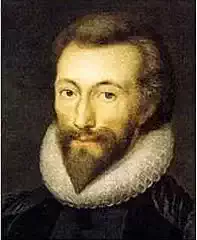
John Donne
No Man Is An Island
No Man Is An Island
No man is an island,
Entire of itself.
Each is a piece of the continent,
A part of the main.
If a clod be washed away by the sea,
Europe is the less.
As well as if a promontory were.
As well as if a manor of thine own
Or of thine friend's were.
Each man's death diminishes me,
For I am involved in mankind.
Therefore, send not to know
For whom the bell tolls,
It tolls for thee.
No man is an island,
Entire of itself.
Each is a piece of the continent,
A part of the main.
If a clod be washed away by the sea,
Europe is the less.
As well as if a promontory were.
As well as if a manor of thine own
Or of thine friend's were.
Each man's death diminishes me,
For I am involved in mankind.
Therefore, send not to know
For whom the bell tolls,
It tolls for thee.
420
John Donne
Holy Sonnet XII: Why Are We By All Creatures Waited On?
Holy Sonnet XII: Why Are We By All Creatures Waited On?
Why are we by all creatures waited on?
Why do the prodigal elements supply
Life and food to me, being more pure than I,
Simple, and further from corruption?
Why brook'st thou, ignorant horse, subjection?
Why dost thou, bull, and bore so seelily,
Dissemble weakness, and by one man's stroke die,
Whose whole kind you might swallow and feed upon?
Weaker I am, woe is me, and worse than you,
You have not sinned, nor need be timorous.
But wonder at a greater wonder, for to us
Created nature doth these things subdue,
But their Creator, whom sin nor nature tied,
For us, His creatures, and His foes, hath died.
Why are we by all creatures waited on?
Why do the prodigal elements supply
Life and food to me, being more pure than I,
Simple, and further from corruption?
Why brook'st thou, ignorant horse, subjection?
Why dost thou, bull, and bore so seelily,
Dissemble weakness, and by one man's stroke die,
Whose whole kind you might swallow and feed upon?
Weaker I am, woe is me, and worse than you,
You have not sinned, nor need be timorous.
But wonder at a greater wonder, for to us
Created nature doth these things subdue,
But their Creator, whom sin nor nature tied,
For us, His creatures, and His foes, hath died.
260
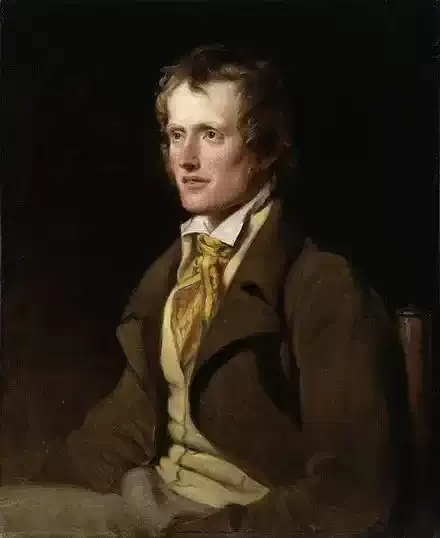
John Clare
The Stranger
The Stranger
When trouble haunts me, need I sigh?
No, rather smile away despair;
For those have been more sad than I,
With burthens more than I could bear;
Aye, gone rejoicing under care
Where I had sunk in black despair.
When pain disturbs my peace and rest,
Am I a hopeless grief to keep,
When some have slept on torture's breast
And smiled as in the sweetest sleep,
Aye, peace on thorns, in faith forgiven,
And pillowed on the hope of heaven?
Though low and poor and broken down,
Am I to think myself distrest?
No, rather laugh where others frown
And think my being truly blest;
For others I can daily see
More worthy riches worse than me.
Aye, once a stranger blest the earth
Who never caused a heart to mourn,
Whose very voice gave sorrow mirth--
And how did earth his worth return?
It spurned him from its lowliest lot,
The meanest station owned him not;
An outcast thrown in sorrow's way,
A fugitive that knew no sin,
Yet in lone places forced to stray--
Men would not take the stranger in.
Yet peace, though much himself he mourned,
Was all to others he returned.
* * * * *
His presence was a peace to all,
He bade the sorrowful rejoice.
Pain turned to pleasure at his call,
Health lived and issued from his voice.
He healed the sick and sent abroad
The dumb rejoicing in the Lord.
The blind met daylight in his eye,
The joys of everlasting day;
The sick found health in his reply;
The cripple threw his crutch away.
Yet he with troubles did remain
And suffered poverty and pain.
Yet none could say of wrong he did,
And scorn was ever standing bye;
Accusers by their conscience chid,
When proof was sought, made no reply.
Yet without sin he suffered more
Than ever sinners did before.
When trouble haunts me, need I sigh?
No, rather smile away despair;
For those have been more sad than I,
With burthens more than I could bear;
Aye, gone rejoicing under care
Where I had sunk in black despair.
When pain disturbs my peace and rest,
Am I a hopeless grief to keep,
When some have slept on torture's breast
And smiled as in the sweetest sleep,
Aye, peace on thorns, in faith forgiven,
And pillowed on the hope of heaven?
Though low and poor and broken down,
Am I to think myself distrest?
No, rather laugh where others frown
And think my being truly blest;
For others I can daily see
More worthy riches worse than me.
Aye, once a stranger blest the earth
Who never caused a heart to mourn,
Whose very voice gave sorrow mirth--
And how did earth his worth return?
It spurned him from its lowliest lot,
The meanest station owned him not;
An outcast thrown in sorrow's way,
A fugitive that knew no sin,
Yet in lone places forced to stray--
Men would not take the stranger in.
Yet peace, though much himself he mourned,
Was all to others he returned.
* * * * *
His presence was a peace to all,
He bade the sorrowful rejoice.
Pain turned to pleasure at his call,
Health lived and issued from his voice.
He healed the sick and sent abroad
The dumb rejoicing in the Lord.
The blind met daylight in his eye,
The joys of everlasting day;
The sick found health in his reply;
The cripple threw his crutch away.
Yet he with troubles did remain
And suffered poverty and pain.
Yet none could say of wrong he did,
And scorn was ever standing bye;
Accusers by their conscience chid,
When proof was sought, made no reply.
Yet without sin he suffered more
Than ever sinners did before.
436
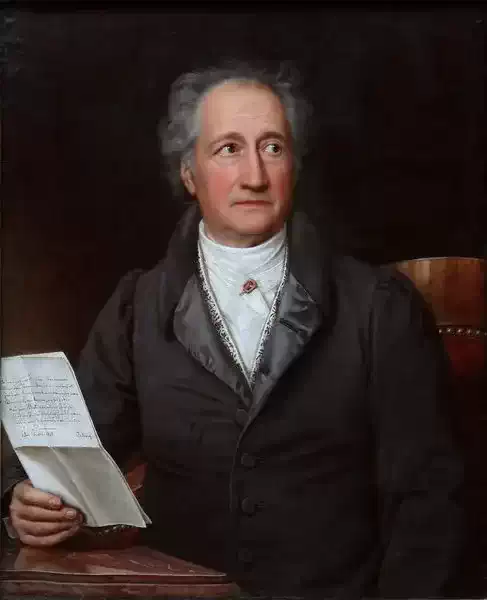
Johann Wolfgang von Goethe
The Godlike
The Godlike
NOBLE be man,
Helpful and good!
For that alone
Distinguisheth him
From all the beings
Unto us known.
Hail to the beings,
Unknown and glorious,
Whom we forebode!
From his example
Learn we to know them!
For unfeeling
Nature is ever:
On bad and on good
The sun alike shineth;
And on the wicked,
As on the best,
The moon and stars gleam.
Tempest and torrent,
Thunder and hail,
Roar on their path,
Seizing the while,
As they haste onward,
One after another.
Even so, fortune
Gropes 'mid the throng--
Innocent boyhood's
Curly head seizing,--
Seizing the hoary
Head of the sinner.
After laws mighty,
Brazen, eternal,
Must all we mortals
Finish the circuit
Of our existence.
Man, and man only
Can do the impossible;
He 'tis distinguisheth,
Chooseth and judgeth;
He to the moment
Endurance can lend.
He and he only
The good can reward,
The bad can he punish,
Can heal and can save;
All that wanders and strays
Can usefully blend.
And we pay homage
To the immortals
As though they were men,
And did in the great,
What the best, in the small,
Does or might do.
Be the man that is noble,
Both helpful and good.
Unweariedly forming
The right and the useful,
A type of those beings
Our mind hath foreshadow'd!
NOBLE be man,
Helpful and good!
For that alone
Distinguisheth him
From all the beings
Unto us known.
Hail to the beings,
Unknown and glorious,
Whom we forebode!
From his example
Learn we to know them!
For unfeeling
Nature is ever:
On bad and on good
The sun alike shineth;
And on the wicked,
As on the best,
The moon and stars gleam.
Tempest and torrent,
Thunder and hail,
Roar on their path,
Seizing the while,
As they haste onward,
One after another.
Even so, fortune
Gropes 'mid the throng--
Innocent boyhood's
Curly head seizing,--
Seizing the hoary
Head of the sinner.
After laws mighty,
Brazen, eternal,
Must all we mortals
Finish the circuit
Of our existence.
Man, and man only
Can do the impossible;
He 'tis distinguisheth,
Chooseth and judgeth;
He to the moment
Endurance can lend.
He and he only
The good can reward,
The bad can he punish,
Can heal and can save;
All that wanders and strays
Can usefully blend.
And we pay homage
To the immortals
As though they were men,
And did in the great,
What the best, in the small,
Does or might do.
Be the man that is noble,
Both helpful and good.
Unweariedly forming
The right and the useful,
A type of those beings
Our mind hath foreshadow'd!
455
Johann Wolfgang von Goethe
Hermann And Dorothea - I. Kalliope
Hermann And Dorothea - I. Kalliope
FATE AND SYMPATHY.
'NE'ER have I seen the market and streets so thoroughly empty!
Still as the grave is the town, clear'd out! I verily fancy
Fifty at most of all our inhabitants still may be found there.
People are so inquisitive! All are running and racing
Merely to see the sad train of poor fellows driven to exile.
Down to the causeway now building, the distance nearly a league is,
And they thitherward rush, in the heat and the dust of the noonday.
As for me, I had rather not stir from my place just to stare at
Worthy and sorrowful fugitives, who, with what goods they can carry,
Leaving their own fair land on the further side of the Rhine-stream,
Over to us are crossing, and wander through the delightful
Nooks of this fruitful vale, with all its twistings and windings.
Wife, you did right well to bid our son go and meet them,
Taking with him old linen, and something to eat and to drink too,
Just to give to the poor; the rich are bound to befriend them.
How he is driving along! How well he holds in the horses!
Then the new little carriage looks very handsome; inside it
Four can easily sit, besides the one on the coachbox.
This time he is alone; how easily-turns it the corner!'
Thus to his wife the host of the Golden Lion discoursed,
Sitting at ease in the porch of his house adjoining the market.
Then replied as follows the shrewd and sensible hostess
'Father, I don't like giving old linen away, for I find it
Useful in so many ways, 'tis not to he purchased for money
Just when it's wanted. And yet to-day I gladly have given
Many excellent articles, shirts and covers and suchlike;
For I have heard of old people and children walking half-naked.
Will you forgive me, too, for having ransacked your presses?
That grand dressing-gown, cover'd with Indian flowers all over,
Made of the finest calico, lined with excellent flannel,
I have despatch'd with the rest; 'tis thin, old, quite out of fashion.'
But the worthy landlord only smiled, and then answer'd
I shall dreadfully miss that ancient calico garment,
Genuine Indian stuff! They're not to be had any longer.
Well! I shall wear it no more. And your poor husband henceforward
Always must wear a surtout, I suppose, or commonplace jacket,
Always must put on his boots; good bye to cap and to slippers!'
'See,' continued his wife, 'a few are already returning
Who have seen the procession, which long ago must have pass'd by.
See how dusty their shoes are, and how their faces are glowing
Each one carries a handkerchief, wiping the sweat from his forehead.
I, for one, wouldn't hurry and worry myself in such weather
Merely to see such a sight! I'm certain to hear all about it.'
And the worthy father, speaking with emphasis, added
'Such fine weather seldom lasts through the whole of the harvest
And we're bringing the fruit home, just as the hay we brought lately,
Perfectly dry; the sky is clear, no cloud's in the heavens,
And the whole day long delicious breezes are blowing.
Splendid weather I call it! The corn already too ripe is,
And to-morrow begin we to gather the plentiful harvest.'
Whilst he was thus discoursing, the number of men and of women
Crossing the market and going towards home kept ever increasing;
And there return'd amongst others, bringing with him his daughters,
On the other side of the market, their prosperous neighbour,
Going full speed to his newbuilt house, the principal merchant,
Riding inside an open carriage (in Landau constructed).
All the streets were alive; for the town, though small, was well peopled,
Many a factory throve there, and many a business also.
Long sat the excellent couple under the doorway, exchanging
Many a passing remark on the people who happen'd to pass them.
Presently thus to her husband exclaim'd the good-natured hostess
'See! Yon comes the minister; with him is walking the druggist:
They'll be able to give an account of all that has happen'd,
What they witness'd, and many a sight I fear which was painful.'
Both of them came in a friendly manner, and greeted the couple,
Taking their seats on the wooden benches under the doorway,
Shaking the dust from their feet, their handkerchiefs using to fan them.
Presently, after exchanging reciprocal greetings, the druggist
Open'd his mouth, and almost peevishly vented his feelings
'What strange creatures men are! They all resemble each other,
All take pleasure in staring, when troubles fall on their neighbours.
Ev'ry one runs to see the flames destroying a dwelling,
Or a poor criminal led in terror and shame to the scaffold.
All the town has been out to gaze at the sorrowing exiles,
None of them bearing in mind that a like misfortune hereafter,
Possibly almost directly, may happen to be their own portion.
I can't pardon such levity; yet 'tis the nature of all men.'
Thereupon rejoin'd the noble and excellent pastor,
He, the charm of the town, in age scarce more than a stripling:-(
He was acquainted with life, and knew the wants of his hearers,
Fully convinced of the worth of the Holy Scriptures, whose mission
Is to reveal man's fate, his inclinations to fathom;
He was also well read in the best of secular writings.)
'I don't like to find fault with any innocent impulse
Which in the mind of man Dame Nature has ever implanted;
For what reason and intellect ne'er could accomplish, is often
Done by some fortunate, quite irresistible instinct within him.
If mankind were never by curiosity driven,
Say, could they e'er have found out for themselves the wonderful manner
Things in the world range in order? For first they Novelty look for,
Then with untiring industry seek to discover the Useful,
Lastly they yearn for the Good, which makes them noble and worthy.
All through their youth frivolity serves as their joyous companion,
Hiding the presence of danger, and. swiftly effacing the traces
Caused by misfortune and grief, as soon as their onslaught is over.
Truly the man's to be praised who, as years roll onward, develops
Out of such glad disposition an intellect settled and steady,--
Who, in good fortune as well as misfortune, strives zealously, nobly;
For what is Good he brings forth, replacing whatever is injured.'
Then in a friendly voice impatiently spoke thus the hostess:-'
Tell us what have you seen; I am eagerly longing to hear it.'
Then with emphasis answer'd the druggist:--' The terrible stories
Told me to-day will serve for a long time to make me unhappy.
Words would fail to describe the manifold pictures of mis'ry.
Far in the distance saw we the dust, before we descended
Down to the meadows; the rising hillocks hid the procession
Long from our eyes, and little could we distinguish about it.
When, however, we reach'd the road that winds thro' the valley,
Great was the crowd and the noise of the emigrants mix'd with the waggons.
We unhappily saw poor fellows passing in numbers,
Some of them showing how bitter the sense of their sorrowful flight was,
Some with a feeling of joy at saving their lives in a hurry.
Sad was the sight of the manifold goods and chattels pertaining
Unto a well-managed house, which the careful owner's accustom'd
Each in its proper position to place, and in regular order,
Always ready for use, for all are wanted and useful.--
Sad was the sight of them now, on many a waggon and barrow
Heap'd in thorough confusion, and hurriedly huddled together.
Over a cupboard was placed a sieve and a coverlet woollen;
Beds in the kneeding troughs lay, and linen over the glasses.
Ah! and the danger appear'd to rob the men of their senses,
Just as in our great fire of twenty years ago happen'd,
When what was worthless they saved, and left all the best things behind them.
So on the present occasion with heedless caution they carried
Many valueless chattels, o'erlading the cattle and horses,--
Common old boards and barrels, a birdcage next to a goosepen.
Women and children were gasping beneath the weight of their bundles,
Baskets and tubs full of utterly useless articles, bearing.
(Man is always unwilling the least of his goods to abandon.)
Thus on its dusty way advanced the crowded procession,
All in hopeless confusion. First one, whose cattle were weaker,
Fain would slowly advance, while others would eagerly hasten.
Then there arose a scream of half-crush'd women and children,
And a lowing of cattle, with yelping of dogs intermingled,
And a wailing of aged and sick, all sitting and shaking,
Ranged in their beds on the top of the waggon too-heavily laden.
Next some lumbering wheel, push'd out of the track by the pressure,
Went to the edge of the roadway; the vehicle fell in the ditch then,
Rolling right over, and throwing, in falling, the men who were in it
Far in the field, screaming loudly, their persons however uninjured.
Then the boxes roll'd off and tumbled close to the waggon.
Those who saw them failing full surely expected to see them
Smash'd to pieces beneath the weight of the chests and the presses.
So the waggon lay broken, and those that it carried were helpless,
For the rest of the train went on, and hurriedly pass'd them,
Thinking only of self, and carried away by the current.
So we sped to the spot, and found the sick and the aged
Who, when at home and in bed, could scarcely endure their sad ailments,
Lying there on the ground, all sighing and groaning in anguish,
Stifled by clouds of dust, and scorch'd by the fierce sun of summer.
Then replied in tones of compassion the sensitive landlord
Hermann I trust will find them and give them refreshment and clothing.
I should unwillingly see them: I grieve at the eight of such sorrow.
Touch'd by the earliest news of the sad extent of the suffering,
Hastily sent we a trifle from out of our superabundance,
Just to comfort a few, and then our minds were more easy.
Now let us cease to discourse on such a sorrowful subject,
For men's hearts are easily overshadow'd by terror,
And by care, more odious far to me than misfortune.
Now let us go to a cooler place, the little back-parlour;
There the sun never shines, and the walls are so thick that the hot air
Never can enter; and mother shall forthwith bring us a glass each
Full of fine Eighty-three, well fitted to drive away trouble.
This is a bad place for drinking; the flies will hum round the glasses.'
So they all went inside, enjoying themselves in the coolness.
Then in a well-cut flask the mother carefully brought them
Some of that clear good wine, upon a bright metal waiter
With those greenish rummers, the fittingest goblets for Rhine wine.
So the three sat together, around the glistening polish'd
Circular large brown table-Äon massive feet it was planted.
Merrily clink'd together the glasses of host and of pastor,
But the other one thoughtfully held his glass without moving,
And in friendly fashion the host thus ask'd him to join them:-
'Drink, good neighbour, I pray! A merciful God has protected
Us in the past from misfortune, and will protect us in future.
All must confess that since He thought fit to severely chastise us,
When that terrible fire occurr'd, He has constantly bless'd us.
And watch'd over us constantly, just as man is accustom'd
His eye's precious apple to guard, that dearest of members.
Shall He not for the future preserve us, and be our Protector?
For 'tis in danger we learn to appreciate duly His Goodness.
This so flourishing town, which He built again from its ashes
By the industrious hands of its burghers, and bless'd it so richly,
Will He again destroy it, and render their toil unavailing?'
Cheerfully answer'd the excellent pastor, in accents of mildness
'Steadfastly cling to this faith, and cherish such worthy opinions;
In good fortune they'll make you prudent, and then in misfortune
Well-grounded hopes they'll supply, and furnish you true consolation.'
Then continued the host, with thoughts full of manhood and wisdom
'Oft have I greeted with wonder the rolling flood of the Rhine stream,
When, on my business trav'lling, I've once more come to its borders.
Grand has it ever appear'd, exalting my feelings and senses;
But I could never imagine that soon its beautiful margin
Into a wall would be turn'd, to keep the French from our country,
And its wide-spreading bed a ditch to hinder and check them.
So by Nature we're guarded, we're guarded by valorous Germans,
And by the Lord we're guarded; who then would foolishly tremble?
Weary the combatants are, and all things indicate peace soon;
And when at length the long-expected festival's holden
Here in our church, and the bells chime in with the organ in chorus,
And the trumpets are blowing, the noble Te Deum upraising,
Then on that selfsame day I fain would see, my good pastor,
Our dear Hermann kneel with his bride at the altar before you,
And the glad festival held through the length and breadth of the country
Will henceforward to me be a glad anniversary also!
But I am grieved to observe that the youth, who is always so active
When he is here at home, abroad is so slow and so timid.
Little at any time cares he to mix with the rest of the people;
Yes, he even avoids young maidens' society ever,
And the frolicsome dance, that great delight of young people.'
Thus he spake, and then listen'd. The sound of the stamping of horses
Drawing nearer was heard; and then the roll of the carriage,
Which, with impetuous speed, now thunder'd under the gateway.
FATE AND SYMPATHY.
'NE'ER have I seen the market and streets so thoroughly empty!
Still as the grave is the town, clear'd out! I verily fancy
Fifty at most of all our inhabitants still may be found there.
People are so inquisitive! All are running and racing
Merely to see the sad train of poor fellows driven to exile.
Down to the causeway now building, the distance nearly a league is,
And they thitherward rush, in the heat and the dust of the noonday.
As for me, I had rather not stir from my place just to stare at
Worthy and sorrowful fugitives, who, with what goods they can carry,
Leaving their own fair land on the further side of the Rhine-stream,
Over to us are crossing, and wander through the delightful
Nooks of this fruitful vale, with all its twistings and windings.
Wife, you did right well to bid our son go and meet them,
Taking with him old linen, and something to eat and to drink too,
Just to give to the poor; the rich are bound to befriend them.
How he is driving along! How well he holds in the horses!
Then the new little carriage looks very handsome; inside it
Four can easily sit, besides the one on the coachbox.
This time he is alone; how easily-turns it the corner!'
Thus to his wife the host of the Golden Lion discoursed,
Sitting at ease in the porch of his house adjoining the market.
Then replied as follows the shrewd and sensible hostess
'Father, I don't like giving old linen away, for I find it
Useful in so many ways, 'tis not to he purchased for money
Just when it's wanted. And yet to-day I gladly have given
Many excellent articles, shirts and covers and suchlike;
For I have heard of old people and children walking half-naked.
Will you forgive me, too, for having ransacked your presses?
That grand dressing-gown, cover'd with Indian flowers all over,
Made of the finest calico, lined with excellent flannel,
I have despatch'd with the rest; 'tis thin, old, quite out of fashion.'
But the worthy landlord only smiled, and then answer'd
I shall dreadfully miss that ancient calico garment,
Genuine Indian stuff! They're not to be had any longer.
Well! I shall wear it no more. And your poor husband henceforward
Always must wear a surtout, I suppose, or commonplace jacket,
Always must put on his boots; good bye to cap and to slippers!'
'See,' continued his wife, 'a few are already returning
Who have seen the procession, which long ago must have pass'd by.
See how dusty their shoes are, and how their faces are glowing
Each one carries a handkerchief, wiping the sweat from his forehead.
I, for one, wouldn't hurry and worry myself in such weather
Merely to see such a sight! I'm certain to hear all about it.'
And the worthy father, speaking with emphasis, added
'Such fine weather seldom lasts through the whole of the harvest
And we're bringing the fruit home, just as the hay we brought lately,
Perfectly dry; the sky is clear, no cloud's in the heavens,
And the whole day long delicious breezes are blowing.
Splendid weather I call it! The corn already too ripe is,
And to-morrow begin we to gather the plentiful harvest.'
Whilst he was thus discoursing, the number of men and of women
Crossing the market and going towards home kept ever increasing;
And there return'd amongst others, bringing with him his daughters,
On the other side of the market, their prosperous neighbour,
Going full speed to his newbuilt house, the principal merchant,
Riding inside an open carriage (in Landau constructed).
All the streets were alive; for the town, though small, was well peopled,
Many a factory throve there, and many a business also.
Long sat the excellent couple under the doorway, exchanging
Many a passing remark on the people who happen'd to pass them.
Presently thus to her husband exclaim'd the good-natured hostess
'See! Yon comes the minister; with him is walking the druggist:
They'll be able to give an account of all that has happen'd,
What they witness'd, and many a sight I fear which was painful.'
Both of them came in a friendly manner, and greeted the couple,
Taking their seats on the wooden benches under the doorway,
Shaking the dust from their feet, their handkerchiefs using to fan them.
Presently, after exchanging reciprocal greetings, the druggist
Open'd his mouth, and almost peevishly vented his feelings
'What strange creatures men are! They all resemble each other,
All take pleasure in staring, when troubles fall on their neighbours.
Ev'ry one runs to see the flames destroying a dwelling,
Or a poor criminal led in terror and shame to the scaffold.
All the town has been out to gaze at the sorrowing exiles,
None of them bearing in mind that a like misfortune hereafter,
Possibly almost directly, may happen to be their own portion.
I can't pardon such levity; yet 'tis the nature of all men.'
Thereupon rejoin'd the noble and excellent pastor,
He, the charm of the town, in age scarce more than a stripling:-(
He was acquainted with life, and knew the wants of his hearers,
Fully convinced of the worth of the Holy Scriptures, whose mission
Is to reveal man's fate, his inclinations to fathom;
He was also well read in the best of secular writings.)
'I don't like to find fault with any innocent impulse
Which in the mind of man Dame Nature has ever implanted;
For what reason and intellect ne'er could accomplish, is often
Done by some fortunate, quite irresistible instinct within him.
If mankind were never by curiosity driven,
Say, could they e'er have found out for themselves the wonderful manner
Things in the world range in order? For first they Novelty look for,
Then with untiring industry seek to discover the Useful,
Lastly they yearn for the Good, which makes them noble and worthy.
All through their youth frivolity serves as their joyous companion,
Hiding the presence of danger, and. swiftly effacing the traces
Caused by misfortune and grief, as soon as their onslaught is over.
Truly the man's to be praised who, as years roll onward, develops
Out of such glad disposition an intellect settled and steady,--
Who, in good fortune as well as misfortune, strives zealously, nobly;
For what is Good he brings forth, replacing whatever is injured.'
Then in a friendly voice impatiently spoke thus the hostess:-'
Tell us what have you seen; I am eagerly longing to hear it.'
Then with emphasis answer'd the druggist:--' The terrible stories
Told me to-day will serve for a long time to make me unhappy.
Words would fail to describe the manifold pictures of mis'ry.
Far in the distance saw we the dust, before we descended
Down to the meadows; the rising hillocks hid the procession
Long from our eyes, and little could we distinguish about it.
When, however, we reach'd the road that winds thro' the valley,
Great was the crowd and the noise of the emigrants mix'd with the waggons.
We unhappily saw poor fellows passing in numbers,
Some of them showing how bitter the sense of their sorrowful flight was,
Some with a feeling of joy at saving their lives in a hurry.
Sad was the sight of the manifold goods and chattels pertaining
Unto a well-managed house, which the careful owner's accustom'd
Each in its proper position to place, and in regular order,
Always ready for use, for all are wanted and useful.--
Sad was the sight of them now, on many a waggon and barrow
Heap'd in thorough confusion, and hurriedly huddled together.
Over a cupboard was placed a sieve and a coverlet woollen;
Beds in the kneeding troughs lay, and linen over the glasses.
Ah! and the danger appear'd to rob the men of their senses,
Just as in our great fire of twenty years ago happen'd,
When what was worthless they saved, and left all the best things behind them.
So on the present occasion with heedless caution they carried
Many valueless chattels, o'erlading the cattle and horses,--
Common old boards and barrels, a birdcage next to a goosepen.
Women and children were gasping beneath the weight of their bundles,
Baskets and tubs full of utterly useless articles, bearing.
(Man is always unwilling the least of his goods to abandon.)
Thus on its dusty way advanced the crowded procession,
All in hopeless confusion. First one, whose cattle were weaker,
Fain would slowly advance, while others would eagerly hasten.
Then there arose a scream of half-crush'd women and children,
And a lowing of cattle, with yelping of dogs intermingled,
And a wailing of aged and sick, all sitting and shaking,
Ranged in their beds on the top of the waggon too-heavily laden.
Next some lumbering wheel, push'd out of the track by the pressure,
Went to the edge of the roadway; the vehicle fell in the ditch then,
Rolling right over, and throwing, in falling, the men who were in it
Far in the field, screaming loudly, their persons however uninjured.
Then the boxes roll'd off and tumbled close to the waggon.
Those who saw them failing full surely expected to see them
Smash'd to pieces beneath the weight of the chests and the presses.
So the waggon lay broken, and those that it carried were helpless,
For the rest of the train went on, and hurriedly pass'd them,
Thinking only of self, and carried away by the current.
So we sped to the spot, and found the sick and the aged
Who, when at home and in bed, could scarcely endure their sad ailments,
Lying there on the ground, all sighing and groaning in anguish,
Stifled by clouds of dust, and scorch'd by the fierce sun of summer.
Then replied in tones of compassion the sensitive landlord
Hermann I trust will find them and give them refreshment and clothing.
I should unwillingly see them: I grieve at the eight of such sorrow.
Touch'd by the earliest news of the sad extent of the suffering,
Hastily sent we a trifle from out of our superabundance,
Just to comfort a few, and then our minds were more easy.
Now let us cease to discourse on such a sorrowful subject,
For men's hearts are easily overshadow'd by terror,
And by care, more odious far to me than misfortune.
Now let us go to a cooler place, the little back-parlour;
There the sun never shines, and the walls are so thick that the hot air
Never can enter; and mother shall forthwith bring us a glass each
Full of fine Eighty-three, well fitted to drive away trouble.
This is a bad place for drinking; the flies will hum round the glasses.'
So they all went inside, enjoying themselves in the coolness.
Then in a well-cut flask the mother carefully brought them
Some of that clear good wine, upon a bright metal waiter
With those greenish rummers, the fittingest goblets for Rhine wine.
So the three sat together, around the glistening polish'd
Circular large brown table-Äon massive feet it was planted.
Merrily clink'd together the glasses of host and of pastor,
But the other one thoughtfully held his glass without moving,
And in friendly fashion the host thus ask'd him to join them:-
'Drink, good neighbour, I pray! A merciful God has protected
Us in the past from misfortune, and will protect us in future.
All must confess that since He thought fit to severely chastise us,
When that terrible fire occurr'd, He has constantly bless'd us.
And watch'd over us constantly, just as man is accustom'd
His eye's precious apple to guard, that dearest of members.
Shall He not for the future preserve us, and be our Protector?
For 'tis in danger we learn to appreciate duly His Goodness.
This so flourishing town, which He built again from its ashes
By the industrious hands of its burghers, and bless'd it so richly,
Will He again destroy it, and render their toil unavailing?'
Cheerfully answer'd the excellent pastor, in accents of mildness
'Steadfastly cling to this faith, and cherish such worthy opinions;
In good fortune they'll make you prudent, and then in misfortune
Well-grounded hopes they'll supply, and furnish you true consolation.'
Then continued the host, with thoughts full of manhood and wisdom
'Oft have I greeted with wonder the rolling flood of the Rhine stream,
When, on my business trav'lling, I've once more come to its borders.
Grand has it ever appear'd, exalting my feelings and senses;
But I could never imagine that soon its beautiful margin
Into a wall would be turn'd, to keep the French from our country,
And its wide-spreading bed a ditch to hinder and check them.
So by Nature we're guarded, we're guarded by valorous Germans,
And by the Lord we're guarded; who then would foolishly tremble?
Weary the combatants are, and all things indicate peace soon;
And when at length the long-expected festival's holden
Here in our church, and the bells chime in with the organ in chorus,
And the trumpets are blowing, the noble Te Deum upraising,
Then on that selfsame day I fain would see, my good pastor,
Our dear Hermann kneel with his bride at the altar before you,
And the glad festival held through the length and breadth of the country
Will henceforward to me be a glad anniversary also!
But I am grieved to observe that the youth, who is always so active
When he is here at home, abroad is so slow and so timid.
Little at any time cares he to mix with the rest of the people;
Yes, he even avoids young maidens' society ever,
And the frolicsome dance, that great delight of young people.'
Thus he spake, and then listen'd. The sound of the stamping of horses
Drawing nearer was heard; and then the roll of the carriage,
Which, with impetuous speed, now thunder'd under the gateway.
390
Johann Wolfgang von Goethe
Celebrity
Celebrity
ON bridges small and bridges great
Stands Nepomucks in ev'ry state,
Of bronze, wood, painted, or of stone,
Some small as dolls, some giants grown;
Each passer must worship before Nepomuck,
Who to die on a bridge chanced to have the ill luck,
When once a man with head and ears
A saint in people's eyes appears,
Or has been sentenced piteously
Beneath the hangman's hand to die,
He's as a noted person prized,
In portrait is immortalized.
Engravings, woodcuts, are supplied,
And through the world spread far and wide.
Upon them all is seen his name,
And ev'ry one admits his claim;
Even the image of the Lord
Is not with greater zeal ador'd.
Strange fancy of the human race!
Half sinner frail, half child of grace
We see HERR WERTHER of the story
In all the pomp of woodcut glory.
His worth is first made duly known,
By having his sad features shown
At ev'ry fair the country round;
In ev'ry alehouse too they're found.
His stick is pointed by each dunce
"The ball would reach his brain at once!"
And each says, o'er his beer and bread:
"Thank Heav'n that 'tis not we are dead!"
ON bridges small and bridges great
Stands Nepomucks in ev'ry state,
Of bronze, wood, painted, or of stone,
Some small as dolls, some giants grown;
Each passer must worship before Nepomuck,
Who to die on a bridge chanced to have the ill luck,
When once a man with head and ears
A saint in people's eyes appears,
Or has been sentenced piteously
Beneath the hangman's hand to die,
He's as a noted person prized,
In portrait is immortalized.
Engravings, woodcuts, are supplied,
And through the world spread far and wide.
Upon them all is seen his name,
And ev'ry one admits his claim;
Even the image of the Lord
Is not with greater zeal ador'd.
Strange fancy of the human race!
Half sinner frail, half child of grace
We see HERR WERTHER of the story
In all the pomp of woodcut glory.
His worth is first made duly known,
By having his sad features shown
At ev'ry fair the country round;
In ev'ry alehouse too they're found.
His stick is pointed by each dunce
"The ball would reach his brain at once!"
And each says, o'er his beer and bread:
"Thank Heav'n that 'tis not we are dead!"
381
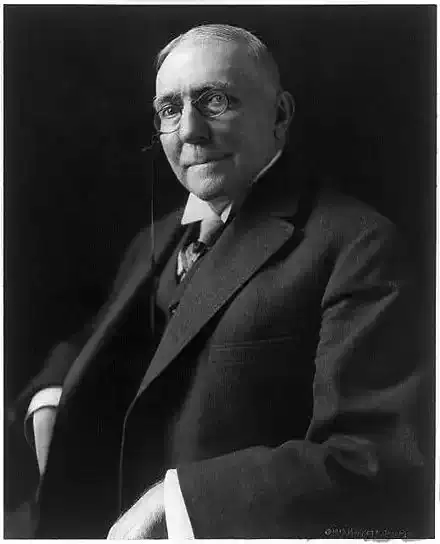
James Whitcomb Riley
Told By
Told By
Coming, clean from the Maryland-end
Of this great National Road of ours,
Through your vast West; with the time to spend,
Stopping for days in the main towns, where
Every citizen seemed a friend,
And friends grew thick as the wayside flowers,--
I found no thing that I might narrate
More singularly strange or queer
Than a thing I found in your sister-state
Ohio,--at a river-town--down here
In my notebook: _Zanesville--situate
On the stream Muskingum--broad and clear,
And navigable, through half the year,
North, to Coshocton; south, as far
As Marietta._--But these facts are
Not of the _story_, but the _scene_
Of the simple little tale I mean
To tell _directly_--from this, straight through
To the _end_ that is best worth listening to:
Eastward of Zanesville, two or three
Miles from the town, as our stage drove in,
I on the driver's seat, and he
Pointing out this and that to me,--
On beyond us--among the rest--
A grovey slope, and a fluttering throng
Of little children, which he 'guessed'
Was a picnic, as we caught their thin
High laughter, as we drove along,
Clearer and clearer. Then suddenly
He turned and asked, with a curious grin,
What were my views on _Slavery? 'Why?'_
I asked, in return, with a wary eye.
'Because,' he answered, pointing his whip
At a little, whitewashed house and shed
On the edge of the road by the grove ahead,-'
Because there are two slaves _there_,' he said-'
Two Black slaves that I've passed each trip
For eighteen years.--Though they've been set free,
They have been slaves ever since!' said he.
And, as our horses slowly drew
Nearer the little house in view,
All briefly I heard the history
Of this little old Negro woman and
Her husband, house and scrap of land;
How they were slaves and had been made free
By their dying master, years ago
In old Virginia; and then had come
North here into a _free_ state--so,
Safe forever, to found a home--
For themselves alone?--for they left South there
Five strong sons, who had, alas!
All been sold ere it came to pass
This first old master with his last breath
Had freed the _parents_.--(He went to death
Agonized and in dire despair
That the poor slave _children_ might not share
Their parents' freedom. And wildly then
He moaned for pardon and died. Amen!)
Thus, with their freedom, and little sum
Of money left them, these two had come
North, full twenty long years ago;
And, settling there, they had hopefully
Gone to work, in their simple way,
Hauling--gardening--raising sweet
Corn, and popcorn.--Bird and bee
In the garden-blooms and the apple-tree
Singing with them throughout the slow
Summer's day, with its dust and heat--
The crops that thirst and the rains that fail;
Or in Autumn chill, when the clouds hung low,
And hand-made hominy might find sale
In the near town-market; or baking pies
And cakes, to range in alluring show
At the little window, where the eyes
Of the Movers' children, driving past,
Grew fixed, till the big white wagons drew
Into a halt that would sometimes last
Even the space of an hour or two--
As the dusty, thirsty travelers made
Their noonings there in the beeches' shade
By the old black Aunty's spring-house, where,
Along with its cooling draughts, were found
Jugs of her famous sweet spruce-beer,
Served with her gingerbread-horses there,
While Aunty's snow-white cap bobbed 'round
Till the children's rapture knew no bound,
As she sang and danced for them, quavering clear
And high the chant of her old slave-days-
'Oh, Lo'd, Jinny! my toes is so',
Dancin' on yo' sandy flo'!'
Even so had they wrought all ways
To earn the pennies, and hoard them, too,--
And with what ultimate end in view?--
They were saving up money enough to be
Able, in time, to buy their own
Five children back.
Ah! the toil gone through!
And the long delays and the heartaches, too,
And self-denials that they had known!
But the pride and glory that was theirs
When they first hitched up their shackly cart
For the long, long journey South.--The start
In the first drear light of the chilly dawn,
With no friends gathered in grieving throng,--
With no farewells and favoring prayers;
But, as they creaked and jolted on,
Their chiming voices broke in song-
''Hail, all hail! don't you see the stars a-fallin'?
Hail, all hail! I'm on my way.
Gideon[1] am
A healin' ba'm--
I belong to the blood-washed army.
Gideon am
A healin' ba'm--
On my way!''
And their _return!_--with their oldest boy
Along with them! Why, their happiness
Spread abroad till it grew a joy
_Universal_--It even reached
And thrilled the town till the _Church_ was stirred
Into suspecting that wrong was wrong!--
And it stayed awake as the preacher preached
A _Real_ 'Love'-text that he had not long
To ransack for in the Holy Word.
And the son, restored, and welcomed so,
Found service readily in the town;
And, with the parents, sure and slow,
_He_ went 'saltin' de cole cash down.'
So with the _next_ boy--and each one
In turn, till _four_ of the five at last
Had been bought back; and, in each case,
With steady work and good homes not
Far from the parents, _they_ chipped in
To the family fund, with an equal grace.
Thus they managed and planned and wrought,
And the old folks throve--Till the night before
They were to start for the lone last son
In the rainy dawn--their money fast
Hid away in the house,--two mean,
Murderous robbers burst the door.
...Then, in the dark, was a scuffle--a fall--
An old man's gasping cry--and then
A woman's fife-like shriek.
...Three men
Splashing by on horseback heard
The summons: And in an instant all
Sprung to their duty, with scarce a word.
And they were _in time_--not only to save
The lives of the old folks, but to bag
Both the robbers, and buck-and-gag
And land them safe in the county-jail--
Or, as Aunty said, with a blended awe
And subtlety,--'Safe in de calaboose whah
De dawgs caint bite 'em!'
--So prevail
The faithful!--So had the Lord upheld
His servants of both deed and prayer,--
HIS the glory unparalleled-_
Theirs_ the reward,--their every son
Free, at last, as the parents were!
And, as the driver ended there
In front of the little house, I said,
All fervently, 'Well done! well done!'
At which he smiled, and turned his head
And pulled on the leaders' lines and--'See!'
He said,--''you can read old Aunty's sign?'
And, peering down through these specs of mine
On a little, square board-sign, I read:
'Stop, traveler, if you think it fit,
And quench your thirst for a-fip-and-a-bit.
The rocky spring is very clear,
And soon converted into beer.'
And, though I read aloud, I could
Scarce hear myself for laugh and shout
Of children--a glad multitude
Of little people, swarming out
Of the picnic-grounds I spoke about.--
And in their rapturous midst, I see
Again--through mists of memory--
A black old Negress laughing up
At the driver, with her broad lips rolled
Back from her teeth, chalk-white, and gums
Redder than reddest red-ripe plums.
He took from her hand the lifted cup
Of clear spring-water, pure and cold,
And passed it to me: And I raised my hat
And drank to her with a reverence that
My conscience knew was justly due
The old black face, and the old eyes, too--
The old black head, with its mossy mat
Of hair, set under its cap and frills
White as the snows on Alpine hills;
Drank to the old _black_ smile, but yet
Bright as the sun on the violet,--
Drank to the gnarled and knuckled old
Black hands whose palms had ached and bled
And pitilessly been worn pale
And white almost as the palms that hold
Slavery's lash while the victim's wail
Fails as a crippled prayer might fail.--
Aye, with a reverence infinite,
I drank to the old black face and head--
The old black breast with its life of light--
The old black hide with its heart of gold.
Coming, clean from the Maryland-end
Of this great National Road of ours,
Through your vast West; with the time to spend,
Stopping for days in the main towns, where
Every citizen seemed a friend,
And friends grew thick as the wayside flowers,--
I found no thing that I might narrate
More singularly strange or queer
Than a thing I found in your sister-state
Ohio,--at a river-town--down here
In my notebook: _Zanesville--situate
On the stream Muskingum--broad and clear,
And navigable, through half the year,
North, to Coshocton; south, as far
As Marietta._--But these facts are
Not of the _story_, but the _scene_
Of the simple little tale I mean
To tell _directly_--from this, straight through
To the _end_ that is best worth listening to:
Eastward of Zanesville, two or three
Miles from the town, as our stage drove in,
I on the driver's seat, and he
Pointing out this and that to me,--
On beyond us--among the rest--
A grovey slope, and a fluttering throng
Of little children, which he 'guessed'
Was a picnic, as we caught their thin
High laughter, as we drove along,
Clearer and clearer. Then suddenly
He turned and asked, with a curious grin,
What were my views on _Slavery? 'Why?'_
I asked, in return, with a wary eye.
'Because,' he answered, pointing his whip
At a little, whitewashed house and shed
On the edge of the road by the grove ahead,-'
Because there are two slaves _there_,' he said-'
Two Black slaves that I've passed each trip
For eighteen years.--Though they've been set free,
They have been slaves ever since!' said he.
And, as our horses slowly drew
Nearer the little house in view,
All briefly I heard the history
Of this little old Negro woman and
Her husband, house and scrap of land;
How they were slaves and had been made free
By their dying master, years ago
In old Virginia; and then had come
North here into a _free_ state--so,
Safe forever, to found a home--
For themselves alone?--for they left South there
Five strong sons, who had, alas!
All been sold ere it came to pass
This first old master with his last breath
Had freed the _parents_.--(He went to death
Agonized and in dire despair
That the poor slave _children_ might not share
Their parents' freedom. And wildly then
He moaned for pardon and died. Amen!)
Thus, with their freedom, and little sum
Of money left them, these two had come
North, full twenty long years ago;
And, settling there, they had hopefully
Gone to work, in their simple way,
Hauling--gardening--raising sweet
Corn, and popcorn.--Bird and bee
In the garden-blooms and the apple-tree
Singing with them throughout the slow
Summer's day, with its dust and heat--
The crops that thirst and the rains that fail;
Or in Autumn chill, when the clouds hung low,
And hand-made hominy might find sale
In the near town-market; or baking pies
And cakes, to range in alluring show
At the little window, where the eyes
Of the Movers' children, driving past,
Grew fixed, till the big white wagons drew
Into a halt that would sometimes last
Even the space of an hour or two--
As the dusty, thirsty travelers made
Their noonings there in the beeches' shade
By the old black Aunty's spring-house, where,
Along with its cooling draughts, were found
Jugs of her famous sweet spruce-beer,
Served with her gingerbread-horses there,
While Aunty's snow-white cap bobbed 'round
Till the children's rapture knew no bound,
As she sang and danced for them, quavering clear
And high the chant of her old slave-days-
'Oh, Lo'd, Jinny! my toes is so',
Dancin' on yo' sandy flo'!'
Even so had they wrought all ways
To earn the pennies, and hoard them, too,--
And with what ultimate end in view?--
They were saving up money enough to be
Able, in time, to buy their own
Five children back.
Ah! the toil gone through!
And the long delays and the heartaches, too,
And self-denials that they had known!
But the pride and glory that was theirs
When they first hitched up their shackly cart
For the long, long journey South.--The start
In the first drear light of the chilly dawn,
With no friends gathered in grieving throng,--
With no farewells and favoring prayers;
But, as they creaked and jolted on,
Their chiming voices broke in song-
''Hail, all hail! don't you see the stars a-fallin'?
Hail, all hail! I'm on my way.
Gideon[1] am
A healin' ba'm--
I belong to the blood-washed army.
Gideon am
A healin' ba'm--
On my way!''
And their _return!_--with their oldest boy
Along with them! Why, their happiness
Spread abroad till it grew a joy
_Universal_--It even reached
And thrilled the town till the _Church_ was stirred
Into suspecting that wrong was wrong!--
And it stayed awake as the preacher preached
A _Real_ 'Love'-text that he had not long
To ransack for in the Holy Word.
And the son, restored, and welcomed so,
Found service readily in the town;
And, with the parents, sure and slow,
_He_ went 'saltin' de cole cash down.'
So with the _next_ boy--and each one
In turn, till _four_ of the five at last
Had been bought back; and, in each case,
With steady work and good homes not
Far from the parents, _they_ chipped in
To the family fund, with an equal grace.
Thus they managed and planned and wrought,
And the old folks throve--Till the night before
They were to start for the lone last son
In the rainy dawn--their money fast
Hid away in the house,--two mean,
Murderous robbers burst the door.
...Then, in the dark, was a scuffle--a fall--
An old man's gasping cry--and then
A woman's fife-like shriek.
...Three men
Splashing by on horseback heard
The summons: And in an instant all
Sprung to their duty, with scarce a word.
And they were _in time_--not only to save
The lives of the old folks, but to bag
Both the robbers, and buck-and-gag
And land them safe in the county-jail--
Or, as Aunty said, with a blended awe
And subtlety,--'Safe in de calaboose whah
De dawgs caint bite 'em!'
--So prevail
The faithful!--So had the Lord upheld
His servants of both deed and prayer,--
HIS the glory unparalleled-_
Theirs_ the reward,--their every son
Free, at last, as the parents were!
And, as the driver ended there
In front of the little house, I said,
All fervently, 'Well done! well done!'
At which he smiled, and turned his head
And pulled on the leaders' lines and--'See!'
He said,--''you can read old Aunty's sign?'
And, peering down through these specs of mine
On a little, square board-sign, I read:
'Stop, traveler, if you think it fit,
And quench your thirst for a-fip-and-a-bit.
The rocky spring is very clear,
And soon converted into beer.'
And, though I read aloud, I could
Scarce hear myself for laugh and shout
Of children--a glad multitude
Of little people, swarming out
Of the picnic-grounds I spoke about.--
And in their rapturous midst, I see
Again--through mists of memory--
A black old Negress laughing up
At the driver, with her broad lips rolled
Back from her teeth, chalk-white, and gums
Redder than reddest red-ripe plums.
He took from her hand the lifted cup
Of clear spring-water, pure and cold,
And passed it to me: And I raised my hat
And drank to her with a reverence that
My conscience knew was justly due
The old black face, and the old eyes, too--
The old black head, with its mossy mat
Of hair, set under its cap and frills
White as the snows on Alpine hills;
Drank to the old _black_ smile, but yet
Bright as the sun on the violet,--
Drank to the gnarled and knuckled old
Black hands whose palms had ached and bled
And pitilessly been worn pale
And white almost as the palms that hold
Slavery's lash while the victim's wail
Fails as a crippled prayer might fail.--
Aye, with a reverence infinite,
I drank to the old black face and head--
The old black breast with its life of light--
The old black hide with its heart of gold.
312
James Whitcomb Riley
Out Of Nazareth
Out Of Nazareth
'He shall sleep unscathed of thieves
Who loves Allah and believes.'
Thus heard one who shared the tent,
In the far-off Orient,
Of the Bedouin ben Ahrzz--
Nobler never loved the stars
Through the palm-leaves nigh the dim
Dawn his courser neighed to him!
He said: 'Let the sands be swarmed
With such thieves as I, and thou
Shalt at morning rise unharmed,
Light as eyelash to the brow
Of thy camel amber-eyed,
Ever munching either side,
Striding still, with nestled knees,
Through the midnight's oases.'
'Who can rob thee an thou hast
More than this that thou hast cast
At my feet-- this dust of gold?
Simply this and that, all told!
Hast thou not a treasure of
Such a thing as men call love?'
'Can the dusky band I lead
Rob thee of thy daily need
Of a whiter soul, or steal
What thy lordly prayers reveal?
Who could be enriched of thee
By such hoard of poverty
As thy niggard hand pretends
To dole me-- thy worst of friends?
Therefore shouldst thou pause to bless
One indeed who blesses thee:
Robbing thee, I dispossess
But myself--. Pray thou for me!'
He shall sleep unscathed of thieves
Who loves Allah and believes.
'He shall sleep unscathed of thieves
Who loves Allah and believes.'
Thus heard one who shared the tent,
In the far-off Orient,
Of the Bedouin ben Ahrzz--
Nobler never loved the stars
Through the palm-leaves nigh the dim
Dawn his courser neighed to him!
He said: 'Let the sands be swarmed
With such thieves as I, and thou
Shalt at morning rise unharmed,
Light as eyelash to the brow
Of thy camel amber-eyed,
Ever munching either side,
Striding still, with nestled knees,
Through the midnight's oases.'
'Who can rob thee an thou hast
More than this that thou hast cast
At my feet-- this dust of gold?
Simply this and that, all told!
Hast thou not a treasure of
Such a thing as men call love?'
'Can the dusky band I lead
Rob thee of thy daily need
Of a whiter soul, or steal
What thy lordly prayers reveal?
Who could be enriched of thee
By such hoard of poverty
As thy niggard hand pretends
To dole me-- thy worst of friends?
Therefore shouldst thou pause to bless
One indeed who blesses thee:
Robbing thee, I dispossess
But myself--. Pray thou for me!'
He shall sleep unscathed of thieves
Who loves Allah and believes.
248
James Whitcomb Riley
Jim
Jim
He was jes a plain ever'-day, all-round kind of a jour.,
Consumpted-Iookin'-- but la!
The jokeiest, wittiest, story-tellin', song-singin', laughin'est, jolliest
Feller you ever saw!
Worked at jes coarse work, but you kin bet he was fine enough in his talk,
And his feelin's too!
Lordy! Ef he was on'y back on his bench ag'in to-day, a- carryin' on
Like he ust to do!
Any shopmate'll tell you there never was, on top o' dirt,
A better feller'n Jim!
You want a favor, and couldn't git it anywheres else--
You could git it o' him!
Most free-heartedest man thataway in the world, I guess!
Give up ever' nickel he's worth--
And ef you'd a-wanted it, and named it to him, and it was his,
He'd a-give you the earth!
Allus a reachin' out, Jim was, and a-he'ppin' some
Pore feller onto his feet-He'd
a-never a-keered how hungry he was hisse'f,
So's the feller got somepin' to eat!
Didn't make no differ'nce at all to him how he was dressed,
He ust to say to me--,
'You togg out a tramp purty comfortable in winter-time, a huntin' a job,
And he'll git along!' says he.
Jim didn't have, ner never could git ahead, so overly much
O' this world's goods at a time--.
'Fore now I've saw him, more'n onc't, lend a dollar, and haf to, more'n
likely,
Turn round and borry a dime!
Mebby laugh and joke about it hisse'f fer awhile-- then jerk his coat,
And kindo' square his chin,
Tie on his apern, and squat hisse'f on his old shoe-bench,
And go to peggin' ag'in!
Patientest feller too, I reckon, 'at ever jes natchurly
Coughed hisse'f to death!
Long enough after his voice was lost he'd laugh in a whisper and say
He could git ever'thing but his breath-'
You fellers,' he'd sorto' twinkle his eyes and say,
'Is a-pilin' onto me
A mighty big debt fer that-air little weak-chested ghost o' mine to pack
Through all Eternity!'
Now there was a man 'at jes 'peared-like, to me,
'At ortn't a-never a-died!
'But death hain't a-showin' no favors,' the old boss said-'
On'y to Jim!' and cried:
And Wigger, who puts up the best sewed-work in the shop--
Er the whole blame neighborhood--,
He says, 'When God made Jim, I bet you He didn't do anything else that day
But jes set around and feel good!'
He was jes a plain ever'-day, all-round kind of a jour.,
Consumpted-Iookin'-- but la!
The jokeiest, wittiest, story-tellin', song-singin', laughin'est, jolliest
Feller you ever saw!
Worked at jes coarse work, but you kin bet he was fine enough in his talk,
And his feelin's too!
Lordy! Ef he was on'y back on his bench ag'in to-day, a- carryin' on
Like he ust to do!
Any shopmate'll tell you there never was, on top o' dirt,
A better feller'n Jim!
You want a favor, and couldn't git it anywheres else--
You could git it o' him!
Most free-heartedest man thataway in the world, I guess!
Give up ever' nickel he's worth--
And ef you'd a-wanted it, and named it to him, and it was his,
He'd a-give you the earth!
Allus a reachin' out, Jim was, and a-he'ppin' some
Pore feller onto his feet-He'd
a-never a-keered how hungry he was hisse'f,
So's the feller got somepin' to eat!
Didn't make no differ'nce at all to him how he was dressed,
He ust to say to me--,
'You togg out a tramp purty comfortable in winter-time, a huntin' a job,
And he'll git along!' says he.
Jim didn't have, ner never could git ahead, so overly much
O' this world's goods at a time--.
'Fore now I've saw him, more'n onc't, lend a dollar, and haf to, more'n
likely,
Turn round and borry a dime!
Mebby laugh and joke about it hisse'f fer awhile-- then jerk his coat,
And kindo' square his chin,
Tie on his apern, and squat hisse'f on his old shoe-bench,
And go to peggin' ag'in!
Patientest feller too, I reckon, 'at ever jes natchurly
Coughed hisse'f to death!
Long enough after his voice was lost he'd laugh in a whisper and say
He could git ever'thing but his breath-'
You fellers,' he'd sorto' twinkle his eyes and say,
'Is a-pilin' onto me
A mighty big debt fer that-air little weak-chested ghost o' mine to pack
Through all Eternity!'
Now there was a man 'at jes 'peared-like, to me,
'At ortn't a-never a-died!
'But death hain't a-showin' no favors,' the old boss said-'
On'y to Jim!' and cried:
And Wigger, who puts up the best sewed-work in the shop--
Er the whole blame neighborhood--,
He says, 'When God made Jim, I bet you He didn't do anything else that day
But jes set around and feel good!'
312
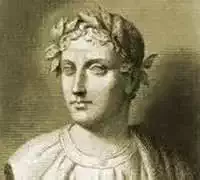
Horácio
BkIII:XXIV Destructive Wealth
BkIII:XXIV Destructive Wealth
Though you’re richer than the untouched
riches of Araby, than wealthy India,
and you fill the land, and inshore
waters, with your deposits of builders’ rubble:
if dread Necessity fixes
her adamantine nails in your highest rooftops,
you’ll not free your spirit from fear,
nor free your very being from the noose of death.
Better to live like Scythians
in the Steppes, whose wagons haul their movable homes,
that’s custom, or the fierce Getae,
whose unallocated acres produce their fruits,
their harvests of rye, in common,
where cultivation’s not decided for more than
a year, and when one turn is done,
it’s carried on by other hands, as a duty.
There, as their own, the unselfish
women raise those children who have lost their mothers:
and the richly dowered wife never
rules her husband, or believes in shining lovers.
Their greatest dowry’s their parents’
virtue, and their own chastity, which is careful
of another’s husband, in pure
loyalty, sin is wrong and death’s its penalty.
O whoever would end impious
killing, and civil disorder, and would desire
to have ‘City Father’ inscribed
on their statues, let them be braver, and rein in
unbridled licence, and win fame
among posterity: since we, alas, for shame,
filled with envy, hate chaste virtue,
and only seek it when it’s hidden from our eyes.
What use are sad lamentations,
if crime is never suppressed by its punishment?
What use are all these empty laws
without the behaviour that should accompany them?
if neither those parts of the Earth
enclosed by heat, nor those far confines of the North,
snow frozen solid on the ground,
deter the trader, if cunning sailors conquer
the stormy seas, if poverty,
is considered a great disgrace, and directs us
to do and to bear everything,
and abandon the arduous paths of virtue?
Let’s send our jewels, our precious
stones, our destructive gold, to the Capitol, while
the crowd applauds, and raises its strident clamour,
or ship them to the nearest sea,
as causes of our deepest ills,
if we truly repent of all our wickedness.
Let the source of our perverted
greed be lost, and then let our inadequate minds
be trained in more serious things.
The inexperienced noble youth is unskilled
at staying in the saddle, he
fears to hunt, and he’s much better at playing games,
whether you order him to fool
with a Greek hoop, or you prefer forbidden dice,
while his father’s perjured trust cheats
his partner and his friends, hurrying to amass
money for his unworthy heir.
While it’s true that in this way his ill-gotten gains
increase, yet there’s always something
lacking in a fortune forever incomplete.
Though you’re richer than the untouched
riches of Araby, than wealthy India,
and you fill the land, and inshore
waters, with your deposits of builders’ rubble:
if dread Necessity fixes
her adamantine nails in your highest rooftops,
you’ll not free your spirit from fear,
nor free your very being from the noose of death.
Better to live like Scythians
in the Steppes, whose wagons haul their movable homes,
that’s custom, or the fierce Getae,
whose unallocated acres produce their fruits,
their harvests of rye, in common,
where cultivation’s not decided for more than
a year, and when one turn is done,
it’s carried on by other hands, as a duty.
There, as their own, the unselfish
women raise those children who have lost their mothers:
and the richly dowered wife never
rules her husband, or believes in shining lovers.
Their greatest dowry’s their parents’
virtue, and their own chastity, which is careful
of another’s husband, in pure
loyalty, sin is wrong and death’s its penalty.
O whoever would end impious
killing, and civil disorder, and would desire
to have ‘City Father’ inscribed
on their statues, let them be braver, and rein in
unbridled licence, and win fame
among posterity: since we, alas, for shame,
filled with envy, hate chaste virtue,
and only seek it when it’s hidden from our eyes.
What use are sad lamentations,
if crime is never suppressed by its punishment?
What use are all these empty laws
without the behaviour that should accompany them?
if neither those parts of the Earth
enclosed by heat, nor those far confines of the North,
snow frozen solid on the ground,
deter the trader, if cunning sailors conquer
the stormy seas, if poverty,
is considered a great disgrace, and directs us
to do and to bear everything,
and abandon the arduous paths of virtue?
Let’s send our jewels, our precious
stones, our destructive gold, to the Capitol, while
the crowd applauds, and raises its strident clamour,
or ship them to the nearest sea,
as causes of our deepest ills,
if we truly repent of all our wickedness.
Let the source of our perverted
greed be lost, and then let our inadequate minds
be trained in more serious things.
The inexperienced noble youth is unskilled
at staying in the saddle, he
fears to hunt, and he’s much better at playing games,
whether you order him to fool
with a Greek hoop, or you prefer forbidden dice,
while his father’s perjured trust cheats
his partner and his friends, hurrying to amass
money for his unworthy heir.
While it’s true that in this way his ill-gotten gains
increase, yet there’s always something
lacking in a fortune forever incomplete.
246
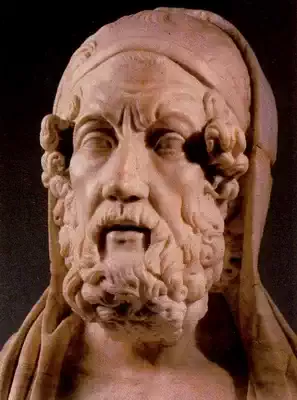
Homero
The Iliad: Book 17
The Iliad: Book 17
Brave Menelaus son of Atreus now came to know that Patroclus had
fallen, and made his way through the front ranks clad in full armour
to bestride him. As a cow stands lowing over her first calf, even so
did yellow-haired Menelaus bestride Patroclus. He held his round
shield and his spear in front of him, resolute to kill any who
should dare face him. But the son of Panthous had also noted the body,
and came up to Menelaus saying, "Menelaus, son of Atreus, draw back,
leave the body, and let the bloodstained spoils be. I was first of the
Trojans and their brave allies to drive my spear into Patroclus, let
me, therefore, have my full glory among the Trojans, or I will take
aim and kill you."
To this Menelaus answered in great anger "By father Jove, boasting
is an ill thing. The pard is not more bold, nor the lion nor savage
wild-boar, which is fiercest and most dauntless of all creatures, than
are the proud sons of Panthous. Yet Hyperenor did not see out the days
of his youth when he made light of me and withstood me, deeming me the
meanest soldier among the Danaans. His own feet never bore him back to
gladden his wife and parents. Even so shall I make an end of you
too, if you withstand me; get you back into the crowd and do not
face me, or it shall be worse for you. Even a fool may be wise after
the event."
Euphorbus would not listen, and said, "Now indeed, Menelaus, shall
you pay for the death of my brother over whom you vaunted, and whose
wife you widowed in her bridal chamber, while you brought grief
unspeakable on his parents. I shall comfort these poor people if I
bring your head and armour and place them in the hands of Panthous and
noble Phrontis. The time is come when this matter shall be fought
out and settled, for me or against me."
As he spoke he struck Menelaus full on the shield, but the spear did
not go through, for the shield turned its point. Menelaus then took
aim, praying to father Jove as he did so; Euphorbus was drawing
back, and Menelaus struck him about the roots of his throat, leaning
his whole weight on the spear, so as to drive it home. The point
went clean through his neck, and his armour rang rattling round him as
he fell heavily to the ground. His hair which was like that of the
Graces, and his locks so deftly bound in bands of silver and gold,
were all bedrabbled with blood. As one who has grown a fine young
olive tree in a clear space where there is abundance of water- the
plant is full of promise, and though the winds beat upon it from every
quarter it puts forth its white blossoms till the blasts of some
fierce hurricane sweep down upon it and level it with the ground- even
so did Menelaus strip the fair youth Euphorbus of his armour after
he had slain him. Or as some fierce lion upon the mountains in the
pride of his strength fastens on the finest heifer in a herd as it
is feeding- first he breaks her neck with his strong jaws, and then
gorges on her blood and entrails; dogs and shepherds raise a hue and
cry against him, but they stand aloof and will not come close to
him, for they are pale with fear- even so no one had the courage to
face valiant Menelaus. The son of Atreus would have then carried off
the armour of the son of Panthous with ease, had not Phoebus Apollo
been angry, and in the guise of Mentes chief of the Cicons incited
Hector to attack him. "Hector," said he, "you are now going after
the horses of the noble son of Aeacus, but you will not take them;
they cannot be kept in hand and driven by mortal man, save only by
Achilles, who is son to an immortal mother. Meanwhile Menelaus son
of Atreus has bestridden the body of Patroclus and killed the
noblest of the Trojans, Euphorbus son of Panthous, so that he can
fight no more."
The god then went back into the toil and turmoil, but the soul of
Hector was darkened with a cloud of grief; he looked along the ranks
and saw Euphorbus lying on the ground with the blood still flowing
from his wound, and Menelaus stripping him of his armour. On this he
made his way to the front like a flame of fire, clad in his gleaming
armour, and crying with a loud voice. When the son of Atreus heard
him, he said to himself in his dismay, "Alas! what shall I do? I may
not let the Trojans take the armour of Patroclus who has fallen
fighting on my behalf, lest some Danaan who sees me should cry shame
upon me. Still if for my honour's sake I fight Hector and the
Trojans single-handed, they will prove too many for me, for Hector
is bringing them up in force. Why, however, should I thus hesitate?
When a man fights in despite of heaven with one whom a god
befriends, he will soon rue it. Let no Danaan think ill of me if I
give place to Hector, for the hand of heaven is with him. Yet, if I
could find Ajax, the two of us would fight Hector and heaven too, if
we might only save the body of Patroclus for Achilles son of Peleus.
This, of many evils would be the least."
While he was thus in two minds, the Trojans came up to him with
Hector at their head; he therefore drew back and left the body,
turning about like some bearded lion who is being chased by dogs and
men from a stockyard with spears and hue and cry, whereon he is
daunted and slinks sulkily off- even so did Menelaus son of Atreus
turn and leave the body of Patroclus. When among the body of his
men, he looked around for mighty Ajax son of Telamon, and presently
saw him on the extreme left of the fight, cheering on his men and
exhorting them to keep on fighting, for Phoebus Apollo had spread a
great panic among them. He ran up to him and said, "Ajax, my good
friend, come with me at once to dead Patroclus, if so be that we may
take the body to Achilles- as for his armour, Hector already has it."
These words stirred the heart of Ajax, and he made his way among the
front ranks, Menelaus going with him. Hector had stripped Patroclus of
his armour, and was dragging him away to cut off his head and take the
body to fling before the dogs of Troy. But Ajax came up with his
shield like wall before him, on which Hector withdrew under shelter of
his men, and sprang on to his chariot, giving the armour over to the
Trojans to take to the city, as a great trophy for himself; Ajax,
therefore, covered the body of Patroclus with his broad shield and
bestrode him; as a lion stands over his whelps if hunters have come
upon him in a forest when he is with his little ones- in the pride and
fierceness of his strength he draws his knit brows down till they
cover his eyes- even so did Ajax bestride the body of Patroclus, and
by his side stood Menelaus son of Atreus, nursing great sorrow in
his heart.
Then Glaucus son of Hippolochus looked fiercely at Hector and
rebuked him sternly. "Hector," said he, "you make a brave show, but in
fight you are sadly wanting. A runaway like yourself has no claim to
so great a reputation. Think how you may now save your town and
citadel by the hands of your own people born in Ilius; for you will
get no Lycians to fight for you, seeing what thanks they have had
for their incessant hardships. Are you likely, sir, to do anything
to help a man of less note, after leaving Sarpedon, who was at once
your guest and comrade in arms, to be the spoil and prey of the
Danaans? So long as he lived he did good service both to your city and
yourself; yet you had no stomach to save his body from the dogs. If
the Lycians will listen to me, they will go home and leave Troy to its
fate. If the Trojans had any of that daring fearless spirit which lays
hold of men who are fighting for their country and harassing those who
would attack it, we should soon bear off Patroclus into Ilius. Could
we get this dead man away and bring him into the city of Priam, the
Argives would readily give up the armour of Sarpedon, and we should
get his body to boot. For he whose squire has been now killed is the
foremost man at the ships of the Achaeans- he and his close-fighting
followers. Nevertheless you dared not make a stand against Ajax, nor
face him, eye to eye, with battle all round you, for he is a braver
man than you are."
Hector scowled at him and answered, "Glaucus, you should know
better. I have held you so far as a man of more understanding than any
in all Lycia, but now I despise you for saying that I am afraid of
Ajax. I fear neither battle nor the din of chariots, but Jove's will
is stronger than ours; Jove at one time makes even a strong man draw
back and snatches victory from his grasp, while at another he will set
him on to fight. Come hither then, my friend, stand by me and see
indeed whether I shall play the coward the whole day through as you
say, or whether I shall not stay some even of the boldest Danaans from
fighting round the body of Patroclus."
As he spoke he called loudly on the Trojans saying, "Trojans,
Lycians, and Dardanians, fighters in close combat, be men, my friends,
and fight might and main, while I put on the goodly armour of
Achilles, which I took when I killed Patroclus."
With this Hector left the fight, and ran full speed after his men
who were taking the armour of Achilles to Troy, but had not yet got
far. Standing for a while apart from the woeful fight, he changed
his armour. His own he sent to the strong city of Ilius and to the
Trojans, while he put on the immortal armour of the son of Peleus,
which the gods had given to Peleus, who in his age gave it to his son;
but the son did not grow old in his father's armour.
When Jove, lord of the storm-cloud, saw Hector standing aloof and
arming himself in the armour of the son of Peleus, he wagged his
head and muttered to himself saying, "A! poor wretch, you arm in the
armour of a hero, before whom many another trembles, and you reck
nothing of the doom that is already close upon you. You have killed
his comrade so brave and strong, but it was not well that you should
strip the armour from his head and shoulders. I do indeed endow you
with great might now, but as against this you shall not return from
battle to lay the armour of the son of Peleus before Andromache."
The son of Saturn bowed his portentous brows, and Hector fitted
the armour to his body, while terrible Mars entered into him, and
filled his whole body with might and valour. With a shout he strode in
among the allies, and his armour flashed about him so that he seemed
to all of them like the great son of Peleus himself. He went about
among them and cheered them on- Mesthles, Glaucus, Medon,
Thersilochus, Asteropaeus, Deisenor and Hippothous, Phorcys,
Chromius and Ennomus the augur. All these did he exhort saying,
"Hear me, allies from other cities who are here in your thousands,
it was not in order to have a crowd about me that I called you
hither each from his several city, but that with heart and soul you
might defend the wives and little ones of the Trojans from the
fierce Achaeans. For this do I oppress my people with your food and
the presents that make you rich. Therefore turn, and charge at the
foe, to stand or fall as is the game of war; whoever shall bring
Patroclus, dead though he be, into the hands of the Trojans, and shall
make Ajax give way before him, I will give him one half of the
spoils while I keep the other. He will thus share like honour with
myself."
When he had thus spoken they charged full weight upon the Danaans
with their spears held out before them, and the hopes of each ran high
that he should force Ajax son of Telamon to yield up the body- fools
that they were, for he was about to take the lives of many. Then
Ajax said to Menelaus, "My good friend Menelaus, you and I shall
hardly come out of this fight alive. I am less concerned for the
body of Patroclus, who will shortly become meat for the dogs and
vultures of Troy, than for the safety of my own head and yours. Hector
has wrapped us round in a storm of battle from every quarter, and
our destruction seems now certain. Call then upon the princes of the
Danaans if there is any who can hear us."
Menelaus did as he said, and shouted to the Danaans for help at
the top of his voice. "My friends," he cried, "princes and counsellors
of the Argives, all you who with Agamemnon and Menelaus drink at the
public cost, and give orders each to his own people as Jove vouchsafes
him power and glory, the fight is so thick about me that I cannot
distinguish you severally; come on, therefore, every man unbidden, and
think it shame that Patroclus should become meat and morsel for Trojan
hounds."
Fleet Ajax son of Oileus heard him and was first to force his way
through the fight and run to help him. Next came Idomeneus and
Meriones his esquire, peer of murderous Mars. As for the others that
came into the fight after these, who of his own self could name them?
The Trojans with Hector at their head charged in a body. As a
great wave that comes thundering in at the mouth of some heaven-born
river, and the rocks that jut into the sea ring with the roar of the
breakers that beat and buffet them- even with such a roar did the
Trojans come on; but the Achaeans in singleness of heart stood firm
about the son of Menoetius, and fenced him with their bronze
shields. Jove, moreover, hid the brightness of their helmets in a
thick cloud, for he had borne no grudge against the son of Menoetius
while he was still alive and squire to the descendant of Aeacus;
therefore he was loth to let him fall a prey to the dogs of his foes
the Trojans, and urged his comrades on to defend him.
At first the Trojans drove the Achaeans back, and they withdrew from
the dead man daunted. The Trojans did not succeed in killing any
one, nevertheless they drew the body away. But the Achaeans did not
lose it long, for Ajax, foremost of all the Danaans after the son of
Peleus alike in stature and prowess, quickly rallied them and made
towards the front like a wild boar upon the mountains when he stands
at bay in the forest glades and routs the hounds and lusty youths that
have attacked him- even so did Ajax son of Telamon passing easily in
among the phalanxes of the Trojans, disperse those who had
bestridden Patroclus and were most bent on winning glory by dragging
him off to their city. At this moment Hippothous brave son of the
Pelasgian Lethus, in his zeal for Hector and the Trojans, was dragging
the body off by the foot through the press of the fight, having
bound a strap round the sinews near the ancle; but a mischief soon
befell him from which none of those could save him who would have
gladly done so, for the son of Telamon sprang forward and smote him on
his bronze-cheeked helmet. The plumed headpiece broke about the
point of the weapon, struck at once by the spear and by the strong
hand of Ajax, so that the bloody brain came oozing out through the
crest-socket. His strength then failed him and he let Patroclus'
foot drop from his hand, as he fell full length dead upon the body;
thus he died far from the fertile land of Larissa, and never repaid
his parents the cost of bringing him up, for his life was cut short
early by the spear of mighty Ajax. Hector then took aim at Ajax with a
spear, but he saw it coming and just managed to avoid it; the spear
passed on and struck Schedius son of noble Iphitus, captain of the
Phoceans, who dwelt in famed Panopeus and reigned over much people; it
struck him under the middle of the collar-bone the bronze point went
right through him, coming out at the bottom of his shoulder-blade, and
his armour rang rattling round him as he fell heavily to the ground.
Ajax in his turn struck noble Phorcys son of Phaenops in the middle of
the belly as he was bestriding Hippothous, and broke the plate of
his cuirass; whereon the spear tore out his entrails and he clutched
the ground in his palm as he fell to earth. Hector and those who
were in the front rank then gave ground, while the Argives raised a
loud cry of triumph, and drew off the bodies of Phorcys and Hippothous
which they stripped presently of their armour.
The Trojans would now have been worsted by the brave Achaeans and
driven back to Ilius through their own cowardice, while the Argives,
so great was their courage and endurance, would have achieved a
triumph even against the will of Jove, if Apollo had not roused
Aeneas, in the likeness of Periphas son of Epytus, an attendant who
had grown old in the service of Aeneas' aged father, and was at all
times devoted to him. In his likeness, then, Apollo said, "Aeneas, can
you not manage, even though heaven be against us, to save high
Ilius? I have known men, whose numbers, courage, and self-reliance
have saved their people in spite of Jove, whereas in this case he
would much rather give victory to us than to the Danaans, if you would
only fight instead of being so terribly afraid."
Aeneas knew Apollo when he looked straight at him, and shouted to
Hector saying, "Hector and all other Trojans and allies, shame on us
if we are beaten by the Achaeans and driven back to Ilius through
our own cowardice. A god has just come up to me and told me that
Jove the supreme disposer will be with us. Therefore let us make for
the Danaans, that it may go hard with them ere they bear away dead
Patroclus to the ships."
As he spoke he sprang out far in front of the others, who then
rallied and again faced the Achaeans. Aeneas speared Leiocritus son of
Arisbas, a valiant follower of Lycomedes, and Lycomedes was moved with
pity as he saw him fall; he therefore went close up, and speared
Apisaon son of Hippasus shepherd of his people in the liver under
the midriff, so that he died; he had come from fertile Paeonia and was
the best man of them all after Asteropaeus. Asteropaeus flew forward
to avenge him and attack the Danaans, but this might no longer be,
inasmuch as those about Patroclus were well covered by their
shields, and held their spears in front of them, for Ajax had given
them strict orders that no man was either to give ground, or to
stand out before the others, but all were to hold well together
about the body and fight hand to hand. Thus did huge Ajax bid them,
and the earth ran red with blood as the corpses fell thick on one
another alike on the side of the Trojans and allies, and on that of
the Danaans; for these last, too, fought no bloodless fight though
many fewer of them perished, through the care they took to defend
and stand by one another.
Thus did they fight as it were a flaming fire; it seemed as though
it had gone hard even with the sun and moon, for they were hidden over
all that part where the bravest heroes were fighting about the dead
son of Menoetius, whereas the other Danaans and Achaeans fought at
their ease in full daylight with brilliant sunshine all round them,
and there was not a cloud to be seen neither on plain nor mountain.
These last moreover would rest for a while and leave off fighting, for
they were some distance apart and beyond the range of one another's
weapons, whereas those who were in the thick of the fray suffered both
from battle and darkness. All the best of them were being worn out
by the great weight of their armour, but the two valiant heroes,
Thrasymedes and Antilochus, had not yet heard of the death of
Patroclus, and believed him to be still alive and leading the van
against the Trojans; they were keeping themselves in reserve against
the death or rout of their own comrades, for so Nestor had ordered
when he sent them from the ships into battle.
Thus through the livelong day did they wage fierce war, and the
sweat of their toil rained ever on their legs under them, and on their
hands and eyes, as they fought over the squire of the fleet son of
Peleus. It was as when a man gives a great ox-hide all drenched in fat
to his men, and bids them stretch it; whereon they stand round it in a
ring and tug till the moisture leaves it, and the fat soaks in for the
many that pull at it, and it is well stretched- even so did the two
sides tug the dead body hither and thither within the compass of but a
little space- the Trojans steadfastly set on drag ing it into Ilius,
while the Achaeans were no less so on taking it to their ships; and
fierce was the fight between them. Not Mars himself the lord of hosts,
nor yet Minerva, even in their fullest fury could make light of such a
battle.
Such fearful turmoil of men and horses did Jove on that day ordain
round the body of Patroclus. Meanwhile Achilles did not know that he
had fallen, for the fight was under the wall of Troy a long way off
the ships. He had no idea, therefore, that Patroclus was dead, and
deemed that he would return alive as soon as he had gone close up to
the gates. He knew that he was not to sack the city neither with nor
without himself, for his mother had often told him this when he had
sat alone with her, and she had informed him of the counsels of
great Jove. Now, however, she had not told him how great a disaster
had befallen him in the death of the one who was far dearest to him of
all his comrades.
The others still kept on charging one another round the body with
their pointed spears and killing each other. Then would one say, "My
friends, we can never again show our faces at the ships- better, and
greatly better, that earth should open and swallow us here in this
place, than that we should let the Trojans have the triumph of bearing
off Patroclus to their city."
The Trojans also on their part spoke to one another saying,
"Friends, though we fall to a man beside this body, let none shrink
from fighting." With such words did they exhort each other. They
fought and fought, and an iron clank rose through the void air to
the brazen vault of heaven. The horses of the descendant of Aeacus
stood out of the fight and wept when they heard that their driver
had been laid low by the hand of murderous Hector. Automedon,
valiant son of Diores, lashed them again and again; many a time did he
speak kindly to them, and many a time did he upbraid them, but they
would neither go back to the ships by the waters of the broad
Hellespont, nor yet into battle among the Achaeans; they stood with
their chariot stock still, as a pillar set over the tomb of some
dead man or woman, and bowed their heads to the ground. Hot tears fell
from their eyes as they mourned the loss of their charioteer, and
their noble manes drooped all wet from under the yokestraps on
either side the yoke.
The son of Saturn saw them and took pity upon their sorrow. He
wagged his head, and muttered to himself, saying, "Poor things, why
did we give you to King Peleus who is a mortal, while you are
yourselves ageless and immortal? Was it that you might share the
sorrows that befall mankind? for of all creatures that live and move
upon the earth there is none so pitiable as he is- still, Hector son
of Priam shall drive neither you nor your chariot. I will not have it.
It is enough that he should have the armour over which he vaunts so
vainly. Furthermore I will give you strength of heart and limb to bear
Automedon safely to the ships from battle, for I shall let the Trojans
triumph still further, and go on killing till they reach the ships;
whereon night shall fall and darkness overshadow the land."
As he spoke he breathed heart and strength into the horses so that
they shook the dust from out of their manes, and bore their chariot
swiftly into the fight that raged between Trojans and Achaeans. Behind
them fought Automedon full of sorrow for his comrade, as a vulture
amid a flock of geese. In and out, and here and there, full speed he
dashed amid the throng of the Trojans, but for all the fury of his
pursuit he killed no man, for he could not wield his spear and keep
his horses in hand when alone in the chariot; at last, however, a
comrade, Alcimedon, son of Laerces son of Haemon caught sight of him
and came up behind his chariot. "Automedon," said he, "what god has
put this folly into your heart and robbed you of your right mind, that
you fight the Trojans in the front rank single-handed? He who was your
comrade is slain, and Hector plumes himself on being armed in the
armour of the descendant of Aeacus."
Automedon son of Diores answered, "Alcimedon, there is no one else
who can control and guide the immortal steeds so well as you can, save
only Patroclus- while he was alive- peer of gods in counsel. Take then
the whip and reins, while I go down from the car and fight.
Alcimedon sprang on to the chariot, and caught up the whip and
reins, while Automedon leaped from off the car. When Hector saw him he
said to Aeneas who was near him, "Aeneas, counsellor of the
mail-clad Trojans, I see the steeds of the fleet son of Aeacus come
into battle with weak hands to drive them. I am sure, if you think
well, that we might take them; they will not dare face us if we both
attack them."
The valiant son of Anchises was of the same mind, and the pair
went right on, with their shoulders covered under shields of tough dry
ox-hide, overlaid with much bronze. Chromius and Aretus went also with
them, and their hearts beat high with hope that they might kill the
men and capture the horses- fools that they were, for they were not to
return scatheless from their meeting with Automedon, who prayed to
father Jove and was forthwith filled with courage and strength
abounding. He turned to his trusty comrade Alcimedon and said,
"Alcimedon, keep your horses so close up that I may feel their
breath upon my back; I doubt that we shall not stay Hector son of
Priam till he has killed us and mounted behind the horses; he will
then either spread panic among the ranks of the Achaeans, or himself
be killed among the foremost."
On this he cried out to the two Ajaxes and Menelaus, "Ajaxes
captains of the Argives, and Menelaus, give the dead body over to them
that are best able to defend it, and come to the rescue of us
living; for Hector and Aeneas who are the two best men among the
Trojans, are pressing us hard in the full tide of war. Nevertheless
the issue lies on the lap of heaven, I will therefore hurl my spear
and leave the rest to Jove."
He poised and hurled as he spoke, whereon the spear struck the round
shield of Aretus, and went right through it for the shield stayed it
not, so that it was driven through his belt into the lower part of his
belly. As when some sturdy youth, axe in hand, deals his blow behind
the horns of an ox and severs the tendons at the back of its neck so
that it springs forward and then drops, even so did Aretus give one
bound and then fall on his back the spear quivering in his body till
it made an end of him. Hector then aimed a spear at Automedon but he
saw it coming and stooped forward to avoid it, so that it flew past
him and the point stuck in the ground, while the butt-end went on
quivering till Mars robbed it of its force. They would then have
fought hand to hand with swords had not the two Ajaxes forced their
way through the crowd when they heard their comrade calling, and
parted them for all their fury- for Hector, Aeneas, and Chromius
were afraid and drew back, leaving Aretus to lie there struck to the
heart. Automedon, peer of fleet Mars, then stripped him of his
armour and vaunted over him saying, "I have done little to assuage
my sorrow for the son of Menoetius, for the man I have killed is not
so good as he was."
As he spoke he took the blood-stained spoils and laid them upon
his chariot; then he mounted the car with his hands and feet all
steeped in gore as a lion that has been gorging upon a bull.
And now the fierce groanful fight again raged about Patroclus, for
Minerva came down from heaven and roused its fury by the command of
far-seeing Jove, who had changed his mind and sent her to encourage
the Danaans. As when Jove bends his bright bow in heaven in token to
mankind either of war or of the chill storms that stay men from
their labour and plague the flocks- even so, wrapped in such radiant
raiment, did Minerva go in among the host and speak man by man to
each. First she took the form and voice of Phoenix and spoke to
Menelaus son of Atreus, who was standing near her. "Menelaus," said
she, "it will be shame and dishonour to you, if dogs tear the noble
comrade of Achilles under the walls of Troy. Therefore be staunch, and
urge your men to be so also."
Menelaus answered, "Phoenix, my good old friend, may Minerva
vouchsafe me strength and keep the darts from off me, for so shall I
stand by Patroclus and defend him; his death has gone to my heart, but
Hector is as a raging fire and deals his blows without ceasing, for
Jove is now granting him a time of triumph."
Minerva was pleased at his having named herself before any of the
other gods. Therefore she put strength into his knees and shoulders,
and made him as bold as a fly, which, though driven off will yet
come again and bite if it can, so dearly does it love man's bloodeven
so bold as this did she make him as he stood over Patroclus and
threw his spear. Now there was among the Trojans a man named Podes,
son of Eetion, who was both rich and valiant. Hector held him in the
highest honour for he was his comrade and boon companion; the spear of
Menelaus struck this man in the girdle just as he had turned in
flight, and went right through him. Whereon he fell heavily forward,
and Menelaus son of Atreus drew off his body from the Trojans into the
ranks of his own people.
Apollo then went up to Hector and spurred him on to fight, in the
likeness of Phaenops son of Asius who lived in Abydos and was the most
favoured of all Hector's guests. In his likeness Apollo said, "Hector,
who of the Achaeans will fear you henceforward now that you have
quailed before Menelaus who has ever been rated poorly as a soldier?
Yet he has now got a corpse away from the Trojans single-handed, and
has slain your own true comrade, a man brave among the foremost, Podes
son of Eetion.
A dark cloud of grief fell upon Hector as he heard, and he made
his way to the front clad in full armour. Thereon the son of Saturn
seized his bright tasselled aegis, and veiled Ida in cloud: he sent
forth his lightnings and his thunders, and as he shook his aegis he
gave victory to the Trojans and routed the Achaeans.
The panic was begun by Peneleos the Boeotian, for while keeping
his face turned ever towards the foe he had been hit with a spear on
the upper part of the shoulder; a spear thrown by Polydamas had grazed
the top of the bone, for Polydamas had come up to him and struck him
from close at hand. Then Hector in close combat struck Leitus son of
noble Alectryon in the hand by the wrist, and disabled him from
fighting further. He looked about him in dismay, knowing that never
again should he wield spear in battle with the Trojans. While Hector
was in pursuit of Leitus, Idomeneus struck him on the breastplate over
his chest near the nipple; but the spear broke in the shaft, and the
Trojans cheered aloud. Hector then aimed at Idomeneus son of Deucalion
as he was standing on his chariot, and very narrowly missed him, but
the spear hit Coiranus, a follower and charioteer of Meriones who
had come with him from Lyctus. Idomeneus had left the ships on foot
and would have afforded a great triumph to the Trojans if Coiranus had
not driven quickly up to him, he therefore brought life and rescue
to Idomeneus, but himself fell by the hand of murderous Hector. For
Hector hit him on the jaw under the ear; the end of the spear drove
out his teeth and cut his tongue in two pieces, so that he fell from
his chariot and let the reins fall to the ground. Meriones gathered
them up from the ground and took them into his own hands, then he said
to Idomeneus, "Lay on, till you get back to the ships, for you must
see that the day is no longer ours."
On this Idomeneus lashed the horses to the ships, for fear had taken
hold upon him.
Ajax and Menelaus noted how Jove had turned the scale in favour of
the Trojans, and Ajax was first to speak. "Alas," said he, "even a
fool may see that father Jove is helping the Trojans. All their
weapons strike home; no matter whether it be a brave man or a coward
that hurls them, Jove speeds all alike, whereas ours fall each one
of them without effect. What, then, will be best both as regards
rescuing the body, and our return to the joy of our friends who will
be grieving as they look hitherwards; for they will make sure that
nothing can now check the terrible hands of Hector, and that he will
fling himself upon our ships. I wish that some one would go and tell
the son of Peleus at once, for I do not think he can have yet heard
the sad news that the dearest of his friends has fallen. But I can see
not a man among the Achaeans to send, for they and their chariots
are alike hidden in darkness. O father Jove, lift this cloud from over
the sons of the Achaeans; make heaven serene, and let us see; if you
will that we perish, let us fall at any rate by daylight."
Father Jove heard him and had compassion upon his tears. Forthwith
he chased away the cloud of darkness, so that the sun shone out and
all the fighting was revealed. Ajax then said to Menelaus, "Look,
Menelaus, and if Antilochus son of Nestor be still living, send him at
once to tell Achilles that by far the dearest to him of all his
comrades has fallen."
Menelaus heeded his words and went his way as a lion from a
stockyard- the lion is tired of attacking the men and hounds, who keep
watch the whole night through and will not let him feast on the fat of
their herd. In his lust of meat he makes straight at them but in vain,
for darts from strong hands assail him, and burning brands which daunt
him for all his hunger, so in the morning he slinks sulkily away- even
so did Menelaus sorely against his will leave Patroclus, in great fear
lest the Achaeans should be driven back in rout and let him fall
into the hands of the foe. He charged Meriones and the two Ajaxes
straitly saying, "Ajaxes and Meriones, leaders of the Argives, now
indeed remember how good Patroclus was; he was ever courteous while
alive, bear it in mind now that he is dead."
With this Menelaus left them, looking round him as keenly as an
eagle, whose sight they say is keener than that of any other birdhowever
high he may be in the heavens, not a hare that runs can escape
him by crouching under bush or thicket, for he will swoop down upon it
and make an end of it- even so, O Menelaus, did your keen eyes range
round the mighty host of your followers to see if you could find the
son of Nestor still alive. Presently Menelaus saw him on the extreme
left of the battle cheering on his men and exhorting them to fight
boldly. Menelaus went up to him and said, "Antilochus, come here and
listen to sad news, which I would indeed were untrue. You must see
with your own eyes that heaven is heaping calamity upon the Danaans,
and giving victory to the Trojans. Patroclus has fallen, who was the
bravest of the Achaeans, and sorely will the Danaans miss him. Run
instantly to the ships and tell Achilles, that he may come to rescue
the body and bear it to the ships. As for the armour, Hector already
has it."
Antilochus was struck with horror. For a long time he was
speechless; his eyes filled with tears and he could find no utterance,
but he did as Menelaus had said, and set off running as soon as he had
given his armour to a comrade, Laodocus, who was wheeling his horses
round, close beside him.
Thus, then, did he run weeping from the field, to carry the bad news
to Achilles son of Peleus. Nor were you, O Menelaus, minded to succour
his harassed comrades, when Antilochus had left the Pylians- and
greatly did they miss him- but he sent them noble Thrasymedes, and
himself went back to Patroclus. He came running up to the two Ajaxes
and said, "I have sent Antilochus to the ships to tell Achilles, but
rage against Hector as he may, he cannot come, for he cannot fight
without armour. What then will be our best plan both as regards
rescuing the dead, and our own escape from death amid the battle-cries
of the Trojans?"
Ajax answered, "Menelaus, you have said well: do you, then, and
Meriones stoop down, raise the body, and bear it out of the fray,
while we two behind you keep off Hector and the Trojans, one in
heart as in name, and long used to fighting side by side with one
another."
On this Menelaus and Meriones took the dead man in their arms and
lifted him high aloft with a great effort. The Trojan host raised a
hue and cry behind them when they saw the Achaeans bearing the body
away, and flew after them like hounds attacking a wounded boar at
the loo of a band of young huntsmen. For a while the hounds fly at him
as though they would tear him in pieces, but now and again he turns on
them in a fury, scaring and scattering them in all directions- even so
did the Trojans for a while charge in a body, striking with sword
and with spears pointed ai both the ends, but when the two Ajaxes
faced them and stood at bay, they would turn pale and no man dared
press on to fight further about the dead.
In this wise did the two heroes strain every nerve to bear the
body to the ships out of the fight. The battle raged round them like
fierce flames that when once kindled spread like wildfire over a city,
and the houses fall in the glare of its burning- even such was the
roar and tramp of men and horses that pursued them as they bore
Patroclus from the field. Or as mules that put forth all their
strength to draw some beam or great piece of ship's timber down a
rough mountain-track, and they pant and sweat as they, go even so
did Menelaus and pant and sweat as they bore the body of Patroclus.
Behind them the two Ajaxes held stoutly out. As some wooded
mountain-spur that stretches across a plain will turn water and
check the flow even of a great river, nor is there any stream strong
enough to break through it- even so did the two Ajaxes face the
Trojans and stern the tide of their fighting though they kept
pouring on towards them and foremost among them all was Aeneas son
of Anchises with valiant Hector. As a flock of daws or starlings
fall to screaming and chattering when they see a falcon, foe to i'll
small birds, come soaring near them, even so did the Achaean youth
raise a babel of cries as they fled before Aeneas and Hector,
unmindful of their former prowess. In the rout of the Danaans much
goodly armour fell round about the trench, and of fighting there was
no end.
Translated by Samuel Butler
Brave Menelaus son of Atreus now came to know that Patroclus had
fallen, and made his way through the front ranks clad in full armour
to bestride him. As a cow stands lowing over her first calf, even so
did yellow-haired Menelaus bestride Patroclus. He held his round
shield and his spear in front of him, resolute to kill any who
should dare face him. But the son of Panthous had also noted the body,
and came up to Menelaus saying, "Menelaus, son of Atreus, draw back,
leave the body, and let the bloodstained spoils be. I was first of the
Trojans and their brave allies to drive my spear into Patroclus, let
me, therefore, have my full glory among the Trojans, or I will take
aim and kill you."
To this Menelaus answered in great anger "By father Jove, boasting
is an ill thing. The pard is not more bold, nor the lion nor savage
wild-boar, which is fiercest and most dauntless of all creatures, than
are the proud sons of Panthous. Yet Hyperenor did not see out the days
of his youth when he made light of me and withstood me, deeming me the
meanest soldier among the Danaans. His own feet never bore him back to
gladden his wife and parents. Even so shall I make an end of you
too, if you withstand me; get you back into the crowd and do not
face me, or it shall be worse for you. Even a fool may be wise after
the event."
Euphorbus would not listen, and said, "Now indeed, Menelaus, shall
you pay for the death of my brother over whom you vaunted, and whose
wife you widowed in her bridal chamber, while you brought grief
unspeakable on his parents. I shall comfort these poor people if I
bring your head and armour and place them in the hands of Panthous and
noble Phrontis. The time is come when this matter shall be fought
out and settled, for me or against me."
As he spoke he struck Menelaus full on the shield, but the spear did
not go through, for the shield turned its point. Menelaus then took
aim, praying to father Jove as he did so; Euphorbus was drawing
back, and Menelaus struck him about the roots of his throat, leaning
his whole weight on the spear, so as to drive it home. The point
went clean through his neck, and his armour rang rattling round him as
he fell heavily to the ground. His hair which was like that of the
Graces, and his locks so deftly bound in bands of silver and gold,
were all bedrabbled with blood. As one who has grown a fine young
olive tree in a clear space where there is abundance of water- the
plant is full of promise, and though the winds beat upon it from every
quarter it puts forth its white blossoms till the blasts of some
fierce hurricane sweep down upon it and level it with the ground- even
so did Menelaus strip the fair youth Euphorbus of his armour after
he had slain him. Or as some fierce lion upon the mountains in the
pride of his strength fastens on the finest heifer in a herd as it
is feeding- first he breaks her neck with his strong jaws, and then
gorges on her blood and entrails; dogs and shepherds raise a hue and
cry against him, but they stand aloof and will not come close to
him, for they are pale with fear- even so no one had the courage to
face valiant Menelaus. The son of Atreus would have then carried off
the armour of the son of Panthous with ease, had not Phoebus Apollo
been angry, and in the guise of Mentes chief of the Cicons incited
Hector to attack him. "Hector," said he, "you are now going after
the horses of the noble son of Aeacus, but you will not take them;
they cannot be kept in hand and driven by mortal man, save only by
Achilles, who is son to an immortal mother. Meanwhile Menelaus son
of Atreus has bestridden the body of Patroclus and killed the
noblest of the Trojans, Euphorbus son of Panthous, so that he can
fight no more."
The god then went back into the toil and turmoil, but the soul of
Hector was darkened with a cloud of grief; he looked along the ranks
and saw Euphorbus lying on the ground with the blood still flowing
from his wound, and Menelaus stripping him of his armour. On this he
made his way to the front like a flame of fire, clad in his gleaming
armour, and crying with a loud voice. When the son of Atreus heard
him, he said to himself in his dismay, "Alas! what shall I do? I may
not let the Trojans take the armour of Patroclus who has fallen
fighting on my behalf, lest some Danaan who sees me should cry shame
upon me. Still if for my honour's sake I fight Hector and the
Trojans single-handed, they will prove too many for me, for Hector
is bringing them up in force. Why, however, should I thus hesitate?
When a man fights in despite of heaven with one whom a god
befriends, he will soon rue it. Let no Danaan think ill of me if I
give place to Hector, for the hand of heaven is with him. Yet, if I
could find Ajax, the two of us would fight Hector and heaven too, if
we might only save the body of Patroclus for Achilles son of Peleus.
This, of many evils would be the least."
While he was thus in two minds, the Trojans came up to him with
Hector at their head; he therefore drew back and left the body,
turning about like some bearded lion who is being chased by dogs and
men from a stockyard with spears and hue and cry, whereon he is
daunted and slinks sulkily off- even so did Menelaus son of Atreus
turn and leave the body of Patroclus. When among the body of his
men, he looked around for mighty Ajax son of Telamon, and presently
saw him on the extreme left of the fight, cheering on his men and
exhorting them to keep on fighting, for Phoebus Apollo had spread a
great panic among them. He ran up to him and said, "Ajax, my good
friend, come with me at once to dead Patroclus, if so be that we may
take the body to Achilles- as for his armour, Hector already has it."
These words stirred the heart of Ajax, and he made his way among the
front ranks, Menelaus going with him. Hector had stripped Patroclus of
his armour, and was dragging him away to cut off his head and take the
body to fling before the dogs of Troy. But Ajax came up with his
shield like wall before him, on which Hector withdrew under shelter of
his men, and sprang on to his chariot, giving the armour over to the
Trojans to take to the city, as a great trophy for himself; Ajax,
therefore, covered the body of Patroclus with his broad shield and
bestrode him; as a lion stands over his whelps if hunters have come
upon him in a forest when he is with his little ones- in the pride and
fierceness of his strength he draws his knit brows down till they
cover his eyes- even so did Ajax bestride the body of Patroclus, and
by his side stood Menelaus son of Atreus, nursing great sorrow in
his heart.
Then Glaucus son of Hippolochus looked fiercely at Hector and
rebuked him sternly. "Hector," said he, "you make a brave show, but in
fight you are sadly wanting. A runaway like yourself has no claim to
so great a reputation. Think how you may now save your town and
citadel by the hands of your own people born in Ilius; for you will
get no Lycians to fight for you, seeing what thanks they have had
for their incessant hardships. Are you likely, sir, to do anything
to help a man of less note, after leaving Sarpedon, who was at once
your guest and comrade in arms, to be the spoil and prey of the
Danaans? So long as he lived he did good service both to your city and
yourself; yet you had no stomach to save his body from the dogs. If
the Lycians will listen to me, they will go home and leave Troy to its
fate. If the Trojans had any of that daring fearless spirit which lays
hold of men who are fighting for their country and harassing those who
would attack it, we should soon bear off Patroclus into Ilius. Could
we get this dead man away and bring him into the city of Priam, the
Argives would readily give up the armour of Sarpedon, and we should
get his body to boot. For he whose squire has been now killed is the
foremost man at the ships of the Achaeans- he and his close-fighting
followers. Nevertheless you dared not make a stand against Ajax, nor
face him, eye to eye, with battle all round you, for he is a braver
man than you are."
Hector scowled at him and answered, "Glaucus, you should know
better. I have held you so far as a man of more understanding than any
in all Lycia, but now I despise you for saying that I am afraid of
Ajax. I fear neither battle nor the din of chariots, but Jove's will
is stronger than ours; Jove at one time makes even a strong man draw
back and snatches victory from his grasp, while at another he will set
him on to fight. Come hither then, my friend, stand by me and see
indeed whether I shall play the coward the whole day through as you
say, or whether I shall not stay some even of the boldest Danaans from
fighting round the body of Patroclus."
As he spoke he called loudly on the Trojans saying, "Trojans,
Lycians, and Dardanians, fighters in close combat, be men, my friends,
and fight might and main, while I put on the goodly armour of
Achilles, which I took when I killed Patroclus."
With this Hector left the fight, and ran full speed after his men
who were taking the armour of Achilles to Troy, but had not yet got
far. Standing for a while apart from the woeful fight, he changed
his armour. His own he sent to the strong city of Ilius and to the
Trojans, while he put on the immortal armour of the son of Peleus,
which the gods had given to Peleus, who in his age gave it to his son;
but the son did not grow old in his father's armour.
When Jove, lord of the storm-cloud, saw Hector standing aloof and
arming himself in the armour of the son of Peleus, he wagged his
head and muttered to himself saying, "A! poor wretch, you arm in the
armour of a hero, before whom many another trembles, and you reck
nothing of the doom that is already close upon you. You have killed
his comrade so brave and strong, but it was not well that you should
strip the armour from his head and shoulders. I do indeed endow you
with great might now, but as against this you shall not return from
battle to lay the armour of the son of Peleus before Andromache."
The son of Saturn bowed his portentous brows, and Hector fitted
the armour to his body, while terrible Mars entered into him, and
filled his whole body with might and valour. With a shout he strode in
among the allies, and his armour flashed about him so that he seemed
to all of them like the great son of Peleus himself. He went about
among them and cheered them on- Mesthles, Glaucus, Medon,
Thersilochus, Asteropaeus, Deisenor and Hippothous, Phorcys,
Chromius and Ennomus the augur. All these did he exhort saying,
"Hear me, allies from other cities who are here in your thousands,
it was not in order to have a crowd about me that I called you
hither each from his several city, but that with heart and soul you
might defend the wives and little ones of the Trojans from the
fierce Achaeans. For this do I oppress my people with your food and
the presents that make you rich. Therefore turn, and charge at the
foe, to stand or fall as is the game of war; whoever shall bring
Patroclus, dead though he be, into the hands of the Trojans, and shall
make Ajax give way before him, I will give him one half of the
spoils while I keep the other. He will thus share like honour with
myself."
When he had thus spoken they charged full weight upon the Danaans
with their spears held out before them, and the hopes of each ran high
that he should force Ajax son of Telamon to yield up the body- fools
that they were, for he was about to take the lives of many. Then
Ajax said to Menelaus, "My good friend Menelaus, you and I shall
hardly come out of this fight alive. I am less concerned for the
body of Patroclus, who will shortly become meat for the dogs and
vultures of Troy, than for the safety of my own head and yours. Hector
has wrapped us round in a storm of battle from every quarter, and
our destruction seems now certain. Call then upon the princes of the
Danaans if there is any who can hear us."
Menelaus did as he said, and shouted to the Danaans for help at
the top of his voice. "My friends," he cried, "princes and counsellors
of the Argives, all you who with Agamemnon and Menelaus drink at the
public cost, and give orders each to his own people as Jove vouchsafes
him power and glory, the fight is so thick about me that I cannot
distinguish you severally; come on, therefore, every man unbidden, and
think it shame that Patroclus should become meat and morsel for Trojan
hounds."
Fleet Ajax son of Oileus heard him and was first to force his way
through the fight and run to help him. Next came Idomeneus and
Meriones his esquire, peer of murderous Mars. As for the others that
came into the fight after these, who of his own self could name them?
The Trojans with Hector at their head charged in a body. As a
great wave that comes thundering in at the mouth of some heaven-born
river, and the rocks that jut into the sea ring with the roar of the
breakers that beat and buffet them- even with such a roar did the
Trojans come on; but the Achaeans in singleness of heart stood firm
about the son of Menoetius, and fenced him with their bronze
shields. Jove, moreover, hid the brightness of their helmets in a
thick cloud, for he had borne no grudge against the son of Menoetius
while he was still alive and squire to the descendant of Aeacus;
therefore he was loth to let him fall a prey to the dogs of his foes
the Trojans, and urged his comrades on to defend him.
At first the Trojans drove the Achaeans back, and they withdrew from
the dead man daunted. The Trojans did not succeed in killing any
one, nevertheless they drew the body away. But the Achaeans did not
lose it long, for Ajax, foremost of all the Danaans after the son of
Peleus alike in stature and prowess, quickly rallied them and made
towards the front like a wild boar upon the mountains when he stands
at bay in the forest glades and routs the hounds and lusty youths that
have attacked him- even so did Ajax son of Telamon passing easily in
among the phalanxes of the Trojans, disperse those who had
bestridden Patroclus and were most bent on winning glory by dragging
him off to their city. At this moment Hippothous brave son of the
Pelasgian Lethus, in his zeal for Hector and the Trojans, was dragging
the body off by the foot through the press of the fight, having
bound a strap round the sinews near the ancle; but a mischief soon
befell him from which none of those could save him who would have
gladly done so, for the son of Telamon sprang forward and smote him on
his bronze-cheeked helmet. The plumed headpiece broke about the
point of the weapon, struck at once by the spear and by the strong
hand of Ajax, so that the bloody brain came oozing out through the
crest-socket. His strength then failed him and he let Patroclus'
foot drop from his hand, as he fell full length dead upon the body;
thus he died far from the fertile land of Larissa, and never repaid
his parents the cost of bringing him up, for his life was cut short
early by the spear of mighty Ajax. Hector then took aim at Ajax with a
spear, but he saw it coming and just managed to avoid it; the spear
passed on and struck Schedius son of noble Iphitus, captain of the
Phoceans, who dwelt in famed Panopeus and reigned over much people; it
struck him under the middle of the collar-bone the bronze point went
right through him, coming out at the bottom of his shoulder-blade, and
his armour rang rattling round him as he fell heavily to the ground.
Ajax in his turn struck noble Phorcys son of Phaenops in the middle of
the belly as he was bestriding Hippothous, and broke the plate of
his cuirass; whereon the spear tore out his entrails and he clutched
the ground in his palm as he fell to earth. Hector and those who
were in the front rank then gave ground, while the Argives raised a
loud cry of triumph, and drew off the bodies of Phorcys and Hippothous
which they stripped presently of their armour.
The Trojans would now have been worsted by the brave Achaeans and
driven back to Ilius through their own cowardice, while the Argives,
so great was their courage and endurance, would have achieved a
triumph even against the will of Jove, if Apollo had not roused
Aeneas, in the likeness of Periphas son of Epytus, an attendant who
had grown old in the service of Aeneas' aged father, and was at all
times devoted to him. In his likeness, then, Apollo said, "Aeneas, can
you not manage, even though heaven be against us, to save high
Ilius? I have known men, whose numbers, courage, and self-reliance
have saved their people in spite of Jove, whereas in this case he
would much rather give victory to us than to the Danaans, if you would
only fight instead of being so terribly afraid."
Aeneas knew Apollo when he looked straight at him, and shouted to
Hector saying, "Hector and all other Trojans and allies, shame on us
if we are beaten by the Achaeans and driven back to Ilius through
our own cowardice. A god has just come up to me and told me that
Jove the supreme disposer will be with us. Therefore let us make for
the Danaans, that it may go hard with them ere they bear away dead
Patroclus to the ships."
As he spoke he sprang out far in front of the others, who then
rallied and again faced the Achaeans. Aeneas speared Leiocritus son of
Arisbas, a valiant follower of Lycomedes, and Lycomedes was moved with
pity as he saw him fall; he therefore went close up, and speared
Apisaon son of Hippasus shepherd of his people in the liver under
the midriff, so that he died; he had come from fertile Paeonia and was
the best man of them all after Asteropaeus. Asteropaeus flew forward
to avenge him and attack the Danaans, but this might no longer be,
inasmuch as those about Patroclus were well covered by their
shields, and held their spears in front of them, for Ajax had given
them strict orders that no man was either to give ground, or to
stand out before the others, but all were to hold well together
about the body and fight hand to hand. Thus did huge Ajax bid them,
and the earth ran red with blood as the corpses fell thick on one
another alike on the side of the Trojans and allies, and on that of
the Danaans; for these last, too, fought no bloodless fight though
many fewer of them perished, through the care they took to defend
and stand by one another.
Thus did they fight as it were a flaming fire; it seemed as though
it had gone hard even with the sun and moon, for they were hidden over
all that part where the bravest heroes were fighting about the dead
son of Menoetius, whereas the other Danaans and Achaeans fought at
their ease in full daylight with brilliant sunshine all round them,
and there was not a cloud to be seen neither on plain nor mountain.
These last moreover would rest for a while and leave off fighting, for
they were some distance apart and beyond the range of one another's
weapons, whereas those who were in the thick of the fray suffered both
from battle and darkness. All the best of them were being worn out
by the great weight of their armour, but the two valiant heroes,
Thrasymedes and Antilochus, had not yet heard of the death of
Patroclus, and believed him to be still alive and leading the van
against the Trojans; they were keeping themselves in reserve against
the death or rout of their own comrades, for so Nestor had ordered
when he sent them from the ships into battle.
Thus through the livelong day did they wage fierce war, and the
sweat of their toil rained ever on their legs under them, and on their
hands and eyes, as they fought over the squire of the fleet son of
Peleus. It was as when a man gives a great ox-hide all drenched in fat
to his men, and bids them stretch it; whereon they stand round it in a
ring and tug till the moisture leaves it, and the fat soaks in for the
many that pull at it, and it is well stretched- even so did the two
sides tug the dead body hither and thither within the compass of but a
little space- the Trojans steadfastly set on drag ing it into Ilius,
while the Achaeans were no less so on taking it to their ships; and
fierce was the fight between them. Not Mars himself the lord of hosts,
nor yet Minerva, even in their fullest fury could make light of such a
battle.
Such fearful turmoil of men and horses did Jove on that day ordain
round the body of Patroclus. Meanwhile Achilles did not know that he
had fallen, for the fight was under the wall of Troy a long way off
the ships. He had no idea, therefore, that Patroclus was dead, and
deemed that he would return alive as soon as he had gone close up to
the gates. He knew that he was not to sack the city neither with nor
without himself, for his mother had often told him this when he had
sat alone with her, and she had informed him of the counsels of
great Jove. Now, however, she had not told him how great a disaster
had befallen him in the death of the one who was far dearest to him of
all his comrades.
The others still kept on charging one another round the body with
their pointed spears and killing each other. Then would one say, "My
friends, we can never again show our faces at the ships- better, and
greatly better, that earth should open and swallow us here in this
place, than that we should let the Trojans have the triumph of bearing
off Patroclus to their city."
The Trojans also on their part spoke to one another saying,
"Friends, though we fall to a man beside this body, let none shrink
from fighting." With such words did they exhort each other. They
fought and fought, and an iron clank rose through the void air to
the brazen vault of heaven. The horses of the descendant of Aeacus
stood out of the fight and wept when they heard that their driver
had been laid low by the hand of murderous Hector. Automedon,
valiant son of Diores, lashed them again and again; many a time did he
speak kindly to them, and many a time did he upbraid them, but they
would neither go back to the ships by the waters of the broad
Hellespont, nor yet into battle among the Achaeans; they stood with
their chariot stock still, as a pillar set over the tomb of some
dead man or woman, and bowed their heads to the ground. Hot tears fell
from their eyes as they mourned the loss of their charioteer, and
their noble manes drooped all wet from under the yokestraps on
either side the yoke.
The son of Saturn saw them and took pity upon their sorrow. He
wagged his head, and muttered to himself, saying, "Poor things, why
did we give you to King Peleus who is a mortal, while you are
yourselves ageless and immortal? Was it that you might share the
sorrows that befall mankind? for of all creatures that live and move
upon the earth there is none so pitiable as he is- still, Hector son
of Priam shall drive neither you nor your chariot. I will not have it.
It is enough that he should have the armour over which he vaunts so
vainly. Furthermore I will give you strength of heart and limb to bear
Automedon safely to the ships from battle, for I shall let the Trojans
triumph still further, and go on killing till they reach the ships;
whereon night shall fall and darkness overshadow the land."
As he spoke he breathed heart and strength into the horses so that
they shook the dust from out of their manes, and bore their chariot
swiftly into the fight that raged between Trojans and Achaeans. Behind
them fought Automedon full of sorrow for his comrade, as a vulture
amid a flock of geese. In and out, and here and there, full speed he
dashed amid the throng of the Trojans, but for all the fury of his
pursuit he killed no man, for he could not wield his spear and keep
his horses in hand when alone in the chariot; at last, however, a
comrade, Alcimedon, son of Laerces son of Haemon caught sight of him
and came up behind his chariot. "Automedon," said he, "what god has
put this folly into your heart and robbed you of your right mind, that
you fight the Trojans in the front rank single-handed? He who was your
comrade is slain, and Hector plumes himself on being armed in the
armour of the descendant of Aeacus."
Automedon son of Diores answered, "Alcimedon, there is no one else
who can control and guide the immortal steeds so well as you can, save
only Patroclus- while he was alive- peer of gods in counsel. Take then
the whip and reins, while I go down from the car and fight.
Alcimedon sprang on to the chariot, and caught up the whip and
reins, while Automedon leaped from off the car. When Hector saw him he
said to Aeneas who was near him, "Aeneas, counsellor of the
mail-clad Trojans, I see the steeds of the fleet son of Aeacus come
into battle with weak hands to drive them. I am sure, if you think
well, that we might take them; they will not dare face us if we both
attack them."
The valiant son of Anchises was of the same mind, and the pair
went right on, with their shoulders covered under shields of tough dry
ox-hide, overlaid with much bronze. Chromius and Aretus went also with
them, and their hearts beat high with hope that they might kill the
men and capture the horses- fools that they were, for they were not to
return scatheless from their meeting with Automedon, who prayed to
father Jove and was forthwith filled with courage and strength
abounding. He turned to his trusty comrade Alcimedon and said,
"Alcimedon, keep your horses so close up that I may feel their
breath upon my back; I doubt that we shall not stay Hector son of
Priam till he has killed us and mounted behind the horses; he will
then either spread panic among the ranks of the Achaeans, or himself
be killed among the foremost."
On this he cried out to the two Ajaxes and Menelaus, "Ajaxes
captains of the Argives, and Menelaus, give the dead body over to them
that are best able to defend it, and come to the rescue of us
living; for Hector and Aeneas who are the two best men among the
Trojans, are pressing us hard in the full tide of war. Nevertheless
the issue lies on the lap of heaven, I will therefore hurl my spear
and leave the rest to Jove."
He poised and hurled as he spoke, whereon the spear struck the round
shield of Aretus, and went right through it for the shield stayed it
not, so that it was driven through his belt into the lower part of his
belly. As when some sturdy youth, axe in hand, deals his blow behind
the horns of an ox and severs the tendons at the back of its neck so
that it springs forward and then drops, even so did Aretus give one
bound and then fall on his back the spear quivering in his body till
it made an end of him. Hector then aimed a spear at Automedon but he
saw it coming and stooped forward to avoid it, so that it flew past
him and the point stuck in the ground, while the butt-end went on
quivering till Mars robbed it of its force. They would then have
fought hand to hand with swords had not the two Ajaxes forced their
way through the crowd when they heard their comrade calling, and
parted them for all their fury- for Hector, Aeneas, and Chromius
were afraid and drew back, leaving Aretus to lie there struck to the
heart. Automedon, peer of fleet Mars, then stripped him of his
armour and vaunted over him saying, "I have done little to assuage
my sorrow for the son of Menoetius, for the man I have killed is not
so good as he was."
As he spoke he took the blood-stained spoils and laid them upon
his chariot; then he mounted the car with his hands and feet all
steeped in gore as a lion that has been gorging upon a bull.
And now the fierce groanful fight again raged about Patroclus, for
Minerva came down from heaven and roused its fury by the command of
far-seeing Jove, who had changed his mind and sent her to encourage
the Danaans. As when Jove bends his bright bow in heaven in token to
mankind either of war or of the chill storms that stay men from
their labour and plague the flocks- even so, wrapped in such radiant
raiment, did Minerva go in among the host and speak man by man to
each. First she took the form and voice of Phoenix and spoke to
Menelaus son of Atreus, who was standing near her. "Menelaus," said
she, "it will be shame and dishonour to you, if dogs tear the noble
comrade of Achilles under the walls of Troy. Therefore be staunch, and
urge your men to be so also."
Menelaus answered, "Phoenix, my good old friend, may Minerva
vouchsafe me strength and keep the darts from off me, for so shall I
stand by Patroclus and defend him; his death has gone to my heart, but
Hector is as a raging fire and deals his blows without ceasing, for
Jove is now granting him a time of triumph."
Minerva was pleased at his having named herself before any of the
other gods. Therefore she put strength into his knees and shoulders,
and made him as bold as a fly, which, though driven off will yet
come again and bite if it can, so dearly does it love man's bloodeven
so bold as this did she make him as he stood over Patroclus and
threw his spear. Now there was among the Trojans a man named Podes,
son of Eetion, who was both rich and valiant. Hector held him in the
highest honour for he was his comrade and boon companion; the spear of
Menelaus struck this man in the girdle just as he had turned in
flight, and went right through him. Whereon he fell heavily forward,
and Menelaus son of Atreus drew off his body from the Trojans into the
ranks of his own people.
Apollo then went up to Hector and spurred him on to fight, in the
likeness of Phaenops son of Asius who lived in Abydos and was the most
favoured of all Hector's guests. In his likeness Apollo said, "Hector,
who of the Achaeans will fear you henceforward now that you have
quailed before Menelaus who has ever been rated poorly as a soldier?
Yet he has now got a corpse away from the Trojans single-handed, and
has slain your own true comrade, a man brave among the foremost, Podes
son of Eetion.
A dark cloud of grief fell upon Hector as he heard, and he made
his way to the front clad in full armour. Thereon the son of Saturn
seized his bright tasselled aegis, and veiled Ida in cloud: he sent
forth his lightnings and his thunders, and as he shook his aegis he
gave victory to the Trojans and routed the Achaeans.
The panic was begun by Peneleos the Boeotian, for while keeping
his face turned ever towards the foe he had been hit with a spear on
the upper part of the shoulder; a spear thrown by Polydamas had grazed
the top of the bone, for Polydamas had come up to him and struck him
from close at hand. Then Hector in close combat struck Leitus son of
noble Alectryon in the hand by the wrist, and disabled him from
fighting further. He looked about him in dismay, knowing that never
again should he wield spear in battle with the Trojans. While Hector
was in pursuit of Leitus, Idomeneus struck him on the breastplate over
his chest near the nipple; but the spear broke in the shaft, and the
Trojans cheered aloud. Hector then aimed at Idomeneus son of Deucalion
as he was standing on his chariot, and very narrowly missed him, but
the spear hit Coiranus, a follower and charioteer of Meriones who
had come with him from Lyctus. Idomeneus had left the ships on foot
and would have afforded a great triumph to the Trojans if Coiranus had
not driven quickly up to him, he therefore brought life and rescue
to Idomeneus, but himself fell by the hand of murderous Hector. For
Hector hit him on the jaw under the ear; the end of the spear drove
out his teeth and cut his tongue in two pieces, so that he fell from
his chariot and let the reins fall to the ground. Meriones gathered
them up from the ground and took them into his own hands, then he said
to Idomeneus, "Lay on, till you get back to the ships, for you must
see that the day is no longer ours."
On this Idomeneus lashed the horses to the ships, for fear had taken
hold upon him.
Ajax and Menelaus noted how Jove had turned the scale in favour of
the Trojans, and Ajax was first to speak. "Alas," said he, "even a
fool may see that father Jove is helping the Trojans. All their
weapons strike home; no matter whether it be a brave man or a coward
that hurls them, Jove speeds all alike, whereas ours fall each one
of them without effect. What, then, will be best both as regards
rescuing the body, and our return to the joy of our friends who will
be grieving as they look hitherwards; for they will make sure that
nothing can now check the terrible hands of Hector, and that he will
fling himself upon our ships. I wish that some one would go and tell
the son of Peleus at once, for I do not think he can have yet heard
the sad news that the dearest of his friends has fallen. But I can see
not a man among the Achaeans to send, for they and their chariots
are alike hidden in darkness. O father Jove, lift this cloud from over
the sons of the Achaeans; make heaven serene, and let us see; if you
will that we perish, let us fall at any rate by daylight."
Father Jove heard him and had compassion upon his tears. Forthwith
he chased away the cloud of darkness, so that the sun shone out and
all the fighting was revealed. Ajax then said to Menelaus, "Look,
Menelaus, and if Antilochus son of Nestor be still living, send him at
once to tell Achilles that by far the dearest to him of all his
comrades has fallen."
Menelaus heeded his words and went his way as a lion from a
stockyard- the lion is tired of attacking the men and hounds, who keep
watch the whole night through and will not let him feast on the fat of
their herd. In his lust of meat he makes straight at them but in vain,
for darts from strong hands assail him, and burning brands which daunt
him for all his hunger, so in the morning he slinks sulkily away- even
so did Menelaus sorely against his will leave Patroclus, in great fear
lest the Achaeans should be driven back in rout and let him fall
into the hands of the foe. He charged Meriones and the two Ajaxes
straitly saying, "Ajaxes and Meriones, leaders of the Argives, now
indeed remember how good Patroclus was; he was ever courteous while
alive, bear it in mind now that he is dead."
With this Menelaus left them, looking round him as keenly as an
eagle, whose sight they say is keener than that of any other birdhowever
high he may be in the heavens, not a hare that runs can escape
him by crouching under bush or thicket, for he will swoop down upon it
and make an end of it- even so, O Menelaus, did your keen eyes range
round the mighty host of your followers to see if you could find the
son of Nestor still alive. Presently Menelaus saw him on the extreme
left of the battle cheering on his men and exhorting them to fight
boldly. Menelaus went up to him and said, "Antilochus, come here and
listen to sad news, which I would indeed were untrue. You must see
with your own eyes that heaven is heaping calamity upon the Danaans,
and giving victory to the Trojans. Patroclus has fallen, who was the
bravest of the Achaeans, and sorely will the Danaans miss him. Run
instantly to the ships and tell Achilles, that he may come to rescue
the body and bear it to the ships. As for the armour, Hector already
has it."
Antilochus was struck with horror. For a long time he was
speechless; his eyes filled with tears and he could find no utterance,
but he did as Menelaus had said, and set off running as soon as he had
given his armour to a comrade, Laodocus, who was wheeling his horses
round, close beside him.
Thus, then, did he run weeping from the field, to carry the bad news
to Achilles son of Peleus. Nor were you, O Menelaus, minded to succour
his harassed comrades, when Antilochus had left the Pylians- and
greatly did they miss him- but he sent them noble Thrasymedes, and
himself went back to Patroclus. He came running up to the two Ajaxes
and said, "I have sent Antilochus to the ships to tell Achilles, but
rage against Hector as he may, he cannot come, for he cannot fight
without armour. What then will be our best plan both as regards
rescuing the dead, and our own escape from death amid the battle-cries
of the Trojans?"
Ajax answered, "Menelaus, you have said well: do you, then, and
Meriones stoop down, raise the body, and bear it out of the fray,
while we two behind you keep off Hector and the Trojans, one in
heart as in name, and long used to fighting side by side with one
another."
On this Menelaus and Meriones took the dead man in their arms and
lifted him high aloft with a great effort. The Trojan host raised a
hue and cry behind them when they saw the Achaeans bearing the body
away, and flew after them like hounds attacking a wounded boar at
the loo of a band of young huntsmen. For a while the hounds fly at him
as though they would tear him in pieces, but now and again he turns on
them in a fury, scaring and scattering them in all directions- even so
did the Trojans for a while charge in a body, striking with sword
and with spears pointed ai both the ends, but when the two Ajaxes
faced them and stood at bay, they would turn pale and no man dared
press on to fight further about the dead.
In this wise did the two heroes strain every nerve to bear the
body to the ships out of the fight. The battle raged round them like
fierce flames that when once kindled spread like wildfire over a city,
and the houses fall in the glare of its burning- even such was the
roar and tramp of men and horses that pursued them as they bore
Patroclus from the field. Or as mules that put forth all their
strength to draw some beam or great piece of ship's timber down a
rough mountain-track, and they pant and sweat as they, go even so
did Menelaus and pant and sweat as they bore the body of Patroclus.
Behind them the two Ajaxes held stoutly out. As some wooded
mountain-spur that stretches across a plain will turn water and
check the flow even of a great river, nor is there any stream strong
enough to break through it- even so did the two Ajaxes face the
Trojans and stern the tide of their fighting though they kept
pouring on towards them and foremost among them all was Aeneas son
of Anchises with valiant Hector. As a flock of daws or starlings
fall to screaming and chattering when they see a falcon, foe to i'll
small birds, come soaring near them, even so did the Achaean youth
raise a babel of cries as they fled before Aeneas and Hector,
unmindful of their former prowess. In the rout of the Danaans much
goodly armour fell round about the trench, and of fighting there was
no end.
Translated by Samuel Butler
159
Henry Wadsworth Longfellow
The Witnesses
The Witnesses
In Ocean's wide domains,
Half buried in the sands,
Lie skeletons in chains,
With shackled feet and hands.
Beyond the fall of dews,
Deeper than plummet lies,
Float ships, with all their crews,
No more to sink nor rise.
There the black Slave-ship swims,
Freighted with human forms,
Whose fettered, fleshless limbs
Are not the sport of storms.
These are the bones of Slaves;
They gleam from the abyss;
They cry, from yawning waves,
"We are the Witnesses!"
Within Earth's wide domains
Are markets for men's lives;
Their necks are galled with chains,
Their wrists are cramped with gyves.
Dead bodies, that the kite
In deserts makes its prey;
Murders, that with affright
Scare school-boys from their play!
All evil thoughts and deeds;
Anger, and lust, and pride;
The foulest, rankest weeds,
That choke Life's groaning tide!
These are the woes of Slaves;
They glare from the abyss;
They cry, from unknown graves,
"We are the Witnesses!"
In Ocean's wide domains,
Half buried in the sands,
Lie skeletons in chains,
With shackled feet and hands.
Beyond the fall of dews,
Deeper than plummet lies,
Float ships, with all their crews,
No more to sink nor rise.
There the black Slave-ship swims,
Freighted with human forms,
Whose fettered, fleshless limbs
Are not the sport of storms.
These are the bones of Slaves;
They gleam from the abyss;
They cry, from yawning waves,
"We are the Witnesses!"
Within Earth's wide domains
Are markets for men's lives;
Their necks are galled with chains,
Their wrists are cramped with gyves.
Dead bodies, that the kite
In deserts makes its prey;
Murders, that with affright
Scare school-boys from their play!
All evil thoughts and deeds;
Anger, and lust, and pride;
The foulest, rankest weeds,
That choke Life's groaning tide!
These are the woes of Slaves;
They glare from the abyss;
They cry, from unknown graves,
"We are the Witnesses!"
335
Henry Wadsworth Longfellow
The Song Of Hiawatha I: The Peace-Pipe
The Song Of Hiawatha I: The Peace-Pipe
On the Mountains of the Prairie,
On the great Red Pipe-stone Quarry,
Gitche Manito, the mighty,
He the Master of Life, descending,
On the red crags of the quarry
Stood erect, and called the nations,
Called the tribes of men together.
From his footprints flowed a river,
Leaped into the light of morning,
O'er the precipice plunging downward
Gleamed like Ishkoodah, the comet.
And the Spirit, stooping earthward,
With his finger on the meadow
Traced a winding pathway for it,
Saying to it, 'Run in this way!'
From the red stone of the quarry
With his hand he broke a fragment,
Moulded it into a pipe-head,
Shaped and fashioned it with figures;
From the margin of the river
Took a long reed for a pipe-stem,
With its dark green leaves upon it;
Filled the pipe with bark of willow,
With the bark of the red willow;
Breathed upon the neighboring forest,
Made its great boughs chafe together,
Till in flame they burst and kindled;
And erect upon the mountains,
Gitche Manito, the mighty,
Smoked the calumet, the Peace-Pipe,
As a signal to the nations.
And the smoke rose slowly, slowly,
Through the tranquil air of morning,
First a single line of darkness,
Then a denser, bluer vapor,
Then a snow-white cloud unfolding,
Like the tree-tops of the forest,
Ever rising, rising, rising,
Till it touched the top of heaven,
Till it broke against the heaven,
And rolled outward all around it.
From the Vale of Tawasentha,
From the Valley of Wyoming,
From the groves of Tuscaloosa,
From the far-off Rocky Mountains,
From the Northern lakes and rivers
All the tribes beheld the signal,
Saw the distant smoke ascending,
The Pukwana of the Peace-Pipe.
And the Prophets of the nations
Said: 'Behold it, the Pukwana!
By the signal of the Peace-Pipe,
Bending like a wand of willow,
Waving like a hand that beckons,
Gitche Manito, the mighty,
Calls the tribes of men together,
Calls the warriors to his council!'
Down the rivers, o'er the prairies,
Came the warriors of the nations,
Came the Delawares and Mohawks,
Came the Choctaws and Camanches,
Came the Shoshonies and Blackfeet,
Came the Pawnees and Omahas,
Came the Mandans and Dacotahs,
Came the Hurons and Ojibways,
All the warriors drawn together
By the signal of the Peace-Pipe,
To the Mountains of the Prairie,
To the great Red Pipe-stone Quarry,
And they stood there on the meadow,
With their weapons and their war-gear,
Painted like the leaves of Autumn,
Painted like the sky of morning,
Wildly glaring at each other;
In their faces stem defiance,
In their hearts the feuds of ages,
The hereditary hatred,
The ancestral thirst of vengeance.
Gitche Manito, the mighty,
The creator of the nations,
Looked upon them with compassion,
With paternal love and pity;
Looked upon their wrath and wrangling
But as quarrels among children,
But as feuds and fights of children!
Over them he stretched his right hand,
To subdue their stubborn natures,
To allay their thirst and fever,
By the shadow of his right hand;
Spake to them with voice majestic
As the sound of far-off waters,
Falling into deep abysses,
Warning, chiding, spake in this wise :
'O my children! my poor children!
Listen to the words of wisdom,
Listen to the words of warning,
From the lips of the Great Spirit,
From the Master of Life, who made you!
'I have given you lands to hunt in,
I have given you streams to fish in,
I have given you bear and bison,
I have given you roe and reindeer,
I have given you brant and beaver,
Filled the marshes full of wild-fowl,
Filled the rivers full of fishes:
Why then are you not contented?
Why then will you hunt each other?
'I am weary of your quarrels,
Weary of your wars and bloodshed,
Weary of your prayers for vengeance,
Of your wranglings and dissensions;
All your strength is in your union,
All your danger is in discord;
Therefore be at peace henceforward,
And as brothers live together.
'I will send a Prophet to you,
A Deliverer of the nations,
Who shall guide you and shall teach you,
Who shall toil and suffer with you.
If you listen to his counsels,
You will multiply and prosper;
If his warnings pass unheeded,
You will fade away and perish!
'Bathe now in the stream before you,
Wash the war-paint from your faces,
Wash the blood-stains from your fingers,
Bury your war-clubs and your weapons,
Break the red stone from this quarry,
Mould and make it into Peace-Pipes,
Take the reeds that grow beside you,
Deck them with your brightest feathers,
Smoke the calumet together,
And as brothers live henceforward!'
Then upon the ground the warriors
Threw their cloaks and shirts of deer-skin,
Threw their weapons and their war-gear,
Leaped into the rushing river,
Washed the war-paint from their faces.
Clear above them flowed the water,
Clear and limpid from the footprints
Of the Master of Life descending;
Dark below them flowed the water,
Soiled and stained with streaks of crimson,
As if blood were mingled with it!
From the river came the warriors,
Clean and washed from all their war-paint;
On the banks their clubs they buried,
Buried all their warlike weapons.
Gitche Manito, the mighty,
The Great Spirit, the creator,
Smiled upon his helpless children!
And in silence all the warriors
Broke the red stone of the quarry,
Smoothed and formed it into Peace-Pipes,
Broke the long reeds by the river,
Decked them with their brightest feathers,
And departed each one homeward,
While the Master of Life, ascending,
Through the opening of cloud-curtains,
Through the doorways of the heaven,
Vanished from before their faces,
In the smoke that rolled around him,
The Pukwana of the Peace-Pipe!
On the Mountains of the Prairie,
On the great Red Pipe-stone Quarry,
Gitche Manito, the mighty,
He the Master of Life, descending,
On the red crags of the quarry
Stood erect, and called the nations,
Called the tribes of men together.
From his footprints flowed a river,
Leaped into the light of morning,
O'er the precipice plunging downward
Gleamed like Ishkoodah, the comet.
And the Spirit, stooping earthward,
With his finger on the meadow
Traced a winding pathway for it,
Saying to it, 'Run in this way!'
From the red stone of the quarry
With his hand he broke a fragment,
Moulded it into a pipe-head,
Shaped and fashioned it with figures;
From the margin of the river
Took a long reed for a pipe-stem,
With its dark green leaves upon it;
Filled the pipe with bark of willow,
With the bark of the red willow;
Breathed upon the neighboring forest,
Made its great boughs chafe together,
Till in flame they burst and kindled;
And erect upon the mountains,
Gitche Manito, the mighty,
Smoked the calumet, the Peace-Pipe,
As a signal to the nations.
And the smoke rose slowly, slowly,
Through the tranquil air of morning,
First a single line of darkness,
Then a denser, bluer vapor,
Then a snow-white cloud unfolding,
Like the tree-tops of the forest,
Ever rising, rising, rising,
Till it touched the top of heaven,
Till it broke against the heaven,
And rolled outward all around it.
From the Vale of Tawasentha,
From the Valley of Wyoming,
From the groves of Tuscaloosa,
From the far-off Rocky Mountains,
From the Northern lakes and rivers
All the tribes beheld the signal,
Saw the distant smoke ascending,
The Pukwana of the Peace-Pipe.
And the Prophets of the nations
Said: 'Behold it, the Pukwana!
By the signal of the Peace-Pipe,
Bending like a wand of willow,
Waving like a hand that beckons,
Gitche Manito, the mighty,
Calls the tribes of men together,
Calls the warriors to his council!'
Down the rivers, o'er the prairies,
Came the warriors of the nations,
Came the Delawares and Mohawks,
Came the Choctaws and Camanches,
Came the Shoshonies and Blackfeet,
Came the Pawnees and Omahas,
Came the Mandans and Dacotahs,
Came the Hurons and Ojibways,
All the warriors drawn together
By the signal of the Peace-Pipe,
To the Mountains of the Prairie,
To the great Red Pipe-stone Quarry,
And they stood there on the meadow,
With their weapons and their war-gear,
Painted like the leaves of Autumn,
Painted like the sky of morning,
Wildly glaring at each other;
In their faces stem defiance,
In their hearts the feuds of ages,
The hereditary hatred,
The ancestral thirst of vengeance.
Gitche Manito, the mighty,
The creator of the nations,
Looked upon them with compassion,
With paternal love and pity;
Looked upon their wrath and wrangling
But as quarrels among children,
But as feuds and fights of children!
Over them he stretched his right hand,
To subdue their stubborn natures,
To allay their thirst and fever,
By the shadow of his right hand;
Spake to them with voice majestic
As the sound of far-off waters,
Falling into deep abysses,
Warning, chiding, spake in this wise :
'O my children! my poor children!
Listen to the words of wisdom,
Listen to the words of warning,
From the lips of the Great Spirit,
From the Master of Life, who made you!
'I have given you lands to hunt in,
I have given you streams to fish in,
I have given you bear and bison,
I have given you roe and reindeer,
I have given you brant and beaver,
Filled the marshes full of wild-fowl,
Filled the rivers full of fishes:
Why then are you not contented?
Why then will you hunt each other?
'I am weary of your quarrels,
Weary of your wars and bloodshed,
Weary of your prayers for vengeance,
Of your wranglings and dissensions;
All your strength is in your union,
All your danger is in discord;
Therefore be at peace henceforward,
And as brothers live together.
'I will send a Prophet to you,
A Deliverer of the nations,
Who shall guide you and shall teach you,
Who shall toil and suffer with you.
If you listen to his counsels,
You will multiply and prosper;
If his warnings pass unheeded,
You will fade away and perish!
'Bathe now in the stream before you,
Wash the war-paint from your faces,
Wash the blood-stains from your fingers,
Bury your war-clubs and your weapons,
Break the red stone from this quarry,
Mould and make it into Peace-Pipes,
Take the reeds that grow beside you,
Deck them with your brightest feathers,
Smoke the calumet together,
And as brothers live henceforward!'
Then upon the ground the warriors
Threw their cloaks and shirts of deer-skin,
Threw their weapons and their war-gear,
Leaped into the rushing river,
Washed the war-paint from their faces.
Clear above them flowed the water,
Clear and limpid from the footprints
Of the Master of Life descending;
Dark below them flowed the water,
Soiled and stained with streaks of crimson,
As if blood were mingled with it!
From the river came the warriors,
Clean and washed from all their war-paint;
On the banks their clubs they buried,
Buried all their warlike weapons.
Gitche Manito, the mighty,
The Great Spirit, the creator,
Smiled upon his helpless children!
And in silence all the warriors
Broke the red stone of the quarry,
Smoothed and formed it into Peace-Pipes,
Broke the long reeds by the river,
Decked them with their brightest feathers,
And departed each one homeward,
While the Master of Life, ascending,
Through the opening of cloud-curtains,
Through the doorways of the heaven,
Vanished from before their faces,
In the smoke that rolled around him,
The Pukwana of the Peace-Pipe!
361
Henry Wadsworth Longfellow
The Slave's Dream
The Slave's Dream
Beside the ungathered rice he lay,
His sickle in his hand;
His breast was bare, his matted hair
Was buried in the sand.
Again, in the mist and shadow of sleep,
He saw his Native Land.
Wide through the landscape of his dreams
The lordly Niger flowed;
Beneath the palm-trees on the plain
Once more a king he strode;
And heard the tinkling caravans
Descend the mountain-road.
He saw once more his dark-eyed queen
Among her children stand;
They clasped his neck, they kissed his cheeks,
They held him by the hand!--
A tear burst from the sleeper's lids
And fell into the sand.
And then at furious speed he rode
Along the Niger's bank;
His bridle-reins were golden chains,
And, with a martial clank,
At each leap he could feel his scabbard of steel
Smiting his stallion's flank.
Before him, like a blood-red flag,
The bright flamingoes flew;
>From morn till night he followed their flight,
O'er plains where the tamarind grew,
Till he saw the roofs of Caffre huts,
And the ocean rose to view.
At night he heard the lion roar,
And the hyena scream,
And the river-horse, as he crushed the reeds
Beside some hidden stream;
And it passed, like a glorious roll of drums,
Through the triumph of his dream.
The forests, with their myriad tongues,
Shouted of liberty;
And the Blast of the Desert cried aloud,
With a voice so wild and free,
That he started in his sleep and smiled
At their tempestuous glee.
He did not feel the driver's whip,
Nor the burning heat of day;
For Death had illumined the Land of Sleep,
And his lifeless body lay
A worn-out fetter, that the soul
Had broken and thrown away!
Beside the ungathered rice he lay,
His sickle in his hand;
His breast was bare, his matted hair
Was buried in the sand.
Again, in the mist and shadow of sleep,
He saw his Native Land.
Wide through the landscape of his dreams
The lordly Niger flowed;
Beneath the palm-trees on the plain
Once more a king he strode;
And heard the tinkling caravans
Descend the mountain-road.
He saw once more his dark-eyed queen
Among her children stand;
They clasped his neck, they kissed his cheeks,
They held him by the hand!--
A tear burst from the sleeper's lids
And fell into the sand.
And then at furious speed he rode
Along the Niger's bank;
His bridle-reins were golden chains,
And, with a martial clank,
At each leap he could feel his scabbard of steel
Smiting his stallion's flank.
Before him, like a blood-red flag,
The bright flamingoes flew;
>From morn till night he followed their flight,
O'er plains where the tamarind grew,
Till he saw the roofs of Caffre huts,
And the ocean rose to view.
At night he heard the lion roar,
And the hyena scream,
And the river-horse, as he crushed the reeds
Beside some hidden stream;
And it passed, like a glorious roll of drums,
Through the triumph of his dream.
The forests, with their myriad tongues,
Shouted of liberty;
And the Blast of the Desert cried aloud,
With a voice so wild and free,
That he started in his sleep and smiled
At their tempestuous glee.
He did not feel the driver's whip,
Nor the burning heat of day;
For Death had illumined the Land of Sleep,
And his lifeless body lay
A worn-out fetter, that the soul
Had broken and thrown away!
285
Henry Wadsworth Longfellow
Tales Of A Wayside Inn : The Theologian's Tale; The Legend Beautiful
Tales Of A Wayside Inn : The Theologian's Tale; The Legend Beautiful
'Hads't thou stayed, I must have fled!'
That is what the Vision said.
In his chamber all alone,
Kneeling on the floor of stone,
Prayed the Monk in deep contrition
For his sins of indecision,
Prayed for greater self-denial
In temptation and in trial;
It was noonday by the dial,
And the Monk was all alone.
Suddenly, as if it lightened,
An unwonted splendor brightened
All within him and without him
In that narrow cell of stone;
And he saw the Blessed Vision
Of our Lord, with light Elysian
Like a vesture wrapped about him,
Like a garment round him thrown.
Not as crucified and slain,
Not in agonies of pain,
Not with bleeding hands and feet,
Did the Monk his Master see;
But as in the village street,
In the house or harvest-field,
Halt and lame and blind he healed,
When he walked in Galilee.
In an attitude imploring,
Hands upon his bosom crossed,
Wondering, worshipping, adoring,
Knelt the Monk in rapture lost.
Lord, he thought, in heaven that reignest,
Who am I, that thus thou deignest
To reveal thyself to me?
Who am I, that from the centre
Of thy glory thou shouldst enter
This poor cell, my guest to be?
Then amid his exaltation,
Loud the convent bell appalling,
From its belfry calling, calling,
Rang through court and corridor
With persistent iteration
He had never heard before.
It was now the appointed hour
When alike in shine or shower,
Winter's cold or summer's heat,
To the convent portals came
All the blind and halt and lame,
All the beggars of the street,
For their daily dole of food
Dealt them by the brotherhood;
And their almoner was he
Who upon his bended knee,
Rapt in silent ecstasy
Of divinest self-surrender,
Saw the Vision and the Splendor.
Deep distress and hesitation
Mingled with his adoration;_
Should he go, or should he stay?
Should he leave the poor to wait
Hungry at the convent gate,
Till the Vision passed away?
Should he slight his radiant guest,
Slight this visitant celestial,
For a crowd of ragged, bestial
Beggars at the convent gate?
Would the Vision there remain?
Would the Vision come again?
Then a voice within his breast
Whispered, audible and clear
As if to the outward ear:
'Do thy duty; that is best;
Leave unto thy Lord the rest!'
Straightway to his feet he started,
And with longing look intent
On the Blessed Vision bent,
Slowly from his cell departed,
Slowly on his errand went.
At the gate the poor were waiting,
Looking through the iron grating,_
With that terror in the eye
That is only seen in those
Who amid their wants and woes
Hear the sound of doors that close,
And of feet that pass them by;
Grown familiar with disfavor,
Grown familiar with the savor
Of the bread by which men die!
But to-day, they knew not why,
Like the gate of Paradise
Seemed the convent sate to rise,
Like a sacrament divine
Seemed to them the bread and wine.
In his heart the Monk was praying,
Thinking of the homeless poor,
What they suffer and endure;
What we see not, what we see;
And the inward voice was saying:
'Whatsoever thing thou doest
To the least of mine and lowest,
That thou doest unto me!'
Unto me! but had the Vision
Come to him in beggar's clothing,
Come a mendicant imploring,
Would he then have knelt adoring,
Or have listened with derision,
And have turned away with loathing.
Thus his conscience put the question,
Full of troublesome suggestion,
As at length, with hurried pace,
Towards his cell he turned his face,
And beheld the convent bright
With a supernatural light,
Like a luminous cloud expanding
Over floor and wall and ceiling.
But he paused with awe-struck feeling
At the threshold of his door,
For the Vision still was standing
As he left it there before,
When the convent bell appalling,
From its belfry calling, calling,
Summoned him to feed the poor.
Through the long hour intervening
It had waited his return,
And he felt his bosom burn,
Comprehending all the meaning,
When the Blessed Vision said,
'Hadst thou stayed, I must have fled!'
'Hads't thou stayed, I must have fled!'
That is what the Vision said.
In his chamber all alone,
Kneeling on the floor of stone,
Prayed the Monk in deep contrition
For his sins of indecision,
Prayed for greater self-denial
In temptation and in trial;
It was noonday by the dial,
And the Monk was all alone.
Suddenly, as if it lightened,
An unwonted splendor brightened
All within him and without him
In that narrow cell of stone;
And he saw the Blessed Vision
Of our Lord, with light Elysian
Like a vesture wrapped about him,
Like a garment round him thrown.
Not as crucified and slain,
Not in agonies of pain,
Not with bleeding hands and feet,
Did the Monk his Master see;
But as in the village street,
In the house or harvest-field,
Halt and lame and blind he healed,
When he walked in Galilee.
In an attitude imploring,
Hands upon his bosom crossed,
Wondering, worshipping, adoring,
Knelt the Monk in rapture lost.
Lord, he thought, in heaven that reignest,
Who am I, that thus thou deignest
To reveal thyself to me?
Who am I, that from the centre
Of thy glory thou shouldst enter
This poor cell, my guest to be?
Then amid his exaltation,
Loud the convent bell appalling,
From its belfry calling, calling,
Rang through court and corridor
With persistent iteration
He had never heard before.
It was now the appointed hour
When alike in shine or shower,
Winter's cold or summer's heat,
To the convent portals came
All the blind and halt and lame,
All the beggars of the street,
For their daily dole of food
Dealt them by the brotherhood;
And their almoner was he
Who upon his bended knee,
Rapt in silent ecstasy
Of divinest self-surrender,
Saw the Vision and the Splendor.
Deep distress and hesitation
Mingled with his adoration;_
Should he go, or should he stay?
Should he leave the poor to wait
Hungry at the convent gate,
Till the Vision passed away?
Should he slight his radiant guest,
Slight this visitant celestial,
For a crowd of ragged, bestial
Beggars at the convent gate?
Would the Vision there remain?
Would the Vision come again?
Then a voice within his breast
Whispered, audible and clear
As if to the outward ear:
'Do thy duty; that is best;
Leave unto thy Lord the rest!'
Straightway to his feet he started,
And with longing look intent
On the Blessed Vision bent,
Slowly from his cell departed,
Slowly on his errand went.
At the gate the poor were waiting,
Looking through the iron grating,_
With that terror in the eye
That is only seen in those
Who amid their wants and woes
Hear the sound of doors that close,
And of feet that pass them by;
Grown familiar with disfavor,
Grown familiar with the savor
Of the bread by which men die!
But to-day, they knew not why,
Like the gate of Paradise
Seemed the convent sate to rise,
Like a sacrament divine
Seemed to them the bread and wine.
In his heart the Monk was praying,
Thinking of the homeless poor,
What they suffer and endure;
What we see not, what we see;
And the inward voice was saying:
'Whatsoever thing thou doest
To the least of mine and lowest,
That thou doest unto me!'
Unto me! but had the Vision
Come to him in beggar's clothing,
Come a mendicant imploring,
Would he then have knelt adoring,
Or have listened with derision,
And have turned away with loathing.
Thus his conscience put the question,
Full of troublesome suggestion,
As at length, with hurried pace,
Towards his cell he turned his face,
And beheld the convent bright
With a supernatural light,
Like a luminous cloud expanding
Over floor and wall and ceiling.
But he paused with awe-struck feeling
At the threshold of his door,
For the Vision still was standing
As he left it there before,
When the convent bell appalling,
From its belfry calling, calling,
Summoned him to feed the poor.
Through the long hour intervening
It had waited his return,
And he felt his bosom burn,
Comprehending all the meaning,
When the Blessed Vision said,
'Hadst thou stayed, I must have fled!'
249
Henry Wadsworth Longfellow
Tales Of A Wayside Inn : Part 2. Interlude I.
Tales Of A Wayside Inn : Part 2. Interlude I.
'Yes, well your story pleads the cause
Of those dumb mouths that have no speech,
Only a cry from each to each
In its own kind, with its own laws;
Something that is beyond the reach
Of human power to learn or teach,--
An inarticulate moan of pain,
Like the immeasurable main
Breaking upon an unknown beach.'
Thus spake the Poet with a sigh;
Then added, with impassioned cry,
As one who feels the words he speaks,
The color flushing in his cheeks,
The fervor burning in his eye:
'Among the noblest in the land,
Though he may count himself the least,
That man I honor and revere
Who without favor, without fear,
In the great city dares to stand
The friend of every friendless beast,
And tames with his unflinching hand
The brutes that wear our form and face,
The were-wolves of the human race!'
Then paused, and waited with a frown,
Like some old champion of romance,
Who, having thrown his gauntlet down,
Expectant leans upon his lance;
But neither Knight nor Squire is found
To raise the gauntlet from the ground,
And try with him the battle's chance.
'Wake from your dreams, O Edrehi!
Or dreaming speak to us, and make
A feint of being half awake,
And tell us what your dreams may be.
Out of the hazy atmosphere
Of cloud-land deign to reappear
Among us in this Wayside Inn;
Tell us what visions and what scenes
Illuminate the dark ravines
In which you grope your way. Begin!'
Thus the Sicilian spake. The Jew
Made no reply, but only smiled,
As men unto a wayward child,
Not knowing what to answer, do.
As from a cavern's mouth, o'ergrown
With moss and intertangled vines,
A streamlet leaps into the light
And murmurs over root and stone
In a melodious undertone;
Or as amid the noonday night
Of sombre and wind-haunted pines,
There runs a sound as of the sea;
So from his bearded lips there came
A melody without a name,
A song, a tale, a history,
Or whatsoever it may be,
Writ and recorded in these lines.
'Yes, well your story pleads the cause
Of those dumb mouths that have no speech,
Only a cry from each to each
In its own kind, with its own laws;
Something that is beyond the reach
Of human power to learn or teach,--
An inarticulate moan of pain,
Like the immeasurable main
Breaking upon an unknown beach.'
Thus spake the Poet with a sigh;
Then added, with impassioned cry,
As one who feels the words he speaks,
The color flushing in his cheeks,
The fervor burning in his eye:
'Among the noblest in the land,
Though he may count himself the least,
That man I honor and revere
Who without favor, without fear,
In the great city dares to stand
The friend of every friendless beast,
And tames with his unflinching hand
The brutes that wear our form and face,
The were-wolves of the human race!'
Then paused, and waited with a frown,
Like some old champion of romance,
Who, having thrown his gauntlet down,
Expectant leans upon his lance;
But neither Knight nor Squire is found
To raise the gauntlet from the ground,
And try with him the battle's chance.
'Wake from your dreams, O Edrehi!
Or dreaming speak to us, and make
A feint of being half awake,
And tell us what your dreams may be.
Out of the hazy atmosphere
Of cloud-land deign to reappear
Among us in this Wayside Inn;
Tell us what visions and what scenes
Illuminate the dark ravines
In which you grope your way. Begin!'
Thus the Sicilian spake. The Jew
Made no reply, but only smiled,
As men unto a wayward child,
Not knowing what to answer, do.
As from a cavern's mouth, o'ergrown
With moss and intertangled vines,
A streamlet leaps into the light
And murmurs over root and stone
In a melodious undertone;
Or as amid the noonday night
Of sombre and wind-haunted pines,
There runs a sound as of the sea;
So from his bearded lips there came
A melody without a name,
A song, a tale, a history,
Or whatsoever it may be,
Writ and recorded in these lines.
293
Henry Wadsworth Longfellow
Sandalphon. (Birds Of Passage. Flight The First)
Sandalphon. (Birds Of Passage. Flight The First)
Have you read in the Talmud of old,
In the Legends the Rabbins have told
Of the limitless realms of the air,--
Have you read it,--the marvellous story
Of Sandalphon, the Angel of Glory,
Sandalphon, the Angel of Prayer?
How, erect, at the outermost gates
Of the City Celestial he waits,
With his feet on the ladder of light,
That, crowded with angels unnumbered,
By Jacob was seen, as he slumbered
Alone in the desert at night?
The Angels of Wind and of Fire
Chant only one hymn, and expire
With the song's irresistible stress;
Expire in their rapture and wonder,
As harp-strings are broken asunder
By music they throb to express.
But serene in the rapturous throng,
Unmoved by the rush of the song,
With eyes unimpassioned and slow,
Among the dead angels, the deathless
Sandalphon stands listening breathless
To sounds that ascend from below;--
From the spirits on earth that adore,
From the souls that entreat and implore
In the fervor and passion of prayer;
From the hearts that are broken with losses,
And weary with dragging the crosses
Too heavy for mortals to bear.
And he gathers the prayers as he stands,
And they change into flowers in his hands,
Into garlands of purple and red;
And beneath the great arch of the portal,
Through the streets of the City Immortal
Is wafted the fragrance they shed.
It is but a legend, I know,--
A fable, a phantom, a show,
Of the ancient Rabbinical lore;
Yet the old mediaeval tradition,
The beautiful, strange superstition,
But haunts me and holds me the more.
When I look from my window at night,
And the welkin above is all white,
All throbbing and panting with stars,
Among them majestic is standing
Sandalphon the angel, expanding
His pinions in nebulous bars.
And the legend, I feel, is a part
Of the hunger and thirst of the heart,
The frenzy and fire of the brain,
That grasps at the fruitage forbidden,
The golden pomegranates of Eden,
To quiet its fever and pain.
Have you read in the Talmud of old,
In the Legends the Rabbins have told
Of the limitless realms of the air,--
Have you read it,--the marvellous story
Of Sandalphon, the Angel of Glory,
Sandalphon, the Angel of Prayer?
How, erect, at the outermost gates
Of the City Celestial he waits,
With his feet on the ladder of light,
That, crowded with angels unnumbered,
By Jacob was seen, as he slumbered
Alone in the desert at night?
The Angels of Wind and of Fire
Chant only one hymn, and expire
With the song's irresistible stress;
Expire in their rapture and wonder,
As harp-strings are broken asunder
By music they throb to express.
But serene in the rapturous throng,
Unmoved by the rush of the song,
With eyes unimpassioned and slow,
Among the dead angels, the deathless
Sandalphon stands listening breathless
To sounds that ascend from below;--
From the spirits on earth that adore,
From the souls that entreat and implore
In the fervor and passion of prayer;
From the hearts that are broken with losses,
And weary with dragging the crosses
Too heavy for mortals to bear.
And he gathers the prayers as he stands,
And they change into flowers in his hands,
Into garlands of purple and red;
And beneath the great arch of the portal,
Through the streets of the City Immortal
Is wafted the fragrance they shed.
It is but a legend, I know,--
A fable, a phantom, a show,
Of the ancient Rabbinical lore;
Yet the old mediaeval tradition,
The beautiful, strange superstition,
But haunts me and holds me the more.
When I look from my window at night,
And the welkin above is all white,
All throbbing and panting with stars,
Among them majestic is standing
Sandalphon the angel, expanding
His pinions in nebulous bars.
And the legend, I feel, is a part
Of the hunger and thirst of the heart,
The frenzy and fire of the brain,
That grasps at the fruitage forbidden,
The golden pomegranates of Eden,
To quiet its fever and pain.
359
Henry Wadsworth Longfellow
Hymn For My Brother's Ordination
Hymn For My Brother's Ordination
Christ to the young man said: 'Yet one thing more;
If thou wouldst perfect be,
Sell all thou hast and give it to the poor,
And come and follow me!'
Within this temple Christ again, unseen,
Those sacred words hath said,
And his invisible hands to-day have been
Laid on a young man's head.
And evermore beside him on his way
The unseen Christ shall move,
That he may lean upon his arm and say,
'Dost thou, dear Lord, approve?'
Beside him at the marriage feast shall be,
To make the scene more fair;
Beside him in the dark Gethsemane
Of pain and midnight prayer.
O holy trust! O endless sense of rest!
Like the beloved John
To lay his head upon the Saviour's breast,
And thus to journey on!
Christ to the young man said: 'Yet one thing more;
If thou wouldst perfect be,
Sell all thou hast and give it to the poor,
And come and follow me!'
Within this temple Christ again, unseen,
Those sacred words hath said,
And his invisible hands to-day have been
Laid on a young man's head.
And evermore beside him on his way
The unseen Christ shall move,
That he may lean upon his arm and say,
'Dost thou, dear Lord, approve?'
Beside him at the marriage feast shall be,
To make the scene more fair;
Beside him in the dark Gethsemane
Of pain and midnight prayer.
O holy trust! O endless sense of rest!
Like the beloved John
To lay his head upon the Saviour's breast,
And thus to journey on!
336
Henry Wadsworth Longfellow
By The Seaside : The Lighthouse
By The Seaside : The Lighthouse
The rocky ledge runs far into the sea,
And on its outer point, some miles away,
The Lighthouse lifts its massive masonry,
A pillar of fire by night, of cloud by day.
Even at this distance I can see the tides,
Upheaving, break unheard along its base,
A speechless wrath, that rises and subsides
In the white lip and tremor of the face.
And as the evening darkens, lo! how bright,
Through the deep purple of the twilight air,
Beams forth the sudden radiance of its light
With strange, unearthly splendor in the glare!
Not one alone; from each projecting cape
And perilous reef along the ocean's verge,
Starts into life a dim, gigantic shape,
Holding its lantern o'er the restless surge.
Like the great giant Christopher it stands
Upon the brink of the tempestuous wave,
Wading far out among the rocks and sands,
The night-o'ertaken mariner to save.
And the great ships sail outward and return,
Bending and bowing o'er the billowy swells,
And ever joyful, as they see it burn,
They wave their silent welcomes and farewells.
They come forth from the darkness, and their sails
Gleam for a moment only in the blaze,
And eager faces, as the light unveils,
Gaze at the tower, and vanish while they gaze.
The mariner remembers when a child,
On his first voyage, he saw it fade and sink;
And when, returning from adventures wild,
He saw it rise again o'er ocean's brink.
Steadfast, serene, immovable, the same
Year after year, through all the silent night
Burns on forevermore that quenchless flame,
Shines on that inextinguishable light!
It sees the ocean to its bosom clasp
The rocks and sea-sand with the kiss of peace;
It sees the wild winds lift it in their grasp,
And hold it up, and shake it like a fleece.
The startled waves leap over it; the storm
Smites it with all the scourges of the rain,
And steadily against its solid form
Press the great shoulders of the hurricane.
The sea-bird wheeling round it, with the din
Of wings and winds and solitary cries,
Blinded and maddened by the light within,
Dashes himself against the glare, and dies.
A new Prometheus, chained upon the rock,
Still grasping in his hand the fire of Jove,
It does not hear the cry, nor heed the shock,
But hails the mariner with words of love.
'Sail on!' it says, 'sail on, ye stately ships!
And with your floating bridge the ocean span;
Be mine to guard this light from all eclipse,
Be yours to bring man nearer unto man!'
The rocky ledge runs far into the sea,
And on its outer point, some miles away,
The Lighthouse lifts its massive masonry,
A pillar of fire by night, of cloud by day.
Even at this distance I can see the tides,
Upheaving, break unheard along its base,
A speechless wrath, that rises and subsides
In the white lip and tremor of the face.
And as the evening darkens, lo! how bright,
Through the deep purple of the twilight air,
Beams forth the sudden radiance of its light
With strange, unearthly splendor in the glare!
Not one alone; from each projecting cape
And perilous reef along the ocean's verge,
Starts into life a dim, gigantic shape,
Holding its lantern o'er the restless surge.
Like the great giant Christopher it stands
Upon the brink of the tempestuous wave,
Wading far out among the rocks and sands,
The night-o'ertaken mariner to save.
And the great ships sail outward and return,
Bending and bowing o'er the billowy swells,
And ever joyful, as they see it burn,
They wave their silent welcomes and farewells.
They come forth from the darkness, and their sails
Gleam for a moment only in the blaze,
And eager faces, as the light unveils,
Gaze at the tower, and vanish while they gaze.
The mariner remembers when a child,
On his first voyage, he saw it fade and sink;
And when, returning from adventures wild,
He saw it rise again o'er ocean's brink.
Steadfast, serene, immovable, the same
Year after year, through all the silent night
Burns on forevermore that quenchless flame,
Shines on that inextinguishable light!
It sees the ocean to its bosom clasp
The rocks and sea-sand with the kiss of peace;
It sees the wild winds lift it in their grasp,
And hold it up, and shake it like a fleece.
The startled waves leap over it; the storm
Smites it with all the scourges of the rain,
And steadily against its solid form
Press the great shoulders of the hurricane.
The sea-bird wheeling round it, with the din
Of wings and winds and solitary cries,
Blinded and maddened by the light within,
Dashes himself against the glare, and dies.
A new Prometheus, chained upon the rock,
Still grasping in his hand the fire of Jove,
It does not hear the cry, nor heed the shock,
But hails the mariner with words of love.
'Sail on!' it says, 'sail on, ye stately ships!
And with your floating bridge the ocean span;
Be mine to guard this light from all eclipse,
Be yours to bring man nearer unto man!'
389
Henry Van Dyke
Victor Hugo
Victor Hugo
Heart of France for a hundred years,
Passionate, sensitive, proud, and strong,
Quick to throb with her hopes and fears,
Fierce to flame with her sense of wrong!
You, who hailed with a morning song
Dream-light gilding a throne of old:
You, who turned when the dream grew cold,
Singing still, to the light that shone
Pure from Liberty's ancient throne,
Over the human throng!
You, who dared in the dark eclipse,--
When the pygmy heir of a giant name
Dimmed the face of the land with shame,--
Speak the truth with indignant lips,
Call him little whom men called great,
Scoff at him, scorn him, deny him,
Point to the blood on his robe of state,
Fling back his bribes and defy him!
You, who fronted the waves of fate
As you faced the sea from your island home,
Exiled, yet with a soul elate,
Sending songs o'er the rolling foam,
Bidding the heart of man to wait
For the day when all should see
Floods of wrath from the frowning skies
Fall on an Empire founded in lies,
And France again be free!
You, who came in the Terrible Year
Swiftly back to your broken land,
Now to your heart a thousand times more dear,--
Prayed for her, sung to her, fought for her,
Patiently, fervently wrought for her,
Till once again,
After the storm of fear and pain,
High in the heavens the star of France stood clear!
You, who knew that a man must take
Good and ill with a steadfast soul,
Holding fast, while the billows roll
Over his head, to the things that make
Life worth living for great and small,--
Honour and pity and truth,
The heart and the hope of youth,
And the good God over all!
You, to whom work was rest,
Dauntless Toiler of the Sea,
Following ever the joyful quest
Of beauty on the shores of old Romance,
Bard of the poor of France,
And warrior-priest of world-wide charity!
You who loved little children best
Of all the poets that ever sung,
Great heart, golden heart,
Old, and yet ever young,
Minstrel of liberty,
Lover of all free, winged things,
Now at last you are free,--
Your soul has its wings!
Heart of France for a hundred years,
Floating far in the light that never fails you,
Over the turmoil of mortal hopes and fears
Victor, forever victor, the whole world hails you!
Heart of France for a hundred years,
Passionate, sensitive, proud, and strong,
Quick to throb with her hopes and fears,
Fierce to flame with her sense of wrong!
You, who hailed with a morning song
Dream-light gilding a throne of old:
You, who turned when the dream grew cold,
Singing still, to the light that shone
Pure from Liberty's ancient throne,
Over the human throng!
You, who dared in the dark eclipse,--
When the pygmy heir of a giant name
Dimmed the face of the land with shame,--
Speak the truth with indignant lips,
Call him little whom men called great,
Scoff at him, scorn him, deny him,
Point to the blood on his robe of state,
Fling back his bribes and defy him!
You, who fronted the waves of fate
As you faced the sea from your island home,
Exiled, yet with a soul elate,
Sending songs o'er the rolling foam,
Bidding the heart of man to wait
For the day when all should see
Floods of wrath from the frowning skies
Fall on an Empire founded in lies,
And France again be free!
You, who came in the Terrible Year
Swiftly back to your broken land,
Now to your heart a thousand times more dear,--
Prayed for her, sung to her, fought for her,
Patiently, fervently wrought for her,
Till once again,
After the storm of fear and pain,
High in the heavens the star of France stood clear!
You, who knew that a man must take
Good and ill with a steadfast soul,
Holding fast, while the billows roll
Over his head, to the things that make
Life worth living for great and small,--
Honour and pity and truth,
The heart and the hope of youth,
And the good God over all!
You, to whom work was rest,
Dauntless Toiler of the Sea,
Following ever the joyful quest
Of beauty on the shores of old Romance,
Bard of the poor of France,
And warrior-priest of world-wide charity!
You who loved little children best
Of all the poets that ever sung,
Great heart, golden heart,
Old, and yet ever young,
Minstrel of liberty,
Lover of all free, winged things,
Now at last you are free,--
Your soul has its wings!
Heart of France for a hundred years,
Floating far in the light that never fails you,
Over the turmoil of mortal hopes and fears
Victor, forever victor, the whole world hails you!
363
Henry Van Dyke
Longfellow
Longfellow
In a great land, a new land, a land full of labour
and riches and confusion,
Where there were many running to and fro, and
shouting, and striving together,
In the midst of the hurry and the troubled noise,
I heard the voice of one singing.
"What are you doing there, O man, singing
quietly amid all this tumult?
This is the time for new inventions, mighty
shoutings, and blowings of the trumpet."
But he answered, "I am only shepherding my
sheep with music."
So he went along his chosen way, keeping his
little flock around him;
And he paused to listen, now and then, beside
the antique fountains,
Where the faces of forgotten gods were refreshed
with musically falling waters;
Or he sat for a while at the blacksmith's door,
and heard the cling-clang of the anvils;
Or he rested beneath old steeples full of bells,
that showered their chimes upon him;
Or he walked along the border of the sea,
drinking in the long roar of the billows;
Or he sunned himself in the pine-scented shipyard,
amid the tattoo of the mallets;
Or he leaned on the rail of the bridge, letting
his thoughts flow with the whispering river;
He hearkened also to ancient tales, and made
them young again with his singing.
Then a flaming arrow of death fell on his flock,
and pierced the heart of his dearest!
Silent the music now, as the shepherd entered
the mystical temple of sorrow:
Long he tarried in darkness there: but when he
came out he was singing.
And I saw the faces of men and women and
children silently turning toward him;
The youth setting out on the journey of life, and
the old man waiting beside the last mile-stone;
The toiler sweating beneath his load; and the
happy mother rocking her cradle;
The lonely sailor on far-off seas; and the greyminded
scholar in his book-room;
The mill-hand bound to a clacking machine; and
the hunter in the forest;
And the solitary soul hiding friendless in the
wilderness of the city;
Many human faces, full of care and longing, were
drawn irresistibly toward him,
By the charm of something known to every heart,
yet very strange and lovely,
And at the sound of that singing wonderfully
all their faces were lightened.
"Why do you listen, O you people, to this old
and world-worn music?
This is not for you, in the splendour of a new
age, in the democratic triumph!
Listen to the clashing cymbals, the big drums, the
brazen trumpets of your poets."
But the people made no answer, following in
their hearts the simpler music:
For it seemed to them, noise-weary, nothing
could be better worth the hearing
Than the melodies which brought sweet order
into life's confusion.
So the shepherd sang his way along, until he
came unto a mountain:
And I know not surely whether it was called
Parnassus,
But he climbed it out of sight, and still I heard
the voice of one singing.
In a great land, a new land, a land full of labour
and riches and confusion,
Where there were many running to and fro, and
shouting, and striving together,
In the midst of the hurry and the troubled noise,
I heard the voice of one singing.
"What are you doing there, O man, singing
quietly amid all this tumult?
This is the time for new inventions, mighty
shoutings, and blowings of the trumpet."
But he answered, "I am only shepherding my
sheep with music."
So he went along his chosen way, keeping his
little flock around him;
And he paused to listen, now and then, beside
the antique fountains,
Where the faces of forgotten gods were refreshed
with musically falling waters;
Or he sat for a while at the blacksmith's door,
and heard the cling-clang of the anvils;
Or he rested beneath old steeples full of bells,
that showered their chimes upon him;
Or he walked along the border of the sea,
drinking in the long roar of the billows;
Or he sunned himself in the pine-scented shipyard,
amid the tattoo of the mallets;
Or he leaned on the rail of the bridge, letting
his thoughts flow with the whispering river;
He hearkened also to ancient tales, and made
them young again with his singing.
Then a flaming arrow of death fell on his flock,
and pierced the heart of his dearest!
Silent the music now, as the shepherd entered
the mystical temple of sorrow:
Long he tarried in darkness there: but when he
came out he was singing.
And I saw the faces of men and women and
children silently turning toward him;
The youth setting out on the journey of life, and
the old man waiting beside the last mile-stone;
The toiler sweating beneath his load; and the
happy mother rocking her cradle;
The lonely sailor on far-off seas; and the greyminded
scholar in his book-room;
The mill-hand bound to a clacking machine; and
the hunter in the forest;
And the solitary soul hiding friendless in the
wilderness of the city;
Many human faces, full of care and longing, were
drawn irresistibly toward him,
By the charm of something known to every heart,
yet very strange and lovely,
And at the sound of that singing wonderfully
all their faces were lightened.
"Why do you listen, O you people, to this old
and world-worn music?
This is not for you, in the splendour of a new
age, in the democratic triumph!
Listen to the clashing cymbals, the big drums, the
brazen trumpets of your poets."
But the people made no answer, following in
their hearts the simpler music:
For it seemed to them, noise-weary, nothing
could be better worth the hearing
Than the melodies which brought sweet order
into life's confusion.
So the shepherd sang his way along, until he
came unto a mountain:
And I know not surely whether it was called
Parnassus,
But he climbed it out of sight, and still I heard
the voice of one singing.
288
Henry Van Dyke
Joyful, Joyful, We Adore Thee
Joyful, Joyful, We Adore Thee
Joyful, joyful we adore Thee, God of glory, Lord of love,
Hearts unfold like flowers before Thee, hail Thee as the sun above.
Melt the clouds of sin and sadness, drive the dark of doubt away;
Giver of immortal gladness, fill us with the light of day.
All Thy works with joy surround Thee, earth and heav'n reflect Thy rays,
Stars and agnels sing around Thee, center of unbroken praise;
Field and forest, vale and moutain, flow'ry meadow, flashing sea,
Chanting birds and flowing fountain call us to rejoice in Thee.
Thou art givind and forgiving, ever blessing, ever blest,
Wellspring of the joy of living, ocean depth of happy rest.
Thou our Father, Christ our Brother, all who live in love are Thine;
Teach us how to love each other, lift us to the Joy Divine.
Mortals, join the mighty chorus which the morning stars began,
Father love is reigning o'er us, brother love binds man to man.
Ever singing, march we onward, victors in the midst of strife;
Joyful music lifts us sunward, in the triumph song of life.
Joyful, joyful we adore Thee, God of glory, Lord of love,
Hearts unfold like flowers before Thee, hail Thee as the sun above.
Melt the clouds of sin and sadness, drive the dark of doubt away;
Giver of immortal gladness, fill us with the light of day.
All Thy works with joy surround Thee, earth and heav'n reflect Thy rays,
Stars and agnels sing around Thee, center of unbroken praise;
Field and forest, vale and moutain, flow'ry meadow, flashing sea,
Chanting birds and flowing fountain call us to rejoice in Thee.
Thou art givind and forgiving, ever blessing, ever blest,
Wellspring of the joy of living, ocean depth of happy rest.
Thou our Father, Christ our Brother, all who live in love are Thine;
Teach us how to love each other, lift us to the Joy Divine.
Mortals, join the mighty chorus which the morning stars began,
Father love is reigning o'er us, brother love binds man to man.
Ever singing, march we onward, victors in the midst of strife;
Joyful music lifts us sunward, in the triumph song of life.
380
Henry Van Dyke
A Legend of Service
A Legend of Service
It pleased the Lord of Angels (praise His name!)
To hear, one day, report from those who came
With pitying sorrow, or exultant joy,
To tell of earthly tasks in His employ:
For some were sorry when they saw how slow
The stream of heavenly love on earth must flow;
And some were glad because their eyes had seen,
Along its banks, fresh flowers and living green.
So, at a certain hour, before the throne
The youngest angel, Asmiel, stood alone;
Nor glad, nor sad, but full of earnest thought,
And thus his tidings to the Master brought:
"Lord, in the city Lupon I have found
"Three servants of thy holy name, renowned
"Above their fellows. One is very wise,
"With thoughts that ever range above the skies;
"And one is gifted with the golden speech
"That makes men glad to hear when he will teach;
"And one, with no rare gift or grace endued,
"Has won the people's love by doing good.
"With three such saints Lupon is trebly blest;
"But, Lord, I fain would know, which loves Thee best?"
Then spake the Lord of Angels, to whose look
The hearts of all are like an open book:
"In every soul the secret thought I read,
"And well I know who loves me best indeed.
"But every life has pages vacant still,
"Whereon a man may write the thing he will;
"Therefore I read in silence, day by day,
"And wait for hearts untaught to learn my way.
"But thou shalt go to Lupon, to the three
"Who serve me there, and take this word from me:
"Tell each of them his Master bids him go
"Alone to Spiran's huts, across the snow;
"There he shall find a certain task for me:
"But what, I do not tell to them nor thee.
"Give thou the message, make my word the test,
"And crown for me the one who answers best."
Silent the angel stood, with folded hands,
To take the imprint of his Lord's commands;
Then drew one breath, obedient and elate,
And passed, the self-same hour, through Lupon's gate.
First to the Temple door he made his way;
And there, because it was an holy-day,
He saw the folk by thousands thronging, stirred
By ardent thirst to hear the preacher's word.
Then, while the echoes murmured Bernol's name,
Through aisles that hushed behind him, Bernol came;
Strung to the keenest pitch of conscious might,
With lips prepared and firm, and eyes alight.
One moment at the pulpit steps he knelt
In silent prayer, and on his shoulder felt
The angel's hand: --"The Master bids thee go
"Alone to Spiran's huts, across the snow,
"To serve Him there." Then Bernol's hidden face
Went white as death, and for about the space
Of ten slow heart-beats there was no reply;
Till Bernol looked around and whispered, "WHY?"
But answer to his question came there none;
The angel sighed, and with a sigh was gone.
Within the humble house where Malvin spent
His studious years, on holy things intent,
Sweet stillness reigned; and there the angel found
The saintly sage immersed in thought profound,
Weaving with patient toil and willing care
A web of wisdom, wonderful and fair:
A seamless robe for Truth's great bridal meet,
And needing but one thread to be complete.
Then Asmiel touched his hand, and broke the thread
Of fine-spun thought, and very gently said,
"The One of whom thou thinkest bids thee go
"Alone to Spiran's huts, across the snow,
"To serve Him there." With sorrow and surprise
Malvin looked up, reluctance in his eyes.
The broken thought, the strangeness of the call,
The perilous passage of the mountain-wall,
The solitary journey, and the length
Of ways unknown, too great for his frail strength,
Appalled him. With a doubtful brow
He scanned the doubtful task, and muttered "HOW?"
But Asmiel answered, as he turned to go,
With cold, disheartened voice, "I do not know."
Now as he went, with fading hope, to seek
The third and last to whom God bade him speak,
Scarce twenty steps away whom should he meet
But Fermor, hurrying cheerful down the street,
With ready heart that faced his work like play,
And joyed to find it greater every day!
The angel stopped him with uplifted hand,
And gave without delay his Lord's command:
"He whom thou servest here would have thee go
"Alone to Spiran's huts, across the snow,
"To serve Him there." Ere Asmiel breathed again
The eager answer leaped to meet him, "WHEN?"
The angel's face with inward joy grew bright,
And all his figure glowed with heavenly light;
He took the golden circlet from his brow
And gave the crown to Fermor, answering, "Now!
"For thou hast met the Master's bidden test,
"And I have found the man who loves Him best.
"Not thine, nor mine, to question or reply
"When He commands us, asking 'how?' or 'why?'
"He knows the cause; His ways are wise and just;
"Who serves the King must serve with perfect trust."
It pleased the Lord of Angels (praise His name!)
To hear, one day, report from those who came
With pitying sorrow, or exultant joy,
To tell of earthly tasks in His employ:
For some were sorry when they saw how slow
The stream of heavenly love on earth must flow;
And some were glad because their eyes had seen,
Along its banks, fresh flowers and living green.
So, at a certain hour, before the throne
The youngest angel, Asmiel, stood alone;
Nor glad, nor sad, but full of earnest thought,
And thus his tidings to the Master brought:
"Lord, in the city Lupon I have found
"Three servants of thy holy name, renowned
"Above their fellows. One is very wise,
"With thoughts that ever range above the skies;
"And one is gifted with the golden speech
"That makes men glad to hear when he will teach;
"And one, with no rare gift or grace endued,
"Has won the people's love by doing good.
"With three such saints Lupon is trebly blest;
"But, Lord, I fain would know, which loves Thee best?"
Then spake the Lord of Angels, to whose look
The hearts of all are like an open book:
"In every soul the secret thought I read,
"And well I know who loves me best indeed.
"But every life has pages vacant still,
"Whereon a man may write the thing he will;
"Therefore I read in silence, day by day,
"And wait for hearts untaught to learn my way.
"But thou shalt go to Lupon, to the three
"Who serve me there, and take this word from me:
"Tell each of them his Master bids him go
"Alone to Spiran's huts, across the snow;
"There he shall find a certain task for me:
"But what, I do not tell to them nor thee.
"Give thou the message, make my word the test,
"And crown for me the one who answers best."
Silent the angel stood, with folded hands,
To take the imprint of his Lord's commands;
Then drew one breath, obedient and elate,
And passed, the self-same hour, through Lupon's gate.
First to the Temple door he made his way;
And there, because it was an holy-day,
He saw the folk by thousands thronging, stirred
By ardent thirst to hear the preacher's word.
Then, while the echoes murmured Bernol's name,
Through aisles that hushed behind him, Bernol came;
Strung to the keenest pitch of conscious might,
With lips prepared and firm, and eyes alight.
One moment at the pulpit steps he knelt
In silent prayer, and on his shoulder felt
The angel's hand: --"The Master bids thee go
"Alone to Spiran's huts, across the snow,
"To serve Him there." Then Bernol's hidden face
Went white as death, and for about the space
Of ten slow heart-beats there was no reply;
Till Bernol looked around and whispered, "WHY?"
But answer to his question came there none;
The angel sighed, and with a sigh was gone.
Within the humble house where Malvin spent
His studious years, on holy things intent,
Sweet stillness reigned; and there the angel found
The saintly sage immersed in thought profound,
Weaving with patient toil and willing care
A web of wisdom, wonderful and fair:
A seamless robe for Truth's great bridal meet,
And needing but one thread to be complete.
Then Asmiel touched his hand, and broke the thread
Of fine-spun thought, and very gently said,
"The One of whom thou thinkest bids thee go
"Alone to Spiran's huts, across the snow,
"To serve Him there." With sorrow and surprise
Malvin looked up, reluctance in his eyes.
The broken thought, the strangeness of the call,
The perilous passage of the mountain-wall,
The solitary journey, and the length
Of ways unknown, too great for his frail strength,
Appalled him. With a doubtful brow
He scanned the doubtful task, and muttered "HOW?"
But Asmiel answered, as he turned to go,
With cold, disheartened voice, "I do not know."
Now as he went, with fading hope, to seek
The third and last to whom God bade him speak,
Scarce twenty steps away whom should he meet
But Fermor, hurrying cheerful down the street,
With ready heart that faced his work like play,
And joyed to find it greater every day!
The angel stopped him with uplifted hand,
And gave without delay his Lord's command:
"He whom thou servest here would have thee go
"Alone to Spiran's huts, across the snow,
"To serve Him there." Ere Asmiel breathed again
The eager answer leaped to meet him, "WHEN?"
The angel's face with inward joy grew bright,
And all his figure glowed with heavenly light;
He took the golden circlet from his brow
And gave the crown to Fermor, answering, "Now!
"For thou hast met the Master's bidden test,
"And I have found the man who loves Him best.
"Not thine, nor mine, to question or reply
"When He commands us, asking 'how?' or 'why?'
"He knows the cause; His ways are wise and just;
"Who serves the King must serve with perfect trust."
347

Henry Lawson
Will Yer Write It Down for Me?
Will Yer Write It Down for Me?
In the parlour of the shanty where the lives have all gone wrong,
When a singer or reciter gives a story or a song,
Where the poet’s heart is speaking to their hearts in every line,
Till the hardest curse and blubber at the thoughts of Auld Lang Syne;
Then a boozer lurches forward with an oath for all disguise—
Prayers and curses in his soul, and tears and liquor in his eyes—
Grasps the singer or reciter with a death-grip by the hand:
‘That’s the truth, bloke! Sling it at ’em! Oh! Gorbli’me, that was grand!
‘Don’t mind me; I’ve got ’em. You know! What’s yer name, bloke! Don’t yer see?
‘Who’s the bloke what wrote the po’try? Will yer write it down fer me?’
And the backblocks’ bard goes through it, ever seeking as he goes
For the line of least resistance to the hearts of men he knows;
And he tracks their hearts in mateship, and he tracks them out alone—
Seeking for the power to sway them, till he finds it in his own,
Feels what they feel, loves what they love, learns to hate what they condemn,
Takes his pen in tears and triumph, and he writes it down for them.
In the parlour of the shanty where the lives have all gone wrong,
When a singer or reciter gives a story or a song,
Where the poet’s heart is speaking to their hearts in every line,
Till the hardest curse and blubber at the thoughts of Auld Lang Syne;
Then a boozer lurches forward with an oath for all disguise—
Prayers and curses in his soul, and tears and liquor in his eyes—
Grasps the singer or reciter with a death-grip by the hand:
‘That’s the truth, bloke! Sling it at ’em! Oh! Gorbli’me, that was grand!
‘Don’t mind me; I’ve got ’em. You know! What’s yer name, bloke! Don’t yer see?
‘Who’s the bloke what wrote the po’try? Will yer write it down fer me?’
And the backblocks’ bard goes through it, ever seeking as he goes
For the line of least resistance to the hearts of men he knows;
And he tracks their hearts in mateship, and he tracks them out alone—
Seeking for the power to sway them, till he finds it in his own,
Feels what they feel, loves what they love, learns to hate what they condemn,
Takes his pen in tears and triumph, and he writes it down for them.
254