

Poems
Humanity and Solidarity
Poems in this topic
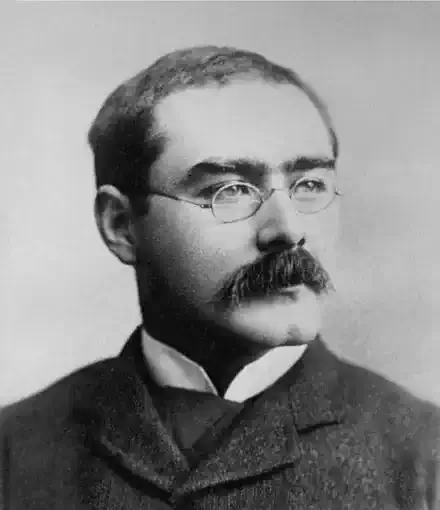
Rudyard Kipling
Russia to the Pacifists
Russia to the Pacifists
God rest you, peaceful gentlemen, let nothing you dismay,
But--leave your sports a little while--the dead are borne
this way!
Armies dead and Cities dead, past all count or care.
God rest you, merry gentlemen, what portent see you there?
Singing:--Break ground for a wearied host
That have no ground to keep.
Give them the rest that they covet most . . .
And who shall next to sleep, good sirs,
In such a trench to sleep?
God rest you, peaceful gentlemen, but give us leave to pass.
We go to dig a nation's grave as great as England was.
For this Kingdom and this Glory and this Power and this Pride
Three hundred years it flourished--in three hundred days it
died.
Singing:--Pour oil for a frozen throng,
That lie about the ways.
Give them the warmth they have lacked so
long . . .
And what shall be next to blaze, good sirs,
On such a pyre to blaze?
God rest you, thoughtful gentlemen, and send your sleep is light!
Remains of this dominion no shadow, sound, or sight,
Except the sound of weeping and the sight of burning fire,
And the shadow of a people that is trampled into mire.
Singing:--Break bread for a starving folk
That perish in the field.
Give them their food as they take the yoke . . .
And who shall be next to yield, good sirs,
For such a bribe to yield?
God rest you merry gentlemen, and keep you in your mirth!
Was ever Kingdom turned so soon to ashes, blood and earth?
'Twixt the summer and the snow-seeding-time and frost--
Arms and victual, hope and counsel, name and country lost!
Singing:--Let down by the foot and the head--
Shovel and smooth it all !
So do we bury a Nation dead . . .
And who shall be next to fall, good sirs,
With your good help to fall?
God rest you, peaceful gentlemen, let nothing you dismay,
But--leave your sports a little while--the dead are borne
this way!
Armies dead and Cities dead, past all count or care.
God rest you, merry gentlemen, what portent see you there?
Singing:--Break ground for a wearied host
That have no ground to keep.
Give them the rest that they covet most . . .
And who shall next to sleep, good sirs,
In such a trench to sleep?
God rest you, peaceful gentlemen, but give us leave to pass.
We go to dig a nation's grave as great as England was.
For this Kingdom and this Glory and this Power and this Pride
Three hundred years it flourished--in three hundred days it
died.
Singing:--Pour oil for a frozen throng,
That lie about the ways.
Give them the warmth they have lacked so
long . . .
And what shall be next to blaze, good sirs,
On such a pyre to blaze?
God rest you, thoughtful gentlemen, and send your sleep is light!
Remains of this dominion no shadow, sound, or sight,
Except the sound of weeping and the sight of burning fire,
And the shadow of a people that is trampled into mire.
Singing:--Break bread for a starving folk
That perish in the field.
Give them their food as they take the yoke . . .
And who shall be next to yield, good sirs,
For such a bribe to yield?
God rest you merry gentlemen, and keep you in your mirth!
Was ever Kingdom turned so soon to ashes, blood and earth?
'Twixt the summer and the snow-seeding-time and frost--
Arms and victual, hope and counsel, name and country lost!
Singing:--Let down by the foot and the head--
Shovel and smooth it all !
So do we bury a Nation dead . . .
And who shall be next to fall, good sirs,
With your good help to fall?
445
Rudyard Kipling
Quiquern
Quiquern
The People of the Eastern Ice, they are melting like the snow--
They beg for coffee and sugar; they go where the white men go.
The People of the Western Ice, they learn to steal and fight;
They sell their furs to the trading-post; they sell their souls to
the white.
The People of the Southern Ice, they trade with the whaler's
crew;
Their women have many ribbons, but their tents are torn and few.
But the People of the Elder Ice, beyond the white man's ken--
Their spears are made of the narwhal-horn, and they are the last
of the Men!
The People of the Eastern Ice, they are melting like the snow--
They beg for coffee and sugar; they go where the white men go.
The People of the Western Ice, they learn to steal and fight;
They sell their furs to the trading-post; they sell their souls to
the white.
The People of the Southern Ice, they trade with the whaler's
crew;
Their women have many ribbons, but their tents are torn and few.
But the People of the Elder Ice, beyond the white man's ken--
Their spears are made of the narwhal-horn, and they are the last
of the Men!
609
Rudyard Kipling
L'envoi To Life's Handicap
L'envoi To "Life's Handicap"
My new-cut ashlar takes the light
Where crimson-blank the windows flare;
By my own work, before the night,
Great Overseer I make my prayer.
If there be good in that I wrought,
Thy hand compelled it, Master, Thine;
Where I have failed to meet Thy thought
I know, through Thee, the blame is mine.
One instant's toil to Thee denied
Stands all Eternity's offence,
Of that I did with Thee to guide
To Thee, through Thee, be excellence.
Who, lest all thought of Eden fade,
Bring'st Eden to the craftsman's brain,
Godlike to muse o'er his own trade
And Manlike stand with God again.
The depth and dream of my desire,
The bitter paths wherein I stray,
Thou knowest Who hast made the Fire,
Thou knowest Who hast made the Clay!
One stone the more swings to her place
In that dread Temple of Thy Worth --
It is enough that through Thy grace
I saw naught common on Thy earth.
Take not that vision from my ken;
Oh whatsoe'er may spoil or speed,
Help me to need no aid from men
That I may help such men as need!
My new-cut ashlar takes the light
Where crimson-blank the windows flare;
By my own work, before the night,
Great Overseer I make my prayer.
If there be good in that I wrought,
Thy hand compelled it, Master, Thine;
Where I have failed to meet Thy thought
I know, through Thee, the blame is mine.
One instant's toil to Thee denied
Stands all Eternity's offence,
Of that I did with Thee to guide
To Thee, through Thee, be excellence.
Who, lest all thought of Eden fade,
Bring'st Eden to the craftsman's brain,
Godlike to muse o'er his own trade
And Manlike stand with God again.
The depth and dream of my desire,
The bitter paths wherein I stray,
Thou knowest Who hast made the Fire,
Thou knowest Who hast made the Clay!
One stone the more swings to her place
In that dread Temple of Thy Worth --
It is enough that through Thy grace
I saw naught common on Thy earth.
Take not that vision from my ken;
Oh whatsoe'er may spoil or speed,
Help me to need no aid from men
That I may help such men as need!
452
Rudyard Kipling
Hunting Song of the Seeonee Pack
Hunting Song of the Seeonee Pack
As the dawn was breaking the Sambhur belled
Once, twice, and again!
And a doe leaped up -- and a doe leaped up
From the pond in the wood where the wild deer sup.
This I, scouting alone, beheld,
Once, twice, and again!
As the dawn was breaking the Sambhur belled
Once, twice, and again!
And a wolf stole back -- and a wolf stole back
To carry the word to the waiting Pack;
And we sought and we found and we bayed on his track
Once, twice, and again!
As the dawn was breaking the Wolf-pack yelled
Once, twice, and again!
Feet in the jungle that leave no mark!
Eyes that can see in the dark -- the dark!
Tongue -- give tongue to it! Hark! O Hark!
Once, twice, and again!
His spots are the joy of the Leopard: his horns are the Buffalo's pride --
Be clean, for the strength of the hunter is known by the gloss of his hide.
If ye find that the Bullock can toss you, or the heavy-browed Sambhur can gore;
Ye need not stop work to inform us; we knew it ten seasons before.
Oppress not the cubs of the stranger, but hail them as Sister and Brother,
For though they are little and fubsy, it may be the Bear is their mother.
"There is none like to me!" says the Cub in the pride of his earliest kill;
But the Jungle is large and the Cub he is small. Let him think and be still.
As the dawn was breaking the Sambhur belled
Once, twice, and again!
And a doe leaped up -- and a doe leaped up
From the pond in the wood where the wild deer sup.
This I, scouting alone, beheld,
Once, twice, and again!
As the dawn was breaking the Sambhur belled
Once, twice, and again!
And a wolf stole back -- and a wolf stole back
To carry the word to the waiting Pack;
And we sought and we found and we bayed on his track
Once, twice, and again!
As the dawn was breaking the Wolf-pack yelled
Once, twice, and again!
Feet in the jungle that leave no mark!
Eyes that can see in the dark -- the dark!
Tongue -- give tongue to it! Hark! O Hark!
Once, twice, and again!
His spots are the joy of the Leopard: his horns are the Buffalo's pride --
Be clean, for the strength of the hunter is known by the gloss of his hide.
If ye find that the Bullock can toss you, or the heavy-browed Sambhur can gore;
Ye need not stop work to inform us; we knew it ten seasons before.
Oppress not the cubs of the stranger, but hail them as Sister and Brother,
For though they are little and fubsy, it may be the Bear is their mother.
"There is none like to me!" says the Cub in the pride of his earliest kill;
But the Jungle is large and the Cub he is small. Let him think and be still.
486
Rudyard Kipling
Gunga Din
Gunga Din
You may talk o' gin and beer
When you're quartered safe out 'ere,
An' you're sent to penny-fights an' Aldershot it;
But when it comes to slaughter
You will do your work on water,
An' you'll lick the bloomin' boots of 'im that's got it.
Now in Injia's sunny clime,
Where I used to spend my time
A-servin' of 'Er Majesty the Queen,
Of all them blackfaced crew
The finest man I knew
Was our regimental bhisti, Gunga Din.
He was "Din! Din! Din!
You limpin' lump o' brick-dust, Gunga Din!
Hi! slippery ~hitherao~!
Water, get it! ~Panee lao~! [Bring water swiftly.]
You squidgy-nosed old idol, Gunga Din."
The uniform 'e wore
Was nothin' much before,
An' rather less than 'arf o' that be'ind,
For a piece o' twisty rag
An' a goatskin water-bag
Was all the field-equipment 'e could find.
When the sweatin' troop-train lay
In a sidin' through the day,
Where the 'eat would make your bloomin' eyebrows crawl,
We shouted "Harry By!" [Mr. Atkins's equivalent for "O brother."]
Till our throats were bricky-dry,
Then we wopped 'im 'cause 'e couldn't serve us all.
It was "Din! Din! Din!
You 'eathen, where the mischief 'ave you been?
You put some ~juldee~ in it [Be quick.]
Or I'll ~marrow~ you this minute [Hit you.]
If you don't fill up my helmet, Gunga Din!"
'E would dot an' carry one
Till the longest day was done;
An' 'e didn't seem to know the use o' fear.
If we charged or broke or cut,
You could bet your bloomin' nut,
'E'd be waitin' fifty paces right flank rear.
With 'is ~mussick~ on 'is back, [Water-skin.]
'E would skip with our attack,
An' watch us till the bugles made "Retire",
An' for all 'is dirty 'ide
'E was white, clear white, inside
When 'e went to tend the wounded under fire!
It was "Din! Din! Din!"
With the bullets kickin' dust-spots on the green.
When the cartridges ran out,
You could hear the front-files shout,
"Hi! ammunition-mules an' Gunga Din!"
I shan't forgit the night
When I dropped be'ind the fight
With a bullet where my belt-plate should 'a' been.
I was chokin' mad with thirst,
An' the man that spied me first
Was our good old grinnin', gruntin' Gunga Din.
'E lifted up my 'ead,
An' he plugged me where I bled,
An' 'e guv me 'arf-a-pint o' water-green:
It was crawlin' and it stunk,
But of all the drinks I've drunk,
I'm gratefullest to one from Gunga Din.
It was "Din! Din! Din!
'Ere's a beggar with a bullet through 'is spleen;
'E's chawin' up the ground,
An' 'e's kickin' all around:
For Gawd's sake git the water, Gunga Din!"
'E carried me away
To where a dooli lay,
An' a bullet come an' drilled the beggar clean.
'E put me safe inside,
An' just before 'e died,
"I 'ope you liked your drink", sez Gunga Din.
So I'll meet 'im later on
At the place where 'e is gone --
Where it's always double drill and no canteen;
'E'll be squattin' on the coals
Givin' drink to poor damned souls,
An' I'll get a swig in hell from Gunga Din!
Yes, Din! Din! Din!
You Lazarushian-leather Gunga Din!
Though I've belted you and flayed you,
By the livin' Gawd that made you,
You're a better man than I am, Gunga Din!
You may talk o' gin and beer
When you're quartered safe out 'ere,
An' you're sent to penny-fights an' Aldershot it;
But when it comes to slaughter
You will do your work on water,
An' you'll lick the bloomin' boots of 'im that's got it.
Now in Injia's sunny clime,
Where I used to spend my time
A-servin' of 'Er Majesty the Queen,
Of all them blackfaced crew
The finest man I knew
Was our regimental bhisti, Gunga Din.
He was "Din! Din! Din!
You limpin' lump o' brick-dust, Gunga Din!
Hi! slippery ~hitherao~!
Water, get it! ~Panee lao~! [Bring water swiftly.]
You squidgy-nosed old idol, Gunga Din."
The uniform 'e wore
Was nothin' much before,
An' rather less than 'arf o' that be'ind,
For a piece o' twisty rag
An' a goatskin water-bag
Was all the field-equipment 'e could find.
When the sweatin' troop-train lay
In a sidin' through the day,
Where the 'eat would make your bloomin' eyebrows crawl,
We shouted "Harry By!" [Mr. Atkins's equivalent for "O brother."]
Till our throats were bricky-dry,
Then we wopped 'im 'cause 'e couldn't serve us all.
It was "Din! Din! Din!
You 'eathen, where the mischief 'ave you been?
You put some ~juldee~ in it [Be quick.]
Or I'll ~marrow~ you this minute [Hit you.]
If you don't fill up my helmet, Gunga Din!"
'E would dot an' carry one
Till the longest day was done;
An' 'e didn't seem to know the use o' fear.
If we charged or broke or cut,
You could bet your bloomin' nut,
'E'd be waitin' fifty paces right flank rear.
With 'is ~mussick~ on 'is back, [Water-skin.]
'E would skip with our attack,
An' watch us till the bugles made "Retire",
An' for all 'is dirty 'ide
'E was white, clear white, inside
When 'e went to tend the wounded under fire!
It was "Din! Din! Din!"
With the bullets kickin' dust-spots on the green.
When the cartridges ran out,
You could hear the front-files shout,
"Hi! ammunition-mules an' Gunga Din!"
I shan't forgit the night
When I dropped be'ind the fight
With a bullet where my belt-plate should 'a' been.
I was chokin' mad with thirst,
An' the man that spied me first
Was our good old grinnin', gruntin' Gunga Din.
'E lifted up my 'ead,
An' he plugged me where I bled,
An' 'e guv me 'arf-a-pint o' water-green:
It was crawlin' and it stunk,
But of all the drinks I've drunk,
I'm gratefullest to one from Gunga Din.
It was "Din! Din! Din!
'Ere's a beggar with a bullet through 'is spleen;
'E's chawin' up the ground,
An' 'e's kickin' all around:
For Gawd's sake git the water, Gunga Din!"
'E carried me away
To where a dooli lay,
An' a bullet come an' drilled the beggar clean.
'E put me safe inside,
An' just before 'e died,
"I 'ope you liked your drink", sez Gunga Din.
So I'll meet 'im later on
At the place where 'e is gone --
Where it's always double drill and no canteen;
'E'll be squattin' on the coals
Givin' drink to poor damned souls,
An' I'll get a swig in hell from Gunga Din!
Yes, Din! Din! Din!
You Lazarushian-leather Gunga Din!
Though I've belted you and flayed you,
By the livin' Gawd that made you,
You're a better man than I am, Gunga Din!
714
Rudyard Kipling
Evarra And His Gods
Evarra And His Gods
~Read here:
This is the story of Evarra -- man --
Maker of Gods in lands beyond the sea.~
Because the city gave him of her gold,
Because the caravans brought turquoises,
Because his life was sheltered by the King,
So that no man should maim him, none should steal,
Or break his rest with babble in the streets
When he was weary after toil, he made
An image of his God in gold and pearl,
With turquoise diadem and human eyes,
A wonder in the sunshine, known afar,
And worshipped by the King; but, drunk with pride,
Because the city bowed to him for God,
He wrote above the shrine: "~Thus Gods are made,
And whoso makes them otherwise shall die.~"
And all the city praised him. . . . Then he died.
~Read here the story of Evarra -- man --
Maker of Gods in lands beyond the sea.~
Because the city had no wealth to give,
Because the caravans were spoiled afar,
Because his life was threatened by the King,
So that all men despised him in the streets,
He hewed the living rock, with sweat and tears,
And reared a God against the morning-gold,
A terror in the sunshine, seen afar,
And worshipped by the King; but, drunk with pride,
Because the city fawned to bring him back,
He carved upon the plinth: "~Thus Gods are made,
And whoso makes them otherwise shall die.~"
And all the people praised him. . . . Then he died.
~Read here the story of Evarra -- man --
Maker of Gods in lands beyond the sea.~
Because he lived among a simple folk,
Because his village was between the hills,
Because he smeared his cheeks with blood of ewes,
He cut an idol from a fallen pine,
Smeared blood upon its cheeks, and wedged a shell
Above its brows for eyes, and gave it hair
Of trailing moss, and plaited straw for crown.
And all the village praised him for this craft,
And brought him butter, honey, milk, and curds.
Wherefore, because the shoutings drove him mad,
He scratched upon that log: "~Thus Gods are made,
And whoso makes them otherwise shall die.~"
And all the people praised him. . . . Then he died.
~Read here the story of Evarra -- man --
Maker of Gods in lands beyond the sea.~
Because his God decreed one clot of blood
Should swerve one hair's-breadth from the pulse's path,
And chafe his brain, Evarra mowed alone,
Rag-wrapped, among the cattle in the fields,
Counting his fingers, jesting with the trees,
And mocking at the mist, until his God
Drove him to labour. Out of dung and horns
Dropped in the mire he made a monstrous God,
Abhorrent, shapeless, crowned with plantain tufts,
And when the cattle lowed at twilight-time,
He dreamed it was the clamour of lost crowds,
And howled among the beasts: "~Thus Gods are made,
And whoso makes them otherwise shall die.~"
Thereat the cattle bellowed. . . . Then he died.
Yet at the last he came to Paradise,
And found his own four Gods, and that he wrote;
And marvelled, being very near to God,
What oaf on earth had made his toil God's law,
Till God said mocking: "Mock not. These be thine."
Then cried Evarra: "I have sinned!" -- "Not so.
If thou hadst written otherwise, thy Gods
Had rested in the mountain and the mine,
And I were poorer by four wondrous Gods,
And thy more wondrous law, Evarra. Thine,
Servant of shouting crowds and lowing kine."
Thereat, with laughing mouth, but tear-wet eyes,
Evarra cast his Gods from Paradise.
~This is the story of Evarra -- man --
Maker of Gods in lands beyond the sea.~
~Read here:
This is the story of Evarra -- man --
Maker of Gods in lands beyond the sea.~
Because the city gave him of her gold,
Because the caravans brought turquoises,
Because his life was sheltered by the King,
So that no man should maim him, none should steal,
Or break his rest with babble in the streets
When he was weary after toil, he made
An image of his God in gold and pearl,
With turquoise diadem and human eyes,
A wonder in the sunshine, known afar,
And worshipped by the King; but, drunk with pride,
Because the city bowed to him for God,
He wrote above the shrine: "~Thus Gods are made,
And whoso makes them otherwise shall die.~"
And all the city praised him. . . . Then he died.
~Read here the story of Evarra -- man --
Maker of Gods in lands beyond the sea.~
Because the city had no wealth to give,
Because the caravans were spoiled afar,
Because his life was threatened by the King,
So that all men despised him in the streets,
He hewed the living rock, with sweat and tears,
And reared a God against the morning-gold,
A terror in the sunshine, seen afar,
And worshipped by the King; but, drunk with pride,
Because the city fawned to bring him back,
He carved upon the plinth: "~Thus Gods are made,
And whoso makes them otherwise shall die.~"
And all the people praised him. . . . Then he died.
~Read here the story of Evarra -- man --
Maker of Gods in lands beyond the sea.~
Because he lived among a simple folk,
Because his village was between the hills,
Because he smeared his cheeks with blood of ewes,
He cut an idol from a fallen pine,
Smeared blood upon its cheeks, and wedged a shell
Above its brows for eyes, and gave it hair
Of trailing moss, and plaited straw for crown.
And all the village praised him for this craft,
And brought him butter, honey, milk, and curds.
Wherefore, because the shoutings drove him mad,
He scratched upon that log: "~Thus Gods are made,
And whoso makes them otherwise shall die.~"
And all the people praised him. . . . Then he died.
~Read here the story of Evarra -- man --
Maker of Gods in lands beyond the sea.~
Because his God decreed one clot of blood
Should swerve one hair's-breadth from the pulse's path,
And chafe his brain, Evarra mowed alone,
Rag-wrapped, among the cattle in the fields,
Counting his fingers, jesting with the trees,
And mocking at the mist, until his God
Drove him to labour. Out of dung and horns
Dropped in the mire he made a monstrous God,
Abhorrent, shapeless, crowned with plantain tufts,
And when the cattle lowed at twilight-time,
He dreamed it was the clamour of lost crowds,
And howled among the beasts: "~Thus Gods are made,
And whoso makes them otherwise shall die.~"
Thereat the cattle bellowed. . . . Then he died.
Yet at the last he came to Paradise,
And found his own four Gods, and that he wrote;
And marvelled, being very near to God,
What oaf on earth had made his toil God's law,
Till God said mocking: "Mock not. These be thine."
Then cried Evarra: "I have sinned!" -- "Not so.
If thou hadst written otherwise, thy Gods
Had rested in the mountain and the mine,
And I were poorer by four wondrous Gods,
And thy more wondrous law, Evarra. Thine,
Servant of shouting crowds and lowing kine."
Thereat, with laughing mouth, but tear-wet eyes,
Evarra cast his Gods from Paradise.
~This is the story of Evarra -- man --
Maker of Gods in lands beyond the sea.~
571
Rudyard Kipling
An Imperial Rescript
An Imperial Rescript
Now this is the tale of the Council the German Kaiser decreed,
To ease the strong of their burden, to help the weak in their need,
He sent a word to the peoples, who struggle, and pant, and sweat,
That the straw might be counted fairly and the tally of bricks be set.
The Lords of Their Hands assembled; from the East and the West they drew --
Baltimore, Lille, and Essen, Brummagem, Clyde, and Crewe.
And some were black from the furnace, and some were brown from the soil,
And some were blue from the dye-vat; but all were wearied of toil.
And the young King said: -- "I have found it, the road to the rest ye seek:
The strong shall wait for the weary, the hale shall halt for the weak;
With the even tramp of an army where no man breaks from the line,
Ye shall march to peace and plenty in the bond of brotherhood -- sign!"
The paper lay on the table, the strong heads bowed thereby,
And a wail went up from the peoples: -- "Ay, sign -- give rest, for we die!"
A hand was stretched to the goose-quill, a fist was cramped to scrawl,
When -- the laugh of a blue-eyed maiden ran clear through the council-hall.
And each one heard Her laughing as each one saw Her plain --
Saidie, Mimi, or Olga, Gretchen, or Mary Jane.
And the Spirit of Man that is in Him to the light of the vision woke;
And the men drew back from the paper, as a Yankee delegate spoke: --
"There's a girl in Jersey City who works on the telephone;
We're going to hitch our horses and dig for a house of our own,
With gas and water connections, and steam-heat through to the top;
And, W. Hohenzollern, I guess I shall work till I drop."
And an English delegate thundered: -- "The weak an' the lame be blowed!
I've a berth in the Sou'-West workshops, a home in the Wandsworth Road;
And till the 'sociation has footed my buryin' bill,
I work for the kids an' the missus. Pull up? I be damned if I will!"
And over the German benches the bearded whisper ran: --
"Lager, der girls und der dollars, dey makes or dey breaks a man.
If Schmitt haf collared der dollars, he collars der girl deremit;
But if Schmitt bust in der pizness, we collars der girl from Schmitt."
They passed one resolution: -- "Your sub-committee believe
You can lighten the curse of Adam when you've lightened the curse of Eve.
But till we are built like angels, with hammer and chisel and pen,
We will work for ourself and a woman, for ever and ever, amen."
Now this is the tale of the Council the German Kaiser held --
The day that they razored the Grindstone, the day that the Cat was belled,
The day of the Figs from Thistles, the day of the Twisted Sands,
The day that the laugh of a maiden made light of the Lords of Their Hands.
Now this is the tale of the Council the German Kaiser decreed,
To ease the strong of their burden, to help the weak in their need,
He sent a word to the peoples, who struggle, and pant, and sweat,
That the straw might be counted fairly and the tally of bricks be set.
The Lords of Their Hands assembled; from the East and the West they drew --
Baltimore, Lille, and Essen, Brummagem, Clyde, and Crewe.
And some were black from the furnace, and some were brown from the soil,
And some were blue from the dye-vat; but all were wearied of toil.
And the young King said: -- "I have found it, the road to the rest ye seek:
The strong shall wait for the weary, the hale shall halt for the weak;
With the even tramp of an army where no man breaks from the line,
Ye shall march to peace and plenty in the bond of brotherhood -- sign!"
The paper lay on the table, the strong heads bowed thereby,
And a wail went up from the peoples: -- "Ay, sign -- give rest, for we die!"
A hand was stretched to the goose-quill, a fist was cramped to scrawl,
When -- the laugh of a blue-eyed maiden ran clear through the council-hall.
And each one heard Her laughing as each one saw Her plain --
Saidie, Mimi, or Olga, Gretchen, or Mary Jane.
And the Spirit of Man that is in Him to the light of the vision woke;
And the men drew back from the paper, as a Yankee delegate spoke: --
"There's a girl in Jersey City who works on the telephone;
We're going to hitch our horses and dig for a house of our own,
With gas and water connections, and steam-heat through to the top;
And, W. Hohenzollern, I guess I shall work till I drop."
And an English delegate thundered: -- "The weak an' the lame be blowed!
I've a berth in the Sou'-West workshops, a home in the Wandsworth Road;
And till the 'sociation has footed my buryin' bill,
I work for the kids an' the missus. Pull up? I be damned if I will!"
And over the German benches the bearded whisper ran: --
"Lager, der girls und der dollars, dey makes or dey breaks a man.
If Schmitt haf collared der dollars, he collars der girl deremit;
But if Schmitt bust in der pizness, we collars der girl from Schmitt."
They passed one resolution: -- "Your sub-committee believe
You can lighten the curse of Adam when you've lightened the curse of Eve.
But till we are built like angels, with hammer and chisel and pen,
We will work for ourself and a woman, for ever and ever, amen."
Now this is the tale of the Council the German Kaiser held --
The day that they razored the Grindstone, the day that the Cat was belled,
The day of the Figs from Thistles, the day of the Twisted Sands,
The day that the laugh of a maiden made light of the Lords of Their Hands.
483
Rudyard Kipling
An American
An American
The American Spirit speaks:
"If the Led Striker call it a strike,
Or the papers call it a war,
They know not much what I am like,
Nor what he is, my Avatar."
Through many roads, by me possessed,
He shambles forth in cosmic guise;
He is the Jester and the Jest,
And he the Text himself applies.
The Celt is in his heart and hand,
The Gaul is in his brain and nerve;
Where, cosmopolitanly planned,
He guards the Redskin's dry reserve.
His easy unswept hearth he lends
From Labrador to Guadeloupe;
Till, elbowed out by sloven friends,
He camps, at sufferance, on the stoop.
Calm-eyed he scoffs at sword and crown,
Or panic-blinded stabs and slays:
Blatant he bids the world bow down,
Or cringing begs a crust of praise;
Or, sombre-drunk, at mine and mart,
He dubs his dreary brethren Kings.
His hands are black with blood -- his heart
Leaps, as a babe's, at little things.
But, through the shift of mood and mood,
Mine ancient humour saves him whole --
The cynic devil in his blood
That bids him mock his hurrying soul;
That bids him flout the Law he makes,
That bids him make the Law he flouts,
Till, dazed by many doubts, he wakes
The drumming guns that -- have no doubts;
That checks him foolish -- hot and fond,
That chuckles through his deepest ire,
That gilds the slough of his despond
But dims the goal of his desire;
Inopportune, shrill-accented,
The acrid Asiatic mirth
That leaves him, careless 'mid his dead,
The scandal of the elder earth.
How shall he clear himself, how reach
Your bar or weighed defence prefer?
A brother hedged with alien speech
And lacking all interpreter.
Which knowledge vexes him a space;
But while Reproof around him rings,
He turns a keen untroubled face
Home, to the instant need of things.
Enslaved, illogical, elate,
He greets th' embarrassed Gods, nor fears
To shake the iron hand of Fate
Or match with Destiny for beers.
Lo, imperturbable he rules,
Unkempt, disreputable, vast --
And, in the teeth of all the schools,
I -- I shall save him at the last!
The American Spirit speaks:
"If the Led Striker call it a strike,
Or the papers call it a war,
They know not much what I am like,
Nor what he is, my Avatar."
Through many roads, by me possessed,
He shambles forth in cosmic guise;
He is the Jester and the Jest,
And he the Text himself applies.
The Celt is in his heart and hand,
The Gaul is in his brain and nerve;
Where, cosmopolitanly planned,
He guards the Redskin's dry reserve.
His easy unswept hearth he lends
From Labrador to Guadeloupe;
Till, elbowed out by sloven friends,
He camps, at sufferance, on the stoop.
Calm-eyed he scoffs at sword and crown,
Or panic-blinded stabs and slays:
Blatant he bids the world bow down,
Or cringing begs a crust of praise;
Or, sombre-drunk, at mine and mart,
He dubs his dreary brethren Kings.
His hands are black with blood -- his heart
Leaps, as a babe's, at little things.
But, through the shift of mood and mood,
Mine ancient humour saves him whole --
The cynic devil in his blood
That bids him mock his hurrying soul;
That bids him flout the Law he makes,
That bids him make the Law he flouts,
Till, dazed by many doubts, he wakes
The drumming guns that -- have no doubts;
That checks him foolish -- hot and fond,
That chuckles through his deepest ire,
That gilds the slough of his despond
But dims the goal of his desire;
Inopportune, shrill-accented,
The acrid Asiatic mirth
That leaves him, careless 'mid his dead,
The scandal of the elder earth.
How shall he clear himself, how reach
Your bar or weighed defence prefer?
A brother hedged with alien speech
And lacking all interpreter.
Which knowledge vexes him a space;
But while Reproof around him rings,
He turns a keen untroubled face
Home, to the instant need of things.
Enslaved, illogical, elate,
He greets th' embarrassed Gods, nor fears
To shake the iron hand of Fate
Or match with Destiny for beers.
Lo, imperturbable he rules,
Unkempt, disreputable, vast --
And, in the teeth of all the schools,
I -- I shall save him at the last!
475
Rudyard Kipling
A Pilgrim's Way
A Pilgrim's Way
I do not look for holy saints to guide me on my way,
Or male and female devilkins to lead my feet astray.
If these are added, I rejoice---if not, I shall not mind,
So long as I have leave and choice to meet my fellow-kind.
For as we come and as we go (and deadly-soon go we!)
The people, Lord, Thy people, are good enough for me!
Thus I will honour pious men whose virtue shines so bright
(Though none are more amazed than I when I by chance do right),
And I will pity foolish men for woe their sins have bred
(Though ninety-nine per cent. of mine I brought on my own head).
And, Amorite or Eremite, or General Averagee,
The people, Lord, Thy people, are good enough for me!
And when they bore me overmuch, I will not shake mine ears,
Recalling many thousand such whom I have bored to tears.
And when they labour to impress, I will not doubt nor scoff;
Since I myself have done no less and---sometimes pulled it off.
Yea, as we are and we are not, and we pretend to be,
The people, Lord, Thy people, are good enough for me!
And when they work me random wrong, as oftentimes hath been,
I will not cherish hate too long (my hands are none too clean).
And when they do me random good I will not feign surprise.
No more than those whom I have cheered with wayside charities.
But, as we give and as we take---whate'er our takings be---
The people, Lord, Thy people, are good enough for me!
But when I meet with frantic folk who sinfully declare
There is no pardon for their sin, the same I will not spare
Till I have proved that Heaven and Hell which in our hearts we have
Show nothing irredeemable on either side of the grave.
For as we live and as we die---if utter Death there be---
The people, Lord, Thy people, are good enough for me!
Deliver me from every pride---the Middle, High, and Low---
That bars me from a brother's side, whatever pride he show.
And purge me from all heresies of thought and speech and pen
That bid me judge him otherwise than I am judged. Amen!
That I may sing of Crowd or King or road-borne company,
That I may labour in my day, vocation and degree,
To prove the same in deed and name, and hold unshakenly
(Where'er I go, whate'er I know, whoe'er my neighbor be)
This single faith in Life and Death and to Eternity:
``The people, Lord, Thy people, are good enough for me!''
I do not look for holy saints to guide me on my way,
Or male and female devilkins to lead my feet astray.
If these are added, I rejoice---if not, I shall not mind,
So long as I have leave and choice to meet my fellow-kind.
For as we come and as we go (and deadly-soon go we!)
The people, Lord, Thy people, are good enough for me!
Thus I will honour pious men whose virtue shines so bright
(Though none are more amazed than I when I by chance do right),
And I will pity foolish men for woe their sins have bred
(Though ninety-nine per cent. of mine I brought on my own head).
And, Amorite or Eremite, or General Averagee,
The people, Lord, Thy people, are good enough for me!
And when they bore me overmuch, I will not shake mine ears,
Recalling many thousand such whom I have bored to tears.
And when they labour to impress, I will not doubt nor scoff;
Since I myself have done no less and---sometimes pulled it off.
Yea, as we are and we are not, and we pretend to be,
The people, Lord, Thy people, are good enough for me!
And when they work me random wrong, as oftentimes hath been,
I will not cherish hate too long (my hands are none too clean).
And when they do me random good I will not feign surprise.
No more than those whom I have cheered with wayside charities.
But, as we give and as we take---whate'er our takings be---
The people, Lord, Thy people, are good enough for me!
But when I meet with frantic folk who sinfully declare
There is no pardon for their sin, the same I will not spare
Till I have proved that Heaven and Hell which in our hearts we have
Show nothing irredeemable on either side of the grave.
For as we live and as we die---if utter Death there be---
The people, Lord, Thy people, are good enough for me!
Deliver me from every pride---the Middle, High, and Low---
That bars me from a brother's side, whatever pride he show.
And purge me from all heresies of thought and speech and pen
That bid me judge him otherwise than I am judged. Amen!
That I may sing of Crowd or King or road-borne company,
That I may labour in my day, vocation and degree,
To prove the same in deed and name, and hold unshakenly
(Where'er I go, whate'er I know, whoe'er my neighbor be)
This single faith in Life and Death and to Eternity:
``The people, Lord, Thy people, are good enough for me!''
531
Rudyard Kipling
A Counting-Out Song
A Counting-Out Song
What is the song the children sing,
When doorway lilacs bloom in Spring,
And the Schools are loosed, and the games are played
That were deadly earnest when Earth was made?
Hear them chattering, shrill and hard,
After dinner-time, out in the yard,
As the sides are chosen and all submit
To the chance of the lot that shall make them "It."
(Singing) "Eenee, Meenee, Mainee, Mo!
Catch a nigger by the toe!
(If he hollers let him go!)
Eenee, Meenee. Mainee, Mo!
You-are-It!"
Eenee, Meenee, Mainee, and Mo
Were the First Big Four of the Long Ago,
When the Pole of the Earth sloped thirty degrees,
And Central Europe began to freeze,
And they needed Ambassadors staunch and stark
To steady the Tribes in the gathering dark:
But the frost was fierce and flesh was frail,
So they launched a Magic that could not fail.
(Singing) "Eenee, Meenee, Mainee, Mo!
Hear the wolves across the snow!
Some one has to kill 'em--so
Eenee, Meenee, Mainee, Mo
Make--you--It!"
Slowly the Glacial Epoch passed,
Central Europe thawed out at last;
And, under the slush of the melting snows
The first dim shapes of the Nations rose.
Rome, Britannia, Belgium, Gaul--
Flood and avalanche fathered them all;
And the First Big Four, as they watched the mess,
Pitied Man in his helplessness.
(Singing) "Eenee, Meenee, Mainee, Mo!
Trouble starts When Nations grow,
Some one has to stop it--so
Eenee, Meenee, Mainee, Mo!
Make-you-It!"
Thus it happened, but none can tell
What was the Power behind the spell--
Fear, or Duty, or Pride, or Faith--
That sent men shuddering out to death--
To cold and watching, and, worse than these,
Work, more work, when they looked for ease--
To the days discomfort, the nights despair,
In the hope of a prize that they never could share,
(Singing) "Eenee, Meenee, Mainee, Mo!
Man is born to Toil and Woe.
One will cure another--so
Eenee, Meenee, Mainee, Mo
Make--you--It!"
Once and again, as the Ice went North
The grass crept up to the Firth of Forth.
Once and again, as the Ice came South
The glaciers ground over Lossiemouth.
But, grass or glacier, cold or hot,
The men went out who would rather not,
And fought with the Tiger, the Pig and the Ape,
To hammer the world into decent shape.
(Singing) "Eenee, Meenee, Mainee, Mo!
What's the use of doing so?
Ask the Gods, for we don't know;
But Eenee, Meenee, Mainee, Mo
Make-us-It!"
Nothing is left of that terrible rune
But a tag of gibberish tacked to a tune
That ends the waiting and settles the claims
Of children arguing over their games;
For never yet has a boy been found
To shirk his turn when the turn came round;
Nor even a girl has been known to say
"If you laugh at me I shan't play."
For-- "Eenee, Meenee, Mainee, Mo,
(Don't you let the grown-ups know!)
You may hate it ever so,
But if you're chose you're bound to go,
When Eenee, Meenee, Mainee, Mo
Make-you-It!"
What is the song the children sing,
When doorway lilacs bloom in Spring,
And the Schools are loosed, and the games are played
That were deadly earnest when Earth was made?
Hear them chattering, shrill and hard,
After dinner-time, out in the yard,
As the sides are chosen and all submit
To the chance of the lot that shall make them "It."
(Singing) "Eenee, Meenee, Mainee, Mo!
Catch a nigger by the toe!
(If he hollers let him go!)
Eenee, Meenee. Mainee, Mo!
You-are-It!"
Eenee, Meenee, Mainee, and Mo
Were the First Big Four of the Long Ago,
When the Pole of the Earth sloped thirty degrees,
And Central Europe began to freeze,
And they needed Ambassadors staunch and stark
To steady the Tribes in the gathering dark:
But the frost was fierce and flesh was frail,
So they launched a Magic that could not fail.
(Singing) "Eenee, Meenee, Mainee, Mo!
Hear the wolves across the snow!
Some one has to kill 'em--so
Eenee, Meenee, Mainee, Mo
Make--you--It!"
Slowly the Glacial Epoch passed,
Central Europe thawed out at last;
And, under the slush of the melting snows
The first dim shapes of the Nations rose.
Rome, Britannia, Belgium, Gaul--
Flood and avalanche fathered them all;
And the First Big Four, as they watched the mess,
Pitied Man in his helplessness.
(Singing) "Eenee, Meenee, Mainee, Mo!
Trouble starts When Nations grow,
Some one has to stop it--so
Eenee, Meenee, Mainee, Mo!
Make-you-It!"
Thus it happened, but none can tell
What was the Power behind the spell--
Fear, or Duty, or Pride, or Faith--
That sent men shuddering out to death--
To cold and watching, and, worse than these,
Work, more work, when they looked for ease--
To the days discomfort, the nights despair,
In the hope of a prize that they never could share,
(Singing) "Eenee, Meenee, Mainee, Mo!
Man is born to Toil and Woe.
One will cure another--so
Eenee, Meenee, Mainee, Mo
Make--you--It!"
Once and again, as the Ice went North
The grass crept up to the Firth of Forth.
Once and again, as the Ice came South
The glaciers ground over Lossiemouth.
But, grass or glacier, cold or hot,
The men went out who would rather not,
And fought with the Tiger, the Pig and the Ape,
To hammer the world into decent shape.
(Singing) "Eenee, Meenee, Mainee, Mo!
What's the use of doing so?
Ask the Gods, for we don't know;
But Eenee, Meenee, Mainee, Mo
Make-us-It!"
Nothing is left of that terrible rune
But a tag of gibberish tacked to a tune
That ends the waiting and settles the claims
Of children arguing over their games;
For never yet has a boy been found
To shirk his turn when the turn came round;
Nor even a girl has been known to say
"If you laugh at me I shan't play."
For-- "Eenee, Meenee, Mainee, Mo,
(Don't you let the grown-ups know!)
You may hate it ever so,
But if you're chose you're bound to go,
When Eenee, Meenee, Mainee, Mo
Make-you-It!"
527

Robert W. Service
You And Me
You And Me
I'm part of people I have known
And they are part of me;
The seeds of thought that I have sown
In other minds I see.
There's something of me in the throne
And in the gallows tree.
There's something of me in each one
With whom I work and play,
For islanded there can be none
In this dynamic day;
And meshed with me perchance may be
A leper in Cathay.
There's me in you and you in me,
For deeply in us delves
Such common thought that never we
Can call ourselves ourselves.
In coils of universal fate
No man is isolate.
For you and I are History,
The all that ever was;
And woven in the tapestry
Of everlasting laws,
Persist will we in Time to be,
Forever you and me.
I'm part of people I have known
And they are part of me;
The seeds of thought that I have sown
In other minds I see.
There's something of me in the throne
And in the gallows tree.
There's something of me in each one
With whom I work and play,
For islanded there can be none
In this dynamic day;
And meshed with me perchance may be
A leper in Cathay.
There's me in you and you in me,
For deeply in us delves
Such common thought that never we
Can call ourselves ourselves.
In coils of universal fate
No man is isolate.
For you and I are History,
The all that ever was;
And woven in the tapestry
Of everlasting laws,
Persist will we in Time to be,
Forever you and me.
243
Robert W. Service
Worms
Worms
Worms finer for fishing you couldn't be wishing;
I delved them dismayed from the velvety sod;
The rich loam upturning I gathered them squirming,
big, fat, gleamy earthworms, all ripe for my rod.
Thinks I, without waiting, my hook I'll be baiting,
And flip me a fish from the foam of the pool;
Then Mother beholding, came crying and scolding:
"You're late, ye young devil! Be off to the school."
So grabbing me bait-tin I dropped them fat worms in,
With globs of green turf for their comfort and cheer;
And there, clean forgotten, no doubt dead and rotten;
I left them to languish for nigh on a year.
One day to be cleaning the byre I was meaning,
When seeing that old rusty can on the shelf,
Says I: "To my thinking, them worms must be stinking:
Begorrah! I'd better find out for myself."
So I opened the tin, held my nose and looked in;
And what did I see? Why, most nothing at all.
Just darkness and dank. and . . . a something that stank,
Tucked down in a corner, a greasy grey ball.
My worms -no, not dead, but thin as a thread,
Each seemed to reproach me, protesting its worth:
So softly I took them and tenderly shook them
Back into the bosom of mothering earth.
I'm now in the City; 'tis grand, but I pity
The weariful wretches that crawl in its grime;
The dregs and the scum and the spawn of the slum,
And the poor little children that's cradled in crime.
Sure I see them in terms of my pitiful worms,
surviving despite desperation and doom,
And I wish I was God, with a smile and a nod
To set them all down in a valley of bloom,
Saying: "Let these rejoice with a wonderful voice
For mothering earth and for fathering sea,
And healing of sun, for each weariful one
Of these poor human worms is a wee bit of me. . . .
Let your be the blame and yours be the shame:
What ye do unto them ye do also to ME."
Worms finer for fishing you couldn't be wishing;
I delved them dismayed from the velvety sod;
The rich loam upturning I gathered them squirming,
big, fat, gleamy earthworms, all ripe for my rod.
Thinks I, without waiting, my hook I'll be baiting,
And flip me a fish from the foam of the pool;
Then Mother beholding, came crying and scolding:
"You're late, ye young devil! Be off to the school."
So grabbing me bait-tin I dropped them fat worms in,
With globs of green turf for their comfort and cheer;
And there, clean forgotten, no doubt dead and rotten;
I left them to languish for nigh on a year.
One day to be cleaning the byre I was meaning,
When seeing that old rusty can on the shelf,
Says I: "To my thinking, them worms must be stinking:
Begorrah! I'd better find out for myself."
So I opened the tin, held my nose and looked in;
And what did I see? Why, most nothing at all.
Just darkness and dank. and . . . a something that stank,
Tucked down in a corner, a greasy grey ball.
My worms -no, not dead, but thin as a thread,
Each seemed to reproach me, protesting its worth:
So softly I took them and tenderly shook them
Back into the bosom of mothering earth.
I'm now in the City; 'tis grand, but I pity
The weariful wretches that crawl in its grime;
The dregs and the scum and the spawn of the slum,
And the poor little children that's cradled in crime.
Sure I see them in terms of my pitiful worms,
surviving despite desperation and doom,
And I wish I was God, with a smile and a nod
To set them all down in a valley of bloom,
Saying: "Let these rejoice with a wonderful voice
For mothering earth and for fathering sea,
And healing of sun, for each weariful one
Of these poor human worms is a wee bit of me. . . .
Let your be the blame and yours be the shame:
What ye do unto them ye do also to ME."
222
Robert W. Service
To A Tycoon
To A Tycoon
Since much has been your mirth
And fair your fate,
Friend, leave your lot of earth
Less desolate.
With frailing overdue,
Why don't you try
The bit of God in you
To justify?
Try to discern the grace
All greed above,
That may uplift the race
To realm of love.
For in you is a spark,
A heaven-glow,
That will illume the dark
Before you go.
Aye, though it be that you
To Faith are blind,
There's one thing you can do,
It's--just be kind.
The anguish understand,
Of hearts that bleed:
Friends, lend a helping hand
To those in need.
Since much has been your mirth
And fair your fate,
Friend, leave your lot of earth
Less desolate.
With frailing overdue,
Why don't you try
The bit of God in you
To justify?
Try to discern the grace
All greed above,
That may uplift the race
To realm of love.
For in you is a spark,
A heaven-glow,
That will illume the dark
Before you go.
Aye, though it be that you
To Faith are blind,
There's one thing you can do,
It's--just be kind.
The anguish understand,
Of hearts that bleed:
Friends, lend a helping hand
To those in need.
209
Robert W. Service
The Spirit Of The Unborn Babe
The Spirit Of The Unborn Babe
The Spirit of the Unborn Babe peered through the window-pane,
Peered through the window-pane that glowed like beacon in the night;
For, oh, the sky was desolate and wild with wind and rain;
And how the little room was crammed with coziness and light!
Except the flirting of the fire there was no sound at all;
The Woman sat beside the hearth, her knitting on her knee;
The shadow of her husband's head was dancing on the wall;
She looked with staring eyes at it, she looked yet did not see.
She only saw a childish face that topped the table rim,
A little wistful ghost that smiled and vanished quick away;
And then because her tender eyes were flooding to the brim,
She lowered her head. . . . "Don't sorrow, dear," she heard him softly say;
"It's over now. We'll try to be as happy as before
(Ah! they who little children have, grant hostages to pain).
We gave Life chance to wound us once, but never, never more. . . ."
The Spirit of the Unborn Babe fled through the night again.
The Spirit of the Unborn Babe went wildered in the dark;
Like termagants the winds tore down and whirled it with the snow.
And then amid the writhing storm it saw a tiny spark,
A window broad, a spacious room all goldenly aglow,
A woman slim and Paris-gowned and exquisitely fair,
Who smiled with rapture as she watched her jewels catch the blaze;
A man in faultless evening dress, young, handsome, debonnaire,
Who smoked his cigarette and looked with frank admiring gaze.
"Oh, we are happy, sweet," said he; "youth, health, and wealth are ours.
What if a thousand toil and sweat that we may live at ease!
What if the hands are worn and torn that strew our path with flowers!
Ah, well! we did not make the world; let us not think of these.
Let's seek the beauty-spots of earth, Dear Heart, just you and I;
Let other women bring forth life with sorrow and with pain.
Above our door we'll hang the sign: `No children need apply. . . .'"
The Spirit of the Unborn Babe sped through the night again.
The Spirit of the Unborn Babe went whirling on and on;
It soared above a city vast, it swept down to a slum;
It saw within a grimy house a light that dimly shone;
It peered in through a window-pane and lo! a voice said: "Come!"
And so a little girl was born amid the dirt and din,
And lived in spite of everything, for life is ordered so;
A child whose eyes first opened wide to swinishness and sin,
A child whose love and innocence met only curse and blow.
And so in due and proper course she took the path of shame,
And gladly died in hospital, quite old at twenty years;
And when God comes to weigh it all, ah! whose shall be the blame
For all her maimed and poisoned life, her torture and her tears?
For oh, it is not what we do, but what we have not done!
And on that day of reckoning, when all is plain and clear,
What if we stand before the Throne, blood-guilty every one? . . .
Maybe the blackest sins of all are Selfishness and Fear.
The Spirit of the Unborn Babe peered through the window-pane,
Peered through the window-pane that glowed like beacon in the night;
For, oh, the sky was desolate and wild with wind and rain;
And how the little room was crammed with coziness and light!
Except the flirting of the fire there was no sound at all;
The Woman sat beside the hearth, her knitting on her knee;
The shadow of her husband's head was dancing on the wall;
She looked with staring eyes at it, she looked yet did not see.
She only saw a childish face that topped the table rim,
A little wistful ghost that smiled and vanished quick away;
And then because her tender eyes were flooding to the brim,
She lowered her head. . . . "Don't sorrow, dear," she heard him softly say;
"It's over now. We'll try to be as happy as before
(Ah! they who little children have, grant hostages to pain).
We gave Life chance to wound us once, but never, never more. . . ."
The Spirit of the Unborn Babe fled through the night again.
The Spirit of the Unborn Babe went wildered in the dark;
Like termagants the winds tore down and whirled it with the snow.
And then amid the writhing storm it saw a tiny spark,
A window broad, a spacious room all goldenly aglow,
A woman slim and Paris-gowned and exquisitely fair,
Who smiled with rapture as she watched her jewels catch the blaze;
A man in faultless evening dress, young, handsome, debonnaire,
Who smoked his cigarette and looked with frank admiring gaze.
"Oh, we are happy, sweet," said he; "youth, health, and wealth are ours.
What if a thousand toil and sweat that we may live at ease!
What if the hands are worn and torn that strew our path with flowers!
Ah, well! we did not make the world; let us not think of these.
Let's seek the beauty-spots of earth, Dear Heart, just you and I;
Let other women bring forth life with sorrow and with pain.
Above our door we'll hang the sign: `No children need apply. . . .'"
The Spirit of the Unborn Babe sped through the night again.
The Spirit of the Unborn Babe went whirling on and on;
It soared above a city vast, it swept down to a slum;
It saw within a grimy house a light that dimly shone;
It peered in through a window-pane and lo! a voice said: "Come!"
And so a little girl was born amid the dirt and din,
And lived in spite of everything, for life is ordered so;
A child whose eyes first opened wide to swinishness and sin,
A child whose love and innocence met only curse and blow.
And so in due and proper course she took the path of shame,
And gladly died in hospital, quite old at twenty years;
And when God comes to weigh it all, ah! whose shall be the blame
For all her maimed and poisoned life, her torture and her tears?
For oh, it is not what we do, but what we have not done!
And on that day of reckoning, when all is plain and clear,
What if we stand before the Throne, blood-guilty every one? . . .
Maybe the blackest sins of all are Selfishness and Fear.
212
Robert W. Service
The Song Of The Camp-Fire
The Song Of The Camp-Fire
Heed me, feed me, I am hungry, I am red-tongued with desire;
Boughs of balsam, slabs of cedar, gummy fagots of the pine,
Heap them on me, let me hug them to my eager heart of fire,
Roaring, soaring up to heaven as a symbol and a sign.
Bring me knots of sunny maple, silver birch and tamarack;
Leaping, sweeping, I will lap them with my ardent wings of flame;
I will kindle them to glory, I will beat the darkness back;
Streaming, gleaming, I will goad them to my glory and my fame.
Bring me gnarly limbs of live-oak, aid me in my frenzied fight;
Strips of iron-wood, scaly blue-gum, writhing redly in my hold;
With my lunge of lurid lances, with my whips that flail the night,
They will burgeon into beauty, they will foliate in gold.
Let me star the dim sierras, stab with light the inland seas;
Roaming wind and roaring darkness! seek no mercy at my hands;
I will mock the marly heavens, lamp the purple prairies,
I will flaunt my deathless banners down the far, unhouseled lands.
In the vast and vaulted pine-gloom where the pillared forests frown,
By the sullen, bestial rivers running where God only knows,
On the starlit coral beaches when the combers thunder down,
In the death-spell of the barrens, in the shudder of the snows;
In a blazing belt of triumph from the palm-leaf to the pine,
As a symbol of defiance lo! the wilderness I span;
And my beacons burn exultant as an everlasting sign
Of unending domination, of the mastery of Man;
I, the Life, the fierce Uplifter, I that weaned him from the mire;
I, the angel and the devil, I, the tyrant and the slave;
I, the Spirit of the Struggle; I, the mighty God of Fire;
I, the Maker and Destroyer; I, the Giver and the Grave.
II
Gather round me, boy and grey-beard, frontiersman of every kind.
Few are you, and far and lonely, yet an army forms behind:
By your camp-fires shall they know you, ashes scattered to the wind.
Peer into my heart of solace, break your bannock at my blaze;
Smoking, stretched in lazy shelter, build your castles as you gaze;
Or, it may be, deep in dreaming, think of dim, unhappy days.
Let my warmth and glow caress you, for your trails are grim and hard;
Let my arms of comfort press you, hunger-hewn and battle-scarred:
O my lovers! how I bless you with your lives so madly marred!
For you seek the silent spaces, and their secret lore you glean:
For you win the savage races, and the brutish Wild you wean;
And I gladden desert places, where camp-fire has never been.
From the Pole unto the Tropics is there trail ye have not dared?
And because you hold death lightly, so by death shall you be spared,
(As the sages of the ages in their pages have declared).
On the roaring Arkilinik in a leaky bark canoe;
Up the cloud of Mount McKinley, where the avalanche leaps through;
In the furnace of Death Valley, when the mirage glimmers blue.
Now a smudge of wiry willows on the weary Kuskoquim;
Now a flare of gummy pine-knots where Vancouver's scaur is grim;
Now a gleam of sunny ceiba, when the Cuban beaches dim.
Always, always God's Great Open: lo! I burn with keener light
In the corridors of silence, in the vestibules of night;
'Mid the ferns and grasses gleaming, was there ever gem so bright?
Not for weaklings, not for women, like my brother of the hearth;
Ring your songs of wrath around me, I was made for manful mirth,
In the lusty, gusty greatness, on the bald spots of the earth.
Men, my masters! men, my lovers! ye have fought and ye have bled;
Gather round my ruddy embers, softly glowing is my bed;
By my heart of solace dreaming, rest ye and be comforted!
III
I am dying, O my masters! by my fitful flame ye sleep;
My purple plumes of glory droop forlorn.
Grey ashes choke and cloak me, and above the pines there creep
The stealthy silver moccasins of morn.
There comes a countless army, it's the Legion of the Light;
It tramps in gleaming triumph round the world;
And before its jewelled lances all the shadows of the night
Back in to abysmal darknesses are hurled.
Leap to life again, my lovers! ye must toil and never tire;
The day of daring, doing, brightens clear,
When the bed of spicy cedar and the jovial camp-fire
Must only be a memory of cheer.
There is hope and golden promise in the vast portentous dawn;
There is glamour in the glad, effluent sky:
Go and leave me; I will dream of you and love you when you're gone;
I have served you, O my masters! let me die.
A little heap of ashes, grey and sodden by the rain,
Wind-scattered, blurred and blotted by the snow:
Let that be all to tell of me, and glorious again,
Ye things of greening gladness, leap and glow!
A black scar in the sunshine by the palm-leaf or the pine,
Blind to the night and dead to all desire;
Yet oh, of life and uplift what a symbol and a sign!
Yet oh, of power and conquest what a destiny is mine!
A little heap of ashes -- Yea! a miracle divine,
The foot-print of a god, all-radiant Fire.
Heed me, feed me, I am hungry, I am red-tongued with desire;
Boughs of balsam, slabs of cedar, gummy fagots of the pine,
Heap them on me, let me hug them to my eager heart of fire,
Roaring, soaring up to heaven as a symbol and a sign.
Bring me knots of sunny maple, silver birch and tamarack;
Leaping, sweeping, I will lap them with my ardent wings of flame;
I will kindle them to glory, I will beat the darkness back;
Streaming, gleaming, I will goad them to my glory and my fame.
Bring me gnarly limbs of live-oak, aid me in my frenzied fight;
Strips of iron-wood, scaly blue-gum, writhing redly in my hold;
With my lunge of lurid lances, with my whips that flail the night,
They will burgeon into beauty, they will foliate in gold.
Let me star the dim sierras, stab with light the inland seas;
Roaming wind and roaring darkness! seek no mercy at my hands;
I will mock the marly heavens, lamp the purple prairies,
I will flaunt my deathless banners down the far, unhouseled lands.
In the vast and vaulted pine-gloom where the pillared forests frown,
By the sullen, bestial rivers running where God only knows,
On the starlit coral beaches when the combers thunder down,
In the death-spell of the barrens, in the shudder of the snows;
In a blazing belt of triumph from the palm-leaf to the pine,
As a symbol of defiance lo! the wilderness I span;
And my beacons burn exultant as an everlasting sign
Of unending domination, of the mastery of Man;
I, the Life, the fierce Uplifter, I that weaned him from the mire;
I, the angel and the devil, I, the tyrant and the slave;
I, the Spirit of the Struggle; I, the mighty God of Fire;
I, the Maker and Destroyer; I, the Giver and the Grave.
II
Gather round me, boy and grey-beard, frontiersman of every kind.
Few are you, and far and lonely, yet an army forms behind:
By your camp-fires shall they know you, ashes scattered to the wind.
Peer into my heart of solace, break your bannock at my blaze;
Smoking, stretched in lazy shelter, build your castles as you gaze;
Or, it may be, deep in dreaming, think of dim, unhappy days.
Let my warmth and glow caress you, for your trails are grim and hard;
Let my arms of comfort press you, hunger-hewn and battle-scarred:
O my lovers! how I bless you with your lives so madly marred!
For you seek the silent spaces, and their secret lore you glean:
For you win the savage races, and the brutish Wild you wean;
And I gladden desert places, where camp-fire has never been.
From the Pole unto the Tropics is there trail ye have not dared?
And because you hold death lightly, so by death shall you be spared,
(As the sages of the ages in their pages have declared).
On the roaring Arkilinik in a leaky bark canoe;
Up the cloud of Mount McKinley, where the avalanche leaps through;
In the furnace of Death Valley, when the mirage glimmers blue.
Now a smudge of wiry willows on the weary Kuskoquim;
Now a flare of gummy pine-knots where Vancouver's scaur is grim;
Now a gleam of sunny ceiba, when the Cuban beaches dim.
Always, always God's Great Open: lo! I burn with keener light
In the corridors of silence, in the vestibules of night;
'Mid the ferns and grasses gleaming, was there ever gem so bright?
Not for weaklings, not for women, like my brother of the hearth;
Ring your songs of wrath around me, I was made for manful mirth,
In the lusty, gusty greatness, on the bald spots of the earth.
Men, my masters! men, my lovers! ye have fought and ye have bled;
Gather round my ruddy embers, softly glowing is my bed;
By my heart of solace dreaming, rest ye and be comforted!
III
I am dying, O my masters! by my fitful flame ye sleep;
My purple plumes of glory droop forlorn.
Grey ashes choke and cloak me, and above the pines there creep
The stealthy silver moccasins of morn.
There comes a countless army, it's the Legion of the Light;
It tramps in gleaming triumph round the world;
And before its jewelled lances all the shadows of the night
Back in to abysmal darknesses are hurled.
Leap to life again, my lovers! ye must toil and never tire;
The day of daring, doing, brightens clear,
When the bed of spicy cedar and the jovial camp-fire
Must only be a memory of cheer.
There is hope and golden promise in the vast portentous dawn;
There is glamour in the glad, effluent sky:
Go and leave me; I will dream of you and love you when you're gone;
I have served you, O my masters! let me die.
A little heap of ashes, grey and sodden by the rain,
Wind-scattered, blurred and blotted by the snow:
Let that be all to tell of me, and glorious again,
Ye things of greening gladness, leap and glow!
A black scar in the sunshine by the palm-leaf or the pine,
Blind to the night and dead to all desire;
Yet oh, of life and uplift what a symbol and a sign!
Yet oh, of power and conquest what a destiny is mine!
A little heap of ashes -- Yea! a miracle divine,
The foot-print of a god, all-radiant Fire.
216
Robert W. Service
The Ordinary Man
The Ordinary Man
If you and I should chance to meet,
I guess you wouldn't care;
I'm sure you'd pass me in the street
As if I wasn't there;
You'd never look me in the face,
My modest mug to scan,
Because I'm just a commonplace
And Ordinary Man.
But then, it may be, you are too
A guy of every day,
Who does the job he's told to do
And takes the wife his pay;
Who makes a home and kids his care,
And works with pick or pen. . . .
Why, Pal, I guess we're just a pair
Of Ordinary Men.
We plug away and make no fuss,
Our feats are never crowned;
And yet it's common coves like us
Who make the world go round.
And as we steer a steady course
By God's predestined plan,
Hats off to that almighty Force:
THE ORDINARY MAN.
If you and I should chance to meet,
I guess you wouldn't care;
I'm sure you'd pass me in the street
As if I wasn't there;
You'd never look me in the face,
My modest mug to scan,
Because I'm just a commonplace
And Ordinary Man.
But then, it may be, you are too
A guy of every day,
Who does the job he's told to do
And takes the wife his pay;
Who makes a home and kids his care,
And works with pick or pen. . . .
Why, Pal, I guess we're just a pair
Of Ordinary Men.
We plug away and make no fuss,
Our feats are never crowned;
And yet it's common coves like us
Who make the world go round.
And as we steer a steady course
By God's predestined plan,
Hats off to that almighty Force:
THE ORDINARY MAN.
225
Robert W. Service
The Odyssey Of 'Erbert 'Iggins
The Odyssey Of 'Erbert 'Iggins
Me and Ed and a stretcher
Out on the nootral ground.
(If there's one dead corpse, I'll betcher
There's a 'undred smellin' around.)
Me and Eddie O'Brian,
Both of the R. A. M. C.
"It'as a 'ell of a night
For a soul to take flight,"
As Eddie remarks to me.
Me and Ed crawlin' 'omeward,
Thinkin' our job is done,
When sudden and clear,
Wot do we 'ear:
'Owl of a wounded 'Un.
"Got to take 'im," snaps Eddy;
"Got to take all we can.
'E may be a Germ
Wiv the 'eart of a worm,
But, blarst 'im! ain't 'e a man?"
So 'e sloshes out fixin' a dressin'
('E'd always a medical knack),
When that wounded 'Un
'E rolls to 'is gun,
And 'e plugs me pal in the back.
Now what would you do? I arst you.
There was me slaughtered mate.
There was that 'Un
(I'd collered 'is gun),
A-snarlin' 'is 'ymn of 'ate.
Wot did I do? 'Ere, whisper . . .
'E'd a shiny bald top to 'is 'ead,
But when I got through,
Between me and you,
It was 'orrid and jaggy and red.
"'Ang on like a limpet, Eddy.
Thank Gord! you ain't dead after all."
It's slow and it's sure and it's steady
(Which is 'ard, for 'e's big and I'm small).
The rockets are shootin' and shinin',
It's rainin' a perishin' flood,
The bullets are buzzin' and whinin',
And I'm up to me stern in the mud.
There's all kinds of 'owlin' and 'ootin';
It's black as a bucket of tar;
Oh, I'm doin' my bit,
But I'm 'avin' a fit,
And I wish I was 'ome wiv Mar.
"Stick on like a plaster, Eddy.
Old sport, you're a-slackin' your grip."
Gord! But I'm crocky already;
My feet, 'ow they slither and slip!
There goes the biff of a bullet.
The Boches have got us for fair.
Another one -- WHUT!
The son of a slut!
'E managed to miss by a 'air.
'Ow! Wot was it jabbed at me shoulder?
Gave it a dooce of a wrench.
Is it Eddy or me
Wot's a-bleedin' so free?
Crust! but it's long to the trench.
I ain't just as strong as a Sandow,
And Ed ain't a flapper by far;
I'm blamed if I understand 'ow
We've managed to get where we are.
But 'ere's for a bit of a breather.
"Steady there, Ed, 'arf a mo'.
Old pal, it's all right;
It's a 'ell of a fight,
But are we down-'earted? No-o-o."
Now war is a funny thing, ain't it?
It's the rummiest sort of a go.
For when it's most real,
It's then that you feel
You're a-watchin' a cinema show.
'Ere's me wot's a barber's assistant.
Hey, presto! It's somewheres in France,
And I'm 'ere in a pit
Where a coal-box 'as 'it,
And it's all like a giddy romance.
The ruddy quick-firers are spittin',
The 'eavies are bellowin' 'ate,
And 'ere I am cashooly sittin',
And 'oldin' the 'ead of me mate.
Them gharstly green star-shells is beamin',
'Ot shrapnel is poppin' like rain,
And I'm sayin': "Bert 'Iggins, you're dreamin',
And you'll wake up in 'Ampstead again.
You'll wake up and 'ear yourself sayin':
`Would you like, sir, to 'ave a shampoo?'
'Stead of sheddin' yer blood
In the rain and the mud,
Which is some'ow the right thing to do;
Which is some'ow yer 'oary-eyed dooty,
Wot you're doin' the best wot you can,
For 'Ampstead and 'ome and beauty,
And you've been and you've slaughtered a man.
A feller wot punctured your partner;
Oh, you 'ammered 'im 'ard on the 'ead,
And you still see 'is eyes
Starin' bang at the skies,
And you ain't even sorry 'e's dead.
But you wish you was back in your diggin's
Asleep on your mouldy old stror.
Oh, you're doin' yer bit, 'Erbert 'Iggins,
But you ain't just enjoyin' the war."
"'Ang on like a hoctopus, Eddy.
It's us for the bomb-belt again.
Except for the shrap
Which 'as 'it me a tap,
I'm feelin' as right as the rain.
It's my silly old feet wot are slippin',
It's as dark as a 'ogs'ead o' sin,
But don't be oneasy, my pippin,
I'm goin' to pilot you in.
It's my silly old 'ead wot is reelin'.
The bullets is buzzin' like bees.
Me shoulder's red-'ot,
And I'm bleedin' a lot,
And me legs is on'inged at the knees.
But we're staggerin' nearer and nearer.
Just stick it, old sport, play the game.
I make 'em out clearer and clearer,
Our trenches a-snappin' with flame.
Oh, we're stumblin' closer and closer.
'Ang on there, lad! Just one more try.
Did you say: Put you down? Damn it, no, sir!
I'll carry you in if I die.
By cracky! old feller, they've seen us.
They're sendin' out stretchers for two.
Let's give 'em the hoorah between us
('Anged lucky we aren't booked through).
My flipper is mashed to a jelly.
A bullet 'as tickled your spleen.
We've shed lots of gore
And we're leakin' some more,
But -- wot a hoccasion it's been!
Ho! 'Ere comes the rescuin' party.
They're crawlin' out cautious and slow.
Come! Buck up and greet 'em, my 'earty,
Shoulder to shoulder -- so.
They mustn't think we was down-'earted.
Old pal, we was never down-'earted.
If they arsts us if we was down-'earted
We'll 'owl in their fyces: 'No-o-o!'"
Me and Ed and a stretcher
Out on the nootral ground.
(If there's one dead corpse, I'll betcher
There's a 'undred smellin' around.)
Me and Eddie O'Brian,
Both of the R. A. M. C.
"It'as a 'ell of a night
For a soul to take flight,"
As Eddie remarks to me.
Me and Ed crawlin' 'omeward,
Thinkin' our job is done,
When sudden and clear,
Wot do we 'ear:
'Owl of a wounded 'Un.
"Got to take 'im," snaps Eddy;
"Got to take all we can.
'E may be a Germ
Wiv the 'eart of a worm,
But, blarst 'im! ain't 'e a man?"
So 'e sloshes out fixin' a dressin'
('E'd always a medical knack),
When that wounded 'Un
'E rolls to 'is gun,
And 'e plugs me pal in the back.
Now what would you do? I arst you.
There was me slaughtered mate.
There was that 'Un
(I'd collered 'is gun),
A-snarlin' 'is 'ymn of 'ate.
Wot did I do? 'Ere, whisper . . .
'E'd a shiny bald top to 'is 'ead,
But when I got through,
Between me and you,
It was 'orrid and jaggy and red.
"'Ang on like a limpet, Eddy.
Thank Gord! you ain't dead after all."
It's slow and it's sure and it's steady
(Which is 'ard, for 'e's big and I'm small).
The rockets are shootin' and shinin',
It's rainin' a perishin' flood,
The bullets are buzzin' and whinin',
And I'm up to me stern in the mud.
There's all kinds of 'owlin' and 'ootin';
It's black as a bucket of tar;
Oh, I'm doin' my bit,
But I'm 'avin' a fit,
And I wish I was 'ome wiv Mar.
"Stick on like a plaster, Eddy.
Old sport, you're a-slackin' your grip."
Gord! But I'm crocky already;
My feet, 'ow they slither and slip!
There goes the biff of a bullet.
The Boches have got us for fair.
Another one -- WHUT!
The son of a slut!
'E managed to miss by a 'air.
'Ow! Wot was it jabbed at me shoulder?
Gave it a dooce of a wrench.
Is it Eddy or me
Wot's a-bleedin' so free?
Crust! but it's long to the trench.
I ain't just as strong as a Sandow,
And Ed ain't a flapper by far;
I'm blamed if I understand 'ow
We've managed to get where we are.
But 'ere's for a bit of a breather.
"Steady there, Ed, 'arf a mo'.
Old pal, it's all right;
It's a 'ell of a fight,
But are we down-'earted? No-o-o."
Now war is a funny thing, ain't it?
It's the rummiest sort of a go.
For when it's most real,
It's then that you feel
You're a-watchin' a cinema show.
'Ere's me wot's a barber's assistant.
Hey, presto! It's somewheres in France,
And I'm 'ere in a pit
Where a coal-box 'as 'it,
And it's all like a giddy romance.
The ruddy quick-firers are spittin',
The 'eavies are bellowin' 'ate,
And 'ere I am cashooly sittin',
And 'oldin' the 'ead of me mate.
Them gharstly green star-shells is beamin',
'Ot shrapnel is poppin' like rain,
And I'm sayin': "Bert 'Iggins, you're dreamin',
And you'll wake up in 'Ampstead again.
You'll wake up and 'ear yourself sayin':
`Would you like, sir, to 'ave a shampoo?'
'Stead of sheddin' yer blood
In the rain and the mud,
Which is some'ow the right thing to do;
Which is some'ow yer 'oary-eyed dooty,
Wot you're doin' the best wot you can,
For 'Ampstead and 'ome and beauty,
And you've been and you've slaughtered a man.
A feller wot punctured your partner;
Oh, you 'ammered 'im 'ard on the 'ead,
And you still see 'is eyes
Starin' bang at the skies,
And you ain't even sorry 'e's dead.
But you wish you was back in your diggin's
Asleep on your mouldy old stror.
Oh, you're doin' yer bit, 'Erbert 'Iggins,
But you ain't just enjoyin' the war."
"'Ang on like a hoctopus, Eddy.
It's us for the bomb-belt again.
Except for the shrap
Which 'as 'it me a tap,
I'm feelin' as right as the rain.
It's my silly old feet wot are slippin',
It's as dark as a 'ogs'ead o' sin,
But don't be oneasy, my pippin,
I'm goin' to pilot you in.
It's my silly old 'ead wot is reelin'.
The bullets is buzzin' like bees.
Me shoulder's red-'ot,
And I'm bleedin' a lot,
And me legs is on'inged at the knees.
But we're staggerin' nearer and nearer.
Just stick it, old sport, play the game.
I make 'em out clearer and clearer,
Our trenches a-snappin' with flame.
Oh, we're stumblin' closer and closer.
'Ang on there, lad! Just one more try.
Did you say: Put you down? Damn it, no, sir!
I'll carry you in if I die.
By cracky! old feller, they've seen us.
They're sendin' out stretchers for two.
Let's give 'em the hoorah between us
('Anged lucky we aren't booked through).
My flipper is mashed to a jelly.
A bullet 'as tickled your spleen.
We've shed lots of gore
And we're leakin' some more,
But -- wot a hoccasion it's been!
Ho! 'Ere comes the rescuin' party.
They're crawlin' out cautious and slow.
Come! Buck up and greet 'em, my 'earty,
Shoulder to shoulder -- so.
They mustn't think we was down-'earted.
Old pal, we was never down-'earted.
If they arsts us if we was down-'earted
We'll 'owl in their fyces: 'No-o-o!'"
185
Robert W. Service
The Monster
The Monster
When we might make with happy heart
This world a paradise,
With bombs we blast brave men apart,
With napalm carbonize.
Where we might till the sunny soil,
And sing for joy of life,
We spend our treasure and our toil
In bloody strife.
The fields of wheat are sheening gold,
The flocks have silver fleece;
The signs are sweetly manifold
Of plenty, praise and peace.
Yet see! The sky is like a cowl
Where grimy toilers bore
The shards of steel that feed the foul
Red maw of War.
Instead of butter give us guns;
Instead of sugur, shells.
Devoted mothers, bear your sons
To glut still hotter hells.
Alas! When will mad mankind wake
To banish evermore,
And damn for God in Heaven's sake
Mass Murder--WAR?
When we might make with happy heart
This world a paradise,
With bombs we blast brave men apart,
With napalm carbonize.
Where we might till the sunny soil,
And sing for joy of life,
We spend our treasure and our toil
In bloody strife.
The fields of wheat are sheening gold,
The flocks have silver fleece;
The signs are sweetly manifold
Of plenty, praise and peace.
Yet see! The sky is like a cowl
Where grimy toilers bore
The shards of steel that feed the foul
Red maw of War.
Instead of butter give us guns;
Instead of sugur, shells.
Devoted mothers, bear your sons
To glut still hotter hells.
Alas! When will mad mankind wake
To banish evermore,
And damn for God in Heaven's sake
Mass Murder--WAR?
181
Robert W. Service
The Key Of The Street
The Key Of The Street
"Miss Rosemary," I dourly said,
"Our balance verges on the red,
We must cut down our overhead.
One of the staff will have to go.
There's Mister Jones, he's mighty slow,
Although he does his best, I know.
"A deer old man; I like him well,
But age, alas! will always tell.
Miss Rosemary, please ring the bell
And tell old Jones to step this way . . .
Oh dear, oh dear, it isn't gay
To say the things I have to say.
"Come in and sit down, Mister Jones."
He thanks me in sepulchral tones.
Poor chap! I hear his creaking bones.
"Have a cigar? And how's your wife?
What's that! You're fearing for her life -
A cancer and the surgeon's knife. . . .
"Yes, operations are so dear,
But it's your comfort and your cheer
To know your job's so steady here."
These are his words; so meek and mild,
He looks just like a simple child . . .
Go! darn it! Suddenly I'm riled.
And so I say: "That's just too bad.
But Mister Jones. it's very sad,
You know what losses we have had.
We must cut down in times like these,
So here's a cheque, Oh take it please '
Twill help to pay your doctor's fees.
"And just to show how I appraise
Your work - despite these doleful days
I'm giving you . . . a little raise."
Said Rosemary: "Old Jones is crying."
Thought I: "Yes, each week I'll be sighing,
When from my pocket I am prying
Ten bucks to keep his wife from dying."
"Miss Rosemary," I dourly said,
"Our balance verges on the red,
We must cut down our overhead.
One of the staff will have to go.
There's Mister Jones, he's mighty slow,
Although he does his best, I know.
"A deer old man; I like him well,
But age, alas! will always tell.
Miss Rosemary, please ring the bell
And tell old Jones to step this way . . .
Oh dear, oh dear, it isn't gay
To say the things I have to say.
"Come in and sit down, Mister Jones."
He thanks me in sepulchral tones.
Poor chap! I hear his creaking bones.
"Have a cigar? And how's your wife?
What's that! You're fearing for her life -
A cancer and the surgeon's knife. . . .
"Yes, operations are so dear,
But it's your comfort and your cheer
To know your job's so steady here."
These are his words; so meek and mild,
He looks just like a simple child . . .
Go! darn it! Suddenly I'm riled.
And so I say: "That's just too bad.
But Mister Jones. it's very sad,
You know what losses we have had.
We must cut down in times like these,
So here's a cheque, Oh take it please '
Twill help to pay your doctor's fees.
"And just to show how I appraise
Your work - despite these doleful days
I'm giving you . . . a little raise."
Said Rosemary: "Old Jones is crying."
Thought I: "Yes, each week I'll be sighing,
When from my pocket I am prying
Ten bucks to keep his wife from dying."
239
Robert W. Service
The Bandit
The Bandit
Upon his way to rob a Bank
He paused to watch a fire;
Though crowds were pressing rank on rank
He pushed a passage nigher;
Then sudden heard, piercing and wild,
The screaming of a child.
A Public Enemy was he,
A hater of the law;
He looked around for bravery
But only fear he saw;
Then to the craven crowds amaze
He plunged into the blaze.
How anguished was the waiting spell
Of horror and of pain!
Then--then from out that fiery hell
He staggered forth again:
The babe was safe, in blankets wrapt,
The man flame lapt.
His record was an evil one,
Of violence and sin.
No good on earth he'd ever done,
Yet--may he Heaven win!
A gangster he . . . Is it not odd?
--With guts of God.
Upon his way to rob a Bank
He paused to watch a fire;
Though crowds were pressing rank on rank
He pushed a passage nigher;
Then sudden heard, piercing and wild,
The screaming of a child.
A Public Enemy was he,
A hater of the law;
He looked around for bravery
But only fear he saw;
Then to the craven crowds amaze
He plunged into the blaze.
How anguished was the waiting spell
Of horror and of pain!
Then--then from out that fiery hell
He staggered forth again:
The babe was safe, in blankets wrapt,
The man flame lapt.
His record was an evil one,
Of violence and sin.
No good on earth he'd ever done,
Yet--may he Heaven win!
A gangster he . . . Is it not odd?
--With guts of God.
259
Robert W. Service
The Ape And God
The Ape And God
Son put a poser up to me
That made me scratch my head:
"God made the whole wide world," quoth he;
"That's right, my boy," I said.
Said son: "He mad the mountains soar,
And all the plains lie flat;
But Dad, what did he do before
He did all that?
Said I: "Creation was his biz;
He set the stars to shine;
The sun and moon and all that is
Were His unique design.
The Cosmos is his concrete thought,
The Universe his chore..."
Said Son: "I understand, but what
Did He before?"
I gave it up; I could not cope
With his enquiring prod,
And must admit I've little hope
Of understanding God.
Indeed I find more to my mind
The monkey in the tree
In whose crude form Nature defined
Our human destiny.
Thought I: "Why search for Deity
In visionary shape?
'Twould better be if we could see
The angel in the ape.
Let mystic seek a God above:
Far wiser he who delves,
To find in kindliness and love
God in ourselves."
Son put a poser up to me
That made me scratch my head:
"God made the whole wide world," quoth he;
"That's right, my boy," I said.
Said son: "He mad the mountains soar,
And all the plains lie flat;
But Dad, what did he do before
He did all that?
Said I: "Creation was his biz;
He set the stars to shine;
The sun and moon and all that is
Were His unique design.
The Cosmos is his concrete thought,
The Universe his chore..."
Said Son: "I understand, but what
Did He before?"
I gave it up; I could not cope
With his enquiring prod,
And must admit I've little hope
Of understanding God.
Indeed I find more to my mind
The monkey in the tree
In whose crude form Nature defined
Our human destiny.
Thought I: "Why search for Deity
In visionary shape?
'Twould better be if we could see
The angel in the ape.
Let mystic seek a God above:
Far wiser he who delves,
To find in kindliness and love
God in ourselves."
251
Robert W. Service
Slugging Saint
Slugging Saint
'Twas in a pub in Battersea
They call the "Rose and Crown,"
Quite suddenly, it seemed to me,
The Lord was looking down;
The Lord was looking from above,
And shiny was His face,
And I was filled with gush of love
For all the human race.
Anon I saw three ancient men
Who reckoned not of bliss,
And they looked quite astonished when
I gave them each a kiss.
I kissed each on his balding spot
With heart of Heaven grace . . .
And then it seemed there was a lot
Of trouble round the place.
They had me up before the beak,
But though I told my tale,
He sentanced me to spend a week
In Yard of Scotland Gaol.
So when they kindly set me free
Please don't think it amiss,
If Battling Bill of Battersea,
For love of all humanity
Gives you a kiss.
'Twas in a pub in Battersea
They call the "Rose and Crown,"
Quite suddenly, it seemed to me,
The Lord was looking down;
The Lord was looking from above,
And shiny was His face,
And I was filled with gush of love
For all the human race.
Anon I saw three ancient men
Who reckoned not of bliss,
And they looked quite astonished when
I gave them each a kiss.
I kissed each on his balding spot
With heart of Heaven grace . . .
And then it seemed there was a lot
Of trouble round the place.
They had me up before the beak,
But though I told my tale,
He sentanced me to spend a week
In Yard of Scotland Gaol.
So when they kindly set me free
Please don't think it amiss,
If Battling Bill of Battersea,
For love of all humanity
Gives you a kiss.
202
Robert W. Service
Only A Boche
Only A Boche
We brought him in from between the lines: we'd better have let him lie;
For what's the use of risking one's skin for a tyke that's going to die?
What's the use of tearing him loose under a gruelling fire,
When he's shot in the head, and worse than dead, and all messed up on the wire?
However, I say, we brought him in. Diable! The mud was bad;
The trench was crooked and greasy and high, and oh, what a time we had!
And often we slipped, and often we tripped, but never he made a moan;
And how we were wet with blood and with sweat! but we carried him in like our own.
Now there he lies in the dug-out dim, awaiting the ambulance,
And the doctor shrugs his shoulders at him, and remarks, "He hasn't a chance."
And we squat and smoke at our game of bridge on the glistening, straw-packed floor,
And above our oaths we can hear his breath deep-drawn in a kind of snore.
For the dressing station is long and low, and the candles gutter dim,
And the mean light falls on the cold clay walls and our faces bristly and grim;
And we flap our cards on the lousy straw, and we laugh and jibe as we play,
And you'd never know that the cursed foe was less than a mile away.
As we con our cards in the rancid gloom, oppressed by that snoring breath,
You'd never dream that our broad roof-beam was swept by the broom of death.
Heigh-ho! My turn for the dummy hand; I rise and I stretch a bit;
The fetid air is making me yawn, and my cigarette's unlit,
So I go to the nearest candle flame, and the man we brought is there,
And his face is white in the shabby light, and I stand at his feet and stare.
Stand for a while, and quietly stare: for strange though it seems to be,
The dying Boche on the stretcher there has a queer resemblance to me.
It gives one a kind of a turn, you know, to come on a thing like that.
It's just as if I were lying there, with a turban of blood for a hat,
Lying there in a coat grey-green instead of a coat grey-blue,
With one of my eyes all shot away, and my brain half tumbling through;
Lying there with a chest that heaves like a bellows up and down,
And a cheek as white as snow on a grave, and lips that are coffee brown.
And confound him, too! He wears, like me, on his finger a wedding ring,
And around his neck, as around my own, by a greasy bit of string,
A locket hangs with a woman's face, and I turn it about to see:
Just as I thought . . . on the other side the faces of children three;
Clustered together cherub-like, three little laughing girls,
With the usual tiny rosebud mouths and the usual silken curls.
"Zut!" I say. "He has beaten me; for me, I have only two,"
And I push the locket beneath his shirt, feeling a little blue.
Oh, it isn't cheerful to see a man, the marvellous work of God,
Crushed in the mutilation mill, crushed to a smeary clod;
Oh, it isn't cheerful to hear him moan; but it isn't that I mind,
It isn't the anguish that goes with him, it's the anguish he leaves behind.
For his going opens a tragic door that gives on a world of pain,
And the death he dies, those who live and love, will die again and again.
So here I am at my cards once more, but it's kind of spoiling my play,
Thinking of those three brats of his so many a mile away.
War is war, and he's only a Boche, and we all of us take our chance;
But all the same I'll be mighty glad when I'm hearing the ambulance.
One foe the less, but all the same I'm heartily glad I'm not
The man who gave him his broken head, the sniper who fired the shot.
No trumps you make it, I think you said? You'll pardon me if I err;
For a moment I thought of other things . . .Mon Dieu! Quelle vache de gueerre.
We brought him in from between the lines: we'd better have let him lie;
For what's the use of risking one's skin for a tyke that's going to die?
What's the use of tearing him loose under a gruelling fire,
When he's shot in the head, and worse than dead, and all messed up on the wire?
However, I say, we brought him in. Diable! The mud was bad;
The trench was crooked and greasy and high, and oh, what a time we had!
And often we slipped, and often we tripped, but never he made a moan;
And how we were wet with blood and with sweat! but we carried him in like our own.
Now there he lies in the dug-out dim, awaiting the ambulance,
And the doctor shrugs his shoulders at him, and remarks, "He hasn't a chance."
And we squat and smoke at our game of bridge on the glistening, straw-packed floor,
And above our oaths we can hear his breath deep-drawn in a kind of snore.
For the dressing station is long and low, and the candles gutter dim,
And the mean light falls on the cold clay walls and our faces bristly and grim;
And we flap our cards on the lousy straw, and we laugh and jibe as we play,
And you'd never know that the cursed foe was less than a mile away.
As we con our cards in the rancid gloom, oppressed by that snoring breath,
You'd never dream that our broad roof-beam was swept by the broom of death.
Heigh-ho! My turn for the dummy hand; I rise and I stretch a bit;
The fetid air is making me yawn, and my cigarette's unlit,
So I go to the nearest candle flame, and the man we brought is there,
And his face is white in the shabby light, and I stand at his feet and stare.
Stand for a while, and quietly stare: for strange though it seems to be,
The dying Boche on the stretcher there has a queer resemblance to me.
It gives one a kind of a turn, you know, to come on a thing like that.
It's just as if I were lying there, with a turban of blood for a hat,
Lying there in a coat grey-green instead of a coat grey-blue,
With one of my eyes all shot away, and my brain half tumbling through;
Lying there with a chest that heaves like a bellows up and down,
And a cheek as white as snow on a grave, and lips that are coffee brown.
And confound him, too! He wears, like me, on his finger a wedding ring,
And around his neck, as around my own, by a greasy bit of string,
A locket hangs with a woman's face, and I turn it about to see:
Just as I thought . . . on the other side the faces of children three;
Clustered together cherub-like, three little laughing girls,
With the usual tiny rosebud mouths and the usual silken curls.
"Zut!" I say. "He has beaten me; for me, I have only two,"
And I push the locket beneath his shirt, feeling a little blue.
Oh, it isn't cheerful to see a man, the marvellous work of God,
Crushed in the mutilation mill, crushed to a smeary clod;
Oh, it isn't cheerful to hear him moan; but it isn't that I mind,
It isn't the anguish that goes with him, it's the anguish he leaves behind.
For his going opens a tragic door that gives on a world of pain,
And the death he dies, those who live and love, will die again and again.
So here I am at my cards once more, but it's kind of spoiling my play,
Thinking of those three brats of his so many a mile away.
War is war, and he's only a Boche, and we all of us take our chance;
But all the same I'll be mighty glad when I'm hearing the ambulance.
One foe the less, but all the same I'm heartily glad I'm not
The man who gave him his broken head, the sniper who fired the shot.
No trumps you make it, I think you said? You'll pardon me if I err;
For a moment I thought of other things . . .Mon Dieu! Quelle vache de gueerre.
162
Robert W. Service
Negress In Notre Dame
Negress In Notre Dame
When I attended Mass today
A coloured maid sat down by me,
And as I watched her kneel and pray,
Her reverence was good to see.
For whether there may be or no'
A merciful and mighty God,
The love for Him is like a glow
That glorifies the meanest clod.
And then a starched and snotty dame
Who sat the other side of me
Said: "Monsieur, is it not a shame
Such things should be allowed to be?
In my homeland, I'm proud to say,
We know to handle niggers right,
And wouldn't let a black wench pray
And worship God beside a white."
Her tone so tart bewilderd me,
For I am just a simple man.
A friend in every one I see,
Though yellow, brown or black and tan.
For I would father children five
With any comely coloured maid,
And lush with any man alive,
Of any race, of any shade.
Religion may be false or true,
The Churches may be wrong or right,
But if there be the Faith in you
It can be like a shining light.
And though I lack not piety
And pray my best, I'm sure that God
To that black wench and not to me
Would give his most approving nod.
Aye, you may scrub him day and night,
You'll never change a nigger's hide;
But maybe he is just as white,
(Or even more) than you...inside.
When I attended Mass today
A coloured maid sat down by me,
And as I watched her kneel and pray,
Her reverence was good to see.
For whether there may be or no'
A merciful and mighty God,
The love for Him is like a glow
That glorifies the meanest clod.
And then a starched and snotty dame
Who sat the other side of me
Said: "Monsieur, is it not a shame
Such things should be allowed to be?
In my homeland, I'm proud to say,
We know to handle niggers right,
And wouldn't let a black wench pray
And worship God beside a white."
Her tone so tart bewilderd me,
For I am just a simple man.
A friend in every one I see,
Though yellow, brown or black and tan.
For I would father children five
With any comely coloured maid,
And lush with any man alive,
Of any race, of any shade.
Religion may be false or true,
The Churches may be wrong or right,
But if there be the Faith in you
It can be like a shining light.
And though I lack not piety
And pray my best, I'm sure that God
To that black wench and not to me
Would give his most approving nod.
Aye, you may scrub him day and night,
You'll never change a nigger's hide;
But maybe he is just as white,
(Or even more) than you...inside.
227