

Poems
Humanity and Solidarity
Poems in this topic
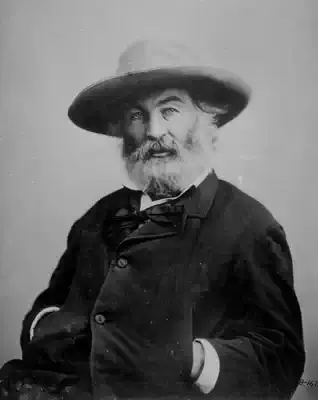
Walt Whitman
Manhattan Streets I Saunter'd, Pondering
Manhattan Streets I Saunter'd, Pondering
MANHATTAN'S streets I saunter'd, pondering,
On time, space, reality--on such as these, and abreast with them,
prudence.
After all, the last explanation remains to be made about prudence;
Little and large alike drop quietly aside from the prudence that
suits immortality.
The Soul is of itself;
All verges to it--all has reference to what ensues;
All that a person does, says, thinks, is of consequence;
Not a move can a man or woman make, that affects him or her in a day,
month, any part of the direct life-time, or the hour of death,
but the same affects him or her onward afterward through the
indirect life-time.
The indirect is just as much as the direct,
The spirit receives from the body just as much as it gives to the
body, if not more. 10
Not one word or deed--not venereal sore, discoloration, privacy of
the onanist, putridity of gluttons or rum-drinkers, peculation,
cunning, betrayal, murder, seduction, prostitution, but has
results beyond death, as really as before death.
Charity and personal force are the only investments worth anything.
No specification is necessary--all that a male or female does, that
is vigorous, benevolent, clean, is so much profit to him or
her, in the unshakable order of the universe, and through the
whole scope of it forever.
Who has been wise, receives interest,
Savage, felon, President, judge, farmer, sailor, mechanic, literat,
young, old, it is the same,
The interest will come round--all will come round.
Singly, wholly, to affect now, affected their time, will forever
affect all of the past, and all of the present, and all of the
future,
All the brave actions of war and peace,
All help given to relatives, strangers, the poor, old, sorrowful,
young children, widows, the sick, and to shunn'd persons,
All furtherance of fugitives, and of the escape of slaves, 20
All self-denial that stood steady and aloof on wrecks, and saw others
fill the seats of the boats,
All offering of substance or life for the good old cause, or for a
friend's sake, or opinion's sake,
All pains of enthusiasts, scoff'd at by their neighbors,
All the limitless sweet love and precious suffering of mothers,
All honest men baffled in strifes recorded or unrecorded,
All the grandeur and good of ancient nations whose fragments we
inherit,
All the good of the dozens of ancient nations unknown to us by name,
date, location,
All that was ever manfully begun, whether it succeeded or no,
All suggestions of the divine mind of man, or the divinity of his
mouth, or the shaping of his great hands;
All that is well thought or said this day on any part of the globe-or
on any of the wandering stars, or on any of the fix'd stars,
by those there as we are here; 30
All that is henceforth to be thought or done by you, whoever you are,
or by any one;
These inure, have inured, shall inure, to the identities from which
they sprang, or shall spring.
Did you guess anything lived only its moment?
The world does not so exist--no parts palpable or impalpable so
exist;
No consummation exists without being from some long previous
consummation--and that from some other,
Without the farthest conceivable one coming a bit nearer the
beginning than any.
Whatever satisfies Souls is true;
Prudence entirely satisfies the craving and glut of Souls;
Itself only finally satisfies the Soul;
The Soul has that measureless pride which revolts from every lesson
but its own. 40
Now I give you an inkling;
Now I breathe the word of the prudence that walks abreast with time,
space, reality,
That answers the pride which refuses every lesson but its own.
What is prudence, is indivisible,
Declines to separate one part of life from every part,
Divides not the righteous from the unrighteous, or the living from
the dead,
Matches every thought or act by its correlative,
Knows no possible forgiveness, or deputed atonement,
Knows that the young man who composedly peril'd his life and lost it,
has done exceedingly well for himself without doubt,
That he who never peril'd his life, but retains it to old age in
riches and ease, has probably achiev'd nothing for himself
worth mentioning; 50
Knows that only that person has really learn'd, who has learn'd to
prefer results,
Who favors Body and Soul the same,
Who perceives the indirect assuredly following the direct,
Who in his spirit in any emergency whatever neither hurries or,
avoids death.
MANHATTAN'S streets I saunter'd, pondering,
On time, space, reality--on such as these, and abreast with them,
prudence.
After all, the last explanation remains to be made about prudence;
Little and large alike drop quietly aside from the prudence that
suits immortality.
The Soul is of itself;
All verges to it--all has reference to what ensues;
All that a person does, says, thinks, is of consequence;
Not a move can a man or woman make, that affects him or her in a day,
month, any part of the direct life-time, or the hour of death,
but the same affects him or her onward afterward through the
indirect life-time.
The indirect is just as much as the direct,
The spirit receives from the body just as much as it gives to the
body, if not more. 10
Not one word or deed--not venereal sore, discoloration, privacy of
the onanist, putridity of gluttons or rum-drinkers, peculation,
cunning, betrayal, murder, seduction, prostitution, but has
results beyond death, as really as before death.
Charity and personal force are the only investments worth anything.
No specification is necessary--all that a male or female does, that
is vigorous, benevolent, clean, is so much profit to him or
her, in the unshakable order of the universe, and through the
whole scope of it forever.
Who has been wise, receives interest,
Savage, felon, President, judge, farmer, sailor, mechanic, literat,
young, old, it is the same,
The interest will come round--all will come round.
Singly, wholly, to affect now, affected their time, will forever
affect all of the past, and all of the present, and all of the
future,
All the brave actions of war and peace,
All help given to relatives, strangers, the poor, old, sorrowful,
young children, widows, the sick, and to shunn'd persons,
All furtherance of fugitives, and of the escape of slaves, 20
All self-denial that stood steady and aloof on wrecks, and saw others
fill the seats of the boats,
All offering of substance or life for the good old cause, or for a
friend's sake, or opinion's sake,
All pains of enthusiasts, scoff'd at by their neighbors,
All the limitless sweet love and precious suffering of mothers,
All honest men baffled in strifes recorded or unrecorded,
All the grandeur and good of ancient nations whose fragments we
inherit,
All the good of the dozens of ancient nations unknown to us by name,
date, location,
All that was ever manfully begun, whether it succeeded or no,
All suggestions of the divine mind of man, or the divinity of his
mouth, or the shaping of his great hands;
All that is well thought or said this day on any part of the globe-or
on any of the wandering stars, or on any of the fix'd stars,
by those there as we are here; 30
All that is henceforth to be thought or done by you, whoever you are,
or by any one;
These inure, have inured, shall inure, to the identities from which
they sprang, or shall spring.
Did you guess anything lived only its moment?
The world does not so exist--no parts palpable or impalpable so
exist;
No consummation exists without being from some long previous
consummation--and that from some other,
Without the farthest conceivable one coming a bit nearer the
beginning than any.
Whatever satisfies Souls is true;
Prudence entirely satisfies the craving and glut of Souls;
Itself only finally satisfies the Soul;
The Soul has that measureless pride which revolts from every lesson
but its own. 40
Now I give you an inkling;
Now I breathe the word of the prudence that walks abreast with time,
space, reality,
That answers the pride which refuses every lesson but its own.
What is prudence, is indivisible,
Declines to separate one part of life from every part,
Divides not the righteous from the unrighteous, or the living from
the dead,
Matches every thought or act by its correlative,
Knows no possible forgiveness, or deputed atonement,
Knows that the young man who composedly peril'd his life and lost it,
has done exceedingly well for himself without doubt,
That he who never peril'd his life, but retains it to old age in
riches and ease, has probably achiev'd nothing for himself
worth mentioning; 50
Knows that only that person has really learn'd, who has learn'd to
prefer results,
Who favors Body and Soul the same,
Who perceives the indirect assuredly following the direct,
Who in his spirit in any emergency whatever neither hurries or,
avoids death.
368
Walt Whitman
Kosmos
Kosmos
WHO includes diversity, and is Nature,
Who is the amplitude of the earth, and the coarseness and sexuality
of the earth, and the great charity of the earth, and the
equilibrium also,
Who has not look'd forth from the windows, the eyes, for nothing, or
whose brain held audience with messengers for nothing;
Who contains believers and disbelievers--Who is the most majestic
lover;
Who holds duly his or her triune proportion of realism, spiritualism,
and of the aesthetic, or intellectual,
Who, having consider'd the Body, finds all its organs and parts good;
Who, out of the theory of the earth, and of his or her body,
understands by subtle analogies all other theories,
The theory of a city, a poem, and of the large politics of These
States;
Who believes not only in our globe, with its sun and moon, but in
other globes, with their suns and moons;
Who, constructing the house of himself or herself, not for a day, but
for all time, sees races, eras, dates, generations, 10
The past, the future, dwelling there, like space, inseparable
together.
WHO includes diversity, and is Nature,
Who is the amplitude of the earth, and the coarseness and sexuality
of the earth, and the great charity of the earth, and the
equilibrium also,
Who has not look'd forth from the windows, the eyes, for nothing, or
whose brain held audience with messengers for nothing;
Who contains believers and disbelievers--Who is the most majestic
lover;
Who holds duly his or her triune proportion of realism, spiritualism,
and of the aesthetic, or intellectual,
Who, having consider'd the Body, finds all its organs and parts good;
Who, out of the theory of the earth, and of his or her body,
understands by subtle analogies all other theories,
The theory of a city, a poem, and of the large politics of These
States;
Who believes not only in our globe, with its sun and moon, but in
other globes, with their suns and moons;
Who, constructing the house of himself or herself, not for a day, but
for all time, sees races, eras, dates, generations, 10
The past, the future, dwelling there, like space, inseparable
together.
621
Walt Whitman
I Was Looking A Long While
I Was Looking A Long While
I WAS looking a long while for a clue to the history of the past for
myself, and for these chants--and now I have found it;
It is not in those paged fables in the libraries, (them I neither
accept nor reject;)
It is no more in the legends than in all else;
It is in the present--it is this earth to-day;
It is in Democracy--(the purport and aim of all the past;)
It is the life of one man or one woman to-day--the average man of
to-day;
It is in languages, social customs, literatures, arts;
It is in the broad show of artificial things, ships, machinery,
politics, creeds, modern improvements, and the interchange of
nations,
All for the average man of to-day.
I WAS looking a long while for a clue to the history of the past for
myself, and for these chants--and now I have found it;
It is not in those paged fables in the libraries, (them I neither
accept nor reject;)
It is no more in the legends than in all else;
It is in the present--it is this earth to-day;
It is in Democracy--(the purport and aim of all the past;)
It is the life of one man or one woman to-day--the average man of
to-day;
It is in languages, social customs, literatures, arts;
It is in the broad show of artificial things, ships, machinery,
politics, creeds, modern improvements, and the interchange of
nations,
All for the average man of to-day.
434
Walt Whitman
I Sit And Look Out
I Sit And Look Out
I SIT and look out upon all the sorrows of the world, and upon all
oppression and shame;
I hear secret convulsive sobs from young men, at anguish with
themselves, remorseful after deeds done;
I see, in low life, the mother misused by her children, dying,
neglected, gaunt, desperate;
I see the wife misused by her husband--I see the treacherous seducer
of young women;
I mark the ranklings of jealousy and unrequited love, attempted to be
hid--I see these sights on the earth;
I see the workings of battle, pestilence, tyranny--I see martyrs and
prisoners;
I observe a famine at sea--I observe the sailors casting lots who
shall be kill'd, to preserve the lives of the rest;
I observe the slights and degradations cast by arrogant persons upon
laborers, the poor, and upon negroes, and the like;
All these--All the meanness and agony without end, I sitting, look
out upon,
See, hear, and am silent. 10
I SIT and look out upon all the sorrows of the world, and upon all
oppression and shame;
I hear secret convulsive sobs from young men, at anguish with
themselves, remorseful after deeds done;
I see, in low life, the mother misused by her children, dying,
neglected, gaunt, desperate;
I see the wife misused by her husband--I see the treacherous seducer
of young women;
I mark the ranklings of jealousy and unrequited love, attempted to be
hid--I see these sights on the earth;
I see the workings of battle, pestilence, tyranny--I see martyrs and
prisoners;
I observe a famine at sea--I observe the sailors casting lots who
shall be kill'd, to preserve the lives of the rest;
I observe the slights and degradations cast by arrogant persons upon
laborers, the poor, and upon negroes, and the like;
All these--All the meanness and agony without end, I sitting, look
out upon,
See, hear, and am silent. 10
610
Walt Whitman
Ethiopia Saluting The Colors
Ethiopia Saluting The Colors
WHO are you, dusky woman, so ancient, hardly human,
With your woolly-white and turban'd head, and bare bony feet?
Why, rising by the roadside here, do you the colors greet?
('Tis while our army lines Carolina's sand and pines,
Forth from thy hovel door, thou, Ethiopia, com'st to me,
As, under doughty Sherman, I march toward the sea.)
Me, master, years a hundred, since from my parents sunder'd,
A little child, they caught me as the savage beast is caught;
Then hither me, across the sea, the cruel slaver brought.
No further does she say, but lingering all the day, 10
Her high-borne turban'd head she wags, and rolls her darkling eye,
And curtseys to the regiments, the guidons moving by.
What is it, fateful woman--so blear, hardly human?
Why wag your head, with turban bound--yellow, red and green?
Are the things so strange and marvelous, you see or have seen?
WHO are you, dusky woman, so ancient, hardly human,
With your woolly-white and turban'd head, and bare bony feet?
Why, rising by the roadside here, do you the colors greet?
('Tis while our army lines Carolina's sand and pines,
Forth from thy hovel door, thou, Ethiopia, com'st to me,
As, under doughty Sherman, I march toward the sea.)
Me, master, years a hundred, since from my parents sunder'd,
A little child, they caught me as the savage beast is caught;
Then hither me, across the sea, the cruel slaver brought.
No further does she say, but lingering all the day, 10
Her high-borne turban'd head she wags, and rolls her darkling eye,
And curtseys to the regiments, the guidons moving by.
What is it, fateful woman--so blear, hardly human?
Why wag your head, with turban bound--yellow, red and green?
Are the things so strange and marvelous, you see or have seen?
403
Walt Whitman
Carol Of Occupations
Carol Of Occupations
COME closer to me;
Push close, my lovers, and take the best I possess;
Yield closer and closer, and give me the best you possess.
This is unfinish'd business with me--How is it with you?
(I was chill'd with the cold types, cylinder, wet paper between us.)
Male and Female!
I pass so poorly with paper and types, I must pass with the contact
of bodies and souls.
American masses!
I do not thank you for liking me as I am, and liking the touch of
me--I know that it is good for you to do so.
This is the carol of occupations; 10
In the labor of engines and trades, and the labor of fields, I find the developments,
And find the eternal meanings.
Workmen and Workwomen!
Were all educations, practical and ornamental, well display'd out of
me, what would it amount to?
Were I as the head teacher, charitable proprietor, wise statesman,
what would it amount to?
Were I to you as the boss employing and paying you, would that
satisfy you?
The learn'd, virtuous, benevolent, and the usual terms;
A man like me, and never the usual terms.
Neither a servant nor a master am I;
I take no sooner a large price than a small price--I will have my
own, whoever enjoys me; 20
I will be even with you, and you shall be even with me.
If you stand at work in a shop, I stand as nigh as the nighest in the
same shop;
If you bestow gifts on your brother or dearest friend, I demand as
good as your brother or dearest friend;
If your lover, husband, wife, is welcome by day or night, I must be
personally as welcome;
If you become degraded, criminal, ill, then I become so for your
sake;
If you remember your foolish and outlaw'd deeds, do you think I
cannot remember my own foolish and outlaw'd deeds?
If you carouse at the table, I carouse at the opposite side of the
table;
If you meet some stranger in the streets, and love him or her--why I
often meet strangers in the street, and love them.
Why, what have you thought of yourself?
Is it you then that thought yourself less? 30
Is it you that thought the President greater than you?
Or the rich better off than you? or the educated wiser than you?
Because you are greasy or pimpled, or that you were once drunk, or a
thief,
Or diseas'd, or rheumatic, or a prostitute--or are so now;
Or from frivolity or impotence, or that you are no scholar, and never
saw your name in print,
Do you give in that you are any less immortal?
Souls of men and women! it is not you I call unseen, unheard,
untouchable and untouching;
It is not you I go argue pro and con about, and to settle whether you
are alive or no;
I own publicly who you are, if nobody else owns.
Grown, half-grown, and babe, of this country and every country, indoors
and out-doors, one just as much as the other, I see, 40
And all else behind or through them.
The wife--and she is not one jot less than the husband;
The daughter--and she is just as good as the son;
The mother--and she is every bit as much as the father.
Offspring of ignorant and poor, boys apprenticed to trades,
Young fellows working on farms, and old fellows working on farms,
Sailor-men, merchant-men, coasters, immigrants,
All these I see--but nigher and farther the same I see;
None shall escape me, and none shall wish to escape me.
I bring what you much need, yet always have, 50
Not money, amours, dress, eating, but as good;
I send no agent or medium, offer no representative of value, but
offer the value itself.
There is something that comes home to one now and perpetually;
It is not what is printed, preach'd, discussed--it eludes discussion
and print;
It is not to be put in a book--it is not in this book;
It is for you, whoever you are--it is no farther from you than your
hearing and sight are from you;
It is hinted by nearest, commonest, readiest--it is ever provoked by
them.
You may read in many languages, yet read nothing about it;
You may read the President's Message, and read nothing about it
there;
Nothing in the reports from the State department or Treasury
department, or in the daily papers or the weekly papers, 60
Or in the census or revenue returns, prices current, or any accounts
of stock.
The sun and stars that float in the open air;
The apple-shaped earth, and we upon it--surely the drift of them is
something grand!
I do not know what it is, except that it is grand, and that it is
happiness,
And that the enclosing purport of us here is not a speculation, or
bon-mot, or reconnoissance,
And that it is not something which by luck may turn out well for us,
and without luck must be a failure for us,
And not something which may yet be retracted in a certain
contingency.
The light and shade, the curious sense of body and identity, the
greed that with perfect complaisance devours all things, the
endless pride and out-stretching of man, unspeakable joys and
sorrows,
The wonder every one sees in every one else he sees, and the wonders
that fill each minute of time forever,
What have you reckon'd them for, camerado? 70
Have you reckon'd them for a trade, or farm-work? or for the profits
of a store?
Or to achieve yourself a position? or to fill a gentleman's leisure,
or a lady's leisure?
Have you reckon'd the landscape took substance and form that it might
be painted in a picture?
Or men and women that they might be written of, and songs sung?
Or the attraction of gravity, and the great laws and harmonious
combinations, and the fluids of the air, as subjects for the
savans?
Or the brown land and the blue sea for maps and charts?
Or the stars to be put in constellations and named fancy names?
Or that the growth of seeds is for agricultural tables, or
agriculture itself?
Old institutions--these arts, libraries, legends, collections, and
the practice handed along in manufactures--will we rate them so
high?
Will we rate our cash and business high?--I have no objection; 80
I rate them as high as the highest--then a child born of a woman and
man I rate beyond all rate.
We thought our Union grand, and our Constitution grand;
I do not say they are not grand and good, for they are;
I am this day just as much in love with them as you;
Then I am in love with you, and with all my fellows upon the earth.
We consider bibles and religions divine--I do not say they are not
divine;
I say they have all grown out of you, and may grow out of you still;
It is not they who give the life--it is you who give the life;
Leaves are not more shed from the trees, or trees from the earth,
than they are shed out of you.
When the psalm sings instead of the singer; 90
When the script preaches instead of the preacher;
When the pulpit descends and goes, instead of the carver that carved
the supporting desk;
When I can touch the body of books, by night or by day, and when they
touch my body back again;
When a university course convinces, like a slumbering woman and child
convince;
When the minted gold in the vault smiles like the night-watchman's
daughter;
When warrantee deeds loafe in chairs opposite, and are my friendly
companions;
I intend to reach them my hand, and make as much of them as I do of
men and women like you.
The sum of all known reverence I add up in you, whoever you are;
The President is there in the White House for you--it is not you who
are here for him;
The Secretaries act in their bureaus for you--not you here for
them; 100
The Congress convenes every Twelfth-month for you;
Laws, courts, the forming of States, the charters of cities, the
going and coming of commerce and mails, are all for you.
List close, my scholars dear!
All doctrines, all politics and civilization, exurge from you;
All sculpture and monuments, and anything inscribed anywhere, are
tallied in you;
The gist of histories and statistics as far back as the records
reach, is in you this hour, and myths and tales the same;
If you were not breathing and walking here, where would they all be?
The most renown'd poems would be ashes, orations and plays would be
vacuums.
All architecture is what you do to it when you look upon it;
(Did you think it was in the white or gray stone? or the lines of the
arches and cornices?) 110
All music is what awakes from you when you are reminded by the
instruments;
It is not the violins and the cornets--it is not the oboe nor the
beating drums, nor the score of the baritone singer singing
his sweet romanza--nor that of the men's chorus, nor that of
the women's chorus,
It is nearer and farther than they.
Will the whole come back then?
Can each see signs of the best by a look in the looking-glass? is
there nothing greater or more?
Does all sit there with you, with the mystic, unseen Soul?
Strange and hard that paradox true I give;
Objects gross and the unseen Soul are one.
House-building, measuring, sawing the boards;
Blacksmithing, glass-blowing, nail-making, coopering, tin-roofing,
shingle-dressing, 120
Ship-joining, dock-building, fish-curing, ferrying, flagging of sidewalks
by flaggers,
The pump, the pile-driver, the great derrick, the coal-kiln and
brick-kiln,
Coal-mines, and all that is down there,--the lamps in the darkness,
echoes, songs, what meditations, what vast native thoughts
looking through smutch'd faces,
Iron-works, forge-fires in the mountains, or by the river-banks--men
around feeling the melt with huge crowbars--lumps of ore, the
due combining of ore, limestone, coal--the blast-furnace and
the puddling-furnace, the loup-lump at the bottom of the melt
at last--the rolling-mill, the stumpy bars of pig-iron, the
strong, clean-shaped T-rail for railroads;
Oil-works, silk-works, white-lead-works, the sugar-house, steam-saws,
the great mills and factories;
Stone-cutting, shapely trimmings for façades, or window or doorlintels--
the mallet, the tooth-chisel, the jib to protect the
thumb,
Oakum, the oakum-chisel, the caulking-iron--the kettle of boiling
vault-cement, and the fire under the kettle,
The cotton-bale, the stevedore's hook, the saw and buck of the
sawyer, the mould of the moulder, the working-knife of the
butcher, the ice-saw, and all the work with ice,
The implements for daguerreotyping--the tools of the rigger,
grappler, sail-maker, block-maker,
Goods of gutta-percha, papier-maché, colors, brushes, brush-making,
glazier's implements, 130
O you robust, sacred!
I cannot tell you how I love you;
All I love America for, is contained in men and women like you.
The veneer and glue-pot, the confectioner's ornaments, the decanter
and glasses, the shears and flat-iron,
The awl and knee-strap, the pint measure and quart measure, the
counter and stool, the writing-pen of quill or metal--the
making of all sorts of edged tools,
The brewery, brewing, the malt, the vats, every thing that is done by
brewers, also by wine-makers, also vinegar-makers,
Leather-dressing, coach-making, boiler-making, rope-twisting,
distilling, sign-painting, lime-burning, cotton-picking-electro-
plating, electrotyping, stereotyping,
Stave-machines, planing-machines, reaping-machines, ploughing
machines, thrashing-machines, steam wagons,
The cart of the carman, the omnibus, the ponderous dray;
Pyrotechny, letting off color'd fire-works at night, fancy figures
and jets;
Beef on the butcher's stall, the slaughter-house of the butcher, the
butcher in his killing-clothes,
The pens of live pork, the killing-hammer, the hog-hook, the
scalder's tub, gutting, the cutter's cleaver, the packer's
maul, and the plenteous winter-work of pork-packing;
Flour-works, grinding of wheat, rye, maize, rice--the barrels and the
half and quarter barrels, the loaded barges, the high piles on
wharves and levees; 140
The men, and the work of the men, on railroads, coasters, fish-boats,
canals;
The daily routine of your own or any man's life--the shop, yard,
store, or factory;
These shows all near you by day and night--workman! whoever you are,
your daily life!
In that and them the heft of the heaviest--in them far more than you
estimated, and far less also;
In them realities for you and me--in them poems for you and me;
In them, not yourself--you and your Soul enclose all things,
regardless of estimation;
In them the development good--in them, all themes and hints.
I do not affirm what you see beyond is futile--I do not advise you to
stop;
I do not say leadings you thought great are not great;
But I say that none lead to greater, than those lead to. 150
Will you seek afar off? you surely come back at last,
In things best known to you, finding the best, or as good as the
best,
In folks nearest to you finding the sweetest, strongest, lovingest;
Happiness, knowledge, not in another place, but this place--not for
another hour, but this hour;
Man in the first you see or touch--always in friend, brother, nighest
neighbor--Woman in mother, lover, wife;
The popular tastes and employments taking precedence in poems or any
where,
You workwomen and workmen of These States having your own divine and
strong life,
And all else giving place to men and women like you.
COME closer to me;
Push close, my lovers, and take the best I possess;
Yield closer and closer, and give me the best you possess.
This is unfinish'd business with me--How is it with you?
(I was chill'd with the cold types, cylinder, wet paper between us.)
Male and Female!
I pass so poorly with paper and types, I must pass with the contact
of bodies and souls.
American masses!
I do not thank you for liking me as I am, and liking the touch of
me--I know that it is good for you to do so.
This is the carol of occupations; 10
In the labor of engines and trades, and the labor of fields, I find the developments,
And find the eternal meanings.
Workmen and Workwomen!
Were all educations, practical and ornamental, well display'd out of
me, what would it amount to?
Were I as the head teacher, charitable proprietor, wise statesman,
what would it amount to?
Were I to you as the boss employing and paying you, would that
satisfy you?
The learn'd, virtuous, benevolent, and the usual terms;
A man like me, and never the usual terms.
Neither a servant nor a master am I;
I take no sooner a large price than a small price--I will have my
own, whoever enjoys me; 20
I will be even with you, and you shall be even with me.
If you stand at work in a shop, I stand as nigh as the nighest in the
same shop;
If you bestow gifts on your brother or dearest friend, I demand as
good as your brother or dearest friend;
If your lover, husband, wife, is welcome by day or night, I must be
personally as welcome;
If you become degraded, criminal, ill, then I become so for your
sake;
If you remember your foolish and outlaw'd deeds, do you think I
cannot remember my own foolish and outlaw'd deeds?
If you carouse at the table, I carouse at the opposite side of the
table;
If you meet some stranger in the streets, and love him or her--why I
often meet strangers in the street, and love them.
Why, what have you thought of yourself?
Is it you then that thought yourself less? 30
Is it you that thought the President greater than you?
Or the rich better off than you? or the educated wiser than you?
Because you are greasy or pimpled, or that you were once drunk, or a
thief,
Or diseas'd, or rheumatic, or a prostitute--or are so now;
Or from frivolity or impotence, or that you are no scholar, and never
saw your name in print,
Do you give in that you are any less immortal?
Souls of men and women! it is not you I call unseen, unheard,
untouchable and untouching;
It is not you I go argue pro and con about, and to settle whether you
are alive or no;
I own publicly who you are, if nobody else owns.
Grown, half-grown, and babe, of this country and every country, indoors
and out-doors, one just as much as the other, I see, 40
And all else behind or through them.
The wife--and she is not one jot less than the husband;
The daughter--and she is just as good as the son;
The mother--and she is every bit as much as the father.
Offspring of ignorant and poor, boys apprenticed to trades,
Young fellows working on farms, and old fellows working on farms,
Sailor-men, merchant-men, coasters, immigrants,
All these I see--but nigher and farther the same I see;
None shall escape me, and none shall wish to escape me.
I bring what you much need, yet always have, 50
Not money, amours, dress, eating, but as good;
I send no agent or medium, offer no representative of value, but
offer the value itself.
There is something that comes home to one now and perpetually;
It is not what is printed, preach'd, discussed--it eludes discussion
and print;
It is not to be put in a book--it is not in this book;
It is for you, whoever you are--it is no farther from you than your
hearing and sight are from you;
It is hinted by nearest, commonest, readiest--it is ever provoked by
them.
You may read in many languages, yet read nothing about it;
You may read the President's Message, and read nothing about it
there;
Nothing in the reports from the State department or Treasury
department, or in the daily papers or the weekly papers, 60
Or in the census or revenue returns, prices current, or any accounts
of stock.
The sun and stars that float in the open air;
The apple-shaped earth, and we upon it--surely the drift of them is
something grand!
I do not know what it is, except that it is grand, and that it is
happiness,
And that the enclosing purport of us here is not a speculation, or
bon-mot, or reconnoissance,
And that it is not something which by luck may turn out well for us,
and without luck must be a failure for us,
And not something which may yet be retracted in a certain
contingency.
The light and shade, the curious sense of body and identity, the
greed that with perfect complaisance devours all things, the
endless pride and out-stretching of man, unspeakable joys and
sorrows,
The wonder every one sees in every one else he sees, and the wonders
that fill each minute of time forever,
What have you reckon'd them for, camerado? 70
Have you reckon'd them for a trade, or farm-work? or for the profits
of a store?
Or to achieve yourself a position? or to fill a gentleman's leisure,
or a lady's leisure?
Have you reckon'd the landscape took substance and form that it might
be painted in a picture?
Or men and women that they might be written of, and songs sung?
Or the attraction of gravity, and the great laws and harmonious
combinations, and the fluids of the air, as subjects for the
savans?
Or the brown land and the blue sea for maps and charts?
Or the stars to be put in constellations and named fancy names?
Or that the growth of seeds is for agricultural tables, or
agriculture itself?
Old institutions--these arts, libraries, legends, collections, and
the practice handed along in manufactures--will we rate them so
high?
Will we rate our cash and business high?--I have no objection; 80
I rate them as high as the highest--then a child born of a woman and
man I rate beyond all rate.
We thought our Union grand, and our Constitution grand;
I do not say they are not grand and good, for they are;
I am this day just as much in love with them as you;
Then I am in love with you, and with all my fellows upon the earth.
We consider bibles and religions divine--I do not say they are not
divine;
I say they have all grown out of you, and may grow out of you still;
It is not they who give the life--it is you who give the life;
Leaves are not more shed from the trees, or trees from the earth,
than they are shed out of you.
When the psalm sings instead of the singer; 90
When the script preaches instead of the preacher;
When the pulpit descends and goes, instead of the carver that carved
the supporting desk;
When I can touch the body of books, by night or by day, and when they
touch my body back again;
When a university course convinces, like a slumbering woman and child
convince;
When the minted gold in the vault smiles like the night-watchman's
daughter;
When warrantee deeds loafe in chairs opposite, and are my friendly
companions;
I intend to reach them my hand, and make as much of them as I do of
men and women like you.
The sum of all known reverence I add up in you, whoever you are;
The President is there in the White House for you--it is not you who
are here for him;
The Secretaries act in their bureaus for you--not you here for
them; 100
The Congress convenes every Twelfth-month for you;
Laws, courts, the forming of States, the charters of cities, the
going and coming of commerce and mails, are all for you.
List close, my scholars dear!
All doctrines, all politics and civilization, exurge from you;
All sculpture and monuments, and anything inscribed anywhere, are
tallied in you;
The gist of histories and statistics as far back as the records
reach, is in you this hour, and myths and tales the same;
If you were not breathing and walking here, where would they all be?
The most renown'd poems would be ashes, orations and plays would be
vacuums.
All architecture is what you do to it when you look upon it;
(Did you think it was in the white or gray stone? or the lines of the
arches and cornices?) 110
All music is what awakes from you when you are reminded by the
instruments;
It is not the violins and the cornets--it is not the oboe nor the
beating drums, nor the score of the baritone singer singing
his sweet romanza--nor that of the men's chorus, nor that of
the women's chorus,
It is nearer and farther than they.
Will the whole come back then?
Can each see signs of the best by a look in the looking-glass? is
there nothing greater or more?
Does all sit there with you, with the mystic, unseen Soul?
Strange and hard that paradox true I give;
Objects gross and the unseen Soul are one.
House-building, measuring, sawing the boards;
Blacksmithing, glass-blowing, nail-making, coopering, tin-roofing,
shingle-dressing, 120
Ship-joining, dock-building, fish-curing, ferrying, flagging of sidewalks
by flaggers,
The pump, the pile-driver, the great derrick, the coal-kiln and
brick-kiln,
Coal-mines, and all that is down there,--the lamps in the darkness,
echoes, songs, what meditations, what vast native thoughts
looking through smutch'd faces,
Iron-works, forge-fires in the mountains, or by the river-banks--men
around feeling the melt with huge crowbars--lumps of ore, the
due combining of ore, limestone, coal--the blast-furnace and
the puddling-furnace, the loup-lump at the bottom of the melt
at last--the rolling-mill, the stumpy bars of pig-iron, the
strong, clean-shaped T-rail for railroads;
Oil-works, silk-works, white-lead-works, the sugar-house, steam-saws,
the great mills and factories;
Stone-cutting, shapely trimmings for façades, or window or doorlintels--
the mallet, the tooth-chisel, the jib to protect the
thumb,
Oakum, the oakum-chisel, the caulking-iron--the kettle of boiling
vault-cement, and the fire under the kettle,
The cotton-bale, the stevedore's hook, the saw and buck of the
sawyer, the mould of the moulder, the working-knife of the
butcher, the ice-saw, and all the work with ice,
The implements for daguerreotyping--the tools of the rigger,
grappler, sail-maker, block-maker,
Goods of gutta-percha, papier-maché, colors, brushes, brush-making,
glazier's implements, 130
O you robust, sacred!
I cannot tell you how I love you;
All I love America for, is contained in men and women like you.
The veneer and glue-pot, the confectioner's ornaments, the decanter
and glasses, the shears and flat-iron,
The awl and knee-strap, the pint measure and quart measure, the
counter and stool, the writing-pen of quill or metal--the
making of all sorts of edged tools,
The brewery, brewing, the malt, the vats, every thing that is done by
brewers, also by wine-makers, also vinegar-makers,
Leather-dressing, coach-making, boiler-making, rope-twisting,
distilling, sign-painting, lime-burning, cotton-picking-electro-
plating, electrotyping, stereotyping,
Stave-machines, planing-machines, reaping-machines, ploughing
machines, thrashing-machines, steam wagons,
The cart of the carman, the omnibus, the ponderous dray;
Pyrotechny, letting off color'd fire-works at night, fancy figures
and jets;
Beef on the butcher's stall, the slaughter-house of the butcher, the
butcher in his killing-clothes,
The pens of live pork, the killing-hammer, the hog-hook, the
scalder's tub, gutting, the cutter's cleaver, the packer's
maul, and the plenteous winter-work of pork-packing;
Flour-works, grinding of wheat, rye, maize, rice--the barrels and the
half and quarter barrels, the loaded barges, the high piles on
wharves and levees; 140
The men, and the work of the men, on railroads, coasters, fish-boats,
canals;
The daily routine of your own or any man's life--the shop, yard,
store, or factory;
These shows all near you by day and night--workman! whoever you are,
your daily life!
In that and them the heft of the heaviest--in them far more than you
estimated, and far less also;
In them realities for you and me--in them poems for you and me;
In them, not yourself--you and your Soul enclose all things,
regardless of estimation;
In them the development good--in them, all themes and hints.
I do not affirm what you see beyond is futile--I do not advise you to
stop;
I do not say leadings you thought great are not great;
But I say that none lead to greater, than those lead to. 150
Will you seek afar off? you surely come back at last,
In things best known to you, finding the best, or as good as the
best,
In folks nearest to you finding the sweetest, strongest, lovingest;
Happiness, knowledge, not in another place, but this place--not for
another hour, but this hour;
Man in the first you see or touch--always in friend, brother, nighest
neighbor--Woman in mother, lover, wife;
The popular tastes and employments taking precedence in poems or any
where,
You workwomen and workmen of These States having your own divine and
strong life,
And all else giving place to men and women like you.
496
Walt Whitman
Behold This Swarthy Face
Behold This Swarthy Face
BEHOLD this swarthy face--these gray eyes,
This beard--the white wool, unclipt upon my neck,
My brown hands, and the silent manner of me, without charm;
Yet comes one, a Manhattanese, and ever at parting, kisses me lightly
on the lips with robust love,
And I, on the crossing of the street, or on the ship's deck, give a
kiss in return;
We observe that salute of American comrades, land and sea,
We are those two natural and nonchalant persons.
BEHOLD this swarthy face--these gray eyes,
This beard--the white wool, unclipt upon my neck,
My brown hands, and the silent manner of me, without charm;
Yet comes one, a Manhattanese, and ever at parting, kisses me lightly
on the lips with robust love,
And I, on the crossing of the street, or on the ship's deck, give a
kiss in return;
We observe that salute of American comrades, land and sea,
We are those two natural and nonchalant persons.
451
Walt Whitman
As I Walk These Broad, Majestic Days
As I Walk These Broad, Majestic Days
AS I walk these broad, majestic days of peace,
(For the war, the struggle of blood finish'd, wherein, O terrific
Ideal!
Against vast odds, having gloriously won,
Now thou stridest on--yet perhaps in time toward denser wars,
Perhaps to engage in time in still more dreadful contests, dangers,
Longer campaigns and crises, labors beyond all others;
--As I walk solitary, unattended,
Around me I hear that eclat of the world--politics, produce,
The announcements of recognized things--science,
The approved growth of cities, and the spread of inventions. 10
I see the ships, (they will last a few years,)
The vast factories, with their foremen and workmen,
And here the indorsement of all, and do not object to it.
But I too announce solid things;
Science, ships, politics, cities, factories, are not nothing--I watch
them,
Like a grand procession, to music of distant bugles, pouring,
triumphantly moving--and grander heaving in sight;
They stand for realities--all is as it should be.
Then my realities;
What else is so real as mine?
Libertad, and the divine average--Freedom to every slave on the face
of the earth, 20
The rapt promises and luminé of seers--the spiritual world--these
centuries lasting songs,
And our visions, the visions of poets, the most solid announcements
of any.
For we support all, fuse all,
After the rest is done and gone, we remain;
There is no final reliance but upon us;
Democracy rests finally upon us (I, my brethren, begin it,)
And our visions sweep through eternity.
AS I walk these broad, majestic days of peace,
(For the war, the struggle of blood finish'd, wherein, O terrific
Ideal!
Against vast odds, having gloriously won,
Now thou stridest on--yet perhaps in time toward denser wars,
Perhaps to engage in time in still more dreadful contests, dangers,
Longer campaigns and crises, labors beyond all others;
--As I walk solitary, unattended,
Around me I hear that eclat of the world--politics, produce,
The announcements of recognized things--science,
The approved growth of cities, and the spread of inventions. 10
I see the ships, (they will last a few years,)
The vast factories, with their foremen and workmen,
And here the indorsement of all, and do not object to it.
But I too announce solid things;
Science, ships, politics, cities, factories, are not nothing--I watch
them,
Like a grand procession, to music of distant bugles, pouring,
triumphantly moving--and grander heaving in sight;
They stand for realities--all is as it should be.
Then my realities;
What else is so real as mine?
Libertad, and the divine average--Freedom to every slave on the face
of the earth, 20
The rapt promises and luminé of seers--the spiritual world--these
centuries lasting songs,
And our visions, the visions of poets, the most solid announcements
of any.
For we support all, fuse all,
After the rest is done and gone, we remain;
There is no final reliance but upon us;
Democracy rests finally upon us (I, my brethren, begin it,)
And our visions sweep through eternity.
430
Walt Whitman
A Sight In Camp
A Sight In Camp
A SIGHT in camp in the day-break grey and dim,
As from my tent I emerge so early, sleepless,
As slow I walk in the cool fresh air, the path near by the hospital
tent,
Three forms I see on stretchers lying, brought out there, untended
lying,
Over each the blanket spread, ample brownish woollen blanket,
Grey and heavy blanket, folding, covering all.
Curious, I halt, and silent stand;
Then with light fingers I from the face of the nearest, the first,
just lift the blanket:
Who are you, elderly man so gaunt and grim, with well-grey'd hair,
and flesh all sunken about the eyes?
Who are you, my dear comrade? 10
Then to the second I step--And who are you, my child and darling?
Who are you, sweet boy, with cheeks yet blooming?
Then to the third--a face nor child, nor old, very calm, as of
beautiful yellow-white ivory;
Young man, I think I know you--I think this face of yours is the face
of the Christ himself;
Dead and divine, and brother of all, and here again he lies.
A SIGHT in camp in the day-break grey and dim,
As from my tent I emerge so early, sleepless,
As slow I walk in the cool fresh air, the path near by the hospital
tent,
Three forms I see on stretchers lying, brought out there, untended
lying,
Over each the blanket spread, ample brownish woollen blanket,
Grey and heavy blanket, folding, covering all.
Curious, I halt, and silent stand;
Then with light fingers I from the face of the nearest, the first,
just lift the blanket:
Who are you, elderly man so gaunt and grim, with well-grey'd hair,
and flesh all sunken about the eyes?
Who are you, my dear comrade? 10
Then to the second I step--And who are you, my child and darling?
Who are you, sweet boy, with cheeks yet blooming?
Then to the third--a face nor child, nor old, very calm, as of
beautiful yellow-white ivory;
Young man, I think I know you--I think this face of yours is the face
of the Christ himself;
Dead and divine, and brother of all, and here again he lies.
480
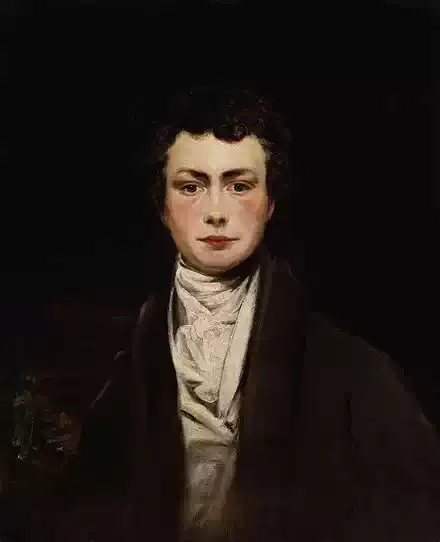
Thomas Moore
Come, Send Round the Wine
Come, Send Round the Wine
Come, send round the wine, and leave points of belief
To simpleton sages and reasoning fools;
This moment's a flower too fair and brief
To be wither'd and stain'd by the dust of the schools.
Your glass may be purple, and mine may be blue,
But, while they are fill'd from the same bright bowl,
The fool who would quarrel for difference of hue,
Deserves not the comfort they shed o'er the soul.
Shall I ask the brave soldier, who fights by my side
In the cause of mankind, if our creeds agree?
Shall I give up the friend I have valued and tried,
If he kneel not before the same altar with me?
From the heretic girl of my soul should I fly?
To seek somewhere else a more orthodox kiss?
No, perish the hearts, and the laws that try
Truth, valour, or love, by a standard like this!
Come, send round the wine, and leave points of belief
To simpleton sages and reasoning fools;
This moment's a flower too fair and brief
To be wither'd and stain'd by the dust of the schools.
Your glass may be purple, and mine may be blue,
But, while they are fill'd from the same bright bowl,
The fool who would quarrel for difference of hue,
Deserves not the comfort they shed o'er the soul.
Shall I ask the brave soldier, who fights by my side
In the cause of mankind, if our creeds agree?
Shall I give up the friend I have valued and tried,
If he kneel not before the same altar with me?
From the heretic girl of my soul should I fly?
To seek somewhere else a more orthodox kiss?
No, perish the hearts, and the laws that try
Truth, valour, or love, by a standard like this!
172
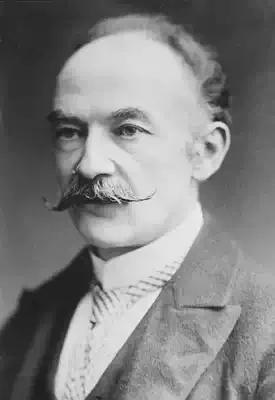
Thomas Hardy
The Souls of the Slain
The Souls of the Slain
I
The thick lids of Night closed upon me
Alone at the Bill
Of the Isle by the Race {} -
Many-caverned, bald, wrinkled of face -
And with darkness and silence the spirit was on me
To brood and be still.
II
No wind fanned the flats of the ocean,
Or promontory sides,
Or the ooze by the strand,
Or the bent-bearded slope of the land,
Whose base took its rest amid everlong motion
Of criss-crossing tides.
III
Soon from out of the Southward seemed nearing
A whirr, as of wings
Waved by mighty-vanned flies,
Or by night-moths of measureless size,
And in softness and smoothness well-nigh beyond hearing
Of corporal things.
IV
And they bore to the bluff, and alighted -
A dim-discerned train
Of sprites without mould,
Frameless souls none might touch or might hold -
On the ledge by the turreted lantern, farsighted
By men of the main.
V
And I heard them say "Home!" and I knew them
For souls of the felled
On the earth's nether bord
Under Capricorn, whither they'd warred,
And I neared in my awe, and gave heedfulness to them
With breathings inheld.
VI
Then, it seemed, there approached from the northward
A senior soul-flame
Of the like filmy hue:
And he met them and spake: "Is it you,
O my men?" Said they, "Aye! We bear homeward and hearthward
To list to our fame!"
VII
"I've flown there before you," he said then:
"Your households are well;
But--your kin linger less
On your glory arid war-mightiness
Than on dearer things."--"Dearer?" cried these from the dead then,
"Of what do they tell?"
VIII
"Some mothers muse sadly, and murmur
Your doings as boys -
Recall the quaint ways
Of your babyhood's innocent days.
Some pray that, ere dying, your faith had grown firmer,
And higher your joys.
IX
"A father broods: 'Would I had set him
To some humble trade,
And so slacked his high fire,
And his passionate martial desire;
Had told him no stories to woo him and whet him
To this due crusade!"
X
"And, General, how hold out our sweethearts,
Sworn loyal as doves?"
--"Many mourn; many think
It is not unattractive to prink
Them in sables for heroes. Some fickle and fleet hearts
Have found them new loves."
XI
"And our wives?" quoth another resignedly,
"Dwell they on our deeds?"
--"Deeds of home; that live yet
Fresh as new--deeds of fondness or fret;
Ancient words that were kindly expressed or unkindly,
These, these have their heeds."
XII
--"Alas! then it seems that our glory
Weighs less in their thought
Than our old homely acts,
And the long-ago commonplace facts
Of our lives--held by us as scarce part of our story,
And rated as nought!"
XIII
Then bitterly some: "Was it wise now
To raise the tomb-door
For such knowledge? Away!"
But the rest: "Fame we prized till to-day;
Yet that hearts keep us green for old kindness we prize now
A thousand times more!"
XIV
Thus speaking, the trooped apparitions
Began to disband
And resolve them in two:
Those whose record was lovely and true
Bore to northward for home: those of bitter traditions
Again left the land,
XV
And, towering to seaward in legions,
They paused at a spot
Overbending the Race -
That engulphing, ghast, sinister place -
Whither headlong they plunged, to the fathomless regions
Of myriads forgot.
XVI
And the spirits of those who were homing
Passed on, rushingly,
Like the Pentecost Wind;
And the whirr of their wayfaring thinned
And surceased on the sky, and but left in the gloaming
Sea-mutterings and me.
I
The thick lids of Night closed upon me
Alone at the Bill
Of the Isle by the Race {} -
Many-caverned, bald, wrinkled of face -
And with darkness and silence the spirit was on me
To brood and be still.
II
No wind fanned the flats of the ocean,
Or promontory sides,
Or the ooze by the strand,
Or the bent-bearded slope of the land,
Whose base took its rest amid everlong motion
Of criss-crossing tides.
III
Soon from out of the Southward seemed nearing
A whirr, as of wings
Waved by mighty-vanned flies,
Or by night-moths of measureless size,
And in softness and smoothness well-nigh beyond hearing
Of corporal things.
IV
And they bore to the bluff, and alighted -
A dim-discerned train
Of sprites without mould,
Frameless souls none might touch or might hold -
On the ledge by the turreted lantern, farsighted
By men of the main.
V
And I heard them say "Home!" and I knew them
For souls of the felled
On the earth's nether bord
Under Capricorn, whither they'd warred,
And I neared in my awe, and gave heedfulness to them
With breathings inheld.
VI
Then, it seemed, there approached from the northward
A senior soul-flame
Of the like filmy hue:
And he met them and spake: "Is it you,
O my men?" Said they, "Aye! We bear homeward and hearthward
To list to our fame!"
VII
"I've flown there before you," he said then:
"Your households are well;
But--your kin linger less
On your glory arid war-mightiness
Than on dearer things."--"Dearer?" cried these from the dead then,
"Of what do they tell?"
VIII
"Some mothers muse sadly, and murmur
Your doings as boys -
Recall the quaint ways
Of your babyhood's innocent days.
Some pray that, ere dying, your faith had grown firmer,
And higher your joys.
IX
"A father broods: 'Would I had set him
To some humble trade,
And so slacked his high fire,
And his passionate martial desire;
Had told him no stories to woo him and whet him
To this due crusade!"
X
"And, General, how hold out our sweethearts,
Sworn loyal as doves?"
--"Many mourn; many think
It is not unattractive to prink
Them in sables for heroes. Some fickle and fleet hearts
Have found them new loves."
XI
"And our wives?" quoth another resignedly,
"Dwell they on our deeds?"
--"Deeds of home; that live yet
Fresh as new--deeds of fondness or fret;
Ancient words that were kindly expressed or unkindly,
These, these have their heeds."
XII
--"Alas! then it seems that our glory
Weighs less in their thought
Than our old homely acts,
And the long-ago commonplace facts
Of our lives--held by us as scarce part of our story,
And rated as nought!"
XIII
Then bitterly some: "Was it wise now
To raise the tomb-door
For such knowledge? Away!"
But the rest: "Fame we prized till to-day;
Yet that hearts keep us green for old kindness we prize now
A thousand times more!"
XIV
Thus speaking, the trooped apparitions
Began to disband
And resolve them in two:
Those whose record was lovely and true
Bore to northward for home: those of bitter traditions
Again left the land,
XV
And, towering to seaward in legions,
They paused at a spot
Overbending the Race -
That engulphing, ghast, sinister place -
Whither headlong they plunged, to the fathomless regions
Of myriads forgot.
XVI
And the spirits of those who were homing
Passed on, rushingly,
Like the Pentecost Wind;
And the whirr of their wayfaring thinned
And surceased on the sky, and but left in the gloaming
Sea-mutterings and me.
244
Thomas Hardy
In a Wood
In a Wood
In a Wood
Pale beech and pine-tree blue,
Set in one clay,
Bough to bough cannot you
Bide out your day?
When the rains skim and skip,
Why mar sweet comradeship,
Blighting with poison-drip
Neighborly spray?
Heart-halt and spirit-lame,
City-opprest,
Unto this wood I came
As to a nest;
Dreaming that sylvan peace
Offered the harrowed ease—
Nature a soft release
From men’s unrest.
But, having entered in,
Great growths and small
Show them to men akin—
Combatants all!
Sycamore shoulders oak,
Bines the slim sapling yoke,
Ivy-spun halters choke
Elms stout and tall.
Touches from ash, O wych,
Sting you like scorn!
You, too, brave hollies, twitch
Sidelong from thorn.
Even the rank poplars bear
Illy a rival’s air,
Cankering in black despair
If overborne.
Since, then, no grace I find
Taught me of trees,
Turn I back to my kind,
Worthy as these.
There at least smiles abound,
There discourse trills around,
There, now and then, are found
Life-loyalties.
In a Wood
Pale beech and pine-tree blue,
Set in one clay,
Bough to bough cannot you
Bide out your day?
When the rains skim and skip,
Why mar sweet comradeship,
Blighting with poison-drip
Neighborly spray?
Heart-halt and spirit-lame,
City-opprest,
Unto this wood I came
As to a nest;
Dreaming that sylvan peace
Offered the harrowed ease—
Nature a soft release
From men’s unrest.
But, having entered in,
Great growths and small
Show them to men akin—
Combatants all!
Sycamore shoulders oak,
Bines the slim sapling yoke,
Ivy-spun halters choke
Elms stout and tall.
Touches from ash, O wych,
Sting you like scorn!
You, too, brave hollies, twitch
Sidelong from thorn.
Even the rank poplars bear
Illy a rival’s air,
Cankering in black despair
If overborne.
Since, then, no grace I find
Taught me of trees,
Turn I back to my kind,
Worthy as these.
There at least smiles abound,
There discourse trills around,
There, now and then, are found
Life-loyalties.
249
Thomas Hardy
God-Forgotten
God-Forgotten
I towered far, and lo! I stood within
The presence of the Lord Most High,
Sent thither by the sons of earth, to win
Some answer to their cry.
--"The Earth, say'st thou? The Human race?
By Me created? Sad its lot?
Nay: I have no remembrance of such place:
Such world I fashioned not." -
--"O Lord, forgive me when I say
Thou spak'st the word, and mad'st it all." -
"The Earth of men--let me bethink me . . . Yea!
I dimly do recall
"Some tiny sphere I built long back
(Mid millions of such shapes of mine)
So named . . . It perished, surely--not a wrack
Remaining, or a sign?
"It lost my interest from the first,
My aims therefor succeeding ill;
Haply it died of doing as it durst?" -
"Lord, it existeth still." -
"Dark, then, its life! For not a cry
Of aught it bears do I now hear;
Of its own act the threads were snapt whereby
Its plaints had reached mine ear.
"It used to ask for gifts of good,
Till came its severance self-entailed,
When sudden silence on that side ensued,
And has till now prevailed.
"All other orbs have kept in touch;
Their voicings reach me speedily:
Thy people took upon them overmuch
In sundering them from me!
"And it is strange--though sad enough -
Earth's race should think that one whose call
Frames, daily, shining spheres of flawless stuff
Must heed their tainted ball! . . .
"But say'st thou 'tis by pangs distraught,
And strife, and silent suffering? -
Deep grieved am I that injury should be wrought
Even on so poor a thing!
"Thou should'st have learnt that Not to Mend
For Me could mean but Not to Know:
Hence, Messengers! and straightway put an end
To what men undergo." . . .
Homing at dawn, I thought to see
One of the Messengers standing by.
- Oh, childish thought! . . . Yet oft it comes to me
When trouble hovers nigh.
I towered far, and lo! I stood within
The presence of the Lord Most High,
Sent thither by the sons of earth, to win
Some answer to their cry.
--"The Earth, say'st thou? The Human race?
By Me created? Sad its lot?
Nay: I have no remembrance of such place:
Such world I fashioned not." -
--"O Lord, forgive me when I say
Thou spak'st the word, and mad'st it all." -
"The Earth of men--let me bethink me . . . Yea!
I dimly do recall
"Some tiny sphere I built long back
(Mid millions of such shapes of mine)
So named . . . It perished, surely--not a wrack
Remaining, or a sign?
"It lost my interest from the first,
My aims therefor succeeding ill;
Haply it died of doing as it durst?" -
"Lord, it existeth still." -
"Dark, then, its life! For not a cry
Of aught it bears do I now hear;
Of its own act the threads were snapt whereby
Its plaints had reached mine ear.
"It used to ask for gifts of good,
Till came its severance self-entailed,
When sudden silence on that side ensued,
And has till now prevailed.
"All other orbs have kept in touch;
Their voicings reach me speedily:
Thy people took upon them overmuch
In sundering them from me!
"And it is strange--though sad enough -
Earth's race should think that one whose call
Frames, daily, shining spheres of flawless stuff
Must heed their tainted ball! . . .
"But say'st thou 'tis by pangs distraught,
And strife, and silent suffering? -
Deep grieved am I that injury should be wrought
Even on so poor a thing!
"Thou should'st have learnt that Not to Mend
For Me could mean but Not to Know:
Hence, Messengers! and straightway put an end
To what men undergo." . . .
Homing at dawn, I thought to see
One of the Messengers standing by.
- Oh, childish thought! . . . Yet oft it comes to me
When trouble hovers nigh.
323
Thomas Hardy
Fragment
Fragment
At last I entered a long dark gallery,
Catacomb-lined; and ranged at the side
Were the bodies of men from far and wide
Who, motion past, were nevertheless not dead.
"The sense of waiting here strikes strong;
Everyone's waiting, waiting, it seems to me;
What are you waiting for so long? --
What is to happen?" I said.
"O we are waiting for one called God," said they,
"(Though by some the Will, or Force, or Laws;
And, vaguely, by some, the Ultimate Cause;)
Waiting for him to see us before we are clay.
Yes; waiting, waiting, for God to know it." ...
"To know what?" questioned I.
"To know how things have been going on earth and below it:
It is clear he must know some day."
I thereon asked them why.
"Since he made us humble pioneers
Of himself in consciousness of Life's tears,
It needs no mighty prophecy
To tell that what he could mindlessly show
His creatures, he himself will know.
"By some still close-cowled mystery
We have reached feeling faster than he,
But he will overtake us anon,
If the world goes on."
At last I entered a long dark gallery,
Catacomb-lined; and ranged at the side
Were the bodies of men from far and wide
Who, motion past, were nevertheless not dead.
"The sense of waiting here strikes strong;
Everyone's waiting, waiting, it seems to me;
What are you waiting for so long? --
What is to happen?" I said.
"O we are waiting for one called God," said they,
"(Though by some the Will, or Force, or Laws;
And, vaguely, by some, the Ultimate Cause;)
Waiting for him to see us before we are clay.
Yes; waiting, waiting, for God to know it." ...
"To know what?" questioned I.
"To know how things have been going on earth and below it:
It is clear he must know some day."
I thereon asked them why.
"Since he made us humble pioneers
Of himself in consciousness of Life's tears,
It needs no mighty prophecy
To tell that what he could mindlessly show
His creatures, he himself will know.
"By some still close-cowled mystery
We have reached feeling faster than he,
But he will overtake us anon,
If the world goes on."
240
Thomas Hardy
At a Lunar Eclipse
At a Lunar Eclipse
Thy shadow, Earth, from Pole to Central Sea,
Now steals along upon the Moon's meek shine
In even monochrome and curving line
Of imperturbable serenity.
How shall I link such sun-cast symmetry
With the torn troubled form I know as thine,
That profile, placid as a brow divine,
With continents of moil and misery?
And can immense Mortality but throw
So small a shade, and Heaven's high human scheme
Be hemmed within the coasts yon arc implies?
Is such the stellar gauge of earthly show,
Nation at war with nation, brains that teem,
Heroes, and women fairer than the skies?
Thy shadow, Earth, from Pole to Central Sea,
Now steals along upon the Moon's meek shine
In even monochrome and curving line
Of imperturbable serenity.
How shall I link such sun-cast symmetry
With the torn troubled form I know as thine,
That profile, placid as a brow divine,
With continents of moil and misery?
And can immense Mortality but throw
So small a shade, and Heaven's high human scheme
Be hemmed within the coasts yon arc implies?
Is such the stellar gauge of earthly show,
Nation at war with nation, brains that teem,
Heroes, and women fairer than the skies?
219

Siegfried Sassoon
Enemies
Enemies
He stood alone in some queer sunless place
Where Armageddon ends. Perhaps he longed
For days he might have lived; but his young face
Gazed forth untroubled: and suddenly there thronged
Round him the hulking Germans that I shot
When for his death my brooding rage was hot.
He stared at them, half-wondering; and then
They told him how I’d killed them for his sake—
Those patient, stupid, sullen ghosts of men;
And still there seemed no answer he could make.
At last he turned and smiled. One took his hand
Because his face could make them understand.
He stood alone in some queer sunless place
Where Armageddon ends. Perhaps he longed
For days he might have lived; but his young face
Gazed forth untroubled: and suddenly there thronged
Round him the hulking Germans that I shot
When for his death my brooding rage was hot.
He stared at them, half-wondering; and then
They told him how I’d killed them for his sake—
Those patient, stupid, sullen ghosts of men;
And still there seemed no answer he could make.
At last he turned and smiled. One took his hand
Because his face could make them understand.
96

Sarah Teasdale
The Voice
The Voice
Atoms as old as stars,
Mutation on mutation,
Millions and millions of cells
Dividing yet still the same,
From air and changing earth,
From ancient Eastern rivers,
From turquoise tropic seas,
Unto myself I came.
My spirit like my flesh
Sprang from a thousand sources,
From cave-man, hunter and shepherd,
From Karnak, Cyprus, Rome;
The living thoughts in me
Spring from dead men and women,
Forgotten time out of mind
And many as bubbles of foam.
Here for a moment's space
Into the light out of darkness,
I come and they come with me
Finding words with my breath;
From the wisdom of many life-times
Seek for Beauty, she only
Fights with man against Death!"
Atoms as old as stars,
Mutation on mutation,
Millions and millions of cells
Dividing yet still the same,
From air and changing earth,
From ancient Eastern rivers,
From turquoise tropic seas,
Unto myself I came.
My spirit like my flesh
Sprang from a thousand sources,
From cave-man, hunter and shepherd,
From Karnak, Cyprus, Rome;
The living thoughts in me
Spring from dead men and women,
Forgotten time out of mind
And many as bubbles of foam.
Here for a moment's space
Into the light out of darkness,
I come and they come with me
Finding words with my breath;
From the wisdom of many life-times
Seek for Beauty, she only
Fights with man against Death!"
439
Sarah Teasdale
Lights
Lights
When we come home at night and close the door,
Standing together in the shadowy room,
Safe in our own love and the gentle gloom,
Glad of familiar wall and chair and floor,
Glad to leave far below the clanging city;
Looking far downward to the glaring street
Gaudy with light, yet tired with many feet,
In both of us wells up a wordless pity;
Men have tried hard to put away the dark;
A million lighted windows brilliantly
Inlay with squares of gold the winter night,
But to us standing here there comes the stark
Sense of the lives behind each yellow light,
And not one wholly joyous, proud, or free.
When we come home at night and close the door,
Standing together in the shadowy room,
Safe in our own love and the gentle gloom,
Glad of familiar wall and chair and floor,
Glad to leave far below the clanging city;
Looking far downward to the glaring street
Gaudy with light, yet tired with many feet,
In both of us wells up a wordless pity;
Men have tried hard to put away the dark;
A million lighted windows brilliantly
Inlay with squares of gold the winter night,
But to us standing here there comes the stark
Sense of the lives behind each yellow light,
And not one wholly joyous, proud, or free.
448
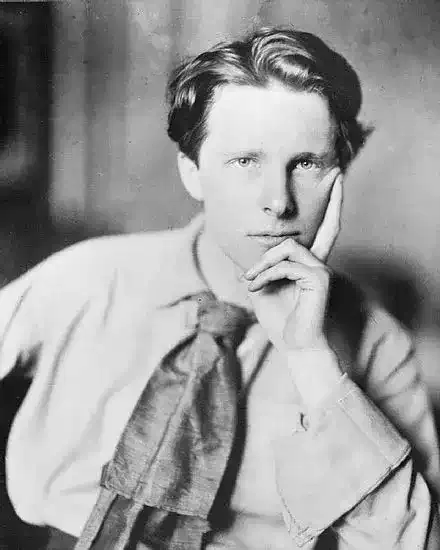
Rupert Brooke
The Dead
The Dead
Blow out, you bugles, over the rich Dead!
There's none of these so lonely and poor of old,
But, dying, has made us rarer gifts than gold.
These laid the world away; poured out the red
Sweet wine of youth; gave up the years to be
Of work and joy, and that unhoped serene,
That men call age; and those who would have been,
Their sons, they gave, their immortality.
Blow, bugles, blow! They brought us, for our dearth,
Holiness, lacked so long, and Love, and Pain.
Honour has come back, as a king, to earth,
And paid his subjects with a royal wage;
And Nobleness walks in our ways again;
And we have come into our heritage.
Blow out, you bugles, over the rich Dead!
There's none of these so lonely and poor of old,
But, dying, has made us rarer gifts than gold.
These laid the world away; poured out the red
Sweet wine of youth; gave up the years to be
Of work and joy, and that unhoped serene,
That men call age; and those who would have been,
Their sons, they gave, their immortality.
Blow, bugles, blow! They brought us, for our dearth,
Holiness, lacked so long, and Love, and Pain.
Honour has come back, as a king, to earth,
And paid his subjects with a royal wage;
And Nobleness walks in our ways again;
And we have come into our heritage.
190
Rupert Brooke
III. The Dead
III. The Dead
Blow out, you bugles, over the rich Dead!
There's none of these so lonely and poor of old,
But, dying, has made us rarer gifts than gold.
These laid the world away; poured out the red
Sweet wine of youth; gave up the years to be
Of work and joy, and that unhoped serene,
That men call age; and those who would have been,
Their sons, they gave, their immortality.
Blow, bugles, blow! They brought us, for our dearth,
Holiness, lacked so long, and Love, and Pain.
Honour has come back, as a king, to earth,
And paid his subjects with a royal wage;
And Nobleness walks in our ways again;
And we have come into our heritage.
Blow out, you bugles, over the rich Dead!
There's none of these so lonely and poor of old,
But, dying, has made us rarer gifts than gold.
These laid the world away; poured out the red
Sweet wine of youth; gave up the years to be
Of work and joy, and that unhoped serene,
That men call age; and those who would have been,
Their sons, they gave, their immortality.
Blow, bugles, blow! They brought us, for our dearth,
Holiness, lacked so long, and Love, and Pain.
Honour has come back, as a king, to earth,
And paid his subjects with a royal wage;
And Nobleness walks in our ways again;
And we have come into our heritage.
219
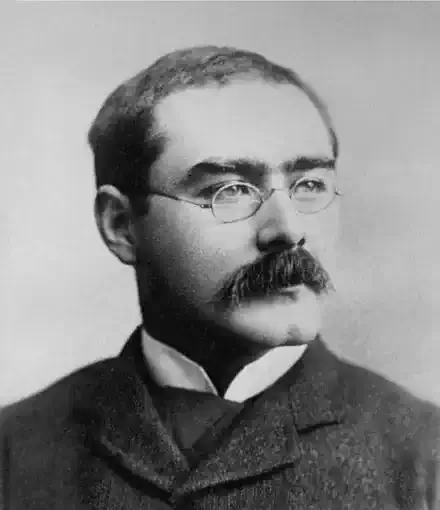
Rudyard Kipling
The Sons of Martha
The Sons of Martha
The Sons of Mary seldom bother, for they have inherited that good part;
But the Sons of Martha favour their Mother of the careful soul and the troubled heart.
And because she lost her temper once, and because she was rude to the Lord her
Guest,
Her Sons must wait upon Mary's Sons, world without end, reprieve, or rest.
It is their care in all the ages to take the buffet and cushion the shock.
It is their care that the gear engages; it is their care that the switches lock.
It is their care that the wheels run truly; it is their care to embark and entrain,
Tally, transport, and deliver duly the Sons of Mary by land and main.
They say to mountains ``Be ye removèd.'' They say to the lesser floods ``Be dry.''
Under their rods are the rocks reprovèd---they are not afraid of that which is high.
Then do the hill-tops shake to the summit---then is the bed of the deep laid bare,
That the Sons of Mary may overcome it, pleasantly sleeping and unaware.
They finger Death at their gloves' end where they piece and repiece the living wires.
He rears against the gates they tend: they feed him hungry behind their fires.
Early at dawn, ere men see clear, they stumble into his terrible stall,
And hale him forth like a haltered steer, and goad and turn him till evenfall.
To these from birth is Belief forbidden; from these till death is Relief afar.
They are concerned with matters hidden---under the earthline their altars are---
The secret fountains to follow up, waters withdrawn to restore to the mouth,
And gather the floods as in a cup, and pour them again at a city's drouth.
They do not preach that their God will rouse them a little before the nuts work loose.
They do not preach that His Pity allows them to drop their job when they damn-well
choose.
As in the thronged and the lighted ways, so in the dark and the desert they stand,
Wary and watchful all their days that their brethren's ways may be long in the land.
Raise ye the stone or cleave the wood to make a path more fair or flat;
Lo, it is black already with the blood some Son of Martha spilled for that!
Not as a ladder from earth to Heaven, not as a witness to any creed,
But simple service simply given to his own kind in their common need.
And the Sons of Mary smile and are blessèd---they know the Angels are on their side.
They know in them is the Grace confessèd, and for them are the Mercies multiplied.
They sit at the feet---they hear the Word---they see how truly the Promise runs.
They have cast their burden upon the Lord, and---the Lord He lays it on Martha's Sons!
The Sons of Mary seldom bother, for they have inherited that good part;
But the Sons of Martha favour their Mother of the careful soul and the troubled heart.
And because she lost her temper once, and because she was rude to the Lord her
Guest,
Her Sons must wait upon Mary's Sons, world without end, reprieve, or rest.
It is their care in all the ages to take the buffet and cushion the shock.
It is their care that the gear engages; it is their care that the switches lock.
It is their care that the wheels run truly; it is their care to embark and entrain,
Tally, transport, and deliver duly the Sons of Mary by land and main.
They say to mountains ``Be ye removèd.'' They say to the lesser floods ``Be dry.''
Under their rods are the rocks reprovèd---they are not afraid of that which is high.
Then do the hill-tops shake to the summit---then is the bed of the deep laid bare,
That the Sons of Mary may overcome it, pleasantly sleeping and unaware.
They finger Death at their gloves' end where they piece and repiece the living wires.
He rears against the gates they tend: they feed him hungry behind their fires.
Early at dawn, ere men see clear, they stumble into his terrible stall,
And hale him forth like a haltered steer, and goad and turn him till evenfall.
To these from birth is Belief forbidden; from these till death is Relief afar.
They are concerned with matters hidden---under the earthline their altars are---
The secret fountains to follow up, waters withdrawn to restore to the mouth,
And gather the floods as in a cup, and pour them again at a city's drouth.
They do not preach that their God will rouse them a little before the nuts work loose.
They do not preach that His Pity allows them to drop their job when they damn-well
choose.
As in the thronged and the lighted ways, so in the dark and the desert they stand,
Wary and watchful all their days that their brethren's ways may be long in the land.
Raise ye the stone or cleave the wood to make a path more fair or flat;
Lo, it is black already with the blood some Son of Martha spilled for that!
Not as a ladder from earth to Heaven, not as a witness to any creed,
But simple service simply given to his own kind in their common need.
And the Sons of Mary smile and are blessèd---they know the Angels are on their side.
They know in them is the Grace confessèd, and for them are the Mercies multiplied.
They sit at the feet---they hear the Word---they see how truly the Promise runs.
They have cast their burden upon the Lord, and---the Lord He lays it on Martha's Sons!
716
Rudyard Kipling
The Song of the Women
The Song of the Women
How shall she know the worship we would do her?
The walls are high, and she is very far.
How shall the woman's message reach unto her
Above the tumult of the packed bazaar?
Free wind of March, against the lattice blowing,
Bear thou our thanks, lest she depart unknowing.
Go forth across the fields we may not roam in,
Go forth beyond the trees that rim the city,
To whatsoe'er fair place she hath her home in,
Who dowered us with walth of love and pity.
Out of our shadow pass, and seek her singing --
"I have no gifts but Love alone for bringing."
Say that we be a feeble folk who greet her,
But old in grief, and very wise in tears;
Say that we, being desolate, entreat her
That she forget us not in after years;
For we have seen the light, and it were grievous
To dim that dawning if our lady leave us.
By life that ebbed with none to stanch the failing
By Love's sad harvest garnered in the spring,
When Love in ignorance wept unavailing
O'er young buds dead before their blossoming;
By all the grey owl watched, the pale moon viewed,
In past grim years, declare our gratitude!
By hands uplifted to the Gods that heard not,
By fits that found no favor in their sight,
By faces bent above the babe that stirred not,
By nameless horrors of the stifling night;
By ills foredone, by peace her toils discover,
Bid Earth be good beneath and Heaven above her!
If she have sent her servants in our pain
If she have fought with Death and dulled his sword;
If she have given back our sick again.
And to the breast the wakling lips restored,
Is it a little thing that she has wrought?
Then Life and Death and Motherhood be nought.
Go forth, O wind, our message on thy wings,
And they shall hear thee pass and bid thee speed,
In reed-roofed hut, or white-walled home of kings,
Who have been helpen by ther in their need.
All spring shall give thee fragrance, and the wheat
Shall be a tasselled floorcloth to thy feet.
Haste, for our hearts are with thee, take no rest!
Loud-voiced ambassador, from sea to sea
Proclaim the blessing, mainfold, confessed.
Of those in darkness by her hand set free.
Then very softly to her presence move,
And whisper: "Lady, lo, they know and love!"
How shall she know the worship we would do her?
The walls are high, and she is very far.
How shall the woman's message reach unto her
Above the tumult of the packed bazaar?
Free wind of March, against the lattice blowing,
Bear thou our thanks, lest she depart unknowing.
Go forth across the fields we may not roam in,
Go forth beyond the trees that rim the city,
To whatsoe'er fair place she hath her home in,
Who dowered us with walth of love and pity.
Out of our shadow pass, and seek her singing --
"I have no gifts but Love alone for bringing."
Say that we be a feeble folk who greet her,
But old in grief, and very wise in tears;
Say that we, being desolate, entreat her
That she forget us not in after years;
For we have seen the light, and it were grievous
To dim that dawning if our lady leave us.
By life that ebbed with none to stanch the failing
By Love's sad harvest garnered in the spring,
When Love in ignorance wept unavailing
O'er young buds dead before their blossoming;
By all the grey owl watched, the pale moon viewed,
In past grim years, declare our gratitude!
By hands uplifted to the Gods that heard not,
By fits that found no favor in their sight,
By faces bent above the babe that stirred not,
By nameless horrors of the stifling night;
By ills foredone, by peace her toils discover,
Bid Earth be good beneath and Heaven above her!
If she have sent her servants in our pain
If she have fought with Death and dulled his sword;
If she have given back our sick again.
And to the breast the wakling lips restored,
Is it a little thing that she has wrought?
Then Life and Death and Motherhood be nought.
Go forth, O wind, our message on thy wings,
And they shall hear thee pass and bid thee speed,
In reed-roofed hut, or white-walled home of kings,
Who have been helpen by ther in their need.
All spring shall give thee fragrance, and the wheat
Shall be a tasselled floorcloth to thy feet.
Haste, for our hearts are with thee, take no rest!
Loud-voiced ambassador, from sea to sea
Proclaim the blessing, mainfold, confessed.
Of those in darkness by her hand set free.
Then very softly to her presence move,
And whisper: "Lady, lo, they know and love!"
422
Rudyard Kipling
The Miracle of Purun Bhagat
The Miracle of Purun Bhagat
The night we felt the earth would move
We stole and plucked him by the hand,
Because we loved him with the love
That knows but cannot understand.
And when the roaring hillside broke,
And all our world fell down in rain,
We saved him, we the Little Folk;
But lo! he does not come again!
Mourn now, we saved him for the sake
Of such poor love as wild ones may.
Mourn ye! Our brother will not wake,
And his own kind drive us away!
The night we felt the earth would move
We stole and plucked him by the hand,
Because we loved him with the love
That knows but cannot understand.
And when the roaring hillside broke,
And all our world fell down in rain,
We saved him, we the Little Folk;
But lo! he does not come again!
Mourn now, we saved him for the sake
Of such poor love as wild ones may.
Mourn ye! Our brother will not wake,
And his own kind drive us away!
409
Rudyard Kipling
The Legend of Mirth
The Legend of Mirth
The Four Archangels, so the legends tell,
Raphael, Gabriel, Michael, Azrael,
Being first of those to whom the Power was shown
Stood first of all the Host before The Throne,
And, when the Charges were allotted, burst
Tumultuous-winged from out the assembly first.
Zeal was their spur that bade them strictly heed
Their own high judgment on their lightest deed.
Zeal was their spur that, when relief was given,
Urged them unwearied to new toils in Heaven;
For Honour's sake perfecting every task
Beyond what e 'en Perfection's self could ask. . .
And Allah, Who created Zeal and Pride,
Knows how the twain are perilous-near allied.
It chanced on one of Heaven's long-lighted days,
The Four and all the Host being gone their ways
Each to his Charge, the shining Courts were void
Save for one Seraph whom no charge employed,
With folden wings and slumber-threatened brow,
To whom The Word: "Beloved, what dost thou?"
"By the Permission," came the answer soft,
Little I do nor do that little oft.
As is The Will in Heaven so on Earth
Where by The Will I strive to make men mirth"
He ceased and sped, hearing The Word once more:
" Beloved, go thy way and greet the Four."
Systems and Universes overpast,
The Seraph came upon the Four, at last,
Guiding and guarding with devoted mind
The tedious generations of mankind
Who lent at most unwilling ear and eye
When they could not escape the ministry. . . .
Yet, patient, faithful, firm, persistent, just
Toward all that gross, indifferent, facile dust,
The Archangels laboured to discharge their trust
By precept and example, prayer and law,
Advice, reproof, and rule, but, labouring, saw
Each in his fellows' countenance confessed,
The Doubt that sickens: "Have I done my best?"
Even as they sighed and turned to toil anew,
The Seraph hailed them with observance due;
And, after some fit talk of higher things,
Touched tentative on mundane happenings.
This they permitting, he, emboldened thus,
Prolused of humankind promiscuous,
And, since the large contention less avails
Than instances observed, he told them tales--
Tales of the shop, the bed, the court, the street,
Intimate, elemental, indiscreet:
Occasions where Confusion smiting swift
Piles jest on jest as snow-slides pile the drift
Whence, one by one, beneath derisive skies,
The victims' bare, bewildered heads arise--
Tales of the passing of the spirit, graced
With humour blinding as the doom it faced--
Stark tales of ribaldy that broke aside
To tears, by laughter swallowed ere they dried-
Tales to which neither grace nor gain accrue,
But Only (Allah be exalted!) true,
And only, as the Seraph showed that night,
Delighting to the limits of delight.
These he rehearsed with artful pause and halt,
And such pretence of memory at fault,
That soon the Four--so well the bait was thrown--
Came to his aid with memories of their own--
Matters dismissed long since as small or vain,
Whereof the high significance had lain
Hid, till the ungirt glosses made it plain.
Then, as enlightenment came broad and fast,
Each marvelled at his own oblivious past
Until--the Gates of Laughter opened wide--
The Four, with that bland Seraph at their side,
While they recalled, compared, and amplified,
In utter mirth forgot both Zeal and Pride!
High over Heaven the lamps of midnight burned
Ere, weak with merriment, the Four returned,
Not in that order they were wont to keep--
Pinion to pinion answering, sweep for sweep,
In awful diapason heard afar--
But shoutingly adrift 'twixt star and star;
Reeling a planet's orbit left or right
As laughter took them in the abysmal Night;
Or, by the point of some remembered jest,
Winged and brought helpless down through gulfs unguessed,
Where the blank worlds that gather to the birth
Leaped in the Womb of Darkness at their mirth,
And e'en Gehenna's bondsmen understood.
They were not damned from human brotherhood . . .
Not first nor last of Heaven's high Host, the Four
That night took place beneath The Throne once more.
lovelier than their morning majesty,
The understanding light behind the eye!
more compelling than their old command,
The new-learned friendly gesture of the hand!
sweeter than their zealous fellowship,
The wise half-smile that passed from lip to lip!
well and roundly, when Command was given,
They told their tale against themselves to Heaven,
And in the silence, waiting on The Word,
Received the Peace and Pardon of The Lord!
The Four Archangels, so the legends tell,
Raphael, Gabriel, Michael, Azrael,
Being first of those to whom the Power was shown
Stood first of all the Host before The Throne,
And, when the Charges were allotted, burst
Tumultuous-winged from out the assembly first.
Zeal was their spur that bade them strictly heed
Their own high judgment on their lightest deed.
Zeal was their spur that, when relief was given,
Urged them unwearied to new toils in Heaven;
For Honour's sake perfecting every task
Beyond what e 'en Perfection's self could ask. . .
And Allah, Who created Zeal and Pride,
Knows how the twain are perilous-near allied.
It chanced on one of Heaven's long-lighted days,
The Four and all the Host being gone their ways
Each to his Charge, the shining Courts were void
Save for one Seraph whom no charge employed,
With folden wings and slumber-threatened brow,
To whom The Word: "Beloved, what dost thou?"
"By the Permission," came the answer soft,
Little I do nor do that little oft.
As is The Will in Heaven so on Earth
Where by The Will I strive to make men mirth"
He ceased and sped, hearing The Word once more:
" Beloved, go thy way and greet the Four."
Systems and Universes overpast,
The Seraph came upon the Four, at last,
Guiding and guarding with devoted mind
The tedious generations of mankind
Who lent at most unwilling ear and eye
When they could not escape the ministry. . . .
Yet, patient, faithful, firm, persistent, just
Toward all that gross, indifferent, facile dust,
The Archangels laboured to discharge their trust
By precept and example, prayer and law,
Advice, reproof, and rule, but, labouring, saw
Each in his fellows' countenance confessed,
The Doubt that sickens: "Have I done my best?"
Even as they sighed and turned to toil anew,
The Seraph hailed them with observance due;
And, after some fit talk of higher things,
Touched tentative on mundane happenings.
This they permitting, he, emboldened thus,
Prolused of humankind promiscuous,
And, since the large contention less avails
Than instances observed, he told them tales--
Tales of the shop, the bed, the court, the street,
Intimate, elemental, indiscreet:
Occasions where Confusion smiting swift
Piles jest on jest as snow-slides pile the drift
Whence, one by one, beneath derisive skies,
The victims' bare, bewildered heads arise--
Tales of the passing of the spirit, graced
With humour blinding as the doom it faced--
Stark tales of ribaldy that broke aside
To tears, by laughter swallowed ere they dried-
Tales to which neither grace nor gain accrue,
But Only (Allah be exalted!) true,
And only, as the Seraph showed that night,
Delighting to the limits of delight.
These he rehearsed with artful pause and halt,
And such pretence of memory at fault,
That soon the Four--so well the bait was thrown--
Came to his aid with memories of their own--
Matters dismissed long since as small or vain,
Whereof the high significance had lain
Hid, till the ungirt glosses made it plain.
Then, as enlightenment came broad and fast,
Each marvelled at his own oblivious past
Until--the Gates of Laughter opened wide--
The Four, with that bland Seraph at their side,
While they recalled, compared, and amplified,
In utter mirth forgot both Zeal and Pride!
High over Heaven the lamps of midnight burned
Ere, weak with merriment, the Four returned,
Not in that order they were wont to keep--
Pinion to pinion answering, sweep for sweep,
In awful diapason heard afar--
But shoutingly adrift 'twixt star and star;
Reeling a planet's orbit left or right
As laughter took them in the abysmal Night;
Or, by the point of some remembered jest,
Winged and brought helpless down through gulfs unguessed,
Where the blank worlds that gather to the birth
Leaped in the Womb of Darkness at their mirth,
And e'en Gehenna's bondsmen understood.
They were not damned from human brotherhood . . .
Not first nor last of Heaven's high Host, the Four
That night took place beneath The Throne once more.
lovelier than their morning majesty,
The understanding light behind the eye!
more compelling than their old command,
The new-learned friendly gesture of the hand!
sweeter than their zealous fellowship,
The wise half-smile that passed from lip to lip!
well and roundly, when Command was given,
They told their tale against themselves to Heaven,
And in the silence, waiting on The Word,
Received the Peace and Pardon of The Lord!
577