

Poems
War and Peace
Poems in this topic
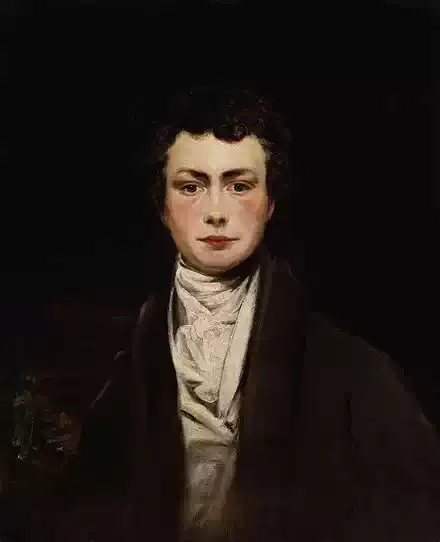
Thomas Moore
Song of the Battle Eve
Song of the Battle Eve
(Time -- the Ninth Century)
To-morrow, comrade, we
On the battle-plain must be,
There to conquer, or both lie low!
The morning star is up --
But there's wine still in the cup,
And we'll take another quaff, ere we go, boy, go;
We'll take another quaff, ere we go.
'Tis true, in manliest eyes
A passing tear will rise,
When we think of the friends we leave lone;
But what can wailing do?
See, our goblet's weeping too!
With its tears we'll chase away our own, boy, our own;
With its tears we'll chase away our own.
But daylight's stealing on;
The last that o'er us shone
Saw our children around us play;
The next -- ah! where shall we
And those rosy urchins be?
But -- no matter -- grasp thy sword and away, boy, away;
No matter -- grasp thy sword and away!
Let those, who brook the chain
Of Saxon or of Dane,
Ignobly by their fire-sides stay;
One sigh to home be given,
One heartfelt prayer to heaven,
Then, for Erin and her cause, boy, hurra! hurra! hurra!
Then, for Erin and her cause, hurra!
(Time -- the Ninth Century)
To-morrow, comrade, we
On the battle-plain must be,
There to conquer, or both lie low!
The morning star is up --
But there's wine still in the cup,
And we'll take another quaff, ere we go, boy, go;
We'll take another quaff, ere we go.
'Tis true, in manliest eyes
A passing tear will rise,
When we think of the friends we leave lone;
But what can wailing do?
See, our goblet's weeping too!
With its tears we'll chase away our own, boy, our own;
With its tears we'll chase away our own.
But daylight's stealing on;
The last that o'er us shone
Saw our children around us play;
The next -- ah! where shall we
And those rosy urchins be?
But -- no matter -- grasp thy sword and away, boy, away;
No matter -- grasp thy sword and away!
Let those, who brook the chain
Of Saxon or of Dane,
Ignobly by their fire-sides stay;
One sigh to home be given,
One heartfelt prayer to heaven,
Then, for Erin and her cause, boy, hurra! hurra! hurra!
Then, for Erin and her cause, hurra!
181
Thomas Moore
Forget Not the Field
Forget Not the Field
Forget not the field where they perish'd,
The truest, the last of the brave,
All gone -- and the bright hope we cherish'd
Gone with them, and quench'd in their grave!
Oh! could we from death but recover
Those hearts as they bounded before,
In the face of high heaven to fight over
That combat for freedom once more; --
Could the chain for an instant be riven
Which Tyranny flung round us then,
No, 'tis not in Man, nor in Heaven,
To let Tyranny bind it again!
But 'tis past -- and, though blazon'd in story
The name of our Victor may be,
Accurst is the march of that glory
Which treads o'er the hearts of the free.
For dearer the grave or the prison,
Illumed by one patriot name,
Than the trophies of all who have risen
On Liberty's ruins to fame.
Forget not the field where they perish'd,
The truest, the last of the brave,
All gone -- and the bright hope we cherish'd
Gone with them, and quench'd in their grave!
Oh! could we from death but recover
Those hearts as they bounded before,
In the face of high heaven to fight over
That combat for freedom once more; --
Could the chain for an instant be riven
Which Tyranny flung round us then,
No, 'tis not in Man, nor in Heaven,
To let Tyranny bind it again!
But 'tis past -- and, though blazon'd in story
The name of our Victor may be,
Accurst is the march of that glory
Which treads o'er the hearts of the free.
For dearer the grave or the prison,
Illumed by one patriot name,
Than the trophies of all who have risen
On Liberty's ruins to fame.
173
Thomas Moore
Avenging and Bright
Avenging and Bright
Avenging and bright fall the swift sword of Erin
On him who the brave sons of Usna betray'd! --
For every fond eye he hath waken'd a tear in
A drop from his heart-wounds shall weep o'er her blade.
By the red cloud that hung over Conor's dark dwelling,
When Ulad's three champions lay sleeping in gore --
By the billows of war, which so often, high swelling,,
Have wafted these heroes to victory's shore --
We swear to avenge them! -- no joy shall be tasted,
The harp shall be silent, the maiden unwed,
Our halls shall be mute, and our fields shall lie wasted,
Till vengeance is wreak'd on the murderer's head.
Yes, monarch! though sweet are our home recollections,
Though sweet are the tears that from tenderness fall;
Though sweet are our friendships, our hopes, our affections,
Revenge on a tyrant is sweetest of all!
Avenging and bright fall the swift sword of Erin
On him who the brave sons of Usna betray'd! --
For every fond eye he hath waken'd a tear in
A drop from his heart-wounds shall weep o'er her blade.
By the red cloud that hung over Conor's dark dwelling,
When Ulad's three champions lay sleeping in gore --
By the billows of war, which so often, high swelling,,
Have wafted these heroes to victory's shore --
We swear to avenge them! -- no joy shall be tasted,
The harp shall be silent, the maiden unwed,
Our halls shall be mute, and our fields shall lie wasted,
Till vengeance is wreak'd on the murderer's head.
Yes, monarch! though sweet are our home recollections,
Though sweet are the tears that from tenderness fall;
Though sweet are our friendships, our hopes, our affections,
Revenge on a tyrant is sweetest of all!
199
Thomas Moore
As Vanquish'd Erin
As Vanquish'd Erin
As vanquish'd Erin wept beside
The Boyne's ill-fated river,
She saw where Discord, in the tide,
Had dropp'd his loaded quiver.
"Lie hid," she cried, "ye venom'd darts,
Where mortal eye may shun you;
Lie hid -- the stain of manly hearts,
That bled for me, is on you."
But vain her wish, her weeping vain --
As Time too well hath taught her --
Each year the Fiend returns again,
And dives into that water;
And brings, triumphant, from beneath
His shafts of desolation,
And sends them, wing'd with worse than death,
Through all her maddening nation.
Alas for her who sits and mourns,
Even now, beside that river --
Unwearied still the Fiend returns,
And stored is still his quiver.
"When will this end, ye Powers of Good?"
She weeping asks for ever;
But only hears, from out that flood,
The Demon answer, "Never!"
As vanquish'd Erin wept beside
The Boyne's ill-fated river,
She saw where Discord, in the tide,
Had dropp'd his loaded quiver.
"Lie hid," she cried, "ye venom'd darts,
Where mortal eye may shun you;
Lie hid -- the stain of manly hearts,
That bled for me, is on you."
But vain her wish, her weeping vain --
As Time too well hath taught her --
Each year the Fiend returns again,
And dives into that water;
And brings, triumphant, from beneath
His shafts of desolation,
And sends them, wing'd with worse than death,
Through all her maddening nation.
Alas for her who sits and mourns,
Even now, beside that river --
Unwearied still the Fiend returns,
And stored is still his quiver.
"When will this end, ye Powers of Good?"
She weeping asks for ever;
But only hears, from out that flood,
The Demon answer, "Never!"
185
Thomas Moore
After the Battle
After the Battle
Night closed around the conqueror's way,
And lightnings show'd the distant hill,
Where those who lost that dreadful day
Stood few and faint, but fearless still.
The soldier's hope, the patriot's zeal,
For ever dimm'd, for ever crost --
Oh! who shall say what heroes feel,
When all but life and honour's lost?
The last sad hour of freedom's dream,
And valour's task, moved slowly by,
While mute they watch'd, till morning's beam
Should rise and give them light to die.
There's yet a world, where souls are free,
Where tyrants taint not nature's bliss; --
If death that world's bright opening be,
Oh! who would live a slave in this?
Night closed around the conqueror's way,
And lightnings show'd the distant hill,
Where those who lost that dreadful day
Stood few and faint, but fearless still.
The soldier's hope, the patriot's zeal,
For ever dimm'd, for ever crost --
Oh! who shall say what heroes feel,
When all but life and honour's lost?
The last sad hour of freedom's dream,
And valour's task, moved slowly by,
While mute they watch'd, till morning's beam
Should rise and give them light to die.
There's yet a world, where souls are free,
Where tyrants taint not nature's bliss; --
If death that world's bright opening be,
Oh! who would live a slave in this?
210
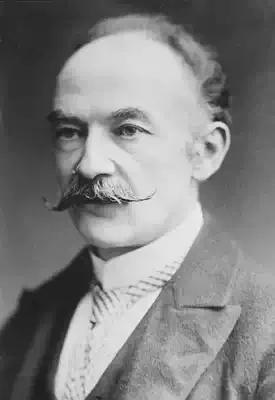
Thomas Hardy
Then and Now
Then and Now
When battles were fought
With a chivalrous sense of should and ought,
In spirit men said,
"End we quick or dead,
Honour is some reward!
Let us fight fair -- for our own best or worst;
So, Gentlemen of the Guard,
Fire first!"
In the open they stood,
Man to man in his knightlihood:
They would not deign
To profit by a stain
On the honourable rules,
Knowing that practise perfidy no man durst
Who in the heroic schools
Was nurst.
But now, behold, what
Is war with those where honour is not!
Rama laments
Its dead innocents;
Herod howls: "Sly slaughter
Rules now! Let us, by modes once called accurst,
Overhead, under water,
Stab first."
When battles were fought
With a chivalrous sense of should and ought,
In spirit men said,
"End we quick or dead,
Honour is some reward!
Let us fight fair -- for our own best or worst;
So, Gentlemen of the Guard,
Fire first!"
In the open they stood,
Man to man in his knightlihood:
They would not deign
To profit by a stain
On the honourable rules,
Knowing that practise perfidy no man durst
Who in the heroic schools
Was nurst.
But now, behold, what
Is war with those where honour is not!
Rama laments
Its dead innocents;
Herod howls: "Sly slaughter
Rules now! Let us, by modes once called accurst,
Overhead, under water,
Stab first."
268
Thomas Hardy
The Souls of the Slain
The Souls of the Slain
I
The thick lids of Night closed upon me
Alone at the Bill
Of the Isle by the Race {} -
Many-caverned, bald, wrinkled of face -
And with darkness and silence the spirit was on me
To brood and be still.
II
No wind fanned the flats of the ocean,
Or promontory sides,
Or the ooze by the strand,
Or the bent-bearded slope of the land,
Whose base took its rest amid everlong motion
Of criss-crossing tides.
III
Soon from out of the Southward seemed nearing
A whirr, as of wings
Waved by mighty-vanned flies,
Or by night-moths of measureless size,
And in softness and smoothness well-nigh beyond hearing
Of corporal things.
IV
And they bore to the bluff, and alighted -
A dim-discerned train
Of sprites without mould,
Frameless souls none might touch or might hold -
On the ledge by the turreted lantern, farsighted
By men of the main.
V
And I heard them say "Home!" and I knew them
For souls of the felled
On the earth's nether bord
Under Capricorn, whither they'd warred,
And I neared in my awe, and gave heedfulness to them
With breathings inheld.
VI
Then, it seemed, there approached from the northward
A senior soul-flame
Of the like filmy hue:
And he met them and spake: "Is it you,
O my men?" Said they, "Aye! We bear homeward and hearthward
To list to our fame!"
VII
"I've flown there before you," he said then:
"Your households are well;
But--your kin linger less
On your glory arid war-mightiness
Than on dearer things."--"Dearer?" cried these from the dead then,
"Of what do they tell?"
VIII
"Some mothers muse sadly, and murmur
Your doings as boys -
Recall the quaint ways
Of your babyhood's innocent days.
Some pray that, ere dying, your faith had grown firmer,
And higher your joys.
IX
"A father broods: 'Would I had set him
To some humble trade,
And so slacked his high fire,
And his passionate martial desire;
Had told him no stories to woo him and whet him
To this due crusade!"
X
"And, General, how hold out our sweethearts,
Sworn loyal as doves?"
--"Many mourn; many think
It is not unattractive to prink
Them in sables for heroes. Some fickle and fleet hearts
Have found them new loves."
XI
"And our wives?" quoth another resignedly,
"Dwell they on our deeds?"
--"Deeds of home; that live yet
Fresh as new--deeds of fondness or fret;
Ancient words that were kindly expressed or unkindly,
These, these have their heeds."
XII
--"Alas! then it seems that our glory
Weighs less in their thought
Than our old homely acts,
And the long-ago commonplace facts
Of our lives--held by us as scarce part of our story,
And rated as nought!"
XIII
Then bitterly some: "Was it wise now
To raise the tomb-door
For such knowledge? Away!"
But the rest: "Fame we prized till to-day;
Yet that hearts keep us green for old kindness we prize now
A thousand times more!"
XIV
Thus speaking, the trooped apparitions
Began to disband
And resolve them in two:
Those whose record was lovely and true
Bore to northward for home: those of bitter traditions
Again left the land,
XV
And, towering to seaward in legions,
They paused at a spot
Overbending the Race -
That engulphing, ghast, sinister place -
Whither headlong they plunged, to the fathomless regions
Of myriads forgot.
XVI
And the spirits of those who were homing
Passed on, rushingly,
Like the Pentecost Wind;
And the whirr of their wayfaring thinned
And surceased on the sky, and but left in the gloaming
Sea-mutterings and me.
I
The thick lids of Night closed upon me
Alone at the Bill
Of the Isle by the Race {} -
Many-caverned, bald, wrinkled of face -
And with darkness and silence the spirit was on me
To brood and be still.
II
No wind fanned the flats of the ocean,
Or promontory sides,
Or the ooze by the strand,
Or the bent-bearded slope of the land,
Whose base took its rest amid everlong motion
Of criss-crossing tides.
III
Soon from out of the Southward seemed nearing
A whirr, as of wings
Waved by mighty-vanned flies,
Or by night-moths of measureless size,
And in softness and smoothness well-nigh beyond hearing
Of corporal things.
IV
And they bore to the bluff, and alighted -
A dim-discerned train
Of sprites without mould,
Frameless souls none might touch or might hold -
On the ledge by the turreted lantern, farsighted
By men of the main.
V
And I heard them say "Home!" and I knew them
For souls of the felled
On the earth's nether bord
Under Capricorn, whither they'd warred,
And I neared in my awe, and gave heedfulness to them
With breathings inheld.
VI
Then, it seemed, there approached from the northward
A senior soul-flame
Of the like filmy hue:
And he met them and spake: "Is it you,
O my men?" Said they, "Aye! We bear homeward and hearthward
To list to our fame!"
VII
"I've flown there before you," he said then:
"Your households are well;
But--your kin linger less
On your glory arid war-mightiness
Than on dearer things."--"Dearer?" cried these from the dead then,
"Of what do they tell?"
VIII
"Some mothers muse sadly, and murmur
Your doings as boys -
Recall the quaint ways
Of your babyhood's innocent days.
Some pray that, ere dying, your faith had grown firmer,
And higher your joys.
IX
"A father broods: 'Would I had set him
To some humble trade,
And so slacked his high fire,
And his passionate martial desire;
Had told him no stories to woo him and whet him
To this due crusade!"
X
"And, General, how hold out our sweethearts,
Sworn loyal as doves?"
--"Many mourn; many think
It is not unattractive to prink
Them in sables for heroes. Some fickle and fleet hearts
Have found them new loves."
XI
"And our wives?" quoth another resignedly,
"Dwell they on our deeds?"
--"Deeds of home; that live yet
Fresh as new--deeds of fondness or fret;
Ancient words that were kindly expressed or unkindly,
These, these have their heeds."
XII
--"Alas! then it seems that our glory
Weighs less in their thought
Than our old homely acts,
And the long-ago commonplace facts
Of our lives--held by us as scarce part of our story,
And rated as nought!"
XIII
Then bitterly some: "Was it wise now
To raise the tomb-door
For such knowledge? Away!"
But the rest: "Fame we prized till to-day;
Yet that hearts keep us green for old kindness we prize now
A thousand times more!"
XIV
Thus speaking, the trooped apparitions
Began to disband
And resolve them in two:
Those whose record was lovely and true
Bore to northward for home: those of bitter traditions
Again left the land,
XV
And, towering to seaward in legions,
They paused at a spot
Overbending the Race -
That engulphing, ghast, sinister place -
Whither headlong they plunged, to the fathomless regions
Of myriads forgot.
XVI
And the spirits of those who were homing
Passed on, rushingly,
Like the Pentecost Wind;
And the whirr of their wayfaring thinned
And surceased on the sky, and but left in the gloaming
Sea-mutterings and me.
244
Thomas Hardy
The Sick God
The Sick God
I
In days when men had joy of war,
A God of Battles sped each mortal jar;
The peoples pledged him heart and hand,
From Israel's land to isles afar.
II
His crimson form, with clang and chime,
Flashed on each murk and murderous meeting-time,
And kings invoked, for rape and raid,
His fearsome aid in rune and rhyme.
III
On bruise and blood-hole, scar and seam,
On blade and bolt, he flung his fulgid beam:
His haloes rayed the very gore,
And corpses wore his glory-gleam.
IV
Often an early King or Queen,
And storied hero onward, knew his sheen;
'Twas glimpsed by Wolfe, by Ney anon,
And Nelson on his blue demesne.
V
But new light spread. That god's gold nimb
And blazon have waned dimmer and more dim;
Even his flushed form begins to fade,
Till but a shade is left of him.
VI
That modern meditation broke
His spell, that penmen's pleadings dealt a stroke,
Say some; and some that crimes too dire
Did much to mire his crimson cloak.
VII
Yea, seeds of crescive sympathy
Were sown by those more excellent than he,
Long known, though long contemned till then -
The gods of men in amity.
VIII
Souls have grown seers, and thought out-brings
The mournful many-sidedness of things
With foes as friends, enfeebling ires
And fury-fires by gaingivings!
IX
He scarce impassions champions now;
They do and dare, but tensely--pale of brow;
And would they fain uplift the arm
Of that faint form they know not how.
X
Yet wars arise, though zest grows cold;
Wherefore, at whiles, as 'twere in ancient mould
He looms, bepatched with paint and lath;
But never hath he seemed the old!
XI
Let men rejoice, let men deplore.
The lurid Deity of heretofore
Succumbs to one of saner nod;
The Battle-god is god no more.
I
In days when men had joy of war,
A God of Battles sped each mortal jar;
The peoples pledged him heart and hand,
From Israel's land to isles afar.
II
His crimson form, with clang and chime,
Flashed on each murk and murderous meeting-time,
And kings invoked, for rape and raid,
His fearsome aid in rune and rhyme.
III
On bruise and blood-hole, scar and seam,
On blade and bolt, he flung his fulgid beam:
His haloes rayed the very gore,
And corpses wore his glory-gleam.
IV
Often an early King or Queen,
And storied hero onward, knew his sheen;
'Twas glimpsed by Wolfe, by Ney anon,
And Nelson on his blue demesne.
V
But new light spread. That god's gold nimb
And blazon have waned dimmer and more dim;
Even his flushed form begins to fade,
Till but a shade is left of him.
VI
That modern meditation broke
His spell, that penmen's pleadings dealt a stroke,
Say some; and some that crimes too dire
Did much to mire his crimson cloak.
VII
Yea, seeds of crescive sympathy
Were sown by those more excellent than he,
Long known, though long contemned till then -
The gods of men in amity.
VIII
Souls have grown seers, and thought out-brings
The mournful many-sidedness of things
With foes as friends, enfeebling ires
And fury-fires by gaingivings!
IX
He scarce impassions champions now;
They do and dare, but tensely--pale of brow;
And would they fain uplift the arm
Of that faint form they know not how.
X
Yet wars arise, though zest grows cold;
Wherefore, at whiles, as 'twere in ancient mould
He looms, bepatched with paint and lath;
But never hath he seemed the old!
XI
Let men rejoice, let men deplore.
The lurid Deity of heretofore
Succumbs to one of saner nod;
The Battle-god is god no more.
228
Thomas Hardy
The Pity Of It
The Pity Of It
I walked in loamy Wessex lanes, afar
From rail-track and from highway, and I heard
In field and farmstead many an ancient word
Of local lineage like "Thu bist," "Er war,"
"Ich woll," "Er sholl," and by-talk similar,
Nigh as they speak who in this month's moon gird
At England's very loins, thereunto spurred
By gangs whose glory threats and slaughters are.
Then seemed a Heart crying: "Whosoever they be
At root and bottom of this, who flung this flame
Between kin folk kin tongued even as are we,
Sinister, ugly, lurid, be their fame;
May their familiars grow to shun their name,
And their brood perish everlastingly."
I walked in loamy Wessex lanes, afar
From rail-track and from highway, and I heard
In field and farmstead many an ancient word
Of local lineage like "Thu bist," "Er war,"
"Ich woll," "Er sholl," and by-talk similar,
Nigh as they speak who in this month's moon gird
At England's very loins, thereunto spurred
By gangs whose glory threats and slaughters are.
Then seemed a Heart crying: "Whosoever they be
At root and bottom of this, who flung this flame
Between kin folk kin tongued even as are we,
Sinister, ugly, lurid, be their fame;
May their familiars grow to shun their name,
And their brood perish everlastingly."
235
Thomas Hardy
The Peasent's Confession
The Peasent's Confession
"Si le maréchal Grouchy avait été rejoint par l'officier que
Napoléon lui avait expédié la veille à dix heures du soir, toute
question eût disparu. Mais cet officier n'était point parvenu à sa
destination, ainsi que le maréchal n'a cessé de l'affirmer toute sa
vie, et il faut l'en croire, car autrement il n'aurait eu aucune
raison pour hésiter. Cet officier avait-il été pris? avait-il passé à
l'ennemi? C'est ce qu'on a toujours ignoré."
--Thiers: Histoire de l'Empire. "Waterloo."
GOOD Father!... 'Twas an eve in middle June,
And war was waged anew
By great Napoleon, who for years had strewn
Men's bones all Europe through.
Three nights ere this, with columned corps he'd crossed
The Sambre at Charleroi,
To move on Brussels, where the English host
Dallied in Parc and Bois.
The yestertide we'd heard the gloomy gun
Growl through the long-sunned day
From Quatre-Bras and Ligny; till the dun
Twilight suppressed the fray;
Albeit therein--as lated tongues bespoke--
Brunswick's high heart was drained,
And Prussia's Line and Landwehr, though unbroke,
Stood cornered and constrained.
And at next noon-time Grouchy slowly passed
With thirty thousand men:
We hoped thenceforth no army, small or vast,
Would trouble us again.
My hut lay deeply in a vale recessed,
And never a soul seemed nigh
When, reassured at length, we went to rest--
My children, wife, and I.
But what was this that broke our humble ease?
What noise, above the rain,
Above the dripping of the poplar trees
That smote along the pane?
--A call of mastery, bidding me arise,
Compelled me to the door,
At which a horseman stood in martial guise--
Splashed--sweating from every pore.
Had I seen Grouchy? Yes? Which track took he?
Could I lead thither on?--
Fulfilment would ensure gold pieces three,
Perchance more gifts anon.
"I bear the Emperor's mandate," then he said,
"Charging the Marshal straight
To strike between the double host ahead
Ere they co-operate,
"Engaging Blücher till the Emperor put
Lord Wellington to flight,
And next the Prussians. This to set afoot
Is my emprise to-night."
I joined him in the mist; but, pausing, sought
To estimate his say,
Grouchy had made for Wavre; and yet, on thought,
I did not lead that way.
I mused: "If Grouchy thus instructed be,
The clash comes sheer hereon;
My farm is stript. While, as for pieces three,
Money the French have none.
"Grouchy unwarned, moreo'er, the English win,
And mine is left to me--
They buy, not borrow."--Hence did I begin
To lead him treacherously.
By Joidoigne, near to east, as we ondrew,
Dawn pierced the humid air;
And eastward faced I with him, though I knew
Never marched Grouchy there.
Near Ottignies we passed, across the Dyle
(Lim'lette left far aside),
And thence direct toward Pervez and Noville
Through green grain, till he cried:
"I doubt thy conduct, man! no track is here
I doubt they gagèd word!"
Thereat he scowled on me, and pranced me near,
And pricked me with his sword.
"Nay, Captain, hold! We skirt, not trace the course
Of Grouchy," said I then:
"As we go, yonder went he, with his force
Of thirty thousand men."
--At length noon nighed, when west, from Saint-John's-Mound,
A hoarse artillery boomed,
And from Saint-Lambert's upland, chapel-crowned,
The Prussian squadrons loomed.
Then to the wayless wet gray ground he leapt;
"My mission fails!" he cried;
"Too late for Grouchy now to intercept,
For, peasant, you have lied!"
He turned to pistol me. I sprang, and drew
The sabre from his flank,
And 'twixt his nape and shoulder, ere he knew,
I struck, and dead he sank.
I hid him deep in nodding rye and oat--
His shroud green stalks and loam;
His requiem the corn-blade's husky note--
And then I hastened home....
--Two armies writhe in coils of red and blue,
And brass and iron clang
From Goumont, past the front of Waterloo,
To Pap'lotte and Smohain.
The Guard Imperial wavered on the height;
The Emperor's face grew glum;
"I sent," he said, "to Grouchy yesternight,
And yet he does not come!"
'Twas then, Good Father, that the French espied,
Streaking the summer land,
The men of Blücher. But the Emperor cried,
"Grouchy is now at hand!"
And meanwhile Vand'leur, Vivian, Maitland, Kempt,
Met d'Erlon, Friant, Ney;
But Grouchy--mis-sent, blamed, yet blame-exempt--
Grouchy was far away.
Be even, slain or struck, Michel the strong,
Bold Travers, Dnop, Delord,
Smart Guyot, Reil-le, l'Heriter, Friant.
Scattered that champaign o'er.
Fallen likewise wronged Duhesme, and skilled Lobau
Did that red sunset see;
Colbert, Legros, Blancard!... And of the foe
Picton and Ponsonby;
With Gordon, Canning, Blackman, Ompteda,
L'Estrange, Delancey, Packe,
Grose, D'Oyly, Stables, Morice, Howard, Hay,
Von Schwerin, Watzdorf, Boek,
Smith, Phelips, Fuller, Lind, and Battersby,
And hosts of ranksmen round...
Memorials linger yet to speak to thee
Of those that bit the ground!
The Guards' last column yielded; dykes of dead
Lay between vale and ridge,
As, thinned yet closing, faint yet fierce, they sped
In packs to Genappe Bridge.
Safe was my stock; my capple cow unslain;
Intact each cock and hen;
But Grouchy far at Wavre all day had lain,
And thirty thousand men.
O Saints, had I but lost my earing corn
And saved the cause once prized!
O Saints, why such false witness had I borne
When late I'd sympathized!...
So, now, being old, my children eye askance
My slowly dwindling store,
And crave my mite; till, worn with tarriance,
I care for life no more.
To Almighty God henceforth I stand confessed,
And Virgin-Saint Marie;
O Michael, John, and Holy Ones in rest,
Entreat the Lord for me!
"Si le maréchal Grouchy avait été rejoint par l'officier que
Napoléon lui avait expédié la veille à dix heures du soir, toute
question eût disparu. Mais cet officier n'était point parvenu à sa
destination, ainsi que le maréchal n'a cessé de l'affirmer toute sa
vie, et il faut l'en croire, car autrement il n'aurait eu aucune
raison pour hésiter. Cet officier avait-il été pris? avait-il passé à
l'ennemi? C'est ce qu'on a toujours ignoré."
--Thiers: Histoire de l'Empire. "Waterloo."
GOOD Father!... 'Twas an eve in middle June,
And war was waged anew
By great Napoleon, who for years had strewn
Men's bones all Europe through.
Three nights ere this, with columned corps he'd crossed
The Sambre at Charleroi,
To move on Brussels, where the English host
Dallied in Parc and Bois.
The yestertide we'd heard the gloomy gun
Growl through the long-sunned day
From Quatre-Bras and Ligny; till the dun
Twilight suppressed the fray;
Albeit therein--as lated tongues bespoke--
Brunswick's high heart was drained,
And Prussia's Line and Landwehr, though unbroke,
Stood cornered and constrained.
And at next noon-time Grouchy slowly passed
With thirty thousand men:
We hoped thenceforth no army, small or vast,
Would trouble us again.
My hut lay deeply in a vale recessed,
And never a soul seemed nigh
When, reassured at length, we went to rest--
My children, wife, and I.
But what was this that broke our humble ease?
What noise, above the rain,
Above the dripping of the poplar trees
That smote along the pane?
--A call of mastery, bidding me arise,
Compelled me to the door,
At which a horseman stood in martial guise--
Splashed--sweating from every pore.
Had I seen Grouchy? Yes? Which track took he?
Could I lead thither on?--
Fulfilment would ensure gold pieces three,
Perchance more gifts anon.
"I bear the Emperor's mandate," then he said,
"Charging the Marshal straight
To strike between the double host ahead
Ere they co-operate,
"Engaging Blücher till the Emperor put
Lord Wellington to flight,
And next the Prussians. This to set afoot
Is my emprise to-night."
I joined him in the mist; but, pausing, sought
To estimate his say,
Grouchy had made for Wavre; and yet, on thought,
I did not lead that way.
I mused: "If Grouchy thus instructed be,
The clash comes sheer hereon;
My farm is stript. While, as for pieces three,
Money the French have none.
"Grouchy unwarned, moreo'er, the English win,
And mine is left to me--
They buy, not borrow."--Hence did I begin
To lead him treacherously.
By Joidoigne, near to east, as we ondrew,
Dawn pierced the humid air;
And eastward faced I with him, though I knew
Never marched Grouchy there.
Near Ottignies we passed, across the Dyle
(Lim'lette left far aside),
And thence direct toward Pervez and Noville
Through green grain, till he cried:
"I doubt thy conduct, man! no track is here
I doubt they gagèd word!"
Thereat he scowled on me, and pranced me near,
And pricked me with his sword.
"Nay, Captain, hold! We skirt, not trace the course
Of Grouchy," said I then:
"As we go, yonder went he, with his force
Of thirty thousand men."
--At length noon nighed, when west, from Saint-John's-Mound,
A hoarse artillery boomed,
And from Saint-Lambert's upland, chapel-crowned,
The Prussian squadrons loomed.
Then to the wayless wet gray ground he leapt;
"My mission fails!" he cried;
"Too late for Grouchy now to intercept,
For, peasant, you have lied!"
He turned to pistol me. I sprang, and drew
The sabre from his flank,
And 'twixt his nape and shoulder, ere he knew,
I struck, and dead he sank.
I hid him deep in nodding rye and oat--
His shroud green stalks and loam;
His requiem the corn-blade's husky note--
And then I hastened home....
--Two armies writhe in coils of red and blue,
And brass and iron clang
From Goumont, past the front of Waterloo,
To Pap'lotte and Smohain.
The Guard Imperial wavered on the height;
The Emperor's face grew glum;
"I sent," he said, "to Grouchy yesternight,
And yet he does not come!"
'Twas then, Good Father, that the French espied,
Streaking the summer land,
The men of Blücher. But the Emperor cried,
"Grouchy is now at hand!"
And meanwhile Vand'leur, Vivian, Maitland, Kempt,
Met d'Erlon, Friant, Ney;
But Grouchy--mis-sent, blamed, yet blame-exempt--
Grouchy was far away.
Be even, slain or struck, Michel the strong,
Bold Travers, Dnop, Delord,
Smart Guyot, Reil-le, l'Heriter, Friant.
Scattered that champaign o'er.
Fallen likewise wronged Duhesme, and skilled Lobau
Did that red sunset see;
Colbert, Legros, Blancard!... And of the foe
Picton and Ponsonby;
With Gordon, Canning, Blackman, Ompteda,
L'Estrange, Delancey, Packe,
Grose, D'Oyly, Stables, Morice, Howard, Hay,
Von Schwerin, Watzdorf, Boek,
Smith, Phelips, Fuller, Lind, and Battersby,
And hosts of ranksmen round...
Memorials linger yet to speak to thee
Of those that bit the ground!
The Guards' last column yielded; dykes of dead
Lay between vale and ridge,
As, thinned yet closing, faint yet fierce, they sped
In packs to Genappe Bridge.
Safe was my stock; my capple cow unslain;
Intact each cock and hen;
But Grouchy far at Wavre all day had lain,
And thirty thousand men.
O Saints, had I but lost my earing corn
And saved the cause once prized!
O Saints, why such false witness had I borne
When late I'd sympathized!...
So, now, being old, my children eye askance
My slowly dwindling store,
And crave my mite; till, worn with tarriance,
I care for life no more.
To Almighty God henceforth I stand confessed,
And Virgin-Saint Marie;
O Michael, John, and Holy Ones in rest,
Entreat the Lord for me!
536
Thomas Hardy
The Going of the Battery Wives. (Lament)
The Going of the Battery Wives. (Lament)
I
O it was sad enough, weak enough, mad enough -
Light in their loving as soldiers can be -
First to risk choosing them, leave alone losing them
Now, in far battle, beyond the South Sea! . . .
II
- Rain came down drenchingly; but we unblenchingly
Trudged on beside them through mirk and through mire,
They stepping steadily--only too readily! -
Scarce as if stepping brought parting-time nigher.
III
Great guns were gleaming there, living things seeming there,
Cloaked in their tar-cloths, upmouthed to the night;
Wheels wet and yellow from axle to felloe,
Throats blank of sound, but prophetic to sight.
IV
Gas-glimmers drearily, blearily, eerily
Lit our pale faces outstretched for one kiss,
While we stood prest to them, with a last quest to them
Not to court perils that honour could miss.
V
Sharp were those sighs of ours, blinded these eyes of ours,
When at last moved away under the arch
All we loved. Aid for them each woman prayed for them,
Treading back slowly the track of their march.
VI
Someone said: "Nevermore will they come: evermore
Are they now lost to us." O it was wrong!
Though may be hard their ways, some Hand will guard their ways,
Bear them through safely, in brief time or long.
VII
- Yet, voices haunting us, daunting us, taunting us,
Hint in the night-time when life beats are low
Other and graver things . . . Hold we to braver things,
Wait we, in trust, what Time's fulness shall show.
I
O it was sad enough, weak enough, mad enough -
Light in their loving as soldiers can be -
First to risk choosing them, leave alone losing them
Now, in far battle, beyond the South Sea! . . .
II
- Rain came down drenchingly; but we unblenchingly
Trudged on beside them through mirk and through mire,
They stepping steadily--only too readily! -
Scarce as if stepping brought parting-time nigher.
III
Great guns were gleaming there, living things seeming there,
Cloaked in their tar-cloths, upmouthed to the night;
Wheels wet and yellow from axle to felloe,
Throats blank of sound, but prophetic to sight.
IV
Gas-glimmers drearily, blearily, eerily
Lit our pale faces outstretched for one kiss,
While we stood prest to them, with a last quest to them
Not to court perils that honour could miss.
V
Sharp were those sighs of ours, blinded these eyes of ours,
When at last moved away under the arch
All we loved. Aid for them each woman prayed for them,
Treading back slowly the track of their march.
VI
Someone said: "Nevermore will they come: evermore
Are they now lost to us." O it was wrong!
Though may be hard their ways, some Hand will guard their ways,
Bear them through safely, in brief time or long.
VII
- Yet, voices haunting us, daunting us, taunting us,
Hint in the night-time when life beats are low
Other and graver things . . . Hold we to braver things,
Wait we, in trust, what Time's fulness shall show.
232
Thomas Hardy
The Dead Drummer.
The Dead Drummer.
I
They throw in Drummer Hodge, to rest
Uncoffined--just as found:
His landmark is a kopje-crest
That breaks the veldt around;
And foreign constellations west
Each night above his mound.
II
Young Hodge the Drummer never knew -
Fresh from his Wessex home -
The meaning of the broad Karoo,
The Bush, the dusty loam,
And why uprose to nightly view
Strange stars amid the gloam.
III
Yet portion of that unknown plain
Will Hodge for ever be;
His homely Northern breast and brain
Grow up a Southern tree.
And strange-eyed constellations reign
His stars eternally.
I
They throw in Drummer Hodge, to rest
Uncoffined--just as found:
His landmark is a kopje-crest
That breaks the veldt around;
And foreign constellations west
Each night above his mound.
II
Young Hodge the Drummer never knew -
Fresh from his Wessex home -
The meaning of the broad Karoo,
The Bush, the dusty loam,
And why uprose to nightly view
Strange stars amid the gloam.
III
Yet portion of that unknown plain
Will Hodge for ever be;
His homely Northern breast and brain
Grow up a Southern tree.
And strange-eyed constellations reign
His stars eternally.
226
Thomas Hardy
The Colonel's Soliloquy (Southampton Docks: October, )
The Colonel's Soliloquy (Southampton Docks: October, )
"The quay recedes. Hurrah! Ahead we go! . . .
It's true I've been accustomed now to home,
And joints get rusty, and one's limbs may grow
More fit to rest than roam.
"But I can stand as yet fair stress and strain;
There's not a little steel beneath the rust;
My years mount somewhat, but here's to't again!
And if I fall, I must.
"God knows that for myself I've scanty care;
Past scrimmages have proved as much to all;
In Eastern lands and South I've had my share
Both of the blade and ball.
"And where those villains ripped me in the flitch
With their old iron in my early time,
I'm apt at change of wind to feel a twitch,
Or at a change of clime.
"And what my mirror shows me in the morning
Has more of blotch and wrinkle than of bloom;
My eyes, too, heretofore all glasses scorning,
Have just a touch of rheum . . .
"Now sounds 'The Girl I've left behind me,'--Ah,
The years, the ardours, wakened by that tune!
Time was when, with the crowd's farewell 'Hurrah!'
'Twould lift me to the moon.
"But now it's late to leave behind me one
Who if, poor soul, her man goes underground,
Will not recover as she might have done
In days when hopes abound.
"She's waving from the wharfside, palely grieving,
As down we draw . . . Her tears make little show,
Yet now she suffers more than at my leaving
Some twenty years ago.
"I pray those left at home will care for her!
I shall come back; I have before; though when
The Girl you leave behind you is a grandmother,
Things may not be as then."
"The quay recedes. Hurrah! Ahead we go! . . .
It's true I've been accustomed now to home,
And joints get rusty, and one's limbs may grow
More fit to rest than roam.
"But I can stand as yet fair stress and strain;
There's not a little steel beneath the rust;
My years mount somewhat, but here's to't again!
And if I fall, I must.
"God knows that for myself I've scanty care;
Past scrimmages have proved as much to all;
In Eastern lands and South I've had my share
Both of the blade and ball.
"And where those villains ripped me in the flitch
With their old iron in my early time,
I'm apt at change of wind to feel a twitch,
Or at a change of clime.
"And what my mirror shows me in the morning
Has more of blotch and wrinkle than of bloom;
My eyes, too, heretofore all glasses scorning,
Have just a touch of rheum . . .
"Now sounds 'The Girl I've left behind me,'--Ah,
The years, the ardours, wakened by that tune!
Time was when, with the crowd's farewell 'Hurrah!'
'Twould lift me to the moon.
"But now it's late to leave behind me one
Who if, poor soul, her man goes underground,
Will not recover as she might have done
In days when hopes abound.
"She's waving from the wharfside, palely grieving,
As down we draw . . . Her tears make little show,
Yet now she suffers more than at my leaving
Some twenty years ago.
"I pray those left at home will care for her!
I shall come back; I have before; though when
The Girl you leave behind you is a grandmother,
Things may not be as then."
170
Thomas Hardy
The Bridge of Lodi (Spring, )
The Bridge of Lodi (Spring, )
I
When of tender mind and body
I was moved by minstrelsy,
And that strain "The Bridge of Lodi"
Brought a strange delight to me.
II
In the battle-breathing jingle
Of its forward-footing tune
I could see the armies mingle,
And the columns cleft and hewn
III
On that far-famed spot by Lodi
Where Napoleon clove his way
To his fame, when like a god he
Bent the nations to his sway.
IV
Hence the tune came capering to me
While I traced the Rhone and Po;
Nor could Milan's Marvel woo me
From the spot englamoured so.
V
And to-day, sunlit and smiling,
Here I stand upon the scene,
With its saffron walls, dun tiling,
And its meads of maiden green,
VI
Even as when the trackway thundered
With the charge of grenadiers,
And the blood of forty hundred
Splashed its parapets and piers . . .
VII
Any ancient crone I'd toady
Like a lass in young-eyed prime,
Could she tell some tale of Lodi
At that moving mighty time.
VIII
So, I ask the wives of Lodi
For traditions of that day;
But alas! not anybody
Seems to know of such a fray.
IX
And they heed but transitory
Marketings in cheese and meat,
Till I judge that Lodi's story
Is extinct in Lodi's street.
X
Yet while here and there they thrid them
In their zest to sell and buy,
Let me sit me down amid them
And behold those thousands die . . .
XI
- Not a creature cares in Lodi
How Napoleon swept each arch,
Or where up and downward trod he,
Or for his memorial March!
XII
So that wherefore should I be here,
Watching Adda lip the lea,
When the whole romance to see here
Is the dream I bring with me?
XIII
And why sing "The Bridge of Lodi"
As I sit thereon and swing,
When none shows by smile or nod he
Guesses why or what I sing? . . .
XIV
Since all Lodi, low and head ones,
Seem to pass that story by,
It may be the Lodi-bred ones
Rate it truly, and not I.
XV
Once engrossing Bridge of Lodi,
Is thy claim to glory gone?
Must I pipe a palinody,
Or be silent thereupon?
XVI
And if here, from strand to steeple,
Be no stone to fame the fight,
Must I say the Lodi people
Are but viewing crime aright?
Nay; I'll sing "The Bridge of Lodi" -
That long-loved, romantic thing,
Though none show by smile or nod he
Guesses why and what I sing!
I
When of tender mind and body
I was moved by minstrelsy,
And that strain "The Bridge of Lodi"
Brought a strange delight to me.
II
In the battle-breathing jingle
Of its forward-footing tune
I could see the armies mingle,
And the columns cleft and hewn
III
On that far-famed spot by Lodi
Where Napoleon clove his way
To his fame, when like a god he
Bent the nations to his sway.
IV
Hence the tune came capering to me
While I traced the Rhone and Po;
Nor could Milan's Marvel woo me
From the spot englamoured so.
V
And to-day, sunlit and smiling,
Here I stand upon the scene,
With its saffron walls, dun tiling,
And its meads of maiden green,
VI
Even as when the trackway thundered
With the charge of grenadiers,
And the blood of forty hundred
Splashed its parapets and piers . . .
VII
Any ancient crone I'd toady
Like a lass in young-eyed prime,
Could she tell some tale of Lodi
At that moving mighty time.
VIII
So, I ask the wives of Lodi
For traditions of that day;
But alas! not anybody
Seems to know of such a fray.
IX
And they heed but transitory
Marketings in cheese and meat,
Till I judge that Lodi's story
Is extinct in Lodi's street.
X
Yet while here and there they thrid them
In their zest to sell and buy,
Let me sit me down amid them
And behold those thousands die . . .
XI
- Not a creature cares in Lodi
How Napoleon swept each arch,
Or where up and downward trod he,
Or for his memorial March!
XII
So that wherefore should I be here,
Watching Adda lip the lea,
When the whole romance to see here
Is the dream I bring with me?
XIII
And why sing "The Bridge of Lodi"
As I sit thereon and swing,
When none shows by smile or nod he
Guesses why or what I sing? . . .
XIV
Since all Lodi, low and head ones,
Seem to pass that story by,
It may be the Lodi-bred ones
Rate it truly, and not I.
XV
Once engrossing Bridge of Lodi,
Is thy claim to glory gone?
Must I pipe a palinody,
Or be silent thereupon?
XVI
And if here, from strand to steeple,
Be no stone to fame the fight,
Must I say the Lodi people
Are but viewing crime aright?
Nay; I'll sing "The Bridge of Lodi" -
That long-loved, romantic thing,
Though none show by smile or nod he
Guesses why and what I sing!
242
Thomas Hardy
Song of the Soldiers' Wives
Song of the Soldiers' Wives
I
At last! In sight of home again,
Of home again;
No more to range and roam again
As at that bygone time?
No more to go away from us
And stay from us? -
Dawn, hold not long the day from us,
But quicken it to prime!
II
Now all the town shall ring to them,
Shall ring to them,
And we who love them cling to them
And clasp them joyfully;
And cry, "O much we'll do for you
Anew for you,
Dear Loves!--aye, draw and hew for you,
Come back from oversea."
III
Some told us we should meet no more,
Should meet no more;
Should wait, and wish, but greet no more
Your faces round our fires;
That, in a while, uncharily
And drearily
Men gave their lives--even wearily,
Like those whom living tires.
IV
And now you are nearing home again,
Dears, home again;
No more, may be, to roam again
As at that bygone time,
Which took you far away from us
To stay from us;
Dawn, hold not long the day from us,
But quicken it to prime!
I
At last! In sight of home again,
Of home again;
No more to range and roam again
As at that bygone time?
No more to go away from us
And stay from us? -
Dawn, hold not long the day from us,
But quicken it to prime!
II
Now all the town shall ring to them,
Shall ring to them,
And we who love them cling to them
And clasp them joyfully;
And cry, "O much we'll do for you
Anew for you,
Dear Loves!--aye, draw and hew for you,
Come back from oversea."
III
Some told us we should meet no more,
Should meet no more;
Should wait, and wish, but greet no more
Your faces round our fires;
That, in a while, uncharily
And drearily
Men gave their lives--even wearily,
Like those whom living tires.
IV
And now you are nearing home again,
Dears, home again;
No more, may be, to roam again
As at that bygone time,
Which took you far away from us
To stay from us;
Dawn, hold not long the day from us,
But quicken it to prime!
215
Thomas Hardy
The Alarm
The Alarm
In Memory of one of the Writer's Family who was a Volunteer during the War
with Napoleon
In a ferny byway
Near the great South-Wessex Highway,
A homestead raised its breakfast-smoke aloft;
The dew-damps still lay steamless, for the sun had made no sky-way,
And twilight cloaked the croft.
'Twas hard to realize on
This snug side the mute horizon
That beyond it hostile armaments might steer,
Save from seeing in the porchway a fair woman weep with eyes on
A harnessed Volunteer.
In haste he'd flown there
To his comely wife alone there,
While marching south hard by, to still her fears,
For she soon would be a mother, and few messengers were known there
In these campaigning years.
'Twas time to be Good-bying,
Since the assembly-hour was nighing
In royal George's town at six that morn;
And betwixt its wharves and this retreat were ten good miles of hieing
Ere ring of bugle-horn.
"I've laid in food, Dear,
And broached the spiced and brewed, Dear;
And if our July hope should antedate,
Let the char-wench mount and gallop by the halterpath and wood, Dear,
And fetch assistance straight.
"As for Buonaparte, forget him;
He's not like to land! But let him,
Those strike with aim who strike for wives and sons!
And the war-boats built to float him; 'twere but wanted to upset him
A slat from Nelson's guns!
"But, to assure thee,
And of creeping fears to cure thee,
If he should be rumored anchoring in the Road,
Drive with the nurse to Kingsbere; and let nothing thence allure thee
Till we've him safe-bestowed.
"Now, to turn to marching matters:--
I've my knapsack, firelock, spatters,
Crossbelts, priming-horn, stock, bay'net, blackball, clay,
Pouch, magazine, flints, flint-box that at every quick-step clatters;
...My heart, Dear; that must stay!"
--With breathings broken
Farewell was kissed unspoken,
And they parted there as morning stroked the panes;
And the Volunteer went on, and turned, and twirled his glove for
token,
And took the coastward lanes.
When above He'th Hills he found him,
He saw, on gazing round him,
The Barrow-Beacon burning--burning low,
As if, perhaps, uplighted ever since he'd homeward bound him;
And it meant: Expect the Foe!
Leaving the byway,
And following swift the highway,
Car and chariot met he, faring fast inland;
"He's anchored, Soldier!" shouted some:
"God save thee, marching thy way,
Th'lt front him on the strand!"
He slowed; he stopped; he paltered
Awhile with self, and faltered,
"Why courting misadventure shoreward roam?
To Molly, surely! Seek the woods with her till times have altered;
Charity favors home.
"Else, my denying
He would come she'll read as lying--
Think the Barrow-Beacon must have met my eyes--
That my words were not unwareness, but deceit of her, while trying
My life to jeopardize.
"At home is stocked provision,
And to-night, without suspicion,
We might bear it with us to a covert near;
Such sin, to save a childing wife, would earn it Christ's remission,
Though none forgive it here!"
While thus he, thinking,
A little bird, quick drinking
Among the crowfoot tufts the river bore,
Was tangled in their stringy arms, and fluttered, well-nigh sinking,
Near him, upon the moor.
He stepped in, reached, and seized it,
And, preening, had released it
But that a thought of Holy Writ occurred,
And Signs Divine ere battle, till it seemed him Heaven had pleased it
As guide to send the bird.
"O Lord, direct me!...
Doth Duty now expect me
To march a-coast, or guard my weak ones near?
Give this bird a flight according, that I thence know to elect me
The southward or the rear."
He loosed his clasp; when, rising,
The bird--as if surmising--
Bore due to southward, crossing by the Froom,
And Durnover Great-Field and Fort, the soldier clear advising--
Prompted he wist by Whom.
Then on he panted
By grim Mai-Don, and slanted
Up the steep Ridge-way, hearkening betwixt whiles,
Till, nearing coast and harbor, he beheld the shore-line planted
With Foot and Horse for miles.
Mistrusting not the omen,
He gained the beach, where Yeomen,
Militia, Fencibles, and Pikemen bold,
With Regulars in thousands, were enmassed to meet the Foemen,
Whose fleet had not yet shoaled.
Captain and Colonel,
Sere Generals, Ensigns vernal,
Were there, of neighbor-natives, Michel, Smith,
Meggs, Bingham, Gambier, Cunningham, roused by the hued nocturnal
Swoop on their land and kith.
But Buonaparte still tarried;
His project had miscarried;
At the last hour, equipped for victory,
The fleet had paused; his subtle combinations had been parried
By British strategy.
Homeward returning
Anon, no beacons burning,
No alarms, the Volunteer, in modest bliss,
Te Deum sang with wife and friends: "We praise Thee, Lord, discerning
That Thou hast helped in this!"
In Memory of one of the Writer's Family who was a Volunteer during the War
with Napoleon
In a ferny byway
Near the great South-Wessex Highway,
A homestead raised its breakfast-smoke aloft;
The dew-damps still lay steamless, for the sun had made no sky-way,
And twilight cloaked the croft.
'Twas hard to realize on
This snug side the mute horizon
That beyond it hostile armaments might steer,
Save from seeing in the porchway a fair woman weep with eyes on
A harnessed Volunteer.
In haste he'd flown there
To his comely wife alone there,
While marching south hard by, to still her fears,
For she soon would be a mother, and few messengers were known there
In these campaigning years.
'Twas time to be Good-bying,
Since the assembly-hour was nighing
In royal George's town at six that morn;
And betwixt its wharves and this retreat were ten good miles of hieing
Ere ring of bugle-horn.
"I've laid in food, Dear,
And broached the spiced and brewed, Dear;
And if our July hope should antedate,
Let the char-wench mount and gallop by the halterpath and wood, Dear,
And fetch assistance straight.
"As for Buonaparte, forget him;
He's not like to land! But let him,
Those strike with aim who strike for wives and sons!
And the war-boats built to float him; 'twere but wanted to upset him
A slat from Nelson's guns!
"But, to assure thee,
And of creeping fears to cure thee,
If he should be rumored anchoring in the Road,
Drive with the nurse to Kingsbere; and let nothing thence allure thee
Till we've him safe-bestowed.
"Now, to turn to marching matters:--
I've my knapsack, firelock, spatters,
Crossbelts, priming-horn, stock, bay'net, blackball, clay,
Pouch, magazine, flints, flint-box that at every quick-step clatters;
...My heart, Dear; that must stay!"
--With breathings broken
Farewell was kissed unspoken,
And they parted there as morning stroked the panes;
And the Volunteer went on, and turned, and twirled his glove for
token,
And took the coastward lanes.
When above He'th Hills he found him,
He saw, on gazing round him,
The Barrow-Beacon burning--burning low,
As if, perhaps, uplighted ever since he'd homeward bound him;
And it meant: Expect the Foe!
Leaving the byway,
And following swift the highway,
Car and chariot met he, faring fast inland;
"He's anchored, Soldier!" shouted some:
"God save thee, marching thy way,
Th'lt front him on the strand!"
He slowed; he stopped; he paltered
Awhile with self, and faltered,
"Why courting misadventure shoreward roam?
To Molly, surely! Seek the woods with her till times have altered;
Charity favors home.
"Else, my denying
He would come she'll read as lying--
Think the Barrow-Beacon must have met my eyes--
That my words were not unwareness, but deceit of her, while trying
My life to jeopardize.
"At home is stocked provision,
And to-night, without suspicion,
We might bear it with us to a covert near;
Such sin, to save a childing wife, would earn it Christ's remission,
Though none forgive it here!"
While thus he, thinking,
A little bird, quick drinking
Among the crowfoot tufts the river bore,
Was tangled in their stringy arms, and fluttered, well-nigh sinking,
Near him, upon the moor.
He stepped in, reached, and seized it,
And, preening, had released it
But that a thought of Holy Writ occurred,
And Signs Divine ere battle, till it seemed him Heaven had pleased it
As guide to send the bird.
"O Lord, direct me!...
Doth Duty now expect me
To march a-coast, or guard my weak ones near?
Give this bird a flight according, that I thence know to elect me
The southward or the rear."
He loosed his clasp; when, rising,
The bird--as if surmising--
Bore due to southward, crossing by the Froom,
And Durnover Great-Field and Fort, the soldier clear advising--
Prompted he wist by Whom.
Then on he panted
By grim Mai-Don, and slanted
Up the steep Ridge-way, hearkening betwixt whiles,
Till, nearing coast and harbor, he beheld the shore-line planted
With Foot and Horse for miles.
Mistrusting not the omen,
He gained the beach, where Yeomen,
Militia, Fencibles, and Pikemen bold,
With Regulars in thousands, were enmassed to meet the Foemen,
Whose fleet had not yet shoaled.
Captain and Colonel,
Sere Generals, Ensigns vernal,
Were there, of neighbor-natives, Michel, Smith,
Meggs, Bingham, Gambier, Cunningham, roused by the hued nocturnal
Swoop on their land and kith.
But Buonaparte still tarried;
His project had miscarried;
At the last hour, equipped for victory,
The fleet had paused; his subtle combinations had been parried
By British strategy.
Homeward returning
Anon, no beacons burning,
No alarms, the Volunteer, in modest bliss,
Te Deum sang with wife and friends: "We praise Thee, Lord, discerning
That Thou hast helped in this!"
263
Thomas Hardy
In Time Of The Breaking Of Nations
In Time Of "The Breaking Of Nations"
I
Only a man harrowing clods
In a slow silent walk
With an old horse that stumbles and nods
Half asleep as they stalk.
II
Only thin smoke without flame
From the heaps of couch-grass;
Yet this will go onwards the same
Though Dynasties pass.
III
Yonder a maid and her wight
Go whispering by:
War's annals will cloud into night
Ere their story die.
I
Only a man harrowing clods
In a slow silent walk
With an old horse that stumbles and nods
Half asleep as they stalk.
II
Only thin smoke without flame
From the heaps of couch-grass;
Yet this will go onwards the same
Though Dynasties pass.
III
Yonder a maid and her wight
Go whispering by:
War's annals will cloud into night
Ere their story die.
206
Thomas Hardy
Embarcation (Southampton Docks: October, )
Embarcation (Southampton Docks: October, )
Here, where Vespasian's legions struck the sands,
And Cerdic with his Saxons entered in,
And Henry's army leapt afloat to win
Convincing triumphs over neighbour lands,
Vaster battalions press for further strands,
To argue in the self-same bloody mode
Which this late age of thought, and pact, and code,
Still fails to mend.--Now deckward tramp the bands,
Yellow as autumn leaves, alive as spring;
And as each host draws out upon the sea
Beyond which lies the tragical To-be,
None dubious of the cause, none murmuring,
Wives, sisters, parents, wave white hands and smile,
As if they knew not that they weep the while.
Here, where Vespasian's legions struck the sands,
And Cerdic with his Saxons entered in,
And Henry's army leapt afloat to win
Convincing triumphs over neighbour lands,
Vaster battalions press for further strands,
To argue in the self-same bloody mode
Which this late age of thought, and pact, and code,
Still fails to mend.--Now deckward tramp the bands,
Yellow as autumn leaves, alive as spring;
And as each host draws out upon the sea
Beyond which lies the tragical To-be,
None dubious of the cause, none murmuring,
Wives, sisters, parents, wave white hands and smile,
As if they knew not that they weep the while.
175
Thomas Hardy
Departure (Southampton Docks: October, )
Departure (Southampton Docks: October, )
While the far farewell music thins and fails,
And the broad bottoms rip the bearing brine -
All smalling slowly to the gray sea line -
And each significant red smoke-shaft pales,
Keen sense of severance everywhere prevails,
Which shapes the late long tramp of mounting men
To seeming words that ask and ask again:
"How long, O striving Teutons, Slavs, and Gaels
Must your wroth reasonings trade on lives like these,
That are as puppets in a playing hand? -
When shall the saner softer polities
Whereof we dream, have play in each proud land,
And patriotism, grown Godlike, scorn to stand
Bondslave to realms, but circle earth and seas?"
While the far farewell music thins and fails,
And the broad bottoms rip the bearing brine -
All smalling slowly to the gray sea line -
And each significant red smoke-shaft pales,
Keen sense of severance everywhere prevails,
Which shapes the late long tramp of mounting men
To seeming words that ask and ask again:
"How long, O striving Teutons, Slavs, and Gaels
Must your wroth reasonings trade on lives like these,
That are as puppets in a playing hand? -
When shall the saner softer polities
Whereof we dream, have play in each proud land,
And patriotism, grown Godlike, scorn to stand
Bondslave to realms, but circle earth and seas?"
192
Thomas Hardy
Channel Firing
Channel Firing
That night your great guns, unawares,
Shook all our coffins as we lay,
And broke the chancel window-squares,
We thought it was the judgement day
And sat upright. While drearisome
Arose the howl of wakened hounds:
The mouse let fall the altar-crumb,
The worms drew back into the mounds,
The glebe cow drooled. Till God called, "No;
It's gunnery practice out at sea
Just as before you went below;
The world is as it used to be:
"All nations striving strong to make
Red war yet redder. Mad as hatters
They do more for Christés sake
Than you who are helpless in such matters.
"That this is not the judgment hour
For some of them's a blessed thing,
For if it were they'd have to scour
Hells floor for so much threatening...
"Ha, ha. It will be warmer when
I blow the trumpet (if indeed
I ever do; for you are men,
And rest eternal sorely need)."
So down we lay again. "I wonder,
Will the world ever saner be,"
Said one, "than when He sent us under
In our indifferent century!"
And many a skeleton shook his head.
"Instead of preaching forty year,"
My neighbor Oarson Thirdly said,
"I wish I had stuck to pipes and beer."
Again the guns disturbed the hour,
Roaring their readiness to avenge,
As far inland as Stourton Tower,
And Camelot, and starlit Stonehenge.
That night your great guns, unawares,
Shook all our coffins as we lay,
And broke the chancel window-squares,
We thought it was the judgement day
And sat upright. While drearisome
Arose the howl of wakened hounds:
The mouse let fall the altar-crumb,
The worms drew back into the mounds,
The glebe cow drooled. Till God called, "No;
It's gunnery practice out at sea
Just as before you went below;
The world is as it used to be:
"All nations striving strong to make
Red war yet redder. Mad as hatters
They do more for Christés sake
Than you who are helpless in such matters.
"That this is not the judgment hour
For some of them's a blessed thing,
For if it were they'd have to scour
Hells floor for so much threatening...
"Ha, ha. It will be warmer when
I blow the trumpet (if indeed
I ever do; for you are men,
And rest eternal sorely need)."
So down we lay again. "I wonder,
Will the world ever saner be,"
Said one, "than when He sent us under
In our indifferent century!"
And many a skeleton shook his head.
"Instead of preaching forty year,"
My neighbor Oarson Thirdly said,
"I wish I had stuck to pipes and beer."
Again the guns disturbed the hour,
Roaring their readiness to avenge,
As far inland as Stourton Tower,
And Camelot, and starlit Stonehenge.
231
Thomas Hardy
At the War Office, London (Affixing the Lists of Killed and Wounded:
At the War Office, London (Affixing the Lists of Killed and Wounded:
December, )
I
Last year I called this world of gain-givings
The darkest thinkable, and questioned sadly
If my own land could heave its pulse less gladly,
So charged it seemed with circumstance whence springs
The tragedy of things.
II
Yet at that censured time no heart was rent
Or feature blanched of parent, wife, or daughter
By hourly blazoned sheets of listed slaughter;
Death waited Nature's wont; Peace smiled unshent
From Ind to Occident.
December, )
I
Last year I called this world of gain-givings
The darkest thinkable, and questioned sadly
If my own land could heave its pulse less gladly,
So charged it seemed with circumstance whence springs
The tragedy of things.
II
Yet at that censured time no heart was rent
Or feature blanched of parent, wife, or daughter
By hourly blazoned sheets of listed slaughter;
Death waited Nature's wont; Peace smiled unshent
From Ind to Occident.
191
Thomas Hardy
At a Lunar Eclipse
At a Lunar Eclipse
Thy shadow, Earth, from Pole to Central Sea,
Now steals along upon the Moon's meek shine
In even monochrome and curving line
Of imperturbable serenity.
How shall I link such sun-cast symmetry
With the torn troubled form I know as thine,
That profile, placid as a brow divine,
With continents of moil and misery?
And can immense Mortality but throw
So small a shade, and Heaven's high human scheme
Be hemmed within the coasts yon arc implies?
Is such the stellar gauge of earthly show,
Nation at war with nation, brains that teem,
Heroes, and women fairer than the skies?
Thy shadow, Earth, from Pole to Central Sea,
Now steals along upon the Moon's meek shine
In even monochrome and curving line
Of imperturbable serenity.
How shall I link such sun-cast symmetry
With the torn troubled form I know as thine,
That profile, placid as a brow divine,
With continents of moil and misery?
And can immense Mortality but throw
So small a shade, and Heaven's high human scheme
Be hemmed within the coasts yon arc implies?
Is such the stellar gauge of earthly show,
Nation at war with nation, brains that teem,
Heroes, and women fairer than the skies?
219
Thomas Hardy
A Christmas Ghost Story.
A Christmas Ghost Story.
South of the Line, inland from far Durban,
A mouldering soldier lies--your countryman.
Awry and doubled up are his gray bones,
And on the breeze his puzzled phantom moans
Nightly to clear Canopus: "I would know
By whom and when the All-Earth-gladdening Law
Of Peace, brought in by that Man Crucified,
Was ruled to be inept, and set aside?
And what of logic or of truth appears
In tacking 'Anno Domini' to the years?
Near twenty-hundred livened thus have hied,
But tarries yet the Cause for which He died."
South of the Line, inland from far Durban,
A mouldering soldier lies--your countryman.
Awry and doubled up are his gray bones,
And on the breeze his puzzled phantom moans
Nightly to clear Canopus: "I would know
By whom and when the All-Earth-gladdening Law
Of Peace, brought in by that Man Crucified,
Was ruled to be inept, and set aside?
And what of logic or of truth appears
In tacking 'Anno Domini' to the years?
Near twenty-hundred livened thus have hied,
But tarries yet the Cause for which He died."
187
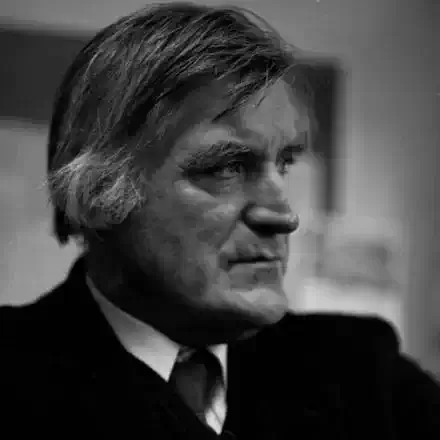
Ted Hughes
A Woman Unconscious
A Woman Unconscious
Russia and America circle each other;
Threats nudge an act that were without doubt
A melting of the mould in the mother,
Stones melting about the root.
The quick of the earth burned out:
The toil of all our ages a loss
With leaf and insect. Yet flitting thought
(Not to be thought ridiculous)
Shies from the world-cancelling black
Of its playing shadow: it has learned
That there's no trusting (trusting to luck)
Dates when the world's due to be burned;
That the future's no calamitous change
But a malingering of now,
Histories, towns, faces that no
Malice or accident much derange.
And though bomb be matched against bomb,
Though all mankind wince out and nothing endure --
Earth gone in an instant flare --
Did a lesser death come
Onto the white hospital bed
Where one, numb beyond her last of sense,
Closed her eyes on the world's evidence
And into pillows sunk her head.
Submitted by Andrew Mayers
Russia and America circle each other;
Threats nudge an act that were without doubt
A melting of the mould in the mother,
Stones melting about the root.
The quick of the earth burned out:
The toil of all our ages a loss
With leaf and insect. Yet flitting thought
(Not to be thought ridiculous)
Shies from the world-cancelling black
Of its playing shadow: it has learned
That there's no trusting (trusting to luck)
Dates when the world's due to be burned;
That the future's no calamitous change
But a malingering of now,
Histories, towns, faces that no
Malice or accident much derange.
And though bomb be matched against bomb,
Though all mankind wince out and nothing endure --
Earth gone in an instant flare --
Did a lesser death come
Onto the white hospital bed
Where one, numb beyond her last of sense,
Closed her eyes on the world's evidence
And into pillows sunk her head.
Submitted by Andrew Mayers
616