

Poems in this theme
War and Peace
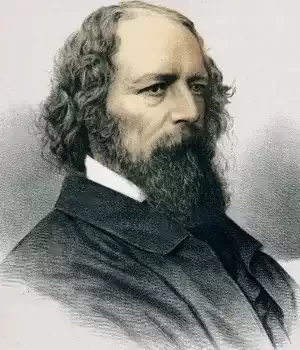
Alfred Lord Tennyson
The Coming Of Arthur
The Coming Of Arthur
Leodogran, the King of Cameliard,
Had one fair daughter, and none other child;
And she was the fairest of all flesh on earth,
Guinevere, and in her his one delight.
For many a petty king ere Arthur came
Ruled in this isle, and ever waging war
Each upon other, wasted all the land;
And still from time to time the heathen host
Swarmed overseas, and harried what was left.
And so there grew great tracts of wilderness,
Wherein the beast was ever more and more,
But man was less and less, till Arthur came.
For first Aurelius lived and fought and died,
And after him King Uther fought and died,
But either failed to make the kingdom one.
And after these King Arthur for a space,
And through the puissance of his Table Round,
Drew all their petty princedoms under him.
Their king and head, and made a realm, and reigned.
And thus the land of Cameliard was waste,
Thick with wet woods, and many a beast therein,
And none or few to scare or chase the beast;
So that wild dog, and wolf and boar and bear
Came night and day, and rooted in the fields,
And wallowed in the gardens of the King.
And ever and anon the wolf would steal
The children and devour, but now and then,
Her own brood lost or dead, lent her fierce teat
To human sucklings; and the children, housed
In her foul den, there at their meat would growl,
And mock their foster mother on four feet,
Till, straightened, they grew up to wolf-like men,
Worse than the wolves. And King Leodogran
Groaned for the Roman legions here again,
And Csar's eagle: then his brother king,
Urien, assailed him: last a heathen horde,
Reddening the sun with smoke and earth with blood,
And on the spike that split the mother's heart
Spitting the child, brake on him, till, amazed,
He knew not whither he should turn for aid.
But--for he heard of Arthur newly crowned,
Though not without an uproar made by those
Who cried, `He is not Uther's son'--the King
Sent to him, saying, `Arise, and help us thou!
For here between the man and beast we die.'
And Arthur yet had done no deed of arms,
But heard the call, and came: and Guinevere
Stood by the castle walls to watch him pass;
But since he neither wore on helm or shield
The golden symbol of his kinglihood,
But rode a simple knight among his knights,
And many of these in richer arms than he,
She saw him not, or marked not, if she saw,
One among many, though his face was bare.
But Arthur, looking downward as he past,
Felt the light of her eyes into his life
Smite on the sudden, yet rode on, and pitched
His tents beside the forest. Then he drave
The heathen; after, slew the beast, and felled
The forest, letting in the sun, and made
Broad pathways for the hunter and the knight
And so returned.
For while he lingered there,
A doubt that ever smouldered in the hearts
Of those great Lords and Barons of his realm
Flashed forth and into war: for most of these,
Colleaguing with a score of petty kings,
Made head against him, crying, `Who is he
That he should rule us? who hath proven him
King Uther's son? for lo! we look at him,
And find nor face nor bearing, limbs nor voice,
Are like to those of Uther whom we knew.
This is the son of Gorlos, not the King;
This is the son of Anton, not the King.'
And Arthur, passing thence to battle, felt
Travail, and throes and agonies of the life,
Desiring to be joined with Guinevere;
And thinking as he rode, `Her father said
That there between the man and beast they die.
Shall I not lift her from this land of beasts
Up to my throne, and side by side with me?
What happiness to reign a lonely king,
Vext--O ye stars that shudder over me,
O earth that soundest hollow under me,
Vext with waste dreams? for saving I be joined
To her that is the fairest under heaven,
I seem as nothing in the mighty world,
And cannot will my will, nor work my work
Wholly, nor make myself in mine own realm
Victor and lord. But were I joined with her,
Then might we live together as one life,
And reigning with one will in everything
Have power on this dark land to lighten it,
And power on this dead world to make it live.'
Thereafter--as he speaks who tells the tale--
When Arthur reached a field-of-battle bright
With pitched pavilions of his foe, the world
Was all so clear about him, that he saw
The smallest rock far on the faintest hill,
And even in high day the morning star.
So when the King had set his banner broad,
At once from either side, with trumpet-blast,
And shouts, and clarions shrilling unto blood,
The long-lanced battle let their horses run.
And now the Barons and the kings prevailed,
And now the King, as here and there that war
Went swaying; but the Powers who walk the world
Made lightnings and great thunders over him,
And dazed all eyes, till Arthur by main might,
And mightier of his hands with every blow,
And leading all his knighthood threw the kings
Cardos, Urien, Cradlemont of Wales,
Claudias, and Clariance of Northumberland,
The King Brandagoras of Latangor,
With Anguisant of Erin, Morganore,
And Lot of Orkney. Then, before a voice
As dreadful as the shout of one who sees
To one who sins, and deems himself alone
And all the world asleep, they swerved and brake
Flying, and Arthur called to stay the brands
That hacked among the flyers, `Ho! they yield!'
So like a painted battle the war stood
Silenced, the living quiet as the dead,
And in the heart of Arthur joy was lord.
He laughed upon his warrior whom he loved
And honoured most. `Thou dost not doubt me King,
So well thine arm hath wrought for me today.'
`Sir and my liege,' he cried, `the fire of God
Descends upon thee in the battle-field:
I know thee for my King!' Whereat the two,
For each had warded either in the fight,
Sware on the field of death a deathless love.
And Arthur said, `Man's word is God in man:
Let chance what will, I trust thee to the death.'
Then quickly from the foughten field he sent
Ulfius, and Brastias, and Bedivere,
His new-made knights, to King Leodogran,
Saying, `If I in aught have served thee well,
Give me thy daughter Guinevere to wife.'
Whom when he heard, Leodogran in heart
Debating--`How should I that am a king,
However much he holp me at my need,
Give my one daughter saving to a king,
And a king's son?'--lifted his voice, and called
A hoary man, his chamberlain, to whom
He trusted all things, and of him required
His counsel: `Knowest thou aught of Arthur's birth?'
Then spake the hoary chamberlain and said,
`Sir King, there be but two old men that know:
And each is twice as old as I; and one
Is Merlin, the wise man that ever served
King Uther through his magic art; and one
Is Merlin's master (so they call him) Bleys,
Who taught him magic, but the scholar ran
Before the master, and so far, that Bleys,
Laid magic by, and sat him down, and wrote
All things and whatsoever Merlin did
In one great annal-book, where after-years
Will learn the secret of our Arthur's birth.'
To whom the King Leodogran replied,
`O friend, had I been holpen half as well
By this King Arthur as by thee today,
Then beast and man had had their share of me:
But summon here before us yet once more
Ulfius, and Brastias, and Bedivere.'
Then, when they came before him, the King said,
`I have seen the cuckoo chased by lesser fowl,
And reason in the chase: but wherefore now
Do these your lords stir up the heat of war,
Some calling Arthur born of Gorlos,
Others of Anton? Tell me, ye yourselves,
Hold ye this Arthur for King Uther's son?'
And Ulfius and Brastias answered, `Ay.'
Then Bedivere, the first of all his knights
Knighted by Arthur at his crowning, spake--
For bold in heart and act and word was he,
Whenever slander breathed against the King-
`Sir, there be many rumours on this head:
For there be those who hate him in their hearts,
Call him baseborn, and since his ways are sweet,
And theirs are bestial, hold him less than man:
And there be those who deem him more than man,
And dream he dropt from heaven: but my belief
In all this matter--so ye care to learn--
Sir, for ye know that in King Uther's time
The prince and warrior Gorlos, he that held
Tintagil castle by the Cornish sea,
Was wedded with a winsome wife, Ygerne:
And daughters had she borne him,--one whereof,
Lot's wife, the Queen of Orkney, Bellicent,
Hath ever like a loyal sister cleaved
To Arthur,--but a son she had not borne.
And Uther cast upon her eyes of love:
But she, a stainless wife to Gorlos,
So loathed the bright dishonour of his love,
That Gorlos and King Uther went to war:
And overthrown was Gorlos and slain.
Then Uther in his wrath and heat besieged
Ygerne within Tintagil, where her men,
Seeing the mighty swarm about their walls,
Left her and fled, and Uther entered in,
And there was none to call to but himself.
So, compassed by the power of the King,
Enforced was she to wed him in her tears,
And with a shameful swiftness: afterward,
Not many moons, King Uther died himself,
Moaning and wailing for an heir to rule
After him, lest the realm should go to wrack.
And that same night, the night of the new year,
By reason of the bitterness and grief
That vext his mother, all before his time
Was Arthur born, and all as soon as born
Delivered at a secret postern-gate
To Merlin, to be holden far apart
Until his hour should come; because the lords
Of that fierce day were as the lords of this,
Wild beasts, and surely would have torn the child
Piecemeal among them, had they known; for each
But sought to rule for his own self and hand,
And many hated Uther for the sake
Of Gorlos. Wherefore Merlin took the child,
And gave him to Sir Anton, an old knight
And ancient friend of Uther; and his wife
Nursed the young prince, and reared him with her own;
And no man knew. And ever since the lords
Have foughten like wild beasts among themselves,
So that the realm has gone to wrack: but now,
This year, when Merlin (for his hour had come)
Brought Arthur forth, and set him in the hall,
Proclaiming, "Here is Uther's heir, your king,"
A hundred voices cried, "Away with him!
No king of ours! a son of Gorlos he,
Or else the child of Anton, and no king,
Or else baseborn." Yet Merlin through his craft,
And while the people clamoured for a king,
Had Arthur crowned; but after, the great lords
Banded, and so brake out in open war.'
Then while the King debated with himself
If Arthur were the child of shamefulness,
Or born the son of Gorlos, after death,
Or Uther's son, and born before his time,
Or whether there were truth in anything
Said by these three, there came to Cameliard,
With Gawain and young Modred, her two sons,
Lot's wife, the Queen of Orkney, Bellicent;
Whom as he could, not as he would, the King
Made feast for, saying, as they sat at meat,
`A doubtful throne is ice on summer seas.
Ye come from Arthur's court. Victor his men
Report him! Yea, but ye--think ye this king--
So many those that hate him, and so strong,
So few his knights, however brave they be--
Hath body enow to hold his foemen down?'
`O King,' she cried, `and I will tell thee: few,
Few, but all brave, all of one mind with him;
For I was near him when the savage yells
Of Uther's peerage died, and Arthur sat
Crowned on the das, and his warriors cried,
"Be thou the king, and we will work thy will
Who love thee." Then the King in low deep tones,
And simple words of great authority,
Bound them by so strait vows to his own self,
That when they rose, knighted from kneeling, some
Were pale as at the passing of a ghost,
Some flushed, and others dazed, as one who wakes
Half-blinded at the coming of a light.
`But when he spake and cheered his Table Round
With large, divine, and comfortable words,
Beyond my tongue to tell thee--I beheld
From eye to eye through all their Order flash
A momentary likeness of the King:
And ere it left their faces, through the cross
And those around it and the Crucified,
Down from the casement over Arthur, smote
Flame-colour, vert and azure, in three rays,
One falling upon each of three fair queens,
Who stood in silence near his throne, the friends
Of Arthur, gazing on him, tall, with bright
Sweet faces, who will help him at his need.
`And there I saw mage Merlin, whose vast wit
And hundred winters are but as the hands
Of loyal vassals toiling for their liege.
`And near him stood the Lady of the Lake,
Who knows a subtler magic than his own--
Clothed in white samite, mystic, wonderful.
She gave the King his huge cross-hilted sword,
Whereby to drive the heathen out: a mist
Of incense curled about her, and her face
Wellnigh was hidden in the minster gloom;
But there was heard among the holy hymns
A voice as of the waters, for she dwells
Down in a deep; calm, whatsoever storms
May shake the world, and when the surface rolls,
Hath power to walk the waters like our Lord.
`There likewise I beheld Excalibur
Before him at his crowning borne, the sword
That rose from out the bosom of the lake,
And Arthur rowed across and took it--rich
With jewels, elfin Urim, on the hilt,
Bewildering heart and eye--the blade so bright
That men are blinded by it--on one side,
Graven in the oldest tongue of all this world,
"Take me," but turn the blade and ye shall see,
And written in the speech ye speak yourself,
"Cast me away!" And sad was Arthur's face
Taking it, but old Merlin counselled him,
"Take thou and strike! the time to cast away
Is yet far-off." So this great brand the king
Took, and by this will beat his foemen down.'
Thereat Leodogran rejoiced, but thought
To sift his doubtings to the last, and asked,
Fixing full eyes of question on her face,
`The swallow and the swift are near akin,
But thou art closer to this noble prince,
Being his own dear sister;' and she said,
`Daughter of Gorlos and Ygerne am I;'
`And therefore Arthur's sister?' asked the King.
She answered, `These be secret things,' and signed
To those two sons to pass, and let them be.
And Gawain went, and breaking into song
Sprang out, and followed by his flying hair
Ran like a colt, and leapt at all he saw:
But Modred laid his ear beside the doors,
And there half-heard; the same that afterward
Struck for the throne, and striking found his doom.
And then the Queen made answer, `What know I?
For dark my mother was in eyes and hair,
And dark in hair and eyes am I; and dark
Was Gorlos, yea and dark was Uther too,
Wellnigh to blackness; but this King is fair
Beyond the race of Britons and of men.
Moreover, always in my mind I hear
A cry from out the dawning of my life,
A mother weeping, and I hear her say,
"O that ye had some brother, pretty one,
To guard thee on the rough ways of the world."'
`Ay,' said the King, `and hear ye such a cry?
But when did Arthur chance upon thee first?'
`O King!' she cried, `and I will tell thee true:
He found me first when yet a little maid:
Beaten I had been for a little fault
Whereof I was not guilty; and out I ran
And flung myself down on a bank of heath,
And hated this fair world and all therein,
And wept, and wished that I were dead; and he--
I know not whether of himself he came,
Or brought by Merlin, who, they say, can walk
Unseen at pleasure--he was at my side,
And spake sweet words, and comforted my heart,
And dried my tears, being a child with me.
And many a time he came, and evermore
As I grew greater grew with me; and sad
At times he seemed, and sad with him was I,
Stern too at times, and then I loved him not,
But sweet again, and then I loved him well.
And now of late I see him less and less,
But those first days had golden hours for me,
For then I surely thought he would be king.
`But let me tell thee now another tale:
For Bleys, our Merlin's master, as they say,
Died but of late, and sent his cry to me,
To hear him speak before he left his life.
Shrunk like a fairy changeling lay the mage;
And when I entered told me that himself
And Merlin ever served about the King,
Uther, before he died; and on the night
When Uther in Tintagil past away
Moaning and wailing for an heir, the two
Left the still King, and passing forth to breathe,
Then from the castle gateway by the chasm
Descending through the dismal night--a night
In which the bounds of heaven and earth were lost--
Beheld, so high upon the dreary deeps
It seemed in heaven, a ship, the shape thereof
A dragon winged, and all from stern to stern
Bright with a shining people on the decks,
And gone as soon as seen. And then the two
Dropt to the cove, and watched the great sea fall,
Wave after wave, each mightier than the last,
Till last, a ninth one, gathering half the deep
And full of voices, slowly rose and plunged
Roaring, and all the wave was in a flame:
And down the wave and in the flame was borne
A naked babe, and rode to Merlin's feet,
Who stoopt and caught the babe, and cried "The King!
Here is an heir for Uther!" And the fringe
Of that great breaker, sweeping up the strand,
Lashed at the wizard as he spake the word,
And all at once all round him rose in fire,
So that the child and he were clothed in fire.
And presently thereafter followed calm,
Free sky and stars: "And this the same child," he said,
"Is he who reigns; nor could I part in peace
Till this were told." And saying this the seer
Went through the strait and dreadful pass of death,
Not ever to be questioned any more
Save on the further side; but when I met
Merlin, and asked him if these things were truth--
The shining dragon and the naked child
Descending in the glory of the seas--
He laughed as is his wont, and answered me
In riddling triplets of old time, and said:
`"Rain, rain, and sun! a rainbow in the sky!
A young man will be wiser by and by;
An old man's wit may wander ere he die.
Rain, rain, and sun! a rainbow on the lea!
And truth is this to me, and that to thee;
And truth or clothed or naked let it be.
Rain, sun, and rain! and the free blossom blows:
Sun, rain, and sun! and where is he who knows?
From the great deep to the great deep he goes."
`So Merlin riddling angered me; but thou
Fear not to give this King thy only child,
Guinevere: so great bards of him will sing
Hereafter; and dark sayings from of old
Ranging and ringing through the minds of men,
And echoed by old folk beside their fires
For comfort after their wage-work is done,
Speak of the King; and Merlin in our time
Hath spoken also, not in jest, and sworn
Though men may wound him that he will not die,
But pass, again to come; and then or now
Utterly smite the heathen underfoot,
Till these and all men hail him for their king.'
She spake and King Leodogran rejoiced,
But musing, `Shall I answer yea or nay?'
Doubted, and drowsed, nodded and slept, and saw,
Dreaming, a slope of land that ever grew,
Field after field, up to a height, the peak
Haze-hidden, and thereon a phantom king,
Now looming, and now lost; and on the slope
The sword rose, the hind fell, the herd was driven,
Fire glimpsed; and all the land from roof and rick,
In drifts of smoke before a rolling wind,
Streamed to the peak, and mingled with the haze
And made it thicker; while the phantom king
Sent out at times a voice; and here or there
Stood one who pointed toward the voice, the rest
Slew on and burnt, crying, `No king of ours,
No son of Uther, and no king of ours;'
Till with a wink his dream was changed, the haze
Descended, and the solid earth became
As nothing, but the King stood out in heaven,
Crowned. And Leodogran awoke, and sent
Ulfius, and Brastias and Bedivere,
Back to the court of Arthur answering yea.
Then Arthur charged his warrior whom he loved
And honoured most, Sir Lancelot, to ride forth
And bring the Queen;--and watched him from the gates:
And Lancelot past away among the flowers,
(For then was latter April) and returned
Among the flowers, in May, with Guinevere.
To whom arrived, by Dubric the high saint,
Chief of the church in Britain, and before
The stateliest of her altar-shrines, the King
That morn was married, while in stainless white,
The fair beginners of a nobler time,
And glorying in their vows and him, his knights
Stood around him, and rejoicing in his joy.
Far shone the fields of May through open door,
The sacred altar blossomed white with May,
The Sun of May descended on their King,
They gazed on all earth's beauty in their Queen,
Rolled incense, and there past along the hymns
A voice as of the waters, while the two
Sware at the shrine of Christ a deathless love:
And Arthur said, `Behold, thy doom is mine.
Let chance what will, I love thee to the death!'
To whom the Queen replied with drooping eyes,
`King and my lord, I love thee to the death!'
And holy Dubric spread his hands and spake,
`Reign ye, and live and love, and make the world
Other, and may thy Queen be one with thee,
And all this Order of thy Table Round
Fulfil the boundless purpose of their King!'
So Dubric said; but when they left the shrine
Great Lords from Rome before the portal stood,
In scornful stillness gazing as they past;
Then while they paced a city all on fire
With sun and cloth of gold, the trumpets blew,
And Arthur's knighthood sang before the King:-
`Blow, trumpet, for the world is white with May;
Blow trumpet, the long night hath rolled away!
Blow through the living world--"Let the King reign."
`Shall Rome or Heathen rule in Arthur's realm?
Flash brand and lance, fall battleaxe upon helm,
Fall battleaxe, and flash brand! Let the King reign.
`Strike for the King and live! his knights have heard
That God hath told the King a secret word.
Fall battleaxe, and flash brand! Let the King reign.
`Blow trumpet! he will lift us from the dust.
Blow trumpet! live the strength and die the lust!
Clang battleaxe, and clash brand! Let the King reign.
`Strike for the King and die! and if thou diest,
The King is King, and ever wills the highest.
Clang battleaxe, and clash brand! Let the King reign.
`Blow, for our Sun is mighty in his May!
Blow, for our Sun is mightier day by day!
Clang battleaxe, and clash brand! Let the King reign.
`The King will follow Christ, and we the King
In whom high God hath breathed a secret thing.
Fall battleaxe, and flash brand! Let the King reign.'
So sang the knighthood, moving to their hall.
There at the banquet those great Lords from Rome,
The slowly-fading mistress of the world,
Strode in, and claimed their tribute as of yore.
But Arthur spake, `Behold, for these have sworn
To wage my wars, and worship me their King;
The old order changeth, yielding place to new;
And we that fight for our fair father Christ,
Seeing that ye be grown too weak and old
To drive the heathen from your Roman wall,
No tribute will we pay:' so those great lords
Drew back in wrath, and Arthur strove with Rome.
And Arthur and his knighthood for a space
Were all one will, and through that strength the King
Drew in the petty princedoms under him,
Fought, and in twelve great battles overcame
The heathen hordes, and made a realm and reigned.
Leodogran, the King of Cameliard,
Had one fair daughter, and none other child;
And she was the fairest of all flesh on earth,
Guinevere, and in her his one delight.
For many a petty king ere Arthur came
Ruled in this isle, and ever waging war
Each upon other, wasted all the land;
And still from time to time the heathen host
Swarmed overseas, and harried what was left.
And so there grew great tracts of wilderness,
Wherein the beast was ever more and more,
But man was less and less, till Arthur came.
For first Aurelius lived and fought and died,
And after him King Uther fought and died,
But either failed to make the kingdom one.
And after these King Arthur for a space,
And through the puissance of his Table Round,
Drew all their petty princedoms under him.
Their king and head, and made a realm, and reigned.
And thus the land of Cameliard was waste,
Thick with wet woods, and many a beast therein,
And none or few to scare or chase the beast;
So that wild dog, and wolf and boar and bear
Came night and day, and rooted in the fields,
And wallowed in the gardens of the King.
And ever and anon the wolf would steal
The children and devour, but now and then,
Her own brood lost or dead, lent her fierce teat
To human sucklings; and the children, housed
In her foul den, there at their meat would growl,
And mock their foster mother on four feet,
Till, straightened, they grew up to wolf-like men,
Worse than the wolves. And King Leodogran
Groaned for the Roman legions here again,
And Csar's eagle: then his brother king,
Urien, assailed him: last a heathen horde,
Reddening the sun with smoke and earth with blood,
And on the spike that split the mother's heart
Spitting the child, brake on him, till, amazed,
He knew not whither he should turn for aid.
But--for he heard of Arthur newly crowned,
Though not without an uproar made by those
Who cried, `He is not Uther's son'--the King
Sent to him, saying, `Arise, and help us thou!
For here between the man and beast we die.'
And Arthur yet had done no deed of arms,
But heard the call, and came: and Guinevere
Stood by the castle walls to watch him pass;
But since he neither wore on helm or shield
The golden symbol of his kinglihood,
But rode a simple knight among his knights,
And many of these in richer arms than he,
She saw him not, or marked not, if she saw,
One among many, though his face was bare.
But Arthur, looking downward as he past,
Felt the light of her eyes into his life
Smite on the sudden, yet rode on, and pitched
His tents beside the forest. Then he drave
The heathen; after, slew the beast, and felled
The forest, letting in the sun, and made
Broad pathways for the hunter and the knight
And so returned.
For while he lingered there,
A doubt that ever smouldered in the hearts
Of those great Lords and Barons of his realm
Flashed forth and into war: for most of these,
Colleaguing with a score of petty kings,
Made head against him, crying, `Who is he
That he should rule us? who hath proven him
King Uther's son? for lo! we look at him,
And find nor face nor bearing, limbs nor voice,
Are like to those of Uther whom we knew.
This is the son of Gorlos, not the King;
This is the son of Anton, not the King.'
And Arthur, passing thence to battle, felt
Travail, and throes and agonies of the life,
Desiring to be joined with Guinevere;
And thinking as he rode, `Her father said
That there between the man and beast they die.
Shall I not lift her from this land of beasts
Up to my throne, and side by side with me?
What happiness to reign a lonely king,
Vext--O ye stars that shudder over me,
O earth that soundest hollow under me,
Vext with waste dreams? for saving I be joined
To her that is the fairest under heaven,
I seem as nothing in the mighty world,
And cannot will my will, nor work my work
Wholly, nor make myself in mine own realm
Victor and lord. But were I joined with her,
Then might we live together as one life,
And reigning with one will in everything
Have power on this dark land to lighten it,
And power on this dead world to make it live.'
Thereafter--as he speaks who tells the tale--
When Arthur reached a field-of-battle bright
With pitched pavilions of his foe, the world
Was all so clear about him, that he saw
The smallest rock far on the faintest hill,
And even in high day the morning star.
So when the King had set his banner broad,
At once from either side, with trumpet-blast,
And shouts, and clarions shrilling unto blood,
The long-lanced battle let their horses run.
And now the Barons and the kings prevailed,
And now the King, as here and there that war
Went swaying; but the Powers who walk the world
Made lightnings and great thunders over him,
And dazed all eyes, till Arthur by main might,
And mightier of his hands with every blow,
And leading all his knighthood threw the kings
Cardos, Urien, Cradlemont of Wales,
Claudias, and Clariance of Northumberland,
The King Brandagoras of Latangor,
With Anguisant of Erin, Morganore,
And Lot of Orkney. Then, before a voice
As dreadful as the shout of one who sees
To one who sins, and deems himself alone
And all the world asleep, they swerved and brake
Flying, and Arthur called to stay the brands
That hacked among the flyers, `Ho! they yield!'
So like a painted battle the war stood
Silenced, the living quiet as the dead,
And in the heart of Arthur joy was lord.
He laughed upon his warrior whom he loved
And honoured most. `Thou dost not doubt me King,
So well thine arm hath wrought for me today.'
`Sir and my liege,' he cried, `the fire of God
Descends upon thee in the battle-field:
I know thee for my King!' Whereat the two,
For each had warded either in the fight,
Sware on the field of death a deathless love.
And Arthur said, `Man's word is God in man:
Let chance what will, I trust thee to the death.'
Then quickly from the foughten field he sent
Ulfius, and Brastias, and Bedivere,
His new-made knights, to King Leodogran,
Saying, `If I in aught have served thee well,
Give me thy daughter Guinevere to wife.'
Whom when he heard, Leodogran in heart
Debating--`How should I that am a king,
However much he holp me at my need,
Give my one daughter saving to a king,
And a king's son?'--lifted his voice, and called
A hoary man, his chamberlain, to whom
He trusted all things, and of him required
His counsel: `Knowest thou aught of Arthur's birth?'
Then spake the hoary chamberlain and said,
`Sir King, there be but two old men that know:
And each is twice as old as I; and one
Is Merlin, the wise man that ever served
King Uther through his magic art; and one
Is Merlin's master (so they call him) Bleys,
Who taught him magic, but the scholar ran
Before the master, and so far, that Bleys,
Laid magic by, and sat him down, and wrote
All things and whatsoever Merlin did
In one great annal-book, where after-years
Will learn the secret of our Arthur's birth.'
To whom the King Leodogran replied,
`O friend, had I been holpen half as well
By this King Arthur as by thee today,
Then beast and man had had their share of me:
But summon here before us yet once more
Ulfius, and Brastias, and Bedivere.'
Then, when they came before him, the King said,
`I have seen the cuckoo chased by lesser fowl,
And reason in the chase: but wherefore now
Do these your lords stir up the heat of war,
Some calling Arthur born of Gorlos,
Others of Anton? Tell me, ye yourselves,
Hold ye this Arthur for King Uther's son?'
And Ulfius and Brastias answered, `Ay.'
Then Bedivere, the first of all his knights
Knighted by Arthur at his crowning, spake--
For bold in heart and act and word was he,
Whenever slander breathed against the King-
`Sir, there be many rumours on this head:
For there be those who hate him in their hearts,
Call him baseborn, and since his ways are sweet,
And theirs are bestial, hold him less than man:
And there be those who deem him more than man,
And dream he dropt from heaven: but my belief
In all this matter--so ye care to learn--
Sir, for ye know that in King Uther's time
The prince and warrior Gorlos, he that held
Tintagil castle by the Cornish sea,
Was wedded with a winsome wife, Ygerne:
And daughters had she borne him,--one whereof,
Lot's wife, the Queen of Orkney, Bellicent,
Hath ever like a loyal sister cleaved
To Arthur,--but a son she had not borne.
And Uther cast upon her eyes of love:
But she, a stainless wife to Gorlos,
So loathed the bright dishonour of his love,
That Gorlos and King Uther went to war:
And overthrown was Gorlos and slain.
Then Uther in his wrath and heat besieged
Ygerne within Tintagil, where her men,
Seeing the mighty swarm about their walls,
Left her and fled, and Uther entered in,
And there was none to call to but himself.
So, compassed by the power of the King,
Enforced was she to wed him in her tears,
And with a shameful swiftness: afterward,
Not many moons, King Uther died himself,
Moaning and wailing for an heir to rule
After him, lest the realm should go to wrack.
And that same night, the night of the new year,
By reason of the bitterness and grief
That vext his mother, all before his time
Was Arthur born, and all as soon as born
Delivered at a secret postern-gate
To Merlin, to be holden far apart
Until his hour should come; because the lords
Of that fierce day were as the lords of this,
Wild beasts, and surely would have torn the child
Piecemeal among them, had they known; for each
But sought to rule for his own self and hand,
And many hated Uther for the sake
Of Gorlos. Wherefore Merlin took the child,
And gave him to Sir Anton, an old knight
And ancient friend of Uther; and his wife
Nursed the young prince, and reared him with her own;
And no man knew. And ever since the lords
Have foughten like wild beasts among themselves,
So that the realm has gone to wrack: but now,
This year, when Merlin (for his hour had come)
Brought Arthur forth, and set him in the hall,
Proclaiming, "Here is Uther's heir, your king,"
A hundred voices cried, "Away with him!
No king of ours! a son of Gorlos he,
Or else the child of Anton, and no king,
Or else baseborn." Yet Merlin through his craft,
And while the people clamoured for a king,
Had Arthur crowned; but after, the great lords
Banded, and so brake out in open war.'
Then while the King debated with himself
If Arthur were the child of shamefulness,
Or born the son of Gorlos, after death,
Or Uther's son, and born before his time,
Or whether there were truth in anything
Said by these three, there came to Cameliard,
With Gawain and young Modred, her two sons,
Lot's wife, the Queen of Orkney, Bellicent;
Whom as he could, not as he would, the King
Made feast for, saying, as they sat at meat,
`A doubtful throne is ice on summer seas.
Ye come from Arthur's court. Victor his men
Report him! Yea, but ye--think ye this king--
So many those that hate him, and so strong,
So few his knights, however brave they be--
Hath body enow to hold his foemen down?'
`O King,' she cried, `and I will tell thee: few,
Few, but all brave, all of one mind with him;
For I was near him when the savage yells
Of Uther's peerage died, and Arthur sat
Crowned on the das, and his warriors cried,
"Be thou the king, and we will work thy will
Who love thee." Then the King in low deep tones,
And simple words of great authority,
Bound them by so strait vows to his own self,
That when they rose, knighted from kneeling, some
Were pale as at the passing of a ghost,
Some flushed, and others dazed, as one who wakes
Half-blinded at the coming of a light.
`But when he spake and cheered his Table Round
With large, divine, and comfortable words,
Beyond my tongue to tell thee--I beheld
From eye to eye through all their Order flash
A momentary likeness of the King:
And ere it left their faces, through the cross
And those around it and the Crucified,
Down from the casement over Arthur, smote
Flame-colour, vert and azure, in three rays,
One falling upon each of three fair queens,
Who stood in silence near his throne, the friends
Of Arthur, gazing on him, tall, with bright
Sweet faces, who will help him at his need.
`And there I saw mage Merlin, whose vast wit
And hundred winters are but as the hands
Of loyal vassals toiling for their liege.
`And near him stood the Lady of the Lake,
Who knows a subtler magic than his own--
Clothed in white samite, mystic, wonderful.
She gave the King his huge cross-hilted sword,
Whereby to drive the heathen out: a mist
Of incense curled about her, and her face
Wellnigh was hidden in the minster gloom;
But there was heard among the holy hymns
A voice as of the waters, for she dwells
Down in a deep; calm, whatsoever storms
May shake the world, and when the surface rolls,
Hath power to walk the waters like our Lord.
`There likewise I beheld Excalibur
Before him at his crowning borne, the sword
That rose from out the bosom of the lake,
And Arthur rowed across and took it--rich
With jewels, elfin Urim, on the hilt,
Bewildering heart and eye--the blade so bright
That men are blinded by it--on one side,
Graven in the oldest tongue of all this world,
"Take me," but turn the blade and ye shall see,
And written in the speech ye speak yourself,
"Cast me away!" And sad was Arthur's face
Taking it, but old Merlin counselled him,
"Take thou and strike! the time to cast away
Is yet far-off." So this great brand the king
Took, and by this will beat his foemen down.'
Thereat Leodogran rejoiced, but thought
To sift his doubtings to the last, and asked,
Fixing full eyes of question on her face,
`The swallow and the swift are near akin,
But thou art closer to this noble prince,
Being his own dear sister;' and she said,
`Daughter of Gorlos and Ygerne am I;'
`And therefore Arthur's sister?' asked the King.
She answered, `These be secret things,' and signed
To those two sons to pass, and let them be.
And Gawain went, and breaking into song
Sprang out, and followed by his flying hair
Ran like a colt, and leapt at all he saw:
But Modred laid his ear beside the doors,
And there half-heard; the same that afterward
Struck for the throne, and striking found his doom.
And then the Queen made answer, `What know I?
For dark my mother was in eyes and hair,
And dark in hair and eyes am I; and dark
Was Gorlos, yea and dark was Uther too,
Wellnigh to blackness; but this King is fair
Beyond the race of Britons and of men.
Moreover, always in my mind I hear
A cry from out the dawning of my life,
A mother weeping, and I hear her say,
"O that ye had some brother, pretty one,
To guard thee on the rough ways of the world."'
`Ay,' said the King, `and hear ye such a cry?
But when did Arthur chance upon thee first?'
`O King!' she cried, `and I will tell thee true:
He found me first when yet a little maid:
Beaten I had been for a little fault
Whereof I was not guilty; and out I ran
And flung myself down on a bank of heath,
And hated this fair world and all therein,
And wept, and wished that I were dead; and he--
I know not whether of himself he came,
Or brought by Merlin, who, they say, can walk
Unseen at pleasure--he was at my side,
And spake sweet words, and comforted my heart,
And dried my tears, being a child with me.
And many a time he came, and evermore
As I grew greater grew with me; and sad
At times he seemed, and sad with him was I,
Stern too at times, and then I loved him not,
But sweet again, and then I loved him well.
And now of late I see him less and less,
But those first days had golden hours for me,
For then I surely thought he would be king.
`But let me tell thee now another tale:
For Bleys, our Merlin's master, as they say,
Died but of late, and sent his cry to me,
To hear him speak before he left his life.
Shrunk like a fairy changeling lay the mage;
And when I entered told me that himself
And Merlin ever served about the King,
Uther, before he died; and on the night
When Uther in Tintagil past away
Moaning and wailing for an heir, the two
Left the still King, and passing forth to breathe,
Then from the castle gateway by the chasm
Descending through the dismal night--a night
In which the bounds of heaven and earth were lost--
Beheld, so high upon the dreary deeps
It seemed in heaven, a ship, the shape thereof
A dragon winged, and all from stern to stern
Bright with a shining people on the decks,
And gone as soon as seen. And then the two
Dropt to the cove, and watched the great sea fall,
Wave after wave, each mightier than the last,
Till last, a ninth one, gathering half the deep
And full of voices, slowly rose and plunged
Roaring, and all the wave was in a flame:
And down the wave and in the flame was borne
A naked babe, and rode to Merlin's feet,
Who stoopt and caught the babe, and cried "The King!
Here is an heir for Uther!" And the fringe
Of that great breaker, sweeping up the strand,
Lashed at the wizard as he spake the word,
And all at once all round him rose in fire,
So that the child and he were clothed in fire.
And presently thereafter followed calm,
Free sky and stars: "And this the same child," he said,
"Is he who reigns; nor could I part in peace
Till this were told." And saying this the seer
Went through the strait and dreadful pass of death,
Not ever to be questioned any more
Save on the further side; but when I met
Merlin, and asked him if these things were truth--
The shining dragon and the naked child
Descending in the glory of the seas--
He laughed as is his wont, and answered me
In riddling triplets of old time, and said:
`"Rain, rain, and sun! a rainbow in the sky!
A young man will be wiser by and by;
An old man's wit may wander ere he die.
Rain, rain, and sun! a rainbow on the lea!
And truth is this to me, and that to thee;
And truth or clothed or naked let it be.
Rain, sun, and rain! and the free blossom blows:
Sun, rain, and sun! and where is he who knows?
From the great deep to the great deep he goes."
`So Merlin riddling angered me; but thou
Fear not to give this King thy only child,
Guinevere: so great bards of him will sing
Hereafter; and dark sayings from of old
Ranging and ringing through the minds of men,
And echoed by old folk beside their fires
For comfort after their wage-work is done,
Speak of the King; and Merlin in our time
Hath spoken also, not in jest, and sworn
Though men may wound him that he will not die,
But pass, again to come; and then or now
Utterly smite the heathen underfoot,
Till these and all men hail him for their king.'
She spake and King Leodogran rejoiced,
But musing, `Shall I answer yea or nay?'
Doubted, and drowsed, nodded and slept, and saw,
Dreaming, a slope of land that ever grew,
Field after field, up to a height, the peak
Haze-hidden, and thereon a phantom king,
Now looming, and now lost; and on the slope
The sword rose, the hind fell, the herd was driven,
Fire glimpsed; and all the land from roof and rick,
In drifts of smoke before a rolling wind,
Streamed to the peak, and mingled with the haze
And made it thicker; while the phantom king
Sent out at times a voice; and here or there
Stood one who pointed toward the voice, the rest
Slew on and burnt, crying, `No king of ours,
No son of Uther, and no king of ours;'
Till with a wink his dream was changed, the haze
Descended, and the solid earth became
As nothing, but the King stood out in heaven,
Crowned. And Leodogran awoke, and sent
Ulfius, and Brastias and Bedivere,
Back to the court of Arthur answering yea.
Then Arthur charged his warrior whom he loved
And honoured most, Sir Lancelot, to ride forth
And bring the Queen;--and watched him from the gates:
And Lancelot past away among the flowers,
(For then was latter April) and returned
Among the flowers, in May, with Guinevere.
To whom arrived, by Dubric the high saint,
Chief of the church in Britain, and before
The stateliest of her altar-shrines, the King
That morn was married, while in stainless white,
The fair beginners of a nobler time,
And glorying in their vows and him, his knights
Stood around him, and rejoicing in his joy.
Far shone the fields of May through open door,
The sacred altar blossomed white with May,
The Sun of May descended on their King,
They gazed on all earth's beauty in their Queen,
Rolled incense, and there past along the hymns
A voice as of the waters, while the two
Sware at the shrine of Christ a deathless love:
And Arthur said, `Behold, thy doom is mine.
Let chance what will, I love thee to the death!'
To whom the Queen replied with drooping eyes,
`King and my lord, I love thee to the death!'
And holy Dubric spread his hands and spake,
`Reign ye, and live and love, and make the world
Other, and may thy Queen be one with thee,
And all this Order of thy Table Round
Fulfil the boundless purpose of their King!'
So Dubric said; but when they left the shrine
Great Lords from Rome before the portal stood,
In scornful stillness gazing as they past;
Then while they paced a city all on fire
With sun and cloth of gold, the trumpets blew,
And Arthur's knighthood sang before the King:-
`Blow, trumpet, for the world is white with May;
Blow trumpet, the long night hath rolled away!
Blow through the living world--"Let the King reign."
`Shall Rome or Heathen rule in Arthur's realm?
Flash brand and lance, fall battleaxe upon helm,
Fall battleaxe, and flash brand! Let the King reign.
`Strike for the King and live! his knights have heard
That God hath told the King a secret word.
Fall battleaxe, and flash brand! Let the King reign.
`Blow trumpet! he will lift us from the dust.
Blow trumpet! live the strength and die the lust!
Clang battleaxe, and clash brand! Let the King reign.
`Strike for the King and die! and if thou diest,
The King is King, and ever wills the highest.
Clang battleaxe, and clash brand! Let the King reign.
`Blow, for our Sun is mighty in his May!
Blow, for our Sun is mightier day by day!
Clang battleaxe, and clash brand! Let the King reign.
`The King will follow Christ, and we the King
In whom high God hath breathed a secret thing.
Fall battleaxe, and flash brand! Let the King reign.'
So sang the knighthood, moving to their hall.
There at the banquet those great Lords from Rome,
The slowly-fading mistress of the world,
Strode in, and claimed their tribute as of yore.
But Arthur spake, `Behold, for these have sworn
To wage my wars, and worship me their King;
The old order changeth, yielding place to new;
And we that fight for our fair father Christ,
Seeing that ye be grown too weak and old
To drive the heathen from your Roman wall,
No tribute will we pay:' so those great lords
Drew back in wrath, and Arthur strove with Rome.
And Arthur and his knighthood for a space
Were all one will, and through that strength the King
Drew in the petty princedoms under him,
Fought, and in twelve great battles overcame
The heathen hordes, and made a realm and reigned.
500
Alfred Lord Tennyson
The Charge Of The Light Brigade
The Charge Of The Light Brigade
Half a league, half a league,
Half a league onward,
All in the valley of Death
Rode the six hundred.
'Forward, the Light Brigade!
Charge for the guns!' he said:
Into the valley of Death
Rode the six hundred.
'Forward, the Light Brigade!'
Was there a man dismay'd ?
Not tho' the soldier knew
Some one had blunder'd:
Their's not to make reply,
Their's not to reason why,
Their's but to do and die:
Into the valley of Death
Rode the six hundred.
Cannon to right of them,
Cannon to left of them,
Cannon in front of them
Volley'd and thunder'd;
Storm'd at with shot and shell,
Boldly they rode and well,
Into the jaws of Death,
Into the mouth of Hell
Rode the six hundred.
Flash'd all their sabres bare,
Flash'd as they turn'd in air
Sabring the gunners there,
Charging an army, while
All the world wonder'd:
Plunged in the battery-smoke
Right thro' the line they broke;
Cossack and Russian
Reel'd from the sabre-stroke
Shatter'd and sunder'd.
Then they rode back, but not
Not the six hundred.
Cannon to right of them,
Cannon to left of them,
Cannon behind them
Volley'd and thunder'd;
Storm'd at with shot and shell,
While horse and hero fell,
They that had fought so well
Came thro' the jaws of Death,
Back from the mouth of Hell,
All that was left of them,
Left of six hundred.
When can their glory fade ?
O the wild charge they made!
All the world wonder'd.
Honour the charge they made!
Honour the Light Brigade,
Noble six hundred!
Half a league, half a league,
Half a league onward,
All in the valley of Death
Rode the six hundred.
'Forward, the Light Brigade!
Charge for the guns!' he said:
Into the valley of Death
Rode the six hundred.
'Forward, the Light Brigade!'
Was there a man dismay'd ?
Not tho' the soldier knew
Some one had blunder'd:
Their's not to make reply,
Their's not to reason why,
Their's but to do and die:
Into the valley of Death
Rode the six hundred.
Cannon to right of them,
Cannon to left of them,
Cannon in front of them
Volley'd and thunder'd;
Storm'd at with shot and shell,
Boldly they rode and well,
Into the jaws of Death,
Into the mouth of Hell
Rode the six hundred.
Flash'd all their sabres bare,
Flash'd as they turn'd in air
Sabring the gunners there,
Charging an army, while
All the world wonder'd:
Plunged in the battery-smoke
Right thro' the line they broke;
Cossack and Russian
Reel'd from the sabre-stroke
Shatter'd and sunder'd.
Then they rode back, but not
Not the six hundred.
Cannon to right of them,
Cannon to left of them,
Cannon behind them
Volley'd and thunder'd;
Storm'd at with shot and shell,
While horse and hero fell,
They that had fought so well
Came thro' the jaws of Death,
Back from the mouth of Hell,
All that was left of them,
Left of six hundred.
When can their glory fade ?
O the wild charge they made!
All the world wonder'd.
Honour the charge they made!
Honour the Light Brigade,
Noble six hundred!
819
Alfred Lord Tennyson
Ring Out , Wild Bells
Ring Out , Wild Bells
Ring out, wild bells, to the wild sky,
The flying cloud, the frosty light;
The year is dying in the night;
Ring out, wild bells, and let him die.
Ring out the old, ring in the new,
Ring, happy bells, across the snow:
The year is going, let him go;
Ring out the false, ring in the true.
Ring out the grief that saps the mind,
For those that here we see no more,
Ring out the feud of rich and poor,
Ring in redress to all mankind.
Ring out a slowly dying cause,
And ancient forms of party strife;
Ring in the nobler modes of life,
With sweeter manners, purer laws.
Ring out the want, the care the sin,
The faithless coldness of the times;
Ring out, ring out my mournful rhymes,
But ring the fuller minstrel in.
Ring out false pride in place and blood,
The civic slander and the spite;
Ring in the love of truth and right,
Ring in the common love of good.
Ring out old shapes of foul disease,
Ring out the narrowing lust of gold;
Ring out the thousand wars of old,
Ring in the thousand years of peace.
Ring in the valiant man and free,
The larger heart, the kindlier hand;
Ring out the darkness of the land,
Ring in the Christ that is to be.
Ring out, wild bells, to the wild sky,
The flying cloud, the frosty light;
The year is dying in the night;
Ring out, wild bells, and let him die.
Ring out the old, ring in the new,
Ring, happy bells, across the snow:
The year is going, let him go;
Ring out the false, ring in the true.
Ring out the grief that saps the mind,
For those that here we see no more,
Ring out the feud of rich and poor,
Ring in redress to all mankind.
Ring out a slowly dying cause,
And ancient forms of party strife;
Ring in the nobler modes of life,
With sweeter manners, purer laws.
Ring out the want, the care the sin,
The faithless coldness of the times;
Ring out, ring out my mournful rhymes,
But ring the fuller minstrel in.
Ring out false pride in place and blood,
The civic slander and the spite;
Ring in the love of truth and right,
Ring in the common love of good.
Ring out old shapes of foul disease,
Ring out the narrowing lust of gold;
Ring out the thousand wars of old,
Ring in the thousand years of peace.
Ring in the valiant man and free,
The larger heart, the kindlier hand;
Ring out the darkness of the land,
Ring in the Christ that is to be.
702
Alfred Lord Tennyson
Boadicea
Boadicea
While about the shore of Mona those Neronian legionaries
Burnt and broke the grove and altar of the Druid and Druidess,
Far in the East Boadicea, standing loftily charioted,
Mad and maddening all that heard her in her fierce volubility,
Girt by half the tribes of Britain, near the colony Camulodune,
Yell'd and shriek'd between her daughters o'er a wild confederacy.
`They that scorn the tribes and call us Britain's barbarous populaces,
Did they hear me, would they listen, did they pity me supplicating?
Shall I heed them in their anguish? shall I brook to be supplicated?
Hear Icenian, Catieuchlanian, hear Coritanian, Trinobant!
Must their ever-ravening eagle's beak and talon annihilate us?
Tear the noble hear of Britain, leave it gorily quivering?
Bark an answer, Britain's raven! bark and blacken innumerable,
Blacken round the Roman carrion, make the carcase a skeleton,
Kite and kestrel, wolf and wolfkin, from the wilderness, wallow in it,
Till the face of Bel be brighten'd, Taranis be propitiated.
Lo their colony half-defended! lo their colony, Camulodune!
There the horde of Roman robbers mock at a barbarous adversary.
There the hive of Roman liars worship a gluttonous emperor-idiot.
Such is Rome, and this her deity: hear it, Spirit of Cassivelaun!
`Hear it, Gods! the Gods have heard it, O Icenian, O Coritanian!
Doubt not ye the Gods have answer'd, Catieuchlanian, Trinobant.
These have told us all their anger in miraculous utterances,
Thunder, a flying fire in heaven, a murmur heard aerially,
Phantom sound of blows descending, moan of an enemy massacred,
Phantom wail of women and children, multitudinous agonies.
Bloodily flow'd the Tamesa rolling phantom bodies of horses and men;
Then a phantom colony smoulder'd on the refluent estuary;
Lastly yonder yester-even, suddenly giddily tottering--
There was one who watch'd and told me--down their statue of Victory fell.
Lo their precious Roman bantling, lo the colony Camulodune,
Shall we teach it a Roman lesson? shall we care to be pitiful?
Shall we deal with it as an infant? shall we dandle it amorously?
`Hear Icenian, Catieuchlanian, hear Coritanian, Trinobant!
While I roved about the forest, long and bitterly meditating,
There I heard them in the darkness, at the mystical ceremony,
Loosely robed in flying raiment, sang the terrible prophetesses.
"Fear not, isle of blowing woodland, isle of silvery parapets!
Tho' the Roman eagle shadow thee, tho' the gathering enemy narrow thee,
Thou shalt wax and he shall dwindle, thou shalt be the mighty one yet!
Thine the liberty, thine the glory, thine the deeds to be celebrated,
Thine the myriad-rolling ocean, light and shadow illimitable,
Thine the lands of lasting summer, many-blossoming Paradises,
Thine the North and thine the South and thine the battle-thunder of God."
So they chanted: how shall Britain light upon auguries happier?
So they chanted in the darkness, and there cometh a victory now.
Hear Icenian, Catieuchlanian, hear Coritanian, Trinobant!
Me the wife of rich Prasutagus, me the lover of liberty,
Me they seized and me they tortured, me they lash'd and humiliated,
Me the sport of ribald Veterans, mine of ruffian violators!
See they sit, they hide their faces, miserable in ignominy!
Wherefore in me burns an anger, not by blood to be satiated.
Lo the palaces and the temple, lo the colony Camulodune!
There they ruled, and thence they wasted all the flourishing territory,
Thither at their will they haled the yellow-ringleted Britoness--
Bloodily, bloodily fall the battle-axe, unexhausted, inexorable.
Shout Icenian, Catieuchlanian, shout Coritanian, Trinobant,
Till the victim hear within and yearn to hurry precipitously
Like the leaf in a roaring whirlwind, like the smoke in a hurricane whirl'd.
Lo the colony, there they rioted in the city of Cunobeline!
There they drank in cups of emerald, there at tables of ebony lay,
Rolling on their purple couches in their tender effeminacy.
There they dwelt and there they rioted; there--there--they dwell no more.
Burst the gates, and burn the palaces, break the works of the statuary,
Take the hoary Roman head and shatter it, hold it abominable,
Cut the Roman boy to pieces in his lust and voluptuousness,
Lash the maiden into swooning, me they lash'd and humiliated,
Chop the breasts from off the mother, dash the brains of the little one out,
Up my Britons, on my chariot, on my chargers, trample them under us.'
So the Queen Boadicea, standing loftily charioted,
Brandishing in her hand a dart and rolling glances lioness-like,
Yell'd and shriek'd between her daughters in her fierce volubility.
Till her people all around the royal chariot agitated,
Madly dash'd the darts together, writhing barbarous lineaments,
Made the noise of frosty woodlands, when they shiver in January,
Roar'd as when the rolling breakers boom and blanch on the precipices,
Yell'd as when the winds of winter tear an oak on a promontory.
So the silent colony hearing her tumultuous adversaries
Clash the darts and on the buckler beat with rapid unanimous hand,
Thought on all her evil tyrannies, all her pitiless avarice,
Till she felt the heart within her fall and flutter tremulously,
Then her pulses at the clamoring of her enemy fainted away.
Out of evil evil flourishes, out of tyranny tyranny buds.
Ran the land with Roman slaughter, multitudinous agonies.
Perish'd many a maid and matron, many a valorous legionary.
Fell the colony, city, and citadel, London, Verulam, Camulodune.
While about the shore of Mona those Neronian legionaries
Burnt and broke the grove and altar of the Druid and Druidess,
Far in the East Boadicea, standing loftily charioted,
Mad and maddening all that heard her in her fierce volubility,
Girt by half the tribes of Britain, near the colony Camulodune,
Yell'd and shriek'd between her daughters o'er a wild confederacy.
`They that scorn the tribes and call us Britain's barbarous populaces,
Did they hear me, would they listen, did they pity me supplicating?
Shall I heed them in their anguish? shall I brook to be supplicated?
Hear Icenian, Catieuchlanian, hear Coritanian, Trinobant!
Must their ever-ravening eagle's beak and talon annihilate us?
Tear the noble hear of Britain, leave it gorily quivering?
Bark an answer, Britain's raven! bark and blacken innumerable,
Blacken round the Roman carrion, make the carcase a skeleton,
Kite and kestrel, wolf and wolfkin, from the wilderness, wallow in it,
Till the face of Bel be brighten'd, Taranis be propitiated.
Lo their colony half-defended! lo their colony, Camulodune!
There the horde of Roman robbers mock at a barbarous adversary.
There the hive of Roman liars worship a gluttonous emperor-idiot.
Such is Rome, and this her deity: hear it, Spirit of Cassivelaun!
`Hear it, Gods! the Gods have heard it, O Icenian, O Coritanian!
Doubt not ye the Gods have answer'd, Catieuchlanian, Trinobant.
These have told us all their anger in miraculous utterances,
Thunder, a flying fire in heaven, a murmur heard aerially,
Phantom sound of blows descending, moan of an enemy massacred,
Phantom wail of women and children, multitudinous agonies.
Bloodily flow'd the Tamesa rolling phantom bodies of horses and men;
Then a phantom colony smoulder'd on the refluent estuary;
Lastly yonder yester-even, suddenly giddily tottering--
There was one who watch'd and told me--down their statue of Victory fell.
Lo their precious Roman bantling, lo the colony Camulodune,
Shall we teach it a Roman lesson? shall we care to be pitiful?
Shall we deal with it as an infant? shall we dandle it amorously?
`Hear Icenian, Catieuchlanian, hear Coritanian, Trinobant!
While I roved about the forest, long and bitterly meditating,
There I heard them in the darkness, at the mystical ceremony,
Loosely robed in flying raiment, sang the terrible prophetesses.
"Fear not, isle of blowing woodland, isle of silvery parapets!
Tho' the Roman eagle shadow thee, tho' the gathering enemy narrow thee,
Thou shalt wax and he shall dwindle, thou shalt be the mighty one yet!
Thine the liberty, thine the glory, thine the deeds to be celebrated,
Thine the myriad-rolling ocean, light and shadow illimitable,
Thine the lands of lasting summer, many-blossoming Paradises,
Thine the North and thine the South and thine the battle-thunder of God."
So they chanted: how shall Britain light upon auguries happier?
So they chanted in the darkness, and there cometh a victory now.
Hear Icenian, Catieuchlanian, hear Coritanian, Trinobant!
Me the wife of rich Prasutagus, me the lover of liberty,
Me they seized and me they tortured, me they lash'd and humiliated,
Me the sport of ribald Veterans, mine of ruffian violators!
See they sit, they hide their faces, miserable in ignominy!
Wherefore in me burns an anger, not by blood to be satiated.
Lo the palaces and the temple, lo the colony Camulodune!
There they ruled, and thence they wasted all the flourishing territory,
Thither at their will they haled the yellow-ringleted Britoness--
Bloodily, bloodily fall the battle-axe, unexhausted, inexorable.
Shout Icenian, Catieuchlanian, shout Coritanian, Trinobant,
Till the victim hear within and yearn to hurry precipitously
Like the leaf in a roaring whirlwind, like the smoke in a hurricane whirl'd.
Lo the colony, there they rioted in the city of Cunobeline!
There they drank in cups of emerald, there at tables of ebony lay,
Rolling on their purple couches in their tender effeminacy.
There they dwelt and there they rioted; there--there--they dwell no more.
Burst the gates, and burn the palaces, break the works of the statuary,
Take the hoary Roman head and shatter it, hold it abominable,
Cut the Roman boy to pieces in his lust and voluptuousness,
Lash the maiden into swooning, me they lash'd and humiliated,
Chop the breasts from off the mother, dash the brains of the little one out,
Up my Britons, on my chariot, on my chargers, trample them under us.'
So the Queen Boadicea, standing loftily charioted,
Brandishing in her hand a dart and rolling glances lioness-like,
Yell'd and shriek'd between her daughters in her fierce volubility.
Till her people all around the royal chariot agitated,
Madly dash'd the darts together, writhing barbarous lineaments,
Made the noise of frosty woodlands, when they shiver in January,
Roar'd as when the rolling breakers boom and blanch on the precipices,
Yell'd as when the winds of winter tear an oak on a promontory.
So the silent colony hearing her tumultuous adversaries
Clash the darts and on the buckler beat with rapid unanimous hand,
Thought on all her evil tyrannies, all her pitiless avarice,
Till she felt the heart within her fall and flutter tremulously,
Then her pulses at the clamoring of her enemy fainted away.
Out of evil evil flourishes, out of tyranny tyranny buds.
Ran the land with Roman slaughter, multitudinous agonies.
Perish'd many a maid and matron, many a valorous legionary.
Fell the colony, city, and citadel, London, Verulam, Camulodune.
466
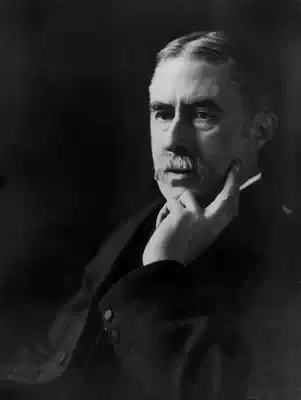
Alfred Edward Housman
The Day of Battle
The Day of Battle
"Far I hear the bugle blow
To call me where I would not go,
And the guns begin the song,
'Soldier, fly or stay for long.'
"Comrade, if to turn and fly
Made a soldier never die,
Fly I would, for who would not?
'Tis sure no pleasure to be shot.
"But since the man that runs away
Lives to die another day,
And cowards' funerals, when they come,
Are not wept so well at home,
"Therefore, though the best is bad,
Stand and do the best, my lad;
Stand and fight and see your slain,
And take the bullet in your brain."
"Far I hear the bugle blow
To call me where I would not go,
And the guns begin the song,
'Soldier, fly or stay for long.'
"Comrade, if to turn and fly
Made a soldier never die,
Fly I would, for who would not?
'Tis sure no pleasure to be shot.
"But since the man that runs away
Lives to die another day,
And cowards' funerals, when they come,
Are not wept so well at home,
"Therefore, though the best is bad,
Stand and do the best, my lad;
Stand and fight and see your slain,
And take the bullet in your brain."
441
Alfred Edward Housman
On the Idle Hill of Summer
On the Idle Hill of Summer
On the idle hill of summer,
Sleepy with the flow of streams,
Far I hear the steady drummer
Drumming like a noise in dreams.
Far and near and low and louder
On the roads of earth go by,
Dear to friends and food for powder,
Soldiers marching, all to die.
East and west on fields forgotten
Bleach the bones of comrades slain,
Lovely lads and dead and rotten;
None that go return again.
Far the calling bugles hollo,
High the screaming fife replies,
Gay the files of scarlet follow:
Woman bore me, I will rise.
On the idle hill of summer,
Sleepy with the flow of streams,
Far I hear the steady drummer
Drumming like a noise in dreams.
Far and near and low and louder
On the roads of earth go by,
Dear to friends and food for powder,
Soldiers marching, all to die.
East and west on fields forgotten
Bleach the bones of comrades slain,
Lovely lads and dead and rotten;
None that go return again.
Far the calling bugles hollo,
High the screaming fife replies,
Gay the files of scarlet follow:
Woman bore me, I will rise.
433
Alfred Edward Housman
From Clee to heaven the beacon burns,
From Clee to heaven the beacon burns,
The shires have seen it plain,
From north and south the sign returns
And beacons burn again.
Look left, look right, the hills are bright,
The dales are light between,
Because 'tis fifty years to-night
That God has saved the Queen.
Now, when the flame they watch not towers
About the soil they trod,
Lads, we'll remember friends of ours
Who shared the work with God.
To skies that knit their heartstrings right,
To fields that bred them brave,
The saviours come not home to-night:
Themselves they could not save.
It dawns in Asia, tombstones show
And Shropshire names are read;
And the Nile spills his overflow
Beside the Severn's dead.
We pledge in peace by farm and town
The Queen they served in war,
And fire the beacons up and down
The land they perished for.
"God save the Queen" we living sing,
From height to height 'tis heard;
And with the rest your voices ring,
Lads of the Fifty-third.
Oh, God will save her, fear you not:
Be you the men you've been,
Get you the sons your fathers got,
And God will save the Queen.
The shires have seen it plain,
From north and south the sign returns
And beacons burn again.
Look left, look right, the hills are bright,
The dales are light between,
Because 'tis fifty years to-night
That God has saved the Queen.
Now, when the flame they watch not towers
About the soil they trod,
Lads, we'll remember friends of ours
Who shared the work with God.
To skies that knit their heartstrings right,
To fields that bred them brave,
The saviours come not home to-night:
Themselves they could not save.
It dawns in Asia, tombstones show
And Shropshire names are read;
And the Nile spills his overflow
Beside the Severn's dead.
We pledge in peace by farm and town
The Queen they served in war,
And fire the beacons up and down
The land they perished for.
"God save the Queen" we living sing,
From height to height 'tis heard;
And with the rest your voices ring,
Lads of the Fifty-third.
Oh, God will save her, fear you not:
Be you the men you've been,
Get you the sons your fathers got,
And God will save the Queen.
454
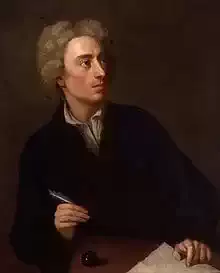
Alexander Pope
The Iliad: Book VI (excerpt)
The Iliad: Book VI (excerpt)
He said, and pass'd with sad presaging heart
To seek his spouse, his soul's far dearer part;
At home he sought her, but he sought in vain:
She, with one maid of all her menial train,
Had thence retir'd; and, with her second joy,
The young Astyanax, the hope of Troy,
Pensive she stood on Ilion's tow'ry height,
Beheld the war, and sicken'd at the sight;
There her sad eyes in vain her lord explore,
Or weep the wounds her bleeding country bore.
But he, who found not whom his soul desir'd,
Whose virtue charm'd him as her beauty fir'd,
Stood in the gates, and ask'd what way she bent
Her parting steps; if to the fane she went,
Where late the mourning matrons made resort,
Or sought her sisters in the Trojan court.
"Not to the court" replied th' attendant train,
"Nor, mixed with matrons, to Minerva's fane;
To Ilion's steepy tow'r she bent her way,
To mark the fortunes of the doubtful day.
Troy fled, she heard, before the Grecian sword;
She heard, and trembled for her absent lord.
Distracted with surprise, she seem'd to fly,
Fear on her cheek and sorrow in her eye.
The nurse attended with her infant boy,
The young Astyanax, the hope of Troy."
Hector, this heard, return'd without delay;
Swift through the town he trod his former way
Through streets of palaces and walks of state,
And met the mourner at the Scæan gate.
With haste to meet him sprung the joyful fair,
His blameless wife, E{"e}tion's wealthy heir
(Cilician Thebè great E{"e}tion sway'd,
And Hippoplacus' wide-extended shade);
The nurse stood near, in whose embraces prest
His only hope hung smiling at her breast,
Whom each soft charm and early grace adorn,
Fair as the new-born star that gilds the morn.
To this lov'd infant Hector gave the name
Scamandrius, from Scamander's honour'd stream;
Astyanax the Trojans call'd the boy,
From his great father, the defence of Troy.
Silent the warrior smil'd, and pleas'd, resign'd
To tender passions all his mighty mind:
His beauteous princess cast a mournful look,
Hung on his hand, and then dejected spoke;
Her bosom labour'd with a boding sigh,
And the big tear stood trembling in her eye.
"Too daring prince! ah whither dost thou run?
Ah, too forgetful of thy wife and son!
And think'st thou not how wretched we shall be,
A widow I, a helpless orphan he!
For sure such courage length of life denies,
And thou must fall, thy virtue's sacrifice.
Greece in her single heroes strove in vain;
Now hosts oppose thee, and thou must be slain!
Oh, grant me, gods! e'er Hector meets his doom,
All I can ask of heav'n, an early tomb!
So shall my days in one sad tenor run,
And end with sorrows as they first begun.
No parent now remains, my griefs to share,
No father's aid, no mother's tender care.
The fierce Achilles wrapp'd our walls in fire,
Laid Thebè waste, and slew my warlike sire!
His fate compassion in the victor bred;
Stern as he was, he yet rever'd the dead,
His radiant arms preserv'd from hostile spoil,
And laid him decent on the fun'ral pile;
Then rais'd a mountain where his bones were burn'd:
The mountain nymphs the rural tomb adorn'd;
Jove's sylvan daughters bade their elms bestow
A barren shade, and in his honour grow.
"By the same arm my sev'n brave brothers fell;
In one sad day beheld the gates of hell:
While the fat herds and snowy flocks they fed,
Amid their fields the hapless heroes bled!
My mother liv'd to bear the victor's bands,
The queen of Hippoplacia's sylvan lands;
Redeem'd too late, she scarce beheld again
Her pleasing empire and her native plain,
When, ah! oppress'd by life-consuming woe,
She fell a victim to Diana's bow.
"Yet while my Hector still survives, I see
My father, mother, brethren, all, in thee:
Alas! my parents, brothers, kindred, all,
Once more will perish if my Hector fall.
Thy wife, thy infant, in thy danger share:
Oh, prove a husband's and a father's care!
That quarter most the skilful Greeks annoy,
Where yon wild fig-trees join the wall of Troy:
Thou from this tow'r defend th' important post
There Agamemnon points his dreadful host,
That pass Tydides, Ajax, strive to gain,
And there the vengeful Spartan fires his train.
Thrice our bold foes the fierce attack have giv'n,
Or led by hopes, or dictated from heav'n.
Let others in the field their arms employ,
But stay my Hector here, and guard his Troy."
The chief replied: "That post shall be my care,
Not that alone, but all the works of war.
How would the sons of Troy, in arms renown'd,
And Troy's proud dames, whose garments sweep the ground,
Attaint the lustre of my former name,
Should Hector basely quit the field of fame?
My early youth was bred to martial pains,
My soul impels me to th' embattled plains:
Let me be foremost to defend the throne,
And guard my father's glories, and my own.
Yet come it will, the day decreed by fates,
(How my heart trembles while my tongue relates!)
The day when thou, imperial Troy! must bend,
And see thy warriors fall, thy glories end.
And yet no dire presage so wounds my mind,
My mother's death, the ruin of my kind,
Not Priam's hoary hairs defil'd with gore,
Not all my brothers gasping on the shore,
As thine, Andromache! thy griefs I dread;
I see thee trembling, weeping, captive led.
In Argive looms our battles to design,
And woes, of which so large a part was thine!
To bear the victor's hard commands, or bring
The weight of waters from Hyperia's spring!
There, while you groan beneath the load of life,
They cry, 'Behold the mighty Hector's wife!'
Some haughty Greek, who lives thy tears to see,
Embitters all thy woes by naming me.
The thoughts of glory past and present shame,
A thousand griefs, shall waken at the name!
May I lie cold before that dreadful day,
Press'd with a load of monumental clay!
Thy Hector, wrapp'd in everlasting sleep,
Shall neither hear thee sigh, nor see thee weep."
Thus having spoke, th' illustrious chief of Troy
Stretch'd his fond arms to clasp the lovely boy.
The babe clung crying to his nurse's breast,
Scar'd at the dazzling helm and nodding crest.
With secret pleasure each fond parent smil'd,
And Hector hasted to relieve his child;
The glitt'ring terrors from his brows unbound,
And plac'd the beaming helmet on the ground.
Then kiss'd the child, and, lifting high in air,
Thus to the gods preferr'd a father's pray'r:
"O thou! whose glory fills th' ethereal throne,
And all ye deathless pow'rs! protect my son!
Grant him, like me, to purchase just renown,
To guard the Trojans, to defend the crown,
Against his country's foes the war to wage,
And rise the Hector of the future age!
So when, triumphant from successful toils,
Of heroes slain he bears the reeking spoils,
Whole hosts may hail him with deserv'd acclaim,
And say, 'This chief transcends his father's fame':
While pleas'd, amidst the gen'ral shouts of Troy,
His mother's conscious heart o'erflows with joy."
He spoke, and fondly gazing on her charms,
Restor'd the pleasing burthen to her arms;
Soft on her fragrant breast the babe she laid,
Hush'd to repose, and with a smile survey'd.
The troubled pleasure soon chastis'd by fear,
She mingled with the smile a tender tear.
The soften'd chief with kind compassion view'd,
And dried the falling drops, and thus pursu'd:
"Andromache! my soul's far better part,
Why with untimely sorrows heaves thy heart?
No hostile hand can antedate my doom,
Till fate condemns me to the silent tomb.
Fix'd is the term to all the race of earth,
And such the hard condition of our birth.
No force can then resist, no flight can save;
All sink alike, the fearful and the brave.
No more--but hasten to thy tasks at home,
There guide the spindle, and direct the loom;
Me glory summons to the martial scene,
The field of combat is the sphere for men.
Where heroes war, the foremost place I claim,
The first in danger as the first in fame."
He said, and pass'd with sad presaging heart
To seek his spouse, his soul's far dearer part;
At home he sought her, but he sought in vain:
She, with one maid of all her menial train,
Had thence retir'd; and, with her second joy,
The young Astyanax, the hope of Troy,
Pensive she stood on Ilion's tow'ry height,
Beheld the war, and sicken'd at the sight;
There her sad eyes in vain her lord explore,
Or weep the wounds her bleeding country bore.
But he, who found not whom his soul desir'd,
Whose virtue charm'd him as her beauty fir'd,
Stood in the gates, and ask'd what way she bent
Her parting steps; if to the fane she went,
Where late the mourning matrons made resort,
Or sought her sisters in the Trojan court.
"Not to the court" replied th' attendant train,
"Nor, mixed with matrons, to Minerva's fane;
To Ilion's steepy tow'r she bent her way,
To mark the fortunes of the doubtful day.
Troy fled, she heard, before the Grecian sword;
She heard, and trembled for her absent lord.
Distracted with surprise, she seem'd to fly,
Fear on her cheek and sorrow in her eye.
The nurse attended with her infant boy,
The young Astyanax, the hope of Troy."
Hector, this heard, return'd without delay;
Swift through the town he trod his former way
Through streets of palaces and walks of state,
And met the mourner at the Scæan gate.
With haste to meet him sprung the joyful fair,
His blameless wife, E{"e}tion's wealthy heir
(Cilician Thebè great E{"e}tion sway'd,
And Hippoplacus' wide-extended shade);
The nurse stood near, in whose embraces prest
His only hope hung smiling at her breast,
Whom each soft charm and early grace adorn,
Fair as the new-born star that gilds the morn.
To this lov'd infant Hector gave the name
Scamandrius, from Scamander's honour'd stream;
Astyanax the Trojans call'd the boy,
From his great father, the defence of Troy.
Silent the warrior smil'd, and pleas'd, resign'd
To tender passions all his mighty mind:
His beauteous princess cast a mournful look,
Hung on his hand, and then dejected spoke;
Her bosom labour'd with a boding sigh,
And the big tear stood trembling in her eye.
"Too daring prince! ah whither dost thou run?
Ah, too forgetful of thy wife and son!
And think'st thou not how wretched we shall be,
A widow I, a helpless orphan he!
For sure such courage length of life denies,
And thou must fall, thy virtue's sacrifice.
Greece in her single heroes strove in vain;
Now hosts oppose thee, and thou must be slain!
Oh, grant me, gods! e'er Hector meets his doom,
All I can ask of heav'n, an early tomb!
So shall my days in one sad tenor run,
And end with sorrows as they first begun.
No parent now remains, my griefs to share,
No father's aid, no mother's tender care.
The fierce Achilles wrapp'd our walls in fire,
Laid Thebè waste, and slew my warlike sire!
His fate compassion in the victor bred;
Stern as he was, he yet rever'd the dead,
His radiant arms preserv'd from hostile spoil,
And laid him decent on the fun'ral pile;
Then rais'd a mountain where his bones were burn'd:
The mountain nymphs the rural tomb adorn'd;
Jove's sylvan daughters bade their elms bestow
A barren shade, and in his honour grow.
"By the same arm my sev'n brave brothers fell;
In one sad day beheld the gates of hell:
While the fat herds and snowy flocks they fed,
Amid their fields the hapless heroes bled!
My mother liv'd to bear the victor's bands,
The queen of Hippoplacia's sylvan lands;
Redeem'd too late, she scarce beheld again
Her pleasing empire and her native plain,
When, ah! oppress'd by life-consuming woe,
She fell a victim to Diana's bow.
"Yet while my Hector still survives, I see
My father, mother, brethren, all, in thee:
Alas! my parents, brothers, kindred, all,
Once more will perish if my Hector fall.
Thy wife, thy infant, in thy danger share:
Oh, prove a husband's and a father's care!
That quarter most the skilful Greeks annoy,
Where yon wild fig-trees join the wall of Troy:
Thou from this tow'r defend th' important post
There Agamemnon points his dreadful host,
That pass Tydides, Ajax, strive to gain,
And there the vengeful Spartan fires his train.
Thrice our bold foes the fierce attack have giv'n,
Or led by hopes, or dictated from heav'n.
Let others in the field their arms employ,
But stay my Hector here, and guard his Troy."
The chief replied: "That post shall be my care,
Not that alone, but all the works of war.
How would the sons of Troy, in arms renown'd,
And Troy's proud dames, whose garments sweep the ground,
Attaint the lustre of my former name,
Should Hector basely quit the field of fame?
My early youth was bred to martial pains,
My soul impels me to th' embattled plains:
Let me be foremost to defend the throne,
And guard my father's glories, and my own.
Yet come it will, the day decreed by fates,
(How my heart trembles while my tongue relates!)
The day when thou, imperial Troy! must bend,
And see thy warriors fall, thy glories end.
And yet no dire presage so wounds my mind,
My mother's death, the ruin of my kind,
Not Priam's hoary hairs defil'd with gore,
Not all my brothers gasping on the shore,
As thine, Andromache! thy griefs I dread;
I see thee trembling, weeping, captive led.
In Argive looms our battles to design,
And woes, of which so large a part was thine!
To bear the victor's hard commands, or bring
The weight of waters from Hyperia's spring!
There, while you groan beneath the load of life,
They cry, 'Behold the mighty Hector's wife!'
Some haughty Greek, who lives thy tears to see,
Embitters all thy woes by naming me.
The thoughts of glory past and present shame,
A thousand griefs, shall waken at the name!
May I lie cold before that dreadful day,
Press'd with a load of monumental clay!
Thy Hector, wrapp'd in everlasting sleep,
Shall neither hear thee sigh, nor see thee weep."
Thus having spoke, th' illustrious chief of Troy
Stretch'd his fond arms to clasp the lovely boy.
The babe clung crying to his nurse's breast,
Scar'd at the dazzling helm and nodding crest.
With secret pleasure each fond parent smil'd,
And Hector hasted to relieve his child;
The glitt'ring terrors from his brows unbound,
And plac'd the beaming helmet on the ground.
Then kiss'd the child, and, lifting high in air,
Thus to the gods preferr'd a father's pray'r:
"O thou! whose glory fills th' ethereal throne,
And all ye deathless pow'rs! protect my son!
Grant him, like me, to purchase just renown,
To guard the Trojans, to defend the crown,
Against his country's foes the war to wage,
And rise the Hector of the future age!
So when, triumphant from successful toils,
Of heroes slain he bears the reeking spoils,
Whole hosts may hail him with deserv'd acclaim,
And say, 'This chief transcends his father's fame':
While pleas'd, amidst the gen'ral shouts of Troy,
His mother's conscious heart o'erflows with joy."
He spoke, and fondly gazing on her charms,
Restor'd the pleasing burthen to her arms;
Soft on her fragrant breast the babe she laid,
Hush'd to repose, and with a smile survey'd.
The troubled pleasure soon chastis'd by fear,
She mingled with the smile a tender tear.
The soften'd chief with kind compassion view'd,
And dried the falling drops, and thus pursu'd:
"Andromache! my soul's far better part,
Why with untimely sorrows heaves thy heart?
No hostile hand can antedate my doom,
Till fate condemns me to the silent tomb.
Fix'd is the term to all the race of earth,
And such the hard condition of our birth.
No force can then resist, no flight can save;
All sink alike, the fearful and the brave.
No more--but hasten to thy tasks at home,
There guide the spindle, and direct the loom;
Me glory summons to the martial scene,
The field of combat is the sphere for men.
Where heroes war, the foremost place I claim,
The first in danger as the first in fame."
401
Alexander Pope
Ode on St. Cecilia's Day
Ode on St. Cecilia's Day
I.
Descend ye Nine! descend and sing;
The breathing instruments inspire,
Wake into voice each silent string,
And sweep the sounding lyre!
In a sadly-pleasing strain
Let the warbling lute complain:
Let the loud trumpet sound,
'Till the roofs all around
The shrill echo's rebound:
While in more lengthen'd notes and slow,
The deep, majestic, solemn organs blow.
Hark! the numbers, soft and clear,
Gently steal upon the ear;
Now louder, and yet louder rise,
And fill with spreading sounds the skies;
Exulting in triumph now swell the bold notes,
In broken air, trembling, the wild music floats;
'Till, by degrees, remote and small,
The strains decay,
And melt away,
In a dying, dying fall.
II.
By Music, minds an equal temper know,
Nor swell too high, nor sink too low.
If in the breast tumultuous joys arise,
Music her soft, assuasive voice applies;
Or when the soul is press'd with cares,
Exalts her in enlivening airs.
Warriors she fires with animated sounds;
Pours balm into the bleeding lover's wounds:
Melancholy lifts her head,
Morpheus rouzes from his bed,
Sloth unfolds her arms and wakes,
List'ning Envy drops her snakes;
Intestine war no more our Passions wage,
And giddy Factions hear away their rage.
III.
But when our Country's cause provokes to Arms,
How martial music ev'ry bosom warms!
So when the first bold vessel dar'd the seas,
High on the stern the Thracian rais'd his strain,
While Argo saw her kindred trees
Descend from Pelion to the main.
Transported demi-gods stood round,
And men grew heroes at the sound,
Enflam'd with glory's charms:
Each chief his sev'nfold shield display'd,
And half unsheath'd the shining blade:
And seas, and rocks, and skies rebound
To arms, to arms, to arms!
IV.
But when thro' all th'infernal bounds
Which flaming Phlegeton surrounds,
Love, strong as Death, the Poet led
To the pale nations of the dead,
What sounds were heard,
What scenes appear'd,
O'er all the dreary coasts!
Dreadful gleams,
Dismal screams,
Fires that glow,
Shrieks of woe,
Sullen moans,
Hollow groans,
And cries of tortur'd ghosts!
But hark! he strikes the golden lyre;
And see! the tortur'd ghosts respire,
See, shady forms advance!
Thy stone, O Sysiphus, stands still,
Ixion rests upon his wheel,
And the pale spectres dance!
The Furies sink upon their iron beds,
And snakes uncurl'd hang list'ning round their heads.
V.
By the streams that ever flow,
By the fragrant winds that blow
O'er th' Elysian flow'rs,
By those happy souls who dwell
In yellow meads of Asphodel,
Or Amaranthine bow'rs,
By the hero's armed shades,
Glitt'ring thro' the gloomy glades,
By the youths that dy'd for love,
Wand'ring in the myrtle grove,
Restore, restore Eurydice to life;
Oh take the husband, or return the wife!
He sung, and hell consented
To hear the Poet's pray'r;
Stern Proserpine relented,
And gave him back the fair.
Thus song could prevail
O'er death and o'er hell,
A conquest how hard and how glorious?
Tho' fate had fast bound her
With Styx nine times round her,
Yet music and love were victorious.
VI.
But soon, too soon, the lover turns his eyes:
Again she falls, again she dies, she dies!
How wilt thou now the fatal sisters move?
No crime was thine, if 'tis no crime to love.
Now under hanging mountains,
Beside the falls of fountains,
Or where Hebrus wanders,
Rolling in Maeanders,
All alone,
Unheard, unknown,
He makes his moan;
And calls her ghost,
For ever, ever, ever lost!
Now with Furies surrounded,
Despairing, confounded,
He trembles, he glows,
Amidst Rhodope's snows:
See, wild as the winds, o'er the desart he flies;
Hark! Haemus resounds with the Bacchanals cries
-Ah see, he dies!
Yet ev'n in death Eurydice he sung,
Eurydice still trembled on his tongue,
Eurydice the woods,
Eurydice the floods,
Eurydice the rocks, and hollow mountains rung.
VII.
Music the fiercest grief can charm,
And fate's severest rage disarm:
Music can soften pain to ease,
And make despair and madness please:
Our joys below it can improve,
And antedate the bliss above.
This the divine Cecilia found,
And to her Maker's praise confin'd the sound.
When the full organ joins the tuneful quire,
Th'immortal pow'rs incline their ear;
Borne on the swelling notes our souls aspire,
While solemn airs improve the sacred fire;
And Angels lean from heav'n to hear.
Of Orpheus now no more let Poets tell,
To bright Cecilia greater pow'r is giv'n;
His numbers rais'd a shade from hell,
Hers lift the soul to heav'n.
I.
Descend ye Nine! descend and sing;
The breathing instruments inspire,
Wake into voice each silent string,
And sweep the sounding lyre!
In a sadly-pleasing strain
Let the warbling lute complain:
Let the loud trumpet sound,
'Till the roofs all around
The shrill echo's rebound:
While in more lengthen'd notes and slow,
The deep, majestic, solemn organs blow.
Hark! the numbers, soft and clear,
Gently steal upon the ear;
Now louder, and yet louder rise,
And fill with spreading sounds the skies;
Exulting in triumph now swell the bold notes,
In broken air, trembling, the wild music floats;
'Till, by degrees, remote and small,
The strains decay,
And melt away,
In a dying, dying fall.
II.
By Music, minds an equal temper know,
Nor swell too high, nor sink too low.
If in the breast tumultuous joys arise,
Music her soft, assuasive voice applies;
Or when the soul is press'd with cares,
Exalts her in enlivening airs.
Warriors she fires with animated sounds;
Pours balm into the bleeding lover's wounds:
Melancholy lifts her head,
Morpheus rouzes from his bed,
Sloth unfolds her arms and wakes,
List'ning Envy drops her snakes;
Intestine war no more our Passions wage,
And giddy Factions hear away their rage.
III.
But when our Country's cause provokes to Arms,
How martial music ev'ry bosom warms!
So when the first bold vessel dar'd the seas,
High on the stern the Thracian rais'd his strain,
While Argo saw her kindred trees
Descend from Pelion to the main.
Transported demi-gods stood round,
And men grew heroes at the sound,
Enflam'd with glory's charms:
Each chief his sev'nfold shield display'd,
And half unsheath'd the shining blade:
And seas, and rocks, and skies rebound
To arms, to arms, to arms!
IV.
But when thro' all th'infernal bounds
Which flaming Phlegeton surrounds,
Love, strong as Death, the Poet led
To the pale nations of the dead,
What sounds were heard,
What scenes appear'd,
O'er all the dreary coasts!
Dreadful gleams,
Dismal screams,
Fires that glow,
Shrieks of woe,
Sullen moans,
Hollow groans,
And cries of tortur'd ghosts!
But hark! he strikes the golden lyre;
And see! the tortur'd ghosts respire,
See, shady forms advance!
Thy stone, O Sysiphus, stands still,
Ixion rests upon his wheel,
And the pale spectres dance!
The Furies sink upon their iron beds,
And snakes uncurl'd hang list'ning round their heads.
V.
By the streams that ever flow,
By the fragrant winds that blow
O'er th' Elysian flow'rs,
By those happy souls who dwell
In yellow meads of Asphodel,
Or Amaranthine bow'rs,
By the hero's armed shades,
Glitt'ring thro' the gloomy glades,
By the youths that dy'd for love,
Wand'ring in the myrtle grove,
Restore, restore Eurydice to life;
Oh take the husband, or return the wife!
He sung, and hell consented
To hear the Poet's pray'r;
Stern Proserpine relented,
And gave him back the fair.
Thus song could prevail
O'er death and o'er hell,
A conquest how hard and how glorious?
Tho' fate had fast bound her
With Styx nine times round her,
Yet music and love were victorious.
VI.
But soon, too soon, the lover turns his eyes:
Again she falls, again she dies, she dies!
How wilt thou now the fatal sisters move?
No crime was thine, if 'tis no crime to love.
Now under hanging mountains,
Beside the falls of fountains,
Or where Hebrus wanders,
Rolling in Maeanders,
All alone,
Unheard, unknown,
He makes his moan;
And calls her ghost,
For ever, ever, ever lost!
Now with Furies surrounded,
Despairing, confounded,
He trembles, he glows,
Amidst Rhodope's snows:
See, wild as the winds, o'er the desart he flies;
Hark! Haemus resounds with the Bacchanals cries
-Ah see, he dies!
Yet ev'n in death Eurydice he sung,
Eurydice still trembled on his tongue,
Eurydice the woods,
Eurydice the floods,
Eurydice the rocks, and hollow mountains rung.
VII.
Music the fiercest grief can charm,
And fate's severest rage disarm:
Music can soften pain to ease,
And make despair and madness please:
Our joys below it can improve,
And antedate the bliss above.
This the divine Cecilia found,
And to her Maker's praise confin'd the sound.
When the full organ joins the tuneful quire,
Th'immortal pow'rs incline their ear;
Borne on the swelling notes our souls aspire,
While solemn airs improve the sacred fire;
And Angels lean from heav'n to hear.
Of Orpheus now no more let Poets tell,
To bright Cecilia greater pow'r is giv'n;
His numbers rais'd a shade from hell,
Hers lift the soul to heav'n.
428
Alexander Pope
Chorus of Athenians
Chorus of Athenians
Strophe I.
Ye shades, where sacred truth is sought;
Groves, where immortal Sages taught;
Where heav'nly visions of Plato fir'd,
And Epicurus lay inspir'd!
In vain your guiltless laurels stood
Unspotted long with human blood.
War, horrid war, your thoughtful walks invades,
And steel now glitters in the Muses' shades.
Antistrophe I.
Oh heav'n-born sisters! source of art!
Who charm the sense, or mend the heart;
Who lead fair Virtue's train along,
Moral Truth, and mystic Song!
To what new clime, what distant sky,
Forsaken, friendless, shall ye fly?
Say, will you bless the bleak Atlantic shore?
Or bid the furious Gaul be rude no more?
Strophe II.
When Athens sinks by fates unjust,
When wild Barbarians spurn her dust;
Perhaps ev'n Britain's utmost shore,
Shall cease to blush with strager's gore.
See Arts her savage sons control,
And Athens rising near the pole!
'Till some new Tyrant lifts his purple hand,
And civil madness tears them from this land.
Antistrophe II.
Ye Gods! what justice rules the ball?
Freedom and Arts together fall;
Fools grant whate'er Ambition craves,
And men, once ignorant, are slaves.
Oh curs'd effects of civil hate,
In ev'ry age, in ev'ry state!
Still, when the lust of tyrant power succeeds,
Some Athens perishes, some Tully bleeds.
Strophe I.
Ye shades, where sacred truth is sought;
Groves, where immortal Sages taught;
Where heav'nly visions of Plato fir'd,
And Epicurus lay inspir'd!
In vain your guiltless laurels stood
Unspotted long with human blood.
War, horrid war, your thoughtful walks invades,
And steel now glitters in the Muses' shades.
Antistrophe I.
Oh heav'n-born sisters! source of art!
Who charm the sense, or mend the heart;
Who lead fair Virtue's train along,
Moral Truth, and mystic Song!
To what new clime, what distant sky,
Forsaken, friendless, shall ye fly?
Say, will you bless the bleak Atlantic shore?
Or bid the furious Gaul be rude no more?
Strophe II.
When Athens sinks by fates unjust,
When wild Barbarians spurn her dust;
Perhaps ev'n Britain's utmost shore,
Shall cease to blush with strager's gore.
See Arts her savage sons control,
And Athens rising near the pole!
'Till some new Tyrant lifts his purple hand,
And civil madness tears them from this land.
Antistrophe II.
Ye Gods! what justice rules the ball?
Freedom and Arts together fall;
Fools grant whate'er Ambition craves,
And men, once ignorant, are slaves.
Oh curs'd effects of civil hate,
In ev'ry age, in ev'ry state!
Still, when the lust of tyrant power succeeds,
Some Athens perishes, some Tully bleeds.
345
Previous
Page 21