

Poems in this theme
War and Peace

Henry Lawson
A Mixed Battle Song
A Mixed Battle Song
Lo! the Boar’s tail is salted, and the Kangaroo’s exalted,
And his right eye is extinguished by a man-o’-warsman’s cap;
He is flying round the fences where the Southern Sea commences,
And he’s very much excited for a quiet sort of chap.
For his ships have had a scrap and they’ve marked it on the map
Where the H.M.A.S. Sydney dropped across a German trap.
So the Kangaroo’s a-chasing of his Blessed Self, and racing
From Cape York right round to Leeuwin, from the coast to Nevertire;
And of him need be no more said, save that to the tail aforesaid
Is the Blue Australian Ensign firmly fixed with copper wire.
(When he’s filled the map with white men there’ll be little to desire.)
I was sulky, I was moody (I’m inclined to being broody)
When the news appeared in Sydney, bringing joy and bringing tears,
(There’s an undertone of sorrow that you’ll understand to-morrow)
And I felt a something in me that had not been there for years.
Though I lean in the direction of most absolute Protection
(And of wheat on the selection)
And, considering Congestion and the hopeless unemployed,
I’d a notion (but I hid it) that, the way the Emden did it,
’Twould be better for Australia if her “commerce” was destroyed.
You may say that war’s a curse, but the peace curse may be worse,
When it’s lasted till it’s rotten—rotten from the inmost core,
To the mouldy skin which we are, in the land we call the freer—
And I almost feel inclined to call for “Three Cheers for the War!”
For I think, when all is over, from Magellan’s Straits to Dover,
Things will be a great deal better than they ever were before.
But, since “Peace” and “Right” are squalling, I’ll content myself with calling
For three rousers—like the ringing cheers we used to give of yore—
For the Emden!
For the Sydney!
And their gallant crews and captains—both of whom we’ve met before!
And, for Kaiser William’s nevvy, we shall venture three cheers more!
Cheers that go to end a war.
Lo! the Boar’s tail is salted, and the Kangaroo’s exalted,
And his right eye is extinguished by a man-o’-warsman’s cap;
He is flying round the fences where the Southern Sea commences,
And he’s very much excited for a quiet sort of chap.
For his ships have had a scrap and they’ve marked it on the map
Where the H.M.A.S. Sydney dropped across a German trap.
So the Kangaroo’s a-chasing of his Blessed Self, and racing
From Cape York right round to Leeuwin, from the coast to Nevertire;
And of him need be no more said, save that to the tail aforesaid
Is the Blue Australian Ensign firmly fixed with copper wire.
(When he’s filled the map with white men there’ll be little to desire.)
I was sulky, I was moody (I’m inclined to being broody)
When the news appeared in Sydney, bringing joy and bringing tears,
(There’s an undertone of sorrow that you’ll understand to-morrow)
And I felt a something in me that had not been there for years.
Though I lean in the direction of most absolute Protection
(And of wheat on the selection)
And, considering Congestion and the hopeless unemployed,
I’d a notion (but I hid it) that, the way the Emden did it,
’Twould be better for Australia if her “commerce” was destroyed.
You may say that war’s a curse, but the peace curse may be worse,
When it’s lasted till it’s rotten—rotten from the inmost core,
To the mouldy skin which we are, in the land we call the freer—
And I almost feel inclined to call for “Three Cheers for the War!”
For I think, when all is over, from Magellan’s Straits to Dover,
Things will be a great deal better than they ever were before.
But, since “Peace” and “Right” are squalling, I’ll content myself with calling
For three rousers—like the ringing cheers we used to give of yore—
For the Emden!
For the Sydney!
And their gallant crews and captains—both of whom we’ve met before!
And, for Kaiser William’s nevvy, we shall venture three cheers more!
Cheers that go to end a war.
261
Henry Lawson
A Fantasy of War
A Fantasy of War
From Australia
.
OH, tell me, God of Battles! Oh, say what is to come!
The King is in his trenches, the millionaire at home;
The Kaiser with his toiling troops, the Czar is at the front.
Oh! Tell me, God of Battles! Who bears the battle’s brunt?
The Queen knits socks for soldiers, the Empress does the same,
And know no more than peasant girls which nation is to blame.
The wounded live to fight again, or live to slave for bread;
The Slain have graves above the Slain—the Dead are with the Dead.
The widowed young shall wed or not, the widowed old remain—
And all the nations of the world prepare for war again!
But ere that time shall be, O God, say what shall here befall!
Ten millions at the battle fronts, and we’re five millions all!
The world You made was wide, O God, the world we made is small.
We toiled not as our fathers toiled, for
Sport was all our boast;
And so we built our cities, Lord, like warts, upon the coast.
From Europe
.
The seer stood on the mountain side, the witch was in her cave;
The gipsy with his caravan, the sailor on the wave;
The sophist in his easy chair, with ne’er a soul to save,
The factory slaves went forth to slave, the peasant to the field;
The women worked in winter there for one-tenth of the yield;
The village Granny nursed their babes to give them time to slave;
The child was in the cradle, and the grandsire in his grave.
The rich man slumbered in his chair, full fed with wine and meat;
The lady in her carriage sat, the harlot walked the street
With paint upon her cheek and neck, through winter’s snow and sleet.
We saw the pride of Wealth go mad, and Misery increase—
And still the God of Gods was dumb and all the world was Peace!
The wizard on the mountain side, he drew a rasping breath,
For he was old and near to life, as he was near to death;
And he looked out and saw the star they saw at Nazareth.
“Two thousand years have passed,” he said. “A thousand years,” he said.
“A hundred years have passed,” he said, “and, lo! the star is red!
The time has come at last,” he said, and bowed his hoary head.
He laid him on the mountain-side—and so the seer was dead.
And so the Eastern Star was red, and it was red indeed—
We saw the Red Star in the South, but we took little heed.
(The Prophet in his garret starved or drank himself to death.)
The witch was mumbling in her hole before the dawn was grey;
The witch she took a crooked stick and prodded in the clay;
She doddered round and mumbled round as is the beldame’s way.
“Four children shall be born,” she said, “four children at a birth;
Four children of a peasant brood—and what shall come on earth?
Four of the poorest peasantry that Europe knows,” she said,
“And all the nations of the world shall count their gory dead!”
The babes are born in Italy—and all the world is red!
The Ship
The world You gave was wide, O Lord, and wars were far away!
The goal was just as near, O Lord, to-morrow or to-day!
The tree You grew was stout and sound to carve the plank and keel.
(And when the darkness hid the sky Your hand was on the wheel.)
The pine You grew was straight and tall to fashion spar and mast.
Our sails and gear from flax and hemp were stout and firm and fast.
You gave the metal from the mine and taught the carpenter
To fasten plank and rib and beam, and sheath and iron her.
The world You made was wide, O Lord, with signs on sea and sky;
And all the stars were true, O Lord, you gave to steer her by.
More graceful than the albatross upon the morning breeze.
Ah me! she was the fairest thing that ever sailed the seas;
And when the madness of mankind burns out at last in war,
The world may yet behold the day she’ll sail the seas once more.
We were not satisfied, O Lord, we were not satisfied;
We stole Your electricity to fortify our pride!
You gave the horse to draw our loads, You gave the horse to ride;
But we must fly above the Alps and race beneath the tide.
We searched in sacred places for the things we did not need;
Your anger shook our cities down—and yet we took no heed.
We robbed the water and the air to give us “energy,”
As we’d exhaust Thy secret store of electricity.
The day may come—and such a day!—when we shall need all three.
And lest Thou shouldst not understand our various ways and whys,
We cut Thy trees for paper, Lord, where-on to print our lies.
We sent the grand Titanic forth, for pleasure, gold and show;
And all her skeletons of wealth and jewels lie below.
For fame or curiosity, for pride, and greed, or trade,
We sought to know all things and make all things that Thou hast made!
From Pole to Pole we sought to speak, and Heaven’s powers employ—
Our cruisers feverishly seek such language to destroy.
We shaped all things for war, and now the Sister Nations wade
Knee-deep in white man’s blood to wreck all things that we have made!
For in the rottenness of Peace—worse than this bitter strife!—
We murdered the Humanity and Poetry of Life.
The Bells and the Child
.
The gongs are in the temple—the bells are in the tower;
The “tom-tom” in the jungle and the town clock tells the hour;
And all Thy feathered kind at morn have testified Thy power.
Did ever statesman save a land or science save a soul?—
Did ever Tower of Babel stand or war-drums cease to roll?—
Or wedding-bells to ring, O Lord—or requiems to toll?
Did ever child in cradle laid—born of a healthy race—
Cease for an hour, all unafraid, to testify Thy grace?
That shook its rattle from its bed in its proud father’s face?
Cathedral bells must cease awhile, because of Pride and Sin,
That never failed a wedding-morn that hailed a king and queen,
Or failed to peal for victory that brave men died to win.
(Or failed to ring the Old Year out and ring the New Year in.)
The world You made was wide, O God!—O God, ’tis narrow now—
And all its ways must run with blood, for we knew more than Thou!
And millions perish at the guns or rot beside the plough,
For we knew more than Thou.
From Australia
.
OH, tell me, God of Battles! Oh, say what is to come!
The King is in his trenches, the millionaire at home;
The Kaiser with his toiling troops, the Czar is at the front.
Oh! Tell me, God of Battles! Who bears the battle’s brunt?
The Queen knits socks for soldiers, the Empress does the same,
And know no more than peasant girls which nation is to blame.
The wounded live to fight again, or live to slave for bread;
The Slain have graves above the Slain—the Dead are with the Dead.
The widowed young shall wed or not, the widowed old remain—
And all the nations of the world prepare for war again!
But ere that time shall be, O God, say what shall here befall!
Ten millions at the battle fronts, and we’re five millions all!
The world You made was wide, O God, the world we made is small.
We toiled not as our fathers toiled, for
Sport was all our boast;
And so we built our cities, Lord, like warts, upon the coast.
From Europe
.
The seer stood on the mountain side, the witch was in her cave;
The gipsy with his caravan, the sailor on the wave;
The sophist in his easy chair, with ne’er a soul to save,
The factory slaves went forth to slave, the peasant to the field;
The women worked in winter there for one-tenth of the yield;
The village Granny nursed their babes to give them time to slave;
The child was in the cradle, and the grandsire in his grave.
The rich man slumbered in his chair, full fed with wine and meat;
The lady in her carriage sat, the harlot walked the street
With paint upon her cheek and neck, through winter’s snow and sleet.
We saw the pride of Wealth go mad, and Misery increase—
And still the God of Gods was dumb and all the world was Peace!
The wizard on the mountain side, he drew a rasping breath,
For he was old and near to life, as he was near to death;
And he looked out and saw the star they saw at Nazareth.
“Two thousand years have passed,” he said. “A thousand years,” he said.
“A hundred years have passed,” he said, “and, lo! the star is red!
The time has come at last,” he said, and bowed his hoary head.
He laid him on the mountain-side—and so the seer was dead.
And so the Eastern Star was red, and it was red indeed—
We saw the Red Star in the South, but we took little heed.
(The Prophet in his garret starved or drank himself to death.)
The witch was mumbling in her hole before the dawn was grey;
The witch she took a crooked stick and prodded in the clay;
She doddered round and mumbled round as is the beldame’s way.
“Four children shall be born,” she said, “four children at a birth;
Four children of a peasant brood—and what shall come on earth?
Four of the poorest peasantry that Europe knows,” she said,
“And all the nations of the world shall count their gory dead!”
The babes are born in Italy—and all the world is red!
The Ship
The world You gave was wide, O Lord, and wars were far away!
The goal was just as near, O Lord, to-morrow or to-day!
The tree You grew was stout and sound to carve the plank and keel.
(And when the darkness hid the sky Your hand was on the wheel.)
The pine You grew was straight and tall to fashion spar and mast.
Our sails and gear from flax and hemp were stout and firm and fast.
You gave the metal from the mine and taught the carpenter
To fasten plank and rib and beam, and sheath and iron her.
The world You made was wide, O Lord, with signs on sea and sky;
And all the stars were true, O Lord, you gave to steer her by.
More graceful than the albatross upon the morning breeze.
Ah me! she was the fairest thing that ever sailed the seas;
And when the madness of mankind burns out at last in war,
The world may yet behold the day she’ll sail the seas once more.
We were not satisfied, O Lord, we were not satisfied;
We stole Your electricity to fortify our pride!
You gave the horse to draw our loads, You gave the horse to ride;
But we must fly above the Alps and race beneath the tide.
We searched in sacred places for the things we did not need;
Your anger shook our cities down—and yet we took no heed.
We robbed the water and the air to give us “energy,”
As we’d exhaust Thy secret store of electricity.
The day may come—and such a day!—when we shall need all three.
And lest Thou shouldst not understand our various ways and whys,
We cut Thy trees for paper, Lord, where-on to print our lies.
We sent the grand Titanic forth, for pleasure, gold and show;
And all her skeletons of wealth and jewels lie below.
For fame or curiosity, for pride, and greed, or trade,
We sought to know all things and make all things that Thou hast made!
From Pole to Pole we sought to speak, and Heaven’s powers employ—
Our cruisers feverishly seek such language to destroy.
We shaped all things for war, and now the Sister Nations wade
Knee-deep in white man’s blood to wreck all things that we have made!
For in the rottenness of Peace—worse than this bitter strife!—
We murdered the Humanity and Poetry of Life.
The Bells and the Child
.
The gongs are in the temple—the bells are in the tower;
The “tom-tom” in the jungle and the town clock tells the hour;
And all Thy feathered kind at morn have testified Thy power.
Did ever statesman save a land or science save a soul?—
Did ever Tower of Babel stand or war-drums cease to roll?—
Or wedding-bells to ring, O Lord—or requiems to toll?
Did ever child in cradle laid—born of a healthy race—
Cease for an hour, all unafraid, to testify Thy grace?
That shook its rattle from its bed in its proud father’s face?
Cathedral bells must cease awhile, because of Pride and Sin,
That never failed a wedding-morn that hailed a king and queen,
Or failed to peal for victory that brave men died to win.
(Or failed to ring the Old Year out and ring the New Year in.)
The world You made was wide, O God!—O God, ’tis narrow now—
And all its ways must run with blood, for we knew more than Thou!
And millions perish at the guns or rot beside the plough,
For we knew more than Thou.
273

Gwendolyn Brooks
the sonnet-ballad
the sonnet-ballad
Oh mother, mother, where is happiness?
They took my lover's tallness off to war,
Left me lamenting. Now I cannot guess
What I can use an empty heart-cup for.
He won't be coming back here any more.
Some day the war will end, but, oh, I knew
When he went walking grandly out that door
That my sweet love would have to be untrue.
Would have to be untrue. Would have to court
Coquettish death, whose impudent and strange
Possessive arms and beauty (of a sort)
Can make a hard man hesitate--and change.
And he will be the one to stammer, "Yes."
Oh mother, mother, where is happiness?
Oh mother, mother, where is happiness?
They took my lover's tallness off to war,
Left me lamenting. Now I cannot guess
What I can use an empty heart-cup for.
He won't be coming back here any more.
Some day the war will end, but, oh, I knew
When he went walking grandly out that door
That my sweet love would have to be untrue.
Would have to be untrue. Would have to court
Coquettish death, whose impudent and strange
Possessive arms and beauty (of a sort)
Can make a hard man hesitate--and change.
And he will be the one to stammer, "Yes."
Oh mother, mother, where is happiness?
263
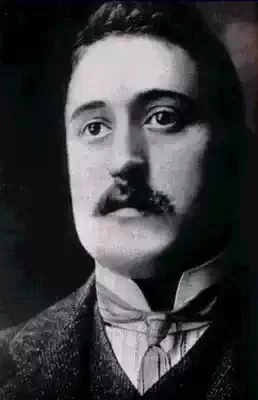
Guillaume Apollinaire
There Is
There Is
There is this ship which has taken my beloved back again
There are six Zeppelin sausages in the sky and with night
coming on it makes a man think of the maggots from which the
stars might some day be reborn
There is this enemy submarine slipping up beneath my love
There are one thousand young pinetrees splintered by the
bursting of the same shells falling around me now
There is this infantryman walking by completely blinded by
poison gas
There is the obvious fact that all that is happening here was
hatched a long time ago in the intestinal trenches of Nietzche
Goethe and the metaphysicians of the town of Cologne
There is the obvious fact that I'm dying over a letter which
has thus far been delayed
There are in my wallet various photos of my beloved
There are prisoners marching past with anxious faces
There is this artillery battery with its faithful servants
hurrying among the guns
There is the postmaster arriving at a trot on the road beneath
the single tree in silhouette
There is according to rumor a spy who infiltrates somewhere
near here invisible as the horizon as the horizon-blue French
uniform he has assumed for offensive purposes and in which he
is now most effectively camouflaged
There is erect as any lily the bosom of my beloved
There is this captain anxiously awaiting the latest radio
dispatch to reach us via transatlantic cable
There are at midnight these details of soldiers sawing planks
for coffins
There are women somewhere in Mexico pleading with wild cries
for more indian corn and maize
There is this Gulf Stream which is so warm and beneficial
There is this cemetery covered with crosses only five
kilometers away
There are all these crosses everywhere this way that way
There are paradisial persimmons growing on cactus-trees in
Algeria
There are the long hands of my love
There is this inkwell which I've made from a 150 mm shell I
saved from shooting
There is my calvary saddle left out in the rain
There are all these rivers blasted off their courses which will
never go back to their banks
There is the god of Love who leads me on so sweetly
There is this German prisoner carrying his machine-gun across
his shoulders
There are men on earth who've never fought in the war
There are Hindus here who look with astonishment on the
occidental style of campaign
They meditate gravely upon those who've left this place
wondering whether they'll ever see them again
Knowing as they do what great progress we've made during this
particular war in the art of invisibility.
There is this ship which has taken my beloved back again
There are six Zeppelin sausages in the sky and with night
coming on it makes a man think of the maggots from which the
stars might some day be reborn
There is this enemy submarine slipping up beneath my love
There are one thousand young pinetrees splintered by the
bursting of the same shells falling around me now
There is this infantryman walking by completely blinded by
poison gas
There is the obvious fact that all that is happening here was
hatched a long time ago in the intestinal trenches of Nietzche
Goethe and the metaphysicians of the town of Cologne
There is the obvious fact that I'm dying over a letter which
has thus far been delayed
There are in my wallet various photos of my beloved
There are prisoners marching past with anxious faces
There is this artillery battery with its faithful servants
hurrying among the guns
There is the postmaster arriving at a trot on the road beneath
the single tree in silhouette
There is according to rumor a spy who infiltrates somewhere
near here invisible as the horizon as the horizon-blue French
uniform he has assumed for offensive purposes and in which he
is now most effectively camouflaged
There is erect as any lily the bosom of my beloved
There is this captain anxiously awaiting the latest radio
dispatch to reach us via transatlantic cable
There are at midnight these details of soldiers sawing planks
for coffins
There are women somewhere in Mexico pleading with wild cries
for more indian corn and maize
There is this Gulf Stream which is so warm and beneficial
There is this cemetery covered with crosses only five
kilometers away
There are all these crosses everywhere this way that way
There are paradisial persimmons growing on cactus-trees in
Algeria
There are the long hands of my love
There is this inkwell which I've made from a 150 mm shell I
saved from shooting
There is my calvary saddle left out in the rain
There are all these rivers blasted off their courses which will
never go back to their banks
There is the god of Love who leads me on so sweetly
There is this German prisoner carrying his machine-gun across
his shoulders
There are men on earth who've never fought in the war
There are Hindus here who look with astonishment on the
occidental style of campaign
They meditate gravely upon those who've left this place
wondering whether they'll ever see them again
Knowing as they do what great progress we've made during this
particular war in the art of invisibility.
758
Guillaume Apollinaire
Pour Y.B.
Pour Y.B.
Bien qu'il me vienne en août votre quatrain d'avril
M'a gardé de tout mal et de toute blessure
Votre douceur me suit durant mon aventure
Au long de cet an sombre ainsi que fut l'an mil
Je vous remercierai s'il se peut je l'assure
Quand nous aurons vaincu le Boche lâche et vil
Dont la vertu française a ressenti l'injure.
Bien qu'il me vienne en août votre quatrain d'avril
M'a gardé de tout mal et de toute blessure
Votre douceur me suit durant mon aventure
Au long de cet an sombre ainsi que fut l'an mil
Je vous remercierai s'il se peut je l'assure
Quand nous aurons vaincu le Boche lâche et vil
Dont la vertu française a ressenti l'injure.
738
Guillaume Apollinaire
C’est Lou Qu’on La Nommait
C’est Lou Qu’on La Nommait
Il est des loups de toute sorte
Je connais le plus inhumain
Mon coeur que le diable l’emporte
Et qu’il le dépose à sa porte
N’est plus qu’un jouet dans sa main
Les loups jadis étaient fidèles
Comme sont les petits toutous
Et les soldats amants des belles
Galamment en souvenir d’elles
Ainsi que les loups étaient doux
Mais aujourd’hui les temps sont pires
Les loups sont tigres devenus
Et les Soldats et les Empires
Les Césars devenus Vampires
Sont aussi cruels que Vénus
J’en ai pris mon parti Rouveyre
Et monté sur mon grand cheval
Je vais bientôt partir en guerre
Sans pitié chaste et l’oeil sévère
Comme ces guerriers qu’Epinal
Vendait Images populaires
Que Georgin gravait dans le bois
Où sont-ils ces beaux militaires
Soldats passés Où sont les guerres
Où sont les guerres d’autrefois
Il est des loups de toute sorte
Je connais le plus inhumain
Mon coeur que le diable l’emporte
Et qu’il le dépose à sa porte
N’est plus qu’un jouet dans sa main
Les loups jadis étaient fidèles
Comme sont les petits toutous
Et les soldats amants des belles
Galamment en souvenir d’elles
Ainsi que les loups étaient doux
Mais aujourd’hui les temps sont pires
Les loups sont tigres devenus
Et les Soldats et les Empires
Les Césars devenus Vampires
Sont aussi cruels que Vénus
J’en ai pris mon parti Rouveyre
Et monté sur mon grand cheval
Je vais bientôt partir en guerre
Sans pitié chaste et l’oeil sévère
Comme ces guerriers qu’Epinal
Vendait Images populaires
Que Georgin gravait dans le bois
Où sont-ils ces beaux militaires
Soldats passés Où sont les guerres
Où sont les guerres d’autrefois
714
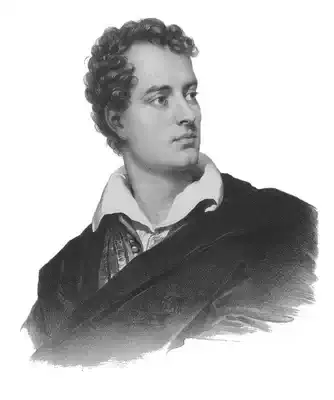
Lord Byron
Translation Of The Famous Greek War Song
Translation Of The Famous Greek War Song
Sons of the Greeks, arise!
The glorious hour's gone forth,
And, worthy of such ties,
Display who gave us birth.
CHORUS.
Sons of Greeks! let us go
In arms against the foe,
Till their hated blood shall flow
In a river past our feet.
Then manfully despising
The Turkish tyrant's yoke,
Let your country see you rising,
And all her chains are broke.
Brave shades of chiefs and sages,
Behold the coming strife!
Hellenes of past ages,
Oh, start again to life!
At the sound of my trumpet, breaking
Your sleep, oh, loin with me!
And the sevenhill'd
city seeking,
Fight, conquer, till we're free.
Sons of Greeks, &c.
Sparta, Sparta, why in slumbers
Lethargic dolt thou lie?
Awake, and join thy numbers
With Athens, old ally!
Leonidas recalling,
That chief of ancient song,
Who saved ye once from falling,
The terrible! the strong!
Who made that bold diversion
In old Thermopylæ
And warring with the Persian
To keep his country free;
With his three hundred waging
The battle, long he stood,
And like a lion raging,
Expired in seas of blood.
Sons of Greeks, &c.
Sons of the Greeks, arise!
The glorious hour's gone forth,
And, worthy of such ties,
Display who gave us birth.
CHORUS.
Sons of Greeks! let us go
In arms against the foe,
Till their hated blood shall flow
In a river past our feet.
Then manfully despising
The Turkish tyrant's yoke,
Let your country see you rising,
And all her chains are broke.
Brave shades of chiefs and sages,
Behold the coming strife!
Hellenes of past ages,
Oh, start again to life!
At the sound of my trumpet, breaking
Your sleep, oh, loin with me!
And the sevenhill'd
city seeking,
Fight, conquer, till we're free.
Sons of Greeks, &c.
Sparta, Sparta, why in slumbers
Lethargic dolt thou lie?
Awake, and join thy numbers
With Athens, old ally!
Leonidas recalling,
That chief of ancient song,
Who saved ye once from falling,
The terrible! the strong!
Who made that bold diversion
In old Thermopylæ
And warring with the Persian
To keep his country free;
With his three hundred waging
The battle, long he stood,
And like a lion raging,
Expired in seas of blood.
Sons of Greeks, &c.
566
Lord Byron
To-- : From The French
To-- : From The French
Must thou go, my glorious Chief,
Sever'd from thy faithful few?
Who can tell thy warrior's grief,
Maddening o'er that long adieu?
Woman's love, and friendship's zeal,
Dear as both have been to meWhat
are they to all I feel,
With a soldier's faith for thee?
Idol of the soldier's soul!
First in fight, but mightiest now;
Many could a world control;
Thee alone no doom can bow.
By thy side for years I dared
Death; and envied those who fell,
When their dying shout was heard,
Blessing him they served so well.
Would that I were cold with those,
Since this hour I live to see;
When the doubts of coward foes
Scarce dare trust a man with thee,
Dreading each should set thee free!
Oh! although in dungeons pent,
All their chains were light to me,
Gazing on thy soul unbent.
Would the sycophants of him
Now so deaf to duty's prayer,
Were his borrow'd glories dim,
In his native darkness share?
Were that world this hour his own,
All thou calmly dost resign,
Could he purchase with that throne
Hearts like those which still are thine?
My chief, my king, my friend, adieu!
Never did I droop before;
Never to my sovereign sue,
As his foes I now implore:
All I ask is to divide
Every peril he must brave;
Sharing by the hero's side
His fall, his exile, and his grave.
Must thou go, my glorious Chief,
Sever'd from thy faithful few?
Who can tell thy warrior's grief,
Maddening o'er that long adieu?
Woman's love, and friendship's zeal,
Dear as both have been to meWhat
are they to all I feel,
With a soldier's faith for thee?
Idol of the soldier's soul!
First in fight, but mightiest now;
Many could a world control;
Thee alone no doom can bow.
By thy side for years I dared
Death; and envied those who fell,
When their dying shout was heard,
Blessing him they served so well.
Would that I were cold with those,
Since this hour I live to see;
When the doubts of coward foes
Scarce dare trust a man with thee,
Dreading each should set thee free!
Oh! although in dungeons pent,
All their chains were light to me,
Gazing on thy soul unbent.
Would the sycophants of him
Now so deaf to duty's prayer,
Were his borrow'd glories dim,
In his native darkness share?
Were that world this hour his own,
All thou calmly dost resign,
Could he purchase with that throne
Hearts like those which still are thine?
My chief, my king, my friend, adieu!
Never did I droop before;
Never to my sovereign sue,
As his foes I now implore:
All I ask is to divide
Every peril he must brave;
Sharing by the hero's side
His fall, his exile, and his grave.
508
Lord Byron
The Vision of Judgment
The Vision of Judgment
I
Saint Peter sat by the celestial gate:
His keys were rusty, and the lock was dull,
So little trouble had been given of late;
Not that the place by any means was full,
But since the Gallic era 'eighteight'
The devils had ta'en a longer, stronger pull,
And 'a pull altogether,' as they say
At sea — which drew most souls another way.
II
The angels all were singing out of tune,
And hoarse with having little else to do,
Excepting to wind up the sun and moon,
Or curb a runaway young star or two,
Or wild colt of a comet, which too soon
Broke out of bounds o'er th' ethereal blue,
Splitting some planet with its playful tail,
As boats are sometimes by a wanton whale.
III
The guardian seraphs had retired on high,
Finding their charges past all care below;
Terrestrial business fill'd nought in the sky
Save the recording angel's black bureau;
Who found, indeed, the facts to multiply
With such rapidity of vice and woe,
That he had stripp'd off both his wings in quills,
And yet was in arrear of human ills.
IV
His business so augmented of late years,
That he was forced, against his will no doubt,
(Just like those cherubs, earthly ministers,)
For some resource to turn himself about,
And claim the help of his celestial peers,
To aid him ere he should be quite worn out
By the increased demand for his remarks:
Six angels and twelve saints were named his clerks.
V
This was a handsome board — at least for heaven;
And yet they had even then enough to do,
So many conqueror's cars were daily driven,
So many kingdoms fitted up anew;
Each day too slew its thousands six or seven,
Till at the crowning carnage, Waterloo,
They threw their pens down in divine disgust —
The page was so besmear'd with blood and dust.
VI
This by the way: 'tis not mine to record
What angels shrink Wrom: ZAAFXISHJEXXIMQZUIVO
On this occasion his own work abhorr'd,
So surfeited with the infernal revel:
Though he himself had sharpen'd every sword,
It almost quench'd his innate thirst of evil.
(Here Satan's sole good work deserves insertion —
'Tis, that he has both generals in reveration.)
VII
Let's skip a few short years of hollow peace,
Which peopled earth no better, hell as wont,
And heaven none — they form the tyrant's lease,
With nothing but new names subscribed upon't;
'Twill one day finish: meantime they increase,
'With seven heads and ten horns,' and all in front,
Like Saint John's foretold beast; but ours are born
Less formidable in the head than horn.
VIII
In the first year of freedom's second dawn
Died George the Third; although no tyrant, one
Who shielded tyrants, till each sense withdrawn
Left him nor mental nor external sun:
A better farmer ne'er brush'd dew from lawn,
A worse king never left a realm undone!
He died — but left his subjects still behind,
One half as mad — and t'other no less blind.
IX
He died! his death made no great stir on earth:
His burial made some pomp; there was profusion
Of velvet, gilding, brass, and no great dearth
Of aught but tears — save those shed by collusion.
For these things may be bought at their true worth;
Of elegy there was the due infusion —
Bought also; and the torches, cloaks, and banners,
Heralds, and relics of old Gothic manners,
X
Form'd a sepulchral melodrame.
Of all
The fools who flack's to swell or see the show,
Who cared about the corpse? The funeral
Made the attraction, and the black the woe.
There throbbed not there a thought which pierced the pall;
And when the gorgeous coffin was laid low,
It seamed the mockery of hell to fold
The rottenness of eighty years in gold.
XI
So mix his body with the dust! It might
Return to what it must far sooner, were
The natural compound left alone to fight
Its way back into earth, and fire, and air;
But the unnatural balsams merely blight
What nature made him at his birth, as bare
As the mere million's base unmarried clay —
Yet all his spices but prolong decay.
XII
He's dead — and upper earth with him has done;
He's buried; save the undertaker's bill,
Or lapidary scrawl, the world is gone
For him, unless he left a German will:
But where's the proctor who will ask his son?
In whom his qualities are reigning still,
Except that household virtue, most uncommon,
Of constancy to a bad, ugly woman.
XIII
'God save the king!' It is a large economy
In God to save the like; but if he will
Be saving, all the better; for not one am I
Of those who think damnation better still:
I hardly know too if not quite alone am I
In this small hope of bettering future ill
By circumscribing, with some slight restriction,
The eternity of hell's hot jurisdiction.
XIV
I know this is unpopular; I know
'Tis blasphemous; I know one may be damned
For hoping no one else may ever be so;
I know my catechism; I know we're caromed
With the best doctrines till we quite o'erflow;
I know that all save England's church have shamm'd,
And that the other twice two hundred churches
And synagogues have made a damn'd bad purchase.
XV
God help us all! God help me too! I am,
God knows, as helpless as the devil can wish,
And not a whit more difficult to damn,
Than is to bring to land a latehook'd
fish,
Or to the butcher to purvey the lamb;
Not that I'm fit for such a noble dish,
As one day will be that immortal fry
Of almost everybody born to die.
XVI
Saint Peter sat by the celestial gate,
And nodded o'er his keys; when, lo! there came
A wondrous noise he had not heard of late —
A rushing sound of wind, and stream, and flame;
In short, a roar of things extremely great,
Which would have made aught save a saint exclaim;
But he, with first a start and then a wink,
Said, 'There's another star gone out, I think!'
XVII
But ere he could return to his repose,
A cherub flapp'd his right wing o'er his eyes —
At which St. Peter yawn'd, and rubb'd his hose:
'Saint porter,' said the angel, 'prithee rise!'
Waving a goodly wing, which glow'd, as glows
An earthly peacock's tail, with heavenly dyes;
To which the saint replied, 'Well, what's the matter?
'Is Lucifer come back with all this clatter?'
XVIII
'No,' quoth the cherub; 'George the Third is dead.'
'And who is George the Third?' replied the apostle;
'What George? what Third?' 'The king of England,' said
The angel. 'Well, he won't find kings to jostle
Him on his way; but does he wear his head?
Because the last we saw here had a tussle,
And ne'er would have got into heaven's good graces,
Had he not flung his head in all our faces.
XIX
'He was, if I remember, king of France;
That head of his, which could not keep a crown
On earth, yet ventured in my face to advance
A claim to those of martyrs — like my own:
If I had had my sword, as I had once
When I cut ears off, I had cut him down;
But having but my keys, and not my brand,
I only knock'd his head from out his hand.
XX
'And then he set up such a headless howl,
That all the saints came out and took him in;
And there he sits by St. Paul, cheek by jowl;
That fellow Paul— the parvenù! The skin
Of St. Bartholomew, which makes his cowl
In heaven, and upon earth redeem'd his sin,
So as to make a martyr, never sped
Better than did this weak and wooden head.
XXI
'But had it come up here upon its shoulders,
There would have been a different tale to tell;
The fellowfeeling
in the saint's beholders
Seems to have acted on them like a spell,
And so this very foolish head heaven solders
Back on its trunk: it may be very well,
And seems the custom here to overthrow
Whatever has been wisely done below.'
XXII
The angel answer'd, 'Peter! do not pout:
The king who comes has head and all entire,
And never knew much what it was about —
He did as doth the puppet — by its wire,
And will be judged like all the rest, no doubt:
My business and your own is not to inquire
Into such matters, but to mind our cue —
Which is to act as we are bid to do.'
XXIII
While thus they spake, the angelic caravan,
Arriving like a rush of mighty wind,
Cleaving the fields of space, as doth the swan
Some silver stream (say Ganges, Nile, or Inde,
Or Thames, or Tweed), and 'midst them an old man
With an old soul, and both extremely blind,
Halted before the gate, and in his shroud
Seated their fellow traveller on a cloud.
XXIV
But bringing up the rear of this bright host
A Spirit of a different aspect waves
His wings, like thunderclouds
above some coast
Whose barren beach with frequent wrecks is paved;
His brow was like the deep when tempesttoss'd;
Fierce and unfathomable thoughts engraved
Eternal wrath on his immortal face,
And where he gazed a gloom pervaded space.
XXV
As he drew near, he gazed upon the gate
Ne'er to be enter'd more by him or Sin,
With such a glance of supernatural hate,
As made Saint Peter wish himself within;
He potter'd with his keys at a great rate,
And sweated through his apostolic skin:
Of course his perspiration was but ichor,
Or some such other spiritual liquor.
XXIV
The very cherubs huddled all together,
Like birds when soars the falcon; and they felt
A tingling to the top of every feather,
And form'd a circle like Orion's belt
Around their poor old charge; who scarce knew whither
His guards had led him, though they gently dealt
With royal manes (for by many stories,
And true, we learn the angels all are Tories.)
XXVII
As things were in this posture, the gate flew
Asunder, and the flashing of its hinges
Flung over space an universal hue
Of manycolour'd
flame, until its tinges
Reach'd even our speck of earth, and made a new
Aurora borealis spread its fringes
O'er the North Pole; the same seen, when icebound,
By Captain Parry's crew, in 'Melville's Sound.'
XXVIII
And from the gate thrown open issued beaming
A beautiful and mighty Thing of Light,
Radiant with glory, like a banner streaming
Victorious from some worldo'erthrowing
fight:
My poor comparisons must needs be teeming
With earthly likenesses, for here the night
Of clay obscures our best conceptions, saving
Johanna Southcote, or Bob Southey raving.
XXIX
'Twas the archangel Michael; all men know
The make of angels and archangels, since
There's scarce a scribbler has not one to show,
From the fiends' leader to the angels' prince;
There also are some altarpieces,
though
I really can't say that they much evince
One's inner notions of immortal spirits;
But let the connoisseurs explain their merits.
XXX
Michael flew forth in glory and in good;
A goodly work of him from whom all glory
And good arise; the portal past — he stood;
Before him the young cherubs and saints hoary —
(I say young, begging to be understood
By looks, not years; and should be very sorry
To state, they were not older than St. Peter,
But merely that they seem'd a little sweeter.
XXXI
The cherubs and the saints bow'd down before
That archangelic
Hierarch, the first
Of essences angelical, who wore
The aspect of a god; but this ne'er nursed
Pride in his heavenly bosom, in whose core
No thought, save for his Master's service, durst
Intrude, however glorified and high;
He knew him but the viceroy of the sky.
XXXII
He and the sombre, silent Spirit met —
They knew each other both for good and ill;
Such was their power, that neither could forget
His former friend and future foe; but still
There was a high, immortal, proud regret
In either's eye, as if 'twere less their will
Than destiny to make the eternal years
Their date of war, and their 'champ clos' the spheres.
XXXIII
But here they were in neutral space: we know
From Job, that Satan hath the power to pay
A heavenly visit thrice a year or so;
And that the 'sons of God', like those of clay,
Must keep him company; and we might show
From the same book, in how polite a way
The dialogue is held between the Powers
Of Good and Evil — but 'twould take up hours.
XXXIV
And this is not a theologic tract,
To prove with Hebrew and with Arabic,
If Job be allegory or a fact,
But a true narrative; and thus I pick
From out the whole but such and such an act
As sets aside the slightest thought of trick.
'Tis every tittle true, beyond suspicion,
And accurate as any other vision.
XXXV
The spirits were in neutral space, before
The gates of heaven; like eastern thresholds is
The place where Death's grand cause is argued o'er,
And souls despatch'd to that world or to this;
And therefore Michael and the other wore
A civil aspect: though they did not kiss,
Yet still between his Darkness and his Brightness
There pass'd a mutual glance of great politeness.
XXXVI
The Archangel bow'd, not like a modern beau,
But with a graceful Oriental bend,
Pressing one radiant arm just where below
The heart in good men is supposed to tend;
He turn'd as to an equal, not too low,
But kindly; Satan met his ancient friend
With more hauteur, as might an old Castilian
Poor noble meet a mushroom rich civilian.
XXXVII
He merely bent his diabolic brow
An instant; and then raising it, he stood
In act to assert his right or wrong, and show
Cause why King George by no means could or should
Make out a case to be exempt from woe
Eternal, more than other kings, endued
With better sense and hearts, whom history mentions,
Who long have 'paved hell with their good intentions.'
XXXVIII
Michael began: 'What wouldst thou with this man,
Now dead, and brought before the Lord? What ill
Hath he wrought since his mortal race began,
That thou cans't claim him? Speak! and do thy will,
If it be just: if in this earthly span
He hath been greatly failing to fulfil
His duties as a king and mortal, say,
And he is thine; if not, let him have way.'
XXXIX
'Michael!' replied the Prince of Air, 'even here,
Before the Gate of him thou servest, must
I claim my subject: and will make appear
That as he was my worshipper in dust,
So shall he be in spirit, although dear
To thee and thine, because nor wine nor lust
Were of his weaknesses; yet on the throne
He reign'd o'er millions to serve me alone.
XL
'Look to our earth, or rather mine; it was,
Once, more thy master's: but I triumph not
In this poor planet's conquest; nor, alas!
Need he thou servest envy me my lot:
With all the myriads of bright worlds which pass
In worship round him, he may have forgot
Yon weak creation of such paltry things;
I think few worth damnation save their kings, —
XLI
'And these but as a kind of quitrent,
to
Assert my right as lord: and even had
I such an inclination, 'twere (as you
Well know) superfluous; they are grown so bad,
That hell has nothing better left to do
Than leave them to themselves: so much more mad
And evil by their own internal curse,
Heaven cannot make them better, nor I worse.
XLII
'Look to the earth, I said, and say again:
When this old, blind, mad, helpless, weak, poor worm
Began in youth's first bloom and flush to reign,
The world and he both wore a different form,
And must of earth and all the watery plain
Of ocean call'd him king: through many a storm
His isles had floated on the abyss of time;
For the rough virtues chose them for their clime.
XLIII
'He came to his sceptre young: he leaves it old:
Look to the state in which he found his realm,
And left it; and his annals too behold,
How to a minion first he gave the helm;
How grew upon his heart a thirst for gold,
The beggar's vice, which can but overwhelm
The meanest of hearts; and for the rest, but glance
Thine eye along America and France.
XLIV
'Tis true, he was a tool from first to last
(I have the workmen safe); but as a tool
So let him be consumed. From out the past
Of ages, since mankind have known the rule
Of monarchs — from the bloody rolls amass'd
Of sin and slaughter — from the Cæsar's school,
Take the worst pupil; and produce a reign
More drench'd with gore, more cumber'd with the slain.
XLV
'He ever warr'd with freedom and the free:
Nations as men, home subjects, foreign foes,
So that they utter'd the word "Liberty!"
Found George the Third their first opponent. Whose
History was ever stain'd as his will be
With national and individual woes?
I grant his household abstinence; I grant
His neutral virtues, which most monarchs want;
XLVI
'I know he was a constant consort; own
He was a decent sire, and middling lord.
All this is much, and most upon a throne;
As temperance, if at Apicius' board,
Is more than at an anchorite's supper shown.
I grant him all the kindest can accord;
And this was well for him, but not for those
Millions who found him what oppression chose.
XLVII
'The New World shook him off; the Old yet groans
Beneath what he and his prepared, if not
Completed: he leaves heirs on many thrones
To all his vices, without what begot
Compassion for him — his tame virtues; drones
Who sleep, or despots who have not forgot
A lesson which shall be retaught
them, wake
Upon the thrones of earth; but let them quake!
XLVIII
'Five millions of the primitive, who hold
The faith which makes ye great on earth, implored
A part of that vast all they held of old, —
Freedom to worship — not alone your Lord,
Michael, but you, and you, Saint Peter! Cold
Must be your souls, if you have not abhorr'd
The foe to Catholic participation
In all the license of a Christian nation.
XLIX
'True! he allow'd them to pray God; but as
A consequence of prayer, refused the law
Which would have placed them upon the same base
With those who did not hold the saints in awe.'
But here Saint Peter started from his place,
And cried, 'You may the prisoner withdraw:
Ere heaven shall ope her portals to this Guelph,
While I am guard, may I be damn'd myself!
L
'Sooner will I with Cerberus exchange
My office (and his no sinecure)
Than see this royal Bedlam bigot range
The azure fields of heaven, of that be sure!'
'Saint!' replied Satan, 'you do well to avenge
The wrongs he made your satellites endure;
And if to this exchange you should be given,
I'll try to coax our Cerberus up to heaven!'
LI
Here Michael interposed: 'Good saint! and devil!
Pray, not so fast; you both outrun discretion.
Saint Peter! you were wont to be more civil!
Satan! excuse this warmth of his expression,
And condescension to the vulgar's level:
Event saints sometimes forget themselves in session.
Have you got more to say?' — 'No.' — If you please
I'll trouble you to call your witnesses.'
LII
Then Satan turn'd and waved his swarthy hand,
Which stirr'd with its electric qualities
Clouds farther off than we can understand,
Although we find him sometimes in our skies;
Infernal thunder shook both sea and land
In all the planets, and hell's batteries
Let off the artillery, which Milton mentions
As one of Satan's most sublime inventions.
LIII
This was a signal unto such damn'd souls
As have the privilege of their damnation
Extended far beyond the mere controls
Of worlds past, present, or to come; no station
Is theirs particularly in the rolls
Of hell assign'd; but where their inclination
Or business carries them in search of game,
They may range freely — being damn'd the same.
LIV
They're proud of this — as very well they may,
It being a sort of knighthood, or gilt key
Stuck in their loins; or like to an 'entré'
Up the back stairs, or such freemasonry.
I borrow my comparisons from clay,
Being clay myself. Let not those spirits be
Offended with such base low likenesses;
We know their posts are nobler far than these.
LV
When the great signal ran from heaven to hell —
About ten million times the distance reckon'd
From our sun to its earth, as we can tell
How much time it takes up, even to a second,
For every ray that travels to dispel
The fogs of London, through which, dimly beacon'd,
The weathercocks are gilt some thrice a year,
If that the summer is not too severe;
LVI
I say that I can tell — 'twas half a minute;
I know the solar beams take up more time
Ere, pack'd up for their journey, they begin it;
But then their telegraph is less sublime,
And if they ran a race, they would not win it
'Gainst Satan's couriers bound for their own clime.
The sun takes up some years for every ray
To reach its goal — the devil not half a day.
LVII
Upon the verge of space, about the size
Of halfacrown,
a little speck appear'd
(I've seen a something like it in the skies
In the Ægean, ere a squall); it near'd,
And growing bigger, took another guise;
Like an aërial ship it tack'd, and steer'd,
Or was steer'd (I am doubtful of the grammar
Of the last phrase, which makes the stanza stammer; —
LVIII
But take your choice): and then it grew a cloud;
And so it was — a cloud of witnesses.
But such a cloud! No land e'er saw a crowd
Of locusts numerous as the heavens saw these;
They shadow'd with their myriads space; their loud
And varied cries were like those of wild geese
(If nations may be liken'd to a goose),
And realised the phrase of 'hell broke loose.'
LIX
Here crash'd a sturdy oath of stout John Bull,
Who damn'd away his eyes as heretofore:
There Paddy brogued, 'By Jasus!' — 'What's your wull?'
The temperate Scot exclaim'd: the French ghost swore
In certain terms I shan't translate in full,
As the first coachman will; and 'midst the roar,
The voice of Jonathan was heard to express,
'Our president is going to war, I guess.'
LX
Besides there were the Spaniard, Dutch, and Dane;
In short, an universal shoal of shades,
From Otaheite's isle to Salisbury Plain,
Of all climes and professions, years and trades,
Ready to swear against the good king's reign,
Bitter as clubs in cards are against spades:
All summon'd by this grand 'subpoena,' to
Try if kings mayn't be damn'd like me or you.
LXI
When Michael saw this host, he first grew pale,
As angels can; next, like Italian twilight,
He turn'd all colours — as a peacock's tail,
Or sunset streaming through a Gothic skylight
In some old abbey, or a trout not stale,
Or distant lightning on the horizon by night,
Or a fresh rainbow, or a grand review
Of thirty regiments in red, green, and blue.
LXII
Then he address'd himself to Satan: 'Why —
My good old friend, for such I deem you, though
Our different parties make us fight so shy,
I ne'er mistake you for a personal foe;
Our difference is political, and I
Trust that, whatever may occur below,
You know my great respect for you; and this
Makes me regret whate'er you do amiss —
LXIII
'Why, my dear Lucifer, would you abuse
My call for witnesses? I did not mean
That you should half of earth and hell produce;
'Tis even superfluous, since two honest, clean
True testimonies are enough: we lose
Our time, nay, our eternity, between
The accusation and defence: if we
Hear both, 'twill stretch our immortality.'
LXIV
Satan replied, 'To me the matter is
Indifferent, in a personal point of view;
I can have fifty better souls than this
With far less trouble than we have gone through
Already; and I merely argued his
Late majesty of Britain's case with you
Upon a point of form: you may dispose
Of him; I've kings enough below, God knows!'
LXV
Thus spoke the Demon (late call'd 'multifaced'
By multoscribbling
Southey). 'Then we'll call
One or two persons of the myriads placed
Around our congress, and dispense with all
The rest,' quoth Michael: 'Who may be so graced
As to speak first? there's choice enough — who shall
It be?' Then Satan answer'd, 'There are many;
But you may choose Jack Wilkes as well as any.'
LXVI
A merry, cockeyed,
curiouslooking
sprite
Upon the instant started from the throng,
Dress'd in a fashion now forgotten quite;
For all the fashions of the flesh stick long
By people in the next world; where unite
All the costumes since Adam's, right or wrong,
From Eve's figleaf
down to the petticoat,
Almost as scanty, of days less remote.
LXVII
The spirit look'd around upon the crowds
Assembled, and exclaim'd, 'My friends of all
The spheres, we shall catch cold amongst these clouds;
So let's to business: why this general call?
If those are freeholders I see in shrouds,
And 'tis for an election that they bawl,
Behold a candidate with unturn'd coat!
Saint Peter, may I count upon your vote?'
LXVIII
'Sir,' replied Michael, 'you mistake; these things
Are of a former life, and what we do
Above is more august; to judge of kings
Is the tribunal met: so now you know.'
'Then I presume those gentlemen with wings,'
Said Wilkes, 'are cherubs; and that soul below
Looks much like George the Third, but to my mind
A good deal older — Bless me! is he blind?'
LXIX
'He is what you behold him, and his doom
Depends upon his deeds,' the Angel said;
'If you have aught to arraign in him, the tomb
Give licence to the humblest beggar's head
To lift itself against the loftiest.' — 'Some,'
Said Wilkes, 'don't wait to see them laid in lead,
For such a liberty — and I, for one,
Have told them what I though beneath the sun.'
LXX
'Above the sun repeat, then, what thou hast
To urge against him,' said the Archangel. 'Why,'
Replied the spirit, 'since old scores are past,
Must I turn evidence? In faith, not I.
Besides, I beat him hollow at the last,
With all his Lords and Commons: in the sky
I don't like ripping up old stories, since
His conduct was but natural in a prince.
LXXI
'Foolish, no doubt, and wicked, to oppress
A poor unlucky devil without a shilling;
But then I blame the man himself much less
Than Bute and Grafton, and shall be unwilling
To see him punish'd here for their excess,
Since they were both damn'd long ago, and still in
Their place below: for me, I have forgiven,
And vote his "habeas corpus" into heaven.'
LXXII
'Wilkes,' said the Devil, 'I understand all this;
You turn'd to half a courtier ere you died,
And seem to think it would not be amiss
To grow a whole one on the other side
Of Charon's ferry; you forget that his
Reign is concluded; whatso'er betide,
He won't be sovereign more: you've lost your labor,
For at the best he will be but your neighbour.
LXXIII
'However, I knew what to think of it,
When I beheld you in your jesting way,
Flitting and whispering round about the spit
Where Belial, upon duty for the day,
With Fox's lard was basting William Pitt,
His pupil; I knew what to think, I say:
That fellow even in hell breeds farther ills;
I'll have him gagg'd — 'twas one of his own bills.
LXXIV
'Call Junius!' From the crowd a shadow stalk'd,
And at the same there was a general squeeze,
So that the very ghosts no longer walk'd
In comfort, at their own aërial ease,
But were all ramm'd, and jamm'd (but to be balk'd,
As we shall see), and jostled hands and knees,
Like wind compress'd and pent within a bladder,
Or like a human colic, which is sadder.
LXXV
The shadow came — a tall, thin, greyhair'd
figure,
That look'd as it had been a shade on earth;
Quick in it motions, with an air of vigour,
But nought to mar its breeding or its birth;
Now it wax'd little, then again grew bigger,
With now an air of gloom, or savage mirth;
But as you gazed upon its features, they
Changed every instant — to what, none could say.
LXXVI
The more intently the ghosts gazed, the less
Could they distinguish whose the features were;
The Devil himself seem'd puzzled even to guess;
They varied like a dream — now here, now there;
And several people swore from out the press
They knew him perfectly; and one could swear
He was his father: upon which another
Was sure he was his mother's cousin's brother:
LXXVII
Another, that he was a duke, or a knight,
An orator, a lawyer, or a priest,
A nabob, a manmidwife;
but the wight
Mysterious changed his countenance at least
As oft as they their minds; though in full sight
He stood, the puzzle only was increased;
The man was a phantasmagoria in
Himself — he was so volatile and thin.
LXXVIII
The moment that you had pronounce him one,
Presto! his face change'd and he was another;
And when that change was hardly well put on,
It varied, till I don't think his own mother
(If that he had a mother) would her son
Have known, he shifted so from one to t'other;
Till guessing from a pleasure grew a task,
At this epistolary 'Iron Mask.'
LXXIX
For sometimes he like Cerberus would seem —
'Three gentlemen at once' (as sagely says
Good Mrs. Malaprop); then you might deem
That he was not even one; now many rays
Were flashing round him; and now a thick steam
Hid him from sight — like fogs on London days:
Now Burke, now Tooke he grew to people's fancies,
And certes often like Sir Philip Francis.
LXXX
I've an hypothesis — 'tis quite my own;
I never let it out till now, for fear
Of doing people harm about the throne,
And injuring some minister or peer,
On whom the stigma might perhaps be blown;
It is — my gentle public, lend thine ear!
'Tis, that what Junius we are wont to call
Was really, truly, nobody at all.
LXXXI
I don't see wherefore letters should not be
Written without hands, since we daily view
Them written without heads; and books, we see,
Are fill'd as well without the latter too:
And really till we fix on somebody
For certain sure to claim them as his due,
Their author, like the Niger's mouth, will bother
The world to say if there be mouth or author.
LXXXII
'And who and what art thou?' the Archangel said.
'For that you may consult my titlepage,'
Replied this mighty shadow of a shade:
'If I have kept my secret half an age,
I scarce shall tell it now.' — 'Canst thou upbraid,'
Continued Michael, 'George Rex, or allege
Aught further?' Junius answer'd, 'You had better
First ask him for his answer to my letter:
LXXXIII
'My charges upon record will outlast
The brass of both his epitaph and tomb.'
'Repent'st thou not,' said Michael, 'of some past
Exaggeration? something which may doom
Thyself if false, as him if true? Thou wast
Too bitter — is it not so? — in thy gloom
Of passion?' — 'Passion!' cried the phantom dim,
'I loved my country, and I hated him.
LXXXIV
'What I have written, I have written: let
The rest be on his head or mine!' So spoke
Old 'Nominis Umbra'; and while speaking yet,
Away he melted in celestial smoke.
Then Satan said to Michael, 'Don't forget
To call George Washington, and John Horne Tooke,
And Franklin;' — but at this time was heard
A cry for room, though not a phantom stirr'd.
LXXXV
At length with jostling, elbowing, and the aid
Of cherubim appointed to that post,
The devil Asmodeus to the circle made
His way, and look'd as if his journey cost
Some trouble. When his burden down he laid,
'What's this?' cried Michael; 'why, 'tis not a ghost?'
'I know it,' quoth the incubus; 'but he
Shall be one, if you leave the affair to me.
LXXXVI
'Confound the renegado! I have sprain'd
My left wing, he's so heavy; one would think
Some of his works about his neck were chain'd.
But to the point; while hovering o'er the brink
Of Skiddaw (where as usual it still rain'd),
I saw a taper, far below me, wink,
And stooping, caught this fellow at a libel —
No less on history than the Holy Bible.
LXXXVII
'The former is the devil's scripture, and
The latter yours, good Michael: so the affair
Belongs to all of us, you understand.
I snatch'd him up just as you see him there,
And brought him off for sentence out of hand:
I've scarcely been ten minutes in the air —
At least a quarter it can hardly be:
I dare say that his wife is still at tea.'
LXXXVIII
Here Satan said, 'I know this man of old,
And have expected him for some time here;
A sillier fellow you will scarce behold,
Or more conceited in his petty sphere:
But surely it was not worth while to fold
Such trash below your wing, Asmodeus dear:
We had the poor wretch safe (without being bored
With carriage) coming of his own accord.
LXXXIX
'But since he's here, let's see what he has done.'
'Done!' cried Asmodeus, 'he anticipates
The very business you are now upon,
And scribbles as if head clerk to the Fates,
Who knows to what his ribaldry may run,
When such an ass as this, like Balaam's, prates?'
'Let's hear,' quoth Michael, 'what he has to say;
You know we're bound to that in every way.'
XC
Now the bard, glad to get an audience which
By no means oft was his case below,
Began to cough, and hawk, and hem, and pitch
His voice into that awful note of woe
To all unhappy hearers within reach
Of poets when the tide of rhyme's in flow;
But stuck fast with his first hexameter,
Not one of all whose gouty feet would stir.
XCI
But ere the spavin'd dactyls could be spurr'd
Into recitative, in great dismay
Both cherubim and seraphim were heard
To murmur loudly through their long array:
And Michael rose ere he could get a word
Of all his founder'd verses under way.
And cried, 'For God's sake stop, my friend! 'twere best —
Non Di, non homines —you
know the rest.'
XCII
A general bustle spread throughout the throng.
Which seem'd to hold all verse in detestation;
The angels had of course enough of song
When upon service; and the generation
Of ghosts had heard too much in life, not long
Before, to profit by a new occasion;
The monarch, mute till then, exclaim'd, 'What! What!
Pye come again? No more — no more of that!'
XCIII
The tumult grew; an universal cough
Convulsed the skies, as during a debate
When Castlereagh has been up long enough
(Before he was first minister of state,
I mean — the slaves hear now); some cried 'off, off!'
As at a farce; till, grown quite desperate,
The bard Saint Peter pray'd to interpose
(Himself an author) only for his prose.
XCIV
The varlet was not an illfavour'd
knave;
A good deal like a vulture in the face,
With a hook nose and a hawk'd eye, which gave
A smart and sharperlooking
sort of grace
To his whole aspect, which, though rather grave,
Was by no means so ugly as his case;
But that, indeed, was hopeless as can be,
Quite a poetic felony, 'de se.'
XCV
Then Michael blew his trump, and still'd the noise
With one still greater, as is yet the mode
On earth besides; except some grumbling voice,
Which now and then will make a slight inroad
Upon decorous silence, few will twice
Lift up their lungs when fairly overcrow'd;
And now the bard could plead his own bad cause,
With all the attitudes of selfapplause.
XCVI
He said — (I only give the heads) — he said,
He meant no harm in scribbling; 'twas his way
Upon all topics; 'twas, besides, his bread,
Of which he butter'd both sides; 'twould delay
Too long the assembly (he was pleased to dread),
And take up rather more time than a day,
To name his works — he would but cite a few —
'Wat Tyler' — 'Rhymes on Blenheim' — 'Waterloo.'
XCVII
He had written praises of a regicide:
He had written praises of all kings whatever;
He had written for republics far and wide;
And then against them bitterer than ever;
For pantisocracy he once had cried
Aloud, a scheme less moral than 'twas clever;
Then grew a hearty antiJacobin
—
Had turn'd his coat — and would have turn'd his skin.
XCVIII
He had sung against all battles, and again
In their high praise and glory; he had call'd
Reviewing (1)'the ungentle craft,' and then
Become as base a critic as e'er crawl'd —
Fed, paid, and pamper'd by the very men
By whom his muse and morals had been maul'd:
He had written much blank verse, and blanker prose,
And more of both than anybody knows.
XCIX
He had written Wesley's life: — here turning round
To Satan, 'Sir, I'm ready to write yours,
In two octavo volumes, nicely bound,
With notes and preface, all that most allures
The pious purchaser; and there's no ground
For fear, for I can choose my own reviews:
So let me have the proper documents,
That I may add you to my other saints.'
C
Satan bow'd, and was silent. 'Well, if you,
With amiable modesty, decline
My offer, what says Michael? There are few
Whose memoirs could be render'd more divine.
Mine is a pen of all work; not so new
As it once was, but I would make you shine
Like your own trumpet. By the way, my own
Has more of brass in it, and is as well blown.
CI
'But talking about trumpets, here's my Vision!
Now you shall judge, all people; yes, you shall
Judge with my judgment, and by my decision
Be guided who shall enter heaven or fall.
I settle all these things by intuition,
Times present, past, to come, heaven, hell, and all,
Like King Alfonso(2). When I thus see double,
I save the Deity some worlds of trouble.'
CII
He ceased, and drew forth an MS.; and no
Persuasion on the part of devils, saints,
Or angels, now could stop the torrent; so
He read the first three lines of the contents;
But at the fourth, the whole spiritual show
Had vanish'd, with variety of scents,
Ambrosial and sulphureous, as they sprang,
Like lightning, off from his 'melodious twang.' (3)
CIII
Those grand heroics acted as a spell:
The angels stopp'd their ears and plied their pinions;
The devils ran howling, deafen'd, down to hell;
The ghosts fled, gibbering, for their own dominions —
(For 'tis not yet decided where they dwell,
And I leave every man to his opinions);
Michael took refuge in his trump — but, lo!
His teeth were set on edge, he could not blow!
CIV
Saint Peter, who has hitherto been known
For an impetuous saint, upraised his keys,
And at the fifth line knock'd the poet down;
Who fell like Phaeton, but more at ease,
Into his lake, for there he did not drown;
A different web being by the Destinies
Woven for the Laureate's final wreath, whene'er
Reform shall happen either here or there.
CV
He first sank to the bottom like
his works,
But soon rose to the surface — like himself;
For all corrupted things are bouy'd like corks,(4)
By their own rottenness, light as an elf,
Or wisp that flits o'er a morass: he lurks,
It may be, still, like dull books on a shelf,
In his own den, to scrawl some 'Life' or 'Vision,'
As Welborn says — 'the devil turn'd precisian.'
CVI
As for the rest, to come to the conclusion
Of this true dream, the telescope is gone
Which kept my optics free from all delusion,
And show'd me what I in my turn have shown;
All I saw farther, in the last confusion,
Was, that King George slipp'd into heaven for one;
And when the tumult dwindled to a calm,
I left him practising the hundredth psalm.
I
Saint Peter sat by the celestial gate:
His keys were rusty, and the lock was dull,
So little trouble had been given of late;
Not that the place by any means was full,
But since the Gallic era 'eighteight'
The devils had ta'en a longer, stronger pull,
And 'a pull altogether,' as they say
At sea — which drew most souls another way.
II
The angels all were singing out of tune,
And hoarse with having little else to do,
Excepting to wind up the sun and moon,
Or curb a runaway young star or two,
Or wild colt of a comet, which too soon
Broke out of bounds o'er th' ethereal blue,
Splitting some planet with its playful tail,
As boats are sometimes by a wanton whale.
III
The guardian seraphs had retired on high,
Finding their charges past all care below;
Terrestrial business fill'd nought in the sky
Save the recording angel's black bureau;
Who found, indeed, the facts to multiply
With such rapidity of vice and woe,
That he had stripp'd off both his wings in quills,
And yet was in arrear of human ills.
IV
His business so augmented of late years,
That he was forced, against his will no doubt,
(Just like those cherubs, earthly ministers,)
For some resource to turn himself about,
And claim the help of his celestial peers,
To aid him ere he should be quite worn out
By the increased demand for his remarks:
Six angels and twelve saints were named his clerks.
V
This was a handsome board — at least for heaven;
And yet they had even then enough to do,
So many conqueror's cars were daily driven,
So many kingdoms fitted up anew;
Each day too slew its thousands six or seven,
Till at the crowning carnage, Waterloo,
They threw their pens down in divine disgust —
The page was so besmear'd with blood and dust.
VI
This by the way: 'tis not mine to record
What angels shrink Wrom: ZAAFXISHJEXXIMQZUIVO
On this occasion his own work abhorr'd,
So surfeited with the infernal revel:
Though he himself had sharpen'd every sword,
It almost quench'd his innate thirst of evil.
(Here Satan's sole good work deserves insertion —
'Tis, that he has both generals in reveration.)
VII
Let's skip a few short years of hollow peace,
Which peopled earth no better, hell as wont,
And heaven none — they form the tyrant's lease,
With nothing but new names subscribed upon't;
'Twill one day finish: meantime they increase,
'With seven heads and ten horns,' and all in front,
Like Saint John's foretold beast; but ours are born
Less formidable in the head than horn.
VIII
In the first year of freedom's second dawn
Died George the Third; although no tyrant, one
Who shielded tyrants, till each sense withdrawn
Left him nor mental nor external sun:
A better farmer ne'er brush'd dew from lawn,
A worse king never left a realm undone!
He died — but left his subjects still behind,
One half as mad — and t'other no less blind.
IX
He died! his death made no great stir on earth:
His burial made some pomp; there was profusion
Of velvet, gilding, brass, and no great dearth
Of aught but tears — save those shed by collusion.
For these things may be bought at their true worth;
Of elegy there was the due infusion —
Bought also; and the torches, cloaks, and banners,
Heralds, and relics of old Gothic manners,
X
Form'd a sepulchral melodrame.
Of all
The fools who flack's to swell or see the show,
Who cared about the corpse? The funeral
Made the attraction, and the black the woe.
There throbbed not there a thought which pierced the pall;
And when the gorgeous coffin was laid low,
It seamed the mockery of hell to fold
The rottenness of eighty years in gold.
XI
So mix his body with the dust! It might
Return to what it must far sooner, were
The natural compound left alone to fight
Its way back into earth, and fire, and air;
But the unnatural balsams merely blight
What nature made him at his birth, as bare
As the mere million's base unmarried clay —
Yet all his spices but prolong decay.
XII
He's dead — and upper earth with him has done;
He's buried; save the undertaker's bill,
Or lapidary scrawl, the world is gone
For him, unless he left a German will:
But where's the proctor who will ask his son?
In whom his qualities are reigning still,
Except that household virtue, most uncommon,
Of constancy to a bad, ugly woman.
XIII
'God save the king!' It is a large economy
In God to save the like; but if he will
Be saving, all the better; for not one am I
Of those who think damnation better still:
I hardly know too if not quite alone am I
In this small hope of bettering future ill
By circumscribing, with some slight restriction,
The eternity of hell's hot jurisdiction.
XIV
I know this is unpopular; I know
'Tis blasphemous; I know one may be damned
For hoping no one else may ever be so;
I know my catechism; I know we're caromed
With the best doctrines till we quite o'erflow;
I know that all save England's church have shamm'd,
And that the other twice two hundred churches
And synagogues have made a damn'd bad purchase.
XV
God help us all! God help me too! I am,
God knows, as helpless as the devil can wish,
And not a whit more difficult to damn,
Than is to bring to land a latehook'd
fish,
Or to the butcher to purvey the lamb;
Not that I'm fit for such a noble dish,
As one day will be that immortal fry
Of almost everybody born to die.
XVI
Saint Peter sat by the celestial gate,
And nodded o'er his keys; when, lo! there came
A wondrous noise he had not heard of late —
A rushing sound of wind, and stream, and flame;
In short, a roar of things extremely great,
Which would have made aught save a saint exclaim;
But he, with first a start and then a wink,
Said, 'There's another star gone out, I think!'
XVII
But ere he could return to his repose,
A cherub flapp'd his right wing o'er his eyes —
At which St. Peter yawn'd, and rubb'd his hose:
'Saint porter,' said the angel, 'prithee rise!'
Waving a goodly wing, which glow'd, as glows
An earthly peacock's tail, with heavenly dyes;
To which the saint replied, 'Well, what's the matter?
'Is Lucifer come back with all this clatter?'
XVIII
'No,' quoth the cherub; 'George the Third is dead.'
'And who is George the Third?' replied the apostle;
'What George? what Third?' 'The king of England,' said
The angel. 'Well, he won't find kings to jostle
Him on his way; but does he wear his head?
Because the last we saw here had a tussle,
And ne'er would have got into heaven's good graces,
Had he not flung his head in all our faces.
XIX
'He was, if I remember, king of France;
That head of his, which could not keep a crown
On earth, yet ventured in my face to advance
A claim to those of martyrs — like my own:
If I had had my sword, as I had once
When I cut ears off, I had cut him down;
But having but my keys, and not my brand,
I only knock'd his head from out his hand.
XX
'And then he set up such a headless howl,
That all the saints came out and took him in;
And there he sits by St. Paul, cheek by jowl;
That fellow Paul— the parvenù! The skin
Of St. Bartholomew, which makes his cowl
In heaven, and upon earth redeem'd his sin,
So as to make a martyr, never sped
Better than did this weak and wooden head.
XXI
'But had it come up here upon its shoulders,
There would have been a different tale to tell;
The fellowfeeling
in the saint's beholders
Seems to have acted on them like a spell,
And so this very foolish head heaven solders
Back on its trunk: it may be very well,
And seems the custom here to overthrow
Whatever has been wisely done below.'
XXII
The angel answer'd, 'Peter! do not pout:
The king who comes has head and all entire,
And never knew much what it was about —
He did as doth the puppet — by its wire,
And will be judged like all the rest, no doubt:
My business and your own is not to inquire
Into such matters, but to mind our cue —
Which is to act as we are bid to do.'
XXIII
While thus they spake, the angelic caravan,
Arriving like a rush of mighty wind,
Cleaving the fields of space, as doth the swan
Some silver stream (say Ganges, Nile, or Inde,
Or Thames, or Tweed), and 'midst them an old man
With an old soul, and both extremely blind,
Halted before the gate, and in his shroud
Seated their fellow traveller on a cloud.
XXIV
But bringing up the rear of this bright host
A Spirit of a different aspect waves
His wings, like thunderclouds
above some coast
Whose barren beach with frequent wrecks is paved;
His brow was like the deep when tempesttoss'd;
Fierce and unfathomable thoughts engraved
Eternal wrath on his immortal face,
And where he gazed a gloom pervaded space.
XXV
As he drew near, he gazed upon the gate
Ne'er to be enter'd more by him or Sin,
With such a glance of supernatural hate,
As made Saint Peter wish himself within;
He potter'd with his keys at a great rate,
And sweated through his apostolic skin:
Of course his perspiration was but ichor,
Or some such other spiritual liquor.
XXIV
The very cherubs huddled all together,
Like birds when soars the falcon; and they felt
A tingling to the top of every feather,
And form'd a circle like Orion's belt
Around their poor old charge; who scarce knew whither
His guards had led him, though they gently dealt
With royal manes (for by many stories,
And true, we learn the angels all are Tories.)
XXVII
As things were in this posture, the gate flew
Asunder, and the flashing of its hinges
Flung over space an universal hue
Of manycolour'd
flame, until its tinges
Reach'd even our speck of earth, and made a new
Aurora borealis spread its fringes
O'er the North Pole; the same seen, when icebound,
By Captain Parry's crew, in 'Melville's Sound.'
XXVIII
And from the gate thrown open issued beaming
A beautiful and mighty Thing of Light,
Radiant with glory, like a banner streaming
Victorious from some worldo'erthrowing
fight:
My poor comparisons must needs be teeming
With earthly likenesses, for here the night
Of clay obscures our best conceptions, saving
Johanna Southcote, or Bob Southey raving.
XXIX
'Twas the archangel Michael; all men know
The make of angels and archangels, since
There's scarce a scribbler has not one to show,
From the fiends' leader to the angels' prince;
There also are some altarpieces,
though
I really can't say that they much evince
One's inner notions of immortal spirits;
But let the connoisseurs explain their merits.
XXX
Michael flew forth in glory and in good;
A goodly work of him from whom all glory
And good arise; the portal past — he stood;
Before him the young cherubs and saints hoary —
(I say young, begging to be understood
By looks, not years; and should be very sorry
To state, they were not older than St. Peter,
But merely that they seem'd a little sweeter.
XXXI
The cherubs and the saints bow'd down before
That archangelic
Hierarch, the first
Of essences angelical, who wore
The aspect of a god; but this ne'er nursed
Pride in his heavenly bosom, in whose core
No thought, save for his Master's service, durst
Intrude, however glorified and high;
He knew him but the viceroy of the sky.
XXXII
He and the sombre, silent Spirit met —
They knew each other both for good and ill;
Such was their power, that neither could forget
His former friend and future foe; but still
There was a high, immortal, proud regret
In either's eye, as if 'twere less their will
Than destiny to make the eternal years
Their date of war, and their 'champ clos' the spheres.
XXXIII
But here they were in neutral space: we know
From Job, that Satan hath the power to pay
A heavenly visit thrice a year or so;
And that the 'sons of God', like those of clay,
Must keep him company; and we might show
From the same book, in how polite a way
The dialogue is held between the Powers
Of Good and Evil — but 'twould take up hours.
XXXIV
And this is not a theologic tract,
To prove with Hebrew and with Arabic,
If Job be allegory or a fact,
But a true narrative; and thus I pick
From out the whole but such and such an act
As sets aside the slightest thought of trick.
'Tis every tittle true, beyond suspicion,
And accurate as any other vision.
XXXV
The spirits were in neutral space, before
The gates of heaven; like eastern thresholds is
The place where Death's grand cause is argued o'er,
And souls despatch'd to that world or to this;
And therefore Michael and the other wore
A civil aspect: though they did not kiss,
Yet still between his Darkness and his Brightness
There pass'd a mutual glance of great politeness.
XXXVI
The Archangel bow'd, not like a modern beau,
But with a graceful Oriental bend,
Pressing one radiant arm just where below
The heart in good men is supposed to tend;
He turn'd as to an equal, not too low,
But kindly; Satan met his ancient friend
With more hauteur, as might an old Castilian
Poor noble meet a mushroom rich civilian.
XXXVII
He merely bent his diabolic brow
An instant; and then raising it, he stood
In act to assert his right or wrong, and show
Cause why King George by no means could or should
Make out a case to be exempt from woe
Eternal, more than other kings, endued
With better sense and hearts, whom history mentions,
Who long have 'paved hell with their good intentions.'
XXXVIII
Michael began: 'What wouldst thou with this man,
Now dead, and brought before the Lord? What ill
Hath he wrought since his mortal race began,
That thou cans't claim him? Speak! and do thy will,
If it be just: if in this earthly span
He hath been greatly failing to fulfil
His duties as a king and mortal, say,
And he is thine; if not, let him have way.'
XXXIX
'Michael!' replied the Prince of Air, 'even here,
Before the Gate of him thou servest, must
I claim my subject: and will make appear
That as he was my worshipper in dust,
So shall he be in spirit, although dear
To thee and thine, because nor wine nor lust
Were of his weaknesses; yet on the throne
He reign'd o'er millions to serve me alone.
XL
'Look to our earth, or rather mine; it was,
Once, more thy master's: but I triumph not
In this poor planet's conquest; nor, alas!
Need he thou servest envy me my lot:
With all the myriads of bright worlds which pass
In worship round him, he may have forgot
Yon weak creation of such paltry things;
I think few worth damnation save their kings, —
XLI
'And these but as a kind of quitrent,
to
Assert my right as lord: and even had
I such an inclination, 'twere (as you
Well know) superfluous; they are grown so bad,
That hell has nothing better left to do
Than leave them to themselves: so much more mad
And evil by their own internal curse,
Heaven cannot make them better, nor I worse.
XLII
'Look to the earth, I said, and say again:
When this old, blind, mad, helpless, weak, poor worm
Began in youth's first bloom and flush to reign,
The world and he both wore a different form,
And must of earth and all the watery plain
Of ocean call'd him king: through many a storm
His isles had floated on the abyss of time;
For the rough virtues chose them for their clime.
XLIII
'He came to his sceptre young: he leaves it old:
Look to the state in which he found his realm,
And left it; and his annals too behold,
How to a minion first he gave the helm;
How grew upon his heart a thirst for gold,
The beggar's vice, which can but overwhelm
The meanest of hearts; and for the rest, but glance
Thine eye along America and France.
XLIV
'Tis true, he was a tool from first to last
(I have the workmen safe); but as a tool
So let him be consumed. From out the past
Of ages, since mankind have known the rule
Of monarchs — from the bloody rolls amass'd
Of sin and slaughter — from the Cæsar's school,
Take the worst pupil; and produce a reign
More drench'd with gore, more cumber'd with the slain.
XLV
'He ever warr'd with freedom and the free:
Nations as men, home subjects, foreign foes,
So that they utter'd the word "Liberty!"
Found George the Third their first opponent. Whose
History was ever stain'd as his will be
With national and individual woes?
I grant his household abstinence; I grant
His neutral virtues, which most monarchs want;
XLVI
'I know he was a constant consort; own
He was a decent sire, and middling lord.
All this is much, and most upon a throne;
As temperance, if at Apicius' board,
Is more than at an anchorite's supper shown.
I grant him all the kindest can accord;
And this was well for him, but not for those
Millions who found him what oppression chose.
XLVII
'The New World shook him off; the Old yet groans
Beneath what he and his prepared, if not
Completed: he leaves heirs on many thrones
To all his vices, without what begot
Compassion for him — his tame virtues; drones
Who sleep, or despots who have not forgot
A lesson which shall be retaught
them, wake
Upon the thrones of earth; but let them quake!
XLVIII
'Five millions of the primitive, who hold
The faith which makes ye great on earth, implored
A part of that vast all they held of old, —
Freedom to worship — not alone your Lord,
Michael, but you, and you, Saint Peter! Cold
Must be your souls, if you have not abhorr'd
The foe to Catholic participation
In all the license of a Christian nation.
XLIX
'True! he allow'd them to pray God; but as
A consequence of prayer, refused the law
Which would have placed them upon the same base
With those who did not hold the saints in awe.'
But here Saint Peter started from his place,
And cried, 'You may the prisoner withdraw:
Ere heaven shall ope her portals to this Guelph,
While I am guard, may I be damn'd myself!
L
'Sooner will I with Cerberus exchange
My office (and his no sinecure)
Than see this royal Bedlam bigot range
The azure fields of heaven, of that be sure!'
'Saint!' replied Satan, 'you do well to avenge
The wrongs he made your satellites endure;
And if to this exchange you should be given,
I'll try to coax our Cerberus up to heaven!'
LI
Here Michael interposed: 'Good saint! and devil!
Pray, not so fast; you both outrun discretion.
Saint Peter! you were wont to be more civil!
Satan! excuse this warmth of his expression,
And condescension to the vulgar's level:
Event saints sometimes forget themselves in session.
Have you got more to say?' — 'No.' — If you please
I'll trouble you to call your witnesses.'
LII
Then Satan turn'd and waved his swarthy hand,
Which stirr'd with its electric qualities
Clouds farther off than we can understand,
Although we find him sometimes in our skies;
Infernal thunder shook both sea and land
In all the planets, and hell's batteries
Let off the artillery, which Milton mentions
As one of Satan's most sublime inventions.
LIII
This was a signal unto such damn'd souls
As have the privilege of their damnation
Extended far beyond the mere controls
Of worlds past, present, or to come; no station
Is theirs particularly in the rolls
Of hell assign'd; but where their inclination
Or business carries them in search of game,
They may range freely — being damn'd the same.
LIV
They're proud of this — as very well they may,
It being a sort of knighthood, or gilt key
Stuck in their loins; or like to an 'entré'
Up the back stairs, or such freemasonry.
I borrow my comparisons from clay,
Being clay myself. Let not those spirits be
Offended with such base low likenesses;
We know their posts are nobler far than these.
LV
When the great signal ran from heaven to hell —
About ten million times the distance reckon'd
From our sun to its earth, as we can tell
How much time it takes up, even to a second,
For every ray that travels to dispel
The fogs of London, through which, dimly beacon'd,
The weathercocks are gilt some thrice a year,
If that the summer is not too severe;
LVI
I say that I can tell — 'twas half a minute;
I know the solar beams take up more time
Ere, pack'd up for their journey, they begin it;
But then their telegraph is less sublime,
And if they ran a race, they would not win it
'Gainst Satan's couriers bound for their own clime.
The sun takes up some years for every ray
To reach its goal — the devil not half a day.
LVII
Upon the verge of space, about the size
Of halfacrown,
a little speck appear'd
(I've seen a something like it in the skies
In the Ægean, ere a squall); it near'd,
And growing bigger, took another guise;
Like an aërial ship it tack'd, and steer'd,
Or was steer'd (I am doubtful of the grammar
Of the last phrase, which makes the stanza stammer; —
LVIII
But take your choice): and then it grew a cloud;
And so it was — a cloud of witnesses.
But such a cloud! No land e'er saw a crowd
Of locusts numerous as the heavens saw these;
They shadow'd with their myriads space; their loud
And varied cries were like those of wild geese
(If nations may be liken'd to a goose),
And realised the phrase of 'hell broke loose.'
LIX
Here crash'd a sturdy oath of stout John Bull,
Who damn'd away his eyes as heretofore:
There Paddy brogued, 'By Jasus!' — 'What's your wull?'
The temperate Scot exclaim'd: the French ghost swore
In certain terms I shan't translate in full,
As the first coachman will; and 'midst the roar,
The voice of Jonathan was heard to express,
'Our president is going to war, I guess.'
LX
Besides there were the Spaniard, Dutch, and Dane;
In short, an universal shoal of shades,
From Otaheite's isle to Salisbury Plain,
Of all climes and professions, years and trades,
Ready to swear against the good king's reign,
Bitter as clubs in cards are against spades:
All summon'd by this grand 'subpoena,' to
Try if kings mayn't be damn'd like me or you.
LXI
When Michael saw this host, he first grew pale,
As angels can; next, like Italian twilight,
He turn'd all colours — as a peacock's tail,
Or sunset streaming through a Gothic skylight
In some old abbey, or a trout not stale,
Or distant lightning on the horizon by night,
Or a fresh rainbow, or a grand review
Of thirty regiments in red, green, and blue.
LXII
Then he address'd himself to Satan: 'Why —
My good old friend, for such I deem you, though
Our different parties make us fight so shy,
I ne'er mistake you for a personal foe;
Our difference is political, and I
Trust that, whatever may occur below,
You know my great respect for you; and this
Makes me regret whate'er you do amiss —
LXIII
'Why, my dear Lucifer, would you abuse
My call for witnesses? I did not mean
That you should half of earth and hell produce;
'Tis even superfluous, since two honest, clean
True testimonies are enough: we lose
Our time, nay, our eternity, between
The accusation and defence: if we
Hear both, 'twill stretch our immortality.'
LXIV
Satan replied, 'To me the matter is
Indifferent, in a personal point of view;
I can have fifty better souls than this
With far less trouble than we have gone through
Already; and I merely argued his
Late majesty of Britain's case with you
Upon a point of form: you may dispose
Of him; I've kings enough below, God knows!'
LXV
Thus spoke the Demon (late call'd 'multifaced'
By multoscribbling
Southey). 'Then we'll call
One or two persons of the myriads placed
Around our congress, and dispense with all
The rest,' quoth Michael: 'Who may be so graced
As to speak first? there's choice enough — who shall
It be?' Then Satan answer'd, 'There are many;
But you may choose Jack Wilkes as well as any.'
LXVI
A merry, cockeyed,
curiouslooking
sprite
Upon the instant started from the throng,
Dress'd in a fashion now forgotten quite;
For all the fashions of the flesh stick long
By people in the next world; where unite
All the costumes since Adam's, right or wrong,
From Eve's figleaf
down to the petticoat,
Almost as scanty, of days less remote.
LXVII
The spirit look'd around upon the crowds
Assembled, and exclaim'd, 'My friends of all
The spheres, we shall catch cold amongst these clouds;
So let's to business: why this general call?
If those are freeholders I see in shrouds,
And 'tis for an election that they bawl,
Behold a candidate with unturn'd coat!
Saint Peter, may I count upon your vote?'
LXVIII
'Sir,' replied Michael, 'you mistake; these things
Are of a former life, and what we do
Above is more august; to judge of kings
Is the tribunal met: so now you know.'
'Then I presume those gentlemen with wings,'
Said Wilkes, 'are cherubs; and that soul below
Looks much like George the Third, but to my mind
A good deal older — Bless me! is he blind?'
LXIX
'He is what you behold him, and his doom
Depends upon his deeds,' the Angel said;
'If you have aught to arraign in him, the tomb
Give licence to the humblest beggar's head
To lift itself against the loftiest.' — 'Some,'
Said Wilkes, 'don't wait to see them laid in lead,
For such a liberty — and I, for one,
Have told them what I though beneath the sun.'
LXX
'Above the sun repeat, then, what thou hast
To urge against him,' said the Archangel. 'Why,'
Replied the spirit, 'since old scores are past,
Must I turn evidence? In faith, not I.
Besides, I beat him hollow at the last,
With all his Lords and Commons: in the sky
I don't like ripping up old stories, since
His conduct was but natural in a prince.
LXXI
'Foolish, no doubt, and wicked, to oppress
A poor unlucky devil without a shilling;
But then I blame the man himself much less
Than Bute and Grafton, and shall be unwilling
To see him punish'd here for their excess,
Since they were both damn'd long ago, and still in
Their place below: for me, I have forgiven,
And vote his "habeas corpus" into heaven.'
LXXII
'Wilkes,' said the Devil, 'I understand all this;
You turn'd to half a courtier ere you died,
And seem to think it would not be amiss
To grow a whole one on the other side
Of Charon's ferry; you forget that his
Reign is concluded; whatso'er betide,
He won't be sovereign more: you've lost your labor,
For at the best he will be but your neighbour.
LXXIII
'However, I knew what to think of it,
When I beheld you in your jesting way,
Flitting and whispering round about the spit
Where Belial, upon duty for the day,
With Fox's lard was basting William Pitt,
His pupil; I knew what to think, I say:
That fellow even in hell breeds farther ills;
I'll have him gagg'd — 'twas one of his own bills.
LXXIV
'Call Junius!' From the crowd a shadow stalk'd,
And at the same there was a general squeeze,
So that the very ghosts no longer walk'd
In comfort, at their own aërial ease,
But were all ramm'd, and jamm'd (but to be balk'd,
As we shall see), and jostled hands and knees,
Like wind compress'd and pent within a bladder,
Or like a human colic, which is sadder.
LXXV
The shadow came — a tall, thin, greyhair'd
figure,
That look'd as it had been a shade on earth;
Quick in it motions, with an air of vigour,
But nought to mar its breeding or its birth;
Now it wax'd little, then again grew bigger,
With now an air of gloom, or savage mirth;
But as you gazed upon its features, they
Changed every instant — to what, none could say.
LXXVI
The more intently the ghosts gazed, the less
Could they distinguish whose the features were;
The Devil himself seem'd puzzled even to guess;
They varied like a dream — now here, now there;
And several people swore from out the press
They knew him perfectly; and one could swear
He was his father: upon which another
Was sure he was his mother's cousin's brother:
LXXVII
Another, that he was a duke, or a knight,
An orator, a lawyer, or a priest,
A nabob, a manmidwife;
but the wight
Mysterious changed his countenance at least
As oft as they their minds; though in full sight
He stood, the puzzle only was increased;
The man was a phantasmagoria in
Himself — he was so volatile and thin.
LXXVIII
The moment that you had pronounce him one,
Presto! his face change'd and he was another;
And when that change was hardly well put on,
It varied, till I don't think his own mother
(If that he had a mother) would her son
Have known, he shifted so from one to t'other;
Till guessing from a pleasure grew a task,
At this epistolary 'Iron Mask.'
LXXIX
For sometimes he like Cerberus would seem —
'Three gentlemen at once' (as sagely says
Good Mrs. Malaprop); then you might deem
That he was not even one; now many rays
Were flashing round him; and now a thick steam
Hid him from sight — like fogs on London days:
Now Burke, now Tooke he grew to people's fancies,
And certes often like Sir Philip Francis.
LXXX
I've an hypothesis — 'tis quite my own;
I never let it out till now, for fear
Of doing people harm about the throne,
And injuring some minister or peer,
On whom the stigma might perhaps be blown;
It is — my gentle public, lend thine ear!
'Tis, that what Junius we are wont to call
Was really, truly, nobody at all.
LXXXI
I don't see wherefore letters should not be
Written without hands, since we daily view
Them written without heads; and books, we see,
Are fill'd as well without the latter too:
And really till we fix on somebody
For certain sure to claim them as his due,
Their author, like the Niger's mouth, will bother
The world to say if there be mouth or author.
LXXXII
'And who and what art thou?' the Archangel said.
'For that you may consult my titlepage,'
Replied this mighty shadow of a shade:
'If I have kept my secret half an age,
I scarce shall tell it now.' — 'Canst thou upbraid,'
Continued Michael, 'George Rex, or allege
Aught further?' Junius answer'd, 'You had better
First ask him for his answer to my letter:
LXXXIII
'My charges upon record will outlast
The brass of both his epitaph and tomb.'
'Repent'st thou not,' said Michael, 'of some past
Exaggeration? something which may doom
Thyself if false, as him if true? Thou wast
Too bitter — is it not so? — in thy gloom
Of passion?' — 'Passion!' cried the phantom dim,
'I loved my country, and I hated him.
LXXXIV
'What I have written, I have written: let
The rest be on his head or mine!' So spoke
Old 'Nominis Umbra'; and while speaking yet,
Away he melted in celestial smoke.
Then Satan said to Michael, 'Don't forget
To call George Washington, and John Horne Tooke,
And Franklin;' — but at this time was heard
A cry for room, though not a phantom stirr'd.
LXXXV
At length with jostling, elbowing, and the aid
Of cherubim appointed to that post,
The devil Asmodeus to the circle made
His way, and look'd as if his journey cost
Some trouble. When his burden down he laid,
'What's this?' cried Michael; 'why, 'tis not a ghost?'
'I know it,' quoth the incubus; 'but he
Shall be one, if you leave the affair to me.
LXXXVI
'Confound the renegado! I have sprain'd
My left wing, he's so heavy; one would think
Some of his works about his neck were chain'd.
But to the point; while hovering o'er the brink
Of Skiddaw (where as usual it still rain'd),
I saw a taper, far below me, wink,
And stooping, caught this fellow at a libel —
No less on history than the Holy Bible.
LXXXVII
'The former is the devil's scripture, and
The latter yours, good Michael: so the affair
Belongs to all of us, you understand.
I snatch'd him up just as you see him there,
And brought him off for sentence out of hand:
I've scarcely been ten minutes in the air —
At least a quarter it can hardly be:
I dare say that his wife is still at tea.'
LXXXVIII
Here Satan said, 'I know this man of old,
And have expected him for some time here;
A sillier fellow you will scarce behold,
Or more conceited in his petty sphere:
But surely it was not worth while to fold
Such trash below your wing, Asmodeus dear:
We had the poor wretch safe (without being bored
With carriage) coming of his own accord.
LXXXIX
'But since he's here, let's see what he has done.'
'Done!' cried Asmodeus, 'he anticipates
The very business you are now upon,
And scribbles as if head clerk to the Fates,
Who knows to what his ribaldry may run,
When such an ass as this, like Balaam's, prates?'
'Let's hear,' quoth Michael, 'what he has to say;
You know we're bound to that in every way.'
XC
Now the bard, glad to get an audience which
By no means oft was his case below,
Began to cough, and hawk, and hem, and pitch
His voice into that awful note of woe
To all unhappy hearers within reach
Of poets when the tide of rhyme's in flow;
But stuck fast with his first hexameter,
Not one of all whose gouty feet would stir.
XCI
But ere the spavin'd dactyls could be spurr'd
Into recitative, in great dismay
Both cherubim and seraphim were heard
To murmur loudly through their long array:
And Michael rose ere he could get a word
Of all his founder'd verses under way.
And cried, 'For God's sake stop, my friend! 'twere best —
Non Di, non homines —you
know the rest.'
XCII
A general bustle spread throughout the throng.
Which seem'd to hold all verse in detestation;
The angels had of course enough of song
When upon service; and the generation
Of ghosts had heard too much in life, not long
Before, to profit by a new occasion;
The monarch, mute till then, exclaim'd, 'What! What!
Pye come again? No more — no more of that!'
XCIII
The tumult grew; an universal cough
Convulsed the skies, as during a debate
When Castlereagh has been up long enough
(Before he was first minister of state,
I mean — the slaves hear now); some cried 'off, off!'
As at a farce; till, grown quite desperate,
The bard Saint Peter pray'd to interpose
(Himself an author) only for his prose.
XCIV
The varlet was not an illfavour'd
knave;
A good deal like a vulture in the face,
With a hook nose and a hawk'd eye, which gave
A smart and sharperlooking
sort of grace
To his whole aspect, which, though rather grave,
Was by no means so ugly as his case;
But that, indeed, was hopeless as can be,
Quite a poetic felony, 'de se.'
XCV
Then Michael blew his trump, and still'd the noise
With one still greater, as is yet the mode
On earth besides; except some grumbling voice,
Which now and then will make a slight inroad
Upon decorous silence, few will twice
Lift up their lungs when fairly overcrow'd;
And now the bard could plead his own bad cause,
With all the attitudes of selfapplause.
XCVI
He said — (I only give the heads) — he said,
He meant no harm in scribbling; 'twas his way
Upon all topics; 'twas, besides, his bread,
Of which he butter'd both sides; 'twould delay
Too long the assembly (he was pleased to dread),
And take up rather more time than a day,
To name his works — he would but cite a few —
'Wat Tyler' — 'Rhymes on Blenheim' — 'Waterloo.'
XCVII
He had written praises of a regicide:
He had written praises of all kings whatever;
He had written for republics far and wide;
And then against them bitterer than ever;
For pantisocracy he once had cried
Aloud, a scheme less moral than 'twas clever;
Then grew a hearty antiJacobin
—
Had turn'd his coat — and would have turn'd his skin.
XCVIII
He had sung against all battles, and again
In their high praise and glory; he had call'd
Reviewing (1)'the ungentle craft,' and then
Become as base a critic as e'er crawl'd —
Fed, paid, and pamper'd by the very men
By whom his muse and morals had been maul'd:
He had written much blank verse, and blanker prose,
And more of both than anybody knows.
XCIX
He had written Wesley's life: — here turning round
To Satan, 'Sir, I'm ready to write yours,
In two octavo volumes, nicely bound,
With notes and preface, all that most allures
The pious purchaser; and there's no ground
For fear, for I can choose my own reviews:
So let me have the proper documents,
That I may add you to my other saints.'
C
Satan bow'd, and was silent. 'Well, if you,
With amiable modesty, decline
My offer, what says Michael? There are few
Whose memoirs could be render'd more divine.
Mine is a pen of all work; not so new
As it once was, but I would make you shine
Like your own trumpet. By the way, my own
Has more of brass in it, and is as well blown.
CI
'But talking about trumpets, here's my Vision!
Now you shall judge, all people; yes, you shall
Judge with my judgment, and by my decision
Be guided who shall enter heaven or fall.
I settle all these things by intuition,
Times present, past, to come, heaven, hell, and all,
Like King Alfonso(2). When I thus see double,
I save the Deity some worlds of trouble.'
CII
He ceased, and drew forth an MS.; and no
Persuasion on the part of devils, saints,
Or angels, now could stop the torrent; so
He read the first three lines of the contents;
But at the fourth, the whole spiritual show
Had vanish'd, with variety of scents,
Ambrosial and sulphureous, as they sprang,
Like lightning, off from his 'melodious twang.' (3)
CIII
Those grand heroics acted as a spell:
The angels stopp'd their ears and plied their pinions;
The devils ran howling, deafen'd, down to hell;
The ghosts fled, gibbering, for their own dominions —
(For 'tis not yet decided where they dwell,
And I leave every man to his opinions);
Michael took refuge in his trump — but, lo!
His teeth were set on edge, he could not blow!
CIV
Saint Peter, who has hitherto been known
For an impetuous saint, upraised his keys,
And at the fifth line knock'd the poet down;
Who fell like Phaeton, but more at ease,
Into his lake, for there he did not drown;
A different web being by the Destinies
Woven for the Laureate's final wreath, whene'er
Reform shall happen either here or there.
CV
He first sank to the bottom like
his works,
But soon rose to the surface — like himself;
For all corrupted things are bouy'd like corks,(4)
By their own rottenness, light as an elf,
Or wisp that flits o'er a morass: he lurks,
It may be, still, like dull books on a shelf,
In his own den, to scrawl some 'Life' or 'Vision,'
As Welborn says — 'the devil turn'd precisian.'
CVI
As for the rest, to come to the conclusion
Of this true dream, the telescope is gone
Which kept my optics free from all delusion,
And show'd me what I in my turn have shown;
All I saw farther, in the last confusion,
Was, that King George slipp'd into heaven for one;
And when the tumult dwindled to a calm,
I left him practising the hundredth psalm.
1,037
Lord Byron
The Siege and Conquest of Alhama
The Siege and Conquest of Alhama
The Moorish King rides up and down,
Through Granada's royal town;
From Elvira's gate to those
Of Bivarambla on he goes.
Woe is me, Alhama!
Letters to the monarch tell
How Alhama's city fell:
In the fire the scroll he threw,
And the messenger he slew.
Woe is me, Albamal
He quits his mule, and mounts his horse,
And through the street directs his course;
Through the street of Zacatin
To the Alhambra spurring in.
Woe is me, Alhama!
When the Alhambra walls he gain'd,
On the moment he ordain'd
That the trumpet straight should sound
With the silver clarion round.
Woe is me, Alhamal
And when the hollow drums of war
Beat the loud alarm afar,
That the Moors of town and plain
Might answer to the martial strain.
Woe is me, Alhama!
Then the Moors, by this aware,
That bloody Mars recall'd them there,
One by one, and two by two,
To a mighty squadron grew.
Woe is me, Alhama!
Out then spake an aged Moor
In these words the king before,
'Wherefore call on us, oh King?
What may mean this gathering?'
Woe is me, Alhama!
'Friends! ye have, alas! to know
Of a most disastrous blow;
That the Christians, stern and bold,
Have obtain'd Alhama's hold.'
Woe is me, Alhama!
Out then spake old Alfaqui,
With his beard so white to see,
'Good King! thou art justly served,
Good King! this thou hast deserved.
Woe is me, Alhama!
'By thee were slain, in evil hour,
The Abencerrage, Granada's flower;
And strangers were received by thee
Of Cordova the Chivalry.
Woe is me, Alhama!
'And for this, oh King! is sent
On thee a double chastisement:
Thee and thine, thy crown and realm,
One last wreck shall overwhelm.
Woe is me, Alhama!
'He who holds no laws in awe,
He must perish by the law;
And Granada must be won,
And thyself with her undone.'
Woe is me, Alhama!
Fire crashed from out the old Moor's eyes,
The Monarch's wrath began to rise,
Because he answer'd, and because
He spake exceeding well of laws.
Woe is me, Alhama!
'There is no law to say such things
As may disgust the ear of kings:
'Thus, snorting with his choler, said
The Moorish King, and doom'd him dead.
Woe is me, Alhama!
Moor Alfaqui! Moor Alfaqui!
Though thy beard so hoary be,
The King hath sent to have thee seized,
For Alhama's loss displeased.
Woe is me, Alhama!
And to fix thy head upon
High Alhambra's loftiest stone;
That thus for thee should be the law,
And others tremble when they saw.
Woe is me, Alhama!
'Cavalier, and man of worth!
Let these words of mine go forth!
Let the Moorish Monarch know,
That to him I nothing owe.
Woe is me, Alhama!
'But on my soul Alhama weighs,
And on my inmost spirit preys;
And if the King his land hath lost,
Yet others may have lost the most.
Woe is me, Alhama!
'Sires have lost their children, wives
Their lords, and valiant men their lives!
One what best his love might claim
Hath lost, another wealth, or fame.
Woe is me, Alhama!
'I lost a damsel in that hour,
Of all the land the loveliest flower;
Doubloons a hundred I would pay,
And think her ransom cheap that day.'
Woe is me, Alhama!
And as these things the old Moor said,
They sever'd from the trunk his head;
And to the Alhambra's wall with speed
'Twas carried, as the King decreed.
Woe is me, Alhama!
And men and infants therein weep
Their loss, so heavy and so deep;
Granada's ladies, all she rears
Within her walls, burst into tears.
Woe is me, Alhama!
And from the windows o'er the walls
The sable web of mourning falls;
The King weeps as a woman o'er
His loss, for it is much and sore.
Woe is me, Alhama!
The Moorish King rides up and down,
Through Granada's royal town;
From Elvira's gate to those
Of Bivarambla on he goes.
Woe is me, Alhama!
Letters to the monarch tell
How Alhama's city fell:
In the fire the scroll he threw,
And the messenger he slew.
Woe is me, Albamal
He quits his mule, and mounts his horse,
And through the street directs his course;
Through the street of Zacatin
To the Alhambra spurring in.
Woe is me, Alhama!
When the Alhambra walls he gain'd,
On the moment he ordain'd
That the trumpet straight should sound
With the silver clarion round.
Woe is me, Alhamal
And when the hollow drums of war
Beat the loud alarm afar,
That the Moors of town and plain
Might answer to the martial strain.
Woe is me, Alhama!
Then the Moors, by this aware,
That bloody Mars recall'd them there,
One by one, and two by two,
To a mighty squadron grew.
Woe is me, Alhama!
Out then spake an aged Moor
In these words the king before,
'Wherefore call on us, oh King?
What may mean this gathering?'
Woe is me, Alhama!
'Friends! ye have, alas! to know
Of a most disastrous blow;
That the Christians, stern and bold,
Have obtain'd Alhama's hold.'
Woe is me, Alhama!
Out then spake old Alfaqui,
With his beard so white to see,
'Good King! thou art justly served,
Good King! this thou hast deserved.
Woe is me, Alhama!
'By thee were slain, in evil hour,
The Abencerrage, Granada's flower;
And strangers were received by thee
Of Cordova the Chivalry.
Woe is me, Alhama!
'And for this, oh King! is sent
On thee a double chastisement:
Thee and thine, thy crown and realm,
One last wreck shall overwhelm.
Woe is me, Alhama!
'He who holds no laws in awe,
He must perish by the law;
And Granada must be won,
And thyself with her undone.'
Woe is me, Alhama!
Fire crashed from out the old Moor's eyes,
The Monarch's wrath began to rise,
Because he answer'd, and because
He spake exceeding well of laws.
Woe is me, Alhama!
'There is no law to say such things
As may disgust the ear of kings:
'Thus, snorting with his choler, said
The Moorish King, and doom'd him dead.
Woe is me, Alhama!
Moor Alfaqui! Moor Alfaqui!
Though thy beard so hoary be,
The King hath sent to have thee seized,
For Alhama's loss displeased.
Woe is me, Alhama!
And to fix thy head upon
High Alhambra's loftiest stone;
That thus for thee should be the law,
And others tremble when they saw.
Woe is me, Alhama!
'Cavalier, and man of worth!
Let these words of mine go forth!
Let the Moorish Monarch know,
That to him I nothing owe.
Woe is me, Alhama!
'But on my soul Alhama weighs,
And on my inmost spirit preys;
And if the King his land hath lost,
Yet others may have lost the most.
Woe is me, Alhama!
'Sires have lost their children, wives
Their lords, and valiant men their lives!
One what best his love might claim
Hath lost, another wealth, or fame.
Woe is me, Alhama!
'I lost a damsel in that hour,
Of all the land the loveliest flower;
Doubloons a hundred I would pay,
And think her ransom cheap that day.'
Woe is me, Alhama!
And as these things the old Moor said,
They sever'd from the trunk his head;
And to the Alhambra's wall with speed
'Twas carried, as the King decreed.
Woe is me, Alhama!
And men and infants therein weep
Their loss, so heavy and so deep;
Granada's ladies, all she rears
Within her walls, burst into tears.
Woe is me, Alhama!
And from the windows o'er the walls
The sable web of mourning falls;
The King weeps as a woman o'er
His loss, for it is much and sore.
Woe is me, Alhama!
474
Lord Byron
The Island: Canto III.
The Island: Canto III.
I.
The fight was o'er; the flashing through the gloom,
Which robes the cannon as he wings a tomb,
Had ceased; and sulphury vapours upward driven
Had left the Earth, and but polluted Heaven:
The rattling roar which rung in every volley
Had left the echoes to their melancholy;
No more they shrieked their horror, boom for boom;
The strife was done, the vanquished had their doom;
The mutineers were crushed, dispersed, or ta'en,
Or lived to deem the happiest were the slain.
Few, few escaped, and these were hunted o'er
The isle they loved beyond their native shore.
No further home was theirs, it seemed, on earth,
Once renegades to that which gave them birth;
Tracked like wild beasts, like them they sought the wild,
As to a Mother's bosom flies the child;
But vainly wolves and lions seek their den,
And still more vainly men escape from men,
II.
Beneath a rock whose jutting base protrudes
Far over Ocean in its fiercest moods,
When scaling his enormous crag the wave
Is hurled down headlong, like the foremost brave,
And falls back on the foaming crowd behind,
Which fight beneath the banners of the wind,
But now at rest, a little remnant drew
Together, bleeding, thirsty, faint, and few;
But still their weapons in their hands, and still
With something of the pride of former will,
As men not all unused to meditate,
And strive much more than wonder at their fate.
Their present lot was what they had foreseen,
And dared as what was likely to have been;
Yet still the lingering hope, which deemed their lot
Not pardoned, but unsought for or forgot,
Or trusted that, if sought, their distant caves
Might still be missed amidst the world of waves,
Had weaned their thoughts in part from what they saw
And felt, the vengeance of their country's law.
Their seagreen
isle, their guiltwon
Paradise,
No more could shield their Virtue or their Vice:
Their better feelings, if such were, were thrown
Back on themselves,their
sins remained alone.
Proscribed even in their second country, they
Were lost; in vain the World before them lay;
All outlets seemed secured. Their new allies
Had fought and bled in mutual sacrifice;
But what availed the club and spear, and arm
Of Hercules, against the sulphury charm,
The magic of the thunder, which destroyed
The warrior ere his strength could be employed?
Dug, like a spreading pestilence, the grave
No less of human bravery than the brave!
Their own scant numbers acted all the few
Against the many oft will dare and do;
But though the choice seems native to die free,
Even Greece can boast but one Thermopylae,
Till now, when she has forged her broken chain
Back to a sword, and dies and lives again!
III.
Beside the jutting rock the few appeared,
Like the last remnant of the reddeer's
herd;
Their eyes were feverish, and their aspect worn,
But still the hunter's blood was on their horn.
A little stream came tumbling from the height,
And straggling into ocean as it might,
Its bounding crystal frolicked in the ray,
And gushed from cliff to crag with saltless spray;
Close on the wild, wide ocean, yet as pure
And fresh as Innocettce, and more secure,
Its silver torrent glittered o'er the deep,
As the shy chamois' eye o'erlooks the steep,
While far below the vast and sullen swell
Of Ocean's alpine azure rose and fell.
To this young spring they rushed,all
feelings first
Absorbed in Passion's and in Nature's thirst,Drank
as they do who drink their last, and threw
Their arms aside to revel in its dew;
Cooled their scorched throats, and washed the gory stains
From wounds whose only bandage might be chains;
Then,when their drought was quenched, looked sadly round,
As wondering how so many still were found
Alive and fetterless:but
silent all,
Each sought his fellow's eyes, as if to call
On him for language which his lips denied,
As though their voices with their cause had died.
IV.
Stern, and aloof a little from the rest,
Stood Christian, with his arms across his chest.
The ruddy, reckless, dauntless hue once spread
Along his cheek was livid now as lead;
His lightbrown
locks, so graceful in their flow,
Now rose like startled vipers o'er his brow.
Still as a statue, with his lips coinprest
To stifle even the breath within his breast,
Fast by the rock, all menacing, but mute,
He stood; and, save a slight beat of his foot,
Which deepened now and then the sandy dint
Beneath his heel, his form seemed turned to flint.
Some paces further Torquil leaned his head
Against a bank, and spoke not, but he bled,Not
mortally:his
worst wound was within;
His brow was pale, his blue eyes sunken in,too
And blooddrops,
sprinkled o'er his yellow hair,
Showed that his faintness came not from despair,
But Nature's ebb. Beside him was another,
Rough as a bear, but willing as a brother,Ben
Bunting, who essayed to wash, and wipe,
And bind his woundthen
calmly lit his pipe,
A trophy which survived a hundred fights,
A beacon which had cheered ten thousand nights.
The fourth and last of this deserted group
Walked up and downat
times would stand, then stoop
To pick a pebble upthen
let it dropThen
hurry as in hastethen
quickly stopThen
cast his eyes on his companionsthen
Half whistle half a tune, and pause againAnd
then his former movements would redouble,
With something between carelessness and trouble.
This is a long description, but applies
To scarce five minutes passed before the eyes;
But yet what minutes! Moments like to these
Rend men's lives into immortalities.
V.
At length Jack Skyscrape, a mercurial man,
Who fluttered over all things like a fan,
More brave than firm, and more disposed to dare
And die at once than wrestle with despair,
Exclaimed, 'Gd
damn I'those
syllables intense,Nucleus
of England's native eloquence,
As the Turk's 'Allah!' or the Roman's more
Pagan 'Proh Jupiter!' was wont of yore
To give their first impressions such a vent,
By way of echo to embarrassment.
Jack was embarrassed,never
hero more,
Till on the surf their skimming paddles play,
Buoyant as wings, and flitting through the spray;Now
perching on the wave's high curl, and now
Dashed downward in the thundering foam below,
Which flings it broad and boiling sheet on sheet,
And slings its high flakes, shivered into sleet:
But floating still through surf and swell, drew nigh
The barks, like small birds through a lowering sky.
Their art seemed naturesuch
the skill to sweep
The wave of these born playmates of the deep.
VIII.
And who the first that, springing on the strand,
Leaped like a Nereid from her shell to land,
With dark but brilliant skin, and dewy eye
Shining with love, and, hope, and constancy?
Neuhathe
fond, the faithful, the adoredHer
heart on Torquil's like a torrent poured;
And smiled, and wept, and near, and nearer clasped,
As if to be assured 'twas him she grasped;
Shuddered to see his yet warm wound, and then,
To find it trivial, smiled and wept again.
She was a warrior's daughter, and could bear
Such sights, and feel, and mourn, but not despair.
Her lover lived,nor
foes nor fears could blight
That fullblown
moment in its all delight:
Joy trickled in her tears, joy filled the sob
That rocked her heart till almost HEARD to throb;
And Paradise was breathing in the sigh
Of Nature's child in Nature's ecstasy.
IX.
The sterner spirits who beheld that meeting
Were not unmoved; who are, when hearts are greeting?
Even Christian gazed upon the maid and boy
With tearless eye, but yet a gloomy joy
Mixed with those bitter thoughts the soul arrays
In hopeless visions of our better days,
When all 's goneto
the rainbow's latest ray.
'And but for me!' he said, and turned away;
Then gazed upon the pair, as in his den
A lion looks upon his cubs again;
And then relapsed into his sullen guise,
As heedless of his further destinies.
X.
But brief their time for good or evil thought;
The billows round the promontory brought
The plash of hostile oars.Alas!
who made
That sound a dread? All around them seemed arrayed
Against them, save the bride of Toobonai
She, as she caught the first glimpse o'er the bay
Of the armed boats, which hurried to complete
The remnant's ruin with their flying feet,
Beckoned the natives round her to their prows,
Embarked their guests and launched their light canoes;
In one placed Christian and his comrades twainBut
she and Torquil must not part again.
She fixed him in her own.Away!
away!
They cleared the breakers, dart along the bay,
And towards a group of islets, such as bear
The seabird's
nest and seal's surfhollowed
lair,
They skim the blue tops of the billows; fast
They flew, and fast their fierce pursuers chased.
They gain upon themnow
they lose again,Again
make way and menace o'er the main;
And now the two canoes in chase divide,
Arid follow different courses o'er the tide,
To baffle the pursuit.Away!
away!
As Life is on each paddle's flight today,
And more than Life or lives to Neuha: Love
Freights the frail bark and urges to the cove;
And now the refuge and the foe are nighYet,
yet a moment! Fly, thou light ark, fly!
I.
The fight was o'er; the flashing through the gloom,
Which robes the cannon as he wings a tomb,
Had ceased; and sulphury vapours upward driven
Had left the Earth, and but polluted Heaven:
The rattling roar which rung in every volley
Had left the echoes to their melancholy;
No more they shrieked their horror, boom for boom;
The strife was done, the vanquished had their doom;
The mutineers were crushed, dispersed, or ta'en,
Or lived to deem the happiest were the slain.
Few, few escaped, and these were hunted o'er
The isle they loved beyond their native shore.
No further home was theirs, it seemed, on earth,
Once renegades to that which gave them birth;
Tracked like wild beasts, like them they sought the wild,
As to a Mother's bosom flies the child;
But vainly wolves and lions seek their den,
And still more vainly men escape from men,
II.
Beneath a rock whose jutting base protrudes
Far over Ocean in its fiercest moods,
When scaling his enormous crag the wave
Is hurled down headlong, like the foremost brave,
And falls back on the foaming crowd behind,
Which fight beneath the banners of the wind,
But now at rest, a little remnant drew
Together, bleeding, thirsty, faint, and few;
But still their weapons in their hands, and still
With something of the pride of former will,
As men not all unused to meditate,
And strive much more than wonder at their fate.
Their present lot was what they had foreseen,
And dared as what was likely to have been;
Yet still the lingering hope, which deemed their lot
Not pardoned, but unsought for or forgot,
Or trusted that, if sought, their distant caves
Might still be missed amidst the world of waves,
Had weaned their thoughts in part from what they saw
And felt, the vengeance of their country's law.
Their seagreen
isle, their guiltwon
Paradise,
No more could shield their Virtue or their Vice:
Their better feelings, if such were, were thrown
Back on themselves,their
sins remained alone.
Proscribed even in their second country, they
Were lost; in vain the World before them lay;
All outlets seemed secured. Their new allies
Had fought and bled in mutual sacrifice;
But what availed the club and spear, and arm
Of Hercules, against the sulphury charm,
The magic of the thunder, which destroyed
The warrior ere his strength could be employed?
Dug, like a spreading pestilence, the grave
No less of human bravery than the brave!
Their own scant numbers acted all the few
Against the many oft will dare and do;
But though the choice seems native to die free,
Even Greece can boast but one Thermopylae,
Till now, when she has forged her broken chain
Back to a sword, and dies and lives again!
III.
Beside the jutting rock the few appeared,
Like the last remnant of the reddeer's
herd;
Their eyes were feverish, and their aspect worn,
But still the hunter's blood was on their horn.
A little stream came tumbling from the height,
And straggling into ocean as it might,
Its bounding crystal frolicked in the ray,
And gushed from cliff to crag with saltless spray;
Close on the wild, wide ocean, yet as pure
And fresh as Innocettce, and more secure,
Its silver torrent glittered o'er the deep,
As the shy chamois' eye o'erlooks the steep,
While far below the vast and sullen swell
Of Ocean's alpine azure rose and fell.
To this young spring they rushed,all
feelings first
Absorbed in Passion's and in Nature's thirst,Drank
as they do who drink their last, and threw
Their arms aside to revel in its dew;
Cooled their scorched throats, and washed the gory stains
From wounds whose only bandage might be chains;
Then,when their drought was quenched, looked sadly round,
As wondering how so many still were found
Alive and fetterless:but
silent all,
Each sought his fellow's eyes, as if to call
On him for language which his lips denied,
As though their voices with their cause had died.
IV.
Stern, and aloof a little from the rest,
Stood Christian, with his arms across his chest.
The ruddy, reckless, dauntless hue once spread
Along his cheek was livid now as lead;
His lightbrown
locks, so graceful in their flow,
Now rose like startled vipers o'er his brow.
Still as a statue, with his lips coinprest
To stifle even the breath within his breast,
Fast by the rock, all menacing, but mute,
He stood; and, save a slight beat of his foot,
Which deepened now and then the sandy dint
Beneath his heel, his form seemed turned to flint.
Some paces further Torquil leaned his head
Against a bank, and spoke not, but he bled,Not
mortally:his
worst wound was within;
His brow was pale, his blue eyes sunken in,too
And blooddrops,
sprinkled o'er his yellow hair,
Showed that his faintness came not from despair,
But Nature's ebb. Beside him was another,
Rough as a bear, but willing as a brother,Ben
Bunting, who essayed to wash, and wipe,
And bind his woundthen
calmly lit his pipe,
A trophy which survived a hundred fights,
A beacon which had cheered ten thousand nights.
The fourth and last of this deserted group
Walked up and downat
times would stand, then stoop
To pick a pebble upthen
let it dropThen
hurry as in hastethen
quickly stopThen
cast his eyes on his companionsthen
Half whistle half a tune, and pause againAnd
then his former movements would redouble,
With something between carelessness and trouble.
This is a long description, but applies
To scarce five minutes passed before the eyes;
But yet what minutes! Moments like to these
Rend men's lives into immortalities.
V.
At length Jack Skyscrape, a mercurial man,
Who fluttered over all things like a fan,
More brave than firm, and more disposed to dare
And die at once than wrestle with despair,
Exclaimed, 'Gd
damn I'those
syllables intense,Nucleus
of England's native eloquence,
As the Turk's 'Allah!' or the Roman's more
Pagan 'Proh Jupiter!' was wont of yore
To give their first impressions such a vent,
By way of echo to embarrassment.
Jack was embarrassed,never
hero more,
Till on the surf their skimming paddles play,
Buoyant as wings, and flitting through the spray;Now
perching on the wave's high curl, and now
Dashed downward in the thundering foam below,
Which flings it broad and boiling sheet on sheet,
And slings its high flakes, shivered into sleet:
But floating still through surf and swell, drew nigh
The barks, like small birds through a lowering sky.
Their art seemed naturesuch
the skill to sweep
The wave of these born playmates of the deep.
VIII.
And who the first that, springing on the strand,
Leaped like a Nereid from her shell to land,
With dark but brilliant skin, and dewy eye
Shining with love, and, hope, and constancy?
Neuhathe
fond, the faithful, the adoredHer
heart on Torquil's like a torrent poured;
And smiled, and wept, and near, and nearer clasped,
As if to be assured 'twas him she grasped;
Shuddered to see his yet warm wound, and then,
To find it trivial, smiled and wept again.
She was a warrior's daughter, and could bear
Such sights, and feel, and mourn, but not despair.
Her lover lived,nor
foes nor fears could blight
That fullblown
moment in its all delight:
Joy trickled in her tears, joy filled the sob
That rocked her heart till almost HEARD to throb;
And Paradise was breathing in the sigh
Of Nature's child in Nature's ecstasy.
IX.
The sterner spirits who beheld that meeting
Were not unmoved; who are, when hearts are greeting?
Even Christian gazed upon the maid and boy
With tearless eye, but yet a gloomy joy
Mixed with those bitter thoughts the soul arrays
In hopeless visions of our better days,
When all 's goneto
the rainbow's latest ray.
'And but for me!' he said, and turned away;
Then gazed upon the pair, as in his den
A lion looks upon his cubs again;
And then relapsed into his sullen guise,
As heedless of his further destinies.
X.
But brief their time for good or evil thought;
The billows round the promontory brought
The plash of hostile oars.Alas!
who made
That sound a dread? All around them seemed arrayed
Against them, save the bride of Toobonai
She, as she caught the first glimpse o'er the bay
Of the armed boats, which hurried to complete
The remnant's ruin with their flying feet,
Beckoned the natives round her to their prows,
Embarked their guests and launched their light canoes;
In one placed Christian and his comrades twainBut
she and Torquil must not part again.
She fixed him in her own.Away!
away!
They cleared the breakers, dart along the bay,
And towards a group of islets, such as bear
The seabird's
nest and seal's surfhollowed
lair,
They skim the blue tops of the billows; fast
They flew, and fast their fierce pursuers chased.
They gain upon themnow
they lose again,Again
make way and menace o'er the main;
And now the two canoes in chase divide,
Arid follow different courses o'er the tide,
To baffle the pursuit.Away!
away!
As Life is on each paddle's flight today,
And more than Life or lives to Neuha: Love
Freights the frail bark and urges to the cove;
And now the refuge and the foe are nighYet,
yet a moment! Fly, thou light ark, fly!
530
Lord Byron
The Eve Of Waterloo
The Eve Of Waterloo
There was a sound of revelry by night,
And Belgium's capital had gathered then
Her beauty and her chivalry, and bright
The lamps shone o'er fair women and brave men.
A thousand hearts beat happily; and when
Music arose with its voluptuous swell,
Soft eyes looked love to eyes which spake again,
And all went merry as a marriage bell;
But hush! hark! a deep sound strikes like a rising knell!
Did ye not hear it? No;
'twas but the wind,
Or the car rattling o'er the stony street;
On with the dance! let joy be unconfined;
No sleep till morn, when youth and pleasure meet
To chase the glowing hours with flying feet.
But hark! that
heavy sound breaks in once more,
As if the clouds its echo would repeat;
And nearer, clearer, deadlier than before;
Arm! arm! it is it
is the
cannon's opening roar!
Within a windowed niche of that high hall
Sate Brunswick's fated chieftain; he did hear
That sound the first amidst the festival,
And caught its tone with death's prophetic ear;
And when they smiled because he deemed it near,
His heart more truly knew that peal too well
Which stretched his father on a bloody bier,
And roused the vengeance blood alone could quell;
He rushed into the field, and, foremost fighting, fell.
Ah! then and there was hurrying to and fro,
And gathering tears, and tremblings of distress,
And cheeks all pale, which, but an hour ago,
Blushed at the praise of their own loveliness.
And there were sudden partings, such as press
The life from out young hearts, and choking sighs
Which ne'er might be repeated; who would guess
If ever more should meet those mutual eyes,
Since upon night so sweet such awful morn could rise!
And there was mounting in hot haste; the steed,
The mustering squadron, and the clattering car,
Went pouring forward with impetuous speed,
And swiftly forming in the ranks of war;
And the deep thunder, peal on peal afar;
And near, the beat of the alarming drum
Roused up the soldier ere the morning star;
While thronged the citizens with terror dumb,
Or whispering, with white lips '
The foe! they come! they come!'
There was a sound of revelry by night,
And Belgium's capital had gathered then
Her beauty and her chivalry, and bright
The lamps shone o'er fair women and brave men.
A thousand hearts beat happily; and when
Music arose with its voluptuous swell,
Soft eyes looked love to eyes which spake again,
And all went merry as a marriage bell;
But hush! hark! a deep sound strikes like a rising knell!
Did ye not hear it? No;
'twas but the wind,
Or the car rattling o'er the stony street;
On with the dance! let joy be unconfined;
No sleep till morn, when youth and pleasure meet
To chase the glowing hours with flying feet.
But hark! that
heavy sound breaks in once more,
As if the clouds its echo would repeat;
And nearer, clearer, deadlier than before;
Arm! arm! it is it
is the
cannon's opening roar!
Within a windowed niche of that high hall
Sate Brunswick's fated chieftain; he did hear
That sound the first amidst the festival,
And caught its tone with death's prophetic ear;
And when they smiled because he deemed it near,
His heart more truly knew that peal too well
Which stretched his father on a bloody bier,
And roused the vengeance blood alone could quell;
He rushed into the field, and, foremost fighting, fell.
Ah! then and there was hurrying to and fro,
And gathering tears, and tremblings of distress,
And cheeks all pale, which, but an hour ago,
Blushed at the praise of their own loveliness.
And there were sudden partings, such as press
The life from out young hearts, and choking sighs
Which ne'er might be repeated; who would guess
If ever more should meet those mutual eyes,
Since upon night so sweet such awful morn could rise!
And there was mounting in hot haste; the steed,
The mustering squadron, and the clattering car,
Went pouring forward with impetuous speed,
And swiftly forming in the ranks of war;
And the deep thunder, peal on peal afar;
And near, the beat of the alarming drum
Roused up the soldier ere the morning star;
While thronged the citizens with terror dumb,
Or whispering, with white lips '
The foe! they come! they come!'
447
Lord Byron
The Destruction of Sennacherib
The Destruction of Sennacherib
The Assyrian came down like the wolf on the fold,
And his cohorts were gleaming in purple and gold;
And the sheen of their spears was like stars on the sea,
When the blue wave rolls nightly on deep Galilee.
Like the leaves of the forest when Summer is green,
That host with their banners at sunset were seen:
Like the leaves of the forest when Autumn hath blown,
That host on the morrow lay withered and strown.
For the Angel of Death spread his wings on the blast,
And breathed in the face of the foe as he passed;
And the eyes of the sleepers waxed deadly and chill,
And their hearts but once heaved, and for ever grew still!
And there lay the steed with his nostril all wide,
But through it there rolled not the breath of his pride;
And the foam of his gasping lay white on the turf,
And cold as the spray of the rockbeating
surf.
And there lay the rider distorted and pale,
With the dew on his brow, and the rust on his mail:
And the tents were all silent, the banners alone,
The lances unlifted, the trumpet unblown.
And the widows of Ashur are loud in their wail,
And the idols are broke in the temple of Baal;
And the might of the Gentile, unsmote by the sword,
Hath melted like snow in the glance of the Lord!
The Assyrian came down like the wolf on the fold,
And his cohorts were gleaming in purple and gold;
And the sheen of their spears was like stars on the sea,
When the blue wave rolls nightly on deep Galilee.
Like the leaves of the forest when Summer is green,
That host with their banners at sunset were seen:
Like the leaves of the forest when Autumn hath blown,
That host on the morrow lay withered and strown.
For the Angel of Death spread his wings on the blast,
And breathed in the face of the foe as he passed;
And the eyes of the sleepers waxed deadly and chill,
And their hearts but once heaved, and for ever grew still!
And there lay the steed with his nostril all wide,
But through it there rolled not the breath of his pride;
And the foam of his gasping lay white on the turf,
And cold as the spray of the rockbeating
surf.
And there lay the rider distorted and pale,
With the dew on his brow, and the rust on his mail:
And the tents were all silent, the banners alone,
The lances unlifted, the trumpet unblown.
And the widows of Ashur are loud in their wail,
And the idols are broke in the temple of Baal;
And the might of the Gentile, unsmote by the sword,
Hath melted like snow in the glance of the Lord!
647
Lord Byron
Oscar Of Alva: A Tale
Oscar Of Alva: A Tale
How sweetly shines through azure skies,
The lamp of heaven on Lora's shore;
Where Alva's hoary turrets rise,
And hear the din of arms no more!
But often has yon rolling moon
On Alva's casques of silver play'd;
And view'd at midnight's silent noon,
Her chief's in gleaming mail array'd:
And on the crimson'd rocks beneath,
Which scowl o'er ocean's sullen flow,
Pale in the scatter'd runks of death,
She saw the gasping warrior low;
While many an eye which ne'er again
Could mark the rising orb of day,
T'urn'd feebly from the gory plain,
Beheld in death her fading ray.
Once to those eyes the lamp of Love,
They blest her dear propitious light;
But now she glimmer'd from above,
A sad, funereal torch of night.
Faded is Alva's noble race,
And gray her towers are seen afar;
No more her heroes urge the chase,
Or roll the crimson tide of war.
But who was last of Alva's clan?
Why grows the moss on Alva's stone?
Her towers resound no steps of man,
They echo to the gale alone.
And when that gale is fierce and high,
A sound is heard in yonder hall;
It rises hoarsely through the sky,
And vibrates o'er the mould'ring wall.
Yes, when the eddying tempest sighs,
It shakes the shield of Oscar brave;
But there no more his banners rise,
No more his plumes of sable wave.
Fair shone the sun on Oscar's birth,
When Angus hail'd his eldest born
The vassals round their chieftain's hearth
Crowd to applaud the happy morn.
They feast upon the mountain deer,
The pibroch raised its piercing note;
To gladden more their highland cheer,
The strains in martial numbers float:
And they who heard the warnotes
wild
Hoped that one day the pibroch's strain
Should play belore the hero's child
While he should lead the tartan train.
Another year is qulckly past,
And Angus hails another son;
His natal day is like the last,
Nor soon the jocund feast was done.
Taught by their sire to bend the bow,
On Alva's dusky hills of wind,
The boys in childhood chased the roe,
And left their hounds in speed behind.
But ere their years of youth are o'er,
They mingle in the ranks of war;
They lightly wheel the bright claymore
And send the whistling arrow far.
Dark was the flow of Oscar's hair,
Wildly it stream'd along the gale;
But Allan's locks were bright and fair,
And pensive seem'd his cheek, and pale.
But Oscar own'd a hero's soul,
His dark eye shone through beams of truth;
Allan had early learn'd control,
And smooth his words had been from youth.
Both, both were brave; the Saxon spear
Was shiver'd oft beneath their steel;
And Oscar's bosom scorn'd to fear,
But Oscar's bosom knew to feel;
While Allan's soul belied his form,
Unworthy with such charms to dwell:
Keen as the lightning of the storm,
On foe, his deadly vengeance fell.
From high Southannon's distant tower
Arrived a young and noble dame;
With Kenneth's lands to form her dower,
Glenalvon's blueeyed
daughter came;
And Oscar claim'd the beauteous bride,
And Angus on his Oscar srniled:
It soothed the father's feudal pride
Thus to obtain Glenalvon's child.
Hark to the pibroch's pleasing note!
Hark to the swelling nuptial song!
In joyous strains the voices float,
And still the choral peal prolong.
See how the heroes' bloodred
plumes
Assembled wave in Alva's hall;
Each youth his varied plaid assumes,
Attending on thir chieftain's call.
It is not war their aid demands,
The pibroch plays the song of peace;
To Oscar's nuptials throng the bands,
Nor yet the sounds of pleasure cease.
But where is Oscar? sure 'tis late:
Is this a bridegroom's ardent flame?
While thronging guests and ladies wait,
Nor Oscar nor his brother came.
At length young Allan join'd the bride;
'Why comes not Oscar?' Angus said:
Is he not here?' the youth replied;
'With me he roved not o'er the glade:
'Perchance, forgetful of the day,
'Tis his to chase the bounding roe;
Or ocean's waves prolong his stay;
Yet Oscar's bark is seldom slow.'
'Oh, no!' the anguish'd Sire rejoin'd,
'Nor chase nor wave, my boy delay;
Would he to Mora seem unkind?
Would aught to her impede his way?
'Oh, search, ye chiefs! oh, search around!
Allan, with these through Alva fly;
Till Oscar, till my son is found,
Haste, haste, nor dare attempt reply.'
All is confusion — through the vale
The name of Oscar hoarsely rings,
It rises on the murmuring gale,
Till night expands her dusky wings;
It breaks the stillness of the night,
But echoes through her shades in vain;
It sounds through morning's misty light,
But Oscar comes not o'er the plain.
Three days,three sleepless nights, the Chief
For Oscar search'd each mountaln cave:
Then hope is lost; in boundless grief,
His locks in graytorn
ringlets wave.
'Oscar! my son! thou God of heaven,
Restore the prop of sinking age!
Or if that hope no more is given,
Yield his assassin to my rage.
'Yes, on some desert rocky shore
My Oscar's whiten'd bones must lie;
Then grant, thou God! I ask no more,
With him his frantic sire may die!
'Yet he may live, — away, despalr!
Be calm, my soul! he yet may live;
T'arraign my fate, my voice forbear!
O God! my impious prayer forgive.
'What, if he live for me no more,
I sink forgotten in the dust,
The hope of Alva's age is o'er:
Alas! can pangs like these be just?'
Thus did the hapless parent mourn,
Till Time, which soothes severest woe,
Had bade serenity return
And made the teardrop
cease to flow.
For still some latent hope survived
That Oscar might once more appear;
His hope now droop'd and now revived,
Till Time had told a tedious year.
Days roll'd along, the orb of light
Again had run his destined race;
No Oscar bless'd his father's sight,
And sorrow left a fainter trace.
For youthful Allan still remain'd,
And now his father's only joy:
And Mora's heart was quickly gain'd,
For beauty crown'd the fairhair'd
boy.
She thought that Oscar low was laid,
And Allan's face was wondrous fair;
If Oscar lived, some other maid
Had clairn'd his faithless bosom's care.
And Angus said, if one year more
In fruitless hope was pass'd away,
His fondest scruples should be o'er,
And he would name their nuptial day.
Slow roll'd the moons, but blest at last
Arrived the dearly destined morn
The year of anxious trembling past,
What smiles the lovers' cheeks adorn!
Hark to the pibroch's pleasing note!
Hark to the swelling nuptial song!
In joyous strains the voices float,
And still the choral peal prolong.
Again the clan, in festive crowd,
Throng through the gate of Alva's hall;
The sounds of mirth reecho
loud,
And all their former joy recall.
But who is he, whose darken'd brow
Glooms in the midst of general mirth?
Before his eyes' far fiercer glow
The blue flames curdle o'er the hearth.
Dark is the robe which wraps his form,
And tall his plume of gory red;
His voice is like the rising storm,
But light and trackless is his tread.
'Tis noon of night, the pledge goes round,
The bridegroom's health is deeply quaff'd;
With shouts the vaulted roofs resound,
And all combine to hail the draught.
Sudden the strangerchief
arose,
And all the clamorous crowd are hush'd;
And Angus' cheek with wonder glows,
And Mora's tender bosom blush'd
'Old rnan!'he cried,'this pledge is done;
Thou saw'st 'twas duly drank by me;
It hail'd the nuptials of thy son:
Now will I claim a pledge from thee.
'While all around is mirth and joy,
To bless thy Allan's happy lot,
Say, hadst thou ne'er another boy?
Say, why should Oscar be forgot?'
'Alas!' the hapless sire replied,
The big tear starting as he spoke
'When Oscar left my hail, or died,
This aged heart was almost broke,
'Thrice has the earth revolved her course
Since Oscar's form has bless'd my sight;
And Allan is my last resource,
Since martial Oscar's death or flight.'
'Tis well,' replied the stranger stern,
And fiercely flash'd his rolling eye;
'Thy Oscar's fate I fain would learn;
Perhaps the hero did not die.
'Perhaps, if those whom most he loved
Would call, thy Oscar might return;
Perchance the chief has only roved;
For him thy beltane yet may burn.
'Fill high the bowl the table round,
We will not climb the pledge by stealth;
With wine let every cup be crown'd
Pledge me departed Oscar's health.'
'With all my soul,' old Angus said,
And fill'd his goblet to the brim:
'Here's to my boy! alive or dead'
I ne'er shall find a son like him'
'Bravely. old man this health has sped;
But why does Allan trembling stand?
Come, drink remembrance of the dead,
And raise thy cup with firmer hand.'
The crimson glow of Allan's face
Was turn'd at once to ghastly hue;
The drops of death each other chase
Adown in agonizing dew.
Thrice did he raise the goblet high,
And thrice his lips refused to taste;
For thrice he caught the stranger's eye
On his with deadly fury placed.
'And is it thus a brother's hails
A brother's fond remembrance here?
If thus affection's strength prevails'
What might we not expect from fear?'
Roused by the sneer, he raised the bowl,
'Would Oscar now could share our mirth!'
Internal fear appall'd his soul;
He said and dash'd the cap to earth,
'Tis he! I hear my murderer's voice!'
Loud shrieks a darkly gleaming form.
'A murderer's voice!' the roof replies,
And deeply swells the bursting storm,
The tapers wink, the chieftains shrink,
The stranger's gone, — amidst the crew,
A form was seen in tartan green,
And tall the shade terrific grew.
His waist was bound with a broad belt round,
His plume of sable stream'd on high;
But his breast was bare, with the red wounds there,
And fix'd was the glare of his glassy eye.
And thrice he smiled, with his eyes so wild,
On Angus bending low the knee;
And thrice he frown'd on a chief on the ground
Whom shivering crowds with horror see
The bolts loud roll from pole to pole
The thunders through the welkin ring,
And the gleaming form, through the mist of the storm,
Was borne on high by the whirlwind's wing
Cold was the feast, the revel ceased.
Who lies upon the stony floor?
Oblivion press'd old Angus' breast,
At length his lifepulse
throbs once more.
'Away, away! let the leech essay
To pour the light on Allan's eyes;'
His sand is done, – his race is run –
Oh! never more shall Allan rise!
But Oscar's breast is cold as clay,
His locks are lifted by the gale;
And Allan's barbed arrow lay
With him In dark Glentanar's vale.
And whence the dreadful stranger came,
Or who, no mortal wight can tell;
But no one doubts the form of flame,
For Alva's sons knew Oscar well.
Ambition nerved young Allan's hand,
Exulting demons wing'd his dart;
While Envy waved her burnng brand,
And pour'd her venom round his heart.
Swift is the shaft from Allan's bow;
Whose streaming lifeblood
stains his side?
Dark Oscar's sable crest is low,
The dart has drunk his vital tide.
And Mora's eyes could Allan move,
She bade his wounded pride rebel:
Alas! that eyes which beam'd with love
Should urge the soul to deeds of hell.
Lo! seest thou not a lonely tomb
Which rises o'er a warrior dead?
It glimmers through the twilight gloom;
Oh! that is Allan's nuptial bed.
Far distant far, the noble grave
Which held his clan's great ashes stood;
And o'er his corse no banners wave,
For they were stain'd with kindred blood.
What minstrel gray, what hoary bard,
Shall Allan's deeds on harpstrings
raise?
The song is glory's chief reward,
But who can strike a murderer's praise?
Unstrung, untouch'd, th harp must stand,
No minstrel dare the theme awake;
Guilt would benumb his palsied hand,
His harp in shuddering chords would break.
No lyre of fame, no hallow'd verse,
Shall sound his glories high in air:
A dying father's bitter curse,
A brother's deathgroan
echoes there.
How sweetly shines through azure skies,
The lamp of heaven on Lora's shore;
Where Alva's hoary turrets rise,
And hear the din of arms no more!
But often has yon rolling moon
On Alva's casques of silver play'd;
And view'd at midnight's silent noon,
Her chief's in gleaming mail array'd:
And on the crimson'd rocks beneath,
Which scowl o'er ocean's sullen flow,
Pale in the scatter'd runks of death,
She saw the gasping warrior low;
While many an eye which ne'er again
Could mark the rising orb of day,
T'urn'd feebly from the gory plain,
Beheld in death her fading ray.
Once to those eyes the lamp of Love,
They blest her dear propitious light;
But now she glimmer'd from above,
A sad, funereal torch of night.
Faded is Alva's noble race,
And gray her towers are seen afar;
No more her heroes urge the chase,
Or roll the crimson tide of war.
But who was last of Alva's clan?
Why grows the moss on Alva's stone?
Her towers resound no steps of man,
They echo to the gale alone.
And when that gale is fierce and high,
A sound is heard in yonder hall;
It rises hoarsely through the sky,
And vibrates o'er the mould'ring wall.
Yes, when the eddying tempest sighs,
It shakes the shield of Oscar brave;
But there no more his banners rise,
No more his plumes of sable wave.
Fair shone the sun on Oscar's birth,
When Angus hail'd his eldest born
The vassals round their chieftain's hearth
Crowd to applaud the happy morn.
They feast upon the mountain deer,
The pibroch raised its piercing note;
To gladden more their highland cheer,
The strains in martial numbers float:
And they who heard the warnotes
wild
Hoped that one day the pibroch's strain
Should play belore the hero's child
While he should lead the tartan train.
Another year is qulckly past,
And Angus hails another son;
His natal day is like the last,
Nor soon the jocund feast was done.
Taught by their sire to bend the bow,
On Alva's dusky hills of wind,
The boys in childhood chased the roe,
And left their hounds in speed behind.
But ere their years of youth are o'er,
They mingle in the ranks of war;
They lightly wheel the bright claymore
And send the whistling arrow far.
Dark was the flow of Oscar's hair,
Wildly it stream'd along the gale;
But Allan's locks were bright and fair,
And pensive seem'd his cheek, and pale.
But Oscar own'd a hero's soul,
His dark eye shone through beams of truth;
Allan had early learn'd control,
And smooth his words had been from youth.
Both, both were brave; the Saxon spear
Was shiver'd oft beneath their steel;
And Oscar's bosom scorn'd to fear,
But Oscar's bosom knew to feel;
While Allan's soul belied his form,
Unworthy with such charms to dwell:
Keen as the lightning of the storm,
On foe, his deadly vengeance fell.
From high Southannon's distant tower
Arrived a young and noble dame;
With Kenneth's lands to form her dower,
Glenalvon's blueeyed
daughter came;
And Oscar claim'd the beauteous bride,
And Angus on his Oscar srniled:
It soothed the father's feudal pride
Thus to obtain Glenalvon's child.
Hark to the pibroch's pleasing note!
Hark to the swelling nuptial song!
In joyous strains the voices float,
And still the choral peal prolong.
See how the heroes' bloodred
plumes
Assembled wave in Alva's hall;
Each youth his varied plaid assumes,
Attending on thir chieftain's call.
It is not war their aid demands,
The pibroch plays the song of peace;
To Oscar's nuptials throng the bands,
Nor yet the sounds of pleasure cease.
But where is Oscar? sure 'tis late:
Is this a bridegroom's ardent flame?
While thronging guests and ladies wait,
Nor Oscar nor his brother came.
At length young Allan join'd the bride;
'Why comes not Oscar?' Angus said:
Is he not here?' the youth replied;
'With me he roved not o'er the glade:
'Perchance, forgetful of the day,
'Tis his to chase the bounding roe;
Or ocean's waves prolong his stay;
Yet Oscar's bark is seldom slow.'
'Oh, no!' the anguish'd Sire rejoin'd,
'Nor chase nor wave, my boy delay;
Would he to Mora seem unkind?
Would aught to her impede his way?
'Oh, search, ye chiefs! oh, search around!
Allan, with these through Alva fly;
Till Oscar, till my son is found,
Haste, haste, nor dare attempt reply.'
All is confusion — through the vale
The name of Oscar hoarsely rings,
It rises on the murmuring gale,
Till night expands her dusky wings;
It breaks the stillness of the night,
But echoes through her shades in vain;
It sounds through morning's misty light,
But Oscar comes not o'er the plain.
Three days,three sleepless nights, the Chief
For Oscar search'd each mountaln cave:
Then hope is lost; in boundless grief,
His locks in graytorn
ringlets wave.
'Oscar! my son! thou God of heaven,
Restore the prop of sinking age!
Or if that hope no more is given,
Yield his assassin to my rage.
'Yes, on some desert rocky shore
My Oscar's whiten'd bones must lie;
Then grant, thou God! I ask no more,
With him his frantic sire may die!
'Yet he may live, — away, despalr!
Be calm, my soul! he yet may live;
T'arraign my fate, my voice forbear!
O God! my impious prayer forgive.
'What, if he live for me no more,
I sink forgotten in the dust,
The hope of Alva's age is o'er:
Alas! can pangs like these be just?'
Thus did the hapless parent mourn,
Till Time, which soothes severest woe,
Had bade serenity return
And made the teardrop
cease to flow.
For still some latent hope survived
That Oscar might once more appear;
His hope now droop'd and now revived,
Till Time had told a tedious year.
Days roll'd along, the orb of light
Again had run his destined race;
No Oscar bless'd his father's sight,
And sorrow left a fainter trace.
For youthful Allan still remain'd,
And now his father's only joy:
And Mora's heart was quickly gain'd,
For beauty crown'd the fairhair'd
boy.
She thought that Oscar low was laid,
And Allan's face was wondrous fair;
If Oscar lived, some other maid
Had clairn'd his faithless bosom's care.
And Angus said, if one year more
In fruitless hope was pass'd away,
His fondest scruples should be o'er,
And he would name their nuptial day.
Slow roll'd the moons, but blest at last
Arrived the dearly destined morn
The year of anxious trembling past,
What smiles the lovers' cheeks adorn!
Hark to the pibroch's pleasing note!
Hark to the swelling nuptial song!
In joyous strains the voices float,
And still the choral peal prolong.
Again the clan, in festive crowd,
Throng through the gate of Alva's hall;
The sounds of mirth reecho
loud,
And all their former joy recall.
But who is he, whose darken'd brow
Glooms in the midst of general mirth?
Before his eyes' far fiercer glow
The blue flames curdle o'er the hearth.
Dark is the robe which wraps his form,
And tall his plume of gory red;
His voice is like the rising storm,
But light and trackless is his tread.
'Tis noon of night, the pledge goes round,
The bridegroom's health is deeply quaff'd;
With shouts the vaulted roofs resound,
And all combine to hail the draught.
Sudden the strangerchief
arose,
And all the clamorous crowd are hush'd;
And Angus' cheek with wonder glows,
And Mora's tender bosom blush'd
'Old rnan!'he cried,'this pledge is done;
Thou saw'st 'twas duly drank by me;
It hail'd the nuptials of thy son:
Now will I claim a pledge from thee.
'While all around is mirth and joy,
To bless thy Allan's happy lot,
Say, hadst thou ne'er another boy?
Say, why should Oscar be forgot?'
'Alas!' the hapless sire replied,
The big tear starting as he spoke
'When Oscar left my hail, or died,
This aged heart was almost broke,
'Thrice has the earth revolved her course
Since Oscar's form has bless'd my sight;
And Allan is my last resource,
Since martial Oscar's death or flight.'
'Tis well,' replied the stranger stern,
And fiercely flash'd his rolling eye;
'Thy Oscar's fate I fain would learn;
Perhaps the hero did not die.
'Perhaps, if those whom most he loved
Would call, thy Oscar might return;
Perchance the chief has only roved;
For him thy beltane yet may burn.
'Fill high the bowl the table round,
We will not climb the pledge by stealth;
With wine let every cup be crown'd
Pledge me departed Oscar's health.'
'With all my soul,' old Angus said,
And fill'd his goblet to the brim:
'Here's to my boy! alive or dead'
I ne'er shall find a son like him'
'Bravely. old man this health has sped;
But why does Allan trembling stand?
Come, drink remembrance of the dead,
And raise thy cup with firmer hand.'
The crimson glow of Allan's face
Was turn'd at once to ghastly hue;
The drops of death each other chase
Adown in agonizing dew.
Thrice did he raise the goblet high,
And thrice his lips refused to taste;
For thrice he caught the stranger's eye
On his with deadly fury placed.
'And is it thus a brother's hails
A brother's fond remembrance here?
If thus affection's strength prevails'
What might we not expect from fear?'
Roused by the sneer, he raised the bowl,
'Would Oscar now could share our mirth!'
Internal fear appall'd his soul;
He said and dash'd the cap to earth,
'Tis he! I hear my murderer's voice!'
Loud shrieks a darkly gleaming form.
'A murderer's voice!' the roof replies,
And deeply swells the bursting storm,
The tapers wink, the chieftains shrink,
The stranger's gone, — amidst the crew,
A form was seen in tartan green,
And tall the shade terrific grew.
His waist was bound with a broad belt round,
His plume of sable stream'd on high;
But his breast was bare, with the red wounds there,
And fix'd was the glare of his glassy eye.
And thrice he smiled, with his eyes so wild,
On Angus bending low the knee;
And thrice he frown'd on a chief on the ground
Whom shivering crowds with horror see
The bolts loud roll from pole to pole
The thunders through the welkin ring,
And the gleaming form, through the mist of the storm,
Was borne on high by the whirlwind's wing
Cold was the feast, the revel ceased.
Who lies upon the stony floor?
Oblivion press'd old Angus' breast,
At length his lifepulse
throbs once more.
'Away, away! let the leech essay
To pour the light on Allan's eyes;'
His sand is done, – his race is run –
Oh! never more shall Allan rise!
But Oscar's breast is cold as clay,
His locks are lifted by the gale;
And Allan's barbed arrow lay
With him In dark Glentanar's vale.
And whence the dreadful stranger came,
Or who, no mortal wight can tell;
But no one doubts the form of flame,
For Alva's sons knew Oscar well.
Ambition nerved young Allan's hand,
Exulting demons wing'd his dart;
While Envy waved her burnng brand,
And pour'd her venom round his heart.
Swift is the shaft from Allan's bow;
Whose streaming lifeblood
stains his side?
Dark Oscar's sable crest is low,
The dart has drunk his vital tide.
And Mora's eyes could Allan move,
She bade his wounded pride rebel:
Alas! that eyes which beam'd with love
Should urge the soul to deeds of hell.
Lo! seest thou not a lonely tomb
Which rises o'er a warrior dead?
It glimmers through the twilight gloom;
Oh! that is Allan's nuptial bed.
Far distant far, the noble grave
Which held his clan's great ashes stood;
And o'er his corse no banners wave,
For they were stain'd with kindred blood.
What minstrel gray, what hoary bard,
Shall Allan's deeds on harpstrings
raise?
The song is glory's chief reward,
But who can strike a murderer's praise?
Unstrung, untouch'd, th harp must stand,
No minstrel dare the theme awake;
Guilt would benumb his palsied hand,
His harp in shuddering chords would break.
No lyre of fame, no hallow'd verse,
Shall sound his glories high in air:
A dying father's bitter curse,
A brother's deathgroan
echoes there.
595
Lord Byron
On The Day Of The Destruction Of Jerusalem By Titus
On The Day Of The Destruction Of Jerusalem By Titus
From the last hill that looks on thy once holy dome,
I beheld thee, oh Sion! when render'd to Rome:
'Twas thy last sun went down, and the flames of thy fall
Flash'd back on the last glance I gave to thy wall.
I look'd for thy temple, I look'd for my home,
And forgot for a moment my bondage to come;
I beheld but the deathfire
that fed on thy fane,
And the fastfetter'd
hands that made vengeance in vain.
Oh many an eve, the high spot whence I gazed
Had reflected the last beam of day as it blazed;
While I stood on the height, and beheld the decline
Of the rays from the mountain that shone on thy shrine.
And now on that mountain I stood on that day,
But I mark'd not the twilight beam melting away;
Oh! would that the lightning had glared in its stead,
And the thunderbolt burst on the conqueror's head!
But the gods of the Pagan shall never profane
The shrine where Jehovah disdain'd not to reign;
And scatter'd and scorn'd as thy people may be,
Our worship, oh Father! is only for thee.
From the last hill that looks on thy once holy dome,
I beheld thee, oh Sion! when render'd to Rome:
'Twas thy last sun went down, and the flames of thy fall
Flash'd back on the last glance I gave to thy wall.
I look'd for thy temple, I look'd for my home,
And forgot for a moment my bondage to come;
I beheld but the deathfire
that fed on thy fane,
And the fastfetter'd
hands that made vengeance in vain.
Oh many an eve, the high spot whence I gazed
Had reflected the last beam of day as it blazed;
While I stood on the height, and beheld the decline
Of the rays from the mountain that shone on thy shrine.
And now on that mountain I stood on that day,
But I mark'd not the twilight beam melting away;
Oh! would that the lightning had glared in its stead,
And the thunderbolt burst on the conqueror's head!
But the gods of the Pagan shall never profane
The shrine where Jehovah disdain'd not to reign;
And scatter'd and scorn'd as thy people may be,
Our worship, oh Father! is only for thee.
471
Lord Byron
Ode To Napoleon Buonaparte
Ode To Napoleon Buonaparte
'Expends Annibalem:quot
libras in duce summo
Invenies?~JUVENAL., Sat. X.
I.
Tis donebut
yesterday a King!
And arm'd with Kings to striveAnd
now thou art a nameless thing:
So abjectyet
alive!
Is this the man of thousand thrones,
Who strew'd our earth with hostile bones,
And can he thus survive?
Since he, miscall'd the Morning Star,
Nor man nor fiend bath fallen so far.
II.
Illminded
man! why scourge thy kind
Who bow'd so low the knee?
By gazing on thyself grown blind,
Thou taught'st the rest to see.
With might unquestion'd,power
to save,Thine
only gift hath been the grave
To those that worshipp'd thee;
Nor till thy fall could mortals guess
Ambition's less than littleness!
III.
Thanks for that lessonIt
will teach
To afterwarriors
more
Than high Philosophy can preach,
And vainly preach 'd before.
That spell upon the minds of men
Breaks never to unite again,
That led them to adore
Those Pagod things of sabre sway
With fronts of brass, and feet of clay.
IV.
The triumph and the vanity,
The rapture of the strifeThe
earthquake voice of Victory,
To thee the breath of life;
The sword, the sceptre, and that sway
Which man seem'd made but to obey,
Wherewith renown was rifeAll
quell'd!Dark
Spirit! what must be
The madness of thy memory!
V.
The Desolator desolate!
The Victor overthrown!
The Arbiter of others' fate
A Suppliant for his own!
Is it some yet imperial hope
That with such change can calmly cope?
Or dread of death alone?
To die a princeor
live a slaveThy
choice is most ignobly brave!
VI.
He who of old would rend the oak,
Dream'd not of the rebound:
Chain'd by the trunk he vainly brokeAlonehow
look'd he round?
Thou, in the sternness of thy strength,
An equal deed halt done at length,
And darker fate hast found:
He fell, the forest prowlers' prey;
But thou must eat thy heart away!
VII.
The Roman, when his burning heart
Was slaked with blood of Rome,
Threw down the daggerdared
depart,
In savage grandeur, homeHe
dared depart in utter scorn
Of men that such a yoke had borne,
Yet left him such a doom!
His only glory was that hour
Of selfupheld
abandon'd power.
VIII.
The Spaniard, when the lust of sway
Had lost its quickening spell,
Cast crowns for rosaries away,
An empire for a cell;
A strict accountant of his beads,
A subtle disputant on creeds,
His dotage trifled well:
Yet better had he neither known
A bigot's shrine, nor despot's throne.
IX.
But thoufrom
thy reluctant hand
The thunderbolt is wrungToo
late thou leav'st the high command
To which thy weakness clung;
All Evil Spirit as thou art,
It is enough to grieve the heart
To see thine own unstrung;
To think that God's fair world hath been
The footstool of a thing so mean;
X.
And Earth hath spilt her blood for him,
Who thus can hoard his own!
And Monarchs bow'd the trembling limb,
And thank'd him for a throne!
Fair Freedom! we may hold thee dear,
When thus thy mightiest foes their fear
In humblest guise have shown.
Oh! ne'er may tyrant leave behind
A brighter name to lure mankind!
XI.
Thine evil deeds are writ in gore,
Nor written thus in vainThy
triumphs tell of fame no more,
Or deepen every stain:
If thou hadst died as honour dies,
Some new Napoleon might arise,
To shame the world againBut
who would soar the solar height,
To set in such a starless night?
XII.
Weigh'd in the balance, hero dust
Is vile as vulgar clay;
Thy scales, Mortality! are just
To all that pass away:
But yet methought the living great
Some higher sparks should animate,
To dazzle and dismay:
Nor deem'd Contempt could thus make mirth
Of these, the Conquerors of the earth.
XIII.
And she, proud Austria's mournful flower,
Thy still imperial bride;
How bears her breast the torturing hour?
Still clings she to thy side?
Must she too bend, must she too share
Thy late repentance, long despair,
Thou throneless Homicide?
If still she loves thee, hoard that gem,'
Tisworth thy vanish'd diadem!
XIV.
Then haste thee to thy sullen Isle,
And gaze upon the sea;
That element may meet thy smileIt
ne'er was ruled by thee!
Or trace with thine all idle hand
In loitering mood upon the sand
That Earth is now as free!
That Corinth's pedagogue hath now
Transferr'd his byword
to thy brow.
XV.
Thou Timour! in his captive's cage
What thoughts will there be thine,
While brooding in thy prison'd rage?
But one'
The world was mine!'
Unless, like he of Babylon,
All sense is with thy sceptre gone,
Life will not long confine
That spirit pour'd so widely forthSo
long obey'dso
little worth!
XVI.
Or, like the thief of fire from heaven,
Wilt thou withstand the shock?
And share with him the unforgiven,
His vulture and his rock!
Foredoom'd by Godby
man accurst,
And that last act, though not thy worst,
The very Fiend's arch mock
He in his fall preserved his pride,
And, if a mortal, had as proudly died!
XVII.
There was a daythere
was an hour,
While earth was Gaul'sGaul
thineWhen
that immeasurable power
Unsated to resign
Had been an act of purer fame
Than gathers round Marengo's name,
And gilded thy decline,
Through the long twilight of all time,
Despite some passing clouds of crime.
XVIII.
But thou forsooth must be a king,
And don the purple vest,
As !f that foolish robe could wring
Remembrance from thy breast.
Where is that faded garment? where
The gewgaws thou Overt fond to wear,
The star, the string the crest?
Vain froward child of empire! say,
Are all thy playthings snatched away?
XIX.
Where may the wearied eye repose
When gazing on the Great;
Where neither guilty glory glows,
Nor despicable state?
Yesonethe
firstthe
lastthe
bestThe
Cincinnatus of the West,
Whom envy dared not hate,
Bequeath'd the name of Washington,
To make man blush there was but one!
'Expends Annibalem:quot
libras in duce summo
Invenies?~JUVENAL., Sat. X.
I.
Tis donebut
yesterday a King!
And arm'd with Kings to striveAnd
now thou art a nameless thing:
So abjectyet
alive!
Is this the man of thousand thrones,
Who strew'd our earth with hostile bones,
And can he thus survive?
Since he, miscall'd the Morning Star,
Nor man nor fiend bath fallen so far.
II.
Illminded
man! why scourge thy kind
Who bow'd so low the knee?
By gazing on thyself grown blind,
Thou taught'st the rest to see.
With might unquestion'd,power
to save,Thine
only gift hath been the grave
To those that worshipp'd thee;
Nor till thy fall could mortals guess
Ambition's less than littleness!
III.
Thanks for that lessonIt
will teach
To afterwarriors
more
Than high Philosophy can preach,
And vainly preach 'd before.
That spell upon the minds of men
Breaks never to unite again,
That led them to adore
Those Pagod things of sabre sway
With fronts of brass, and feet of clay.
IV.
The triumph and the vanity,
The rapture of the strifeThe
earthquake voice of Victory,
To thee the breath of life;
The sword, the sceptre, and that sway
Which man seem'd made but to obey,
Wherewith renown was rifeAll
quell'd!Dark
Spirit! what must be
The madness of thy memory!
V.
The Desolator desolate!
The Victor overthrown!
The Arbiter of others' fate
A Suppliant for his own!
Is it some yet imperial hope
That with such change can calmly cope?
Or dread of death alone?
To die a princeor
live a slaveThy
choice is most ignobly brave!
VI.
He who of old would rend the oak,
Dream'd not of the rebound:
Chain'd by the trunk he vainly brokeAlonehow
look'd he round?
Thou, in the sternness of thy strength,
An equal deed halt done at length,
And darker fate hast found:
He fell, the forest prowlers' prey;
But thou must eat thy heart away!
VII.
The Roman, when his burning heart
Was slaked with blood of Rome,
Threw down the daggerdared
depart,
In savage grandeur, homeHe
dared depart in utter scorn
Of men that such a yoke had borne,
Yet left him such a doom!
His only glory was that hour
Of selfupheld
abandon'd power.
VIII.
The Spaniard, when the lust of sway
Had lost its quickening spell,
Cast crowns for rosaries away,
An empire for a cell;
A strict accountant of his beads,
A subtle disputant on creeds,
His dotage trifled well:
Yet better had he neither known
A bigot's shrine, nor despot's throne.
IX.
But thoufrom
thy reluctant hand
The thunderbolt is wrungToo
late thou leav'st the high command
To which thy weakness clung;
All Evil Spirit as thou art,
It is enough to grieve the heart
To see thine own unstrung;
To think that God's fair world hath been
The footstool of a thing so mean;
X.
And Earth hath spilt her blood for him,
Who thus can hoard his own!
And Monarchs bow'd the trembling limb,
And thank'd him for a throne!
Fair Freedom! we may hold thee dear,
When thus thy mightiest foes their fear
In humblest guise have shown.
Oh! ne'er may tyrant leave behind
A brighter name to lure mankind!
XI.
Thine evil deeds are writ in gore,
Nor written thus in vainThy
triumphs tell of fame no more,
Or deepen every stain:
If thou hadst died as honour dies,
Some new Napoleon might arise,
To shame the world againBut
who would soar the solar height,
To set in such a starless night?
XII.
Weigh'd in the balance, hero dust
Is vile as vulgar clay;
Thy scales, Mortality! are just
To all that pass away:
But yet methought the living great
Some higher sparks should animate,
To dazzle and dismay:
Nor deem'd Contempt could thus make mirth
Of these, the Conquerors of the earth.
XIII.
And she, proud Austria's mournful flower,
Thy still imperial bride;
How bears her breast the torturing hour?
Still clings she to thy side?
Must she too bend, must she too share
Thy late repentance, long despair,
Thou throneless Homicide?
If still she loves thee, hoard that gem,'
Tisworth thy vanish'd diadem!
XIV.
Then haste thee to thy sullen Isle,
And gaze upon the sea;
That element may meet thy smileIt
ne'er was ruled by thee!
Or trace with thine all idle hand
In loitering mood upon the sand
That Earth is now as free!
That Corinth's pedagogue hath now
Transferr'd his byword
to thy brow.
XV.
Thou Timour! in his captive's cage
What thoughts will there be thine,
While brooding in thy prison'd rage?
But one'
The world was mine!'
Unless, like he of Babylon,
All sense is with thy sceptre gone,
Life will not long confine
That spirit pour'd so widely forthSo
long obey'dso
little worth!
XVI.
Or, like the thief of fire from heaven,
Wilt thou withstand the shock?
And share with him the unforgiven,
His vulture and his rock!
Foredoom'd by Godby
man accurst,
And that last act, though not thy worst,
The very Fiend's arch mock
He in his fall preserved his pride,
And, if a mortal, had as proudly died!
XVII.
There was a daythere
was an hour,
While earth was Gaul'sGaul
thineWhen
that immeasurable power
Unsated to resign
Had been an act of purer fame
Than gathers round Marengo's name,
And gilded thy decline,
Through the long twilight of all time,
Despite some passing clouds of crime.
XVIII.
But thou forsooth must be a king,
And don the purple vest,
As !f that foolish robe could wring
Remembrance from thy breast.
Where is that faded garment? where
The gewgaws thou Overt fond to wear,
The star, the string the crest?
Vain froward child of empire! say,
Are all thy playthings snatched away?
XIX.
Where may the wearied eye repose
When gazing on the Great;
Where neither guilty glory glows,
Nor despicable state?
Yesonethe
firstthe
lastthe
bestThe
Cincinnatus of the West,
Whom envy dared not hate,
Bequeath'd the name of Washington,
To make man blush there was but one!
513
Lord Byron
Ode (From The French)
Ode (From The French)
I.
We do not curse thee, Waterloo!
Though Freedom's blood thy plain bedew;
There 'twas shed, but is not sunkRising
from each gory trunk,
Like the waterspout
from ocean,
With a strong and growing motionIt
soars, and mingles in the air,
With that of lost LabedoyèreWith
that of him whose honour'd grave
Contains the 'bravest of the brave.
A crimson cloud it spreads and glows,
But shall return to whence it rose;
When 'tis full 'twill burst asunderNever
yet was heard such thunder
As then shall shake the world with wonder
Never yet was seen such lightning
As o'er heaven shall then be bright'ning!
Like the Wormwood Star foretold
By the sainted Seer of old,
Show'ring down a fiery flood,
Turning rivers into blood.
II.
The Chief has fallen, but not by you,
Vanquishers of Waterloo!
When the soldier citizen
Sway'd not o'er his fellowmenSave
in deeds that led them on
Where Glory smiled on Freedom's sonWho,
of all the despots banded,
With that youthful chief competed?
Who could boast o'er France defeated,
Till lone Tyranny commanded?
Till, goaded by ambition's sting,
The Hero sunk into the King?
Then he fell:so
perish all,
Who would men by man enthral!
III.
And thou, too, of the snowwhite
plume!
Whose realm refused thee ev'n a tomb;
Better hadst thou still been leading
France o'er hosts of hirelings bleeding,
Than sold thyself to death and shame
For a meanly royal name;
Such as he of Naples wears,
Who thy bloodbought
title bears.
Little didst thou deem, when dashing
On thy warhorse
through the ranks,
Like a stream which burst its banks,
While helmets cleft, and sabres clashing,
Shone and shiver'd fast around theeOf
the fate at last which found thee:
Was that haughty plume laid low
By a slave's dishonest blow?
Once as
the moon sways o'er the tide;
It roll'd in air, the warrior's guide;
Through the smokecreated
night
Of the black and sulphurous fight,
The soldier raised his seeking eye
To catch that crest's ascendancy,And,
as it onward rolling rose
So moved his heart upon our foes.
There, where death's brief pang was quickest,
And the battle's wreck lay thickest,
Strew 'd beneath the advancing banner
Of the eagles burning crest(
There thunderclouds
to fan her,
Who could then her wing arrestVictory
beaming from her breast?)
While the broken line enlarging
Fell, or fled along the plain;
There be sure was Murat charging!
There he ne'er shall charge again!
IV.
O'er glories gone the invaders march,
Weeps Triumph o'er each levell'd archBut
let Freedom rejoice,
With her heart in her voice
But, her hand on her sword,
Doubly shall she be adored
France hath twice too well been taught
The 'moral lesson' dearly boughtHer
safety sits not on a throne,
With Capet or Napoleon!
But in equal rights and laws,
Hearts and hands in one great causeFreedom,
such as God hath given
Unto all beneath his heaven,
With their breath, and from their birth,
Though guilt would sweep it from the earth;
With a fierce and lavish hand
Scattering nations' wealth like sand;
Pouring nations' blood like water,
In imperial seas of slaughter!
V.
But the heart and the mind,
And the voice of mankind,
Shall arise in communionAnd
who shall resist that proud union?
The time is past when swords subduedwww.
PoemHunter.com The
World's Poetry Archive
Man may die the
soul's renew'd:
Even in this low world of care
Freedom ne'er shall want an heir;
Millions breathe but to inherit
Her for ever bounding spiritWhen
once more her hosts assemble,
Tyrants shall believe and trembleSmile
they at this idle threat?
Crimson tears will follow yet.
I.
We do not curse thee, Waterloo!
Though Freedom's blood thy plain bedew;
There 'twas shed, but is not sunkRising
from each gory trunk,
Like the waterspout
from ocean,
With a strong and growing motionIt
soars, and mingles in the air,
With that of lost LabedoyèreWith
that of him whose honour'd grave
Contains the 'bravest of the brave.
A crimson cloud it spreads and glows,
But shall return to whence it rose;
When 'tis full 'twill burst asunderNever
yet was heard such thunder
As then shall shake the world with wonder
Never yet was seen such lightning
As o'er heaven shall then be bright'ning!
Like the Wormwood Star foretold
By the sainted Seer of old,
Show'ring down a fiery flood,
Turning rivers into blood.
II.
The Chief has fallen, but not by you,
Vanquishers of Waterloo!
When the soldier citizen
Sway'd not o'er his fellowmenSave
in deeds that led them on
Where Glory smiled on Freedom's sonWho,
of all the despots banded,
With that youthful chief competed?
Who could boast o'er France defeated,
Till lone Tyranny commanded?
Till, goaded by ambition's sting,
The Hero sunk into the King?
Then he fell:so
perish all,
Who would men by man enthral!
III.
And thou, too, of the snowwhite
plume!
Whose realm refused thee ev'n a tomb;
Better hadst thou still been leading
France o'er hosts of hirelings bleeding,
Than sold thyself to death and shame
For a meanly royal name;
Such as he of Naples wears,
Who thy bloodbought
title bears.
Little didst thou deem, when dashing
On thy warhorse
through the ranks,
Like a stream which burst its banks,
While helmets cleft, and sabres clashing,
Shone and shiver'd fast around theeOf
the fate at last which found thee:
Was that haughty plume laid low
By a slave's dishonest blow?
Once as
the moon sways o'er the tide;
It roll'd in air, the warrior's guide;
Through the smokecreated
night
Of the black and sulphurous fight,
The soldier raised his seeking eye
To catch that crest's ascendancy,And,
as it onward rolling rose
So moved his heart upon our foes.
There, where death's brief pang was quickest,
And the battle's wreck lay thickest,
Strew 'd beneath the advancing banner
Of the eagles burning crest(
There thunderclouds
to fan her,
Who could then her wing arrestVictory
beaming from her breast?)
While the broken line enlarging
Fell, or fled along the plain;
There be sure was Murat charging!
There he ne'er shall charge again!
IV.
O'er glories gone the invaders march,
Weeps Triumph o'er each levell'd archBut
let Freedom rejoice,
With her heart in her voice
But, her hand on her sword,
Doubly shall she be adored
France hath twice too well been taught
The 'moral lesson' dearly boughtHer
safety sits not on a throne,
With Capet or Napoleon!
But in equal rights and laws,
Hearts and hands in one great causeFreedom,
such as God hath given
Unto all beneath his heaven,
With their breath, and from their birth,
Though guilt would sweep it from the earth;
With a fierce and lavish hand
Scattering nations' wealth like sand;
Pouring nations' blood like water,
In imperial seas of slaughter!
V.
But the heart and the mind,
And the voice of mankind,
Shall arise in communionAnd
who shall resist that proud union?
The time is past when swords subduedwww.
PoemHunter.com The
World's Poetry Archive
Man may die the
soul's renew'd:
Even in this low world of care
Freedom ne'er shall want an heir;
Millions breathe but to inherit
Her for ever bounding spiritWhen
once more her hosts assemble,
Tyrants shall believe and trembleSmile
they at this idle threat?
Crimson tears will follow yet.
612
Lord Byron
Jeptha's Daughter
Jeptha's Daughter
Since our Country, our God Oh,
my Sire!
Demand that thy Daughter expire;
Since thy triumph was brought by thy vowStrike
the bosom that's bared for thee now!
And the voice of my mourning is o'er,
And the mountains behold me no more:
If the hand that I love lay me low,
There cannot be pain in the blow!
And of this, oh, my Father! be sureThat
the blood of thy child is as pure
As the blessing I beg ere it flow,
And the last thought that soothes me below.
Though the virgins of Salem lament,
Be the judge and the hero unbent!
I have won the great battle for thee,
And my Father and Country are free!
When this blood of thy giving hath gush'd,
When the voice that thou lovest is hush'd,
Let my memory still be thy pride,
And forget not I smiled as I died!
Since our Country, our God Oh,
my Sire!
Demand that thy Daughter expire;
Since thy triumph was brought by thy vowStrike
the bosom that's bared for thee now!
And the voice of my mourning is o'er,
And the mountains behold me no more:
If the hand that I love lay me low,
There cannot be pain in the blow!
And of this, oh, my Father! be sureThat
the blood of thy child is as pure
As the blessing I beg ere it flow,
And the last thought that soothes me below.
Though the virgins of Salem lament,
Be the judge and the hero unbent!
I have won the great battle for thee,
And my Father and Country are free!
When this blood of thy giving hath gush'd,
When the voice that thou lovest is hush'd,
Let my memory still be thy pride,
And forget not I smiled as I died!
510
Lord Byron
Don Juan: Canto The Ninth
Don Juan: Canto The Ninth
Oh, Wellington! (or 'Villainton'for
Fame
Sounds the heroic syllables both ways;
France could not even conquer your great name,
But punn'd it down to this facetious phraseBeating
or beaten she will laugh the same),
You have obtain'd great pensions and much praise:
Glory like yours should any dare gainsay,
Humanity would rise, and thunder 'Nay!'
I don't think that you used Kinnaird quite well
In Marinet's affairin
fact, 'twas shabby,
And like some other things won't do to tell
Upon your tomb in Westminster's old abbey.
Upon the rest 'tis not worth while to dwell,
Such tales being for the teahours
of some tabby;
But though your years as man tend fast to zero,
In fact your grace is still but a young hero.
Though Britain owes (and pays you too) so much,
Yet Europe doubtless owes you greatly more:
You have repair'd Legitimacy's crutch,
A prop not quite so certain as before:
The Spanish, and the French, as well as Dutch,
Have seen, and felt, how strongly you restore;
And Waterloo has made the world your debtor
(I wish your bards would sing it rather better).
You are 'the best of cutthroats:'
do
not start;
The phrase is Shakspeare's, and not misapplied:
War's a brainspattering,
windpipeslitting
art,
Unless her cause by right be sanctified.
If you have acted once a generous part,
The world, not the world's masters, will decide,
And I shall be delighted to learn who,
Save you and yours, have gain'd by Waterloo?
I am no flattereryou
've supp'd full of flattery:
They say you like it too'
t is no great wonder.
He whose whole life has been assault and battery,
At last may get a little tired of thunder;
And swallowing eulogy much more than satire, he
May like being praised for every lucky blunder,
Call'd 'Saviour of the Nations'not
yet saved,
And 'Europe's Liberator'still
enslaved.
I've done. Now go and dine from off the plate
Presented by the Prince of the Brazils,
And send the sentinel before your gate
A slice or two from your luxurious meals:
He fought, but has not fed so well of late.
Some hunger, too, they say the people feels:There
is no doubt that you deserve your ration,
But pray give back a little to the nation.
I don't mean to reflecta
man so great as
You, my lord duke! is far above reflection:
The high Roman fashion, too, of Cincinnatus,
With modern history has but small connection:
Though as an Irishman you love potatoes,
You need not take them under your direction;
And half a million for your Sabine farm
Is rather dear!I'm
sure I mean no harm.
Great men have always scorn'd great recompenses:
Epaminondas saved his Thebes, and died,
Not leaving even his funeral expenses:
George Washington had thanks and nought beside,
Except the allcloudless
glory (which few men's is
To free his country: Pitt too had his pride,
And as a highsoul'd
minister of state is
Renown'd for ruining Great Britain gratis.
Never had mortal man such opportunity,
Except Napoleon, or abused it more:
You might have freed fallen Europe from the unity
Of tyrants, and been blest from shore to shore:
And nowwhat
is your fame? Shall the Muse tune it ye?
Nowthat
the rabble's first vain shouts are o'er?
Go! hear it in your famish'd country's cries!
Behold the world! and curse your victories!
As these new cantos touch on warlike feats,
To you the unflattering Muse deigns to inscribe
Truths, that you will not read in the Gazettes,
But which 'tis time to teach the hireling tribe
Who fatten on their country's gore, and debts,
Must be recited, andwithout
a bribe.
You did great things; but not being great in mind,
Have left undone the greatestand
mankind.
Death laughsGo
ponder o'er the skeleton
With which men image out the unknown thing
That hides the past world, like to a set sun
Which still elsewhere may rouse a brighter springDeath
laughs at all you weep for:look
upon
This hourly dread of all! whose threaten'd sting
Turns life to terror, even though in its sheath:
Mark how its lipless mouth grins without breath!
Mark how it laughs and scorns at all you are!
And yet was what you are: from ear to ear
It laughs notthere
is now no fleshy bar
So call'd; the Antic long hath ceased to hear,
But still he smiles; and whether near or far,
He strips from man that mantle (far more dear
Than even the tailor's), his incarnate skin,
White, black, or copperthe
dead bones will grin.
And thus Death laughs,it
is sad merriment,
But still it is so; and with such example
Why should not Life be equally content
With his superior, in a smile to trample
Upon the nothings which are daily spent
Like bubbles on an ocean much less ample
Than the eternal deluge, which devours
Suns as raysworlds
like atomsyears
like hours?
'To be, or not to be? that is the question,'
Says Shakspeare, who just now is much in fashion.
I am neither Alexander nor Hephaestion,
Nor ever had for abstract fame much passion;
But would much rather have a sound digestion
Than Buonaparte's cancer: could I dash on
Through fifty victories to shame or fameWithout
a stomach what were a good name?
'O dura ilia messorum!''
Oh
Ye rigid guts of reapers!' I translate
For the great benefit of those who know
What indigestion isthat
inward fate
Which makes all Styx through one small liver flow.
A peasant's sweat is worth his lord's estate:
Let this one toil for breadthat
rack for rent,
He who sleeps best may be the most content.
'To be, or not to be?'Ere
I decide,
I should be glad to know that which is being?
'T is true we speculate both far and wide,
And deem, because we see, we are allseeing:
For my part, I 'll enlist on neither side,
Until I see both sides for once agreeing.
For me, I sometimes think that life is death,
Rather than life a mere affair of breath.
'Que scaisje?'
was the motto of Montaigne,
As also of the first academicians:
That all is dubious which man may attain,
Was one of their most favourite positions.
There's no such thing as certainty, that's plain
As any of Mortality's conditions;
So little do we know what we're about in
This world, I doubt if doubt itself be doubting.
It is a pleasant voyage perhaps to float,
Like Pyrrho, on a sea of speculation;
But what if carrying sail capsize the boat?
Your wise men don't know much of navigation;
And swimming long in the abyss of thought
Is apt to tire: a calm and shallow station
Well nigh the shore, where one stoops down and gathers
Some pretty shell, is best for moderate bathers.
'But heaven,' as Cassio says, 'is above allNo
more of this, then,let
us pray!' We have
Souls to save, since Eve's slip and Adam's fall,
Which tumbled all mankind into the grave,
Besides fish, beasts, and birds. 'The sparrow's fall
Is special providence,' though how it gave
Offence, we know not; probably it perch'd
Upon the tree which Eve so fondly search'd.
Oh, ye immortal gods! what is theogony?
Oh, thou too, mortal man! what is philanthropy?
Oh, world! which was and is, what is cosmogony?
Some people have accused me of misanthropy;
And yet I know no more than the mahogany
That forms this desk, of what they mean; lykanthropy
I comprehend, for without transformation
Men become wolves on any slight occasion.
But I, the mildest, meekest of mankind,
Like Moses, or Melancthon, who have ne'er
Done anything exceedingly unkind,And
(though I could not now and then forbear
Following the bent of body or of mind)
Have always had a tendency to spare,Why
do they call me misanthrope? Because
They hate me, not I them.and
here we'll pause.
'Tis time we should proceed with our good poem,For
I maintain that it is really good,
Not only in the body but the proem,
However little both are understood
Just now,but
by and by the Truth will show 'em
Herself in her sublimest attitude:
And till she doth, I fain must be content
To share her beauty and her banishment.
Our hero (and, I trust, kind reader, yours)
Was left upon his way to the chief city
Of the immortal Peter's polish'd boors
Who still have shown themselves more brave than witty.
I know its mighty empire now allures
Much flatteryeven
Voltaire's, and that's a pity.
For me, I deem an absolute autocrat
Not a barbarian, but much worse than that.
And I will war, at least in words (andshould
My chance so happendeeds),
with all who war
With Thought;and
of Thought's foes by far most rude,
Tyrants and sycophants have been and are.
I know not who may conquer: if I could
Have such a prescience, it should be no bar
To this my plain, sworn, downright detestation
Of every depotism in every nation.
It is not that I adulate the people:
Without me, there are demagogues enough,
And infidels, to pull down every steeple,
And set up in their stead some proper stuff.
Whether they may sow scepticism to reap hell,
As is the Christian dogma rather rough,
I do not know;I
wish men to be free
As much from mobs as kingsfrom
you as me.
The consequence is, being of no party,
I shall offend all parties: never mind!
My words, at least, are more sincere and hearty
Than if I sought to sail before the wind.
He who has nought to gain can have small art: he
Who neither wishes to be bound nor bind,
May still expatiate freely, as will I,
Nor give my voice to slavery's jackal cry.
That's an appropriate simile, that jackal;I
've heard them in the Ephesian ruins howl
By night, as do that mercenary pack all,
Power's base purveyors, who for pickings prowl,
And scent the prey their masters would attack all.
However, the poor jackals are less foul
(As being the brave lions' keen providers)
Than human insects, catering for spiders.
Raise but an arm! 'twill brush their web away,
And without that, their poison and their claws
Are useless. Mind, good people! what I say
(Or rather peoples)go
on without pause!
The web of these tarantulas each day
Increases, till you shall make common cause:
None, save the Spanish fly and Attic bee,
As yet are strongly stinging to be free.
Don Juan, who had shone in the late slaughter,
Was left upon his way with the despatch,
Where blood was talk'd of as we would of water;
And carcasses that lay as thick as thatch
O'er silenced cities, merely served to flatter
Fair Catherine's pastimewho
look'd on the match
Between these nations as a main of cocks,
Wherein she liked her own to stand like rocks.
And there in a kibitka he roll'd on
(A cursed sort of carriage without springs,
Which on rough roads leaves scarcely a whole bone),
Pondering on glory, chivalry, and kings,
And orders, and on all that he had doneAnd
wishing that posthorses
had the wings
Of Pegasus, or at the least postchaises
Had feathers, when a traveller on deep ways is.
At every joltand
they were manystill
He turn'd his eyes upon his little charge,
As if he wish'd that she should fare less ill
Than he, in these sad highways left at large
To ruts, and flints, and lovely Nature's skill,
Who is no paviour, nor admits a barge
On her canals, where God takes sea and land,
Fishery and farm, both into his own hand.
At least he pays no rent, and has best right
To be the first of what we used to call
'Gentlemen farmer'a
race worn out quite,
Since lately there have been no rents at all,
And 'gentlemen' are in a piteous plight,
And 'farmers' can't raise Ceres from her fall:
She fell with BuonaparteWhat
strange thoughts
Arise, when we see emperors fall with oats!
But Juan turn'd his eyes on the sweet child
Whom he had saved from slaughterwhat
a trophy
Oh! ye who build up monuments, defiled
With gore, like Nadir Shah, that costive sophy,
Who, after leaving Hindostan a wild,
And scarce to the Mogul a cup of coffee
To soothe his woes withal, was slain, the sinner!
Because he could no more digest his dinner;
Oh ye! or we! or he! or she! reflect,
That one life saved, especially if young
Or pretty, is a thing to recollect
Far sweeter than the greenest laurels sprung
From the manure of human clay, though deck'd
With all the praises ever said or sung:
Though hymn'd by every harp, unless within
Your heart joins chorus, Fame is but a din.
Oh! ye great authors luminous, voluminous!
Ye twice ten hundred thousand daily scribes!
Whose pamphlets, volumes, newspapers, illumine us!
Whether you're paid by government in bribes,
To prove the public debt is not consuming usOr,
roughly treading on the 'courtier's kibes'
With clownish heel, your popular circulation
Feeds you by printing half the realm's starvation;
Oh, ye great authors!'
Apropos des bottes,'I
have forgotten what I meant to say,
As sometimes have been greater sages' lots;
'Twas something calculated to allay
All wrath in barracks, palaces, or cots:
Certes it would have been but thrown away,
And that's one comfort for my lost advice,
Although no doubt it was beyond all price.
But let it go:it
will one day be found
With other relics of 'a former world,'
When this world shall be former, underground,
Thrown topsyturvy,
twisted, crisp'd, and curl'd,
Baked, fried, or burnt, turn'd insideout,
or drown'd,
Like all the worlds before, which have been hurl'd
First out of, and then back again to chaos,
The superstratum which will overlay us.
So Cuvier says;and
then shall come again
Unto the new creation, rising out
From our old crash, some mystic, ancient strain
Of things destroy'd and left in airy doubt:
Like to the notions we now entertain
Of Titans, giants, fellows of about
Some hundred feet in height, not to say miles,
And mammoths, and your winged crocodiles.
Think if then George the Fourth should be dug up!
How the new worldlings of the then new East
Will wonder where such animals could sup!
(For they themselves will be but of the least:
Even worlds miscarry, when too oft they pup,
And every new creation hath decreased
In size, from overworking the materialMen
are but maggots of some huge Earth's burial.)
How willto
these young people, just thrust out
From some fresh Paradise, and set to plough,
And dig, and sweat, and turn themselves about,
And plant, and reap, and spin, and grind, and sow,
Till all the arts at length are brought about,
Especially of war and taxing,how,
I say, will these great relics, when they see 'em,
Look like the monsters of a new museum?
But I am apt to grow too metaphysical:
'The time is out of joint,'and
so am I;
I quite forget this poem's merely quizzical,
And deviate into matters rather dry.
I ne'er decide what I shall say, and this I cal
Much too poetical: men should know why
They write, and for what end; but, note or text,
I never know the word which will come next.
So on I ramble, now and then narrating,
Now pondering:it
is time we should narrate.
I left Don Juan with his horses baitingNow
we 'll get o'er the ground at a great rate.
I shall not be particular in stating
His journey, we 've so many tours of late:
Suppose him then at Petersburgh; suppose
That pleasant capital of painted snows;
Suppose him in a handsome uniform,A
scarlet coat, black facings, a long plume,
Waving, like sails new shiver'd in a storm,
Over a cock'd hat in a crowded room,
And brilliant breeches, bright as a Cairn Gorme,
Of yellow casimere we may presume,
White stocking drawn uncurdled as new milk
O'er limbs whose symmetry set off the silk;
Suppose him sword by side, and hat in hand,
Made up by youth, fame, and an army tailorThat
great enchanter, at whose rod's command
Beauty springs forth, and Nature's self turns paler,
Seeing how Art can make her work more grand
(When she don't pin men's limbs in like a gaoler),Behold
him placed as if upon a pillar! He
Seems Love turn'd a lieutenant of artillery:
His bandage slipp'd down into a cravat;
His wings subdued to epaulettes; his quiver
Shrunk to a scabbard, with his arrows at
His side as a small sword, but sharp as ever;
His bow converted into a cock'd hat;
But still so like, that Psyche were more clever
Than some wives (who make blunders no less stupid),
If she had not mistaken him for Cupid.
The courtiers stared, the ladies whisper'd, and
The empress smiled: the reigning favourite frown'dI
quite forget which of them was in hand
Just then; as they are rather numerous found,
Who took by turns that difficult command
Since first her majesty was singly crown'd:
But they were mostly nervous sixfoot
fellows,
All fit to make a Patagonian jealous.
Juan was none of these, but slight and slim,
Blushing and beardless; and yet ne'ertheless
There was a something in his turn of limb,
And still more in his eye, which seem'd to express,
That though he look'd one of the seraphim,
There lurk'd a man beneath the spirit's dress.
Besides, the empress sometimes liked a boy,
And had just buried the fairfaced
Lanskoi.
No wonder then that Yermoloff, or Momonoff,
Or Scherbatoff, or any other off
Or on, might dread her majesty had not room enough
Within her bosom (which was not too tough)
For a new flame; a thought to cast of gloom enough
Along the aspect, whether smooth or rough,
Of him who, in the language of his station,
Then held that 'high official situation.'
O, gentle ladies! should you seek to know
The import of this diplomatic phrase,
Bid Ireland's Londonderry's Marquess show
His parts of speech; and in the strange displays
Of that odd string of words, all in a row,
Which none divine, and every one obeys,
Perhaps you may pick out some queer no meaning,
Of that weak wordy harvest the sole gleaning.
I think I can explain myself without
That sad inexplicable beast of preyThat
Sphinx, whose words would ever be a doubt,
Did not his deeds unriddle them each dayThat
monstrous hieroglyphicthat
long spout
Of blood and water, leaden Castlereagh!
And here I must an anecdote relate,
But luckily of no great length or weight.
An English lady ask'd of an Italian,
What were the actual and official duties
Of the strange thing some women set a value on,
Which hovers oft about some married beauties,
Called 'Cavalier servente?'a
Pygmalion
Whose statues warm (I fear, alas! too true 'tis)
Beneath his art. The dame, press'd to disclose them,
Said'
Lady, I beseech you to suppose them.'
And thus I supplicate your supposition,
And mildest, matronlike
interpretation,
Of the imperial favourite's condition.
'T was a high place, the highest in the nation
In fact, if not in rank; and the suspicion
Of any one's attaining to his station,
No doubt gave pain, where each new pair of shoulders,
If rather broad, made stocks rise and their holders.
Juan, I said, was a most beauteous boy,
And had retain'd his boyish look beyond
The usual hirsute seasons which destroy,
With beards and whiskers, and the like, the fond
Parisian aspect which upset old Troy
And founded Doctors' Commons:I
have conn'd
The history of divorces, which, though chequer'd,
Calls Ilion's the first damages on record.
And Catherine, who loved all things (save her lord,
Who was gone to his place), and pass'd for much
Admiring those (by dainty dames abhorr'd)
Gigantic gentlemen, yet had a touch
Of sentiment; and he she most adored
Was the lamented Lanskoi, who was such
A lover as had cost her many a tear,
And yet but made a middling grenadier.
Oh thou 'teterrima causa' of all 'belli'Thou
gate of life and deaththou
nondescript!
Whence is our exit and our entrance,well
I
May pause in pondering how all souls are dipt
In thy perennial fountain:how
man fell I
Know not, since knowledge saw her branches stript
Of her first fruit; but how he falls and rises
Since, thou hast settled beyond all surmises.
Some call thee 'the worst cause of war,' but I
Maintain thou art the best: for after all
From thee we come, to thee we go, and why
To get at thee not batter down a wall,
Or waste a world? since no one can deny
Thou dost replenish worlds both great and small:
With, or without thee, all things at a stand
Are, or would be, thou sea of life's dry land!
Catherine, who was the grand epitome
Of that great cause of war, or peace, or what
You please (it causes all the things which be,
So you may take your choice of this or that)Catherine,
I say. was very glad to see
The handsome herald, on whose plumage sat
Victory; and pausing as she saw him kneel
With his despatch, forgot to break the seal.
Then recollecting the whole empress, nor
forgetting quite the woman (which composed
At least three parts of this great whole), she tore
The letter open with an air which posed
The court, that watch'd each look her visage wore,
Until a royal smile at length disclosed
Fair weather for the day. Though rather spacious,
Her face was noble, her eyes fine, mouth gracious.
Great joy was hers, or rather joys: the first
Was a ta'en city, thirty thousand slain.
Glory and triumph o'er her aspect burst,
As an East Indian sunrise on the main.
These quench'd a moment her ambition's thirstSo
Arab deserts drink in summer's rain:
In vain!As
fall the dews on quenchless sands,
Blood only serves to wash Ambition's hands!
Her next amusement was more fanciful;
She smiled at mad Suwarrow's rhymes, who threw
Into a Russian couplet rather dull
The whole gazette of thousands whom he slew.
Her third was feminine enough to annul
The shudder which runs naturally through
Our veins, when things call'd sovereigns think it best
To kill, and generals turn it into jest.
The two first feelings ran their course complete,
And lighted first her eye, and then her mouth:
The whole court look'd immediately most sweet,
Like flowers well water'd after a long drouth.
But when on the lieutenant at her feet
Her majesty, who liked to gaze on youth
Almost as much as on a new despatch,
Glanced mildly, all the world was on the watch.
Though somewhat large, exuberant, and truculent,
When wrothwhile
pleased, she was as fine a figure
As those who like things rosy, ripe, and succulent,
Would wish to look on, while they are in vigour.
She could repay each amatory look you lent
With interest, and in turn was wont with rigour
To exact of Cupid's bills the full amount
At sight, nor would permit you to discount.
With her the latter, though at times convenient,
Was not so necessary; for they tell
That she was handsome, and though fierce look'd lenient,
And always used her favourites too well.
If once beyond her boudoir's precincts in ye went,
Your 'fortune' was in a fair way 'to swell
A man' (as Giles says); for though she would widow all
Nations, she liked man as an individual.
What a strange thing is man? and what a stranger
Is woman! What a whirlwind is her head,
And what a whirlpool full of depth and danger
Is all the rest about her! Whether wed
Or widow, maid or mother, she can change her
Mind like the wind: whatever she has said
Or done, is light to what she'll say or do;The
oldest thing on record, and yet new!
Oh Catherine! (for of all interjections,
To thee both oh! and ah! belong of right
In love and war) how odd are the connections
Of human thoughts, which jostle in their flight!
Just now yours were cut out in different sections:
First Ismail's capture caught your fancy quite;
Next of new knights, the fresh and glorious batch;
And thirdly he who brought you the despatch!
Shakspeare talks of 'the herald Mercury
New lighted on a heavenkissing
hill;'
And some such visions cross'd her majesty,
While her young herald knelt before her still.
'Tis very true the hill seem'd rather high,
For a lieutenant to climb up; but skill
Smooth'd even the Simplon's steep, and by God's blessing
With youth and health all kisses are 'heavenkissing.'
Her majesty look'd down, the youth look'd upAnd
so they fell in love;she
with his face,
His grace, his Godknowswhat:
for Cupid's cup
With the first draught intoxicates apace,
A quintessential laudanum or 'black drop,'
Which makes one drunk at once, without the base
Expedient of full bumpers; for the eye
In love drinks all life's fountains (save tears) dry.
He, on the other hand, if not in love,
Fell into that no less imperious passion,
Selflovewhich,
when some sort of thing above
Ourselves, a singer, dancer, much in fashion,
Or duchess, princess, empress, 'deigns to prove'
('Tis Pope's phrase) a great longing, though a rash one,
For one especial person out of many,
Makes us believe ourselves as good as any.
Besides, he was of that delighted age
Which makes all female ages equalwhen
We don't much care with whom we may engage,
As bold as Daniel in the lion's den,
So that we can our native sun assuage
In the next ocean, which may flow just then,
To make a twilight in, just as Sol's heat is
Quench'd in the lap of the salt sea, or Thetis.
And Catherine (we must say thus much for Catherine),
Though bold and bloody, was the kind of thing
Whose temporary passion was quite flattering,
Because each lover look'd a sort of king,
Made up upon an amatory pattern,
A royal husband in all save the ringWhich,
being the damn'dest part of matrimony,
Seem'd taking out the sting to leave the honey.
And when you add to this, her womanhood
In its meridian, her blue eyes or gray
(The last, if they have soul, are quite as good,
Or better, as the best examples say:
Napoleon's, Mary's (queen of Scotland), should
Lend to that colour a transcendent ray;
And Pallas also sanctions the same hue,
Too wise to look through optics black or blue)
Her sweet smile, and her then majestic figure,
Her plumpness, her imperial condescension,
Her preference of a boy to men much bigger
(Fellows whom Messalina's self would pension),
Her prime of life, just now in juicy vigour,
With other extras, which we need not mention,All
these, or any one of these, explain
Enough to make a stripling very vain.
And that's enough, for love is vanity,
Selfish in its beginning as its end,
Except where 't is a mere insanity,
A maddening spirit which would strive to blend
Itself with beauty's frail inanity,
On which the passion's self seems to depend:
And hence some heathenish philosophers
Make love the main spring of the universe.
Besides Platonic love, besides the love
Of God, the love of sentiment, the loving
Of faithful pairs (I needs must rhyme with dove,
That good old steamboat
which keeps verses moving
'Gainst reasonReason
ne'er was handandglove
With rhyme, but always leant less to improving
The sound than sense)beside
all these pretences
To love, there are those things which words name senses;
Those movements, those improvements in our bodies
Which make all bodies anxious to get out
Of their own sandpits,
to mix with a goddess,
For such all women are at first no doubt.
How beautiful that moment! and how odd is
That fever which precedes the languid rout
Of our sensations! What a curious way
The whole thing is of clothing souls in clay!
The noblest kind of love is love Platonical,
To end or to begin with; the next grand
Is that which may be christen'd love canonical,
Because the clergy take the thing in hand;
The third sort to be noted in our chronicle
As flourishing in every Christian land,
Is when chaste matrons to their other ties
Add what may be call'd marriage in disguise.
Well, we won't analyseour
story must
Tell for itself: the sovereign was smitten,
Juan much flatter'd by her love, or lust;I
cannot stop to alter words once written,
And the two are so mix'd with human dust,
That he who names one, both perchance may hit on:
But in such matters Russia's mighty empress
Behaved no better than a common sempstress.
The whole court melted into one wide whisper,
And all lips were applied unto all ears!
The elder ladies' wrinkles curl'd much crisper
As they beheld; the younger cast some leers
On one another, and each lovely lisper
Smiled as she talk'd the matter o'er; but tears
Of rivalship rose in each clouded eye
Of all the standing army who stood by.
All the ambassadors of all the powers
Enquired, Who was this very new young man,
Who promised to be great in some few hours?
Which is full soonthough
life is but a span.
Already they beheld the silver showers
Of rubles rain, as fast as specie can,
Upon his cabinet, besides the presents
Of several ribands, and some thousand peasants.
Catherine was generous,all
such ladies are:
Love, that great opener of the heart and all
The ways that lead there, be they near or far,
Above, below, by turnpikes great or small,Love
(though she had a cursed taste for war,
And was not the best wife, unless we call
Such Clytemnestra, though perhaps 't is better
That one should die, than two drag on the fetter)
Love had made Catherine make each lover's fortune,
Unlike our own halfchaste
Elizabeth,
Whose avarice all disbursements did importune,
If history, the grand liar, ever saith
The truth; and though grief her old age might shorten,
Because she put a favourite to death,
Her vile, ambiguous method of flirtation,
And stinginess, disgrace her sex and station.
But when the levee rose, and all was bustle
In the dissolving circle, all the nations'
Ambassadors began as 'twere to hustle
Round the young man with their congratulations.
Also the softer silks were heard to rustle
Of gentle dames, among whose recreations
It is to speculate on handsome faces,
Especially when such lead to high places.
Juan, who found himself, he knew not how,
A general object of attention, made
His answers with a very graceful bow,
As if born for the ministerial trade.
Though modest, on his unembarrass'd brow
Nature had written 'gentleman.' He said
Little, but to the purpose; and his manner
Flung hovering graces o'er him like a banner.
An order from her majesty consign'd
Our young lieutenant to the genial care
Of those in office: all the world look'd kind
(As it will look sometimes with the first stare,
Which youth would not act ill to keep in mind),
As also did Miss Protasoff then there,
Named from her mystic office 'l'Eprouveuse,'
A term inexplicable to the Muse.
With her then, as in humble duty bound,
Juan retired,and
so will I, until
My Pegasus shall tire of touching ground.
We have just lit on a 'heavenkissing
hill,'
So lofty that I feel my brain turn round,
And all my fancies whirling like a mill;
Which is a signal to my nerves and brain,
To take a quiet ride in some green Lane.
Oh, Wellington! (or 'Villainton'for
Fame
Sounds the heroic syllables both ways;
France could not even conquer your great name,
But punn'd it down to this facetious phraseBeating
or beaten she will laugh the same),
You have obtain'd great pensions and much praise:
Glory like yours should any dare gainsay,
Humanity would rise, and thunder 'Nay!'
I don't think that you used Kinnaird quite well
In Marinet's affairin
fact, 'twas shabby,
And like some other things won't do to tell
Upon your tomb in Westminster's old abbey.
Upon the rest 'tis not worth while to dwell,
Such tales being for the teahours
of some tabby;
But though your years as man tend fast to zero,
In fact your grace is still but a young hero.
Though Britain owes (and pays you too) so much,
Yet Europe doubtless owes you greatly more:
You have repair'd Legitimacy's crutch,
A prop not quite so certain as before:
The Spanish, and the French, as well as Dutch,
Have seen, and felt, how strongly you restore;
And Waterloo has made the world your debtor
(I wish your bards would sing it rather better).
You are 'the best of cutthroats:'
do
not start;
The phrase is Shakspeare's, and not misapplied:
War's a brainspattering,
windpipeslitting
art,
Unless her cause by right be sanctified.
If you have acted once a generous part,
The world, not the world's masters, will decide,
And I shall be delighted to learn who,
Save you and yours, have gain'd by Waterloo?
I am no flattereryou
've supp'd full of flattery:
They say you like it too'
t is no great wonder.
He whose whole life has been assault and battery,
At last may get a little tired of thunder;
And swallowing eulogy much more than satire, he
May like being praised for every lucky blunder,
Call'd 'Saviour of the Nations'not
yet saved,
And 'Europe's Liberator'still
enslaved.
I've done. Now go and dine from off the plate
Presented by the Prince of the Brazils,
And send the sentinel before your gate
A slice or two from your luxurious meals:
He fought, but has not fed so well of late.
Some hunger, too, they say the people feels:There
is no doubt that you deserve your ration,
But pray give back a little to the nation.
I don't mean to reflecta
man so great as
You, my lord duke! is far above reflection:
The high Roman fashion, too, of Cincinnatus,
With modern history has but small connection:
Though as an Irishman you love potatoes,
You need not take them under your direction;
And half a million for your Sabine farm
Is rather dear!I'm
sure I mean no harm.
Great men have always scorn'd great recompenses:
Epaminondas saved his Thebes, and died,
Not leaving even his funeral expenses:
George Washington had thanks and nought beside,
Except the allcloudless
glory (which few men's is
To free his country: Pitt too had his pride,
And as a highsoul'd
minister of state is
Renown'd for ruining Great Britain gratis.
Never had mortal man such opportunity,
Except Napoleon, or abused it more:
You might have freed fallen Europe from the unity
Of tyrants, and been blest from shore to shore:
And nowwhat
is your fame? Shall the Muse tune it ye?
Nowthat
the rabble's first vain shouts are o'er?
Go! hear it in your famish'd country's cries!
Behold the world! and curse your victories!
As these new cantos touch on warlike feats,
To you the unflattering Muse deigns to inscribe
Truths, that you will not read in the Gazettes,
But which 'tis time to teach the hireling tribe
Who fatten on their country's gore, and debts,
Must be recited, andwithout
a bribe.
You did great things; but not being great in mind,
Have left undone the greatestand
mankind.
Death laughsGo
ponder o'er the skeleton
With which men image out the unknown thing
That hides the past world, like to a set sun
Which still elsewhere may rouse a brighter springDeath
laughs at all you weep for:look
upon
This hourly dread of all! whose threaten'd sting
Turns life to terror, even though in its sheath:
Mark how its lipless mouth grins without breath!
Mark how it laughs and scorns at all you are!
And yet was what you are: from ear to ear
It laughs notthere
is now no fleshy bar
So call'd; the Antic long hath ceased to hear,
But still he smiles; and whether near or far,
He strips from man that mantle (far more dear
Than even the tailor's), his incarnate skin,
White, black, or copperthe
dead bones will grin.
And thus Death laughs,it
is sad merriment,
But still it is so; and with such example
Why should not Life be equally content
With his superior, in a smile to trample
Upon the nothings which are daily spent
Like bubbles on an ocean much less ample
Than the eternal deluge, which devours
Suns as raysworlds
like atomsyears
like hours?
'To be, or not to be? that is the question,'
Says Shakspeare, who just now is much in fashion.
I am neither Alexander nor Hephaestion,
Nor ever had for abstract fame much passion;
But would much rather have a sound digestion
Than Buonaparte's cancer: could I dash on
Through fifty victories to shame or fameWithout
a stomach what were a good name?
'O dura ilia messorum!''
Oh
Ye rigid guts of reapers!' I translate
For the great benefit of those who know
What indigestion isthat
inward fate
Which makes all Styx through one small liver flow.
A peasant's sweat is worth his lord's estate:
Let this one toil for breadthat
rack for rent,
He who sleeps best may be the most content.
'To be, or not to be?'Ere
I decide,
I should be glad to know that which is being?
'T is true we speculate both far and wide,
And deem, because we see, we are allseeing:
For my part, I 'll enlist on neither side,
Until I see both sides for once agreeing.
For me, I sometimes think that life is death,
Rather than life a mere affair of breath.
'Que scaisje?'
was the motto of Montaigne,
As also of the first academicians:
That all is dubious which man may attain,
Was one of their most favourite positions.
There's no such thing as certainty, that's plain
As any of Mortality's conditions;
So little do we know what we're about in
This world, I doubt if doubt itself be doubting.
It is a pleasant voyage perhaps to float,
Like Pyrrho, on a sea of speculation;
But what if carrying sail capsize the boat?
Your wise men don't know much of navigation;
And swimming long in the abyss of thought
Is apt to tire: a calm and shallow station
Well nigh the shore, where one stoops down and gathers
Some pretty shell, is best for moderate bathers.
'But heaven,' as Cassio says, 'is above allNo
more of this, then,let
us pray!' We have
Souls to save, since Eve's slip and Adam's fall,
Which tumbled all mankind into the grave,
Besides fish, beasts, and birds. 'The sparrow's fall
Is special providence,' though how it gave
Offence, we know not; probably it perch'd
Upon the tree which Eve so fondly search'd.
Oh, ye immortal gods! what is theogony?
Oh, thou too, mortal man! what is philanthropy?
Oh, world! which was and is, what is cosmogony?
Some people have accused me of misanthropy;
And yet I know no more than the mahogany
That forms this desk, of what they mean; lykanthropy
I comprehend, for without transformation
Men become wolves on any slight occasion.
But I, the mildest, meekest of mankind,
Like Moses, or Melancthon, who have ne'er
Done anything exceedingly unkind,And
(though I could not now and then forbear
Following the bent of body or of mind)
Have always had a tendency to spare,Why
do they call me misanthrope? Because
They hate me, not I them.and
here we'll pause.
'Tis time we should proceed with our good poem,For
I maintain that it is really good,
Not only in the body but the proem,
However little both are understood
Just now,but
by and by the Truth will show 'em
Herself in her sublimest attitude:
And till she doth, I fain must be content
To share her beauty and her banishment.
Our hero (and, I trust, kind reader, yours)
Was left upon his way to the chief city
Of the immortal Peter's polish'd boors
Who still have shown themselves more brave than witty.
I know its mighty empire now allures
Much flatteryeven
Voltaire's, and that's a pity.
For me, I deem an absolute autocrat
Not a barbarian, but much worse than that.
And I will war, at least in words (andshould
My chance so happendeeds),
with all who war
With Thought;and
of Thought's foes by far most rude,
Tyrants and sycophants have been and are.
I know not who may conquer: if I could
Have such a prescience, it should be no bar
To this my plain, sworn, downright detestation
Of every depotism in every nation.
It is not that I adulate the people:
Without me, there are demagogues enough,
And infidels, to pull down every steeple,
And set up in their stead some proper stuff.
Whether they may sow scepticism to reap hell,
As is the Christian dogma rather rough,
I do not know;I
wish men to be free
As much from mobs as kingsfrom
you as me.
The consequence is, being of no party,
I shall offend all parties: never mind!
My words, at least, are more sincere and hearty
Than if I sought to sail before the wind.
He who has nought to gain can have small art: he
Who neither wishes to be bound nor bind,
May still expatiate freely, as will I,
Nor give my voice to slavery's jackal cry.
That's an appropriate simile, that jackal;I
've heard them in the Ephesian ruins howl
By night, as do that mercenary pack all,
Power's base purveyors, who for pickings prowl,
And scent the prey their masters would attack all.
However, the poor jackals are less foul
(As being the brave lions' keen providers)
Than human insects, catering for spiders.
Raise but an arm! 'twill brush their web away,
And without that, their poison and their claws
Are useless. Mind, good people! what I say
(Or rather peoples)go
on without pause!
The web of these tarantulas each day
Increases, till you shall make common cause:
None, save the Spanish fly and Attic bee,
As yet are strongly stinging to be free.
Don Juan, who had shone in the late slaughter,
Was left upon his way with the despatch,
Where blood was talk'd of as we would of water;
And carcasses that lay as thick as thatch
O'er silenced cities, merely served to flatter
Fair Catherine's pastimewho
look'd on the match
Between these nations as a main of cocks,
Wherein she liked her own to stand like rocks.
And there in a kibitka he roll'd on
(A cursed sort of carriage without springs,
Which on rough roads leaves scarcely a whole bone),
Pondering on glory, chivalry, and kings,
And orders, and on all that he had doneAnd
wishing that posthorses
had the wings
Of Pegasus, or at the least postchaises
Had feathers, when a traveller on deep ways is.
At every joltand
they were manystill
He turn'd his eyes upon his little charge,
As if he wish'd that she should fare less ill
Than he, in these sad highways left at large
To ruts, and flints, and lovely Nature's skill,
Who is no paviour, nor admits a barge
On her canals, where God takes sea and land,
Fishery and farm, both into his own hand.
At least he pays no rent, and has best right
To be the first of what we used to call
'Gentlemen farmer'a
race worn out quite,
Since lately there have been no rents at all,
And 'gentlemen' are in a piteous plight,
And 'farmers' can't raise Ceres from her fall:
She fell with BuonaparteWhat
strange thoughts
Arise, when we see emperors fall with oats!
But Juan turn'd his eyes on the sweet child
Whom he had saved from slaughterwhat
a trophy
Oh! ye who build up monuments, defiled
With gore, like Nadir Shah, that costive sophy,
Who, after leaving Hindostan a wild,
And scarce to the Mogul a cup of coffee
To soothe his woes withal, was slain, the sinner!
Because he could no more digest his dinner;
Oh ye! or we! or he! or she! reflect,
That one life saved, especially if young
Or pretty, is a thing to recollect
Far sweeter than the greenest laurels sprung
From the manure of human clay, though deck'd
With all the praises ever said or sung:
Though hymn'd by every harp, unless within
Your heart joins chorus, Fame is but a din.
Oh! ye great authors luminous, voluminous!
Ye twice ten hundred thousand daily scribes!
Whose pamphlets, volumes, newspapers, illumine us!
Whether you're paid by government in bribes,
To prove the public debt is not consuming usOr,
roughly treading on the 'courtier's kibes'
With clownish heel, your popular circulation
Feeds you by printing half the realm's starvation;
Oh, ye great authors!'
Apropos des bottes,'I
have forgotten what I meant to say,
As sometimes have been greater sages' lots;
'Twas something calculated to allay
All wrath in barracks, palaces, or cots:
Certes it would have been but thrown away,
And that's one comfort for my lost advice,
Although no doubt it was beyond all price.
But let it go:it
will one day be found
With other relics of 'a former world,'
When this world shall be former, underground,
Thrown topsyturvy,
twisted, crisp'd, and curl'd,
Baked, fried, or burnt, turn'd insideout,
or drown'd,
Like all the worlds before, which have been hurl'd
First out of, and then back again to chaos,
The superstratum which will overlay us.
So Cuvier says;and
then shall come again
Unto the new creation, rising out
From our old crash, some mystic, ancient strain
Of things destroy'd and left in airy doubt:
Like to the notions we now entertain
Of Titans, giants, fellows of about
Some hundred feet in height, not to say miles,
And mammoths, and your winged crocodiles.
Think if then George the Fourth should be dug up!
How the new worldlings of the then new East
Will wonder where such animals could sup!
(For they themselves will be but of the least:
Even worlds miscarry, when too oft they pup,
And every new creation hath decreased
In size, from overworking the materialMen
are but maggots of some huge Earth's burial.)
How willto
these young people, just thrust out
From some fresh Paradise, and set to plough,
And dig, and sweat, and turn themselves about,
And plant, and reap, and spin, and grind, and sow,
Till all the arts at length are brought about,
Especially of war and taxing,how,
I say, will these great relics, when they see 'em,
Look like the monsters of a new museum?
But I am apt to grow too metaphysical:
'The time is out of joint,'and
so am I;
I quite forget this poem's merely quizzical,
And deviate into matters rather dry.
I ne'er decide what I shall say, and this I cal
Much too poetical: men should know why
They write, and for what end; but, note or text,
I never know the word which will come next.
So on I ramble, now and then narrating,
Now pondering:it
is time we should narrate.
I left Don Juan with his horses baitingNow
we 'll get o'er the ground at a great rate.
I shall not be particular in stating
His journey, we 've so many tours of late:
Suppose him then at Petersburgh; suppose
That pleasant capital of painted snows;
Suppose him in a handsome uniform,A
scarlet coat, black facings, a long plume,
Waving, like sails new shiver'd in a storm,
Over a cock'd hat in a crowded room,
And brilliant breeches, bright as a Cairn Gorme,
Of yellow casimere we may presume,
White stocking drawn uncurdled as new milk
O'er limbs whose symmetry set off the silk;
Suppose him sword by side, and hat in hand,
Made up by youth, fame, and an army tailorThat
great enchanter, at whose rod's command
Beauty springs forth, and Nature's self turns paler,
Seeing how Art can make her work more grand
(When she don't pin men's limbs in like a gaoler),Behold
him placed as if upon a pillar! He
Seems Love turn'd a lieutenant of artillery:
His bandage slipp'd down into a cravat;
His wings subdued to epaulettes; his quiver
Shrunk to a scabbard, with his arrows at
His side as a small sword, but sharp as ever;
His bow converted into a cock'd hat;
But still so like, that Psyche were more clever
Than some wives (who make blunders no less stupid),
If she had not mistaken him for Cupid.
The courtiers stared, the ladies whisper'd, and
The empress smiled: the reigning favourite frown'dI
quite forget which of them was in hand
Just then; as they are rather numerous found,
Who took by turns that difficult command
Since first her majesty was singly crown'd:
But they were mostly nervous sixfoot
fellows,
All fit to make a Patagonian jealous.
Juan was none of these, but slight and slim,
Blushing and beardless; and yet ne'ertheless
There was a something in his turn of limb,
And still more in his eye, which seem'd to express,
That though he look'd one of the seraphim,
There lurk'd a man beneath the spirit's dress.
Besides, the empress sometimes liked a boy,
And had just buried the fairfaced
Lanskoi.
No wonder then that Yermoloff, or Momonoff,
Or Scherbatoff, or any other off
Or on, might dread her majesty had not room enough
Within her bosom (which was not too tough)
For a new flame; a thought to cast of gloom enough
Along the aspect, whether smooth or rough,
Of him who, in the language of his station,
Then held that 'high official situation.'
O, gentle ladies! should you seek to know
The import of this diplomatic phrase,
Bid Ireland's Londonderry's Marquess show
His parts of speech; and in the strange displays
Of that odd string of words, all in a row,
Which none divine, and every one obeys,
Perhaps you may pick out some queer no meaning,
Of that weak wordy harvest the sole gleaning.
I think I can explain myself without
That sad inexplicable beast of preyThat
Sphinx, whose words would ever be a doubt,
Did not his deeds unriddle them each dayThat
monstrous hieroglyphicthat
long spout
Of blood and water, leaden Castlereagh!
And here I must an anecdote relate,
But luckily of no great length or weight.
An English lady ask'd of an Italian,
What were the actual and official duties
Of the strange thing some women set a value on,
Which hovers oft about some married beauties,
Called 'Cavalier servente?'a
Pygmalion
Whose statues warm (I fear, alas! too true 'tis)
Beneath his art. The dame, press'd to disclose them,
Said'
Lady, I beseech you to suppose them.'
And thus I supplicate your supposition,
And mildest, matronlike
interpretation,
Of the imperial favourite's condition.
'T was a high place, the highest in the nation
In fact, if not in rank; and the suspicion
Of any one's attaining to his station,
No doubt gave pain, where each new pair of shoulders,
If rather broad, made stocks rise and their holders.
Juan, I said, was a most beauteous boy,
And had retain'd his boyish look beyond
The usual hirsute seasons which destroy,
With beards and whiskers, and the like, the fond
Parisian aspect which upset old Troy
And founded Doctors' Commons:I
have conn'd
The history of divorces, which, though chequer'd,
Calls Ilion's the first damages on record.
And Catherine, who loved all things (save her lord,
Who was gone to his place), and pass'd for much
Admiring those (by dainty dames abhorr'd)
Gigantic gentlemen, yet had a touch
Of sentiment; and he she most adored
Was the lamented Lanskoi, who was such
A lover as had cost her many a tear,
And yet but made a middling grenadier.
Oh thou 'teterrima causa' of all 'belli'Thou
gate of life and deaththou
nondescript!
Whence is our exit and our entrance,well
I
May pause in pondering how all souls are dipt
In thy perennial fountain:how
man fell I
Know not, since knowledge saw her branches stript
Of her first fruit; but how he falls and rises
Since, thou hast settled beyond all surmises.
Some call thee 'the worst cause of war,' but I
Maintain thou art the best: for after all
From thee we come, to thee we go, and why
To get at thee not batter down a wall,
Or waste a world? since no one can deny
Thou dost replenish worlds both great and small:
With, or without thee, all things at a stand
Are, or would be, thou sea of life's dry land!
Catherine, who was the grand epitome
Of that great cause of war, or peace, or what
You please (it causes all the things which be,
So you may take your choice of this or that)Catherine,
I say. was very glad to see
The handsome herald, on whose plumage sat
Victory; and pausing as she saw him kneel
With his despatch, forgot to break the seal.
Then recollecting the whole empress, nor
forgetting quite the woman (which composed
At least three parts of this great whole), she tore
The letter open with an air which posed
The court, that watch'd each look her visage wore,
Until a royal smile at length disclosed
Fair weather for the day. Though rather spacious,
Her face was noble, her eyes fine, mouth gracious.
Great joy was hers, or rather joys: the first
Was a ta'en city, thirty thousand slain.
Glory and triumph o'er her aspect burst,
As an East Indian sunrise on the main.
These quench'd a moment her ambition's thirstSo
Arab deserts drink in summer's rain:
In vain!As
fall the dews on quenchless sands,
Blood only serves to wash Ambition's hands!
Her next amusement was more fanciful;
She smiled at mad Suwarrow's rhymes, who threw
Into a Russian couplet rather dull
The whole gazette of thousands whom he slew.
Her third was feminine enough to annul
The shudder which runs naturally through
Our veins, when things call'd sovereigns think it best
To kill, and generals turn it into jest.
The two first feelings ran their course complete,
And lighted first her eye, and then her mouth:
The whole court look'd immediately most sweet,
Like flowers well water'd after a long drouth.
But when on the lieutenant at her feet
Her majesty, who liked to gaze on youth
Almost as much as on a new despatch,
Glanced mildly, all the world was on the watch.
Though somewhat large, exuberant, and truculent,
When wrothwhile
pleased, she was as fine a figure
As those who like things rosy, ripe, and succulent,
Would wish to look on, while they are in vigour.
She could repay each amatory look you lent
With interest, and in turn was wont with rigour
To exact of Cupid's bills the full amount
At sight, nor would permit you to discount.
With her the latter, though at times convenient,
Was not so necessary; for they tell
That she was handsome, and though fierce look'd lenient,
And always used her favourites too well.
If once beyond her boudoir's precincts in ye went,
Your 'fortune' was in a fair way 'to swell
A man' (as Giles says); for though she would widow all
Nations, she liked man as an individual.
What a strange thing is man? and what a stranger
Is woman! What a whirlwind is her head,
And what a whirlpool full of depth and danger
Is all the rest about her! Whether wed
Or widow, maid or mother, she can change her
Mind like the wind: whatever she has said
Or done, is light to what she'll say or do;The
oldest thing on record, and yet new!
Oh Catherine! (for of all interjections,
To thee both oh! and ah! belong of right
In love and war) how odd are the connections
Of human thoughts, which jostle in their flight!
Just now yours were cut out in different sections:
First Ismail's capture caught your fancy quite;
Next of new knights, the fresh and glorious batch;
And thirdly he who brought you the despatch!
Shakspeare talks of 'the herald Mercury
New lighted on a heavenkissing
hill;'
And some such visions cross'd her majesty,
While her young herald knelt before her still.
'Tis very true the hill seem'd rather high,
For a lieutenant to climb up; but skill
Smooth'd even the Simplon's steep, and by God's blessing
With youth and health all kisses are 'heavenkissing.'
Her majesty look'd down, the youth look'd upAnd
so they fell in love;she
with his face,
His grace, his Godknowswhat:
for Cupid's cup
With the first draught intoxicates apace,
A quintessential laudanum or 'black drop,'
Which makes one drunk at once, without the base
Expedient of full bumpers; for the eye
In love drinks all life's fountains (save tears) dry.
He, on the other hand, if not in love,
Fell into that no less imperious passion,
Selflovewhich,
when some sort of thing above
Ourselves, a singer, dancer, much in fashion,
Or duchess, princess, empress, 'deigns to prove'
('Tis Pope's phrase) a great longing, though a rash one,
For one especial person out of many,
Makes us believe ourselves as good as any.
Besides, he was of that delighted age
Which makes all female ages equalwhen
We don't much care with whom we may engage,
As bold as Daniel in the lion's den,
So that we can our native sun assuage
In the next ocean, which may flow just then,
To make a twilight in, just as Sol's heat is
Quench'd in the lap of the salt sea, or Thetis.
And Catherine (we must say thus much for Catherine),
Though bold and bloody, was the kind of thing
Whose temporary passion was quite flattering,
Because each lover look'd a sort of king,
Made up upon an amatory pattern,
A royal husband in all save the ringWhich,
being the damn'dest part of matrimony,
Seem'd taking out the sting to leave the honey.
And when you add to this, her womanhood
In its meridian, her blue eyes or gray
(The last, if they have soul, are quite as good,
Or better, as the best examples say:
Napoleon's, Mary's (queen of Scotland), should
Lend to that colour a transcendent ray;
And Pallas also sanctions the same hue,
Too wise to look through optics black or blue)
Her sweet smile, and her then majestic figure,
Her plumpness, her imperial condescension,
Her preference of a boy to men much bigger
(Fellows whom Messalina's self would pension),
Her prime of life, just now in juicy vigour,
With other extras, which we need not mention,All
these, or any one of these, explain
Enough to make a stripling very vain.
And that's enough, for love is vanity,
Selfish in its beginning as its end,
Except where 't is a mere insanity,
A maddening spirit which would strive to blend
Itself with beauty's frail inanity,
On which the passion's self seems to depend:
And hence some heathenish philosophers
Make love the main spring of the universe.
Besides Platonic love, besides the love
Of God, the love of sentiment, the loving
Of faithful pairs (I needs must rhyme with dove,
That good old steamboat
which keeps verses moving
'Gainst reasonReason
ne'er was handandglove
With rhyme, but always leant less to improving
The sound than sense)beside
all these pretences
To love, there are those things which words name senses;
Those movements, those improvements in our bodies
Which make all bodies anxious to get out
Of their own sandpits,
to mix with a goddess,
For such all women are at first no doubt.
How beautiful that moment! and how odd is
That fever which precedes the languid rout
Of our sensations! What a curious way
The whole thing is of clothing souls in clay!
The noblest kind of love is love Platonical,
To end or to begin with; the next grand
Is that which may be christen'd love canonical,
Because the clergy take the thing in hand;
The third sort to be noted in our chronicle
As flourishing in every Christian land,
Is when chaste matrons to their other ties
Add what may be call'd marriage in disguise.
Well, we won't analyseour
story must
Tell for itself: the sovereign was smitten,
Juan much flatter'd by her love, or lust;I
cannot stop to alter words once written,
And the two are so mix'd with human dust,
That he who names one, both perchance may hit on:
But in such matters Russia's mighty empress
Behaved no better than a common sempstress.
The whole court melted into one wide whisper,
And all lips were applied unto all ears!
The elder ladies' wrinkles curl'd much crisper
As they beheld; the younger cast some leers
On one another, and each lovely lisper
Smiled as she talk'd the matter o'er; but tears
Of rivalship rose in each clouded eye
Of all the standing army who stood by.
All the ambassadors of all the powers
Enquired, Who was this very new young man,
Who promised to be great in some few hours?
Which is full soonthough
life is but a span.
Already they beheld the silver showers
Of rubles rain, as fast as specie can,
Upon his cabinet, besides the presents
Of several ribands, and some thousand peasants.
Catherine was generous,all
such ladies are:
Love, that great opener of the heart and all
The ways that lead there, be they near or far,
Above, below, by turnpikes great or small,Love
(though she had a cursed taste for war,
And was not the best wife, unless we call
Such Clytemnestra, though perhaps 't is better
That one should die, than two drag on the fetter)
Love had made Catherine make each lover's fortune,
Unlike our own halfchaste
Elizabeth,
Whose avarice all disbursements did importune,
If history, the grand liar, ever saith
The truth; and though grief her old age might shorten,
Because she put a favourite to death,
Her vile, ambiguous method of flirtation,
And stinginess, disgrace her sex and station.
But when the levee rose, and all was bustle
In the dissolving circle, all the nations'
Ambassadors began as 'twere to hustle
Round the young man with their congratulations.
Also the softer silks were heard to rustle
Of gentle dames, among whose recreations
It is to speculate on handsome faces,
Especially when such lead to high places.
Juan, who found himself, he knew not how,
A general object of attention, made
His answers with a very graceful bow,
As if born for the ministerial trade.
Though modest, on his unembarrass'd brow
Nature had written 'gentleman.' He said
Little, but to the purpose; and his manner
Flung hovering graces o'er him like a banner.
An order from her majesty consign'd
Our young lieutenant to the genial care
Of those in office: all the world look'd kind
(As it will look sometimes with the first stare,
Which youth would not act ill to keep in mind),
As also did Miss Protasoff then there,
Named from her mystic office 'l'Eprouveuse,'
A term inexplicable to the Muse.
With her then, as in humble duty bound,
Juan retired,and
so will I, until
My Pegasus shall tire of touching ground.
We have just lit on a 'heavenkissing
hill,'
So lofty that I feel my brain turn round,
And all my fancies whirling like a mill;
Which is a signal to my nerves and brain,
To take a quiet ride in some green Lane.
543

Ezra Pound
These Fought in Any Case
These Fought in Any Case
These fought in any case,
and some believing
pro domo, in any case .....
Died some, pro patria,
walked eye-deep in hell
believing in old men's lies, then unbelieving
came home, home to a lie,
home to many deceits,
home to old lies and new infamy;
usury age-old and age-thick
and liars in public places.
Daring as never before, wastage as never before.
Young blood and high blood,
fair cheeks, and fine bodies;
fortitude as never before
frankness as never before,
disillusions as never told in the old days,
hysterias, trench confessions,
laughter out of dead bellies.
These fought in any case,
and some believing
pro domo, in any case .....
Died some, pro patria,
walked eye-deep in hell
believing in old men's lies, then unbelieving
came home, home to a lie,
home to many deceits,
home to old lies and new infamy;
usury age-old and age-thick
and liars in public places.
Daring as never before, wastage as never before.
Young blood and high blood,
fair cheeks, and fine bodies;
fortitude as never before
frankness as never before,
disillusions as never told in the old days,
hysterias, trench confessions,
laughter out of dead bellies.
476
Ezra Pound
The Coming Of War: Actaeon
The Coming Of War: Actaeon
An image of Lethe,
and the fields
Full of faint light
but golden,
Gray cliffs,
and beneath them
A sea
Harsher than granite,
unstill, never ceasing;
High forms
with the movement of gods,
Perilous aspect;
And one said:
'This is Actaeon.'
Actaeon of golden greaves!
Over fair meadows,
Over the cool face of that field,
Unstill, ever moving
Hosts of an ancient people,
The silent cortège.
An image of Lethe,
and the fields
Full of faint light
but golden,
Gray cliffs,
and beneath them
A sea
Harsher than granite,
unstill, never ceasing;
High forms
with the movement of gods,
Perilous aspect;
And one said:
'This is Actaeon.'
Actaeon of golden greaves!
Over fair meadows,
Over the cool face of that field,
Unstill, ever moving
Hosts of an ancient people,
The silent cortège.
346
Ezra Pound
Sestina: Altaforte
Sestina: Altaforte
Loquitur: En Bertrans de Born.
Dante Alighieri put this man in hell for that he was a
stirrer-up of strife.
Eccovi!
Judge ye!
Have I dug him up again?
The scene in at his castle, Altaforte. "Papiols" is his jongleur.
"The Leopard," the device of Richard (Cúur de Lion).
I
Damn it all! all this our South stinks peace.
You whoreson dog, Papiols, come! Let's to music!
I have no life save when the swords clash.
But ah! when I see the standards gold, vair, purple, opposing
And the broad fields beneath them turn crimson,
Then howl I my heart nigh mad with rejoicing.
II
In hot summer have I great rejoicing
When the tempests kill the earth's foul peace,
And the lightnings from black heav'n flash crimson,
And the fierce thunders roar me their music
And the winds shriek through the clouds mad, opposing,
And through all the riven skies God's swords clash.
III
Hell grant soon we hear again the swords clash!
And the shrill neighs of destriers in battle rejoicing,
Spiked breast to spiked breast opposing!
Better one hour's stour than a year's peace
With fat boards, bawds, wine and frail music!
Bah! there's no wine like the blood's crimson!
IV
And I love to see the sun rise blood-crimson.
And I watch his spears through the dark clash
And it fills all my heart with rejoicing
And pries wide my mouth with fast music
When I see him so scorn and defy peace,
His lone might 'gainst all darkness opposing.
V
The man who fears war and squats opposing
My words for stour, hath no blood of crimson
But is fit only to rot in womanish peace
Far from where worth's won and the swords clash
For the death of such sluts I go rejoicing;
Yea, I fill all the air with my music.
VI
Papiols, Papiols, to the music!
There's no sound like to swords swords opposing,
No cry like the battle's rejoicing
When our elbows and swords drip the crimson
And our charges 'gainst "The Leopard's" rush clash.
May God damn for ever all who cry "Peace!"
VII
And let the music of the swords make them crimson!
Hell grant soon we hear again the swords clash!
Hell blot black for always the thought "Peace!"
Loquitur: En Bertrans de Born.
Dante Alighieri put this man in hell for that he was a
stirrer-up of strife.
Eccovi!
Judge ye!
Have I dug him up again?
The scene in at his castle, Altaforte. "Papiols" is his jongleur.
"The Leopard," the device of Richard (Cúur de Lion).
I
Damn it all! all this our South stinks peace.
You whoreson dog, Papiols, come! Let's to music!
I have no life save when the swords clash.
But ah! when I see the standards gold, vair, purple, opposing
And the broad fields beneath them turn crimson,
Then howl I my heart nigh mad with rejoicing.
II
In hot summer have I great rejoicing
When the tempests kill the earth's foul peace,
And the lightnings from black heav'n flash crimson,
And the fierce thunders roar me their music
And the winds shriek through the clouds mad, opposing,
And through all the riven skies God's swords clash.
III
Hell grant soon we hear again the swords clash!
And the shrill neighs of destriers in battle rejoicing,
Spiked breast to spiked breast opposing!
Better one hour's stour than a year's peace
With fat boards, bawds, wine and frail music!
Bah! there's no wine like the blood's crimson!
IV
And I love to see the sun rise blood-crimson.
And I watch his spears through the dark clash
And it fills all my heart with rejoicing
And pries wide my mouth with fast music
When I see him so scorn and defy peace,
His lone might 'gainst all darkness opposing.
V
The man who fears war and squats opposing
My words for stour, hath no blood of crimson
But is fit only to rot in womanish peace
Far from where worth's won and the swords clash
For the death of such sluts I go rejoicing;
Yea, I fill all the air with my music.
VI
Papiols, Papiols, to the music!
There's no sound like to swords swords opposing,
No cry like the battle's rejoicing
When our elbows and swords drip the crimson
And our charges 'gainst "The Leopard's" rush clash.
May God damn for ever all who cry "Peace!"
VII
And let the music of the swords make them crimson!
Hell grant soon we hear again the swords clash!
Hell blot black for always the thought "Peace!"
489
Ezra Pound
Poem
Poem
(Abbreviated from the conversation with Mr. T E H.
Over the flat slope of St Eloi
A wide wall of sandbags.
Night,
In the silence desultory men
Pottering over small fires, cleaning their mess-tins:
To and fro, from the lines,
Men walk as on Piccadilly,
Making paths in the dark,
Through scattered dead horses,
Over a dead Belgian’s body.
The Germans have rockets. The English have no rockets,
Behind the lines, cannon, hidden, lying back miles.
Before the line, chaos.
My mind is a corridor. The minds about me are
corridors.
Nothing suggests itself. There is nothing to do but keep on.
(Abbreviated from the conversation with Mr. T E H.
Over the flat slope of St Eloi
A wide wall of sandbags.
Night,
In the silence desultory men
Pottering over small fires, cleaning their mess-tins:
To and fro, from the lines,
Men walk as on Piccadilly,
Making paths in the dark,
Through scattered dead horses,
Over a dead Belgian’s body.
The Germans have rockets. The English have no rockets,
Behind the lines, cannon, hidden, lying back miles.
Before the line, chaos.
My mind is a corridor. The minds about me are
corridors.
Nothing suggests itself. There is nothing to do but keep on.
442
Ezra Pound
Near Perigord
Near Perigord
I
You'd have men's hearts up from the dust
And tell their secrets, Messire Cino,
Rigkt enough? Then read between the lines of Uc St. Circ,
Solve me the riddle, for you know the tale.
Bertrans, En Bertrans, left a fine canzone:
6Maent, I love you, you have turned me out.
The voice at Montfort, Lady Agnes' hair,
Bel Miral's stature, the viscountess' throat,
Set all together, are not worthy of you. . . .'
And all the while you sing out that canzone,
Think you that Maent lived at Montaignac,
One at Chalais, another at Malemort
Hard over Brive for every lady a castle,
Each place strong.
Oh, is it easy enough?
Tairiran held hall in Montaignac,
His brother-in-law was all there was of power
In Perigord, and this good union
Gobbled all the land, and held it later for some hundred years.
And our En Bertrans was in Altafort,
Hub of the wheel, the stirrer-up of strife,
As caught by Dante in the last wallow of hell
The headless trunk 'that made its head a lamp',
For separation wrought out separation,
And he who set the strife between brother and brother
And had his way with the old English king,,
Viced in such torture for the 'counterpass'.
How would you live, with neighbours set about you
Poictiers and Brive, untaken Rochecouart,
Spread like the finger-tips of one frail hand;
And you on that great mountain of a palm
Not a neat ledge, not Foix between its streams,
But one huge back half-covered up with pine,
Worked for and snatched from the string-purse of Born
The four round towers, four brothers mostly fools
What could he do but play the desperate chess,
And stir old grudges?
‘Pawn your castles, lords!
Let the Jews pay.'
And the great scene
(That, maybe, never happened!)
Beaten at last,
Before the hard old king:
'Your son, ah, since he died
''My wit and worth are cobwebs brushed aside
'In the full flare of grief. Do what you will.'
Take the whole man, and ravel out the story.
He loved this lady in castle Montaignac ?
The castle flanked him he had need of it.
You read to-day, how long the overlords of Perigord,
The Talleyrands, have held the place; it was no transient fiction.
And Maent failed him? Or saw through the scheme?
And all his net-like thought of new alliance?
Chalais is high, a-level with the poplars.
Its lowest stones just meet the valley tips
Where the low Dronne is filled with water-lilies.
And Rochecouart can match it, stronger yet,
The very spur's end, built on sheerest cliff,
And Malemort keeps its close hold on Brive,
While Born, his own close purse, his rabbit warren,
His subterranean chamber with a dozen doors,
A-bristle with antennae to feel roads,
To sniff the traffic into Perigord.
And that hard phalanx, that unbroken line,
The ten good miles from there to Maent's castle,
All of his flank how could he do without her?
And all the road to Cahors, to Toulouse?
would he do without her?
‘Papiol,
Go forthright singing Anhes, Cembelins.
There is a throat; ah, there are two white hands;
There is a trellis full of early roses,
And all my heart is bound about with love.
Where am I come with compound flatteries
What doors are open to fine compliment?'
And every one half jealous of Maent?
He wrote the catch to pit their jealousies
Against her; give her pride in them?
Take his own speech, make what you will of it
And still the knot, the first knot, of Maent?
Is it a love poem? Did he sing of war?
Is it an intrigue to run subtly out,
Born of a jongleur's tongue, freely to pass
Up and about and in and out the land,
Mark him a craftsman and a strategist?
(St. Leider had done as much as Polhonac,
Singing a different stave, as closely hidden.)
Oh, there is precedent, legal tradition,
To sing one thing when your song means another,
'Et albirar ab lor bordon '
Foix' count knew that. What is Sir Bertrans' singing?
Maent, Maent, and yet again Maent,
Or war and broken heaumes and politics?
II
End fact. Try fiction. Let us say we see
En Bertrans, a tower-room at Hautefort,
Sunset, the ribbon-like road lies, in red cross-light,
Southward toward Montaignac, and he bends at a table
Scribbling, swearing between his teeth; by his left hand
Lie little strips of parchment covered over,
Scratched and erased with al and ochaisos.
Testing his list of rhymes, a lean man? Bilious?
With a red straggling beard?
And the green cat's-eye lifts toward Montaignac.
Or take his 'magnet' singer setting out,
Dodging his way past Aubeterre, singing at Chalais
In the vaulted hall,
Or, by a lichened tree at Rochecouart
Aimlessly watching a hawk above the valleys,
Waiting his turn in the mid-summer evening,
Thinking of Aelis, whom he loved heart and soul . . .
To find her half alone, Montfort away,
And a brown, placid, hated woman visiting her,
Spoiling his visit, with a year before the next one.
Little enough ?
Or carry him forward. 'Go through all the courts,
My Magnet,' Bertrans had said.
We came to Ventadour
In the mid love court, he sings out the canzon,
No one hears save Arrimon Luc D'Esparo
No one hears aught save the gracious sound of compliments.
Sir Arrimon counts on his fingers, Montfort,
Rochecouart, Chalais, the rest, the tactic,
Malemort, guesses beneath, sends wrord to Cceur-de-Lion:
The compact, de Born smoked out, trees felled
About his castle, cattle driven out!
Or no one sees it, and En Bertrans prospered?
And ten years after, or twenty, as you will,
Arnaut and Richard lodge beneath Chalus:
The dull round towers encroaching on the field,
The tents tight drawn, horses at tether
Further and out of reach, the purple night,
The crackling of small fires, the bannerets,
The lazy leopards on the largest banner,
Stray gleams on hanging mail, an armourer's torch-flare
Melting on steel.
And in the quietest space
They probe old scandals, say de Born is dead;
And we've the gossip (skipped six hundred years).
Richard shall die to-morrow leave him there
Talking oftrobar clus with Daniel.
And the 'best craftsman' sings out his friend's song,
Envies its vigour . . . and deplores the technique,
Dispraises his own skill? That's as you will.
And they discuss the dead man,
Plantagenet puts the riddle: 'Did he love her?'
And Arnaut parries: 'Did he love your sister?
True, he has praised her, but in some opinion
He wrote that praise only to show he had
The favour of your party; had been well received.'
'You knew the man.'
‘You knew the man.'
'I am an artist, you have tried both metiers.'
'You were born near him.'
'Do we know our friends?'
'Say that he saw the castles, say that he loved Maent!'
'Say that he loved her, does it solve the riddle?'
End the discussion, Richard goes out next day
And gets a quarrel-bolt shot through his vizard,
Pardons the bowman, dies, ,
Ends our discussion. Arnaut ends
‘In sacred odour' (that's apocryphal!)
And we can leave the talk till Dante writes:
Surely I saw, and still before my eyes
Goes on that headless trunk, that bears for light
Its own head swinging, gripped by the dead hair,
And like a swinging lamp that says, 'Ah me!
I severed men, my head and heart
Ye see here severed, my life's counterpart.’
Or take En Bertrans?
III
Bewildering spring, and by the Auvezere
Poppies and day's eyes in the green 6mail
Rose over us; and we knew all that stream,
And our two horses had traced out the valleys;
Knew the low flooded lands squared out with poplars,
In the young days when the deep sky befriended.
And great wings beat above us in the twilight,
And the great wheels in heaven
Bore us together . . . surging . . . and apart . . .
Believing we should meet with lips and hands,
High, high and sure . . . and then the counter-thrust:
‘Why do you love me? Will you always love me?
But I am like the grass, I can not love you.'
Or, ‘Love, and I love and love you,
And hate your mind, not you, your soul, your hands.'
So to this last estrangement, Tairiran!
There shut; up in his castle, Tairiran's,
She who had nor ears nor tongue save in her hands,
Gone ah, gone untouched, unreachable !
She who could never live save through one person,
She who could never speak save to one person,
And all the rest of her a shifting change,
A broken bundle of mirrors . . . !
I
You'd have men's hearts up from the dust
And tell their secrets, Messire Cino,
Rigkt enough? Then read between the lines of Uc St. Circ,
Solve me the riddle, for you know the tale.
Bertrans, En Bertrans, left a fine canzone:
6Maent, I love you, you have turned me out.
The voice at Montfort, Lady Agnes' hair,
Bel Miral's stature, the viscountess' throat,
Set all together, are not worthy of you. . . .'
And all the while you sing out that canzone,
Think you that Maent lived at Montaignac,
One at Chalais, another at Malemort
Hard over Brive for every lady a castle,
Each place strong.
Oh, is it easy enough?
Tairiran held hall in Montaignac,
His brother-in-law was all there was of power
In Perigord, and this good union
Gobbled all the land, and held it later for some hundred years.
And our En Bertrans was in Altafort,
Hub of the wheel, the stirrer-up of strife,
As caught by Dante in the last wallow of hell
The headless trunk 'that made its head a lamp',
For separation wrought out separation,
And he who set the strife between brother and brother
And had his way with the old English king,,
Viced in such torture for the 'counterpass'.
How would you live, with neighbours set about you
Poictiers and Brive, untaken Rochecouart,
Spread like the finger-tips of one frail hand;
And you on that great mountain of a palm
Not a neat ledge, not Foix between its streams,
But one huge back half-covered up with pine,
Worked for and snatched from the string-purse of Born
The four round towers, four brothers mostly fools
What could he do but play the desperate chess,
And stir old grudges?
‘Pawn your castles, lords!
Let the Jews pay.'
And the great scene
(That, maybe, never happened!)
Beaten at last,
Before the hard old king:
'Your son, ah, since he died
''My wit and worth are cobwebs brushed aside
'In the full flare of grief. Do what you will.'
Take the whole man, and ravel out the story.
He loved this lady in castle Montaignac ?
The castle flanked him he had need of it.
You read to-day, how long the overlords of Perigord,
The Talleyrands, have held the place; it was no transient fiction.
And Maent failed him? Or saw through the scheme?
And all his net-like thought of new alliance?
Chalais is high, a-level with the poplars.
Its lowest stones just meet the valley tips
Where the low Dronne is filled with water-lilies.
And Rochecouart can match it, stronger yet,
The very spur's end, built on sheerest cliff,
And Malemort keeps its close hold on Brive,
While Born, his own close purse, his rabbit warren,
His subterranean chamber with a dozen doors,
A-bristle with antennae to feel roads,
To sniff the traffic into Perigord.
And that hard phalanx, that unbroken line,
The ten good miles from there to Maent's castle,
All of his flank how could he do without her?
And all the road to Cahors, to Toulouse?
would he do without her?
‘Papiol,
Go forthright singing Anhes, Cembelins.
There is a throat; ah, there are two white hands;
There is a trellis full of early roses,
And all my heart is bound about with love.
Where am I come with compound flatteries
What doors are open to fine compliment?'
And every one half jealous of Maent?
He wrote the catch to pit their jealousies
Against her; give her pride in them?
Take his own speech, make what you will of it
And still the knot, the first knot, of Maent?
Is it a love poem? Did he sing of war?
Is it an intrigue to run subtly out,
Born of a jongleur's tongue, freely to pass
Up and about and in and out the land,
Mark him a craftsman and a strategist?
(St. Leider had done as much as Polhonac,
Singing a different stave, as closely hidden.)
Oh, there is precedent, legal tradition,
To sing one thing when your song means another,
'Et albirar ab lor bordon '
Foix' count knew that. What is Sir Bertrans' singing?
Maent, Maent, and yet again Maent,
Or war and broken heaumes and politics?
II
End fact. Try fiction. Let us say we see
En Bertrans, a tower-room at Hautefort,
Sunset, the ribbon-like road lies, in red cross-light,
Southward toward Montaignac, and he bends at a table
Scribbling, swearing between his teeth; by his left hand
Lie little strips of parchment covered over,
Scratched and erased with al and ochaisos.
Testing his list of rhymes, a lean man? Bilious?
With a red straggling beard?
And the green cat's-eye lifts toward Montaignac.
Or take his 'magnet' singer setting out,
Dodging his way past Aubeterre, singing at Chalais
In the vaulted hall,
Or, by a lichened tree at Rochecouart
Aimlessly watching a hawk above the valleys,
Waiting his turn in the mid-summer evening,
Thinking of Aelis, whom he loved heart and soul . . .
To find her half alone, Montfort away,
And a brown, placid, hated woman visiting her,
Spoiling his visit, with a year before the next one.
Little enough ?
Or carry him forward. 'Go through all the courts,
My Magnet,' Bertrans had said.
We came to Ventadour
In the mid love court, he sings out the canzon,
No one hears save Arrimon Luc D'Esparo
No one hears aught save the gracious sound of compliments.
Sir Arrimon counts on his fingers, Montfort,
Rochecouart, Chalais, the rest, the tactic,
Malemort, guesses beneath, sends wrord to Cceur-de-Lion:
The compact, de Born smoked out, trees felled
About his castle, cattle driven out!
Or no one sees it, and En Bertrans prospered?
And ten years after, or twenty, as you will,
Arnaut and Richard lodge beneath Chalus:
The dull round towers encroaching on the field,
The tents tight drawn, horses at tether
Further and out of reach, the purple night,
The crackling of small fires, the bannerets,
The lazy leopards on the largest banner,
Stray gleams on hanging mail, an armourer's torch-flare
Melting on steel.
And in the quietest space
They probe old scandals, say de Born is dead;
And we've the gossip (skipped six hundred years).
Richard shall die to-morrow leave him there
Talking oftrobar clus with Daniel.
And the 'best craftsman' sings out his friend's song,
Envies its vigour . . . and deplores the technique,
Dispraises his own skill? That's as you will.
And they discuss the dead man,
Plantagenet puts the riddle: 'Did he love her?'
And Arnaut parries: 'Did he love your sister?
True, he has praised her, but in some opinion
He wrote that praise only to show he had
The favour of your party; had been well received.'
'You knew the man.'
‘You knew the man.'
'I am an artist, you have tried both metiers.'
'You were born near him.'
'Do we know our friends?'
'Say that he saw the castles, say that he loved Maent!'
'Say that he loved her, does it solve the riddle?'
End the discussion, Richard goes out next day
And gets a quarrel-bolt shot through his vizard,
Pardons the bowman, dies, ,
Ends our discussion. Arnaut ends
‘In sacred odour' (that's apocryphal!)
And we can leave the talk till Dante writes:
Surely I saw, and still before my eyes
Goes on that headless trunk, that bears for light
Its own head swinging, gripped by the dead hair,
And like a swinging lamp that says, 'Ah me!
I severed men, my head and heart
Ye see here severed, my life's counterpart.’
Or take En Bertrans?
III
Bewildering spring, and by the Auvezere
Poppies and day's eyes in the green 6mail
Rose over us; and we knew all that stream,
And our two horses had traced out the valleys;
Knew the low flooded lands squared out with poplars,
In the young days when the deep sky befriended.
And great wings beat above us in the twilight,
And the great wheels in heaven
Bore us together . . . surging . . . and apart . . .
Believing we should meet with lips and hands,
High, high and sure . . . and then the counter-thrust:
‘Why do you love me? Will you always love me?
But I am like the grass, I can not love you.'
Or, ‘Love, and I love and love you,
And hate your mind, not you, your soul, your hands.'
So to this last estrangement, Tairiran!
There shut; up in his castle, Tairiran's,
She who had nor ears nor tongue save in her hands,
Gone ah, gone untouched, unreachable !
She who could never live save through one person,
She who could never speak save to one person,
And all the rest of her a shifting change,
A broken bundle of mirrors . . . !
560