

Poems in this theme
Gratitude
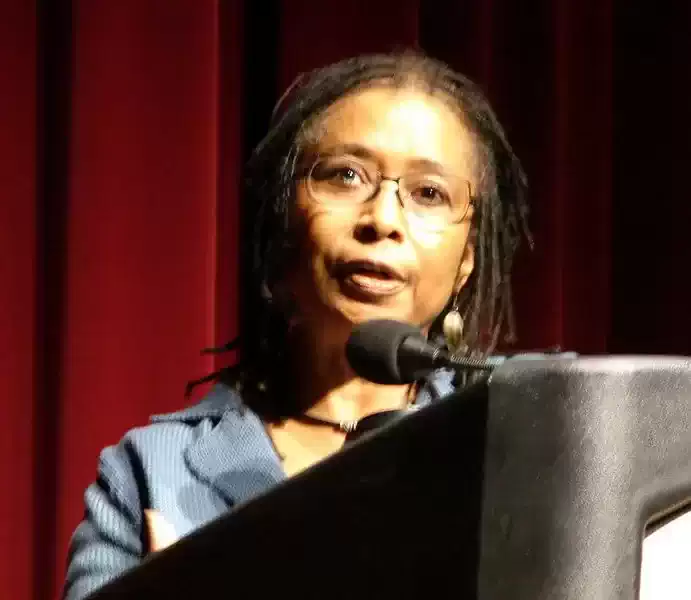
Alice Walker
Don’t be like Those who Ask for Everything
Don’t be like Those who Ask for Everything
Don’t be like those who ask for everything:
praise, a blurb, a free ride in my rented
limousine. They ask for everything but never offer
anything in return.
Be like those who can see that my feet ache
from across a crowded room
that a foot rub
if I’m agreeable
never mind the staring
is the best way to smile
& say hello
to me.
Don’t be like those who ask for everything:
praise, a blurb, a free ride in my rented
limousine. They ask for everything but never offer
anything in return.
Be like those who can see that my feet ache
from across a crowded room
that a foot rub
if I’m agreeable
never mind the staring
is the best way to smile
& say hello
to me.
240
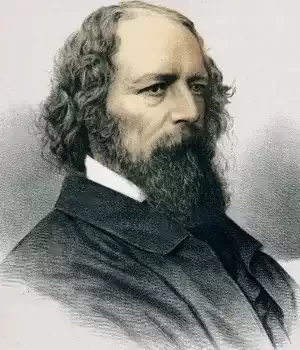
Alfred Lord Tennyson
O true and tried
O true and tried
O true and tried, so well and long,
Demand not thou a marriage lay;
In that it is thy marriage day
Is music more than any song.
Nor have I felt so much of bliss
Since first he told me that he loved
A daughter of our house; nor proved
Since that dark day a day like this;
Tho’ I since then have number’d o’er
Some thrice three years: they went and came,
Remade the blood and changed the frame,
And yet is love not less, but more;
No longer caring to embalm
In dying songs a dead regret,
But like a statue solid-set,
And moulded in colossal calm.
Regret is dead, but love is more
Than in the summers that are flown,
For I myself with these have grown
To something greater than before;
Which makes appear the songs I made
As echoes out of weaker times,
As half but idle brawling rhymes,
The sport of random sun and shade.
But where is she, the bridal flower,
That must he made a wife ere noon?
She enters, glowing like the moon
Of Eden on its bridal bower:
On me she bends her blissful eyes
And then on thee; they meet thy look
And brighten like the star that shook
Betwixt the palms of paradise.
O when her life was yet in bud,
He too foretold the perfect rose.
For thee she grew, for thee she grows
For ever, and as fair as good.
And thou art worthy; full of power;
As gentle; liberal-minded, great,
Consistent; wearing all that weight
Of learning lightly like a flower.
But now set out: the noon is near,
And I must give away the bride;
She fears not, or with thee beside
And me behind her, will not fear.
For I that danced her on my knee,
That watch’d her on her nurse’s arm,
That shielded all her life from harm
At last must part with her to thee;
Now waiting to be made a wife,
Her feet, my darling, on the dead;
Their pensive tablets round her head,
And the most living words of life
Breathed in her ear. The ring is on,
The ‘wilt thou’ answer’d, and again
The ‘wilt thou’ ask’d, till out of twain
Her sweet ‘I will’ has made you one.
Now sign your names, which shall be read,
Mute symbols of a joyful morn,
By village eyes as yet unborn;
The names are sign’d, and overhead
Begins the clash and clang that tells
The joy to every wandering breeze;
The blind wall rocks, and on the trees
The dead leaf trembles to the bells.
O happy hour, and happier hours
Await them. Many a merry face
Salutes them–maidens of the place,
That pelt us in the porch with flowers.
O happy hour, behold the bride
With him to whom her hand I gave.
They leave the porch, they pass the grave
That has to-day its sunny side.
To-day the grave is bright for me,
For them the light of life increased,
Who stay to share the morning feast,
Who rest to-night beside the sea.
Let all my genial spirits advance
To meet and greet a whiter sun;
My drooping memory will not shun
The foaming grape of eastern France.
It circles round, and fancy plays,
And hearts are warm’d and faces bloom,
As drinking health to bride and groom
We wish them store of happy days.
Nor count me all to blame if I
Conjecture of a stiller guest,
Perchance, perchance, among the rest,
And, tho’ in silence, wishing joy.
But they must go, the time draws on,
And those white-favour’d horses wait;
They rise, but linger; it is late;
Farewell, we kiss, and they are gone.
A shade falls on us like the dark
From little cloudlets on the grass,
But sweeps away as out we pass
To range the woods, to roam the park,
Discussing how their courtship grew,
And talk of others that are wed,
And how she look’d, and what he said,
And back we come at fall of dew.
Again the feast, the speech, the glee,
The shade of passing thought, the wealth
Of words and wit, the double health,
The crowning cup, the three-times-three,
And last the dance;–till I retire:
Dumb is that tower which spake so loud,
And high in heaven the streaming cloud,
And on the downs a rising fire:
And rise, O moon, from yonder down,
Till over down and over dale
All night the shining vapour sail
And pass the silent-lighted town,
The white-faced halls, the glancing rills,
And catch at every mountain head,
And o’er the friths that branch and spread
Their sleeping silver thro’ the hills;
And touch with shade the bridal doors,
With tender gloom the roof, the wall;
And breaking let the splendour fall
To spangle all the happy shores
By which they rest, and ocean sounds,
And, star and system rolling past,
A soul shall draw from out the vast
And strike his being into bounds,
And, moved thro’ life of lower phase,
Result in man, be born and think,
And act and love, a closer link
Betwixt us and the crowning race
Of those that, eye to eye, shall look
On knowledge; under whose command
Is Earth and Earth’s, and in their hand
Is Nature like an open book;
No longer half-akin to brute,
For all we thought and loved and did,
And hoped, and suffer’d, is but seed
Of what in them is flower and fruit;
Whereof the man, that with me trod
This planet, was a noble type
Appearing ere the times were ripe,
That friend of mine who lives in God,
That God, which ever lives and loves,
One God, one law, one element,
And one far-off divine event,
To which the whole creation moves.
O true and tried, so well and long,
Demand not thou a marriage lay;
In that it is thy marriage day
Is music more than any song.
Nor have I felt so much of bliss
Since first he told me that he loved
A daughter of our house; nor proved
Since that dark day a day like this;
Tho’ I since then have number’d o’er
Some thrice three years: they went and came,
Remade the blood and changed the frame,
And yet is love not less, but more;
No longer caring to embalm
In dying songs a dead regret,
But like a statue solid-set,
And moulded in colossal calm.
Regret is dead, but love is more
Than in the summers that are flown,
For I myself with these have grown
To something greater than before;
Which makes appear the songs I made
As echoes out of weaker times,
As half but idle brawling rhymes,
The sport of random sun and shade.
But where is she, the bridal flower,
That must he made a wife ere noon?
She enters, glowing like the moon
Of Eden on its bridal bower:
On me she bends her blissful eyes
And then on thee; they meet thy look
And brighten like the star that shook
Betwixt the palms of paradise.
O when her life was yet in bud,
He too foretold the perfect rose.
For thee she grew, for thee she grows
For ever, and as fair as good.
And thou art worthy; full of power;
As gentle; liberal-minded, great,
Consistent; wearing all that weight
Of learning lightly like a flower.
But now set out: the noon is near,
And I must give away the bride;
She fears not, or with thee beside
And me behind her, will not fear.
For I that danced her on my knee,
That watch’d her on her nurse’s arm,
That shielded all her life from harm
At last must part with her to thee;
Now waiting to be made a wife,
Her feet, my darling, on the dead;
Their pensive tablets round her head,
And the most living words of life
Breathed in her ear. The ring is on,
The ‘wilt thou’ answer’d, and again
The ‘wilt thou’ ask’d, till out of twain
Her sweet ‘I will’ has made you one.
Now sign your names, which shall be read,
Mute symbols of a joyful morn,
By village eyes as yet unborn;
The names are sign’d, and overhead
Begins the clash and clang that tells
The joy to every wandering breeze;
The blind wall rocks, and on the trees
The dead leaf trembles to the bells.
O happy hour, and happier hours
Await them. Many a merry face
Salutes them–maidens of the place,
That pelt us in the porch with flowers.
O happy hour, behold the bride
With him to whom her hand I gave.
They leave the porch, they pass the grave
That has to-day its sunny side.
To-day the grave is bright for me,
For them the light of life increased,
Who stay to share the morning feast,
Who rest to-night beside the sea.
Let all my genial spirits advance
To meet and greet a whiter sun;
My drooping memory will not shun
The foaming grape of eastern France.
It circles round, and fancy plays,
And hearts are warm’d and faces bloom,
As drinking health to bride and groom
We wish them store of happy days.
Nor count me all to blame if I
Conjecture of a stiller guest,
Perchance, perchance, among the rest,
And, tho’ in silence, wishing joy.
But they must go, the time draws on,
And those white-favour’d horses wait;
They rise, but linger; it is late;
Farewell, we kiss, and they are gone.
A shade falls on us like the dark
From little cloudlets on the grass,
But sweeps away as out we pass
To range the woods, to roam the park,
Discussing how their courtship grew,
And talk of others that are wed,
And how she look’d, and what he said,
And back we come at fall of dew.
Again the feast, the speech, the glee,
The shade of passing thought, the wealth
Of words and wit, the double health,
The crowning cup, the three-times-three,
And last the dance;–till I retire:
Dumb is that tower which spake so loud,
And high in heaven the streaming cloud,
And on the downs a rising fire:
And rise, O moon, from yonder down,
Till over down and over dale
All night the shining vapour sail
And pass the silent-lighted town,
The white-faced halls, the glancing rills,
And catch at every mountain head,
And o’er the friths that branch and spread
Their sleeping silver thro’ the hills;
And touch with shade the bridal doors,
With tender gloom the roof, the wall;
And breaking let the splendour fall
To spangle all the happy shores
By which they rest, and ocean sounds,
And, star and system rolling past,
A soul shall draw from out the vast
And strike his being into bounds,
And, moved thro’ life of lower phase,
Result in man, be born and think,
And act and love, a closer link
Betwixt us and the crowning race
Of those that, eye to eye, shall look
On knowledge; under whose command
Is Earth and Earth’s, and in their hand
Is Nature like an open book;
No longer half-akin to brute,
For all we thought and loved and did,
And hoped, and suffer’d, is but seed
Of what in them is flower and fruit;
Whereof the man, that with me trod
This planet, was a noble type
Appearing ere the times were ripe,
That friend of mine who lives in God,
That God, which ever lives and loves,
One God, one law, one element,
And one far-off divine event,
To which the whole creation moves.
514
Alfred Lord Tennyson
Dedication
Dedication
Dedication
These to His Memory--since he held them dear,
Perchance as finding there unconsciously
Some image of himself--I dedicate,
I dedicate, I consecrate with tears--
These Idylls.
And indeed He seems to me
Scarce other than my king's ideal knight,
`Who reverenced his conscience as his king;
Whose glory was, redressing human wrong;
Who spake no slander, no, nor listened to it;
Who loved one only and who clave to her--'
Her--over all whose realms to their last isle,
Commingled with the gloom of imminent war,
The shadow of His loss drew like eclipse,
Darkening the world. We have lost him: he is gone:
We know him now: all narrow jealousies
Are silent; and we see him as he moved,
How modest, kindly, all-accomplished, wise,
With what sublime repression of himself,
And in what limits, and how tenderly;
Not swaying to this faction or to that;
Not making his high place the lawless perch
Of winged ambitions, nor a vantage-ground
For pleasure; but through all this tract of years
Wearing the white flower of a blameless life,
Before a thousand peering littlenesses,
In that fierce light which beats upon a throne,
And blackens every blot: for where is he,
Who dares foreshadow for an only son
A lovelier life, a more unstained, than his?
Or how should England dreaming of HIS sons
Hope more for these than some inheritance
Of such a life, a heart, a mind as thine,
Thou noble Father of her Kings to be,
Laborious for her people and her poor--
Voice in the rich dawn of an ampler day-
Far-sighted summoner of War and Waste
To fruitful strifes and rivalries of peace--
Sweet nature gilded by the gracious gleam
Of letters, dear to Science, dear to Art,
Dear to thy land and ours, a Prince indeed,
Beyond all titles, and a household name,
Hereafter, through all times, Albert the Good.
Break not, O woman's-heart, but still endure;
Break not, for thou art Royal, but endure,
Remembering all the beauty of that star
Which shone so close beside Thee that ye made
One light together, but has past and leaves
The Crown a lonely splendour.
May all love,
His love, unseen but felt, o'ershadow Thee,
The love of all Thy sons encompass Thee,
The love of all Thy daughters cherish Thee,
The love of all Thy people comfort Thee,
Till God's love set Thee at his side again!
Dedication
These to His Memory--since he held them dear,
Perchance as finding there unconsciously
Some image of himself--I dedicate,
I dedicate, I consecrate with tears--
These Idylls.
And indeed He seems to me
Scarce other than my king's ideal knight,
`Who reverenced his conscience as his king;
Whose glory was, redressing human wrong;
Who spake no slander, no, nor listened to it;
Who loved one only and who clave to her--'
Her--over all whose realms to their last isle,
Commingled with the gloom of imminent war,
The shadow of His loss drew like eclipse,
Darkening the world. We have lost him: he is gone:
We know him now: all narrow jealousies
Are silent; and we see him as he moved,
How modest, kindly, all-accomplished, wise,
With what sublime repression of himself,
And in what limits, and how tenderly;
Not swaying to this faction or to that;
Not making his high place the lawless perch
Of winged ambitions, nor a vantage-ground
For pleasure; but through all this tract of years
Wearing the white flower of a blameless life,
Before a thousand peering littlenesses,
In that fierce light which beats upon a throne,
And blackens every blot: for where is he,
Who dares foreshadow for an only son
A lovelier life, a more unstained, than his?
Or how should England dreaming of HIS sons
Hope more for these than some inheritance
Of such a life, a heart, a mind as thine,
Thou noble Father of her Kings to be,
Laborious for her people and her poor--
Voice in the rich dawn of an ampler day-
Far-sighted summoner of War and Waste
To fruitful strifes and rivalries of peace--
Sweet nature gilded by the gracious gleam
Of letters, dear to Science, dear to Art,
Dear to thy land and ours, a Prince indeed,
Beyond all titles, and a household name,
Hereafter, through all times, Albert the Good.
Break not, O woman's-heart, but still endure;
Break not, for thou art Royal, but endure,
Remembering all the beauty of that star
Which shone so close beside Thee that ye made
One light together, but has past and leaves
The Crown a lonely splendour.
May all love,
His love, unseen but felt, o'ershadow Thee,
The love of all Thy sons encompass Thee,
The love of all Thy daughters cherish Thee,
The love of all Thy people comfort Thee,
Till God's love set Thee at his side again!
539
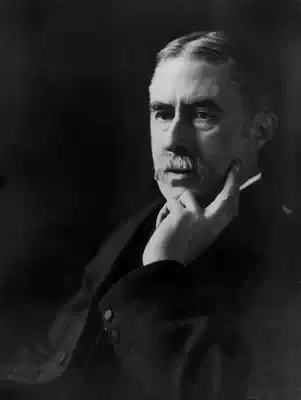
Alfred Edward Housman
From Clee to heaven the beacon burns,
From Clee to heaven the beacon burns,
The shires have seen it plain,
From north and south the sign returns
And beacons burn again.
Look left, look right, the hills are bright,
The dales are light between,
Because 'tis fifty years to-night
That God has saved the Queen.
Now, when the flame they watch not towers
About the soil they trod,
Lads, we'll remember friends of ours
Who shared the work with God.
To skies that knit their heartstrings right,
To fields that bred them brave,
The saviours come not home to-night:
Themselves they could not save.
It dawns in Asia, tombstones show
And Shropshire names are read;
And the Nile spills his overflow
Beside the Severn's dead.
We pledge in peace by farm and town
The Queen they served in war,
And fire the beacons up and down
The land they perished for.
"God save the Queen" we living sing,
From height to height 'tis heard;
And with the rest your voices ring,
Lads of the Fifty-third.
Oh, God will save her, fear you not:
Be you the men you've been,
Get you the sons your fathers got,
And God will save the Queen.
The shires have seen it plain,
From north and south the sign returns
And beacons burn again.
Look left, look right, the hills are bright,
The dales are light between,
Because 'tis fifty years to-night
That God has saved the Queen.
Now, when the flame they watch not towers
About the soil they trod,
Lads, we'll remember friends of ours
Who shared the work with God.
To skies that knit their heartstrings right,
To fields that bred them brave,
The saviours come not home to-night:
Themselves they could not save.
It dawns in Asia, tombstones show
And Shropshire names are read;
And the Nile spills his overflow
Beside the Severn's dead.
We pledge in peace by farm and town
The Queen they served in war,
And fire the beacons up and down
The land they perished for.
"God save the Queen" we living sing,
From height to height 'tis heard;
And with the rest your voices ring,
Lads of the Fifty-third.
Oh, God will save her, fear you not:
Be you the men you've been,
Get you the sons your fathers got,
And God will save the Queen.
454
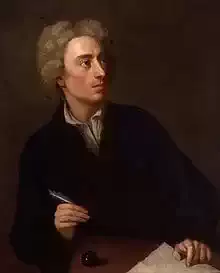
Alexander Pope
To Mrs. M. B. On Her Birthday
To Mrs. M. B. On Her Birthday
Oh be thou blest with all that Heav'n can send,
Long Health, long Youth, long Pleasure, and a Friend:
Not with those Toys the female world admire,
Riches that vex, and Vanities that tire.
With added years if Life bring nothing new,
But, like a Sieve, let ev'ry blessing thro',
Some joy still lost, as each vain year runs o'er,
And all we gain, some sad Reflection more;
Is that a Birth-Day? 'tis alas! too clear,
'Tis but the funeral of the former year.
Let Joy or Ease, let Affluence or Content,
And the gay Conscience of a life well spent,
Calm ev'ry thought, inspirit ev'ry grace.
Glow in thy heart, and smile upon thy face.
Let day improve on day, and year on year,
Without a Pain, a Trouble, or a Fear;
Till Death unfelt that tender frame destroy,
In some soft Dream, or Extasy of joy,
Peaceful sleep out the Sabbath of the Tomb,
And wake to Raptures in a Life to come.
Oh be thou blest with all that Heav'n can send,
Long Health, long Youth, long Pleasure, and a Friend:
Not with those Toys the female world admire,
Riches that vex, and Vanities that tire.
With added years if Life bring nothing new,
But, like a Sieve, let ev'ry blessing thro',
Some joy still lost, as each vain year runs o'er,
And all we gain, some sad Reflection more;
Is that a Birth-Day? 'tis alas! too clear,
'Tis but the funeral of the former year.
Let Joy or Ease, let Affluence or Content,
And the gay Conscience of a life well spent,
Calm ev'ry thought, inspirit ev'ry grace.
Glow in thy heart, and smile upon thy face.
Let day improve on day, and year on year,
Without a Pain, a Trouble, or a Fear;
Till Death unfelt that tender frame destroy,
In some soft Dream, or Extasy of joy,
Peaceful sleep out the Sabbath of the Tomb,
And wake to Raptures in a Life to come.
365
Alexander Pope
Prayer of St. Francis Xavier
Prayer of St. Francis Xavier
Thou art my God, sole object of my love;
Not for the hope of endless joys above;
Nor for the fear of endless pains below,
Which they who love thee not must undergo.
For me, and such as me, thou deign'st to bear
An ignominious cross, the nails, the spear:
A thorny crown transpierc'd thy sacred brow,
While bloody sweats from ev'ry member flow.
For me in tortures thou resignd'st thy breath,
Embrac'd me on the cross, and sav'd me by thy death.
And can these sufferings fail my heart to move?
What but thyself can now deserve my love?
Such as then was, and is, thy love to me,
Such is, and shall be still, my love to thee -
To thee, Redeemer! mercy's sacred spring!
My God, my Father, Maker, and my King!
Thou art my God, sole object of my love;
Not for the hope of endless joys above;
Nor for the fear of endless pains below,
Which they who love thee not must undergo.
For me, and such as me, thou deign'st to bear
An ignominious cross, the nails, the spear:
A thorny crown transpierc'd thy sacred brow,
While bloody sweats from ev'ry member flow.
For me in tortures thou resignd'st thy breath,
Embrac'd me on the cross, and sav'd me by thy death.
And can these sufferings fail my heart to move?
What but thyself can now deserve my love?
Such as then was, and is, thy love to me,
Such is, and shall be still, my love to thee -
To thee, Redeemer! mercy's sacred spring!
My God, my Father, Maker, and my King!
349
Alexander Pope
On Mr. Gay
On Mr. Gay
Of Manners gentle, of Affections mild;
In Wit, a Man; Simplicity, a Child:
With native Humour temp'ring virtuous Rage,
Form'd to delight at once and lash the age:
Above Temptation, in a low Estate, 5
And uncorrupted, ev'n among the Great:
A safe Companion, and an easy Friend,
Unblam'd thro' Life, lamented in thy End.
These are Thy Honours! not that here thy Bust
Is mix'd with Heroes, or with Kings thy dust; 10
But that the Worthy and the Good shall say,
Striking their pensive bosoms-
Here
lies GAY.
Of Manners gentle, of Affections mild;
In Wit, a Man; Simplicity, a Child:
With native Humour temp'ring virtuous Rage,
Form'd to delight at once and lash the age:
Above Temptation, in a low Estate, 5
And uncorrupted, ev'n among the Great:
A safe Companion, and an easy Friend,
Unblam'd thro' Life, lamented in thy End.
These are Thy Honours! not that here thy Bust
Is mix'd with Heroes, or with Kings thy dust; 10
But that the Worthy and the Good shall say,
Striking their pensive bosoms-
Here
lies GAY.
357
Alexander Pope
Inscription on a Grotto, the Work of Nine Ladies.
Inscription on a Grotto, the Work of Nine Ladies.
Here, shunning idleness at once and praise,
This radiant pile nine rural sisters raise;
The glittering emblem of each spotless dame,
Clear as her soul and shining as her frame;
Beauty which nature only can impart,
And such a polish as disgraces art;
But Fate disposed them in this humble sort,
And hid in deserts what would charm a Court.
Here, shunning idleness at once and praise,
This radiant pile nine rural sisters raise;
The glittering emblem of each spotless dame,
Clear as her soul and shining as her frame;
Beauty which nature only can impart,
And such a polish as disgraces art;
But Fate disposed them in this humble sort,
And hid in deserts what would charm a Court.
300
Alexander Pope
Argus
Argus
When wise Ulysses, from his native coast
Long kept by wars, and long by tempests toss'd,
Arrived at last, poor, old, disguised, alone,
To all his friends, and ev'n his Queen unknown,
Changed as he was, with age, and toils, and cares,
Furrow'd his rev'rend face, and white his hairs,
In his own palace forc'd to ask his bread,
Scorn'd by those slaves his former bounty fed,
Forgot of all his own domestic crew,
The faithful Dog alone his rightful master knew!
Unfed, unhous'd, neglected, on the clay
Like an old servant now cashier'd, he lay;
Touch'd with resentment of ungrateful man,
And longing to behold his ancient lord again.
Him when he saw he rose, and crawl'd to meet,
('Twas all he could) and fawn'd and kiss'd his feet,
Seiz'd with dumb joy; then falling by his side,
Own'd his returning lord, look'd up, and died!
When wise Ulysses, from his native coast
Long kept by wars, and long by tempests toss'd,
Arrived at last, poor, old, disguised, alone,
To all his friends, and ev'n his Queen unknown,
Changed as he was, with age, and toils, and cares,
Furrow'd his rev'rend face, and white his hairs,
In his own palace forc'd to ask his bread,
Scorn'd by those slaves his former bounty fed,
Forgot of all his own domestic crew,
The faithful Dog alone his rightful master knew!
Unfed, unhous'd, neglected, on the clay
Like an old servant now cashier'd, he lay;
Touch'd with resentment of ungrateful man,
And longing to behold his ancient lord again.
Him when he saw he rose, and crawl'd to meet,
('Twas all he could) and fawn'd and kiss'd his feet,
Seiz'd with dumb joy; then falling by his side,
Own'd his returning lord, look'd up, and died!
395
Previous
Page 30