

Poems in this theme
Gratitude

Ella Wheeler Wilcox
Contentment
Contentment
If any line that I ever penned,
Or any word I have spoken,
Has comforted heart of foe or friend In
any way, why my life, I'll say,
Has reaped the reward of labour,
If aught I have said, or written, has made
Gladder the heart o' my neighbour.
If any deed that I ever did
Lightened a sad heart's sorrow,
If I have lifted a drooping lid
Up to the bright to-morrow,
Though the world knows not, nor gives me a thought,
Nor ever can know, nor praise me,
Yet still I shall say, to my heart alway,
That my life and labour repay me.
If in any way I have helped a soul,
Or given a spirit pleasure,
Then my cup of joy, I shall think is full
With an overflowing measure.
Though never an eye, but the one on high
Looks on my kindly action,
Yet, O my heart, we shall think of our part
In the drama, with satisfaction.
If any line that I ever penned,
Or any word I have spoken,
Has comforted heart of foe or friend In
any way, why my life, I'll say,
Has reaped the reward of labour,
If aught I have said, or written, has made
Gladder the heart o' my neighbour.
If any deed that I ever did
Lightened a sad heart's sorrow,
If I have lifted a drooping lid
Up to the bright to-morrow,
Though the world knows not, nor gives me a thought,
Nor ever can know, nor praise me,
Yet still I shall say, to my heart alway,
That my life and labour repay me.
If in any way I have helped a soul,
Or given a spirit pleasure,
Then my cup of joy, I shall think is full
With an overflowing measure.
Though never an eye, but the one on high
Looks on my kindly action,
Yet, O my heart, we shall think of our part
In the drama, with satisfaction.
429
Ella Wheeler Wilcox
Christ Crucified
Christ Crucified
Now ere I slept, my prayer had been that I might see my way
To do the will of Christ, our Lord and Master, day by day;
And with this prayer upon my lips, I knew not that I dreamed,
But suddenly the world of night a pandemonium seemed.
From forest, and from slaughter house, from bull ring, and from stall,
There rose an anguished cry of pain, a loud, appealing call;
As man – the dumb beast’s next of kin – with gun, and whip, and knife,
Went pleasure-seeking through the earth, blood-bent on taking life.
From trap, and cage, and house, and zoo, and street, that awful strain
Of tortured creatures rose and swelled the orchestra of pain.
And then methought the gentle Christ appeared to me and spoke:
‘I called you, but ye answered not’ – and in my fear I woke.
Then next I heard the roar of mills; and moving through the noise,
Like phantoms in an underworld, were little girls and boys.
Their backs were bent, their brows were pale, their eyes were sad and old;
But by the labour of their hands greed added gold to gold.
Again the Presence and the Voice: ‘Behold the crimes I see,
As ye have done it unto these, so have ye done to me.’
Again I slept. I seemed to climb a hard, ascending track;
And just behind me laboured one whose patient face was black.
I pitied him; but hour by hour he gained upon the path;
He stood beside me, stood upright – and then I turned in wrath.
‘Go back! ’ I cried. ‘What right have you to walk beside me here?
For you are black, and I am white.’ I paused struck dumb with fear.
For lo! the black man was not there, but Christ stood in his place;
And oh! the pain, the pain, the pain that looked from his dear face.
Now when I woke, the air was rife with that sweet, rhythmic din
Which tells the world that Christ has come to save mankind from sin.
And through the open door of church and temple passed a throng,
To worship Him, with bended knee with sermon, and with song.
But over all I heard the cry of hunted, mangled things;
Those creatures which are part of God, though they have hoofs and wings.
I saw the mill, the mine, and shop, the little slaves of greed;
I heard the strife of race with race, all sprung from one God-seed.
And then I bowed my head in shame, and in contrition cried –
‘Lo, after nineteen hundred years, Christ still is crucified.’
Now ere I slept, my prayer had been that I might see my way
To do the will of Christ, our Lord and Master, day by day;
And with this prayer upon my lips, I knew not that I dreamed,
But suddenly the world of night a pandemonium seemed.
From forest, and from slaughter house, from bull ring, and from stall,
There rose an anguished cry of pain, a loud, appealing call;
As man – the dumb beast’s next of kin – with gun, and whip, and knife,
Went pleasure-seeking through the earth, blood-bent on taking life.
From trap, and cage, and house, and zoo, and street, that awful strain
Of tortured creatures rose and swelled the orchestra of pain.
And then methought the gentle Christ appeared to me and spoke:
‘I called you, but ye answered not’ – and in my fear I woke.
Then next I heard the roar of mills; and moving through the noise,
Like phantoms in an underworld, were little girls and boys.
Their backs were bent, their brows were pale, their eyes were sad and old;
But by the labour of their hands greed added gold to gold.
Again the Presence and the Voice: ‘Behold the crimes I see,
As ye have done it unto these, so have ye done to me.’
Again I slept. I seemed to climb a hard, ascending track;
And just behind me laboured one whose patient face was black.
I pitied him; but hour by hour he gained upon the path;
He stood beside me, stood upright – and then I turned in wrath.
‘Go back! ’ I cried. ‘What right have you to walk beside me here?
For you are black, and I am white.’ I paused struck dumb with fear.
For lo! the black man was not there, but Christ stood in his place;
And oh! the pain, the pain, the pain that looked from his dear face.
Now when I woke, the air was rife with that sweet, rhythmic din
Which tells the world that Christ has come to save mankind from sin.
And through the open door of church and temple passed a throng,
To worship Him, with bended knee with sermon, and with song.
But over all I heard the cry of hunted, mangled things;
Those creatures which are part of God, though they have hoofs and wings.
I saw the mill, the mine, and shop, the little slaves of greed;
I heard the strife of race with race, all sprung from one God-seed.
And then I bowed my head in shame, and in contrition cried –
‘Lo, after nineteen hundred years, Christ still is crucified.’
468
Ella Wheeler Wilcox
Beyond
Beyond
It seemeth such a little way to me
Across to that strange country – the Beyond;
And yet, not strange, for it has grown to be
The home of those whom I am so fond,
They make it seem familiar and most dear,
As journeying friends bring distant regions near.
So close it lies, that when my sight is clear
I think I almost see the gleaming strand.
I know I feel those who have gone from here
Come near enough sometimes, to touch my hand.
I often think, but for our veiled eyes,
We should find heaven right round about us lies.
I cannot make it seem a day to dread,
When from this dear earth I shall journey out
To that still dear country of the dead,
And join the lost ones, so long dreamed about.
I love this world, yet shall I love to go
And meet the friends who wait for me, I know.
I never stand above a bier and see
The seal of death set on some well-loved face
But that I think ‘One more to welcome me,
When I shall cross the intervening space
Between this land and that one “over there”;
One more to make the strange Beyond seem fair.’
And so for me there is no sting to death,
And so the grave has lost its victory.
It is but crossing – with a bated breath,
And white, set face – a little strip of sea,
To find the loved ones waiting on the shore,
More beautiful, more precious than before.
It seemeth such a little way to me
Across to that strange country – the Beyond;
And yet, not strange, for it has grown to be
The home of those whom I am so fond,
They make it seem familiar and most dear,
As journeying friends bring distant regions near.
So close it lies, that when my sight is clear
I think I almost see the gleaming strand.
I know I feel those who have gone from here
Come near enough sometimes, to touch my hand.
I often think, but for our veiled eyes,
We should find heaven right round about us lies.
I cannot make it seem a day to dread,
When from this dear earth I shall journey out
To that still dear country of the dead,
And join the lost ones, so long dreamed about.
I love this world, yet shall I love to go
And meet the friends who wait for me, I know.
I never stand above a bier and see
The seal of death set on some well-loved face
But that I think ‘One more to welcome me,
When I shall cross the intervening space
Between this land and that one “over there”;
One more to make the strange Beyond seem fair.’
And so for me there is no sting to death,
And so the grave has lost its victory.
It is but crossing – with a bated breath,
And white, set face – a little strip of sea,
To find the loved ones waiting on the shore,
More beautiful, more precious than before.
369
Ella Wheeler Wilcox
Be Not Weary
Be Not Weary
Sometimes, when I am toil-worn and aweary,
And tired out with working long and well,
And earth is dark, and skies above are dreary,
And heart and soul are all too sick to tell,
These words have come to me like angel fingers
Pressing the spirit's eyelids down in sleep,
'Oh let us not be weary in well doing,
For in due season we shall surely reap.'
Oh, blessed promise! When I seem to hear it,
Whispered by angel voices on the air,
It breathes new life and courage to my spirit,
And gives me strength to suffer and forbear.
And I can wait most patiently for harvest,
And cast my seeds, nor ever faint, nor weep,
If I know surely that my work availeth,
And in God's season, I at last shall reap.
When mind and body were borne down completely,
And I have thought my efforts were all in vain,
These words have come to me so softly, sweetly,
And whispered hope, and urged me on again.
And though my labour seems all unavailing,
And all my striving fruitless, yet the Lord
Doth treasure up each little seed I scatter,
And sometime, sometime, I shall reap the reward.
Sometimes, when I am toil-worn and aweary,
And tired out with working long and well,
And earth is dark, and skies above are dreary,
And heart and soul are all too sick to tell,
These words have come to me like angel fingers
Pressing the spirit's eyelids down in sleep,
'Oh let us not be weary in well doing,
For in due season we shall surely reap.'
Oh, blessed promise! When I seem to hear it,
Whispered by angel voices on the air,
It breathes new life and courage to my spirit,
And gives me strength to suffer and forbear.
And I can wait most patiently for harvest,
And cast my seeds, nor ever faint, nor weep,
If I know surely that my work availeth,
And in God's season, I at last shall reap.
When mind and body were borne down completely,
And I have thought my efforts were all in vain,
These words have come to me so softly, sweetly,
And whispered hope, and urged me on again.
And though my labour seems all unavailing,
And all my striving fruitless, yet the Lord
Doth treasure up each little seed I scatter,
And sometime, sometime, I shall reap the reward.
415
Ella Wheeler Wilcox
Begin The Day
Begin The Day
Begin each morning with a talk to God,
And ask for your divine inheritance
Of usefulness, contentment, and success.
Resign all fear, all doubt, and all despair.
The stars doubt not, and they are undismayed,
Though whirled through space for countless centuries,
And told not why or wherefore: and the sea
With everlasting ebb and flow obeys,
And leaves the purpose with the unseen Cause.
The star sheds its radiance on a million worlds,
The sea is prodigal with waves, and yet
No lustre from the star is lost, and not
One dropp missing from the ocean tides.
Oh! brother to the star and sea, know all
God’s opulence is held in trust for those
Who wait serenely and who work in faith.
Begin each morning with a talk to God,
And ask for your divine inheritance
Of usefulness, contentment, and success.
Resign all fear, all doubt, and all despair.
The stars doubt not, and they are undismayed,
Though whirled through space for countless centuries,
And told not why or wherefore: and the sea
With everlasting ebb and flow obeys,
And leaves the purpose with the unseen Cause.
The star sheds its radiance on a million worlds,
The sea is prodigal with waves, and yet
No lustre from the star is lost, and not
One dropp missing from the ocean tides.
Oh! brother to the star and sea, know all
God’s opulence is held in trust for those
Who wait serenely and who work in faith.
466
Ella Wheeler Wilcox
Are you Loving Enough?
Are you Loving Enough?
Are you loving enough? There is some one dear,
Some one you hold as the dearest of all
In the holiest shrine of your heart.
Are you making it known? Is the truth of it clear
To the one you love? If death's quick call
Should suddenly tear you apart,
Leaving no time for a long farewell,
Would you feel you had nothing to tell---
Nothing you wished you had said before
The closing of that dark door?
Are you loving enough? The swift years fly---
Oh, faster and faster they hurry away,
And each one carries its dead.
The good deed left for the by and by,
The word to be uttered another day,
May never be done or said.
Let the love word sound in the listening ear,
Nor wait to speak it above a bier.
Oh the time for telling your love is brief,
But long, long, long is the time for grief.
Are you loving enough?
Are you loving enough? There is some one dear,
Some one you hold as the dearest of all
In the holiest shrine of your heart.
Are you making it known? Is the truth of it clear
To the one you love? If death's quick call
Should suddenly tear you apart,
Leaving no time for a long farewell,
Would you feel you had nothing to tell---
Nothing you wished you had said before
The closing of that dark door?
Are you loving enough? The swift years fly---
Oh, faster and faster they hurry away,
And each one carries its dead.
The good deed left for the by and by,
The word to be uttered another day,
May never be done or said.
Let the love word sound in the listening ear,
Nor wait to speak it above a bier.
Oh the time for telling your love is brief,
But long, long, long is the time for grief.
Are you loving enough?
400
Ella Wheeler Wilcox
American Boys, Hello!
American Boys, Hello!
Oh! we love all the French, and we speak in French
As along through France we go.
But the moments to us that are keen and sweet
Are the ones when our khaki boys we meet,
Stalwart and handsome and trim and neat;
And we call to them-'Boys, hello!'
'Hello, American boys,
Luck to you, and life's best joys!
American boys, hello!'
We couldn't do that if we were at home-
It never would do you know!
For there you must wait till you're told who's who,
And to meet in the way that nice folks do.
Though you knew his name, and your name he knew-
You never would say 'Hello, hello, American boy!'
But here it's just a joy,
As we pass along in the stranger throng,
To call out, 'Boys, hello!'
For each is a brother away from home;
And this we are sure is so,
There's a lonesome spot in his heart somewhere,
And we want him to feel there are friends
right there
In this foreign land, and so we dare
To call out 'Boys, hello!'
'Hello, American boys,
Luck to you, and life's best joys!
American boys, hello!'
Oh! we love all the French, and we speak in French
As along through France we go.
But the moments to us that are keen and sweet
Are the ones when our khaki boys we meet,
Stalwart and handsome and trim and neat;
And we call to them-'Boys, hello!'
'Hello, American boys,
Luck to you, and life's best joys!
American boys, hello!'
We couldn't do that if we were at home-
It never would do you know!
For there you must wait till you're told who's who,
And to meet in the way that nice folks do.
Though you knew his name, and your name he knew-
You never would say 'Hello, hello, American boy!'
But here it's just a joy,
As we pass along in the stranger throng,
To call out, 'Boys, hello!'
For each is a brother away from home;
And this we are sure is so,
There's a lonesome spot in his heart somewhere,
And we want him to feel there are friends
right there
In this foreign land, and so we dare
To call out 'Boys, hello!'
'Hello, American boys,
Luck to you, and life's best joys!
American boys, hello!'
465
Ella Wheeler Wilcox
A Pin
A Pin
Oh, I know a certain lady who is reckoned with the good,
Yet she fills me with more terror than a raging lion would.
The little chills run up and down my spine whene’er we meet,
Though she seems a gentle creature, and she’s very trim and neat.
And she has a thousand virtues and not one acknowledged sin,
But she is the sort of person you could liken to a pin.
And she pricks you and she sticks you in a way that can’t be said.
If you seek for what has hurt you – why, you cannot find the head.
But she fills you with discomfort and exasperating pain.
If anybody asks you why, you really can’t explain!
A pin is such a tiny thing, of that there is no doubt,
Yet when it’s sticking in your flesh you’re wretched till it’s out.
She’s wonderfully observing – when she meets a pretty girl,
She is always sure to tell her if her hair is out of curl;
And she is so sympathetic to her friend who’s much admires,
She is often heard remarking, ‘Dear, you look so worn and tired.’
And she is an honest critic, for on yesterday she eyed
The new dress I was airing with a woman’s natural pride,
And she said, ‘Oh, how becoming! ’ and then gently added, ‘it
Is really a misfortune that the basque is such a fit.’
Then she said, ‘If you heard me yester eve, I’m sure, my friend,
You would say I was a champion who knows how to defend.’
And she left me with the feeling – most unpleasant, I aver –
That the whole world would despise me is it hadn’t been for her.
Whenever I encounter her, in such a nameless way
She gives me the impression I am at my worst that day.
And the hat that was imported (and cost me half a sonnet) ,
With just one glance from her round eyes becomes a Bowery bonnet.
She is always bright and smiling, sharp and pointed for a thrust;
Use does not seem to blunt her point, nor does she gather rust.
Oh! I wish some hapless specimen of mankind would begin
To tidy up the world for me, by picking up this pin!
Oh, I know a certain lady who is reckoned with the good,
Yet she fills me with more terror than a raging lion would.
The little chills run up and down my spine whene’er we meet,
Though she seems a gentle creature, and she’s very trim and neat.
And she has a thousand virtues and not one acknowledged sin,
But she is the sort of person you could liken to a pin.
And she pricks you and she sticks you in a way that can’t be said.
If you seek for what has hurt you – why, you cannot find the head.
But she fills you with discomfort and exasperating pain.
If anybody asks you why, you really can’t explain!
A pin is such a tiny thing, of that there is no doubt,
Yet when it’s sticking in your flesh you’re wretched till it’s out.
She’s wonderfully observing – when she meets a pretty girl,
She is always sure to tell her if her hair is out of curl;
And she is so sympathetic to her friend who’s much admires,
She is often heard remarking, ‘Dear, you look so worn and tired.’
And she is an honest critic, for on yesterday she eyed
The new dress I was airing with a woman’s natural pride,
And she said, ‘Oh, how becoming! ’ and then gently added, ‘it
Is really a misfortune that the basque is such a fit.’
Then she said, ‘If you heard me yester eve, I’m sure, my friend,
You would say I was a champion who knows how to defend.’
And she left me with the feeling – most unpleasant, I aver –
That the whole world would despise me is it hadn’t been for her.
Whenever I encounter her, in such a nameless way
She gives me the impression I am at my worst that day.
And the hat that was imported (and cost me half a sonnet) ,
With just one glance from her round eyes becomes a Bowery bonnet.
She is always bright and smiling, sharp and pointed for a thrust;
Use does not seem to blunt her point, nor does she gather rust.
Oh! I wish some hapless specimen of mankind would begin
To tidy up the world for me, by picking up this pin!
376

Elizabeth Bishop
The Fish
The Fish
I caught a tremendous fish
and held him beside the boat
half out of water, with my hook
fast in a corner of his mouth.
He didn't fight.
He hadn't fought at all.
He hung a grunting weight,
battered and venerable
and homely. Here and there
his brown skin hung in strips
like ancient wallpaper,
and its pattern of darker brown
was like wallpaper:
shapes like full-blown roses
stained and lost through age.
He was speckled and barnacles,
fine rosettes of lime,
and infested
with tiny white sea-lice,
and underneath two or three
rags of green weed hung down.
While his gills were breathing in
the terrible oxygen
--the frightening gills,
fresh and crisp with blood,
that can cut so badly--
I thought of the coarse white flesh
packed in like feathers,
the big bones and the little bones,
the dramatic reds and blacks
of his shiny entrails,
and the pink swim-bladder
like a big peony.
I looked into his eyes
which were far larger than mine
but shallower, and yellowed,
the irises backed and packed
with tarnished tinfoil
seen through the lenses
of old scratched isinglass.
They shifted a little, but not
to return my stare.
--It was more like the tipping
of an object toward the light.
I admired his sullen face,
the mechanism of his jaw,
and then I saw
that from his lower lip
--if you could call it a lip
grim, wet, and weaponlike,
hung five old pieces of fish-line,
or four and a wire leader
with the swivel still attached,
with all their five big hooks
grown firmly in his mouth.
A green line, frayed at the end
where he broke it, two heavier lines,
and a fine black thread
still crimped from the strain and snap
when it broke and he got away.
Like medals with their ribbons
frayed and wavering,
a five-haired beard of wisdom
trailing from his aching jaw.
I stared and stared
and victory filled up
the little rented boat,
from the pool of bilge
where oil had spread a rainbow
around the rusted engine
to the bailer rusted orange,
the sun-cracked thwarts,
the oarlocks on their strings,
the gunnels--until everything
was rainbow, rainbow, rainbow!
And I let the fish go.
I caught a tremendous fish
and held him beside the boat
half out of water, with my hook
fast in a corner of his mouth.
He didn't fight.
He hadn't fought at all.
He hung a grunting weight,
battered and venerable
and homely. Here and there
his brown skin hung in strips
like ancient wallpaper,
and its pattern of darker brown
was like wallpaper:
shapes like full-blown roses
stained and lost through age.
He was speckled and barnacles,
fine rosettes of lime,
and infested
with tiny white sea-lice,
and underneath two or three
rags of green weed hung down.
While his gills were breathing in
the terrible oxygen
--the frightening gills,
fresh and crisp with blood,
that can cut so badly--
I thought of the coarse white flesh
packed in like feathers,
the big bones and the little bones,
the dramatic reds and blacks
of his shiny entrails,
and the pink swim-bladder
like a big peony.
I looked into his eyes
which were far larger than mine
but shallower, and yellowed,
the irises backed and packed
with tarnished tinfoil
seen through the lenses
of old scratched isinglass.
They shifted a little, but not
to return my stare.
--It was more like the tipping
of an object toward the light.
I admired his sullen face,
the mechanism of his jaw,
and then I saw
that from his lower lip
--if you could call it a lip
grim, wet, and weaponlike,
hung five old pieces of fish-line,
or four and a wire leader
with the swivel still attached,
with all their five big hooks
grown firmly in his mouth.
A green line, frayed at the end
where he broke it, two heavier lines,
and a fine black thread
still crimped from the strain and snap
when it broke and he got away.
Like medals with their ribbons
frayed and wavering,
a five-haired beard of wisdom
trailing from his aching jaw.
I stared and stared
and victory filled up
the little rented boat,
from the pool of bilge
where oil had spread a rainbow
around the rusted engine
to the bailer rusted orange,
the sun-cracked thwarts,
the oarlocks on their strings,
the gunnels--until everything
was rainbow, rainbow, rainbow!
And I let the fish go.
783
Elizabeth Bishop
Filling Station
Filling Station
Oh, but it is dirty!
--this little filling station,
oil-soaked, oil-permeated
to a disturbing, over-all
black translucency.
Be careful with that match!
Father wears a dirty,
oil-soaked monkey suit
that cuts him under the arms,
and several quick and saucy
and greasy sons assist him
(it's a family filling station),
all quite thoroughly dirty.
Do they live in the station?
It has a cement porch
behind the pumps, and on it
a set of crushed and greaseimpregnated
wickerwork;
on the wicker sofa
a dirty dog, quite comfy.
Some comic books provide
the only note of color-of
certain color. They lie
upon a big dim doily
draping a taboret
(part of the set), beside
a big hirsute begonia.
Why the extraneous plant?
Why the taboret?
Why, oh why, the doily?
(Embroidered in daisy stitch
with marguerites, I think,
and heavy with gray crochet.)
Somebody embroidered the doily.
Somebody waters the plant,
or oils it, maybe. Somebody
arranges the rows of cans
so that they softly say:
ESSO--SO--SO--SO
to high-strung automobiles.
Somebody loves us all.
Oh, but it is dirty!
--this little filling station,
oil-soaked, oil-permeated
to a disturbing, over-all
black translucency.
Be careful with that match!
Father wears a dirty,
oil-soaked monkey suit
that cuts him under the arms,
and several quick and saucy
and greasy sons assist him
(it's a family filling station),
all quite thoroughly dirty.
Do they live in the station?
It has a cement porch
behind the pumps, and on it
a set of crushed and greaseimpregnated
wickerwork;
on the wicker sofa
a dirty dog, quite comfy.
Some comic books provide
the only note of color-of
certain color. They lie
upon a big dim doily
draping a taboret
(part of the set), beside
a big hirsute begonia.
Why the extraneous plant?
Why the taboret?
Why, oh why, the doily?
(Embroidered in daisy stitch
with marguerites, I think,
and heavy with gray crochet.)
Somebody embroidered the doily.
Somebody waters the plant,
or oils it, maybe. Somebody
arranges the rows of cans
so that they softly say:
ESSO--SO--SO--SO
to high-strung automobiles.
Somebody loves us all.
552
Elizabeth Bishop
A Miracle for Breakfast
A Miracle for Breakfast
At six o'clock we were waiting for coffee,
waiting for coffee and the charitable crumb
that was going to be served from a certain balcony
--like kings of old, or like a miracle.
It was still dark. One foot of the sun
steadied itself on a long ripple in the river.
The first ferry of the day had just crossed the river.
It was so cold we hoped that the coffee
would be very hot, seeing that the sun
was not going to warm us; and that the crumb
would be a loaf each, buttered, by a miracle.
At seven a man stepped out on the balcony.
He stood for a minute alone on the balcony
looking over our heads toward the river.
A servant handed him the makings of a miracle,
consisting of one lone cup of coffee
and one roll, which he proceeded to crumb,
his head, so to speak, in the clouds--along with the sun.
Was the man crazy? What under the sun
was he trying to do, up there on his balcony!
Each man received one rather hard crumb,
which some flicked scornfully into the river,
and, in a cup, one drop of the coffee.
Some of us stood around, waiting for the miracle.
I can tell what I saw next; it was not a miracle.
A beautiful villa stood in the sun
and from its doors came the smell of hot coffee.
In front, a baroque white plaster balcony
added by birds, who nest along the river,
--I saw it with one eye close to the crumb-
and galleries and marble chambers. My crumb
my mansion, made for me by a miracle,
through ages, by insects, birds, and the river
working the stone. Every day, in the sun,
at breakfast time I sit on my balcony
with my feet up, and drink gallons of coffee.
We licked up the crumb and swallowed the coffee.
A window across the river caught the sun
as if the miracle were working, on the wrong balcony.
At six o'clock we were waiting for coffee,
waiting for coffee and the charitable crumb
that was going to be served from a certain balcony
--like kings of old, or like a miracle.
It was still dark. One foot of the sun
steadied itself on a long ripple in the river.
The first ferry of the day had just crossed the river.
It was so cold we hoped that the coffee
would be very hot, seeing that the sun
was not going to warm us; and that the crumb
would be a loaf each, buttered, by a miracle.
At seven a man stepped out on the balcony.
He stood for a minute alone on the balcony
looking over our heads toward the river.
A servant handed him the makings of a miracle,
consisting of one lone cup of coffee
and one roll, which he proceeded to crumb,
his head, so to speak, in the clouds--along with the sun.
Was the man crazy? What under the sun
was he trying to do, up there on his balcony!
Each man received one rather hard crumb,
which some flicked scornfully into the river,
and, in a cup, one drop of the coffee.
Some of us stood around, waiting for the miracle.
I can tell what I saw next; it was not a miracle.
A beautiful villa stood in the sun
and from its doors came the smell of hot coffee.
In front, a baroque white plaster balcony
added by birds, who nest along the river,
--I saw it with one eye close to the crumb-
and galleries and marble chambers. My crumb
my mansion, made for me by a miracle,
through ages, by insects, birds, and the river
working the stone. Every day, in the sun,
at breakfast time I sit on my balcony
with my feet up, and drink gallons of coffee.
We licked up the crumb and swallowed the coffee.
A window across the river caught the sun
as if the miracle were working, on the wrong balcony.
735
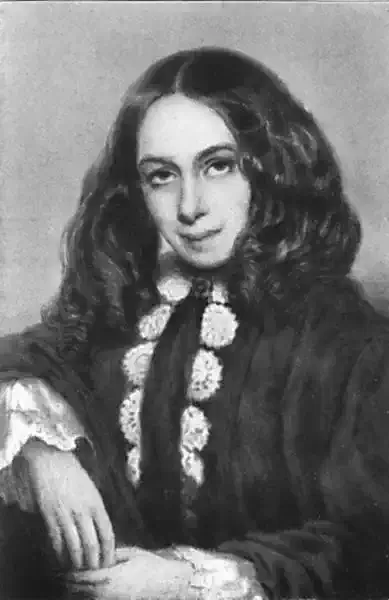
Elizabeth Barrett Browning
XXXIV
XXXIV
With the same heart, I said, I'll answer thee
As those, when thou shalt call me by my name--
Lo, the vain promise ! is the same, the same,
Perplexed and ruffled by life's strategy ?
When called before, I told how hastily
I dropped my flowers or brake off from a game,
To run and answer with the smile that came
At play last moment, and went on with me
Through my obedience. When I answer now,
I drop a grave thought, break from solitude;
Yet still my heart goes to thee--ponder how--
Not as to a single good, but all my good !
Lay thy hand on it, best one, and allow
That no child's foot could run fast as this blood.
With the same heart, I said, I'll answer thee
As those, when thou shalt call me by my name--
Lo, the vain promise ! is the same, the same,
Perplexed and ruffled by life's strategy ?
When called before, I told how hastily
I dropped my flowers or brake off from a game,
To run and answer with the smile that came
At play last moment, and went on with me
Through my obedience. When I answer now,
I drop a grave thought, break from solitude;
Yet still my heart goes to thee--ponder how--
Not as to a single good, but all my good !
Lay thy hand on it, best one, and allow
That no child's foot could run fast as this blood.
480
Elizabeth Barrett Browning
XXVII
XXVII
My own Beloved, who hast lifted me
From this drear flat of earth where I was thrown,
And, in betwixt the languid ringlets, blown
A life-breath, till the forehead hopefully
Shines out again, as all the angels see,
Before thy saving kiss ! My own, my own,
Who camest to me when the world was gone,
And I who looked for only God, found thee !
I find thee; I am safe, and strong, and glad.
As one who stands in dewless asphodel
Looks backward on the tedious time he had
In the upper life,--so I, with bosom-swell,
Make witness, here, between the good and bad,
That Love, as strong as Death, retrieves as well.
My own Beloved, who hast lifted me
From this drear flat of earth where I was thrown,
And, in betwixt the languid ringlets, blown
A life-breath, till the forehead hopefully
Shines out again, as all the angels see,
Before thy saving kiss ! My own, my own,
Who camest to me when the world was gone,
And I who looked for only God, found thee !
I find thee; I am safe, and strong, and glad.
As one who stands in dewless asphodel
Looks backward on the tedious time he had
In the upper life,--so I, with bosom-swell,
Make witness, here, between the good and bad,
That Love, as strong as Death, retrieves as well.
427
Elizabeth Barrett Browning
XLIII
XLIII
How do I love thee ? Let me count the ways.
I love thee to the depth and breadth and height
My soul can reach, when feeling out of sight
For the ends of Being and ideal Grace.
I love thee to the level of everyday's
Most quiet need, by sun and candle-light.
I love thee freely, as men strive for Right;
I love thee purely, as they turn from Praise.
I love thee with the passion put to use
In my old griefs, and with my childhood's faith.
I love thee with a love I seemed to lose
With my lost saints,--I love thee with the breath,
Smiles, tears, of all my life !--and, if God choose,
I shall but love thee better after death.
How do I love thee ? Let me count the ways.
I love thee to the depth and breadth and height
My soul can reach, when feeling out of sight
For the ends of Being and ideal Grace.
I love thee to the level of everyday's
Most quiet need, by sun and candle-light.
I love thee freely, as men strive for Right;
I love thee purely, as they turn from Praise.
I love thee with the passion put to use
In my old griefs, and with my childhood's faith.
I love thee with a love I seemed to lose
With my lost saints,--I love thee with the breath,
Smiles, tears, of all my life !--and, if God choose,
I shall but love thee better after death.
405
Elizabeth Barrett Browning
XLI
XLI
I thank all who have loved me in their hearts,
With thanks and love from mine. Deep thanks to all
Who paused a little near the prison-wall
To hear my music in its louder parts
Ere they went onward, each one to the mart's
Or temple's occupation, beyond call.
But thou, who, in my voice's sink and fall
When the sob took it, thy divinest Art's
Own instrument didst drop down at thy foot
To hearken what I said between my tears, . . .
Instruct me how to thank thee ! Oh, to shoot
My soul's full meaning into future years,
That they should lend it utterance, and salute
Love that endures, from Life that disappears !
I thank all who have loved me in their hearts,
With thanks and love from mine. Deep thanks to all
Who paused a little near the prison-wall
To hear my music in its louder parts
Ere they went onward, each one to the mart's
Or temple's occupation, beyond call.
But thou, who, in my voice's sink and fall
When the sob took it, thy divinest Art's
Own instrument didst drop down at thy foot
To hearken what I said between my tears, . . .
Instruct me how to thank thee ! Oh, to shoot
My soul's full meaning into future years,
That they should lend it utterance, and salute
Love that endures, from Life that disappears !
476
Elizabeth Barrett Browning
XIV
XIV
If thou must love me, let it be for nought
Except for love's sake only. Do not say
'I love her for her smile--her look--her way
Of speaking gently,--for a trick of thought
That falls in well with mine, and certes brought
A sense of pleasant ease on such a day'--
For these things in themselves, Beloved, may
Be changed, or change for thee,--and love, so wrought,
May be unwrought so. Neither love me for
Thine own dear pity's wiping my cheeks dry,--
A creature might forget to weep, who bore
Thy comfort long, and lose thy love thereby !
But love me for love's sake, that evermore
Thou mayst love on, through love's eternity.
If thou must love me, let it be for nought
Except for love's sake only. Do not say
'I love her for her smile--her look--her way
Of speaking gently,--for a trick of thought
That falls in well with mine, and certes brought
A sense of pleasant ease on such a day'--
For these things in themselves, Beloved, may
Be changed, or change for thee,--and love, so wrought,
May be unwrought so. Neither love me for
Thine own dear pity's wiping my cheeks dry,--
A creature might forget to weep, who bore
Thy comfort long, and lose thy love thereby !
But love me for love's sake, that evermore
Thou mayst love on, through love's eternity.
343
Elizabeth Barrett Browning
VIII
VIII
What can I give thee back, O liberal
And princely giver, who hast brought the gold
And purple of thine heart, unstained, untold,
And laid them on the outside of the-wall
For such as I to take or leave withal,
In unexpected largesse ? am I cold,
Ungrateful, that for these most manifold
High gifts, I render nothing back at all ?
Not so; not cold,--but very poor instead.
Ask God who knows. For frequent tears have run
The colors from my life, and left so dead
And pale a stuff, it were not fitly done
To give the same as pillow to thy head.
Go farther ! let it serve to trample on.
What can I give thee back, O liberal
And princely giver, who hast brought the gold
And purple of thine heart, unstained, untold,
And laid them on the outside of the-wall
For such as I to take or leave withal,
In unexpected largesse ? am I cold,
Ungrateful, that for these most manifold
High gifts, I render nothing back at all ?
Not so; not cold,--but very poor instead.
Ask God who knows. For frequent tears have run
The colors from my life, and left so dead
And pale a stuff, it were not fitly done
To give the same as pillow to thy head.
Go farther ! let it serve to trample on.
451
Elizabeth Barrett Browning
To Flush, My Dog
To Flush, My Dog
Loving friend, the gift of one
Who her own true faith has run
Through thy lower nature,
Be my benediction said
With my hand upon thy head,
Gentle fellow-creature!
Like a lady's ringlets brown,
Flow thy silken ears adown
Either side demurely
Of thy silver-suited breast
Shining out from all the rest
Of thy body purely.
Darkly brown thy body is,
Till the sunshine striking this
Alchemise its dullness,
When the sleek curls manifold
Flash all over into gold
With a burnished fulness.
Underneath my stroking hand,
Startled eyes of hazel bland
Kindling, growing larger,
Up thou leapest with a spring,
Full of prank and curveting,
Leaping like a charger.
Leap! thy broad tail waves a light,
Leap! thy slender feet are bright,
Canopied in fringes;
Leap! those tasselled ears of thine
Flicker strangely, fair and fine
Down their golden inches
Yet, my pretty, sportive friend,
Little is't to such an end
That I praise thy rareness;
Other dogs may be thy peers
Haply in these drooping ears
And this glossy fairness.
But of thee it shall be said,
This dog watched beside a bed
Day and night unweary,
Watched within a curtained room
Where no sunbeam brake the gloom
Round the sick and dreary.
Roses, gathered for a vase,
In that chamber died apace,
Beam and breeze resigning;
This dog only, waited on,
Knowing that when light is gone
Love remains for shining.
Other dogs in thymy dew
Tracked the hares and followed through
Sunny moor or meadow;
This dog only, crept and crept
Next a languid cheek that slept,
Sharing in the shadow.
Other dogs of loyal cheer
Bounded at the whistle clear,
Up the woodside hieing;
This dog only, watched in reach
Of a faintly uttered speech
Or a louder sighing.
And if one or two quick tears
Dropped upon his glossy ears
Or a sigh came double,
Up he sprang in eager haste,
Fawning, fondling, breathing fast,
In a tender trouble.
And this dog was satisfied
If a pale thin hand would glide
Down his dewlaps sloping, --
Which he pushed his nose within,
After, -- platforming his chin
On the palm left open.
This dog, if a friendly voice
Call him now to blither choice
Than such chamber-keeping,
'Come out!' praying from the door, --
Presseth backward as before,
Up against me leaping.
Therefore to this dog will I,
Tenderly not scornfully,
Render praise and favor:
With my hand upon his head,
Is my benediction said
Therefore and for ever.
And because he loves me so,
Better than his kind will do
Often man or woman,
Give I back more love again
Than dogs often take of men,
Leaning from my Human.
Blessings on thee, dog of mine,
Pretty collars make thee fine,
Sugared milk make fat thee!
Pleasures wag on in thy tail,
Hands of gentle motion fail
Nevermore, to pat thee
Downy pillow take thy head,
Silken coverlid bestead,
Sunshine help thy sleeping!
No fly's buzzing wake thee up,
No man break thy purple cup
Set for drinking deep in.
Whiskered cats arointed flee,
Sturdy stoppers keep from thee
Cologne distillations;
Nuts lie in thy path for stones,
And thy feast-day macaroons
Turn to daily rations!
Mock I thee, in wishing weal? --
Tears are in my eyes to feel
Thou art made so straitly,
Blessing needs must straiten too, --
Little canst thou joy or do,
Thou who lovest greatly.
Yet be blessed to the height
Of all good and all delight
Pervious to thy nature;
Only loved beyond that line,
With a love that answers thine,
Loving fellow-creature!
Loving friend, the gift of one
Who her own true faith has run
Through thy lower nature,
Be my benediction said
With my hand upon thy head,
Gentle fellow-creature!
Like a lady's ringlets brown,
Flow thy silken ears adown
Either side demurely
Of thy silver-suited breast
Shining out from all the rest
Of thy body purely.
Darkly brown thy body is,
Till the sunshine striking this
Alchemise its dullness,
When the sleek curls manifold
Flash all over into gold
With a burnished fulness.
Underneath my stroking hand,
Startled eyes of hazel bland
Kindling, growing larger,
Up thou leapest with a spring,
Full of prank and curveting,
Leaping like a charger.
Leap! thy broad tail waves a light,
Leap! thy slender feet are bright,
Canopied in fringes;
Leap! those tasselled ears of thine
Flicker strangely, fair and fine
Down their golden inches
Yet, my pretty, sportive friend,
Little is't to such an end
That I praise thy rareness;
Other dogs may be thy peers
Haply in these drooping ears
And this glossy fairness.
But of thee it shall be said,
This dog watched beside a bed
Day and night unweary,
Watched within a curtained room
Where no sunbeam brake the gloom
Round the sick and dreary.
Roses, gathered for a vase,
In that chamber died apace,
Beam and breeze resigning;
This dog only, waited on,
Knowing that when light is gone
Love remains for shining.
Other dogs in thymy dew
Tracked the hares and followed through
Sunny moor or meadow;
This dog only, crept and crept
Next a languid cheek that slept,
Sharing in the shadow.
Other dogs of loyal cheer
Bounded at the whistle clear,
Up the woodside hieing;
This dog only, watched in reach
Of a faintly uttered speech
Or a louder sighing.
And if one or two quick tears
Dropped upon his glossy ears
Or a sigh came double,
Up he sprang in eager haste,
Fawning, fondling, breathing fast,
In a tender trouble.
And this dog was satisfied
If a pale thin hand would glide
Down his dewlaps sloping, --
Which he pushed his nose within,
After, -- platforming his chin
On the palm left open.
This dog, if a friendly voice
Call him now to blither choice
Than such chamber-keeping,
'Come out!' praying from the door, --
Presseth backward as before,
Up against me leaping.
Therefore to this dog will I,
Tenderly not scornfully,
Render praise and favor:
With my hand upon his head,
Is my benediction said
Therefore and for ever.
And because he loves me so,
Better than his kind will do
Often man or woman,
Give I back more love again
Than dogs often take of men,
Leaning from my Human.
Blessings on thee, dog of mine,
Pretty collars make thee fine,
Sugared milk make fat thee!
Pleasures wag on in thy tail,
Hands of gentle motion fail
Nevermore, to pat thee
Downy pillow take thy head,
Silken coverlid bestead,
Sunshine help thy sleeping!
No fly's buzzing wake thee up,
No man break thy purple cup
Set for drinking deep in.
Whiskered cats arointed flee,
Sturdy stoppers keep from thee
Cologne distillations;
Nuts lie in thy path for stones,
And thy feast-day macaroons
Turn to daily rations!
Mock I thee, in wishing weal? --
Tears are in my eyes to feel
Thou art made so straitly,
Blessing needs must straiten too, --
Little canst thou joy or do,
Thou who lovest greatly.
Yet be blessed to the height
Of all good and all delight
Pervious to thy nature;
Only loved beyond that line,
With a love that answers thine,
Loving fellow-creature!
500
Elizabeth Barrett Browning
Sonnet XXXVIII: First Time He Kissed Me
Sonnet XXXVIII: First Time He Kissed Me
First time he kissed me, he but only kissed
The finger of this hand wherewith I write;
And ever since, it grew more clean and white,
Slow to world-greetings, quick with its "Oh, list,"
When the angels speak. A ring of amethyst
I could not wear here, plainer to my sight,
Than that first kiss. The second passed in height
The first, and sought the forehead, and half missed,
Half falling on the hair. O beyond meed!
That was the chrism of love, which love's own crown,
With sanctifying sweetness, did precede.
The third upon my lips was folded down
In perfect, purple state; since when, indeed,
I have been proud and said, "My love, my own."
First time he kissed me, he but only kissed
The finger of this hand wherewith I write;
And ever since, it grew more clean and white,
Slow to world-greetings, quick with its "Oh, list,"
When the angels speak. A ring of amethyst
I could not wear here, plainer to my sight,
Than that first kiss. The second passed in height
The first, and sought the forehead, and half missed,
Half falling on the hair. O beyond meed!
That was the chrism of love, which love's own crown,
With sanctifying sweetness, did precede.
The third upon my lips was folded down
In perfect, purple state; since when, indeed,
I have been proud and said, "My love, my own."
609
Elizabeth Barrett Browning
Sonnet XXXIX: Because Thou Hast the Power
Sonnet XXXIX: Because Thou Hast the Power
Because thou hast the power and own'st the grace
To look through and behind this mask of me
(Against which years have beat thus blanchingly
With their rains), and behold my soul's true face,
The dim and weary witness of life's race,
Because thou hast the faith and love to see,
Through that same soul's distracting lethargy,
The patient angel waiting for a place
In the new Heavens,--because nor sin nor woe,
Nor God's infliction, nor death's neighbourhood,
Nor all which others viewing, turn to go,
Nor all of which makes me tired of all, self-viewed,--
Nothing repels thee,...Dearest, teach me so
To pour out gratitude, as thou dost, good!
Because thou hast the power and own'st the grace
To look through and behind this mask of me
(Against which years have beat thus blanchingly
With their rains), and behold my soul's true face,
The dim and weary witness of life's race,
Because thou hast the faith and love to see,
Through that same soul's distracting lethargy,
The patient angel waiting for a place
In the new Heavens,--because nor sin nor woe,
Nor God's infliction, nor death's neighbourhood,
Nor all which others viewing, turn to go,
Nor all of which makes me tired of all, self-viewed,--
Nothing repels thee,...Dearest, teach me so
To pour out gratitude, as thou dost, good!
400
Elizabeth Barrett Browning
Sonnet XXXIV: With the Same Heart
Sonnet XXXIV: With the Same Heart
With the same heart, I said, I'll answer thee
As those, when thou shalt call me by my name--
Lo, the vain promise! is the same, the same,
Perplexed and ruffled by life's strategy?
When called before, I told how hastily
I dropped my flowers or brake off from a game,
To run and answer with the smile that came
At play last moment, and went on with me
Through my obedience. When I answer now,
I drop a grave thought, break from solitude;
Yet still my heart goes to thee--ponder how--
Not as to a single good, but all my good!
Lay thy hand on it, best one, and allow
That no child's foot could run as fast as this blood.
With the same heart, I said, I'll answer thee
As those, when thou shalt call me by my name--
Lo, the vain promise! is the same, the same,
Perplexed and ruffled by life's strategy?
When called before, I told how hastily
I dropped my flowers or brake off from a game,
To run and answer with the smile that came
At play last moment, and went on with me
Through my obedience. When I answer now,
I drop a grave thought, break from solitude;
Yet still my heart goes to thee--ponder how--
Not as to a single good, but all my good!
Lay thy hand on it, best one, and allow
That no child's foot could run as fast as this blood.
400
Elizabeth Barrett Browning
Sonnet XXXIII: Yes, Call Me by My Pet-Name!
Sonnet XXXIII: Yes, Call Me by My Pet-Name!
Yes, call me by my pet-name! let me hear
The name I used to run at, when a child,
From innocent play, and leave the cowslips piled,
To glance up in some face that proved me dear
With the look of its eyes. I miss the clear
Fond voices which, being drawn and reconciled
Into the music of Heaven's undefiled,
Call me no longer. Silence on the bier,
While I call God--call God!--So let thy mouth
Be heir to those who are now exanimate.
Gather the north flowers to complete the south,
And catch the early love up in the late.
Yes, call me by that name,--and I, in truth,
With the same heart, will answer and not wait.
Yes, call me by my pet-name! let me hear
The name I used to run at, when a child,
From innocent play, and leave the cowslips piled,
To glance up in some face that proved me dear
With the look of its eyes. I miss the clear
Fond voices which, being drawn and reconciled
Into the music of Heaven's undefiled,
Call me no longer. Silence on the bier,
While I call God--call God!--So let thy mouth
Be heir to those who are now exanimate.
Gather the north flowers to complete the south,
And catch the early love up in the late.
Yes, call me by that name,--and I, in truth,
With the same heart, will answer and not wait.
391
Elizabeth Barrett Browning
Sonnet XXVII: My Dear Belovèd
Sonnet XXVII: My Dear Belovèd
My dear Belovèd, who hast lifted me
From this drear flat of earth where I was thrown,
And, in betwixt the languid ringlets, blown
A life-breath, till the forehead hopefully
Shines out again, as all the angels see,
Before thy saving kiss! My own, my own,
Who camest to me when the world was gone,
And I who looked for only God, found thee!
I find thee; I am safe, and strong, and glad.
As one who stands in dewless asphodel
Looks backward on the tedious time he had
In the upper life,--so I, with bosom-swell,
Make witness, here, between the good and bad,
That Love, as strong as Death, retrieves as well.
My dear Belovèd, who hast lifted me
From this drear flat of earth where I was thrown,
And, in betwixt the languid ringlets, blown
A life-breath, till the forehead hopefully
Shines out again, as all the angels see,
Before thy saving kiss! My own, my own,
Who camest to me when the world was gone,
And I who looked for only God, found thee!
I find thee; I am safe, and strong, and glad.
As one who stands in dewless asphodel
Looks backward on the tedious time he had
In the upper life,--so I, with bosom-swell,
Make witness, here, between the good and bad,
That Love, as strong as Death, retrieves as well.
412
Elizabeth Barrett Browning
Sonnet XXI: Say Over Again
Sonnet XXI: Say Over Again
Say over again, and yet once over again,
That thou dost love me. Though the word repeated
Should seem "a cuckoo-song,"as thou dost treat it,
Remember, never to the hill or plain,
Valley and wood, without her cuckoo-strain
Comes the fresh Spring in all her green completed.
Beloved, I, amid the darkness greeted
By a doubtful spirit-voice, in that doubt's pain
Cry, Speak once more--thou lovest! Who can fear
Too many stars, though each in heaven shall roll,
Too many flowers, though each shall crown the year?
Say thou dost love me, love me, love me--toll
The silver iterance!--only minding, Dear,
To love me also in silence with thy soul.
Say over again, and yet once over again,
That thou dost love me. Though the word repeated
Should seem "a cuckoo-song,"as thou dost treat it,
Remember, never to the hill or plain,
Valley and wood, without her cuckoo-strain
Comes the fresh Spring in all her green completed.
Beloved, I, amid the darkness greeted
By a doubtful spirit-voice, in that doubt's pain
Cry, Speak once more--thou lovest! Who can fear
Too many stars, though each in heaven shall roll,
Too many flowers, though each shall crown the year?
Say thou dost love me, love me, love me--toll
The silver iterance!--only minding, Dear,
To love me also in silence with thy soul.
330