

Poems in this theme
Gratitude
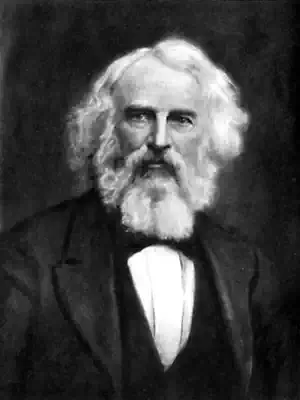
Henry Wadsworth Longfellow
Cantos From Dante's Paradiso
Cantos From Dante's Paradiso
(Canto XXIII.)
Even as a bird, 'mid the beloved leaves,
Quiet upon the nest of her sweet brood
Throughout the night, that hideth all things from us,
Who, that she may behold their longed-for looks
And find the nourishment wherewith to feed them,
In which, to her, grave labors grateful are,
Anticipates the time on open spray
And with an ardent longing waits the sun,
Gazing intent, as soon as breaks the dawn:
Even thus my Lady standing was, erect
And vigilant, turned round towards the zone
Underneath which the sun displays least haste;
So that beholding her distraught and eager,
Such I became as he is, who desiring
For something yearns, and hoping is appeased.
But brief the space from one When to the other;
From my awaiting, say I, to the seeing
The welkin grow resplendent more and more.
And Beatrice exclaimed: 'Behold the hosts
Of the triumphant Christ, and all the fruit
Harvested by the rolling of these spheres!'
It seemed to me her face was all on flame;
And eyes she had so full of ecstasy
That I must needs pass on without describing.
As when in nights serene of the full moon
Smiles Trivia among the nymphs eternal
Who paint the heaven through all its hollow cope,
Saw I, above the myriads of lamps,
A sun that one and all of them enkindled,
E'en as our own does the supernal stars.
And through the living light transparent shone
The lucent substance so intensely clear
Into my sight, that I could not sustain it.
O Beatrice, my gentle guide and dear!
She said to me: 'That which o'ermasters thee
A virtue is which no one can resist.
There are the wisdom and omnipotence
That oped the thoroughfares 'twixt heaven and earth,
For which there erst had been so long a yearning.'
As fire from out a cloud itself discharges,
Dilating so it finds not room therein,
And down, against its nature, falls to earth,
So did my mind, among those aliments
Becoming larger, issue from itself,
And what became of it cannot remember.
'Open thine eyes, and look at what I am:
Thou hast beheld such things, that strong enough
Hast thou become to tolerate my smile.'
I was as one who still retains the feeling
Of a forgotten dream, and who endeavors
In vain to bring it back into his mind,
When I this invitation heard, deserving
Of so much gratitude, it never fades
Out of the book that chronicles the past.
It at this moment sounded all the tongues
That Polyhymnia and her sisters made
Most lubrical with their delicious milk,
To aid me, to a thousandth of the truth
It would not reach, singing the holy smile,
And how the holy aspect it illumed.
And therefore, representing Paradise,
The sacred poem must perforce leap over,
Even as a man who finds his way cut off.
But whoso thinketh of the ponderous theme,
And of the mortal shoulder that sustains it,
Should blame it not, if under this it trembles.
It is no passage for a little boat
This which goes cleaving the audacious prow,
Nor for a pilot who would spare himself.
'Why does my face so much enamor thee,
That to the garden fair thou turnest not,
Which under the rays of Christ is blossoming?
There is the rose in which the Word Divine
Became incarnate; there the lilies are
By whose perfume the good way was selected.'
Thus Beatrice; and I, who to her counsels
Was wholly ready, once again betook me
Unto the battle of the feeble brows.
As in a sunbeam, that unbroken passes
Through fractured cloud, ere now a meadow of flowers
Mine eyes with shadow covered have beheld,
So I beheld the multitudinous splendors
Refulgent from above with burning rays,
Beholding not the source of the effulgence.
O thou benignant power that so imprint'st them!
Thou didst exalt thyself to give more scope
There to the eyes, that were not strong enough.
The name of that fair flower I e'er invoke
Morning and evening utterly enthralled
My soul to gaze upon the greater fire.
And when in both mine eyes depicted were
The glory and greatness of the living star
Which conquers there, and here below it conquered,
Athwart the heavens descended a bright sheen
Formed in a circle like a coronal,
And cinctured it, and whirled itself about it.
Whatever melody most sweetly soundeth
On earth, and to itself most draws the soul,
Would seem a cloud that, rent asunder, thunders,
Compared unto the sounding of that lyre
Wherewith was crowned the sapphire beautiful,
Which gives the clearest heaven its sapphire hue.
'I am Angelic Love, that circle round
The joy sublime which breathes from out the bosom
That was the hostelry of our Desire;
And I shall circle, Lady of Heaven, while
Thou followest thy Son, and mak'st diviner
The sphere supreme, because thou enterest it.'
Thus did the circulated melody
Seal itself up; and all the other lights
Were making resonant the name of Mary.
The regal mantle of the volumes all
Of that world, which most fervid is and living
With breath of God and with his works and ways,
Extended over us its inner curve,
So very distant, that its outward show,
There where I was, not yet appeared to me.
Therefore mine eyes did not possess the power
Of following the incoronated flame,
Which had ascended near to its own seed.
And as a little child, that toward its mother
Extends its arms, when it the milk has taken,
Through impulse kindled into outward flame,
Each of those gleams of white did upward stretch
So with its summit, that the deep affection
They had for Mary was revealed to me.
Thereafter they remained there in my sight,
Regina coeli singing with such sweetness,
That ne'er from me has the delight departed.
Oh, what exuberance is garnered up
In those resplendent coffers, which had been
For sowing here below good husbandmen!
There they enjoy and live upon the treasure
Which was acquired while weeping in the exile
Of Babylon, wherein the gold was left.
There triumpheth beneath the exalted Son
Of God and Mary, in his victory,
Both with the ancient council and the new,
He who doth keep the keys of such a glory.
(Canto XXIV.)
'O company elect to the great supper
Of the Lamb benedight, who feedeth you
So that for ever full is your desire,
If by the grace of God this man foretaste
Something of that which falleth from your table,
Or ever death prescribe to him the time,
Direct your mind to his immense desire,
And him somewhat bedew; ye drinking are
For ever at the fount whence comes his thought.'
Thus Beatrice; and those souls beatified
Transformed themselves to spheres on steadfast poles,
Flaming intensely in the guise of comets.
And as the wheels in works of horologes
Revolve so that the first to the beholder
Motionless seems, and the last one to fly,
So in like manner did those carols, dancing
In different measure, of their affluence
Give me the gauge, as they were swift or slow.
From that one which I noted of most beauty
Beheld I issue forth a fire so happy
That none it left there of a greater brightness;
And around Beatrice three several times
It whirled itself with so divine a song,
My fantasy repeats it not to me;
Therefore the pen skips, and I write it not,
Since our imagination for such folds,
Much more our speech, is of a tint too glaring.
'O holy sister mine, who us implorest
With such devotion, by thine ardent love
Thou dost unbind me from that beautiful sphere!'
Thereafter, having stopped, the blessed fire
Unto my Lady did direct its breath,
Which spake in fashion as I here have said.
And she: 'O light eterne of the great man
To whom our Lord delivered up the keys
He carried down of this miraculous joy,
This one examine on points light and grave,
As good beseemeth thee, about the Faith
By means of which thou on the sea didst walk.
If he love well, and hope well, and believe,
From thee 'tis hid not; for thou hast thy sight
There where depicted everything is seen.
But since this kingdom has made citizens
By means of the true Faith, to glorify it
'Tis well he have the chance to speak thereof.'
As baccalaureate arms himself, and speaks not
Until the master doth propose the question,
To argue it, and not to terminate it,
So did I arm myself with every reason,
While she was speaking, that I might be ready
For such a questioner and such profession.
'Say, thou good Christian; manifest thyself;
What is the Faith?' Whereat I raised my brow
Unto that light wherefrom was this breathed forth.
Then turned I round to Beatrice, and she
Prompt signals made to me that I should pour
The water forth from my internal fountain.
'May grace, that suffers me to make confession,'
Began I, 'to the great centurion,
Cause my conceptions all to be explicit!'
And I continued: 'As the truthful pen,
Father, of thy dear brother wrote of it,
Who put with thee Rome into the good way,
Faith is the substance of the things we hope for,
And evidence of those that are not seen;
And this appears to me its quiddity.'
Then heard I: 'Very rightly thou perceivest,
If well thou understandest why he placed it
With substances and then with evidences.'
And I thereafterward: 'The things profound,
That here vouchsafe to me their apparition,
Unto all eyes below are so concealed,
That they exist there only in belief,
Upon the which is founded the high hope,
And hence it takes the nature of a substance.
And it behoveth us from this belief
To reason without having other sight,
And hence it has the nature of evidence.'
Then heard I: 'If whatever is acquired
Below by doctrine were thus understood,
No sophist's subtlety would there find place.'
Thus was breathed forth from that enkindled love;
Then added: 'Very well has been gone over
Already of this coin the alloy and weight;
But tell me if thou hast it in thy purse?'
And I: 'Yes, both so shining and so round
That in its stamp there is no peradventure.'
Thereafter issued from the light profound
That there resplendent was: 'This precious jewel,
Upon the which is every virtue founded,
Whence hadst thou it?' And I: 'The large outpouring
Of Holy Spirit, which has been diffused
Upon the ancient parchments and the new,
A syllogism is, which proved it to me
With such acuteness, that, compared therewith,
All demonstration seems to me obtuse.'
And then I heard: 'The ancient and the new
Postulates, that to thee are so conclusive,
Why dost thou take them for the word divine?'
And I: 'The proofs, which show the truth to me,
Are the works subsequent, whereunto Nature
Ne'er heated iron yet, nor anvil beat.'
'Twas answered me: 'Say, who assureth thee
That those works ever were? the thing itself
That must be proved, nought else to thee affirms it.'
'Were the world to Christianity converted,'
I said, 'withouten miracles, this one
Is such, the rest are not its hundredth part;
Because that poor and fasting thou didst enter
Into the field to sow there the good plant,
Which was a vine and has become a thorn!'
This being finished, the high, holy Court
Resounded through the spheres, 'One God we praise!'
In melody that there above is chanted.
And then that Baron, who from branch to branch,
Examining, had thus conducted me,
Till the extremest leaves we were approaching,
Again began: 'The Grace that dallying
Plays with thine intellect thy mouth has opened,
Up to this point, as it should opened be,
So that I do approve what forth emerged;
But now thou must express what thou believest,
And whence to thy belief it was presented.'
'O holy father, spirit who beholdest
What thou believedst so that thou o'ercamest,
Towards the sepulchre, more youthful feet,'
Began I, 'thou dost wish me in this place
The form to manifest of my prompt belief,
And likewise thou the cause thereof demandest.
And I respond: In one God I believe,
Sole and eterne, who moveth all the heavens
With love and with desire, himself unmoved;
And of such faith not only have I proofs
Physical and metaphysical, but gives them
Likewise the truth that from this place rains down
Through Moses, through the Prophets and the Psalms,
Through the Evangel, and through you, who wrote
After the fiery Spirit sanctified you;
In Persons three eterne believe, and these
One essence I believe, so one and trine
They bear conjunction both with 'sunt' and 'est.'
With the profound condition and divine
Which now I touch upon, doth stamp my mind
Ofttimes the doctrine evangelical.
This the beginning is, this is the spark
Which afterwards dilates to vivid flame,
And, like a star in heaven, is sparkling in me.'
Even as a lord who hears what pleaseth him
His servant straight embraces, gratulating
For the good news as soon as he is silent;
So, giving me its benediction, singing,
Three times encircled me, when I was silent,
The apostolic light, at whose command
I spoken had, in speaking I so pleased him.
(Canto XXV.)
If e'er it happen that the Poem Sacred,
To which both heaven and earth have set their hand,
So that it many a year hath made me lean,
O'ercome the cruelty that bars me out
From the fair sheepfold, where a lamb I slumbered,
An enemy to the wolves that war upon it,
With other voice forthwith, with other fleece
Poet will I return, and at my font
Baptismal will I take the laurel crown;
Because into the Faith that maketh known
All souls to God there entered I, and then
Peter for her sake thus my brow encircled.
Thereafterward towards us moved a light
Out of that band whence issued the first-fruits
Which of his vicars Christ behind him left,
And then my Lady, full of ecstasy,
Said unto me: 'Look, look! behold the Baron
For whom below Galicia is frequented.'
In the same way as, when a dove alights
Near his companion, both of them pour forth,
Circling about and murmuring, their affection,
So one beheld I by the other grand
Prince glorified to be with welcome greeted,
Lauding the food that there above is eaten.
But when their gratulations were complete,
Silently 'coram me' each one stood still,
So incandescent it o'ercame my sight.
Smiling thereafterwards, said Beatrice:
'Illustrious life, by whom the benefactions
Of our Basilica have been described,
Make Hope resound within this altitude;
Thou knowest as oft thou dost personify it
As Jesus to the three gave greater clearness.'-'
Lift up thy head, and make thyself assured;
For what comes hither from the mortal world
Must needs be ripened in our radiance.'
This comfort came to me from the second fire;
Wherefore mine eyes I lifted to the hills,
Which bent them down before with too great weight.
'Since, through his grace, our Emperor wills that thou
Shouldst find thee face to face, before thy death,
In the most secret chamber, with his Counts,
So that, the truth beholden of this court,
Hope, which below there rightfully enamours,
Thereby thou strengthen in thyself and others,
Say what it is, and how is flowering with it
Thy mind, and say from whence it came to thee.'
Thus did the second light again continue.
And the Compassionate, who piloted
The plumage of my wings in such high flight,
Did in reply anticipate me thus:
'No child whatever the Church Militant
Of greater hope possesses, as is written
In that Sun which irradiates all our band;
Therefore it is conceded him from Egypt
To come into Jerusalem to see,
Or ever yet his warfare be completed.
The two remaining points, that not for knowledge
Have been demanded, but that he report
How much this virtue unto thee is pleasing,
To him I leave; for hard he will not find them,
Nor of self-praise; and let him answer them;
And may the grace of God in this assist him!'
As a disciple, who his teacher follows,
Ready and willing, where he is expert,
That his proficiency may be displayed,
'Hope,' said I, 'is the certain expectation
Of future glory, which is the effect
Of grace divine and merit precedent.
From many stars this light comes unto me;
But he instilled it first into my heart
Who was chief singer unto the chief captain.
'
Sperent in te
,' in the high Theody
He sayeth, 'those who know thy name;' and who
Knoweth it not, if he my faith possess?
Thou didst instil me, then, with his instilling
In the Epistle, so that I am full,
And upon others rain again your rain.'
While I was speaking, in the living bosom
Of that combustion quivered an effulgence,
Sudden and frequent, in the guise of lightning;
Then breathed: 'The love wherewith I am inflamed
Towards the virtue still which followed me
Unto the palm and issue of the field,
Wills that I breathe to thee that thou delight
In her; and grateful to me is thy telling
Whatever things Hope promises to thee.'
And I: 'The ancient Scriptures and the new
The mark establish, and this shows it me,
Of all the souls whom God hath made his friends.
Isaiah saith, that each one garmented
In his own land shall be with twofold garments,
And his own land is this delightful life.
Thy brother, too, far more explicitly,
There where he treateth of the robes of white,
This revelation manifests to us.'
And first, and near the ending of these words,
'
Sperent in te
' from over us was heard,
To which responsive answered all the carols.
Thereafterward a light among them brightened,
So that, if Cancer one such crystal had,
Winter would have a month of one sole day.
And as uprises, goes, and enters the dance
A winsome maiden, only to do honour
To the new bride, and not from any failing,
Even thus did I behold the brightened splendour
Approach the two, who in a wheel revolved
As was beseeming to their ardent love.
Into the song and music there it entered;
And fixed on them my Lady kept her look,
Even as a bride silent and motionless.
'This is the one who lay upon the breast
Of him our Pelican; and this is he
To the great office from the cross elected.'
My Lady thus; but therefore none the more
Did move her sight from its attentive gaze
Before or afterward these words of hers.
Even as a man who gazes, and endeavours
To see the eclipsing of the sun a little,
And who, by seeing, sightless doth become,
So I became before that latest fire,
While it was said, 'Why dost thou daze thyself
To see a thing which here hath no existence?
Earth in the earth my body is, and shall be
With all the others there, until our number
With the eternal proposition tallies.
With the two garments in the blessed cloister
Are the two lights alone that have ascended:
And this shalt thou take back into your world.'
And at this utterance the flaming circle
Grew quiet, with the dulcet intermingling
Of sound that by the trinal breath was made,
As to escape from danger or fatigue
The oars that erst were in the water beaten
Are all suspended at a whistle's sound.
Ah, how much in my mind was I disturbed,
When I turned round to look on Beatrice,
That her I could not see, although I was
Close at her side and in the Happy World!
(Canto XXIII.)
Even as a bird, 'mid the beloved leaves,
Quiet upon the nest of her sweet brood
Throughout the night, that hideth all things from us,
Who, that she may behold their longed-for looks
And find the nourishment wherewith to feed them,
In which, to her, grave labors grateful are,
Anticipates the time on open spray
And with an ardent longing waits the sun,
Gazing intent, as soon as breaks the dawn:
Even thus my Lady standing was, erect
And vigilant, turned round towards the zone
Underneath which the sun displays least haste;
So that beholding her distraught and eager,
Such I became as he is, who desiring
For something yearns, and hoping is appeased.
But brief the space from one When to the other;
From my awaiting, say I, to the seeing
The welkin grow resplendent more and more.
And Beatrice exclaimed: 'Behold the hosts
Of the triumphant Christ, and all the fruit
Harvested by the rolling of these spheres!'
It seemed to me her face was all on flame;
And eyes she had so full of ecstasy
That I must needs pass on without describing.
As when in nights serene of the full moon
Smiles Trivia among the nymphs eternal
Who paint the heaven through all its hollow cope,
Saw I, above the myriads of lamps,
A sun that one and all of them enkindled,
E'en as our own does the supernal stars.
And through the living light transparent shone
The lucent substance so intensely clear
Into my sight, that I could not sustain it.
O Beatrice, my gentle guide and dear!
She said to me: 'That which o'ermasters thee
A virtue is which no one can resist.
There are the wisdom and omnipotence
That oped the thoroughfares 'twixt heaven and earth,
For which there erst had been so long a yearning.'
As fire from out a cloud itself discharges,
Dilating so it finds not room therein,
And down, against its nature, falls to earth,
So did my mind, among those aliments
Becoming larger, issue from itself,
And what became of it cannot remember.
'Open thine eyes, and look at what I am:
Thou hast beheld such things, that strong enough
Hast thou become to tolerate my smile.'
I was as one who still retains the feeling
Of a forgotten dream, and who endeavors
In vain to bring it back into his mind,
When I this invitation heard, deserving
Of so much gratitude, it never fades
Out of the book that chronicles the past.
It at this moment sounded all the tongues
That Polyhymnia and her sisters made
Most lubrical with their delicious milk,
To aid me, to a thousandth of the truth
It would not reach, singing the holy smile,
And how the holy aspect it illumed.
And therefore, representing Paradise,
The sacred poem must perforce leap over,
Even as a man who finds his way cut off.
But whoso thinketh of the ponderous theme,
And of the mortal shoulder that sustains it,
Should blame it not, if under this it trembles.
It is no passage for a little boat
This which goes cleaving the audacious prow,
Nor for a pilot who would spare himself.
'Why does my face so much enamor thee,
That to the garden fair thou turnest not,
Which under the rays of Christ is blossoming?
There is the rose in which the Word Divine
Became incarnate; there the lilies are
By whose perfume the good way was selected.'
Thus Beatrice; and I, who to her counsels
Was wholly ready, once again betook me
Unto the battle of the feeble brows.
As in a sunbeam, that unbroken passes
Through fractured cloud, ere now a meadow of flowers
Mine eyes with shadow covered have beheld,
So I beheld the multitudinous splendors
Refulgent from above with burning rays,
Beholding not the source of the effulgence.
O thou benignant power that so imprint'st them!
Thou didst exalt thyself to give more scope
There to the eyes, that were not strong enough.
The name of that fair flower I e'er invoke
Morning and evening utterly enthralled
My soul to gaze upon the greater fire.
And when in both mine eyes depicted were
The glory and greatness of the living star
Which conquers there, and here below it conquered,
Athwart the heavens descended a bright sheen
Formed in a circle like a coronal,
And cinctured it, and whirled itself about it.
Whatever melody most sweetly soundeth
On earth, and to itself most draws the soul,
Would seem a cloud that, rent asunder, thunders,
Compared unto the sounding of that lyre
Wherewith was crowned the sapphire beautiful,
Which gives the clearest heaven its sapphire hue.
'I am Angelic Love, that circle round
The joy sublime which breathes from out the bosom
That was the hostelry of our Desire;
And I shall circle, Lady of Heaven, while
Thou followest thy Son, and mak'st diviner
The sphere supreme, because thou enterest it.'
Thus did the circulated melody
Seal itself up; and all the other lights
Were making resonant the name of Mary.
The regal mantle of the volumes all
Of that world, which most fervid is and living
With breath of God and with his works and ways,
Extended over us its inner curve,
So very distant, that its outward show,
There where I was, not yet appeared to me.
Therefore mine eyes did not possess the power
Of following the incoronated flame,
Which had ascended near to its own seed.
And as a little child, that toward its mother
Extends its arms, when it the milk has taken,
Through impulse kindled into outward flame,
Each of those gleams of white did upward stretch
So with its summit, that the deep affection
They had for Mary was revealed to me.
Thereafter they remained there in my sight,
Regina coeli singing with such sweetness,
That ne'er from me has the delight departed.
Oh, what exuberance is garnered up
In those resplendent coffers, which had been
For sowing here below good husbandmen!
There they enjoy and live upon the treasure
Which was acquired while weeping in the exile
Of Babylon, wherein the gold was left.
There triumpheth beneath the exalted Son
Of God and Mary, in his victory,
Both with the ancient council and the new,
He who doth keep the keys of such a glory.
(Canto XXIV.)
'O company elect to the great supper
Of the Lamb benedight, who feedeth you
So that for ever full is your desire,
If by the grace of God this man foretaste
Something of that which falleth from your table,
Or ever death prescribe to him the time,
Direct your mind to his immense desire,
And him somewhat bedew; ye drinking are
For ever at the fount whence comes his thought.'
Thus Beatrice; and those souls beatified
Transformed themselves to spheres on steadfast poles,
Flaming intensely in the guise of comets.
And as the wheels in works of horologes
Revolve so that the first to the beholder
Motionless seems, and the last one to fly,
So in like manner did those carols, dancing
In different measure, of their affluence
Give me the gauge, as they were swift or slow.
From that one which I noted of most beauty
Beheld I issue forth a fire so happy
That none it left there of a greater brightness;
And around Beatrice three several times
It whirled itself with so divine a song,
My fantasy repeats it not to me;
Therefore the pen skips, and I write it not,
Since our imagination for such folds,
Much more our speech, is of a tint too glaring.
'O holy sister mine, who us implorest
With such devotion, by thine ardent love
Thou dost unbind me from that beautiful sphere!'
Thereafter, having stopped, the blessed fire
Unto my Lady did direct its breath,
Which spake in fashion as I here have said.
And she: 'O light eterne of the great man
To whom our Lord delivered up the keys
He carried down of this miraculous joy,
This one examine on points light and grave,
As good beseemeth thee, about the Faith
By means of which thou on the sea didst walk.
If he love well, and hope well, and believe,
From thee 'tis hid not; for thou hast thy sight
There where depicted everything is seen.
But since this kingdom has made citizens
By means of the true Faith, to glorify it
'Tis well he have the chance to speak thereof.'
As baccalaureate arms himself, and speaks not
Until the master doth propose the question,
To argue it, and not to terminate it,
So did I arm myself with every reason,
While she was speaking, that I might be ready
For such a questioner and such profession.
'Say, thou good Christian; manifest thyself;
What is the Faith?' Whereat I raised my brow
Unto that light wherefrom was this breathed forth.
Then turned I round to Beatrice, and she
Prompt signals made to me that I should pour
The water forth from my internal fountain.
'May grace, that suffers me to make confession,'
Began I, 'to the great centurion,
Cause my conceptions all to be explicit!'
And I continued: 'As the truthful pen,
Father, of thy dear brother wrote of it,
Who put with thee Rome into the good way,
Faith is the substance of the things we hope for,
And evidence of those that are not seen;
And this appears to me its quiddity.'
Then heard I: 'Very rightly thou perceivest,
If well thou understandest why he placed it
With substances and then with evidences.'
And I thereafterward: 'The things profound,
That here vouchsafe to me their apparition,
Unto all eyes below are so concealed,
That they exist there only in belief,
Upon the which is founded the high hope,
And hence it takes the nature of a substance.
And it behoveth us from this belief
To reason without having other sight,
And hence it has the nature of evidence.'
Then heard I: 'If whatever is acquired
Below by doctrine were thus understood,
No sophist's subtlety would there find place.'
Thus was breathed forth from that enkindled love;
Then added: 'Very well has been gone over
Already of this coin the alloy and weight;
But tell me if thou hast it in thy purse?'
And I: 'Yes, both so shining and so round
That in its stamp there is no peradventure.'
Thereafter issued from the light profound
That there resplendent was: 'This precious jewel,
Upon the which is every virtue founded,
Whence hadst thou it?' And I: 'The large outpouring
Of Holy Spirit, which has been diffused
Upon the ancient parchments and the new,
A syllogism is, which proved it to me
With such acuteness, that, compared therewith,
All demonstration seems to me obtuse.'
And then I heard: 'The ancient and the new
Postulates, that to thee are so conclusive,
Why dost thou take them for the word divine?'
And I: 'The proofs, which show the truth to me,
Are the works subsequent, whereunto Nature
Ne'er heated iron yet, nor anvil beat.'
'Twas answered me: 'Say, who assureth thee
That those works ever were? the thing itself
That must be proved, nought else to thee affirms it.'
'Were the world to Christianity converted,'
I said, 'withouten miracles, this one
Is such, the rest are not its hundredth part;
Because that poor and fasting thou didst enter
Into the field to sow there the good plant,
Which was a vine and has become a thorn!'
This being finished, the high, holy Court
Resounded through the spheres, 'One God we praise!'
In melody that there above is chanted.
And then that Baron, who from branch to branch,
Examining, had thus conducted me,
Till the extremest leaves we were approaching,
Again began: 'The Grace that dallying
Plays with thine intellect thy mouth has opened,
Up to this point, as it should opened be,
So that I do approve what forth emerged;
But now thou must express what thou believest,
And whence to thy belief it was presented.'
'O holy father, spirit who beholdest
What thou believedst so that thou o'ercamest,
Towards the sepulchre, more youthful feet,'
Began I, 'thou dost wish me in this place
The form to manifest of my prompt belief,
And likewise thou the cause thereof demandest.
And I respond: In one God I believe,
Sole and eterne, who moveth all the heavens
With love and with desire, himself unmoved;
And of such faith not only have I proofs
Physical and metaphysical, but gives them
Likewise the truth that from this place rains down
Through Moses, through the Prophets and the Psalms,
Through the Evangel, and through you, who wrote
After the fiery Spirit sanctified you;
In Persons three eterne believe, and these
One essence I believe, so one and trine
They bear conjunction both with 'sunt' and 'est.'
With the profound condition and divine
Which now I touch upon, doth stamp my mind
Ofttimes the doctrine evangelical.
This the beginning is, this is the spark
Which afterwards dilates to vivid flame,
And, like a star in heaven, is sparkling in me.'
Even as a lord who hears what pleaseth him
His servant straight embraces, gratulating
For the good news as soon as he is silent;
So, giving me its benediction, singing,
Three times encircled me, when I was silent,
The apostolic light, at whose command
I spoken had, in speaking I so pleased him.
(Canto XXV.)
If e'er it happen that the Poem Sacred,
To which both heaven and earth have set their hand,
So that it many a year hath made me lean,
O'ercome the cruelty that bars me out
From the fair sheepfold, where a lamb I slumbered,
An enemy to the wolves that war upon it,
With other voice forthwith, with other fleece
Poet will I return, and at my font
Baptismal will I take the laurel crown;
Because into the Faith that maketh known
All souls to God there entered I, and then
Peter for her sake thus my brow encircled.
Thereafterward towards us moved a light
Out of that band whence issued the first-fruits
Which of his vicars Christ behind him left,
And then my Lady, full of ecstasy,
Said unto me: 'Look, look! behold the Baron
For whom below Galicia is frequented.'
In the same way as, when a dove alights
Near his companion, both of them pour forth,
Circling about and murmuring, their affection,
So one beheld I by the other grand
Prince glorified to be with welcome greeted,
Lauding the food that there above is eaten.
But when their gratulations were complete,
Silently 'coram me' each one stood still,
So incandescent it o'ercame my sight.
Smiling thereafterwards, said Beatrice:
'Illustrious life, by whom the benefactions
Of our Basilica have been described,
Make Hope resound within this altitude;
Thou knowest as oft thou dost personify it
As Jesus to the three gave greater clearness.'-'
Lift up thy head, and make thyself assured;
For what comes hither from the mortal world
Must needs be ripened in our radiance.'
This comfort came to me from the second fire;
Wherefore mine eyes I lifted to the hills,
Which bent them down before with too great weight.
'Since, through his grace, our Emperor wills that thou
Shouldst find thee face to face, before thy death,
In the most secret chamber, with his Counts,
So that, the truth beholden of this court,
Hope, which below there rightfully enamours,
Thereby thou strengthen in thyself and others,
Say what it is, and how is flowering with it
Thy mind, and say from whence it came to thee.'
Thus did the second light again continue.
And the Compassionate, who piloted
The plumage of my wings in such high flight,
Did in reply anticipate me thus:
'No child whatever the Church Militant
Of greater hope possesses, as is written
In that Sun which irradiates all our band;
Therefore it is conceded him from Egypt
To come into Jerusalem to see,
Or ever yet his warfare be completed.
The two remaining points, that not for knowledge
Have been demanded, but that he report
How much this virtue unto thee is pleasing,
To him I leave; for hard he will not find them,
Nor of self-praise; and let him answer them;
And may the grace of God in this assist him!'
As a disciple, who his teacher follows,
Ready and willing, where he is expert,
That his proficiency may be displayed,
'Hope,' said I, 'is the certain expectation
Of future glory, which is the effect
Of grace divine and merit precedent.
From many stars this light comes unto me;
But he instilled it first into my heart
Who was chief singer unto the chief captain.
'
Sperent in te
,' in the high Theody
He sayeth, 'those who know thy name;' and who
Knoweth it not, if he my faith possess?
Thou didst instil me, then, with his instilling
In the Epistle, so that I am full,
And upon others rain again your rain.'
While I was speaking, in the living bosom
Of that combustion quivered an effulgence,
Sudden and frequent, in the guise of lightning;
Then breathed: 'The love wherewith I am inflamed
Towards the virtue still which followed me
Unto the palm and issue of the field,
Wills that I breathe to thee that thou delight
In her; and grateful to me is thy telling
Whatever things Hope promises to thee.'
And I: 'The ancient Scriptures and the new
The mark establish, and this shows it me,
Of all the souls whom God hath made his friends.
Isaiah saith, that each one garmented
In his own land shall be with twofold garments,
And his own land is this delightful life.
Thy brother, too, far more explicitly,
There where he treateth of the robes of white,
This revelation manifests to us.'
And first, and near the ending of these words,
'
Sperent in te
' from over us was heard,
To which responsive answered all the carols.
Thereafterward a light among them brightened,
So that, if Cancer one such crystal had,
Winter would have a month of one sole day.
And as uprises, goes, and enters the dance
A winsome maiden, only to do honour
To the new bride, and not from any failing,
Even thus did I behold the brightened splendour
Approach the two, who in a wheel revolved
As was beseeming to their ardent love.
Into the song and music there it entered;
And fixed on them my Lady kept her look,
Even as a bride silent and motionless.
'This is the one who lay upon the breast
Of him our Pelican; and this is he
To the great office from the cross elected.'
My Lady thus; but therefore none the more
Did move her sight from its attentive gaze
Before or afterward these words of hers.
Even as a man who gazes, and endeavours
To see the eclipsing of the sun a little,
And who, by seeing, sightless doth become,
So I became before that latest fire,
While it was said, 'Why dost thou daze thyself
To see a thing which here hath no existence?
Earth in the earth my body is, and shall be
With all the others there, until our number
With the eternal proposition tallies.
With the two garments in the blessed cloister
Are the two lights alone that have ascended:
And this shalt thou take back into your world.'
And at this utterance the flaming circle
Grew quiet, with the dulcet intermingling
Of sound that by the trinal breath was made,
As to escape from danger or fatigue
The oars that erst were in the water beaten
Are all suspended at a whistle's sound.
Ah, how much in my mind was I disturbed,
When I turned round to look on Beatrice,
That her I could not see, although I was
Close at her side and in the Happy World!
377
Henry Van Dyke
To James Whitcomb Riley
To James Whitcomb Riley
On his "Book of Joyous Children"
Yours is a garden of old-fashioned flowers;
Joyous children delight to play there;
Weary men find rest in its bowers,
Watching the lingering light of day there.
Old-time tunes and young love's laughter
Ripple and run among the roses;
Memory's echoes, murmuring after,
Fill the dusk when the long day closes.
Simple songs with a cadence olden--
These you learned in the Forest of Arden:
Friendly flowers with hearts all golden--
These you borrowed from Eden's garden.
This is the reason why all men love you;
Truth to life is the charm of art:
Other poets may soar above you--
You keep close to the human heart.
On his "Book of Joyous Children"
Yours is a garden of old-fashioned flowers;
Joyous children delight to play there;
Weary men find rest in its bowers,
Watching the lingering light of day there.
Old-time tunes and young love's laughter
Ripple and run among the roses;
Memory's echoes, murmuring after,
Fill the dusk when the long day closes.
Simple songs with a cadence olden--
These you learned in the Forest of Arden:
Friendly flowers with hearts all golden--
These you borrowed from Eden's garden.
This is the reason why all men love you;
Truth to life is the charm of art:
Other poets may soar above you--
You keep close to the human heart.
285
Henry Van Dyke
Gratitude
Gratitude
"Do you give thanks for this? -- or that?"
No, God be thanked
I am not grateful
In that cold, calculating way, with blessing ranked
As one, two, three, and four, -- that would be hateful.
I only know that every day brings good above"
My poor deserving;
I only feel that, in the road of Life, true Love
Is leading me along and never swerving.
Whatever gifts and mercies in my lot may fall,
I would not measure
As worth a certain price in praise, or great or small;
But take and use them all with simple pleasure.
For when we gladly eat our daily bread, we bless
The Hand that feeds us;
And when we tread the road of Life in cheerfulness,
Our very heart-beats praise the Love that leads us.
"Do you give thanks for this? -- or that?"
No, God be thanked
I am not grateful
In that cold, calculating way, with blessing ranked
As one, two, three, and four, -- that would be hateful.
I only know that every day brings good above"
My poor deserving;
I only feel that, in the road of Life, true Love
Is leading me along and never swerving.
Whatever gifts and mercies in my lot may fall,
I would not measure
As worth a certain price in praise, or great or small;
But take and use them all with simple pleasure.
For when we gladly eat our daily bread, we bless
The Hand that feeds us;
And when we tread the road of Life in cheerfulness,
Our very heart-beats praise the Love that leads us.
303
Henry Van Dyke
Autumn in the Garden
Autumn in the Garden
When the frosty kiss of Autumn in the dark
Makes its mark
On the flowers, and the misty morning grieves
Over fallen leaves;
Then my olden garden, where the golden soil
Through the toil
Of a hundred years is mellow, rich, and deep,
Whispers in its sleep.
'Mid the crumpled beds of marigold and phlox,
Where the box
Borders with its glossy green the ancient walks,
There's a voice that talks
Of the human hopes that bloomed and withered here
Year by year,--
Dreams of joy, that brightened all the labouring hours,
Fading as the flowers.
Yet the whispered story does not deepen grief;
But relief
For the loneliness of sorrow seems to flow
From the Long-Ago,
When I think of other lives that learned, like mine,
To resign,
And remember that the sadness of the fall
Comes alike to all.
What regrets, what longings for the lost were theirs!
And what prayers
For the silent strength that nerves us to endure
Things we cannot cure!
Pacing up and down the garden where they paced,
I have traced
All their well-worn paths of patience, till I find
Comfort in my mind.
Faint and far away their ancient griefs appear:
Yet how near
Is the tender voice, the careworn, kindly face,
Of the human race!
Let us walk together in the garden, dearest heart,
Not apart!
They who know the sorrows other lives have known
Never walk alone.
When the frosty kiss of Autumn in the dark
Makes its mark
On the flowers, and the misty morning grieves
Over fallen leaves;
Then my olden garden, where the golden soil
Through the toil
Of a hundred years is mellow, rich, and deep,
Whispers in its sleep.
'Mid the crumpled beds of marigold and phlox,
Where the box
Borders with its glossy green the ancient walks,
There's a voice that talks
Of the human hopes that bloomed and withered here
Year by year,--
Dreams of joy, that brightened all the labouring hours,
Fading as the flowers.
Yet the whispered story does not deepen grief;
But relief
For the loneliness of sorrow seems to flow
From the Long-Ago,
When I think of other lives that learned, like mine,
To resign,
And remember that the sadness of the fall
Comes alike to all.
What regrets, what longings for the lost were theirs!
And what prayers
For the silent strength that nerves us to endure
Things we cannot cure!
Pacing up and down the garden where they paced,
I have traced
All their well-worn paths of patience, till I find
Comfort in my mind.
Faint and far away their ancient griefs appear:
Yet how near
Is the tender voice, the careworn, kindly face,
Of the human race!
Let us walk together in the garden, dearest heart,
Not apart!
They who know the sorrows other lives have known
Never walk alone.
300
Henry Van Dyke
Ameria's Welcome Home
Ameria's Welcome Home
Oh, gallantly they fared forth in khaki and in blue,
America's crusading host of warriors bold and true;
They battled for the rights of man beside our brave Allies,
And now they're coming home to us with glory in their eyes.
Oh, it's home again, and home again, America for me!
Our hearts are turning home again and there we long to be,
In our beautiful big country beyond the ocean bars,
Where the air is full of sunlight and the flag is full of stars.
Our boys have seen the Old World as none have seen before.
They know the grisly horror of the German gods of war:
The noble faith of Britain and the hero-heart of France,
The soul of Belgium's fortitude and Italy's romance.
They bore our country's great word across the rolling sea,
'America swears brotherhood with all the just and free.'
They wrote that word victorious on fields of mortal strife,
And many a valiant lad was proud to seal it with his life.
Oh, welcome home in Heaven's peace, dear spirits of the dead!
And welcome home ye living sons America hath bred!
The lords of war are beaten down, your glorious task is done;
You fought to make the whole world free, and the victory is won.
Now it's home again, and home again, our hearts are turning west,
Of all the lands beneath the sun America is best.
We're going home to our own folks, beyond the ocean bars,
Where the air is full of sunlight and the flag is full of stars.
Oh, gallantly they fared forth in khaki and in blue,
America's crusading host of warriors bold and true;
They battled for the rights of man beside our brave Allies,
And now they're coming home to us with glory in their eyes.
Oh, it's home again, and home again, America for me!
Our hearts are turning home again and there we long to be,
In our beautiful big country beyond the ocean bars,
Where the air is full of sunlight and the flag is full of stars.
Our boys have seen the Old World as none have seen before.
They know the grisly horror of the German gods of war:
The noble faith of Britain and the hero-heart of France,
The soul of Belgium's fortitude and Italy's romance.
They bore our country's great word across the rolling sea,
'America swears brotherhood with all the just and free.'
They wrote that word victorious on fields of mortal strife,
And many a valiant lad was proud to seal it with his life.
Oh, welcome home in Heaven's peace, dear spirits of the dead!
And welcome home ye living sons America hath bred!
The lords of war are beaten down, your glorious task is done;
You fought to make the whole world free, and the victory is won.
Now it's home again, and home again, our hearts are turning west,
Of all the lands beneath the sun America is best.
We're going home to our own folks, beyond the ocean bars,
Where the air is full of sunlight and the flag is full of stars.
321
Henry Van Dyke
A Prayer for a Mother's Birthday
A Prayer for a Mother's Birthday
Lord Jesus, Thou hast known
A mother's love and tender care:
And Thou wilt hear, while for my own
Mother most dear I make this birthday prayer.
Protect her life, I pray,
Who gave the gift of life to me;
And may she know, from day to day,
The deepening glow of Life that comes from Thee.
As once upon her breast
Fearless and well content I lay,
So let her heart, on Thee at rest,
Feel fears depart and troubles fade away.
Her every wish fulfill;
And even if Thou must refuse
In anything, let Thy wise will
A comfort bring such as kind mothers use.
Ah, hold her by the hand,
As once her hand held mine;
And though she may not understand
Life's winding way, lead her in peace divine.
I cannot pay my debt
For all the love that she has given;
But Thou, love's Lord, wilt not forget
Her due reward,--bless her in earth and heaven.
Lord Jesus, Thou hast known
A mother's love and tender care:
And Thou wilt hear, while for my own
Mother most dear I make this birthday prayer.
Protect her life, I pray,
Who gave the gift of life to me;
And may she know, from day to day,
The deepening glow of Life that comes from Thee.
As once upon her breast
Fearless and well content I lay,
So let her heart, on Thee at rest,
Feel fears depart and troubles fade away.
Her every wish fulfill;
And even if Thou must refuse
In anything, let Thy wise will
A comfort bring such as kind mothers use.
Ah, hold her by the hand,
As once her hand held mine;
And though she may not understand
Life's winding way, lead her in peace divine.
I cannot pay my debt
For all the love that she has given;
But Thou, love's Lord, wilt not forget
Her due reward,--bless her in earth and heaven.
321
Henry Van Dyke
A Legend of Service
A Legend of Service
It pleased the Lord of Angels (praise His name!)
To hear, one day, report from those who came
With pitying sorrow, or exultant joy,
To tell of earthly tasks in His employ:
For some were sorry when they saw how slow
The stream of heavenly love on earth must flow;
And some were glad because their eyes had seen,
Along its banks, fresh flowers and living green.
So, at a certain hour, before the throne
The youngest angel, Asmiel, stood alone;
Nor glad, nor sad, but full of earnest thought,
And thus his tidings to the Master brought:
"Lord, in the city Lupon I have found
"Three servants of thy holy name, renowned
"Above their fellows. One is very wise,
"With thoughts that ever range above the skies;
"And one is gifted with the golden speech
"That makes men glad to hear when he will teach;
"And one, with no rare gift or grace endued,
"Has won the people's love by doing good.
"With three such saints Lupon is trebly blest;
"But, Lord, I fain would know, which loves Thee best?"
Then spake the Lord of Angels, to whose look
The hearts of all are like an open book:
"In every soul the secret thought I read,
"And well I know who loves me best indeed.
"But every life has pages vacant still,
"Whereon a man may write the thing he will;
"Therefore I read in silence, day by day,
"And wait for hearts untaught to learn my way.
"But thou shalt go to Lupon, to the three
"Who serve me there, and take this word from me:
"Tell each of them his Master bids him go
"Alone to Spiran's huts, across the snow;
"There he shall find a certain task for me:
"But what, I do not tell to them nor thee.
"Give thou the message, make my word the test,
"And crown for me the one who answers best."
Silent the angel stood, with folded hands,
To take the imprint of his Lord's commands;
Then drew one breath, obedient and elate,
And passed, the self-same hour, through Lupon's gate.
First to the Temple door he made his way;
And there, because it was an holy-day,
He saw the folk by thousands thronging, stirred
By ardent thirst to hear the preacher's word.
Then, while the echoes murmured Bernol's name,
Through aisles that hushed behind him, Bernol came;
Strung to the keenest pitch of conscious might,
With lips prepared and firm, and eyes alight.
One moment at the pulpit steps he knelt
In silent prayer, and on his shoulder felt
The angel's hand: --"The Master bids thee go
"Alone to Spiran's huts, across the snow,
"To serve Him there." Then Bernol's hidden face
Went white as death, and for about the space
Of ten slow heart-beats there was no reply;
Till Bernol looked around and whispered, "WHY?"
But answer to his question came there none;
The angel sighed, and with a sigh was gone.
Within the humble house where Malvin spent
His studious years, on holy things intent,
Sweet stillness reigned; and there the angel found
The saintly sage immersed in thought profound,
Weaving with patient toil and willing care
A web of wisdom, wonderful and fair:
A seamless robe for Truth's great bridal meet,
And needing but one thread to be complete.
Then Asmiel touched his hand, and broke the thread
Of fine-spun thought, and very gently said,
"The One of whom thou thinkest bids thee go
"Alone to Spiran's huts, across the snow,
"To serve Him there." With sorrow and surprise
Malvin looked up, reluctance in his eyes.
The broken thought, the strangeness of the call,
The perilous passage of the mountain-wall,
The solitary journey, and the length
Of ways unknown, too great for his frail strength,
Appalled him. With a doubtful brow
He scanned the doubtful task, and muttered "HOW?"
But Asmiel answered, as he turned to go,
With cold, disheartened voice, "I do not know."
Now as he went, with fading hope, to seek
The third and last to whom God bade him speak,
Scarce twenty steps away whom should he meet
But Fermor, hurrying cheerful down the street,
With ready heart that faced his work like play,
And joyed to find it greater every day!
The angel stopped him with uplifted hand,
And gave without delay his Lord's command:
"He whom thou servest here would have thee go
"Alone to Spiran's huts, across the snow,
"To serve Him there." Ere Asmiel breathed again
The eager answer leaped to meet him, "WHEN?"
The angel's face with inward joy grew bright,
And all his figure glowed with heavenly light;
He took the golden circlet from his brow
And gave the crown to Fermor, answering, "Now!
"For thou hast met the Master's bidden test,
"And I have found the man who loves Him best.
"Not thine, nor mine, to question or reply
"When He commands us, asking 'how?' or 'why?'
"He knows the cause; His ways are wise and just;
"Who serves the King must serve with perfect trust."
It pleased the Lord of Angels (praise His name!)
To hear, one day, report from those who came
With pitying sorrow, or exultant joy,
To tell of earthly tasks in His employ:
For some were sorry when they saw how slow
The stream of heavenly love on earth must flow;
And some were glad because their eyes had seen,
Along its banks, fresh flowers and living green.
So, at a certain hour, before the throne
The youngest angel, Asmiel, stood alone;
Nor glad, nor sad, but full of earnest thought,
And thus his tidings to the Master brought:
"Lord, in the city Lupon I have found
"Three servants of thy holy name, renowned
"Above their fellows. One is very wise,
"With thoughts that ever range above the skies;
"And one is gifted with the golden speech
"That makes men glad to hear when he will teach;
"And one, with no rare gift or grace endued,
"Has won the people's love by doing good.
"With three such saints Lupon is trebly blest;
"But, Lord, I fain would know, which loves Thee best?"
Then spake the Lord of Angels, to whose look
The hearts of all are like an open book:
"In every soul the secret thought I read,
"And well I know who loves me best indeed.
"But every life has pages vacant still,
"Whereon a man may write the thing he will;
"Therefore I read in silence, day by day,
"And wait for hearts untaught to learn my way.
"But thou shalt go to Lupon, to the three
"Who serve me there, and take this word from me:
"Tell each of them his Master bids him go
"Alone to Spiran's huts, across the snow;
"There he shall find a certain task for me:
"But what, I do not tell to them nor thee.
"Give thou the message, make my word the test,
"And crown for me the one who answers best."
Silent the angel stood, with folded hands,
To take the imprint of his Lord's commands;
Then drew one breath, obedient and elate,
And passed, the self-same hour, through Lupon's gate.
First to the Temple door he made his way;
And there, because it was an holy-day,
He saw the folk by thousands thronging, stirred
By ardent thirst to hear the preacher's word.
Then, while the echoes murmured Bernol's name,
Through aisles that hushed behind him, Bernol came;
Strung to the keenest pitch of conscious might,
With lips prepared and firm, and eyes alight.
One moment at the pulpit steps he knelt
In silent prayer, and on his shoulder felt
The angel's hand: --"The Master bids thee go
"Alone to Spiran's huts, across the snow,
"To serve Him there." Then Bernol's hidden face
Went white as death, and for about the space
Of ten slow heart-beats there was no reply;
Till Bernol looked around and whispered, "WHY?"
But answer to his question came there none;
The angel sighed, and with a sigh was gone.
Within the humble house where Malvin spent
His studious years, on holy things intent,
Sweet stillness reigned; and there the angel found
The saintly sage immersed in thought profound,
Weaving with patient toil and willing care
A web of wisdom, wonderful and fair:
A seamless robe for Truth's great bridal meet,
And needing but one thread to be complete.
Then Asmiel touched his hand, and broke the thread
Of fine-spun thought, and very gently said,
"The One of whom thou thinkest bids thee go
"Alone to Spiran's huts, across the snow,
"To serve Him there." With sorrow and surprise
Malvin looked up, reluctance in his eyes.
The broken thought, the strangeness of the call,
The perilous passage of the mountain-wall,
The solitary journey, and the length
Of ways unknown, too great for his frail strength,
Appalled him. With a doubtful brow
He scanned the doubtful task, and muttered "HOW?"
But Asmiel answered, as he turned to go,
With cold, disheartened voice, "I do not know."
Now as he went, with fading hope, to seek
The third and last to whom God bade him speak,
Scarce twenty steps away whom should he meet
But Fermor, hurrying cheerful down the street,
With ready heart that faced his work like play,
And joyed to find it greater every day!
The angel stopped him with uplifted hand,
And gave without delay his Lord's command:
"He whom thou servest here would have thee go
"Alone to Spiran's huts, across the snow,
"To serve Him there." Ere Asmiel breathed again
The eager answer leaped to meet him, "WHEN?"
The angel's face with inward joy grew bright,
And all his figure glowed with heavenly light;
He took the golden circlet from his brow
And gave the crown to Fermor, answering, "Now!
"For thou hast met the Master's bidden test,
"And I have found the man who loves Him best.
"Not thine, nor mine, to question or reply
"When He commands us, asking 'how?' or 'why?'
"He knows the cause; His ways are wise and just;
"Who serves the King must serve with perfect trust."
348
Henry Van Dyke
A Mile With Me
A Mile With Me
O who will walk a mile with me
Along life's merry way?
A comrade blithe and full of glee,
Who dares to laugh out loud and free,
And let his frolic fancy play,
Like a happy child, through the flowers gay
That fill the field and fringe the way
Where he walks a mile with me.
And who will walk a mile with me
Along life's weary way?
A friend whose heart has eyes to see
The stars shine out o'er the darkening lea,
And the quiet rest at the end o' the day,--
A friend who knows, and dares to say,
The brave, sweet words that cheer the way
Where he walks a mile with me.
With such a comrade, such a friend,
I fain would walk till journeys end,
Through summer sunshine, winter rain,
And then?--Farewell, we shall meet again!
O who will walk a mile with me
Along life's merry way?
A comrade blithe and full of glee,
Who dares to laugh out loud and free,
And let his frolic fancy play,
Like a happy child, through the flowers gay
That fill the field and fringe the way
Where he walks a mile with me.
And who will walk a mile with me
Along life's weary way?
A friend whose heart has eyes to see
The stars shine out o'er the darkening lea,
And the quiet rest at the end o' the day,--
A friend who knows, and dares to say,
The brave, sweet words that cheer the way
Where he walks a mile with me.
With such a comrade, such a friend,
I fain would walk till journeys end,
Through summer sunshine, winter rain,
And then?--Farewell, we shall meet again!
235

Henry Lawson
Years After the War In Australia
Years After the War In Australia
The Big rough boys from the runs out back were first where the balls flew free,
And yelled in the slang of the Outside Track: ‘By God, it’s a Christmas spree!’
‘It’s not too rusty’—and ‘Wool away!’—‘stand clear of the blazing shoots!’—
‘Sheep O! Sheep O!’—‘We’ll cut out to-day’—‘Look out for the boss’s boots!’
‘What price the tally in camp to-night!’—‘What price the boys Out Back!’
‘Go it, you tigers, for Right or Might and the pride of the Outside Track!’
‘Needle and thread!’—‘I have broke my comb!’—‘Now ride, you flour-bags, ride!’
‘Fight for your mates and the folk at home!’—‘Here’s for the Lachlan side!’
Those men of the West would sneer and scoff at the gates of hell ajar,
And oft the sight of a head cut off was hailed by a yell for ‘Tar!’
I heard the push in the Red Redoubt, irate at a luckless shot:
‘Look out for the blooming shell, look out!’—‘Gor’ bli’me, but that’s red-hot!’
‘It’s Bill the Slogger—poor bloke—he’s done. A chunk of the shell was his;
‘I wish the beggar that fired that gun could get within reach of Liz.’
‘Those foreign gunners will give us rats, but I wish it was Bill they missed.’
‘I’d like to get at their bleeding hats with a rock in my (something) fist.’
‘Hold up, Billy; I’ll stick to you; they’ve hit you under the belt;
‘If we get the waddle I’ll swag you through, if the blazing mountains melt;
‘You remember the night when the traps got me for stoushing a bleeding Chow,
‘And you went for ’em proper and laid out three, and I won’t forget it now.’
And, groaning and swearing, the pug replied: ‘I’m done . . . they’ve knocked me out!
‘I’d fight them all for a pound a-side, from the boss to the rouseabout.
‘My nut is cracked and my legs is broke, and it gives me worse than hell;
‘I trained for a scrap with a twelve-stone bloke, and not with a bursting shell.
‘You needn’t mag, for I knowed, old chum, I knowed, old pal, you’d stick;
‘But you can’t hold out till the reg’lars come, and you’d best be nowhere quick.
‘They’ve got a force and a gun ashore, both of our wings is broke;
‘They’ll storm the ridge in a minute more, and the best you can do is smoke.’
And Jim exclaimed: ‘You can smoke, you chaps, but me—Gor’ bli’me, no!
‘The push that ran from the George-street traps won’t run from a foreign foe.
‘I’ll stick to the gun while she makes them sick, and I’ll stick to what’s left of Bill.’
And they hiss through their blackened teeth: ‘We’ll stick! by the blazing flame, we will!’
And long years after the war was past, they told in the town and bush
How the ridge of death to the bloody last was held by a Sydney push;
How they fought to the end in a sheet of flame, how they fought with their rifle-stocks,
And earned, in a nobler sense, the name of their ancient weapons—‘rocks.’
In the western camps it was ever our boast, when ’twas bad for the kangaroo:
If the enemy’s forces take the coast, they must take the mountains, too;
‘They may force their way by the western line or round by a northern track,
But they won’t run short of a decent spree with the men who are left out back!’
When we burst the enemy’s ironclads and won by a run of luck,
We whooped as loudly as Nelson’s lads when a French three-decker struck—
And when the enemy’s troops prevailed the truth was never heard—
We lied like heroes who never failed explaining how that occurred.
You bushmen sneer in the old bush way at the new-chum jackeroo,
But ‘cuffs-’n’-collers’ were out that day, and they stuck to their posts like glue;
I never believed that a dude could fight till a Johnny led us then;
We buried his bits in the rear that night for the honour of George-street men.
And Jim the Ringer—he fought, he did. The regiment nicknamed Jim,
‘Old Heads a Caser’ and ‘Heads a Quid,’ but it never was ‘tails’ with him.
The way that he rode was a racing rhyme, and the way that he finished grand;
He backed the enemy every time, and died in a hand-to-hand!
I’ll never forget when the ringer and I were first in the Bush Brigade,
With Warrego Bill, from the Live-till-you-Die, in the last grand charge we made.
And Billy died—he was full of sand—he said, as I raised his head:
‘I’m full of love for my native land, but a lot too full of lead.
‘Tell ’em,’ said Billy, ‘and tell old dad, to look after the cattle pup;’
But his eyes grew bright, though his voice was sad, and he said, as I held him up:
‘I have been happy on western farms. And once, when I first went wrong,
‘Around my neck were the trembling arms of the girl I’d loved so long.
‘Far out on the southern seas I’ve sailed, and ridden where brumbies roam,
‘And oft, when all on the station failed, I’ve driven the outlaw home.
‘I’ve spent a cheque in a day and night, and I’ve made a cheque as quick;
‘I struck a nugget when times were tight, and the stores had stopped our tick.
‘I’ve led the field on the old bay mare, and I hear the cheering still,
‘When mother and sister and she were there, and the old man yelled for Bill;
‘But, save for her, could I live my while again in the old bush way,
‘I’d give it all for the last half-mile in the race we rode to-day!’
And he passed away as the stars came out—he died as old heroes die—
I heard the sound of the distant rout, and the Southern Cross was high.
The Big rough boys from the runs out back were first where the balls flew free,
And yelled in the slang of the Outside Track: ‘By God, it’s a Christmas spree!’
‘It’s not too rusty’—and ‘Wool away!’—‘stand clear of the blazing shoots!’—
‘Sheep O! Sheep O!’—‘We’ll cut out to-day’—‘Look out for the boss’s boots!’
‘What price the tally in camp to-night!’—‘What price the boys Out Back!’
‘Go it, you tigers, for Right or Might and the pride of the Outside Track!’
‘Needle and thread!’—‘I have broke my comb!’—‘Now ride, you flour-bags, ride!’
‘Fight for your mates and the folk at home!’—‘Here’s for the Lachlan side!’
Those men of the West would sneer and scoff at the gates of hell ajar,
And oft the sight of a head cut off was hailed by a yell for ‘Tar!’
I heard the push in the Red Redoubt, irate at a luckless shot:
‘Look out for the blooming shell, look out!’—‘Gor’ bli’me, but that’s red-hot!’
‘It’s Bill the Slogger—poor bloke—he’s done. A chunk of the shell was his;
‘I wish the beggar that fired that gun could get within reach of Liz.’
‘Those foreign gunners will give us rats, but I wish it was Bill they missed.’
‘I’d like to get at their bleeding hats with a rock in my (something) fist.’
‘Hold up, Billy; I’ll stick to you; they’ve hit you under the belt;
‘If we get the waddle I’ll swag you through, if the blazing mountains melt;
‘You remember the night when the traps got me for stoushing a bleeding Chow,
‘And you went for ’em proper and laid out three, and I won’t forget it now.’
And, groaning and swearing, the pug replied: ‘I’m done . . . they’ve knocked me out!
‘I’d fight them all for a pound a-side, from the boss to the rouseabout.
‘My nut is cracked and my legs is broke, and it gives me worse than hell;
‘I trained for a scrap with a twelve-stone bloke, and not with a bursting shell.
‘You needn’t mag, for I knowed, old chum, I knowed, old pal, you’d stick;
‘But you can’t hold out till the reg’lars come, and you’d best be nowhere quick.
‘They’ve got a force and a gun ashore, both of our wings is broke;
‘They’ll storm the ridge in a minute more, and the best you can do is smoke.’
And Jim exclaimed: ‘You can smoke, you chaps, but me—Gor’ bli’me, no!
‘The push that ran from the George-street traps won’t run from a foreign foe.
‘I’ll stick to the gun while she makes them sick, and I’ll stick to what’s left of Bill.’
And they hiss through their blackened teeth: ‘We’ll stick! by the blazing flame, we will!’
And long years after the war was past, they told in the town and bush
How the ridge of death to the bloody last was held by a Sydney push;
How they fought to the end in a sheet of flame, how they fought with their rifle-stocks,
And earned, in a nobler sense, the name of their ancient weapons—‘rocks.’
In the western camps it was ever our boast, when ’twas bad for the kangaroo:
If the enemy’s forces take the coast, they must take the mountains, too;
‘They may force their way by the western line or round by a northern track,
But they won’t run short of a decent spree with the men who are left out back!’
When we burst the enemy’s ironclads and won by a run of luck,
We whooped as loudly as Nelson’s lads when a French three-decker struck—
And when the enemy’s troops prevailed the truth was never heard—
We lied like heroes who never failed explaining how that occurred.
You bushmen sneer in the old bush way at the new-chum jackeroo,
But ‘cuffs-’n’-collers’ were out that day, and they stuck to their posts like glue;
I never believed that a dude could fight till a Johnny led us then;
We buried his bits in the rear that night for the honour of George-street men.
And Jim the Ringer—he fought, he did. The regiment nicknamed Jim,
‘Old Heads a Caser’ and ‘Heads a Quid,’ but it never was ‘tails’ with him.
The way that he rode was a racing rhyme, and the way that he finished grand;
He backed the enemy every time, and died in a hand-to-hand!
I’ll never forget when the ringer and I were first in the Bush Brigade,
With Warrego Bill, from the Live-till-you-Die, in the last grand charge we made.
And Billy died—he was full of sand—he said, as I raised his head:
‘I’m full of love for my native land, but a lot too full of lead.
‘Tell ’em,’ said Billy, ‘and tell old dad, to look after the cattle pup;’
But his eyes grew bright, though his voice was sad, and he said, as I held him up:
‘I have been happy on western farms. And once, when I first went wrong,
‘Around my neck were the trembling arms of the girl I’d loved so long.
‘Far out on the southern seas I’ve sailed, and ridden where brumbies roam,
‘And oft, when all on the station failed, I’ve driven the outlaw home.
‘I’ve spent a cheque in a day and night, and I’ve made a cheque as quick;
‘I struck a nugget when times were tight, and the stores had stopped our tick.
‘I’ve led the field on the old bay mare, and I hear the cheering still,
‘When mother and sister and she were there, and the old man yelled for Bill;
‘But, save for her, could I live my while again in the old bush way,
‘I’d give it all for the last half-mile in the race we rode to-day!’
And he passed away as the stars came out—he died as old heroes die—
I heard the sound of the distant rout, and the Southern Cross was high.
237
Henry Lawson
Written Afterwards
Written Afterwards
So the days of my tramping are over,
And the days of my riding are done—
I’m about as content as a rover
Will ever be under the sun;
I write, after reading your letter—
My pipe with old memories rife—
And I feel in a mood that had better
Not meet the true eyes of the wife.
You must never admit a suggestion
That old things are good to recall;
You must never consider the question:
‘Was I happier then, after all?’
You must banish the old hope and sorrow
That make the sad pleasures of life,
You must live for To-day and To-morrow
If you want to be just to the wife.
I have changed since the first day I kissed her.
Which is due—Heaven bless her!—to her;
I’m respected and trusted—I’m ‘Mister,’
Addressed by the children as ‘Sir.’
And I feel the respect without feigning—
But you’d laugh the great laugh of your life
If you only saw me entertaining
An old lady friend of the wife.
By-the-way, when you’re writing, remember
That you never went drinking with me,
And forget our last night of December,
Lest our sev’ral accounts disagree.
And, for my sake, old man, you had better
Avoid the old language of strife,
For the technical terms of your letter
May be misunderstood by the wife.
Never hint of the girls appertaining
To the past (when you’re writing again),
For they take such a lot of explaining,
And you know how I hate to explain.
There are some things, we know to our sorrow,
That cut to the heart like a knife,
And your past is To-day and To-morrow
If you want to be true to the wife.
I believe that the creed we were chums in
Was grand, but too abstract and bold,
And the knowledge of life only comes in
When you’re married and fathered and old.
And it’s well. You may travel as few men,
You may stick to a mistress for life;
But the world, as it is, born of woman
Must be seen through the eyes of the wife.
No doubt you are dreaming as I did
And going the careless old pace,
While my future grows dull and decided,
And the world narrows down to the Place.
Let it be. If my ‘treason’s’ resented,
You may do worse, old man, in your life;
Let me dream, too, that I am contented—
For the sake of a true little wife.
So the days of my tramping are over,
And the days of my riding are done—
I’m about as content as a rover
Will ever be under the sun;
I write, after reading your letter—
My pipe with old memories rife—
And I feel in a mood that had better
Not meet the true eyes of the wife.
You must never admit a suggestion
That old things are good to recall;
You must never consider the question:
‘Was I happier then, after all?’
You must banish the old hope and sorrow
That make the sad pleasures of life,
You must live for To-day and To-morrow
If you want to be just to the wife.
I have changed since the first day I kissed her.
Which is due—Heaven bless her!—to her;
I’m respected and trusted—I’m ‘Mister,’
Addressed by the children as ‘Sir.’
And I feel the respect without feigning—
But you’d laugh the great laugh of your life
If you only saw me entertaining
An old lady friend of the wife.
By-the-way, when you’re writing, remember
That you never went drinking with me,
And forget our last night of December,
Lest our sev’ral accounts disagree.
And, for my sake, old man, you had better
Avoid the old language of strife,
For the technical terms of your letter
May be misunderstood by the wife.
Never hint of the girls appertaining
To the past (when you’re writing again),
For they take such a lot of explaining,
And you know how I hate to explain.
There are some things, we know to our sorrow,
That cut to the heart like a knife,
And your past is To-day and To-morrow
If you want to be true to the wife.
I believe that the creed we were chums in
Was grand, but too abstract and bold,
And the knowledge of life only comes in
When you’re married and fathered and old.
And it’s well. You may travel as few men,
You may stick to a mistress for life;
But the world, as it is, born of woman
Must be seen through the eyes of the wife.
No doubt you are dreaming as I did
And going the careless old pace,
While my future grows dull and decided,
And the world narrows down to the Place.
Let it be. If my ‘treason’s’ resented,
You may do worse, old man, in your life;
Let me dream, too, that I am contented—
For the sake of a true little wife.
208
Henry Lawson
Will Yer Write It Down for Me?
Will Yer Write It Down for Me?
In the parlour of the shanty where the lives have all gone wrong,
When a singer or reciter gives a story or a song,
Where the poet’s heart is speaking to their hearts in every line,
Till the hardest curse and blubber at the thoughts of Auld Lang Syne;
Then a boozer lurches forward with an oath for all disguise—
Prayers and curses in his soul, and tears and liquor in his eyes—
Grasps the singer or reciter with a death-grip by the hand:
‘That’s the truth, bloke! Sling it at ’em! Oh! Gorbli’me, that was grand!
‘Don’t mind me; I’ve got ’em. You know! What’s yer name, bloke! Don’t yer see?
‘Who’s the bloke what wrote the po’try? Will yer write it down fer me?’
And the backblocks’ bard goes through it, ever seeking as he goes
For the line of least resistance to the hearts of men he knows;
And he tracks their hearts in mateship, and he tracks them out alone—
Seeking for the power to sway them, till he finds it in his own,
Feels what they feel, loves what they love, learns to hate what they condemn,
Takes his pen in tears and triumph, and he writes it down for them.
In the parlour of the shanty where the lives have all gone wrong,
When a singer or reciter gives a story or a song,
Where the poet’s heart is speaking to their hearts in every line,
Till the hardest curse and blubber at the thoughts of Auld Lang Syne;
Then a boozer lurches forward with an oath for all disguise—
Prayers and curses in his soul, and tears and liquor in his eyes—
Grasps the singer or reciter with a death-grip by the hand:
‘That’s the truth, bloke! Sling it at ’em! Oh! Gorbli’me, that was grand!
‘Don’t mind me; I’ve got ’em. You know! What’s yer name, bloke! Don’t yer see?
‘Who’s the bloke what wrote the po’try? Will yer write it down fer me?’
And the backblocks’ bard goes through it, ever seeking as he goes
For the line of least resistance to the hearts of men he knows;
And he tracks their hearts in mateship, and he tracks them out alone—
Seeking for the power to sway them, till he finds it in his own,
Feels what they feel, loves what they love, learns to hate what they condemn,
Takes his pen in tears and triumph, and he writes it down for them.
254
Henry Lawson
To Tom Bracken
To Tom Bracken
O had you tracked where Kendall* trod
I think you would be kneelin’
Three times a week and thankin’ God
That you are of New Zealan’!
For this I’ll say, to make it short,
An’ keep my tongue from clacken—
The people are a kinder sort
You’re singin’ for, Tom Bracken.
O had you tracked where Kendall* trod
I think you would be kneelin’
Three times a week and thankin’ God
That you are of New Zealan’!
For this I’ll say, to make it short,
An’ keep my tongue from clacken—
The people are a kinder sort
You’re singin’ for, Tom Bracken.
280
Henry Lawson
To Jack
To Jack
SO, I’ve battled it through on my own, Jack,
I have done with all dreaming and doubt.
Though “stoney” to-night and alone, Jack,
I am watching the Old Year out.
I have finished with brooding and fears,
Jack, And the spirit is rising in me,
For the sake of the old New Years, Jack,
And the bright New Years to be.
I have fallen in worldly disgrace, Jack,
And I know very well that you heard;
They have blackened my name in this place, Jack,
And I answered them never a word.
But why should I bluster or grieve,
Jack? So narrow and paltry they be—
I knew you would never believe, Jack,
The lies that were said against me.
That is done which shall never be undone,
And I blame not, I blame not my land,
But I’m hearing the Calling of London,
And I long for the roar of the Strand.
It was always the same with our race,
Jack; You know how a vagabond feels—
We can fight a straight man face to face, Jack.
But we can’t keep the curs from our heels.
You know I loved women and drink, Jack,
And that’s how the trouble began;
But you know that I never would shrink,
Jack, From a deed that was worthy a man!
I never was paltry or mean, Jack.
And cruel I never could be,
I will give you a hand which is clean,
Jack, When we meet again over the sea.
I will bring a few wrinkles of care,
Jack; I have altered a lot, I am told;
The steel-filings show in my hair, Jack;
But my heart is as young as of old.
I have faith still in women, and men, Jack,
Though selfish and blind they may be.
I still have my soul and my pen, Jack,
And my country seems dearer to me.
I will sail when your summer sets in, Jack,
And good-bye to my own native land;
Oh, I long for a glimpse of your grin, Jack,
And I long for the grip of your hand.
We both suffered sorrow and pain, Jack,
And sinned in the days that are done;
But we’ll fight the old battle again, Jack,
Where the battle is worth being won.
SO, I’ve battled it through on my own, Jack,
I have done with all dreaming and doubt.
Though “stoney” to-night and alone, Jack,
I am watching the Old Year out.
I have finished with brooding and fears,
Jack, And the spirit is rising in me,
For the sake of the old New Years, Jack,
And the bright New Years to be.
I have fallen in worldly disgrace, Jack,
And I know very well that you heard;
They have blackened my name in this place, Jack,
And I answered them never a word.
But why should I bluster or grieve,
Jack? So narrow and paltry they be—
I knew you would never believe, Jack,
The lies that were said against me.
That is done which shall never be undone,
And I blame not, I blame not my land,
But I’m hearing the Calling of London,
And I long for the roar of the Strand.
It was always the same with our race,
Jack; You know how a vagabond feels—
We can fight a straight man face to face, Jack.
But we can’t keep the curs from our heels.
You know I loved women and drink, Jack,
And that’s how the trouble began;
But you know that I never would shrink,
Jack, From a deed that was worthy a man!
I never was paltry or mean, Jack.
And cruel I never could be,
I will give you a hand which is clean,
Jack, When we meet again over the sea.
I will bring a few wrinkles of care,
Jack; I have altered a lot, I am told;
The steel-filings show in my hair, Jack;
But my heart is as young as of old.
I have faith still in women, and men, Jack,
Though selfish and blind they may be.
I still have my soul and my pen, Jack,
And my country seems dearer to me.
I will sail when your summer sets in, Jack,
And good-bye to my own native land;
Oh, I long for a glimpse of your grin, Jack,
And I long for the grip of your hand.
We both suffered sorrow and pain, Jack,
And sinned in the days that are done;
But we’ll fight the old battle again, Jack,
Where the battle is worth being won.
232
Henry Lawson
The Way of the World
The Way of the World
When fairer faces turn from me,
And gayer friends grow cold,
And I have lost through poverty
The friendship bought with gold;
When I have served the selfish turn
Of some all-worldly few,
And Folly’s lamps have ceased to burn,
Then I’ll come back to you.
When my admirers find I’m not
The rising star they thought,
And praise or blame is all forgot
My early promise brought;
When brighter rivals lead a host
Where once I led a few,
And kinder times reward their boast,
Then I’ll come back to you.
You loved me, not for what I had
Or what I might have been,
You saw the good, but not the bad,
Was kind, for that between.
I know that you’ll forgive again—
That you will judge me true;
I’ll be too tired to explain
When I come back to you.
When fairer faces turn from me,
And gayer friends grow cold,
And I have lost through poverty
The friendship bought with gold;
When I have served the selfish turn
Of some all-worldly few,
And Folly’s lamps have ceased to burn,
Then I’ll come back to you.
When my admirers find I’m not
The rising star they thought,
And praise or blame is all forgot
My early promise brought;
When brighter rivals lead a host
Where once I led a few,
And kinder times reward their boast,
Then I’ll come back to you.
You loved me, not for what I had
Or what I might have been,
You saw the good, but not the bad,
Was kind, for that between.
I know that you’ll forgive again—
That you will judge me true;
I’ll be too tired to explain
When I come back to you.
255
Henry Lawson
The Two Samaritans and the Tramp
The Two Samaritans and the Tramp
A TRAMP was trampin’ on the road—
The afternoon was warm an’ muggy—
And by-and-by he chanced to meet
A parsin ridin’ in a buggy.
Said he: “As follerers ov the Loard,
To do good offices we oughter!”
An’ from a water-bag he poured,
An’ guv the tramp, a drink er water.
The parsin he went rattlin’ ’ome
To ware his fam-i-lee was thrivin’,
The tramp went on until he met
A bullick-driver, bullick drivin’—
“It’s bilin’ ’ot,” the driver sed
As soon’s the dirty tramp drawed nearer,
And from a little keg he poured,
And giv the tramp a pint of beer—“ah!”
(P.S.—The “ah” is meant to stand for the tramp a-drinking ov it.)
I ain’t agin the temperance cause,
Nor yet no advocate ov drinkin’—
I only tells the yarn because—
Well, at the time it somehow seemed
Ter kind ov set me thinkin’.
A TRAMP was trampin’ on the road—
The afternoon was warm an’ muggy—
And by-and-by he chanced to meet
A parsin ridin’ in a buggy.
Said he: “As follerers ov the Loard,
To do good offices we oughter!”
An’ from a water-bag he poured,
An’ guv the tramp, a drink er water.
The parsin he went rattlin’ ’ome
To ware his fam-i-lee was thrivin’,
The tramp went on until he met
A bullick-driver, bullick drivin’—
“It’s bilin’ ’ot,” the driver sed
As soon’s the dirty tramp drawed nearer,
And from a little keg he poured,
And giv the tramp a pint of beer—“ah!”
(P.S.—The “ah” is meant to stand for the tramp a-drinking ov it.)
I ain’t agin the temperance cause,
Nor yet no advocate ov drinkin’—
I only tells the yarn because—
Well, at the time it somehow seemed
Ter kind ov set me thinkin’.
256
Henry Lawson
The Port O'Call
The Port O'Call
Our hull is seldom painted,
Our decks are seldom stoned;
Our sails are patched and cobbled
And chains by rust marooned.
Our rigging is untidy,
And all things in accord:—
We always sail on Friday
With thirteen souls on board.
For all the days save Friday
Were days of dark despair—
The fourteenth died of fever
Whenever he was there.
Our good ship is the Chancit—
Her oldest name of all;
But, in the ports we’re blown to,
She’s called the ‘Port o’ Call.’
Our captain old Wot Matters—
Our first mate young Hoo Kares,
Our cook is Wen Yew Wan Tit,
And so the Chancit fares.
The sweethearts, wives, and others—
And all we left behind—
Have many names to go by;
But mine is Never Mind.
We fear no hell hereafter,
We hope for no reward—
We always sail on Friday
With thirteen men on board.
And every wind’s a fair wind,
That suits us, one and all,
And every port we’re blown to
We call our port-of-call.
I’ve seen the poor boy striving
For just one chance to rise:
The light of truth and honour
And genius in his eyes.
His school-mates jeered and mocked him,
They mocked him through the town:
And his relatives scarce pitied,
While his parents crushed him down.
I’ve seen the young man fighting
The present and the past,
Till he triumphed in the city,
And fame was his at last!
And generous, but steadfast,
All for his Country then,
Unspoiled and all unconscious
He stood, a prince of men.
I’ve seen the husband ruined,
And drunken in the street,
When the World was all before him,
And the ball was at his feet—
Thrust down by fate most bitter,
Most cruel and unjust;
His children taught to loathe him,
And his name dragged in the dust.
. . . . .
Our hull is never painted,
Our decks are never stoned,
The cabin air is tainted,
The good ship is disowned;
Our rigging is untidy,
And all things in accord—
We always sail on Friday,
With thirteen hands on board.
I’ve seen strong bushmen slaving,
As men ne’er slaved before,
To win homes from the scrublands
And win their country more.
And I’ve seen their children scattered
As work-slaves on the soil;
And the old-age-pension begged for
After fifty years of toil!
And the Bush Muse is discarded,
There’s a wanton on the track,
And her panderers are sneering
At old soldiers of Out Back
The motor cars go racing
Past the Heroes of Long Years,
And the dust is in their faces
And the laughter in their ears.
We care not where we’re bound for,
Nor how the storm might howl;
For every wind’s a fair wind,
And every wind a foul.
There’s nothing left to sail for
Save that we keep our decks,
And watch for other castaways
On rafts from other wrecks.
Our hull is seldom painted,
Our decks are seldom stoned;
Our sails are patched and cobbled
And chains by rust marooned.
Our rigging is untidy,
And all things in accord:—
We always sail on Friday
With thirteen souls on board.
For all the days save Friday
Were days of dark despair—
The fourteenth died of fever
Whenever he was there.
Our good ship is the Chancit—
Her oldest name of all;
But, in the ports we’re blown to,
She’s called the ‘Port o’ Call.’
Our captain old Wot Matters—
Our first mate young Hoo Kares,
Our cook is Wen Yew Wan Tit,
And so the Chancit fares.
The sweethearts, wives, and others—
And all we left behind—
Have many names to go by;
But mine is Never Mind.
We fear no hell hereafter,
We hope for no reward—
We always sail on Friday
With thirteen men on board.
And every wind’s a fair wind,
That suits us, one and all,
And every port we’re blown to
We call our port-of-call.
I’ve seen the poor boy striving
For just one chance to rise:
The light of truth and honour
And genius in his eyes.
His school-mates jeered and mocked him,
They mocked him through the town:
And his relatives scarce pitied,
While his parents crushed him down.
I’ve seen the young man fighting
The present and the past,
Till he triumphed in the city,
And fame was his at last!
And generous, but steadfast,
All for his Country then,
Unspoiled and all unconscious
He stood, a prince of men.
I’ve seen the husband ruined,
And drunken in the street,
When the World was all before him,
And the ball was at his feet—
Thrust down by fate most bitter,
Most cruel and unjust;
His children taught to loathe him,
And his name dragged in the dust.
. . . . .
Our hull is never painted,
Our decks are never stoned,
The cabin air is tainted,
The good ship is disowned;
Our rigging is untidy,
And all things in accord—
We always sail on Friday,
With thirteen hands on board.
I’ve seen strong bushmen slaving,
As men ne’er slaved before,
To win homes from the scrublands
And win their country more.
And I’ve seen their children scattered
As work-slaves on the soil;
And the old-age-pension begged for
After fifty years of toil!
And the Bush Muse is discarded,
There’s a wanton on the track,
And her panderers are sneering
At old soldiers of Out Back
The motor cars go racing
Past the Heroes of Long Years,
And the dust is in their faces
And the laughter in their ears.
We care not where we’re bound for,
Nor how the storm might howl;
For every wind’s a fair wind,
And every wind a foul.
There’s nothing left to sail for
Save that we keep our decks,
And watch for other castaways
On rafts from other wrecks.
237
Henry Lawson
The Paroo
The Paroo
It was a week from Christmas-time,
As near as I remember,
And half a year since, in the rear,
We'd left the Darling timber.
The track was hot and more than drear;
The day dragged out for ever;
But now we knew that we were near
Our camp - the Paroo River.
With blighted eyes and blistered feet,
With stomachs out of order,
Half-mad with flies and dust and heat
We'd crossed the Queensland border.
I longed to hear a stream go by
And see the circles quiver;
I longed to lay me down and die
That night on Paroo River.
The "nose-bags" heavy on each chest
(God bless one kindly squatter!),
With grateful weight our hearts they pressed -
We only wanted water.
The sun was setting in a spray
Of colour like a liver We'd
fondly hoped to camp and stay
That night by Paroo River.
A cloud was on my mate's broad brow,
And once I heard him mutter:
'What price the good old Darling now? -
God bless that grand old gutter!"
And then he stopped and slowly said
In tones that made me shiver:
"It cannot well be on ahead -
I think we've crossed the river."
But soon we saw a strip of ground
Beside the track we followed,
No damper than the surface round,
But just a little hollowed.
His brow assumed a thoughtful frown -
This speech did he deliver:
"I wonder if we'd best go down
Or up the blessed river?"
"But where," said I, " 's the blooming stream?'
And he replied, 'we're at it!"
I stood awhile, as in a dream,
"Great Scott!" I cried, "is that it?
Why, that is some old bridle-track!"
He chuckled, "Well, I never!
It's plain you've never been Out Back -
This is the Paroo River!"
It was a week from Christmas-time,
As near as I remember,
And half a year since, in the rear,
We'd left the Darling timber.
The track was hot and more than drear;
The day dragged out for ever;
But now we knew that we were near
Our camp - the Paroo River.
With blighted eyes and blistered feet,
With stomachs out of order,
Half-mad with flies and dust and heat
We'd crossed the Queensland border.
I longed to hear a stream go by
And see the circles quiver;
I longed to lay me down and die
That night on Paroo River.
The "nose-bags" heavy on each chest
(God bless one kindly squatter!),
With grateful weight our hearts they pressed -
We only wanted water.
The sun was setting in a spray
Of colour like a liver We'd
fondly hoped to camp and stay
That night by Paroo River.
A cloud was on my mate's broad brow,
And once I heard him mutter:
'What price the good old Darling now? -
God bless that grand old gutter!"
And then he stopped and slowly said
In tones that made me shiver:
"It cannot well be on ahead -
I think we've crossed the river."
But soon we saw a strip of ground
Beside the track we followed,
No damper than the surface round,
But just a little hollowed.
His brow assumed a thoughtful frown -
This speech did he deliver:
"I wonder if we'd best go down
Or up the blessed river?"
"But where," said I, " 's the blooming stream?'
And he replied, 'we're at it!"
I stood awhile, as in a dream,
"Great Scott!" I cried, "is that it?
Why, that is some old bridle-track!"
He chuckled, "Well, I never!
It's plain you've never been Out Back -
This is the Paroo River!"
313
Henry Lawson
The Men Who Made Australia
The Men Who Made Australia
There'll be royal times in Sydney for the Cuff and Collar Push,
There’ll be lots of dreary drivel and clap-trap
From the men who own Australia, but who never knew the Bush,
And who could not point their runs out on the map.
Oh, the daily Press will grovel as it never did before,
There’ll be many flags of welcome in the air,
And the Civil Service poet, he shall write odes by the score—
But the men who made the land will not be there.
You shall meet the awful Lady of the latest Birthday Knight—
(She is trying to be English, don’t-cher-know?)
You shall hear the empty mouthing of the champion blatherskite,
You shall hear the boss of local drapers blow.
There’ll be ‘majahs’ from the counter, tailors’ dummies from the fleet,
And to represent Australia here to-day,
There’s the today with his card-case and his cab in Downing-street;
But the men who made Australia—where are they?
Call across the blazing sand wastes of the Never-Never Land!
There are some who will not answer yet awhile,
Some whose bones rot in the mulga or lie bleaching on the sand,
Died of thirst to win the land another mile.
Thrown from horses, ripped by cattle, lost on deserts; and the weak,
Mad through loneliness or drink (no matter which),
Drowned in floods or dead of fever by the sluggish slimy creek—
These are men who died to make the Wool-Kings rich.
Call across the scrubby ridges where they clear the barren soil,
And the gaunt Bush-women share the work of men—
Toil and loneliness for ever—hardship, loneliness and toil—
Where the brave drought-ruined farmer starts again!
Call across the boundless sheep-runs of a country cursed for sheep—
Call across the awful scrublands west of Bourke!
But they have no time to listen—they have scarcely time to sleep—
For the men who conquer deserts have to work.
Dragged behind the crawling sheep-flock on the hot and dusty plain,
They must make a cheque to feed the wife and kids—
Riding night-watch round the cattle in the pelting, freezing rain,
While world-weariness is pressing down the lids.
And away on far out-stations, seldom touched by Heaven’s breath,
In a loneliness that smothers love and hate—
Where they never take white women—there they live the living death
With a half-caste or a black-gin for a mate.
They must toil to save the gaunt stock in the blazing months of drought,
When the stinging, blinding blight is in men’s eyes—
On the wretched, burnt selections, on the big runs further out
Where the sand-storm rises lurid to the skies.
Not to profit when the grass is waving waist-high after rain,
And the mighty clip of wool comes rolling in—
For the Wool-King goes to Paris with his family again
And the gold that souls are sacrificed to win.
There are carriages in waiting for the swells from over-sea,
There are banquets in the latest London style,
While the men who made Australia live on damper, junk and tea—
But the quiet voices whisper, ‘Wait a while!’
For the sons of all Australia, they were born to conquer fate—
And, where charity and friendship are sincere,
Where a sinner is a brother and a stranger is a mate,
There the future of a nation’s written clear.
Aye, the cities claim the triumphs of a land they do not know,
But all empty is the day they celebrate!
For the men who made Australia federated long ago,
And the men to rule Australia—they can wait.
Though the bed may be the rough bunk or the gum leaves or the sand,
And the roof for half the year may be the sky—
There are men amongst the Bushmen who were born to save the land!
And they’ll take their places sternly by-and-by.
There’s a whisper on the desert though the sunset breeze hath died
In the scrubs, though not a breath to stir a bough,
There’s a murmur, not of waters, down the Lachlan River side,
’Tis the spirit of Australia waking now!
There’s the weird hymn of the drought-night on the western water-shed,
Where the beds of unlocked rivers crack and parch;
’Tis the dead that we have buried, and our great unburied dead,
Who are calling now on living men to march!
Round the camp fire of the fencers by the furthest panel west,
In the men’s hut by the muddy billabong,
On the Great North-Western Stock-routes where the drovers never rest,
They are sorting out the right things from the wrong.
In the shearers’ hut the slush lamp shows a haggard, stern-faced man
Preaching war against the Wool-King to his mates;
And wherever go the billy, water-bag and frying-pan,
They are drafting future histories of states!
There'll be royal times in Sydney for the Cuff and Collar Push,
There’ll be lots of dreary drivel and clap-trap
From the men who own Australia, but who never knew the Bush,
And who could not point their runs out on the map.
Oh, the daily Press will grovel as it never did before,
There’ll be many flags of welcome in the air,
And the Civil Service poet, he shall write odes by the score—
But the men who made the land will not be there.
You shall meet the awful Lady of the latest Birthday Knight—
(She is trying to be English, don’t-cher-know?)
You shall hear the empty mouthing of the champion blatherskite,
You shall hear the boss of local drapers blow.
There’ll be ‘majahs’ from the counter, tailors’ dummies from the fleet,
And to represent Australia here to-day,
There’s the today with his card-case and his cab in Downing-street;
But the men who made Australia—where are they?
Call across the blazing sand wastes of the Never-Never Land!
There are some who will not answer yet awhile,
Some whose bones rot in the mulga or lie bleaching on the sand,
Died of thirst to win the land another mile.
Thrown from horses, ripped by cattle, lost on deserts; and the weak,
Mad through loneliness or drink (no matter which),
Drowned in floods or dead of fever by the sluggish slimy creek—
These are men who died to make the Wool-Kings rich.
Call across the scrubby ridges where they clear the barren soil,
And the gaunt Bush-women share the work of men—
Toil and loneliness for ever—hardship, loneliness and toil—
Where the brave drought-ruined farmer starts again!
Call across the boundless sheep-runs of a country cursed for sheep—
Call across the awful scrublands west of Bourke!
But they have no time to listen—they have scarcely time to sleep—
For the men who conquer deserts have to work.
Dragged behind the crawling sheep-flock on the hot and dusty plain,
They must make a cheque to feed the wife and kids—
Riding night-watch round the cattle in the pelting, freezing rain,
While world-weariness is pressing down the lids.
And away on far out-stations, seldom touched by Heaven’s breath,
In a loneliness that smothers love and hate—
Where they never take white women—there they live the living death
With a half-caste or a black-gin for a mate.
They must toil to save the gaunt stock in the blazing months of drought,
When the stinging, blinding blight is in men’s eyes—
On the wretched, burnt selections, on the big runs further out
Where the sand-storm rises lurid to the skies.
Not to profit when the grass is waving waist-high after rain,
And the mighty clip of wool comes rolling in—
For the Wool-King goes to Paris with his family again
And the gold that souls are sacrificed to win.
There are carriages in waiting for the swells from over-sea,
There are banquets in the latest London style,
While the men who made Australia live on damper, junk and tea—
But the quiet voices whisper, ‘Wait a while!’
For the sons of all Australia, they were born to conquer fate—
And, where charity and friendship are sincere,
Where a sinner is a brother and a stranger is a mate,
There the future of a nation’s written clear.
Aye, the cities claim the triumphs of a land they do not know,
But all empty is the day they celebrate!
For the men who made Australia federated long ago,
And the men to rule Australia—they can wait.
Though the bed may be the rough bunk or the gum leaves or the sand,
And the roof for half the year may be the sky—
There are men amongst the Bushmen who were born to save the land!
And they’ll take their places sternly by-and-by.
There’s a whisper on the desert though the sunset breeze hath died
In the scrubs, though not a breath to stir a bough,
There’s a murmur, not of waters, down the Lachlan River side,
’Tis the spirit of Australia waking now!
There’s the weird hymn of the drought-night on the western water-shed,
Where the beds of unlocked rivers crack and parch;
’Tis the dead that we have buried, and our great unburied dead,
Who are calling now on living men to march!
Round the camp fire of the fencers by the furthest panel west,
In the men’s hut by the muddy billabong,
On the Great North-Western Stock-routes where the drovers never rest,
They are sorting out the right things from the wrong.
In the shearers’ hut the slush lamp shows a haggard, stern-faced man
Preaching war against the Wool-King to his mates;
And wherever go the billy, water-bag and frying-pan,
They are drafting future histories of states!
229
Henry Lawson
The Glass On The Bar
The Glass On The Bar
Three bushmen one morning rode up to an inn,
And one of them called for the drinks with a grin;
They'd only returned from a trip to the North,
And, eager to greet them, the landlord came forth.
He absently poured out a glass of Three Star.
And set down that drink with the rest on the bar.
`There, that is for Harry,' he said, `and it's queer,
'Tis the very same glass that he drank from last year;
His name's on the glass, you can read it like print,
He scratched it himself with an old piece of flint;
I remember his drink -- it was always Three Star' --
And the landlord looked out through the door of the bar.
He looked at the horses, and counted but three:
`You were always together -- where's Harry?' cried he.
Oh, sadly they looked at the glass as they said,
`You may put it away, for our old mate is dead;'
But one, gazing out o'er the ridges afar,
Said, `We owe him a shout -- leave the glass on the bar.'
They thought of the far-away grave on the plain,
They thought of the comrade who came not again,
They lifted their glasses, and sadly they said:
`We drink to the name of the mate who is dead.'
And the sunlight streamed in, and a light like a star
Seemed to glow in the depth of the glass on the bar.
And still in that shanty a tumbler is seen,
It stands by the clock, ever polished and clean;
And often the strangers will read as they pass
The name of a bushman engraved on the glass;
And though on the shelf but a dozen there are,
That glass never stands with the rest on the bar.
Three bushmen one morning rode up to an inn,
And one of them called for the drinks with a grin;
They'd only returned from a trip to the North,
And, eager to greet them, the landlord came forth.
He absently poured out a glass of Three Star.
And set down that drink with the rest on the bar.
`There, that is for Harry,' he said, `and it's queer,
'Tis the very same glass that he drank from last year;
His name's on the glass, you can read it like print,
He scratched it himself with an old piece of flint;
I remember his drink -- it was always Three Star' --
And the landlord looked out through the door of the bar.
He looked at the horses, and counted but three:
`You were always together -- where's Harry?' cried he.
Oh, sadly they looked at the glass as they said,
`You may put it away, for our old mate is dead;'
But one, gazing out o'er the ridges afar,
Said, `We owe him a shout -- leave the glass on the bar.'
They thought of the far-away grave on the plain,
They thought of the comrade who came not again,
They lifted their glasses, and sadly they said:
`We drink to the name of the mate who is dead.'
And the sunlight streamed in, and a light like a star
Seemed to glow in the depth of the glass on the bar.
And still in that shanty a tumbler is seen,
It stands by the clock, ever polished and clean;
And often the strangers will read as they pass
The name of a bushman engraved on the glass;
And though on the shelf but a dozen there are,
That glass never stands with the rest on the bar.
265
Henry Lawson
The Flour Bin
The Flour Bin
By Lawson's Hill, near Mudgee,
On old Eurunderee –
The place they called "New Pipeclay",
Where the diggers used to be –
On a dreary old selection,
Where times were dry and thin,
In a slab and shingle kitchen
There stood a flour bin.
'Twas "ploorer" with the cattle,
'Twas rust and smut in wheat,
'Twas blight in eyes and orchards,
And coarse salt-beef to eat.
Oh, how our mothers struggled
Till eyes and brain were dull –
Oh, how our fathers slaved and toiled
To keep those flour bins full!
We've been in many countries,
We've sailed on many seas;
We've travelled in the steerage
And lived on land at ease.
We've seen the world together
Through laughter and through tears –
And not been far from baker's bread
These five and thirty years.
The flats are green as ever,
The creeks go rippling through;
The Mudgee Hills are showing
Their deepest shades of blue;
Those mountains in the distance
That ever held a charm
Are fairer than a picture
As seen from Cox's farm.
On a German farm by Mudgee,
That took long years to win,
On the wide bricked back verandah
There stands a flour bin;
And the dear old German lady –
Though the bakers' carts run out –
Still keeps a "fifty" in it
Against a time of drought.
It was my father made it,
It stands as good as new,
And of the others like it
There still remain a few.
God grant, when drought shall strike us,
The young will "take a pull",
And the old folk their strength anew
To keep those flour bins full.
By Lawson's Hill, near Mudgee,
On old Eurunderee –
The place they called "New Pipeclay",
Where the diggers used to be –
On a dreary old selection,
Where times were dry and thin,
In a slab and shingle kitchen
There stood a flour bin.
'Twas "ploorer" with the cattle,
'Twas rust and smut in wheat,
'Twas blight in eyes and orchards,
And coarse salt-beef to eat.
Oh, how our mothers struggled
Till eyes and brain were dull –
Oh, how our fathers slaved and toiled
To keep those flour bins full!
We've been in many countries,
We've sailed on many seas;
We've travelled in the steerage
And lived on land at ease.
We've seen the world together
Through laughter and through tears –
And not been far from baker's bread
These five and thirty years.
The flats are green as ever,
The creeks go rippling through;
The Mudgee Hills are showing
Their deepest shades of blue;
Those mountains in the distance
That ever held a charm
Are fairer than a picture
As seen from Cox's farm.
On a German farm by Mudgee,
That took long years to win,
On the wide bricked back verandah
There stands a flour bin;
And the dear old German lady –
Though the bakers' carts run out –
Still keeps a "fifty" in it
Against a time of drought.
It was my father made it,
It stands as good as new,
And of the others like it
There still remain a few.
God grant, when drought shall strike us,
The young will "take a pull",
And the old folk their strength anew
To keep those flour bins full.
259
Henry Lawson
The Empty Glass
The Empty Glass
THERE ARE three lank bards in a borrowed room—
Ah! The number is one too few—
They have deemed their home and the bars unfit
For the thing that they have to do.
Three glasses they fill with the Land’s own wine,
And the bread of life they pass.
Their glasses they take, which they slowly raise—
And they drink to an empty glass.
(There’s a greater glare in the street to-night,
And a louder rush and roar,
There’s a mad crowd yelling the winner’s name,
And howling the cricket score:
Oh! The bright moonlight on the angels white,
And the tombs and the monuments grand—
And down by the water at Waverley
There’s a little lone mound of sand.)
Oh, the drinkers would deem them drunk or mad,
And the barmaid stare and frown—
Each lays a hand on the empty glass
Ere they turn it upside down.
There’s a name they know, in a hand they know,
Was scratched with a diamond there—
And they place it in sight—turn on more light—
And they fill their glasses fair.
There’s a widow that weeps by the Hornsby line,
And she stood by him long and true—
But the widow should think by the Hornsby line
That others have loved him too,
’Twas a peaceful end, and his work was done,
When called with the year away;
And the greatest lady in all the land
Is working for her to-day.
If the widow should fear for her children’s fate,
Or brood on a future lot,
In a frivolous land with her widowed state
In a short twelve months forgot.
She can lay her down for a peaceful rest
And forget her grief in sleep,
For his brothers have taken an oath to-night,
An oath that their hearts can keep.
They have taken an oath to his memory,
A pledge they cannot recall,
To stand by the woman that stood by him,
Through poverty, illness and all.
They are young men yet, or the prime of life,
And as each lays down his trust,
May the world be kind to the left behind,
And their native land be just.
(Silence of death in town to-night,
And the streets seem strangely clear—
Have the pitiful slaves of the gambling curse
Fled home for a strange new fear?
Oh, the soft moonlight on the angels white,
Where the beautiful marbles stand—
And down by the rollers at Waverley
There’s a mound of the golden sand.)
THERE ARE three lank bards in a borrowed room—
Ah! The number is one too few—
They have deemed their home and the bars unfit
For the thing that they have to do.
Three glasses they fill with the Land’s own wine,
And the bread of life they pass.
Their glasses they take, which they slowly raise—
And they drink to an empty glass.
(There’s a greater glare in the street to-night,
And a louder rush and roar,
There’s a mad crowd yelling the winner’s name,
And howling the cricket score:
Oh! The bright moonlight on the angels white,
And the tombs and the monuments grand—
And down by the water at Waverley
There’s a little lone mound of sand.)
Oh, the drinkers would deem them drunk or mad,
And the barmaid stare and frown—
Each lays a hand on the empty glass
Ere they turn it upside down.
There’s a name they know, in a hand they know,
Was scratched with a diamond there—
And they place it in sight—turn on more light—
And they fill their glasses fair.
There’s a widow that weeps by the Hornsby line,
And she stood by him long and true—
But the widow should think by the Hornsby line
That others have loved him too,
’Twas a peaceful end, and his work was done,
When called with the year away;
And the greatest lady in all the land
Is working for her to-day.
If the widow should fear for her children’s fate,
Or brood on a future lot,
In a frivolous land with her widowed state
In a short twelve months forgot.
She can lay her down for a peaceful rest
And forget her grief in sleep,
For his brothers have taken an oath to-night,
An oath that their hearts can keep.
They have taken an oath to his memory,
A pledge they cannot recall,
To stand by the woman that stood by him,
Through poverty, illness and all.
They are young men yet, or the prime of life,
And as each lays down his trust,
May the world be kind to the left behind,
And their native land be just.
(Silence of death in town to-night,
And the streets seem strangely clear—
Have the pitiful slaves of the gambling curse
Fled home for a strange new fear?
Oh, the soft moonlight on the angels white,
Where the beautiful marbles stand—
And down by the rollers at Waverley
There’s a mound of the golden sand.)
236
Henry Lawson
The Cattle-Dog's Death
The Cattle-Dog's Death
The Plains lay bare on the homeward route,
And the march was heavy on man and brute;
For the Spirit of Drought was on all the land,
And the white heat danced on the glowing sand.
The best of our cattle-dogs lagged at last,
His strength gave out ere the plains were passed,
And our hearts grew sad when he crept and laid
His languid limbs in the nearest shade.
He saved our lives in the years gone by,
When no one dreamed of the danger nigh,
And the treacherous blacks in the darkness crept
On the silent camp where the drovers slept.
‘The dog is dying,’ a stockman said,
As he knelt and lifted the shaggy head;
‘’Tis a long day’s march ere the run be near,
‘And he’s dying fast; shall we leave him here?’
But the super cried, ‘There’s an answer there!’
As he raised a tuft of the dog’s grey hair;
And, strangely vivid, each man descried
The old spear-mark on the shaggy hide.
We laid a ‘bluey’ and coat across
The camping pack of the lightest horse,
And raised the dog to his deathbed high,
And brought him far ’neath the burning sky.
At the kindly touch of the stockmen rude
His eyes grew human with gratitude;
And though we parched in the heat that fags,
We gave him the last of the water-bags.
The super’s daughter we knew would chide
If we left the dog in the desert wide;
So we brought him far o’er the burning sand
For a parting stroke of her small white hand.
But long ere the station was seen ahead,
His pain was o’er, for the dog was dead
And the folks all knew by our looks of gloom
’Twas a comrade’s corpse that we carried home.
The Plains lay bare on the homeward route,
And the march was heavy on man and brute;
For the Spirit of Drought was on all the land,
And the white heat danced on the glowing sand.
The best of our cattle-dogs lagged at last,
His strength gave out ere the plains were passed,
And our hearts grew sad when he crept and laid
His languid limbs in the nearest shade.
He saved our lives in the years gone by,
When no one dreamed of the danger nigh,
And the treacherous blacks in the darkness crept
On the silent camp where the drovers slept.
‘The dog is dying,’ a stockman said,
As he knelt and lifted the shaggy head;
‘’Tis a long day’s march ere the run be near,
‘And he’s dying fast; shall we leave him here?’
But the super cried, ‘There’s an answer there!’
As he raised a tuft of the dog’s grey hair;
And, strangely vivid, each man descried
The old spear-mark on the shaggy hide.
We laid a ‘bluey’ and coat across
The camping pack of the lightest horse,
And raised the dog to his deathbed high,
And brought him far ’neath the burning sky.
At the kindly touch of the stockmen rude
His eyes grew human with gratitude;
And though we parched in the heat that fags,
We gave him the last of the water-bags.
The super’s daughter we knew would chide
If we left the dog in the desert wide;
So we brought him far o’er the burning sand
For a parting stroke of her small white hand.
But long ere the station was seen ahead,
His pain was o’er, for the dog was dead
And the folks all knew by our looks of gloom
’Twas a comrade’s corpse that we carried home.
256
Henry Lawson
The Black Tracker (Or: Why He Lost The Track)
The Black Tracker (Or: Why He Lost The Track)
There was a tracker in the force
Of wondrous sight (the story ran):—
He never failed to track a horse,
He never failed to find his man.
They brought him from a distant town
Once more to gain reward and praise,
Nor dreamed the man he hunted down
Had saved his life in bygone days.
Away across the farthest run,
And far across the stony plain,
The outlaw’s horse’s tracks, each one,
Unto the black man’s eyes were plain.
Those tracks across the ranges wide
Right well he knew that he could trace,
And oft he turned aside to hide
The tears upon his dusky face.
Now was his time, for he could claim
Reward and praise if he prevailed!
Now was the time to win him fame,
When all the other blacks had failed.
He struggled well to play his part,
For in the art he took a pride.
But, ah! there beat a white man’s heart
Beneath his old, black wrinkled hide.
Against that heart he struggled well,
But gratitude was in the black—
He failed—and only he could tell
The reason why he lost the track.
There was a tracker in the force
Of wondrous sight (the story ran):—
He never failed to track a horse,
He never failed to find his man.
They brought him from a distant town
Once more to gain reward and praise,
Nor dreamed the man he hunted down
Had saved his life in bygone days.
Away across the farthest run,
And far across the stony plain,
The outlaw’s horse’s tracks, each one,
Unto the black man’s eyes were plain.
Those tracks across the ranges wide
Right well he knew that he could trace,
And oft he turned aside to hide
The tears upon his dusky face.
Now was his time, for he could claim
Reward and praise if he prevailed!
Now was the time to win him fame,
When all the other blacks had failed.
He struggled well to play his part,
For in the art he took a pride.
But, ah! there beat a white man’s heart
Beneath his old, black wrinkled hide.
Against that heart he struggled well,
But gratitude was in the black—
He failed—and only he could tell
The reason why he lost the track.
182
Henry Lawson
The Bill of the Ages
The Bill of the Ages
He shall live to the end of this mad old world, he has lived since the world began,
He never has done any good for himself, but was good to every man.
He never has done any good for himself, and I’m sure that he never will,
He drinks and he swears and he fights at times, and his name is mostly Bill.
He carried a freezing mate to his cave, and nursed him, for all I know,
When Europe was mostly a sheet of ice, thousands of years ago.
He has stuck to many a mate since then, he is with us everywhere still
(He loves and gambles when he is young, and the girls stick up for Bill.)
He has rowed to a wreck, when the lifeboat failed, with Jim in a crazy boat;
He has given his lifebelt many a time, and sunk that another might float.
He has ‘stood ’em off’ while others escaped, when the niggers rushed from the hill,
And rescue parties who came too late have found what was left of Bill.
He has thirsted on deserts that others might drink, he has given lest others should
lack,
He has staggered half-blinded through fire or drought with a sick man on his back.
He is first to the rescue in tunnel or shaft, from Newcastle to Broken Hill,
When the water breaks in or the fire breaks out, Oh! a leader of men is Bill.
No humane societies’ medals he wears for the fearful deaths he braved;
He seems ashamed of the good he did, and ashamed of the lives he saved.
If you chance to know of a noble deed he has done, you had best keep still;
If you chance to know of a kindly act, you mustn’t let on to Bill.
He is fierce at a wrong, he is firm in right, he is kind to the weak and mild;
He will slave all day and sit up all night by the side of a neighbour’s child.
For a woman in trouble he’d lay down his life, nor think as another man will;
He’s a man all through, but no other man’s wife has ever been worse for Bill.
He is good for the noblest sacrifice, he can do what few other men can;
He can break his heart that the girl he loves may marry a better man.
There’s many a mother and wife to-night whose heart and whose eyes will fill
When she thinks of the days of the long ago when she well might have stuck to Bill.
Maybe he’s in trouble or hard up now, and travelling far for work,
Or fighting a dead past down to-night in a lone camp west of Bourke.
When he’s happy and flush, take your sorrow to him and borrow as much as you will;
But when he’s in trouble or stony-broke, you never will hear from Bill.
And when, because of its million sins, this earth is cracked like a shell,
He will stand by a mate at the Judgment Seat!—and comfort him down in—Well,
I haven’t much sentiment left, but let the cynic sneer as he will;
Perhaps God will fix up the world again for the sake of the likes of Bill.
He shall live to the end of this mad old world, he has lived since the world began,
He never has done any good for himself, but was good to every man.
He never has done any good for himself, and I’m sure that he never will,
He drinks and he swears and he fights at times, and his name is mostly Bill.
He carried a freezing mate to his cave, and nursed him, for all I know,
When Europe was mostly a sheet of ice, thousands of years ago.
He has stuck to many a mate since then, he is with us everywhere still
(He loves and gambles when he is young, and the girls stick up for Bill.)
He has rowed to a wreck, when the lifeboat failed, with Jim in a crazy boat;
He has given his lifebelt many a time, and sunk that another might float.
He has ‘stood ’em off’ while others escaped, when the niggers rushed from the hill,
And rescue parties who came too late have found what was left of Bill.
He has thirsted on deserts that others might drink, he has given lest others should
lack,
He has staggered half-blinded through fire or drought with a sick man on his back.
He is first to the rescue in tunnel or shaft, from Newcastle to Broken Hill,
When the water breaks in or the fire breaks out, Oh! a leader of men is Bill.
No humane societies’ medals he wears for the fearful deaths he braved;
He seems ashamed of the good he did, and ashamed of the lives he saved.
If you chance to know of a noble deed he has done, you had best keep still;
If you chance to know of a kindly act, you mustn’t let on to Bill.
He is fierce at a wrong, he is firm in right, he is kind to the weak and mild;
He will slave all day and sit up all night by the side of a neighbour’s child.
For a woman in trouble he’d lay down his life, nor think as another man will;
He’s a man all through, but no other man’s wife has ever been worse for Bill.
He is good for the noblest sacrifice, he can do what few other men can;
He can break his heart that the girl he loves may marry a better man.
There’s many a mother and wife to-night whose heart and whose eyes will fill
When she thinks of the days of the long ago when she well might have stuck to Bill.
Maybe he’s in trouble or hard up now, and travelling far for work,
Or fighting a dead past down to-night in a lone camp west of Bourke.
When he’s happy and flush, take your sorrow to him and borrow as much as you will;
But when he’s in trouble or stony-broke, you never will hear from Bill.
And when, because of its million sins, this earth is cracked like a shell,
He will stand by a mate at the Judgment Seat!—and comfort him down in—Well,
I haven’t much sentiment left, but let the cynic sneer as he will;
Perhaps God will fix up the world again for the sake of the likes of Bill.
248