

Poems in this theme
Gratitude
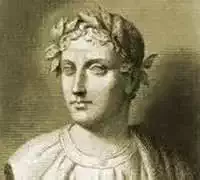
Horácio
BkIV:XII Spring
BkIV:XII Spring
Now Spring’s companions, the Thracian northerlies,
that quieten the ocean, are swelling the canvas:
now fields are unfrozen, and rivers stop roaring
with their volumes of winter snow.
The sad swallow, tearfully mourning Itys, builds
her nest, she’s the House of Cecrops’ eternal shame,
avenging the barbarous lust of Tereus
with too savage a cruelty.
The shepherds, with indolent sheep, in the soft grass,
sing their songs to the sound of the pipes, and delight
great god, Pan, who is pleased with the flocks, and is pleased
by the dark hills of Arcady.
And, Virgil, the season has brought its thirst to us:
but if you’re eager to sip at a grape that was pressed
at Cales, you follower of noble youth, then
earn your wine with a gift of nard.
One small onyx box of nard elicits a jar
that’s lying there now in Sulpicius’ cellar,
sufficient for granting fresh hope, and effective
at washing away bitter care.
If you’re in a rush for pleasures like this, come quick
with your purchase: since I refuse to consider
dipping a gift-less you, in my wine, as if I’m
rich, my house filled with everything.
But abolish delay, and desire for profit,
and, remembering death’s sombre flames, while you can,
mix a little brief foolishness with your wisdom:
it’s sweet sometimes to play the fool.
Now Spring’s companions, the Thracian northerlies,
that quieten the ocean, are swelling the canvas:
now fields are unfrozen, and rivers stop roaring
with their volumes of winter snow.
The sad swallow, tearfully mourning Itys, builds
her nest, she’s the House of Cecrops’ eternal shame,
avenging the barbarous lust of Tereus
with too savage a cruelty.
The shepherds, with indolent sheep, in the soft grass,
sing their songs to the sound of the pipes, and delight
great god, Pan, who is pleased with the flocks, and is pleased
by the dark hills of Arcady.
And, Virgil, the season has brought its thirst to us:
but if you’re eager to sip at a grape that was pressed
at Cales, you follower of noble youth, then
earn your wine with a gift of nard.
One small onyx box of nard elicits a jar
that’s lying there now in Sulpicius’ cellar,
sufficient for granting fresh hope, and effective
at washing away bitter care.
If you’re in a rush for pleasures like this, come quick
with your purchase: since I refuse to consider
dipping a gift-less you, in my wine, as if I’m
rich, my house filled with everything.
But abolish delay, and desire for profit,
and, remembering death’s sombre flames, while you can,
mix a little brief foolishness with your wisdom:
it’s sweet sometimes to play the fool.
222
Horácio
BkIV:II Augustus’s Return
BkIV:II Augustus’s Return
Iulus, whoever tries to rival Pindar,
flies on waxen wings, with Daedalean art,
and is doomed, like Icarus, to give a name
to glassy waters.
Like a river, rushing down from the mountains,
that the rain has filled above its usual banks,
so Pindar’s deep voice seethes, immeasurably,
and goes on flowing,
Pindar, deserving Apollo’s laurel crown,
whether he coins new phrases in audacious
dithyrambs, and is carried along in verse
that’s free of rules,
or whether he sings gods, and kings, the children
of gods, at whose hands the Centaurs, rightly, died,
and by whom the fearful Chimaera’s fires
were all extinguished,
or speaks of those godlike ones an Elean
palm, for boxing or riding, leads home again,
granting a tribute much more powerful than
a hundred statues,
or weeps for the young man snatched from his tearful
bride, praises his powers, to the stars, his spirit,
his golden virtue, begrudging all of them
to gloomy Orcus.
Son of Antony, a powerful breeze raises
the Dircean swan, whenever it’s carried
to cloudy heights. While I create my verses,
in the manner
of a humble Matinian bee, that goes
gathering pollen from all the pleasant thyme,
and labours among the many groves, on the banks
of flowing Tiber.
You, a poet of much greater power, will sing
Caesar, honoured with well-earned wreaths, as he climbs
the sacred slopes, drawing along in his wake
the savage Germans:
he, whom no greater and no better ruler
has Fate, and the true gods, given to the world,
nor ever will, though the centuries roll back
to that first age of gold.
You’ll sing of those happy days, and the City’s
public games, when our brave Augustus returns,
in answer to our prayers: you’ll sing the Forum
free of all quarrels.
Then, if what I utter’s worth hearing, the best
strains of my voice, thrilled by Caesar’s return,
will rise, and I will sing: ‘O lovely sun, O
worthy to be praised!’
While you lead us along: ‘Hail, God of Triumph!’
not once but many times: ‘Hail, God of Triumph!’
all the city will shout, and offer incense
to the kindly gods.
Ten bulls will acquit you, and as many cows:
me, a tender calf that has left its mother,
one that’s been fattened on wide pastures, one that
can fulfil my vow,
echoing, with its brow, those returning fires
of the crescent moon, at the third night’s rising,
appearing snow-white where it carries a mark,
and the rest tawny.
Iulus, whoever tries to rival Pindar,
flies on waxen wings, with Daedalean art,
and is doomed, like Icarus, to give a name
to glassy waters.
Like a river, rushing down from the mountains,
that the rain has filled above its usual banks,
so Pindar’s deep voice seethes, immeasurably,
and goes on flowing,
Pindar, deserving Apollo’s laurel crown,
whether he coins new phrases in audacious
dithyrambs, and is carried along in verse
that’s free of rules,
or whether he sings gods, and kings, the children
of gods, at whose hands the Centaurs, rightly, died,
and by whom the fearful Chimaera’s fires
were all extinguished,
or speaks of those godlike ones an Elean
palm, for boxing or riding, leads home again,
granting a tribute much more powerful than
a hundred statues,
or weeps for the young man snatched from his tearful
bride, praises his powers, to the stars, his spirit,
his golden virtue, begrudging all of them
to gloomy Orcus.
Son of Antony, a powerful breeze raises
the Dircean swan, whenever it’s carried
to cloudy heights. While I create my verses,
in the manner
of a humble Matinian bee, that goes
gathering pollen from all the pleasant thyme,
and labours among the many groves, on the banks
of flowing Tiber.
You, a poet of much greater power, will sing
Caesar, honoured with well-earned wreaths, as he climbs
the sacred slopes, drawing along in his wake
the savage Germans:
he, whom no greater and no better ruler
has Fate, and the true gods, given to the world,
nor ever will, though the centuries roll back
to that first age of gold.
You’ll sing of those happy days, and the City’s
public games, when our brave Augustus returns,
in answer to our prayers: you’ll sing the Forum
free of all quarrels.
Then, if what I utter’s worth hearing, the best
strains of my voice, thrilled by Caesar’s return,
will rise, and I will sing: ‘O lovely sun, O
worthy to be praised!’
While you lead us along: ‘Hail, God of Triumph!’
not once but many times: ‘Hail, God of Triumph!’
all the city will shout, and offer incense
to the kindly gods.
Ten bulls will acquit you, and as many cows:
me, a tender calf that has left its mother,
one that’s been fattened on wide pastures, one that
can fulfil my vow,
echoing, with its brow, those returning fires
of the crescent moon, at the third night’s rising,
appearing snow-white where it carries a mark,
and the rest tawny.
254
Horácio
BkI:XXXVI Numida’s Back Again
BkI:XXXVI Numida’s Back Again
With music, and incense, and blood
of a bullock, delight in placating the gods
that guarded our Numida well,
who’s returned safe and sound, from the farthest West, now,
showering a host of kisses
on every dear friend, but on none of us more than
lovely Lamia, remembering
their boyhood spent under the self-same master,
their togas exchanged together.
Don’t allow this sweet day to lack a white marker,
no end to the wine jars at hand,
no rest for our feet in the Salian fashion,
Don’t let wine-heavy Damalis
conquer our Bassus in downing the Thracian draughts.
Don’t let our feast lack for roses,
or the long-lasting parsley, or the brief lilies:
we’ll all cast our decadent eyes
on Damalis, but Damalis won’t be parted
from that new lover of hers she’s
clasping, more tightly than the wandering ivy.
With music, and incense, and blood
of a bullock, delight in placating the gods
that guarded our Numida well,
who’s returned safe and sound, from the farthest West, now,
showering a host of kisses
on every dear friend, but on none of us more than
lovely Lamia, remembering
their boyhood spent under the self-same master,
their togas exchanged together.
Don’t allow this sweet day to lack a white marker,
no end to the wine jars at hand,
no rest for our feet in the Salian fashion,
Don’t let wine-heavy Damalis
conquer our Bassus in downing the Thracian draughts.
Don’t let our feast lack for roses,
or the long-lasting parsley, or the brief lilies:
we’ll all cast our decadent eyes
on Damalis, but Damalis won’t be parted
from that new lover of hers she’s
clasping, more tightly than the wandering ivy.
197
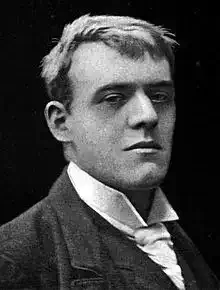
Hilaire Belloc
On the Ladies of Pixton
On the Ladies of Pixton
Three Graces; and the mother were a Grace,
But for profounder meaning in her face.
Three Graces; and the mother were a Grace,
But for profounder meaning in her face.
322
Hilaire Belloc
Courtesy
Courtesy
Of Courtesy, it is much less
Than Courage of Heart or Holiness,
Yet in my Walks it seems to me
That the Grace of God is in Courtesy.
On Monks I did in Storrington fall,
They took me straight into their Hall;
I saw Three Pictures on a wall,
And Courtesy was in them all.
The first the Annunciation;
The second the Visitation;
The third the Consolation,
Of God that was Our Lady's Son.
The first was of St. Gabriel;
On Wings a-flame from Heaven he fell;
And as he went upon one knee
He shone with Heavenly Courtesy.
Our Lady out of Nazareth rode -
It was Her month of heavy load;
Yet was her face both great and kind,
For Courtesy was in Her Mind.
The third it was our Little Lord,
Whom all the Kings in arms adored;
He was so small you could not see
His large intent of Courtesy.
Our Lord, that was Our Lady's Son,
Go bless you, People, one by one;
My Rhyme is written, my work is done.
Of Courtesy, it is much less
Than Courage of Heart or Holiness,
Yet in my Walks it seems to me
That the Grace of God is in Courtesy.
On Monks I did in Storrington fall,
They took me straight into their Hall;
I saw Three Pictures on a wall,
And Courtesy was in them all.
The first the Annunciation;
The second the Visitation;
The third the Consolation,
Of God that was Our Lady's Son.
The first was of St. Gabriel;
On Wings a-flame from Heaven he fell;
And as he went upon one knee
He shone with Heavenly Courtesy.
Our Lady out of Nazareth rode -
It was Her month of heavy load;
Yet was her face both great and kind,
For Courtesy was in Her Mind.
The third it was our Little Lord,
Whom all the Kings in arms adored;
He was so small you could not see
His large intent of Courtesy.
Our Lord, that was Our Lady's Son,
Go bless you, People, one by one;
My Rhyme is written, my work is done.
458
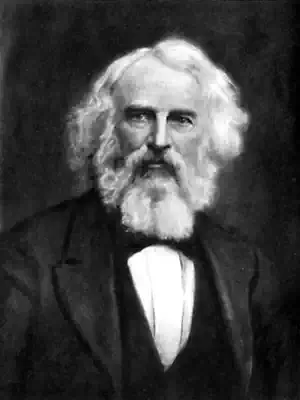
Henry Wadsworth Longfellow
Village Blacksmith, The
Village Blacksmith, The
Under a spreading chestnut tree
The village smithy stands;
The Smith, a mighty man is he,
With large and sinewy hands;
And the muscles of his brawny arms
Are strong as iron bands.
His hair is crisp, and black, and long,
His face is like the tan;
His brow is wet with honest sweat,
He earns whate'er he can
And looks the whole world in the face
For he owes not any man.
Week in, week out, from morn till night,
You can hear his bellows blow;
You can hear him swing his heavy sledge,
With measured beat and slow,
Like a sexton ringing the village bell,
When the evening sun is low.
And children coming home from school
Look in at the open door;
They love to see the flaming furge,
And hear the bellows roar,
And catch the burning sparks that fly
Like chaff from a threshing floor.
He goes on Sunday to the church
and sits among his boys;
He hears the parson pray and preach.
He hears his daughter's voice
singing in the village choir,
And it makes his heart rejoice.
It sounds to him like her mother's voice,
Singing in Paradise!
He needs must think of her once more,
How in the grave she lies;
And with his hard, rough hand he wipes
A tear out of his eyes.
Toiling, rejoicing,-sorrowing,
Onward through life he goes;
Each morning sees some task begin,
Each evening sees it close;
Something attempted, something done,
Has earned a night's repose.
Thanks, thanks to thee, my worthy friend
For the lesson thou hast taught!
Thus at the flaming forge of life
Our fortunes must be wrought;
Thus on its sounding anvil shaped
Each burning deed and thought!
Under a spreading chestnut tree
The village smithy stands;
The Smith, a mighty man is he,
With large and sinewy hands;
And the muscles of his brawny arms
Are strong as iron bands.
His hair is crisp, and black, and long,
His face is like the tan;
His brow is wet with honest sweat,
He earns whate'er he can
And looks the whole world in the face
For he owes not any man.
Week in, week out, from morn till night,
You can hear his bellows blow;
You can hear him swing his heavy sledge,
With measured beat and slow,
Like a sexton ringing the village bell,
When the evening sun is low.
And children coming home from school
Look in at the open door;
They love to see the flaming furge,
And hear the bellows roar,
And catch the burning sparks that fly
Like chaff from a threshing floor.
He goes on Sunday to the church
and sits among his boys;
He hears the parson pray and preach.
He hears his daughter's voice
singing in the village choir,
And it makes his heart rejoice.
It sounds to him like her mother's voice,
Singing in Paradise!
He needs must think of her once more,
How in the grave she lies;
And with his hard, rough hand he wipes
A tear out of his eyes.
Toiling, rejoicing,-sorrowing,
Onward through life he goes;
Each morning sees some task begin,
Each evening sees it close;
Something attempted, something done,
Has earned a night's repose.
Thanks, thanks to thee, my worthy friend
For the lesson thou hast taught!
Thus at the flaming forge of life
Our fortunes must be wrought;
Thus on its sounding anvil shaped
Each burning deed and thought!
705
Henry Wadsworth Longfellow
Ultima Thule: Robert Burns
Ultima Thule: Robert Burns
I see amid the fields of Ayr
A ploughman, who, in foul and fair,
Sings at his task
So clear, we know not if it is
The laverock's song we hear, or his,
Nor care to ask.
For him the ploughing of those fields
A more ethereal harvest yields
Than sheaves of grain;
Songs flush with purple bloom the rye,
The plover's call, the curlew's cry,
Sing in his brain.
Touched by his hand, the wayside weed
Becomes a flower; the lowliest reed
Beside the stream
Is clothed with beauty; gorse and grass
And heather, where his footsteps pass,
The brighter seem.
He sings of love, whose flame illumes
The darkness of lone cottage rooms;
He feels the force,
The treacherous undertow and stress
Of wayward passions, and no less
The keen remorse.
At moments, wrestling with his fate,
His voice is harsh, but not with hate;
The brushwood, hung
Above the tavern door, lets fall
Its bitter leaf, its drop of gall
Upon his tongue.
But still the music of his song
Rises o'er all, elate and strong;
Its master-chords
Are Manhood, Freedom, Brotherhood,
Its discords but an interlude
Between the words.
And then to die so young and leave
Unfinished what he might achieve!
Yet better sure
Is this, than wandering up and down
An old man in a country town,
Infirm and poor.
For now he haunts his native land
As an immortal youth; his hand
Guides every plough;
He sits beside each ingle-nook,
His voice is in each rushing brook,
Each rustling bough.
His presence haunts this room to-night,
A form of mingled mist and light
From that far coast.
Welcome beneath this roof of mine!
Welcome! this vacant chair is thine,
Dear guest and ghost!
I see amid the fields of Ayr
A ploughman, who, in foul and fair,
Sings at his task
So clear, we know not if it is
The laverock's song we hear, or his,
Nor care to ask.
For him the ploughing of those fields
A more ethereal harvest yields
Than sheaves of grain;
Songs flush with purple bloom the rye,
The plover's call, the curlew's cry,
Sing in his brain.
Touched by his hand, the wayside weed
Becomes a flower; the lowliest reed
Beside the stream
Is clothed with beauty; gorse and grass
And heather, where his footsteps pass,
The brighter seem.
He sings of love, whose flame illumes
The darkness of lone cottage rooms;
He feels the force,
The treacherous undertow and stress
Of wayward passions, and no less
The keen remorse.
At moments, wrestling with his fate,
His voice is harsh, but not with hate;
The brushwood, hung
Above the tavern door, lets fall
Its bitter leaf, its drop of gall
Upon his tongue.
But still the music of his song
Rises o'er all, elate and strong;
Its master-chords
Are Manhood, Freedom, Brotherhood,
Its discords but an interlude
Between the words.
And then to die so young and leave
Unfinished what he might achieve!
Yet better sure
Is this, than wandering up and down
An old man in a country town,
Infirm and poor.
For now he haunts his native land
As an immortal youth; his hand
Guides every plough;
He sits beside each ingle-nook,
His voice is in each rushing brook,
Each rustling bough.
His presence haunts this room to-night,
A form of mingled mist and light
From that far coast.
Welcome beneath this roof of mine!
Welcome! this vacant chair is thine,
Dear guest and ghost!
341
Henry Wadsworth Longfellow
Ultima Thule: Bayard Taylor
Ultima Thule: Bayard Taylor
Dead he lay among his books!
The peace of God was in his looks.
As the statues in the gloom
Watch o'er Maximilian's tomb,
So those volumes from their shelves
Watched him, silent as themselves.
Ah! his hand will nevermore
Turn their storied pages o'er;
Nevermore his lips repeat
Songs of theirs, however sweet.
Let the lifeless body rest!
He is gone, who was its guest;
Gone, as travellers haste to leave
An inn, nor tarry until eve.
Traveller! in what realms afar,
In what planet, in what star,
In what vast, aerial space,
Shines the light upon thy face?
In what gardens of delight
Rest thy weary feet to-night?
Poet! thou, whose latest verse
Was a garland on thy hearse;
Thou hast sung, with organ tone,
In Deukalion's life, thine own;
On the ruins of the Past
Blooms the perfect flower at last.
Friend! but yesterday the bells
Rang for thee their loud farewells;
And to-day they toll for thee,
Lying dead beyond the sea;
Lying dead among thy books,
The peace of God in all thy looks!
Dead he lay among his books!
The peace of God was in his looks.
As the statues in the gloom
Watch o'er Maximilian's tomb,
So those volumes from their shelves
Watched him, silent as themselves.
Ah! his hand will nevermore
Turn their storied pages o'er;
Nevermore his lips repeat
Songs of theirs, however sweet.
Let the lifeless body rest!
He is gone, who was its guest;
Gone, as travellers haste to leave
An inn, nor tarry until eve.
Traveller! in what realms afar,
In what planet, in what star,
In what vast, aerial space,
Shines the light upon thy face?
In what gardens of delight
Rest thy weary feet to-night?
Poet! thou, whose latest verse
Was a garland on thy hearse;
Thou hast sung, with organ tone,
In Deukalion's life, thine own;
On the ruins of the Past
Blooms the perfect flower at last.
Friend! but yesterday the bells
Rang for thee their loud farewells;
And to-day they toll for thee,
Lying dead beyond the sea;
Lying dead among thy books,
The peace of God in all thy looks!
411
Henry Wadsworth Longfellow
To the River Charles
To the River Charles
River! that in silence windest
Through the meadows, bright and free,
Till at length thy rest thou findest
In the bosom of the sea!
Four long years of mingled feeling,
Half in rest, and half in strife,
I have seen thy waters stealing
Onward, like the stream of life.
Thou hast taught me, Silent River!
Many a lesson, deep and long;
Thou hast been a generous giver;
I can give thee but a song.
Oft in sadness and in illness,
I have watched thy current glide,
Till the beauty of its stillness
Overflowed me, like a tide.
And in better hours and brighter,
When I saw thy waters gleam,
I have felt my heart beat lighter,
And leap onward with thy stream.
Not for this alone I love thee,
Nor because thy waves of blue
From celestial seas above thee
Take their own celestial hue.
Where yon shadowy woodlands hide thee,
And thy waters disappear,
Friends I love have dwelt beside thee,
And have made thy margin dear.
More than this;--thy name reminds me
Of three friends, all true and tried;
And that name, like magic, binds me
Closer, closer to thy side.
Friends my soul with joy remembers!
How like quivering flames they start,
When I fan the living embers
On the hearth-stone of my heart!
'T is for this, thou Silent River!
That my spirit leans to thee;
Thou hast been a generous giver,
Take this idle song from me.
River! that in silence windest
Through the meadows, bright and free,
Till at length thy rest thou findest
In the bosom of the sea!
Four long years of mingled feeling,
Half in rest, and half in strife,
I have seen thy waters stealing
Onward, like the stream of life.
Thou hast taught me, Silent River!
Many a lesson, deep and long;
Thou hast been a generous giver;
I can give thee but a song.
Oft in sadness and in illness,
I have watched thy current glide,
Till the beauty of its stillness
Overflowed me, like a tide.
And in better hours and brighter,
When I saw thy waters gleam,
I have felt my heart beat lighter,
And leap onward with thy stream.
Not for this alone I love thee,
Nor because thy waves of blue
From celestial seas above thee
Take their own celestial hue.
Where yon shadowy woodlands hide thee,
And thy waters disappear,
Friends I love have dwelt beside thee,
And have made thy margin dear.
More than this;--thy name reminds me
Of three friends, all true and tried;
And that name, like magic, binds me
Closer, closer to thy side.
Friends my soul with joy remembers!
How like quivering flames they start,
When I fan the living embers
On the hearth-stone of my heart!
'T is for this, thou Silent River!
That my spirit leans to thee;
Thou hast been a generous giver,
Take this idle song from me.
363
Henry Wadsworth Longfellow
The Village Blacksmith
The Village Blacksmith
Under a spreading chestnut tree
The village smithy stands;
The smith, a might man is he,
With large and sinewy hands;
And the muscles of his brawney arms
Are strong as iron bands.
His hair is crisp, and black, and long,
His face is like the tan;
His brow is wet with honest sweat,
He earns what'er he can,
And looks the whole word in the face,
For he owes not any man.
Week in, week out, from morn till night,
You can hear the bellows blow;
You can hear him swing his might sledge,
With measure beat and slow,
Like a sexton ringing the village bell,
When the evening sun is low.
And children coming home from school
Look in the open door;
They love to see the flaming forge,
And hear the bellows roar.
And catch the flaming sparks that fly
Like chaff from a threshing floor.
He goes on Sunday to the church,
And sits among his boys;
He hears the parson pray and preach,
He hears his daughter's voice,
Singing in the choir,
And it makes his heart rejoice.
It sounds to him like his mother's voice,
Singing in Paradise!
He needs must think of her once more,
How in the grave she lies;
And with his hard, rough hands he wipes
A tear out of his eyes.
Toiing, -- rejoicing, -- sorrowing,
Onward in life he goes;
Each morning sees some task begin,
Each evening sees it close;
Something attempted, something done,
Has earned his night's repose.
Thanks, thanks to thee, my worthy friend,
For the lesson thou has taught!
Thus at the flaming forge of life
Our fortunes must be wrought;
Thus on its sounding anvil shaped
Each burning deed and thought.
Under a spreading chestnut tree
The village smithy stands;
The smith, a might man is he,
With large and sinewy hands;
And the muscles of his brawney arms
Are strong as iron bands.
His hair is crisp, and black, and long,
His face is like the tan;
His brow is wet with honest sweat,
He earns what'er he can,
And looks the whole word in the face,
For he owes not any man.
Week in, week out, from morn till night,
You can hear the bellows blow;
You can hear him swing his might sledge,
With measure beat and slow,
Like a sexton ringing the village bell,
When the evening sun is low.
And children coming home from school
Look in the open door;
They love to see the flaming forge,
And hear the bellows roar.
And catch the flaming sparks that fly
Like chaff from a threshing floor.
He goes on Sunday to the church,
And sits among his boys;
He hears the parson pray and preach,
He hears his daughter's voice,
Singing in the choir,
And it makes his heart rejoice.
It sounds to him like his mother's voice,
Singing in Paradise!
He needs must think of her once more,
How in the grave she lies;
And with his hard, rough hands he wipes
A tear out of his eyes.
Toiing, -- rejoicing, -- sorrowing,
Onward in life he goes;
Each morning sees some task begin,
Each evening sees it close;
Something attempted, something done,
Has earned his night's repose.
Thanks, thanks to thee, my worthy friend,
For the lesson thou has taught!
Thus at the flaming forge of life
Our fortunes must be wrought;
Thus on its sounding anvil shaped
Each burning deed and thought.
334
Henry Wadsworth Longfellow
The Song Of Hiawatha XXII: Hiawatha's Departure
The Song Of Hiawatha XXII: Hiawatha's Departure
By the shore of Gitche Gumee,
By the shining Big-Sea-Water,
At the doorway of his wigwam,
In the pleasant Summer morning,
Hiawatha stood and waited.
All the air was full of freshness,
All the earth was bright and joyous,
And before him, through the sunshine,
Westward toward the neighboring forest
Passed in golden swarms the Ahmo,
Passed the bees, the honey-makers,
Burning, singing In the sunshine.
Bright above him shone the heavens,
Level spread the lake before him;
From its bosom leaped the sturgeon,
Sparkling, flashing in the sunshine;
On its margin the great forest
Stood reflected in the water,
Every tree-top had its shadow,
Motionless beneath the water.
From the brow of Hiawatha
Gone was every trace of sorrow,
As the fog from off the water,
As the mist from off the meadow.
With a smile of joy and triumph,
With a look of exultation,
As of one who in a vision
Sees what is to be, but is not,
Stood and waited Hiawatha.
Toward the sun his hands were lifted,
Both the palms spread out against it,
And between the parted fingers
Fell the sunshine on his features,
Flecked with light his naked shoulders,
As it falls and flecks an oak-tree
Through the rifted leaves and branches.
O'er the water floating, flying,
Something in the hazy distance,
Something in the mists of morning,
Loomed and lifted from the water,
Now seemed floating, now seemed flying,
Coming nearer, nearer, nearer.
Was it Shingebis the diver?
Or the pelican, the Shada?
Or the heron, the Shuh-shuh-gah?
Or the white goose, Waw-be-wawa,
With the water dripping, flashing,
From its glossy neck and feathers?
It was neither goose nor diver,
Neither pelican nor heron,
O'er the water floating, flying,
Through the shining mist of morning,
But a birch canoe with paddles,
Rising, sinking on the water,
Dripping, flashing in the sunshine;
And within it came a people
From the distant land of Wabun,
From the farthest realms of morning
Came the Black-Robe chief, the Prophet,
He the Priest of Prayer, the Pale-face,
With his guides and his companions.
And the noble Hiawatha,
With his hands aloft extended,
Held aloft in sign of welcome,
Waited, full of exultation,
Till the birch canoe with paddles
Grated on the shining pebbles,
Stranded on the sandy margin,
Till the Black-Robe chief, the Pale-face,
With the cross upon his bosom,
Landed on the sandy margin.
Then the joyous Hiawatha
Cried aloud and spake in this wise:
'Beautiful is the sun, O strangers,
When you come so far to see us!
All our town in peace awaits you,
All our doors stand open for you;
You shall enter all our wigwams,
For the heart's right hand we give you.
'Never bloomed the earth so gayly,
Never shone the sun so brightly,
As to-day they shine and blossom
When you come so far to see us!
Never was our lake so tranquil,
Nor so free from rocks, and sand-bars;
For your birch canoe in passing
Has removed both rock and sand-bar.
'Never before had our tobacco
Such a sweet and pleasant flavor,
Never the broad leaves of our cornfields
Were so beautiful to look on,
As they seem to us this morning,
When you come so far to see us!'
And the Black-Robe chief made answer,
Stammered In his speech a little,
Speaking words yet unfamiliar:
'Peace be with you, Hiawatha,
Peace be with you and your people,
Peace of prayer, and peace of pardon,
Peace of Christ, and joy of Mary!'
Then the generous Hiawatha
Led the strangers to his wigwam,
Seated them on skins of bison,
Seated them on skins of ermine,
And the careful old Nokomis
Brought them food in bowls of basswood,
Water brought in birchen dippers,
And the calumet, the peace-pipe,
Filled and lighted for their smoking.
All the old men of the village,
All the warriors of the nation,
All the Jossakeeds, the Prophets,
The magicians, the Wabenos,
And the Medicine-men, the Medas,
Came to bid the strangers welcome;
'It is well', they said, 'O brothers,
That you come so far to see us!'
In a circle round the doorway,
With their pipes they sat In silence,
Waiting to behold the strangers,
Waiting to receive their message;
Till the Black-Robe chief, the Pale-face,
From the wigwam came to greet them,
Stammering in his speech a little,
Speaking words yet unfamiliar;
'It Is well,' they said, 'O brother,
That you come so far to see us!'
Then the Black-Robe chief, the Prophet,
Told his message to the people,
Told the purport of his mission,
Told them of the Virgin Mary,
And her blessed Son, the Saviour,
How in distant lands and ages
He had lived on earth as we do;
How he fasted, prayed, and labored;
How the Jews, the tribe accursed,
Mocked him, scourged him, crucified him;
How he rose from where they laid him,
Walked again with his disciples,
And ascended into heaven.
And the chiefs made answer, saying:
'We have listened to your message,
We have heard your words of wisdom,
We will think on what you tell us.
It is well for us, O brothers,
That you come so far to see us!'
Then they rose up and departed
Each one homeward to his wigwam,
To the young men and the women
Told the story of the strangers
Whom the Master of Life had sent them
From the shining land of Wabun.
Heavy with the heat and silence
Grew the afternoon of Summer;
With a drowsy sound the forest
Whispered round the sultry wigwam,
With a sound of sleep the water
Rippled on the beach below it;
From the cornfields shrill and ceaseless
Sang the grasshopper, Pah-puk-keena;
And the guests of Hiawatha,
Weary with the heat of Summer,
Slumbered in the sultry wigwam.
Slowly o'er the simmering landscape
Fell the evening's dusk and coolness,
And the long and level sunbeams
Shot their spears into the forest,
Breaking through its shields of shadow,
Rushed into each secret ambush,
Searched each thicket, dingle, hollow;
Still the guests of Hiawatha
Slumbered In the silent wigwam.
From his place rose Hiawatha,
Bade farewell to old Nokomis,
Spake in whispers, spake in this wise,
Did not wake the guests, that slumbered.
'I am going, O Nokomis,
On a long and distant journey,
To the portals of the Sunset.
To the regions of the home-wind,
Of the Northwest-Wind, Keewaydin.
But these guests I leave behind me,
In your watch and ward I leave them;
See that never harm comes near them,
See that never fear molests them,
Never danger nor suspicion,
Never want of food or shelter,
In the lodge of Hiawatha!'
Forth into the village went he,
Bade farewell to all the warriors,
Bade farewell to all the young men,
Spake persuading, spake in this wise:
I am going, O my people,
On a long and distant journey;
Many moons and many winters
Will have come, and will have vanished,
Ere I come again to see you.
But my guests I leave behind me;
Listen to their words of wisdom,
Listen to the truth they tell you,
For the Master of Life has sent them
From the land of light and morning!'
On the shore stood Hiawatha,
Turned and waved his hand at parting;
On the clear and luminous water
Launched his birch canoe for sailing,
From the pebbles of the margin
Shoved it forth into the water;
Whispered to it, 'Westward! westward!'
And with speed it darted forward.
And the evening sun descending
Set the clouds on fire with redness,
Burned the broad sky, like a prairie,
Left upon the level water
One long track and trail of splendor,
Down whose stream, as down a river,
Westward, westward Hiawatha
Sailed into the fiery sunset,
Sailed into the purple vapors,
Sailed into the dusk of evening:
And the people from the margin
Watched him floating, rising, sinking,
Till the birch canoe seemed lifted
High into that sea of splendor,
Till it sank into the vapors
Like the new moon slowly, slowly
Sinking in the purple distance.
And they said, 'Farewell forever!'
Said, 'Farewell, O Hiawatha!'
And the forests, dark and lonely,
Moved through all their depths of darkness,
Sighed, 'Farewell, O Hiawatha!'
And the waves upon the margin
Rising, rippling on the pebbles,
Sobbed, 'Farewell, O Hiawatha!'
And the heron, the Shuh-shuh-gah,
From her haunts among the fen-lands,
Screamed, 'Farewell, O Hiawatha!'
Thus departed Hiawatha,
Hiawatha the Beloved,
In the glory of the sunset,.
In the purple mists of evening,
To the regions of the home-wind,
Of the Northwest-Wind, Keewaydin,
To the Islands of the Blessed,
To the Kingdom of Ponemah,
To the Land of the Hereafter!
By the shore of Gitche Gumee,
By the shining Big-Sea-Water,
At the doorway of his wigwam,
In the pleasant Summer morning,
Hiawatha stood and waited.
All the air was full of freshness,
All the earth was bright and joyous,
And before him, through the sunshine,
Westward toward the neighboring forest
Passed in golden swarms the Ahmo,
Passed the bees, the honey-makers,
Burning, singing In the sunshine.
Bright above him shone the heavens,
Level spread the lake before him;
From its bosom leaped the sturgeon,
Sparkling, flashing in the sunshine;
On its margin the great forest
Stood reflected in the water,
Every tree-top had its shadow,
Motionless beneath the water.
From the brow of Hiawatha
Gone was every trace of sorrow,
As the fog from off the water,
As the mist from off the meadow.
With a smile of joy and triumph,
With a look of exultation,
As of one who in a vision
Sees what is to be, but is not,
Stood and waited Hiawatha.
Toward the sun his hands were lifted,
Both the palms spread out against it,
And between the parted fingers
Fell the sunshine on his features,
Flecked with light his naked shoulders,
As it falls and flecks an oak-tree
Through the rifted leaves and branches.
O'er the water floating, flying,
Something in the hazy distance,
Something in the mists of morning,
Loomed and lifted from the water,
Now seemed floating, now seemed flying,
Coming nearer, nearer, nearer.
Was it Shingebis the diver?
Or the pelican, the Shada?
Or the heron, the Shuh-shuh-gah?
Or the white goose, Waw-be-wawa,
With the water dripping, flashing,
From its glossy neck and feathers?
It was neither goose nor diver,
Neither pelican nor heron,
O'er the water floating, flying,
Through the shining mist of morning,
But a birch canoe with paddles,
Rising, sinking on the water,
Dripping, flashing in the sunshine;
And within it came a people
From the distant land of Wabun,
From the farthest realms of morning
Came the Black-Robe chief, the Prophet,
He the Priest of Prayer, the Pale-face,
With his guides and his companions.
And the noble Hiawatha,
With his hands aloft extended,
Held aloft in sign of welcome,
Waited, full of exultation,
Till the birch canoe with paddles
Grated on the shining pebbles,
Stranded on the sandy margin,
Till the Black-Robe chief, the Pale-face,
With the cross upon his bosom,
Landed on the sandy margin.
Then the joyous Hiawatha
Cried aloud and spake in this wise:
'Beautiful is the sun, O strangers,
When you come so far to see us!
All our town in peace awaits you,
All our doors stand open for you;
You shall enter all our wigwams,
For the heart's right hand we give you.
'Never bloomed the earth so gayly,
Never shone the sun so brightly,
As to-day they shine and blossom
When you come so far to see us!
Never was our lake so tranquil,
Nor so free from rocks, and sand-bars;
For your birch canoe in passing
Has removed both rock and sand-bar.
'Never before had our tobacco
Such a sweet and pleasant flavor,
Never the broad leaves of our cornfields
Were so beautiful to look on,
As they seem to us this morning,
When you come so far to see us!'
And the Black-Robe chief made answer,
Stammered In his speech a little,
Speaking words yet unfamiliar:
'Peace be with you, Hiawatha,
Peace be with you and your people,
Peace of prayer, and peace of pardon,
Peace of Christ, and joy of Mary!'
Then the generous Hiawatha
Led the strangers to his wigwam,
Seated them on skins of bison,
Seated them on skins of ermine,
And the careful old Nokomis
Brought them food in bowls of basswood,
Water brought in birchen dippers,
And the calumet, the peace-pipe,
Filled and lighted for their smoking.
All the old men of the village,
All the warriors of the nation,
All the Jossakeeds, the Prophets,
The magicians, the Wabenos,
And the Medicine-men, the Medas,
Came to bid the strangers welcome;
'It is well', they said, 'O brothers,
That you come so far to see us!'
In a circle round the doorway,
With their pipes they sat In silence,
Waiting to behold the strangers,
Waiting to receive their message;
Till the Black-Robe chief, the Pale-face,
From the wigwam came to greet them,
Stammering in his speech a little,
Speaking words yet unfamiliar;
'It Is well,' they said, 'O brother,
That you come so far to see us!'
Then the Black-Robe chief, the Prophet,
Told his message to the people,
Told the purport of his mission,
Told them of the Virgin Mary,
And her blessed Son, the Saviour,
How in distant lands and ages
He had lived on earth as we do;
How he fasted, prayed, and labored;
How the Jews, the tribe accursed,
Mocked him, scourged him, crucified him;
How he rose from where they laid him,
Walked again with his disciples,
And ascended into heaven.
And the chiefs made answer, saying:
'We have listened to your message,
We have heard your words of wisdom,
We will think on what you tell us.
It is well for us, O brothers,
That you come so far to see us!'
Then they rose up and departed
Each one homeward to his wigwam,
To the young men and the women
Told the story of the strangers
Whom the Master of Life had sent them
From the shining land of Wabun.
Heavy with the heat and silence
Grew the afternoon of Summer;
With a drowsy sound the forest
Whispered round the sultry wigwam,
With a sound of sleep the water
Rippled on the beach below it;
From the cornfields shrill and ceaseless
Sang the grasshopper, Pah-puk-keena;
And the guests of Hiawatha,
Weary with the heat of Summer,
Slumbered in the sultry wigwam.
Slowly o'er the simmering landscape
Fell the evening's dusk and coolness,
And the long and level sunbeams
Shot their spears into the forest,
Breaking through its shields of shadow,
Rushed into each secret ambush,
Searched each thicket, dingle, hollow;
Still the guests of Hiawatha
Slumbered In the silent wigwam.
From his place rose Hiawatha,
Bade farewell to old Nokomis,
Spake in whispers, spake in this wise,
Did not wake the guests, that slumbered.
'I am going, O Nokomis,
On a long and distant journey,
To the portals of the Sunset.
To the regions of the home-wind,
Of the Northwest-Wind, Keewaydin.
But these guests I leave behind me,
In your watch and ward I leave them;
See that never harm comes near them,
See that never fear molests them,
Never danger nor suspicion,
Never want of food or shelter,
In the lodge of Hiawatha!'
Forth into the village went he,
Bade farewell to all the warriors,
Bade farewell to all the young men,
Spake persuading, spake in this wise:
I am going, O my people,
On a long and distant journey;
Many moons and many winters
Will have come, and will have vanished,
Ere I come again to see you.
But my guests I leave behind me;
Listen to their words of wisdom,
Listen to the truth they tell you,
For the Master of Life has sent them
From the land of light and morning!'
On the shore stood Hiawatha,
Turned and waved his hand at parting;
On the clear and luminous water
Launched his birch canoe for sailing,
From the pebbles of the margin
Shoved it forth into the water;
Whispered to it, 'Westward! westward!'
And with speed it darted forward.
And the evening sun descending
Set the clouds on fire with redness,
Burned the broad sky, like a prairie,
Left upon the level water
One long track and trail of splendor,
Down whose stream, as down a river,
Westward, westward Hiawatha
Sailed into the fiery sunset,
Sailed into the purple vapors,
Sailed into the dusk of evening:
And the people from the margin
Watched him floating, rising, sinking,
Till the birch canoe seemed lifted
High into that sea of splendor,
Till it sank into the vapors
Like the new moon slowly, slowly
Sinking in the purple distance.
And they said, 'Farewell forever!'
Said, 'Farewell, O Hiawatha!'
And the forests, dark and lonely,
Moved through all their depths of darkness,
Sighed, 'Farewell, O Hiawatha!'
And the waves upon the margin
Rising, rippling on the pebbles,
Sobbed, 'Farewell, O Hiawatha!'
And the heron, the Shuh-shuh-gah,
From her haunts among the fen-lands,
Screamed, 'Farewell, O Hiawatha!'
Thus departed Hiawatha,
Hiawatha the Beloved,
In the glory of the sunset,.
In the purple mists of evening,
To the regions of the home-wind,
Of the Northwest-Wind, Keewaydin,
To the Islands of the Blessed,
To the Kingdom of Ponemah,
To the Land of the Hereafter!
312
Henry Wadsworth Longfellow
The Seaside And The Fireside : Dedication
The Seaside And The Fireside : Dedication
As one who, walking in the twilight gloom,
Hears round about him voices as it darkens,
And seeing not the forms from which they come,
Pauses from time to time, and turns and hearkens;
So walking here in twilight, O my friends!
I hear your voices, softened by the distance,
And pause, and turn to listen, as each sends
His words of friendship, comfort, and assistance.
If any thought of mine, or sung or told,
Has ever given delight or consolation,
Ye have repaid me back a thousand-fold,
By every friendly sign and salutation.
Thanks for the sympathies that ye have shown!
Thanks for each kindly word, each silent token,
That teaches me, when seeming most alone,
Friends are around us, though no word be spoken.
Kind messages, that pass from land to land;
Kind letters, that betray the heart's deep history,
In which we feel the pressure of a hand,--
One touch of fire,--and all the rest is mystery!
The pleasant books, that silently among
Our household treasures take familiar places,
And are to us as if a living tongue
Spice from the printed leaves or pictured faces!
Perhaps on earth I never shall behold,
With eye of sense, your outward form and semblance;
Therefore to me ye never will grow old,
But live forever young in my remembrance!
Never grow old, nor change, nor pass away!
Your gentle voices will flow on forever,
When life grows bare and tarnished with decay,
As through a leafless landscape flows a river.
Not chance of birth or place has made us friends,
Being oftentimes of different tongues and nations,
But the endeavor for the selfsame ends,
With the same hopes, and fears, and aspirations.
Therefore I hope to join your seaside walk,
Saddened, and mostly silent, with emotion;
Not interrupting with intrusive talk
The grand, majestic symphonies of ocean.
Therefore I hope, as no unwelcome guest,
At your warm fireside, when the lamps are lighted,
To have my place reserved among the rest,
Nor stand as one unsought and uninvited!
As one who, walking in the twilight gloom,
Hears round about him voices as it darkens,
And seeing not the forms from which they come,
Pauses from time to time, and turns and hearkens;
So walking here in twilight, O my friends!
I hear your voices, softened by the distance,
And pause, and turn to listen, as each sends
His words of friendship, comfort, and assistance.
If any thought of mine, or sung or told,
Has ever given delight or consolation,
Ye have repaid me back a thousand-fold,
By every friendly sign and salutation.
Thanks for the sympathies that ye have shown!
Thanks for each kindly word, each silent token,
That teaches me, when seeming most alone,
Friends are around us, though no word be spoken.
Kind messages, that pass from land to land;
Kind letters, that betray the heart's deep history,
In which we feel the pressure of a hand,--
One touch of fire,--and all the rest is mystery!
The pleasant books, that silently among
Our household treasures take familiar places,
And are to us as if a living tongue
Spice from the printed leaves or pictured faces!
Perhaps on earth I never shall behold,
With eye of sense, your outward form and semblance;
Therefore to me ye never will grow old,
But live forever young in my remembrance!
Never grow old, nor change, nor pass away!
Your gentle voices will flow on forever,
When life grows bare and tarnished with decay,
As through a leafless landscape flows a river.
Not chance of birth or place has made us friends,
Being oftentimes of different tongues and nations,
But the endeavor for the selfsame ends,
With the same hopes, and fears, and aspirations.
Therefore I hope to join your seaside walk,
Saddened, and mostly silent, with emotion;
Not interrupting with intrusive talk
The grand, majestic symphonies of ocean.
Therefore I hope, as no unwelcome guest,
At your warm fireside, when the lamps are lighted,
To have my place reserved among the rest,
Nor stand as one unsought and uninvited!
347
Henry Wadsworth Longfellow
The Image Of God (From The Spanish Of Francisco De Aldana)
The Image Of God (From The Spanish Of Francisco De Aldana)
O Lord! who seest, from yon starry height
Centred in one the future and the past
Fashioned in thine own image, see
The world obscures in me what once was bright!
Eternal Sun! the warmth which thou hast given,
To cheer life's flowery April, fast decays;
Yet in the hoary winter of my days,
For ever green shall be my trust in Heaven.
Celestial King! Oh let thy presence pass
Before my spirit, and an image fair
Shall meet that look of mercy from on high,
As the reflected image in a glass
Doth meet the look of him who seeks it there,
And owes its being to the gazer's eye.
O Lord! who seest, from yon starry height
Centred in one the future and the past
Fashioned in thine own image, see
The world obscures in me what once was bright!
Eternal Sun! the warmth which thou hast given,
To cheer life's flowery April, fast decays;
Yet in the hoary winter of my days,
For ever green shall be my trust in Heaven.
Celestial King! Oh let thy presence pass
Before my spirit, and an image fair
Shall meet that look of mercy from on high,
As the reflected image in a glass
Doth meet the look of him who seeks it there,
And owes its being to the gazer's eye.
234
Henry Wadsworth Longfellow
The Jewish Cemetery at Newport
The Jewish Cemetery at Newport
How strange it seems! These Hebrews in their graves,
Close by the street of this fair seaport town,
Silent beside the never-silent waves,
At rest in all this moving up and down!
The trees are white with dust, that o'er their sleep
Wave their broad curtains in the southwind's breath,
While underneath these leafy tents they keep
The long, mysterious Exodus of Death.
And these sepulchral stones, so old and brown,
That pave with level flags their burial-place,
Seem like the tablets of the Law, thrown down
And broken by Moses at the mountain's base.
The very names recorded here are strange,
Of foreign accent, and of different climes;
Alvares and Rivera interchange
With Abraham and Jacob of old times.
"Blessed be God! for he created Death!"
The mourner said, "and Death is rest and peace!"
Then added, in the certainty of faith,
"And giveth Life that nevermore shall cease."
Closed are the portals of their Synagogue,
No Psalms of David now the silence break,
No Rabbi reads the ancient Decalogue
In the grand dialect the Prophets spake.
Gone are the living, but the dead remain,
And not neglected; for a hand unseen,
Scattering its bounty, like a summer rain,
Still keeps their graves and their remembrance green.
How came they here? What burst of Christian hate,
What persecution, merciless and blind,
Drove o'er the sea -that desert desolate -
These Ishmaels and Hagars of mankind?
They lived in narrow streets and lanes obscure,
Ghetto and Judenstrass, in mirk and mire;
Taught in the school of patience to endure
The life of anguish and the death of fire.
All their lives long, with the unleavened bread
And bitter herbs of exile and its fears,
The wasting famine of the heart they fed,
And slaked its thirst with marah of their tears.
Anathema maranatha! was the cry
That rang from town to town, from street to street:
At every gate the accursed Mordecai
Was mocked and jeered, and spurned by Christian feet.
Pride and humiliation hand in hand
Walked with them through the world where'er they went;
Trampled and beaten were they as the sand,
And yet unshaken as the continent.
For in the background figures vague and vast
Of patriarchs and of prophets rose sublime,
And all the great traditions of the Past
They saw reflected in the coming time.
And thus forever with reverted look
The mystic volume of the world they read,
Spelling it backward, like a Hebrew book,
Till life became a Legend of the Dead.
But ah! what once has been shall be no more!
The groaning earth in travail and in pain
Brings forth its races, but does not restore,
And the dead nations never rise again.
How strange it seems! These Hebrews in their graves,
Close by the street of this fair seaport town,
Silent beside the never-silent waves,
At rest in all this moving up and down!
The trees are white with dust, that o'er their sleep
Wave their broad curtains in the southwind's breath,
While underneath these leafy tents they keep
The long, mysterious Exodus of Death.
And these sepulchral stones, so old and brown,
That pave with level flags their burial-place,
Seem like the tablets of the Law, thrown down
And broken by Moses at the mountain's base.
The very names recorded here are strange,
Of foreign accent, and of different climes;
Alvares and Rivera interchange
With Abraham and Jacob of old times.
"Blessed be God! for he created Death!"
The mourner said, "and Death is rest and peace!"
Then added, in the certainty of faith,
"And giveth Life that nevermore shall cease."
Closed are the portals of their Synagogue,
No Psalms of David now the silence break,
No Rabbi reads the ancient Decalogue
In the grand dialect the Prophets spake.
Gone are the living, but the dead remain,
And not neglected; for a hand unseen,
Scattering its bounty, like a summer rain,
Still keeps their graves and their remembrance green.
How came they here? What burst of Christian hate,
What persecution, merciless and blind,
Drove o'er the sea -that desert desolate -
These Ishmaels and Hagars of mankind?
They lived in narrow streets and lanes obscure,
Ghetto and Judenstrass, in mirk and mire;
Taught in the school of patience to endure
The life of anguish and the death of fire.
All their lives long, with the unleavened bread
And bitter herbs of exile and its fears,
The wasting famine of the heart they fed,
And slaked its thirst with marah of their tears.
Anathema maranatha! was the cry
That rang from town to town, from street to street:
At every gate the accursed Mordecai
Was mocked and jeered, and spurned by Christian feet.
Pride and humiliation hand in hand
Walked with them through the world where'er they went;
Trampled and beaten were they as the sand,
And yet unshaken as the continent.
For in the background figures vague and vast
Of patriarchs and of prophets rose sublime,
And all the great traditions of the Past
They saw reflected in the coming time.
And thus forever with reverted look
The mystic volume of the world they read,
Spelling it backward, like a Hebrew book,
Till life became a Legend of the Dead.
But ah! what once has been shall be no more!
The groaning earth in travail and in pain
Brings forth its races, but does not restore,
And the dead nations never rise again.
272
Henry Wadsworth Longfellow
The Happiest Land. (From The German)
The Happiest Land. (From The German)
There sat one day in quiet,
By an alehouse on the Rhine,
Four hale and hearty fellows,
And drank the precious wine.
The landlord's daughter filled their cups
Around the rustic board;
Then sat they all so calm and still,
And spake not one rude word.
But, when the maid departed,
A Swabian raised his hand,
And cried, all hot and flushed with wine,
'Long live the Swabian land!
'The greatest kingdom upon earth
Cannot with that compare;
With all the stout and hardy men
And the nut-brown maidens there.'
Ha! cried a Saxon, laughing,--
And dashed his beard with wine;
' I had rather live in Lapland,
Than that Swabian land of thine!
The goodliest land on all this earth,
It is the Saxon land!
There have I as many maidens
As fingers on this hand!
Hold your tongues! both Swabian and Saxon!
A bold Bohemian cries;
'If there's a heaven upon this earth,
In Bohemia it lies.
There the tailor blows the flute,
And the cobbler blows the horn,
And the miner blows the bugle,
Over mountain gorge and bourn.
****
And then the landlord's daughter
Up to heaven raised her hand,
And said, Ye may no more contend,--
There lies the happiest land!
There sat one day in quiet,
By an alehouse on the Rhine,
Four hale and hearty fellows,
And drank the precious wine.
The landlord's daughter filled their cups
Around the rustic board;
Then sat they all so calm and still,
And spake not one rude word.
But, when the maid departed,
A Swabian raised his hand,
And cried, all hot and flushed with wine,
'Long live the Swabian land!
'The greatest kingdom upon earth
Cannot with that compare;
With all the stout and hardy men
And the nut-brown maidens there.'
Ha! cried a Saxon, laughing,--
And dashed his beard with wine;
' I had rather live in Lapland,
Than that Swabian land of thine!
The goodliest land on all this earth,
It is the Saxon land!
There have I as many maidens
As fingers on this hand!
Hold your tongues! both Swabian and Saxon!
A bold Bohemian cries;
'If there's a heaven upon this earth,
In Bohemia it lies.
There the tailor blows the flute,
And the cobbler blows the horn,
And the miner blows the bugle,
Over mountain gorge and bourn.
****
And then the landlord's daughter
Up to heaven raised her hand,
And said, Ye may no more contend,--
There lies the happiest land!
342
Henry Wadsworth Longfellow
The Golden Legend: II. A Farm In The Odenwald
The Golden Legend: II. A Farm In The Odenwald
A garden; morning;_ PRINCE HENRY _seated, with a
book_. ELSIE, _at a distance, gathering flowers._
_Prince Henry (reading)._ One morning, all alone,
Out of his convent of gray stone,
Into the forest older, darker, grayer,
His lips moving as if in prayer,
His head sunken upon his breast
As in a dream of rest,
Walked the Monk Felix. All about
The broad, sweet sunshine lay without,
Filling the summer air;
And within the woodlands as he trod,
The twilight was like the Truce of God
With worldly woe and care;
Under him lay the golden moss;
And above him the boughs of hemlock-tree
Waved, and made the sign of the cross,
And whispered their Benedicites;
And from the ground
Rose an odor sweet and fragrant
Of the wild flowers and the vagrant
Vines that wandered,
Seeking the sunshine, round and round.
These he heeded not, but pondered
On the volume in his hand,
A volume of Saint Augustine;
Wherein he read of the unseen
Splendors of God's great town
In the unknown land,
And, with his eyes cast down
In humility, he said:
'I believe, O God,
What herein I have read,
But alas! I do not understand!'
And lo! he heard
The sudden singing of a bird,
A snow-white bird, that from a cloud
Dropped down,
And among the branches brown
Sat singing
So sweet, and clear, and loud,
It seemed a thousand harp strings ringing.
And the Monk Felix closed his book,
And long, long,
With rapturous look,
He listened to the song,
And hardly breathed or stirred,
Until he saw, as in a vision,
The land Elysian,
And in the heavenly city heard
Angelic feet
Fall on the golden flagging of the street.
And he would fain
Have caught the wondrous bird,
But strove in vain;
For it flew away, away,
Far over hill and dell,
And instead of its sweet singing
He heard the convent bell
Suddenly in the silence ringing
For the service of noonday.
And he retraced
His pathway homeward sadly and in haste.
In the convent there was a change!
He looked for each well known face,
But the faces were new and strange;
New figures sat in the oaken stalls,
New voices chaunted in the choir,
Yet the place was the same place,
The same dusky walls
Of cold, gray stone,
The same cloisters and belfry and spire.
A stranger and alone
Among that brotherhood
The Monk Felix stood
'Forty years,' said a Friar.
'Have I been Prior
Of this convent in the wood,
But for that space
Never have I beheld thy face!'
The heart of the Monk Felix fell:
And he answered with submissive tone,
'This morning, after the hour of Prime,
I left my cell,
And wandered forth alone,
Listening all the time
To the melodious singing
Of a beautiful white bird,
Until I heard
The bells of the convent ringing
Noon from their noisy towers,
It was as if I dreamed;
For what to me had seemed
Moments only, had been hours!'
'Years!' said a voice close by.
It was an aged monk who spoke,
From a bench of oak
Fastened against the wall;-
He was the oldest monk of all.
For a whole century
Had he been there,
Serving God in prayer,
The meekest and humblest of his creatures.
He remembered well the features
Of Felix, and he said,
Speaking distinct and slow:
'One hundred years ago,
When I was a novice in this place,
There was here a monk, full of God's grace,
Who bore the name
Of Felix, and this man must be the same.'
And straightway
They brought forth to the light of day
A volume old and brown,
A huge tome, bound
With brass and wild-boar's hide,
Therein were written down
The names of all who had died
In the convent, since it was edified.
And there they found,
Just as the old monk said,
That on a certain day and date,
One hundred years before,
Had gone forth from the convent gate
The Monk Felix, and never more
Had entered that sacred door.
He had been counted among the dead!
And they knew, at last,
That, such had been the power
Of that celestial and immortal song,
A hundred years had passed,
And had not seemed so long
As a single hour!
(ELSIE _comes in with flowers._)
_Elsie._ Here are flowers for you,
But they are not all for you.
Some of them are for the Virgin
And for Saint Cecilia.
_Prince Henry._ As thou standest there,
Thou seemest to me like the angel
That brought the immortal roses
To Saint Cecilia's bridal chamber.
_Elsie._ But these will fade.
_Prince Henry._ Themselves will fade,
But not their memory,
And memory has the power
To re-create them from the dust.
They remind me, too,
Of martyred Dorothea,
Who from celestial gardens sent
Flowers as her witnesses
To him who scoffed and doubted.
_Elsie._ Do you know the story
Of Christ and the Sultan's daughter?
That is the prettiest legend of them all.
_Prince Henry._ Then tell it to me.
But first come hither.
Lay the flowers down beside me.
And put both thy hands in mine.
Now tell me the story.
_Elsie._ Early in the morning
The Sultan's daughter
Walked in her father's garden,
Gathering the bright flowers,
All full of dew.
_Prince Henry._ Just as thou hast been doing
This morning, dearest Elsie.
_Elsie._ And as she gathered them,
She wondered more and more
Who was the Master of the Flowers,
And made them grow
Out of the cold, dark earth.
'In my heart,' she said,
'I love him; and for him
Would leave my father's palace,
To labor in his garden.'
_Prince Henry._ Dear, innocent child!
How sweetly thou recallest
The long-forgotten legend,
That in my early childhood
My mother told me!
Upon my brain
It reappears once more,
As a birth-mark on the forehead
When a hand suddenly
Is laid upon it, and removed!
_Elsie._ And at midnight,
As she lay upon her bed,
She heard a voice
Call to her from the garden,
And, looking forth from her window,
She saw a beautiful youth
Standing among the flowers.
It was the Lord Jesus;
And she went down to him,
And opened the door for him;
And he said to her, 'O maiden!
Thou hast thought of me with love,
And for thy sake
Out of my Father's kingdom
Have I come hither:
I am the Master of the Flowers.
My garden is in Paradise,
And if thou wilt go with me,
Thy bridal garland
Shall be of bright red flowers.'
And then he took from his finger
A golden ring,
And asked the Sultan's daughter
If she would be his bride.
And when she answered him with love,
His wounds began to bleed,
And she said to him,
'O Love! how red thy heart is,
And thy hands are full of roses,'
'For thy sake,' answered he,
'For thy sake is my heart so red,
For thee I bring these roses.
I gathered them at the cross
Whereon I died for thee!
Come, for my Father calls.
Thou art my elected bride!'
And the Sultan's daughter
Followed him to his Father's garden.
_Prince Henry._ Wouldst thou have done so, Elsie?
_Elsie._ Yes, very gladly.
_Prince Henry._ Then the Celestial Bridegroom
Will come for thee also.
Upon thy forehead he will place,
Not his crown of thorns,
But a crown of roses.
In thy bridal chamber,
Like Saint Cecilia,
Thou shall hear sweet music,
And breathe the fragrance
Of flowers immortal!
Go now and place these flowers
Before her picture.
* * * * *
A ROOM IN THE FARM-HOUSE.
* * * * *
_Twilight._ URSULA _spinning._ GOTTLIEB _asleep in his
chair._
_Ursula._ Darker and darker! Hardly a glimmer
Of light comes in at the window-pane;
Or is it my eyes are growing dimmer?
I cannot disentangle this skein,
Nor wind it rightly upon the reel.
Elsie!
_Gottlieb (starting)_. The stopping of thy wheel
Has wakened me out of a pleasant dream.
I thought I was sitting beside a stream,
And heard the grinding of a mill,
When suddenly the wheels stood still,
And a voice cried 'Elsie' in my ear!
It startled me, it seemed so near.
_Ursula._ I was calling her: I want a light.
I cannot see to spin my flax.
Bring the lamp, Elsie. Dost thou hear?
_Elsie (within)._ In a moment!
_Gottlieb._ Where are Bertha and Max?
_Ursula._ They are sitting with Elsie at the door.
She is telling them stories of the wood,
And the Wolf, and Little Red Ridinghood.
_Gottlieb_. And where is the Prince?
_Ursula_. In his room overhead;
I heard him walking across the floor,
As he always does, with a heavy tread.
(ELSIE _comes in with a lamp_. MAX _and_ BERTHA _follow her;
and they all sing the Evening Song on the lighting of the lamps_.)
EVENING SONG.
O gladsome light
Of the Father Immortal,
And of the celestial
Sacred and blessed
Jesus, our Saviour!
Now to the sunset
Again hast thou brought us;
And, seeing the evening
Twilight, we bless thee,
Praise thee, adore thee!
Father omnipotent!
Son, the Life-giver!
Spirit, the Comforter!
Worthy at all times
Of worship and wonder!
_Prince Henry (at the door)_. Amen!
_Ursula_. Who was it said Amen?
_Elsie_. It was the Prince: he stood at the door,
And listened a moment, as we chaunted
The evening song. He is gone again.
I have often seen him there before.
_Ursula_. Poor Prince!
_Gottlieb_. I thought the house was haunted!
Poor Prince, alas! and yet as mild
And patient as the gentlest child!
_Max._ I love him because he is so good,
And makes me such fine bows and arrows,
To shoot at the robins and the sparrows,
And the red squirrels in the wood!
_Bertha._ I love him, too!
_Gottlieb._ Ah, yes! we all
Love him, from the bottom of our hearts;
He gave us the farm, the house, and the grange,
He gave us the horses and the carts,
And the great oxen in the stall,
The vineyard, and the forest range!
We have nothing to give him but our love!
_Bertha._ Did he give us the beautiful stork above
On the chimney-top, with its large, round nest?
_Gottlieb._ No, not the stork; by God in heaven,
As a blessing, the dear, white stork was given;
But the Prince has given us all the rest.
God bless him, and make him well again.
_Elsie._ Would I could do something for his sake,
Something to cure his sorrow and pain!
_Gottlieb._ That no one can; neither thou nor I,
Nor any one else.
_Elsie._ And must he die?
_Ursula._ Yes; if the dear God does not take
Pity upon him, in his distress,
And work a miracle!
_Gottlieb._ Or unless
Some maiden, of her own accord,
Offers her life for that of her lord,
And is willing to die in his stead.
_Elsie._ I will!
_Ursula._ Prithee, thou foolish child, be still!
Thou shouldst not say what thou dost not mean!
_Elsie._ I mean it truly!
_Max._ O father! this morning,
Down by the mill, in the ravine,
Hans killed a wolf, the very same
That in the night to the sheepfold came,
And ate up my lamb, that was left outside.
_Gottlieb._ I am glad he is dead. It will be a warning
To the wolves in the forest, far and wide.
_Max._ And I am going to have his hide!
_Bertha._ I wonder if this is the wolf that ate
Little Red Ridinghood!
_Ursula._ O, no!
That wolf was killed a long while ago.
Come, children, it is growing late.
_Max._ Ah, how I wish I were a man,
As stout as Hans is, and as strong!
I would do nothing else, the whole day long,
But just kill wolves.
_Gottlieb._ Then go to bed,
And grow as fast as a little boy can.
Bertha is half asleep already.
See how she nods her heavy head,
And her sleepy feet are so unsteady
She will hardly be able to creep upstairs.
_Ursula._ Good-night, my children. Here's the light.
And do not forget to say your prayers
Before you sleep.
_Gottlieb._ Good-night!
_Max and Bertha._ Good-night!
(_They go out with_ ELSIE.)
_Ursula, (spinning)._ She is a strange and wayward child,
That Elsie of ours. She looks so old,
And thoughts and fancies weird and wild
Seem of late to have taken hold
Of her heart, that was once so docile and mild!
_Gottlieb._ She is like all girls.
_Ursula._ Ah no, forsooth!
Unlike all I have ever seen.
For she has visions and strange dreams,
And in all her words and ways, she seems
Much older than she is in truth.
Who would think her but fourteen?
And there has been of late such a change!
My heart is heavy with fear and doubt
That she may not live till the year is out.
She is so strange,--so strange,--so strange!
_Gottlieb._ I am not troubled with any such fear!
She will live and thrive for many a year.
* * * * *
ELSIE'S CHAMBER.
* * * * *
_Night._ ELSIE _praying._
_Elsie._ My Redeemer and my Lord,
I beseech thee, I entreat thee,
Guide me in each act and word,
That hereafter I may meet thee,
Watching, waiting, hoping, yearning,
With my lamp well trimmed and burning!
Interceding
With these bleeding
Wounds upon thy hands and side,
For all who have lived and erred
Thou hast suffered, thou hast died,
Scourged, and mocked, and crucified,
And in the grave hast thou been buried!
If my feeble prayer can reach thee,
O my Saviour, I beseech thee,
Even as thou hast died for me,
More sincerely
Let me follow where thou leadest,
Let me, bleeding as thou bleedest,
Die, if dying I may give
Life to one who asks to live,
And more nearly,
Dying thus, resemble thee!
* * * * *
THE CHAMBER OF GOTTLIEB AND URSULA.
* * * * *
_Midnight._ ELSIE _standing by their bedside, weeping._
_Gottlieb._ The wind is roaring; the rushing rain
Is loud upon roof and window-pane,
As if the Wild Huntsman of Rodenstein,
Boding evil to me and mine,
Were abroad to-night with his ghostly train!
In the brief lulls of the tempest wild,
The dogs howl in the yard; and hark!
Some one is sobbing in the dark,
Here in the chamber!
_Elsie._ It is I.
_Ursula._ Elsie! what ails thee, my poor child?
_Elsie._ I am disturbed and much distressed,
In thinking our dear Prince must die,
I cannot close mine eyes, nor rest.
_Gottlieb._ What wouldst thou? In the Power Divine
His healing lies, not in our own;
It is in the hand of God alone.
_Elsie._ Nay, he has put it into mine,
And into my heart!
_Gottlieb._ Thy words are wild!
_Ursula._ What dost thou mean? my child! my child!
_Elsie._ That for our dear Prince Henry's sake
I will myself the offering make,
And give my life to purchase his.
_Ursula_ Am I still dreaming, or awake?
Thou speakest carelessly of death,
And yet thou knowest not what it is.
_Elsie._ 'T is the cessation of our breath.
Silent and motionless we lie;
And no one knoweth more than this.
I saw our little Gertrude die,
She left off breathing, and no more
I smoothed the pillow beneath her head.
She was more beautiful than before.
Like violets faded were her eyes;
By this we knew that she was dead.
Through the open window looked the skies
Into the chamber where she lay,
And the wind was like the sound of wings,
As if angels came to bear her away.
Ah! when I saw and felt these things,
I found it difficult to stay;
I longed to die, as she had died,
And go forth with her, side by side.
The Saints are dead, the Martyrs dead,
And Mary, and our Lord, and I
Would follow in humility
The way by them illumined!
_Ursula._ My child! my child! thou must not die!
_Elsie_ Why should I live? Do I not know
The life of woman is full of woe?
Toiling on and on and on,
With breaking heart, and tearful eyes,
And silent lips, and in the soul
The secret longings that arise,
Which this world never satisfies!
Some more, some less, but of the whole
Not one quite happy, no, not one!
_Ursula._ It is the malediction of Eve!
_Elsie._ In place of it, let me receive
The benediction of Mary, then.
_Gottlieb._ Ah, woe is me! Ah, woe is me!
Most wretched am I among men!
_Ursula._ Alas! that I should live to see
Thy death, beloved, and to stand
Above thy grave! Ah, woe the day!
_Elsie._ Thou wilt not see it. I shall lie
Beneath the flowers of another land,
For at Salerno, far away
Over the mountains, over the sea,
It is appointed me to die!
And it will seem no more to thee
Than if at the village on market-day
I should a little longer stay
Than I am used.
_Ursula._ Even as thou sayest!
And how my heart beats, when thou stayest!
I cannot rest until my sight
Is satisfied with seeing thee.
What, then, if thou wert dead?
_Gottlieb_ Ah me!
Of our old eyes thou art the light!
The joy of our old hearts art thou!
And wilt thou die?
_Ursula._ Not now! not now!
_Elsie_ Christ died for me, and shall not I
Be willing for my Prince to die?
You both are silent; you cannot speak.
This said I, at our Saviour's feast,
After confession, to the priest,
And even he made no reply.
Does he not warn us all to seek
The happier, better land on high,
Where flowers immortal never wither,
And could he forbid me to go thither?
_Gottlieb._ In God's own time, my heart's delight!
When he shall call thee, not before!
_Elsie._ I heard him call. When Christ ascended
Triumphantly, from star to star,
He left the gates of heaven ajar.
I had a vision in the night,
And saw him standing at the door
Of his Father's mansion, vast and splendid,
And beckoning to me from afar.
I cannot stay!
_Gottlieb._ She speaks almost
As if it were the Holy Ghost
Spake through her lips, and in her stead!
What if this were of God?
_Ursula._ Ah, then
Gainsay it dare we not.
_Gottlieb._ Amen!
Elsie! the words that thou hast said
Are strange and new for us to hear,
And fill our hearts with doubt and fear.
Whether it be a dark temptation
Of the Evil One, or God's inspiration,
We in our blindness cannot say.
We must think upon it, and pray;
For evil and good in both resembles.
If it be of God, his will be done!
May he guard us from the Evil One!
How hot thy hand is! how it trembles!
Go to thy bed, and try to sleep.
_Ursula._ Kiss me. Good-night; and do not weep!
(ELSIE _goes out._)
Ah, what an awful thing is this!
I almost shuddered at her kiss.
As if a ghost had touched my cheek,
I am so childish and so weak!
As soon as I see the earliest gray
Of morning glimmer in the east,
I will go over to the priest,
And hear what the good man has to say!
* * * * *
A VILLAGE CHURCH.
* * * * *
_A woman kneeling at the confessional.
The Parish Priest (from within)_. Go, sin no
more! Thy penance o'er,
A new and better life begin!
God maketh thee forever free
From the dominion of thy sin!
Go, sin no more! He will restore
The peace that filled thy heart before,
And pardon thine iniquity!
(_The woman goes out. The Priest comes forth, and
walks slowly up and down the church_.)
O blessed Lord! how much I need
Thy light to guide me on my way!
So many hands, that, without heed,
Still touch thy wounds, and make them bleed!
So many feet, that, day by day,
Still wander from thy fold astray!
Unless thou fill me with thy light,
I cannot lead thy flock aright;
Nor, without thy support, can bear
The burden of so great a care,
But am myself a castaway!
(_A pause_.)
The day is drawing to its close;
And what good deeds, since first it rose,
Have I presented, Lord, to thee,
As offerings of my ministry?
What wrong repressed, what right maintained
What struggle passed, what victory gained,
What good attempted and attained?
Feeble, at best, is my endeavor!
I see, but cannot reach, the height
That lies forever in the light,
And yet forever and forever,
When seeming just within my grasp,
I feel my feeble hands unclasp,
And sink discouraged into night!
For thine own purpose, thou hast sent
The strife and the discouragement!
(_A pause_.)
Why stayest thou, Prince of Hoheneck?
Why keep me pacing to and fro
Amid these aisles of sacred gloom,
Counting my footsteps as I go,
And marking with each step a tomb?
Why should the world for thee make room,
And wait thy leisure and thy beck?
Thou comest in the hope to hear
Some word of comfort and of cheer.
What can I say? I cannot give
The counsel to do this and live;
But rather, firmly to deny
The tempter, though his power is strong,
And, inaccessible to wrong,
Still like a martyr live and die!
(_A pause_.)
The evening air grows dusk and brown;
I must go forth into the town,
To visit beds of pain and death,
Of restless limbs, and quivering breath,
And sorrowing hearts, and patient eyes
That see, through tears, the sun go down,
But never more shall see it rise.
The poor in body and estate,
The sick and the disconsolate.
Must not on man's convenience wait.
(_Goes out. Enter_ LUCIFER, _as a Priest_. LUCIFER,
_with a genuflexion, mocking_.)
This is the Black Pater-noster.
God was my foster,
He fostered me
Under the book of the Palm-tree!
St. Michael was my dame.
He was born at Bethlehem,
He was made of flesh and blood.
God send me my right food,
My right food, and shelter too,
That I may to yon kirk go,
To read upon yon sweet book
Which the mighty God of heaven shook.
Open, open, hell's gates!
Shut, shut, heaven's gates!
All the devils in the air
The stronger be, that hear the Black Prayer!
(_Looking round the church_.)
What a darksome and dismal place!
I wonder that any man has the face
To call such a hole the House of the Lord,
And the Gate of Heaven,--yet such is the word.
Ceiling, and walls, and windows old,
Covered with cobwebs, blackened with mould;
Dust on the pulpit, dust on the stairs,
Dust on the benches, and stalls, and chairs!
The pulpit, from which such ponderous sermons
Have fallen down on the brains of the Germans,
With about as much real edification
As if a great Bible, bound in lead,
Had fallen, and struck them on the head;
And I ought to remember that sensation!
Here stands the holy water stoup!
Holy-water it may be to many,
But to me, the veriest Liquor Gehennae!
It smells like a filthy fast day soup!
Near it stands the box for the poor;
With its iron padlock, safe and sure,
I and the priest of the parish know
Whither all these charities go;
Therefore, to keep up the institution,
I will add my little contribution!
(_He puts in money._)
Underneath this mouldering tomb,
With statue of stone, and scutcheon of brass,
Slumbers a great lord of the village.
All his life was riot and pillage,
But at length, to escape the threatened doom
Of the everlasting, penal fire,
He died in the dress of a mendicant friar,
And bartered his wealth for a daily mass.
But all that afterward came to pass,
And whether he finds it dull or pleasant,
Is kept a secret for the present,
At his own particular desire.
And here, in a corner of the wall,
Shadowy, silent, apart from all,
With its awful portal open wide,
And its latticed windows on either side,
And its step well worn by the bended knees
Of one or two pious centuries,
Stands the village confessional!
Within it, as an honored guest,
I will sit me down awhile and rest!
(_Seats himself in the confessional_.)
Here sits the priest, and faint and low,
Like the sighing of an evening breeze,
Comes through these painted lattices
The ceaseless sound of human woe,
Here, while her bosom aches and throbs
With deep and agonizing sobs,
That half are passion, half contrition,
The luckless daughter of perdition
Slowly confesses her secret shame!
The time, the place, the lover's name!
Here the grim murderer, with a groan,
From his bruised conscience rolls the stone,
Thinking that thus he can atone
For ravages of sword and flame!
Indeed, I marvel, and marvel greatly,
How a priest can sit here so sedately,
Reading, the whole year out and in,
Naught but the catalogue of sin,
And still keep any faith whatever
In human virtue! Never! never!
I cannot repeat a thousandth part
Of the horrors and crimes and sins and woes
That arise, when with palpitating throes
The graveyard in the human heart
Gives up its dead, at the voice of the priest,
As if he were an archangel, at least.
It makes a peculiar atmosphere,
This odor of earthly passions and crimes,
Such as I like to breathe, at times,
And such as often brings me here
In the hottest and most pestilential season.
To-day, I come for another reason;
To foster and ripen an evil thought
In a heart that is almost to madness wrought,
And to make a murderer out of a prince,
A sleight of hand I learned long since!
He comes In the twilight he will not see
the difference between his priest and me!
In the same net was the mother caught!
(_Prince Henry entering and kneeling at the confessional._)
Remorseful, penitent, and lowly,
I come to crave, O Father holy,
Thy benediction on my head.
_Lucifer_. The benediction shall be said
After confession, not before!
'T is a God speed to the parting guest,
Who stands already at the door,
Sandalled with holiness, and dressed
In garments pure from earthly stain.
Meanwhile, hast thou searched well thy breast?
Does the same madness fill thy brain?
Or have thy passion and unrest
Vanished forever from thy mind?
_Prince Henry_. By the same madness still made blind,
By the same passion still possessed,
I come again to the house of prayer,
A man afflicted and distressed!
As in a cloudy atmosphere,
Through unseen sluices of the air,
A sudden and impetuous wind
Strikes the great forest white with fear,
And every branch, and bough, and spray
Points all its quivering leaves one way,
And meadows of grass, and fields of grain,
And the clouds above, and the slanting rain,
And smoke from chimneys of the town,
Yield themselves to it, and bow down,
So does this dreadful purpose press
Onward, with irresistible stress,
And all my thoughts and faculties,
Struck level by the strength of this,
From their true inclination turn,
And all stream forward to Salem!
_Lucifer_. Alas! we are but eddies of dust,
Uplifted by the blast, and whirled
Along the highway of the world
A moment only, then to fall
Back to a common level all,
At the subsiding of the gust!
_Prince Henry_. O holy Father! pardon in me
The oscillation of a mind
Unsteadfast, and that cannot find
Its centre of rest and harmony!
For evermore before mine eyes
This ghastly phantom flits and flies,
And as a madman through a crowd,
With frantic gestures and wild cries,
It hurries onward, and aloud
Repeats its awful prophecies!
Weakness is wretchedness! To be strong
Is to be happy! I am weak,
And cannot find the good I seek,
Because I feel and fear the wrong!
_Lucifer_. Be not alarmed! The Church is kind--
And in her mercy and her meekness
She meets half-way her children's weakness,
Writes their transgressions in the dust!
Though in the Decalogue we find
The mandate written, 'Thou shalt not kill!'
Yet there are cases when we must.
In war, for instance, or from scathe
To guard and keep the one true Faith!
We must look at the Decalogue in the light
Of an ancient statute, that was meant
For a mild and general application,
To be understood with the reservation,
That, in certain instances, the Right
Must yield to the Expedient!
Thou art a Prince. If thou shouldst die,
What hearts and hopes would prostrate he!
What noble deeds, what fair renown,
Into the grave with thee go down!
What acts of valor and courtesy
Remain undone, and die with thee!
Thou art the last of all thy race!
With thee a noble name expires,
And vanishes from the earth's face
The glorious memory of thy sires!
She is a peasant. In her veins
Flows common and plebeian blood;
It is such as daily and hourly stains
The dust and the turf of battle plains,
By vassals shed, in a crimson flood,
Without reserve, and without reward,
At the slightest summons of their lord!
But thine is precious, the fore-appointed
Blood of kings, of God's anointed!
Moreover, what has the world in store
For one like her, but tears and toil?
Daughter of sorrow, serf of the soil,
A peasant's child and a peasant's wife,
And her soul within her sick and sore
With the roughness and barrenness of life!
I marvel not at the heart's recoil
From a fate like this, in one so tender,
Nor at its eagerness to surrender
All the wretchedness, want, and woe
That await it in this world below,
For the unutterable splendor
Of the world of rest beyond the skies.
So the Church sanctions the sacrifice:
Therefore inhale this healing balm,
And breathe this fresh life into thine;
Accept the comfort and the calm
She offers, as a gift divine,
Let her fall down and anoint thy feet
With the ointment costly and most sweet
Of her young blood, and thou shall live.
_Prince Henry._ And will the righteous Heaven forgive?
No action, whether foul or fair,
Is ever done, but it leaves somewhere
A record, written by fingers ghostly,
As a blessing or a curse, and mostly
In the greater weakness or greater strength
Of the acts which follow it, till at length
The wrongs of ages are redressed,
And the justice of God made manifest!
_Lucifer_ In ancient records it is stated
That, whenever an evil deed is done,
Another devil is created
To scourge and torment the offending one!
But evil is only good perverted,
And Lucifer, the Bearer of Light,
But an angel fallen and deserted,
Thrust from his Father's house with a curse
Into the black and endless night.
_Prince Henry._ If justice rules the universe,
From the good actions of good men
Angels of light should be begotten,
And thus the balance restored again.
_Lucifer._ Yes; if the world were not so rotten,
And so given over to the Devil!
_Prince Henry._ But this deed, is it good or evil?
Have I thine absolution free
To do it, and without restriction?
_Lucifer._ Ay; and from whatsoever sin
Lieth around it and within,
From all crimes in which it may involve thee,
I now release thee and absolve thee!
_Prince Henry._ Give me thy holy benediction.
_Lucifer._ (_stretching forth his hand and muttering_),
Maledictione perpetua
Maledicat vos
Pater eternus!
_The Angel_ (_with the aeolian harp_). Take heed! take heed!
Noble art thou in thy birth,
By the good and the great of earth
Hast thou been taught!
Be noble in every thought
And in every deed!
Let not the illusion of thy senses
Betray thee to deadly offences.
Be strong! be good! be pure!
The right only shall endure,
All things else are but false pretences!
I entreat thee, I implore,
Listen no more
To the suggestions of an evil spirit,
That even now is there,
Making the foul seem fair,
And selfishness itself a virtue and a merit!
* * * * *
A ROOM IN THE FARM-HOUSE.
* * * * *
_Gottlieb_. It is decided! For many days,
And nights as many, we have had
A nameless terror in our breast,
Making us timid, and afraid
Of God, and his mysterious ways!
We have been sorrowful and sad;
Much have we suffered, much have prayed
That he would lead us as is best,
And show us what his will required.
It is decided; and we give
Our child, O Prince, that you may live!
_Ursula_. It is of God. He has inspired
This purpose in her; and through pain,
Out of a world of sin and woe,
He takes her to himself again.
The mother's heart resists no longer;
With the Angel of the Lord in vain
It wrestled, for he was the stronger.
_Gottlieb_. As Abraham offered long ago
His son unto the Lord, and even
The Everlasting Father in heaven
Gave his, as a lamb unto the slaughter,
So do I offer up my daughter!
(URSULA _hides her face_.)
_Elsie_. My life is little,
Only a cup of water,
But pure and limpid.
Take it, O my Prince!
Let it refresh you,
Let it restore you.
It is given willingly,
It is given freely;
May God bless the gift!
_Prince Henry._ And the giver!
_Gottlieb._ Amen!
_Prince Henry._ I accept it!
_Gottlieb._ Where are the children?
_Ursula._ They are already asleep.
_Gottlieb._ What if they were dead?
* * * * *
IN THE GARDEN.
* * * * *
_Elsie._ I have one thing to ask of you.
_Prince Henry._ What is it?
It is already granted.
_Elsie._ Promise me,
When we are gone from here, and on our way
Are journeying to Salerno, you will not,
By word or deed, endeavor to dissuade me
And turn me from my purpose, but remember
That as a pilgrim to the Holy City
Walks unmolested, and with thoughts of pardon
Occupied wholly, so would I approach
The gates of Heaven, in this great jubilee,
With my petition, putting off from me
All thoughts of earth, as shoes from off my feet.
Promise me this.
_Prince Henry._ Thy words fall from thy lips
Like roses from the lips of Angelo: and angels
Might stoop to pick them up!
_Elsie._ Will you not promise?
_Prince Henry._ If ever we depart upon this journey,
So long to one or both of us, I promise.
_Elsie._ Shall we not go, then? Have you lifted me
Into the air, only to hurl me back
Wounded upon the ground? and offered me
The waters of eternal life, to bid me
Drink the polluted puddles of this world?
_Prince Henry._ O Elsie! what a lesson thou dost teach me!
The life which is, and that which is to come,
Suspended hang in such nice equipoise
A breath disturbs the balance; and that scale
In which we throw our hearts preponderates,
And the other, like an empty one, flies up,
And is accounted vanity and air!
To me the thought of death is terrible,
Having such hold on life. To thee it is not
So much even as the lifting of a latch;
Only a step into the open air
Out of a tent already luminous
With light that shines through its transparent walls!
O pure in heart! from thy sweet dust shall grow
Lilies, upon whose petals will be written
'Ave Maria' in characters of gold!
A garden; morning;_ PRINCE HENRY _seated, with a
book_. ELSIE, _at a distance, gathering flowers._
_Prince Henry (reading)._ One morning, all alone,
Out of his convent of gray stone,
Into the forest older, darker, grayer,
His lips moving as if in prayer,
His head sunken upon his breast
As in a dream of rest,
Walked the Monk Felix. All about
The broad, sweet sunshine lay without,
Filling the summer air;
And within the woodlands as he trod,
The twilight was like the Truce of God
With worldly woe and care;
Under him lay the golden moss;
And above him the boughs of hemlock-tree
Waved, and made the sign of the cross,
And whispered their Benedicites;
And from the ground
Rose an odor sweet and fragrant
Of the wild flowers and the vagrant
Vines that wandered,
Seeking the sunshine, round and round.
These he heeded not, but pondered
On the volume in his hand,
A volume of Saint Augustine;
Wherein he read of the unseen
Splendors of God's great town
In the unknown land,
And, with his eyes cast down
In humility, he said:
'I believe, O God,
What herein I have read,
But alas! I do not understand!'
And lo! he heard
The sudden singing of a bird,
A snow-white bird, that from a cloud
Dropped down,
And among the branches brown
Sat singing
So sweet, and clear, and loud,
It seemed a thousand harp strings ringing.
And the Monk Felix closed his book,
And long, long,
With rapturous look,
He listened to the song,
And hardly breathed or stirred,
Until he saw, as in a vision,
The land Elysian,
And in the heavenly city heard
Angelic feet
Fall on the golden flagging of the street.
And he would fain
Have caught the wondrous bird,
But strove in vain;
For it flew away, away,
Far over hill and dell,
And instead of its sweet singing
He heard the convent bell
Suddenly in the silence ringing
For the service of noonday.
And he retraced
His pathway homeward sadly and in haste.
In the convent there was a change!
He looked for each well known face,
But the faces were new and strange;
New figures sat in the oaken stalls,
New voices chaunted in the choir,
Yet the place was the same place,
The same dusky walls
Of cold, gray stone,
The same cloisters and belfry and spire.
A stranger and alone
Among that brotherhood
The Monk Felix stood
'Forty years,' said a Friar.
'Have I been Prior
Of this convent in the wood,
But for that space
Never have I beheld thy face!'
The heart of the Monk Felix fell:
And he answered with submissive tone,
'This morning, after the hour of Prime,
I left my cell,
And wandered forth alone,
Listening all the time
To the melodious singing
Of a beautiful white bird,
Until I heard
The bells of the convent ringing
Noon from their noisy towers,
It was as if I dreamed;
For what to me had seemed
Moments only, had been hours!'
'Years!' said a voice close by.
It was an aged monk who spoke,
From a bench of oak
Fastened against the wall;-
He was the oldest monk of all.
For a whole century
Had he been there,
Serving God in prayer,
The meekest and humblest of his creatures.
He remembered well the features
Of Felix, and he said,
Speaking distinct and slow:
'One hundred years ago,
When I was a novice in this place,
There was here a monk, full of God's grace,
Who bore the name
Of Felix, and this man must be the same.'
And straightway
They brought forth to the light of day
A volume old and brown,
A huge tome, bound
With brass and wild-boar's hide,
Therein were written down
The names of all who had died
In the convent, since it was edified.
And there they found,
Just as the old monk said,
That on a certain day and date,
One hundred years before,
Had gone forth from the convent gate
The Monk Felix, and never more
Had entered that sacred door.
He had been counted among the dead!
And they knew, at last,
That, such had been the power
Of that celestial and immortal song,
A hundred years had passed,
And had not seemed so long
As a single hour!
(ELSIE _comes in with flowers._)
_Elsie._ Here are flowers for you,
But they are not all for you.
Some of them are for the Virgin
And for Saint Cecilia.
_Prince Henry._ As thou standest there,
Thou seemest to me like the angel
That brought the immortal roses
To Saint Cecilia's bridal chamber.
_Elsie._ But these will fade.
_Prince Henry._ Themselves will fade,
But not their memory,
And memory has the power
To re-create them from the dust.
They remind me, too,
Of martyred Dorothea,
Who from celestial gardens sent
Flowers as her witnesses
To him who scoffed and doubted.
_Elsie._ Do you know the story
Of Christ and the Sultan's daughter?
That is the prettiest legend of them all.
_Prince Henry._ Then tell it to me.
But first come hither.
Lay the flowers down beside me.
And put both thy hands in mine.
Now tell me the story.
_Elsie._ Early in the morning
The Sultan's daughter
Walked in her father's garden,
Gathering the bright flowers,
All full of dew.
_Prince Henry._ Just as thou hast been doing
This morning, dearest Elsie.
_Elsie._ And as she gathered them,
She wondered more and more
Who was the Master of the Flowers,
And made them grow
Out of the cold, dark earth.
'In my heart,' she said,
'I love him; and for him
Would leave my father's palace,
To labor in his garden.'
_Prince Henry._ Dear, innocent child!
How sweetly thou recallest
The long-forgotten legend,
That in my early childhood
My mother told me!
Upon my brain
It reappears once more,
As a birth-mark on the forehead
When a hand suddenly
Is laid upon it, and removed!
_Elsie._ And at midnight,
As she lay upon her bed,
She heard a voice
Call to her from the garden,
And, looking forth from her window,
She saw a beautiful youth
Standing among the flowers.
It was the Lord Jesus;
And she went down to him,
And opened the door for him;
And he said to her, 'O maiden!
Thou hast thought of me with love,
And for thy sake
Out of my Father's kingdom
Have I come hither:
I am the Master of the Flowers.
My garden is in Paradise,
And if thou wilt go with me,
Thy bridal garland
Shall be of bright red flowers.'
And then he took from his finger
A golden ring,
And asked the Sultan's daughter
If she would be his bride.
And when she answered him with love,
His wounds began to bleed,
And she said to him,
'O Love! how red thy heart is,
And thy hands are full of roses,'
'For thy sake,' answered he,
'For thy sake is my heart so red,
For thee I bring these roses.
I gathered them at the cross
Whereon I died for thee!
Come, for my Father calls.
Thou art my elected bride!'
And the Sultan's daughter
Followed him to his Father's garden.
_Prince Henry._ Wouldst thou have done so, Elsie?
_Elsie._ Yes, very gladly.
_Prince Henry._ Then the Celestial Bridegroom
Will come for thee also.
Upon thy forehead he will place,
Not his crown of thorns,
But a crown of roses.
In thy bridal chamber,
Like Saint Cecilia,
Thou shall hear sweet music,
And breathe the fragrance
Of flowers immortal!
Go now and place these flowers
Before her picture.
* * * * *
A ROOM IN THE FARM-HOUSE.
* * * * *
_Twilight._ URSULA _spinning._ GOTTLIEB _asleep in his
chair._
_Ursula._ Darker and darker! Hardly a glimmer
Of light comes in at the window-pane;
Or is it my eyes are growing dimmer?
I cannot disentangle this skein,
Nor wind it rightly upon the reel.
Elsie!
_Gottlieb (starting)_. The stopping of thy wheel
Has wakened me out of a pleasant dream.
I thought I was sitting beside a stream,
And heard the grinding of a mill,
When suddenly the wheels stood still,
And a voice cried 'Elsie' in my ear!
It startled me, it seemed so near.
_Ursula._ I was calling her: I want a light.
I cannot see to spin my flax.
Bring the lamp, Elsie. Dost thou hear?
_Elsie (within)._ In a moment!
_Gottlieb._ Where are Bertha and Max?
_Ursula._ They are sitting with Elsie at the door.
She is telling them stories of the wood,
And the Wolf, and Little Red Ridinghood.
_Gottlieb_. And where is the Prince?
_Ursula_. In his room overhead;
I heard him walking across the floor,
As he always does, with a heavy tread.
(ELSIE _comes in with a lamp_. MAX _and_ BERTHA _follow her;
and they all sing the Evening Song on the lighting of the lamps_.)
EVENING SONG.
O gladsome light
Of the Father Immortal,
And of the celestial
Sacred and blessed
Jesus, our Saviour!
Now to the sunset
Again hast thou brought us;
And, seeing the evening
Twilight, we bless thee,
Praise thee, adore thee!
Father omnipotent!
Son, the Life-giver!
Spirit, the Comforter!
Worthy at all times
Of worship and wonder!
_Prince Henry (at the door)_. Amen!
_Ursula_. Who was it said Amen?
_Elsie_. It was the Prince: he stood at the door,
And listened a moment, as we chaunted
The evening song. He is gone again.
I have often seen him there before.
_Ursula_. Poor Prince!
_Gottlieb_. I thought the house was haunted!
Poor Prince, alas! and yet as mild
And patient as the gentlest child!
_Max._ I love him because he is so good,
And makes me such fine bows and arrows,
To shoot at the robins and the sparrows,
And the red squirrels in the wood!
_Bertha._ I love him, too!
_Gottlieb._ Ah, yes! we all
Love him, from the bottom of our hearts;
He gave us the farm, the house, and the grange,
He gave us the horses and the carts,
And the great oxen in the stall,
The vineyard, and the forest range!
We have nothing to give him but our love!
_Bertha._ Did he give us the beautiful stork above
On the chimney-top, with its large, round nest?
_Gottlieb._ No, not the stork; by God in heaven,
As a blessing, the dear, white stork was given;
But the Prince has given us all the rest.
God bless him, and make him well again.
_Elsie._ Would I could do something for his sake,
Something to cure his sorrow and pain!
_Gottlieb._ That no one can; neither thou nor I,
Nor any one else.
_Elsie._ And must he die?
_Ursula._ Yes; if the dear God does not take
Pity upon him, in his distress,
And work a miracle!
_Gottlieb._ Or unless
Some maiden, of her own accord,
Offers her life for that of her lord,
And is willing to die in his stead.
_Elsie._ I will!
_Ursula._ Prithee, thou foolish child, be still!
Thou shouldst not say what thou dost not mean!
_Elsie._ I mean it truly!
_Max._ O father! this morning,
Down by the mill, in the ravine,
Hans killed a wolf, the very same
That in the night to the sheepfold came,
And ate up my lamb, that was left outside.
_Gottlieb._ I am glad he is dead. It will be a warning
To the wolves in the forest, far and wide.
_Max._ And I am going to have his hide!
_Bertha._ I wonder if this is the wolf that ate
Little Red Ridinghood!
_Ursula._ O, no!
That wolf was killed a long while ago.
Come, children, it is growing late.
_Max._ Ah, how I wish I were a man,
As stout as Hans is, and as strong!
I would do nothing else, the whole day long,
But just kill wolves.
_Gottlieb._ Then go to bed,
And grow as fast as a little boy can.
Bertha is half asleep already.
See how she nods her heavy head,
And her sleepy feet are so unsteady
She will hardly be able to creep upstairs.
_Ursula._ Good-night, my children. Here's the light.
And do not forget to say your prayers
Before you sleep.
_Gottlieb._ Good-night!
_Max and Bertha._ Good-night!
(_They go out with_ ELSIE.)
_Ursula, (spinning)._ She is a strange and wayward child,
That Elsie of ours. She looks so old,
And thoughts and fancies weird and wild
Seem of late to have taken hold
Of her heart, that was once so docile and mild!
_Gottlieb._ She is like all girls.
_Ursula._ Ah no, forsooth!
Unlike all I have ever seen.
For she has visions and strange dreams,
And in all her words and ways, she seems
Much older than she is in truth.
Who would think her but fourteen?
And there has been of late such a change!
My heart is heavy with fear and doubt
That she may not live till the year is out.
She is so strange,--so strange,--so strange!
_Gottlieb._ I am not troubled with any such fear!
She will live and thrive for many a year.
* * * * *
ELSIE'S CHAMBER.
* * * * *
_Night._ ELSIE _praying._
_Elsie._ My Redeemer and my Lord,
I beseech thee, I entreat thee,
Guide me in each act and word,
That hereafter I may meet thee,
Watching, waiting, hoping, yearning,
With my lamp well trimmed and burning!
Interceding
With these bleeding
Wounds upon thy hands and side,
For all who have lived and erred
Thou hast suffered, thou hast died,
Scourged, and mocked, and crucified,
And in the grave hast thou been buried!
If my feeble prayer can reach thee,
O my Saviour, I beseech thee,
Even as thou hast died for me,
More sincerely
Let me follow where thou leadest,
Let me, bleeding as thou bleedest,
Die, if dying I may give
Life to one who asks to live,
And more nearly,
Dying thus, resemble thee!
* * * * *
THE CHAMBER OF GOTTLIEB AND URSULA.
* * * * *
_Midnight._ ELSIE _standing by their bedside, weeping._
_Gottlieb._ The wind is roaring; the rushing rain
Is loud upon roof and window-pane,
As if the Wild Huntsman of Rodenstein,
Boding evil to me and mine,
Were abroad to-night with his ghostly train!
In the brief lulls of the tempest wild,
The dogs howl in the yard; and hark!
Some one is sobbing in the dark,
Here in the chamber!
_Elsie._ It is I.
_Ursula._ Elsie! what ails thee, my poor child?
_Elsie._ I am disturbed and much distressed,
In thinking our dear Prince must die,
I cannot close mine eyes, nor rest.
_Gottlieb._ What wouldst thou? In the Power Divine
His healing lies, not in our own;
It is in the hand of God alone.
_Elsie._ Nay, he has put it into mine,
And into my heart!
_Gottlieb._ Thy words are wild!
_Ursula._ What dost thou mean? my child! my child!
_Elsie._ That for our dear Prince Henry's sake
I will myself the offering make,
And give my life to purchase his.
_Ursula_ Am I still dreaming, or awake?
Thou speakest carelessly of death,
And yet thou knowest not what it is.
_Elsie._ 'T is the cessation of our breath.
Silent and motionless we lie;
And no one knoweth more than this.
I saw our little Gertrude die,
She left off breathing, and no more
I smoothed the pillow beneath her head.
She was more beautiful than before.
Like violets faded were her eyes;
By this we knew that she was dead.
Through the open window looked the skies
Into the chamber where she lay,
And the wind was like the sound of wings,
As if angels came to bear her away.
Ah! when I saw and felt these things,
I found it difficult to stay;
I longed to die, as she had died,
And go forth with her, side by side.
The Saints are dead, the Martyrs dead,
And Mary, and our Lord, and I
Would follow in humility
The way by them illumined!
_Ursula._ My child! my child! thou must not die!
_Elsie_ Why should I live? Do I not know
The life of woman is full of woe?
Toiling on and on and on,
With breaking heart, and tearful eyes,
And silent lips, and in the soul
The secret longings that arise,
Which this world never satisfies!
Some more, some less, but of the whole
Not one quite happy, no, not one!
_Ursula._ It is the malediction of Eve!
_Elsie._ In place of it, let me receive
The benediction of Mary, then.
_Gottlieb._ Ah, woe is me! Ah, woe is me!
Most wretched am I among men!
_Ursula._ Alas! that I should live to see
Thy death, beloved, and to stand
Above thy grave! Ah, woe the day!
_Elsie._ Thou wilt not see it. I shall lie
Beneath the flowers of another land,
For at Salerno, far away
Over the mountains, over the sea,
It is appointed me to die!
And it will seem no more to thee
Than if at the village on market-day
I should a little longer stay
Than I am used.
_Ursula._ Even as thou sayest!
And how my heart beats, when thou stayest!
I cannot rest until my sight
Is satisfied with seeing thee.
What, then, if thou wert dead?
_Gottlieb_ Ah me!
Of our old eyes thou art the light!
The joy of our old hearts art thou!
And wilt thou die?
_Ursula._ Not now! not now!
_Elsie_ Christ died for me, and shall not I
Be willing for my Prince to die?
You both are silent; you cannot speak.
This said I, at our Saviour's feast,
After confession, to the priest,
And even he made no reply.
Does he not warn us all to seek
The happier, better land on high,
Where flowers immortal never wither,
And could he forbid me to go thither?
_Gottlieb._ In God's own time, my heart's delight!
When he shall call thee, not before!
_Elsie._ I heard him call. When Christ ascended
Triumphantly, from star to star,
He left the gates of heaven ajar.
I had a vision in the night,
And saw him standing at the door
Of his Father's mansion, vast and splendid,
And beckoning to me from afar.
I cannot stay!
_Gottlieb._ She speaks almost
As if it were the Holy Ghost
Spake through her lips, and in her stead!
What if this were of God?
_Ursula._ Ah, then
Gainsay it dare we not.
_Gottlieb._ Amen!
Elsie! the words that thou hast said
Are strange and new for us to hear,
And fill our hearts with doubt and fear.
Whether it be a dark temptation
Of the Evil One, or God's inspiration,
We in our blindness cannot say.
We must think upon it, and pray;
For evil and good in both resembles.
If it be of God, his will be done!
May he guard us from the Evil One!
How hot thy hand is! how it trembles!
Go to thy bed, and try to sleep.
_Ursula._ Kiss me. Good-night; and do not weep!
(ELSIE _goes out._)
Ah, what an awful thing is this!
I almost shuddered at her kiss.
As if a ghost had touched my cheek,
I am so childish and so weak!
As soon as I see the earliest gray
Of morning glimmer in the east,
I will go over to the priest,
And hear what the good man has to say!
* * * * *
A VILLAGE CHURCH.
* * * * *
_A woman kneeling at the confessional.
The Parish Priest (from within)_. Go, sin no
more! Thy penance o'er,
A new and better life begin!
God maketh thee forever free
From the dominion of thy sin!
Go, sin no more! He will restore
The peace that filled thy heart before,
And pardon thine iniquity!
(_The woman goes out. The Priest comes forth, and
walks slowly up and down the church_.)
O blessed Lord! how much I need
Thy light to guide me on my way!
So many hands, that, without heed,
Still touch thy wounds, and make them bleed!
So many feet, that, day by day,
Still wander from thy fold astray!
Unless thou fill me with thy light,
I cannot lead thy flock aright;
Nor, without thy support, can bear
The burden of so great a care,
But am myself a castaway!
(_A pause_.)
The day is drawing to its close;
And what good deeds, since first it rose,
Have I presented, Lord, to thee,
As offerings of my ministry?
What wrong repressed, what right maintained
What struggle passed, what victory gained,
What good attempted and attained?
Feeble, at best, is my endeavor!
I see, but cannot reach, the height
That lies forever in the light,
And yet forever and forever,
When seeming just within my grasp,
I feel my feeble hands unclasp,
And sink discouraged into night!
For thine own purpose, thou hast sent
The strife and the discouragement!
(_A pause_.)
Why stayest thou, Prince of Hoheneck?
Why keep me pacing to and fro
Amid these aisles of sacred gloom,
Counting my footsteps as I go,
And marking with each step a tomb?
Why should the world for thee make room,
And wait thy leisure and thy beck?
Thou comest in the hope to hear
Some word of comfort and of cheer.
What can I say? I cannot give
The counsel to do this and live;
But rather, firmly to deny
The tempter, though his power is strong,
And, inaccessible to wrong,
Still like a martyr live and die!
(_A pause_.)
The evening air grows dusk and brown;
I must go forth into the town,
To visit beds of pain and death,
Of restless limbs, and quivering breath,
And sorrowing hearts, and patient eyes
That see, through tears, the sun go down,
But never more shall see it rise.
The poor in body and estate,
The sick and the disconsolate.
Must not on man's convenience wait.
(_Goes out. Enter_ LUCIFER, _as a Priest_. LUCIFER,
_with a genuflexion, mocking_.)
This is the Black Pater-noster.
God was my foster,
He fostered me
Under the book of the Palm-tree!
St. Michael was my dame.
He was born at Bethlehem,
He was made of flesh and blood.
God send me my right food,
My right food, and shelter too,
That I may to yon kirk go,
To read upon yon sweet book
Which the mighty God of heaven shook.
Open, open, hell's gates!
Shut, shut, heaven's gates!
All the devils in the air
The stronger be, that hear the Black Prayer!
(_Looking round the church_.)
What a darksome and dismal place!
I wonder that any man has the face
To call such a hole the House of the Lord,
And the Gate of Heaven,--yet such is the word.
Ceiling, and walls, and windows old,
Covered with cobwebs, blackened with mould;
Dust on the pulpit, dust on the stairs,
Dust on the benches, and stalls, and chairs!
The pulpit, from which such ponderous sermons
Have fallen down on the brains of the Germans,
With about as much real edification
As if a great Bible, bound in lead,
Had fallen, and struck them on the head;
And I ought to remember that sensation!
Here stands the holy water stoup!
Holy-water it may be to many,
But to me, the veriest Liquor Gehennae!
It smells like a filthy fast day soup!
Near it stands the box for the poor;
With its iron padlock, safe and sure,
I and the priest of the parish know
Whither all these charities go;
Therefore, to keep up the institution,
I will add my little contribution!
(_He puts in money._)
Underneath this mouldering tomb,
With statue of stone, and scutcheon of brass,
Slumbers a great lord of the village.
All his life was riot and pillage,
But at length, to escape the threatened doom
Of the everlasting, penal fire,
He died in the dress of a mendicant friar,
And bartered his wealth for a daily mass.
But all that afterward came to pass,
And whether he finds it dull or pleasant,
Is kept a secret for the present,
At his own particular desire.
And here, in a corner of the wall,
Shadowy, silent, apart from all,
With its awful portal open wide,
And its latticed windows on either side,
And its step well worn by the bended knees
Of one or two pious centuries,
Stands the village confessional!
Within it, as an honored guest,
I will sit me down awhile and rest!
(_Seats himself in the confessional_.)
Here sits the priest, and faint and low,
Like the sighing of an evening breeze,
Comes through these painted lattices
The ceaseless sound of human woe,
Here, while her bosom aches and throbs
With deep and agonizing sobs,
That half are passion, half contrition,
The luckless daughter of perdition
Slowly confesses her secret shame!
The time, the place, the lover's name!
Here the grim murderer, with a groan,
From his bruised conscience rolls the stone,
Thinking that thus he can atone
For ravages of sword and flame!
Indeed, I marvel, and marvel greatly,
How a priest can sit here so sedately,
Reading, the whole year out and in,
Naught but the catalogue of sin,
And still keep any faith whatever
In human virtue! Never! never!
I cannot repeat a thousandth part
Of the horrors and crimes and sins and woes
That arise, when with palpitating throes
The graveyard in the human heart
Gives up its dead, at the voice of the priest,
As if he were an archangel, at least.
It makes a peculiar atmosphere,
This odor of earthly passions and crimes,
Such as I like to breathe, at times,
And such as often brings me here
In the hottest and most pestilential season.
To-day, I come for another reason;
To foster and ripen an evil thought
In a heart that is almost to madness wrought,
And to make a murderer out of a prince,
A sleight of hand I learned long since!
He comes In the twilight he will not see
the difference between his priest and me!
In the same net was the mother caught!
(_Prince Henry entering and kneeling at the confessional._)
Remorseful, penitent, and lowly,
I come to crave, O Father holy,
Thy benediction on my head.
_Lucifer_. The benediction shall be said
After confession, not before!
'T is a God speed to the parting guest,
Who stands already at the door,
Sandalled with holiness, and dressed
In garments pure from earthly stain.
Meanwhile, hast thou searched well thy breast?
Does the same madness fill thy brain?
Or have thy passion and unrest
Vanished forever from thy mind?
_Prince Henry_. By the same madness still made blind,
By the same passion still possessed,
I come again to the house of prayer,
A man afflicted and distressed!
As in a cloudy atmosphere,
Through unseen sluices of the air,
A sudden and impetuous wind
Strikes the great forest white with fear,
And every branch, and bough, and spray
Points all its quivering leaves one way,
And meadows of grass, and fields of grain,
And the clouds above, and the slanting rain,
And smoke from chimneys of the town,
Yield themselves to it, and bow down,
So does this dreadful purpose press
Onward, with irresistible stress,
And all my thoughts and faculties,
Struck level by the strength of this,
From their true inclination turn,
And all stream forward to Salem!
_Lucifer_. Alas! we are but eddies of dust,
Uplifted by the blast, and whirled
Along the highway of the world
A moment only, then to fall
Back to a common level all,
At the subsiding of the gust!
_Prince Henry_. O holy Father! pardon in me
The oscillation of a mind
Unsteadfast, and that cannot find
Its centre of rest and harmony!
For evermore before mine eyes
This ghastly phantom flits and flies,
And as a madman through a crowd,
With frantic gestures and wild cries,
It hurries onward, and aloud
Repeats its awful prophecies!
Weakness is wretchedness! To be strong
Is to be happy! I am weak,
And cannot find the good I seek,
Because I feel and fear the wrong!
_Lucifer_. Be not alarmed! The Church is kind--
And in her mercy and her meekness
She meets half-way her children's weakness,
Writes their transgressions in the dust!
Though in the Decalogue we find
The mandate written, 'Thou shalt not kill!'
Yet there are cases when we must.
In war, for instance, or from scathe
To guard and keep the one true Faith!
We must look at the Decalogue in the light
Of an ancient statute, that was meant
For a mild and general application,
To be understood with the reservation,
That, in certain instances, the Right
Must yield to the Expedient!
Thou art a Prince. If thou shouldst die,
What hearts and hopes would prostrate he!
What noble deeds, what fair renown,
Into the grave with thee go down!
What acts of valor and courtesy
Remain undone, and die with thee!
Thou art the last of all thy race!
With thee a noble name expires,
And vanishes from the earth's face
The glorious memory of thy sires!
She is a peasant. In her veins
Flows common and plebeian blood;
It is such as daily and hourly stains
The dust and the turf of battle plains,
By vassals shed, in a crimson flood,
Without reserve, and without reward,
At the slightest summons of their lord!
But thine is precious, the fore-appointed
Blood of kings, of God's anointed!
Moreover, what has the world in store
For one like her, but tears and toil?
Daughter of sorrow, serf of the soil,
A peasant's child and a peasant's wife,
And her soul within her sick and sore
With the roughness and barrenness of life!
I marvel not at the heart's recoil
From a fate like this, in one so tender,
Nor at its eagerness to surrender
All the wretchedness, want, and woe
That await it in this world below,
For the unutterable splendor
Of the world of rest beyond the skies.
So the Church sanctions the sacrifice:
Therefore inhale this healing balm,
And breathe this fresh life into thine;
Accept the comfort and the calm
She offers, as a gift divine,
Let her fall down and anoint thy feet
With the ointment costly and most sweet
Of her young blood, and thou shall live.
_Prince Henry._ And will the righteous Heaven forgive?
No action, whether foul or fair,
Is ever done, but it leaves somewhere
A record, written by fingers ghostly,
As a blessing or a curse, and mostly
In the greater weakness or greater strength
Of the acts which follow it, till at length
The wrongs of ages are redressed,
And the justice of God made manifest!
_Lucifer_ In ancient records it is stated
That, whenever an evil deed is done,
Another devil is created
To scourge and torment the offending one!
But evil is only good perverted,
And Lucifer, the Bearer of Light,
But an angel fallen and deserted,
Thrust from his Father's house with a curse
Into the black and endless night.
_Prince Henry._ If justice rules the universe,
From the good actions of good men
Angels of light should be begotten,
And thus the balance restored again.
_Lucifer._ Yes; if the world were not so rotten,
And so given over to the Devil!
_Prince Henry._ But this deed, is it good or evil?
Have I thine absolution free
To do it, and without restriction?
_Lucifer._ Ay; and from whatsoever sin
Lieth around it and within,
From all crimes in which it may involve thee,
I now release thee and absolve thee!
_Prince Henry._ Give me thy holy benediction.
_Lucifer._ (_stretching forth his hand and muttering_),
Maledictione perpetua
Maledicat vos
Pater eternus!
_The Angel_ (_with the aeolian harp_). Take heed! take heed!
Noble art thou in thy birth,
By the good and the great of earth
Hast thou been taught!
Be noble in every thought
And in every deed!
Let not the illusion of thy senses
Betray thee to deadly offences.
Be strong! be good! be pure!
The right only shall endure,
All things else are but false pretences!
I entreat thee, I implore,
Listen no more
To the suggestions of an evil spirit,
That even now is there,
Making the foul seem fair,
And selfishness itself a virtue and a merit!
* * * * *
A ROOM IN THE FARM-HOUSE.
* * * * *
_Gottlieb_. It is decided! For many days,
And nights as many, we have had
A nameless terror in our breast,
Making us timid, and afraid
Of God, and his mysterious ways!
We have been sorrowful and sad;
Much have we suffered, much have prayed
That he would lead us as is best,
And show us what his will required.
It is decided; and we give
Our child, O Prince, that you may live!
_Ursula_. It is of God. He has inspired
This purpose in her; and through pain,
Out of a world of sin and woe,
He takes her to himself again.
The mother's heart resists no longer;
With the Angel of the Lord in vain
It wrestled, for he was the stronger.
_Gottlieb_. As Abraham offered long ago
His son unto the Lord, and even
The Everlasting Father in heaven
Gave his, as a lamb unto the slaughter,
So do I offer up my daughter!
(URSULA _hides her face_.)
_Elsie_. My life is little,
Only a cup of water,
But pure and limpid.
Take it, O my Prince!
Let it refresh you,
Let it restore you.
It is given willingly,
It is given freely;
May God bless the gift!
_Prince Henry._ And the giver!
_Gottlieb._ Amen!
_Prince Henry._ I accept it!
_Gottlieb._ Where are the children?
_Ursula._ They are already asleep.
_Gottlieb._ What if they were dead?
* * * * *
IN THE GARDEN.
* * * * *
_Elsie._ I have one thing to ask of you.
_Prince Henry._ What is it?
It is already granted.
_Elsie._ Promise me,
When we are gone from here, and on our way
Are journeying to Salerno, you will not,
By word or deed, endeavor to dissuade me
And turn me from my purpose, but remember
That as a pilgrim to the Holy City
Walks unmolested, and with thoughts of pardon
Occupied wholly, so would I approach
The gates of Heaven, in this great jubilee,
With my petition, putting off from me
All thoughts of earth, as shoes from off my feet.
Promise me this.
_Prince Henry._ Thy words fall from thy lips
Like roses from the lips of Angelo: and angels
Might stoop to pick them up!
_Elsie._ Will you not promise?
_Prince Henry._ If ever we depart upon this journey,
So long to one or both of us, I promise.
_Elsie._ Shall we not go, then? Have you lifted me
Into the air, only to hurl me back
Wounded upon the ground? and offered me
The waters of eternal life, to bid me
Drink the polluted puddles of this world?
_Prince Henry._ O Elsie! what a lesson thou dost teach me!
The life which is, and that which is to come,
Suspended hang in such nice equipoise
A breath disturbs the balance; and that scale
In which we throw our hearts preponderates,
And the other, like an empty one, flies up,
And is accounted vanity and air!
To me the thought of death is terrible,
Having such hold on life. To thee it is not
So much even as the lifting of a latch;
Only a step into the open air
Out of a tent already luminous
With light that shines through its transparent walls!
O pure in heart! from thy sweet dust shall grow
Lilies, upon whose petals will be written
'Ave Maria' in characters of gold!
305
Henry Wadsworth Longfellow
The Broken Oar
The Broken Oar
Once upon Iceland's solitary strand
A poet wandered with his book and pen,
Seeking some final word, some sweet Amen,
Wherewith to close the volume in his hand.
The billows rolled and plunged upon the sand,
The circling sea-gulls swept beyond his ken,
And from the parting cloud-rack now and then
Flashed the red sunset over sea and land.
Then by the billows at his feet was tossed
A broken oar; and carved thereon he read,
'Oft was I weary, when I toiled at thee';
And like a man, who findeth what was lost,
He wrote the words, then lifted up his head,
And flung his useless pen into the sea.
Once upon Iceland's solitary strand
A poet wandered with his book and pen,
Seeking some final word, some sweet Amen,
Wherewith to close the volume in his hand.
The billows rolled and plunged upon the sand,
The circling sea-gulls swept beyond his ken,
And from the parting cloud-rack now and then
Flashed the red sunset over sea and land.
Then by the billows at his feet was tossed
A broken oar; and carved thereon he read,
'Oft was I weary, when I toiled at thee';
And like a man, who findeth what was lost,
He wrote the words, then lifted up his head,
And flung his useless pen into the sea.
482
Henry Wadsworth Longfellow
Tales Of A Wayside Inn : Part 2. Interlude V.
Tales Of A Wayside Inn : Part 2. Interlude V.
Well pleased the audience heard the tale.
The Theologian said: 'Indeed,
To praise you there is little need;
One almost hears the farmers flail
Thresh out your wheat, nor does there fail
A certain freshness, as you said,
And sweetness as of home-made bread.
But not less sweet and not less fresh
Are many legends that I know,
Writ by the monks of long-ago,
Who loved to mortify the flesh,
So that the soul might purer grow,
And rise to a diviner state;
And one of these--perhaps of all
Most beautiful--I now recall,
And with permission will narrate;
Hoping thereby to make amends
For that grim tragedy of mine,
As strong and black as Spanish wine,
I told last night, and wish almost
It had remained untold, my friends;
For Torquemada's awful ghost
Came to me in the dreams I dreamed,
And in the darkness glared and gleamed
Like a great lighthouse on the coast.'
The Student laughing said: 'Far more
Like to some dismal fire of bale
Flaring portentous on a hill;
Or torches lighted on a shore
By wreckers in a midnight gale.
No matter; be it as you will,
Only go forward with your tale.'
Well pleased the audience heard the tale.
The Theologian said: 'Indeed,
To praise you there is little need;
One almost hears the farmers flail
Thresh out your wheat, nor does there fail
A certain freshness, as you said,
And sweetness as of home-made bread.
But not less sweet and not less fresh
Are many legends that I know,
Writ by the monks of long-ago,
Who loved to mortify the flesh,
So that the soul might purer grow,
And rise to a diviner state;
And one of these--perhaps of all
Most beautiful--I now recall,
And with permission will narrate;
Hoping thereby to make amends
For that grim tragedy of mine,
As strong and black as Spanish wine,
I told last night, and wish almost
It had remained untold, my friends;
For Torquemada's awful ghost
Came to me in the dreams I dreamed,
And in the darkness glared and gleamed
Like a great lighthouse on the coast.'
The Student laughing said: 'Far more
Like to some dismal fire of bale
Flaring portentous on a hill;
Or torches lighted on a shore
By wreckers in a midnight gale.
No matter; be it as you will,
Only go forward with your tale.'
269
Henry Wadsworth Longfellow
Morituri Salutamus: Poem for the Fiftieth Anniversary of th
Morituri Salutamus: Poem for the Fiftieth Anniversary of th
Tempora labuntur, tacitisque senescimus annis,
Et fugiunt freno non remorante dies.
Ovid, Fastorum, Lib. vi.
"O Cæsar, we who are about to die
Salute you!" was the gladiators' cry
In the arena, standing face to face
With death and with the Roman populace.
O ye familiar scenes,--ye groves of pine,
That once were mine and are no longer mine,-Thou
river, widening through the meadows green
To the vast sea, so near and yet unseen,-Ye
halls, in whose seclusion and repose
Phantoms of fame, like exhalations, rose
And vanished,--we who are about to die,
Salute you; earth and air and sea and sky,
And the Imperial Sun that scatters down
His sovereign splendors upon grove and town.
Ye do not answer us! ye do not hear!
We are forgotten; and in your austere
And calm indifference, ye little care
Whether we come or go, or whence or where.
What passing generations fill these halls,
What passing voices echo from these walls,
Ye heed not; we are only as the blast,
A moment heard, and then forever past.
Not so the teachers who in earlier days
Led our bewildered feet through learning's maze;
They answer us--alas! what have I said?
What greetings come there from the voiceless dead?
What salutation, welcome, or reply?
What pressure from the hands that lifeless lie?
They are no longer here; they all are gone
Into the land of shadows,--all save one.
Honor and reverence, and the good repute
That follows faithful service as its fruit,
Be unto him, whom living we salute.
The great Italian poet, when he made
His dreadful journey to the realms of shade,
Met there the old instructor of his youth,
And cried in tones of pity and of ruth:
"Oh, never from the memory of my heart
Your dear, paternal image shall depart,
Who while on earth, ere yet by death surprised,
Taught me how mortals are immortalized;
How grateful am I for that patient care
All my life long my language shall declare."
To-day we make the poet's words our own,
And utter them in plaintive undertone;
Nor to the living only be they said,
But to the other living called the dead,
Whose dear, paternal images appear
Not wrapped in gloom, but robed in sunshine here;
Whose simple lives, complete and without flaw,
Were part and parcel of great Nature's law;
Who said not to their Lord, as if afraid,
"Here is thy talent in a napkin laid,"
But labored in their sphere, as men who live
In the delight that work alone can give.
Peace be to them; eternal peace and rest,
And the fulfilment of the great behest:
"Ye have been faithful over a few things,
Over ten cities shall ye reign as kings."
And ye who fill the places we once filled,
And follow in the furrows that we tilled,
Young men, whose generous hearts are beating high,
We who are old, and are about to die,
Salute you; hail you; take your hands in ours,
And crown you with our welcome as with flowers!
How beautiful is youth! how bright it gleams
With its illusions, aspirations, dreams!
Book of Beginnings, Story without End,
Each maid a heroine, and each man a friend!
Aladdin's Lamp, and Fortunatus' Purse,
That holds the treasures of the universe!
All possibilities are in its hands,
No danger daunts it, and no foe withstands;
In its sublime audacity of faith,
"Be thou removed!" it to the mountain saith,
And with ambitious feet, secure and proud,
Ascends the ladder leaning on the cloud!
As ancient Priam at the Scæan gate
Sat on the walls of Troy in regal state
With the old men, too old and weak to fight,
Chirping like grasshoppers in their delight
To see the embattled hosts, with spear and shield,
Of Trojans and Achaians in the field;
So from the snowy summits of our years
We see you in the plain, as each appears,
And question of you; asking, "Who is he
That towers above the others? Which may be
Atreides, Menelaus, Odysseus,
Ajax the great, or bold Idomeneus?"
Let him not boast who puts his armor on
As he who puts it off, the battle done.
Study yourselves; and most of all note well
Wherein kind Nature meant you to excel.
Not every blossom ripens into fruit;
Minerva, the inventress of the flute,
Flung it aside, when she her face surveyed
Distorted in a fountain as she played;
The unlucky Marsyas found it, and his fate
Was one to make the bravest hesitate.
Write on your doors the saying wise and old,
"Be bold! be bold!" and everywhere, "Be bold;
Be not too bold!" Yet better the excess
Than the defect; better the more than less;
Better like Hector in the field to die,
Than like a perfumed Paris turn and fly.
And now, my classmates; ye remaining few
That number not the half of those we knew,
Ye, against whose familiar names not yet
The fatal asterisk of death is set,
Ye I salute! The horologe of Time
Strikes the half-century with a solemn chime,
And summons us together once again,
The joy of meeting not unmixed with pain.
Where are the others? Voices from the deep
Caverns of darkness answer me: "They sleep!"
I name no names; instinctively I feel
Each at some well-remembered grave will kneel,
And from the inscription wipe the weeds and moss,
For every heart best knoweth its own loss.
I see their scattered gravestones gleaming white
Through the pale dusk of the impending night;
O'er all alike the impartial sunset throws
Its golden lilies mingled with the rose;
We give to each a tender thought, and pass
Out of the graveyards with their tangled grass,
Unto these scenes frequented by our feet
When we were young, and life was fresh and sweet.
What shall I say to you? What can I say
Better than silence is? When I survey
This throng of faces turned to meet my own,
Friendly and fair, and yet to me unknown,
Transformed the very landscape seems to be;
It is the same, yet not the same to me.
So many memories crowd upon my brain,
So many ghosts are in the wooded plain,
I fain would steal away, with noiseless tread,
As from a house where some one lieth dead.
I cannot go;--I pause;--I hesitate;
My feet reluctant linger at the gate;
As one who struggles in a troubled dream
To speak and cannot, to myself I seem.
Vanish the dream! Vanish the idle fears!
Vanish the rolling mists of fifty years!
Whatever time or space may intervene,
I will not be a stranger in this scene.
Here every doubt, all indecision, ends;
Hail, my companions, comrades, classmates, friends!
Ah me! the fifty years since last we met
Seem to me fifty folios bound and set
By Time, the great transcriber, on his shelves,
Wherein are written the histories of ourselves.
What tragedies, what comedies, are there;
What joy and grief, what rapture and despair!
What chronicles of triumph and defeat,
Of struggle, and temptation, and retreat!
What records of regrets, and doubts, and fears!
What pages blotted, blistered by our tears!
What lovely landscapes on the margin shine,
What sweet, angelic faces, what divine
And holy images of love and trust,
Undimmed by age, unsoiled by damp or dust!
Whose hand shall dare to open and explore
These volumes, closed and clasped forevermore?
Not mine. With reverential feet I pass;
I hear a voice that cries, "Alas! alas!
Whatever hath been written shall remain,
Nor be erased nor written o'er again;
The unwritten only still belongs to thee:
Take heed, and ponder well what that shall be."
As children frightened by a thunder-cloud
Are reassured if some one reads aloud
A tale of wonder, with enchantment fraught,
Or wild adventure, that diverts their thought,
Let me endeavor with a tale to chase
The gathering shadows of the time and place,
And banish what we all too deeply feel
Wholly to say, or wholly to conceal.
In mediæval Rome, I know not where,
There stood an image with its arm in air,
And on its lifted finger, shining clear,
A golden ring with the device, "Strike here!"
Greatly the people wondered, though none guessed
The meaning that these words but half expressed,
Until a learned clerk, who at noonday
With downcast eyes was passing on his way,
Paused, and observed the spot, and marked it well,
Whereon the shadow of the finger fell;
And, coming back at midnight, delved, and found
A secret stairway leading underground.
Down this he passed into a spacious hall,
Lit by a flaming jewel on the wall;
And opposite, in threatening attitude,
With bow and shaft a brazen statue stood.
Upon its forehead, like a coronet,
Were these mysterious words of menace set:
"That which I am, I am; my fatal aim
None can escape, not even yon luminous flame!"
Midway the hall was a fair table placed,
With cloth of gold, and golden cups enchased
With rubies, and the plates and knives were gold,
And gold the bread and viands manifold.
Around it, silent, motionless, and sad,
Were seated gallant knights in armor clad,
And ladies beautiful with plume and zone,
But they were stone, their hearts within were stone;
And the vast hall was filled in every part
With silent crowds, stony in face and heart.
Long at the scene, bewildered and amazed
The trembling clerk in speechless wonder gazed;
Then from the table, by his greed made bold,
He seized a goblet and a knife of gold,
And suddenly from their seats the guests upsprang,
The vaulted ceiling with loud clamors rang,
The archer sped his arrow, at their call,
Shattering the lambent jewel on the wall,
And all was dark around and overhead;-Stark
on the floor the luckless clerk lay dead!
The writer of this legend then records
Its ghostly application in these words:
The image is the Adversary old,
Whose beckoning finger points to realms of gold;
Our lusts and passions are the downward stair
That leads the soul from a diviner air;
The archer, Death; the flaming jewel, Life;
Terrestrial goods, the goblet and the knife;
The knights and ladies, all whose flesh and bone
By avarice have been hardened into stone;
The clerk, the scholar whom the love of pelf
Tempts from his books and from his nobler self.
The scholar and the world! The endless strife,
The discord in the harmonies of life!
The love of learning, the sequestered nooks,
And all the sweet serenity of books;
The market-place, the eager love of gain,
Whose aim is vanity, and whose end is pain!
But why, you ask me, should this tale be told
To men grown old, or who are growing old?
It is too late! Ah, nothing is too late
Till the tired heart shall cease to palpitate.
Cato learned Greek at eighty; Sophocles
Wrote his grand Oedipus, and Simonides
Bore off the prize of verse from his compeers,
When each had numbered more than fourscore years,
And Theophrastus, at fourscore and ten,
Had but begun his "Characters of Men."
Chaucer, at Woodstock with the nightingales,
At sixty wrote the Canterbury Tales;
Goethe at Weimar, toiling to the last,
Completed Faust when eighty years were past.
These are indeed exceptions; but they show
How far the gulf-stream of our youth may flow
Into the arctic regions of our lives,
Where little else than life itself survives.
As the barometer foretells the storm
While still the skies are clear, the weather warm
So something in us, as old age draws near,
Betrays the pressure of the atmosphere.
The nimble mercury, ere we are aware,
Descends the elastic ladder of the air;
The telltale blood in artery and vein
Sinks from its higher levels in the brain;
Whatever poet, orator, or sage
May say of it, old age is still old age.
It is the waning, not the crescent moon;
The dusk of evening, not the blaze of noon;
It is not strength, but weakness; not desire,
But its surcease; not the fierce heat of fire,
The burning and consuming element,
But that of ashes and of embers spent,
In which some living sparks we still discern,
Enough to warm, but not enough to burn.
What then? Shall we sit idly down and say
The night hath come; it is no longer day?
The night hath not yet come; we are not quite
Cut off from labor by the failing light;
Something remains for us to do or dare;
Even the oldest tree some fruit may bear;
Not Oedipus Coloneus, or Greek Ode,
Or tales of pilgrims that one morning rode
Out of the gateway of the Tabard Inn,
But other something, would we but begin;
For age is opportunity no less
Than youth itself, though in another dress,
And as the evening twilight fades away
The sky is filled with stars, invisible by day.
Tempora labuntur, tacitisque senescimus annis,
Et fugiunt freno non remorante dies.
Ovid, Fastorum, Lib. vi.
"O Cæsar, we who are about to die
Salute you!" was the gladiators' cry
In the arena, standing face to face
With death and with the Roman populace.
O ye familiar scenes,--ye groves of pine,
That once were mine and are no longer mine,-Thou
river, widening through the meadows green
To the vast sea, so near and yet unseen,-Ye
halls, in whose seclusion and repose
Phantoms of fame, like exhalations, rose
And vanished,--we who are about to die,
Salute you; earth and air and sea and sky,
And the Imperial Sun that scatters down
His sovereign splendors upon grove and town.
Ye do not answer us! ye do not hear!
We are forgotten; and in your austere
And calm indifference, ye little care
Whether we come or go, or whence or where.
What passing generations fill these halls,
What passing voices echo from these walls,
Ye heed not; we are only as the blast,
A moment heard, and then forever past.
Not so the teachers who in earlier days
Led our bewildered feet through learning's maze;
They answer us--alas! what have I said?
What greetings come there from the voiceless dead?
What salutation, welcome, or reply?
What pressure from the hands that lifeless lie?
They are no longer here; they all are gone
Into the land of shadows,--all save one.
Honor and reverence, and the good repute
That follows faithful service as its fruit,
Be unto him, whom living we salute.
The great Italian poet, when he made
His dreadful journey to the realms of shade,
Met there the old instructor of his youth,
And cried in tones of pity and of ruth:
"Oh, never from the memory of my heart
Your dear, paternal image shall depart,
Who while on earth, ere yet by death surprised,
Taught me how mortals are immortalized;
How grateful am I for that patient care
All my life long my language shall declare."
To-day we make the poet's words our own,
And utter them in plaintive undertone;
Nor to the living only be they said,
But to the other living called the dead,
Whose dear, paternal images appear
Not wrapped in gloom, but robed in sunshine here;
Whose simple lives, complete and without flaw,
Were part and parcel of great Nature's law;
Who said not to their Lord, as if afraid,
"Here is thy talent in a napkin laid,"
But labored in their sphere, as men who live
In the delight that work alone can give.
Peace be to them; eternal peace and rest,
And the fulfilment of the great behest:
"Ye have been faithful over a few things,
Over ten cities shall ye reign as kings."
And ye who fill the places we once filled,
And follow in the furrows that we tilled,
Young men, whose generous hearts are beating high,
We who are old, and are about to die,
Salute you; hail you; take your hands in ours,
And crown you with our welcome as with flowers!
How beautiful is youth! how bright it gleams
With its illusions, aspirations, dreams!
Book of Beginnings, Story without End,
Each maid a heroine, and each man a friend!
Aladdin's Lamp, and Fortunatus' Purse,
That holds the treasures of the universe!
All possibilities are in its hands,
No danger daunts it, and no foe withstands;
In its sublime audacity of faith,
"Be thou removed!" it to the mountain saith,
And with ambitious feet, secure and proud,
Ascends the ladder leaning on the cloud!
As ancient Priam at the Scæan gate
Sat on the walls of Troy in regal state
With the old men, too old and weak to fight,
Chirping like grasshoppers in their delight
To see the embattled hosts, with spear and shield,
Of Trojans and Achaians in the field;
So from the snowy summits of our years
We see you in the plain, as each appears,
And question of you; asking, "Who is he
That towers above the others? Which may be
Atreides, Menelaus, Odysseus,
Ajax the great, or bold Idomeneus?"
Let him not boast who puts his armor on
As he who puts it off, the battle done.
Study yourselves; and most of all note well
Wherein kind Nature meant you to excel.
Not every blossom ripens into fruit;
Minerva, the inventress of the flute,
Flung it aside, when she her face surveyed
Distorted in a fountain as she played;
The unlucky Marsyas found it, and his fate
Was one to make the bravest hesitate.
Write on your doors the saying wise and old,
"Be bold! be bold!" and everywhere, "Be bold;
Be not too bold!" Yet better the excess
Than the defect; better the more than less;
Better like Hector in the field to die,
Than like a perfumed Paris turn and fly.
And now, my classmates; ye remaining few
That number not the half of those we knew,
Ye, against whose familiar names not yet
The fatal asterisk of death is set,
Ye I salute! The horologe of Time
Strikes the half-century with a solemn chime,
And summons us together once again,
The joy of meeting not unmixed with pain.
Where are the others? Voices from the deep
Caverns of darkness answer me: "They sleep!"
I name no names; instinctively I feel
Each at some well-remembered grave will kneel,
And from the inscription wipe the weeds and moss,
For every heart best knoweth its own loss.
I see their scattered gravestones gleaming white
Through the pale dusk of the impending night;
O'er all alike the impartial sunset throws
Its golden lilies mingled with the rose;
We give to each a tender thought, and pass
Out of the graveyards with their tangled grass,
Unto these scenes frequented by our feet
When we were young, and life was fresh and sweet.
What shall I say to you? What can I say
Better than silence is? When I survey
This throng of faces turned to meet my own,
Friendly and fair, and yet to me unknown,
Transformed the very landscape seems to be;
It is the same, yet not the same to me.
So many memories crowd upon my brain,
So many ghosts are in the wooded plain,
I fain would steal away, with noiseless tread,
As from a house where some one lieth dead.
I cannot go;--I pause;--I hesitate;
My feet reluctant linger at the gate;
As one who struggles in a troubled dream
To speak and cannot, to myself I seem.
Vanish the dream! Vanish the idle fears!
Vanish the rolling mists of fifty years!
Whatever time or space may intervene,
I will not be a stranger in this scene.
Here every doubt, all indecision, ends;
Hail, my companions, comrades, classmates, friends!
Ah me! the fifty years since last we met
Seem to me fifty folios bound and set
By Time, the great transcriber, on his shelves,
Wherein are written the histories of ourselves.
What tragedies, what comedies, are there;
What joy and grief, what rapture and despair!
What chronicles of triumph and defeat,
Of struggle, and temptation, and retreat!
What records of regrets, and doubts, and fears!
What pages blotted, blistered by our tears!
What lovely landscapes on the margin shine,
What sweet, angelic faces, what divine
And holy images of love and trust,
Undimmed by age, unsoiled by damp or dust!
Whose hand shall dare to open and explore
These volumes, closed and clasped forevermore?
Not mine. With reverential feet I pass;
I hear a voice that cries, "Alas! alas!
Whatever hath been written shall remain,
Nor be erased nor written o'er again;
The unwritten only still belongs to thee:
Take heed, and ponder well what that shall be."
As children frightened by a thunder-cloud
Are reassured if some one reads aloud
A tale of wonder, with enchantment fraught,
Or wild adventure, that diverts their thought,
Let me endeavor with a tale to chase
The gathering shadows of the time and place,
And banish what we all too deeply feel
Wholly to say, or wholly to conceal.
In mediæval Rome, I know not where,
There stood an image with its arm in air,
And on its lifted finger, shining clear,
A golden ring with the device, "Strike here!"
Greatly the people wondered, though none guessed
The meaning that these words but half expressed,
Until a learned clerk, who at noonday
With downcast eyes was passing on his way,
Paused, and observed the spot, and marked it well,
Whereon the shadow of the finger fell;
And, coming back at midnight, delved, and found
A secret stairway leading underground.
Down this he passed into a spacious hall,
Lit by a flaming jewel on the wall;
And opposite, in threatening attitude,
With bow and shaft a brazen statue stood.
Upon its forehead, like a coronet,
Were these mysterious words of menace set:
"That which I am, I am; my fatal aim
None can escape, not even yon luminous flame!"
Midway the hall was a fair table placed,
With cloth of gold, and golden cups enchased
With rubies, and the plates and knives were gold,
And gold the bread and viands manifold.
Around it, silent, motionless, and sad,
Were seated gallant knights in armor clad,
And ladies beautiful with plume and zone,
But they were stone, their hearts within were stone;
And the vast hall was filled in every part
With silent crowds, stony in face and heart.
Long at the scene, bewildered and amazed
The trembling clerk in speechless wonder gazed;
Then from the table, by his greed made bold,
He seized a goblet and a knife of gold,
And suddenly from their seats the guests upsprang,
The vaulted ceiling with loud clamors rang,
The archer sped his arrow, at their call,
Shattering the lambent jewel on the wall,
And all was dark around and overhead;-Stark
on the floor the luckless clerk lay dead!
The writer of this legend then records
Its ghostly application in these words:
The image is the Adversary old,
Whose beckoning finger points to realms of gold;
Our lusts and passions are the downward stair
That leads the soul from a diviner air;
The archer, Death; the flaming jewel, Life;
Terrestrial goods, the goblet and the knife;
The knights and ladies, all whose flesh and bone
By avarice have been hardened into stone;
The clerk, the scholar whom the love of pelf
Tempts from his books and from his nobler self.
The scholar and the world! The endless strife,
The discord in the harmonies of life!
The love of learning, the sequestered nooks,
And all the sweet serenity of books;
The market-place, the eager love of gain,
Whose aim is vanity, and whose end is pain!
But why, you ask me, should this tale be told
To men grown old, or who are growing old?
It is too late! Ah, nothing is too late
Till the tired heart shall cease to palpitate.
Cato learned Greek at eighty; Sophocles
Wrote his grand Oedipus, and Simonides
Bore off the prize of verse from his compeers,
When each had numbered more than fourscore years,
And Theophrastus, at fourscore and ten,
Had but begun his "Characters of Men."
Chaucer, at Woodstock with the nightingales,
At sixty wrote the Canterbury Tales;
Goethe at Weimar, toiling to the last,
Completed Faust when eighty years were past.
These are indeed exceptions; but they show
How far the gulf-stream of our youth may flow
Into the arctic regions of our lives,
Where little else than life itself survives.
As the barometer foretells the storm
While still the skies are clear, the weather warm
So something in us, as old age draws near,
Betrays the pressure of the atmosphere.
The nimble mercury, ere we are aware,
Descends the elastic ladder of the air;
The telltale blood in artery and vein
Sinks from its higher levels in the brain;
Whatever poet, orator, or sage
May say of it, old age is still old age.
It is the waning, not the crescent moon;
The dusk of evening, not the blaze of noon;
It is not strength, but weakness; not desire,
But its surcease; not the fierce heat of fire,
The burning and consuming element,
But that of ashes and of embers spent,
In which some living sparks we still discern,
Enough to warm, but not enough to burn.
What then? Shall we sit idly down and say
The night hath come; it is no longer day?
The night hath not yet come; we are not quite
Cut off from labor by the failing light;
Something remains for us to do or dare;
Even the oldest tree some fruit may bear;
Not Oedipus Coloneus, or Greek Ode,
Or tales of pilgrims that one morning rode
Out of the gateway of the Tabard Inn,
But other something, would we but begin;
For age is opportunity no less
Than youth itself, though in another dress,
And as the evening twilight fades away
The sky is filled with stars, invisible by day.
347
Henry Wadsworth Longfellow
Il Ponte Vecchio Di Firenze
Il Ponte Vecchio Di Firenze
Gaddi mi fece; il Ponte Vecchio sono;
Cinquecent' anni giá sull' Arno pianto
Il piede, come il suo Michele Santo
Piantó sul draco. Mentre ch' io ragiono
Lo vedo torcere con flebil suono
Le rilucenti scaglie. Ha questi affranto
Due volte i miei maggior. Me solo intanto
Neppure muove, ed io non l' abbandono.
Io mi rammento quando fur cacciati
I Medici; pur quando Ghibellino
E Guelfo fecer pace mi rammento.
Fiorenza i suoi giojelli m' ha prestati;
E quando penso ch' Agnolo il divino
Su me posava, insuperbir mi sento.
Gaddi mi fece; il Ponte Vecchio sono;
Cinquecent' anni giá sull' Arno pianto
Il piede, come il suo Michele Santo
Piantó sul draco. Mentre ch' io ragiono
Lo vedo torcere con flebil suono
Le rilucenti scaglie. Ha questi affranto
Due volte i miei maggior. Me solo intanto
Neppure muove, ed io non l' abbandono.
Io mi rammento quando fur cacciati
I Medici; pur quando Ghibellino
E Guelfo fecer pace mi rammento.
Fiorenza i suoi giojelli m' ha prestati;
E quando penso ch' Agnolo il divino
Su me posava, insuperbir mi sento.
289
Henry Wadsworth Longfellow
Hymn For My Brother's Ordination
Hymn For My Brother's Ordination
Christ to the young man said: 'Yet one thing more;
If thou wouldst perfect be,
Sell all thou hast and give it to the poor,
And come and follow me!'
Within this temple Christ again, unseen,
Those sacred words hath said,
And his invisible hands to-day have been
Laid on a young man's head.
And evermore beside him on his way
The unseen Christ shall move,
That he may lean upon his arm and say,
'Dost thou, dear Lord, approve?'
Beside him at the marriage feast shall be,
To make the scene more fair;
Beside him in the dark Gethsemane
Of pain and midnight prayer.
O holy trust! O endless sense of rest!
Like the beloved John
To lay his head upon the Saviour's breast,
And thus to journey on!
Christ to the young man said: 'Yet one thing more;
If thou wouldst perfect be,
Sell all thou hast and give it to the poor,
And come and follow me!'
Within this temple Christ again, unseen,
Those sacred words hath said,
And his invisible hands to-day have been
Laid on a young man's head.
And evermore beside him on his way
The unseen Christ shall move,
That he may lean upon his arm and say,
'Dost thou, dear Lord, approve?'
Beside him at the marriage feast shall be,
To make the scene more fair;
Beside him in the dark Gethsemane
Of pain and midnight prayer.
O holy trust! O endless sense of rest!
Like the beloved John
To lay his head upon the Saviour's breast,
And thus to journey on!
337
Henry Wadsworth Longfellow
Good Part, That Shall Not Be Taken Away, The
Good Part, That Shall Not Be Taken Away, The
She dwells by Great Kenhawa's side,
In valleys green and cool;
And all her hope and all her pride
Are in the village school.
Her soul, like the transparent air
That robes the hills above,
Though not of earth, encircles there
All things with arms of love.
And thus she walks among her girls
With praise and mild rebukes;
Subduing e'en rude village churls
By her angelic looks.
She reads to them at eventide
Of One who came to save;
To cast the captive's chains aside
And liberate the slave.
And oft the blessed time foretells
When all men shall be free;
And musical, as silver bells,
Their falling chains shall be.
And following her beloved Lord,
In decent poverty,
She makes her life one sweet record
And deed of charity.
For she was rich, and gave up all
To break the iron bands
Of those who waited in her hall,
And labored in her lands.
Long since beyond the Southern Sea
Their outbound sails have sped,
While she, in meek humility,
Now earns her daily bread.
It is their prayers, which never cease,
That clothe her with such grace;
Their blessing is the light of peace
That shines upon her face.
She dwells by Great Kenhawa's side,
In valleys green and cool;
And all her hope and all her pride
Are in the village school.
Her soul, like the transparent air
That robes the hills above,
Though not of earth, encircles there
All things with arms of love.
And thus she walks among her girls
With praise and mild rebukes;
Subduing e'en rude village churls
By her angelic looks.
She reads to them at eventide
Of One who came to save;
To cast the captive's chains aside
And liberate the slave.
And oft the blessed time foretells
When all men shall be free;
And musical, as silver bells,
Their falling chains shall be.
And following her beloved Lord,
In decent poverty,
She makes her life one sweet record
And deed of charity.
For she was rich, and gave up all
To break the iron bands
Of those who waited in her hall,
And labored in her lands.
Long since beyond the Southern Sea
Their outbound sails have sped,
While she, in meek humility,
Now earns her daily bread.
It is their prayers, which never cease,
That clothe her with such grace;
Their blessing is the light of peace
That shines upon her face.
338
Henry Wadsworth Longfellow
Evangeline: Part The Second. V.
Evangeline: Part The Second. V.
IN that delightful land, which is washed by the Delaware's waters,
Guarding in sylvan shades the name of Penn the apostle.
Stands on the banks of its beautiful stream the city he founded.
There all the air is balm, and the peach is the emblem of beauty,
And the streets still re-echo the names of the trees of the forest,
As if they fain would appease the Dryads whose haunts they molested.
There from the troubled sea had Evangeline landed, an exile,
Finding among the children of Penn a home and a country.
There old René Leblanc had died; and when he departed,
Saw at his side only one of all his hundred descendants.
Something at least there was in the friendly streets of the city,
Something that spake to her heart, and made her no longer a stranger;
And her ear was pleased with the Thee and Thou of the Quakers,
For it recalled the past, the old Acadian country,
Where all men were equal, and all were brothers and sisters.
So, when the fruitless search, the disappointed endeavor,
Ended, to recommence no more upon earth, uncomplaining,
Thither, as leaves to the light, were turned her thoughts and her footsteps.
As from a mountain's top the rainy mists of the morning
Roll away, and afar we behold the landscape below us,
Sun-illumined, with shining rivers and cities and hamlets,
So fell the mists from her mind, and she saw the world far below her,
Dark no longer, but all illumined with love; and the pathway
Which she had climbed so far, lying smooth and fair in the distance.
Gabriel was not forgotten. Within her heart was his image,
Clothed in the beauty of love and youth, as last she beheld him,
Only more beautiful made by his deathlike silence and absence.
Into her thoughts of him time entered not, for it was not.
Over him years had no power; he was not changed, but transfigured;
He had become to her heart as one who is dead, and not absent;
Patience and abnegation of self, and devotion to others,
This was the lesson a life of trial and sorrow had taught her.
So was her love diffused, but, like to some odorous spices,
Suffered no waste nor loss, though filling the air with aroma.
Other hope had she none, nor wish in life, but to follow
Meekly, with reverent steps, the sacred feet of her Saviour.
Thus many years she lived as a Sister of Mercy; frequenting
Lonely and wretched roofs in the crowded lanes of the city,
Where distress and want concealed themselves from the sunlight,
Where disease and sorrow in garrets languished neglected.
Night after night, when the world was asleep, as the watchman repeated
Loud, through the gusty streets, that all was well in the city,
High at some lonely window he saw the light of her taper.
Day after day, in the gray of the dawn, as slow through the suburbs
Plodded the German farmer, with flowers and fruits for the market,
Met he that meek, pale face, returning home from its watchings.
Then it came to pass that a pestilence fell on the city,
Presaged by wondrous signs, and mostly by flocks of wild pigeons,
Darkening the sun in their flight, with naught in their craws but an acorn.
And, as the tides of the sea arise in the month of September,
Flooding some silver stream, till it spreads to a lake in the meadow,
So death flooded life, and, o'erflowing its natural margin,
Spread to a brackish lake, the silver stream of existence.
Wealth had no power to bribe, nor beauty to charm, the oppressor;
But all perished alike beneath the scourge of his anger;-
Only, alas! the poor, who had neither friends nor attendants,
Crept away to die in the almshouse, home of the homeless.
Then in the suburbs it stood, in the midst of meadows and woodlands;-
Now the city surrounds it; but still, with its gateway and wicket
Meek, in the midst of splendor, its humble walls seem to echo
Softly the words of the Lord:-'The poor ye always have with you.'
Thither, by night and by day, came the Sister of Mercy. The dying
Looked up into her face, and thought, indeed, to behold there
Gleams of celestial light encircle her forehead with splendor,
Such as the artist paints o'er the brows of saints and apostles,
Or such as hangs by night o'er a city seen at a distance.
Unto their eyes it seemed the lamps of the city celestial,
Into whose shining gates erelong their spirits would enter.
Thus, on a Sabbath morn, through the streets, deserted and silent,
Wending her quiet way, she entered the door of the almshouse.
Sweet on the summer air was the odor of flowers in the garden;
And she paused on her way to gather the fairest among them,
That the dying once more might rejoice in their fragrance and beauty.
Then, as she mounted the stairs to the corridors, cooled by the east wind,
Distant and soft on her ear fell the chimes from the belfry of Christ Church,
While, intermingled with these, across the meadows were wafted
Sounds of psalms, that were sung by the Swedes in their church at Wicaco.
Soft as descending wings fell the calm of the hour on her spirit;
Something within her said, 'At length thy trials are ended';
And, with light in her looks, she entered the chambers of sickness.
Noiselessly moved about the assiduous, careful attendants,
Moistening the feverish lip, and the aching brow, and in silence
Closing the sightless eyes of the dead, and concealing their faces,
Where on their pallets they lay, like drifts of snow by the roadside.
Many a languid head, upraised as Evangeline entered,
Turned on its pillow of pain to gaze while she passed, for her presence
Fell on their hearts like a ray of the sun on the walls of a prison.
And, as she looked around, she saw how Death, the consoler,
Laying his hand upon many a heart, had healed it forever.
Many familiar forms had disappeared in the night-time;
Vacant their places were, or filled already by strangers.
Suddenly, as if arrested by fear or a feeling of wonder,
Still she stood, with her colorless lips apart, while a shudder
Ran through her frame, and, forgotten, the flowerets dropped from her fingers,
And from her eyes and cheeks the light and bloom of the morning.
Then there escaped from her lips a cry of such terrible anguish,
That the dying heard it, and started up from their pillows.
On the pallet before her was stretched the form of an old man.
Long, and thin, and gray were the locks that shaded his temples;
But, as he lay in the morning light, his face for a moment
Seemed to assume once more the forms of its earlier manhood;
So are wont to be changed the faces of those who are dying.
Hot and red on his lips still burned the flush of the fever,
As if life, like the Hebrew, with blood had besprinkled its portals,
That the Angel of Death might see the sign, and pass over.
Motionless, senseless, dying, he lay, and his spirit exhausted
Seemed to be sinking down through infinite depths in the darkness,
Darkness of slumber and death, forever sinking and sinking.
Then through those realms of shade, in multiplied reverberations,
Heard he that cry of pain, and through the hush that succeeded
Whispered a gentle voice, in accents tender and saint-like,
'Gabriel! O my beloved!' and died away into silence.
Then he beheld, in a dream, once more the home of his childhood;
Green Acadian meadows, with sylvan rivers among them,
Village, and mountain, and woodlands; and, walking under their shadow,
As in the days of her youth, Evangeline rose in his vision.
Tears came into his eyes; and as slowly he lifted his eyelids,
Vanished the vision away, but Evangeline knelt by his bedside.
Vainly he strove to whisper her name, for the accents unuttered
Died on his lips, and their motion revealed what his tongue would have spoken.
Vainly he strove to rise; and Evangeline, kneeling beside him,
Kissed his dying lips, and laid his head on her bosom.
Sweet was the light of his eyes; but it suddenly sank into darkness,
As when a lamp is blown out by a gust of wind at a casement.
All was ended now, the hope, and the fear, and the sorrow,
All the aching of heart, the restless, unsatisfied longing,
All the dull, deep pain, and constant anguish of patience!
And, as she pressed once more the lifeless head to her bosom,
Meekly she bowed her own, and murmured, 'Father, I thank thee!'
STILL stands the forest primeval; but far away from its shadow,
Side by side, in their nameless graves, the lovers are sleeping.
Under the humble walls of the little Catholic churchyard,
In the heart of the city, they lie, unknown and unnoticed.
Daily the tides of life go ebbing and flowing beside them,
Thousands of throbbing hearts, where theirs are at rest and forever,
Thousands of aching brains, where theirs no longer are busy,
Thousands of toiling hands, where theirs have ceased from their labors,
Thousands of weary feet, where theirs have completed their journey!
Still stands the forest primeval; but under the shade of its branches
Dwells another race, with other customs and language.
Only along the shore of the mournful and misty Atlantic
Linger a few Acadian peasants, whose fathers from exile
Wandered back to their native land to die in its bosom.
In the fisherman's cot the wheel and the loom are still busy;
Maidens still wear their Norman caps and their kirtles of homespun,
And by the evening fire repeat Evangeline's story.
While from its rocky caverns the deep-voiced, neighboring ocean
Speaks, and in accents disconsolate answers the wail of the forest.
IN that delightful land, which is washed by the Delaware's waters,
Guarding in sylvan shades the name of Penn the apostle.
Stands on the banks of its beautiful stream the city he founded.
There all the air is balm, and the peach is the emblem of beauty,
And the streets still re-echo the names of the trees of the forest,
As if they fain would appease the Dryads whose haunts they molested.
There from the troubled sea had Evangeline landed, an exile,
Finding among the children of Penn a home and a country.
There old René Leblanc had died; and when he departed,
Saw at his side only one of all his hundred descendants.
Something at least there was in the friendly streets of the city,
Something that spake to her heart, and made her no longer a stranger;
And her ear was pleased with the Thee and Thou of the Quakers,
For it recalled the past, the old Acadian country,
Where all men were equal, and all were brothers and sisters.
So, when the fruitless search, the disappointed endeavor,
Ended, to recommence no more upon earth, uncomplaining,
Thither, as leaves to the light, were turned her thoughts and her footsteps.
As from a mountain's top the rainy mists of the morning
Roll away, and afar we behold the landscape below us,
Sun-illumined, with shining rivers and cities and hamlets,
So fell the mists from her mind, and she saw the world far below her,
Dark no longer, but all illumined with love; and the pathway
Which she had climbed so far, lying smooth and fair in the distance.
Gabriel was not forgotten. Within her heart was his image,
Clothed in the beauty of love and youth, as last she beheld him,
Only more beautiful made by his deathlike silence and absence.
Into her thoughts of him time entered not, for it was not.
Over him years had no power; he was not changed, but transfigured;
He had become to her heart as one who is dead, and not absent;
Patience and abnegation of self, and devotion to others,
This was the lesson a life of trial and sorrow had taught her.
So was her love diffused, but, like to some odorous spices,
Suffered no waste nor loss, though filling the air with aroma.
Other hope had she none, nor wish in life, but to follow
Meekly, with reverent steps, the sacred feet of her Saviour.
Thus many years she lived as a Sister of Mercy; frequenting
Lonely and wretched roofs in the crowded lanes of the city,
Where distress and want concealed themselves from the sunlight,
Where disease and sorrow in garrets languished neglected.
Night after night, when the world was asleep, as the watchman repeated
Loud, through the gusty streets, that all was well in the city,
High at some lonely window he saw the light of her taper.
Day after day, in the gray of the dawn, as slow through the suburbs
Plodded the German farmer, with flowers and fruits for the market,
Met he that meek, pale face, returning home from its watchings.
Then it came to pass that a pestilence fell on the city,
Presaged by wondrous signs, and mostly by flocks of wild pigeons,
Darkening the sun in their flight, with naught in their craws but an acorn.
And, as the tides of the sea arise in the month of September,
Flooding some silver stream, till it spreads to a lake in the meadow,
So death flooded life, and, o'erflowing its natural margin,
Spread to a brackish lake, the silver stream of existence.
Wealth had no power to bribe, nor beauty to charm, the oppressor;
But all perished alike beneath the scourge of his anger;-
Only, alas! the poor, who had neither friends nor attendants,
Crept away to die in the almshouse, home of the homeless.
Then in the suburbs it stood, in the midst of meadows and woodlands;-
Now the city surrounds it; but still, with its gateway and wicket
Meek, in the midst of splendor, its humble walls seem to echo
Softly the words of the Lord:-'The poor ye always have with you.'
Thither, by night and by day, came the Sister of Mercy. The dying
Looked up into her face, and thought, indeed, to behold there
Gleams of celestial light encircle her forehead with splendor,
Such as the artist paints o'er the brows of saints and apostles,
Or such as hangs by night o'er a city seen at a distance.
Unto their eyes it seemed the lamps of the city celestial,
Into whose shining gates erelong their spirits would enter.
Thus, on a Sabbath morn, through the streets, deserted and silent,
Wending her quiet way, she entered the door of the almshouse.
Sweet on the summer air was the odor of flowers in the garden;
And she paused on her way to gather the fairest among them,
That the dying once more might rejoice in their fragrance and beauty.
Then, as she mounted the stairs to the corridors, cooled by the east wind,
Distant and soft on her ear fell the chimes from the belfry of Christ Church,
While, intermingled with these, across the meadows were wafted
Sounds of psalms, that were sung by the Swedes in their church at Wicaco.
Soft as descending wings fell the calm of the hour on her spirit;
Something within her said, 'At length thy trials are ended';
And, with light in her looks, she entered the chambers of sickness.
Noiselessly moved about the assiduous, careful attendants,
Moistening the feverish lip, and the aching brow, and in silence
Closing the sightless eyes of the dead, and concealing their faces,
Where on their pallets they lay, like drifts of snow by the roadside.
Many a languid head, upraised as Evangeline entered,
Turned on its pillow of pain to gaze while she passed, for her presence
Fell on their hearts like a ray of the sun on the walls of a prison.
And, as she looked around, she saw how Death, the consoler,
Laying his hand upon many a heart, had healed it forever.
Many familiar forms had disappeared in the night-time;
Vacant their places were, or filled already by strangers.
Suddenly, as if arrested by fear or a feeling of wonder,
Still she stood, with her colorless lips apart, while a shudder
Ran through her frame, and, forgotten, the flowerets dropped from her fingers,
And from her eyes and cheeks the light and bloom of the morning.
Then there escaped from her lips a cry of such terrible anguish,
That the dying heard it, and started up from their pillows.
On the pallet before her was stretched the form of an old man.
Long, and thin, and gray were the locks that shaded his temples;
But, as he lay in the morning light, his face for a moment
Seemed to assume once more the forms of its earlier manhood;
So are wont to be changed the faces of those who are dying.
Hot and red on his lips still burned the flush of the fever,
As if life, like the Hebrew, with blood had besprinkled its portals,
That the Angel of Death might see the sign, and pass over.
Motionless, senseless, dying, he lay, and his spirit exhausted
Seemed to be sinking down through infinite depths in the darkness,
Darkness of slumber and death, forever sinking and sinking.
Then through those realms of shade, in multiplied reverberations,
Heard he that cry of pain, and through the hush that succeeded
Whispered a gentle voice, in accents tender and saint-like,
'Gabriel! O my beloved!' and died away into silence.
Then he beheld, in a dream, once more the home of his childhood;
Green Acadian meadows, with sylvan rivers among them,
Village, and mountain, and woodlands; and, walking under their shadow,
As in the days of her youth, Evangeline rose in his vision.
Tears came into his eyes; and as slowly he lifted his eyelids,
Vanished the vision away, but Evangeline knelt by his bedside.
Vainly he strove to whisper her name, for the accents unuttered
Died on his lips, and their motion revealed what his tongue would have spoken.
Vainly he strove to rise; and Evangeline, kneeling beside him,
Kissed his dying lips, and laid his head on her bosom.
Sweet was the light of his eyes; but it suddenly sank into darkness,
As when a lamp is blown out by a gust of wind at a casement.
All was ended now, the hope, and the fear, and the sorrow,
All the aching of heart, the restless, unsatisfied longing,
All the dull, deep pain, and constant anguish of patience!
And, as she pressed once more the lifeless head to her bosom,
Meekly she bowed her own, and murmured, 'Father, I thank thee!'
STILL stands the forest primeval; but far away from its shadow,
Side by side, in their nameless graves, the lovers are sleeping.
Under the humble walls of the little Catholic churchyard,
In the heart of the city, they lie, unknown and unnoticed.
Daily the tides of life go ebbing and flowing beside them,
Thousands of throbbing hearts, where theirs are at rest and forever,
Thousands of aching brains, where theirs no longer are busy,
Thousands of toiling hands, where theirs have ceased from their labors,
Thousands of weary feet, where theirs have completed their journey!
Still stands the forest primeval; but under the shade of its branches
Dwells another race, with other customs and language.
Only along the shore of the mournful and misty Atlantic
Linger a few Acadian peasants, whose fathers from exile
Wandered back to their native land to die in its bosom.
In the fisherman's cot the wheel and the loom are still busy;
Maidens still wear their Norman caps and their kirtles of homespun,
And by the evening fire repeat Evangeline's story.
While from its rocky caverns the deep-voiced, neighboring ocean
Speaks, and in accents disconsolate answers the wail of the forest.
319
Henry Wadsworth Longfellow
Charles Sumner. (Birds Of Passage. Flight The Fourth)
Charles Sumner. (Birds Of Passage. Flight The Fourth)
Garlands upon his grave
And flowers upon his hearse,
And to the tender heart and brave
The tribute of this verse.
His was the troubled life,
The conflict and the pain,
The grief, the bitterness of strife,
The honor without stain.
Like Winkelried, he took
Into his manly breast
The sheaf of hostile spears, and broke
A path for the oppressed.
Then from the fatal field
Upon a nation's heart
Borne like a warrior on his shield!--
So should the brave depart.
Death takes us by surprise,
And stays our hurrying feet;
The great design unfinished lies,
Our lives are incomplete.
But in the dark unknown
Perfect their circles seem,
Even as a bridge's arch of stone
Is rounded in the stream.
Alike are life and death,
When life in death survives,
And the uninterrupted breath
Inspires a thousand lives.
Were a star quenched on high,
For ages would its light,
Still travelling downward from the sky,
Shine on our mortal sight.
So when a great man dies,
For years beyond our ken,
The light he leaves behind him lies
Upon the paths of men.
Garlands upon his grave
And flowers upon his hearse,
And to the tender heart and brave
The tribute of this verse.
His was the troubled life,
The conflict and the pain,
The grief, the bitterness of strife,
The honor without stain.
Like Winkelried, he took
Into his manly breast
The sheaf of hostile spears, and broke
A path for the oppressed.
Then from the fatal field
Upon a nation's heart
Borne like a warrior on his shield!--
So should the brave depart.
Death takes us by surprise,
And stays our hurrying feet;
The great design unfinished lies,
Our lives are incomplete.
But in the dark unknown
Perfect their circles seem,
Even as a bridge's arch of stone
Is rounded in the stream.
Alike are life and death,
When life in death survives,
And the uninterrupted breath
Inspires a thousand lives.
Were a star quenched on high,
For ages would its light,
Still travelling downward from the sky,
Shine on our mortal sight.
So when a great man dies,
For years beyond our ken,
The light he leaves behind him lies
Upon the paths of men.
224