

Poems
Happiness and Joy
Poems in this topic

Siegfried Sassoon
A Wanderer
A Wanderer
When Watkin shifts the burden of his cares
And all that irked him in his bound employ,
Once more become a vagrom-hearted boy,
He moves to roundelays and jocund airs;
Loitering with dusty harvestmen, he shares
Old ale and sunshine; or, with maids half-coy,
Pays court to shadows; fools himself with joy,
Shaking a leg at junketings and fairs.
Sometimes, returning down his breezy miles,
A snatch of wayward April he will bring,
Piping the daffodilly that beguiles
Foolhardy lovers in the surge of spring.
And then once more by lanes and field-path stiles
Up the green world he wanders like a king.
When Watkin shifts the burden of his cares
And all that irked him in his bound employ,
Once more become a vagrom-hearted boy,
He moves to roundelays and jocund airs;
Loitering with dusty harvestmen, he shares
Old ale and sunshine; or, with maids half-coy,
Pays court to shadows; fools himself with joy,
Shaking a leg at junketings and fairs.
Sometimes, returning down his breezy miles,
A snatch of wayward April he will bring,
Piping the daffodilly that beguiles
Foolhardy lovers in the surge of spring.
And then once more by lanes and field-path stiles
Up the green world he wanders like a king.
75
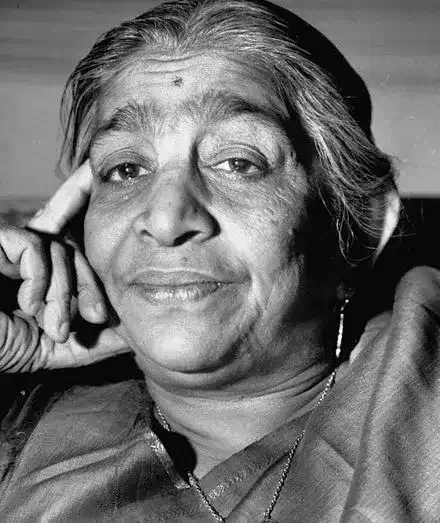
Sarojini Naidu
Street Cries
Street Cries
WHEN dawn's first cymbals beat upon the sky,
Rousing the world to labour's various cry,
To tend the flock, to bind the mellowing grain,
From ardent toil to forge a little gain,
And fasting men go forth on hurrying feet,
Buy bread, buy bread, rings down the eager street.
When the earth falters and the waters swoon
With the implacable radiance of noon,
And in dim shelters koïls hush their notes,
And the faint, thirsting blood in languid throats
Craves liquid succour from the cruel heat,
Buy fruit, buy fruit, steals down the panting street.
When twilight twinkling o'er the gay bazaars,
Unfurls a sudden canopy of stars,
When lutes are strung and fragrant torches lit
On white roof-terraces where lovers sit
Drinking together of life's poignant sweet,
Buy flowers, buy flowers, floats down the singing street.
WHEN dawn's first cymbals beat upon the sky,
Rousing the world to labour's various cry,
To tend the flock, to bind the mellowing grain,
From ardent toil to forge a little gain,
And fasting men go forth on hurrying feet,
Buy bread, buy bread, rings down the eager street.
When the earth falters and the waters swoon
With the implacable radiance of noon,
And in dim shelters koïls hush their notes,
And the faint, thirsting blood in languid throats
Craves liquid succour from the cruel heat,
Buy fruit, buy fruit, steals down the panting street.
When twilight twinkling o'er the gay bazaars,
Unfurls a sudden canopy of stars,
When lutes are strung and fragrant torches lit
On white roof-terraces where lovers sit
Drinking together of life's poignant sweet,
Buy flowers, buy flowers, floats down the singing street.
685

Sarah Teasdale
The Return
The Return
He has come, he is here,
My love has come home,
The minutes are lighter
Than flying foam,
The hours are like dancers
On gold-slippered feet,
The days are young runners
Naked and fleet --
For my love has returned,
He is home, he is here,
In the whole world no other
Is dear as my dear!
He has come, he is here,
My love has come home,
The minutes are lighter
Than flying foam,
The hours are like dancers
On gold-slippered feet,
The days are young runners
Naked and fleet --
For my love has returned,
He is home, he is here,
In the whole world no other
Is dear as my dear!
338
Sarah Teasdale
Spring Night
Spring Night
The park is filled with night and fog,
The veils are drawn about the world,
The drowsy lights along the paths
Are dim and pearled.
Gold and gleaming the empty streets,
Gold and gleaming the misty lake,
The mirrored lights like sunken swords,
Glimmer and shake.
Oh, is it not enough to be
Here with this beauty over me?
My throat should ache with praise, and I
Should kneel in joy beneath the sky.
O, beauty, are you not enough?
Why am I crying after love,
With youth, a singing voice, and eyes
To take earth's wonder with surprise?
Why have I put off my pride,
Why am I unsatisfied, --
I, for whom the pensive night
Binds her cloudy hair with light, --
I, for whom all beauty burns
Like incense in a million urns?
O beauty, are you not enough?
Why am I crying after love?
The park is filled with night and fog,
The veils are drawn about the world,
The drowsy lights along the paths
Are dim and pearled.
Gold and gleaming the empty streets,
Gold and gleaming the misty lake,
The mirrored lights like sunken swords,
Glimmer and shake.
Oh, is it not enough to be
Here with this beauty over me?
My throat should ache with praise, and I
Should kneel in joy beneath the sky.
O, beauty, are you not enough?
Why am I crying after love,
With youth, a singing voice, and eyes
To take earth's wonder with surprise?
Why have I put off my pride,
Why am I unsatisfied, --
I, for whom the pensive night
Binds her cloudy hair with light, --
I, for whom all beauty burns
Like incense in a million urns?
O beauty, are you not enough?
Why am I crying after love?
465
Sarah Teasdale
Houses of Dreams
Houses of Dreams
You took my empty dreams
And filled them every one
With tenderness and nobleness,
April and the sun.
The old empty dreams
Where my thoughts would throng
Are far too full of happiness
To even hold a song.
Oh, the empty dreams were dim
And the empty dreams were wide,
They were sweet and shadowy houses
Where my thoughts could hide.
But you took my dreams away
And you made them all come true --
My thoughts have no place now to play,
And nothing now to do.
You took my empty dreams
And filled them every one
With tenderness and nobleness,
April and the sun.
The old empty dreams
Where my thoughts would throng
Are far too full of happiness
To even hold a song.
Oh, the empty dreams were dim
And the empty dreams were wide,
They were sweet and shadowy houses
Where my thoughts could hide.
But you took my dreams away
And you made them all come true --
My thoughts have no place now to play,
And nothing now to do.
444
Sarah Teasdale
Barter
Barter
Life has loveliness to sell,
All beautiful and splendid things,
Blue waves whitened on a cliff,
Soaring fire that sways and sings,
And children's faces looking up
Holding wonder like a cup.
Life has loveliness to sell,
Music like a curve of gold,
Scent of pine trees in the rain,
Eyes that love you, arms that hold,
And for your spirit's still delight,
Holy thoughts that star the night.
Spend all you have for loveliness,
Buy it and never count the cost;
For one white singing hour of peace
Count many a year of strife well lost,
And for a breath of ecstasy
Give all you have been, or could be.
Life has loveliness to sell,
All beautiful and splendid things,
Blue waves whitened on a cliff,
Soaring fire that sways and sings,
And children's faces looking up
Holding wonder like a cup.
Life has loveliness to sell,
Music like a curve of gold,
Scent of pine trees in the rain,
Eyes that love you, arms that hold,
And for your spirit's still delight,
Holy thoughts that star the night.
Spend all you have for loveliness,
Buy it and never count the cost;
For one white singing hour of peace
Count many a year of strife well lost,
And for a breath of ecstasy
Give all you have been, or could be.
650
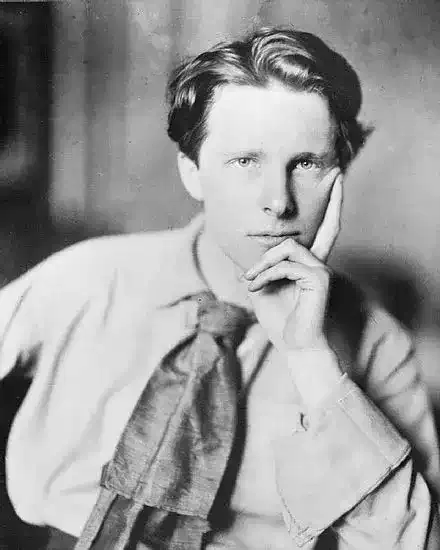
Rupert Brooke
The Busy Heart
The Busy Heart
Now that we’ve done our best and worst, and parted,
I would fill my mind with thoughts that will not rend.
(O heart, I do not dare go empty-hearted)
I’ll think of Love in books, Love without end;
Women with child, content; and old men sleeping;
And wet strong ploughlands, scarred for certain grain;
And babes that weep, and so forget their weeping;
And the young heavens, forgetful after rain;
And evening hush, broken by homing wings;
And Song’s nobility, and Wisdom holy,
That live, we dead. I would think of a thousand things,
Lovely and durable, and taste them slowly,
One after one, like tasting a sweet food.
I have need to busy my heart with quietude.
Now that we’ve done our best and worst, and parted,
I would fill my mind with thoughts that will not rend.
(O heart, I do not dare go empty-hearted)
I’ll think of Love in books, Love without end;
Women with child, content; and old men sleeping;
And wet strong ploughlands, scarred for certain grain;
And babes that weep, and so forget their weeping;
And the young heavens, forgetful after rain;
And evening hush, broken by homing wings;
And Song’s nobility, and Wisdom holy,
That live, we dead. I would think of a thousand things,
Lovely and durable, and taste them slowly,
One after one, like tasting a sweet food.
I have need to busy my heart with quietude.
183
Rupert Brooke
Beauty and Beauty
Beauty and Beauty
When Beauty and Beauty meet
All naked, fair to fair,
The earth is crying-sweet,
And scattering-bright the air,
Eddying, dizzying, closing round,
With soft and drunken laughter;
Veiling all that may befall
After -- after --
Where Beauty and Beauty met,
Earth's still a-tremble there,
And winds are scented yet,
And memory-soft the air,
Bosoming, folding glints of light,
And shreds of shadowy laughter;
Not the tears that fill the years
After -- after --
When Beauty and Beauty meet
All naked, fair to fair,
The earth is crying-sweet,
And scattering-bright the air,
Eddying, dizzying, closing round,
With soft and drunken laughter;
Veiling all that may befall
After -- after --
Where Beauty and Beauty met,
Earth's still a-tremble there,
And winds are scented yet,
And memory-soft the air,
Bosoming, folding glints of light,
And shreds of shadowy laughter;
Not the tears that fill the years
After -- after --
189
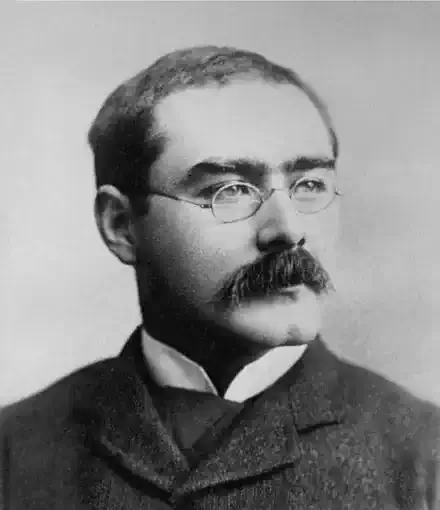
Rudyard Kipling
The Playmate
The Playmate
She is not Folly -- that I know.
Her steadfast eyelids tell me so
When, at the hour the lights divide,
She steals as summonsed to my side.
When, finger on the pursed lip
In secret, mirthful fellowship,
She, heralding new -- framed delights,
Breathes, "This shall be a Night of Nights!"
Then, out of Time and out of Space,
Is built an Hour and a Place
Where all an earnest, baffled Earth
Blunders and trips to make us mirth;
Whence from the trivial flux of Things,
Rise inconceived miscarryings,
Outrageous but immortal, shown,
Of Her great love, to me alone...
She is not Wisdom, but, maybe,
Wiser than all the Norns is She:
And more than Wisdom I prefer
To wait on Her, -- to wait on Her!
She is not Folly -- that I know.
Her steadfast eyelids tell me so
When, at the hour the lights divide,
She steals as summonsed to my side.
When, finger on the pursed lip
In secret, mirthful fellowship,
She, heralding new -- framed delights,
Breathes, "This shall be a Night of Nights!"
Then, out of Time and out of Space,
Is built an Hour and a Place
Where all an earnest, baffled Earth
Blunders and trips to make us mirth;
Whence from the trivial flux of Things,
Rise inconceived miscarryings,
Outrageous but immortal, shown,
Of Her great love, to me alone...
She is not Wisdom, but, maybe,
Wiser than all the Norns is She:
And more than Wisdom I prefer
To wait on Her, -- to wait on Her!
436
Rudyard Kipling
How the Camel Got His Hump
How the Camel Got His Hump
The Camel's hump is an ugly lump
Which well you may see at the Zoo;
But uglier yet is the hump we get
From having too little to do.
Kiddies and grown-ups too-oo-oo,
If we haven't enough to do-oo-oo,
We get the hump--
Cameelious hump--
The hump that is black and blue!
We climb out of bed with a frouzly head,
And a snarly-yarly voice.
We shiver and scowl and we grunt and we growl
At our bath and our boots and our toys;
And there ought to be a corner for me
(And I know' there is one for you)
When we get the hump--
Cameelious hump--
The hump that is black and blue!
The cure for this ill is not to sit still,
Or frowst with a book by the fire;
But to take a large hoe and a shovel also,
And dig till you gently perspire;
And then you will find that the sun and the wind,
And the Djinn of the Garden too,
Have lifted the hump--
The horrible hump--
The hump that is black and blue!
I get it as well as you-oo-oo--
If I haven't enough to do-oo-oo!
We all get hump--
Cameelious hump--
Kiddies and grown-ups too!
The Camel's hump is an ugly lump
Which well you may see at the Zoo;
But uglier yet is the hump we get
From having too little to do.
Kiddies and grown-ups too-oo-oo,
If we haven't enough to do-oo-oo,
We get the hump--
Cameelious hump--
The hump that is black and blue!
We climb out of bed with a frouzly head,
And a snarly-yarly voice.
We shiver and scowl and we grunt and we growl
At our bath and our boots and our toys;
And there ought to be a corner for me
(And I know' there is one for you)
When we get the hump--
Cameelious hump--
The hump that is black and blue!
The cure for this ill is not to sit still,
Or frowst with a book by the fire;
But to take a large hoe and a shovel also,
And dig till you gently perspire;
And then you will find that the sun and the wind,
And the Djinn of the Garden too,
Have lifted the hump--
The horrible hump--
The hump that is black and blue!
I get it as well as you-oo-oo--
If I haven't enough to do-oo-oo!
We all get hump--
Cameelious hump--
Kiddies and grown-ups too!
480
Rudyard Kipling
Darzee's Chaunt
Darzee's Chaunt
Singer and tailor am I--
Doubled the joys that I know--
Proud of my lilt to the sky,
Proud of the house that I sew--
Over and under, so weave I my music--so weave I the house that
I sew.
Sing to your fledglings again,
Mother, O lift up your head!
Evil that plagued us is slain,
Death in the garden lies dead.
Terror that hid in the roses is impotent--flung on the dung-hill
and dead!
Who hath delivered us, who?
Tell me his nest and his name.
Rikki, the valiant, the true,
Tikki, with eyeballs of flame,
Rik-tikki-tikki, the ivory-fanged, the Hunter with eyeballs of
flame.
Give him the Thanks of the Birds,
Bowing with tail-feathers spread!
Praise him in nightingale-words--
Nay, I will praise him instead.
I will sing you the praise of the bottle-tailed Rikki with
eyeballs of red!
Singer and tailor am I--
Doubled the joys that I know--
Proud of my lilt to the sky,
Proud of the house that I sew--
Over and under, so weave I my music--so weave I the house that
I sew.
Sing to your fledglings again,
Mother, O lift up your head!
Evil that plagued us is slain,
Death in the garden lies dead.
Terror that hid in the roses is impotent--flung on the dung-hill
and dead!
Who hath delivered us, who?
Tell me his nest and his name.
Rikki, the valiant, the true,
Tikki, with eyeballs of flame,
Rik-tikki-tikki, the ivory-fanged, the Hunter with eyeballs of
flame.
Give him the Thanks of the Birds,
Bowing with tail-feathers spread!
Praise him in nightingale-words--
Nay, I will praise him instead.
I will sing you the praise of the bottle-tailed Rikki with
eyeballs of red!
490
Rudyard Kipling
Cuckoo Song
Cuckoo Song
(Spring begins in southern England on the th April, on which date the Old
Woman lets the Cuckoo out of her basket at Heathfield Fair -- locally known as Heffle
Cuckoo Fair.)
Tell it to the locked-up trees,
Cuckoo, bring your song here!
Warrant, Act and Summons, please,
For Spring to pass along here!
Tell old Winder, if he doubt,
Tell him squat and square -- a!
Old Woman!
Old Woman!
Old Woman's let the Cuckoo out
At Heffle Cuckoo Fair -- a!
March has searched and April tried --
'Tisn't long to Mary now.
Not so far to Whitsuntide
And Cuckoo's come to stay now!
Hear the valiant fellow shout
Down the orchard bare -- a!
Old Woman!
Old Woman!
Old Woman's let the Cuckoo out
At Heffle Cuckoo Fair -- a!
When your heart is young and gay
And the season rules it --
Work your works and play your play
'Fore the Autumn cools it!
Kiss you turn and turn-about,
But my lad, beware -- a!
Old Woman!
Old Woman!
Old Woman's let the Cuckoo out
At Heffle Cuckoo Fair -- a!
(Spring begins in southern England on the th April, on which date the Old
Woman lets the Cuckoo out of her basket at Heathfield Fair -- locally known as Heffle
Cuckoo Fair.)
Tell it to the locked-up trees,
Cuckoo, bring your song here!
Warrant, Act and Summons, please,
For Spring to pass along here!
Tell old Winder, if he doubt,
Tell him squat and square -- a!
Old Woman!
Old Woman!
Old Woman's let the Cuckoo out
At Heffle Cuckoo Fair -- a!
March has searched and April tried --
'Tisn't long to Mary now.
Not so far to Whitsuntide
And Cuckoo's come to stay now!
Hear the valiant fellow shout
Down the orchard bare -- a!
Old Woman!
Old Woman!
Old Woman's let the Cuckoo out
At Heffle Cuckoo Fair -- a!
When your heart is young and gay
And the season rules it --
Work your works and play your play
'Fore the Autumn cools it!
Kiss you turn and turn-about,
But my lad, beware -- a!
Old Woman!
Old Woman!
Old Woman's let the Cuckoo out
At Heffle Cuckoo Fair -- a!
480

Robert W. Service
Wonder
Wonder
For failure I was well equipped
And should have come to grief,
By atavism grimly gripped,
A fool beyond belief.
But lo! the Lord was good to me,
And with a heart to sing,
He gave me to a rare degree
The Gift of Wondering.
I could not play a stalwart part
My shoddy soul to save,
And should have gone with broken heart
A begger to the grave;
But praise to my anointed sight
As wandering I went,
I sang of living with delight
In terms of Wonderment.
Aye, starry-eyed did I rejoice
With marvel of a child,
And there were those who heard my voice
Although my words were wild:
So as I go my wistful way,
With worship let me sing,
A treasure to my farewell day
God's Gift of Wondering.
For failure I was well equipped
And should have come to grief,
By atavism grimly gripped,
A fool beyond belief.
But lo! the Lord was good to me,
And with a heart to sing,
He gave me to a rare degree
The Gift of Wondering.
I could not play a stalwart part
My shoddy soul to save,
And should have gone with broken heart
A begger to the grave;
But praise to my anointed sight
As wandering I went,
I sang of living with delight
In terms of Wonderment.
Aye, starry-eyed did I rejoice
With marvel of a child,
And there were those who heard my voice
Although my words were wild:
So as I go my wistful way,
With worship let me sing,
A treasure to my farewell day
God's Gift of Wondering.
263
Robert W. Service
Tim
Tim
My brother Tim has children ten,
While I have none.
Maybe that's why he's toiling when
To ease I've won.
But though I would some of his brood
Give hearth and care,
I know that not a one he would
Have heart to spare.
'Tis children that have kept him poor;
He's clad them neat.
They've never wanted, I am sure,
For bite to eat.
And though their future may be dim,
They laugh a lot.
Am I tearful for Brother Tim?
Oh no, I'm not.
I know he goes to work each day
With flagging feet.
'Tis hard, even with decent pay,
To make ends meet.
But when my sterile home I see,
So smugly prim,
Although my banker bows to me,
I envy Tim.
My brother Tim has children ten,
While I have none.
Maybe that's why he's toiling when
To ease I've won.
But though I would some of his brood
Give hearth and care,
I know that not a one he would
Have heart to spare.
'Tis children that have kept him poor;
He's clad them neat.
They've never wanted, I am sure,
For bite to eat.
And though their future may be dim,
They laugh a lot.
Am I tearful for Brother Tim?
Oh no, I'm not.
I know he goes to work each day
With flagging feet.
'Tis hard, even with decent pay,
To make ends meet.
But when my sterile home I see,
So smugly prim,
Although my banker bows to me,
I envy Tim.
184
Robert W. Service
Titine
Titine
Although I have a car of class,
A limousine,
I also have a jenny ass
I call Titine.
And if I had in sober sense
To choose between,
I know I'd give the preference
To sleek Titine.
My chauffeur drives my Cadillac
In uniform.
I wear a worn coat on my back
That he would scorn.
He speeds with umpty equine power,
Like an express;
I amble at eight miles an hour,
Or even less.
My wife can use our fancy bus
To cut a dash;
She very definitely does,
And blows my cash.
But this old codger seeks the sane
And simple scene;
Content to jog along a lane
With old Titine.
So as in country ways I go
Wife loves the town;
But though I'm slow, serene I know
I won't break down.
With brawn and bone I reckon mine
The best machine:
Old folks and donkeys best combine,
--"Giddup, Titine!"
Although I have a car of class,
A limousine,
I also have a jenny ass
I call Titine.
And if I had in sober sense
To choose between,
I know I'd give the preference
To sleek Titine.
My chauffeur drives my Cadillac
In uniform.
I wear a worn coat on my back
That he would scorn.
He speeds with umpty equine power,
Like an express;
I amble at eight miles an hour,
Or even less.
My wife can use our fancy bus
To cut a dash;
She very definitely does,
And blows my cash.
But this old codger seeks the sane
And simple scene;
Content to jog along a lane
With old Titine.
So as in country ways I go
Wife loves the town;
But though I'm slow, serene I know
I won't break down.
With brawn and bone I reckon mine
The best machine:
Old folks and donkeys best combine,
--"Giddup, Titine!"
213
Robert W. Service
Three Wives
Three Wives
Said Jones: "I'm glad my wife's not clever;
Her intellect is second-rate.
If she was witty she would never
Give me a chance to scintillate;
But cap my humorous endeavour
And make me seem as addle-pate."
Said Smith: "I'm glad my wife's no beauty,
For if a siren's charm she had,
And stinted her domestic duty,
I fear that she would drive me mad:
For I am one of those sad fellows
Who are unreasonably jealous."
Said Brown: ""I know my wife's not witty,
Nor is she very long on looks;
She's neither humorous nor pretty,
But oh how she divinely cooks!
You guys must come some night to dinner You'll
see my little girl's a winner."
So it's important in our lives,
(Exaggerating more or less),
To be content with our wives,
And prize the virtues they possess;
And with dispraise to turn one's back
On all the qualities they lack.
Said Jones: "I'm glad my wife's not clever;
Her intellect is second-rate.
If she was witty she would never
Give me a chance to scintillate;
But cap my humorous endeavour
And make me seem as addle-pate."
Said Smith: "I'm glad my wife's no beauty,
For if a siren's charm she had,
And stinted her domestic duty,
I fear that she would drive me mad:
For I am one of those sad fellows
Who are unreasonably jealous."
Said Brown: ""I know my wife's not witty,
Nor is she very long on looks;
She's neither humorous nor pretty,
But oh how she divinely cooks!
You guys must come some night to dinner You'll
see my little girl's a winner."
So it's important in our lives,
(Exaggerating more or less),
To be content with our wives,
And prize the virtues they possess;
And with dispraise to turn one's back
On all the qualities they lack.
238
Robert W. Service
The Sum-Up
The Sum-Up
It is not power and fame
That make success;
It is not rank or name
Rate happiness.
It is not honour due
Nor pile of pelf:
The pay-off is: Did you
Enjoy yourself?
A pal of days gone by
I reckon more
Of a success than I
Who've gold in store
His life, though none too long,
Was never dull:
Of woman, wine and song
Bill had his full.
Friend, you are a success
If you can say:
"A heap of happiness
Has come my way.
No cheers have made me glad,
No wealth I've won;
But oh how I have had
A heap of FUN!"
It is not power and fame
That make success;
It is not rank or name
Rate happiness.
It is not honour due
Nor pile of pelf:
The pay-off is: Did you
Enjoy yourself?
A pal of days gone by
I reckon more
Of a success than I
Who've gold in store
His life, though none too long,
Was never dull:
Of woman, wine and song
Bill had his full.
Friend, you are a success
If you can say:
"A heap of happiness
Has come my way.
No cheers have made me glad,
No wealth I've won;
But oh how I have had
A heap of FUN!"
227
Robert W. Service
The Search
The Search
I bought a young and lovely bride,
Paying her father gold;
Lamblike she rested by my side,
As cold as ice is cold.
No love in her could I awake,
Even for pity's sake.
I bought rich books I could not read,
And pictures proud and rare;
Reproachfully they seemed to plead
And hunger for my care;
But to their beauty I was blind,
Even as is a hind.
The bearded merchants heard my cry:
'I'll give all I posses
If only, only I can buy
A little happiness.'
Alas! I sought without avail:
They had not that for sale.
I gave my riches to the poor
And dared the desert lone;
Now of God's heaven I am sure
Though I am rag and bone . . .
Aye, richer than the Aga Khan,
At last--a happy man.
I bought a young and lovely bride,
Paying her father gold;
Lamblike she rested by my side,
As cold as ice is cold.
No love in her could I awake,
Even for pity's sake.
I bought rich books I could not read,
And pictures proud and rare;
Reproachfully they seemed to plead
And hunger for my care;
But to their beauty I was blind,
Even as is a hind.
The bearded merchants heard my cry:
'I'll give all I posses
If only, only I can buy
A little happiness.'
Alas! I sought without avail:
They had not that for sale.
I gave my riches to the poor
And dared the desert lone;
Now of God's heaven I am sure
Though I am rag and bone . . .
Aye, richer than the Aga Khan,
At last--a happy man.
220
Robert W. Service
The Mystery Of Mister Smith
The Mystery Of Mister Smith
For supper we had curried tripe.
I washed the dishes, wound the clock;
Then for awhile I smoked my pipe -
Puff! Puff! We had no word of talk.
The Misses sewed - a sober pair;
Says I at last: "I need some air."
A don't know why I acted so;
I had no thought, no plot, no plan.
I did not really mean to go I'm
such a docile little man;
But suddenly I felt that I
Must change my life or I would die.
A sign I saw: A ROOM TO LET.
It had a musty, dusty smell;
It gloated gloom, it growled and yet
Somehow I felt I liked it well.
I paid the rent a month ahead:
That night I smoked my pipe in bed.
From out my world I disappeared;
My walk and talk changed over-night.
I bought black glasses, grew a beard -
Abysmally I dropped from sight;
Old Tax Collector, Mister Smith
Became a memory, a myth.
I see my wife in widow's weeds;
She's gained in weight since I have gone.
My pension serves her modest needs,
She keeps the old apartment on;
And living just a block away
I meet her nearly every day.
I hope she doesn't mourn too much;
She has a sad and worried look.
One day we passed and chanced to touch,
But as with sudden fear I shook,
So blankly in my face she peered,
I had to chuckle in my beard.
Oh, comfort is a blessed thing,
But forty years of it I had.
I never drank the wine of Spring,
No moon has ever made me mad.
I never clutched the skirts of Chance
Nor daftly dallied with Romance.
And that is why I seek to save
My soul before it is too late,
To put between me and the grave
A few years of fantastic fate:
I've won to happiness because
I've killed the man that once I was.
I've murdered Income Taxer Smith,
And now I'm Johnny Jones to you.
I have no home, no kin, no kith,
I do the things I want to do.
No matter though I've not a friend,
I've won to freedom in the end.
Bohemian born, I guess, was I;
And should my wife her widowhood
By wedlock end I will not sigh,
But pack my grip and go for good,
To live in lands where laws are lax,
And innocent of Income Tax.
For supper we had curried tripe.
I washed the dishes, wound the clock;
Then for awhile I smoked my pipe -
Puff! Puff! We had no word of talk.
The Misses sewed - a sober pair;
Says I at last: "I need some air."
A don't know why I acted so;
I had no thought, no plot, no plan.
I did not really mean to go I'm
such a docile little man;
But suddenly I felt that I
Must change my life or I would die.
A sign I saw: A ROOM TO LET.
It had a musty, dusty smell;
It gloated gloom, it growled and yet
Somehow I felt I liked it well.
I paid the rent a month ahead:
That night I smoked my pipe in bed.
From out my world I disappeared;
My walk and talk changed over-night.
I bought black glasses, grew a beard -
Abysmally I dropped from sight;
Old Tax Collector, Mister Smith
Became a memory, a myth.
I see my wife in widow's weeds;
She's gained in weight since I have gone.
My pension serves her modest needs,
She keeps the old apartment on;
And living just a block away
I meet her nearly every day.
I hope she doesn't mourn too much;
She has a sad and worried look.
One day we passed and chanced to touch,
But as with sudden fear I shook,
So blankly in my face she peered,
I had to chuckle in my beard.
Oh, comfort is a blessed thing,
But forty years of it I had.
I never drank the wine of Spring,
No moon has ever made me mad.
I never clutched the skirts of Chance
Nor daftly dallied with Romance.
And that is why I seek to save
My soul before it is too late,
To put between me and the grave
A few years of fantastic fate:
I've won to happiness because
I've killed the man that once I was.
I've murdered Income Taxer Smith,
And now I'm Johnny Jones to you.
I have no home, no kin, no kith,
I do the things I want to do.
No matter though I've not a friend,
I've won to freedom in the end.
Bohemian born, I guess, was I;
And should my wife her widowhood
By wedlock end I will not sigh,
But pack my grip and go for good,
To live in lands where laws are lax,
And innocent of Income Tax.
209
Robert W. Service
The Learner
The Learner
I've learned--Of all the friends I've won
Dame Nature is the best,
And to her like a child I run
Craving her mother breast
To comfort me in soul distress,
And in green glade to find
Far from the world's unloveliness
Pure peace of mind.
I've learned--the worth of simple ways,
And though I've loved to roam,
I know the glow of hearth ablaze,
The bliss of coming home.
I'd rather wear old clothes than new,
I'd rather walk than drive,
And as my wants are oh so few
I joy to be alive.
I've learned--that happiness is all,
A sweetness of the mind;
And would you purge your heart of gall,-Try
being kind.
Then when some weaker one you aid,
Believe it true
'Tis God Himself will make the grade
Less hard for you.
I've learned--Of all the friends I've won
Dame Nature is the best,
And to her like a child I run
Craving her mother breast
To comfort me in soul distress,
And in green glade to find
Far from the world's unloveliness
Pure peace of mind.
I've learned--the worth of simple ways,
And though I've loved to roam,
I know the glow of hearth ablaze,
The bliss of coming home.
I'd rather wear old clothes than new,
I'd rather walk than drive,
And as my wants are oh so few
I joy to be alive.
I've learned--that happiness is all,
A sweetness of the mind;
And would you purge your heart of gall,-Try
being kind.
Then when some weaker one you aid,
Believe it true
'Tis God Himself will make the grade
Less hard for you.
243
Robert W. Service
The Joy Of Being Poor
The Joy Of Being Poor
I
Let others sing of gold and gear, the joy of being rich;
But oh, the days when I was poor, a vagrant in a ditch!
When every dawn was like a gem, so radiant and rare,
And I had but a single coat, and not a single care;
When I would feast right royally on bacon, bread and beer,
And dig into a stack of hay and doze like any peer;
When I would wash beside a brook my solitary shirt,
And though it dried upon my back I never took a hurt;
When I went romping down the road contemptuous of care,
And slapped Adventure on the back -- by Gad! we were a pair;
When, though my pockets lacked a coin, and though my coat was old,
The largess of the stars was mine, and all the sunset gold;
When time was only made for fools, and free as air was I,
And hard I hit and hard I lived beneath the open sky;
When all the roads were one to me, and each had its allure . . .
Ye Gods! these were the happy days, the days when I was poor.
II
Or else, again, old pal of mine, do you recall the times
You struggled with your storyettes, I wrestled with my rhymes;
Oh, we were happy, were we not? -- we used to live so "high"
(A little bit of broken roof between us and the sky);
Upon the forge of art we toiled with hammer and with tongs;
You told me all your rippling yarns, I sang to you my songs.
Our hats were frayed, our jackets patched, our boots were down at heel,
But oh, the happy men were we, although we lacked a meal.
And if I sold a bit of rhyme, or if you placed a tale,
What feasts we had of tenderloins and apple-tarts and ale!
And yet how often we would dine as cheerful as you please,
Beside our little friendly fire on coffee, bread and cheese.
We lived upon the ragged edge, and grub was never sure,
But oh, these were the happy days, the days when we were poor.
III
Alas! old man, we're wealthy now, it's sad beyond a doubt;
We cannot dodge prosperity, success has found us out.
Your eye is very dull and drear, my brow is creased with care,
We realize how hard it is to be a millionaire.
The burden's heavy on our backs -- you're thinking of your rents,
I'm worrying if I'll invest in five or six per cents.
We've limousines, and marble halls, and flunkeys by the score,
We play the part . . . but say, old chap, oh, isn't it a bore?
We work like slaves, we eat too much, we put on evening dress;
We've everything a man can want, I think . . . but happiness.
Come, let us sneak away, old chum; forget that we are rich,
And earn an honest appetite, and scratch an honest itch.
Let's be two jolly garreteers, up seven flights of stairs,
And wear old clothes and just pretend we aren't millionaires;
And wonder how we'll pay the rent, and scribble ream on ream,
And sup on sausages and tea, and laugh and loaf and dream.
And when we're tired of that, my friend, oh, you will come with me;
And we will seek the sunlit roads that lie beside the sea.
We'll know the joy the gipsy knows, the freedom nothing mars,
The golden treasure-gates of dawn, the mintage of the stars.
We'll smoke our pipes and watch the pot, and feed the crackling fire,
And sing like two old jolly boys, and dance to heart's desire;
We'll climb the hill and ford the brook and camp upon the moor . . .
Old chap, let's haste, I'm mad to taste the Joy of Being Poor.
I
Let others sing of gold and gear, the joy of being rich;
But oh, the days when I was poor, a vagrant in a ditch!
When every dawn was like a gem, so radiant and rare,
And I had but a single coat, and not a single care;
When I would feast right royally on bacon, bread and beer,
And dig into a stack of hay and doze like any peer;
When I would wash beside a brook my solitary shirt,
And though it dried upon my back I never took a hurt;
When I went romping down the road contemptuous of care,
And slapped Adventure on the back -- by Gad! we were a pair;
When, though my pockets lacked a coin, and though my coat was old,
The largess of the stars was mine, and all the sunset gold;
When time was only made for fools, and free as air was I,
And hard I hit and hard I lived beneath the open sky;
When all the roads were one to me, and each had its allure . . .
Ye Gods! these were the happy days, the days when I was poor.
II
Or else, again, old pal of mine, do you recall the times
You struggled with your storyettes, I wrestled with my rhymes;
Oh, we were happy, were we not? -- we used to live so "high"
(A little bit of broken roof between us and the sky);
Upon the forge of art we toiled with hammer and with tongs;
You told me all your rippling yarns, I sang to you my songs.
Our hats were frayed, our jackets patched, our boots were down at heel,
But oh, the happy men were we, although we lacked a meal.
And if I sold a bit of rhyme, or if you placed a tale,
What feasts we had of tenderloins and apple-tarts and ale!
And yet how often we would dine as cheerful as you please,
Beside our little friendly fire on coffee, bread and cheese.
We lived upon the ragged edge, and grub was never sure,
But oh, these were the happy days, the days when we were poor.
III
Alas! old man, we're wealthy now, it's sad beyond a doubt;
We cannot dodge prosperity, success has found us out.
Your eye is very dull and drear, my brow is creased with care,
We realize how hard it is to be a millionaire.
The burden's heavy on our backs -- you're thinking of your rents,
I'm worrying if I'll invest in five or six per cents.
We've limousines, and marble halls, and flunkeys by the score,
We play the part . . . but say, old chap, oh, isn't it a bore?
We work like slaves, we eat too much, we put on evening dress;
We've everything a man can want, I think . . . but happiness.
Come, let us sneak away, old chum; forget that we are rich,
And earn an honest appetite, and scratch an honest itch.
Let's be two jolly garreteers, up seven flights of stairs,
And wear old clothes and just pretend we aren't millionaires;
And wonder how we'll pay the rent, and scribble ream on ream,
And sup on sausages and tea, and laugh and loaf and dream.
And when we're tired of that, my friend, oh, you will come with me;
And we will seek the sunlit roads that lie beside the sea.
We'll know the joy the gipsy knows, the freedom nothing mars,
The golden treasure-gates of dawn, the mintage of the stars.
We'll smoke our pipes and watch the pot, and feed the crackling fire,
And sing like two old jolly boys, and dance to heart's desire;
We'll climb the hill and ford the brook and camp upon the moor . . .
Old chap, let's haste, I'm mad to taste the Joy of Being Poor.
254
Robert W. Service
The Contented Man
The Contented Man
"How good God is to me," he said;
"For have I not a mansion tall,
With trees and lawns of velvet tread,
And happy helpers at my call?
With beauty is my life abrim,
With tranquil hours and dreams apart;
You wonder that I yield to Him
That best of prayers, a grateful heart?"
"How good God is to me," he said;
"For look! though gone is all my wealth,
How sweet it is to earn one's bread
With brawny arms and brimming health.
Oh, now I know the joy of strife!
To sleep so sound, to wake so fit.
Ah yes, how glorious is life!
I thank Him for each day of it."
"How good God is to me," he said;
"Though health and wealth are gone, it's true;
Things might be worse, I might be dead,
And here I'm living, laughing too.
Serene beneath the evening sky
I wait, and every man's my friend;
God's most contented man am I . . .
He keeps me smiling to the End."
"How good God is to me," he said;
"For have I not a mansion tall,
With trees and lawns of velvet tread,
And happy helpers at my call?
With beauty is my life abrim,
With tranquil hours and dreams apart;
You wonder that I yield to Him
That best of prayers, a grateful heart?"
"How good God is to me," he said;
"For look! though gone is all my wealth,
How sweet it is to earn one's bread
With brawny arms and brimming health.
Oh, now I know the joy of strife!
To sleep so sound, to wake so fit.
Ah yes, how glorious is life!
I thank Him for each day of it."
"How good God is to me," he said;
"Though health and wealth are gone, it's true;
Things might be worse, I might be dead,
And here I'm living, laughing too.
Serene beneath the evening sky
I wait, and every man's my friend;
God's most contented man am I . . .
He keeps me smiling to the End."
192
Robert W. Service
Successful Failure
Successful Failure
I wonder if successful men
Are always happy?
And do they sing with gusto when
Springtime is sappy?
Although I am of snow-white hair
And nighly mortal,
Each time I sniff the April air
I chortle.
I wonder if a millionaire
Jigs with enjoyment,
Having such heaps of time to spare
For daft employment.
For as I dance the Highland Fling
My glee is muckle,
And doping out new songs to sing
I chuckle.
I wonder why so soon forgot
Are fame and riches;
Let cottage comfort be my lot
With well-worn britches.
As in a pub a poor unknown,
Brown ale quaffing,
To think of all I'll never own,-I'm
laughing.
I wonder if successful men
Are always happy?
And do they sing with gusto when
Springtime is sappy?
Although I am of snow-white hair
And nighly mortal,
Each time I sniff the April air
I chortle.
I wonder if a millionaire
Jigs with enjoyment,
Having such heaps of time to spare
For daft employment.
For as I dance the Highland Fling
My glee is muckle,
And doping out new songs to sing
I chuckle.
I wonder why so soon forgot
Are fame and riches;
Let cottage comfort be my lot
With well-worn britches.
As in a pub a poor unknown,
Brown ale quaffing,
To think of all I'll never own,-I'm
laughing.
239
Robert W. Service
Slugging Saint
Slugging Saint
'Twas in a pub in Battersea
They call the "Rose and Crown,"
Quite suddenly, it seemed to me,
The Lord was looking down;
The Lord was looking from above,
And shiny was His face,
And I was filled with gush of love
For all the human race.
Anon I saw three ancient men
Who reckoned not of bliss,
And they looked quite astonished when
I gave them each a kiss.
I kissed each on his balding spot
With heart of Heaven grace . . .
And then it seemed there was a lot
Of trouble round the place.
They had me up before the beak,
But though I told my tale,
He sentanced me to spend a week
In Yard of Scotland Gaol.
So when they kindly set me free
Please don't think it amiss,
If Battling Bill of Battersea,
For love of all humanity
Gives you a kiss.
'Twas in a pub in Battersea
They call the "Rose and Crown,"
Quite suddenly, it seemed to me,
The Lord was looking down;
The Lord was looking from above,
And shiny was His face,
And I was filled with gush of love
For all the human race.
Anon I saw three ancient men
Who reckoned not of bliss,
And they looked quite astonished when
I gave them each a kiss.
I kissed each on his balding spot
With heart of Heaven grace . . .
And then it seemed there was a lot
Of trouble round the place.
They had me up before the beak,
But though I told my tale,
He sentanced me to spend a week
In Yard of Scotland Gaol.
So when they kindly set me free
Please don't think it amiss,
If Battling Bill of Battersea,
For love of all humanity
Gives you a kiss.
202