

Poems in this theme
Happiness and Joy

Ella Wheeler Wilcox
Summer Song
Summer Song
The meadow lark’s trill and the brown thrush’s whistle
From morning to evening fill all the sweet air,
And my heart is as light as the down of a thistle –
The world is so bright and the earth is so fair.
There is life in the wood, there is bloom on the meadow;
The air drops with songs that the merry birds sing.
The sunshine has won, in the battle with shadow,
And she’s dressed the glad earth with robes of the spring.
The bee leaves his hive for the field of red clover
And the vale where the daisies bloom white as the snow,
And a mantle of warm yellow sunshine hangs over
The calm little pond, where the pale lillies grow.
In the woodland beyond it, a thousand gay voices
Are singing in chorus some jubilant air.
The bird and the bee and all nature rejoices,
The world is so bright, and the earth is so fair.
I am glad as a child, in this beautiful weather;
I have tossed all my burdens and trials away;
My heart is as light – yes, as light as a feather; I
am care-free, and careless, and happy to-day.
Can it be there approaches a dark, dreary to-morrow?
Can shadows e’er fall on this beautiful earth?
Ah! To-day is my own! No forebodings of sorrow
Shall darken my skies, or shall dampen my mirth.
The meadow lark’s trill and the brown thrush’s whistle
From morning to evening fill all the sweet air,
And my heart is as light as the down of a thistle –
The world is so bright and the earth is so fair.
There is life in the wood, there is bloom on the meadow;
The air drops with songs that the merry birds sing.
The sunshine has won, in the battle with shadow,
And she’s dressed the glad earth with robes of the spring.
The bee leaves his hive for the field of red clover
And the vale where the daisies bloom white as the snow,
And a mantle of warm yellow sunshine hangs over
The calm little pond, where the pale lillies grow.
In the woodland beyond it, a thousand gay voices
Are singing in chorus some jubilant air.
The bird and the bee and all nature rejoices,
The world is so bright, and the earth is so fair.
I am glad as a child, in this beautiful weather;
I have tossed all my burdens and trials away;
My heart is as light – yes, as light as a feather; I
am care-free, and careless, and happy to-day.
Can it be there approaches a dark, dreary to-morrow?
Can shadows e’er fall on this beautiful earth?
Ah! To-day is my own! No forebodings of sorrow
Shall darken my skies, or shall dampen my mirth.
405
Ella Wheeler Wilcox
Song Of The Spirit
Song Of The Spirit
Too sweet and too subtle for pen or for tongue
In phrases unwritten and measures unsung,
As deep and as strange as the sounds of the sea,
Is the song that my spirit is singing to me.
In the midnight and tempest when forest trees shiver,
In the roar of the surf, and the rush of the river,
In the rustle of leaves and the fall of the rain,
And on the low breezes I catch the refrain.
From the vapours that frame and envelop the earth,
And beyond, from the realms where my spirit had birth,
From the mists of the land and the fogs of the sea,
For ever and ever the songs come to me.
I know not its wording - its import I know -
For the rhythm is broken, the measure runs low,
When vexed or allured by the things of this life
My soul is merged into its pleasures or strife.
When up to the hill tops of beauty and light
My soul like a lark in the ether takes flight,
And the white gates of heaven shine brighter and nearer,
The song of the spirit grows sweeter and clearer.
Up, up to the realms where no mortal has trod -
Into space and infinity near to my God -
With whiteness, and silence, and beautiful things,
I am bourne when the voice of eternity sings.
When once in the winds or the dropp of the rain
Thy spirit shall listen and hear the refrain,
Thy soul shall soar up like a bird on the breeze,
And the things that have pleased thee will never more please.
Too sweet and too subtle for pen or for tongue
In phrases unwritten and measures unsung,
As deep and as strange as the sounds of the sea,
Is the song that my spirit is singing to me.
In the midnight and tempest when forest trees shiver,
In the roar of the surf, and the rush of the river,
In the rustle of leaves and the fall of the rain,
And on the low breezes I catch the refrain.
From the vapours that frame and envelop the earth,
And beyond, from the realms where my spirit had birth,
From the mists of the land and the fogs of the sea,
For ever and ever the songs come to me.
I know not its wording - its import I know -
For the rhythm is broken, the measure runs low,
When vexed or allured by the things of this life
My soul is merged into its pleasures or strife.
When up to the hill tops of beauty and light
My soul like a lark in the ether takes flight,
And the white gates of heaven shine brighter and nearer,
The song of the spirit grows sweeter and clearer.
Up, up to the realms where no mortal has trod -
Into space and infinity near to my God -
With whiteness, and silence, and beautiful things,
I am bourne when the voice of eternity sings.
When once in the winds or the dropp of the rain
Thy spirit shall listen and hear the refrain,
Thy soul shall soar up like a bird on the breeze,
And the things that have pleased thee will never more please.
420
Ella Wheeler Wilcox
Solitude
Solitude
Laugh, and the world laughs with you;
Weep, and you weep alone.
For the sad old earth must borrow it's mirth,
But has trouble enough of its own.
Sing, and the hills will answer;
Sigh, it is lost on the air.
The echoes bound to a joyful sound,
But shrink from voicing care.
Rejoice, and men will seek you;
Grieve, and they turn and go.
They want full measure of all your pleasure,
But they do not need your woe.
Be glad, and your friends are many;
Be sad, and you lose them all.
There are none to decline your nectared wine,
But alone you must drink life's gall.
Feast, and your halls are crowded;
Fast, and the world goes by.
Succeed and give, and it helps you live,
But no man can help you die.
There is room in the halls of pleasure
For a long and lordly train,
But one by one we must all file on
Through the narrow aisles of pain.
Laugh, and the world laughs with you;
Weep, and you weep alone.
For the sad old earth must borrow it's mirth,
But has trouble enough of its own.
Sing, and the hills will answer;
Sigh, it is lost on the air.
The echoes bound to a joyful sound,
But shrink from voicing care.
Rejoice, and men will seek you;
Grieve, and they turn and go.
They want full measure of all your pleasure,
But they do not need your woe.
Be glad, and your friends are many;
Be sad, and you lose them all.
There are none to decline your nectared wine,
But alone you must drink life's gall.
Feast, and your halls are crowded;
Fast, and the world goes by.
Succeed and give, and it helps you live,
But no man can help you die.
There is room in the halls of pleasure
For a long and lordly train,
But one by one we must all file on
Through the narrow aisles of pain.
739
Ella Wheeler Wilcox
Realisation
Realisation
Hers was a lonely, shadowed lot;
Or so the unperceiving thought,
Who looked no deeper than her face,
Devoid of chiselled lines of grace –
No farther than her humble grate,
And wondered how she bore her fate.
Yet she was neither lone nor sad;
So much of love her spirit had,
She found an ever-flowing spring
Of happiness in everything.
So near to her was Nature’s heart
It seemed a very living part
Of her own self; and bud and blade,
And heat and cold, and sun and shade,
And dawn and sunset, Spring and Fall,
Held raptures for her, one and all.
The year’s four changing seasons brought
To her own door what thousands sought
In wandering ways and did not find –
Diversion and content of mind.
She loved the tasks that filled each day –
Such menial duties; but her way
Of looking at them lent a grace
To things the world deemed commonplace.
Obscure and without place or name,
She gloried in another’s fame.
Poor, plain and humble in her dress,
She thrilled when beauty and success
And wealth passed by, on pleasure bent;
They made earth seem so opulent.
Yet none of quicker sympathy,
When need or sorrow came, than she.
And so she lived, and so she died.
She woke as from a dream. How wide
And wonderful the avenue
That stretched to her astonished view!
And up the green ascending lawn
A palace caught the rays of dawn.
Then suddenly the silence stirred
With one clear keynote of a bird;
A thousand answered, till ere long
The air was quivering bits of song.
She rose and wandered forth in awe,
Amazed and moved by all she saw,
For, like so many souls who go
Away from earth, she did not know
The cord was severed.
Down the street,
With eager arms stretched forth to greet,
Came one she loved and mourned in youth;
Her mother followed; then the truth
Broke on her, golden wave on wave,
Of knowledge infinite. The grave,
The body and the earthly sphere
Were gone! Immortal life was here!
They led her through the Palace halls;
From gleaming mirrors on the walls
She saw herself, with radiant mien,
And robed in splendour like a queen,
While glory round about her shone.
‘All this, ’ Love murmured, ‘is your own.’
And when she gazed with wondering eye,
And questioned whence and where and why,
Love answered thus: ‘All Heaven is made
By thoughts on earth; your walls were laid,
Year after year, of purest gold;
The beauty of your mind behold
In this fair palace; ay, and more
Waits farther on, so vast your store.
I was not worthy when I died
To take my place here at your side;
I toiled through long and weary years
From lower planes to these high spheres;
And through the love you sent from earth
I have attained a second birth.
Oft when my erring soul would tire
I felt the strength of your desire;
I heard you breathe my name in prayer,
And courage conquered weak despair.
Ah! earth needs heaven, but heaven indeed
Of earth has just as great a need!
Across the terrace with a bound
There sped a lambkin with a hound
(Dumb comrades of the old earth land)
And fondled her caressing hand.
Hers was a lonely, shadowed lot;
Or so the unperceiving thought,
Who looked no deeper than her face,
Devoid of chiselled lines of grace –
No farther than her humble grate,
And wondered how she bore her fate.
Yet she was neither lone nor sad;
So much of love her spirit had,
She found an ever-flowing spring
Of happiness in everything.
So near to her was Nature’s heart
It seemed a very living part
Of her own self; and bud and blade,
And heat and cold, and sun and shade,
And dawn and sunset, Spring and Fall,
Held raptures for her, one and all.
The year’s four changing seasons brought
To her own door what thousands sought
In wandering ways and did not find –
Diversion and content of mind.
She loved the tasks that filled each day –
Such menial duties; but her way
Of looking at them lent a grace
To things the world deemed commonplace.
Obscure and without place or name,
She gloried in another’s fame.
Poor, plain and humble in her dress,
She thrilled when beauty and success
And wealth passed by, on pleasure bent;
They made earth seem so opulent.
Yet none of quicker sympathy,
When need or sorrow came, than she.
And so she lived, and so she died.
She woke as from a dream. How wide
And wonderful the avenue
That stretched to her astonished view!
And up the green ascending lawn
A palace caught the rays of dawn.
Then suddenly the silence stirred
With one clear keynote of a bird;
A thousand answered, till ere long
The air was quivering bits of song.
She rose and wandered forth in awe,
Amazed and moved by all she saw,
For, like so many souls who go
Away from earth, she did not know
The cord was severed.
Down the street,
With eager arms stretched forth to greet,
Came one she loved and mourned in youth;
Her mother followed; then the truth
Broke on her, golden wave on wave,
Of knowledge infinite. The grave,
The body and the earthly sphere
Were gone! Immortal life was here!
They led her through the Palace halls;
From gleaming mirrors on the walls
She saw herself, with radiant mien,
And robed in splendour like a queen,
While glory round about her shone.
‘All this, ’ Love murmured, ‘is your own.’
And when she gazed with wondering eye,
And questioned whence and where and why,
Love answered thus: ‘All Heaven is made
By thoughts on earth; your walls were laid,
Year after year, of purest gold;
The beauty of your mind behold
In this fair palace; ay, and more
Waits farther on, so vast your store.
I was not worthy when I died
To take my place here at your side;
I toiled through long and weary years
From lower planes to these high spheres;
And through the love you sent from earth
I have attained a second birth.
Oft when my erring soul would tire
I felt the strength of your desire;
I heard you breathe my name in prayer,
And courage conquered weak despair.
Ah! earth needs heaven, but heaven indeed
Of earth has just as great a need!
Across the terrace with a bound
There sped a lambkin with a hound
(Dumb comrades of the old earth land)
And fondled her caressing hand.
397
Ella Wheeler Wilcox
Refuted
Refuted
‘Anticipation is sweeter than realisation.’
It may be, yet I have not found it so.
In those first golden dreams of future fame
I did not find such happiness as came
When toil was crowned with triumph. Now I know
My words have recognition, and will go
Straight to some listening heart, my early aim,
To win the idle glory of a name,
Pales like a candle in the noonday’s glow.
So with the deeper joys of which I dreamed:
Life yields more rapture than did childhood’s fancies,
And each year brings more pleasure than I waited.
Friendship proves truer than of old it seemed,
And, all beyond youth’s passion-hued romances,
Love is more perfect than anticipated.
‘Anticipation is sweeter than realisation.’
It may be, yet I have not found it so.
In those first golden dreams of future fame
I did not find such happiness as came
When toil was crowned with triumph. Now I know
My words have recognition, and will go
Straight to some listening heart, my early aim,
To win the idle glory of a name,
Pales like a candle in the noonday’s glow.
So with the deeper joys of which I dreamed:
Life yields more rapture than did childhood’s fancies,
And each year brings more pleasure than I waited.
Friendship proves truer than of old it seemed,
And, all beyond youth’s passion-hued romances,
Love is more perfect than anticipated.
412
Ella Wheeler Wilcox
Peek-A-Boo
Peek-A-Boo
The cunningest thing that a baby can do
Is the very first time it plays peek-a-boo;
When it hides its pink little face in its hands,
And crows, and shows that it understands
What nurse, and mamma and papa, too,
Mean when they hide and cry, 'Peek-a-boo, peek-a-boo.'
Oh, what a wonderful thing it is,
When they find that baby can play like this;
And everyone listens, and thinks it true
That baby's gurgle means 'Peek-a-boo, peek-a-boo';
And over and over the changes are rung
On the marvelous infant who talks so young.
I wonder if any one ever knew
A baby that never played peek-a-boo, peek-a-boo.
'Tis old as the hills are. I believe
Cain was taught it by Mother Eve;
For Cain was an innocent baby, too,
And I am sure he played peek-a-boo, peek-a-boo.
And the whole world full of the children of men,
Have all of them played that game since then.
Kings and princes and beggars, too,
Everyone has played peek-a-boo, peek-a-boo.
Thief and robber and ruffian bold,
The crazy tramp and the drunkard old,
All have been babies who laughed and knew
How to hide, and play peek-a-boo, peek-a-boo.
The cunningest thing that a baby can do
Is the very first time it plays peek-a-boo;
When it hides its pink little face in its hands,
And crows, and shows that it understands
What nurse, and mamma and papa, too,
Mean when they hide and cry, 'Peek-a-boo, peek-a-boo.'
Oh, what a wonderful thing it is,
When they find that baby can play like this;
And everyone listens, and thinks it true
That baby's gurgle means 'Peek-a-boo, peek-a-boo';
And over and over the changes are rung
On the marvelous infant who talks so young.
I wonder if any one ever knew
A baby that never played peek-a-boo, peek-a-boo.
'Tis old as the hills are. I believe
Cain was taught it by Mother Eve;
For Cain was an innocent baby, too,
And I am sure he played peek-a-boo, peek-a-boo.
And the whole world full of the children of men,
Have all of them played that game since then.
Kings and princes and beggars, too,
Everyone has played peek-a-boo, peek-a-boo.
Thief and robber and ruffian bold,
The crazy tramp and the drunkard old,
All have been babies who laughed and knew
How to hide, and play peek-a-boo, peek-a-boo.
357
Ella Wheeler Wilcox
Our Lives
Our Lives
Our lives are songs. God writes the words,
And we set them to music at pleasure;
And the song grows glad, or sweet, or sad,
As we choose to fashion the measure.
We must write the music, whatever the song,
Whatever its rhyme, or metre;
And if it is sad, we can make it glad,
Or if sweet, we can make it sweeter.
One has a song that is free and strong;
But the music he writes is minor;
And the sad, sad strain is replete with pain,
And the singer becomes a repiner.
And he thinks God gave him a dirge-like lay,
Nor knows that the words are cheery;
And the song seems lonely and solemn-only
Because the music is dreary.
And the song of another has through the words
An under current of sadness;
But he sets it to music of ringing chords,
And makes it a pean of gladness.
So whether our songs are sad or not,
We can give the world more pleasure,
And better ourselves, by setting the words
To a glad, triumphant measure.
1872
Our lives are songs. God writes the words,
And we set them to music at pleasure;
And the song grows glad, or sweet, or sad,
As we choose to fashion the measure.
We must write the music, whatever the song,
Whatever its rhyme, or metre;
And if it is sad, we can make it glad,
Or if sweet, we can make it sweeter.
One has a song that is free and strong;
But the music he writes is minor;
And the sad, sad strain is replete with pain,
And the singer becomes a repiner.
And he thinks God gave him a dirge-like lay,
Nor knows that the words are cheery;
And the song seems lonely and solemn-only
Because the music is dreary.
And the song of another has through the words
An under current of sadness;
But he sets it to music of ringing chords,
And makes it a pean of gladness.
So whether our songs are sad or not,
We can give the world more pleasure,
And better ourselves, by setting the words
To a glad, triumphant measure.
1872
393
Ella Wheeler Wilcox
Love is Enough
Love is Enough
Love is enough. Let us not ask for gold.
Wealth breeds false aims, and pride and selfishness;
In those serene, Arcadian days of old
Men gave no thought to princely homes and dress.
The gods who dwelt on fair Olympia's height
Lived only for dear love and love's delight.
Love is enough.
Love is enough. Why should we care for fame?
Ambition is a most unpleasant guest:
It lures us with the glory of a name
Far from the happy haunts of peace and rest.
Let us stay here in this secluded place
Made beautiful by love's endearing grace!
Love is enough.
Love is enough. Why should we strive for power?
It brings men only envy and distrust.
The poor world's homage pleases but an hour,
And earthly honours vanish in the dust.
The grandest lives are ofttimes desolate;
Let me be loved, and let who will be great.
Love is enough.
Love is enough. Why should we ask for more?
What greater gift have gods vouchsafed to men?
What better boon of all their precious store
Than our fond hearts that love and love again?
Old love may die; new love is just as sweet;
And life is fair and all the world complete:
Love is enough!
Love is enough. Let us not ask for gold.
Wealth breeds false aims, and pride and selfishness;
In those serene, Arcadian days of old
Men gave no thought to princely homes and dress.
The gods who dwelt on fair Olympia's height
Lived only for dear love and love's delight.
Love is enough.
Love is enough. Why should we care for fame?
Ambition is a most unpleasant guest:
It lures us with the glory of a name
Far from the happy haunts of peace and rest.
Let us stay here in this secluded place
Made beautiful by love's endearing grace!
Love is enough.
Love is enough. Why should we strive for power?
It brings men only envy and distrust.
The poor world's homage pleases but an hour,
And earthly honours vanish in the dust.
The grandest lives are ofttimes desolate;
Let me be loved, and let who will be great.
Love is enough.
Love is enough. Why should we ask for more?
What greater gift have gods vouchsafed to men?
What better boon of all their precious store
Than our fond hearts that love and love again?
Old love may die; new love is just as sweet;
And life is fair and all the world complete:
Love is enough!
395
Ella Wheeler Wilcox
Life's Harmonies
Life's Harmonies
Let no man pray that he know not sorrow,
Let no soul ask to be free from pain,
For the gall of to-day is the sweet of to-morrow,
And the moment's loss is the lifetime's gain.
Through want of a thing does its worth redouble,
Through hunger's pangs does the feast content,
And only the heart that has harbored trouble,
Can fully rejoice when joy is sent.
Let no man shrink from the bitter tonics
Of grief, and yearning, and need, and strife,
For the rarest chords in the soul's harmonies,
Are found in the minor strains of life.
Let no man pray that he know not sorrow,
Let no soul ask to be free from pain,
For the gall of to-day is the sweet of to-morrow,
And the moment's loss is the lifetime's gain.
Through want of a thing does its worth redouble,
Through hunger's pangs does the feast content,
And only the heart that has harbored trouble,
Can fully rejoice when joy is sent.
Let no man shrink from the bitter tonics
Of grief, and yearning, and need, and strife,
For the rarest chords in the soul's harmonies,
Are found in the minor strains of life.
421
Ella Wheeler Wilcox
Dell And I
Dell And I
In a mansion grand, just over the way,
Lives bonny, beautiful Dell;
You may have heard of this lady gay,
For she is a famous belle.
I live in a low cot opposite,
You never have heard of me;
For when the lady moon shines bright,
Who would a pale star see?
But ah, well, ah, well! I am happier far than Dell,
As strange as that may be.
Dell has robes of the richest kind-
Pinks and purples and blues.
And she worries her maid and frets her mind
To know which one to choose.
Which shall it be now, silk or lace?
In which will I be most fair?
She stands by the mirror with anxious face,
And her maid looks on in despair.
Ah, well, ah, well! I am not worried, you see, like Dell,
For I have but
one
to wear.
Dell has lovers of every grade,
Of every age and style;
Suitors flutter about the maid,
And bask in her word and smile.
She keeps them all, with a coquette's art,
As suits her mood or mirth,
And vainly wonders if in one heart
Of all true love has birth.
Ah, well, ah, well! I never question myself like Dell,
For I
know
a true heart's worth.
Pleasure to Dell seems stale and old,
Often she sits and sighs;
Life to me is a tale untold,
Each day is a glad surprise.
Dell with marry, of course, some day
After her belleship is run;
She will cavil the matter in worldly way
And wed Dame Fortune's son.
But, ah, well, sweet to tell, I shall not dally and choose like Dell,
For I love and am loved byone
.
In a mansion grand, just over the way,
Lives bonny, beautiful Dell;
You may have heard of this lady gay,
For she is a famous belle.
I live in a low cot opposite,
You never have heard of me;
For when the lady moon shines bright,
Who would a pale star see?
But ah, well, ah, well! I am happier far than Dell,
As strange as that may be.
Dell has robes of the richest kind-
Pinks and purples and blues.
And she worries her maid and frets her mind
To know which one to choose.
Which shall it be now, silk or lace?
In which will I be most fair?
She stands by the mirror with anxious face,
And her maid looks on in despair.
Ah, well, ah, well! I am not worried, you see, like Dell,
For I have but
one
to wear.
Dell has lovers of every grade,
Of every age and style;
Suitors flutter about the maid,
And bask in her word and smile.
She keeps them all, with a coquette's art,
As suits her mood or mirth,
And vainly wonders if in one heart
Of all true love has birth.
Ah, well, ah, well! I never question myself like Dell,
For I
know
a true heart's worth.
Pleasure to Dell seems stale and old,
Often she sits and sighs;
Life to me is a tale untold,
Each day is a glad surprise.
Dell with marry, of course, some day
After her belleship is run;
She will cavil the matter in worldly way
And wed Dame Fortune's son.
But, ah, well, sweet to tell, I shall not dally and choose like Dell,
For I love and am loved byone
.
420
Ella Wheeler Wilcox
Contentment
Contentment
If any line that I ever penned,
Or any word I have spoken,
Has comforted heart of foe or friend In
any way, why my life, I'll say,
Has reaped the reward of labour,
If aught I have said, or written, has made
Gladder the heart o' my neighbour.
If any deed that I ever did
Lightened a sad heart's sorrow,
If I have lifted a drooping lid
Up to the bright to-morrow,
Though the world knows not, nor gives me a thought,
Nor ever can know, nor praise me,
Yet still I shall say, to my heart alway,
That my life and labour repay me.
If in any way I have helped a soul,
Or given a spirit pleasure,
Then my cup of joy, I shall think is full
With an overflowing measure.
Though never an eye, but the one on high
Looks on my kindly action,
Yet, O my heart, we shall think of our part
In the drama, with satisfaction.
If any line that I ever penned,
Or any word I have spoken,
Has comforted heart of foe or friend In
any way, why my life, I'll say,
Has reaped the reward of labour,
If aught I have said, or written, has made
Gladder the heart o' my neighbour.
If any deed that I ever did
Lightened a sad heart's sorrow,
If I have lifted a drooping lid
Up to the bright to-morrow,
Though the world knows not, nor gives me a thought,
Nor ever can know, nor praise me,
Yet still I shall say, to my heart alway,
That my life and labour repay me.
If in any way I have helped a soul,
Or given a spirit pleasure,
Then my cup of joy, I shall think is full
With an overflowing measure.
Though never an eye, but the one on high
Looks on my kindly action,
Yet, O my heart, we shall think of our part
In the drama, with satisfaction.
428
Ella Wheeler Wilcox
Bohemia
Bohemia
Bohemia, o'er thy unatlassed borders
How many cross, with half-reluctant feet,
And unformed fears of dangers and disorders,
To find delights, more wholesome and more sweet
Than ever yet were known to the "elite."
Herein can dwell no pretence and no seeming;
No stilted pride thrives in this atmosphere,
Which stimulates a tendency to dreaming.
The shores of the ideal world, from here,
Seem sometimes to be tangible and near.
We have no use for formal codes of fashion;
No "Etiquette f Courts" we emulate;
We know it needs sincerity and passion
To carry out the plans of God, or fate;
We do not strive to seem inanimate.
We call no time lost that we give to pleasure;
Life's hurrying river speeds to Death's great sea;
We cast out no vain plummet-line to measure
Imagined depths of that unknown To-Be,
But grasp the Now, and fill it full of glee.
All creeds have room here, and we all together
Devoutly worship at Art's sacred shrine;
But he who dwells once in thy golden weather,
Bohemia--sweet, lovely land of mine--
Can find no joy outside thy border-line.
Bohemia, o'er thy unatlassed borders
How many cross, with half-reluctant feet,
And unformed fears of dangers and disorders,
To find delights, more wholesome and more sweet
Than ever yet were known to the "elite."
Herein can dwell no pretence and no seeming;
No stilted pride thrives in this atmosphere,
Which stimulates a tendency to dreaming.
The shores of the ideal world, from here,
Seem sometimes to be tangible and near.
We have no use for formal codes of fashion;
No "Etiquette f Courts" we emulate;
We know it needs sincerity and passion
To carry out the plans of God, or fate;
We do not strive to seem inanimate.
We call no time lost that we give to pleasure;
Life's hurrying river speeds to Death's great sea;
We cast out no vain plummet-line to measure
Imagined depths of that unknown To-Be,
But grasp the Now, and fill it full of glee.
All creeds have room here, and we all together
Devoutly worship at Art's sacred shrine;
But he who dwells once in thy golden weather,
Bohemia--sweet, lovely land of mine--
Can find no joy outside thy border-line.
334
Ella Wheeler Wilcox
A Baby In The House
A Baby In The House
I knew that a baby was hid in that house,
Though I saw no cradle and heard no cry;
But the husband was tip-toeing 'round like a mouse,
And the good wife was humming a soft lullaby;
And there was a look on the face of the mother,
That I knew could mean only one thing, and no other.
The mother, I said to myself, for I knew
That the woman before me was certainly that;
And there lay in a corner a tiny cloth shoe,
And I saw on a stand such a wee little hat;
And the beard of the husband said, plain as could be,
'Two fat chubby hands have been tugging at me.'
And he took from his pocket a gay picture-book,
And a dog that could bark, if you pulled on a string;
And the wife laid them up with such a pleased look;
And I said to myself, 'There is no other thing
But a babe that could bring about all this, and so
That one thing is in hiding somewhere, I know.'
I stayed but a moment, and saw nothing more,
And heard not a sound, yet I know I was right;
What else could the shoe mean that lay on the floor,
The book and the toy, and the faces so bright;
And what made the husband as still as a mouse?
I am sure, very sure, there's a babe in that house.
I knew that a baby was hid in that house,
Though I saw no cradle and heard no cry;
But the husband was tip-toeing 'round like a mouse,
And the good wife was humming a soft lullaby;
And there was a look on the face of the mother,
That I knew could mean only one thing, and no other.
The mother, I said to myself, for I knew
That the woman before me was certainly that;
And there lay in a corner a tiny cloth shoe,
And I saw on a stand such a wee little hat;
And the beard of the husband said, plain as could be,
'Two fat chubby hands have been tugging at me.'
And he took from his pocket a gay picture-book,
And a dog that could bark, if you pulled on a string;
And the wife laid them up with such a pleased look;
And I said to myself, 'There is no other thing
But a babe that could bring about all this, and so
That one thing is in hiding somewhere, I know.'
I stayed but a moment, and saw nothing more,
And heard not a sound, yet I know I was right;
What else could the shoe mean that lay on the floor,
The book and the toy, and the faces so bright;
And what made the husband as still as a mouse?
I am sure, very sure, there's a babe in that house.
428
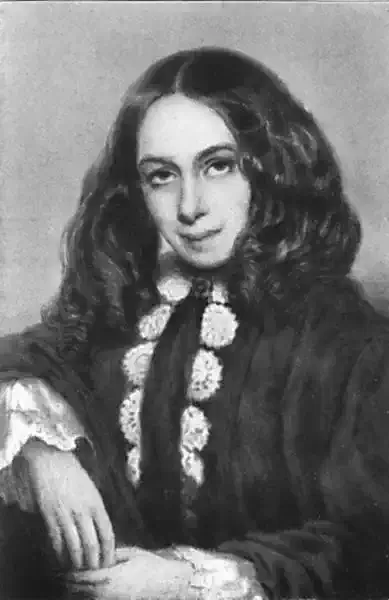
Elizabeth Barrett Browning
The Best Thing in the World
The Best Thing in the World
What's the best thing in the world?
June-rose, by May-dew impearled;
Sweet south-wind, that means no rain;
Truth, not cruel to a friend;
Pleasure, not in haste to end;
Beauty, not self-decked and curled
Till its pride is over-plain;
Love, when, so, you're loved again.
What's the best thing in the world?
--Something out of it, I think.
What's the best thing in the world?
June-rose, by May-dew impearled;
Sweet south-wind, that means no rain;
Truth, not cruel to a friend;
Pleasure, not in haste to end;
Beauty, not self-decked and curled
Till its pride is over-plain;
Love, when, so, you're loved again.
What's the best thing in the world?
--Something out of it, I think.
427
Elizabeth Barrett Browning
Sonnet XXXI: Thou Comest!
Sonnet XXXI: Thou Comest!
Thou comest! all is said without a word.
I sit beneath thy looks, as children do
In the noon-sun, with souls that tremble through
Their happy eyelids from an unaverred
Yet prodigal inward joy. Behold, I erred
In that last doubt! and yet I cannot rue
The sin most, but the occasion--that we two
Should for a moment stand unministered
By a mutual presence. Ah, keep near and close,
Thou dovelike help! and, when my fears would rise,
With thy broad heart serenely interpose:
Brood down with thy divine sufficiencies
These thoughts which tremble when bereft of those,
Like callow birds left desert to the skies.
Thou comest! all is said without a word.
I sit beneath thy looks, as children do
In the noon-sun, with souls that tremble through
Their happy eyelids from an unaverred
Yet prodigal inward joy. Behold, I erred
In that last doubt! and yet I cannot rue
The sin most, but the occasion--that we two
Should for a moment stand unministered
By a mutual presence. Ah, keep near and close,
Thou dovelike help! and, when my fears would rise,
With thy broad heart serenely interpose:
Brood down with thy divine sufficiencies
These thoughts which tremble when bereft of those,
Like callow birds left desert to the skies.
394
Elizabeth Barrett Browning
Sonnet XXVII: My Dear Belovèd
Sonnet XXVII: My Dear Belovèd
My dear Belovèd, who hast lifted me
From this drear flat of earth where I was thrown,
And, in betwixt the languid ringlets, blown
A life-breath, till the forehead hopefully
Shines out again, as all the angels see,
Before thy saving kiss! My own, my own,
Who camest to me when the world was gone,
And I who looked for only God, found thee!
I find thee; I am safe, and strong, and glad.
As one who stands in dewless asphodel
Looks backward on the tedious time he had
In the upper life,--so I, with bosom-swell,
Make witness, here, between the good and bad,
That Love, as strong as Death, retrieves as well.
My dear Belovèd, who hast lifted me
From this drear flat of earth where I was thrown,
And, in betwixt the languid ringlets, blown
A life-breath, till the forehead hopefully
Shines out again, as all the angels see,
Before thy saving kiss! My own, my own,
Who camest to me when the world was gone,
And I who looked for only God, found thee!
I find thee; I am safe, and strong, and glad.
As one who stands in dewless asphodel
Looks backward on the tedious time he had
In the upper life,--so I, with bosom-swell,
Make witness, here, between the good and bad,
That Love, as strong as Death, retrieves as well.
412
Elizabeth Barrett Browning
Sonnet XXII: When Our Two Souls Stand Up
Sonnet XXII: When Our Two Souls Stand Up
When our two souls stand up erect and strong,
Face to face, silent, drawing nigh and nigher,
Until the lengthening wings break into fire
At either curvèd point,--what bitter wrong
Can the earth do to us, that we should not long
Be here contented? Think. In mounting higher,
The angels would press on us and aspire
To drop some golden orb of perfect song
Into our deep, dear silence. Let us stay
Rather on earth, Belovèd,--where the unfit
Contrarious moods of men recoil away
And isolate pure spirits, and permit
A place to stand and love in for a day,
With darkness and the death-hour rounding it.
When our two souls stand up erect and strong,
Face to face, silent, drawing nigh and nigher,
Until the lengthening wings break into fire
At either curvèd point,--what bitter wrong
Can the earth do to us, that we should not long
Be here contented? Think. In mounting higher,
The angels would press on us and aspire
To drop some golden orb of perfect song
Into our deep, dear silence. Let us stay
Rather on earth, Belovèd,--where the unfit
Contrarious moods of men recoil away
And isolate pure spirits, and permit
A place to stand and love in for a day,
With darkness and the death-hour rounding it.
390
Elizabeth Barrett Browning
Sonnet 24 - Let the world's sharpness, like a clasping knife
Sonnet 24 - Let the world's sharpness, like a clasping knife
XXIV
Let the world's sharpness, like a clasping knife,
Shut in upon itself and do no harm
In this close hand of Love, now soft and warm,
And let us hear no sound of human strife
After the click of the shutting. Life to life-
I lean upon thee, Dear, without alarm,
And feel as safe as guarded by a charm
Against the stab of worldlings, who if rife
Are weak to injure. Very whitely still
The lilies of our lives may reassure
Their blossoms from their roots, accessible
Alone to heavenly dews that drop not fewer,
Growing straight, out of man's reach, on the hill.
God only, who made us rich, can make us poor.
XXIV
Let the world's sharpness, like a clasping knife,
Shut in upon itself and do no harm
In this close hand of Love, now soft and warm,
And let us hear no sound of human strife
After the click of the shutting. Life to life-
I lean upon thee, Dear, without alarm,
And feel as safe as guarded by a charm
Against the stab of worldlings, who if rife
Are weak to injure. Very whitely still
The lilies of our lives may reassure
Their blossoms from their roots, accessible
Alone to heavenly dews that drop not fewer,
Growing straight, out of man's reach, on the hill.
God only, who made us rich, can make us poor.
392

Edward Lear
The Quangle Wangle's Hat
The Quangle Wangle's Hat
I.
On the top of the Crumpetty Tree
The Quangle Wangle sat,
But his face you could not see,
On account of his Beaver Hat.
For his Hat was a hundred and two feet wide,
With ribbons and bibbons on every side
And bells, and buttons, and loops, and lace,
So that nobody every could see the face
Of the Quangle Wangle Quee.II.
The Quangle Wangle said
To himself on the Crumpetty Tree, -"
Jam; and jelly; and bread;
"Are the best of food for me!
"But the longer I live on this Crumpetty Tree
"The plainer than ever it seems to me
"That very few people come this way
"And that life on the whole is far from gay!"
Said the Quangle Wangle Quee.III.
But there came to the Crumpetty Tree,
Mr. and Mrs. Canary;
And they said, -- "Did every you see
"Any spot so charmingly airy?
"May we build a nest on your lovely Hat?
"Mr. Quangle Wangle, grant us that!
"O please let us come and build a nest
"Of whatever material suits you best,
"Mr. Quangle Wangle Quee!"IV.
And besides, to the Crumpetty Tree
Came the Stork, the Duck, and the Owl;
The Snail, and the Bumble-Bee,
The Frog, and the Fimble Fowl;
(The Fimble Fowl, with a corkscrew leg;)
And all of them said, -- "We humbly beg,
"We may build out homes on your lovely Hat, -"
Mr. Quangle Wangle, grant us that!
"Mr. Quangle Wangle Quee!"V.
And the Golden Grouse came there,
And the Pobble who has no toes, -And
the small Olympian bear, -
And the Dong with a luminous nose.
And the Blue Baboon, who played the Flute, -And
the Orient Calf from the Land of Tute, -And
the Attery Squash, and the Bisky Bat, -All
came and built on the lovely Hat
Of the Quangle Wangle Quee.VI.
And the Quangle Wangle said
To himself on the Crumpetty Tree, -"
When all these creatures move
"What a wonderful noise there'll be!"
And at night by the light of the Mulberry moon
They danced to the Flute of the Blue Baboon,
On the broad green leaves of the Crumpetty Tree,
And all were as happy as happy could be,
With the Quangle Wangle Quee.
I.
On the top of the Crumpetty Tree
The Quangle Wangle sat,
But his face you could not see,
On account of his Beaver Hat.
For his Hat was a hundred and two feet wide,
With ribbons and bibbons on every side
And bells, and buttons, and loops, and lace,
So that nobody every could see the face
Of the Quangle Wangle Quee.II.
The Quangle Wangle said
To himself on the Crumpetty Tree, -"
Jam; and jelly; and bread;
"Are the best of food for me!
"But the longer I live on this Crumpetty Tree
"The plainer than ever it seems to me
"That very few people come this way
"And that life on the whole is far from gay!"
Said the Quangle Wangle Quee.III.
But there came to the Crumpetty Tree,
Mr. and Mrs. Canary;
And they said, -- "Did every you see
"Any spot so charmingly airy?
"May we build a nest on your lovely Hat?
"Mr. Quangle Wangle, grant us that!
"O please let us come and build a nest
"Of whatever material suits you best,
"Mr. Quangle Wangle Quee!"IV.
And besides, to the Crumpetty Tree
Came the Stork, the Duck, and the Owl;
The Snail, and the Bumble-Bee,
The Frog, and the Fimble Fowl;
(The Fimble Fowl, with a corkscrew leg;)
And all of them said, -- "We humbly beg,
"We may build out homes on your lovely Hat, -"
Mr. Quangle Wangle, grant us that!
"Mr. Quangle Wangle Quee!"V.
And the Golden Grouse came there,
And the Pobble who has no toes, -And
the small Olympian bear, -
And the Dong with a luminous nose.
And the Blue Baboon, who played the Flute, -And
the Orient Calf from the Land of Tute, -And
the Attery Squash, and the Bisky Bat, -All
came and built on the lovely Hat
Of the Quangle Wangle Quee.VI.
And the Quangle Wangle said
To himself on the Crumpetty Tree, -"
When all these creatures move
"What a wonderful noise there'll be!"
And at night by the light of the Mulberry moon
They danced to the Flute of the Blue Baboon,
On the broad green leaves of the Crumpetty Tree,
And all were as happy as happy could be,
With the Quangle Wangle Quee.
232
Edward Lear
Mr and Mrs Discobbolos
Mr and Mrs Discobbolos
First Part
Mr and Mrs Discobbolos
Climbed to the top of a wall,
And they sat to watch the sunset sky
And to hear the Nupiter Piffkin cry
And the Biscuit Buffalo call.
They took up a roll and some Chamomile tea,
And both were as happy as happy could be -
Till Mrs Discobbolos said, '
Oh! W! X! Y! Z!
It has just come into my head -
Suppose we should happen to fall!!!!!
Darling Mr Discobbolos?
'Suppose we should fall down flumpetty
Just like two pieces of stone!
On to the thorns, - or into the moat!
What would become of your new green coat?
And might you not break a bone?
It never occurred to me before -
That perhaps we shall never go down any more!'
And Mrs Discobbolos said '
Oh! W! X! Y! Z!
What put it into your head
To climb up this wall? - my own
Darling Mr Discobbolos?'
Mr Discobbolos answered, '
At first it gave me pain, -
And I felt my ears turn perfectly pink
When your exclamation made me think
We might never get down again!
But now I believe it is wiser far
To remain for ever just where we are.' -
And Mr Discobbolos said,
'Oh! W! X! Y! Z!
It has just come into my head '-
We shall never go down again -
Dearest Mrs Discobbolos.!'
So Mr and Mrs Discobbolos
Stood up, and began to sing,
'Far away from hurry and strife
Here we will pass the rest of life,
Ding a dong, ding dong, ding!
We want no knives nor forks nor chairs,
No tables nor carpets nor household cares,
From worry of life we've fled '
Oh! W! X! Y! Z!
There is no more trouble ahead
Sorrow or any such thing -
For Mr and Mrs Discobbolos!'
Second Part.
Mr and Mrs Discobbolos
Lived on the top of the wall
For twenty years, a month and a day,
Till their hair had grown all pearly gray,
And their teeth began to fall.
They never were ill, or at all dejected,
By all admired, and by some respected,
Till Mrs Discobbolos said,
'Oh! W! X! Y! Z!
It has just come into my head,
We have no more room at all -
Darling Mr Discobbolos!
Look at our six fine boys!
And our six sweet girls so fair!
Upon this wall they have all been born,
And not one of the twelve has happened to fall
Through my maternal care!
Surely they should not pass their lives
Without any chance of husbands or wives!'
And Mrs Discobbolos said,
'Oh! W! X! Y! Z!
Did it never come into your head
That our lives must be lived elsewhere,
Dearest Mr Discobbolos?
'They have never been at a ball,
Nor have even seen a bazaar!
Nor have heard folks say in a tone all hearty,
'What loves of girls (at a garden party)
Those Misses Discobbolos are!'
Morning and night it drives me wild
To think of the fate of each darling child!'
But Mr Discobbolos said,
'Oh! W! X! Y! Z!
What has come to your fiddledum head!
What a runcible goose you are!
Octopod Mrs Discobbolos!'
Suddenly Mr Discobbolos
Slid from the top of the wall;
And beneath it he dug a dreadful trench,
And filled it with dynamite, gunpowder gench,
And aloud he began to call '
Let the wild bee sing,
And the blue bird hum!
For the end of your lives has certainly come!'
And Mrs Discobbolos said,
'Oh! W! X! Y! Z!
We shall presently all be dead,
On this ancient runcible wall,
Terrible Mr Discobbolos!'
Pensively, Mr Discobbolos
Sat with his back to the wall;
He lighted a match, and fired the train,
And the mortified mountain echoed again
To the sound of an awful fall!
And all the Discobbolos family flew
In thousands of bits to the sky so blue,
And no one was left to have said,
'Oh! W! X! Y! Z!
Has it come into anyone's head
That the end has happened to all
Of the whole of the Clan Discobbolos?'
First Part
Mr and Mrs Discobbolos
Climbed to the top of a wall,
And they sat to watch the sunset sky
And to hear the Nupiter Piffkin cry
And the Biscuit Buffalo call.
They took up a roll and some Chamomile tea,
And both were as happy as happy could be -
Till Mrs Discobbolos said, '
Oh! W! X! Y! Z!
It has just come into my head -
Suppose we should happen to fall!!!!!
Darling Mr Discobbolos?
'Suppose we should fall down flumpetty
Just like two pieces of stone!
On to the thorns, - or into the moat!
What would become of your new green coat?
And might you not break a bone?
It never occurred to me before -
That perhaps we shall never go down any more!'
And Mrs Discobbolos said '
Oh! W! X! Y! Z!
What put it into your head
To climb up this wall? - my own
Darling Mr Discobbolos?'
Mr Discobbolos answered, '
At first it gave me pain, -
And I felt my ears turn perfectly pink
When your exclamation made me think
We might never get down again!
But now I believe it is wiser far
To remain for ever just where we are.' -
And Mr Discobbolos said,
'Oh! W! X! Y! Z!
It has just come into my head '-
We shall never go down again -
Dearest Mrs Discobbolos.!'
So Mr and Mrs Discobbolos
Stood up, and began to sing,
'Far away from hurry and strife
Here we will pass the rest of life,
Ding a dong, ding dong, ding!
We want no knives nor forks nor chairs,
No tables nor carpets nor household cares,
From worry of life we've fled '
Oh! W! X! Y! Z!
There is no more trouble ahead
Sorrow or any such thing -
For Mr and Mrs Discobbolos!'
Second Part.
Mr and Mrs Discobbolos
Lived on the top of the wall
For twenty years, a month and a day,
Till their hair had grown all pearly gray,
And their teeth began to fall.
They never were ill, or at all dejected,
By all admired, and by some respected,
Till Mrs Discobbolos said,
'Oh! W! X! Y! Z!
It has just come into my head,
We have no more room at all -
Darling Mr Discobbolos!
Look at our six fine boys!
And our six sweet girls so fair!
Upon this wall they have all been born,
And not one of the twelve has happened to fall
Through my maternal care!
Surely they should not pass their lives
Without any chance of husbands or wives!'
And Mrs Discobbolos said,
'Oh! W! X! Y! Z!
Did it never come into your head
That our lives must be lived elsewhere,
Dearest Mr Discobbolos?
'They have never been at a ball,
Nor have even seen a bazaar!
Nor have heard folks say in a tone all hearty,
'What loves of girls (at a garden party)
Those Misses Discobbolos are!'
Morning and night it drives me wild
To think of the fate of each darling child!'
But Mr Discobbolos said,
'Oh! W! X! Y! Z!
What has come to your fiddledum head!
What a runcible goose you are!
Octopod Mrs Discobbolos!'
Suddenly Mr Discobbolos
Slid from the top of the wall;
And beneath it he dug a dreadful trench,
And filled it with dynamite, gunpowder gench,
And aloud he began to call '
Let the wild bee sing,
And the blue bird hum!
For the end of your lives has certainly come!'
And Mrs Discobbolos said,
'Oh! W! X! Y! Z!
We shall presently all be dead,
On this ancient runcible wall,
Terrible Mr Discobbolos!'
Pensively, Mr Discobbolos
Sat with his back to the wall;
He lighted a match, and fired the train,
And the mortified mountain echoed again
To the sound of an awful fall!
And all the Discobbolos family flew
In thousands of bits to the sky so blue,
And no one was left to have said,
'Oh! W! X! Y! Z!
Has it come into anyone's head
That the end has happened to all
Of the whole of the Clan Discobbolos?'
292
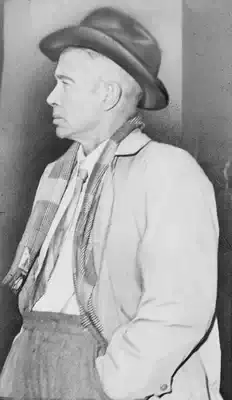
E. E. Cummings
in just
in just
in Justspring
when the world is mudluscious
the little
lame balloonman
whistles far and wee
and eddieandbill come
running from marbles and
piracies and it's spring
when the world is puddle-wonderful
the queer
old balloonman whistles
far and wee
and bettyandisbel come dancing
from hop-scotch and jump-rope and
it's spring
and the goat-footed
balloonMan whistles
far
and
wee
in Justspring
when the world is mudluscious
the little
lame balloonman
whistles far and wee
and eddieandbill come
running from marbles and
piracies and it's spring
when the world is puddle-wonderful
the queer
old balloonman whistles
far and wee
and bettyandisbel come dancing
from hop-scotch and jump-rope and
it's spring
and the goat-footed
balloonMan whistles
far
and
wee
615
E. E. Cummings
if everything happens that can't be done
if everything happens that can't be done
if everything happens that can't be done
(and anything's righter
than books
could plan)
the stupidest teacher will almost guess
(with a run
skip
around we go yes)
there's nothing as something as one
one hasn't a why or because or although
(and buds know better
than books
don't grow)
one's anything old being everything new
(with a what
which
around we come who)
one's everyanything so
so world is a leaf so tree is a bough
(and birds sing sweeter
than books
tell how)
so here is away and so your is a my
(with a down
up
around again fly)
forever was never till now
now i love you and you love me
(and books are shutter
than books
can be)
and deep in the high that does nothing but fall
(with a shout
each
around we go all)
there's somebody calling who's we
we're anything brighter than even the sun
(we're everything greater
than books
might mean)
we're everanything more than believe
(with a spin
leap
alive we're alive)
we're wonderful one times one
if everything happens that can't be done
(and anything's righter
than books
could plan)
the stupidest teacher will almost guess
(with a run
skip
around we go yes)
there's nothing as something as one
one hasn't a why or because or although
(and buds know better
than books
don't grow)
one's anything old being everything new
(with a what
which
around we come who)
one's everyanything so
so world is a leaf so tree is a bough
(and birds sing sweeter
than books
tell how)
so here is away and so your is a my
(with a down
up
around again fly)
forever was never till now
now i love you and you love me
(and books are shutter
than books
can be)
and deep in the high that does nothing but fall
(with a shout
each
around we go all)
there's somebody calling who's we
we're anything brighter than even the sun
(we're everything greater
than books
might mean)
we're everanything more than believe
(with a spin
leap
alive we're alive)
we're wonderful one times one
645

Edgar Albert Guest
Thanksgiving
Thanksgiving
Gettin' together to smile an' rejoice,
An' eatin' an' laughin' with folks of your choice;
An' kissin' the girls an' declarin' that they
Are growin' more beautiful day after day;
Chattin' an' braggin' a bit with the men,
Buildin' the old family circle again;
Livin' the wholesome an' old-fashioned cheer,
Just for awhile at the end of the year.
Greetings fly fast as we crowd through the door
And under the old roof we gather once more
Just as we did when the youngsters were small;
Mother's a little bit grayer, that's all.
Father's a little bit older, but still
Ready to romp an' to laugh with a will.
Here we are back at the table again
Tellin' our stories as women an' men.
Bowed are our heads for a moment in prayer;
Oh, but we're grateful an' glad to be there.
Home from the east land an' home from the west,
Home with the folks that are dearest an' best.
Out of the sham of the cities afar
We've come for a time to be just what we are.
Here we can talk of ourselves an' be frank,
Forgettin' position an' station an' rank.
Give me the end of the year an' its fun
When most of the plannin' an' toilin' is done;
Bring all the wanderers home to the nest,
Let me sit down with the ones I love best,
Hear the old voices still ringin' with song,
See the old faces unblemished by wrong,
See the old table with all of its chairs
An' I'll put soul in my Thanksgivin' prayers.
Gettin' together to smile an' rejoice,
An' eatin' an' laughin' with folks of your choice;
An' kissin' the girls an' declarin' that they
Are growin' more beautiful day after day;
Chattin' an' braggin' a bit with the men,
Buildin' the old family circle again;
Livin' the wholesome an' old-fashioned cheer,
Just for awhile at the end of the year.
Greetings fly fast as we crowd through the door
And under the old roof we gather once more
Just as we did when the youngsters were small;
Mother's a little bit grayer, that's all.
Father's a little bit older, but still
Ready to romp an' to laugh with a will.
Here we are back at the table again
Tellin' our stories as women an' men.
Bowed are our heads for a moment in prayer;
Oh, but we're grateful an' glad to be there.
Home from the east land an' home from the west,
Home with the folks that are dearest an' best.
Out of the sham of the cities afar
We've come for a time to be just what we are.
Here we can talk of ourselves an' be frank,
Forgettin' position an' station an' rank.
Give me the end of the year an' its fun
When most of the plannin' an' toilin' is done;
Bring all the wanderers home to the nest,
Let me sit down with the ones I love best,
Hear the old voices still ringin' with song,
See the old faces unblemished by wrong,
See the old table with all of its chairs
An' I'll put soul in my Thanksgivin' prayers.
623

Dylan Thomas
Being But Men
Being But Men
Being but men, we walked into the trees
Afraid, letting our syllables be soft
For fear of waking the rooks,
For fear of coming
Noiselessly into a world of wings and cries.
If we were children we might climb,
Catch the rooks sleeping, and break no twig,
And, after the soft ascent,
Thrust out our heads above the branches
To wonder at the unfailing stars.
Out of confusion, as the way is,
And the wonder, that man knows,
Out of the chaos would come bliss.
That, then, is loveliness, we said,
Children in wonder watching the stars,
Is the aim and the end.
Being but men, we walked into the trees.
Being but men, we walked into the trees
Afraid, letting our syllables be soft
For fear of waking the rooks,
For fear of coming
Noiselessly into a world of wings and cries.
If we were children we might climb,
Catch the rooks sleeping, and break no twig,
And, after the soft ascent,
Thrust out our heads above the branches
To wonder at the unfailing stars.
Out of confusion, as the way is,
And the wonder, that man knows,
Out of the chaos would come bliss.
That, then, is loveliness, we said,
Children in wonder watching the stars,
Is the aim and the end.
Being but men, we walked into the trees.
599