

Poems in this theme
Faith, Spirituality and Religion
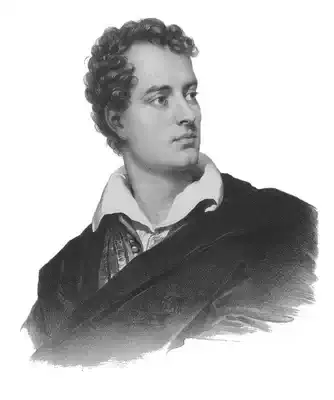
Lord Byron
From The Last Hill That Looks On Thy Once Holy Dome
From The Last Hill That Looks On Thy Once Holy Dome
I.
From the last hill that looks on thy once holy dome,
I beheld thee, Oh Sion! when rendered to Rome:
'Twas thy last sun went down, and the flames of thy fall
Flash'd back on the last glance I gave to thy wall.
II.
I look'd for thy temple, I look'd for my home,
And forgot for a moment my bondage to come;
I beheld but the deathfire
that fed on thy fane,
And the fastfetter'd
hands that made vengeance in vain.
III.
Oh many an eve, the high spot whence I gazed
Had reflected the last beam of day as it blazed;
While I stood on the height, and beheld the decline
Of the rays from the mountain that shone on thy shrine.
IV.
And now on that mountain I stood on that day,
But I marked not the twilight beam melting away;
Oh! would that the lightning had glared in its stead,
And the thunderbolt burst on the conqueror's head!
V.
But the Gods of the Pagan shall never profane
The shrine where Jehovah disdain'd not to reign;
And scattered and scorn'd as thy people may be,
Our worship, oh Father! is only for thee.
I.
From the last hill that looks on thy once holy dome,
I beheld thee, Oh Sion! when rendered to Rome:
'Twas thy last sun went down, and the flames of thy fall
Flash'd back on the last glance I gave to thy wall.
II.
I look'd for thy temple, I look'd for my home,
And forgot for a moment my bondage to come;
I beheld but the deathfire
that fed on thy fane,
And the fastfetter'd
hands that made vengeance in vain.
III.
Oh many an eve, the high spot whence I gazed
Had reflected the last beam of day as it blazed;
While I stood on the height, and beheld the decline
Of the rays from the mountain that shone on thy shrine.
IV.
And now on that mountain I stood on that day,
But I marked not the twilight beam melting away;
Oh! would that the lightning had glared in its stead,
And the thunderbolt burst on the conqueror's head!
V.
But the Gods of the Pagan shall never profane
The shrine where Jehovah disdain'd not to reign;
And scattered and scorn'd as thy people may be,
Our worship, oh Father! is only for thee.
473
Lord Byron
Elegy On Newstead Abbey
Elegy On Newstead Abbey
'It is the voice of years that are gone!
they roll before me with all their deeds.'~OSSIAN
Newstead! fastfalling,
onceresplendent
dome!
Religion's shrine! repentant HENRY's pride!
Of warriors, monks, and dames the cloister'd tomb,
Whose pensive shades around thy ruins glide,
Hail to thy pile! more honour'd in thy fall
Than modern mansions in their pillar'd state;
Proudly majestic frowns thy vaulted hall,
Scowling defiance on the blasts of fate.
No mailclad
serfs, obedient to their lord,
In grim array the crimson cross demand;
Or gay assemble round the festive board
Their chief's retainers, an immortal band:
Else might inspiting Fancy's magic eye
Retrace their progress through the lapse of time,
Marking each ardent youth, ordaln'd to die,
A votive pilgrim in Judea's clime.
But not from thee, dark pile! departs the chief;
His feudal realm in other regions lay:
In thee the wounded conscience courts relief,
Retiring from the garish blare of day.
Yes! in thy gloomy cells and shades profound
The monk abjured a world he ne'er could view;
Or bloodstain'd
guilt repenting solace found,
Or innocence from stern oppression flew.
A monarch bade thee from that wild arise,
Where Sherwood's outlaws once were wont to prowl;
And Superstition's crimes, of various dyes,
Sought shelter in the priest's protecting cowl.
Where now the grass exhales a murky dew,
The humid pail of lifeextinguish'd
clay,
In sainted fame the sacred fathers grew,
Nor raised their pious voices but to pray.
Where now the bats their wavering wings extend
Soon as the gloaming spreads her waning shade,
The choir did oft their mingling vespers blend,
Or matin orisons to Mary pald.
Years roll on years; to ages, ages yield;
Abbots to abbots, in a line, succeed;
Religion's charter their protecting shield,
Till royal sacrilege their doom decreed,
One holy HENRY rear'd the Gothic walls,
And bade the pious inmates rest in peace
Another HENRY the kind gift recalls,
And bids devotion's hallow'd echos cease.
Vain is each threat or supplicating prayer;
He drives them exiles from their blest abode,
To roam a dreary world in deep despair —
No friend, no home, no refuge, but their God.
Hark how the hall, resounding to the strain
Shakes with the martial music's novel din!
The heralds of a warrior's haughty reign,
High crested banners wave thy wails within.
Of changing sentinels the distant hum,
The mirth of feasts, the clang of burnish'd arms,
The braying trumpet and the hoarser drum,
Unite in concert with increased alarms.
An abbey once, a regal fortress now,
Encircled by insulting rebel powers,
War's dread machines o'erhang thy threat'ning brow,
And dart destruction in sulphureous showers.
Ah vain defence! the hostile traitor's siege,
Though oft repulsed, by guile o'ercomes
the brave;
His thronging foes oppress the faithful liege,
Rebellion's reeking standards o'er him wave.
Not unavenged the raging baron yields;
The blood of traitors smears the purple plain
Unconqu'r'd still, his falchion there he wields,
And days of glory yet for him remain.
Still in that hour the warrior wish'd to strew
Selfgather'd
laurel on a selfsought
grave;
But Charles' protecting genius hither flew,
The monarch's friend, the monarch's hope, to save.
Trembling, she snatch'd him ftom th' unequal strife,
In other fields the torrent to repel;
For nobler combats, here reservedhis life,
To lead the hand where godlike FALKLAND fell
From thee, poor pile! to lawless plunder given,
While dying groans their painful requiem sound,
Far different incense now ascends to heaven,
Such victims wallow on the gory ground.
There many a pale and ruthless robber's corse,
Noisome and ghast, defiles thy sacred sod;
O'er mingling man, and horse commix'd with horse,
Corruption's heap, the savage spoilers trod.
Graves, long with rank and sighing weeds o'erspread,
Ransack'd, resign perforce their mortal mould:
From ruffian fangs escape not e'en the dead,
Raked from repose in search of buried gold.
Hush'd is the harp, unstrung the warlike lyre'
The minstrel's palsied hand reclines in death;
No more he strikes the quivering chords with fire,
Or sings the glories of the martial wreath.
At length the sated murderers, gorged with prey,
Retire: the clamour of the fight is o'er;
Silence again resumes her awful sway,
And sable Horror guards the massy door.
Here Desolation holds her dreary court:
What satellites declare her dismal reign!
Shrieking their dirge, illomen'd
birds resort,
To flit their vigils in the hoary fane.
Soon a new morn's restoring beams dispel
The clouds of anarchy from Britain's skies;
The fierce usurper seeks his native hell,
And Nature triumphs as the tyrant dies.
With storms she welcomes his expiring groans
Whirlwinds, responsive, greet his labouring breath;
Earth shudders as her caves receive his bones,
Loathing the offering of so dark a death.
The legal ruler now resumes the helm,
He guides through gentle seas the prow of state
Hope cheers, with wonted smiles, the peaceful realm,
And heals the bleeding wounds of wearied hate.
The gloomy tenants, Newstead! of thy cells,
Howling, resign their violated nest;
Again the master on his tenure dwells,
Enjoy'd, from absence, with enraptured zest.
Vassals, within thy hospitable pale,
Loudly carousing, bless their lord's return.
Culture again adorns the gladdening vale,
And matrons, once lamenting, cease to mourn.
A thousand songs on tuneful echo float,
Unwonted foliage mantles o'er the trees;
And hark! the horns proclalm a mellow note,
The hunters' cry hangs lengthening on the breeze.
Beneath their coursers' hoofs the valleys shake:
What fears, what anxious hopes attend the chase!
The dying stag seeks refuge in the lake;
Exulting shouts announce the finish'd race.
Ah happy days! too happy to endure!
Such simple sports our plain forefathers knew
No splendid vices glitter'd to allure;
Their joys were many, as their cares were few.
From these descending, sons to sires succeed
Time steals along, and Death uprears the dart;
Another chief impels the foaming steed,
Another crowd pursue the panting hart.
Newstead! what saddening change of scene is thine!
Thy yawning arch betokens slow decay;
The last and youngest of a noble line
Now holds thy mouldering turrets in his sway.
Deserted now, he scans thy gray worn towers;
Thy vaults, where dead of feudal ages sleep;
Thy cloisters, pervious to the wintry showers
These, these he views, and views them but to weep.
Yet are his tears no emblem of regret:
Cherish'd affection only bids them flow.
Pride, hope, and love forbid him to forget
But warm his bosom with irnpassion'd glow.
Yet he prefers thee to the gilded domes
Or gewgaw grottos of the vainly great,
Yet lingers 'mid thy damp and mossy tombs,
Nor breathes a murmur 'gainst the will of fate.
Haply thy sun, emerging, yet may shine,
Thee to irradiate with meridian ray;
Hours splendid as the past may still be thine,
And bless thy future as thy former day.
'It is the voice of years that are gone!
they roll before me with all their deeds.'~OSSIAN
Newstead! fastfalling,
onceresplendent
dome!
Religion's shrine! repentant HENRY's pride!
Of warriors, monks, and dames the cloister'd tomb,
Whose pensive shades around thy ruins glide,
Hail to thy pile! more honour'd in thy fall
Than modern mansions in their pillar'd state;
Proudly majestic frowns thy vaulted hall,
Scowling defiance on the blasts of fate.
No mailclad
serfs, obedient to their lord,
In grim array the crimson cross demand;
Or gay assemble round the festive board
Their chief's retainers, an immortal band:
Else might inspiting Fancy's magic eye
Retrace their progress through the lapse of time,
Marking each ardent youth, ordaln'd to die,
A votive pilgrim in Judea's clime.
But not from thee, dark pile! departs the chief;
His feudal realm in other regions lay:
In thee the wounded conscience courts relief,
Retiring from the garish blare of day.
Yes! in thy gloomy cells and shades profound
The monk abjured a world he ne'er could view;
Or bloodstain'd
guilt repenting solace found,
Or innocence from stern oppression flew.
A monarch bade thee from that wild arise,
Where Sherwood's outlaws once were wont to prowl;
And Superstition's crimes, of various dyes,
Sought shelter in the priest's protecting cowl.
Where now the grass exhales a murky dew,
The humid pail of lifeextinguish'd
clay,
In sainted fame the sacred fathers grew,
Nor raised their pious voices but to pray.
Where now the bats their wavering wings extend
Soon as the gloaming spreads her waning shade,
The choir did oft their mingling vespers blend,
Or matin orisons to Mary pald.
Years roll on years; to ages, ages yield;
Abbots to abbots, in a line, succeed;
Religion's charter their protecting shield,
Till royal sacrilege their doom decreed,
One holy HENRY rear'd the Gothic walls,
And bade the pious inmates rest in peace
Another HENRY the kind gift recalls,
And bids devotion's hallow'd echos cease.
Vain is each threat or supplicating prayer;
He drives them exiles from their blest abode,
To roam a dreary world in deep despair —
No friend, no home, no refuge, but their God.
Hark how the hall, resounding to the strain
Shakes with the martial music's novel din!
The heralds of a warrior's haughty reign,
High crested banners wave thy wails within.
Of changing sentinels the distant hum,
The mirth of feasts, the clang of burnish'd arms,
The braying trumpet and the hoarser drum,
Unite in concert with increased alarms.
An abbey once, a regal fortress now,
Encircled by insulting rebel powers,
War's dread machines o'erhang thy threat'ning brow,
And dart destruction in sulphureous showers.
Ah vain defence! the hostile traitor's siege,
Though oft repulsed, by guile o'ercomes
the brave;
His thronging foes oppress the faithful liege,
Rebellion's reeking standards o'er him wave.
Not unavenged the raging baron yields;
The blood of traitors smears the purple plain
Unconqu'r'd still, his falchion there he wields,
And days of glory yet for him remain.
Still in that hour the warrior wish'd to strew
Selfgather'd
laurel on a selfsought
grave;
But Charles' protecting genius hither flew,
The monarch's friend, the monarch's hope, to save.
Trembling, she snatch'd him ftom th' unequal strife,
In other fields the torrent to repel;
For nobler combats, here reservedhis life,
To lead the hand where godlike FALKLAND fell
From thee, poor pile! to lawless plunder given,
While dying groans their painful requiem sound,
Far different incense now ascends to heaven,
Such victims wallow on the gory ground.
There many a pale and ruthless robber's corse,
Noisome and ghast, defiles thy sacred sod;
O'er mingling man, and horse commix'd with horse,
Corruption's heap, the savage spoilers trod.
Graves, long with rank and sighing weeds o'erspread,
Ransack'd, resign perforce their mortal mould:
From ruffian fangs escape not e'en the dead,
Raked from repose in search of buried gold.
Hush'd is the harp, unstrung the warlike lyre'
The minstrel's palsied hand reclines in death;
No more he strikes the quivering chords with fire,
Or sings the glories of the martial wreath.
At length the sated murderers, gorged with prey,
Retire: the clamour of the fight is o'er;
Silence again resumes her awful sway,
And sable Horror guards the massy door.
Here Desolation holds her dreary court:
What satellites declare her dismal reign!
Shrieking their dirge, illomen'd
birds resort,
To flit their vigils in the hoary fane.
Soon a new morn's restoring beams dispel
The clouds of anarchy from Britain's skies;
The fierce usurper seeks his native hell,
And Nature triumphs as the tyrant dies.
With storms she welcomes his expiring groans
Whirlwinds, responsive, greet his labouring breath;
Earth shudders as her caves receive his bones,
Loathing the offering of so dark a death.
The legal ruler now resumes the helm,
He guides through gentle seas the prow of state
Hope cheers, with wonted smiles, the peaceful realm,
And heals the bleeding wounds of wearied hate.
The gloomy tenants, Newstead! of thy cells,
Howling, resign their violated nest;
Again the master on his tenure dwells,
Enjoy'd, from absence, with enraptured zest.
Vassals, within thy hospitable pale,
Loudly carousing, bless their lord's return.
Culture again adorns the gladdening vale,
And matrons, once lamenting, cease to mourn.
A thousand songs on tuneful echo float,
Unwonted foliage mantles o'er the trees;
And hark! the horns proclalm a mellow note,
The hunters' cry hangs lengthening on the breeze.
Beneath their coursers' hoofs the valleys shake:
What fears, what anxious hopes attend the chase!
The dying stag seeks refuge in the lake;
Exulting shouts announce the finish'd race.
Ah happy days! too happy to endure!
Such simple sports our plain forefathers knew
No splendid vices glitter'd to allure;
Their joys were many, as their cares were few.
From these descending, sons to sires succeed
Time steals along, and Death uprears the dart;
Another chief impels the foaming steed,
Another crowd pursue the panting hart.
Newstead! what saddening change of scene is thine!
Thy yawning arch betokens slow decay;
The last and youngest of a noble line
Now holds thy mouldering turrets in his sway.
Deserted now, he scans thy gray worn towers;
Thy vaults, where dead of feudal ages sleep;
Thy cloisters, pervious to the wintry showers
These, these he views, and views them but to weep.
Yet are his tears no emblem of regret:
Cherish'd affection only bids them flow.
Pride, hope, and love forbid him to forget
But warm his bosom with irnpassion'd glow.
Yet he prefers thee to the gilded domes
Or gewgaw grottos of the vainly great,
Yet lingers 'mid thy damp and mossy tombs,
Nor breathes a murmur 'gainst the will of fate.
Haply thy sun, emerging, yet may shine,
Thee to irradiate with meridian ray;
Hours splendid as the past may still be thine,
And bless thy future as thy former day.
488
Lord Byron
Bright Be The Place Of Thy Soul!
Bright Be The Place Of Thy Soul!
Bright be the place of thy soul!
No lovelier spirit than thine
E'er burst from its mortal control
In the orbs of the blessed to shine.
On earth thou wert all but divine,
As thy soul shall immortally be;
And our sorrow may cease to repine,
When we know that thy God is with thee.
Light be the turf of thy tomb!
May its verdure like emeralds be:
There should not be the shadow of gloom
In aught that reminds us of thee.
Young flowers and an evergreen tree
May spring from the spot of thy rest:
But nor cypress nor yew let us see;
For why should we mourn for the blest?
Bright be the place of thy soul!
No lovelier spirit than thine
E'er burst from its mortal control
In the orbs of the blessed to shine.
On earth thou wert all but divine,
As thy soul shall immortally be;
And our sorrow may cease to repine,
When we know that thy God is with thee.
Light be the turf of thy tomb!
May its verdure like emeralds be:
There should not be the shadow of gloom
In aught that reminds us of thee.
Young flowers and an evergreen tree
May spring from the spot of thy rest:
But nor cypress nor yew let us see;
For why should we mourn for the blest?
471

Ezra Pound
Surgit Fama
Surgit Fama
There is a truce among the gods,
Kore is seen in the North
Skirting the blue-gray sea
In gilded and russet mantle.
The corn has again it's mother and she, Leuconoe,
That failed never women,
Fails not the earth now.
The tricksome Hermes is here;
He moves behind me
Eager to catch my words,
Eager to spread them with rumour;
To set upon them his change
Crafty and subtle;
To alter them to his purpose;
But do thou speak true, even to the letter:
‘Once more in Delos, once more is the altar a-quiver.
Once more is the chant heard.
Once more are the never abandoned gardens
Full of gossip and old tales.’
There is a truce among the gods,
Kore is seen in the North
Skirting the blue-gray sea
In gilded and russet mantle.
The corn has again it's mother and she, Leuconoe,
That failed never women,
Fails not the earth now.
The tricksome Hermes is here;
He moves behind me
Eager to catch my words,
Eager to spread them with rumour;
To set upon them his change
Crafty and subtle;
To alter them to his purpose;
But do thou speak true, even to the letter:
‘Once more in Delos, once more is the altar a-quiver.
Once more is the chant heard.
Once more are the never abandoned gardens
Full of gossip and old tales.’
466
Ezra Pound
Sennin Poem By Kakuhaku
Sennin Poem By Kakuhaku
The red and green kingfishers
flash between the orchids and clover,
One bird casts its gleam on another.
Green vines hang through the high forest,
They weave a whole roof to the mountain,
The lone man sits with shut speech,
He purrs and pats the clear strings.
He throws his heart up through the sky,
He bites through the flower pistil
and brings up a fine fountain.
The red-pine-tree god looks at him and wonders.
He rides through the purple smoke to visit the sennin,
He takes 'Floating Hill' by the sleeve,
He claps his hand on the back of the great water sennin.
But you, you dam'd crowd of gnats,
Can you even tell the age of a turtle?
The red and green kingfishers
flash between the orchids and clover,
One bird casts its gleam on another.
Green vines hang through the high forest,
They weave a whole roof to the mountain,
The lone man sits with shut speech,
He purrs and pats the clear strings.
He throws his heart up through the sky,
He bites through the flower pistil
and brings up a fine fountain.
The red-pine-tree god looks at him and wonders.
He rides through the purple smoke to visit the sennin,
He takes 'Floating Hill' by the sleeve,
He claps his hand on the back of the great water sennin.
But you, you dam'd crowd of gnats,
Can you even tell the age of a turtle?
485
Ezra Pound
Night Litany
Night Litany
O Dieu, purifiez nos cceurs!
Purifiez nos coeurs !
Yea the lines hast thou laid unto me
in pleasant places,
And the beauty of this thy Venice
hast thou shown unto me
Until is its loveliness become unto me
a thing of tears.
O God, what great kindness
have we done in times past
and forgotten it,
That thou givest this wonder unto us,
O God of waters?
O God of the night,
What great sorrow
Cometh unto us,
That thou thus repayest us
Before the time of its coming?
O God of silence,
Purifiez nos coeurs,
Purifiez nos coeurs,
For we have seen
The glory of the shadow of the
likeness of thine handmaid,
Yea, the glory of the shadow
of thy Beauty hath walked
Upon the shadow of the waters
In this thy Venice.
And before the holiness
Of the shadow of thy handmaid
Have I hidden mine eyes,
O God of waters.
O God of silence,
Purifiez nos coeurs,
Purifiez nos coeurs,
O God of waters,
make clean our hearts within us,
For I have seen the
Shadow of this thy Venice
Floating upon the waters,
And thy stars
Have seen this thing, out of their far courses
Have they seen this thing,
O God of waters,
Even as are thy stars
Silent unto us in their far-coursing,
Even so is mine heart
become silent within me.
Purifiez nos coeurs,
O God of the silence,
Purifiez nos coeurs,
O God of waters.
O Dieu, purifiez nos cceurs!
Purifiez nos coeurs !
Yea the lines hast thou laid unto me
in pleasant places,
And the beauty of this thy Venice
hast thou shown unto me
Until is its loveliness become unto me
a thing of tears.
O God, what great kindness
have we done in times past
and forgotten it,
That thou givest this wonder unto us,
O God of waters?
O God of the night,
What great sorrow
Cometh unto us,
That thou thus repayest us
Before the time of its coming?
O God of silence,
Purifiez nos coeurs,
Purifiez nos coeurs,
For we have seen
The glory of the shadow of the
likeness of thine handmaid,
Yea, the glory of the shadow
of thy Beauty hath walked
Upon the shadow of the waters
In this thy Venice.
And before the holiness
Of the shadow of thy handmaid
Have I hidden mine eyes,
O God of waters.
O God of silence,
Purifiez nos coeurs,
Purifiez nos coeurs,
O God of waters,
make clean our hearts within us,
For I have seen the
Shadow of this thy Venice
Floating upon the waters,
And thy stars
Have seen this thing, out of their far courses
Have they seen this thing,
O God of waters,
Even as are thy stars
Silent unto us in their far-coursing,
Even so is mine heart
become silent within me.
Purifiez nos coeurs,
O God of the silence,
Purifiez nos coeurs,
O God of waters.
520
Ezra Pound
Grace Before Song
Grace Before Song
Lord God of heaven that with mercy dight
Th'alternate prayer wheel of the night and light
Eternal hath to thee, and in whose sight
Our days as rain drops in the sea surge fall,
As bright white drops upon a leaden sea
Grant so my songs to this grey folk may be:
As drops that dream and gleam and falling catch the sun
Evan'scent mirrors every opal one
Of such his splendor as their compass is,
So, bold My Songs, seek ye such death as this.
Lord God of heaven that with mercy dight
Th'alternate prayer wheel of the night and light
Eternal hath to thee, and in whose sight
Our days as rain drops in the sea surge fall,
As bright white drops upon a leaden sea
Grant so my songs to this grey folk may be:
As drops that dream and gleam and falling catch the sun
Evan'scent mirrors every opal one
Of such his splendor as their compass is,
So, bold My Songs, seek ye such death as this.
385
Ezra Pound
Ballad for Gloom
Ballad for Gloom
For God, our God is a gallant foe
That playeth behind the veil.
I have loved my God as a child at heart
That seeketh deep bosoms for rest,
I have loved my God as a maid to man—
But lo, this thing is best:
To love your God as a gallant foe that plays behind the veil;
To meet your God as the night winds meet beyond Arcturus' pale.
I have played with God for a woman,
I have staked with my God for truth,
I have lost to my God as a man, clear-eyed—
His dice be not of ruth.
For I am made as a naked blade,
But hear ye this thing in sooth:
Who loseth to God as man to man
Shall win at the turn of the game.
I have drawn my blade where the lightnings meet
But the ending is the same:
Who loseth to God as the sword blades lose
Shall win at the end of the game.
For God, our God is a gallant foe that playeth behind the veil.
Whom God deigns not to overthrow hath need of triple mail.
For God, our God is a gallant foe
That playeth behind the veil.
I have loved my God as a child at heart
That seeketh deep bosoms for rest,
I have loved my God as a maid to man—
But lo, this thing is best:
To love your God as a gallant foe that plays behind the veil;
To meet your God as the night winds meet beyond Arcturus' pale.
I have played with God for a woman,
I have staked with my God for truth,
I have lost to my God as a man, clear-eyed—
His dice be not of ruth.
For I am made as a naked blade,
But hear ye this thing in sooth:
Who loseth to God as man to man
Shall win at the turn of the game.
I have drawn my blade where the lightnings meet
But the ending is the same:
Who loseth to God as the sword blades lose
Shall win at the end of the game.
For God, our God is a gallant foe that playeth behind the veil.
Whom God deigns not to overthrow hath need of triple mail.
535

Emily Jane Brontë
The Visionary
The Visionary
Silent is the house: all are laid asleep:
One alone looks out o’er the snow-wreaths deep,
Watching every cloud, dreading every breeze
That whirls the wildering drift, and bends the groaning trees.
Cheerful is the hearth, soft the matted floor;
Not one shivering gust creeps through pane or door;
The little lamp burns straight, its rays shoot strong and far:
I trim it well, to be the wanderer’s guiding-star.
Frown, my haughty sire! chide, my angry dame!
Set your slaves to spy; threaten me with shame:
But neither sire nor dame nor prying serf shall know,
What angel nightly tracks that waste of frozen snow.
What I love shall come like visitant of air,
Safe in secret power from lurking human snare;
What loves me, no word of mine shall e’er betray,
Though for faith unstained my life must forfeit pay.
Burn, then, little lamp; glimmer straight and clear—
Hush! a rustling wing stirs, methinks, the air:
He for whom I wait, thus ever comes to me;
Strange Power! I trust thy might; trust thou my constancy.
Silent is the house: all are laid asleep:
One alone looks out o’er the snow-wreaths deep,
Watching every cloud, dreading every breeze
That whirls the wildering drift, and bends the groaning trees.
Cheerful is the hearth, soft the matted floor;
Not one shivering gust creeps through pane or door;
The little lamp burns straight, its rays shoot strong and far:
I trim it well, to be the wanderer’s guiding-star.
Frown, my haughty sire! chide, my angry dame!
Set your slaves to spy; threaten me with shame:
But neither sire nor dame nor prying serf shall know,
What angel nightly tracks that waste of frozen snow.
What I love shall come like visitant of air,
Safe in secret power from lurking human snare;
What loves me, no word of mine shall e’er betray,
Though for faith unstained my life must forfeit pay.
Burn, then, little lamp; glimmer straight and clear—
Hush! a rustling wing stirs, methinks, the air:
He for whom I wait, thus ever comes to me;
Strange Power! I trust thy might; trust thou my constancy.
216
Emily Jane Brontë
Speak, God Of Visions
Speak, God Of Visions
O, thy bright eyes must answer now,
When Reason, with a scornful brow,
Is mocking at my overthrow!
O, thy sweet tongue must plead for me,
And tell why I have chosen thee!
Stern Reason is to judgment come,
Arrayed in all her forms of gloom:
Wilt thou, my advocate, be dumb?
No, radiant angel, speak and say
Why I did cast the world away;
Why I have presevered to shun
The common paths that others run,
And on a strange road journeyed on,
Heedless alike of wealth and power,
Of Glory's wreath and Pleasure's flower.
These once, indeed, seemed Beings Divine;
And they, perchance, heard vows of mine,
And saw my offerings on their shrine;
But careless gifts are seldom prized,
And mine were worthily despised.
So, with a ready heart I swore
To seek their altar-stone no more;
And gave my spirit to adore
Thee, ever-present, phantom thing—
My slave, my comrade, and my king.
A slave, because I rule thee still,
Incline thee to my changeful will,
And make thy influence good or ill;
A comrade, for by day and night
Thou art my intimate delight,—
My darling pain that wounds and sears,
And wrings a blessing out of tears
Be deadening me to earthly cares;
And yet, a king, though Prudence well
Have taught thy subject to rebel.
And I am wrong to worship where
Faith cannot doubt, nor Hope despair,
Since my own soul can grant my prayer?
Speak, God of Visions, plead for me,
And tell why I have chosen thee!
O, thy bright eyes must answer now,
When Reason, with a scornful brow,
Is mocking at my overthrow!
O, thy sweet tongue must plead for me,
And tell why I have chosen thee!
Stern Reason is to judgment come,
Arrayed in all her forms of gloom:
Wilt thou, my advocate, be dumb?
No, radiant angel, speak and say
Why I did cast the world away;
Why I have presevered to shun
The common paths that others run,
And on a strange road journeyed on,
Heedless alike of wealth and power,
Of Glory's wreath and Pleasure's flower.
These once, indeed, seemed Beings Divine;
And they, perchance, heard vows of mine,
And saw my offerings on their shrine;
But careless gifts are seldom prized,
And mine were worthily despised.
So, with a ready heart I swore
To seek their altar-stone no more;
And gave my spirit to adore
Thee, ever-present, phantom thing—
My slave, my comrade, and my king.
A slave, because I rule thee still,
Incline thee to my changeful will,
And make thy influence good or ill;
A comrade, for by day and night
Thou art my intimate delight,—
My darling pain that wounds and sears,
And wrings a blessing out of tears
Be deadening me to earthly cares;
And yet, a king, though Prudence well
Have taught thy subject to rebel.
And I am wrong to worship where
Faith cannot doubt, nor Hope despair,
Since my own soul can grant my prayer?
Speak, God of Visions, plead for me,
And tell why I have chosen thee!
195
Emily Jane Brontë
Plead For Me
Plead For Me
Oh, thy bright eyes must answer now,
When Reason, with a scornful brow,
Is mocking at my overthrow!
Oh, thy sweet tongue must plead for me
And tell, why I have chosen thee!
Stern Reason is to judgment come,
Arrayed in all her forms of gloom:
Wilt thou, my advocate, be dumb?
No, radiant angel, speak and say,
Why I did cast the world away.
Why I have persevered to shun
The common paths that others run,
And on a strange road journeyed on,
Heedless, alike, of wealth and power -
Of glory's wreath and pleasure's flower.
These, once, indeed, seemed Beings Divine;
And they, perchance, heard vows of mine,
And saw my offerings on their shrine;
But, careless gifts are seldom prized,
And mine were worthily despised.
So, with a ready heart I swore
To seek their altar-stone no more;
And gave my spirit to adore
Thee, ever - present, phantom thing;
My slave, my comrade, and my king,
A slave, because I rule thee still;
Incline thee to my changeful will,
And make thy influence good or ill:
A comrade, for by day and night
Thou art my intimate delight, -
My darling pain that wounds and sears
And wrings a blessing out from tears
By deadening me to earthly cares;
And yet, a king, though Prudence well
Have taught thy subject to rebel.
And am I wrong to worship, where
Faith cannot doubt, nor hope despair,
Since my own soul can grant my prayer?
Speak, God of visions, plead for me,
And tell why I have chosen thee !
Oh, thy bright eyes must answer now,
When Reason, with a scornful brow,
Is mocking at my overthrow!
Oh, thy sweet tongue must plead for me
And tell, why I have chosen thee!
Stern Reason is to judgment come,
Arrayed in all her forms of gloom:
Wilt thou, my advocate, be dumb?
No, radiant angel, speak and say,
Why I did cast the world away.
Why I have persevered to shun
The common paths that others run,
And on a strange road journeyed on,
Heedless, alike, of wealth and power -
Of glory's wreath and pleasure's flower.
These, once, indeed, seemed Beings Divine;
And they, perchance, heard vows of mine,
And saw my offerings on their shrine;
But, careless gifts are seldom prized,
And mine were worthily despised.
So, with a ready heart I swore
To seek their altar-stone no more;
And gave my spirit to adore
Thee, ever - present, phantom thing;
My slave, my comrade, and my king,
A slave, because I rule thee still;
Incline thee to my changeful will,
And make thy influence good or ill:
A comrade, for by day and night
Thou art my intimate delight, -
My darling pain that wounds and sears
And wrings a blessing out from tears
By deadening me to earthly cares;
And yet, a king, though Prudence well
Have taught thy subject to rebel.
And am I wrong to worship, where
Faith cannot doubt, nor hope despair,
Since my own soul can grant my prayer?
Speak, God of visions, plead for me,
And tell why I have chosen thee !
217
Emily Jane Brontë
No Coward Soul Is Mine
No Coward Soul Is Mine
No coward soul is mine,
No trembler in the world,s storm-troubled sphere:
I see Heaven's glories shine,
And Faith shines equal arming me from Fear.
O God within my breast.
Almighty ever-present Deity!
Life , that in me has rest,
As I Undying Life, have power in thee!
Vain are the thousand creeds
That move men's hearts, unutterably vain;
Worthless as withered weeds,
Or idlest froth amid the boundless main,
To waken doubt in one
Holding so fast by Thy infinity;
So surely anchored on
The steadfast rock of Immortality.
With wide-embracing love
Thy Spirit animates eternal years,
Pervades and broods above,
Changes, sustains, dissolves, creates, and rears.
Though Earth and moon were gone,
And suns and universes ceased to be,
And Thou wert left alone,
Every Existence would exist in thee.
There is not room for Death,
Nor atom that his might could render void:
Since thou art Being and Breath,
And what thou art may never be destroyed.
No coward soul is mine,
No trembler in the world,s storm-troubled sphere:
I see Heaven's glories shine,
And Faith shines equal arming me from Fear.
O God within my breast.
Almighty ever-present Deity!
Life , that in me has rest,
As I Undying Life, have power in thee!
Vain are the thousand creeds
That move men's hearts, unutterably vain;
Worthless as withered weeds,
Or idlest froth amid the boundless main,
To waken doubt in one
Holding so fast by Thy infinity;
So surely anchored on
The steadfast rock of Immortality.
With wide-embracing love
Thy Spirit animates eternal years,
Pervades and broods above,
Changes, sustains, dissolves, creates, and rears.
Though Earth and moon were gone,
And suns and universes ceased to be,
And Thou wert left alone,
Every Existence would exist in thee.
There is not room for Death,
Nor atom that his might could render void:
Since thou art Being and Breath,
And what thou art may never be destroyed.
493
Emily Jane Brontë
My Comforter
My Comforter
Well hast thou spoken, and yet, not taught
A feeling strange or new;
Thou hast but roused a latent thought,
A cloud-closed beam of sunshine, brought
To gleam in open view.
Deep down, concealed within my soul,
That light lies hid from men;
Yet, glows unquenched - though shadows roll,
Its gentle ray cannot control,
About the sullen den.
Was I not vexed, in these gloomy ways
To walk alone so long?
Around me, wretches uttering praise,
Or howling o'er their hopeless days,
And each with Frenzy's tongue; -
A brotherhood of misery,
Their smiles as sad as sighs;
Whose madness daily maddened me,
Distorting into agony
The bliss before my eyes!
So stood I, in Heaven's glorious sun,
And in the glare of Hell;
My spirit drank a mingled tone,
Of seraph's song, and demon's moan;
What my soul bore, my soul alone
Within itself may tell!
Like a soft air, above a sea,
Tossed by the tempest's stir;
A thaw-wind, melting quietly
The snow-drift, on some wintry lea;
No: what sweet thing resembles thee,
My thoughtful Comforter?
And yet a little longer speak,
Calm this resentful mood;
And while the savage heart grows meek,
For other token do not seek,
But let the tear upon my cheek
Evince my gratitude!
Well hast thou spoken, and yet, not taught
A feeling strange or new;
Thou hast but roused a latent thought,
A cloud-closed beam of sunshine, brought
To gleam in open view.
Deep down, concealed within my soul,
That light lies hid from men;
Yet, glows unquenched - though shadows roll,
Its gentle ray cannot control,
About the sullen den.
Was I not vexed, in these gloomy ways
To walk alone so long?
Around me, wretches uttering praise,
Or howling o'er their hopeless days,
And each with Frenzy's tongue; -
A brotherhood of misery,
Their smiles as sad as sighs;
Whose madness daily maddened me,
Distorting into agony
The bliss before my eyes!
So stood I, in Heaven's glorious sun,
And in the glare of Hell;
My spirit drank a mingled tone,
Of seraph's song, and demon's moan;
What my soul bore, my soul alone
Within itself may tell!
Like a soft air, above a sea,
Tossed by the tempest's stir;
A thaw-wind, melting quietly
The snow-drift, on some wintry lea;
No: what sweet thing resembles thee,
My thoughtful Comforter?
And yet a little longer speak,
Calm this resentful mood;
And while the savage heart grows meek,
For other token do not seek,
But let the tear upon my cheek
Evince my gratitude!
241
Emily Jane Brontë
Encouragement
Encouragement
I do not weep; I would not weep;
Our mother needs no tears:
Dry thine eyes, too; 'tis vain to keep
This causeless grief for years.
What though her brow be changed and cold,
Her sweet eyes closed for ever?
What though the stone-the darksome mould
Our mortal bodies sever?
What though her hand smooth ne'er again
Those silken locks of thine?
Nor, through long hours of future pain,
Her kind face o'er thee shine?
Remember still, she is not dead;
She sees us, sister, now;
Laid, where her angel spirit fled,
'Mid heath and frozen snow.
And from that world of heavenly light
Will she not always bend
To guide us in our lifetime's night,
And guard us to the end?
Thou knowest she will; and thou mayst mourn
That we are left below:
But not that she can ne'er return
To share our earthly woe.
I do not weep; I would not weep;
Our mother needs no tears:
Dry thine eyes, too; 'tis vain to keep
This causeless grief for years.
What though her brow be changed and cold,
Her sweet eyes closed for ever?
What though the stone-the darksome mould
Our mortal bodies sever?
What though her hand smooth ne'er again
Those silken locks of thine?
Nor, through long hours of future pain,
Her kind face o'er thee shine?
Remember still, she is not dead;
She sees us, sister, now;
Laid, where her angel spirit fled,
'Mid heath and frozen snow.
And from that world of heavenly light
Will she not always bend
To guide us in our lifetime's night,
And guard us to the end?
Thou knowest she will; and thou mayst mourn
That we are left below:
But not that she can ne'er return
To share our earthly woe.
223

Emily Dickinson
You're right—
You're right—
234
You're right—"the way is narrow"—
And "difficult the Gate"—
And "few there be"—Correct again—
That "enter in—thereat"—
'Tis Costly—So are purples!
'Tis just the price of Breath—
With but the "Discount" of the Grave—
Termed by the Brokers—"Death"!
And after that—there's Heaven—
The Good Man's—"Dividend"—
And Bad Men—"go to Jail"—
I guess—
234
You're right—"the way is narrow"—
And "difficult the Gate"—
And "few there be"—Correct again—
That "enter in—thereat"—
'Tis Costly—So are purples!
'Tis just the price of Breath—
With but the "Discount" of the Grave—
Termed by the Brokers—"Death"!
And after that—there's Heaven—
The Good Man's—"Dividend"—
And Bad Men—"go to Jail"—
I guess—
339
Emily Dickinson
You'll know it—as you know 'tis Noon
You'll know it—as you know 'tis Noon
420
You'll know it—as you know 'tis Noon—
By Glory—
As you do the Sun—
By Glory—
As you will in Heaven—
Know God the Father—and the Son.
By intuition, Mightiest Things
Assert themselves—and not by terms—
"I'm Midnight"—need the Midnight say—
"I'm Sunrise"—Need the Majesty?
Omnipotence—had not a Tongue—
His listp—is Lightning—and the Sun—
His Conversation—with the Sea—
"How shall you know"?
Consult your Eye!
420
You'll know it—as you know 'tis Noon—
By Glory—
As you do the Sun—
By Glory—
As you will in Heaven—
Know God the Father—and the Son.
By intuition, Mightiest Things
Assert themselves—and not by terms—
"I'm Midnight"—need the Midnight say—
"I'm Sunrise"—Need the Majesty?
Omnipotence—had not a Tongue—
His listp—is Lightning—and the Sun—
His Conversation—with the Sea—
"How shall you know"?
Consult your Eye!
204
Emily Dickinson
You love the Lord—you cannot see
You love the Lord—you cannot see
487
You love the Lord—you cannot see—
You write Him—every day—
A little note—when you awake—
And further in the Day.
An Ample Letter—How you miss—
And would delight to see—
But then His House—is but a Step—
And Mine's—in Heaven—You see.
487
You love the Lord—you cannot see—
You write Him—every day—
A little note—when you awake—
And further in the Day.
An Ample Letter—How you miss—
And would delight to see—
But then His House—is but a Step—
And Mine's—in Heaven—You see.
235
Emily Dickinson
You constituted Time
You constituted Time
765
You constituted Time-
I deemed Eternity
A Revelation of Yourself'
Twas therefore Deity
The Absolute-removed
The Relative away-
That I unto Himself adjust
My slow idolatry-
765
You constituted Time-
I deemed Eternity
A Revelation of Yourself'
Twas therefore Deity
The Absolute-removed
The Relative away-
That I unto Himself adjust
My slow idolatry-
339
Emily Dickinson
What is—
What is—
215
What is—"Paradise"—
Who live there—
Are they "Farmers"—
Do they "hoe"—
Do they know that this is "Amherst"—
And that I—am coming—too—
Do they wear "new shoes"—in "Eden"—
Is it always pleasant—there—
Won't they scold us—when we're homesick—
Or tell God—how cross we are—
You are sure there's such a person
As "a Father"—in the sky—
So if I get lost—there—ever—
Or do what the Nurse calls "die"—
I shan't walk the "Jasper"—barefoot—
Ransomed folks—won't laugh at me—
Maybe—"Eden" a'n't so lonesome
As New England used to be!
215
What is—"Paradise"—
Who live there—
Are they "Farmers"—
Do they "hoe"—
Do they know that this is "Amherst"—
And that I—am coming—too—
Do they wear "new shoes"—in "Eden"—
Is it always pleasant—there—
Won't they scold us—when we're homesick—
Or tell God—how cross we are—
You are sure there's such a person
As "a Father"—in the sky—
So if I get lost—there—ever—
Or do what the Nurse calls "die"—
I shan't walk the "Jasper"—barefoot—
Ransomed folks—won't laugh at me—
Maybe—"Eden" a'n't so lonesome
As New England used to be!
212
Emily Dickinson
What did They do since I saw Them?
What did They do since I saw Them?
900
What did They do since I saw Them?
Were They industrious?
So many questions to put Them
Have I the eagerness
That could I snatch Their Faces
That could Their lips reply
Not till the last was answered
Should They start for the Sky.
Not if Their Party were waiting,
Not if to talk with Me
Were to Them now, Homesickness
After Eternity.
Not if the Just suspect me
And offer a Reward
Would I restore my Booty
To that Bold Person, God-
900
What did They do since I saw Them?
Were They industrious?
So many questions to put Them
Have I the eagerness
That could I snatch Their Faces
That could Their lips reply
Not till the last was answered
Should They start for the Sky.
Not if Their Party were waiting,
Not if to talk with Me
Were to Them now, Homesickness
After Eternity.
Not if the Just suspect me
And offer a Reward
Would I restore my Booty
To that Bold Person, God-
291
Emily Dickinson
Unto Me? I do not know you—
Unto Me? I do not know you—
"Unto Me?" I do not know you—
Where may be your House?
"I am Jesus—Late of Judea—
Now—of Paradise"—
Wagons—have you—to convey me?
This is far from Thence—
"Arms of Mine—sufficient Phaeton—
Trust Omnipotence"—
I am spotted—"I am Pardon"—
I am small—"The Least
Is esteemed in Heaven the Chiefest—
Occupy my House"—
"Unto Me?" I do not know you—
Where may be your House?
"I am Jesus—Late of Judea—
Now—of Paradise"—
Wagons—have you—to convey me?
This is far from Thence—
"Arms of Mine—sufficient Phaeton—
Trust Omnipotence"—
I am spotted—"I am Pardon"—
I am small—"The Least
Is esteemed in Heaven the Chiefest—
Occupy my House"—
225
Emily Dickinson
Two Travellers perishing in Snow
Two Travellers perishing in Snow
933
Two Travellers perishing in Snow
The Forests as they froze
Together heard them strengthening
Each other with the words
That Heaven if Heaven-must contain
What Either left behind
And then the cheer too solemn grew
For language, and the wind
Long steps across the features took
That Love had touched the Morn
With reverential Hyacinth-
The taleless Days went on
Till Mystery impatient drew
And those They left behind
Led absent, were procured of Heaven
As Those first furnished, said-
933
Two Travellers perishing in Snow
The Forests as they froze
Together heard them strengthening
Each other with the words
That Heaven if Heaven-must contain
What Either left behind
And then the cheer too solemn grew
For language, and the wind
Long steps across the features took
That Love had touched the Morn
With reverential Hyacinth-
The taleless Days went on
Till Mystery impatient drew
And those They left behind
Led absent, were procured of Heaven
As Those first furnished, said-
309
Emily Dickinson
Two—were immortal twice
Two—were immortal twice
800
Two—were immortal twice—
The privilege of few—
Eternity—obtained—in Time—
Reversed Divinity—
That our ignoble Eyes
The quality conceive
Of Paradise superlative—
Through their Comparative.
800
Two—were immortal twice—
The privilege of few—
Eternity—obtained—in Time—
Reversed Divinity—
That our ignoble Eyes
The quality conceive
Of Paradise superlative—
Through their Comparative.
218
Emily Dickinson
Truth—is as old as God
Truth—is as old as God
836
Truth—is as old as God—
His Twin identity
And will endure as long as He
A Co-Eternity—
And perish on the Day
Himself is borne away
From Mansion of the Universe
A lifeless Deity.
836
Truth—is as old as God—
His Twin identity
And will endure as long as He
A Co-Eternity—
And perish on the Day
Himself is borne away
From Mansion of the Universe
A lifeless Deity.
257