

Poems in this theme
Faith, Spirituality and Religion
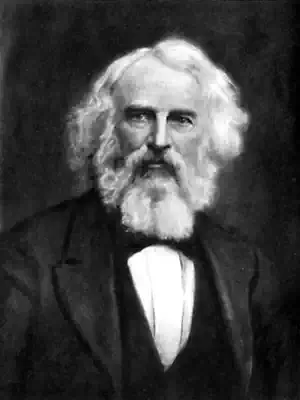
Henry Wadsworth Longfellow
Sound Of The Sea, The
Sound Of The Sea, The
The sea awoke at midnight from its sleep,
And round the pebbly beaches far and wide
I heard the first wave of the rising tide
Rush onward with uninterrupted sweep;
A voice out of the silence of the deep,
A sound mysteriously multiplied
As of a cataract from the mountain's side,
Or roar of winds upon a wooded steep.
So comes to us at times, from the unknown
And inaccessible solitudes of being,
The rushing of the sea-tides of the soul;
And inspirations, that we deem our own,
Are some divine foreshadowing and foreseeing
Of things beyond our reason or control.
The sea awoke at midnight from its sleep,
And round the pebbly beaches far and wide
I heard the first wave of the rising tide
Rush onward with uninterrupted sweep;
A voice out of the silence of the deep,
A sound mysteriously multiplied
As of a cataract from the mountain's side,
Or roar of winds upon a wooded steep.
So comes to us at times, from the unknown
And inaccessible solitudes of being,
The rushing of the sea-tides of the soul;
And inspirations, that we deem our own,
Are some divine foreshadowing and foreseeing
Of things beyond our reason or control.
321
Henry Wadsworth Longfellow
Sandalphon. (Birds Of Passage. Flight The First)
Sandalphon. (Birds Of Passage. Flight The First)
Have you read in the Talmud of old,
In the Legends the Rabbins have told
Of the limitless realms of the air,--
Have you read it,--the marvellous story
Of Sandalphon, the Angel of Glory,
Sandalphon, the Angel of Prayer?
How, erect, at the outermost gates
Of the City Celestial he waits,
With his feet on the ladder of light,
That, crowded with angels unnumbered,
By Jacob was seen, as he slumbered
Alone in the desert at night?
The Angels of Wind and of Fire
Chant only one hymn, and expire
With the song's irresistible stress;
Expire in their rapture and wonder,
As harp-strings are broken asunder
By music they throb to express.
But serene in the rapturous throng,
Unmoved by the rush of the song,
With eyes unimpassioned and slow,
Among the dead angels, the deathless
Sandalphon stands listening breathless
To sounds that ascend from below;--
From the spirits on earth that adore,
From the souls that entreat and implore
In the fervor and passion of prayer;
From the hearts that are broken with losses,
And weary with dragging the crosses
Too heavy for mortals to bear.
And he gathers the prayers as he stands,
And they change into flowers in his hands,
Into garlands of purple and red;
And beneath the great arch of the portal,
Through the streets of the City Immortal
Is wafted the fragrance they shed.
It is but a legend, I know,--
A fable, a phantom, a show,
Of the ancient Rabbinical lore;
Yet the old mediaeval tradition,
The beautiful, strange superstition,
But haunts me and holds me the more.
When I look from my window at night,
And the welkin above is all white,
All throbbing and panting with stars,
Among them majestic is standing
Sandalphon the angel, expanding
His pinions in nebulous bars.
And the legend, I feel, is a part
Of the hunger and thirst of the heart,
The frenzy and fire of the brain,
That grasps at the fruitage forbidden,
The golden pomegranates of Eden,
To quiet its fever and pain.
Have you read in the Talmud of old,
In the Legends the Rabbins have told
Of the limitless realms of the air,--
Have you read it,--the marvellous story
Of Sandalphon, the Angel of Glory,
Sandalphon, the Angel of Prayer?
How, erect, at the outermost gates
Of the City Celestial he waits,
With his feet on the ladder of light,
That, crowded with angels unnumbered,
By Jacob was seen, as he slumbered
Alone in the desert at night?
The Angels of Wind and of Fire
Chant only one hymn, and expire
With the song's irresistible stress;
Expire in their rapture and wonder,
As harp-strings are broken asunder
By music they throb to express.
But serene in the rapturous throng,
Unmoved by the rush of the song,
With eyes unimpassioned and slow,
Among the dead angels, the deathless
Sandalphon stands listening breathless
To sounds that ascend from below;--
From the spirits on earth that adore,
From the souls that entreat and implore
In the fervor and passion of prayer;
From the hearts that are broken with losses,
And weary with dragging the crosses
Too heavy for mortals to bear.
And he gathers the prayers as he stands,
And they change into flowers in his hands,
Into garlands of purple and red;
And beneath the great arch of the portal,
Through the streets of the City Immortal
Is wafted the fragrance they shed.
It is but a legend, I know,--
A fable, a phantom, a show,
Of the ancient Rabbinical lore;
Yet the old mediaeval tradition,
The beautiful, strange superstition,
But haunts me and holds me the more.
When I look from my window at night,
And the welkin above is all white,
All throbbing and panting with stars,
Among them majestic is standing
Sandalphon the angel, expanding
His pinions in nebulous bars.
And the legend, I feel, is a part
Of the hunger and thirst of the heart,
The frenzy and fire of the brain,
That grasps at the fruitage forbidden,
The golden pomegranates of Eden,
To quiet its fever and pain.
360
Henry Wadsworth Longfellow
Santa Teresa's Bookmark. (From The Spanish Of Santa Teresa)
Santa Teresa's Bookmark. (From The Spanish Of Santa Teresa)
Let nothing disturb thee,
Nothing affright thee
All things are passing;
God never changeth;
Patient endurance
Attaineth to all things;
Who God possesseth
In nothing is wanting;
Alone God sufficeth.
Let nothing disturb thee,
Nothing affright thee
All things are passing;
God never changeth;
Patient endurance
Attaineth to all things;
Who God possesseth
In nothing is wanting;
Alone God sufficeth.
253
Henry Wadsworth Longfellow
Old Age. (Sonnet IV.)
Old Age. (Sonnet IV.)
The course of my long life hath reached at last,
In fragile bark o'er a tempestuous sea,
The common harbor, where must rendered be
Account of all the actions of the past.
The impassioned phantasy, that, vague and vast,
Made art an idol and a king to me,
Was an illusion, and but vanity
Were the desires that lured me and harassed.
The dreams of love, that were so sweet of yore,
What are they now, when two deaths may be mine,--
One sure, and one forecasting its alarms?
Painting and sculpture satisfy no more
The soul now turning to the Love Divine,
That oped, to embrace us, on the cross its arms.
The course of my long life hath reached at last,
In fragile bark o'er a tempestuous sea,
The common harbor, where must rendered be
Account of all the actions of the past.
The impassioned phantasy, that, vague and vast,
Made art an idol and a king to me,
Was an illusion, and but vanity
Were the desires that lured me and harassed.
The dreams of love, that were so sweet of yore,
What are they now, when two deaths may be mine,--
One sure, and one forecasting its alarms?
Painting and sculpture satisfy no more
The soul now turning to the Love Divine,
That oped, to embrace us, on the cross its arms.
429
Henry Wadsworth Longfellow
L'Envoi
L'Envoi
Ye voices, that arose
After the Evening's close,
And whispered to my restless heart repose!
Go, breathe it in the ear
Of all who doubt and fear,
And say to them, "Be of good cheer!"
Ye sounds, so low and calm,
That in the groves of balm
Seemed to me like an angel's psalm!
Go, mingle yet once more
With the perpetual roar
Of the pine forest dark and hoar!
Tongues of the dead, not lost
But speaking from deaths frost,
Like fiery tongues at Pentecost!
Glimmer, as funeral lamps,
Amid the chills and darn ps
Of the vast plain where Death encamps!
Ye voices, that arose
After the Evening's close,
And whispered to my restless heart repose!
Go, breathe it in the ear
Of all who doubt and fear,
And say to them, "Be of good cheer!"
Ye sounds, so low and calm,
That in the groves of balm
Seemed to me like an angel's psalm!
Go, mingle yet once more
With the perpetual roar
Of the pine forest dark and hoar!
Tongues of the dead, not lost
But speaking from deaths frost,
Like fiery tongues at Pentecost!
Glimmer, as funeral lamps,
Amid the chills and darn ps
Of the vast plain where Death encamps!
319
Henry Wadsworth Longfellow
Hymn For My Brother's Ordination
Hymn For My Brother's Ordination
Christ to the young man said: 'Yet one thing more;
If thou wouldst perfect be,
Sell all thou hast and give it to the poor,
And come and follow me!'
Within this temple Christ again, unseen,
Those sacred words hath said,
And his invisible hands to-day have been
Laid on a young man's head.
And evermore beside him on his way
The unseen Christ shall move,
That he may lean upon his arm and say,
'Dost thou, dear Lord, approve?'
Beside him at the marriage feast shall be,
To make the scene more fair;
Beside him in the dark Gethsemane
Of pain and midnight prayer.
O holy trust! O endless sense of rest!
Like the beloved John
To lay his head upon the Saviour's breast,
And thus to journey on!
Christ to the young man said: 'Yet one thing more;
If thou wouldst perfect be,
Sell all thou hast and give it to the poor,
And come and follow me!'
Within this temple Christ again, unseen,
Those sacred words hath said,
And his invisible hands to-day have been
Laid on a young man's head.
And evermore beside him on his way
The unseen Christ shall move,
That he may lean upon his arm and say,
'Dost thou, dear Lord, approve?'
Beside him at the marriage feast shall be,
To make the scene more fair;
Beside him in the dark Gethsemane
Of pain and midnight prayer.
O holy trust! O endless sense of rest!
Like the beloved John
To lay his head upon the Saviour's breast,
And thus to journey on!
337
Henry Wadsworth Longfellow
Garfield
Garfield
'E venni dal martirio a questa pace.'
These words the poet heard in Paradise,
Uttered by one who, bravely dying here,
In the true faith was living in that sphere
Where the celestial cross of sacrifice
Spread its protecting arms athwart the skies;
And set thereon, like jewels crystal clear,
The souls magnanimous, that knew not fear,
Flashed their effulgence on his dazzled eyes.
Ah me! how dark the discipline of pain,
Were not the suffering followed by the sense
Of infinite rest and infinite release!
This is our consolation; and again
A great soul cries to us in our suspense,
'I came from martyrdom unto this peace!'
'E venni dal martirio a questa pace.'
These words the poet heard in Paradise,
Uttered by one who, bravely dying here,
In the true faith was living in that sphere
Where the celestial cross of sacrifice
Spread its protecting arms athwart the skies;
And set thereon, like jewels crystal clear,
The souls magnanimous, that knew not fear,
Flashed their effulgence on his dazzled eyes.
Ah me! how dark the discipline of pain,
Were not the suffering followed by the sense
Of infinite rest and infinite release!
This is our consolation; and again
A great soul cries to us in our suspense,
'I came from martyrdom unto this peace!'
362
Henry Wadsworth Longfellow
Good Part, That Shall Not Be Taken Away, The
Good Part, That Shall Not Be Taken Away, The
She dwells by Great Kenhawa's side,
In valleys green and cool;
And all her hope and all her pride
Are in the village school.
Her soul, like the transparent air
That robes the hills above,
Though not of earth, encircles there
All things with arms of love.
And thus she walks among her girls
With praise and mild rebukes;
Subduing e'en rude village churls
By her angelic looks.
She reads to them at eventide
Of One who came to save;
To cast the captive's chains aside
And liberate the slave.
And oft the blessed time foretells
When all men shall be free;
And musical, as silver bells,
Their falling chains shall be.
And following her beloved Lord,
In decent poverty,
She makes her life one sweet record
And deed of charity.
For she was rich, and gave up all
To break the iron bands
Of those who waited in her hall,
And labored in her lands.
Long since beyond the Southern Sea
Their outbound sails have sped,
While she, in meek humility,
Now earns her daily bread.
It is their prayers, which never cease,
That clothe her with such grace;
Their blessing is the light of peace
That shines upon her face.
She dwells by Great Kenhawa's side,
In valleys green and cool;
And all her hope and all her pride
Are in the village school.
Her soul, like the transparent air
That robes the hills above,
Though not of earth, encircles there
All things with arms of love.
And thus she walks among her girls
With praise and mild rebukes;
Subduing e'en rude village churls
By her angelic looks.
She reads to them at eventide
Of One who came to save;
To cast the captive's chains aside
And liberate the slave.
And oft the blessed time foretells
When all men shall be free;
And musical, as silver bells,
Their falling chains shall be.
And following her beloved Lord,
In decent poverty,
She makes her life one sweet record
And deed of charity.
For she was rich, and gave up all
To break the iron bands
Of those who waited in her hall,
And labored in her lands.
Long since beyond the Southern Sea
Their outbound sails have sped,
While she, in meek humility,
Now earns her daily bread.
It is their prayers, which never cease,
That clothe her with such grace;
Their blessing is the light of peace
That shines upon her face.
338
Henry Wadsworth Longfellow
Flower-De-Luce: Divina Commedia
Flower-De-Luce: Divina Commedia
I.
Oft have I seen at some cathedral door
A laborer, pausing in the dust and heat,
Lay down his burden, and with reverent feet
Enter, and cross himself, and on the floor
Kneel to repeat his paternoster o'er;
Far off the noises of the world retreat;
The loud vociferations of the street
Become an undistinguishable roar.
So, as I enter here from day to day,
And leave my burden at this minster gate,
Kneeling in prayer, and not ashamed to pray,
The tumult of the time disconsolate
To inarticulate murmurs dies away,
While the eternal ages watch and wait.
II.
How strange the sculptures that adorn these towers!
This crowd of statues, in whose folded sleeves
Birds build their nests; while canopied with leaves
Parvis and portal bloom like trellised bowers,
And the vast minster seems a cross of flowers!
But fiends and dragons on the gargoyled eaves
Watch the dead Christ between the living thieves,
And, underneath, the traitor Judas lowers!
Ah! from what agonies of heart and brain,
What exultations trampling on despair,
What tenderness, what tears, what hate of wrong,
What passionate outcry of a soul in pain,
Uprose this poem of the earth and air,
This medieval miracle of song!
III.
I enter, and I see thee in the gloom
Of the long aisles, O poet saturnine!
And strive to make my steps keep pace with thine.
The air is filled with some unknown perfume;
The congregation of the dead make room
For thee to pass; the votive tapers shine;
Like rooks that haunt Ravenna's groves of pine
The hovering echoes fly from tomb to tomb.
From the confessionals I hear arise
Rehearsals of forgotten tragedies,
And lamentations from the crypts below;
And then a voice celestial, that begins
With the pathetic words, 'Although your sins
As scarlet be,' and ends with 'as the snow.'
IV.
With snow-white veil and garments as of flame,
She stands before thee, who so long ago
Filled thy young heart with passion and the woe
From which thy song and all its splendors came;
And while with stern rebuke she speaks thy name,
The ice about thy heart melts as the snow
On mountain height; and in swift overflow
Comes gushing from thy lips in sobs of shame.
Thou makest full confession; and a gleam,
As of the dawn on some dark forest cast,
Seems on thy lifted forehead to increase;
Lethe and Eunoe--the remembered dream
And the forgotten sorrow--bring at last
That perfect pardon which is perfect peace.
V.
I lift mine eyes, and all the windows blaze
With forms of saints and holy men who died,
Here martyred and hereafter glorified;
And the great Rose upon its leaves displays
Christ's Triumph, and the angelic roundelays,
With splendor upon splendor multiplied;
And Beatrice again at Dante's side
No more rebukes, but smiles her words of praise.
And then the organ sounds, and unseen choirs
Sing the old Latin hymns of peace and love,
And benedictions of the Holy Ghost;
And the melodious bells among the spires
O'er all the house-tops and through heaven above
Proclaim the elevation of the Host!
VI.
O star of morning and of liberty!
O bringer of the light, whose splendor shines
Above the darkness of the Apennines,
Forerunner of the day that is to be!
The voices of the city and the sea,
The voices of the mountains and the pines,
Repeat thy song, till the familiar lines
Are footpaths for the thought of Italy!
Thy fame is blown abroad from all the heights,
Through all the nations, and a sound is heard,
As of a mighty wind, and men devout,
Strangers of Rome, and the new proselytes,
In their own language hear thy wondrous word,
And many are amazed and many doubt.
I.
Oft have I seen at some cathedral door
A laborer, pausing in the dust and heat,
Lay down his burden, and with reverent feet
Enter, and cross himself, and on the floor
Kneel to repeat his paternoster o'er;
Far off the noises of the world retreat;
The loud vociferations of the street
Become an undistinguishable roar.
So, as I enter here from day to day,
And leave my burden at this minster gate,
Kneeling in prayer, and not ashamed to pray,
The tumult of the time disconsolate
To inarticulate murmurs dies away,
While the eternal ages watch and wait.
II.
How strange the sculptures that adorn these towers!
This crowd of statues, in whose folded sleeves
Birds build their nests; while canopied with leaves
Parvis and portal bloom like trellised bowers,
And the vast minster seems a cross of flowers!
But fiends and dragons on the gargoyled eaves
Watch the dead Christ between the living thieves,
And, underneath, the traitor Judas lowers!
Ah! from what agonies of heart and brain,
What exultations trampling on despair,
What tenderness, what tears, what hate of wrong,
What passionate outcry of a soul in pain,
Uprose this poem of the earth and air,
This medieval miracle of song!
III.
I enter, and I see thee in the gloom
Of the long aisles, O poet saturnine!
And strive to make my steps keep pace with thine.
The air is filled with some unknown perfume;
The congregation of the dead make room
For thee to pass; the votive tapers shine;
Like rooks that haunt Ravenna's groves of pine
The hovering echoes fly from tomb to tomb.
From the confessionals I hear arise
Rehearsals of forgotten tragedies,
And lamentations from the crypts below;
And then a voice celestial, that begins
With the pathetic words, 'Although your sins
As scarlet be,' and ends with 'as the snow.'
IV.
With snow-white veil and garments as of flame,
She stands before thee, who so long ago
Filled thy young heart with passion and the woe
From which thy song and all its splendors came;
And while with stern rebuke she speaks thy name,
The ice about thy heart melts as the snow
On mountain height; and in swift overflow
Comes gushing from thy lips in sobs of shame.
Thou makest full confession; and a gleam,
As of the dawn on some dark forest cast,
Seems on thy lifted forehead to increase;
Lethe and Eunoe--the remembered dream
And the forgotten sorrow--bring at last
That perfect pardon which is perfect peace.
V.
I lift mine eyes, and all the windows blaze
With forms of saints and holy men who died,
Here martyred and hereafter glorified;
And the great Rose upon its leaves displays
Christ's Triumph, and the angelic roundelays,
With splendor upon splendor multiplied;
And Beatrice again at Dante's side
No more rebukes, but smiles her words of praise.
And then the organ sounds, and unseen choirs
Sing the old Latin hymns of peace and love,
And benedictions of the Holy Ghost;
And the melodious bells among the spires
O'er all the house-tops and through heaven above
Proclaim the elevation of the Host!
VI.
O star of morning and of liberty!
O bringer of the light, whose splendor shines
Above the darkness of the Apennines,
Forerunner of the day that is to be!
The voices of the city and the sea,
The voices of the mountains and the pines,
Repeat thy song, till the familiar lines
Are footpaths for the thought of Italy!
Thy fame is blown abroad from all the heights,
Through all the nations, and a sound is heard,
As of a mighty wind, and men devout,
Strangers of Rome, and the new proselytes,
In their own language hear thy wondrous word,
And many are amazed and many doubt.
274
Henry Wadsworth Longfellow
Earlier Poems : Hymn Of The Moravian Nuns Of Bethlehem
Earlier Poems : Hymn Of The Moravian Nuns Of Bethlehem
At The Consecration Of Pulaski's Banner.
When the dying flame of day
Through the chancel shot its ray,
Far the glimmering tapers shed
Faint light on the cowléd head;
And the censer burning swung,
Where, before the altar, hung
The crimson banner, that with prayer
Had been consecrated there.
And the nuns' sweet hymn was heard the while,
Sung low, in the dim, mysterious aisle.
'Take thy banner! May it wave
Proudly o'er the good and brave;
When the battle's distant wail
Breaks the sabbath of our vale.
When the clarion's music thrills
To the hearts of these lone hills,
When the spear in conflict shakes,
And the strong lance shivering breaks.
'Take thy banner! and, beneath
The battle-cloud's encircling wreath,
Guard it, till our homes are free!
Guard it! God will prosper thee!
In the dark and trying hour,
In the breaking forth of power,
In the rush of steeds and men,
His right hand will shield thee then.
'Take thy banner! But when night
Closes round the ghastly fight,
If the vanquished warrior bow,
Spare him! By our holy vow,
By our prayers and many tears,
By the mercy that endears,
Spare him! he our love hath shared!
Spare him! as thou wouldst be spared!
'Take thy banner! and if e'er
Thou shouldst press the soldier's bier,
And the muffled drum should beat
To the tread of mournful feet,
Then this crimson flag shall be
Martial cloak and shroud for thee.'
The warrior took that banner proud,
And it was his martial cloak and shroud!
At The Consecration Of Pulaski's Banner.
When the dying flame of day
Through the chancel shot its ray,
Far the glimmering tapers shed
Faint light on the cowléd head;
And the censer burning swung,
Where, before the altar, hung
The crimson banner, that with prayer
Had been consecrated there.
And the nuns' sweet hymn was heard the while,
Sung low, in the dim, mysterious aisle.
'Take thy banner! May it wave
Proudly o'er the good and brave;
When the battle's distant wail
Breaks the sabbath of our vale.
When the clarion's music thrills
To the hearts of these lone hills,
When the spear in conflict shakes,
And the strong lance shivering breaks.
'Take thy banner! and, beneath
The battle-cloud's encircling wreath,
Guard it, till our homes are free!
Guard it! God will prosper thee!
In the dark and trying hour,
In the breaking forth of power,
In the rush of steeds and men,
His right hand will shield thee then.
'Take thy banner! But when night
Closes round the ghastly fight,
If the vanquished warrior bow,
Spare him! By our holy vow,
By our prayers and many tears,
By the mercy that endears,
Spare him! he our love hath shared!
Spare him! as thou wouldst be spared!
'Take thy banner! and if e'er
Thou shouldst press the soldier's bier,
And the muffled drum should beat
To the tread of mournful feet,
Then this crimson flag shall be
Martial cloak and shroud for thee.'
The warrior took that banner proud,
And it was his martial cloak and shroud!
681
Henry Wadsworth Longfellow
Death Of Archbishop Turpin. (From The French)
Death Of Archbishop Turpin. (From The French)
The Archbishop, whom God loved in high degree,
Beheld his wounds all bleeding fresh and free;
And then his cheek more ghastly grew and wan,
And a faint shudder through his members ran.
Upon the battle-field his knee was bent;
Brave Roland saw, and to his succor went,
Straightway his helmet from his brow unlaced,
And tore the shining hauberk from his breast.
Then raising in his arms the man of God,
Gently he laid him on the verdant sod.
Rest, Sire,' he cried,--'for rest thy suffering needs.'
The priest replied, 'Think but of warlike deeds!
The field is ours; well may we boast this strife!
But death steals on,--there is no hope of life;
In paradise, where Almoners live again,
There are our couches spread, there shall we rest from pain.
Sore Roland grieved; nor marvel I, alas!
That thrice he swooned upon the thick green grass.
When he revived, with a loud voice cried he,
'O Heavenly Father! Holy Saint Marie!
Why lingers death to lay me in my grave!
Beloved France! how have the good and brave
Been torn from thee, and left thee weak and poor!'
Then thoughts of Aude, his lady-love, came o'er
His spirit, and he whispered soft and slow,
'My gentle friend!--what parting full of woe!
Never so true a liegeman shalt thou see;-Whate'er
my fate, Christ's benison on thee!
Christ, who did save from realms of woe beneath,
The Hebrew Prophets from the second death.'
Then to the Paladins, whom well he knew,
He went, and one by one unaided drew
To Turpin's side, well skilled in ghostly lore;--
No heart had he to smile, but, weeping sore,
He blessed them in God's name, with faith that He
Would soon vouchsafe to them a glad eternity.
The Archbishop, then, on whom God's benison rest,
Exhausted, bowed his head upon his breast;--
His mouth was full of dust and clotted gore,
And many a wound his swollen visage bore.
Slow beats his heart, his panting bosom heaves,
Death comes apace,--no hope of cure relieves.
Towards heaven he raised his dying hands and prayed
That God, who for our sins was mortal made,
Born of the Virgin, scorned and crucified,
In paradise would place him by His side.
Then Turpin died in service of Charlon,
In battle great and eke great orison;-'
Gainst Pagan host alway strong champion;
God grant to him His holy benison.
The Archbishop, whom God loved in high degree,
Beheld his wounds all bleeding fresh and free;
And then his cheek more ghastly grew and wan,
And a faint shudder through his members ran.
Upon the battle-field his knee was bent;
Brave Roland saw, and to his succor went,
Straightway his helmet from his brow unlaced,
And tore the shining hauberk from his breast.
Then raising in his arms the man of God,
Gently he laid him on the verdant sod.
Rest, Sire,' he cried,--'for rest thy suffering needs.'
The priest replied, 'Think but of warlike deeds!
The field is ours; well may we boast this strife!
But death steals on,--there is no hope of life;
In paradise, where Almoners live again,
There are our couches spread, there shall we rest from pain.
Sore Roland grieved; nor marvel I, alas!
That thrice he swooned upon the thick green grass.
When he revived, with a loud voice cried he,
'O Heavenly Father! Holy Saint Marie!
Why lingers death to lay me in my grave!
Beloved France! how have the good and brave
Been torn from thee, and left thee weak and poor!'
Then thoughts of Aude, his lady-love, came o'er
His spirit, and he whispered soft and slow,
'My gentle friend!--what parting full of woe!
Never so true a liegeman shalt thou see;-Whate'er
my fate, Christ's benison on thee!
Christ, who did save from realms of woe beneath,
The Hebrew Prophets from the second death.'
Then to the Paladins, whom well he knew,
He went, and one by one unaided drew
To Turpin's side, well skilled in ghostly lore;--
No heart had he to smile, but, weeping sore,
He blessed them in God's name, with faith that He
Would soon vouchsafe to them a glad eternity.
The Archbishop, then, on whom God's benison rest,
Exhausted, bowed his head upon his breast;--
His mouth was full of dust and clotted gore,
And many a wound his swollen visage bore.
Slow beats his heart, his panting bosom heaves,
Death comes apace,--no hope of cure relieves.
Towards heaven he raised his dying hands and prayed
That God, who for our sins was mortal made,
Born of the Virgin, scorned and crucified,
In paradise would place him by His side.
Then Turpin died in service of Charlon,
In battle great and eke great orison;-'
Gainst Pagan host alway strong champion;
God grant to him His holy benison.
274
Henry Wadsworth Longfellow
Dante
Dante
Tuscan, that wanderest through the realms of gloom,
With thoughtful pace, and sad, majestic eyes,
Stern thoughts and awful from thy soul arise,
Like Farinata from his fiery tomb.
Thy sacred song is like the trump of doom;
Yet in thy heart what human sympathies,
What soft compassion glows, as in the skies
The tender stars their clouded lamps relume!
Methinks I see thee stand, with pallid cheeks,
By Fra Hilario in his diocese,
As up the convent-walls, in golden streaks,
The ascending sunbeams mark the day's decrease;
And, as he asks what there the stranger seeks,
Thy voice along the cloister whispers, "Peace!"
Tuscan, that wanderest through the realms of gloom,
With thoughtful pace, and sad, majestic eyes,
Stern thoughts and awful from thy soul arise,
Like Farinata from his fiery tomb.
Thy sacred song is like the trump of doom;
Yet in thy heart what human sympathies,
What soft compassion glows, as in the skies
The tender stars their clouded lamps relume!
Methinks I see thee stand, with pallid cheeks,
By Fra Hilario in his diocese,
As up the convent-walls, in golden streaks,
The ascending sunbeams mark the day's decrease;
And, as he asks what there the stranger seeks,
Thy voice along the cloister whispers, "Peace!"
366
Henry Wadsworth Longfellow
Consolation. (To M. Duperrier, Gentleman Of Aix In Provence, On The Death Of
Consolation. (To M. Duperrier, Gentleman Of Aix In Provence, On The Death Of
His Daughter)
Will then, Duperrier, thy sorrow be eternal?
And shall the sad discourse
Whispered within thy heart, by tenderness paternal,
Only augment its force?
Thy daughter's mournful fate, into the tomb descending
By death's frequented ways,
Has it become to thee a labyrinth never ending,
Where thy lost reason strays?
I know the charms that made her youth a benediction:
Nor should I be content,
As a censorious friend, to solace thine affliction
By her disparagement.
But she was of the world, which fairest things exposes
To fates the most forlorn;
A rose, she too hath lived as long as live the roses,
The space of one brief morn.
* * * * *
Death has his rigorous laws, unparalleled, unfeeling;
All prayers to him are vain;
Cruel, he stops his ears, and, deaf to our appealing,
He leaves us to complain.
The poor man in his hut, with only thatch for cover,
Unto these laws must bend;
The sentinel that guards the barriers of the Louvre
Cannot our kings defend.
To murmur against death, in petulant defiance,
Is never for the best;
To will what God doth will, that is the only science
That gives us any rest.
His Daughter)
Will then, Duperrier, thy sorrow be eternal?
And shall the sad discourse
Whispered within thy heart, by tenderness paternal,
Only augment its force?
Thy daughter's mournful fate, into the tomb descending
By death's frequented ways,
Has it become to thee a labyrinth never ending,
Where thy lost reason strays?
I know the charms that made her youth a benediction:
Nor should I be content,
As a censorious friend, to solace thine affliction
By her disparagement.
But she was of the world, which fairest things exposes
To fates the most forlorn;
A rose, she too hath lived as long as live the roses,
The space of one brief morn.
* * * * *
Death has his rigorous laws, unparalleled, unfeeling;
All prayers to him are vain;
Cruel, he stops his ears, and, deaf to our appealing,
He leaves us to complain.
The poor man in his hut, with only thatch for cover,
Unto these laws must bend;
The sentinel that guards the barriers of the Louvre
Cannot our kings defend.
To murmur against death, in petulant defiance,
Is never for the best;
To will what God doth will, that is the only science
That gives us any rest.
276
Henry Wadsworth Longfellow
Childhood. (From The Danish)
Childhood. (From The Danish)
There was a time when I was very small,
When my whole frame was but an ell in height;
Sweetly, as I recall it, tears do fall,
And therefore I recall it with delight.
I sported in my tender mother's arms,
And rode a-horseback on best father's knee;
Alike were sorrows, passions and alarms,
And gold, and Greek, and love, unknown to me,
Then seemed to me this world far less in size,
Likewise it seemed to me less wicked far;
Like points in heaven, I saw the stars arise,
And longed for wings that I might catch a star.
I saw the moon behind the island fade,
And thought, 'Oh, were I on that island there,
I could find out of what the moon is made,
Find out how large it is, how round, how fair!'
Wondering, I saw God's sun, through western skies,
Sink in the ocean's golden lap at night,
And yet upon the morrow early rise,
And paint the eastern heaven with crimson light;
And thought of God, the gracious Heavenly Father,
Who made me, and that lovely sun on high,
And all those pearls of heaven thick-strung together,
Dropped, clustering, from his hand o'er all the sky.
With childish reverence, my young lips did say
The prayer my pious mother taught to me:
'O gentle God! oh, let me strive alway
Still to be wise, and good, and follow Thee!'
So prayed I for my father and my mother,
And for my sister, and for all the town;
The king I knew not, and the beggar-brother,
Who, bent with age, went, sighing, up and down.
They perished, the blithe days of boyhood perished,
And all the gladness, all the peace I knew!
Now have I but their memory, fondly cherished;--
God! may I never lose that too!
There was a time when I was very small,
When my whole frame was but an ell in height;
Sweetly, as I recall it, tears do fall,
And therefore I recall it with delight.
I sported in my tender mother's arms,
And rode a-horseback on best father's knee;
Alike were sorrows, passions and alarms,
And gold, and Greek, and love, unknown to me,
Then seemed to me this world far less in size,
Likewise it seemed to me less wicked far;
Like points in heaven, I saw the stars arise,
And longed for wings that I might catch a star.
I saw the moon behind the island fade,
And thought, 'Oh, were I on that island there,
I could find out of what the moon is made,
Find out how large it is, how round, how fair!'
Wondering, I saw God's sun, through western skies,
Sink in the ocean's golden lap at night,
And yet upon the morrow early rise,
And paint the eastern heaven with crimson light;
And thought of God, the gracious Heavenly Father,
Who made me, and that lovely sun on high,
And all those pearls of heaven thick-strung together,
Dropped, clustering, from his hand o'er all the sky.
With childish reverence, my young lips did say
The prayer my pious mother taught to me:
'O gentle God! oh, let me strive alway
Still to be wise, and good, and follow Thee!'
So prayed I for my father and my mother,
And for my sister, and for all the town;
The king I knew not, and the beggar-brother,
Who, bent with age, went, sighing, up and down.
They perished, the blithe days of boyhood perished,
And all the gladness, all the peace I knew!
Now have I but their memory, fondly cherished;--
God! may I never lose that too!
385
Henry Wadsworth Longfellow
Cantos From Dante's Paradiso
Cantos From Dante's Paradiso
(Canto XXIII.)
Even as a bird, 'mid the beloved leaves,
Quiet upon the nest of her sweet brood
Throughout the night, that hideth all things from us,
Who, that she may behold their longed-for looks
And find the nourishment wherewith to feed them,
In which, to her, grave labors grateful are,
Anticipates the time on open spray
And with an ardent longing waits the sun,
Gazing intent, as soon as breaks the dawn:
Even thus my Lady standing was, erect
And vigilant, turned round towards the zone
Underneath which the sun displays least haste;
So that beholding her distraught and eager,
Such I became as he is, who desiring
For something yearns, and hoping is appeased.
But brief the space from one When to the other;
From my awaiting, say I, to the seeing
The welkin grow resplendent more and more.
And Beatrice exclaimed: 'Behold the hosts
Of the triumphant Christ, and all the fruit
Harvested by the rolling of these spheres!'
It seemed to me her face was all on flame;
And eyes she had so full of ecstasy
That I must needs pass on without describing.
As when in nights serene of the full moon
Smiles Trivia among the nymphs eternal
Who paint the heaven through all its hollow cope,
Saw I, above the myriads of lamps,
A sun that one and all of them enkindled,
E'en as our own does the supernal stars.
And through the living light transparent shone
The lucent substance so intensely clear
Into my sight, that I could not sustain it.
O Beatrice, my gentle guide and dear!
She said to me: 'That which o'ermasters thee
A virtue is which no one can resist.
There are the wisdom and omnipotence
That oped the thoroughfares 'twixt heaven and earth,
For which there erst had been so long a yearning.'
As fire from out a cloud itself discharges,
Dilating so it finds not room therein,
And down, against its nature, falls to earth,
So did my mind, among those aliments
Becoming larger, issue from itself,
And what became of it cannot remember.
'Open thine eyes, and look at what I am:
Thou hast beheld such things, that strong enough
Hast thou become to tolerate my smile.'
I was as one who still retains the feeling
Of a forgotten dream, and who endeavors
In vain to bring it back into his mind,
When I this invitation heard, deserving
Of so much gratitude, it never fades
Out of the book that chronicles the past.
It at this moment sounded all the tongues
That Polyhymnia and her sisters made
Most lubrical with their delicious milk,
To aid me, to a thousandth of the truth
It would not reach, singing the holy smile,
And how the holy aspect it illumed.
And therefore, representing Paradise,
The sacred poem must perforce leap over,
Even as a man who finds his way cut off.
But whoso thinketh of the ponderous theme,
And of the mortal shoulder that sustains it,
Should blame it not, if under this it trembles.
It is no passage for a little boat
This which goes cleaving the audacious prow,
Nor for a pilot who would spare himself.
'Why does my face so much enamor thee,
That to the garden fair thou turnest not,
Which under the rays of Christ is blossoming?
There is the rose in which the Word Divine
Became incarnate; there the lilies are
By whose perfume the good way was selected.'
Thus Beatrice; and I, who to her counsels
Was wholly ready, once again betook me
Unto the battle of the feeble brows.
As in a sunbeam, that unbroken passes
Through fractured cloud, ere now a meadow of flowers
Mine eyes with shadow covered have beheld,
So I beheld the multitudinous splendors
Refulgent from above with burning rays,
Beholding not the source of the effulgence.
O thou benignant power that so imprint'st them!
Thou didst exalt thyself to give more scope
There to the eyes, that were not strong enough.
The name of that fair flower I e'er invoke
Morning and evening utterly enthralled
My soul to gaze upon the greater fire.
And when in both mine eyes depicted were
The glory and greatness of the living star
Which conquers there, and here below it conquered,
Athwart the heavens descended a bright sheen
Formed in a circle like a coronal,
And cinctured it, and whirled itself about it.
Whatever melody most sweetly soundeth
On earth, and to itself most draws the soul,
Would seem a cloud that, rent asunder, thunders,
Compared unto the sounding of that lyre
Wherewith was crowned the sapphire beautiful,
Which gives the clearest heaven its sapphire hue.
'I am Angelic Love, that circle round
The joy sublime which breathes from out the bosom
That was the hostelry of our Desire;
And I shall circle, Lady of Heaven, while
Thou followest thy Son, and mak'st diviner
The sphere supreme, because thou enterest it.'
Thus did the circulated melody
Seal itself up; and all the other lights
Were making resonant the name of Mary.
The regal mantle of the volumes all
Of that world, which most fervid is and living
With breath of God and with his works and ways,
Extended over us its inner curve,
So very distant, that its outward show,
There where I was, not yet appeared to me.
Therefore mine eyes did not possess the power
Of following the incoronated flame,
Which had ascended near to its own seed.
And as a little child, that toward its mother
Extends its arms, when it the milk has taken,
Through impulse kindled into outward flame,
Each of those gleams of white did upward stretch
So with its summit, that the deep affection
They had for Mary was revealed to me.
Thereafter they remained there in my sight,
Regina coeli singing with such sweetness,
That ne'er from me has the delight departed.
Oh, what exuberance is garnered up
In those resplendent coffers, which had been
For sowing here below good husbandmen!
There they enjoy and live upon the treasure
Which was acquired while weeping in the exile
Of Babylon, wherein the gold was left.
There triumpheth beneath the exalted Son
Of God and Mary, in his victory,
Both with the ancient council and the new,
He who doth keep the keys of such a glory.
(Canto XXIV.)
'O company elect to the great supper
Of the Lamb benedight, who feedeth you
So that for ever full is your desire,
If by the grace of God this man foretaste
Something of that which falleth from your table,
Or ever death prescribe to him the time,
Direct your mind to his immense desire,
And him somewhat bedew; ye drinking are
For ever at the fount whence comes his thought.'
Thus Beatrice; and those souls beatified
Transformed themselves to spheres on steadfast poles,
Flaming intensely in the guise of comets.
And as the wheels in works of horologes
Revolve so that the first to the beholder
Motionless seems, and the last one to fly,
So in like manner did those carols, dancing
In different measure, of their affluence
Give me the gauge, as they were swift or slow.
From that one which I noted of most beauty
Beheld I issue forth a fire so happy
That none it left there of a greater brightness;
And around Beatrice three several times
It whirled itself with so divine a song,
My fantasy repeats it not to me;
Therefore the pen skips, and I write it not,
Since our imagination for such folds,
Much more our speech, is of a tint too glaring.
'O holy sister mine, who us implorest
With such devotion, by thine ardent love
Thou dost unbind me from that beautiful sphere!'
Thereafter, having stopped, the blessed fire
Unto my Lady did direct its breath,
Which spake in fashion as I here have said.
And she: 'O light eterne of the great man
To whom our Lord delivered up the keys
He carried down of this miraculous joy,
This one examine on points light and grave,
As good beseemeth thee, about the Faith
By means of which thou on the sea didst walk.
If he love well, and hope well, and believe,
From thee 'tis hid not; for thou hast thy sight
There where depicted everything is seen.
But since this kingdom has made citizens
By means of the true Faith, to glorify it
'Tis well he have the chance to speak thereof.'
As baccalaureate arms himself, and speaks not
Until the master doth propose the question,
To argue it, and not to terminate it,
So did I arm myself with every reason,
While she was speaking, that I might be ready
For such a questioner and such profession.
'Say, thou good Christian; manifest thyself;
What is the Faith?' Whereat I raised my brow
Unto that light wherefrom was this breathed forth.
Then turned I round to Beatrice, and she
Prompt signals made to me that I should pour
The water forth from my internal fountain.
'May grace, that suffers me to make confession,'
Began I, 'to the great centurion,
Cause my conceptions all to be explicit!'
And I continued: 'As the truthful pen,
Father, of thy dear brother wrote of it,
Who put with thee Rome into the good way,
Faith is the substance of the things we hope for,
And evidence of those that are not seen;
And this appears to me its quiddity.'
Then heard I: 'Very rightly thou perceivest,
If well thou understandest why he placed it
With substances and then with evidences.'
And I thereafterward: 'The things profound,
That here vouchsafe to me their apparition,
Unto all eyes below are so concealed,
That they exist there only in belief,
Upon the which is founded the high hope,
And hence it takes the nature of a substance.
And it behoveth us from this belief
To reason without having other sight,
And hence it has the nature of evidence.'
Then heard I: 'If whatever is acquired
Below by doctrine were thus understood,
No sophist's subtlety would there find place.'
Thus was breathed forth from that enkindled love;
Then added: 'Very well has been gone over
Already of this coin the alloy and weight;
But tell me if thou hast it in thy purse?'
And I: 'Yes, both so shining and so round
That in its stamp there is no peradventure.'
Thereafter issued from the light profound
That there resplendent was: 'This precious jewel,
Upon the which is every virtue founded,
Whence hadst thou it?' And I: 'The large outpouring
Of Holy Spirit, which has been diffused
Upon the ancient parchments and the new,
A syllogism is, which proved it to me
With such acuteness, that, compared therewith,
All demonstration seems to me obtuse.'
And then I heard: 'The ancient and the new
Postulates, that to thee are so conclusive,
Why dost thou take them for the word divine?'
And I: 'The proofs, which show the truth to me,
Are the works subsequent, whereunto Nature
Ne'er heated iron yet, nor anvil beat.'
'Twas answered me: 'Say, who assureth thee
That those works ever were? the thing itself
That must be proved, nought else to thee affirms it.'
'Were the world to Christianity converted,'
I said, 'withouten miracles, this one
Is such, the rest are not its hundredth part;
Because that poor and fasting thou didst enter
Into the field to sow there the good plant,
Which was a vine and has become a thorn!'
This being finished, the high, holy Court
Resounded through the spheres, 'One God we praise!'
In melody that there above is chanted.
And then that Baron, who from branch to branch,
Examining, had thus conducted me,
Till the extremest leaves we were approaching,
Again began: 'The Grace that dallying
Plays with thine intellect thy mouth has opened,
Up to this point, as it should opened be,
So that I do approve what forth emerged;
But now thou must express what thou believest,
And whence to thy belief it was presented.'
'O holy father, spirit who beholdest
What thou believedst so that thou o'ercamest,
Towards the sepulchre, more youthful feet,'
Began I, 'thou dost wish me in this place
The form to manifest of my prompt belief,
And likewise thou the cause thereof demandest.
And I respond: In one God I believe,
Sole and eterne, who moveth all the heavens
With love and with desire, himself unmoved;
And of such faith not only have I proofs
Physical and metaphysical, but gives them
Likewise the truth that from this place rains down
Through Moses, through the Prophets and the Psalms,
Through the Evangel, and through you, who wrote
After the fiery Spirit sanctified you;
In Persons three eterne believe, and these
One essence I believe, so one and trine
They bear conjunction both with 'sunt' and 'est.'
With the profound condition and divine
Which now I touch upon, doth stamp my mind
Ofttimes the doctrine evangelical.
This the beginning is, this is the spark
Which afterwards dilates to vivid flame,
And, like a star in heaven, is sparkling in me.'
Even as a lord who hears what pleaseth him
His servant straight embraces, gratulating
For the good news as soon as he is silent;
So, giving me its benediction, singing,
Three times encircled me, when I was silent,
The apostolic light, at whose command
I spoken had, in speaking I so pleased him.
(Canto XXV.)
If e'er it happen that the Poem Sacred,
To which both heaven and earth have set their hand,
So that it many a year hath made me lean,
O'ercome the cruelty that bars me out
From the fair sheepfold, where a lamb I slumbered,
An enemy to the wolves that war upon it,
With other voice forthwith, with other fleece
Poet will I return, and at my font
Baptismal will I take the laurel crown;
Because into the Faith that maketh known
All souls to God there entered I, and then
Peter for her sake thus my brow encircled.
Thereafterward towards us moved a light
Out of that band whence issued the first-fruits
Which of his vicars Christ behind him left,
And then my Lady, full of ecstasy,
Said unto me: 'Look, look! behold the Baron
For whom below Galicia is frequented.'
In the same way as, when a dove alights
Near his companion, both of them pour forth,
Circling about and murmuring, their affection,
So one beheld I by the other grand
Prince glorified to be with welcome greeted,
Lauding the food that there above is eaten.
But when their gratulations were complete,
Silently 'coram me' each one stood still,
So incandescent it o'ercame my sight.
Smiling thereafterwards, said Beatrice:
'Illustrious life, by whom the benefactions
Of our Basilica have been described,
Make Hope resound within this altitude;
Thou knowest as oft thou dost personify it
As Jesus to the three gave greater clearness.'-'
Lift up thy head, and make thyself assured;
For what comes hither from the mortal world
Must needs be ripened in our radiance.'
This comfort came to me from the second fire;
Wherefore mine eyes I lifted to the hills,
Which bent them down before with too great weight.
'Since, through his grace, our Emperor wills that thou
Shouldst find thee face to face, before thy death,
In the most secret chamber, with his Counts,
So that, the truth beholden of this court,
Hope, which below there rightfully enamours,
Thereby thou strengthen in thyself and others,
Say what it is, and how is flowering with it
Thy mind, and say from whence it came to thee.'
Thus did the second light again continue.
And the Compassionate, who piloted
The plumage of my wings in such high flight,
Did in reply anticipate me thus:
'No child whatever the Church Militant
Of greater hope possesses, as is written
In that Sun which irradiates all our band;
Therefore it is conceded him from Egypt
To come into Jerusalem to see,
Or ever yet his warfare be completed.
The two remaining points, that not for knowledge
Have been demanded, but that he report
How much this virtue unto thee is pleasing,
To him I leave; for hard he will not find them,
Nor of self-praise; and let him answer them;
And may the grace of God in this assist him!'
As a disciple, who his teacher follows,
Ready and willing, where he is expert,
That his proficiency may be displayed,
'Hope,' said I, 'is the certain expectation
Of future glory, which is the effect
Of grace divine and merit precedent.
From many stars this light comes unto me;
But he instilled it first into my heart
Who was chief singer unto the chief captain.
'
Sperent in te
,' in the high Theody
He sayeth, 'those who know thy name;' and who
Knoweth it not, if he my faith possess?
Thou didst instil me, then, with his instilling
In the Epistle, so that I am full,
And upon others rain again your rain.'
While I was speaking, in the living bosom
Of that combustion quivered an effulgence,
Sudden and frequent, in the guise of lightning;
Then breathed: 'The love wherewith I am inflamed
Towards the virtue still which followed me
Unto the palm and issue of the field,
Wills that I breathe to thee that thou delight
In her; and grateful to me is thy telling
Whatever things Hope promises to thee.'
And I: 'The ancient Scriptures and the new
The mark establish, and this shows it me,
Of all the souls whom God hath made his friends.
Isaiah saith, that each one garmented
In his own land shall be with twofold garments,
And his own land is this delightful life.
Thy brother, too, far more explicitly,
There where he treateth of the robes of white,
This revelation manifests to us.'
And first, and near the ending of these words,
'
Sperent in te
' from over us was heard,
To which responsive answered all the carols.
Thereafterward a light among them brightened,
So that, if Cancer one such crystal had,
Winter would have a month of one sole day.
And as uprises, goes, and enters the dance
A winsome maiden, only to do honour
To the new bride, and not from any failing,
Even thus did I behold the brightened splendour
Approach the two, who in a wheel revolved
As was beseeming to their ardent love.
Into the song and music there it entered;
And fixed on them my Lady kept her look,
Even as a bride silent and motionless.
'This is the one who lay upon the breast
Of him our Pelican; and this is he
To the great office from the cross elected.'
My Lady thus; but therefore none the more
Did move her sight from its attentive gaze
Before or afterward these words of hers.
Even as a man who gazes, and endeavours
To see the eclipsing of the sun a little,
And who, by seeing, sightless doth become,
So I became before that latest fire,
While it was said, 'Why dost thou daze thyself
To see a thing which here hath no existence?
Earth in the earth my body is, and shall be
With all the others there, until our number
With the eternal proposition tallies.
With the two garments in the blessed cloister
Are the two lights alone that have ascended:
And this shalt thou take back into your world.'
And at this utterance the flaming circle
Grew quiet, with the dulcet intermingling
Of sound that by the trinal breath was made,
As to escape from danger or fatigue
The oars that erst were in the water beaten
Are all suspended at a whistle's sound.
Ah, how much in my mind was I disturbed,
When I turned round to look on Beatrice,
That her I could not see, although I was
Close at her side and in the Happy World!
(Canto XXIII.)
Even as a bird, 'mid the beloved leaves,
Quiet upon the nest of her sweet brood
Throughout the night, that hideth all things from us,
Who, that she may behold their longed-for looks
And find the nourishment wherewith to feed them,
In which, to her, grave labors grateful are,
Anticipates the time on open spray
And with an ardent longing waits the sun,
Gazing intent, as soon as breaks the dawn:
Even thus my Lady standing was, erect
And vigilant, turned round towards the zone
Underneath which the sun displays least haste;
So that beholding her distraught and eager,
Such I became as he is, who desiring
For something yearns, and hoping is appeased.
But brief the space from one When to the other;
From my awaiting, say I, to the seeing
The welkin grow resplendent more and more.
And Beatrice exclaimed: 'Behold the hosts
Of the triumphant Christ, and all the fruit
Harvested by the rolling of these spheres!'
It seemed to me her face was all on flame;
And eyes she had so full of ecstasy
That I must needs pass on without describing.
As when in nights serene of the full moon
Smiles Trivia among the nymphs eternal
Who paint the heaven through all its hollow cope,
Saw I, above the myriads of lamps,
A sun that one and all of them enkindled,
E'en as our own does the supernal stars.
And through the living light transparent shone
The lucent substance so intensely clear
Into my sight, that I could not sustain it.
O Beatrice, my gentle guide and dear!
She said to me: 'That which o'ermasters thee
A virtue is which no one can resist.
There are the wisdom and omnipotence
That oped the thoroughfares 'twixt heaven and earth,
For which there erst had been so long a yearning.'
As fire from out a cloud itself discharges,
Dilating so it finds not room therein,
And down, against its nature, falls to earth,
So did my mind, among those aliments
Becoming larger, issue from itself,
And what became of it cannot remember.
'Open thine eyes, and look at what I am:
Thou hast beheld such things, that strong enough
Hast thou become to tolerate my smile.'
I was as one who still retains the feeling
Of a forgotten dream, and who endeavors
In vain to bring it back into his mind,
When I this invitation heard, deserving
Of so much gratitude, it never fades
Out of the book that chronicles the past.
It at this moment sounded all the tongues
That Polyhymnia and her sisters made
Most lubrical with their delicious milk,
To aid me, to a thousandth of the truth
It would not reach, singing the holy smile,
And how the holy aspect it illumed.
And therefore, representing Paradise,
The sacred poem must perforce leap over,
Even as a man who finds his way cut off.
But whoso thinketh of the ponderous theme,
And of the mortal shoulder that sustains it,
Should blame it not, if under this it trembles.
It is no passage for a little boat
This which goes cleaving the audacious prow,
Nor for a pilot who would spare himself.
'Why does my face so much enamor thee,
That to the garden fair thou turnest not,
Which under the rays of Christ is blossoming?
There is the rose in which the Word Divine
Became incarnate; there the lilies are
By whose perfume the good way was selected.'
Thus Beatrice; and I, who to her counsels
Was wholly ready, once again betook me
Unto the battle of the feeble brows.
As in a sunbeam, that unbroken passes
Through fractured cloud, ere now a meadow of flowers
Mine eyes with shadow covered have beheld,
So I beheld the multitudinous splendors
Refulgent from above with burning rays,
Beholding not the source of the effulgence.
O thou benignant power that so imprint'st them!
Thou didst exalt thyself to give more scope
There to the eyes, that were not strong enough.
The name of that fair flower I e'er invoke
Morning and evening utterly enthralled
My soul to gaze upon the greater fire.
And when in both mine eyes depicted were
The glory and greatness of the living star
Which conquers there, and here below it conquered,
Athwart the heavens descended a bright sheen
Formed in a circle like a coronal,
And cinctured it, and whirled itself about it.
Whatever melody most sweetly soundeth
On earth, and to itself most draws the soul,
Would seem a cloud that, rent asunder, thunders,
Compared unto the sounding of that lyre
Wherewith was crowned the sapphire beautiful,
Which gives the clearest heaven its sapphire hue.
'I am Angelic Love, that circle round
The joy sublime which breathes from out the bosom
That was the hostelry of our Desire;
And I shall circle, Lady of Heaven, while
Thou followest thy Son, and mak'st diviner
The sphere supreme, because thou enterest it.'
Thus did the circulated melody
Seal itself up; and all the other lights
Were making resonant the name of Mary.
The regal mantle of the volumes all
Of that world, which most fervid is and living
With breath of God and with his works and ways,
Extended over us its inner curve,
So very distant, that its outward show,
There where I was, not yet appeared to me.
Therefore mine eyes did not possess the power
Of following the incoronated flame,
Which had ascended near to its own seed.
And as a little child, that toward its mother
Extends its arms, when it the milk has taken,
Through impulse kindled into outward flame,
Each of those gleams of white did upward stretch
So with its summit, that the deep affection
They had for Mary was revealed to me.
Thereafter they remained there in my sight,
Regina coeli singing with such sweetness,
That ne'er from me has the delight departed.
Oh, what exuberance is garnered up
In those resplendent coffers, which had been
For sowing here below good husbandmen!
There they enjoy and live upon the treasure
Which was acquired while weeping in the exile
Of Babylon, wherein the gold was left.
There triumpheth beneath the exalted Son
Of God and Mary, in his victory,
Both with the ancient council and the new,
He who doth keep the keys of such a glory.
(Canto XXIV.)
'O company elect to the great supper
Of the Lamb benedight, who feedeth you
So that for ever full is your desire,
If by the grace of God this man foretaste
Something of that which falleth from your table,
Or ever death prescribe to him the time,
Direct your mind to his immense desire,
And him somewhat bedew; ye drinking are
For ever at the fount whence comes his thought.'
Thus Beatrice; and those souls beatified
Transformed themselves to spheres on steadfast poles,
Flaming intensely in the guise of comets.
And as the wheels in works of horologes
Revolve so that the first to the beholder
Motionless seems, and the last one to fly,
So in like manner did those carols, dancing
In different measure, of their affluence
Give me the gauge, as they were swift or slow.
From that one which I noted of most beauty
Beheld I issue forth a fire so happy
That none it left there of a greater brightness;
And around Beatrice three several times
It whirled itself with so divine a song,
My fantasy repeats it not to me;
Therefore the pen skips, and I write it not,
Since our imagination for such folds,
Much more our speech, is of a tint too glaring.
'O holy sister mine, who us implorest
With such devotion, by thine ardent love
Thou dost unbind me from that beautiful sphere!'
Thereafter, having stopped, the blessed fire
Unto my Lady did direct its breath,
Which spake in fashion as I here have said.
And she: 'O light eterne of the great man
To whom our Lord delivered up the keys
He carried down of this miraculous joy,
This one examine on points light and grave,
As good beseemeth thee, about the Faith
By means of which thou on the sea didst walk.
If he love well, and hope well, and believe,
From thee 'tis hid not; for thou hast thy sight
There where depicted everything is seen.
But since this kingdom has made citizens
By means of the true Faith, to glorify it
'Tis well he have the chance to speak thereof.'
As baccalaureate arms himself, and speaks not
Until the master doth propose the question,
To argue it, and not to terminate it,
So did I arm myself with every reason,
While she was speaking, that I might be ready
For such a questioner and such profession.
'Say, thou good Christian; manifest thyself;
What is the Faith?' Whereat I raised my brow
Unto that light wherefrom was this breathed forth.
Then turned I round to Beatrice, and she
Prompt signals made to me that I should pour
The water forth from my internal fountain.
'May grace, that suffers me to make confession,'
Began I, 'to the great centurion,
Cause my conceptions all to be explicit!'
And I continued: 'As the truthful pen,
Father, of thy dear brother wrote of it,
Who put with thee Rome into the good way,
Faith is the substance of the things we hope for,
And evidence of those that are not seen;
And this appears to me its quiddity.'
Then heard I: 'Very rightly thou perceivest,
If well thou understandest why he placed it
With substances and then with evidences.'
And I thereafterward: 'The things profound,
That here vouchsafe to me their apparition,
Unto all eyes below are so concealed,
That they exist there only in belief,
Upon the which is founded the high hope,
And hence it takes the nature of a substance.
And it behoveth us from this belief
To reason without having other sight,
And hence it has the nature of evidence.'
Then heard I: 'If whatever is acquired
Below by doctrine were thus understood,
No sophist's subtlety would there find place.'
Thus was breathed forth from that enkindled love;
Then added: 'Very well has been gone over
Already of this coin the alloy and weight;
But tell me if thou hast it in thy purse?'
And I: 'Yes, both so shining and so round
That in its stamp there is no peradventure.'
Thereafter issued from the light profound
That there resplendent was: 'This precious jewel,
Upon the which is every virtue founded,
Whence hadst thou it?' And I: 'The large outpouring
Of Holy Spirit, which has been diffused
Upon the ancient parchments and the new,
A syllogism is, which proved it to me
With such acuteness, that, compared therewith,
All demonstration seems to me obtuse.'
And then I heard: 'The ancient and the new
Postulates, that to thee are so conclusive,
Why dost thou take them for the word divine?'
And I: 'The proofs, which show the truth to me,
Are the works subsequent, whereunto Nature
Ne'er heated iron yet, nor anvil beat.'
'Twas answered me: 'Say, who assureth thee
That those works ever were? the thing itself
That must be proved, nought else to thee affirms it.'
'Were the world to Christianity converted,'
I said, 'withouten miracles, this one
Is such, the rest are not its hundredth part;
Because that poor and fasting thou didst enter
Into the field to sow there the good plant,
Which was a vine and has become a thorn!'
This being finished, the high, holy Court
Resounded through the spheres, 'One God we praise!'
In melody that there above is chanted.
And then that Baron, who from branch to branch,
Examining, had thus conducted me,
Till the extremest leaves we were approaching,
Again began: 'The Grace that dallying
Plays with thine intellect thy mouth has opened,
Up to this point, as it should opened be,
So that I do approve what forth emerged;
But now thou must express what thou believest,
And whence to thy belief it was presented.'
'O holy father, spirit who beholdest
What thou believedst so that thou o'ercamest,
Towards the sepulchre, more youthful feet,'
Began I, 'thou dost wish me in this place
The form to manifest of my prompt belief,
And likewise thou the cause thereof demandest.
And I respond: In one God I believe,
Sole and eterne, who moveth all the heavens
With love and with desire, himself unmoved;
And of such faith not only have I proofs
Physical and metaphysical, but gives them
Likewise the truth that from this place rains down
Through Moses, through the Prophets and the Psalms,
Through the Evangel, and through you, who wrote
After the fiery Spirit sanctified you;
In Persons three eterne believe, and these
One essence I believe, so one and trine
They bear conjunction both with 'sunt' and 'est.'
With the profound condition and divine
Which now I touch upon, doth stamp my mind
Ofttimes the doctrine evangelical.
This the beginning is, this is the spark
Which afterwards dilates to vivid flame,
And, like a star in heaven, is sparkling in me.'
Even as a lord who hears what pleaseth him
His servant straight embraces, gratulating
For the good news as soon as he is silent;
So, giving me its benediction, singing,
Three times encircled me, when I was silent,
The apostolic light, at whose command
I spoken had, in speaking I so pleased him.
(Canto XXV.)
If e'er it happen that the Poem Sacred,
To which both heaven and earth have set their hand,
So that it many a year hath made me lean,
O'ercome the cruelty that bars me out
From the fair sheepfold, where a lamb I slumbered,
An enemy to the wolves that war upon it,
With other voice forthwith, with other fleece
Poet will I return, and at my font
Baptismal will I take the laurel crown;
Because into the Faith that maketh known
All souls to God there entered I, and then
Peter for her sake thus my brow encircled.
Thereafterward towards us moved a light
Out of that band whence issued the first-fruits
Which of his vicars Christ behind him left,
And then my Lady, full of ecstasy,
Said unto me: 'Look, look! behold the Baron
For whom below Galicia is frequented.'
In the same way as, when a dove alights
Near his companion, both of them pour forth,
Circling about and murmuring, their affection,
So one beheld I by the other grand
Prince glorified to be with welcome greeted,
Lauding the food that there above is eaten.
But when their gratulations were complete,
Silently 'coram me' each one stood still,
So incandescent it o'ercame my sight.
Smiling thereafterwards, said Beatrice:
'Illustrious life, by whom the benefactions
Of our Basilica have been described,
Make Hope resound within this altitude;
Thou knowest as oft thou dost personify it
As Jesus to the three gave greater clearness.'-'
Lift up thy head, and make thyself assured;
For what comes hither from the mortal world
Must needs be ripened in our radiance.'
This comfort came to me from the second fire;
Wherefore mine eyes I lifted to the hills,
Which bent them down before with too great weight.
'Since, through his grace, our Emperor wills that thou
Shouldst find thee face to face, before thy death,
In the most secret chamber, with his Counts,
So that, the truth beholden of this court,
Hope, which below there rightfully enamours,
Thereby thou strengthen in thyself and others,
Say what it is, and how is flowering with it
Thy mind, and say from whence it came to thee.'
Thus did the second light again continue.
And the Compassionate, who piloted
The plumage of my wings in such high flight,
Did in reply anticipate me thus:
'No child whatever the Church Militant
Of greater hope possesses, as is written
In that Sun which irradiates all our band;
Therefore it is conceded him from Egypt
To come into Jerusalem to see,
Or ever yet his warfare be completed.
The two remaining points, that not for knowledge
Have been demanded, but that he report
How much this virtue unto thee is pleasing,
To him I leave; for hard he will not find them,
Nor of self-praise; and let him answer them;
And may the grace of God in this assist him!'
As a disciple, who his teacher follows,
Ready and willing, where he is expert,
That his proficiency may be displayed,
'Hope,' said I, 'is the certain expectation
Of future glory, which is the effect
Of grace divine and merit precedent.
From many stars this light comes unto me;
But he instilled it first into my heart
Who was chief singer unto the chief captain.
'
Sperent in te
,' in the high Theody
He sayeth, 'those who know thy name;' and who
Knoweth it not, if he my faith possess?
Thou didst instil me, then, with his instilling
In the Epistle, so that I am full,
And upon others rain again your rain.'
While I was speaking, in the living bosom
Of that combustion quivered an effulgence,
Sudden and frequent, in the guise of lightning;
Then breathed: 'The love wherewith I am inflamed
Towards the virtue still which followed me
Unto the palm and issue of the field,
Wills that I breathe to thee that thou delight
In her; and grateful to me is thy telling
Whatever things Hope promises to thee.'
And I: 'The ancient Scriptures and the new
The mark establish, and this shows it me,
Of all the souls whom God hath made his friends.
Isaiah saith, that each one garmented
In his own land shall be with twofold garments,
And his own land is this delightful life.
Thy brother, too, far more explicitly,
There where he treateth of the robes of white,
This revelation manifests to us.'
And first, and near the ending of these words,
'
Sperent in te
' from over us was heard,
To which responsive answered all the carols.
Thereafterward a light among them brightened,
So that, if Cancer one such crystal had,
Winter would have a month of one sole day.
And as uprises, goes, and enters the dance
A winsome maiden, only to do honour
To the new bride, and not from any failing,
Even thus did I behold the brightened splendour
Approach the two, who in a wheel revolved
As was beseeming to their ardent love.
Into the song and music there it entered;
And fixed on them my Lady kept her look,
Even as a bride silent and motionless.
'This is the one who lay upon the breast
Of him our Pelican; and this is he
To the great office from the cross elected.'
My Lady thus; but therefore none the more
Did move her sight from its attentive gaze
Before or afterward these words of hers.
Even as a man who gazes, and endeavours
To see the eclipsing of the sun a little,
And who, by seeing, sightless doth become,
So I became before that latest fire,
While it was said, 'Why dost thou daze thyself
To see a thing which here hath no existence?
Earth in the earth my body is, and shall be
With all the others there, until our number
With the eternal proposition tallies.
With the two garments in the blessed cloister
Are the two lights alone that have ascended:
And this shalt thou take back into your world.'
And at this utterance the flaming circle
Grew quiet, with the dulcet intermingling
Of sound that by the trinal breath was made,
As to escape from danger or fatigue
The oars that erst were in the water beaten
Are all suspended at a whistle's sound.
Ah, how much in my mind was I disturbed,
When I turned round to look on Beatrice,
That her I could not see, although I was
Close at her side and in the Happy World!
377
Henry Wadsworth Longfellow
By The Seaside : The Lighthouse
By The Seaside : The Lighthouse
The rocky ledge runs far into the sea,
And on its outer point, some miles away,
The Lighthouse lifts its massive masonry,
A pillar of fire by night, of cloud by day.
Even at this distance I can see the tides,
Upheaving, break unheard along its base,
A speechless wrath, that rises and subsides
In the white lip and tremor of the face.
And as the evening darkens, lo! how bright,
Through the deep purple of the twilight air,
Beams forth the sudden radiance of its light
With strange, unearthly splendor in the glare!
Not one alone; from each projecting cape
And perilous reef along the ocean's verge,
Starts into life a dim, gigantic shape,
Holding its lantern o'er the restless surge.
Like the great giant Christopher it stands
Upon the brink of the tempestuous wave,
Wading far out among the rocks and sands,
The night-o'ertaken mariner to save.
And the great ships sail outward and return,
Bending and bowing o'er the billowy swells,
And ever joyful, as they see it burn,
They wave their silent welcomes and farewells.
They come forth from the darkness, and their sails
Gleam for a moment only in the blaze,
And eager faces, as the light unveils,
Gaze at the tower, and vanish while they gaze.
The mariner remembers when a child,
On his first voyage, he saw it fade and sink;
And when, returning from adventures wild,
He saw it rise again o'er ocean's brink.
Steadfast, serene, immovable, the same
Year after year, through all the silent night
Burns on forevermore that quenchless flame,
Shines on that inextinguishable light!
It sees the ocean to its bosom clasp
The rocks and sea-sand with the kiss of peace;
It sees the wild winds lift it in their grasp,
And hold it up, and shake it like a fleece.
The startled waves leap over it; the storm
Smites it with all the scourges of the rain,
And steadily against its solid form
Press the great shoulders of the hurricane.
The sea-bird wheeling round it, with the din
Of wings and winds and solitary cries,
Blinded and maddened by the light within,
Dashes himself against the glare, and dies.
A new Prometheus, chained upon the rock,
Still grasping in his hand the fire of Jove,
It does not hear the cry, nor heed the shock,
But hails the mariner with words of love.
'Sail on!' it says, 'sail on, ye stately ships!
And with your floating bridge the ocean span;
Be mine to guard this light from all eclipse,
Be yours to bring man nearer unto man!'
The rocky ledge runs far into the sea,
And on its outer point, some miles away,
The Lighthouse lifts its massive masonry,
A pillar of fire by night, of cloud by day.
Even at this distance I can see the tides,
Upheaving, break unheard along its base,
A speechless wrath, that rises and subsides
In the white lip and tremor of the face.
And as the evening darkens, lo! how bright,
Through the deep purple of the twilight air,
Beams forth the sudden radiance of its light
With strange, unearthly splendor in the glare!
Not one alone; from each projecting cape
And perilous reef along the ocean's verge,
Starts into life a dim, gigantic shape,
Holding its lantern o'er the restless surge.
Like the great giant Christopher it stands
Upon the brink of the tempestuous wave,
Wading far out among the rocks and sands,
The night-o'ertaken mariner to save.
And the great ships sail outward and return,
Bending and bowing o'er the billowy swells,
And ever joyful, as they see it burn,
They wave their silent welcomes and farewells.
They come forth from the darkness, and their sails
Gleam for a moment only in the blaze,
And eager faces, as the light unveils,
Gaze at the tower, and vanish while they gaze.
The mariner remembers when a child,
On his first voyage, he saw it fade and sink;
And when, returning from adventures wild,
He saw it rise again o'er ocean's brink.
Steadfast, serene, immovable, the same
Year after year, through all the silent night
Burns on forevermore that quenchless flame,
Shines on that inextinguishable light!
It sees the ocean to its bosom clasp
The rocks and sea-sand with the kiss of peace;
It sees the wild winds lift it in their grasp,
And hold it up, and shake it like a fleece.
The startled waves leap over it; the storm
Smites it with all the scourges of the rain,
And steadily against its solid form
Press the great shoulders of the hurricane.
The sea-bird wheeling round it, with the din
Of wings and winds and solitary cries,
Blinded and maddened by the light within,
Dashes himself against the glare, and dies.
A new Prometheus, chained upon the rock,
Still grasping in his hand the fire of Jove,
It does not hear the cry, nor heed the shock,
But hails the mariner with words of love.
'Sail on!' it says, 'sail on, ye stately ships!
And with your floating bridge the ocean span;
Be mine to guard this light from all eclipse,
Be yours to bring man nearer unto man!'
389
Henry Wadsworth Longfellow
By The Seaside : Sir Humphrey Gilbert
By The Seaside : Sir Humphrey Gilbert
Southward with fleet of ice
Sailed the corsair Death;
Wild and gast blew the blast,
And the east-wind was his breath.
His lordly ships of ice
Glisten in the sun;
On each side, like pennons wide,
Flashing crystal streamlets run.
His sails of white sea-mist
Dripped with silver rain;
But where he passed there were cast
Leaden shadows o'er the main.
Eastward from Campobello
Sir Humphrey Gilbert sailed;
Three days or more seaward he bore,
Then, alas! the land-wind failed.
Alas! the land-wind failed,
And ice-cold grew the night;
And nevermore, on sea or shore,
Should Sir Humphrey see the light.
He sat upon the deck,
The Book was in his hand;
'Do not fear! Heaven is as near,'
He said, 'by water as by land!'
In the first watch of the night,
Without a signal's sound,
Out of the sea, mysteriously,
The fleet of Death rose all around.
The moon and the evening star
Were hanging in the shrouds;
Every mast, as it passed,
Seemed to rake the passing clouds.
They grappled with their prize,
At midnight black and cold!
As of a rock was the shock;
Heavily the ground-swell rolled.
Southward through day and dark,
They drift in cold embrace,
With mist and rain, o'er the open main;
Yet there seems no change of place.
Southward, forever southward,
They drift through dark and day;
And like a dream, in the Gulf-Stream
Sinking, vanish all away.
Southward with fleet of ice
Sailed the corsair Death;
Wild and gast blew the blast,
And the east-wind was his breath.
His lordly ships of ice
Glisten in the sun;
On each side, like pennons wide,
Flashing crystal streamlets run.
His sails of white sea-mist
Dripped with silver rain;
But where he passed there were cast
Leaden shadows o'er the main.
Eastward from Campobello
Sir Humphrey Gilbert sailed;
Three days or more seaward he bore,
Then, alas! the land-wind failed.
Alas! the land-wind failed,
And ice-cold grew the night;
And nevermore, on sea or shore,
Should Sir Humphrey see the light.
He sat upon the deck,
The Book was in his hand;
'Do not fear! Heaven is as near,'
He said, 'by water as by land!'
In the first watch of the night,
Without a signal's sound,
Out of the sea, mysteriously,
The fleet of Death rose all around.
The moon and the evening star
Were hanging in the shrouds;
Every mast, as it passed,
Seemed to rake the passing clouds.
They grappled with their prize,
At midnight black and cold!
As of a rock was the shock;
Heavily the ground-swell rolled.
Southward through day and dark,
They drift in cold embrace,
With mist and rain, o'er the open main;
Yet there seems no change of place.
Southward, forever southward,
They drift through dark and day;
And like a dream, in the Gulf-Stream
Sinking, vanish all away.
296
Henry Wadsworth Longfellow
By The Fireside : Resignation
By The Fireside : Resignation
There is no flock, however watched and tended,
But one dead lamb is there!
There is no fireside, howsoe'er defended,
But has one vacant chair!
The air is full of farewells to the dying,
And mournings for the dead;
The heart of Rachel, for her children crying,
Will not be comforted!
Let us be patient! These severe afflictions
Not from the ground arise,
But oftentimes celestial benedictions
Assume this dark disguise.
We see but dimly through the mists and vapors;
Amid these earthly damps
What seem to us but sad, funereal tapers
May be heaven's distant lamps.
There is no Death! What seems so is transition;
This life of mortal breath
Is but a suburb of the life elysian,
Whose portal we call Death.
She is not dead,--the child of our affection,--
But gone unto that school
Where she no longer needs our poor protection,
And Christ himself doth rule.
In that great cloister's stillness and seclusion,
By guardian angels led,
Safe from temptation, safe from sin's pollution,
She lives, whom we call dead.
Day after day we think what she is doing
In those bright realms of air;
Year after year, her tender steps pursuing,
Behold her grown more fair.
Thus do we walk with her, and keep unbroken
The bond which nature gives,
Thinking that our remembrance, though unspoken,
May reach her where she lives.
Not as a child shall we again behold her;
For when with raptures wild
In our embraces we again enfold her,
She will not be a child;
But a fair maiden, in her Father's mansion,
Clothed with celestial grace;
And beautiful with all the soul's expansion
Shall we behold her face.
And though at times impetuous with emotion
And anguish long suppressed,
The swelling heart heaves moaning like the ocean,
That cannot be at rest,--
We will be patient, and assuage the feeling
We may not wholly stay;
By silence sanctifying, not concealing,
The grief that must have way.
There is no flock, however watched and tended,
But one dead lamb is there!
There is no fireside, howsoe'er defended,
But has one vacant chair!
The air is full of farewells to the dying,
And mournings for the dead;
The heart of Rachel, for her children crying,
Will not be comforted!
Let us be patient! These severe afflictions
Not from the ground arise,
But oftentimes celestial benedictions
Assume this dark disguise.
We see but dimly through the mists and vapors;
Amid these earthly damps
What seem to us but sad, funereal tapers
May be heaven's distant lamps.
There is no Death! What seems so is transition;
This life of mortal breath
Is but a suburb of the life elysian,
Whose portal we call Death.
She is not dead,--the child of our affection,--
But gone unto that school
Where she no longer needs our poor protection,
And Christ himself doth rule.
In that great cloister's stillness and seclusion,
By guardian angels led,
Safe from temptation, safe from sin's pollution,
She lives, whom we call dead.
Day after day we think what she is doing
In those bright realms of air;
Year after year, her tender steps pursuing,
Behold her grown more fair.
Thus do we walk with her, and keep unbroken
The bond which nature gives,
Thinking that our remembrance, though unspoken,
May reach her where she lives.
Not as a child shall we again behold her;
For when with raptures wild
In our embraces we again enfold her,
She will not be a child;
But a fair maiden, in her Father's mansion,
Clothed with celestial grace;
And beautiful with all the soul's expansion
Shall we behold her face.
And though at times impetuous with emotion
And anguish long suppressed,
The swelling heart heaves moaning like the ocean,
That cannot be at rest,--
We will be patient, and assuage the feeling
We may not wholly stay;
By silence sanctifying, not concealing,
The grief that must have way.
345
Henry Wadsworth Longfellow
By The Fireside : Tegner's Death (Tegner's Drapa)
By The Fireside : Tegner's Death (Tegner's Drapa)
I heard a voice, that cried,
'Balder the Beautiful
Is dead, is dead!'
And through the misty air
Passed like the mournful cry
Of sunward sailing cranes.
I saw the pallid corpse
Of the dead sun
Borne through the Northern sky.
Blasts from Niffelheim
Lifted the sheeted mists
Around him as he passed.
And the voice forever cried,
'Balder the Beautiful
Is dead, is dead!'
And died away
Through the dreary night,
In accents of despair.
Balder the Beautiful,
God of the summer sun,
Fairest of all the Gods!
Light from his forehead beamed,
Runes were upon his tongue,
As on the warrior's sword.
All things in earth and air
Bound were by magic spell
Never to do him harm;
Even the plants and stones;
All save the mistletoe,
The sacred mistletoe!
Hoeder, the blind old God,
Whose feet are shod with silence,
Pierced through that gentle breast
With his sharp spear, by fraud
Made of the mistletoe,
The accursed mistletoe!
They laid him in his ship,
With horse and harness,
As on a funeral pyre.
Odin placed
A ring upon his finger,
And whispered in his ear.
They launched the burning ship!
It floated far away
Over the misty sea,
Till like the sun it seemed,
Sinking beneath the waves.
Balder returned no more!
So perish the old Gods!
But out of the sea of Time
Rises a new land of song,
Fairer than the old.
Over its meadows green
Walk the young bards and sing.
Build it again,
O ye bards,
Fairer than before!
Ye fathers of the new race,
Feed upon morning dew,
Sing the new Song of Love!
The law of force is dead!
The law of love prevails!
Thor, the thunderer,
Shall rule the earth no more,
No more, with threats,
Challenge the meek Christ.
Sing no more,
O ye bards of the North,
Of Vikings and of Jarls!
Of the days of Eld
Preserve the freedom only,
Not the deeds of blood!
I heard a voice, that cried,
'Balder the Beautiful
Is dead, is dead!'
And through the misty air
Passed like the mournful cry
Of sunward sailing cranes.
I saw the pallid corpse
Of the dead sun
Borne through the Northern sky.
Blasts from Niffelheim
Lifted the sheeted mists
Around him as he passed.
And the voice forever cried,
'Balder the Beautiful
Is dead, is dead!'
And died away
Through the dreary night,
In accents of despair.
Balder the Beautiful,
God of the summer sun,
Fairest of all the Gods!
Light from his forehead beamed,
Runes were upon his tongue,
As on the warrior's sword.
All things in earth and air
Bound were by magic spell
Never to do him harm;
Even the plants and stones;
All save the mistletoe,
The sacred mistletoe!
Hoeder, the blind old God,
Whose feet are shod with silence,
Pierced through that gentle breast
With his sharp spear, by fraud
Made of the mistletoe,
The accursed mistletoe!
They laid him in his ship,
With horse and harness,
As on a funeral pyre.
Odin placed
A ring upon his finger,
And whispered in his ear.
They launched the burning ship!
It floated far away
Over the misty sea,
Till like the sun it seemed,
Sinking beneath the waves.
Balder returned no more!
So perish the old Gods!
But out of the sea of Time
Rises a new land of song,
Fairer than the old.
Over its meadows green
Walk the young bards and sing.
Build it again,
O ye bards,
Fairer than before!
Ye fathers of the new race,
Feed upon morning dew,
Sing the new Song of Love!
The law of force is dead!
The law of love prevails!
Thor, the thunderer,
Shall rule the earth no more,
No more, with threats,
Challenge the meek Christ.
Sing no more,
O ye bards of the North,
Of Vikings and of Jarls!
Of the days of Eld
Preserve the freedom only,
Not the deeds of blood!
346
Henry Wadsworth Longfellow
Blessing The Cornfields
Blessing The Cornfields
Sing, O Song of Hiawatha,
Of the happy days that followed,
In the land of the Ojibways,
In the pleasant land and peaceful!
Sing the mysteries of Mondamin,
Sing the Blessing of the Cornfields!
Buried was the bloody hatchet,
Buried was the dreadful war-club,
Buried were all warlike weapons,
And the war-cry was forgotten.
There was peace among the nations;
Unmolested roved the hunters,
Built the birch canoe for sailing,
Caught the fish in lake and river,
Shot the deer and trapped the beaver;
Unmolested worked the women,
Made their sugar from the maple,
Gathered wild rice in the meadows,
Dressed the skins of deer and beaver.
All around the happy village
Stood the maize-fields, green and shining,
Waved the green plumes of Mondamin,
Waved his soft and sunny tresses,
Filling all the land with plenty.
`T was the women who in Spring-time
Planted the broad fields and fruitful,
Buried in the earth Mondamin;
`T was the women who in Autumn
Stripped the yellow husks of harvest,
Stripped the garments from Mondamin,
Even as Hiawatha taught them.
Once, when all the maize was planted,
Hiawatha, wise and thoughtful,
Spake and said to Minnehaha,
To his wife, the Laughing Water:
"You shall bless to-night the cornfields,
Draw a magic circle round them,
To protect them from destruction,
Blast of mildew, blight of insect,
Wagemin, the thief of cornfields,
Paimosaid, who steals the maize-ear
"In the night, when all Is silence,'
In the night, when all Is darkness,
When the Spirit of Sleep, Nepahwin,
Shuts the doors of all the wigwams,
So that not an ear can hear you,
So that not an eye can see you,
Rise up from your bed in silence,
Lay aside your garments wholly,
Walk around the fields you planted,
Round the borders of the cornfields,
Covered by your tresses only,
Robed with darkness as a garment.
"Thus the fields shall be more fruitful,
And the passing of your footsteps
Draw a magic circle round them,
So that neither blight nor mildew,
Neither burrowing worm nor insect,
Shall pass o'er the magic circle;
Not the dragon-fly, Kwo-ne-she,
Nor the spider, Subbekashe,
Nor the grasshopper, Pah-puk-keena;
Nor the mighty caterpillar,
Way-muk-kwana, with the bear-skin,
King of all the caterpillars!"
On the tree-tops near the cornfields
Sat the hungry crows and ravens,
Kahgahgee, the King of Ravens,
With his band of black marauders.
And they laughed at Hiawatha,
Till the tree-tops shook with laughter,
With their melancholy laughter,
At the words of Hiawatha.
"Hear him!" said they; "hear the Wise Man,
Hear the plots of Hiawatha!"
When the noiseless night descended
Broad and dark o'er field and forest,
When the mournful Wawonaissa
Sorrowing sang among the hemlocks,
And the Spirit of Sleep, Nepahwin,
Shut the doors of all the wigwams,
From her bed rose Laughing Water,
Laid aside her garments wholly,
And with darkness clothed and guarded,
Unashamed and unaffrighted,
Walked securely round the cornfields,
Drew the sacred, magic circle
Of her footprints round the cornfields.
No one but the Midnight only
Saw her beauty in the darkness,
No one but the Wawonaissa
Heard the panting of her bosom
Guskewau, the darkness, wrapped her
Closely in his sacred mantle,
So that none might see her beauty,
So that none might boast, "I saw her!"
On the morrow, as the day dawned,
Kahgahgee, the King of Ravens,
Gathered all his black marauders,
Crows and blackbirds, jays and ravens,
Clamorous on the dusky tree-tops,
And descended, fast and fearless,
On the fields of Hiawatha,
On the grave of the Mondamin.
"We will drag Mondamin," said they,
"From the grave where he is buried,
Spite of all the magic circles
Laughing Water draws around it,
Spite of all the sacred footprints
Minnehaha stamps upon it!"
But the wary Hiawatha,
Ever thoughtful, careful, watchful,
Had o'erheard the scornful laughter
When they mocked him from the tree-tops.
"Kaw!" he said, "my friends the ravens!
Kahgahgee, my King of Ravens!
I will teach you all a lesson
That shall not be soon forgotten!"
He had risen before the daybreak,
He had spread o'er all the cornfields
Snares to catch the black marauders,
And was lying now in ambush
In the neighboring grove of pine-trees,
Waiting for the crows and blackbirds,
Waiting for the jays and ravens.
Soon they came with caw and clamor,
Rush of wings and cry of voices,
To their work of devastation,
Settling down upon the cornfields,
Delving deep with beak and talon,
For the body of Mondamin.
And with all their craft and cunning,
All their skill in wiles of warfare,
They perceived no danger near them,
Till their claws became entangled,
Till they found themselves imprisoned
In the snares of Hiawatha.
From his place of ambush came he,
Striding terrible among them,
And so awful was his aspect
That the bravest quailed with terror.
Without mercy he destroyed them
Right and left, by tens and twenties,
And their wretched, lifeless bodies
Hung aloft on poles for scarecrows
Round the consecrated cornfields,
As a signal of his vengeance,
As a warning to marauders.
Only Kahgahgee, the leader,
Kahgahgee, the King of Ravens,
He alone was spared among them
As a hostage for his people.
With his prisoner-string he bound him,
Led him captive to his wigwam,
Tied him fast with cords of elm-bark
To the ridge-pole of his wigwam.
"Kahgahgee, my raven!" said he,
"You the leader of the robbers,
You the plotter of this mischief,
The contriver of this outrage,
I will keep you, I will hold you,
As a hostage for your people,
As a pledge of good behavior!"
And he left him, grim and sulky,
Sitting in the morning sunshine
On the summit of the wigwam,
Croaking fiercely his displeasure,
Flapping his great sable pinions,
Vainly struggling for his freedom,
Vainly calling on his people!
Summer passed, and Shawondasee
Breathed his sighs o'er all the landscape,
From the South-land sent his ardor,
Wafted kisses warm and tender;
And the maize-field grew and ripened,
Till it stood in all the splendor
Of its garments green and yellow,
Of its tassels and its plumage,
And the maize-ears full and shining
Gleamed from bursting sheaths of verdure.
Then Nokomis, the old woman,
Spake, and said to Minnehaha:
`T is the Moon when, leaves are falling;
All the wild rice has been gathered,
And the maize is ripe and ready;
Let us gather in the harvest,
Let us wrestle with Mondamin,
Strip him of his plumes and tassels,
Of his garments green and yellow!"
And the merry Laughing Water
Went rejoicing from the wigwam,
With Nokomis, old and wrinkled,
And they called the women round them,
Called the young men and the maidens,
To the harvest of the cornfields,
To the husking of the maize-ear.
On the border of the forest,
Underneath the fragrant pine-trees,
Sat the old men and the warriors
Smoking in the pleasant shadow.
In uninterrupted silence
Looked they at the gamesome labor
Of the young men and the women;
Listened to their noisy talking,
To their laughter and their singing,
Heard them chattering like the magpies,
Heard them laughing like the blue-jays,
Heard them singing like the robins.
And whene'er some lucky maiden
Found a red ear in the husking,
Found a maize-ear red as blood is,
"Nushka!" cried they all together,
"Nushka! you shall have a sweetheart,
You shall have a handsome husband!"
"Ugh!" the old men all responded
From their seats beneath the pine-trees.
And whene'er a youth or maiden
Found a crooked ear in husking,
Found a maize-ear in the husking
Blighted, mildewed, or misshapen,
Then they laughed and sang together,
Crept and limped about the cornfields,
Mimicked in their gait and gestures
Some old man, bent almost double,
Singing singly or together:
"Wagemin, the thief of cornfields!
Paimosaid, who steals the maize-ear!"
Till the cornfields rang with laughter,
Till from Hiawatha's wigwam
Kahgahgee, the King of Ravens,
Screamed and quivered in his anger,
And from all the neighboring tree-tops
Cawed and croaked the black marauders.
"Ugh!" the old men all responded,
From their seats beneath the pine-trees!
Sing, O Song of Hiawatha,
Of the happy days that followed,
In the land of the Ojibways,
In the pleasant land and peaceful!
Sing the mysteries of Mondamin,
Sing the Blessing of the Cornfields!
Buried was the bloody hatchet,
Buried was the dreadful war-club,
Buried were all warlike weapons,
And the war-cry was forgotten.
There was peace among the nations;
Unmolested roved the hunters,
Built the birch canoe for sailing,
Caught the fish in lake and river,
Shot the deer and trapped the beaver;
Unmolested worked the women,
Made their sugar from the maple,
Gathered wild rice in the meadows,
Dressed the skins of deer and beaver.
All around the happy village
Stood the maize-fields, green and shining,
Waved the green plumes of Mondamin,
Waved his soft and sunny tresses,
Filling all the land with plenty.
`T was the women who in Spring-time
Planted the broad fields and fruitful,
Buried in the earth Mondamin;
`T was the women who in Autumn
Stripped the yellow husks of harvest,
Stripped the garments from Mondamin,
Even as Hiawatha taught them.
Once, when all the maize was planted,
Hiawatha, wise and thoughtful,
Spake and said to Minnehaha,
To his wife, the Laughing Water:
"You shall bless to-night the cornfields,
Draw a magic circle round them,
To protect them from destruction,
Blast of mildew, blight of insect,
Wagemin, the thief of cornfields,
Paimosaid, who steals the maize-ear
"In the night, when all Is silence,'
In the night, when all Is darkness,
When the Spirit of Sleep, Nepahwin,
Shuts the doors of all the wigwams,
So that not an ear can hear you,
So that not an eye can see you,
Rise up from your bed in silence,
Lay aside your garments wholly,
Walk around the fields you planted,
Round the borders of the cornfields,
Covered by your tresses only,
Robed with darkness as a garment.
"Thus the fields shall be more fruitful,
And the passing of your footsteps
Draw a magic circle round them,
So that neither blight nor mildew,
Neither burrowing worm nor insect,
Shall pass o'er the magic circle;
Not the dragon-fly, Kwo-ne-she,
Nor the spider, Subbekashe,
Nor the grasshopper, Pah-puk-keena;
Nor the mighty caterpillar,
Way-muk-kwana, with the bear-skin,
King of all the caterpillars!"
On the tree-tops near the cornfields
Sat the hungry crows and ravens,
Kahgahgee, the King of Ravens,
With his band of black marauders.
And they laughed at Hiawatha,
Till the tree-tops shook with laughter,
With their melancholy laughter,
At the words of Hiawatha.
"Hear him!" said they; "hear the Wise Man,
Hear the plots of Hiawatha!"
When the noiseless night descended
Broad and dark o'er field and forest,
When the mournful Wawonaissa
Sorrowing sang among the hemlocks,
And the Spirit of Sleep, Nepahwin,
Shut the doors of all the wigwams,
From her bed rose Laughing Water,
Laid aside her garments wholly,
And with darkness clothed and guarded,
Unashamed and unaffrighted,
Walked securely round the cornfields,
Drew the sacred, magic circle
Of her footprints round the cornfields.
No one but the Midnight only
Saw her beauty in the darkness,
No one but the Wawonaissa
Heard the panting of her bosom
Guskewau, the darkness, wrapped her
Closely in his sacred mantle,
So that none might see her beauty,
So that none might boast, "I saw her!"
On the morrow, as the day dawned,
Kahgahgee, the King of Ravens,
Gathered all his black marauders,
Crows and blackbirds, jays and ravens,
Clamorous on the dusky tree-tops,
And descended, fast and fearless,
On the fields of Hiawatha,
On the grave of the Mondamin.
"We will drag Mondamin," said they,
"From the grave where he is buried,
Spite of all the magic circles
Laughing Water draws around it,
Spite of all the sacred footprints
Minnehaha stamps upon it!"
But the wary Hiawatha,
Ever thoughtful, careful, watchful,
Had o'erheard the scornful laughter
When they mocked him from the tree-tops.
"Kaw!" he said, "my friends the ravens!
Kahgahgee, my King of Ravens!
I will teach you all a lesson
That shall not be soon forgotten!"
He had risen before the daybreak,
He had spread o'er all the cornfields
Snares to catch the black marauders,
And was lying now in ambush
In the neighboring grove of pine-trees,
Waiting for the crows and blackbirds,
Waiting for the jays and ravens.
Soon they came with caw and clamor,
Rush of wings and cry of voices,
To their work of devastation,
Settling down upon the cornfields,
Delving deep with beak and talon,
For the body of Mondamin.
And with all their craft and cunning,
All their skill in wiles of warfare,
They perceived no danger near them,
Till their claws became entangled,
Till they found themselves imprisoned
In the snares of Hiawatha.
From his place of ambush came he,
Striding terrible among them,
And so awful was his aspect
That the bravest quailed with terror.
Without mercy he destroyed them
Right and left, by tens and twenties,
And their wretched, lifeless bodies
Hung aloft on poles for scarecrows
Round the consecrated cornfields,
As a signal of his vengeance,
As a warning to marauders.
Only Kahgahgee, the leader,
Kahgahgee, the King of Ravens,
He alone was spared among them
As a hostage for his people.
With his prisoner-string he bound him,
Led him captive to his wigwam,
Tied him fast with cords of elm-bark
To the ridge-pole of his wigwam.
"Kahgahgee, my raven!" said he,
"You the leader of the robbers,
You the plotter of this mischief,
The contriver of this outrage,
I will keep you, I will hold you,
As a hostage for your people,
As a pledge of good behavior!"
And he left him, grim and sulky,
Sitting in the morning sunshine
On the summit of the wigwam,
Croaking fiercely his displeasure,
Flapping his great sable pinions,
Vainly struggling for his freedom,
Vainly calling on his people!
Summer passed, and Shawondasee
Breathed his sighs o'er all the landscape,
From the South-land sent his ardor,
Wafted kisses warm and tender;
And the maize-field grew and ripened,
Till it stood in all the splendor
Of its garments green and yellow,
Of its tassels and its plumage,
And the maize-ears full and shining
Gleamed from bursting sheaths of verdure.
Then Nokomis, the old woman,
Spake, and said to Minnehaha:
`T is the Moon when, leaves are falling;
All the wild rice has been gathered,
And the maize is ripe and ready;
Let us gather in the harvest,
Let us wrestle with Mondamin,
Strip him of his plumes and tassels,
Of his garments green and yellow!"
And the merry Laughing Water
Went rejoicing from the wigwam,
With Nokomis, old and wrinkled,
And they called the women round them,
Called the young men and the maidens,
To the harvest of the cornfields,
To the husking of the maize-ear.
On the border of the forest,
Underneath the fragrant pine-trees,
Sat the old men and the warriors
Smoking in the pleasant shadow.
In uninterrupted silence
Looked they at the gamesome labor
Of the young men and the women;
Listened to their noisy talking,
To their laughter and their singing,
Heard them chattering like the magpies,
Heard them laughing like the blue-jays,
Heard them singing like the robins.
And whene'er some lucky maiden
Found a red ear in the husking,
Found a maize-ear red as blood is,
"Nushka!" cried they all together,
"Nushka! you shall have a sweetheart,
You shall have a handsome husband!"
"Ugh!" the old men all responded
From their seats beneath the pine-trees.
And whene'er a youth or maiden
Found a crooked ear in husking,
Found a maize-ear in the husking
Blighted, mildewed, or misshapen,
Then they laughed and sang together,
Crept and limped about the cornfields,
Mimicked in their gait and gestures
Some old man, bent almost double,
Singing singly or together:
"Wagemin, the thief of cornfields!
Paimosaid, who steals the maize-ear!"
Till the cornfields rang with laughter,
Till from Hiawatha's wigwam
Kahgahgee, the King of Ravens,
Screamed and quivered in his anger,
And from all the neighboring tree-tops
Cawed and croaked the black marauders.
"Ugh!" the old men all responded,
From their seats beneath the pine-trees!
443
Henry Wadsworth Longfellow
Beatrice. (From Dante. Purgatorio, XXX., XXXI.)
Beatrice. (From Dante. Purgatorio, XXX., XXXI.)
Even as the Blessed, at the final summons,
Shall rise up quickened, each one from his grave,
Wearing again the garments of the flesh,
So, upon that celestial chariot,
A hundred rose
ad vocem tanti senis
,
Ministers and messengers of life eternal.
They all were saying, '
Benedictus qui venis
,'
And scattering flowers above and round about,
'
Manibus o date lilia plenis
.'
Oft have I seen, at the approach of day,
The orient sky all stained with roseate hues,
And the other heaven with light serene adorned,
And the sun's face uprising, overshadowed,
So that, by temperate influence of vapors,
The eye sustained his aspect for long while;
Thus in the bosom of a cloud of flowers,
Which from those hands angelic were thrown up,
And down descended inside and without,
With crown of olive o'er a snow-white veil,
Appeared a lady, under a green mantle,
Vested in colors of the living flame.
. . . . . .
Even as the snow, among the living rafters
Upon the back of ltaly, congeals,
Blown on and beaten by Sclavonian winds,
And then, dissolving, filters through itself,
Whene'er the land, that loses shadow, breathes,
Like as a taper melts before a fire,
Even such I was, without a sigh or tear,
Before the song of those who chime forever
After the chiming of the eternal spheres;
But, when I heard in those sweet melodies
Compassion for me, more than had they said,
'O wherefore, lady, dost thou thus consume him?'
The ice, that was about my heart congealed,
To air and water changed, and, in my anguish,
Through lips and eyes came gushing from my breast.
. . . . . .
Confusion and dismay, together mingled,
Forced such a feeble 'Yes!' out of my mouth,
To understand it one had need of sight.
Even as a cross-bow breaks, when 't is discharged,
Too tensely drawn the bow-string and the bow,
And with less force the arrow hits the mark;
So I gave way beneath this heavy burden,
Gushing forth into bitter tears and sighs,
And the voice, fainting, flagged upon its passage.
Even as the Blessed, at the final summons,
Shall rise up quickened, each one from his grave,
Wearing again the garments of the flesh,
So, upon that celestial chariot,
A hundred rose
ad vocem tanti senis
,
Ministers and messengers of life eternal.
They all were saying, '
Benedictus qui venis
,'
And scattering flowers above and round about,
'
Manibus o date lilia plenis
.'
Oft have I seen, at the approach of day,
The orient sky all stained with roseate hues,
And the other heaven with light serene adorned,
And the sun's face uprising, overshadowed,
So that, by temperate influence of vapors,
The eye sustained his aspect for long while;
Thus in the bosom of a cloud of flowers,
Which from those hands angelic were thrown up,
And down descended inside and without,
With crown of olive o'er a snow-white veil,
Appeared a lady, under a green mantle,
Vested in colors of the living flame.
. . . . . .
Even as the snow, among the living rafters
Upon the back of ltaly, congeals,
Blown on and beaten by Sclavonian winds,
And then, dissolving, filters through itself,
Whene'er the land, that loses shadow, breathes,
Like as a taper melts before a fire,
Even such I was, without a sigh or tear,
Before the song of those who chime forever
After the chiming of the eternal spheres;
But, when I heard in those sweet melodies
Compassion for me, more than had they said,
'O wherefore, lady, dost thou thus consume him?'
The ice, that was about my heart congealed,
To air and water changed, and, in my anguish,
Through lips and eyes came gushing from my breast.
. . . . . .
Confusion and dismay, together mingled,
Forced such a feeble 'Yes!' out of my mouth,
To understand it one had need of sight.
Even as a cross-bow breaks, when 't is discharged,
Too tensely drawn the bow-string and the bow,
And with less force the arrow hits the mark;
So I gave way beneath this heavy burden,
Gushing forth into bitter tears and sighs,
And the voice, fainting, flagged upon its passage.
329
Henry Wadsworth Longfellow
Allah. (From The German Of Mahlmann)
Allah. (From The German Of Mahlmann)
Allah gives light in darkness,
Allah gives rest in pain,
Cheeks that are white with weeping
Allah paints red again.
The flowers and the blossoms wither,
Years vanish with flying fleet;
But my heart will live on forever,
That here in sadness beat.
Gladly to Allah's dwelling
Yonder would I take flight;
There will the darkness vanish,
There will my eyes have sight.
Allah gives light in darkness,
Allah gives rest in pain,
Cheeks that are white with weeping
Allah paints red again.
The flowers and the blossoms wither,
Years vanish with flying fleet;
But my heart will live on forever,
That here in sadness beat.
Gladly to Allah's dwelling
Yonder would I take flight;
There will the darkness vanish,
There will my eyes have sight.
345
Henry Wadsworth Longfellow
A Psalm of Life
A Psalm of Life
Tell me not in mournful numbers,
Life is but an empty dream!
For the soul is dead that slumbers,
And things are not what they seem.
Life is real! Life is earnest!
And the grave is not its goal;
Dust thou are, to dust thou returnest,
Was not spoken of the soul.
Not enjoyment, and not sorrow,
Is our destined end or way;
But to act, that each tomorrow
Find us farther than today.
Art is long, and Time is fleeting,
And our hearts, though stout and brave,
Still, like muffled drums, are beating
Funeral marches to the grave.
In the world's broad field of battle,
In the bivouac of Life,
Be not like dumb, driven cattle!
Be a hero in the strife!
Trust no Future, howe'er pleasant!
Let the dead Past bury its dead!
Act, - act in the living Present!
Heart within, and God o'erhead!
Lives of great men all remind us
We can make our lives sublime,
And, departing, leave behind us
Footprints on the sand of time;
Footprints, that perhaps another,
Sailing o'er life's solenm main,
A forlorn and shipwrecked brother,
Seeing, shall take heart again.
Let us then be up and doing,
With a heart for any fate;
Still achieving, still pursuing,
Learn to labor and to wait.
Tell me not in mournful numbers,
Life is but an empty dream!
For the soul is dead that slumbers,
And things are not what they seem.
Life is real! Life is earnest!
And the grave is not its goal;
Dust thou are, to dust thou returnest,
Was not spoken of the soul.
Not enjoyment, and not sorrow,
Is our destined end or way;
But to act, that each tomorrow
Find us farther than today.
Art is long, and Time is fleeting,
And our hearts, though stout and brave,
Still, like muffled drums, are beating
Funeral marches to the grave.
In the world's broad field of battle,
In the bivouac of Life,
Be not like dumb, driven cattle!
Be a hero in the strife!
Trust no Future, howe'er pleasant!
Let the dead Past bury its dead!
Act, - act in the living Present!
Heart within, and God o'erhead!
Lives of great men all remind us
We can make our lives sublime,
And, departing, leave behind us
Footprints on the sand of time;
Footprints, that perhaps another,
Sailing o'er life's solenm main,
A forlorn and shipwrecked brother,
Seeing, shall take heart again.
Let us then be up and doing,
With a heart for any fate;
Still achieving, still pursuing,
Learn to labor and to wait.
733
Henry Van Dyke
The Window
The Window
All night long, by a distant bell,
The passing hours were notched
On the dark, while her breathing rose and fell,
And the spark of life I watched
In her face was glowing or fading, -- who could tell? --
And the open window of the room,
With a flare of yellow light,
Was peering out into the gloom,
Like an eye that searched the night.
Oh, what do you see in the dark, little window, and why do you fear?
"I see that the garden is crowded with creeping forms of fear:
Little white ghosts in the locust-tree, that wave in the night-wind's breath,
And low in the leafy laurels the larking shadow of death."
Sweet, clear notes of a waking bird
Told of the passing away
Of the dark, -- and my darling may have heard;
For she smiled in her sleep, while the ray
Of the rising dawn spoke joy without a word,
Till the splendor born in the east outburned
The yellow lamplight, pale and thin,
And the open window slowly turned
To the eye of the morning, looking in.
Oh, what do you see in the room, little window, that makes you so bright?
"I see that a child is asleep on her pillow, soft and white,
With the rose of life on her tips, and the breath of life in her breast,
And the arms of God around her as she quietly takes her rest."
All night long, by a distant bell,
The passing hours were notched
On the dark, while her breathing rose and fell,
And the spark of life I watched
In her face was glowing or fading, -- who could tell? --
And the open window of the room,
With a flare of yellow light,
Was peering out into the gloom,
Like an eye that searched the night.
Oh, what do you see in the dark, little window, and why do you fear?
"I see that the garden is crowded with creeping forms of fear:
Little white ghosts in the locust-tree, that wave in the night-wind's breath,
And low in the leafy laurels the larking shadow of death."
Sweet, clear notes of a waking bird
Told of the passing away
Of the dark, -- and my darling may have heard;
For she smiled in her sleep, while the ray
Of the rising dawn spoke joy without a word,
Till the splendor born in the east outburned
The yellow lamplight, pale and thin,
And the open window slowly turned
To the eye of the morning, looking in.
Oh, what do you see in the room, little window, that makes you so bright?
"I see that a child is asleep on her pillow, soft and white,
With the rose of life on her tips, and the breath of life in her breast,
And the arms of God around her as she quietly takes her rest."
313