

Poems in this theme
Faith, Spirituality and Religion
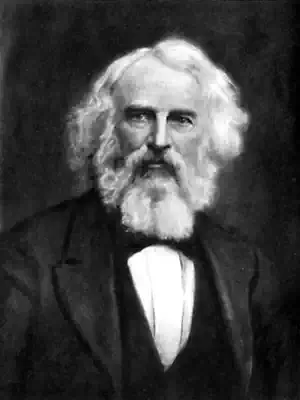
Henry Wadsworth Longfellow
The Phantom Ship. (Birds Of Passage. Flight The First)
The Phantom Ship. (Birds Of Passage. Flight The First)
In Mather's Magnalia Christi,
Of the old colonial time,
May be found in prose the legend
That is here set down in rhyme.
A ship sailed from New Haven,
And the keen and frosty airs,
That filled her sails at parting,
Were heavy with good men's prayers.
'O Lord! if it be thy pleasure'--
Thus prayed the old divine-'
To bury our friends in the ocean,
Take them, for they are thine!'
But Master Lamberton muttered,
And under his breath said he,
'This ship is so crank and walty
I fear our grave she will be!'
And the ships that came from England,
When the winter months were gone,
Brought no tidings of this vessel
Nor of Master Lamberton.
This put the people to praying
That the Lord would let them hear
What in his greater wisdom
He had done with friends so dear.
And at last their prayers were answered:--
It was in the month of June,
An hour before the sunset
Of a windy afternoon,
When, steadily steering landward,
A ship was seen below,
And they knew it was Lamberton, Master,
Who sailed so long ago.
On she came, with a cloud of canvas,
Right against the wind that blew,
Until the eye could distinguish
The faces of the crew.
Then fell her straining topmasts,
Hanging tangled in the shrouds,
And her sails were loosened and lifted,
And blown away like clouds.
And the masts, with all their rigging,
Fell slowly, one by one,
And the hulk dilated and vanished,
As a sea-mist in the sun!
And the people who saw this marvel
Each said unto his friend,
That this was the mould of their vessel,
And thus her tragic end.
And the pastor of the village
Gave thanks to God in prayer,
That, to quiet their troubled spirits,
He had sent this Ship of Air.
In Mather's Magnalia Christi,
Of the old colonial time,
May be found in prose the legend
That is here set down in rhyme.
A ship sailed from New Haven,
And the keen and frosty airs,
That filled her sails at parting,
Were heavy with good men's prayers.
'O Lord! if it be thy pleasure'--
Thus prayed the old divine-'
To bury our friends in the ocean,
Take them, for they are thine!'
But Master Lamberton muttered,
And under his breath said he,
'This ship is so crank and walty
I fear our grave she will be!'
And the ships that came from England,
When the winter months were gone,
Brought no tidings of this vessel
Nor of Master Lamberton.
This put the people to praying
That the Lord would let them hear
What in his greater wisdom
He had done with friends so dear.
And at last their prayers were answered:--
It was in the month of June,
An hour before the sunset
Of a windy afternoon,
When, steadily steering landward,
A ship was seen below,
And they knew it was Lamberton, Master,
Who sailed so long ago.
On she came, with a cloud of canvas,
Right against the wind that blew,
Until the eye could distinguish
The faces of the crew.
Then fell her straining topmasts,
Hanging tangled in the shrouds,
And her sails were loosened and lifted,
And blown away like clouds.
And the masts, with all their rigging,
Fell slowly, one by one,
And the hulk dilated and vanished,
As a sea-mist in the sun!
And the people who saw this marvel
Each said unto his friend,
That this was the mould of their vessel,
And thus her tragic end.
And the pastor of the village
Gave thanks to God in prayer,
That, to quiet their troubled spirits,
He had sent this Ship of Air.
407
Henry Wadsworth Longfellow
The Norman Baron
The Norman Baron
et plus profonde, ou l'interet et l'avarice parlent moins haut
que la raison, dans les instants de chagrin domestique, de
maladie, et de peril de mort, les nobles se repentirent de
posseder des serfs, comme d'une chose peu agreable a Dieu, qui
avait cree tous les hommes a son image.--THIERRY, Conquete de
l'Angleterre.
In his chamber, weak and dying,
Was the Norman baron lying;
Loud, without, the tempest thundered
And the castle-turret shook,
In this fight was Death the gainer,
Spite of vassal and retainer,
And the lands his sires had plundered,
Written in the Doomsday Book.
By his bed a monk was seated,
Who in humble voice repeated
Many a prayer and pater-noster,
From the missal on his knee;
And, amid the tempest pealing,
Sounds of bells came faintly stealing,
Bells, that from the neighboring kloster
Rang for the Nativity.
In the hall, the serf and vassal
Held, that night their Christmas wassail;
Many a carol, old and saintly,
Sang the minstrels and the waits;
And so loud these Saxon gleemen
Sang to slaves the songs of freemen,
That the storm was heard but faintly,
Knocking at the castle-gates.
Till at length the lays they chanted
Reached the chamber terror-haunted,
Where the monk, with accents holy,
Whispered at the baron's ear.
Tears upon his eyelids glistened,
As he paused awhile and listened,
And the dying baron slowly
Turned his weary head to hear.
"Wassail for the kingly stranger
Born and cradled in a manger!
King, like David, priest, like Aaron,
Christ is born to set us free!"
And the lightning showed the sainted
Figures on the casement painted,
And exclaimed the shuddering baron,
"Miserere, Domine!"
In that hour of deep contrition
He beheld, with clearer vision,
Through all outward show and fashion,
Justice, the Avenger, rise.
All the pomp of earth had vanished,
Falsehood and deceit were banished,
Reason spake more loud than passion,
And the truth wore no disguise.
Every vassal of his banner,
Every serf born to his manor,
All those wronged and wretched creatures,
By his hand were freed again.
And, as on the sacred missal
He recorded their dismissal,
Death relaxed his iron features,
And the monk replied, "Amen!"
Many centuries have been numbered
Since in death the baron slumbered
By the convent's sculptured portal,
Mingling with the common dust:
But the good deed, through the ages
Living in historic pages,
Brighter grows and gleams immortal,
Unconsumed by moth or rust.
et plus profonde, ou l'interet et l'avarice parlent moins haut
que la raison, dans les instants de chagrin domestique, de
maladie, et de peril de mort, les nobles se repentirent de
posseder des serfs, comme d'une chose peu agreable a Dieu, qui
avait cree tous les hommes a son image.--THIERRY, Conquete de
l'Angleterre.
In his chamber, weak and dying,
Was the Norman baron lying;
Loud, without, the tempest thundered
And the castle-turret shook,
In this fight was Death the gainer,
Spite of vassal and retainer,
And the lands his sires had plundered,
Written in the Doomsday Book.
By his bed a monk was seated,
Who in humble voice repeated
Many a prayer and pater-noster,
From the missal on his knee;
And, amid the tempest pealing,
Sounds of bells came faintly stealing,
Bells, that from the neighboring kloster
Rang for the Nativity.
In the hall, the serf and vassal
Held, that night their Christmas wassail;
Many a carol, old and saintly,
Sang the minstrels and the waits;
And so loud these Saxon gleemen
Sang to slaves the songs of freemen,
That the storm was heard but faintly,
Knocking at the castle-gates.
Till at length the lays they chanted
Reached the chamber terror-haunted,
Where the monk, with accents holy,
Whispered at the baron's ear.
Tears upon his eyelids glistened,
As he paused awhile and listened,
And the dying baron slowly
Turned his weary head to hear.
"Wassail for the kingly stranger
Born and cradled in a manger!
King, like David, priest, like Aaron,
Christ is born to set us free!"
And the lightning showed the sainted
Figures on the casement painted,
And exclaimed the shuddering baron,
"Miserere, Domine!"
In that hour of deep contrition
He beheld, with clearer vision,
Through all outward show and fashion,
Justice, the Avenger, rise.
All the pomp of earth had vanished,
Falsehood and deceit were banished,
Reason spake more loud than passion,
And the truth wore no disguise.
Every vassal of his banner,
Every serf born to his manor,
All those wronged and wretched creatures,
By his hand were freed again.
And, as on the sacred missal
He recorded their dismissal,
Death relaxed his iron features,
And the monk replied, "Amen!"
Many centuries have been numbered
Since in death the baron slumbered
By the convent's sculptured portal,
Mingling with the common dust:
But the good deed, through the ages
Living in historic pages,
Brighter grows and gleams immortal,
Unconsumed by moth or rust.
391
Henry Wadsworth Longfellow
The Native Land. (From The Spanish Of Francisco De Aldana)
The Native Land. (From The Spanish Of Francisco De Aldana)
Clear fount of light! my native land on high,
Bright with a glory that shall never fade!
Mansion of truth! without a veil or shade,
Thy holy quiet meets the spirit's eye.
There dwells the soul in its ethereal essence,
Gasping no longer for life's feeble breath;
But, sentinelled in heaven, its glorious presence
With pitying eye beholds, yet fears not, death.
Beloved country! banished from thy shore,
A stranger in this prison-house of clay,
The exiled spirit weeps and sighs for thee!
Heavenward the bright perfections I adore
Direct, and the sure promise cheers the way,
That, whither love aspires, there shall my dwelling be.
Clear fount of light! my native land on high,
Bright with a glory that shall never fade!
Mansion of truth! without a veil or shade,
Thy holy quiet meets the spirit's eye.
There dwells the soul in its ethereal essence,
Gasping no longer for life's feeble breath;
But, sentinelled in heaven, its glorious presence
With pitying eye beholds, yet fears not, death.
Beloved country! banished from thy shore,
A stranger in this prison-house of clay,
The exiled spirit weeps and sighs for thee!
Heavenward the bright perfections I adore
Direct, and the sure promise cheers the way,
That, whither love aspires, there shall my dwelling be.
359
Henry Wadsworth Longfellow
The Image Of God (From The Spanish Of Francisco De Aldana)
The Image Of God (From The Spanish Of Francisco De Aldana)
O Lord! who seest, from yon starry height
Centred in one the future and the past
Fashioned in thine own image, see
The world obscures in me what once was bright!
Eternal Sun! the warmth which thou hast given,
To cheer life's flowery April, fast decays;
Yet in the hoary winter of my days,
For ever green shall be my trust in Heaven.
Celestial King! Oh let thy presence pass
Before my spirit, and an image fair
Shall meet that look of mercy from on high,
As the reflected image in a glass
Doth meet the look of him who seeks it there,
And owes its being to the gazer's eye.
O Lord! who seest, from yon starry height
Centred in one the future and the past
Fashioned in thine own image, see
The world obscures in me what once was bright!
Eternal Sun! the warmth which thou hast given,
To cheer life's flowery April, fast decays;
Yet in the hoary winter of my days,
For ever green shall be my trust in Heaven.
Celestial King! Oh let thy presence pass
Before my spirit, and an image fair
Shall meet that look of mercy from on high,
As the reflected image in a glass
Doth meet the look of him who seeks it there,
And owes its being to the gazer's eye.
234
Henry Wadsworth Longfellow
The Jewish Cemetery at Newport
The Jewish Cemetery at Newport
How strange it seems! These Hebrews in their graves,
Close by the street of this fair seaport town,
Silent beside the never-silent waves,
At rest in all this moving up and down!
The trees are white with dust, that o'er their sleep
Wave their broad curtains in the southwind's breath,
While underneath these leafy tents they keep
The long, mysterious Exodus of Death.
And these sepulchral stones, so old and brown,
That pave with level flags their burial-place,
Seem like the tablets of the Law, thrown down
And broken by Moses at the mountain's base.
The very names recorded here are strange,
Of foreign accent, and of different climes;
Alvares and Rivera interchange
With Abraham and Jacob of old times.
"Blessed be God! for he created Death!"
The mourner said, "and Death is rest and peace!"
Then added, in the certainty of faith,
"And giveth Life that nevermore shall cease."
Closed are the portals of their Synagogue,
No Psalms of David now the silence break,
No Rabbi reads the ancient Decalogue
In the grand dialect the Prophets spake.
Gone are the living, but the dead remain,
And not neglected; for a hand unseen,
Scattering its bounty, like a summer rain,
Still keeps their graves and their remembrance green.
How came they here? What burst of Christian hate,
What persecution, merciless and blind,
Drove o'er the sea -that desert desolate -
These Ishmaels and Hagars of mankind?
They lived in narrow streets and lanes obscure,
Ghetto and Judenstrass, in mirk and mire;
Taught in the school of patience to endure
The life of anguish and the death of fire.
All their lives long, with the unleavened bread
And bitter herbs of exile and its fears,
The wasting famine of the heart they fed,
And slaked its thirst with marah of their tears.
Anathema maranatha! was the cry
That rang from town to town, from street to street:
At every gate the accursed Mordecai
Was mocked and jeered, and spurned by Christian feet.
Pride and humiliation hand in hand
Walked with them through the world where'er they went;
Trampled and beaten were they as the sand,
And yet unshaken as the continent.
For in the background figures vague and vast
Of patriarchs and of prophets rose sublime,
And all the great traditions of the Past
They saw reflected in the coming time.
And thus forever with reverted look
The mystic volume of the world they read,
Spelling it backward, like a Hebrew book,
Till life became a Legend of the Dead.
But ah! what once has been shall be no more!
The groaning earth in travail and in pain
Brings forth its races, but does not restore,
And the dead nations never rise again.
How strange it seems! These Hebrews in their graves,
Close by the street of this fair seaport town,
Silent beside the never-silent waves,
At rest in all this moving up and down!
The trees are white with dust, that o'er their sleep
Wave their broad curtains in the southwind's breath,
While underneath these leafy tents they keep
The long, mysterious Exodus of Death.
And these sepulchral stones, so old and brown,
That pave with level flags their burial-place,
Seem like the tablets of the Law, thrown down
And broken by Moses at the mountain's base.
The very names recorded here are strange,
Of foreign accent, and of different climes;
Alvares and Rivera interchange
With Abraham and Jacob of old times.
"Blessed be God! for he created Death!"
The mourner said, "and Death is rest and peace!"
Then added, in the certainty of faith,
"And giveth Life that nevermore shall cease."
Closed are the portals of their Synagogue,
No Psalms of David now the silence break,
No Rabbi reads the ancient Decalogue
In the grand dialect the Prophets spake.
Gone are the living, but the dead remain,
And not neglected; for a hand unseen,
Scattering its bounty, like a summer rain,
Still keeps their graves and their remembrance green.
How came they here? What burst of Christian hate,
What persecution, merciless and blind,
Drove o'er the sea -that desert desolate -
These Ishmaels and Hagars of mankind?
They lived in narrow streets and lanes obscure,
Ghetto and Judenstrass, in mirk and mire;
Taught in the school of patience to endure
The life of anguish and the death of fire.
All their lives long, with the unleavened bread
And bitter herbs of exile and its fears,
The wasting famine of the heart they fed,
And slaked its thirst with marah of their tears.
Anathema maranatha! was the cry
That rang from town to town, from street to street:
At every gate the accursed Mordecai
Was mocked and jeered, and spurned by Christian feet.
Pride and humiliation hand in hand
Walked with them through the world where'er they went;
Trampled and beaten were they as the sand,
And yet unshaken as the continent.
For in the background figures vague and vast
Of patriarchs and of prophets rose sublime,
And all the great traditions of the Past
They saw reflected in the coming time.
And thus forever with reverted look
The mystic volume of the world they read,
Spelling it backward, like a Hebrew book,
Till life became a Legend of the Dead.
But ah! what once has been shall be no more!
The groaning earth in travail and in pain
Brings forth its races, but does not restore,
And the dead nations never rise again.
272
Henry Wadsworth Longfellow
The Good Shepherd (From The Spanish Of Lope De Vega)
The Good Shepherd (From The Spanish Of Lope De Vega)
Shepherd! who with thine amorous sylvan songs
Hast broken the slumber that encompassed me,
Who mad'st thy crook from the accursed tree,
On which thy powerful arms were stretched so long!
Lead me to mercy's ever-flowing fountains;
For thou my shepherd, guard, and guide shalt be ;
I will obey thy voice, and wait to see
Thy feet all beautiful upon the mountains.
Hear, Shepherd! thou who for thy flock art dying,
Oh, wash away these scarlet sins, for thou
Rejoicest at the contrite sinner's vow.
Oh, wait! to thee my weary soul is crying,
Wait for me! Yet why ask it, when I see,
With feet nailed to the cross, thou'rt waiting still for me?
Shepherd! who with thine amorous sylvan songs
Hast broken the slumber that encompassed me,
Who mad'st thy crook from the accursed tree,
On which thy powerful arms were stretched so long!
Lead me to mercy's ever-flowing fountains;
For thou my shepherd, guard, and guide shalt be ;
I will obey thy voice, and wait to see
Thy feet all beautiful upon the mountains.
Hear, Shepherd! thou who for thy flock art dying,
Oh, wash away these scarlet sins, for thou
Rejoicest at the contrite sinner's vow.
Oh, wait! to thee my weary soul is crying,
Wait for me! Yet why ask it, when I see,
With feet nailed to the cross, thou'rt waiting still for me?
226
Henry Wadsworth Longfellow
The Golden Legend: V. A Covered Bridge At Lucerne
The Golden Legend: V. A Covered Bridge At Lucerne
_Prince Henry_. God's blessing on the architects who build
The bridges o'er swift rivers and abysses
Before impassable to human feet,
No less than on the builders of cathedrals,
Whose massive walls are bridges thrown across
The dark and terrible abyss of Death.
Well has the name of Pontifex been given
Unto the Church's head, as the chief builder
And architect of the invisible bridge
That leads from earth to heaven.
_Elsie_ How dark it grows!
What are these paintings on the walls around us?
_Prince Henry_ The Dance Macaber!
_Elsie_ What?
_Prince Henry_ The Dance of Death!
All that go to and fro must look upon it,
Mindful of what they shall be, while beneath,
Among the wooden piles, the turbulent river
Rushes, impetuous as the river of life,
With dimpling eddies, ever green and bright,
Save where the shadow of this bridge falls on it.
_Elsie._ O, yes! I see it now!
_Prince Henry_ The grim musician
Leads all men through the mazes of that dance,
To different sounds in different measures moving;
Sometimes he plays a lute, sometimes a drum,
To tempt or terrify.
_Elsie_ What is this picture?
_Prince Henry_ It is a young man singing to a nun,
Who kneels at her devotions, but in kneeling
Turns round to look at him, and Death, meanwhile,
Is putting out the candles on the altar!
_Elsie_ Ah, what a pity 't is that she should listen
to such songs, when in her orisons
She might have heard in heaven the angels singing!
_Prince Henry_ Here he has stolen a jester's cap and bells,
And dances with the Queen.
_Elsie_ A foolish jest!
_Prince Henry_ And here the heart of the new-wedded wife,
Coming from church with her beloved lord,
He startles with the rattle of his drum.
_Elsie_ Ah, that is sad! And yet perhaps 't is best
That she should die, with all the sunshine on her,
And all the benedictions of the morning,
Before this affluence of golden light
Shall fade into a cold and clouded gray,
Then into darkness!
_Prince Henry_ Under it is written,
'Nothing but death shall separate thee and me!'
_Elsie._ And what is this, that follows close upon it?
_Prince Henry_ Death, playing on a ducimer. Behind him,
A poor old woman, with a rosary,
Follows the sound, and seems to wish her feet
Were swifter to o'ertake him. Underneath,
The inscription reads, 'Better is Death than Life.'
_Elsie._ Better is Death than Life! Ah yes! to thousands
Death plays upon a dulcimer, and sings
That song of consolation, till the air
Rings with it, and they cannot choose but follow
Whither he leads. And not the old alone,
But the young also hear it, and are still.
_Prince Henry_ Yes, in their sadder moments. 'T is the sound
Of their own hearts they hear, half full of tears,
Which are like crystal cups, half filled with water.
Responding to the pressure of a finger
With music sweet and low and melancholy.
Let us go forward, and no longer stay
In this great picture-gallery of Death!
I hate it! ay, the very thought of it!
_Elsie._ Why is it hateful to you?
_Prince Henry._ For the reason
That life, and all that speaks of life, is lovely,
And death, and all that speaks of death, is hateful.
_Elsie._ The grave is but a covered bridge,
leading from light to light, through a brief darkness!
_Prince Henry (emerging from the bridge)._ I breathe again more
freely! Ah, how pleasant
To come once more into the light of day,
Out of that shadow of death! To hear again
The hoof-beats of our horses on firm ground,
And not upon those hollow planks, resounding
With a sepulchral echo, like the clods
On coffins in a churchyard! Yonder lies
The Lake of the Four Forest-Towns, apparelled
In light, and lingering, like a village maiden,
Hid in the bosom of her native mountains,
Then pouring all her life into another's,
Changing her name and being! Overhead,
Shaking his cloudy tresses loose in air,
Rises Pilatus, with his windy pines.
(_They pass on_.)
* * * * *
THE DEVIL'S BRIDGE.
* * * * *
PRINCE HENRY _and_ ELSIE _crossing, with attendants._
_Guide._ This bridge is called the Devil's Bridge.
With a single arch, from ridge to ridge,
It leaps across the terrible chasm
Yawning beneath us, black and deep,
As if, in some convulsive spasm,
the summits of the hills had cracked,
and made a road for the cataract,
That raves and rages down the steep!
_Lucifer (under the bridge)._ Ha! ha!
_Guide._ Never any bridge but this
Could stand across the wild abyss;
All the rest, of wood or stone,
By the Devil's hand were overthrown.
He toppled crags from the precipice,
And whatsoe'er was built by day
In the night was swept away;
None could stand but this alone.
_Lucifer (under the bridge)._ Ha! ha!
_Guide._ I showed you in the valley a boulder
Marked with the imprint of his shoulder;
As he was bearing it up this way,
A peasant, passing, cried, 'Herr Je!'
And the Devil dropped it in his fright,
And vanished suddenly out of sight!
_Lucifer (under the bridge)._ Ha! ha!
_Guide._ Abbot Giraldus of Einsiedel,
For pilgrims on their way to Rome,
Built this at last, with a single arch,
Under which, on its endless march,
Runs the river, white with foam,
Like a thread through the eye of a needle.
And the Devil promised to let it stand,
Under compact and condition
That the first living thing which crossed
Should be surrendered into his hand,
And be beyond redemption lost.
_Lucifer (under the bridge)._ Ha! ha! perdition!
_Guide._ At length, the bridge being all completed,
The Abbot, standing at its head,
Threw across it a loaf of bread,
Which a hungry dog sprang after,
And the rocks reechoed with peals of laughter
To see the Devil thus defeated!
(_They pass on_)
_Lucifer_ (_under the bridge_) Ha! ha! defeated!
For journeys and for crimes like this
To let the bridge stand o'er the abyss!
* * * * *
THE ST. GOTHARD PASS.
* * * * *
_Prince Henry._ This is the highest point. Two ways the rivers
Leap down to different seas, and as they roll
Grow deep and still, and their majestic presence
Becomes a benefaction to the towns
They visit, wandering silently among them,
Like patriarchs old among their shining tents.
_Elsie._ How bleak and bare it is! Nothing but mosses
Grow on these rocks.
_Prince Henry._ Yet are they not forgotten;
Beneficent Nature sends the mists to feed them.
_Elsie._ See yonder little cloud, that, borne aloft
So tenderly by the wind, floats fast away
Over the snowy peaks! It seems to me
The body of St. Catherine, borne by angels!
_Prince Henry._ Thou art St. Catherine, and invisible angels
Bear thee across these chasms and precipices,
Lest thou shouldst dash thy feet against a stone!
_Elsie._ Would I were borne unto my grave, as she was,
Upon angelic shoulders! Even now
I Seem uplifted by them, light as air!
What sound is that?
_Prince Henry_. The tumbling avalanches!
_Elsie_ How awful, yet how beautiful!
_Prince Henry_. These are
The voices of the mountains! Thus they ope
Their snowy lips, and speak unto each other,
In the primeval language, lost to man.
_Elsie_. What land is this that spreads itself beneath us?
_Prince Henry_ Italy! Italy!
_Elsie_ Land of the Madonna!
How beautiful it is! It seems a garden
Of Paradise!
_Prince Henry_. Nay, of Gethsemane
To thee and me, of passion and of prayer!
Yet once of Paradise. Long years ago
I wandered as a youth among its bowers,
And never from my heart has faded quite
Its memory, that, like a summer sunset,
Encircles with a ring of purple light
All the horizon of my youth.
_Guide_. O friends!
The days are short, the way before us long;
We must not linger, if we think to reach
The inn at Belinzona before vespers!
(_They pass on_.)
* * * * *
AT THE FOOT OF THE ALPS.
* * * * *
_A halt under the trees at noon_.
_Prince Henry_ Here let us pause a moment in the trembling
Shadow and sunshine of the roadside trees,
And, our tired horses in a group assembling,
Inhale long draughts of this delicious breeze
Our fleeter steeds have distanced our attendants;
They lag behind us with a slower pace;
We will await them under the green pendants
Of the great willows in this shady place.
Ho, Barbarossa! how thy mottled haunches
Sweat with this canter over hill and glade!
Stand still, and let these overhanging branches
Fan thy hot sides and comfort thee with shade!
_Elsie._ What a delightful landscape spreads before us,
Marked with a whitewashed cottage here and there!
And, in luxuriant garlands drooping o'er us,
Blossoms of grapevines scent the sunny air.
_Prince Henry._ Hark! what sweet sounds are those, whose accents holy
Fill the warm noon with music sad and sweet!
_Elsie._ It is a band of pilgrims, moving slowly
On their long journey, with uncovered feet.
_Pilgrims (chaunting the Hymn of St. Hildebert)_
Me receptet Sion illa,
Sion David, urbs tranquilla,
Cujus faber auctor lucis,
Cujus portae lignum crucis,
Cujus claves lingua Petri,
Cujus cives semper laeti,
Cujus muri lapis vivus,
Cujus custos Rex festivus!
_Lucifer (as a Friar in the procession)._ Here am I, too, in the
pious band,
In the garb of a barefooted Carmelite dressed!
The soles of my feet are as hard and tanned
As the conscience of old Pope Hildebrand,
The Holy Satan, who made the wives
Of the bishops lead such shameful lives.
All day long I beat my breast,
And chaunt with a most particular zest
The Latin hymns, which I understand
Quite as well, I think, as the rest.
And at night such lodging in barns and sheds,
Such a hurly-burly in country inns,
Such a clatter of tongues in empty heads,
Such a helter-skelter of prayers and sins!
Of all the contrivances of the time
For sowing broadcast the seeds of crime,
There is none so pleasing to me and mine
As a pilgrimage to some far-off shrine!
_Prince Henry._ If from the outward man we judge the inner,
And cleanliness is godliness, I fear
A hopeless reprobate, a hardened sinner,
Must be that Carmelite now passing near.
_Lucifer._ There is my German Prince again,
Thus far on his journey to Salern,
And the lovesick girl, whose heated brain
Is sowing the cloud to reap the rain;
But it's a long road that has no turn!
Let them quietly hold their way,
I have also a part in the play.
But first I must act to my heart's content
This mummery and this merriment,
And drive this motley flock of sheep
Into the fold, where drink and sleep
The jolly old friars of Benevent.
Of a truth, it often provokes me to laugh
To see these beggars hobble along,
Lamed and maimed, and fed upon chaff,
Chanting their wonderful piff and paff,
And, to make up for not understanding the song,
Singing it fiercely, and wild, and strong!
Were it not for my magic garters and staff,
And the goblets of goodly wine I quaff,
And the mischief I make in the idle throng,
I should not continue the business long.
_Pilgrims (chaunting)._ In hac uibe, lux solennis,
Ver aeternum, pax perennis,
In hac odor implens caelos,
In hac semper festum melos!
_Prince Henry._ Do you observe that monk among the train,
Who pours from his great throat the roaring bass,
As a cathedral spout pours out the rain,
And this way turns his rubicund, round face?
_Elsie._ It is the same who, on the Strasburg square,
Preached to the people in the open air.
_Prince Henry._ And he has crossed o'er mountain, field, and fell,
On that good steed, that seems to bear him well,
The hackney of the Friars of Orders Gray,
His own stout legs! He, too, was in the play,
Both as King Herod and Ben Israel.
Good morrow, Friar!
_Friar Cuthbert._ Good morrow, noble Sir!
_Prince Henry._ I speak in German, for, unless I err,
You are a German.
_Friar Cuthbert._ I cannot gainsay you.
But by what instinct, or what secret sign,
Meeting me here, do you straightway divine
That northward of the Alps my country lies?
_Prince Henry._ Your accent, like St, Peter's, would betray you,
Did not your yellow beard and your blue eyes,
Moreover, we have seen your face before,
And heard you preach at the Cathedral door
On Easter Sunday, in the Strasburg square
We were among the crowd that gathered there,
And saw you play the Rabbi with great skill,
As if, by leaning o'er so many years
To walk with little children, your own will
Had caught a childish attitude from theirs,
A kind of stooping in its form and gait,
And could no longer stand erect and straight.
Whence come you now?
_Friar Cuthbert._ From the old monastery
Of Hirschau, in the forest; being sent
Upon a pilgrimage to Benevent,
To see the image of the Virgin Mary,
That moves its holy eyes, and sometimes speaks,
And lets the piteous tears run down its cheeks,
To touch the hearts of the impenitent.
_Prince Henry._ O, had I faith, as in the days gone by,
That knew no doubt, and feared no mystery!
_Lucifer (at a distance)._ Ho, Cuthbert! Friar Cuthbert!
_Friar Cuthbert._ Farewell, Prince!
I cannot stay to argue and convince.
_Prince Henry._ This is indeed the blessed Mary's land,
Virgin and Mother of our dear Redeemer!
All hearts are touched and softened at her name;
Alike the bandit, with the bloody hand,
The priest, the prince, the scholar, and the peasant,
The man of deeds, the visionary dreamer,
Pay homage to her as one ever present!
And even as children, who have much offended
A too indulgent father, in great shame,
Penitent, and yet not daring unattended
To go into his presence, at the gate
Speak with their sister, and confiding wait
Till she goes in before and intercedes;
So men, repenting of their evil deeds,
And yet not venturing rashly to draw near
With their requests an angry father's ear,
Offer to her their prayers and their confession,
And she for them in heaven makes intercession.
And if our Faith had given us nothing more
Than this example of all womanhood,
So mild, so merciful, so strong, so good,
So patient, peaceful, loyal, loving, pure,
This were enough to prove it higher and truer
Than all the creeds the world had known before.
_Pilgrims (chaunting afar off)_. Urbs ccelestis, urbs beata,
Supra petram collocata,
Urbs in portu satis tuto
De longinquo te saluto,
Te saluto, te suspiro,
Te affecto, te requiro!
* * * * *
THE INN AT GENOA.
* * * * *
_A terrace overlooking the sea. Night._
_Prince Henry._ It is the sea, it is the sea,
In all its vague immensity,
Fading and darkening in the distance!
Silent, majestical, and slow,
The white ships haunt it to and fro,
With all their ghostly sails unfurled,
As phantoms from another world
Haunt the dim confines of existence!
But ah! how few can comprehend
Their signals, or to what good end
From land to land they come and go!
Upon a sea more vast and dark
The spirits of the dead embark,
All voyaging to unknown coasts.
We wave our farewells from the shore,
And they depart, and come no more,
Or come as phantoms and as ghosts.
Above the darksome sea of death
Looms the great life that is to be,
A land of cloud and mystery,
A dim mirage, with shapes of men
Long dead, and passed beyond our ken.
Awe-struck we gaze, and hold our breath
Till the fair pageant vanisheth,
Leaving us in perplexity,
And doubtful whether it has been
A vision of the world unseen,
Or a bright image of our own
Against the sky in vapors thrown.
_Lucifer (singing from the sea)_. Thou didst not make it, thou
canst not mend it,
But thou hast the power to end it!
The sea is silent, the sea is discreet,
Deep it lies at thy very feet;
There is no confessor like unto Death!
Thou canst not see him, but he is near;
Thou needest not whisper above thy breath,
And he will hear;
He will answer the questions,
The vague surmises and suggestions,
That fill thy soul with doubt and fear!
_Prince Henry_. The fisherman, who lies afloat,
With shadowy sail, in yonder boat,
Is singing softly to the Night!
But do I comprehend aright
The meaning of the words he sung
So sweetly in his native tongue?
Ah, yes! the sea is still and deep.
All things within its bosom sleep!
A single step, and all is o'er;
A plunge, a bubble, and no more;
And thou, dear Elsie, wilt be free
From martyrdom and agony.
_Elsie (coming from her chamber upon the terrace)._
The night is calm and cloudless,
And still as still can be,
And the stars come forth to listen
To the music of the sea.
They gather, and gather, and gather,
Until they crowd the sky,
And listen, in breathless silence,
To the solemn litany.
It begins in rocky caverns,
As a voice that chaunts alone
To the pedals of the organ
In monotonous undertone;
And anon from shelving beaches,
And shallow sands beyond,
In snow-white robes uprising
The ghostly choirs respond.
And sadly and unceasing
The mournful voice sings on,
And the snow-white choirs still answer
Christe eleison!
_Prince Henry._ Angel of God! thy finer sense perceives
Celestial and perpetual harmonies!
Thy purer soul, that trembles and believes,
Hears the archangel's trumpet in the breeze,
And where the forest rolls, or ocean heaves,
Cecilia's organ sounding in the seas,
And tongues of prophets speaking in the leaves.
But I hear discord only and despair,
And whispers as of demons in the air!
* * * * *
AT SEA.
* * * * *
_Il Padrone._ The wind upon our quarter lies,
And on before the freshening gale,
That fills the snow-white lateen sail,
Swiftly our light felucca flies.
Around, the billows burst and foam;
They lift her o'er the sunken rock,
They beat her sides with many a shock,
And then upon their flowing dome
They poise her, like a weathercock!
Between us and the western skies
The hills of Corsica arise;
Eastward, in yonder long, blue line,
The summits of the Apennine,
And southward, and still far away,
Salerno, on its sunny bay.
You cannot see it, where it lies.
_Prince Henry._ Ah, would that never more mine eyes
Might see its towers by night or day!
_Elsie._ Behind us, dark and awfully,
There comes a cloud out of the sea,
That bears the form of a hunted deer,
With hide of brown, and hoofs of black,
And antlers laid upon its back,
And fleeing fast and wild with fear,
As if the hounds were on its track!
_Prince Henry._ Lo! while we gaze, it breaks and falls
In shapeless masses, like the walls
Of a burnt city. Broad and red
The fires of the descending sun
Glare through the windows, and o'erhead,
Athwart the vapors, dense and dun,
Long shafts of silvery light arise,
Like rafters that support the skies!
_Elsie._ See! from its summit the lurid levin
Flashes downward without warning,
As Lucifer, son of the morning,
Fell from the battlements of heaven!
_Il Padrone._ I must entreat you, friends, below!
The angry storm begins to blow,
For the weather changes with the moon.
All this morning, until noon,
We had baffling winds, and sudden flaws
Struck the sea with their cat's-paws.
Only a little hour ago
I was whistling to Saint Antonio
For a capful of wind to fill our sail,
And instead of a breeze he has sent a gale.
Last night I saw St. Elmo's stars,
With their glimmering lanterns, all at play
On the tops of the masts and the tips of the spars,
And I knew we should have foul weather to-day.
Cheerily, my hearties! yo heave ho!
Brail up the mainsail, and let her go
As the winds will and Saint Antonio!
Do you see that Livornese felucca,
That vessel to the windward yonder,
Running with her gunwale under?
I was looking when the wind o'ertook her,
She had all sail set, and the only wonder
Is that at once the strength of the blast
Did not carry away her mast.
She is a galley of the Gran Duca,
That, through the fear of the Algerines,
Convoys those lazy brigantines,
Laden with wine and oil from Lucca.
Now all is ready, high and low;
Blow, blow, good Saint Antonio!
Ha! that is the first dash of the rain,
With a sprinkle of spray above the rails,
Just enough to moisten our sails,
And make them ready for the strain.
See how she leaps, as the blasts o'ertake her,
And speeds away with a bone in her mouth!
Now keep her head toward the south,
And there is no danger of bank or breaker.
With the breeze behind us, on we go;
Not too much, good Saint Antonio!
_Prince Henry_. God's blessing on the architects who build
The bridges o'er swift rivers and abysses
Before impassable to human feet,
No less than on the builders of cathedrals,
Whose massive walls are bridges thrown across
The dark and terrible abyss of Death.
Well has the name of Pontifex been given
Unto the Church's head, as the chief builder
And architect of the invisible bridge
That leads from earth to heaven.
_Elsie_ How dark it grows!
What are these paintings on the walls around us?
_Prince Henry_ The Dance Macaber!
_Elsie_ What?
_Prince Henry_ The Dance of Death!
All that go to and fro must look upon it,
Mindful of what they shall be, while beneath,
Among the wooden piles, the turbulent river
Rushes, impetuous as the river of life,
With dimpling eddies, ever green and bright,
Save where the shadow of this bridge falls on it.
_Elsie._ O, yes! I see it now!
_Prince Henry_ The grim musician
Leads all men through the mazes of that dance,
To different sounds in different measures moving;
Sometimes he plays a lute, sometimes a drum,
To tempt or terrify.
_Elsie_ What is this picture?
_Prince Henry_ It is a young man singing to a nun,
Who kneels at her devotions, but in kneeling
Turns round to look at him, and Death, meanwhile,
Is putting out the candles on the altar!
_Elsie_ Ah, what a pity 't is that she should listen
to such songs, when in her orisons
She might have heard in heaven the angels singing!
_Prince Henry_ Here he has stolen a jester's cap and bells,
And dances with the Queen.
_Elsie_ A foolish jest!
_Prince Henry_ And here the heart of the new-wedded wife,
Coming from church with her beloved lord,
He startles with the rattle of his drum.
_Elsie_ Ah, that is sad! And yet perhaps 't is best
That she should die, with all the sunshine on her,
And all the benedictions of the morning,
Before this affluence of golden light
Shall fade into a cold and clouded gray,
Then into darkness!
_Prince Henry_ Under it is written,
'Nothing but death shall separate thee and me!'
_Elsie._ And what is this, that follows close upon it?
_Prince Henry_ Death, playing on a ducimer. Behind him,
A poor old woman, with a rosary,
Follows the sound, and seems to wish her feet
Were swifter to o'ertake him. Underneath,
The inscription reads, 'Better is Death than Life.'
_Elsie._ Better is Death than Life! Ah yes! to thousands
Death plays upon a dulcimer, and sings
That song of consolation, till the air
Rings with it, and they cannot choose but follow
Whither he leads. And not the old alone,
But the young also hear it, and are still.
_Prince Henry_ Yes, in their sadder moments. 'T is the sound
Of their own hearts they hear, half full of tears,
Which are like crystal cups, half filled with water.
Responding to the pressure of a finger
With music sweet and low and melancholy.
Let us go forward, and no longer stay
In this great picture-gallery of Death!
I hate it! ay, the very thought of it!
_Elsie._ Why is it hateful to you?
_Prince Henry._ For the reason
That life, and all that speaks of life, is lovely,
And death, and all that speaks of death, is hateful.
_Elsie._ The grave is but a covered bridge,
leading from light to light, through a brief darkness!
_Prince Henry (emerging from the bridge)._ I breathe again more
freely! Ah, how pleasant
To come once more into the light of day,
Out of that shadow of death! To hear again
The hoof-beats of our horses on firm ground,
And not upon those hollow planks, resounding
With a sepulchral echo, like the clods
On coffins in a churchyard! Yonder lies
The Lake of the Four Forest-Towns, apparelled
In light, and lingering, like a village maiden,
Hid in the bosom of her native mountains,
Then pouring all her life into another's,
Changing her name and being! Overhead,
Shaking his cloudy tresses loose in air,
Rises Pilatus, with his windy pines.
(_They pass on_.)
* * * * *
THE DEVIL'S BRIDGE.
* * * * *
PRINCE HENRY _and_ ELSIE _crossing, with attendants._
_Guide._ This bridge is called the Devil's Bridge.
With a single arch, from ridge to ridge,
It leaps across the terrible chasm
Yawning beneath us, black and deep,
As if, in some convulsive spasm,
the summits of the hills had cracked,
and made a road for the cataract,
That raves and rages down the steep!
_Lucifer (under the bridge)._ Ha! ha!
_Guide._ Never any bridge but this
Could stand across the wild abyss;
All the rest, of wood or stone,
By the Devil's hand were overthrown.
He toppled crags from the precipice,
And whatsoe'er was built by day
In the night was swept away;
None could stand but this alone.
_Lucifer (under the bridge)._ Ha! ha!
_Guide._ I showed you in the valley a boulder
Marked with the imprint of his shoulder;
As he was bearing it up this way,
A peasant, passing, cried, 'Herr Je!'
And the Devil dropped it in his fright,
And vanished suddenly out of sight!
_Lucifer (under the bridge)._ Ha! ha!
_Guide._ Abbot Giraldus of Einsiedel,
For pilgrims on their way to Rome,
Built this at last, with a single arch,
Under which, on its endless march,
Runs the river, white with foam,
Like a thread through the eye of a needle.
And the Devil promised to let it stand,
Under compact and condition
That the first living thing which crossed
Should be surrendered into his hand,
And be beyond redemption lost.
_Lucifer (under the bridge)._ Ha! ha! perdition!
_Guide._ At length, the bridge being all completed,
The Abbot, standing at its head,
Threw across it a loaf of bread,
Which a hungry dog sprang after,
And the rocks reechoed with peals of laughter
To see the Devil thus defeated!
(_They pass on_)
_Lucifer_ (_under the bridge_) Ha! ha! defeated!
For journeys and for crimes like this
To let the bridge stand o'er the abyss!
* * * * *
THE ST. GOTHARD PASS.
* * * * *
_Prince Henry._ This is the highest point. Two ways the rivers
Leap down to different seas, and as they roll
Grow deep and still, and their majestic presence
Becomes a benefaction to the towns
They visit, wandering silently among them,
Like patriarchs old among their shining tents.
_Elsie._ How bleak and bare it is! Nothing but mosses
Grow on these rocks.
_Prince Henry._ Yet are they not forgotten;
Beneficent Nature sends the mists to feed them.
_Elsie._ See yonder little cloud, that, borne aloft
So tenderly by the wind, floats fast away
Over the snowy peaks! It seems to me
The body of St. Catherine, borne by angels!
_Prince Henry._ Thou art St. Catherine, and invisible angels
Bear thee across these chasms and precipices,
Lest thou shouldst dash thy feet against a stone!
_Elsie._ Would I were borne unto my grave, as she was,
Upon angelic shoulders! Even now
I Seem uplifted by them, light as air!
What sound is that?
_Prince Henry_. The tumbling avalanches!
_Elsie_ How awful, yet how beautiful!
_Prince Henry_. These are
The voices of the mountains! Thus they ope
Their snowy lips, and speak unto each other,
In the primeval language, lost to man.
_Elsie_. What land is this that spreads itself beneath us?
_Prince Henry_ Italy! Italy!
_Elsie_ Land of the Madonna!
How beautiful it is! It seems a garden
Of Paradise!
_Prince Henry_. Nay, of Gethsemane
To thee and me, of passion and of prayer!
Yet once of Paradise. Long years ago
I wandered as a youth among its bowers,
And never from my heart has faded quite
Its memory, that, like a summer sunset,
Encircles with a ring of purple light
All the horizon of my youth.
_Guide_. O friends!
The days are short, the way before us long;
We must not linger, if we think to reach
The inn at Belinzona before vespers!
(_They pass on_.)
* * * * *
AT THE FOOT OF THE ALPS.
* * * * *
_A halt under the trees at noon_.
_Prince Henry_ Here let us pause a moment in the trembling
Shadow and sunshine of the roadside trees,
And, our tired horses in a group assembling,
Inhale long draughts of this delicious breeze
Our fleeter steeds have distanced our attendants;
They lag behind us with a slower pace;
We will await them under the green pendants
Of the great willows in this shady place.
Ho, Barbarossa! how thy mottled haunches
Sweat with this canter over hill and glade!
Stand still, and let these overhanging branches
Fan thy hot sides and comfort thee with shade!
_Elsie._ What a delightful landscape spreads before us,
Marked with a whitewashed cottage here and there!
And, in luxuriant garlands drooping o'er us,
Blossoms of grapevines scent the sunny air.
_Prince Henry._ Hark! what sweet sounds are those, whose accents holy
Fill the warm noon with music sad and sweet!
_Elsie._ It is a band of pilgrims, moving slowly
On their long journey, with uncovered feet.
_Pilgrims (chaunting the Hymn of St. Hildebert)_
Me receptet Sion illa,
Sion David, urbs tranquilla,
Cujus faber auctor lucis,
Cujus portae lignum crucis,
Cujus claves lingua Petri,
Cujus cives semper laeti,
Cujus muri lapis vivus,
Cujus custos Rex festivus!
_Lucifer (as a Friar in the procession)._ Here am I, too, in the
pious band,
In the garb of a barefooted Carmelite dressed!
The soles of my feet are as hard and tanned
As the conscience of old Pope Hildebrand,
The Holy Satan, who made the wives
Of the bishops lead such shameful lives.
All day long I beat my breast,
And chaunt with a most particular zest
The Latin hymns, which I understand
Quite as well, I think, as the rest.
And at night such lodging in barns and sheds,
Such a hurly-burly in country inns,
Such a clatter of tongues in empty heads,
Such a helter-skelter of prayers and sins!
Of all the contrivances of the time
For sowing broadcast the seeds of crime,
There is none so pleasing to me and mine
As a pilgrimage to some far-off shrine!
_Prince Henry._ If from the outward man we judge the inner,
And cleanliness is godliness, I fear
A hopeless reprobate, a hardened sinner,
Must be that Carmelite now passing near.
_Lucifer._ There is my German Prince again,
Thus far on his journey to Salern,
And the lovesick girl, whose heated brain
Is sowing the cloud to reap the rain;
But it's a long road that has no turn!
Let them quietly hold their way,
I have also a part in the play.
But first I must act to my heart's content
This mummery and this merriment,
And drive this motley flock of sheep
Into the fold, where drink and sleep
The jolly old friars of Benevent.
Of a truth, it often provokes me to laugh
To see these beggars hobble along,
Lamed and maimed, and fed upon chaff,
Chanting their wonderful piff and paff,
And, to make up for not understanding the song,
Singing it fiercely, and wild, and strong!
Were it not for my magic garters and staff,
And the goblets of goodly wine I quaff,
And the mischief I make in the idle throng,
I should not continue the business long.
_Pilgrims (chaunting)._ In hac uibe, lux solennis,
Ver aeternum, pax perennis,
In hac odor implens caelos,
In hac semper festum melos!
_Prince Henry._ Do you observe that monk among the train,
Who pours from his great throat the roaring bass,
As a cathedral spout pours out the rain,
And this way turns his rubicund, round face?
_Elsie._ It is the same who, on the Strasburg square,
Preached to the people in the open air.
_Prince Henry._ And he has crossed o'er mountain, field, and fell,
On that good steed, that seems to bear him well,
The hackney of the Friars of Orders Gray,
His own stout legs! He, too, was in the play,
Both as King Herod and Ben Israel.
Good morrow, Friar!
_Friar Cuthbert._ Good morrow, noble Sir!
_Prince Henry._ I speak in German, for, unless I err,
You are a German.
_Friar Cuthbert._ I cannot gainsay you.
But by what instinct, or what secret sign,
Meeting me here, do you straightway divine
That northward of the Alps my country lies?
_Prince Henry._ Your accent, like St, Peter's, would betray you,
Did not your yellow beard and your blue eyes,
Moreover, we have seen your face before,
And heard you preach at the Cathedral door
On Easter Sunday, in the Strasburg square
We were among the crowd that gathered there,
And saw you play the Rabbi with great skill,
As if, by leaning o'er so many years
To walk with little children, your own will
Had caught a childish attitude from theirs,
A kind of stooping in its form and gait,
And could no longer stand erect and straight.
Whence come you now?
_Friar Cuthbert._ From the old monastery
Of Hirschau, in the forest; being sent
Upon a pilgrimage to Benevent,
To see the image of the Virgin Mary,
That moves its holy eyes, and sometimes speaks,
And lets the piteous tears run down its cheeks,
To touch the hearts of the impenitent.
_Prince Henry._ O, had I faith, as in the days gone by,
That knew no doubt, and feared no mystery!
_Lucifer (at a distance)._ Ho, Cuthbert! Friar Cuthbert!
_Friar Cuthbert._ Farewell, Prince!
I cannot stay to argue and convince.
_Prince Henry._ This is indeed the blessed Mary's land,
Virgin and Mother of our dear Redeemer!
All hearts are touched and softened at her name;
Alike the bandit, with the bloody hand,
The priest, the prince, the scholar, and the peasant,
The man of deeds, the visionary dreamer,
Pay homage to her as one ever present!
And even as children, who have much offended
A too indulgent father, in great shame,
Penitent, and yet not daring unattended
To go into his presence, at the gate
Speak with their sister, and confiding wait
Till she goes in before and intercedes;
So men, repenting of their evil deeds,
And yet not venturing rashly to draw near
With their requests an angry father's ear,
Offer to her their prayers and their confession,
And she for them in heaven makes intercession.
And if our Faith had given us nothing more
Than this example of all womanhood,
So mild, so merciful, so strong, so good,
So patient, peaceful, loyal, loving, pure,
This were enough to prove it higher and truer
Than all the creeds the world had known before.
_Pilgrims (chaunting afar off)_. Urbs ccelestis, urbs beata,
Supra petram collocata,
Urbs in portu satis tuto
De longinquo te saluto,
Te saluto, te suspiro,
Te affecto, te requiro!
* * * * *
THE INN AT GENOA.
* * * * *
_A terrace overlooking the sea. Night._
_Prince Henry._ It is the sea, it is the sea,
In all its vague immensity,
Fading and darkening in the distance!
Silent, majestical, and slow,
The white ships haunt it to and fro,
With all their ghostly sails unfurled,
As phantoms from another world
Haunt the dim confines of existence!
But ah! how few can comprehend
Their signals, or to what good end
From land to land they come and go!
Upon a sea more vast and dark
The spirits of the dead embark,
All voyaging to unknown coasts.
We wave our farewells from the shore,
And they depart, and come no more,
Or come as phantoms and as ghosts.
Above the darksome sea of death
Looms the great life that is to be,
A land of cloud and mystery,
A dim mirage, with shapes of men
Long dead, and passed beyond our ken.
Awe-struck we gaze, and hold our breath
Till the fair pageant vanisheth,
Leaving us in perplexity,
And doubtful whether it has been
A vision of the world unseen,
Or a bright image of our own
Against the sky in vapors thrown.
_Lucifer (singing from the sea)_. Thou didst not make it, thou
canst not mend it,
But thou hast the power to end it!
The sea is silent, the sea is discreet,
Deep it lies at thy very feet;
There is no confessor like unto Death!
Thou canst not see him, but he is near;
Thou needest not whisper above thy breath,
And he will hear;
He will answer the questions,
The vague surmises and suggestions,
That fill thy soul with doubt and fear!
_Prince Henry_. The fisherman, who lies afloat,
With shadowy sail, in yonder boat,
Is singing softly to the Night!
But do I comprehend aright
The meaning of the words he sung
So sweetly in his native tongue?
Ah, yes! the sea is still and deep.
All things within its bosom sleep!
A single step, and all is o'er;
A plunge, a bubble, and no more;
And thou, dear Elsie, wilt be free
From martyrdom and agony.
_Elsie (coming from her chamber upon the terrace)._
The night is calm and cloudless,
And still as still can be,
And the stars come forth to listen
To the music of the sea.
They gather, and gather, and gather,
Until they crowd the sky,
And listen, in breathless silence,
To the solemn litany.
It begins in rocky caverns,
As a voice that chaunts alone
To the pedals of the organ
In monotonous undertone;
And anon from shelving beaches,
And shallow sands beyond,
In snow-white robes uprising
The ghostly choirs respond.
And sadly and unceasing
The mournful voice sings on,
And the snow-white choirs still answer
Christe eleison!
_Prince Henry._ Angel of God! thy finer sense perceives
Celestial and perpetual harmonies!
Thy purer soul, that trembles and believes,
Hears the archangel's trumpet in the breeze,
And where the forest rolls, or ocean heaves,
Cecilia's organ sounding in the seas,
And tongues of prophets speaking in the leaves.
But I hear discord only and despair,
And whispers as of demons in the air!
* * * * *
AT SEA.
* * * * *
_Il Padrone._ The wind upon our quarter lies,
And on before the freshening gale,
That fills the snow-white lateen sail,
Swiftly our light felucca flies.
Around, the billows burst and foam;
They lift her o'er the sunken rock,
They beat her sides with many a shock,
And then upon their flowing dome
They poise her, like a weathercock!
Between us and the western skies
The hills of Corsica arise;
Eastward, in yonder long, blue line,
The summits of the Apennine,
And southward, and still far away,
Salerno, on its sunny bay.
You cannot see it, where it lies.
_Prince Henry._ Ah, would that never more mine eyes
Might see its towers by night or day!
_Elsie._ Behind us, dark and awfully,
There comes a cloud out of the sea,
That bears the form of a hunted deer,
With hide of brown, and hoofs of black,
And antlers laid upon its back,
And fleeing fast and wild with fear,
As if the hounds were on its track!
_Prince Henry._ Lo! while we gaze, it breaks and falls
In shapeless masses, like the walls
Of a burnt city. Broad and red
The fires of the descending sun
Glare through the windows, and o'erhead,
Athwart the vapors, dense and dun,
Long shafts of silvery light arise,
Like rafters that support the skies!
_Elsie._ See! from its summit the lurid levin
Flashes downward without warning,
As Lucifer, son of the morning,
Fell from the battlements of heaven!
_Il Padrone._ I must entreat you, friends, below!
The angry storm begins to blow,
For the weather changes with the moon.
All this morning, until noon,
We had baffling winds, and sudden flaws
Struck the sea with their cat's-paws.
Only a little hour ago
I was whistling to Saint Antonio
For a capful of wind to fill our sail,
And instead of a breeze he has sent a gale.
Last night I saw St. Elmo's stars,
With their glimmering lanterns, all at play
On the tops of the masts and the tips of the spars,
And I knew we should have foul weather to-day.
Cheerily, my hearties! yo heave ho!
Brail up the mainsail, and let her go
As the winds will and Saint Antonio!
Do you see that Livornese felucca,
That vessel to the windward yonder,
Running with her gunwale under?
I was looking when the wind o'ertook her,
She had all sail set, and the only wonder
Is that at once the strength of the blast
Did not carry away her mast.
She is a galley of the Gran Duca,
That, through the fear of the Algerines,
Convoys those lazy brigantines,
Laden with wine and oil from Lucca.
Now all is ready, high and low;
Blow, blow, good Saint Antonio!
Ha! that is the first dash of the rain,
With a sprinkle of spray above the rails,
Just enough to moisten our sails,
And make them ready for the strain.
See how she leaps, as the blasts o'ertake her,
And speeds away with a bone in her mouth!
Now keep her head toward the south,
And there is no danger of bank or breaker.
With the breeze behind us, on we go;
Not too much, good Saint Antonio!
273
Henry Wadsworth Longfellow
The Golden Legend: IV. The Road To Hirschau
The Golden Legend: IV. The Road To Hirschau
PRINCE HENRY _and_ ELSIE, _with their attendants, on
horseback._
_Elsie._ Onward and onward the highway runs
to the distant city, impatiently bearing
Tidings of human joy and disaster, of love and of
hate, of doing and daring!
_Prince Henry._ This life of ours is a wild aeolian
harp of many a joyous strain,
But under them all there runs a loud perpetual wail,
as of souls in pain.
_Elsie._ Faith alone can interpret life, and the heart
that aches and bleeds with the stigma
Of pain, alone bears the likeness of Christ, and can
comprehend its dark enigma.
_Prince Henry._ Man is selfish, and seeketh pleasure
with little care of what may betide;
Else why am I travelling here beside thee, a demon
that rides by an angel's side?
_Elsie._ All the hedges are white with dust, and
the great dog under the creaking wain
Hangs his head in the lazy heat, while onward the
horses toil and strain
_Prince Henry._ Now they stop at the wayside inn,
and the wagoner laughs with the landlord's daughter,
While out of the dripping trough the horses distend
their leathern sides with water.
_Elsie._ All through life there are wayside inns,
where man may refresh his soul with love;
Even the lowest may quench his thirst at rivulets fed
by springs from above.
_Prince Henry._ Yonder, where rises the cross of
stone, our journey along the highway ends,
And over the fields, by a bridle path, down into the
broad green valley descends.
_Elsie._ I am not sorry to leave behind the beaten
road with its dust and heat;
The air will be sweeter far, and the turf will be softer
under our horses' feet.
(_They turn down a green lane._)
_Elsie._ Sweet is the air with the budding haws,
and the valley stretching for miles below
Is white with blossoming cheery trees, as if just covered
with lightest snow.
_Prince Henry._ Over our heads a white cascade is
gleaming against the distant hill;
We cannot hear it, nor see it move, but it hangs like
a banner when winds are still.
_Elsie._ Damp and cool is this deep ravine, and
cool the sound of the brook by our side!
What is this castle that rises above us, and lords it
over a land so wide?
_Prince Henry._ It is the home of the Counts of
Calva; well have I known these scenes of old,
Well I remember each tower and turret, remember the
brooklet, the wood, and the wold.
_Elsie._ Hark! from the little village below us the
bells of the church are ringing for rain!
Priests and peasants in long procession come forth
and kneel on the arid plain.
_Prince Henry._ They have not long to wait, for I
see in the south uprising a little cloud,
That before the sun shall be set will cover the sky
above us as with a shroud.
(_They pass on._)
* * * * *
THE CONVENT OF HIRSCHAU IN THE BLACK FOREST.
* * * * *
_The Convent cellar._ FRIAR CLAUS _comes in with a
light and a basket of empty flagons._
_Friar Claus._ I always enter this sacred place
With a thoughtful, solemn, and reverent pace,
Pausing long enough on each stair
To breathe an ejaculatory prayer,
And a benediction on the vines
That produce these various sorts of wines!
For my part, I am well content
That we have got through with the tedious Lent!
Fasting is all very well for those
Who have to contend with invisible foes;
But I am quite sure it does not agree
With a quiet, peaceable man like me,
Who am not of that nervous and meagre kind
That are always distressed in body and mind!
And at times it really does me good
To come down among this brotherhood,
Dwelling forever under ground,
Silent, contemplative, round and sound;
Each one old, and brown with mould,
But filled to the lips with the ardor of youth,
With the latent power and love of truth,
And with virtues fervent and manifold.
I have heard it said, that at Easter-tide,
When buds are swelling on every side,
And the sap begins to move in the vine.
Then in all the cellars, far and wide,
The oldest, as well as the newest, wine
Begins to stir itself, and ferment,
With a kind of revolt and discontent
At being so long in darkness pent,
And fain would burst from its sombre tun
To bask on the hillside in the sun;
As in the bosom of us poor friars,
The tumult of half-subdued desires
For the world that we have left behind
Disturbs at times all peace of mind!
And now that we have lived through Lent,
My duty it is, as often before,
To open awhile the prison-door,
And give these restless spirits vent.
Now here is a cask that stands alone,
And has stood a hundred years or more,
Its beard of cobwebs, long and hoar,
Trailing and sweeping along the floor,
Like Barbarossa, who sits in his cave,
Taciturn, sombre, sedate, and grave,
Till his beard has grown through the table of stone!
It is of the quick and not of the dead!
In its veins the blood is hot and red,
And a heart still beats in those ribs of oak
That time may have tamed, but has not broke;
It comes from Bacharach on the Rhine,
Is one of the three best kinds of wine,
And costs some hundred florins the ohm;
But that I do not consider dear,
When I remember that every year
Four butts are sent to the Pope of Rome.
And whenever a goblet thereof I drain,
The old rhyme keeps running in my brain:
At Bacharach on the Rhine,
At Hochheim on the Main,
And at Wuerzburg on the Stein,
Grow the three best kinds of wine!
They are all good wines, and better far
Than those of the Neckar, or those of the Ahr
In particular, Wuerzburg well may boast
Of its blessed wine of the Holy Ghost,
Which of all wines I like the most.
This I shall draw for the Abbot's drinking,
Who seems to be much of my way of thinking.
(_Fills a flagon._)
Ah! how the streamlet laughs and sings!
What a delicious fragrance springs
From the deep flagon, while it fills,
As of hyacinths and daffodils!
Between this cask and the Abbot's lips
Many have been the sips and slips;
Many have been the draughts of wine,
On their way to his, that have stopped at mine;
And many a time my soul has hankered
For a deep draught out of his silver tankard,
When it should have been busy with other affairs,
Less with its longings and more with its prayers.
But now there is no such awkward condition,
No danger of death and eternal perdition;
So here's to the Abbot and Brothers all,
Who dwell in this convent of Peter and Paul!
(_He drinks._)
O cordial delicious! O soother of pain!
It flashes like sunshine into my brain!
A benison rest on the Bishop who sends
Such a fudder of wine as this to his friends!
And now a flagon for such as may ask
A draught from the noble Bacharach cask,
And I will be gone, though I know full well
The cellar's a cheerfuller place than the cell.
Behold where he stands, all sound and good,
Brown and old in his oaken hood;
Silent he seems externally
As any Carthusian monk may be;
But within, what a spirit of deep unrest!
What a seething and simmering in his breast!
As if the heaving of his great heart
Would burst his belt of oak apart!
Let me unloose this button of wood,
And quiet a little his turbulent mood.
(_Sets it running._)
See! how its currents gleam and shine,
As if they had caught the purple hues
Of autumn sunsets on the Rhine,
Descending and mingling with the dews;
Or as if the grapes were stained with the blood
Of the innocent boy, who, some years back,
Was taken and crucified by the Jews,
In that ancient town of Bacharach;
Perdition upon those infidel Jews,
In that ancient town of Bacharach!
The beautiful town, that gives us wine
With the fragrant odor of Muscadine!
I should deem it wrong to let this pass
Without first touching my lips to the glass,
For here in the midst of the current I stand,
Like the stone Pfalz in the midst of the river
Taking toll upon either hand,
And much more grateful to the giver.
(_He drinks._)
Here, now, is a very inferior kind,
Such as in any town you may find,
Such as one might imagine would suit
The rascal who drank wine out of a boot,
And, after all, it was not a crime,
For he won thereby Dorf Hueffelsheim.
A jolly old toper! who at a pull
Could drink a postilion's jack boot full,
And ask with a laugh, when that was done,
If the fellow had left the other one!
This wine is as good as we can afford
To the friars, who sit at the lower board,
And cannot distinguish bad from good,
And are far better off than if they could,
Being rather the rude disciples of beer
Than of anything more refined and dear!
(_Fills the other flagon and departs._)
* * * * *
THE SCRIPTORIUM.
FRIAR PACIFICUS _transcribing and illuminating._
_Friar Pacificus_ It is growing dark! Yet one line more,
And then my work for today is o'er.
I come again to the name of the Lord!
Ere I that awful name record,
That is spoken so lightly among men,
Let me pause awhile, and wash my pen;
Pure from blemish and blot must it be
When it writes that word of mystery!
Thus have I labored on and on,
Nearly through the Gospel of John.
Can it be that from the lips
Of this same gentle Evangelist,
That Christ himself perhaps has kissed,
Came the dread Apocalypse!
It has a very awful look,
As it stands there at the end of the book,
Like the sun in an eclipse.
Ah me! when I think of that vision divine,
Think of writing it, line by line,
I stand in awe of the terrible curse,
Like the trump of doom, in the closing verse!
God forgive me! if ever I
Take aught from the book of that Prophecy,
Lest my part too should be taken away
From the Book of Life on the Judgment Day.
This is well written, though I say it!
I should not be afraid to display it,
In open day, on the selfsame shelf
With the writings of St Thecla herself,
Or of Theodosius, who of old
Wrote the Gospels in letters of gold!
That goodly folio standing yonder,
Without a single blot or blunder,
Would not bear away the palm from mine,
If we should compare them line for line.
There, now, is an initial letter!
King Rene himself never made a better!
Finished down to the leaf and the snail,
Down to the eyes on the peacock's tail!
And now, as I turn the volume over,
And see what lies between cover and cover,
What treasures of art these pages hold,
All ablaze with crimson and gold,
God forgive me! I seem to feel
A certain satisfaction steal
Into my heart, and into my brain,
As if my talent had not lain
Wrapped in a napkin, and all in vain.
Yes, I might almost say to the Lord,
Here is a copy of thy Word,
Written out with much toil and pain;
Take it, O Lord, and let it be
As something I have done for thee!
(_He looks from the window._)
How sweet the air is! How fair the scene!
I wish I had as lovely a green
To paint my landscapes and my leaves!
How the swallows twitter under the eaves!
There, now, there is one in her nest;
I can just catch a glimpse of her head and breast,
And will sketch her thus, in her quiet nook,
In the margin of my Gospel book.
(_He makes a sketch._)
I can see no more. Through the valley yonder
A shower is passing; I hear the thunder
Mutter its curses in the air,
The Devil's own and only prayer!
The dusty road is brown with rain,
And speeding on with might and main,
Hitherward rides a gallant train.
They do not parley, they cannot wait,
But hurry in at the convent gate.
What a fair lady! and beside her
What a handsome, graceful, noble rider!
Now she gives him her hand to alight;
They will beg a shelter for the night.
I will go down to the corridor,
And try to see that face once more;
It will do for the face of some beautiful Saint,
Or for one of the Maries I shall paint.
(_Goes out._)
* * * * *
THE CLOISTERS.
* * * * *
_The_ ABBOT ERNESTUS _pacing to and fro._
_Abbot._ Slowly, slowly up the wall
Steals the sunshine, steals the shade;
Evening damps begin to fall,
Evening shadows are displayed.
Round me, o'er me, everywhere,
All the sky is grand with clouds,
And athwart the evening air
Wheel the swallows home in crowds.
Shafts of sunshine from the west
Paint the dusky windows red;
Darker shadows, deeper rest,
Underneath and overhead.
Darker, darker, and more wan,
In my breast the shadows fall;
Upward steals the life of man,
As the sunshine from the wall.
From the wall into the sky,
From the roof along the spire;
Ah, the souls of those that die
Are but sunbeams lifted higher.
(_Enter_ PRINCE HENRY.)
_Prince Henry._ Christ is arisen!
_Abbot._ Amen! he is arisen!
His peace be with you!
_Prince Henry._ Here it reigns forever!
The peace of God, that passeth understanding,
Reigns in these cloisters and these corridors,
Are you Ernestus, Abbot of the convent?
_Abbot._ I am.
_Prince Henry._ And I Prince Henry of Hoheneck,
Who crave your hospitality to-night.
_Abbot._ You are thrice welcome to our humble walls.
You do us honor; and we shall requite it,
I fear, but poorly, entertaining you
With Paschal eggs, and our poor convent wine,
The remnants of our Easter holidays.
_Prince Henry._ How fares it with the holy monks of Hirschau?
Are all things well with them?
_Abbot._ All things are well.
_Prince Henry._ A noble convent! I have known it long
By the report of travellers. I now see
Their commendations lag behind the truth.
You lie here in the valley of the Nagold
As in a nest: and the still river, gliding
Along its bed, is like an admonition
How all things pass. Your lands are rich and ample,
And your revenues large. God's benediction
Rests on your convent.
_Abbot._ By our charities
We strive to merit it. Our Lord and Master,
When he departed, left us in his will,
As our best legacy on earth, the poor!
These we have always with us; had we not,
Our hearts would grow as hard as are these stones.
_Prince Henry._ If I remember right, the Counts of Calva
Founded your convent.
_Abbot._ Even as you say.
_Prince Henry._ And, if I err not, it is very old.
_Abbot._ Within these cloisters lie already buried
Twelve holy Abbots. Underneath the flags
On which we stand, the Abbot William lies,
Of blessed memory.
_Prince Henry._ And whose tomb is that,
Which bears the brass escutcheon?
_Abbot._ A benefactor's.
Conrad, a Count of Calva, he who stood
Godfather to our bells.
_Prince Henry._ Your monks are learned
And holy men, I trust.
_Abbot._ There are among them
Learned and holy men. Yet in this age
We need another Hildebrand, to shake
And purify us like a mighty wind.
The world is wicked, and sometimes I wonder
God does not lose his patience with it wholly,
And shatter it like glass! Even here, at times,
Within these walls, where all should be at peace,
I have my trials. Time has laid his hand
Upon my heart, gently, not smiting it,
But as a harper lays his open palm
Upon his harp, to deaden its vibrations.
Ashes are on my head, and on my lips
Sackcloth, and in my breast a heaviness
And weariness of life, that makes me ready
To say to the dead Abbots under us,
'Make room for me!' Only I see the dusk
Of evening twilight coming, and have not
Completed half my task; and so at times
The thought of my shortcomings in this life
Falls like a shadow on the life to come.
_Prince Henry._ We must all die, and not the old alone;
The young have no exemption from that doom.
_Abbot._ Ah, yes! the young may die, but the old must!
That is the difference.
_Prince Henry._ I have heard much laud
Of your transcribers. Your Scriptorium
Is famous among all, your manuscripts
Praised for their beauty and their excellence.
_Abbot._ That is indeed our boast. If you desire it,
You shall behold these treasures. And meanwhile
Shall the Refectorarius bestow
Your horses and attendants for the night.
(_They go in. The Vesper-bell rings._)
* * * * *
THE CHAPEL.
* * * * *
_Vespers; after which the monks retire, a chorister
leading an old monk who is blind_.
_Prince Henry._ They are all gone, save one who lingers,
Absorbed in deep and silent prayer.
As if his heart could find no rest,
At times he beats his heaving breast
With clenched and convulsive fingers,
Then lifts them trembling in the air.
A chorister, with golden hair,
Guides hitherward his heavy pace.
Can it be so? Or does my sight
Deceive me in the uncertain light?
Ah no! I recognize that face,
Though Time has touched it in his flight,
And changed the auburn hair to white.
It is Count Hugo of the Rhine,
The deadliest foe of all our race,
And hateful unto me and mine!
_The Blind Monk_. Who is it that doth stand so near
His whispered words I almost hear?
_Prince Henry_. I am Prince Henry of Hoheneck,
And you, Count Hugo of the Rhine!
I know you, and I see the scar,
The brand upon your forehead, shine
And redden like a baleful star!
_The Blind Monk_. Count Hugo once, but now the wreck
Of what I was. O Hoheneck!
The passionate will, the pride, the wrath
That bore me headlong on my path,
Stumbled and staggered into fear,
And failed me in my mad career,
As a tired steed some evil-doer,
Alone upon a desolate moor,
Bewildered, lost, deserted, blind,
And hearing loud and close behind
The o'ertaking steps of his pursuer.
Then suddenly, from the dark there came
A voice that called me by my name,
And said to me, 'Kneel down and pray!'
And so my terror passed away,
Passed utterly away forever.
Contrition, penitence, remorse,
Came on me, with o'erwhelming force;
A hope, a longing, an endeavor,
By days of penance and nights of prayer,
To frustrate and defeat despair!
Calm, deep, and still is now my heart.
With tranquil waters overflowed;
A lake whose unseen fountains start,
Where once the hot volcano glowed.
And you, O Prince of Hoheneck!
Have known me in that earlier time,
A man of violence and crime,
Whose passions brooked no curb nor check.
Behold me now, in gentler mood,
One of this holy brotherhood.
Give me your hand; here let me kneel;
Make your reproaches sharp as steel;
Spurn me, and smite me on each cheek;
No violence can harm the meek,
There is no wound Christ cannot heal!
Yes; lift your princely hand, and take
Revenge, if 't is revenge you seek,
Then pardon me, for Jesus' sake!
_Prince Henry._ Arise, Count Hugo! let there be
No farther strife nor enmity
Between us twain; we both have erred!
Too rash in act, too wroth in word,
From the beginning have we stood
In fierce, defiant attitude,
Each thoughtless of the other's right,
And each reliant on his might.
But now our souls are more subdued;
The hand of God, and not in vain,
Has touched us with the fire of pain.
Let us kneel down, and side by side
Pray, till our souls are purified,
And pardon will not be denied!
(_They kneel._)
* * * * *
THE REFECTORY.
* * * * *
_Gaudiolum of Monks at midnight. LUCIFER disguised
as a Friar._
_Friar Paul (sings)._ Ave! color vini clari,
Dulcis potus, non aman,
Tua nos inebriari
Digneris potentia!
_Friar Cuthbert._ Not so much noise, my worthy freres,
You'll disturb the Abbot at his prayers.
_Friar Paul (sings)._ O! quam placens in colore!
O! quam fragrans in odore!
O! quam sapidum in ore!
Dulce linguse vinculum!
_Friar Cuthbert._ I should think your tongue had
broken its chain!
_Friar Paul (sings)._ Felix venter quern intrabis!
Felix guttur quod rigabis!
Felix os quod tu lavabis!
Et beata labia!
_Friar Cuthbert._ Peace! I say, peace!
Will you never cease!
You will rouse up the Abbot, I tell you again!
_Friar John._ No danger! to-night he will let us alone,
As I happen to know he has guests of his own.
_Friar Cuthbert._ Who are they?
_Friar John._ A German Prince and his train,
Who arrived here just before the rain.
There is with him a damsel fair to see,
As slender and graceful as a reed!
When she alighted from her steed,
It seemed like a blossom blown from a tree.
_Friar Cuthbert._ None of your pale-faced girls for me!
(_Kisses the girl at his side_.)
_Friar John._ Come, old fellow, drink down to your peg!
do not drink any farther, I beg!
_Friar Paul (sings)._ In the days of gold,
The days of old,
Cross of wood
And bishop of gold!
_Friar Cuthbert (to the girl)._ What an infernal racket and din!
No need not blush so, that's no sin.
You look very holy in this disguise,
Though there's something wicked in your eyes!
_Friar Paul (continues.)_ Now we have changed
That law so good,
To cross of gold
And bishop of wood!
_Friar Cuthbert._ I like your sweet face under a hood.
Sister! how came you into this way?
_Girl._ It was you, Friar Cuthbert, who led me astray.
Have you forgotten that day in June,
When the church was so cool in the afternoon,
And I came in to confess my sins?
That is where my ruin begins.
_Friar John._ What is the name of yonder friar,
With an eye that glows like a coal of fire,
And such a black mass of tangled hair?
_Friar Paul._ He who is sitting there,
With a rollicking,
Devil may care,
Free and easy look and air,
As if he were used to such feasting and frollicking?
_Friar John._ The same.
_Friar Paul._ He's a stranger. You had better ask his name,
And where he is going, and whence he came.
_Friar John._ Hallo! Sir Friar!
_Friar Paul._ You must raise your voice a little higher,
He does not seem to hear what you say.
Now, try again! He is looking this way.
_Friar John._ Hallo! Sir Friar,
We wish to inquire
Whence you came, and where you are going,
And anything else that is worth the knowing.
So be so good as to open your head.
_Lucifer._ I am a Frenchman born and bred,
Going on a pilgrimage to Rome.
My home
Is the convent of St. Gildas de Rhuys,
Of which, very like, you never have heard.
_Monks._ Never a word!
_Lucifer._ You must know, then, it is in the diocese
Called the Diocese of Vannes,
In the province of Brittany.
From the gray rocks of Morbihan
It overlooks the angry sea;
The very seashore where,
In his great despair,
Abbot Abelard walked to and fro,
Filling the night with woe,
And wailing aloud to the merciless seas
The name of his sweet Heloise!
Whilst overhead
The convent windows gleamed as red
As the fiery eyes of the monks within,
Who with jovial din
Gave themselves up to all kinds of sin!
Ha! that is a convent! that is an abbey!
Over the doors,
None of your death-heads carved in wood,
None of your Saints looking pious and good,
None of your Patriarchs old and shabby!
But the heads and tusks of boars,
And the cells
Hung all round with the fells
of the fallow-deer,
And then what cheer!
What jolly, fat friars,
Sitting round the great, roaring fires,
Roaring louder than they,
With their strong wines,
And their concubines,
And never a bell,
With its swagger and swell,
Calling you up with a start of affright
In the dead of night,
To send you grumbling down dark stairs,
To mumble your prayers,
But the cheery crow
Of cocks in the yard below,
After daybreak, an hour or so,
And the barking of deep-mouthed hounds,
These are the sounds
That, instead of bells, salute the ear.
And then all day
Up and away
Through the forest, hunting the deer!
Ah, my friends! I'm afraid that here
You are a little too pious, a little too tame,
And the more is the shame,
It is the greatest folly
Not to be jolly;
That's what I think!
Come, drink, drink,
Drink, and die game!
_Monks,_ And your Abbot What's-his-name?
_Lucifer._ Abelard!
_Monks._ Did he drink hard?
_Lucifer._ O, no! Not he!
He was a dry old fellow,
Without juice enough to get thoroughly mellow.
There he stood,
Lowering at us in sullen mood,
As if he had come into Brittany
Just to reform our brotherhood!
(_A roar of laughter_.)
But you see
It never would do!
For some of us knew a thing or two,
In the Abbey of St. Gildas de Rhuys!
For instance, the great ado
With old Fulbert's niece,
The young and lovely Heloise!
_Friar John._ Stop there, if you please,
Till we drink to the fair Heloise.
_All (drinking and shouting)._ Heloise! Heloise!
(_The Chapel-bell tolls_.)
_Lucifer (starting)._ What is that bell for? Are you such asses
As to keep up the fashion of midnight masses?
_Friar Cuthbert._ It is only a poor, unfortunate brother,
Who is gifted with most miraculous powers
Of getting up at all sorts of hours,
And, by way of penance and Christian meekness,
Of creeping silently out of his cell
To take a pull at that hideous bell;
So that all the monks who are lying awake
May murmur some kind of prayer for his sake,
And adapted to his peculiar weakness!
_Friar John._ From frailty and fall-
_All._ Good Lord, deliver us all!
_Friar Cuthbert._ And before the bell for matins sounds,
He takes his lantern, and goes the rounds,
Flashing it into our sleepy eyes,
Merely to say it is time to arise.
But enough of that. Go on, if you please,
With your story about St. Gildas de Rhuys.
_Lucifer._ Well, it finally came to pass
That, half in fun and half in malice,
One Sunday at Mass
We put some poison into the chalice.
But, either by accident or design,
Peter Abelard kept away
From the chapel that day,
And a poor, young friar, who in his stead
Drank the sacramental wine,
Fell on the steps of the altar, dead!
But look! do you see at the window there
That face, with a look of grief and despair,
That ghastly face, as of one in pain?
_Monks._ Who? where?
_Lucifer._ As I spoke, it vanished away again.
_Friar Cuthbert._ It is that nefarious
Siebald the Refectorarius.
That fellow is always playing the scout,
Creeping and peeping and prowling about;
And then he regales
The Abbot with Scandalous tales.
_Lucifer_. A spy in the convent? One of the brothers
Telling scandalous tales of the others?
Out upon him, the lazy loon!
I would put a stop to that pretty soon,
In a way he should rue it.
_Monks_. How shall we do it?
_Lucifer_. Do you, brother Paul,
Creep under the window, close to the wall,
And open it suddenly when I call.
Then seize the villain by the hair,
And hold him there,
And punish him soundly, once for all.
_Friar Cuthbert_. As St. Dustan of old,
We are told,
Once caught the Devil by the nose!
_Lucifer_. Ha! ha! that story is very clever,
But has no foundation whatsoever.
Quick! for I see his face again
Glaring in at the window pane;
Now! now! and do not spare your blows.
(FRIAR PAUL _opens the window suddenly, and seizes_
SIEBALD. _They beat him._)
_Friar Siebald_. Help! help! are you going to slay me?
_Friar Paul_. That will teach you again to betray me!
_Friar Siebald_. Mercy! mercy!
_Friar Paul_ (_shouting and beating_). Rumpas bellorum lorum,
Vim confer amorum
Morum verorum, rorun.
Tu plena polorum!
_Lucifer_. Who stands in the doorway yonder,
Stretching out his trembling hand,
Just as Abelard used to stand,
The flash of his keen, black eyes
Forerunning the thunder?
_The Monks (in confusion)_. The Abbot! the
Abbot!
_Friar Cuthbert (to the girl)_. Put on your disguise!
_Friar Francis_. Hide the great flagon
From the eyes of the dragon!
_Friar Cuthbert_. Pull the brown hood over your face,
Lest you bring me into disgrace!
_Abbot_. What means this revel and carouse?
Is this a tavern and drinking-house?
Are you Christian monks, or heathen devils,
To pollute this convent with your revels?
Were Peter Damian still upon earth,
To be shocked by such ungodly mirth,
He would write your names, with pen of gall,
In his Book of Gomorrah, one and all!
Away, you drunkards! to your cells,
And pray till you hear the matin-bells;
You, Brother Francis, and you, Brother Paul!
And as a penance mark each prayer
With the scourge upon your shoulders bare;
Nothing atones for such a sin
But the blood that follows the discipline.
And you, Brother Cuthbert, come with me
Alone into the sacristy;
You, who should be a guide to your brothers,
And are ten times worse than all the others,
For you I've a draught that has long been brewing
You shall do a penance worth the doing!
Away to your prayers, then, one and all!
I wonder the very, convent wall
Does not crumble and crush you in its fall!
* * * * *
THE NEIGHBORING NUNNERY.
* * * * *
_The_ ABBESS IRMINGARD _sitting with_ ELSIE _in the
moonlight._
_Irmingard_ The night is silent, the wind is still,
The moon is looking from yonder hill
Down upon convent, and grove, and garden;
The clouds have passed away from her face,
Leaving behind them no sorrowful trace,
Only the tender and quiet grace
Of one, whose heart had been healed with pardon!
And such am I. My soul within
Was dark with passion and soiled with sin.
But now its wounds are healed again;
Gone are the anguish, the terror, and pain;
For across that desolate land of woe,
O'er whose burning sands I was forced to go,
A wind from heaven began to blow;
And all my being trembled and shook,
As the leaves of the tree, or the grass of the field,
And I was healed, as the sick are healed,
When fanned by the leaves of the Holy Book!
As thou sittest in the moonlight there,
Its glory flooding thy golden hair,
And the only darkness that which lies
In the haunted chambers of thine eyes,
I feel my soul drawn unto thee,
Strangely, and strongly, and more and more,
As to one I have known and loved before;
For every soul is akin to me
That dwells in the land of mystery!
I am the Lady Irmingard,
Born of a noble race and name!
Many a wandering Suabian bard,
Whose life was dreary, and bleak, and hard,
Has found through me the way to fame.
Brief and bright were those days, and the night
Which followed was full of a lurid light.
Love, that of every woman's heart
Will have the whole, and not a part,
That is to her, in Nature's plan,
More than ambition is to man,
Her light, her life, her very breath,
With no alternative but death,
Found me a maiden soft and young,
Just from the convent's cloistered school,
And seated on my lowly stool,
Attentive while the minstrels sung.
Gallant, graceful, gentle, tall,
Fairest, noblest, best of all,
Was Walter of the Vogelweid,
And, whatsoever may betide,
Still I think of him with pride!
His song was of the summer-time
The very birds sang in his rhyme;
The sunshine, the delicious air,
The fragrance of the flowers, were there,
And I grew restless as I heard,
Restless and buoyant as a bird,
Down soft, aerial currents sailing,
O'er blossomed orchards, and fields in bloom,
And through the momentary gloom
Of shadows o'er the landscape trailing,
Yielding and borne I knew not where,
But feeling resistance unavailing.
And thus, unnoticed and apart,
And more by accident than choice.
I listened to that single voice
Until the chambers of my heart
Were filled with it by night and day,
One night,--it was a night in May,--
Within the garden, unawares,
Under the blossoms in the gloom,
I heard it utter my own name
With protestations and wild prayers;
And it rang through me, and became
Like the archangel's trump of doom,
Which the soul hears, and must obey;
And mine arose as from a tomb.
My former life now seemed to me
Such as hereafter death may be,
When in the great Eternity
We shall awake and find it day.
It was a dream, and would not stay;
A dream, that in a single night
Faded and vanished out of sight.
My father's anger followed fast
This passion, as a freshening blast
Seeks out and fans the fire, whose rage
It may increase, but not assuage.
And he exclaimed: 'No wandering bard
Shall win thy hand, O Irmingard!
For which Prince Henry of Hoheneck
By messenger and letter sues.'
Gently, but firmly, I replied:
'Henry of Hoheneck I discard!
Never the hand of Irmingard
Shall lie in his as the hand of a bride!'
This said I, Walter, for thy sake:
This said I, for I could not choose.
After a pause, my father spake
In that cold and deliberate tone
Which turns the hearer into stone,
And seems itself the act to be
That follows with such dread certainty;
'This, or the cloister and the veil!'
No other words than these he said,
But they were like a funeral wail;
My life was ended, my heart was dead.
That night from the castle-gate went down,
With silent, slow, and stealthy pace,
Two shadows, mounted on shadowy steeds,
Taking the narrow path that leads
Into the forest dense and brown,
In the leafy darkness of the place,
One could not distinguish form nor face,
Only a bulk without a shape,
A darker shadow in the shade;
One scarce could say it moved or stayed,
Thus it was we made our escape!
A foaming brook, with many a bound,
Followed us like a playful hound;
Then leaped before us, and in the hollow
Paused, and waited for us to follow,
And seemed impatient, and afraid
That our tardy flight should be betrayed
By the sound our horses' hoof-beats made,
And when we reached the plain below,
He paused a moment and drew rein
To look back at the castle again;
And we saw the windows all aglow
With lights, that were passing to and fro;
Our hearts with terror ceased to beat;
The brook crept silent to our feet;
We knew what most we feared to know.
Then suddenly horns began to blow;
And we heard a shout, and a heavy tramp,
And our horses snorted in the damp
Night-air of the meadows green and wide,
And in a moment, side by side,
So close, they must have seemed but one,
The shadows across the moonlight run,
And another came, and swept behind,
Like the shadow of clouds before the wind!
How I remember that breathless flight
Across the moors, in the summer night!
How under our feet the long, white road
Backward like a river flowed,
Sweeping with it fences and hedges,
Whilst farther away, and overhead,
Paler than I, with fear and dread,
The moon fled with us, as we fled
Along the forest's jagged edges!
All this I can remember well;
But of what afterward befell
I nothing farther can recall
Than a blind, desperate, headlong fall;
The rest is a blank and darkness all.
When I awoke out of this swoon,
The sun was shining, not the moon,
Making a cross upon the wall
With the bars of my windows narrow and tall;
And I prayed to it, as I had been wont to pray,
From early childhood, day by day,
Each morning, as in bed I lay!
I was lying again in my own room!
And I thanked God, in my fever and pain,
That those shadows on the midnight plain
Were gone, and could not come again!
I struggled no longer with my doom!
This happened many years ago.
I left my father's home to come
Like Catherine to her martyrdom,
For blindly I esteemed it so.
And when I heard the convent door
Behind me close, to ope no more,
I felt it smite me like a blow,
Through all my limbs a shudder ran,
And on my bruised spirit fell
The dampness of my narrow cell
As night-air on a wounded man,
Giving intolerable pain.
But now a better life began,
I felt the agony decrease
By slow degrees, then wholly cease,
Ending in perfect rest and peace!
It was not apathy, nor dulness,
That weighed and pressed upon my brain,
But the same passion I had given
To earth before, now turned to heaven
With all its overflowing fulness.
Alas! the world is full of peril!
The path that runs through the fairest meads,
On the sunniest side of the valley, leads
Into a region bleak and sterile!
Alike in the high-born and the lowly,
The will is feeble, and passion strong.
We cannot sever right from wrong;
Some falsehood mingles with all truth;
Nor is it strange the heart of youth
Should waver and comprehend but slowly
The things that are holy and unholy!
But in this sacred and calm retreat,
We are all well and safely shielded
From winds that blow, and waves that beat,
From the cold, and rain, and blighting heat,
To which the strongest hearts have yielded.
Here we stand as the Virgins Seven,
For our celestial bridegroom yearning;
Our hearts are lamps forever burning,
With a steady and unwavering flame,
Pointing upward, forever the same,
Steadily upward toward the Heaven!
The moon is hidden behind a cloud;
A sudden darkness fills the room,
And thy deep eyes, amid the gloom,
Shine like jewels in a shroud.
On the leaves is a sound of falling rain;
A bird, awakened in its nest,
Gives a faint twitter of unrest,
Then smoothes its plumes and sleeps again.
No other sounds than these I hear;
The hour of midnight must be near.
Thou art o'erspent with the day's fatigue
Of riding many a dusty league;
Sink, then, gently to thy slumber;
Me so many cares encumber,
So many ghosts, and forms of fright,
Have started from their graves to-night,
They have driven sleep from mine eyes away:
I will go down to the chapel and pray.
PRINCE HENRY _and_ ELSIE, _with their attendants, on
horseback._
_Elsie._ Onward and onward the highway runs
to the distant city, impatiently bearing
Tidings of human joy and disaster, of love and of
hate, of doing and daring!
_Prince Henry._ This life of ours is a wild aeolian
harp of many a joyous strain,
But under them all there runs a loud perpetual wail,
as of souls in pain.
_Elsie._ Faith alone can interpret life, and the heart
that aches and bleeds with the stigma
Of pain, alone bears the likeness of Christ, and can
comprehend its dark enigma.
_Prince Henry._ Man is selfish, and seeketh pleasure
with little care of what may betide;
Else why am I travelling here beside thee, a demon
that rides by an angel's side?
_Elsie._ All the hedges are white with dust, and
the great dog under the creaking wain
Hangs his head in the lazy heat, while onward the
horses toil and strain
_Prince Henry._ Now they stop at the wayside inn,
and the wagoner laughs with the landlord's daughter,
While out of the dripping trough the horses distend
their leathern sides with water.
_Elsie._ All through life there are wayside inns,
where man may refresh his soul with love;
Even the lowest may quench his thirst at rivulets fed
by springs from above.
_Prince Henry._ Yonder, where rises the cross of
stone, our journey along the highway ends,
And over the fields, by a bridle path, down into the
broad green valley descends.
_Elsie._ I am not sorry to leave behind the beaten
road with its dust and heat;
The air will be sweeter far, and the turf will be softer
under our horses' feet.
(_They turn down a green lane._)
_Elsie._ Sweet is the air with the budding haws,
and the valley stretching for miles below
Is white with blossoming cheery trees, as if just covered
with lightest snow.
_Prince Henry._ Over our heads a white cascade is
gleaming against the distant hill;
We cannot hear it, nor see it move, but it hangs like
a banner when winds are still.
_Elsie._ Damp and cool is this deep ravine, and
cool the sound of the brook by our side!
What is this castle that rises above us, and lords it
over a land so wide?
_Prince Henry._ It is the home of the Counts of
Calva; well have I known these scenes of old,
Well I remember each tower and turret, remember the
brooklet, the wood, and the wold.
_Elsie._ Hark! from the little village below us the
bells of the church are ringing for rain!
Priests and peasants in long procession come forth
and kneel on the arid plain.
_Prince Henry._ They have not long to wait, for I
see in the south uprising a little cloud,
That before the sun shall be set will cover the sky
above us as with a shroud.
(_They pass on._)
* * * * *
THE CONVENT OF HIRSCHAU IN THE BLACK FOREST.
* * * * *
_The Convent cellar._ FRIAR CLAUS _comes in with a
light and a basket of empty flagons._
_Friar Claus._ I always enter this sacred place
With a thoughtful, solemn, and reverent pace,
Pausing long enough on each stair
To breathe an ejaculatory prayer,
And a benediction on the vines
That produce these various sorts of wines!
For my part, I am well content
That we have got through with the tedious Lent!
Fasting is all very well for those
Who have to contend with invisible foes;
But I am quite sure it does not agree
With a quiet, peaceable man like me,
Who am not of that nervous and meagre kind
That are always distressed in body and mind!
And at times it really does me good
To come down among this brotherhood,
Dwelling forever under ground,
Silent, contemplative, round and sound;
Each one old, and brown with mould,
But filled to the lips with the ardor of youth,
With the latent power and love of truth,
And with virtues fervent and manifold.
I have heard it said, that at Easter-tide,
When buds are swelling on every side,
And the sap begins to move in the vine.
Then in all the cellars, far and wide,
The oldest, as well as the newest, wine
Begins to stir itself, and ferment,
With a kind of revolt and discontent
At being so long in darkness pent,
And fain would burst from its sombre tun
To bask on the hillside in the sun;
As in the bosom of us poor friars,
The tumult of half-subdued desires
For the world that we have left behind
Disturbs at times all peace of mind!
And now that we have lived through Lent,
My duty it is, as often before,
To open awhile the prison-door,
And give these restless spirits vent.
Now here is a cask that stands alone,
And has stood a hundred years or more,
Its beard of cobwebs, long and hoar,
Trailing and sweeping along the floor,
Like Barbarossa, who sits in his cave,
Taciturn, sombre, sedate, and grave,
Till his beard has grown through the table of stone!
It is of the quick and not of the dead!
In its veins the blood is hot and red,
And a heart still beats in those ribs of oak
That time may have tamed, but has not broke;
It comes from Bacharach on the Rhine,
Is one of the three best kinds of wine,
And costs some hundred florins the ohm;
But that I do not consider dear,
When I remember that every year
Four butts are sent to the Pope of Rome.
And whenever a goblet thereof I drain,
The old rhyme keeps running in my brain:
At Bacharach on the Rhine,
At Hochheim on the Main,
And at Wuerzburg on the Stein,
Grow the three best kinds of wine!
They are all good wines, and better far
Than those of the Neckar, or those of the Ahr
In particular, Wuerzburg well may boast
Of its blessed wine of the Holy Ghost,
Which of all wines I like the most.
This I shall draw for the Abbot's drinking,
Who seems to be much of my way of thinking.
(_Fills a flagon._)
Ah! how the streamlet laughs and sings!
What a delicious fragrance springs
From the deep flagon, while it fills,
As of hyacinths and daffodils!
Between this cask and the Abbot's lips
Many have been the sips and slips;
Many have been the draughts of wine,
On their way to his, that have stopped at mine;
And many a time my soul has hankered
For a deep draught out of his silver tankard,
When it should have been busy with other affairs,
Less with its longings and more with its prayers.
But now there is no such awkward condition,
No danger of death and eternal perdition;
So here's to the Abbot and Brothers all,
Who dwell in this convent of Peter and Paul!
(_He drinks._)
O cordial delicious! O soother of pain!
It flashes like sunshine into my brain!
A benison rest on the Bishop who sends
Such a fudder of wine as this to his friends!
And now a flagon for such as may ask
A draught from the noble Bacharach cask,
And I will be gone, though I know full well
The cellar's a cheerfuller place than the cell.
Behold where he stands, all sound and good,
Brown and old in his oaken hood;
Silent he seems externally
As any Carthusian monk may be;
But within, what a spirit of deep unrest!
What a seething and simmering in his breast!
As if the heaving of his great heart
Would burst his belt of oak apart!
Let me unloose this button of wood,
And quiet a little his turbulent mood.
(_Sets it running._)
See! how its currents gleam and shine,
As if they had caught the purple hues
Of autumn sunsets on the Rhine,
Descending and mingling with the dews;
Or as if the grapes were stained with the blood
Of the innocent boy, who, some years back,
Was taken and crucified by the Jews,
In that ancient town of Bacharach;
Perdition upon those infidel Jews,
In that ancient town of Bacharach!
The beautiful town, that gives us wine
With the fragrant odor of Muscadine!
I should deem it wrong to let this pass
Without first touching my lips to the glass,
For here in the midst of the current I stand,
Like the stone Pfalz in the midst of the river
Taking toll upon either hand,
And much more grateful to the giver.
(_He drinks._)
Here, now, is a very inferior kind,
Such as in any town you may find,
Such as one might imagine would suit
The rascal who drank wine out of a boot,
And, after all, it was not a crime,
For he won thereby Dorf Hueffelsheim.
A jolly old toper! who at a pull
Could drink a postilion's jack boot full,
And ask with a laugh, when that was done,
If the fellow had left the other one!
This wine is as good as we can afford
To the friars, who sit at the lower board,
And cannot distinguish bad from good,
And are far better off than if they could,
Being rather the rude disciples of beer
Than of anything more refined and dear!
(_Fills the other flagon and departs._)
* * * * *
THE SCRIPTORIUM.
FRIAR PACIFICUS _transcribing and illuminating._
_Friar Pacificus_ It is growing dark! Yet one line more,
And then my work for today is o'er.
I come again to the name of the Lord!
Ere I that awful name record,
That is spoken so lightly among men,
Let me pause awhile, and wash my pen;
Pure from blemish and blot must it be
When it writes that word of mystery!
Thus have I labored on and on,
Nearly through the Gospel of John.
Can it be that from the lips
Of this same gentle Evangelist,
That Christ himself perhaps has kissed,
Came the dread Apocalypse!
It has a very awful look,
As it stands there at the end of the book,
Like the sun in an eclipse.
Ah me! when I think of that vision divine,
Think of writing it, line by line,
I stand in awe of the terrible curse,
Like the trump of doom, in the closing verse!
God forgive me! if ever I
Take aught from the book of that Prophecy,
Lest my part too should be taken away
From the Book of Life on the Judgment Day.
This is well written, though I say it!
I should not be afraid to display it,
In open day, on the selfsame shelf
With the writings of St Thecla herself,
Or of Theodosius, who of old
Wrote the Gospels in letters of gold!
That goodly folio standing yonder,
Without a single blot or blunder,
Would not bear away the palm from mine,
If we should compare them line for line.
There, now, is an initial letter!
King Rene himself never made a better!
Finished down to the leaf and the snail,
Down to the eyes on the peacock's tail!
And now, as I turn the volume over,
And see what lies between cover and cover,
What treasures of art these pages hold,
All ablaze with crimson and gold,
God forgive me! I seem to feel
A certain satisfaction steal
Into my heart, and into my brain,
As if my talent had not lain
Wrapped in a napkin, and all in vain.
Yes, I might almost say to the Lord,
Here is a copy of thy Word,
Written out with much toil and pain;
Take it, O Lord, and let it be
As something I have done for thee!
(_He looks from the window._)
How sweet the air is! How fair the scene!
I wish I had as lovely a green
To paint my landscapes and my leaves!
How the swallows twitter under the eaves!
There, now, there is one in her nest;
I can just catch a glimpse of her head and breast,
And will sketch her thus, in her quiet nook,
In the margin of my Gospel book.
(_He makes a sketch._)
I can see no more. Through the valley yonder
A shower is passing; I hear the thunder
Mutter its curses in the air,
The Devil's own and only prayer!
The dusty road is brown with rain,
And speeding on with might and main,
Hitherward rides a gallant train.
They do not parley, they cannot wait,
But hurry in at the convent gate.
What a fair lady! and beside her
What a handsome, graceful, noble rider!
Now she gives him her hand to alight;
They will beg a shelter for the night.
I will go down to the corridor,
And try to see that face once more;
It will do for the face of some beautiful Saint,
Or for one of the Maries I shall paint.
(_Goes out._)
* * * * *
THE CLOISTERS.
* * * * *
_The_ ABBOT ERNESTUS _pacing to and fro._
_Abbot._ Slowly, slowly up the wall
Steals the sunshine, steals the shade;
Evening damps begin to fall,
Evening shadows are displayed.
Round me, o'er me, everywhere,
All the sky is grand with clouds,
And athwart the evening air
Wheel the swallows home in crowds.
Shafts of sunshine from the west
Paint the dusky windows red;
Darker shadows, deeper rest,
Underneath and overhead.
Darker, darker, and more wan,
In my breast the shadows fall;
Upward steals the life of man,
As the sunshine from the wall.
From the wall into the sky,
From the roof along the spire;
Ah, the souls of those that die
Are but sunbeams lifted higher.
(_Enter_ PRINCE HENRY.)
_Prince Henry._ Christ is arisen!
_Abbot._ Amen! he is arisen!
His peace be with you!
_Prince Henry._ Here it reigns forever!
The peace of God, that passeth understanding,
Reigns in these cloisters and these corridors,
Are you Ernestus, Abbot of the convent?
_Abbot._ I am.
_Prince Henry._ And I Prince Henry of Hoheneck,
Who crave your hospitality to-night.
_Abbot._ You are thrice welcome to our humble walls.
You do us honor; and we shall requite it,
I fear, but poorly, entertaining you
With Paschal eggs, and our poor convent wine,
The remnants of our Easter holidays.
_Prince Henry._ How fares it with the holy monks of Hirschau?
Are all things well with them?
_Abbot._ All things are well.
_Prince Henry._ A noble convent! I have known it long
By the report of travellers. I now see
Their commendations lag behind the truth.
You lie here in the valley of the Nagold
As in a nest: and the still river, gliding
Along its bed, is like an admonition
How all things pass. Your lands are rich and ample,
And your revenues large. God's benediction
Rests on your convent.
_Abbot._ By our charities
We strive to merit it. Our Lord and Master,
When he departed, left us in his will,
As our best legacy on earth, the poor!
These we have always with us; had we not,
Our hearts would grow as hard as are these stones.
_Prince Henry._ If I remember right, the Counts of Calva
Founded your convent.
_Abbot._ Even as you say.
_Prince Henry._ And, if I err not, it is very old.
_Abbot._ Within these cloisters lie already buried
Twelve holy Abbots. Underneath the flags
On which we stand, the Abbot William lies,
Of blessed memory.
_Prince Henry._ And whose tomb is that,
Which bears the brass escutcheon?
_Abbot._ A benefactor's.
Conrad, a Count of Calva, he who stood
Godfather to our bells.
_Prince Henry._ Your monks are learned
And holy men, I trust.
_Abbot._ There are among them
Learned and holy men. Yet in this age
We need another Hildebrand, to shake
And purify us like a mighty wind.
The world is wicked, and sometimes I wonder
God does not lose his patience with it wholly,
And shatter it like glass! Even here, at times,
Within these walls, where all should be at peace,
I have my trials. Time has laid his hand
Upon my heart, gently, not smiting it,
But as a harper lays his open palm
Upon his harp, to deaden its vibrations.
Ashes are on my head, and on my lips
Sackcloth, and in my breast a heaviness
And weariness of life, that makes me ready
To say to the dead Abbots under us,
'Make room for me!' Only I see the dusk
Of evening twilight coming, and have not
Completed half my task; and so at times
The thought of my shortcomings in this life
Falls like a shadow on the life to come.
_Prince Henry._ We must all die, and not the old alone;
The young have no exemption from that doom.
_Abbot._ Ah, yes! the young may die, but the old must!
That is the difference.
_Prince Henry._ I have heard much laud
Of your transcribers. Your Scriptorium
Is famous among all, your manuscripts
Praised for their beauty and their excellence.
_Abbot._ That is indeed our boast. If you desire it,
You shall behold these treasures. And meanwhile
Shall the Refectorarius bestow
Your horses and attendants for the night.
(_They go in. The Vesper-bell rings._)
* * * * *
THE CHAPEL.
* * * * *
_Vespers; after which the monks retire, a chorister
leading an old monk who is blind_.
_Prince Henry._ They are all gone, save one who lingers,
Absorbed in deep and silent prayer.
As if his heart could find no rest,
At times he beats his heaving breast
With clenched and convulsive fingers,
Then lifts them trembling in the air.
A chorister, with golden hair,
Guides hitherward his heavy pace.
Can it be so? Or does my sight
Deceive me in the uncertain light?
Ah no! I recognize that face,
Though Time has touched it in his flight,
And changed the auburn hair to white.
It is Count Hugo of the Rhine,
The deadliest foe of all our race,
And hateful unto me and mine!
_The Blind Monk_. Who is it that doth stand so near
His whispered words I almost hear?
_Prince Henry_. I am Prince Henry of Hoheneck,
And you, Count Hugo of the Rhine!
I know you, and I see the scar,
The brand upon your forehead, shine
And redden like a baleful star!
_The Blind Monk_. Count Hugo once, but now the wreck
Of what I was. O Hoheneck!
The passionate will, the pride, the wrath
That bore me headlong on my path,
Stumbled and staggered into fear,
And failed me in my mad career,
As a tired steed some evil-doer,
Alone upon a desolate moor,
Bewildered, lost, deserted, blind,
And hearing loud and close behind
The o'ertaking steps of his pursuer.
Then suddenly, from the dark there came
A voice that called me by my name,
And said to me, 'Kneel down and pray!'
And so my terror passed away,
Passed utterly away forever.
Contrition, penitence, remorse,
Came on me, with o'erwhelming force;
A hope, a longing, an endeavor,
By days of penance and nights of prayer,
To frustrate and defeat despair!
Calm, deep, and still is now my heart.
With tranquil waters overflowed;
A lake whose unseen fountains start,
Where once the hot volcano glowed.
And you, O Prince of Hoheneck!
Have known me in that earlier time,
A man of violence and crime,
Whose passions brooked no curb nor check.
Behold me now, in gentler mood,
One of this holy brotherhood.
Give me your hand; here let me kneel;
Make your reproaches sharp as steel;
Spurn me, and smite me on each cheek;
No violence can harm the meek,
There is no wound Christ cannot heal!
Yes; lift your princely hand, and take
Revenge, if 't is revenge you seek,
Then pardon me, for Jesus' sake!
_Prince Henry._ Arise, Count Hugo! let there be
No farther strife nor enmity
Between us twain; we both have erred!
Too rash in act, too wroth in word,
From the beginning have we stood
In fierce, defiant attitude,
Each thoughtless of the other's right,
And each reliant on his might.
But now our souls are more subdued;
The hand of God, and not in vain,
Has touched us with the fire of pain.
Let us kneel down, and side by side
Pray, till our souls are purified,
And pardon will not be denied!
(_They kneel._)
* * * * *
THE REFECTORY.
* * * * *
_Gaudiolum of Monks at midnight. LUCIFER disguised
as a Friar._
_Friar Paul (sings)._ Ave! color vini clari,
Dulcis potus, non aman,
Tua nos inebriari
Digneris potentia!
_Friar Cuthbert._ Not so much noise, my worthy freres,
You'll disturb the Abbot at his prayers.
_Friar Paul (sings)._ O! quam placens in colore!
O! quam fragrans in odore!
O! quam sapidum in ore!
Dulce linguse vinculum!
_Friar Cuthbert._ I should think your tongue had
broken its chain!
_Friar Paul (sings)._ Felix venter quern intrabis!
Felix guttur quod rigabis!
Felix os quod tu lavabis!
Et beata labia!
_Friar Cuthbert._ Peace! I say, peace!
Will you never cease!
You will rouse up the Abbot, I tell you again!
_Friar John._ No danger! to-night he will let us alone,
As I happen to know he has guests of his own.
_Friar Cuthbert._ Who are they?
_Friar John._ A German Prince and his train,
Who arrived here just before the rain.
There is with him a damsel fair to see,
As slender and graceful as a reed!
When she alighted from her steed,
It seemed like a blossom blown from a tree.
_Friar Cuthbert._ None of your pale-faced girls for me!
(_Kisses the girl at his side_.)
_Friar John._ Come, old fellow, drink down to your peg!
do not drink any farther, I beg!
_Friar Paul (sings)._ In the days of gold,
The days of old,
Cross of wood
And bishop of gold!
_Friar Cuthbert (to the girl)._ What an infernal racket and din!
No need not blush so, that's no sin.
You look very holy in this disguise,
Though there's something wicked in your eyes!
_Friar Paul (continues.)_ Now we have changed
That law so good,
To cross of gold
And bishop of wood!
_Friar Cuthbert._ I like your sweet face under a hood.
Sister! how came you into this way?
_Girl._ It was you, Friar Cuthbert, who led me astray.
Have you forgotten that day in June,
When the church was so cool in the afternoon,
And I came in to confess my sins?
That is where my ruin begins.
_Friar John._ What is the name of yonder friar,
With an eye that glows like a coal of fire,
And such a black mass of tangled hair?
_Friar Paul._ He who is sitting there,
With a rollicking,
Devil may care,
Free and easy look and air,
As if he were used to such feasting and frollicking?
_Friar John._ The same.
_Friar Paul._ He's a stranger. You had better ask his name,
And where he is going, and whence he came.
_Friar John._ Hallo! Sir Friar!
_Friar Paul._ You must raise your voice a little higher,
He does not seem to hear what you say.
Now, try again! He is looking this way.
_Friar John._ Hallo! Sir Friar,
We wish to inquire
Whence you came, and where you are going,
And anything else that is worth the knowing.
So be so good as to open your head.
_Lucifer._ I am a Frenchman born and bred,
Going on a pilgrimage to Rome.
My home
Is the convent of St. Gildas de Rhuys,
Of which, very like, you never have heard.
_Monks._ Never a word!
_Lucifer._ You must know, then, it is in the diocese
Called the Diocese of Vannes,
In the province of Brittany.
From the gray rocks of Morbihan
It overlooks the angry sea;
The very seashore where,
In his great despair,
Abbot Abelard walked to and fro,
Filling the night with woe,
And wailing aloud to the merciless seas
The name of his sweet Heloise!
Whilst overhead
The convent windows gleamed as red
As the fiery eyes of the monks within,
Who with jovial din
Gave themselves up to all kinds of sin!
Ha! that is a convent! that is an abbey!
Over the doors,
None of your death-heads carved in wood,
None of your Saints looking pious and good,
None of your Patriarchs old and shabby!
But the heads and tusks of boars,
And the cells
Hung all round with the fells
of the fallow-deer,
And then what cheer!
What jolly, fat friars,
Sitting round the great, roaring fires,
Roaring louder than they,
With their strong wines,
And their concubines,
And never a bell,
With its swagger and swell,
Calling you up with a start of affright
In the dead of night,
To send you grumbling down dark stairs,
To mumble your prayers,
But the cheery crow
Of cocks in the yard below,
After daybreak, an hour or so,
And the barking of deep-mouthed hounds,
These are the sounds
That, instead of bells, salute the ear.
And then all day
Up and away
Through the forest, hunting the deer!
Ah, my friends! I'm afraid that here
You are a little too pious, a little too tame,
And the more is the shame,
It is the greatest folly
Not to be jolly;
That's what I think!
Come, drink, drink,
Drink, and die game!
_Monks,_ And your Abbot What's-his-name?
_Lucifer._ Abelard!
_Monks._ Did he drink hard?
_Lucifer._ O, no! Not he!
He was a dry old fellow,
Without juice enough to get thoroughly mellow.
There he stood,
Lowering at us in sullen mood,
As if he had come into Brittany
Just to reform our brotherhood!
(_A roar of laughter_.)
But you see
It never would do!
For some of us knew a thing or two,
In the Abbey of St. Gildas de Rhuys!
For instance, the great ado
With old Fulbert's niece,
The young and lovely Heloise!
_Friar John._ Stop there, if you please,
Till we drink to the fair Heloise.
_All (drinking and shouting)._ Heloise! Heloise!
(_The Chapel-bell tolls_.)
_Lucifer (starting)._ What is that bell for? Are you such asses
As to keep up the fashion of midnight masses?
_Friar Cuthbert._ It is only a poor, unfortunate brother,
Who is gifted with most miraculous powers
Of getting up at all sorts of hours,
And, by way of penance and Christian meekness,
Of creeping silently out of his cell
To take a pull at that hideous bell;
So that all the monks who are lying awake
May murmur some kind of prayer for his sake,
And adapted to his peculiar weakness!
_Friar John._ From frailty and fall-
_All._ Good Lord, deliver us all!
_Friar Cuthbert._ And before the bell for matins sounds,
He takes his lantern, and goes the rounds,
Flashing it into our sleepy eyes,
Merely to say it is time to arise.
But enough of that. Go on, if you please,
With your story about St. Gildas de Rhuys.
_Lucifer._ Well, it finally came to pass
That, half in fun and half in malice,
One Sunday at Mass
We put some poison into the chalice.
But, either by accident or design,
Peter Abelard kept away
From the chapel that day,
And a poor, young friar, who in his stead
Drank the sacramental wine,
Fell on the steps of the altar, dead!
But look! do you see at the window there
That face, with a look of grief and despair,
That ghastly face, as of one in pain?
_Monks._ Who? where?
_Lucifer._ As I spoke, it vanished away again.
_Friar Cuthbert._ It is that nefarious
Siebald the Refectorarius.
That fellow is always playing the scout,
Creeping and peeping and prowling about;
And then he regales
The Abbot with Scandalous tales.
_Lucifer_. A spy in the convent? One of the brothers
Telling scandalous tales of the others?
Out upon him, the lazy loon!
I would put a stop to that pretty soon,
In a way he should rue it.
_Monks_. How shall we do it?
_Lucifer_. Do you, brother Paul,
Creep under the window, close to the wall,
And open it suddenly when I call.
Then seize the villain by the hair,
And hold him there,
And punish him soundly, once for all.
_Friar Cuthbert_. As St. Dustan of old,
We are told,
Once caught the Devil by the nose!
_Lucifer_. Ha! ha! that story is very clever,
But has no foundation whatsoever.
Quick! for I see his face again
Glaring in at the window pane;
Now! now! and do not spare your blows.
(FRIAR PAUL _opens the window suddenly, and seizes_
SIEBALD. _They beat him._)
_Friar Siebald_. Help! help! are you going to slay me?
_Friar Paul_. That will teach you again to betray me!
_Friar Siebald_. Mercy! mercy!
_Friar Paul_ (_shouting and beating_). Rumpas bellorum lorum,
Vim confer amorum
Morum verorum, rorun.
Tu plena polorum!
_Lucifer_. Who stands in the doorway yonder,
Stretching out his trembling hand,
Just as Abelard used to stand,
The flash of his keen, black eyes
Forerunning the thunder?
_The Monks (in confusion)_. The Abbot! the
Abbot!
_Friar Cuthbert (to the girl)_. Put on your disguise!
_Friar Francis_. Hide the great flagon
From the eyes of the dragon!
_Friar Cuthbert_. Pull the brown hood over your face,
Lest you bring me into disgrace!
_Abbot_. What means this revel and carouse?
Is this a tavern and drinking-house?
Are you Christian monks, or heathen devils,
To pollute this convent with your revels?
Were Peter Damian still upon earth,
To be shocked by such ungodly mirth,
He would write your names, with pen of gall,
In his Book of Gomorrah, one and all!
Away, you drunkards! to your cells,
And pray till you hear the matin-bells;
You, Brother Francis, and you, Brother Paul!
And as a penance mark each prayer
With the scourge upon your shoulders bare;
Nothing atones for such a sin
But the blood that follows the discipline.
And you, Brother Cuthbert, come with me
Alone into the sacristy;
You, who should be a guide to your brothers,
And are ten times worse than all the others,
For you I've a draught that has long been brewing
You shall do a penance worth the doing!
Away to your prayers, then, one and all!
I wonder the very, convent wall
Does not crumble and crush you in its fall!
* * * * *
THE NEIGHBORING NUNNERY.
* * * * *
_The_ ABBESS IRMINGARD _sitting with_ ELSIE _in the
moonlight._
_Irmingard_ The night is silent, the wind is still,
The moon is looking from yonder hill
Down upon convent, and grove, and garden;
The clouds have passed away from her face,
Leaving behind them no sorrowful trace,
Only the tender and quiet grace
Of one, whose heart had been healed with pardon!
And such am I. My soul within
Was dark with passion and soiled with sin.
But now its wounds are healed again;
Gone are the anguish, the terror, and pain;
For across that desolate land of woe,
O'er whose burning sands I was forced to go,
A wind from heaven began to blow;
And all my being trembled and shook,
As the leaves of the tree, or the grass of the field,
And I was healed, as the sick are healed,
When fanned by the leaves of the Holy Book!
As thou sittest in the moonlight there,
Its glory flooding thy golden hair,
And the only darkness that which lies
In the haunted chambers of thine eyes,
I feel my soul drawn unto thee,
Strangely, and strongly, and more and more,
As to one I have known and loved before;
For every soul is akin to me
That dwells in the land of mystery!
I am the Lady Irmingard,
Born of a noble race and name!
Many a wandering Suabian bard,
Whose life was dreary, and bleak, and hard,
Has found through me the way to fame.
Brief and bright were those days, and the night
Which followed was full of a lurid light.
Love, that of every woman's heart
Will have the whole, and not a part,
That is to her, in Nature's plan,
More than ambition is to man,
Her light, her life, her very breath,
With no alternative but death,
Found me a maiden soft and young,
Just from the convent's cloistered school,
And seated on my lowly stool,
Attentive while the minstrels sung.
Gallant, graceful, gentle, tall,
Fairest, noblest, best of all,
Was Walter of the Vogelweid,
And, whatsoever may betide,
Still I think of him with pride!
His song was of the summer-time
The very birds sang in his rhyme;
The sunshine, the delicious air,
The fragrance of the flowers, were there,
And I grew restless as I heard,
Restless and buoyant as a bird,
Down soft, aerial currents sailing,
O'er blossomed orchards, and fields in bloom,
And through the momentary gloom
Of shadows o'er the landscape trailing,
Yielding and borne I knew not where,
But feeling resistance unavailing.
And thus, unnoticed and apart,
And more by accident than choice.
I listened to that single voice
Until the chambers of my heart
Were filled with it by night and day,
One night,--it was a night in May,--
Within the garden, unawares,
Under the blossoms in the gloom,
I heard it utter my own name
With protestations and wild prayers;
And it rang through me, and became
Like the archangel's trump of doom,
Which the soul hears, and must obey;
And mine arose as from a tomb.
My former life now seemed to me
Such as hereafter death may be,
When in the great Eternity
We shall awake and find it day.
It was a dream, and would not stay;
A dream, that in a single night
Faded and vanished out of sight.
My father's anger followed fast
This passion, as a freshening blast
Seeks out and fans the fire, whose rage
It may increase, but not assuage.
And he exclaimed: 'No wandering bard
Shall win thy hand, O Irmingard!
For which Prince Henry of Hoheneck
By messenger and letter sues.'
Gently, but firmly, I replied:
'Henry of Hoheneck I discard!
Never the hand of Irmingard
Shall lie in his as the hand of a bride!'
This said I, Walter, for thy sake:
This said I, for I could not choose.
After a pause, my father spake
In that cold and deliberate tone
Which turns the hearer into stone,
And seems itself the act to be
That follows with such dread certainty;
'This, or the cloister and the veil!'
No other words than these he said,
But they were like a funeral wail;
My life was ended, my heart was dead.
That night from the castle-gate went down,
With silent, slow, and stealthy pace,
Two shadows, mounted on shadowy steeds,
Taking the narrow path that leads
Into the forest dense and brown,
In the leafy darkness of the place,
One could not distinguish form nor face,
Only a bulk without a shape,
A darker shadow in the shade;
One scarce could say it moved or stayed,
Thus it was we made our escape!
A foaming brook, with many a bound,
Followed us like a playful hound;
Then leaped before us, and in the hollow
Paused, and waited for us to follow,
And seemed impatient, and afraid
That our tardy flight should be betrayed
By the sound our horses' hoof-beats made,
And when we reached the plain below,
He paused a moment and drew rein
To look back at the castle again;
And we saw the windows all aglow
With lights, that were passing to and fro;
Our hearts with terror ceased to beat;
The brook crept silent to our feet;
We knew what most we feared to know.
Then suddenly horns began to blow;
And we heard a shout, and a heavy tramp,
And our horses snorted in the damp
Night-air of the meadows green and wide,
And in a moment, side by side,
So close, they must have seemed but one,
The shadows across the moonlight run,
And another came, and swept behind,
Like the shadow of clouds before the wind!
How I remember that breathless flight
Across the moors, in the summer night!
How under our feet the long, white road
Backward like a river flowed,
Sweeping with it fences and hedges,
Whilst farther away, and overhead,
Paler than I, with fear and dread,
The moon fled with us, as we fled
Along the forest's jagged edges!
All this I can remember well;
But of what afterward befell
I nothing farther can recall
Than a blind, desperate, headlong fall;
The rest is a blank and darkness all.
When I awoke out of this swoon,
The sun was shining, not the moon,
Making a cross upon the wall
With the bars of my windows narrow and tall;
And I prayed to it, as I had been wont to pray,
From early childhood, day by day,
Each morning, as in bed I lay!
I was lying again in my own room!
And I thanked God, in my fever and pain,
That those shadows on the midnight plain
Were gone, and could not come again!
I struggled no longer with my doom!
This happened many years ago.
I left my father's home to come
Like Catherine to her martyrdom,
For blindly I esteemed it so.
And when I heard the convent door
Behind me close, to ope no more,
I felt it smite me like a blow,
Through all my limbs a shudder ran,
And on my bruised spirit fell
The dampness of my narrow cell
As night-air on a wounded man,
Giving intolerable pain.
But now a better life began,
I felt the agony decrease
By slow degrees, then wholly cease,
Ending in perfect rest and peace!
It was not apathy, nor dulness,
That weighed and pressed upon my brain,
But the same passion I had given
To earth before, now turned to heaven
With all its overflowing fulness.
Alas! the world is full of peril!
The path that runs through the fairest meads,
On the sunniest side of the valley, leads
Into a region bleak and sterile!
Alike in the high-born and the lowly,
The will is feeble, and passion strong.
We cannot sever right from wrong;
Some falsehood mingles with all truth;
Nor is it strange the heart of youth
Should waver and comprehend but slowly
The things that are holy and unholy!
But in this sacred and calm retreat,
We are all well and safely shielded
From winds that blow, and waves that beat,
From the cold, and rain, and blighting heat,
To which the strongest hearts have yielded.
Here we stand as the Virgins Seven,
For our celestial bridegroom yearning;
Our hearts are lamps forever burning,
With a steady and unwavering flame,
Pointing upward, forever the same,
Steadily upward toward the Heaven!
The moon is hidden behind a cloud;
A sudden darkness fills the room,
And thy deep eyes, amid the gloom,
Shine like jewels in a shroud.
On the leaves is a sound of falling rain;
A bird, awakened in its nest,
Gives a faint twitter of unrest,
Then smoothes its plumes and sleeps again.
No other sounds than these I hear;
The hour of midnight must be near.
Thou art o'erspent with the day's fatigue
Of riding many a dusty league;
Sink, then, gently to thy slumber;
Me so many cares encumber,
So many ghosts, and forms of fright,
Have started from their graves to-night,
They have driven sleep from mine eyes away:
I will go down to the chapel and pray.
305
Henry Wadsworth Longfellow
The Golden Legend: II. A Farm In The Odenwald
The Golden Legend: II. A Farm In The Odenwald
A garden; morning;_ PRINCE HENRY _seated, with a
book_. ELSIE, _at a distance, gathering flowers._
_Prince Henry (reading)._ One morning, all alone,
Out of his convent of gray stone,
Into the forest older, darker, grayer,
His lips moving as if in prayer,
His head sunken upon his breast
As in a dream of rest,
Walked the Monk Felix. All about
The broad, sweet sunshine lay without,
Filling the summer air;
And within the woodlands as he trod,
The twilight was like the Truce of God
With worldly woe and care;
Under him lay the golden moss;
And above him the boughs of hemlock-tree
Waved, and made the sign of the cross,
And whispered their Benedicites;
And from the ground
Rose an odor sweet and fragrant
Of the wild flowers and the vagrant
Vines that wandered,
Seeking the sunshine, round and round.
These he heeded not, but pondered
On the volume in his hand,
A volume of Saint Augustine;
Wherein he read of the unseen
Splendors of God's great town
In the unknown land,
And, with his eyes cast down
In humility, he said:
'I believe, O God,
What herein I have read,
But alas! I do not understand!'
And lo! he heard
The sudden singing of a bird,
A snow-white bird, that from a cloud
Dropped down,
And among the branches brown
Sat singing
So sweet, and clear, and loud,
It seemed a thousand harp strings ringing.
And the Monk Felix closed his book,
And long, long,
With rapturous look,
He listened to the song,
And hardly breathed or stirred,
Until he saw, as in a vision,
The land Elysian,
And in the heavenly city heard
Angelic feet
Fall on the golden flagging of the street.
And he would fain
Have caught the wondrous bird,
But strove in vain;
For it flew away, away,
Far over hill and dell,
And instead of its sweet singing
He heard the convent bell
Suddenly in the silence ringing
For the service of noonday.
And he retraced
His pathway homeward sadly and in haste.
In the convent there was a change!
He looked for each well known face,
But the faces were new and strange;
New figures sat in the oaken stalls,
New voices chaunted in the choir,
Yet the place was the same place,
The same dusky walls
Of cold, gray stone,
The same cloisters and belfry and spire.
A stranger and alone
Among that brotherhood
The Monk Felix stood
'Forty years,' said a Friar.
'Have I been Prior
Of this convent in the wood,
But for that space
Never have I beheld thy face!'
The heart of the Monk Felix fell:
And he answered with submissive tone,
'This morning, after the hour of Prime,
I left my cell,
And wandered forth alone,
Listening all the time
To the melodious singing
Of a beautiful white bird,
Until I heard
The bells of the convent ringing
Noon from their noisy towers,
It was as if I dreamed;
For what to me had seemed
Moments only, had been hours!'
'Years!' said a voice close by.
It was an aged monk who spoke,
From a bench of oak
Fastened against the wall;-
He was the oldest monk of all.
For a whole century
Had he been there,
Serving God in prayer,
The meekest and humblest of his creatures.
He remembered well the features
Of Felix, and he said,
Speaking distinct and slow:
'One hundred years ago,
When I was a novice in this place,
There was here a monk, full of God's grace,
Who bore the name
Of Felix, and this man must be the same.'
And straightway
They brought forth to the light of day
A volume old and brown,
A huge tome, bound
With brass and wild-boar's hide,
Therein were written down
The names of all who had died
In the convent, since it was edified.
And there they found,
Just as the old monk said,
That on a certain day and date,
One hundred years before,
Had gone forth from the convent gate
The Monk Felix, and never more
Had entered that sacred door.
He had been counted among the dead!
And they knew, at last,
That, such had been the power
Of that celestial and immortal song,
A hundred years had passed,
And had not seemed so long
As a single hour!
(ELSIE _comes in with flowers._)
_Elsie._ Here are flowers for you,
But they are not all for you.
Some of them are for the Virgin
And for Saint Cecilia.
_Prince Henry._ As thou standest there,
Thou seemest to me like the angel
That brought the immortal roses
To Saint Cecilia's bridal chamber.
_Elsie._ But these will fade.
_Prince Henry._ Themselves will fade,
But not their memory,
And memory has the power
To re-create them from the dust.
They remind me, too,
Of martyred Dorothea,
Who from celestial gardens sent
Flowers as her witnesses
To him who scoffed and doubted.
_Elsie._ Do you know the story
Of Christ and the Sultan's daughter?
That is the prettiest legend of them all.
_Prince Henry._ Then tell it to me.
But first come hither.
Lay the flowers down beside me.
And put both thy hands in mine.
Now tell me the story.
_Elsie._ Early in the morning
The Sultan's daughter
Walked in her father's garden,
Gathering the bright flowers,
All full of dew.
_Prince Henry._ Just as thou hast been doing
This morning, dearest Elsie.
_Elsie._ And as she gathered them,
She wondered more and more
Who was the Master of the Flowers,
And made them grow
Out of the cold, dark earth.
'In my heart,' she said,
'I love him; and for him
Would leave my father's palace,
To labor in his garden.'
_Prince Henry._ Dear, innocent child!
How sweetly thou recallest
The long-forgotten legend,
That in my early childhood
My mother told me!
Upon my brain
It reappears once more,
As a birth-mark on the forehead
When a hand suddenly
Is laid upon it, and removed!
_Elsie._ And at midnight,
As she lay upon her bed,
She heard a voice
Call to her from the garden,
And, looking forth from her window,
She saw a beautiful youth
Standing among the flowers.
It was the Lord Jesus;
And she went down to him,
And opened the door for him;
And he said to her, 'O maiden!
Thou hast thought of me with love,
And for thy sake
Out of my Father's kingdom
Have I come hither:
I am the Master of the Flowers.
My garden is in Paradise,
And if thou wilt go with me,
Thy bridal garland
Shall be of bright red flowers.'
And then he took from his finger
A golden ring,
And asked the Sultan's daughter
If she would be his bride.
And when she answered him with love,
His wounds began to bleed,
And she said to him,
'O Love! how red thy heart is,
And thy hands are full of roses,'
'For thy sake,' answered he,
'For thy sake is my heart so red,
For thee I bring these roses.
I gathered them at the cross
Whereon I died for thee!
Come, for my Father calls.
Thou art my elected bride!'
And the Sultan's daughter
Followed him to his Father's garden.
_Prince Henry._ Wouldst thou have done so, Elsie?
_Elsie._ Yes, very gladly.
_Prince Henry._ Then the Celestial Bridegroom
Will come for thee also.
Upon thy forehead he will place,
Not his crown of thorns,
But a crown of roses.
In thy bridal chamber,
Like Saint Cecilia,
Thou shall hear sweet music,
And breathe the fragrance
Of flowers immortal!
Go now and place these flowers
Before her picture.
* * * * *
A ROOM IN THE FARM-HOUSE.
* * * * *
_Twilight._ URSULA _spinning._ GOTTLIEB _asleep in his
chair._
_Ursula._ Darker and darker! Hardly a glimmer
Of light comes in at the window-pane;
Or is it my eyes are growing dimmer?
I cannot disentangle this skein,
Nor wind it rightly upon the reel.
Elsie!
_Gottlieb (starting)_. The stopping of thy wheel
Has wakened me out of a pleasant dream.
I thought I was sitting beside a stream,
And heard the grinding of a mill,
When suddenly the wheels stood still,
And a voice cried 'Elsie' in my ear!
It startled me, it seemed so near.
_Ursula._ I was calling her: I want a light.
I cannot see to spin my flax.
Bring the lamp, Elsie. Dost thou hear?
_Elsie (within)._ In a moment!
_Gottlieb._ Where are Bertha and Max?
_Ursula._ They are sitting with Elsie at the door.
She is telling them stories of the wood,
And the Wolf, and Little Red Ridinghood.
_Gottlieb_. And where is the Prince?
_Ursula_. In his room overhead;
I heard him walking across the floor,
As he always does, with a heavy tread.
(ELSIE _comes in with a lamp_. MAX _and_ BERTHA _follow her;
and they all sing the Evening Song on the lighting of the lamps_.)
EVENING SONG.
O gladsome light
Of the Father Immortal,
And of the celestial
Sacred and blessed
Jesus, our Saviour!
Now to the sunset
Again hast thou brought us;
And, seeing the evening
Twilight, we bless thee,
Praise thee, adore thee!
Father omnipotent!
Son, the Life-giver!
Spirit, the Comforter!
Worthy at all times
Of worship and wonder!
_Prince Henry (at the door)_. Amen!
_Ursula_. Who was it said Amen?
_Elsie_. It was the Prince: he stood at the door,
And listened a moment, as we chaunted
The evening song. He is gone again.
I have often seen him there before.
_Ursula_. Poor Prince!
_Gottlieb_. I thought the house was haunted!
Poor Prince, alas! and yet as mild
And patient as the gentlest child!
_Max._ I love him because he is so good,
And makes me such fine bows and arrows,
To shoot at the robins and the sparrows,
And the red squirrels in the wood!
_Bertha._ I love him, too!
_Gottlieb._ Ah, yes! we all
Love him, from the bottom of our hearts;
He gave us the farm, the house, and the grange,
He gave us the horses and the carts,
And the great oxen in the stall,
The vineyard, and the forest range!
We have nothing to give him but our love!
_Bertha._ Did he give us the beautiful stork above
On the chimney-top, with its large, round nest?
_Gottlieb._ No, not the stork; by God in heaven,
As a blessing, the dear, white stork was given;
But the Prince has given us all the rest.
God bless him, and make him well again.
_Elsie._ Would I could do something for his sake,
Something to cure his sorrow and pain!
_Gottlieb._ That no one can; neither thou nor I,
Nor any one else.
_Elsie._ And must he die?
_Ursula._ Yes; if the dear God does not take
Pity upon him, in his distress,
And work a miracle!
_Gottlieb._ Or unless
Some maiden, of her own accord,
Offers her life for that of her lord,
And is willing to die in his stead.
_Elsie._ I will!
_Ursula._ Prithee, thou foolish child, be still!
Thou shouldst not say what thou dost not mean!
_Elsie._ I mean it truly!
_Max._ O father! this morning,
Down by the mill, in the ravine,
Hans killed a wolf, the very same
That in the night to the sheepfold came,
And ate up my lamb, that was left outside.
_Gottlieb._ I am glad he is dead. It will be a warning
To the wolves in the forest, far and wide.
_Max._ And I am going to have his hide!
_Bertha._ I wonder if this is the wolf that ate
Little Red Ridinghood!
_Ursula._ O, no!
That wolf was killed a long while ago.
Come, children, it is growing late.
_Max._ Ah, how I wish I were a man,
As stout as Hans is, and as strong!
I would do nothing else, the whole day long,
But just kill wolves.
_Gottlieb._ Then go to bed,
And grow as fast as a little boy can.
Bertha is half asleep already.
See how she nods her heavy head,
And her sleepy feet are so unsteady
She will hardly be able to creep upstairs.
_Ursula._ Good-night, my children. Here's the light.
And do not forget to say your prayers
Before you sleep.
_Gottlieb._ Good-night!
_Max and Bertha._ Good-night!
(_They go out with_ ELSIE.)
_Ursula, (spinning)._ She is a strange and wayward child,
That Elsie of ours. She looks so old,
And thoughts and fancies weird and wild
Seem of late to have taken hold
Of her heart, that was once so docile and mild!
_Gottlieb._ She is like all girls.
_Ursula._ Ah no, forsooth!
Unlike all I have ever seen.
For she has visions and strange dreams,
And in all her words and ways, she seems
Much older than she is in truth.
Who would think her but fourteen?
And there has been of late such a change!
My heart is heavy with fear and doubt
That she may not live till the year is out.
She is so strange,--so strange,--so strange!
_Gottlieb._ I am not troubled with any such fear!
She will live and thrive for many a year.
* * * * *
ELSIE'S CHAMBER.
* * * * *
_Night._ ELSIE _praying._
_Elsie._ My Redeemer and my Lord,
I beseech thee, I entreat thee,
Guide me in each act and word,
That hereafter I may meet thee,
Watching, waiting, hoping, yearning,
With my lamp well trimmed and burning!
Interceding
With these bleeding
Wounds upon thy hands and side,
For all who have lived and erred
Thou hast suffered, thou hast died,
Scourged, and mocked, and crucified,
And in the grave hast thou been buried!
If my feeble prayer can reach thee,
O my Saviour, I beseech thee,
Even as thou hast died for me,
More sincerely
Let me follow where thou leadest,
Let me, bleeding as thou bleedest,
Die, if dying I may give
Life to one who asks to live,
And more nearly,
Dying thus, resemble thee!
* * * * *
THE CHAMBER OF GOTTLIEB AND URSULA.
* * * * *
_Midnight._ ELSIE _standing by their bedside, weeping._
_Gottlieb._ The wind is roaring; the rushing rain
Is loud upon roof and window-pane,
As if the Wild Huntsman of Rodenstein,
Boding evil to me and mine,
Were abroad to-night with his ghostly train!
In the brief lulls of the tempest wild,
The dogs howl in the yard; and hark!
Some one is sobbing in the dark,
Here in the chamber!
_Elsie._ It is I.
_Ursula._ Elsie! what ails thee, my poor child?
_Elsie._ I am disturbed and much distressed,
In thinking our dear Prince must die,
I cannot close mine eyes, nor rest.
_Gottlieb._ What wouldst thou? In the Power Divine
His healing lies, not in our own;
It is in the hand of God alone.
_Elsie._ Nay, he has put it into mine,
And into my heart!
_Gottlieb._ Thy words are wild!
_Ursula._ What dost thou mean? my child! my child!
_Elsie._ That for our dear Prince Henry's sake
I will myself the offering make,
And give my life to purchase his.
_Ursula_ Am I still dreaming, or awake?
Thou speakest carelessly of death,
And yet thou knowest not what it is.
_Elsie._ 'T is the cessation of our breath.
Silent and motionless we lie;
And no one knoweth more than this.
I saw our little Gertrude die,
She left off breathing, and no more
I smoothed the pillow beneath her head.
She was more beautiful than before.
Like violets faded were her eyes;
By this we knew that she was dead.
Through the open window looked the skies
Into the chamber where she lay,
And the wind was like the sound of wings,
As if angels came to bear her away.
Ah! when I saw and felt these things,
I found it difficult to stay;
I longed to die, as she had died,
And go forth with her, side by side.
The Saints are dead, the Martyrs dead,
And Mary, and our Lord, and I
Would follow in humility
The way by them illumined!
_Ursula._ My child! my child! thou must not die!
_Elsie_ Why should I live? Do I not know
The life of woman is full of woe?
Toiling on and on and on,
With breaking heart, and tearful eyes,
And silent lips, and in the soul
The secret longings that arise,
Which this world never satisfies!
Some more, some less, but of the whole
Not one quite happy, no, not one!
_Ursula._ It is the malediction of Eve!
_Elsie._ In place of it, let me receive
The benediction of Mary, then.
_Gottlieb._ Ah, woe is me! Ah, woe is me!
Most wretched am I among men!
_Ursula._ Alas! that I should live to see
Thy death, beloved, and to stand
Above thy grave! Ah, woe the day!
_Elsie._ Thou wilt not see it. I shall lie
Beneath the flowers of another land,
For at Salerno, far away
Over the mountains, over the sea,
It is appointed me to die!
And it will seem no more to thee
Than if at the village on market-day
I should a little longer stay
Than I am used.
_Ursula._ Even as thou sayest!
And how my heart beats, when thou stayest!
I cannot rest until my sight
Is satisfied with seeing thee.
What, then, if thou wert dead?
_Gottlieb_ Ah me!
Of our old eyes thou art the light!
The joy of our old hearts art thou!
And wilt thou die?
_Ursula._ Not now! not now!
_Elsie_ Christ died for me, and shall not I
Be willing for my Prince to die?
You both are silent; you cannot speak.
This said I, at our Saviour's feast,
After confession, to the priest,
And even he made no reply.
Does he not warn us all to seek
The happier, better land on high,
Where flowers immortal never wither,
And could he forbid me to go thither?
_Gottlieb._ In God's own time, my heart's delight!
When he shall call thee, not before!
_Elsie._ I heard him call. When Christ ascended
Triumphantly, from star to star,
He left the gates of heaven ajar.
I had a vision in the night,
And saw him standing at the door
Of his Father's mansion, vast and splendid,
And beckoning to me from afar.
I cannot stay!
_Gottlieb._ She speaks almost
As if it were the Holy Ghost
Spake through her lips, and in her stead!
What if this were of God?
_Ursula._ Ah, then
Gainsay it dare we not.
_Gottlieb._ Amen!
Elsie! the words that thou hast said
Are strange and new for us to hear,
And fill our hearts with doubt and fear.
Whether it be a dark temptation
Of the Evil One, or God's inspiration,
We in our blindness cannot say.
We must think upon it, and pray;
For evil and good in both resembles.
If it be of God, his will be done!
May he guard us from the Evil One!
How hot thy hand is! how it trembles!
Go to thy bed, and try to sleep.
_Ursula._ Kiss me. Good-night; and do not weep!
(ELSIE _goes out._)
Ah, what an awful thing is this!
I almost shuddered at her kiss.
As if a ghost had touched my cheek,
I am so childish and so weak!
As soon as I see the earliest gray
Of morning glimmer in the east,
I will go over to the priest,
And hear what the good man has to say!
* * * * *
A VILLAGE CHURCH.
* * * * *
_A woman kneeling at the confessional.
The Parish Priest (from within)_. Go, sin no
more! Thy penance o'er,
A new and better life begin!
God maketh thee forever free
From the dominion of thy sin!
Go, sin no more! He will restore
The peace that filled thy heart before,
And pardon thine iniquity!
(_The woman goes out. The Priest comes forth, and
walks slowly up and down the church_.)
O blessed Lord! how much I need
Thy light to guide me on my way!
So many hands, that, without heed,
Still touch thy wounds, and make them bleed!
So many feet, that, day by day,
Still wander from thy fold astray!
Unless thou fill me with thy light,
I cannot lead thy flock aright;
Nor, without thy support, can bear
The burden of so great a care,
But am myself a castaway!
(_A pause_.)
The day is drawing to its close;
And what good deeds, since first it rose,
Have I presented, Lord, to thee,
As offerings of my ministry?
What wrong repressed, what right maintained
What struggle passed, what victory gained,
What good attempted and attained?
Feeble, at best, is my endeavor!
I see, but cannot reach, the height
That lies forever in the light,
And yet forever and forever,
When seeming just within my grasp,
I feel my feeble hands unclasp,
And sink discouraged into night!
For thine own purpose, thou hast sent
The strife and the discouragement!
(_A pause_.)
Why stayest thou, Prince of Hoheneck?
Why keep me pacing to and fro
Amid these aisles of sacred gloom,
Counting my footsteps as I go,
And marking with each step a tomb?
Why should the world for thee make room,
And wait thy leisure and thy beck?
Thou comest in the hope to hear
Some word of comfort and of cheer.
What can I say? I cannot give
The counsel to do this and live;
But rather, firmly to deny
The tempter, though his power is strong,
And, inaccessible to wrong,
Still like a martyr live and die!
(_A pause_.)
The evening air grows dusk and brown;
I must go forth into the town,
To visit beds of pain and death,
Of restless limbs, and quivering breath,
And sorrowing hearts, and patient eyes
That see, through tears, the sun go down,
But never more shall see it rise.
The poor in body and estate,
The sick and the disconsolate.
Must not on man's convenience wait.
(_Goes out. Enter_ LUCIFER, _as a Priest_. LUCIFER,
_with a genuflexion, mocking_.)
This is the Black Pater-noster.
God was my foster,
He fostered me
Under the book of the Palm-tree!
St. Michael was my dame.
He was born at Bethlehem,
He was made of flesh and blood.
God send me my right food,
My right food, and shelter too,
That I may to yon kirk go,
To read upon yon sweet book
Which the mighty God of heaven shook.
Open, open, hell's gates!
Shut, shut, heaven's gates!
All the devils in the air
The stronger be, that hear the Black Prayer!
(_Looking round the church_.)
What a darksome and dismal place!
I wonder that any man has the face
To call such a hole the House of the Lord,
And the Gate of Heaven,--yet such is the word.
Ceiling, and walls, and windows old,
Covered with cobwebs, blackened with mould;
Dust on the pulpit, dust on the stairs,
Dust on the benches, and stalls, and chairs!
The pulpit, from which such ponderous sermons
Have fallen down on the brains of the Germans,
With about as much real edification
As if a great Bible, bound in lead,
Had fallen, and struck them on the head;
And I ought to remember that sensation!
Here stands the holy water stoup!
Holy-water it may be to many,
But to me, the veriest Liquor Gehennae!
It smells like a filthy fast day soup!
Near it stands the box for the poor;
With its iron padlock, safe and sure,
I and the priest of the parish know
Whither all these charities go;
Therefore, to keep up the institution,
I will add my little contribution!
(_He puts in money._)
Underneath this mouldering tomb,
With statue of stone, and scutcheon of brass,
Slumbers a great lord of the village.
All his life was riot and pillage,
But at length, to escape the threatened doom
Of the everlasting, penal fire,
He died in the dress of a mendicant friar,
And bartered his wealth for a daily mass.
But all that afterward came to pass,
And whether he finds it dull or pleasant,
Is kept a secret for the present,
At his own particular desire.
And here, in a corner of the wall,
Shadowy, silent, apart from all,
With its awful portal open wide,
And its latticed windows on either side,
And its step well worn by the bended knees
Of one or two pious centuries,
Stands the village confessional!
Within it, as an honored guest,
I will sit me down awhile and rest!
(_Seats himself in the confessional_.)
Here sits the priest, and faint and low,
Like the sighing of an evening breeze,
Comes through these painted lattices
The ceaseless sound of human woe,
Here, while her bosom aches and throbs
With deep and agonizing sobs,
That half are passion, half contrition,
The luckless daughter of perdition
Slowly confesses her secret shame!
The time, the place, the lover's name!
Here the grim murderer, with a groan,
From his bruised conscience rolls the stone,
Thinking that thus he can atone
For ravages of sword and flame!
Indeed, I marvel, and marvel greatly,
How a priest can sit here so sedately,
Reading, the whole year out and in,
Naught but the catalogue of sin,
And still keep any faith whatever
In human virtue! Never! never!
I cannot repeat a thousandth part
Of the horrors and crimes and sins and woes
That arise, when with palpitating throes
The graveyard in the human heart
Gives up its dead, at the voice of the priest,
As if he were an archangel, at least.
It makes a peculiar atmosphere,
This odor of earthly passions and crimes,
Such as I like to breathe, at times,
And such as often brings me here
In the hottest and most pestilential season.
To-day, I come for another reason;
To foster and ripen an evil thought
In a heart that is almost to madness wrought,
And to make a murderer out of a prince,
A sleight of hand I learned long since!
He comes In the twilight he will not see
the difference between his priest and me!
In the same net was the mother caught!
(_Prince Henry entering and kneeling at the confessional._)
Remorseful, penitent, and lowly,
I come to crave, O Father holy,
Thy benediction on my head.
_Lucifer_. The benediction shall be said
After confession, not before!
'T is a God speed to the parting guest,
Who stands already at the door,
Sandalled with holiness, and dressed
In garments pure from earthly stain.
Meanwhile, hast thou searched well thy breast?
Does the same madness fill thy brain?
Or have thy passion and unrest
Vanished forever from thy mind?
_Prince Henry_. By the same madness still made blind,
By the same passion still possessed,
I come again to the house of prayer,
A man afflicted and distressed!
As in a cloudy atmosphere,
Through unseen sluices of the air,
A sudden and impetuous wind
Strikes the great forest white with fear,
And every branch, and bough, and spray
Points all its quivering leaves one way,
And meadows of grass, and fields of grain,
And the clouds above, and the slanting rain,
And smoke from chimneys of the town,
Yield themselves to it, and bow down,
So does this dreadful purpose press
Onward, with irresistible stress,
And all my thoughts and faculties,
Struck level by the strength of this,
From their true inclination turn,
And all stream forward to Salem!
_Lucifer_. Alas! we are but eddies of dust,
Uplifted by the blast, and whirled
Along the highway of the world
A moment only, then to fall
Back to a common level all,
At the subsiding of the gust!
_Prince Henry_. O holy Father! pardon in me
The oscillation of a mind
Unsteadfast, and that cannot find
Its centre of rest and harmony!
For evermore before mine eyes
This ghastly phantom flits and flies,
And as a madman through a crowd,
With frantic gestures and wild cries,
It hurries onward, and aloud
Repeats its awful prophecies!
Weakness is wretchedness! To be strong
Is to be happy! I am weak,
And cannot find the good I seek,
Because I feel and fear the wrong!
_Lucifer_. Be not alarmed! The Church is kind--
And in her mercy and her meekness
She meets half-way her children's weakness,
Writes their transgressions in the dust!
Though in the Decalogue we find
The mandate written, 'Thou shalt not kill!'
Yet there are cases when we must.
In war, for instance, or from scathe
To guard and keep the one true Faith!
We must look at the Decalogue in the light
Of an ancient statute, that was meant
For a mild and general application,
To be understood with the reservation,
That, in certain instances, the Right
Must yield to the Expedient!
Thou art a Prince. If thou shouldst die,
What hearts and hopes would prostrate he!
What noble deeds, what fair renown,
Into the grave with thee go down!
What acts of valor and courtesy
Remain undone, and die with thee!
Thou art the last of all thy race!
With thee a noble name expires,
And vanishes from the earth's face
The glorious memory of thy sires!
She is a peasant. In her veins
Flows common and plebeian blood;
It is such as daily and hourly stains
The dust and the turf of battle plains,
By vassals shed, in a crimson flood,
Without reserve, and without reward,
At the slightest summons of their lord!
But thine is precious, the fore-appointed
Blood of kings, of God's anointed!
Moreover, what has the world in store
For one like her, but tears and toil?
Daughter of sorrow, serf of the soil,
A peasant's child and a peasant's wife,
And her soul within her sick and sore
With the roughness and barrenness of life!
I marvel not at the heart's recoil
From a fate like this, in one so tender,
Nor at its eagerness to surrender
All the wretchedness, want, and woe
That await it in this world below,
For the unutterable splendor
Of the world of rest beyond the skies.
So the Church sanctions the sacrifice:
Therefore inhale this healing balm,
And breathe this fresh life into thine;
Accept the comfort and the calm
She offers, as a gift divine,
Let her fall down and anoint thy feet
With the ointment costly and most sweet
Of her young blood, and thou shall live.
_Prince Henry._ And will the righteous Heaven forgive?
No action, whether foul or fair,
Is ever done, but it leaves somewhere
A record, written by fingers ghostly,
As a blessing or a curse, and mostly
In the greater weakness or greater strength
Of the acts which follow it, till at length
The wrongs of ages are redressed,
And the justice of God made manifest!
_Lucifer_ In ancient records it is stated
That, whenever an evil deed is done,
Another devil is created
To scourge and torment the offending one!
But evil is only good perverted,
And Lucifer, the Bearer of Light,
But an angel fallen and deserted,
Thrust from his Father's house with a curse
Into the black and endless night.
_Prince Henry._ If justice rules the universe,
From the good actions of good men
Angels of light should be begotten,
And thus the balance restored again.
_Lucifer._ Yes; if the world were not so rotten,
And so given over to the Devil!
_Prince Henry._ But this deed, is it good or evil?
Have I thine absolution free
To do it, and without restriction?
_Lucifer._ Ay; and from whatsoever sin
Lieth around it and within,
From all crimes in which it may involve thee,
I now release thee and absolve thee!
_Prince Henry._ Give me thy holy benediction.
_Lucifer._ (_stretching forth his hand and muttering_),
Maledictione perpetua
Maledicat vos
Pater eternus!
_The Angel_ (_with the aeolian harp_). Take heed! take heed!
Noble art thou in thy birth,
By the good and the great of earth
Hast thou been taught!
Be noble in every thought
And in every deed!
Let not the illusion of thy senses
Betray thee to deadly offences.
Be strong! be good! be pure!
The right only shall endure,
All things else are but false pretences!
I entreat thee, I implore,
Listen no more
To the suggestions of an evil spirit,
That even now is there,
Making the foul seem fair,
And selfishness itself a virtue and a merit!
* * * * *
A ROOM IN THE FARM-HOUSE.
* * * * *
_Gottlieb_. It is decided! For many days,
And nights as many, we have had
A nameless terror in our breast,
Making us timid, and afraid
Of God, and his mysterious ways!
We have been sorrowful and sad;
Much have we suffered, much have prayed
That he would lead us as is best,
And show us what his will required.
It is decided; and we give
Our child, O Prince, that you may live!
_Ursula_. It is of God. He has inspired
This purpose in her; and through pain,
Out of a world of sin and woe,
He takes her to himself again.
The mother's heart resists no longer;
With the Angel of the Lord in vain
It wrestled, for he was the stronger.
_Gottlieb_. As Abraham offered long ago
His son unto the Lord, and even
The Everlasting Father in heaven
Gave his, as a lamb unto the slaughter,
So do I offer up my daughter!
(URSULA _hides her face_.)
_Elsie_. My life is little,
Only a cup of water,
But pure and limpid.
Take it, O my Prince!
Let it refresh you,
Let it restore you.
It is given willingly,
It is given freely;
May God bless the gift!
_Prince Henry._ And the giver!
_Gottlieb._ Amen!
_Prince Henry._ I accept it!
_Gottlieb._ Where are the children?
_Ursula._ They are already asleep.
_Gottlieb._ What if they were dead?
* * * * *
IN THE GARDEN.
* * * * *
_Elsie._ I have one thing to ask of you.
_Prince Henry._ What is it?
It is already granted.
_Elsie._ Promise me,
When we are gone from here, and on our way
Are journeying to Salerno, you will not,
By word or deed, endeavor to dissuade me
And turn me from my purpose, but remember
That as a pilgrim to the Holy City
Walks unmolested, and with thoughts of pardon
Occupied wholly, so would I approach
The gates of Heaven, in this great jubilee,
With my petition, putting off from me
All thoughts of earth, as shoes from off my feet.
Promise me this.
_Prince Henry._ Thy words fall from thy lips
Like roses from the lips of Angelo: and angels
Might stoop to pick them up!
_Elsie._ Will you not promise?
_Prince Henry._ If ever we depart upon this journey,
So long to one or both of us, I promise.
_Elsie._ Shall we not go, then? Have you lifted me
Into the air, only to hurl me back
Wounded upon the ground? and offered me
The waters of eternal life, to bid me
Drink the polluted puddles of this world?
_Prince Henry._ O Elsie! what a lesson thou dost teach me!
The life which is, and that which is to come,
Suspended hang in such nice equipoise
A breath disturbs the balance; and that scale
In which we throw our hearts preponderates,
And the other, like an empty one, flies up,
And is accounted vanity and air!
To me the thought of death is terrible,
Having such hold on life. To thee it is not
So much even as the lifting of a latch;
Only a step into the open air
Out of a tent already luminous
With light that shines through its transparent walls!
O pure in heart! from thy sweet dust shall grow
Lilies, upon whose petals will be written
'Ave Maria' in characters of gold!
A garden; morning;_ PRINCE HENRY _seated, with a
book_. ELSIE, _at a distance, gathering flowers._
_Prince Henry (reading)._ One morning, all alone,
Out of his convent of gray stone,
Into the forest older, darker, grayer,
His lips moving as if in prayer,
His head sunken upon his breast
As in a dream of rest,
Walked the Monk Felix. All about
The broad, sweet sunshine lay without,
Filling the summer air;
And within the woodlands as he trod,
The twilight was like the Truce of God
With worldly woe and care;
Under him lay the golden moss;
And above him the boughs of hemlock-tree
Waved, and made the sign of the cross,
And whispered their Benedicites;
And from the ground
Rose an odor sweet and fragrant
Of the wild flowers and the vagrant
Vines that wandered,
Seeking the sunshine, round and round.
These he heeded not, but pondered
On the volume in his hand,
A volume of Saint Augustine;
Wherein he read of the unseen
Splendors of God's great town
In the unknown land,
And, with his eyes cast down
In humility, he said:
'I believe, O God,
What herein I have read,
But alas! I do not understand!'
And lo! he heard
The sudden singing of a bird,
A snow-white bird, that from a cloud
Dropped down,
And among the branches brown
Sat singing
So sweet, and clear, and loud,
It seemed a thousand harp strings ringing.
And the Monk Felix closed his book,
And long, long,
With rapturous look,
He listened to the song,
And hardly breathed or stirred,
Until he saw, as in a vision,
The land Elysian,
And in the heavenly city heard
Angelic feet
Fall on the golden flagging of the street.
And he would fain
Have caught the wondrous bird,
But strove in vain;
For it flew away, away,
Far over hill and dell,
And instead of its sweet singing
He heard the convent bell
Suddenly in the silence ringing
For the service of noonday.
And he retraced
His pathway homeward sadly and in haste.
In the convent there was a change!
He looked for each well known face,
But the faces were new and strange;
New figures sat in the oaken stalls,
New voices chaunted in the choir,
Yet the place was the same place,
The same dusky walls
Of cold, gray stone,
The same cloisters and belfry and spire.
A stranger and alone
Among that brotherhood
The Monk Felix stood
'Forty years,' said a Friar.
'Have I been Prior
Of this convent in the wood,
But for that space
Never have I beheld thy face!'
The heart of the Monk Felix fell:
And he answered with submissive tone,
'This morning, after the hour of Prime,
I left my cell,
And wandered forth alone,
Listening all the time
To the melodious singing
Of a beautiful white bird,
Until I heard
The bells of the convent ringing
Noon from their noisy towers,
It was as if I dreamed;
For what to me had seemed
Moments only, had been hours!'
'Years!' said a voice close by.
It was an aged monk who spoke,
From a bench of oak
Fastened against the wall;-
He was the oldest monk of all.
For a whole century
Had he been there,
Serving God in prayer,
The meekest and humblest of his creatures.
He remembered well the features
Of Felix, and he said,
Speaking distinct and slow:
'One hundred years ago,
When I was a novice in this place,
There was here a monk, full of God's grace,
Who bore the name
Of Felix, and this man must be the same.'
And straightway
They brought forth to the light of day
A volume old and brown,
A huge tome, bound
With brass and wild-boar's hide,
Therein were written down
The names of all who had died
In the convent, since it was edified.
And there they found,
Just as the old monk said,
That on a certain day and date,
One hundred years before,
Had gone forth from the convent gate
The Monk Felix, and never more
Had entered that sacred door.
He had been counted among the dead!
And they knew, at last,
That, such had been the power
Of that celestial and immortal song,
A hundred years had passed,
And had not seemed so long
As a single hour!
(ELSIE _comes in with flowers._)
_Elsie._ Here are flowers for you,
But they are not all for you.
Some of them are for the Virgin
And for Saint Cecilia.
_Prince Henry._ As thou standest there,
Thou seemest to me like the angel
That brought the immortal roses
To Saint Cecilia's bridal chamber.
_Elsie._ But these will fade.
_Prince Henry._ Themselves will fade,
But not their memory,
And memory has the power
To re-create them from the dust.
They remind me, too,
Of martyred Dorothea,
Who from celestial gardens sent
Flowers as her witnesses
To him who scoffed and doubted.
_Elsie._ Do you know the story
Of Christ and the Sultan's daughter?
That is the prettiest legend of them all.
_Prince Henry._ Then tell it to me.
But first come hither.
Lay the flowers down beside me.
And put both thy hands in mine.
Now tell me the story.
_Elsie._ Early in the morning
The Sultan's daughter
Walked in her father's garden,
Gathering the bright flowers,
All full of dew.
_Prince Henry._ Just as thou hast been doing
This morning, dearest Elsie.
_Elsie._ And as she gathered them,
She wondered more and more
Who was the Master of the Flowers,
And made them grow
Out of the cold, dark earth.
'In my heart,' she said,
'I love him; and for him
Would leave my father's palace,
To labor in his garden.'
_Prince Henry._ Dear, innocent child!
How sweetly thou recallest
The long-forgotten legend,
That in my early childhood
My mother told me!
Upon my brain
It reappears once more,
As a birth-mark on the forehead
When a hand suddenly
Is laid upon it, and removed!
_Elsie._ And at midnight,
As she lay upon her bed,
She heard a voice
Call to her from the garden,
And, looking forth from her window,
She saw a beautiful youth
Standing among the flowers.
It was the Lord Jesus;
And she went down to him,
And opened the door for him;
And he said to her, 'O maiden!
Thou hast thought of me with love,
And for thy sake
Out of my Father's kingdom
Have I come hither:
I am the Master of the Flowers.
My garden is in Paradise,
And if thou wilt go with me,
Thy bridal garland
Shall be of bright red flowers.'
And then he took from his finger
A golden ring,
And asked the Sultan's daughter
If she would be his bride.
And when she answered him with love,
His wounds began to bleed,
And she said to him,
'O Love! how red thy heart is,
And thy hands are full of roses,'
'For thy sake,' answered he,
'For thy sake is my heart so red,
For thee I bring these roses.
I gathered them at the cross
Whereon I died for thee!
Come, for my Father calls.
Thou art my elected bride!'
And the Sultan's daughter
Followed him to his Father's garden.
_Prince Henry._ Wouldst thou have done so, Elsie?
_Elsie._ Yes, very gladly.
_Prince Henry._ Then the Celestial Bridegroom
Will come for thee also.
Upon thy forehead he will place,
Not his crown of thorns,
But a crown of roses.
In thy bridal chamber,
Like Saint Cecilia,
Thou shall hear sweet music,
And breathe the fragrance
Of flowers immortal!
Go now and place these flowers
Before her picture.
* * * * *
A ROOM IN THE FARM-HOUSE.
* * * * *
_Twilight._ URSULA _spinning._ GOTTLIEB _asleep in his
chair._
_Ursula._ Darker and darker! Hardly a glimmer
Of light comes in at the window-pane;
Or is it my eyes are growing dimmer?
I cannot disentangle this skein,
Nor wind it rightly upon the reel.
Elsie!
_Gottlieb (starting)_. The stopping of thy wheel
Has wakened me out of a pleasant dream.
I thought I was sitting beside a stream,
And heard the grinding of a mill,
When suddenly the wheels stood still,
And a voice cried 'Elsie' in my ear!
It startled me, it seemed so near.
_Ursula._ I was calling her: I want a light.
I cannot see to spin my flax.
Bring the lamp, Elsie. Dost thou hear?
_Elsie (within)._ In a moment!
_Gottlieb._ Where are Bertha and Max?
_Ursula._ They are sitting with Elsie at the door.
She is telling them stories of the wood,
And the Wolf, and Little Red Ridinghood.
_Gottlieb_. And where is the Prince?
_Ursula_. In his room overhead;
I heard him walking across the floor,
As he always does, with a heavy tread.
(ELSIE _comes in with a lamp_. MAX _and_ BERTHA _follow her;
and they all sing the Evening Song on the lighting of the lamps_.)
EVENING SONG.
O gladsome light
Of the Father Immortal,
And of the celestial
Sacred and blessed
Jesus, our Saviour!
Now to the sunset
Again hast thou brought us;
And, seeing the evening
Twilight, we bless thee,
Praise thee, adore thee!
Father omnipotent!
Son, the Life-giver!
Spirit, the Comforter!
Worthy at all times
Of worship and wonder!
_Prince Henry (at the door)_. Amen!
_Ursula_. Who was it said Amen?
_Elsie_. It was the Prince: he stood at the door,
And listened a moment, as we chaunted
The evening song. He is gone again.
I have often seen him there before.
_Ursula_. Poor Prince!
_Gottlieb_. I thought the house was haunted!
Poor Prince, alas! and yet as mild
And patient as the gentlest child!
_Max._ I love him because he is so good,
And makes me such fine bows and arrows,
To shoot at the robins and the sparrows,
And the red squirrels in the wood!
_Bertha._ I love him, too!
_Gottlieb._ Ah, yes! we all
Love him, from the bottom of our hearts;
He gave us the farm, the house, and the grange,
He gave us the horses and the carts,
And the great oxen in the stall,
The vineyard, and the forest range!
We have nothing to give him but our love!
_Bertha._ Did he give us the beautiful stork above
On the chimney-top, with its large, round nest?
_Gottlieb._ No, not the stork; by God in heaven,
As a blessing, the dear, white stork was given;
But the Prince has given us all the rest.
God bless him, and make him well again.
_Elsie._ Would I could do something for his sake,
Something to cure his sorrow and pain!
_Gottlieb._ That no one can; neither thou nor I,
Nor any one else.
_Elsie._ And must he die?
_Ursula._ Yes; if the dear God does not take
Pity upon him, in his distress,
And work a miracle!
_Gottlieb._ Or unless
Some maiden, of her own accord,
Offers her life for that of her lord,
And is willing to die in his stead.
_Elsie._ I will!
_Ursula._ Prithee, thou foolish child, be still!
Thou shouldst not say what thou dost not mean!
_Elsie._ I mean it truly!
_Max._ O father! this morning,
Down by the mill, in the ravine,
Hans killed a wolf, the very same
That in the night to the sheepfold came,
And ate up my lamb, that was left outside.
_Gottlieb._ I am glad he is dead. It will be a warning
To the wolves in the forest, far and wide.
_Max._ And I am going to have his hide!
_Bertha._ I wonder if this is the wolf that ate
Little Red Ridinghood!
_Ursula._ O, no!
That wolf was killed a long while ago.
Come, children, it is growing late.
_Max._ Ah, how I wish I were a man,
As stout as Hans is, and as strong!
I would do nothing else, the whole day long,
But just kill wolves.
_Gottlieb._ Then go to bed,
And grow as fast as a little boy can.
Bertha is half asleep already.
See how she nods her heavy head,
And her sleepy feet are so unsteady
She will hardly be able to creep upstairs.
_Ursula._ Good-night, my children. Here's the light.
And do not forget to say your prayers
Before you sleep.
_Gottlieb._ Good-night!
_Max and Bertha._ Good-night!
(_They go out with_ ELSIE.)
_Ursula, (spinning)._ She is a strange and wayward child,
That Elsie of ours. She looks so old,
And thoughts and fancies weird and wild
Seem of late to have taken hold
Of her heart, that was once so docile and mild!
_Gottlieb._ She is like all girls.
_Ursula._ Ah no, forsooth!
Unlike all I have ever seen.
For she has visions and strange dreams,
And in all her words and ways, she seems
Much older than she is in truth.
Who would think her but fourteen?
And there has been of late such a change!
My heart is heavy with fear and doubt
That she may not live till the year is out.
She is so strange,--so strange,--so strange!
_Gottlieb._ I am not troubled with any such fear!
She will live and thrive for many a year.
* * * * *
ELSIE'S CHAMBER.
* * * * *
_Night._ ELSIE _praying._
_Elsie._ My Redeemer and my Lord,
I beseech thee, I entreat thee,
Guide me in each act and word,
That hereafter I may meet thee,
Watching, waiting, hoping, yearning,
With my lamp well trimmed and burning!
Interceding
With these bleeding
Wounds upon thy hands and side,
For all who have lived and erred
Thou hast suffered, thou hast died,
Scourged, and mocked, and crucified,
And in the grave hast thou been buried!
If my feeble prayer can reach thee,
O my Saviour, I beseech thee,
Even as thou hast died for me,
More sincerely
Let me follow where thou leadest,
Let me, bleeding as thou bleedest,
Die, if dying I may give
Life to one who asks to live,
And more nearly,
Dying thus, resemble thee!
* * * * *
THE CHAMBER OF GOTTLIEB AND URSULA.
* * * * *
_Midnight._ ELSIE _standing by their bedside, weeping._
_Gottlieb._ The wind is roaring; the rushing rain
Is loud upon roof and window-pane,
As if the Wild Huntsman of Rodenstein,
Boding evil to me and mine,
Were abroad to-night with his ghostly train!
In the brief lulls of the tempest wild,
The dogs howl in the yard; and hark!
Some one is sobbing in the dark,
Here in the chamber!
_Elsie._ It is I.
_Ursula._ Elsie! what ails thee, my poor child?
_Elsie._ I am disturbed and much distressed,
In thinking our dear Prince must die,
I cannot close mine eyes, nor rest.
_Gottlieb._ What wouldst thou? In the Power Divine
His healing lies, not in our own;
It is in the hand of God alone.
_Elsie._ Nay, he has put it into mine,
And into my heart!
_Gottlieb._ Thy words are wild!
_Ursula._ What dost thou mean? my child! my child!
_Elsie._ That for our dear Prince Henry's sake
I will myself the offering make,
And give my life to purchase his.
_Ursula_ Am I still dreaming, or awake?
Thou speakest carelessly of death,
And yet thou knowest not what it is.
_Elsie._ 'T is the cessation of our breath.
Silent and motionless we lie;
And no one knoweth more than this.
I saw our little Gertrude die,
She left off breathing, and no more
I smoothed the pillow beneath her head.
She was more beautiful than before.
Like violets faded were her eyes;
By this we knew that she was dead.
Through the open window looked the skies
Into the chamber where she lay,
And the wind was like the sound of wings,
As if angels came to bear her away.
Ah! when I saw and felt these things,
I found it difficult to stay;
I longed to die, as she had died,
And go forth with her, side by side.
The Saints are dead, the Martyrs dead,
And Mary, and our Lord, and I
Would follow in humility
The way by them illumined!
_Ursula._ My child! my child! thou must not die!
_Elsie_ Why should I live? Do I not know
The life of woman is full of woe?
Toiling on and on and on,
With breaking heart, and tearful eyes,
And silent lips, and in the soul
The secret longings that arise,
Which this world never satisfies!
Some more, some less, but of the whole
Not one quite happy, no, not one!
_Ursula._ It is the malediction of Eve!
_Elsie._ In place of it, let me receive
The benediction of Mary, then.
_Gottlieb._ Ah, woe is me! Ah, woe is me!
Most wretched am I among men!
_Ursula._ Alas! that I should live to see
Thy death, beloved, and to stand
Above thy grave! Ah, woe the day!
_Elsie._ Thou wilt not see it. I shall lie
Beneath the flowers of another land,
For at Salerno, far away
Over the mountains, over the sea,
It is appointed me to die!
And it will seem no more to thee
Than if at the village on market-day
I should a little longer stay
Than I am used.
_Ursula._ Even as thou sayest!
And how my heart beats, when thou stayest!
I cannot rest until my sight
Is satisfied with seeing thee.
What, then, if thou wert dead?
_Gottlieb_ Ah me!
Of our old eyes thou art the light!
The joy of our old hearts art thou!
And wilt thou die?
_Ursula._ Not now! not now!
_Elsie_ Christ died for me, and shall not I
Be willing for my Prince to die?
You both are silent; you cannot speak.
This said I, at our Saviour's feast,
After confession, to the priest,
And even he made no reply.
Does he not warn us all to seek
The happier, better land on high,
Where flowers immortal never wither,
And could he forbid me to go thither?
_Gottlieb._ In God's own time, my heart's delight!
When he shall call thee, not before!
_Elsie._ I heard him call. When Christ ascended
Triumphantly, from star to star,
He left the gates of heaven ajar.
I had a vision in the night,
And saw him standing at the door
Of his Father's mansion, vast and splendid,
And beckoning to me from afar.
I cannot stay!
_Gottlieb._ She speaks almost
As if it were the Holy Ghost
Spake through her lips, and in her stead!
What if this were of God?
_Ursula._ Ah, then
Gainsay it dare we not.
_Gottlieb._ Amen!
Elsie! the words that thou hast said
Are strange and new for us to hear,
And fill our hearts with doubt and fear.
Whether it be a dark temptation
Of the Evil One, or God's inspiration,
We in our blindness cannot say.
We must think upon it, and pray;
For evil and good in both resembles.
If it be of God, his will be done!
May he guard us from the Evil One!
How hot thy hand is! how it trembles!
Go to thy bed, and try to sleep.
_Ursula._ Kiss me. Good-night; and do not weep!
(ELSIE _goes out._)
Ah, what an awful thing is this!
I almost shuddered at her kiss.
As if a ghost had touched my cheek,
I am so childish and so weak!
As soon as I see the earliest gray
Of morning glimmer in the east,
I will go over to the priest,
And hear what the good man has to say!
* * * * *
A VILLAGE CHURCH.
* * * * *
_A woman kneeling at the confessional.
The Parish Priest (from within)_. Go, sin no
more! Thy penance o'er,
A new and better life begin!
God maketh thee forever free
From the dominion of thy sin!
Go, sin no more! He will restore
The peace that filled thy heart before,
And pardon thine iniquity!
(_The woman goes out. The Priest comes forth, and
walks slowly up and down the church_.)
O blessed Lord! how much I need
Thy light to guide me on my way!
So many hands, that, without heed,
Still touch thy wounds, and make them bleed!
So many feet, that, day by day,
Still wander from thy fold astray!
Unless thou fill me with thy light,
I cannot lead thy flock aright;
Nor, without thy support, can bear
The burden of so great a care,
But am myself a castaway!
(_A pause_.)
The day is drawing to its close;
And what good deeds, since first it rose,
Have I presented, Lord, to thee,
As offerings of my ministry?
What wrong repressed, what right maintained
What struggle passed, what victory gained,
What good attempted and attained?
Feeble, at best, is my endeavor!
I see, but cannot reach, the height
That lies forever in the light,
And yet forever and forever,
When seeming just within my grasp,
I feel my feeble hands unclasp,
And sink discouraged into night!
For thine own purpose, thou hast sent
The strife and the discouragement!
(_A pause_.)
Why stayest thou, Prince of Hoheneck?
Why keep me pacing to and fro
Amid these aisles of sacred gloom,
Counting my footsteps as I go,
And marking with each step a tomb?
Why should the world for thee make room,
And wait thy leisure and thy beck?
Thou comest in the hope to hear
Some word of comfort and of cheer.
What can I say? I cannot give
The counsel to do this and live;
But rather, firmly to deny
The tempter, though his power is strong,
And, inaccessible to wrong,
Still like a martyr live and die!
(_A pause_.)
The evening air grows dusk and brown;
I must go forth into the town,
To visit beds of pain and death,
Of restless limbs, and quivering breath,
And sorrowing hearts, and patient eyes
That see, through tears, the sun go down,
But never more shall see it rise.
The poor in body and estate,
The sick and the disconsolate.
Must not on man's convenience wait.
(_Goes out. Enter_ LUCIFER, _as a Priest_. LUCIFER,
_with a genuflexion, mocking_.)
This is the Black Pater-noster.
God was my foster,
He fostered me
Under the book of the Palm-tree!
St. Michael was my dame.
He was born at Bethlehem,
He was made of flesh and blood.
God send me my right food,
My right food, and shelter too,
That I may to yon kirk go,
To read upon yon sweet book
Which the mighty God of heaven shook.
Open, open, hell's gates!
Shut, shut, heaven's gates!
All the devils in the air
The stronger be, that hear the Black Prayer!
(_Looking round the church_.)
What a darksome and dismal place!
I wonder that any man has the face
To call such a hole the House of the Lord,
And the Gate of Heaven,--yet such is the word.
Ceiling, and walls, and windows old,
Covered with cobwebs, blackened with mould;
Dust on the pulpit, dust on the stairs,
Dust on the benches, and stalls, and chairs!
The pulpit, from which such ponderous sermons
Have fallen down on the brains of the Germans,
With about as much real edification
As if a great Bible, bound in lead,
Had fallen, and struck them on the head;
And I ought to remember that sensation!
Here stands the holy water stoup!
Holy-water it may be to many,
But to me, the veriest Liquor Gehennae!
It smells like a filthy fast day soup!
Near it stands the box for the poor;
With its iron padlock, safe and sure,
I and the priest of the parish know
Whither all these charities go;
Therefore, to keep up the institution,
I will add my little contribution!
(_He puts in money._)
Underneath this mouldering tomb,
With statue of stone, and scutcheon of brass,
Slumbers a great lord of the village.
All his life was riot and pillage,
But at length, to escape the threatened doom
Of the everlasting, penal fire,
He died in the dress of a mendicant friar,
And bartered his wealth for a daily mass.
But all that afterward came to pass,
And whether he finds it dull or pleasant,
Is kept a secret for the present,
At his own particular desire.
And here, in a corner of the wall,
Shadowy, silent, apart from all,
With its awful portal open wide,
And its latticed windows on either side,
And its step well worn by the bended knees
Of one or two pious centuries,
Stands the village confessional!
Within it, as an honored guest,
I will sit me down awhile and rest!
(_Seats himself in the confessional_.)
Here sits the priest, and faint and low,
Like the sighing of an evening breeze,
Comes through these painted lattices
The ceaseless sound of human woe,
Here, while her bosom aches and throbs
With deep and agonizing sobs,
That half are passion, half contrition,
The luckless daughter of perdition
Slowly confesses her secret shame!
The time, the place, the lover's name!
Here the grim murderer, with a groan,
From his bruised conscience rolls the stone,
Thinking that thus he can atone
For ravages of sword and flame!
Indeed, I marvel, and marvel greatly,
How a priest can sit here so sedately,
Reading, the whole year out and in,
Naught but the catalogue of sin,
And still keep any faith whatever
In human virtue! Never! never!
I cannot repeat a thousandth part
Of the horrors and crimes and sins and woes
That arise, when with palpitating throes
The graveyard in the human heart
Gives up its dead, at the voice of the priest,
As if he were an archangel, at least.
It makes a peculiar atmosphere,
This odor of earthly passions and crimes,
Such as I like to breathe, at times,
And such as often brings me here
In the hottest and most pestilential season.
To-day, I come for another reason;
To foster and ripen an evil thought
In a heart that is almost to madness wrought,
And to make a murderer out of a prince,
A sleight of hand I learned long since!
He comes In the twilight he will not see
the difference between his priest and me!
In the same net was the mother caught!
(_Prince Henry entering and kneeling at the confessional._)
Remorseful, penitent, and lowly,
I come to crave, O Father holy,
Thy benediction on my head.
_Lucifer_. The benediction shall be said
After confession, not before!
'T is a God speed to the parting guest,
Who stands already at the door,
Sandalled with holiness, and dressed
In garments pure from earthly stain.
Meanwhile, hast thou searched well thy breast?
Does the same madness fill thy brain?
Or have thy passion and unrest
Vanished forever from thy mind?
_Prince Henry_. By the same madness still made blind,
By the same passion still possessed,
I come again to the house of prayer,
A man afflicted and distressed!
As in a cloudy atmosphere,
Through unseen sluices of the air,
A sudden and impetuous wind
Strikes the great forest white with fear,
And every branch, and bough, and spray
Points all its quivering leaves one way,
And meadows of grass, and fields of grain,
And the clouds above, and the slanting rain,
And smoke from chimneys of the town,
Yield themselves to it, and bow down,
So does this dreadful purpose press
Onward, with irresistible stress,
And all my thoughts and faculties,
Struck level by the strength of this,
From their true inclination turn,
And all stream forward to Salem!
_Lucifer_. Alas! we are but eddies of dust,
Uplifted by the blast, and whirled
Along the highway of the world
A moment only, then to fall
Back to a common level all,
At the subsiding of the gust!
_Prince Henry_. O holy Father! pardon in me
The oscillation of a mind
Unsteadfast, and that cannot find
Its centre of rest and harmony!
For evermore before mine eyes
This ghastly phantom flits and flies,
And as a madman through a crowd,
With frantic gestures and wild cries,
It hurries onward, and aloud
Repeats its awful prophecies!
Weakness is wretchedness! To be strong
Is to be happy! I am weak,
And cannot find the good I seek,
Because I feel and fear the wrong!
_Lucifer_. Be not alarmed! The Church is kind--
And in her mercy and her meekness
She meets half-way her children's weakness,
Writes their transgressions in the dust!
Though in the Decalogue we find
The mandate written, 'Thou shalt not kill!'
Yet there are cases when we must.
In war, for instance, or from scathe
To guard and keep the one true Faith!
We must look at the Decalogue in the light
Of an ancient statute, that was meant
For a mild and general application,
To be understood with the reservation,
That, in certain instances, the Right
Must yield to the Expedient!
Thou art a Prince. If thou shouldst die,
What hearts and hopes would prostrate he!
What noble deeds, what fair renown,
Into the grave with thee go down!
What acts of valor and courtesy
Remain undone, and die with thee!
Thou art the last of all thy race!
With thee a noble name expires,
And vanishes from the earth's face
The glorious memory of thy sires!
She is a peasant. In her veins
Flows common and plebeian blood;
It is such as daily and hourly stains
The dust and the turf of battle plains,
By vassals shed, in a crimson flood,
Without reserve, and without reward,
At the slightest summons of their lord!
But thine is precious, the fore-appointed
Blood of kings, of God's anointed!
Moreover, what has the world in store
For one like her, but tears and toil?
Daughter of sorrow, serf of the soil,
A peasant's child and a peasant's wife,
And her soul within her sick and sore
With the roughness and barrenness of life!
I marvel not at the heart's recoil
From a fate like this, in one so tender,
Nor at its eagerness to surrender
All the wretchedness, want, and woe
That await it in this world below,
For the unutterable splendor
Of the world of rest beyond the skies.
So the Church sanctions the sacrifice:
Therefore inhale this healing balm,
And breathe this fresh life into thine;
Accept the comfort and the calm
She offers, as a gift divine,
Let her fall down and anoint thy feet
With the ointment costly and most sweet
Of her young blood, and thou shall live.
_Prince Henry._ And will the righteous Heaven forgive?
No action, whether foul or fair,
Is ever done, but it leaves somewhere
A record, written by fingers ghostly,
As a blessing or a curse, and mostly
In the greater weakness or greater strength
Of the acts which follow it, till at length
The wrongs of ages are redressed,
And the justice of God made manifest!
_Lucifer_ In ancient records it is stated
That, whenever an evil deed is done,
Another devil is created
To scourge and torment the offending one!
But evil is only good perverted,
And Lucifer, the Bearer of Light,
But an angel fallen and deserted,
Thrust from his Father's house with a curse
Into the black and endless night.
_Prince Henry._ If justice rules the universe,
From the good actions of good men
Angels of light should be begotten,
And thus the balance restored again.
_Lucifer._ Yes; if the world were not so rotten,
And so given over to the Devil!
_Prince Henry._ But this deed, is it good or evil?
Have I thine absolution free
To do it, and without restriction?
_Lucifer._ Ay; and from whatsoever sin
Lieth around it and within,
From all crimes in which it may involve thee,
I now release thee and absolve thee!
_Prince Henry._ Give me thy holy benediction.
_Lucifer._ (_stretching forth his hand and muttering_),
Maledictione perpetua
Maledicat vos
Pater eternus!
_The Angel_ (_with the aeolian harp_). Take heed! take heed!
Noble art thou in thy birth,
By the good and the great of earth
Hast thou been taught!
Be noble in every thought
And in every deed!
Let not the illusion of thy senses
Betray thee to deadly offences.
Be strong! be good! be pure!
The right only shall endure,
All things else are but false pretences!
I entreat thee, I implore,
Listen no more
To the suggestions of an evil spirit,
That even now is there,
Making the foul seem fair,
And selfishness itself a virtue and a merit!
* * * * *
A ROOM IN THE FARM-HOUSE.
* * * * *
_Gottlieb_. It is decided! For many days,
And nights as many, we have had
A nameless terror in our breast,
Making us timid, and afraid
Of God, and his mysterious ways!
We have been sorrowful and sad;
Much have we suffered, much have prayed
That he would lead us as is best,
And show us what his will required.
It is decided; and we give
Our child, O Prince, that you may live!
_Ursula_. It is of God. He has inspired
This purpose in her; and through pain,
Out of a world of sin and woe,
He takes her to himself again.
The mother's heart resists no longer;
With the Angel of the Lord in vain
It wrestled, for he was the stronger.
_Gottlieb_. As Abraham offered long ago
His son unto the Lord, and even
The Everlasting Father in heaven
Gave his, as a lamb unto the slaughter,
So do I offer up my daughter!
(URSULA _hides her face_.)
_Elsie_. My life is little,
Only a cup of water,
But pure and limpid.
Take it, O my Prince!
Let it refresh you,
Let it restore you.
It is given willingly,
It is given freely;
May God bless the gift!
_Prince Henry._ And the giver!
_Gottlieb._ Amen!
_Prince Henry._ I accept it!
_Gottlieb._ Where are the children?
_Ursula._ They are already asleep.
_Gottlieb._ What if they were dead?
* * * * *
IN THE GARDEN.
* * * * *
_Elsie._ I have one thing to ask of you.
_Prince Henry._ What is it?
It is already granted.
_Elsie._ Promise me,
When we are gone from here, and on our way
Are journeying to Salerno, you will not,
By word or deed, endeavor to dissuade me
And turn me from my purpose, but remember
That as a pilgrim to the Holy City
Walks unmolested, and with thoughts of pardon
Occupied wholly, so would I approach
The gates of Heaven, in this great jubilee,
With my petition, putting off from me
All thoughts of earth, as shoes from off my feet.
Promise me this.
_Prince Henry._ Thy words fall from thy lips
Like roses from the lips of Angelo: and angels
Might stoop to pick them up!
_Elsie._ Will you not promise?
_Prince Henry._ If ever we depart upon this journey,
So long to one or both of us, I promise.
_Elsie._ Shall we not go, then? Have you lifted me
Into the air, only to hurl me back
Wounded upon the ground? and offered me
The waters of eternal life, to bid me
Drink the polluted puddles of this world?
_Prince Henry._ O Elsie! what a lesson thou dost teach me!
The life which is, and that which is to come,
Suspended hang in such nice equipoise
A breath disturbs the balance; and that scale
In which we throw our hearts preponderates,
And the other, like an empty one, flies up,
And is accounted vanity and air!
To me the thought of death is terrible,
Having such hold on life. To thee it is not
So much even as the lifting of a latch;
Only a step into the open air
Out of a tent already luminous
With light that shines through its transparent walls!
O pure in heart! from thy sweet dust shall grow
Lilies, upon whose petals will be written
'Ave Maria' in characters of gold!
305
Henry Wadsworth Longfellow
The Fugitive. (Tartar Song, From The Prose Version Of Chodzko)
The Fugitive. (Tartar Song, From The Prose Version Of Chodzko)
I.
'He is gone to the desert land
I can see the shining mane
Of his horse on the distant plain,
As he rides with his Kossak band!
'Come back, rebellious one!
Let thy proud heart relent;
Come back to my tall, white tent,
Come back, my only son!
'Thy hand in freedom shall
Cast thy hawks, when morning breaks,
On the swans of the Seven Lakes,
On the lakes of Karajal.
'I will give thee leave to stray
And pasture thy hunting steeds
In the long grass and the reeds
Of the meadows of Karaday.
'I will give thee my coat of mail,
Of softest leather made,
With choicest steel inlaid;
Will not all this prevail?'
II.
'This hand no longer shall
Cast my hawks, when morning breaks,
On the swans of the Seven Lakes,
On the lakes of Karajal.
'I will no longer stray
And pasture my hunting steeds
In the long grass and the reeds
Of the meadows of Karaday.
'Though thou give me thy coat of mall,
Of softest leather made,
With choicest steel inlaid,
All this cannot prevail.
'What right hast thou, O Khan,
To me, who am mine own,
Who am slave to God alone,
And not to any man?
'God will appoint the day
When I again shall be
By the blue, shallow sea,
Where the steel-bright sturgeons play.
'God, who doth care for me,
In the barren wilderness,
On unknown hills, no less
Will my companion be.
'When I wander lonely and lost
In the wind; when I watch at night
Like a hungry wolf, and am white
And covered with hoar-frost;
'Yea, wheresoever I be,
In the yellow desert sands,
In mountains or unknown lands,
Allah will care for me!'
III.
Then Sobra, the old, old man,--
Three hundred and sixty years
Had he lived in this land of tears,
Bowed down and said, 'O Khan!
'If you bid me, I will speak.
There's no sap in dry grass,
No marrow in dry bones! Alas,
The mind of old men is weak!
'I am old, I am very old:
I have seen the primeval man,
I have seen the great Gengis Khan,
Arrayed in his robes of gold.
'What I say to you is the truth;
And I say to you, O Khan,
Pursue not the star-white man,
Pursue not the beautiful youth.
'Him the Almighty made,
And brought him forth of the light,
At the verge and end of the night,
When men on the mountain prayed.
'He was born at the break of day,
When abroad the angels walk;
He hath listened to their talk,
And he knoweth what they say.
'Gifted with Allah's grace,
Like the moon of Ramazan
When it shines in the skies, O Khan,
Is the light of his beautiful face.
'When first on earth he trod,
The first words that he said
Were these, as he stood and prayed,
There is no God but God!
'And he shall be king of men,
For Allah hath heard his prayer,
And the Archangel in the air,
Gabriel, hath said, Amen!'
I.
'He is gone to the desert land
I can see the shining mane
Of his horse on the distant plain,
As he rides with his Kossak band!
'Come back, rebellious one!
Let thy proud heart relent;
Come back to my tall, white tent,
Come back, my only son!
'Thy hand in freedom shall
Cast thy hawks, when morning breaks,
On the swans of the Seven Lakes,
On the lakes of Karajal.
'I will give thee leave to stray
And pasture thy hunting steeds
In the long grass and the reeds
Of the meadows of Karaday.
'I will give thee my coat of mail,
Of softest leather made,
With choicest steel inlaid;
Will not all this prevail?'
II.
'This hand no longer shall
Cast my hawks, when morning breaks,
On the swans of the Seven Lakes,
On the lakes of Karajal.
'I will no longer stray
And pasture my hunting steeds
In the long grass and the reeds
Of the meadows of Karaday.
'Though thou give me thy coat of mall,
Of softest leather made,
With choicest steel inlaid,
All this cannot prevail.
'What right hast thou, O Khan,
To me, who am mine own,
Who am slave to God alone,
And not to any man?
'God will appoint the day
When I again shall be
By the blue, shallow sea,
Where the steel-bright sturgeons play.
'God, who doth care for me,
In the barren wilderness,
On unknown hills, no less
Will my companion be.
'When I wander lonely and lost
In the wind; when I watch at night
Like a hungry wolf, and am white
And covered with hoar-frost;
'Yea, wheresoever I be,
In the yellow desert sands,
In mountains or unknown lands,
Allah will care for me!'
III.
Then Sobra, the old, old man,--
Three hundred and sixty years
Had he lived in this land of tears,
Bowed down and said, 'O Khan!
'If you bid me, I will speak.
There's no sap in dry grass,
No marrow in dry bones! Alas,
The mind of old men is weak!
'I am old, I am very old:
I have seen the primeval man,
I have seen the great Gengis Khan,
Arrayed in his robes of gold.
'What I say to you is the truth;
And I say to you, O Khan,
Pursue not the star-white man,
Pursue not the beautiful youth.
'Him the Almighty made,
And brought him forth of the light,
At the verge and end of the night,
When men on the mountain prayed.
'He was born at the break of day,
When abroad the angels walk;
He hath listened to their talk,
And he knoweth what they say.
'Gifted with Allah's grace,
Like the moon of Ramazan
When it shines in the skies, O Khan,
Is the light of his beautiful face.
'When first on earth he trod,
The first words that he said
Were these, as he stood and prayed,
There is no God but God!
'And he shall be king of men,
For Allah hath heard his prayer,
And the Archangel in the air,
Gabriel, hath said, Amen!'
295
Henry Wadsworth Longfellow
The Demoniac of Gadara
The Demoniac of Gadara
A GADARENE.
He hath escaped, hath plucked his chains asunder,
And broken his fetters; always night and day
Is in the mountains here, and in the tombs,
Crying aloud, and cutting himself with stones,
Exceeding fierce, so that no man can tame him!
THE DEMONIAC from above, unseen.
O Aschmedai! O Aschmedai, have pity!
A GADARENE.
Listen! It is his voice! Go warn the people
Just landing from the lake!
THE DEMONIAC.
O Aschmedai!
Thou angel of the bottomless pit, have pity!
It was enough to hurl King Solomon,
On whom be peace! two hundred leagues away
Into the country, and to make him scullion
In the kitchen of the King of Maschkemen!
Why dost thou hurl me here among these rocks,
And cut me with these stones?
A GADARENE.
He raves and mutters
He knows not what.
THE DEMONIAC, appearing from a tomb among the rocks.
The wild cock Tarnegal
Singeth to me, and bids me to the banquet,
Where all the Jews shall come; for they have slain
Behemoth the great ox, who daily cropped
A thousand hills for food, and at a draught
Drank up the river Jordan, and have slain
The huge Leviathan, and stretched his skin
Upon the high walls of Jerusalem,
And made them shine from one end of the world
Unto the other; and the fowl Barjuchne,
Whose outspread wings eclipse the sun, and make
Midnight at noon o'er all the continents!
And we shall drink the wine of Paradise
From Adam's cellars.
A GADARENE.
O thou unclean spirit!
THE DEMONIAC, hurling down a stone.
This is the wonderful Barjuchne's egg,
That fell out of her nest, and broke to pieces
And swept away three hundred cedar-trees,
And threescore villages!--Rabbi Eliezer,
How thou didst sin there in that seaport town
When thou hadst carried safe thy chest of silver
Over the seven rivers for her sake!
I too have sinned beyond the reach of pardon.
Ye hills and mountains, pray for mercy on me!
Ye stars and planets, pray for mercy on me!
Ye sun and moon, oh pray for mercy on me!
CHRISTUS and his disciples pass.
A GADARENE.
There is a man here of Decapolis,
Who hath an unclean spirit; so that none
Can pass this way. He lives among the tombs
Up there upon the cliffs, and hurls down stones
On those who pass beneath.
CHRISTUS.
Come out of him,
Thou unclean spirit!
THE DEMONIAC.
What have I to do
With thee, thou Son of God? Do not torment us.
CHRISTUS.
What is thy name?
THE DEMONIAC.
Legion; for we are many.
Cain, the first murderer; and the King Belshazzar,
And Evil Merodach of Babylon,
And Admatha, the death-cloud, prince of Persia
And Aschmedai the angel of the pit,
And many other devils. We are Legion.
Send us not forth beyond Decapolis;
Command us not to go into the deep!
There is a herd of swine here in the pastures,
Let us go into them.
CHRISTUS.
Come out of him,
Thou unclean spirit!
A GADARENE.
See how stupefied,
How motionless he stands! He cries no more;
He seems bewildered and in silence stares
As one who, walking in his sleep, awakes
And knows not where he is, and looks about him,
And at his nakedness, and is ashamed.
THE DEMONIAC.
Why am I here alone among the tombs?
What have they done to me, that I am naked?
Ah, woe is me!
CHRISTUS.
Go home unto thy friends
And tell them how great things the Lord hath done
For thee, and how He had compassion on thee!
A SWINEHERD, running.
The herds! the herd! O most unlucky day!
They were all feeding quiet in the sun,
When suddenly they started, and grew savage
As the wild boars of Tabor, and together
Rushed down a precipice into the sea!
They are all drowned!
PETER.
Thus righteously are punished
The apostate Jews, that eat the flesh of swine,
And broth of such abominable things!
GREEKS OF GADARA.
We sacrifice a sow unto Demeter
At the beginning of harvest and another
To Dionysus at the vintage-time.
Therefore we prize our herds of swine, and count them
Not as unclean, but as things consecrate
To the immortal gods. O great magician,
Depart out of our coasts; let us alone,
We are afraid of thee.
PETER.
Let us depart;
For they that sanctify and purify
Themselves in gardens, eating flesh of swine.
And the abomination, and the mouse,
Shall be consumed together, saith the Lord!
A GADARENE.
He hath escaped, hath plucked his chains asunder,
And broken his fetters; always night and day
Is in the mountains here, and in the tombs,
Crying aloud, and cutting himself with stones,
Exceeding fierce, so that no man can tame him!
THE DEMONIAC from above, unseen.
O Aschmedai! O Aschmedai, have pity!
A GADARENE.
Listen! It is his voice! Go warn the people
Just landing from the lake!
THE DEMONIAC.
O Aschmedai!
Thou angel of the bottomless pit, have pity!
It was enough to hurl King Solomon,
On whom be peace! two hundred leagues away
Into the country, and to make him scullion
In the kitchen of the King of Maschkemen!
Why dost thou hurl me here among these rocks,
And cut me with these stones?
A GADARENE.
He raves and mutters
He knows not what.
THE DEMONIAC, appearing from a tomb among the rocks.
The wild cock Tarnegal
Singeth to me, and bids me to the banquet,
Where all the Jews shall come; for they have slain
Behemoth the great ox, who daily cropped
A thousand hills for food, and at a draught
Drank up the river Jordan, and have slain
The huge Leviathan, and stretched his skin
Upon the high walls of Jerusalem,
And made them shine from one end of the world
Unto the other; and the fowl Barjuchne,
Whose outspread wings eclipse the sun, and make
Midnight at noon o'er all the continents!
And we shall drink the wine of Paradise
From Adam's cellars.
A GADARENE.
O thou unclean spirit!
THE DEMONIAC, hurling down a stone.
This is the wonderful Barjuchne's egg,
That fell out of her nest, and broke to pieces
And swept away three hundred cedar-trees,
And threescore villages!--Rabbi Eliezer,
How thou didst sin there in that seaport town
When thou hadst carried safe thy chest of silver
Over the seven rivers for her sake!
I too have sinned beyond the reach of pardon.
Ye hills and mountains, pray for mercy on me!
Ye stars and planets, pray for mercy on me!
Ye sun and moon, oh pray for mercy on me!
CHRISTUS and his disciples pass.
A GADARENE.
There is a man here of Decapolis,
Who hath an unclean spirit; so that none
Can pass this way. He lives among the tombs
Up there upon the cliffs, and hurls down stones
On those who pass beneath.
CHRISTUS.
Come out of him,
Thou unclean spirit!
THE DEMONIAC.
What have I to do
With thee, thou Son of God? Do not torment us.
CHRISTUS.
What is thy name?
THE DEMONIAC.
Legion; for we are many.
Cain, the first murderer; and the King Belshazzar,
And Evil Merodach of Babylon,
And Admatha, the death-cloud, prince of Persia
And Aschmedai the angel of the pit,
And many other devils. We are Legion.
Send us not forth beyond Decapolis;
Command us not to go into the deep!
There is a herd of swine here in the pastures,
Let us go into them.
CHRISTUS.
Come out of him,
Thou unclean spirit!
A GADARENE.
See how stupefied,
How motionless he stands! He cries no more;
He seems bewildered and in silence stares
As one who, walking in his sleep, awakes
And knows not where he is, and looks about him,
And at his nakedness, and is ashamed.
THE DEMONIAC.
Why am I here alone among the tombs?
What have they done to me, that I am naked?
Ah, woe is me!
CHRISTUS.
Go home unto thy friends
And tell them how great things the Lord hath done
For thee, and how He had compassion on thee!
A SWINEHERD, running.
The herds! the herd! O most unlucky day!
They were all feeding quiet in the sun,
When suddenly they started, and grew savage
As the wild boars of Tabor, and together
Rushed down a precipice into the sea!
They are all drowned!
PETER.
Thus righteously are punished
The apostate Jews, that eat the flesh of swine,
And broth of such abominable things!
GREEKS OF GADARA.
We sacrifice a sow unto Demeter
At the beginning of harvest and another
To Dionysus at the vintage-time.
Therefore we prize our herds of swine, and count them
Not as unclean, but as things consecrate
To the immortal gods. O great magician,
Depart out of our coasts; let us alone,
We are afraid of thee.
PETER.
Let us depart;
For they that sanctify and purify
Themselves in gardens, eating flesh of swine.
And the abomination, and the mouse,
Shall be consumed together, saith the Lord!
644
Henry Wadsworth Longfellow
The Children Of The Lord's Supper. (From The Swedish Of Bishop Tegner)
The Children Of The Lord's Supper. (From The Swedish Of Bishop Tegner)
Pentecost, day of rejoicing, had come. The church of the village
Gleaming stood in the morning's sheen. On the spire of the bell
Decked with a brazen cock, the friendly flames of the Spring-sun
Glanced like the tongues of fire, beheld by Apostles aforetime.
Clear was the heaven and blue, and May, with her cap crowned with roses,
Stood in her holiday dress in the fields, and the wind and the brooklet
Murmured gladness and peace, God's-peace! with lips rosy-tinted
Whispered the race of the flowers, and merry on balancing branches
Birds were singing their carol, a jubilant hymn to the Highest.
Swept and clean was the churchyard. Adorned like a leaf-woven arbor
Stood its old-fashioned gate; and within upon each cross of iron
Hung was a fragrant garland, new twined by the hands of
affection.
Even the dial, that stood on a mound among the departed,
(There full a hundred years had it stood,) was embellished with blossoms
Like to the patriarch hoary, the sage of his kith and the hamlet,
Who on his birthday is crowned by children and children's children,
So stood the ancient prophet, and mute with his pencil of iron
Marked on the tablet of stone, and measured the time and its changes,
While all around at his feet, an eternity slumbered in quiet.
Also the church within was adorned, for this was the season
When the young, their parents' hope, and the loved-ones of heaven,
Should at the foot of the altar renew the vows of their
baptism.
Therefore each nook and corner was swept and cleaned, and the dust was
Blown from the walls and ceiling, and from the oil-painted benches.
There stood the church like a garden; the Feast of the Leafy Pavilions
Saw we in living presentment. From noble arms on the church wall
Grew forth a cluster of leaves, and the preacher's pulpit of oak-wood
Budded once more anew, as aforetime the rod before Aaron.
Wreathed thereon was the Bible with leaves, and the dove, washed with silver
Under its canopy fastened, had on it a necklace of wind-flowers.
But in front of the choir, round the altar-piece painted by
Horberg,
Crept a garland gigantic; and bright-curling tresses of
angels
Peeped, like the sun from a cloud, from out of the shadowy leaf-work.
Likewise the lustre of brass, new-polished, blinked from the ceiling,
And for lights there were lilies of Pentecost set in the sockets.
Loud rang the bells already; the thronging crowd was
assembled
Far from valleys and hills, to list to the holy preaching.
Hark! then roll forth at once the mighty tones of the organ,
Hover like voices from God, aloft like invisible spirits.
Like as Elias in heaven, when he cast from off him his
mantle,
So cast off the soul its garments of earth; and with one voice
Chimed in the congregation, and sang an anthem immortal
Of the sublime Wallin, of David's harp in the North-land
Tuned to the choral of Luther; the song on its mighty pinions
Took every living soul, and lifted it gently to heaven,
And each face did shine like the Holy One's face upon Tabor.
Lo! there entered then into the church the Reverend Teacher.
Father he hight and he was in the parish; a Christianly
plainness
Clothed from his head to his feet the old man of seventy winters.
Friendly was he to behold, and glad as the heralding angel
Walked he among the crowds, but still a contemplative
grandeur
Lay on his forehead as clear as on moss-covered gravestone a sunbeam.
As in his inspiration (an evening twilight that faintly
Gleams in the human soul, even now, from the day of creation)
Th' Artist, the friend of heaven, imagines Saint John when in Patmos,
Gray, with his eyes uplifted to heaven, so seemed then the old man:
Such was the glance of his eye, and such were his tresses of silver.
All the congregation arose in the pews that were numbered.
But with a cordial look, to the right and the left hand, the old man
Nodding all hail and peace, disappeared in the innermost chancel.
Simply and solemnly now proceeded the Christian service,
Singing and prayer, and at last an ardent discourse from the old man.
Many a moving word and warning, that out of the heart came,
Fell like the dew of the morning, like manna on those in the desert.
Then, when all was finished, the Teacher re-entered the
chancel
Followed therein by the young. The boys on the right had their places,
Delicate figures, with close-curling hair and cheeks rosy-blooming.
But on the left of these there stood the tremulous lilies,
Tinged with the blushing light of the dawn, the diffident maidens,--
Folding their hands in prayer, and their eyes cast down on the pavement
Now came, with question and answer, the catechism. In the beginning
Answered the children with troubled and faltering voice, but the old man's
Glances of kindness encouraged them soon, and the doctrines eternal
Flowed, like the waters of fountains, so clear from lips unpolluted.
Each time the answer was closed, and as oft as they named the Redeemer,
Lowly louted the boys, and lowly the maidens all courtesied.
Friendly the Teacher stood, like an angel of light there among them.
And to the children explained the holy, the highest, in few words,
Thorough, yet simple and clear, for sublimity always is simple,
Both in sermon and song, a child can seize on its meaning.
E'en as the green-growing bud unfolds when Springtide
approaches.
Leaf by leaf puts forth, and wanued, by the radiant sunshine,
Blushes with purple and gold, till at last the perfected blossom
Opens its odorous chalice, and rocks with its crown in the breezes,
So was unfolded here the Christian lore of salvation,
Line by line from the soul of childhood. The fathers and mothers
Stood behind them in tears, and were glad at the well-worded answer.
Now went the old man up to the altar;--and straightway transfigured
(So did it seem unto me) was then the affectionate Teacher.
Like the Lord's Prophet sublime, and awful as Death and as Judgment
Stood he, the God-commissioned, the soul-searcher, earthward descending
Glances, sharp as a sword, into hearts that to him were
transparent
Shot he; his voice was deep, was low like the thunder afar off.
So on a sudden transfigured he stood there, lie spake and he questioned.
'This is the faith of the Fathers, the faith the Apostles delivered,
This is moreover the faith whereunto I baptized you, while still ye
Lay on your mothers' breasts, and nearer the portals of heaven,
Slumbering received you then the Holy Church in its bosom;
Wakened from sleep are ye now, and the light in its radiant splendor
Downward rains from the heaven;--to-day on the threshold of childhood
Kindly she frees you again, to examine and make your election,
For she knows naught of compulsion, and only conviction
desireth.
This is the hour of your trial, the turning-point of existence,
Seed for the coming days; without revocation departeth
Now from your lips the confession; Bethink ye, before ye make answer!
Think not, O think not with guile to deceive the questioning Teacher.
Sharp is his eye to-day, and a curse ever rests upon falsehood.
Enter not with a lie on Life's journey; the multitude hears you,
Brothers and sisters and parents, what dear upon earth is and holy
Standeth before your sight as a witness; the Judge everlasting
Looks from the sun down upon you, and angels in waiting beside him
Grave your confession in letters of fire upon tablets eternal.
Thus, then,--believe ye in God, in the Father who this world created?
Him who redeemed it, the Son, and the Spirit where both are united?
Will ye promise me here, (a holy promise!) to cherish
God more than all things earthly, and every man as a brother?
Will ye promise me here, to confirm your faith by your living,
Th' heavenly faith of affection! to hope, to forgive, and to suffer,
Be what it may your condition, and walk before God in
uprightness?
Will ye promise me this before God and man?'--With a clear voice
Answered the young men Yes! and Yes! with lips softly-breathing
Answered the maidens eke. Then dissolved from the brow of the Teacher
Clouds with the lightnings therein, and lie spake in accents more gentle,
Soft as the evening's breath, as harps by Babylon's rivers.
'Hail, then, hail to you all! To the heirdom of heaven be ye welcome!
Children no more from this day, but by covenant brothers and sisters!
Yet,--for what reason not children? Of such is the kingdom of heaven.
Here upon earth an assemblage of children, in heaven one Father,
Ruling them all as his household,--forgiving in turn and chastising,
That is of human life a picture, as Scripture has taught us.
Blest are the pure before God! Upon purity and upon virtue
Resteth the Christian Faith: she herself from on high is descended.
Strong as a man and pure as a child, is the sum of the doctrine,
Which the Divine One taught, and suffered and died on the cross for
Oh, as ye wander this day from childhood's sacred asylum
Downward and ever downward, and deeper in Age's chill valley,
Oh, how soon will ye come,--too soon!--and long to turn
backward
Up to its hill-tops again, to the sun-illumined, where Judgment
Stood like a father before you, and Pardon, clad like a mother,
Gave you her hand to kiss, and the loving heart was for given
Life was a play and your hands grasped after the roses of heaven!
Seventy years have I lived already; the Father eternal
Gave rue gladness and care; but the loveliest hours of
existence,
When I have steadfastly gazed in their eyes, I have instantly known them,
Known them all again;-- the were my childhood's acquaintance.
Therefore take from henceforth, as guides in the paths of existence,
Prayer, with her eyes raised to heaven, and. Innocence, bride of man's childhood
Innocence, child beloved, is a guest from the world of the blessed,
Beautiful, and in her hand a lily; on life's roaring billows
Swings she in safety, she heedeth them not in the ship she is sleeping.
Calmly she gazes around in the turmoil of men; in the desert
Angels descend and minister unto her; she herself knoweth
Naught of her glorious attendance; but follows faithful and humble,
Follows so long as she may her friend; oh do not reject her,
For she cometh from God and she holdeth the keys of the heavens.
Prayer is Innocence' friend; and willingly flieth incessant
'Twixt rhe earth and the sky, the carrier-pigeon of heaven,
Son of Eternity, fettered in Time, and an exile, the Spirit
Tugs at his chains evermore, and struggles like flame ever upward.
Still he recalls with emotion his Father's manifold mansions,
Thinks of the land of his fathers, where blossomed more freshly the flowerets,
Shone a more beautiful sun, and he played with the winged angels.
Then grows the earth too narrow, too close; and homesick for heaven
Longs the wanderer again; and the Spirit's longings are worship;
Worship is called his most beautiful hour, and its tongue is entreaty.
Aid when the infinite burden of life descendeth upon us,
Crushes to earth our hope, and, under the earth, in the
graveyard,
Then it is good to pray unto God; for his sorrowiug children
Turns he ne'er from his door, but he heals and helps and consoles them,
Yet is it better to pray when all things are prosperous with us,
Pray in fortunate days, for life's most beautiful Fortune
Kneels before the Eternal's throne; and with hands interfolded,
Praises thankful and moved the only giver of blessings.
Or do ye know, ye children, one blessing that comes not from Heaven?
What has mankind forsooth, the poor! that it has not received?
Therefore, fall in the dust and pray! The seraphs adoring
Cover with pinions six their face in the glory of him who
Hung his masonry pendent on naught, when the world be created.
Earth declareth his might, and the firmament utters his glory.
Races blossom and die, and stars fall downward from heaven,
Downward like withered leaves; at the last stroke of midnight, millenniums
Lay themselves down at his feet, and he sees them, but counts them as nothing
Who shall stand in his presence? The wrath of the judge is terrific,
Casting the insolent down at a glance. When he speaks in his anger
Hillocks skip like the kid, and mountains leap like the roebuck.
Yet,--why are ye afraid, ye children? This awful avenger,
Ah! is a merciful God! God's voice was not in the earthquake,
Not in the fire, nor the storm, but it was in the whispering breezes.
Love is the root of creation; God's essence; worlds without number
Lie in his bosom like children; he made them for this purpose only.
Only to love and to be loved again, he breathed forth his spirit
Into the slumbering dust, and upright standing, it laid its
Hand on its heart, and felt it was warm with a flame out of heaven.
Quench, oh quench not that flame! It is the breath of your being.
Love is life, but hatred is death. Not father, nor mother
Loved you, as God has loved you; for 't was that you may be happy
Gave he his only Son. When he bowed down his head in the death-hour
Solemnized Love its triumph; the sacrifice then was completed.
Lo! then was rent on a sudden the veil of the temple, dividing
Earth and heaven apart, and the dead from their sepulchres rising
Whispered with pallid lips and low in the ears of each other
Th' answer, but dreamed of before, to creation's enigma,-- Atonement!
Depths of Love are Atonement's depths, for Love is Atonement.
Therefore, child of mortality, love thou the merciful Father;
Wish what the Holy One wishes, and not from fear, but affection
Fear is the virtue of slaves ; but the heart that loveth is willing
Perfect was before God, and perfect is Love, and Love only.
Lovest thou God as thou oughtest, then lovest thou likewise thy brethren:
One is the sun in heaven, and one, only one, is Love also.
Bears not each human figure the godlike stamp on his forehead
Readest thou not in his face thou origin? Is he not sailing
Lost like thyself on an ocean unknown, and is he not guided
By the same stars that guide thee? Why shouldst thou hate then thy brother?
Hateth he thee, forgive! For 't is sweet to stammer one letter
Of the Eternal's language;--on earth it is called Forgiveness!
Knowest thou Him, who forgave, with the crown of thorns on his temples?
Earnestly prayed for his foes, for his murderers? Say, dost thou know him?
Ah! thou confessest his name, so follow likewise his example,
Think of thy brother no ill, but throw a veil over his failings,
Guide the erring aright; for the good, the heavenly shepherd
Took the lost lamb in his arms, and bore it back to its mother.
This is the fruit of Love, and it is by its fruits that we know it.
Love is the creature's welfare, with God; but Love among mortals
Is but an endless sigh! He longs, and endures, and stands waiting,
Suffers and yet rejoices, and smiles with tears on his eyelids.
Hope,--so is called upon earth, his recompense, Hope, the befriending,
Does what she can, for she points evermore up to heaven, and faithful
Plunges her anchor's peak in the depths of the grave, and beneath it
Paints a more beautiful world, a dim, but a sweet play of shadows!
Races, better than we, have leaned on her wavering promise,
Having naught else but Hope. Then praise we our Father in heaven,
Him, who has given us more; for to us has Hope been
transfigured,
Groping no longer in night; she is Faith, she is living
assurance.
Faith is enlightened Hope; she is light, is the eye of
affection,
Dreams of the longing interprets, and carves their visions in marble.
Faith is the sun of life ; and her countenance shines like the Hebrew's,
For she has looked upon God; the heaven on its stable foundation
Draws she with chains down to earth, and the New Jerusalem sinketh
Splendid with portals twelve in golden vapors descending.
There enraptured she wanders. and looks at the figures majestic,
Fears not the winged crowd, in the midst of them all is her homestead.
Therefore love and believe; for works will follow spontaneous
Even as day does the sun; the Right from the Good is an
offspring,
Love in a bodily shape; and Christian works are no more than
Animate Love and faith, as flowers are the animate Springtide.
Works do follow us all unto God; there stand and bear witness
Not what they seemed,--but what they were only. Blessed is he who
Hears their confession secure; they are mute upon earth until death's hand
Opens the mouth of the silent. Ye children, does Death e'er alarm you?
Death is the brother of Love, twin-brother is he, and is only
More austere to behold. With a kiss upon lips that are fading
Takes he the soul and departs, and, rocked in the arms of affection,
Places the ransomed child, new born, 'fore the face of its father.
Sounds of his coming already I hear,--see dimly his pinions,
Swart as the night, but with stars strewn upon them! I fear not before him.
Death is only release, and in mercy is mute. On his bosom
Freer breathes, in its coolness, my breast; and face to face standing
Look I on God as he is, a sun unpolluted by vapors;
Look on the light of the ages I loved, the spirits majestic,
Nobler, better than I; they stand by the throne all
transfigured,
Vested in white, and with harps of gold, and are singing an anthem,
Writ in the climate of heaven, in the language spoken by angels.
You, in like manner, ye children beloved, he one day shall gather,
Never forgets he the weary;--then welcome, ye loved ones, hereafter!
Meanwhile forget not the keeping of vows, forget not the promise,
Wander from holiness onward to holiness; earth shall ye heed not
Earth is but dust and heaven is light; I have pledged you to heaven.
God of the universe, hear me! thou fountain of Love
everlasting,
Hark to the voice of thy servant! I send up my prayer to thy heaven!
Let me hereafter not miss at thy throne one spirit of all these,
Whom thou hast given me here! I have loved them all like a father.
May they bear witness for me, that I taught them the way of salvation,
Faithful, so far as I knew, of thy word; again may they know me,
Fall on their Teacher's breast, and before thy face may I place them,
Pure as they now are, but only more tried, and exclaiming with gladness,
Father, lo! I am here, and the children, whom thou hast given me!'
Weeping he spake in these words; and now at the beck of the old man
Knee against knee they knitted a wreath round the altar's enclosure.
Kneeling he read then the prayers of the consecration, and softly
With him the children read; at the close, with tremulous accents,
Asked he the peace of Heaven, a benediction upon them.
Now should have ended his task for the day; the following Sunday
Was for the young appointed to eat of the Lord's holy Supper.
Sudden, as struck from the clouds, stood the Teacher silent and laid his
Hand on his forehead, and cast his looks upward; while thoughts high and holy,
Flew through the midst of his soul, and his eyes glanced with wonderful brightness.
'On the next Sunday, who knows! perhaps I shall rest in the graveyard!
Some one perhaps of yourselves, a lily broken untimely,
Bow down his head to the earth; why delay I? the hour is accomplished,
Warm is the heart;--I will! for to-day grows the harvest of heaven.
What I began accomplish I now; what failing therein is
I, the old man, will answer to God and the reverend father.
Say to me only, ye children, ye denizens new-come in heaven,
Are ye ready this day to eat of the bread of Atonement?
What it denoteth, that know ye full well, I have told it you often.
Of the new covenant symbol it is, of Atonement a token,
Stablished between earth and heaven. Man by his sins and transgressions
Far has wandered from God, from his essence. 'T was in the beginning
Fast by the Tree of Knowledge he fell, and it hangs its crown o'er the
Fall to this day; in the Thought is the Fall; in the Heart the Atonement.
Infinite is the fall,--the Atonement infinite likewise.
See! behind me, as far as the old man remembers, and forward,
Far as Hope in her flight can reach with her wearied pinions,
Sin and Atonement incessant go through the lifetime of mortals.
Sin is brought forth full-grown; but Atonement sleeps in our bosoms
Still as the cradled babe; and dreams of heaven and of angels,
Cannot awake to sensation; is like the tones in the harp's strings,
Spirits imprisoned, that wait evermore the deliverer's finger.
Therefore, ye children beloved, descended the Prince of
Atonement,
Woke the slumberer from sleep, and she stands now with eyes all resplendent.
Bright as the vault of the sky, and battles with Sin and o'ercomes her.
Downward to earth he came and, transfigured, thence reascended,
Not from the heart in like wise, for there he still lives in the Spirit,
Loves and atones evermore. So long as Time is, is Atonement.
Therefore with reverence take this day her visible token.
Tokens are dead if the things live not. The light everlasting
Unto the blind is not, but is born of the eye that has vision.
Neither in bread nor in wine, but in the heart that is hallowed
Lieth forgiveness enshrined; the intention alone of amendment
Fruits of the earth ennobles to heavenly things, and removes all
Sin and the guerdon of sin. Only Love with his arms wide extended,
Penitence wee ping and praying; the Will that is tried, and whose gold flows
Purified forth from the flames; in a word, mankind by Atonement
Breaketh Atonement's bread, and drinketh Atonement's wine-cup.
But he who cometh up hither, unworthy, with hate in his bosom,
Scoffing at men and at God, is guilty of Christ's blessed body,
And the Redeemer's blood! To himself he eateth and drinketh
Death and doom ! And from this, preserve us, thou heavenly Father!
Are ye ready, ye children, to eat of the bread of Atonement?
Thus with emotion he asked, and together answered the children,
'Yes!' with deep sobs interrupted. Then read he the due
supplications,
Read the Form of Communion, and in chimed the organ and anthem:
'O Holy Lamb of God, who takest away our transgressions,
Hear us! give us thy peace! have mercy, have mercy upon us!'
Th' old man, with trembling hand, and heavenly pearls on his eyelids,
Filled now the chalice and paten, and dealt round the mystical symbols.
Oh, then seemed it to me as if God, with the broad eye of midday,
Clearer looked in at the windows, and all the trees in the church yard
Bowed down their summits of green, and the grass on the graves 'gan to shiver
But in the children (I noted it well ; I knew it) there ran a
Tremor of holy rapture along through their ice-cold members.
Decked like an altar before them, there stood the green earth, and above it
Heaven opened itself, as of old before Stephen; they saw there
Radiant in glory the Father, and on his right hand the
Redeemer.
Under them hear they the clang of harpstrings, and angels from gold clouds
Beckon to them like brothers, and fan with their pinions of purple.
Closed was the Teacher's task, and with heaven in their hearts and their faces,
Up rose the children all, and each bowed him, weeping full sorely,
Downward to kiss that reverend hand, but all of them pressed he
Moved to his bosom, and laid, with a prayer, his hands full of blessings,
Now on the holy breast, and now on the innocent tresses.
Pentecost, day of rejoicing, had come. The church of the village
Gleaming stood in the morning's sheen. On the spire of the bell
Decked with a brazen cock, the friendly flames of the Spring-sun
Glanced like the tongues of fire, beheld by Apostles aforetime.
Clear was the heaven and blue, and May, with her cap crowned with roses,
Stood in her holiday dress in the fields, and the wind and the brooklet
Murmured gladness and peace, God's-peace! with lips rosy-tinted
Whispered the race of the flowers, and merry on balancing branches
Birds were singing their carol, a jubilant hymn to the Highest.
Swept and clean was the churchyard. Adorned like a leaf-woven arbor
Stood its old-fashioned gate; and within upon each cross of iron
Hung was a fragrant garland, new twined by the hands of
affection.
Even the dial, that stood on a mound among the departed,
(There full a hundred years had it stood,) was embellished with blossoms
Like to the patriarch hoary, the sage of his kith and the hamlet,
Who on his birthday is crowned by children and children's children,
So stood the ancient prophet, and mute with his pencil of iron
Marked on the tablet of stone, and measured the time and its changes,
While all around at his feet, an eternity slumbered in quiet.
Also the church within was adorned, for this was the season
When the young, their parents' hope, and the loved-ones of heaven,
Should at the foot of the altar renew the vows of their
baptism.
Therefore each nook and corner was swept and cleaned, and the dust was
Blown from the walls and ceiling, and from the oil-painted benches.
There stood the church like a garden; the Feast of the Leafy Pavilions
Saw we in living presentment. From noble arms on the church wall
Grew forth a cluster of leaves, and the preacher's pulpit of oak-wood
Budded once more anew, as aforetime the rod before Aaron.
Wreathed thereon was the Bible with leaves, and the dove, washed with silver
Under its canopy fastened, had on it a necklace of wind-flowers.
But in front of the choir, round the altar-piece painted by
Horberg,
Crept a garland gigantic; and bright-curling tresses of
angels
Peeped, like the sun from a cloud, from out of the shadowy leaf-work.
Likewise the lustre of brass, new-polished, blinked from the ceiling,
And for lights there were lilies of Pentecost set in the sockets.
Loud rang the bells already; the thronging crowd was
assembled
Far from valleys and hills, to list to the holy preaching.
Hark! then roll forth at once the mighty tones of the organ,
Hover like voices from God, aloft like invisible spirits.
Like as Elias in heaven, when he cast from off him his
mantle,
So cast off the soul its garments of earth; and with one voice
Chimed in the congregation, and sang an anthem immortal
Of the sublime Wallin, of David's harp in the North-land
Tuned to the choral of Luther; the song on its mighty pinions
Took every living soul, and lifted it gently to heaven,
And each face did shine like the Holy One's face upon Tabor.
Lo! there entered then into the church the Reverend Teacher.
Father he hight and he was in the parish; a Christianly
plainness
Clothed from his head to his feet the old man of seventy winters.
Friendly was he to behold, and glad as the heralding angel
Walked he among the crowds, but still a contemplative
grandeur
Lay on his forehead as clear as on moss-covered gravestone a sunbeam.
As in his inspiration (an evening twilight that faintly
Gleams in the human soul, even now, from the day of creation)
Th' Artist, the friend of heaven, imagines Saint John when in Patmos,
Gray, with his eyes uplifted to heaven, so seemed then the old man:
Such was the glance of his eye, and such were his tresses of silver.
All the congregation arose in the pews that were numbered.
But with a cordial look, to the right and the left hand, the old man
Nodding all hail and peace, disappeared in the innermost chancel.
Simply and solemnly now proceeded the Christian service,
Singing and prayer, and at last an ardent discourse from the old man.
Many a moving word and warning, that out of the heart came,
Fell like the dew of the morning, like manna on those in the desert.
Then, when all was finished, the Teacher re-entered the
chancel
Followed therein by the young. The boys on the right had their places,
Delicate figures, with close-curling hair and cheeks rosy-blooming.
But on the left of these there stood the tremulous lilies,
Tinged with the blushing light of the dawn, the diffident maidens,--
Folding their hands in prayer, and their eyes cast down on the pavement
Now came, with question and answer, the catechism. In the beginning
Answered the children with troubled and faltering voice, but the old man's
Glances of kindness encouraged them soon, and the doctrines eternal
Flowed, like the waters of fountains, so clear from lips unpolluted.
Each time the answer was closed, and as oft as they named the Redeemer,
Lowly louted the boys, and lowly the maidens all courtesied.
Friendly the Teacher stood, like an angel of light there among them.
And to the children explained the holy, the highest, in few words,
Thorough, yet simple and clear, for sublimity always is simple,
Both in sermon and song, a child can seize on its meaning.
E'en as the green-growing bud unfolds when Springtide
approaches.
Leaf by leaf puts forth, and wanued, by the radiant sunshine,
Blushes with purple and gold, till at last the perfected blossom
Opens its odorous chalice, and rocks with its crown in the breezes,
So was unfolded here the Christian lore of salvation,
Line by line from the soul of childhood. The fathers and mothers
Stood behind them in tears, and were glad at the well-worded answer.
Now went the old man up to the altar;--and straightway transfigured
(So did it seem unto me) was then the affectionate Teacher.
Like the Lord's Prophet sublime, and awful as Death and as Judgment
Stood he, the God-commissioned, the soul-searcher, earthward descending
Glances, sharp as a sword, into hearts that to him were
transparent
Shot he; his voice was deep, was low like the thunder afar off.
So on a sudden transfigured he stood there, lie spake and he questioned.
'This is the faith of the Fathers, the faith the Apostles delivered,
This is moreover the faith whereunto I baptized you, while still ye
Lay on your mothers' breasts, and nearer the portals of heaven,
Slumbering received you then the Holy Church in its bosom;
Wakened from sleep are ye now, and the light in its radiant splendor
Downward rains from the heaven;--to-day on the threshold of childhood
Kindly she frees you again, to examine and make your election,
For she knows naught of compulsion, and only conviction
desireth.
This is the hour of your trial, the turning-point of existence,
Seed for the coming days; without revocation departeth
Now from your lips the confession; Bethink ye, before ye make answer!
Think not, O think not with guile to deceive the questioning Teacher.
Sharp is his eye to-day, and a curse ever rests upon falsehood.
Enter not with a lie on Life's journey; the multitude hears you,
Brothers and sisters and parents, what dear upon earth is and holy
Standeth before your sight as a witness; the Judge everlasting
Looks from the sun down upon you, and angels in waiting beside him
Grave your confession in letters of fire upon tablets eternal.
Thus, then,--believe ye in God, in the Father who this world created?
Him who redeemed it, the Son, and the Spirit where both are united?
Will ye promise me here, (a holy promise!) to cherish
God more than all things earthly, and every man as a brother?
Will ye promise me here, to confirm your faith by your living,
Th' heavenly faith of affection! to hope, to forgive, and to suffer,
Be what it may your condition, and walk before God in
uprightness?
Will ye promise me this before God and man?'--With a clear voice
Answered the young men Yes! and Yes! with lips softly-breathing
Answered the maidens eke. Then dissolved from the brow of the Teacher
Clouds with the lightnings therein, and lie spake in accents more gentle,
Soft as the evening's breath, as harps by Babylon's rivers.
'Hail, then, hail to you all! To the heirdom of heaven be ye welcome!
Children no more from this day, but by covenant brothers and sisters!
Yet,--for what reason not children? Of such is the kingdom of heaven.
Here upon earth an assemblage of children, in heaven one Father,
Ruling them all as his household,--forgiving in turn and chastising,
That is of human life a picture, as Scripture has taught us.
Blest are the pure before God! Upon purity and upon virtue
Resteth the Christian Faith: she herself from on high is descended.
Strong as a man and pure as a child, is the sum of the doctrine,
Which the Divine One taught, and suffered and died on the cross for
Oh, as ye wander this day from childhood's sacred asylum
Downward and ever downward, and deeper in Age's chill valley,
Oh, how soon will ye come,--too soon!--and long to turn
backward
Up to its hill-tops again, to the sun-illumined, where Judgment
Stood like a father before you, and Pardon, clad like a mother,
Gave you her hand to kiss, and the loving heart was for given
Life was a play and your hands grasped after the roses of heaven!
Seventy years have I lived already; the Father eternal
Gave rue gladness and care; but the loveliest hours of
existence,
When I have steadfastly gazed in their eyes, I have instantly known them,
Known them all again;-- the were my childhood's acquaintance.
Therefore take from henceforth, as guides in the paths of existence,
Prayer, with her eyes raised to heaven, and. Innocence, bride of man's childhood
Innocence, child beloved, is a guest from the world of the blessed,
Beautiful, and in her hand a lily; on life's roaring billows
Swings she in safety, she heedeth them not in the ship she is sleeping.
Calmly she gazes around in the turmoil of men; in the desert
Angels descend and minister unto her; she herself knoweth
Naught of her glorious attendance; but follows faithful and humble,
Follows so long as she may her friend; oh do not reject her,
For she cometh from God and she holdeth the keys of the heavens.
Prayer is Innocence' friend; and willingly flieth incessant
'Twixt rhe earth and the sky, the carrier-pigeon of heaven,
Son of Eternity, fettered in Time, and an exile, the Spirit
Tugs at his chains evermore, and struggles like flame ever upward.
Still he recalls with emotion his Father's manifold mansions,
Thinks of the land of his fathers, where blossomed more freshly the flowerets,
Shone a more beautiful sun, and he played with the winged angels.
Then grows the earth too narrow, too close; and homesick for heaven
Longs the wanderer again; and the Spirit's longings are worship;
Worship is called his most beautiful hour, and its tongue is entreaty.
Aid when the infinite burden of life descendeth upon us,
Crushes to earth our hope, and, under the earth, in the
graveyard,
Then it is good to pray unto God; for his sorrowiug children
Turns he ne'er from his door, but he heals and helps and consoles them,
Yet is it better to pray when all things are prosperous with us,
Pray in fortunate days, for life's most beautiful Fortune
Kneels before the Eternal's throne; and with hands interfolded,
Praises thankful and moved the only giver of blessings.
Or do ye know, ye children, one blessing that comes not from Heaven?
What has mankind forsooth, the poor! that it has not received?
Therefore, fall in the dust and pray! The seraphs adoring
Cover with pinions six their face in the glory of him who
Hung his masonry pendent on naught, when the world be created.
Earth declareth his might, and the firmament utters his glory.
Races blossom and die, and stars fall downward from heaven,
Downward like withered leaves; at the last stroke of midnight, millenniums
Lay themselves down at his feet, and he sees them, but counts them as nothing
Who shall stand in his presence? The wrath of the judge is terrific,
Casting the insolent down at a glance. When he speaks in his anger
Hillocks skip like the kid, and mountains leap like the roebuck.
Yet,--why are ye afraid, ye children? This awful avenger,
Ah! is a merciful God! God's voice was not in the earthquake,
Not in the fire, nor the storm, but it was in the whispering breezes.
Love is the root of creation; God's essence; worlds without number
Lie in his bosom like children; he made them for this purpose only.
Only to love and to be loved again, he breathed forth his spirit
Into the slumbering dust, and upright standing, it laid its
Hand on its heart, and felt it was warm with a flame out of heaven.
Quench, oh quench not that flame! It is the breath of your being.
Love is life, but hatred is death. Not father, nor mother
Loved you, as God has loved you; for 't was that you may be happy
Gave he his only Son. When he bowed down his head in the death-hour
Solemnized Love its triumph; the sacrifice then was completed.
Lo! then was rent on a sudden the veil of the temple, dividing
Earth and heaven apart, and the dead from their sepulchres rising
Whispered with pallid lips and low in the ears of each other
Th' answer, but dreamed of before, to creation's enigma,-- Atonement!
Depths of Love are Atonement's depths, for Love is Atonement.
Therefore, child of mortality, love thou the merciful Father;
Wish what the Holy One wishes, and not from fear, but affection
Fear is the virtue of slaves ; but the heart that loveth is willing
Perfect was before God, and perfect is Love, and Love only.
Lovest thou God as thou oughtest, then lovest thou likewise thy brethren:
One is the sun in heaven, and one, only one, is Love also.
Bears not each human figure the godlike stamp on his forehead
Readest thou not in his face thou origin? Is he not sailing
Lost like thyself on an ocean unknown, and is he not guided
By the same stars that guide thee? Why shouldst thou hate then thy brother?
Hateth he thee, forgive! For 't is sweet to stammer one letter
Of the Eternal's language;--on earth it is called Forgiveness!
Knowest thou Him, who forgave, with the crown of thorns on his temples?
Earnestly prayed for his foes, for his murderers? Say, dost thou know him?
Ah! thou confessest his name, so follow likewise his example,
Think of thy brother no ill, but throw a veil over his failings,
Guide the erring aright; for the good, the heavenly shepherd
Took the lost lamb in his arms, and bore it back to its mother.
This is the fruit of Love, and it is by its fruits that we know it.
Love is the creature's welfare, with God; but Love among mortals
Is but an endless sigh! He longs, and endures, and stands waiting,
Suffers and yet rejoices, and smiles with tears on his eyelids.
Hope,--so is called upon earth, his recompense, Hope, the befriending,
Does what she can, for she points evermore up to heaven, and faithful
Plunges her anchor's peak in the depths of the grave, and beneath it
Paints a more beautiful world, a dim, but a sweet play of shadows!
Races, better than we, have leaned on her wavering promise,
Having naught else but Hope. Then praise we our Father in heaven,
Him, who has given us more; for to us has Hope been
transfigured,
Groping no longer in night; she is Faith, she is living
assurance.
Faith is enlightened Hope; she is light, is the eye of
affection,
Dreams of the longing interprets, and carves their visions in marble.
Faith is the sun of life ; and her countenance shines like the Hebrew's,
For she has looked upon God; the heaven on its stable foundation
Draws she with chains down to earth, and the New Jerusalem sinketh
Splendid with portals twelve in golden vapors descending.
There enraptured she wanders. and looks at the figures majestic,
Fears not the winged crowd, in the midst of them all is her homestead.
Therefore love and believe; for works will follow spontaneous
Even as day does the sun; the Right from the Good is an
offspring,
Love in a bodily shape; and Christian works are no more than
Animate Love and faith, as flowers are the animate Springtide.
Works do follow us all unto God; there stand and bear witness
Not what they seemed,--but what they were only. Blessed is he who
Hears their confession secure; they are mute upon earth until death's hand
Opens the mouth of the silent. Ye children, does Death e'er alarm you?
Death is the brother of Love, twin-brother is he, and is only
More austere to behold. With a kiss upon lips that are fading
Takes he the soul and departs, and, rocked in the arms of affection,
Places the ransomed child, new born, 'fore the face of its father.
Sounds of his coming already I hear,--see dimly his pinions,
Swart as the night, but with stars strewn upon them! I fear not before him.
Death is only release, and in mercy is mute. On his bosom
Freer breathes, in its coolness, my breast; and face to face standing
Look I on God as he is, a sun unpolluted by vapors;
Look on the light of the ages I loved, the spirits majestic,
Nobler, better than I; they stand by the throne all
transfigured,
Vested in white, and with harps of gold, and are singing an anthem,
Writ in the climate of heaven, in the language spoken by angels.
You, in like manner, ye children beloved, he one day shall gather,
Never forgets he the weary;--then welcome, ye loved ones, hereafter!
Meanwhile forget not the keeping of vows, forget not the promise,
Wander from holiness onward to holiness; earth shall ye heed not
Earth is but dust and heaven is light; I have pledged you to heaven.
God of the universe, hear me! thou fountain of Love
everlasting,
Hark to the voice of thy servant! I send up my prayer to thy heaven!
Let me hereafter not miss at thy throne one spirit of all these,
Whom thou hast given me here! I have loved them all like a father.
May they bear witness for me, that I taught them the way of salvation,
Faithful, so far as I knew, of thy word; again may they know me,
Fall on their Teacher's breast, and before thy face may I place them,
Pure as they now are, but only more tried, and exclaiming with gladness,
Father, lo! I am here, and the children, whom thou hast given me!'
Weeping he spake in these words; and now at the beck of the old man
Knee against knee they knitted a wreath round the altar's enclosure.
Kneeling he read then the prayers of the consecration, and softly
With him the children read; at the close, with tremulous accents,
Asked he the peace of Heaven, a benediction upon them.
Now should have ended his task for the day; the following Sunday
Was for the young appointed to eat of the Lord's holy Supper.
Sudden, as struck from the clouds, stood the Teacher silent and laid his
Hand on his forehead, and cast his looks upward; while thoughts high and holy,
Flew through the midst of his soul, and his eyes glanced with wonderful brightness.
'On the next Sunday, who knows! perhaps I shall rest in the graveyard!
Some one perhaps of yourselves, a lily broken untimely,
Bow down his head to the earth; why delay I? the hour is accomplished,
Warm is the heart;--I will! for to-day grows the harvest of heaven.
What I began accomplish I now; what failing therein is
I, the old man, will answer to God and the reverend father.
Say to me only, ye children, ye denizens new-come in heaven,
Are ye ready this day to eat of the bread of Atonement?
What it denoteth, that know ye full well, I have told it you often.
Of the new covenant symbol it is, of Atonement a token,
Stablished between earth and heaven. Man by his sins and transgressions
Far has wandered from God, from his essence. 'T was in the beginning
Fast by the Tree of Knowledge he fell, and it hangs its crown o'er the
Fall to this day; in the Thought is the Fall; in the Heart the Atonement.
Infinite is the fall,--the Atonement infinite likewise.
See! behind me, as far as the old man remembers, and forward,
Far as Hope in her flight can reach with her wearied pinions,
Sin and Atonement incessant go through the lifetime of mortals.
Sin is brought forth full-grown; but Atonement sleeps in our bosoms
Still as the cradled babe; and dreams of heaven and of angels,
Cannot awake to sensation; is like the tones in the harp's strings,
Spirits imprisoned, that wait evermore the deliverer's finger.
Therefore, ye children beloved, descended the Prince of
Atonement,
Woke the slumberer from sleep, and she stands now with eyes all resplendent.
Bright as the vault of the sky, and battles with Sin and o'ercomes her.
Downward to earth he came and, transfigured, thence reascended,
Not from the heart in like wise, for there he still lives in the Spirit,
Loves and atones evermore. So long as Time is, is Atonement.
Therefore with reverence take this day her visible token.
Tokens are dead if the things live not. The light everlasting
Unto the blind is not, but is born of the eye that has vision.
Neither in bread nor in wine, but in the heart that is hallowed
Lieth forgiveness enshrined; the intention alone of amendment
Fruits of the earth ennobles to heavenly things, and removes all
Sin and the guerdon of sin. Only Love with his arms wide extended,
Penitence wee ping and praying; the Will that is tried, and whose gold flows
Purified forth from the flames; in a word, mankind by Atonement
Breaketh Atonement's bread, and drinketh Atonement's wine-cup.
But he who cometh up hither, unworthy, with hate in his bosom,
Scoffing at men and at God, is guilty of Christ's blessed body,
And the Redeemer's blood! To himself he eateth and drinketh
Death and doom ! And from this, preserve us, thou heavenly Father!
Are ye ready, ye children, to eat of the bread of Atonement?
Thus with emotion he asked, and together answered the children,
'Yes!' with deep sobs interrupted. Then read he the due
supplications,
Read the Form of Communion, and in chimed the organ and anthem:
'O Holy Lamb of God, who takest away our transgressions,
Hear us! give us thy peace! have mercy, have mercy upon us!'
Th' old man, with trembling hand, and heavenly pearls on his eyelids,
Filled now the chalice and paten, and dealt round the mystical symbols.
Oh, then seemed it to me as if God, with the broad eye of midday,
Clearer looked in at the windows, and all the trees in the church yard
Bowed down their summits of green, and the grass on the graves 'gan to shiver
But in the children (I noted it well ; I knew it) there ran a
Tremor of holy rapture along through their ice-cold members.
Decked like an altar before them, there stood the green earth, and above it
Heaven opened itself, as of old before Stephen; they saw there
Radiant in glory the Father, and on his right hand the
Redeemer.
Under them hear they the clang of harpstrings, and angels from gold clouds
Beckon to them like brothers, and fan with their pinions of purple.
Closed was the Teacher's task, and with heaven in their hearts and their faces,
Up rose the children all, and each bowed him, weeping full sorely,
Downward to kiss that reverend hand, but all of them pressed he
Moved to his bosom, and laid, with a prayer, his hands full of blessings,
Now on the holy breast, and now on the innocent tresses.
271
Henry Wadsworth Longfellow
The Castle-Builder. (Birds Of Passage. Flight The Third)
The Castle-Builder. (Birds Of Passage. Flight The Third)
A gentle boy, with soft and silken locks,
A dreamy boy, with brown and tender eyes,
A castle-builder, with his wooden blocks,
And towers that touch imaginary skies.
A fearless rider on his father's knee,
An eager listener unto stories told
At the Round Table of the nursery,
Of heroes and adventures manifold.
There will be other towers for thee to build;
There will be other steeds for thee to ride;
There will be other legends, and all filled
With greater marvels and more glorified.
Build on, and make thy castles high and fair,
Rising and reaching upward to the skies;
Listen to voices in the upper air,
Nor lose thy simple faith in mysteries.
A gentle boy, with soft and silken locks,
A dreamy boy, with brown and tender eyes,
A castle-builder, with his wooden blocks,
And towers that touch imaginary skies.
A fearless rider on his father's knee,
An eager listener unto stories told
At the Round Table of the nursery,
Of heroes and adventures manifold.
There will be other towers for thee to build;
There will be other steeds for thee to ride;
There will be other legends, and all filled
With greater marvels and more glorified.
Build on, and make thy castles high and fair,
Rising and reaching upward to the skies;
Listen to voices in the upper air,
Nor lose thy simple faith in mysteries.
316
Henry Wadsworth Longfellow
The Bells Of San Blas
The Bells Of San Blas
What say the Bells of San Blas
To the ships that southward pass
From the harbor of Mazatlan?
To them it is nothing more
Than the sound of surf on the shore,--
Nothing more to master or man.
But to me, a dreamer of dreams,
To whom what is and what seems
Are often one and the same,--
The Bells of San Blas to me
Have a strange, wild melody,
And are something more than a name.
For bells are the voice of the church;
They have tones that touch and search
The hearts of young and old;
One sound to all, yet each
Lends a meaning to their speech,
And the meaning is manifold.
They are a voice of the Past,
Of an age that is fading fast,
Of a power austere and grand,
When the flag of Spain unfurled
Its folds o'er this western world,
And the Priest was lord of the land.
The chapel that once looked down
On the little seaport town
Has crumbled into the dust;
And on oaken beams below
The bells swing to and fro,
And are green with mould and rust.
'Is, then, the old faith dead,'
They say, 'and in its stead
Is some new faith proclaimed,
That we are forced to remain
Naked to sun and rain,
Unsheltered and ashamed?
'Once, in our tower aloof,
We rang over wall and roof
Our warnings and our complaints;
And round about us there
The white doves filled the air,
Like the white souls of the saints.
'The saints! Ah, have they grown
Forgetful of their own?
Are they asleep, or dead,
That open to the sky
Their ruined Missions lie,
No longer tenanted?
'Oh, bring us back once more
The vanished days of yore,
When the world with faith was filled;
Bring back the fervid zeal,
The hearts of fire and steel,
The hands that believe and build.
'Then from our tower again
We will send over land and main
Our voices of command,
Like exiled kings who return
To their thrones, and the people learn
That the Priest is lord of the land!'
O Bells of San Blas in vain
Ye call back the Past again;
The Past is deaf to your prayer!
Out of the shadows of night
The world rolls into light;
It is daybreak everywhere.
What say the Bells of San Blas
To the ships that southward pass
From the harbor of Mazatlan?
To them it is nothing more
Than the sound of surf on the shore,--
Nothing more to master or man.
But to me, a dreamer of dreams,
To whom what is and what seems
Are often one and the same,--
The Bells of San Blas to me
Have a strange, wild melody,
And are something more than a name.
For bells are the voice of the church;
They have tones that touch and search
The hearts of young and old;
One sound to all, yet each
Lends a meaning to their speech,
And the meaning is manifold.
They are a voice of the Past,
Of an age that is fading fast,
Of a power austere and grand,
When the flag of Spain unfurled
Its folds o'er this western world,
And the Priest was lord of the land.
The chapel that once looked down
On the little seaport town
Has crumbled into the dust;
And on oaken beams below
The bells swing to and fro,
And are green with mould and rust.
'Is, then, the old faith dead,'
They say, 'and in its stead
Is some new faith proclaimed,
That we are forced to remain
Naked to sun and rain,
Unsheltered and ashamed?
'Once, in our tower aloof,
We rang over wall and roof
Our warnings and our complaints;
And round about us there
The white doves filled the air,
Like the white souls of the saints.
'The saints! Ah, have they grown
Forgetful of their own?
Are they asleep, or dead,
That open to the sky
Their ruined Missions lie,
No longer tenanted?
'Oh, bring us back once more
The vanished days of yore,
When the world with faith was filled;
Bring back the fervid zeal,
The hearts of fire and steel,
The hands that believe and build.
'Then from our tower again
We will send over land and main
Our voices of command,
Like exiled kings who return
To their thrones, and the people learn
That the Priest is lord of the land!'
O Bells of San Blas in vain
Ye call back the Past again;
The Past is deaf to your prayer!
Out of the shadows of night
The world rolls into light;
It is daybreak everywhere.
319
Henry Wadsworth Longfellow
The Angel And The Child. (From Jean Reboul, The Baker Of Nismes)
The Angel And The Child. (From Jean Reboul, The Baker Of Nismes)
An angel with a radiant face,
Above a cradle bent to look,
Seemed his own image there to trace,
As in the waters of a brook.
'Dear child! who me resemblest so,'
It whispered, 'come, O come with me!
Happy together let us go,
The earth unworthy is of thee!
'Here none to perfect bliss attain;
The soul in pleasure suffering lies;
Joy hath an undertone of pain,
And even the happiest hours their sighs.
'Fear doth at every portal knock;
Never a day serene and pure
From the o'ershadowing tempest's shock
Hath made the morrow's dawn secure.
'What then, shall sorrows and shall fears
Come to disturb so pure a brow?
And with the bitterness of tears
These eyes of azure troubled grow?
'Ah no! into the fields of space,
Away shalt thou escape with me;
And Providence will grant thee grace
Of all the days that were to be.
'Let no one in thy dwelling cower,
In sombre vestments draped and veiled;
But let them welcome thy last hour,
As thy first moments once they hailed.
'Without a cloud be there each brow;
There let the grave no shadow cast;
When one is pure as thou art now,
The fairest day is still the last.'
And waving wide his wings of white,
The angel, at these words, had sped
Towards the eternal realms of light!--
Poor mother! see, thy son is dead!
An angel with a radiant face,
Above a cradle bent to look,
Seemed his own image there to trace,
As in the waters of a brook.
'Dear child! who me resemblest so,'
It whispered, 'come, O come with me!
Happy together let us go,
The earth unworthy is of thee!
'Here none to perfect bliss attain;
The soul in pleasure suffering lies;
Joy hath an undertone of pain,
And even the happiest hours their sighs.
'Fear doth at every portal knock;
Never a day serene and pure
From the o'ershadowing tempest's shock
Hath made the morrow's dawn secure.
'What then, shall sorrows and shall fears
Come to disturb so pure a brow?
And with the bitterness of tears
These eyes of azure troubled grow?
'Ah no! into the fields of space,
Away shalt thou escape with me;
And Providence will grant thee grace
Of all the days that were to be.
'Let no one in thy dwelling cower,
In sombre vestments draped and veiled;
But let them welcome thy last hour,
As thy first moments once they hailed.
'Without a cloud be there each brow;
There let the grave no shadow cast;
When one is pure as thou art now,
The fairest day is still the last.'
And waving wide his wings of white,
The angel, at these words, had sped
Towards the eternal realms of light!--
Poor mother! see, thy son is dead!
364
Henry Wadsworth Longfellow
Tales Of A Wayside Inn : The Theologian's Tale; The Legend Beautiful
Tales Of A Wayside Inn : The Theologian's Tale; The Legend Beautiful
'Hads't thou stayed, I must have fled!'
That is what the Vision said.
In his chamber all alone,
Kneeling on the floor of stone,
Prayed the Monk in deep contrition
For his sins of indecision,
Prayed for greater self-denial
In temptation and in trial;
It was noonday by the dial,
And the Monk was all alone.
Suddenly, as if it lightened,
An unwonted splendor brightened
All within him and without him
In that narrow cell of stone;
And he saw the Blessed Vision
Of our Lord, with light Elysian
Like a vesture wrapped about him,
Like a garment round him thrown.
Not as crucified and slain,
Not in agonies of pain,
Not with bleeding hands and feet,
Did the Monk his Master see;
But as in the village street,
In the house or harvest-field,
Halt and lame and blind he healed,
When he walked in Galilee.
In an attitude imploring,
Hands upon his bosom crossed,
Wondering, worshipping, adoring,
Knelt the Monk in rapture lost.
Lord, he thought, in heaven that reignest,
Who am I, that thus thou deignest
To reveal thyself to me?
Who am I, that from the centre
Of thy glory thou shouldst enter
This poor cell, my guest to be?
Then amid his exaltation,
Loud the convent bell appalling,
From its belfry calling, calling,
Rang through court and corridor
With persistent iteration
He had never heard before.
It was now the appointed hour
When alike in shine or shower,
Winter's cold or summer's heat,
To the convent portals came
All the blind and halt and lame,
All the beggars of the street,
For their daily dole of food
Dealt them by the brotherhood;
And their almoner was he
Who upon his bended knee,
Rapt in silent ecstasy
Of divinest self-surrender,
Saw the Vision and the Splendor.
Deep distress and hesitation
Mingled with his adoration;_
Should he go, or should he stay?
Should he leave the poor to wait
Hungry at the convent gate,
Till the Vision passed away?
Should he slight his radiant guest,
Slight this visitant celestial,
For a crowd of ragged, bestial
Beggars at the convent gate?
Would the Vision there remain?
Would the Vision come again?
Then a voice within his breast
Whispered, audible and clear
As if to the outward ear:
'Do thy duty; that is best;
Leave unto thy Lord the rest!'
Straightway to his feet he started,
And with longing look intent
On the Blessed Vision bent,
Slowly from his cell departed,
Slowly on his errand went.
At the gate the poor were waiting,
Looking through the iron grating,_
With that terror in the eye
That is only seen in those
Who amid their wants and woes
Hear the sound of doors that close,
And of feet that pass them by;
Grown familiar with disfavor,
Grown familiar with the savor
Of the bread by which men die!
But to-day, they knew not why,
Like the gate of Paradise
Seemed the convent sate to rise,
Like a sacrament divine
Seemed to them the bread and wine.
In his heart the Monk was praying,
Thinking of the homeless poor,
What they suffer and endure;
What we see not, what we see;
And the inward voice was saying:
'Whatsoever thing thou doest
To the least of mine and lowest,
That thou doest unto me!'
Unto me! but had the Vision
Come to him in beggar's clothing,
Come a mendicant imploring,
Would he then have knelt adoring,
Or have listened with derision,
And have turned away with loathing.
Thus his conscience put the question,
Full of troublesome suggestion,
As at length, with hurried pace,
Towards his cell he turned his face,
And beheld the convent bright
With a supernatural light,
Like a luminous cloud expanding
Over floor and wall and ceiling.
But he paused with awe-struck feeling
At the threshold of his door,
For the Vision still was standing
As he left it there before,
When the convent bell appalling,
From its belfry calling, calling,
Summoned him to feed the poor.
Through the long hour intervening
It had waited his return,
And he felt his bosom burn,
Comprehending all the meaning,
When the Blessed Vision said,
'Hadst thou stayed, I must have fled!'
'Hads't thou stayed, I must have fled!'
That is what the Vision said.
In his chamber all alone,
Kneeling on the floor of stone,
Prayed the Monk in deep contrition
For his sins of indecision,
Prayed for greater self-denial
In temptation and in trial;
It was noonday by the dial,
And the Monk was all alone.
Suddenly, as if it lightened,
An unwonted splendor brightened
All within him and without him
In that narrow cell of stone;
And he saw the Blessed Vision
Of our Lord, with light Elysian
Like a vesture wrapped about him,
Like a garment round him thrown.
Not as crucified and slain,
Not in agonies of pain,
Not with bleeding hands and feet,
Did the Monk his Master see;
But as in the village street,
In the house or harvest-field,
Halt and lame and blind he healed,
When he walked in Galilee.
In an attitude imploring,
Hands upon his bosom crossed,
Wondering, worshipping, adoring,
Knelt the Monk in rapture lost.
Lord, he thought, in heaven that reignest,
Who am I, that thus thou deignest
To reveal thyself to me?
Who am I, that from the centre
Of thy glory thou shouldst enter
This poor cell, my guest to be?
Then amid his exaltation,
Loud the convent bell appalling,
From its belfry calling, calling,
Rang through court and corridor
With persistent iteration
He had never heard before.
It was now the appointed hour
When alike in shine or shower,
Winter's cold or summer's heat,
To the convent portals came
All the blind and halt and lame,
All the beggars of the street,
For their daily dole of food
Dealt them by the brotherhood;
And their almoner was he
Who upon his bended knee,
Rapt in silent ecstasy
Of divinest self-surrender,
Saw the Vision and the Splendor.
Deep distress and hesitation
Mingled with his adoration;_
Should he go, or should he stay?
Should he leave the poor to wait
Hungry at the convent gate,
Till the Vision passed away?
Should he slight his radiant guest,
Slight this visitant celestial,
For a crowd of ragged, bestial
Beggars at the convent gate?
Would the Vision there remain?
Would the Vision come again?
Then a voice within his breast
Whispered, audible and clear
As if to the outward ear:
'Do thy duty; that is best;
Leave unto thy Lord the rest!'
Straightway to his feet he started,
And with longing look intent
On the Blessed Vision bent,
Slowly from his cell departed,
Slowly on his errand went.
At the gate the poor were waiting,
Looking through the iron grating,_
With that terror in the eye
That is only seen in those
Who amid their wants and woes
Hear the sound of doors that close,
And of feet that pass them by;
Grown familiar with disfavor,
Grown familiar with the savor
Of the bread by which men die!
But to-day, they knew not why,
Like the gate of Paradise
Seemed the convent sate to rise,
Like a sacrament divine
Seemed to them the bread and wine.
In his heart the Monk was praying,
Thinking of the homeless poor,
What they suffer and endure;
What we see not, what we see;
And the inward voice was saying:
'Whatsoever thing thou doest
To the least of mine and lowest,
That thou doest unto me!'
Unto me! but had the Vision
Come to him in beggar's clothing,
Come a mendicant imploring,
Would he then have knelt adoring,
Or have listened with derision,
And have turned away with loathing.
Thus his conscience put the question,
Full of troublesome suggestion,
As at length, with hurried pace,
Towards his cell he turned his face,
And beheld the convent bright
With a supernatural light,
Like a luminous cloud expanding
Over floor and wall and ceiling.
But he paused with awe-struck feeling
At the threshold of his door,
For the Vision still was standing
As he left it there before,
When the convent bell appalling,
From its belfry calling, calling,
Summoned him to feed the poor.
Through the long hour intervening
It had waited his return,
And he felt his bosom burn,
Comprehending all the meaning,
When the Blessed Vision said,
'Hadst thou stayed, I must have fled!'
251
Henry Wadsworth Longfellow
Tales Of A Wayside Inn : Part 3. Prelude
Tales Of A Wayside Inn : Part 3. Prelude
The evening came; the golden vane
A moment in the sunset glanced,
Then darkened, and then gleamed again,
As from the east the moon advanced
And touched it with a softer light;
While underneath, with flowing mane,
Upon the sign the Red Horse pranced,
And galloped forth into the night.
But brighter than the afternoon
That followed the dark day of rain,
And brighter than the golden vane
That glistened in the rising moon,
Within the ruddy fire-light gleamed;
And every separate window-pane,
Backed by the outer darkness, showed
A mirror, where the flamelets gleamed
And flickered to and fro, and seemed
A bonfire lighted in the road.
Amid the hospitable glow,
Like an old actor on the stage,
With the uncertain voice of age,
The singing chimney chanted low
The homely songs of long ago.
The voice that Ossian heard of yore,
When midnight winds were in his hall;
A ghostly and appealing call,
A sound of days that are no more!
And dark as Ossian sat the Jew,
And listened to the sound, and knew
The passing of the airy hosts,
The gray and misty cloud of ghosts
In their interminable flight;
And listening muttered in his beard,
With accent indistinct and weird,
'Who are ye, children of the Night?'
Beholding his mysterious face,
'Tell me,' the gay Sicilian said,
'Why was it that in breaking bread
At supper, you bent down your head
And, musing, paused a little space,
As one who says a silent grace?'
The Jew replied, with solemn air,
'I said the Manichaean's prayer.
It was his faith,--perhaps is mine,--
That life in all its forms is one,
And that its secret conduits run
Unseen, but in unbroken line,
From the great fountain-head divine
Through man and beast, through grain and grass.
Howe'er we struggle, strive, and cry,
From death there can be no escape,
And no escape from life, alas
Because we cannot die, but pass
From one into another shape:
It is but into life we die.
'Therefore the Manichaean said
This simple prayer on breaking bread,
Lest he with hasty hand or knife
Might wound the incarcerated life,
The soul in things that we call dead:
'I did not reap thee, did not bind thee,
I did not thrash thee, did not grind thee,
Nor did I in the oven bake thee!
It was not I, it was another
Did these things unto thee, O brother;
I only have thee, hold thee, break thee!''
'That birds have souls I can concede,'
The Poet cried, with glowing cheeks;
'The flocks that from their beds of reed
Uprising north or southward fly,
And flying write upon the sky
The biforked letter of the Greeks,
As hath been said by Rucellai;
All birds that sing or chirp or cry,
Even those migratory bands,
The minor poets of the air,
The plover, peep, and sanderling,
That hardly can be said to sing,
But pipe along the barren sands,--
All these have souls akin to ours;
So hath the lovely race of flowers:
Thus much I grant, but nothing more.
The rusty hinges of a door
Are not alive because they creak;
This chimney, with its dreary roar,
These rattling windows, do not speak!'
'To me they speak,' the Jew replied;
'And in the sounds that sink and soar,
I hear the voices of a tide
That breaks upon an unknown shore!'
Here the Sicilian interfered:
'That was your dream, then, as you dozed
A moment since, with eyes half-closed,
And murmured something in your beard.'
The Hebrew smiled, and answered, 'Nay;
Not that, but something very near;
Like, and yet not the same, may seem
The vision of my waking dream;
Before it wholly dies away,
Listen to me, and you shall hear.'
The evening came; the golden vane
A moment in the sunset glanced,
Then darkened, and then gleamed again,
As from the east the moon advanced
And touched it with a softer light;
While underneath, with flowing mane,
Upon the sign the Red Horse pranced,
And galloped forth into the night.
But brighter than the afternoon
That followed the dark day of rain,
And brighter than the golden vane
That glistened in the rising moon,
Within the ruddy fire-light gleamed;
And every separate window-pane,
Backed by the outer darkness, showed
A mirror, where the flamelets gleamed
And flickered to and fro, and seemed
A bonfire lighted in the road.
Amid the hospitable glow,
Like an old actor on the stage,
With the uncertain voice of age,
The singing chimney chanted low
The homely songs of long ago.
The voice that Ossian heard of yore,
When midnight winds were in his hall;
A ghostly and appealing call,
A sound of days that are no more!
And dark as Ossian sat the Jew,
And listened to the sound, and knew
The passing of the airy hosts,
The gray and misty cloud of ghosts
In their interminable flight;
And listening muttered in his beard,
With accent indistinct and weird,
'Who are ye, children of the Night?'
Beholding his mysterious face,
'Tell me,' the gay Sicilian said,
'Why was it that in breaking bread
At supper, you bent down your head
And, musing, paused a little space,
As one who says a silent grace?'
The Jew replied, with solemn air,
'I said the Manichaean's prayer.
It was his faith,--perhaps is mine,--
That life in all its forms is one,
And that its secret conduits run
Unseen, but in unbroken line,
From the great fountain-head divine
Through man and beast, through grain and grass.
Howe'er we struggle, strive, and cry,
From death there can be no escape,
And no escape from life, alas
Because we cannot die, but pass
From one into another shape:
It is but into life we die.
'Therefore the Manichaean said
This simple prayer on breaking bread,
Lest he with hasty hand or knife
Might wound the incarcerated life,
The soul in things that we call dead:
'I did not reap thee, did not bind thee,
I did not thrash thee, did not grind thee,
Nor did I in the oven bake thee!
It was not I, it was another
Did these things unto thee, O brother;
I only have thee, hold thee, break thee!''
'That birds have souls I can concede,'
The Poet cried, with glowing cheeks;
'The flocks that from their beds of reed
Uprising north or southward fly,
And flying write upon the sky
The biforked letter of the Greeks,
As hath been said by Rucellai;
All birds that sing or chirp or cry,
Even those migratory bands,
The minor poets of the air,
The plover, peep, and sanderling,
That hardly can be said to sing,
But pipe along the barren sands,--
All these have souls akin to ours;
So hath the lovely race of flowers:
Thus much I grant, but nothing more.
The rusty hinges of a door
Are not alive because they creak;
This chimney, with its dreary roar,
These rattling windows, do not speak!'
'To me they speak,' the Jew replied;
'And in the sounds that sink and soar,
I hear the voices of a tide
That breaks upon an unknown shore!'
Here the Sicilian interfered:
'That was your dream, then, as you dozed
A moment since, with eyes half-closed,
And murmured something in your beard.'
The Hebrew smiled, and answered, 'Nay;
Not that, but something very near;
Like, and yet not the same, may seem
The vision of my waking dream;
Before it wholly dies away,
Listen to me, and you shall hear.'
228
Henry Wadsworth Longfellow
Tales Of A Wayside Inn : Part 2. The Musician's Tale; The Ballad of Carmilhan -
Tales Of A Wayside Inn : Part 2. The Musician's Tale; The Ballad of Carmilhan -
II.
The jolly skipper paused awhile,
And then again began;
'There is a Spectre Ship,' quoth he,
'A ship of the Dead that sails the sea,
And is called the Carmilhan.
'A ghostly ship, with a ghostly crew,
In tempests she appears;
And before the gale, or against the gale,
She sails without a rag of sail,
Without a helmsman steers.
'She haunts the Atlantic north and south,
But mostly the mid-sea,
Where three great rocks rise bleak and bare
Like furnace-chimneys in the air,
And are called the Chimneys Three.
'And ill betide the luckless ship
That meets the Carmilhan;
Over her decks the seas will leap,
She must go down into the deep,
And perish mouse and man.'
The captain of the Valdemar
Laughed loud with merry heart.
'I should like to see this ship,' said he;
'I should like to find these Chimneys Three,
That are marked down in the chart.
'I have sailed right over the spot,' he said
'With a good stiff breeze behind,
When the sea was blue, and the sky was clear,--
You can follow my course by these pinholes here,--
And never a rock could find.'
And then he swore a dreadful oath,
He swore by the Kingdoms Three,
That, should he meet the Carmilhan,
He would run her down, although he ran
Right into Eternity!
All this, while passing to and fro,
The cabin-boy had heard;
He lingered at the door to hear,
And drank in all with greedy ear,
And pondered every word.
He was a simple country lad,
But of a roving mind.
'Oh, it must be like heaven,' thought he,
'Those far-off foreign lands to see,
And fortune seek and find!'
But in the fo'castle, when he heard
The mariners blaspheme,
He thought of home, he thought of God,
And his mother under the churchyard sod,
And wished it were a dream.
One friend on board that ship had he;
T was the Klaboterman,
Who saw the Bible in his chest,
And made a sign upon his breast,
All evil things to ban.
II.
The jolly skipper paused awhile,
And then again began;
'There is a Spectre Ship,' quoth he,
'A ship of the Dead that sails the sea,
And is called the Carmilhan.
'A ghostly ship, with a ghostly crew,
In tempests she appears;
And before the gale, or against the gale,
She sails without a rag of sail,
Without a helmsman steers.
'She haunts the Atlantic north and south,
But mostly the mid-sea,
Where three great rocks rise bleak and bare
Like furnace-chimneys in the air,
And are called the Chimneys Three.
'And ill betide the luckless ship
That meets the Carmilhan;
Over her decks the seas will leap,
She must go down into the deep,
And perish mouse and man.'
The captain of the Valdemar
Laughed loud with merry heart.
'I should like to see this ship,' said he;
'I should like to find these Chimneys Three,
That are marked down in the chart.
'I have sailed right over the spot,' he said
'With a good stiff breeze behind,
When the sea was blue, and the sky was clear,--
You can follow my course by these pinholes here,--
And never a rock could find.'
And then he swore a dreadful oath,
He swore by the Kingdoms Three,
That, should he meet the Carmilhan,
He would run her down, although he ran
Right into Eternity!
All this, while passing to and fro,
The cabin-boy had heard;
He lingered at the door to hear,
And drank in all with greedy ear,
And pondered every word.
He was a simple country lad,
But of a roving mind.
'Oh, it must be like heaven,' thought he,
'Those far-off foreign lands to see,
And fortune seek and find!'
But in the fo'castle, when he heard
The mariners blaspheme,
He thought of home, he thought of God,
And his mother under the churchyard sod,
And wished it were a dream.
One friend on board that ship had he;
T was the Klaboterman,
Who saw the Bible in his chest,
And made a sign upon his breast,
All evil things to ban.
342
Henry Wadsworth Longfellow
Tales Of A Wayside Inn : Part 1. The Theologian's Tale; Torquemada
Tales Of A Wayside Inn : Part 1. The Theologian's Tale; Torquemada
In the heroic days when Ferdinand
And Isabella ruled the Spanish land,
And Torquemada, with his subtle brain,
Ruled them, as Grand Inquisitor of Spain,
In a great castle near Valladolid,
Moated and high and by fair woodlands hid,
There dwelt, as from the chronicles we learn,
An old Hidalgo proud and taciturn,
Whose name has perished, with his towers of stone,
And all his actions save this one alone;
This one, so terrible, perhaps 't were best
If it, too, were forgotten with the rest;
Unless, perchance, our eyes can see therein
The martyrdom triumphant o'er the sin;
A double picture, with its gloom and glow,
The splendor overhead, the death below.
This sombre man counted each day as lost
On which his feet no sacred threshold crossed;
And when he chanced the passing Host to meet,
He knelt and prayed devoutly in the street;
Oft he confessed; and with each mutinous thought,
As with wild beasts at Ephesus, he fought.
In deep contrition scourged himself in Lent,
Walked in processions, with his head down bent,
At plays of Corpus Christi oft was seen,
And on Palm Sunday bore his bough of green.
His sole diversion was to hunt the boar
Through tangled thickets of the forest hoar,
Or with his jingling mules to hurry down
To some grand bull-fight in the neighboring town,
Or in the crowd with lighted taper stand,
When Jews were burned, or banished from the land.
Then stirred within him a tumultuous joy;
The demon whose delight is to destroy
Shook him, and shouted with a trumpet tone,
Kill! kill! and let the Lord find out his own!'
And now, in that old castle in the wood,
His daughters, in the dawn of womanhood,
Returning from their convent school, had made
Resplendent with their bloom the forest shade,
Reminding him of their dead mother's face,
When first she came into that gloomy place,--
A memory in his heart as dim and sweet
As moonlight in a solitary street,
Where the same rays, that lift the sea, are thrown
Lovely but powerless upon walls of stone.
These two fair daughters of a mother dead
Were all the dream had left him as it fled.
A joy at first, and then a growing care,
As if a voice within him cried, 'Beware!?
A vague presentiment of impending doom,
Like ghostly footsteps in a vacant room,
Haunted him day and night; a formless fear
That death to some one of his house was near,
With dark surmises of a hidden crime,
Made life itself a death before its time.
Jealous, suspicious, with no sense of shame,
A spy upon his daughters he became;
With velvet slippers, noiseless on the floors,
He glided softly through half-open doors;
Now in the room, and now upon the stair,
He stood beside them ere they were aware;
He listened in the passage when they talked,
He watched them from the casement when they walked,
He saw the gypsy haunt the river's side,
He saw the monk among the cork-trees glide;
And, tortured by the mystery and the doubt
Of some dark secret, past his finding out,
Baffled he paused; then reassured again
Pursued the flying phantom of his brain.
He watched them even when they knelt in church;
And then, descending lower in his search,
Questioned the servants, and with eager eyes
Listened incredulous to their replies;
The gypsy? none had seen her in the wood!
The monk? a mendicant in search of food!
At length the awful revelation came,
Crushing at once his pride of birth and name;
The hopes his yearning bosom forward cast,
And the ancestral glories of the past,
All fell together, crumbling in disgrace,
A turret rent from battlement to base.
His daughters talking in the dead of night
In their own chamber, and without a light,
Listening, as he was wont, he overheard,
And learned the dreadful secret, word by word;
And hurrying from his castle, with a cry
He raised his hands to the unpitying sky,
Repeating one dread word, till bush and tree
Caught it, and shuddering answered, 'Heresy!'
Wrapped in his cloak, his hat drawn o'er his face,
Now hurrying forward, now with lingering pace,
He walked all night the alleys of his park,
With one unseen companion in the dark,
The demon who within him lay in wait,
And by his presence turned his love to hate,
Forever muttering in an undertone,
'Kill! kill! and let the Lord find out his own!'
Upon the morrow, after early Mass,
While yet the dew was glistening on the grass,
And all the woods were musical with birds,
The old Hidalgo, uttering fearful words,
Walked homeward with the Priest, and in his room
Summoned his trembling daughters to their doom.
When questioned, with brief answers they replied,
Nor when accused evaded or denied;
Expostulations, passionate appeals,
All that the human heart most fears or feels,
In vain the Priest with earnest voice essayed;
In vain the father threatened, wept, and prayed;
Until at last he said, with haughty mien,
'The Holy Office, then, must intervene!'
And now the Grand Inquisitor of Spain,
With all the fifty horsemen of his train,
His awful name resounding, like the blast
Of funeral trumpets, as he onward passed,
Came to Valladolid, and there began
To harry the rich Jews with fire and ban.
To him the Hidalgo went, and at the gate
Demanded audience on affairs of state,
And in a secret chamber stood before
A venerable graybeard of fourscore,
Dressed in the hood and habit of a friar;
Out of his eyes flashed a consuming fire,
And in his hand the mystic horn he held,
Which poison and all noxious charms dispelled.
He heard in silence the Hidalgo's tale,
Then answered in a voice that made him quail:
'Son of the Church! when Abraham of old
To sacrifice his only son was told,
He did not pause to parley nor protest,
But hastened to obey the Lord's behest.
In him it was accounted righteousness;
The Holy Church expects of thee no less!'
A sacred frenzy seized the father's brain,
And Mercy from that hour implored in vain.
Ah! who will e'er believe the words I say?
His daughters he accused, and the same day
They both were cast into the dungeon's gloom,
That dismal antechamber of the tomb,
Arraigned, condemned, and sentenced to the flame,
The secret torture and the public shame.
Then to the Grand Inquisitor once more
The Hidalgo went, more eager than before,
And said: 'When Abraham offered up his son,
He clave the wood wherewith it might be done.
By his example taught, let me too bring
Wood from the forest for my offering!'
And the deep voice, without a pause, replied:
'Son of the Church! by faith now justified,
Complete thy sacrifice, even as thou wilt;
The Church absolves thy conscience from all guilt!'
Then this most wretched father went his way
Into the woods, that round his castle lay,
Where once his daughters in their childhood played
With their young mother in the sun and shade.
Now all the leaves had fallen; the branches bare
Made a perpetual moaning in the air,
And screaming from their eyries overhead
The ravens sailed athwart the sky of lead.
With his own hands he lopped the boughs and bound
Fagots, that crackled with foreboding sound,
And on his mules, caparisoned and gay
With bells and tassels, sent them on their way.
Then with his mind on one dark purpose bent,
Again to the Inquisitor he went,
And said: 'Behold, the fagots I have brought,
And now, lest my atonement be as naught,
Grant me one more request, one last desire,--
With my own hand to light the funeral fire!'
And Torquemada answered from his seat,
'Son of the Church! Thine offering is complete;
Her servants through all ages shall not cease
To magnify thy deed. Depart in peace!'
Upon the market-place, builded of stone
The scaffold rose, whereon Death claimed his own.
At the four corners, in stern attitude,
Four statues of the Hebrew Prophets stood,
Gazing with calm indifference in their eyes
Upon this place of human sacrifice,
Round which was gathering fast the eager crowd,
With clamor of voices dissonant and loud,
And every roof and window was alive
With restless gazers, swarming like a hive.
The church-bells tolled, the chant of monks drew near,
Loud trumpets stammered forth their notes of fear,
A line of torches smoked along the street,
There was a stir, a rush, a tramp of feet,
And, with its banners floating in the air,
Slowly the long procession crossed the square,
And, to the statues of the Prophets bound,
The victims stood, with fagots piled around.
Then all the air a blast of trumpets shook,
And louder sang the monks with bell and book,
And the Hidalgo, lofty, stern, and proud,
Lifted his torch, and, bursting through the crowd,
Lighted in haste the fagots, and then fled,
Lest those imploring eyes should strike him dead!
O pitiless skies! why did your clouds retain
For peasants' fields their floods of hoarded rain?
O pitiless earth! why open no abyss
To bury in its chasm a crime like this?
That night a mingled column of fire and smoke
From the dark thickets of the forest broke,
And, glaring o'er the landscape leagues away,
Made all the fields and hamlets bright as day.
Wrapped in a sheet of flame the castle blazed,
And as the villagers in terror gazed,
They saw the figure of that cruel knight
Lean from a window in the turret's height,
His ghastly face illumined with the glare,
His hands upraised above his head in prayer,
Till the floor sank beneath him, and he fell
Down the black hollow of that burning well.
Three centuries and more above his bones
Have piled the oblivious years like funeral stones;
His name has perished with him, and no trace
Remains on earth of his afflicted race;
But Torquemada's name, with clouds o'ercast,
Looms in the distant landscape of the Past,
Like a burnt tower upon a blackened heath,
Lit by the fires of burning woods beneath!
In the heroic days when Ferdinand
And Isabella ruled the Spanish land,
And Torquemada, with his subtle brain,
Ruled them, as Grand Inquisitor of Spain,
In a great castle near Valladolid,
Moated and high and by fair woodlands hid,
There dwelt, as from the chronicles we learn,
An old Hidalgo proud and taciturn,
Whose name has perished, with his towers of stone,
And all his actions save this one alone;
This one, so terrible, perhaps 't were best
If it, too, were forgotten with the rest;
Unless, perchance, our eyes can see therein
The martyrdom triumphant o'er the sin;
A double picture, with its gloom and glow,
The splendor overhead, the death below.
This sombre man counted each day as lost
On which his feet no sacred threshold crossed;
And when he chanced the passing Host to meet,
He knelt and prayed devoutly in the street;
Oft he confessed; and with each mutinous thought,
As with wild beasts at Ephesus, he fought.
In deep contrition scourged himself in Lent,
Walked in processions, with his head down bent,
At plays of Corpus Christi oft was seen,
And on Palm Sunday bore his bough of green.
His sole diversion was to hunt the boar
Through tangled thickets of the forest hoar,
Or with his jingling mules to hurry down
To some grand bull-fight in the neighboring town,
Or in the crowd with lighted taper stand,
When Jews were burned, or banished from the land.
Then stirred within him a tumultuous joy;
The demon whose delight is to destroy
Shook him, and shouted with a trumpet tone,
Kill! kill! and let the Lord find out his own!'
And now, in that old castle in the wood,
His daughters, in the dawn of womanhood,
Returning from their convent school, had made
Resplendent with their bloom the forest shade,
Reminding him of their dead mother's face,
When first she came into that gloomy place,--
A memory in his heart as dim and sweet
As moonlight in a solitary street,
Where the same rays, that lift the sea, are thrown
Lovely but powerless upon walls of stone.
These two fair daughters of a mother dead
Were all the dream had left him as it fled.
A joy at first, and then a growing care,
As if a voice within him cried, 'Beware!?
A vague presentiment of impending doom,
Like ghostly footsteps in a vacant room,
Haunted him day and night; a formless fear
That death to some one of his house was near,
With dark surmises of a hidden crime,
Made life itself a death before its time.
Jealous, suspicious, with no sense of shame,
A spy upon his daughters he became;
With velvet slippers, noiseless on the floors,
He glided softly through half-open doors;
Now in the room, and now upon the stair,
He stood beside them ere they were aware;
He listened in the passage when they talked,
He watched them from the casement when they walked,
He saw the gypsy haunt the river's side,
He saw the monk among the cork-trees glide;
And, tortured by the mystery and the doubt
Of some dark secret, past his finding out,
Baffled he paused; then reassured again
Pursued the flying phantom of his brain.
He watched them even when they knelt in church;
And then, descending lower in his search,
Questioned the servants, and with eager eyes
Listened incredulous to their replies;
The gypsy? none had seen her in the wood!
The monk? a mendicant in search of food!
At length the awful revelation came,
Crushing at once his pride of birth and name;
The hopes his yearning bosom forward cast,
And the ancestral glories of the past,
All fell together, crumbling in disgrace,
A turret rent from battlement to base.
His daughters talking in the dead of night
In their own chamber, and without a light,
Listening, as he was wont, he overheard,
And learned the dreadful secret, word by word;
And hurrying from his castle, with a cry
He raised his hands to the unpitying sky,
Repeating one dread word, till bush and tree
Caught it, and shuddering answered, 'Heresy!'
Wrapped in his cloak, his hat drawn o'er his face,
Now hurrying forward, now with lingering pace,
He walked all night the alleys of his park,
With one unseen companion in the dark,
The demon who within him lay in wait,
And by his presence turned his love to hate,
Forever muttering in an undertone,
'Kill! kill! and let the Lord find out his own!'
Upon the morrow, after early Mass,
While yet the dew was glistening on the grass,
And all the woods were musical with birds,
The old Hidalgo, uttering fearful words,
Walked homeward with the Priest, and in his room
Summoned his trembling daughters to their doom.
When questioned, with brief answers they replied,
Nor when accused evaded or denied;
Expostulations, passionate appeals,
All that the human heart most fears or feels,
In vain the Priest with earnest voice essayed;
In vain the father threatened, wept, and prayed;
Until at last he said, with haughty mien,
'The Holy Office, then, must intervene!'
And now the Grand Inquisitor of Spain,
With all the fifty horsemen of his train,
His awful name resounding, like the blast
Of funeral trumpets, as he onward passed,
Came to Valladolid, and there began
To harry the rich Jews with fire and ban.
To him the Hidalgo went, and at the gate
Demanded audience on affairs of state,
And in a secret chamber stood before
A venerable graybeard of fourscore,
Dressed in the hood and habit of a friar;
Out of his eyes flashed a consuming fire,
And in his hand the mystic horn he held,
Which poison and all noxious charms dispelled.
He heard in silence the Hidalgo's tale,
Then answered in a voice that made him quail:
'Son of the Church! when Abraham of old
To sacrifice his only son was told,
He did not pause to parley nor protest,
But hastened to obey the Lord's behest.
In him it was accounted righteousness;
The Holy Church expects of thee no less!'
A sacred frenzy seized the father's brain,
And Mercy from that hour implored in vain.
Ah! who will e'er believe the words I say?
His daughters he accused, and the same day
They both were cast into the dungeon's gloom,
That dismal antechamber of the tomb,
Arraigned, condemned, and sentenced to the flame,
The secret torture and the public shame.
Then to the Grand Inquisitor once more
The Hidalgo went, more eager than before,
And said: 'When Abraham offered up his son,
He clave the wood wherewith it might be done.
By his example taught, let me too bring
Wood from the forest for my offering!'
And the deep voice, without a pause, replied:
'Son of the Church! by faith now justified,
Complete thy sacrifice, even as thou wilt;
The Church absolves thy conscience from all guilt!'
Then this most wretched father went his way
Into the woods, that round his castle lay,
Where once his daughters in their childhood played
With their young mother in the sun and shade.
Now all the leaves had fallen; the branches bare
Made a perpetual moaning in the air,
And screaming from their eyries overhead
The ravens sailed athwart the sky of lead.
With his own hands he lopped the boughs and bound
Fagots, that crackled with foreboding sound,
And on his mules, caparisoned and gay
With bells and tassels, sent them on their way.
Then with his mind on one dark purpose bent,
Again to the Inquisitor he went,
And said: 'Behold, the fagots I have brought,
And now, lest my atonement be as naught,
Grant me one more request, one last desire,--
With my own hand to light the funeral fire!'
And Torquemada answered from his seat,
'Son of the Church! Thine offering is complete;
Her servants through all ages shall not cease
To magnify thy deed. Depart in peace!'
Upon the market-place, builded of stone
The scaffold rose, whereon Death claimed his own.
At the four corners, in stern attitude,
Four statues of the Hebrew Prophets stood,
Gazing with calm indifference in their eyes
Upon this place of human sacrifice,
Round which was gathering fast the eager crowd,
With clamor of voices dissonant and loud,
And every roof and window was alive
With restless gazers, swarming like a hive.
The church-bells tolled, the chant of monks drew near,
Loud trumpets stammered forth their notes of fear,
A line of torches smoked along the street,
There was a stir, a rush, a tramp of feet,
And, with its banners floating in the air,
Slowly the long procession crossed the square,
And, to the statues of the Prophets bound,
The victims stood, with fagots piled around.
Then all the air a blast of trumpets shook,
And louder sang the monks with bell and book,
And the Hidalgo, lofty, stern, and proud,
Lifted his torch, and, bursting through the crowd,
Lighted in haste the fagots, and then fled,
Lest those imploring eyes should strike him dead!
O pitiless skies! why did your clouds retain
For peasants' fields their floods of hoarded rain?
O pitiless earth! why open no abyss
To bury in its chasm a crime like this?
That night a mingled column of fire and smoke
From the dark thickets of the forest broke,
And, glaring o'er the landscape leagues away,
Made all the fields and hamlets bright as day.
Wrapped in a sheet of flame the castle blazed,
And as the villagers in terror gazed,
They saw the figure of that cruel knight
Lean from a window in the turret's height,
His ghastly face illumined with the glare,
His hands upraised above his head in prayer,
Till the floor sank beneath him, and he fell
Down the black hollow of that burning well.
Three centuries and more above his bones
Have piled the oblivious years like funeral stones;
His name has perished with him, and no trace
Remains on earth of his afflicted race;
But Torquemada's name, with clouds o'ercast,
Looms in the distant landscape of the Past,
Like a burnt tower upon a blackened heath,
Lit by the fires of burning woods beneath!
286
Henry Wadsworth Longfellow
Tales Of A Wayside Inn : Part 1. The Musician's Tale; The Saga of King Olaf
Tales Of A Wayside Inn : Part 1. The Musician's Tale; The Saga of King Olaf
XXII. -- The Nun Of Nidaros
In the convent of Drontheim,
Alone in her chamber
Knelt Astrid the Abbess,
At midnight, adoring,
Beseeching, entreating
The Virgin and Mother.
She heard in the silence
The voice of one speaking,
Without in the darkness,
In gusts of the night-wind,
Now louder, now nearer,
Now lost in the distance.
The voice of a stranger
It seemed as she listened,
Of some one who answered,
Beseeching, imploring,
A cry from afar off
She could not distinguish.
The voice of Saint John,
The beloved disciple,
Who wandered and waited
The Master's appearance,
Alone in the darkness,
Unsheltered and friendless.
'It is accepted
The angry defiance,
The challenge of battle!
It is accepted,
But not with the weapons
Of war that thou wieldest!
'Cross against corselet,
Love against hatred,
Peace-cry for war-cry!
Patience is powerful;
He that o'ercometh
Hath power o'er the nations!
'As torrents in summer,
Half dried in their channels,
Suddenly rise, though the
Sky is still cloudless,
For rain has been falling
Far off at their fountains;
So hearts that are fainting
Grow full to o'erflowing,
And they that behold it
Marvel, and know not
That God at their fountains
Far off has been raining!
'Stronger than steel
Is the sword of the Spirit;
Swifter than arrows
The light of the truth is,
Greater than anger
Is love, and subdueth!
'Thou art a phantom,
A shape of the sea-mist,
A shape of the brumal
Rain, and the darkness
Fearful and formless;
Day dawns and thou art not!
'The dawn is not distant,
Nor is the night starless;
Love is eternal!
God is still God, and
His faith shall not fail us;
Christ is eternal!'
XXII. -- The Nun Of Nidaros
In the convent of Drontheim,
Alone in her chamber
Knelt Astrid the Abbess,
At midnight, adoring,
Beseeching, entreating
The Virgin and Mother.
She heard in the silence
The voice of one speaking,
Without in the darkness,
In gusts of the night-wind,
Now louder, now nearer,
Now lost in the distance.
The voice of a stranger
It seemed as she listened,
Of some one who answered,
Beseeching, imploring,
A cry from afar off
She could not distinguish.
The voice of Saint John,
The beloved disciple,
Who wandered and waited
The Master's appearance,
Alone in the darkness,
Unsheltered and friendless.
'It is accepted
The angry defiance,
The challenge of battle!
It is accepted,
But not with the weapons
Of war that thou wieldest!
'Cross against corselet,
Love against hatred,
Peace-cry for war-cry!
Patience is powerful;
He that o'ercometh
Hath power o'er the nations!
'As torrents in summer,
Half dried in their channels,
Suddenly rise, though the
Sky is still cloudless,
For rain has been falling
Far off at their fountains;
So hearts that are fainting
Grow full to o'erflowing,
And they that behold it
Marvel, and know not
That God at their fountains
Far off has been raining!
'Stronger than steel
Is the sword of the Spirit;
Swifter than arrows
The light of the truth is,
Greater than anger
Is love, and subdueth!
'Thou art a phantom,
A shape of the sea-mist,
A shape of the brumal
Rain, and the darkness
Fearful and formless;
Day dawns and thou art not!
'The dawn is not distant,
Nor is the night starless;
Love is eternal!
God is still God, and
His faith shall not fail us;
Christ is eternal!'
206
Henry Wadsworth Longfellow
Tales Of A Wayside Inn : Part 1. The Musician's Tale; The Saga of King Olaf XI.
Tales Of A Wayside Inn : Part 1. The Musician's Tale; The Saga of King Olaf XI.
-- Bishop Sigurd At Salten Fiord
Loud the anngy wind was wailing
As King Olaf's ships came sailing
Northward out of Drontheim haven
To the mouth of Salten Fiord.
Though the flying sea-spray drenches
Fore and aft the rowers' benches,
Not a single heart is craven
Of the champions there on board.
All without the Fiord was quiet
But within it storm and riot,
Such as on his Viking cruises
Raud the Strong was wont to ride.
And the sea through all its tide-ways
Swept the reeling vessels sideways,
As the leaves are swept through sluices,
When the flood-gates open wide.
''T is the warlock! 't is the demon
Raud!' cried Sigurd to the seamen;
'But the Lord is not affrighted
By the witchcraft of his foes.'
To the ship's bow he ascended,
By his choristers attended,
Round him were the tapers lighted,
And the sacred incense rose.
On the bow stood Bishop Sigurd,
In his robes, as one transfigured,
And the Crucifix he planted
High amid the rain and mist.
Then with holy water sprinkled
All the ship; the mass-bells tinkled.
Loud the monks around him chanted,
Loud he read the Evangelist.
As into the Fiord they darted,
On each side the water parted;
Down a path like silver molten
Steadily rowed King Olaf's ships;
Steadily burned all night the tapers,
And the White Christ through the vapors
Gleamed across the Fiord of Salten,
As through John's Apocalypse,--
Till at last they reached Raud's dwelling
On the little isle of Gelling;
Not a guard was at the doorway,
Not a glimmer of light was seen.
But at anchor, carved and gilded,
Lay the dragon-ship he builded;
'T was the grandest ship in Norway,
With its crest and scales of green.
Up the stairway, softly creeping,
To the loft where Raud was sleeping,
With their fists they burst asunder
Bolt and bar that held the door.
Drunken with sleep and ale they found him,
Dragged him from his bed and bound him,
While he stared with stupid wonder,
At the look and garb they wore.
Then King Olaf said: 'O Sea-King!
Little time have we for speaking,
Choose between the good and evil;
Be baptized, or thou shalt die!?
But in scorn the heathen scoffer
Answered: 'I disdain thine offer;
Neither fear I God nor Devil;
Thee and thy Gospel I defy!'
Then between his jaws distended,
When his frantic struggles ended,
Through King Olaf's horn an adder,
Touched by fire, they forced to glide.
Sharp his tooth was as an arrow,
As he gnawed through bone and marrow;
But without a groan or shudder,
Raud the Strong blaspheming died.
Then baptized they all that region,
Swarthy Lap and fair Norwegian,
Far as swims the salmon, leaping,
Up the streams of Salten Fiord.
In their temples Thor and Odin
Lay in dust and ashes trodden,
As King Olaf, onward sweeping,
Preached the Gospel with his sword.
Then he took the carved and gilded
Dragon-ship that Raud had builded,
And the tiller single-handed,
Grasping, steered into the main.
Southward sailed the sea-gulls o'er him,
Southward sailed the ship that bore him,
Till at Drontheim haven landed
Olaf and his crew again.
-- Bishop Sigurd At Salten Fiord
Loud the anngy wind was wailing
As King Olaf's ships came sailing
Northward out of Drontheim haven
To the mouth of Salten Fiord.
Though the flying sea-spray drenches
Fore and aft the rowers' benches,
Not a single heart is craven
Of the champions there on board.
All without the Fiord was quiet
But within it storm and riot,
Such as on his Viking cruises
Raud the Strong was wont to ride.
And the sea through all its tide-ways
Swept the reeling vessels sideways,
As the leaves are swept through sluices,
When the flood-gates open wide.
''T is the warlock! 't is the demon
Raud!' cried Sigurd to the seamen;
'But the Lord is not affrighted
By the witchcraft of his foes.'
To the ship's bow he ascended,
By his choristers attended,
Round him were the tapers lighted,
And the sacred incense rose.
On the bow stood Bishop Sigurd,
In his robes, as one transfigured,
And the Crucifix he planted
High amid the rain and mist.
Then with holy water sprinkled
All the ship; the mass-bells tinkled.
Loud the monks around him chanted,
Loud he read the Evangelist.
As into the Fiord they darted,
On each side the water parted;
Down a path like silver molten
Steadily rowed King Olaf's ships;
Steadily burned all night the tapers,
And the White Christ through the vapors
Gleamed across the Fiord of Salten,
As through John's Apocalypse,--
Till at last they reached Raud's dwelling
On the little isle of Gelling;
Not a guard was at the doorway,
Not a glimmer of light was seen.
But at anchor, carved and gilded,
Lay the dragon-ship he builded;
'T was the grandest ship in Norway,
With its crest and scales of green.
Up the stairway, softly creeping,
To the loft where Raud was sleeping,
With their fists they burst asunder
Bolt and bar that held the door.
Drunken with sleep and ale they found him,
Dragged him from his bed and bound him,
While he stared with stupid wonder,
At the look and garb they wore.
Then King Olaf said: 'O Sea-King!
Little time have we for speaking,
Choose between the good and evil;
Be baptized, or thou shalt die!?
But in scorn the heathen scoffer
Answered: 'I disdain thine offer;
Neither fear I God nor Devil;
Thee and thy Gospel I defy!'
Then between his jaws distended,
When his frantic struggles ended,
Through King Olaf's horn an adder,
Touched by fire, they forced to glide.
Sharp his tooth was as an arrow,
As he gnawed through bone and marrow;
But without a groan or shudder,
Raud the Strong blaspheming died.
Then baptized they all that region,
Swarthy Lap and fair Norwegian,
Far as swims the salmon, leaping,
Up the streams of Salten Fiord.
In their temples Thor and Odin
Lay in dust and ashes trodden,
As King Olaf, onward sweeping,
Preached the Gospel with his sword.
Then he took the carved and gilded
Dragon-ship that Raud had builded,
And the tiller single-handed,
Grasping, steered into the main.
Southward sailed the sea-gulls o'er him,
Southward sailed the ship that bore him,
Till at Drontheim haven landed
Olaf and his crew again.
252
Henry Wadsworth Longfellow
Tales Of A Wayside Inn : Part 1. The Musician's Tale; The Saga of King Olaf I.
Tales Of A Wayside Inn : Part 1. The Musician's Tale; The Saga of King Olaf I.
-- The Challenge Of Thor
I am the God Thor,
I am the War God,
I am the Thunderer!
Here in my Northland,
My fastness and fortress,
Reign I forever!
Here amid icebergs
Rule I the nations;
This is my hammer,
Miölner the mighty;
Giants and sorcerers
Cannot withstand it!
These are the gauntlets
Wherewith I wield it,
And hurl it afar off;
This is my girdle;
Whenever I brace it,
Strength is redoubled!
The light thou beholdest
Stream through the heavens,
In flashes of crimson,
Is but my red beard
Blown by the night-wind,
Affrighting the nations!
Jove is my brother;
Mine eyes are the lightning;
The wheels of my chariot
Roll in the thunder,
The blows of my hammer
Ring in the earthquake!
Force rules the world still,
Has ruled it, shall rule it;
Meekness is weakness,
Strength is triumphant,
Over the whole earth
Still is it Thor's-Day!
Thou art a God too,
O Galilean!
And thus single-handed
Unto the combat,
Gauntlet or Gospel,
Here I defy thee!
-- The Challenge Of Thor
I am the God Thor,
I am the War God,
I am the Thunderer!
Here in my Northland,
My fastness and fortress,
Reign I forever!
Here amid icebergs
Rule I the nations;
This is my hammer,
Miölner the mighty;
Giants and sorcerers
Cannot withstand it!
These are the gauntlets
Wherewith I wield it,
And hurl it afar off;
This is my girdle;
Whenever I brace it,
Strength is redoubled!
The light thou beholdest
Stream through the heavens,
In flashes of crimson,
Is but my red beard
Blown by the night-wind,
Affrighting the nations!
Jove is my brother;
Mine eyes are the lightning;
The wheels of my chariot
Roll in the thunder,
The blows of my hammer
Ring in the earthquake!
Force rules the world still,
Has ruled it, shall rule it;
Meekness is weakness,
Strength is triumphant,
Over the whole earth
Still is it Thor's-Day!
Thou art a God too,
O Galilean!
And thus single-handed
Unto the combat,
Gauntlet or Gospel,
Here I defy thee!
273
Henry Wadsworth Longfellow
Tales Of A Wayside Inn : Part 1. Interlude III.
Tales Of A Wayside Inn : Part 1. Interlude III.
He ended: and a kind of spell
Upon the silent listeners fell.
His solemn manner and his words
Had touched the deep, mysterious chords
That vibrate in each human breast
Alike, but not alike confessed.
The spiritual world seemed near;
And close above them, full of fear,
Its awful adumbration passed,
A luminous shadow, vague and vast.
They almost feared to look, lest there,
Embodied from the impalpable air,
They might behold the Angel stand,
Holding the sword in his right hand.
At last, but in a voice subdued,
Not to disturb their dreamy mood,
Said the Sicilian: 'While you spoke,
Telling your legend marvellous,
Suddenly in my memory woke
The thought of one, now gone from us,--
An old Abate, meek and mild,
My friend and teacher, when a child,
Who sometimes in those days of old
The legend of an Angel told,
Which ran, as I remember, thus.'
He ended: and a kind of spell
Upon the silent listeners fell.
His solemn manner and his words
Had touched the deep, mysterious chords
That vibrate in each human breast
Alike, but not alike confessed.
The spiritual world seemed near;
And close above them, full of fear,
Its awful adumbration passed,
A luminous shadow, vague and vast.
They almost feared to look, lest there,
Embodied from the impalpable air,
They might behold the Angel stand,
Holding the sword in his right hand.
At last, but in a voice subdued,
Not to disturb their dreamy mood,
Said the Sicilian: 'While you spoke,
Telling your legend marvellous,
Suddenly in my memory woke
The thought of one, now gone from us,--
An old Abate, meek and mild,
My friend and teacher, when a child,
Who sometimes in those days of old
The legend of an Angel told,
Which ran, as I remember, thus.'
332
Henry Wadsworth Longfellow
Tales Of A Wayside Inn : Part 1. Interlude V.
Tales Of A Wayside Inn : Part 1. Interlude V.
A strain of music closed the tale,
A low, monotonous, funeral wail,
That with its cadence, wild and sweet,
Made the long Saga more complete.
'Thank God,' the Theologian said,
'The reign of violence is dead,
Or dying surely from the world;
While Love triumphant reigns instead,
And in a brighter sky o'erhead
His blessed banners are unfurled.
And most of all thank God for this:
The war and waste of clashing creeds
Now end in words, and not in deeds,
And no one suffers loss, or bleeds,
For thoughts that men call heresies.
'I stand without here in the porch,
I hear the bell's melodious din,
I hear the organ peal within,
I hear the prayer, with words that scorch
Like sparks from an inverted torch,
I hear the sermon upon sin,
With threatenings of the last account.
And all, translated in the air,
Reach me but as our dear Lord's Prayer,
And as the Sermon on the Mount.
'Must it be Calvin, and not Christ?
Must it be Athanasian creeds,
Or holy water, books, and beads?
Must struggling souls remain content
With councils and decrees of Trent?
And can it be enough for these
The Christian Church the year embalms
With evergreens and boughs of palms,
And fills the air with litanies?
'I know that yonder Pharisee
Thanks God that he is not like me;
In my humiliation dressed,
I only stand and beat my breast,
And pray for human charity.
'Not to one church alone, but seven,
The voice prophetic spake from heaven;
And unto each the promise came,
Diversified, but still the same;
For him that overcometh are
The new name written on the stone,
The raiment white, the crown, the throne,
And I will give him the Morning Star!
'Ah! to how many Faith has been
No evidence of things unseen,
But a dim shadow, that recasts
The creed of the Phantasiasts,
For whom no Man of Sorrows died,
For whom the Tragedy Divine
Was but a symbol and a sign,
And Christ a phantom crucified!
'For others a diviner creed
Is living in the life they lead.
The passing of their beautiful feet
Blesses the pavement of the street
And all their looks and words repeat
Old Fuller's saying, wise and sweet,
Not as a vulture, but a dove,
The Holy Ghost came from above.
'And this brings back to me a tale
So sad the hearer well may quail,
And question if such things can be;
Yet in the chronicles of Spain
Down the dark pages runs this stain,
And naught can wash them white again,
So fearful is the tragedy.'
A strain of music closed the tale,
A low, monotonous, funeral wail,
That with its cadence, wild and sweet,
Made the long Saga more complete.
'Thank God,' the Theologian said,
'The reign of violence is dead,
Or dying surely from the world;
While Love triumphant reigns instead,
And in a brighter sky o'erhead
His blessed banners are unfurled.
And most of all thank God for this:
The war and waste of clashing creeds
Now end in words, and not in deeds,
And no one suffers loss, or bleeds,
For thoughts that men call heresies.
'I stand without here in the porch,
I hear the bell's melodious din,
I hear the organ peal within,
I hear the prayer, with words that scorch
Like sparks from an inverted torch,
I hear the sermon upon sin,
With threatenings of the last account.
And all, translated in the air,
Reach me but as our dear Lord's Prayer,
And as the Sermon on the Mount.
'Must it be Calvin, and not Christ?
Must it be Athanasian creeds,
Or holy water, books, and beads?
Must struggling souls remain content
With councils and decrees of Trent?
And can it be enough for these
The Christian Church the year embalms
With evergreens and boughs of palms,
And fills the air with litanies?
'I know that yonder Pharisee
Thanks God that he is not like me;
In my humiliation dressed,
I only stand and beat my breast,
And pray for human charity.
'Not to one church alone, but seven,
The voice prophetic spake from heaven;
And unto each the promise came,
Diversified, but still the same;
For him that overcometh are
The new name written on the stone,
The raiment white, the crown, the throne,
And I will give him the Morning Star!
'Ah! to how many Faith has been
No evidence of things unseen,
But a dim shadow, that recasts
The creed of the Phantasiasts,
For whom no Man of Sorrows died,
For whom the Tragedy Divine
Was but a symbol and a sign,
And Christ a phantom crucified!
'For others a diviner creed
Is living in the life they lead.
The passing of their beautiful feet
Blesses the pavement of the street
And all their looks and words repeat
Old Fuller's saying, wise and sweet,
Not as a vulture, but a dove,
The Holy Ghost came from above.
'And this brings back to me a tale
So sad the hearer well may quail,
And question if such things can be;
Yet in the chronicles of Spain
Down the dark pages runs this stain,
And naught can wash them white again,
So fearful is the tragedy.'
283