

Poems in this theme
Faith, Spirituality and Religion
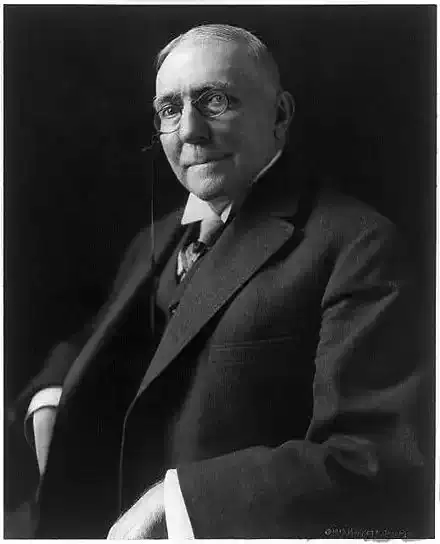
James Whitcomb Riley
How Did You Rest, Last Night?
How Did You Rest, Last Night?
'How did you rest, last night?'-I've
heard my gran'pap say
Them words a thousand times--that's right--
Jes them words thataway!
As punctchul-like as morning dast
To ever heave in sight
Gran'pap 'ud allus haf to ast-'
How did you rest, last night?'
Us young-uns used to grin,
At breakfast, on the sly,
And mock the wobble of his chin
And eyebrows belt so high
And kind: _'How did you rest, last night?'_
We'd mumble and let on
Our voices trimbled, and our sight
Was dim, and hearin' gone.
* * * * *
Bad as I used to be,
All I'm a-wantin' is
As puore and ca'm a sleep fer me
And sweet a sleep as his!
And so I pray, on Jedgment Day
To wake, and with its light
See _his_ face dawn, and hear him say-'
How did you rest, last night?'
'How did you rest, last night?'-I've
heard my gran'pap say
Them words a thousand times--that's right--
Jes them words thataway!
As punctchul-like as morning dast
To ever heave in sight
Gran'pap 'ud allus haf to ast-'
How did you rest, last night?'
Us young-uns used to grin,
At breakfast, on the sly,
And mock the wobble of his chin
And eyebrows belt so high
And kind: _'How did you rest, last night?'_
We'd mumble and let on
Our voices trimbled, and our sight
Was dim, and hearin' gone.
* * * * *
Bad as I used to be,
All I'm a-wantin' is
As puore and ca'm a sleep fer me
And sweet a sleep as his!
And so I pray, on Jedgment Day
To wake, and with its light
See _his_ face dawn, and hear him say-'
How did you rest, last night?'
314
James Whitcomb Riley
Heat-Lightning
Heat-Lightning
There was a curious quiet for a space
Directly following: and in the face
Of one rapt listener pulsed the flush and glow
Of the heat-lightning that pent passions throw
Long ere the crash of speech.--He broke the spell--
The host:--The Traveler's story, told so well,
He said, had wakened there within his breast
A yearning, as it were, to know _the rest_--
That all unwritten sequence that the Lord
Of Righteousness must write with flame and sword,
Some awful session of His patient thought--
Just then it was, his good old mother caught
His blazing eye--so that its fire became
But as an ember--though it burned the same.
It seemed to her, she said, that she had heard
It was the _Heavenly_ Parent never erred,
And not the _earthly_ one that had such grace:
'Therefore, my son,' she said, with lifted face
And eyes, 'let no one dare anticipate
The Lord's intent. While _He_ waits, _we_ will wait'
And with a gust of reverence genuine
Then Uncle Mart was aptly ringing in-
''_If the darkened heavens lower,
Wrap thy cloak around thy form;
Though the tempest rise in power,
God is mightier than the storm!_''
Which utterance reached the restive children all
As something humorous. And then a call
For _him_ to tell a story, or to 'say
A funny piece.' His face fell right away:
He knew no story worthy. Then he must
_Declaim_ for them: In that, he could not trust
His memory. And then a happy thought
Struck some one, who reached in his vest and brought
Some scrappy clippings into light and said
There was a poem of Uncle Mart's he read
Last April in '_The Sentinel_.' He had
It there in print, and knew all would be glad
To hear it rendered by the author.
And,
All reasons for declining at command
Exhausted, the now helpless poet rose
And said: 'I am discovered, I suppose.
Though I have taken all precautions not
To sign my name to any verses wrought
By my transcendent genius, yet, you see,
Fame wrests my secret from me bodily;
So I must needs confess I did this deed
Of poetry red-handed, nor can plead
One whit of unintention in my crime--
My guilt of rhythm and my glut of rhyme.-
'Maenides rehearsed a tale of arms,
And Naso told of curious metat_mur_phoses;
Unnumbered pens have pictured woman's charms,
While crazy _I_'ve made poetry _on purposes!_'
In other words, I stand convicted--need
I say--by my own doing, as I read.
There was a curious quiet for a space
Directly following: and in the face
Of one rapt listener pulsed the flush and glow
Of the heat-lightning that pent passions throw
Long ere the crash of speech.--He broke the spell--
The host:--The Traveler's story, told so well,
He said, had wakened there within his breast
A yearning, as it were, to know _the rest_--
That all unwritten sequence that the Lord
Of Righteousness must write with flame and sword,
Some awful session of His patient thought--
Just then it was, his good old mother caught
His blazing eye--so that its fire became
But as an ember--though it burned the same.
It seemed to her, she said, that she had heard
It was the _Heavenly_ Parent never erred,
And not the _earthly_ one that had such grace:
'Therefore, my son,' she said, with lifted face
And eyes, 'let no one dare anticipate
The Lord's intent. While _He_ waits, _we_ will wait'
And with a gust of reverence genuine
Then Uncle Mart was aptly ringing in-
''_If the darkened heavens lower,
Wrap thy cloak around thy form;
Though the tempest rise in power,
God is mightier than the storm!_''
Which utterance reached the restive children all
As something humorous. And then a call
For _him_ to tell a story, or to 'say
A funny piece.' His face fell right away:
He knew no story worthy. Then he must
_Declaim_ for them: In that, he could not trust
His memory. And then a happy thought
Struck some one, who reached in his vest and brought
Some scrappy clippings into light and said
There was a poem of Uncle Mart's he read
Last April in '_The Sentinel_.' He had
It there in print, and knew all would be glad
To hear it rendered by the author.
And,
All reasons for declining at command
Exhausted, the now helpless poet rose
And said: 'I am discovered, I suppose.
Though I have taken all precautions not
To sign my name to any verses wrought
By my transcendent genius, yet, you see,
Fame wrests my secret from me bodily;
So I must needs confess I did this deed
Of poetry red-handed, nor can plead
One whit of unintention in my crime--
My guilt of rhythm and my glut of rhyme.-
'Maenides rehearsed a tale of arms,
And Naso told of curious metat_mur_phoses;
Unnumbered pens have pictured woman's charms,
While crazy _I_'ve made poetry _on purposes!_'
In other words, I stand convicted--need
I say--by my own doing, as I read.
316
James Whitcomb Riley
A Song of the Road
A Song of the Road
O I will walk with you, my lad, whichever way you fare,
You'll have me, too, the side o' you, with heart as light as air;
No care for where the road you take's a-leadin' anywhere,--
It can but be a joyful ja'nt whilst you journey there.
The road you take's the path o' love, an' that's the bridth o' two--
An' I will walk with you, my lad -- O I will walk with you.
Ho! I will walk with you, my lad,
Be weather black or blue
Or roadsides frost or dew, my lad --
O I will walk with you.
Aye, glad, my lad, I'll walk with you, whatever winds may blow,
Or summer blossoms stay our steps, or blinding drifts of snow;
The way thay you set face an' foot 's the way that I will go,
An' brave I'll be, abreast o' ye, the Saints and Angels know!
With loyal hand in loyal hand, an' one heart made o' two,
Through summer's gold, or winter's cold, It's I will walk with you.
Sure, I will walk with you, my lad,
A love ordains me to,--
To Heaven's door, an' through, my lad.
O I will walk with you.
O I will walk with you, my lad, whichever way you fare,
You'll have me, too, the side o' you, with heart as light as air;
No care for where the road you take's a-leadin' anywhere,--
It can but be a joyful ja'nt whilst you journey there.
The road you take's the path o' love, an' that's the bridth o' two--
An' I will walk with you, my lad -- O I will walk with you.
Ho! I will walk with you, my lad,
Be weather black or blue
Or roadsides frost or dew, my lad --
O I will walk with you.
Aye, glad, my lad, I'll walk with you, whatever winds may blow,
Or summer blossoms stay our steps, or blinding drifts of snow;
The way thay you set face an' foot 's the way that I will go,
An' brave I'll be, abreast o' ye, the Saints and Angels know!
With loyal hand in loyal hand, an' one heart made o' two,
Through summer's gold, or winter's cold, It's I will walk with you.
Sure, I will walk with you, my lad,
A love ordains me to,--
To Heaven's door, an' through, my lad.
O I will walk with you.
275

Jack Kerouac
The Scripture of the Golden Eternity
The Scripture of the Golden Eternity
1
Did I create that sky? Yes, for, if it was anything other than a conception in my mind I
wouldnt have said 'Sky'-That is why I am the golden eternity. There are not two of us
here, reader and writer, but one, one golden eternity, One-Which-It-Is, That-WhichEverything-
Is.
2
The awakened Buddha to show the way, the chosen Messiah to die in the degradation
of sentience, is the golden eternity. One that is what is, the golden eternity, or, God,
or, Tathagata-the name. The Named One. The human God. Sentient Godhood. Animate
Divine. The Deified One. The Verified One. The Free One. The Liberator. The Still One.
The settled One. The Established One. Golden Eternity. All is Well. The Empty One. The
Ready One. The Quitter. The Sitter. The Justified One. The Happy One.
3
That sky, if it was anything other than an illusion of my mortal mind I wouldnt have
said 'that sky.' Thus I made that sky, I am the golden eternity. I am Mortal Golden
Eternity.
4
I was awakened to show the way, chosen to die in the degradation of life, because I
am Mortal Golden Eternity.
5
I am the golden eternity in mortal animate form.
6
Strictly speaking, there is no me, because all is emptiness. I am empty, I am
non-existent. All is bliss.
7
This truth law has no more reality than the world.
8
You are the golden eternity because there is no me and no you, only one golden
eternity.
9
The Realizer. Entertain no imaginations whatever, for the thing is a no-thing. Knowing
this then is Human Godhood.
10
This world is the movie of what everything is, it is one movie, made of the same stuff
throughout, belonging to nobody, which is what everything is.
11
If we were not all the golden eternity we wouldnt be here. Because we are here we
cant help being pure. To tell man to be pure on account of the punishing angel that
punishes the bad and the rewarding angel that rewards the good would be like telling
the water 'Be Wet'-Never the less, all things depend on supreme reality, which is
already established as the record of Karma earned-fate.
12
God is not outside us but is just us, the living and the dead, the never-lived and
never-died. That we should learn it only now, is supreme reality, it was written a long
time ago in the archives of universal mind, it is already done, there's no more to do.
13
This is the knowledge that sees the golden eternity in all things, which is us, you, me,
and which is no longer us, you, me.
14
What name shall we give it which hath no name, the common eternal matter of the
mind? If we were to call it essence, some might think it meant perfume, or gold, or
honey. It is not even mind. It is not even discussible, groupable into words; it is not
even endless, in fact it is not even mysterious or inscrutably inexplicable; it is what is;
it is that; it is this. We could easily call the golden eternity 'This.' But 'what's in a
name?' asked Shakespeare. The golden eternity by another name would be as sweet. A
Tathagata, a God, a Buddha by another name, an Allah, a Sri Krishna, a Coyote, a
Brahma, a Mazda, a Messiah, an Amida, an Aremedeia, a Maitreya, a Palalakonuh, 1 2
3 4 5 6 7 8 would be as sweet. The golden eternity is X, the golden eternity is A, the
golden eternity is /\, the golden eternity is O, the golden eternity is [ ], the golden
eternity is t-h-e-g-o-l-d-e-n-e-t-e-r- n-i-t-y. In the beginning was the word; before the
beginning, in the beginningless infinite neverendingness, was the essence. Both the
word 'god' and the essence of the word, are emptiness. The form of emptiness which is
emptiness having taken the form of form, is what you see and hear and feel right now,
and what you taste and smell and think as you read this. Wait awhile, close your eyes,
let your breathing stop three seconds or so, listen to the inside silence in the womb of
the world, let your hands and nerve-ends drop, re-recognize the bliss you forgot, the
emptiness and essence and ecstasy of ever having been and ever to be the golden
eternity. This is the lesson you forgot.
15
The lesson was taught long ago in the other world systems that have naturally changed
into the empty and awake, and are here now smiling in our smile and scowling in our
scowl. It is only like the golden eternity pretending to be smiling and scowling to itself;
like a ripple on the smooth ocean of knowing. The fate of humanity is to vanish into the
golden eternity, return pouring into its hands which are not hands. The navel shall
receive, invert, and take back what'd issued forth; the ring of flesh shall close; the
personalities of long dead heroes are blank dirt.
16
The point is we're waiting, not how comfortable we are while waiting. Paleolithic man
waited by caves for the realization of why he was there, and hunted; modern men wait
in beautified homes and try to forget death and birth. We're waiting for the realization
that this is the golden eternity.
17
It came on time.
18
There is a blessedness surely to be believed, and that is that everything abides in
eternal ecstasy, now and forever.
19
Mother Kali eats herself back. All things but come to go. All these holy forms,
unmanifest, not even forms, truebodies of blank bright ecstasy, abiding in a trance, 'in
emptiness and silence' as it is pointed out in the Diamond-cutter, asked to be only
what they are: GLAD.
20
The secret God-grin in the trees and in the teapot, in ashes and fronds, fire and brick,
flesh and mental human hope. All things, far from yearning to be re-united with God,
had never left themselves and here they are, Dharmakaya, the body of the truth law,
the universal Thisness.
21
'Beyond the reach of change and fear, beyond all praise and blame,' the Lankavatara
Scripture knows to say, is he who is what he is in time and time-less-ness, in ego and
in ego-less-ness, in self and in self-less-ness.
22
Stare deep into the world before you as if it were the void: innumerable holy ghosts,
buddhies, and savior gods there hide, smiling. All the atoms emitting light inside
wavehood, there is no personal separation of any of it. A hummingbird can come into a
house and a hawk will not: so rest and be assured. While looking for the light, you may
suddenly be devoured by the darkness and find the true light.
23
Things dont tire of going and coming. The flies end up with the delicate viands.
24
The cause of the world's woe is birth, The cure of the world's woe is a bent stick.
25
Though it is everything, strictly speaking there is no golden eternity because
everything is nothing: there are no things and no goings and comings: for all is
emptiness, and emptiness is these forms, emptiness is this one formhood.
26
All these selfnesses have already vanished. Einstein measured that this present
universe is an expanding bubble, and you know what that means.
27
Discard such definite imaginations of phenomena as your own self, thou human being,
thou'rt a numberless mass of sun-motes: each mote a shrine. The same as to your
shyness of other selves, selfness as divided into infinite numbers of beings, or selfness
as identified as one self existing eternally. Be obliging and noble, be generous with
your time and help and possessions, and be kind, because the emptiness of this little
place of flesh you carry around and call your soul, your entity, is the same emptiness in
every direction of space unmeasurable emptiness, the same, one, and holy emptiness
everywhere: why be selfy and unfree, Man God, in your dream? Wake up, thou'rt
selfless and free. 'Even and upright your mind abides nowhere,' states Hui Neng of
China. We're all in heaven now.
28
Roaring dreams take place in a perfectly silent mind. Now that we know this, throw the
raft away.
29
Are you tightwad and are you mean, those are the true sins, and sin is only a
conception of ours, due to long habit. Are you generous and are you kind, those are
the true virtues, and they're only conceptions. The golden eternity rests beyond sin and
virtue, is attached to neither, is attached to nothing, is unattached, because the golden
eternity is Alone. The mold has rills but it is one mold. The field has curves but it is one
field. All things are different forms of the same thing. I call it the golden eternity-what
do you call it, brother? for the blessing and merit of virtue, and the punishment and
bad fate of sin, are alike just so many words.
30
Sociability is a big smile, and a big smile is nothing but teeth. Rest and be kind.
31
There's no need to deny that evil thing called GOOGOO, which doesnt exist, just as
there's no need to deny that evil thing called Sex and Rebirth, which also doesn't exist,
as it is only a form of emptiness. The bead of semen comes from a long line of
awakened natures that were your parent, a holy flow, a succession of saviors pouring
from the womb of the dark void and back into it, fantastic magic imagination of the
lightning, flash, plays, dreams, not even plays, dreams.
32
'The womb of exuberant fertility,' Ashvhaghosha called it, radiating forms out of its
womb of exuberant emptiness. In emptiness there is no Why, no knowledge of Why, no
ignorance of Why, no asking and no answering of Why, and no significance attached to
this.
33
A disturbed and frightened man is like the golden eternity experimentally pretending at
feeling the disturbed-and-frightened mood; a calm and joyous man, is like the golden
eternity pretending at experimenting with that experience; a man experiencing his
Sentient Being, is like the golden eternity pretending at trying that out too; a man who
has no thoughts, is like the golden eternity pretending at being itself; because the
emptiness of everything has no beginning and no end and at present is infinite.
34
'Love is all in all,' said Sainte Therese, choosing Love for her vocation and pouring out
her happiness, from her garden by the gate, with a gentle smile, pouring roses on the
earth, so that the beggar in the thunderbolt received of the endless offering of her dark
void. Man goes a-beggaring into nothingness. 'Ignorance is the father, Habit-Energy is
the Mother.' Opposites are not the same for the same reason they are the same.
35
The words 'atoms of dust' and 'the great universes' are only words. The idea that they
imply is only an idea. The belief that we live here in this existence, divided into various
beings, passing food in and out of ourselves, and casting off husks of bodies one after
another with no cessation and no definite or particular discrimination, is only an idea.
The seat of our Immortal Intelligence can be seen in that beating light between the
eyes the Wisdom Eye of the ancients: we know what we're doing: we're not disturbed:
because we're like the golden eternity pretending at playing the magic cardgame and
making believe it's real, it's a big dream, a joyous ecstasy of words and ideas and
flesh, an ethereal flower unfolding a folding back, a movie, an exuberant bunch of lines
bounding emptiness, the womb of Avalokitesvara, a vast secret silence, springtime in
the Void, happy young gods talking and drinking on a cloud. Our 32,000 chillicosms
bear all the marks of excellence. Blind milky light fills our night; and the morning is
crystal.
36
Give a gift to your brother, but there's no gift to compare with the giving of assurance
that he is the golden eternity. The true understanding of this would bring tears to your
eyes. The other shore is right here, forgive and forget, protect and reassure. Your
tormenters will be purified. Raise thy diamond hand. Have faith and wait. The course of
your days is a river rumbling over your rocky back. You're sitting at the bottom of the
world with a head of iron. Religion is thy sad heart. You're the golden eternity and it
must be done by you. And means one thing: Nothing-Ever-Happened. This is the
golden eternity.
37
When the Prince of the Kalinga severed the flesh from the limbs and body of Buddha,
even then the Buddha was free from any such ideas as his own self, other self, living
beings divided into many selves, or living beings united and identified into one eternal
self. The golden eternity isnt 'me.' Before you can know that you're dreaming you'll
wake up, Atman. Had the Buddha, the Awakened One, cherished any of these
imaginary judgments of and about things, he would have fallen into impatience and
hatred in his suffering. Instead, like Jesus on the Cross he saw the light and died kind,
loving all living things.
38
The world was spun out of a blade of grass: the world was spun out of a mind. Heaven
was spun out of a blade of grass: heaven was spun out of a mind. Neither will do you
much good, neither will do you much harm. The Oriental imperturbed, is the golden
eternity.
39
He is called a Yogi, his is called a Priest, a Minister, a Brahmin, a Parson, a Chaplain, a
Roshi, a Laoshih, a Master, a Patriarch, a Pope, a Spiritual Commissar, a Counselor,
and Adviser, a Bodhisattva-Mahasattva, an Old Man, a Saint, a Shaman, a Leader, who
thinks nothing of himself as separate from another self, not higher nor lower, no stages
and no definite attainments, no mysterious stigmata or secret holyhood, no wild dark
knowledge and no venerable authoritativeness, nay a giggling sage sweeping out of the
kitchen with a broom. After supper, a silent smoke. Because there is no definite
teaching: the world is undisciplined. Nature endlessly in every direction inward to your
body and outward into space.
40
Meditate outdoors. The dark trees at night are not really the dark trees at night, it's
only the golden eternity.
41
A mosquito as big as Mount Everest is much bigger than you think: a horse's hoof is
more delicate than it looks. An altar consecrated to the golden eternity, filled with
roses and lotuses and diamonds, is the cell of the humble prisoner, the cell so cold and
dreary. Boethius kissed the Robe of the Mother Truth in a Roman dungeon.
42
Do you think the emptiness of the sky will ever crumble away? Every little child knows
that everybody will go to heaven. Knowing that nothing ever happened is not really
knowing that nothing ever happened, it's the golden eternity. In other words, nothing
can compare with telling your brother and your sister that what happened, what is
happening, and what will happen, never really happened, is not really happening and
never will happen, it is only the golden eternity. Nothing was ever born, nothing will
ever die. Indeed, it didnt even happen that you heard about golden eternity through
the accidental reading of this scripture. The thing is easily false. There are no warnings
whatever issuing from the golden eternity: do what you want.
43
Even in dreams be kind, because anyway there is no time, no space, no mind. 'It's all
not-born,' said Bankei of Japan, whose mother heard this from her son did what we call
'died happy.' And even if she had died unhappy, dying unhappy is not really dying
unhappy, it's the golden eternity. It's impossible to exist, it's impossible to be
persecuted, it's impossible to miss your reward.
44
Eight hundred and four thousand myriads of Awakened Ones throughout numberless
swirls of epochs appeared to work hard to save a grain of sand, and it was only the
golden eternity. And their combined reward will be no greater and no lesser than what
will be won by a piece of dried turd. It's a reward beyond thought.
45
When you've understood this scripture, throw it away. If you cant understand this
scripture, throw it away. I insist on your freedom.
46
O everlasting Eternity, all things and all truth laws are no- things, in three ways, which
is the same way: AS THINGS OF TIME they dont exist because there is no furthest
atom than can be found or weighed or grasped, it is emptiness through and through,
matter and empty space too. AS THINGS OF MIND they dont exist, because the mind
that conceives and makes them out does so by seeing, hearing touching, smelling,
tasting, and mentally-noticing and without this mind they would not be seen or heard
or felt or smelled or tasted or mentally-noticed, they are discriminated that which
they're not necessarily by imaginary judgments of the mind, they are actually
dependent on the mind that makes them out, by themselves they are no-things, they
are really mental, seen only of the mind, they are really empty visions of the mind,
heaven is a vision, everything is a vision. What does it mean that I am in this endless
universe thinking I'm a man sitting under the stars on the terrace of earth, but actually
empty and awake throughout the emptiness and awakedness of everything? It means
that I am empty and awake, knowing that I am empty and awake, and that there's no
difference between me and anything else. It means that I have attained to that which
everything is.
47
The-Attainer-To-That-Which-Everything-Is, the Sanskrit Tathagata, has no ideas
whatever but abides in essence identically with the essence of all things, which is what
it is, in emptiness and silence. Imaginary meaning stretched to make mountains and as
far as the germ is concerned it stretched even further to make molehills. A million souls
dropped through hell but nobody saw them or counted them. A lot of large people isnt
really a lot of large people, it's only the golden eternity. When St. Francis went to
heaven he did not add to heaven nor detract from earth. Locate silence, possess space,
spot me the ego. 'From the beginning,' said the Sixth Patriarch of the China School,
'not a thing is.'
48
He who loves all life with his pity and intelligence isnt really he who loves all life with
his pity and intelligence, it's only natural. The universe is fully known because it is
ignored. Enlightenment comes when you dont care. This is a good tree stump I'm
sitting on. You cant even grasp your own pain let alone your eternal reward. I love you
because you're me. I love you because there's nothing else to do. It's just the natural
golden eternity.
49
What does it mean that those trees and mountains are magic and unreal?- It means
that those trees and mountains are magic and unreal. What does it mean that those
trees and mountains are not magic but real?- it means that those trees and mountains
are not magic but real. Men are just making imaginary judgments both ways, and all
the time it's just the same natural golden eternity.
50
If the golden eternity was anything other than mere words, you could not have said
'golden eternity.' This means that the words are used to point at the endless
nothingness of reality. If the endless nothingness of reality was anything other than
mere words, you could not have said 'endless nothingness of reality,' you could not
have said it. This means that the golden eternity is out of our word-reach, it refuses
steadfastly to be described, it runs away from us and leads us in. The name is not
really the name. The same way, you could not have said 'this world' if this world was
anything other than mere words. There's nothing there but just that. They've long
known that there's nothing to life but just the living of it. It Is What It Is and That's All
It Is.
51
There's no system of teaching and no reward for teaching the golden eternity, because
nothing has happened. In the golden eternity teaching and reward havent even
vanished let alone appeared. The golden eternity doesnt even have to be perfect. It is
very silly of me to talk about it. I talk about it simply because here I am dreaming that
I talk about it in a dream already ended, ages ago, from which I'm already awake, and
it was only an empty dreaming, in fact nothing whatever, in fact nothing ever
happened at all. The beauty of attaining the golden eternity is that nothing will be
acquired, at last.
52
Kindness and sympathy, understanding and encouragement, these give: they are
better than just presents and gifts: no reason in the world why not. Anyhow, be nice.
Remember the golden eternity is yourself. 'If someone will simply practice kindness,'
said Gotama to Subhuti, 'he will soon attain highest perfect wisdom.' Then he added:
'Kindness after all is only a word and it should be done on the spot without thought of
kindness.' By practicing kindness all over with everyone you will soon come into the
holy trance, infinite distinctions of personalities will become what they really
mysteriously are, our common and eternal blissstuff, the pureness of everything
forever, the great bright essence of mind, even and one thing everywhere the holy
eternal milky love, the white light everywhere everything, emptybliss, svaha, shining,
ready, and awake, the compassion in the sound of silence, the swarming myriad
trillionaire you are.
53
Everything's alright, form is emptiness and emptiness is form, and we're here forever,
in one form or another, which is empty. Everything's alright, we're not here, there, or
anywhere. Everything's alright, cats sleep.
54
The everlasting and tranquil essence, look around and see the smiling essence
everywhere. How wily was the world made, Maya, not-even-made.
55
There's the world in the daylight. If it was completely dark you wouldnt see it but it
would still be there. If you close your eyes you really see what it's like: mysterious
particle-swarming emptiness. On the moon big mosquitos of straw know this in the
kindness of their hearts. Truly speaking, unrecognizably sweet it all is. Don't worry
about nothing.
56
Imaginary judgments about things, in the Nothing-Ever-Happened wonderful void, you
dont even have to reject them, let alone accept them. 'That looks like a tree, let's call it
a tree,' said Coyote to Earthmaker at the beginning, and they walked around the
rootdrinker patting their bellies.
57
Perfectly selfless, the beauty of it, the butterfly doesnt take it as a personal
achievement, he just disappears through the trees. You too, kind and humble and
not-even-here, it wasnt in a greedy mood that you saw the light that belongs to
everybody.
58
Look at your little finger, the emptiness of it is no different than the emptiness of
infinity.
59
Cats yawn because they realize that there's nothing to do.
60
Up in heaven you wont remember all these tricks of yours. You wont even sigh 'Why?'
Whether as atomic dust or as great cities, what's the difference in all this stuff. A tree
is still only a rootdrinker. The puma's twisted face continues to look at the blue sky
with sightless eyes, Ah sweet divine and indescribable verdurous paradise planted in
mid-air! Caitanya, it's only consciousness. Not with thoughts of your mind, but in the
believing sweetness of your heart, you snap the link and open the golden door and
disappear into the bright room, the everlasting ecstasy, eternal Now. Soldier, follow
me! - there never was a war. Arjuna, dont fight! - why fight over nothing? Bless and sit
down.
61
I remember that I'm supposed to be a man and consciousness and I focus my eyes and
the print reappears and the words of the poor book are saying, 'The world, as God has
made it' and there are no words in my pitying heart to express the knowless loveliness
of the trance there was before I read those words, I had no such idea that there was a
world.
62
This world has no marks, signs, or evidence of existence, nor the noises in it, like
accident of wind or voices or heehawing animals, yet listen closely the eternal hush of
silence goes on and on throughout all this, and has been gong on, and will go on and
on. This is because the world is nothing but a dream and is just thought of and the
everlasting eternity pays no attention to it. At night under the moon, or in a quiet
room, hush now, the secret music of the Unborn goes on and on, beyond conception,
awake beyond existence. Properly speaking, awake is not really awake because the
golden eternity never went to sleep; you can tell by the constant sound of Silence
which cuts through this world like a magic diamond through the trick of your not
realizing that your mind caused the world.
63
The God of the American Plateau Indian was Coyote. He says: 'Earth! those beings
living on your surface, none of them disappearing, will all be transformed. When I have
spoken to them, when they have spoken to me, from that moment on, their words and
their bodies which they usually use to move about with, will all change. I will not have
heard them.'
64
I was smelling flowers in the yard, and when I stood up I took a deep breath and the
blood all rushed to my brain and I woke up dead on my back in the grass. I had
apparently fainted, or died, for about sixty seconds. My neighbor saw me but he
thought I had just suddenly thrown myself on the grass to enjoy the sun. During that
timeless moment of unconsciousness I saw the golden eternity. I saw heaven. In it
nothing had ever happened, the events of a million years ago were just as phantom
and ungraspable as the events of now, or the events of the next ten minutes. It was
perfect, the golden solitude, the golden emptiness, Something-Or- Other, something
surely humble. There was a rapturous ring of silence abiding perfectly. There was no
question of being alive or not being alive, of likes and dislikes, of near or far, no
question of giving or gratitude, no question of mercy or judgment, or of suffering or its
opposite or anything. It was the womb itself, aloneness, alaya vijnana the universal
store, the Great Free Treasure, the Great Victory, infinite completion, the joyful
mysterious essence of Arrangement. It seemed like one smiling smile, one adorable
adoration, one gracious and adorable charity, everlasting safety, refreshing afternoon,
roses, infinite brilliant immaterial gold ash, the Golden Age. The 'golden' came from the
sun in my eyelids, and the 'eternity' from my sudden instant realization as I woke up
that I had just been where it all came from and where it was all returning, the
everlasting So, and so never coming or going; therefore I call it the golden eternity but
you can call it anything you want. As I regained consciousness I felt so sorry I had a
body and a mind suddenly realizing I didn't even have a body and a mind and nothing
had ever happened and everything is alright forever and forever and forever, O thank
you thank you thank you.
65
This is the first teaching from the golden eternity.
66
The second teaching from the golden eternity is that there never was a first teaching
from the golden eternity. So be sure.
1
Did I create that sky? Yes, for, if it was anything other than a conception in my mind I
wouldnt have said 'Sky'-That is why I am the golden eternity. There are not two of us
here, reader and writer, but one, one golden eternity, One-Which-It-Is, That-WhichEverything-
Is.
2
The awakened Buddha to show the way, the chosen Messiah to die in the degradation
of sentience, is the golden eternity. One that is what is, the golden eternity, or, God,
or, Tathagata-the name. The Named One. The human God. Sentient Godhood. Animate
Divine. The Deified One. The Verified One. The Free One. The Liberator. The Still One.
The settled One. The Established One. Golden Eternity. All is Well. The Empty One. The
Ready One. The Quitter. The Sitter. The Justified One. The Happy One.
3
That sky, if it was anything other than an illusion of my mortal mind I wouldnt have
said 'that sky.' Thus I made that sky, I am the golden eternity. I am Mortal Golden
Eternity.
4
I was awakened to show the way, chosen to die in the degradation of life, because I
am Mortal Golden Eternity.
5
I am the golden eternity in mortal animate form.
6
Strictly speaking, there is no me, because all is emptiness. I am empty, I am
non-existent. All is bliss.
7
This truth law has no more reality than the world.
8
You are the golden eternity because there is no me and no you, only one golden
eternity.
9
The Realizer. Entertain no imaginations whatever, for the thing is a no-thing. Knowing
this then is Human Godhood.
10
This world is the movie of what everything is, it is one movie, made of the same stuff
throughout, belonging to nobody, which is what everything is.
11
If we were not all the golden eternity we wouldnt be here. Because we are here we
cant help being pure. To tell man to be pure on account of the punishing angel that
punishes the bad and the rewarding angel that rewards the good would be like telling
the water 'Be Wet'-Never the less, all things depend on supreme reality, which is
already established as the record of Karma earned-fate.
12
God is not outside us but is just us, the living and the dead, the never-lived and
never-died. That we should learn it only now, is supreme reality, it was written a long
time ago in the archives of universal mind, it is already done, there's no more to do.
13
This is the knowledge that sees the golden eternity in all things, which is us, you, me,
and which is no longer us, you, me.
14
What name shall we give it which hath no name, the common eternal matter of the
mind? If we were to call it essence, some might think it meant perfume, or gold, or
honey. It is not even mind. It is not even discussible, groupable into words; it is not
even endless, in fact it is not even mysterious or inscrutably inexplicable; it is what is;
it is that; it is this. We could easily call the golden eternity 'This.' But 'what's in a
name?' asked Shakespeare. The golden eternity by another name would be as sweet. A
Tathagata, a God, a Buddha by another name, an Allah, a Sri Krishna, a Coyote, a
Brahma, a Mazda, a Messiah, an Amida, an Aremedeia, a Maitreya, a Palalakonuh, 1 2
3 4 5 6 7 8 would be as sweet. The golden eternity is X, the golden eternity is A, the
golden eternity is /\, the golden eternity is O, the golden eternity is [ ], the golden
eternity is t-h-e-g-o-l-d-e-n-e-t-e-r- n-i-t-y. In the beginning was the word; before the
beginning, in the beginningless infinite neverendingness, was the essence. Both the
word 'god' and the essence of the word, are emptiness. The form of emptiness which is
emptiness having taken the form of form, is what you see and hear and feel right now,
and what you taste and smell and think as you read this. Wait awhile, close your eyes,
let your breathing stop three seconds or so, listen to the inside silence in the womb of
the world, let your hands and nerve-ends drop, re-recognize the bliss you forgot, the
emptiness and essence and ecstasy of ever having been and ever to be the golden
eternity. This is the lesson you forgot.
15
The lesson was taught long ago in the other world systems that have naturally changed
into the empty and awake, and are here now smiling in our smile and scowling in our
scowl. It is only like the golden eternity pretending to be smiling and scowling to itself;
like a ripple on the smooth ocean of knowing. The fate of humanity is to vanish into the
golden eternity, return pouring into its hands which are not hands. The navel shall
receive, invert, and take back what'd issued forth; the ring of flesh shall close; the
personalities of long dead heroes are blank dirt.
16
The point is we're waiting, not how comfortable we are while waiting. Paleolithic man
waited by caves for the realization of why he was there, and hunted; modern men wait
in beautified homes and try to forget death and birth. We're waiting for the realization
that this is the golden eternity.
17
It came on time.
18
There is a blessedness surely to be believed, and that is that everything abides in
eternal ecstasy, now and forever.
19
Mother Kali eats herself back. All things but come to go. All these holy forms,
unmanifest, not even forms, truebodies of blank bright ecstasy, abiding in a trance, 'in
emptiness and silence' as it is pointed out in the Diamond-cutter, asked to be only
what they are: GLAD.
20
The secret God-grin in the trees and in the teapot, in ashes and fronds, fire and brick,
flesh and mental human hope. All things, far from yearning to be re-united with God,
had never left themselves and here they are, Dharmakaya, the body of the truth law,
the universal Thisness.
21
'Beyond the reach of change and fear, beyond all praise and blame,' the Lankavatara
Scripture knows to say, is he who is what he is in time and time-less-ness, in ego and
in ego-less-ness, in self and in self-less-ness.
22
Stare deep into the world before you as if it were the void: innumerable holy ghosts,
buddhies, and savior gods there hide, smiling. All the atoms emitting light inside
wavehood, there is no personal separation of any of it. A hummingbird can come into a
house and a hawk will not: so rest and be assured. While looking for the light, you may
suddenly be devoured by the darkness and find the true light.
23
Things dont tire of going and coming. The flies end up with the delicate viands.
24
The cause of the world's woe is birth, The cure of the world's woe is a bent stick.
25
Though it is everything, strictly speaking there is no golden eternity because
everything is nothing: there are no things and no goings and comings: for all is
emptiness, and emptiness is these forms, emptiness is this one formhood.
26
All these selfnesses have already vanished. Einstein measured that this present
universe is an expanding bubble, and you know what that means.
27
Discard such definite imaginations of phenomena as your own self, thou human being,
thou'rt a numberless mass of sun-motes: each mote a shrine. The same as to your
shyness of other selves, selfness as divided into infinite numbers of beings, or selfness
as identified as one self existing eternally. Be obliging and noble, be generous with
your time and help and possessions, and be kind, because the emptiness of this little
place of flesh you carry around and call your soul, your entity, is the same emptiness in
every direction of space unmeasurable emptiness, the same, one, and holy emptiness
everywhere: why be selfy and unfree, Man God, in your dream? Wake up, thou'rt
selfless and free. 'Even and upright your mind abides nowhere,' states Hui Neng of
China. We're all in heaven now.
28
Roaring dreams take place in a perfectly silent mind. Now that we know this, throw the
raft away.
29
Are you tightwad and are you mean, those are the true sins, and sin is only a
conception of ours, due to long habit. Are you generous and are you kind, those are
the true virtues, and they're only conceptions. The golden eternity rests beyond sin and
virtue, is attached to neither, is attached to nothing, is unattached, because the golden
eternity is Alone. The mold has rills but it is one mold. The field has curves but it is one
field. All things are different forms of the same thing. I call it the golden eternity-what
do you call it, brother? for the blessing and merit of virtue, and the punishment and
bad fate of sin, are alike just so many words.
30
Sociability is a big smile, and a big smile is nothing but teeth. Rest and be kind.
31
There's no need to deny that evil thing called GOOGOO, which doesnt exist, just as
there's no need to deny that evil thing called Sex and Rebirth, which also doesn't exist,
as it is only a form of emptiness. The bead of semen comes from a long line of
awakened natures that were your parent, a holy flow, a succession of saviors pouring
from the womb of the dark void and back into it, fantastic magic imagination of the
lightning, flash, plays, dreams, not even plays, dreams.
32
'The womb of exuberant fertility,' Ashvhaghosha called it, radiating forms out of its
womb of exuberant emptiness. In emptiness there is no Why, no knowledge of Why, no
ignorance of Why, no asking and no answering of Why, and no significance attached to
this.
33
A disturbed and frightened man is like the golden eternity experimentally pretending at
feeling the disturbed-and-frightened mood; a calm and joyous man, is like the golden
eternity pretending at experimenting with that experience; a man experiencing his
Sentient Being, is like the golden eternity pretending at trying that out too; a man who
has no thoughts, is like the golden eternity pretending at being itself; because the
emptiness of everything has no beginning and no end and at present is infinite.
34
'Love is all in all,' said Sainte Therese, choosing Love for her vocation and pouring out
her happiness, from her garden by the gate, with a gentle smile, pouring roses on the
earth, so that the beggar in the thunderbolt received of the endless offering of her dark
void. Man goes a-beggaring into nothingness. 'Ignorance is the father, Habit-Energy is
the Mother.' Opposites are not the same for the same reason they are the same.
35
The words 'atoms of dust' and 'the great universes' are only words. The idea that they
imply is only an idea. The belief that we live here in this existence, divided into various
beings, passing food in and out of ourselves, and casting off husks of bodies one after
another with no cessation and no definite or particular discrimination, is only an idea.
The seat of our Immortal Intelligence can be seen in that beating light between the
eyes the Wisdom Eye of the ancients: we know what we're doing: we're not disturbed:
because we're like the golden eternity pretending at playing the magic cardgame and
making believe it's real, it's a big dream, a joyous ecstasy of words and ideas and
flesh, an ethereal flower unfolding a folding back, a movie, an exuberant bunch of lines
bounding emptiness, the womb of Avalokitesvara, a vast secret silence, springtime in
the Void, happy young gods talking and drinking on a cloud. Our 32,000 chillicosms
bear all the marks of excellence. Blind milky light fills our night; and the morning is
crystal.
36
Give a gift to your brother, but there's no gift to compare with the giving of assurance
that he is the golden eternity. The true understanding of this would bring tears to your
eyes. The other shore is right here, forgive and forget, protect and reassure. Your
tormenters will be purified. Raise thy diamond hand. Have faith and wait. The course of
your days is a river rumbling over your rocky back. You're sitting at the bottom of the
world with a head of iron. Religion is thy sad heart. You're the golden eternity and it
must be done by you. And means one thing: Nothing-Ever-Happened. This is the
golden eternity.
37
When the Prince of the Kalinga severed the flesh from the limbs and body of Buddha,
even then the Buddha was free from any such ideas as his own self, other self, living
beings divided into many selves, or living beings united and identified into one eternal
self. The golden eternity isnt 'me.' Before you can know that you're dreaming you'll
wake up, Atman. Had the Buddha, the Awakened One, cherished any of these
imaginary judgments of and about things, he would have fallen into impatience and
hatred in his suffering. Instead, like Jesus on the Cross he saw the light and died kind,
loving all living things.
38
The world was spun out of a blade of grass: the world was spun out of a mind. Heaven
was spun out of a blade of grass: heaven was spun out of a mind. Neither will do you
much good, neither will do you much harm. The Oriental imperturbed, is the golden
eternity.
39
He is called a Yogi, his is called a Priest, a Minister, a Brahmin, a Parson, a Chaplain, a
Roshi, a Laoshih, a Master, a Patriarch, a Pope, a Spiritual Commissar, a Counselor,
and Adviser, a Bodhisattva-Mahasattva, an Old Man, a Saint, a Shaman, a Leader, who
thinks nothing of himself as separate from another self, not higher nor lower, no stages
and no definite attainments, no mysterious stigmata or secret holyhood, no wild dark
knowledge and no venerable authoritativeness, nay a giggling sage sweeping out of the
kitchen with a broom. After supper, a silent smoke. Because there is no definite
teaching: the world is undisciplined. Nature endlessly in every direction inward to your
body and outward into space.
40
Meditate outdoors. The dark trees at night are not really the dark trees at night, it's
only the golden eternity.
41
A mosquito as big as Mount Everest is much bigger than you think: a horse's hoof is
more delicate than it looks. An altar consecrated to the golden eternity, filled with
roses and lotuses and diamonds, is the cell of the humble prisoner, the cell so cold and
dreary. Boethius kissed the Robe of the Mother Truth in a Roman dungeon.
42
Do you think the emptiness of the sky will ever crumble away? Every little child knows
that everybody will go to heaven. Knowing that nothing ever happened is not really
knowing that nothing ever happened, it's the golden eternity. In other words, nothing
can compare with telling your brother and your sister that what happened, what is
happening, and what will happen, never really happened, is not really happening and
never will happen, it is only the golden eternity. Nothing was ever born, nothing will
ever die. Indeed, it didnt even happen that you heard about golden eternity through
the accidental reading of this scripture. The thing is easily false. There are no warnings
whatever issuing from the golden eternity: do what you want.
43
Even in dreams be kind, because anyway there is no time, no space, no mind. 'It's all
not-born,' said Bankei of Japan, whose mother heard this from her son did what we call
'died happy.' And even if she had died unhappy, dying unhappy is not really dying
unhappy, it's the golden eternity. It's impossible to exist, it's impossible to be
persecuted, it's impossible to miss your reward.
44
Eight hundred and four thousand myriads of Awakened Ones throughout numberless
swirls of epochs appeared to work hard to save a grain of sand, and it was only the
golden eternity. And their combined reward will be no greater and no lesser than what
will be won by a piece of dried turd. It's a reward beyond thought.
45
When you've understood this scripture, throw it away. If you cant understand this
scripture, throw it away. I insist on your freedom.
46
O everlasting Eternity, all things and all truth laws are no- things, in three ways, which
is the same way: AS THINGS OF TIME they dont exist because there is no furthest
atom than can be found or weighed or grasped, it is emptiness through and through,
matter and empty space too. AS THINGS OF MIND they dont exist, because the mind
that conceives and makes them out does so by seeing, hearing touching, smelling,
tasting, and mentally-noticing and without this mind they would not be seen or heard
or felt or smelled or tasted or mentally-noticed, they are discriminated that which
they're not necessarily by imaginary judgments of the mind, they are actually
dependent on the mind that makes them out, by themselves they are no-things, they
are really mental, seen only of the mind, they are really empty visions of the mind,
heaven is a vision, everything is a vision. What does it mean that I am in this endless
universe thinking I'm a man sitting under the stars on the terrace of earth, but actually
empty and awake throughout the emptiness and awakedness of everything? It means
that I am empty and awake, knowing that I am empty and awake, and that there's no
difference between me and anything else. It means that I have attained to that which
everything is.
47
The-Attainer-To-That-Which-Everything-Is, the Sanskrit Tathagata, has no ideas
whatever but abides in essence identically with the essence of all things, which is what
it is, in emptiness and silence. Imaginary meaning stretched to make mountains and as
far as the germ is concerned it stretched even further to make molehills. A million souls
dropped through hell but nobody saw them or counted them. A lot of large people isnt
really a lot of large people, it's only the golden eternity. When St. Francis went to
heaven he did not add to heaven nor detract from earth. Locate silence, possess space,
spot me the ego. 'From the beginning,' said the Sixth Patriarch of the China School,
'not a thing is.'
48
He who loves all life with his pity and intelligence isnt really he who loves all life with
his pity and intelligence, it's only natural. The universe is fully known because it is
ignored. Enlightenment comes when you dont care. This is a good tree stump I'm
sitting on. You cant even grasp your own pain let alone your eternal reward. I love you
because you're me. I love you because there's nothing else to do. It's just the natural
golden eternity.
49
What does it mean that those trees and mountains are magic and unreal?- It means
that those trees and mountains are magic and unreal. What does it mean that those
trees and mountains are not magic but real?- it means that those trees and mountains
are not magic but real. Men are just making imaginary judgments both ways, and all
the time it's just the same natural golden eternity.
50
If the golden eternity was anything other than mere words, you could not have said
'golden eternity.' This means that the words are used to point at the endless
nothingness of reality. If the endless nothingness of reality was anything other than
mere words, you could not have said 'endless nothingness of reality,' you could not
have said it. This means that the golden eternity is out of our word-reach, it refuses
steadfastly to be described, it runs away from us and leads us in. The name is not
really the name. The same way, you could not have said 'this world' if this world was
anything other than mere words. There's nothing there but just that. They've long
known that there's nothing to life but just the living of it. It Is What It Is and That's All
It Is.
51
There's no system of teaching and no reward for teaching the golden eternity, because
nothing has happened. In the golden eternity teaching and reward havent even
vanished let alone appeared. The golden eternity doesnt even have to be perfect. It is
very silly of me to talk about it. I talk about it simply because here I am dreaming that
I talk about it in a dream already ended, ages ago, from which I'm already awake, and
it was only an empty dreaming, in fact nothing whatever, in fact nothing ever
happened at all. The beauty of attaining the golden eternity is that nothing will be
acquired, at last.
52
Kindness and sympathy, understanding and encouragement, these give: they are
better than just presents and gifts: no reason in the world why not. Anyhow, be nice.
Remember the golden eternity is yourself. 'If someone will simply practice kindness,'
said Gotama to Subhuti, 'he will soon attain highest perfect wisdom.' Then he added:
'Kindness after all is only a word and it should be done on the spot without thought of
kindness.' By practicing kindness all over with everyone you will soon come into the
holy trance, infinite distinctions of personalities will become what they really
mysteriously are, our common and eternal blissstuff, the pureness of everything
forever, the great bright essence of mind, even and one thing everywhere the holy
eternal milky love, the white light everywhere everything, emptybliss, svaha, shining,
ready, and awake, the compassion in the sound of silence, the swarming myriad
trillionaire you are.
53
Everything's alright, form is emptiness and emptiness is form, and we're here forever,
in one form or another, which is empty. Everything's alright, we're not here, there, or
anywhere. Everything's alright, cats sleep.
54
The everlasting and tranquil essence, look around and see the smiling essence
everywhere. How wily was the world made, Maya, not-even-made.
55
There's the world in the daylight. If it was completely dark you wouldnt see it but it
would still be there. If you close your eyes you really see what it's like: mysterious
particle-swarming emptiness. On the moon big mosquitos of straw know this in the
kindness of their hearts. Truly speaking, unrecognizably sweet it all is. Don't worry
about nothing.
56
Imaginary judgments about things, in the Nothing-Ever-Happened wonderful void, you
dont even have to reject them, let alone accept them. 'That looks like a tree, let's call it
a tree,' said Coyote to Earthmaker at the beginning, and they walked around the
rootdrinker patting their bellies.
57
Perfectly selfless, the beauty of it, the butterfly doesnt take it as a personal
achievement, he just disappears through the trees. You too, kind and humble and
not-even-here, it wasnt in a greedy mood that you saw the light that belongs to
everybody.
58
Look at your little finger, the emptiness of it is no different than the emptiness of
infinity.
59
Cats yawn because they realize that there's nothing to do.
60
Up in heaven you wont remember all these tricks of yours. You wont even sigh 'Why?'
Whether as atomic dust or as great cities, what's the difference in all this stuff. A tree
is still only a rootdrinker. The puma's twisted face continues to look at the blue sky
with sightless eyes, Ah sweet divine and indescribable verdurous paradise planted in
mid-air! Caitanya, it's only consciousness. Not with thoughts of your mind, but in the
believing sweetness of your heart, you snap the link and open the golden door and
disappear into the bright room, the everlasting ecstasy, eternal Now. Soldier, follow
me! - there never was a war. Arjuna, dont fight! - why fight over nothing? Bless and sit
down.
61
I remember that I'm supposed to be a man and consciousness and I focus my eyes and
the print reappears and the words of the poor book are saying, 'The world, as God has
made it' and there are no words in my pitying heart to express the knowless loveliness
of the trance there was before I read those words, I had no such idea that there was a
world.
62
This world has no marks, signs, or evidence of existence, nor the noises in it, like
accident of wind or voices or heehawing animals, yet listen closely the eternal hush of
silence goes on and on throughout all this, and has been gong on, and will go on and
on. This is because the world is nothing but a dream and is just thought of and the
everlasting eternity pays no attention to it. At night under the moon, or in a quiet
room, hush now, the secret music of the Unborn goes on and on, beyond conception,
awake beyond existence. Properly speaking, awake is not really awake because the
golden eternity never went to sleep; you can tell by the constant sound of Silence
which cuts through this world like a magic diamond through the trick of your not
realizing that your mind caused the world.
63
The God of the American Plateau Indian was Coyote. He says: 'Earth! those beings
living on your surface, none of them disappearing, will all be transformed. When I have
spoken to them, when they have spoken to me, from that moment on, their words and
their bodies which they usually use to move about with, will all change. I will not have
heard them.'
64
I was smelling flowers in the yard, and when I stood up I took a deep breath and the
blood all rushed to my brain and I woke up dead on my back in the grass. I had
apparently fainted, or died, for about sixty seconds. My neighbor saw me but he
thought I had just suddenly thrown myself on the grass to enjoy the sun. During that
timeless moment of unconsciousness I saw the golden eternity. I saw heaven. In it
nothing had ever happened, the events of a million years ago were just as phantom
and ungraspable as the events of now, or the events of the next ten minutes. It was
perfect, the golden solitude, the golden emptiness, Something-Or- Other, something
surely humble. There was a rapturous ring of silence abiding perfectly. There was no
question of being alive or not being alive, of likes and dislikes, of near or far, no
question of giving or gratitude, no question of mercy or judgment, or of suffering or its
opposite or anything. It was the womb itself, aloneness, alaya vijnana the universal
store, the Great Free Treasure, the Great Victory, infinite completion, the joyful
mysterious essence of Arrangement. It seemed like one smiling smile, one adorable
adoration, one gracious and adorable charity, everlasting safety, refreshing afternoon,
roses, infinite brilliant immaterial gold ash, the Golden Age. The 'golden' came from the
sun in my eyelids, and the 'eternity' from my sudden instant realization as I woke up
that I had just been where it all came from and where it was all returning, the
everlasting So, and so never coming or going; therefore I call it the golden eternity but
you can call it anything you want. As I regained consciousness I felt so sorry I had a
body and a mind suddenly realizing I didn't even have a body and a mind and nothing
had ever happened and everything is alright forever and forever and forever, O thank
you thank you thank you.
65
This is the first teaching from the golden eternity.
66
The second teaching from the golden eternity is that there never was a first teaching
from the golden eternity. So be sure.
426
Horácio
BkIII:XXII To Diana
BkIII:XXII To Diana
Virgin protectress of the mountain and the grove,
who, called on three times, hears young girls, labouring
through childbirth, and rescues them from dying, O
triple formed goddess,
may it be yours, this pine-tree above my farm,
so that I may, happily, through passing years,
offer it the blood of a boar, that’s trying
its first sidelong thrusts.
Virgin protectress of the mountain and the grove,
who, called on three times, hears young girls, labouring
through childbirth, and rescues them from dying, O
triple formed goddess,
may it be yours, this pine-tree above my farm,
so that I may, happily, through passing years,
offer it the blood of a boar, that’s trying
its first sidelong thrusts.
234
Horácio
BkI:X To Mercury
BkI:X To Mercury
Mercury, eloquent grandson of Atlas,
I’ll sing of you, who wise with your training, shaped
the uncivilised ways of our new-born race,
with language, and grace
in the ways of wrestling, you the messenger
of Jove and the gods, and the curved lyre’s father,
skilful in hiding whatever pleases you,
with playful deceit.
While he tried to scare you, with his threatening voice,
unless you returned the cattle you’d stolen,
and so craftily, Apollo was laughing
missing his quiver.
And indeed, with your guidance, Priam carrying
rich gifts left Troy, escaped the proud Atridae,
Thessalian fires, and the menacing camp
threatening Ilium.
You bring virtuous souls to the happy shores,
controlling the bodiless crowds with your wand
of gold, pleasing to the gods of the heavens
and the gods below.
Mercury, eloquent grandson of Atlas,
I’ll sing of you, who wise with your training, shaped
the uncivilised ways of our new-born race,
with language, and grace
in the ways of wrestling, you the messenger
of Jove and the gods, and the curved lyre’s father,
skilful in hiding whatever pleases you,
with playful deceit.
While he tried to scare you, with his threatening voice,
unless you returned the cattle you’d stolen,
and so craftily, Apollo was laughing
missing his quiver.
And indeed, with your guidance, Priam carrying
rich gifts left Troy, escaped the proud Atridae,
Thessalian fires, and the menacing camp
threatening Ilium.
You bring virtuous souls to the happy shores,
controlling the bodiless crowds with your wand
of gold, pleasing to the gods of the heavens
and the gods below.
256
Horácio
BkI:II To Augustus
BkI:II To Augustus
The Father’s sent enough dread hail
and snow to earth already, striking
sacred hills with fiery hand,
to scare the city,
and scare the people, lest again
we know Pyrrha’s age of pain
when Proteus his sea-herds drove
across high mountains,
and fishes lodged in all the elms,
that used to be the haunt of doves,
and the trembling roe-deer swam
the whelming waters.
We saw the yellow Tiber’s waves
hurled backwards from the Tuscan shore,
toppling Numa’s Regia and
the shrine of Vesta,
far too fierce now, the fond river,
in his revenge of wronged Ilia,
drowning the whole left bank, deep,
without permission.
Our children, fewer for their father’s
vices, will hear metal sharpened
that’s better destined for the Persians,
and of battles too.
Which gods shall the people call on
when the Empire falls in ruins?
With what prayer shall the virgins
tire heedless Vesta?
Whom will Jupiter assign to
expiate our sins? We pray you,
come, cloud veiling your bright shoulders,
far-sighted Apollo:
or laughing Venus Erycina,
if you will, whom Cupid circles,
or you, if you see your children
neglected, Leader,
you sated from the long campaign,
who love the war-shouts and the helmets,
and the Moor’s cruel face among his
blood-stained enemies.
Or you, winged son of kindly Maia,
changing shape on earth to human
form, and ready to be named as
Caesar’s avenger:
Don’t rush back to the sky, stay long
among the people of Quirinus,
no swifter breeze take you away,
unhappy with our
sins: here to delight in triumphs,
in being called our prince and father,
making sure the Medes are punished,
lead us, O Caesar.
The Father’s sent enough dread hail
and snow to earth already, striking
sacred hills with fiery hand,
to scare the city,
and scare the people, lest again
we know Pyrrha’s age of pain
when Proteus his sea-herds drove
across high mountains,
and fishes lodged in all the elms,
that used to be the haunt of doves,
and the trembling roe-deer swam
the whelming waters.
We saw the yellow Tiber’s waves
hurled backwards from the Tuscan shore,
toppling Numa’s Regia and
the shrine of Vesta,
far too fierce now, the fond river,
in his revenge of wronged Ilia,
drowning the whole left bank, deep,
without permission.
Our children, fewer for their father’s
vices, will hear metal sharpened
that’s better destined for the Persians,
and of battles too.
Which gods shall the people call on
when the Empire falls in ruins?
With what prayer shall the virgins
tire heedless Vesta?
Whom will Jupiter assign to
expiate our sins? We pray you,
come, cloud veiling your bright shoulders,
far-sighted Apollo:
or laughing Venus Erycina,
if you will, whom Cupid circles,
or you, if you see your children
neglected, Leader,
you sated from the long campaign,
who love the war-shouts and the helmets,
and the Moor’s cruel face among his
blood-stained enemies.
Or you, winged son of kindly Maia,
changing shape on earth to human
form, and ready to be named as
Caesar’s avenger:
Don’t rush back to the sky, stay long
among the people of Quirinus,
no swifter breeze take you away,
unhappy with our
sins: here to delight in triumphs,
in being called our prince and father,
making sure the Medes are punished,
lead us, O Caesar.
250
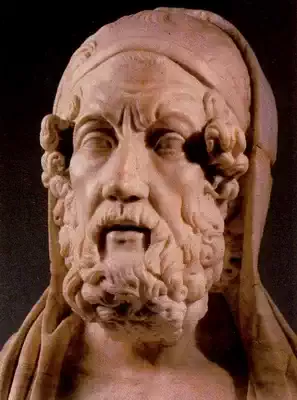
Homero
The Odyssey: Book 3
The Odyssey: Book 3
But as the sun was rising from the fair sea into the firmament of
heaven to shed Blight on mortals and immortals, they reached Pylos the
city of Neleus. Now the people of Pylos were gathered on the sea shore
to offer sacrifice of black bulls to Neptune lord of the Earthquake.
There were nine guilds with five hundred men in each, and there were
nine bulls to each guild. As they were eating the inward meats and
burning the thigh bones [on the embers] in the name of Neptune,
Telemachus and his crew arrived, furled their sails, brought their
ship to anchor, and went ashore.
Minerva led the way and Telemachus followed her. Presently she said,
"Telemachus, you must not be in the least shy or nervous; you have
taken this voyage to try and find out where your father is buried
and how he came by his end; so go straight up to Nestor that we may
see what he has got to tell us. Beg of him to speak the truth, and
he will tell no lies, for he is an excellent person."
"But how, Mentor," replied Telemachus, "dare I go up to Nestor,
and how am I to address him? I have never yet been used to holding
long conversations with people, and am ashamed to begin questioning
one who is so much older than myself."
"Some things, Telemachus," answered Minerva, "will be suggested to
you by your own instinct, and heaven will prompt you further; for I am
assured that the gods have been with you from the time of your birth
until now."
She then went quickly on, and Telemachus followed in her steps
till they reached the place where the guilds of the Pylian people were
assembled. There they found Nestor sitting with his sons, while his
company round him were busy getting dinner ready, and putting pieces
of meat on to the spits while other pieces were cooking. When they saw
the strangers they crowded round them, took them by the hand and
bade them take their places. Nestor's son Pisistratus at once
offered his hand to each of them, and seated them on some soft
sheepskins that were lying on the sands near his father and his
brother Thrasymedes. Then he gave them their portions of the inward
meats and poured wine for them into a golden cup, handing it to
Minerva first, and saluting her at the same time.
"Offer a prayer, sir," said he, "to King Neptune, for it is his
feast that you are joining; when you have duly prayed and made your
drink-offering, pass the cup to your friend that he may do so also.
I doubt not that he too lifts his hands in prayer, for man cannot live
without God in the world. Still he is younger than you are, and is
much of an age with myself, so I he handed I will give you the
precedence."
As he spoke he handed her the cup. Minerva thought it very right and
proper of him to have given it to herself first; she accordingly began
praying heartily to Neptune. "O thou," she cried, "that encirclest the
earth, vouchsafe to grant the prayers of thy servants that call upon
thee. More especially we pray thee send down thy grace on Nestor and
on his sons; thereafter also make the rest of the Pylian people some
handsome return for the goodly hecatomb they are offering you. Lastly,
grant Telemachus and myself a happy issue, in respect of the matter
that has brought us in our to Pylos."
When she had thus made an end of praying, she handed the cup to
Telemachus and he prayed likewise. By and by, when the outer meats
were roasted and had been taken off the spits, the carvers gave
every man his portion and they all made an excellent dinner. As soon
as they had had enough to eat and drink, Nestor, knight of Gerene,
began to speak.
"Now," said he, "that our guests have done their dinner, it will
be best to ask them who they are. Who, then, sir strangers, are you,
and from what port have you sailed? Are you traders? or do you sail
the seas as rovers with your hand against every man, and every man's
hand against you?"
Telemachus answered boldly, for Minerva had given him courage to ask
about his father and get himself a good name.
"Nestor," said he, "son of Neleus, honour to the Achaean name, you
ask whence we come, and I will tell you. We come from Ithaca under
Neritum, and the matter about which I would speak is of private not
public import. I seek news of my unhappy father Ulysses, who is said
to have sacked the town of Troy in company with yourself. We know what
fate befell each one of the other heroes who fought at Troy, but as
regards Ulysses heaven has hidden from us the knowledge even that he
is dead at all, for no one can certify us in what place he perished,
nor say whether he fell in battle on the mainland, or was lost at
sea amid the waves of Amphitrite. Therefore I am suppliant at your
knees, if haply you may be pleased to tell me of his melancholy end,
whether you saw it with your own eyes, or heard it from some other
traveller, for he was a man born to trouble. Do not soften things
out of any pity for me, but tell me in all plainness exactly what
you saw. If my brave father Ulysses ever did you loyal service, either
by word or deed, when you Achaeans were harassed among the Trojans,
bear it in mind now as in my favour and tell me truly all."
"My friend," answered Nestor, "you recall a time of much sorrow to
my mind, for the brave Achaeans suffered much both at sea, while
privateering under Achilles, and when fighting before the great city
of king Priam. Our best men all of them fell there- Ajax, Achilles,
Patroclus peer of gods in counsel, and my own dear son Antilochus, a
man singularly fleet of foot and in fight valiant. But we suffered
much more than this; what mortal tongue indeed could tell the whole
story? Though you were to stay here and question me for five years, or
even six, I could not tell you all that the Achaeans suffered, and you
would turn homeward weary of my tale before it ended. Nine long
years did we try every kind of stratagem, but the hand of heaven was
against us; during all this time there was no one who could compare
with your father in subtlety- if indeed you are his son- I can
hardly believe my eyes- and you talk just like him too- no one would
say that people of such different ages could speak so much alike. He
and I never had any kind of difference from first to last neither in
camp nor council, but in singleness of heart and purpose we advised
the Argives how all might be ordered for the best.
"When however, we had sacked the city of Priam, and were setting
sail in our ships as heaven had dispersed us, then Jove saw fit to vex
the Argives on their homeward voyage; for they had Not all been either
wise or understanding, and hence many came to a bad end through the
displeasure of Jove's daughter Minerva, who brought about a quarrel
between the two sons of Atreus.
"The sons of Atreus called a meeting which was not as it should
be, for it was sunset and the Achaeans were heavy with wine. When they
explained why they had called- the people together, it seemed that
Menelaus was for sailing homeward at once, and this displeased
Agamemnon, who thought that we should wait till we had offered
hecatombs to appease the anger of Minerva. Fool that he was, he
might have known that he would not prevail with her, for when the gods
have made up their minds they do not change them lightly. So the two
stood bandying hard words, whereon the Achaeans sprang to their feet
with a cry that rent the air, and were of two minds as to what they
should do.
"That night we rested and nursed our anger, for Jove was hatching
mischief against us. But in the morning some of us drew our ships into
the water and put our goods with our women on board, while the rest,
about half in number, stayed behind with Agamemnon. We- the other
half- embarked and sailed; and the ships went well, for heaven had
smoothed the sea. When we reached Tenedos we offered sacrifices to the
gods, for we were longing to get home; cruel Jove, however, did not
yet mean that we should do so, and raised a second quarrel in the
course of which some among us turned their ships back again, and
sailed away under Ulysses to make their peace with Agamemnon; but I,
and all the ships that were with me pressed forward, for I saw that
mischief was brewing. The son of Tydeus went on also with me, and
his crews with him. Later on Menelaus joined us at Lesbos, and found
us making up our minds about our course- for we did not know whether
to go outside Chios by the island of Psyra, keeping this to our
left, or inside Chios, over against the stormy headland of Mimas. So
we asked heaven for a sign, and were shown one to the effect that we
should be soonest out of danger if we headed our ships across the open
sea to Euboea. This we therefore did, and a fair wind sprang up
which gave us a quick passage during the night to Geraestus, where
we offered many sacrifices to Neptune for having helped us so far on
our way. Four days later Diomed and his men stationed their ships in
Argos, but I held on for Pylos, and the wind never fell light from the
day when heaven first made it fair for me.
"Therefore, my dear young friend, I returned without hearing
anything about the others. I know neither who got home safely nor
who were lost but, as in duty bound, I will give you without reserve
the reports that have reached me since I have been here in my own
house. They say the Myrmidons returned home safely under Achilles' son
Neoptolemus; so also did the valiant son of Poias, Philoctetes.
Idomeneus, again, lost no men at sea, and all his followers who
escaped death in the field got safe home with him to Crete. No
matter how far out of the world you live, you will have heard of
Agamemnon and the bad end he came to at the hands of Aegisthus- and
a fearful reckoning did Aegisthus presently pay. See what a good thing
it is for a man to leave a son behind him to do as Orestes did, who
killed false Aegisthus the murderer of his noble father. You too,
then- for you are a tall, smart-looking fellow- show your mettle and
make yourself a name in story."
"Nestor son of Neleus," answered Telemachus, "honour to the
Achaean name, the Achaeans applaud Orestes and his name will live
through all time for he has avenged his father nobly. Would that
heaven might grant me to do like vengeance on the insolence of the
wicked suitors, who are ill treating me and plotting my ruin; but
the gods have no such happiness in store for me and for my father,
so we must bear it as best we may."
"My friend," said Nestor, "now that you remind me, I remember to
have heard that your mother has many suitors, who are ill disposed
towards you and are making havoc of your estate. Do you submit to this
tamely, or are public feeling and the voice of heaven against you? Who
knows but what Ulysses may come back after all, and pay these
scoundrels in full, either single-handed or with a force of Achaeans
behind him? If Minerva were to take as great a liking to you as she
did to Ulysses when we were fighting before Troy (for I never yet
saw the gods so openly fond of any one as Minerva then was of your
father), if she would take as good care of you as she did of him,
these wooers would soon some of them him, forget their wooing."
Telemachus answered, "I can expect nothing of the kind; it would
be far too much to hope for. I dare not let myself think of it. Even
though the gods themselves willed it no such good fortune could befall
me."
On this Minerva said, "Telemachus, what are you talking about?
Heaven has a long arm if it is minded to save a man; and if it were
me, I should not care how much I suffered before getting home,
provided I could be safe when I was once there. I would rather this,
than get home quickly, and then be killed in my own house as Agamemnon
was by the treachery of Aegisthus and his wife. Still, death is
certain, and when a man's hour is come, not even the gods can save
him, no matter how fond they are of him."
"Mentor," answered Telemachus, "do not let us talk about it any
more. There is no chance of my father's ever coming back; the gods
have long since counselled his destruction. There is something else,
however, about which I should like to ask Nestor, for he knows much
more than any one else does. They say he has reigned for three
generations so that it is like talking to an immortal. Tell me,
therefore, Nestor, and tell me true; how did Agamemnon come to die
in that way? What was Menelaus doing? And how came false Aegisthus
to kill so far better a man than himself? Was Menelaus away from
Achaean Argos, voyaging elsewhither among mankind, that Aegisthus took
heart and killed Agamemnon?"
"I will tell you truly," answered Nestor, "and indeed you have
yourself divined how it all happened. If Menelaus when he got back
from Troy had found Aegisthus still alive in his house, there would
have been no barrow heaped up for him, not even when he was dead,
but he would have been thrown outside the city to dogs and vultures,
and not a woman would have mourned him, for he had done a deed of
great wickedness; but we were over there, fighting hard at Troy, and
Aegisthus who was taking his ease quietly in the heart of Argos,
cajoled Agamemnon's wife Clytemnestra with incessant flattery.
"At first she would have nothing to do with his wicked scheme, for
she was of a good natural disposition; moreover there was a bard
with her, to whom Agamemnon had given strict orders on setting out for
Troy, that he was to keep guard over his wife; but when heaven had
counselled her destruction, Aegisthus thus this bard off to a desert
island and left him there for crows and seagulls to batten upon- after
which she went willingly enough to the house of Aegisthus. Then he
offered many burnt sacrifices to the gods, and decorated many
temples with tapestries and gilding, for he had succeeded far beyond
his expectations.
"Meanwhile Menelaus and I were on our way home from Troy, on good
terms with one another. When we got to Sunium, which is the point of
Athens, Apollo with his painless shafts killed Phrontis the
steersman of Menelaus' ship (and never man knew better how to handle a
vessel in rough weather) so that he died then and there with the
helm in his hand, and Menelaus, though very anxious to press
forward, had to wait in order to bury his comrade and give him his due
funeral rites. Presently, when he too could put to sea again, and
had sailed on as far as the Malean heads, Jove counselled evil against
him and made it it blow hard till the waves ran mountains high. Here
he divided his fleet and took the one half towards Crete where the
Cydonians dwell round about the waters of the river Iardanus. There is
a high headland hereabouts stretching out into the sea from a place
called Gortyn, and all along this part of the coast as far as Phaestus
the sea runs high when there is a south wind blowing, but arter
Phaestus the coast is more protected, for a small headland can make
a great shelter. Here this part of the fleet was driven on to the
rocks and wrecked; but the crews just managed to save themselves. As
for the other five ships, they were taken by winds and seas to
Egypt, where Menelaus gathered much gold and substance among people of
an alien speech. Meanwhile Aegisthus here at home plotted his evil
deed. For seven years after he had killed Agamemnon he ruled in
Mycene, and the people were obedient under him, but in the eighth year
Orestes came back from Athens to be his bane, and killed the
murderer of his father. Then he celebrated the funeral rites of his
mother and of false Aegisthus by a banquet to the people of Argos, and
on that very day Menelaus came home, with as much treasure as his
ships could carry.
"Take my advice then, and do not go travelling about for long so far
from home, nor leave your property with such dangerous people in
your house; they will eat up everything you have among them, and you
will have been on a fool's errand. Still, I should advise you by all
means to go and visit Menelaus, who has lately come off a voyage among
such distant peoples as no man could ever hope to get back from,
when the winds had once carried him so far out of his reckoning;
even birds cannot fly the distance in a twelvemonth, so vast and
terrible are the seas that they must cross. Go to him, therefore, by
sea, and take your own men with you; or if you would rather travel
by land you can have a chariot, you can have horses, and here are my
sons who can escort you to Lacedaemon where Menelaus lives. Beg of him
to speak the truth, and he will tell you no lies, for he is an
excellent person."
As he spoke the sun set and it came on dark, whereon Minerva said,
"Sir, all that you have said is well; now, however, order the
tongues of the victims to be cut, and mix wine that we may make
drink-offerings to Neptune, and the other immortals, and then go to
bed, for it is bed time. People should go away early and not keep late
hours at a religious festival."
Thus spoke the daughter of Jove, and they obeyed her saying. Men
servants poured water over the hands of the guests, while pages filled
the mixing-bowls with wine and water, and handed it round after giving
every man his drink-offering; then they threw the tongues of the
victims into the fire, and stood up to make their drink-offerings.
When they had made their offerings and had drunk each as much as he
was minded, Minerva and Telemachus were forgoing on board their
ship, but Nestor caught them up at once and stayed them.
"Heaven and the immortal gods," he exclaimed, "forbid that you
should leave my house to go on board of a ship. Do you think I am so
poor and short of clothes, or that I have so few cloaks and as to be
unable to find comfortable beds both for myself and for my guests? Let
me tell you I have store both of rugs and cloaks, and shall not permit
the son of my old friend Ulysses to camp down on the deck of a shipnot
while I live- nor yet will my sons after me, but they will keep
open house as have done."
Then Minerva answered, "Sir, you have spoken well, and it will be
much better that Telemachus should do as you have said; he, therefore,
shall return with you and sleep at your house, but I must go back to
give orders to my crew, and keep them in good heart. I am the only
older person among them; the rest are all young men of Telemachus' own
age, who have taken this voyage out of friendship; so I must return to
the ship and sleep there. Moreover to-morrow I must go to the
Cauconians where I have a large sum of money long owing to me. As
for Telemachus, now that he is your guest, send him to Lacedaemon in a
chariot, and let one of your sons go with him. Be pleased also to
provide him with your best and fleetest horses."
When she had thus spoken, she flew away in the form of an eagle, and
all marvelled as they beheld it. Nestor was astonished, and took
Telemachus by the hand. "My friend," said he, "I see that you are
going to be a great hero some day, since the gods wait upon you thus
while you are still so young. This can have been none other of those
who dwell in heaven than Jove's redoubtable daughter, the
Trito-born, who showed such favour towards your brave father among the
Argives." "Holy queen," he continued, "vouchsafe to send down thy
grace upon myself, my good wife, and my children. In return, I will
offer you in sacrifice a broad-browed heifer of a year old,
unbroken, and never yet brought by man under the yoke. I will gild her
horns, and will offer her up to you in sacrifice."
Thus did he pray, and Minerva heard his prayer. He then led the
way to his own house, followed by his sons and sons-in-law. When
they had got there and had taken their places on the benches and
seats, he mixed them a bowl of sweet wine that was eleven years old
when the housekeeper took the lid off the jar that held it. As he
mixed the wine, he prayed much and made drink-offerings to Minerva,
daughter of Aegis-bearing Jove. Then, when they had made their
drink-offerings and had drunk each as much as he was minded, the
others went home to bed each in his own abode; but Nestor put
Telemachus to sleep in the room that was over the gateway along with
Pisistratus, who was the only unmarried son now left him. As for
himself, he slept in an inner room of the house, with the queen his
wife by his side.
Now when the child of morning, rosy-fingered Dawn, appeared,
Nestor left his couch and took his seat on the benches of white and
polished marble that stood in front of his house. Here aforetime sat
Neleus, peer of gods in counsel, but he was now dead, and had gone
to the house of Hades; so Nestor sat in his seat, sceptre in hand,
as guardian of the public weal. His sons as they left their rooms
gathered round him, Echephron, Stratius, Perseus, Aretus, and
Thrasymedes; the sixth son was Pisistratus, and when Telemachus joined
them they made him sit with them. Nestor then addressed them.
"My sons," said he, "make haste to do as I shall bid you. I wish
first and foremost to propitiate the great goddess Minerva, who
manifested herself visibly to me during yesterday's festivities. Go,
then, one or other of you to the plain, tell the stockman to look me
out a heifer, and come on here with it at once. Another must go to
Telemachus's ship, and invite all the crew, leaving two men only in
charge of the vessel. Some one else will run and fetch Laerceus the
goldsmith to gild the horns of the heifer. The rest, stay all of you
where you are; tell the maids in the house to prepare an excellent
dinner, and to fetch seats, and logs of wood for a burnt offering.
Tell them also- to bring me some clear spring water."
On this they hurried off on their several errands. The heifer was
brought in from the plain, and Telemachus's crew came from the ship;
the goldsmith brought the anvil, hammer, and tongs, with which he
worked his gold, and Minerva herself came to the sacrifice. Nestor
gave out the gold, and the smith gilded the horns of the heifer that
the goddess might have pleasure in their beauty. Then Stratius and
Echephron brought her in by the horns; Aretus fetched water from the
house in a ewer that had a flower pattern on it, and in his other hand
he held a basket of barley meal; sturdy Thrasymedes stood by with a
sharp axe, ready to strike the heifer, while Perseus held a bucket.
Then Nestor began with washing his hands and sprinkling the barley
meal, and he offered many a prayer to Minerva as he threw a lock
from the heifer's head upon the fire.
When they had done praying and sprinkling the barley meal
Thrasymedes dealt his blow, and brought the heifer down with a
stroke that cut through the tendons at the base of her neck, whereon
the daughters and daughters-in-law of Nestor, and his venerable wife
Eurydice (she was eldest daughter to Clymenus) screamed with
delight. Then they lifted the heifer's head from off the ground, and
Pisistratus cut her throat. When she had done bleeding and was quite
dead, they cut her up. They cut out the thigh bones all in due course,
wrapped them round in two layers of fat, and set some pieces of raw
meat on the top of them; then Nestor laid them upon the wood fire
and poured wine over them, while the young men stood near him with
five-pronged spits in their hands. When the thighs were burned and
they had tasted the inward meats, they cut the rest of the meat up
small, put the pieces on the spits and toasted them over the fire.
Meanwhile lovely Polycaste, Nestor's youngest daughter, washed
Telemachus. When she had washed him and anointed him with oil, she
brought him a fair mantle and shirt, and he looked like a god as he
came from the bath and took his seat by the side of Nestor. When the
outer meats were done they drew them off the spits and sat down to
dinner where they were waited upon by some worthy henchmen, who kept
pouring them out their wine in cups of gold. As soon as they had had
had enough to eat and drink Nestor said, "Sons, put Telemachus's
horses to the chariot that he may start at once."
Thus did he speak, and they did even as he had said, and yoked the
fleet horses to the chariot. The housekeeper packed them up a
provision of bread, wine, and sweetmeats fit for the sons of
princes. Then Telemachus got into the chariot, while Pisistratus
gathered up the reins and took his seat beside him. He lashed the
horses on and they flew forward nothing loth into the open country,
leaving the high citadel of Pylos behind them. All that day did they
travel, swaying the yoke upon their necks till the sun went down and
darkness was over all the land. Then they reached Pherae where Diocles
lived, who was son to Ortilochus and grandson to Alpheus. Here they
passed the night and Diocles entertained them hospitably. When the
child of morning, rosy-fingered Dawn; appeared, they again yoked their
horses and drove out through the gateway under the echoing
gatehouse. Pisistratus lashed the horses on and they flew forward
nothing loth; presently they came to the corn lands Of the open
country, and in the course of time completed their journey, so well
did their steeds take them.
Now when the sun had set and darkness was over the land,
Translated by Samuel Butler
But as the sun was rising from the fair sea into the firmament of
heaven to shed Blight on mortals and immortals, they reached Pylos the
city of Neleus. Now the people of Pylos were gathered on the sea shore
to offer sacrifice of black bulls to Neptune lord of the Earthquake.
There were nine guilds with five hundred men in each, and there were
nine bulls to each guild. As they were eating the inward meats and
burning the thigh bones [on the embers] in the name of Neptune,
Telemachus and his crew arrived, furled their sails, brought their
ship to anchor, and went ashore.
Minerva led the way and Telemachus followed her. Presently she said,
"Telemachus, you must not be in the least shy or nervous; you have
taken this voyage to try and find out where your father is buried
and how he came by his end; so go straight up to Nestor that we may
see what he has got to tell us. Beg of him to speak the truth, and
he will tell no lies, for he is an excellent person."
"But how, Mentor," replied Telemachus, "dare I go up to Nestor,
and how am I to address him? I have never yet been used to holding
long conversations with people, and am ashamed to begin questioning
one who is so much older than myself."
"Some things, Telemachus," answered Minerva, "will be suggested to
you by your own instinct, and heaven will prompt you further; for I am
assured that the gods have been with you from the time of your birth
until now."
She then went quickly on, and Telemachus followed in her steps
till they reached the place where the guilds of the Pylian people were
assembled. There they found Nestor sitting with his sons, while his
company round him were busy getting dinner ready, and putting pieces
of meat on to the spits while other pieces were cooking. When they saw
the strangers they crowded round them, took them by the hand and
bade them take their places. Nestor's son Pisistratus at once
offered his hand to each of them, and seated them on some soft
sheepskins that were lying on the sands near his father and his
brother Thrasymedes. Then he gave them their portions of the inward
meats and poured wine for them into a golden cup, handing it to
Minerva first, and saluting her at the same time.
"Offer a prayer, sir," said he, "to King Neptune, for it is his
feast that you are joining; when you have duly prayed and made your
drink-offering, pass the cup to your friend that he may do so also.
I doubt not that he too lifts his hands in prayer, for man cannot live
without God in the world. Still he is younger than you are, and is
much of an age with myself, so I he handed I will give you the
precedence."
As he spoke he handed her the cup. Minerva thought it very right and
proper of him to have given it to herself first; she accordingly began
praying heartily to Neptune. "O thou," she cried, "that encirclest the
earth, vouchsafe to grant the prayers of thy servants that call upon
thee. More especially we pray thee send down thy grace on Nestor and
on his sons; thereafter also make the rest of the Pylian people some
handsome return for the goodly hecatomb they are offering you. Lastly,
grant Telemachus and myself a happy issue, in respect of the matter
that has brought us in our to Pylos."
When she had thus made an end of praying, she handed the cup to
Telemachus and he prayed likewise. By and by, when the outer meats
were roasted and had been taken off the spits, the carvers gave
every man his portion and they all made an excellent dinner. As soon
as they had had enough to eat and drink, Nestor, knight of Gerene,
began to speak.
"Now," said he, "that our guests have done their dinner, it will
be best to ask them who they are. Who, then, sir strangers, are you,
and from what port have you sailed? Are you traders? or do you sail
the seas as rovers with your hand against every man, and every man's
hand against you?"
Telemachus answered boldly, for Minerva had given him courage to ask
about his father and get himself a good name.
"Nestor," said he, "son of Neleus, honour to the Achaean name, you
ask whence we come, and I will tell you. We come from Ithaca under
Neritum, and the matter about which I would speak is of private not
public import. I seek news of my unhappy father Ulysses, who is said
to have sacked the town of Troy in company with yourself. We know what
fate befell each one of the other heroes who fought at Troy, but as
regards Ulysses heaven has hidden from us the knowledge even that he
is dead at all, for no one can certify us in what place he perished,
nor say whether he fell in battle on the mainland, or was lost at
sea amid the waves of Amphitrite. Therefore I am suppliant at your
knees, if haply you may be pleased to tell me of his melancholy end,
whether you saw it with your own eyes, or heard it from some other
traveller, for he was a man born to trouble. Do not soften things
out of any pity for me, but tell me in all plainness exactly what
you saw. If my brave father Ulysses ever did you loyal service, either
by word or deed, when you Achaeans were harassed among the Trojans,
bear it in mind now as in my favour and tell me truly all."
"My friend," answered Nestor, "you recall a time of much sorrow to
my mind, for the brave Achaeans suffered much both at sea, while
privateering under Achilles, and when fighting before the great city
of king Priam. Our best men all of them fell there- Ajax, Achilles,
Patroclus peer of gods in counsel, and my own dear son Antilochus, a
man singularly fleet of foot and in fight valiant. But we suffered
much more than this; what mortal tongue indeed could tell the whole
story? Though you were to stay here and question me for five years, or
even six, I could not tell you all that the Achaeans suffered, and you
would turn homeward weary of my tale before it ended. Nine long
years did we try every kind of stratagem, but the hand of heaven was
against us; during all this time there was no one who could compare
with your father in subtlety- if indeed you are his son- I can
hardly believe my eyes- and you talk just like him too- no one would
say that people of such different ages could speak so much alike. He
and I never had any kind of difference from first to last neither in
camp nor council, but in singleness of heart and purpose we advised
the Argives how all might be ordered for the best.
"When however, we had sacked the city of Priam, and were setting
sail in our ships as heaven had dispersed us, then Jove saw fit to vex
the Argives on their homeward voyage; for they had Not all been either
wise or understanding, and hence many came to a bad end through the
displeasure of Jove's daughter Minerva, who brought about a quarrel
between the two sons of Atreus.
"The sons of Atreus called a meeting which was not as it should
be, for it was sunset and the Achaeans were heavy with wine. When they
explained why they had called- the people together, it seemed that
Menelaus was for sailing homeward at once, and this displeased
Agamemnon, who thought that we should wait till we had offered
hecatombs to appease the anger of Minerva. Fool that he was, he
might have known that he would not prevail with her, for when the gods
have made up their minds they do not change them lightly. So the two
stood bandying hard words, whereon the Achaeans sprang to their feet
with a cry that rent the air, and were of two minds as to what they
should do.
"That night we rested and nursed our anger, for Jove was hatching
mischief against us. But in the morning some of us drew our ships into
the water and put our goods with our women on board, while the rest,
about half in number, stayed behind with Agamemnon. We- the other
half- embarked and sailed; and the ships went well, for heaven had
smoothed the sea. When we reached Tenedos we offered sacrifices to the
gods, for we were longing to get home; cruel Jove, however, did not
yet mean that we should do so, and raised a second quarrel in the
course of which some among us turned their ships back again, and
sailed away under Ulysses to make their peace with Agamemnon; but I,
and all the ships that were with me pressed forward, for I saw that
mischief was brewing. The son of Tydeus went on also with me, and
his crews with him. Later on Menelaus joined us at Lesbos, and found
us making up our minds about our course- for we did not know whether
to go outside Chios by the island of Psyra, keeping this to our
left, or inside Chios, over against the stormy headland of Mimas. So
we asked heaven for a sign, and were shown one to the effect that we
should be soonest out of danger if we headed our ships across the open
sea to Euboea. This we therefore did, and a fair wind sprang up
which gave us a quick passage during the night to Geraestus, where
we offered many sacrifices to Neptune for having helped us so far on
our way. Four days later Diomed and his men stationed their ships in
Argos, but I held on for Pylos, and the wind never fell light from the
day when heaven first made it fair for me.
"Therefore, my dear young friend, I returned without hearing
anything about the others. I know neither who got home safely nor
who were lost but, as in duty bound, I will give you without reserve
the reports that have reached me since I have been here in my own
house. They say the Myrmidons returned home safely under Achilles' son
Neoptolemus; so also did the valiant son of Poias, Philoctetes.
Idomeneus, again, lost no men at sea, and all his followers who
escaped death in the field got safe home with him to Crete. No
matter how far out of the world you live, you will have heard of
Agamemnon and the bad end he came to at the hands of Aegisthus- and
a fearful reckoning did Aegisthus presently pay. See what a good thing
it is for a man to leave a son behind him to do as Orestes did, who
killed false Aegisthus the murderer of his noble father. You too,
then- for you are a tall, smart-looking fellow- show your mettle and
make yourself a name in story."
"Nestor son of Neleus," answered Telemachus, "honour to the
Achaean name, the Achaeans applaud Orestes and his name will live
through all time for he has avenged his father nobly. Would that
heaven might grant me to do like vengeance on the insolence of the
wicked suitors, who are ill treating me and plotting my ruin; but
the gods have no such happiness in store for me and for my father,
so we must bear it as best we may."
"My friend," said Nestor, "now that you remind me, I remember to
have heard that your mother has many suitors, who are ill disposed
towards you and are making havoc of your estate. Do you submit to this
tamely, or are public feeling and the voice of heaven against you? Who
knows but what Ulysses may come back after all, and pay these
scoundrels in full, either single-handed or with a force of Achaeans
behind him? If Minerva were to take as great a liking to you as she
did to Ulysses when we were fighting before Troy (for I never yet
saw the gods so openly fond of any one as Minerva then was of your
father), if she would take as good care of you as she did of him,
these wooers would soon some of them him, forget their wooing."
Telemachus answered, "I can expect nothing of the kind; it would
be far too much to hope for. I dare not let myself think of it. Even
though the gods themselves willed it no such good fortune could befall
me."
On this Minerva said, "Telemachus, what are you talking about?
Heaven has a long arm if it is minded to save a man; and if it were
me, I should not care how much I suffered before getting home,
provided I could be safe when I was once there. I would rather this,
than get home quickly, and then be killed in my own house as Agamemnon
was by the treachery of Aegisthus and his wife. Still, death is
certain, and when a man's hour is come, not even the gods can save
him, no matter how fond they are of him."
"Mentor," answered Telemachus, "do not let us talk about it any
more. There is no chance of my father's ever coming back; the gods
have long since counselled his destruction. There is something else,
however, about which I should like to ask Nestor, for he knows much
more than any one else does. They say he has reigned for three
generations so that it is like talking to an immortal. Tell me,
therefore, Nestor, and tell me true; how did Agamemnon come to die
in that way? What was Menelaus doing? And how came false Aegisthus
to kill so far better a man than himself? Was Menelaus away from
Achaean Argos, voyaging elsewhither among mankind, that Aegisthus took
heart and killed Agamemnon?"
"I will tell you truly," answered Nestor, "and indeed you have
yourself divined how it all happened. If Menelaus when he got back
from Troy had found Aegisthus still alive in his house, there would
have been no barrow heaped up for him, not even when he was dead,
but he would have been thrown outside the city to dogs and vultures,
and not a woman would have mourned him, for he had done a deed of
great wickedness; but we were over there, fighting hard at Troy, and
Aegisthus who was taking his ease quietly in the heart of Argos,
cajoled Agamemnon's wife Clytemnestra with incessant flattery.
"At first she would have nothing to do with his wicked scheme, for
she was of a good natural disposition; moreover there was a bard
with her, to whom Agamemnon had given strict orders on setting out for
Troy, that he was to keep guard over his wife; but when heaven had
counselled her destruction, Aegisthus thus this bard off to a desert
island and left him there for crows and seagulls to batten upon- after
which she went willingly enough to the house of Aegisthus. Then he
offered many burnt sacrifices to the gods, and decorated many
temples with tapestries and gilding, for he had succeeded far beyond
his expectations.
"Meanwhile Menelaus and I were on our way home from Troy, on good
terms with one another. When we got to Sunium, which is the point of
Athens, Apollo with his painless shafts killed Phrontis the
steersman of Menelaus' ship (and never man knew better how to handle a
vessel in rough weather) so that he died then and there with the
helm in his hand, and Menelaus, though very anxious to press
forward, had to wait in order to bury his comrade and give him his due
funeral rites. Presently, when he too could put to sea again, and
had sailed on as far as the Malean heads, Jove counselled evil against
him and made it it blow hard till the waves ran mountains high. Here
he divided his fleet and took the one half towards Crete where the
Cydonians dwell round about the waters of the river Iardanus. There is
a high headland hereabouts stretching out into the sea from a place
called Gortyn, and all along this part of the coast as far as Phaestus
the sea runs high when there is a south wind blowing, but arter
Phaestus the coast is more protected, for a small headland can make
a great shelter. Here this part of the fleet was driven on to the
rocks and wrecked; but the crews just managed to save themselves. As
for the other five ships, they were taken by winds and seas to
Egypt, where Menelaus gathered much gold and substance among people of
an alien speech. Meanwhile Aegisthus here at home plotted his evil
deed. For seven years after he had killed Agamemnon he ruled in
Mycene, and the people were obedient under him, but in the eighth year
Orestes came back from Athens to be his bane, and killed the
murderer of his father. Then he celebrated the funeral rites of his
mother and of false Aegisthus by a banquet to the people of Argos, and
on that very day Menelaus came home, with as much treasure as his
ships could carry.
"Take my advice then, and do not go travelling about for long so far
from home, nor leave your property with such dangerous people in
your house; they will eat up everything you have among them, and you
will have been on a fool's errand. Still, I should advise you by all
means to go and visit Menelaus, who has lately come off a voyage among
such distant peoples as no man could ever hope to get back from,
when the winds had once carried him so far out of his reckoning;
even birds cannot fly the distance in a twelvemonth, so vast and
terrible are the seas that they must cross. Go to him, therefore, by
sea, and take your own men with you; or if you would rather travel
by land you can have a chariot, you can have horses, and here are my
sons who can escort you to Lacedaemon where Menelaus lives. Beg of him
to speak the truth, and he will tell you no lies, for he is an
excellent person."
As he spoke the sun set and it came on dark, whereon Minerva said,
"Sir, all that you have said is well; now, however, order the
tongues of the victims to be cut, and mix wine that we may make
drink-offerings to Neptune, and the other immortals, and then go to
bed, for it is bed time. People should go away early and not keep late
hours at a religious festival."
Thus spoke the daughter of Jove, and they obeyed her saying. Men
servants poured water over the hands of the guests, while pages filled
the mixing-bowls with wine and water, and handed it round after giving
every man his drink-offering; then they threw the tongues of the
victims into the fire, and stood up to make their drink-offerings.
When they had made their offerings and had drunk each as much as he
was minded, Minerva and Telemachus were forgoing on board their
ship, but Nestor caught them up at once and stayed them.
"Heaven and the immortal gods," he exclaimed, "forbid that you
should leave my house to go on board of a ship. Do you think I am so
poor and short of clothes, or that I have so few cloaks and as to be
unable to find comfortable beds both for myself and for my guests? Let
me tell you I have store both of rugs and cloaks, and shall not permit
the son of my old friend Ulysses to camp down on the deck of a shipnot
while I live- nor yet will my sons after me, but they will keep
open house as have done."
Then Minerva answered, "Sir, you have spoken well, and it will be
much better that Telemachus should do as you have said; he, therefore,
shall return with you and sleep at your house, but I must go back to
give orders to my crew, and keep them in good heart. I am the only
older person among them; the rest are all young men of Telemachus' own
age, who have taken this voyage out of friendship; so I must return to
the ship and sleep there. Moreover to-morrow I must go to the
Cauconians where I have a large sum of money long owing to me. As
for Telemachus, now that he is your guest, send him to Lacedaemon in a
chariot, and let one of your sons go with him. Be pleased also to
provide him with your best and fleetest horses."
When she had thus spoken, she flew away in the form of an eagle, and
all marvelled as they beheld it. Nestor was astonished, and took
Telemachus by the hand. "My friend," said he, "I see that you are
going to be a great hero some day, since the gods wait upon you thus
while you are still so young. This can have been none other of those
who dwell in heaven than Jove's redoubtable daughter, the
Trito-born, who showed such favour towards your brave father among the
Argives." "Holy queen," he continued, "vouchsafe to send down thy
grace upon myself, my good wife, and my children. In return, I will
offer you in sacrifice a broad-browed heifer of a year old,
unbroken, and never yet brought by man under the yoke. I will gild her
horns, and will offer her up to you in sacrifice."
Thus did he pray, and Minerva heard his prayer. He then led the
way to his own house, followed by his sons and sons-in-law. When
they had got there and had taken their places on the benches and
seats, he mixed them a bowl of sweet wine that was eleven years old
when the housekeeper took the lid off the jar that held it. As he
mixed the wine, he prayed much and made drink-offerings to Minerva,
daughter of Aegis-bearing Jove. Then, when they had made their
drink-offerings and had drunk each as much as he was minded, the
others went home to bed each in his own abode; but Nestor put
Telemachus to sleep in the room that was over the gateway along with
Pisistratus, who was the only unmarried son now left him. As for
himself, he slept in an inner room of the house, with the queen his
wife by his side.
Now when the child of morning, rosy-fingered Dawn, appeared,
Nestor left his couch and took his seat on the benches of white and
polished marble that stood in front of his house. Here aforetime sat
Neleus, peer of gods in counsel, but he was now dead, and had gone
to the house of Hades; so Nestor sat in his seat, sceptre in hand,
as guardian of the public weal. His sons as they left their rooms
gathered round him, Echephron, Stratius, Perseus, Aretus, and
Thrasymedes; the sixth son was Pisistratus, and when Telemachus joined
them they made him sit with them. Nestor then addressed them.
"My sons," said he, "make haste to do as I shall bid you. I wish
first and foremost to propitiate the great goddess Minerva, who
manifested herself visibly to me during yesterday's festivities. Go,
then, one or other of you to the plain, tell the stockman to look me
out a heifer, and come on here with it at once. Another must go to
Telemachus's ship, and invite all the crew, leaving two men only in
charge of the vessel. Some one else will run and fetch Laerceus the
goldsmith to gild the horns of the heifer. The rest, stay all of you
where you are; tell the maids in the house to prepare an excellent
dinner, and to fetch seats, and logs of wood for a burnt offering.
Tell them also- to bring me some clear spring water."
On this they hurried off on their several errands. The heifer was
brought in from the plain, and Telemachus's crew came from the ship;
the goldsmith brought the anvil, hammer, and tongs, with which he
worked his gold, and Minerva herself came to the sacrifice. Nestor
gave out the gold, and the smith gilded the horns of the heifer that
the goddess might have pleasure in their beauty. Then Stratius and
Echephron brought her in by the horns; Aretus fetched water from the
house in a ewer that had a flower pattern on it, and in his other hand
he held a basket of barley meal; sturdy Thrasymedes stood by with a
sharp axe, ready to strike the heifer, while Perseus held a bucket.
Then Nestor began with washing his hands and sprinkling the barley
meal, and he offered many a prayer to Minerva as he threw a lock
from the heifer's head upon the fire.
When they had done praying and sprinkling the barley meal
Thrasymedes dealt his blow, and brought the heifer down with a
stroke that cut through the tendons at the base of her neck, whereon
the daughters and daughters-in-law of Nestor, and his venerable wife
Eurydice (she was eldest daughter to Clymenus) screamed with
delight. Then they lifted the heifer's head from off the ground, and
Pisistratus cut her throat. When she had done bleeding and was quite
dead, they cut her up. They cut out the thigh bones all in due course,
wrapped them round in two layers of fat, and set some pieces of raw
meat on the top of them; then Nestor laid them upon the wood fire
and poured wine over them, while the young men stood near him with
five-pronged spits in their hands. When the thighs were burned and
they had tasted the inward meats, they cut the rest of the meat up
small, put the pieces on the spits and toasted them over the fire.
Meanwhile lovely Polycaste, Nestor's youngest daughter, washed
Telemachus. When she had washed him and anointed him with oil, she
brought him a fair mantle and shirt, and he looked like a god as he
came from the bath and took his seat by the side of Nestor. When the
outer meats were done they drew them off the spits and sat down to
dinner where they were waited upon by some worthy henchmen, who kept
pouring them out their wine in cups of gold. As soon as they had had
had enough to eat and drink Nestor said, "Sons, put Telemachus's
horses to the chariot that he may start at once."
Thus did he speak, and they did even as he had said, and yoked the
fleet horses to the chariot. The housekeeper packed them up a
provision of bread, wine, and sweetmeats fit for the sons of
princes. Then Telemachus got into the chariot, while Pisistratus
gathered up the reins and took his seat beside him. He lashed the
horses on and they flew forward nothing loth into the open country,
leaving the high citadel of Pylos behind them. All that day did they
travel, swaying the yoke upon their necks till the sun went down and
darkness was over all the land. Then they reached Pherae where Diocles
lived, who was son to Ortilochus and grandson to Alpheus. Here they
passed the night and Diocles entertained them hospitably. When the
child of morning, rosy-fingered Dawn; appeared, they again yoked their
horses and drove out through the gateway under the echoing
gatehouse. Pisistratus lashed the horses on and they flew forward
nothing loth; presently they came to the corn lands Of the open
country, and in the course of time completed their journey, so well
did their steeds take them.
Now when the sun had set and darkness was over the land,
Translated by Samuel Butler
121
Homero
The Iliad: Book 15
The Iliad: Book 15
But when their flight had taken them past the trench and the set
stakes, and many had fallen by the hands of the Danaans, the Trojans
made a halt on reaching their chariots, routed and pale with fear.
Jove now woke on the crests of Ida, where he was lying with
golden-throned Juno by his side, and starting to his feet he saw the
Trojans and Achaeans, the one thrown into confusion, and the others
driving them pell-mell before them with King Neptune in their midst.
He saw Hector lying on the ground with his comrades gathered round
him, gasping for breath, wandering in mind and vomiting blood, for
it was not the feeblest of the Achaeans who struck him.
The sire of gods and men had pity on him, and looked fiercely on
Juno. "I see, Juno," said he, "you mischief- making trickster, that
your cunning has stayed Hector from fighting and has caused the rout
of his host. I am in half a mind to thrash you, in which case you will
be the first to reap the fruits of your scurvy knavery. Do you not
remember how once upon a time I had you hanged? I fastened two
anvils on to your feet, and bound your hands in a chain of gold
which none might break, and you hung in mid-air among the clouds.
All the gods in Olympus were in a fury, but they could not reach you
to set you free; when I caught any one of them I gripped him and
hurled him from the heavenly threshold till he came fainting down to
earth; yet even this did not relieve my mind from the incessant
anxiety which I felt about noble Hercules whom you and Boreas had
spitefully conveyed beyond the seas to Cos, after suborning the
tempests; but I rescued him, and notwithstanding all his mighty
labours I brought him back again to Argos. I would remind you of
this that you may learn to leave off being so deceitful, and
discover how much you are likely to gain by the embraces out of
which you have come here to trick me."
Juno trembled as he spoke, and said, "May heaven above and earth
below be my witnesses, with the waters of the river Styx- and this
is the most solemn oath that a blessed god can take- nay, I swear also
by your own almighty head and by our bridal bed- things over which I
could never possibly perjure myself- that Neptune is not punishing
Hector and the Trojans and helping the Achaeans through any doing of
mine; it is all of his own mere motion because he was sorry to see the
Achaeans hard pressed at their ships: if I were advising him, I should
tell him to do as you bid him."
The sire of gods and men smiled and answered, "If you, Juno, were
always to support me when we sit in council of the gods, Neptune, like
it or no, would soon come round to your and my way of thinking. If,
then, you are speaking the truth and mean what you say, go among the
rank and file of the gods, and tell Iris and Apollo lord of the bow,
that I want them- Iris, that she may go to the Achaean host and tell
Neptune to leave off fighting and go home, and Apollo, that he may
send Hector again into battle and give him fresh strength; he will
thus forget his present sufferings, and drive the Achaeans back in
confusion till they fall among the ships of Achilles son of Peleus.
Achilles will then send his comrade Patroclus into battle, and
Hector will kill him in front of Ilius after he has slain many
warriors, and among them my own noble son Sarpedon. Achilles will kill
Hector to avenge Patroclus, and from that time I will bring it about
that the Achaeans shall persistently drive the Trojans back till
they fulfil the counsels of Minerva and take Ilius. But I will not
stay my anger, nor permit any god to help the Danaans till I have
accomplished the desire of the son of Peleus, according to the promise
I made by bowing my head on the day when Thetis touched my knees and
besought me to give him honour."
Juno heeded his words and went from the heights of Ida to great
Olympus. Swift as the thought of one whose fancy carries him over vast
continents, and he says to himself, "Now I will be here, or there,"
and he would have all manner of things- even so swiftly did Juno
wing her way till she came to high Olympus and went in among the
gods who were gathered in the house of Jove. When they saw her they
all of them came up to her, and held out their cups to her by way of
greeting. She let the others be, but took the cup offered her by
lovely Themis, who was first to come running up to her. "Juno," said
she, "why are you here? And you seem troubled- has your husband the
son of Saturn been frightening you?"
And Juno answered, "Themis, do not ask me about it. You know what
a proud and cruel disposition my husband has. Lead the gods to
table, where you and all the immortals can hear the wicked designs
which he has avowed. Many a one, mortal and immortal, will be
angered by them, however peaceably he may be feasting now."
On this Juno sat down, and the gods were troubled throughout the
house of Jove. Laughter sat on her lips but her brow was furrowed with
care, and she spoke up in a rage. "Fools that we are," she cried,
"to be thus madly angry with Jove; we keep on wanting to go up to
him and stay him by force or by persuasion, but he sits aloof and
cares for nobody, for he knows that he is much stronger than any other
of the immortals. Make the best, therefore, of whatever ills he may
choose to send each one of you; Mars, I take it, has had a taste of
them already, for his son Ascalaphus has fallen in battle- the man
whom of all others he loved most dearly and whose father he owns
himself to be."
When he heard this Mars smote his two sturdy thighs with the flat of
his hands, and said in anger, "Do not blame me, you gods that dwell in
heaven, if I go to the ships of the Achaeans and avenge the death of
my son, even though it end in my being struck by Jove's lightning
and lying in blood and dust among the corpses."
As he spoke he gave orders to yoke his horses Panic and Rout,
while he put on his armour. On this, Jove would have been roused to
still more fierce and implacable enmity against the other immortals,
had not Minerva, ararmed for the safety of the gods, sprung from her
seat and hurried outside. She tore the helmet from his head and the
shield from his shoulders, and she took the bronze spear from his
strong hand and set it on one side; then she said to Mars, "Madman,
you are undone; you have ears that hear not, or you have lost all
judgement and understanding; have you not heard what Juno has said
on coming straight from the presence of Olympian Jove? Do you wish
to go through all kinds of suffering before you are brought back
sick and sorry to Olympus, after having caused infinite mischief to
all us others? Jove would instantly leave the Trojans and Achaeans
to themselves; he would come to Olympus to punish us, and would grip
us up one after another, guilty or not guilty. Therefore lay aside
your anger for the death of your son; better men than he have either
been killed already or will fall hereafter, and one cannot protect
every one's whole family."
With these words she took Mars back to his seat. Meanwhile Juno
called Apollo outside, with Iris the messenger of the gods. "Jove,"
she said to them, "desires you to go to him at once on Mt. Ida; when
you have seen him you are to do as he may then bid you."
Thereon Juno left them and resumed her seat inside, while Iris and
Apollo made all haste on their way. When they reached
many-fountained Ida, mother of wild beasts, they found Jove seated
on topmost Gargarus with a fragrant cloud encircling his head as
with a diadem. They stood before his presence, and he was pleased with
them for having been so quick in obeying the orders his wife had given
them.
He spoke to Iris first. "Go," said he, "fleet Iris, tell King
Neptune what I now bid you- and tell him true. Bid him leave off
fighting, and either join the company of the gods, or go down into the
sea. If he takes no heed and disobeys me, let him consider well
whether he is strong enough to hold his own against me if I attack
him. I am older and much stronger than he is; yet he is not afraid
to set himself up as on a level with myself, of whom all the other
gods stand in awe."
Iris, fleet as the wind, obeyed him, and as the cold hail or
snowflakes that fly from out the clouds before the blast of Boreas,
even so did she wing her way till she came close up to the great
shaker of the earth. Then she said, "I have come, O dark-haired king
that holds the world in his embrace, to bring you a message from Jove.
He bids you leave off fighting, and either join the company of the
gods or go down into the sea; if, however, you take no heed and
disobey him, he says he will come down here and fight you. He would
have you keep out of his reach, for he is older and much stronger than
you are, and yet you are not afraid to set yourself up as on a level
with himself, of whom all the other gods stand in awe."
Neptune was very angry and said, "Great heavens! strong as Jove
may be, he has said more than he can do if he has threatened
violence against me, who am of like honour with himself. We were three
brothers whom Rhea bore to Saturn- Jove, myself, and Hades who rules
the world below. Heaven and earth were divided into three parts, and
each of us was to have an equal share. When we cast lots, it fell to
me to have my dwelling in the sea for evermore; Hades took the
darkness of the realms under the earth, while air and sky and clouds
were the portion that fell to Jove; but earth and great Olympus are
the common property of all. Therefore I will not walk as Jove would
have me. For all his strength, let him keep to his own third share and
be contented without threatening to lay hands upon me as though I were
nobody. Let him keep his bragging talk for his own sons and daughters,
who must perforce obey him.
Iris fleet as the wind then answered, "Am I really, Neptune, to take
this daring and unyielding message to Jove, or will you reconsider
your answer? Sensible people are open to argument, and you know that
the Erinyes always range themselves on the side of the older person."
Neptune answered, "Goddess Iris, your words have been spoken in
season. It is well when a messenger shows so much discretion.
Nevertheless it cuts me to the very heart that any one should rebuke
so angrily another who is his own peer, and of like empire with
himself. Now, however, I will give way in spite of my displeasure;
furthermore let me tell you, and I mean what I say- if contrary to the
desire of myself, Minerva driver of the spoil, Juno, Mercury, and King
Vulcan, Jove spares steep Ilius, and will not let the Achaeans have
the great triumph of sacking it, let him understand that he will incur
our implacable resentment."
Neptune now left the field to go down under the sea, and sorely
did the Achaeans miss him. Then Jove said to Apollo, "Go, dear
Phoebus, to Hector, for Neptune who holds the earth in his embrace has
now gone down under the sea to avoid the severity of my displeasure.
Had he not done so those gods who are below with Saturn would have
come to hear of the fight between us. It is better for both of us that
he should have curbed his anger and kept out of my reach, for I should
have had much trouble with him. Take, then, your tasselled aegis,
and shake it furiously, so as to set the Achaean heroes in a panic;
take, moreover, brave Hector, O Far-Darter, into your own care, and
rouse him to deeds of daring, till the Achaeans are sent flying back
to their ships and to the Hellespont. From that point I will think
it well over, how the Achaeans may have a respite from their
troubles."
Apollo obeyed his father's saying, and left the crests of Ida,
flying like a falcon, bane of doves and swiftest of all birds. He
found Hector no longer lying upon the ground, but sitting up, for he
had just come to himself again. He knew those who were about him,
and the sweat and hard breathing had left him from the moment when the
will of aegis-bearing Jove had revived him. Apollo stood beside him
and said, "Hector, son of Priam, why are you so faint, and why are you
here away from the others? Has any mishap befallen you?"
Hector in a weak voice answered, "And which, kind sir, of the gods
are you, who now ask me thus? Do you not know that Ajax struck me on
the chest with a stone as I was killing his comrades at the ships of
the Achaeans, and compelled me to leave off fighting? I made sure that
this very day I should breathe my last and go down into the house of
Hades."
Then King Apollo said to him, "Take heart; the son of Saturn has
sent you a mighty helper from Ida to stand by you and defend you, even
me, Phoebus Apollo of the golden sword, who have been guardian
hitherto not only of yourself but of your city. Now, therefore,
order your horsemen to drive their chariots to the ships in great
multitudes. I will go before your horses to smooth the way for them,
and will turn the Achaeans in flight."
As he spoke he infused great strength into the shepherd of his
people. And as a horse, stabled and full-fed, breaks loose and gallops
gloriously over the plain to the place where he is wont to take his
bath in the river- he tosses his head, and his mane streams over his
shoulders as in all the pride of his strength he flies full speed to
the pastures where the mares are feeding- even so Hector, when he
heard what the god said, urged his horsemen on, and sped forward as
fast as his limbs could take him. As country peasants set their hounds
on to a homed stag or wild goat- he has taken shelter under rock or
thicket, and they cannot find him, but, lo, a bearded lion whom
their shouts have roused stands in their path, and they are in no
further humour for the chase- even so the Achaeans were still charging
on in a body, using their swords and spears pointed at both ends,
but when they saw Hector going about among his men they were afraid,
and their hearts fell down into their feet.
Then spoke Thoas son of Andraemon, leader of the Aetolians, a man
who could throw a good throw, and who was staunch also in close fight,
while few could surpass him in debate when opinions were divided. He
then with all sincerity and goodwill addressed them thus: "What, in
heaven's name, do I now see? Is it not Hector come to life again?
Every one made sure he had been killed by Ajax son of Telamon, but
it seems that one of the gods has again rescued him. He has killed
many of us Danaans already, and I take it will yet do so, for the hand
of Jove must be with him or he would never dare show himself so
masterful in the forefront of the battle. Now, therefore, let us all
do as I say; let us order the main body of our forces to fall back
upon the ships, but let those of us who profess to be the flower of
the army stand firm, and see whether we cannot hold Hector back at the
point of our spears as soon as he comes near us; I conceive that he
will then think better of it before he tries to charge into the
press of the Danaans."
Thus did he speak, and they did even as he had said. Those who
were about Ajax and King Idomeneus, the followers moreover of
Teucer, Meriones, and Meges peer of Mars called all their best men
about them and sustained the fight against Hector and the Trojans, but
the main body fell back upon the ships of the Achaeans.
The Trojans pressed forward in a dense body, with Hector striding on
at their head. Before him went Phoebus Apollo shrouded in cloud
about his shoulders. He bore aloft the terrible aegis with its
shaggy fringe, which Vulcan the smith had given Jove to strike
terror into the hearts of men. With this in his hand he led on the
Trojans.
The Argives held together and stood their ground. The cry of
battle rose high from either side, and the arrows flew from the
bowstrings. Many a spear sped from strong hands and fastened in the
bodies of many a valiant warrior, while others fell to earth midway,
before they could taste of man's fair flesh and glut themselves with
blood. So long as Phoebus Apollo held his aegis quietly and without
shaking it, the weapons on either side took effect and the people
fell, but when he shook it straight in the face of the Danaans and
raised his mighty battle-cry their hearts fainted within them and they
forgot their former prowess. As when two wild beasts spring in the
dead of night on a herd of cattle or a large flock of sheep when the
herdsman is not there- even so were the Danaans struck helpless, for
Apollo filled them with panic and gave victory to Hector and the
Trojans.
The fight then became more scattered and they killed one another
where they best could. Hector killed Stichius and Arcesilaus, the one,
leader of the Boeotians, and the other, friend and comrade of
Menestheus. Aeneas killed Medon and Iasus. The first was bastard son
to Oileus, and brother to Ajax, but he lived in Phylace away from
his own country, for he had killed a man, a kinsman of his
stepmother Eriopis whom Oileus had married. Iasus had become a
leader of the Athenians, and was son of Sphelus the son of Boucolos.
Polydamas killed Mecisteus, and Polites Echius, in the front of the
battle, while Agenor slew Clonius. Paris struck Deiochus from behind
in the lower part of the shoulder, as he was flying among the
foremost, and the point of the spear went clean through him.
While they were spoiling these heroes of their armour, the
Achaeans were flying pellmell to the trench and the set stakes, and
were forced back within their wall. Hector then cried out to the
Trojans, "Forward to the ships, and let the spoils be. If I see any
man keeping back on the other side the wall away from the ships I will
have him killed: his kinsmen and kinswomen shall not give him his dues
of fire, but dogs shall tear him in pieces in front of our city."
As he spoke he laid his whip about his horses' shoulders and
called to the Trojans throughout their ranks; the Trojans shouted with
a cry that rent the air, and kept their horses neck and neck with
his own. Phoebus Apollo went before, and kicked down the banks of
the deep trench into its middle so as to make a great broad bridge, as
broad as the throw of a spear when a man is trying his strength. The
Trojan battalions poured over the bridge, and Apollo with his
redoubtable aegis led the way. He kicked down the wall of the Achaeans
as easily as a child who playing on the sea-shore has built a house of
sand and then kicks it down again and destroys it- even so did you,
O Apollo, shed toil and trouble upon the Argives, filling them with
panic and confusion.
Thus then were the Achaeans hemmed in at their ships, calling out to
one another and raising their hands with loud cries every man to
heaven. Nestor of Gerene, tower of strength to the Achaeans, lifted up
his hands to the starry firmament of heaven, and prayed more fervently
than any of them. "Father Jove," said he, "if ever any one in
wheat-growing Argos burned you fat thigh-bones of sheep or heifer
and prayed that he might return safely home, whereon you bowed your
head to him in assent, bear it in mind now, and suffer not the Trojans
to triumph thus over the Achaeans."
All counselling Jove thundered loudly in answer to die prayer of the
aged son of Neleus. When the heard Jove thunder they flung
themselves yet more fiercely on the Achaeans. As a wave breaking
over the bulwarks of a ship when the sea runs high before a galefor
it is the force of the wind that makes the waves so great- even so
did the Trojans spring over the wall with a shout, and drive their
chariots onwards. The two sides fought with their double-pointed
spears in hand-to-hand encounter-the Trojans from their chariots,
and the Achaeans climbing up into their ships and wielding the long
pikes that were lying on the decks ready for use in a sea-fight,
jointed and shod with bronze.
Now Patroclus, so long as the Achaeans and Trojans were fighting
about the wall, but were not yet within it and at the ships,
remained sitting in the tent of good Eurypylus, entertaining him
with his conversation and spreading herbs over his wound to ease his
pain. When, however, he saw the Trojans swarming through the breach in
the wall, while the Achaeans were clamouring and struck with panic, he
cried aloud, and smote his two thighs with the flat of his hands.
"Eurypylus," said he in his dismay, "I know you want me badly, but I
cannot stay with you any longer, for there is hard fighting going
on; a servant shall take care of you now, for I must make all speed to
Achilles, and induce him to fight if I can; who knows but with
heaven's help I may persuade him. A man does well to listen to the
advice of a friend."
When he had thus spoken he went his way. The Achaeans stood firm and
resisted the attack of the Trojans, yet though these were fewer in
number, they could not drive them back from the ships, neither could
the Trojans break the Achaean ranks and make their way in among the
tents and ships. As a carpenter's line gives a true edge to a piece of
ship's timber, in the hand of some skilled workman whom Minerva has
instructed in all kinds of useful arts- even so level was the issue of
the fight between the two sides, as they fought some round one and
some round another.
Hector made straight for Ajax, and the two fought fiercely about the
same ship. Hector could not force Ajax back and fire the ship, nor yet
could Ajax drive Hector from the spot to which heaven had brought him.
Then Ajax struck Caletor son of Clytius in the chest with a spear as
he was bringing fire towards the ship. He fell heavily to the ground
and the torch dropped from his hand. When Hector saw his cousin fallen
in front of the ship he shouted to the Trojans and Lycians saying,
"Trojans, Lycians, and Dardanians good in close fight, bate not a jot,
but rescue the son of Clytius lest the Achaeans strip him of his
armour now that he has fallen."
He then aimed a spear at Ajax, and missed him, but he hit
Lycophron a follower of Ajax, who came from Cythera, but was living
with Ajax inasmuch as he had killed a man among the Cythereans.
Hector's spear struck him on the head below the ear, and he fell
headlong from the ship's prow on to the ground with no life left in
him. Ajax shook with rage and said to his brother, "Teucer, my good
fellow, our trusty comrade the son of Mastor has fallen, he came to
live with us from Cythera and whom we honoured as much as our own
parents. Hector has just killed him; fetch your deadly arrows at
once and the bow which Phoebus Apollo gave you."
Teucer heard him and hastened towards him with his bow and quiver in
his hands. Forthwith he showered his arrows on the Trojans, and hit
Cleitus the son of Pisenor, comrade of Polydamas the noble son of
Panthous, with the reins in his hands as he was attending to his
horses; he was in the middle of the very thickest part of the fight,
doing good service to Hector and the Trojans, but evil had now come
upon him, and not one of those who were fain to do so could avert
it, for the arrow struck him on the back of the neck. He fell from his
chariot and his horses shook the empty car as they swerved aside. King
Polydamas saw what had happened, and was the first to come up to the
horses; he gave them in charge to Astynous son of Protiaon, and
ordered him to look on, and to keep the horses near at hand. He then
went back and took his place in the front ranks.
Teucer then aimed another arrow at Hector, and there would have been
no more fighting at the ships if he had hit him and killed him then
and there: Jove, however, who kept watch over Hector, had his eyes
on Teucer, and deprived him of his triumph, by breaking his
bowstring for him just as he was drawing it and about to take his aim;
on this the arrow went astray and the bow fell from his hands.
Teucer shook with anger and said to his brother, "Alas, see how heaven
thwarts us in all we do; it has broken my bowstring and snatched the
bow from my hand, though I strung it this selfsame morning that it
might serve me for many an arrow."
Ajax son of Telamon answered, "My good fellow, let your bow and your
arrows be, for Jove has made them useless in order to spite the
Danaans. Take your spear, lay your shield upon your shoulder, and both
fight the Trojans yourself and urge others to do so. They may be
successful for the moment but if we fight as we ought they will find
it a hard matter to take the ships."
Teucer then took his bow and put it by in his tent. He hung a shield
four hides thick about his shoulders, and on his comely head he set
his helmet well wrought with a crest of horse-hair that nodded
menacingly above it; he grasped his redoubtable bronze-shod spear, and
forthwith he was by the side of Ajax.
When Hector saw that Teucer's bow was of no more use to him, he
shouted out to the Trojans and Lycians, "Trojans, Lycians, and
Dardanians good in close fight, be men, my friends, and show your
mettle here at the ships, for I see the weapon of one of their
chieftains made useless by the hand of Jove. It is easy to see when
Jove is helping people and means to help them still further, or
again when he is bringing them down and will do nothing for them; he
is now on our side, and is going against the Argives. Therefore
swarm round the ships and fight. If any of you is struck by spear or
sword and loses his life, let him die; he dies with honour who dies
fighting for his country; and he will leave his wife and children safe
behind him, with his house and allotment unplundered if only the
Achaeans can be driven back to their own land, they and their ships."
With these words he put heart and soul into them all. Ajax on the
other side exhorted his comrades saying, "Shame on you Argives, we are
now utterly undone, unless we can save ourselves by driving the
enemy from our ships. Do you think, if Hector takes them, that you
will be able to get home by land? Can you not hear him cheering on his
whole host to fire our fleet, and bidding them remember that they
are not at a dance but in battle? Our only course is to fight them
with might and main; we had better chance it, life or death, once
for all, than fight long and without issue hemmed in at our ships by
worse men than ourselves."
With these words he put life and soul into them all. Hector then
killed Schedius son of Perimedes, leader of the Phoceans, and Ajax
killed Laodamas captain of foot soldiers and son to Antenor. Polydamas
killed Otus of Cyllene a comrade of the son of Phyleus and chief of
the proud Epeans. When Meges saw this he sprang upon him, but
Polydamas crouched down, and he missed him, for Apollo would not
suffer the son of Panthous to fall in battle; but the spear hit
Croesmus in the middle of his chest, whereon he fell heavily to the
ground, and Meges stripped him of his armour. At that moment the
valiant soldier Dolops son of Lampus sprang upon Lampus was son of
Laomedon and for his valour, while his son Dolops was versed in all
the ways of war. He then struck the middle of the son of Phyleus'
shield with his spear, setting on him at close quarters, but his
good corslet made with plates of metal saved him; Phyleus had
brought it from Ephyra and the river Selleis, where his host, King
Euphetes, had given it him to wear in battle and protect him. It now
served to save the life of his son. Then Meges struck the topmost
crest of Dolops's bronze helmet with his spear and tore away its plume
of horse-hair, so that all newly dyed with scarlet as it was it
tumbled down into the dust. While he was still fighting and
confident of victory, Menelaus came up to help Meges, and got by the
side of Dolops unperceived; he then speared him in the shoulder,
from behind, and the point, driven so furiously, went through into his
chest, whereon he fell headlong. The two then made towards him to
strip him of his armour, but Hector called on all his brothers for
help, and he especially upbraided brave Melanippus son of Hiketaon,
who erewhile used to pasture his herds of cattle in Percote before the
war broke out; but when the ships of the Danaans came, he went back to
Ilius, where he was eminent among the Trojans, and lived near Priam
who treated him as one of his own sons. Hector now rebuked him and
said, "Why, Melanippus, are we thus remiss? do you take no note of the
death of your kinsman, and do you not see how they are trying to
take Dolops's armour? Follow me; there must be no fighting the Argives
from a distance now, but we must do so in close combat till either
we kill them or they take the high wall of Ilius and slay her people."
He led on as he spoke, and the hero Melanippus followed after.
Meanwhile Ajax son of Telamon was cheering on the Argives. "My
friends," he cried, "be men, and fear dishonour; quit yourselves in
battle so as to win respect from one another. Men who respect each
other's good opinion are less likely to be killed than those who do
not, but in flight there is neither gain nor glory."
Thus did he exhort men who were already bent upon driving back the
Trojans. They laid his words to heart and hedged the ships as with a
wall of bronze, while Jove urged on the Trojans. Menelaus of the
loud battle-cry urged Antilochus on. "Antilochus," said he, "you are
young and there is none of the Achaeans more fleet of foot or more
valiant than you are. See if you cannot spring upon some Trojan and
kill him."
He hurried away when he had thus spurred Antilochus, who at once
darted out from the front ranks and aimed a spear, after looking
carefully round him. The Trojans fell back as he threw, and the dart
did not speed from his hand without effect, for it struck Melanippus
the proud son of Hiketaon in the breast by the nipple as he was coming
forward, and his armour rang rattling round him as he fell heavily
to the ground. Antilochus sprang upon him as a dog springs on a fawn
which a hunter has hit as it was breaking away from its covert, and
killed it. Even so, O Melanippus, did stalwart Antilochus spring
upon you to strip you of your armour; but noble Hector marked him, and
came running up to him through the thick of the battle. Antilochus,
brave soldier though he was, would not stay to face him, but fled like
some savage creature which knows it has done wrong, and flies, when it
has killed a dog or a man who is herding his cattle, before a body
of men can be gathered to attack it. Even so did the son of Nestor
fly, and the Trojans and Hector with a cry that rent the air
showered their weapons after him; nor did he turn round and stay his
flight till he had reached his comrades.
The Trojans, fierce as lions, were still rushing on towards the
ships in fulfilment of the behests of Jove who kept spurring them on
to new deeds of daring, while he deadened the courage of the Argives
and defeated them by encouraging the Trojans. For he meant giving
glory to Hector son of Priam, and letting him throw fire upon the
ships, till he had fulfilled the unrighteous prayer that Thetis had
made him; Jove, therefore, bided his time till he should see the glare
of a blazing ship. From that hour he was about so to order that the
Trojans should be driven back from the ships and to vouchsafe glory to
the Achaeans. With this purpose he inspired Hector son of Priam, who
was cager enough already, to assail the ships. His fury was as that of
Mars, or as when a fire is raging in the glades of some dense forest
upon the mountains; he foamed at the mouth, his eyes glared under
his terrible eye-brows, and his helmet quivered on his temples by
reason of the fury with which he fought. Jove from heaven was with
him, and though he was but one against many, vouchsafed him victory
and glory; for he was doomed to an early death, and already Pallas
Minerva was hurrying on the hour of his destruction at the hands of
the son of Peleus. Now, however, he kept trying to break the ranks
of the enemy wherever he could see them thickest, and in the goodliest
armour; but do what he might he could not break through them, for they
stood as a tower foursquare, or as some high cliff rising from the
grey sea that braves the anger of the gale, and of the waves that
thunder up against it. He fell upon them like flames of fire from
every quarter. As when a wave, raised mountain high by wind and storm,
breaks over a ship and covers it deep in foam, the fierce winds roar
against the mast, the hearts of the sailors fail them for fear, and
they are saved but by a very little from destruction- even so were the
hearts of the Achaeans fainting within them. Or as a savage lion
attacking a herd of cows while they are feeding by thousands in the
low-lying meadows by some wide-watered shore- the herdsman is at his
wit's end how to protect his herd and keeps going about now in the van
and now in the rear of his cattle, while the lion springs into the
thick of them and fastens on a cow so that they all tremble for
fear- even so were the Achaeans utterly panic-stricken by Hector and
father Jove. Nevertheless Hector only killed Periphetes of Mycenae; he
was son of Copreus who was wont to take the orders of King
Eurystheus to mighty Hercules, but the son was a far better man than
the father in every way; he was fleet of foot, a valiant warrior,
and in understanding ranked among the foremost men of Mycenae. He it
was who then afforded Hector a triumph, for as he was turning back
he stumbled against the rim of his shield which reached his feet,
and served to keep the javelins off him. He tripped against this and
fell face upward, his helmet ringing loudly about his head as he did
so. Hector saw him fall and ran up to him; he then thrust a spear into
his chest, and killed him close to his own comrades. These, for all
their sorrow, could not help him for they were themselves terribly
afraid of Hector.
They had now reached the ships and the prows of those that had
been drawn up first were on every side of them, but the Trojans came
pouring after them. The Argives were driven back from the first row of
ships, but they made a stand by their tents without being broken up
and scattered; shame and fear restrained them. They kept shouting
incessantly to one another, and Nestor of Gerene, tower of strength to
the Achaeans, was loudest in imploring every man by his parents, and
beseeching him to stand firm.
"Be men, my friends," he cried, "and respect one another's good
opinion. Think, all of you, on your children, your wives, your
property, and your parents whether these be alive or dead. On their
behalf though they are not here, I implore you to stand firm, and
not to turn in flight."
With these words he put heart and soul into them all. Minerva lifted
the thick veil of darkness from their eyes, and much light fell upon
them, alike on the side of the ships and on that where the fight was
raging. They could see Hector and all his men, both those in the
rear who were taking no part in the battle, and those who were
fighting by the ships.
Ajax could not bring himself to retreat along with the rest, but
strode from deck to deck with a great sea-pike in his hands twelve
cubits long and jointed with rings. As a man skilled in feats of
horsemanship couples four horses together and comes tearing full speed
along the public way from the country into some large town- many
both men and women marvel as they see him for he keeps all the time
changing his horse, springing from one to another without ever missing
his feet while the horses are at a gallop- even so did Ajax go
striding from one ship's deck to another, and his voice went up into
the heavens. He kept on shouting his orders to the Danaans and
exhorting them to defend their ships and tents; neither did Hector
remain within the main body of the Trojan warriors, but as a dun eagle
swoops down upon a flock of wild-fowl feeding near a river-geese, it
may be, or cranes, or long-necked swans- even so did Hector make
straight for a dark-prowed ship, rushing right towards it; for Jove
with his mighty hand impelled him forward, and roused his people to
follow him.
And now the battle again raged furiously at the ships. You would
have thought the men were coming on fresh and unwearied, so fiercely
did they fight; and this was the mind in which they were- the Achaeans
did not believe they should escape destruction but thought
themselves doomed, while there was not a Trojan but his heart beat
high with the hope of firing the ships and putting the Achaean
heroes to the sword.
Thus were the two sides minded. Then Hector seized the stern of
the good ship that had brought Protesilaus to Troy, but never bore him
back to his native land. Round this ship there raged a close
hand-to-hand fight between Danaans and Trojans. They did not fight
at a distance with bows and javelins, but with one mind hacked at
one another in close combat with their mighty swords and spears
pointed at both ends; they fought moreover with keen battle-axes and
with hatchets. Many a good stout blade hilted and scabbarded with
iron, fell from hand or shoulder as they fought, and the earth ran red
with blood. Hector, when he had seized the ship, would not loose his
hold but held on to its curved stern and shouted to the Trojans,
"Bring fire, and raise the battle-cry all of you with a single
voice. Now has Jove vouchsafed us a day that will pay us for all the
rest; this day we shall take the ships which came hither against
heaven's will, and which have caused us such infinite suffering
through the cowardice of our councillors, who when I would have done
battle at the ships held me back and forbade the host to follow me; if
Jove did then indeed warp our judgements, himself now commands me
and cheers me on."
As he spoke thus the Trojans sprang yet more fiercely on the
Achaeans, and Ajax no longer held his ground, for he was overcome by
the darts that were flung at him, and made sure that he was doomed.
Therefore he left the raised deck at the stern, and stepped back on to
the seven-foot bench of the oarsmen. Here he stood on the look-out,
and with his spear held back Trojan whom he saw bringing fire to the
ships. All the time he kept on shouting at the top of his voice and
exhorting the Danaans. "My friends," he cried, "Danaan heroes,
servants of Mars, be men my friends, and fight with might and with
main. Can we hope to find helpers hereafter, or a wall to shield us
more surely than the one we have? There is no strong city within
reach, whence we may draw fresh forces to turn the scales in our
favour. We are on the plain of the armed Trojans with the sea behind
us, and far from our own country. Our salvation, therefore, is in
the might of our hands and in hard fighting."
As he spoke he wielded his spear with still greater fury, and when
any Trojan made towards the ships with fire at Hector's bidding, he
would be on the look-out for him, and drive at him with his long
spear. Twelve men did he thus kill in hand-to-hand fight before the
ships.
Translated by Samuel Butler
But when their flight had taken them past the trench and the set
stakes, and many had fallen by the hands of the Danaans, the Trojans
made a halt on reaching their chariots, routed and pale with fear.
Jove now woke on the crests of Ida, where he was lying with
golden-throned Juno by his side, and starting to his feet he saw the
Trojans and Achaeans, the one thrown into confusion, and the others
driving them pell-mell before them with King Neptune in their midst.
He saw Hector lying on the ground with his comrades gathered round
him, gasping for breath, wandering in mind and vomiting blood, for
it was not the feeblest of the Achaeans who struck him.
The sire of gods and men had pity on him, and looked fiercely on
Juno. "I see, Juno," said he, "you mischief- making trickster, that
your cunning has stayed Hector from fighting and has caused the rout
of his host. I am in half a mind to thrash you, in which case you will
be the first to reap the fruits of your scurvy knavery. Do you not
remember how once upon a time I had you hanged? I fastened two
anvils on to your feet, and bound your hands in a chain of gold
which none might break, and you hung in mid-air among the clouds.
All the gods in Olympus were in a fury, but they could not reach you
to set you free; when I caught any one of them I gripped him and
hurled him from the heavenly threshold till he came fainting down to
earth; yet even this did not relieve my mind from the incessant
anxiety which I felt about noble Hercules whom you and Boreas had
spitefully conveyed beyond the seas to Cos, after suborning the
tempests; but I rescued him, and notwithstanding all his mighty
labours I brought him back again to Argos. I would remind you of
this that you may learn to leave off being so deceitful, and
discover how much you are likely to gain by the embraces out of
which you have come here to trick me."
Juno trembled as he spoke, and said, "May heaven above and earth
below be my witnesses, with the waters of the river Styx- and this
is the most solemn oath that a blessed god can take- nay, I swear also
by your own almighty head and by our bridal bed- things over which I
could never possibly perjure myself- that Neptune is not punishing
Hector and the Trojans and helping the Achaeans through any doing of
mine; it is all of his own mere motion because he was sorry to see the
Achaeans hard pressed at their ships: if I were advising him, I should
tell him to do as you bid him."
The sire of gods and men smiled and answered, "If you, Juno, were
always to support me when we sit in council of the gods, Neptune, like
it or no, would soon come round to your and my way of thinking. If,
then, you are speaking the truth and mean what you say, go among the
rank and file of the gods, and tell Iris and Apollo lord of the bow,
that I want them- Iris, that she may go to the Achaean host and tell
Neptune to leave off fighting and go home, and Apollo, that he may
send Hector again into battle and give him fresh strength; he will
thus forget his present sufferings, and drive the Achaeans back in
confusion till they fall among the ships of Achilles son of Peleus.
Achilles will then send his comrade Patroclus into battle, and
Hector will kill him in front of Ilius after he has slain many
warriors, and among them my own noble son Sarpedon. Achilles will kill
Hector to avenge Patroclus, and from that time I will bring it about
that the Achaeans shall persistently drive the Trojans back till
they fulfil the counsels of Minerva and take Ilius. But I will not
stay my anger, nor permit any god to help the Danaans till I have
accomplished the desire of the son of Peleus, according to the promise
I made by bowing my head on the day when Thetis touched my knees and
besought me to give him honour."
Juno heeded his words and went from the heights of Ida to great
Olympus. Swift as the thought of one whose fancy carries him over vast
continents, and he says to himself, "Now I will be here, or there,"
and he would have all manner of things- even so swiftly did Juno
wing her way till she came to high Olympus and went in among the
gods who were gathered in the house of Jove. When they saw her they
all of them came up to her, and held out their cups to her by way of
greeting. She let the others be, but took the cup offered her by
lovely Themis, who was first to come running up to her. "Juno," said
she, "why are you here? And you seem troubled- has your husband the
son of Saturn been frightening you?"
And Juno answered, "Themis, do not ask me about it. You know what
a proud and cruel disposition my husband has. Lead the gods to
table, where you and all the immortals can hear the wicked designs
which he has avowed. Many a one, mortal and immortal, will be
angered by them, however peaceably he may be feasting now."
On this Juno sat down, and the gods were troubled throughout the
house of Jove. Laughter sat on her lips but her brow was furrowed with
care, and she spoke up in a rage. "Fools that we are," she cried,
"to be thus madly angry with Jove; we keep on wanting to go up to
him and stay him by force or by persuasion, but he sits aloof and
cares for nobody, for he knows that he is much stronger than any other
of the immortals. Make the best, therefore, of whatever ills he may
choose to send each one of you; Mars, I take it, has had a taste of
them already, for his son Ascalaphus has fallen in battle- the man
whom of all others he loved most dearly and whose father he owns
himself to be."
When he heard this Mars smote his two sturdy thighs with the flat of
his hands, and said in anger, "Do not blame me, you gods that dwell in
heaven, if I go to the ships of the Achaeans and avenge the death of
my son, even though it end in my being struck by Jove's lightning
and lying in blood and dust among the corpses."
As he spoke he gave orders to yoke his horses Panic and Rout,
while he put on his armour. On this, Jove would have been roused to
still more fierce and implacable enmity against the other immortals,
had not Minerva, ararmed for the safety of the gods, sprung from her
seat and hurried outside. She tore the helmet from his head and the
shield from his shoulders, and she took the bronze spear from his
strong hand and set it on one side; then she said to Mars, "Madman,
you are undone; you have ears that hear not, or you have lost all
judgement and understanding; have you not heard what Juno has said
on coming straight from the presence of Olympian Jove? Do you wish
to go through all kinds of suffering before you are brought back
sick and sorry to Olympus, after having caused infinite mischief to
all us others? Jove would instantly leave the Trojans and Achaeans
to themselves; he would come to Olympus to punish us, and would grip
us up one after another, guilty or not guilty. Therefore lay aside
your anger for the death of your son; better men than he have either
been killed already or will fall hereafter, and one cannot protect
every one's whole family."
With these words she took Mars back to his seat. Meanwhile Juno
called Apollo outside, with Iris the messenger of the gods. "Jove,"
she said to them, "desires you to go to him at once on Mt. Ida; when
you have seen him you are to do as he may then bid you."
Thereon Juno left them and resumed her seat inside, while Iris and
Apollo made all haste on their way. When they reached
many-fountained Ida, mother of wild beasts, they found Jove seated
on topmost Gargarus with a fragrant cloud encircling his head as
with a diadem. They stood before his presence, and he was pleased with
them for having been so quick in obeying the orders his wife had given
them.
He spoke to Iris first. "Go," said he, "fleet Iris, tell King
Neptune what I now bid you- and tell him true. Bid him leave off
fighting, and either join the company of the gods, or go down into the
sea. If he takes no heed and disobeys me, let him consider well
whether he is strong enough to hold his own against me if I attack
him. I am older and much stronger than he is; yet he is not afraid
to set himself up as on a level with myself, of whom all the other
gods stand in awe."
Iris, fleet as the wind, obeyed him, and as the cold hail or
snowflakes that fly from out the clouds before the blast of Boreas,
even so did she wing her way till she came close up to the great
shaker of the earth. Then she said, "I have come, O dark-haired king
that holds the world in his embrace, to bring you a message from Jove.
He bids you leave off fighting, and either join the company of the
gods or go down into the sea; if, however, you take no heed and
disobey him, he says he will come down here and fight you. He would
have you keep out of his reach, for he is older and much stronger than
you are, and yet you are not afraid to set yourself up as on a level
with himself, of whom all the other gods stand in awe."
Neptune was very angry and said, "Great heavens! strong as Jove
may be, he has said more than he can do if he has threatened
violence against me, who am of like honour with himself. We were three
brothers whom Rhea bore to Saturn- Jove, myself, and Hades who rules
the world below. Heaven and earth were divided into three parts, and
each of us was to have an equal share. When we cast lots, it fell to
me to have my dwelling in the sea for evermore; Hades took the
darkness of the realms under the earth, while air and sky and clouds
were the portion that fell to Jove; but earth and great Olympus are
the common property of all. Therefore I will not walk as Jove would
have me. For all his strength, let him keep to his own third share and
be contented without threatening to lay hands upon me as though I were
nobody. Let him keep his bragging talk for his own sons and daughters,
who must perforce obey him.
Iris fleet as the wind then answered, "Am I really, Neptune, to take
this daring and unyielding message to Jove, or will you reconsider
your answer? Sensible people are open to argument, and you know that
the Erinyes always range themselves on the side of the older person."
Neptune answered, "Goddess Iris, your words have been spoken in
season. It is well when a messenger shows so much discretion.
Nevertheless it cuts me to the very heart that any one should rebuke
so angrily another who is his own peer, and of like empire with
himself. Now, however, I will give way in spite of my displeasure;
furthermore let me tell you, and I mean what I say- if contrary to the
desire of myself, Minerva driver of the spoil, Juno, Mercury, and King
Vulcan, Jove spares steep Ilius, and will not let the Achaeans have
the great triumph of sacking it, let him understand that he will incur
our implacable resentment."
Neptune now left the field to go down under the sea, and sorely
did the Achaeans miss him. Then Jove said to Apollo, "Go, dear
Phoebus, to Hector, for Neptune who holds the earth in his embrace has
now gone down under the sea to avoid the severity of my displeasure.
Had he not done so those gods who are below with Saturn would have
come to hear of the fight between us. It is better for both of us that
he should have curbed his anger and kept out of my reach, for I should
have had much trouble with him. Take, then, your tasselled aegis,
and shake it furiously, so as to set the Achaean heroes in a panic;
take, moreover, brave Hector, O Far-Darter, into your own care, and
rouse him to deeds of daring, till the Achaeans are sent flying back
to their ships and to the Hellespont. From that point I will think
it well over, how the Achaeans may have a respite from their
troubles."
Apollo obeyed his father's saying, and left the crests of Ida,
flying like a falcon, bane of doves and swiftest of all birds. He
found Hector no longer lying upon the ground, but sitting up, for he
had just come to himself again. He knew those who were about him,
and the sweat and hard breathing had left him from the moment when the
will of aegis-bearing Jove had revived him. Apollo stood beside him
and said, "Hector, son of Priam, why are you so faint, and why are you
here away from the others? Has any mishap befallen you?"
Hector in a weak voice answered, "And which, kind sir, of the gods
are you, who now ask me thus? Do you not know that Ajax struck me on
the chest with a stone as I was killing his comrades at the ships of
the Achaeans, and compelled me to leave off fighting? I made sure that
this very day I should breathe my last and go down into the house of
Hades."
Then King Apollo said to him, "Take heart; the son of Saturn has
sent you a mighty helper from Ida to stand by you and defend you, even
me, Phoebus Apollo of the golden sword, who have been guardian
hitherto not only of yourself but of your city. Now, therefore,
order your horsemen to drive their chariots to the ships in great
multitudes. I will go before your horses to smooth the way for them,
and will turn the Achaeans in flight."
As he spoke he infused great strength into the shepherd of his
people. And as a horse, stabled and full-fed, breaks loose and gallops
gloriously over the plain to the place where he is wont to take his
bath in the river- he tosses his head, and his mane streams over his
shoulders as in all the pride of his strength he flies full speed to
the pastures where the mares are feeding- even so Hector, when he
heard what the god said, urged his horsemen on, and sped forward as
fast as his limbs could take him. As country peasants set their hounds
on to a homed stag or wild goat- he has taken shelter under rock or
thicket, and they cannot find him, but, lo, a bearded lion whom
their shouts have roused stands in their path, and they are in no
further humour for the chase- even so the Achaeans were still charging
on in a body, using their swords and spears pointed at both ends,
but when they saw Hector going about among his men they were afraid,
and their hearts fell down into their feet.
Then spoke Thoas son of Andraemon, leader of the Aetolians, a man
who could throw a good throw, and who was staunch also in close fight,
while few could surpass him in debate when opinions were divided. He
then with all sincerity and goodwill addressed them thus: "What, in
heaven's name, do I now see? Is it not Hector come to life again?
Every one made sure he had been killed by Ajax son of Telamon, but
it seems that one of the gods has again rescued him. He has killed
many of us Danaans already, and I take it will yet do so, for the hand
of Jove must be with him or he would never dare show himself so
masterful in the forefront of the battle. Now, therefore, let us all
do as I say; let us order the main body of our forces to fall back
upon the ships, but let those of us who profess to be the flower of
the army stand firm, and see whether we cannot hold Hector back at the
point of our spears as soon as he comes near us; I conceive that he
will then think better of it before he tries to charge into the
press of the Danaans."
Thus did he speak, and they did even as he had said. Those who
were about Ajax and King Idomeneus, the followers moreover of
Teucer, Meriones, and Meges peer of Mars called all their best men
about them and sustained the fight against Hector and the Trojans, but
the main body fell back upon the ships of the Achaeans.
The Trojans pressed forward in a dense body, with Hector striding on
at their head. Before him went Phoebus Apollo shrouded in cloud
about his shoulders. He bore aloft the terrible aegis with its
shaggy fringe, which Vulcan the smith had given Jove to strike
terror into the hearts of men. With this in his hand he led on the
Trojans.
The Argives held together and stood their ground. The cry of
battle rose high from either side, and the arrows flew from the
bowstrings. Many a spear sped from strong hands and fastened in the
bodies of many a valiant warrior, while others fell to earth midway,
before they could taste of man's fair flesh and glut themselves with
blood. So long as Phoebus Apollo held his aegis quietly and without
shaking it, the weapons on either side took effect and the people
fell, but when he shook it straight in the face of the Danaans and
raised his mighty battle-cry their hearts fainted within them and they
forgot their former prowess. As when two wild beasts spring in the
dead of night on a herd of cattle or a large flock of sheep when the
herdsman is not there- even so were the Danaans struck helpless, for
Apollo filled them with panic and gave victory to Hector and the
Trojans.
The fight then became more scattered and they killed one another
where they best could. Hector killed Stichius and Arcesilaus, the one,
leader of the Boeotians, and the other, friend and comrade of
Menestheus. Aeneas killed Medon and Iasus. The first was bastard son
to Oileus, and brother to Ajax, but he lived in Phylace away from
his own country, for he had killed a man, a kinsman of his
stepmother Eriopis whom Oileus had married. Iasus had become a
leader of the Athenians, and was son of Sphelus the son of Boucolos.
Polydamas killed Mecisteus, and Polites Echius, in the front of the
battle, while Agenor slew Clonius. Paris struck Deiochus from behind
in the lower part of the shoulder, as he was flying among the
foremost, and the point of the spear went clean through him.
While they were spoiling these heroes of their armour, the
Achaeans were flying pellmell to the trench and the set stakes, and
were forced back within their wall. Hector then cried out to the
Trojans, "Forward to the ships, and let the spoils be. If I see any
man keeping back on the other side the wall away from the ships I will
have him killed: his kinsmen and kinswomen shall not give him his dues
of fire, but dogs shall tear him in pieces in front of our city."
As he spoke he laid his whip about his horses' shoulders and
called to the Trojans throughout their ranks; the Trojans shouted with
a cry that rent the air, and kept their horses neck and neck with
his own. Phoebus Apollo went before, and kicked down the banks of
the deep trench into its middle so as to make a great broad bridge, as
broad as the throw of a spear when a man is trying his strength. The
Trojan battalions poured over the bridge, and Apollo with his
redoubtable aegis led the way. He kicked down the wall of the Achaeans
as easily as a child who playing on the sea-shore has built a house of
sand and then kicks it down again and destroys it- even so did you,
O Apollo, shed toil and trouble upon the Argives, filling them with
panic and confusion.
Thus then were the Achaeans hemmed in at their ships, calling out to
one another and raising their hands with loud cries every man to
heaven. Nestor of Gerene, tower of strength to the Achaeans, lifted up
his hands to the starry firmament of heaven, and prayed more fervently
than any of them. "Father Jove," said he, "if ever any one in
wheat-growing Argos burned you fat thigh-bones of sheep or heifer
and prayed that he might return safely home, whereon you bowed your
head to him in assent, bear it in mind now, and suffer not the Trojans
to triumph thus over the Achaeans."
All counselling Jove thundered loudly in answer to die prayer of the
aged son of Neleus. When the heard Jove thunder they flung
themselves yet more fiercely on the Achaeans. As a wave breaking
over the bulwarks of a ship when the sea runs high before a galefor
it is the force of the wind that makes the waves so great- even so
did the Trojans spring over the wall with a shout, and drive their
chariots onwards. The two sides fought with their double-pointed
spears in hand-to-hand encounter-the Trojans from their chariots,
and the Achaeans climbing up into their ships and wielding the long
pikes that were lying on the decks ready for use in a sea-fight,
jointed and shod with bronze.
Now Patroclus, so long as the Achaeans and Trojans were fighting
about the wall, but were not yet within it and at the ships,
remained sitting in the tent of good Eurypylus, entertaining him
with his conversation and spreading herbs over his wound to ease his
pain. When, however, he saw the Trojans swarming through the breach in
the wall, while the Achaeans were clamouring and struck with panic, he
cried aloud, and smote his two thighs with the flat of his hands.
"Eurypylus," said he in his dismay, "I know you want me badly, but I
cannot stay with you any longer, for there is hard fighting going
on; a servant shall take care of you now, for I must make all speed to
Achilles, and induce him to fight if I can; who knows but with
heaven's help I may persuade him. A man does well to listen to the
advice of a friend."
When he had thus spoken he went his way. The Achaeans stood firm and
resisted the attack of the Trojans, yet though these were fewer in
number, they could not drive them back from the ships, neither could
the Trojans break the Achaean ranks and make their way in among the
tents and ships. As a carpenter's line gives a true edge to a piece of
ship's timber, in the hand of some skilled workman whom Minerva has
instructed in all kinds of useful arts- even so level was the issue of
the fight between the two sides, as they fought some round one and
some round another.
Hector made straight for Ajax, and the two fought fiercely about the
same ship. Hector could not force Ajax back and fire the ship, nor yet
could Ajax drive Hector from the spot to which heaven had brought him.
Then Ajax struck Caletor son of Clytius in the chest with a spear as
he was bringing fire towards the ship. He fell heavily to the ground
and the torch dropped from his hand. When Hector saw his cousin fallen
in front of the ship he shouted to the Trojans and Lycians saying,
"Trojans, Lycians, and Dardanians good in close fight, bate not a jot,
but rescue the son of Clytius lest the Achaeans strip him of his
armour now that he has fallen."
He then aimed a spear at Ajax, and missed him, but he hit
Lycophron a follower of Ajax, who came from Cythera, but was living
with Ajax inasmuch as he had killed a man among the Cythereans.
Hector's spear struck him on the head below the ear, and he fell
headlong from the ship's prow on to the ground with no life left in
him. Ajax shook with rage and said to his brother, "Teucer, my good
fellow, our trusty comrade the son of Mastor has fallen, he came to
live with us from Cythera and whom we honoured as much as our own
parents. Hector has just killed him; fetch your deadly arrows at
once and the bow which Phoebus Apollo gave you."
Teucer heard him and hastened towards him with his bow and quiver in
his hands. Forthwith he showered his arrows on the Trojans, and hit
Cleitus the son of Pisenor, comrade of Polydamas the noble son of
Panthous, with the reins in his hands as he was attending to his
horses; he was in the middle of the very thickest part of the fight,
doing good service to Hector and the Trojans, but evil had now come
upon him, and not one of those who were fain to do so could avert
it, for the arrow struck him on the back of the neck. He fell from his
chariot and his horses shook the empty car as they swerved aside. King
Polydamas saw what had happened, and was the first to come up to the
horses; he gave them in charge to Astynous son of Protiaon, and
ordered him to look on, and to keep the horses near at hand. He then
went back and took his place in the front ranks.
Teucer then aimed another arrow at Hector, and there would have been
no more fighting at the ships if he had hit him and killed him then
and there: Jove, however, who kept watch over Hector, had his eyes
on Teucer, and deprived him of his triumph, by breaking his
bowstring for him just as he was drawing it and about to take his aim;
on this the arrow went astray and the bow fell from his hands.
Teucer shook with anger and said to his brother, "Alas, see how heaven
thwarts us in all we do; it has broken my bowstring and snatched the
bow from my hand, though I strung it this selfsame morning that it
might serve me for many an arrow."
Ajax son of Telamon answered, "My good fellow, let your bow and your
arrows be, for Jove has made them useless in order to spite the
Danaans. Take your spear, lay your shield upon your shoulder, and both
fight the Trojans yourself and urge others to do so. They may be
successful for the moment but if we fight as we ought they will find
it a hard matter to take the ships."
Teucer then took his bow and put it by in his tent. He hung a shield
four hides thick about his shoulders, and on his comely head he set
his helmet well wrought with a crest of horse-hair that nodded
menacingly above it; he grasped his redoubtable bronze-shod spear, and
forthwith he was by the side of Ajax.
When Hector saw that Teucer's bow was of no more use to him, he
shouted out to the Trojans and Lycians, "Trojans, Lycians, and
Dardanians good in close fight, be men, my friends, and show your
mettle here at the ships, for I see the weapon of one of their
chieftains made useless by the hand of Jove. It is easy to see when
Jove is helping people and means to help them still further, or
again when he is bringing them down and will do nothing for them; he
is now on our side, and is going against the Argives. Therefore
swarm round the ships and fight. If any of you is struck by spear or
sword and loses his life, let him die; he dies with honour who dies
fighting for his country; and he will leave his wife and children safe
behind him, with his house and allotment unplundered if only the
Achaeans can be driven back to their own land, they and their ships."
With these words he put heart and soul into them all. Ajax on the
other side exhorted his comrades saying, "Shame on you Argives, we are
now utterly undone, unless we can save ourselves by driving the
enemy from our ships. Do you think, if Hector takes them, that you
will be able to get home by land? Can you not hear him cheering on his
whole host to fire our fleet, and bidding them remember that they
are not at a dance but in battle? Our only course is to fight them
with might and main; we had better chance it, life or death, once
for all, than fight long and without issue hemmed in at our ships by
worse men than ourselves."
With these words he put life and soul into them all. Hector then
killed Schedius son of Perimedes, leader of the Phoceans, and Ajax
killed Laodamas captain of foot soldiers and son to Antenor. Polydamas
killed Otus of Cyllene a comrade of the son of Phyleus and chief of
the proud Epeans. When Meges saw this he sprang upon him, but
Polydamas crouched down, and he missed him, for Apollo would not
suffer the son of Panthous to fall in battle; but the spear hit
Croesmus in the middle of his chest, whereon he fell heavily to the
ground, and Meges stripped him of his armour. At that moment the
valiant soldier Dolops son of Lampus sprang upon Lampus was son of
Laomedon and for his valour, while his son Dolops was versed in all
the ways of war. He then struck the middle of the son of Phyleus'
shield with his spear, setting on him at close quarters, but his
good corslet made with plates of metal saved him; Phyleus had
brought it from Ephyra and the river Selleis, where his host, King
Euphetes, had given it him to wear in battle and protect him. It now
served to save the life of his son. Then Meges struck the topmost
crest of Dolops's bronze helmet with his spear and tore away its plume
of horse-hair, so that all newly dyed with scarlet as it was it
tumbled down into the dust. While he was still fighting and
confident of victory, Menelaus came up to help Meges, and got by the
side of Dolops unperceived; he then speared him in the shoulder,
from behind, and the point, driven so furiously, went through into his
chest, whereon he fell headlong. The two then made towards him to
strip him of his armour, but Hector called on all his brothers for
help, and he especially upbraided brave Melanippus son of Hiketaon,
who erewhile used to pasture his herds of cattle in Percote before the
war broke out; but when the ships of the Danaans came, he went back to
Ilius, where he was eminent among the Trojans, and lived near Priam
who treated him as one of his own sons. Hector now rebuked him and
said, "Why, Melanippus, are we thus remiss? do you take no note of the
death of your kinsman, and do you not see how they are trying to
take Dolops's armour? Follow me; there must be no fighting the Argives
from a distance now, but we must do so in close combat till either
we kill them or they take the high wall of Ilius and slay her people."
He led on as he spoke, and the hero Melanippus followed after.
Meanwhile Ajax son of Telamon was cheering on the Argives. "My
friends," he cried, "be men, and fear dishonour; quit yourselves in
battle so as to win respect from one another. Men who respect each
other's good opinion are less likely to be killed than those who do
not, but in flight there is neither gain nor glory."
Thus did he exhort men who were already bent upon driving back the
Trojans. They laid his words to heart and hedged the ships as with a
wall of bronze, while Jove urged on the Trojans. Menelaus of the
loud battle-cry urged Antilochus on. "Antilochus," said he, "you are
young and there is none of the Achaeans more fleet of foot or more
valiant than you are. See if you cannot spring upon some Trojan and
kill him."
He hurried away when he had thus spurred Antilochus, who at once
darted out from the front ranks and aimed a spear, after looking
carefully round him. The Trojans fell back as he threw, and the dart
did not speed from his hand without effect, for it struck Melanippus
the proud son of Hiketaon in the breast by the nipple as he was coming
forward, and his armour rang rattling round him as he fell heavily
to the ground. Antilochus sprang upon him as a dog springs on a fawn
which a hunter has hit as it was breaking away from its covert, and
killed it. Even so, O Melanippus, did stalwart Antilochus spring
upon you to strip you of your armour; but noble Hector marked him, and
came running up to him through the thick of the battle. Antilochus,
brave soldier though he was, would not stay to face him, but fled like
some savage creature which knows it has done wrong, and flies, when it
has killed a dog or a man who is herding his cattle, before a body
of men can be gathered to attack it. Even so did the son of Nestor
fly, and the Trojans and Hector with a cry that rent the air
showered their weapons after him; nor did he turn round and stay his
flight till he had reached his comrades.
The Trojans, fierce as lions, were still rushing on towards the
ships in fulfilment of the behests of Jove who kept spurring them on
to new deeds of daring, while he deadened the courage of the Argives
and defeated them by encouraging the Trojans. For he meant giving
glory to Hector son of Priam, and letting him throw fire upon the
ships, till he had fulfilled the unrighteous prayer that Thetis had
made him; Jove, therefore, bided his time till he should see the glare
of a blazing ship. From that hour he was about so to order that the
Trojans should be driven back from the ships and to vouchsafe glory to
the Achaeans. With this purpose he inspired Hector son of Priam, who
was cager enough already, to assail the ships. His fury was as that of
Mars, or as when a fire is raging in the glades of some dense forest
upon the mountains; he foamed at the mouth, his eyes glared under
his terrible eye-brows, and his helmet quivered on his temples by
reason of the fury with which he fought. Jove from heaven was with
him, and though he was but one against many, vouchsafed him victory
and glory; for he was doomed to an early death, and already Pallas
Minerva was hurrying on the hour of his destruction at the hands of
the son of Peleus. Now, however, he kept trying to break the ranks
of the enemy wherever he could see them thickest, and in the goodliest
armour; but do what he might he could not break through them, for they
stood as a tower foursquare, or as some high cliff rising from the
grey sea that braves the anger of the gale, and of the waves that
thunder up against it. He fell upon them like flames of fire from
every quarter. As when a wave, raised mountain high by wind and storm,
breaks over a ship and covers it deep in foam, the fierce winds roar
against the mast, the hearts of the sailors fail them for fear, and
they are saved but by a very little from destruction- even so were the
hearts of the Achaeans fainting within them. Or as a savage lion
attacking a herd of cows while they are feeding by thousands in the
low-lying meadows by some wide-watered shore- the herdsman is at his
wit's end how to protect his herd and keeps going about now in the van
and now in the rear of his cattle, while the lion springs into the
thick of them and fastens on a cow so that they all tremble for
fear- even so were the Achaeans utterly panic-stricken by Hector and
father Jove. Nevertheless Hector only killed Periphetes of Mycenae; he
was son of Copreus who was wont to take the orders of King
Eurystheus to mighty Hercules, but the son was a far better man than
the father in every way; he was fleet of foot, a valiant warrior,
and in understanding ranked among the foremost men of Mycenae. He it
was who then afforded Hector a triumph, for as he was turning back
he stumbled against the rim of his shield which reached his feet,
and served to keep the javelins off him. He tripped against this and
fell face upward, his helmet ringing loudly about his head as he did
so. Hector saw him fall and ran up to him; he then thrust a spear into
his chest, and killed him close to his own comrades. These, for all
their sorrow, could not help him for they were themselves terribly
afraid of Hector.
They had now reached the ships and the prows of those that had
been drawn up first were on every side of them, but the Trojans came
pouring after them. The Argives were driven back from the first row of
ships, but they made a stand by their tents without being broken up
and scattered; shame and fear restrained them. They kept shouting
incessantly to one another, and Nestor of Gerene, tower of strength to
the Achaeans, was loudest in imploring every man by his parents, and
beseeching him to stand firm.
"Be men, my friends," he cried, "and respect one another's good
opinion. Think, all of you, on your children, your wives, your
property, and your parents whether these be alive or dead. On their
behalf though they are not here, I implore you to stand firm, and
not to turn in flight."
With these words he put heart and soul into them all. Minerva lifted
the thick veil of darkness from their eyes, and much light fell upon
them, alike on the side of the ships and on that where the fight was
raging. They could see Hector and all his men, both those in the
rear who were taking no part in the battle, and those who were
fighting by the ships.
Ajax could not bring himself to retreat along with the rest, but
strode from deck to deck with a great sea-pike in his hands twelve
cubits long and jointed with rings. As a man skilled in feats of
horsemanship couples four horses together and comes tearing full speed
along the public way from the country into some large town- many
both men and women marvel as they see him for he keeps all the time
changing his horse, springing from one to another without ever missing
his feet while the horses are at a gallop- even so did Ajax go
striding from one ship's deck to another, and his voice went up into
the heavens. He kept on shouting his orders to the Danaans and
exhorting them to defend their ships and tents; neither did Hector
remain within the main body of the Trojan warriors, but as a dun eagle
swoops down upon a flock of wild-fowl feeding near a river-geese, it
may be, or cranes, or long-necked swans- even so did Hector make
straight for a dark-prowed ship, rushing right towards it; for Jove
with his mighty hand impelled him forward, and roused his people to
follow him.
And now the battle again raged furiously at the ships. You would
have thought the men were coming on fresh and unwearied, so fiercely
did they fight; and this was the mind in which they were- the Achaeans
did not believe they should escape destruction but thought
themselves doomed, while there was not a Trojan but his heart beat
high with the hope of firing the ships and putting the Achaean
heroes to the sword.
Thus were the two sides minded. Then Hector seized the stern of
the good ship that had brought Protesilaus to Troy, but never bore him
back to his native land. Round this ship there raged a close
hand-to-hand fight between Danaans and Trojans. They did not fight
at a distance with bows and javelins, but with one mind hacked at
one another in close combat with their mighty swords and spears
pointed at both ends; they fought moreover with keen battle-axes and
with hatchets. Many a good stout blade hilted and scabbarded with
iron, fell from hand or shoulder as they fought, and the earth ran red
with blood. Hector, when he had seized the ship, would not loose his
hold but held on to its curved stern and shouted to the Trojans,
"Bring fire, and raise the battle-cry all of you with a single
voice. Now has Jove vouchsafed us a day that will pay us for all the
rest; this day we shall take the ships which came hither against
heaven's will, and which have caused us such infinite suffering
through the cowardice of our councillors, who when I would have done
battle at the ships held me back and forbade the host to follow me; if
Jove did then indeed warp our judgements, himself now commands me
and cheers me on."
As he spoke thus the Trojans sprang yet more fiercely on the
Achaeans, and Ajax no longer held his ground, for he was overcome by
the darts that were flung at him, and made sure that he was doomed.
Therefore he left the raised deck at the stern, and stepped back on to
the seven-foot bench of the oarsmen. Here he stood on the look-out,
and with his spear held back Trojan whom he saw bringing fire to the
ships. All the time he kept on shouting at the top of his voice and
exhorting the Danaans. "My friends," he cried, "Danaan heroes,
servants of Mars, be men my friends, and fight with might and with
main. Can we hope to find helpers hereafter, or a wall to shield us
more surely than the one we have? There is no strong city within
reach, whence we may draw fresh forces to turn the scales in our
favour. We are on the plain of the armed Trojans with the sea behind
us, and far from our own country. Our salvation, therefore, is in
the might of our hands and in hard fighting."
As he spoke he wielded his spear with still greater fury, and when
any Trojan made towards the ships with fire at Hector's bidding, he
would be on the look-out for him, and drive at him with his long
spear. Twelve men did he thus kill in hand-to-hand fight before the
ships.
Translated by Samuel Butler
169
Homero
The Iliad: Book 1
The Iliad: Book 1
Sing, O goddess, the anger of Achilles son of Peleus, that brought
countless ills upon the Achaeans. Many a brave soul did it send
hurrying down to Hades, and many a hero did it yield a prey to dogs
and vultures, for so were the counsels of Jove fulfilled from the
day on which the son of Atreus, king of men, and great Achilles, first
fell out with one another.
And which of the gods was it that set them on to quarrel? It was the
son of Jove and Leto; for he was angry with the king and sent a
pestilence upon the host to plague the people, because the son of
Atreus had dishonoured Chryses his priest. Now Chryses had come to the
ships of the Achaeans to free his daughter, and had brought with him a
great ransom: moreover he bore in his hand the sceptre of Apollo
wreathed with a suppliant's wreath and he besought the Achaeans, but
most of all the two sons of Atreus, who were their chiefs.
"Sons of Atreus," he cried, "and all other Achaeans, may the gods
who dwell in Olympus grant you to sack the city of Priam, and to reach
your homes in safety; but free my daughter, and accept a ransom for
her, in reverence to Apollo, son of Jove."
On this the rest of the Achaeans with one voice were for
respecting the priest and taking the ransom that he offered; but not
so Agamemnon, who spoke fiercely to him and sent him roughly away.
"Old man," said he, "let me not find you tarrying about our ships, nor
yet coming hereafter. Your sceptre of the god and your wreath shall
profit you nothing. I will not free her. She shall grow old in my
house at Argos far from her own home, busying herself with her loom
and visiting my couch; so go, and do not provoke me or it shall be the
worse for you."
The old man feared him and obeyed. Not a word he spoke, but went
by the shore of the sounding sea and prayed apart to King Apollo
whom lovely Leto had borne. "Hear me," he cried, "O god of the
silver bow, that protectest Chryse and holy Cilla and rulest Tenedos
with thy might, hear me oh thou of Sminthe. If I have ever decked your
temple with garlands, or burned your thigh-bones in fat of bulls or
goats, grant my prayer, and let your arrows avenge these my tears upon
the Danaans."
Thus did he pray, and Apollo heard his prayer. He came down
furious from the summits of Olympus, with his bow and his quiver
upon his shoulder, and the arrows rattled on his back with the rage
that trembled within him. He sat himself down away from the ships with
a face as dark as night, and his silver bow rang death as he shot
his arrow in the midst of them. First he smote their mules and their
hounds, but presently he aimed his shafts at the people themselves,
and all day long the pyres of the dead were burning.
For nine whole days he shot his arrows among the people, but upon
the tenth day Achilles called them in assembly- moved thereto by Juno,
who saw the Achaeans in their death-throes and had compassion upon
them. Then, when they were got together, he rose and spoke among them.
"Son of Atreus," said he, "I deem that we should now turn roving
home if we would escape destruction, for we are being cut down by
war and pestilence at once. Let us ask some priest or prophet, or some
reader of dreams (for dreams, too, are of Jove) who can tell us why
Phoebus Apollo is so angry, and say whether it is for some vow that we
have broken, or hecatomb that we have not offered, and whether he will
accept the savour of lambs and goats without blemish, so as to take
away the plague from us."
With these words he sat down, and Calchas son of Thestor, wisest
of augurs, who knew things past present and to come, rose to speak. He
it was who had guided the Achaeans with their fleet to Ilius,
through the prophesyings with which Phoebus Apollo had inspired him.
With all sincerity and goodwill he addressed them thus:
"Achilles, loved of heaven, you bid me tell you about the anger of
King Apollo, I will therefore do so; but consider first and swear that
you will stand by me heartily in word and deed, for I know that I
shall offend one who rules the Argives with might, to whom all the
Achaeans are in subjection. A plain man cannot stand against the anger
of a king, who if he swallow his displeasure now, will yet nurse
revenge till he has wreaked it. Consider, therefore, whether or no you
will protect me."
And Achilles answered, "Fear not, but speak as it is borne in upon
you from heaven, for by Apollo, Calchas, to whom you pray, and whose
oracles you reveal to us, not a Danaan at our ships shall lay his hand
upon you, while I yet live to look upon the face of the earth- no, not
though you name Agamemnon himself, who is by far the foremost of the
Achaeans."
Thereon the seer spoke boldly. "The god," he said, "is angry neither
about vow nor hecatomb, but for his priest's sake, whom Agamemnon
has dishonoured, in that he would not free his daughter nor take a
ransom for her; therefore has he sent these evils upon us, and will
yet send others. He will not deliver the Danaans from this
pestilence till Agamemnon has restored the girl without fee or
ransom to her father, and has sent a holy hecatomb to Chryse. Thus
we may perhaps appease him."
With these words he sat down, and Agamemnon rose in anger. His heart
was black with rage, and his eyes flashed fire as he scowled on
Calchas and said, "Seer of evil, you never yet prophesied smooth
things concerning me, but have ever loved to foretell that which was
evil. You have brought me neither comfort nor performance; and now you
come seeing among Danaans, and saying that Apollo has plagued us
because I would not take a ransom for this girl, the daughter of
Chryses. I have set my heart on keeping her in my own house, for I
love her better even than my own wife Clytemnestra, whose peer she
is alike in form and feature, in understanding and accomplishments.
Still I will give her up if I must, for I would have the people
live, not die; but you must find me a prize instead, or I alone
among the Argives shall be without one. This is not well; for you
behold, all of you, that my prize is to go elsewhither."
And Achilles answered, "Most noble son of Atreus, covetous beyond
all mankind, how shall the Achaeans find you another prize? We have no
common store from which to take one. Those we took from the cities
have been awarded; we cannot disallow the awards that have been made
already. Give this girl, therefore, to the god, and if ever Jove
grants us to sack the city of Troy we will requite you three and
fourfold."
Then Agamemnon said, "Achilles, valiant though you be, you shall not
thus outwit me. You shall not overreach and you shall not persuade me.
Are you to keep your own prize, while I sit tamely under my loss and
give up the girl at your bidding? Let the Achaeans find me a prize
in fair exchange to my liking, or I will come and take your own, or
that of Ajax or of Ulysses; and he to whomsoever I may come shall
rue my coming. But of this we will take thought hereafter; for the
present, let us draw a ship into the sea, and find a crew for her
expressly; let us put a hecatomb on board, and let us send Chryseis
also; further, let some chief man among us be in command, either Ajax,
or Idomeneus, or yourself, son of Peleus, mighty warrior that you are,
that we may offer sacrifice and appease the the anger of the god."
Achilles scowled at him and answered, "You are steeped in
insolence and lust of gain. With what heart can any of the Achaeans do
your bidding, either on foray or in open fighting? I came not
warring here for any ill the Trojans had done me. I have no quarrel
with them. They have not raided my cattle nor my horses, nor cut
down my harvests on the rich plains of Phthia; for between me and them
there is a great space, both mountain and sounding sea. We have
followed you, Sir Insolence! for your pleasure, not ours- to gain
satisfaction from the Trojans for your shameless self and for
Menelaus. You forget this, and threaten to rob me of the prize for
which I have toiled, and which the sons of the Achaeans have given me.
Never when the Achaeans sack any rich city of the Trojans do I receive
so good a prize as you do, though it is my hands that do the better
part of the fighting. When the sharing comes, your share is far the
largest, and I, forsooth, must go back to my ships, take what I can
get and be thankful, when my labour of fighting is done. Now,
therefore, I shall go back to Phthia; it will be much better for me to
return home with my ships, for I will not stay here dishonoured to
gather gold and substance for you."
And Agamemnon answered, "Fly if you will, I shall make you no
prayers to stay you. I have others here who will do me honour, and
above all Jove, the lord of counsel. There is no king here so
hateful to me as you are, for you are ever quarrelsome and ill
affected. What though you be brave? Was it not heaven that made you
so? Go home, then, with your ships and comrades to lord it over the
Myrmidons. I care neither for you nor for your anger; and thus will
I do: since Phoebus Apollo is taking Chryseis from me, I shall send
her with my ship and my followers, but I shall come to your tent and
take your own prize Briseis, that you may learn how much stronger I am
than you are, and that another may fear to set himself up as equal
or comparable with me."
The son of Peleus was furious, and his heart within his shaggy
breast was divided whether to draw his sword, push the others aside,
and kill the son of Atreus, or to restrain himself and check his
anger. While he was thus in two minds, and was drawing his mighty
sword from its scabbard, Minerva came down from heaven (for Juno had
sent her in the love she bore to them both), and seized the son of
Peleus by his yellow hair, visible to him alone, for of the others
no man could see her. Achilles turned in amaze, and by the fire that
flashed from her eyes at once knew that she was Minerva. "Why are
you here," said he, "daughter of aegis-bearing Jove? To see the
pride of Agamemnon, son of Atreus? Let me tell you- and it shall
surely be- he shall pay for this insolence with his life."
And Minerva said, "I come from heaven, if you will hear me, to bid
you stay your anger. Juno has sent me, who cares for both of you
alike. Cease, then, this brawling, and do not draw your sword; rail at
him if you will, and your railing will not be vain, for I tell youand
it shall surely be- that you shall hereafter receive gifts three
times as splendid by reason of this present insult. Hold, therefore,
and obey."
"Goddess," answered Achilles, "however angry a man may be, he must
do as you two command him. This will be best, for the gods ever hear
the prayers of him who has obeyed them."
He stayed his hand on the silver hilt of his sword, and thrust it
back into the scabbard as Minerva bade him. Then she went back to
Olympus among the other gods, and to the house of aegis-bearing Jove.
But the son of Peleus again began railing at the son of Atreus,
for he was still in a rage. "Wine-bibber," he cried, "with the face of
a dog and the heart of a hind, you never dare to go out with the
host in fight, nor yet with our chosen men in ambuscade. You shun this
as you do death itself. You had rather go round and rob his prizes
from any man who contradicts you. You devour your people, for you
are king over a feeble folk; otherwise, son of Atreus, henceforward
you would insult no man. Therefore I say, and swear it with a great
oath- nay, by this my sceptre which shalt sprout neither leaf nor
shoot, nor bud anew from the day on which it left its parent stem upon
the mountains- for the axe stripped it of leaf and bark, and now the
sons of the Achaeans bear it as judges and guardians of the decrees of
heaven- so surely and solemnly do I swear that hereafter they shall
look fondly for Achilles and shall not find him. In the day of your
distress, when your men fall dying by the murderous hand of Hector,
you shall not know how to help them, and shall rend your heart with
rage for the hour when you offered insult to the bravest of the
Achaeans."
With this the son of Peleus dashed his gold-bestudded sceptre on the
ground and took his seat, while the son of Atreus was beginning
fiercely from his place upon the other side. Then uprose
smooth-tongued Nestor, the facile speaker of the Pylians, and the
words fell from his lips sweeter than honey. Two generations of men
born and bred in Pylos had passed away under his rule, and he was
now reigning over the third. With all sincerity and goodwill,
therefore, he addressed them thus:
"Of a truth," he said, "a great sorrow has befallen the Achaean
land. Surely Priam with his sons would rejoice, and the Trojans be
glad at heart if they could hear this quarrel between you two, who are
so excellent in fight and counsel. I am older than either of you;
therefore be guided by me. Moreover I have been the familiar friend of
men even greater than you are, and they did not disregard my counsels.
Never again can I behold such men as Pirithous and Dryas shepherd of
his people, or as Caeneus, Exadius, godlike Polyphemus, and Theseus
son of Aegeus, peer of the immortals. These were the mightiest men
ever born upon this earth: mightiest were they, and when they fought
the fiercest tribes of mountain savages they utterly overthrew them. I
came from distant Pylos, and went about among them, for they would
have me come, and I fought as it was in me to do. Not a man now living
could withstand them, but they heard my words, and were persuaded by
them. So be it also with yourselves, for this is the more excellent
way. Therefore, Agamemnon, though you be strong, take not this girl
away, for the sons of the Achaeans have already given her to Achilles;
and you, Achilles, strive not further with the king, for no man who by
the grace of Jove wields a sceptre has like honour with Agamemnon. You
are strong, and have a goddess for your mother; but Agamemnon is
stronger than you, for he has more people under him. Son of Atreus,
check your anger, I implore you; end this quarrel with Achilles, who
in the day of battle is a tower of strength to the Achaeans."
And Agamemnon answered, "Sir, all that you have said is true, but
this fellow must needs become our lord and master: he must be lord
of all, king of all, and captain of all, and this shall hardly be.
Granted that the gods have made him a great warrior, have they also
given him the right to speak with railing?"
Achilles interrupted him. "I should be a mean coward," he cried,
"were I to give in to you in all things. Order other people about, not
me, for I shall obey no longer. Furthermore I say- and lay my saying
to your heart- I shall fight neither you nor any man about this
girl, for those that take were those also that gave. But of all else
that is at my ship you shall carry away nothing by force. Try, that
others may see; if you do, my spear shall be reddened with your
blood."
When they had quarrelled thus angrily, they rose, and broke up the
assembly at the ships of the Achaeans. The son of Peleus went back
to his tents and ships with the son of Menoetius and his company,
while Agamemnon drew a vessel into the water and chose a crew of
twenty oarsmen. He escorted Chryseis on board and sent moreover a
hecatomb for the god. And Ulysses went as captain.
These, then, went on board and sailed their ways over the sea. But
the son of Atreus bade the people purify themselves; so they
purified themselves and cast their filth into the sea. Then they
offered hecatombs of bulls and goats without blemish on the sea-shore,
and the smoke with the savour of their sacrifice rose curling up
towards heaven.
Thus did they busy themselves throughout the host. But Agamemnon did
not forget the threat that he had made Achilles, and called his trusty
messengers and squires Talthybius and Eurybates. "Go," said he, "to
the tent of Achilles, son of Peleus; take Briseis by the hand and
bring her hither; if he will not give her I shall come with others and
take her- which will press him harder."
He charged them straightly further and dismissed them, whereon
they went their way sorrowfully by the seaside, till they came to
the tents and ships of the Myrmidons. They found Achilles sitting by
his tent and his ships, and ill-pleased he was when he beheld them.
They stood fearfully and reverently before him, and never a word did
they speak, but he knew them and said, "Welcome, heralds, messengers
of gods and men; draw near; my quarrel is not with you but with
Agamemnon who has sent you for the girl Briseis. Therefore, Patroclus,
bring her and give her to them, but let them be witnesses by the
blessed gods, by mortal men, and by the fierceness of Agamemnon's
anger, that if ever again there be need of me to save the people
from ruin, they shall seek and they shall not find. Agamemnon is mad
with rage and knows not how to look before and after that the Achaeans
may fight by their ships in safety."
Patroclus did as his dear comrade had bidden him. He brought Briseis
from the tent and gave her over to the heralds, who took her with them
to the ships of the Achaeans- and the woman was loth to go. Then
Achilles went all alone by the side of the hoar sea, weeping and
looking out upon the boundless waste of waters. He raised his hands in
prayer to his immortal mother, "Mother," he cried, "you bore me doomed
to live but for a little season; surely Jove, who thunders from
Olympus, might have made that little glorious. It is not so.
Agamemnon, son of Atreus, has done me dishonour, and has robbed me
of my prize by force."
As he spoke he wept aloud, and his mother heard him where she was
sitting in the depths of the sea hard by the old man her father.
Forthwith she rose as it were a grey mist out of the waves, sat down
before him as he stood weeping, caressed him with her hand, and
said, "My son, why are you weeping? What is it that grieves you?
Keep it not from me, but tell me, that we may know it together."
Achilles drew a deep sigh and said, "You know it; why tell you
what you know well already? We went to Thebe the strong city of
Eetion, sacked it, and brought hither the spoil. The sons of the
Achaeans shared it duly among themselves, and chose lovely Chryseis as
the meed of Agamemnon; but Chryses, priest of Apollo, came to the
ships of the Achaeans to free his daughter, and brought with him a
great ransom: moreover he bore in his hand the sceptre of Apollo,
wreathed with a suppliant's wreath, and he besought the Achaeans,
but most of all the two sons of Atreus who were their chiefs.
"On this the rest of the Achaeans with one voice were for respecting
the priest and taking the ransom that he offered; but not so
Agamemnon, who spoke fiercely to him and sent him roughly away. So
he went back in anger, and Apollo, who loved him dearly, heard his
prayer. Then the god sent a deadly dart upon the Argives, and the
people died thick on one another, for the arrows went everywhither
among the wide host of the Achaeans. At last a seer in the fulness
of his knowledge declared to us the oracles of Apollo, and I was
myself first to say that we should appease him. Whereon the son of
Atreus rose in anger, and threatened that which he has since done. The
Achaeans are now taking the girl in a ship to Chryse, and sending
gifts of sacrifice to the god; but the heralds have just taken from my
tent the daughter of Briseus, whom the Achaeans had awarded to myself.
"Help your brave son, therefore, if you are able. Go to Olympus, and
if you have ever done him service in word or deed, implore the aid
of Jove. Ofttimes in my father's house have I heard you glory in
that you alone of the immortals saved the son of Saturn from ruin,
when the others, with Juno, Neptune, and Pallas Minerva would have put
him in bonds. It was you, goddess, who delivered him by calling to
Olympus the hundred-handed monster whom gods call Briareus, but men
Aegaeon, for he is stronger even than his father; when therefore he
took his seat all-glorious beside the son of Saturn, the other gods
were afraid, and did not bind him. Go, then, to him, remind him of all
this, clasp his knees, and bid him give succour to the Trojans. Let
the Achaeans be hemmed in at the sterns of their ships, and perish
on the sea-shore, that they may reap what joy they may of their
king, and that Agamemnon may rue his blindness in offering insult to
the foremost of the Achaeans."
Thetis wept and answered, "My son, woe is me that I should have
borne or suckled you. Would indeed that you had lived your span free
from all sorrow at your ships, for it is all too brief; alas, that you
should be at once short of life and long of sorrow above your peers:
woe, therefore, was the hour in which I bore you; nevertheless I
will go to the snowy heights of Olympus, and tell this tale to Jove,
if he will hear our prayer: meanwhile stay where you are with your
ships, nurse your anger against the Achaeans, and hold aloof from
fight. For Jove went yesterday to Oceanus, to a feast among the
Ethiopians, and the other gods went with him. He will return to
Olympus twelve days hence; I will then go to his mansion paved with
bronze and will beseech him; nor do I doubt that I shall be able to
persuade him."
On this she left him, still furious at the loss of her that had been
taken from him. Meanwhile Ulysses reached Chryse with the hecatomb.
When they had come inside the harbour they furled the sails and laid
them in the ship's hold; they slackened the forestays, lowered the
mast into its place, and rowed the ship to the place where they
would have her lie; there they cast out their mooring-stones and
made fast the hawsers. They then got out upon the sea-shore and landed
the hecatomb for Apollo; Chryseis also left the ship, and Ulysses
led her to the altar to deliver her into the hands of her father.
"Chryses," said he, "King Agamemnon has sent me to bring you back your
child, and to offer sacrifice to Apollo on behalf of the Danaans, that
we may propitiate the god, who has now brought sorrow upon the
Argives."
So saying he gave the girl over to her father, who received her
gladly, and they ranged the holy hecatomb all orderly round the
altar of the god. They washed their hands and took up the
barley-meal to sprinkle over the victims, while Chryses lifted up
his hands and prayed aloud on their behalf. "Hear me," he cried, "O
god of the silver bow, that protectest Chryse and holy Cilla, and
rulest Tenedos with thy might. Even as thou didst hear me aforetime
when I prayed, and didst press hardly upon the Achaeans, so hear me
yet again, and stay this fearful pestilence from the Danaans."
Thus did he pray, and Apollo heard his prayer. When they had done
praying and sprinkling the barley-meal, they drew back the heads of
the victims and killed and flayed them. They cut out the
thigh-bones, wrapped them round in two layers of fat, set some
pieces of raw meat on the top of them, and then Chryses laid them on
the wood fire and poured wine over them, while the young men stood
near him with five-pronged spits in their hands. When the
thigh-bones were burned and they had tasted the inward meats, they cut
the rest up small, put the pieces upon the spits, roasted them till
they were done, and drew them off: then, when they had finished
their work and the feast was ready, they ate it, and every man had his
full share, so that all were satisfied. As soon as they had had enough
to eat and drink, pages filled the mixing-bowl with wine and water and
handed it round, after giving every man his drink-offering.
Thus all day long the young men worshipped the god with song,
hymning him and chaunting the joyous paean, and the god took
pleasure in their voices; but when the sun went down, and it came on
dark, they laid themselves down to sleep by the stern cables of the
ship, and when the child of morning, rosy-fingered Dawn, appeared they
again set sail for the host of the Achaeans. Apollo sent them a fair
wind, so they raised their mast and hoisted their white sails aloft.
As the sail bellied with the wind the ship flew through the deep
blue water, and the foam hissed against her bows as she sped onward.
When they reached the wide-stretching host of the Achaeans, they
drew the vessel ashore, high and dry upon the sands, set her strong
props beneath her, and went their ways to their own tents and ships.
But Achilles abode at his ships and nursed his anger. He went not to
the honourable assembly, and sallied not forth to fight, but gnawed at
his own heart, pining for battle and the war-cry.
Now after twelve days the immortal gods came back in a body to
Olympus, and Jove led the way. Thetis was not unmindful of the
charge her son had laid upon her, so she rose from under the sea and
went through great heaven with early morning to Olympus, where she
found the mighty son of Saturn sitting all alone upon its topmost
ridges. She sat herself down before him, and with her left hand seized
his knees, while with her right she caught him under the chin, and
besought him, saying
"Father Jove, if I ever did you service in word or deed among the
immortals, hear my prayer, and do honour to my son, whose life is to
be cut short so early. King Agamemnon has dishonoured him by taking
his prize and keeping her. Honour him then yourself, Olympian lord
of counsel, and grant victory to the Trojans, till the Achaeans give
my son his due and load him with riches in requital."
Jove sat for a while silent, and without a word, but Thetis still
kept firm hold of his knees, and besought him a second time.
"Incline your head," said she, "and promise me surely, or else deny
me- for you have nothing to fear- that I may learn how greatly you
disdain me."
At this Jove was much troubled and answered, "I shall have trouble
if you set me quarrelling with Juno, for she will provoke me with
her taunting speeches; even now she is always railing at me before the
other gods and accusing me of giving aid to the Trojans. Go back
now, lest she should find out. I will consider the matter, and will
bring it about as wish. See, I incline my head that you believe me.
This is the most solemn that I can give to any god. I never recall
my word, or deceive, or fail to do what I say, when I have nodded my
head."
As he spoke the son of Saturn bowed his dark brows, and the
ambrosial locks swayed on his immortal head, till vast Olympus reeled.
When the pair had thus laid their plans, they parted- Jove to his
house, while the goddess quitted the splendour of Olympus, and plunged
into the depths of the sea. The gods rose from their seats, before the
coming of their sire. Not one of them dared to remain sitting, but all
stood up as he came among them. There, then, he took his seat. But
Juno, when she saw him, knew that he and the old merman's daughter,
silver-footed Thetis, had been hatching mischief, so she at once began
to upbraid him. "Trickster," she cried, "which of the gods have you
been taking into your counsels now? You are always settling matters in
secret behind my back, and have never yet told me, if you could help
it, one word of your intentions."
"Juno," replied the sire of gods and men, "you must not expect to be
informed of all my counsels. You are my wife, but you would find it
hard to understand them. When it is proper for you to hear, there is
no one, god or man, who will be told sooner, but when I mean to keep a
matter to myself, you must not pry nor ask questions."
"Dread son of Saturn," answered Juno, "what are you talking about?
I? Pry and ask questions? Never. I let you have your own way in
everything. Still, I have a strong misgiving that the old merman's
daughter Thetis has been talking you over, for she was with you and
had hold of your knees this self-same morning. I believe, therefore,
that you have been promising her to give glory to Achilles, and to
kill much people at the ships of the Achaeans."
"Wife," said Jove, "I can do nothing but you suspect me and find
it out. You will take nothing by it, for I shall only dislike you
the more, and it will go harder with you. Granted that it is as you
say; I mean to have it so; sit down and hold your tongue as I bid
you for if I once begin to lay my hands about you, though all heaven
were on your side it would profit you nothing."
On this Juno was frightened, so she curbed her stubborn will and sat
down in silence. But the heavenly beings were disquieted throughout
the house of Jove, till the cunning workman Vulcan began to try and
pacify his mother Juno. "It will be intolerable," said he, "if you two
fall to wrangling and setting heaven in an uproar about a pack of
mortals. If such ill counsels are to prevail, we shall have no
pleasure at our banquet. Let me then advise my mother- and she must
herself know that it will be better- to make friends with my dear
father Jove, lest he again scold her and disturb our feast. If the
Olympian Thunderer wants to hurl us all from our seats, he can do
so, for he is far the strongest, so give him fair words, and he will
then soon be in a good humour with us."
As he spoke, he took a double cup of nectar, and placed it in his
mother's hand. "Cheer up, my dear mother," said he, "and make the best
of it. I love you dearly, and should be very sorry to see you get a
thrashing; however grieved I might be, I could not help for there is
no standing against Jove. Once before when I was trying to help you,
he caught me by the foot and flung me from the heavenly threshold. All
day long from morn till eve, was I falling, till at sunset I came to
ground in the island of Lemnos, and there I lay, with very little life
left in me, till the Sintians came and tended me."
Juno smiled at this, and as she smiled she took the cup from her
son's hands. Then Vulcan drew sweet nectar from the mixing-bowl, and
served it round among the gods, going from left to right; and the
blessed gods laughed out a loud applause as they saw him ing
bustling about the heavenly mansion.
Thus through the livelong day to the going down of the sun they
feasted, and every one had his full share, so that all were satisfied.
Apollo struck his lyre, and the Muses lifted up their sweet voices,
calling and answering one another. But when the sun's glorious light
had faded, they went home to bed, each in his own abode, which lame
Vulcan with his consummate skill had fashioned for them. So Jove,
the Olympian Lord of Thunder, hied him to the bed in which he always
slept; and when he had got on to it he went to sleep, with Juno of the
golden throne by his side.
Translated by Samuel Butler
Sing, O goddess, the anger of Achilles son of Peleus, that brought
countless ills upon the Achaeans. Many a brave soul did it send
hurrying down to Hades, and many a hero did it yield a prey to dogs
and vultures, for so were the counsels of Jove fulfilled from the
day on which the son of Atreus, king of men, and great Achilles, first
fell out with one another.
And which of the gods was it that set them on to quarrel? It was the
son of Jove and Leto; for he was angry with the king and sent a
pestilence upon the host to plague the people, because the son of
Atreus had dishonoured Chryses his priest. Now Chryses had come to the
ships of the Achaeans to free his daughter, and had brought with him a
great ransom: moreover he bore in his hand the sceptre of Apollo
wreathed with a suppliant's wreath and he besought the Achaeans, but
most of all the two sons of Atreus, who were their chiefs.
"Sons of Atreus," he cried, "and all other Achaeans, may the gods
who dwell in Olympus grant you to sack the city of Priam, and to reach
your homes in safety; but free my daughter, and accept a ransom for
her, in reverence to Apollo, son of Jove."
On this the rest of the Achaeans with one voice were for
respecting the priest and taking the ransom that he offered; but not
so Agamemnon, who spoke fiercely to him and sent him roughly away.
"Old man," said he, "let me not find you tarrying about our ships, nor
yet coming hereafter. Your sceptre of the god and your wreath shall
profit you nothing. I will not free her. She shall grow old in my
house at Argos far from her own home, busying herself with her loom
and visiting my couch; so go, and do not provoke me or it shall be the
worse for you."
The old man feared him and obeyed. Not a word he spoke, but went
by the shore of the sounding sea and prayed apart to King Apollo
whom lovely Leto had borne. "Hear me," he cried, "O god of the
silver bow, that protectest Chryse and holy Cilla and rulest Tenedos
with thy might, hear me oh thou of Sminthe. If I have ever decked your
temple with garlands, or burned your thigh-bones in fat of bulls or
goats, grant my prayer, and let your arrows avenge these my tears upon
the Danaans."
Thus did he pray, and Apollo heard his prayer. He came down
furious from the summits of Olympus, with his bow and his quiver
upon his shoulder, and the arrows rattled on his back with the rage
that trembled within him. He sat himself down away from the ships with
a face as dark as night, and his silver bow rang death as he shot
his arrow in the midst of them. First he smote their mules and their
hounds, but presently he aimed his shafts at the people themselves,
and all day long the pyres of the dead were burning.
For nine whole days he shot his arrows among the people, but upon
the tenth day Achilles called them in assembly- moved thereto by Juno,
who saw the Achaeans in their death-throes and had compassion upon
them. Then, when they were got together, he rose and spoke among them.
"Son of Atreus," said he, "I deem that we should now turn roving
home if we would escape destruction, for we are being cut down by
war and pestilence at once. Let us ask some priest or prophet, or some
reader of dreams (for dreams, too, are of Jove) who can tell us why
Phoebus Apollo is so angry, and say whether it is for some vow that we
have broken, or hecatomb that we have not offered, and whether he will
accept the savour of lambs and goats without blemish, so as to take
away the plague from us."
With these words he sat down, and Calchas son of Thestor, wisest
of augurs, who knew things past present and to come, rose to speak. He
it was who had guided the Achaeans with their fleet to Ilius,
through the prophesyings with which Phoebus Apollo had inspired him.
With all sincerity and goodwill he addressed them thus:
"Achilles, loved of heaven, you bid me tell you about the anger of
King Apollo, I will therefore do so; but consider first and swear that
you will stand by me heartily in word and deed, for I know that I
shall offend one who rules the Argives with might, to whom all the
Achaeans are in subjection. A plain man cannot stand against the anger
of a king, who if he swallow his displeasure now, will yet nurse
revenge till he has wreaked it. Consider, therefore, whether or no you
will protect me."
And Achilles answered, "Fear not, but speak as it is borne in upon
you from heaven, for by Apollo, Calchas, to whom you pray, and whose
oracles you reveal to us, not a Danaan at our ships shall lay his hand
upon you, while I yet live to look upon the face of the earth- no, not
though you name Agamemnon himself, who is by far the foremost of the
Achaeans."
Thereon the seer spoke boldly. "The god," he said, "is angry neither
about vow nor hecatomb, but for his priest's sake, whom Agamemnon
has dishonoured, in that he would not free his daughter nor take a
ransom for her; therefore has he sent these evils upon us, and will
yet send others. He will not deliver the Danaans from this
pestilence till Agamemnon has restored the girl without fee or
ransom to her father, and has sent a holy hecatomb to Chryse. Thus
we may perhaps appease him."
With these words he sat down, and Agamemnon rose in anger. His heart
was black with rage, and his eyes flashed fire as he scowled on
Calchas and said, "Seer of evil, you never yet prophesied smooth
things concerning me, but have ever loved to foretell that which was
evil. You have brought me neither comfort nor performance; and now you
come seeing among Danaans, and saying that Apollo has plagued us
because I would not take a ransom for this girl, the daughter of
Chryses. I have set my heart on keeping her in my own house, for I
love her better even than my own wife Clytemnestra, whose peer she
is alike in form and feature, in understanding and accomplishments.
Still I will give her up if I must, for I would have the people
live, not die; but you must find me a prize instead, or I alone
among the Argives shall be without one. This is not well; for you
behold, all of you, that my prize is to go elsewhither."
And Achilles answered, "Most noble son of Atreus, covetous beyond
all mankind, how shall the Achaeans find you another prize? We have no
common store from which to take one. Those we took from the cities
have been awarded; we cannot disallow the awards that have been made
already. Give this girl, therefore, to the god, and if ever Jove
grants us to sack the city of Troy we will requite you three and
fourfold."
Then Agamemnon said, "Achilles, valiant though you be, you shall not
thus outwit me. You shall not overreach and you shall not persuade me.
Are you to keep your own prize, while I sit tamely under my loss and
give up the girl at your bidding? Let the Achaeans find me a prize
in fair exchange to my liking, or I will come and take your own, or
that of Ajax or of Ulysses; and he to whomsoever I may come shall
rue my coming. But of this we will take thought hereafter; for the
present, let us draw a ship into the sea, and find a crew for her
expressly; let us put a hecatomb on board, and let us send Chryseis
also; further, let some chief man among us be in command, either Ajax,
or Idomeneus, or yourself, son of Peleus, mighty warrior that you are,
that we may offer sacrifice and appease the the anger of the god."
Achilles scowled at him and answered, "You are steeped in
insolence and lust of gain. With what heart can any of the Achaeans do
your bidding, either on foray or in open fighting? I came not
warring here for any ill the Trojans had done me. I have no quarrel
with them. They have not raided my cattle nor my horses, nor cut
down my harvests on the rich plains of Phthia; for between me and them
there is a great space, both mountain and sounding sea. We have
followed you, Sir Insolence! for your pleasure, not ours- to gain
satisfaction from the Trojans for your shameless self and for
Menelaus. You forget this, and threaten to rob me of the prize for
which I have toiled, and which the sons of the Achaeans have given me.
Never when the Achaeans sack any rich city of the Trojans do I receive
so good a prize as you do, though it is my hands that do the better
part of the fighting. When the sharing comes, your share is far the
largest, and I, forsooth, must go back to my ships, take what I can
get and be thankful, when my labour of fighting is done. Now,
therefore, I shall go back to Phthia; it will be much better for me to
return home with my ships, for I will not stay here dishonoured to
gather gold and substance for you."
And Agamemnon answered, "Fly if you will, I shall make you no
prayers to stay you. I have others here who will do me honour, and
above all Jove, the lord of counsel. There is no king here so
hateful to me as you are, for you are ever quarrelsome and ill
affected. What though you be brave? Was it not heaven that made you
so? Go home, then, with your ships and comrades to lord it over the
Myrmidons. I care neither for you nor for your anger; and thus will
I do: since Phoebus Apollo is taking Chryseis from me, I shall send
her with my ship and my followers, but I shall come to your tent and
take your own prize Briseis, that you may learn how much stronger I am
than you are, and that another may fear to set himself up as equal
or comparable with me."
The son of Peleus was furious, and his heart within his shaggy
breast was divided whether to draw his sword, push the others aside,
and kill the son of Atreus, or to restrain himself and check his
anger. While he was thus in two minds, and was drawing his mighty
sword from its scabbard, Minerva came down from heaven (for Juno had
sent her in the love she bore to them both), and seized the son of
Peleus by his yellow hair, visible to him alone, for of the others
no man could see her. Achilles turned in amaze, and by the fire that
flashed from her eyes at once knew that she was Minerva. "Why are
you here," said he, "daughter of aegis-bearing Jove? To see the
pride of Agamemnon, son of Atreus? Let me tell you- and it shall
surely be- he shall pay for this insolence with his life."
And Minerva said, "I come from heaven, if you will hear me, to bid
you stay your anger. Juno has sent me, who cares for both of you
alike. Cease, then, this brawling, and do not draw your sword; rail at
him if you will, and your railing will not be vain, for I tell youand
it shall surely be- that you shall hereafter receive gifts three
times as splendid by reason of this present insult. Hold, therefore,
and obey."
"Goddess," answered Achilles, "however angry a man may be, he must
do as you two command him. This will be best, for the gods ever hear
the prayers of him who has obeyed them."
He stayed his hand on the silver hilt of his sword, and thrust it
back into the scabbard as Minerva bade him. Then she went back to
Olympus among the other gods, and to the house of aegis-bearing Jove.
But the son of Peleus again began railing at the son of Atreus,
for he was still in a rage. "Wine-bibber," he cried, "with the face of
a dog and the heart of a hind, you never dare to go out with the
host in fight, nor yet with our chosen men in ambuscade. You shun this
as you do death itself. You had rather go round and rob his prizes
from any man who contradicts you. You devour your people, for you
are king over a feeble folk; otherwise, son of Atreus, henceforward
you would insult no man. Therefore I say, and swear it with a great
oath- nay, by this my sceptre which shalt sprout neither leaf nor
shoot, nor bud anew from the day on which it left its parent stem upon
the mountains- for the axe stripped it of leaf and bark, and now the
sons of the Achaeans bear it as judges and guardians of the decrees of
heaven- so surely and solemnly do I swear that hereafter they shall
look fondly for Achilles and shall not find him. In the day of your
distress, when your men fall dying by the murderous hand of Hector,
you shall not know how to help them, and shall rend your heart with
rage for the hour when you offered insult to the bravest of the
Achaeans."
With this the son of Peleus dashed his gold-bestudded sceptre on the
ground and took his seat, while the son of Atreus was beginning
fiercely from his place upon the other side. Then uprose
smooth-tongued Nestor, the facile speaker of the Pylians, and the
words fell from his lips sweeter than honey. Two generations of men
born and bred in Pylos had passed away under his rule, and he was
now reigning over the third. With all sincerity and goodwill,
therefore, he addressed them thus:
"Of a truth," he said, "a great sorrow has befallen the Achaean
land. Surely Priam with his sons would rejoice, and the Trojans be
glad at heart if they could hear this quarrel between you two, who are
so excellent in fight and counsel. I am older than either of you;
therefore be guided by me. Moreover I have been the familiar friend of
men even greater than you are, and they did not disregard my counsels.
Never again can I behold such men as Pirithous and Dryas shepherd of
his people, or as Caeneus, Exadius, godlike Polyphemus, and Theseus
son of Aegeus, peer of the immortals. These were the mightiest men
ever born upon this earth: mightiest were they, and when they fought
the fiercest tribes of mountain savages they utterly overthrew them. I
came from distant Pylos, and went about among them, for they would
have me come, and I fought as it was in me to do. Not a man now living
could withstand them, but they heard my words, and were persuaded by
them. So be it also with yourselves, for this is the more excellent
way. Therefore, Agamemnon, though you be strong, take not this girl
away, for the sons of the Achaeans have already given her to Achilles;
and you, Achilles, strive not further with the king, for no man who by
the grace of Jove wields a sceptre has like honour with Agamemnon. You
are strong, and have a goddess for your mother; but Agamemnon is
stronger than you, for he has more people under him. Son of Atreus,
check your anger, I implore you; end this quarrel with Achilles, who
in the day of battle is a tower of strength to the Achaeans."
And Agamemnon answered, "Sir, all that you have said is true, but
this fellow must needs become our lord and master: he must be lord
of all, king of all, and captain of all, and this shall hardly be.
Granted that the gods have made him a great warrior, have they also
given him the right to speak with railing?"
Achilles interrupted him. "I should be a mean coward," he cried,
"were I to give in to you in all things. Order other people about, not
me, for I shall obey no longer. Furthermore I say- and lay my saying
to your heart- I shall fight neither you nor any man about this
girl, for those that take were those also that gave. But of all else
that is at my ship you shall carry away nothing by force. Try, that
others may see; if you do, my spear shall be reddened with your
blood."
When they had quarrelled thus angrily, they rose, and broke up the
assembly at the ships of the Achaeans. The son of Peleus went back
to his tents and ships with the son of Menoetius and his company,
while Agamemnon drew a vessel into the water and chose a crew of
twenty oarsmen. He escorted Chryseis on board and sent moreover a
hecatomb for the god. And Ulysses went as captain.
These, then, went on board and sailed their ways over the sea. But
the son of Atreus bade the people purify themselves; so they
purified themselves and cast their filth into the sea. Then they
offered hecatombs of bulls and goats without blemish on the sea-shore,
and the smoke with the savour of their sacrifice rose curling up
towards heaven.
Thus did they busy themselves throughout the host. But Agamemnon did
not forget the threat that he had made Achilles, and called his trusty
messengers and squires Talthybius and Eurybates. "Go," said he, "to
the tent of Achilles, son of Peleus; take Briseis by the hand and
bring her hither; if he will not give her I shall come with others and
take her- which will press him harder."
He charged them straightly further and dismissed them, whereon
they went their way sorrowfully by the seaside, till they came to
the tents and ships of the Myrmidons. They found Achilles sitting by
his tent and his ships, and ill-pleased he was when he beheld them.
They stood fearfully and reverently before him, and never a word did
they speak, but he knew them and said, "Welcome, heralds, messengers
of gods and men; draw near; my quarrel is not with you but with
Agamemnon who has sent you for the girl Briseis. Therefore, Patroclus,
bring her and give her to them, but let them be witnesses by the
blessed gods, by mortal men, and by the fierceness of Agamemnon's
anger, that if ever again there be need of me to save the people
from ruin, they shall seek and they shall not find. Agamemnon is mad
with rage and knows not how to look before and after that the Achaeans
may fight by their ships in safety."
Patroclus did as his dear comrade had bidden him. He brought Briseis
from the tent and gave her over to the heralds, who took her with them
to the ships of the Achaeans- and the woman was loth to go. Then
Achilles went all alone by the side of the hoar sea, weeping and
looking out upon the boundless waste of waters. He raised his hands in
prayer to his immortal mother, "Mother," he cried, "you bore me doomed
to live but for a little season; surely Jove, who thunders from
Olympus, might have made that little glorious. It is not so.
Agamemnon, son of Atreus, has done me dishonour, and has robbed me
of my prize by force."
As he spoke he wept aloud, and his mother heard him where she was
sitting in the depths of the sea hard by the old man her father.
Forthwith she rose as it were a grey mist out of the waves, sat down
before him as he stood weeping, caressed him with her hand, and
said, "My son, why are you weeping? What is it that grieves you?
Keep it not from me, but tell me, that we may know it together."
Achilles drew a deep sigh and said, "You know it; why tell you
what you know well already? We went to Thebe the strong city of
Eetion, sacked it, and brought hither the spoil. The sons of the
Achaeans shared it duly among themselves, and chose lovely Chryseis as
the meed of Agamemnon; but Chryses, priest of Apollo, came to the
ships of the Achaeans to free his daughter, and brought with him a
great ransom: moreover he bore in his hand the sceptre of Apollo,
wreathed with a suppliant's wreath, and he besought the Achaeans,
but most of all the two sons of Atreus who were their chiefs.
"On this the rest of the Achaeans with one voice were for respecting
the priest and taking the ransom that he offered; but not so
Agamemnon, who spoke fiercely to him and sent him roughly away. So
he went back in anger, and Apollo, who loved him dearly, heard his
prayer. Then the god sent a deadly dart upon the Argives, and the
people died thick on one another, for the arrows went everywhither
among the wide host of the Achaeans. At last a seer in the fulness
of his knowledge declared to us the oracles of Apollo, and I was
myself first to say that we should appease him. Whereon the son of
Atreus rose in anger, and threatened that which he has since done. The
Achaeans are now taking the girl in a ship to Chryse, and sending
gifts of sacrifice to the god; but the heralds have just taken from my
tent the daughter of Briseus, whom the Achaeans had awarded to myself.
"Help your brave son, therefore, if you are able. Go to Olympus, and
if you have ever done him service in word or deed, implore the aid
of Jove. Ofttimes in my father's house have I heard you glory in
that you alone of the immortals saved the son of Saturn from ruin,
when the others, with Juno, Neptune, and Pallas Minerva would have put
him in bonds. It was you, goddess, who delivered him by calling to
Olympus the hundred-handed monster whom gods call Briareus, but men
Aegaeon, for he is stronger even than his father; when therefore he
took his seat all-glorious beside the son of Saturn, the other gods
were afraid, and did not bind him. Go, then, to him, remind him of all
this, clasp his knees, and bid him give succour to the Trojans. Let
the Achaeans be hemmed in at the sterns of their ships, and perish
on the sea-shore, that they may reap what joy they may of their
king, and that Agamemnon may rue his blindness in offering insult to
the foremost of the Achaeans."
Thetis wept and answered, "My son, woe is me that I should have
borne or suckled you. Would indeed that you had lived your span free
from all sorrow at your ships, for it is all too brief; alas, that you
should be at once short of life and long of sorrow above your peers:
woe, therefore, was the hour in which I bore you; nevertheless I
will go to the snowy heights of Olympus, and tell this tale to Jove,
if he will hear our prayer: meanwhile stay where you are with your
ships, nurse your anger against the Achaeans, and hold aloof from
fight. For Jove went yesterday to Oceanus, to a feast among the
Ethiopians, and the other gods went with him. He will return to
Olympus twelve days hence; I will then go to his mansion paved with
bronze and will beseech him; nor do I doubt that I shall be able to
persuade him."
On this she left him, still furious at the loss of her that had been
taken from him. Meanwhile Ulysses reached Chryse with the hecatomb.
When they had come inside the harbour they furled the sails and laid
them in the ship's hold; they slackened the forestays, lowered the
mast into its place, and rowed the ship to the place where they
would have her lie; there they cast out their mooring-stones and
made fast the hawsers. They then got out upon the sea-shore and landed
the hecatomb for Apollo; Chryseis also left the ship, and Ulysses
led her to the altar to deliver her into the hands of her father.
"Chryses," said he, "King Agamemnon has sent me to bring you back your
child, and to offer sacrifice to Apollo on behalf of the Danaans, that
we may propitiate the god, who has now brought sorrow upon the
Argives."
So saying he gave the girl over to her father, who received her
gladly, and they ranged the holy hecatomb all orderly round the
altar of the god. They washed their hands and took up the
barley-meal to sprinkle over the victims, while Chryses lifted up
his hands and prayed aloud on their behalf. "Hear me," he cried, "O
god of the silver bow, that protectest Chryse and holy Cilla, and
rulest Tenedos with thy might. Even as thou didst hear me aforetime
when I prayed, and didst press hardly upon the Achaeans, so hear me
yet again, and stay this fearful pestilence from the Danaans."
Thus did he pray, and Apollo heard his prayer. When they had done
praying and sprinkling the barley-meal, they drew back the heads of
the victims and killed and flayed them. They cut out the
thigh-bones, wrapped them round in two layers of fat, set some
pieces of raw meat on the top of them, and then Chryses laid them on
the wood fire and poured wine over them, while the young men stood
near him with five-pronged spits in their hands. When the
thigh-bones were burned and they had tasted the inward meats, they cut
the rest up small, put the pieces upon the spits, roasted them till
they were done, and drew them off: then, when they had finished
their work and the feast was ready, they ate it, and every man had his
full share, so that all were satisfied. As soon as they had had enough
to eat and drink, pages filled the mixing-bowl with wine and water and
handed it round, after giving every man his drink-offering.
Thus all day long the young men worshipped the god with song,
hymning him and chaunting the joyous paean, and the god took
pleasure in their voices; but when the sun went down, and it came on
dark, they laid themselves down to sleep by the stern cables of the
ship, and when the child of morning, rosy-fingered Dawn, appeared they
again set sail for the host of the Achaeans. Apollo sent them a fair
wind, so they raised their mast and hoisted their white sails aloft.
As the sail bellied with the wind the ship flew through the deep
blue water, and the foam hissed against her bows as she sped onward.
When they reached the wide-stretching host of the Achaeans, they
drew the vessel ashore, high and dry upon the sands, set her strong
props beneath her, and went their ways to their own tents and ships.
But Achilles abode at his ships and nursed his anger. He went not to
the honourable assembly, and sallied not forth to fight, but gnawed at
his own heart, pining for battle and the war-cry.
Now after twelve days the immortal gods came back in a body to
Olympus, and Jove led the way. Thetis was not unmindful of the
charge her son had laid upon her, so she rose from under the sea and
went through great heaven with early morning to Olympus, where she
found the mighty son of Saturn sitting all alone upon its topmost
ridges. She sat herself down before him, and with her left hand seized
his knees, while with her right she caught him under the chin, and
besought him, saying
"Father Jove, if I ever did you service in word or deed among the
immortals, hear my prayer, and do honour to my son, whose life is to
be cut short so early. King Agamemnon has dishonoured him by taking
his prize and keeping her. Honour him then yourself, Olympian lord
of counsel, and grant victory to the Trojans, till the Achaeans give
my son his due and load him with riches in requital."
Jove sat for a while silent, and without a word, but Thetis still
kept firm hold of his knees, and besought him a second time.
"Incline your head," said she, "and promise me surely, or else deny
me- for you have nothing to fear- that I may learn how greatly you
disdain me."
At this Jove was much troubled and answered, "I shall have trouble
if you set me quarrelling with Juno, for she will provoke me with
her taunting speeches; even now she is always railing at me before the
other gods and accusing me of giving aid to the Trojans. Go back
now, lest she should find out. I will consider the matter, and will
bring it about as wish. See, I incline my head that you believe me.
This is the most solemn that I can give to any god. I never recall
my word, or deceive, or fail to do what I say, when I have nodded my
head."
As he spoke the son of Saturn bowed his dark brows, and the
ambrosial locks swayed on his immortal head, till vast Olympus reeled.
When the pair had thus laid their plans, they parted- Jove to his
house, while the goddess quitted the splendour of Olympus, and plunged
into the depths of the sea. The gods rose from their seats, before the
coming of their sire. Not one of them dared to remain sitting, but all
stood up as he came among them. There, then, he took his seat. But
Juno, when she saw him, knew that he and the old merman's daughter,
silver-footed Thetis, had been hatching mischief, so she at once began
to upbraid him. "Trickster," she cried, "which of the gods have you
been taking into your counsels now? You are always settling matters in
secret behind my back, and have never yet told me, if you could help
it, one word of your intentions."
"Juno," replied the sire of gods and men, "you must not expect to be
informed of all my counsels. You are my wife, but you would find it
hard to understand them. When it is proper for you to hear, there is
no one, god or man, who will be told sooner, but when I mean to keep a
matter to myself, you must not pry nor ask questions."
"Dread son of Saturn," answered Juno, "what are you talking about?
I? Pry and ask questions? Never. I let you have your own way in
everything. Still, I have a strong misgiving that the old merman's
daughter Thetis has been talking you over, for she was with you and
had hold of your knees this self-same morning. I believe, therefore,
that you have been promising her to give glory to Achilles, and to
kill much people at the ships of the Achaeans."
"Wife," said Jove, "I can do nothing but you suspect me and find
it out. You will take nothing by it, for I shall only dislike you
the more, and it will go harder with you. Granted that it is as you
say; I mean to have it so; sit down and hold your tongue as I bid
you for if I once begin to lay my hands about you, though all heaven
were on your side it would profit you nothing."
On this Juno was frightened, so she curbed her stubborn will and sat
down in silence. But the heavenly beings were disquieted throughout
the house of Jove, till the cunning workman Vulcan began to try and
pacify his mother Juno. "It will be intolerable," said he, "if you two
fall to wrangling and setting heaven in an uproar about a pack of
mortals. If such ill counsels are to prevail, we shall have no
pleasure at our banquet. Let me then advise my mother- and she must
herself know that it will be better- to make friends with my dear
father Jove, lest he again scold her and disturb our feast. If the
Olympian Thunderer wants to hurl us all from our seats, he can do
so, for he is far the strongest, so give him fair words, and he will
then soon be in a good humour with us."
As he spoke, he took a double cup of nectar, and placed it in his
mother's hand. "Cheer up, my dear mother," said he, "and make the best
of it. I love you dearly, and should be very sorry to see you get a
thrashing; however grieved I might be, I could not help for there is
no standing against Jove. Once before when I was trying to help you,
he caught me by the foot and flung me from the heavenly threshold. All
day long from morn till eve, was I falling, till at sunset I came to
ground in the island of Lemnos, and there I lay, with very little life
left in me, till the Sintians came and tended me."
Juno smiled at this, and as she smiled she took the cup from her
son's hands. Then Vulcan drew sweet nectar from the mixing-bowl, and
served it round among the gods, going from left to right; and the
blessed gods laughed out a loud applause as they saw him ing
bustling about the heavenly mansion.
Thus through the livelong day to the going down of the sun they
feasted, and every one had his full share, so that all were satisfied.
Apollo struck his lyre, and the Muses lifted up their sweet voices,
calling and answering one another. But when the sun's glorious light
had faded, they went home to bed, each in his own abode, which lame
Vulcan with his consummate skill had fashioned for them. So Jove,
the Olympian Lord of Thunder, hied him to the bed in which he always
slept; and when he had got on to it he went to sleep, with Juno of the
golden throne by his side.
Translated by Samuel Butler
155
Hilaire Belloc
The Pelagian Drinking Song
The Pelagian Drinking Song
Pelagius lived at Kardanoel
And taught a doctrine there
How, whether you went to heaven or to hell
It was your own affair.
It had nothing to do with the Church, my boy,
But was your own affair.
No, he didn't believe
In Adam and Eve
He put no faith therein!
His doubts began
With the Fall of Man
And he laughed at Original Sin.
With my row-ti-tow
Ti-oodly-ow
He laughed at original sin.
Then came the bishop of old Auxerre
Germanus was his name
He tore great handfuls out of his hair
And he called Pelagius shame.
And with his stout Episcopal staff
So thoroughly whacked and banged
The heretics all, both short and tall --
They rather had been hanged.
Oh he whacked them hard, and he banged them long
Upon each and all occasions
Till they bellowed in chorus, loud and strong
Their orthodox persuasions.
With my row-ti-tow
Ti-oodly-ow
Their orthodox persuasions.
Now the faith is old and the Devil bold
Exceedingly bold indeed.
And the masses of doubt that are floating about
Would smother a mortal creed.
But we that sit in a sturdy youth
And still can drink strong ale
Let us put it away to infallible truth
That always shall prevail.
And thank the Lord
For the temporal sword
And howling heretics too.
And all good things
Our Christendom brings
But especially barley brew!
With my row-ti-tow
Ti-oodly-ow
Especially barley brew!
Pelagius lived at Kardanoel
And taught a doctrine there
How, whether you went to heaven or to hell
It was your own affair.
It had nothing to do with the Church, my boy,
But was your own affair.
No, he didn't believe
In Adam and Eve
He put no faith therein!
His doubts began
With the Fall of Man
And he laughed at Original Sin.
With my row-ti-tow
Ti-oodly-ow
He laughed at original sin.
Then came the bishop of old Auxerre
Germanus was his name
He tore great handfuls out of his hair
And he called Pelagius shame.
And with his stout Episcopal staff
So thoroughly whacked and banged
The heretics all, both short and tall --
They rather had been hanged.
Oh he whacked them hard, and he banged them long
Upon each and all occasions
Till they bellowed in chorus, loud and strong
Their orthodox persuasions.
With my row-ti-tow
Ti-oodly-ow
Their orthodox persuasions.
Now the faith is old and the Devil bold
Exceedingly bold indeed.
And the masses of doubt that are floating about
Would smother a mortal creed.
But we that sit in a sturdy youth
And still can drink strong ale
Let us put it away to infallible truth
That always shall prevail.
And thank the Lord
For the temporal sword
And howling heretics too.
And all good things
Our Christendom brings
But especially barley brew!
With my row-ti-tow
Ti-oodly-ow
Especially barley brew!
427
Hilaire Belloc
The Catholic Sun
The Catholic Sun
Wherever the Catholic sun doth shine,
There’s always laughter and good red wine.
At least I’ve always found it so.
Benedicamus Domino!
Wherever the Catholic sun doth shine,
There’s always laughter and good red wine.
At least I’ve always found it so.
Benedicamus Domino!
682
Hilaire Belloc
The Birds
The Birds
When Jesus Christ was four years old
The angels brought Him toys of gold,
Which no man ever had bought or sold.
And yet with these He would not play.
He made Him small fowl out of clay,
And blessed them till they flew away:
Tu creasti Domine
Jesus Christ, Thou child so wise,
Bless mine hands and fill mine eyes,
And bring my soul to Paradise.
When Jesus Christ was four years old
The angels brought Him toys of gold,
Which no man ever had bought or sold.
And yet with these He would not play.
He made Him small fowl out of clay,
And blessed them till they flew away:
Tu creasti Domine
Jesus Christ, Thou child so wise,
Bless mine hands and fill mine eyes,
And bring my soul to Paradise.
435
Hilaire Belloc
Is there any reward?
Is there any reward?
Is there any reward?
I'm beginning to doubt it.
I am broken and bored,
Is there any reward
Reassure me, Good Lord,
And inform me about it.
Is there any reward?
I'm beginning to doubt it.
Is there any reward?
I'm beginning to doubt it.
I am broken and bored,
Is there any reward
Reassure me, Good Lord,
And inform me about it.
Is there any reward?
I'm beginning to doubt it.
451
Hilaire Belloc
Courtesy
Courtesy
Of Courtesy, it is much less
Than Courage of Heart or Holiness,
Yet in my Walks it seems to me
That the Grace of God is in Courtesy.
On Monks I did in Storrington fall,
They took me straight into their Hall;
I saw Three Pictures on a wall,
And Courtesy was in them all.
The first the Annunciation;
The second the Visitation;
The third the Consolation,
Of God that was Our Lady's Son.
The first was of St. Gabriel;
On Wings a-flame from Heaven he fell;
And as he went upon one knee
He shone with Heavenly Courtesy.
Our Lady out of Nazareth rode -
It was Her month of heavy load;
Yet was her face both great and kind,
For Courtesy was in Her Mind.
The third it was our Little Lord,
Whom all the Kings in arms adored;
He was so small you could not see
His large intent of Courtesy.
Our Lord, that was Our Lady's Son,
Go bless you, People, one by one;
My Rhyme is written, my work is done.
Of Courtesy, it is much less
Than Courage of Heart or Holiness,
Yet in my Walks it seems to me
That the Grace of God is in Courtesy.
On Monks I did in Storrington fall,
They took me straight into their Hall;
I saw Three Pictures on a wall,
And Courtesy was in them all.
The first the Annunciation;
The second the Visitation;
The third the Consolation,
Of God that was Our Lady's Son.
The first was of St. Gabriel;
On Wings a-flame from Heaven he fell;
And as he went upon one knee
He shone with Heavenly Courtesy.
Our Lady out of Nazareth rode -
It was Her month of heavy load;
Yet was her face both great and kind,
For Courtesy was in Her Mind.
The third it was our Little Lord,
Whom all the Kings in arms adored;
He was so small you could not see
His large intent of Courtesy.
Our Lord, that was Our Lady's Son,
Go bless you, People, one by one;
My Rhyme is written, my work is done.
458
Hilaire Belloc
Ballade to Our Lady of Czestochowa
Ballade to Our Lady of Czestochowa
I
Lady and Queen and Mystery manifold
And very Regent of the untroubled sky,
Whom in a dream St. Hilda did behold
And heard a woodland music passing by:
You shall receive me when the clouds are high
With evening and the sheep attain the fold.
This is the faith that I have held and hold,
And this is that in which I mean to die.
II
Steep are the seas and savaging and cold
In broken waters terrible to try;
And vast against the winter night the wold,
And harbourless for any sail to lie.
But you shall lead me to the lights, and I
Shall hymn you in a harbour story told.
This is the faith that I have held and hold,
And this is that in which I mean to die.
III
Help of the half-defeated, House of gold,
Shrine of the Sword, and Tower of Ivory;
Splendour apart, supreme and aureoled,
The Battler's vision and the World's reply.
You shall restore me, O my last Ally,
To vengence and the glories of the bold.
This is the faith that I have held and hold,
And this is that in which I mean to die.
Envoi
Prince of the degradations, bought and sold,
These verses, written in your crumbling sty,
Proclaim the faith that I have held and hold
And publish that in which I mean to die.
I
Lady and Queen and Mystery manifold
And very Regent of the untroubled sky,
Whom in a dream St. Hilda did behold
And heard a woodland music passing by:
You shall receive me when the clouds are high
With evening and the sheep attain the fold.
This is the faith that I have held and hold,
And this is that in which I mean to die.
II
Steep are the seas and savaging and cold
In broken waters terrible to try;
And vast against the winter night the wold,
And harbourless for any sail to lie.
But you shall lead me to the lights, and I
Shall hymn you in a harbour story told.
This is the faith that I have held and hold,
And this is that in which I mean to die.
III
Help of the half-defeated, House of gold,
Shrine of the Sword, and Tower of Ivory;
Splendour apart, supreme and aureoled,
The Battler's vision and the World's reply.
You shall restore me, O my last Ally,
To vengence and the glories of the bold.
This is the faith that I have held and hold,
And this is that in which I mean to die.
Envoi
Prince of the degradations, bought and sold,
These verses, written in your crumbling sty,
Proclaim the faith that I have held and hold
And publish that in which I mean to die.
444
Hilaire Belloc
A Trinity
A Trinity
Of three in One and One in three
My narrow mind would doubting be
Till Beauty, Grace and Kindness met
And all at once were Juliet.
Of three in One and One in three
My narrow mind would doubting be
Till Beauty, Grace and Kindness met
And all at once were Juliet.
349
Henry Wadsworth Longfellow
Youth And Age. (Sonnet III.)
Youth And Age. (Sonnet III.)
Oh give me back the days when loose and free
To my blind passion were the curb and rein,
Oh give me back the angelic face again,
With which all virtue buried seems to be!
Oh give my panting footsteps back to me,
That are in age so slow and fraught with pain,
And fire and moisture in the heart and brain,
If thou wouldst have me burn and weep for thee!
If it be true thou livest alone, Amor,
On the sweet-bitter tears of human hearts,
In an old man thou canst not wake desire;
Souls that have almost reached the other shore
Of a diviner love should feel the darts,
And be as tinder to a holier fire.
Oh give me back the days when loose and free
To my blind passion were the curb and rein,
Oh give me back the angelic face again,
With which all virtue buried seems to be!
Oh give my panting footsteps back to me,
That are in age so slow and fraught with pain,
And fire and moisture in the heart and brain,
If thou wouldst have me burn and weep for thee!
If it be true thou livest alone, Amor,
On the sweet-bitter tears of human hearts,
In an old man thou canst not wake desire;
Souls that have almost reached the other shore
Of a diviner love should feel the darts,
And be as tinder to a holier fire.
406
Henry Wadsworth Longfellow
The Three Silences Of Molinos
The Three Silences Of Molinos
Three Silences there are: the first of speech,
The second of desire, the third of thought;
This is the lore a Spanish monk, distraught
With dreams and visions, was the first to teach.
These Silences, commingling each with each,
Made up the perfect Silence, that he sought
And prayed for, and wherein at times he caught
Mysterious sounds from realms beyond our reach.
O thou, whose daily life anticipates
The life to come, and in whose thought and word
The spiritual world preponderates.
Hermit of Amesbury! thou too hast heard
Voices and melodies from beyond the gates,
And speakest only when thy soul is stirred!
Three Silences there are: the first of speech,
The second of desire, the third of thought;
This is the lore a Spanish monk, distraught
With dreams and visions, was the first to teach.
These Silences, commingling each with each,
Made up the perfect Silence, that he sought
And prayed for, and wherein at times he caught
Mysterious sounds from realms beyond our reach.
O thou, whose daily life anticipates
The life to come, and in whose thought and word
The spiritual world preponderates.
Hermit of Amesbury! thou too hast heard
Voices and melodies from beyond the gates,
And speakest only when thy soul is stirred!
288
Henry Wadsworth Longfellow
The Two Angels. (Birds Of Passage. Flight The First)
The Two Angels. (Birds Of Passage. Flight The First)
Two angels, one of Life and one of Death,
Passed o'er our village as the morning broke;
The dawn was on their faces, and beneath,
The sombre houses hearsed with plumes of smoke.
Their attitude and aspect were the same,
Alike their features and their robes of white;
But one was crowned with amaranth, as with flame,
And one with asphodels, like flakes of light.
I saw them pause on their celestial way;
Then said I, with deep fear and doubt oppressed,
'Beat not so loud, my heart, lest thou betray
The place where thy beloved are at rest!'
And he who wore the crown of asphodels,
Descending, at my door began to knock,
And my soul sank within me, as in wells
The waters sink before an earthquake's shock.
I recognized the nameless agony,
The terror and the tremor and the pain,
That oft before had filled or haunted me,
And now returned with threefold strength again.
The door I opened to my heavenly guest,
And listened, for I thought I heard God's voice;
And, knowing whatsoe'er he sent was best,
Dared neither to lament nor to rejoice.
Then with a smile, that filled the house with light,
'My errand is not Death, but Life,' he said;
And ere I answered, passing out of sight,
On his celestial embassy he sped.
'T was at thy door, O friend! and not at mine,
The angel with the amaranthine wreath,
Pausing, descended, and with voice divine,
Whispered a word that had a sound like Death.
Then fell upon the house a sudden gloom,
A shadow on those features fair and thin;
And softly, from that hushed and darkened room,
Two angels issued, where but one went in.
All is of God! If he but wave his hand,
The mists collect, the rain falls thick and loud,
Till, with a smile of light on sea and land,
Lo! he looks back from the departing cloud.
Angels of Life and Death alike are his;
Without his leave they pass no threshold o'er;
Who, then, would wish or dare, believing this,
Against his messengers to shut the door?
Two angels, one of Life and one of Death,
Passed o'er our village as the morning broke;
The dawn was on their faces, and beneath,
The sombre houses hearsed with plumes of smoke.
Their attitude and aspect were the same,
Alike their features and their robes of white;
But one was crowned with amaranth, as with flame,
And one with asphodels, like flakes of light.
I saw them pause on their celestial way;
Then said I, with deep fear and doubt oppressed,
'Beat not so loud, my heart, lest thou betray
The place where thy beloved are at rest!'
And he who wore the crown of asphodels,
Descending, at my door began to knock,
And my soul sank within me, as in wells
The waters sink before an earthquake's shock.
I recognized the nameless agony,
The terror and the tremor and the pain,
That oft before had filled or haunted me,
And now returned with threefold strength again.
The door I opened to my heavenly guest,
And listened, for I thought I heard God's voice;
And, knowing whatsoe'er he sent was best,
Dared neither to lament nor to rejoice.
Then with a smile, that filled the house with light,
'My errand is not Death, but Life,' he said;
And ere I answered, passing out of sight,
On his celestial embassy he sped.
'T was at thy door, O friend! and not at mine,
The angel with the amaranthine wreath,
Pausing, descended, and with voice divine,
Whispered a word that had a sound like Death.
Then fell upon the house a sudden gloom,
A shadow on those features fair and thin;
And softly, from that hushed and darkened room,
Two angels issued, where but one went in.
All is of God! If he but wave his hand,
The mists collect, the rain falls thick and loud,
Till, with a smile of light on sea and land,
Lo! he looks back from the departing cloud.
Angels of Life and Death alike are his;
Without his leave they pass no threshold o'er;
Who, then, would wish or dare, believing this,
Against his messengers to shut the door?
239
Henry Wadsworth Longfellow
The Sound of the Sea
The Sound of the Sea
The sea awoke at midnight from its sleep,
And round the pebbly beaches far and wide
I heard the first wave of the rising tide
Rush onward with uninterrupted sweep;
A voice out of the silence of the deep,
A sound mysteriously multiplied
As of a cataract from the mountain's side,
Or roar of winds upon a wooded steep.
So comes to us at times, from the unknown
And inaccessible solitudes of being,
The rushing of the sea-tides of the soul;
And inspirations, that we deem our own,
Are some divine of foreshadowing and foreseeing
Of things beyond our reason or control.
The sea awoke at midnight from its sleep,
And round the pebbly beaches far and wide
I heard the first wave of the rising tide
Rush onward with uninterrupted sweep;
A voice out of the silence of the deep,
A sound mysteriously multiplied
As of a cataract from the mountain's side,
Or roar of winds upon a wooded steep.
So comes to us at times, from the unknown
And inaccessible solitudes of being,
The rushing of the sea-tides of the soul;
And inspirations, that we deem our own,
Are some divine of foreshadowing and foreseeing
Of things beyond our reason or control.
426
Henry Wadsworth Longfellow
The Song Of Hiawatha XXII: Hiawatha's Departure
The Song Of Hiawatha XXII: Hiawatha's Departure
By the shore of Gitche Gumee,
By the shining Big-Sea-Water,
At the doorway of his wigwam,
In the pleasant Summer morning,
Hiawatha stood and waited.
All the air was full of freshness,
All the earth was bright and joyous,
And before him, through the sunshine,
Westward toward the neighboring forest
Passed in golden swarms the Ahmo,
Passed the bees, the honey-makers,
Burning, singing In the sunshine.
Bright above him shone the heavens,
Level spread the lake before him;
From its bosom leaped the sturgeon,
Sparkling, flashing in the sunshine;
On its margin the great forest
Stood reflected in the water,
Every tree-top had its shadow,
Motionless beneath the water.
From the brow of Hiawatha
Gone was every trace of sorrow,
As the fog from off the water,
As the mist from off the meadow.
With a smile of joy and triumph,
With a look of exultation,
As of one who in a vision
Sees what is to be, but is not,
Stood and waited Hiawatha.
Toward the sun his hands were lifted,
Both the palms spread out against it,
And between the parted fingers
Fell the sunshine on his features,
Flecked with light his naked shoulders,
As it falls and flecks an oak-tree
Through the rifted leaves and branches.
O'er the water floating, flying,
Something in the hazy distance,
Something in the mists of morning,
Loomed and lifted from the water,
Now seemed floating, now seemed flying,
Coming nearer, nearer, nearer.
Was it Shingebis the diver?
Or the pelican, the Shada?
Or the heron, the Shuh-shuh-gah?
Or the white goose, Waw-be-wawa,
With the water dripping, flashing,
From its glossy neck and feathers?
It was neither goose nor diver,
Neither pelican nor heron,
O'er the water floating, flying,
Through the shining mist of morning,
But a birch canoe with paddles,
Rising, sinking on the water,
Dripping, flashing in the sunshine;
And within it came a people
From the distant land of Wabun,
From the farthest realms of morning
Came the Black-Robe chief, the Prophet,
He the Priest of Prayer, the Pale-face,
With his guides and his companions.
And the noble Hiawatha,
With his hands aloft extended,
Held aloft in sign of welcome,
Waited, full of exultation,
Till the birch canoe with paddles
Grated on the shining pebbles,
Stranded on the sandy margin,
Till the Black-Robe chief, the Pale-face,
With the cross upon his bosom,
Landed on the sandy margin.
Then the joyous Hiawatha
Cried aloud and spake in this wise:
'Beautiful is the sun, O strangers,
When you come so far to see us!
All our town in peace awaits you,
All our doors stand open for you;
You shall enter all our wigwams,
For the heart's right hand we give you.
'Never bloomed the earth so gayly,
Never shone the sun so brightly,
As to-day they shine and blossom
When you come so far to see us!
Never was our lake so tranquil,
Nor so free from rocks, and sand-bars;
For your birch canoe in passing
Has removed both rock and sand-bar.
'Never before had our tobacco
Such a sweet and pleasant flavor,
Never the broad leaves of our cornfields
Were so beautiful to look on,
As they seem to us this morning,
When you come so far to see us!'
And the Black-Robe chief made answer,
Stammered In his speech a little,
Speaking words yet unfamiliar:
'Peace be with you, Hiawatha,
Peace be with you and your people,
Peace of prayer, and peace of pardon,
Peace of Christ, and joy of Mary!'
Then the generous Hiawatha
Led the strangers to his wigwam,
Seated them on skins of bison,
Seated them on skins of ermine,
And the careful old Nokomis
Brought them food in bowls of basswood,
Water brought in birchen dippers,
And the calumet, the peace-pipe,
Filled and lighted for their smoking.
All the old men of the village,
All the warriors of the nation,
All the Jossakeeds, the Prophets,
The magicians, the Wabenos,
And the Medicine-men, the Medas,
Came to bid the strangers welcome;
'It is well', they said, 'O brothers,
That you come so far to see us!'
In a circle round the doorway,
With their pipes they sat In silence,
Waiting to behold the strangers,
Waiting to receive their message;
Till the Black-Robe chief, the Pale-face,
From the wigwam came to greet them,
Stammering in his speech a little,
Speaking words yet unfamiliar;
'It Is well,' they said, 'O brother,
That you come so far to see us!'
Then the Black-Robe chief, the Prophet,
Told his message to the people,
Told the purport of his mission,
Told them of the Virgin Mary,
And her blessed Son, the Saviour,
How in distant lands and ages
He had lived on earth as we do;
How he fasted, prayed, and labored;
How the Jews, the tribe accursed,
Mocked him, scourged him, crucified him;
How he rose from where they laid him,
Walked again with his disciples,
And ascended into heaven.
And the chiefs made answer, saying:
'We have listened to your message,
We have heard your words of wisdom,
We will think on what you tell us.
It is well for us, O brothers,
That you come so far to see us!'
Then they rose up and departed
Each one homeward to his wigwam,
To the young men and the women
Told the story of the strangers
Whom the Master of Life had sent them
From the shining land of Wabun.
Heavy with the heat and silence
Grew the afternoon of Summer;
With a drowsy sound the forest
Whispered round the sultry wigwam,
With a sound of sleep the water
Rippled on the beach below it;
From the cornfields shrill and ceaseless
Sang the grasshopper, Pah-puk-keena;
And the guests of Hiawatha,
Weary with the heat of Summer,
Slumbered in the sultry wigwam.
Slowly o'er the simmering landscape
Fell the evening's dusk and coolness,
And the long and level sunbeams
Shot their spears into the forest,
Breaking through its shields of shadow,
Rushed into each secret ambush,
Searched each thicket, dingle, hollow;
Still the guests of Hiawatha
Slumbered In the silent wigwam.
From his place rose Hiawatha,
Bade farewell to old Nokomis,
Spake in whispers, spake in this wise,
Did not wake the guests, that slumbered.
'I am going, O Nokomis,
On a long and distant journey,
To the portals of the Sunset.
To the regions of the home-wind,
Of the Northwest-Wind, Keewaydin.
But these guests I leave behind me,
In your watch and ward I leave them;
See that never harm comes near them,
See that never fear molests them,
Never danger nor suspicion,
Never want of food or shelter,
In the lodge of Hiawatha!'
Forth into the village went he,
Bade farewell to all the warriors,
Bade farewell to all the young men,
Spake persuading, spake in this wise:
I am going, O my people,
On a long and distant journey;
Many moons and many winters
Will have come, and will have vanished,
Ere I come again to see you.
But my guests I leave behind me;
Listen to their words of wisdom,
Listen to the truth they tell you,
For the Master of Life has sent them
From the land of light and morning!'
On the shore stood Hiawatha,
Turned and waved his hand at parting;
On the clear and luminous water
Launched his birch canoe for sailing,
From the pebbles of the margin
Shoved it forth into the water;
Whispered to it, 'Westward! westward!'
And with speed it darted forward.
And the evening sun descending
Set the clouds on fire with redness,
Burned the broad sky, like a prairie,
Left upon the level water
One long track and trail of splendor,
Down whose stream, as down a river,
Westward, westward Hiawatha
Sailed into the fiery sunset,
Sailed into the purple vapors,
Sailed into the dusk of evening:
And the people from the margin
Watched him floating, rising, sinking,
Till the birch canoe seemed lifted
High into that sea of splendor,
Till it sank into the vapors
Like the new moon slowly, slowly
Sinking in the purple distance.
And they said, 'Farewell forever!'
Said, 'Farewell, O Hiawatha!'
And the forests, dark and lonely,
Moved through all their depths of darkness,
Sighed, 'Farewell, O Hiawatha!'
And the waves upon the margin
Rising, rippling on the pebbles,
Sobbed, 'Farewell, O Hiawatha!'
And the heron, the Shuh-shuh-gah,
From her haunts among the fen-lands,
Screamed, 'Farewell, O Hiawatha!'
Thus departed Hiawatha,
Hiawatha the Beloved,
In the glory of the sunset,.
In the purple mists of evening,
To the regions of the home-wind,
Of the Northwest-Wind, Keewaydin,
To the Islands of the Blessed,
To the Kingdom of Ponemah,
To the Land of the Hereafter!
By the shore of Gitche Gumee,
By the shining Big-Sea-Water,
At the doorway of his wigwam,
In the pleasant Summer morning,
Hiawatha stood and waited.
All the air was full of freshness,
All the earth was bright and joyous,
And before him, through the sunshine,
Westward toward the neighboring forest
Passed in golden swarms the Ahmo,
Passed the bees, the honey-makers,
Burning, singing In the sunshine.
Bright above him shone the heavens,
Level spread the lake before him;
From its bosom leaped the sturgeon,
Sparkling, flashing in the sunshine;
On its margin the great forest
Stood reflected in the water,
Every tree-top had its shadow,
Motionless beneath the water.
From the brow of Hiawatha
Gone was every trace of sorrow,
As the fog from off the water,
As the mist from off the meadow.
With a smile of joy and triumph,
With a look of exultation,
As of one who in a vision
Sees what is to be, but is not,
Stood and waited Hiawatha.
Toward the sun his hands were lifted,
Both the palms spread out against it,
And between the parted fingers
Fell the sunshine on his features,
Flecked with light his naked shoulders,
As it falls and flecks an oak-tree
Through the rifted leaves and branches.
O'er the water floating, flying,
Something in the hazy distance,
Something in the mists of morning,
Loomed and lifted from the water,
Now seemed floating, now seemed flying,
Coming nearer, nearer, nearer.
Was it Shingebis the diver?
Or the pelican, the Shada?
Or the heron, the Shuh-shuh-gah?
Or the white goose, Waw-be-wawa,
With the water dripping, flashing,
From its glossy neck and feathers?
It was neither goose nor diver,
Neither pelican nor heron,
O'er the water floating, flying,
Through the shining mist of morning,
But a birch canoe with paddles,
Rising, sinking on the water,
Dripping, flashing in the sunshine;
And within it came a people
From the distant land of Wabun,
From the farthest realms of morning
Came the Black-Robe chief, the Prophet,
He the Priest of Prayer, the Pale-face,
With his guides and his companions.
And the noble Hiawatha,
With his hands aloft extended,
Held aloft in sign of welcome,
Waited, full of exultation,
Till the birch canoe with paddles
Grated on the shining pebbles,
Stranded on the sandy margin,
Till the Black-Robe chief, the Pale-face,
With the cross upon his bosom,
Landed on the sandy margin.
Then the joyous Hiawatha
Cried aloud and spake in this wise:
'Beautiful is the sun, O strangers,
When you come so far to see us!
All our town in peace awaits you,
All our doors stand open for you;
You shall enter all our wigwams,
For the heart's right hand we give you.
'Never bloomed the earth so gayly,
Never shone the sun so brightly,
As to-day they shine and blossom
When you come so far to see us!
Never was our lake so tranquil,
Nor so free from rocks, and sand-bars;
For your birch canoe in passing
Has removed both rock and sand-bar.
'Never before had our tobacco
Such a sweet and pleasant flavor,
Never the broad leaves of our cornfields
Were so beautiful to look on,
As they seem to us this morning,
When you come so far to see us!'
And the Black-Robe chief made answer,
Stammered In his speech a little,
Speaking words yet unfamiliar:
'Peace be with you, Hiawatha,
Peace be with you and your people,
Peace of prayer, and peace of pardon,
Peace of Christ, and joy of Mary!'
Then the generous Hiawatha
Led the strangers to his wigwam,
Seated them on skins of bison,
Seated them on skins of ermine,
And the careful old Nokomis
Brought them food in bowls of basswood,
Water brought in birchen dippers,
And the calumet, the peace-pipe,
Filled and lighted for their smoking.
All the old men of the village,
All the warriors of the nation,
All the Jossakeeds, the Prophets,
The magicians, the Wabenos,
And the Medicine-men, the Medas,
Came to bid the strangers welcome;
'It is well', they said, 'O brothers,
That you come so far to see us!'
In a circle round the doorway,
With their pipes they sat In silence,
Waiting to behold the strangers,
Waiting to receive their message;
Till the Black-Robe chief, the Pale-face,
From the wigwam came to greet them,
Stammering in his speech a little,
Speaking words yet unfamiliar;
'It Is well,' they said, 'O brother,
That you come so far to see us!'
Then the Black-Robe chief, the Prophet,
Told his message to the people,
Told the purport of his mission,
Told them of the Virgin Mary,
And her blessed Son, the Saviour,
How in distant lands and ages
He had lived on earth as we do;
How he fasted, prayed, and labored;
How the Jews, the tribe accursed,
Mocked him, scourged him, crucified him;
How he rose from where they laid him,
Walked again with his disciples,
And ascended into heaven.
And the chiefs made answer, saying:
'We have listened to your message,
We have heard your words of wisdom,
We will think on what you tell us.
It is well for us, O brothers,
That you come so far to see us!'
Then they rose up and departed
Each one homeward to his wigwam,
To the young men and the women
Told the story of the strangers
Whom the Master of Life had sent them
From the shining land of Wabun.
Heavy with the heat and silence
Grew the afternoon of Summer;
With a drowsy sound the forest
Whispered round the sultry wigwam,
With a sound of sleep the water
Rippled on the beach below it;
From the cornfields shrill and ceaseless
Sang the grasshopper, Pah-puk-keena;
And the guests of Hiawatha,
Weary with the heat of Summer,
Slumbered in the sultry wigwam.
Slowly o'er the simmering landscape
Fell the evening's dusk and coolness,
And the long and level sunbeams
Shot their spears into the forest,
Breaking through its shields of shadow,
Rushed into each secret ambush,
Searched each thicket, dingle, hollow;
Still the guests of Hiawatha
Slumbered In the silent wigwam.
From his place rose Hiawatha,
Bade farewell to old Nokomis,
Spake in whispers, spake in this wise,
Did not wake the guests, that slumbered.
'I am going, O Nokomis,
On a long and distant journey,
To the portals of the Sunset.
To the regions of the home-wind,
Of the Northwest-Wind, Keewaydin.
But these guests I leave behind me,
In your watch and ward I leave them;
See that never harm comes near them,
See that never fear molests them,
Never danger nor suspicion,
Never want of food or shelter,
In the lodge of Hiawatha!'
Forth into the village went he,
Bade farewell to all the warriors,
Bade farewell to all the young men,
Spake persuading, spake in this wise:
I am going, O my people,
On a long and distant journey;
Many moons and many winters
Will have come, and will have vanished,
Ere I come again to see you.
But my guests I leave behind me;
Listen to their words of wisdom,
Listen to the truth they tell you,
For the Master of Life has sent them
From the land of light and morning!'
On the shore stood Hiawatha,
Turned and waved his hand at parting;
On the clear and luminous water
Launched his birch canoe for sailing,
From the pebbles of the margin
Shoved it forth into the water;
Whispered to it, 'Westward! westward!'
And with speed it darted forward.
And the evening sun descending
Set the clouds on fire with redness,
Burned the broad sky, like a prairie,
Left upon the level water
One long track and trail of splendor,
Down whose stream, as down a river,
Westward, westward Hiawatha
Sailed into the fiery sunset,
Sailed into the purple vapors,
Sailed into the dusk of evening:
And the people from the margin
Watched him floating, rising, sinking,
Till the birch canoe seemed lifted
High into that sea of splendor,
Till it sank into the vapors
Like the new moon slowly, slowly
Sinking in the purple distance.
And they said, 'Farewell forever!'
Said, 'Farewell, O Hiawatha!'
And the forests, dark and lonely,
Moved through all their depths of darkness,
Sighed, 'Farewell, O Hiawatha!'
And the waves upon the margin
Rising, rippling on the pebbles,
Sobbed, 'Farewell, O Hiawatha!'
And the heron, the Shuh-shuh-gah,
From her haunts among the fen-lands,
Screamed, 'Farewell, O Hiawatha!'
Thus departed Hiawatha,
Hiawatha the Beloved,
In the glory of the sunset,.
In the purple mists of evening,
To the regions of the home-wind,
Of the Northwest-Wind, Keewaydin,
To the Islands of the Blessed,
To the Kingdom of Ponemah,
To the Land of the Hereafter!
312
Henry Wadsworth Longfellow
The Song Of Hiawatha V: Hiawatha's Fasting
The Song Of Hiawatha V: Hiawatha's Fasting
You shall hear how Hiawatha
Prayed and fasted in the forest,
Not for greater skill in hunting,
Not for greater craft in fishing,
Not for triumphs in the battle,
And renown among the warriors,
But for profit of the people,
For advantage of the nations.
First he built a lodge for fasting,
Built a wigwam in the forest,
By the shining Big-Sea-Water,
In the blithe and pleasant Spring-time,
In the Moon of Leaves he built it,
And, with dreams and visions many,
Seven whole days and nights he fasted.
On the first day of his fasting
Through the leafy woods he wandered;
Saw the deer start from the thicket,
Saw the rabbit in his burrow,
Heard the pheasant, Bena, drumming,
Heard the squirrel, Adjidaumo,
Rattling in his hoard of acorns,
Saw the pigeon, the Omeme,
Building nests among the pinetrees,
And in flocks the wild-goose, Wawa,
Flying to the fen-lands northward,
Whirring, wailing far above him.
'Master of Life!' he cried, desponding,
'Must our lives depend on these things?'
On the next day of his fasting
By the river's brink he wandered,
Through the Muskoday, the meadow,
Saw the wild rice, Mahnomonee,
Saw the blueberry, Meenahga,
And the strawberry, Odahmin,
And the gooseberry, Shahbomin,
And the grape.vine, the Bemahgut,
Trailing o'er the alder-branches,
Filling all the air with fragrance!
'Master of Life!' he cried, desponding,
'Must our lives depend on these things?'
On the third day of his fasting
By the lake he sat and pondered,
By the still, transparent water;
Saw the sturgeon, Nahma, leaping,
Scattering drops like beads of wampum,
Saw the yellow perch, the Sahwa,
Like a sunbeam in the water,
Saw the pike, the Maskenozha,
And the herring, Okahahwis,
And the Shawgashee, the crawfish!
'Master of Life!' he cried, desponding,
'Must our lives depend on these things?'
On the fourth day of his fasting
In his lodge he lay exhausted;
From his couch of leaves and branches
Gazing with half-open eyelids,
Full of shadowy dreams and visions,
On the dizzy, swimming landscape,
On the gleaming of the water,
On the splendor of the sunset.
And he saw a youth approaching,
Dressed in garments green and yellow,
Coming through the purple twilight,
Through the splendor of the sunset;
Plumes of green bent o'er his forehead,
And his hair was soft and golden.
Standing at the open doorway,
Long he looked at Hiawatha,
Looked with pity and compassion
On his wasted form and features,
And, in accents like the sighing
Of the South-Wind in the tree-tops,
Said he, 'O my Hiawatha!
All your prayers are heard in heaven,
For you pray not like the others;
Not for greater skill in hunting,
Not for greater craft in fishing,
Not for triumph in the battle,
Nor renown among the warriors,
But for profit of the people,
For advantage of the nations.
'From the Master of Life descending,
I, the friend of man, Mondamin,
Come to warn you and instruct you,
How by struggle and by labor
You shall gain what you have prayed for.
Rise up from your bed of branches,
Rise, O youth, and wrestle with me!'
Faint with famine, Hiawatha
Started from his bed of branches,
From the twilight of his wigwam
Forth into the flush of sunset
Came, and wrestled with Mondamin;
At his touch he felt new courage
Throbbing in his brain and bosom,
Felt new life and hope and vigor
Run through every nerve and fibre.
So they wrestled there together
In the glory of the sunset,
And the more they strove and struggled,
Stronger still grew Hiawatha;
Till the darkness fell around them,
And the heron, the Shuh-shuh-gah,
From her nest among the pine-trees,
Gave a cry of lamentation,
Gave a scream of pain and famine.
''T Is enough!' then said Mondamin,
Smiling upon Hiawatha,
'But tomorrow, when the sun sets,
I will come again to try you.'
And he vanished, and was seen not;
Whether sinking as the rain sinks,
Whether rising as the mists rise,
Hiawatha saw not, knew not,
Only saw that he had vanished,
Leaving him alone and fainting,
With the misty lake below him,
And the reeling stars above him.
On the morrow and the next day,
When the sun through heaven descending,
Like a red and burning cinder
From the hearth of the Great Spirit,
Fell into the western waters,
Came Mondamin for the trial,
For the strife with Hiawatha;
Came as silent as the dew comes,
From the empty air appearing,
Into empty air returning,
Taking shape when earth it touches,
But invisible to all men
In its coming and its going.
Thrice they wrestled there together
In the glory of the sunset,
Till the darkness fell around them,
Till the heron, the Shuh-shuh-gah,
From her nest among the pine-trees,
Uttered her loud cry of famine,
And Mondamin paused to listen.
Tall and beautiful he stood there,
In his garments green and yellow;
To and fro his plumes above him,
Waved and nodded with his breathing,
And the sweat of the encounter
Stood like drops of dew upon him.
And he cried, 'O Hiawatha!
Bravely have you wrestled with me,
Thrice have wrestled stoutly with me,
And the Master of Life, who sees us,
He will give to you the triumph!'
Then he smiled, and said: 'To-morrow
Is the last day of your conflict,
Is the last day of your fasting.
You will conquer and o'ercome me;
Make a bed for me to lie in,
Where the rain may fall upon me,
Where the sun may come and warm me;
Strip these garments, green and yellow,
Strip this nodding plumage from me,
Lay me in the earth, and make it
Soft and loose and light above me.
'Let no hand disturb my slumber,
Let no weed nor worm molest me,
Let not Kahgahgee, the raven,
Come to haunt me and molest me,
Only come yourself to watch me,
Till I wake, and start, and quicken,
Till I leap into the sunshine'
And thus saying, he departed;
Peacefully slept Hiawatha,
But he heard the Wawonaissa,
Heard the whippoorwill complaining,
Perched upon his lonely wigwam;
Heard the rushing Sebowisha,
Heard the rivulet rippling near him,
Talking to the darksome forest;
Heard the sighing of the branches,
As they lifted and subsided
At the passing of the night-wind,
Heard them, as one hears in slumber
Far-off murmurs, dreamy whispers:
Peacefully slept Hiawatha.
On the morrow came Nokomis,
On the seventh day of his fasting,
Came with food for Hiawatha,
Came imploring and bewailing,
Lest his hunger should o'ercome him,
Lest his fasting should be fatal.
But he tasted not, and touched not,
Only said to her, 'Nokomis,
Wait until the sun is setting,
Till the darkness falls around us,
Till the heron, the Shuh-shuh-gah,
Crying from the desolate marshes,
Tells us that the day is ended.'
Homeward weeping went Nokomis,
Sorrowing for her Hiawatha,
Fearing lest his strength should fail him,
Lest his fasting should be fatal.
He meanwhile sat weary waiting
For the coming of Mondamin,
Till the shadows, pointing eastward,
Lengthened over field and forest,
Till the sun dropped from the heaven,
Floating on the waters westward,
As a red leaf in the Autumn
Falls and floats upon the water,
Falls and sinks into its bosom.
And behold! the young Mondamin,
With his soft and shining tresses,
With his garments green and yellow,
With his long and glossy plumage,
Stood and beckoned at the doorway.
And as one in slumber walking,
Pale and haggard, but undaunted,
From the wigwam Hiawatha
Came and wrestled with Mondamin.
Round about him spun the landscape,
Sky and forest reeled together,
And his strong heart leaped within him,
As the sturgeon leaps and struggles
In a net to break its meshes.
Like a ring of fire around him
Blazed and flared the red horizon,
And a hundred suns seemed looking
At the combat of the wrestlers.
Suddenly upon the greensward
All alone stood Hiawatha,
Panting with his wild exertion,
Palpitating with the struggle;
And before him breathless, lifeless,
Lay the youth, with hair dishevelled,
Plumage torn, and garments tattered,
Dead he lay there in the sunset.
And victorious Hiawatha
Made the grave as he commanded,
Stripped the garments from Mondamin,
Stripped his tattered plumage from him,
Laid him in the earth, and made it
Soft and loose and light above him;
And the heron, the Shuh-shuh-gah,
From the melancholy moorlands,
Gave a cry of lamentation,
Gave a cry of pain and anguish!
Homeward then went Hiawatha
To the lodge of old Nokomis,
And the seven days of his fasting
Were accomplished and completed.
But the place was not forgotten
Where he wrestled with Mondamin;
Nor forgotten nor neglected
Was the grave where lay Mondamin,
Sleeping in the rain and sunshine,
Where his scattered plumes and garments
Faded in the rain and sunshine.
Day by day did Hiawatha
Go to wait and watch beside it;
Kept the dark mould soft above it,
Kept it clean from weeds and insects,
Drove away, with scoffs and shoutings,
Kahgahgee, the king of ravens.
Till at length a small green feather
From the earth shot slowly upward,
Then another and another,
And before the Summer ended
Stood the maize in all its beauty,
With its shining robes about it,
And its long, soft, yellow tresses;
And in rapture Hiawatha
Cried aloud, 'It is Mondamin!
Yes, the friend of man, Mondamin!'
Then he called to old Nokomis
And Iagoo, the great boaster,
Showed them where the maize was growing,
Told them of his wondrous vision,
Of his wrestling and his triumph,
Of this new gift to the nations,
Which should be their food forever.
And still later, when the Autumn
Changed the long, green leaves to yellow,
And the soft and juicy kernels
Grew like wampum hard and yellow,
Then the ripened ears he gathered,
Stripped the withered husks from off them,
As he once had stripped the wrestler,
Gave the first Feast of Mondamin,
And made known unto the people
This new gift of the Great Spirit.
You shall hear how Hiawatha
Prayed and fasted in the forest,
Not for greater skill in hunting,
Not for greater craft in fishing,
Not for triumphs in the battle,
And renown among the warriors,
But for profit of the people,
For advantage of the nations.
First he built a lodge for fasting,
Built a wigwam in the forest,
By the shining Big-Sea-Water,
In the blithe and pleasant Spring-time,
In the Moon of Leaves he built it,
And, with dreams and visions many,
Seven whole days and nights he fasted.
On the first day of his fasting
Through the leafy woods he wandered;
Saw the deer start from the thicket,
Saw the rabbit in his burrow,
Heard the pheasant, Bena, drumming,
Heard the squirrel, Adjidaumo,
Rattling in his hoard of acorns,
Saw the pigeon, the Omeme,
Building nests among the pinetrees,
And in flocks the wild-goose, Wawa,
Flying to the fen-lands northward,
Whirring, wailing far above him.
'Master of Life!' he cried, desponding,
'Must our lives depend on these things?'
On the next day of his fasting
By the river's brink he wandered,
Through the Muskoday, the meadow,
Saw the wild rice, Mahnomonee,
Saw the blueberry, Meenahga,
And the strawberry, Odahmin,
And the gooseberry, Shahbomin,
And the grape.vine, the Bemahgut,
Trailing o'er the alder-branches,
Filling all the air with fragrance!
'Master of Life!' he cried, desponding,
'Must our lives depend on these things?'
On the third day of his fasting
By the lake he sat and pondered,
By the still, transparent water;
Saw the sturgeon, Nahma, leaping,
Scattering drops like beads of wampum,
Saw the yellow perch, the Sahwa,
Like a sunbeam in the water,
Saw the pike, the Maskenozha,
And the herring, Okahahwis,
And the Shawgashee, the crawfish!
'Master of Life!' he cried, desponding,
'Must our lives depend on these things?'
On the fourth day of his fasting
In his lodge he lay exhausted;
From his couch of leaves and branches
Gazing with half-open eyelids,
Full of shadowy dreams and visions,
On the dizzy, swimming landscape,
On the gleaming of the water,
On the splendor of the sunset.
And he saw a youth approaching,
Dressed in garments green and yellow,
Coming through the purple twilight,
Through the splendor of the sunset;
Plumes of green bent o'er his forehead,
And his hair was soft and golden.
Standing at the open doorway,
Long he looked at Hiawatha,
Looked with pity and compassion
On his wasted form and features,
And, in accents like the sighing
Of the South-Wind in the tree-tops,
Said he, 'O my Hiawatha!
All your prayers are heard in heaven,
For you pray not like the others;
Not for greater skill in hunting,
Not for greater craft in fishing,
Not for triumph in the battle,
Nor renown among the warriors,
But for profit of the people,
For advantage of the nations.
'From the Master of Life descending,
I, the friend of man, Mondamin,
Come to warn you and instruct you,
How by struggle and by labor
You shall gain what you have prayed for.
Rise up from your bed of branches,
Rise, O youth, and wrestle with me!'
Faint with famine, Hiawatha
Started from his bed of branches,
From the twilight of his wigwam
Forth into the flush of sunset
Came, and wrestled with Mondamin;
At his touch he felt new courage
Throbbing in his brain and bosom,
Felt new life and hope and vigor
Run through every nerve and fibre.
So they wrestled there together
In the glory of the sunset,
And the more they strove and struggled,
Stronger still grew Hiawatha;
Till the darkness fell around them,
And the heron, the Shuh-shuh-gah,
From her nest among the pine-trees,
Gave a cry of lamentation,
Gave a scream of pain and famine.
''T Is enough!' then said Mondamin,
Smiling upon Hiawatha,
'But tomorrow, when the sun sets,
I will come again to try you.'
And he vanished, and was seen not;
Whether sinking as the rain sinks,
Whether rising as the mists rise,
Hiawatha saw not, knew not,
Only saw that he had vanished,
Leaving him alone and fainting,
With the misty lake below him,
And the reeling stars above him.
On the morrow and the next day,
When the sun through heaven descending,
Like a red and burning cinder
From the hearth of the Great Spirit,
Fell into the western waters,
Came Mondamin for the trial,
For the strife with Hiawatha;
Came as silent as the dew comes,
From the empty air appearing,
Into empty air returning,
Taking shape when earth it touches,
But invisible to all men
In its coming and its going.
Thrice they wrestled there together
In the glory of the sunset,
Till the darkness fell around them,
Till the heron, the Shuh-shuh-gah,
From her nest among the pine-trees,
Uttered her loud cry of famine,
And Mondamin paused to listen.
Tall and beautiful he stood there,
In his garments green and yellow;
To and fro his plumes above him,
Waved and nodded with his breathing,
And the sweat of the encounter
Stood like drops of dew upon him.
And he cried, 'O Hiawatha!
Bravely have you wrestled with me,
Thrice have wrestled stoutly with me,
And the Master of Life, who sees us,
He will give to you the triumph!'
Then he smiled, and said: 'To-morrow
Is the last day of your conflict,
Is the last day of your fasting.
You will conquer and o'ercome me;
Make a bed for me to lie in,
Where the rain may fall upon me,
Where the sun may come and warm me;
Strip these garments, green and yellow,
Strip this nodding plumage from me,
Lay me in the earth, and make it
Soft and loose and light above me.
'Let no hand disturb my slumber,
Let no weed nor worm molest me,
Let not Kahgahgee, the raven,
Come to haunt me and molest me,
Only come yourself to watch me,
Till I wake, and start, and quicken,
Till I leap into the sunshine'
And thus saying, he departed;
Peacefully slept Hiawatha,
But he heard the Wawonaissa,
Heard the whippoorwill complaining,
Perched upon his lonely wigwam;
Heard the rushing Sebowisha,
Heard the rivulet rippling near him,
Talking to the darksome forest;
Heard the sighing of the branches,
As they lifted and subsided
At the passing of the night-wind,
Heard them, as one hears in slumber
Far-off murmurs, dreamy whispers:
Peacefully slept Hiawatha.
On the morrow came Nokomis,
On the seventh day of his fasting,
Came with food for Hiawatha,
Came imploring and bewailing,
Lest his hunger should o'ercome him,
Lest his fasting should be fatal.
But he tasted not, and touched not,
Only said to her, 'Nokomis,
Wait until the sun is setting,
Till the darkness falls around us,
Till the heron, the Shuh-shuh-gah,
Crying from the desolate marshes,
Tells us that the day is ended.'
Homeward weeping went Nokomis,
Sorrowing for her Hiawatha,
Fearing lest his strength should fail him,
Lest his fasting should be fatal.
He meanwhile sat weary waiting
For the coming of Mondamin,
Till the shadows, pointing eastward,
Lengthened over field and forest,
Till the sun dropped from the heaven,
Floating on the waters westward,
As a red leaf in the Autumn
Falls and floats upon the water,
Falls and sinks into its bosom.
And behold! the young Mondamin,
With his soft and shining tresses,
With his garments green and yellow,
With his long and glossy plumage,
Stood and beckoned at the doorway.
And as one in slumber walking,
Pale and haggard, but undaunted,
From the wigwam Hiawatha
Came and wrestled with Mondamin.
Round about him spun the landscape,
Sky and forest reeled together,
And his strong heart leaped within him,
As the sturgeon leaps and struggles
In a net to break its meshes.
Like a ring of fire around him
Blazed and flared the red horizon,
And a hundred suns seemed looking
At the combat of the wrestlers.
Suddenly upon the greensward
All alone stood Hiawatha,
Panting with his wild exertion,
Palpitating with the struggle;
And before him breathless, lifeless,
Lay the youth, with hair dishevelled,
Plumage torn, and garments tattered,
Dead he lay there in the sunset.
And victorious Hiawatha
Made the grave as he commanded,
Stripped the garments from Mondamin,
Stripped his tattered plumage from him,
Laid him in the earth, and made it
Soft and loose and light above him;
And the heron, the Shuh-shuh-gah,
From the melancholy moorlands,
Gave a cry of lamentation,
Gave a cry of pain and anguish!
Homeward then went Hiawatha
To the lodge of old Nokomis,
And the seven days of his fasting
Were accomplished and completed.
But the place was not forgotten
Where he wrestled with Mondamin;
Nor forgotten nor neglected
Was the grave where lay Mondamin,
Sleeping in the rain and sunshine,
Where his scattered plumes and garments
Faded in the rain and sunshine.
Day by day did Hiawatha
Go to wait and watch beside it;
Kept the dark mould soft above it,
Kept it clean from weeds and insects,
Drove away, with scoffs and shoutings,
Kahgahgee, the king of ravens.
Till at length a small green feather
From the earth shot slowly upward,
Then another and another,
And before the Summer ended
Stood the maize in all its beauty,
With its shining robes about it,
And its long, soft, yellow tresses;
And in rapture Hiawatha
Cried aloud, 'It is Mondamin!
Yes, the friend of man, Mondamin!'
Then he called to old Nokomis
And Iagoo, the great boaster,
Showed them where the maize was growing,
Told them of his wondrous vision,
Of his wrestling and his triumph,
Of this new gift to the nations,
Which should be their food forever.
And still later, when the Autumn
Changed the long, green leaves to yellow,
And the soft and juicy kernels
Grew like wampum hard and yellow,
Then the ripened ears he gathered,
Stripped the withered husks from off them,
As he once had stripped the wrestler,
Gave the first Feast of Mondamin,
And made known unto the people
This new gift of the Great Spirit.
370
Henry Wadsworth Longfellow
The Psalm Of Life
The Psalm Of Life
What the heart of the young man said to the psalmist
Tell me not, in mournful numbers,
Life is but an empty dream!--
For the soul is dead that slumbers,
And things are not what they seem.
Life is real! Life is earnest!
And the grave is not its goal;
Dust thou art, to dust returnest,
Was not spoken of the soul.
Not enjoyment, and not sorrow,
Is our destined end or way;
But to act, that each to-morrow
Find us farther than to-day.
Art is long, and Time is fleeting,
And our hearts, though stout and brave,
Still, like muffled drums, are beating
Funeral marches to the grave.
In the world's broad field of battle,
In the bivouac of Life,
Be not like dumb, driven cattle!
Be a hero in the strife!
Trust no future, howe'er pleasant!
Let the dead Past bury its dead!
Act,--act in the living present!
Heart within, and God o'erhead!
Lives of great men all remind us
We can make our lives sublime,
And departing, leave behind us
Footprints on the sands of time;
Footprints, that perhaps another,
Sailing o'er life's solemn main,
A forlorn and shipwrecked brother,
Seeing, shall take heart again.
Let us, then, be up and doing,
With a heart for any fate;
Still achieving, still pursuing,
Learn to labor and to wait.
What the heart of the young man said to the psalmist
Tell me not, in mournful numbers,
Life is but an empty dream!--
For the soul is dead that slumbers,
And things are not what they seem.
Life is real! Life is earnest!
And the grave is not its goal;
Dust thou art, to dust returnest,
Was not spoken of the soul.
Not enjoyment, and not sorrow,
Is our destined end or way;
But to act, that each to-morrow
Find us farther than to-day.
Art is long, and Time is fleeting,
And our hearts, though stout and brave,
Still, like muffled drums, are beating
Funeral marches to the grave.
In the world's broad field of battle,
In the bivouac of Life,
Be not like dumb, driven cattle!
Be a hero in the strife!
Trust no future, howe'er pleasant!
Let the dead Past bury its dead!
Act,--act in the living present!
Heart within, and God o'erhead!
Lives of great men all remind us
We can make our lives sublime,
And departing, leave behind us
Footprints on the sands of time;
Footprints, that perhaps another,
Sailing o'er life's solemn main,
A forlorn and shipwrecked brother,
Seeing, shall take heart again.
Let us, then, be up and doing,
With a heart for any fate;
Still achieving, still pursuing,
Learn to labor and to wait.
381