

Poems in this theme
Family
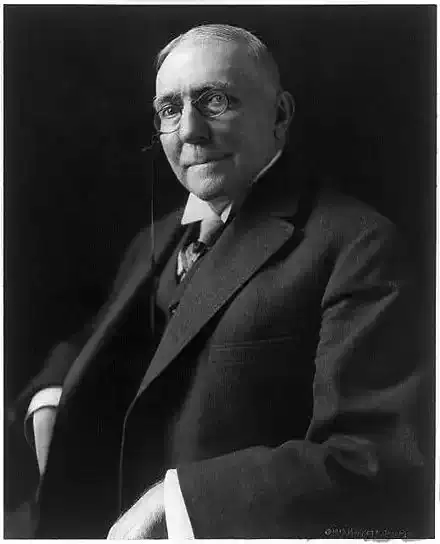
James Whitcomb Riley
Heat-Lightning
Heat-Lightning
There was a curious quiet for a space
Directly following: and in the face
Of one rapt listener pulsed the flush and glow
Of the heat-lightning that pent passions throw
Long ere the crash of speech.--He broke the spell--
The host:--The Traveler's story, told so well,
He said, had wakened there within his breast
A yearning, as it were, to know _the rest_--
That all unwritten sequence that the Lord
Of Righteousness must write with flame and sword,
Some awful session of His patient thought--
Just then it was, his good old mother caught
His blazing eye--so that its fire became
But as an ember--though it burned the same.
It seemed to her, she said, that she had heard
It was the _Heavenly_ Parent never erred,
And not the _earthly_ one that had such grace:
'Therefore, my son,' she said, with lifted face
And eyes, 'let no one dare anticipate
The Lord's intent. While _He_ waits, _we_ will wait'
And with a gust of reverence genuine
Then Uncle Mart was aptly ringing in-
''_If the darkened heavens lower,
Wrap thy cloak around thy form;
Though the tempest rise in power,
God is mightier than the storm!_''
Which utterance reached the restive children all
As something humorous. And then a call
For _him_ to tell a story, or to 'say
A funny piece.' His face fell right away:
He knew no story worthy. Then he must
_Declaim_ for them: In that, he could not trust
His memory. And then a happy thought
Struck some one, who reached in his vest and brought
Some scrappy clippings into light and said
There was a poem of Uncle Mart's he read
Last April in '_The Sentinel_.' He had
It there in print, and knew all would be glad
To hear it rendered by the author.
And,
All reasons for declining at command
Exhausted, the now helpless poet rose
And said: 'I am discovered, I suppose.
Though I have taken all precautions not
To sign my name to any verses wrought
By my transcendent genius, yet, you see,
Fame wrests my secret from me bodily;
So I must needs confess I did this deed
Of poetry red-handed, nor can plead
One whit of unintention in my crime--
My guilt of rhythm and my glut of rhyme.-
'Maenides rehearsed a tale of arms,
And Naso told of curious metat_mur_phoses;
Unnumbered pens have pictured woman's charms,
While crazy _I_'ve made poetry _on purposes!_'
In other words, I stand convicted--need
I say--by my own doing, as I read.
There was a curious quiet for a space
Directly following: and in the face
Of one rapt listener pulsed the flush and glow
Of the heat-lightning that pent passions throw
Long ere the crash of speech.--He broke the spell--
The host:--The Traveler's story, told so well,
He said, had wakened there within his breast
A yearning, as it were, to know _the rest_--
That all unwritten sequence that the Lord
Of Righteousness must write with flame and sword,
Some awful session of His patient thought--
Just then it was, his good old mother caught
His blazing eye--so that its fire became
But as an ember--though it burned the same.
It seemed to her, she said, that she had heard
It was the _Heavenly_ Parent never erred,
And not the _earthly_ one that had such grace:
'Therefore, my son,' she said, with lifted face
And eyes, 'let no one dare anticipate
The Lord's intent. While _He_ waits, _we_ will wait'
And with a gust of reverence genuine
Then Uncle Mart was aptly ringing in-
''_If the darkened heavens lower,
Wrap thy cloak around thy form;
Though the tempest rise in power,
God is mightier than the storm!_''
Which utterance reached the restive children all
As something humorous. And then a call
For _him_ to tell a story, or to 'say
A funny piece.' His face fell right away:
He knew no story worthy. Then he must
_Declaim_ for them: In that, he could not trust
His memory. And then a happy thought
Struck some one, who reached in his vest and brought
Some scrappy clippings into light and said
There was a poem of Uncle Mart's he read
Last April in '_The Sentinel_.' He had
It there in print, and knew all would be glad
To hear it rendered by the author.
And,
All reasons for declining at command
Exhausted, the now helpless poet rose
And said: 'I am discovered, I suppose.
Though I have taken all precautions not
To sign my name to any verses wrought
By my transcendent genius, yet, you see,
Fame wrests my secret from me bodily;
So I must needs confess I did this deed
Of poetry red-handed, nor can plead
One whit of unintention in my crime--
My guilt of rhythm and my glut of rhyme.-
'Maenides rehearsed a tale of arms,
And Naso told of curious metat_mur_phoses;
Unnumbered pens have pictured woman's charms,
While crazy _I_'ve made poetry _on purposes!_'
In other words, I stand convicted--need
I say--by my own doing, as I read.
314
James Whitcomb Riley
George Mullen's Confession
George Mullen's Confession
For the sake of guilty conscience, and the heart that ticks the
time
Of the clockworks of my nature, I desire to say that I'm
A weak and sinful creature, as regards my daily walk
The last five years and better. It ain't worth while to talk-
I've been too mean to tell it! I've been so hard, you see,
And full of pride, and--onry--now there's the word for me--
Just onry--and to show you, I'll give my history
With vital points in question, and I think you'll all agree.
I was always stiff and stubborn since I could recollect,
And had an awful temper, and never would reflect;
And always into trouble--I remember once at school
The teacher tried to flog me, and I reversed that rule.
O I was bad I tell you! And it's a funny move
That a fellow wild as I was could ever fall in love;
And it's a funny notion that an animal like me,
Under a girl's weak fingers was as tame as tame could be!
But it's so, and sets me thinking of the easy way she had
Of cooling down my temper--though I'd be fighting mad.
'My Lion Queen' I called her--when a spell of mine occurred
She'd come in a den of feelings and quell them with a word.
I'll tell you how she loved me--and what her people thought:
When I asked to marry Annie they said 'they reckoned not--
That I cut too many didoes and monkey-shines to suit
Their idea of a son-in-law, and I could go, to boot!'
I tell you that thing riled me! Why, I felt my face turn white,
And my teeth shut like a steel trap, and the fingers of my right
Hand pained me with their pressure--all the rest's a mystery
Till I heard my Annie saying--'I'm going, too, you see.'
We were coming through the gateway, and she wavered for a spell
When she heard her mother crying and her raving father yell
That she wa'n't no child of his'n--like an actor in a play
We saw at Independence, coming through the other day.
Well! that's the way we started. And for days and weeks and
months
And even years we journeyed on, regretting never once
Of starting out together upon the path of life--
Akind o' sort o' husband, but a mighty loving wife,--
And the cutest little baby--little Grace--I see her now
A-standin' on the pig-pen as her mother milked the cow--
And I can hear her shouting--as I stood unloading straw,-'
I'm ain't as big as papa, but I'm biggerest'n ma.'
Now folks that never married don't seem to understand
That a little baby's language is the sweetest ever planned--
Why, I tell you it's pure music, and I'll just go on to say
That I sometimes have a notion that the angels talk that way!
There's a chapter in this story I'd be happy to destroy;
I could burn it up before you with a mighty sight of joy;
But I'll go ahead and give it--not in detail, no, my friend,
For it takes five years of reading before you find the end.
My Annie's folks relented--at least, in some degree;
They sent one time for Annie, but they didn't send for me.
The old man wrote the message with a heart as hot and dry
As a furnace--'Annie Mullen, come and see your mother die.'
I saw the slur intended--why I fancied I could see
The old man shoot the insult like a poison dart at me;
And in that heat of passion I swore an inward oath
That if Annie pleased her father she could never please us both.
I watched her--dark and sullen--as she hurried on her shawl;
I watched her--calm and cruel, though I saw her tear-drops fall;
I watched her--cold and heartless, though I heard her moaning,
call
For mercy from high Heaven--and I smiled throughout it all.
Why even when she kissed me, and her tears were on my brow,
As she murmured, 'George, forgive me--I must go to mother now!'
Such hate there was within me that I answered not at all,
But calm, and cold and cruel, I smiled throughout it all.
But a shadow in the doorway caught my eye, and then the face
Full of innocence and sunshine of little baby Grace.
And I snatched her up and kissed her, and I softened through and
through
For a minute when she told me 'I must kiss her muvver too.'
I remember, at the starting, how I tried to freeze again
As I watched them slowly driving down the little crooked lane--
When Annie shouted something that ended in a cry,
And how I tried to whistle and it fizzled in a sigh.
I remember running after, with a glimmer in my sight--
Pretending I'd discovered that the traces wasn't right;
And the last that I remember, as they disappeared from view,
Was little Grace a-calling, 'I see papa! Howdy-do!'
And left alone to ponder, I again took up my hate
For the old man who would chuckle that I was desolate;
And I mouthed my wrongs in mutters till my pride called up the
pain
His last insult had given me--until I smiled again
Till the wild beast in my nature was raging in the den--
With no one now to quell it, and I wrote a letter then
Full of hissing things, and heated with so hot a heat of hate
That my pen flashed out black lightning at a most terrific rate.
I wrote that 'she had wronged me when she went away from me--
Though to see her dying mother 'twas her father's victory,
And a woman that could waver when her husband's pride was rent
Was no longer worthy of it.' And I shut the house and went.
To tell of my long exile would be of little good--
Though I couldn't half-way tell it, and I wouldn't if I could!
I could tell of California--of a wild and vicious life;
Of trackless plains, and mountains, and the Indian's
scalping-knife.
I could tell of gloomy forests howling wild with threats of
death;
I could tell of fiery deserts that have scorched me with their
breath;
I could tell of wretched outcasts by the hundreds, great and
small,
And could claim the nasty honor of the greatest of them all.
I could tell of toil and hardship; and of sickness and disease,
And hollow-eyed starvation, but I tell you, friend, that these
Are trifles in comparison with what a fellow feels
With that bloodhound, Remorsefulness, forever at his heels.
I remember--worn and weary of the long, long years of care,
When the frost of time was making early harvest of my hair--
I remember, wrecked and hopeless of a rest beneath the sky,
My resolve to quit the country, and to seek the East, and die.
I remember my long journey, like a dull, oppressive dream,
Across the empty prairies till I caught the distant gleam
Of a city in the beauty of its broad and shining stream
On whose bosom, flocked together, float the mighty swans of
steam.
I remember drifting with them till I found myself again
In the rush and roar and rattle of the engine and the train;
And when from my surroundings something spoke of child and wife,
It seemed the train was rumbling through a tunnel in my life.
Then I remember something--like a sudden burst of light--
That don't exactly tell it, but I couldn't tell it right--
A something clinging to me with its arms around my neck--
A little girl, for instance--or an angel, I expect--
For she kissed me, cried and called me 'her dear papa,' and I
felt
My heart was pure virgin gold, and just about to melt--
And so it did--it melted in a mist of gleaming rain
When she took my hand and whispered, 'My mama's on the train.'
There's some things I can dwell on, and get off pretty well,
But the balance of this story I know I couldn't tell;
So I ain't going to try it, for to tell the reason why-I'm
so chicken-hearted lately I'd be certain 'most to cry.
For the sake of guilty conscience, and the heart that ticks the
time
Of the clockworks of my nature, I desire to say that I'm
A weak and sinful creature, as regards my daily walk
The last five years and better. It ain't worth while to talk-
I've been too mean to tell it! I've been so hard, you see,
And full of pride, and--onry--now there's the word for me--
Just onry--and to show you, I'll give my history
With vital points in question, and I think you'll all agree.
I was always stiff and stubborn since I could recollect,
And had an awful temper, and never would reflect;
And always into trouble--I remember once at school
The teacher tried to flog me, and I reversed that rule.
O I was bad I tell you! And it's a funny move
That a fellow wild as I was could ever fall in love;
And it's a funny notion that an animal like me,
Under a girl's weak fingers was as tame as tame could be!
But it's so, and sets me thinking of the easy way she had
Of cooling down my temper--though I'd be fighting mad.
'My Lion Queen' I called her--when a spell of mine occurred
She'd come in a den of feelings and quell them with a word.
I'll tell you how she loved me--and what her people thought:
When I asked to marry Annie they said 'they reckoned not--
That I cut too many didoes and monkey-shines to suit
Their idea of a son-in-law, and I could go, to boot!'
I tell you that thing riled me! Why, I felt my face turn white,
And my teeth shut like a steel trap, and the fingers of my right
Hand pained me with their pressure--all the rest's a mystery
Till I heard my Annie saying--'I'm going, too, you see.'
We were coming through the gateway, and she wavered for a spell
When she heard her mother crying and her raving father yell
That she wa'n't no child of his'n--like an actor in a play
We saw at Independence, coming through the other day.
Well! that's the way we started. And for days and weeks and
months
And even years we journeyed on, regretting never once
Of starting out together upon the path of life--
Akind o' sort o' husband, but a mighty loving wife,--
And the cutest little baby--little Grace--I see her now
A-standin' on the pig-pen as her mother milked the cow--
And I can hear her shouting--as I stood unloading straw,-'
I'm ain't as big as papa, but I'm biggerest'n ma.'
Now folks that never married don't seem to understand
That a little baby's language is the sweetest ever planned--
Why, I tell you it's pure music, and I'll just go on to say
That I sometimes have a notion that the angels talk that way!
There's a chapter in this story I'd be happy to destroy;
I could burn it up before you with a mighty sight of joy;
But I'll go ahead and give it--not in detail, no, my friend,
For it takes five years of reading before you find the end.
My Annie's folks relented--at least, in some degree;
They sent one time for Annie, but they didn't send for me.
The old man wrote the message with a heart as hot and dry
As a furnace--'Annie Mullen, come and see your mother die.'
I saw the slur intended--why I fancied I could see
The old man shoot the insult like a poison dart at me;
And in that heat of passion I swore an inward oath
That if Annie pleased her father she could never please us both.
I watched her--dark and sullen--as she hurried on her shawl;
I watched her--calm and cruel, though I saw her tear-drops fall;
I watched her--cold and heartless, though I heard her moaning,
call
For mercy from high Heaven--and I smiled throughout it all.
Why even when she kissed me, and her tears were on my brow,
As she murmured, 'George, forgive me--I must go to mother now!'
Such hate there was within me that I answered not at all,
But calm, and cold and cruel, I smiled throughout it all.
But a shadow in the doorway caught my eye, and then the face
Full of innocence and sunshine of little baby Grace.
And I snatched her up and kissed her, and I softened through and
through
For a minute when she told me 'I must kiss her muvver too.'
I remember, at the starting, how I tried to freeze again
As I watched them slowly driving down the little crooked lane--
When Annie shouted something that ended in a cry,
And how I tried to whistle and it fizzled in a sigh.
I remember running after, with a glimmer in my sight--
Pretending I'd discovered that the traces wasn't right;
And the last that I remember, as they disappeared from view,
Was little Grace a-calling, 'I see papa! Howdy-do!'
And left alone to ponder, I again took up my hate
For the old man who would chuckle that I was desolate;
And I mouthed my wrongs in mutters till my pride called up the
pain
His last insult had given me--until I smiled again
Till the wild beast in my nature was raging in the den--
With no one now to quell it, and I wrote a letter then
Full of hissing things, and heated with so hot a heat of hate
That my pen flashed out black lightning at a most terrific rate.
I wrote that 'she had wronged me when she went away from me--
Though to see her dying mother 'twas her father's victory,
And a woman that could waver when her husband's pride was rent
Was no longer worthy of it.' And I shut the house and went.
To tell of my long exile would be of little good--
Though I couldn't half-way tell it, and I wouldn't if I could!
I could tell of California--of a wild and vicious life;
Of trackless plains, and mountains, and the Indian's
scalping-knife.
I could tell of gloomy forests howling wild with threats of
death;
I could tell of fiery deserts that have scorched me with their
breath;
I could tell of wretched outcasts by the hundreds, great and
small,
And could claim the nasty honor of the greatest of them all.
I could tell of toil and hardship; and of sickness and disease,
And hollow-eyed starvation, but I tell you, friend, that these
Are trifles in comparison with what a fellow feels
With that bloodhound, Remorsefulness, forever at his heels.
I remember--worn and weary of the long, long years of care,
When the frost of time was making early harvest of my hair--
I remember, wrecked and hopeless of a rest beneath the sky,
My resolve to quit the country, and to seek the East, and die.
I remember my long journey, like a dull, oppressive dream,
Across the empty prairies till I caught the distant gleam
Of a city in the beauty of its broad and shining stream
On whose bosom, flocked together, float the mighty swans of
steam.
I remember drifting with them till I found myself again
In the rush and roar and rattle of the engine and the train;
And when from my surroundings something spoke of child and wife,
It seemed the train was rumbling through a tunnel in my life.
Then I remember something--like a sudden burst of light--
That don't exactly tell it, but I couldn't tell it right--
A something clinging to me with its arms around my neck--
A little girl, for instance--or an angel, I expect--
For she kissed me, cried and called me 'her dear papa,' and I
felt
My heart was pure virgin gold, and just about to melt--
And so it did--it melted in a mist of gleaming rain
When she took my hand and whispered, 'My mama's on the train.'
There's some things I can dwell on, and get off pretty well,
But the balance of this story I know I couldn't tell;
So I ain't going to try it, for to tell the reason why-I'm
so chicken-hearted lately I'd be certain 'most to cry.
324
James Whitcomb Riley
Dot Leedle Boy
Dot Leedle Boy
Ot's a leedle Gristmas story
Dot I told der leedle folks--
Und I vant you stop dot laughin'
Und grackin' funny jokes!--
So help me Peter-Moses!
Ot's no time for monkey-shine,
Ober I vast told you somedings
Of dot leedle boy of mine!
Ot vas von cold Vinter vedder,
Ven der snow vas all about--
Dot you have to chop der hatchet
Eef you got der sauerkraut!
Und der cheekens on der hind leg
Vas standin' in der shine
Der sun shmile out dot morning
On dot leedle boy of mine.
He vas yoost a leedle baby
Not bigger as a doll
Dot time I got acquaintet--
Ach! you ought to heard 'im squall!--
I grackys! dot's der moosic
Ot make me feel so fine
Ven first I vas been marriet--
Oh, dot leedle boy of mine!
He look yoost like his fader!--
So, ven der vimmen said,
'Vot a purty leedle baby!'
Katrina shake der head. . . .
I dink she must 'a' notice
Dot der baby vas a-gryin',
Und she cover up der blankets
Of dot leedle boy of mine.
Vel, ven he vas got bigger,
Dot he grawl und bump his nose,
Und make der table over,
Und molasses on his glothes--
Dot make 'im all der sveeter,--
So I say to my Katrine,
'Better you vas quit a-shpankin'
Dot leedle boy of mine!'
No more he vas older
As about a dozen months
He speak der English language
Und der German--bote at vonce!
Und he dringk his glass of lager
Like a Londsman fon der Rhine--
Und I klingk my glass togeder
Mit dot leedle boy of mine!
I vish you could 'a' seen id--
Ven he glimb up on der chair
Und shmash der lookin'-glasses
Ven he try to comb his hair
Mit a hammer!--Und Katrina
Say, 'Dot's an ugly sign!'
But I laugh und vink my fingers
At dot leedle boy of mine.
But vonce, dot Vinter morning,
He shlip out in der snow
Mitout no stockin's on 'im.--
He say he 'vant to go
Und fly some mit der birdies!'
Und ve give 'im medi-cine
Ven he catch der 'parrygoric'--
Dot leedle boy of mine!
Und so I set und nurse 'im,
Vile der Gristmas vas come roun',
Und I told 'im 'bout 'Kriss Kringle,'
How he come der chimbly down:
Und I ask 'im eef he love 'im
Eef he bring 'im someding fine?
'Nicht besser as mein fader,'
Say dot leedle boy of mine.--
Und he put his arms aroun' me
Und hug so close und tight,
I hear der gclock a-tickin'
All der balance of der night! . . .
Someding make me feel so funny
Ven I say to my Katrine,
'Let us go und fill der stockin's
Of dot leedle boy of mine.'
Vell.--Ve buyed a leedle horses
Dot you pull 'im mit a shtring,
Und a leedle fancy jay-bird--
Eef you vant to hear 'im sing
You took 'im by der topknot
Und yoost blow in behine--
Und dot make much spectakel
For dot leedle boy of mine!
Und gandies, nuts und raizens--
Und I buy a leedle drum
Dot I vant to hear 'im rattle
Ven der Gristmas morning come!
Und a leedle shmall tin rooster
Dot vould crow so loud und fine
Ven he sqveeze 'im in der morning,
Dot leedle boy of mine!
Und--vile ve vas a-fixin'--
Dot leedle boy vake out!
I t'ought he been a-dreamin'
'Kriss Kringle' vas about,--
For he say--'DOT'S HIM!--I SEE 'IM
MIT DER SHTARS DOT MAKE DER SHINE!'
Und he yoost keep on a-gryin'--
Dot leedle boy of mine,--
Und gottin' vorse und vorser--
Und tumble on der bed!
So--ven der doctor seen id,
He kindo' shake his head,
Und feel his pulse--und visper,
'Der boy is a-dyin'.'
You dink I could BELIEVE id?--
DOT LEEDLE BOY OF MINE?
I told you, friends--dot's someding,
Der last time dot he speak
Und say, 'GOOT-BY, KRISS KRINGLE!'
--Dot make me feel so veak
I yoost kneel down und drimble,
Und bur-sed out a-gryin',
'MEIN GOTT, MEIN GOTT IN HIMMEL!--
DOT LEEDLE BOY OF MINE!'
. . . . . . . . . .
Der sun don't shine DOT Gristmas!
. . . Eef dot leedle boy vould LIFF'D--
No deefer-en'! for HEAVEN vas
His leedle Gristmas gift!
Und der ROOSTER, und der GANDY,
Und me--und my Katrine--
Und der jay-bird--is awaiting
For dot leedle boy of mine.
Ot's a leedle Gristmas story
Dot I told der leedle folks--
Und I vant you stop dot laughin'
Und grackin' funny jokes!--
So help me Peter-Moses!
Ot's no time for monkey-shine,
Ober I vast told you somedings
Of dot leedle boy of mine!
Ot vas von cold Vinter vedder,
Ven der snow vas all about--
Dot you have to chop der hatchet
Eef you got der sauerkraut!
Und der cheekens on der hind leg
Vas standin' in der shine
Der sun shmile out dot morning
On dot leedle boy of mine.
He vas yoost a leedle baby
Not bigger as a doll
Dot time I got acquaintet--
Ach! you ought to heard 'im squall!--
I grackys! dot's der moosic
Ot make me feel so fine
Ven first I vas been marriet--
Oh, dot leedle boy of mine!
He look yoost like his fader!--
So, ven der vimmen said,
'Vot a purty leedle baby!'
Katrina shake der head. . . .
I dink she must 'a' notice
Dot der baby vas a-gryin',
Und she cover up der blankets
Of dot leedle boy of mine.
Vel, ven he vas got bigger,
Dot he grawl und bump his nose,
Und make der table over,
Und molasses on his glothes--
Dot make 'im all der sveeter,--
So I say to my Katrine,
'Better you vas quit a-shpankin'
Dot leedle boy of mine!'
No more he vas older
As about a dozen months
He speak der English language
Und der German--bote at vonce!
Und he dringk his glass of lager
Like a Londsman fon der Rhine--
Und I klingk my glass togeder
Mit dot leedle boy of mine!
I vish you could 'a' seen id--
Ven he glimb up on der chair
Und shmash der lookin'-glasses
Ven he try to comb his hair
Mit a hammer!--Und Katrina
Say, 'Dot's an ugly sign!'
But I laugh und vink my fingers
At dot leedle boy of mine.
But vonce, dot Vinter morning,
He shlip out in der snow
Mitout no stockin's on 'im.--
He say he 'vant to go
Und fly some mit der birdies!'
Und ve give 'im medi-cine
Ven he catch der 'parrygoric'--
Dot leedle boy of mine!
Und so I set und nurse 'im,
Vile der Gristmas vas come roun',
Und I told 'im 'bout 'Kriss Kringle,'
How he come der chimbly down:
Und I ask 'im eef he love 'im
Eef he bring 'im someding fine?
'Nicht besser as mein fader,'
Say dot leedle boy of mine.--
Und he put his arms aroun' me
Und hug so close und tight,
I hear der gclock a-tickin'
All der balance of der night! . . .
Someding make me feel so funny
Ven I say to my Katrine,
'Let us go und fill der stockin's
Of dot leedle boy of mine.'
Vell.--Ve buyed a leedle horses
Dot you pull 'im mit a shtring,
Und a leedle fancy jay-bird--
Eef you vant to hear 'im sing
You took 'im by der topknot
Und yoost blow in behine--
Und dot make much spectakel
For dot leedle boy of mine!
Und gandies, nuts und raizens--
Und I buy a leedle drum
Dot I vant to hear 'im rattle
Ven der Gristmas morning come!
Und a leedle shmall tin rooster
Dot vould crow so loud und fine
Ven he sqveeze 'im in der morning,
Dot leedle boy of mine!
Und--vile ve vas a-fixin'--
Dot leedle boy vake out!
I t'ought he been a-dreamin'
'Kriss Kringle' vas about,--
For he say--'DOT'S HIM!--I SEE 'IM
MIT DER SHTARS DOT MAKE DER SHINE!'
Und he yoost keep on a-gryin'--
Dot leedle boy of mine,--
Und gottin' vorse und vorser--
Und tumble on der bed!
So--ven der doctor seen id,
He kindo' shake his head,
Und feel his pulse--und visper,
'Der boy is a-dyin'.'
You dink I could BELIEVE id?--
DOT LEEDLE BOY OF MINE?
I told you, friends--dot's someding,
Der last time dot he speak
Und say, 'GOOT-BY, KRISS KRINGLE!'
--Dot make me feel so veak
I yoost kneel down und drimble,
Und bur-sed out a-gryin',
'MEIN GOTT, MEIN GOTT IN HIMMEL!--
DOT LEEDLE BOY OF MINE!'
. . . . . . . . . .
Der sun don't shine DOT Gristmas!
. . . Eef dot leedle boy vould LIFF'D--
No deefer-en'! for HEAVEN vas
His leedle Gristmas gift!
Und der ROOSTER, und der GANDY,
Und me--und my Katrine--
Und der jay-bird--is awaiting
For dot leedle boy of mine.
282
James Whitcomb Riley
Dawn, Noon And Dewfall
Dawn, Noon And Dewfall
I.
Dawn, noon and dewfall! Bluebird and robin
Up and at it airly, and the orchard-blossoms bobbin'!
Peekin' from the winder, half-awake, and wishin'
I could go to sleep agin as well as go a-fishin'!
II.
On the apern o' the dam, legs a-danglin' over,
Drowsy-like with sound o' worter and the smell o' clover:
Fish all out a visitin'--'cept some dratted minnor!
Yes, and mill shet down at last and hands is gone to dinner.
III.
Trompin' home acrost the fields: Lightnin'-bugs a-blinkin'
In the wheat like sparks o' things feller keeps a-thinkin':--
Mother waitin' supper, and the childern there to cherr me!
And fiddle on the kitchen-wall a-jist a-eechin' fer me!
I.
Dawn, noon and dewfall! Bluebird and robin
Up and at it airly, and the orchard-blossoms bobbin'!
Peekin' from the winder, half-awake, and wishin'
I could go to sleep agin as well as go a-fishin'!
II.
On the apern o' the dam, legs a-danglin' over,
Drowsy-like with sound o' worter and the smell o' clover:
Fish all out a visitin'--'cept some dratted minnor!
Yes, and mill shet down at last and hands is gone to dinner.
III.
Trompin' home acrost the fields: Lightnin'-bugs a-blinkin'
In the wheat like sparks o' things feller keeps a-thinkin':--
Mother waitin' supper, and the childern there to cherr me!
And fiddle on the kitchen-wall a-jist a-eechin' fer me!
361
James Whitcomb Riley
Back From A Two-years' Sentence
Back From A Two-years' Sentence
Back from a two-years' sentence!
And though it had been ten,
You think, I were scarred no deeper
In the eyes of my fellow-men.
'My fellow-men--?' Sounds like a satire,
You think-- and I so allow,
Here in my home since childhood,
Yet more than a stranger now!
Pardon--! Not wholly a stranger--,
For I have a wife and child:
That woman has wept for two long years,
And yet last night she smiled--!
Smiled, as I leapt from the platform
Of the midnight train, and then--
All that I knew was that smile of hers,
And our babe in my arms again!
Back from a two-years' sentence--
But I've thought the whole thing through--,
A hint of it came when the bars swung back
And I looked straight up in the blue
Of the blessed skies with my hat off!
O-ho! I've a wife and child:
That woman has wept for two long years,
And yet last night she smiled!
Back from a two-years' sentence!
And though it had been ten,
You think, I were scarred no deeper
In the eyes of my fellow-men.
'My fellow-men--?' Sounds like a satire,
You think-- and I so allow,
Here in my home since childhood,
Yet more than a stranger now!
Pardon--! Not wholly a stranger--,
For I have a wife and child:
That woman has wept for two long years,
And yet last night she smiled--!
Smiled, as I leapt from the platform
Of the midnight train, and then--
All that I knew was that smile of hers,
And our babe in my arms again!
Back from a two-years' sentence--
But I've thought the whole thing through--,
A hint of it came when the bars swung back
And I looked straight up in the blue
Of the blessed skies with my hat off!
O-ho! I've a wife and child:
That woman has wept for two long years,
And yet last night she smiled!
262
James Whitcomb Riley
A Tale Of The Airly Days
A Tale Of The Airly Days
Oh! tell me a tale of the airly days--
Of the times as they ust to be;
'Piller of Fi-er' and 'Shakespeare's Plays'
Is a' most too deep fer me!
I want plane facts, and I want plane words,
Of the good old-fashioned ways,
When speech run free as the songs of birds
'Way back in the airly days.
Tell me a tale of the timber-lands--
Of the old-time pioneers;
Somepin' a pore man understands
With his feelins's well as ears.
Tell of the old log house,--about
The loft, and the puncheon flore--
The old fi-er-place, with the crane swung out,
And the latch-string thrugh the door.
Tell of the things jest as they was--
They don't need no excuse!-Don't
tech 'em up like the poets does,
Tel theyr all too fine fer use!--
Say they was 'leven in the fambily--
Two beds, and the chist, below,
And the trundle-beds that each helt three,
And the clock and the old bureau.
Then blow the horn at the old back-door
Tel the echoes all halloo,
And the childern gethers home onc't more,
Jest as they ust to do:
Blow fer Pap tel he hears and comes,
With Tomps and Elias, too,
A-marchin' home, with the fife and drums
And the old Red White and Blue!
Blow and blow tel the sound draps low
As the moan of the whipperwill,
And wake up Mother, and Ruth and Jo,
All sleepin' at Bethel Hill:
Blow and call tel the faces all
Shine out in the back-log's blaze,
And the shadders dance on the old hewed wall
As they did in the airly days.
Oh! tell me a tale of the airly days--
Of the times as they ust to be;
'Piller of Fi-er' and 'Shakespeare's Plays'
Is a' most too deep fer me!
I want plane facts, and I want plane words,
Of the good old-fashioned ways,
When speech run free as the songs of birds
'Way back in the airly days.
Tell me a tale of the timber-lands--
Of the old-time pioneers;
Somepin' a pore man understands
With his feelins's well as ears.
Tell of the old log house,--about
The loft, and the puncheon flore--
The old fi-er-place, with the crane swung out,
And the latch-string thrugh the door.
Tell of the things jest as they was--
They don't need no excuse!-Don't
tech 'em up like the poets does,
Tel theyr all too fine fer use!--
Say they was 'leven in the fambily--
Two beds, and the chist, below,
And the trundle-beds that each helt three,
And the clock and the old bureau.
Then blow the horn at the old back-door
Tel the echoes all halloo,
And the childern gethers home onc't more,
Jest as they ust to do:
Blow fer Pap tel he hears and comes,
With Tomps and Elias, too,
A-marchin' home, with the fife and drums
And the old Red White and Blue!
Blow and blow tel the sound draps low
As the moan of the whipperwill,
And wake up Mother, and Ruth and Jo,
All sleepin' at Bethel Hill:
Blow and call tel the faces all
Shine out in the back-log's blaze,
And the shadders dance on the old hewed wall
As they did in the airly days.
297
James Whitcomb Riley
A Prospective Visit
A Prospective Visit
While _any_ day was notable and dear
That gave the children Noey, history here
Records his advent emphasized indeed
With sharp italics, as he came to feed
The stock one special morning, fair and bright,
When Johnty and Bud met him, with delight
Unusual even as their extra dress--
Garbed as for holiday, with much excess
Of proud self-consciousness and vain conceit
In their new finery.--Far up the street
They called to Noey, as he came, that they,
As promised, both were going back that day
To _his_ house with him!
And by time that each
Had one of Noey's hands--ceasing their speech
And coyly anxious, in their new attire,
To wake the comment of their mute desire,--
Noey seemed rendered voiceless. Quite a while
They watched him furtively.--He seemed to smile
As though he would conceal it; and they saw
Him look away, and his lips purse and draw
In curious, twitching spasms, as though he might
Be whispering,--while in his eye the white
Predominated strangely.--Then the spell
Gave way, and his pent speech burst audible:
'They wuz two stylish little boys,
and they wuz mighty bold ones,
Had two new pairs o' britches made
out o' their daddy's old ones!'
And at the inspirational outbreak,
Both joker and his victims seemed to take
An equal share of laughter,--and all through
Their morning visit kept recurring to
The funny words and jingle of the rhyme
That just kept getting funnier all the time.
While _any_ day was notable and dear
That gave the children Noey, history here
Records his advent emphasized indeed
With sharp italics, as he came to feed
The stock one special morning, fair and bright,
When Johnty and Bud met him, with delight
Unusual even as their extra dress--
Garbed as for holiday, with much excess
Of proud self-consciousness and vain conceit
In their new finery.--Far up the street
They called to Noey, as he came, that they,
As promised, both were going back that day
To _his_ house with him!
And by time that each
Had one of Noey's hands--ceasing their speech
And coyly anxious, in their new attire,
To wake the comment of their mute desire,--
Noey seemed rendered voiceless. Quite a while
They watched him furtively.--He seemed to smile
As though he would conceal it; and they saw
Him look away, and his lips purse and draw
In curious, twitching spasms, as though he might
Be whispering,--while in his eye the white
Predominated strangely.--Then the spell
Gave way, and his pent speech burst audible:
'They wuz two stylish little boys,
and they wuz mighty bold ones,
Had two new pairs o' britches made
out o' their daddy's old ones!'
And at the inspirational outbreak,
Both joker and his victims seemed to take
An equal share of laughter,--and all through
Their morning visit kept recurring to
The funny words and jingle of the rhyme
That just kept getting funnier all the time.
265
James Whitcomb Riley
A Parent Reprimanded
A Parent Reprimanded
Sometimes I think 'at Parents does
Things ist about as bad as _us_--
Wite 'fore our vurry eyes, at that!
Fer one time Pa he scold' my Ma
'Cause he can't find his hat;
An' she ist _cried_, she did! An' I
Says, 'Ef you scold my Ma
Ever again an' make her cry,
Wy, you sha'n't _be_ my Pa!'
An' nen he laugh' an' find his hat
Ist wite where Ma she said it's at!
Sometimes I think 'at Parents does
Things ist about as bad as _us_--
Wite 'fore our vurry eyes, at that!
Fer one time Pa he scold' my Ma
'Cause he can't find his hat;
An' she ist _cried_, she did! An' I
Says, 'Ef you scold my Ma
Ever again an' make her cry,
Wy, you sha'n't _be_ my Pa!'
An' nen he laugh' an' find his hat
Ist wite where Ma she said it's at!
270
James Whitcomb Riley
A New Year's Time At Willards's
A New Year's Time At Willards's
1
The Hired Man Talks
There's old man Willards; an' his wife;
An' Marg'et-- S'repty's sister--; an'
There's me-- an' I'm the hired man;
An' Tomps McClure, you better yer life!
Well now, old Willards hain't so bad,
Considerin' the chance he's had.
Of course, he's rich, an' sleeps an' eats
Whenever he's a mind to: Takes
An' leans back in the Amen-seats
An' thanks the Lord fer all he makes--.
That's purty much all folks has got
Ag'inst the old man, like as not!
But there's his woman-- jes the turn
Of them-air two wild girls o' hern-Marg'et
an' S'repty-- allus in
Fer any cuttin'-up concern--
Church festibals, and foolishin'
Round Christmas-trees, an' New Year's sprees--
Set up to watch the Old Year go
An' New Year come-- sich things as these;
An' turkey-dinners, don't you know!
S'repty's younger, an' more gay,
An' purtier, an' finer dressed
Than Marg'et is-- but, lawzy-day!
She hain't the independentest!
'Take care!' old Willards used to say,
'Take care--! Let Marg'et have her way,
An' S'repty, you go off an' play
On your melodeum--!' But, best
Of all, comes Tomps! An' I'll be bound,
Ef he hain't jes the beatin'est
Young chap in all the country round!
Ef you knowed Tomps you'd like him, shore!
They hain't no man on top o' ground
Walks into my affections more--!
An' all the Settlement'll say
That Tomps was liked jes thataway
By ever'body, till he tuk
A shine to S'repty Willards--. Then
You'd ort'o see the old man buck
An' h'ist hisse'f, an' paw the dirt,
An' hint that 'common workin'-men
That didn't want their feelin's hurt
'Ud better hunt fer 'comp'ny' where
The folks was pore an' didn't care--!'
The pine-blank facts is--, the old man,
Last Christmas was a year ago,
Found out some presents Tomps had got
Fer S'repty, an' hit made him hot--
Set down an' tuk his pen in hand
An' writ to Tomps an' told him so
On legal cap, in white an' black,
An' give him jes to understand
'No Christmas-gifts o' 'lily-white'
An' bear's-ile could fix matters right,'
An' wropped 'em up an' sent 'em back!
Well, S'repty cried an' snuffled round
Consid'able. But Marg'et she
Toed out another sock, an' wound
Her knittin' up, an' drawed the tea,
An' then set on the supper-things,
An' went up in the loft an' dressed--
An' through it all you'd never guessed
What she was up to! An' she brings
Her best hat with her an her shawl,
An' gloves, an' redicule, an' all,
An' injirubbers, an' comes down
An' tells 'em she's a-goin' to town
To he'p the Christmas goin's-on
Her Church got up. An' go she does--
The best hosswoman ever was!
'An' what'll We do while you're gone?'
The old man says, a-tryin' to be
Agreeable. 'Oh! You?' says she--,
'You kin jaw S'repty, like you did,
An' slander Tomps!' An' off she rid!
Now, this is all I'm goin' to tell
Of this-here story-- that is, I
Have done my very level best
As fur as this, an' here I 'dwell,'
As auctioneers says, winkin' sly:
Hit's old man Willards tells the rest.
2
The Old Man Talks
Adzackly jes one year ago,
This New Year's day, Tomps comes to me--
In my own house, an' whilse the folks
Was gittin' dinner--, an' he pokes
His nose right in, an' says, says he:
'I got yer note-- an' read it slow!
You don't like me, ner I don't you,'
He says--, 'we're even there, you know!
But you've said, furder that no gal
Of yourn kin marry me, er shall,
An' I'd best shet off comin', too!'
An' then he says--, 'Well, them's Your views--;
But havin' talked with S'repty, we
Have both agreed to disagree
With your peculiar notions-- some;
An', that s the reason, I refuse
To quit a-comin' here, but come--
Not fer to threat, ner raise no skeer
An' spile yer turkey-dinner here--,
But jes fer S'repty's sake, to sheer
Yer New Year's. Shall I take a cheer?'
Well, blame-don! Ef I ever see
Sich impidence! I couldn't say
Not nary word! But Mother she
Sot out a cheer fer Tomps, an' they
Shuk hands an' turnt their back on me.
Then I riz-- mad as mad could be--!
But Marg'et says--, 'Now, Pap! You set
Right where you're settin'--! Don't you fret!
An' Tomps-- you warm yer feet!' says she,
'An throw yer mitts an' comfert on
The bed there! Where is S'repty gone!
The cabbage is a-scortchin'! Ma,
Stop cryin' there an' stir the slaw!'
Well--! What was Mother cryin' fer--?
I half riz up-- but Marg'et's chin
Hit squared-- an' I set down ag'in--
I allus was afeard o' her,
I was, by jucks! So there I set,
Betwixt a sinkin'-chill an' sweat,
An' scuffled with my wrath, an' shet
My teeth to mighty tight, you bet!
An' yit, fer all that I could do,
I eeched to jes git up an' whet
The carvin'-knife a rasp er two
On Tomps's ribs-- an' so would you--!
Fer he had riz an' faced around,
An' stood there, smilin', as they brung
The turkey in, all stuffed an' browned--
Too sweet fer nose, er tooth, er tongue!
With sniffs o' sage, an' p'r'aps a dash
Of old burnt brandy, steamin'-hot
Mixed kindo' in with apple-mash
An' mince-meat, an' the Lord knows what!
Nobody was a-talkin' then,
To 'filiate any awk'ardness--
No noise o' any kind but jes
The rattle o' the dishes when
They'd fetch 'em in an' set 'em down,
An' fix an' change 'em round an' round,
Like women does-- till Mother says--,
'Vittels is ready; Abner, call
Down S'repty-- she's up-stairs, I guess--.'
And Marg'et she says, 'Ef you bawl
Like that, she'll not come down at all!
Besides, we needn't wait till she
Gits down! Here Temps, set down by me,
An' Pap: say grace...!' Well, there I was--!
What could I do! I drapped my head
Behind my fists an' groaned; an' said--:
'Indulgent Parent! In Thy cause
We bow the head an' bend the knee
An' break the bread, an' pour the wine,
Feelin'--' (The stair-door suddently
Went bang! An' S'repty flounced by me--)
'Feelin',' I says, 'this feast is Thine--
This New Year's feast--' an' rap-rap-rap!
Went Marg'ets case-knife on her plate--
An' next, I heerd a sasser drap--,
Then I looked up, an' strange to state,
There S'repty set in Tomps lap--
An' huggin' him, as shore as fate!
An' Mother kissin' him k-slap!
An' Marg'et-- she chips in to drap
The ruther peert remark to me--:
'That 'grace' o' yourn,' she says, 'won't 'gee'--
This hain't no 'New Year's feast,'' says she--,
'This is a' Infair-Dinner, Pap!'
An' so it was--! Be'n married fer
Purt' nigh a week--! 'Twas Marg'et planned
The whole thing fer 'em, through an' through.
I'm rickonciled; an' understand,
I take things jes as they occur--,
Ef Marg'et liked Tomps, Tomps 'ud do--!
But I-says-I, a-holt his hand--,
'I'm glad you didn't marry Her-'
Cause Marg'et's my guardeen-- yes-sir--!
An' S'repty's good enough fer you!'
1
The Hired Man Talks
There's old man Willards; an' his wife;
An' Marg'et-- S'repty's sister--; an'
There's me-- an' I'm the hired man;
An' Tomps McClure, you better yer life!
Well now, old Willards hain't so bad,
Considerin' the chance he's had.
Of course, he's rich, an' sleeps an' eats
Whenever he's a mind to: Takes
An' leans back in the Amen-seats
An' thanks the Lord fer all he makes--.
That's purty much all folks has got
Ag'inst the old man, like as not!
But there's his woman-- jes the turn
Of them-air two wild girls o' hern-Marg'et
an' S'repty-- allus in
Fer any cuttin'-up concern--
Church festibals, and foolishin'
Round Christmas-trees, an' New Year's sprees--
Set up to watch the Old Year go
An' New Year come-- sich things as these;
An' turkey-dinners, don't you know!
S'repty's younger, an' more gay,
An' purtier, an' finer dressed
Than Marg'et is-- but, lawzy-day!
She hain't the independentest!
'Take care!' old Willards used to say,
'Take care--! Let Marg'et have her way,
An' S'repty, you go off an' play
On your melodeum--!' But, best
Of all, comes Tomps! An' I'll be bound,
Ef he hain't jes the beatin'est
Young chap in all the country round!
Ef you knowed Tomps you'd like him, shore!
They hain't no man on top o' ground
Walks into my affections more--!
An' all the Settlement'll say
That Tomps was liked jes thataway
By ever'body, till he tuk
A shine to S'repty Willards--. Then
You'd ort'o see the old man buck
An' h'ist hisse'f, an' paw the dirt,
An' hint that 'common workin'-men
That didn't want their feelin's hurt
'Ud better hunt fer 'comp'ny' where
The folks was pore an' didn't care--!'
The pine-blank facts is--, the old man,
Last Christmas was a year ago,
Found out some presents Tomps had got
Fer S'repty, an' hit made him hot--
Set down an' tuk his pen in hand
An' writ to Tomps an' told him so
On legal cap, in white an' black,
An' give him jes to understand
'No Christmas-gifts o' 'lily-white'
An' bear's-ile could fix matters right,'
An' wropped 'em up an' sent 'em back!
Well, S'repty cried an' snuffled round
Consid'able. But Marg'et she
Toed out another sock, an' wound
Her knittin' up, an' drawed the tea,
An' then set on the supper-things,
An' went up in the loft an' dressed--
An' through it all you'd never guessed
What she was up to! An' she brings
Her best hat with her an her shawl,
An' gloves, an' redicule, an' all,
An' injirubbers, an' comes down
An' tells 'em she's a-goin' to town
To he'p the Christmas goin's-on
Her Church got up. An' go she does--
The best hosswoman ever was!
'An' what'll We do while you're gone?'
The old man says, a-tryin' to be
Agreeable. 'Oh! You?' says she--,
'You kin jaw S'repty, like you did,
An' slander Tomps!' An' off she rid!
Now, this is all I'm goin' to tell
Of this-here story-- that is, I
Have done my very level best
As fur as this, an' here I 'dwell,'
As auctioneers says, winkin' sly:
Hit's old man Willards tells the rest.
2
The Old Man Talks
Adzackly jes one year ago,
This New Year's day, Tomps comes to me--
In my own house, an' whilse the folks
Was gittin' dinner--, an' he pokes
His nose right in, an' says, says he:
'I got yer note-- an' read it slow!
You don't like me, ner I don't you,'
He says--, 'we're even there, you know!
But you've said, furder that no gal
Of yourn kin marry me, er shall,
An' I'd best shet off comin', too!'
An' then he says--, 'Well, them's Your views--;
But havin' talked with S'repty, we
Have both agreed to disagree
With your peculiar notions-- some;
An', that s the reason, I refuse
To quit a-comin' here, but come--
Not fer to threat, ner raise no skeer
An' spile yer turkey-dinner here--,
But jes fer S'repty's sake, to sheer
Yer New Year's. Shall I take a cheer?'
Well, blame-don! Ef I ever see
Sich impidence! I couldn't say
Not nary word! But Mother she
Sot out a cheer fer Tomps, an' they
Shuk hands an' turnt their back on me.
Then I riz-- mad as mad could be--!
But Marg'et says--, 'Now, Pap! You set
Right where you're settin'--! Don't you fret!
An' Tomps-- you warm yer feet!' says she,
'An throw yer mitts an' comfert on
The bed there! Where is S'repty gone!
The cabbage is a-scortchin'! Ma,
Stop cryin' there an' stir the slaw!'
Well--! What was Mother cryin' fer--?
I half riz up-- but Marg'et's chin
Hit squared-- an' I set down ag'in--
I allus was afeard o' her,
I was, by jucks! So there I set,
Betwixt a sinkin'-chill an' sweat,
An' scuffled with my wrath, an' shet
My teeth to mighty tight, you bet!
An' yit, fer all that I could do,
I eeched to jes git up an' whet
The carvin'-knife a rasp er two
On Tomps's ribs-- an' so would you--!
Fer he had riz an' faced around,
An' stood there, smilin', as they brung
The turkey in, all stuffed an' browned--
Too sweet fer nose, er tooth, er tongue!
With sniffs o' sage, an' p'r'aps a dash
Of old burnt brandy, steamin'-hot
Mixed kindo' in with apple-mash
An' mince-meat, an' the Lord knows what!
Nobody was a-talkin' then,
To 'filiate any awk'ardness--
No noise o' any kind but jes
The rattle o' the dishes when
They'd fetch 'em in an' set 'em down,
An' fix an' change 'em round an' round,
Like women does-- till Mother says--,
'Vittels is ready; Abner, call
Down S'repty-- she's up-stairs, I guess--.'
And Marg'et she says, 'Ef you bawl
Like that, she'll not come down at all!
Besides, we needn't wait till she
Gits down! Here Temps, set down by me,
An' Pap: say grace...!' Well, there I was--!
What could I do! I drapped my head
Behind my fists an' groaned; an' said--:
'Indulgent Parent! In Thy cause
We bow the head an' bend the knee
An' break the bread, an' pour the wine,
Feelin'--' (The stair-door suddently
Went bang! An' S'repty flounced by me--)
'Feelin',' I says, 'this feast is Thine--
This New Year's feast--' an' rap-rap-rap!
Went Marg'ets case-knife on her plate--
An' next, I heerd a sasser drap--,
Then I looked up, an' strange to state,
There S'repty set in Tomps lap--
An' huggin' him, as shore as fate!
An' Mother kissin' him k-slap!
An' Marg'et-- she chips in to drap
The ruther peert remark to me--:
'That 'grace' o' yourn,' she says, 'won't 'gee'--
This hain't no 'New Year's feast,'' says she--,
'This is a' Infair-Dinner, Pap!'
An' so it was--! Be'n married fer
Purt' nigh a week--! 'Twas Marg'et planned
The whole thing fer 'em, through an' through.
I'm rickonciled; an' understand,
I take things jes as they occur--,
Ef Marg'et liked Tomps, Tomps 'ud do--!
But I-says-I, a-holt his hand--,
'I'm glad you didn't marry Her-'
Cause Marg'et's my guardeen-- yes-sir--!
An' S'repty's good enough fer you!'
285
James Whitcomb Riley
A Christmas Memory
A Christmas Memory
Pa he bringed me here to stay
'Til my Ma she's well.--An' nen
He's go' hitch up, Chris'mus-day,
An' come take me back again
Wher' my Ma's at! Won't I be
Tickled when he comes fer me!
My Ma an' my A'nty they
'Uz each-uvver's sisters. Pa-A'nty
telled me, th' other day,--
He comed here an' married Ma....
A'nty said nen, 'Go run play,
I must work now!' ... An' I saw,
When she turn' her face away,
She 'uz cryin'.--An' nen I
'Tend-like I 'run play'--an' cry.
This-here house o' A'nty's wher'
They 'uz borned--my Ma an' her!--
An' her Ma 'uz my Ma's Ma,
An' her Pa 'uz my Ma's Pa-
Ain't that funny?--An' they're dead:
An' this-here's 'th' ole Homestead.'--
An' my A'nty said, an' cried,
It's mine, too, ef my Ma died-Don't
know what she mean--'cause my
Ma she's nuvver go' to die!
When Pa bringed me here 't 'uz night-'
Way dark night! An' A'nty spread
Me a piece--an' light the light
An' say I must go to bed.--
I cry not to---but Pa said,
'Be good boy now, like you telled
Mommy 'at you're go' to be!'
An', when he 'uz kissin' me
My good night, his cheeks' all wet
An' taste salty.--An' he held
Wite close to me an' rocked some
An' langhed-like--'til A'nty come
Git me while he's rockin' yet.
A'nty he'p me, 'til I be
Purt'-nigh strip-pud--nen hug me
In bofe arms an' lif' me 'way
Up in her high bed--an' pray
Wiv me,--'bout my Ma--an' Pa--
An' ole Santy Claus--an' Sleigh--
An' Reindeers an' little Drum--
Yes, an' Picture-books, 'Tom Thumb,'
An' 'Three Bears,' an' ole 'Fee-Faw'-
Yes, an' 'Tweedle-Dee' an' 'Dum,'
An' 'White Knight' an' 'Squidjicum,'
An' most things you ever saw!--
An' when A'nty kissed me, she
'Uz all cryin' over me!
Don't want Santy Claus--ner things
Any kind he ever brings!-Don't
want A'nty!--Don't want Pa!--
I ist only want my Ma!
Pa he bringed me here to stay
'Til my Ma she's well.--An' nen
He's go' hitch up, Chris'mus-day,
An' come take me back again
Wher' my Ma's at! Won't I be
Tickled when he comes fer me!
My Ma an' my A'nty they
'Uz each-uvver's sisters. Pa-A'nty
telled me, th' other day,--
He comed here an' married Ma....
A'nty said nen, 'Go run play,
I must work now!' ... An' I saw,
When she turn' her face away,
She 'uz cryin'.--An' nen I
'Tend-like I 'run play'--an' cry.
This-here house o' A'nty's wher'
They 'uz borned--my Ma an' her!--
An' her Ma 'uz my Ma's Ma,
An' her Pa 'uz my Ma's Pa-
Ain't that funny?--An' they're dead:
An' this-here's 'th' ole Homestead.'--
An' my A'nty said, an' cried,
It's mine, too, ef my Ma died-Don't
know what she mean--'cause my
Ma she's nuvver go' to die!
When Pa bringed me here 't 'uz night-'
Way dark night! An' A'nty spread
Me a piece--an' light the light
An' say I must go to bed.--
I cry not to---but Pa said,
'Be good boy now, like you telled
Mommy 'at you're go' to be!'
An', when he 'uz kissin' me
My good night, his cheeks' all wet
An' taste salty.--An' he held
Wite close to me an' rocked some
An' langhed-like--'til A'nty come
Git me while he's rockin' yet.
A'nty he'p me, 'til I be
Purt'-nigh strip-pud--nen hug me
In bofe arms an' lif' me 'way
Up in her high bed--an' pray
Wiv me,--'bout my Ma--an' Pa--
An' ole Santy Claus--an' Sleigh--
An' Reindeers an' little Drum--
Yes, an' Picture-books, 'Tom Thumb,'
An' 'Three Bears,' an' ole 'Fee-Faw'-
Yes, an' 'Tweedle-Dee' an' 'Dum,'
An' 'White Knight' an' 'Squidjicum,'
An' most things you ever saw!--
An' when A'nty kissed me, she
'Uz all cryin' over me!
Don't want Santy Claus--ner things
Any kind he ever brings!-Don't
want A'nty!--Don't want Pa!--
I ist only want my Ma!
333
James Whitcomb Riley
As she told me it was father
As she told me it was father
From a foreign land returned.
. . . . . . .
I said--when I was calm again,
And thoughtfully once more
Had dwelt upon my mother's words
Of just the day before,-
'I DON'T look like my father,
As you told me yesterday--
I know I don't--or father
Would have run the other way.'
From a foreign land returned.
. . . . . . .
I said--when I was calm again,
And thoughtfully once more
Had dwelt upon my mother's words
Of just the day before,-
'I DON'T look like my father,
As you told me yesterday--
I know I don't--or father
Would have run the other way.'
264

Jack Prelutsky
Super Samson Simpson
Super Samson Simpson
I am Super Samson Simpson,
I'm superlatively strong,
I like to carry elephants,
I do it all day long,
I pick up half a dozen
and hoist them in the air,
it's really somewhat simple,
for I have strength to spare.
My muscles are enormous,
they bulge from top to toe,
and when I carry elephants,
they ripple to and fro,
but I am not the strongest
in the Simpson family,
for when I carry elephants,
my grandma carries me.
I am Super Samson Simpson,
I'm superlatively strong,
I like to carry elephants,
I do it all day long,
I pick up half a dozen
and hoist them in the air,
it's really somewhat simple,
for I have strength to spare.
My muscles are enormous,
they bulge from top to toe,
and when I carry elephants,
they ripple to and fro,
but I am not the strongest
in the Simpson family,
for when I carry elephants,
my grandma carries me.
178
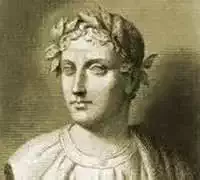
Horácio
BkIV:V To Augustus
BkIV:V To Augustus
Son of the blessed gods, and greatest defender
of Romulus’ people, you’ve been away too long:
make that swift return you promised, to the sacred
councils of the City Fathers,
Blessed leader, bring light to your country again:
when your face shines on the people, like the shining
springtime, then the day itself is more welcoming,
and the sun beams down more brightly.
As a mother, with vows and omens and prayers,
calls to the son whom a southerly wind’s envious
gales have kept far from his home, for more than a year,
lingering there, beyond the waves
of the Carpathian Sea: she who never turns
her face away from the curving line of the shore:
so, smitten with the deep longing of loyalty,
the country yearns for its Caesar.
Then the ox will wander the pastures in safety,
Ceres, and kindly Increase, will nourish the crops,
our sailors will sail across the waters in peace,
trust will shrink from the mark of shame,
the chaste house will be unstained by debauchery,
law and morality conquer the taint of sin,
mothers win praise for new-born so like their fathers,
and punishment attend on guilt.
Who’ll fear the Parthians, or the cold Scythians,
and who’ll fear the offspring savage Germany breeds,
if Caesar’s unharmed? Who’ll worry about battles
in the wilds of Iberia?
Every man passes the day among his own hills,
as he fastens his vines to the waiting branches:
from there he gladly returns to his wine, calls on
you, as god, at the second course:
He worships you with many a prayer, with wine
poured out, joins your name to those of his household gods,
as the Greeks were accustomed to remembering
Castor and mighty Hercules.
‘O blessed leader, bring Italy endless peace!’
That’s what we say, mouths parched, at the start of the day,
that’s what we say, lips wetted with wine, when the sun
sinks to rest under the Ocean.
Son of the blessed gods, and greatest defender
of Romulus’ people, you’ve been away too long:
make that swift return you promised, to the sacred
councils of the City Fathers,
Blessed leader, bring light to your country again:
when your face shines on the people, like the shining
springtime, then the day itself is more welcoming,
and the sun beams down more brightly.
As a mother, with vows and omens and prayers,
calls to the son whom a southerly wind’s envious
gales have kept far from his home, for more than a year,
lingering there, beyond the waves
of the Carpathian Sea: she who never turns
her face away from the curving line of the shore:
so, smitten with the deep longing of loyalty,
the country yearns for its Caesar.
Then the ox will wander the pastures in safety,
Ceres, and kindly Increase, will nourish the crops,
our sailors will sail across the waters in peace,
trust will shrink from the mark of shame,
the chaste house will be unstained by debauchery,
law and morality conquer the taint of sin,
mothers win praise for new-born so like their fathers,
and punishment attend on guilt.
Who’ll fear the Parthians, or the cold Scythians,
and who’ll fear the offspring savage Germany breeds,
if Caesar’s unharmed? Who’ll worry about battles
in the wilds of Iberia?
Every man passes the day among his own hills,
as he fastens his vines to the waiting branches:
from there he gladly returns to his wine, calls on
you, as god, at the second course:
He worships you with many a prayer, with wine
poured out, joins your name to those of his household gods,
as the Greeks were accustomed to remembering
Castor and mighty Hercules.
‘O blessed leader, bring Italy endless peace!’
That’s what we say, mouths parched, at the start of the day,
that’s what we say, lips wetted with wine, when the sun
sinks to rest under the Ocean.
220
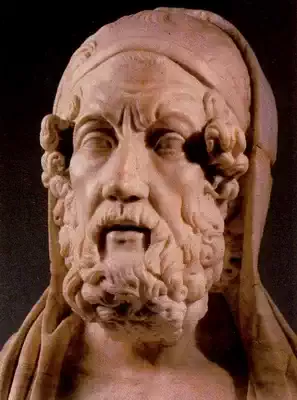
Homero
The Odyssey: Book 5
The Odyssey: Book 5
And now, as Dawn rose from her couch beside Tithonus- harbinger of
light alike to mortals and immortals- the gods met in council and with
them, Jove the lord of thunder, who is their king. Thereon Minerva
began to tell them of the many sufferings of Ulysses, for she pitied
him away there in the house of the nymph Calypso.
"Father Jove," said she, "and all you other gods that live in
everlasting bliss, I hope there may never be such a thing as a kind
and well-disposed ruler any more, nor one who will govern equitably. I
hope they will be all henceforth cruel and unjust, for there is not
one of his subjects but has forgotten Ulysses, who ruled them as
though he were their father. There he is, lying in great pain in an
island where dwells the nymph Calypso, who will not let him go; and he
cannot get back to his own country, for he can find neither ships
nor sailors to take him over the sea. Furthermore, wicked people are
now trying to murder his only son Telemachus, who is coming home
from Pylos and Lacedaemon, where he has been to see if he can get news
of his father."
"What, my dear, are you talking about?" replied her father, "did you
not send him there yourself, because you thought it would help Ulysses
to get home and punish the suitors? Besides, you are perfectly able to
protect Telemachus, and to see him safely home again, while the
suitors have to come hurry-skurrying back without having killed him."
When he had thus spoken, he said to his son Mercury, "Mercury, you
are our messenger, go therefore and tell Calypso we have decreed
that poor Ulysses is to return home. He is to be convoyed neither by
gods nor men, but after a perilous voyage of twenty days upon a raft
he is to reach fertile Scheria, the land of the Phaeacians, who are
near of kin to the gods, and will honour him as though he were one
of ourselves. They will send him in a ship to his own country, and
will give him more bronze and gold and raiment than he would have
brought back from Troy, if he had had had all his prize money and
had got home without disaster. This is how we have settled that he
shall return to his country and his friends."
Thus he spoke, and Mercury, guide and guardian, slayer of Argus, did
as he was told. Forthwith he bound on his glittering golden sandals
with which he could fly like the wind over land and sea. He took the
wand with which he seals men's eyes in sleep or wakes them just as
he pleases, and flew holding it in his hand over Pieria; then he
swooped down through the firmament till he reached the level of the
sea, whose waves he skimmed like a cormorant that flies fishing
every hole and corner of the ocean, and drenching its thick plumage in
the spray. He flew and flew over many a weary wave, but when at last
he got to the island which was his journey's end, he left the sea
and went on by land till he came to the cave where the nymph Calypso
lived.
He found her at home. There was a large fire burning on the
hearth, and one could smell from far the fragrant reek of burning
cedar and sandal wood. As for herself, she was busy at her loom,
shooting her golden shuttle through the warp and singing
beautifully. Round her cave there was a thick wood of alder, poplar,
and sweet smelling cypress trees, wherein all kinds of great birds had
built their nests- owls, hawks, and chattering sea-crows that occupy
their business in the waters. A vine loaded with grapes was trained
and grew luxuriantly about the mouth of the cave; there were also four
running rills of water in channels cut pretty close together, and
turned hither and thither so as to irrigate the beds of violets and
luscious herbage over which they flowed. Even a god could not help
being charmed with such a lovely spot, so Mercury stood still and
looked at it; but when he had admired it sufficiently he went inside
the cave.
Calypso knew him at once- for the gods all know each other, no
matter how far they live from one another- but Ulysses was not within;
he was on the sea-shore as usual, looking out upon the barren ocean
with tears in his eyes, groaning and breaking his heart for sorrow.
Calypso gave Mercury a seat and said: "Why have you come to see me,
Mercury- honoured, and ever welcome- for you do not visit me often?
Say what you want; I will do it for be you at once if I can, and if it
can be done at all; but come inside, and let me set refreshment before
you.
As she spoke she drew a table loaded with ambrosia beside him and
mixed him some red nectar, so Mercury ate and drank till he had had
enough, and then said:
"We are speaking god and goddess to one another, one another, and
you ask me why I have come here, and I will tell you truly as you
would have me do. Jove sent me; it was no doing of mine; who could
possibly want to come all this way over the sea where there are no
cities full of people to offer me sacrifices or choice hecatombs?
Nevertheless I had to come, for none of us other gods can cross
Jove, nor transgress his orders. He says that you have here the most
ill-starred of alf those who fought nine years before the city of King
Priam and sailed home in the tenth year after having sacked it. On
their way home they sinned against Minerva, who raised both wind and
waves against them, so that all his brave companions perished, and
he alone was carried hither by wind and tide. Jove says that you are
to let this by man go at once, for it is decreed that he shall not
perish here, far from his own people, but shall return to his house
and country and see his friends again."
Calypso trembled with rage when she heard this, "You gods," she
exclaimed, to be ashamed of yourselves. You are always jealous and
hate seeing a goddess take a fancy to a mortal man, and live with
him in open matrimony. So when rosy-fingered Dawn made love to
Orion, you precious gods were all of you furious till Diana went and
killed him in Ortygia. So again when Ceres fell in love with Iasion,
and yielded to him in a thrice ploughed fallow field, Jove came to
hear of it before so long and killed Iasion with his thunder-bolts.
And now you are angry with me too because I have a man here. I found
the poor creature sitting all alone astride of a keel, for Jove had
struck his ship with lightning and sunk it in mid ocean, so that all
his crew were drowned, while he himself was driven by wind and waves
on to my island. I got fond of him and cherished him, and had set my
heart on making him immortal, so that he should never grow old all his
days; still I cannot cross Jove, nor bring his counsels to nothing;
therefore, if he insists upon it, let the man go beyond the seas
again; but I cannot send him anywhere myself for I have neither
ships nor men who can take him. Nevertheless I will readily give him
such advice, in all good faith, as will be likely to bring him
safely to his own country."
"Then send him away," said Mercury, "or Jove will be angry with
you and punish you"'
On this he took his leave, and Calypso went out to look for Ulysses,
for she had heard Jove's message. She found him sitting upon the beach
with his eyes ever filled with tears, and dying of sheer
home-sickness; for he had got tired of Calypso, and though he was
forced to sleep with her in the cave by night, it was she, not he,
that would have it so. As for the day time, he spent it on the rocks
and on the sea-shore, weeping, crying aloud for his despair, and
always looking out upon the sea. Calypso then went close up to him
said:
"My poor fellow, you shall not stay here grieving and fretting
your life out any longer. I am going to send you away of my own free
will; so go, cut some beams of wood, and make yourself a large raft
with an upper deck that it may carry you safely over the sea. I will
put bread, wine, and water on board to save you from starving. I
will also give you clothes, and will send you a fair wind to take
you home, if the gods in heaven so will it- for they know more about
these things, and can settle them better than I can."
Ulysses shuddered as he heard her. "Now goddess," he answered,
"there is something behind all this; you cannot be really meaning to
help me home when you bid me do such a dreadful thing as put to sea on
a raft. Not even a well-found ship with a fair wind could venture on
such a distant voyage: nothing that you can say or do shall mage me go
on board a raft unless you first solemnly swear that you mean me no
mischief."
Calypso smiled at this and caressed him with her hand: "You know a
great deal," said she, "but you are quite wrong here. May heaven above
and earth below be my witnesses, with the waters of the river Styxand
this is the most solemn oath which a blessed god can take- that
I mean you no sort of harm, and am only advising you to do exactly
what I should do myself in your place. I am dealing with you quite
straightforwardly; my heart is not made of iron, and I am very sorry
for you."
When she had thus spoken she led the way rapidly before him, and
Ulysses followed in her steps; so the pair, goddess and man, went on
and on till they came to Calypso's cave, where Ulysses took the seat
that Mercury had just left. Calypso set meat and drink before him of
the food that mortals eat; but her maids brought ambrosia and nectar
for herself, and they laid their hands on the good things that were
before them. When they had satisfied themselves with meat and drink,
Calypso spoke, saying:
"Ulysses, noble son of Laertes, so you would start home to your
own land at once? Good luck go with you, but if you could only know
how much suffering is in store for you before you get back to your own
country, you would stay where you are, keep house along with me, and
let me make you immortal, no matter how anxious you may be to see this
wife of yours, of whom you are thinking all the time day after day;
yet I flatter myself that at am no whit less tall or well-looking than
she is, for it is not to be expected that a mortal woman should
compare in beauty with an immortal."
"Goddess," replied Ulysses, "do not be angry with me about this. I
am quite aware that my wife Penelope is nothing like so tall or so
beautiful as yourself. She is only a woman, whereas you are an
immortal. Nevertheless, I want to get home, and can think of nothing
else. If some god wrecks me when I am on the sea, I will bear it and
make the best of it. I have had infinite trouble both by land and
sea already, so let this go with the rest."
Presently the sun set and it became dark, whereon the pair retired
into the inner part of the cave and went to bed.
When the child of morning, rosy-fingered Dawn, appeared, Ulysses put
on his shirt and cloak, while the goddess wore a dress of a light
gossamer fabric, very fine and graceful, with a beautiful golden
girdle about her waist and a veil to cover her head. She at once set
herself to think how she could speed Ulysses on his way. So she gave
him a great bronze axe that suited his hands; it was sharpened on both
sides, and had a beautiful olive-wood handle fitted firmly on to it.
She also gave him a sharp adze, and then led the way to the far end of
the island where the largest trees grew- alder, poplar and pine,
that reached the sky- very dry and well seasoned, so as to sail
light for him in the water. Then, when she had shown him where the
best trees grew, Calypso went home, leaving him to cut them, which
he soon finished doing. He cut down twenty trees in all and adzed them
smooth, squaring them by rule in good workmanlike fashion. Meanwhile
Calypso came back with some augers, so he bored holes with them and
fitted the timbers together with bolts and rivets. He made the raft as
broad as a skilled shipwright makes the beam of a large vessel, and he
filed a deck on top of the ribs, and ran a gunwale all round it. He
also made a mast with a yard arm, and a rudder to steer with. He
fenced the raft all round with wicker hurdles as a protection
against the waves, and then he threw on a quantity of wood. By and
by Calypso brought him some linen to make the sails, and he made these
too, excellently, making them fast with braces and sheets. Last of
all, with the help of levers, he drew the raft down into the water.
In four days he had completed the whole work, and on the fifth
Calypso sent him from the island after washing him and giving him some
clean clothes. She gave him a goat skin full of black wine, and
another larger one of water; she also gave him a wallet full of
provisions, and found him in much good meat. Moreover, she made the
wind fair and warm for him, and gladly did Ulysses spread his sail
before it, while he sat and guided the raft skilfully by means of
the rudder. He never closed his eyes, but kept them fixed on the
Pleiads, on late-setting Bootes, and on the Bear- which men also
call the wain, and which turns round and round where it is, facing
Orion, and alone never dipping into the stream of Oceanus- for Calypso
had told him to keep this to his left. Days seven and ten did he
sail over the sea, and on the eighteenth the dim outlines of the
mountains on the nearest part of the Phaeacian coast appeared,
rising like a shield on the horizon.
But King Neptune, who was returning from the Ethiopians, caught
sight of Ulysses a long way off, from the mountains of the Solymi.
He could see him sailing upon the sea, and it made him very angry,
so he wagged his head and muttered to himself, saying, heavens, so the
gods have been changing their minds about Ulysses while I was away
in Ethiopia, and now he is close to the land of the Phaeacians,
where it is decreed that he shall escape from the calamities that have
befallen him. Still, he shall have plenty of hardship yet before he
has done with it."
Thereon he gathered his clouds together, grasped his trident,
stirred it round in the sea, and roused the rage of every wind that
blows till earth, sea, and sky were hidden in cloud, and night
sprang forth out of the heavens. Winds from East, South, North, and
West fell upon him all at the same time, and a tremendous sea got
up, so that Ulysses' heart began to fail him. "Alas," he said to
himself in his dismay, "what ever will become of me? I am afraid
Calypso was right when she said I should have trouble by sea before
I got back home. It is all coming true. How black is Jove making
heaven with his clouds, and what a sea the winds are raising from
every quarter at once. I am now safe to perish. Blest and thrice blest
were those Danaans who fell before Troy in the cause of the sons of
Atreus. Would that had been killed on the day when the Trojans were
pressing me so sorely about the dead body of Achilles, for then I
should have had due burial and the Achaeans would have honoured my
name; but now it seems that I shall come to a most pitiable end."
As he spoke a sea broke over him with such terrific fury that the
raft reeled again, and he was carried overboard a long way off. He let
go the helm, and the force of the hurricane was so great that it broke
the mast half way up, and both sail and yard went over into the sea.
For a long time Ulysses was under water, and it was all he could do to
rise to the surface again, for the clothes Calypso had given him
weighed him down; but at last he got his head above water and spat out
the bitter brine that was running down his face in streams. In spite
of all this, however, he did not lose sight of his raft, but swam as
fast as he could towards it, got hold of it, and climbed on board
again so as to escape drowning. The sea took the raft and tossed it
about as Autumn winds whirl thistledown round and round upon a road.
It was as though the South, North, East, and West winds were all
playing battledore and shuttlecock with it at once.
When he was in this plight, Ino daughter of Cadmus, also called
Leucothea, saw him. She had formerly been a mere mortal, but had
been since raised to the rank of a marine goddess. Seeing in what
great distress Ulysses now was, she had compassion upon him, and,
rising like a sea-gull from the waves, took her seat upon the raft.
"My poor good man," said she, "why is Neptune so furiously angry
with you? He is giving you a great deal of trouble, but for all his
bluster he will not kill you. You seem to be a sensible person, do
then as I bid you; strip, leave your raft to drive before the wind,
and swim to the Phaecian coast where better luck awaits you. And here,
take my veil and put it round your chest; it is enchanted, and you can
come to no harm so long as you wear it. As soon as you touch land take
it off, throw it back as far as you can into the sea, and then go away
again." With these words she took off her veil and gave it him. Then
she dived down again like a sea-gull and vanished beneath the dark
blue waters.
But Ulysses did not know what to think. "Alas," he said to himself
in his dismay, "this is only some one or other of the gods who is
luring me to ruin by advising me to will quit my raft. At any rate I
will not do so at present, for the land where she said I should be
quit of all troubles seemed to be still a good way off. I know what
I will do- I am sure it will be best- no matter what happens I will
stick to the raft as long as her timbers hold together, but when the
sea breaks her up I will swim for it; I do not see how I can do any
better than this."
While he was thus in two minds, Neptune sent a terrible great wave
that seemed to rear itself above his head till it broke right over the
raft, which then went to pieces as though it were a heap of dry
chaff tossed about by a whirlwind. Ulysses got astride of one plank
and rode upon it as if he were on horseback; he then took off the
clothes Calypso had given him, bound Ino's veil under his arms, and
plunged into the sea- meaning to swim on shore. King Neptune watched
him as he did so, and wagged his head, muttering to himself and
saying, "'There now, swim up and down as you best can till you fall in
with well-to-do people. I do not think you will be able to say that
I have let you off too lightly." On this he lashed his horses and
drove to Aegae where his palace is.
But Minerva resolved to help Ulysses, so she bound the ways of all
the winds except one, and made them lie quite still; but she roused
a good stiff breeze from the North that should lay the waters till
Ulysses reached the land of the Phaeacians where he would be safe.
Thereon he floated about for two nights and two days in the water,
with a heavy swell on the sea and death staring him in the face; but
when the third day broke, the wind fell and there was a dead calm
without so much as a breath of air stirring. As he rose on the swell
he looked eagerly ahead, and could see land quite near. Then, as
children rejoice when their dear father begins to get better after
having for a long time borne sore affliction sent him by some angry
spirit, but the gods deliver him from evil, so was Ulysses thankful
when he again saw land and trees, and swam on with all his strength
that he might once more set foot upon dry ground. When, however, he
got within earshot, he began to hear the surf thundering up against
the rocks, for the swell still broke against them with a terrific
roar. Everything was enveloped in spray; there were no harbours
where a ship might ride, nor shelter of any kind, but only
headlands, low-lying rocks, and mountain tops.
Ulysses' heart now began to fail him, and he said despairingly to
himself, "Alas, Jove has let me see land after swimming so far that
I had given up all hope, but I can find no landing place, for the
coast is rocky and surf-beaten, the rocks are smooth and rise sheer
from the sea, with deep water close under them so that I cannot
climb out for want of foothold. I am afraid some great wave will
lift me off my legs and dash me against the rocks as I leave the
water- which would give me a sorry landing. If, on the other hand, I
swim further in search of some shelving beach or harbour, a
hurricane may carry me out to sea again sorely against my will, or
heaven may send some great monster of the deep to attack me; for
Amphitrite breeds many such, and I know that Neptune is very angry
with me."
While he was thus in two minds a wave caught him and took him with
such force against the rocks that he would have been smashed and
torn to pieces if Minerva had not shown him what to do. He caught hold
of the rock with both hands and clung to it groaning with pain till
the wave retired, so he was saved that time; but presently the wave
came on again and carried him back with it far into the sea-tearing
his hands as the suckers of a polypus are torn when some one plucks it
from its bed, and the stones come up along with it even so did the
rocks tear the skin from his strong hands, and then the wave drew
him deep down under the water.
Here poor Ulysses would have certainly perished even in spite of his
own destiny, if Minerva had not helped him to keep his wits about him.
He swam seaward again, beyond reach of the surf that was beating
against the land, and at the same time he kept looking towards the
shore to see if he could find some haven, or a spit that should take
the waves aslant. By and by, as he swam on, he came to the mouth of
a river, and here he thought would be the best place, for there were
no rocks, and it afforded shelter from the wind. He felt that there
was a current, so he prayed inwardly and said:
"Hear me, O King, whoever you may be, and save me from the anger
of the sea-god Neptune, for I approach you prayerfully. Any one who
has lost his way has at all times a claim even upon the gods,
wherefore in my distress I draw near to your stream, and cling to
the knees of your riverhood. Have mercy upon me, O king, for I declare
myself your suppliant."
Then the god stayed his stream and stilled the waves, making all
calm before him, and bringing him safely into the mouth of the
river. Here at last Ulysses' knees and strong hands failed him, for
the sea had completely broken him. His body was all swollen, and his
mouth and nostrils ran down like a river with sea-water, so that he
could neither breathe nor speak, and lay swooning from sheer
exhaustion; presently, when he had got his breath and came to
himself again, he took off the scarf that Ino had given him and
threw it back into the salt stream of the river, whereon Ino
received it into her hands from the wave that bore it towards her.
Then he left the river, laid himself down among the rushes, and kissed
the bounteous earth.
"Alas," he cried to himself in his dismay, "what ever will become of
me, and how is it all to end? If I stay here upon the river bed
through the long watches of the night, I am so exhausted that the
bitter cold and damp may make an end of me- for towards sunrise
there will be a keen wind blowing from off the river. If, on the other
hand, I climb the hill side, find shelter in the woods, and sleep in
some thicket, I may escape the cold and have a good night's rest,
but some savage beast may take advantage of me and devour me."
In the end he deemed it best to take to the woods, and he found
one upon some high ground not far from the water. There he crept
beneath two shoots of olive that grew from a single stock- the one
an ungrafted sucker, while the other had been grafted. No wind,
however squally, could break through the cover they afforded, nor
could the sun's rays pierce them, nor the rain get through them, so
closely did they grow into one another. Ulysses crept under these
and began to make himself a bed to lie on, for there was a great
litter of dead leaves lying about- enough to make a covering for two
or three men even in hard winter weather. He was glad enough to see
this, so he laid himself down and heaped the leaves all round him.
Then, as one who lives alone in the country, far from any neighbor,
hides a brand as fire-seed in the ashes to save himself from having to
get a light elsewhere, even so did Ulysses cover himself up with
leaves; and Minerva shed a sweet sleep upon his eyes, closed his
eyelids, and made him lose all memories of his sorrows.
Translated by Samuel Butler
And now, as Dawn rose from her couch beside Tithonus- harbinger of
light alike to mortals and immortals- the gods met in council and with
them, Jove the lord of thunder, who is their king. Thereon Minerva
began to tell them of the many sufferings of Ulysses, for she pitied
him away there in the house of the nymph Calypso.
"Father Jove," said she, "and all you other gods that live in
everlasting bliss, I hope there may never be such a thing as a kind
and well-disposed ruler any more, nor one who will govern equitably. I
hope they will be all henceforth cruel and unjust, for there is not
one of his subjects but has forgotten Ulysses, who ruled them as
though he were their father. There he is, lying in great pain in an
island where dwells the nymph Calypso, who will not let him go; and he
cannot get back to his own country, for he can find neither ships
nor sailors to take him over the sea. Furthermore, wicked people are
now trying to murder his only son Telemachus, who is coming home
from Pylos and Lacedaemon, where he has been to see if he can get news
of his father."
"What, my dear, are you talking about?" replied her father, "did you
not send him there yourself, because you thought it would help Ulysses
to get home and punish the suitors? Besides, you are perfectly able to
protect Telemachus, and to see him safely home again, while the
suitors have to come hurry-skurrying back without having killed him."
When he had thus spoken, he said to his son Mercury, "Mercury, you
are our messenger, go therefore and tell Calypso we have decreed
that poor Ulysses is to return home. He is to be convoyed neither by
gods nor men, but after a perilous voyage of twenty days upon a raft
he is to reach fertile Scheria, the land of the Phaeacians, who are
near of kin to the gods, and will honour him as though he were one
of ourselves. They will send him in a ship to his own country, and
will give him more bronze and gold and raiment than he would have
brought back from Troy, if he had had had all his prize money and
had got home without disaster. This is how we have settled that he
shall return to his country and his friends."
Thus he spoke, and Mercury, guide and guardian, slayer of Argus, did
as he was told. Forthwith he bound on his glittering golden sandals
with which he could fly like the wind over land and sea. He took the
wand with which he seals men's eyes in sleep or wakes them just as
he pleases, and flew holding it in his hand over Pieria; then he
swooped down through the firmament till he reached the level of the
sea, whose waves he skimmed like a cormorant that flies fishing
every hole and corner of the ocean, and drenching its thick plumage in
the spray. He flew and flew over many a weary wave, but when at last
he got to the island which was his journey's end, he left the sea
and went on by land till he came to the cave where the nymph Calypso
lived.
He found her at home. There was a large fire burning on the
hearth, and one could smell from far the fragrant reek of burning
cedar and sandal wood. As for herself, she was busy at her loom,
shooting her golden shuttle through the warp and singing
beautifully. Round her cave there was a thick wood of alder, poplar,
and sweet smelling cypress trees, wherein all kinds of great birds had
built their nests- owls, hawks, and chattering sea-crows that occupy
their business in the waters. A vine loaded with grapes was trained
and grew luxuriantly about the mouth of the cave; there were also four
running rills of water in channels cut pretty close together, and
turned hither and thither so as to irrigate the beds of violets and
luscious herbage over which they flowed. Even a god could not help
being charmed with such a lovely spot, so Mercury stood still and
looked at it; but when he had admired it sufficiently he went inside
the cave.
Calypso knew him at once- for the gods all know each other, no
matter how far they live from one another- but Ulysses was not within;
he was on the sea-shore as usual, looking out upon the barren ocean
with tears in his eyes, groaning and breaking his heart for sorrow.
Calypso gave Mercury a seat and said: "Why have you come to see me,
Mercury- honoured, and ever welcome- for you do not visit me often?
Say what you want; I will do it for be you at once if I can, and if it
can be done at all; but come inside, and let me set refreshment before
you.
As she spoke she drew a table loaded with ambrosia beside him and
mixed him some red nectar, so Mercury ate and drank till he had had
enough, and then said:
"We are speaking god and goddess to one another, one another, and
you ask me why I have come here, and I will tell you truly as you
would have me do. Jove sent me; it was no doing of mine; who could
possibly want to come all this way over the sea where there are no
cities full of people to offer me sacrifices or choice hecatombs?
Nevertheless I had to come, for none of us other gods can cross
Jove, nor transgress his orders. He says that you have here the most
ill-starred of alf those who fought nine years before the city of King
Priam and sailed home in the tenth year after having sacked it. On
their way home they sinned against Minerva, who raised both wind and
waves against them, so that all his brave companions perished, and
he alone was carried hither by wind and tide. Jove says that you are
to let this by man go at once, for it is decreed that he shall not
perish here, far from his own people, but shall return to his house
and country and see his friends again."
Calypso trembled with rage when she heard this, "You gods," she
exclaimed, to be ashamed of yourselves. You are always jealous and
hate seeing a goddess take a fancy to a mortal man, and live with
him in open matrimony. So when rosy-fingered Dawn made love to
Orion, you precious gods were all of you furious till Diana went and
killed him in Ortygia. So again when Ceres fell in love with Iasion,
and yielded to him in a thrice ploughed fallow field, Jove came to
hear of it before so long and killed Iasion with his thunder-bolts.
And now you are angry with me too because I have a man here. I found
the poor creature sitting all alone astride of a keel, for Jove had
struck his ship with lightning and sunk it in mid ocean, so that all
his crew were drowned, while he himself was driven by wind and waves
on to my island. I got fond of him and cherished him, and had set my
heart on making him immortal, so that he should never grow old all his
days; still I cannot cross Jove, nor bring his counsels to nothing;
therefore, if he insists upon it, let the man go beyond the seas
again; but I cannot send him anywhere myself for I have neither
ships nor men who can take him. Nevertheless I will readily give him
such advice, in all good faith, as will be likely to bring him
safely to his own country."
"Then send him away," said Mercury, "or Jove will be angry with
you and punish you"'
On this he took his leave, and Calypso went out to look for Ulysses,
for she had heard Jove's message. She found him sitting upon the beach
with his eyes ever filled with tears, and dying of sheer
home-sickness; for he had got tired of Calypso, and though he was
forced to sleep with her in the cave by night, it was she, not he,
that would have it so. As for the day time, he spent it on the rocks
and on the sea-shore, weeping, crying aloud for his despair, and
always looking out upon the sea. Calypso then went close up to him
said:
"My poor fellow, you shall not stay here grieving and fretting
your life out any longer. I am going to send you away of my own free
will; so go, cut some beams of wood, and make yourself a large raft
with an upper deck that it may carry you safely over the sea. I will
put bread, wine, and water on board to save you from starving. I
will also give you clothes, and will send you a fair wind to take
you home, if the gods in heaven so will it- for they know more about
these things, and can settle them better than I can."
Ulysses shuddered as he heard her. "Now goddess," he answered,
"there is something behind all this; you cannot be really meaning to
help me home when you bid me do such a dreadful thing as put to sea on
a raft. Not even a well-found ship with a fair wind could venture on
such a distant voyage: nothing that you can say or do shall mage me go
on board a raft unless you first solemnly swear that you mean me no
mischief."
Calypso smiled at this and caressed him with her hand: "You know a
great deal," said she, "but you are quite wrong here. May heaven above
and earth below be my witnesses, with the waters of the river Styxand
this is the most solemn oath which a blessed god can take- that
I mean you no sort of harm, and am only advising you to do exactly
what I should do myself in your place. I am dealing with you quite
straightforwardly; my heart is not made of iron, and I am very sorry
for you."
When she had thus spoken she led the way rapidly before him, and
Ulysses followed in her steps; so the pair, goddess and man, went on
and on till they came to Calypso's cave, where Ulysses took the seat
that Mercury had just left. Calypso set meat and drink before him of
the food that mortals eat; but her maids brought ambrosia and nectar
for herself, and they laid their hands on the good things that were
before them. When they had satisfied themselves with meat and drink,
Calypso spoke, saying:
"Ulysses, noble son of Laertes, so you would start home to your
own land at once? Good luck go with you, but if you could only know
how much suffering is in store for you before you get back to your own
country, you would stay where you are, keep house along with me, and
let me make you immortal, no matter how anxious you may be to see this
wife of yours, of whom you are thinking all the time day after day;
yet I flatter myself that at am no whit less tall or well-looking than
she is, for it is not to be expected that a mortal woman should
compare in beauty with an immortal."
"Goddess," replied Ulysses, "do not be angry with me about this. I
am quite aware that my wife Penelope is nothing like so tall or so
beautiful as yourself. She is only a woman, whereas you are an
immortal. Nevertheless, I want to get home, and can think of nothing
else. If some god wrecks me when I am on the sea, I will bear it and
make the best of it. I have had infinite trouble both by land and
sea already, so let this go with the rest."
Presently the sun set and it became dark, whereon the pair retired
into the inner part of the cave and went to bed.
When the child of morning, rosy-fingered Dawn, appeared, Ulysses put
on his shirt and cloak, while the goddess wore a dress of a light
gossamer fabric, very fine and graceful, with a beautiful golden
girdle about her waist and a veil to cover her head. She at once set
herself to think how she could speed Ulysses on his way. So she gave
him a great bronze axe that suited his hands; it was sharpened on both
sides, and had a beautiful olive-wood handle fitted firmly on to it.
She also gave him a sharp adze, and then led the way to the far end of
the island where the largest trees grew- alder, poplar and pine,
that reached the sky- very dry and well seasoned, so as to sail
light for him in the water. Then, when she had shown him where the
best trees grew, Calypso went home, leaving him to cut them, which
he soon finished doing. He cut down twenty trees in all and adzed them
smooth, squaring them by rule in good workmanlike fashion. Meanwhile
Calypso came back with some augers, so he bored holes with them and
fitted the timbers together with bolts and rivets. He made the raft as
broad as a skilled shipwright makes the beam of a large vessel, and he
filed a deck on top of the ribs, and ran a gunwale all round it. He
also made a mast with a yard arm, and a rudder to steer with. He
fenced the raft all round with wicker hurdles as a protection
against the waves, and then he threw on a quantity of wood. By and
by Calypso brought him some linen to make the sails, and he made these
too, excellently, making them fast with braces and sheets. Last of
all, with the help of levers, he drew the raft down into the water.
In four days he had completed the whole work, and on the fifth
Calypso sent him from the island after washing him and giving him some
clean clothes. She gave him a goat skin full of black wine, and
another larger one of water; she also gave him a wallet full of
provisions, and found him in much good meat. Moreover, she made the
wind fair and warm for him, and gladly did Ulysses spread his sail
before it, while he sat and guided the raft skilfully by means of
the rudder. He never closed his eyes, but kept them fixed on the
Pleiads, on late-setting Bootes, and on the Bear- which men also
call the wain, and which turns round and round where it is, facing
Orion, and alone never dipping into the stream of Oceanus- for Calypso
had told him to keep this to his left. Days seven and ten did he
sail over the sea, and on the eighteenth the dim outlines of the
mountains on the nearest part of the Phaeacian coast appeared,
rising like a shield on the horizon.
But King Neptune, who was returning from the Ethiopians, caught
sight of Ulysses a long way off, from the mountains of the Solymi.
He could see him sailing upon the sea, and it made him very angry,
so he wagged his head and muttered to himself, saying, heavens, so the
gods have been changing their minds about Ulysses while I was away
in Ethiopia, and now he is close to the land of the Phaeacians,
where it is decreed that he shall escape from the calamities that have
befallen him. Still, he shall have plenty of hardship yet before he
has done with it."
Thereon he gathered his clouds together, grasped his trident,
stirred it round in the sea, and roused the rage of every wind that
blows till earth, sea, and sky were hidden in cloud, and night
sprang forth out of the heavens. Winds from East, South, North, and
West fell upon him all at the same time, and a tremendous sea got
up, so that Ulysses' heart began to fail him. "Alas," he said to
himself in his dismay, "what ever will become of me? I am afraid
Calypso was right when she said I should have trouble by sea before
I got back home. It is all coming true. How black is Jove making
heaven with his clouds, and what a sea the winds are raising from
every quarter at once. I am now safe to perish. Blest and thrice blest
were those Danaans who fell before Troy in the cause of the sons of
Atreus. Would that had been killed on the day when the Trojans were
pressing me so sorely about the dead body of Achilles, for then I
should have had due burial and the Achaeans would have honoured my
name; but now it seems that I shall come to a most pitiable end."
As he spoke a sea broke over him with such terrific fury that the
raft reeled again, and he was carried overboard a long way off. He let
go the helm, and the force of the hurricane was so great that it broke
the mast half way up, and both sail and yard went over into the sea.
For a long time Ulysses was under water, and it was all he could do to
rise to the surface again, for the clothes Calypso had given him
weighed him down; but at last he got his head above water and spat out
the bitter brine that was running down his face in streams. In spite
of all this, however, he did not lose sight of his raft, but swam as
fast as he could towards it, got hold of it, and climbed on board
again so as to escape drowning. The sea took the raft and tossed it
about as Autumn winds whirl thistledown round and round upon a road.
It was as though the South, North, East, and West winds were all
playing battledore and shuttlecock with it at once.
When he was in this plight, Ino daughter of Cadmus, also called
Leucothea, saw him. She had formerly been a mere mortal, but had
been since raised to the rank of a marine goddess. Seeing in what
great distress Ulysses now was, she had compassion upon him, and,
rising like a sea-gull from the waves, took her seat upon the raft.
"My poor good man," said she, "why is Neptune so furiously angry
with you? He is giving you a great deal of trouble, but for all his
bluster he will not kill you. You seem to be a sensible person, do
then as I bid you; strip, leave your raft to drive before the wind,
and swim to the Phaecian coast where better luck awaits you. And here,
take my veil and put it round your chest; it is enchanted, and you can
come to no harm so long as you wear it. As soon as you touch land take
it off, throw it back as far as you can into the sea, and then go away
again." With these words she took off her veil and gave it him. Then
she dived down again like a sea-gull and vanished beneath the dark
blue waters.
But Ulysses did not know what to think. "Alas," he said to himself
in his dismay, "this is only some one or other of the gods who is
luring me to ruin by advising me to will quit my raft. At any rate I
will not do so at present, for the land where she said I should be
quit of all troubles seemed to be still a good way off. I know what
I will do- I am sure it will be best- no matter what happens I will
stick to the raft as long as her timbers hold together, but when the
sea breaks her up I will swim for it; I do not see how I can do any
better than this."
While he was thus in two minds, Neptune sent a terrible great wave
that seemed to rear itself above his head till it broke right over the
raft, which then went to pieces as though it were a heap of dry
chaff tossed about by a whirlwind. Ulysses got astride of one plank
and rode upon it as if he were on horseback; he then took off the
clothes Calypso had given him, bound Ino's veil under his arms, and
plunged into the sea- meaning to swim on shore. King Neptune watched
him as he did so, and wagged his head, muttering to himself and
saying, "'There now, swim up and down as you best can till you fall in
with well-to-do people. I do not think you will be able to say that
I have let you off too lightly." On this he lashed his horses and
drove to Aegae where his palace is.
But Minerva resolved to help Ulysses, so she bound the ways of all
the winds except one, and made them lie quite still; but she roused
a good stiff breeze from the North that should lay the waters till
Ulysses reached the land of the Phaeacians where he would be safe.
Thereon he floated about for two nights and two days in the water,
with a heavy swell on the sea and death staring him in the face; but
when the third day broke, the wind fell and there was a dead calm
without so much as a breath of air stirring. As he rose on the swell
he looked eagerly ahead, and could see land quite near. Then, as
children rejoice when their dear father begins to get better after
having for a long time borne sore affliction sent him by some angry
spirit, but the gods deliver him from evil, so was Ulysses thankful
when he again saw land and trees, and swam on with all his strength
that he might once more set foot upon dry ground. When, however, he
got within earshot, he began to hear the surf thundering up against
the rocks, for the swell still broke against them with a terrific
roar. Everything was enveloped in spray; there were no harbours
where a ship might ride, nor shelter of any kind, but only
headlands, low-lying rocks, and mountain tops.
Ulysses' heart now began to fail him, and he said despairingly to
himself, "Alas, Jove has let me see land after swimming so far that
I had given up all hope, but I can find no landing place, for the
coast is rocky and surf-beaten, the rocks are smooth and rise sheer
from the sea, with deep water close under them so that I cannot
climb out for want of foothold. I am afraid some great wave will
lift me off my legs and dash me against the rocks as I leave the
water- which would give me a sorry landing. If, on the other hand, I
swim further in search of some shelving beach or harbour, a
hurricane may carry me out to sea again sorely against my will, or
heaven may send some great monster of the deep to attack me; for
Amphitrite breeds many such, and I know that Neptune is very angry
with me."
While he was thus in two minds a wave caught him and took him with
such force against the rocks that he would have been smashed and
torn to pieces if Minerva had not shown him what to do. He caught hold
of the rock with both hands and clung to it groaning with pain till
the wave retired, so he was saved that time; but presently the wave
came on again and carried him back with it far into the sea-tearing
his hands as the suckers of a polypus are torn when some one plucks it
from its bed, and the stones come up along with it even so did the
rocks tear the skin from his strong hands, and then the wave drew
him deep down under the water.
Here poor Ulysses would have certainly perished even in spite of his
own destiny, if Minerva had not helped him to keep his wits about him.
He swam seaward again, beyond reach of the surf that was beating
against the land, and at the same time he kept looking towards the
shore to see if he could find some haven, or a spit that should take
the waves aslant. By and by, as he swam on, he came to the mouth of
a river, and here he thought would be the best place, for there were
no rocks, and it afforded shelter from the wind. He felt that there
was a current, so he prayed inwardly and said:
"Hear me, O King, whoever you may be, and save me from the anger
of the sea-god Neptune, for I approach you prayerfully. Any one who
has lost his way has at all times a claim even upon the gods,
wherefore in my distress I draw near to your stream, and cling to
the knees of your riverhood. Have mercy upon me, O king, for I declare
myself your suppliant."
Then the god stayed his stream and stilled the waves, making all
calm before him, and bringing him safely into the mouth of the
river. Here at last Ulysses' knees and strong hands failed him, for
the sea had completely broken him. His body was all swollen, and his
mouth and nostrils ran down like a river with sea-water, so that he
could neither breathe nor speak, and lay swooning from sheer
exhaustion; presently, when he had got his breath and came to
himself again, he took off the scarf that Ino had given him and
threw it back into the salt stream of the river, whereon Ino
received it into her hands from the wave that bore it towards her.
Then he left the river, laid himself down among the rushes, and kissed
the bounteous earth.
"Alas," he cried to himself in his dismay, "what ever will become of
me, and how is it all to end? If I stay here upon the river bed
through the long watches of the night, I am so exhausted that the
bitter cold and damp may make an end of me- for towards sunrise
there will be a keen wind blowing from off the river. If, on the other
hand, I climb the hill side, find shelter in the woods, and sleep in
some thicket, I may escape the cold and have a good night's rest,
but some savage beast may take advantage of me and devour me."
In the end he deemed it best to take to the woods, and he found
one upon some high ground not far from the water. There he crept
beneath two shoots of olive that grew from a single stock- the one
an ungrafted sucker, while the other had been grafted. No wind,
however squally, could break through the cover they afforded, nor
could the sun's rays pierce them, nor the rain get through them, so
closely did they grow into one another. Ulysses crept under these
and began to make himself a bed to lie on, for there was a great
litter of dead leaves lying about- enough to make a covering for two
or three men even in hard winter weather. He was glad enough to see
this, so he laid himself down and heaped the leaves all round him.
Then, as one who lives alone in the country, far from any neighbor,
hides a brand as fire-seed in the ashes to save himself from having to
get a light elsewhere, even so did Ulysses cover himself up with
leaves; and Minerva shed a sweet sleep upon his eyes, closed his
eyelids, and made him lose all memories of his sorrows.
Translated by Samuel Butler
150
Homero
The Odyssey: Book 2
The Odyssey: Book 2
Now when the child of morning, rosy-fingered Dawn, appeared,
Telemachus rose and dressed himself. He bound his sandals on to his
comely feet, girded his sword about his shoulder, and left his room
looking like an immortal god. He at once sent the criers round to call
the people in assembly, so they called them and the people gathered
thereon; then, when they were got together, he went to the place of
assembly spear in hand- not alone, for his two hounds went with him.
Minerva endowed him with a presence of such divine comeliness that all
marvelled at him as he went by, and when he took his place' in his
father's seat even the oldest councillors made way for him.
Aegyptius, a man bent double with age, and of infinite experience,
the first to speak His son Antiphus had gone with Ulysses to Ilius,
land of noble steeds, but the savage Cyclops had killed him when
they were all shut up in the cave, and had cooked his last dinner
for him, He had three sons left, of whom two still worked on their
father's land, while the third, Eurynomus, was one of the suitors;
nevertheless their father could not get over the loss of Antiphus, and
was still weeping for him when he began his speech.
"Men of Ithaca," he said, "hear my words. From the day Ulysses
left us there has been no meeting of our councillors until now; who
then can it be, whether old or young, that finds it so necessary to
convene us? Has he got wind of some host approaching, and does he wish
to warn us, or would he speak upon some other matter of public moment?
I am sure he is an excellent person, and I hope Jove will grant him
his heart's desire."
Telemachus took this speech as of good omen and rose at once, for he
was bursting with what he had to say. He stood in the middle of the
assembly and the good herald Pisenor brought him his staff. Then,
turning to Aegyptius, "Sir," said he, "it is I, as you will shortly
learn, who have convened you, for it is I who am the most aggrieved. I
have not got wind of any host approaching about which I would warn
you, nor is there any matter of public moment on which I would
speak. My grieveance is purely personal, and turns on two great
misfortunes which have fallen upon my house. The first of these is the
loss of my excellent father, who was chief among all you here present,
and was like a father to every one of you; the second is much more
serious, and ere long will be the utter ruin of my estate. The sons of
all the chief men among you are pestering my mother to marry them
against her will. They are afraid to go to her father Icarius,
asking him to choose the one he likes best, and to provide marriage
gifts for his daughter, but day by day they keep hanging about my
father's house, sacrificing our oxen, sheep, and fat goats for their
banquets, and never giving so much as a thought to the quantity of
wine they drink. No estate can stand such recklessness; we have now no
Ulysses to ward off harm from our doors, and I cannot hold my own
against them. I shall never all my days be as good a man as he was,
still I would indeed defend myself if I had power to do so, for I
cannot stand such treatment any longer; my house is being disgraced
and ruined. Have respect, therefore, to your own consciences and to
public opinion. Fear, too, the wrath of heaven, lest the gods should
be displeased and turn upon you. I pray you by Jove and Themis, who is
the beginning and the end of councils, [do not] hold back, my friends,
and leave me singlehanded- unless it be that my brave father Ulysses
did some wrong to the Achaeans which you would now avenge on me, by
aiding and abetting these suitors. Moreover, if I am to be eaten out
of house and home at all, I had rather you did the eating
yourselves, for I could then take action against you to some
purpose, and serve you with notices from house to house till I got
paid in full, whereas now I have no remedy."
With this Telemachus dashed his staff to the ground and burst into
tears. Every one was very sorry for him, but they all sat still and no
one ventured to make him an angry answer, save only Antinous, who
spoke thus:
"Telemachus, insolent braggart that you are, how dare you try to
throw the blame upon us suitors? It is your mother's fault not ours,
for she is a very artful woman. This three years past, and close on
four, she has been driving us out of our minds, by encouraging each
one of us, and sending him messages without meaning one word of what
she says. And then there was that other trick she played us. She set
up a great tambour frame in her room, and began to work on an enormous
piece of fine needlework. 'Sweet hearts,' said she, 'Ulysses is indeed
dead, still do not press me to marry again immediately, wait- for I
would not have skill in needlework perish unrecorded- till I have
completed a pall for the hero Laertes, to be in readiness against
the time when death shall take him. He is very rich, and the women
of the place will talk if he is laid out without a pall.'
"This was what she said, and we assented; whereon we could see her
working on her great web all day long, but at night she would unpick
the stitches again by torchlight. She fooled us in this way for
three years and we never found her out, but as time wore on and she
was now in her fourth year, one of her maids who knew what she was
doing told us, and we caught her in the act of undoing her work, so
she had to finish it whether she would or no. The suitors,
therefore, make you this answer, that both you and the Achaeans may
understand-'Send your mother away, and bid her marry the man of her
own and of her father's choice'; for I do not know what will happen if
she goes on plaguing us much longer with the airs she gives herself on
the score of the accomplishments Minerva has taught her, and because
she is so clever. We never yet heard of such a woman; we know all
about Tyro, Alcmena, Mycene, and the famous women of old, but they
were nothing to your mother, any one of them. It was not fair of her
to treat us in that way, and as long as she continues in the mind with
which heaven has now endowed her, so long shall we go on eating up
your estate; and I do not see why she should change, for she gets
all the honour and glory, and it is you who pay for it, not she.
Understand, then, that we will not go back to our lands, neither
here nor elsewhere, till she has made her choice and married some
one or other of us."
Telemachus answered, "Antinous, how can I drive the mother who
bore me from my father's house? My father is abroad and we do not know
whether he is alive or dead. It will be hard on me if I have to pay
Icarius the large sum which I must give him if I insist on sending his
daughter back to him. Not only will he deal rigorously with me, but
heaven will also punish me; for my mother when she leaves the house
will calf on the Erinyes to avenge her; besides, it would not be a
creditable thing to do, and I will have nothing to say to it. If you
choose to take offence at this, leave the house and feast elsewhere at
one another's houses at your own cost turn and turn about. If, on
the other hand, you elect to persist in spunging upon one man,
heaven help me, but Jove shall reckon with you in full, and when you
fall in my father's house there shall be no man to avenge you."
As he spoke Jove sent two eagles from the top of the mountain, and
they flew on and on with the wind, sailing side by side in their own
lordly flight. When they were right over the middle of the assembly
they wheeled and circled about, beating the air with their wings and
glaring death into the eyes of them that were below; then, fighting
fiercely and tearing at one another, they flew off towards the right
over the town. The people wondered as they saw them, and asked each
other what an this might be; whereon Halitherses, who was the best
prophet and reader of omens among them, spoke to them plainly and in
all honesty, saying:
"Hear me, men of Ithaca, and I speak more particularly to the
suitors, for I see mischief brewing for them. Ulysses is not going
to be away much longer; indeed he is close at hand to deal out death
and destruction, not on them alone, but on many another of us who live
in Ithaca. Let us then be wise in time, and put a stop to this
wickedness before he comes. Let the suitors do so of their own accord;
it will be better for them, for I am not prophesying without due
knowledge; everything has happened to Ulysses as I foretold when the
Argives set out for Troy, and he with them. I said that after going
through much hardship and losing all his men he should come home again
in the twentieth year and that no one would know him; and now all this
is coming true."
Eurymachus son of Polybus then said, "Go home, old man, and prophesy
to your own children, or it may be worse for them. I can read these
omens myself much better than you can; birds are always flying about
in the sunshine somewhere or other, but they seldom mean anything.
Ulysses has died in a far country, and it is a pity you are not dead
along with him, instead of prating here about omens and adding fuel to
the anger of Telemachus which is fierce enough as it is. I suppose you
think he will give you something for your family, but I tell youand
it shall surely be- when an old man like you, who should know
better, talks a young one over till he becomes troublesome, in the
first place his young friend will only fare so much the worse- he will
take nothing by it, for the suitors will prevent this- and in the
next, we will lay a heavier fine, sir, upon yourself than you will
at all like paying, for it will bear hardly upon you. As for
Telemachus, I warn him in the presence of you all to send his mother
back to her father, who will find her a husband and provide her with
all the marriage gifts so dear a daughter may expect. Till we shall go
on harassing him with our suit; for we fear no man, and care neither
for him, with all his fine speeches, nor for any fortune-telling of
yours. You may preach as much as you please, but we shall only hate
you the more. We shall go back and continue to eat up Telemachus's
estate without paying him, till such time as his mother leaves off
tormenting us by keeping us day after day on the tiptoe of
expectation, each vying with the other in his suit for a prize of such
rare perfection. Besides we cannot go after the other women whom we
should marry in due course, but for the way in which she treats us."
Then Telemachus said, "Eurymachus, and you other suitors, I shall
say no more, and entreat you no further, for the gods and the people
of Ithaca now know my story. Give me, then, a ship and a crew of
twenty men to take me hither and thither, and I will go to Sparta
and to Pylos in quest of my father who has so long been missing.
Some one may tell me something, or (and people often hear things in
this way) some heaven-sent message may direct me. If I can hear of him
as alive and on his way home I will put up with the waste you
suitors will make for yet another twelve months. If on the other
hand I hear of his death, I will return at once, celebrate his funeral
rites with all due pomp, build a barrow to his memory, and make my
mother marry again."
With these words he sat down, and Mentor who had been a friend of
Ulysses, and had been left in charge of everything with full authority
over the servants, rose to speak. He, then, plainly and in all honesty
addressed them thus:
"Hear me, men of Ithaca, I hope that you may never have a kind and
well-disposed ruler any more, nor one who will govern you equitably; I
hope that all your chiefs henceforward may be cruel and unjust, for
there is not one of you but has forgotten Ulysses, who ruled you as
though he were your father. I am not half so angry with the suitors,
for if they choose to do violence in the naughtiness of their
hearts, and wager their heads that Ulysses will not return, they can
take the high hand and eat up his estate, but as for you others I am
shocked at the way in which you all sit still without even trying to
stop such scandalous goings on-which you could do if you chose, for
you are many and they are few."
Leiocritus, son of Evenor, answered him saying, "Mentor, what
folly is all this, that you should set the people to stay us? It is
a hard thing for one man to fight with many about his victuals. Even
though Ulysses himself were to set upon us while we are feasting in
his house, and do his best to oust us, his wife, who wants him back so
very badly, would have small cause for rejoicing, and his blood
would be upon his own head if he fought against such great odds. There
is no sense in what you have been saying. Now, therefore, do you
people go about your business, and let his father's old friends,
Mentor and Halitherses, speed this boy on his journey, if he goes at
all- which I do not think he will, for he is more likely to stay where
he is till some one comes and tells him something."
On this he broke up the assembly, and every man went back to his own
abode, while the suitors returned to the house of Ulysses.
Then Telemachus went all alone by the sea side, washed his hands
in the grey waves, and prayed to Minerva.
"Hear me," he cried, "you god who visited me yesterday, and bade
me sail the seas in search of my father who has so long been
missing. I would obey you, but the Achaeans, and more particularly the
wicked suitors, are hindering me that I cannot do so."
As he thus prayed, Minerva came close up to him in the likeness
and with the voice of Mentor. "Telemachus," said she, "if you are made
of the same stuff as your father you will be neither fool nor coward
henceforward, for Ulysses never broke his word nor left his work
half done. If, then, you take after him, your voyage will not be
fruitless, but unless you have the blood of Ulysses and of Penelope in
your veins I see no likelihood of your succeeding. Sons are seldom
as good men as their fathers; they are generally worse, not better;
still, as you are not going to be either fool or coward
henceforward, and are not entirely without some share of your father's
wise discernment, I look with hope upon your undertaking. But mind you
never make common cause with any of those foolish suitors, for they
have neither sense nor virtue, and give no thought to death and to the
doom that will shortly fall on one and all of them, so that they shall
perish on the same day. As for your voyage, it shall not be long
delayed; your father was such an old friend of mine that I will find
you a ship, and will come with you myself. Now, however, return
home, and go about among the suitors; begin getting provisions ready
for your voyage; see everything well stowed, the wine in jars, and the
barley meal, which is the staff of life, in leathern bags, while I
go round the town and beat up volunteers at once. There are many ships
in Ithaca both old and new; I will run my eye over them for you and
will choose the best; we will get her ready and will put out to sea
without delay."
Thus spoke Minerva daughter of Jove, and Telemachus lost no time
in doing as the goddess told him. He went moodily and found the
suitors flaying goats and singeing pigs in the outer court. Antinous
came up to him at once and laughed as he took his hand in his own,
saying, "Telemachus, my fine fire-eater, bear no more ill blood
neither in word nor deed, but eat and drink with us as you used to do.
The Achaeans will find you in everything- a ship and a picked crew
to boot- so that you can set sail for Pylos at once and get news of
your noble father."
"Antinous," answered Telemachus, "I cannot eat in peace, nor take
pleasure of any kind with such men as you are. Was it not enough
that you should waste so much good property of mine while I was yet
a boy? Now that I am older and know more about it, I am also stronger,
and whether here among this people, or by going to Pylos, I will do
you all the harm I can. I shall go, and my going will not be in vain
though, thanks to you suitors, I have neither ship nor crew of my own,
and must be passenger not captain."
As he spoke he snatched his hand from that of Antinous. Meanwhile
the others went on getting dinner ready about the buildings, jeering
at him tauntingly as they did so.
"Telemachus," said one youngster, "means to be the death of us; I
suppose he thinks he can bring friends to help him from Pylos, or
again from Sparta, where he seems bent on going. Or will he go to
Ephyra as well, for poison to put in our wine and kill us?"
Another said, "Perhaps if Telemachus goes on board ship, he will
be like his father and perish far from his friends. In this case we
should have plenty to do, for we could then divide up his property
amongst us: as for the house we can let his mother and the man who
marries her have that."
This was how they talked. But Telemachus went down into the lofty
and spacious store-room where his father's treasure of gold and bronze
lay heaped up upon the floor, and where the linen and spare clothes
were kept in open chests. Here, too, there was a store of fragrant
olive oil, while casks of old, well-ripened wine, unblended and fit
for a god to drink, were ranged against the wall in case Ulysses
should come home again after all. The room was closed with well-made
doors opening in the middle; moreover the faithful old house-keeper
Euryclea, daughter of Ops the son of Pisenor, was in charge of
everything both night and day. Telemachus called her to the store-room
and said:
"Nurse, draw me off some of the best wine you have, after what you
are keeping for my father's own drinking, in case, poor man, he should
escape death, and find his way home again after all. Let me have
twelve jars, and see that they all have lids; also fill me some
well-sewn leathern bags with barley meal- about twenty measures in
all. Get these things put together at once, and say nothing about
it. I will take everything away this evening as soon as my mother
has gone upstairs for the night. I am going to Sparta and to Pylos
to see if I can hear anything about the return of my dear father.
When Euryclea heard this she began to cry, and spoke fondly to
him, saying, "My dear child, what ever can have put such notion as
that into your head? Where in the world do you want to go to- you, who
are the one hope of the house? Your poor father is dead and gone in
some foreign country nobody knows where, and as soon as your back is
turned these wicked ones here will be scheming to get you put out of
the way, and will share all your possessions among themselves; stay
where you are among your own people, and do not go wandering and
worrying your life out on the barren ocean."
"Fear not, nurse," answered Telemachus, "my scheme is not without
heaven's sanction; but swear that you will say nothing about all
this to my mother, till I have been away some ten or twelve days,
unless she hears of my having gone, and asks you; for I do not want
her to spoil her beauty by crying."
The old woman swore most solemnly that she would not, and when she
had completed her oath, she began drawing off the wine into jars,
and getting the barley meal into the bags, while Telemachus went
back to the suitors.
Then Minerva bethought her of another matter. She took his shape,
and went round the town to each one of the crew, telling them to
meet at the ship by sundown. She went also to Noemon son of
Phronius, and asked him to let her have a ship- which he was very
ready to do. When the sun had set and darkness was over all the
land, she got the ship into the water, put all the tackle on board her
that ships generally carry, and stationed her at the end of the
harbour. Presently the crew came up, and the goddess spoke
encouragingly to each of them.
Furthermore she went to the house of Ulysses, and threw the
suitors into a deep slumber. She caused their drink to fuddle them,
and made them drop their cups from their hands, so that instead of
sitting over their wine, they went back into the town to sleep, with
their eyes heavy and full of drowsiness. Then she took the form and
voice of Mentor, and called Telemachus to come outside.
"Telemachus," said she, "the men are on board and at their oars,
waiting for you to give your orders, so make haste and let us be off."
On this she led the way, while Telemachus followed in her steps.
When they got to the ship they found the crew waiting by the water
side, and Telemachus said, "Now my men, help me to get the stores on
board; they are all put together in the cloister, and my mother does
not know anything about it, nor any of the maid servants except one."
With these words he led the way and the others followed after.
When they had brought the things as he told them, Telemachus went on
board, Minerva going before him and taking her seat in the stern of
the vessel, while Telemachus sat beside her. Then the men loosed the
hawsers and took their places on the benches. Minerva sent them a fair
wind from the West, that whistled over the deep blue waves whereon
Telemachus told them to catch hold of the ropes and hoist sail, and
they did as he told them. They set the mast in its socket in the cross
plank, raised it, and made it fast with the forestays; then they
hoisted their white sails aloft with ropes of twisted ox hide. As
the sail bellied out with the wind, the ship flew through the deep
blue water, and the foam hissed against her bows as she sped onward.
Then they made all fast throughout the ship, filled the mixing-bowls
to the brim, and made drink offerings to the immortal gods that are
from everlasting, but more particularly to the grey-eyed daughter of
Jove.
Thus, then, the ship sped on her way through the watches of the
night from dark till dawn.
Translated by Samuel Butler
Now when the child of morning, rosy-fingered Dawn, appeared,
Telemachus rose and dressed himself. He bound his sandals on to his
comely feet, girded his sword about his shoulder, and left his room
looking like an immortal god. He at once sent the criers round to call
the people in assembly, so they called them and the people gathered
thereon; then, when they were got together, he went to the place of
assembly spear in hand- not alone, for his two hounds went with him.
Minerva endowed him with a presence of such divine comeliness that all
marvelled at him as he went by, and when he took his place' in his
father's seat even the oldest councillors made way for him.
Aegyptius, a man bent double with age, and of infinite experience,
the first to speak His son Antiphus had gone with Ulysses to Ilius,
land of noble steeds, but the savage Cyclops had killed him when
they were all shut up in the cave, and had cooked his last dinner
for him, He had three sons left, of whom two still worked on their
father's land, while the third, Eurynomus, was one of the suitors;
nevertheless their father could not get over the loss of Antiphus, and
was still weeping for him when he began his speech.
"Men of Ithaca," he said, "hear my words. From the day Ulysses
left us there has been no meeting of our councillors until now; who
then can it be, whether old or young, that finds it so necessary to
convene us? Has he got wind of some host approaching, and does he wish
to warn us, or would he speak upon some other matter of public moment?
I am sure he is an excellent person, and I hope Jove will grant him
his heart's desire."
Telemachus took this speech as of good omen and rose at once, for he
was bursting with what he had to say. He stood in the middle of the
assembly and the good herald Pisenor brought him his staff. Then,
turning to Aegyptius, "Sir," said he, "it is I, as you will shortly
learn, who have convened you, for it is I who am the most aggrieved. I
have not got wind of any host approaching about which I would warn
you, nor is there any matter of public moment on which I would
speak. My grieveance is purely personal, and turns on two great
misfortunes which have fallen upon my house. The first of these is the
loss of my excellent father, who was chief among all you here present,
and was like a father to every one of you; the second is much more
serious, and ere long will be the utter ruin of my estate. The sons of
all the chief men among you are pestering my mother to marry them
against her will. They are afraid to go to her father Icarius,
asking him to choose the one he likes best, and to provide marriage
gifts for his daughter, but day by day they keep hanging about my
father's house, sacrificing our oxen, sheep, and fat goats for their
banquets, and never giving so much as a thought to the quantity of
wine they drink. No estate can stand such recklessness; we have now no
Ulysses to ward off harm from our doors, and I cannot hold my own
against them. I shall never all my days be as good a man as he was,
still I would indeed defend myself if I had power to do so, for I
cannot stand such treatment any longer; my house is being disgraced
and ruined. Have respect, therefore, to your own consciences and to
public opinion. Fear, too, the wrath of heaven, lest the gods should
be displeased and turn upon you. I pray you by Jove and Themis, who is
the beginning and the end of councils, [do not] hold back, my friends,
and leave me singlehanded- unless it be that my brave father Ulysses
did some wrong to the Achaeans which you would now avenge on me, by
aiding and abetting these suitors. Moreover, if I am to be eaten out
of house and home at all, I had rather you did the eating
yourselves, for I could then take action against you to some
purpose, and serve you with notices from house to house till I got
paid in full, whereas now I have no remedy."
With this Telemachus dashed his staff to the ground and burst into
tears. Every one was very sorry for him, but they all sat still and no
one ventured to make him an angry answer, save only Antinous, who
spoke thus:
"Telemachus, insolent braggart that you are, how dare you try to
throw the blame upon us suitors? It is your mother's fault not ours,
for she is a very artful woman. This three years past, and close on
four, she has been driving us out of our minds, by encouraging each
one of us, and sending him messages without meaning one word of what
she says. And then there was that other trick she played us. She set
up a great tambour frame in her room, and began to work on an enormous
piece of fine needlework. 'Sweet hearts,' said she, 'Ulysses is indeed
dead, still do not press me to marry again immediately, wait- for I
would not have skill in needlework perish unrecorded- till I have
completed a pall for the hero Laertes, to be in readiness against
the time when death shall take him. He is very rich, and the women
of the place will talk if he is laid out without a pall.'
"This was what she said, and we assented; whereon we could see her
working on her great web all day long, but at night she would unpick
the stitches again by torchlight. She fooled us in this way for
three years and we never found her out, but as time wore on and she
was now in her fourth year, one of her maids who knew what she was
doing told us, and we caught her in the act of undoing her work, so
she had to finish it whether she would or no. The suitors,
therefore, make you this answer, that both you and the Achaeans may
understand-'Send your mother away, and bid her marry the man of her
own and of her father's choice'; for I do not know what will happen if
she goes on plaguing us much longer with the airs she gives herself on
the score of the accomplishments Minerva has taught her, and because
she is so clever. We never yet heard of such a woman; we know all
about Tyro, Alcmena, Mycene, and the famous women of old, but they
were nothing to your mother, any one of them. It was not fair of her
to treat us in that way, and as long as she continues in the mind with
which heaven has now endowed her, so long shall we go on eating up
your estate; and I do not see why she should change, for she gets
all the honour and glory, and it is you who pay for it, not she.
Understand, then, that we will not go back to our lands, neither
here nor elsewhere, till she has made her choice and married some
one or other of us."
Telemachus answered, "Antinous, how can I drive the mother who
bore me from my father's house? My father is abroad and we do not know
whether he is alive or dead. It will be hard on me if I have to pay
Icarius the large sum which I must give him if I insist on sending his
daughter back to him. Not only will he deal rigorously with me, but
heaven will also punish me; for my mother when she leaves the house
will calf on the Erinyes to avenge her; besides, it would not be a
creditable thing to do, and I will have nothing to say to it. If you
choose to take offence at this, leave the house and feast elsewhere at
one another's houses at your own cost turn and turn about. If, on
the other hand, you elect to persist in spunging upon one man,
heaven help me, but Jove shall reckon with you in full, and when you
fall in my father's house there shall be no man to avenge you."
As he spoke Jove sent two eagles from the top of the mountain, and
they flew on and on with the wind, sailing side by side in their own
lordly flight. When they were right over the middle of the assembly
they wheeled and circled about, beating the air with their wings and
glaring death into the eyes of them that were below; then, fighting
fiercely and tearing at one another, they flew off towards the right
over the town. The people wondered as they saw them, and asked each
other what an this might be; whereon Halitherses, who was the best
prophet and reader of omens among them, spoke to them plainly and in
all honesty, saying:
"Hear me, men of Ithaca, and I speak more particularly to the
suitors, for I see mischief brewing for them. Ulysses is not going
to be away much longer; indeed he is close at hand to deal out death
and destruction, not on them alone, but on many another of us who live
in Ithaca. Let us then be wise in time, and put a stop to this
wickedness before he comes. Let the suitors do so of their own accord;
it will be better for them, for I am not prophesying without due
knowledge; everything has happened to Ulysses as I foretold when the
Argives set out for Troy, and he with them. I said that after going
through much hardship and losing all his men he should come home again
in the twentieth year and that no one would know him; and now all this
is coming true."
Eurymachus son of Polybus then said, "Go home, old man, and prophesy
to your own children, or it may be worse for them. I can read these
omens myself much better than you can; birds are always flying about
in the sunshine somewhere or other, but they seldom mean anything.
Ulysses has died in a far country, and it is a pity you are not dead
along with him, instead of prating here about omens and adding fuel to
the anger of Telemachus which is fierce enough as it is. I suppose you
think he will give you something for your family, but I tell youand
it shall surely be- when an old man like you, who should know
better, talks a young one over till he becomes troublesome, in the
first place his young friend will only fare so much the worse- he will
take nothing by it, for the suitors will prevent this- and in the
next, we will lay a heavier fine, sir, upon yourself than you will
at all like paying, for it will bear hardly upon you. As for
Telemachus, I warn him in the presence of you all to send his mother
back to her father, who will find her a husband and provide her with
all the marriage gifts so dear a daughter may expect. Till we shall go
on harassing him with our suit; for we fear no man, and care neither
for him, with all his fine speeches, nor for any fortune-telling of
yours. You may preach as much as you please, but we shall only hate
you the more. We shall go back and continue to eat up Telemachus's
estate without paying him, till such time as his mother leaves off
tormenting us by keeping us day after day on the tiptoe of
expectation, each vying with the other in his suit for a prize of such
rare perfection. Besides we cannot go after the other women whom we
should marry in due course, but for the way in which she treats us."
Then Telemachus said, "Eurymachus, and you other suitors, I shall
say no more, and entreat you no further, for the gods and the people
of Ithaca now know my story. Give me, then, a ship and a crew of
twenty men to take me hither and thither, and I will go to Sparta
and to Pylos in quest of my father who has so long been missing.
Some one may tell me something, or (and people often hear things in
this way) some heaven-sent message may direct me. If I can hear of him
as alive and on his way home I will put up with the waste you
suitors will make for yet another twelve months. If on the other
hand I hear of his death, I will return at once, celebrate his funeral
rites with all due pomp, build a barrow to his memory, and make my
mother marry again."
With these words he sat down, and Mentor who had been a friend of
Ulysses, and had been left in charge of everything with full authority
over the servants, rose to speak. He, then, plainly and in all honesty
addressed them thus:
"Hear me, men of Ithaca, I hope that you may never have a kind and
well-disposed ruler any more, nor one who will govern you equitably; I
hope that all your chiefs henceforward may be cruel and unjust, for
there is not one of you but has forgotten Ulysses, who ruled you as
though he were your father. I am not half so angry with the suitors,
for if they choose to do violence in the naughtiness of their
hearts, and wager their heads that Ulysses will not return, they can
take the high hand and eat up his estate, but as for you others I am
shocked at the way in which you all sit still without even trying to
stop such scandalous goings on-which you could do if you chose, for
you are many and they are few."
Leiocritus, son of Evenor, answered him saying, "Mentor, what
folly is all this, that you should set the people to stay us? It is
a hard thing for one man to fight with many about his victuals. Even
though Ulysses himself were to set upon us while we are feasting in
his house, and do his best to oust us, his wife, who wants him back so
very badly, would have small cause for rejoicing, and his blood
would be upon his own head if he fought against such great odds. There
is no sense in what you have been saying. Now, therefore, do you
people go about your business, and let his father's old friends,
Mentor and Halitherses, speed this boy on his journey, if he goes at
all- which I do not think he will, for he is more likely to stay where
he is till some one comes and tells him something."
On this he broke up the assembly, and every man went back to his own
abode, while the suitors returned to the house of Ulysses.
Then Telemachus went all alone by the sea side, washed his hands
in the grey waves, and prayed to Minerva.
"Hear me," he cried, "you god who visited me yesterday, and bade
me sail the seas in search of my father who has so long been
missing. I would obey you, but the Achaeans, and more particularly the
wicked suitors, are hindering me that I cannot do so."
As he thus prayed, Minerva came close up to him in the likeness
and with the voice of Mentor. "Telemachus," said she, "if you are made
of the same stuff as your father you will be neither fool nor coward
henceforward, for Ulysses never broke his word nor left his work
half done. If, then, you take after him, your voyage will not be
fruitless, but unless you have the blood of Ulysses and of Penelope in
your veins I see no likelihood of your succeeding. Sons are seldom
as good men as their fathers; they are generally worse, not better;
still, as you are not going to be either fool or coward
henceforward, and are not entirely without some share of your father's
wise discernment, I look with hope upon your undertaking. But mind you
never make common cause with any of those foolish suitors, for they
have neither sense nor virtue, and give no thought to death and to the
doom that will shortly fall on one and all of them, so that they shall
perish on the same day. As for your voyage, it shall not be long
delayed; your father was such an old friend of mine that I will find
you a ship, and will come with you myself. Now, however, return
home, and go about among the suitors; begin getting provisions ready
for your voyage; see everything well stowed, the wine in jars, and the
barley meal, which is the staff of life, in leathern bags, while I
go round the town and beat up volunteers at once. There are many ships
in Ithaca both old and new; I will run my eye over them for you and
will choose the best; we will get her ready and will put out to sea
without delay."
Thus spoke Minerva daughter of Jove, and Telemachus lost no time
in doing as the goddess told him. He went moodily and found the
suitors flaying goats and singeing pigs in the outer court. Antinous
came up to him at once and laughed as he took his hand in his own,
saying, "Telemachus, my fine fire-eater, bear no more ill blood
neither in word nor deed, but eat and drink with us as you used to do.
The Achaeans will find you in everything- a ship and a picked crew
to boot- so that you can set sail for Pylos at once and get news of
your noble father."
"Antinous," answered Telemachus, "I cannot eat in peace, nor take
pleasure of any kind with such men as you are. Was it not enough
that you should waste so much good property of mine while I was yet
a boy? Now that I am older and know more about it, I am also stronger,
and whether here among this people, or by going to Pylos, I will do
you all the harm I can. I shall go, and my going will not be in vain
though, thanks to you suitors, I have neither ship nor crew of my own,
and must be passenger not captain."
As he spoke he snatched his hand from that of Antinous. Meanwhile
the others went on getting dinner ready about the buildings, jeering
at him tauntingly as they did so.
"Telemachus," said one youngster, "means to be the death of us; I
suppose he thinks he can bring friends to help him from Pylos, or
again from Sparta, where he seems bent on going. Or will he go to
Ephyra as well, for poison to put in our wine and kill us?"
Another said, "Perhaps if Telemachus goes on board ship, he will
be like his father and perish far from his friends. In this case we
should have plenty to do, for we could then divide up his property
amongst us: as for the house we can let his mother and the man who
marries her have that."
This was how they talked. But Telemachus went down into the lofty
and spacious store-room where his father's treasure of gold and bronze
lay heaped up upon the floor, and where the linen and spare clothes
were kept in open chests. Here, too, there was a store of fragrant
olive oil, while casks of old, well-ripened wine, unblended and fit
for a god to drink, were ranged against the wall in case Ulysses
should come home again after all. The room was closed with well-made
doors opening in the middle; moreover the faithful old house-keeper
Euryclea, daughter of Ops the son of Pisenor, was in charge of
everything both night and day. Telemachus called her to the store-room
and said:
"Nurse, draw me off some of the best wine you have, after what you
are keeping for my father's own drinking, in case, poor man, he should
escape death, and find his way home again after all. Let me have
twelve jars, and see that they all have lids; also fill me some
well-sewn leathern bags with barley meal- about twenty measures in
all. Get these things put together at once, and say nothing about
it. I will take everything away this evening as soon as my mother
has gone upstairs for the night. I am going to Sparta and to Pylos
to see if I can hear anything about the return of my dear father.
When Euryclea heard this she began to cry, and spoke fondly to
him, saying, "My dear child, what ever can have put such notion as
that into your head? Where in the world do you want to go to- you, who
are the one hope of the house? Your poor father is dead and gone in
some foreign country nobody knows where, and as soon as your back is
turned these wicked ones here will be scheming to get you put out of
the way, and will share all your possessions among themselves; stay
where you are among your own people, and do not go wandering and
worrying your life out on the barren ocean."
"Fear not, nurse," answered Telemachus, "my scheme is not without
heaven's sanction; but swear that you will say nothing about all
this to my mother, till I have been away some ten or twelve days,
unless she hears of my having gone, and asks you; for I do not want
her to spoil her beauty by crying."
The old woman swore most solemnly that she would not, and when she
had completed her oath, she began drawing off the wine into jars,
and getting the barley meal into the bags, while Telemachus went
back to the suitors.
Then Minerva bethought her of another matter. She took his shape,
and went round the town to each one of the crew, telling them to
meet at the ship by sundown. She went also to Noemon son of
Phronius, and asked him to let her have a ship- which he was very
ready to do. When the sun had set and darkness was over all the
land, she got the ship into the water, put all the tackle on board her
that ships generally carry, and stationed her at the end of the
harbour. Presently the crew came up, and the goddess spoke
encouragingly to each of them.
Furthermore she went to the house of Ulysses, and threw the
suitors into a deep slumber. She caused their drink to fuddle them,
and made them drop their cups from their hands, so that instead of
sitting over their wine, they went back into the town to sleep, with
their eyes heavy and full of drowsiness. Then she took the form and
voice of Mentor, and called Telemachus to come outside.
"Telemachus," said she, "the men are on board and at their oars,
waiting for you to give your orders, so make haste and let us be off."
On this she led the way, while Telemachus followed in her steps.
When they got to the ship they found the crew waiting by the water
side, and Telemachus said, "Now my men, help me to get the stores on
board; they are all put together in the cloister, and my mother does
not know anything about it, nor any of the maid servants except one."
With these words he led the way and the others followed after.
When they had brought the things as he told them, Telemachus went on
board, Minerva going before him and taking her seat in the stern of
the vessel, while Telemachus sat beside her. Then the men loosed the
hawsers and took their places on the benches. Minerva sent them a fair
wind from the West, that whistled over the deep blue waves whereon
Telemachus told them to catch hold of the ropes and hoist sail, and
they did as he told them. They set the mast in its socket in the cross
plank, raised it, and made it fast with the forestays; then they
hoisted their white sails aloft with ropes of twisted ox hide. As
the sail bellied out with the wind, the ship flew through the deep
blue water, and the foam hissed against her bows as she sped onward.
Then they made all fast throughout the ship, filled the mixing-bowls
to the brim, and made drink offerings to the immortal gods that are
from everlasting, but more particularly to the grey-eyed daughter of
Jove.
Thus, then, the ship sped on her way through the watches of the
night from dark till dawn.
Translated by Samuel Butler
153
Homero
The Odyssey: Book 16
The Odyssey: Book 16
Meanwhile Ulysses and the swineherd had lit a fire in the hut and
were were getting breakfast ready at daybreak for they had sent the
men out with the pigs. When Telemachus came up, the dogs did not bark,
but fawned upon him, so Ulysses, hearing the sound of feet and
noticing that the dogs did not bark, said to Eumaeus:
"Eumaeus, I hear footsteps; I suppose one of your men or some one of
your acquaintance is coming here, for the dogs are fawning urn him and
not barking."
The words were hardly out of his mouth before his son stood at the
door. Eumaeus sprang to his feet, and the bowls in which he was mixing
wine fell from his hands, as he made towards his master. He kissed his
head and both his beautiful eyes, and wept for joy. A father could not
be more delighted at the return of an only son, the child of his old
age, after ten years' absence in a foreign country and after having
gone through much hardship. He embraced him, kissed him all over as
though he had come back from the dead, and spoke fondly to him saying:
"So you are come, Telemachus, light of my eyes that you are. When
I heard you had gone to Pylos I made sure I was never going to see you
any more. Come in, my dear child, and sit down, that I may have a good
look at you now you are home again; it is not very often you come into
the country to see us herdsmen; you stick pretty close to the town
generally. I suppose you think it better to keep an eye on what the
suitors are doing."
"So be it, old friend," answered Telemachus, "but I am come now
because I want to see you, and to learn whether my mother is still
at her old home or whether some one else has married her, so that
the bed of Ulysses is without bedding and covered with cobwebs."
"She is still at the house," replied Eumaeus, "grieving and breaking
her heart, and doing nothing but weep, both night and day
continually."
As spoke he took Telemachus' spear, whereon he crossed the stone
threshold and came inside. Ulysses rose from his seat to give him
place as he entered, but Telemachus checked him; "Sit down, stranger."
said he, "I can easily find another seat, and there is one here who
will lay it for me."
Ulysses went back to his own place, and Eumaeus strewed some green
brushwood on the floor and threw a sheepskin on top of it for
Telemachus to sit upon. Then the swineherd brought them platters of
cold meat, the remains from what they had eaten the day before, and he
filled the bread baskets with bread as fast as he could. He mixed wine
also in bowls of ivy-wood, and took his seat facing Ulysses. Then they
laid their hands on the good things that were before them, and as soon
as they had had enough to eat and drink Telemachus said to Eumaeus,
"Old friend, where does this stranger come from? How did his crew
bring him to Ithaca, and who were they?-for assuredly he did not
come here by land"'
To this you answered, O swineherd Eumaeus, "My son, I will tell
you the real truth. He says he is a Cretan, and that he has been a
great traveller. At this moment he is running away from a
Thesprotian ship, and has refuge at my station, so I will put him into
your hands. Do whatever you like with him, only remember that he is
your suppliant."
"I am very much distressed," said Telemachus, "by what you have just
told me. How can I take this stranger into my house? I am as yet
young, and am not strong enough to hold my own if any man attacks
me. My mother cannot make up her mind whether to stay where she is and
look after the house out of respect for public opinion and the
memory of her husband, or whether the time is now come for her to take
the best man of those who are wooing her, and the one who will make
her the most advantageous offer; still, as the stranger has come to
your station I will find him a cloak and shirt of good wear, with a
sword and sandals, and will send him wherever he wants to go. Or if
you like you can keep him here at the station, and I will send him
clothes and food that he may be no burden on you and on your men;
but I will not have him go near the suitors, for they are very
insolent, and are sure to ill-treat him in a way that would greatly
grieve me; no matter how valiant a man may be he can do nothing
against numbers, for they will be too strong for him."
Then Ulysses said, "Sir, it is right that I should say something
myself. I am much shocked about what you have said about the
insolent way in which the suitors are behaving in despite of such a
man as you are. Tell me, do you submit to such treatment tamely, or
has some god set your people against you? May you not complain of your
brothers- for it is to these that a man may look for support,
however great his quarrel may be? I wish I were as young as you are
and in my present mind; if I were son to Ulysses, or, indeed,
Ulysses himself, I would rather some one came and cut my head off, but
I would go to the house and be the bane of every one of these men.
If they were too many for me- I being single-handed- I would rather
die fighting in my own house than see such disgraceful sights day
after day, strangers grossly maltreated, and men dragging the women
servants about the house in an unseemly way, wine drawn recklessly,
and bread wasted all to no purpose for an end that shall never be
accomplished."
And Telemachus answered, "I will tell you truly everything. There is
no emnity between me and my people, nor can I complain of brothers, to
whom a man may look for support however great his quarrel may be. Jove
has made us a race of only sons. Laertes was the only son of
Arceisius, and Ulysses only son of Laertes. I am myself the only son
of Ulysses who left me behind him when he went away, so that I have
never been of any use to him. Hence it comes that my house is in the
hands of numberless marauders; for the chiefs from all the
neighbouring islands, Dulichium, Same, Zacynthus, as also all the
principal men of Ithaca itself, are eating up my house under the
pretext of paying court to my mother, who will neither say point blank
that she will not marry, nor yet bring matters to an end, so they
are making havoc of my estate, and before long will do so with
myself into the bargain. The issue, however, rests with heaven. But do
you, old friend Eumaeus, go at once and tell Penelope that I am safe
and have returned from Pylos. Tell it to herself alone, and then
come back here without letting any one else know, for there are many
who are plotting mischief against me."
"I understand and heed you," replied Eumaeus; "you need instruct
me no further, only I am going that way say whether I had not better
let poor Laertes know that you are returned. He used to superintend
the work on his farm in spite of his bitter sorrow about Ulysses,
and he would eat and drink at will along with his servants; but they
tell me that from the day on which you set out for Pylos he has
neither eaten nor drunk as he ought to do, nor does he look after
his farm, but sits weeping and wasting the flesh from off his bones."
"More's the pity," answered Telemachus, "I am sorry for him, but
we must leave him to himself just now. If people could have everything
their own way, the first thing I should choose would be the return
of my father; but go, and give your message; then make haste back
again, and do not turn out of your way to tell Laertes. Tell my mother
to send one of her women secretly with the news at once, and let him
hear it from her."
Thus did he urge the swineherd; Eumaeus, therefore, took his
sandals, bound them to his feet, and started for the town. Minerva
watched him well off the station, and then came up to it in the form
of a woman- fair, stately, and wise. She stood against the side of the
entry, and revealed herself to Ulysses, but Telemachus could not see
her, and knew not that she was there, for the gods do not let
themselves be seen by everybody. Ulysses saw her, and so did the dogs,
for they did not bark, but went scared and whining off to the other
side of the yards. She nodded her head and motioned to Ulysses with
her eyebrows; whereon he left the hut and stood before her outside the
main wall of the yards. Then she said to him:
"Ulysses, noble son of Laertes, it is now time for you to tell
your son: do not keep him in the dark any longer, but lay your plans
for the destruction of the suitors, and then make for the town. I will
not be long in joining you, for I too am eager for the fray."
As she spoke she touched him with her golden wand. First she threw a
fair clean shirt and cloak about his shoulders; then she made him
younger and of more imposing presence; she gave him back his colour,
filled out his cheeks, and let his beard become dark again. Then she
went away and Ulysses came back inside the hut. His son was
astounded when he saw him, and turned his eyes away for fear he
might be looking upon a god.
"Stranger," said he, "how suddenly you have changed from what you
were a moment or two ago. You are dressed differently and your
colour is not the same. Are you some one or other of the gods that
live in heaven? If so, be propitious to me till I can make you due
sacrifice and offerings of wrought gold. Have mercy upon me."
And Ulysses said, "I am no god, why should you take me for one? I am
your father, on whose account you grieve and suffer so much at the
hands of lawless men."
As he spoke he kissed his son, and a tear fell from his cheek on
to the ground, for he had restrained all tears till now. but
Telemachus could not yet believe that it was his father, and said:
"You are not my father, but some god is flattering me with vain
hopes that I may grieve the more hereafter; no mortal man could of
himself contrive to do as you have been doing, and make yourself old
and young at a moment's notice, unless a god were with him. A second
ago you were old and all in rags, and now you are like some god come
down from heaven."
Ulysses answered, "Telemachus, you ought not to be so immeasurably
astonished at my being really here. There is no other Ulysses who will
come hereafter. Such as I am, it is I, who after long wandering and
much hardship have got home in the twentieth year to my own country.
What you wonder at is the work of the redoubtable goddess Minerva, who
does with me whatever she will, for she can do what she pleases. At
one moment she makes me like a beggar, and the next I am a young man
with good clothes on my back; it is an easy matter for the gods who
live in heaven to make any man look either rich or poor."
As he spoke he sat down, and Telemachus threw his arms about his
father and wept. They were both so much moved that they cried aloud
like eagles or vultures with crooked talons that have been robbed of
their half fledged young by peasants. Thus piteously did they weep,
and the sun would have gone down upon their mourning if Telemachus had
not suddenly said, "In what ship, my dear father, did your crew
bring you to Ithaca? Of what nation did they declare themselves to befor
you cannot have come by land?"
"I will tell you the truth, my son," replied Ulysses. "It was the
Phaeacians who brought me here. They are great sailors, and are in the
habit of giving escorts to any one who reaches their coasts. They took
me over the sea while I was fast asleep, and landed me in Ithaca,
after giving me many presents in bronze, gold, and raiment. These
things by heaven's mercy are lying concealed in a cave, and I am now
come here on the suggestion of Minerva that we may consult about
killing our enemies. First, therefore, give me a list of the
suitors, with their number, that I may learn who, and how many, they
are. I can then turn the matter over in my mind, and see whether we
two can fight the whole body of them ourselves, or whether we must
find others to help us."
To this Telemachus answered, "Father, I have always heard of your
renown both in the field and in council, but the task you talk of is a
very great one: I am awed at the mere thought of it; two men cannot
stand against many and brave ones. There are not ten suitors only, nor
twice ten, but ten many times over; you shall learn their number at
once. There are fifty-two chosen youths from Dulichium, and they
have six servants; from Same there are twenty-four; twenty young
Achaeans from Zacynthus, and twelve from Ithaca itself, all of them
well born. They have with them a servant Medon, a bard, and two men
who can carve at table. If we face such numbers as this, you may
have bitter cause to rue your coming, and your revenge. See whether
you cannot think of some one who would be willing to come and help
us."
"Listen to me," replied Ulysses, "and think whether Minerva and
her father Jove may seem sufficient, or whether I am to try and find
some one else as well."
"Those whom you have named," answered Telemachus, "are a couple of
good allies, for though they dwell high up among the clouds they
have power over both gods and men."
"These two," continued Ulysses, "will not keep long out of the fray,
when the suitors and we join fight in my house. Now, therefore, return
home early to-morrow morning, and go about among the suitors as
before. Later on the swineherd will bring me to the city disguised
as a miserable old beggar. If you see them ill-treating me, steel your
heart against my sufferings; even though they drag me feet foremost
out of the house, or throw things at me, look on and do nothing beyond
gently trying to make them behave more reasonably; but they will not
listen to you, for the day of their reckoning is at hand.
Furthermore I say, and lay my saying to your heart, when Minerva shall
put it in my mind, I will nod my head to you, and on seeing me do this
you must collect all the armour that is in the house and hide it in
the strong store room. Make some excuse when the suitors ask you why
you are removing it; say that you have taken it to be out of the way
of the smoke, inasmuch as it is no longer what it was when Ulysses
went away, but has become soiled and begrimed with soot. Add to this
more particularly that you are afraid Jove may set them on to
quarrel over their wine, and that they may do each other some harm
which may disgrace both banquet and wooing, for the sight of arms
sometimes tempts people to use them. But leave a sword and a spear
apiece for yourself and me, and a couple oxhide shields so that we can
snatch them up at any moment; Jove and Minerva will then soon quiet
these people. There is also another matter; if you are indeed my son
and my blood runs in your veins, let no one know that Ulysses is
within the house- neither Laertes, nor yet the swineherd, nor any of
the servants, nor even Penelope herself. Let you and me exploit the
women alone, and let us also make trial of some other of the men
servants, to see who is on our side and whose hand is against us."
"Father," replied Telemachus, "you will come to know me by and by,
and when you do you will find that I can keep your counsel. I do not
think, however, the plan you propose will turn out well for either
of us. Think it over. It will take us a long time to go the round of
the farms and exploit the men, and all the time the suitors will be
wasting your estate with impunity and without compunction. Prove the
women by all means, to see who are disloyal and who guiltless, but I
am not in favour of going round and trying the men. We can attend to
that later on, if you really have some sign from Jove that he will
support you."
Thus did they converse, and meanwhile the ship which had brought
Telemachus and his crew from Pylos had reached the town of Ithaca.
When they had come inside the harbour they drew the ship on to the
land; their servants came and took their armour from them, and they
left all the presents at the house of Clytius. Then they sent a
servant to tell Penelope that Telemachus had gone into the country,
but had sent the ship to the town to prevent her from being alarmed
and made unhappy. This servant and Eumaeus happened to meet when
they were both on the same errand of going to tell Penelope. When they
reached the House, the servant stood up and said to the queen in the
presence of the waiting women, "Your son, Madam, is now returned
from Pylos"; but Eumaeus went close up to Penelope, and said privately
that her son had given bidden him tell her. When he had given his
message he left the house with its outbuildings and went back to his
pigs again.
The suitors were surprised and angry at what had happened, so they
went outside the great wall that ran round the outer court, and held a
council near the main entrance. Eurymachus, son of Polybus, was the
first to speak.
"My friends," said he, "this voyage of Telemachus's is a very
serious matter; we had made sure that it would come to nothing. Now,
however, let us draw a ship into the water, and get a crew together to
send after the others and tell them to come back as fast as they can."
He had hardly done speaking when Amphinomus turned in his place
and saw the ship inside the harbour, with the crew lowering her sails,
and putting by their oars; so he laughed, and said to the others,
"We need not send them any message, for they are here. Some god must
have told them, or else they saw the ship go by, and could not
overtake her.
On this they rose and went to the water side. The crew then drew the
ship on shore; their servants took their armour from them, and they
went up in a body to the place of assembly, but they would not let any
one old or young sit along with them, and Antinous, son of
Eupeithes, spoke first.
"Good heavens," said he, "see how the gods have saved this man
from destruction. We kept a succession of scouts upon the headlands
all day long, and when the sun was down we never went on shore to
sleep, but waited in the ship all night till morning in the hope of
capturing and killing him; but some god has conveyed him home in spite
of us. Let us consider how we can make an end of him. He must not
escape us; our affair is never likely to come off while is alive,
for he is very shrewd, and public feeling is by no means all on our
side. We must make haste before he can call the Achaeans in
assembly; he will lose no time in doing so, for he will be furious
with us, and will tell all the world how we plotted to kill him, but
failed to take him. The people will not like this when they come to
know of it; we must see that they do us no hurt, nor drive us from our
own country into exile. Let us try and lay hold of him either on his
farm away from the town, or on the road hither. Then we can divide
up his property amongst us, and let his mother and the man who marries
her have the house. If this does not please you, and you wish
Telemachus to live on and hold his father's property, then we must not
gather here and eat up his goods in this way, but must make our offers
to Penelope each from his own house, and she can marry the man who
will give the most for her, and whose lot it is to win her."
They all held their peace until Amphinomus rose to speak. He was the
son of Nisus, who was son to king Aretias, and he was foremost among
all the suitors from the wheat-growing and well grassed island of
Dulichium; his conversation, moreover, was more agreeable to
Penelope than that of any of the other for he was a man of good
natural disposition. "My friends," said he, speaking to them plainly
and in all honestly, "I am not in favour of killing Telemachus. It
is a heinous thing to kill one who is of noble blood. Let us first
take counsel of the gods, and if the oracles of Jove advise it, I will
both help to kill him myself, and will urge everyone else to do so;
but if they dissuade us, I would have you hold your hands."
Thus did he speak, and his words pleased them well, so they rose
forthwith and went to the house of Ulysses where they took their
accustomed seats.
Then Penelope resolved that she would show herself to the suitors.
She knew of the plot against Telemachus, for the servant Medon had
overheard their counsels and had told her; she went down therefore
to the court attended by her maidens, and when she reached the suitors
she stood by one of the bearing-posts supporting the roof of the
cloister holding a veil before her face, and rebuked Antinous saying:
"Antinous, insolent and wicked schemer, they say you are the best
speaker and counsellor of any man your own age in Ithaca, but you
are nothing of the kind. Madman, why should you try to compass the
death of Telemachus, and take no heed of suppliants, whose witness
is Jove himself? It is not right for you to plot thus against one
another. Do you not remember how your father fled to this house in
fear of the people, who were enraged against him for having gone
with some Taphian pirates and plundered the Thesprotians who were at
peace with us? They wanted to tear him in pieces and eat up everything
he had, but Ulysses stayed their hands although they were
infuriated, and now you devour his property without paying for it, and
break my heart by his wooing his wife and trying to kill his son.
Leave off doing so, and stop the others also."
To this Eurymachus son of Polybus answered, "Take heart, Queen
Penelope daughter of Icarius, and do not trouble yourself about
these matters. The man is not yet born, nor never will be, who shall
lay hands upon your son Telemachus, while I yet live to look upon
the face of the earth. I say- and it shall surely be- that my spear
shall be reddened with his blood; for many a time has Ulysses taken me
on his knees, held wine up to my lips to drink, and put pieces of meat
into my hands. Therefore Telemachus is much the dearest friend I have,
and has nothing to fear from the hands of us suitors. Of course, if
death comes to him from the gods, he cannot escape it." He said this
to quiet her, but in reality he was plotting against Telemachus.
Then Penelope went upstairs again and mourned her husband till
Minerva shed sleep over her eyes. In the evening Eumaeus got back to
Ulysses and his son, who had just sacrificed a young pig of a year old
and were ready; helping one another to get supper ready; Minerva
therefore came up to Ulysses, turned him into an old man with a stroke
of her wand, and clad him in his old clothes again, for fear that
the swineherd might recognize him and not keep the secret, but go
and tell Penelope.
Telemachus was the first to speak. "So you have got back,
Eumaeus," said he. "What is the news of the town? Have the suitors
returned, or are they still waiting over yonder, to take me on my
way home?"
"I did not think of asking about that," replied Eumaeus, "when I was
in the town. I thought I would give my message and come back as soon
as I could. I met a man sent by those who had gone with you to
Pylos, and he was the first to tell the new your mother, but I can say
what I saw with my own eyes; I had just got on to the crest of the
hill of Mercury above the town when I saw a ship coming into harbour
with a number of men in her. They had many shields and spears, and I
thought it was the suitors, but I cannot be sure."
On hearing this Telemachus smiled to his father, but so that Eumaeus
could not see him.
Then, when they had finished their work and the meal was ready, they
ate it, and every man had his full share so that all were satisfied.
As soon as they had had enough to eat and drink, they laid down to
rest and enjoyed the boon of sleep.
Translated by Samuel Butler
Meanwhile Ulysses and the swineherd had lit a fire in the hut and
were were getting breakfast ready at daybreak for they had sent the
men out with the pigs. When Telemachus came up, the dogs did not bark,
but fawned upon him, so Ulysses, hearing the sound of feet and
noticing that the dogs did not bark, said to Eumaeus:
"Eumaeus, I hear footsteps; I suppose one of your men or some one of
your acquaintance is coming here, for the dogs are fawning urn him and
not barking."
The words were hardly out of his mouth before his son stood at the
door. Eumaeus sprang to his feet, and the bowls in which he was mixing
wine fell from his hands, as he made towards his master. He kissed his
head and both his beautiful eyes, and wept for joy. A father could not
be more delighted at the return of an only son, the child of his old
age, after ten years' absence in a foreign country and after having
gone through much hardship. He embraced him, kissed him all over as
though he had come back from the dead, and spoke fondly to him saying:
"So you are come, Telemachus, light of my eyes that you are. When
I heard you had gone to Pylos I made sure I was never going to see you
any more. Come in, my dear child, and sit down, that I may have a good
look at you now you are home again; it is not very often you come into
the country to see us herdsmen; you stick pretty close to the town
generally. I suppose you think it better to keep an eye on what the
suitors are doing."
"So be it, old friend," answered Telemachus, "but I am come now
because I want to see you, and to learn whether my mother is still
at her old home or whether some one else has married her, so that
the bed of Ulysses is without bedding and covered with cobwebs."
"She is still at the house," replied Eumaeus, "grieving and breaking
her heart, and doing nothing but weep, both night and day
continually."
As spoke he took Telemachus' spear, whereon he crossed the stone
threshold and came inside. Ulysses rose from his seat to give him
place as he entered, but Telemachus checked him; "Sit down, stranger."
said he, "I can easily find another seat, and there is one here who
will lay it for me."
Ulysses went back to his own place, and Eumaeus strewed some green
brushwood on the floor and threw a sheepskin on top of it for
Telemachus to sit upon. Then the swineherd brought them platters of
cold meat, the remains from what they had eaten the day before, and he
filled the bread baskets with bread as fast as he could. He mixed wine
also in bowls of ivy-wood, and took his seat facing Ulysses. Then they
laid their hands on the good things that were before them, and as soon
as they had had enough to eat and drink Telemachus said to Eumaeus,
"Old friend, where does this stranger come from? How did his crew
bring him to Ithaca, and who were they?-for assuredly he did not
come here by land"'
To this you answered, O swineherd Eumaeus, "My son, I will tell
you the real truth. He says he is a Cretan, and that he has been a
great traveller. At this moment he is running away from a
Thesprotian ship, and has refuge at my station, so I will put him into
your hands. Do whatever you like with him, only remember that he is
your suppliant."
"I am very much distressed," said Telemachus, "by what you have just
told me. How can I take this stranger into my house? I am as yet
young, and am not strong enough to hold my own if any man attacks
me. My mother cannot make up her mind whether to stay where she is and
look after the house out of respect for public opinion and the
memory of her husband, or whether the time is now come for her to take
the best man of those who are wooing her, and the one who will make
her the most advantageous offer; still, as the stranger has come to
your station I will find him a cloak and shirt of good wear, with a
sword and sandals, and will send him wherever he wants to go. Or if
you like you can keep him here at the station, and I will send him
clothes and food that he may be no burden on you and on your men;
but I will not have him go near the suitors, for they are very
insolent, and are sure to ill-treat him in a way that would greatly
grieve me; no matter how valiant a man may be he can do nothing
against numbers, for they will be too strong for him."
Then Ulysses said, "Sir, it is right that I should say something
myself. I am much shocked about what you have said about the
insolent way in which the suitors are behaving in despite of such a
man as you are. Tell me, do you submit to such treatment tamely, or
has some god set your people against you? May you not complain of your
brothers- for it is to these that a man may look for support,
however great his quarrel may be? I wish I were as young as you are
and in my present mind; if I were son to Ulysses, or, indeed,
Ulysses himself, I would rather some one came and cut my head off, but
I would go to the house and be the bane of every one of these men.
If they were too many for me- I being single-handed- I would rather
die fighting in my own house than see such disgraceful sights day
after day, strangers grossly maltreated, and men dragging the women
servants about the house in an unseemly way, wine drawn recklessly,
and bread wasted all to no purpose for an end that shall never be
accomplished."
And Telemachus answered, "I will tell you truly everything. There is
no emnity between me and my people, nor can I complain of brothers, to
whom a man may look for support however great his quarrel may be. Jove
has made us a race of only sons. Laertes was the only son of
Arceisius, and Ulysses only son of Laertes. I am myself the only son
of Ulysses who left me behind him when he went away, so that I have
never been of any use to him. Hence it comes that my house is in the
hands of numberless marauders; for the chiefs from all the
neighbouring islands, Dulichium, Same, Zacynthus, as also all the
principal men of Ithaca itself, are eating up my house under the
pretext of paying court to my mother, who will neither say point blank
that she will not marry, nor yet bring matters to an end, so they
are making havoc of my estate, and before long will do so with
myself into the bargain. The issue, however, rests with heaven. But do
you, old friend Eumaeus, go at once and tell Penelope that I am safe
and have returned from Pylos. Tell it to herself alone, and then
come back here without letting any one else know, for there are many
who are plotting mischief against me."
"I understand and heed you," replied Eumaeus; "you need instruct
me no further, only I am going that way say whether I had not better
let poor Laertes know that you are returned. He used to superintend
the work on his farm in spite of his bitter sorrow about Ulysses,
and he would eat and drink at will along with his servants; but they
tell me that from the day on which you set out for Pylos he has
neither eaten nor drunk as he ought to do, nor does he look after
his farm, but sits weeping and wasting the flesh from off his bones."
"More's the pity," answered Telemachus, "I am sorry for him, but
we must leave him to himself just now. If people could have everything
their own way, the first thing I should choose would be the return
of my father; but go, and give your message; then make haste back
again, and do not turn out of your way to tell Laertes. Tell my mother
to send one of her women secretly with the news at once, and let him
hear it from her."
Thus did he urge the swineherd; Eumaeus, therefore, took his
sandals, bound them to his feet, and started for the town. Minerva
watched him well off the station, and then came up to it in the form
of a woman- fair, stately, and wise. She stood against the side of the
entry, and revealed herself to Ulysses, but Telemachus could not see
her, and knew not that she was there, for the gods do not let
themselves be seen by everybody. Ulysses saw her, and so did the dogs,
for they did not bark, but went scared and whining off to the other
side of the yards. She nodded her head and motioned to Ulysses with
her eyebrows; whereon he left the hut and stood before her outside the
main wall of the yards. Then she said to him:
"Ulysses, noble son of Laertes, it is now time for you to tell
your son: do not keep him in the dark any longer, but lay your plans
for the destruction of the suitors, and then make for the town. I will
not be long in joining you, for I too am eager for the fray."
As she spoke she touched him with her golden wand. First she threw a
fair clean shirt and cloak about his shoulders; then she made him
younger and of more imposing presence; she gave him back his colour,
filled out his cheeks, and let his beard become dark again. Then she
went away and Ulysses came back inside the hut. His son was
astounded when he saw him, and turned his eyes away for fear he
might be looking upon a god.
"Stranger," said he, "how suddenly you have changed from what you
were a moment or two ago. You are dressed differently and your
colour is not the same. Are you some one or other of the gods that
live in heaven? If so, be propitious to me till I can make you due
sacrifice and offerings of wrought gold. Have mercy upon me."
And Ulysses said, "I am no god, why should you take me for one? I am
your father, on whose account you grieve and suffer so much at the
hands of lawless men."
As he spoke he kissed his son, and a tear fell from his cheek on
to the ground, for he had restrained all tears till now. but
Telemachus could not yet believe that it was his father, and said:
"You are not my father, but some god is flattering me with vain
hopes that I may grieve the more hereafter; no mortal man could of
himself contrive to do as you have been doing, and make yourself old
and young at a moment's notice, unless a god were with him. A second
ago you were old and all in rags, and now you are like some god come
down from heaven."
Ulysses answered, "Telemachus, you ought not to be so immeasurably
astonished at my being really here. There is no other Ulysses who will
come hereafter. Such as I am, it is I, who after long wandering and
much hardship have got home in the twentieth year to my own country.
What you wonder at is the work of the redoubtable goddess Minerva, who
does with me whatever she will, for she can do what she pleases. At
one moment she makes me like a beggar, and the next I am a young man
with good clothes on my back; it is an easy matter for the gods who
live in heaven to make any man look either rich or poor."
As he spoke he sat down, and Telemachus threw his arms about his
father and wept. They were both so much moved that they cried aloud
like eagles or vultures with crooked talons that have been robbed of
their half fledged young by peasants. Thus piteously did they weep,
and the sun would have gone down upon their mourning if Telemachus had
not suddenly said, "In what ship, my dear father, did your crew
bring you to Ithaca? Of what nation did they declare themselves to befor
you cannot have come by land?"
"I will tell you the truth, my son," replied Ulysses. "It was the
Phaeacians who brought me here. They are great sailors, and are in the
habit of giving escorts to any one who reaches their coasts. They took
me over the sea while I was fast asleep, and landed me in Ithaca,
after giving me many presents in bronze, gold, and raiment. These
things by heaven's mercy are lying concealed in a cave, and I am now
come here on the suggestion of Minerva that we may consult about
killing our enemies. First, therefore, give me a list of the
suitors, with their number, that I may learn who, and how many, they
are. I can then turn the matter over in my mind, and see whether we
two can fight the whole body of them ourselves, or whether we must
find others to help us."
To this Telemachus answered, "Father, I have always heard of your
renown both in the field and in council, but the task you talk of is a
very great one: I am awed at the mere thought of it; two men cannot
stand against many and brave ones. There are not ten suitors only, nor
twice ten, but ten many times over; you shall learn their number at
once. There are fifty-two chosen youths from Dulichium, and they
have six servants; from Same there are twenty-four; twenty young
Achaeans from Zacynthus, and twelve from Ithaca itself, all of them
well born. They have with them a servant Medon, a bard, and two men
who can carve at table. If we face such numbers as this, you may
have bitter cause to rue your coming, and your revenge. See whether
you cannot think of some one who would be willing to come and help
us."
"Listen to me," replied Ulysses, "and think whether Minerva and
her father Jove may seem sufficient, or whether I am to try and find
some one else as well."
"Those whom you have named," answered Telemachus, "are a couple of
good allies, for though they dwell high up among the clouds they
have power over both gods and men."
"These two," continued Ulysses, "will not keep long out of the fray,
when the suitors and we join fight in my house. Now, therefore, return
home early to-morrow morning, and go about among the suitors as
before. Later on the swineherd will bring me to the city disguised
as a miserable old beggar. If you see them ill-treating me, steel your
heart against my sufferings; even though they drag me feet foremost
out of the house, or throw things at me, look on and do nothing beyond
gently trying to make them behave more reasonably; but they will not
listen to you, for the day of their reckoning is at hand.
Furthermore I say, and lay my saying to your heart, when Minerva shall
put it in my mind, I will nod my head to you, and on seeing me do this
you must collect all the armour that is in the house and hide it in
the strong store room. Make some excuse when the suitors ask you why
you are removing it; say that you have taken it to be out of the way
of the smoke, inasmuch as it is no longer what it was when Ulysses
went away, but has become soiled and begrimed with soot. Add to this
more particularly that you are afraid Jove may set them on to
quarrel over their wine, and that they may do each other some harm
which may disgrace both banquet and wooing, for the sight of arms
sometimes tempts people to use them. But leave a sword and a spear
apiece for yourself and me, and a couple oxhide shields so that we can
snatch them up at any moment; Jove and Minerva will then soon quiet
these people. There is also another matter; if you are indeed my son
and my blood runs in your veins, let no one know that Ulysses is
within the house- neither Laertes, nor yet the swineherd, nor any of
the servants, nor even Penelope herself. Let you and me exploit the
women alone, and let us also make trial of some other of the men
servants, to see who is on our side and whose hand is against us."
"Father," replied Telemachus, "you will come to know me by and by,
and when you do you will find that I can keep your counsel. I do not
think, however, the plan you propose will turn out well for either
of us. Think it over. It will take us a long time to go the round of
the farms and exploit the men, and all the time the suitors will be
wasting your estate with impunity and without compunction. Prove the
women by all means, to see who are disloyal and who guiltless, but I
am not in favour of going round and trying the men. We can attend to
that later on, if you really have some sign from Jove that he will
support you."
Thus did they converse, and meanwhile the ship which had brought
Telemachus and his crew from Pylos had reached the town of Ithaca.
When they had come inside the harbour they drew the ship on to the
land; their servants came and took their armour from them, and they
left all the presents at the house of Clytius. Then they sent a
servant to tell Penelope that Telemachus had gone into the country,
but had sent the ship to the town to prevent her from being alarmed
and made unhappy. This servant and Eumaeus happened to meet when
they were both on the same errand of going to tell Penelope. When they
reached the House, the servant stood up and said to the queen in the
presence of the waiting women, "Your son, Madam, is now returned
from Pylos"; but Eumaeus went close up to Penelope, and said privately
that her son had given bidden him tell her. When he had given his
message he left the house with its outbuildings and went back to his
pigs again.
The suitors were surprised and angry at what had happened, so they
went outside the great wall that ran round the outer court, and held a
council near the main entrance. Eurymachus, son of Polybus, was the
first to speak.
"My friends," said he, "this voyage of Telemachus's is a very
serious matter; we had made sure that it would come to nothing. Now,
however, let us draw a ship into the water, and get a crew together to
send after the others and tell them to come back as fast as they can."
He had hardly done speaking when Amphinomus turned in his place
and saw the ship inside the harbour, with the crew lowering her sails,
and putting by their oars; so he laughed, and said to the others,
"We need not send them any message, for they are here. Some god must
have told them, or else they saw the ship go by, and could not
overtake her.
On this they rose and went to the water side. The crew then drew the
ship on shore; their servants took their armour from them, and they
went up in a body to the place of assembly, but they would not let any
one old or young sit along with them, and Antinous, son of
Eupeithes, spoke first.
"Good heavens," said he, "see how the gods have saved this man
from destruction. We kept a succession of scouts upon the headlands
all day long, and when the sun was down we never went on shore to
sleep, but waited in the ship all night till morning in the hope of
capturing and killing him; but some god has conveyed him home in spite
of us. Let us consider how we can make an end of him. He must not
escape us; our affair is never likely to come off while is alive,
for he is very shrewd, and public feeling is by no means all on our
side. We must make haste before he can call the Achaeans in
assembly; he will lose no time in doing so, for he will be furious
with us, and will tell all the world how we plotted to kill him, but
failed to take him. The people will not like this when they come to
know of it; we must see that they do us no hurt, nor drive us from our
own country into exile. Let us try and lay hold of him either on his
farm away from the town, or on the road hither. Then we can divide
up his property amongst us, and let his mother and the man who marries
her have the house. If this does not please you, and you wish
Telemachus to live on and hold his father's property, then we must not
gather here and eat up his goods in this way, but must make our offers
to Penelope each from his own house, and she can marry the man who
will give the most for her, and whose lot it is to win her."
They all held their peace until Amphinomus rose to speak. He was the
son of Nisus, who was son to king Aretias, and he was foremost among
all the suitors from the wheat-growing and well grassed island of
Dulichium; his conversation, moreover, was more agreeable to
Penelope than that of any of the other for he was a man of good
natural disposition. "My friends," said he, speaking to them plainly
and in all honestly, "I am not in favour of killing Telemachus. It
is a heinous thing to kill one who is of noble blood. Let us first
take counsel of the gods, and if the oracles of Jove advise it, I will
both help to kill him myself, and will urge everyone else to do so;
but if they dissuade us, I would have you hold your hands."
Thus did he speak, and his words pleased them well, so they rose
forthwith and went to the house of Ulysses where they took their
accustomed seats.
Then Penelope resolved that she would show herself to the suitors.
She knew of the plot against Telemachus, for the servant Medon had
overheard their counsels and had told her; she went down therefore
to the court attended by her maidens, and when she reached the suitors
she stood by one of the bearing-posts supporting the roof of the
cloister holding a veil before her face, and rebuked Antinous saying:
"Antinous, insolent and wicked schemer, they say you are the best
speaker and counsellor of any man your own age in Ithaca, but you
are nothing of the kind. Madman, why should you try to compass the
death of Telemachus, and take no heed of suppliants, whose witness
is Jove himself? It is not right for you to plot thus against one
another. Do you not remember how your father fled to this house in
fear of the people, who were enraged against him for having gone
with some Taphian pirates and plundered the Thesprotians who were at
peace with us? They wanted to tear him in pieces and eat up everything
he had, but Ulysses stayed their hands although they were
infuriated, and now you devour his property without paying for it, and
break my heart by his wooing his wife and trying to kill his son.
Leave off doing so, and stop the others also."
To this Eurymachus son of Polybus answered, "Take heart, Queen
Penelope daughter of Icarius, and do not trouble yourself about
these matters. The man is not yet born, nor never will be, who shall
lay hands upon your son Telemachus, while I yet live to look upon
the face of the earth. I say- and it shall surely be- that my spear
shall be reddened with his blood; for many a time has Ulysses taken me
on his knees, held wine up to my lips to drink, and put pieces of meat
into my hands. Therefore Telemachus is much the dearest friend I have,
and has nothing to fear from the hands of us suitors. Of course, if
death comes to him from the gods, he cannot escape it." He said this
to quiet her, but in reality he was plotting against Telemachus.
Then Penelope went upstairs again and mourned her husband till
Minerva shed sleep over her eyes. In the evening Eumaeus got back to
Ulysses and his son, who had just sacrificed a young pig of a year old
and were ready; helping one another to get supper ready; Minerva
therefore came up to Ulysses, turned him into an old man with a stroke
of her wand, and clad him in his old clothes again, for fear that
the swineherd might recognize him and not keep the secret, but go
and tell Penelope.
Telemachus was the first to speak. "So you have got back,
Eumaeus," said he. "What is the news of the town? Have the suitors
returned, or are they still waiting over yonder, to take me on my
way home?"
"I did not think of asking about that," replied Eumaeus, "when I was
in the town. I thought I would give my message and come back as soon
as I could. I met a man sent by those who had gone with you to
Pylos, and he was the first to tell the new your mother, but I can say
what I saw with my own eyes; I had just got on to the crest of the
hill of Mercury above the town when I saw a ship coming into harbour
with a number of men in her. They had many shields and spears, and I
thought it was the suitors, but I cannot be sure."
On hearing this Telemachus smiled to his father, but so that Eumaeus
could not see him.
Then, when they had finished their work and the meal was ready, they
ate it, and every man had his full share so that all were satisfied.
As soon as they had had enough to eat and drink, they laid down to
rest and enjoyed the boon of sleep.
Translated by Samuel Butler
184
Hermann Hesse
Across The Fields
Across The Fields
Across the sky, the clouds move,
Across the fields, the wind,
Across the fields the lost child
Of my mother wanders.
Across the street, leaves blow,
Across the trees, birds cry --
Across the mountains, far away,
My home must be.
Across the sky, the clouds move,
Across the fields, the wind,
Across the fields the lost child
Of my mother wanders.
Across the street, leaves blow,
Across the trees, birds cry --
Across the mountains, far away,
My home must be.
672
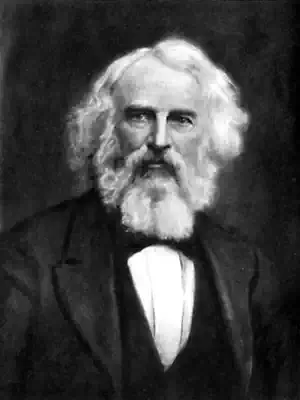
Henry Wadsworth Longfellow
Village Blacksmith, The
Village Blacksmith, The
Under a spreading chestnut tree
The village smithy stands;
The Smith, a mighty man is he,
With large and sinewy hands;
And the muscles of his brawny arms
Are strong as iron bands.
His hair is crisp, and black, and long,
His face is like the tan;
His brow is wet with honest sweat,
He earns whate'er he can
And looks the whole world in the face
For he owes not any man.
Week in, week out, from morn till night,
You can hear his bellows blow;
You can hear him swing his heavy sledge,
With measured beat and slow,
Like a sexton ringing the village bell,
When the evening sun is low.
And children coming home from school
Look in at the open door;
They love to see the flaming furge,
And hear the bellows roar,
And catch the burning sparks that fly
Like chaff from a threshing floor.
He goes on Sunday to the church
and sits among his boys;
He hears the parson pray and preach.
He hears his daughter's voice
singing in the village choir,
And it makes his heart rejoice.
It sounds to him like her mother's voice,
Singing in Paradise!
He needs must think of her once more,
How in the grave she lies;
And with his hard, rough hand he wipes
A tear out of his eyes.
Toiling, rejoicing,-sorrowing,
Onward through life he goes;
Each morning sees some task begin,
Each evening sees it close;
Something attempted, something done,
Has earned a night's repose.
Thanks, thanks to thee, my worthy friend
For the lesson thou hast taught!
Thus at the flaming forge of life
Our fortunes must be wrought;
Thus on its sounding anvil shaped
Each burning deed and thought!
Under a spreading chestnut tree
The village smithy stands;
The Smith, a mighty man is he,
With large and sinewy hands;
And the muscles of his brawny arms
Are strong as iron bands.
His hair is crisp, and black, and long,
His face is like the tan;
His brow is wet with honest sweat,
He earns whate'er he can
And looks the whole world in the face
For he owes not any man.
Week in, week out, from morn till night,
You can hear his bellows blow;
You can hear him swing his heavy sledge,
With measured beat and slow,
Like a sexton ringing the village bell,
When the evening sun is low.
And children coming home from school
Look in at the open door;
They love to see the flaming furge,
And hear the bellows roar,
And catch the burning sparks that fly
Like chaff from a threshing floor.
He goes on Sunday to the church
and sits among his boys;
He hears the parson pray and preach.
He hears his daughter's voice
singing in the village choir,
And it makes his heart rejoice.
It sounds to him like her mother's voice,
Singing in Paradise!
He needs must think of her once more,
How in the grave she lies;
And with his hard, rough hand he wipes
A tear out of his eyes.
Toiling, rejoicing,-sorrowing,
Onward through life he goes;
Each morning sees some task begin,
Each evening sees it close;
Something attempted, something done,
Has earned a night's repose.
Thanks, thanks to thee, my worthy friend
For the lesson thou hast taught!
Thus at the flaming forge of life
Our fortunes must be wrought;
Thus on its sounding anvil shaped
Each burning deed and thought!
705
Henry Wadsworth Longfellow
The White Man's Foot
The White Man's Foot
In his lodge beside a river,
Close beside a frozen river,
Sat an old man, sad and lonely.
White his hair was as a snow-drift;
Dull and low his fire was burning,
And the old man shook and trembled,
Folded in his Waubewyon,
In his tattered white-skin-wrapper,
Hearing nothing but the tempest
As it roared along the forest,
Seeing nothing but the snow-storm,
As it whirled and hissed and drifted.
All the coals were white with ashes,
And the fire was slowly dying,
As a young man, walking lightly,
At the open doorway entered.
Red with blood of youth his cheeks were,
Soft his eyes, as stars In Spring-time,
Bound his forehead was with grasses;
Bound and plumed with scented grasses,
On his lips a smile of beauty,
Filling all the lodge with sunshine,
In his hand a bunch of blossoms
Filling all the lodge with sweetness.
"Ah, my son!" exclaimed the old man,
"Happy are my eyes to see you.
Sit here on the mat beside me,
Sit here by the dying embers,
Let us pass the night together,
Tell me of your strange adventures,
Of the lands where you have travelled;
I will tell you of my prowess,
Of my many deeds of wonder."
From his pouch he drew his peace-pipe,
Very old and strangely fashioned;
Made of red stone was the pipe-head,
And the stem a reed with feathers;
Filled the pipe with bark of willow,
Placed a burning coal upon it,
Gave it to his guest, the stranger,
And began to speak in this wise:
"When I blow my breath about me,
When I breathe upon the landscape,
Motionless are all the rivers,
Hard as stone becomes the water!"
And the young man answered, smiling:
"When I blow my breath about me,
When I breathe upon the landscape,
Flowers spring up o'er all the meadows,
Singing, onward rush the rivers!"
"When I shake my hoary tresses,"
Said the old man darkly frowning,
"All the land with snow is covered;
All the leaves from all the branches
Fall and fade and die and wither,
For I breathe, and lo! they are not.
From the waters and the marshes,
Rise the wild goose and the heron,
Fly away to distant regions,
For I speak, and lo! they are not.
And where'er my footsteps wander,
All the wild beasts of the forest
Hide themselves in holes and caverns,
And the earth becomes as flintstone!"
"When I shake my flowing ringlets,"
Said the young man, softly laughing,
"Showers of rain fall warm and welcome,
Plants lift up their heads rejoicing,
Back Into their lakes and marshes
Come the wild goose and the heron,
Homeward shoots the arrowy swallow,
Sing the bluebird and the robin,
And where'er my footsteps wander,
All the meadows wave with blossoms,
All the woodlands ring with music,
All the trees are dark with foliage!"
While they spake, the night departed:
From the distant realms of Wabun,
From his shining lodge of silver,
Like a warrior robed and painted,
Came the sun, and said, "Behold me
Gheezis, the great sun, behold me!"
Then the old man's tongue was speechless
And the air grew warm and pleasant,
And upon the wigwam sweetly
Sang the bluebird and the robin,
And the stream began to murmur,
And a scent of growing grasses
Through the lodge was gently wafted.
And Segwun, the youthful stranger,
More distinctly in the daylight
Saw the icy face before him;
It was Peboan, the Winter!
From his eyes the tears were flowing,
As from melting lakes the streamlets,
And his body shrunk and dwindled
As the shouting sun ascended,
Till into the air it faded,
Till into the ground it vanished,
And the young man saw before him,
On the hearth-stone of the wigwam,
Where the fire had smoked and smouldered,
Saw the earliest flower of Spring-time,
Saw the Beauty of the Spring-time,
Saw the Miskodeed in blossom.
Thus it was that in the North-land
After that unheard-of coldness,
That intolerable Winter,
Came the Spring with all its splendor,
All its birds and all its blossoms,
All its flowers and leaves and grasses.
Sailing on the wind to northward,
Flying in great flocks, like arrows,
Like huge arrows shot through heaven,
Passed the swan, the Mahnahbezee,
Speaking almost as a man speaks;
And in long lines waving, bending
Like a bow-string snapped asunder,
Came the white goose, Waw-be-wawa;
And in pairs, or singly flying,
Mahng the loon, with clangorous pinions,
The blue heron, the Shuh-shuh-gah,
And the grouse, the Mushkodasa.
In the thickets and the meadows
Piped the bluebird, the Owaissa,
On the summit of the lodges
Sang the robin, the Opechee,
In the covert of the pine-trees
Cooed the pigeon, the Omemee;
And the sorrowing Hiawatha,
Speechless in his infinite sorrow,
Heard their voices calling to him,
Went forth from his gloomy doorway,
Stood and gazed into the heaven,
Gazed upon the earth and waters.
From his wanderings far to eastward,
From the regions of the morning,
From the shining land of Wabun,
Homeward now returned Iagoo,
The great traveller, the great boaster,
Full of new and strange adventures,
Marvels many and many wonders.
And the people of the village
Listened to him as he told them
Of his marvellous adventures,
Laughing answered him in this wise:
"Ugh! it is indeed Iagoo!
No one else beholds such wonders!"
He had seen, he said, a water
Bigger than the Big-Sea-Water,
Broader than the Gitche Gumee,
Bitter so that none could drink it!
At each other looked the warriors,
Looked the women at each other,
Smiled, and said, "It cannot be so!"
Kaw!" they said, it cannot be so!"
O'er it, said he, o'er this water
Came a great canoe with pinions,
A canoe with wings came flying,
Bigger than a grove of pine-trees,
Taller than the tallest tree-tops!
And the old men and the women
Looked and tittered at each other;
"Kaw!" they said, "we don't believe it!"
From its mouth, he said, to greet him,
Came Waywassimo, the lightning,
Came the thunder, Annemeekee!
And the warriors and the women
Laughed aloud at poor Iagoo;
"Kaw!" they said, "what tales you tell us!"
In it, said he, came a people,
In the great canoe with pinions
Came, he said, a hundred warriors;
Painted white were all their faces
And with hair their chins were covered!
And the warriors and the women
Laughed and shouted in derision,
Like the ravens on the tree-tops,
Like the crows upon the hemlocks.
"Kaw!" they said, "what lies you tell us!
Do not think that we believe them!"
Only Hiawatha laughed not,
But he gravely spake and answered
To their jeering and their jesting:
"True is all Iagoo tells us;
I have seen it in a vision,
Seen the great canoe with pinions,
Seen the people with white faces,
Seen the coming of this bearded
People of the wooden vessel
From the regions of the morning,
From the shining land of Wabun.
"Gitche Manito, the Mighty,
The Great Spirit, the Creator,
Sends them hither on his errand.
Sends them to us with his message.
Wheresoe'er they move, before them
Swarms the stinging fly, the Ahmo,
Swarms the bee, the honey-maker;
Wheresoe'er they tread, beneath them
Springs a flower unknown among us,
Springs the White-man's Foot in blossom.
"Let us welcome, then, the strangers,
Hail them as our friends and brothers,
And the heart's right hand of friendship
Give them when they come to see us.
Gitche Manito, the Mighty,
Said this to me in my vision.
"I beheld, too, in that vision
All the secrets of the future,
Of the distant days that shall be.
I beheld the westward marches
Of the unknown, crowded nations.
All the land was full of people,
Restless, struggling, toiling, striving,
Speaking many tongues, yet feeling
But one heart-beat in their bosoms.
In the woodlands rang their axes,
Smoked their towns in all the valleys,
Over all the lakes and rivers
Rushed their great canoes of thunder.
"Then a darker, drearier vision
Passed before me, vague and cloud-like;
I beheld our nation scattered,
All forgetful of my counsels,
Weakened, warring with each other:
Saw the remnants of our people
Sweeping westward, wild and woful,
Like the cloud-rack of a tempest,
Like the withered leaves of Autumn!"
In his lodge beside a river,
Close beside a frozen river,
Sat an old man, sad and lonely.
White his hair was as a snow-drift;
Dull and low his fire was burning,
And the old man shook and trembled,
Folded in his Waubewyon,
In his tattered white-skin-wrapper,
Hearing nothing but the tempest
As it roared along the forest,
Seeing nothing but the snow-storm,
As it whirled and hissed and drifted.
All the coals were white with ashes,
And the fire was slowly dying,
As a young man, walking lightly,
At the open doorway entered.
Red with blood of youth his cheeks were,
Soft his eyes, as stars In Spring-time,
Bound his forehead was with grasses;
Bound and plumed with scented grasses,
On his lips a smile of beauty,
Filling all the lodge with sunshine,
In his hand a bunch of blossoms
Filling all the lodge with sweetness.
"Ah, my son!" exclaimed the old man,
"Happy are my eyes to see you.
Sit here on the mat beside me,
Sit here by the dying embers,
Let us pass the night together,
Tell me of your strange adventures,
Of the lands where you have travelled;
I will tell you of my prowess,
Of my many deeds of wonder."
From his pouch he drew his peace-pipe,
Very old and strangely fashioned;
Made of red stone was the pipe-head,
And the stem a reed with feathers;
Filled the pipe with bark of willow,
Placed a burning coal upon it,
Gave it to his guest, the stranger,
And began to speak in this wise:
"When I blow my breath about me,
When I breathe upon the landscape,
Motionless are all the rivers,
Hard as stone becomes the water!"
And the young man answered, smiling:
"When I blow my breath about me,
When I breathe upon the landscape,
Flowers spring up o'er all the meadows,
Singing, onward rush the rivers!"
"When I shake my hoary tresses,"
Said the old man darkly frowning,
"All the land with snow is covered;
All the leaves from all the branches
Fall and fade and die and wither,
For I breathe, and lo! they are not.
From the waters and the marshes,
Rise the wild goose and the heron,
Fly away to distant regions,
For I speak, and lo! they are not.
And where'er my footsteps wander,
All the wild beasts of the forest
Hide themselves in holes and caverns,
And the earth becomes as flintstone!"
"When I shake my flowing ringlets,"
Said the young man, softly laughing,
"Showers of rain fall warm and welcome,
Plants lift up their heads rejoicing,
Back Into their lakes and marshes
Come the wild goose and the heron,
Homeward shoots the arrowy swallow,
Sing the bluebird and the robin,
And where'er my footsteps wander,
All the meadows wave with blossoms,
All the woodlands ring with music,
All the trees are dark with foliage!"
While they spake, the night departed:
From the distant realms of Wabun,
From his shining lodge of silver,
Like a warrior robed and painted,
Came the sun, and said, "Behold me
Gheezis, the great sun, behold me!"
Then the old man's tongue was speechless
And the air grew warm and pleasant,
And upon the wigwam sweetly
Sang the bluebird and the robin,
And the stream began to murmur,
And a scent of growing grasses
Through the lodge was gently wafted.
And Segwun, the youthful stranger,
More distinctly in the daylight
Saw the icy face before him;
It was Peboan, the Winter!
From his eyes the tears were flowing,
As from melting lakes the streamlets,
And his body shrunk and dwindled
As the shouting sun ascended,
Till into the air it faded,
Till into the ground it vanished,
And the young man saw before him,
On the hearth-stone of the wigwam,
Where the fire had smoked and smouldered,
Saw the earliest flower of Spring-time,
Saw the Beauty of the Spring-time,
Saw the Miskodeed in blossom.
Thus it was that in the North-land
After that unheard-of coldness,
That intolerable Winter,
Came the Spring with all its splendor,
All its birds and all its blossoms,
All its flowers and leaves and grasses.
Sailing on the wind to northward,
Flying in great flocks, like arrows,
Like huge arrows shot through heaven,
Passed the swan, the Mahnahbezee,
Speaking almost as a man speaks;
And in long lines waving, bending
Like a bow-string snapped asunder,
Came the white goose, Waw-be-wawa;
And in pairs, or singly flying,
Mahng the loon, with clangorous pinions,
The blue heron, the Shuh-shuh-gah,
And the grouse, the Mushkodasa.
In the thickets and the meadows
Piped the bluebird, the Owaissa,
On the summit of the lodges
Sang the robin, the Opechee,
In the covert of the pine-trees
Cooed the pigeon, the Omemee;
And the sorrowing Hiawatha,
Speechless in his infinite sorrow,
Heard their voices calling to him,
Went forth from his gloomy doorway,
Stood and gazed into the heaven,
Gazed upon the earth and waters.
From his wanderings far to eastward,
From the regions of the morning,
From the shining land of Wabun,
Homeward now returned Iagoo,
The great traveller, the great boaster,
Full of new and strange adventures,
Marvels many and many wonders.
And the people of the village
Listened to him as he told them
Of his marvellous adventures,
Laughing answered him in this wise:
"Ugh! it is indeed Iagoo!
No one else beholds such wonders!"
He had seen, he said, a water
Bigger than the Big-Sea-Water,
Broader than the Gitche Gumee,
Bitter so that none could drink it!
At each other looked the warriors,
Looked the women at each other,
Smiled, and said, "It cannot be so!"
Kaw!" they said, it cannot be so!"
O'er it, said he, o'er this water
Came a great canoe with pinions,
A canoe with wings came flying,
Bigger than a grove of pine-trees,
Taller than the tallest tree-tops!
And the old men and the women
Looked and tittered at each other;
"Kaw!" they said, "we don't believe it!"
From its mouth, he said, to greet him,
Came Waywassimo, the lightning,
Came the thunder, Annemeekee!
And the warriors and the women
Laughed aloud at poor Iagoo;
"Kaw!" they said, "what tales you tell us!"
In it, said he, came a people,
In the great canoe with pinions
Came, he said, a hundred warriors;
Painted white were all their faces
And with hair their chins were covered!
And the warriors and the women
Laughed and shouted in derision,
Like the ravens on the tree-tops,
Like the crows upon the hemlocks.
"Kaw!" they said, "what lies you tell us!
Do not think that we believe them!"
Only Hiawatha laughed not,
But he gravely spake and answered
To their jeering and their jesting:
"True is all Iagoo tells us;
I have seen it in a vision,
Seen the great canoe with pinions,
Seen the people with white faces,
Seen the coming of this bearded
People of the wooden vessel
From the regions of the morning,
From the shining land of Wabun.
"Gitche Manito, the Mighty,
The Great Spirit, the Creator,
Sends them hither on his errand.
Sends them to us with his message.
Wheresoe'er they move, before them
Swarms the stinging fly, the Ahmo,
Swarms the bee, the honey-maker;
Wheresoe'er they tread, beneath them
Springs a flower unknown among us,
Springs the White-man's Foot in blossom.
"Let us welcome, then, the strangers,
Hail them as our friends and brothers,
And the heart's right hand of friendship
Give them when they come to see us.
Gitche Manito, the Mighty,
Said this to me in my vision.
"I beheld, too, in that vision
All the secrets of the future,
Of the distant days that shall be.
I beheld the westward marches
Of the unknown, crowded nations.
All the land was full of people,
Restless, struggling, toiling, striving,
Speaking many tongues, yet feeling
But one heart-beat in their bosoms.
In the woodlands rang their axes,
Smoked their towns in all the valleys,
Over all the lakes and rivers
Rushed their great canoes of thunder.
"Then a darker, drearier vision
Passed before me, vague and cloud-like;
I beheld our nation scattered,
All forgetful of my counsels,
Weakened, warring with each other:
Saw the remnants of our people
Sweeping westward, wild and woful,
Like the cloud-rack of a tempest,
Like the withered leaves of Autumn!"
324
Henry Wadsworth Longfellow
The Village Blacksmith
The Village Blacksmith
Under a spreading chestnut tree
The village smithy stands;
The smith, a might man is he,
With large and sinewy hands;
And the muscles of his brawney arms
Are strong as iron bands.
His hair is crisp, and black, and long,
His face is like the tan;
His brow is wet with honest sweat,
He earns what'er he can,
And looks the whole word in the face,
For he owes not any man.
Week in, week out, from morn till night,
You can hear the bellows blow;
You can hear him swing his might sledge,
With measure beat and slow,
Like a sexton ringing the village bell,
When the evening sun is low.
And children coming home from school
Look in the open door;
They love to see the flaming forge,
And hear the bellows roar.
And catch the flaming sparks that fly
Like chaff from a threshing floor.
He goes on Sunday to the church,
And sits among his boys;
He hears the parson pray and preach,
He hears his daughter's voice,
Singing in the choir,
And it makes his heart rejoice.
It sounds to him like his mother's voice,
Singing in Paradise!
He needs must think of her once more,
How in the grave she lies;
And with his hard, rough hands he wipes
A tear out of his eyes.
Toiing, -- rejoicing, -- sorrowing,
Onward in life he goes;
Each morning sees some task begin,
Each evening sees it close;
Something attempted, something done,
Has earned his night's repose.
Thanks, thanks to thee, my worthy friend,
For the lesson thou has taught!
Thus at the flaming forge of life
Our fortunes must be wrought;
Thus on its sounding anvil shaped
Each burning deed and thought.
Under a spreading chestnut tree
The village smithy stands;
The smith, a might man is he,
With large and sinewy hands;
And the muscles of his brawney arms
Are strong as iron bands.
His hair is crisp, and black, and long,
His face is like the tan;
His brow is wet with honest sweat,
He earns what'er he can,
And looks the whole word in the face,
For he owes not any man.
Week in, week out, from morn till night,
You can hear the bellows blow;
You can hear him swing his might sledge,
With measure beat and slow,
Like a sexton ringing the village bell,
When the evening sun is low.
And children coming home from school
Look in the open door;
They love to see the flaming forge,
And hear the bellows roar.
And catch the flaming sparks that fly
Like chaff from a threshing floor.
He goes on Sunday to the church,
And sits among his boys;
He hears the parson pray and preach,
He hears his daughter's voice,
Singing in the choir,
And it makes his heart rejoice.
It sounds to him like his mother's voice,
Singing in Paradise!
He needs must think of her once more,
How in the grave she lies;
And with his hard, rough hands he wipes
A tear out of his eyes.
Toiing, -- rejoicing, -- sorrowing,
Onward in life he goes;
Each morning sees some task begin,
Each evening sees it close;
Something attempted, something done,
Has earned his night's repose.
Thanks, thanks to thee, my worthy friend,
For the lesson thou has taught!
Thus at the flaming forge of life
Our fortunes must be wrought;
Thus on its sounding anvil shaped
Each burning deed and thought.
333
Henry Wadsworth Longfellow
The Song of Hiawatha: X
The Song of Hiawatha: X
X. Hiawatha's Wooing
"As unto the bow the cord is,
So unto the man is woman,
Though she bends him, she obeys him,
Though she draws him, yet she follows,
Useless each without the other!"
Thus the youthful Hiawatha
Said within himself and pondered,
Much perplexed by various feelings,
Listless, longing, hoping, fearing,
Dreaming still of Minnehaha,
Of the lovely Laughing Water,
In the land of the Dacotahs.
"Wed a maiden of your people,"
Warning said the old Nokomis;
"Go not eastward, go not westward,
For a stranger, whom we know not!
Like a fire upon the hearth-stone
Is a neighbor's homely daughter,
Like the starlight or the moonlight
Is the handsomest of strangers!"
Thus dissuading spake Nokomis,
And my Hiawatha answered
Only this: "Dear old Nokomis,
Very pleasant is the firelight,
But I like the starlight better,
Better do I like the moonlight!"
Gravely then said old Nokomis:
"Bring not here an idle maiden,
Bring not here a useless woman,
Hands unskilful, feet unwilling;
Bring a wife with nimble fingers,
Heart and hand that move together,
Feet that run on willing errands!"
Smiling answered Hiawatha:
"In the land of the Dacotahs
Lives the Arrow-maker's daughter,
Minnehaha, Laughing Water,
Handsomest of all the women.
I will bring her to your wigwam,
She shall run upon your errands,
Be your starlight, moonlight, firelight,
Be the sunlight of my people!"
Still dissuading said Nokomis:
"Bring not to my lodge a stranger
From the land of the Dacotahs!
Very fierce are the Dacotahs,
Often is there war between us,
There are feuds yet unforgotten,
Wounds that ache and still may open!
Laughing answered Hiawatha:
"For that reason, if no other,
Would I wed the fair Dacotah,
That our tribes might be united,
That old feuds might be forgotten,
And old wounds be healed forever!"
Thus departed Hiawatha
To the land of the Dacotahs,
To the land of handsome women;
Striding over moor and meadow,
Through interminable forests,
Through uninterrupted silence.
With his moccasins of magic,
At each stride a mile he measured;
Yet the way seemed long before him,
And his heart outran his footsteps;
And he journeyed without resting,
Till he heard the cataract's laughter,
Heard the Falls of Minnehaha
Calling to him through the silence.
"Pleasant is the sound!" he murmured,
"Pleasant is the voice that calls me!"
On the outskirts of the forests,
'Twixt the shadow and the sunshine,
Herds of fallow deer were feeding,
But they saw not Hiawatha;
To his bow be whispered, "Fail not!"
To his arrow whispered, "Swerve not!"
Sent it singing on its errand,
To the red heart of the roebuck;
Threw the deer across his shoulder,
And sped forward without pausing.
At the doorway of his wigwam
Sat his ancient Arrow-maker,
In the land of the Dacotahs,
Making arrow-heads of jasper,
Arrow-heads of chalcedony.
At his side, in all her beauty,
Sat the lovely Minnehaha,
Sat his daughter, Laughing Water,
Plaiting mats of flags and rushes;
Of the past the old man's thoughts were,
And the maiden's of the future.
He was thinking, as he sat there,
Of the days when with such arrows
He had struck the deer and bison,
On the Muskoday, the meadow;
Shot the wild goose, flying southward,
On the wing, the clamorous Wawa;
Thinking of the great war-parties,
How they came to buy his arrows,
Could not fight without his arrows.
Ah, no more such noble warriors
Could be found on earth as they were!
Now the men were all like women,
Only used their tongues for weapons!
She was thinking of a hunter,
From another tribe and country,
Young and tall and very handsome,
Who one morning, in the Spring-time,
Came to buy her father's arrows,
Lingered long about the doorway,
Sat and rested in the wigwam,
Looking back as he departed.
She had heard her father praise him,
Praise his courage and his wisdom;
Would he come again for arrows
To the Falls of Minnehaha?
On the mat her hands lay idle,
And her eyes were very dreamy.
Through their thoughts they heard a footstep,
Heard a rustling in the branches,
And with glowing cheek and forehead,
With the deer upon his shoulders,
Suddenly from out the woodlands
Hiawatha stood before them.
Straight the ancient Arrow-maker
Looked up gravely from his labor,
Laid aside the unfinished arrow,
Bade him enter at the doorway,
Saying, as he rose to meet him,
"Hiawatha, you are welcome!"
At the feet of Laughing Water
Hiawatha laid his burden,
Threw the red deer from his shoulders;
And the maiden looked up at him,
Looked up from her mat of rushes,
Said with gentle look and accent,
"You are welcome, Hiawatha!"
Very spacious was the wigwam,
Made of deer-skins dressed and whitened,
With the Gods of the Dacotahs
Drawn and painted on its curtains,
And so tall the doorway, hardly
Hiawatha stooped to enter,
Hardly touched his eagle-feathers
As he entered at the doorway.
Then uprose the Laughing Water,
From the ground fair Minnehaha,
Laid aside her mat unfinished,
Brought forth food and set before them,
Water brought them from the brooklet,
Gave them food in earthen vessels,
Gave them drink in bowls of bass-wood,
Listened while the guest was speaking,
Listened while her father answered,
But not once her lips she opened,
Not a single word she uttered.
Yes, as in a dream she listened
To the words of Hiawatha,
As he talked of old Nokomis,
Who had nursed him in his childhood,
As he told of his companions,
Chibiabos, the musician,
And the very strong man, Kwasind,
And of happiness and plenty
In the land of the Ojibways,
In the pleasant land and peaceful.
"After many years of warfare,
Many years of strife and bloodshed,
There is peace between the Ojibways
And the tribe of the Dacotahs."
Thus continued Hiawatha,
And then added, speaking slowly,
'That this peace may last forever,
And our hands be clasped more closely,
And our hearts be more united,
Give me as my wife this maiden,
Minnehaha, Laughing Water,
Loveliest of Dacotah women!
And the ancient Arrow-maker
Paused a moment ere he answered,
Smoked a little while in silence,
Looked at Hiawatha proudly,
Fondly looked at Laughing Water,
And made answer very gravely:
"Yes, if Minnehaha wishes;
Let your heart speak, Minnehaha!"
And the lovely Laughing Water
Seemed more lovely as she stood there,
Neither willing nor reluctant,
As she went to Hiawatha,
Softly took the seat beside him,
While she said, and blushed to say it,
"I will follow you, my husband!"
This was Hiawatha's wooing!
Thus it was he won the daughter
Of the ancient Arrow-maker,
In the land of the Dacotahs!
From the wigwam he departed,
Leading with him Laughing Water;
Hand in hand they went together,
Through the woodland and the meadow,
Left the old man standing lonely
At the doorway of his wigwam,
Heard the Falls of Minnehaha
Calling to them from the distance,
Crying to them from afar off,
"Fare thee well, O Minnehaha!"
And the ancient Arrow-maker
Turned again unto his labor,
Sat down by his sunny doorway,
Murmuring to himself, and saying:
"Thus it is our daughters leave us,
Those we love, and those who love us!
Just when they have learned to help us,
When we are old and lean upon them,
Comes a youth with flaunting feathers,
With his flute of reeds, a stranger
Wanders piping through the village,
Beckons to the fairest maiden,
And she follows where he leads her,
Leaving all things for the stranger!"
Pleasant was the journey homeward,
Through interminable forests,
Over meadow, over mountain,
Over river, hill, and hollow.
Short it seemed to Hiawatha,
Though they journeyed very slowly,
Though his pace he checked and slackened
To the steps of Laughing Water.
Over wide and rushing rivers
In his arms he bore the maiden;
Light he thought her as a feather,
As the plume upon his head-gear;
Cleared the tangled pathway for her,
Bent aside the swaying branches,
Made at night a lodge of branches,
And a bed with boughs of hemlock,
And a fire before the doorway
With the dry cones of the pine-tree.
All the travelling winds went with them,
O'er the meadows, through the forest;
All the stars of night looked at them,
Watched with sleepless eyes their slumber;
From his ambush in the oak-tree
Peeped the squirrel, Adjidaumo,
Watched with eager eyes the lovers;
And the rabbit, the Wabasso,
Scampered from the path before them,
Peering, peeping from his burrow,
Sat erect upon his haunches,
Watched with curious eyes the lovers.
Pleasant was the journey homeward!
All the birds sang loud and sweetly
Songs of happiness and heart's-ease;
Sang the bluebird, the Owaissa,
"Happy are you, Hiawatha,
Having such a wife to love you!"
Sang the robin, the Opechee,
"Happy are you, Laughing Water,
Having such a noble husband!"
From the sky the sun benignant
Looked upon them through the branches,
Saying to them, "O my children,
Love is sunshine, hate is shadow,
Life is checkered shade and sunshine,
Rule by love, O Hiawatha!"
From the sky the moon looked at them,
Filled the lodge with mystic splendors,
Whispered to them, "O my children,
Day is restless, night is quiet,
Man imperious, woman feeble;
Half is mine, although I follow;
Rule by patience, Laughing Water!"
Thus it was they journeyed homeward;
Thus it was that Hiawatha
To the lodge of old Nokomis
Brought the moonlight, starlight, firelight,
Brought the sunshine of his people,
Minnehaha, Laughing Water,
Handsomest of all the women
In the land of the Dacotahs,
In the land of handsome women.
X. Hiawatha's Wooing
"As unto the bow the cord is,
So unto the man is woman,
Though she bends him, she obeys him,
Though she draws him, yet she follows,
Useless each without the other!"
Thus the youthful Hiawatha
Said within himself and pondered,
Much perplexed by various feelings,
Listless, longing, hoping, fearing,
Dreaming still of Minnehaha,
Of the lovely Laughing Water,
In the land of the Dacotahs.
"Wed a maiden of your people,"
Warning said the old Nokomis;
"Go not eastward, go not westward,
For a stranger, whom we know not!
Like a fire upon the hearth-stone
Is a neighbor's homely daughter,
Like the starlight or the moonlight
Is the handsomest of strangers!"
Thus dissuading spake Nokomis,
And my Hiawatha answered
Only this: "Dear old Nokomis,
Very pleasant is the firelight,
But I like the starlight better,
Better do I like the moonlight!"
Gravely then said old Nokomis:
"Bring not here an idle maiden,
Bring not here a useless woman,
Hands unskilful, feet unwilling;
Bring a wife with nimble fingers,
Heart and hand that move together,
Feet that run on willing errands!"
Smiling answered Hiawatha:
"In the land of the Dacotahs
Lives the Arrow-maker's daughter,
Minnehaha, Laughing Water,
Handsomest of all the women.
I will bring her to your wigwam,
She shall run upon your errands,
Be your starlight, moonlight, firelight,
Be the sunlight of my people!"
Still dissuading said Nokomis:
"Bring not to my lodge a stranger
From the land of the Dacotahs!
Very fierce are the Dacotahs,
Often is there war between us,
There are feuds yet unforgotten,
Wounds that ache and still may open!
Laughing answered Hiawatha:
"For that reason, if no other,
Would I wed the fair Dacotah,
That our tribes might be united,
That old feuds might be forgotten,
And old wounds be healed forever!"
Thus departed Hiawatha
To the land of the Dacotahs,
To the land of handsome women;
Striding over moor and meadow,
Through interminable forests,
Through uninterrupted silence.
With his moccasins of magic,
At each stride a mile he measured;
Yet the way seemed long before him,
And his heart outran his footsteps;
And he journeyed without resting,
Till he heard the cataract's laughter,
Heard the Falls of Minnehaha
Calling to him through the silence.
"Pleasant is the sound!" he murmured,
"Pleasant is the voice that calls me!"
On the outskirts of the forests,
'Twixt the shadow and the sunshine,
Herds of fallow deer were feeding,
But they saw not Hiawatha;
To his bow be whispered, "Fail not!"
To his arrow whispered, "Swerve not!"
Sent it singing on its errand,
To the red heart of the roebuck;
Threw the deer across his shoulder,
And sped forward without pausing.
At the doorway of his wigwam
Sat his ancient Arrow-maker,
In the land of the Dacotahs,
Making arrow-heads of jasper,
Arrow-heads of chalcedony.
At his side, in all her beauty,
Sat the lovely Minnehaha,
Sat his daughter, Laughing Water,
Plaiting mats of flags and rushes;
Of the past the old man's thoughts were,
And the maiden's of the future.
He was thinking, as he sat there,
Of the days when with such arrows
He had struck the deer and bison,
On the Muskoday, the meadow;
Shot the wild goose, flying southward,
On the wing, the clamorous Wawa;
Thinking of the great war-parties,
How they came to buy his arrows,
Could not fight without his arrows.
Ah, no more such noble warriors
Could be found on earth as they were!
Now the men were all like women,
Only used their tongues for weapons!
She was thinking of a hunter,
From another tribe and country,
Young and tall and very handsome,
Who one morning, in the Spring-time,
Came to buy her father's arrows,
Lingered long about the doorway,
Sat and rested in the wigwam,
Looking back as he departed.
She had heard her father praise him,
Praise his courage and his wisdom;
Would he come again for arrows
To the Falls of Minnehaha?
On the mat her hands lay idle,
And her eyes were very dreamy.
Through their thoughts they heard a footstep,
Heard a rustling in the branches,
And with glowing cheek and forehead,
With the deer upon his shoulders,
Suddenly from out the woodlands
Hiawatha stood before them.
Straight the ancient Arrow-maker
Looked up gravely from his labor,
Laid aside the unfinished arrow,
Bade him enter at the doorway,
Saying, as he rose to meet him,
"Hiawatha, you are welcome!"
At the feet of Laughing Water
Hiawatha laid his burden,
Threw the red deer from his shoulders;
And the maiden looked up at him,
Looked up from her mat of rushes,
Said with gentle look and accent,
"You are welcome, Hiawatha!"
Very spacious was the wigwam,
Made of deer-skins dressed and whitened,
With the Gods of the Dacotahs
Drawn and painted on its curtains,
And so tall the doorway, hardly
Hiawatha stooped to enter,
Hardly touched his eagle-feathers
As he entered at the doorway.
Then uprose the Laughing Water,
From the ground fair Minnehaha,
Laid aside her mat unfinished,
Brought forth food and set before them,
Water brought them from the brooklet,
Gave them food in earthen vessels,
Gave them drink in bowls of bass-wood,
Listened while the guest was speaking,
Listened while her father answered,
But not once her lips she opened,
Not a single word she uttered.
Yes, as in a dream she listened
To the words of Hiawatha,
As he talked of old Nokomis,
Who had nursed him in his childhood,
As he told of his companions,
Chibiabos, the musician,
And the very strong man, Kwasind,
And of happiness and plenty
In the land of the Ojibways,
In the pleasant land and peaceful.
"After many years of warfare,
Many years of strife and bloodshed,
There is peace between the Ojibways
And the tribe of the Dacotahs."
Thus continued Hiawatha,
And then added, speaking slowly,
'That this peace may last forever,
And our hands be clasped more closely,
And our hearts be more united,
Give me as my wife this maiden,
Minnehaha, Laughing Water,
Loveliest of Dacotah women!
And the ancient Arrow-maker
Paused a moment ere he answered,
Smoked a little while in silence,
Looked at Hiawatha proudly,
Fondly looked at Laughing Water,
And made answer very gravely:
"Yes, if Minnehaha wishes;
Let your heart speak, Minnehaha!"
And the lovely Laughing Water
Seemed more lovely as she stood there,
Neither willing nor reluctant,
As she went to Hiawatha,
Softly took the seat beside him,
While she said, and blushed to say it,
"I will follow you, my husband!"
This was Hiawatha's wooing!
Thus it was he won the daughter
Of the ancient Arrow-maker,
In the land of the Dacotahs!
From the wigwam he departed,
Leading with him Laughing Water;
Hand in hand they went together,
Through the woodland and the meadow,
Left the old man standing lonely
At the doorway of his wigwam,
Heard the Falls of Minnehaha
Calling to them from the distance,
Crying to them from afar off,
"Fare thee well, O Minnehaha!"
And the ancient Arrow-maker
Turned again unto his labor,
Sat down by his sunny doorway,
Murmuring to himself, and saying:
"Thus it is our daughters leave us,
Those we love, and those who love us!
Just when they have learned to help us,
When we are old and lean upon them,
Comes a youth with flaunting feathers,
With his flute of reeds, a stranger
Wanders piping through the village,
Beckons to the fairest maiden,
And she follows where he leads her,
Leaving all things for the stranger!"
Pleasant was the journey homeward,
Through interminable forests,
Over meadow, over mountain,
Over river, hill, and hollow.
Short it seemed to Hiawatha,
Though they journeyed very slowly,
Though his pace he checked and slackened
To the steps of Laughing Water.
Over wide and rushing rivers
In his arms he bore the maiden;
Light he thought her as a feather,
As the plume upon his head-gear;
Cleared the tangled pathway for her,
Bent aside the swaying branches,
Made at night a lodge of branches,
And a bed with boughs of hemlock,
And a fire before the doorway
With the dry cones of the pine-tree.
All the travelling winds went with them,
O'er the meadows, through the forest;
All the stars of night looked at them,
Watched with sleepless eyes their slumber;
From his ambush in the oak-tree
Peeped the squirrel, Adjidaumo,
Watched with eager eyes the lovers;
And the rabbit, the Wabasso,
Scampered from the path before them,
Peering, peeping from his burrow,
Sat erect upon his haunches,
Watched with curious eyes the lovers.
Pleasant was the journey homeward!
All the birds sang loud and sweetly
Songs of happiness and heart's-ease;
Sang the bluebird, the Owaissa,
"Happy are you, Hiawatha,
Having such a wife to love you!"
Sang the robin, the Opechee,
"Happy are you, Laughing Water,
Having such a noble husband!"
From the sky the sun benignant
Looked upon them through the branches,
Saying to them, "O my children,
Love is sunshine, hate is shadow,
Life is checkered shade and sunshine,
Rule by love, O Hiawatha!"
From the sky the moon looked at them,
Filled the lodge with mystic splendors,
Whispered to them, "O my children,
Day is restless, night is quiet,
Man imperious, woman feeble;
Half is mine, although I follow;
Rule by patience, Laughing Water!"
Thus it was they journeyed homeward;
Thus it was that Hiawatha
To the lodge of old Nokomis
Brought the moonlight, starlight, firelight,
Brought the sunshine of his people,
Minnehaha, Laughing Water,
Handsomest of all the women
In the land of the Dacotahs,
In the land of handsome women.
389
Henry Wadsworth Longfellow
Hiawatha's Wedding-Feast
Hiawatha's Wedding-Feast
You shall hear how Pau-Puk-Keewis,
How the handsome Yenadizze
Danced at Hiawatha's wedding;
How the gentle Chibiabos,
He the sweetest of musicians,
Sang his songs of love and longing;
How Iagoo, the great boaster,
He the marvellous story-teller,
Told his tales of strange adventure,
That the feast might be more joyous,
That the time might pass more gayly,
And the guests be more contented.
Sumptuous was the feast Nokomis
Made at Hiawatha's wedding;
All the bowls were made of bass-wood,
White and polished very smoothly,
All the spoons of horn of bison,
Black and polished very smoothly.
She had sent through all the village
Messengers with wands of willow,
As a sign of invitation,
As a token of the feasting;
And the wedding guests assembled,
Clad in all their richest raiment,
Robes of fur and belts of wampum,
Splendid with their paint and plumage,
Beautiful with beads and tassels.
First they ate the sturgeon, Nahma,
And the pike, the Maskenozha,
Caught and cooked by old Nokomis;
Then on pemican they feasted,
Pemican and buffalo marrow,
Haunch of deer and hump of bison,
Yellow cakes of the Mondamin,
And the wild rice of the river.
But the gracious Hiawatha,
And the lovely Laughing Water,
And the careful old Nokomis,
Tasted not the food before them,
Only waited on the others
Only served their guests in silence.
And when all the guests had finished,
Old Nokomis, brisk and busy,
From an ample pouch of otter,
Filled the red-stone pipes for smoking
With tobacco from the South-land,
Mixed with bark of the red willow,
And with herbs and leaves of fragrance.
Then she said, "O Pau-Puk-Keewis,
Dance for us your merry dances,
Dance the Beggar's Dance to please us,
That the feast may be more joyous,
That the time may pass more gayly,
And our guests be more contented!"
Then the handsome Pau-Puk-Keewis,
He the idle Yenadizze,
He the merry mischief-maker,
Whom the people called the Storm-Fool,
Rose among the guests assembled.
Skilled was he in sports and pastimes,
In the merry dance of snow-shoes,
In the play of quoits and ball-play;
Skilled was he in games of hazard,
In all games of skill and hazard,
Pugasaing, the Bowl and Counters,
Kuntassoo, the Game of Plum-stones.
Though the warriors called him Faint-Heart,
Called him coward, Shaugodaya,
Idler, gambler, Yenadizze,
Little heeded he their jesting,
Little cared he for their insults,
For the women and the maidens
Loved the handsome Pau-Puk-Keewis.
He was dressed in shirt of doeskin,
White and soft, and fringed with ermine,
All inwrought with beads of wampum;
He was dressed in deer-skin leggings,
Fringed with hedgehog quills and ermine,
And in moccasins of buck-skin,
Thick with quills and beads embroidered.
On his head were plumes of swan's down,
On his heels were tails of foxes,
In one hand a fan of feathers,
And a pipe was in the other.
Barred with streaks of red and yellow,
Streaks of blue and bright vermilion,
Shone the face of Pau-Puk-Keewis.
From his forehead fell his tresses,
Smooth, and parted like a woman's,
Shining bright with oil, and plaited,
Hung with braids of scented grasses,
As among the guests assembled,
To the sound of flutes and singing,
To the sound of drums and voices,
Rose the handsome Pau-Puk-Keewis,
And began his mystic dances.
First he danced a solemn measure,
Very slow in step and gesture,
In and out among the pine-trees,
Through the shadows and the sunshine,
Treading softly like a panther.
Then more swiftly and still swifter,
Whirling, spinning round in circles,
Leaping o'er the guests assembled,
Eddying round and round the wigwam,
Till the leaves went whirling with him,
Till the dust and wind together
Swept in eddies round about him.
Then along the sandy margin
Of the lake, the Big-Sea-Water,
On he sped with frenzied gestures,
Stamped upon the sand, and tossed it
Wildly in the air around him;
Till the wind became a whirlwind,
Till the sand was blown and sifted
Like great snowdrifts o'er the landscape,
Heaping all the shores with Sand Dunes,
Sand Hills of the Nagow Wudjoo!
Thus the merry Pau-Puk-Keewis
Danced his Beggar's Dance to please them,
And, returning, sat down laughing
There among the guests assembled,
Sat and fanned himself serenely
With his fan of turkey-feathers.
Then they said to Chibiabos,
To the friend of Hiawatha,
To the sweetest of all singers,
To the best of all musicians,
"Sing to us, O Chibiabos!
Songs of love and songs of longing,
That the feast may be more joyous,
That the time may pass more gayly,
And our guests be more contented!"
And the gentle Chibiabos
Sang in accents sweet and tender,
Sang in tones of deep emotion,
Songs of love and songs of longing;
Looking still at Hiawatha,
Looking at fair Laughing Water,
Sang he softly, sang in this wise:
"Onaway! Awake, beloved!
Thou the wild-flower of the forest!
Thou the wild-bird of the prairie!
Thou with eyes so soft and fawn-like!
"If thou only lookest at me,
I am happy, I am happy,
As the lilies of the prairie,
When they feel the dew upon them!
"Sweet thy breath is as the fragrance
Of the wild-flowers in the morning,
As their fragrance is at evening,
In the Moon when leaves are falling.
"Does not all the blood within me
Leap to meet thee, leap to meet thee,
As the springs to meet the sunshine,
In the Moon when nights are brightest?
"Onaway! my heart sings to thee,
Sings with joy when thou art near me,
As the sighing, singing branches
In the pleasant Moon of Strawberries!
"When thou art not pleased, beloved,
Then my heart is sad and darkened,
As the shining river darkens
When the clouds drop shadows on it!
"When thou smilest, my beloved,
Then my troubled heart is brightened,
As in sunshine gleam the ripples
That the cold wind makes in rivers.
"Smiles the earth, and smile the waters,
Smile the cloudless skies above us,
But I lose the way of smiling
When thou art no longer near me!
"I myself, myself! behold me!
Blood of my beating heart, behold me!
Oh awake, awake, beloved!
Onaway! awake, beloved!"
Thus the gentle Chibiabos
Sang his song of love and longing;
And Iagoo, the great boaster,
He the marvellous story-teller,
He the friend of old Nokomis,
Jealous of the sweet musician,
Jealous of the applause they gave him,
Saw in all the eyes around him,
Saw in all their looks and gestures,
That the wedding guests assembled
Longed to hear his pleasant stories,
His immeasurable falsehoods.
Very boastful was Iagoo;
Never heard he an adventure
But himself had met a greater;
Never any deed of daring
But himself had done a bolder;
Never any marvellous story
But himself could tell a stranger.
Would you listen to his boasting,
Would you only give him credence,
No one ever shot an arrow
Half so far and high as he had;
Ever caught so many fishes,
Ever killed so many reindeer,
Ever trapped so many beaver!
None could run so fast as he could,
None could dive so deep as he could,
None could swim so far as he could;
None had made so many journeys,
None had seen so many wonders,
As this wonderful Iagoo,
As this marvellous story-teller!
Thus his name became a by-word
And a jest among the people;
And whene'er a boastful hunter
Praised his own address too highly,
Or a warrior, home returning,
Talked too much of his achievements,
All his hearers cried, "Iagoo!
Here's Iagoo come among us!"
He it was who carved the cradle
Of the little Hiawatha,
Carved its framework out of linden,
Bound it strong with reindeer sinews;
He it was who taught him later
How to make his bows and arrows,
How to make the bows of ash-tree,
And the arrows of the oak-tree.
So among the guests assembled
At my Hiawatha's wedding
Sat Iagoo, old and ugly,
Sat the marvellous story-teller.
And they said, "O good Iagoo,
Tell us now a tale of wonder,
Tell us of some strange adventure,
That the feast may be more joyous,
That the time may pass more gayly,
And our guests be more contented!"
And Iagoo answered straightway,
"You shall hear a tale of wonder,
You shall hear the strange adventures
Of Osseo, the Magician,
From the Evening Star descending."
You shall hear how Pau-Puk-Keewis,
How the handsome Yenadizze
Danced at Hiawatha's wedding;
How the gentle Chibiabos,
He the sweetest of musicians,
Sang his songs of love and longing;
How Iagoo, the great boaster,
He the marvellous story-teller,
Told his tales of strange adventure,
That the feast might be more joyous,
That the time might pass more gayly,
And the guests be more contented.
Sumptuous was the feast Nokomis
Made at Hiawatha's wedding;
All the bowls were made of bass-wood,
White and polished very smoothly,
All the spoons of horn of bison,
Black and polished very smoothly.
She had sent through all the village
Messengers with wands of willow,
As a sign of invitation,
As a token of the feasting;
And the wedding guests assembled,
Clad in all their richest raiment,
Robes of fur and belts of wampum,
Splendid with their paint and plumage,
Beautiful with beads and tassels.
First they ate the sturgeon, Nahma,
And the pike, the Maskenozha,
Caught and cooked by old Nokomis;
Then on pemican they feasted,
Pemican and buffalo marrow,
Haunch of deer and hump of bison,
Yellow cakes of the Mondamin,
And the wild rice of the river.
But the gracious Hiawatha,
And the lovely Laughing Water,
And the careful old Nokomis,
Tasted not the food before them,
Only waited on the others
Only served their guests in silence.
And when all the guests had finished,
Old Nokomis, brisk and busy,
From an ample pouch of otter,
Filled the red-stone pipes for smoking
With tobacco from the South-land,
Mixed with bark of the red willow,
And with herbs and leaves of fragrance.
Then she said, "O Pau-Puk-Keewis,
Dance for us your merry dances,
Dance the Beggar's Dance to please us,
That the feast may be more joyous,
That the time may pass more gayly,
And our guests be more contented!"
Then the handsome Pau-Puk-Keewis,
He the idle Yenadizze,
He the merry mischief-maker,
Whom the people called the Storm-Fool,
Rose among the guests assembled.
Skilled was he in sports and pastimes,
In the merry dance of snow-shoes,
In the play of quoits and ball-play;
Skilled was he in games of hazard,
In all games of skill and hazard,
Pugasaing, the Bowl and Counters,
Kuntassoo, the Game of Plum-stones.
Though the warriors called him Faint-Heart,
Called him coward, Shaugodaya,
Idler, gambler, Yenadizze,
Little heeded he their jesting,
Little cared he for their insults,
For the women and the maidens
Loved the handsome Pau-Puk-Keewis.
He was dressed in shirt of doeskin,
White and soft, and fringed with ermine,
All inwrought with beads of wampum;
He was dressed in deer-skin leggings,
Fringed with hedgehog quills and ermine,
And in moccasins of buck-skin,
Thick with quills and beads embroidered.
On his head were plumes of swan's down,
On his heels were tails of foxes,
In one hand a fan of feathers,
And a pipe was in the other.
Barred with streaks of red and yellow,
Streaks of blue and bright vermilion,
Shone the face of Pau-Puk-Keewis.
From his forehead fell his tresses,
Smooth, and parted like a woman's,
Shining bright with oil, and plaited,
Hung with braids of scented grasses,
As among the guests assembled,
To the sound of flutes and singing,
To the sound of drums and voices,
Rose the handsome Pau-Puk-Keewis,
And began his mystic dances.
First he danced a solemn measure,
Very slow in step and gesture,
In and out among the pine-trees,
Through the shadows and the sunshine,
Treading softly like a panther.
Then more swiftly and still swifter,
Whirling, spinning round in circles,
Leaping o'er the guests assembled,
Eddying round and round the wigwam,
Till the leaves went whirling with him,
Till the dust and wind together
Swept in eddies round about him.
Then along the sandy margin
Of the lake, the Big-Sea-Water,
On he sped with frenzied gestures,
Stamped upon the sand, and tossed it
Wildly in the air around him;
Till the wind became a whirlwind,
Till the sand was blown and sifted
Like great snowdrifts o'er the landscape,
Heaping all the shores with Sand Dunes,
Sand Hills of the Nagow Wudjoo!
Thus the merry Pau-Puk-Keewis
Danced his Beggar's Dance to please them,
And, returning, sat down laughing
There among the guests assembled,
Sat and fanned himself serenely
With his fan of turkey-feathers.
Then they said to Chibiabos,
To the friend of Hiawatha,
To the sweetest of all singers,
To the best of all musicians,
"Sing to us, O Chibiabos!
Songs of love and songs of longing,
That the feast may be more joyous,
That the time may pass more gayly,
And our guests be more contented!"
And the gentle Chibiabos
Sang in accents sweet and tender,
Sang in tones of deep emotion,
Songs of love and songs of longing;
Looking still at Hiawatha,
Looking at fair Laughing Water,
Sang he softly, sang in this wise:
"Onaway! Awake, beloved!
Thou the wild-flower of the forest!
Thou the wild-bird of the prairie!
Thou with eyes so soft and fawn-like!
"If thou only lookest at me,
I am happy, I am happy,
As the lilies of the prairie,
When they feel the dew upon them!
"Sweet thy breath is as the fragrance
Of the wild-flowers in the morning,
As their fragrance is at evening,
In the Moon when leaves are falling.
"Does not all the blood within me
Leap to meet thee, leap to meet thee,
As the springs to meet the sunshine,
In the Moon when nights are brightest?
"Onaway! my heart sings to thee,
Sings with joy when thou art near me,
As the sighing, singing branches
In the pleasant Moon of Strawberries!
"When thou art not pleased, beloved,
Then my heart is sad and darkened,
As the shining river darkens
When the clouds drop shadows on it!
"When thou smilest, my beloved,
Then my troubled heart is brightened,
As in sunshine gleam the ripples
That the cold wind makes in rivers.
"Smiles the earth, and smile the waters,
Smile the cloudless skies above us,
But I lose the way of smiling
When thou art no longer near me!
"I myself, myself! behold me!
Blood of my beating heart, behold me!
Oh awake, awake, beloved!
Onaway! awake, beloved!"
Thus the gentle Chibiabos
Sang his song of love and longing;
And Iagoo, the great boaster,
He the marvellous story-teller,
He the friend of old Nokomis,
Jealous of the sweet musician,
Jealous of the applause they gave him,
Saw in all the eyes around him,
Saw in all their looks and gestures,
That the wedding guests assembled
Longed to hear his pleasant stories,
His immeasurable falsehoods.
Very boastful was Iagoo;
Never heard he an adventure
But himself had met a greater;
Never any deed of daring
But himself had done a bolder;
Never any marvellous story
But himself could tell a stranger.
Would you listen to his boasting,
Would you only give him credence,
No one ever shot an arrow
Half so far and high as he had;
Ever caught so many fishes,
Ever killed so many reindeer,
Ever trapped so many beaver!
None could run so fast as he could,
None could dive so deep as he could,
None could swim so far as he could;
None had made so many journeys,
None had seen so many wonders,
As this wonderful Iagoo,
As this marvellous story-teller!
Thus his name became a by-word
And a jest among the people;
And whene'er a boastful hunter
Praised his own address too highly,
Or a warrior, home returning,
Talked too much of his achievements,
All his hearers cried, "Iagoo!
Here's Iagoo come among us!"
He it was who carved the cradle
Of the little Hiawatha,
Carved its framework out of linden,
Bound it strong with reindeer sinews;
He it was who taught him later
How to make his bows and arrows,
How to make the bows of ash-tree,
And the arrows of the oak-tree.
So among the guests assembled
At my Hiawatha's wedding
Sat Iagoo, old and ugly,
Sat the marvellous story-teller.
And they said, "O good Iagoo,
Tell us now a tale of wonder,
Tell us of some strange adventure,
That the feast may be more joyous,
That the time may pass more gayly,
And our guests be more contented!"
And Iagoo answered straightway,
"You shall hear a tale of wonder,
You shall hear the strange adventures
Of Osseo, the Magician,
From the Evening Star descending."
355
Henry Wadsworth Longfellow
Forsaken. (From The German)
Forsaken. (From The German)
Something the heart must have to cherish,
Must love and joy and sorrow learn,
Something with passion clasp, or perish,
And in itself to ashes burn.
So to this child my heart is clinging,
And its frank eyes, with look intense,
Me from a world of sin are bringing
Back to a world of innocence.
Disdain must thou endure for ever;
Strong may thy heart in danger be!
Thou shalt not fail! but ah, be never
False as thy father was to me.
Never will I forsake thee, faithless,
And thou thy mother ne'er forsake,
Until her lips are white and breathless,
Until in death her eyes shall break.
Something the heart must have to cherish,
Must love and joy and sorrow learn,
Something with passion clasp, or perish,
And in itself to ashes burn.
So to this child my heart is clinging,
And its frank eyes, with look intense,
Me from a world of sin are bringing
Back to a world of innocence.
Disdain must thou endure for ever;
Strong may thy heart in danger be!
Thou shalt not fail! but ah, be never
False as thy father was to me.
Never will I forsake thee, faithless,
And thou thy mother ne'er forsake,
Until her lips are white and breathless,
Until in death her eyes shall break.
329
Henry Wadsworth Longfellow
Evangeline: Part The Second. III.
Evangeline: Part The Second. III.
NEAR to the bank of the river, o'ershadowed by oaks, from whose branches
Garlands of Spanish moss and of mystic mistletoe flaunted,
Such as the Druids cut down with golden hatchets at Yule-tide,
Stood, secluded and still, the house of the herdsman. A garden
Girdled it round about with a belt of luxuriant blossoms,
Filling the air with fragrance. The house itself was of timbers
Hewn from the cypress-tree, and carefully fitted together.
Large and low was the roof; and on slender columns supported,
Rose-wreathed, vine-encircled, a broad and spacious veranda,
Haunt of the humming-bird and the bee, extended around it.
At each end of the house, amid the flowers of the garden,
Stationed the dove-cots were, as love's perpetual symbol,
Scenes of endless wooing, and endless contentions of rivals.
Silence reigned o'er the place. The line of shadow and sunshine
Ran near the tops of the trees; but the house itself was in shadow,
And from its chimney-top, ascending and slowly expanding
Into the evening air, a thin blue column of smoke rose.
In the rear of the house, from the garden gate, ran a pathway
Through the great groves of oak to the skirts of the limitless prairie,
Into whose sea of flowers the sun was slowly descending.
Full in his track of light, like ships with shadowy canvas
Hanging loose from their spars in a motionless calm in the tropics,
Stood a cluster of trees, with tangled cordage of grape-vines.
Just where the woodlands met the flowery surf of the prairie,
Mounted upon his horse, with Spanish saddle and stirrups,
Sat a herdsman, arrayed in gaiters and doublet of deerskin.
Broad and brown was the face that from under the Spanish sombrero
Gazed on the peaceful scene, with the lordly look of its master.
Round about him were numberless herds of kine, that were grazing
Quietly in the meadows, and breathing the vapory freshness
That uprose from the river, and spread itself over the landscape.
Slowly lifting the horn that hung at his side, and expanding
Fully his broad, deep chest, he blew a blast, that resounded
Wildly and sweet and far, through the still damp air of the evening.
Suddenly out of the grass the long white horns of the cattle
Rose like flakes of foam on the adverse currents of ocean.
Silent a moment they gazed, then bellowing rushed o'er the prairie,
And the whole mass became a cloud, a shade in the distance.
Then as the herdsman turned to the house, through the gate of the garden
Saw he the forms of the priest and the maiden advancing to meet him.
Suddenly down from his horse he sprang in amazement, and forward
Rushed with extended arms and exclamations of wonder;
When they beheld his face, they recognized Basil the blacksmith.
Hearty his welcome was, as he led his guests to the garden.
There in an arbor of roses with endless question and answer
Gave they vent to their hearts, and renewed their friendly embraces,
Laughing and weeping by turns, or sitting silent and thoughtful.
Thoughtful, for Gabriel came not; and now dark doubts and misgivings
Stole o'er the maiden's heart; and Basil, somewhat embarrassed,
Broke the silence and said, 'If you came by the Atchafalaya,
How have you nowhere encountered my Gabriel's boat on the bayous?'
Over Evangeline's face at the words of Basil a shade passed.
Tears came into her eyes, and she said, with a tremulous accent,
'Gone? is Gabriel gone?' and, concealing her face on his shoulder,
All her o'erburdened heart gave way, and she wept and lamented.
Then the good Basil said,-and his voice grew blithe as he said it,'
Be of good cheer, my child; it is only to-day he departed.
Foolish boy! he has left me alone with my herds and my horses.
Moody and restless grown, and tried and troubled, his spirit
Could no longer endure the calm of this quiet existence.
Thinking ever of thee, uncertain and sorrowful ever,
Ever silent, or speaking only of thee and his troubles,
He at length had become so tedious to men and to maidens,
Tedious even to me, that at length I bethought me, and sent him
Unto the town of Adayes to trade for mules with the Spaniards.
Thence he will follow the Indian trails to the Ozark Mountains,
Hunting for furs in the forests, on rivers trapping the beaver.
Therefore be of good cheer; we will follow the fugitive lover;
He is not far on his way, and the Fates and the streams are against him.
Up and away to-morrow, and through the red dew of the morning
We will follow him fast and bring him back to his prison.'
Then glad voices were heard, and up from the banks of the river,
Borne aloft on his comrades' arms, came Michael the fiddler.
Long under Basil's roof had he lived like a god on Olympus,
Having no other care than dispensing music to mortals.
Far renowned was he for his silver locks and his fiddle.
'Long live Michael,' they cried, 'our brave Acadian minstrel!'
As they bore him aloft in triumphal procession; and straightway
Father Felician advanced with Evangeline, greeting the old man
Kindly and oft, and recalling the past, while Basil, enraptured,
Hailed with hilarious joy his old companions and gossips,
Laughing loud and long, and embracing mothers and daughters.
Much they marvelled to see the wealth of the ci-devant blacksmith,
All his domains and his herds, and his patriarchal demeanor;
Much they marvelled to hear his tales of the soil and the climate,
And of the prairies, whose numberless herds were his who would take them;
Each one thought in his heart, that he, too, would go and do likewise.
Thus they ascended the steps, and, crossing the airy veranda,
Entered the hall of the house, where already the supper of Basil
Waited his late return; and they rested and feasted together.
Over the joyous feast the sudden darkness descended.
All was silent without, and, illuming the landscape with silver,
Fair rose the dewy moon and the myriad stars; but within doors,
Brighter than these, shone the faces of friends in the glimmering lamplight.
Then from his station aloft, at the head of the table, the herdsman
Poured forth his heart and his wine together in endless profusion.
Lighting his pipe, that was filled with sweet Natchitoches tobacco,
Thus he spake to his guests, who listened, and smiled as they listened:'
Welcome once more, my friends, who long have been friendless and homeless,
Welcome once more to a home, that is better perchance than the old one!
Here no hungry winter congeals our blood like the rivers;
Here no stony ground provokes the wrath of the farmer.
Smoothly the ploughshare runs through the soil, as a keel through the water.
All the year round the orange-groves are in blossom; and grass grows
More in a single night than a whole Canadian summer.
Here, too, numberless herds run wild and unclaimed in the prairies;
Here, too, lands may be had for the asking, and forests of timber
With a few blows of the axe are hewn and framed into houses.
After your houses are built, and your fields are yellow with harvests,
No King George of England shall drive you away from your homesteads,
Burning your dwellings and barns, and stealing your farms and your cattle.'
Speaking these words, he blew a wrathful cloud from his nostrils,
While his huge, brown hand came thundering down on the table,
So that the guests all started; and Father Felician, astounded,
Suddenly paused, with a pinch of snuff halfway to his nostrils.
But the brave Basil resumed, and his words were milder and gayer:
'Only beware of the fever, my friends, beware of the fever!
For it is not like that of our cold Acadian climate,
Cured by wearing a spider hung round one's neck in a nutshell!'
Then there were voices heard at the door, and footsteps approaching
Sounded upon the stairs and the floor of the breezy veranda.
It was the neighboring Creoles and small Acadian planters,
Who had been summoned all to the house of Basil the Herdsman.
Merry the meeting was of ancient comrades and neighbors:
Friend clasped friend in his arms; and they who before were as strangers,
Meeting in exile, became straightway as friends to each other,
Drawn by the gentle bond of a common country together.
But in the neighboring hall a strain of music, proceeding
From the accordant strings of Michael's melodious fiddle,
Broke up all further speech. Away, like children delighted,
All things forgotten beside, they gave themselves to the maddening
Whirl of the dizzy dance, as it swept and swayed to the music,
Dreamlike, with beaming eyes and the rush of fluttering garments.
Meanwhile, apart, at the head of the hall, the priest and the herdsman
Sat, conversing together of past and present and future;
While Evangeline stood like one entranced, for within her
Olden memories rose, and loud in the midst of the music
Heard she the sound of the sea, and an irrepressible sadness
Came o'er her heart, and unseen she stole forth into the garden.
Beautiful was the night. Behind the black wall of the forest,
Tipping its summit with silver, arose the moon. On the river
Fell here and there through the branches a tremulous gleam of the moonlight,
Like the sweet thoughts of love on a darkened and devious spirit.
Nearer and round about her, the manifold flowers of the garden
Poured out their souls in odors, that were their prayers and confessions
Unto the night, as it went its way, like a silent Carthusian.
Fuller of fragrance than they, and as heavy with shadows and night-dews,
Hung the heart of the maiden. The calm and the magical moonlight
Seemed to inundate her soul with indefinable longings,
As, through the garden gate, beneath the shade of the oak-trees,
Passed she along the path to the edge of the measureless prairie.
Silent it lay, with a silvery haze upon it, and the fire-flies
Gleaming and floating away in mingled and infinite numbers.
Over her head the stars, the thoughts of God in the heavens,
Shone on the eyes of man, who had ceased to marvel and worship,
Save when a blazing comet was seen on the walls of that temple,
As if a hand had appeared and written upon them, 'Upharsin.'
And the soul of the maiden, between the stars and the fire-flies,
Wandered alone, and she cried, 'O Gabriel! O my beloved!
Art thou so near unto me, and yet I cannot behold thee?
Art thou so near unto me, and yet thy voice does not reach me?
Ah! how often thy feet have trod this path to the prairie!
Ah! how often thine eyes have looked on the woodlands around me!
Ah! how often beneath this oak, returning from labor,
Thou hast lain down to rest, and to dream of me in thy slumbers!
When shall these eyes behold, these arms be folded about thee?'
Loud and sudden and near the note of a whippoorwill sounded
Like a flute in the woods; and anon, through the neighboring thickets,
Farther and farther away it floated and dropped into silence.
'Patience!' whispered the oaks from oracular caverns of darkness;
And, from the moonlit meadow, a sigh responded, 'To-morrow!'
Bright rose the sun next day; and all the flowers of the garden
Bathed his shining feet with their tears, and anointed his tresses
With the delicious balm that they bore in their vases of crystal.
'Farewell!' said the priest, as he stood at the shadowy threshold;
'See that you bring us the Prodigal Son from his fasting and famine,
And, too, the Foolish Virgin, who slept when the bridegroom was coming.'
'Farewell!' answered the maiden, and, smiling, with Basil descended
Down to the river's brink, where the boatmen already were waiting.
Thus beginning their journey with morning, and sunshine, and gladness,
Swiftly they followed the flight of him who was speeding before them,
Blown by the blast of fate like a dead leaf over the desert.
Not that day, nor the next, nor yet the day that succeeded,
Found they trace of his course, in lake or forest or river,
Nor, after many days, had they found him; but vague and uncertain
Rumors alone were their guides through a wild and desolate country;
Till, at the little inn of the Spanish town of Adayes,
Weary and worn, they alighted, and learned from the garrulous landlord,
That on the day before, with horses and guides and companions,
Gabriel left the village, and took the road of the prairies.
NEAR to the bank of the river, o'ershadowed by oaks, from whose branches
Garlands of Spanish moss and of mystic mistletoe flaunted,
Such as the Druids cut down with golden hatchets at Yule-tide,
Stood, secluded and still, the house of the herdsman. A garden
Girdled it round about with a belt of luxuriant blossoms,
Filling the air with fragrance. The house itself was of timbers
Hewn from the cypress-tree, and carefully fitted together.
Large and low was the roof; and on slender columns supported,
Rose-wreathed, vine-encircled, a broad and spacious veranda,
Haunt of the humming-bird and the bee, extended around it.
At each end of the house, amid the flowers of the garden,
Stationed the dove-cots were, as love's perpetual symbol,
Scenes of endless wooing, and endless contentions of rivals.
Silence reigned o'er the place. The line of shadow and sunshine
Ran near the tops of the trees; but the house itself was in shadow,
And from its chimney-top, ascending and slowly expanding
Into the evening air, a thin blue column of smoke rose.
In the rear of the house, from the garden gate, ran a pathway
Through the great groves of oak to the skirts of the limitless prairie,
Into whose sea of flowers the sun was slowly descending.
Full in his track of light, like ships with shadowy canvas
Hanging loose from their spars in a motionless calm in the tropics,
Stood a cluster of trees, with tangled cordage of grape-vines.
Just where the woodlands met the flowery surf of the prairie,
Mounted upon his horse, with Spanish saddle and stirrups,
Sat a herdsman, arrayed in gaiters and doublet of deerskin.
Broad and brown was the face that from under the Spanish sombrero
Gazed on the peaceful scene, with the lordly look of its master.
Round about him were numberless herds of kine, that were grazing
Quietly in the meadows, and breathing the vapory freshness
That uprose from the river, and spread itself over the landscape.
Slowly lifting the horn that hung at his side, and expanding
Fully his broad, deep chest, he blew a blast, that resounded
Wildly and sweet and far, through the still damp air of the evening.
Suddenly out of the grass the long white horns of the cattle
Rose like flakes of foam on the adverse currents of ocean.
Silent a moment they gazed, then bellowing rushed o'er the prairie,
And the whole mass became a cloud, a shade in the distance.
Then as the herdsman turned to the house, through the gate of the garden
Saw he the forms of the priest and the maiden advancing to meet him.
Suddenly down from his horse he sprang in amazement, and forward
Rushed with extended arms and exclamations of wonder;
When they beheld his face, they recognized Basil the blacksmith.
Hearty his welcome was, as he led his guests to the garden.
There in an arbor of roses with endless question and answer
Gave they vent to their hearts, and renewed their friendly embraces,
Laughing and weeping by turns, or sitting silent and thoughtful.
Thoughtful, for Gabriel came not; and now dark doubts and misgivings
Stole o'er the maiden's heart; and Basil, somewhat embarrassed,
Broke the silence and said, 'If you came by the Atchafalaya,
How have you nowhere encountered my Gabriel's boat on the bayous?'
Over Evangeline's face at the words of Basil a shade passed.
Tears came into her eyes, and she said, with a tremulous accent,
'Gone? is Gabriel gone?' and, concealing her face on his shoulder,
All her o'erburdened heart gave way, and she wept and lamented.
Then the good Basil said,-and his voice grew blithe as he said it,'
Be of good cheer, my child; it is only to-day he departed.
Foolish boy! he has left me alone with my herds and my horses.
Moody and restless grown, and tried and troubled, his spirit
Could no longer endure the calm of this quiet existence.
Thinking ever of thee, uncertain and sorrowful ever,
Ever silent, or speaking only of thee and his troubles,
He at length had become so tedious to men and to maidens,
Tedious even to me, that at length I bethought me, and sent him
Unto the town of Adayes to trade for mules with the Spaniards.
Thence he will follow the Indian trails to the Ozark Mountains,
Hunting for furs in the forests, on rivers trapping the beaver.
Therefore be of good cheer; we will follow the fugitive lover;
He is not far on his way, and the Fates and the streams are against him.
Up and away to-morrow, and through the red dew of the morning
We will follow him fast and bring him back to his prison.'
Then glad voices were heard, and up from the banks of the river,
Borne aloft on his comrades' arms, came Michael the fiddler.
Long under Basil's roof had he lived like a god on Olympus,
Having no other care than dispensing music to mortals.
Far renowned was he for his silver locks and his fiddle.
'Long live Michael,' they cried, 'our brave Acadian minstrel!'
As they bore him aloft in triumphal procession; and straightway
Father Felician advanced with Evangeline, greeting the old man
Kindly and oft, and recalling the past, while Basil, enraptured,
Hailed with hilarious joy his old companions and gossips,
Laughing loud and long, and embracing mothers and daughters.
Much they marvelled to see the wealth of the ci-devant blacksmith,
All his domains and his herds, and his patriarchal demeanor;
Much they marvelled to hear his tales of the soil and the climate,
And of the prairies, whose numberless herds were his who would take them;
Each one thought in his heart, that he, too, would go and do likewise.
Thus they ascended the steps, and, crossing the airy veranda,
Entered the hall of the house, where already the supper of Basil
Waited his late return; and they rested and feasted together.
Over the joyous feast the sudden darkness descended.
All was silent without, and, illuming the landscape with silver,
Fair rose the dewy moon and the myriad stars; but within doors,
Brighter than these, shone the faces of friends in the glimmering lamplight.
Then from his station aloft, at the head of the table, the herdsman
Poured forth his heart and his wine together in endless profusion.
Lighting his pipe, that was filled with sweet Natchitoches tobacco,
Thus he spake to his guests, who listened, and smiled as they listened:'
Welcome once more, my friends, who long have been friendless and homeless,
Welcome once more to a home, that is better perchance than the old one!
Here no hungry winter congeals our blood like the rivers;
Here no stony ground provokes the wrath of the farmer.
Smoothly the ploughshare runs through the soil, as a keel through the water.
All the year round the orange-groves are in blossom; and grass grows
More in a single night than a whole Canadian summer.
Here, too, numberless herds run wild and unclaimed in the prairies;
Here, too, lands may be had for the asking, and forests of timber
With a few blows of the axe are hewn and framed into houses.
After your houses are built, and your fields are yellow with harvests,
No King George of England shall drive you away from your homesteads,
Burning your dwellings and barns, and stealing your farms and your cattle.'
Speaking these words, he blew a wrathful cloud from his nostrils,
While his huge, brown hand came thundering down on the table,
So that the guests all started; and Father Felician, astounded,
Suddenly paused, with a pinch of snuff halfway to his nostrils.
But the brave Basil resumed, and his words were milder and gayer:
'Only beware of the fever, my friends, beware of the fever!
For it is not like that of our cold Acadian climate,
Cured by wearing a spider hung round one's neck in a nutshell!'
Then there were voices heard at the door, and footsteps approaching
Sounded upon the stairs and the floor of the breezy veranda.
It was the neighboring Creoles and small Acadian planters,
Who had been summoned all to the house of Basil the Herdsman.
Merry the meeting was of ancient comrades and neighbors:
Friend clasped friend in his arms; and they who before were as strangers,
Meeting in exile, became straightway as friends to each other,
Drawn by the gentle bond of a common country together.
But in the neighboring hall a strain of music, proceeding
From the accordant strings of Michael's melodious fiddle,
Broke up all further speech. Away, like children delighted,
All things forgotten beside, they gave themselves to the maddening
Whirl of the dizzy dance, as it swept and swayed to the music,
Dreamlike, with beaming eyes and the rush of fluttering garments.
Meanwhile, apart, at the head of the hall, the priest and the herdsman
Sat, conversing together of past and present and future;
While Evangeline stood like one entranced, for within her
Olden memories rose, and loud in the midst of the music
Heard she the sound of the sea, and an irrepressible sadness
Came o'er her heart, and unseen she stole forth into the garden.
Beautiful was the night. Behind the black wall of the forest,
Tipping its summit with silver, arose the moon. On the river
Fell here and there through the branches a tremulous gleam of the moonlight,
Like the sweet thoughts of love on a darkened and devious spirit.
Nearer and round about her, the manifold flowers of the garden
Poured out their souls in odors, that were their prayers and confessions
Unto the night, as it went its way, like a silent Carthusian.
Fuller of fragrance than they, and as heavy with shadows and night-dews,
Hung the heart of the maiden. The calm and the magical moonlight
Seemed to inundate her soul with indefinable longings,
As, through the garden gate, beneath the shade of the oak-trees,
Passed she along the path to the edge of the measureless prairie.
Silent it lay, with a silvery haze upon it, and the fire-flies
Gleaming and floating away in mingled and infinite numbers.
Over her head the stars, the thoughts of God in the heavens,
Shone on the eyes of man, who had ceased to marvel and worship,
Save when a blazing comet was seen on the walls of that temple,
As if a hand had appeared and written upon them, 'Upharsin.'
And the soul of the maiden, between the stars and the fire-flies,
Wandered alone, and she cried, 'O Gabriel! O my beloved!
Art thou so near unto me, and yet I cannot behold thee?
Art thou so near unto me, and yet thy voice does not reach me?
Ah! how often thy feet have trod this path to the prairie!
Ah! how often thine eyes have looked on the woodlands around me!
Ah! how often beneath this oak, returning from labor,
Thou hast lain down to rest, and to dream of me in thy slumbers!
When shall these eyes behold, these arms be folded about thee?'
Loud and sudden and near the note of a whippoorwill sounded
Like a flute in the woods; and anon, through the neighboring thickets,
Farther and farther away it floated and dropped into silence.
'Patience!' whispered the oaks from oracular caverns of darkness;
And, from the moonlit meadow, a sigh responded, 'To-morrow!'
Bright rose the sun next day; and all the flowers of the garden
Bathed his shining feet with their tears, and anointed his tresses
With the delicious balm that they bore in their vases of crystal.
'Farewell!' said the priest, as he stood at the shadowy threshold;
'See that you bring us the Prodigal Son from his fasting and famine,
And, too, the Foolish Virgin, who slept when the bridegroom was coming.'
'Farewell!' answered the maiden, and, smiling, with Basil descended
Down to the river's brink, where the boatmen already were waiting.
Thus beginning their journey with morning, and sunshine, and gladness,
Swiftly they followed the flight of him who was speeding before them,
Blown by the blast of fate like a dead leaf over the desert.
Not that day, nor the next, nor yet the day that succeeded,
Found they trace of his course, in lake or forest or river,
Nor, after many days, had they found him; but vague and uncertain
Rumors alone were their guides through a wild and desolate country;
Till, at the little inn of the Spanish town of Adayes,
Weary and worn, they alighted, and learned from the garrulous landlord,
That on the day before, with horses and guides and companions,
Gabriel left the village, and took the road of the prairies.
401