

Poems
Family
Poems in this topic
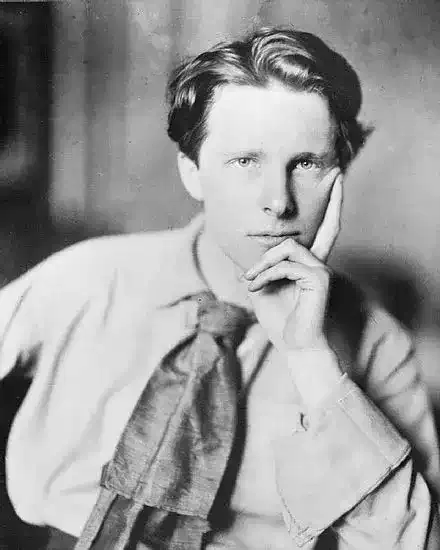
Rupert Brooke
Sonnet Reversed
Sonnet Reversed
Hand trembling towards hand; the amazing lights
Of heart and eye. They stood on supreme heights.
Ah, the delirious weeks of honeymoon!
Soon they returned, and, after strange adventures,
Settled at Balham by the end of June.
Their money was in Can. Pacs. B. Debentures,
And in Antofagastas. Still he went
Cityward daily; still she did abide
At home. And both were really quite content
With work and social pleasures. Then they died.
They left three children (besides George, who drank):
The eldest Jane, who married Mr Bell,
William, the head-clerk in the County Bank,
And Henry, a stock-broker, doing well.
Hand trembling towards hand; the amazing lights
Of heart and eye. They stood on supreme heights.
Ah, the delirious weeks of honeymoon!
Soon they returned, and, after strange adventures,
Settled at Balham by the end of June.
Their money was in Can. Pacs. B. Debentures,
And in Antofagastas. Still he went
Cityward daily; still she did abide
At home. And both were really quite content
With work and social pleasures. Then they died.
They left three children (besides George, who drank):
The eldest Jane, who married Mr Bell,
William, the head-clerk in the County Bank,
And Henry, a stock-broker, doing well.
207
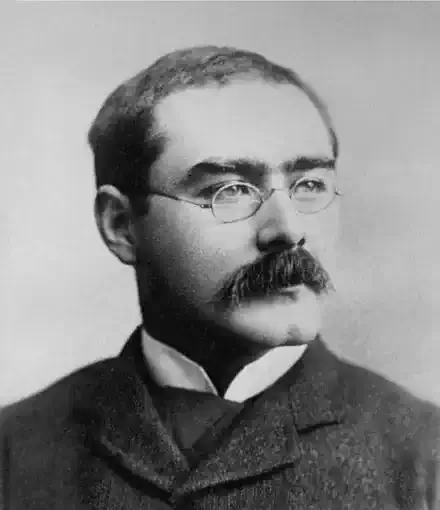
Rudyard Kipling
The Prodigal Son
The Prodigal Son
Here come I to my own again,
Fed, forgiven and known again,
Claimed by bone of my bone again
And cheered by flesh of my flesh.
The fatted calf is dressed for me,
But the husks have greater rest for me,
I think my pigs will be best for me,
So I'm off to the Yards afresh.
I never was very refined, you see,
(And it weighs on my brother's mind, you see)
But there's no reproach among swine, d'you see,
For being a bit of a swine.
So I'm off with wallet and staff to eat
The bread that is three parts chaff to wheat,
But glory be! - there's a laugh to it,
Which isn't the case when we dine.
My father glooms and advises me,
My brother sulks and despises me,
And Mother catechises me
Till I want to go out and swear.
And, in spite of the butler's gravity,
I know that the servants have it I
Am a monster of moral depravity,
And I'm damned if I think it's fair!
I wasted my substance, I know I did,
On riotous living, so I did,
But there's nothing on record to show I did
Worse than my betters have done.
They talk of the money I spent out there -
They hint at the pace that I went out there -
But they all forget I was sent out there
Alone as a rich man's son.
So I was a mark for plunder at once,
And lost my cash (can you wonder?) at once,
But I didn't give up and knock under at once,
I worked in the Yards, for a spell,
Where I spent my nights and my days with hogs.
And shared their milk and maize with hogs,
Till, I guess, I have learned what pays with hogs
And - I have that knowledge to sell!
So back I go to my job again,
Not so easy to rob again,
Or quite so ready to sob again
On any neck that's around.
I'm leaving, Pater. Good-bye to you!
God bless you, Mater! I'll write to you!
I wouldn't be impolite to you,
But, Brother, you are a hound!
Here come I to my own again,
Fed, forgiven and known again,
Claimed by bone of my bone again
And cheered by flesh of my flesh.
The fatted calf is dressed for me,
But the husks have greater rest for me,
I think my pigs will be best for me,
So I'm off to the Yards afresh.
I never was very refined, you see,
(And it weighs on my brother's mind, you see)
But there's no reproach among swine, d'you see,
For being a bit of a swine.
So I'm off with wallet and staff to eat
The bread that is three parts chaff to wheat,
But glory be! - there's a laugh to it,
Which isn't the case when we dine.
My father glooms and advises me,
My brother sulks and despises me,
And Mother catechises me
Till I want to go out and swear.
And, in spite of the butler's gravity,
I know that the servants have it I
Am a monster of moral depravity,
And I'm damned if I think it's fair!
I wasted my substance, I know I did,
On riotous living, so I did,
But there's nothing on record to show I did
Worse than my betters have done.
They talk of the money I spent out there -
They hint at the pace that I went out there -
But they all forget I was sent out there
Alone as a rich man's son.
So I was a mark for plunder at once,
And lost my cash (can you wonder?) at once,
But I didn't give up and knock under at once,
I worked in the Yards, for a spell,
Where I spent my nights and my days with hogs.
And shared their milk and maize with hogs,
Till, I guess, I have learned what pays with hogs
And - I have that knowledge to sell!
So back I go to my job again,
Not so easy to rob again,
Or quite so ready to sob again
On any neck that's around.
I'm leaving, Pater. Good-bye to you!
God bless you, Mater! I'll write to you!
I wouldn't be impolite to you,
But, Brother, you are a hound!
494
Rudyard Kipling
The Only Son
The Only Son
She dropped the bar, she shot the bolt, she fed the fire anew
For she heard a whimper under the sill and a great grey paw came through.
The fresh flame comforted the hut and shone on the roof-beam,
And the Only Son lay down again and dreamed that he dreamed a dream.
The last ash fell from the withered log with the click of a falling spark,
And the Only Son woke up again, and called across the dark:--
"Now was I born of womankind and laid in a mother's breast?
For I have dreamed of a shaggy hide whereon I went to rest.
And was I born of womankind and laid on a father's arm?
For I have dreamed of clashing teeth that guarded me from harm.
And was I born an Only Son and did I play alone?
For I have dreamed of comrades twain that bit me to the bone.
And did I break the barley-cake and steep it in the tyre?
For I have dreamed of a youngling kid new-riven from the byre:
For I have dreamed of a midnight sky and a midnight call to blood
And red-mouthed shadows racing by, that thrust me from my food.
'Tis an hour yet and an hour yet to the rising of the moon,
But I can see the black roof-tree as plain as it were noon.
'Tis a league and a league to the Lena Falls where the trooping blackbuck go;
But I can hear the little fawn that bleats behind the doe.
'Tis a league and a league to the Lena Falls where the crop and the upland meet,
But I Can smell the wet dawn-wind that wakes the sprouting wheat.
Unbar the door. I may not bide, but I must out and see
If those are wolves that wait outside or my own kin to me!"
. . . . .
She loosed the bar, she slid the bolt, she opened the door anon,
And a grey bitch-wolf came out of the dark and fawned on the Only Son!
She dropped the bar, she shot the bolt, she fed the fire anew
For she heard a whimper under the sill and a great grey paw came through.
The fresh flame comforted the hut and shone on the roof-beam,
And the Only Son lay down again and dreamed that he dreamed a dream.
The last ash fell from the withered log with the click of a falling spark,
And the Only Son woke up again, and called across the dark:--
"Now was I born of womankind and laid in a mother's breast?
For I have dreamed of a shaggy hide whereon I went to rest.
And was I born of womankind and laid on a father's arm?
For I have dreamed of clashing teeth that guarded me from harm.
And was I born an Only Son and did I play alone?
For I have dreamed of comrades twain that bit me to the bone.
And did I break the barley-cake and steep it in the tyre?
For I have dreamed of a youngling kid new-riven from the byre:
For I have dreamed of a midnight sky and a midnight call to blood
And red-mouthed shadows racing by, that thrust me from my food.
'Tis an hour yet and an hour yet to the rising of the moon,
But I can see the black roof-tree as plain as it were noon.
'Tis a league and a league to the Lena Falls where the trooping blackbuck go;
But I can hear the little fawn that bleats behind the doe.
'Tis a league and a league to the Lena Falls where the crop and the upland meet,
But I Can smell the wet dawn-wind that wakes the sprouting wheat.
Unbar the door. I may not bide, but I must out and see
If those are wolves that wait outside or my own kin to me!"
. . . . .
She loosed the bar, she slid the bolt, she opened the door anon,
And a grey bitch-wolf came out of the dark and fawned on the Only Son!
436
Rudyard Kipling
The Bee-Boy's Song
The Bee-Boy's Song
Bees! Bees! Hark to your bees!
"Hide from your neigbours as much as you please,
But all that has happened, to us you must tell,
Or else we will give you no honey to sell!"
A maiden in her glory,
Upon her wedding - day,
Must tell her Bees the story,
Or else they'll fly away.
Fly away -- die away --
Dwindle down and leave you!
But if you don't deceive your Bees,
Your Bees will not deceive you.
Marriage, birth or buryin',
News across the seas,
All you're sad or merry in,
You must tell the Bees.
Tell 'em coming in an' out,
Where the Fanners fan,
'Cause the Bees are just about
As curious as a man!
Don't you wait where the trees are,
When the lightnings play,
Nor don't you hate where Bees are,
Or else they'll pine away.
Pine away -- dwine away --
Anything to leave you!
But if you never grieve your Bees,
Your Bees'll never grieve you.
Bees! Bees! Hark to your bees!
"Hide from your neigbours as much as you please,
But all that has happened, to us you must tell,
Or else we will give you no honey to sell!"
A maiden in her glory,
Upon her wedding - day,
Must tell her Bees the story,
Or else they'll fly away.
Fly away -- die away --
Dwindle down and leave you!
But if you don't deceive your Bees,
Your Bees will not deceive you.
Marriage, birth or buryin',
News across the seas,
All you're sad or merry in,
You must tell the Bees.
Tell 'em coming in an' out,
Where the Fanners fan,
'Cause the Bees are just about
As curious as a man!
Don't you wait where the trees are,
When the lightnings play,
Nor don't you hate where Bees are,
Or else they'll pine away.
Pine away -- dwine away --
Anything to leave you!
But if you never grieve your Bees,
Your Bees'll never grieve you.
475
Rudyard Kipling
Sea-Wife
Sea-Wife
There dwells a wife by the Northern Gate,
And a wealthy wife is she;
She breeds a breed o' rovin' men
And casts them over sea.
And some are drowned in deep water,
And some in sight o' shore,
And word goes back to the weary wife
And ever she sends more.
For since that wife had gate or gear,
Or hearth or garth or bield,
She willed her sons to the white harvest,
And that is a bitter yield.
She wills her sons to the wet ploughing,
To ride the horse of tree,
And syne her sons come back again
Far-spent from out the sea.
The good wife's sons come home again
With little into their hands,
But the lore of men that ha' dealt with men
In the new and naked lands;
But the faith of men that ha' brothered men
By more than easy breath,
And the eyes o' men that ha' read wi' men
In the open books of death.
Rich are they, rich in wonders seen,
But poor in the goods o' men;
So what they ha' got by the skin o' their teeth
They sell for their teeth again.
For whether they lose to the naked life
Or win to their hearts' desire,
They tell it all to the weary wife
That nods beside the fire.
Her hearth is wide to every wind
That makes the white ash spin;
And tide and tide and 'tween the tides
Her sons go out and in;
(Out with great mirth that do desire
Hazard of trackless ways,
In with content to wait their watch
And warm before the blaze);
And some return by failing light,
And some in waking dream,
For she hears the heels of the dripping ghosts
That ride the rough roof-beam.
Home, they come home from all the ports,
The living and the dead;
The good wife's sons come home again
For her blessing on their head!
There dwells a wife by the Northern Gate,
And a wealthy wife is she;
She breeds a breed o' rovin' men
And casts them over sea.
And some are drowned in deep water,
And some in sight o' shore,
And word goes back to the weary wife
And ever she sends more.
For since that wife had gate or gear,
Or hearth or garth or bield,
She willed her sons to the white harvest,
And that is a bitter yield.
She wills her sons to the wet ploughing,
To ride the horse of tree,
And syne her sons come back again
Far-spent from out the sea.
The good wife's sons come home again
With little into their hands,
But the lore of men that ha' dealt with men
In the new and naked lands;
But the faith of men that ha' brothered men
By more than easy breath,
And the eyes o' men that ha' read wi' men
In the open books of death.
Rich are they, rich in wonders seen,
But poor in the goods o' men;
So what they ha' got by the skin o' their teeth
They sell for their teeth again.
For whether they lose to the naked life
Or win to their hearts' desire,
They tell it all to the weary wife
That nods beside the fire.
Her hearth is wide to every wind
That makes the white ash spin;
And tide and tide and 'tween the tides
Her sons go out and in;
(Out with great mirth that do desire
Hazard of trackless ways,
In with content to wait their watch
And warm before the blaze);
And some return by failing light,
And some in waking dream,
For she hears the heels of the dripping ghosts
That ride the rough roof-beam.
Home, they come home from all the ports,
The living and the dead;
The good wife's sons come home again
For her blessing on their head!
467
Rudyard Kipling
Cain and Abel
Cain and Abel
Western Version
Cain and Abel were brothers born.
(Koop-la! Come along, cows!)
One raised cattle and one raised corn.
(Koop-la! Come along! Co-hoe!)
And Cain he farmed by the river-side,
So he did not care how much it dried.
For he banked, and he sluiced, and he ditched and he led
(And the Corn don't care for the Horn)--
A-half Euphrates out of her bed
To water his dam' Corn!
But Abel herded out on the plains
Where you have to go by the dams and rains.
It happened, after a three-year drought,
The wells, and the springs, and the dams gave out.
The Herd-bulls came to Cain's new house
(They wanted water so!--)
With the hot red Sun between their brows,
Sayin' "Give us water for our pore cows!"
But Cain he told 'em--"No!"
The Cows they came to Cain's big house
With the cold white Moon between their brows,
Sayin' "Give some water to us pore cows!"
But Cain he told 'em--"No?"
The li'l Calves came to Cain's fine house
With the Evenin' Star between their brows,
Sayin' "'Give us water an' we'll be cows."
But Cain he told 'em--"No!"
The Herd-bulls led 'em back again,
An' Abel went an' said to Cain: --
"Oh sell me water, my brother dear,
Or there will be no beef this year."
And Cain he answered--"No! "
"Then draw your hatches, my brother true,
An' let a little water through."
But Cain he answered: -"No!
"My dams are tight an' my ditches are sound,
An' not a drop goes through or round
Till she's done her duty by the Corn.
"I will not sell, an' I will not draw,
An' if you breach, I'll have the Law,
As sure as you are borne! "
Then Abel took his best bull-goad,
An' holed a dyke on the Eden road.
He opened her up with foot an' hand,
An' let Euphrates loose on the land.
He spilled Euphrates out on the plain,
So's all his cattle could drink again.
Then Cain he saw what Abel done--
But, in those days, there was no Gun!
So he made him a club of a hickory-limb,
An' halted Abel an' said to him: --
"I did not sell an' I did not draw,
An' now you've breached I'll have the Law.
"You ride abroad in your hat and spurs,
Hell-hoofin' over my cucumbers!
"You pray to the Lord to send you luck
An' you loose your steers in my garden-truck:
"An' now you're bust, as you ought to be,
You can keep on prayin' but not to me!"
Then Abel saw it meant the life;
But, in those days, there was no Knife:
So he up with his big bull-goad instead,
But--Cain hit first and dropped him dead!
The Herd-bulls ran when they smelt the blood,
An' horned an' pawed in that Red Mud.
The Calves they bawled, and the Steers they milled,
Because it was the First Man Killed;
An' the whole Herd broke for the Land of Nod,
An' Cain was left to be judged by God!
But, seein' all he had had to bear,
I never could call the Judgment fair!
Western Version
Cain and Abel were brothers born.
(Koop-la! Come along, cows!)
One raised cattle and one raised corn.
(Koop-la! Come along! Co-hoe!)
And Cain he farmed by the river-side,
So he did not care how much it dried.
For he banked, and he sluiced, and he ditched and he led
(And the Corn don't care for the Horn)--
A-half Euphrates out of her bed
To water his dam' Corn!
But Abel herded out on the plains
Where you have to go by the dams and rains.
It happened, after a three-year drought,
The wells, and the springs, and the dams gave out.
The Herd-bulls came to Cain's new house
(They wanted water so!--)
With the hot red Sun between their brows,
Sayin' "Give us water for our pore cows!"
But Cain he told 'em--"No!"
The Cows they came to Cain's big house
With the cold white Moon between their brows,
Sayin' "Give some water to us pore cows!"
But Cain he told 'em--"No?"
The li'l Calves came to Cain's fine house
With the Evenin' Star between their brows,
Sayin' "'Give us water an' we'll be cows."
But Cain he told 'em--"No!"
The Herd-bulls led 'em back again,
An' Abel went an' said to Cain: --
"Oh sell me water, my brother dear,
Or there will be no beef this year."
And Cain he answered--"No! "
"Then draw your hatches, my brother true,
An' let a little water through."
But Cain he answered: -"No!
"My dams are tight an' my ditches are sound,
An' not a drop goes through or round
Till she's done her duty by the Corn.
"I will not sell, an' I will not draw,
An' if you breach, I'll have the Law,
As sure as you are borne! "
Then Abel took his best bull-goad,
An' holed a dyke on the Eden road.
He opened her up with foot an' hand,
An' let Euphrates loose on the land.
He spilled Euphrates out on the plain,
So's all his cattle could drink again.
Then Cain he saw what Abel done--
But, in those days, there was no Gun!
So he made him a club of a hickory-limb,
An' halted Abel an' said to him: --
"I did not sell an' I did not draw,
An' now you've breached I'll have the Law.
"You ride abroad in your hat and spurs,
Hell-hoofin' over my cucumbers!
"You pray to the Lord to send you luck
An' you loose your steers in my garden-truck:
"An' now you're bust, as you ought to be,
You can keep on prayin' but not to me!"
Then Abel saw it meant the life;
But, in those days, there was no Knife:
So he up with his big bull-goad instead,
But--Cain hit first and dropped him dead!
The Herd-bulls ran when they smelt the blood,
An' horned an' pawed in that Red Mud.
The Calves they bawled, and the Steers they milled,
Because it was the First Man Killed;
An' the whole Herd broke for the Land of Nod,
An' Cain was left to be judged by God!
But, seein' all he had had to bear,
I never could call the Judgment fair!
546
Rudyard Kipling
Angutivaun Taina
"Angutivaun Taina"
Our gloves are stiff with the frozen blood,
Our furs with the drifted snow,
As we come in with the seal--the seal!
In from the edge of the floe.
Au jana! Aua! Oha! Haq!
And the yelping dog-teams go;
And the long whips crack, and the men come back,
Back from the edge of the floe!
We tracked our seal to his secret place,
We heard him scratch below,
We made our mark, and we watched beside,
Out on the edge of the floe.
We raised our lance when he rose to breathe,
We drove it downward--so!
And we played him thus, and we killed him thus,
Out on the edge of the floe.
Our gloves are glued with the frozen blood,
Our eyes with the drifting snow;
But we come back to our wives again,
Back from the edge of the floe!
Au jana! Aua! Oha! Haq!
And the loaded dog-teams go;
And the wives ran hear their men come back,
Back from the edge of the floe!
Our gloves are stiff with the frozen blood,
Our furs with the drifted snow,
As we come in with the seal--the seal!
In from the edge of the floe.
Au jana! Aua! Oha! Haq!
And the yelping dog-teams go;
And the long whips crack, and the men come back,
Back from the edge of the floe!
We tracked our seal to his secret place,
We heard him scratch below,
We made our mark, and we watched beside,
Out on the edge of the floe.
We raised our lance when he rose to breathe,
We drove it downward--so!
And we played him thus, and we killed him thus,
Out on the edge of the floe.
Our gloves are glued with the frozen blood,
Our eyes with the drifting snow;
But we come back to our wives again,
Back from the edge of the floe!
Au jana! Aua! Oha! Haq!
And the loaded dog-teams go;
And the wives ran hear their men come back,
Back from the edge of the floe!
437

Robert W. Service
Young Fellow My Lad
Young Fellow My Lad
"Where are you going, Young Fellow My Lad,
On this glittering morn of May?"
"I'm going to join the Colours, Dad;
They're looking for men, they say."
"But you're only a boy, Young Fellow My Lad;
You aren't obliged to go."
"I'm seventeen and a quarter, Dad,
And ever so strong, you know."
* * * *
"So you're off to France, Young Fellow My Lad,
And you're looking so fit and bright."
"I'm terribly sorry to leave you, Dad,
But I feel that I'm doing right."
"God bless you and keep you, Young Fellow My Lad,
You're all of my life, you know."
"Don't worry. I'll soon be back, dear Dad,
And I'm awfully proud to go."
* * * *
"Why don't you write, Young Fellow My Lad?
I watch for the post each day;
And I miss you so, and I'm awfully sad,
And it's months since you went away.
And I've had the fire in the parlour lit,
And I'm keeping it burning bright
Till my boy comes home; and here I sit
Into the quiet night.
* * * *
"What is the matter, Young Fellow My Lad?
No letter again to-day.
Why did the postman look so sad,
And sigh as he turned away?
I hear them tell that we've gained new ground,
But a terrible price we've paid:
God grant, my boy, that you're safe and sound;
But oh I'm afraid, afraid."
* * * *
"They've told me the truth, Young Fellow My Lad:
You'll never come back again:
(Oh God! the dreams and the dreams I've had,
and the hopes I've nursed in vain!)
For you passed in the night, Young Fellow My Lad,
And you proved in the cruel test
Of the screaming shell and the battle hell
That my boy was one of the best.
"So you'll live, you'll live, Young Fellow My Lad,
In the gleam of the evening star,
In the wood-note wild and the laugh of the child,
In all sweet things that are.
And you'll never die, my wonderful boy,
While life is noble and true;
For all our beauty and hope and joy
We will owe to our lads like you."
"Where are you going, Young Fellow My Lad,
On this glittering morn of May?"
"I'm going to join the Colours, Dad;
They're looking for men, they say."
"But you're only a boy, Young Fellow My Lad;
You aren't obliged to go."
"I'm seventeen and a quarter, Dad,
And ever so strong, you know."
* * * *
"So you're off to France, Young Fellow My Lad,
And you're looking so fit and bright."
"I'm terribly sorry to leave you, Dad,
But I feel that I'm doing right."
"God bless you and keep you, Young Fellow My Lad,
You're all of my life, you know."
"Don't worry. I'll soon be back, dear Dad,
And I'm awfully proud to go."
* * * *
"Why don't you write, Young Fellow My Lad?
I watch for the post each day;
And I miss you so, and I'm awfully sad,
And it's months since you went away.
And I've had the fire in the parlour lit,
And I'm keeping it burning bright
Till my boy comes home; and here I sit
Into the quiet night.
* * * *
"What is the matter, Young Fellow My Lad?
No letter again to-day.
Why did the postman look so sad,
And sigh as he turned away?
I hear them tell that we've gained new ground,
But a terrible price we've paid:
God grant, my boy, that you're safe and sound;
But oh I'm afraid, afraid."
* * * *
"They've told me the truth, Young Fellow My Lad:
You'll never come back again:
(Oh God! the dreams and the dreams I've had,
and the hopes I've nursed in vain!)
For you passed in the night, Young Fellow My Lad,
And you proved in the cruel test
Of the screaming shell and the battle hell
That my boy was one of the best.
"So you'll live, you'll live, Young Fellow My Lad,
In the gleam of the evening star,
In the wood-note wild and the laugh of the child,
In all sweet things that are.
And you'll never die, my wonderful boy,
While life is noble and true;
For all our beauty and hope and joy
We will owe to our lads like you."
276
Robert W. Service
White Christmas
White Christmas
My folks think I'm a serving maid
Each time I visit home;
They do not dream I ply a trade
As old as Greece or Rome;
For if they found I'd fouled their name
And was not white as snow,
I'm sure that they would die of shame . . .
Please, God, they'll never know.
I clean the paint from off my face,
In sober black I dress;
Of coquetry I leave no trace
To give them vague distress;
And though it causes me a pang
To play such sorry tricks,
About my neck I meekly hang
A silver crufix.
And so with humble step I go
Just like a child again,
To greet their Christmas candle-glow,
A soul without a stain;
So well I play my contrite part
I make myself believe
There's not a stain within my heart
On Holy Christmas Eve.
With double natures we are vext,
And what we feel, we are;
A saint one day, a sinner next,
A red light or a star;
A prostitute or proselyte,
And in each part sincere:
So I become a vestal white
One week in every year.
For this I say without demur
From out life's lurid lore,
Each righteous women has in her
A tincture of the whore;
While every harpy of the night,
As I have learned too well;
Holds in her heart a heaven-light
To ransom her from hell.
So I'll go home and sweep and dust;
I'll make the kitchen fire,
And be a model of daughters just
The best they could desire;
I'll fondle them and cook their food,
And Mother dear will say:
"Thank God! my darling is as good
As when she went away."
But after New Year's Day I'll fill
My bag and though they grieve,
I'll bid them both good-bye until
Another Christmas Eve;
And then . . . a knock upon the door:
I'll find them waiting there,
And angel-like I'll come once more
In answer to their prayer.
Then Lo! one night when candle-light
Gleams mystic on the snow,
And music swells of Christmas bells,
I'll come, no more to go:
The old folks need my love and care,
Their gold shall gild my dross,
And evermore my breast shall bear
My little silver cross.
My folks think I'm a serving maid
Each time I visit home;
They do not dream I ply a trade
As old as Greece or Rome;
For if they found I'd fouled their name
And was not white as snow,
I'm sure that they would die of shame . . .
Please, God, they'll never know.
I clean the paint from off my face,
In sober black I dress;
Of coquetry I leave no trace
To give them vague distress;
And though it causes me a pang
To play such sorry tricks,
About my neck I meekly hang
A silver crufix.
And so with humble step I go
Just like a child again,
To greet their Christmas candle-glow,
A soul without a stain;
So well I play my contrite part
I make myself believe
There's not a stain within my heart
On Holy Christmas Eve.
With double natures we are vext,
And what we feel, we are;
A saint one day, a sinner next,
A red light or a star;
A prostitute or proselyte,
And in each part sincere:
So I become a vestal white
One week in every year.
For this I say without demur
From out life's lurid lore,
Each righteous women has in her
A tincture of the whore;
While every harpy of the night,
As I have learned too well;
Holds in her heart a heaven-light
To ransom her from hell.
So I'll go home and sweep and dust;
I'll make the kitchen fire,
And be a model of daughters just
The best they could desire;
I'll fondle them and cook their food,
And Mother dear will say:
"Thank God! my darling is as good
As when she went away."
But after New Year's Day I'll fill
My bag and though they grieve,
I'll bid them both good-bye until
Another Christmas Eve;
And then . . . a knock upon the door:
I'll find them waiting there,
And angel-like I'll come once more
In answer to their prayer.
Then Lo! one night when candle-light
Gleams mystic on the snow,
And music swells of Christmas bells,
I'll come, no more to go:
The old folks need my love and care,
Their gold shall gild my dross,
And evermore my breast shall bear
My little silver cross.
247
Robert W. Service
Village Don Juan
Village Don Juan
Lord, I'm grey, my face is run,
But by old Harry, I've had my fun;
And all about, I seem to see
Lads and lassies that look like me;
Ice-blue eyes on every hand,
Handsomest youngsters in the land.
"Old Stud Horse" they say of me,
But back of my beard I laugh with glee.
Far and wide have I sown my seed,
Yet by the gods I've improved the breed:
From byre and stable to joiner's bench,
From landlord's daughter to serving wench.
Ice-blue eyes and blade-straight nose,
Stamp of my virile youth are those;
Now you'll see them on every side,
Proof of my powers, far and wide:
Even the parson' handsome scamp,
And the Doctor's daughter have my stamp.
Many a matron cocks an eye
Of secret knowledge as I pass by;
As for the hubbies, what they don't know
Will never hurt them, so let them go:
The offspring most they seem to prize
Have blade-straight noses and ice-blue byes.
Yet oh, I have a haunting dread
Brother and sister lust the bed;
The Parson's and the Doctor's lass,
Yestreen in the moon I saw them pass;
The thought of them wed is like a knife. . . .
Brother and sister - man and wife.
Lord, I'm grey, my face is run,
But by old Harry, I've had my fun;
And all about, I seem to see
Lads and lassies that look like me;
Ice-blue eyes on every hand,
Handsomest youngsters in the land.
"Old Stud Horse" they say of me,
But back of my beard I laugh with glee.
Far and wide have I sown my seed,
Yet by the gods I've improved the breed:
From byre and stable to joiner's bench,
From landlord's daughter to serving wench.
Ice-blue eyes and blade-straight nose,
Stamp of my virile youth are those;
Now you'll see them on every side,
Proof of my powers, far and wide:
Even the parson' handsome scamp,
And the Doctor's daughter have my stamp.
Many a matron cocks an eye
Of secret knowledge as I pass by;
As for the hubbies, what they don't know
Will never hurt them, so let them go:
The offspring most they seem to prize
Have blade-straight noses and ice-blue byes.
Yet oh, I have a haunting dread
Brother and sister lust the bed;
The Parson's and the Doctor's lass,
Yestreen in the moon I saw them pass;
The thought of them wed is like a knife. . . .
Brother and sister - man and wife.
216
Robert W. Service
Tim
Tim
My brother Tim has children ten,
While I have none.
Maybe that's why he's toiling when
To ease I've won.
But though I would some of his brood
Give hearth and care,
I know that not a one he would
Have heart to spare.
'Tis children that have kept him poor;
He's clad them neat.
They've never wanted, I am sure,
For bite to eat.
And though their future may be dim,
They laugh a lot.
Am I tearful for Brother Tim?
Oh no, I'm not.
I know he goes to work each day
With flagging feet.
'Tis hard, even with decent pay,
To make ends meet.
But when my sterile home I see,
So smugly prim,
Although my banker bows to me,
I envy Tim.
My brother Tim has children ten,
While I have none.
Maybe that's why he's toiling when
To ease I've won.
But though I would some of his brood
Give hearth and care,
I know that not a one he would
Have heart to spare.
'Tis children that have kept him poor;
He's clad them neat.
They've never wanted, I am sure,
For bite to eat.
And though their future may be dim,
They laugh a lot.
Am I tearful for Brother Tim?
Oh no, I'm not.
I know he goes to work each day
With flagging feet.
'Tis hard, even with decent pay,
To make ends meet.
But when my sterile home I see,
So smugly prim,
Although my banker bows to me,
I envy Tim.
183
Robert W. Service
The Younger Son
The Younger Son
If you leave the gloom of London and you seek a glowing land,
Where all except the flag is strange and new,
There's a bronzed and stalwart fellow who will grip you by the hand,
And greet you with a welcome warm and true;
For he's your younger brother, the one you sent away
Because there wasn't room for him at home;
And now he's quite contented, and he's glad he didn't stay,
And he's building Britain's greatness o'er the foam.
When the giant herd is moving at the rising of the sun,
And the prairie is lit with rose and gold,
And the camp is all abustle, and the busy day's begun,
He leaps into the saddle sure and bold.
Through the round of heat and hurry, through the racket and the rout,
He rattles at a pace that nothing mars;
And when the night-winds whisper and camp-fires flicker out,
He is sleeping like a child beneath the stars.
When the wattle-blooms are drooping in the sombre she-oak glade,
And the breathless land is lying in a swoon,
He leaves his work a moment, leaning lightly on his spade,
And he hears the bell-bird chime the Austral noon.
The parrakeets are silent in the gum-tree by the creek;
The ferny grove is sunshine-steeped and still;
But the dew will gem the myrtle in the twilight ere he seek
His little lonely cabin on the hill.
Around the purple, vine-clad slope the argent river dreams;
The roses almost hide the house from view;
A snow-peak of the Winterberg in crimson splendor gleams;
The shadow deepens down on the karroo.
He seeks the lily-scented dusk beneath the orange tree;
His pipe in silence glows and fades and glows;
And then two little maids come out and climb upon his knee,
And one is like the lily, one the rose.
He sees his white sheep dapple o'er the green New Zealand plain,
And where Vancouver's shaggy ramparts frown,
When the sunlight threads the pine-gloom he is fighting might and main
To clinch the rivets of an Empire down.
You will find him toiling, toiling, in the south or in the west,
A child of nature, fearless, frank, and free;
And the warmest heart that beats for you is beating in his breast,
And he sends you loyal greeting o'er the sea.
You've a brother in the army, you've another in the Church;
One of you is a diplomatic swell;
You've had the pick of everything and left him in the lurch,
And yet I think he's doing very well.
I'm sure his life is happy, and he doesn't envy yours;
I know he loves the land his pluck has won;
And I fancy in the years unborn, while England's fame endures,
She will come to bless with pride -- The Younger Son.
If you leave the gloom of London and you seek a glowing land,
Where all except the flag is strange and new,
There's a bronzed and stalwart fellow who will grip you by the hand,
And greet you with a welcome warm and true;
For he's your younger brother, the one you sent away
Because there wasn't room for him at home;
And now he's quite contented, and he's glad he didn't stay,
And he's building Britain's greatness o'er the foam.
When the giant herd is moving at the rising of the sun,
And the prairie is lit with rose and gold,
And the camp is all abustle, and the busy day's begun,
He leaps into the saddle sure and bold.
Through the round of heat and hurry, through the racket and the rout,
He rattles at a pace that nothing mars;
And when the night-winds whisper and camp-fires flicker out,
He is sleeping like a child beneath the stars.
When the wattle-blooms are drooping in the sombre she-oak glade,
And the breathless land is lying in a swoon,
He leaves his work a moment, leaning lightly on his spade,
And he hears the bell-bird chime the Austral noon.
The parrakeets are silent in the gum-tree by the creek;
The ferny grove is sunshine-steeped and still;
But the dew will gem the myrtle in the twilight ere he seek
His little lonely cabin on the hill.
Around the purple, vine-clad slope the argent river dreams;
The roses almost hide the house from view;
A snow-peak of the Winterberg in crimson splendor gleams;
The shadow deepens down on the karroo.
He seeks the lily-scented dusk beneath the orange tree;
His pipe in silence glows and fades and glows;
And then two little maids come out and climb upon his knee,
And one is like the lily, one the rose.
He sees his white sheep dapple o'er the green New Zealand plain,
And where Vancouver's shaggy ramparts frown,
When the sunlight threads the pine-gloom he is fighting might and main
To clinch the rivets of an Empire down.
You will find him toiling, toiling, in the south or in the west,
A child of nature, fearless, frank, and free;
And the warmest heart that beats for you is beating in his breast,
And he sends you loyal greeting o'er the sea.
You've a brother in the army, you've another in the Church;
One of you is a diplomatic swell;
You've had the pick of everything and left him in the lurch,
And yet I think he's doing very well.
I'm sure his life is happy, and he doesn't envy yours;
I know he loves the land his pluck has won;
And I fancy in the years unborn, while England's fame endures,
She will come to bless with pride -- The Younger Son.
197
Robert W. Service
The Decision
The Decision
Said she: 'Although my husband Jim
Is with his home content,
I never should have married him,
We are so different.
Oh yes, I know he loves me well,
Our children he adores;
But he's so dull, and I rebel
Against a life that bores.
'Of course there is another man,
Quite pennyless is he;
And yet with hope and joy we plan
A home beyond the sea.
Though I forfeit the name of wife
And neighbours ostracise,
Such happiness will crown our life
Their censure we'll despise.
'But then what will my children think,
Whose love is pure and true?'
Said I: 'Your memory will stink
If they should speak of you.
Your doting Jim will curse your name,
And if you make a mess
Of life, oh do not in your shame
Dare hope for happiness.'
Well, still with Jim she lives serene,
And has of kiddies three.
'Oh what a fool I might have been
To leave my home,' says she.
'Of course Jim is a priceless bore,
But he's so sweet to me . . .
Come darling won't you let me pour
Another cup of tea?'
Said she: 'Although my husband Jim
Is with his home content,
I never should have married him,
We are so different.
Oh yes, I know he loves me well,
Our children he adores;
But he's so dull, and I rebel
Against a life that bores.
'Of course there is another man,
Quite pennyless is he;
And yet with hope and joy we plan
A home beyond the sea.
Though I forfeit the name of wife
And neighbours ostracise,
Such happiness will crown our life
Their censure we'll despise.
'But then what will my children think,
Whose love is pure and true?'
Said I: 'Your memory will stink
If they should speak of you.
Your doting Jim will curse your name,
And if you make a mess
Of life, oh do not in your shame
Dare hope for happiness.'
Well, still with Jim she lives serene,
And has of kiddies three.
'Oh what a fool I might have been
To leave my home,' says she.
'Of course Jim is a priceless bore,
But he's so sweet to me . . .
Come darling won't you let me pour
Another cup of tea?'
205
Robert W. Service
The Blind And The Dead
The Blind And The Dead
She lay like a saint on her copper couch;
Like an angel asleep she lay,
In the stare of the ghoulish folks that slouch
Past the Dead and sneak away.
Then came old Jules of the sightless gaze,
Who begged in the streets for bread.
Each day he had come for a year of days,
And groped his way to the Dead.
"What's the Devil's Harvest to-day?" he cried;
"A wanton with eyes of blue!
I've known too many a such," he sighed;
"Maybe I know this . . . mon Dieu!"
He raised the head of the heedless Dead;
He fingered the frozen face. . . .
Then a deathly spell on the watchers fell -God!
it was still, that place!
He raised the head of the careless Dead;
He fumbled a vagrant curl;
And then with his sightless smile he said:
"It's only my little girl."
"Dear, my dear, did they hurt you so!
Come to your daddy's heart. . . ."
Aye, and he held so tight, you know,
They were hard to force apart.
No! Paris isn't always gay;
And the morgue has its stories too:
You are a writer of tales, you say -Then
there is a tale for you.
She lay like a saint on her copper couch;
Like an angel asleep she lay,
In the stare of the ghoulish folks that slouch
Past the Dead and sneak away.
Then came old Jules of the sightless gaze,
Who begged in the streets for bread.
Each day he had come for a year of days,
And groped his way to the Dead.
"What's the Devil's Harvest to-day?" he cried;
"A wanton with eyes of blue!
I've known too many a such," he sighed;
"Maybe I know this . . . mon Dieu!"
He raised the head of the heedless Dead;
He fingered the frozen face. . . .
Then a deathly spell on the watchers fell -God!
it was still, that place!
He raised the head of the careless Dead;
He fumbled a vagrant curl;
And then with his sightless smile he said:
"It's only my little girl."
"Dear, my dear, did they hurt you so!
Come to your daddy's heart. . . ."
Aye, and he held so tight, you know,
They were hard to force apart.
No! Paris isn't always gay;
And the morgue has its stories too:
You are a writer of tales, you say -Then
there is a tale for you.
189
Robert W. Service
The Ballad Of Casey's Billy-Goat
The Ballad Of Casey's Billy-Goat
You've heard of "Casey at The Bat,"
And "Casey's Tabble Dote";
But now it's time
To write a rhyme
Of "Casey's Billy-goat."
Pat Casey had a billy-goat he gave the name of Shamus,
Because it was (the neighbours said) a national disgrace.
And sure enough that animal was eminently famous
For masticating every rag of laundry round the place.
For shirts to skirts prodigiously it proved its powers of chewing;
The question of digestion seemed to matter not at all;
But you'll agree, I think with me, its limit of misdoing
Was reached the day it swallowed Missis Rooney's ould red shawl.
Now Missis Annie Rooney was a winsome widow women,
And many a bouncing boy had sought to make her change her name;
And living just across the way 'twas surely only human
A lonesome man like Casey should be wishfully the same.
So every Sunday, shaved and shined, he'd make the fine occasion
To call upon the lady, and she'd take his and coat;
And supping tea it seemed that she might yield to his persuasion,
But alas! he hadn't counted on that devastating goat.
For Shamus loved his master with a deep and dumb devotion,
And everywhere that Casey went that goat would want to go;
And though I cannot analyze a quadruped's emotion,
They said the baste was jealous, and I reckon it was so.
For every time that Casey went to call on Missis Rooney,
Beside the gate the goat would wait with woefulness intense;
Until one day it chanced that they were fast becoming spooney,
When Shamus spied that ould red shawl a-flutter on the fence.
Now Missis Rooney loved that shawl beyond all rhyme or reason,
And maybe 'twas an heirloom or a cherished souvenir;
For judging by the way she wore it season after season,
I might have been as precious as a product of Cashmere.
So Shamus strolled towards it, and no doubt the colour pleased him,
For he biffed it and he sniffed it, as most any goat might do;
Then his melancholy vanished as a sense of hunger seized him,
And he wagged his tail with rapture as he started in to chew.
"Begorrah! you're a daisy," said the doting Mister Casey
to the blushing Widow Rooney as they parted at the door.
"Wid yer tinderness an' tazin' sure ye've set me heart a-blazin',
And I dread the day I'll nivver see me Anniw anny more."
"Go on now wid yer blarney," said the widow softly sighing;
And she went to pull his whiskers, when dismay her bosom smote. . . .
Her ould red shawl! 'Twas missin' where she'd left it bravely drying -
Then she saw it disappearing - down the neck of Casey's goat.
Fiercely flamed her Irish temper, "Look!" says she, "The thavin' divvle!
Sure he's made me shawl his supper. Well, I hope it's to his taste;
But excuse me, Mister Casey, if I seem to be oncivil,
For I'll nivver wed a man wid such a misbegotten baste."
So she slammed the door and left him in a state of consternation,
And he couldn't understand it, till he saw that grinning goat:
Then with eloquence he cussed it, and his final fulmination
Was a poem of profanity impossible to quote.
So blasting goats and petticoats and feeling downright sinful,
Despairfully he wandered in to Shinnigan's shebeen;
And straightway he proceeded to absorb a might skinful
Of the deadliest variety of Shinnigan's potheen.
And when he started homeward it was in the early morning,
But Shamus followed faithfully, a yard behind his back;
Then Casey slipped and stumbled, and without the slightest warning
like a lump of lead he tumbled - right across the railroad track.
And there he lay, serenely, and defied the powers to budge him,
Reposing like a baby, with his head upon the rail;
But Shamus seemed unhappy, and from time to time would nudge him,
Though his prods to protestation were without the least avail.
Then to that goatish mind, maybe, a sense of fell disaster
Came stealing like a spectre in the dim and dreary dawn;
For his bleat of warning blended with the snoring of his master
In a chorus of calamity - but Casey slumbered on.
Yet oh, that goat was troubled, for his efforts were redoubled;
Now he tugged at Casey's whisker, now he nibbled at his ear;
Now he shook him by the shoulder, and with fear become bolder,
He bellowed like a fog-horn, but the sleeper did not hear.
Then up and down the railway line he scampered for assistance;
But anxiously he hurried back and sought with tug and strain
To pull his master off the track . . . when sudden! in the distance
He heard the roar and rumble of the fast approaching train.
Did Shamus faint and falter? No, he stood there stark and splendid.
True, his tummy was distended, but he gave his horns a toss.
By them his goathood's honour would be gallantly defended,
And if their valour failed him - he would perish with his boss
So dauntlessly he lowered his head, and ever clearer, clearer,
He heard the throb and thunder of the Continental Mail.
He would face the mighty monster. It was coming nearer, nearer;
He would fight it, he would smite it, but he'd never show his tail.
Can you see that hirsute hero, standing there in tragic glory?
Can you hear the Pullman porters shrieking horror to the sky?
No, you can't; because my story has no end so grim and gory,
For Shamus did not perish and his master did not die.
At this very present moment Casey swaggers hale and hearty,
And Shamus strolls beside him with a bright bell at his throat;
While recent Missis Rooney is the gayest of the party,
For now she's Missis Casey and she's crazy for that goat.
You're wondering what happened? Well, you know that truth is stranger
Than the wildest brand of fiction, so Ill tell you without shame. . . .
There was Shamus and his master in the face of awful danger,
And the giant locomotive dashing down in smoke and flame. . . .
What power on earth could save them? Yet a golden inspiration
To gods and goats alike may come, so in that brutish brain
A thought was born - the ould red shawl. . . . Then rearing with elation,
Like lightning Shamus threw it up - AND FLAGGED AND STOPPED THE TRAIN.
You've heard of "Casey at The Bat,"
And "Casey's Tabble Dote";
But now it's time
To write a rhyme
Of "Casey's Billy-goat."
Pat Casey had a billy-goat he gave the name of Shamus,
Because it was (the neighbours said) a national disgrace.
And sure enough that animal was eminently famous
For masticating every rag of laundry round the place.
For shirts to skirts prodigiously it proved its powers of chewing;
The question of digestion seemed to matter not at all;
But you'll agree, I think with me, its limit of misdoing
Was reached the day it swallowed Missis Rooney's ould red shawl.
Now Missis Annie Rooney was a winsome widow women,
And many a bouncing boy had sought to make her change her name;
And living just across the way 'twas surely only human
A lonesome man like Casey should be wishfully the same.
So every Sunday, shaved and shined, he'd make the fine occasion
To call upon the lady, and she'd take his and coat;
And supping tea it seemed that she might yield to his persuasion,
But alas! he hadn't counted on that devastating goat.
For Shamus loved his master with a deep and dumb devotion,
And everywhere that Casey went that goat would want to go;
And though I cannot analyze a quadruped's emotion,
They said the baste was jealous, and I reckon it was so.
For every time that Casey went to call on Missis Rooney,
Beside the gate the goat would wait with woefulness intense;
Until one day it chanced that they were fast becoming spooney,
When Shamus spied that ould red shawl a-flutter on the fence.
Now Missis Rooney loved that shawl beyond all rhyme or reason,
And maybe 'twas an heirloom or a cherished souvenir;
For judging by the way she wore it season after season,
I might have been as precious as a product of Cashmere.
So Shamus strolled towards it, and no doubt the colour pleased him,
For he biffed it and he sniffed it, as most any goat might do;
Then his melancholy vanished as a sense of hunger seized him,
And he wagged his tail with rapture as he started in to chew.
"Begorrah! you're a daisy," said the doting Mister Casey
to the blushing Widow Rooney as they parted at the door.
"Wid yer tinderness an' tazin' sure ye've set me heart a-blazin',
And I dread the day I'll nivver see me Anniw anny more."
"Go on now wid yer blarney," said the widow softly sighing;
And she went to pull his whiskers, when dismay her bosom smote. . . .
Her ould red shawl! 'Twas missin' where she'd left it bravely drying -
Then she saw it disappearing - down the neck of Casey's goat.
Fiercely flamed her Irish temper, "Look!" says she, "The thavin' divvle!
Sure he's made me shawl his supper. Well, I hope it's to his taste;
But excuse me, Mister Casey, if I seem to be oncivil,
For I'll nivver wed a man wid such a misbegotten baste."
So she slammed the door and left him in a state of consternation,
And he couldn't understand it, till he saw that grinning goat:
Then with eloquence he cussed it, and his final fulmination
Was a poem of profanity impossible to quote.
So blasting goats and petticoats and feeling downright sinful,
Despairfully he wandered in to Shinnigan's shebeen;
And straightway he proceeded to absorb a might skinful
Of the deadliest variety of Shinnigan's potheen.
And when he started homeward it was in the early morning,
But Shamus followed faithfully, a yard behind his back;
Then Casey slipped and stumbled, and without the slightest warning
like a lump of lead he tumbled - right across the railroad track.
And there he lay, serenely, and defied the powers to budge him,
Reposing like a baby, with his head upon the rail;
But Shamus seemed unhappy, and from time to time would nudge him,
Though his prods to protestation were without the least avail.
Then to that goatish mind, maybe, a sense of fell disaster
Came stealing like a spectre in the dim and dreary dawn;
For his bleat of warning blended with the snoring of his master
In a chorus of calamity - but Casey slumbered on.
Yet oh, that goat was troubled, for his efforts were redoubled;
Now he tugged at Casey's whisker, now he nibbled at his ear;
Now he shook him by the shoulder, and with fear become bolder,
He bellowed like a fog-horn, but the sleeper did not hear.
Then up and down the railway line he scampered for assistance;
But anxiously he hurried back and sought with tug and strain
To pull his master off the track . . . when sudden! in the distance
He heard the roar and rumble of the fast approaching train.
Did Shamus faint and falter? No, he stood there stark and splendid.
True, his tummy was distended, but he gave his horns a toss.
By them his goathood's honour would be gallantly defended,
And if their valour failed him - he would perish with his boss
So dauntlessly he lowered his head, and ever clearer, clearer,
He heard the throb and thunder of the Continental Mail.
He would face the mighty monster. It was coming nearer, nearer;
He would fight it, he would smite it, but he'd never show his tail.
Can you see that hirsute hero, standing there in tragic glory?
Can you hear the Pullman porters shrieking horror to the sky?
No, you can't; because my story has no end so grim and gory,
For Shamus did not perish and his master did not die.
At this very present moment Casey swaggers hale and hearty,
And Shamus strolls beside him with a bright bell at his throat;
While recent Missis Rooney is the gayest of the party,
For now she's Missis Casey and she's crazy for that goat.
You're wondering what happened? Well, you know that truth is stranger
Than the wildest brand of fiction, so Ill tell you without shame. . . .
There was Shamus and his master in the face of awful danger,
And the giant locomotive dashing down in smoke and flame. . . .
What power on earth could save them? Yet a golden inspiration
To gods and goats alike may come, so in that brutish brain
A thought was born - the ould red shawl. . . . Then rearing with elation,
Like lightning Shamus threw it up - AND FLAGGED AND STOPPED THE TRAIN.
227
Robert W. Service
The Anniversary
The Anniversary
"This bunch of violets," he said,
"Is for my daughter dear.
Since that glad morn when she was wed
It is today a year.
She lives atop this flight of stairs-Please
give an arm to me:
If we can take her unawares
How glad she'll be!"
We climbed the stairs; the flight was four,
Our steps were stiff and slow;
But as he reached his daughter's door
His eyes were all aglow.
Joylike he raised his hand to knock,
Then sore distressed was I,
For from the silence like a shock
I heard a cry.
A drunken curse, a sob of woe . . .
His withered face grew grey.
"I think," said he, "we'd better go
And come another day."
And as he went a block with me,
Walking with weary feet,
His violets, I sighed to see,
Bestrewed the street.
"This bunch of violets," he said,
"Is for my daughter dear.
Since that glad morn when she was wed
It is today a year.
She lives atop this flight of stairs-Please
give an arm to me:
If we can take her unawares
How glad she'll be!"
We climbed the stairs; the flight was four,
Our steps were stiff and slow;
But as he reached his daughter's door
His eyes were all aglow.
Joylike he raised his hand to knock,
Then sore distressed was I,
For from the silence like a shock
I heard a cry.
A drunken curse, a sob of woe . . .
His withered face grew grey.
"I think," said he, "we'd better go
And come another day."
And as he went a block with me,
Walking with weary feet,
His violets, I sighed to see,
Bestrewed the street.
229
Robert W. Service
Susie
Susie
My daughter Susie, aged two,
Apes me in every way,
For as my household chores I do
With brooms she loves to play.
A scrubbing brush to her is dear;
Ah! Though my soul it vex,
My bunch of cuteness has, I fear,
Kitchen complex.
My dream was that she might go far,
And play or sing or dance;
Aye, even be a movie star
Of glamour and romance.
But no more with such hope I think,
For now her fondest wish is
To draw a chair up to the sink
And wash the dishes.
Yet when you put it to a test
In ups and downs of life,
A maiden's mission may be best
To make a good house-wife;
To bake, to cook, to knit, to lave:
And so I pray that Sue
Will keep a happy hearth and have
A baby too.
My daughter Susie, aged two,
Apes me in every way,
For as my household chores I do
With brooms she loves to play.
A scrubbing brush to her is dear;
Ah! Though my soul it vex,
My bunch of cuteness has, I fear,
Kitchen complex.
My dream was that she might go far,
And play or sing or dance;
Aye, even be a movie star
Of glamour and romance.
But no more with such hope I think,
For now her fondest wish is
To draw a chair up to the sink
And wash the dishes.
Yet when you put it to a test
In ups and downs of life,
A maiden's mission may be best
To make a good house-wife;
To bake, to cook, to knit, to lave:
And so I pray that Sue
Will keep a happy hearth and have
A baby too.
183
Robert W. Service
Poor Kid
Poor Kid
Mumsie and Dad are raven dark
And I am lily blonde.
''Tis strange,' I once heard nurse remark,
'You do not correspond.'
And yet they claim me as their own,
Born of their flesh and bone.
To doubt their parenthood I dread,
But now to girlhood grown,
The thought is haunting in my head
That I am not their own:
If so, my radiant bloom of youth
Would wither in the truth.
'Twould give me anguish deep to know
A fondling babe was I;
And that a maid in wedless woe
Left me to live or die:
I'd rather Mother lied and lied
To save my pride.
I love them both and they love me;
I am their all, they say.
Yet though the sweetest home have we,
To know I'm theirs I pray.
If not, please dear ones, never tell . . .
The truth would be of hell.
Mumsie and Dad are raven dark
And I am lily blonde.
''Tis strange,' I once heard nurse remark,
'You do not correspond.'
And yet they claim me as their own,
Born of their flesh and bone.
To doubt their parenthood I dread,
But now to girlhood grown,
The thought is haunting in my head
That I am not their own:
If so, my radiant bloom of youth
Would wither in the truth.
'Twould give me anguish deep to know
A fondling babe was I;
And that a maid in wedless woe
Left me to live or die:
I'd rather Mother lied and lied
To save my pride.
I love them both and they love me;
I am their all, they say.
Yet though the sweetest home have we,
To know I'm theirs I pray.
If not, please dear ones, never tell . . .
The truth would be of hell.
192
Robert W. Service
Our Pote
Our Pote
A pote is sure a goofy guy;
He ain't got guts like you or I
To tell the score;
He ain't goy gumption 'nuff to know
The game of life's to get the dough,
Then get some more.
Take Brother Bill, he used to be
The big shot of the family,
The first at school;
But since about a year ago,
Through readin' Longfeller and Poe,
He's most a fool.
He mopes around with dimwit stare;
You might as well jest not be there,
The way he looks;
You'd think he shuns the human race,
The how he buries down his face
In highbrow books.
I've seen him stand for near an hour,
Jest starin' at a simple flower
Sich waste o' time;
The scribblin' on an envelope . . .
Why, most of all his silly dope
Don't even rhyme.
Now Brother's Jim's an engineer,
And Brother Tim's a bank cashier,
While I keep store;
Yet Bill, the brightest of the flock,
Might be a lawyer or a doc,
And then some more.
But no, he moons and loafs about,
As if he tried to figger out
Why skies are blue;
Instead o' gittin' down to grips
Wi' life an' stackin' up the chips
Like me an' you.
* * * * * * * * * *
Well, since them final lines I wrote,
We're mournin' for our Brother Pote:
Bill crossed the sea
And solved his problem with the beat,
For now he lies in peace and rest
In Normandie.
He died the bravest of the brave,
And here I'm standin' by his grave
So far from home;
With just a wooden cross to tell
How in the blaze of battle hell
As gloriously there he fell Bill
wrote his "pome".
A pote is sure a goofy guy;
He ain't got guts like you or I
To tell the score;
He ain't goy gumption 'nuff to know
The game of life's to get the dough,
Then get some more.
Take Brother Bill, he used to be
The big shot of the family,
The first at school;
But since about a year ago,
Through readin' Longfeller and Poe,
He's most a fool.
He mopes around with dimwit stare;
You might as well jest not be there,
The way he looks;
You'd think he shuns the human race,
The how he buries down his face
In highbrow books.
I've seen him stand for near an hour,
Jest starin' at a simple flower
Sich waste o' time;
The scribblin' on an envelope . . .
Why, most of all his silly dope
Don't even rhyme.
Now Brother's Jim's an engineer,
And Brother Tim's a bank cashier,
While I keep store;
Yet Bill, the brightest of the flock,
Might be a lawyer or a doc,
And then some more.
But no, he moons and loafs about,
As if he tried to figger out
Why skies are blue;
Instead o' gittin' down to grips
Wi' life an' stackin' up the chips
Like me an' you.
* * * * * * * * * *
Well, since them final lines I wrote,
We're mournin' for our Brother Pote:
Bill crossed the sea
And solved his problem with the beat,
For now he lies in peace and rest
In Normandie.
He died the bravest of the brave,
And here I'm standin' by his grave
So far from home;
With just a wooden cross to tell
How in the blaze of battle hell
As gloriously there he fell Bill
wrote his "pome".
148
Robert W. Service
Old Engine Driver
Old Engine Driver
For five and twenty years I've run
A famous train;
But now my spell of speed is done,
No more I'll strain
My sight along the treadless tracks,
The gleamy rails:
My hand upon the throttle slacks,
My vision fails.
No more I'll urge my steed of steel
Through hostile nights;
No more the mastery I'll feel
Of monster might.
I'll miss the hiss of giant steam,
The clank, the roar;
The agony of brakes that scream
I'll hear no more.
Oh I have held within my hand
A million lives;
And now my son takes command
And proudly drives;
While from my cottage wistfully
I watch his train,
And wave and wave and seem to see
Myself again.
For five and twenty years I've run
A famous train;
But now my spell of speed is done,
No more I'll strain
My sight along the treadless tracks,
The gleamy rails:
My hand upon the throttle slacks,
My vision fails.
No more I'll urge my steed of steel
Through hostile nights;
No more the mastery I'll feel
Of monster might.
I'll miss the hiss of giant steam,
The clank, the roar;
The agony of brakes that scream
I'll hear no more.
Oh I have held within my hand
A million lives;
And now my son takes command
And proudly drives;
While from my cottage wistfully
I watch his train,
And wave and wave and seem to see
Myself again.
184
Robert W. Service
My Twins
My Twins
Of twin daughters I'm the mother -
Lord! how I was proud of them;
Each the image of the other,
Like two lilies on one stem;
But while May, my first-born daughter,
Was angelic from the first,
Different as wine and water,
Maude, my second, seemed accurst.
I'm a tender-hearted dame,
Military is my bent;
Thus my pretty dears can claim
For their Pa the Regiment.
As they say: to err is human;
But though lots of love I've had,
I'm an ordinary women,
Just as good as I am bad.
Good and bad should find their level,
So I often wonder why
May was angel, Maude was devil,
Yet between the two was I.
May, they say, has taken vows -
Sister Mary, pure and sweet;
Maudie's in a bawdy house,
Down in Mariposa Street.
It's not natural I'm thinking,
One should pray, the other curse;
I'm so worried I am drinking,
Which is making matters worse.
Yet my daughters love each other,
And I love them equal well;
Saint and sinner call me mother . . .
Ain't heredity just hell?
Of twin daughters I'm the mother -
Lord! how I was proud of them;
Each the image of the other,
Like two lilies on one stem;
But while May, my first-born daughter,
Was angelic from the first,
Different as wine and water,
Maude, my second, seemed accurst.
I'm a tender-hearted dame,
Military is my bent;
Thus my pretty dears can claim
For their Pa the Regiment.
As they say: to err is human;
But though lots of love I've had,
I'm an ordinary women,
Just as good as I am bad.
Good and bad should find their level,
So I often wonder why
May was angel, Maude was devil,
Yet between the two was I.
May, they say, has taken vows -
Sister Mary, pure and sweet;
Maudie's in a bawdy house,
Down in Mariposa Street.
It's not natural I'm thinking,
One should pray, the other curse;
I'm so worried I am drinking,
Which is making matters worse.
Yet my daughters love each other,
And I love them equal well;
Saint and sinner call me mother . . .
Ain't heredity just hell?
237
Robert W. Service
My Son
My Son
I must not let my boy Dick down,
Knight of the air.
With wings of light he won renown
Then crashed somewhere.
To fly to France from London town
I do not dare.
Oh he was such a simple lad
Who loved the sky;
A modern day Sir Galahad,
No need to die:
Earthbound he might have been so glad,
Yet chose to fly.
I ask from where his courage stemmed?
I've never flown;
Air-travel I have oft condemned,-Now
I'm alone,
Yet somehow hold the bright belief
God gave his brief.
So now I must live up to him
Who won on high
A lustre time will never dim;
Though coward I,
Let me revere till life be done
My hero son.
I must not let my boy Dick down,
Knight of the air.
With wings of light he won renown
Then crashed somewhere.
To fly to France from London town
I do not dare.
Oh he was such a simple lad
Who loved the sky;
A modern day Sir Galahad,
No need to die:
Earthbound he might have been so glad,
Yet chose to fly.
I ask from where his courage stemmed?
I've never flown;
Air-travel I have oft condemned,-Now
I'm alone,
Yet somehow hold the bright belief
God gave his brief.
So now I must live up to him
Who won on high
A lustre time will never dim;
Though coward I,
Let me revere till life be done
My hero son.
164
Robert W. Service
My Prisoner
My Prisoner
We was in a crump-'ole, 'im and me;
Fightin' wiv our bayonets was we;
Fightin' 'ard as 'ell we was,
Fightin' fierce as fire because
It was 'im or me as must be downed;
'E was twice as big as me;
I was 'arf the weight of 'e;
We was like a terryer and a 'ound.
'Struth! But 'e was sich a 'andsome bloke.
Me, I'm 'andsome as a chunk o' coke.
Did I give it 'im? Not 'arf!
Why, it fairly made me laugh,
'Cos 'is bloomin' bellows wasn't sound.
Couldn't fight for monkey nuts.
Soon I gets 'im in the guts,
There 'e lies a-floppin' on the ground.
In I goes to finish up the job.
Quick 'e throws 'is 'ands above 'is nob;
Speakin' English good as me:
"'Tain't no use to kill," says 'e;
"Can't yer tyke me prisoner instead?"
"Why, I'd like to, sir," says I;
"But -- yer knows the reason why:
If we pokes our noses out we're dead.
"Sorry, sir. Then on the other 'and
(As a gent like you must understand),
If I 'olds you longer 'ere,
Wiv yer pals so werry near,
It's me 'oo'll 'ave a free trip to Berlin;
If I lets yer go away,
Why, you'll fight another day:
See the sitooation I am in.
"Anyway I'll tell you wot I'll do,
Bein' kind and seein' as it's you,
Knowin' 'ow it's cold, the feel
Of a 'alf a yard o' steel,
I'll let yer 'ave a rifle ball instead;
Now, jist think yerself in luck. . . .
'Ere, ol' man! You keep 'em stuck,
Them saucy dooks o' yours, above yer 'ead."
'Ow 'is mits shot up it made me smile!
'Ow 'e seemed to ponder for a while!
Then 'e says: "It seems a shyme,
Me, a man wot's known ter Fyme:
Give me blocks of stone, I'll give yer gods.
Whereas, pardon me, I'm sure
You, my friend, are still obscure. . . ."
"In war," says I, "that makes no blurry odds."
Then says 'e: "I've painted picters too. . . .
Oh, dear God! The work I planned to do,
And to think this is the end!"
"'Ere," says I, "my hartist friend,
Don't you give yerself no friskin' airs.
Picters, statoos, is that why
You should be let off to die?
That the best ye done? Just say yer prayers."
Once again 'e seems ter think awhile.
Then 'e smiles a werry 'aughty smile:
"Why, no, sir, it's not the best;
There's a locket next me breast,
Picter of a gel 'oo's eyes are blue.
That's the best I've done," says 'e.
"That's me darter, aged three. . . ."
"Blimy!" says I, "I've a nipper, too."
Straight I chucks my rifle to one side;
Shows 'im wiv a lovin' farther's pride
Me own little Mary Jane.
Proud 'e shows me 'is Elaine,
And we talks as friendly as can be;
Then I 'elps 'im on 'is way,
'Opes 'e's sife at 'ome to-day,
Wonders -- 'ow would eE 'Aave treated me?
We was in a crump-'ole, 'im and me;
Fightin' wiv our bayonets was we;
Fightin' 'ard as 'ell we was,
Fightin' fierce as fire because
It was 'im or me as must be downed;
'E was twice as big as me;
I was 'arf the weight of 'e;
We was like a terryer and a 'ound.
'Struth! But 'e was sich a 'andsome bloke.
Me, I'm 'andsome as a chunk o' coke.
Did I give it 'im? Not 'arf!
Why, it fairly made me laugh,
'Cos 'is bloomin' bellows wasn't sound.
Couldn't fight for monkey nuts.
Soon I gets 'im in the guts,
There 'e lies a-floppin' on the ground.
In I goes to finish up the job.
Quick 'e throws 'is 'ands above 'is nob;
Speakin' English good as me:
"'Tain't no use to kill," says 'e;
"Can't yer tyke me prisoner instead?"
"Why, I'd like to, sir," says I;
"But -- yer knows the reason why:
If we pokes our noses out we're dead.
"Sorry, sir. Then on the other 'and
(As a gent like you must understand),
If I 'olds you longer 'ere,
Wiv yer pals so werry near,
It's me 'oo'll 'ave a free trip to Berlin;
If I lets yer go away,
Why, you'll fight another day:
See the sitooation I am in.
"Anyway I'll tell you wot I'll do,
Bein' kind and seein' as it's you,
Knowin' 'ow it's cold, the feel
Of a 'alf a yard o' steel,
I'll let yer 'ave a rifle ball instead;
Now, jist think yerself in luck. . . .
'Ere, ol' man! You keep 'em stuck,
Them saucy dooks o' yours, above yer 'ead."
'Ow 'is mits shot up it made me smile!
'Ow 'e seemed to ponder for a while!
Then 'e says: "It seems a shyme,
Me, a man wot's known ter Fyme:
Give me blocks of stone, I'll give yer gods.
Whereas, pardon me, I'm sure
You, my friend, are still obscure. . . ."
"In war," says I, "that makes no blurry odds."
Then says 'e: "I've painted picters too. . . .
Oh, dear God! The work I planned to do,
And to think this is the end!"
"'Ere," says I, "my hartist friend,
Don't you give yerself no friskin' airs.
Picters, statoos, is that why
You should be let off to die?
That the best ye done? Just say yer prayers."
Once again 'e seems ter think awhile.
Then 'e smiles a werry 'aughty smile:
"Why, no, sir, it's not the best;
There's a locket next me breast,
Picter of a gel 'oo's eyes are blue.
That's the best I've done," says 'e.
"That's me darter, aged three. . . ."
"Blimy!" says I, "I've a nipper, too."
Straight I chucks my rifle to one side;
Shows 'im wiv a lovin' farther's pride
Me own little Mary Jane.
Proud 'e shows me 'is Elaine,
And we talks as friendly as can be;
Then I 'elps 'im on 'is way,
'Opes 'e's sife at 'ome to-day,
Wonders -- 'ow would eE 'Aave treated me?
242
Robert W. Service
My Hero
My Hero
Of all the boys with whom I fought
In Africa and Sicily,
Bill was the bravest of the lot
In our dare-devil Company.
That lad would rather die than yield;
His gore he glorified to spill,
And so in every battlefield
A hero in my eyes was Bill.
Then when the bloody war was done,
He moseyed back to our home town,
And there, a loving mother's son,
Like other kids he settled down.
His old girl seemed a shade straight-laced,
For when I called my buddy "Bill,"
She looked at me with some distaste,
Suggesting that his name was "Will."
And then he had to get engaged,
And took unto himself a wife;
And so inevitably caged,
He settled down to wedded life.
He introduced me to his Missis,
But oh I thought her rather silly,
For in between their frequent kisses
She called my hard-boiled here: "Willie."
Now he has long forgot the War,
The which he did a lot to win,
And feeling full of ginger for
He's happy Pop of cherubs twin.
Yet with his air: "Don't care a damn,"
On Main Street he's my hero still . . .
As proud he wheels a double pram
What guy has got the guts of Bill!
Of all the boys with whom I fought
In Africa and Sicily,
Bill was the bravest of the lot
In our dare-devil Company.
That lad would rather die than yield;
His gore he glorified to spill,
And so in every battlefield
A hero in my eyes was Bill.
Then when the bloody war was done,
He moseyed back to our home town,
And there, a loving mother's son,
Like other kids he settled down.
His old girl seemed a shade straight-laced,
For when I called my buddy "Bill,"
She looked at me with some distaste,
Suggesting that his name was "Will."
And then he had to get engaged,
And took unto himself a wife;
And so inevitably caged,
He settled down to wedded life.
He introduced me to his Missis,
But oh I thought her rather silly,
For in between their frequent kisses
She called my hard-boiled here: "Willie."
Now he has long forgot the War,
The which he did a lot to win,
And feeling full of ginger for
He's happy Pop of cherubs twin.
Yet with his air: "Don't care a damn,"
On Main Street he's my hero still . . .
As proud he wheels a double pram
What guy has got the guts of Bill!
182