

Poems in this theme
Seasons (Spring, Summer, Autumn, Winter)
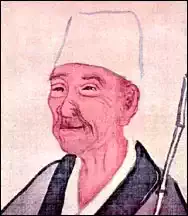
Matsuo Bashō
Autumn moonlight
Autumn moonlight
Autumn moonlight--
a worm digs silently
into the chestnut.
Translated by Robert Hass
Autumn moonlight--
a worm digs silently
into the chestnut.
Translated by Robert Hass
425
Matsuo Bashō
A cool fall night
A cool fall night
At a hermitage:
A cool fall night--
getting dinner, we peeled
eggplants, cucumbers.
Translated by Robert Hass
At a hermitage:
A cool fall night--
getting dinner, we peeled
eggplants, cucumbers.
Translated by Robert Hass
392
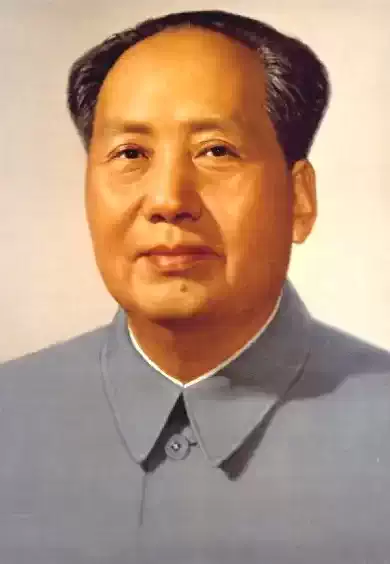
Mao Tsé-Tung
Winter clouds
Winter clouds
Winter clouds snow-laden, cotton fluff flying,
None or few the unfallen flowers.
Chill waves sweep through steep skies,
Yet earth's gentle breath grows warm.
Only heroes can quell tigers and leopards
And wild bears never daunt the brave.
Plum blossoms welcome the whirling snow;
Small wonder flies freeze and perish.
Winter clouds snow-laden, cotton fluff flying,
None or few the unfallen flowers.
Chill waves sweep through steep skies,
Yet earth's gentle breath grows warm.
Only heroes can quell tigers and leopards
And wild bears never daunt the brave.
Plum blossoms welcome the whirling snow;
Small wonder flies freeze and perish.
215
Mao Tsé-Tung
Tapoti
Tapoti
Red, orange, yellow, green,
blue, violet, indigo:
Who is dancing with these
rainbow colours in the sky?
Air after rain, slanting sun:
mountains and passes turning blue
in each changing moment.
Fierce battles that year:
bullet holes in village walls.
These mountains so decorated,
look even more beautiful today.
Red, orange, yellow, green,
blue, violet, indigo:
Who is dancing with these
rainbow colours in the sky?
Air after rain, slanting sun:
mountains and passes turning blue
in each changing moment.
Fierce battles that year:
bullet holes in village walls.
These mountains so decorated,
look even more beautiful today.
313
Mao Tsé-Tung
Snow
Snow
North country scene:
A hundred leagues locked in ice,
A thousand leagues of whirling snow.
Both sides of the Great Wall
One single white immensity.
The Yellow River's swift current
Is stilled from end to end.
The mountains dance like silver snakes
And the highlands* charge like wax-hued elephants,
Vying with heaven in stature.
On a fine day, the land,
Clad in white, adorned in red,
Grows more enchanting.
This land so rich in beauty
Has made countless heroes bow in homage.
But alas! Chin Shih-huang and Han Wu-ti
Were lacking in literary grace,
And Tang Tai-tsung and Sung Tai-tsu
Had little poetry in their souls;
And Genghis Khan,
Proud Son of Heaven for a day,
Knew only shooting eagles, bow outstretched
All are past and gone!
For truly great men
Look to this age alone.
North country scene:
A hundred leagues locked in ice,
A thousand leagues of whirling snow.
Both sides of the Great Wall
One single white immensity.
The Yellow River's swift current
Is stilled from end to end.
The mountains dance like silver snakes
And the highlands* charge like wax-hued elephants,
Vying with heaven in stature.
On a fine day, the land,
Clad in white, adorned in red,
Grows more enchanting.
This land so rich in beauty
Has made countless heroes bow in homage.
But alas! Chin Shih-huang and Han Wu-ti
Were lacking in literary grace,
And Tang Tai-tsung and Sung Tai-tsu
Had little poetry in their souls;
And Genghis Khan,
Proud Son of Heaven for a day,
Knew only shooting eagles, bow outstretched
All are past and gone!
For truly great men
Look to this age alone.
455
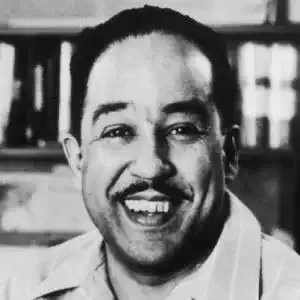
Langston Hughes
In Time Of Silver Rain
In Time Of Silver Rain
In time of silver rain
The earth puts forth new life again,
Green grasses grow
And flowers lift their heads,
And over all the plain
The wonder spreads
Of Life,
Of Life,
Of life!
In time of silver rain
The butterflies lift silken wings
To catch a rainbow cry,
And trees put forth new leaves to sing
In joy beneath the sky
As down the roadway
Passing boys and girls
Go singing, too,
In time of silver rain When spring
And life
Are new.
In time of silver rain
The earth puts forth new life again,
Green grasses grow
And flowers lift their heads,
And over all the plain
The wonder spreads
Of Life,
Of Life,
Of life!
In time of silver rain
The butterflies lift silken wings
To catch a rainbow cry,
And trees put forth new leaves to sing
In joy beneath the sky
As down the roadway
Passing boys and girls
Go singing, too,
In time of silver rain When spring
And life
Are new.
398
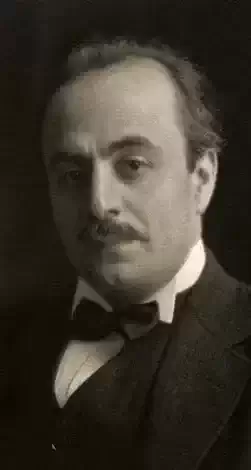
Khalil Gibran
The Life of Love XVI
The Life of Love XVI
Spring
Come, my beloved; let us walk amidst the knolls,
For the snow is water, and Life is alive from its
Slumber and is roaming the hills and valleys.
Let us follow the footprints of Spring into the
Distant fields, and mount the hilltops to draw
Inspiration high above the cool green plains.
Dawn of Spring has unfolded her winter-kept garment
And placed it on the peach and citrus trees; and
They appear as brides in the ceremonial custom of
the Night of Kedre.
The sprigs of grapevine embrace each other like
Sweethearts, and the brooks burst out in dance
Between the rocks, repeating the song of joy;
And the flowers bud suddenly from the heart of
Nature, like foam from the rich heart of the sea.
Come, my beloved; let us drink the last of Winter's
Tears from the cupped lilies, and soothe our spirits
With the shower of notes from the birds, and wander
In exhilaration through the intoxicating breeze.
Let us sit by that rock, where violets hide; let us
Pursue their exchange of the sweetness of kisses.
Summer
Let us go into the fields, my beloved, for the
Time of harvest approaches, and the sun's eyes
Are ripening the grain.
Let us tend the fruit of the earth, as the
Spirit nourishes the grains of Joy from the
Seeds of Love, sowed deep in our hearts.
Let us fill our bins with the products of
Nature, as life fills so abundantly the
Domain of our hearts with her endless bounty.
Let us make the flowers our bed, and the
Sky our blanket, and rest our heads together
Upon pillows of soft hay.
Let us relax after the day's toil, and listen
To the provoking murmur of the brook.
Autumn
Let us go and gather grapes in the vineyard
For the winepress, and keep the wine in old
Vases, as the spirit keeps Knowledge of the
Ages in eternal vessels.
Let us return to our dwelling, for the wind has
Caused the yellow leaves to fall and shroud the
Withering flowers that whisper elegy to Summer.
Come home, my eternal sweetheart, for the birds
Have made pilgrimage to warmth and lest the chilled
Prairies suffering pangs of solitude. The jasmine
And myrtle have no more tears.
Let us retreat, for the tired brook has
Ceased its song; and the bubblesome springs
Are drained of their copious weeping; and
Their cautious old hills have stored away
Their colorful garments.
Come, my beloved; Nature is justly weary
And is bidding her enthusiasm farewell
With quiet and contented melody.
Winter
Come close to me, oh companion of my full life;
Come close to me and let not Winter's touch
Enter between us. Sit by me before the hearth,
For fire is the only fruit of Winter.
Speak to me of the glory of your heart, for
That is greater than the shrieking elements
Beyond our door.
Bind the door and seal the transoms, for the
Angry countenance of the heaven depresses my
Spirit, and the face of our snow-laden fields
Makes my soul cry.
Feed the lamp with oil and let it not dim, and
Place it by you, so I can read with tears what
Your life with me has written upon your face.
Bring Autumn's wine. Let us drink and sing the
Song of remembrance to Spring's carefree sowing,
And Summer's watchful tending, and Autumn's
Reward in harvest.
Come close to me, oh beloved of my soul; the
Fire is cooling and fleeing under the ashes.
Embrace me, for I fear loneliness; the lamp is
Dim, and the wine which we pressed is closing
Our eyes. Let us look upon each other before
They are shut.
Find me with your arms and embrace me; let
Slumber then embrace our souls as one.
Kiss me, my beloved, for Winter has stolen
All but our moving lips.
You are close by me, My Forever.
How deep and wide will be the ocean of Slumber,
And how recent was the dawn!
Spring
Come, my beloved; let us walk amidst the knolls,
For the snow is water, and Life is alive from its
Slumber and is roaming the hills and valleys.
Let us follow the footprints of Spring into the
Distant fields, and mount the hilltops to draw
Inspiration high above the cool green plains.
Dawn of Spring has unfolded her winter-kept garment
And placed it on the peach and citrus trees; and
They appear as brides in the ceremonial custom of
the Night of Kedre.
The sprigs of grapevine embrace each other like
Sweethearts, and the brooks burst out in dance
Between the rocks, repeating the song of joy;
And the flowers bud suddenly from the heart of
Nature, like foam from the rich heart of the sea.
Come, my beloved; let us drink the last of Winter's
Tears from the cupped lilies, and soothe our spirits
With the shower of notes from the birds, and wander
In exhilaration through the intoxicating breeze.
Let us sit by that rock, where violets hide; let us
Pursue their exchange of the sweetness of kisses.
Summer
Let us go into the fields, my beloved, for the
Time of harvest approaches, and the sun's eyes
Are ripening the grain.
Let us tend the fruit of the earth, as the
Spirit nourishes the grains of Joy from the
Seeds of Love, sowed deep in our hearts.
Let us fill our bins with the products of
Nature, as life fills so abundantly the
Domain of our hearts with her endless bounty.
Let us make the flowers our bed, and the
Sky our blanket, and rest our heads together
Upon pillows of soft hay.
Let us relax after the day's toil, and listen
To the provoking murmur of the brook.
Autumn
Let us go and gather grapes in the vineyard
For the winepress, and keep the wine in old
Vases, as the spirit keeps Knowledge of the
Ages in eternal vessels.
Let us return to our dwelling, for the wind has
Caused the yellow leaves to fall and shroud the
Withering flowers that whisper elegy to Summer.
Come home, my eternal sweetheart, for the birds
Have made pilgrimage to warmth and lest the chilled
Prairies suffering pangs of solitude. The jasmine
And myrtle have no more tears.
Let us retreat, for the tired brook has
Ceased its song; and the bubblesome springs
Are drained of their copious weeping; and
Their cautious old hills have stored away
Their colorful garments.
Come, my beloved; Nature is justly weary
And is bidding her enthusiasm farewell
With quiet and contented melody.
Winter
Come close to me, oh companion of my full life;
Come close to me and let not Winter's touch
Enter between us. Sit by me before the hearth,
For fire is the only fruit of Winter.
Speak to me of the glory of your heart, for
That is greater than the shrieking elements
Beyond our door.
Bind the door and seal the transoms, for the
Angry countenance of the heaven depresses my
Spirit, and the face of our snow-laden fields
Makes my soul cry.
Feed the lamp with oil and let it not dim, and
Place it by you, so I can read with tears what
Your life with me has written upon your face.
Bring Autumn's wine. Let us drink and sing the
Song of remembrance to Spring's carefree sowing,
And Summer's watchful tending, and Autumn's
Reward in harvest.
Come close to me, oh beloved of my soul; the
Fire is cooling and fleeing under the ashes.
Embrace me, for I fear loneliness; the lamp is
Dim, and the wine which we pressed is closing
Our eyes. Let us look upon each other before
They are shut.
Find me with your arms and embrace me; let
Slumber then embrace our souls as one.
Kiss me, my beloved, for Winter has stolen
All but our moving lips.
You are close by me, My Forever.
How deep and wide will be the ocean of Slumber,
And how recent was the dawn!
406

Kazi Nazrul Islam
The Month of Poush
The Month of Poush
Lo! Winter comes!
She comes across an ocean of sorrow and tears.
Beware! Beware!
She comes from behind the horizon enveloped
in thick mist.
With her advent, alas! in the Ieafy forest
A farewell dirge seems to go round
The parting Day (Ah me!) casts a sad look
Losing as she does-the Evening Star that
lights her path.
See! Winter sets in -
She represents the sadness of the year's
journey, a loss of Eternity,
The farewell season of ripe paddy,
the dread of new arrival-
Beware! Beware! She is come! -
Dry breath, and Oh! the choked voice
of a farewell deeply laden with tears -
Arise, wayfarer! Thou hast to cover
a long distance casting a sad look
from thy black eyes.
[Translation: Abdul Hakim]
Lo! Winter comes!
She comes across an ocean of sorrow and tears.
Beware! Beware!
She comes from behind the horizon enveloped
in thick mist.
With her advent, alas! in the Ieafy forest
A farewell dirge seems to go round
The parting Day (Ah me!) casts a sad look
Losing as she does-the Evening Star that
lights her path.
See! Winter sets in -
She represents the sadness of the year's
journey, a loss of Eternity,
The farewell season of ripe paddy,
the dread of new arrival-
Beware! Beware! She is come! -
Dry breath, and Oh! the choked voice
of a farewell deeply laden with tears -
Arise, wayfarer! Thou hast to cover
a long distance casting a sad look
from thy black eyes.
[Translation: Abdul Hakim]
547
Kazi Nazrul Islam
Life
Life
An awakening pervades
The meadows and wilderness
Let not your slumber
Make it go in vain.
The lightning is beckoning
With thunder and rain.
The heaven is awake
The earth is awake
Oh, wake up for heaven's sake.
Beneath the earth
And under the feet
Those who lay dead
They shall now sprout
Like the green grass
With new blades.
A verdant earth is awaiting
The advent of a spring-shower.
The bud that the thunder
Failed to burst into new blossom
Out of joy, it will now bloom.
[Original: Jibon; Translation: Syed Mujibul Huq]
An awakening pervades
The meadows and wilderness
Let not your slumber
Make it go in vain.
The lightning is beckoning
With thunder and rain.
The heaven is awake
The earth is awake
Oh, wake up for heaven's sake.
Beneath the earth
And under the feet
Those who lay dead
They shall now sprout
Like the green grass
With new blades.
A verdant earth is awaiting
The advent of a spring-shower.
The bud that the thunder
Failed to burst into new blossom
Out of joy, it will now bloom.
[Original: Jibon; Translation: Syed Mujibul Huq]
580

Joyce Kilmer
Easter
Easter
The air is like a butterfly
With frail blue wings.
The happy earth looks at the sky
And sings.
The air is like a butterfly
With frail blue wings.
The happy earth looks at the sky
And sings.
120
Joyce Kilmer
Alarm Clocks
Alarm Clocks
When Dawn strides out to wake a dewy farm
Across green fields and yellow hills of hay
The little twittering birds laugh in his way
And poise triumphant on his shining arm.
He bears a sword of flame but not to harm
The wakened life that feels his quickening sway
And barnyard voices shrilling "It is day!"
Take by his grace a new and alien charm.
But in the city, like a wounded thing
That limps to cover from the angry chase,
He steals down streets where sickly arc-lights sing,
And wanly mock his young and shameful face;
And tiny gongs with cruel fervor ring
In many a high and dreary sleeping place.
When Dawn strides out to wake a dewy farm
Across green fields and yellow hills of hay
The little twittering birds laugh in his way
And poise triumphant on his shining arm.
He bears a sword of flame but not to harm
The wakened life that feels his quickening sway
And barnyard voices shrilling "It is day!"
Take by his grace a new and alien charm.
But in the city, like a wounded thing
That limps to cover from the angry chase,
He steals down streets where sickly arc-lights sing,
And wanly mock his young and shameful face;
And tiny gongs with cruel fervor ring
In many a high and dreary sleeping place.
172
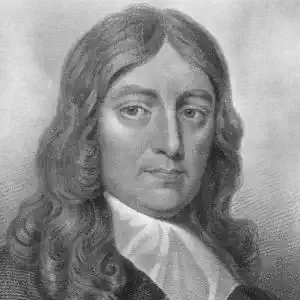
John Milton
Sonnet 20
Sonnet 20
XX
Lawrence, of virtuous father virtuous son,
Now that the fields are dank, and ways are mire,
Where shall we sometimes meet, and by the fire
Help waste a sullen day, what may be won
From the hard season gaining? Time will run
On smoother, till Favonius re-inspire
The frozen earth, and clothe in fresh attire
The lily and rose, that neither sowed nor spun.
What neat repast shall feast us, light and choice,
Of Attic taste, with wine, whence we may rise
To hear the lute well touched, or artful voice
Warble immortal notes and Tuscan air?
He who of those delights can judge, and spare
To interpose them oft, is not unwise.
XX
Lawrence, of virtuous father virtuous son,
Now that the fields are dank, and ways are mire,
Where shall we sometimes meet, and by the fire
Help waste a sullen day, what may be won
From the hard season gaining? Time will run
On smoother, till Favonius re-inspire
The frozen earth, and clothe in fresh attire
The lily and rose, that neither sowed nor spun.
What neat repast shall feast us, light and choice,
Of Attic taste, with wine, whence we may rise
To hear the lute well touched, or artful voice
Warble immortal notes and Tuscan air?
He who of those delights can judge, and spare
To interpose them oft, is not unwise.
531
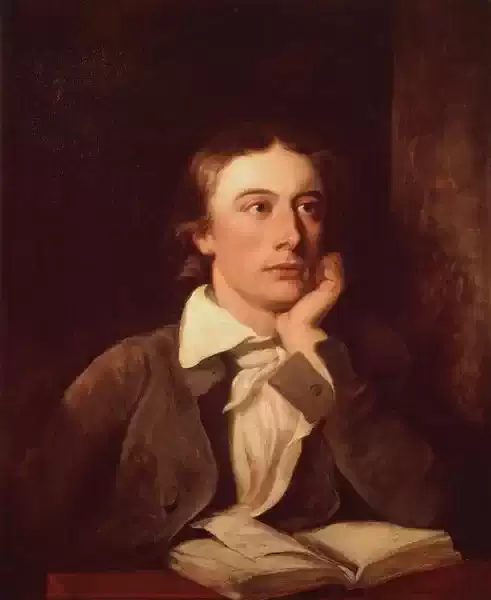
John Keats
Teignmouth
Teignmouth
I.
Here all the summer could I stay,
For there's Bishop's teign
And King's teign
And Coomb at the clear Teign head--
Where close by the stream
You may have your cream
All spread upon barley bread.
II.
There's Arch Brook
And there's Larch Brook
Both turning many a mill,
And cooling the drouth
Of the salmon's mouth
And fattening his silver gill.
III.
There is Wild wood,
A Mild hood
To the sheep on the lea o' the down,
Where the golden furze,
With its green, thin spurs,
Doth catch at the maiden's gown.
IV.
There is Newton Marsh
With its spear grass harsh--
A pleasant summer level
Where the maidens sweet
Of the Market Street
Do meet in the dusk to revel.
V.
There's the Barton rich
With dyke and ditch
And hedge for the thrush to live in,
And the hollow tree
For the buzzing bee
And a bank for the wasp to hive in.
VI.
And O, and O
The daisies blow
And the primroses are waken'd,
And violets white
Sit in silver plight,
And the green bud's as long as the spike end.
VII.
Then who would go
Into dark Soho,
And chatter with dack'd-hair'd critics,
When he can stay
For the new-mown hay,
And startle the dappled Prickets?
I.
Here all the summer could I stay,
For there's Bishop's teign
And King's teign
And Coomb at the clear Teign head--
Where close by the stream
You may have your cream
All spread upon barley bread.
II.
There's Arch Brook
And there's Larch Brook
Both turning many a mill,
And cooling the drouth
Of the salmon's mouth
And fattening his silver gill.
III.
There is Wild wood,
A Mild hood
To the sheep on the lea o' the down,
Where the golden furze,
With its green, thin spurs,
Doth catch at the maiden's gown.
IV.
There is Newton Marsh
With its spear grass harsh--
A pleasant summer level
Where the maidens sweet
Of the Market Street
Do meet in the dusk to revel.
V.
There's the Barton rich
With dyke and ditch
And hedge for the thrush to live in,
And the hollow tree
For the buzzing bee
And a bank for the wasp to hive in.
VI.
And O, and O
The daisies blow
And the primroses are waken'd,
And violets white
Sit in silver plight,
And the green bud's as long as the spike end.
VII.
Then who would go
Into dark Soho,
And chatter with dack'd-hair'd critics,
When he can stay
For the new-mown hay,
And startle the dappled Prickets?
482
John Keats
Sonnet: After Dark Vapors Have Oppress'd Our Plains
Sonnet: After Dark Vapors Have Oppress'd Our Plains
After dark vapors have oppress'd our plains
For a long dreary season, comes a day
Born of the gentle South, and clears away
From the sick heavens all unseemly stains.
The anxious month, relieved of its pains,
Takes as a long-lost right the feel of May;
The eyelids with the passing coolness play
Like rose leaves with the drip of Summer rains.
The calmest thoughts came round us; as of leaves
Budding -- fruit ripening in stillness -- Autumn suns
Smiling at eve upon the quiet sheaves --
Sweet Sappho's cheek -- a smiling infant's breath --
The gradual sand that through an hour-glass runs --
A woodland rivulet -- a Poet's death.
After dark vapors have oppress'd our plains
For a long dreary season, comes a day
Born of the gentle South, and clears away
From the sick heavens all unseemly stains.
The anxious month, relieved of its pains,
Takes as a long-lost right the feel of May;
The eyelids with the passing coolness play
Like rose leaves with the drip of Summer rains.
The calmest thoughts came round us; as of leaves
Budding -- fruit ripening in stillness -- Autumn suns
Smiling at eve upon the quiet sheaves --
Sweet Sappho's cheek -- a smiling infant's breath --
The gradual sand that through an hour-glass runs --
A woodland rivulet -- a Poet's death.
396
John Keats
Sonnet XV. On The Grasshopper And Cricket
Sonnet XV. On The Grasshopper And Cricket
The poetry of earth is never dead:
When all the birds are faint with the hot sun,
And hide in cooling trees, a voice will run
From hedge to hedge about the new-mown mead;
That is the Grasshopper's -- he takes the lead
In summer luxury, -- he has never done
With his delights; for when tired out with fun
He rests at ease beneath some pleasant weed.
The poetry of earth is ceasing never:
On a lone winter evening, when the frost
Has wrought a silence, from the stove there shrills
The Cricket's song, in warmth increasing ever,
And seems to one in drowsiness half lost,
The Grasshopper's among some grassy hills.
The poetry of earth is never dead:
When all the birds are faint with the hot sun,
And hide in cooling trees, a voice will run
From hedge to hedge about the new-mown mead;
That is the Grasshopper's -- he takes the lead
In summer luxury, -- he has never done
With his delights; for when tired out with fun
He rests at ease beneath some pleasant weed.
The poetry of earth is ceasing never:
On a lone winter evening, when the frost
Has wrought a silence, from the stove there shrills
The Cricket's song, in warmth increasing ever,
And seems to one in drowsiness half lost,
The Grasshopper's among some grassy hills.
788
John Keats
In Drear-Nighted December
In Drear-Nighted December
IN drear-nighted December,
Too happy, happy tree,
Thy branches ne'er remember
Their green felicity:
The north cannot undo them
With a sleety whistle through them;
Nor frozen thawings glue them
From budding at the prime.
In drear-nighted December,
Too happy, happy brook,
Thy bubblings ne'er remember
Apollo's summer look;
But with a sweet forgetting,
They stay their crystal fretting,
Never, never petting
About the frozen time.
Ah! would 'twere so with many
A gentle girl and boy!
But were there ever any
Writhed not at passed joy?
The feel of not to feel it,
When there is none to heal it
Nor numbed sense to steel it,
Was never said in rhyme.
IN drear-nighted December,
Too happy, happy tree,
Thy branches ne'er remember
Their green felicity:
The north cannot undo them
With a sleety whistle through them;
Nor frozen thawings glue them
From budding at the prime.
In drear-nighted December,
Too happy, happy brook,
Thy bubblings ne'er remember
Apollo's summer look;
But with a sweet forgetting,
They stay their crystal fretting,
Never, never petting
About the frozen time.
Ah! would 'twere so with many
A gentle girl and boy!
But were there ever any
Writhed not at passed joy?
The feel of not to feel it,
When there is none to heal it
Nor numbed sense to steel it,
Was never said in rhyme.
438
John Keats
Apollo And The Graces
Apollo And The Graces
APOLLO
WHICH of the fairest three
To-day will ride with me?
My steeds are all pawing at the threshold of the morn:
Which of the fairest three
To-day will ride with me
Across the gold Autumn's whole Kingdom of corn?
THE GRACES all answer
I will, I - I - I
young Apollo let me fly
Along with thee,
I will- I, I, I,
The many wonders see
I - I - I - I
And thy lyre shall never have a slackened string:
I, I, I, I,
Thro' the golden day will sing.
APOLLO
WHICH of the fairest three
To-day will ride with me?
My steeds are all pawing at the threshold of the morn:
Which of the fairest three
To-day will ride with me
Across the gold Autumn's whole Kingdom of corn?
THE GRACES all answer
I will, I - I - I
young Apollo let me fly
Along with thee,
I will- I, I, I,
The many wonders see
I - I - I - I
And thy lyre shall never have a slackened string:
I, I, I, I,
Thro' the golden day will sing.
373
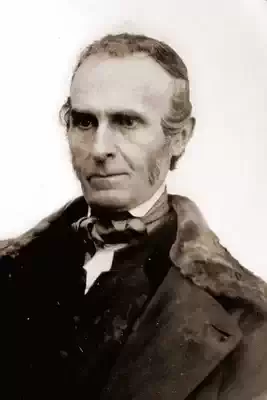
John Greenleaf Whittier
Winter Roses
Winter Roses
My garden roses long ago
Have perished from the leaf-strewn walks;
Their pale, fair sisters smile no more
Upon the sweet-brier stalks.
Gone with the flower-time of my life,
Spring's violets, summer's blooming pride,
And Nature's winter and my own
Stand, flowerless, side by side.
So might I yesterday have sung;
To-day, in bleak December's noon,
Come sweetest fragrance, shapes, and hues,
The rosy wealth of June!
Bless the young bands that culled the gift,
And bless the hearts that prompted it;
If undeserved it comes, at least
It seems not all unfit.
Of old my Quaker ancestors
Had gifts of forty stripes save one;
To-day as many roses crown
The gray head of their son.
And with them, to my fancy's eye,
The fresh-faced givers smiling come,
And nine and thirty happy girls
Make glad a lonely room.
They bring the atmosphere of youth;
The light and warmth of long ago
Are in my heart, and on my cheek
The airs of morning blow.
O buds of girlhood, yet unblown,
And fairer than the gift ye chose,
For you may years like leaves unfold
The heart of Sharon's rose
My garden roses long ago
Have perished from the leaf-strewn walks;
Their pale, fair sisters smile no more
Upon the sweet-brier stalks.
Gone with the flower-time of my life,
Spring's violets, summer's blooming pride,
And Nature's winter and my own
Stand, flowerless, side by side.
So might I yesterday have sung;
To-day, in bleak December's noon,
Come sweetest fragrance, shapes, and hues,
The rosy wealth of June!
Bless the young bands that culled the gift,
And bless the hearts that prompted it;
If undeserved it comes, at least
It seems not all unfit.
Of old my Quaker ancestors
Had gifts of forty stripes save one;
To-day as many roses crown
The gray head of their son.
And with them, to my fancy's eye,
The fresh-faced givers smiling come,
And nine and thirty happy girls
Make glad a lonely room.
They bring the atmosphere of youth;
The light and warmth of long ago
Are in my heart, and on my cheek
The airs of morning blow.
O buds of girlhood, yet unblown,
And fairer than the gift ye chose,
For you may years like leaves unfold
The heart of Sharon's rose
265
John Greenleaf Whittier
The Lumbermen
The Lumbermen
WILDLY round our woodland quarters
Sad-voiced Autumn grieves;
Thickly down these swelling waters
Float his fallen leaves.
Through the tall and naked timber,
Column-like and old,
Gleam the sunsets of November,
From their skies of gold.
O'er us, to the southland heading,
Screams the gray wild-goose;
On the night-frost sounds the treading
Of the brindled moose.
Noiseless creeping, while we're sleeping,
Frost his task-work plies;
Soon, his icy bridges heaping,
Shall our log-piles rise.
When, with sounds of smothered thunder,
On some night of rain,
Lake and river break asunder
Winter's weakened chain,
Down the wild March flood shall bear them
To the saw-mill's wheel,
Or where Steam, the slave, shall tear them
With his teeth of steel.
Be it starlight, be it moonlight,
In these vales below,
When the earliest beams of sunlight
Streak the mountain's snow,
Crisps the hoar-frost, keen and early,
To our hurrying feet,
And the forest echoes clearly
All our blows repeat.
Where the crystal Ambijejis
Stretches broad and clear,
And Millnoket's pine-black ridges
Hide the browsing deer:
Where, through lakes and wide morasses,
Or through rocky walls,
Swift and strong, Penobscot passes
White with foamy falls;
Where, through clouds, are glimpses given
Of Katahdin's sides, —
Rock and forest piled to heaven,
Torn and ploughed by slides!
Far below, the Indian trapping,
In the sunshine warm;
Far above, the snow-cloud wrapping
Half the peak in storm!
Where are mossy carpets better
Than the Persian weaves,
And than Eastern perfumes sweeter
Seem the fading leaves;
And a music wild and solemn,
From the pine-tree's height,
Rolls its vast and sea-like volume
On the wind of night;
Make we here our camp of winter;
And, through sleet and snow,
Pitchy knot and beechen splinter
On our hearth shall glow.
Here, with mirth to lighten duty,
We shall lack alone
Woman's smile and girlhood's beauty,
Childhood's lisping tone.
But their hearth is brighter burning
For our toil to-day;
And the welcome of returning
Shall our loss repay,
When, like seamen from the waters,
From the woods we come,
Greeting sisters, wives, and daughters,
Angels of our home!
Not for us the measured ringing
From the village spire,
Not for us the Sabbath singing
Of the sweet-voiced choir.
Ours the old, majestic temple,
Where God's brightness shines
Down the dome so grand and ample,
Propped by lofty pines!
Through each branch-enwoven skylight,
Speaks He in the breeze,
As of old beneath the twilight
Of lost Eden's trees!
For His ear, the inward feeling
Needs no outward tongue;
He can see the spirit kneeling
While the axe is swung.
Heeding truth alone, and turning
From the false and dim,
Lamp of toil or altar burning
Are alike to Him.
Strike, then, comrades! Trade is waiting
On our rugged toil;
Far ships waiting for the freighting
Of our woodland spoil!
Ships, whose traffic links these highlands,
Bleak and cold, of ours,
With the citron-planted islands
Of a clime of flowers;
To our frosts the tribute bringing
Of eternal heats;
In our lap of winter flinging
Tropic fruits and sweets.
Cheerly, on the axe of labor,
Let the sunbeams dance,
Better than the flash of sabre
Or the gleam of lance!
Strike! With every blow is given
Freer sun and sky,
And the long-hid earth to heaven
Looks, with wondering eye!
Loud behind us grow the murmurs
Of the age to come;
Clang of smiths, and tread of farmers,
Bearing harvest home!
Here her virgin lap with treasures
Shall the green earth fill;
Waving wheat and golden maize-ears
Crown each beechen hill.
Keep who will the city's alleys,
Take the smooth-shorn plain;
Give to us the cedarn valleys,
Rocks and hills of Maine!
In our North-land, wild and woody,
Let us still have part:
Rugged nurse and mother sturdy,
Hold us to thy heart!
Oh, our free hearts beat the warmer
For thy breath of snow;
And our tread is all the firmer
For thy rocks below.
Freedom, hand in hand with labor,
Walketh strong and brave;
On the forehead of his neighbor
No man writeth Slave!
Lo, the day breaks! old Katahdin's
Pine-trees show its fires,
While from these dim forest gardens
Rise their blackened spires.
Up, my comrades! up and doing!
Manhood's rugged play
Still renewing, bravely hewing
Through the world our way!
WILDLY round our woodland quarters
Sad-voiced Autumn grieves;
Thickly down these swelling waters
Float his fallen leaves.
Through the tall and naked timber,
Column-like and old,
Gleam the sunsets of November,
From their skies of gold.
O'er us, to the southland heading,
Screams the gray wild-goose;
On the night-frost sounds the treading
Of the brindled moose.
Noiseless creeping, while we're sleeping,
Frost his task-work plies;
Soon, his icy bridges heaping,
Shall our log-piles rise.
When, with sounds of smothered thunder,
On some night of rain,
Lake and river break asunder
Winter's weakened chain,
Down the wild March flood shall bear them
To the saw-mill's wheel,
Or where Steam, the slave, shall tear them
With his teeth of steel.
Be it starlight, be it moonlight,
In these vales below,
When the earliest beams of sunlight
Streak the mountain's snow,
Crisps the hoar-frost, keen and early,
To our hurrying feet,
And the forest echoes clearly
All our blows repeat.
Where the crystal Ambijejis
Stretches broad and clear,
And Millnoket's pine-black ridges
Hide the browsing deer:
Where, through lakes and wide morasses,
Or through rocky walls,
Swift and strong, Penobscot passes
White with foamy falls;
Where, through clouds, are glimpses given
Of Katahdin's sides, —
Rock and forest piled to heaven,
Torn and ploughed by slides!
Far below, the Indian trapping,
In the sunshine warm;
Far above, the snow-cloud wrapping
Half the peak in storm!
Where are mossy carpets better
Than the Persian weaves,
And than Eastern perfumes sweeter
Seem the fading leaves;
And a music wild and solemn,
From the pine-tree's height,
Rolls its vast and sea-like volume
On the wind of night;
Make we here our camp of winter;
And, through sleet and snow,
Pitchy knot and beechen splinter
On our hearth shall glow.
Here, with mirth to lighten duty,
We shall lack alone
Woman's smile and girlhood's beauty,
Childhood's lisping tone.
But their hearth is brighter burning
For our toil to-day;
And the welcome of returning
Shall our loss repay,
When, like seamen from the waters,
From the woods we come,
Greeting sisters, wives, and daughters,
Angels of our home!
Not for us the measured ringing
From the village spire,
Not for us the Sabbath singing
Of the sweet-voiced choir.
Ours the old, majestic temple,
Where God's brightness shines
Down the dome so grand and ample,
Propped by lofty pines!
Through each branch-enwoven skylight,
Speaks He in the breeze,
As of old beneath the twilight
Of lost Eden's trees!
For His ear, the inward feeling
Needs no outward tongue;
He can see the spirit kneeling
While the axe is swung.
Heeding truth alone, and turning
From the false and dim,
Lamp of toil or altar burning
Are alike to Him.
Strike, then, comrades! Trade is waiting
On our rugged toil;
Far ships waiting for the freighting
Of our woodland spoil!
Ships, whose traffic links these highlands,
Bleak and cold, of ours,
With the citron-planted islands
Of a clime of flowers;
To our frosts the tribute bringing
Of eternal heats;
In our lap of winter flinging
Tropic fruits and sweets.
Cheerly, on the axe of labor,
Let the sunbeams dance,
Better than the flash of sabre
Or the gleam of lance!
Strike! With every blow is given
Freer sun and sky,
And the long-hid earth to heaven
Looks, with wondering eye!
Loud behind us grow the murmurs
Of the age to come;
Clang of smiths, and tread of farmers,
Bearing harvest home!
Here her virgin lap with treasures
Shall the green earth fill;
Waving wheat and golden maize-ears
Crown each beechen hill.
Keep who will the city's alleys,
Take the smooth-shorn plain;
Give to us the cedarn valleys,
Rocks and hills of Maine!
In our North-land, wild and woody,
Let us still have part:
Rugged nurse and mother sturdy,
Hold us to thy heart!
Oh, our free hearts beat the warmer
For thy breath of snow;
And our tread is all the firmer
For thy rocks below.
Freedom, hand in hand with labor,
Walketh strong and brave;
On the forehead of his neighbor
No man writeth Slave!
Lo, the day breaks! old Katahdin's
Pine-trees show its fires,
While from these dim forest gardens
Rise their blackened spires.
Up, my comrades! up and doing!
Manhood's rugged play
Still renewing, bravely hewing
Through the world our way!
225
John Greenleaf Whittier
The Frost Spirit
The Frost Spirit
He comes, - he comes, - the Frost Spirit comes!
You may trace his footsteps now
On the naked woods and the blasted fields
And the brown hill's withered brow.
He has smitten the leaves of the gray old trees
Where their pleasant green came forth,
And the winds, which follow wherever he goes,
Have shaken them down to earth.
He comes, - he comes, - the Frost Spirit comes!
From the frozen Labrador,
From the icy bridge of the northern seas,
Which the white bear wanders o'er,
Where the fisherman's sail is stiff with ice,
And the luckless forms below
In the sunless cold of the lingering night
Into marble statues grow!
He comes, - he comes, - the Frost Spirit comes!
On the rushing Northern blast,
And the dark Norwegian pines have bowed
As his fearful breath went past.
With an unscorched wing he has hurried on,
Where the fires of Hecla glow
On the darkly beautiful sky above
And the ancient ice below.
He comes, - he comes, - the Frost Spirit comes!
And the quiet lake shall feel
The torpid touch of his glazing breath,
And ring to the skater's heel;
And the streams which danced on the broken rocks,
Or sang to the leaning grass,
Shall bow again to their winter chain,
And in mournful silence pass.
He comes, - he comes, - the Frost Spirit comes!
Let us meet him as we may,
And turn with the light of the parlor-fire
His evil power away;
And gather closer the circle 'round,
When the firelight dances high,
And laugh at the shriek of the baffled Fiend
As his sounding wing goes by!
He comes, - he comes, - the Frost Spirit comes!
You may trace his footsteps now
On the naked woods and the blasted fields
And the brown hill's withered brow.
He has smitten the leaves of the gray old trees
Where their pleasant green came forth,
And the winds, which follow wherever he goes,
Have shaken them down to earth.
He comes, - he comes, - the Frost Spirit comes!
From the frozen Labrador,
From the icy bridge of the northern seas,
Which the white bear wanders o'er,
Where the fisherman's sail is stiff with ice,
And the luckless forms below
In the sunless cold of the lingering night
Into marble statues grow!
He comes, - he comes, - the Frost Spirit comes!
On the rushing Northern blast,
And the dark Norwegian pines have bowed
As his fearful breath went past.
With an unscorched wing he has hurried on,
Where the fires of Hecla glow
On the darkly beautiful sky above
And the ancient ice below.
He comes, - he comes, - the Frost Spirit comes!
And the quiet lake shall feel
The torpid touch of his glazing breath,
And ring to the skater's heel;
And the streams which danced on the broken rocks,
Or sang to the leaning grass,
Shall bow again to their winter chain,
And in mournful silence pass.
He comes, - he comes, - the Frost Spirit comes!
Let us meet him as we may,
And turn with the light of the parlor-fire
His evil power away;
And gather closer the circle 'round,
When the firelight dances high,
And laugh at the shriek of the baffled Fiend
As his sounding wing goes by!
293
John Greenleaf Whittier
The Drovers
The Drovers
THROUGH heat and cold, and shower and sun,
Still onward cheerly driving!
There's life alone in duty done,
And rest alone in striving.
But see! the day is closing cool,
The woods are dim before us;
The white fog of the wayside pool
Is creeping slowly o'er us.
The night is falling, comrades mine,
Our footsore beasts are weary,
And through yon elms the tavern sign
Looks out upon us cheery.
The landlord beckons from his door,
His beechen fire is glowing;
These ample barns, with feed in store,
Are filled to overflowing.
From many a valley frowned across
By brows of rugged mountains;
From hillsides where, through spongy moss,
Gush out the river fountains;
From quiet farm-fields, green and low,
And bright with blooming clover;
From vales of corn the wandering crow
No richer hovers over;
Day after day our way has been
O'er many a hill and hollow;
By lake and stream, by wood and glen,
Our stately drove we follow.
Through dust-clouds rising thick and dun,
As smoke of battle o'er us,
Their white horns glisten in the sun,
Like plumes and crests before us.
We see them slowly climb the hill,
As slow behind it sinking;
Or, thronging close, from roadside rill,
Or sunny lakelet, drinking.
Now crowding in the narrow road,
In thick and struggling masses,
They glare upon the teamster's load,
Or rattling coach that passes.
Anon, with toss of horn and tail,
And paw of hoof, and bellow,
They leap some farmer's broken pale,
O'er meadow-close or fallow.
Forth comes the startled goodman; forth
Wife, children, house-dog, sally,
Till once more on their dusty path
The baffled truants rally.
We drive no starvelings, scraggy grown,
Loose-legged, and ribbed and bony,
Like those who grind their noses down
On pastures bare and stony, —
Lank oxen, rough as Indian dogs,
And cows too lean for shadows,
Disputing feebly with the frogs
The crop of saw-grass meadows!
In our good drove, so sleek and fair,
No bones of leanness rattle;
No tottering hide-bound ghosts are there,
Or Pharaoh's evil cattle.
Each stately beeve bespeaks the hand
That fed him unrepining;
The fatness of a goodly land
In each dun hide is shining.
We've sought them where, in warmest nooks,
The freshest feed is growing,
By sweetest springs and clearest brooks
Through honeysuckle flowing;
Wherever hillsides, sloping south,
Are bright with early grasses,
Or, tracking green the lowland's drouth,
The mountain streamlet passes.
But now the day is closing cool,
The woods are dim before us,
The white fog of the wayside pool
Is creeping slowly o'er us.
The cricket to the frog's bassoon
His shrillest time is keeping;
The sickle of yon setting moon
The meadow-mist is reaping.
The night is falling, comrades mine,
Our footsore beasts are weary,
And through yon elms the tavern sign
Looks out upon us cheery.
To-morrow, eastward with our charge
We'll go to meet the dawning,
Ere yet the pines of Kearsarge
Have seen the sun of morning.
When snow-flakes o'er the frozen earth,
Instead of birds, are flitting;
When children throng the glowing hearth,
And quiet wives are knitting;
While in the fire-light strong and clear
Young eyes of pleasure glisten,
To tales of all we see and hear
The ears of home shall listen.
By many a Northern lake and hill,
From many a mountain pasture,
Shall Fancy play the Drover still,
And speed the long night faster.
Then let us on, through shower and sun,
And heat and cold, be driving;
There's life alone in duty done,
And rest alone in striving.
THROUGH heat and cold, and shower and sun,
Still onward cheerly driving!
There's life alone in duty done,
And rest alone in striving.
But see! the day is closing cool,
The woods are dim before us;
The white fog of the wayside pool
Is creeping slowly o'er us.
The night is falling, comrades mine,
Our footsore beasts are weary,
And through yon elms the tavern sign
Looks out upon us cheery.
The landlord beckons from his door,
His beechen fire is glowing;
These ample barns, with feed in store,
Are filled to overflowing.
From many a valley frowned across
By brows of rugged mountains;
From hillsides where, through spongy moss,
Gush out the river fountains;
From quiet farm-fields, green and low,
And bright with blooming clover;
From vales of corn the wandering crow
No richer hovers over;
Day after day our way has been
O'er many a hill and hollow;
By lake and stream, by wood and glen,
Our stately drove we follow.
Through dust-clouds rising thick and dun,
As smoke of battle o'er us,
Their white horns glisten in the sun,
Like plumes and crests before us.
We see them slowly climb the hill,
As slow behind it sinking;
Or, thronging close, from roadside rill,
Or sunny lakelet, drinking.
Now crowding in the narrow road,
In thick and struggling masses,
They glare upon the teamster's load,
Or rattling coach that passes.
Anon, with toss of horn and tail,
And paw of hoof, and bellow,
They leap some farmer's broken pale,
O'er meadow-close or fallow.
Forth comes the startled goodman; forth
Wife, children, house-dog, sally,
Till once more on their dusty path
The baffled truants rally.
We drive no starvelings, scraggy grown,
Loose-legged, and ribbed and bony,
Like those who grind their noses down
On pastures bare and stony, —
Lank oxen, rough as Indian dogs,
And cows too lean for shadows,
Disputing feebly with the frogs
The crop of saw-grass meadows!
In our good drove, so sleek and fair,
No bones of leanness rattle;
No tottering hide-bound ghosts are there,
Or Pharaoh's evil cattle.
Each stately beeve bespeaks the hand
That fed him unrepining;
The fatness of a goodly land
In each dun hide is shining.
We've sought them where, in warmest nooks,
The freshest feed is growing,
By sweetest springs and clearest brooks
Through honeysuckle flowing;
Wherever hillsides, sloping south,
Are bright with early grasses,
Or, tracking green the lowland's drouth,
The mountain streamlet passes.
But now the day is closing cool,
The woods are dim before us,
The white fog of the wayside pool
Is creeping slowly o'er us.
The cricket to the frog's bassoon
His shrillest time is keeping;
The sickle of yon setting moon
The meadow-mist is reaping.
The night is falling, comrades mine,
Our footsore beasts are weary,
And through yon elms the tavern sign
Looks out upon us cheery.
To-morrow, eastward with our charge
We'll go to meet the dawning,
Ere yet the pines of Kearsarge
Have seen the sun of morning.
When snow-flakes o'er the frozen earth,
Instead of birds, are flitting;
When children throng the glowing hearth,
And quiet wives are knitting;
While in the fire-light strong and clear
Young eyes of pleasure glisten,
To tales of all we see and hear
The ears of home shall listen.
By many a Northern lake and hill,
From many a mountain pasture,
Shall Fancy play the Drover still,
And speed the long night faster.
Then let us on, through shower and sun,
And heat and cold, be driving;
There's life alone in duty done,
And rest alone in striving.
312
John Greenleaf Whittier
Summer By The Lakeside: Lake Winnipesaukee
Summer By The Lakeside: Lake Winnipesaukee
I. NOON.
White clouds, whose shadows haunt the deep,
Light mists, whose soft embraces keep
The sunshine on the hills asleep!
O isles of calm! O dark, still wood!
And stiller skies that overbrood
Your rest with deeper quietude!
O shapes and hues, dim beckoning, through
Yon mountain gaps, my longing view
Beyond the purple and the blue,
To stiller sea and greener land,
And softer lights and airs more bland,
And skies,--the hollow of God's hand!
Transfused through you, O mountain friends!
With mine your solemn spirit blends,
And life no more hath separate ends.
I read each misty mountain sign,
I know the voice of wave and pine,
And I am yours, and ye are mine.
Life's burdens fall, its discords cease,
I lapse into the glad release
Of Nature's own exceeding peace.
O welcome calm of heart and mind!
As falls yon fir-tree's loosened rind
To leave a tenderer growth behind,
So fall the weary years away;
A child again, my head I lay
Upon the lap of this sweet day.
This western wind hath Lethean powers,
Yon noonday cloud nepenthe showers,
The lake is white with lotus-flowers!
Even Duty's voice is faint and low,
And slumberous Conscience, waking slow,
Forgets her blotted scroll to show.
The Shadow which pursues us all,
Whose ever-nearing steps appall,
Whose voice we hear behind us call,-
That Shadow blends with mountain gray,
It speaks but what the light waves say,-Death
walks apart from Fear to-day!
Rocked on her breast, these pines and I
Alike on Nature's love rely;
And equal seems to live or die.
Assured that He whose presence fills
With light the spaces of these hills
No evil to His creatures wills,
The simple faith remains, that He
Will do, whatever that may be,
The best alike for man and tree.
What mosses over one shall grow,
What light and life the other know,
Unanxious, leaving Him to show.
II. EVENING.
Yon mountain's side is black with night,
While, broad-orhed, o'er its gleaming crown
The moon, slow-rounding into sight,
On the hushed inland sea looks down.
How start to light the clustering isles,
Each silver-hemmed! How sharply show
The shadows of their rocky piles,
And tree-tops in the wave below!
How far and strange the mountains seem,
Dim-looming through the pale, still light
The vague, vast grouping of a dream,
They stretch into the solemn night.
Beneath, lake, wood, and peopled vale,
Hushed by that presence grand and grave,
Are silent, save the cricket's wail,
And low response of leaf and wave.
Fair scenes! whereto the Day and Night
Make rival love, I leave ye soon,
What time before the eastern light
The pale ghost of the setting moon
Shall hide behind yon rocky spines,
And the young archer, Morn, shall break
His arrows on the mountain pines,
And, golden-sandalled, walk the lake!
Farewell! around this smiling bay
Gay-hearted Health, and Life in bloom,
With lighter steps than mine, may stray
In radiant summers yet to come.
But none shall more regretful leave
These waters and these hills than I
Or, distant, fonder dream how eve
Or dawn is painting wave and sky;
How rising moons shine sad and mild
On wooded isle and silvering bay;
Or setting suns beyond the piled
And purple mountains lead the day;
Nor laughing girl, nor bearding boy,
Nor full-pulsed manhood, lingering here,
Shall add, to life's abounding joy,
The charmed repose to suffering dear.
Still waits kind Nature to impart
Her choicest gifts to such as gain
An entrance to her loving heart
Through the sharp discipline of pain.
Forever from the Hand that takes
One blessing from us others fall;
And, soon or late, our Father makes
His perfect recompense to all!
Oh, watched by Silence and the Night,
And folded in the strong embrace
Of the great mountains, with the light
Of the sweet heavens upon thy face,
Lake of the Northland! keep thy dower
Of beauty still, and while above
Thy solemn mountains speak of power,
Be thou the mirror of God's love.
I. NOON.
White clouds, whose shadows haunt the deep,
Light mists, whose soft embraces keep
The sunshine on the hills asleep!
O isles of calm! O dark, still wood!
And stiller skies that overbrood
Your rest with deeper quietude!
O shapes and hues, dim beckoning, through
Yon mountain gaps, my longing view
Beyond the purple and the blue,
To stiller sea and greener land,
And softer lights and airs more bland,
And skies,--the hollow of God's hand!
Transfused through you, O mountain friends!
With mine your solemn spirit blends,
And life no more hath separate ends.
I read each misty mountain sign,
I know the voice of wave and pine,
And I am yours, and ye are mine.
Life's burdens fall, its discords cease,
I lapse into the glad release
Of Nature's own exceeding peace.
O welcome calm of heart and mind!
As falls yon fir-tree's loosened rind
To leave a tenderer growth behind,
So fall the weary years away;
A child again, my head I lay
Upon the lap of this sweet day.
This western wind hath Lethean powers,
Yon noonday cloud nepenthe showers,
The lake is white with lotus-flowers!
Even Duty's voice is faint and low,
And slumberous Conscience, waking slow,
Forgets her blotted scroll to show.
The Shadow which pursues us all,
Whose ever-nearing steps appall,
Whose voice we hear behind us call,-
That Shadow blends with mountain gray,
It speaks but what the light waves say,-Death
walks apart from Fear to-day!
Rocked on her breast, these pines and I
Alike on Nature's love rely;
And equal seems to live or die.
Assured that He whose presence fills
With light the spaces of these hills
No evil to His creatures wills,
The simple faith remains, that He
Will do, whatever that may be,
The best alike for man and tree.
What mosses over one shall grow,
What light and life the other know,
Unanxious, leaving Him to show.
II. EVENING.
Yon mountain's side is black with night,
While, broad-orhed, o'er its gleaming crown
The moon, slow-rounding into sight,
On the hushed inland sea looks down.
How start to light the clustering isles,
Each silver-hemmed! How sharply show
The shadows of their rocky piles,
And tree-tops in the wave below!
How far and strange the mountains seem,
Dim-looming through the pale, still light
The vague, vast grouping of a dream,
They stretch into the solemn night.
Beneath, lake, wood, and peopled vale,
Hushed by that presence grand and grave,
Are silent, save the cricket's wail,
And low response of leaf and wave.
Fair scenes! whereto the Day and Night
Make rival love, I leave ye soon,
What time before the eastern light
The pale ghost of the setting moon
Shall hide behind yon rocky spines,
And the young archer, Morn, shall break
His arrows on the mountain pines,
And, golden-sandalled, walk the lake!
Farewell! around this smiling bay
Gay-hearted Health, and Life in bloom,
With lighter steps than mine, may stray
In radiant summers yet to come.
But none shall more regretful leave
These waters and these hills than I
Or, distant, fonder dream how eve
Or dawn is painting wave and sky;
How rising moons shine sad and mild
On wooded isle and silvering bay;
Or setting suns beyond the piled
And purple mountains lead the day;
Nor laughing girl, nor bearding boy,
Nor full-pulsed manhood, lingering here,
Shall add, to life's abounding joy,
The charmed repose to suffering dear.
Still waits kind Nature to impart
Her choicest gifts to such as gain
An entrance to her loving heart
Through the sharp discipline of pain.
Forever from the Hand that takes
One blessing from us others fall;
And, soon or late, our Father makes
His perfect recompense to all!
Oh, watched by Silence and the Night,
And folded in the strong embrace
Of the great mountains, with the light
Of the sweet heavens upon thy face,
Lake of the Northland! keep thy dower
Of beauty still, and while above
Thy solemn mountains speak of power,
Be thou the mirror of God's love.
210
John Greenleaf Whittier
St. Martin's Summer
St. Martin's Summer
Though flowers have perished at the touch
Of Frost, the early comer,
I hail the season loved so much,
The good St. Martin's summer.
O gracious morn, with rose-red dawn,
And thin moon curving o'er it!
The old year's darling, latest born,
More loved than all before it!
How flamed the sunrise through the pines!
How stretched the birchen shadows,
Braiding in long, wind-wavered lines
The westward sloping meadows!
The sweet day, opening as a flower
Unfolds its petals tender,
Renews for us at noontide's hour
The summer's tempered splendor.
The birds are hushed; alone the wind,
That through the woodland searches,
The red-oak's lingering leaves can find,
And yellow plumes of larches.
But still the balsam-breathing pine
Invites no thought of sorrow,
No hint of loss from air like wine
The earth's content can borrow.
The summer and the winter here
Midway a truce are holding,
A soft, consenting atmosphere
Their tents of peace enfolding.
The silent woods, the lonely hills,
Rise solemn in their gladness;
The quiet that the valley fills
Is scarcely joy or sadness.
How strange! The autumn yesterday
In winter's grasp seemed dying;
On whirling winds from skies of gray
The early snow was flying.
And now, while over Nature's mood
There steals a soft relenting,
I will not mar the present good,
Forecasting or lamenting.
My autumn time and Nature's hold
A dreamy tryst together,
And, both grown old, about us fold
The golden-tissued weather.
I lean my heart against the day
To feel its bland caressing;
I will not let it pass away
Before it leaves its blessing.
God's angels come not as of old
The Syrian shepherds knew them;
In reddening dawns, in sunset gold,
And warm noon lights I view them.
Nor need there is, in times like this
When heaven to earth draws nearer,
Of wing or song as witnesses
To make their presence clearer.
O stream of life, whose swifter flow
Is of the end forewarning,
Methinks thy sundown afterglow
Seems less of night than morning!
Old cares grow light; aside I lay
The doubts and fears that troubled;
The quiet of the happy day
Within my soul is doubled.
That clouds must veil this fair sunshine
Not less a joy I find it;
Nor less yon warm horizon line
That winter lurks behind it.
The mystery of the untried days
I close my eyes from reading;
His will be done whose darkest ways
To light and life are leading!
Less drear the winter night shall be,
If memory cheer and hearten
Its heavy hours with thoughts of thee,
Sweet summer of St. Martin!
Though flowers have perished at the touch
Of Frost, the early comer,
I hail the season loved so much,
The good St. Martin's summer.
O gracious morn, with rose-red dawn,
And thin moon curving o'er it!
The old year's darling, latest born,
More loved than all before it!
How flamed the sunrise through the pines!
How stretched the birchen shadows,
Braiding in long, wind-wavered lines
The westward sloping meadows!
The sweet day, opening as a flower
Unfolds its petals tender,
Renews for us at noontide's hour
The summer's tempered splendor.
The birds are hushed; alone the wind,
That through the woodland searches,
The red-oak's lingering leaves can find,
And yellow plumes of larches.
But still the balsam-breathing pine
Invites no thought of sorrow,
No hint of loss from air like wine
The earth's content can borrow.
The summer and the winter here
Midway a truce are holding,
A soft, consenting atmosphere
Their tents of peace enfolding.
The silent woods, the lonely hills,
Rise solemn in their gladness;
The quiet that the valley fills
Is scarcely joy or sadness.
How strange! The autumn yesterday
In winter's grasp seemed dying;
On whirling winds from skies of gray
The early snow was flying.
And now, while over Nature's mood
There steals a soft relenting,
I will not mar the present good,
Forecasting or lamenting.
My autumn time and Nature's hold
A dreamy tryst together,
And, both grown old, about us fold
The golden-tissued weather.
I lean my heart against the day
To feel its bland caressing;
I will not let it pass away
Before it leaves its blessing.
God's angels come not as of old
The Syrian shepherds knew them;
In reddening dawns, in sunset gold,
And warm noon lights I view them.
Nor need there is, in times like this
When heaven to earth draws nearer,
Of wing or song as witnesses
To make their presence clearer.
O stream of life, whose swifter flow
Is of the end forewarning,
Methinks thy sundown afterglow
Seems less of night than morning!
Old cares grow light; aside I lay
The doubts and fears that troubled;
The quiet of the happy day
Within my soul is doubled.
That clouds must veil this fair sunshine
Not less a joy I find it;
Nor less yon warm horizon line
That winter lurks behind it.
The mystery of the untried days
I close my eyes from reading;
His will be done whose darkest ways
To light and life are leading!
Less drear the winter night shall be,
If memory cheer and hearten
Its heavy hours with thoughts of thee,
Sweet summer of St. Martin!
237
John Greenleaf Whittier
Snow-Bound: A Winter Idyl
Snow-Bound: A Winter Idyl
To the Memory of the Household It Describes
This Poem is Dedicated by the Author:
"As the Spirits of Darkness be stronger in the dark, so Good Spirits,which be Angels of
Light, are augmented not only by the Divine lightof the Sun, but also by our common
Wood Fire: and as the CelestialFire drives away dark spirits, so also this our Fire of
Wood doth thesame." -- Cor. Agrippa, Occult Philosophy,
Book I.ch. v.
"Announced by all the trumpets of the sky,
Arrives the snow, and, driving o'er the fields,
Seems nowhere to alight: the whited air
Hides hills and woods, the river and the heaven,
And veils the farm-house at the garden's end.
The sled and traveller stopped, the courier's feet
Delayed, all friends shut out, the housemates sit
Around the radiant fireplace, enclosed
In a tumultuous privacy of Storm." EMERSON, The Snow Storm.
The sun that brief December day
Rose cheerless over hills of gray,
And, darkly circled, gave at noon
A sadder light than waning moon.
Slow tracing down the thickening sky
Its mute and ominous prophecy,
A portent seeming less than threat,
It sank from sight before it set.
A chill no coat, however stout,
Of homespun stuff could quite shut out,
A hard, dull bitterness of cold,
That checked, mid-vein, the circling race
Of life-blood in the sharpened face,
The coming of the snow-storm told.
The wind blew east; we heard the roar
Of Ocean on his wintry shore,
And felt the strong pulse throbbing there
Beat with low rhythm our inland air.
Meanwhile we did our nightly chores, -Brought
in the wood from out of doors,
Littered the stalls, and from the mows
Raked down the herd's-grass for the cows;
Heard the horse whinnying for his corn;
And, sharply clashing horn on horn,
Impatient down the stanchion rows
The cattle shake their walnut bows;
While, peering from his early perch
Upon the scaffold's pole of birch,
The cock his crested helmet bent
And down his querulous challenge sent.
Unwarmed by any sunset light
The gray day darkened into night,
A night made hoary with the swarm
And whirl-dance of the blinding storm,
As zigzag, wavering to and fro,
Crossed and recrossed the wingëd snow:
And ere the early bedtime came
The white drift piled the window-frame,
And through the glass the clothes-line posts
Looked in like tall and sheeted ghosts.
So all night long the storm roared on:
The morning broke without a sun;
In tiny spherule traced with lines
Of Nature's geometric signs,
In starry flake, and pellicle,
All day the hoary meteor fell;
And, when the second morning shone,
We looked upon a world unknown,
On nothing we could call our own.
Around the glistening wonder bent
The blue walls of the firmament,
No cloud above, no earth below, -A
universe of sky and snow!
The old familiar sights of ours
Took marvellous shapes; strange domes and towers
Rose up where sty or corn-crib stood,
Or garden-wall, or belt of wood;
A smooth white mound the brush-pile showed,
A fenceless drift what once was road;
The bridle-post an old man sat
With loose-flung coat and high cocked hat;
The well-curb had a Chinese roof;
And even the long sweep, high aloof,
In its slant spendor, seemed to tell
Of Pisa's leaning miracle.
A prompt, decisive man, no breath
Our father wasted: "Boys, a path!"
Well pleased, (for when did farmer boy
Count such a summons less than joy?)
Our buskins on our feet we drew;
With mittened hands, and caps drawn low,
To guard our necks and ears from snow,
We cut the solid whiteness through.
And, where the drift was deepest, made
A tunnel walled and overlaid
With dazzling crystal: we had read
Of rare Aladdin's wondrous cave,
And to our own his name we gave,
With many a wish the luck were ours
To test his lamp's supernal powers.
We reached the barn with merry din,
And roused the prisoned brutes within.
The old horse thrust his long head out,
And grave with wonder gazed about;
The cock his lusty greeting said,
And forth his speckled harem led;
The oxen lashed their tails, and hooked,
And mild reproach of hunger looked;
The hornëd patriarch of the sheep,
Like Egypt's Amun roused from sleep,
Shook his sage head with gesture mute,
And emphasized with stamp of foot.
All day the gusty north-wind bore
The loosening drift its breath before;
Low circling round its southern zone,
The sun through dazzling snow-mist shone.
No church-bell lent its Christian tone
To the savage air, no social smoke
Curled over woods of snow-hung oak.
A solitude made more intense
By dreary-voicëd elements,
The shrieking of the mindless wind,
The moaning tree-boughs swaying blind,
And on the glass the unmeaning beat
Of ghostly finger-tips of sleet.
Beyond the circle of our hearth
No welcome sound of toil or mirth
Unbound the spell, and testified
Of human life and thought outside.
We minded that the sharpest ear
The buried brooklet could not hear,
The music of whose liquid lip
Had been to us companionship,
And, in our lonely life, had grown
To have an almost human tone.
As night drew on, and, from the crest
Of wooded knolls that ridged the west,
The sun, a snow-blown traveller, sank
From sight beneath the smothering bank,
We piled, with care, our nightly stack
Of wood against the chimney-back, -The
oaken log, green, huge, and thick,
And on its top the stout back-stick;
The knotty forestick laid apart,
And filled between with curious art
The ragged brush; then, hovering near,
We watched the first red blaze appear,
Heard the sharp crackle, caught the gleam
On whitewashed wall and sagging beam,
Until the old, rude-furnished room
Burst, flower-like, into rosy bloom;
While radiant with a mimic flame
Outside the sparkling drift became,
And through the bare-boughed lilac-tree
Our own warm hearth seemed blazing free.
The crane and pendent trammels showed,
The Turks' heads on the andirons glowed;
While childish fancy, prompt to tell
The meaning of the miracle,
Whispered the old rhyme: "Under the tree,
When fire outdoors burns merrily,
There the witches are making tea."
The moon above the eastern wood
Shone at its full; the hill-range stood
Transfigured in the silver flood,
Its blown snows flashing cold and keen,
Dead white, save where some sharp ravine
Took shadow, or the sombre green
Of hemlocks turned to pitchy black
Against the whiteness at their back.
For such a world and such a night
Most fitting that unwarming light,
Which only seemed where'er it fell
To make the coldness visible.
Shut in from all the world without,
We sat the clean-winged hearth about,
Content to let the north-wind roar
In baffled rage at pane and door,
While the red logs before us beat
The frost-line back with tropic heat;
And ever, when a louder blast
Shook beam and rafter as it passed,
The merrier up its roaring draught
The great throat of the chimney laughed;
The house-dog on his paws outspread
Laid to the fire his drowsy head,
The cat's dark silhouette on the wall
A couchant tiger's seemed to fall;
And, for the winter fireside meet,
Between the andirons' straddling feet,
The mug of cider simmered slow,
The apples sputtered in a row,
And, close at hand, the basket stood
With nuts from brown October's wood.
What matter how the night behaved?
What matter how the north-wind raved?
Blow high, blow low, not all its snow
Could quench our hearth-fire's ruddy glow.
O Time and Change! -- with hair as gray
As was my sire's that winter day,
How strange it seems, with so much gone
Of life and love, to still live on!
Ah, brother! only I and thou
Are left of all that circle now, -The
dear home faces whereupon
That fitful firelight paled and shone.
Henceforward, listen as we will,
The voices of that hearth are still;
Look where we may, the wide earth o'er,
Those lighted faces smile no more.
We tread the paths their feet have worn,
We sit beneath their orchard trees,
We hear, like them, the hum of bees
And rustle of the bladed corn;
We turn the pages that they read,
Their written words we linger o'er,
But in the sun they cast no shade,
No voice is heard, no sign is made,
No step is on the conscious floor!
Yet Love will dream, and Faith will trust,
(Since He who knows our need is just,)
That somehow, somewhere, meet we must.
Alas for him who never sees
The stars shine through his cypress-trees!
Who, hopeless, lays his dead away,
Nor looks to see the breaking day
Across the mournful marbles play!
Who hath not learned, in hours of faith,
The truth to flesh and sense unknown,
That Life is ever lord of Death,
And Love can never lose its own!
We sped the time with stories old,
Wrought puzzles out, and riddles told,
Or stammered from our school-book lore
"The Chief of Gambia's golden shore."
How often since, when all the land
Was clay in Slavery's shaping hand,
As if a far-blown trumpet stirred
The languorous sin-sick air, I heard:
"Does not the voice of reason cry,
Claim the first right which Nature gave,
From the red scourge of bondage to fly,
Nor deign to live a burdened slave!"
Our father rode again his ride
On Memphremagog's wooded side;
Sat down again to moose and samp
In trapper's hut and Indian camp;
Lived o'er the old idyllic ease
Beneath St. François' hemlock-trees;
Again for him the moonlight shone
On Norman cap and bodiced zone;
Again he heard the violin play
Which led the village dance away.
And mingled in its merry whirl
The grandam and the laughing girl.
Or, nearer home, our steps he led
Where Salisbury's level marshes spread
Mile-wide as flies the laden bee;
Where merry mowers, hale and strong,
Swept, scythe on scythe, their swaths along
The low green prairies of the sea.
We shared the fishing off Boar's Head,
And round the rocky Isles of Shoals
The hake-broil on the drift-wood coals;
The chowder on the sand-beach made,
Dipped by the hungry, steaming hot,
With spoons of clam-shell from the pot.
We heard the tales of witchcraft old,
And dream and sign and marvel told
To sleepy listeners as they lay
Stretched idly on the salted hay,
Adrift along the winding shores,
When favoring breezes deigned to blow
The square sail of the gundelow
And idle lay the useless oars.
Our mother, while she turned her wheel
Or run the new-knit stocking-heel,
Told how the Indian hordes came down
At midnight on Concheco town,
And how her own great-uncle bore
His cruel scalp-mark to fourscore.
Recalling, in her fitting phrase,
So rich and picturesque and free
(The common unrhymed poetry
Of simple life and country ways,)
The story of her early days, --
She made us welcome to her home;
Old hearths grew wide to give us room;
We stole with her a frightened look
At the gray wizard's conjuring-book,
The fame whereof went far and wide
Through all the simple country side;
We heard the hawks at twilight play,
The boat-horn on Piscataqua,
The loon's weird laughter far away;
We fished her little trout-brook, knew
What flowers in wood and meadow grew,
What sunny hillsides autumn-brown
She climbed to shake the ripe nuts down,
Saw where in sheltered cove and bay,
The ducks' black squadron anchored lay,
And heard the wild-geese calling loud
Beneath the gray November cloud.
Then, haply, with a look more grave,
And soberer tone, some tale she gave
From painful Sewel's ancient tome,
Beloved in every Quaker home,
Of faith fire-winged by martyrdom,
Or Chalkley's Journal, old and quaint, -Gentlest
of skippers, rare sea-saint! -Who,
when the dreary calms prevailed,
And water-butt and bread-cask failed,
And cruel, hungry eyes pursued
His portly presence mad for food,
With dark hints muttered under breath
Of casting lots for life or death,
Offered, if Heaven withheld supplies,
To be himself the sacrifice.
Then, suddenly, as if to save
The good man from his living grave,
A ripple on the water grew,
A school of porpoise flashed in view.
"Take, eat," he said, "and be content;
These fishes in my stead are sent
By Him who gave the tangled ram
To spare the child of Abraham."
Our uncle, innocent of books,
Was rich in lore of fields and brooks,
The ancient teachers never dumb
Of Nature's unhoused lyceum.
In moons and tides and weather wise,
He read the clouds as prophecies,
And foul or fair could well divine,
By many an occult hint and sign,
Holding the cunning-warded keys
To all the woodcraft mysteries;
Himself to Nature's heart so near
That all her voices in his ear
Of beast or bird had meanings clear,
Like Apollonius of old,
Who knew the tales the sparrows told,
Or Hermes, who interpreted
What the sage cranes of Nilus said;
A simple, guileless, childlike man,
Content to live where life began;
Strong only on his native grounds,
The little world of sights and sounds
Whose girdle was the parish bounds,
Whereof his fondly partial pride
The common features magnified,
As Surrey hills to mountains grew
In White of Selborne's loving view, -He
told how teal and loon he shot,
And how the eagle's eggs he got,
The feats on pond and river done,
The prodigies of rod and gun;
Till, warming with the tales he told,
Forgotten was the outside cold,
The bitter wind unheeded blew,
From ripening corn the pigeons flew,
The partridge drummed i' the wood, the mink
Went fishing down the river-brink.
In fields with bean or clover gray,
The woodchuck, like a hermit gray,
Peered from the doorway of his cell;
The muskrat plied the mason's trade,
And tier by tier his mud-walls laid;
And from the shagbark overhead
The grizzled squirrel dropped his shell.
Next, the dear aunt, whose smile of cheer
And voice in dreams I see and hear, -The
sweetest woman ever Fate
Perverse denied a household mate,
Who, lonely, homeless, not the less
Found peace in love's unselfishness,
And welcome wheresoe'er she went,
A calm and gracious element,
Whose presence seemed the sweet income
And womanly atmosphere of home, -Called
up her girlhood memories,
The huskings and the apple-bees,
The sleigh-rides and the summer sails,
Weaving through all the poor details
And homespun warp of circumstance
A golden woof-thread of romance.
For well she kept her genial mood
And simple faith of maidenhood;
Before her still a cloud-land lay,
The mirage loomed across her way;
The morning dew, that dries so soon
With others, glistened at her noon;
Through years of toil and soil and care,
From glossy tress to thin gray hair,
All unprofaned she held apart
The virgin fancies of the heart.
Be shame to him of woman born
Who hath for such but thought of scorn.
There, too, our elder sister plied
Her evening task the stand beside;
A full, rich nature, free to trust,
Truthful and almost sternly just,
Impulsive, earnest, prompt to act,
And make her generous thought a fact,
Keeping with many a light disguise
The secret of self-sacrifice.
O heart sore-tried! thou hast the best
That Heaven itself could give thee, -- rest,
Rest from all bitter thoughts and things!
How many a poor one's blessing went
With thee beneath the low green tent
Whose curtain never outward swings!
As one who held herself a part
Of all she saw, and let her heart
Against the household bosom lean,
Upon the motley-braided mat
Our youngest and our dearest sat,
Lifting her large, sweet, asking eyes,
Now bathed in the unfading green
And holy peace of Paradise.
Oh, looking from some heavenly hill,
Or from the shade of saintly palms,
Or silver reach of river calms,
Do those large eyes behold me still?
With me one little year ago: --
The chill weight of the winter snow
For months upon her grave has lain;
And now, when summer south-winds blow
And brier and harebell bloom again,
I tread the pleasant paths we trod,
I see the violet-sprinkled sod
Whereon she leaned, too frail and weak
The hillside flowers she loved to seek,
Yet following me where'er I went
With dark eyes full of love's content.
The birds are glad; the brier-rose fills
The air with sweetness; all the hills
Stretch green to June's unclouded sky;
But still I wait with ear and eye
For something gone which should be nigh,
A loss in all familiar things,
In flower that blooms, and bird that sings.
And yet, dear heart! remembering thee,
Am I not richer than of old?
Safe in thy immortality,
What change can reach the wealth I hold?
What chance can mar the pearl and gold
Thy love hath left in trust with me?
And while in life's late afternoon,
Where cool and long the shadows grow,
I walk to meet the night that soon
Shall shape and shadow overflow,
I cannot feel that thou art far,
Since near at need the angels are;
And when the sunset gates unbar,
Shall I not see thee waiting stand,
And, white against the evening star,
The welcome of thy beckoning hand?
Brisk wielder of the birch and rule,
The master of the district school
Held at the fire his favored place,
Its warm glow lit a laughing face
Fresh-hued and fair, where scarce appeared
The uncertain prophecy of beard.
He teased the mitten-blinded cat,
Played cross-pins on my uncle's hat,
Sang songs, and told us what befalls
In classic Dartmouth's college halls.
Born the wild Northern hills among,
From whence his yeoman father wrung
By patient toil subsistence scant,
Not competence and yet not want,
He early gained the power to pay
His cheerful, self-reliant way;
Could doff at ease his scholar's gown
To peddle wares from town to town;
Or through the long vacation's reach
In lonely lowland districts teach,
Where all the droll experience found
At stranger hearths in boarding round,
The moonlit skater's keen delight,
The sleigh-drive through the frosty night,
The rustic party, with its rough
Accompaniment of blind-man's-buff,
And whirling-plate, and forfeits paid,
His winter task a pastime made.
Happy the snow-locked homes wherein
He tuned his merry violin,
Or played the athlete in the barn,
Or held the good dame's winding-yarn,
Or mirth-provoking versions told
Of classic legends rare and old,
Wherein the scenes of Greece and Rome
Had all the commonplace of home,
And little seemed at best the odds
'Twixt Yankee pedlers and old gods;
Where Pindus-born Arachthus took
The guise of any grist-mill brook,
And dread Olympus at his will
Became a huckleberry hill.
A careless boy that night he seemed;
But at his desk he had the look
And air of one who wisely schemed,
And hostage from the future took
In trainëd thought and lore of book.
Large-brained, clear-eyed, of such as he
Shall Freedom's young apostles be,
Who, following in War's bloody trail,
Shall every lingering wrong assail;
All chains from limb and spirit strike,
Uplift the black and white alike;
Scatter before their swift advance
The darkness and the ignorance,
The pride, the lust, the squalid sloth,
Which nurtured Treason's monstrous growth,
Made murder pastime, and the hell
Of prison-torture possible;
The cruel lie of caste refute,
Old forms remould, and substitute
For Slavery's lash the freeman's will,
For blind routine, wise-handed skill;
A school-house plant on every hill,
Stretching in radiate nerve-lines thence
The quick wires of intelligence;
Till North and South together brought
Shall own the same electric thought,
In peace a common flag salute,
And, side by side in labor's free
And unresentful rivalry,
Harvest the fields wherein they fought.
Another guest that winter night
Flashed back from lustrous eyes the light.
Unmarked by time, and yet not young,
The honeyed music of her tongue
And words of meekness scarcely told
A nature passionate and bold,
Strong, self-concentred, spurning guide,
Its milder features dwarfed beside
Her unbent will's majestic pride.
She sat among us, at the best,
A not unfeared, half-welcome guest,
Rebuking with her cultured phrase
Our homeliness of words and ways.
A certain pard-like, treacherous grace
Swayed the lithe limbs and drooped the lash,
Lent the white teeth their dazzling flash;
And under low brows, black with night,
Rayed out at times a dangerous light;
The sharp heat-lightnings of her face
Presaging ill to him whom Fate
Condemned to share her love or hate.
A woman tropical, intense
In thought and act, in soul and sense,
She blended in a like degree
The vixen and the devotee,
Revealing with each freak or feint
The temper of Petruchio's Kate,
The raptures of Siena's saint.
Her tapering hand and rounded wrist
Had facile power to form a fist;
The warm, dark languish of her eyes
Was never safe from wrath's surprise.
Brows saintly calm and lips devout
Knew every change of scowl and pout;
And the sweet voice had notes more high
And shrill for social battle-cry.
Since then what old cathedral town
Has missed her pilgrim staff and gown,
What convent-gate has held its lock
Against the challenge of her knock!
Through Smyrna's plague-hushed thoroughfares,
Up sea-set Malta's rocky stairs,
Gray olive slopes of hills that hem
Thy tombs and shrines, Jerusalem,
Or startling on her desert throne
The crazy Queen of Lebanon
With claims fantastic as her own,
Her tireless feet have held their way;
And still, unrestful, bowed, and gray,
She watches under Eastern skies,
With hope each day renewed and fresh,
The Lord's quick coming in the flesh,
Whereof she dreams and prophesies!
Where'er her troubled path may be,
The Lord's sweet pity with her go!
The outward wayward life we see,
The hidden springs we may not know.
Nor is it given us to discern
What threads the fatal sisters spun,
Through what ancestral years has run
The sorrow with the woman born,
What forged her cruel chain of moods,
What set her feet in solitudes,
And held the love within her mute,
What mingled madness in the blood,
A life-long discord and annoy,
Water of tears with oil of joy,
And hid within the folded bud
Perversities of flower and fruit.
It is not ours to separate
The tangled skein of will and fate,
To show what metes and bounds should stand
Upon the soul's debatable land,
And between choice and Providence
Divide the circle of events;
But He who knows our frame is just,
Merciful and compassionate,
And full of sweet assurances
And hope for all the language is,
That He remembereth we are dust!
At last the great logs, crumbling low,
Sent out a dull and duller glow,
The bull's-eye watch that hung in view,
Ticking its weary circuit through,
Pointed with mutely warning sign
Its black hand to the hour of nine.
That sign the pleasant circle broke:
My uncle ceased his pipe to smoke,
Knocked from its bowl the refuse gray,
And laid it tenderly away;
Then roused himself to safely cover
The dull red brands with ashes over.
And while, with care, our mother laid
The work aside, her steps she stayed
One moment, seeking to express
Her grateful sense of happiness
For food and shelter, warmth and health,
And love's contentment more than wealth,
With simple wishes (not the weak,
Vain prayers which no fulfilment seek,
But such as warm the generous heart,
O'er-prompt to do with Heaven its part)
That none might lack, that bitter night,
For bread and clothing, warmth and light.
Within our beds awhile we heard
The wind that round the gables roared,
With now and then a ruder shock,
Which made our very bedsteads rock.
We heard the loosened clapboards tost,
The board-nails snapping in the frost;
And on us, through the unplastered wall,
Felt the light sifted snow-flakes fall.
But sleep stole on, as sleep will do
When hearts are light and life is new;
Faint and more faint the murmurs grew,
Till in the summer-land of dreams
They softened to the sound of streams,
Low stir of leaves, and dip of oars,
And lapsing waves on quiet shores.
Next morn we wakened with the shout
Of merry voices high and clear;
And saw the teamsters drawing near
To break the drifted highways out.
Down the long hillside treading slow
We saw the half-buried oxen go,
Shaking the snow from heads uptost,
Their straining nostrils white with frost.
Before our door the straggling train
Drew up, an added team to gain.
The elders threshed their hands a-cold,
Passed, with the cider-mug, their jokes
From lip to lip; the younger folks
Down the loose snow-banks, wrestling, rolled,
Then toiled again the cavalcade
O'er windy hill, through clogged ravine,
And woodland paths that wound between
Low drooping pine-boughs winter-weighed.
From every barn a team afoot,
At every house a new recruit,
Where, drawn by Nature's subtlest law,
Haply the watchful young men saw
Sweet doorway pictures of the curls
And curious eyes of merry girls,
Lifting their hands in mock defence
Against the snow-ball's compliments,
And reading in each missive tost
The charm with Eden never lost.
We heard once more the sleigh-bells' sound;
And, following where the teamsters led,
The wise old Doctor went his round,
Just pausing at our door to say,
In the brief autocratic way
Of one who, prompt at Duty's call,
Was free to urge her claim on all,
That some poor neighbor sick abed
At night our mother's aid would need.
For, one in generous thought and deed,
What mattered in the sufferer's sight
The Quaker matron's inward light,
The Doctor's mail of Calvin's creed?
All hearts confess the saints elect
Who, twain in faith, in love agree,
And melt not in an acid sect
The Christian pearl of charity!
So days went on: a week had passed
Since the great world was heard from last.
The Almanac we studied o'er,
Read and reread our little store
Of books and pamphlets, scarce a score;
One harmless novel, mostly hid
From younger eyes, a book forbid,
And poetry, (or good or bad,
A single book was all we had,)
Where Ellwood's meek, drab-skirted Muse,
A stranger to the heathen Nine,
Sang, with a somewhat nasal whine,
The wars of David and the Jews.
At last the floundering carrier bore
The village paper to our door.
Lo! broadening outward as we read,
To warmer zones the horizon spread
In panoramic length unrolled
We saw the marvels that it told.
Before us passed the painted Creeks,
And daft McGregor on his raids
In Costa Rica's everglades.
And up Taygetos winding slow
Rode Ypsilanti's Mainote Greeks,
A Turk's head at each saddle-bow!
Welcome to us its week-old news,
Its corner for the rustic Muse,
Its monthly gauge of snow and rain,
Its record, mingling in a breath
The wedding bell and dirge of death:
Jest, anecdote, and love-lorn tale,
The latest culprit sent to jail;
Its hue and cry of stolen and lost,
Its vendue sales and goods at cost,
And traffic calling loud for gain.
We felt the stir of hall and street,
The pulse of life that round us beat;
The chill embargo of the snow
Was melted in the genial glow;
Wide swung again our ice-locked door,
And all the world was ours once more!
Clasp, Angel of the backword look
And folded wings of ashen gray
And voice of echoes far away,
The brazen covers of thy book;
The weird palimpsest old and vast,
Wherein thou hid'st the spectral past;
Where, closely mingling, pale and glow
The characters of joy and woe;
The monographs of outlived years,
Or smile-illumed or dim with tears,
Green hills of life that slope to death,
And haunts of home, whose vistaed trees
Shade off to mournful cypresses
With the white amaranths underneath.
Even while I look, I can but heed
The restless sands' incessant fall,
Importunate hours that hours succeed,
Each clamorous with its own sharp need,
And duty keeping pace with all.
Shut down and clasp with heavy lids;
I hear again the voice that bids
The dreamer leave his dream midway
For larger hopes and graver fears:
Life greatens in these later years,
The century's aloe flowers to-day!
Yet, haply, in some lull of life,
Some Truce of God which breaks its strife,
The worldling's eyes shall gather dew,
Dreaming in throngful city ways
Of winter joys his boyhood knew;
And dear and early friends -- the few
Who yet remain -- shall pause to view
These Flemish pictures of old days;
Sit with me by the homestead hearth,
And stretch the hands of memory forth
To warm them at the wood-fire's blaze!
And thanks untraced to lips unknown
Shall greet me like the odors blown
From unseen meadows newly mown,
Or lilies floating in some pond,
Wood-fringed, the wayside gaze beyond;
The traveller owns the grateful sense
Of sweetness near, he knows not whence,
And, pausing, takes with forehead bare
The benediction of the air.
To the Memory of the Household It Describes
This Poem is Dedicated by the Author:
"As the Spirits of Darkness be stronger in the dark, so Good Spirits,which be Angels of
Light, are augmented not only by the Divine lightof the Sun, but also by our common
Wood Fire: and as the CelestialFire drives away dark spirits, so also this our Fire of
Wood doth thesame." -- Cor. Agrippa, Occult Philosophy,
Book I.ch. v.
"Announced by all the trumpets of the sky,
Arrives the snow, and, driving o'er the fields,
Seems nowhere to alight: the whited air
Hides hills and woods, the river and the heaven,
And veils the farm-house at the garden's end.
The sled and traveller stopped, the courier's feet
Delayed, all friends shut out, the housemates sit
Around the radiant fireplace, enclosed
In a tumultuous privacy of Storm." EMERSON, The Snow Storm.
The sun that brief December day
Rose cheerless over hills of gray,
And, darkly circled, gave at noon
A sadder light than waning moon.
Slow tracing down the thickening sky
Its mute and ominous prophecy,
A portent seeming less than threat,
It sank from sight before it set.
A chill no coat, however stout,
Of homespun stuff could quite shut out,
A hard, dull bitterness of cold,
That checked, mid-vein, the circling race
Of life-blood in the sharpened face,
The coming of the snow-storm told.
The wind blew east; we heard the roar
Of Ocean on his wintry shore,
And felt the strong pulse throbbing there
Beat with low rhythm our inland air.
Meanwhile we did our nightly chores, -Brought
in the wood from out of doors,
Littered the stalls, and from the mows
Raked down the herd's-grass for the cows;
Heard the horse whinnying for his corn;
And, sharply clashing horn on horn,
Impatient down the stanchion rows
The cattle shake their walnut bows;
While, peering from his early perch
Upon the scaffold's pole of birch,
The cock his crested helmet bent
And down his querulous challenge sent.
Unwarmed by any sunset light
The gray day darkened into night,
A night made hoary with the swarm
And whirl-dance of the blinding storm,
As zigzag, wavering to and fro,
Crossed and recrossed the wingëd snow:
And ere the early bedtime came
The white drift piled the window-frame,
And through the glass the clothes-line posts
Looked in like tall and sheeted ghosts.
So all night long the storm roared on:
The morning broke without a sun;
In tiny spherule traced with lines
Of Nature's geometric signs,
In starry flake, and pellicle,
All day the hoary meteor fell;
And, when the second morning shone,
We looked upon a world unknown,
On nothing we could call our own.
Around the glistening wonder bent
The blue walls of the firmament,
No cloud above, no earth below, -A
universe of sky and snow!
The old familiar sights of ours
Took marvellous shapes; strange domes and towers
Rose up where sty or corn-crib stood,
Or garden-wall, or belt of wood;
A smooth white mound the brush-pile showed,
A fenceless drift what once was road;
The bridle-post an old man sat
With loose-flung coat and high cocked hat;
The well-curb had a Chinese roof;
And even the long sweep, high aloof,
In its slant spendor, seemed to tell
Of Pisa's leaning miracle.
A prompt, decisive man, no breath
Our father wasted: "Boys, a path!"
Well pleased, (for when did farmer boy
Count such a summons less than joy?)
Our buskins on our feet we drew;
With mittened hands, and caps drawn low,
To guard our necks and ears from snow,
We cut the solid whiteness through.
And, where the drift was deepest, made
A tunnel walled and overlaid
With dazzling crystal: we had read
Of rare Aladdin's wondrous cave,
And to our own his name we gave,
With many a wish the luck were ours
To test his lamp's supernal powers.
We reached the barn with merry din,
And roused the prisoned brutes within.
The old horse thrust his long head out,
And grave with wonder gazed about;
The cock his lusty greeting said,
And forth his speckled harem led;
The oxen lashed their tails, and hooked,
And mild reproach of hunger looked;
The hornëd patriarch of the sheep,
Like Egypt's Amun roused from sleep,
Shook his sage head with gesture mute,
And emphasized with stamp of foot.
All day the gusty north-wind bore
The loosening drift its breath before;
Low circling round its southern zone,
The sun through dazzling snow-mist shone.
No church-bell lent its Christian tone
To the savage air, no social smoke
Curled over woods of snow-hung oak.
A solitude made more intense
By dreary-voicëd elements,
The shrieking of the mindless wind,
The moaning tree-boughs swaying blind,
And on the glass the unmeaning beat
Of ghostly finger-tips of sleet.
Beyond the circle of our hearth
No welcome sound of toil or mirth
Unbound the spell, and testified
Of human life and thought outside.
We minded that the sharpest ear
The buried brooklet could not hear,
The music of whose liquid lip
Had been to us companionship,
And, in our lonely life, had grown
To have an almost human tone.
As night drew on, and, from the crest
Of wooded knolls that ridged the west,
The sun, a snow-blown traveller, sank
From sight beneath the smothering bank,
We piled, with care, our nightly stack
Of wood against the chimney-back, -The
oaken log, green, huge, and thick,
And on its top the stout back-stick;
The knotty forestick laid apart,
And filled between with curious art
The ragged brush; then, hovering near,
We watched the first red blaze appear,
Heard the sharp crackle, caught the gleam
On whitewashed wall and sagging beam,
Until the old, rude-furnished room
Burst, flower-like, into rosy bloom;
While radiant with a mimic flame
Outside the sparkling drift became,
And through the bare-boughed lilac-tree
Our own warm hearth seemed blazing free.
The crane and pendent trammels showed,
The Turks' heads on the andirons glowed;
While childish fancy, prompt to tell
The meaning of the miracle,
Whispered the old rhyme: "Under the tree,
When fire outdoors burns merrily,
There the witches are making tea."
The moon above the eastern wood
Shone at its full; the hill-range stood
Transfigured in the silver flood,
Its blown snows flashing cold and keen,
Dead white, save where some sharp ravine
Took shadow, or the sombre green
Of hemlocks turned to pitchy black
Against the whiteness at their back.
For such a world and such a night
Most fitting that unwarming light,
Which only seemed where'er it fell
To make the coldness visible.
Shut in from all the world without,
We sat the clean-winged hearth about,
Content to let the north-wind roar
In baffled rage at pane and door,
While the red logs before us beat
The frost-line back with tropic heat;
And ever, when a louder blast
Shook beam and rafter as it passed,
The merrier up its roaring draught
The great throat of the chimney laughed;
The house-dog on his paws outspread
Laid to the fire his drowsy head,
The cat's dark silhouette on the wall
A couchant tiger's seemed to fall;
And, for the winter fireside meet,
Between the andirons' straddling feet,
The mug of cider simmered slow,
The apples sputtered in a row,
And, close at hand, the basket stood
With nuts from brown October's wood.
What matter how the night behaved?
What matter how the north-wind raved?
Blow high, blow low, not all its snow
Could quench our hearth-fire's ruddy glow.
O Time and Change! -- with hair as gray
As was my sire's that winter day,
How strange it seems, with so much gone
Of life and love, to still live on!
Ah, brother! only I and thou
Are left of all that circle now, -The
dear home faces whereupon
That fitful firelight paled and shone.
Henceforward, listen as we will,
The voices of that hearth are still;
Look where we may, the wide earth o'er,
Those lighted faces smile no more.
We tread the paths their feet have worn,
We sit beneath their orchard trees,
We hear, like them, the hum of bees
And rustle of the bladed corn;
We turn the pages that they read,
Their written words we linger o'er,
But in the sun they cast no shade,
No voice is heard, no sign is made,
No step is on the conscious floor!
Yet Love will dream, and Faith will trust,
(Since He who knows our need is just,)
That somehow, somewhere, meet we must.
Alas for him who never sees
The stars shine through his cypress-trees!
Who, hopeless, lays his dead away,
Nor looks to see the breaking day
Across the mournful marbles play!
Who hath not learned, in hours of faith,
The truth to flesh and sense unknown,
That Life is ever lord of Death,
And Love can never lose its own!
We sped the time with stories old,
Wrought puzzles out, and riddles told,
Or stammered from our school-book lore
"The Chief of Gambia's golden shore."
How often since, when all the land
Was clay in Slavery's shaping hand,
As if a far-blown trumpet stirred
The languorous sin-sick air, I heard:
"Does not the voice of reason cry,
Claim the first right which Nature gave,
From the red scourge of bondage to fly,
Nor deign to live a burdened slave!"
Our father rode again his ride
On Memphremagog's wooded side;
Sat down again to moose and samp
In trapper's hut and Indian camp;
Lived o'er the old idyllic ease
Beneath St. François' hemlock-trees;
Again for him the moonlight shone
On Norman cap and bodiced zone;
Again he heard the violin play
Which led the village dance away.
And mingled in its merry whirl
The grandam and the laughing girl.
Or, nearer home, our steps he led
Where Salisbury's level marshes spread
Mile-wide as flies the laden bee;
Where merry mowers, hale and strong,
Swept, scythe on scythe, their swaths along
The low green prairies of the sea.
We shared the fishing off Boar's Head,
And round the rocky Isles of Shoals
The hake-broil on the drift-wood coals;
The chowder on the sand-beach made,
Dipped by the hungry, steaming hot,
With spoons of clam-shell from the pot.
We heard the tales of witchcraft old,
And dream and sign and marvel told
To sleepy listeners as they lay
Stretched idly on the salted hay,
Adrift along the winding shores,
When favoring breezes deigned to blow
The square sail of the gundelow
And idle lay the useless oars.
Our mother, while she turned her wheel
Or run the new-knit stocking-heel,
Told how the Indian hordes came down
At midnight on Concheco town,
And how her own great-uncle bore
His cruel scalp-mark to fourscore.
Recalling, in her fitting phrase,
So rich and picturesque and free
(The common unrhymed poetry
Of simple life and country ways,)
The story of her early days, --
She made us welcome to her home;
Old hearths grew wide to give us room;
We stole with her a frightened look
At the gray wizard's conjuring-book,
The fame whereof went far and wide
Through all the simple country side;
We heard the hawks at twilight play,
The boat-horn on Piscataqua,
The loon's weird laughter far away;
We fished her little trout-brook, knew
What flowers in wood and meadow grew,
What sunny hillsides autumn-brown
She climbed to shake the ripe nuts down,
Saw where in sheltered cove and bay,
The ducks' black squadron anchored lay,
And heard the wild-geese calling loud
Beneath the gray November cloud.
Then, haply, with a look more grave,
And soberer tone, some tale she gave
From painful Sewel's ancient tome,
Beloved in every Quaker home,
Of faith fire-winged by martyrdom,
Or Chalkley's Journal, old and quaint, -Gentlest
of skippers, rare sea-saint! -Who,
when the dreary calms prevailed,
And water-butt and bread-cask failed,
And cruel, hungry eyes pursued
His portly presence mad for food,
With dark hints muttered under breath
Of casting lots for life or death,
Offered, if Heaven withheld supplies,
To be himself the sacrifice.
Then, suddenly, as if to save
The good man from his living grave,
A ripple on the water grew,
A school of porpoise flashed in view.
"Take, eat," he said, "and be content;
These fishes in my stead are sent
By Him who gave the tangled ram
To spare the child of Abraham."
Our uncle, innocent of books,
Was rich in lore of fields and brooks,
The ancient teachers never dumb
Of Nature's unhoused lyceum.
In moons and tides and weather wise,
He read the clouds as prophecies,
And foul or fair could well divine,
By many an occult hint and sign,
Holding the cunning-warded keys
To all the woodcraft mysteries;
Himself to Nature's heart so near
That all her voices in his ear
Of beast or bird had meanings clear,
Like Apollonius of old,
Who knew the tales the sparrows told,
Or Hermes, who interpreted
What the sage cranes of Nilus said;
A simple, guileless, childlike man,
Content to live where life began;
Strong only on his native grounds,
The little world of sights and sounds
Whose girdle was the parish bounds,
Whereof his fondly partial pride
The common features magnified,
As Surrey hills to mountains grew
In White of Selborne's loving view, -He
told how teal and loon he shot,
And how the eagle's eggs he got,
The feats on pond and river done,
The prodigies of rod and gun;
Till, warming with the tales he told,
Forgotten was the outside cold,
The bitter wind unheeded blew,
From ripening corn the pigeons flew,
The partridge drummed i' the wood, the mink
Went fishing down the river-brink.
In fields with bean or clover gray,
The woodchuck, like a hermit gray,
Peered from the doorway of his cell;
The muskrat plied the mason's trade,
And tier by tier his mud-walls laid;
And from the shagbark overhead
The grizzled squirrel dropped his shell.
Next, the dear aunt, whose smile of cheer
And voice in dreams I see and hear, -The
sweetest woman ever Fate
Perverse denied a household mate,
Who, lonely, homeless, not the less
Found peace in love's unselfishness,
And welcome wheresoe'er she went,
A calm and gracious element,
Whose presence seemed the sweet income
And womanly atmosphere of home, -Called
up her girlhood memories,
The huskings and the apple-bees,
The sleigh-rides and the summer sails,
Weaving through all the poor details
And homespun warp of circumstance
A golden woof-thread of romance.
For well she kept her genial mood
And simple faith of maidenhood;
Before her still a cloud-land lay,
The mirage loomed across her way;
The morning dew, that dries so soon
With others, glistened at her noon;
Through years of toil and soil and care,
From glossy tress to thin gray hair,
All unprofaned she held apart
The virgin fancies of the heart.
Be shame to him of woman born
Who hath for such but thought of scorn.
There, too, our elder sister plied
Her evening task the stand beside;
A full, rich nature, free to trust,
Truthful and almost sternly just,
Impulsive, earnest, prompt to act,
And make her generous thought a fact,
Keeping with many a light disguise
The secret of self-sacrifice.
O heart sore-tried! thou hast the best
That Heaven itself could give thee, -- rest,
Rest from all bitter thoughts and things!
How many a poor one's blessing went
With thee beneath the low green tent
Whose curtain never outward swings!
As one who held herself a part
Of all she saw, and let her heart
Against the household bosom lean,
Upon the motley-braided mat
Our youngest and our dearest sat,
Lifting her large, sweet, asking eyes,
Now bathed in the unfading green
And holy peace of Paradise.
Oh, looking from some heavenly hill,
Or from the shade of saintly palms,
Or silver reach of river calms,
Do those large eyes behold me still?
With me one little year ago: --
The chill weight of the winter snow
For months upon her grave has lain;
And now, when summer south-winds blow
And brier and harebell bloom again,
I tread the pleasant paths we trod,
I see the violet-sprinkled sod
Whereon she leaned, too frail and weak
The hillside flowers she loved to seek,
Yet following me where'er I went
With dark eyes full of love's content.
The birds are glad; the brier-rose fills
The air with sweetness; all the hills
Stretch green to June's unclouded sky;
But still I wait with ear and eye
For something gone which should be nigh,
A loss in all familiar things,
In flower that blooms, and bird that sings.
And yet, dear heart! remembering thee,
Am I not richer than of old?
Safe in thy immortality,
What change can reach the wealth I hold?
What chance can mar the pearl and gold
Thy love hath left in trust with me?
And while in life's late afternoon,
Where cool and long the shadows grow,
I walk to meet the night that soon
Shall shape and shadow overflow,
I cannot feel that thou art far,
Since near at need the angels are;
And when the sunset gates unbar,
Shall I not see thee waiting stand,
And, white against the evening star,
The welcome of thy beckoning hand?
Brisk wielder of the birch and rule,
The master of the district school
Held at the fire his favored place,
Its warm glow lit a laughing face
Fresh-hued and fair, where scarce appeared
The uncertain prophecy of beard.
He teased the mitten-blinded cat,
Played cross-pins on my uncle's hat,
Sang songs, and told us what befalls
In classic Dartmouth's college halls.
Born the wild Northern hills among,
From whence his yeoman father wrung
By patient toil subsistence scant,
Not competence and yet not want,
He early gained the power to pay
His cheerful, self-reliant way;
Could doff at ease his scholar's gown
To peddle wares from town to town;
Or through the long vacation's reach
In lonely lowland districts teach,
Where all the droll experience found
At stranger hearths in boarding round,
The moonlit skater's keen delight,
The sleigh-drive through the frosty night,
The rustic party, with its rough
Accompaniment of blind-man's-buff,
And whirling-plate, and forfeits paid,
His winter task a pastime made.
Happy the snow-locked homes wherein
He tuned his merry violin,
Or played the athlete in the barn,
Or held the good dame's winding-yarn,
Or mirth-provoking versions told
Of classic legends rare and old,
Wherein the scenes of Greece and Rome
Had all the commonplace of home,
And little seemed at best the odds
'Twixt Yankee pedlers and old gods;
Where Pindus-born Arachthus took
The guise of any grist-mill brook,
And dread Olympus at his will
Became a huckleberry hill.
A careless boy that night he seemed;
But at his desk he had the look
And air of one who wisely schemed,
And hostage from the future took
In trainëd thought and lore of book.
Large-brained, clear-eyed, of such as he
Shall Freedom's young apostles be,
Who, following in War's bloody trail,
Shall every lingering wrong assail;
All chains from limb and spirit strike,
Uplift the black and white alike;
Scatter before their swift advance
The darkness and the ignorance,
The pride, the lust, the squalid sloth,
Which nurtured Treason's monstrous growth,
Made murder pastime, and the hell
Of prison-torture possible;
The cruel lie of caste refute,
Old forms remould, and substitute
For Slavery's lash the freeman's will,
For blind routine, wise-handed skill;
A school-house plant on every hill,
Stretching in radiate nerve-lines thence
The quick wires of intelligence;
Till North and South together brought
Shall own the same electric thought,
In peace a common flag salute,
And, side by side in labor's free
And unresentful rivalry,
Harvest the fields wherein they fought.
Another guest that winter night
Flashed back from lustrous eyes the light.
Unmarked by time, and yet not young,
The honeyed music of her tongue
And words of meekness scarcely told
A nature passionate and bold,
Strong, self-concentred, spurning guide,
Its milder features dwarfed beside
Her unbent will's majestic pride.
She sat among us, at the best,
A not unfeared, half-welcome guest,
Rebuking with her cultured phrase
Our homeliness of words and ways.
A certain pard-like, treacherous grace
Swayed the lithe limbs and drooped the lash,
Lent the white teeth their dazzling flash;
And under low brows, black with night,
Rayed out at times a dangerous light;
The sharp heat-lightnings of her face
Presaging ill to him whom Fate
Condemned to share her love or hate.
A woman tropical, intense
In thought and act, in soul and sense,
She blended in a like degree
The vixen and the devotee,
Revealing with each freak or feint
The temper of Petruchio's Kate,
The raptures of Siena's saint.
Her tapering hand and rounded wrist
Had facile power to form a fist;
The warm, dark languish of her eyes
Was never safe from wrath's surprise.
Brows saintly calm and lips devout
Knew every change of scowl and pout;
And the sweet voice had notes more high
And shrill for social battle-cry.
Since then what old cathedral town
Has missed her pilgrim staff and gown,
What convent-gate has held its lock
Against the challenge of her knock!
Through Smyrna's plague-hushed thoroughfares,
Up sea-set Malta's rocky stairs,
Gray olive slopes of hills that hem
Thy tombs and shrines, Jerusalem,
Or startling on her desert throne
The crazy Queen of Lebanon
With claims fantastic as her own,
Her tireless feet have held their way;
And still, unrestful, bowed, and gray,
She watches under Eastern skies,
With hope each day renewed and fresh,
The Lord's quick coming in the flesh,
Whereof she dreams and prophesies!
Where'er her troubled path may be,
The Lord's sweet pity with her go!
The outward wayward life we see,
The hidden springs we may not know.
Nor is it given us to discern
What threads the fatal sisters spun,
Through what ancestral years has run
The sorrow with the woman born,
What forged her cruel chain of moods,
What set her feet in solitudes,
And held the love within her mute,
What mingled madness in the blood,
A life-long discord and annoy,
Water of tears with oil of joy,
And hid within the folded bud
Perversities of flower and fruit.
It is not ours to separate
The tangled skein of will and fate,
To show what metes and bounds should stand
Upon the soul's debatable land,
And between choice and Providence
Divide the circle of events;
But He who knows our frame is just,
Merciful and compassionate,
And full of sweet assurances
And hope for all the language is,
That He remembereth we are dust!
At last the great logs, crumbling low,
Sent out a dull and duller glow,
The bull's-eye watch that hung in view,
Ticking its weary circuit through,
Pointed with mutely warning sign
Its black hand to the hour of nine.
That sign the pleasant circle broke:
My uncle ceased his pipe to smoke,
Knocked from its bowl the refuse gray,
And laid it tenderly away;
Then roused himself to safely cover
The dull red brands with ashes over.
And while, with care, our mother laid
The work aside, her steps she stayed
One moment, seeking to express
Her grateful sense of happiness
For food and shelter, warmth and health,
And love's contentment more than wealth,
With simple wishes (not the weak,
Vain prayers which no fulfilment seek,
But such as warm the generous heart,
O'er-prompt to do with Heaven its part)
That none might lack, that bitter night,
For bread and clothing, warmth and light.
Within our beds awhile we heard
The wind that round the gables roared,
With now and then a ruder shock,
Which made our very bedsteads rock.
We heard the loosened clapboards tost,
The board-nails snapping in the frost;
And on us, through the unplastered wall,
Felt the light sifted snow-flakes fall.
But sleep stole on, as sleep will do
When hearts are light and life is new;
Faint and more faint the murmurs grew,
Till in the summer-land of dreams
They softened to the sound of streams,
Low stir of leaves, and dip of oars,
And lapsing waves on quiet shores.
Next morn we wakened with the shout
Of merry voices high and clear;
And saw the teamsters drawing near
To break the drifted highways out.
Down the long hillside treading slow
We saw the half-buried oxen go,
Shaking the snow from heads uptost,
Their straining nostrils white with frost.
Before our door the straggling train
Drew up, an added team to gain.
The elders threshed their hands a-cold,
Passed, with the cider-mug, their jokes
From lip to lip; the younger folks
Down the loose snow-banks, wrestling, rolled,
Then toiled again the cavalcade
O'er windy hill, through clogged ravine,
And woodland paths that wound between
Low drooping pine-boughs winter-weighed.
From every barn a team afoot,
At every house a new recruit,
Where, drawn by Nature's subtlest law,
Haply the watchful young men saw
Sweet doorway pictures of the curls
And curious eyes of merry girls,
Lifting their hands in mock defence
Against the snow-ball's compliments,
And reading in each missive tost
The charm with Eden never lost.
We heard once more the sleigh-bells' sound;
And, following where the teamsters led,
The wise old Doctor went his round,
Just pausing at our door to say,
In the brief autocratic way
Of one who, prompt at Duty's call,
Was free to urge her claim on all,
That some poor neighbor sick abed
At night our mother's aid would need.
For, one in generous thought and deed,
What mattered in the sufferer's sight
The Quaker matron's inward light,
The Doctor's mail of Calvin's creed?
All hearts confess the saints elect
Who, twain in faith, in love agree,
And melt not in an acid sect
The Christian pearl of charity!
So days went on: a week had passed
Since the great world was heard from last.
The Almanac we studied o'er,
Read and reread our little store
Of books and pamphlets, scarce a score;
One harmless novel, mostly hid
From younger eyes, a book forbid,
And poetry, (or good or bad,
A single book was all we had,)
Where Ellwood's meek, drab-skirted Muse,
A stranger to the heathen Nine,
Sang, with a somewhat nasal whine,
The wars of David and the Jews.
At last the floundering carrier bore
The village paper to our door.
Lo! broadening outward as we read,
To warmer zones the horizon spread
In panoramic length unrolled
We saw the marvels that it told.
Before us passed the painted Creeks,
And daft McGregor on his raids
In Costa Rica's everglades.
And up Taygetos winding slow
Rode Ypsilanti's Mainote Greeks,
A Turk's head at each saddle-bow!
Welcome to us its week-old news,
Its corner for the rustic Muse,
Its monthly gauge of snow and rain,
Its record, mingling in a breath
The wedding bell and dirge of death:
Jest, anecdote, and love-lorn tale,
The latest culprit sent to jail;
Its hue and cry of stolen and lost,
Its vendue sales and goods at cost,
And traffic calling loud for gain.
We felt the stir of hall and street,
The pulse of life that round us beat;
The chill embargo of the snow
Was melted in the genial glow;
Wide swung again our ice-locked door,
And all the world was ours once more!
Clasp, Angel of the backword look
And folded wings of ashen gray
And voice of echoes far away,
The brazen covers of thy book;
The weird palimpsest old and vast,
Wherein thou hid'st the spectral past;
Where, closely mingling, pale and glow
The characters of joy and woe;
The monographs of outlived years,
Or smile-illumed or dim with tears,
Green hills of life that slope to death,
And haunts of home, whose vistaed trees
Shade off to mournful cypresses
With the white amaranths underneath.
Even while I look, I can but heed
The restless sands' incessant fall,
Importunate hours that hours succeed,
Each clamorous with its own sharp need,
And duty keeping pace with all.
Shut down and clasp with heavy lids;
I hear again the voice that bids
The dreamer leave his dream midway
For larger hopes and graver fears:
Life greatens in these later years,
The century's aloe flowers to-day!
Yet, haply, in some lull of life,
Some Truce of God which breaks its strife,
The worldling's eyes shall gather dew,
Dreaming in throngful city ways
Of winter joys his boyhood knew;
And dear and early friends -- the few
Who yet remain -- shall pause to view
These Flemish pictures of old days;
Sit with me by the homestead hearth,
And stretch the hands of memory forth
To warm them at the wood-fire's blaze!
And thanks untraced to lips unknown
Shall greet me like the odors blown
From unseen meadows newly mown,
Or lilies floating in some pond,
Wood-fringed, the wayside gaze beyond;
The traveller owns the grateful sense
Of sweetness near, he knows not whence,
And, pausing, takes with forehead bare
The benediction of the air.
303