

Poems
Education and Knowledge
Poems in this topic
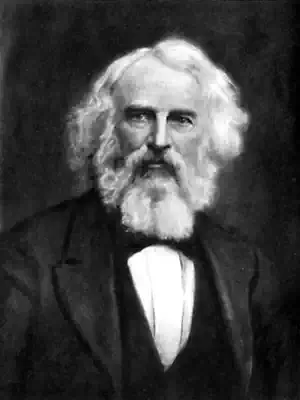
Henry Wadsworth Longfellow
Good Part, That Shall Not Be Taken Away, The
Good Part, That Shall Not Be Taken Away, The
She dwells by Great Kenhawa's side,
In valleys green and cool;
And all her hope and all her pride
Are in the village school.
Her soul, like the transparent air
That robes the hills above,
Though not of earth, encircles there
All things with arms of love.
And thus she walks among her girls
With praise and mild rebukes;
Subduing e'en rude village churls
By her angelic looks.
She reads to them at eventide
Of One who came to save;
To cast the captive's chains aside
And liberate the slave.
And oft the blessed time foretells
When all men shall be free;
And musical, as silver bells,
Their falling chains shall be.
And following her beloved Lord,
In decent poverty,
She makes her life one sweet record
And deed of charity.
For she was rich, and gave up all
To break the iron bands
Of those who waited in her hall,
And labored in her lands.
Long since beyond the Southern Sea
Their outbound sails have sped,
While she, in meek humility,
Now earns her daily bread.
It is their prayers, which never cease,
That clothe her with such grace;
Their blessing is the light of peace
That shines upon her face.
She dwells by Great Kenhawa's side,
In valleys green and cool;
And all her hope and all her pride
Are in the village school.
Her soul, like the transparent air
That robes the hills above,
Though not of earth, encircles there
All things with arms of love.
And thus she walks among her girls
With praise and mild rebukes;
Subduing e'en rude village churls
By her angelic looks.
She reads to them at eventide
Of One who came to save;
To cast the captive's chains aside
And liberate the slave.
And oft the blessed time foretells
When all men shall be free;
And musical, as silver bells,
Their falling chains shall be.
And following her beloved Lord,
In decent poverty,
She makes her life one sweet record
And deed of charity.
For she was rich, and gave up all
To break the iron bands
Of those who waited in her hall,
And labored in her lands.
Long since beyond the Southern Sea
Their outbound sails have sped,
While she, in meek humility,
Now earns her daily bread.
It is their prayers, which never cease,
That clothe her with such grace;
Their blessing is the light of peace
That shines upon her face.
335
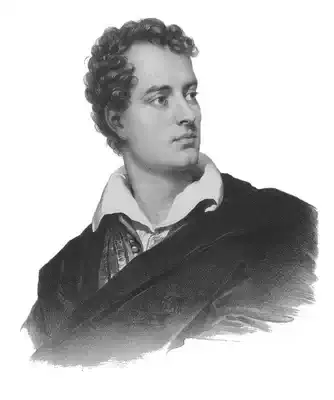
Lord Byron
Thoughts Suggested By A College Examination
Thoughts Suggested By A College Examination
High in the midst, surrounded by his peers,
MAGNUS his ample front sublime up rears:
Placed on his chair of state, he seems a god.
While Sophs and Freshmen tremble at his nod.
As all around sit wrapt in speechless gloom,
His voice in thunder shakes the sounding dome;
Denouncing dire reproach to luckless fools,
Unskill'd to plod in mathematic rules.
Happy the youth in Euclid's axiorn tried,
Though littie versed in any art beside;
Who, scarcely skill'd an English line tc pen,
Scans Attic metres with a critic's ken.
What, though he knows not how his fathers bled,
When civil discord piled the fields with dead,
When Edward bade his conquering bands advance
Or Henry trampled on the crest of France.
Though marvelling at the name of Magna Charta,
Yet well he recollects the laws of Sparta;
Can tell what edicts sage Lycurgus made,
While Blackstone's on the shelf neglected laid;
Of Grecian dramas vaunts the deathless fame,
Of Avon's bard remembering scarce the name.
Such is the youth whose scientific pate
Classhonours,
medals, fellowships, await
Or even, perhaps, the declamation prize
If to such glorious height he lifts his eyes.
But lo! no common orator can hope
The envied silver cup within his scope.
Not that our heads much eloquence require,
Th' ATHENIAN'S glowing style, or Tully's fire.
A manner clear or warm is useless, since
We do not try by speaking to convince.
Be other orators of pleasing proud,We
speak to please ourselves, not move the crowd:
Our gravity prefers the muttering tone,
A proper mixture of the squeak and groan:
No borrow'd grace of action must he seen;
The slightest motion would displease the Dean;
Whilst everv staring graduate would prate
Against what he could never imitate.
The man who hopes t' obtain the promised cup
Must in one posture stand, and ne'er look up;
Nor stop, but rattle over every word No
matter what, so it can not be heard.
Thus let him hurry on, nor think to rest:
Who speaks the fastest's sure to speak the best;
Who utters most within the shortest space
May safely hope to win the wordy race.
The sons of science these, who, thus repaid,
Linger in ease in Granta's sluggish shade;
Where on Cam's sedgy banks supine they lie,
Unknown, unhonour'd live, unweptfor
die:
Dull as the pictures which adorn their halls,
They think all learning fix'd within their walls:
In manners rude, in foolish forms precise,
All modern arts affecting to despise;
Yet prizing Bentley's, Brunck's, or Porson's note,
More than the verse on which the critic wrote:
Vain as their honours, heavy as their ale,
Sad as their wit, and tedious as their tale;
To friendship dead, though not untaught to feel
When Self and Church demand a bigot zeal.
With eager haste they court the lord of power,
Whether 'tis Pitt or Petty rules the hour;
To him, with suppliant smiles, they bend the head,
While distant mitres to their eyes are spread.
But should a storm o'erwhelm him with disgrace,
They'd fly to seek the next who fill'd his place.
Such are the men who learning's treasures guard!
Such is their practice, such is their reward!
This much, at least, we may presume to say The
premium can't exceed the price they pay.
High in the midst, surrounded by his peers,
MAGNUS his ample front sublime up rears:
Placed on his chair of state, he seems a god.
While Sophs and Freshmen tremble at his nod.
As all around sit wrapt in speechless gloom,
His voice in thunder shakes the sounding dome;
Denouncing dire reproach to luckless fools,
Unskill'd to plod in mathematic rules.
Happy the youth in Euclid's axiorn tried,
Though littie versed in any art beside;
Who, scarcely skill'd an English line tc pen,
Scans Attic metres with a critic's ken.
What, though he knows not how his fathers bled,
When civil discord piled the fields with dead,
When Edward bade his conquering bands advance
Or Henry trampled on the crest of France.
Though marvelling at the name of Magna Charta,
Yet well he recollects the laws of Sparta;
Can tell what edicts sage Lycurgus made,
While Blackstone's on the shelf neglected laid;
Of Grecian dramas vaunts the deathless fame,
Of Avon's bard remembering scarce the name.
Such is the youth whose scientific pate
Classhonours,
medals, fellowships, await
Or even, perhaps, the declamation prize
If to such glorious height he lifts his eyes.
But lo! no common orator can hope
The envied silver cup within his scope.
Not that our heads much eloquence require,
Th' ATHENIAN'S glowing style, or Tully's fire.
A manner clear or warm is useless, since
We do not try by speaking to convince.
Be other orators of pleasing proud,We
speak to please ourselves, not move the crowd:
Our gravity prefers the muttering tone,
A proper mixture of the squeak and groan:
No borrow'd grace of action must he seen;
The slightest motion would displease the Dean;
Whilst everv staring graduate would prate
Against what he could never imitate.
The man who hopes t' obtain the promised cup
Must in one posture stand, and ne'er look up;
Nor stop, but rattle over every word No
matter what, so it can not be heard.
Thus let him hurry on, nor think to rest:
Who speaks the fastest's sure to speak the best;
Who utters most within the shortest space
May safely hope to win the wordy race.
The sons of science these, who, thus repaid,
Linger in ease in Granta's sluggish shade;
Where on Cam's sedgy banks supine they lie,
Unknown, unhonour'd live, unweptfor
die:
Dull as the pictures which adorn their halls,
They think all learning fix'd within their walls:
In manners rude, in foolish forms precise,
All modern arts affecting to despise;
Yet prizing Bentley's, Brunck's, or Porson's note,
More than the verse on which the critic wrote:
Vain as their honours, heavy as their ale,
Sad as their wit, and tedious as their tale;
To friendship dead, though not untaught to feel
When Self and Church demand a bigot zeal.
With eager haste they court the lord of power,
Whether 'tis Pitt or Petty rules the hour;
To him, with suppliant smiles, they bend the head,
While distant mitres to their eyes are spread.
But should a storm o'erwhelm him with disgrace,
They'd fly to seek the next who fill'd his place.
Such are the men who learning's treasures guard!
Such is their practice, such is their reward!
This much, at least, we may presume to say The
premium can't exceed the price they pay.
388

Ezra Pound
The Logical Conclusion
The Logical Conclusion
When earth's last thesis is copied
From the theses that went before,
When idea from fact has departed
And bare-boned factlets shall bore,
When all joy shall have fled from study
And scholarship reign supreme;
When truth shall 'baaa' on the hill crests
And no one shall dare to dream;
When all the good poems have been buried
With comment annoted in full
And art shall bow down in homage
To scholarship's zinc-plated bull,
When there shall be nothing to research
But the notes of annoted notes,
And Baalam's ass shall inquire
The price of imported oats;
Then no one shall tell him the answer
For each shall know the one fact
That lies in the special ass-ignment
From which he is making his tract.
So the ass shall sigh uninstructed
While each in his separate book
Shall grind for the love of grinding
And only the devil shall look.
Against the 'germanic' system of graduate study and insane specialization in the
Inanities.
When earth's last thesis is copied
From the theses that went before,
When idea from fact has departed
And bare-boned factlets shall bore,
When all joy shall have fled from study
And scholarship reign supreme;
When truth shall 'baaa' on the hill crests
And no one shall dare to dream;
When all the good poems have been buried
With comment annoted in full
And art shall bow down in homage
To scholarship's zinc-plated bull,
When there shall be nothing to research
But the notes of annoted notes,
And Baalam's ass shall inquire
The price of imported oats;
Then no one shall tell him the answer
For each shall know the one fact
That lies in the special ass-ignment
From which he is making his tract.
So the ass shall sigh uninstructed
While each in his separate book
Shall grind for the love of grinding
And only the devil shall look.
Against the 'germanic' system of graduate study and insane specialization in the
Inanities.
469

Ella Wheeler Wilcox
That's The Way
That's The Way
Just a little every dayThat's
the way!
Seeds in darkness swell and grow,
Tiny blades push through the snow;
Never any flower of May
Leaps to blossom in a burst,
Slowly, slowly, as the first,
That's the way.
Just a little every day.
Just a little every dayThat's
the way,
Children learn to read and write
Bit by bit and mite by mite,
Never any one I say
Leaps to knowledge and its power;
Slowly, slowly, hour by hour,
That's the way!
Just a little every day.
Just a little every dayThat's
the way!
Seeds in darkness swell and grow,
Tiny blades push through the snow;
Never any flower of May
Leaps to blossom in a burst,
Slowly, slowly, as the first,
That's the way.
Just a little every day.
Just a little every dayThat's
the way,
Children learn to read and write
Bit by bit and mite by mite,
Never any one I say
Leaps to knowledge and its power;
Slowly, slowly, hour by hour,
That's the way!
Just a little every day.
470

Edward Lear
He Lived at Dingle Bank
He Lived at Dingle Bank
He lived at Dingle Bank - he did; -
He lived at Dingle Bank;
And in his garden was one Quail,
Four tulips and a Tank:
And from his window he could see
The otion and the River Dee.
His house stood on a Cliff, - it did,
Its aspic it was cool;
And many thousand little boys
Resorted to his school,
Where if of progress they could boast
He gave them heaps of buttered toast.
But he grew rabid-wroth, he did,
If they neglected books,
And dragged them to adjacent Cliffs
With beastly Button Hooks,
And there with fatuous glee he threw
Them down into the ocean blue.
And in the sea they sway, they did, -
All playfully about,
And some eventually became
Sponges, or speckled trout: -
But Liverpool doth all bewail
Their Fate; - likewise his Garden Quail.
He lived at Dingle Bank - he did; -
He lived at Dingle Bank;
And in his garden was one Quail,
Four tulips and a Tank:
And from his window he could see
The otion and the River Dee.
His house stood on a Cliff, - it did,
Its aspic it was cool;
And many thousand little boys
Resorted to his school,
Where if of progress they could boast
He gave them heaps of buttered toast.
But he grew rabid-wroth, he did,
If they neglected books,
And dragged them to adjacent Cliffs
With beastly Button Hooks,
And there with fatuous glee he threw
Them down into the ocean blue.
And in the sea they sway, they did, -
All playfully about,
And some eventually became
Sponges, or speckled trout: -
But Liverpool doth all bewail
Their Fate; - likewise his Garden Quail.
228
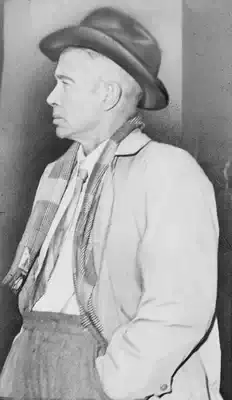
E. E. Cummings
Ballad of the Scholar's Lament
Ballad of the Scholar's Lament
When I have struggled through three hundred years
of Roman history, and hastened o'er
Some French play-(though I have my private fears
Of flunking sorely when I take the floor
In class),-when I have steeped my soul in gore
And Greek, and figured over half a ream
With Algebra, which I do (not) adore,
How shall I manage to compose a theme?
It's well enough to talk of poor and peers,
And munch the golden apples' shiny core,
And lay a lot of heroes on their biers;While
the great Alec, knocking down a score,
Takes out his handkerchief, boohoo-ing, "More!"But
harshly I awaken from my dream,
To find a new,-er,-privilege,-in store:
How shall I manage to compose a theme?
After I've swallowed prophecies of seers,
And trailed Aeneas from the Trojan shore,
Learned how Achilles, after many jeers,
On piggy Agamemnon got to sore,
And heard how Hercules, Esq., tore
Around, and swept and dusted with a stream,
There's one last duty,-let's not call it bore,How
shall I manage to compose a theme?
Envoi
Of what avail is all my mighty lore?
I beat my breast, I tear my hair, I scream:
"Behold, I have a Herculean chore.
How shall I manage to compose a theme?"
When I have struggled through three hundred years
of Roman history, and hastened o'er
Some French play-(though I have my private fears
Of flunking sorely when I take the floor
In class),-when I have steeped my soul in gore
And Greek, and figured over half a ream
With Algebra, which I do (not) adore,
How shall I manage to compose a theme?
It's well enough to talk of poor and peers,
And munch the golden apples' shiny core,
And lay a lot of heroes on their biers;While
the great Alec, knocking down a score,
Takes out his handkerchief, boohoo-ing, "More!"But
harshly I awaken from my dream,
To find a new,-er,-privilege,-in store:
How shall I manage to compose a theme?
After I've swallowed prophecies of seers,
And trailed Aeneas from the Trojan shore,
Learned how Achilles, after many jeers,
On piggy Agamemnon got to sore,
And heard how Hercules, Esq., tore
Around, and swept and dusted with a stream,
There's one last duty,-let's not call it bore,How
shall I manage to compose a theme?
Envoi
Of what avail is all my mighty lore?
I beat my breast, I tear my hair, I scream:
"Behold, I have a Herculean chore.
How shall I manage to compose a theme?"
602

D.H. Lawrence
Discipline
Discipline
It is stormy, and raindrops cling like silver bees to the pane,
The thin sycamores in the playground are swinging with flattened leaves;
The heads of the boys move dimly through a yellow gloom that stains
The class; over them all the dark net of my discipline weaves.
It is no good, dear, gentleness and forbearance, I endured too long:
I have pushed my hands in the dark soil, under the flower of my soul
And the gentle leaves, and have felt where the roots are strong
Fixed in the darkness, grappling for the deep soil’s little control.
And there is the dark, my darling, where the roots are entangled and fight
Each one for its hold on the oblivious darkness, I know that there
In the night where we first have being, before we rise on the light,
We are not brothers, my darling, we fight and we do not spare.
And in the original dark the roots cannot keep, cannot know
Any communion whatever, but they bind themselves on to the dark,
And drawing the darkness together, crush from it a twilight, a slow
Burning that breaks at last into leaves and a flower’s bright spark.
I came to the boys with love, my dear, but they turned on me;
I came with gentleness, with my heart ’twixt my hands like a bowl,
Like a loving-cup, like a grail, but they spilt it triumphantly
And tried to break the vessel, and to violate my soul.
But what have I to do with the boys, deep down in my soul, my love?
I throw from out of the darkness my self like a flower into sight,
Like a flower from out of the night-time, I lift my face, and those
Who will may warm their hands at me, comfort this night.
But whosoever would pluck apart my flowering shall burn their hands,
So flowers are tender folk, and roots can only hide,
Yet my flowerings of love are a fire, and the scarlet brands
Of my love are roses to look at, but flames to chide.
But comfort me, my love, now the fires are low,
Now I am broken to earth like a winter destroyed, and all
Myself but a knowledge of roots, of roots in the dark that throw
A net on the undersoil, which lies passive beneath their thrall.
But comfort me, for henceforth my love is yours alone,
To you alone will I offer the bowl, to you will I give
My essence only, but love me, and I will atone
To you for my general loving, atone as long as I live.
It is stormy, and raindrops cling like silver bees to the pane,
The thin sycamores in the playground are swinging with flattened leaves;
The heads of the boys move dimly through a yellow gloom that stains
The class; over them all the dark net of my discipline weaves.
It is no good, dear, gentleness and forbearance, I endured too long:
I have pushed my hands in the dark soil, under the flower of my soul
And the gentle leaves, and have felt where the roots are strong
Fixed in the darkness, grappling for the deep soil’s little control.
And there is the dark, my darling, where the roots are entangled and fight
Each one for its hold on the oblivious darkness, I know that there
In the night where we first have being, before we rise on the light,
We are not brothers, my darling, we fight and we do not spare.
And in the original dark the roots cannot keep, cannot know
Any communion whatever, but they bind themselves on to the dark,
And drawing the darkness together, crush from it a twilight, a slow
Burning that breaks at last into leaves and a flower’s bright spark.
I came to the boys with love, my dear, but they turned on me;
I came with gentleness, with my heart ’twixt my hands like a bowl,
Like a loving-cup, like a grail, but they spilt it triumphantly
And tried to break the vessel, and to violate my soul.
But what have I to do with the boys, deep down in my soul, my love?
I throw from out of the darkness my self like a flower into sight,
Like a flower from out of the night-time, I lift my face, and those
Who will may warm their hands at me, comfort this night.
But whosoever would pluck apart my flowering shall burn their hands,
So flowers are tender folk, and roots can only hide,
Yet my flowerings of love are a fire, and the scarlet brands
Of my love are roses to look at, but flames to chide.
But comfort me, my love, now the fires are low,
Now I am broken to earth like a winter destroyed, and all
Myself but a knowledge of roots, of roots in the dark that throw
A net on the undersoil, which lies passive beneath their thrall.
But comfort me, for henceforth my love is yours alone,
To you alone will I offer the bowl, to you will I give
My essence only, but love me, and I will atone
To you for my general loving, atone as long as I live.
226
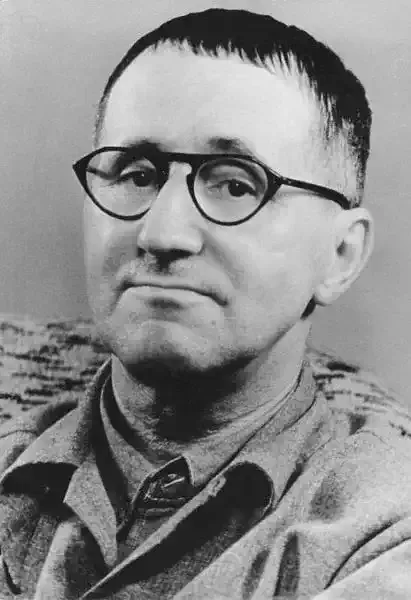
Bertolt Brecht
To the Students of the Workers' and Peasants' Faculty
To the Students of the Workers' and Peasants' Faculty
So there you sit. And how much blood was shed
That you might sit there. Do such stories bore you?
Well, don't forget that others sat before you
who later sat on people. Keep your head!
Your science will be valueless, you'll find
And learning will be sterile, if inviting
Unless you pledge your intellect to fighting
Against all enemies of all mankind.
Never forget that men like you got hurt
That you might sit here, not the other lot.
And now don't shut your eyes, and don't desert
But learn to learn, and try to learn for what.
So there you sit. And how much blood was shed
That you might sit there. Do such stories bore you?
Well, don't forget that others sat before you
who later sat on people. Keep your head!
Your science will be valueless, you'll find
And learning will be sterile, if inviting
Unless you pledge your intellect to fighting
Against all enemies of all mankind.
Never forget that men like you got hurt
That you might sit here, not the other lot.
And now don't shut your eyes, and don't desert
But learn to learn, and try to learn for what.
661

Anonymous
The Moral
The Moral
You mustn't groom an Arab with a file.
You hadn't ought to tension-spring a mule.
You couldn't push a brumby fifty mile
And drop him in a boiler-shed to cool.
I'll sling you through six counties in a day.
I'll hike you up a grade of one in ten.
I am Duty, Law and Order under way,
I'm the Mentor of banana-fingered men!
I will make you I know your left hand from your right.
I will teach you not to drink about your biz.
I'm the only temperance advocate in sight!
I am all the Education Act there is!
You mustn't groom an Arab with a file.
You hadn't ought to tension-spring a mule.
You couldn't push a brumby fifty mile
And drop him in a boiler-shed to cool.
I'll sling you through six counties in a day.
I'll hike you up a grade of one in ten.
I am Duty, Law and Order under way,
I'm the Mentor of banana-fingered men!
I will make you I know your left hand from your right.
I will teach you not to drink about your biz.
I'm the only temperance advocate in sight!
I am all the Education Act there is!
215

Alexander Pope
To Lady Mary Wortley Montagu
To Lady Mary Wortley Montagu
I.
In beauty, or wit,
No mortal as yet
To question your empire has dared:
But men of discerning
Have thought that in learning
To yield to a lady was hard.
II.
Impertinent schools,
With musty dull rules,
Have reading to females denied;
So Papists refuse
The Bible to use,
Lest flocks should be wise as their guide.
III.
'Twas a woman at first
(Indeed she was curst)
In knowledge that tasted delight,
And sages agree
The laws should decree
To the first possessor the right.
IV.
Then bravely, fair dame,
Resume the old claim,
Which to your whole sex does belong;
And let men receive,
From a second bright Eve,
The knowledge of right and of wrong.
V.
But if the first Eve
Hard doom did receive,
When only one apple had she,
What a punishment new
Shall be found out for you,
Who tasting, have robb'd the whole tree?
I.
In beauty, or wit,
No mortal as yet
To question your empire has dared:
But men of discerning
Have thought that in learning
To yield to a lady was hard.
II.
Impertinent schools,
With musty dull rules,
Have reading to females denied;
So Papists refuse
The Bible to use,
Lest flocks should be wise as their guide.
III.
'Twas a woman at first
(Indeed she was curst)
In knowledge that tasted delight,
And sages agree
The laws should decree
To the first possessor the right.
IV.
Then bravely, fair dame,
Resume the old claim,
Which to your whole sex does belong;
And let men receive,
From a second bright Eve,
The knowledge of right and of wrong.
V.
But if the first Eve
Hard doom did receive,
When only one apple had she,
What a punishment new
Shall be found out for you,
Who tasting, have robb'd the whole tree?
368
Previous
Page 2