

Poems in this theme
Pain and Despair

Ella Wheeler Wilcox
Guerdon
Guerdon
Upon the white cheek of the Cherub Year
I saw a tear.
Alas! I murmured, that the Year should borrow
So soon a sorrow.
Just then the sunlight fell with sudden flame:
A tear became
A wondrous diamond sparkling in the light –
A beautiful sight.
Upon my soul there fell such woeful loss,
I said, ‘The Cross
Is grievous for a life as young as mine.’
Just then, like wine,
God’s sunlight shone from His high Heavens down;
And lo! a crown
Gleamed in the place of what I thought a burden –
My sorrow’s guerdon.
Upon the white cheek of the Cherub Year
I saw a tear.
Alas! I murmured, that the Year should borrow
So soon a sorrow.
Just then the sunlight fell with sudden flame:
A tear became
A wondrous diamond sparkling in the light –
A beautiful sight.
Upon my soul there fell such woeful loss,
I said, ‘The Cross
Is grievous for a life as young as mine.’
Just then, like wine,
God’s sunlight shone from His high Heavens down;
And lo! a crown
Gleamed in the place of what I thought a burden –
My sorrow’s guerdon.
299
Ella Wheeler Wilcox
From the Grave
From the Grave
When the first sere leaves of the year were falling,
I heard, with a heart that was strangely thrilled,
Out of the grave of a dead Past calling,
A voice I fancied forever stilled.
All through winter and spring and summer,
Silence hung over that grave like a pall,
But, borne on the breath of the last sad comer,
I listen again to the old-time call.
It is only a love of a by-gone season,
A senseless folly that mocked at me
A reckless passion that lacked all reason,
So I killed it, and hid it where none could see.
I smothered it first to stop its crying,
Then stabbed it through with a good sharp blade,
And cold and pallid I saw it lying,
And deep—ah' deep was the grave I made.
But now I know that there is no killing
A thing like Love, for it laughs at Death.
There is no hushing, there is no stilling
That which is part of your life and breath.
You may bury it deep, and leave behind you
The land, the people, that knew your slain;
It will push the sods from its grave, and find you
On wastes of water or desert plain.
You may hear but tongues of a foreign people,
You may list to sounds that are strange and new;
But, clear as a silver bell in a steeple,
That voice from the grave shall call to you.
You may rouse your pride, you may use your reason.
And seem for a space to slay Love so;
But, all in its own good time and season,
It will rise and follow wherever you go.
You shall sit sometimes, when the leaves are falling,
Alone with your heart, as I sit to-day,
And hear that voice from your dead Past calling
Out of the graves that you hid away.
When the first sere leaves of the year were falling,
I heard, with a heart that was strangely thrilled,
Out of the grave of a dead Past calling,
A voice I fancied forever stilled.
All through winter and spring and summer,
Silence hung over that grave like a pall,
But, borne on the breath of the last sad comer,
I listen again to the old-time call.
It is only a love of a by-gone season,
A senseless folly that mocked at me
A reckless passion that lacked all reason,
So I killed it, and hid it where none could see.
I smothered it first to stop its crying,
Then stabbed it through with a good sharp blade,
And cold and pallid I saw it lying,
And deep—ah' deep was the grave I made.
But now I know that there is no killing
A thing like Love, for it laughs at Death.
There is no hushing, there is no stilling
That which is part of your life and breath.
You may bury it deep, and leave behind you
The land, the people, that knew your slain;
It will push the sods from its grave, and find you
On wastes of water or desert plain.
You may hear but tongues of a foreign people,
You may list to sounds that are strange and new;
But, clear as a silver bell in a steeple,
That voice from the grave shall call to you.
You may rouse your pride, you may use your reason.
And seem for a space to slay Love so;
But, all in its own good time and season,
It will rise and follow wherever you go.
You shall sit sometimes, when the leaves are falling,
Alone with your heart, as I sit to-day,
And hear that voice from your dead Past calling
Out of the graves that you hid away.
491
Ella Wheeler Wilcox
Fading*
Fading*
She sits beside the window. All who pass
Turn once again to gaze on her sweet face.
She is so fair; but soon, too soon, alas,
To lie down in her last resting-place.
No gems are brighter than her sparkling eyes,
Her brow like polished marble, white and fair -
Her cheeks are glowing as the sunset skies You
would not dream that Death was lurking there.
But, Oh! he lingers closely at her side,
And when the forest dons her Autumn dress,
We know that he will claim her as his bride,
And earth will number one fair spirit less.
She sees the meadow robed in richest green The
laughing stream - the willows bending o'er.
With tear-dimmed eyes she views each sylvan scene,
And thinks earth never was so fair before.
We do not sigh for heaven, till we have known
Something of sorrow, something of grief and woe,
And as a summer day her life has flown.
Oh, can we wonder she is loth to go?
She has no friends in heaven: all are here.
No lost one waits her in that unknown land,
And life grows doubly, trebly sweet and dear
As day by day she nears the mystic strand.
We love her and we grieve to see her go.
But it is Christ who calls her to His breast,
And He shall greet her, and she soon shall know
The joys of souls that dwell among the blest.
She sits beside the window. All who pass
Turn once again to gaze on her sweet face.
She is so fair; but soon, too soon, alas,
To lie down in her last resting-place.
No gems are brighter than her sparkling eyes,
Her brow like polished marble, white and fair -
Her cheeks are glowing as the sunset skies You
would not dream that Death was lurking there.
But, Oh! he lingers closely at her side,
And when the forest dons her Autumn dress,
We know that he will claim her as his bride,
And earth will number one fair spirit less.
She sees the meadow robed in richest green The
laughing stream - the willows bending o'er.
With tear-dimmed eyes she views each sylvan scene,
And thinks earth never was so fair before.
We do not sigh for heaven, till we have known
Something of sorrow, something of grief and woe,
And as a summer day her life has flown.
Oh, can we wonder she is loth to go?
She has no friends in heaven: all are here.
No lost one waits her in that unknown land,
And life grows doubly, trebly sweet and dear
As day by day she nears the mystic strand.
We love her and we grieve to see her go.
But it is Christ who calls her to His breast,
And He shall greet her, and she soon shall know
The joys of souls that dwell among the blest.
404
Ella Wheeler Wilcox
Desolation
Desolation
I think that the bitterest sorrow or pain
Of love unrequited, or cold death’s woe,
Is sweet, compared to that hour when we know
That some grand passion is on the wane.
When we see that the glory, and glow, and grace
Which lent a splendour to night and day,
Are surely fading, and showing grey
And dull groundwork of the commonplace.
When fond expressions on dull ears fall,
When the hands clasp calmly without one thrill,
When we cannot muster by force of will
The old emotions that came at call.
When the dream has vanished we fain would keep,
When the heart, like a watch, runs out of gear,
And all the savour goes out of the year,
Oh, then is the time – if we could – to weep!
But no tears soften this dull, pale woe;
We must sit and face it with dry, sad eyes.
If we seek to hold it, the swifter joy flies –
We can only be passive, and let it go.
I think that the bitterest sorrow or pain
Of love unrequited, or cold death’s woe,
Is sweet, compared to that hour when we know
That some grand passion is on the wane.
When we see that the glory, and glow, and grace
Which lent a splendour to night and day,
Are surely fading, and showing grey
And dull groundwork of the commonplace.
When fond expressions on dull ears fall,
When the hands clasp calmly without one thrill,
When we cannot muster by force of will
The old emotions that came at call.
When the dream has vanished we fain would keep,
When the heart, like a watch, runs out of gear,
And all the savour goes out of the year,
Oh, then is the time – if we could – to weep!
But no tears soften this dull, pale woe;
We must sit and face it with dry, sad eyes.
If we seek to hold it, the swifter joy flies –
We can only be passive, and let it go.
473
Ella Wheeler Wilcox
Courage
Courage
There is a courage, a majestic thing
That springs forth from the brow of pain, full-grown,
Minerva-like, and dares all dangers known,
And all the threatening future yet may bring;
Crowned with the helmet of great suffering;
Serene with that grand strength by martyrs shown,
When at the stake they die and make no moan,
And even as the flames leap up are heard to sing:
A courage so sublime and unafraid,
It wears its sorrows like a coat of mail;
And Fate, the archer, passes by dismayed,
Knowing his best barbed arrows needs must fail
To pierce a soul so armored and arrayed
That Death himself might look on it and quail.
There is a courage, a majestic thing
That springs forth from the brow of pain, full-grown,
Minerva-like, and dares all dangers known,
And all the threatening future yet may bring;
Crowned with the helmet of great suffering;
Serene with that grand strength by martyrs shown,
When at the stake they die and make no moan,
And even as the flames leap up are heard to sing:
A courage so sublime and unafraid,
It wears its sorrows like a coat of mail;
And Fate, the archer, passes by dismayed,
Knowing his best barbed arrows needs must fail
To pierce a soul so armored and arrayed
That Death himself might look on it and quail.
409
Ella Wheeler Wilcox
Conversion
Conversion
When this world's pleasures for my soul sufficed,
Ere my heart's plummet sounded depths of pain,
I call on Reason to control my brain,
And scoffed at that old story of Christ.
But when o'er burning wastes my feet had trod,
And all my life was desolate with loss,
With bleeding hands I clung about the cross,
And cried aloud, 'Man needs a suffering God! '
When this world's pleasures for my soul sufficed,
Ere my heart's plummet sounded depths of pain,
I call on Reason to control my brain,
And scoffed at that old story of Christ.
But when o'er burning wastes my feet had trod,
And all my life was desolate with loss,
With bleeding hands I clung about the cross,
And cried aloud, 'Man needs a suffering God! '
295
Ella Wheeler Wilcox
Clara Morris (Written for a Benefit Given Mrs. Morris)
Clara Morris (Written for a Benefit Given Mrs. Morris)
The Radiant Ruler of Mystic Regions
Where souls of artists are fitted for birth,
Gathered together their lovely legions
And fashioned a woman to shine on earth.
They bathed her in splendor
They made her tender:
They gave her a nature both sweet and wild.
They gave her emotions
Like storm stirred oceans,
And they gave her the heart of a little child.
These Radiant Rulers (who are not human
Nor yet divine like the gods above)
Poured all their gifts in the soul of a woman
That fragile vessel meant only for love.
Still more they taught her,
Still more they brought her-
Till they gave her the world for a harp one day,
And they bade her string it-
They bade her ring it,
While the stars all wondered to hear her play.
She touched the strings in a master fashion,
She uttered the cry of a world's despair.
Its long-hid secret, its pent-up passion,
She gave to the winds in a vibrant air.
For ah! the heart of her,
That was the art of her,
Great with the feeling that makes men kin.
Art unapproachable,
Art all uncoachable,
Fragrance and flame from the spirit within.
The earth turns ever an ear unheeding
To the sorrows of art, as it cries for more:
And she played on the harp till her hands were bleeding
And her brow was bruised by the laurels she wore.
She knew the trend of it,
She knew the end of it.
Men heard the music and men felt the thrill.
Bound to the altar
Of art, could she falter?
Then came a silence-the music was still.
And yet in the echoes we seem to hear it
In waves unbroken it circles the earth:
And we catch in the light of her dauntless spirit
A gleam from the center that gave her birth.
Still is the fame of her
Felt in the name of her.
But low lies the harp that once thrilled to her strain.
No hand has taken it,
No hand can waken it-
For the soul of her art was her secret of pain.
The Radiant Ruler of Mystic Regions
Where souls of artists are fitted for birth,
Gathered together their lovely legions
And fashioned a woman to shine on earth.
They bathed her in splendor
They made her tender:
They gave her a nature both sweet and wild.
They gave her emotions
Like storm stirred oceans,
And they gave her the heart of a little child.
These Radiant Rulers (who are not human
Nor yet divine like the gods above)
Poured all their gifts in the soul of a woman
That fragile vessel meant only for love.
Still more they taught her,
Still more they brought her-
Till they gave her the world for a harp one day,
And they bade her string it-
They bade her ring it,
While the stars all wondered to hear her play.
She touched the strings in a master fashion,
She uttered the cry of a world's despair.
Its long-hid secret, its pent-up passion,
She gave to the winds in a vibrant air.
For ah! the heart of her,
That was the art of her,
Great with the feeling that makes men kin.
Art unapproachable,
Art all uncoachable,
Fragrance and flame from the spirit within.
The earth turns ever an ear unheeding
To the sorrows of art, as it cries for more:
And she played on the harp till her hands were bleeding
And her brow was bruised by the laurels she wore.
She knew the trend of it,
She knew the end of it.
Men heard the music and men felt the thrill.
Bound to the altar
Of art, could she falter?
Then came a silence-the music was still.
And yet in the echoes we seem to hear it
In waves unbroken it circles the earth:
And we catch in the light of her dauntless spirit
A gleam from the center that gave her birth.
Still is the fame of her
Felt in the name of her.
But low lies the harp that once thrilled to her strain.
No hand has taken it,
No hand can waken it-
For the soul of her art was her secret of pain.
438
Ella Wheeler Wilcox
Christ Crucified
Christ Crucified
Now ere I slept, my prayer had been that I might see my way
To do the will of Christ, our Lord and Master, day by day;
And with this prayer upon my lips, I knew not that I dreamed,
But suddenly the world of night a pandemonium seemed.
From forest, and from slaughter house, from bull ring, and from stall,
There rose an anguished cry of pain, a loud, appealing call;
As man – the dumb beast’s next of kin – with gun, and whip, and knife,
Went pleasure-seeking through the earth, blood-bent on taking life.
From trap, and cage, and house, and zoo, and street, that awful strain
Of tortured creatures rose and swelled the orchestra of pain.
And then methought the gentle Christ appeared to me and spoke:
‘I called you, but ye answered not’ – and in my fear I woke.
Then next I heard the roar of mills; and moving through the noise,
Like phantoms in an underworld, were little girls and boys.
Their backs were bent, their brows were pale, their eyes were sad and old;
But by the labour of their hands greed added gold to gold.
Again the Presence and the Voice: ‘Behold the crimes I see,
As ye have done it unto these, so have ye done to me.’
Again I slept. I seemed to climb a hard, ascending track;
And just behind me laboured one whose patient face was black.
I pitied him; but hour by hour he gained upon the path;
He stood beside me, stood upright – and then I turned in wrath.
‘Go back! ’ I cried. ‘What right have you to walk beside me here?
For you are black, and I am white.’ I paused struck dumb with fear.
For lo! the black man was not there, but Christ stood in his place;
And oh! the pain, the pain, the pain that looked from his dear face.
Now when I woke, the air was rife with that sweet, rhythmic din
Which tells the world that Christ has come to save mankind from sin.
And through the open door of church and temple passed a throng,
To worship Him, with bended knee with sermon, and with song.
But over all I heard the cry of hunted, mangled things;
Those creatures which are part of God, though they have hoofs and wings.
I saw the mill, the mine, and shop, the little slaves of greed;
I heard the strife of race with race, all sprung from one God-seed.
And then I bowed my head in shame, and in contrition cried –
‘Lo, after nineteen hundred years, Christ still is crucified.’
Now ere I slept, my prayer had been that I might see my way
To do the will of Christ, our Lord and Master, day by day;
And with this prayer upon my lips, I knew not that I dreamed,
But suddenly the world of night a pandemonium seemed.
From forest, and from slaughter house, from bull ring, and from stall,
There rose an anguished cry of pain, a loud, appealing call;
As man – the dumb beast’s next of kin – with gun, and whip, and knife,
Went pleasure-seeking through the earth, blood-bent on taking life.
From trap, and cage, and house, and zoo, and street, that awful strain
Of tortured creatures rose and swelled the orchestra of pain.
And then methought the gentle Christ appeared to me and spoke:
‘I called you, but ye answered not’ – and in my fear I woke.
Then next I heard the roar of mills; and moving through the noise,
Like phantoms in an underworld, were little girls and boys.
Their backs were bent, their brows were pale, their eyes were sad and old;
But by the labour of their hands greed added gold to gold.
Again the Presence and the Voice: ‘Behold the crimes I see,
As ye have done it unto these, so have ye done to me.’
Again I slept. I seemed to climb a hard, ascending track;
And just behind me laboured one whose patient face was black.
I pitied him; but hour by hour he gained upon the path;
He stood beside me, stood upright – and then I turned in wrath.
‘Go back! ’ I cried. ‘What right have you to walk beside me here?
For you are black, and I am white.’ I paused struck dumb with fear.
For lo! the black man was not there, but Christ stood in his place;
And oh! the pain, the pain, the pain that looked from his dear face.
Now when I woke, the air was rife with that sweet, rhythmic din
Which tells the world that Christ has come to save mankind from sin.
And through the open door of church and temple passed a throng,
To worship Him, with bended knee with sermon, and with song.
But over all I heard the cry of hunted, mangled things;
Those creatures which are part of God, though they have hoofs and wings.
I saw the mill, the mine, and shop, the little slaves of greed;
I heard the strife of race with race, all sprung from one God-seed.
And then I bowed my head in shame, and in contrition cried –
‘Lo, after nineteen hundred years, Christ still is crucified.’
468
Ella Wheeler Wilcox
Answered Prayers
Answered Prayers
I prayed for riches, and achieved success;
All that I touched turned into gold. Alas!
My cares were greater and my peace was less,
When that wish came to pass.
I prayed for glory, and I heard my name
Sung by sweet children and by hoary men.
But ah! the hurts – the hurts that come with fame.
I was not happy then.
I prayed for Love, and had my heart’s desire.
Through quivering heart and body, and through brain,
There swept the flame of its devouring fire,
And but the scars remain.
I prayed for a contented mind. At length
Great light upon my darkened spirit burst.
Great peace fell on me also, and great strength –
Oh, had that prayer been first!
I prayed for riches, and achieved success;
All that I touched turned into gold. Alas!
My cares were greater and my peace was less,
When that wish came to pass.
I prayed for glory, and I heard my name
Sung by sweet children and by hoary men.
But ah! the hurts – the hurts that come with fame.
I was not happy then.
I prayed for Love, and had my heart’s desire.
Through quivering heart and body, and through brain,
There swept the flame of its devouring fire,
And but the scars remain.
I prayed for a contented mind. At length
Great light upon my darkened spirit burst.
Great peace fell on me also, and great strength –
Oh, had that prayer been first!
395
Ella Wheeler Wilcox
An Empty Crib
An Empty Crib
Beside a crib that holds a baby’s stocking,
A tattered picture book, a broken toy,
A sleeping mother dreams that she is rocking
Her fair-haired cherub boy.
Upon the cradle’s side her light touch keeping,
She gently rocks it, crooning low a song;
And smiles to think her little one is sleeping,
So peacefully and long.
Step light, breathe low, break not her rapturous dreaming,
Wake not the sleeper from her trance of joy,
For never more save in sweet slumber-seeming
Will she watch o’er her little boy.
God pity her when from her dream Elysian
She wakes to see the empty crib, and weep;
Knowing her joy was but a sleeper’s vision,
Tread lightly – let her sleep.
Beside a crib that holds a baby’s stocking,
A tattered picture book, a broken toy,
A sleeping mother dreams that she is rocking
Her fair-haired cherub boy.
Upon the cradle’s side her light touch keeping,
She gently rocks it, crooning low a song;
And smiles to think her little one is sleeping,
So peacefully and long.
Step light, breathe low, break not her rapturous dreaming,
Wake not the sleeper from her trance of joy,
For never more save in sweet slumber-seeming
Will she watch o’er her little boy.
God pity her when from her dream Elysian
She wakes to see the empty crib, and weep;
Knowing her joy was but a sleeper’s vision,
Tread lightly – let her sleep.
360
Ella Wheeler Wilcox
A Waif
A Waif
My soul is like a poor caged bird to-night,
Beating its wings against the prison bars,
Longing to reach the outer world of light,
And, all untrammelled, soar among the stars.
Wild, mighty thoughts struggle within my soul
For utterance. Great waves of passion roll
Through all my being. As the lightnings play
Through thunder clouds, so beams of blinding light
Flash for a moment on my darkened brain -
Quick, sudden, glaring beams, that fade wawy
And leave me in a darker, deeper night.
Oh, poet sould! that struggle all in vain
To live in peace and harmony with earth,
It cannot be! They must endure the pain
Of conscience and unacknoeledged worth,
Moving and dwelling with the common herd,
Whose highest thought has never strayed as far,
Or never strayed beyond the horizon's bar;
Whose narrow hearts and souls are never stirred
With keenest pleasures, or with sharpest pain;
Who rise and eat and sleep, and rise again,
Nor question why or wherefore. Men whose minds
Are never shaken by wild passion winds;
Women whose broadest, deepeat realm of thought
The bridal veil will cover.
Who see not
God's mighty work lying undone to-day, -
Work that a woman's hands can do as well,
Oh, soul of mine; better to live alway
In this tumultuous inward pain and strife,
Doing the work that in thy reach doth fall,
Weeping because thou canst not do it all;
Oh, better, my soul, in this unrest to dwell,
Than grovel as they grovel on through life.
My soul is like a poor caged bird to-night,
Beating its wings against the prison bars,
Longing to reach the outer world of light,
And, all untrammelled, soar among the stars.
Wild, mighty thoughts struggle within my soul
For utterance. Great waves of passion roll
Through all my being. As the lightnings play
Through thunder clouds, so beams of blinding light
Flash for a moment on my darkened brain -
Quick, sudden, glaring beams, that fade wawy
And leave me in a darker, deeper night.
Oh, poet sould! that struggle all in vain
To live in peace and harmony with earth,
It cannot be! They must endure the pain
Of conscience and unacknoeledged worth,
Moving and dwelling with the common herd,
Whose highest thought has never strayed as far,
Or never strayed beyond the horizon's bar;
Whose narrow hearts and souls are never stirred
With keenest pleasures, or with sharpest pain;
Who rise and eat and sleep, and rise again,
Nor question why or wherefore. Men whose minds
Are never shaken by wild passion winds;
Women whose broadest, deepeat realm of thought
The bridal veil will cover.
Who see not
God's mighty work lying undone to-day, -
Work that a woman's hands can do as well,
Oh, soul of mine; better to live alway
In this tumultuous inward pain and strife,
Doing the work that in thy reach doth fall,
Weeping because thou canst not do it all;
Oh, better, my soul, in this unrest to dwell,
Than grovel as they grovel on through life.
466
Ella Wheeler Wilcox
A Man's Repentance
A Man's Repentance
To-night when I came from the club at eleven,
Under the gaslight I saw a face-
A woman's face! and I swear to heaven
It looked like the ghastly ghost of-Grace!
And Grace? why, Grace was fair; and I tarried,
And loved her a season as we men do.
And then-but pshaw! why, of course, she is married,
Has a husband, and doubtless, a babe or two.
She was perfectly calm on the day we parted;
She spared me a scene, to my great surprise.
She wasn't the kind to be broken-hearted,
I remember she said, with a spark in her eyes.
I was tempted, I know, by her proud defiance,
To make good my promises there and then.
But the world would have called it a mésalliance!
I dreaded the comments and sneers of men.
So I left her to grieve for a faithless lover,
And to hide her heart from the cold world's sight
As women do hide them, the wide earth over;
My God! was it Grace that I saw to-night?
I thought of her married, and often with pity,
A poor man's wife in some dull place.
And now to know she is here in the city,
Under the gaslight, and with that face!
Yet I knew it at once, in spite of the daubing
Of paint and powder, and she knew me;
She drew a quick breath that was almost sobbing,
And shrank in the shade so I should not see.
There was hell in her eyes! She was worn and jaded;
Her soul is at war with the life she has led.
As I looked on that face so strangely faded,
I wonder God did not strike me dead.
While I have been happy and gay and jolly,
Received by the very best people in town,
That girl whom I led in the way to folly,
Has gone on recklessly down and down.
Two o'clock, and no sleep has found me.
That face I saw in the street-lamp's light
Peers everywhere out from the shadows around me-
I know how a murderer feels to-night!
To-night when I came from the club at eleven,
Under the gaslight I saw a face-
A woman's face! and I swear to heaven
It looked like the ghastly ghost of-Grace!
And Grace? why, Grace was fair; and I tarried,
And loved her a season as we men do.
And then-but pshaw! why, of course, she is married,
Has a husband, and doubtless, a babe or two.
She was perfectly calm on the day we parted;
She spared me a scene, to my great surprise.
She wasn't the kind to be broken-hearted,
I remember she said, with a spark in her eyes.
I was tempted, I know, by her proud defiance,
To make good my promises there and then.
But the world would have called it a mésalliance!
I dreaded the comments and sneers of men.
So I left her to grieve for a faithless lover,
And to hide her heart from the cold world's sight
As women do hide them, the wide earth over;
My God! was it Grace that I saw to-night?
I thought of her married, and often with pity,
A poor man's wife in some dull place.
And now to know she is here in the city,
Under the gaslight, and with that face!
Yet I knew it at once, in spite of the daubing
Of paint and powder, and she knew me;
She drew a quick breath that was almost sobbing,
And shrank in the shade so I should not see.
There was hell in her eyes! She was worn and jaded;
Her soul is at war with the life she has led.
As I looked on that face so strangely faded,
I wonder God did not strike me dead.
While I have been happy and gay and jolly,
Received by the very best people in town,
That girl whom I led in the way to folly,
Has gone on recklessly down and down.
Two o'clock, and no sleep has found me.
That face I saw in the street-lamp's light
Peers everywhere out from the shadows around me-
I know how a murderer feels to-night!
401
Ella Wheeler Wilcox
A Glass Of Wine
A Glass Of Wine
'What's in a glass of wine?'
There, set the glass where I can look within.
Now listen to me, friend, while I begin
And tell you what I see-
What I behold with my far-reaching eyes,
And what I know to be
Below the laughing bubbles that arise
Within this glass of wine.
There is a little spirit, night and day,
That cries one word, for ever and alway:
That single word is 'More!'
And whoso drinks a glass of wine, drinks him:
You fill the goblet full unto the brim,
And strive to silence him.
Glass after glass you drain to quench his thirst,
Each glass contains a spirit like the first;
And all their voices cry
Until they shriek and clamor, howl and rave,
And shout 'More!' noisily,
Till welcome death prepares the drunkard's grave,
And stills the imps that rave.
That see I in the wine:
And tears so many that I cannot guess;
And all these drops are labelled with 'Distress.'
I know you cannot see.
And at the bottom are the dregs of shame:
Oh! it is plain to me.
And there are woes too terrible to name:
Now drink your glass of wine.
'What's in a glass of wine?'
There, set the glass where I can look within.
Now listen to me, friend, while I begin
And tell you what I see-
What I behold with my far-reaching eyes,
And what I know to be
Below the laughing bubbles that arise
Within this glass of wine.
There is a little spirit, night and day,
That cries one word, for ever and alway:
That single word is 'More!'
And whoso drinks a glass of wine, drinks him:
You fill the goblet full unto the brim,
And strive to silence him.
Glass after glass you drain to quench his thirst,
Each glass contains a spirit like the first;
And all their voices cry
Until they shriek and clamor, howl and rave,
And shout 'More!' noisily,
Till welcome death prepares the drunkard's grave,
And stills the imps that rave.
That see I in the wine:
And tears so many that I cannot guess;
And all these drops are labelled with 'Distress.'
I know you cannot see.
And at the bottom are the dregs of shame:
Oh! it is plain to me.
And there are woes too terrible to name:
Now drink your glass of wine.
414
Ella Wheeler Wilcox
A Grey Mood
A Grey Mood
As we hurry away to the end, my friend,
Of this sad little farce called existence,
We are sure that the future will bring one thing,
And that is the grave in the distance.
And so when our lives run along all wrong,
And nothing seems real or certain,
We can comfort ourselves with the thought (or not)
Of that spectre behind the curtain.
But we haven’t much time to repine or whine,
Or to wound or jostle each other;
And the hour for us each is to-day, I say,
If we mean to assist a brother.
And there is no pleasure that earth gives birth,
But the worry it brings is double;
And all that repays for the strife of life,
Is helping some soul in trouble.
I tell you, if I could go back the track
To my life’s morning hour,
I would not set forth, seeking name or fame,
Or that poor bauble called power.
I would be like the sunlight, and live to give;
I would lend, but I would not borrow;
Nor would I be blind and complain of pain,
Forgetting the meaning of sorrow.
This world is a vaporous jest at best,
Tossed off by the gods in laughter;
And a cruel attempt at wit were it
If nothing better came after.
It is reeking with hearts that ache and break,
Which we ought to comfort and strengthen,
As we hurry away to the end, my friend,
And the shadows behind us lengthen.
As we hurry away to the end, my friend,
Of this sad little farce called existence,
We are sure that the future will bring one thing,
And that is the grave in the distance.
And so when our lives run along all wrong,
And nothing seems real or certain,
We can comfort ourselves with the thought (or not)
Of that spectre behind the curtain.
But we haven’t much time to repine or whine,
Or to wound or jostle each other;
And the hour for us each is to-day, I say,
If we mean to assist a brother.
And there is no pleasure that earth gives birth,
But the worry it brings is double;
And all that repays for the strife of life,
Is helping some soul in trouble.
I tell you, if I could go back the track
To my life’s morning hour,
I would not set forth, seeking name or fame,
Or that poor bauble called power.
I would be like the sunlight, and live to give;
I would lend, but I would not borrow;
Nor would I be blind and complain of pain,
Forgetting the meaning of sorrow.
This world is a vaporous jest at best,
Tossed off by the gods in laughter;
And a cruel attempt at wit were it
If nothing better came after.
It is reeking with hearts that ache and break,
Which we ought to comfort and strengthen,
As we hurry away to the end, my friend,
And the shadows behind us lengthen.
449

Elizabeth Bishop
Visits to St Elizabeths
Visits to St Elizabeths
This is the house of Bedlam.
This is the man
that lies in the house of Bedlam.
This is the time
of the tragic man
that lies in the house of Bedlam.
This is a wristwatch
telling the time
of the talkative man
that lies in the house of Bedlam.
This is a sailor
wearing the watch
that tells the time
of the honored man
that lies in the house of Bedlam.
This is the roadstead all of board
reached by the sailor
wearing the watch
that tells the time
of the old, brave man
that lies in the house of Bedlam.
These are the years and the walls of the ward,
the winds and clouds of the sea of board
sailed by the sailor
wearing the watch
that tells the time
of the cranky man
that lies in the house of Bedlam.
This is a Jew in a newspaper hat
that dances weeping down the ward
over the creaking sea of board
beyond the sailor
winding his watch
that tells the time
of the cruel man
that lies in the house of Bedlam.
This is a world of books gone flat.
This is a Jew in a newspaper hat
that dances weeping down the ward
over the creaking sea of board
of the batty sailor
that winds his watch
that tells the time
of the busy man
that lies in the house of Bedlam.
This is a boy that pats the floor
to see if the world is there, is flat,
for the widowed Jew in the newspaper hat
that dances weeping down the ward
waltzing the length of a weaving board
by the silent sailor
that hears his watch
that ticks the time
of the tedious man
that lies in the house of Bedlam.
These are the years and the walls and the door
that shut on a boy that pats the floor
to feel if the world is there and flat.
This is a Jew in a newspaper hat
that dances joyfully down the ward
into the parting seas of board
past the staring sailor
that shakes his watch
that tells the time
of the poet, the man
that lies in the house of Bedlam.
This is the soldier home from the war.
These are the years and the walls and the door
that shut on a boy that pats the floor
to see if the world is round or flat.
This is a Jew in a newspaper hat
that dances carefully down the ward,
walking the plank of a coffin board
with the crazy sailor
that shows his watch
that tells the time
of the wretched man
that lies in the house of Bedlam.
This is the house of Bedlam.
This is the man
that lies in the house of Bedlam.
This is the time
of the tragic man
that lies in the house of Bedlam.
This is a wristwatch
telling the time
of the talkative man
that lies in the house of Bedlam.
This is a sailor
wearing the watch
that tells the time
of the honored man
that lies in the house of Bedlam.
This is the roadstead all of board
reached by the sailor
wearing the watch
that tells the time
of the old, brave man
that lies in the house of Bedlam.
These are the years and the walls of the ward,
the winds and clouds of the sea of board
sailed by the sailor
wearing the watch
that tells the time
of the cranky man
that lies in the house of Bedlam.
This is a Jew in a newspaper hat
that dances weeping down the ward
over the creaking sea of board
beyond the sailor
winding his watch
that tells the time
of the cruel man
that lies in the house of Bedlam.
This is a world of books gone flat.
This is a Jew in a newspaper hat
that dances weeping down the ward
over the creaking sea of board
of the batty sailor
that winds his watch
that tells the time
of the busy man
that lies in the house of Bedlam.
This is a boy that pats the floor
to see if the world is there, is flat,
for the widowed Jew in the newspaper hat
that dances weeping down the ward
waltzing the length of a weaving board
by the silent sailor
that hears his watch
that ticks the time
of the tedious man
that lies in the house of Bedlam.
These are the years and the walls and the door
that shut on a boy that pats the floor
to feel if the world is there and flat.
This is a Jew in a newspaper hat
that dances joyfully down the ward
into the parting seas of board
past the staring sailor
that shakes his watch
that tells the time
of the poet, the man
that lies in the house of Bedlam.
This is the soldier home from the war.
These are the years and the walls and the door
that shut on a boy that pats the floor
to see if the world is round or flat.
This is a Jew in a newspaper hat
that dances carefully down the ward,
walking the plank of a coffin board
with the crazy sailor
that shows his watch
that tells the time
of the wretched man
that lies in the house of Bedlam.
553
Elizabeth Bishop
The Weed
The Weed
I dreamed that dead, and meditating,
I lay upon a grave, or bed,
(at least, some cold and close-built bower).
In the cold heart, its final thought
stood frozen, drawn immense and clear,
stiff and idle as I was there;
and we remained unchanged together
for a year, a minute, an hour.
Suddenly there was a motion,
as startling, there, to every sense
as an explosion. Then it dropped
to insistent, cautious creeping
in the region of the heart,
prodding me from desperate sleep.
I raised my head. A slight young weed
had pushed up through the heart and its
green head was nodding on the breast.
(All this was in the dark.)
It grew an inch like a blade of grass;
next, one leaf shot out of its side
a twisting, waving flag, and then
two leaves moved like a semaphore.
The stem grew thick. The nervous roots
reached to each side; the graceful head
changed its position mysteriously,
since there was neither sun nor moon
to catch its young attention.
The rooted heart began to change
(not beat) and then it split apart
and from it broke a flood of water.
Two rivers glanced off from the sides,
one to the right, one to the left,
two rushing, half-clear streams,
(the ribs made of them two cascades)
which assuredly, smooth as glass,
went off through the fine black grains of earth.
The weed was almost swept away;
it struggled with its leaves,
lifting them fringed with heavy drops.
A few drops fell upon my face
and in my eyes, so I could see
(or, in that black place, thought I saw)
that each drop contained a light,
a small, illuminated scene;
the weed-deflected stream was made
itself of racing images.
(As if a river should carry all
the scenes that it had once reflected
shut in its waters, and not floating
on momentary surfaces.)
The weed stood in the severed heart.
"What are you doing there?" I asked.
It lifted its head all dripping wet
(with my own thoughts?)
and answered then: "I grow," it said,
"but to divide your heart again."
I dreamed that dead, and meditating,
I lay upon a grave, or bed,
(at least, some cold and close-built bower).
In the cold heart, its final thought
stood frozen, drawn immense and clear,
stiff and idle as I was there;
and we remained unchanged together
for a year, a minute, an hour.
Suddenly there was a motion,
as startling, there, to every sense
as an explosion. Then it dropped
to insistent, cautious creeping
in the region of the heart,
prodding me from desperate sleep.
I raised my head. A slight young weed
had pushed up through the heart and its
green head was nodding on the breast.
(All this was in the dark.)
It grew an inch like a blade of grass;
next, one leaf shot out of its side
a twisting, waving flag, and then
two leaves moved like a semaphore.
The stem grew thick. The nervous roots
reached to each side; the graceful head
changed its position mysteriously,
since there was neither sun nor moon
to catch its young attention.
The rooted heart began to change
(not beat) and then it split apart
and from it broke a flood of water.
Two rivers glanced off from the sides,
one to the right, one to the left,
two rushing, half-clear streams,
(the ribs made of them two cascades)
which assuredly, smooth as glass,
went off through the fine black grains of earth.
The weed was almost swept away;
it struggled with its leaves,
lifting them fringed with heavy drops.
A few drops fell upon my face
and in my eyes, so I could see
(or, in that black place, thought I saw)
that each drop contained a light,
a small, illuminated scene;
the weed-deflected stream was made
itself of racing images.
(As if a river should carry all
the scenes that it had once reflected
shut in its waters, and not floating
on momentary surfaces.)
The weed stood in the severed heart.
"What are you doing there?" I asked.
It lifted its head all dripping wet
(with my own thoughts?)
and answered then: "I grow," it said,
"but to divide your heart again."
582
Elizabeth Bishop
Sonnet (1928)
Sonnet (1928)
I am in need of music that would flow
Over my fretful, feeling finger-tips,
Over my bitter-tainted, trembling lips,
With melody, deep, clear, and liquid-slow.
Oh, for the healing swaying, old and low,
Of some song sung to rest the tired dead,
A song to fall like water on my head,
And over quivering limbs, dream flushed to glow!
There is a magic made by melody:
A spell of rest, and quiet breath, and cool
Heart, that sinks through fading colors deep
To the subaqueous stillness of the sea,
And floats forever in a moon-green pool,
Held in the arms of rhythm and of sleep.
I am in need of music that would flow
Over my fretful, feeling finger-tips,
Over my bitter-tainted, trembling lips,
With melody, deep, clear, and liquid-slow.
Oh, for the healing swaying, old and low,
Of some song sung to rest the tired dead,
A song to fall like water on my head,
And over quivering limbs, dream flushed to glow!
There is a magic made by melody:
A spell of rest, and quiet breath, and cool
Heart, that sinks through fading colors deep
To the subaqueous stillness of the sea,
And floats forever in a moon-green pool,
Held in the arms of rhythm and of sleep.
619
Elizabeth Bishop
I Am in Need of Music
I Am in Need of Music
I am in need of music that would flow
Over my fretful, feeling fingertips,
Over my bitter-tainted, trembling lips,
With melody, deep, clear, and liquid-slow.
Oh, for the healing swaying, old and low,
Of some song sung to rest the tired dead,
A song to fall like water on my head,
And over quivering limbs, dream flushed to glow!
There is a magic made by melody:
A spell of rest, and quiet breath, and cool
Heart, that sinks through fading colors deep
To the subaqueous stillness of the sea,
And floats forever in a moon-green pool,
Held in the arms of rhythm and of sleep.
I am in need of music that would flow
Over my fretful, feeling fingertips,
Over my bitter-tainted, trembling lips,
With melody, deep, clear, and liquid-slow.
Oh, for the healing swaying, old and low,
Of some song sung to rest the tired dead,
A song to fall like water on my head,
And over quivering limbs, dream flushed to glow!
There is a magic made by melody:
A spell of rest, and quiet breath, and cool
Heart, that sinks through fading colors deep
To the subaqueous stillness of the sea,
And floats forever in a moon-green pool,
Held in the arms of rhythm and of sleep.
542
Elizabeth Bishop
Chemin De Fer
Chemin De Fer
Alone on the railroad track
I walked with pounding heart.
The ties were too close together
or maybe too far apart.
The scenery was impoverished:
scrub-pine and oak; beyond
its mingled gray-green foliage
I saw the little pond
where the dirty old hermit lives,
lie like an old tear
holding onto its injuries
lucidly year after year.
The hermit shot off his shot-gun
and the tree by his cabin shook.
Over the pond went a ripple
The pet hen went chook-chook.
"Love should be put into action!"
screamed the old hermit.
Across the pond an echo
tried and tried to confirm it.
Alone on the railroad track
I walked with pounding heart.
The ties were too close together
or maybe too far apart.
The scenery was impoverished:
scrub-pine and oak; beyond
its mingled gray-green foliage
I saw the little pond
where the dirty old hermit lives,
lie like an old tear
holding onto its injuries
lucidly year after year.
The hermit shot off his shot-gun
and the tree by his cabin shook.
Over the pond went a ripple
The pet hen went chook-chook.
"Love should be put into action!"
screamed the old hermit.
Across the pond an echo
tried and tried to confirm it.
573
Elizabeth Bishop
Anaphora
Anaphora
Each day with so much ceremony
begins, with birds, with bells,
with whistles from a factory;
such white-gold skies our eyes
first open on, such brilliant walls
that for a moment we wonder
"Where is the music coming from, the energy?
The day was meant for what ineffable creature
we must have missed?" Oh promptly he
appears and takes his earthly nature
instantly, instantly falls
victim of long intrigue,
assuming memory and mortal
mortal fatigue.
More slowly falling into sight
and showering into stippled faces,
darkening, condensing all his light;
in spite of all the dreaming
squandered upon him with that look,
suffers our uses and abuses,
sinks through the drift of bodies,
sinks through the drift of vlasses
to evening to the beggar in the park
who, weary, without lamp or book
prepares stupendous studies:
the fiery event
of every day in endless
endless assent.
Each day with so much ceremony
begins, with birds, with bells,
with whistles from a factory;
such white-gold skies our eyes
first open on, such brilliant walls
that for a moment we wonder
"Where is the music coming from, the energy?
The day was meant for what ineffable creature
we must have missed?" Oh promptly he
appears and takes his earthly nature
instantly, instantly falls
victim of long intrigue,
assuming memory and mortal
mortal fatigue.
More slowly falling into sight
and showering into stippled faces,
darkening, condensing all his light;
in spite of all the dreaming
squandered upon him with that look,
suffers our uses and abuses,
sinks through the drift of bodies,
sinks through the drift of vlasses
to evening to the beggar in the park
who, weary, without lamp or book
prepares stupendous studies:
the fiery event
of every day in endless
endless assent.
614
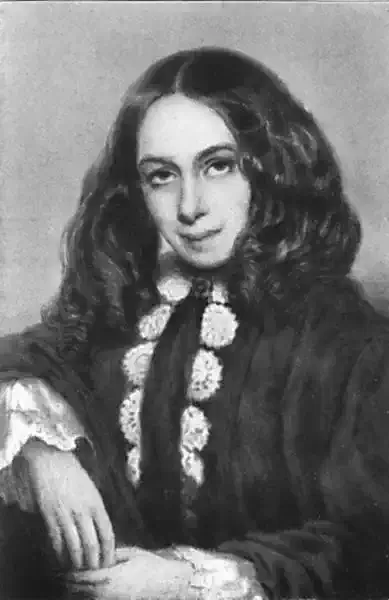
Elizabeth Barrett Browning
XXX
XXX
I see thine image through my tears to-night,
And yet to-day I saw thee smiling. How
Refer the cause ?--Beloved, is it thou
Or I, who makes me sad ? The acolyte
Amid the chanted joy and thankful rite
May so fall flat, with pale insensate brow,
On the altar-stair. I hear thy voice and vow,
Perplexed, uncertain, since thou art out of sight,
As he, in his swooning ears, the choir's Amen.
Beloved, dost thou love ? or did I see all
The glory as I dreamed, and fainted when
Too vehement light dilated my ideal,
For my soul's eyes ? Will that light come again,
As now these tears come--falling hot and real ?
I see thine image through my tears to-night,
And yet to-day I saw thee smiling. How
Refer the cause ?--Beloved, is it thou
Or I, who makes me sad ? The acolyte
Amid the chanted joy and thankful rite
May so fall flat, with pale insensate brow,
On the altar-stair. I hear thy voice and vow,
Perplexed, uncertain, since thou art out of sight,
As he, in his swooning ears, the choir's Amen.
Beloved, dost thou love ? or did I see all
The glory as I dreamed, and fainted when
Too vehement light dilated my ideal,
For my soul's eyes ? Will that light come again,
As now these tears come--falling hot and real ?
582
Elizabeth Barrett Browning
XV
XV
Accuse me not, beseech thee, that I wear
Too calm and sad a face in front of thine;
For we two look two ways, and cannot shine
With the same sunlight on our brow and hair.
On me thou lookest with no doubting care,
As on a bee shut in a crystalline;
Since sorrow hath shut me safe in love's divine,
And to spread wing and fly in the outer air
Were most impossible failure, if I strove
To fail so. But I look on thee--on thee--
Beholding, besides love, the end of love,
Hearing oblivion beyond memory;
As one who sits and gazes from above,
Over the rivers to the bitter sea.
Accuse me not, beseech thee, that I wear
Too calm and sad a face in front of thine;
For we two look two ways, and cannot shine
With the same sunlight on our brow and hair.
On me thou lookest with no doubting care,
As on a bee shut in a crystalline;
Since sorrow hath shut me safe in love's divine,
And to spread wing and fly in the outer air
Were most impossible failure, if I strove
To fail so. But I look on thee--on thee--
Beholding, besides love, the end of love,
Hearing oblivion beyond memory;
As one who sits and gazes from above,
Over the rivers to the bitter sea.
420
Elizabeth Barrett Browning
VI
VI
Go from me. Yet I feel that I shall stand
Henceforward in thy shadow. Nevermore
Alone upon the threshold of my door
Of individual life, I shall command
The uses of my soul, nor lift my hand
Serenely in the sunshine as before,
Without the sense of that which I forbore--
Thy touch upon the palm. The widest land
Doom takes to part us, leaves thy heart in mine
With pulses that beat double. What I do
And what I dream include thee, as the wine
Must taste of its own grapes. And when I sue
God for myself, He hears that name of thine,
And sees within my eyes the tears of two.
Go from me. Yet I feel that I shall stand
Henceforward in thy shadow. Nevermore
Alone upon the threshold of my door
Of individual life, I shall command
The uses of my soul, nor lift my hand
Serenely in the sunshine as before,
Without the sense of that which I forbore--
Thy touch upon the palm. The widest land
Doom takes to part us, leaves thy heart in mine
With pulses that beat double. What I do
And what I dream include thee, as the wine
Must taste of its own grapes. And when I sue
God for myself, He hears that name of thine,
And sees within my eyes the tears of two.
438
Elizabeth Barrett Browning
The Weakest Thing
The Weakest Thing
Which is the weakest thing of all
Mine heart can ponder?
The sun, a little cloud can pall
With darkness yonder?
The cloud, a little wind can move
Where'er it listeth?
The wind, a little leaf above,
Though sere, resisteth?
What time that yellow leaf was green,
My days were gladder;
But now, whatever Spring may mean,
I must grow sadder.
Ah me! a leaf with sighs can wring
My lips asunder -
Then is mine heart the weakest thing
Itself can ponder.
Yet, Heart, when sun and cloud are pined
And drop together,
And at a blast, which is not wind,
The forests wither,
Thou, from the darkening deathly curse
To glory breakest, -
The Strongest of the universe
Guarding the weakest!
Which is the weakest thing of all
Mine heart can ponder?
The sun, a little cloud can pall
With darkness yonder?
The cloud, a little wind can move
Where'er it listeth?
The wind, a little leaf above,
Though sere, resisteth?
What time that yellow leaf was green,
My days were gladder;
But now, whatever Spring may mean,
I must grow sadder.
Ah me! a leaf with sighs can wring
My lips asunder -
Then is mine heart the weakest thing
Itself can ponder.
Yet, Heart, when sun and cloud are pined
And drop together,
And at a blast, which is not wind,
The forests wither,
Thou, from the darkening deathly curse
To glory breakest, -
The Strongest of the universe
Guarding the weakest!
433