

Poems in this theme
Pain and Despair
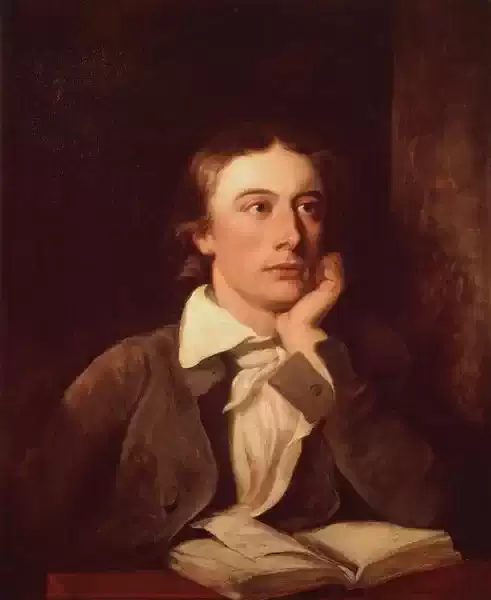
John Keats
Sonnet To Sleep
Sonnet To Sleep
O soft embalmer of the still midnight!
Shutting, with careful fingers and benign,
Our gloom-pleas'd eyes, embower'd from the light,
Enshaded in forgetfulness divine;
O soothest Sleep! if so it please thee, close,
In midst of this thine hymn, my willing eyes.
Or wait the Amen, ere thy poppy throws
Around my bed its lulling charities;
Then save me, or the passed day will shine
Upon my pillow, breeding many woes;
Save me from curious conscience, that still hoards
Its strength for darkness, burrowing like a mole;
Turn the key deftly in the oiled wards,
And seal the hushed casket of my soul.
O soft embalmer of the still midnight!
Shutting, with careful fingers and benign,
Our gloom-pleas'd eyes, embower'd from the light,
Enshaded in forgetfulness divine;
O soothest Sleep! if so it please thee, close,
In midst of this thine hymn, my willing eyes.
Or wait the Amen, ere thy poppy throws
Around my bed its lulling charities;
Then save me, or the passed day will shine
Upon my pillow, breeding many woes;
Save me from curious conscience, that still hoards
Its strength for darkness, burrowing like a mole;
Turn the key deftly in the oiled wards,
And seal the hushed casket of my soul.
388
John Keats
Sonnet To George Keats: Written In Sickness
Sonnet To George Keats: Written In Sickness
Brother belov'd if health shall smile again,
Upon this wasted form and fever'd cheek:
If e'er returning vigour bid these weak
And languid limbs their gladsome strength regain,
Well may thy brow the placid glow retain
Of sweet content and thy pleas'd eye may speak
The conscious self applause, but should I seek
To utter what this heart can feel, Ah! vain
Were the attempt! Yet kindest friends while o'er
My couch ye bend, and watch with tenderness
The being whom your cares could e'en restore,
From the cold grasp of Death, say can you guess
The feelings which these lips can ne'er express;
Feelings, deep fix'd in grateful memory's store.
Brother belov'd if health shall smile again,
Upon this wasted form and fever'd cheek:
If e'er returning vigour bid these weak
And languid limbs their gladsome strength regain,
Well may thy brow the placid glow retain
Of sweet content and thy pleas'd eye may speak
The conscious self applause, but should I seek
To utter what this heart can feel, Ah! vain
Were the attempt! Yet kindest friends while o'er
My couch ye bend, and watch with tenderness
The being whom your cares could e'en restore,
From the cold grasp of Death, say can you guess
The feelings which these lips can ne'er express;
Feelings, deep fix'd in grateful memory's store.
402
John Keats
On Death
On Death
1.
Can death be sleep, when life is but a dream,
And scenes of bliss pass as a phantom by?
The transient pleasures as a vision seem,
And yet we think the greatest pain's to die.
2.
How strange it is that man on earth should roam,
And lead a life of woe, but not forsake
His rugged path; nor dare he view alone
His future doom which is but to awake.
1.
Can death be sleep, when life is but a dream,
And scenes of bliss pass as a phantom by?
The transient pleasures as a vision seem,
And yet we think the greatest pain's to die.
2.
How strange it is that man on earth should roam,
And lead a life of woe, but not forsake
His rugged path; nor dare he view alone
His future doom which is but to awake.
401
John Keats
Ode on Melancholy
Ode on Melancholy
No, no! go not to Lethe, neither twist
Wolf's-bane, tight-rooted, for its poisonous wine;
Nor suffer thy pale forehead to be kissed
By nightshade, ruby grape of Proserpine;
Make not your rosary of yew-berries,
Nor let the beetle nor the death-moth be
Your mournful Psyche, nor the downy owl
A partner in your sorrow's mysteries;
For shade to shade will come too drowsily,
And drown the wakeful anguish of the soul.
But when the melancholy fit shall fall
Sudden from heaven like a weeping cloud,
That fosters the droop-headed flowers all,
And hides the green hill in an April shroud;
Then glut thy sorrow on a morning rose,
Or on the rainbow of the salt sand-wave,
Or on the wealth of globed peonies;
Or if thy mistress some rich anger shows,
Emprison her soft hand, and let her rave,
And feed deep, deep upon her peerless eyes.
She dwells with Beauty -- Beauty that must die;
And Joy, whose hand is ever at his lips
Bidding adieu; and aching Pleasure nigh,
Turning to poison while the bee-mouth sips;
Ay, in the very temple of delight
Veiled Melancholy has her sovran shrine,
Though seen of none save him whose strenuous
tongue
Can burst Joy's grape against his palate fine;
His soul shall taste the sadness of her might,
And be among her cloudy trophies hung.
No, no! go not to Lethe, neither twist
Wolf's-bane, tight-rooted, for its poisonous wine;
Nor suffer thy pale forehead to be kissed
By nightshade, ruby grape of Proserpine;
Make not your rosary of yew-berries,
Nor let the beetle nor the death-moth be
Your mournful Psyche, nor the downy owl
A partner in your sorrow's mysteries;
For shade to shade will come too drowsily,
And drown the wakeful anguish of the soul.
But when the melancholy fit shall fall
Sudden from heaven like a weeping cloud,
That fosters the droop-headed flowers all,
And hides the green hill in an April shroud;
Then glut thy sorrow on a morning rose,
Or on the rainbow of the salt sand-wave,
Or on the wealth of globed peonies;
Or if thy mistress some rich anger shows,
Emprison her soft hand, and let her rave,
And feed deep, deep upon her peerless eyes.
She dwells with Beauty -- Beauty that must die;
And Joy, whose hand is ever at his lips
Bidding adieu; and aching Pleasure nigh,
Turning to poison while the bee-mouth sips;
Ay, in the very temple of delight
Veiled Melancholy has her sovran shrine,
Though seen of none save him whose strenuous
tongue
Can burst Joy's grape against his palate fine;
His soul shall taste the sadness of her might,
And be among her cloudy trophies hung.
650
John Keats
Lamia. Part II
Lamia. Part II
Love in a hut, with water and a crust,
Is—Love, forgive us!—cinders, ashes, dust;
Love in a palace is perhaps at last
More grievous torment than a hermit’s fast:—
That is a doubtful tale from faery land,
Hard for the non-elect to understand.
Had Lycius liv’d to hand his story down,
He might have given the moral a fresh frown,
Or clench’d it quite: but too short was their bliss
To breed distrust and hate, that make the soft voice hiss.
Besides, there, nightly, with terrific glare,
Love, jealous grown of so complete a pair,
Hover’d and buzz’d his wings, with fearful roar,
Above the lintel of their chamber door,
And down the passage cast a glow upon the floor.
For all this came a ruin: side by side
They were enthroned, in the even tide,
Upon a couch, near to a curtaining
Whose airy texture, from a golden string,
Floated into the room, and let appear
Unveil’d the summer heaven, blue and clear,
Betwixt two marble shafts:—there they reposed,
Where use had made it sweet, with eyelids closed,
Saving a tythe which love still open kept,
That they might see each other while they almost slept;
When from the slope side of a suburb hill,
Deafening the swallow’s twitter, came a thrill
Of trumpets—Lycius started—the sounds fled,
But left a thought, a buzzing in his head.
For the first time, since first he harbour’d in
That purple-lined palace of sweet sin,
His spirit pass’d beyond its golden bourn
Into the noisy world almost forsworn.
The lady, ever watchful, penetrant,
Saw this with pain, so arguing a want
Of something more, more than her empery
Of joys; and she began to moan and sigh
Because he mused beyond her, knowing well
That but a moment’s thought is passion’s passing bell.
“Why do you sigh, fair creature?” whisper’d he:
“Why do you think?” return’d she tenderly:
“You have deserted me;—where am I now?
“Not in your heart while care weighs on your brow:
“No, no, you have dismiss’d me; and I go
“From your breast houseless: ay, it must be so.”
He answer’d, bending to her open eyes,
Where he was mirror’d small in paradise,
“My silver planet, both of eve and morn!
“Why will you plead yourself so sad forlorn,
“While I am striving how to fill my heart
“With deeper crimson, and a double smart?
“How to entangle, trammel up and snare
“Your soul in mine, and labyrinth you there
“Like the hid scent in an unbudded rose?
“Ay, a sweet kiss—you see your mighty woes.
“My thoughts! shall I unveil them? Listen then!
“What mortal hath a prize, that other men
“May be confounded and abash’d withal,
“But lets it sometimes pace abroad majestical,
“And triumph, as in thee I should rejoice
“Amid the hoarse alarm of Corinth’s voice.
“Let my foes choke, and my friends shout afar,
“While through the thronged streets your bridal car
“Wheels round its dazzling spokes.”—The lady’s cheek
Trembled; she nothing said, but, pale and meek,
Arose and knelt before him, wept a rain
Of sorrows at his words; at last with pain
Beseeching him, the while his hand she wrung,
To change his purpose. He thereat was stung,
Perverse, with stronger fancy to reclaim
Her wild and timid nature to his aim:
Besides, for all his love, in self despite,
Against his better self, he took delight
Luxurious in her sorrows, soft and new.
His passion, cruel grown, took on a hue
Fierce and sanguineous as ’twas possible
In one whose brow had no dark veins to swell.
Fine was the mitigated fury, like
Apollo’s presence when in act to strike
The serpent—Ha, the serpent! certes, she
Was none. She burnt, she lov’d the tyranny,
And, all subdued, consented to the hour
When to the bridal he should lead his paramour.
Whispering in midnight silence, said the youth,
“Sure some sweet name thou hast, though, by my truth,
“I have not ask’d it, ever thinking thee
“Not mortal, but of heavenly progeny,
“As still I do. Hast any mortal name,
“Fit appellation for this dazzling frame?
“Or friends or kinsfolk on the citied earth,
“To share our marriage feast and nuptial mirth?”
“I have no friends,” said Lamia, “no, not one;
“My presence in wide Corinth hardly known:
“My parents’ bones are in their dusty urns
“Sepulchred, where no kindled incense burns,
“Seeing all their luckless race are dead, save me,
“And I neglect the holy rite for thee.
“Even as you list invite your many guests;
“But if, as now it seems, your vision rests
“With any pleasure on me, do not bid
“Old Apollonius—from him keep me hid.”
Lycius, perplex’d at words so blind and blank,
Made close inquiry; from whose touch she shrank,
Feigning a sleep; and he to the dull shade
Of deep sleep in a moment was betray’d.
It was the custom then to bring away
The bride from home at blushing shut of day,
Veil’d, in a chariot, heralded along
By strewn flowers, torches, and a marriage song,
With other pageants: but this fair unknown
Had not a friend. So being left alone,
(Lycius was gone to summon all his kin)
And knowing surely she could never win
His foolish heart from its mad pompousness,
She set herself, high-thoughted, how to dress
The misery in fit magnificence.
She did so, but ’tis doubtful how and whence
Came, and who were her subtle servitors.
About the halls, and to and from the doors,
There was a noise of wings, till in short space
The glowing banquet-room shone with wide-arched grace.
A haunting music, sole perhaps and lone
Supportress of the faery-roof, made moan
Throughout, as fearful the whole charm might fade.
Fresh carved cedar, mimicking a glade
Of palm and plantain, met from either side,
High in the midst, in honour of the bride:
Two palms and then two plantains, and so on,
From either side their stems branch’d one to one
All down the aisled place; and beneath all
There ran a stream of lamps straight on from wall to wall.
So canopied, lay an untasted feast
Teeming with odours. Lamia, regal drest,
Silently paced about, and as she went,
In pale contented sort of discontent,
Mission’d her viewless servants to enrich
The fretted splendour of each nook and niche.
Between the tree-stems, marbled plain at first,
Came jasper pannels; then, anon, there burst
Forth creeping imagery of slighter trees,
And with the larger wove in small intricacies.
Approving all, she faded at self-will,
And shut the chamber up, close, hush’d and still,
Complete and ready for the revels rude,
When dreadful guests would come to spoil her solitude.
The day appear’d, and all the gossip rout.
O senseless Lycius! Madman! wherefore flout
The silent-blessing fate, warm cloister’d hours,
And show to common eyes these secret bowers?
The herd approach’d; each guest, with busy brain,
Arriving at the portal, gaz’d amain,
And enter’d marveling: for they knew the street,
Remember’d it from childhood all complete
Without a gap, yet ne’er before had seen
That royal porch, that high-built fair demesne;
So in they hurried all, maz’d, curious and keen:
Save one, who look’d thereon with eye severe,
And with calm-planted steps walk’d in austere;
’Twas Apollonius: something too he laugh’d,
As though some knotty problem, that had daft
His patient thought, had now begun to thaw,
And solve and melt:—’twas just as he foresaw.
He met within the murmurous vestibule
His young disciple. “’Tis no common rule,
“Lycius,” said he, “for uninvited guest
“To force himself upon you, and infest
“With an unbidden presence the bright throng
“Of younger friends; yet must I do this wrong,
“And you forgive me.” Lycius blush’d, and led
The old man through the inner doors broad-spread;
With reconciling words and courteous mien
Turning into sweet milk the sophist’s spleen.
Of wealthy lustre was the banquet-room,
Fill’d with pervading brilliance and perfume:
Before each lucid pannel fuming stood
A censer fed with myrrh and spiced wood,
Each by a sacred tripod held aloft,
Whose slender feet wide-swerv’d upon the soft
Wool-woofed carpets: fifty wreaths of smoke
From fifty censers their light voyage took
To the high roof, still mimick’d as they rose
Along the mirror’d walls by twin-clouds odorous.
Twelve sphered tables, by silk seats insphered,
High as the level of a man’s breast rear’d
On libbard’s paws, upheld the heavy gold
Of cups and goblets, and the store thrice told
Of Ceres’ horn, and, in huge vessels, wine
Came from the gloomy tun with merry shine.
Thus loaded with a feast the tables stood,
Each shrining in the midst the image of a God.
When in an antichamber every guest
Had felt the cold full sponge to pleasure press’d,
By minist’ring slaves, upon his hands and feet,
And fragrant oils with ceremony meet
Pour’d on his hair, they all mov’d to the feast
In white robes, and themselves in order placed
Around the silken couches, wondering
Whence all this mighty cost and blaze of wealth could spring.
Soft went the music the soft air along,
While fluent Greek a vowel’d undersong
Kept up among the guests discoursing low
At first, for scarcely was the wine at flow;
But when the happy vintage touch’d their brains,
Louder they talk, and louder come the strains
Of powerful instruments:—the gorgeous dyes,
The space, the splendour of the draperies,
The roof of awful richness, nectarous cheer,
Beautiful slaves, and Lamia’s self, appear,
Now, when the wine has done its rosy deed,
And every soul from human trammels freed,
No more so strange; for merry wine, sweet wine,
Will make Elysian shades not too fair, too divine.
Soon was God Bacchus at meridian height;
Flush’d were their cheeks, and bright eyes double bright:
Garlands of every green, and every scent
From vales deflower’d, or forest-trees branch rent,
In baskets of bright osier’d gold were brought
High as the handles heap’d, to suit the thought
Of every guest; that each, as he did please,
Might fancy-fit his brows, silk-pillow’d at his ease.
What wreath for Lamia? What for Lycius?
What for the sage, old Apollonius?
Upon her aching forehead be there hung
The leaves of willow and of adder’s tongue;
And for the youth, quick, let us strip for him
The thyrsus, that his watching eyes may swim
Into forgetfulness; and, for the sage,
Let spear-grass and the spiteful thistle wage
War on his temples. Do not all charms fly
At the mere touch of cold philosophy?
There was an awful rainbow once in heaven:
We know her woof, her texture; she is given
In the dull catalogue of common things.
Philosophy will clip an Angel’s wings,
Conquer all mysteries by rule and line,
Empty the haunted air, and gnomed mine—
Unweave a rainbow, as it erewhile made
The tender-person’d Lamia melt into a shade.
By her glad Lycius sitting, in chief place,
Scarce saw in all the room another face,
Till, checking his love trance, a cup he took
Full brimm’d, and opposite sent forth a look
’Cross the broad table, to beseech a glance
From his old teacher’s wrinkled countenance,
And pledge him. The bald-head philosopher
Had fix’d his eye, without a twinkle or stir
Full on the alarmed beauty of the bride,
Brow-beating her fair form, and troubling her sweet pride.
Lycius then press’d her hand, with devout touch,
As pale it lay upon the rosy couch:
’Twas icy, and the cold ran through his veins;
Then sudden it grew hot, and all the pains
Of an unnatural heat shot to his heart.
“Lamia, what means this? Wherefore dost thou start?
“Know’st thou that man?” Poor Lamia answer’d not.
He gaz’d into her eyes, and not a jot
Own’d they the lovelorn piteous appeal:
More, more he gaz’d: his human senses reel:
Some hungry spell that loveliness absorbs;
There was no recognition in those orbs.
“Lamia!” he cried—and no soft-toned reply.
The many heard, and the loud revelry
Grew hush; the stately music no more breathes;
The myrtle sicken’d in a thousand wreaths.
By faint degrees, voice, lute, and pleasure ceased;
A deadly silence step by step increased,
Until it seem’d a horrid presence there,
And not a man but felt the terror in his hair.
“Lamia!” he shriek’d; and nothing but the shriek
With its sad echo did the silence break.
“Begone, foul dream!” he cried, gazing again
In the bride’s face, where now no azure vein
Wander’d on fair-spaced temples; no soft bloom
Misted the cheek; no passion to illume
The deep-recessed vision:—all was blight;
Lamia, no longer fair, there sat a deadly white.
“Shut, shut those juggling eyes, thou ruthless man!
“Turn them aside, wretch! or the righteous ban
“Of all the Gods, whose dreadful images
“Here represent their shadowy presences,
“May pierce them on the sudden with the thorn
“Of painful blindness; leaving thee forlorn,
“In trembling dotage to the feeblest fright
“Of conscience, for their long offended might,
“For all thine impious proud-heart sophistries,
“Unlawful magic, and enticing lies.
“Corinthians! look upon that gray-beard wretch!
“Mark how, possess’d, his lashless eyelids stretch
“Around his demon eyes! Corinthians, see!
“My sweet bride withers at their potency.”
“Fool!” said the sophist, in an under-tone
Gruff with contempt; which a death-nighing moan
From Lycius answer’d, as heart-struck and lost,
He sank supine beside the aching ghost.
“Fool! Fool!” repeated he, while his eyes still
Relented not, nor mov’d; “from every ill
“Of life have I preserv’d thee to this day,
“And shall I see thee made a serpent’s prey?
Then Lamia breath’d death breath; the sophist’s eye,
Like a sharp spear, went through her utterly,
Keen, cruel, perceant, stinging: she, as well
As her weak hand could any meaning tell,
Motion’d him to be silent; vainly so,
He look’d and look’d again a level--No!
“A Serpent!” echoed he; no sooner said,
Than with a frightful scream she vanished:
And Lycius’ arms were empty of delight,
As were his limbs of life, from that same night.
On the high couch he lay!—his friends came round--
Supported him—no pulse, or breath they found,
And, in its marriage robe, the heavy body wound.
Love in a hut, with water and a crust,
Is—Love, forgive us!—cinders, ashes, dust;
Love in a palace is perhaps at last
More grievous torment than a hermit’s fast:—
That is a doubtful tale from faery land,
Hard for the non-elect to understand.
Had Lycius liv’d to hand his story down,
He might have given the moral a fresh frown,
Or clench’d it quite: but too short was their bliss
To breed distrust and hate, that make the soft voice hiss.
Besides, there, nightly, with terrific glare,
Love, jealous grown of so complete a pair,
Hover’d and buzz’d his wings, with fearful roar,
Above the lintel of their chamber door,
And down the passage cast a glow upon the floor.
For all this came a ruin: side by side
They were enthroned, in the even tide,
Upon a couch, near to a curtaining
Whose airy texture, from a golden string,
Floated into the room, and let appear
Unveil’d the summer heaven, blue and clear,
Betwixt two marble shafts:—there they reposed,
Where use had made it sweet, with eyelids closed,
Saving a tythe which love still open kept,
That they might see each other while they almost slept;
When from the slope side of a suburb hill,
Deafening the swallow’s twitter, came a thrill
Of trumpets—Lycius started—the sounds fled,
But left a thought, a buzzing in his head.
For the first time, since first he harbour’d in
That purple-lined palace of sweet sin,
His spirit pass’d beyond its golden bourn
Into the noisy world almost forsworn.
The lady, ever watchful, penetrant,
Saw this with pain, so arguing a want
Of something more, more than her empery
Of joys; and she began to moan and sigh
Because he mused beyond her, knowing well
That but a moment’s thought is passion’s passing bell.
“Why do you sigh, fair creature?” whisper’d he:
“Why do you think?” return’d she tenderly:
“You have deserted me;—where am I now?
“Not in your heart while care weighs on your brow:
“No, no, you have dismiss’d me; and I go
“From your breast houseless: ay, it must be so.”
He answer’d, bending to her open eyes,
Where he was mirror’d small in paradise,
“My silver planet, both of eve and morn!
“Why will you plead yourself so sad forlorn,
“While I am striving how to fill my heart
“With deeper crimson, and a double smart?
“How to entangle, trammel up and snare
“Your soul in mine, and labyrinth you there
“Like the hid scent in an unbudded rose?
“Ay, a sweet kiss—you see your mighty woes.
“My thoughts! shall I unveil them? Listen then!
“What mortal hath a prize, that other men
“May be confounded and abash’d withal,
“But lets it sometimes pace abroad majestical,
“And triumph, as in thee I should rejoice
“Amid the hoarse alarm of Corinth’s voice.
“Let my foes choke, and my friends shout afar,
“While through the thronged streets your bridal car
“Wheels round its dazzling spokes.”—The lady’s cheek
Trembled; she nothing said, but, pale and meek,
Arose and knelt before him, wept a rain
Of sorrows at his words; at last with pain
Beseeching him, the while his hand she wrung,
To change his purpose. He thereat was stung,
Perverse, with stronger fancy to reclaim
Her wild and timid nature to his aim:
Besides, for all his love, in self despite,
Against his better self, he took delight
Luxurious in her sorrows, soft and new.
His passion, cruel grown, took on a hue
Fierce and sanguineous as ’twas possible
In one whose brow had no dark veins to swell.
Fine was the mitigated fury, like
Apollo’s presence when in act to strike
The serpent—Ha, the serpent! certes, she
Was none. She burnt, she lov’d the tyranny,
And, all subdued, consented to the hour
When to the bridal he should lead his paramour.
Whispering in midnight silence, said the youth,
“Sure some sweet name thou hast, though, by my truth,
“I have not ask’d it, ever thinking thee
“Not mortal, but of heavenly progeny,
“As still I do. Hast any mortal name,
“Fit appellation for this dazzling frame?
“Or friends or kinsfolk on the citied earth,
“To share our marriage feast and nuptial mirth?”
“I have no friends,” said Lamia, “no, not one;
“My presence in wide Corinth hardly known:
“My parents’ bones are in their dusty urns
“Sepulchred, where no kindled incense burns,
“Seeing all their luckless race are dead, save me,
“And I neglect the holy rite for thee.
“Even as you list invite your many guests;
“But if, as now it seems, your vision rests
“With any pleasure on me, do not bid
“Old Apollonius—from him keep me hid.”
Lycius, perplex’d at words so blind and blank,
Made close inquiry; from whose touch she shrank,
Feigning a sleep; and he to the dull shade
Of deep sleep in a moment was betray’d.
It was the custom then to bring away
The bride from home at blushing shut of day,
Veil’d, in a chariot, heralded along
By strewn flowers, torches, and a marriage song,
With other pageants: but this fair unknown
Had not a friend. So being left alone,
(Lycius was gone to summon all his kin)
And knowing surely she could never win
His foolish heart from its mad pompousness,
She set herself, high-thoughted, how to dress
The misery in fit magnificence.
She did so, but ’tis doubtful how and whence
Came, and who were her subtle servitors.
About the halls, and to and from the doors,
There was a noise of wings, till in short space
The glowing banquet-room shone with wide-arched grace.
A haunting music, sole perhaps and lone
Supportress of the faery-roof, made moan
Throughout, as fearful the whole charm might fade.
Fresh carved cedar, mimicking a glade
Of palm and plantain, met from either side,
High in the midst, in honour of the bride:
Two palms and then two plantains, and so on,
From either side their stems branch’d one to one
All down the aisled place; and beneath all
There ran a stream of lamps straight on from wall to wall.
So canopied, lay an untasted feast
Teeming with odours. Lamia, regal drest,
Silently paced about, and as she went,
In pale contented sort of discontent,
Mission’d her viewless servants to enrich
The fretted splendour of each nook and niche.
Between the tree-stems, marbled plain at first,
Came jasper pannels; then, anon, there burst
Forth creeping imagery of slighter trees,
And with the larger wove in small intricacies.
Approving all, she faded at self-will,
And shut the chamber up, close, hush’d and still,
Complete and ready for the revels rude,
When dreadful guests would come to spoil her solitude.
The day appear’d, and all the gossip rout.
O senseless Lycius! Madman! wherefore flout
The silent-blessing fate, warm cloister’d hours,
And show to common eyes these secret bowers?
The herd approach’d; each guest, with busy brain,
Arriving at the portal, gaz’d amain,
And enter’d marveling: for they knew the street,
Remember’d it from childhood all complete
Without a gap, yet ne’er before had seen
That royal porch, that high-built fair demesne;
So in they hurried all, maz’d, curious and keen:
Save one, who look’d thereon with eye severe,
And with calm-planted steps walk’d in austere;
’Twas Apollonius: something too he laugh’d,
As though some knotty problem, that had daft
His patient thought, had now begun to thaw,
And solve and melt:—’twas just as he foresaw.
He met within the murmurous vestibule
His young disciple. “’Tis no common rule,
“Lycius,” said he, “for uninvited guest
“To force himself upon you, and infest
“With an unbidden presence the bright throng
“Of younger friends; yet must I do this wrong,
“And you forgive me.” Lycius blush’d, and led
The old man through the inner doors broad-spread;
With reconciling words and courteous mien
Turning into sweet milk the sophist’s spleen.
Of wealthy lustre was the banquet-room,
Fill’d with pervading brilliance and perfume:
Before each lucid pannel fuming stood
A censer fed with myrrh and spiced wood,
Each by a sacred tripod held aloft,
Whose slender feet wide-swerv’d upon the soft
Wool-woofed carpets: fifty wreaths of smoke
From fifty censers their light voyage took
To the high roof, still mimick’d as they rose
Along the mirror’d walls by twin-clouds odorous.
Twelve sphered tables, by silk seats insphered,
High as the level of a man’s breast rear’d
On libbard’s paws, upheld the heavy gold
Of cups and goblets, and the store thrice told
Of Ceres’ horn, and, in huge vessels, wine
Came from the gloomy tun with merry shine.
Thus loaded with a feast the tables stood,
Each shrining in the midst the image of a God.
When in an antichamber every guest
Had felt the cold full sponge to pleasure press’d,
By minist’ring slaves, upon his hands and feet,
And fragrant oils with ceremony meet
Pour’d on his hair, they all mov’d to the feast
In white robes, and themselves in order placed
Around the silken couches, wondering
Whence all this mighty cost and blaze of wealth could spring.
Soft went the music the soft air along,
While fluent Greek a vowel’d undersong
Kept up among the guests discoursing low
At first, for scarcely was the wine at flow;
But when the happy vintage touch’d their brains,
Louder they talk, and louder come the strains
Of powerful instruments:—the gorgeous dyes,
The space, the splendour of the draperies,
The roof of awful richness, nectarous cheer,
Beautiful slaves, and Lamia’s self, appear,
Now, when the wine has done its rosy deed,
And every soul from human trammels freed,
No more so strange; for merry wine, sweet wine,
Will make Elysian shades not too fair, too divine.
Soon was God Bacchus at meridian height;
Flush’d were their cheeks, and bright eyes double bright:
Garlands of every green, and every scent
From vales deflower’d, or forest-trees branch rent,
In baskets of bright osier’d gold were brought
High as the handles heap’d, to suit the thought
Of every guest; that each, as he did please,
Might fancy-fit his brows, silk-pillow’d at his ease.
What wreath for Lamia? What for Lycius?
What for the sage, old Apollonius?
Upon her aching forehead be there hung
The leaves of willow and of adder’s tongue;
And for the youth, quick, let us strip for him
The thyrsus, that his watching eyes may swim
Into forgetfulness; and, for the sage,
Let spear-grass and the spiteful thistle wage
War on his temples. Do not all charms fly
At the mere touch of cold philosophy?
There was an awful rainbow once in heaven:
We know her woof, her texture; she is given
In the dull catalogue of common things.
Philosophy will clip an Angel’s wings,
Conquer all mysteries by rule and line,
Empty the haunted air, and gnomed mine—
Unweave a rainbow, as it erewhile made
The tender-person’d Lamia melt into a shade.
By her glad Lycius sitting, in chief place,
Scarce saw in all the room another face,
Till, checking his love trance, a cup he took
Full brimm’d, and opposite sent forth a look
’Cross the broad table, to beseech a glance
From his old teacher’s wrinkled countenance,
And pledge him. The bald-head philosopher
Had fix’d his eye, without a twinkle or stir
Full on the alarmed beauty of the bride,
Brow-beating her fair form, and troubling her sweet pride.
Lycius then press’d her hand, with devout touch,
As pale it lay upon the rosy couch:
’Twas icy, and the cold ran through his veins;
Then sudden it grew hot, and all the pains
Of an unnatural heat shot to his heart.
“Lamia, what means this? Wherefore dost thou start?
“Know’st thou that man?” Poor Lamia answer’d not.
He gaz’d into her eyes, and not a jot
Own’d they the lovelorn piteous appeal:
More, more he gaz’d: his human senses reel:
Some hungry spell that loveliness absorbs;
There was no recognition in those orbs.
“Lamia!” he cried—and no soft-toned reply.
The many heard, and the loud revelry
Grew hush; the stately music no more breathes;
The myrtle sicken’d in a thousand wreaths.
By faint degrees, voice, lute, and pleasure ceased;
A deadly silence step by step increased,
Until it seem’d a horrid presence there,
And not a man but felt the terror in his hair.
“Lamia!” he shriek’d; and nothing but the shriek
With its sad echo did the silence break.
“Begone, foul dream!” he cried, gazing again
In the bride’s face, where now no azure vein
Wander’d on fair-spaced temples; no soft bloom
Misted the cheek; no passion to illume
The deep-recessed vision:—all was blight;
Lamia, no longer fair, there sat a deadly white.
“Shut, shut those juggling eyes, thou ruthless man!
“Turn them aside, wretch! or the righteous ban
“Of all the Gods, whose dreadful images
“Here represent their shadowy presences,
“May pierce them on the sudden with the thorn
“Of painful blindness; leaving thee forlorn,
“In trembling dotage to the feeblest fright
“Of conscience, for their long offended might,
“For all thine impious proud-heart sophistries,
“Unlawful magic, and enticing lies.
“Corinthians! look upon that gray-beard wretch!
“Mark how, possess’d, his lashless eyelids stretch
“Around his demon eyes! Corinthians, see!
“My sweet bride withers at their potency.”
“Fool!” said the sophist, in an under-tone
Gruff with contempt; which a death-nighing moan
From Lycius answer’d, as heart-struck and lost,
He sank supine beside the aching ghost.
“Fool! Fool!” repeated he, while his eyes still
Relented not, nor mov’d; “from every ill
“Of life have I preserv’d thee to this day,
“And shall I see thee made a serpent’s prey?
Then Lamia breath’d death breath; the sophist’s eye,
Like a sharp spear, went through her utterly,
Keen, cruel, perceant, stinging: she, as well
As her weak hand could any meaning tell,
Motion’d him to be silent; vainly so,
He look’d and look’d again a level--No!
“A Serpent!” echoed he; no sooner said,
Than with a frightful scream she vanished:
And Lycius’ arms were empty of delight,
As were his limbs of life, from that same night.
On the high couch he lay!—his friends came round--
Supported him—no pulse, or breath they found,
And, in its marriage robe, the heavy body wound.
513
John Keats
La Belle Dame Sans Merci (Original version )
La Belle Dame Sans Merci (Original version )
Oh what can ail thee, knight-at-arms,
Alone and palely loitering?
The sedge has withered from the lake,
And no birds sing.
Oh what can ail thee, knight-at-arms,
So haggard and so woe-begone?
The squirrel's granary is full,
And the harvest's done.
I see a lily on thy brow,
With anguish moist and fever-dew,
And on thy cheeks a fading rose
Fast withereth too.
I met a lady in the meads,
Full beautiful - a faery's child,
Her hair was long, her foot was light,
And her eyes were wild.
I made a garland for her head,
And bracelets too, and fragrant zone;
She looked at me as she did love,
And made sweet moan.
I set her on my pacing steed,
And nothing else saw all day long,
For sidelong would she bend, and sing
A faery's song.
She found me roots of relish sweet,
And honey wild, and manna-dew,
And sure in language strange she said '
I love thee true'.
She took me to her elfin grot,
And there she wept and sighed full sore,
And there I shut her wild wild eyes
With kisses four.
And there she lulled me asleep
And there I dreamed - Ah! woe betide! -
The latest dream I ever dreamt
On the cold hill side.
I saw pale kings and princes too,
Pale warriors, death-pale were they all;
They cried - 'La Belle Dame sans Merci
Hath thee in thrall!'
I saw their starved lips in the gloam,
With horrid warning gaped wide,
And I awoke and found me here,
On the cold hill's side.
And this is why I sojourn here
Alone and palely loitering,
Though the sedge is withered from the lake,
And no birds sing.
Oh what can ail thee, knight-at-arms,
Alone and palely loitering?
The sedge has withered from the lake,
And no birds sing.
Oh what can ail thee, knight-at-arms,
So haggard and so woe-begone?
The squirrel's granary is full,
And the harvest's done.
I see a lily on thy brow,
With anguish moist and fever-dew,
And on thy cheeks a fading rose
Fast withereth too.
I met a lady in the meads,
Full beautiful - a faery's child,
Her hair was long, her foot was light,
And her eyes were wild.
I made a garland for her head,
And bracelets too, and fragrant zone;
She looked at me as she did love,
And made sweet moan.
I set her on my pacing steed,
And nothing else saw all day long,
For sidelong would she bend, and sing
A faery's song.
She found me roots of relish sweet,
And honey wild, and manna-dew,
And sure in language strange she said '
I love thee true'.
She took me to her elfin grot,
And there she wept and sighed full sore,
And there I shut her wild wild eyes
With kisses four.
And there she lulled me asleep
And there I dreamed - Ah! woe betide! -
The latest dream I ever dreamt
On the cold hill side.
I saw pale kings and princes too,
Pale warriors, death-pale were they all;
They cried - 'La Belle Dame sans Merci
Hath thee in thrall!'
I saw their starved lips in the gloam,
With horrid warning gaped wide,
And I awoke and found me here,
On the cold hill's side.
And this is why I sojourn here
Alone and palely loitering,
Though the sedge is withered from the lake,
And no birds sing.
450
John Keats
Isabella; Or, The Pot Of Basil: A Story From Boccaccio
Isabella; Or, The Pot Of Basil: A Story From Boccaccio
I.
Fair Isabel, poor simple Isabel!
Lorenzo, a young palmer in Love's eye!
They could not in the self-same mansion dwell
Without some stir of heart, some malady;
They could not sit at meals but feel how well
It soothed each to be the other by;
They could not, sure, beneath the same roof sleep
But to each other dream, and nightly weep.
II.
With every morn their love grew tenderer,
With every eve deeper and tenderer still;
He might not in house, field, or garden stir,
But her full shape would all his seeing fill;
And his continual voice was pleasanter
To her, than noise of trees or hidden rill;
Her lute-string gave an echo of his name,
She spoilt her half-done broidery with the same.
III.
He knew whose gentle hand was at the latch,
Before the door had given her to his eyes;
And from her chamber-window he would catch
Her beauty farther than the falcon spies;
And constant as her vespers would he watch,
Because her face was turn'd to the same skies;
And with sick longing all the night outwear,
To hear her morning-step upon the stair.
IV.
A whole long month of May in this sad plight
Made their cheeks paler by the break of June:
'To morrow will I bow to my delight,
'To-morrow will I ask my lady's boon.''
O may I never see another night,
'Lorenzo, if thy lips breathe not love's tune.'-
So spake they to their pillows; but, alas,
Honeyless days and days did he let pass;
V.
Until sweet Isabella's untouch'd cheek
Fell sick within the rose's just domain,
Fell thin as a young mother's, who doth seek
By every lull to cool her infant's pain:
'How ill she is,' said he, 'I may not speak,
'And yet I will, and tell my love all plain:
'If looks speak love-laws, I will drink her tears,
'And at the least 'twill startle off her cares.'
VI.
So said he one fair morning, and all day
His heart beat awfully against his side;
And to his heart he inwardly did pray
For power to speak; but still the ruddy tide
Stifled his voice, and puls'd resolve awayFever'd
his high conceit of such a bride,
Yet brought him to the meekness of a child:
Alas! when passion is both meek and wild!
VII.
So once more he had wak'd and anguished
A dreary night of love and misery,
If Isabel's quick eye had not been wed
To every symbol on his forehead high;
She saw it waxing very pale and dead,
And straight all flush'd; so, lisped tenderly,
'Lorenzo!'-here she ceas'd her timid quest,
But in her tone and look he read the rest.
VIII.
'O Isabella, I can half perceive
'That I may speak my grief into thine ear;
'If thou didst ever any thing believe,
'Believe how I love thee, believe how near
'My soul is to its doom: I would not grieve
'Thy hand by unwelcome pressing, would not fear
'Thine eyes by gazing; but I cannot live
'Another night, and not my passion shrive.
IX.
'Love! thou art leading me from wintry cold,
'Lady! thou leadest me to summer clime,
'And I must taste the blossoms that unfold
'In its ripe warmth this gracious morning time.'
So said, his erewhile timid lips grew bold,
And poesied with hers in dewy rhyme:
Great bliss was with them, and great happiness
Grew, like a lusty flower in June's caress.
X.
Parting they seem'd to tread upon the air,
Twin roses by the zephyr blown apart
Only to meet again more close, and share
The inward fragrance of each other's heart.
She, to her chamber gone, a ditty fair
Sang, of delicious love and honey'd dart;
He with light steps went up a western hill,
And bade the sun farewell, and joy'd his fill.
XI.
All close they met again, before the dusk
Had taken from the stars its pleasant veil,
All close they met, all eves, before the dusk
Had taken from the stars its pleasant veil,
Close in a bower of hyacinth and musk,
Unknown of any, free from whispering tale.
Ah! better had it been for ever so,
Than idle ears should pleasure in their woe.
XII.
Were they unhappy then?-It cannot be-
Too many tears for lovers have been shed,
Too many sighs give we to them in fee,
Too much of pity after they are dead,
Too many doleful stories do we see,
Whose matter in bright gold were best be read;
Except in such a page where Theseus' spouse
Over the pathless waves towards him bows.
XIII.
But, for the general award of love,
The little sweet doth kill much bitterness;
Though Dido silent is in under-grove,
And Isabella's was a great distress,
Though young Lorenzo in warm Indian clove
Was not embalm'd, this truth is not the less-
Even bees, the little almsmen of spring-bowers,
Know there is richest juice in poison-flowers.
XIV.
With her two brothers this fair lady dwelt,
Enriched from ancestral merchandize,
And for them many a weary hand did swelt
In torched mines and noisy factories,
And many once proud-quiver'd loins did melt
In blood from stinging whip;-with hollow eyes
Many all day in dazzling river stood,
To take the rich-ored driftings of the flood.
XV.
For them the Ceylon diver held his breath,
And went all naked to the hungry shark;
For them his ears gush'd blood; for them in death
The seal on the cold ice with piteous bark
Lay full of darts; for them alone did seethe
A thousand men in troubles wide and dark:
Half-ignorant, they turn'd an easy wheel,
That set sharp racks at work, to pinch and peel.
XVI.
Why were they proud? Because their marble founts
Gush'd with more pride than do a wretch's tears?-
Why were they proud? Because fair orange-mounts
Were of more soft ascent than lazar stairs?-
Why were they proud? Because red-lin'd accounts
Were richer than the songs of Grecian years?-
Why were they proud? again we ask aloud,
Why in the name of Glory were they proud?
XVII.
Yet were these Florentines as self-retired
In hungry pride and gainful cowardice,
As two close Hebrews in that land inspired,
Paled in and vineyarded from beggar-spies,
The hawks of ship-mast forests-the untired
And pannier'd mules for ducats and old lies-
Quick cat's-paws on the generous stray-away,-
Great wits in Spanish, Tuscan, and Malay.
XVIII.
How was it these same ledger-men could spy
Fair Isabella in her downy nest?
How could they find out in Lorenzo's eye
A straying from his toil? Hot Egypt's pest
Into their vision covetous and sly!
How could these money-bags see east and west?-
Yet so they did-and every dealer fair
Must see behind, as doth the hunted hare.
XIX.
O eloquent and famed Boccaccio!
Of thee we now should ask forgiving boon,
And of thy spicy myrtles as they blow,
And of thy roses amorous of the moon,
And of thy lilies, that do paler grow
Now they can no more hear thy ghittern's tune,
For venturing syllables that ill beseem
The quiet glooms of such a piteous theme.
XX.
Grant thou a pardon here, and then the tale
Shall move on soberly, as it is meet;
There is no other crime, no mad assail
To make old prose in modern rhyme more sweet:
But it is done-succeed the verse or fail-
To honour thee, and thy gone spirit greet;
To stead thee as a verse in English tongue,
An echo of thee in the north-wind sung.
XXI.
These brethren having found by many signs
What love Lorenzo for their sister had,
And how she lov'd him too, each unconfines
His bitter thoughts to other, well nigh mad
That he, the servant of their trade designs,
Should in their sister's love be blithe and glad,
When 'twas their plan to coax her by degrees
To some high noble and his olive-trees.
XXII.
And many a jealous conference had they,
And many times they bit their lips alone,
Before they fix'd upon a surest way
To make the youngster for his crime atone;
And at the last, these men of cruel clay
Cut Mercy with a sharp knife to the bone;
For they resolved in some forest dim
To kill Lorenzo, and there bury him.
XXIII.
So on a pleasant morning, as he leant
Into the sun-rise, o'er the balustrade
Of the garden-terrace, towards him they bent
Their footing through the dews; and to him said,
'You seem there in the quiet of content,
'Lorenzo, and we are most loth to invade
'Calm speculation; but if you are wise,
'Bestride your steed while cold is in the skies.
XXIV.
'To-day we purpose, ay, this hour we mount
'To spur three leagues towards the Apennine;
'Come down, we pray thee, ere the hot sun count
'His dewy rosary on the eglantine.'
Lorenzo, courteously as he was wont,
Bow'd a fair greeting to these serpents' whine;
And went in haste, to get in readiness,
With belt, and spur, and bracing huntsman's dress.
XXV.
And as he to the court-yard pass'd along,
Each third step did he pause, and listen'd oft
If he could hear his lady's matin-song,
Or the light whisper of her footstep soft;
And as he thus over his passion hung,
He heard a laugh full musical aloft;
When, looking up, he saw her features bright
Smile through an in-door lattice, all delight.
XXVI.
'Love, Isabel!' said he, 'I was in pain
'Lest I should miss to bid thee a good morrow:
'Ah! what if I should lose thee, when so fain
'I am to stifle all the heavy sorrow
'Of a poor three hours' absence? but we'll gain
'Out of the amorous dark what day doth borrow.
'Good bye! I'll soon be back.'-'Good bye!' said she:-
And as he went she chanted merrily.
XXVII.
So the two brothers and their murder'd man
Rode past fair Florence, to where Arno's stream
Gurgles through straiten'd banks, and still doth fan
Itself with dancing bulrush, and the bream
Keeps head against the freshets. Sick and wan
The brothers' faces in the ford did seem,
Lorenzo's flush with love.-They pass'd the water
Into a forest quiet for the slaughter.
XXVIII.
There was Lorenzo slain and buried in,
There in that forest did his great love cease;
Ah! when a soul doth thus its freedom win,
It aches in loneliness-is ill at peace
As the break-covert blood-hounds of such sin:
They dipp'd their swords in the water, and did tease
Their horses homeward, with convulsed spur,
Each richer by his being a murderer.
XXIX.
They told their sister how, with sudden speed,
Lorenzo had ta'en ship for foreign lands,
Because of some great urgency and need
In their affairs, requiring trusty hands.
Poor Girl! put on thy stifling widow's weed,
And 'scape at once from Hope's accursed bands;
To-day thou wilt not see him, nor to-morrow,
And the next day will be a day of sorrow.
XXX.
She weeps alone for pleasures not to be;
Sorely she wept until the night came on,
And then, instead of love, O misery!
She brooded o'er the luxury alone:
His image in the dusk she seem'd to see,
And to the silence made a gentle moan,
Spreading her perfect arms upon the air,
And on her couch low murmuring, 'Where? O where?'
XXXI.
But Selfishness, Love's cousin, held not long
Its fiery vigil in her single breast;
She fretted for the golden hour, and hung
Upon the time with feverish unrest-
Not long-for soon into her heart a throng
Of higher occupants, a richer zest,
Came tragic; passion not to be subdued,
And sorrow for her love in travels rude.
XXXII.
In the mid days of autumn, on their eves
The breath of Winter comes from far away,
And the sick west continually bereaves
Of some gold tinge, and plays a roundelay
Of death among the bushes and the leaves,
To make all bare before he dares to stray
From his north cavern. So sweet Isabel
By gradual decay from beauty fell,
XXXIII.
Because Lorenzo came not. Oftentimes
She ask'd her brothers, with an eye all pale,
Striving to be itself, what dungeon climes
Could keep him off so long? They spake a tale
Time after time, to quiet her. Their crimes
Came on them, like a smoke from Hinnom's vale;
And every night in dreams they groan'd aloud,
To see their sister in her snowy shroud.
XXXIV.
And she had died in drowsy ignorance,
But for a thing more deadly dark than all;
It came like a fierce potion, drunk by chance,
Which saves a sick man from the feather'd pall
For some few gasping moments; like a lance,
Waking an Indian from his cloudy hall
With cruel pierce, and bringing him again
Sense of the gnawing fire at heart and brain.
XXXV.
It was a vision.-In the drowsy gloom,
The dull of midnight, at her couch's foot
Lorenzo stood, and wept: the forest tomb
Had marr'd his glossy hair which once could shoot
Lustre into the sun, and put cold doom
Upon his lips, and taken the soft lute
From his lorn voice, and past his loamed ears
Had made a miry channel for his tears.
XXXVI.
Strange sound it was, when the pale shadow spake;
For there was striving, in its piteous tongue,
To speak as when on earth it was awake,
And Isabella on its music hung:
Languor there was in it, and tremulous shake,
As in a palsied Druid's harp unstrung;
And through it moan'd a ghostly under-song,
Like hoarse night-gusts sepulchral briars among.
XXXVII.
Its eyes, though wild, were still all dewy bright
With love, and kept all phantom fear aloof
From the poor girl by magic of their light,
The while it did unthread the horrid woof
Of the late darken'd time,-the murderous spite
Of pride and avarice,-the dark pine roof
In the forest,-and the sodden turfed dell,
Where, without any word, from stabs he fell.
XXXVIII.
Saying moreover, 'Isabel, my sweet!
'Red whortle-berries droop above my head,
'And a large flint-stone weighs upon my feet;
'Around me beeches and high chestnuts shed
'Their leaves and prickly nuts; a sheep-fold bleat
'Comes from beyond the river to my bed:
'Go, shed one tear upon my heather-bloom,
'And it shall comfort me within the tomb.
XXXIX.
'I am a shadow now, alas! alas!
'Upon the skirts of human-nature dwelling
'Alone: I chant alone the holy mass,
'While little sounds of life are round me knelling,
'And glossy bees at noon do fieldward pass,
'And many a chapel bell the hour is telling,
'Paining me through: those sounds grow strange to me,
'And thou art distant in Humanity.
XL.
'I know what was, I feel full well what is,
'And I should rage, if spirits could go mad;
'Though I forget the taste of earthly bliss,
'That paleness warms my grave, as though I had
'A Seraph chosen from the bright abyss
'To be my spouse: thy paleness makes me glad;
'Thy beauty grows upon me, and I feel
'A greater love through all my essence steal.'
XLI.
The Spirit mourn'd 'Adieu!'-dissolv'd, and left
The atom darkness in a slow turmoil;
As when of healthful midnight sleep bereft,
Thinking on rugged hours and fruitless toil,
We put our eyes into a pillowy cleft,
And see the spangly gloom froth up and boil:
It made sad Isabella's eyelids ache,
And in the dawn she started up awake;
XLII.
'Ha! ha!' said she, 'I knew not this hard life,
'I thought the worst was simple misery;
'I thought some Fate with pleasure or with strife
'Portion'd us-happy days, or else to die;
'But there is crime-a brother's bloody knife!
'Sweet Spirit, thou hast school'd my infancy:
'I'll visit thee for this, and kiss thine eyes,
'And greet thee morn and even in the skies.'
XLIII.
When the full morning came, she had devised
How she might secret to the forest hie;
How she might find the clay, so dearly prized,
And sing to it one latest lullaby;
How her short absence might be unsurmised,
While she the inmost of the dream would try.
Resolv'd, she took with her an aged nurse,
And went into that dismal forest-hearse.
XLIV.
See, as they creep along the river side,
How she doth whisper to that aged Dame,
And, after looking round the champaign wide,
Shows her a knife.-'What feverous hectic flame
'Burns in thee, child?-What good can thee betide,
'That thou should'st smile again?'-The evening came,
And they had found Lorenzo's earthy bed;
The flint was there, the berries at his head.
XLV.
Who hath not loiter'd in a green church-yard,
And let his spirit, like a demon-mole,
Work through the clayey soil and gravel hard,
To see skull, coffin'd bones, and funeral stole;
Pitying each form that hungry Death hath marr'd,
And filling it once more with human soul?
Ah! this is holiday to what was felt
When Isabella by Lorenzo knelt.
XLVI.
She gaz'd into the fresh-thrown mould, as though
One glance did fully all its secrets tell;
Clearly she saw, as other eyes would know
Pale limbs at bottom of a crystal well;
Upon the murderous spot she seem'd to grow,
Like to a native lily of the dell:
Then with her knife, all sudden, she began
To dig more fervently than misers can.
XLVII.
Soon she turn'd up a soiled glove, whereon
Her silk had play'd in purple phantasies,
She kiss'd it with a lip more chill than stone,
And put it in her bosom, where it dries
And freezes utterly unto the bone
Those dainties made to still an infant's cries:
Then 'gan she work again; nor stay'd her care,
But to throw back at times her veiling hair.
XLVIII.
That old nurse stood beside her wondering,
Until her heart felt pity to the core
At sight of such a dismal labouring,
And so she kneeled, with her locks all hoar,
And put her lean hands to the horrid thing:
Three hours they labour'd at this travail sore;
At last they felt the kernel of the grave,
And Isabella did not stamp and rave.
XLIX.
Ah! wherefore all this wormy circumstance?
Why linger at the yawning tomb so long?
O for the gentleness of old Romance,
The simple plaining of a minstrel's song!
Fair reader, at the old tale take a glance,
For here, in truth, it doth not well belong
To speak:-O turn thee to the very tale,
And taste the music of that vision pale.
L.
With duller steel than the Persèan sword
They cut away no formless monster's head,
But one, whose gentleness did well accord
With death, as life. The ancient harps have said,
Love never dies, but lives, immortal Lord:
If Love impersonate was ever dead,
Pale Isabella kiss'd it, and low moan'd.
'Twas love; cold,-dead indeed, but not dethroned.
LI.
In anxious secrecy they took it home,
And then the prize was all for Isabel:
She calm'd its wild hair with a golden comb,
And all around each eye's sepulchral cell
Pointed each fringed lash; the smeared loam
With tears, as chilly as a dripping well,
She drench'd away:-and still she comb'd, and kept
Sighing all day-and still she kiss'd, and wept.
LII.
Then in a silken scarf,-sweet with the dews
Of precious flowers pluck'd in Araby,
And divine liquids come with odorous ooze
Through the cold serpent pipe refreshfully,-
She wrapp'd it up; and for its tomb did choose
A garden-pot, wherein she laid it by,
And cover'd it with mould, and o'er it set
Sweet Basil, which her tears kept ever wet.
LIII.
And she forgot the stars, the moon, and sun,
And she forgot the blue above the trees,
And she forgot the dells where waters run,
And she forgot the chilly autumn breeze;
She had no knowledge when the day was done,
And the new morn she saw not: but in peace
Hung over her sweet Basil evermore,
And moisten'd it with tears unto the core.
LIV.
And so she ever fed it with thin tears,
Whence thick, and green, and beautiful it grew,
So that it smelt more balmy than its peers
Of Basil-tufts in Florence; for it drew
Nurture besides, and life, from human fears,
From the fast mouldering head there shut from view:
So that the jewel, safely casketed,
Came forth, and in perfumed leafits spread.
LV.
O Melancholy, linger here awhile!
O Music, Music, breathe despondingly!
O Echo, Echo, from some sombre isle,
Unknown, Lethean, sigh to us-O sigh!
Spirits in grief, lift up your heads, and smile;
Lift up your heads, sweet Spirits, heavily,
And make a pale light in your cypress glooms,
Tinting with silver wan your marble tombs.
LVI.
Moan hither, all ye syllables of woe,
From the deep throat of sad Melpomene!
Through bronzed lyre in tragic order go,
And touch the strings into a mystery;
Sound mournfully upon the winds and low;
For simple Isabel is soon to be
Among the dead: She withers, like a palm
Cut by an Indian for its juicy balm.
LVII.
O leave the palm to wither by itself;
Let not quick Winter chill its dying hour!-
It may not be-those Baalites of pelf,
Her brethren, noted the continual shower
From her dead eyes; and many a curious elf,
Among her kindred, wonder'd that such dower
Of youth and beauty should be thrown aside
By one mark'd out to be a Noble's bride.
LVIII.
And, furthermore, her brethren wonder'd much
Why she sat drooping by the Basil green,
And why it flourish'd, as by magic touch;
Greatly they wonder'd what the thing might mean:
They could not surely give belief, that such
A very nothing would have power to wean
Her from her own fair youth, and pleasures gay,
And even remembrance of her love's delay.
LIX.
Therefore they watch'd a time when they might sift
This hidden whim; and long they watch'd in vain;
For seldom did she go to chapel-shrift,
And seldom felt she any hunger-pain;
And when she left, she hurried back, as swift
As bird on wing to breast its eggs again;
And, patient as a hen-bird, sat her there
Beside her Basil, weeping through her hair.
LX.
Yet they contriv'd to steal the Basil-pot,
And to examine it in secret place:
The thing was vile with green and livid spot,
And yet they knew it was Lorenzo's face:
The guerdon of their murder they had got,
And so left Florence in a moment's space,
Never to turn again.-Away they went,
With blood upon their heads, to banishment.
LXI.
O Melancholy, turn thine eyes away!
O Music, Music, breathe despondingly!
O Echo, Echo, on some other day,
From isles Lethean, sigh to us-O sigh!
Spirits of grief, sing not your 'Well-a-way!'
For Isabel, sweet Isabel, will die;
Will die a death too lone and incomplete,
Now they have ta'en away her Basil sweet.
LXII.
Piteous she look'd on dead and senseless things,
Asking for her lost Basil amorously:
And with melodious chuckle in the strings
Of her lorn voice, she oftentimes would cry
After the Pilgrim in his wanderings,
To ask him where her Basil was; and why
'Twas hid from her: 'For cruel 'tis,' said she,
'To steal my Basil-pot away from me.'
LXIII.
And so she pined, and so she died forlorn,
Imploring for her Basil to the last.
No heart was there in Florence but did mourn
In pity of her love, so overcast.
And a sad ditty of this story born
From mouth to mouth through all the country pass'd:
Still is the burthen sung-'O cruelty,
'To steal my Basil-pot away from me!'
I.
Fair Isabel, poor simple Isabel!
Lorenzo, a young palmer in Love's eye!
They could not in the self-same mansion dwell
Without some stir of heart, some malady;
They could not sit at meals but feel how well
It soothed each to be the other by;
They could not, sure, beneath the same roof sleep
But to each other dream, and nightly weep.
II.
With every morn their love grew tenderer,
With every eve deeper and tenderer still;
He might not in house, field, or garden stir,
But her full shape would all his seeing fill;
And his continual voice was pleasanter
To her, than noise of trees or hidden rill;
Her lute-string gave an echo of his name,
She spoilt her half-done broidery with the same.
III.
He knew whose gentle hand was at the latch,
Before the door had given her to his eyes;
And from her chamber-window he would catch
Her beauty farther than the falcon spies;
And constant as her vespers would he watch,
Because her face was turn'd to the same skies;
And with sick longing all the night outwear,
To hear her morning-step upon the stair.
IV.
A whole long month of May in this sad plight
Made their cheeks paler by the break of June:
'To morrow will I bow to my delight,
'To-morrow will I ask my lady's boon.''
O may I never see another night,
'Lorenzo, if thy lips breathe not love's tune.'-
So spake they to their pillows; but, alas,
Honeyless days and days did he let pass;
V.
Until sweet Isabella's untouch'd cheek
Fell sick within the rose's just domain,
Fell thin as a young mother's, who doth seek
By every lull to cool her infant's pain:
'How ill she is,' said he, 'I may not speak,
'And yet I will, and tell my love all plain:
'If looks speak love-laws, I will drink her tears,
'And at the least 'twill startle off her cares.'
VI.
So said he one fair morning, and all day
His heart beat awfully against his side;
And to his heart he inwardly did pray
For power to speak; but still the ruddy tide
Stifled his voice, and puls'd resolve awayFever'd
his high conceit of such a bride,
Yet brought him to the meekness of a child:
Alas! when passion is both meek and wild!
VII.
So once more he had wak'd and anguished
A dreary night of love and misery,
If Isabel's quick eye had not been wed
To every symbol on his forehead high;
She saw it waxing very pale and dead,
And straight all flush'd; so, lisped tenderly,
'Lorenzo!'-here she ceas'd her timid quest,
But in her tone and look he read the rest.
VIII.
'O Isabella, I can half perceive
'That I may speak my grief into thine ear;
'If thou didst ever any thing believe,
'Believe how I love thee, believe how near
'My soul is to its doom: I would not grieve
'Thy hand by unwelcome pressing, would not fear
'Thine eyes by gazing; but I cannot live
'Another night, and not my passion shrive.
IX.
'Love! thou art leading me from wintry cold,
'Lady! thou leadest me to summer clime,
'And I must taste the blossoms that unfold
'In its ripe warmth this gracious morning time.'
So said, his erewhile timid lips grew bold,
And poesied with hers in dewy rhyme:
Great bliss was with them, and great happiness
Grew, like a lusty flower in June's caress.
X.
Parting they seem'd to tread upon the air,
Twin roses by the zephyr blown apart
Only to meet again more close, and share
The inward fragrance of each other's heart.
She, to her chamber gone, a ditty fair
Sang, of delicious love and honey'd dart;
He with light steps went up a western hill,
And bade the sun farewell, and joy'd his fill.
XI.
All close they met again, before the dusk
Had taken from the stars its pleasant veil,
All close they met, all eves, before the dusk
Had taken from the stars its pleasant veil,
Close in a bower of hyacinth and musk,
Unknown of any, free from whispering tale.
Ah! better had it been for ever so,
Than idle ears should pleasure in their woe.
XII.
Were they unhappy then?-It cannot be-
Too many tears for lovers have been shed,
Too many sighs give we to them in fee,
Too much of pity after they are dead,
Too many doleful stories do we see,
Whose matter in bright gold were best be read;
Except in such a page where Theseus' spouse
Over the pathless waves towards him bows.
XIII.
But, for the general award of love,
The little sweet doth kill much bitterness;
Though Dido silent is in under-grove,
And Isabella's was a great distress,
Though young Lorenzo in warm Indian clove
Was not embalm'd, this truth is not the less-
Even bees, the little almsmen of spring-bowers,
Know there is richest juice in poison-flowers.
XIV.
With her two brothers this fair lady dwelt,
Enriched from ancestral merchandize,
And for them many a weary hand did swelt
In torched mines and noisy factories,
And many once proud-quiver'd loins did melt
In blood from stinging whip;-with hollow eyes
Many all day in dazzling river stood,
To take the rich-ored driftings of the flood.
XV.
For them the Ceylon diver held his breath,
And went all naked to the hungry shark;
For them his ears gush'd blood; for them in death
The seal on the cold ice with piteous bark
Lay full of darts; for them alone did seethe
A thousand men in troubles wide and dark:
Half-ignorant, they turn'd an easy wheel,
That set sharp racks at work, to pinch and peel.
XVI.
Why were they proud? Because their marble founts
Gush'd with more pride than do a wretch's tears?-
Why were they proud? Because fair orange-mounts
Were of more soft ascent than lazar stairs?-
Why were they proud? Because red-lin'd accounts
Were richer than the songs of Grecian years?-
Why were they proud? again we ask aloud,
Why in the name of Glory were they proud?
XVII.
Yet were these Florentines as self-retired
In hungry pride and gainful cowardice,
As two close Hebrews in that land inspired,
Paled in and vineyarded from beggar-spies,
The hawks of ship-mast forests-the untired
And pannier'd mules for ducats and old lies-
Quick cat's-paws on the generous stray-away,-
Great wits in Spanish, Tuscan, and Malay.
XVIII.
How was it these same ledger-men could spy
Fair Isabella in her downy nest?
How could they find out in Lorenzo's eye
A straying from his toil? Hot Egypt's pest
Into their vision covetous and sly!
How could these money-bags see east and west?-
Yet so they did-and every dealer fair
Must see behind, as doth the hunted hare.
XIX.
O eloquent and famed Boccaccio!
Of thee we now should ask forgiving boon,
And of thy spicy myrtles as they blow,
And of thy roses amorous of the moon,
And of thy lilies, that do paler grow
Now they can no more hear thy ghittern's tune,
For venturing syllables that ill beseem
The quiet glooms of such a piteous theme.
XX.
Grant thou a pardon here, and then the tale
Shall move on soberly, as it is meet;
There is no other crime, no mad assail
To make old prose in modern rhyme more sweet:
But it is done-succeed the verse or fail-
To honour thee, and thy gone spirit greet;
To stead thee as a verse in English tongue,
An echo of thee in the north-wind sung.
XXI.
These brethren having found by many signs
What love Lorenzo for their sister had,
And how she lov'd him too, each unconfines
His bitter thoughts to other, well nigh mad
That he, the servant of their trade designs,
Should in their sister's love be blithe and glad,
When 'twas their plan to coax her by degrees
To some high noble and his olive-trees.
XXII.
And many a jealous conference had they,
And many times they bit their lips alone,
Before they fix'd upon a surest way
To make the youngster for his crime atone;
And at the last, these men of cruel clay
Cut Mercy with a sharp knife to the bone;
For they resolved in some forest dim
To kill Lorenzo, and there bury him.
XXIII.
So on a pleasant morning, as he leant
Into the sun-rise, o'er the balustrade
Of the garden-terrace, towards him they bent
Their footing through the dews; and to him said,
'You seem there in the quiet of content,
'Lorenzo, and we are most loth to invade
'Calm speculation; but if you are wise,
'Bestride your steed while cold is in the skies.
XXIV.
'To-day we purpose, ay, this hour we mount
'To spur three leagues towards the Apennine;
'Come down, we pray thee, ere the hot sun count
'His dewy rosary on the eglantine.'
Lorenzo, courteously as he was wont,
Bow'd a fair greeting to these serpents' whine;
And went in haste, to get in readiness,
With belt, and spur, and bracing huntsman's dress.
XXV.
And as he to the court-yard pass'd along,
Each third step did he pause, and listen'd oft
If he could hear his lady's matin-song,
Or the light whisper of her footstep soft;
And as he thus over his passion hung,
He heard a laugh full musical aloft;
When, looking up, he saw her features bright
Smile through an in-door lattice, all delight.
XXVI.
'Love, Isabel!' said he, 'I was in pain
'Lest I should miss to bid thee a good morrow:
'Ah! what if I should lose thee, when so fain
'I am to stifle all the heavy sorrow
'Of a poor three hours' absence? but we'll gain
'Out of the amorous dark what day doth borrow.
'Good bye! I'll soon be back.'-'Good bye!' said she:-
And as he went she chanted merrily.
XXVII.
So the two brothers and their murder'd man
Rode past fair Florence, to where Arno's stream
Gurgles through straiten'd banks, and still doth fan
Itself with dancing bulrush, and the bream
Keeps head against the freshets. Sick and wan
The brothers' faces in the ford did seem,
Lorenzo's flush with love.-They pass'd the water
Into a forest quiet for the slaughter.
XXVIII.
There was Lorenzo slain and buried in,
There in that forest did his great love cease;
Ah! when a soul doth thus its freedom win,
It aches in loneliness-is ill at peace
As the break-covert blood-hounds of such sin:
They dipp'd their swords in the water, and did tease
Their horses homeward, with convulsed spur,
Each richer by his being a murderer.
XXIX.
They told their sister how, with sudden speed,
Lorenzo had ta'en ship for foreign lands,
Because of some great urgency and need
In their affairs, requiring trusty hands.
Poor Girl! put on thy stifling widow's weed,
And 'scape at once from Hope's accursed bands;
To-day thou wilt not see him, nor to-morrow,
And the next day will be a day of sorrow.
XXX.
She weeps alone for pleasures not to be;
Sorely she wept until the night came on,
And then, instead of love, O misery!
She brooded o'er the luxury alone:
His image in the dusk she seem'd to see,
And to the silence made a gentle moan,
Spreading her perfect arms upon the air,
And on her couch low murmuring, 'Where? O where?'
XXXI.
But Selfishness, Love's cousin, held not long
Its fiery vigil in her single breast;
She fretted for the golden hour, and hung
Upon the time with feverish unrest-
Not long-for soon into her heart a throng
Of higher occupants, a richer zest,
Came tragic; passion not to be subdued,
And sorrow for her love in travels rude.
XXXII.
In the mid days of autumn, on their eves
The breath of Winter comes from far away,
And the sick west continually bereaves
Of some gold tinge, and plays a roundelay
Of death among the bushes and the leaves,
To make all bare before he dares to stray
From his north cavern. So sweet Isabel
By gradual decay from beauty fell,
XXXIII.
Because Lorenzo came not. Oftentimes
She ask'd her brothers, with an eye all pale,
Striving to be itself, what dungeon climes
Could keep him off so long? They spake a tale
Time after time, to quiet her. Their crimes
Came on them, like a smoke from Hinnom's vale;
And every night in dreams they groan'd aloud,
To see their sister in her snowy shroud.
XXXIV.
And she had died in drowsy ignorance,
But for a thing more deadly dark than all;
It came like a fierce potion, drunk by chance,
Which saves a sick man from the feather'd pall
For some few gasping moments; like a lance,
Waking an Indian from his cloudy hall
With cruel pierce, and bringing him again
Sense of the gnawing fire at heart and brain.
XXXV.
It was a vision.-In the drowsy gloom,
The dull of midnight, at her couch's foot
Lorenzo stood, and wept: the forest tomb
Had marr'd his glossy hair which once could shoot
Lustre into the sun, and put cold doom
Upon his lips, and taken the soft lute
From his lorn voice, and past his loamed ears
Had made a miry channel for his tears.
XXXVI.
Strange sound it was, when the pale shadow spake;
For there was striving, in its piteous tongue,
To speak as when on earth it was awake,
And Isabella on its music hung:
Languor there was in it, and tremulous shake,
As in a palsied Druid's harp unstrung;
And through it moan'd a ghostly under-song,
Like hoarse night-gusts sepulchral briars among.
XXXVII.
Its eyes, though wild, were still all dewy bright
With love, and kept all phantom fear aloof
From the poor girl by magic of their light,
The while it did unthread the horrid woof
Of the late darken'd time,-the murderous spite
Of pride and avarice,-the dark pine roof
In the forest,-and the sodden turfed dell,
Where, without any word, from stabs he fell.
XXXVIII.
Saying moreover, 'Isabel, my sweet!
'Red whortle-berries droop above my head,
'And a large flint-stone weighs upon my feet;
'Around me beeches and high chestnuts shed
'Their leaves and prickly nuts; a sheep-fold bleat
'Comes from beyond the river to my bed:
'Go, shed one tear upon my heather-bloom,
'And it shall comfort me within the tomb.
XXXIX.
'I am a shadow now, alas! alas!
'Upon the skirts of human-nature dwelling
'Alone: I chant alone the holy mass,
'While little sounds of life are round me knelling,
'And glossy bees at noon do fieldward pass,
'And many a chapel bell the hour is telling,
'Paining me through: those sounds grow strange to me,
'And thou art distant in Humanity.
XL.
'I know what was, I feel full well what is,
'And I should rage, if spirits could go mad;
'Though I forget the taste of earthly bliss,
'That paleness warms my grave, as though I had
'A Seraph chosen from the bright abyss
'To be my spouse: thy paleness makes me glad;
'Thy beauty grows upon me, and I feel
'A greater love through all my essence steal.'
XLI.
The Spirit mourn'd 'Adieu!'-dissolv'd, and left
The atom darkness in a slow turmoil;
As when of healthful midnight sleep bereft,
Thinking on rugged hours and fruitless toil,
We put our eyes into a pillowy cleft,
And see the spangly gloom froth up and boil:
It made sad Isabella's eyelids ache,
And in the dawn she started up awake;
XLII.
'Ha! ha!' said she, 'I knew not this hard life,
'I thought the worst was simple misery;
'I thought some Fate with pleasure or with strife
'Portion'd us-happy days, or else to die;
'But there is crime-a brother's bloody knife!
'Sweet Spirit, thou hast school'd my infancy:
'I'll visit thee for this, and kiss thine eyes,
'And greet thee morn and even in the skies.'
XLIII.
When the full morning came, she had devised
How she might secret to the forest hie;
How she might find the clay, so dearly prized,
And sing to it one latest lullaby;
How her short absence might be unsurmised,
While she the inmost of the dream would try.
Resolv'd, she took with her an aged nurse,
And went into that dismal forest-hearse.
XLIV.
See, as they creep along the river side,
How she doth whisper to that aged Dame,
And, after looking round the champaign wide,
Shows her a knife.-'What feverous hectic flame
'Burns in thee, child?-What good can thee betide,
'That thou should'st smile again?'-The evening came,
And they had found Lorenzo's earthy bed;
The flint was there, the berries at his head.
XLV.
Who hath not loiter'd in a green church-yard,
And let his spirit, like a demon-mole,
Work through the clayey soil and gravel hard,
To see skull, coffin'd bones, and funeral stole;
Pitying each form that hungry Death hath marr'd,
And filling it once more with human soul?
Ah! this is holiday to what was felt
When Isabella by Lorenzo knelt.
XLVI.
She gaz'd into the fresh-thrown mould, as though
One glance did fully all its secrets tell;
Clearly she saw, as other eyes would know
Pale limbs at bottom of a crystal well;
Upon the murderous spot she seem'd to grow,
Like to a native lily of the dell:
Then with her knife, all sudden, she began
To dig more fervently than misers can.
XLVII.
Soon she turn'd up a soiled glove, whereon
Her silk had play'd in purple phantasies,
She kiss'd it with a lip more chill than stone,
And put it in her bosom, where it dries
And freezes utterly unto the bone
Those dainties made to still an infant's cries:
Then 'gan she work again; nor stay'd her care,
But to throw back at times her veiling hair.
XLVIII.
That old nurse stood beside her wondering,
Until her heart felt pity to the core
At sight of such a dismal labouring,
And so she kneeled, with her locks all hoar,
And put her lean hands to the horrid thing:
Three hours they labour'd at this travail sore;
At last they felt the kernel of the grave,
And Isabella did not stamp and rave.
XLIX.
Ah! wherefore all this wormy circumstance?
Why linger at the yawning tomb so long?
O for the gentleness of old Romance,
The simple plaining of a minstrel's song!
Fair reader, at the old tale take a glance,
For here, in truth, it doth not well belong
To speak:-O turn thee to the very tale,
And taste the music of that vision pale.
L.
With duller steel than the Persèan sword
They cut away no formless monster's head,
But one, whose gentleness did well accord
With death, as life. The ancient harps have said,
Love never dies, but lives, immortal Lord:
If Love impersonate was ever dead,
Pale Isabella kiss'd it, and low moan'd.
'Twas love; cold,-dead indeed, but not dethroned.
LI.
In anxious secrecy they took it home,
And then the prize was all for Isabel:
She calm'd its wild hair with a golden comb,
And all around each eye's sepulchral cell
Pointed each fringed lash; the smeared loam
With tears, as chilly as a dripping well,
She drench'd away:-and still she comb'd, and kept
Sighing all day-and still she kiss'd, and wept.
LII.
Then in a silken scarf,-sweet with the dews
Of precious flowers pluck'd in Araby,
And divine liquids come with odorous ooze
Through the cold serpent pipe refreshfully,-
She wrapp'd it up; and for its tomb did choose
A garden-pot, wherein she laid it by,
And cover'd it with mould, and o'er it set
Sweet Basil, which her tears kept ever wet.
LIII.
And she forgot the stars, the moon, and sun,
And she forgot the blue above the trees,
And she forgot the dells where waters run,
And she forgot the chilly autumn breeze;
She had no knowledge when the day was done,
And the new morn she saw not: but in peace
Hung over her sweet Basil evermore,
And moisten'd it with tears unto the core.
LIV.
And so she ever fed it with thin tears,
Whence thick, and green, and beautiful it grew,
So that it smelt more balmy than its peers
Of Basil-tufts in Florence; for it drew
Nurture besides, and life, from human fears,
From the fast mouldering head there shut from view:
So that the jewel, safely casketed,
Came forth, and in perfumed leafits spread.
LV.
O Melancholy, linger here awhile!
O Music, Music, breathe despondingly!
O Echo, Echo, from some sombre isle,
Unknown, Lethean, sigh to us-O sigh!
Spirits in grief, lift up your heads, and smile;
Lift up your heads, sweet Spirits, heavily,
And make a pale light in your cypress glooms,
Tinting with silver wan your marble tombs.
LVI.
Moan hither, all ye syllables of woe,
From the deep throat of sad Melpomene!
Through bronzed lyre in tragic order go,
And touch the strings into a mystery;
Sound mournfully upon the winds and low;
For simple Isabel is soon to be
Among the dead: She withers, like a palm
Cut by an Indian for its juicy balm.
LVII.
O leave the palm to wither by itself;
Let not quick Winter chill its dying hour!-
It may not be-those Baalites of pelf,
Her brethren, noted the continual shower
From her dead eyes; and many a curious elf,
Among her kindred, wonder'd that such dower
Of youth and beauty should be thrown aside
By one mark'd out to be a Noble's bride.
LVIII.
And, furthermore, her brethren wonder'd much
Why she sat drooping by the Basil green,
And why it flourish'd, as by magic touch;
Greatly they wonder'd what the thing might mean:
They could not surely give belief, that such
A very nothing would have power to wean
Her from her own fair youth, and pleasures gay,
And even remembrance of her love's delay.
LIX.
Therefore they watch'd a time when they might sift
This hidden whim; and long they watch'd in vain;
For seldom did she go to chapel-shrift,
And seldom felt she any hunger-pain;
And when she left, she hurried back, as swift
As bird on wing to breast its eggs again;
And, patient as a hen-bird, sat her there
Beside her Basil, weeping through her hair.
LX.
Yet they contriv'd to steal the Basil-pot,
And to examine it in secret place:
The thing was vile with green and livid spot,
And yet they knew it was Lorenzo's face:
The guerdon of their murder they had got,
And so left Florence in a moment's space,
Never to turn again.-Away they went,
With blood upon their heads, to banishment.
LXI.
O Melancholy, turn thine eyes away!
O Music, Music, breathe despondingly!
O Echo, Echo, on some other day,
From isles Lethean, sigh to us-O sigh!
Spirits of grief, sing not your 'Well-a-way!'
For Isabel, sweet Isabel, will die;
Will die a death too lone and incomplete,
Now they have ta'en away her Basil sweet.
LXII.
Piteous she look'd on dead and senseless things,
Asking for her lost Basil amorously:
And with melodious chuckle in the strings
Of her lorn voice, she oftentimes would cry
After the Pilgrim in his wanderings,
To ask him where her Basil was; and why
'Twas hid from her: 'For cruel 'tis,' said she,
'To steal my Basil-pot away from me.'
LXIII.
And so she pined, and so she died forlorn,
Imploring for her Basil to the last.
No heart was there in Florence but did mourn
In pity of her love, so overcast.
And a sad ditty of this story born
From mouth to mouth through all the country pass'd:
Still is the burthen sung-'O cruelty,
'To steal my Basil-pot away from me!'
706
John Keats
Hyperion. Book I
Hyperion. Book I
Deep in the shady sadness of a vale
Far sunken from the healthy breath of morn,
Far from the fiery noon, and eve's one star,
Sat gray-hair'd Saturn, quiet as a stone,
Still as the silence round about his lair;
Forest on forest hung above his head
Like cloud on cloud. No stir of air was there,
Not so much life as on a summer's day
Robs not one light seed from the feather'd grass,
But where the dead leaf fell, there did it rest.
A stream went voiceless by, still deadened more
By reason of his fallen divinity
Spreading a shade: the Naiad 'mid her reeds
Press'd her cold finger closer to her lips.
Along the margin-sand large foot-marks went,
No further than to where his feet had stray'd,
And slept there since. Upon the sodden ground
His old right hand lay nerveless, listless, dead,
Unsceptred; and his realmless eyes were closed;
While his bow'd head seem'd list'ning to the Earth,
His ancient mother, for some comfort yet.
It seem'd no force could wake him from his place;
But there came one, who with a kindred hand
Touch'd his wide shoulders, after bending low
With reverence, though to one who knew it not.
She was a Goddess of the infant world;
By her in stature the tall Amazon
Had stood a pigmy's height: she would have ta'en
Achilles by the hair and bent his neck;
Or with a finger stay'd Ixion's wheel.
Her face was large as that of Memphian sphinx,
Pedestal'd haply in a palace court,
When sages look'd to Egypt for their lore.
But oh! how unlike marble was that face:
How beautiful, if sorrow had not made
Sorrow more beautiful than Beauty's self.
There was a listening fear in her regard,
As if calamity had but begun;
As if the vanward clouds of evil days
Had spent their malice, and the sullen rear
Was with its stored thunder labouring up.
One hand she press'd upon that aching spot
Where beats the human heart, as if just there,
Though an immortal, she felt cruel pain:
The other upon Saturn's bended neck
She laid, and to the level of his ear
Leaning with parted lips, some words she spake
In solemn tenor and deep organ tone:
Some mourning words, which in our feeble tongue
Would come in these like accents; O how frail
To that large utterance of the early Gods!
'Saturn, look up!--though wherefore, poor old King?
I have no comfort for thee, no not one:
I cannot say, 'O wherefore sleepest thou?'
For heaven is parted from thee, and the earth
Knows thee not, thus afflicted, for a God;
And ocean too, with all its solemn noise,
Has from thy sceptre pass'd; and all the air
Is emptied of thine hoary majesty.
Thy thunder, conscious of the new command,
Rumbles reluctant o'er our fallen house;
And thy sharp lightning in unpractised hands
Scorches and burns our once serene domain.
O aching time! O moments big as years!
All as ye pass swell out the monstrous truth,
And press it so upon our weary griefs
That unbelief has not a space to breathe.
Saturn, sleep on:--O thoughtless, why did I
Thus violate thy slumbrous solitude?
Why should I ope thy melancholy eyes?
Saturn, sleep on! while at thy feet I weep.'
As when, upon a tranced summer-night,
Those green-rob'd senators of mighty woods,
Tall oaks, branch-charmed by the earnest stars,
Dream, and so dream all night without a stir,
Save from one gradual solitary gust
Which comes upon the silence, and dies off,
As if the ebbing air had but one wave;
So came these words and went; the while in tears
She touch'd her fair large forehead to the ground,
Just where her fallen hair might be outspread
A soft and silken mat for Saturn's feet.
One moon, with alteration slow, had shed
Her silver seasons four upon the night,
And still these two were postured motionless,
Like natural sculpture in cathedral cavern;
The frozen God still couchant on the earth,
And the sad Goddess weeping at his feet:
Until at length old Saturn lifted up
His faded eyes, and saw his kingdom gone,
And all the gloom and sorrow ofthe place,
And that fair kneeling Goddess; and then spake,
As with a palsied tongue, and while his beard
Shook horrid with such aspen-malady:
'O tender spouse of gold Hyperion,
Thea, I feel thee ere I see thy face;
Look up, and let me see our doom in it;
Look up, and tell me if this feeble shape
Is Saturn's; tell me, if thou hear'st the voice
Of Saturn; tell me, if this wrinkling brow,
Naked and bare of its great diadem,
Peers like the front of Saturn? Who had power
To make me desolate? Whence came the strength?
How was it nurtur'd to such bursting forth,
While Fate seem'd strangled in my nervous grasp?
But it is so; and I am smother'd up,
And buried from all godlike exercise
Of influence benign on planets pale,
Of admonitions to the winds and seas,
Of peaceful sway above man's harvesting,
And all those acts which Deity supreme
Doth ease its heart of love in.--I am gone
Away from my own bosom: I have left
My strong identity, my real self,
Somewhere between the throne, and where I sit
Here on this spot of earth. Search, Thea, search!
Open thine eyes eterne, and sphere them round
Upon all space: space starr'd, and lorn of light;
Space region'd with life-air; and barren void;
Spaces of fire, and all the yawn of hell.--
Search, Thea, search! and tell me, if thou seest
A certain shape or shadow, making way
With wings or chariot fierce to repossess
A heaven he lost erewhile: it must--it must
Be of ripe progress--Saturn must be King.
Yes, there must be a golden victory;
There must be Gods thrown down, and trumpets blown
Of triumph calm, and hymns of festival
Upon the gold clouds metropolitan,
Voices of soft proclaim, and silver stir
Of strings in hollow shells; and there shall be
Beautiful things made new, for the surprise
Of the sky-children; I will give command:
Thea! Thea! Thea! where is Saturn?'
This passion lifted him upon his feet,
And made his hands to struggle in the air,
His Druid locks to shake and ooze with sweat,
His eyes to fever out, his voice to cease.
He stood, and heard not Thea's sobbing deep;
A little time, and then again he snatch'd
Utterance thus.--'But cannot I create?
Cannot I form? Cannot I fashion forth
Another world, another universe,
To overbear and crumble this to nought?
Where is another Chaos? Where?'--That word
Found way unto Olympus, and made quake
The rebel three.--Thea was startled up,
And in her bearing was a sort of hope,
As thus she quick-voic'd spake, yet full of awe.
'This cheers our fallen house: come to our friends,
O Saturn! come away, and give them heart;
I know the covert, for thence came I hither.'
Thus brief; then with beseeching eyes she went
With backward footing through the shade a space:
He follow'd, and she turn'd to lead the way
Through aged boughs, that yielded like the mist
Which eagles cleave upmounting from their nest.
Meanwhile in other realms big tears were shed,
More sorrow like to this, and such like woe,
Too huge for mortal tongue or pen of scribe:
The Titans fierce, self-hid, or prison-bound,
Groan'd for the old allegiance once more,
And listen'd in sharp pain for Saturn's voice.
But one of the whole mammoth-brood still kept
His sov'reigny, and rule, and majesy;--
Blazing Hyperion on his orbed fire
Still sat, still snuff'd the incense, teeming up
From man to the sun's God: yet unsecure:
For as among us mortals omens drear
Fright and perplex, so also shuddered he--
Not at dog's howl, or gloom-bird's hated screech,
Or the familiar visiting of one
Upon the first toll of his passing-bell,
Or prophesyings of the midnight lamp;
But horrors, portion'd to a giant nerve,
Oft made Hyperion ache. His palace bright,
Bastion'd with pyramids of glowing gold,
And touch'd with shade of bronzed obelisks,
Glar'd a blood-red through all its thousand courts,
Arches, and domes, and fiery galleries;
And all its curtains of Aurorian clouds
Flush'd angerly: while sometimes eagles' wings,
Unseen before by Gods or wondering men,
Darken'd the place; and neighing steeds were heard
Not heard before by Gods or wondering men.
Also, when he would taste the spicy wreaths
Of incense, breath'd aloft from sacred hills,
Instead of sweets, his ample palate took
Savor of poisonous brass and metal sick:
And so, when harbor'd in the sleepy west,
After the full completion of fair day,--
For rest divine upon exalted couch,
And slumber in the arms of melody,
He pac'd away the pleasant hours of ease
With stride colossal, on from hall to hall;
While far within each aisle and deep recess,
His winged minions in close clusters stood,
Amaz'd and full offear; like anxious men
Who on wide plains gather in panting troops,
When earthquakes jar their battlements and towers.
Even now, while Saturn, rous'd from icy trance,
Went step for step with Thea through the woods,
Hyperion, leaving twilight in the rear,
Came slope upon the threshold of the west;
Then, as was wont, his palace-door flew ope
In smoothest silence, save what solemn tubes,
Blown by the serious Zephyrs, gave of sweet
And wandering sounds, slow-breathed melodies;
And like a rose in vermeil tint and shape,
In fragrance soft, and coolness to the eye,
That inlet to severe magnificence
Stood full blown, for the God to enter in.
He enter'd, but he enter'd full of wrath;
His flaming robes stream'd out beyond his heels,
And gave a roar, as if of earthly fire,
That scar'd away the meek ethereal Hours
And made their dove-wings tremble. On he flared
From stately nave to nave, from vault to vault,
Through bowers of fragrant and enwreathed light,
And diamond-paved lustrous long arcades,
Until he reach'd the great main cupola;
There standing fierce beneath, he stampt his foot,
And from the basements deep to the high towers
Jarr'd his own golden region; and before
The quavering thunder thereupon had ceas'd,
His voice leapt out, despite of godlike curb,
To this result: 'O dreams of day and night!
O monstrous forms! O effigies of pain!
O spectres busy in a cold, cold gloom!
O lank-eared phantoms of black-weeded pools!
Why do I know ye? why have I seen ye? why
Is my eternal essence thus distraught
To see and to behold these horrors new?
Saturn is fallen, am I too to fall?
Am I to leave this haven of my rest,
This cradle of my glory, this soft clime,
This calm luxuriance of blissful light,
These crystalline pavilions, and pure fanes,
Of all my lucent empire? It is left
Deserted, void, nor any haunt of mine.
The blaze, the splendor, and the symmetry,
I cannot see but darkness, death, and darkness.
Even here, into my centre of repose,
The shady visions come to domineer,
Insult, and blind, and stifle up my pomp.-Fall!--
No, by Tellus and her briny robes!
Over the fiery frontier of my realms
I will advance a terrible right arm
Shall scare that infant thunderer, rebel Jove,
And bid old Saturn take his throne again.'--
He spake, and ceas'd, the while a heavier threat
Held struggle with his throat but came not forth;
For as in theatres of crowded men
Hubbub increases more they call out 'Hush!'
So at Hyperion's words the phantoms pale
Bestirr'd themselves, thrice horrible and cold;
And from the mirror'd level where he stood
A mist arose, as from a scummy marsh.
At this, through all his bulk an agony
Crept gradual, from the feet unto the crown,
Like a lithe serpent vast and muscular
Making slow way, with head and neck convuls'd
From over-strained might. Releas'd, he fled
To the eastern gates, and full six dewy hours
Before the dawn in season due should blush,
He breath'd fierce breath against the sleepy portals,
Clear'd them of heavy vapours, burst them wide
Suddenly on the ocean's chilly streams.
The planet orb of fire, whereon he rode
Each day from east to west the heavens through,
Spun round in sable curtaining of clouds;
Not therefore veiled quite, blindfold, and hid,
But ever and anon the glancing spheres,
Circles, and arcs, and broad-belting colure,
Glow'd through, and wrought upon the muffling dark
Sweet-shaped lightnings from the nadir deep
Up to the zenith,--hieroglyphics old,
Which sages and keen-eyed astrologers
Then living on the earth, with laboring thought
Won from the gaze of many centuries:
Now lost, save what we find on remnants huge
Of stone, or rnarble swart; their import gone,
Their wisdom long since fled.--Two wings this orb
Possess'd for glory, two fair argent wings,
Ever exalted at the God's approach:
And now, from forth the gloom their plumes immense
Rose, one by one, till all outspreaded were;
While still the dazzling globe maintain'd eclipse,
Awaiting for Hyperion's command.
Fain would he have commanded, fain took throne
And bid the day begin, if but for change.
He might not:--No, though a primeval God:
The sacred seasons might not be disturb'd.
Therefore the operations of the dawn
Stay'd in their birth, even as here 'tis told.
Those silver wings expanded sisterly,
Eager to sail their orb; the porches wide
Open'd upon the dusk demesnes of night
And the bright Titan, phrenzied with new woes,
Unus'd to bend, by hard compulsion bent
His spirit to the sorrow of the time;
And all along a dismal rack of clouds,
Upon the boundaries of day and night,
He stretch'd himself in grief and radiance faint.
There as he lay, the Heaven with its stars
Look'd down on him with pity, and the voice
Of Coelus, from the universal space,
Thus whisper'd low and solemn in his ear:
'O brightest of my children dear, earth-born
And sky-engendered, son of mysteries
All unrevealed even to the powers
Which met at thy creating; at whose joys
And palpitations sweet, and pleasures soft,
I, Coelus, wonder, how they came and whence;
And at the fruits thereof what shapes they be,
Distinct, and visible; symbols divine,
Manifestations of that beauteous life
Diffus'd unseen throughout eternal space:
Of these new-form'd art thou, O brightest child!
Of these, thy brethren and the Goddesses!
There is sad feud among ye, and rebellion
Of son against his sire. I saw him fall,
I saw my first-born tumbled from his throne!
To me his arms were spread, to me his voice
Found way from forth the thunders round his head!
Pale wox I, and in vapours hid my face.
Art thou, too, near such doom? vague fear there is:
For I have seen my sons most unlike Gods.
Divine ye were created, and divine
In sad demeanour, solemn, undisturb'd,
Unruffled, like high Gods, ye liv'd and ruled:
Now I behold in you fear, hope, and wrath;
Actions of rage and passion; even as
I see them, on the mortal world beneath,
In men who die.--This is the grief, O son!
Sad sign of ruin, sudden dismay, and fall!
Yet do thou strive; as thou art capable,
As thou canst move about, an evident God;
And canst oppose to each malignant hour
Ethereal presence:--I am but a voice;
My life is but the life of winds and tides,
No more than winds and tides can I avail:--
But thou canst.--Be thou therefore in the van
Of circumstance; yea, seize the arrow's barb
Before the tense string murmur.--To the earth!
For there thou wilt find Saturn, and his woes.
Meantime I will keep watch on thy bright sun,
And of thy seasons be a careful nurse.'--
Ere half this region-whisper had come down,
Hyperion arose, and on the stars
Lifted his curved lids, and kept them wide
Until it ceas'd; and still he kept them wide:
And still they were the same bright, patient stars.
Then with a slow incline of his broad breast,
Like to a diver in the pearly seas,
Forward he stoop'd over the airy shore,
And plung'd all noiseless into the deep night.
Deep in the shady sadness of a vale
Far sunken from the healthy breath of morn,
Far from the fiery noon, and eve's one star,
Sat gray-hair'd Saturn, quiet as a stone,
Still as the silence round about his lair;
Forest on forest hung above his head
Like cloud on cloud. No stir of air was there,
Not so much life as on a summer's day
Robs not one light seed from the feather'd grass,
But where the dead leaf fell, there did it rest.
A stream went voiceless by, still deadened more
By reason of his fallen divinity
Spreading a shade: the Naiad 'mid her reeds
Press'd her cold finger closer to her lips.
Along the margin-sand large foot-marks went,
No further than to where his feet had stray'd,
And slept there since. Upon the sodden ground
His old right hand lay nerveless, listless, dead,
Unsceptred; and his realmless eyes were closed;
While his bow'd head seem'd list'ning to the Earth,
His ancient mother, for some comfort yet.
It seem'd no force could wake him from his place;
But there came one, who with a kindred hand
Touch'd his wide shoulders, after bending low
With reverence, though to one who knew it not.
She was a Goddess of the infant world;
By her in stature the tall Amazon
Had stood a pigmy's height: she would have ta'en
Achilles by the hair and bent his neck;
Or with a finger stay'd Ixion's wheel.
Her face was large as that of Memphian sphinx,
Pedestal'd haply in a palace court,
When sages look'd to Egypt for their lore.
But oh! how unlike marble was that face:
How beautiful, if sorrow had not made
Sorrow more beautiful than Beauty's self.
There was a listening fear in her regard,
As if calamity had but begun;
As if the vanward clouds of evil days
Had spent their malice, and the sullen rear
Was with its stored thunder labouring up.
One hand she press'd upon that aching spot
Where beats the human heart, as if just there,
Though an immortal, she felt cruel pain:
The other upon Saturn's bended neck
She laid, and to the level of his ear
Leaning with parted lips, some words she spake
In solemn tenor and deep organ tone:
Some mourning words, which in our feeble tongue
Would come in these like accents; O how frail
To that large utterance of the early Gods!
'Saturn, look up!--though wherefore, poor old King?
I have no comfort for thee, no not one:
I cannot say, 'O wherefore sleepest thou?'
For heaven is parted from thee, and the earth
Knows thee not, thus afflicted, for a God;
And ocean too, with all its solemn noise,
Has from thy sceptre pass'd; and all the air
Is emptied of thine hoary majesty.
Thy thunder, conscious of the new command,
Rumbles reluctant o'er our fallen house;
And thy sharp lightning in unpractised hands
Scorches and burns our once serene domain.
O aching time! O moments big as years!
All as ye pass swell out the monstrous truth,
And press it so upon our weary griefs
That unbelief has not a space to breathe.
Saturn, sleep on:--O thoughtless, why did I
Thus violate thy slumbrous solitude?
Why should I ope thy melancholy eyes?
Saturn, sleep on! while at thy feet I weep.'
As when, upon a tranced summer-night,
Those green-rob'd senators of mighty woods,
Tall oaks, branch-charmed by the earnest stars,
Dream, and so dream all night without a stir,
Save from one gradual solitary gust
Which comes upon the silence, and dies off,
As if the ebbing air had but one wave;
So came these words and went; the while in tears
She touch'd her fair large forehead to the ground,
Just where her fallen hair might be outspread
A soft and silken mat for Saturn's feet.
One moon, with alteration slow, had shed
Her silver seasons four upon the night,
And still these two were postured motionless,
Like natural sculpture in cathedral cavern;
The frozen God still couchant on the earth,
And the sad Goddess weeping at his feet:
Until at length old Saturn lifted up
His faded eyes, and saw his kingdom gone,
And all the gloom and sorrow ofthe place,
And that fair kneeling Goddess; and then spake,
As with a palsied tongue, and while his beard
Shook horrid with such aspen-malady:
'O tender spouse of gold Hyperion,
Thea, I feel thee ere I see thy face;
Look up, and let me see our doom in it;
Look up, and tell me if this feeble shape
Is Saturn's; tell me, if thou hear'st the voice
Of Saturn; tell me, if this wrinkling brow,
Naked and bare of its great diadem,
Peers like the front of Saturn? Who had power
To make me desolate? Whence came the strength?
How was it nurtur'd to such bursting forth,
While Fate seem'd strangled in my nervous grasp?
But it is so; and I am smother'd up,
And buried from all godlike exercise
Of influence benign on planets pale,
Of admonitions to the winds and seas,
Of peaceful sway above man's harvesting,
And all those acts which Deity supreme
Doth ease its heart of love in.--I am gone
Away from my own bosom: I have left
My strong identity, my real self,
Somewhere between the throne, and where I sit
Here on this spot of earth. Search, Thea, search!
Open thine eyes eterne, and sphere them round
Upon all space: space starr'd, and lorn of light;
Space region'd with life-air; and barren void;
Spaces of fire, and all the yawn of hell.--
Search, Thea, search! and tell me, if thou seest
A certain shape or shadow, making way
With wings or chariot fierce to repossess
A heaven he lost erewhile: it must--it must
Be of ripe progress--Saturn must be King.
Yes, there must be a golden victory;
There must be Gods thrown down, and trumpets blown
Of triumph calm, and hymns of festival
Upon the gold clouds metropolitan,
Voices of soft proclaim, and silver stir
Of strings in hollow shells; and there shall be
Beautiful things made new, for the surprise
Of the sky-children; I will give command:
Thea! Thea! Thea! where is Saturn?'
This passion lifted him upon his feet,
And made his hands to struggle in the air,
His Druid locks to shake and ooze with sweat,
His eyes to fever out, his voice to cease.
He stood, and heard not Thea's sobbing deep;
A little time, and then again he snatch'd
Utterance thus.--'But cannot I create?
Cannot I form? Cannot I fashion forth
Another world, another universe,
To overbear and crumble this to nought?
Where is another Chaos? Where?'--That word
Found way unto Olympus, and made quake
The rebel three.--Thea was startled up,
And in her bearing was a sort of hope,
As thus she quick-voic'd spake, yet full of awe.
'This cheers our fallen house: come to our friends,
O Saturn! come away, and give them heart;
I know the covert, for thence came I hither.'
Thus brief; then with beseeching eyes she went
With backward footing through the shade a space:
He follow'd, and she turn'd to lead the way
Through aged boughs, that yielded like the mist
Which eagles cleave upmounting from their nest.
Meanwhile in other realms big tears were shed,
More sorrow like to this, and such like woe,
Too huge for mortal tongue or pen of scribe:
The Titans fierce, self-hid, or prison-bound,
Groan'd for the old allegiance once more,
And listen'd in sharp pain for Saturn's voice.
But one of the whole mammoth-brood still kept
His sov'reigny, and rule, and majesy;--
Blazing Hyperion on his orbed fire
Still sat, still snuff'd the incense, teeming up
From man to the sun's God: yet unsecure:
For as among us mortals omens drear
Fright and perplex, so also shuddered he--
Not at dog's howl, or gloom-bird's hated screech,
Or the familiar visiting of one
Upon the first toll of his passing-bell,
Or prophesyings of the midnight lamp;
But horrors, portion'd to a giant nerve,
Oft made Hyperion ache. His palace bright,
Bastion'd with pyramids of glowing gold,
And touch'd with shade of bronzed obelisks,
Glar'd a blood-red through all its thousand courts,
Arches, and domes, and fiery galleries;
And all its curtains of Aurorian clouds
Flush'd angerly: while sometimes eagles' wings,
Unseen before by Gods or wondering men,
Darken'd the place; and neighing steeds were heard
Not heard before by Gods or wondering men.
Also, when he would taste the spicy wreaths
Of incense, breath'd aloft from sacred hills,
Instead of sweets, his ample palate took
Savor of poisonous brass and metal sick:
And so, when harbor'd in the sleepy west,
After the full completion of fair day,--
For rest divine upon exalted couch,
And slumber in the arms of melody,
He pac'd away the pleasant hours of ease
With stride colossal, on from hall to hall;
While far within each aisle and deep recess,
His winged minions in close clusters stood,
Amaz'd and full offear; like anxious men
Who on wide plains gather in panting troops,
When earthquakes jar their battlements and towers.
Even now, while Saturn, rous'd from icy trance,
Went step for step with Thea through the woods,
Hyperion, leaving twilight in the rear,
Came slope upon the threshold of the west;
Then, as was wont, his palace-door flew ope
In smoothest silence, save what solemn tubes,
Blown by the serious Zephyrs, gave of sweet
And wandering sounds, slow-breathed melodies;
And like a rose in vermeil tint and shape,
In fragrance soft, and coolness to the eye,
That inlet to severe magnificence
Stood full blown, for the God to enter in.
He enter'd, but he enter'd full of wrath;
His flaming robes stream'd out beyond his heels,
And gave a roar, as if of earthly fire,
That scar'd away the meek ethereal Hours
And made their dove-wings tremble. On he flared
From stately nave to nave, from vault to vault,
Through bowers of fragrant and enwreathed light,
And diamond-paved lustrous long arcades,
Until he reach'd the great main cupola;
There standing fierce beneath, he stampt his foot,
And from the basements deep to the high towers
Jarr'd his own golden region; and before
The quavering thunder thereupon had ceas'd,
His voice leapt out, despite of godlike curb,
To this result: 'O dreams of day and night!
O monstrous forms! O effigies of pain!
O spectres busy in a cold, cold gloom!
O lank-eared phantoms of black-weeded pools!
Why do I know ye? why have I seen ye? why
Is my eternal essence thus distraught
To see and to behold these horrors new?
Saturn is fallen, am I too to fall?
Am I to leave this haven of my rest,
This cradle of my glory, this soft clime,
This calm luxuriance of blissful light,
These crystalline pavilions, and pure fanes,
Of all my lucent empire? It is left
Deserted, void, nor any haunt of mine.
The blaze, the splendor, and the symmetry,
I cannot see but darkness, death, and darkness.
Even here, into my centre of repose,
The shady visions come to domineer,
Insult, and blind, and stifle up my pomp.-Fall!--
No, by Tellus and her briny robes!
Over the fiery frontier of my realms
I will advance a terrible right arm
Shall scare that infant thunderer, rebel Jove,
And bid old Saturn take his throne again.'--
He spake, and ceas'd, the while a heavier threat
Held struggle with his throat but came not forth;
For as in theatres of crowded men
Hubbub increases more they call out 'Hush!'
So at Hyperion's words the phantoms pale
Bestirr'd themselves, thrice horrible and cold;
And from the mirror'd level where he stood
A mist arose, as from a scummy marsh.
At this, through all his bulk an agony
Crept gradual, from the feet unto the crown,
Like a lithe serpent vast and muscular
Making slow way, with head and neck convuls'd
From over-strained might. Releas'd, he fled
To the eastern gates, and full six dewy hours
Before the dawn in season due should blush,
He breath'd fierce breath against the sleepy portals,
Clear'd them of heavy vapours, burst them wide
Suddenly on the ocean's chilly streams.
The planet orb of fire, whereon he rode
Each day from east to west the heavens through,
Spun round in sable curtaining of clouds;
Not therefore veiled quite, blindfold, and hid,
But ever and anon the glancing spheres,
Circles, and arcs, and broad-belting colure,
Glow'd through, and wrought upon the muffling dark
Sweet-shaped lightnings from the nadir deep
Up to the zenith,--hieroglyphics old,
Which sages and keen-eyed astrologers
Then living on the earth, with laboring thought
Won from the gaze of many centuries:
Now lost, save what we find on remnants huge
Of stone, or rnarble swart; their import gone,
Their wisdom long since fled.--Two wings this orb
Possess'd for glory, two fair argent wings,
Ever exalted at the God's approach:
And now, from forth the gloom their plumes immense
Rose, one by one, till all outspreaded were;
While still the dazzling globe maintain'd eclipse,
Awaiting for Hyperion's command.
Fain would he have commanded, fain took throne
And bid the day begin, if but for change.
He might not:--No, though a primeval God:
The sacred seasons might not be disturb'd.
Therefore the operations of the dawn
Stay'd in their birth, even as here 'tis told.
Those silver wings expanded sisterly,
Eager to sail their orb; the porches wide
Open'd upon the dusk demesnes of night
And the bright Titan, phrenzied with new woes,
Unus'd to bend, by hard compulsion bent
His spirit to the sorrow of the time;
And all along a dismal rack of clouds,
Upon the boundaries of day and night,
He stretch'd himself in grief and radiance faint.
There as he lay, the Heaven with its stars
Look'd down on him with pity, and the voice
Of Coelus, from the universal space,
Thus whisper'd low and solemn in his ear:
'O brightest of my children dear, earth-born
And sky-engendered, son of mysteries
All unrevealed even to the powers
Which met at thy creating; at whose joys
And palpitations sweet, and pleasures soft,
I, Coelus, wonder, how they came and whence;
And at the fruits thereof what shapes they be,
Distinct, and visible; symbols divine,
Manifestations of that beauteous life
Diffus'd unseen throughout eternal space:
Of these new-form'd art thou, O brightest child!
Of these, thy brethren and the Goddesses!
There is sad feud among ye, and rebellion
Of son against his sire. I saw him fall,
I saw my first-born tumbled from his throne!
To me his arms were spread, to me his voice
Found way from forth the thunders round his head!
Pale wox I, and in vapours hid my face.
Art thou, too, near such doom? vague fear there is:
For I have seen my sons most unlike Gods.
Divine ye were created, and divine
In sad demeanour, solemn, undisturb'd,
Unruffled, like high Gods, ye liv'd and ruled:
Now I behold in you fear, hope, and wrath;
Actions of rage and passion; even as
I see them, on the mortal world beneath,
In men who die.--This is the grief, O son!
Sad sign of ruin, sudden dismay, and fall!
Yet do thou strive; as thou art capable,
As thou canst move about, an evident God;
And canst oppose to each malignant hour
Ethereal presence:--I am but a voice;
My life is but the life of winds and tides,
No more than winds and tides can I avail:--
But thou canst.--Be thou therefore in the van
Of circumstance; yea, seize the arrow's barb
Before the tense string murmur.--To the earth!
For there thou wilt find Saturn, and his woes.
Meantime I will keep watch on thy bright sun,
And of thy seasons be a careful nurse.'--
Ere half this region-whisper had come down,
Hyperion arose, and on the stars
Lifted his curved lids, and kept them wide
Until it ceas'd; and still he kept them wide:
And still they were the same bright, patient stars.
Then with a slow incline of his broad breast,
Like to a diver in the pearly seas,
Forward he stoop'd over the airy shore,
And plung'd all noiseless into the deep night.
639
John Keats
Endymion: Book II
Endymion: Book II
O Sovereign power of love! O grief! O balm!
All records, saving thine, come cool, and calm,
And shadowy, through the mist of passed years:
For others, good or bad, hatred and tears
Have become indolent; but touching thine,
One sigh doth echo, one poor sob doth pine,
One kiss brings honey-dew from buried days.
The woes of Troy, towers smothering o'er their blaze,
Stiff-holden shields, far-piercing spears, keen blades,
Struggling, and blood, and shrieks--all dimly fades
Into some backward corner of the brain;
Yet, in our very souls, we feel amain
The close of Troilus and Cressid sweet.
Hence, pageant history! hence, gilded cheat!
Swart planet in the universe of deeds!
Wide sea, that one continuous murmur breeds
Along the pebbled shore of memory!
Many old rotten-timber'd boats there be
Upon thy vaporous bosom, magnified
To goodly vessels; many a sail of pride,
And golden keel'd, is left unlaunch'd and dry.
But wherefore this? What care, though owl did fly
About the great Athenian admiral's mast?
What care, though striding Alexander past
The Indus with his Macedonian numbers?
Though old Ulysses tortured from his slumbers
The glutted Cyclops, what care?--Juliet leaning
Amid her window-flowers,--sighing,--weaning
Tenderly her fancy from its maiden snow,
Doth more avail than these: the silver flow
Of Hero's tears, the swoon of Imogen,
Fair Pastorella in the bandit's den,
Are things to brood on with more ardency
Than the death-day of empires. Fearfully
Must such conviction come upon his head,
Who, thus far, discontent, has dared to tread,
Without one muse's smile, or kind behest,
The path of love and poesy. But rest,
In chaffing restlessness, is yet more drear
Than to be crush'd, in striving to uprear
Love's standard on the battlements of song.
So once more days and nights aid me along,
Like legion'd soldiers.
Brain-sick shepherd-prince,
What promise hast thou faithful guarded since
The day of sacrifice? Or, have new sorrows
Come with the constant dawn upon thy morrows?
Alas! 'tis his old grief. For many days,
Has he been wandering in uncertain ways:
Through wilderness, and woods of mossed oaks;
Counting his woe-worn minutes, by the strokes
Of the lone woodcutter; and listening still,
Hour after hour, to each lush-leav'd rill.
Now he is sitting by a shady spring,
And elbow-deep with feverous fingering
Stems the upbursting cold: a wild rose tree
Pavilions him in bloom, and he doth see
A bud which snares his fancy: lo! but now
He plucks it, dips its stalk in the water: how!
It swells, it buds, it flowers beneath his sight;
And, in the middle, there is softly pight
A golden butterfly; upon whose wings
There must be surely character'd strange things,
For with wide eye he wonders, and smiles oft.
Lightly this little herald flew aloft,
Follow'd by glad Endymion's clasped hands:
Onward it flies. From languor's sullen bands
His limbs are loos'd, and eager, on he hies
Dazzled to trace it in the sunny skies.
It seem'd he flew, the way so easy was;
And like a new-born spirit did he pass
Through the green evening quiet in the sun,
O'er many a heath, through many a woodland dun,
Through buried paths, where sleepy twilight dreams
The summer time away. One track unseams
A wooded cleft, and, far away, the blue
Of ocean fades upon him; then, anew,
He sinks adown a solitary glen,
Where there was never sound of mortal men,
Saving, perhaps, some snow-light cadences
Melting to silence, when upon the breeze
Some holy bark let forth an anthem sweet,
To cheer itself to Delphi. Still his feet
Went swift beneath the merry-winged guide,
Until it reached a splashing fountain's side
That, near a cavern's mouth, for ever pour'd
Unto the temperate air: then high it soar'd,
And, downward, suddenly began to dip,
As if, athirst with so much toil, 'twould sip
The crystal spout-head: so it did, with touch
Most delicate, as though afraid to smutch
Even with mealy gold the waters clear.
But, at that very touch, to disappear
So fairy-quick, was strange! Bewildered,
Endymion sought around, and shook each bed
Of covert flowers in vain; and then he flung
Himself along the grass. What gentle tongue,
What whisperer disturb'd his gloomy rest?
It was a nymph uprisen to the breast
In the fountain's pebbly margin, and she stood
'Mong lilies, like the youngest of the brood.
To him her dripping hand she softly kist,
And anxiously began to plait and twist
Her ringlets round her fingers, saying: "Youth!
Too long, alas, hast thou starv'd on the ruth,
The bitterness of love: too long indeed,
Seeing thou art so gentle. Could I weed
Thy soul of care, by heavens, I would offer
All the bright riches of my crystal coffer
To Amphitrite; all my clear-eyed fish,
Golden, or rainbow-sided, or purplish,
Vermilion-tail'd, or finn'd with silvery gauze;
Yea, or my veined pebble-floor, that draws
A virgin light to the deep; my grotto-sands
Tawny and gold, ooz'd slowly from far lands
By my diligent springs; my level lilies, shells,
My charming rod, my potent river spells;
Yes, every thing, even to the pearly cup
Meander gave me,--for I bubbled up
To fainting creatures in a desert wild.
But woe is me, I am but as a child
To gladden thee; and all I dare to say,
Is, that I pity thee; that on this day
I've been thy guide; that thou must wander far
In other regions, past the scanty bar
To mortal steps, before thou cans't be ta'en
From every wasting sigh, from every pain,
Into the gentle bosom of thy love.
Why it is thus, one knows in heaven above:
But, a poor Naiad, I guess not. Farewel!
I have a ditty for my hollow cell."
Hereat, she vanished from Endymion's gaze,
Who brooded o'er the water in amaze:
The dashing fount pour'd on, and where its pool
Lay, half asleep, in grass and rushes cool,
Quick waterflies and gnats were sporting still,
And fish were dimpling, as if good nor ill
Had fallen out that hour. The wanderer,
Holding his forehead, to keep off the burr
Of smothering fancies, patiently sat down;
And, while beneath the evening's sleepy frown
Glow-worms began to trim their starry lamps,
Thus breath'd he to himself: "Whoso encamps
To take a fancied city of delight,
O what a wretch is he! and when 'tis his,
After long toil and travelling, to miss
The kernel of his hopes, how more than vile:
Yet, for him there's refreshment even in toil;
Another city doth he set about,
Free from the smallest pebble-bead of doubt
That he will seize on trickling honey-combs:
Alas, he finds them dry; and then he foams,
And onward to another city speeds.
But this is human life: the war, the deeds,
The disappointment, the anxiety,
Imagination's struggles, far and nigh,
All human; bearing in themselves this good,
That they are sill the air, the subtle food,
To make us feel existence, and to shew
How quiet death is. Where soil is men grow,
Whether to weeds or flowers; but for me,
There is no depth to strike in: I can see
Nought earthly worth my compassing; so stand
Upon a misty, jutting head of land--
Alone? No, no; and by the Orphean lute,
When mad Eurydice is listening to 't;
I'd rather stand upon this misty peak,
With not a thing to sigh for, or to seek,
But the soft shadow of my thrice-seen love,
Than be--I care not what. O meekest dove
Of heaven! O Cynthia, ten-times bright and fair!
From thy blue throne, now filling all the air,
Glance but one little beam of temper'd light
Into my bosom, that the dreadful might
And tyranny of love be somewhat scar'd!
Yet do not so, sweet queen; one torment spar'd,
Would give a pang to jealous misery,
Worse than the torment's self: but rather tie
Large wings upon my shoulders, and point out
My love's far dwelling. Though the playful rout
Of Cupids shun thee, too divine art thou,
Too keen in beauty, for thy silver prow
Not to have dipp'd in love's most gentle stream.
O be propitious, nor severely deem
My madness impious; for, by all the stars
That tend thy bidding, I do think the bars
That kept my spirit in are burst--that I
Am sailing with thee through the dizzy sky!
How beautiful thou art! The world how deep!
How tremulous-dazzlingly the wheels sweep
Around their axle! Then these gleaming reins,
How lithe! When this thy chariot attains
Is airy goal, haply some bower veils
Those twilight eyes? Those eyes!--my spirit fails--
Dear goddess, help! or the wide-gaping air
Will gulph me--help!"--At this with madden'd stare,
And lifted hands, and trembling lips he stood;
Like old Deucalion mountain'd o'er the flood,
Or blind Orion hungry for the morn.
And, but from the deep cavern there was borne
A voice, he had been froze to senseless stone;
Nor sigh of his, nor plaint, nor passion'd moan
Had more been heard. Thus swell'd it forth: "Descend,
Young mountaineer! descend where alleys bend
Into the sparry hollows of the world!
Oft hast thou seen bolts of the thunder hurl'd
As from thy threshold, day by day hast been
A little lower than the chilly sheen
Of icy pinnacles, and dipp'dst thine arms
Into the deadening ether that still charms
Their marble being: now, as deep profound
As those are high, descend! He ne'er is crown'd
With immortality, who fears to follow
Where airy voices lead: so through the hollow,
The silent mysteries of earth, descend!"
He heard but the last words, nor could contend
One moment in reflection: for he fled
Into the fearful deep, to hide his head
From the clear moon, the trees, and coming madness.
'Twas far too strange, and wonderful for sadness;
Sharpening, by degrees, his appetite
To dive into the deepest. Dark, nor light,
The region; nor bright, nor sombre wholly,
But mingled up; a gleaming melancholy;
A dusky empire and its diadems;
One faint eternal eventide of gems.
Aye, millions sparkled on a vein of gold,
Along whose track the prince quick footsteps told,
With all its lines abrupt and angular:
Out-shooting sometimes, like a meteor-star,
Through a vast antre; then the metal woof,
Like Vulcan's rainbow, with some monstrous roof
Curves hugely: now, far in the deep abyss,
It seems an angry lightning, and doth hiss
Fancy into belief: anon it leads
Through winding passages, where sameness breeds
Vexing conceptions of some sudden change;
Whether to silver grots, or giant range
Of sapphire columns, or fantastic bridge
Athwart a flood of crystal. On a ridge
Now fareth he, that o'er the vast beneath
Towers like an ocean-cliff, and whence he seeth
A hundred waterfalls, whose voices come
But as the murmuring surge. Chilly and numb
His bosom grew, when first he, far away,
Descried an orbed diamond, set to fray
Old darkness from his throne: 'twas like the sun
Uprisen o'er chaos: and with such a stun
Came the amazement, that, absorb'd in it,
He saw not fiercer wonders--past the wit
Of any spirit to tell, but one of those
Who, when this planet's sphering time doth close,
Will be its high remembrancers: who they?
The mighty ones who have made eternal day
For Greece and England. While astonishment
With deep-drawn sighs was quieting, he went
Into a marble gallery, passing through
A mimic temple, so complete and true
In sacred custom, that he well nigh fear'd
To search it inwards, whence far off appear'd,
Through a long pillar'd vista, a fair shrine,
And, just beyond, on light tiptoe divine,
A quiver'd Dian. Stepping awfully,
The youth approach'd; oft turning his veil'd eye
Down sidelong aisles, and into niches old.
And when, more near against the marble cold
He had touch'd his forehead, he began to thread
All courts and passages, where silence dead
Rous'd by his whispering footsteps murmured faint:
And long he travers'd to and fro, to acquaint
Himself with every mystery, and awe;
Till, weary, he sat down before the maw
Of a wide outlet, fathomless and dim
To wild uncertainty and shadows grim.
There, when new wonders ceas'd to float before,
And thoughts of self came on, how crude and sore
The journey homeward to habitual self!
A mad-pursuing of the fog-born elf,
Whose flitting lantern, through rude nettle-briar,
Cheats us into a swamp, into a fire,
Into the bosom of a hated thing.
What misery most drowningly doth sing
In lone Endymion's ear, now he has caught
The goal of consciousness? Ah, 'tis the thought,
The deadly feel of solitude: for lo!
He cannot see the heavens, nor the flow
Of rivers, nor hill-flowers running wild
In pink and purple chequer, nor, up-pil'd,
The cloudy rack slow journeying in the west,
Like herded elephants; nor felt, nor prest
Cool grass, nor tasted the fresh slumberous air;
But far from such companionship to wear
An unknown time, surcharg'd with grief, away,
Was now his lot. And must he patient stay,
Tracing fantastic figures with his spear?
"No!" exclaimed he, "why should I tarry here?"
No! loudly echoed times innumerable.
At which he straightway started, and 'gan tell
His paces back into the temple's chief;
Warming and glowing strong in the belief
Of help from Dian: so that when again
He caught her airy form, thus did he plain,
Moving more near the while. "O Haunter chaste
Of river sides, and woods, and heathy waste,
Where with thy silver bow and arrows keen
Art thou now forested? O woodland Queen,
What smoothest air thy smoother forehead woos?
Where dost thou listen to the wide halloos
Of thy disparted nymphs? Through what dark tree
Glimmers thy crescent? Wheresoe'er it be,
'Tis in the breath of heaven: thou dost taste
Freedom as none can taste it, nor dost waste
Thy loveliness in dismal elements;
But, finding in our green earth sweet contents,
There livest blissfully. Ah, if to thee
It feels Elysian, how rich to me,
An exil'd mortal, sounds its pleasant name!
Within my breast there lives a choking flame--
O let me cool it among the zephyr-boughs!
A homeward fever parches up my tongue--
O let me slake it at the running springs!
Upon my ear a noisy nothing rings--
O let me once more hear the linnet's note!
Before mine eyes thick films and shadows float--
O let me 'noint them with the heaven's light!
Dost thou now lave thy feet and ankles white?
O think how sweet to me the freshening sluice!
Dost thou now please thy thirst with berry-juice?
O think how this dry palate would rejoice!
If in soft slumber thou dost hear my voice,
Oh think how I should love a bed of flowers!--
Young goddess! let me see my native bowers!
Deliver me from this rapacious deep!"
Thus ending loudly, as he would o'erleap
His destiny, alert he stood: but when
Obstinate silence came heavily again,
Feeling about for its old couch of space
And airy cradle, lowly bow'd his face
Desponding, o'er the marble floor's cold thrill.
But 'twas not long; for, sweeter than the rill
To its old channel, or a swollen tide
To margin sallows, were the leaves he spied,
And flowers, and wreaths, and ready myrtle crowns
Up heaping through the slab: refreshment drowns
Itself, and strives its own delights to hide--
Nor in one spot alone; the floral pride
In a long whispering birth enchanted grew
Before his footsteps; as when heav'd anew
Old ocean rolls a lengthened wave to the shore,
Down whose green back the short-liv'd foam, all hoar,
Bursts gradual, with a wayward indolence.
Increasing still in heart, and pleasant sense,
Upon his fairy journey on he hastes;
So anxious for the end, he scarcely wastes
One moment with his hand among the sweets:
Onward he goes--he stops--his bosom beats
As plainly in his ear, as the faint charm
Of which the throbs were born. This still alarm,
This sleepy music, forc'd him walk tiptoe:
For it came more softly than the east could blow
Arion's magic to the Atlantic isles;
Or than the west, made jealous by the smiles
Of thron'd Apollo, could breathe back the lyre
To seas Ionian and Tyrian.
O did he ever live, that lonely man,
Who lov'd--and music slew not? 'Tis the pest
Of love, that fairest joys give most unrest;
That things of delicate and tenderest worth
Are swallow'd all, and made a seared dearth,
By one consuming flame: it doth immerse
And suffocate true blessings in a curse.
Half-happy, by comparison of bliss,
Is miserable. 'Twas even so with this
Dew-dropping melody, in the Carian's ear;
First heaven, then hell, and then forgotten clear,
Vanish'd in elemental passion.
And down some swart abysm he had gone,
Had not a heavenly guide benignant led
To where thick myrtle branches, 'gainst his head
Brushing, awakened: then the sounds again
Went noiseless as a passing noontide rain
Over a bower, where little space he stood;
For as the sunset peeps into a wood
So saw he panting light, and towards it went
Through winding alleys; and lo, wonderment!
Upon soft verdure saw, one here, one there,
Cupids a slumbering on their pinions fair.
After a thousand mazes overgone,
At last, with sudden step, he came upon
A chamber, myrtle wall'd, embowered high,
Full of light, incense, tender minstrelsy,
And more of beautiful and strange beside:
For on a silken couch of rosy pride,
In midst of all, there lay a sleeping youth
Of fondest beauty; fonder, in fair sooth,
Than sighs could fathom, or contentment reach:
And coverlids gold-tinted like the peach,
Or ripe October's faded marigolds,
Fell sleek about him in a thousand folds--
Not hiding up an Apollonian curve
Of neck and shoulder, nor the tenting swerve
Of knee from knee, nor ankles pointing light;
But rather, giving them to the filled sight
Officiously. Sideway his face repos'd
On one white arm, and tenderly unclos'd,
By tenderest pressure, a faint damask mouth
To slumbery pout; just as the morning south
Disparts a dew-lipp'd rose. Above his head,
Four lily stalks did their white honours wed
To make a coronal; and round him grew
All tendrils green, of every bloom and hue,
Together intertwin'd and trammel'd fresh:
The vine of glossy sprout; the ivy mesh,
Shading its Ethiop berries; and woodbine,
Of velvet leaves and bugle-blooms divine;
Convolvulus in streaked vases flush;
The creeper, mellowing for an autumn blush;
And virgin's bower, trailing airily;
With others of the sisterhood. Hard by,
Stood serene Cupids watching silently.
One, kneeling to a lyre, touch'd the strings,
Muffling to death the pathos with his wings;
And, ever and anon, uprose to look
At the youth's slumber; while another took
A willow-bough, distilling odorous dew,
And shook it on his hair; another flew
In through the woven roof, and fluttering-wise
Rain'd violets upon his sleeping eyes.
At these enchantments, and yet many more,
The breathless Latmian wonder'd o'er and o'er;
Until, impatient in embarrassment,
He forthright pass'd, and lightly treading went
To that same feather'd lyrist, who straightway,
Smiling, thus whisper'd: "Though from upper day
Thou art a wanderer, and thy presence here
Might seem unholy, be of happy cheer!
For 'tis the nicest touch of human honour,
When some ethereal and high-favouring donor
Presents immortal bowers to mortal sense;
As now 'tis done to thee, Endymion. Hence
Was I in no wise startled. So recline
Upon these living flowers. Here is wine,
Alive with sparkles--never, I aver,
Since Ariadne was a vintager,
So cool a purple: taste these juicy pears,
Sent me by sad Vertumnus, when his fears
Were high about Pomona: here is cream,
Deepening to richness from a snowy gleam;
Sweeter than that nurse Amalthea skimm'd
For the boy Jupiter: and here, undimm'd
By any touch, a bunch of blooming plums
Ready to melt between an infant's gums:
And here is manna pick'd from Syrian trees,
In starlight, by the three Hesperides.
Feast on, and meanwhile I will let thee know
Of all these things around us." He did so,
Still brooding o'er the cadence of his lyre;
And thus: "I need not any hearing tire
By telling how the sea-born goddess pin'd
For a mortal youth, and how she strove to bind
Him all in all unto her doting self.
Who would not be so prison'd? but, fond elf,
He was content to let her amorous plea
Faint through his careless arms; content to see
An unseiz'd heaven dying at his feet;
Content, O fool! to make a cold retreat,
When on the pleasant grass such love, lovelorn,
Lay sorrowing; when every tear was born
Of diverse passion; when her lips and eyes
Were clos'd in sullen moisture, and quick sighs
Came vex'd and pettish through her nostrils small.
Hush! no exclaim--yet, justly mightst thou call
Curses upon his head.--I was half glad,
But my poor mistress went distract and mad,
When the boar tusk'd him: so away she flew
To Jove's high throne, and by her plainings drew
Immortal tear-drops down the thunderer's beard;
Whereon, it was decreed he should be rear'd
Each summer time to life. Lo! this is he,
That same Adonis, safe in the privacy
Of this still region all his winter-sleep.
Aye, sleep; for when our love-sick queen did weep
Over his waned corse, the tremulous shower
Heal'd up the wound, and, with a balmy power,
Medicined death to a lengthened drowsiness:
The which she fills with visions, and doth dress
In all this quiet luxury; and hath set
Us young immortals, without any let,
To watch his slumber through. 'Tis well nigh pass'd,
Even to a moment's filling up, and fast
She scuds with summer breezes, to pant through
The first long kiss, warm firstling, to renew
Embower'd sports in Cytherea's isle.
Look! how those winged listeners all this while
Stand anxious: see! behold!"--This clamant word
Broke through the careful silence; for they heard
A rustling noise of leaves, and out there flutter'd
Pigeons and doves: Adonis something mutter'd,
The while one hand, that erst upon his thigh
Lay dormant, mov'd convuls'd and gradually
Up to his forehead. Then there was a hum
Of sudden voices, echoing, "Come! come!
Arise! awake! Clear summer has forth walk'd
Unto the clover-sward, and she has talk'd
Full soothingly to every nested finch:
Rise, Cupids! or we'll give the blue-bell pinch
To your dimpled arms. Once more sweet life begin!"
At this, from every side they hurried in,
Rubbing their sleepy eyes with lazy wrists,
And doubling overhead their little fists
In backward yawns. But all were soon alive:
For as delicious wine doth, sparkling, dive
In nectar'd clouds and curls through water fair,
So from the arbour roof down swell'd an air
Odorous and enlivening; making all
To laugh, and play, and sing, and loudly call
For their sweet queen: when lo! the wreathed green
Disparted, and far upward could be seen
Blue heaven, and a silver car, air-borne,
Whose silent wheels, fresh wet from clouds of morn,
Spun off a drizzling dew,--which falling chill
On soft Adonis' shoulders, made him still
Nestle and turn uneasily about.
Soon were the white doves plain, with necks stretch'd out,
And silken traces lighten'd in descent;
And soon, returning from love's banishment,
Queen Venus leaning downward open arm'd:
Her shadow fell upon his breast, and charm'd
A tumult to his heart, and a new life
Into his eyes. Ah, miserable strife,
But for her comforting! unhappy sight,
But meeting her blue orbs! Who, who can write
Of these first minutes? The unchariest muse
To embracements warm as theirs makes coy excuse.
O it has ruffled every spirit there,
Saving love's self, who stands superb to share
The general gladness: awfully he stands;
A sovereign quell is in his waving hands;
No sight can bear the lightning of his bow;
His quiver is mysterious, none can know
What themselves think of it; from forth his eyes
There darts strange light of varied hues and dyes:
A scowl is sometimes on his brow, but who
Look full upon it feel anon the blue
Of his fair eyes run liquid through their souls.
Endymion feels it, and no more controls
The burning prayer within him; so, bent low,
He had begun a plaining of his woe.
But Venus, bending forward, said: "My child,
Favour this gentle youth; his days are wild
With love--he--but alas! too well I see
Thou know'st the deepness of his misery.
Ah, smile not so, my son: I tell thee true,
That when through heavy hours I used to rue
The endless sleep of this new-born Adon',
This stranger ay I pitied. For upon
A dreary morning once I fled away
Into the breezy clouds, to weep and pray
For this my love: for vexing Mars had teaz'd
Me even to tears: thence, when a little eas'd,
Down-looking, vacant, through a hazy wood,
I saw this youth as he despairing stood:
Those same dark curls blown vagrant in the wind:
Those same full fringed lids a constant blind
Over his sullen eyes: I saw him throw
Himself on wither'd leaves, even as though
Death had come sudden; for no jot he mov'd,
Yet mutter'd wildly. I could hear he lov'd
Some fair immortal, and that his embrace
Had zoned her through the night. There is no trace
Of this in heaven: I have mark'd each cheek,
And find it is the vainest thing to seek;
And that of all things 'tis kept secretest.
Endymion! one day thou wilt be blest:
So still obey the guiding hand that fends
Thee safely through these wonders for sweet ends.
'Tis a concealment needful in extreme;
And if I guess'd not so, the sunny beam
Thou shouldst mount up to with me. Now adieu!
Here must we leave thee."--At these words up flew
The impatient doves, up rose the floating car,
Up went the hum celestial. High afar
The Latmian saw them minish into nought;
And, when all were clear vanish'd, still he caught
A vivid lightning from that dreadful bow.
When all was darkened, with Etnean throe
The earth clos'd--gave a solitary moan--
And left him once again in twilight lone.
He did not rave, he did not stare aghast,
For all those visions were o'ergone, and past,
And he in loneliness: he felt assur'd
Of happy times, when all he had endur'd
Would seem a feather to the mighty prize.
So, with unusual gladness, on he hies
Through caves, and palaces of mottled ore,
Gold dome, and crystal wall, and turquois floor,
Black polish'd porticos of awful shade,
And, at the last, a diamond balustrade,
Leading afar past wild magnificence,
Spiral through ruggedest loopholes, and thence
Stretching across a void, then guiding o'er
Enormous chasms, where, all foam and roar,
Streams subterranean tease their granite beds;
Then heighten'd just above the silvery heads
Of a thousand fountains, so that he could dash
The waters with his spear; but at the splash,
Done heedlessly, those spouting columns rose
Sudden a poplar's height, and 'gan to enclose
His diamond path with fretwork, streaming round
Alive, and dazzling cool, and with a sound,
Haply, like dolphin tumults, when sweet shells
Welcome the float of Thetis. Long he dwells
On this delight; for, every minute's space,
The streams with changed magic interlace:
Sometimes like delicatest lattices,
Cover'd with crystal vines; then weeping trees,
Moving about as in a gentle wind,
Which, in a wink, to watery gauze refin'd,
Pour'd into shapes of curtain'd canopies,
Spangled, and rich with liquid broideries
Of flowers, peacocks, swans, and naiads fair.
Swifter than lightning went these wonders rare;
And then the water, into stubborn streams
Collecting, mimick'd the wrought oaken beams,
Pillars, and frieze, and high fantastic roof,
Of those dusk places in times far aloof
Cathedrals call'd. He bade a loth farewel
To these founts Protean, passing gulph, and dell,
And torrent, and ten thousand jutting shapes,
Half seen through deepest gloom, and griesly gapes,
Blackening on every side, and overhead
A vaulted dome like Heaven's, far bespread
With starlight gems: aye, all so huge and strange,
The solitary felt a hurried change
Working within him into something dreary,-Vex'd
like a morning eagle, lost, and weary,
And purblind amid foggy, midnight wolds.
But he revives at once: for who beholds
New sudden things, nor casts his mental slough?
Forth from a rugged arch, in the dusk below,
Came mother Cybele! alone--alone--
In sombre chariot; dark foldings thrown
About her majesty, and front death-pale,
With turrets crown'd. Four maned lions hale
The sluggish wheels; solemn their toothed maws,
Their surly eyes brow-hidden, heavy paws
Uplifted drowsily, and nervy tails
Cowering their tawny brushes. Silent sails
This shadowy queen athwart, and faints away
In another gloomy arch.
Wherefore delay,
Young traveller, in such a mournful place?
Art thou wayworn, or canst not further trace
The diamond path? And does it indeed end
Abrupt in middle air? Yet earthward bend
Thy forehead, and to Jupiter cloud-borne
Call ardently! He was indeed wayworn;
Abrupt, in middle air, his way was lost;
To cloud-borne Jove he bowed, and there crost
Towards him a large eagle, 'twixt whose wings,
Without one impious word, himself he flings,
Committed to the darkness and the gloom:
Down, down, uncertain to what pleasant doom,
Swift as a fathoming plummet down he fell
Through unknown things; till exhaled asphodel,
And rose, with spicy fannings interbreath'd,
Came swelling forth where little caves were wreath'd
So thick with leaves and mosses, that they seem'd
Large honey-combs of green, and freshly teem'd
With airs delicious. In the greenest nook
The eagle landed him, and farewel took.
It was a jasmine bower, all bestrown
With golden moss. His every sense had grown
Ethereal for pleasure; 'bove his head
Flew a delight half-graspable; his tread
Was Hesperean; to his capable ears
Silence was music from the holy spheres;
A dewy luxury was in his eyes;
The little flowers felt his pleasant sighs
And stirr'd them faintly. Verdant cave and cell
He wander'd through, oft wondering at such swell
Of sudden exaltation: but, "Alas!
Said he, "will all this gush of feeling pass
Away in solitude? And must they wane,
Like melodies upon a sandy plain,
Without an echo? Then shall I be left
So sad, so melancholy, so bereft!
Yet still I feel immortal! O my love,
My breath of life, where art thou? High above,
Dancing before the morning gates of heaven?
Or keeping watch among those starry seven,
Old Atlas' children? Art a maid of the waters,
One of shell-winding Triton's bright-hair'd daughters?
Or art, impossible! a nymph of Dian's,
Weaving a coronal of tender scions
For very idleness? Where'er thou art,
Methinks it now is at my will to start
Into thine arms; to scare Aurora's train,
And snatch thee from the morning; o'er the main
To scud like a wild bird, and take thee off
From thy sea-foamy cradle; or to doff
Thy shepherd vest, and woo thee mid fresh leaves.
No, no, too eagerly my soul deceives
Its powerless self: I know this cannot be.
O let me then by some sweet dreaming flee
To her entrancements: hither sleep awhile!
Hither most gentle sleep! and soothing foil
For some few hours the coming solitude."
Thus spake he, and that moment felt endued
With power to dream deliciously; so wound
Through a dim passage, searching till he found
The smoothest mossy bed and deepest, where
He threw himself, and just into the air
Stretching his indolent arms, he took, O bliss!
A naked waist: "Fair Cupid, whence is this?"
A well-known voice sigh'd, "Sweetest, here am I!"
At which soft ravishment, with doating cry
They trembled to each other.--Helicon!
O fountain'd hill! Old Homer's Helicon!
That thou wouldst spout a little streamlet o'er
These sorry pages; then the verse would soar
And sing above this gentle pair, like lark
Over his nested young: but all is dark
Around thine aged top, and thy clear fount
Exhales in mists to heaven. Aye, the count
Of mighty Poets is made up; the scroll
Is folded by the Muses; the bright roll
Is in Apollo's hand: our dazed eyes
Have seen a new tinge in the western skies:
The world has done its duty. Yet, oh yet,
Although the sun of poesy is set,
These lovers did embrace, and we must weep
That there is no old power left to steep
A quill immortal in their joyous tears.
Long time in silence did their anxious fears
Question that thus it was; long time they lay
Fondling and kissing every doubt away;
Long time ere soft caressing sobs began
To mellow into words, and then there ran
Two bubbling springs of talk from their sweet lips.
"O known Unknown! from whom my being sips
Such darling essence, wherefore may I not
Be ever in these arms? in this sweet spot
Pillow my chin for ever? ever press
These toying hands and kiss their smooth excess?
Why not for ever and for ever feel
That breath about my eyes? Ah, thou wilt steal
Away from me again, indeed, indeed--
Thou wilt be gone away, and wilt not heed
My lonely madness. Speak, my kindest fair!
Is--is it to be so? No! Who will dare
To pluck thee from me? And, of thine own will,
Full well I feel thou wouldst not leave me. Still
Let me entwine thee surer, surer--now
How can we part? Elysium! who art thou?
Who, that thou canst not be for ever here,
Or lift me with thee to some starry sphere?
Enchantress! tell me by this soft embrace,
By the most soft completion of thy face,
Those lips, O slippery blisses, twinkling eyes,
And by these tenderest, milky sovereignties--
These tenderest, and by the nectar-wine,
The passion"--------"O lov'd Ida the divine!
Endymion! dearest! Ah, unhappy me!
His soul will 'scape us--O felicity!
How he does love me! His poor temples beat
To the very tune of love--how sweet, sweet, sweet.
Revive, dear youth, or I shall faint and die;
Revive, or these soft hours will hurry by
In tranced dulness; speak, and let that spell
Affright this lethargy! I cannot quell
Its heavy pressure, and will press at least
My lips to thine, that they may richly feast
Until we taste the life of love again.
What! dost thou move? dost kiss? O bliss! O pain!
I love thee, youth, more than I can conceive;
And so long absence from thee doth bereave
My soul of any rest: yet must I hence:
Yet, can I not to starry eminence
Uplift thee; nor for very shame can own
Myself to thee. Ah, dearest, do not groan
Or thou wilt force me from this secrecy,
And I must blush in heaven. O that I
Had done it already; that the dreadful smiles
At my lost brightness, my impassion'd wiles,
Had waned from Olympus' solemn height,
And from all serious Gods; that our delight
Was quite forgotten, save of us alone!
And wherefore so ashamed? 'Tis but to atone
For endless pleasure, by some coward blushes:
Yet must I be a coward!--Horror rushes
Too palpable before me--the sad look
Of Jove--Minerva's start--no bosom shook
With awe of purity--no Cupid pinion
In reverence veiled--my crystaline dominion
Half lost, and all old hymns made nullity!
But what is this to love? O I could fly
With thee into the ken of heavenly powers,
So thou wouldst thus, for many sequent hours,
Press me so sweetly. Now I swear at once
That I am wise, that Pallas is a dunce--
Perhaps her love like mine is but unknown--
O I do think that I have been alone
In chastity: yes, Pallas has been sighing,
While every eve saw me my hair uptying
With fingers cool as aspen leaves. Sweet love,
I was as vague as solitary dove,
Nor knew that nests were built. Now a soft kiss--
Aye, by that kiss, I vow an endless bliss,
An immortality of passion's thine:
Ere long I will exalt thee to the shine
Of heaven ambrosial; and we will shade
Ourselves whole summers by a river glade;
And I will tell thee stories of the sky,
And breathe thee whispers of its minstrelsy.
My happy love will overwing all bounds!
O let me melt into thee; let the sounds
Of our close voices marry at their birth;
Let us entwine hoveringly--O dearth
Of human words! roughness of mortal speech!
Lispings empyrean will I sometime teach
Thine honied tongue--lute-breathings, which I gasp
To have thee understand, now while I clasp
Thee thus, and weep for fondness--I am pain'd,
Endymion: woe! woe! is grief contain'd
In the very deeps of pleasure, my sole life?"--
Hereat, with many sobs, her gentle strife
Melted into a languor. He return'd
Entranced vows and tears.
Ye who have yearn'd
With too much passion, will here stay and pity,
For the mere sake of truth; as 'tis a ditty
Not of these days, but long ago 'twas told
By a cavern wind unto a forest old;
And then the forest told it in a dream
To a sleeping lake, whose cool and level gleam
A poet caught as he was journeying
To Phoebus' shrine; and in it he did fling
His weary limbs, bathing an hour's space,
And after, straight in that inspired place
He sang the story up into the air,
Giving it universal freedom. There
Has it been ever sounding for those ears
Whose tips are glowing hot. The legend cheers
Yon centinel stars; and he who listens to it
Must surely be self-doomed or he will rue it:
For quenchless burnings come upon the heart,
Made fiercer by a fear lest any part
Should be engulphed in the eddying wind.
As much as here is penn'd doth always find
A resting place, thus much comes clear and plain;
Anon the strange voice is upon the wane--
And 'tis but echo'd from departing sound,
That the fair visitant at last unwound
Her gentle limbs, and left the youth asleep.--
Thus the tradition of the gusty deep.
Now turn we to our former chroniclers.--
Endymion awoke, that grief of hers
Sweet paining on his ear: he sickly guess'd
How lone he was once more, and sadly press'd
His empty arms together, hung his head,
And most forlorn upon that widow'd bed
Sat silently. Love's madness he had known:
Often with more than tortured lion's groan
Moanings had burst from him; but now that rage
Had pass'd away: no longer did he wage
A rough-voic'd war against the dooming stars.
No, he had felt too much for such harsh jars:
The lyre of his soul Eolian tun'd
Forgot all violence, and but commun'd
With melancholy thought: O he had swoon'd
Drunken from pleasure's nipple; and his love
Henceforth was dove-like.--Loth was he to move
From the imprinted couch, and when he did,
'Twas with slow, languid paces, and face hid
In muffling hands. So temper'd, out he stray'd
Half seeing visions that might have dismay'd
Alecto's serpents; ravishments more keen
Than Hermes' pipe, when anxious he did lean
Over eclipsing eyes: and at the last
It was a sounding grotto, vaulted, vast,
O'er studded with a thousand, thousand pearls,
And crimson mouthed shells with stubborn curls,
Of every shape and size, even to the bulk
In which whales arbour close, to brood and sulk
Against an endless storm. Moreover too,
Fish-semblances, of green and azure hue,
Ready to snort their streams. In this cool wonder
Endymion sat down, and 'gan to ponder
On all his life: his youth, up to the day
When 'mid acclaim, and feasts, and garlands gay,
He stept upon his shepherd throne: the look
Of his white palace in wild forest nook,
And all the revels he had lorded there:
Each tender maiden whom he once thought fair,
With every friend and fellow-woodlander-Pass'd
like a dream before him. Then the spur
Of the old bards to mighty deeds: his plans
To nurse the golden age 'mong shepherd clans:
That wondrous night: the great Pan-festival:
His sister's sorrow; and his wanderings all,
Until into the earth's deep maw he rush'd:
Then all its buried magic, till it flush'd
High with excessive love. "And now," thought he,
"How long must I remain in jeopardy
Of blank amazements that amaze no more?
Now I have tasted her sweet soul to the core
All other depths are shallow: essences,
Once spiritual, are like muddy lees,
Meant but to fertilize my earthly root,
And make my branches lift a golden fruit
Into the bloom of heaven: other light,
Though it be quick and sharp enough to blight
The Olympian eagle's vision, is dark,
Dark as the parentage of chaos. Hark!
My silent thoughts are echoing from these shells;
Or they are but the ghosts, the dying swells
Of noises far away?--list!"--Hereupon
He kept an anxious ear. The humming tone
Came louder, and behold, there as he lay,
On either side outgush'd, with misty spray,
A copious spring; and both together dash'd
Swift, mad, fantastic round the rocks, and lash'd
Among the conchs and shells of the lofty grot,
Leaving a trickling dew. At last they shot
Down from the ceiling's height, pouring a noise
As of some breathless racers whose hopes poize
Upon the last few steps, and with spent force
Along the ground they took a winding course.
Endymion follow'd--for it seem'd that one
Ever pursued, the other strove to shun-Follow'd
their languid mazes, till well nigh
He had left thinking of the mystery,--
And was now rapt in tender hoverings
Over the vanish'd bliss. Ah! what is it sings
His dream away? What melodies are these?
They sound as through the whispering of trees,
Not native in such barren vaults. Give ear!
"O Arethusa, peerless nymph! why fear
Such tenderness as mine? Great Dian, why,
Why didst thou hear her prayer? O that I
Were rippling round her dainty fairness now,
Circling about her waist, and striving how
To entice her to a dive! then stealing in
Between her luscious lips and eyelids thin.
O that her shining hair was in the sun,
And I distilling from it thence to run
In amorous rillets down her shrinking form!
To linger on her lily shoulders, warm
Between her kissing breasts, and every charm
Touch raptur'd!--See how painfully I flow:
Fair maid, be pitiful to my great woe.
Stay, stay thy weary course, and let me lead,
A happy wooer, to the flowery mead
Where all that beauty snar'd me."--"Cruel god,
Desist! or my offended mistress' nod
Will stagnate all thy fountains:--tease me not
With syren words--Ah, have I really got
Such power to madden thee? And is it true--
Away, away, or I shall dearly rue
My very thoughts: in mercy then away,
Kindest Alpheus for should I obey
My own dear will, 'twould be a deadly bane."-"
O, Oread-Queen! would that thou hadst a pain
Like this of mine, then would I fearless turn
And be a criminal."--"Alas, I burn,
I shudder--gentle river, get thee hence.
Alpheus! thou enchanter! every sense
Of mine was once made perfect in these woods.
Fresh breezes, bowery lawns, and innocent floods,
Ripe fruits, and lonely couch, contentment gave;
But ever since I heedlessly did lave
In thy deceitful stream, a panting glow
Grew strong within me: wherefore serve me so,
And call it love? Alas, 'twas cruelty.
Not once more did I close my happy eyes
Amid the thrush's song. Away! Avaunt!
O 'twas a cruel thing."--"Now thou dost taunt
So softly, Arethusa, that I think
If thou wast playing on my shady brink,
Thou wouldst bathe once again. Innocent maid!
Stifle thine heart no more;--nor be afraid
Of angry powers: there are deities
Will shade us with their wings. Those fitful sighs
'Tis almost death to hear: O let me pour
A dewy balm upon them!--fear no more,
Sweet Arethusa! Dian's self must feel
Sometimes these very pangs. Dear maiden, steal
Blushing into my soul, and let us fly
These dreary caverns for the open sky.
I will delight thee all my winding course,
From the green sea up to my hidden source
About Arcadian forests; and will shew
The channels where my coolest waters flow
Through mossy rocks; where, 'mid exuberant green,
I roam in pleasant darkness, more unseen
Than Saturn in his exile; where I brim
Round flowery islands, and take thence a skim
Of mealy sweets, which myriads of bees
Buzz from their honied wings: and thou shouldst please
Thyself to choose the richest, where we might
Be incense-pillow'd every summer night.
Doff all sad fears, thou white deliciousness,
And let us be thus comforted; unless
Thou couldst rejoice to see my hopeless stream
Hurry distracted from Sol's temperate beam,
And pour to death along some hungry sands."-"
What can I do, Alpheus? Dian stands
Severe before me: persecuting fate!
Unhappy Arethusa! thou wast late
A huntress free in"--At this, sudden fell
Those two sad streams adown a fearful dell.
The Latmian listen'd, but he heard no more,
Save echo, faint repeating o'er and o'er
The name of Arethusa. On the verge
Of that dark gulph he wept, and said: "I urge
Thee, gentle Goddess of my pilgrimage,
By our eternal hopes, to soothe, to assuage,
If thou art powerful, these lovers pains;
And make them happy in some happy plains.
He turn'd--there was a whelming sound--he stept,
There was a cooler light; and so he kept
Towards it by a sandy path, and lo!
More suddenly than doth a moment go,
The visions of the earth were gone and fled--
He saw the giant sea above his head.
O Sovereign power of love! O grief! O balm!
All records, saving thine, come cool, and calm,
And shadowy, through the mist of passed years:
For others, good or bad, hatred and tears
Have become indolent; but touching thine,
One sigh doth echo, one poor sob doth pine,
One kiss brings honey-dew from buried days.
The woes of Troy, towers smothering o'er their blaze,
Stiff-holden shields, far-piercing spears, keen blades,
Struggling, and blood, and shrieks--all dimly fades
Into some backward corner of the brain;
Yet, in our very souls, we feel amain
The close of Troilus and Cressid sweet.
Hence, pageant history! hence, gilded cheat!
Swart planet in the universe of deeds!
Wide sea, that one continuous murmur breeds
Along the pebbled shore of memory!
Many old rotten-timber'd boats there be
Upon thy vaporous bosom, magnified
To goodly vessels; many a sail of pride,
And golden keel'd, is left unlaunch'd and dry.
But wherefore this? What care, though owl did fly
About the great Athenian admiral's mast?
What care, though striding Alexander past
The Indus with his Macedonian numbers?
Though old Ulysses tortured from his slumbers
The glutted Cyclops, what care?--Juliet leaning
Amid her window-flowers,--sighing,--weaning
Tenderly her fancy from its maiden snow,
Doth more avail than these: the silver flow
Of Hero's tears, the swoon of Imogen,
Fair Pastorella in the bandit's den,
Are things to brood on with more ardency
Than the death-day of empires. Fearfully
Must such conviction come upon his head,
Who, thus far, discontent, has dared to tread,
Without one muse's smile, or kind behest,
The path of love and poesy. But rest,
In chaffing restlessness, is yet more drear
Than to be crush'd, in striving to uprear
Love's standard on the battlements of song.
So once more days and nights aid me along,
Like legion'd soldiers.
Brain-sick shepherd-prince,
What promise hast thou faithful guarded since
The day of sacrifice? Or, have new sorrows
Come with the constant dawn upon thy morrows?
Alas! 'tis his old grief. For many days,
Has he been wandering in uncertain ways:
Through wilderness, and woods of mossed oaks;
Counting his woe-worn minutes, by the strokes
Of the lone woodcutter; and listening still,
Hour after hour, to each lush-leav'd rill.
Now he is sitting by a shady spring,
And elbow-deep with feverous fingering
Stems the upbursting cold: a wild rose tree
Pavilions him in bloom, and he doth see
A bud which snares his fancy: lo! but now
He plucks it, dips its stalk in the water: how!
It swells, it buds, it flowers beneath his sight;
And, in the middle, there is softly pight
A golden butterfly; upon whose wings
There must be surely character'd strange things,
For with wide eye he wonders, and smiles oft.
Lightly this little herald flew aloft,
Follow'd by glad Endymion's clasped hands:
Onward it flies. From languor's sullen bands
His limbs are loos'd, and eager, on he hies
Dazzled to trace it in the sunny skies.
It seem'd he flew, the way so easy was;
And like a new-born spirit did he pass
Through the green evening quiet in the sun,
O'er many a heath, through many a woodland dun,
Through buried paths, where sleepy twilight dreams
The summer time away. One track unseams
A wooded cleft, and, far away, the blue
Of ocean fades upon him; then, anew,
He sinks adown a solitary glen,
Where there was never sound of mortal men,
Saving, perhaps, some snow-light cadences
Melting to silence, when upon the breeze
Some holy bark let forth an anthem sweet,
To cheer itself to Delphi. Still his feet
Went swift beneath the merry-winged guide,
Until it reached a splashing fountain's side
That, near a cavern's mouth, for ever pour'd
Unto the temperate air: then high it soar'd,
And, downward, suddenly began to dip,
As if, athirst with so much toil, 'twould sip
The crystal spout-head: so it did, with touch
Most delicate, as though afraid to smutch
Even with mealy gold the waters clear.
But, at that very touch, to disappear
So fairy-quick, was strange! Bewildered,
Endymion sought around, and shook each bed
Of covert flowers in vain; and then he flung
Himself along the grass. What gentle tongue,
What whisperer disturb'd his gloomy rest?
It was a nymph uprisen to the breast
In the fountain's pebbly margin, and she stood
'Mong lilies, like the youngest of the brood.
To him her dripping hand she softly kist,
And anxiously began to plait and twist
Her ringlets round her fingers, saying: "Youth!
Too long, alas, hast thou starv'd on the ruth,
The bitterness of love: too long indeed,
Seeing thou art so gentle. Could I weed
Thy soul of care, by heavens, I would offer
All the bright riches of my crystal coffer
To Amphitrite; all my clear-eyed fish,
Golden, or rainbow-sided, or purplish,
Vermilion-tail'd, or finn'd with silvery gauze;
Yea, or my veined pebble-floor, that draws
A virgin light to the deep; my grotto-sands
Tawny and gold, ooz'd slowly from far lands
By my diligent springs; my level lilies, shells,
My charming rod, my potent river spells;
Yes, every thing, even to the pearly cup
Meander gave me,--for I bubbled up
To fainting creatures in a desert wild.
But woe is me, I am but as a child
To gladden thee; and all I dare to say,
Is, that I pity thee; that on this day
I've been thy guide; that thou must wander far
In other regions, past the scanty bar
To mortal steps, before thou cans't be ta'en
From every wasting sigh, from every pain,
Into the gentle bosom of thy love.
Why it is thus, one knows in heaven above:
But, a poor Naiad, I guess not. Farewel!
I have a ditty for my hollow cell."
Hereat, she vanished from Endymion's gaze,
Who brooded o'er the water in amaze:
The dashing fount pour'd on, and where its pool
Lay, half asleep, in grass and rushes cool,
Quick waterflies and gnats were sporting still,
And fish were dimpling, as if good nor ill
Had fallen out that hour. The wanderer,
Holding his forehead, to keep off the burr
Of smothering fancies, patiently sat down;
And, while beneath the evening's sleepy frown
Glow-worms began to trim their starry lamps,
Thus breath'd he to himself: "Whoso encamps
To take a fancied city of delight,
O what a wretch is he! and when 'tis his,
After long toil and travelling, to miss
The kernel of his hopes, how more than vile:
Yet, for him there's refreshment even in toil;
Another city doth he set about,
Free from the smallest pebble-bead of doubt
That he will seize on trickling honey-combs:
Alas, he finds them dry; and then he foams,
And onward to another city speeds.
But this is human life: the war, the deeds,
The disappointment, the anxiety,
Imagination's struggles, far and nigh,
All human; bearing in themselves this good,
That they are sill the air, the subtle food,
To make us feel existence, and to shew
How quiet death is. Where soil is men grow,
Whether to weeds or flowers; but for me,
There is no depth to strike in: I can see
Nought earthly worth my compassing; so stand
Upon a misty, jutting head of land--
Alone? No, no; and by the Orphean lute,
When mad Eurydice is listening to 't;
I'd rather stand upon this misty peak,
With not a thing to sigh for, or to seek,
But the soft shadow of my thrice-seen love,
Than be--I care not what. O meekest dove
Of heaven! O Cynthia, ten-times bright and fair!
From thy blue throne, now filling all the air,
Glance but one little beam of temper'd light
Into my bosom, that the dreadful might
And tyranny of love be somewhat scar'd!
Yet do not so, sweet queen; one torment spar'd,
Would give a pang to jealous misery,
Worse than the torment's self: but rather tie
Large wings upon my shoulders, and point out
My love's far dwelling. Though the playful rout
Of Cupids shun thee, too divine art thou,
Too keen in beauty, for thy silver prow
Not to have dipp'd in love's most gentle stream.
O be propitious, nor severely deem
My madness impious; for, by all the stars
That tend thy bidding, I do think the bars
That kept my spirit in are burst--that I
Am sailing with thee through the dizzy sky!
How beautiful thou art! The world how deep!
How tremulous-dazzlingly the wheels sweep
Around their axle! Then these gleaming reins,
How lithe! When this thy chariot attains
Is airy goal, haply some bower veils
Those twilight eyes? Those eyes!--my spirit fails--
Dear goddess, help! or the wide-gaping air
Will gulph me--help!"--At this with madden'd stare,
And lifted hands, and trembling lips he stood;
Like old Deucalion mountain'd o'er the flood,
Or blind Orion hungry for the morn.
And, but from the deep cavern there was borne
A voice, he had been froze to senseless stone;
Nor sigh of his, nor plaint, nor passion'd moan
Had more been heard. Thus swell'd it forth: "Descend,
Young mountaineer! descend where alleys bend
Into the sparry hollows of the world!
Oft hast thou seen bolts of the thunder hurl'd
As from thy threshold, day by day hast been
A little lower than the chilly sheen
Of icy pinnacles, and dipp'dst thine arms
Into the deadening ether that still charms
Their marble being: now, as deep profound
As those are high, descend! He ne'er is crown'd
With immortality, who fears to follow
Where airy voices lead: so through the hollow,
The silent mysteries of earth, descend!"
He heard but the last words, nor could contend
One moment in reflection: for he fled
Into the fearful deep, to hide his head
From the clear moon, the trees, and coming madness.
'Twas far too strange, and wonderful for sadness;
Sharpening, by degrees, his appetite
To dive into the deepest. Dark, nor light,
The region; nor bright, nor sombre wholly,
But mingled up; a gleaming melancholy;
A dusky empire and its diadems;
One faint eternal eventide of gems.
Aye, millions sparkled on a vein of gold,
Along whose track the prince quick footsteps told,
With all its lines abrupt and angular:
Out-shooting sometimes, like a meteor-star,
Through a vast antre; then the metal woof,
Like Vulcan's rainbow, with some monstrous roof
Curves hugely: now, far in the deep abyss,
It seems an angry lightning, and doth hiss
Fancy into belief: anon it leads
Through winding passages, where sameness breeds
Vexing conceptions of some sudden change;
Whether to silver grots, or giant range
Of sapphire columns, or fantastic bridge
Athwart a flood of crystal. On a ridge
Now fareth he, that o'er the vast beneath
Towers like an ocean-cliff, and whence he seeth
A hundred waterfalls, whose voices come
But as the murmuring surge. Chilly and numb
His bosom grew, when first he, far away,
Descried an orbed diamond, set to fray
Old darkness from his throne: 'twas like the sun
Uprisen o'er chaos: and with such a stun
Came the amazement, that, absorb'd in it,
He saw not fiercer wonders--past the wit
Of any spirit to tell, but one of those
Who, when this planet's sphering time doth close,
Will be its high remembrancers: who they?
The mighty ones who have made eternal day
For Greece and England. While astonishment
With deep-drawn sighs was quieting, he went
Into a marble gallery, passing through
A mimic temple, so complete and true
In sacred custom, that he well nigh fear'd
To search it inwards, whence far off appear'd,
Through a long pillar'd vista, a fair shrine,
And, just beyond, on light tiptoe divine,
A quiver'd Dian. Stepping awfully,
The youth approach'd; oft turning his veil'd eye
Down sidelong aisles, and into niches old.
And when, more near against the marble cold
He had touch'd his forehead, he began to thread
All courts and passages, where silence dead
Rous'd by his whispering footsteps murmured faint:
And long he travers'd to and fro, to acquaint
Himself with every mystery, and awe;
Till, weary, he sat down before the maw
Of a wide outlet, fathomless and dim
To wild uncertainty and shadows grim.
There, when new wonders ceas'd to float before,
And thoughts of self came on, how crude and sore
The journey homeward to habitual self!
A mad-pursuing of the fog-born elf,
Whose flitting lantern, through rude nettle-briar,
Cheats us into a swamp, into a fire,
Into the bosom of a hated thing.
What misery most drowningly doth sing
In lone Endymion's ear, now he has caught
The goal of consciousness? Ah, 'tis the thought,
The deadly feel of solitude: for lo!
He cannot see the heavens, nor the flow
Of rivers, nor hill-flowers running wild
In pink and purple chequer, nor, up-pil'd,
The cloudy rack slow journeying in the west,
Like herded elephants; nor felt, nor prest
Cool grass, nor tasted the fresh slumberous air;
But far from such companionship to wear
An unknown time, surcharg'd with grief, away,
Was now his lot. And must he patient stay,
Tracing fantastic figures with his spear?
"No!" exclaimed he, "why should I tarry here?"
No! loudly echoed times innumerable.
At which he straightway started, and 'gan tell
His paces back into the temple's chief;
Warming and glowing strong in the belief
Of help from Dian: so that when again
He caught her airy form, thus did he plain,
Moving more near the while. "O Haunter chaste
Of river sides, and woods, and heathy waste,
Where with thy silver bow and arrows keen
Art thou now forested? O woodland Queen,
What smoothest air thy smoother forehead woos?
Where dost thou listen to the wide halloos
Of thy disparted nymphs? Through what dark tree
Glimmers thy crescent? Wheresoe'er it be,
'Tis in the breath of heaven: thou dost taste
Freedom as none can taste it, nor dost waste
Thy loveliness in dismal elements;
But, finding in our green earth sweet contents,
There livest blissfully. Ah, if to thee
It feels Elysian, how rich to me,
An exil'd mortal, sounds its pleasant name!
Within my breast there lives a choking flame--
O let me cool it among the zephyr-boughs!
A homeward fever parches up my tongue--
O let me slake it at the running springs!
Upon my ear a noisy nothing rings--
O let me once more hear the linnet's note!
Before mine eyes thick films and shadows float--
O let me 'noint them with the heaven's light!
Dost thou now lave thy feet and ankles white?
O think how sweet to me the freshening sluice!
Dost thou now please thy thirst with berry-juice?
O think how this dry palate would rejoice!
If in soft slumber thou dost hear my voice,
Oh think how I should love a bed of flowers!--
Young goddess! let me see my native bowers!
Deliver me from this rapacious deep!"
Thus ending loudly, as he would o'erleap
His destiny, alert he stood: but when
Obstinate silence came heavily again,
Feeling about for its old couch of space
And airy cradle, lowly bow'd his face
Desponding, o'er the marble floor's cold thrill.
But 'twas not long; for, sweeter than the rill
To its old channel, or a swollen tide
To margin sallows, were the leaves he spied,
And flowers, and wreaths, and ready myrtle crowns
Up heaping through the slab: refreshment drowns
Itself, and strives its own delights to hide--
Nor in one spot alone; the floral pride
In a long whispering birth enchanted grew
Before his footsteps; as when heav'd anew
Old ocean rolls a lengthened wave to the shore,
Down whose green back the short-liv'd foam, all hoar,
Bursts gradual, with a wayward indolence.
Increasing still in heart, and pleasant sense,
Upon his fairy journey on he hastes;
So anxious for the end, he scarcely wastes
One moment with his hand among the sweets:
Onward he goes--he stops--his bosom beats
As plainly in his ear, as the faint charm
Of which the throbs were born. This still alarm,
This sleepy music, forc'd him walk tiptoe:
For it came more softly than the east could blow
Arion's magic to the Atlantic isles;
Or than the west, made jealous by the smiles
Of thron'd Apollo, could breathe back the lyre
To seas Ionian and Tyrian.
O did he ever live, that lonely man,
Who lov'd--and music slew not? 'Tis the pest
Of love, that fairest joys give most unrest;
That things of delicate and tenderest worth
Are swallow'd all, and made a seared dearth,
By one consuming flame: it doth immerse
And suffocate true blessings in a curse.
Half-happy, by comparison of bliss,
Is miserable. 'Twas even so with this
Dew-dropping melody, in the Carian's ear;
First heaven, then hell, and then forgotten clear,
Vanish'd in elemental passion.
And down some swart abysm he had gone,
Had not a heavenly guide benignant led
To where thick myrtle branches, 'gainst his head
Brushing, awakened: then the sounds again
Went noiseless as a passing noontide rain
Over a bower, where little space he stood;
For as the sunset peeps into a wood
So saw he panting light, and towards it went
Through winding alleys; and lo, wonderment!
Upon soft verdure saw, one here, one there,
Cupids a slumbering on their pinions fair.
After a thousand mazes overgone,
At last, with sudden step, he came upon
A chamber, myrtle wall'd, embowered high,
Full of light, incense, tender minstrelsy,
And more of beautiful and strange beside:
For on a silken couch of rosy pride,
In midst of all, there lay a sleeping youth
Of fondest beauty; fonder, in fair sooth,
Than sighs could fathom, or contentment reach:
And coverlids gold-tinted like the peach,
Or ripe October's faded marigolds,
Fell sleek about him in a thousand folds--
Not hiding up an Apollonian curve
Of neck and shoulder, nor the tenting swerve
Of knee from knee, nor ankles pointing light;
But rather, giving them to the filled sight
Officiously. Sideway his face repos'd
On one white arm, and tenderly unclos'd,
By tenderest pressure, a faint damask mouth
To slumbery pout; just as the morning south
Disparts a dew-lipp'd rose. Above his head,
Four lily stalks did their white honours wed
To make a coronal; and round him grew
All tendrils green, of every bloom and hue,
Together intertwin'd and trammel'd fresh:
The vine of glossy sprout; the ivy mesh,
Shading its Ethiop berries; and woodbine,
Of velvet leaves and bugle-blooms divine;
Convolvulus in streaked vases flush;
The creeper, mellowing for an autumn blush;
And virgin's bower, trailing airily;
With others of the sisterhood. Hard by,
Stood serene Cupids watching silently.
One, kneeling to a lyre, touch'd the strings,
Muffling to death the pathos with his wings;
And, ever and anon, uprose to look
At the youth's slumber; while another took
A willow-bough, distilling odorous dew,
And shook it on his hair; another flew
In through the woven roof, and fluttering-wise
Rain'd violets upon his sleeping eyes.
At these enchantments, and yet many more,
The breathless Latmian wonder'd o'er and o'er;
Until, impatient in embarrassment,
He forthright pass'd, and lightly treading went
To that same feather'd lyrist, who straightway,
Smiling, thus whisper'd: "Though from upper day
Thou art a wanderer, and thy presence here
Might seem unholy, be of happy cheer!
For 'tis the nicest touch of human honour,
When some ethereal and high-favouring donor
Presents immortal bowers to mortal sense;
As now 'tis done to thee, Endymion. Hence
Was I in no wise startled. So recline
Upon these living flowers. Here is wine,
Alive with sparkles--never, I aver,
Since Ariadne was a vintager,
So cool a purple: taste these juicy pears,
Sent me by sad Vertumnus, when his fears
Were high about Pomona: here is cream,
Deepening to richness from a snowy gleam;
Sweeter than that nurse Amalthea skimm'd
For the boy Jupiter: and here, undimm'd
By any touch, a bunch of blooming plums
Ready to melt between an infant's gums:
And here is manna pick'd from Syrian trees,
In starlight, by the three Hesperides.
Feast on, and meanwhile I will let thee know
Of all these things around us." He did so,
Still brooding o'er the cadence of his lyre;
And thus: "I need not any hearing tire
By telling how the sea-born goddess pin'd
For a mortal youth, and how she strove to bind
Him all in all unto her doting self.
Who would not be so prison'd? but, fond elf,
He was content to let her amorous plea
Faint through his careless arms; content to see
An unseiz'd heaven dying at his feet;
Content, O fool! to make a cold retreat,
When on the pleasant grass such love, lovelorn,
Lay sorrowing; when every tear was born
Of diverse passion; when her lips and eyes
Were clos'd in sullen moisture, and quick sighs
Came vex'd and pettish through her nostrils small.
Hush! no exclaim--yet, justly mightst thou call
Curses upon his head.--I was half glad,
But my poor mistress went distract and mad,
When the boar tusk'd him: so away she flew
To Jove's high throne, and by her plainings drew
Immortal tear-drops down the thunderer's beard;
Whereon, it was decreed he should be rear'd
Each summer time to life. Lo! this is he,
That same Adonis, safe in the privacy
Of this still region all his winter-sleep.
Aye, sleep; for when our love-sick queen did weep
Over his waned corse, the tremulous shower
Heal'd up the wound, and, with a balmy power,
Medicined death to a lengthened drowsiness:
The which she fills with visions, and doth dress
In all this quiet luxury; and hath set
Us young immortals, without any let,
To watch his slumber through. 'Tis well nigh pass'd,
Even to a moment's filling up, and fast
She scuds with summer breezes, to pant through
The first long kiss, warm firstling, to renew
Embower'd sports in Cytherea's isle.
Look! how those winged listeners all this while
Stand anxious: see! behold!"--This clamant word
Broke through the careful silence; for they heard
A rustling noise of leaves, and out there flutter'd
Pigeons and doves: Adonis something mutter'd,
The while one hand, that erst upon his thigh
Lay dormant, mov'd convuls'd and gradually
Up to his forehead. Then there was a hum
Of sudden voices, echoing, "Come! come!
Arise! awake! Clear summer has forth walk'd
Unto the clover-sward, and she has talk'd
Full soothingly to every nested finch:
Rise, Cupids! or we'll give the blue-bell pinch
To your dimpled arms. Once more sweet life begin!"
At this, from every side they hurried in,
Rubbing their sleepy eyes with lazy wrists,
And doubling overhead their little fists
In backward yawns. But all were soon alive:
For as delicious wine doth, sparkling, dive
In nectar'd clouds and curls through water fair,
So from the arbour roof down swell'd an air
Odorous and enlivening; making all
To laugh, and play, and sing, and loudly call
For their sweet queen: when lo! the wreathed green
Disparted, and far upward could be seen
Blue heaven, and a silver car, air-borne,
Whose silent wheels, fresh wet from clouds of morn,
Spun off a drizzling dew,--which falling chill
On soft Adonis' shoulders, made him still
Nestle and turn uneasily about.
Soon were the white doves plain, with necks stretch'd out,
And silken traces lighten'd in descent;
And soon, returning from love's banishment,
Queen Venus leaning downward open arm'd:
Her shadow fell upon his breast, and charm'd
A tumult to his heart, and a new life
Into his eyes. Ah, miserable strife,
But for her comforting! unhappy sight,
But meeting her blue orbs! Who, who can write
Of these first minutes? The unchariest muse
To embracements warm as theirs makes coy excuse.
O it has ruffled every spirit there,
Saving love's self, who stands superb to share
The general gladness: awfully he stands;
A sovereign quell is in his waving hands;
No sight can bear the lightning of his bow;
His quiver is mysterious, none can know
What themselves think of it; from forth his eyes
There darts strange light of varied hues and dyes:
A scowl is sometimes on his brow, but who
Look full upon it feel anon the blue
Of his fair eyes run liquid through their souls.
Endymion feels it, and no more controls
The burning prayer within him; so, bent low,
He had begun a plaining of his woe.
But Venus, bending forward, said: "My child,
Favour this gentle youth; his days are wild
With love--he--but alas! too well I see
Thou know'st the deepness of his misery.
Ah, smile not so, my son: I tell thee true,
That when through heavy hours I used to rue
The endless sleep of this new-born Adon',
This stranger ay I pitied. For upon
A dreary morning once I fled away
Into the breezy clouds, to weep and pray
For this my love: for vexing Mars had teaz'd
Me even to tears: thence, when a little eas'd,
Down-looking, vacant, through a hazy wood,
I saw this youth as he despairing stood:
Those same dark curls blown vagrant in the wind:
Those same full fringed lids a constant blind
Over his sullen eyes: I saw him throw
Himself on wither'd leaves, even as though
Death had come sudden; for no jot he mov'd,
Yet mutter'd wildly. I could hear he lov'd
Some fair immortal, and that his embrace
Had zoned her through the night. There is no trace
Of this in heaven: I have mark'd each cheek,
And find it is the vainest thing to seek;
And that of all things 'tis kept secretest.
Endymion! one day thou wilt be blest:
So still obey the guiding hand that fends
Thee safely through these wonders for sweet ends.
'Tis a concealment needful in extreme;
And if I guess'd not so, the sunny beam
Thou shouldst mount up to with me. Now adieu!
Here must we leave thee."--At these words up flew
The impatient doves, up rose the floating car,
Up went the hum celestial. High afar
The Latmian saw them minish into nought;
And, when all were clear vanish'd, still he caught
A vivid lightning from that dreadful bow.
When all was darkened, with Etnean throe
The earth clos'd--gave a solitary moan--
And left him once again in twilight lone.
He did not rave, he did not stare aghast,
For all those visions were o'ergone, and past,
And he in loneliness: he felt assur'd
Of happy times, when all he had endur'd
Would seem a feather to the mighty prize.
So, with unusual gladness, on he hies
Through caves, and palaces of mottled ore,
Gold dome, and crystal wall, and turquois floor,
Black polish'd porticos of awful shade,
And, at the last, a diamond balustrade,
Leading afar past wild magnificence,
Spiral through ruggedest loopholes, and thence
Stretching across a void, then guiding o'er
Enormous chasms, where, all foam and roar,
Streams subterranean tease their granite beds;
Then heighten'd just above the silvery heads
Of a thousand fountains, so that he could dash
The waters with his spear; but at the splash,
Done heedlessly, those spouting columns rose
Sudden a poplar's height, and 'gan to enclose
His diamond path with fretwork, streaming round
Alive, and dazzling cool, and with a sound,
Haply, like dolphin tumults, when sweet shells
Welcome the float of Thetis. Long he dwells
On this delight; for, every minute's space,
The streams with changed magic interlace:
Sometimes like delicatest lattices,
Cover'd with crystal vines; then weeping trees,
Moving about as in a gentle wind,
Which, in a wink, to watery gauze refin'd,
Pour'd into shapes of curtain'd canopies,
Spangled, and rich with liquid broideries
Of flowers, peacocks, swans, and naiads fair.
Swifter than lightning went these wonders rare;
And then the water, into stubborn streams
Collecting, mimick'd the wrought oaken beams,
Pillars, and frieze, and high fantastic roof,
Of those dusk places in times far aloof
Cathedrals call'd. He bade a loth farewel
To these founts Protean, passing gulph, and dell,
And torrent, and ten thousand jutting shapes,
Half seen through deepest gloom, and griesly gapes,
Blackening on every side, and overhead
A vaulted dome like Heaven's, far bespread
With starlight gems: aye, all so huge and strange,
The solitary felt a hurried change
Working within him into something dreary,-Vex'd
like a morning eagle, lost, and weary,
And purblind amid foggy, midnight wolds.
But he revives at once: for who beholds
New sudden things, nor casts his mental slough?
Forth from a rugged arch, in the dusk below,
Came mother Cybele! alone--alone--
In sombre chariot; dark foldings thrown
About her majesty, and front death-pale,
With turrets crown'd. Four maned lions hale
The sluggish wheels; solemn their toothed maws,
Their surly eyes brow-hidden, heavy paws
Uplifted drowsily, and nervy tails
Cowering their tawny brushes. Silent sails
This shadowy queen athwart, and faints away
In another gloomy arch.
Wherefore delay,
Young traveller, in such a mournful place?
Art thou wayworn, or canst not further trace
The diamond path? And does it indeed end
Abrupt in middle air? Yet earthward bend
Thy forehead, and to Jupiter cloud-borne
Call ardently! He was indeed wayworn;
Abrupt, in middle air, his way was lost;
To cloud-borne Jove he bowed, and there crost
Towards him a large eagle, 'twixt whose wings,
Without one impious word, himself he flings,
Committed to the darkness and the gloom:
Down, down, uncertain to what pleasant doom,
Swift as a fathoming plummet down he fell
Through unknown things; till exhaled asphodel,
And rose, with spicy fannings interbreath'd,
Came swelling forth where little caves were wreath'd
So thick with leaves and mosses, that they seem'd
Large honey-combs of green, and freshly teem'd
With airs delicious. In the greenest nook
The eagle landed him, and farewel took.
It was a jasmine bower, all bestrown
With golden moss. His every sense had grown
Ethereal for pleasure; 'bove his head
Flew a delight half-graspable; his tread
Was Hesperean; to his capable ears
Silence was music from the holy spheres;
A dewy luxury was in his eyes;
The little flowers felt his pleasant sighs
And stirr'd them faintly. Verdant cave and cell
He wander'd through, oft wondering at such swell
Of sudden exaltation: but, "Alas!
Said he, "will all this gush of feeling pass
Away in solitude? And must they wane,
Like melodies upon a sandy plain,
Without an echo? Then shall I be left
So sad, so melancholy, so bereft!
Yet still I feel immortal! O my love,
My breath of life, where art thou? High above,
Dancing before the morning gates of heaven?
Or keeping watch among those starry seven,
Old Atlas' children? Art a maid of the waters,
One of shell-winding Triton's bright-hair'd daughters?
Or art, impossible! a nymph of Dian's,
Weaving a coronal of tender scions
For very idleness? Where'er thou art,
Methinks it now is at my will to start
Into thine arms; to scare Aurora's train,
And snatch thee from the morning; o'er the main
To scud like a wild bird, and take thee off
From thy sea-foamy cradle; or to doff
Thy shepherd vest, and woo thee mid fresh leaves.
No, no, too eagerly my soul deceives
Its powerless self: I know this cannot be.
O let me then by some sweet dreaming flee
To her entrancements: hither sleep awhile!
Hither most gentle sleep! and soothing foil
For some few hours the coming solitude."
Thus spake he, and that moment felt endued
With power to dream deliciously; so wound
Through a dim passage, searching till he found
The smoothest mossy bed and deepest, where
He threw himself, and just into the air
Stretching his indolent arms, he took, O bliss!
A naked waist: "Fair Cupid, whence is this?"
A well-known voice sigh'd, "Sweetest, here am I!"
At which soft ravishment, with doating cry
They trembled to each other.--Helicon!
O fountain'd hill! Old Homer's Helicon!
That thou wouldst spout a little streamlet o'er
These sorry pages; then the verse would soar
And sing above this gentle pair, like lark
Over his nested young: but all is dark
Around thine aged top, and thy clear fount
Exhales in mists to heaven. Aye, the count
Of mighty Poets is made up; the scroll
Is folded by the Muses; the bright roll
Is in Apollo's hand: our dazed eyes
Have seen a new tinge in the western skies:
The world has done its duty. Yet, oh yet,
Although the sun of poesy is set,
These lovers did embrace, and we must weep
That there is no old power left to steep
A quill immortal in their joyous tears.
Long time in silence did their anxious fears
Question that thus it was; long time they lay
Fondling and kissing every doubt away;
Long time ere soft caressing sobs began
To mellow into words, and then there ran
Two bubbling springs of talk from their sweet lips.
"O known Unknown! from whom my being sips
Such darling essence, wherefore may I not
Be ever in these arms? in this sweet spot
Pillow my chin for ever? ever press
These toying hands and kiss their smooth excess?
Why not for ever and for ever feel
That breath about my eyes? Ah, thou wilt steal
Away from me again, indeed, indeed--
Thou wilt be gone away, and wilt not heed
My lonely madness. Speak, my kindest fair!
Is--is it to be so? No! Who will dare
To pluck thee from me? And, of thine own will,
Full well I feel thou wouldst not leave me. Still
Let me entwine thee surer, surer--now
How can we part? Elysium! who art thou?
Who, that thou canst not be for ever here,
Or lift me with thee to some starry sphere?
Enchantress! tell me by this soft embrace,
By the most soft completion of thy face,
Those lips, O slippery blisses, twinkling eyes,
And by these tenderest, milky sovereignties--
These tenderest, and by the nectar-wine,
The passion"--------"O lov'd Ida the divine!
Endymion! dearest! Ah, unhappy me!
His soul will 'scape us--O felicity!
How he does love me! His poor temples beat
To the very tune of love--how sweet, sweet, sweet.
Revive, dear youth, or I shall faint and die;
Revive, or these soft hours will hurry by
In tranced dulness; speak, and let that spell
Affright this lethargy! I cannot quell
Its heavy pressure, and will press at least
My lips to thine, that they may richly feast
Until we taste the life of love again.
What! dost thou move? dost kiss? O bliss! O pain!
I love thee, youth, more than I can conceive;
And so long absence from thee doth bereave
My soul of any rest: yet must I hence:
Yet, can I not to starry eminence
Uplift thee; nor for very shame can own
Myself to thee. Ah, dearest, do not groan
Or thou wilt force me from this secrecy,
And I must blush in heaven. O that I
Had done it already; that the dreadful smiles
At my lost brightness, my impassion'd wiles,
Had waned from Olympus' solemn height,
And from all serious Gods; that our delight
Was quite forgotten, save of us alone!
And wherefore so ashamed? 'Tis but to atone
For endless pleasure, by some coward blushes:
Yet must I be a coward!--Horror rushes
Too palpable before me--the sad look
Of Jove--Minerva's start--no bosom shook
With awe of purity--no Cupid pinion
In reverence veiled--my crystaline dominion
Half lost, and all old hymns made nullity!
But what is this to love? O I could fly
With thee into the ken of heavenly powers,
So thou wouldst thus, for many sequent hours,
Press me so sweetly. Now I swear at once
That I am wise, that Pallas is a dunce--
Perhaps her love like mine is but unknown--
O I do think that I have been alone
In chastity: yes, Pallas has been sighing,
While every eve saw me my hair uptying
With fingers cool as aspen leaves. Sweet love,
I was as vague as solitary dove,
Nor knew that nests were built. Now a soft kiss--
Aye, by that kiss, I vow an endless bliss,
An immortality of passion's thine:
Ere long I will exalt thee to the shine
Of heaven ambrosial; and we will shade
Ourselves whole summers by a river glade;
And I will tell thee stories of the sky,
And breathe thee whispers of its minstrelsy.
My happy love will overwing all bounds!
O let me melt into thee; let the sounds
Of our close voices marry at their birth;
Let us entwine hoveringly--O dearth
Of human words! roughness of mortal speech!
Lispings empyrean will I sometime teach
Thine honied tongue--lute-breathings, which I gasp
To have thee understand, now while I clasp
Thee thus, and weep for fondness--I am pain'd,
Endymion: woe! woe! is grief contain'd
In the very deeps of pleasure, my sole life?"--
Hereat, with many sobs, her gentle strife
Melted into a languor. He return'd
Entranced vows and tears.
Ye who have yearn'd
With too much passion, will here stay and pity,
For the mere sake of truth; as 'tis a ditty
Not of these days, but long ago 'twas told
By a cavern wind unto a forest old;
And then the forest told it in a dream
To a sleeping lake, whose cool and level gleam
A poet caught as he was journeying
To Phoebus' shrine; and in it he did fling
His weary limbs, bathing an hour's space,
And after, straight in that inspired place
He sang the story up into the air,
Giving it universal freedom. There
Has it been ever sounding for those ears
Whose tips are glowing hot. The legend cheers
Yon centinel stars; and he who listens to it
Must surely be self-doomed or he will rue it:
For quenchless burnings come upon the heart,
Made fiercer by a fear lest any part
Should be engulphed in the eddying wind.
As much as here is penn'd doth always find
A resting place, thus much comes clear and plain;
Anon the strange voice is upon the wane--
And 'tis but echo'd from departing sound,
That the fair visitant at last unwound
Her gentle limbs, and left the youth asleep.--
Thus the tradition of the gusty deep.
Now turn we to our former chroniclers.--
Endymion awoke, that grief of hers
Sweet paining on his ear: he sickly guess'd
How lone he was once more, and sadly press'd
His empty arms together, hung his head,
And most forlorn upon that widow'd bed
Sat silently. Love's madness he had known:
Often with more than tortured lion's groan
Moanings had burst from him; but now that rage
Had pass'd away: no longer did he wage
A rough-voic'd war against the dooming stars.
No, he had felt too much for such harsh jars:
The lyre of his soul Eolian tun'd
Forgot all violence, and but commun'd
With melancholy thought: O he had swoon'd
Drunken from pleasure's nipple; and his love
Henceforth was dove-like.--Loth was he to move
From the imprinted couch, and when he did,
'Twas with slow, languid paces, and face hid
In muffling hands. So temper'd, out he stray'd
Half seeing visions that might have dismay'd
Alecto's serpents; ravishments more keen
Than Hermes' pipe, when anxious he did lean
Over eclipsing eyes: and at the last
It was a sounding grotto, vaulted, vast,
O'er studded with a thousand, thousand pearls,
And crimson mouthed shells with stubborn curls,
Of every shape and size, even to the bulk
In which whales arbour close, to brood and sulk
Against an endless storm. Moreover too,
Fish-semblances, of green and azure hue,
Ready to snort their streams. In this cool wonder
Endymion sat down, and 'gan to ponder
On all his life: his youth, up to the day
When 'mid acclaim, and feasts, and garlands gay,
He stept upon his shepherd throne: the look
Of his white palace in wild forest nook,
And all the revels he had lorded there:
Each tender maiden whom he once thought fair,
With every friend and fellow-woodlander-Pass'd
like a dream before him. Then the spur
Of the old bards to mighty deeds: his plans
To nurse the golden age 'mong shepherd clans:
That wondrous night: the great Pan-festival:
His sister's sorrow; and his wanderings all,
Until into the earth's deep maw he rush'd:
Then all its buried magic, till it flush'd
High with excessive love. "And now," thought he,
"How long must I remain in jeopardy
Of blank amazements that amaze no more?
Now I have tasted her sweet soul to the core
All other depths are shallow: essences,
Once spiritual, are like muddy lees,
Meant but to fertilize my earthly root,
And make my branches lift a golden fruit
Into the bloom of heaven: other light,
Though it be quick and sharp enough to blight
The Olympian eagle's vision, is dark,
Dark as the parentage of chaos. Hark!
My silent thoughts are echoing from these shells;
Or they are but the ghosts, the dying swells
Of noises far away?--list!"--Hereupon
He kept an anxious ear. The humming tone
Came louder, and behold, there as he lay,
On either side outgush'd, with misty spray,
A copious spring; and both together dash'd
Swift, mad, fantastic round the rocks, and lash'd
Among the conchs and shells of the lofty grot,
Leaving a trickling dew. At last they shot
Down from the ceiling's height, pouring a noise
As of some breathless racers whose hopes poize
Upon the last few steps, and with spent force
Along the ground they took a winding course.
Endymion follow'd--for it seem'd that one
Ever pursued, the other strove to shun-Follow'd
their languid mazes, till well nigh
He had left thinking of the mystery,--
And was now rapt in tender hoverings
Over the vanish'd bliss. Ah! what is it sings
His dream away? What melodies are these?
They sound as through the whispering of trees,
Not native in such barren vaults. Give ear!
"O Arethusa, peerless nymph! why fear
Such tenderness as mine? Great Dian, why,
Why didst thou hear her prayer? O that I
Were rippling round her dainty fairness now,
Circling about her waist, and striving how
To entice her to a dive! then stealing in
Between her luscious lips and eyelids thin.
O that her shining hair was in the sun,
And I distilling from it thence to run
In amorous rillets down her shrinking form!
To linger on her lily shoulders, warm
Between her kissing breasts, and every charm
Touch raptur'd!--See how painfully I flow:
Fair maid, be pitiful to my great woe.
Stay, stay thy weary course, and let me lead,
A happy wooer, to the flowery mead
Where all that beauty snar'd me."--"Cruel god,
Desist! or my offended mistress' nod
Will stagnate all thy fountains:--tease me not
With syren words--Ah, have I really got
Such power to madden thee? And is it true--
Away, away, or I shall dearly rue
My very thoughts: in mercy then away,
Kindest Alpheus for should I obey
My own dear will, 'twould be a deadly bane."-"
O, Oread-Queen! would that thou hadst a pain
Like this of mine, then would I fearless turn
And be a criminal."--"Alas, I burn,
I shudder--gentle river, get thee hence.
Alpheus! thou enchanter! every sense
Of mine was once made perfect in these woods.
Fresh breezes, bowery lawns, and innocent floods,
Ripe fruits, and lonely couch, contentment gave;
But ever since I heedlessly did lave
In thy deceitful stream, a panting glow
Grew strong within me: wherefore serve me so,
And call it love? Alas, 'twas cruelty.
Not once more did I close my happy eyes
Amid the thrush's song. Away! Avaunt!
O 'twas a cruel thing."--"Now thou dost taunt
So softly, Arethusa, that I think
If thou wast playing on my shady brink,
Thou wouldst bathe once again. Innocent maid!
Stifle thine heart no more;--nor be afraid
Of angry powers: there are deities
Will shade us with their wings. Those fitful sighs
'Tis almost death to hear: O let me pour
A dewy balm upon them!--fear no more,
Sweet Arethusa! Dian's self must feel
Sometimes these very pangs. Dear maiden, steal
Blushing into my soul, and let us fly
These dreary caverns for the open sky.
I will delight thee all my winding course,
From the green sea up to my hidden source
About Arcadian forests; and will shew
The channels where my coolest waters flow
Through mossy rocks; where, 'mid exuberant green,
I roam in pleasant darkness, more unseen
Than Saturn in his exile; where I brim
Round flowery islands, and take thence a skim
Of mealy sweets, which myriads of bees
Buzz from their honied wings: and thou shouldst please
Thyself to choose the richest, where we might
Be incense-pillow'd every summer night.
Doff all sad fears, thou white deliciousness,
And let us be thus comforted; unless
Thou couldst rejoice to see my hopeless stream
Hurry distracted from Sol's temperate beam,
And pour to death along some hungry sands."-"
What can I do, Alpheus? Dian stands
Severe before me: persecuting fate!
Unhappy Arethusa! thou wast late
A huntress free in"--At this, sudden fell
Those two sad streams adown a fearful dell.
The Latmian listen'd, but he heard no more,
Save echo, faint repeating o'er and o'er
The name of Arethusa. On the verge
Of that dark gulph he wept, and said: "I urge
Thee, gentle Goddess of my pilgrimage,
By our eternal hopes, to soothe, to assuage,
If thou art powerful, these lovers pains;
And make them happy in some happy plains.
He turn'd--there was a whelming sound--he stept,
There was a cooler light; and so he kept
Towards it by a sandy path, and lo!
More suddenly than doth a moment go,
The visions of the earth were gone and fled--
He saw the giant sea above his head.
557
John Keats
A Dream, After Reading Dante's Episode Of Paolo And Francesca
A Dream, After Reading Dante's Episode Of Paolo And Francesca
As Hermes once took to his feathers light,
When lulled Argus, baffled, swooned and slept,
So on a Delphic reed, my idle spright
So played, so charmed, so conquered, so bereft
The dragon-world of all its hundred eyes;
And seeing it asleep, so fled away,
Not to pure Ida with its snow-cold skies,
Nor unto Tempe, where Jove grieved a day;
But to that second circle of sad Hell,
Where in the gust, the whirlwind, and the flaw
Of rain and hail-stones, lovers need not tell
Their sorrows. Pale were the sweet lips I saw,
Pale were the lips I kissed, and fair the form
I floated with, about that melancholy storm.
As Hermes once took to his feathers light,
When lulled Argus, baffled, swooned and slept,
So on a Delphic reed, my idle spright
So played, so charmed, so conquered, so bereft
The dragon-world of all its hundred eyes;
And seeing it asleep, so fled away,
Not to pure Ida with its snow-cold skies,
Nor unto Tempe, where Jove grieved a day;
But to that second circle of sad Hell,
Where in the gust, the whirlwind, and the flaw
Of rain and hail-stones, lovers need not tell
Their sorrows. Pale were the sweet lips I saw,
Pale were the lips I kissed, and fair the form
I floated with, about that melancholy storm.
459
John Keats
A Draught Of Sunshine
A Draught Of Sunshine
Hence Burgundy, Claret, and Port,
Away with old Hock and madeira,
Too earthly ye are for my sport;
There's a beverage brighter and clearer.
Instead of a piriful rummer,
My wine overbrims a whole summer;
My bowl is the sky,
And I drink at my eye,
Till I feel in the brain
A Delphian pain -
Then follow, my Caius! then follow:
On the green of the hill
We will drink our fill
Of golden sunshine,
Till our brains intertwine
With the glory and grace of Apollo!
God of the Meridian,
And of the East and West,
To thee my soul is flown,
And my body is earthward press'd. -
It is an awful mission,
A terrible division;
And leaves a gulph austere
To be fill'd with worldly fear.
Aye, when the soul is fled
To high above our head,
Affrighted do we gaze
After its airy maze,
As doth a mother wild,
When her young infant child
Is in an eagle's claws -
And is not this the cause
Of madness? - God of Song,
Thou bearest me along
Through sights I scarce can bear:
O let me, let me share
With the hot lyre and thee,
The staid Philosophy.
Temper my lonely hours,
And let me see thy bowers
More unalarm'd!
Hence Burgundy, Claret, and Port,
Away with old Hock and madeira,
Too earthly ye are for my sport;
There's a beverage brighter and clearer.
Instead of a piriful rummer,
My wine overbrims a whole summer;
My bowl is the sky,
And I drink at my eye,
Till I feel in the brain
A Delphian pain -
Then follow, my Caius! then follow:
On the green of the hill
We will drink our fill
Of golden sunshine,
Till our brains intertwine
With the glory and grace of Apollo!
God of the Meridian,
And of the East and West,
To thee my soul is flown,
And my body is earthward press'd. -
It is an awful mission,
A terrible division;
And leaves a gulph austere
To be fill'd with worldly fear.
Aye, when the soul is fled
To high above our head,
Affrighted do we gaze
After its airy maze,
As doth a mother wild,
When her young infant child
Is in an eagle's claws -
And is not this the cause
Of madness? - God of Song,
Thou bearest me along
Through sights I scarce can bear:
O let me, let me share
With the hot lyre and thee,
The staid Philosophy.
Temper my lonely hours,
And let me see thy bowers
More unalarm'd!
435
John Greenleaf Whittier
The Two Angels
The Two Angels
God called the nearest angels who dwell with Him above:
The tenderest one was Pity, the dearest one was Love.
'Arise,' He said, 'my angels! a wail of woe and sin
Steals through the gates of heaven, and saddens all within.
'My harps take up the mournful strain that from a lost world swells,
The smoke of torment clouds the light and blights the asphodels.
'Fly downward to that under world, and on its souls of pain,
Let Love drop smiles like sunshine, and Pity tears like rain!'
Two faces bowed before the Throne, veiled in their golden hair;
Four white wings lessened swiftly down the dark abyss of air.
The way was strange, the flight was long; at last the angels came
Where swung the lost and nether world, red-wrapped in rayless flame.
There Pity, shuddering, wept; but Love, with faith too strong for fear,
Took heart from God's almightiness and smiled a smile of cheer.
And lo! that tear of Pity quenched the flame whereon it fell,
And, with the sunshine of that smile, hope entered into hell!
Two unveiled faces full of joy looked upward to the Throne,
Four white wings folded at the feet of Him who sat thereon!
And deeper than the sound of seas, more soft than falling flake,
Amidst the hush of wing and song the Voice Eternal spake:
'Welcome, my angels! ye have brought a holier joy to heaven;
Henceforth its sweetest song shall be the song of sin forgiven!'
God called the nearest angels who dwell with Him above:
The tenderest one was Pity, the dearest one was Love.
'Arise,' He said, 'my angels! a wail of woe and sin
Steals through the gates of heaven, and saddens all within.
'My harps take up the mournful strain that from a lost world swells,
The smoke of torment clouds the light and blights the asphodels.
'Fly downward to that under world, and on its souls of pain,
Let Love drop smiles like sunshine, and Pity tears like rain!'
Two faces bowed before the Throne, veiled in their golden hair;
Four white wings lessened swiftly down the dark abyss of air.
The way was strange, the flight was long; at last the angels came
Where swung the lost and nether world, red-wrapped in rayless flame.
There Pity, shuddering, wept; but Love, with faith too strong for fear,
Took heart from God's almightiness and smiled a smile of cheer.
And lo! that tear of Pity quenched the flame whereon it fell,
And, with the sunshine of that smile, hope entered into hell!
Two unveiled faces full of joy looked upward to the Throne,
Four white wings folded at the feet of Him who sat thereon!
And deeper than the sound of seas, more soft than falling flake,
Amidst the hush of wing and song the Voice Eternal spake:
'Welcome, my angels! ye have brought a holier joy to heaven;
Henceforth its sweetest song shall be the song of sin forgiven!'
301
John Greenleaf Whittier
The Swan Song of Parson Avery
The Swan Song of Parson Avery
When the reaper's task was ended, and the summer wearing late,
Parson Avery sailed from Newbury, with his wife and children eight,
Dropping down the river-harbor in the shallop 'Watch and Wait.'
Pleasantly lay the clearings in the mellow summer-morn,
With the newly planted orchards dropping their fruits first-born,
And the home-roofs like brown islands amid a sea of corn.
Broad meadows reached out 'seaward the tided creeks between,
And hills rolled wave-like inland, with oaks and walnuts green;A
fairer home, a-goodlier land, his eyes had never seen.
Yet away sailed Parson Avery, away where duty led,
And the voice of God seemed calling, to break the living bread
To the souls of fishers starving on the rocks of Marblehead.
All day they sailed: at nightfall the pleasant land-breeze died,
The blackening sky, at midnight, its starry lights denied,
And far and low the thunder of tempest prophesied.
Blotted out were all the coast-lines, gone were rock, and wood, and sand;
Grimly anxious stood the skipper with the rudder in his hand,
And questioned of the darkness what was sea and what was land.
And the preacher heard his dear ones, nestled round him, weeping sore,
'Never heed, my little children! Christ is walking on before;
To the pleasant land of heaven, where the sea shall be no more.'
All at once the great cloud parted, like a curtain drawn aside,
To let down the torch of lightning on the terror far and wide;
And the thunder and the whirlwind together smote the tide.
There was wailing in the shallop, woman's wail and man's despair,
A crash of breaking timbers on the rocks so sharp and bare,
And, through it all, the murmur of Father Avery's prayer.
From his struggle in the darkness with the wild waves and the blast,
On a rock, where every billow broke above him as it passed,
Alone, of all his household, the man of God was cast.
There a comrade heard him praying, in the pause of wave and wind
'All my own have gone before me, and I linger just behind;
Not for life I ask, but only for the rest Thy ransomed find!
'In this night of death I challenge the promise of Thy word!Let
me see the great salvation of which mine ears have heard!Let
me pass from hence forgiven, through the grace of Christ, our Lord!
'In the baptism of these waters wash white my every sin,
And let me follow up to Thee my household and my kin!
Open the sea-gate of Thy heaven, and let me enter in!'
When the Christian sings his death-song, all the listening heavens draw near,
And the angels, leaning over the walls of crystal, hear
How the notes so faint and broken swell to music in God's ear.
The ear of God was open to His servant's last request;
As the strong wave swept him downward the sweet hymn upward pressed,
And the soul of Father Avery went, singing, to its rest.
There was wailing on the mainland, from the rocks of Marblehead;
In the stricken church of Newbury the notes of prayer were read;
And long, by board and hearthstone, the living mourned the dead.
And still the fishers outbound, or scudding from the squall,
With grave and reverent faces, the ancient tale recall,
When they see the white waves breaking on the Rock of Avery's Fall!
When the reaper's task was ended, and the summer wearing late,
Parson Avery sailed from Newbury, with his wife and children eight,
Dropping down the river-harbor in the shallop 'Watch and Wait.'
Pleasantly lay the clearings in the mellow summer-morn,
With the newly planted orchards dropping their fruits first-born,
And the home-roofs like brown islands amid a sea of corn.
Broad meadows reached out 'seaward the tided creeks between,
And hills rolled wave-like inland, with oaks and walnuts green;A
fairer home, a-goodlier land, his eyes had never seen.
Yet away sailed Parson Avery, away where duty led,
And the voice of God seemed calling, to break the living bread
To the souls of fishers starving on the rocks of Marblehead.
All day they sailed: at nightfall the pleasant land-breeze died,
The blackening sky, at midnight, its starry lights denied,
And far and low the thunder of tempest prophesied.
Blotted out were all the coast-lines, gone were rock, and wood, and sand;
Grimly anxious stood the skipper with the rudder in his hand,
And questioned of the darkness what was sea and what was land.
And the preacher heard his dear ones, nestled round him, weeping sore,
'Never heed, my little children! Christ is walking on before;
To the pleasant land of heaven, where the sea shall be no more.'
All at once the great cloud parted, like a curtain drawn aside,
To let down the torch of lightning on the terror far and wide;
And the thunder and the whirlwind together smote the tide.
There was wailing in the shallop, woman's wail and man's despair,
A crash of breaking timbers on the rocks so sharp and bare,
And, through it all, the murmur of Father Avery's prayer.
From his struggle in the darkness with the wild waves and the blast,
On a rock, where every billow broke above him as it passed,
Alone, of all his household, the man of God was cast.
There a comrade heard him praying, in the pause of wave and wind
'All my own have gone before me, and I linger just behind;
Not for life I ask, but only for the rest Thy ransomed find!
'In this night of death I challenge the promise of Thy word!Let
me see the great salvation of which mine ears have heard!Let
me pass from hence forgiven, through the grace of Christ, our Lord!
'In the baptism of these waters wash white my every sin,
And let me follow up to Thee my household and my kin!
Open the sea-gate of Thy heaven, and let me enter in!'
When the Christian sings his death-song, all the listening heavens draw near,
And the angels, leaning over the walls of crystal, hear
How the notes so faint and broken swell to music in God's ear.
The ear of God was open to His servant's last request;
As the strong wave swept him downward the sweet hymn upward pressed,
And the soul of Father Avery went, singing, to its rest.
There was wailing on the mainland, from the rocks of Marblehead;
In the stricken church of Newbury the notes of prayer were read;
And long, by board and hearthstone, the living mourned the dead.
And still the fishers outbound, or scudding from the squall,
With grave and reverent faces, the ancient tale recall,
When they see the white waves breaking on the Rock of Avery's Fall!
349
John Greenleaf Whittier
The Slave Ships
The Slave Ships
'ALL ready?' cried the captain;
'Ay, ay!' the seamen said;
'Heave up the worthless lubbers, —
The dying and the dead.'
Up from the slave-ship's prison
Fierce, bearded heads were thrust
'Now let the sharks look to it,—
Toss up the dead ones first!'
Corpse after corpse came.up, —
Death had been busy there;
Where every blow is mercy,
Why should the spoiler spare?
Corpse after corpse they cast
Sullenly from the ship,
Yet bloody with the traces
Of fetter-link and whip.
Gloomily stood the captain,
With his arms upon his breast,
With his cold brow sternly knotted,
And his iron lip compressed.
'Are all the dead dogs over?'
Growled through that matted lip;
'The blind ones are no better,
Let's lighten the good ship.'
Hark! from the ship's dark bosom,
The very sounds of hell!
The ringing clank of iron,
The maniac's short, sharp yell!
The hoarse, low curse, throat-stified;
The starving infant's moan,
The horror of a breaking heart
Poured through a mother's groan.
Up from that loathsome prison
The stricken blind ones came:
Below, had all been darkness,
Above, was still the same.
Yet the holy breath of heaven
Was sweetly breathing there,
And the heated brow of fever
Cooled in the soft sea air.
'Overboard with them, shipmates!'
Cutlass and dirk were plied;
Fettered and blind, one after one,
Plunged down the vessel's side.
The sabre smote above,.
Beneath, the lean shark lay,
Waiting with wide and bloody jaw
His quick and human prey.
God of the earth! what cries
Rang upward unto thee?
Voices of agony and blood,
From ship-deck and from sea.
The last dull plunge was heard,
The last wave caught its stain,
And the unsated shark looked up
For human hearts in vain.
. . . . . . . .
Red glowed the western waters,
The setting sun was there,
Scattering alike on wave and cloud
His fiery mesh of hair.
Amidst a group in blindness,
A solitary eye
Gazed, from the burdened slaver's deck,
Into that burning sky.
' A storm,' spoke out the gazer,
'Is gathering and at hand;
Curse on't, I'd give my other eye
For one firm rood of land.'
And then he laughed, but only
His echoed laugh replied,
For the blinded and the suffering
Alone were at his side.
Night settled on the waters,
And on a stormy heaven,
While fiercely on that lone ship's track
The thunder-gust was driven.
'A sail! — thank God, a sail!'
And as the helmsman spoke,
Up through the stormy murmur
A shout of gladness broke.
Down came the stranger vessel,
Unheeding on her way,
So near that on the slaver's deck
Fell off her driven spray.
' Ho! for the love of mercy,
We're perishing and blind!'
A wail of utter agony
Came back upon the wind:
' Help us! for we are stricken
With blindness every one;
Ten days we've floated fearfully,
Unnoting star or sun.
Our ship's the slaver Leon, —
We're but a score on board;
Our slaves are all gone over, —
Help, for the love of God!'
On livid brows of agony
The broad red lightning shone;
But the roar of wind and thunder
Stifled the answering groan;
Wailed from the broken waters
A last despairing cry,
As, kindling in the stormy light,
The stranger ship went by.
. . . . . . . .
In the sunny Guadaloupe
A dark-hulled vessel lay,
With a crew who noted never
The nightfall or the day.
The blossom of the orange
Was white by every stream,
And tropic leaf, and flower, and bird
Were in the warm sunbeam.
And the sky was bright as ever,
And the moonlight slept as well,
On the palm-trees by the hillside,
And the streamlet of the dell:
And the glances of the Creole
Were still as archly deep,
And her smiles as full as ever
Of passion and of sleep.
But vain were bird and blossom,
The green earth and the sky,
And the smile of human faces,
To the slaver's darkened eye;
At the breaking of the morning,
At the star-lit evening time,
O'er a world of light and beauty
Fell the blackness of his crime.
'ALL ready?' cried the captain;
'Ay, ay!' the seamen said;
'Heave up the worthless lubbers, —
The dying and the dead.'
Up from the slave-ship's prison
Fierce, bearded heads were thrust
'Now let the sharks look to it,—
Toss up the dead ones first!'
Corpse after corpse came.up, —
Death had been busy there;
Where every blow is mercy,
Why should the spoiler spare?
Corpse after corpse they cast
Sullenly from the ship,
Yet bloody with the traces
Of fetter-link and whip.
Gloomily stood the captain,
With his arms upon his breast,
With his cold brow sternly knotted,
And his iron lip compressed.
'Are all the dead dogs over?'
Growled through that matted lip;
'The blind ones are no better,
Let's lighten the good ship.'
Hark! from the ship's dark bosom,
The very sounds of hell!
The ringing clank of iron,
The maniac's short, sharp yell!
The hoarse, low curse, throat-stified;
The starving infant's moan,
The horror of a breaking heart
Poured through a mother's groan.
Up from that loathsome prison
The stricken blind ones came:
Below, had all been darkness,
Above, was still the same.
Yet the holy breath of heaven
Was sweetly breathing there,
And the heated brow of fever
Cooled in the soft sea air.
'Overboard with them, shipmates!'
Cutlass and dirk were plied;
Fettered and blind, one after one,
Plunged down the vessel's side.
The sabre smote above,.
Beneath, the lean shark lay,
Waiting with wide and bloody jaw
His quick and human prey.
God of the earth! what cries
Rang upward unto thee?
Voices of agony and blood,
From ship-deck and from sea.
The last dull plunge was heard,
The last wave caught its stain,
And the unsated shark looked up
For human hearts in vain.
. . . . . . . .
Red glowed the western waters,
The setting sun was there,
Scattering alike on wave and cloud
His fiery mesh of hair.
Amidst a group in blindness,
A solitary eye
Gazed, from the burdened slaver's deck,
Into that burning sky.
' A storm,' spoke out the gazer,
'Is gathering and at hand;
Curse on't, I'd give my other eye
For one firm rood of land.'
And then he laughed, but only
His echoed laugh replied,
For the blinded and the suffering
Alone were at his side.
Night settled on the waters,
And on a stormy heaven,
While fiercely on that lone ship's track
The thunder-gust was driven.
'A sail! — thank God, a sail!'
And as the helmsman spoke,
Up through the stormy murmur
A shout of gladness broke.
Down came the stranger vessel,
Unheeding on her way,
So near that on the slaver's deck
Fell off her driven spray.
' Ho! for the love of mercy,
We're perishing and blind!'
A wail of utter agony
Came back upon the wind:
' Help us! for we are stricken
With blindness every one;
Ten days we've floated fearfully,
Unnoting star or sun.
Our ship's the slaver Leon, —
We're but a score on board;
Our slaves are all gone over, —
Help, for the love of God!'
On livid brows of agony
The broad red lightning shone;
But the roar of wind and thunder
Stifled the answering groan;
Wailed from the broken waters
A last despairing cry,
As, kindling in the stormy light,
The stranger ship went by.
. . . . . . . .
In the sunny Guadaloupe
A dark-hulled vessel lay,
With a crew who noted never
The nightfall or the day.
The blossom of the orange
Was white by every stream,
And tropic leaf, and flower, and bird
Were in the warm sunbeam.
And the sky was bright as ever,
And the moonlight slept as well,
On the palm-trees by the hillside,
And the streamlet of the dell:
And the glances of the Creole
Were still as archly deep,
And her smiles as full as ever
Of passion and of sleep.
But vain were bird and blossom,
The green earth and the sky,
And the smile of human faces,
To the slaver's darkened eye;
At the breaking of the morning,
At the star-lit evening time,
O'er a world of light and beauty
Fell the blackness of his crime.
230
John Greenleaf Whittier
The Shadow And The Light
The Shadow And The Light
The fourteen centuries fall away
Between us and the Afric saint,
And at his side we urge, to-day,
The immemorial quest and old complaint.
No outward sign to us is given,-From
sea or earth comes no reply;
Hushed as the warm Numidian heaven
He vainly questioned bends our frozen sky.
No victory comes of all our strife,-From
all we grasp the meaning slips;
The Sphinx sits at the gate of life,
With the old question on her awful lips.
In paths unknown we hear the feet
Of fear before, and guilt behind;
We pluck the wayside fruit, and eat
Ashes and dust beneath its golden rind.
From age to age descends unchecked
The sad bequest of sire to son,
The body's taint, the mind's defect;
Through every web of life the dark threads run.
Oh, why and whither? God knows all;
I only know that He is good,
And that whatever may befall
Or here or there, must be the best that could.
Between the dreadful cherubim
A Father's face I still discern,
As Moses looked of old on Him,
And saw His glory into goodness turn!
For He is merciful as just;
And so, by faith correcting sight,
I bow before His will, and trust
Howe'er they seem He doeth all things right.
And dare to hope that Tie will make
The rugged smooth, the doubtful plain;
His mercy never quite forsake;
His healing visit every realm of pain;
That suffering is not His revenge
Upon His creatures weak and frail,
Sent on a pathway new and strange
With feet that wander and with eyes that fail;
That, o'er the crucible of pain,
Watches the tender eye of Love
The slow transmuting of the chain
Whose links are iron below to gold above!
Ah me! we doubt the shining skies,
Seen through our shadows of offence,
And drown with our poor childish cries
The cradle-hymn of kindly Providence.
And still we love the evil cause,
And of the just effect complain
We tread upon life's broken laws,
And murmur at our self-inflicted pain;
We turn us from the light, and find
Our spectral shapes before us thrown,
As they who leave the sun behind
Walk in the shadows of themselves alone.
And scarce by will or strength of ours
We set our faces to the day;
Weak, wavering, blind, the Eternal Powers
Alone can turn us from ourselves away.
Our weakness is the strength of sin,
But love must needs be stronger far,
Outreaching all and gathering in
The erring spirit and the wandering star.
A Voice grows with the growing years;
Earth, hushing down her bitter cry,
Looks upward from her graves, and hears,
'The Resurrection and the Life am I.'
O Love Divine!--whose constant beam
Shines on the eyes that will not see,
And waits to bless us, while we dream
Thou leavest us because we turn from thee!
All souls that struggle and aspire,
All hearts of prayer by thee are lit;
And, dim or clear, thy tongues of fire
On dusky tribes and twilight centuries sit.
Nor bounds, nor clime, nor creed thou know'st,
Wide as our need thy favors fall;
The white wings of the Holy Ghost
Stoop, seen or unseen, o'er the heads of all.
O Beauty, old yet ever new!
Eternal Voice, and Inward Word,
The Logos of the Greek and Jew,
The old sphere-music which the Samian heard!
Truth, which the sage and prophet saw,
Long sought without, but found within,
The Law of Love beyond all law,
The Life o'erflooding mortal death and sin!
Shine on us with the light which glowed
Upon the trance-bound shepherd's way.
Who saw the Darkness overflowed
And drowned by tides of everlasting Day.
Shine, light of God!--make broad thy scope
To all who sin and suffer; more
And better than we dare to hope
With Heaven's compassion make our longings poor!
The fourteen centuries fall away
Between us and the Afric saint,
And at his side we urge, to-day,
The immemorial quest and old complaint.
No outward sign to us is given,-From
sea or earth comes no reply;
Hushed as the warm Numidian heaven
He vainly questioned bends our frozen sky.
No victory comes of all our strife,-From
all we grasp the meaning slips;
The Sphinx sits at the gate of life,
With the old question on her awful lips.
In paths unknown we hear the feet
Of fear before, and guilt behind;
We pluck the wayside fruit, and eat
Ashes and dust beneath its golden rind.
From age to age descends unchecked
The sad bequest of sire to son,
The body's taint, the mind's defect;
Through every web of life the dark threads run.
Oh, why and whither? God knows all;
I only know that He is good,
And that whatever may befall
Or here or there, must be the best that could.
Between the dreadful cherubim
A Father's face I still discern,
As Moses looked of old on Him,
And saw His glory into goodness turn!
For He is merciful as just;
And so, by faith correcting sight,
I bow before His will, and trust
Howe'er they seem He doeth all things right.
And dare to hope that Tie will make
The rugged smooth, the doubtful plain;
His mercy never quite forsake;
His healing visit every realm of pain;
That suffering is not His revenge
Upon His creatures weak and frail,
Sent on a pathway new and strange
With feet that wander and with eyes that fail;
That, o'er the crucible of pain,
Watches the tender eye of Love
The slow transmuting of the chain
Whose links are iron below to gold above!
Ah me! we doubt the shining skies,
Seen through our shadows of offence,
And drown with our poor childish cries
The cradle-hymn of kindly Providence.
And still we love the evil cause,
And of the just effect complain
We tread upon life's broken laws,
And murmur at our self-inflicted pain;
We turn us from the light, and find
Our spectral shapes before us thrown,
As they who leave the sun behind
Walk in the shadows of themselves alone.
And scarce by will or strength of ours
We set our faces to the day;
Weak, wavering, blind, the Eternal Powers
Alone can turn us from ourselves away.
Our weakness is the strength of sin,
But love must needs be stronger far,
Outreaching all and gathering in
The erring spirit and the wandering star.
A Voice grows with the growing years;
Earth, hushing down her bitter cry,
Looks upward from her graves, and hears,
'The Resurrection and the Life am I.'
O Love Divine!--whose constant beam
Shines on the eyes that will not see,
And waits to bless us, while we dream
Thou leavest us because we turn from thee!
All souls that struggle and aspire,
All hearts of prayer by thee are lit;
And, dim or clear, thy tongues of fire
On dusky tribes and twilight centuries sit.
Nor bounds, nor clime, nor creed thou know'st,
Wide as our need thy favors fall;
The white wings of the Holy Ghost
Stoop, seen or unseen, o'er the heads of all.
O Beauty, old yet ever new!
Eternal Voice, and Inward Word,
The Logos of the Greek and Jew,
The old sphere-music which the Samian heard!
Truth, which the sage and prophet saw,
Long sought without, but found within,
The Law of Love beyond all law,
The Life o'erflooding mortal death and sin!
Shine on us with the light which glowed
Upon the trance-bound shepherd's way.
Who saw the Darkness overflowed
And drowned by tides of everlasting Day.
Shine, light of God!--make broad thy scope
To all who sin and suffer; more
And better than we dare to hope
With Heaven's compassion make our longings poor!
286
John Greenleaf Whittier
The Prisoners Of Naples
The Prisoners Of Naples
I HAVE been thinking of the victims bound
In Naples, dying for the lack of air
And sunshine, in their close, damp cells of pain,
Where hope is not, and innocence in vain
Appeals against the torture and the chain!
Unfortunates! whose crime it was to share
Our common love of freedom, and to dare,
In its behalf, Rome's harlot triple-crowned,
And her base pander, the most hateful thing
Who upon Christian or on Pagan ground
Makes vile the old heroic name of king.
O God most merciful! Father just and kind!
Whom man hath bound let thy right hand unbind.
Or, if thy purposes of good behind
Their ills lie hidden, let the sufferers find
Strong consolations; leave them not to doubt
Thy providential care, nor yet without
The hope which all thy attributes inspire,
That not in vain the martyr's robe of fire
Is worn, nor the sad prisoner's fretting chain;
Since all who suffer for thy truth send forth,
Electrical, with every throb of pain,
Unquenchable sparks, thy own baptismal rain
Of fire and spirit over all the earth,
Making the dead in slavery live again.
Let this great hope be with them, as they lie
Shut from the light, the greenness, and the sky;
From the cool waters and the pleasant breeze,
The smell of flowers, and shade of summer trees;
Bound with the felon lepers, whom disease
And sins abhorred make loathsome; let them share
Pellico's faith, Foresti's strength to bear
Years of unutterable torment, stern and still,
As the chained Titan victor through his will!
Comfort them with thy future; let them see
The day-dawn of Italian liberty;
For that, with all good things, is hid with Thee,
And, perfect in thy thought, awaits its time to be!
I, who have spoken for freedom at the cost
Of some weak friendships, or some paltry prize
Of name or place, and more than I have lost
Have gained in wider reach of sympathies,
And free communion with the good and wise;
May God forbid that I should ever boast
Such easy self-denial, or repine
That the strong pulse of health no more is mine;
That, overworn at noonday, I must yield
To other hands the gleaning of the field;
A tired on-looker through the day's decline.
For blest beyond deserving still, and knowing
That kindly Providence its care is showing
In the withdrawal as in the bestowing,
Scarcely I dare for more or less to pray.
Beautiful yet for me this autumn day
Melts on its sunset hills; and, far away,
For me the Ocean lifts its solemn psalm,
To me the pine-woods whisper; and for me
Yon river, winding through its vales of calm,
By greenest banks, with asters purple-starred,
And gentian bloom and golden-rod made gay,
Flows down in silent gladness to the sea,
Like a pure spirit to its great reward!
Nor lack I friends, long-tried and near and dear,
Whose love is round me like this atmosphere,
Warm, soft, and golden. For such gifts to me
What shall I render, O my God, to thee?
Let me not dwell upon my lighter share
Of pain and ill that human life must bear;
Save me from selfish pining; let my heart,
Drawn from itself in sympathy, forget
The bitter longings of a vain regret,
The anguish of its own peculiar smart.
Remembering others, as I have to-day,
In their great sorrows, let me live alway
Not for myself alone, but have a part,
Such as a frail and erring spirit may,
In love which is of Thee, and which indeed Thou art!
I HAVE been thinking of the victims bound
In Naples, dying for the lack of air
And sunshine, in their close, damp cells of pain,
Where hope is not, and innocence in vain
Appeals against the torture and the chain!
Unfortunates! whose crime it was to share
Our common love of freedom, and to dare,
In its behalf, Rome's harlot triple-crowned,
And her base pander, the most hateful thing
Who upon Christian or on Pagan ground
Makes vile the old heroic name of king.
O God most merciful! Father just and kind!
Whom man hath bound let thy right hand unbind.
Or, if thy purposes of good behind
Their ills lie hidden, let the sufferers find
Strong consolations; leave them not to doubt
Thy providential care, nor yet without
The hope which all thy attributes inspire,
That not in vain the martyr's robe of fire
Is worn, nor the sad prisoner's fretting chain;
Since all who suffer for thy truth send forth,
Electrical, with every throb of pain,
Unquenchable sparks, thy own baptismal rain
Of fire and spirit over all the earth,
Making the dead in slavery live again.
Let this great hope be with them, as they lie
Shut from the light, the greenness, and the sky;
From the cool waters and the pleasant breeze,
The smell of flowers, and shade of summer trees;
Bound with the felon lepers, whom disease
And sins abhorred make loathsome; let them share
Pellico's faith, Foresti's strength to bear
Years of unutterable torment, stern and still,
As the chained Titan victor through his will!
Comfort them with thy future; let them see
The day-dawn of Italian liberty;
For that, with all good things, is hid with Thee,
And, perfect in thy thought, awaits its time to be!
I, who have spoken for freedom at the cost
Of some weak friendships, or some paltry prize
Of name or place, and more than I have lost
Have gained in wider reach of sympathies,
And free communion with the good and wise;
May God forbid that I should ever boast
Such easy self-denial, or repine
That the strong pulse of health no more is mine;
That, overworn at noonday, I must yield
To other hands the gleaning of the field;
A tired on-looker through the day's decline.
For blest beyond deserving still, and knowing
That kindly Providence its care is showing
In the withdrawal as in the bestowing,
Scarcely I dare for more or less to pray.
Beautiful yet for me this autumn day
Melts on its sunset hills; and, far away,
For me the Ocean lifts its solemn psalm,
To me the pine-woods whisper; and for me
Yon river, winding through its vales of calm,
By greenest banks, with asters purple-starred,
And gentian bloom and golden-rod made gay,
Flows down in silent gladness to the sea,
Like a pure spirit to its great reward!
Nor lack I friends, long-tried and near and dear,
Whose love is round me like this atmosphere,
Warm, soft, and golden. For such gifts to me
What shall I render, O my God, to thee?
Let me not dwell upon my lighter share
Of pain and ill that human life must bear;
Save me from selfish pining; let my heart,
Drawn from itself in sympathy, forget
The bitter longings of a vain regret,
The anguish of its own peculiar smart.
Remembering others, as I have to-day,
In their great sorrows, let me live alway
Not for myself alone, but have a part,
Such as a frail and erring spirit may,
In love which is of Thee, and which indeed Thou art!
320
John Greenleaf Whittier
The Prayer-Seeker
The Prayer-Seeker
Along the aisle where prayer was made,
A woman, all in black arrayed,
Close-veiled, between the kneeling host,
With gliding motion of a ghost,
Passed to the desk, and laid thereon
A scroll which bore these words alone,
_Pray for me_!
Back from the place of worshipping
She glided like a guilty thing
The rustle of her draperies, stirred
By hurrying feet, alone was heard;
While, full of awe, the preacher read,
As out into the dark she sped:
'_Pray for me_!'
Back to the night from whence she came,
To unimagined grief or shame!
Across the threshold of that door
None knew the burden that she bore;
Alone she left the written scroll,
The legend of a troubled soul,-_
Pray for me_!
Glide on, poor ghost of woe or sin!
Thou leav'st a common need within;
Each bears, like thee, some nameless weight,
Some misery inarticulate,
Some secret sin, some shrouded dread,
Some household sorrow all unsaid.
_Pray for us_!
Pass on! The type of all thou art,
Sad witness to the common heart!
With face in veil and seal on lip,
In mute and strange companionship,
Like thee we wander to and fro,
Dumbly imploring as we go
_Pray for us_!
Ah, who shall pray, since he who pleads
Our want perchance hath greater needs?
Yet they who make their loss the gain
Of others shall not ask in vain,
And Heaven bends low to hear the prayer
Of love from lips of self-despair
_Pray for us_!
In vain remorse and fear and hate
Beat with bruised bands against a fate
Whose walls of iron only move
And open to the touch of love.
He only feels his burdens fall
Who, taught by suffering, pities all.
_Pray for us_!
He prayeth best who leaves unguessed
The mystery of another's breast.
Why cheeks grow pale, why eyes o'erflow,
Or heads are white, thou need'st not know.
Enough to note by many a sign
That every heart hath needs like thine.
_Pray for us_!
Along the aisle where prayer was made,
A woman, all in black arrayed,
Close-veiled, between the kneeling host,
With gliding motion of a ghost,
Passed to the desk, and laid thereon
A scroll which bore these words alone,
_Pray for me_!
Back from the place of worshipping
She glided like a guilty thing
The rustle of her draperies, stirred
By hurrying feet, alone was heard;
While, full of awe, the preacher read,
As out into the dark she sped:
'_Pray for me_!'
Back to the night from whence she came,
To unimagined grief or shame!
Across the threshold of that door
None knew the burden that she bore;
Alone she left the written scroll,
The legend of a troubled soul,-_
Pray for me_!
Glide on, poor ghost of woe or sin!
Thou leav'st a common need within;
Each bears, like thee, some nameless weight,
Some misery inarticulate,
Some secret sin, some shrouded dread,
Some household sorrow all unsaid.
_Pray for us_!
Pass on! The type of all thou art,
Sad witness to the common heart!
With face in veil and seal on lip,
In mute and strange companionship,
Like thee we wander to and fro,
Dumbly imploring as we go
_Pray for us_!
Ah, who shall pray, since he who pleads
Our want perchance hath greater needs?
Yet they who make their loss the gain
Of others shall not ask in vain,
And Heaven bends low to hear the prayer
Of love from lips of self-despair
_Pray for us_!
In vain remorse and fear and hate
Beat with bruised bands against a fate
Whose walls of iron only move
And open to the touch of love.
He only feels his burdens fall
Who, taught by suffering, pities all.
_Pray for us_!
He prayeth best who leaves unguessed
The mystery of another's breast.
Why cheeks grow pale, why eyes o'erflow,
Or heads are white, thou need'st not know.
Enough to note by many a sign
That every heart hath needs like thine.
_Pray for us_!
312
John Greenleaf Whittier
The Haschish
The Haschish
Of all that Orient lands can vaunt
Of marvels with our own competing,
The strangest is the Haschish plant,
And what will follow on its eating.
What pictures to the taster rise,
Of Dervish or of Almeh dances!
Of Eblis, or of Paradise,
Set all aglow with Houri glances!
The poppy visions of Cathay,
The heavy beer-trance of the Suabian;
The wizard lights and demon play
Of nights Walpurgis and Arabian!
The Mollah and the Christian dog
Change place in mad metempsychosis;
The Muezzin climbs the synagogue,
The Rabbi shakes his beard at Moses!
The Arab by his desert well
Sits choosing from some Caliph's daughters,
And hears his single camel's bell
Sound welcome to his regal quarters.
The Koran's reader makes complaint
Of Shitan dancing on and off it;
The robber offers alms, the saint
Drinks Tokay and blasphemes the Prophet.
Such scenes that Eastern plant awakes;
But we have one ordained to beat it,
The Haschish of the West, which makes
Or fools or knaves of all who eat it.
The preacher eats, and straight appears
His Bible in a new translation;
Its angels negro overseers,
And Heaven itself a snug plantation!
The man of peace, about whose dreams
The sweet millennial angels cluster,
Tastes the mad weed, and plots and schemes,
A raving Cuban filibuster!
The noisiest Democrat, with ease,
It turns to Slavery's parish beadle;
The shrewdest statesman eats and sees
Due southward point the polar needle.
The Judge partakes, and sits erelong
Upon his bench a railing blackguard;
Decides off-hand that right is wrong,
And reads the ten commandments backward.
O potent plant! so rare a taste
Has never Turk or Gentoo gotten;
The hempen Haschish of the East
Is powerless to our Western Cotton!
Of all that Orient lands can vaunt
Of marvels with our own competing,
The strangest is the Haschish plant,
And what will follow on its eating.
What pictures to the taster rise,
Of Dervish or of Almeh dances!
Of Eblis, or of Paradise,
Set all aglow with Houri glances!
The poppy visions of Cathay,
The heavy beer-trance of the Suabian;
The wizard lights and demon play
Of nights Walpurgis and Arabian!
The Mollah and the Christian dog
Change place in mad metempsychosis;
The Muezzin climbs the synagogue,
The Rabbi shakes his beard at Moses!
The Arab by his desert well
Sits choosing from some Caliph's daughters,
And hears his single camel's bell
Sound welcome to his regal quarters.
The Koran's reader makes complaint
Of Shitan dancing on and off it;
The robber offers alms, the saint
Drinks Tokay and blasphemes the Prophet.
Such scenes that Eastern plant awakes;
But we have one ordained to beat it,
The Haschish of the West, which makes
Or fools or knaves of all who eat it.
The preacher eats, and straight appears
His Bible in a new translation;
Its angels negro overseers,
And Heaven itself a snug plantation!
The man of peace, about whose dreams
The sweet millennial angels cluster,
Tastes the mad weed, and plots and schemes,
A raving Cuban filibuster!
The noisiest Democrat, with ease,
It turns to Slavery's parish beadle;
The shrewdest statesman eats and sees
Due southward point the polar needle.
The Judge partakes, and sits erelong
Upon his bench a railing blackguard;
Decides off-hand that right is wrong,
And reads the ten commandments backward.
O potent plant! so rare a taste
Has never Turk or Gentoo gotten;
The hempen Haschish of the East
Is powerless to our Western Cotton!
304
John Greenleaf Whittier
The Farewell
The Farewell
Of A Virginia Slave Mother To Her Daughters Sold Into Southern Bondage
Gone, gone, -- sold and gone
To the rice-swamp dank and lone.
Where the slave-whip ceaseless swings
Where the noisome insect stings
Where the fever demon strews
Poison with the falling dews
Where the sickly sunbeams glare
Through the hot and misty air;
Gone, gone, -- sold and gone,
To the rice-swamp dank and lone,
From Virginia's hills and waters;
Woe is me, my stolen daughters!
Gone, gone, -- sold and gone
To the rice-swamp dank and lone
There no mother's eye is near them,
There no mother's ear can hear them;
Never, when the torturing lash
Seams their back with many a gash
Shall a mother's kindness bless them
Or a mother's arms caress them.
Gone, gone, -- sold and gone,
To the rice-swamp dank and lone,
From Virginia's hills and waters;
Woe is me, my stolen daughters!
Gone, gone, -- sold and gone,
To the rice-swamp dank and lone,
Oh, when weary, sad, and slow,
From the fields at night they go
Faint with toil, and racked with pain
To their cheerless homes again,
There no brother's voice shall greet them
There no father's welcome meet them.
Gone, gone, -- sold and gone,
To the rice-swamp dank and lone,
From Virginia's hills and waters;
Woe is me, my stolen daughters!
Gone, gone, -- sold and gone,
To the rice-swamp dank and lone
From the tree whose shadow lay
On their childhood's place of play;
From the cool sprmg where they drank;
Rock, and hill, and rivulet bank;
From the solemn house of prayer,
And the holy counsels there;
Gone, gone, -- sold and gone,
To the rice-swamp dank and lone,
From Virginia's hills and waters;
Woe is me, my stolen daughters!
Gone, gone, -- sold and gone,
To the rice-swamp dank and lone;
Toiling through the weary day,
And at night the spoiler's prey.
Oh, that they had earlier died,
Sleeping calmly, side by side,
Where the tyrant's power is o'er
And the fetter galls no more!
Gone, gone, -- sold and gone,
To the rice-swamp dank and lone;
From Virginia's hills and waters
Woe is me, my stolen daughters!
Gone, gone, -- sold and gone,
To the rice-swamp dank and lone;
By the holy love He beareth;
By the bruised reed He spareth;
Oh, may He, to whom alone
All their cruel wrongs are known,
Still their hope and refuge prove,
With a more than mother's love.
Gone, gone, -- sold and gone,
To the rice-swamp dank and lone,
From Virginia's hills and waters;
Woe is me, my stolen daughters!
Of A Virginia Slave Mother To Her Daughters Sold Into Southern Bondage
Gone, gone, -- sold and gone
To the rice-swamp dank and lone.
Where the slave-whip ceaseless swings
Where the noisome insect stings
Where the fever demon strews
Poison with the falling dews
Where the sickly sunbeams glare
Through the hot and misty air;
Gone, gone, -- sold and gone,
To the rice-swamp dank and lone,
From Virginia's hills and waters;
Woe is me, my stolen daughters!
Gone, gone, -- sold and gone
To the rice-swamp dank and lone
There no mother's eye is near them,
There no mother's ear can hear them;
Never, when the torturing lash
Seams their back with many a gash
Shall a mother's kindness bless them
Or a mother's arms caress them.
Gone, gone, -- sold and gone,
To the rice-swamp dank and lone,
From Virginia's hills and waters;
Woe is me, my stolen daughters!
Gone, gone, -- sold and gone,
To the rice-swamp dank and lone,
Oh, when weary, sad, and slow,
From the fields at night they go
Faint with toil, and racked with pain
To their cheerless homes again,
There no brother's voice shall greet them
There no father's welcome meet them.
Gone, gone, -- sold and gone,
To the rice-swamp dank and lone,
From Virginia's hills and waters;
Woe is me, my stolen daughters!
Gone, gone, -- sold and gone,
To the rice-swamp dank and lone
From the tree whose shadow lay
On their childhood's place of play;
From the cool sprmg where they drank;
Rock, and hill, and rivulet bank;
From the solemn house of prayer,
And the holy counsels there;
Gone, gone, -- sold and gone,
To the rice-swamp dank and lone,
From Virginia's hills and waters;
Woe is me, my stolen daughters!
Gone, gone, -- sold and gone,
To the rice-swamp dank and lone;
Toiling through the weary day,
And at night the spoiler's prey.
Oh, that they had earlier died,
Sleeping calmly, side by side,
Where the tyrant's power is o'er
And the fetter galls no more!
Gone, gone, -- sold and gone,
To the rice-swamp dank and lone;
From Virginia's hills and waters
Woe is me, my stolen daughters!
Gone, gone, -- sold and gone,
To the rice-swamp dank and lone;
By the holy love He beareth;
By the bruised reed He spareth;
Oh, may He, to whom alone
All their cruel wrongs are known,
Still their hope and refuge prove,
With a more than mother's love.
Gone, gone, -- sold and gone,
To the rice-swamp dank and lone,
From Virginia's hills and waters;
Woe is me, my stolen daughters!
388
John Greenleaf Whittier
The Female Martyr
The Female Martyr
'BRING out your dead!' The midnight street
Heard and gave back the hoarse, low call;
Harsh fell the tread of hasty feet,
Glanced through the dark the coarse white sheet,
Her coffin and her pall.
'What--only one!' the brutal hack-man said,
As, with an oath, he spurned away the dead.
How sunk the inmost hearts of all,
As rolled that dead-cart slowly by,
With creaking wheel and harsh hoof-fall!
The dying turned him to the wall,
To hear it and to die!
Onward it rolled; while oft its driver stayed,
And hoarsely clamored, 'Ho! bring out your dead.'
It paused beside the burial-place;
'Toss in your load!' and it was done.
With quick hand and averted face,
Hastily to the grave's embrace
They cast them, one by one,
Stranger and friend, the evil and the just,
Together trodden in the churchyard dust.
And thou, young martyr! thou wast there;
No white-robed sisters round thee trod,
Nor holy hymn, nor funeral prayer
Rose through the damp and noisome air,
Giving thee to thy God;
Nor flower, nor cross, nor hallowed taper gave
Grace to the dead, and beauty to the grave!
Yet, gentle sufferer! there shall be,
In every heart of kindly feeling,
A rite as holy paid to thee
As if beneath the convent-tree
Thy sisterhood were kneeling,
At vesper hours, like sorrowing angels, keeping
Their tearful watch around thy place of sleeping.
For thou wast one in whom the light
Of Heaven's own love was kindled well;
Enduring with a martyr's might,
Through weary day and wakeful night,
Far more than words may tell
Gentle, and meek, and lowly, and unknown,
Thy mercies measured by thy God alone!
Where manly hearts were failing, where
The throngful street grew foul with death,
O high-souled martyr! thou wast there,
Inhaling, from the loathsome air,
Poison with every breath.
Yet shrinking not from offices of dread
For the wrung dying, and the unconscious dead.
And, where the sickly taper shed
Its light through vapors, damp, confined,
Hushed as a seraph's fell thy tread,
A new Electra by the bed
Of suffering human-kind!
Pointing the spirit, in its dark dismay,
To that pure hope which fadeth not away.
Innocent teacher of the high
And holy mysteries of Heaven!
How turned to thee each glazing eye,
In mute and awful sympathy,
As thy low prayers were given;
And the o'er-hovering Spoiler wore, the while,
An angel's features, a deliverer's smile!
A blessed task! and worthy one
Who, turning from the world, as thou,
Before life's pathway had begun
To leave its spring-time flower and sun,
Had sealed her early vow;
Giving to God her beauty and her youth,
Her pure affections and her guileless truth.
Earth may not claim thee. Nothing here
Could be for thee a meet reward;
Thine is a treasure far more dear
Eye hath not seen it, nor the ear
Of living mortal heard
The joys prepared, the promised bliss above,
The holy presence of Eternal Love!
Sleep on in peace. The earth has not
A nobler name than thine shall be.
The deeds by martial manhood wrought,
The lofty energies of thought,
The fire of poesy,
These have but frail and fading honors; thine
Shall Time unto Eternity consign.
Yea, and when thrones shall crumble down,
And human pride and grandeur fall,
The herald's line of long renown,
The mitre and the kingly crown,-Perishing
glories all!
The pure devotion of thy generous heart
Shall live in Heaven, of which it was a part.
'BRING out your dead!' The midnight street
Heard and gave back the hoarse, low call;
Harsh fell the tread of hasty feet,
Glanced through the dark the coarse white sheet,
Her coffin and her pall.
'What--only one!' the brutal hack-man said,
As, with an oath, he spurned away the dead.
How sunk the inmost hearts of all,
As rolled that dead-cart slowly by,
With creaking wheel and harsh hoof-fall!
The dying turned him to the wall,
To hear it and to die!
Onward it rolled; while oft its driver stayed,
And hoarsely clamored, 'Ho! bring out your dead.'
It paused beside the burial-place;
'Toss in your load!' and it was done.
With quick hand and averted face,
Hastily to the grave's embrace
They cast them, one by one,
Stranger and friend, the evil and the just,
Together trodden in the churchyard dust.
And thou, young martyr! thou wast there;
No white-robed sisters round thee trod,
Nor holy hymn, nor funeral prayer
Rose through the damp and noisome air,
Giving thee to thy God;
Nor flower, nor cross, nor hallowed taper gave
Grace to the dead, and beauty to the grave!
Yet, gentle sufferer! there shall be,
In every heart of kindly feeling,
A rite as holy paid to thee
As if beneath the convent-tree
Thy sisterhood were kneeling,
At vesper hours, like sorrowing angels, keeping
Their tearful watch around thy place of sleeping.
For thou wast one in whom the light
Of Heaven's own love was kindled well;
Enduring with a martyr's might,
Through weary day and wakeful night,
Far more than words may tell
Gentle, and meek, and lowly, and unknown,
Thy mercies measured by thy God alone!
Where manly hearts were failing, where
The throngful street grew foul with death,
O high-souled martyr! thou wast there,
Inhaling, from the loathsome air,
Poison with every breath.
Yet shrinking not from offices of dread
For the wrung dying, and the unconscious dead.
And, where the sickly taper shed
Its light through vapors, damp, confined,
Hushed as a seraph's fell thy tread,
A new Electra by the bed
Of suffering human-kind!
Pointing the spirit, in its dark dismay,
To that pure hope which fadeth not away.
Innocent teacher of the high
And holy mysteries of Heaven!
How turned to thee each glazing eye,
In mute and awful sympathy,
As thy low prayers were given;
And the o'er-hovering Spoiler wore, the while,
An angel's features, a deliverer's smile!
A blessed task! and worthy one
Who, turning from the world, as thou,
Before life's pathway had begun
To leave its spring-time flower and sun,
Had sealed her early vow;
Giving to God her beauty and her youth,
Her pure affections and her guileless truth.
Earth may not claim thee. Nothing here
Could be for thee a meet reward;
Thine is a treasure far more dear
Eye hath not seen it, nor the ear
Of living mortal heard
The joys prepared, the promised bliss above,
The holy presence of Eternal Love!
Sleep on in peace. The earth has not
A nobler name than thine shall be.
The deeds by martial manhood wrought,
The lofty energies of thought,
The fire of poesy,
These have but frail and fading honors; thine
Shall Time unto Eternity consign.
Yea, and when thrones shall crumble down,
And human pride and grandeur fall,
The herald's line of long renown,
The mitre and the kingly crown,-Perishing
glories all!
The pure devotion of thy generous heart
Shall live in Heaven, of which it was a part.
246
John Greenleaf Whittier
The Cry Of A Lost Soul
The Cry Of A Lost Soul
In that black forest, where, when day is done,
With a snake's stillness glides the Amazon
Darkly from sunset to the rising sun,
A cry, as of the pained heart of the wood,
The long, despairing moan of solitude
And darkness and the absence of all good,
Startles the traveller, with a sound so drear,
So full of hopeless agony and fear,
His heart stands still and listens like his ear.
The guide, as if he heard a dead-bell toll,
Starts, drops his oar against the gunwale's thole,
Crosses himself, and whispers, 'A lost soul!'
'No, Senor, not a bird. I know it well,-It
is the pained soul of some infidel
Or cursed heretic that cries from hell.
'Poor fool! with hope still mocking his despair,
He wanders, shrieking on the midnight air
For human pity and for Christian prayer.
'Saints strike him dumb! Our Holy Mother hath
No prayer for him who, sinning unto death,
Burns always in the furnace of God's wrath!'
Thus to the baptized pagan's cruel lie,
Lending new horror to that mournful cry,
The voyager listens, making no reply.
Dim burns the boat-lamp: shadows deepen round,
From giant trees with snake-like creepers wound,
And the black water glides without a sound.
But in the traveller's heart a secret sense
Of nature plastic to benign intents,
And an eternal good in Providence,
Lifts to the starry calm of heaven his eyes;
And to! rebuking all earth's ominous cries,
The Cross of pardon lights the tropic skies!
'Father of all!' he urges his strong plea,
'Thou lovest all: Thy erring child may be
Lost to himself, but never lost to Thee!
'All souls are Thine; the wings of morning bear
None from that Presence which is everywhere,
Nor hell itself can hide, for Thou art there.
'Through sins of sense, perversities of will,
Through doubt and pain, through guilt and shame and ill,
Thy pitying eye is on Thy creature still.
'Wilt thou not make, Eternal Source and Goal!
In Thy long years, life's broken circle whole,
And change to praise the cry of a lost soul?'
In that black forest, where, when day is done,
With a snake's stillness glides the Amazon
Darkly from sunset to the rising sun,
A cry, as of the pained heart of the wood,
The long, despairing moan of solitude
And darkness and the absence of all good,
Startles the traveller, with a sound so drear,
So full of hopeless agony and fear,
His heart stands still and listens like his ear.
The guide, as if he heard a dead-bell toll,
Starts, drops his oar against the gunwale's thole,
Crosses himself, and whispers, 'A lost soul!'
'No, Senor, not a bird. I know it well,-It
is the pained soul of some infidel
Or cursed heretic that cries from hell.
'Poor fool! with hope still mocking his despair,
He wanders, shrieking on the midnight air
For human pity and for Christian prayer.
'Saints strike him dumb! Our Holy Mother hath
No prayer for him who, sinning unto death,
Burns always in the furnace of God's wrath!'
Thus to the baptized pagan's cruel lie,
Lending new horror to that mournful cry,
The voyager listens, making no reply.
Dim burns the boat-lamp: shadows deepen round,
From giant trees with snake-like creepers wound,
And the black water glides without a sound.
But in the traveller's heart a secret sense
Of nature plastic to benign intents,
And an eternal good in Providence,
Lifts to the starry calm of heaven his eyes;
And to! rebuking all earth's ominous cries,
The Cross of pardon lights the tropic skies!
'Father of all!' he urges his strong plea,
'Thou lovest all: Thy erring child may be
Lost to himself, but never lost to Thee!
'All souls are Thine; the wings of morning bear
None from that Presence which is everywhere,
Nor hell itself can hide, for Thou art there.
'Through sins of sense, perversities of will,
Through doubt and pain, through guilt and shame and ill,
Thy pitying eye is on Thy creature still.
'Wilt thou not make, Eternal Source and Goal!
In Thy long years, life's broken circle whole,
And change to praise the cry of a lost soul?'
298
John Greenleaf Whittier
The Changeling ( From The Tent on the Beach )
The Changeling ( From The Tent on the Beach )
FOR the fairest maid in Hampton
They needed not to search,
Who saw young Anna favor
Come walking into church,-
Or bringing from the meadows,
At set of harvest-day,
The frolic of the blackbirds,
The sweetness of the hay.
Now the weariest of all mothers,
The saddest two years' bride,
She scowls in the face of her husband,
And spurns her child aside.
"Rake out the red coals, goodman,-For
there the child shall lie,
Till the black witch comes to fetch her
And both up chimney fly.
"It's never my own little daughter,
It's never my own," she said;
"The witches have stolen my Anna,
And left me an imp instead.
"Oh, fair and sweet was my baby,
Blue eyes, and hair of gold;
But this is ugly and wrinkled,
Cross, and cunning, and old.
"I hate the touch of her fingers,
I hate the feel of her skin;
It's not the milk from my bosom,
But my blood, that she sucks in.
"My face grows sharp with the torment;
Look! my arms are skin and bone!
Rake open the red coals, goodman,
And the witch shall have her own.
"She'll come when she hears it crying,
In the shape of an owl or bat,
And she'll bring us our darling Anna
In place of her screeching brat."
Then the goodman, Ezra Dalton,
Laid his hand upon her head:
Thy sorrow is great, O woman!
I sorrow with thee," he said.
"The paths to trouble are many
And never but one sure way
Leads out to the light beyond it:
My poor wife, let us pray."
Then he said to the great All-Father,
"Thy daughter is weak and blind;
Let her sight come back, and clothe her
Once more in her right mind.
"Lead her out of this evil shadow,
Out of these fancies wild;
Let the holy love of the mother
Turn again to her child.
"Make her lips like the lips of Mary
Kissing her blessed Son;
Let her hands, like the hands of Jesus,
Rest on her little one.
"Comfort the soul of thy handmaid,
Open her prison-door,
And thine shall be all the glory
And praise forevermore."
Then into the face of its mother
The baby looked up and smiled;
And the cloud of her soul was lifted,
And she knew her little child.
A beam of the slant west sunshine
Made the wan face almost fair,
Lit the blue eyes' patient wonder
And the rings of pale gold hair.
She kissed it on lip and forehead,
She kissed it on cheek and chink
And she bared her snow-white bosom
To the lips so pale and thin.
Oh, fair on her bridal morning
Was the maid who blushed and smiled,
But fairer to Ezra Dalton
Looked the mother of his child.
With more than a lover's fondness
He stooped to her worn young face,
And the nursing child and the mother
He folded in one embrace.
"Blessed be God!" he murmured.
"Blessed be God!" she said;
"For I see, who once was blinded,-I
live, who once was dead.
"Now mount and ride, my goodman,
As thou lovest thy own soul!
Woe's me, if my wicked fancies
Be the death of Goody Cole!"
His horse he saddled and bridled,
And into the night rode he,
Now through the great black woodland,
Now by the white-beached sea.
He rode through the silent clearings,
He came to the ferry wide,
And thrice he called to the boatman
Asleep on the other side.
He set his horse to the river,
He swam to Newbury town,
And he called up Justice Sewall
In his nightcap and his gown.
And the grave and worshipful justice
(Upon whose soul be peace!)
Set his name to the jailer's warrant
For Goodwife Cole's release.
Then through the night the hoof-beats
Went sounding like a flail;
And Goody Cole at cockcrow
Came forth from Ipswich jail.
.
FOR the fairest maid in Hampton
They needed not to search,
Who saw young Anna favor
Come walking into church,-
Or bringing from the meadows,
At set of harvest-day,
The frolic of the blackbirds,
The sweetness of the hay.
Now the weariest of all mothers,
The saddest two years' bride,
She scowls in the face of her husband,
And spurns her child aside.
"Rake out the red coals, goodman,-For
there the child shall lie,
Till the black witch comes to fetch her
And both up chimney fly.
"It's never my own little daughter,
It's never my own," she said;
"The witches have stolen my Anna,
And left me an imp instead.
"Oh, fair and sweet was my baby,
Blue eyes, and hair of gold;
But this is ugly and wrinkled,
Cross, and cunning, and old.
"I hate the touch of her fingers,
I hate the feel of her skin;
It's not the milk from my bosom,
But my blood, that she sucks in.
"My face grows sharp with the torment;
Look! my arms are skin and bone!
Rake open the red coals, goodman,
And the witch shall have her own.
"She'll come when she hears it crying,
In the shape of an owl or bat,
And she'll bring us our darling Anna
In place of her screeching brat."
Then the goodman, Ezra Dalton,
Laid his hand upon her head:
Thy sorrow is great, O woman!
I sorrow with thee," he said.
"The paths to trouble are many
And never but one sure way
Leads out to the light beyond it:
My poor wife, let us pray."
Then he said to the great All-Father,
"Thy daughter is weak and blind;
Let her sight come back, and clothe her
Once more in her right mind.
"Lead her out of this evil shadow,
Out of these fancies wild;
Let the holy love of the mother
Turn again to her child.
"Make her lips like the lips of Mary
Kissing her blessed Son;
Let her hands, like the hands of Jesus,
Rest on her little one.
"Comfort the soul of thy handmaid,
Open her prison-door,
And thine shall be all the glory
And praise forevermore."
Then into the face of its mother
The baby looked up and smiled;
And the cloud of her soul was lifted,
And she knew her little child.
A beam of the slant west sunshine
Made the wan face almost fair,
Lit the blue eyes' patient wonder
And the rings of pale gold hair.
She kissed it on lip and forehead,
She kissed it on cheek and chink
And she bared her snow-white bosom
To the lips so pale and thin.
Oh, fair on her bridal morning
Was the maid who blushed and smiled,
But fairer to Ezra Dalton
Looked the mother of his child.
With more than a lover's fondness
He stooped to her worn young face,
And the nursing child and the mother
He folded in one embrace.
"Blessed be God!" he murmured.
"Blessed be God!" she said;
"For I see, who once was blinded,-I
live, who once was dead.
"Now mount and ride, my goodman,
As thou lovest thy own soul!
Woe's me, if my wicked fancies
Be the death of Goody Cole!"
His horse he saddled and bridled,
And into the night rode he,
Now through the great black woodland,
Now by the white-beached sea.
He rode through the silent clearings,
He came to the ferry wide,
And thrice he called to the boatman
Asleep on the other side.
He set his horse to the river,
He swam to Newbury town,
And he called up Justice Sewall
In his nightcap and his gown.
And the grave and worshipful justice
(Upon whose soul be peace!)
Set his name to the jailer's warrant
For Goodwife Cole's release.
Then through the night the hoof-beats
Went sounding like a flail;
And Goody Cole at cockcrow
Came forth from Ipswich jail.
.
203
John Greenleaf Whittier
The Branded Hand
The Branded Hand
WELCOME home again, brave seaman! with thy thoughtful brow and gray,
And the old heroic spirit of our earlier, better day;
With that front of calm endurance, on whose steady nerve in vain
Pressed the iron of the prison, smote the fiery shafts of pain!
Is the tyrant's brand upon thee? Did the brutal cravens aim
To make God's truth thy falsehood, His holiest work thy shame?
When, all blood-quenched, from the torture the iron was withdrawn,
How laughed their evil angel the baffled fools to scorn!
They change to wrong the duty which God hath written out
On the great heart of humanity, too legible for doubt!
They, the loathsome moral lepers, blotched from footsole up to crown,
Give to shame what God hath given unto honor and renown!
Why, that brand is highest honor! than its traces never yet
Upon old armorial hatchments was a prouder blazon set;
And thy unborn generations, as they tread our rocky strand,
Shall tell with pride the story of their father's branded hand!
As the Templar home was welcome, bearing back from Syrian wars
The scars of Arab lances and of Paynim scimitars,
The pallor of the prison, and the shackle's crimson span,
So we meet thee, so we greet thee, truest friend of God and man.
He suffered for the ransom of the dear Redeemer's grave,
Thou for His living presence in the bound and bleeding slave;
He for a soil no longer by the feet of angels trod,
Thou for the true Shechinah, the present home of God!
For, while the jurist, sitting with the slave-whip o'er him swung,
From the tortured truths of freedom the lie of slavery wrung,
And the solemn priest to Moloch, on each God-deserted shrine,
Broke the bondman's heart for bread, poured the bondman's blood for wine;
While the multitude in blindness to a far-off Saviour knelt
And spurned, the while, the temple where a present Saviour dwelt;
Thou beheld'st Him in the task-field, in the prison shadows dim,
And thy mercy to the bondman, it was mercy unto Him!
In thy lone and long night-watches, sky above and wave below,
Thou didst learn a higher wisdom than the babbling schoolmen know;
God's stars and silence taught thee, as His angels only can,
That the one sole sacred thing beneath the cope of heaven is Man!
That he who treads profanely on the scrolls of law and creed,
In the depth of God's great goodness may find mercy in his need;
But woe to him who crushes the soul with chain and rod,
And herds with lower natures the awful form of God!.
Then lift that manly right-hand, bold ploughman of the wave!
Its branded palm shall prophesy, 'Salvation to the Slave!'
Hold up its fire-wrought language, that whoso reads may feel
His heart swell strong within him, his sinews change to steel.
Hold it up before our sunshine, up against our Northern air;
Ho! men of Massachusetts, for the love of God, look there!
Take it henceforth for your standard, like the Bruce's heart of yore,
In the dark strife closing round ye, let that hand be seen before!
And the masters of the slave-land shall tremble at that sign,
When it points its finger Southward along the Puritan line
Can the craft of State avail them? Can a Christless church withstand,
In the van of Freedom's onset, the coming of that hand?
WELCOME home again, brave seaman! with thy thoughtful brow and gray,
And the old heroic spirit of our earlier, better day;
With that front of calm endurance, on whose steady nerve in vain
Pressed the iron of the prison, smote the fiery shafts of pain!
Is the tyrant's brand upon thee? Did the brutal cravens aim
To make God's truth thy falsehood, His holiest work thy shame?
When, all blood-quenched, from the torture the iron was withdrawn,
How laughed their evil angel the baffled fools to scorn!
They change to wrong the duty which God hath written out
On the great heart of humanity, too legible for doubt!
They, the loathsome moral lepers, blotched from footsole up to crown,
Give to shame what God hath given unto honor and renown!
Why, that brand is highest honor! than its traces never yet
Upon old armorial hatchments was a prouder blazon set;
And thy unborn generations, as they tread our rocky strand,
Shall tell with pride the story of their father's branded hand!
As the Templar home was welcome, bearing back from Syrian wars
The scars of Arab lances and of Paynim scimitars,
The pallor of the prison, and the shackle's crimson span,
So we meet thee, so we greet thee, truest friend of God and man.
He suffered for the ransom of the dear Redeemer's grave,
Thou for His living presence in the bound and bleeding slave;
He for a soil no longer by the feet of angels trod,
Thou for the true Shechinah, the present home of God!
For, while the jurist, sitting with the slave-whip o'er him swung,
From the tortured truths of freedom the lie of slavery wrung,
And the solemn priest to Moloch, on each God-deserted shrine,
Broke the bondman's heart for bread, poured the bondman's blood for wine;
While the multitude in blindness to a far-off Saviour knelt
And spurned, the while, the temple where a present Saviour dwelt;
Thou beheld'st Him in the task-field, in the prison shadows dim,
And thy mercy to the bondman, it was mercy unto Him!
In thy lone and long night-watches, sky above and wave below,
Thou didst learn a higher wisdom than the babbling schoolmen know;
God's stars and silence taught thee, as His angels only can,
That the one sole sacred thing beneath the cope of heaven is Man!
That he who treads profanely on the scrolls of law and creed,
In the depth of God's great goodness may find mercy in his need;
But woe to him who crushes the soul with chain and rod,
And herds with lower natures the awful form of God!.
Then lift that manly right-hand, bold ploughman of the wave!
Its branded palm shall prophesy, 'Salvation to the Slave!'
Hold up its fire-wrought language, that whoso reads may feel
His heart swell strong within him, his sinews change to steel.
Hold it up before our sunshine, up against our Northern air;
Ho! men of Massachusetts, for the love of God, look there!
Take it henceforth for your standard, like the Bruce's heart of yore,
In the dark strife closing round ye, let that hand be seen before!
And the masters of the slave-land shall tremble at that sign,
When it points its finger Southward along the Puritan line
Can the craft of State avail them? Can a Christless church withstand,
In the van of Freedom's onset, the coming of that hand?
197
John Greenleaf Whittier
The Angels of Buena Vista
The Angels of Buena Vista
Speak and tell us, our Ximena, looking northward far away,
O'er the camp of the invaders, o'er the Mexican array,
Who is losing? who is winning? are they far or come they near?
Look abroad, and tell us, sister, whither rolls the storm we hear.
Down the hills of Angostura still the storm of battle rolls;
Blood is flowing, men are dying; God have mercy on their souls!
'Who is losing? who is winning?' Over hill and over plain,
I see but smoke of cannon clouding through the mountain rain.'
Holy Mother! keep our brothers! Look, Ximena, look once more.
'Still I see the fearful whirlwind rolling darkly as before,
Bearing on, in strange confusion, friend and foeman, foot and horse,
Like some wild and troubled torrent sweeping down its mountain course.'
Look forth once more, Ximena! 'Ah! the smoke has rolled away;
And I see the Northern rifles gleaming down the ranks of gray.
Hark! that sudden blast of bugles! there the troop of Minon wheels;
There the Northern horses thunder, with the cannon at their heels.
'Jesu, pity I how it thickens I now retreat and now advance!
Bight against the blazing cannon shivers Puebla's charging lance!
Down they go, the brave young riders; horse and foot together fall;
Like a ploughshare in the fallow, through them ploughs the Northern ball.'
Nearer came the storm and nearer, rolling fast and frightful on!
Speak, Ximena, speak and tell us, who has lost, and who has won?
Alas! alas! I know not; friend and foe together fall,
O'er the dying rush the living: pray, my sisters, for them all!
'Lo! the wind the smoke is lifting. Blessed Mother, save my brain!
I can see the wounded crawling slowly out from heaps of slain.
Now they stagger, blind and bleeding; now they fall, and strive to rise;
Hasten, sisters, haste and save them, lest they die before our eyes!
'O my hearts love! O my dear one! lay thy poor head on my knee;
Dost thou know the lips that kiss thee? Canst thou hear me? canst thou see?
O my husband, brave and gentle! O my Bernal, look once more
On the blessed cross before thee! Mercy! all is o'er!'
Dry thy tears, my poor Ximena; lay thy dear one down to rest;
Let his hands be meekly folded, lay the cross upon his breast;
Let his dirge be sung hereafter, and his funeral masses said;
To-day, thou poor bereaved one, the living ask thy aid.
Close beside her, faintly moaning, fair and young, a soldier lay,
Torn with shot and pierced with lances, bleeding slow his life away;
But, as tenderly before him the lorn Ximena knelt,
She saw the Northern eagle shining on his pistol-belt.
With a stifled cry of horror straight she turned away her head;
With a sad and bitter feeling looked she back upon her dead;
But she heard the youth's low moaning, and his struggling breath of pain,
And she raised the cooling water to his parching lips again.
Whispered low the dying soldier, pressed her hand and faintly smiled;
Was that pitying face his mother's? did she watch beside her child?
All his stranger words with meaning her woman's heart supplied;
With her kiss upon his forehead, 'Mother!' murmured he, and died!
'A bitter curse upon them, poor boy, who led thee forth,
From some gentle, sad-eyed mother, weeping, lonely, in the North!'
Spake the mournful Mexic woman, as she laid him with her dead,
And turned to soothe the living, and bind the wounds which bled.
'Look forth once more, Ximena!' Like a cloud before the wind
Rolls the battle down the mountains, leaving blood and death behind;
Ah! they plead in vain for mercy; in the dust the wounded strive;
'Hide your faces, holy angels! O thou Christ of God, forgive!'
Sink, O Night, among thy mountains! let the cool, gray shadows fall;
Dying brothers, fighting demons, drop thy curtain over all!
Through the thickening winter twilight, wide apart the battle rolled,
In its sheath the sabre rested, and the cannon's lips grew cold.
But the noble Mexic women still their holy task pursued,
Through that long, dark night of sorrow, worn and faint and lacking food.
Over weak and suffering brothers, with a tender care they hung,
And the dying foeman blessed them in a strange and Northern tongue.
Not wholly lost, O Father! is this evil world of ours;
Upward, through its blood and ashes, spring afresh the Eden flowers;
From its smoking hell of battle, Love and Pity send their prayer,
And still thy white-winged angels hover dimly in our air!
Speak and tell us, our Ximena, looking northward far away,
O'er the camp of the invaders, o'er the Mexican array,
Who is losing? who is winning? are they far or come they near?
Look abroad, and tell us, sister, whither rolls the storm we hear.
Down the hills of Angostura still the storm of battle rolls;
Blood is flowing, men are dying; God have mercy on their souls!
'Who is losing? who is winning?' Over hill and over plain,
I see but smoke of cannon clouding through the mountain rain.'
Holy Mother! keep our brothers! Look, Ximena, look once more.
'Still I see the fearful whirlwind rolling darkly as before,
Bearing on, in strange confusion, friend and foeman, foot and horse,
Like some wild and troubled torrent sweeping down its mountain course.'
Look forth once more, Ximena! 'Ah! the smoke has rolled away;
And I see the Northern rifles gleaming down the ranks of gray.
Hark! that sudden blast of bugles! there the troop of Minon wheels;
There the Northern horses thunder, with the cannon at their heels.
'Jesu, pity I how it thickens I now retreat and now advance!
Bight against the blazing cannon shivers Puebla's charging lance!
Down they go, the brave young riders; horse and foot together fall;
Like a ploughshare in the fallow, through them ploughs the Northern ball.'
Nearer came the storm and nearer, rolling fast and frightful on!
Speak, Ximena, speak and tell us, who has lost, and who has won?
Alas! alas! I know not; friend and foe together fall,
O'er the dying rush the living: pray, my sisters, for them all!
'Lo! the wind the smoke is lifting. Blessed Mother, save my brain!
I can see the wounded crawling slowly out from heaps of slain.
Now they stagger, blind and bleeding; now they fall, and strive to rise;
Hasten, sisters, haste and save them, lest they die before our eyes!
'O my hearts love! O my dear one! lay thy poor head on my knee;
Dost thou know the lips that kiss thee? Canst thou hear me? canst thou see?
O my husband, brave and gentle! O my Bernal, look once more
On the blessed cross before thee! Mercy! all is o'er!'
Dry thy tears, my poor Ximena; lay thy dear one down to rest;
Let his hands be meekly folded, lay the cross upon his breast;
Let his dirge be sung hereafter, and his funeral masses said;
To-day, thou poor bereaved one, the living ask thy aid.
Close beside her, faintly moaning, fair and young, a soldier lay,
Torn with shot and pierced with lances, bleeding slow his life away;
But, as tenderly before him the lorn Ximena knelt,
She saw the Northern eagle shining on his pistol-belt.
With a stifled cry of horror straight she turned away her head;
With a sad and bitter feeling looked she back upon her dead;
But she heard the youth's low moaning, and his struggling breath of pain,
And she raised the cooling water to his parching lips again.
Whispered low the dying soldier, pressed her hand and faintly smiled;
Was that pitying face his mother's? did she watch beside her child?
All his stranger words with meaning her woman's heart supplied;
With her kiss upon his forehead, 'Mother!' murmured he, and died!
'A bitter curse upon them, poor boy, who led thee forth,
From some gentle, sad-eyed mother, weeping, lonely, in the North!'
Spake the mournful Mexic woman, as she laid him with her dead,
And turned to soothe the living, and bind the wounds which bled.
'Look forth once more, Ximena!' Like a cloud before the wind
Rolls the battle down the mountains, leaving blood and death behind;
Ah! they plead in vain for mercy; in the dust the wounded strive;
'Hide your faces, holy angels! O thou Christ of God, forgive!'
Sink, O Night, among thy mountains! let the cool, gray shadows fall;
Dying brothers, fighting demons, drop thy curtain over all!
Through the thickening winter twilight, wide apart the battle rolled,
In its sheath the sabre rested, and the cannon's lips grew cold.
But the noble Mexic women still their holy task pursued,
Through that long, dark night of sorrow, worn and faint and lacking food.
Over weak and suffering brothers, with a tender care they hung,
And the dying foeman blessed them in a strange and Northern tongue.
Not wholly lost, O Father! is this evil world of ours;
Upward, through its blood and ashes, spring afresh the Eden flowers;
From its smoking hell of battle, Love and Pity send their prayer,
And still thy white-winged angels hover dimly in our air!
366