

Poems in this theme
Pain and Despair
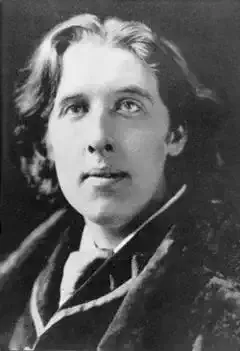
Oscar Wilde
Tristitiae
Tristitiae
O well for him who lives at ease
With garnered gold in wide domain,
Nor heeds the splashing of the rain,
The crashing down of forest trees.
O well for him who ne'er hath known
The travail of the hungry years,
A father grey with grief and tears,
A mother weeping all alone.
But well for him whose foot hath trod
The weary road of toil and strife,
Yet from the sorrows of his life.
Builds ladders to be nearer God.
O well for him who lives at ease
With garnered gold in wide domain,
Nor heeds the splashing of the rain,
The crashing down of forest trees.
O well for him who ne'er hath known
The travail of the hungry years,
A father grey with grief and tears,
A mother weeping all alone.
But well for him whose foot hath trod
The weary road of toil and strife,
Yet from the sorrows of his life.
Builds ladders to be nearer God.
191
Oscar Wilde
The Dole Of The King's Daughter (Breton)
The Dole Of The King's Daughter (Breton)
Seven stars in the still water,
And seven in the sky;
Seven sins on the King's daughter,
Deep in her soul to lie.
Red roses are at her feet,
(Roses are red in her red-gold hair)
And O where her bosom and girdle meet
Red roses are hidden there.
Fair is the knight who lieth slain
Amid the rush and reed,
See the lean fishes that are fain
Upon dead men to feed.
Sweet is the page that lieth there,
(Cloth of gold is goodly prey,)
See the black ravens in the air,
Black, O black as the night are they.
What do they there so stark and dead?
(There is blood upon her hand)
Why are the lilies flecked with red?
(There is blood on the river sand.)
There are two that ride from the south and east,
And two from the north and west,
For the black raven a goodly feast,
For the King's daughter rest.
There is one man who loves her true,
(Red, O red, is the stain of gore!)
He hath duggen a grave by the darksome yew,
(One grave will do for four.)
No moon in the still heaven,
In the black water none,
The sins on her soul are seven,
The sin upon his is one.
Seven stars in the still water,
And seven in the sky;
Seven sins on the King's daughter,
Deep in her soul to lie.
Red roses are at her feet,
(Roses are red in her red-gold hair)
And O where her bosom and girdle meet
Red roses are hidden there.
Fair is the knight who lieth slain
Amid the rush and reed,
See the lean fishes that are fain
Upon dead men to feed.
Sweet is the page that lieth there,
(Cloth of gold is goodly prey,)
See the black ravens in the air,
Black, O black as the night are they.
What do they there so stark and dead?
(There is blood upon her hand)
Why are the lilies flecked with red?
(There is blood on the river sand.)
There are two that ride from the south and east,
And two from the north and west,
For the black raven a goodly feast,
For the King's daughter rest.
There is one man who loves her true,
(Red, O red, is the stain of gore!)
He hath duggen a grave by the darksome yew,
(One grave will do for four.)
No moon in the still heaven,
In the black water none,
The sins on her soul are seven,
The sin upon his is one.
197
Oscar Wilde
Sonnet
Sonnet
CHRIST, dost thou live indeed? or are thy bones
Still straightened in their rock-hewn sepulchre?
And was thy Rising only dreamed by Her
Whose love of thee for all her sin atones?
For here the air is horrid with men's groans,
The priests who call upon thy name are slain,
Dost thou not hear the bitter wail of pain
From those whose children lie upon the stones?
Come down, O Son of God! incestuous gloom
Curtains the land, and through the starless night
Over thy Cross the Crescent moon I see!
If thou in very truth didst burst the tomb
Come down, O Son of Man! and show thy might,
Lest Mahomet be crowned instead of Thee!
CHRIST, dost thou live indeed? or are thy bones
Still straightened in their rock-hewn sepulchre?
And was thy Rising only dreamed by Her
Whose love of thee for all her sin atones?
For here the air is horrid with men's groans,
The priests who call upon thy name are slain,
Dost thou not hear the bitter wail of pain
From those whose children lie upon the stones?
Come down, O Son of God! incestuous gloom
Curtains the land, and through the starless night
Over thy Cross the Crescent moon I see!
If thou in very truth didst burst the tomb
Come down, O Son of Man! and show thy might,
Lest Mahomet be crowned instead of Thee!
209
Oscar Wilde
Panthea
Panthea
NAY, let us walk from fire unto fire,
From passionate pain to deadlier delight,--
I am too young to live without desire,
Too young art thou to waste this summer night
Asking those idle questions which of old
Man sought of seer and oracle, and no reply was told.
For, sweet, to feel is better than to know,
And wisdom is a childless heritage,
One pulse of passion--youth's first fiery glow,--
Are worth the hoarded proverbs of the sage:
Vex not thy soul with dead philosophy,
Have we not lips to kiss with, hearts to love, and eyes to see!
Dost thou not hear the murmuring nightingale
Like water bubbling from a silver jar,
So soft she sings the envious moon is pale,
That high in heaven she is hung so far
She cannot hear that love-enraptured tune,--
Mark how she wreathes each horn with mist, yon late and labouring
moon.
White lilies, in whose cups the gold bees dream,
The fallen snow of petals where the breeze
Scatters the chestnut blossom, or the gleam
Of boyish limbs in water,--are not these
Enough for thee, dost thou desire more?
Alas! the Gods will give nought else from their eternal store.
For our high Gods have sick and wearied grown
Of all our endless sins, our vain endeavour
For wasted days of youth to make atone
By pain or prayer or priest, and never, never,
Hearken they now to either good or ill,
But send their rain upon the just and the unjust at will.
They sit at ease, our Gods they sit at ease,
Strewing with leaves of rose their scented wine,
They sleep, they sleep, beneath the rocking trees
Where asphodel and yellow lotus twine,
Mourning the old glad days before they knew
What evil things the heart of man could dream, and dreaming do.
And far beneath the brazen floor they see
Like swarming flies the crowd of little men,
The bustle of small lives, then wearily
Back to their lotus-haunts they turn again
Kissing each other's mouths, and mix more deep
The poppy-seeded draught which brings soft purple-lidded sleep.
There all day long the golden-vestured sun,
Their torch-bearer, stands with his torch a-blaze,
And when the gaudy web of noon is spun
By its twelve maidens through the crimson haze
Fresh from Endymion's arms comes forth the moon,
And the immortal Gods in toils of mortal passions swoon.
There walks Queen Juno through some dewy mead
Her grand white feet flecked with the saffron dust
Of wind-stirred lilies, while young Ganymede
Leaps in the hot and amber-foaming must,
His curls all tossed, as when the eagle bare
The frightened boy from Ida through the blue Ionian air.
There in the green heart of some garden close
Queen Venus with the shepherd at her side,
Her warm soft body like the briar rose
Which would be white yet blushes at its pride,
Laughs low for love, till jealous Salmacis
Peers through the myrtle-leaves and sighs for pain of lonely
bliss.
There never does that dreary north-wind blow
Which leaves our English forests bleak and bare,
Nor ever falls the swift white-feathered snow,
Nor doth the red-toothed lightning ever dare
To wake them in the silver-fretted night
When we lie weeping for some sweet sad sin, some dead delight.
Alas! they know the far Lethæan spring,
The violet-hidden waters well they know,
Where one whose feet with tired wandering
Are faint and broken may take heart and go,
And from those dark depths cool and crystalline
Drink, and draw balm, and sleep for sleepless souls, and anodyne.
But we oppress our natures, God or Fate
Is our enemy, we starve and feed
On vain repentance--O we are born too late!
What balm for us in bruisèd poppy seed
Who crowd into one finite pulse of time
The joy of infinite love and the fierce pain of infinite crime.
O we are wearied of this sense of guilt,
Wearied of pleasure's paramour despair,
Wearied of every temple we have built,
Wearied of every right, unanswered prayer,
For man is weak; God sleeps: and heaven is high:
One fiery-coloured moment: one great love; and lo! we die.
Ah! but no ferry-man with labouring pole
Nears his black shallop to the flowerless strand,
No little coin of bronze can bring the soul
Over Death's river to the sunless land,
Victim and wine and vow are all in vain,
The tomb is sealed; the soldiers watch; the dead rise not again.
We are resolved into the supreme air,
We are made one with what we touch and see,
With our heart's blood each crimson sun is fair,
With our young lives each spring-impassioned tree
Flames into green, the wildest beasts that range
The moor our kinsmen are, all life is one, and all is change.
With beat of systole and of diastole
One grand great life throbs through earth's giant heart,
And mighty waves of single Being roll
From nerve-less germ to man, for we are part
Of every rock and bird and beast and hill,
One with the things that prey on us, and one with what we kill.
From lower cells of waking life we pass
To full perfection; thus the world grows old:
We who are godlike now were once a mass
Of quivering purple flecked with bars of gold,
Unsentient or of joy or misery,
And tossed in terrible tangles of some wild and wind-swept sea.
This hot hard flame with which our bodies burn
Will make some meadow blaze with daffodil,
Ay! and those argent breasts of thine will turn
To water-lilies; the brown fields men till
Will be more fruitful for our love to-night,
Nothing is lost in nature, all things live in Death's despite.
The boy's first kiss, the hyacinth's first bell,
The man's last passion, and the last red spear
That from the lily leaps, the asphodel
Which will not let its blossoms blow for fear
Of too much beauty, and the timid shame
Of the young bride-groom at his lover's eyes,--these with the
same
One sacrament are consecrate, the earth
Not we alone hath passions hymeneal,
The yellow buttercups that shake for mirth
At daybreak know a pleasure not less real
Than we do, when in some fresh-blossoming wood
We draw the spring into our hearts, and feel that life is good.
So when men bury us beneath the yew
Thy crimson-stainèd mouth a rose will be,
And thy soft eyes lush bluebells dimmed with dew,
And when the white narcissus wantonly
Kisses the wind its playmate, some faint joy
Will thrill our dust, and we will be again fond maid and boy.
And thus without life's conscious torturing pain
In some sweet flower we will feel the sun,
And from the linnet's throat will sing again,
And as two gorgeous-mailèd snakes will run
Over our graves, or as two tigers creep
Through the hot jungle where the yellow-eyed huge lions sleep
And give them battle! How my heart leaps up
To think of that grand living after death
In beast and bird and flower, when this cup,
Being filled too full of spirit, bursts for breath,
And with the pale leaves of some autumn day
The soul earth's earliest conqueror becomes earth's last great prey.
O think of it! We shall inform ourselves
Into all sensuous life, the goat-foot Faun,
The Centaur, or the merry bright-eyed Elves
That leave their dancing rings to spite the dawn
Upon the meadows, shall not be more near
Than you and I to nature's mysteries, for we shall hear
The thrush's heart beat, and the daisies grow,
And the wan snowdrop sighing for the sun
On sunless days in winter, we shall know
By whom the silver gossamer is spun,
Who paints the diapered fritillaries,
On what wide wings from shivering pine to pine the eagle flies.
Ay! had we never loved at all, who knows
If yonder daffodil had lured the bee
Into its gilded womb, or any rose
Had hung with crimson lamps its little tree!
Methinks no leaf would ever bud in spring,
But for the lovers' lips that kiss, the poets' lips that sing.
Is the light vanished from our golden sun,
Or is this dædal-fashioned earth less fair,
That we are nature's heritors, and one
With every pulse of life that beats the air?
Rather new suns across the sky shall pass,
New splendour come unto the flower, new glory to the grass.
And we two lovers shall not sit afar,
Critics of nature, but the joyous sea
Shall be our raiment, and the bearded star
Shoot arrows at our pleasure! We shall be
Part of the mighty universal whole,
And through all æons mix and mingle with the Kosmic Soul!
We shall be notes in that great Symphony
Whose cadence circles through the rhythmic spheres,
And all the live World's throbbing heart shall be
One with our heart, the stealthy creeping years
Have lost their terrors now, we shall not die,
The Universe itself shall be our Immortality!
NAY, let us walk from fire unto fire,
From passionate pain to deadlier delight,--
I am too young to live without desire,
Too young art thou to waste this summer night
Asking those idle questions which of old
Man sought of seer and oracle, and no reply was told.
For, sweet, to feel is better than to know,
And wisdom is a childless heritage,
One pulse of passion--youth's first fiery glow,--
Are worth the hoarded proverbs of the sage:
Vex not thy soul with dead philosophy,
Have we not lips to kiss with, hearts to love, and eyes to see!
Dost thou not hear the murmuring nightingale
Like water bubbling from a silver jar,
So soft she sings the envious moon is pale,
That high in heaven she is hung so far
She cannot hear that love-enraptured tune,--
Mark how she wreathes each horn with mist, yon late and labouring
moon.
White lilies, in whose cups the gold bees dream,
The fallen snow of petals where the breeze
Scatters the chestnut blossom, or the gleam
Of boyish limbs in water,--are not these
Enough for thee, dost thou desire more?
Alas! the Gods will give nought else from their eternal store.
For our high Gods have sick and wearied grown
Of all our endless sins, our vain endeavour
For wasted days of youth to make atone
By pain or prayer or priest, and never, never,
Hearken they now to either good or ill,
But send their rain upon the just and the unjust at will.
They sit at ease, our Gods they sit at ease,
Strewing with leaves of rose their scented wine,
They sleep, they sleep, beneath the rocking trees
Where asphodel and yellow lotus twine,
Mourning the old glad days before they knew
What evil things the heart of man could dream, and dreaming do.
And far beneath the brazen floor they see
Like swarming flies the crowd of little men,
The bustle of small lives, then wearily
Back to their lotus-haunts they turn again
Kissing each other's mouths, and mix more deep
The poppy-seeded draught which brings soft purple-lidded sleep.
There all day long the golden-vestured sun,
Their torch-bearer, stands with his torch a-blaze,
And when the gaudy web of noon is spun
By its twelve maidens through the crimson haze
Fresh from Endymion's arms comes forth the moon,
And the immortal Gods in toils of mortal passions swoon.
There walks Queen Juno through some dewy mead
Her grand white feet flecked with the saffron dust
Of wind-stirred lilies, while young Ganymede
Leaps in the hot and amber-foaming must,
His curls all tossed, as when the eagle bare
The frightened boy from Ida through the blue Ionian air.
There in the green heart of some garden close
Queen Venus with the shepherd at her side,
Her warm soft body like the briar rose
Which would be white yet blushes at its pride,
Laughs low for love, till jealous Salmacis
Peers through the myrtle-leaves and sighs for pain of lonely
bliss.
There never does that dreary north-wind blow
Which leaves our English forests bleak and bare,
Nor ever falls the swift white-feathered snow,
Nor doth the red-toothed lightning ever dare
To wake them in the silver-fretted night
When we lie weeping for some sweet sad sin, some dead delight.
Alas! they know the far Lethæan spring,
The violet-hidden waters well they know,
Where one whose feet with tired wandering
Are faint and broken may take heart and go,
And from those dark depths cool and crystalline
Drink, and draw balm, and sleep for sleepless souls, and anodyne.
But we oppress our natures, God or Fate
Is our enemy, we starve and feed
On vain repentance--O we are born too late!
What balm for us in bruisèd poppy seed
Who crowd into one finite pulse of time
The joy of infinite love and the fierce pain of infinite crime.
O we are wearied of this sense of guilt,
Wearied of pleasure's paramour despair,
Wearied of every temple we have built,
Wearied of every right, unanswered prayer,
For man is weak; God sleeps: and heaven is high:
One fiery-coloured moment: one great love; and lo! we die.
Ah! but no ferry-man with labouring pole
Nears his black shallop to the flowerless strand,
No little coin of bronze can bring the soul
Over Death's river to the sunless land,
Victim and wine and vow are all in vain,
The tomb is sealed; the soldiers watch; the dead rise not again.
We are resolved into the supreme air,
We are made one with what we touch and see,
With our heart's blood each crimson sun is fair,
With our young lives each spring-impassioned tree
Flames into green, the wildest beasts that range
The moor our kinsmen are, all life is one, and all is change.
With beat of systole and of diastole
One grand great life throbs through earth's giant heart,
And mighty waves of single Being roll
From nerve-less germ to man, for we are part
Of every rock and bird and beast and hill,
One with the things that prey on us, and one with what we kill.
From lower cells of waking life we pass
To full perfection; thus the world grows old:
We who are godlike now were once a mass
Of quivering purple flecked with bars of gold,
Unsentient or of joy or misery,
And tossed in terrible tangles of some wild and wind-swept sea.
This hot hard flame with which our bodies burn
Will make some meadow blaze with daffodil,
Ay! and those argent breasts of thine will turn
To water-lilies; the brown fields men till
Will be more fruitful for our love to-night,
Nothing is lost in nature, all things live in Death's despite.
The boy's first kiss, the hyacinth's first bell,
The man's last passion, and the last red spear
That from the lily leaps, the asphodel
Which will not let its blossoms blow for fear
Of too much beauty, and the timid shame
Of the young bride-groom at his lover's eyes,--these with the
same
One sacrament are consecrate, the earth
Not we alone hath passions hymeneal,
The yellow buttercups that shake for mirth
At daybreak know a pleasure not less real
Than we do, when in some fresh-blossoming wood
We draw the spring into our hearts, and feel that life is good.
So when men bury us beneath the yew
Thy crimson-stainèd mouth a rose will be,
And thy soft eyes lush bluebells dimmed with dew,
And when the white narcissus wantonly
Kisses the wind its playmate, some faint joy
Will thrill our dust, and we will be again fond maid and boy.
And thus without life's conscious torturing pain
In some sweet flower we will feel the sun,
And from the linnet's throat will sing again,
And as two gorgeous-mailèd snakes will run
Over our graves, or as two tigers creep
Through the hot jungle where the yellow-eyed huge lions sleep
And give them battle! How my heart leaps up
To think of that grand living after death
In beast and bird and flower, when this cup,
Being filled too full of spirit, bursts for breath,
And with the pale leaves of some autumn day
The soul earth's earliest conqueror becomes earth's last great prey.
O think of it! We shall inform ourselves
Into all sensuous life, the goat-foot Faun,
The Centaur, or the merry bright-eyed Elves
That leave their dancing rings to spite the dawn
Upon the meadows, shall not be more near
Than you and I to nature's mysteries, for we shall hear
The thrush's heart beat, and the daisies grow,
And the wan snowdrop sighing for the sun
On sunless days in winter, we shall know
By whom the silver gossamer is spun,
Who paints the diapered fritillaries,
On what wide wings from shivering pine to pine the eagle flies.
Ay! had we never loved at all, who knows
If yonder daffodil had lured the bee
Into its gilded womb, or any rose
Had hung with crimson lamps its little tree!
Methinks no leaf would ever bud in spring,
But for the lovers' lips that kiss, the poets' lips that sing.
Is the light vanished from our golden sun,
Or is this dædal-fashioned earth less fair,
That we are nature's heritors, and one
With every pulse of life that beats the air?
Rather new suns across the sky shall pass,
New splendour come unto the flower, new glory to the grass.
And we two lovers shall not sit afar,
Critics of nature, but the joyous sea
Shall be our raiment, and the bearded star
Shoot arrows at our pleasure! We shall be
Part of the mighty universal whole,
And through all æons mix and mingle with the Kosmic Soul!
We shall be notes in that great Symphony
Whose cadence circles through the rhythmic spheres,
And all the live World's throbbing heart shall be
One with our heart, the stealthy creeping years
Have lost their terrors now, we shall not die,
The Universe itself shall be our Immortality!
218
Oscar Wilde
On Easter Day
On Easter Day
The silver trumpets rang across the Dome:
The people knelt upon the ground with awe:
And borne upon the necks of men I saw,
Like some great God, the Holy Lord of Rome.
Priest-like, he wore a robe more white than foam,
And, king-like, swathed himself in royal red,
Three crowns of gold rose high upon his head:
In splendor and in light the Pope passed home.
My heart stole back across wide wastes of years
To One who wandered by a lonely sea,
And sought in vain for any place of rest:
"Foxes have holes, and every bird its nest,
I, only I, must wander wearily,
And bruise My feet, and drink wine salt with tears."
The silver trumpets rang across the Dome:
The people knelt upon the ground with awe:
And borne upon the necks of men I saw,
Like some great God, the Holy Lord of Rome.
Priest-like, he wore a robe more white than foam,
And, king-like, swathed himself in royal red,
Three crowns of gold rose high upon his head:
In splendor and in light the Pope passed home.
My heart stole back across wide wastes of years
To One who wandered by a lonely sea,
And sought in vain for any place of rest:
"Foxes have holes, and every bird its nest,
I, only I, must wander wearily,
And bruise My feet, and drink wine salt with tears."
195
Oscar Wilde
E Tenebris
E Tenebris
COME down, O Christ, and help me! reach thy hand,
For I am drowning in a stormier sea
Than Simon on thy lake of Galilee:
The wine of life is spilt upon the sand,
My heart is as some famine-murdered land,
Whence all good things have perished utterly,
And well I know my soul in Hell must lie
If I this night before God's throne should stand.
'He sleeps perchance, or rideth to the chase,
Like Baal, when his prophets howled that name
From morn to noon on Carmel's smitten height.'
Nay, peace, I shall behold before the night,
The feet of brass, the robe more white than flame,
The wounded hands, the weary human face.
COME down, O Christ, and help me! reach thy hand,
For I am drowning in a stormier sea
Than Simon on thy lake of Galilee:
The wine of life is spilt upon the sand,
My heart is as some famine-murdered land,
Whence all good things have perished utterly,
And well I know my soul in Hell must lie
If I this night before God's throne should stand.
'He sleeps perchance, or rideth to the chase,
Like Baal, when his prophets howled that name
From morn to noon on Carmel's smitten height.'
Nay, peace, I shall behold before the night,
The feet of brass, the robe more white than flame,
The wounded hands, the weary human face.
231
Oscar Wilde
Ave Imperatrix
Ave Imperatrix
SET in this stormy Northern sea,
Queen of these restless fields of tide,
England! what shall men say of thee,
Before whose feet the worlds divide?
The earth, a brittle globe of glass,
Lies in the hollow of thy hand,
And through its heart of crystal pass,
Like shadows through a twilight land,
The spears of crimson-suited war,
The long white-crested waves of fight,
And all the deadly fires which are
The torches of the lords of Night.
The yellow leopards, strained and lean,
The treacherous Russian knows so well,
With gaping blackened jaws are seen
Leap through the hail of screaming shell.
The strong sea-lion of England's wars
Hath left his sapphire cave of sea,
To battle with the storm that mars
The star of England's chivalry.
The brazen-throated clarion blows
Across the Pathan's reedy fen,
And the high steeps of Indian snows
Shake to the tread of armèd men.
And many an Afghan chief, who lies
Beneath his cool pomegranate-trees,
Clutches his sword in fierce surmise
When on the mountain-side he sees
The fleet-foot Marri scout, who comes
To tell how he hath heard afar
The measured roll of English drums
Beat at the gates of Kandahar.
For southern wind and east wind meet
Where, girt and crowned by sword and fire,
England with bare and bloody feet
Climbs the steep road of wide empire.
O lonely Himalayan height,
Grey pillar of the Indian sky,
Where saw'st thou last in clanging fight
Our wingèd dogs of Victory?
The almond groves of Samarcand,
Bokhara, where red lilies blow,
And Oxus, by whose yellow sand
The grave white-turbaned merchants go:
And on from thence to Ispahan,
The gilded garden of the sun,
Whence the long dusty caravan
Brings cedar and vermilion;
And that dread city of Cabool
Set at the mountain's scarpèd feet,
Whose marble tanks are ever full
With water for the noonday heat:
Where through the narrow straight Bazaar
A little maid Circassian
Is led, a present from the Czar
Unto some old and bearded khan,--
Here have our wild war-eagles flown,
And flapped wide wings in fiery fight;
But the sad dove, that sits alone
In England--she hath no delight.
In vain the laughing girl will lean
To greet her love with love-lit eyes:
Down in some treacherous black ravine,
Clutching his flag, the dead boy lies.
And many a moon and sun will see
The lingering wistful children wait
To climb upon their father's knee;
And in each house made desolate
Pale women who have lost their lord
Will kiss the relics of the slain--
Some tarnished epaulette--some sword--
Poor toys to soothe such anguished pain.
For not in quiet English fields
Are these, our brothers, lain to rest,
Where we might deck their broken shields
With all the flowers the dead love best.
For some are by the Delhi walls,
And many in the Afghan land,
And many where the Ganges falls
Through seven mouths of shifting sand.
And some in Russian waters lie,
And others in the seas which are
The portals to the East, or by
The wind-swept heights of Trafalgar.
O wandering graves! O restless sleep!
O silence of the sunless day!
O still ravine! O stormy deep!
Give up your prey! Give up your prey!
And thou whose wounds are never healed,
Whose weary race is never won,
O Cromwell's England! must thou yield
For every inch of ground a son?
Go! crown with thorns thy gold-crowned head,
Change thy glad song to song of pain;
Wind and wild wave have got thy dead,
And will not yield them back again.
Wave and wild wind and foreign shore
Possess the flower of English land--
Lips that thy lips shall kiss no more,
Hands that shall never clasp thy hand.
What profit now that we have bound
The whole round world with nets of gold,
If hidden in our heart is found
The care that groweth never old?
What profit that our galleys ride,
Pine-forest-like, on every main?
Ruin and wreck are at our side,
Grim warders of the House of pain.
Where are the brave, the strong, the fleet?
Where is our English chivalry?
Wild grasses are their burial-sheet,
And sobbing waves their threnody.
O loved ones lying far away,
What word of love can dead lips send!
O wasted dust! O senseless clay!
Is this the end! is this the end!
Peace, peace! we wrong the noble dead
To vex their solemn slumber so;
Though childless, and with thorn-crowned head,
Up the steep road must England go,
Yet when this fiery web is spun,
Her watchmen shall descry from far
The young Republic like a sun
Rise from these crimson seas of war.
SET in this stormy Northern sea,
Queen of these restless fields of tide,
England! what shall men say of thee,
Before whose feet the worlds divide?
The earth, a brittle globe of glass,
Lies in the hollow of thy hand,
And through its heart of crystal pass,
Like shadows through a twilight land,
The spears of crimson-suited war,
The long white-crested waves of fight,
And all the deadly fires which are
The torches of the lords of Night.
The yellow leopards, strained and lean,
The treacherous Russian knows so well,
With gaping blackened jaws are seen
Leap through the hail of screaming shell.
The strong sea-lion of England's wars
Hath left his sapphire cave of sea,
To battle with the storm that mars
The star of England's chivalry.
The brazen-throated clarion blows
Across the Pathan's reedy fen,
And the high steeps of Indian snows
Shake to the tread of armèd men.
And many an Afghan chief, who lies
Beneath his cool pomegranate-trees,
Clutches his sword in fierce surmise
When on the mountain-side he sees
The fleet-foot Marri scout, who comes
To tell how he hath heard afar
The measured roll of English drums
Beat at the gates of Kandahar.
For southern wind and east wind meet
Where, girt and crowned by sword and fire,
England with bare and bloody feet
Climbs the steep road of wide empire.
O lonely Himalayan height,
Grey pillar of the Indian sky,
Where saw'st thou last in clanging fight
Our wingèd dogs of Victory?
The almond groves of Samarcand,
Bokhara, where red lilies blow,
And Oxus, by whose yellow sand
The grave white-turbaned merchants go:
And on from thence to Ispahan,
The gilded garden of the sun,
Whence the long dusty caravan
Brings cedar and vermilion;
And that dread city of Cabool
Set at the mountain's scarpèd feet,
Whose marble tanks are ever full
With water for the noonday heat:
Where through the narrow straight Bazaar
A little maid Circassian
Is led, a present from the Czar
Unto some old and bearded khan,--
Here have our wild war-eagles flown,
And flapped wide wings in fiery fight;
But the sad dove, that sits alone
In England--she hath no delight.
In vain the laughing girl will lean
To greet her love with love-lit eyes:
Down in some treacherous black ravine,
Clutching his flag, the dead boy lies.
And many a moon and sun will see
The lingering wistful children wait
To climb upon their father's knee;
And in each house made desolate
Pale women who have lost their lord
Will kiss the relics of the slain--
Some tarnished epaulette--some sword--
Poor toys to soothe such anguished pain.
For not in quiet English fields
Are these, our brothers, lain to rest,
Where we might deck their broken shields
With all the flowers the dead love best.
For some are by the Delhi walls,
And many in the Afghan land,
And many where the Ganges falls
Through seven mouths of shifting sand.
And some in Russian waters lie,
And others in the seas which are
The portals to the East, or by
The wind-swept heights of Trafalgar.
O wandering graves! O restless sleep!
O silence of the sunless day!
O still ravine! O stormy deep!
Give up your prey! Give up your prey!
And thou whose wounds are never healed,
Whose weary race is never won,
O Cromwell's England! must thou yield
For every inch of ground a son?
Go! crown with thorns thy gold-crowned head,
Change thy glad song to song of pain;
Wind and wild wave have got thy dead,
And will not yield them back again.
Wave and wild wind and foreign shore
Possess the flower of English land--
Lips that thy lips shall kiss no more,
Hands that shall never clasp thy hand.
What profit now that we have bound
The whole round world with nets of gold,
If hidden in our heart is found
The care that groweth never old?
What profit that our galleys ride,
Pine-forest-like, on every main?
Ruin and wreck are at our side,
Grim warders of the House of pain.
Where are the brave, the strong, the fleet?
Where is our English chivalry?
Wild grasses are their burial-sheet,
And sobbing waves their threnody.
O loved ones lying far away,
What word of love can dead lips send!
O wasted dust! O senseless clay!
Is this the end! is this the end!
Peace, peace! we wrong the noble dead
To vex their solemn slumber so;
Though childless, and with thorn-crowned head,
Up the steep road must England go,
Yet when this fiery web is spun,
Her watchmen shall descry from far
The young Republic like a sun
Rise from these crimson seas of war.
240
Oscar Wilde
At Verona
At Verona
HOW steep the stairs within Kings' houses are
For exile-wearied feet as mine to tread,
And O how salt and bitter is the bread
Which falls from this Hound's table,--better far
That I had died in the red ways of war,
Or that the gate of Florence bare my head,
Than to live thus, by all things comraded
Which seek the essence of my soul to mar.
'Curse God and die: what better hope than this?
He hath forgotten thee in all the bliss
Of his gold city, and eternal day'--
Nay peace: behind my prison's blinded bars
I do possess what none can take away,
My love, and all the glory of the stars.
HOW steep the stairs within Kings' houses are
For exile-wearied feet as mine to tread,
And O how salt and bitter is the bread
Which falls from this Hound's table,--better far
That I had died in the red ways of war,
Or that the gate of Florence bare my head,
Than to live thus, by all things comraded
Which seek the essence of my soul to mar.
'Curse God and die: what better hope than this?
He hath forgotten thee in all the bliss
Of his gold city, and eternal day'--
Nay peace: behind my prison's blinded bars
I do possess what none can take away,
My love, and all the glory of the stars.
247
Oscar Wilde
A Vision
A Vision
TWO crownèd Kings, and One that stood alone
With no green weight of laurels round his head,
But with sad eyes as one uncomforted,
And wearied with man's never-ceasing moan
For sins no bleating victim can atone,
And sweet long lips with tears and kisses fed.
Girt was he in a garment black and red,
And at his feet I marked a broken stone
Which sent up lilies, dove-like, to his knees.
Now at their sight, my heart being lit with flame
I cried to Beatricé, 'Who are these?'
And she made answer, knowing well each name,
'Æschylos first, the second Sophokles,
And last (wide stream of tears!) Euripides.'
TWO crownèd Kings, and One that stood alone
With no green weight of laurels round his head,
But with sad eyes as one uncomforted,
And wearied with man's never-ceasing moan
For sins no bleating victim can atone,
And sweet long lips with tears and kisses fed.
Girt was he in a garment black and red,
And at his feet I marked a broken stone
Which sent up lilies, dove-like, to his knees.
Now at their sight, my heart being lit with flame
I cried to Beatricé, 'Who are these?'
And she made answer, knowing well each name,
'Æschylos first, the second Sophokles,
And last (wide stream of tears!) Euripides.'
220

Ogden Nash
Samson Agonistes
Samson Agonistes
I test my bath before I sit,
And I'm always moved to wonderment
That what chills the finger not a bit
Is so frigid upon the fundament.
I test my bath before I sit,
And I'm always moved to wonderment
That what chills the finger not a bit
Is so frigid upon the fundament.
192
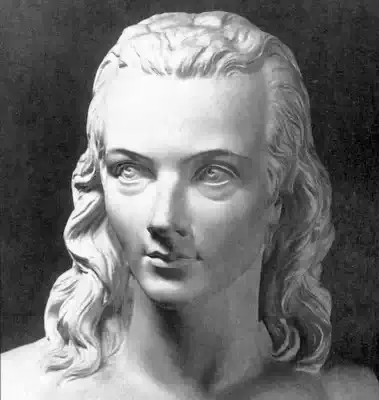
Novalis
Hymns to the Night :
Hymns to the Night :
Before all the wondrous shows of the widespread space around him, what living,
sentient thing loves not the all-joyous light -- with its colors, its rays and undulations,
its gentle omnipresence in the form of the wakening Day? The giant-world of the
unresting constellations inhales it as the innermost soul of life, and floats dancing in its
blue flood -- the sparkling, ever-tranquil stone, the thoughtful, imbibing plant, and the
wild, burning multiform beast inhales it -- but more than all, the lordly stranger with
the sense-filled eyes, the swaying walk, and the sweetly closed, melodious lips. Like a
king over earthly nature, it rouses every force to countless transformations, binds and
unbinds innumerable alliances, hangs its heavenly form around every earthly
substance. -- Its presence alone reveals the marvelous splendor of the kingdoms of the
world.
Aside I turn to the holy, unspeakable, mysterious Night. Afar lies the world -- sunk in a
deep grave -- waste and lonely is its place. In the chords of the bosom blows a deep
sadness. I am ready to sink away in drops of dew, and mingle with the ashes. -- The
distances of memory, the wishes of youth, the dreams of childhood, the brief joys and
vain hopes of a whole long life, arise in gray garments, like an evening vapor after the
sunset. In other regions the light has pitched its joyous tents. What if it should never
return to its children, who wait for it with the faith of innocence?
What springs up all at once so sweetly boding in my heart, and stills the soft air of
sadness? Dost thou also take a pleasure in us, dark Night? What holdest thou under
thy mantle, that with hidden power affects my soul? Precious balm drips from thy hand
out of its bundle of poppies. Thou upliftest the heavy-laden wings of the soul. Darkly
and inexpressibly are we moved -- joy-startled, I see a grave face that, tender and
worshipful, inclines toward me, and, amid manifold entangled locks, reveals the
youthful loveliness of the Mother. How poor and childish a thing seems to me now the
Light -- how joyous and welcome the departure of the day -- because the Night turns
away from thee thy servants, you now strew in the gulfs of space those flashing
globes, to proclaim thy omnipotence -- thy return -- in seasons of thy absence. More
heavenly than those glittering stars we hold the eternal eyes which the Night hath
opened within us. Farther they see than the palest of those countless hosts -- needing
no aid from the light, they penetrate the depths of a loving soul -- that fills a loftier
region with bliss ineffable. Glory to the queen of the world, to the great prophet of the
holier worlds, to the guardian of blissful love -- she sends thee to me -- thou tenderly
beloved -- the gracious sun of the Night, -- now am I awake -- for now am I thine and
mine -- thou hast made me know the Night -- made of me a man -- consume with
spirit-fire my body, that I, turned to finer air, may mingle more closely with thee, and
then our bridal night endure forever.
Before all the wondrous shows of the widespread space around him, what living,
sentient thing loves not the all-joyous light -- with its colors, its rays and undulations,
its gentle omnipresence in the form of the wakening Day? The giant-world of the
unresting constellations inhales it as the innermost soul of life, and floats dancing in its
blue flood -- the sparkling, ever-tranquil stone, the thoughtful, imbibing plant, and the
wild, burning multiform beast inhales it -- but more than all, the lordly stranger with
the sense-filled eyes, the swaying walk, and the sweetly closed, melodious lips. Like a
king over earthly nature, it rouses every force to countless transformations, binds and
unbinds innumerable alliances, hangs its heavenly form around every earthly
substance. -- Its presence alone reveals the marvelous splendor of the kingdoms of the
world.
Aside I turn to the holy, unspeakable, mysterious Night. Afar lies the world -- sunk in a
deep grave -- waste and lonely is its place. In the chords of the bosom blows a deep
sadness. I am ready to sink away in drops of dew, and mingle with the ashes. -- The
distances of memory, the wishes of youth, the dreams of childhood, the brief joys and
vain hopes of a whole long life, arise in gray garments, like an evening vapor after the
sunset. In other regions the light has pitched its joyous tents. What if it should never
return to its children, who wait for it with the faith of innocence?
What springs up all at once so sweetly boding in my heart, and stills the soft air of
sadness? Dost thou also take a pleasure in us, dark Night? What holdest thou under
thy mantle, that with hidden power affects my soul? Precious balm drips from thy hand
out of its bundle of poppies. Thou upliftest the heavy-laden wings of the soul. Darkly
and inexpressibly are we moved -- joy-startled, I see a grave face that, tender and
worshipful, inclines toward me, and, amid manifold entangled locks, reveals the
youthful loveliness of the Mother. How poor and childish a thing seems to me now the
Light -- how joyous and welcome the departure of the day -- because the Night turns
away from thee thy servants, you now strew in the gulfs of space those flashing
globes, to proclaim thy omnipotence -- thy return -- in seasons of thy absence. More
heavenly than those glittering stars we hold the eternal eyes which the Night hath
opened within us. Farther they see than the palest of those countless hosts -- needing
no aid from the light, they penetrate the depths of a loving soul -- that fills a loftier
region with bliss ineffable. Glory to the queen of the world, to the great prophet of the
holier worlds, to the guardian of blissful love -- she sends thee to me -- thou tenderly
beloved -- the gracious sun of the Night, -- now am I awake -- for now am I thine and
mine -- thou hast made me know the Night -- made of me a man -- consume with
spirit-fire my body, that I, turned to finer air, may mingle more closely with thee, and
then our bridal night endure forever.
386

Nazim Hikmet
Letters From A Man In Solitary
Letters From A Man In Solitary
I carved your name on my watchband
with my fingernail.
Where I am, you know,
I don't have a pearl-handled jackknife
(they won't give me anything sharp)
or a plane tree with its head in the clouds.
Trees may grow in the yard,
but I'm not allowed
to see the sky overhead...
How many others are in this place?
I don't know.
I'm alone far from them,
they're all together far from me.
To talk anyone besides myself
is forbidden.
So I talk to myself.
But I find my conversation so boring,
my dear wife, that I sing songs.
And what do you know,
that awful, always off-key voice of mine
touches me so
that my heart breaks.
And just like the barefoot orphan
lost in the snow
in those old sad stories, my heart
-- with moist blue eyes
and a little red runny rose --
wants to snuggle up in your arms.
It doesn't make me blush
that right now
I'm this weak,
this selfish,
this human simply.
No doubt my state can be explained
physiologically, psychologically, etc.
Or maybe it's
this barred window,
this earthen jug,
these four walls,
which for months have kept me from hearing
another human voice.
It's five o'clock, my dear.
Outside,
with its dryness,
eerie whispers,
mud roof,
and lame, skinny horse
standing motionless in infinity
-- I mean, it's enough to drive the man inside crazy with grief --
outside, with all its machinery and all its art,
a plains night comes down red on treeless space.
Again today, night will fall in no time.
A light will circle the lame, skinny horse.
And the treeless space, in this hopeless landscape
stretched out before me like the body of a hard man,
will suddenly be filled with stars.
We'll reach the inevitable end once more,
which is to say the stage is set
again today for an elaborate nostalgia.
Me,
the man inside,
once more I'll exhibit my customary talent,
and singing an old-fashioned lament
in the reedy voice of my childhood,
once more, by God, it will crush my unhappy heart
to hear you inside my head,
so far
away, as if I were watching you
in a smoky, broken mirror...
It's spring outside, my dear wife, spring.
Outside on the plain, suddenly the smell
of fresh earth, birds singing, etc.
It's spring, my dear wife,
the plain outside sparkles...
And inside the bed comes alive with bugs,
the water jug no longer freezes,
and in the morning sun floods the concrete...
The sun--
every day till noon now
it comes and goes
from me, flashing off
and on...
And as the day turns to afternoon, shadows climb the walls,
the glass of the barred window catches fire,
and it's night outside,
a cloudless spring night...
And inside this is spring's darkest hour.
In short, the demon called freedom,
with its glittering scales and fiery eyes,
possesses the man inside
especially in spring...
I know this from experience, my dear wife,
from experience...
Sunday today.
Today they took me out in the sun for the first time.
And I just stood there, struck for the first time in my life
by how far away the sky is,
how blue
and how wide.
Then I respectfully sat down on the earth.
I leaned back against the wall.
For a moment no trap to fall into,
no struggle, no freedom, no wife.
Only earth, sun, and me...
I am happy.
Trans. by Randy Blasing and Mutlu Konuk ()
I carved your name on my watchband
with my fingernail.
Where I am, you know,
I don't have a pearl-handled jackknife
(they won't give me anything sharp)
or a plane tree with its head in the clouds.
Trees may grow in the yard,
but I'm not allowed
to see the sky overhead...
How many others are in this place?
I don't know.
I'm alone far from them,
they're all together far from me.
To talk anyone besides myself
is forbidden.
So I talk to myself.
But I find my conversation so boring,
my dear wife, that I sing songs.
And what do you know,
that awful, always off-key voice of mine
touches me so
that my heart breaks.
And just like the barefoot orphan
lost in the snow
in those old sad stories, my heart
-- with moist blue eyes
and a little red runny rose --
wants to snuggle up in your arms.
It doesn't make me blush
that right now
I'm this weak,
this selfish,
this human simply.
No doubt my state can be explained
physiologically, psychologically, etc.
Or maybe it's
this barred window,
this earthen jug,
these four walls,
which for months have kept me from hearing
another human voice.
It's five o'clock, my dear.
Outside,
with its dryness,
eerie whispers,
mud roof,
and lame, skinny horse
standing motionless in infinity
-- I mean, it's enough to drive the man inside crazy with grief --
outside, with all its machinery and all its art,
a plains night comes down red on treeless space.
Again today, night will fall in no time.
A light will circle the lame, skinny horse.
And the treeless space, in this hopeless landscape
stretched out before me like the body of a hard man,
will suddenly be filled with stars.
We'll reach the inevitable end once more,
which is to say the stage is set
again today for an elaborate nostalgia.
Me,
the man inside,
once more I'll exhibit my customary talent,
and singing an old-fashioned lament
in the reedy voice of my childhood,
once more, by God, it will crush my unhappy heart
to hear you inside my head,
so far
away, as if I were watching you
in a smoky, broken mirror...
It's spring outside, my dear wife, spring.
Outside on the plain, suddenly the smell
of fresh earth, birds singing, etc.
It's spring, my dear wife,
the plain outside sparkles...
And inside the bed comes alive with bugs,
the water jug no longer freezes,
and in the morning sun floods the concrete...
The sun--
every day till noon now
it comes and goes
from me, flashing off
and on...
And as the day turns to afternoon, shadows climb the walls,
the glass of the barred window catches fire,
and it's night outside,
a cloudless spring night...
And inside this is spring's darkest hour.
In short, the demon called freedom,
with its glittering scales and fiery eyes,
possesses the man inside
especially in spring...
I know this from experience, my dear wife,
from experience...
Sunday today.
Today they took me out in the sun for the first time.
And I just stood there, struck for the first time in my life
by how far away the sky is,
how blue
and how wide.
Then I respectfully sat down on the earth.
I leaned back against the wall.
For a moment no trap to fall into,
no struggle, no freedom, no wife.
Only earth, sun, and me...
I am happy.
Trans. by Randy Blasing and Mutlu Konuk ()
351
Nazim Hikmet
Angina Pectoris
Angina Pectoris
If half my heart is here, doctor,
the other half is in China
with the army flowing
toward the Yellow River.
And, every morning, doctor,
every morning at sunrise my heart
is shot in Greece.
And every night,c doctor,
when the prisoners are asleep and the infirmary is deserted,
my heart stops at a run-down old house
in Istanbul.
And then after ten years
all i have to offer my poor people
is this apple in my hand, doctor,
one read apple:
my heart.
And that, doctor, that is the reason
for this angina pectoris--
not nicotine, prison, or arteriosclerosis.
I look at the night through the bars,
and despite the weight on my chest
my heart still beats with the most distant stars.
Trans. by Randy Blasing and Mutlu Konuk ()
If half my heart is here, doctor,
the other half is in China
with the army flowing
toward the Yellow River.
And, every morning, doctor,
every morning at sunrise my heart
is shot in Greece.
And every night,c doctor,
when the prisoners are asleep and the infirmary is deserted,
my heart stops at a run-down old house
in Istanbul.
And then after ten years
all i have to offer my poor people
is this apple in my hand, doctor,
one read apple:
my heart.
And that, doctor, that is the reason
for this angina pectoris--
not nicotine, prison, or arteriosclerosis.
I look at the night through the bars,
and despite the weight on my chest
my heart still beats with the most distant stars.
Trans. by Randy Blasing and Mutlu Konuk ()
398

Mirza Ghalib
Pain did not become grateful to medicine
Pain did not become grateful to medicine
Pain did not become grateful to medicine
I didn't get well; [but it] wasn't bad either
Why are you gathering the Rivals?
[It was just] a mere spectacle [that] took place, no complaint was made
Where would we go to test our fate/ destiny?
When you yourself did not put your dagger to test
How sweet are your lips, that the rival
[after] receiving abuse, did not lack pleasure
Recent/ hot news is that she is coming
Only today, in the house there was not a straw mat!
Does the divinity belonged to Namrood'?
[cause] in your servitude, my wellbeing did not happen
[God] gave life- the given [life] was His alone
The truth is; that the responsibility was not fulfilled [by us]
If the wound was pressed, the blood did not stop
[though] the task was halted, [but the bleeding still] set out
Is it highway robbery, or is it heart-theft?
Having taken the heart, the heart-thief set out [to depart]
Recite something, for people are saying
Today "Ghalib" was not a ghazal-reciter
Pain did not become grateful to medicine
I didn't get well; [but it] wasn't bad either
Why are you gathering the Rivals?
[It was just] a mere spectacle [that] took place, no complaint was made
Where would we go to test our fate/ destiny?
When you yourself did not put your dagger to test
How sweet are your lips, that the rival
[after] receiving abuse, did not lack pleasure
Recent/ hot news is that she is coming
Only today, in the house there was not a straw mat!
Does the divinity belonged to Namrood'?
[cause] in your servitude, my wellbeing did not happen
[God] gave life- the given [life] was His alone
The truth is; that the responsibility was not fulfilled [by us]
If the wound was pressed, the blood did not stop
[though] the task was halted, [but the bleeding still] set out
Is it highway robbery, or is it heart-theft?
Having taken the heart, the heart-thief set out [to depart]
Recite something, for people are saying
Today "Ghalib" was not a ghazal-reciter
309
Mirza Ghalib
No Hope
No Hope
I am left with no hope at all,
No possibility to reach my goal,
The Day of my death is fixed,
I am so very anxious that I can not sleep all night.
Though I know the reward of obedience and worship,
But I have no tendency for it.
I am silent for a certain reason,
Otherwise I can convince you with my words,
Why I shouldn't cry,
For when I don't, she asks about me,
My heart is burning, though you cannot see the spot,
But O my doctor, can't you smell my heart burn?
I have reached to a certain state,
From where even I cannot find myself.
I am dying (Waiting anxiously) for my death,
I don't know where the hell my death has gone.
With what face you will go to Ka'ba, O! Ghalib,
You should be ashamed of yourself while thinking to go there.
I am left with no hope at all,
No possibility to reach my goal,
The Day of my death is fixed,
I am so very anxious that I can not sleep all night.
Though I know the reward of obedience and worship,
But I have no tendency for it.
I am silent for a certain reason,
Otherwise I can convince you with my words,
Why I shouldn't cry,
For when I don't, she asks about me,
My heart is burning, though you cannot see the spot,
But O my doctor, can't you smell my heart burn?
I have reached to a certain state,
From where even I cannot find myself.
I am dying (Waiting anxiously) for my death,
I don't know where the hell my death has gone.
With what face you will go to Ka'ba, O! Ghalib,
You should be ashamed of yourself while thinking to go there.
333
Mirza Ghalib
I have seen almost all the possible Troubles in my life
I have seen almost all the possible Troubles in my life
I have seen almost all the possible Troubles in my life,
The last one that I have to face is the Death.
I have seen almost all the possible Troubles in my life,
The last one that I have to face is the Death.
236
Mirza Ghalib
A Thousand Desires
A Thousand Desires
Thousands of desires, each worth dying for...
Many of them I have realized...yet I yearn for more...
Why should my killer (lover) be afraid? No one will hold her responsible
For the blood which will continuously flow through my eyes all my life
We have heard about the dismissal of Adam from Heaven,
With a more humiliation, I am leaving the street on which you live...
Oh tyrant, your true personality will be known to all
If the curls of my hair slip through my turban!
But if someone wants to write her a letter, they can ask me,
Every morning I leave my house with my pen on my ear.
In that age, I turned to drinking (alcohol)
And then the time came when my entire world was occupied by alcohol
From whom I expected justice/praise for my weakness
Turned out to be more injured with the same cruel sword
When in love, there is little difference between life and death
We live by looking at the infidel who we are willing to die for
Put some pressure on your heart to remove that cruel arrow,
For if the arrow comes out, so will your heart...and your life.
For god's sake, don't lift the cover off any secrets you tyrant
The infidel might turn out to be my lover!
The preacher and the bar's entrance are way apart
Yet I saw him entering the bar as I was leaving!
Thousands of desires, each worth dying for...
>Many of them I have realized...yet I yearn for more
Thousands of desires, each worth dying for...
Many of them I have realized...yet I yearn for more...
Why should my killer (lover) be afraid? No one will hold her responsible
For the blood which will continuously flow through my eyes all my life
We have heard about the dismissal of Adam from Heaven,
With a more humiliation, I am leaving the street on which you live...
Oh tyrant, your true personality will be known to all
If the curls of my hair slip through my turban!
But if someone wants to write her a letter, they can ask me,
Every morning I leave my house with my pen on my ear.
In that age, I turned to drinking (alcohol)
And then the time came when my entire world was occupied by alcohol
From whom I expected justice/praise for my weakness
Turned out to be more injured with the same cruel sword
When in love, there is little difference between life and death
We live by looking at the infidel who we are willing to die for
Put some pressure on your heart to remove that cruel arrow,
For if the arrow comes out, so will your heart...and your life.
For god's sake, don't lift the cover off any secrets you tyrant
The infidel might turn out to be my lover!
The preacher and the bar's entrance are way apart
Yet I saw him entering the bar as I was leaving!
Thousands of desires, each worth dying for...
>Many of them I have realized...yet I yearn for more
406
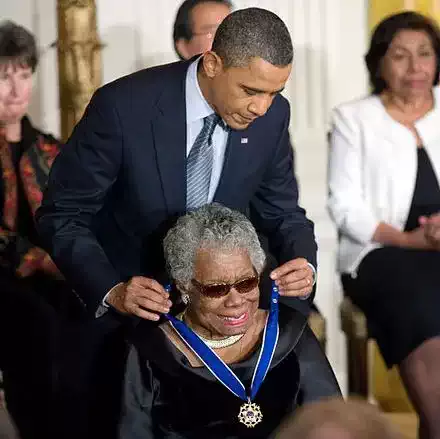
Maya Angelou
When You Come
When You Come
When you come to me, unbidden,
Beckoning me
To long-ago rooms,
Where memories lie.
Offering me, as to a child, an attic,
Gatherings of days too few.
Baubles of stolen kisses.
Trinkets of borrowed loves.
Trunks of secret words,
I CRY.
When you come to me, unbidden,
Beckoning me
To long-ago rooms,
Where memories lie.
Offering me, as to a child, an attic,
Gatherings of days too few.
Baubles of stolen kisses.
Trinkets of borrowed loves.
Trunks of secret words,
I CRY.
147
Maya Angelou
The Lesson
The Lesson
I keep on dying again.
Veins collapse, opening like the
Small fists of sleeping
Children.
Memory of old tombs,
Rotting flesh and worms do
Not convince me against
The challenge. The years
And cold defeat live deep in
Lines along my face.
They dull my eyes, yet
I keep on dying,
Because I love to live.
I keep on dying again.
Veins collapse, opening like the
Small fists of sleeping
Children.
Memory of old tombs,
Rotting flesh and worms do
Not convince me against
The challenge. The years
And cold defeat live deep in
Lines along my face.
They dull my eyes, yet
I keep on dying,
Because I love to live.
174
Maya Angelou
Men
Men
When I was young, I used to
Watch behind the curtains
As men walked up and down the street. Wino men, old men.
Young men sharp as mustard.
See them. Men are always
Going somewhere.
They knew I was there. Fifteen
Years old and starving for them.
Under my window, they would pauses,
Their shoulders high like the
Breasts of a young girl,
Jacket tails slapping over
Those behinds,
Men.
One day they hold you in the
Palms of their hands, gentle, as if you
Were the last raw egg in the world. Then
They tighten up. Just a little. The
First squeeze is nice. A quick hug.
Soft into your defenselessness. A little
More. The hurt begins. Wrench out a
Smile that slides around the fear. When the
Air disappears,
Your mind pops, exploding fiercely, briefly,
Like the head of a kitchen match. Shattered.
It is your juice
That runs down their legs. Staining their shoes.
When the earth rights itself again,
And taste tries to return to the tongue,
Your body has slammed shut. Forever.
No keys exist.
Then the window draws full upon
Your mind. There, just beyond
The sway of curtains, men walk.
Knowing something.
Going someplace.
But this time, I will simply
Stand and watch.
Maybe.
When I was young, I used to
Watch behind the curtains
As men walked up and down the street. Wino men, old men.
Young men sharp as mustard.
See them. Men are always
Going somewhere.
They knew I was there. Fifteen
Years old and starving for them.
Under my window, they would pauses,
Their shoulders high like the
Breasts of a young girl,
Jacket tails slapping over
Those behinds,
Men.
One day they hold you in the
Palms of their hands, gentle, as if you
Were the last raw egg in the world. Then
They tighten up. Just a little. The
First squeeze is nice. A quick hug.
Soft into your defenselessness. A little
More. The hurt begins. Wrench out a
Smile that slides around the fear. When the
Air disappears,
Your mind pops, exploding fiercely, briefly,
Like the head of a kitchen match. Shattered.
It is your juice
That runs down their legs. Staining their shoes.
When the earth rights itself again,
And taste tries to return to the tongue,
Your body has slammed shut. Forever.
No keys exist.
Then the window draws full upon
Your mind. There, just beyond
The sway of curtains, men walk.
Knowing something.
Going someplace.
But this time, I will simply
Stand and watch.
Maybe.
179
Matsuo Bashō
Collection of Six Haiku
Collection of Six Haiku
Waking in the night;
the lamp is low,
the oil freezing.
It has rained enough
to turn the stubble on the field
black.
Winter rain
falls on the cow-shed;
a cock crows.
The leeks
newly washed white,-
how cold it is!
The sea darkens;
the voices of the wild ducks
are faintly white.
Ill on a journey;
my dreams wander
over a withered moor.
Waking in the night;
the lamp is low,
the oil freezing.
It has rained enough
to turn the stubble on the field
black.
Winter rain
falls on the cow-shed;
a cock crows.
The leeks
newly washed white,-
how cold it is!
The sea darkens;
the voices of the wild ducks
are faintly white.
Ill on a journey;
my dreams wander
over a withered moor.
459
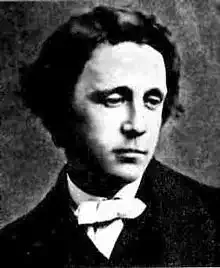
Lewis Carroll
Photography Extraordinary
Photography Extraordinary
The MilkandWater
School
Alas! she would not hear my prayer!
Yet it were rash to tear my hair;
Disfigured, I should be less fair.
She was unwise, I may say blind;
Once she was lovingly inclined;
Some circumstance has changed her mind.
The StrongMinded
or MatterofFact
School
Well! so my offer was no go!
She might do worse, I told her so;
She was a fool to answer "No".
However, things are as they stood;
Nor would I have her if I could,
For there are plenty more as good.
The Spasmodic or German School
Firebrands and Daggers! hope hath fled!
To atoms dash the doubly dead!
My brain is firemy
heart is lead!
Her soul is flint, and what am I?
Scorch'd by her fierce, relentless eye,
Nothingness is my destiny!
The MilkandWater
School
Alas! she would not hear my prayer!
Yet it were rash to tear my hair;
Disfigured, I should be less fair.
She was unwise, I may say blind;
Once she was lovingly inclined;
Some circumstance has changed her mind.
The StrongMinded
or MatterofFact
School
Well! so my offer was no go!
She might do worse, I told her so;
She was a fool to answer "No".
However, things are as they stood;
Nor would I have her if I could,
For there are plenty more as good.
The Spasmodic or German School
Firebrands and Daggers! hope hath fled!
To atoms dash the doubly dead!
My brain is firemy
heart is lead!
Her soul is flint, and what am I?
Scorch'd by her fierce, relentless eye,
Nothingness is my destiny!
164
Lewis Carroll
Melancholetta
Melancholetta
With saddest music all day long
She soothed her secret sorrow:
At night she sighed "I fear 'twas wrong
Such cheerful words to borrow.
Dearest, a sweeter, sadder song
I'll sing to thee tomorrow."
I thanked her, but I could not say
That I was glad to hear it:
I left the house at break of day,
And did not venture near it
Till time, I hoped, had worn away
Her grief, for nought could cheer it!
My dismal sister! Couldst thou know
The wretched home thou keepest!
Thy brother, drowned in daily woe,
Is thankful when thou sleepest;
For if I laugh, however low,
When thou'rt awake, thou weepest!
I took my sister t'other day
(Excuse the slang expression)
To Sadler's Wells to see the play
In hopes the new impression
Might in her thoughts, from grave to gay
Effect some slight digression.
I asked three gay young dogs from town
To join us in our folly,
Whose mirth, I thought, might serve to drown
My sister's melancholy:
The lively Jones, the sportive Brown,
And Robinson the jolly.
The maid announced the meal in tones
That I myself had taught her,
Meant to allay my sister's moans
Like oil on troubled water:
I rushed to Jones, the lively Jones,
And begged him to escort her.
Vainly he strove, with ready wit,
To joke about the weather To
ventilate the last 'ON DIT' To
quote the price of leather She
groaned "Here I and Sorrow sit:
Let us lament together!"
I urged "You're wasting time, you know:
Delay will spoil the venison."
"My heart is wasted with my woe!
There is no rest in
Venice, on
The Bridge of Sighs!" she quoted low
From Byron and from Tennyson.
I need not tell of soup and fish
In solemn silence swallowed,
The sobs that ushered in each dish,
And its departure followed,
Nor yet my suicidal wish
To BE the cheese I hollowed.
Some desperate attempts were made
To start a conversation;
"Madam," the sportive Brown essayed,
"Which kind of recreation,
Hunting or fishing, have you made
Your special occupation?"
Her lips curved downwards instantly,
As if of indiarubber.
"Hounds IN FULL CRY I like," said she:
(Oh how I longed to snub her!)
"Of fish, a whale's the one for me,
IT IS SO FULL OF BLUBBER!"
The night's performance was "King John."
"It's dull," she wept, "and soso!"
Awhile I let her tears flow on,
She said they soothed her woe so!
At length the curtain rose upon
'Bombastes Furioso.'
In vain we roared; in vain we tried
To rouse her into laughter:
Her pensive glances wandered wide
From orchestra to rafter "
TIER UPON TIER!" she said, and sighed;
And silence followed after.
With saddest music all day long
She soothed her secret sorrow:
At night she sighed "I fear 'twas wrong
Such cheerful words to borrow.
Dearest, a sweeter, sadder song
I'll sing to thee tomorrow."
I thanked her, but I could not say
That I was glad to hear it:
I left the house at break of day,
And did not venture near it
Till time, I hoped, had worn away
Her grief, for nought could cheer it!
My dismal sister! Couldst thou know
The wretched home thou keepest!
Thy brother, drowned in daily woe,
Is thankful when thou sleepest;
For if I laugh, however low,
When thou'rt awake, thou weepest!
I took my sister t'other day
(Excuse the slang expression)
To Sadler's Wells to see the play
In hopes the new impression
Might in her thoughts, from grave to gay
Effect some slight digression.
I asked three gay young dogs from town
To join us in our folly,
Whose mirth, I thought, might serve to drown
My sister's melancholy:
The lively Jones, the sportive Brown,
And Robinson the jolly.
The maid announced the meal in tones
That I myself had taught her,
Meant to allay my sister's moans
Like oil on troubled water:
I rushed to Jones, the lively Jones,
And begged him to escort her.
Vainly he strove, with ready wit,
To joke about the weather To
ventilate the last 'ON DIT' To
quote the price of leather She
groaned "Here I and Sorrow sit:
Let us lament together!"
I urged "You're wasting time, you know:
Delay will spoil the venison."
"My heart is wasted with my woe!
There is no rest in
Venice, on
The Bridge of Sighs!" she quoted low
From Byron and from Tennyson.
I need not tell of soup and fish
In solemn silence swallowed,
The sobs that ushered in each dish,
And its departure followed,
Nor yet my suicidal wish
To BE the cheese I hollowed.
Some desperate attempts were made
To start a conversation;
"Madam," the sportive Brown essayed,
"Which kind of recreation,
Hunting or fishing, have you made
Your special occupation?"
Her lips curved downwards instantly,
As if of indiarubber.
"Hounds IN FULL CRY I like," said she:
(Oh how I longed to snub her!)
"Of fish, a whale's the one for me,
IT IS SO FULL OF BLUBBER!"
The night's performance was "King John."
"It's dull," she wept, "and soso!"
Awhile I let her tears flow on,
She said they soothed her woe so!
At length the curtain rose upon
'Bombastes Furioso.'
In vain we roared; in vain we tried
To rouse her into laughter:
Her pensive glances wandered wide
From orchestra to rafter "
TIER UPON TIER!" she said, and sighed;
And silence followed after.
164
Lewis Carroll
Lays of Sorrow
Lays of Sorrow
The day was wet, the rain fell souse
Like jars of strawberry jam, [1] a
sound was heard in the old henhouse,
A beating of a hammer.
Of stalwart form, and visage warm,
Two youths were seen within it,
Splitting up an old tree into perches for their poultry
At a hundred strokes [2] a minute.
The work is done, the hen has taken
Possession of her nest and eggs,
Without a thought of eggs and bacon, [3]
(Or I am very much mistaken happy)
She turns over each shell,
To be sure that all's well,
Looks into the straw
To see there's no flaw,
Goes once round the house, [4]
Half afraid of a mouse,
Then sinks calmly to rest
On the top of her nest,
First doubling up each of her legs.
Time rolled away, and so did every shell,
"Small by degrees and beautifully less,"
As the large mother with a powerful spell [5]
Forced each in turn its contents to express, [6]
But ah! "imperfect is expression,"
Some poet said, I don't care who,
If you want to know you must go elsewhere,
One fact I can tell, if you're willing to hear,
He never attended a Parliament Session,
For I'm certain that if he had ever been there,
Full quickly would he have changed his ideas,
With the hissings, the hootings, the groans and the cheers.
And as to his name it is pretty clear
That it wasn't me and it wasn't you!
And so it fell upon a day,
(That is, it never rose again)
A chick was found upon the hay,
Its little life had ebbed away.
No longer frolicsome and gay,
No longer could it run or play.
"And must we, chicken, must we part?"
Its master [7] cried with bursting heart,
And voice of agony and pain.
So one, whose ticket's marked "Return", [8]
When to the lonely roadside station
He flies in fear and perturbation,
Thinks of his homethe
hissing urnThen
runs with flying hat and hair,
And, entering, finds to his despair
He's missed the very last train. [9]
Too long it were to tell of each conjecture
Of chicken suicide, and poultry victim,
The deadly frown, the stern and dreary lecture,
The timid guess, "perhaps some needle pricked him!"
The din of voice, the words both loud and many,
The sob, the tear, the sigh that none could smother,
Till all agreed "a shilling to a penny
It killed itself, and we acquit the mother!"
Scarce was the verdict spoken,
When that still calm was broken,
A childish form hath burst into the throng;
With tears and looks of sadness,
That bring no news of gladness,
But tell too surely something hath gone wrong!
"The sight I have come upon
The stoutest heart [10] would sicken,
That nasty hen has been and gone
And killed another chicken!"
The day was wet, the rain fell souse
Like jars of strawberry jam, [1] a
sound was heard in the old henhouse,
A beating of a hammer.
Of stalwart form, and visage warm,
Two youths were seen within it,
Splitting up an old tree into perches for their poultry
At a hundred strokes [2] a minute.
The work is done, the hen has taken
Possession of her nest and eggs,
Without a thought of eggs and bacon, [3]
(Or I am very much mistaken happy)
She turns over each shell,
To be sure that all's well,
Looks into the straw
To see there's no flaw,
Goes once round the house, [4]
Half afraid of a mouse,
Then sinks calmly to rest
On the top of her nest,
First doubling up each of her legs.
Time rolled away, and so did every shell,
"Small by degrees and beautifully less,"
As the large mother with a powerful spell [5]
Forced each in turn its contents to express, [6]
But ah! "imperfect is expression,"
Some poet said, I don't care who,
If you want to know you must go elsewhere,
One fact I can tell, if you're willing to hear,
He never attended a Parliament Session,
For I'm certain that if he had ever been there,
Full quickly would he have changed his ideas,
With the hissings, the hootings, the groans and the cheers.
And as to his name it is pretty clear
That it wasn't me and it wasn't you!
And so it fell upon a day,
(That is, it never rose again)
A chick was found upon the hay,
Its little life had ebbed away.
No longer frolicsome and gay,
No longer could it run or play.
"And must we, chicken, must we part?"
Its master [7] cried with bursting heart,
And voice of agony and pain.
So one, whose ticket's marked "Return", [8]
When to the lonely roadside station
He flies in fear and perturbation,
Thinks of his homethe
hissing urnThen
runs with flying hat and hair,
And, entering, finds to his despair
He's missed the very last train. [9]
Too long it were to tell of each conjecture
Of chicken suicide, and poultry victim,
The deadly frown, the stern and dreary lecture,
The timid guess, "perhaps some needle pricked him!"
The din of voice, the words both loud and many,
The sob, the tear, the sigh that none could smother,
Till all agreed "a shilling to a penny
It killed itself, and we acquit the mother!"
Scarce was the verdict spoken,
When that still calm was broken,
A childish form hath burst into the throng;
With tears and looks of sadness,
That bring no news of gladness,
But tell too surely something hath gone wrong!
"The sight I have come upon
The stoutest heart [10] would sicken,
That nasty hen has been and gone
And killed another chicken!"
187