

Poems in this theme
Pain and Despair
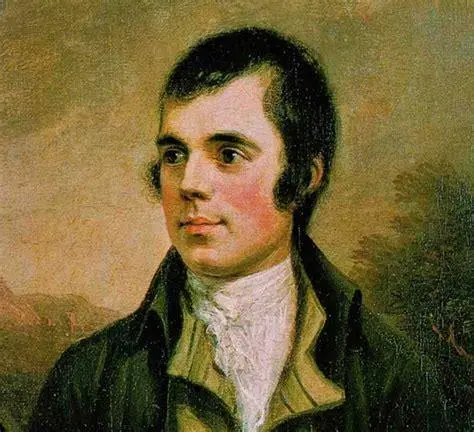
Robert Burns
Ae Fond Kiss, And Then We Sever
Ae Fond Kiss, And Then We Sever
Ae fond kiss, and then we sever;
Ae fareweel, and then for ever!
Deep in heart-wrung tears I'll pledge thee,
Warring sighs and groans I'll wage thee.
Who shall say that Fortune grieves him
While the star of hope she leaves him?
Me, nae cheerful twinkle lights me,
Dark despair around benights me.
I'll ne'er blame my partial fancy;
Naething could resist my Nancy;
But to see her was to love her,
Love but her, and love for ever.
Had we never loved sae kindly,
Had we never loved sae blindly,
Never met -or never parted,
We had ne'er been broken-hearted.
Fare thee weel, thou first and fairest!
Fare thee weel, thou best and dearest!
Thine be ilka joy and treasure,
Peace, enjoyment, love, and pleasure!
Ae fond kiss, and then we sever;
Ae fareweel, alas, for ever!
Deep in heart-wrung tears I'll pledge thee,
Warring sighs and groans I'll wage thee.
Ae fond kiss, and then we sever;
Ae fareweel, and then for ever!
Deep in heart-wrung tears I'll pledge thee,
Warring sighs and groans I'll wage thee.
Who shall say that Fortune grieves him
While the star of hope she leaves him?
Me, nae cheerful twinkle lights me,
Dark despair around benights me.
I'll ne'er blame my partial fancy;
Naething could resist my Nancy;
But to see her was to love her,
Love but her, and love for ever.
Had we never loved sae kindly,
Had we never loved sae blindly,
Never met -or never parted,
We had ne'er been broken-hearted.
Fare thee weel, thou first and fairest!
Fare thee weel, thou best and dearest!
Thine be ilka joy and treasure,
Peace, enjoyment, love, and pleasure!
Ae fond kiss, and then we sever;
Ae fareweel, alas, for ever!
Deep in heart-wrung tears I'll pledge thee,
Warring sighs and groans I'll wage thee.
220
Robert Burns
Address To The Tooth-Ache
Address To The Tooth-Ache
My curse upon your venom'd stang,
That shoots my tortur'd gums alang;
And thro' my lugs gies mony a twang,
Wi' gnawing vengeance;
Tearing my nerves wi' bitter pang,
Like racking engines!
When fevers burn, or ague freezes,
Rheumatics gnaw, or cholic squeezes;
Our neighbors' sympathy may ease us,
Wi' pitying moan;
But thee -- thou hell o' a' diseases --
They mock our groan!
Adown my beard the slavers trickle!
I throw the wee stools o'er the mickle,
As round the fire the giglets keckle,
To see me loup;
While raving mad, I wish a heckle
Were in their doup.
O' a' the num'rous human dools,
Ill har'sts, daft bargains, cutty-stools,
Or worthy friends rak'd i' the mools,
Sad sight to see !
The tricks o' knaves, or fash o' fools,
Thou bear'st the gree.
Where'er that place be priests ca' hell,
Whence a' the tones o' mis'ry yell,
And rankd plagues their numbers tell,
In dreadfu' raw,
Thou, Tooth-ache, surely bear'st the bell
Amang them a'!
O thou grim, mischief-making chiel,
That gars the notes of discord squeel,
Till daft mankiud aft dance a reel
In gore a shoe-thick; --
Gie a' the foes o' Scotland's weal
A towmond's Tooth-ache!
My curse upon your venom'd stang,
That shoots my tortur'd gums alang;
And thro' my lugs gies mony a twang,
Wi' gnawing vengeance;
Tearing my nerves wi' bitter pang,
Like racking engines!
When fevers burn, or ague freezes,
Rheumatics gnaw, or cholic squeezes;
Our neighbors' sympathy may ease us,
Wi' pitying moan;
But thee -- thou hell o' a' diseases --
They mock our groan!
Adown my beard the slavers trickle!
I throw the wee stools o'er the mickle,
As round the fire the giglets keckle,
To see me loup;
While raving mad, I wish a heckle
Were in their doup.
O' a' the num'rous human dools,
Ill har'sts, daft bargains, cutty-stools,
Or worthy friends rak'd i' the mools,
Sad sight to see !
The tricks o' knaves, or fash o' fools,
Thou bear'st the gree.
Where'er that place be priests ca' hell,
Whence a' the tones o' mis'ry yell,
And rankd plagues their numbers tell,
In dreadfu' raw,
Thou, Tooth-ache, surely bear'st the bell
Amang them a'!
O thou grim, mischief-making chiel,
That gars the notes of discord squeel,
Till daft mankiud aft dance a reel
In gore a shoe-thick; --
Gie a' the foes o' Scotland's weal
A towmond's Tooth-ache!
247
Robert Burns
A Fond Kiss
A Fond Kiss
A fond kiss, and then we sever;
A farewell, and then forever!
Deep in heart-wrung tears I'll pledge thee,
Warring sighs and groans I'll wage thee.
Who shall say that Fortune grieves him,
While the star of hope she leaves him?
Me, nae cheerfu' twinkle lights me;
Dark despair around benights me.
I'll ne'er blame my partial fancy,
Nothing could resist my Nancy;
But to see her was to love her;
Love but her, and love forever.
Had we never lov'd say kindly,
Had we never lov'd say blindly,
Never met--or never parted--
We had ne'er been broken-hearted.
Fare thee well, thou first and fairest!
Fare thee well, thou best and dearest!
Thine be like a joy and treasure,
Peace. enjoyment, love, and pleasure!
A fond kiss, and then we sever;
A farewell, alas, forever!
Deep in heart-wrung tears I'll pledge thee,
Warring sighs and groans I'll wage thee!
A fond kiss, and then we sever;
A farewell, and then forever!
Deep in heart-wrung tears I'll pledge thee,
Warring sighs and groans I'll wage thee.
Who shall say that Fortune grieves him,
While the star of hope she leaves him?
Me, nae cheerfu' twinkle lights me;
Dark despair around benights me.
I'll ne'er blame my partial fancy,
Nothing could resist my Nancy;
But to see her was to love her;
Love but her, and love forever.
Had we never lov'd say kindly,
Had we never lov'd say blindly,
Never met--or never parted--
We had ne'er been broken-hearted.
Fare thee well, thou first and fairest!
Fare thee well, thou best and dearest!
Thine be like a joy and treasure,
Peace. enjoyment, love, and pleasure!
A fond kiss, and then we sever;
A farewell, alas, forever!
Deep in heart-wrung tears I'll pledge thee,
Warring sighs and groans I'll wage thee!
444
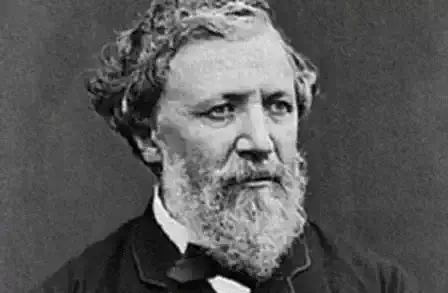
Robert Browning
Two In The Campagna
Two In The Campagna
.
I wonder do you feel to-day
As I have felt since, hand in hand,
We sat down on the grass, to stray
In spirit better through the land,
This morn of Rome and May?
II.
For me, I touched a thought, I know,
Has tantalized me many times,
(Like turns of thread the spiders throw
Mocking across our path) for rhymes
To catch at and let go.
III.
Help me to hold it! First it left
The yellowing fennel,<*> run to seed
There, branching from the brickwork's cleft,
Some old tomb's ruin: yonder weed
Took up the floating wet,
IV.
Where one small orange cup amassed
Five beetles,---blind and green they grope
Among the honey-meal: and last,
Everywhere on the grassy slope
I traced it. Hold it fast!
V.
The champaign with its endless fleece
Of feathery grasses everywhere!
Silence and passion, joy and peace,
An everlasting wash of air---
Rome's ghost since her decease.
VI.
Such life here, through such lengths of hours,
Such miracles performed in play,
Such primal naked forms of flowers,
Such letting nature have her way
While heaven looks from its towers!
VII.
How say you? Let us, O my dove,
Let us be unashamed of soul,
As earth lies bare to heaven above!
How is it under our control
To love or not to love?
VIII.
I would that you were all to me,
You that are just so much, no more.
Nor yours nor mine, nor slave nor free!
Where does the fault lie? What the core
O' the wound, since wound must be?
IX.
I would I could adopt your will,
See with your eyes, and set my heart
Beating by yours, and drink my fill
At your soul's springs,---your part my part
In life, for good and ill.
X.
No. I yearn upward, touch you close,
Then stand away. I kiss your cheek,
Catch your soul's warmth,---I pluck the rose
And love it more than tongue can speak---
Then the good minute goes.
XI.
Already how am I so far
Out of that minute? Must I go
Still like the thistle-ball, no bar,
Onward, whenever light winds blow,
Fixed by no friendly star?
XII.
Just when I seemed about to learn!
Where is the thread now? Off again!
The old trick! Only I discern---
Infinite passion, and the pain
Of finite hearts that yearn.
* Herb with yellow flowers and seeds supposed
* to be medicinal.
.
I wonder do you feel to-day
As I have felt since, hand in hand,
We sat down on the grass, to stray
In spirit better through the land,
This morn of Rome and May?
II.
For me, I touched a thought, I know,
Has tantalized me many times,
(Like turns of thread the spiders throw
Mocking across our path) for rhymes
To catch at and let go.
III.
Help me to hold it! First it left
The yellowing fennel,<*> run to seed
There, branching from the brickwork's cleft,
Some old tomb's ruin: yonder weed
Took up the floating wet,
IV.
Where one small orange cup amassed
Five beetles,---blind and green they grope
Among the honey-meal: and last,
Everywhere on the grassy slope
I traced it. Hold it fast!
V.
The champaign with its endless fleece
Of feathery grasses everywhere!
Silence and passion, joy and peace,
An everlasting wash of air---
Rome's ghost since her decease.
VI.
Such life here, through such lengths of hours,
Such miracles performed in play,
Such primal naked forms of flowers,
Such letting nature have her way
While heaven looks from its towers!
VII.
How say you? Let us, O my dove,
Let us be unashamed of soul,
As earth lies bare to heaven above!
How is it under our control
To love or not to love?
VIII.
I would that you were all to me,
You that are just so much, no more.
Nor yours nor mine, nor slave nor free!
Where does the fault lie? What the core
O' the wound, since wound must be?
IX.
I would I could adopt your will,
See with your eyes, and set my heart
Beating by yours, and drink my fill
At your soul's springs,---your part my part
In life, for good and ill.
X.
No. I yearn upward, touch you close,
Then stand away. I kiss your cheek,
Catch your soul's warmth,---I pluck the rose
And love it more than tongue can speak---
Then the good minute goes.
XI.
Already how am I so far
Out of that minute? Must I go
Still like the thistle-ball, no bar,
Onward, whenever light winds blow,
Fixed by no friendly star?
XII.
Just when I seemed about to learn!
Where is the thread now? Off again!
The old trick! Only I discern---
Infinite passion, and the pain
Of finite hearts that yearn.
* Herb with yellow flowers and seeds supposed
* to be medicinal.
317
Robert Browning
The Laboratory-Ancien Régime
The Laboratory-Ancien Régime
I.
Now that I, tying thy glass mask tightly,
May gaze thro' these faint smokes curling whitely,
As thou pliest thy trade in this devil's-smithy---
Which is the poison to poison her, prithee?
II.
He is with her, and they know that I know
Where they are, what they do: they believe my tears flow
While they laugh, laugh at me, at me fled to the drear
Empty church, to pray God in, for them!---I am here.
III
Grind away, moisten and mash up thy paste,
Pound at thy powder,---I am not in haste!
Better sit thus, and observe thy strange things,
Than go where men wait me and dance at the King's.
IV
That in the mortar---you call it a gum?
Ah, the brave tree whence such gold oozings come!
And yonder soft phial, the exquisite blue,
Sure to taste sweetly,---is that poison too?
V
Had I but all of them, thee and thy treasures,
What a wild crowd of invisible pleasures!
To carry pure death in an earring, a casket,
A signet, a fan-mount, a filigree basket!
VI
Soon, at the King's, a mere lozenge to give,
And Pauline should have just thirty minutes to live!
But to light a pastile, and Elise, with her head
And her breast and her arms and her hands, should drop dead!
VII
Quick---is it finished? The colour's too grim!
Why not soft like the phial's, enticing and dim?
Let it brighten her drink, let her turn it and stir,
And try it and taste, ere she fix and prefer!
VIII
What a drop! She's not little, no minion like me!
That's why she ensnared him: this never will free
The soul from those masculine eyes,---Say, ``no!''
To that pulse's magnificent come-and-go.
IX
For only last night, as they whispered, I brought
My own eyes to bear on her so, that I thought
Could I keep them one half minute fixed, she would fall
Shrivelled; she fell not; yet this does it all!
X
Not that I bid you spare her the pain;
Let death be felt and the proof remain:
Brand, burn up, bite into its grace---
He is sure to remember her dying face!
XI
Is it done? Take my mask off! Nay, be not morose;
It kills her, and this prevents seeing it close;
The delicate droplet, my whole fortune's fee!
If it hurts her, beside, can it ever hurt me?
XII
Now, take all my jewels, gorge gold to your fill,
You may kiss me, old man, on my mouth if you will!
But brush this dust off me, lest horror it brings
Ere I know it---next moment I dance at the King's!
I.
Now that I, tying thy glass mask tightly,
May gaze thro' these faint smokes curling whitely,
As thou pliest thy trade in this devil's-smithy---
Which is the poison to poison her, prithee?
II.
He is with her, and they know that I know
Where they are, what they do: they believe my tears flow
While they laugh, laugh at me, at me fled to the drear
Empty church, to pray God in, for them!---I am here.
III
Grind away, moisten and mash up thy paste,
Pound at thy powder,---I am not in haste!
Better sit thus, and observe thy strange things,
Than go where men wait me and dance at the King's.
IV
That in the mortar---you call it a gum?
Ah, the brave tree whence such gold oozings come!
And yonder soft phial, the exquisite blue,
Sure to taste sweetly,---is that poison too?
V
Had I but all of them, thee and thy treasures,
What a wild crowd of invisible pleasures!
To carry pure death in an earring, a casket,
A signet, a fan-mount, a filigree basket!
VI
Soon, at the King's, a mere lozenge to give,
And Pauline should have just thirty minutes to live!
But to light a pastile, and Elise, with her head
And her breast and her arms and her hands, should drop dead!
VII
Quick---is it finished? The colour's too grim!
Why not soft like the phial's, enticing and dim?
Let it brighten her drink, let her turn it and stir,
And try it and taste, ere she fix and prefer!
VIII
What a drop! She's not little, no minion like me!
That's why she ensnared him: this never will free
The soul from those masculine eyes,---Say, ``no!''
To that pulse's magnificent come-and-go.
IX
For only last night, as they whispered, I brought
My own eyes to bear on her so, that I thought
Could I keep them one half minute fixed, she would fall
Shrivelled; she fell not; yet this does it all!
X
Not that I bid you spare her the pain;
Let death be felt and the proof remain:
Brand, burn up, bite into its grace---
He is sure to remember her dying face!
XI
Is it done? Take my mask off! Nay, be not morose;
It kills her, and this prevents seeing it close;
The delicate droplet, my whole fortune's fee!
If it hurts her, beside, can it ever hurt me?
XII
Now, take all my jewels, gorge gold to your fill,
You may kiss me, old man, on my mouth if you will!
But brush this dust off me, lest horror it brings
Ere I know it---next moment I dance at the King's!
261
Robert Browning
Saul
Saul
I.
Said Abner, ``At last thou art come! Ere I tell, ere thou speak,
``Kiss my cheek, wish me well!'' Then I wished it, and did kiss his cheek.
And he, ``Since the King, O my friend, for thy countenance sent,
``Neither drunken nor eaten have we; nor until from his tent
``Thou return with the joyful assurance the King liveth yet,
``Shall our lip with the honey be bright, with the water be wet.
``For out of the black mid-tent's silence, a space of three days,
``Not a sound hath escaped to thy servants, of prayer nor of praise,
``To betoken that Saul and the Spirit have ended their strife,
``And that, faint in his triumph, the monarch sinks back upon life.
II.
``Yet now my heart leaps, O beloved! God's child with his dew
``On thy gracious gold hair, and those lilies still living and blue
``Just broken to twine round thy harp-strings, as if no wild beat
``Were now raging to torture the desert!''
III.
Then I, as was meet,
Knelt down to the God of my fathers, and rose on my feet,
And ran o'er the sand burnt to powder. The tent was unlooped;
I pulled up the spear that obstructed, and under I stooped
Hands and knees on the slippery grass-patch, all withered and gone,
That extends to the second enclosure, I groped my way on
Till I felt where the foldskirts fly open. Then once more I prayed,
And opened the foldskirts and entered, and was not afraid
But spoke, ``Here is David, thy servant!'' And no voice replied.
At the first I saw nought but the blackness but soon I descried
A something more black than the blackness---the vast, the upright
Main prop which sustains the pavilion: and slow into sight
Grew a figure against it, gigantic and blackest of all.
Then a sunbeam, that burst thro' the tent-roof, showed Saul.
IV.
He stood as erect as that tent-prop, both arms stretched out wide
On the great cross-support in the centre, that goes to each side;
He relaxed not a muscle, but hung there as, caught in his pangs
And waiting his change, the king-serpent all heavily hangs,
Far away from his kind, in the pine, till deliverance come
With the spring-time,---so agonized Saul, drear and stark, blind and dumb.
V.
Then I tuned my harp,---took off the lilies we twine round its chords
Lest they snap 'neath the stress of the noon-tide---those sunbeams like swords!
And I first played the tune all our sheep know, as, one after one,
So docile they come to the pen-door till folding be done.
They are white and untorn by the bushes, for lo, they have fed
Where the long grasses stifle the water within the stream's bed;
And now one after one seeks its lodging, as star follows star
Into eve and the blue far above us,---so blue and so far!
VI.
---Then the tune, for which quails on the cornland will each leave his mate
To fly after the player; then, what makes the crickets elate
Till for boldness they fight one another: and then, what has weight
To set the quick jerboa<*> amusing outside his sand house---
There are none such as he for a wonder, half bird and half mouse!
God made all the creatures and gave them our love and our fear,
To give sign, we and they are his children, one family here.
VII.
Then I played the help-tune of our reapers, their wine-song, when hand
Grasps at hand, eye lights eye in good friendship, and great hearts expand
And grow one in the sense of this world's life.---And then, the last song
When the dead man is praised on his journey---``Bear, bear him along
``With his few faults shut up like dead flowerets! Are balm-seeds not here
``To console us? The land has none left such as he on the bier.
``Oh, would we might keep thee, my brother!''---And then, the glad chaunt
Of the marriage,---first go the young maidens, next, she whom we vaunt
As the beauty, the pride of our dwelling.---And then, the great march
Wherein man runs to man to assist him and buttress an arch
Nought can break; who shall harm them, our friends?---Then, the chorus intoned
As the Levites go up to the altar in glory enthroned.
But I stopped here: for here in the darkness Saul groaned.
VIII.
And I paused, held my breath in such silence, and listened apart;
And the tent shook, for mighty Saul shuddered: and sparkles 'gan dart
From the jewels that woke in his turban, at once with a start,
All its lordly male-sapphires, and rubies courageous at heart.
So the head: but the body still moved not, still hung there erect.
And I bent once again to my playing, pursued it unchecked,
As I sang,---
IX.
``Oh, our manhood's prime vigour! No spirit feels waste,
``Not a muscle is stopped in its playing nor sinew unbraced.
``Oh, the wild joys of living! the leaping from rock up to rock,
``The strong rending of boughs from the fir-tree, the cool silver shock
``Of the plunge in a pool's living water, the hunt of the bear,
``And the sultriness showing the lion is couched in his lair.
``And the meal, the rich dates yellowed over with gold dust divine,
``And the locust-flesh steeped in the pitcher, the full draught of wine,
``And the sleep in the dried river-channel where bulrushes tell
``That the water was wont to go warbling so softly and well.
``How good is man's life, the mere living! how fit to employ
``All the heart and the soul and the senses for ever in joy!
``Hast thou loved the white locks of thy father, whose sword thou didst guard
``When he trusted thee forth with the armies, for glorious reward?
``Didst thou see the thin hands of thy mother, held up as men sung
``The low song of the nearly-departed, and bear her faint tongue
``Joining in while it could to the witness, `Let one more attest,
`` `I have lived, seen God's hand thro'a lifetime, and all was for best'?
``Then they sung thro' their tears in strong triumph, not much, but the rest.
``And thy brothers, the help and the contest, the working whence grew
``Such result as, from seething grape-bundles, the spirit strained true:
``And the friends of thy boyhood---that boyhood of wonder and hope,
``Present promise and wealth of the future beyond the eye's scope,---
``Till lo, thou art grown to a monarch; a people is thine;
``And all gifts, which the world offers singly, on one head combine!
``On one head, all the beauty and strength, love and rage (like the throe
``That, a-work in the rock, helps its labour and lets the gold go)
``High ambition and deeds which surpass it, fame crowning them,---all
``Brought to blaze on the head of one creature---King Saul!''
X.
And lo, with that leap of my spirit,---heart, hand, harp and voice,
Each lifting Saul's name out of sorrow, each bidding rejoice
Saul's fame in the light it was made for---as when, dare I say,
The Lord's army, in rapture of service, strains through its array,
And up soareth the cherubim-chariot---``Saul!'' cried I, and stopped,
And waited the thing that should follow. Then Saul, who hung propped
By the tent's cross-support in the centre, was struck by his name.
Have ye seen when Spring's arrowy summons goes right to the aim,
And some mountain, the last to withstand her, that held (he alone,
While the vale laughed in freedom and flowers) on a broad bust of stone
A year's snow bound about for a breastplate,---leaves grasp of the sheet?
Fold on fold all at once it crowds thunderously down to his feet,
And there fronts you, stark, black, but alive yet, your mountain of old,
With his rents, the successive bequeathings of ages untold---
Yea, each harm got in fighting your battles, each furrow and scar
Of his head thrust 'twixt you and the tempest---all hail, there they are!
---Now again to be softened with verdure, again hold the nest
Of the dove, tempt the goat and its young to the green on his crest
For their food in the ardours of summer. One long shudder thrilled
All the tent till the very air tingled, then sank and was stilled
At the King's self left standing before me, released and aware.
What was gone, what remained? All to traverse, 'twixt hope and despair;
Death was past, life not come: so he waited. Awhile his right hand
Held the brow, helped the eyes left too vacant forthwith to remand
To their place what new objects should enter: 'twas Saul as before.
I looked up and dared gaze at those eyes, nor was hurt any more
Than by slow pallid sunsets in autumn, ye watch from the shore,
At their sad level gaze o'er the ocean---a sun's slow decline
Over hills which, resolved in stern silence, o'erlap and entwine
Base with base to knit strength more intensely: so, arm folded arm
O'er the chest whose slow heavings subsided.
XI.
What spell or what charm,
(For, awhile there was trouble within me) what next should I urge
To sustain him where song had restored him?---Song filled to the verge
His cup with the wine of this life, pressing all that it yields
Of mere fruitage, the strength and the beauty: beyond, on what fields,
Glean a vintage more potent and perfect to brighten the eye
And bring blood to the lip, and commend them the cup they put by?
He saith, ``It is good;'' still he drinks not: he lets me praise life,
Gives assent, yet would die for his own part.
XII.
Then fancies grew rife
Which had come long ago on the pasture, when round me the sheep
Fed in silence---above, the one eagle wheeled slow as in sleep;
And I lay in my hollow and mused on the world that might lie
'Neath his ken, though I saw but the strip 'twixt the hill and the sky:
And I laughed---``Since my days are ordained to be passed with my flocks,
``Let me people at least, with my fancies, the plains and the rocks,
``Dream the life I am never to mix with, and image the show
``Of mankind as they live in those fashions I hardly shall know!
``Schemes of life, its best rules and right uses, the courage that gains,
``And the prudence that keeps what men strive for.'' And now these old trains
Of vague thought came again; I grew surer; so, once more the string
Of my harp made response to my spirit, as thus---
XIII.
``Yea, my King,''
I began---``thou dost well in rejecting mere comforts that spring
``From the mere mortal life held in common by man and by brute:
``In our flesh grows the branch of this life, in our soul it bears fruit.
``Thou hast marked the slow rise of the tree,---how its stem trembled first
``Till it passed the kid's lip, the stag's antler then safely outburst
``The fan-branches all round; and thou mindest when these too, in turn
``Broke a-bloom and the palm-tree seemed perfect: yet more was to learn,
``E'en the good that comes in with the palm-fruit. Our dates shall we slight,
``When their juice brings a cure for all sorrow? or care for the plight
``Of the palm's self whose slow growth produced them? Not so! stem and branch
``Shall decay, nor be known in their place, while the palm-wine shall staunch
``Every wound of man's spirit in winter. I pour thee such wine.
``Leave the flesh to the fate it was fit for! the spirit be thine!
``By the spirit, when age shall o'ercome thee, thou still shalt enjoy
``More indeed, than at first when inconscious, the life of a boy.
``Crush that life, and behold its wine running! Each deed thou hast done
``Dies, revives, goes to work in the world; until e'en as the sun
``Looking down on the earth, though clouds spoil him, though tempests efface,
``Can find nothing his own deed produced not, must everywhere trace
``The results of his past summer-prime'---so, each ray of thy will,
``Every flash of thy passion and prowess, long over, shall thrill
``Thy whole people, the countless, with ardour, till they too give forth
``A like cheer to their sons, who in turn, fill the South and the North
``With the radiance thy deed was the germ of. Carouse in the past!
``But the license of age has its limit; thou diest at last:
``As the lion when age dims his eyeball, the rose at her height
``So with man---so his power and his beauty for ever take flight.
``No! Again a long draught of my soul-wine! Look forth o'er the years!
``Thou hast done now with eyes for the actual; begin with the seer's!
``Is Saul dead? In the depth of the vale make his tomb---bid arise
``A grey mountain of marble heaped four-square, till, built to the skies,
``Let it mark where the great First King slumbers: whose fame would ye know?
``Up above see the rock's naked face, where the record shall go
``In great characters cut by the scribe,---Such was Saul, so he did;
``With the sages directing the work, by the populace chid,---
``For not half, they'll affirm, is comprised there! Which fault to amend,
``In the grove with his kind grows the cedar, whereon they shall spend
``(See, in tablets 'tis level before them) their praise, and record
``With the gold of the graver, Saul's story,---the statesman's great word
``Side by side with the poet's sweet comment. The river's a-wave
``With smooth paper-reeds grazing each other when prophet-winds rave:
``So the pen gives unborn generations their due and their part
``In thy being! Then, first of the mighty, thank God that thou art!''
XIV.
And behold while I sang ... but O Thou who didst grant me that day,
And before it not seldom hast granted thy help to essay,
Carry on and complete an adventure,---my shield and my sword
In that act where my soul was thy servant, thy word was my word,---
Still be with me, who then at the summit of human endeavour
And scaling the highest, man's thought could, gazed hopeless as ever
On the new stretch of heaven above me---till, mighty to save,
Just one lift of thy hand cleared that distance---God's throne from man's grave!
Let me tell out my tale to its ending---my voice to my heart
Which can scarce dare believe in what marvels last night I took part,
As this morning I gather the fragments, alone with my sheep,
And still fear lest the terrible glory evanish like sleep!
For I wake in the grey dewy covert, while Hebron<*> upheaves
The dawn struggling with night on his shoulder, and Kidron<*> retrieves
Slow the damage of yesterday's sunshine.
XV.
I say then,---my song
While I sang thus, assuring the monarch, and ever more strong
Made a proffer of good to console him---he slowly resumed
His old motions and habitudes kingly. The right-hand replumed
His black locks to their wonted composure, adjusted the swathes
Of his turban, and see---the huge sweat that his countenance bathes,
He wipes off with the robe; and he girds now his loins as of yore,
And feels slow for the armlets of price, with the clasp set before.
He is Saul, ye remember in glory,---ere error had bent
The broad brow from the daily communion; and still, though much spent
Be the life and the bearing that front you, the same, God did choose,
To receive what a man may waste, desecrate, never quite lose.
So sank he along by the tent-prop till, stayed by the pile
Of his armour and war-cloak and garments, he leaned there awhile,
And sat out my singing,---one arm round the tent-prop, to raise
His bent head, and the other hung slack---till I touched on the praise
I foresaw from all men in all time, to the man patient there;
And thus ended, the harp falling forward. Then first I was 'ware
That he sat, as I say, with my head just above his vast knees
Which were thrust out on each side around me, like oak-roots which please
To encircle a lamb when it slumbers. I looked up to know
If the best I could do had brought solace: he spoke not, but slow
Lifted up the hand slack at his side, till he laid it with care
Soft and grave, but in mild settled will, on my brow: thro' my hair
The large fingers were pushed, and he bent back my bead, with kind power---
All my face back, intent to peruse it, as men do a flower.
Thus held he me there with his great eyes that scrutinized mine---
And oh, all my heart how it loved him! but where was the sign?
I yearned---``Could I help thee, my father, inventing a bliss,
``I would add, to that life of the past, both the future and this;
``I would give thee new life altogether, as good, ages hence,
``As this moment,---had love but the warrant, love's heart to dispense!''
XVI.
Then the truth came upon me. No harp more---no song more! outbroke---
XVII.
``I have gone the whole round of creation: I saw and I spoke:
``I, a work of God's hand for that purpose, received in my brain
``And pronounced on the rest of his hand-work---returned him again
``His creation's approval or censure: I spoke as I saw:
``I report, as a man may of God's work---all's love, yet all's law.
``Now I lay down the judgeship he lent me. Each faculty tasked
``To perceive him, has gained an abyss, where a dewdrop was asked.
``Have I knowledge? confounded it shrivels at Wisdom laid bare.
``Have I forethought? how purblind, how blank, to the Infinite Care!
``Do I task any faculty highest, to image success?
``I but open my eyes,---and perfection, no more and no less,
``In the kind I imagined, full-fronts me, and God is seen God
``In the star, in the stone, in the flesh, in the soul and the clod.
``And thus looking within and around me, I ever renew
``(With that stoop of the soul which in bending upraises it too)
``The submission of man's nothing-perfect to God's all-complete,
``As by each new obeisance in spirit, I climb to his feet.
``Yet with all this abounding experience, this deity known,
``I shall dare to discover some province, some gift of my own.
``There's a faculty pleasant to exercise, hard to hoodwink,
``I am fain to keep still in abeyance, (I laugh as I think)
``Lest, insisting to claim and parade in it, wot ye, I worst
``E'en the Giver in one gift.---Behold, I could love if I durst!
``But I sink the pretension as fearing a man may o'ertake
``God's own speed in the one way of love: I abstain for love's sake.
``---What, my soul? see thus far and no farther? when doors great and small,
``Nine-and-ninety flew ope at our touch, should the hundredth appal?
``In the least things have faith, yet distrust in the greatest of all?
``Do I find love so full in my nature, God's ultimate gift,
``That I doubt his own love can compete with it? Here, the parts shift?
``Here, the creature surpass the Creator,---the end, what Began?
``Would I fain in my impotent yearning do all for this man,
``And dare doubt he alone shall not help him, who yet alone can?
``Would it ever have entered my mind, the bare will, much less power,
``To bestow on this Saul what I sang of, the marvellous dower
``Of the life he was gifted and filled with? to make such a soul,
``Such a body, and then such an earth for insphering the whole?
``And doth it not enter my mind (as my warm tears attest)
``These good things being given, to go on, and give one more, the best?
``Ay, to save and redeem and restore him, maintain at the height
``This perfection,---succeed with life's day-spring, death's minute of night?
``Interpose at the difficult minute, snatch Saul the mistake,
``Saul the failure, the ruin he seems now,---and bid him awake
``From the dream, the probation, the prelude, to find himself set
``Clear and safe in new light and new life,---a new harmony yet
``To be run, and continued, and ended---who knows?---or endure!
``The man taught enough, by life's dream, of the rest to make sure;
``By the pain-throb, triumphantly winning intensified bliss,
``And the next world's reward and repose, by the struggles in this.
XVIII.
``I believe it! 'Tis thou, God, that givest, 'tis I who receive:
``In the first is the last, in thy will is my power to believe.
``All's one gift: thou canst grant it moreover, as prompt to my prayer
``As I breathe out this breath, as I open these arms to the air.
``From thy will, stream the worlds, life and nature, thy dread Sabaoth:
``_I_ will?---the mere atoms despise me! Why am I not loth
``To look that, even that in the face too? Why is it I dare
``Think but lightly of such impuissance? What stops my despair?
``This;---'tis not what man Does which exalts him, but what man Would do!
``See the King---I would help him but cannot, the wishes fall through.
``Could I wrestle to raise him from sorrow, grow poor to enrich,
``To fill up his life, starve my own out, I would---knowing which,
``I know that my service is perfect. Oh, speak through me now!
``Would I suffer for him that I love? So wouldst thou---so wilt thou!
``So shall crown thee the topmost, ineffablest, uttermost crown---
``And thy love fill infinitude wholly, nor leave up nor down
``One spot for the creature to stand in! It is by no breath,
``Turn of eye, wave of hand, that salvation joins issue with death!
``As thy Love is discovered almighty, almighty be proved
``Thy power, that exists with and for it, of being Beloved!
``He who did most, shall bear most; the strongest shall stand the most weak.
``'Tis the weakness in strength, that I cry for! my flesh, that I seek
``In the Godhead! I seek and I find it. O Saul, it shall be
``A Face like my face that receives thee; a Man like to me,
``Thou shalt love and be loved by, for ever: a Hand like this hand
``Shall throw open the gates of new life to thee! See the Christ stand!''
XIX.
I know not too well how I found my way home in the night.
There were witnesses, cohorts about me, to left and to right,
Angels, powers, the unuttered, unseen, the alive, the aware:
I repressed, I got through them as hardly, as strugglingly there,
As a runner beset by the populace famished for news---
Life or death. The whole earth was awakened, hell loosed with her crews;
And the stars of night beat with emotion, and tingled and shot
Out in fire the strong pain of pent knowledge: but I fainted not,
For the Hand still impelled me at once and supported, suppressed
All the tumult, and quenched it with quiet, and holy behest,
Till the rapture was shut in itself, and the earth sank to rest.
Anon at the dawn, all that trouble had withered from earth---
Not so much, but I saw it die out in the day's tender birth;
In the gathered intensity brought to the grey of the hills;
In the shuddering forests' held breath; in the sudden wind-thrills;
In the startled wild beasts that bore off, each with eye sidling still
Though averted with wonder and dread; in the birds stiff and chill
That rose heavily, as I approached them, made stupid with awe:
E'en the serpent that slid away silent,---he felt the new law.
The same stared in the white humid faces upturned by the flowers;
The same worked in the heart of the cedar and moved the vine-bowers:
And the little brooks witnessing murmured, persistent and low,
With their obstinate, all but hushed voices---``E'en so, it is so!''
* The jumping hare.
* One of the three cities of Refuge.
* A brook in Jerusalem.
I.
Said Abner, ``At last thou art come! Ere I tell, ere thou speak,
``Kiss my cheek, wish me well!'' Then I wished it, and did kiss his cheek.
And he, ``Since the King, O my friend, for thy countenance sent,
``Neither drunken nor eaten have we; nor until from his tent
``Thou return with the joyful assurance the King liveth yet,
``Shall our lip with the honey be bright, with the water be wet.
``For out of the black mid-tent's silence, a space of three days,
``Not a sound hath escaped to thy servants, of prayer nor of praise,
``To betoken that Saul and the Spirit have ended their strife,
``And that, faint in his triumph, the monarch sinks back upon life.
II.
``Yet now my heart leaps, O beloved! God's child with his dew
``On thy gracious gold hair, and those lilies still living and blue
``Just broken to twine round thy harp-strings, as if no wild beat
``Were now raging to torture the desert!''
III.
Then I, as was meet,
Knelt down to the God of my fathers, and rose on my feet,
And ran o'er the sand burnt to powder. The tent was unlooped;
I pulled up the spear that obstructed, and under I stooped
Hands and knees on the slippery grass-patch, all withered and gone,
That extends to the second enclosure, I groped my way on
Till I felt where the foldskirts fly open. Then once more I prayed,
And opened the foldskirts and entered, and was not afraid
But spoke, ``Here is David, thy servant!'' And no voice replied.
At the first I saw nought but the blackness but soon I descried
A something more black than the blackness---the vast, the upright
Main prop which sustains the pavilion: and slow into sight
Grew a figure against it, gigantic and blackest of all.
Then a sunbeam, that burst thro' the tent-roof, showed Saul.
IV.
He stood as erect as that tent-prop, both arms stretched out wide
On the great cross-support in the centre, that goes to each side;
He relaxed not a muscle, but hung there as, caught in his pangs
And waiting his change, the king-serpent all heavily hangs,
Far away from his kind, in the pine, till deliverance come
With the spring-time,---so agonized Saul, drear and stark, blind and dumb.
V.
Then I tuned my harp,---took off the lilies we twine round its chords
Lest they snap 'neath the stress of the noon-tide---those sunbeams like swords!
And I first played the tune all our sheep know, as, one after one,
So docile they come to the pen-door till folding be done.
They are white and untorn by the bushes, for lo, they have fed
Where the long grasses stifle the water within the stream's bed;
And now one after one seeks its lodging, as star follows star
Into eve and the blue far above us,---so blue and so far!
VI.
---Then the tune, for which quails on the cornland will each leave his mate
To fly after the player; then, what makes the crickets elate
Till for boldness they fight one another: and then, what has weight
To set the quick jerboa<*> amusing outside his sand house---
There are none such as he for a wonder, half bird and half mouse!
God made all the creatures and gave them our love and our fear,
To give sign, we and they are his children, one family here.
VII.
Then I played the help-tune of our reapers, their wine-song, when hand
Grasps at hand, eye lights eye in good friendship, and great hearts expand
And grow one in the sense of this world's life.---And then, the last song
When the dead man is praised on his journey---``Bear, bear him along
``With his few faults shut up like dead flowerets! Are balm-seeds not here
``To console us? The land has none left such as he on the bier.
``Oh, would we might keep thee, my brother!''---And then, the glad chaunt
Of the marriage,---first go the young maidens, next, she whom we vaunt
As the beauty, the pride of our dwelling.---And then, the great march
Wherein man runs to man to assist him and buttress an arch
Nought can break; who shall harm them, our friends?---Then, the chorus intoned
As the Levites go up to the altar in glory enthroned.
But I stopped here: for here in the darkness Saul groaned.
VIII.
And I paused, held my breath in such silence, and listened apart;
And the tent shook, for mighty Saul shuddered: and sparkles 'gan dart
From the jewels that woke in his turban, at once with a start,
All its lordly male-sapphires, and rubies courageous at heart.
So the head: but the body still moved not, still hung there erect.
And I bent once again to my playing, pursued it unchecked,
As I sang,---
IX.
``Oh, our manhood's prime vigour! No spirit feels waste,
``Not a muscle is stopped in its playing nor sinew unbraced.
``Oh, the wild joys of living! the leaping from rock up to rock,
``The strong rending of boughs from the fir-tree, the cool silver shock
``Of the plunge in a pool's living water, the hunt of the bear,
``And the sultriness showing the lion is couched in his lair.
``And the meal, the rich dates yellowed over with gold dust divine,
``And the locust-flesh steeped in the pitcher, the full draught of wine,
``And the sleep in the dried river-channel where bulrushes tell
``That the water was wont to go warbling so softly and well.
``How good is man's life, the mere living! how fit to employ
``All the heart and the soul and the senses for ever in joy!
``Hast thou loved the white locks of thy father, whose sword thou didst guard
``When he trusted thee forth with the armies, for glorious reward?
``Didst thou see the thin hands of thy mother, held up as men sung
``The low song of the nearly-departed, and bear her faint tongue
``Joining in while it could to the witness, `Let one more attest,
`` `I have lived, seen God's hand thro'a lifetime, and all was for best'?
``Then they sung thro' their tears in strong triumph, not much, but the rest.
``And thy brothers, the help and the contest, the working whence grew
``Such result as, from seething grape-bundles, the spirit strained true:
``And the friends of thy boyhood---that boyhood of wonder and hope,
``Present promise and wealth of the future beyond the eye's scope,---
``Till lo, thou art grown to a monarch; a people is thine;
``And all gifts, which the world offers singly, on one head combine!
``On one head, all the beauty and strength, love and rage (like the throe
``That, a-work in the rock, helps its labour and lets the gold go)
``High ambition and deeds which surpass it, fame crowning them,---all
``Brought to blaze on the head of one creature---King Saul!''
X.
And lo, with that leap of my spirit,---heart, hand, harp and voice,
Each lifting Saul's name out of sorrow, each bidding rejoice
Saul's fame in the light it was made for---as when, dare I say,
The Lord's army, in rapture of service, strains through its array,
And up soareth the cherubim-chariot---``Saul!'' cried I, and stopped,
And waited the thing that should follow. Then Saul, who hung propped
By the tent's cross-support in the centre, was struck by his name.
Have ye seen when Spring's arrowy summons goes right to the aim,
And some mountain, the last to withstand her, that held (he alone,
While the vale laughed in freedom and flowers) on a broad bust of stone
A year's snow bound about for a breastplate,---leaves grasp of the sheet?
Fold on fold all at once it crowds thunderously down to his feet,
And there fronts you, stark, black, but alive yet, your mountain of old,
With his rents, the successive bequeathings of ages untold---
Yea, each harm got in fighting your battles, each furrow and scar
Of his head thrust 'twixt you and the tempest---all hail, there they are!
---Now again to be softened with verdure, again hold the nest
Of the dove, tempt the goat and its young to the green on his crest
For their food in the ardours of summer. One long shudder thrilled
All the tent till the very air tingled, then sank and was stilled
At the King's self left standing before me, released and aware.
What was gone, what remained? All to traverse, 'twixt hope and despair;
Death was past, life not come: so he waited. Awhile his right hand
Held the brow, helped the eyes left too vacant forthwith to remand
To their place what new objects should enter: 'twas Saul as before.
I looked up and dared gaze at those eyes, nor was hurt any more
Than by slow pallid sunsets in autumn, ye watch from the shore,
At their sad level gaze o'er the ocean---a sun's slow decline
Over hills which, resolved in stern silence, o'erlap and entwine
Base with base to knit strength more intensely: so, arm folded arm
O'er the chest whose slow heavings subsided.
XI.
What spell or what charm,
(For, awhile there was trouble within me) what next should I urge
To sustain him where song had restored him?---Song filled to the verge
His cup with the wine of this life, pressing all that it yields
Of mere fruitage, the strength and the beauty: beyond, on what fields,
Glean a vintage more potent and perfect to brighten the eye
And bring blood to the lip, and commend them the cup they put by?
He saith, ``It is good;'' still he drinks not: he lets me praise life,
Gives assent, yet would die for his own part.
XII.
Then fancies grew rife
Which had come long ago on the pasture, when round me the sheep
Fed in silence---above, the one eagle wheeled slow as in sleep;
And I lay in my hollow and mused on the world that might lie
'Neath his ken, though I saw but the strip 'twixt the hill and the sky:
And I laughed---``Since my days are ordained to be passed with my flocks,
``Let me people at least, with my fancies, the plains and the rocks,
``Dream the life I am never to mix with, and image the show
``Of mankind as they live in those fashions I hardly shall know!
``Schemes of life, its best rules and right uses, the courage that gains,
``And the prudence that keeps what men strive for.'' And now these old trains
Of vague thought came again; I grew surer; so, once more the string
Of my harp made response to my spirit, as thus---
XIII.
``Yea, my King,''
I began---``thou dost well in rejecting mere comforts that spring
``From the mere mortal life held in common by man and by brute:
``In our flesh grows the branch of this life, in our soul it bears fruit.
``Thou hast marked the slow rise of the tree,---how its stem trembled first
``Till it passed the kid's lip, the stag's antler then safely outburst
``The fan-branches all round; and thou mindest when these too, in turn
``Broke a-bloom and the palm-tree seemed perfect: yet more was to learn,
``E'en the good that comes in with the palm-fruit. Our dates shall we slight,
``When their juice brings a cure for all sorrow? or care for the plight
``Of the palm's self whose slow growth produced them? Not so! stem and branch
``Shall decay, nor be known in their place, while the palm-wine shall staunch
``Every wound of man's spirit in winter. I pour thee such wine.
``Leave the flesh to the fate it was fit for! the spirit be thine!
``By the spirit, when age shall o'ercome thee, thou still shalt enjoy
``More indeed, than at first when inconscious, the life of a boy.
``Crush that life, and behold its wine running! Each deed thou hast done
``Dies, revives, goes to work in the world; until e'en as the sun
``Looking down on the earth, though clouds spoil him, though tempests efface,
``Can find nothing his own deed produced not, must everywhere trace
``The results of his past summer-prime'---so, each ray of thy will,
``Every flash of thy passion and prowess, long over, shall thrill
``Thy whole people, the countless, with ardour, till they too give forth
``A like cheer to their sons, who in turn, fill the South and the North
``With the radiance thy deed was the germ of. Carouse in the past!
``But the license of age has its limit; thou diest at last:
``As the lion when age dims his eyeball, the rose at her height
``So with man---so his power and his beauty for ever take flight.
``No! Again a long draught of my soul-wine! Look forth o'er the years!
``Thou hast done now with eyes for the actual; begin with the seer's!
``Is Saul dead? In the depth of the vale make his tomb---bid arise
``A grey mountain of marble heaped four-square, till, built to the skies,
``Let it mark where the great First King slumbers: whose fame would ye know?
``Up above see the rock's naked face, where the record shall go
``In great characters cut by the scribe,---Such was Saul, so he did;
``With the sages directing the work, by the populace chid,---
``For not half, they'll affirm, is comprised there! Which fault to amend,
``In the grove with his kind grows the cedar, whereon they shall spend
``(See, in tablets 'tis level before them) their praise, and record
``With the gold of the graver, Saul's story,---the statesman's great word
``Side by side with the poet's sweet comment. The river's a-wave
``With smooth paper-reeds grazing each other when prophet-winds rave:
``So the pen gives unborn generations their due and their part
``In thy being! Then, first of the mighty, thank God that thou art!''
XIV.
And behold while I sang ... but O Thou who didst grant me that day,
And before it not seldom hast granted thy help to essay,
Carry on and complete an adventure,---my shield and my sword
In that act where my soul was thy servant, thy word was my word,---
Still be with me, who then at the summit of human endeavour
And scaling the highest, man's thought could, gazed hopeless as ever
On the new stretch of heaven above me---till, mighty to save,
Just one lift of thy hand cleared that distance---God's throne from man's grave!
Let me tell out my tale to its ending---my voice to my heart
Which can scarce dare believe in what marvels last night I took part,
As this morning I gather the fragments, alone with my sheep,
And still fear lest the terrible glory evanish like sleep!
For I wake in the grey dewy covert, while Hebron<*> upheaves
The dawn struggling with night on his shoulder, and Kidron<*> retrieves
Slow the damage of yesterday's sunshine.
XV.
I say then,---my song
While I sang thus, assuring the monarch, and ever more strong
Made a proffer of good to console him---he slowly resumed
His old motions and habitudes kingly. The right-hand replumed
His black locks to their wonted composure, adjusted the swathes
Of his turban, and see---the huge sweat that his countenance bathes,
He wipes off with the robe; and he girds now his loins as of yore,
And feels slow for the armlets of price, with the clasp set before.
He is Saul, ye remember in glory,---ere error had bent
The broad brow from the daily communion; and still, though much spent
Be the life and the bearing that front you, the same, God did choose,
To receive what a man may waste, desecrate, never quite lose.
So sank he along by the tent-prop till, stayed by the pile
Of his armour and war-cloak and garments, he leaned there awhile,
And sat out my singing,---one arm round the tent-prop, to raise
His bent head, and the other hung slack---till I touched on the praise
I foresaw from all men in all time, to the man patient there;
And thus ended, the harp falling forward. Then first I was 'ware
That he sat, as I say, with my head just above his vast knees
Which were thrust out on each side around me, like oak-roots which please
To encircle a lamb when it slumbers. I looked up to know
If the best I could do had brought solace: he spoke not, but slow
Lifted up the hand slack at his side, till he laid it with care
Soft and grave, but in mild settled will, on my brow: thro' my hair
The large fingers were pushed, and he bent back my bead, with kind power---
All my face back, intent to peruse it, as men do a flower.
Thus held he me there with his great eyes that scrutinized mine---
And oh, all my heart how it loved him! but where was the sign?
I yearned---``Could I help thee, my father, inventing a bliss,
``I would add, to that life of the past, both the future and this;
``I would give thee new life altogether, as good, ages hence,
``As this moment,---had love but the warrant, love's heart to dispense!''
XVI.
Then the truth came upon me. No harp more---no song more! outbroke---
XVII.
``I have gone the whole round of creation: I saw and I spoke:
``I, a work of God's hand for that purpose, received in my brain
``And pronounced on the rest of his hand-work---returned him again
``His creation's approval or censure: I spoke as I saw:
``I report, as a man may of God's work---all's love, yet all's law.
``Now I lay down the judgeship he lent me. Each faculty tasked
``To perceive him, has gained an abyss, where a dewdrop was asked.
``Have I knowledge? confounded it shrivels at Wisdom laid bare.
``Have I forethought? how purblind, how blank, to the Infinite Care!
``Do I task any faculty highest, to image success?
``I but open my eyes,---and perfection, no more and no less,
``In the kind I imagined, full-fronts me, and God is seen God
``In the star, in the stone, in the flesh, in the soul and the clod.
``And thus looking within and around me, I ever renew
``(With that stoop of the soul which in bending upraises it too)
``The submission of man's nothing-perfect to God's all-complete,
``As by each new obeisance in spirit, I climb to his feet.
``Yet with all this abounding experience, this deity known,
``I shall dare to discover some province, some gift of my own.
``There's a faculty pleasant to exercise, hard to hoodwink,
``I am fain to keep still in abeyance, (I laugh as I think)
``Lest, insisting to claim and parade in it, wot ye, I worst
``E'en the Giver in one gift.---Behold, I could love if I durst!
``But I sink the pretension as fearing a man may o'ertake
``God's own speed in the one way of love: I abstain for love's sake.
``---What, my soul? see thus far and no farther? when doors great and small,
``Nine-and-ninety flew ope at our touch, should the hundredth appal?
``In the least things have faith, yet distrust in the greatest of all?
``Do I find love so full in my nature, God's ultimate gift,
``That I doubt his own love can compete with it? Here, the parts shift?
``Here, the creature surpass the Creator,---the end, what Began?
``Would I fain in my impotent yearning do all for this man,
``And dare doubt he alone shall not help him, who yet alone can?
``Would it ever have entered my mind, the bare will, much less power,
``To bestow on this Saul what I sang of, the marvellous dower
``Of the life he was gifted and filled with? to make such a soul,
``Such a body, and then such an earth for insphering the whole?
``And doth it not enter my mind (as my warm tears attest)
``These good things being given, to go on, and give one more, the best?
``Ay, to save and redeem and restore him, maintain at the height
``This perfection,---succeed with life's day-spring, death's minute of night?
``Interpose at the difficult minute, snatch Saul the mistake,
``Saul the failure, the ruin he seems now,---and bid him awake
``From the dream, the probation, the prelude, to find himself set
``Clear and safe in new light and new life,---a new harmony yet
``To be run, and continued, and ended---who knows?---or endure!
``The man taught enough, by life's dream, of the rest to make sure;
``By the pain-throb, triumphantly winning intensified bliss,
``And the next world's reward and repose, by the struggles in this.
XVIII.
``I believe it! 'Tis thou, God, that givest, 'tis I who receive:
``In the first is the last, in thy will is my power to believe.
``All's one gift: thou canst grant it moreover, as prompt to my prayer
``As I breathe out this breath, as I open these arms to the air.
``From thy will, stream the worlds, life and nature, thy dread Sabaoth:
``_I_ will?---the mere atoms despise me! Why am I not loth
``To look that, even that in the face too? Why is it I dare
``Think but lightly of such impuissance? What stops my despair?
``This;---'tis not what man Does which exalts him, but what man Would do!
``See the King---I would help him but cannot, the wishes fall through.
``Could I wrestle to raise him from sorrow, grow poor to enrich,
``To fill up his life, starve my own out, I would---knowing which,
``I know that my service is perfect. Oh, speak through me now!
``Would I suffer for him that I love? So wouldst thou---so wilt thou!
``So shall crown thee the topmost, ineffablest, uttermost crown---
``And thy love fill infinitude wholly, nor leave up nor down
``One spot for the creature to stand in! It is by no breath,
``Turn of eye, wave of hand, that salvation joins issue with death!
``As thy Love is discovered almighty, almighty be proved
``Thy power, that exists with and for it, of being Beloved!
``He who did most, shall bear most; the strongest shall stand the most weak.
``'Tis the weakness in strength, that I cry for! my flesh, that I seek
``In the Godhead! I seek and I find it. O Saul, it shall be
``A Face like my face that receives thee; a Man like to me,
``Thou shalt love and be loved by, for ever: a Hand like this hand
``Shall throw open the gates of new life to thee! See the Christ stand!''
XIX.
I know not too well how I found my way home in the night.
There were witnesses, cohorts about me, to left and to right,
Angels, powers, the unuttered, unseen, the alive, the aware:
I repressed, I got through them as hardly, as strugglingly there,
As a runner beset by the populace famished for news---
Life or death. The whole earth was awakened, hell loosed with her crews;
And the stars of night beat with emotion, and tingled and shot
Out in fire the strong pain of pent knowledge: but I fainted not,
For the Hand still impelled me at once and supported, suppressed
All the tumult, and quenched it with quiet, and holy behest,
Till the rapture was shut in itself, and the earth sank to rest.
Anon at the dawn, all that trouble had withered from earth---
Not so much, but I saw it die out in the day's tender birth;
In the gathered intensity brought to the grey of the hills;
In the shuddering forests' held breath; in the sudden wind-thrills;
In the startled wild beasts that bore off, each with eye sidling still
Though averted with wonder and dread; in the birds stiff and chill
That rose heavily, as I approached them, made stupid with awe:
E'en the serpent that slid away silent,---he felt the new law.
The same stared in the white humid faces upturned by the flowers;
The same worked in the heart of the cedar and moved the vine-bowers:
And the little brooks witnessing murmured, persistent and low,
With their obstinate, all but hushed voices---``E'en so, it is so!''
* The jumping hare.
* One of the three cities of Refuge.
* A brook in Jerusalem.
454
Robert Browning
Mesmerism
Mesmerism
I.
All I believed is true!
I am able yet
All I want, to get
By a method as strange as new:
Dare I trust the same to you?
II.
If at night, when doors are shut,
And the wood-worm picks,
And the death-watch ticks,
And the bar has a flag of smut,
And a cat's in the water-butt---
III.
And the socket floats and flares,
And the house-beams groan,
And a foot unknown
Is surmised on the garret-stairs,
And the locks slip unawares---
IV.
And the spider, to serve his ends,
By a sudden thread,
Arms and legs outspread,
On the table's midst descends,
Comes to find, God knows what friends!---
V.
If since eve drew in, I say,
I have sat and brought
(So to speak) my thought
To bear on the woman away,
Till I felt my hair turn grey---
VI.
Till I seemed to have and hold,
In the vacancy
'Twixt the wall and me,
From the hair-plait's chestnut gold
To the foot in its muslin fold---
VII.
Have and hold, then and there,
Her, from head to foot,
Breathing and mute,
Passive and yet aware,
In the grasp of my steady stare---
VIII.
Hold and have, there and then,
All her body and soul
That completes my whole,
All that women add to men,
In the clutch of my steady ken---
IX.
Having and holding, till
I imprint her fast
On the void at last
As the sun does whom he will
By the calotypist's skill---
X.
Then,---if my heart's strength serve,
And through all and each
Of the veils I reach
To her soul and never swerve,
Knitting an iron nerve---
XI.
Command her soul to advance
And inform the shape
Which has made escape
And before my countenance
Answers me glance for glance---
XII.
I, still with a gesture fit
Of my hands that best
Do my soul's behest,
Pointing the power from it,
While myself do steadfast sit---
XIII.
Steadfast and still the same
On my object bent,
While the hands give vent
To my ardour and my aim
And break into very flame---
XIV.
Then I reach, I must believe,
Not her soul in vain,
For to me again
It reaches, and past retrieve
Is wound in the toils I weave;
XV.
And must follow as I require,
As befits a thrall,
Bringing flesh and all,
Essence and earth-attire,
To the source of the tractile fire:
XVI.
Till the house called hers, not mine,
With a growing weight
Seems to suffocate
If she break not its leaden line
And escape from its close confine.
XVII.
Out of doors into the night!
On to the maze
Of the wild wood-ways,
Not turning to left nor right
From the pathway, blind with sight---
XVIII.
Making thro' rain and wind
O'er the broken shrubs,
'Twixt the stems and stubs,
With a still, composed, strong mind,
Nor a care for the world behind---
XIX.
Swifter and still more swift,
As the crowding peace
Doth to joy increase
In the wide blind eyes uplift
Thro' the darkness and the drift!
XX.
While I---to the shape, I too
Feel my soul dilate
Nor a whit abate,
And relax not a gesture due,
As I see my belief come true.
XXI.
For, there! have I drawn or no
Life to that lip?
Do my fingers dip
In a flame which again they throw
On the cheek that breaks a-glow?
XXII.
Ha! was the hair so first?
What, unfilleted,
Made alive, and spread
Through the void with a rich outburst,
Chestnut gold-interspersed?
XXTII.
Like the doors of a casket-shrine,
See, on either side,
Her two arms divide
Till the heart betwixt makes sign,
Take me, for I am thine!
XXIV.
``Now---now''---the door is heard!
Hark, the stairs! and near---
Nearer---and here---
``Now!'' and at call the third
She enters without a word.
XXV.
On doth she march and on
To the fancied shape;
It is, past escape,
Herself, now: the dream is done
And the shadow and she are one.
XXVI.
First I will pray. Do Thou
That ownest the soul,
Yet wilt grant control
To another, nor disallow
For a time, restrain me now!
XXVII.
I admonish me while I may,
Not to squander guilt,
Since require Thou wilt
At my hand its price one day
What the price is, who can say?
I.
All I believed is true!
I am able yet
All I want, to get
By a method as strange as new:
Dare I trust the same to you?
II.
If at night, when doors are shut,
And the wood-worm picks,
And the death-watch ticks,
And the bar has a flag of smut,
And a cat's in the water-butt---
III.
And the socket floats and flares,
And the house-beams groan,
And a foot unknown
Is surmised on the garret-stairs,
And the locks slip unawares---
IV.
And the spider, to serve his ends,
By a sudden thread,
Arms and legs outspread,
On the table's midst descends,
Comes to find, God knows what friends!---
V.
If since eve drew in, I say,
I have sat and brought
(So to speak) my thought
To bear on the woman away,
Till I felt my hair turn grey---
VI.
Till I seemed to have and hold,
In the vacancy
'Twixt the wall and me,
From the hair-plait's chestnut gold
To the foot in its muslin fold---
VII.
Have and hold, then and there,
Her, from head to foot,
Breathing and mute,
Passive and yet aware,
In the grasp of my steady stare---
VIII.
Hold and have, there and then,
All her body and soul
That completes my whole,
All that women add to men,
In the clutch of my steady ken---
IX.
Having and holding, till
I imprint her fast
On the void at last
As the sun does whom he will
By the calotypist's skill---
X.
Then,---if my heart's strength serve,
And through all and each
Of the veils I reach
To her soul and never swerve,
Knitting an iron nerve---
XI.
Command her soul to advance
And inform the shape
Which has made escape
And before my countenance
Answers me glance for glance---
XII.
I, still with a gesture fit
Of my hands that best
Do my soul's behest,
Pointing the power from it,
While myself do steadfast sit---
XIII.
Steadfast and still the same
On my object bent,
While the hands give vent
To my ardour and my aim
And break into very flame---
XIV.
Then I reach, I must believe,
Not her soul in vain,
For to me again
It reaches, and past retrieve
Is wound in the toils I weave;
XV.
And must follow as I require,
As befits a thrall,
Bringing flesh and all,
Essence and earth-attire,
To the source of the tractile fire:
XVI.
Till the house called hers, not mine,
With a growing weight
Seems to suffocate
If she break not its leaden line
And escape from its close confine.
XVII.
Out of doors into the night!
On to the maze
Of the wild wood-ways,
Not turning to left nor right
From the pathway, blind with sight---
XVIII.
Making thro' rain and wind
O'er the broken shrubs,
'Twixt the stems and stubs,
With a still, composed, strong mind,
Nor a care for the world behind---
XIX.
Swifter and still more swift,
As the crowding peace
Doth to joy increase
In the wide blind eyes uplift
Thro' the darkness and the drift!
XX.
While I---to the shape, I too
Feel my soul dilate
Nor a whit abate,
And relax not a gesture due,
As I see my belief come true.
XXI.
For, there! have I drawn or no
Life to that lip?
Do my fingers dip
In a flame which again they throw
On the cheek that breaks a-glow?
XXII.
Ha! was the hair so first?
What, unfilleted,
Made alive, and spread
Through the void with a rich outburst,
Chestnut gold-interspersed?
XXTII.
Like the doors of a casket-shrine,
See, on either side,
Her two arms divide
Till the heart betwixt makes sign,
Take me, for I am thine!
XXIV.
``Now---now''---the door is heard!
Hark, the stairs! and near---
Nearer---and here---
``Now!'' and at call the third
She enters without a word.
XXV.
On doth she march and on
To the fancied shape;
It is, past escape,
Herself, now: the dream is done
And the shadow and she are one.
XXVI.
First I will pray. Do Thou
That ownest the soul,
Yet wilt grant control
To another, nor disallow
For a time, restrain me now!
XXVII.
I admonish me while I may,
Not to squander guilt,
Since require Thou wilt
At my hand its price one day
What the price is, who can say?
333
Robert Browning
Laboratory, The
Laboratory, The
ANCIEN RGIME.
I.
Now that I, tying thy glass mask tightly,
May gaze thro' these faint smokes curling whitely,
As thou pliest thy trade in this devil's-smithy---
Which is the poison to poison her, prithee?
II.
He is with her, and they know that I know
Where they are, what they do: they believe my tears flow
While they laugh, laugh at me, at me fled to the drear
Empty church, to pray God in, for them!---I am here.
III.
Grind away, moisten and mash up thy paste,
Pound at thy powder,---I am not in haste!
Better sit thus, and observe thy strange things,
Than go where men wait me and dance at the King's.
IV.
That in the mortar---you call it a gum?
Ah, the brave tree whence such gold oozings come!
And yonder soft phial, the exquisite blue,
Sure to taste sweetly,---is that poison too?
V.
Had I but all of them, thee and thy treasures,
What a wild crowd of invisible pleasures!
To carry pure death in an earring, a casket,
A signet, a fan-mount, a filigree basket!
VI.
Soon, at the King's, a mere lozenge to give,
And Pauline should have just thirty minutes to live!
But to light a pastile, and Elise, with her head
And her breast and her arms and her hands, should drop dead!
VII.
Quick---is it finished? The colour's too grim!
Why not soft like the phial's, enticing and dim?
Let it brighten her drink, let her turn it and stir,
And try it and taste, ere she fix and prefer!
VIII.
What a drop! She's not little, no minion like me!
That's why she ensnared him: this never will free
The soul from those masculine eyes,---Say, ``no!''
To that pulse's magnificent come-and-go.
IX.
For only last night, as they whispered, I brought
My own eyes to bear on her so, that I thought
Could I keep them one half minute fixed, she would fall
Shrivelled; she fell not; yet this does it all!
X.
Not that I bid you spare her the pain;
Let death be felt and the proof remain:
Brand, burn up, bite into its grace---
He is sure to remember her dying face!
XI.
Is it done? Take my mask off! Nay, be not morose;
It kills her, and this prevents seeing it close;
The delicate droplet, my whole fortune's fee!
If it hurts her, beside, can it ever hurt me?
XII.
Now, take all my jewels, gorge gold to your fill,
You may kiss me, old man, on my mouth if you will!
But brush this dust off me, lest horror it brings
Ere I know it---next moment I dance at the King's!
ANCIEN R
I.
Now that I, tying thy glass mask tightly,
May gaze thro' these faint smokes curling whitely,
As thou pliest thy trade in this devil's-smithy---
Which is the poison to poison her, prithee?
II.
He is with her, and they know that I know
Where they are, what they do: they believe my tears flow
While they laugh, laugh at me, at me fled to the drear
Empty church, to pray God in, for them!---I am here.
III.
Grind away, moisten and mash up thy paste,
Pound at thy powder,---I am not in haste!
Better sit thus, and observe thy strange things,
Than go where men wait me and dance at the King's.
IV.
That in the mortar---you call it a gum?
Ah, the brave tree whence such gold oozings come!
And yonder soft phial, the exquisite blue,
Sure to taste sweetly,---is that poison too?
V.
Had I but all of them, thee and thy treasures,
What a wild crowd of invisible pleasures!
To carry pure death in an earring, a casket,
A signet, a fan-mount, a filigree basket!
VI.
Soon, at the King's, a mere lozenge to give,
And Pauline should have just thirty minutes to live!
But to light a pastile, and Elise, with her head
And her breast and her arms and her hands, should drop dead!
VII.
Quick---is it finished? The colour's too grim!
Why not soft like the phial's, enticing and dim?
Let it brighten her drink, let her turn it and stir,
And try it and taste, ere she fix and prefer!
VIII.
What a drop! She's not little, no minion like me!
That's why she ensnared him: this never will free
The soul from those masculine eyes,---Say, ``no!''
To that pulse's magnificent come-and-go.
IX.
For only last night, as they whispered, I brought
My own eyes to bear on her so, that I thought
Could I keep them one half minute fixed, she would fall
Shrivelled; she fell not; yet this does it all!
X.
Not that I bid you spare her the pain;
Let death be felt and the proof remain:
Brand, burn up, bite into its grace---
He is sure to remember her dying face!
XI.
Is it done? Take my mask off! Nay, be not morose;
It kills her, and this prevents seeing it close;
The delicate droplet, my whole fortune's fee!
If it hurts her, beside, can it ever hurt me?
XII.
Now, take all my jewels, gorge gold to your fill,
You may kiss me, old man, on my mouth if you will!
But brush this dust off me, lest horror it brings
Ere I know it---next moment I dance at the King's!
334
Robert Browning
Confessional, The
Confessional, The
[SPAIN.]
I.
It is a lie---their Priests, their Pope,
Their Saints, their ... all they fear or hope
Are lies, and lies---there! through my door
And ceiling, there! and walls and floor,
There, lies, they lie---shall still be hurled
Till spite of them I reach the world!
II.
You think Priests just and holy men!
Before they put me in this den
I was a human creature too,
With flesh and blood like one of you,
A girl that laughed in beauty's pride
Like lilies in your world outside.
III.
I had a lover---shame avaunt!
This poor wrenched body, grim and gaunt,
Was kissed all over till it burned,
By lips the truest, love e'er turned
His heart's own tint: one night they kissed
My soul out in a burning mist.
IV.
So, next day when the accustomed train
Of things grew round my sense again,
``That is a sin,'' I said: and slow
With downcast eyes to church I go,
And pass to the confession-chair,
And tell the old mild father there.
V.
But when I falter Beltran's name,
``Ha?'' quoth the father; ``much I blame
``The sin; yet wherefore idly grieve?
``Despair not---strenuously retrieve!
``Nay, I will turn this love of thine
``To lawful love, almost divine;
VI.
``For he is young, and led astray,
``This Beltran, and he schemes, men say,
``To change the laws of church and state
``So, thine shall be an angel's fate,
``Who, ere the thunder breaks, should roll
``Its cloud away and save his soul.
VII.
``For, when he lies upon thy breast,
``Thou mayst demand and be possessed
``Of all his plans, and next day steal
``To me, and all those plans reveal,
``That I and every priest, to purge
``His soul, may fast and use the scourge.''
VIII.
That father's beard was long and white,
With love and truth his brow seemed bright;
I went back, all on fire with joy,
And, that same evening, bade the boy
Tell me, as lovers should, heart-free,
Something to prove his love of me.
IX.
He told me what he would not tell
For hope of heaven or fear of hell;
And I lay listening in such pride!
And, soon as he had left my side,
Tripped to the church by morning-light
To save his soul in his despite.
X.
I told the father all his schemes,
Who were his comrades, what their dreams;
``And now make haste,'' I said, ``to pray
``The one spot from his soul away;
``To-night he comes, but not the same
``Will look!'' At night he never came.
XI.
Nor next night: on the after-morn,
I went forth with a strength new-born.
The church was empty; something drew
My steps into the street; I knew
It led me to the market-place:
Where, lo, on high, the father's face!
XII.
That horrible black scaffold dressed,
That stapled block ... God sink the rest!
That head strapped back, that blinding vest,
Those knotted hands and naked breast,
Till near one busy hangman pressed,
And, on the neck these arms caressed ...
XIII.
No part in aught they hope or fear!
No heaven with them, no hell!---and here,
No earth, not so much space as pens
My body in their worst of dens
But shall bear God and man my cry,
Lies---lies, again---and still, they lie!
[SPAIN.]
I.
It is a lie---their Priests, their Pope,
Their Saints, their ... all they fear or hope
Are lies, and lies---there! through my door
And ceiling, there! and walls and floor,
There, lies, they lie---shall still be hurled
Till spite of them I reach the world!
II.
You think Priests just and holy men!
Before they put me in this den
I was a human creature too,
With flesh and blood like one of you,
A girl that laughed in beauty's pride
Like lilies in your world outside.
III.
I had a lover---shame avaunt!
This poor wrenched body, grim and gaunt,
Was kissed all over till it burned,
By lips the truest, love e'er turned
His heart's own tint: one night they kissed
My soul out in a burning mist.
IV.
So, next day when the accustomed train
Of things grew round my sense again,
``That is a sin,'' I said: and slow
With downcast eyes to church I go,
And pass to the confession-chair,
And tell the old mild father there.
V.
But when I falter Beltran's name,
``Ha?'' quoth the father; ``much I blame
``The sin; yet wherefore idly grieve?
``Despair not---strenuously retrieve!
``Nay, I will turn this love of thine
``To lawful love, almost divine;
VI.
``For he is young, and led astray,
``This Beltran, and he schemes, men say,
``To change the laws of church and state
``So, thine shall be an angel's fate,
``Who, ere the thunder breaks, should roll
``Its cloud away and save his soul.
VII.
``For, when he lies upon thy breast,
``Thou mayst demand and be possessed
``Of all his plans, and next day steal
``To me, and all those plans reveal,
``That I and every priest, to purge
``His soul, may fast and use the scourge.''
VIII.
That father's beard was long and white,
With love and truth his brow seemed bright;
I went back, all on fire with joy,
And, that same evening, bade the boy
Tell me, as lovers should, heart-free,
Something to prove his love of me.
IX.
He told me what he would not tell
For hope of heaven or fear of hell;
And I lay listening in such pride!
And, soon as he had left my side,
Tripped to the church by morning-light
To save his soul in his despite.
X.
I told the father all his schemes,
Who were his comrades, what their dreams;
``And now make haste,'' I said, ``to pray
``The one spot from his soul away;
``To-night he comes, but not the same
``Will look!'' At night he never came.
XI.
Nor next night: on the after-morn,
I went forth with a strength new-born.
The church was empty; something drew
My steps into the street; I knew
It led me to the market-place:
Where, lo, on high, the father's face!
XII.
That horrible black scaffold dressed,
That stapled block ... God sink the rest!
That head strapped back, that blinding vest,
Those knotted hands and naked breast,
Till near one busy hangman pressed,
And, on the neck these arms caressed ...
XIII.
No part in aught they hope or fear!
No heaven with them, no hell!---and here,
No earth, not so much space as pens
My body in their worst of dens
But shall bear God and man my cry,
Lies---lies, again---and still, they lie!
495
Rabindranath Tagore
The Gardener XXVII: Trust Love
The Gardener XXVII: Trust Love
"Trust love even if it brings sorrow.
Do not close up your heart."
"Ah no, my friend, your words are
dark, I cannot understand them."
"Pleasure is frail like a dewdrop,
while it laughs it dies. But sorrow is
strong and abiding. Let sorrowful
love wake in your eyes."
"Ah no, my friend, your words are
dark, I cannot understand them."
"The lotus blooms in the sight of
the sun, and loses all that it has. It
would not remain in bud in the
eternal winter mist."
"Ah no, my friend, your words are
dark, I cannot understand them."
"Trust love even if it brings sorrow.
Do not close up your heart."
"Ah no, my friend, your words are
dark, I cannot understand them."
"Pleasure is frail like a dewdrop,
while it laughs it dies. But sorrow is
strong and abiding. Let sorrowful
love wake in your eyes."
"Ah no, my friend, your words are
dark, I cannot understand them."
"The lotus blooms in the sight of
the sun, and loses all that it has. It
would not remain in bud in the
eternal winter mist."
"Ah no, my friend, your words are
dark, I cannot understand them."
503
Rabindranath Tagore
The Gardener LI: Then Finish the Last Song
The Gardener LI: Then Finish the Last Song
Then finish the last song and let us
leave.
Forget this night when the night is
no more.
Whom do I try to clasp in my
arms? Dreams can never be made captive.
My eager hands press emptiness to
my heart and it bruises my breast.
Then finish the last song and let us
leave.
Forget this night when the night is
no more.
Whom do I try to clasp in my
arms? Dreams can never be made captive.
My eager hands press emptiness to
my heart and it bruises my breast.
470
Rabindranath Tagore
Lost Star
Lost Star
When the creation was new and all the stars shone in their first
splendor, the gods held their assembly in the sky and sang
`Oh, the picture of perfection! the joy unalloyed!'
But one cried of a sudden
---`It seems that somewhere there is a break in the chain of light
and one of the stars has been lost.'
The golden string of their harp snapped,
their song stopped, and they cried in dismay
---`Yes, that lost star was the best,
she was the glory of all heavens!'
From that day the search is unceasing for her,
and the cry goes on from one to the other
that in her the world has lost its one joy!
Only in the deepest silence of night the stars smile
and whisper among themselves
---`Vain is this seeking! unbroken perfection is over all!'
When the creation was new and all the stars shone in their first
splendor, the gods held their assembly in the sky and sang
`Oh, the picture of perfection! the joy unalloyed!'
But one cried of a sudden
---`It seems that somewhere there is a break in the chain of light
and one of the stars has been lost.'
The golden string of their harp snapped,
their song stopped, and they cried in dismay
---`Yes, that lost star was the best,
she was the glory of all heavens!'
From that day the search is unceasing for her,
and the cry goes on from one to the other
that in her the world has lost its one joy!
Only in the deepest silence of night the stars smile
and whisper among themselves
---`Vain is this seeking! unbroken perfection is over all!'
659
Rabindranath Tagore
Lamp Of Love
Lamp Of Love
Light, oh where is the light?
Kindle it with the burning fire of desire!
There is the lamp but never a flicker of a flame--is such thy fate, my heart?
Ah, death were better by far for thee!
Misery knocks at thy door,
and her message is that thy lord is wakeful,
and he calls thee to the love-tryst through the darkness of night.
The sky is overcast with clouds and the rain is ceaseless.
I know not what this is that stirs in me--I know not its meaning.
A moment's flash of lightning drags down a deeper gloom on my sight,
and my heart gropes for the path to where the music of the night calls me.
Light, oh where is the light!
Kindle it with the burning fire of desire!
It thunders and the wind rushes screaming through the void.
The night is black as a black stone.
Let not the hours pass by in the dark.
Kindle the lamp of love with thy life.
Light, oh where is the light?
Kindle it with the burning fire of desire!
There is the lamp but never a flicker of a flame--is such thy fate, my heart?
Ah, death were better by far for thee!
Misery knocks at thy door,
and her message is that thy lord is wakeful,
and he calls thee to the love-tryst through the darkness of night.
The sky is overcast with clouds and the rain is ceaseless.
I know not what this is that stirs in me--I know not its meaning.
A moment's flash of lightning drags down a deeper gloom on my sight,
and my heart gropes for the path to where the music of the night calls me.
Light, oh where is the light!
Kindle it with the burning fire of desire!
It thunders and the wind rushes screaming through the void.
The night is black as a black stone.
Let not the hours pass by in the dark.
Kindle the lamp of love with thy life.
511
Rabindranath Tagore
Hard Times
Hard Times
Music is silenced, the dark descending slowly
Has stripped unending skies of all companions.
Weariness grips your limbs and within the locked horizons
Dumbly ring the bells of hugely gathering fears.
Still, O bird, O sightless bird,
Not yet, not yet the time to furl your wings.
It's not melodious woodlands but the leaps and falls
Of an ocean's drowsy booming,
Not a grove bedecked with flowers but a tumult flecked with foam.
Where is the shore that stored your buds and leaves?
Where the nest and the branch's hold?
Still, O bird, my sightless bird,
Not yet, not yet the time to furl your wings.
Stretching in front of you the night's immensity
Hides the western hill where sleeps the distant sun;
Still with bated breath the world is counting time and swimming
Across the shoreless dark a crescent moon
Has thinly just appeared upon the dim horizon.
-But O my bird, O sightless bird,
Not yet, not yet the time to furl your wings.
From upper skies the stars with pointing fingers
Intently watch your course and death's impatience
Lashes at you from the deeps in swirling waves;
And sad entreaties line the farthest shore
With hands outstretched and crooning 'Come, O come!'
Still, O bird, O sightless bird,
Not yet, not yet the time to furl your wings.
All that is past: your fears and loves and hopes;
All that is lost: your words and lamentation;
No longer yours a home nor a bed composed of flowers.
For wings are all you have, and the sky's broadening countryard,
And the dawn steeped in darkness, lacking all direction.
Dear bird, my sightless bird,
Not yet, not yet the time to furl your wings!
Music is silenced, the dark descending slowly
Has stripped unending skies of all companions.
Weariness grips your limbs and within the locked horizons
Dumbly ring the bells of hugely gathering fears.
Still, O bird, O sightless bird,
Not yet, not yet the time to furl your wings.
It's not melodious woodlands but the leaps and falls
Of an ocean's drowsy booming,
Not a grove bedecked with flowers but a tumult flecked with foam.
Where is the shore that stored your buds and leaves?
Where the nest and the branch's hold?
Still, O bird, my sightless bird,
Not yet, not yet the time to furl your wings.
Stretching in front of you the night's immensity
Hides the western hill where sleeps the distant sun;
Still with bated breath the world is counting time and swimming
Across the shoreless dark a crescent moon
Has thinly just appeared upon the dim horizon.
-But O my bird, O sightless bird,
Not yet, not yet the time to furl your wings.
From upper skies the stars with pointing fingers
Intently watch your course and death's impatience
Lashes at you from the deeps in swirling waves;
And sad entreaties line the farthest shore
With hands outstretched and crooning 'Come, O come!'
Still, O bird, O sightless bird,
Not yet, not yet the time to furl your wings.
All that is past: your fears and loves and hopes;
All that is lost: your words and lamentation;
No longer yours a home nor a bed composed of flowers.
For wings are all you have, and the sky's broadening countryard,
And the dawn steeped in darkness, lacking all direction.
Dear bird, my sightless bird,
Not yet, not yet the time to furl your wings!
602
Rabindranath Tagore
Beggarly Heart
Beggarly Heart
When the heart is hard and parched up,
come upon me with a shower of mercy.
When grace is lost from life,
come with a burst of song.
When tumultuous work raises its din on all sides shutting me out from
beyond, come to me, my lord of silence, with thy peace and rest.
When my beggarly heart sits crouched, shut up in a corner,
break open the door, my king, and come with the ceremony of a king.
When desire blinds the mind with delusion and dust, O thou holy one,
thou wakeful, come with thy light and thy thunder
When the heart is hard and parched up,
come upon me with a shower of mercy.
When grace is lost from life,
come with a burst of song.
When tumultuous work raises its din on all sides shutting me out from
beyond, come to me, my lord of silence, with thy peace and rest.
When my beggarly heart sits crouched, shut up in a corner,
break open the door, my king, and come with the ceremony of a king.
When desire blinds the mind with delusion and dust, O thou holy one,
thou wakeful, come with thy light and thy thunder
534
Rabindranath Tagore
At The Last Watch
At The Last Watch
Pity, in place of love,
That pettiest of gifts,
Is but a sugar-coating over neglect.
Any passerby can make a gift of it
To a street beggar,
Only to forget the moment the first corner is turned.
I had not hoped for anything more that day.
You left during the last watch of night.
I had hoped you would say goodbye,
Just say 'Adieu' before going away,
What you had said another day,
What I shall never hear again.
In their place, just that one word,
Bound by the thin fabric of a little compassion
Would even that have been too much for you to bear?
When I first awoke from sleep
My heart fluttered with fear
Lest the time had been over.
I rushed out of bed.
The distant church clock chimed half past twelve
I sat waiting near the door of my room
Resting my head against it,
Facing the porch through which you would come out.
Even that tiniest of chances
Was snatched away by fate from hapless me;
I fell asleep
Shortly before you left.
Perhaps you cast a sidelong glance
At my reclining body
Like a broken boat left high and dry.
Perhaps you walked away with care
Lest you wake me up.
Awaking with a start I knew at once
That my vigil had been wasted
I realised, what was to go went away in a moment,
What was to stay behind stayed on
For all time.
Silence everywhere
Like that of a birds' nest bereft of birds
On the bough of a songless tree.
With the lifeless light of the waning moon was now blended
The pallor of dawn
Spreading itself over the greyness of my empty life.
I walked towards your bedroom
For no reason.
Outside the door
Burnt a smoky lantern covered with soot,
The porch smelt of the smouldering wick.
Over the abandoned bed the flaps of the rolled-up mosquito-net
Fluttered a little in the breeze.
Seen in the sky outside through the window
Was the morning star,
Witness of all sleepless people
Bereft of hope.
Suddenly I found you had left behind by mistake
Your gold-mounted ivory walking stick.
If there were time, I thought,
You might come back from the station to look for it,
But not because
You had not seen me before going away.
Pity, in place of love,
That pettiest of gifts,
Is but a sugar-coating over neglect.
Any passerby can make a gift of it
To a street beggar,
Only to forget the moment the first corner is turned.
I had not hoped for anything more that day.
You left during the last watch of night.
I had hoped you would say goodbye,
Just say 'Adieu' before going away,
What you had said another day,
What I shall never hear again.
In their place, just that one word,
Bound by the thin fabric of a little compassion
Would even that have been too much for you to bear?
When I first awoke from sleep
My heart fluttered with fear
Lest the time had been over.
I rushed out of bed.
The distant church clock chimed half past twelve
I sat waiting near the door of my room
Resting my head against it,
Facing the porch through which you would come out.
Even that tiniest of chances
Was snatched away by fate from hapless me;
I fell asleep
Shortly before you left.
Perhaps you cast a sidelong glance
At my reclining body
Like a broken boat left high and dry.
Perhaps you walked away with care
Lest you wake me up.
Awaking with a start I knew at once
That my vigil had been wasted
I realised, what was to go went away in a moment,
What was to stay behind stayed on
For all time.
Silence everywhere
Like that of a birds' nest bereft of birds
On the bough of a songless tree.
With the lifeless light of the waning moon was now blended
The pallor of dawn
Spreading itself over the greyness of my empty life.
I walked towards your bedroom
For no reason.
Outside the door
Burnt a smoky lantern covered with soot,
The porch smelt of the smouldering wick.
Over the abandoned bed the flaps of the rolled-up mosquito-net
Fluttered a little in the breeze.
Seen in the sky outside through the window
Was the morning star,
Witness of all sleepless people
Bereft of hope.
Suddenly I found you had left behind by mistake
Your gold-mounted ivory walking stick.
If there were time, I thought,
You might come back from the station to look for it,
But not because
You had not seen me before going away.
657

Phillis Wheatley
To A Gentleman On His Voyage To Great-Britain For The Recovery Of His
To A Gentleman On His Voyage To Great-Britain For The Recovery Of His
Health
WHILE others chant of gay Elysian scenes,
Of balmy zephyrs, and of flow'ry plains,
My song more happy speaks a greater name,
Feels higher motives and a nobler flame.
For thee, O R-----, the muse attunes her strings,
And mounts sublime above inferior things.
I sing not now of green embow'ring woods,
I sing not now the daughters of the floods,
I sing not of the storms o'er ocean driv'n,
And how they howl'd along the waste of heav'n.
But I to R----- would paint the British shore,
And vast Atlantic, not untry'd before:
Thy life impair'd commands thee to arise,
Leave these bleak regions and inclement skies,
Where chilling winds return the winter past,
And nature shudders at the furious blast.
O thou stupendous, earth-enclosing main
Exert thy wonders to the world again!
If ere thy pow'r prolong'd the fleeting breath,
Turn'd back the shafts, and mock'd the gates of death,
If ere thine air dispens'd an healing pow'r,
Or snatch'd the victim from the fatal hour,
This equal case demands thine equal care,
And equal wonders may this patient share.
But unavailing, frantic is the dream
To hope thine aid without the aid of him
Who gave thee birth and taught thee where to flow,
And in thy waves his various blessings show.
May R----- return to view his native shore
Replete with vigour not his own before,
Then shall we see with pleasure and surprise,
And own thy work, great Ruler of the skies!
Health
WHILE others chant of gay Elysian scenes,
Of balmy zephyrs, and of flow'ry plains,
My song more happy speaks a greater name,
Feels higher motives and a nobler flame.
For thee, O R-----, the muse attunes her strings,
And mounts sublime above inferior things.
I sing not now of green embow'ring woods,
I sing not now the daughters of the floods,
I sing not of the storms o'er ocean driv'n,
And how they howl'd along the waste of heav'n.
But I to R----- would paint the British shore,
And vast Atlantic, not untry'd before:
Thy life impair'd commands thee to arise,
Leave these bleak regions and inclement skies,
Where chilling winds return the winter past,
And nature shudders at the furious blast.
O thou stupendous, earth-enclosing main
Exert thy wonders to the world again!
If ere thy pow'r prolong'd the fleeting breath,
Turn'd back the shafts, and mock'd the gates of death,
If ere thine air dispens'd an healing pow'r,
Or snatch'd the victim from the fatal hour,
This equal case demands thine equal care,
And equal wonders may this patient share.
But unavailing, frantic is the dream
To hope thine aid without the aid of him
Who gave thee birth and taught thee where to flow,
And in thy waves his various blessings show.
May R----- return to view his native shore
Replete with vigour not his own before,
Then shall we see with pleasure and surprise,
And own thy work, great Ruler of the skies!
219
Percy Bysshe Shelley
Stanzas Written In Dejection Near Naples
Stanzas Written In Dejection Near Naples
The sun is warm, the sky is clear,
The waves are dancing fast and bright,
Blue isles and snowy mountains wear
The purple noon's transparent might,
The breath of the moist earth is light,
Around its unexpanded buds;
Like many a voice of one delight
The winds, the birds, the ocean floods,
The city's voice itself, is soft like Solitude's.
I see the deep's untrampled floor
With green and purple seaweeds strown;
I see the waves upon the shore,
Like light dissolved in star-showers, thrown:
I sit upon the sands alone,--
The lightning of the noontide ocean
Is flashing round me, and a tone
Arises from its measured motion,
How sweet! did any heart now share in my emotion.
Alas! I have nor hope nor health,
Nor peace within nor calm around,
Nor that content surpassing wealth
The sage in meditation found,
And walked with inward glory crowned--
Nor fame nor power, nor love, nor leisure,
Others I see whom these surround--
Smiling they live, and call life pleasure;--
To me that cup has been dealt in another measure.
Yet now despair itself is mild,
Even as the winds and waters are;
I could lie down like a tired child,
And weep away the life of care
Which I have born and yet must bear,
Till death like sleep might steal on me,
And I might feel in the warm air
My cheek grow cold, and hear the sea
Breathe o'er my dying brain its last monotony.
Some might lament that I were cold,
As I, when this sweet day is gone,
Which my lost heart, too soon grown old,
Insults with this untimely moan;
They might lament--for I am one
Whom men love not,--and yet regret,
Unlike this day, which, when the sun
Shall on its stainless glory set,
Will linger, though enjoyed, like joy in memory yet.
The sun is warm, the sky is clear,
The waves are dancing fast and bright,
Blue isles and snowy mountains wear
The purple noon's transparent might,
The breath of the moist earth is light,
Around its unexpanded buds;
Like many a voice of one delight
The winds, the birds, the ocean floods,
The city's voice itself, is soft like Solitude's.
I see the deep's untrampled floor
With green and purple seaweeds strown;
I see the waves upon the shore,
Like light dissolved in star-showers, thrown:
I sit upon the sands alone,--
The lightning of the noontide ocean
Is flashing round me, and a tone
Arises from its measured motion,
How sweet! did any heart now share in my emotion.
Alas! I have nor hope nor health,
Nor peace within nor calm around,
Nor that content surpassing wealth
The sage in meditation found,
And walked with inward glory crowned--
Nor fame nor power, nor love, nor leisure,
Others I see whom these surround--
Smiling they live, and call life pleasure;--
To me that cup has been dealt in another measure.
Yet now despair itself is mild,
Even as the winds and waters are;
I could lie down like a tired child,
And weep away the life of care
Which I have born and yet must bear,
Till death like sleep might steal on me,
And I might feel in the warm air
My cheek grow cold, and hear the sea
Breathe o'er my dying brain its last monotony.
Some might lament that I were cold,
As I, when this sweet day is gone,
Which my lost heart, too soon grown old,
Insults with this untimely moan;
They might lament--for I am one
Whom men love not,--and yet regret,
Unlike this day, which, when the sun
Shall on its stainless glory set,
Will linger, though enjoyed, like joy in memory yet.
369
Percy Bysshe Shelley
Lines Written Among The Euganean Hills
Lines Written Among The Euganean Hills
Many a green isle needs must be
In the deep wide sea of Misery,
Or the mariner, worn and wan,
Never thus could voyage on -
Day and night, and night and day,
Drifting on his dreary way,
With the solid darkness black
Closing round his vessel's track:
Whilst above the sunless sky,
Big with clouds, hangs heavily,
And behind the tempest fleet
Hurries on with lightning feet,
He is ever drifted on
O'er the unreposing wave
To the haven of the grave.
What, if there no friends will greet;
What, if there no heart will meet
His with love's impatient beat;
Wander wheresoe'er he may,
Can he dream before that day
To find refuge from distress
In friendship's smile, in love's caress?
Then 'twill wreak him little woe
Whether such there be or no:
Senseless is the breast, and cold,
Which relenting love would fold;
Bloodless are the veins and chill
Which the pulse of pain did fill;
Every little living nerve
That from bitter words did swerve
Round the tortured lips and brow,
Are like sapless leaflets now
Frozen upon December's bough.
On the beach of a northern sea
Which tempests shake eternally,
As once the wretch there lay to sleep,
Lies a solitary heap,
One white skull and seven dry bones,
On the margin of the stones,
Where a few grey rushes stand,
Boundaries of the sea and land:
Nor is heard one voice of wail
But the sea-mews, as they sail
O'er the billows of the gale;
Or the whirlwind up and down
Howling, like a slaughtered town,
When a king in glory rides
Through the pomp and fratricides:
Those unburied bones around
There is many a mournful sound;
There is no lament for him,
Like a sunless vapour, dim,
Who once clothed with life and thought
What now moves nor murmurs not.
Ay, many flowering islands lie
In the waters of wide Agony:
To such a one this morn was led,
My bark by soft winds piloted:
'Mid the mountains Euganean
I stood listening to the paean
With which the legioned rooks did hail
The sun's uprise majestical;
Gathering round with wings all hoar,
Through the dewy mist they soar
Like gray shades, till the eastern heaven
Bursts, and then, as clouds of even,
Flecked with fire and azure, lie
In the unfathomable sky,
So their plumes of purple grain,
Starred with drops of golden rain,
Gleam above the sunlight woods,
As in silent multitudes
On the morning's fitful gale
Through the broken mist they sail,
And the vapours cloven and gleaming
Follow, down the dark steep streaming,
Till all is bright, and clear, and still,
Round the solitary hill.
Beneath is spread like a green sea
The waveless plain of Lombardy,
Bounded by the vaporous air,
Islanded by cities fair;
Underneath Day's azure eyes
Ocean's nursling, Venice, lies,
A peopled labyrinth of walls,
Amphitrite's destined halls,
Which her hoary sire now paves
With his blue and beaming waves.
Lo! the sun upsprings behind,
Broad, red, radiant, half-reclined
On the level quivering line
Of the waters crystalline;
And before that chasm of light,
As within a furnace bright,
Column, tower, and dome, and spire,
Shine like obelisks of fire,
Pointing with inconstant motion
From the altar of dark ocean
To the sapphire-tinted skies;
As the flames of sacrifice
From the marble shrines did rise,
As to pierce the dome of gold
Where Apollo spoke of old.
Sea-girt City, thou hast been
Ocean's child, and then his queen;
Now is come a darker day,
And thou soon must be his prey,
If the power that raised thee here
Hallow so thy watery bier.
A less drear ruin then than now,
With thy conquest-branded brow
Stooping to the slave of slaves
From thy throne, among the waves
Wilt thou be, when the sea-mew
Flies, as once before it flew,
O'er thine isles depopulate,
And all is in its ancient state,
Save where many a palace gate
With green sea-flowers overgrown
Like a rock of Ocean's own,
Topples o'er the abandoned sea
As the tides change sullenly.
The fisher on his watery way,
Wandering at the close of day,
Will spread his sail and seize his oar
Till he pass the gloomy shore,
Lest thy dead should, from their sleep
Bursting o'er the starlight deep,
Lead a rapid masque of death
O'er the waters of his path.
Those who alone thy towers behold
Quivering through aereal gold,
As I now behold them here,
Would imagine not they were
Sepulchres, where human forms,
Like pollution-nourished worms,
To the corpse of greatness cling,
Murdered, and now mouldering:
But if Freedom should awake
In her omnipotence and shake
From the Celtic Anarch's hold
All the keys of dungeons cold,
Where a hundred cities lie
Chained like thee, ingloriously,
Thou and all thy sister band
Might adorn this sunny land,
Twining memories of old time
With new virtues more sublime;
If not, perish thou ldering:
But if Freedom should awake
In her omnipotence and shake
From the Celtic Anarch's hold
All the keys of dungeons cold,
Where a hundred cities lie
Chained like thee, ingloriously,
Thou and all thy sister band
Might adorn this sunny land,
Twining memories of old time
With new virtues more sublime;
If not, perish thou and they! -
Clouds which stain truth's rising day
By her sun consumed away -
Earth can spare ye; while like flowers,
In the waste of years and hours,
From your dust new nations spring
With more kindly blossoming.
Perish -let there only be
Floating o'er thy heartless sea
As the garment of thy sky
Clothes the world immortally,
One remembrance, more sublime
Than the tattered pall of time,
Which scarce hides thy visage wan; -
That a tempest-cleaving Swan
Of the sons of Albion,
Driven from his ancestral streams
By the might of evil dreams,
Found a nest in thee; and Ocean
Welcomed him with such emotion
That its joy grew his, and sprung
From his lips like music flung
O'er a mighty thunder-fit,
Chastening terror: -what though yet
Poesy's unfailing River,
Which through Albion winds forever
Lashing with melodious wave
Many a sacred Poet's grave,
Mourn its latest nursling fled?
What though thou with all thy dead
Scarce can for this fame repay
Aught thine own? oh, rather say
Though thy sins and slaveries foul
Overcloud a sunlike soul?
As the ghost of Homer clings
Round Scamander's wasting springs;
As divinest Shakespeare's might
Fills Avon and the world with light
Like omniscient power which he
Imaged 'mid mortality;
As the love from Petrarch's urn,
Yet amid yon hills doth burn,
A quenchless lamp by which the heart
Sees things unearthly; -so thou art,
Mighty spirit -so shall be
The City that did refuge thee.
Lo, the sun floats up the sky
Like thought-winged Liberty,
Till the universal light
Seems to level plain and height;
From the sea a mist has spread,
And the beams of morn lie dead
On the towers of Venice now,
Like its glory long ago.
By the skirts of that gray cloud
Many-domed Padua proud
Stands, a peopled solitude,
'Mid the harvest-shining plain,
Where the peasant heaps his grain
In the garner of his foe,
And the milk-white oxen slow
With the purple vintage strain,
Heaped upon the creaking wain,
That the brutal Celt may swill
Drunken sleep with savage will;
And the sickle to the sword
Lies unchanged, though many a lord,
Like a weed whose shade is poison,
Overgrows this region's foison,
Sheaves of whom are ripe to come
To destruction's harvest-home:
Men must reap the things they sow,
Force from force must ever flow,
Or worse; but 'tis a bitter woe
That love or reason cannot change
The despot's rage, the slave's revenge.
Padua, thou within whose walls
Those mute guests at festivals,
Son and Mother, Death and Sin,
Played at dice for Ezzelin,
Till Death cried, "I win, I win!"
And Sin cursed to lose the wager,
But Death promised, to assuage her,
That he would petition for
Her to be made Vice-Emperor,
When the destined years were o'er,
Over all between the Po
And the eastern Alpine snow,
Under the mighty Austrian.
She smiled so as Sin only can,
And since that time, ay, long before,
Both have ruled from shore to shore, -
That incestuous pair, who follow
Tyrants as the sun the swallow,
As Repentance follows Crime,
And as changes follow Time.
In thine halls the lamp of learning,
Padua, now no more is burning;
Like a meteor, whose wild way
Is lost over the grave of day,
It gleams betrayed and to betray:
Once remotest nations came
To adore that sacred flame,
When it lit not many a hearth
On this cold and gloomy earth:
Now new fires from antique light
Spring beneath the wide world's might;
But their spark lies dead in thee,
Trampled out by Tyranny.
As the Norway woodman quells,
In the depth of piny dells,
One light flame among the brakes,
While the boundless forest shakes,
And its mighty trunks are torn
By the fire thus lowly born:
The spark beneath his feet is dead,
He starts to see the flames it fed
Howling through the darkened sky
With a myriad tongues victoriously,
And sinks down in fear: so thou,
O Tyranny, beholdest now
Light around thee, and thou hearest
The loud flames ascend, and fearest:
Grovel on the earth; ay, hide
In the dust thy purple pride!
Noon descends around me now:
'Tis the noon of autumn's glow,
When a soft and purple mist
Like a vapourous amethyst,
Or an air-dissolved star
Mingling light and fragrance, far
From the curved horizon's bound
To the point of Heaven's profound,
Fills the overflowing sky;
And the plains that silent lie
Underneath the leaves unsodden
Where the infant Frost has trodden
With his morning-winged feet,
Whose bright print is gleaming yet;
And the red and golden vines,
Piercing with their trellised lines
The rough, dark-skirted wilderness;
The dun and bladed grass no less,
Pointing from this hoary tower
In the windless air; the flower
Glimmering at my feet; the line
Of the olive-sandalled Apennine
In the south dimly islanded;
And the Alps, whose snows are spread
High between the clouds and sun;
And of living things each one;
And my spirit which so long
Darkened this swift stream of song, -
Interpenetrated lie
By the glory of the sky:
Be it love, light, harmony,
Odour, or the soul of all
Which from Heaven like dew doth fall,
Or the mind which feeds this verse
Peopling the lone universe.
Noon descends, and after noon
Autumn's evening meets me soon,
Leading the infantine moon,
And that one star, which to her
Almost seems to minister
Half the crimson light she brings
From the sunset's radiant springs:
And the soft dreams of the morn
(Which like winged winds had borne
To that silent isle, which lies
Mid remembered agonies,
The frail bark of this lone being)
Pass, to other sufferers fleeing,
And its ancient pilot, Pain,
Sits beside the helm again.
Other flowering isles must be
In the sea of Life and Agony:
Other spirits float and flee
O'er that gulf: even now, perhaps,
On some rock the wild wave wraps,
With folded wings they waiting sit
For my bark, to pilot it
To some calm and blooming cove,
Where for me, and those I love,
May a windless bower be built,
Far from passion, pain, and guilt,
In a dell mid lawny hills,
Which the wild sea-murmur fills,
And soft sunshine, and the sound
Of old forests echoing round,
And the light and smell divine
Of all flowers that breathe and shine:
We may live so happy there,
That the Spirits of the Air,
Envying us, may even entice
To our healing Paradise
The polluting multitude;
But their rage would be subdued
By that clime divine and calm,
And the winds whose wings rain balm
On the uplifted soul, and leaves
Under which the bright sea heaves;
While each breathless interval
In their whisperings musical
The inspired soul supplies
With its own deep melodies;
And the love which heals all strife
Circling, like the breath of life,
All things in that sweet abode
With its own mild brotherhood:
They, not it, would change; and soon
Every sprite beneath the moon
Would repent its envy vain,
And the earth grow young again.
Many a green isle needs must be
In the deep wide sea of Misery,
Or the mariner, worn and wan,
Never thus could voyage on -
Day and night, and night and day,
Drifting on his dreary way,
With the solid darkness black
Closing round his vessel's track:
Whilst above the sunless sky,
Big with clouds, hangs heavily,
And behind the tempest fleet
Hurries on with lightning feet,
He is ever drifted on
O'er the unreposing wave
To the haven of the grave.
What, if there no friends will greet;
What, if there no heart will meet
His with love's impatient beat;
Wander wheresoe'er he may,
Can he dream before that day
To find refuge from distress
In friendship's smile, in love's caress?
Then 'twill wreak him little woe
Whether such there be or no:
Senseless is the breast, and cold,
Which relenting love would fold;
Bloodless are the veins and chill
Which the pulse of pain did fill;
Every little living nerve
That from bitter words did swerve
Round the tortured lips and brow,
Are like sapless leaflets now
Frozen upon December's bough.
On the beach of a northern sea
Which tempests shake eternally,
As once the wretch there lay to sleep,
Lies a solitary heap,
One white skull and seven dry bones,
On the margin of the stones,
Where a few grey rushes stand,
Boundaries of the sea and land:
Nor is heard one voice of wail
But the sea-mews, as they sail
O'er the billows of the gale;
Or the whirlwind up and down
Howling, like a slaughtered town,
When a king in glory rides
Through the pomp and fratricides:
Those unburied bones around
There is many a mournful sound;
There is no lament for him,
Like a sunless vapour, dim,
Who once clothed with life and thought
What now moves nor murmurs not.
Ay, many flowering islands lie
In the waters of wide Agony:
To such a one this morn was led,
My bark by soft winds piloted:
'Mid the mountains Euganean
I stood listening to the paean
With which the legioned rooks did hail
The sun's uprise majestical;
Gathering round with wings all hoar,
Through the dewy mist they soar
Like gray shades, till the eastern heaven
Bursts, and then, as clouds of even,
Flecked with fire and azure, lie
In the unfathomable sky,
So their plumes of purple grain,
Starred with drops of golden rain,
Gleam above the sunlight woods,
As in silent multitudes
On the morning's fitful gale
Through the broken mist they sail,
And the vapours cloven and gleaming
Follow, down the dark steep streaming,
Till all is bright, and clear, and still,
Round the solitary hill.
Beneath is spread like a green sea
The waveless plain of Lombardy,
Bounded by the vaporous air,
Islanded by cities fair;
Underneath Day's azure eyes
Ocean's nursling, Venice, lies,
A peopled labyrinth of walls,
Amphitrite's destined halls,
Which her hoary sire now paves
With his blue and beaming waves.
Lo! the sun upsprings behind,
Broad, red, radiant, half-reclined
On the level quivering line
Of the waters crystalline;
And before that chasm of light,
As within a furnace bright,
Column, tower, and dome, and spire,
Shine like obelisks of fire,
Pointing with inconstant motion
From the altar of dark ocean
To the sapphire-tinted skies;
As the flames of sacrifice
From the marble shrines did rise,
As to pierce the dome of gold
Where Apollo spoke of old.
Sea-girt City, thou hast been
Ocean's child, and then his queen;
Now is come a darker day,
And thou soon must be his prey,
If the power that raised thee here
Hallow so thy watery bier.
A less drear ruin then than now,
With thy conquest-branded brow
Stooping to the slave of slaves
From thy throne, among the waves
Wilt thou be, when the sea-mew
Flies, as once before it flew,
O'er thine isles depopulate,
And all is in its ancient state,
Save where many a palace gate
With green sea-flowers overgrown
Like a rock of Ocean's own,
Topples o'er the abandoned sea
As the tides change sullenly.
The fisher on his watery way,
Wandering at the close of day,
Will spread his sail and seize his oar
Till he pass the gloomy shore,
Lest thy dead should, from their sleep
Bursting o'er the starlight deep,
Lead a rapid masque of death
O'er the waters of his path.
Those who alone thy towers behold
Quivering through aereal gold,
As I now behold them here,
Would imagine not they were
Sepulchres, where human forms,
Like pollution-nourished worms,
To the corpse of greatness cling,
Murdered, and now mouldering:
But if Freedom should awake
In her omnipotence and shake
From the Celtic Anarch's hold
All the keys of dungeons cold,
Where a hundred cities lie
Chained like thee, ingloriously,
Thou and all thy sister band
Might adorn this sunny land,
Twining memories of old time
With new virtues more sublime;
If not, perish thou ldering:
But if Freedom should awake
In her omnipotence and shake
From the Celtic Anarch's hold
All the keys of dungeons cold,
Where a hundred cities lie
Chained like thee, ingloriously,
Thou and all thy sister band
Might adorn this sunny land,
Twining memories of old time
With new virtues more sublime;
If not, perish thou and they! -
Clouds which stain truth's rising day
By her sun consumed away -
Earth can spare ye; while like flowers,
In the waste of years and hours,
From your dust new nations spring
With more kindly blossoming.
Perish -let there only be
Floating o'er thy heartless sea
As the garment of thy sky
Clothes the world immortally,
One remembrance, more sublime
Than the tattered pall of time,
Which scarce hides thy visage wan; -
That a tempest-cleaving Swan
Of the sons of Albion,
Driven from his ancestral streams
By the might of evil dreams,
Found a nest in thee; and Ocean
Welcomed him with such emotion
That its joy grew his, and sprung
From his lips like music flung
O'er a mighty thunder-fit,
Chastening terror: -what though yet
Poesy's unfailing River,
Which through Albion winds forever
Lashing with melodious wave
Many a sacred Poet's grave,
Mourn its latest nursling fled?
What though thou with all thy dead
Scarce can for this fame repay
Aught thine own? oh, rather say
Though thy sins and slaveries foul
Overcloud a sunlike soul?
As the ghost of Homer clings
Round Scamander's wasting springs;
As divinest Shakespeare's might
Fills Avon and the world with light
Like omniscient power which he
Imaged 'mid mortality;
As the love from Petrarch's urn,
Yet amid yon hills doth burn,
A quenchless lamp by which the heart
Sees things unearthly; -so thou art,
Mighty spirit -so shall be
The City that did refuge thee.
Lo, the sun floats up the sky
Like thought-winged Liberty,
Till the universal light
Seems to level plain and height;
From the sea a mist has spread,
And the beams of morn lie dead
On the towers of Venice now,
Like its glory long ago.
By the skirts of that gray cloud
Many-domed Padua proud
Stands, a peopled solitude,
'Mid the harvest-shining plain,
Where the peasant heaps his grain
In the garner of his foe,
And the milk-white oxen slow
With the purple vintage strain,
Heaped upon the creaking wain,
That the brutal Celt may swill
Drunken sleep with savage will;
And the sickle to the sword
Lies unchanged, though many a lord,
Like a weed whose shade is poison,
Overgrows this region's foison,
Sheaves of whom are ripe to come
To destruction's harvest-home:
Men must reap the things they sow,
Force from force must ever flow,
Or worse; but 'tis a bitter woe
That love or reason cannot change
The despot's rage, the slave's revenge.
Padua, thou within whose walls
Those mute guests at festivals,
Son and Mother, Death and Sin,
Played at dice for Ezzelin,
Till Death cried, "I win, I win!"
And Sin cursed to lose the wager,
But Death promised, to assuage her,
That he would petition for
Her to be made Vice-Emperor,
When the destined years were o'er,
Over all between the Po
And the eastern Alpine snow,
Under the mighty Austrian.
She smiled so as Sin only can,
And since that time, ay, long before,
Both have ruled from shore to shore, -
That incestuous pair, who follow
Tyrants as the sun the swallow,
As Repentance follows Crime,
And as changes follow Time.
In thine halls the lamp of learning,
Padua, now no more is burning;
Like a meteor, whose wild way
Is lost over the grave of day,
It gleams betrayed and to betray:
Once remotest nations came
To adore that sacred flame,
When it lit not many a hearth
On this cold and gloomy earth:
Now new fires from antique light
Spring beneath the wide world's might;
But their spark lies dead in thee,
Trampled out by Tyranny.
As the Norway woodman quells,
In the depth of piny dells,
One light flame among the brakes,
While the boundless forest shakes,
And its mighty trunks are torn
By the fire thus lowly born:
The spark beneath his feet is dead,
He starts to see the flames it fed
Howling through the darkened sky
With a myriad tongues victoriously,
And sinks down in fear: so thou,
O Tyranny, beholdest now
Light around thee, and thou hearest
The loud flames ascend, and fearest:
Grovel on the earth; ay, hide
In the dust thy purple pride!
Noon descends around me now:
'Tis the noon of autumn's glow,
When a soft and purple mist
Like a vapourous amethyst,
Or an air-dissolved star
Mingling light and fragrance, far
From the curved horizon's bound
To the point of Heaven's profound,
Fills the overflowing sky;
And the plains that silent lie
Underneath the leaves unsodden
Where the infant Frost has trodden
With his morning-winged feet,
Whose bright print is gleaming yet;
And the red and golden vines,
Piercing with their trellised lines
The rough, dark-skirted wilderness;
The dun and bladed grass no less,
Pointing from this hoary tower
In the windless air; the flower
Glimmering at my feet; the line
Of the olive-sandalled Apennine
In the south dimly islanded;
And the Alps, whose snows are spread
High between the clouds and sun;
And of living things each one;
And my spirit which so long
Darkened this swift stream of song, -
Interpenetrated lie
By the glory of the sky:
Be it love, light, harmony,
Odour, or the soul of all
Which from Heaven like dew doth fall,
Or the mind which feeds this verse
Peopling the lone universe.
Noon descends, and after noon
Autumn's evening meets me soon,
Leading the infantine moon,
And that one star, which to her
Almost seems to minister
Half the crimson light she brings
From the sunset's radiant springs:
And the soft dreams of the morn
(Which like winged winds had borne
To that silent isle, which lies
Mid remembered agonies,
The frail bark of this lone being)
Pass, to other sufferers fleeing,
And its ancient pilot, Pain,
Sits beside the helm again.
Other flowering isles must be
In the sea of Life and Agony:
Other spirits float and flee
O'er that gulf: even now, perhaps,
On some rock the wild wave wraps,
With folded wings they waiting sit
For my bark, to pilot it
To some calm and blooming cove,
Where for me, and those I love,
May a windless bower be built,
Far from passion, pain, and guilt,
In a dell mid lawny hills,
Which the wild sea-murmur fills,
And soft sunshine, and the sound
Of old forests echoing round,
And the light and smell divine
Of all flowers that breathe and shine:
We may live so happy there,
That the Spirits of the Air,
Envying us, may even entice
To our healing Paradise
The polluting multitude;
But their rage would be subdued
By that clime divine and calm,
And the winds whose wings rain balm
On the uplifted soul, and leaves
Under which the bright sea heaves;
While each breathless interval
In their whisperings musical
The inspired soul supplies
With its own deep melodies;
And the love which heals all strife
Circling, like the breath of life,
All things in that sweet abode
With its own mild brotherhood:
They, not it, would change; and soon
Every sprite beneath the moon
Would repent its envy vain,
And the earth grow young again.
498
Percy Bysshe Shelley
Autumn: A Dirge
Autumn: A Dirge
The warm sun is falling, the bleak wind is wailing,
The bare boughs are sighing, the pale flowers are dying,
And the Year
On the earth is her death-bed, in a shroud of leaves dead,
Is lying.
Come, Months, come away,
From November to May,
In your saddest array;
Follow the bier
Of the dead cold Year,
And like dim shadows watch by her sepulchre.
The chill rain is falling, the nipped worm is crawling,
The rivers are swelling, the thunder is knelling
For the Year;
The blithe swallows are flown, and the lizards each gone
To his dwelling.
Come, Months, come away;
Put on white, black and gray;
Let your light sisters play--
Ye, follow the bier
Of the dead cold Year,
And make her grave green with tear on tear.
The warm sun is falling, the bleak wind is wailing,
The bare boughs are sighing, the pale flowers are dying,
And the Year
On the earth is her death-bed, in a shroud of leaves dead,
Is lying.
Come, Months, come away,
From November to May,
In your saddest array;
Follow the bier
Of the dead cold Year,
And like dim shadows watch by her sepulchre.
The chill rain is falling, the nipped worm is crawling,
The rivers are swelling, the thunder is knelling
For the Year;
The blithe swallows are flown, and the lizards each gone
To his dwelling.
Come, Months, come away;
Put on white, black and gray;
Let your light sisters play--
Ye, follow the bier
Of the dead cold Year,
And make her grave green with tear on tear.
441
Percy Bysshe Shelley
And like a Dying Lady, Lean and Pale
And like a Dying Lady, Lean and Pale
And like a dying lady, lean and pale,
Who totters forth, wrapp'd in a gauzy veil,
Out of her chamber, led by the insane
And feeble wanderings of her fading brain,
The moon arose up in the murky East,
A white and shapeless mass--Credits and CopyrightTogether with the editors, the
Department ofEnglish (University of Toronto), and the University of Toronto Press,the
following individuals share copyright for the work that wentinto this edition:Screen
Design (Electronic Edition): Sian Meikle (University ofToronto Library)Scanning:
Sharine Leung (Centre for Computing in the Humanities)
And like a dying lady, lean and pale,
Who totters forth, wrapp'd in a gauzy veil,
Out of her chamber, led by the insane
And feeble wanderings of her fading brain,
The moon arose up in the murky East,
A white and shapeless mass--Credits and CopyrightTogether with the editors, the
Department ofEnglish (University of Toronto), and the University of Toronto Press,the
following individuals share copyright for the work that wentinto this edition:Screen
Design (Electronic Edition): Sian Meikle (University ofToronto Library)Scanning:
Sharine Leung (Centre for Computing in the Humanities)
511
Percy Bysshe Shelley
Adonais
Adonais
I weep for Adonais -he is dead!
O, weep for Adonais! though our tears
Thaw not the frost which binds so dear a head!
And thou, sad Hour, selected from all years
To mourn our loss, rouse thy obscure compeers,
And teach them thine own sorrow, say: "With me
Died Adonais; till the Future dares
Forget the Past, his fate and fame shall be
An echo and a light unto eternity!"
Where wert thou, mighty Mother, when he lay,
When thy Son lay, pierced by the shaft which flies
In darkness? where was lorn Urania
When Adonais died? With veiled eyes,
Mid listening Echoes, in her Paradise
She sate, while one, with soft enamoured breath,
Rekindled all the fading melodies
With which, like flowers that mock the corse beneath,
He had adorned and hid the coming bulk of death.
O, weep for Adonais -he is dead!
Wake, melancholy Mother, wake and weep!
Yet wherefore? Quench within their burning bed
Thy fiery tears, and let thy loud heart keep
Like his, a mute and uncomplaining sleep;
For he is gone, where all things wise and fair
Descend; -oh, dream not that the amorous Deep
Will yet restore him to the vital air;
Death feeds on his mute voice, and laughs at our despair.
Most musical of mourners, weep again!
Lament anew, Urania! -He died,
Who was the Sire of an immortal strain,
Blind, old, and lonely, when his country's pride,
The priest, the slave, and the liberticide
Trampled and mocked with many a loathed rite
Of lust and blood; he went, unterrified,
Into the gulf of death; but his clear Sprite
Yet reigns o'er earth; the third among the sons of light.
Most musical of mourners, weep anew!
Not all to that bright station dared to climb;
And happier they their happiness who knew,
Whose tapers yet burn through that night of time
In which suns perished; others more sublime,
Struck by the envious wrath of man or god,
Have sunk, extinct in their refulgent prime;
And some yet live, treading the thorny road
Which leads, through toil and hate, to Fame's serene abode.
But now, thy youngest, dearest one, has perished -
The nursling of thy widowhood, who grew,
Like a pale flower by some sad maiden cherished,
And fed with true-love tears, instead of dew;
Most musical of mourners, weep anew!
Thy extreme hope, the loveliest and the last,
The bloom, whose petals nipped before they blew
Died on the promise of the fruit, is waste;
The broken lily lies -the storm is overpast.
To that high Capital, where kingly Death
Keeps his pale court in beauty and decay,
He came; and bought, with price of purest breath,
A grave among the eternal. -Come away!
Haste, while the vault of blue Italian day
Is yet his fitting charnel-roof! while still
He lies, as if in dewy sleep he lay;
Awake him not! surely he takes his fill
Of deep and liquid rest, forgetful of all ill.
He will awake no more, oh, never more! -
Within the twilight chamber spreads apace
The shadow of white Death, and at the door
Invisible Corruption waits to trace
His extreme way to her dim dwelling-place;
The eternal Hunger sits, but pity and awe
Soothe her pale rage, nor dares she to deface
So fair a prey, till darkness, and the law
Of change, shall o'er his sleep the mortal curtain draw.
O, weep for Adonais! -The quick Dreams,
The passion-winged Ministers of thought,
Who were his flocks, whom near the living streams
Of his young spirit he fed, and whom he taught
The love which was its music, wander not, -
Wander no more, from kindling brain to brain,
But droop there, whence they sprung; and mourn their lot
Round the cold heart, where, after their sweet pain,
They ne'er will gather strength, or find a home again.
And one with trembling hands clasps his cold head,
And fans him with her moonlight wings, and cries,
"Our love, our hope, our sorrow, is not dead;
See, on the silken fringe of his faint eyes,
Like dew upon a sleeping flower, there lies
A tear some Dream has loosened from his brain."
Lost Angel of a ruined Paradise!
She knew not 'twas her own; as with no stain
She faded, like a cloud which had outwept its rain.
One from a lucid urn of starry dew
Washed his light limbs as if embalming them;
Another clipped her profuse locks, and threw
The wreath upon him, like an anadem,
Which frozen tears instead of pearls begem;
Another in her wilful grief would break
Her bow and winged reeds, as if to stem
A greater loss with one which was more weak;
And dull the barbed fire against his frozen cheek.
Another Splendour on his mouth alit,
That mouth, whence it was wont to draw the breath
Which gave it strength to pierce the guarded wit,
And pass into the panting heart beneath
With lightning and with music: the damp death
Quenched its caress upon his icy lips;
And, as a dying meteor stains a wreath
Of moonlight vapour, which the cold night clips,
It flushed through his pale limbs, and passed to its eclipse.
And others came... Desires and Adorations,
Winged Persuasions and veiled Destinies,
Splendours, and Glooms, and glimmering Incarnations
Of hopes and fears, and twilight Phantasies;
And Sorrow, with her family of Sighs,
And Pleasure, blind with tears, led by the gleam
Of her own dying smile instead of eyes,
Came in slow pomp; -the moving pomp might seem
Like pageantry of mist on an autumnal stream.
All he had loved, and moulded into thought,
From shape, and hue, and odour, and sweet sound,
Lamented Adonais. Morning sought
Her eastern watch-tower, and her hair unbound,
Wet with the tears which should adorn the ground,
Dimmed the aereal eyes that kindle day;
Afar the melancholy thunder moaned,
Pale Ocean in unquiet slumber lay,
And the wild Winds flew round, sobbing in their dismay.
Lost Echo sits amid the voiceless mountains,
And feeds her grief with his remembered lay,
And will no more reply to winds or fountains,
Or amorous birds perched on the young green spray,
Or herdsman's horn, or bell at closing day;
Since she can mimic not his lips, more dear
Than those for whose disdain she pined away
Into a shadow of all sounds: -a drear
Murmur, between their songs, is all the woodmen hear.
Grief made the young Spring wild, and she threw down
Her kindling buds, as if she Autumn were,
Or they dead leaves; since her delight is flown,
For whom should she have waked the sullen year?
To Phoebus was not Hyacinth so dear
Nor to himself Narcissus, as to both
Thou, Adonais: wan they stand and sere
Amid the faint companions of their youth,
With dew all turned to tears; odour, to sighing ruth.
Thy spirit's sister, the lorn nightingale
Mourns not her mate with such melodious pain;
Not so the eagle, who like thee could scale
Heaven, and could nourish in the sun's domain
Her mighty youth with morning, doth complain,
Soaring and screaming round her empty nest,
As Albion wails for thee: the curse of Cain
Light on his head who pierced thy innocent breast,
And scared the angel soul that was its earthly guest!
Ah, woe is me! Winter is come and gone,
But grief returns with the revolving year;
The airs and streams renew their joyous tone;
The ants, the bees, the swallows reappear;
Fresh leaves and flowers deck the dead Season's bier;
The amorous birds now pair in every brake,
And build their mossy homes in field and brere;
And the green lizard, and the golden snake,
Like unimprisoned flames, out of their trance awake.
Through wood and stream and field and hill and Ocean
A quickening life from the Earth's heart has burst
As it has ever done, with change and motion,
From the great morning of the world when first
God dawned on Chaos; in its stream immersed,
The lamps of Heaven flash with a softer light;
All baser things pant with life's sacred thirst;
Diffuse themselves; and spend in love's delight
The beauty and the joy of their renewed might.
The leprous corpse, touched by this spirit tender,
Exhales itself in flowers of gentle breath;
Like incarnations of the stars, when splendour
Is changed to fragrance, they illumine death
And mock the merry worm that wakes beneath;
Nought we know, dies. Shall that alone which knows
Be as a sword consumed before the sheath
By sightless lightning? -the intense atom glows
A moment, then is quenched in a most cold repose.
Alas! that all we loved of him should be,
But for our grief, as if it had not been,
And grief itself be mortal! Woe is me!
Whence are we, and why are we? of what scene
The actors or spectators? Great and mean
Meet massed in death, who lends what life must borrow.
As long as skies are blue, and fields are green,
Evening must usher night, night urge the morrow,
Month follow month with woe, and year wake year to sorrow.
He will awake no more, oh, never more!
"Wake thou," cried Misery, "childless Mother, rise
Out of thy sleep, and slake, in thy heart's core,
A wound more fierce than his with tears and sighs."
And all the Dreams that watched Urania's eyes,
And all the Echoes whom their sister's song
Had held in holy silence, cried: "Arise!"
Swift as a Thought by the snake Memory stung,
From her ambrosial rest the fading Splendour sprung.
She rose like an autumnal Night, that springs
Our of the East, and follows wild and drear
The golden Day, which, on eternal wings,
Even as a ghost abandoning a bier,
Had left the Earth a corpse. Sorrow and fear
So struck, so roused, so rapt Urania;
So saddened round her like an atmosphere
Of stormy mist; so swept her on her way
Even to the mournful place where Adonais lay.
Our of her secret Paradise she sped,
Through camps and cities rough with stone, and steel,
And human hearts, which to her aery tread
Yielding not, wounded the invisible
Palms of her tender feet where'er they fell:
And barbed tongues, and thoughts more sharp than they,
Rent the soft Form they never could repel,
Whose sacred blood, like the young tears of May,
Paved with eternal flowers that undeserving way.
In the death-chamber for a moment Death,
Shamed by the presence of that living Might,
Blushed to annihilation, and the breath
Revisited those lips, and Life's pale light
Flashed through those limbs, so late her dear delight.
"Leave me not wild and drear and comfortless,
As silent lightning leaves the starless night!
Leave me not!" cried Urania: her distress
Roused Death: Death rose and smiled, and met her vain caress.
"'Stay yet awhile! speak to me once again;
Kiss me, so long but as a kiss may live;
And in my heartless breast and burning brain
That word, that kiss, shall all thoughts else survive,
With food of saddest memory kept alive,
Now thou art dead, as if it were a part
Of thee, my Adonais! I would give
All that I am to be as thou now art!
But I am chained to Time, and cannot thence depart!
"O gentle child, beautiful as thou wert,
Why didst thou leave the trodden paths of men
Too soon, and with weak hands though mighty heart
Dare the unpastured dragon in his den?
Defenceless as thou wert, oh, where was then
Wisdom the mirrored shield, or scorn the spear?
Or hadst thou waited the full cycle, when
Thy spirit should have filled its crescent sphere,
The monsters of life's waste had fled from thee like deer.
"The herded wolves, bold only to pursue;
The obscene ravens, clamorous o'er the dead;
The vultures to the conqueror's banner true
Who feed where Desolation first has fed,
And whose wings rain contagion; -how they fled,
When, like Apollo, from his golden bow
The Pythian of the age one arrow sped
And smiled! -The spoilers tempt no second blow,
They fawn on the proud feet that spurn them lying low.
"The sun comes forth, and many reptiles spawn;
He sets, and each ephemeral insect then
Is gathered into death without a dawn,
And the immortal stars awake again;
So is it in the world of living men:
A godlike mind soars forth, in its delight
Making earth bare and veiling heaven, and when
It sinks, the swarms that dimmed or shared its light
Leave to its kindred lamps the spirit's awful night."
Thus ceased she: and the mountain shepherds came,
Their garlands sere, their magic mantles rent;
The Pilgrim of Eternity, whose fame
Over his living head like Heaven is bent,
An early but enduring monument,
Came, veiling all the lightnings of his song
In sorrow; from her wilds Irene sent
The sweetest lyrist of her saddest wrong,
And Love taught Grief to fall like music from his tongue.
Midst others of less note, came one frail Form,
A phantom among men; companionless
As the last cloud of an expiring storm
Whose thunder is its knell; he, as I guess,
Had gazed on Nature's naked loveliness,
Actaeon-like, and now he fled astray
With feeble steps o'er the world's wilderness,
And his own thoughts, along that rugged way,
Pursued, like raging hounds, their father and their prey.
A pardlike Spirit beautiful and swift -
A Love in desolation masked; -a Power
Girt round with weakness; -it can scarce uplift
The weight of the superincumbent hour;
It is a dying lamp, a falling shower,
A breaking billow; -even whilst we speak
Is it not broken? On the withering flower
The killing sun smiles brightly: on a cheek
The life can burn in blood, even while the heart may break.
His head was bound with pansies overblown,
And faded violets, white, and pied, and blue;
And a light spear topped with a cypress cone,
Round whose rude shaft dark ivy-tresses grew
Yet dripping with the forest's noonday dew,
Vibrated, as the ever-beating heart
Shook the weak hand that grasped it; of that crew
He came the last, neglected and apart;
A herd-abandoned deer struck by the hunter's dart.
All stood aloof, and at his partial moan
Smiled through their tears; well knew that gentle band
Who in another's fate now wept his own,
As in the accents of an unknown land
He sung new sorrow; sad Urania scanned
The Stranger's mien, and murmured: "Who art thou?"
He answered not, but with a sudden hand
Made bare his branded and ensanguined brow,
Which was like Cain's or Christ's -oh! that it should be so!
What softer voice is hushed over the dead?
Athwart what brow is that dark mantle thrown?
What form leans sadly o'er the white death-bed,
In mockery of monumental stone,
The heavy heart heaving without a moan?
If it be He, who, gentlest of the wise,
Taught, soothed, loved, honoured the departed one,
Let me not vex, with inharmonious sighs,
The silence of that heart's accepted sacrifice.
Our Adonais has drunk poison -oh!
What deaf and viperous murderer could crown
Life's early cup with such a draught of woe?
The nameless worm would now itself disown:
It felt, yet could escape, the magic tone
Whose prelude held all envy, hate, and wrong,
But what was howling in one breast alone,
Silent with expectation of the song,
Whose master's hand is cold, whose silver lyre unstrung.
Live thou, whose infamy is not thy fame!
Live! fear no heavier chastisement from me,
Thou noteless blot on a remembered name!
But be thyself, and know thyself to be!
And ever at thy season be thou free
To spill the venom when thy fangs o'erflow:
Remorse and Self-contempt shall cling to thee;
Hot Shame shall burn upon thy secret brow,
And like a beaten hound tremble thou shalt -as now.
Nor let us weep that our delight is fled
Far from these carrion kites that scream below;
He wakes or sleeps with the enduring dead;
Thou canst not soar where he is sitting now -
Dust to the dust! but the pure spirit shall flow
Back to the burning fountain whence it came,
A portion of the Eternal, which must glow
Through time and change, unquenchably the same,
Whilst thy cold embers choke the sordid hearth of shame.
Peace, peace! he is not dead, he doth not sleep -
He hath awakened from the dream of life -
'Tis we, who lost in stormy visions, keep
With phantoms an unprofitable strife,
And in mad trance, strike with our spirit's knife
Invulnerable nothings. -We decay
Like corpses in a charnel; fear and grief
Convulse us and consume us day by day,
And cold hopes swarm like worms within our living clay.
He has outsoared the shadow of our night;
Envy and calumny and hate and pain,
And that unrest which men miscall delight,
Can touch him not and torture not again;
From the contagion of the world's slow stain
He is secure, and now can never mourn
A heart grown cold, a head grown grey in vain;
Nor, when the spirit's self has ceased to burn,
With sparkless ashes load an unlamented urn.
He lives, he wakes -'tis Death is dead, not he;
Mourn not for Adonais. -Thou young Dawn,
Turn all thy dew to splendour, for from thee
The spirit thou lamentest is not gone;
Ye caverns and ye forests, cease to moan!
Cease, ye faint flowers and fountains, and thou Air
Which like a mourning veil thy scarf hadst thrown
O'er the abandoned Earth, now leave it bare
Even to the joyous stars which smile on its despair!
He is made one with Nature: there is heard
His voice in all her music, from the moan
Of thunder, to the song of night's sweet bird;
He is a presence to be felt and known
In darkness and in light, from herb and stone,
Spreading itself where'er that Power may move
Which has withdrawn his being to its own;
Which wields the world with never-wearied love,
Sustains it from beneath, and kindles it above.
He is a portion of the loveliness
Which once he made more lovely: he doth bear
His part, while the one Spirit's plastic stress
Sweeps through the dull dense world, compelling there
All new successions to the forms they wear;
Torturing th' unwilling dross that checks its flight
To its own likeness, as each mass may bear;
And bursting in its beauty and its might
From trees and beasts and men into the Heavens' light.
The splendours of the firmament of time
May be eclipsed, but are extinguished not;
Like stars to their appointed height they climb,
And death is a low mist which cannot blot
The brightness it may veil. When lofty thought
Lifts a young heart above its mortal lair,
And love and life contend in it, for what
Shall be its earthly doom, the dead live there
And move like winds of light on dark and stormy air.
The inheritors of unfulfilled renown
Rose from their thrones, built beyond mortal thought,
Far in the Unapparent. Chatterton
Rose pale, -his solemn agony had not
Yet faded from him; Sidney, as he fought
And as he fell and as he lived and loved
Sublimely mild, a Spirit without spot,
Arose; and Lucan, by his death approved:
Oblivion as they rose shrank like a thing reproved.
And many more, whose names on Earth are dark,
But whose transmitted effluence cannot die
So long as fire outlives the parent spark,
Rose, robed in dazzling immortality.
"Thou art become as one of us," they cry,
"It was for thee yon kingless sphere has long
Swung blind in unascended majesty,
Silent alone amid an Heaven of Song.
Assume thy winged throne, thou Vesper of our throng!"
Who mourns for Adonais? Oh, come forth,
Fond wretch! and know thyself and him aright.
Clasp with thy panting soul the pendulous Earth;
As from a centre, dart thy spirit's light
Beyond all worlds, until its spacious might
Satiate the void circumference: then shrink
Even to a point within our day and night;
And keep thy heart light lest it make thee sink
When hope has kindled hope, and lured thee to the brink.
Or go to Rome, which is the sepulchre,
Oh, not of him, but of our joy: 'tis nought
That ages, empires, and religions there
Lie buried in the ravage they have wrought;
For such as he can lend, -they borrow not
Glory from those who made the world their prey;
And he is gathered to the kings of thought
Who waged contention with their time's decay,
And of the past are all that cannot pass away.
Go thou to Rome, -at once the Paradise,
The grave, the city, and the wilderness;
And where its wrecks like shattered mountains rise,
And flowering weeds, and fragrant copses dress
The bones of Desolation's nakedness
Pass, till the spirit of the spot shall lead
Thy footsteps to a slope of green access
Where, like an infant's smile, over the dead
A light of laughing flowers along the grass is spread;
And grey walls moulder round, on which dull Time
Feeds, like slow fire upon a hoary brand;
And one keen pyramid with wedge sublime,
Pavilioning the dust of him who planned
This refuge for his memory, doth stand
Like flame transformed to marble; and beneath,
A field is spread, on which a newer band
Have pitched in Heaven's smile their camp of death,
Welcoming him we lose with scarce extinguished breath.
Here pause: these graves are all too young as yet
To have outgrown the sorrow which consigned
Its charge to each; and if the seal is set,
Here, on one fountain of a mourning mind,
Break it not thou! too surely shalt thou find
Thine own well full, if thou returnest home,
Of tears and gall. From the world's bitter wind
Seek shelter in the shadow of the tomb.
What Adonais is, why fear we to become?
The One remains, the many change and pass;
Heaven's light forever shines, Earth's shadows fly;
Life, like a dome of many-coloured glass,
Stains the white radiance of Eternity,
Until Death tramples it to fragments. -Die,
If thou wouldst be with that which thou dost seek!
Follow where all is fled! -Rome's azure sky,
Flowers, ruins, statues, music, words, are weak
The glory they transfuse with fitting truth to speak.
Why linger, why turn back, why shrink, my Heart?
Thy hopes are gone before: from all things here
They have departed; thou shouldst now depart!
A light is passed from the revolving year,
And man, and woman; and what still is dear
Attracts to crush, repels to make thee wither.
The soft sky smiles, -the low wind whispers near:
'Tis Adonais calls! oh, hasten thither,
No more let Life divide what Death can join together.
That Light whose smile kindles the Universe,
That Beauty in which all things work and move,
That Benediction which the eclipsing Curse
Of birth can quench not, that sustaining Love
Which through the web of being blindly wove
By man and beast and earth and air and sea,
Burns bright or dim, as each are mirrors of
The fire for which all thirst, now beams on me,
Consuming the last clouds of cold mortality.
The breath whose might I have invoked in song
Descends on me; my spirit's bark is driven
Far from the shore, far from the trembling throng
Whose sails were never to the tempest given;
The massy earth and sphered skies are riven!
I am borne darkly, fearfully, afar;
Whilst, burning through the inmost veil of Heaven,
The soul of Adonais, like a star,
Beacons from the abode where the Eternal are.
I weep for Adonais -he is dead!
O, weep for Adonais! though our tears
Thaw not the frost which binds so dear a head!
And thou, sad Hour, selected from all years
To mourn our loss, rouse thy obscure compeers,
And teach them thine own sorrow, say: "With me
Died Adonais; till the Future dares
Forget the Past, his fate and fame shall be
An echo and a light unto eternity!"
Where wert thou, mighty Mother, when he lay,
When thy Son lay, pierced by the shaft which flies
In darkness? where was lorn Urania
When Adonais died? With veiled eyes,
Mid listening Echoes, in her Paradise
She sate, while one, with soft enamoured breath,
Rekindled all the fading melodies
With which, like flowers that mock the corse beneath,
He had adorned and hid the coming bulk of death.
O, weep for Adonais -he is dead!
Wake, melancholy Mother, wake and weep!
Yet wherefore? Quench within their burning bed
Thy fiery tears, and let thy loud heart keep
Like his, a mute and uncomplaining sleep;
For he is gone, where all things wise and fair
Descend; -oh, dream not that the amorous Deep
Will yet restore him to the vital air;
Death feeds on his mute voice, and laughs at our despair.
Most musical of mourners, weep again!
Lament anew, Urania! -He died,
Who was the Sire of an immortal strain,
Blind, old, and lonely, when his country's pride,
The priest, the slave, and the liberticide
Trampled and mocked with many a loathed rite
Of lust and blood; he went, unterrified,
Into the gulf of death; but his clear Sprite
Yet reigns o'er earth; the third among the sons of light.
Most musical of mourners, weep anew!
Not all to that bright station dared to climb;
And happier they their happiness who knew,
Whose tapers yet burn through that night of time
In which suns perished; others more sublime,
Struck by the envious wrath of man or god,
Have sunk, extinct in their refulgent prime;
And some yet live, treading the thorny road
Which leads, through toil and hate, to Fame's serene abode.
But now, thy youngest, dearest one, has perished -
The nursling of thy widowhood, who grew,
Like a pale flower by some sad maiden cherished,
And fed with true-love tears, instead of dew;
Most musical of mourners, weep anew!
Thy extreme hope, the loveliest and the last,
The bloom, whose petals nipped before they blew
Died on the promise of the fruit, is waste;
The broken lily lies -the storm is overpast.
To that high Capital, where kingly Death
Keeps his pale court in beauty and decay,
He came; and bought, with price of purest breath,
A grave among the eternal. -Come away!
Haste, while the vault of blue Italian day
Is yet his fitting charnel-roof! while still
He lies, as if in dewy sleep he lay;
Awake him not! surely he takes his fill
Of deep and liquid rest, forgetful of all ill.
He will awake no more, oh, never more! -
Within the twilight chamber spreads apace
The shadow of white Death, and at the door
Invisible Corruption waits to trace
His extreme way to her dim dwelling-place;
The eternal Hunger sits, but pity and awe
Soothe her pale rage, nor dares she to deface
So fair a prey, till darkness, and the law
Of change, shall o'er his sleep the mortal curtain draw.
O, weep for Adonais! -The quick Dreams,
The passion-winged Ministers of thought,
Who were his flocks, whom near the living streams
Of his young spirit he fed, and whom he taught
The love which was its music, wander not, -
Wander no more, from kindling brain to brain,
But droop there, whence they sprung; and mourn their lot
Round the cold heart, where, after their sweet pain,
They ne'er will gather strength, or find a home again.
And one with trembling hands clasps his cold head,
And fans him with her moonlight wings, and cries,
"Our love, our hope, our sorrow, is not dead;
See, on the silken fringe of his faint eyes,
Like dew upon a sleeping flower, there lies
A tear some Dream has loosened from his brain."
Lost Angel of a ruined Paradise!
She knew not 'twas her own; as with no stain
She faded, like a cloud which had outwept its rain.
One from a lucid urn of starry dew
Washed his light limbs as if embalming them;
Another clipped her profuse locks, and threw
The wreath upon him, like an anadem,
Which frozen tears instead of pearls begem;
Another in her wilful grief would break
Her bow and winged reeds, as if to stem
A greater loss with one which was more weak;
And dull the barbed fire against his frozen cheek.
Another Splendour on his mouth alit,
That mouth, whence it was wont to draw the breath
Which gave it strength to pierce the guarded wit,
And pass into the panting heart beneath
With lightning and with music: the damp death
Quenched its caress upon his icy lips;
And, as a dying meteor stains a wreath
Of moonlight vapour, which the cold night clips,
It flushed through his pale limbs, and passed to its eclipse.
And others came... Desires and Adorations,
Winged Persuasions and veiled Destinies,
Splendours, and Glooms, and glimmering Incarnations
Of hopes and fears, and twilight Phantasies;
And Sorrow, with her family of Sighs,
And Pleasure, blind with tears, led by the gleam
Of her own dying smile instead of eyes,
Came in slow pomp; -the moving pomp might seem
Like pageantry of mist on an autumnal stream.
All he had loved, and moulded into thought,
From shape, and hue, and odour, and sweet sound,
Lamented Adonais. Morning sought
Her eastern watch-tower, and her hair unbound,
Wet with the tears which should adorn the ground,
Dimmed the aereal eyes that kindle day;
Afar the melancholy thunder moaned,
Pale Ocean in unquiet slumber lay,
And the wild Winds flew round, sobbing in their dismay.
Lost Echo sits amid the voiceless mountains,
And feeds her grief with his remembered lay,
And will no more reply to winds or fountains,
Or amorous birds perched on the young green spray,
Or herdsman's horn, or bell at closing day;
Since she can mimic not his lips, more dear
Than those for whose disdain she pined away
Into a shadow of all sounds: -a drear
Murmur, between their songs, is all the woodmen hear.
Grief made the young Spring wild, and she threw down
Her kindling buds, as if she Autumn were,
Or they dead leaves; since her delight is flown,
For whom should she have waked the sullen year?
To Phoebus was not Hyacinth so dear
Nor to himself Narcissus, as to both
Thou, Adonais: wan they stand and sere
Amid the faint companions of their youth,
With dew all turned to tears; odour, to sighing ruth.
Thy spirit's sister, the lorn nightingale
Mourns not her mate with such melodious pain;
Not so the eagle, who like thee could scale
Heaven, and could nourish in the sun's domain
Her mighty youth with morning, doth complain,
Soaring and screaming round her empty nest,
As Albion wails for thee: the curse of Cain
Light on his head who pierced thy innocent breast,
And scared the angel soul that was its earthly guest!
Ah, woe is me! Winter is come and gone,
But grief returns with the revolving year;
The airs and streams renew their joyous tone;
The ants, the bees, the swallows reappear;
Fresh leaves and flowers deck the dead Season's bier;
The amorous birds now pair in every brake,
And build their mossy homes in field and brere;
And the green lizard, and the golden snake,
Like unimprisoned flames, out of their trance awake.
Through wood and stream and field and hill and Ocean
A quickening life from the Earth's heart has burst
As it has ever done, with change and motion,
From the great morning of the world when first
God dawned on Chaos; in its stream immersed,
The lamps of Heaven flash with a softer light;
All baser things pant with life's sacred thirst;
Diffuse themselves; and spend in love's delight
The beauty and the joy of their renewed might.
The leprous corpse, touched by this spirit tender,
Exhales itself in flowers of gentle breath;
Like incarnations of the stars, when splendour
Is changed to fragrance, they illumine death
And mock the merry worm that wakes beneath;
Nought we know, dies. Shall that alone which knows
Be as a sword consumed before the sheath
By sightless lightning? -the intense atom glows
A moment, then is quenched in a most cold repose.
Alas! that all we loved of him should be,
But for our grief, as if it had not been,
And grief itself be mortal! Woe is me!
Whence are we, and why are we? of what scene
The actors or spectators? Great and mean
Meet massed in death, who lends what life must borrow.
As long as skies are blue, and fields are green,
Evening must usher night, night urge the morrow,
Month follow month with woe, and year wake year to sorrow.
He will awake no more, oh, never more!
"Wake thou," cried Misery, "childless Mother, rise
Out of thy sleep, and slake, in thy heart's core,
A wound more fierce than his with tears and sighs."
And all the Dreams that watched Urania's eyes,
And all the Echoes whom their sister's song
Had held in holy silence, cried: "Arise!"
Swift as a Thought by the snake Memory stung,
From her ambrosial rest the fading Splendour sprung.
She rose like an autumnal Night, that springs
Our of the East, and follows wild and drear
The golden Day, which, on eternal wings,
Even as a ghost abandoning a bier,
Had left the Earth a corpse. Sorrow and fear
So struck, so roused, so rapt Urania;
So saddened round her like an atmosphere
Of stormy mist; so swept her on her way
Even to the mournful place where Adonais lay.
Our of her secret Paradise she sped,
Through camps and cities rough with stone, and steel,
And human hearts, which to her aery tread
Yielding not, wounded the invisible
Palms of her tender feet where'er they fell:
And barbed tongues, and thoughts more sharp than they,
Rent the soft Form they never could repel,
Whose sacred blood, like the young tears of May,
Paved with eternal flowers that undeserving way.
In the death-chamber for a moment Death,
Shamed by the presence of that living Might,
Blushed to annihilation, and the breath
Revisited those lips, and Life's pale light
Flashed through those limbs, so late her dear delight.
"Leave me not wild and drear and comfortless,
As silent lightning leaves the starless night!
Leave me not!" cried Urania: her distress
Roused Death: Death rose and smiled, and met her vain caress.
"'Stay yet awhile! speak to me once again;
Kiss me, so long but as a kiss may live;
And in my heartless breast and burning brain
That word, that kiss, shall all thoughts else survive,
With food of saddest memory kept alive,
Now thou art dead, as if it were a part
Of thee, my Adonais! I would give
All that I am to be as thou now art!
But I am chained to Time, and cannot thence depart!
"O gentle child, beautiful as thou wert,
Why didst thou leave the trodden paths of men
Too soon, and with weak hands though mighty heart
Dare the unpastured dragon in his den?
Defenceless as thou wert, oh, where was then
Wisdom the mirrored shield, or scorn the spear?
Or hadst thou waited the full cycle, when
Thy spirit should have filled its crescent sphere,
The monsters of life's waste had fled from thee like deer.
"The herded wolves, bold only to pursue;
The obscene ravens, clamorous o'er the dead;
The vultures to the conqueror's banner true
Who feed where Desolation first has fed,
And whose wings rain contagion; -how they fled,
When, like Apollo, from his golden bow
The Pythian of the age one arrow sped
And smiled! -The spoilers tempt no second blow,
They fawn on the proud feet that spurn them lying low.
"The sun comes forth, and many reptiles spawn;
He sets, and each ephemeral insect then
Is gathered into death without a dawn,
And the immortal stars awake again;
So is it in the world of living men:
A godlike mind soars forth, in its delight
Making earth bare and veiling heaven, and when
It sinks, the swarms that dimmed or shared its light
Leave to its kindred lamps the spirit's awful night."
Thus ceased she: and the mountain shepherds came,
Their garlands sere, their magic mantles rent;
The Pilgrim of Eternity, whose fame
Over his living head like Heaven is bent,
An early but enduring monument,
Came, veiling all the lightnings of his song
In sorrow; from her wilds Irene sent
The sweetest lyrist of her saddest wrong,
And Love taught Grief to fall like music from his tongue.
Midst others of less note, came one frail Form,
A phantom among men; companionless
As the last cloud of an expiring storm
Whose thunder is its knell; he, as I guess,
Had gazed on Nature's naked loveliness,
Actaeon-like, and now he fled astray
With feeble steps o'er the world's wilderness,
And his own thoughts, along that rugged way,
Pursued, like raging hounds, their father and their prey.
A pardlike Spirit beautiful and swift -
A Love in desolation masked; -a Power
Girt round with weakness; -it can scarce uplift
The weight of the superincumbent hour;
It is a dying lamp, a falling shower,
A breaking billow; -even whilst we speak
Is it not broken? On the withering flower
The killing sun smiles brightly: on a cheek
The life can burn in blood, even while the heart may break.
His head was bound with pansies overblown,
And faded violets, white, and pied, and blue;
And a light spear topped with a cypress cone,
Round whose rude shaft dark ivy-tresses grew
Yet dripping with the forest's noonday dew,
Vibrated, as the ever-beating heart
Shook the weak hand that grasped it; of that crew
He came the last, neglected and apart;
A herd-abandoned deer struck by the hunter's dart.
All stood aloof, and at his partial moan
Smiled through their tears; well knew that gentle band
Who in another's fate now wept his own,
As in the accents of an unknown land
He sung new sorrow; sad Urania scanned
The Stranger's mien, and murmured: "Who art thou?"
He answered not, but with a sudden hand
Made bare his branded and ensanguined brow,
Which was like Cain's or Christ's -oh! that it should be so!
What softer voice is hushed over the dead?
Athwart what brow is that dark mantle thrown?
What form leans sadly o'er the white death-bed,
In mockery of monumental stone,
The heavy heart heaving without a moan?
If it be He, who, gentlest of the wise,
Taught, soothed, loved, honoured the departed one,
Let me not vex, with inharmonious sighs,
The silence of that heart's accepted sacrifice.
Our Adonais has drunk poison -oh!
What deaf and viperous murderer could crown
Life's early cup with such a draught of woe?
The nameless worm would now itself disown:
It felt, yet could escape, the magic tone
Whose prelude held all envy, hate, and wrong,
But what was howling in one breast alone,
Silent with expectation of the song,
Whose master's hand is cold, whose silver lyre unstrung.
Live thou, whose infamy is not thy fame!
Live! fear no heavier chastisement from me,
Thou noteless blot on a remembered name!
But be thyself, and know thyself to be!
And ever at thy season be thou free
To spill the venom when thy fangs o'erflow:
Remorse and Self-contempt shall cling to thee;
Hot Shame shall burn upon thy secret brow,
And like a beaten hound tremble thou shalt -as now.
Nor let us weep that our delight is fled
Far from these carrion kites that scream below;
He wakes or sleeps with the enduring dead;
Thou canst not soar where he is sitting now -
Dust to the dust! but the pure spirit shall flow
Back to the burning fountain whence it came,
A portion of the Eternal, which must glow
Through time and change, unquenchably the same,
Whilst thy cold embers choke the sordid hearth of shame.
Peace, peace! he is not dead, he doth not sleep -
He hath awakened from the dream of life -
'Tis we, who lost in stormy visions, keep
With phantoms an unprofitable strife,
And in mad trance, strike with our spirit's knife
Invulnerable nothings. -We decay
Like corpses in a charnel; fear and grief
Convulse us and consume us day by day,
And cold hopes swarm like worms within our living clay.
He has outsoared the shadow of our night;
Envy and calumny and hate and pain,
And that unrest which men miscall delight,
Can touch him not and torture not again;
From the contagion of the world's slow stain
He is secure, and now can never mourn
A heart grown cold, a head grown grey in vain;
Nor, when the spirit's self has ceased to burn,
With sparkless ashes load an unlamented urn.
He lives, he wakes -'tis Death is dead, not he;
Mourn not for Adonais. -Thou young Dawn,
Turn all thy dew to splendour, for from thee
The spirit thou lamentest is not gone;
Ye caverns and ye forests, cease to moan!
Cease, ye faint flowers and fountains, and thou Air
Which like a mourning veil thy scarf hadst thrown
O'er the abandoned Earth, now leave it bare
Even to the joyous stars which smile on its despair!
He is made one with Nature: there is heard
His voice in all her music, from the moan
Of thunder, to the song of night's sweet bird;
He is a presence to be felt and known
In darkness and in light, from herb and stone,
Spreading itself where'er that Power may move
Which has withdrawn his being to its own;
Which wields the world with never-wearied love,
Sustains it from beneath, and kindles it above.
He is a portion of the loveliness
Which once he made more lovely: he doth bear
His part, while the one Spirit's plastic stress
Sweeps through the dull dense world, compelling there
All new successions to the forms they wear;
Torturing th' unwilling dross that checks its flight
To its own likeness, as each mass may bear;
And bursting in its beauty and its might
From trees and beasts and men into the Heavens' light.
The splendours of the firmament of time
May be eclipsed, but are extinguished not;
Like stars to their appointed height they climb,
And death is a low mist which cannot blot
The brightness it may veil. When lofty thought
Lifts a young heart above its mortal lair,
And love and life contend in it, for what
Shall be its earthly doom, the dead live there
And move like winds of light on dark and stormy air.
The inheritors of unfulfilled renown
Rose from their thrones, built beyond mortal thought,
Far in the Unapparent. Chatterton
Rose pale, -his solemn agony had not
Yet faded from him; Sidney, as he fought
And as he fell and as he lived and loved
Sublimely mild, a Spirit without spot,
Arose; and Lucan, by his death approved:
Oblivion as they rose shrank like a thing reproved.
And many more, whose names on Earth are dark,
But whose transmitted effluence cannot die
So long as fire outlives the parent spark,
Rose, robed in dazzling immortality.
"Thou art become as one of us," they cry,
"It was for thee yon kingless sphere has long
Swung blind in unascended majesty,
Silent alone amid an Heaven of Song.
Assume thy winged throne, thou Vesper of our throng!"
Who mourns for Adonais? Oh, come forth,
Fond wretch! and know thyself and him aright.
Clasp with thy panting soul the pendulous Earth;
As from a centre, dart thy spirit's light
Beyond all worlds, until its spacious might
Satiate the void circumference: then shrink
Even to a point within our day and night;
And keep thy heart light lest it make thee sink
When hope has kindled hope, and lured thee to the brink.
Or go to Rome, which is the sepulchre,
Oh, not of him, but of our joy: 'tis nought
That ages, empires, and religions there
Lie buried in the ravage they have wrought;
For such as he can lend, -they borrow not
Glory from those who made the world their prey;
And he is gathered to the kings of thought
Who waged contention with their time's decay,
And of the past are all that cannot pass away.
Go thou to Rome, -at once the Paradise,
The grave, the city, and the wilderness;
And where its wrecks like shattered mountains rise,
And flowering weeds, and fragrant copses dress
The bones of Desolation's nakedness
Pass, till the spirit of the spot shall lead
Thy footsteps to a slope of green access
Where, like an infant's smile, over the dead
A light of laughing flowers along the grass is spread;
And grey walls moulder round, on which dull Time
Feeds, like slow fire upon a hoary brand;
And one keen pyramid with wedge sublime,
Pavilioning the dust of him who planned
This refuge for his memory, doth stand
Like flame transformed to marble; and beneath,
A field is spread, on which a newer band
Have pitched in Heaven's smile their camp of death,
Welcoming him we lose with scarce extinguished breath.
Here pause: these graves are all too young as yet
To have outgrown the sorrow which consigned
Its charge to each; and if the seal is set,
Here, on one fountain of a mourning mind,
Break it not thou! too surely shalt thou find
Thine own well full, if thou returnest home,
Of tears and gall. From the world's bitter wind
Seek shelter in the shadow of the tomb.
What Adonais is, why fear we to become?
The One remains, the many change and pass;
Heaven's light forever shines, Earth's shadows fly;
Life, like a dome of many-coloured glass,
Stains the white radiance of Eternity,
Until Death tramples it to fragments. -Die,
If thou wouldst be with that which thou dost seek!
Follow where all is fled! -Rome's azure sky,
Flowers, ruins, statues, music, words, are weak
The glory they transfuse with fitting truth to speak.
Why linger, why turn back, why shrink, my Heart?
Thy hopes are gone before: from all things here
They have departed; thou shouldst now depart!
A light is passed from the revolving year,
And man, and woman; and what still is dear
Attracts to crush, repels to make thee wither.
The soft sky smiles, -the low wind whispers near:
'Tis Adonais calls! oh, hasten thither,
No more let Life divide what Death can join together.
That Light whose smile kindles the Universe,
That Beauty in which all things work and move,
That Benediction which the eclipsing Curse
Of birth can quench not, that sustaining Love
Which through the web of being blindly wove
By man and beast and earth and air and sea,
Burns bright or dim, as each are mirrors of
The fire for which all thirst, now beams on me,
Consuming the last clouds of cold mortality.
The breath whose might I have invoked in song
Descends on me; my spirit's bark is driven
Far from the shore, far from the trembling throng
Whose sails were never to the tempest given;
The massy earth and sphered skies are riven!
I am borne darkly, fearfully, afar;
Whilst, burning through the inmost veil of Heaven,
The soul of Adonais, like a star,
Beacons from the abode where the Eternal are.
694
Percy Bysshe Shelley
A Lament
A Lament
O World! O Life! O Time!
On whose last steps I climb,
Trembling at that where I had stood before;
When will return the glory of your prime?
No more -Oh, never more!
Out of the day and night
A joy has taken flight:
Fresh spring, and summer, and winter hoar
Move my faint heart with grief, but with delight
No more -Oh, never more!
O World! O Life! O Time!
On whose last steps I climb,
Trembling at that where I had stood before;
When will return the glory of your prime?
No more -Oh, never more!
Out of the day and night
A joy has taken flight:
Fresh spring, and summer, and winter hoar
Move my faint heart with grief, but with delight
No more -Oh, never more!
488

Paul Laurence Dunbar
We Wear the Mask
We Wear the Mask
We wear the mask that grins and lies,
It hides our cheeks and shades our eyes,--
This debt we pay to human guile;
With torn and bleeding hearts we smile,
And mouth with myriad subtleties.
Why should the world be overwise,
In counting all our tears and sighs?
Nay, let them only see us, while
We wear the mask.
We smile, but, O great Christ, our cries
To thee from tortured souls arise.
We sing, but oh the clay is vile
Beneath our feet, and long the mile;
But let the world dream otherwise,
We wear the mask!
We wear the mask that grins and lies,
It hides our cheeks and shades our eyes,--
This debt we pay to human guile;
With torn and bleeding hearts we smile,
And mouth with myriad subtleties.
Why should the world be overwise,
In counting all our tears and sighs?
Nay, let them only see us, while
We wear the mask.
We smile, but, O great Christ, our cries
To thee from tortured souls arise.
We sing, but oh the clay is vile
Beneath our feet, and long the mile;
But let the world dream otherwise,
We wear the mask!
645