

Poems in this theme
Destiny and Overcoming

Ezra Pound
Near Perigord
Near Perigord
I
You'd have men's hearts up from the dust
And tell their secrets, Messire Cino,
Rigkt enough? Then read between the lines of Uc St. Circ,
Solve me the riddle, for you know the tale.
Bertrans, En Bertrans, left a fine canzone:
6Maent, I love you, you have turned me out.
The voice at Montfort, Lady Agnes' hair,
Bel Miral's stature, the viscountess' throat,
Set all together, are not worthy of you. . . .'
And all the while you sing out that canzone,
Think you that Maent lived at Montaignac,
One at Chalais, another at Malemort
Hard over Brive for every lady a castle,
Each place strong.
Oh, is it easy enough?
Tairiran held hall in Montaignac,
His brother-in-law was all there was of power
In Perigord, and this good union
Gobbled all the land, and held it later for some hundred years.
And our En Bertrans was in Altafort,
Hub of the wheel, the stirrer-up of strife,
As caught by Dante in the last wallow of hell
The headless trunk 'that made its head a lamp',
For separation wrought out separation,
And he who set the strife between brother and brother
And had his way with the old English king,,
Viced in such torture for the 'counterpass'.
How would you live, with neighbours set about you
Poictiers and Brive, untaken Rochecouart,
Spread like the finger-tips of one frail hand;
And you on that great mountain of a palm
Not a neat ledge, not Foix between its streams,
But one huge back half-covered up with pine,
Worked for and snatched from the string-purse of Born
The four round towers, four brothers mostly fools
What could he do but play the desperate chess,
And stir old grudges?
‘Pawn your castles, lords!
Let the Jews pay.'
And the great scene
(That, maybe, never happened!)
Beaten at last,
Before the hard old king:
'Your son, ah, since he died
''My wit and worth are cobwebs brushed aside
'In the full flare of grief. Do what you will.'
Take the whole man, and ravel out the story.
He loved this lady in castle Montaignac ?
The castle flanked him he had need of it.
You read to-day, how long the overlords of Perigord,
The Talleyrands, have held the place; it was no transient fiction.
And Maent failed him? Or saw through the scheme?
And all his net-like thought of new alliance?
Chalais is high, a-level with the poplars.
Its lowest stones just meet the valley tips
Where the low Dronne is filled with water-lilies.
And Rochecouart can match it, stronger yet,
The very spur's end, built on sheerest cliff,
And Malemort keeps its close hold on Brive,
While Born, his own close purse, his rabbit warren,
His subterranean chamber with a dozen doors,
A-bristle with antennae to feel roads,
To sniff the traffic into Perigord.
And that hard phalanx, that unbroken line,
The ten good miles from there to Maent's castle,
All of his flank how could he do without her?
And all the road to Cahors, to Toulouse?
would he do without her?
‘Papiol,
Go forthright singing Anhes, Cembelins.
There is a throat; ah, there are two white hands;
There is a trellis full of early roses,
And all my heart is bound about with love.
Where am I come with compound flatteries
What doors are open to fine compliment?'
And every one half jealous of Maent?
He wrote the catch to pit their jealousies
Against her; give her pride in them?
Take his own speech, make what you will of it
And still the knot, the first knot, of Maent?
Is it a love poem? Did he sing of war?
Is it an intrigue to run subtly out,
Born of a jongleur's tongue, freely to pass
Up and about and in and out the land,
Mark him a craftsman and a strategist?
(St. Leider had done as much as Polhonac,
Singing a different stave, as closely hidden.)
Oh, there is precedent, legal tradition,
To sing one thing when your song means another,
'Et albirar ab lor bordon '
Foix' count knew that. What is Sir Bertrans' singing?
Maent, Maent, and yet again Maent,
Or war and broken heaumes and politics?
II
End fact. Try fiction. Let us say we see
En Bertrans, a tower-room at Hautefort,
Sunset, the ribbon-like road lies, in red cross-light,
Southward toward Montaignac, and he bends at a table
Scribbling, swearing between his teeth; by his left hand
Lie little strips of parchment covered over,
Scratched and erased with al and ochaisos.
Testing his list of rhymes, a lean man? Bilious?
With a red straggling beard?
And the green cat's-eye lifts toward Montaignac.
Or take his 'magnet' singer setting out,
Dodging his way past Aubeterre, singing at Chalais
In the vaulted hall,
Or, by a lichened tree at Rochecouart
Aimlessly watching a hawk above the valleys,
Waiting his turn in the mid-summer evening,
Thinking of Aelis, whom he loved heart and soul . . .
To find her half alone, Montfort away,
And a brown, placid, hated woman visiting her,
Spoiling his visit, with a year before the next one.
Little enough ?
Or carry him forward. 'Go through all the courts,
My Magnet,' Bertrans had said.
We came to Ventadour
In the mid love court, he sings out the canzon,
No one hears save Arrimon Luc D'Esparo
No one hears aught save the gracious sound of compliments.
Sir Arrimon counts on his fingers, Montfort,
Rochecouart, Chalais, the rest, the tactic,
Malemort, guesses beneath, sends wrord to Cceur-de-Lion:
The compact, de Born smoked out, trees felled
About his castle, cattle driven out!
Or no one sees it, and En Bertrans prospered?
And ten years after, or twenty, as you will,
Arnaut and Richard lodge beneath Chalus:
The dull round towers encroaching on the field,
The tents tight drawn, horses at tether
Further and out of reach, the purple night,
The crackling of small fires, the bannerets,
The lazy leopards on the largest banner,
Stray gleams on hanging mail, an armourer's torch-flare
Melting on steel.
And in the quietest space
They probe old scandals, say de Born is dead;
And we've the gossip (skipped six hundred years).
Richard shall die to-morrow leave him there
Talking oftrobar clus with Daniel.
And the 'best craftsman' sings out his friend's song,
Envies its vigour . . . and deplores the technique,
Dispraises his own skill? That's as you will.
And they discuss the dead man,
Plantagenet puts the riddle: 'Did he love her?'
And Arnaut parries: 'Did he love your sister?
True, he has praised her, but in some opinion
He wrote that praise only to show he had
The favour of your party; had been well received.'
'You knew the man.'
‘You knew the man.'
'I am an artist, you have tried both metiers.'
'You were born near him.'
'Do we know our friends?'
'Say that he saw the castles, say that he loved Maent!'
'Say that he loved her, does it solve the riddle?'
End the discussion, Richard goes out next day
And gets a quarrel-bolt shot through his vizard,
Pardons the bowman, dies, ,
Ends our discussion. Arnaut ends
‘In sacred odour' (that's apocryphal!)
And we can leave the talk till Dante writes:
Surely I saw, and still before my eyes
Goes on that headless trunk, that bears for light
Its own head swinging, gripped by the dead hair,
And like a swinging lamp that says, 'Ah me!
I severed men, my head and heart
Ye see here severed, my life's counterpart.’
Or take En Bertrans?
III
Bewildering spring, and by the Auvezere
Poppies and day's eyes in the green 6mail
Rose over us; and we knew all that stream,
And our two horses had traced out the valleys;
Knew the low flooded lands squared out with poplars,
In the young days when the deep sky befriended.
And great wings beat above us in the twilight,
And the great wheels in heaven
Bore us together . . . surging . . . and apart . . .
Believing we should meet with lips and hands,
High, high and sure . . . and then the counter-thrust:
‘Why do you love me? Will you always love me?
But I am like the grass, I can not love you.'
Or, ‘Love, and I love and love you,
And hate your mind, not you, your soul, your hands.'
So to this last estrangement, Tairiran!
There shut; up in his castle, Tairiran's,
She who had nor ears nor tongue save in her hands,
Gone ah, gone untouched, unreachable !
She who could never live save through one person,
She who could never speak save to one person,
And all the rest of her a shifting change,
A broken bundle of mirrors . . . !
I
You'd have men's hearts up from the dust
And tell their secrets, Messire Cino,
Rigkt enough? Then read between the lines of Uc St. Circ,
Solve me the riddle, for you know the tale.
Bertrans, En Bertrans, left a fine canzone:
6Maent, I love you, you have turned me out.
The voice at Montfort, Lady Agnes' hair,
Bel Miral's stature, the viscountess' throat,
Set all together, are not worthy of you. . . .'
And all the while you sing out that canzone,
Think you that Maent lived at Montaignac,
One at Chalais, another at Malemort
Hard over Brive for every lady a castle,
Each place strong.
Oh, is it easy enough?
Tairiran held hall in Montaignac,
His brother-in-law was all there was of power
In Perigord, and this good union
Gobbled all the land, and held it later for some hundred years.
And our En Bertrans was in Altafort,
Hub of the wheel, the stirrer-up of strife,
As caught by Dante in the last wallow of hell
The headless trunk 'that made its head a lamp',
For separation wrought out separation,
And he who set the strife between brother and brother
And had his way with the old English king,,
Viced in such torture for the 'counterpass'.
How would you live, with neighbours set about you
Poictiers and Brive, untaken Rochecouart,
Spread like the finger-tips of one frail hand;
And you on that great mountain of a palm
Not a neat ledge, not Foix between its streams,
But one huge back half-covered up with pine,
Worked for and snatched from the string-purse of Born
The four round towers, four brothers mostly fools
What could he do but play the desperate chess,
And stir old grudges?
‘Pawn your castles, lords!
Let the Jews pay.'
And the great scene
(That, maybe, never happened!)
Beaten at last,
Before the hard old king:
'Your son, ah, since he died
''My wit and worth are cobwebs brushed aside
'In the full flare of grief. Do what you will.'
Take the whole man, and ravel out the story.
He loved this lady in castle Montaignac ?
The castle flanked him he had need of it.
You read to-day, how long the overlords of Perigord,
The Talleyrands, have held the place; it was no transient fiction.
And Maent failed him? Or saw through the scheme?
And all his net-like thought of new alliance?
Chalais is high, a-level with the poplars.
Its lowest stones just meet the valley tips
Where the low Dronne is filled with water-lilies.
And Rochecouart can match it, stronger yet,
The very spur's end, built on sheerest cliff,
And Malemort keeps its close hold on Brive,
While Born, his own close purse, his rabbit warren,
His subterranean chamber with a dozen doors,
A-bristle with antennae to feel roads,
To sniff the traffic into Perigord.
And that hard phalanx, that unbroken line,
The ten good miles from there to Maent's castle,
All of his flank how could he do without her?
And all the road to Cahors, to Toulouse?
would he do without her?
‘Papiol,
Go forthright singing Anhes, Cembelins.
There is a throat; ah, there are two white hands;
There is a trellis full of early roses,
And all my heart is bound about with love.
Where am I come with compound flatteries
What doors are open to fine compliment?'
And every one half jealous of Maent?
He wrote the catch to pit their jealousies
Against her; give her pride in them?
Take his own speech, make what you will of it
And still the knot, the first knot, of Maent?
Is it a love poem? Did he sing of war?
Is it an intrigue to run subtly out,
Born of a jongleur's tongue, freely to pass
Up and about and in and out the land,
Mark him a craftsman and a strategist?
(St. Leider had done as much as Polhonac,
Singing a different stave, as closely hidden.)
Oh, there is precedent, legal tradition,
To sing one thing when your song means another,
'Et albirar ab lor bordon '
Foix' count knew that. What is Sir Bertrans' singing?
Maent, Maent, and yet again Maent,
Or war and broken heaumes and politics?
II
End fact. Try fiction. Let us say we see
En Bertrans, a tower-room at Hautefort,
Sunset, the ribbon-like road lies, in red cross-light,
Southward toward Montaignac, and he bends at a table
Scribbling, swearing between his teeth; by his left hand
Lie little strips of parchment covered over,
Scratched and erased with al and ochaisos.
Testing his list of rhymes, a lean man? Bilious?
With a red straggling beard?
And the green cat's-eye lifts toward Montaignac.
Or take his 'magnet' singer setting out,
Dodging his way past Aubeterre, singing at Chalais
In the vaulted hall,
Or, by a lichened tree at Rochecouart
Aimlessly watching a hawk above the valleys,
Waiting his turn in the mid-summer evening,
Thinking of Aelis, whom he loved heart and soul . . .
To find her half alone, Montfort away,
And a brown, placid, hated woman visiting her,
Spoiling his visit, with a year before the next one.
Little enough ?
Or carry him forward. 'Go through all the courts,
My Magnet,' Bertrans had said.
We came to Ventadour
In the mid love court, he sings out the canzon,
No one hears save Arrimon Luc D'Esparo
No one hears aught save the gracious sound of compliments.
Sir Arrimon counts on his fingers, Montfort,
Rochecouart, Chalais, the rest, the tactic,
Malemort, guesses beneath, sends wrord to Cceur-de-Lion:
The compact, de Born smoked out, trees felled
About his castle, cattle driven out!
Or no one sees it, and En Bertrans prospered?
And ten years after, or twenty, as you will,
Arnaut and Richard lodge beneath Chalus:
The dull round towers encroaching on the field,
The tents tight drawn, horses at tether
Further and out of reach, the purple night,
The crackling of small fires, the bannerets,
The lazy leopards on the largest banner,
Stray gleams on hanging mail, an armourer's torch-flare
Melting on steel.
And in the quietest space
They probe old scandals, say de Born is dead;
And we've the gossip (skipped six hundred years).
Richard shall die to-morrow leave him there
Talking oftrobar clus with Daniel.
And the 'best craftsman' sings out his friend's song,
Envies its vigour . . . and deplores the technique,
Dispraises his own skill? That's as you will.
And they discuss the dead man,
Plantagenet puts the riddle: 'Did he love her?'
And Arnaut parries: 'Did he love your sister?
True, he has praised her, but in some opinion
He wrote that praise only to show he had
The favour of your party; had been well received.'
'You knew the man.'
‘You knew the man.'
'I am an artist, you have tried both metiers.'
'You were born near him.'
'Do we know our friends?'
'Say that he saw the castles, say that he loved Maent!'
'Say that he loved her, does it solve the riddle?'
End the discussion, Richard goes out next day
And gets a quarrel-bolt shot through his vizard,
Pardons the bowman, dies, ,
Ends our discussion. Arnaut ends
‘In sacred odour' (that's apocryphal!)
And we can leave the talk till Dante writes:
Surely I saw, and still before my eyes
Goes on that headless trunk, that bears for light
Its own head swinging, gripped by the dead hair,
And like a swinging lamp that says, 'Ah me!
I severed men, my head and heart
Ye see here severed, my life's counterpart.’
Or take En Bertrans?
III
Bewildering spring, and by the Auvezere
Poppies and day's eyes in the green 6mail
Rose over us; and we knew all that stream,
And our two horses had traced out the valleys;
Knew the low flooded lands squared out with poplars,
In the young days when the deep sky befriended.
And great wings beat above us in the twilight,
And the great wheels in heaven
Bore us together . . . surging . . . and apart . . .
Believing we should meet with lips and hands,
High, high and sure . . . and then the counter-thrust:
‘Why do you love me? Will you always love me?
But I am like the grass, I can not love you.'
Or, ‘Love, and I love and love you,
And hate your mind, not you, your soul, your hands.'
So to this last estrangement, Tairiran!
There shut; up in his castle, Tairiran's,
She who had nor ears nor tongue save in her hands,
Gone ah, gone untouched, unreachable !
She who could never live save through one person,
She who could never speak save to one person,
And all the rest of her a shifting change,
A broken bundle of mirrors . . . !
560

Emily Dickinson
Who never lost, are unprepared
Who never lost, are unprepared
73
Who never lost, are unprepared
A Coronet to find!
Who never thirsted
Flagons, and Cooling Tamarind!
Who never climbed the weary league-
Can such a foot explore
The purple territories
On Pizarro's shore?
How many Legions overcome-
The Emperor will say?
How many Colors taken
On Revolution Day?
How many Bullets bearest?
Hast Thou the Royal scar?
Angels! Write "Promoted"
On this Soldier's brow!
73
Who never lost, are unprepared
A Coronet to find!
Who never thirsted
Flagons, and Cooling Tamarind!
Who never climbed the weary league-
Can such a foot explore
The purple territories
On Pizarro's shore?
How many Legions overcome-
The Emperor will say?
How many Colors taken
On Revolution Day?
How many Bullets bearest?
Hast Thou the Royal scar?
Angels! Write "Promoted"
On this Soldier's brow!
259
Emily Dickinson
We lose—because we win
We lose—because we win
21
We lose—because we win—
Gamblers—recollecting which
Toss their dice again!
21
We lose—because we win—
Gamblers—recollecting which
Toss their dice again!
253
Emily Dickinson
This Merit hath the worst
This Merit hath the worst
979
This Merit hath the worst-
It cannot be again-
When Fate hath taunted last
And thrown Her furthest Stone-
The Maimed may pause, and breathe,
And glance securely round-
The Deer attracts no further
Than it resists-the Hound-
979
This Merit hath the worst-
It cannot be again-
When Fate hath taunted last
And thrown Her furthest Stone-
The Maimed may pause, and breathe,
And glance securely round-
The Deer attracts no further
Than it resists-the Hound-
288
Emily Dickinson
The Malay—took the Pearl
The Malay—took the Pearl
452
The Malay—took the Pearl—
Not—I—the Earl—
I—feared the Sea—too much
Unsanctified—to touch—
Praying that I might be
Worthy—the Destiny—
The Swarthy fellow swam—
And bore my Jewel—Home—
Home to the Hut! What lot
Had I—the Jewel—got—
Borne on a Dusky Breasty—
I had not deemed a Vest
Of Amber—fit—
The Negro never knew
I—wooed it—too—
To gain, or be undone—
Alike to Him—One—
452
The Malay—took the Pearl—
Not—I—the Earl—
I—feared the Sea—too much
Unsanctified—to touch—
Praying that I might be
Worthy—the Destiny—
The Swarthy fellow swam—
And bore my Jewel—Home—
Home to the Hut! What lot
Had I—the Jewel—got—
Borne on a Dusky Breasty—
I had not deemed a Vest
Of Amber—fit—
The Negro never knew
I—wooed it—too—
To gain, or be undone—
Alike to Him—One—
226
Emily Dickinson
The Future—never spoke
The Future—never spoke
672
The Future—never spoke—
Nor will He—like the Dumb—
Reveal by sign—a syllable
Of His Profound To Come—
But when the News be ripe—
Presents it—in the Act—
Forestalling Preparation—
Escape—or Substitute—
Indifference to Him—
The Dower—as the Doom—
His Office—but to execute
Fate's—Telegram—to Him—
672
The Future—never spoke—
Nor will He—like the Dumb—
Reveal by sign—a syllable
Of His Profound To Come—
But when the News be ripe—
Presents it—in the Act—
Forestalling Preparation—
Escape—or Substitute—
Indifference to Him—
The Dower—as the Doom—
His Office—but to execute
Fate's—Telegram—to Him—
228
Emily Dickinson
It's easy to invent a Life
It's easy to invent a Life
724
It's easy to invent a Life-
God does it-every DayCreation-
but the Gambol
Of His Authority
It's easy to efface it-
The thrifty Deity
Could scarce afford Eternity
To Spontaneity-
The Perished Patterns murmur-
But His Perturbless Plan
Proceed-inserting Here-a SunThere-
leaving out a Man-
724
It's easy to invent a Life-
God does it-every DayCreation-
but the Gambol
Of His Authority
It's easy to efface it-
The thrifty Deity
Could scarce afford Eternity
To Spontaneity-
The Perished Patterns murmur-
But His Perturbless Plan
Proceed-inserting Here-a SunThere-
leaving out a Man-
354
Emily Dickinson
Her Sweet turn to leave the Homestead
Her Sweet turn to leave the Homestead
649
Her Sweet turn to leave the Homestead
Came the Darker WayCarriages-
Be Sure-and Guests-too-
But for Holiday
'Tis more pitiful Endeavor
Than did Loaded Sea
O'er the Curls attempt to caper
It had cast away-
Never Bride had such Assembling-
Never kinsmen kneeled
To salute so fair a Forehead-
Garland be indeed-
Fitter Feet-of Her before us-
Than whatever Brow
Art of Snow-or Trick of Lily
Possibly bestow
Of Her Father-Whoso ask Her-
He shall seek as high
As the Palm-that serve the Desert-
To obtain the Sky
Distance-be Her only Motion-
If 'tis Nay-or YesAcquiescence-
or Demurral-
Whosoever guess
He-must pass the Crystal Angle
That obscure Her faceHe-
must have achieved in person
Equal Paradise-
649
Her Sweet turn to leave the Homestead
Came the Darker WayCarriages-
Be Sure-and Guests-too-
But for Holiday
'Tis more pitiful Endeavor
Than did Loaded Sea
O'er the Curls attempt to caper
It had cast away-
Never Bride had such Assembling-
Never kinsmen kneeled
To salute so fair a Forehead-
Garland be indeed-
Fitter Feet-of Her before us-
Than whatever Brow
Art of Snow-or Trick of Lily
Possibly bestow
Of Her Father-Whoso ask Her-
He shall seek as high
As the Palm-that serve the Desert-
To obtain the Sky
Distance-be Her only Motion-
If 'tis Nay-or YesAcquiescence-
or Demurral-
Whosoever guess
He-must pass the Crystal Angle
That obscure Her faceHe-
must have achieved in person
Equal Paradise-
310
Emily Dickinson
He was weak, and I was strong—then
He was weak, and I was strong—then
190
He was weak, and I was strong—then—
So He let me lead him in—
I was weak, and He was strong then—
So I let him lead me—Home.
'Twasn't far—the door was near—
'Twasn't dark—for He went—too—
'Twasn't loud, for He said nought—
That was all I cared to know.
Day knocked—and we must part—
Neither—was strongest—now—
He strove—and I strove—too—
We didn't do it—tho'!
190
He was weak, and I was strong—then—
So He let me lead him in—
I was weak, and He was strong then—
So I let him lead me—Home.
'Twasn't far—the door was near—
'Twasn't dark—for He went—too—
'Twasn't loud, for He said nought—
That was all I cared to know.
Day knocked—and we must part—
Neither—was strongest—now—
He strove—and I strove—too—
We didn't do it—tho'!
274
Emily Dickinson
He outstripped Time with but a Bout
He outstripped Time with but a Bout
865
He outstripped Time with but a Bout,
He outstripped Stars and Sun
And then, unjaded, challenged God
In presence of the Throne.
And He and He in mighty List
Unto this present, run,
The larger Glory for the less
A just sufficient Ring.
865
He outstripped Time with but a Bout,
He outstripped Stars and Sun
And then, unjaded, challenged God
In presence of the Throne.
And He and He in mighty List
Unto this present, run,
The larger Glory for the less
A just sufficient Ring.
196
Emily Dickinson
A still—Volcano—Life
A still—Volcano—Life
601
A still—Volcano—Life—
That flickered in the night—
When it was dark enough to do
Without erasing sight—
A quiet—Earthquake Style—
Too subtle to suspect
By natures this side Naples—
The North cannot detect
The Solemn—Torrid—Symbol—
The lips that never lie—
Whose hissing Corals part—and shut—
And Cities—ooze away—
601
A still—Volcano—Life—
That flickered in the night—
When it was dark enough to do
Without erasing sight—
A quiet—Earthquake Style—
Too subtle to suspect
By natures this side Naples—
The North cannot detect
The Solemn—Torrid—Symbol—
The lips that never lie—
Whose hissing Corals part—and shut—
And Cities—ooze away—
265

Ella Wheeler Wilcox
Will
Will
There is no chance, no destiny, no fate,
Can circumvent or hinder or control
The firm resolve of a determined soul.
Gifts count for nothing; will alone is great;
All things give way before it, soon or late.
What obstacle can stay the mighty force
Of the sea-seeking river in its course,
Or cause the ascending orb of day to wait?
Each well-born soul must win what it deserves.
Let the fool prate of luck. The fortunate
Is he whose earnest purpose never swerves,
Whose slightest action or inaction serves
The one great aim. Why, even Death stands still,
And waits an hour sometimes for such a will.
There is no chance, no destiny, no fate,
Can circumvent or hinder or control
The firm resolve of a determined soul.
Gifts count for nothing; will alone is great;
All things give way before it, soon or late.
What obstacle can stay the mighty force
Of the sea-seeking river in its course,
Or cause the ascending orb of day to wait?
Each well-born soul must win what it deserves.
Let the fool prate of luck. The fortunate
Is he whose earnest purpose never swerves,
Whose slightest action or inaction serves
The one great aim. Why, even Death stands still,
And waits an hour sometimes for such a will.
493
Ella Wheeler Wilcox
To An Astrologer
To An Astrologer
Nay, seer, I do not doubt thy mystic lore,
Nor question that the tenor of my life,
Past, present and the future, is revealed
There in my horoscope. I do believe
That yon dead moon compels the haughty seas
To ebb and flow, and that my natal star
Stands like a stern-browed sentinel in space
And challenges events; nor lets one grief,
Or joy, or failure, or success, pass on
To mar or bless my earthly lot, until
It proves its Karmic right to come to me.
All this I grant, but more than this I know!
Before the solar systems were conceived,
When nothing was but the unnamable,
My spirit lived, an atom of the Cause.
Through countless ages and in many forms
It has existed, ere it entered in
This human frame to serve its little day
Upon the earth. The deathless Me of me,
The spark from that great all-creative fire
Is part of that eternal source called God,
And mightier than the universe.
Why, he
Who knows, and knowing, never once forgets
The pedigree divine of his own soul,
Can conquer, shape and govern destiny
And use vast space as ‘twere a board for chess
With stars for pawns; can change his horoscope
To suit his will; turn failure to success,
And from preordained sorrows, harvest joy.
There is no puny planet, sun or moon,
Or zodiacal sign which can control
The God in us! If we bring that to bear
Upon events, we mold them to our wish,
Tis when the infinite ‘neath the finite gropes
That men are governed by their horoscopes.
Nay, seer, I do not doubt thy mystic lore,
Nor question that the tenor of my life,
Past, present and the future, is revealed
There in my horoscope. I do believe
That yon dead moon compels the haughty seas
To ebb and flow, and that my natal star
Stands like a stern-browed sentinel in space
And challenges events; nor lets one grief,
Or joy, or failure, or success, pass on
To mar or bless my earthly lot, until
It proves its Karmic right to come to me.
All this I grant, but more than this I know!
Before the solar systems were conceived,
When nothing was but the unnamable,
My spirit lived, an atom of the Cause.
Through countless ages and in many forms
It has existed, ere it entered in
This human frame to serve its little day
Upon the earth. The deathless Me of me,
The spark from that great all-creative fire
Is part of that eternal source called God,
And mightier than the universe.
Why, he
Who knows, and knowing, never once forgets
The pedigree divine of his own soul,
Can conquer, shape and govern destiny
And use vast space as ‘twere a board for chess
With stars for pawns; can change his horoscope
To suit his will; turn failure to success,
And from preordained sorrows, harvest joy.
There is no puny planet, sun or moon,
Or zodiacal sign which can control
The God in us! If we bring that to bear
Upon events, we mold them to our wish,
Tis when the infinite ‘neath the finite gropes
That men are governed by their horoscopes.
380
Ella Wheeler Wilcox
The Winds of Fate
The Winds of Fate
One ship drives east and another drives west
With the selfsame winds that blow.
Tis the set of the sails
And not the gales
Which tells us the way to go.
Like the winds of the seas are the ways of fate,
As we voyage along through the life:
Tis the set of a soul
That decides its goal,
And not the calm or the strife.
One ship drives east and another drives west
With the selfsame winds that blow.
Tis the set of the sails
And not the gales
Which tells us the way to go.
Like the winds of the seas are the ways of fate,
As we voyage along through the life:
Tis the set of a soul
That decides its goal,
And not the calm or the strife.
334
Ella Wheeler Wilcox
One By One
One By One
Little by little and one by one,
Out of the ether, were worlds created;
Star and planet and sea and sun,
All in the nebulous Nothing waited
Till the Nameless One Who has many a name
Called them to being and forth they came.
All things mighty and all things small,
Stone and flower and sentient being,
Each is an answer to that one call,
A part of Himself that His will is freeing-
Freeing to go on the long, long way
That winds back home at the end of the day.
Little by little does mortal man
Build his castles for joy and glory,
And one by one time shatters each plan
And lowers his palaces, story by story-
Story by story, till earth is just
A row of graves in the lowly dust.
One by one, whatever was called,
Must be called back to the primal Centre.
Let no soul tremble or be appalled,
For the heart of the Maker is where we enter-
Is where we enter to gain new force
Before we are sent on another course.
And one by one, as He calls us back,
We shall find the souls that we loved with passion,
In the great way-stations along the track,
And clasp them again in the old, sweet fashion-
In the old, sweet fashion when earth we trod-
And journey along with them up to God.
Little by little and one by one,
Out of the ether, were worlds created;
Star and planet and sea and sun,
All in the nebulous Nothing waited
Till the Nameless One Who has many a name
Called them to being and forth they came.
All things mighty and all things small,
Stone and flower and sentient being,
Each is an answer to that one call,
A part of Himself that His will is freeing-
Freeing to go on the long, long way
That winds back home at the end of the day.
Little by little does mortal man
Build his castles for joy and glory,
And one by one time shatters each plan
And lowers his palaces, story by story-
Story by story, till earth is just
A row of graves in the lowly dust.
One by one, whatever was called,
Must be called back to the primal Centre.
Let no soul tremble or be appalled,
For the heart of the Maker is where we enter-
Is where we enter to gain new force
Before we are sent on another course.
And one by one, as He calls us back,
We shall find the souls that we loved with passion,
In the great way-stations along the track,
And clasp them again in the old, sweet fashion-
In the old, sweet fashion when earth we trod-
And journey along with them up to God.
399
Ella Wheeler Wilcox
Love Song
Love Song
Once in the world’s first prime,
When nothing lived or stirred,
Nothing but new-born Time,
Nor was there even a bird –
The Silence spoke to a Star,
But do not dare repeat
What it said to its love afar:
It was too sweet, too sweet.
But there, in the fair world’s youth,
Ere sorrow had drawn breath,
When nothing was known but Truth,
Nor was there even death,
The Star to Silence wed,
And the Sun was priest that day,
And they made their bridal-bed
High in the Milky Way.
For the great white star had heard
Her silent lover’s speech;
It needed no passionate word
To pledge them each to each.
O lady fair and far,
Hear, oh, hear, and apply!
Thou the beautiful Star –
The voiceless silence, I.
Once in the world’s first prime,
When nothing lived or stirred,
Nothing but new-born Time,
Nor was there even a bird –
The Silence spoke to a Star,
But do not dare repeat
What it said to its love afar:
It was too sweet, too sweet.
But there, in the fair world’s youth,
Ere sorrow had drawn breath,
When nothing was known but Truth,
Nor was there even death,
The Star to Silence wed,
And the Sun was priest that day,
And they made their bridal-bed
High in the Milky Way.
For the great white star had heard
Her silent lover’s speech;
It needed no passionate word
To pledge them each to each.
O lady fair and far,
Hear, oh, hear, and apply!
Thou the beautiful Star –
The voiceless silence, I.
469
Ella Wheeler Wilcox
Karma
Karma
I
We cannot choose our sorrows. One there was
Who, reverent of soul, and strong with trust,
Cried, 'God, though Thou shouldst bow me to the dust,
Yet will I praise thy everlasting laws.
Beggared, my faith would never halt or pause,
But sing Thy glory, feasting on a crust.
Only one boon, one precious boon I must
Demand of Thee, O opulent great Cause.
Let Love stay with me, constant to the end,
Though fame pass by and poverty pursue.'
With freighted hold her life ship onward sailed;
The world gave wealth, and pleasure, and a friend,
Unmarred by envy, and whose heart was true.
But ere the sun reached midday, Love had failed.
II
Then from the depths, in bitterness she cried,
'Hell is on earth, and heaven is but a dream;
And human life a troubled aimless stream;
And God is nowhere. Would God so deride
A loving creature's faith?' A voice replied,
'The stream flows onward to the Source Supreme,
Where things that ARE replace the things that SEEM,
And where the deeds of all past lives abide.
Once at thy door Love languished and was spurned.
Who sorrow plants, must garner sorrow's sheaf.
No prayers can change the seedling in the sod.
By thine own heart Love's anguish must be learned.
Pass on, and know, as one made wise by grief,
That in thyself dwells heaven and hell and God.'
I
We cannot choose our sorrows. One there was
Who, reverent of soul, and strong with trust,
Cried, 'God, though Thou shouldst bow me to the dust,
Yet will I praise thy everlasting laws.
Beggared, my faith would never halt or pause,
But sing Thy glory, feasting on a crust.
Only one boon, one precious boon I must
Demand of Thee, O opulent great Cause.
Let Love stay with me, constant to the end,
Though fame pass by and poverty pursue.'
With freighted hold her life ship onward sailed;
The world gave wealth, and pleasure, and a friend,
Unmarred by envy, and whose heart was true.
But ere the sun reached midday, Love had failed.
II
Then from the depths, in bitterness she cried,
'Hell is on earth, and heaven is but a dream;
And human life a troubled aimless stream;
And God is nowhere. Would God so deride
A loving creature's faith?' A voice replied,
'The stream flows onward to the Source Supreme,
Where things that ARE replace the things that SEEM,
And where the deeds of all past lives abide.
Once at thy door Love languished and was spurned.
Who sorrow plants, must garner sorrow's sheaf.
No prayers can change the seedling in the sod.
By thine own heart Love's anguish must be learned.
Pass on, and know, as one made wise by grief,
That in thyself dwells heaven and hell and God.'
456
Ella Wheeler Wilcox
It Might Have Been
It Might Have Been
We will be what we could be. Do not say,
'It might have been, had not this, or that, or this.'
No fate can keep us from the chosen way;
He only might who is.
We will do what we could do. Do not dream
Chance leaves a hero, all uncrowned to grieve.
I hold, all men are greatly what they seem;
He does, who could achieve.
We will climb where we could climb. Tell me not
Of adverse storms that kept thee from the height.
What eagle ever missed the peak he sought?
He always climbs who might.
I do not like the phrase 'It might have been!'
It lacks force, and life's best truths perverts:
For I believe we have, and reach, and win,
Whatever our deserts.
We will be what we could be. Do not say,
'It might have been, had not this, or that, or this.'
No fate can keep us from the chosen way;
He only might who is.
We will do what we could do. Do not dream
Chance leaves a hero, all uncrowned to grieve.
I hold, all men are greatly what they seem;
He does, who could achieve.
We will climb where we could climb. Tell me not
Of adverse storms that kept thee from the height.
What eagle ever missed the peak he sought?
He always climbs who might.
I do not like the phrase 'It might have been!'
It lacks force, and life's best truths perverts:
For I believe we have, and reach, and win,
Whatever our deserts.
391
Ella Wheeler Wilcox
In the Long Run
In the Long Run
In the long run fame finds the deserving man.
The lucky wight may prosper for a day,
But in good time true merit leads the van,
And vain pretense, unnoticed, goes its way.
There is no Chance, no Destiny, no Fate,
But Fortune smiles on those who work and wait,
In the long run.
In the long run all goodly sorrow pays,
There is no better thing than righteous pain,
The sleepless nights, the awful thorn-crowned days,
Bring sure reward to tortured soul and brain.
Unmeaning joys enervate in the end,
But sorrow yields a glorious dividend
In the long run.
In the long run all hidden things are known,
The eye of truth will penetrate the night,
And good or ill, thy secret shall be known,
However well 't is guarded from the light.
All the unspoken motives of the breast
Are fathomed by the years and stand confest
In the long run.
In the long run all love is paid by love,
Though undervalued by the hosts of earth;
The great eternal Governemnt above
Keeps strict account and will redeem its worth.
Give thy love freely; do not count the cost;
So beautiful a thing was never lost
In the long run.
In the long run fame finds the deserving man.
The lucky wight may prosper for a day,
But in good time true merit leads the van,
And vain pretense, unnoticed, goes its way.
There is no Chance, no Destiny, no Fate,
But Fortune smiles on those who work and wait,
In the long run.
In the long run all goodly sorrow pays,
There is no better thing than righteous pain,
The sleepless nights, the awful thorn-crowned days,
Bring sure reward to tortured soul and brain.
Unmeaning joys enervate in the end,
But sorrow yields a glorious dividend
In the long run.
In the long run all hidden things are known,
The eye of truth will penetrate the night,
And good or ill, thy secret shall be known,
However well 't is guarded from the light.
All the unspoken motives of the breast
Are fathomed by the years and stand confest
In the long run.
In the long run all love is paid by love,
Though undervalued by the hosts of earth;
The great eternal Governemnt above
Keeps strict account and will redeem its worth.
Give thy love freely; do not count the cost;
So beautiful a thing was never lost
In the long run.
363
Ella Wheeler Wilcox
In France I Saw A Hill
In France I Saw A Hill
In France I saw a hill-a gentle slope
Rising above old tombs to greet the gleam
From soft spring skies. Beyond these skies dwells hope,
But those green graves bespeak a broken dream.
There was a row of narrow beds, new-made;
Each bore a starry banner and a cross.
And each the name of one who, ere he played
His rôle of warrior, met earth's final loss.
They were so young, so eager for the fray!
And thoughts of glory filled each boyish heart,
When over dangerous seas they sailed away
To face the foe and play some splendid part.
But in the tedious toil, the dull routine
Which must precede achievement on the field,
Disease, that secret enemy with mean
Sly tactics, forced them to disarm and yield.
So they were buried on that hill in France,
Before their ears had heard the battle din;
Before life gave them its dramatic chance-
A lasting fame, or glorious death to win.
Yet, looking up beyond their graves of green,
I seem to see them wearing band and star;
Men are rewarded in the Worlds Unseen
Not for the way they die, but what they are.
In France I saw a hill-a gentle slope
Rising above old tombs to greet the gleam
From soft spring skies. Beyond these skies dwells hope,
But those green graves bespeak a broken dream.
There was a row of narrow beds, new-made;
Each bore a starry banner and a cross.
And each the name of one who, ere he played
His rôle of warrior, met earth's final loss.
They were so young, so eager for the fray!
And thoughts of glory filled each boyish heart,
When over dangerous seas they sailed away
To face the foe and play some splendid part.
But in the tedious toil, the dull routine
Which must precede achievement on the field,
Disease, that secret enemy with mean
Sly tactics, forced them to disarm and yield.
So they were buried on that hill in France,
Before their ears had heard the battle din;
Before life gave them its dramatic chance-
A lasting fame, or glorious death to win.
Yet, looking up beyond their graves of green,
I seem to see them wearing band and star;
Men are rewarded in the Worlds Unseen
Not for the way they die, but what they are.
411
Ella Wheeler Wilcox
Attainment
Attainment
Use all your hidden forces.
Do not miss the purpose of this life,
and do not wait for circumstance
to mold or change your fate.
In your own self lies destiny.
Let this vast truth cast out all fear,
all prejudice, all hesitation.
Know that you are great -great
with divinity.
Do dominate environment, and enter into bliss.
Live largely, and hate nothing.
Hold no aim that does not chord
with universal good.
Hear what the voices of the silence say.
All joys are yours if you put forth your claim.
Once you let the spiritual laws be understood,
material things must answer and obey.
Use all your hidden forces.
Do not miss the purpose of this life,
and do not wait for circumstance
to mold or change your fate.
In your own self lies destiny.
Let this vast truth cast out all fear,
all prejudice, all hesitation.
Know that you are great -great
with divinity.
Do dominate environment, and enter into bliss.
Live largely, and hate nothing.
Hold no aim that does not chord
with universal good.
Hear what the voices of the silence say.
All joys are yours if you put forth your claim.
Once you let the spiritual laws be understood,
material things must answer and obey.
391
Ella Wheeler Wilcox
A Servian Legend
A Servian Legend
Long, long ago, ere yet our race began,
When earth was empty, waiting still for man,
Before the breath of life to him was given
The angels fell into a strife in heaven.
At length one furious demon grasped the sun
And sped away as fast as he could run,
And with a ringing laugh of fiendish mirth,
He leaped the battlements and fell to earth.
Dark was it then in heaven, but light below;
For there the demon wandered to and fro,
Tilting aloft upon a slender pole
The orb of day-the pilfering old soul.
The angels wept and wailed; but through the dark
The Great Creator's voice cried sternly: sternly: 'Hark!
Who will restore to me the orb of Light,
Him will I honor in all heaven's sight.'
Then over the battlements there dropped another.
(A shrewder angel well there could not be.)
Quoth he: 'Behold my love for thee, my brother,
For I have left all heaven to stay with thee.
'Thy loneliness and wanderings I will share,
Thy heavy burden I will help thee bear.'
'Well said,' the demon answered, 'and well done,
But I'll not tax you with this heavy sun.
'Your company will cheer me, it is true,
And I could never think of burdening you.'
Idly they wandered onward, side by side,
Till, by and by, they neared a silvery tide.
'Let's bathe,' the angel suddenly suggested.
'Agreed,' the demon answered. 'I'll go last,
Because I needs must leave quite unmolested
This tiresome sun, which I will now make fast.'
He set the pole well in the sandy turf,
And called a jackdaw near to watch the place.
Meanwhile the angel paddled in the surf,
And playfully dared his brother to a race.
They swam around together for awhile,
The demon always keeping near his prize,
Till presently the angel, with a smile,
Proposed a healthful diving exercise.
The demon hesitated. 'But,' thought he,
'The jackdaw will inform me with a cry
If this good brother tries deceiving me;
I will not be outdone by him-not I!'
Down, down they went. The angel in a trice
Rose up again, and swift to shore he sped.
The jackdaw shrieked, but lo! a mile of ice
The demon found had frozen o'er his head.
He swore an oath, and gathered all his force,
And broke the ice, to see the sun, of course,
Held firmly in the radiant angel's hand,
Who sailed away toward the heavenly land.
He gave pursuit. Wrath lent speed to his chase;
All heaven leaned down to watch the exciting race.
On, on they came, and still the Evil One
Gained on the angel burdened with the sun.
With bated breath and faces white as ghosts,
Over the walls leaned heaven's affrighted hosts.
Up, up, still up, the angel almost spent,
Threw one foot forward o'er the battlement.
The demon seized the other with a shout;
So fierce his clutch he pulled the bottom out,
As the good angel, fainting, laid the sun
Down by the throne of God, who cried: 'Well done!
Thy great misfortune shall be made divine:
Man will I create with a foot like thine!'
Long, long ago, ere yet our race began,
When earth was empty, waiting still for man,
Before the breath of life to him was given
The angels fell into a strife in heaven.
At length one furious demon grasped the sun
And sped away as fast as he could run,
And with a ringing laugh of fiendish mirth,
He leaped the battlements and fell to earth.
Dark was it then in heaven, but light below;
For there the demon wandered to and fro,
Tilting aloft upon a slender pole
The orb of day-the pilfering old soul.
The angels wept and wailed; but through the dark
The Great Creator's voice cried sternly: sternly: 'Hark!
Who will restore to me the orb of Light,
Him will I honor in all heaven's sight.'
Then over the battlements there dropped another.
(A shrewder angel well there could not be.)
Quoth he: 'Behold my love for thee, my brother,
For I have left all heaven to stay with thee.
'Thy loneliness and wanderings I will share,
Thy heavy burden I will help thee bear.'
'Well said,' the demon answered, 'and well done,
But I'll not tax you with this heavy sun.
'Your company will cheer me, it is true,
And I could never think of burdening you.'
Idly they wandered onward, side by side,
Till, by and by, they neared a silvery tide.
'Let's bathe,' the angel suddenly suggested.
'Agreed,' the demon answered. 'I'll go last,
Because I needs must leave quite unmolested
This tiresome sun, which I will now make fast.'
He set the pole well in the sandy turf,
And called a jackdaw near to watch the place.
Meanwhile the angel paddled in the surf,
And playfully dared his brother to a race.
They swam around together for awhile,
The demon always keeping near his prize,
Till presently the angel, with a smile,
Proposed a healthful diving exercise.
The demon hesitated. 'But,' thought he,
'The jackdaw will inform me with a cry
If this good brother tries deceiving me;
I will not be outdone by him-not I!'
Down, down they went. The angel in a trice
Rose up again, and swift to shore he sped.
The jackdaw shrieked, but lo! a mile of ice
The demon found had frozen o'er his head.
He swore an oath, and gathered all his force,
And broke the ice, to see the sun, of course,
Held firmly in the radiant angel's hand,
Who sailed away toward the heavenly land.
He gave pursuit. Wrath lent speed to his chase;
All heaven leaned down to watch the exciting race.
On, on they came, and still the Evil One
Gained on the angel burdened with the sun.
With bated breath and faces white as ghosts,
Over the walls leaned heaven's affrighted hosts.
Up, up, still up, the angel almost spent,
Threw one foot forward o'er the battlement.
The demon seized the other with a shout;
So fierce his clutch he pulled the bottom out,
As the good angel, fainting, laid the sun
Down by the throne of God, who cried: 'Well done!
Thy great misfortune shall be made divine:
Man will I create with a foot like thine!'
820
Ella Wheeler Wilcox
It Might Have Been
"It Might Have Been"
We will be what we could be. Do not say,
"It might have been, had not this, or that, or this."
No fate can keep us from the chosen way;
He only might who is.
We will do what we could do. Do not dream
Chance leaves a hero, all uncrowned to grieve.
I hold, all men are greatly what they seem;
He does, who could achieve.
We will climb where we could climb. Tell me not
Of adverse storms that kept thee from the height.
What eagle ever missed the peak he sought?
He always climbs who might.
I do not like the phrase "It might have been!"
It lacks force, and life's best truths perverts:
For I believe we have, and reach, and win,
Whatever our deserts.
We will be what we could be. Do not say,
"It might have been, had not this, or that, or this."
No fate can keep us from the chosen way;
He only might who is.
We will do what we could do. Do not dream
Chance leaves a hero, all uncrowned to grieve.
I hold, all men are greatly what they seem;
He does, who could achieve.
We will climb where we could climb. Tell me not
Of adverse storms that kept thee from the height.
What eagle ever missed the peak he sought?
He always climbs who might.
I do not like the phrase "It might have been!"
It lacks force, and life's best truths perverts:
For I believe we have, and reach, and win,
Whatever our deserts.
353
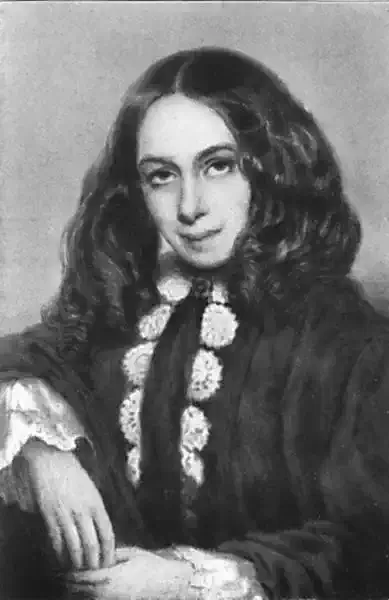
Elizabeth Barrett Browning
XXV
XXV
A heavy heart, Beloved, have I borne
From year to year until I saw thy face,
And sorrow after sorrow took the place
Of all those natural joys as lightly worn
As the stringed pearls, each lifted in its turn
By a beating heart at dance-time. Hopes apace
Were changed to long despairs, till God's own grace
Could scarcely lift above the world forlorn
My heavy heart. Then thou didst bid me bring
And let it drop adown thy calmly great
Deep being ! Fast it sinketh, as a thing
Which its own nature doth precipitate,
While thine doth close above it, mediating
Betwixt the stars and the unaccomplished fate.
A heavy heart, Beloved, have I borne
From year to year until I saw thy face,
And sorrow after sorrow took the place
Of all those natural joys as lightly worn
As the stringed pearls, each lifted in its turn
By a beating heart at dance-time. Hopes apace
Were changed to long despairs, till God's own grace
Could scarcely lift above the world forlorn
My heavy heart. Then thou didst bid me bring
And let it drop adown thy calmly great
Deep being ! Fast it sinketh, as a thing
Which its own nature doth precipitate,
While thine doth close above it, mediating
Betwixt the stars and the unaccomplished fate.
483