

Poems in this theme
Destiny and Overcoming
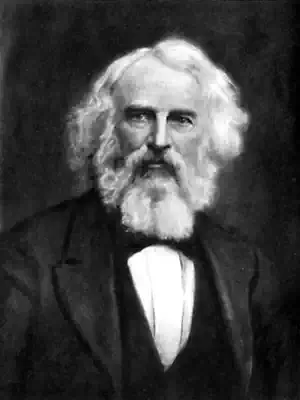
Henry Wadsworth Longfellow
Hiawatha And The Pearl-Feather
Hiawatha And The Pearl-Feather
On the shores of Gitche Gumee,
Of the shining Big-Sea-Water,
Stood Nokomis, the old woman,
Pointing with her finger westward,
O'er the water pointing westward,
To the purple clouds of sunset.
Fiercely the red sun descending
Burned his way along the heavens,
Set the sky on fire behind him,
As war-parties, when retreating,
Burn the prairies on their war-trail;
And the moon, the Night-sun, eastward,
Suddenly starting from his ambush,
Followed fast those bloody footprints,
Followed in that fiery war-trail,
With its glare upon his features.
And Nokomis, the old woman,
Pointing with her finger westward,
Spake these words to Hiawatha:
"Yonder dwells the great Pearl-Feather,
Megissogwon, the Magician,
Manito of Wealth and Wampum,
Guarded by his fiery serpents,
Guarded by the black pitch-water.
You can see his fiery serpents,
The Kenabeek, the great serpents,
Coiling, playing in the water;
You can see the black pitch-water
Stretching far away beyond them,
To the purple clouds of sunset!
"He it was who slew my father,
By his wicked wiles and cunning,
When he from the moon descended,
When he came on earth to seek me.
He, the mightiest of Magicians,
Sends the fever from the marshes,
Sends the pestilential vapors,
Sends the poisonous exhalations,
Sends the white fog from the fen-lands,
Sends disease and death among us!
"Take your bow, O Hiawatha,
Take your arrows, jasper-headed,
Take your war-club, Puggawaugun,
And your mittens, Minjekahwun,
And your birch-canoe for sailing,
And the oil of Mishe-Nahma,
So to smear its sides, that swiftly
You may pass the black pitch-water;
Slay this merciless magician,
Save the people from the fever
That he breathes across the fen-lands,
And avenge my father's murder!"
Straightway then my Hiawatha
Armed himself with all his war-gear,
Launched his birch-canoe for sailing;
With his palm its sides he patted,
Said with glee, "Cheemaun, my darling,
O my Birch-canoe! leap forward,
Where you see the fiery serpents,
Where you see the black pitch-water!"
Forward leaped Cheemaun exulting,
And the noble Hiawatha
Sang his war-song wild and woful,
And above him the war-eagle,
The Keneu, the great war-eagle,
Master of all fowls with feathers,
Screamed and hurtled through the heavens.
Soon he reached the fiery serpents,
The Kenabeek, the great serpents,
Lying huge upon the water,
Sparkling, rippling in the water,
Lying coiled across the passage,
With their blazing crests uplifted,
Breathing fiery fogs and vapors,
So that none could pass beyond them.
But the fearless Hiawatha
Cried aloud, and spake in this wise,
"Let me pass my way, Kenabeek,
Let me go upon my journey!"
And they answered, hissing fiercely,
With their fiery breath made answer:
"Back, go back! O Shaugodaya!
Back to old Nokomis, Faint-heart!"
Then the angry Hiawatha
Raised his mighty bow of ash-tree,
Seized his arrows, jasper-headed,
Shot them fast among the serpents;
Every twanging of the bow-string
Was a war-cry and a death-cry,
Every whizzing of an arrow
Was a death-song of Kenabeek.
Weltering in the bloody water,
Dead lay all the fiery serpents,
And among them Hiawatha
Harmless sailed, and cried exulting:
"Onward, O Cheemaun, my darling!
Onward to the black pitch-water!"
Then he took the oil of Nahma,
And the bows and sides anointed,
Smeared them well with oil, that swiftly
He might pass the black pitch-water.
All night long he sailed upon it,
Sailed upon that sluggish water,
Covered with its mould of ages,
Black with rotting water-rushes,
Rank with flags and leaves of lilies,
Stagnant, lifeless, dreary, dismal,
Lighted by the shimmering moonlight,
And by will-o'-the-wisps illumined,
Fires by ghosts of dead men kindled,
In their weary night-encampments.
All the air was white with moonlight,
All the water black with shadow,
And around him the Suggema,
The mosquito, sang his war-song,
And the fire-flies, Wah-wah-taysee,
Waved their torches to mislead him;
And the bull-frog, the Dahinda,
Thrust his head into the moonlight,
Fixed his yellow eyes upon him,
Sobbed and sank beneath the surface;
And anon a thousand whistles,
Answered over all the fen-lands,
And the heron, the Shuh-shuh-gah,
Far off on the reedy margin,
Heralded the hero's coming.
Westward thus fared Hiawatha,
Toward the realm of Megissogwon,
Toward the land of the Pearl-Feather,
Till the level moon stared at him
In his face stared pale and haggard,
Till the sun was hot behind him,
Till it burned upon his shoulders,
And before him on the upland
He could see the Shining Wigwam
Of the Manito of Wampum,
Of the mightiest of Magicians.
Then once more Cheemaun he patted,
To his birch-canoe said, "Onward!"
And it stirred in all its fibres,
And with one great bound of triumph
Leaped across the water-lilies,
Leaped through tangled flags and rushes,
And upon the beach beyond them
Dry-shod landed Hiawatha.
Straight he took his bow of ash-tree,
On the sand one end he rested,
With his knee he pressed the middle,
Stretched the faithful bow-string tighter,
Took an arrow, jasperheaded,
Shot it at the Shining Wigwam,
Sent it singing as a herald,
As a bearer of his message,
Of his challenge loud and lofty:
"Come forth from your lodge, Pearl-Feather!
Hiawatha waits your coming!"
Straightway from the Shining Wigwam
Came the mighty Megissogwon,
Tall of stature, broad of shoulder,
Dark and terrible in aspect,
Clad from head to foot in wampum,
Armed with all his warlike weapons,
Painted like the sky of morning,
Streaked with crimson, blue, and yellow,
Crested with great eagle-feathers,
Streaming upward, streaming outward.
"Well I know you, Hiawatha!"
Cried he in a voice of thunder,
In a tone of loud derision.
"Hasten back, O Shaugodaya!
Hasten back among the women,
Back to old Nokomis, Faint-heart!
I will slay you as you stand there,
As of old I slew her father!"
But my Hiawatha answered,
Nothing daunted, fearing nothing:
"Big words do not smite like war-clubs,
Boastful breath is not a bow-string,
Taunts are not so sharp as arrows,
Deeds are better things than words are,
Actions mightier than boastings!"
Then began the greatest battle
That the sun had ever looked on,
That the war-birds ever witnessed.
All a Summer's day it lasted,
From the sunrise to the sunset;
For the shafts of Hiawatha
Harmless hit the shirt of wampum,
Harmless fell the blows he dealt it
With his mittens, Minjekahwun,
Harmless fell the heavy war-club;
It could dash the rocks asunder,
But it could not break the meshes
Of that magic shirt of wampum.
Till at sunset Hiawatha,
Leaning on his bow of ash-tree,
Wounded, weary, and desponding,
With his mighty war-club broken,
With his mittens torn and tattered,
And three useless arrows only,
Paused to rest beneath a pine-tree,
From whose branches trailed the mosses,
And whose trunk was coated over
With the Dead-man's Moccasin-leather,
With the fungus white and yellow.
Suddenly from the boughs above him
Sang the Mama, the woodpecker:
"Aim your arrows, Hiawatha,
At the head of Megissogwon,
Strike the tuft of hair upon it,
At their roots the long black tresses;
There alone can he be wounded!"
Winged with feathers, tipped with jasper,
Swift flew Hiawatha's arrow,
Just as Megissogwon, stooping,
Raised a heavy stone to throw it.
Full upon the crown it struck him,
At the roots of his long tresses,
And he reeled and staggered forward,
Plunging like a wounded bison,
Yes, like Pezhekee, the bison,
When the snow is on the prairie.
Swifter flew the second arrow,
In the pathway of the other,
Piercing deeper than the other,
Wounding sorer than the other;
And the knees of Megissogwon
Shook like windy reeds beneath him,
Bent and trembled like the rushes.
But the third and latest arrow
Swiftest flew, and wounded sorest,
And the mighty Megissogwon
Saw the fiery eyes of Pauguk,
Saw the eyes of Death glare at him,
Heard his voice call in the darkness;
At the feet of Hiawatha
Lifeless lay the great Pearl-Feather,
Lay the mightiest of Magicians.
Then the grateful Hiawatha
Called the Mama, the woodpecker,
From his perch among the branches
Of the melancholy pine-tree,
And, in honor of his service,
Stained with blood the tuft of feathers
On the little head of Mama;
Even to this day he wears it,
Wears the tuft of crimson feathers,
As a symbol of his service.
Then he stripped the shirt of wampum
From the back of Megissogwon,
As a trophy of the battle,
As a signal of his conquest.
On the shore he left the body,
Half on land and half in water,
In the sand his feet were buried,
And his face was in the water.
And above him, wheeled and clamored
The Keneu, the great war-eagle,
Sailing round in narrower circles,
Hovering nearer, nearer, nearer.
From the wigwam Hiawatha
Bore the wealth of Megissogwon,
All his wealth of skins and wampum,
Furs of bison and of beaver,
Furs of sable and of ermine,
Wampum belts and strings and pouches,
Quivers wrought with beads of wampum,
Filled with arrows, silver-headed.
Homeward then he sailed exulting,
Homeward through the black pitch-water,
Homeward through the weltering serpents,
With the trophies of the battle,
With a shout and song of triumph.
On the shore stood old Nokomis,
On the shore stood Chibiabos,
And the very strong man, Kwasind,
Waiting for the hero's coming,
Listening to his songs of triumph.
And the people of the village
Welcomed him with songs and dances,
Made a joyous feast, and shouted:
'Honor be to Hiawatha!
He has slain the great Pearl-Feather,
Slain the mightiest of Magicians,
Him, who sent the fiery fever,
Sent the white fog from the fen-lands,
Sent disease and death among us!"
Ever dear to Hiawatha
Was the memory of Mama!
And in token of his friendship,
As a mark of his remembrance,
He adorned and decked his pipe-stem
With the crimson tuft of feathers,
With the blood-red crest of Mama.
But the wealth of Megissogwon,
All the trophies of the battle,
He divided with his people,
Shared it equally among them.
On the shores of Gitche Gumee,
Of the shining Big-Sea-Water,
Stood Nokomis, the old woman,
Pointing with her finger westward,
O'er the water pointing westward,
To the purple clouds of sunset.
Fiercely the red sun descending
Burned his way along the heavens,
Set the sky on fire behind him,
As war-parties, when retreating,
Burn the prairies on their war-trail;
And the moon, the Night-sun, eastward,
Suddenly starting from his ambush,
Followed fast those bloody footprints,
Followed in that fiery war-trail,
With its glare upon his features.
And Nokomis, the old woman,
Pointing with her finger westward,
Spake these words to Hiawatha:
"Yonder dwells the great Pearl-Feather,
Megissogwon, the Magician,
Manito of Wealth and Wampum,
Guarded by his fiery serpents,
Guarded by the black pitch-water.
You can see his fiery serpents,
The Kenabeek, the great serpents,
Coiling, playing in the water;
You can see the black pitch-water
Stretching far away beyond them,
To the purple clouds of sunset!
"He it was who slew my father,
By his wicked wiles and cunning,
When he from the moon descended,
When he came on earth to seek me.
He, the mightiest of Magicians,
Sends the fever from the marshes,
Sends the pestilential vapors,
Sends the poisonous exhalations,
Sends the white fog from the fen-lands,
Sends disease and death among us!
"Take your bow, O Hiawatha,
Take your arrows, jasper-headed,
Take your war-club, Puggawaugun,
And your mittens, Minjekahwun,
And your birch-canoe for sailing,
And the oil of Mishe-Nahma,
So to smear its sides, that swiftly
You may pass the black pitch-water;
Slay this merciless magician,
Save the people from the fever
That he breathes across the fen-lands,
And avenge my father's murder!"
Straightway then my Hiawatha
Armed himself with all his war-gear,
Launched his birch-canoe for sailing;
With his palm its sides he patted,
Said with glee, "Cheemaun, my darling,
O my Birch-canoe! leap forward,
Where you see the fiery serpents,
Where you see the black pitch-water!"
Forward leaped Cheemaun exulting,
And the noble Hiawatha
Sang his war-song wild and woful,
And above him the war-eagle,
The Keneu, the great war-eagle,
Master of all fowls with feathers,
Screamed and hurtled through the heavens.
Soon he reached the fiery serpents,
The Kenabeek, the great serpents,
Lying huge upon the water,
Sparkling, rippling in the water,
Lying coiled across the passage,
With their blazing crests uplifted,
Breathing fiery fogs and vapors,
So that none could pass beyond them.
But the fearless Hiawatha
Cried aloud, and spake in this wise,
"Let me pass my way, Kenabeek,
Let me go upon my journey!"
And they answered, hissing fiercely,
With their fiery breath made answer:
"Back, go back! O Shaugodaya!
Back to old Nokomis, Faint-heart!"
Then the angry Hiawatha
Raised his mighty bow of ash-tree,
Seized his arrows, jasper-headed,
Shot them fast among the serpents;
Every twanging of the bow-string
Was a war-cry and a death-cry,
Every whizzing of an arrow
Was a death-song of Kenabeek.
Weltering in the bloody water,
Dead lay all the fiery serpents,
And among them Hiawatha
Harmless sailed, and cried exulting:
"Onward, O Cheemaun, my darling!
Onward to the black pitch-water!"
Then he took the oil of Nahma,
And the bows and sides anointed,
Smeared them well with oil, that swiftly
He might pass the black pitch-water.
All night long he sailed upon it,
Sailed upon that sluggish water,
Covered with its mould of ages,
Black with rotting water-rushes,
Rank with flags and leaves of lilies,
Stagnant, lifeless, dreary, dismal,
Lighted by the shimmering moonlight,
And by will-o'-the-wisps illumined,
Fires by ghosts of dead men kindled,
In their weary night-encampments.
All the air was white with moonlight,
All the water black with shadow,
And around him the Suggema,
The mosquito, sang his war-song,
And the fire-flies, Wah-wah-taysee,
Waved their torches to mislead him;
And the bull-frog, the Dahinda,
Thrust his head into the moonlight,
Fixed his yellow eyes upon him,
Sobbed and sank beneath the surface;
And anon a thousand whistles,
Answered over all the fen-lands,
And the heron, the Shuh-shuh-gah,
Far off on the reedy margin,
Heralded the hero's coming.
Westward thus fared Hiawatha,
Toward the realm of Megissogwon,
Toward the land of the Pearl-Feather,
Till the level moon stared at him
In his face stared pale and haggard,
Till the sun was hot behind him,
Till it burned upon his shoulders,
And before him on the upland
He could see the Shining Wigwam
Of the Manito of Wampum,
Of the mightiest of Magicians.
Then once more Cheemaun he patted,
To his birch-canoe said, "Onward!"
And it stirred in all its fibres,
And with one great bound of triumph
Leaped across the water-lilies,
Leaped through tangled flags and rushes,
And upon the beach beyond them
Dry-shod landed Hiawatha.
Straight he took his bow of ash-tree,
On the sand one end he rested,
With his knee he pressed the middle,
Stretched the faithful bow-string tighter,
Took an arrow, jasperheaded,
Shot it at the Shining Wigwam,
Sent it singing as a herald,
As a bearer of his message,
Of his challenge loud and lofty:
"Come forth from your lodge, Pearl-Feather!
Hiawatha waits your coming!"
Straightway from the Shining Wigwam
Came the mighty Megissogwon,
Tall of stature, broad of shoulder,
Dark and terrible in aspect,
Clad from head to foot in wampum,
Armed with all his warlike weapons,
Painted like the sky of morning,
Streaked with crimson, blue, and yellow,
Crested with great eagle-feathers,
Streaming upward, streaming outward.
"Well I know you, Hiawatha!"
Cried he in a voice of thunder,
In a tone of loud derision.
"Hasten back, O Shaugodaya!
Hasten back among the women,
Back to old Nokomis, Faint-heart!
I will slay you as you stand there,
As of old I slew her father!"
But my Hiawatha answered,
Nothing daunted, fearing nothing:
"Big words do not smite like war-clubs,
Boastful breath is not a bow-string,
Taunts are not so sharp as arrows,
Deeds are better things than words are,
Actions mightier than boastings!"
Then began the greatest battle
That the sun had ever looked on,
That the war-birds ever witnessed.
All a Summer's day it lasted,
From the sunrise to the sunset;
For the shafts of Hiawatha
Harmless hit the shirt of wampum,
Harmless fell the blows he dealt it
With his mittens, Minjekahwun,
Harmless fell the heavy war-club;
It could dash the rocks asunder,
But it could not break the meshes
Of that magic shirt of wampum.
Till at sunset Hiawatha,
Leaning on his bow of ash-tree,
Wounded, weary, and desponding,
With his mighty war-club broken,
With his mittens torn and tattered,
And three useless arrows only,
Paused to rest beneath a pine-tree,
From whose branches trailed the mosses,
And whose trunk was coated over
With the Dead-man's Moccasin-leather,
With the fungus white and yellow.
Suddenly from the boughs above him
Sang the Mama, the woodpecker:
"Aim your arrows, Hiawatha,
At the head of Megissogwon,
Strike the tuft of hair upon it,
At their roots the long black tresses;
There alone can he be wounded!"
Winged with feathers, tipped with jasper,
Swift flew Hiawatha's arrow,
Just as Megissogwon, stooping,
Raised a heavy stone to throw it.
Full upon the crown it struck him,
At the roots of his long tresses,
And he reeled and staggered forward,
Plunging like a wounded bison,
Yes, like Pezhekee, the bison,
When the snow is on the prairie.
Swifter flew the second arrow,
In the pathway of the other,
Piercing deeper than the other,
Wounding sorer than the other;
And the knees of Megissogwon
Shook like windy reeds beneath him,
Bent and trembled like the rushes.
But the third and latest arrow
Swiftest flew, and wounded sorest,
And the mighty Megissogwon
Saw the fiery eyes of Pauguk,
Saw the eyes of Death glare at him,
Heard his voice call in the darkness;
At the feet of Hiawatha
Lifeless lay the great Pearl-Feather,
Lay the mightiest of Magicians.
Then the grateful Hiawatha
Called the Mama, the woodpecker,
From his perch among the branches
Of the melancholy pine-tree,
And, in honor of his service,
Stained with blood the tuft of feathers
On the little head of Mama;
Even to this day he wears it,
Wears the tuft of crimson feathers,
As a symbol of his service.
Then he stripped the shirt of wampum
From the back of Megissogwon,
As a trophy of the battle,
As a signal of his conquest.
On the shore he left the body,
Half on land and half in water,
In the sand his feet were buried,
And his face was in the water.
And above him, wheeled and clamored
The Keneu, the great war-eagle,
Sailing round in narrower circles,
Hovering nearer, nearer, nearer.
From the wigwam Hiawatha
Bore the wealth of Megissogwon,
All his wealth of skins and wampum,
Furs of bison and of beaver,
Furs of sable and of ermine,
Wampum belts and strings and pouches,
Quivers wrought with beads of wampum,
Filled with arrows, silver-headed.
Homeward then he sailed exulting,
Homeward through the black pitch-water,
Homeward through the weltering serpents,
With the trophies of the battle,
With a shout and song of triumph.
On the shore stood old Nokomis,
On the shore stood Chibiabos,
And the very strong man, Kwasind,
Waiting for the hero's coming,
Listening to his songs of triumph.
And the people of the village
Welcomed him with songs and dances,
Made a joyous feast, and shouted:
'Honor be to Hiawatha!
He has slain the great Pearl-Feather,
Slain the mightiest of Magicians,
Him, who sent the fiery fever,
Sent the white fog from the fen-lands,
Sent disease and death among us!"
Ever dear to Hiawatha
Was the memory of Mama!
And in token of his friendship,
As a mark of his remembrance,
He adorned and decked his pipe-stem
With the crimson tuft of feathers,
With the blood-red crest of Mama.
But the wealth of Megissogwon,
All the trophies of the battle,
He divided with his people,
Shared it equally among them.
404
Henry Wadsworth Longfellow
Frithiof's Temptation. (From The Swedish)
Frithiof's Temptation. (From The Swedish)
Spring is coming, birds are twittering, forests leaf, and smiles the sun,
And the loosened torrents downward, singing, to the ocean run;
Glowing like the cheek of Freya, peeping rosebuds 'gin to ope,
And in human hearts awaken love of life, and joy, and hope.
Now will hunt the ancient monarch, and the queen shall join the sport:
Swarming in its gorgeous splendor, is assembled all the Court;
Bows ring loud, and quivers rattle, stallions paw the ground alway,
And, with hoods upon their eyelids, scream the falcons for their prey.
See, the Queen of the Chase advances! Frithiof, gaze not at the sight!
Like a star upon a spring-cloud sits she on her palfrey white.
Half of Freya, half of Rota, yet more beauteous than these two,
And from her light hat of purple wave aloft the feathers blue.
Gaze not at her eyes' blue heaven, gaze not at her golden hair!
Oh beware! her waist is slender, full her bosom is, beware!
Look not at the rose and lily on her cheek that shifting play,
List not to the voice beloved, whispering like the wind of May.
Now the huntsman's band is ready. Hurrah! over hill and dale!
Horns ring, and the hawks right upward to the hall of Odin sail.
All the dwellers in the forest seek in fear their cavern homes,
But, with spear outstretched before her, after them the Valkyr comes.
. . . . . . . . . .
Then threw Frithiof down his mantle, and upon the greensward spread,
And the ancient king so trustful laid on Frithiof's knee his head,
Slept as calmly as the hero sleepeth, after war's alarm,
On his shield, or as an infant sleeps upon its mother's arm.
As he slumbers, hark! there sings a coal-black bird upon the bough;
'Hasten, Frithiof, slay the old man, end your quarrel at a blow:
Take his queen, for she is thine, and once the bridal kiss she gave,
Now no human eye beholds thee, deep and silent is the grave,'
Frithiof listens; hark! there sings a snow-white bird upon the bough:
'Though no human eye beholds thee, Odin's eye beholds thee now.
Coward! wilt thou murder sleep, and a defenceless old man slay!
Whatsoe'er thou winn'st, thou canst not win a hero's fame this way.'
Thus the two wood-birds did warble: Frithiof took his war-sword good,
With a shudder hurled it from him, far into the gloomy wood.
Coal-black bird flies down to Nastrand, but on light, unfolded wings,
Like the tone of harps, the other, sounding towards the sun, upsprings.
Straight the ancient king awakens. 'Sweet has been my sleep,' he said;
'Pleasantly sleeps one in the shadow, guarded by a brave man's blade.
But where is thy sword, O stranger? Lightning's brother, where is he?
Who thus parts you, who should never from each other parted be?'
'It avails not,' Frithiof answered; 'in the North are other swords:
Sharp, O monarch! is the sword's tongue, and it speaks not peaceful words;
Murky spirits dwell in steel blades, spirits from the Niffelhem;
Slumber is not safe before them, silver locks but anger them.'
Spring is coming, birds are twittering, forests leaf, and smiles the sun,
And the loosened torrents downward, singing, to the ocean run;
Glowing like the cheek of Freya, peeping rosebuds 'gin to ope,
And in human hearts awaken love of life, and joy, and hope.
Now will hunt the ancient monarch, and the queen shall join the sport:
Swarming in its gorgeous splendor, is assembled all the Court;
Bows ring loud, and quivers rattle, stallions paw the ground alway,
And, with hoods upon their eyelids, scream the falcons for their prey.
See, the Queen of the Chase advances! Frithiof, gaze not at the sight!
Like a star upon a spring-cloud sits she on her palfrey white.
Half of Freya, half of Rota, yet more beauteous than these two,
And from her light hat of purple wave aloft the feathers blue.
Gaze not at her eyes' blue heaven, gaze not at her golden hair!
Oh beware! her waist is slender, full her bosom is, beware!
Look not at the rose and lily on her cheek that shifting play,
List not to the voice beloved, whispering like the wind of May.
Now the huntsman's band is ready. Hurrah! over hill and dale!
Horns ring, and the hawks right upward to the hall of Odin sail.
All the dwellers in the forest seek in fear their cavern homes,
But, with spear outstretched before her, after them the Valkyr comes.
. . . . . . . . . .
Then threw Frithiof down his mantle, and upon the greensward spread,
And the ancient king so trustful laid on Frithiof's knee his head,
Slept as calmly as the hero sleepeth, after war's alarm,
On his shield, or as an infant sleeps upon its mother's arm.
As he slumbers, hark! there sings a coal-black bird upon the bough;
'Hasten, Frithiof, slay the old man, end your quarrel at a blow:
Take his queen, for she is thine, and once the bridal kiss she gave,
Now no human eye beholds thee, deep and silent is the grave,'
Frithiof listens; hark! there sings a snow-white bird upon the bough:
'Though no human eye beholds thee, Odin's eye beholds thee now.
Coward! wilt thou murder sleep, and a defenceless old man slay!
Whatsoe'er thou winn'st, thou canst not win a hero's fame this way.'
Thus the two wood-birds did warble: Frithiof took his war-sword good,
With a shudder hurled it from him, far into the gloomy wood.
Coal-black bird flies down to Nastrand, but on light, unfolded wings,
Like the tone of harps, the other, sounding towards the sun, upsprings.
Straight the ancient king awakens. 'Sweet has been my sleep,' he said;
'Pleasantly sleeps one in the shadow, guarded by a brave man's blade.
But where is thy sword, O stranger? Lightning's brother, where is he?
Who thus parts you, who should never from each other parted be?'
'It avails not,' Frithiof answered; 'in the North are other swords:
Sharp, O monarch! is the sword's tongue, and it speaks not peaceful words;
Murky spirits dwell in steel blades, spirits from the Niffelhem;
Slumber is not safe before them, silver locks but anger them.'
275
Henry Wadsworth Longfellow
Flower-De-Luce: To-Morrow
Flower-De-Luce: To-Morrow
'Tis late at night, and in the realm of sleep
My little lambs are folded like the flocks;
From room to room I hear the wakeful clocks
Challenge the passing hour, like guards that keep
Their solitary watch on tower and steep;
Far off I hear the crowing of the cocks,
And through the opening door that time unlocks
Feel the fresh breathing of To-morrow creep.
To-morrow! the mysterious, unknown guest,
Who cries to me: 'Remember Barmecide,
And tremble to be happy with the rest.'
And I make answer: 'I am satisfied;
I dare not ask; I know not what is best;
God hath already said what shall betide.'
'Tis late at night, and in the realm of sleep
My little lambs are folded like the flocks;
From room to room I hear the wakeful clocks
Challenge the passing hour, like guards that keep
Their solitary watch on tower and steep;
Far off I hear the crowing of the cocks,
And through the opening door that time unlocks
Feel the fresh breathing of To-morrow creep.
To-morrow! the mysterious, unknown guest,
Who cries to me: 'Remember Barmecide,
And tremble to be happy with the rest.'
And I make answer: 'I am satisfied;
I dare not ask; I know not what is best;
God hath already said what shall betide.'
332
Henry Wadsworth Longfellow
Evangeline: Part The Second. I.
Evangeline: Part The Second. I.
MANY a weary year had passed since the burning of Grand-Pré,
When on the falling tide the freighted vessels departed,
Bearing a nation, with all its household gods, into exile,
Exile without an end, and without an example in story.
Far asunder, on separate coasts, the Acadians landed;
Scattered were they, like flakes of snow, when the wind from the northeast
Strikes aslant through the fogs that darken the Banks of Newfoundland.
Friendless, homeless, hopeless, they wandered from city to city,
From the cold lakes of the North to sultry Southern savannas,-
From the bleak shores of the sea to the lands where the Father of Waters
Seizes the hills in his hands, and drags them down to the ocean,
Deep in their sands to bury the scattered bones of the mammoth.
Friends they sought and homes; and many, despairing, heart-broken,
Asked of the earth but a grave, and no longer a friend nor a fireside.
Written their history stands on tablets of stone in the churchyards.
Long among them was seen a maiden who waited and wandered,
Lowly and meek in spirit, and patiently suffering all things.
Fair was she and young; but, alas! before her extended,
Dreary and vast and silent, the desert of life, with its pathway
Marked by the graves of those who had sorrowed and suffered before her,
Passions long extinguished, and hopes long dead and abandoned,
As the emigrant's way o'er the Western desert is marked by
Camp-fires long consumed, and bones that bleach in the sunshine.
Something there was in her life incomplete, imperfect, unfinished;
As if a morning of June, with all its music and sunshine,
Suddenly paused in the sky, and, fading, slowly descended
Into the east again, from whence it late had arisen.
Sometimes she lingered in towns, till, urged by the fever within her,
Urged by a restless longing, the hunger and thirst of the spirit,
She would commence again her endless search and endeavor;
Sometimes in churchyards strayed, and gazed on the crosses and tombstones,
Sat by some nameless grave, and thought that perhaps in its bosom
He was already at rest, and she longed to slumber beside him.
Sometimes a rumor, a hearsay, an inarticulate whisper,
Came with its airy hand to point and beckon her forward.
Sometimes she spake with those who had seen her beloved and known him,
But it was long ago, in some far-off place or forgotten.
'Gabriel Lajeunesse!' they said; 'O yes! we have seen him.
He was with Basil the blacksmith, and both have gone to the prairies;
Coureurs-des-Bois are they, and famous hunters and trappers,'
'Gabriel Lajeunesse!' said others; 'O yes! we have seen him.
He is a Voyageur in the lowlands of Louisiana.'
Then would they say: 'Dear child! why dream and wait for him longer?
Are there not other youths as fair as Gabriel? others
Who have hearts as tender and true, and spirits as loyal?
Here is Baptiste Leblanc, the notary's son, who has loved thee
Many a tedious year; come, give him thy hand and be happy!
Thou art too fair to be left to braid St. Catherine's tresses.'
Then would Evangeline answer, serenely but sadly, 'I cannot!
Whither my heart has gone, there follows my hand, and not elsewhere.
For when the heart goes before, like a lamp, and illumines the pathway,
Many things are made clear, that else lie hidden in darkness.'
Thereupon the priest, her friend and father-confessor,
Said, with a smile, 'O daughter! thy God thus speaketh within thee!
Talk not of wasted affection, affection never was wasted;
If it enrich not the heart of another, its waters, returning
Back to their springs, like the rain, shall fill them full of refreshment;
That which the fountain sends forth returns again to the fountain.
Patience; accomplish thy labor; accomplish thy work of affection!
Sorrow and silence are strong, and patient endurance is godlike.
Therefore accomplish thy labor of love, till the heart is made godlike,
Purified, strengthened, perfected, and rendered more worthy of heaven!'
Cheered by the good man's words, Evangeline labored and waited.
Still in her heart she heard the funeral dirge of the ocean,
But with its sound there was mingled a voice that whispered, 'Despair not!'
Thus did that poor soul wander in want and cheerless discomfort,
Bleeding, barefooted, over the shards and thorns of existence.
Let me essay, O Muse! to follow the wanderer's footsteps;-
Not through each devious path, each changeful year of existence;
But as a traveller follows a streamlet's course through the valley:
Far from its margin at times, and seeing the gleam of its water
Here and there, in some open space, and at intervals only;
Then drawing nearer its banks, through sylvan glooms that conceal it,
Though he behold it not, he can hear its continuous murmur;
Happy, at length, if he find the spot where it reaches an outlet.
MANY a weary year had passed since the burning of Grand-Pré,
When on the falling tide the freighted vessels departed,
Bearing a nation, with all its household gods, into exile,
Exile without an end, and without an example in story.
Far asunder, on separate coasts, the Acadians landed;
Scattered were they, like flakes of snow, when the wind from the northeast
Strikes aslant through the fogs that darken the Banks of Newfoundland.
Friendless, homeless, hopeless, they wandered from city to city,
From the cold lakes of the North to sultry Southern savannas,-
From the bleak shores of the sea to the lands where the Father of Waters
Seizes the hills in his hands, and drags them down to the ocean,
Deep in their sands to bury the scattered bones of the mammoth.
Friends they sought and homes; and many, despairing, heart-broken,
Asked of the earth but a grave, and no longer a friend nor a fireside.
Written their history stands on tablets of stone in the churchyards.
Long among them was seen a maiden who waited and wandered,
Lowly and meek in spirit, and patiently suffering all things.
Fair was she and young; but, alas! before her extended,
Dreary and vast and silent, the desert of life, with its pathway
Marked by the graves of those who had sorrowed and suffered before her,
Passions long extinguished, and hopes long dead and abandoned,
As the emigrant's way o'er the Western desert is marked by
Camp-fires long consumed, and bones that bleach in the sunshine.
Something there was in her life incomplete, imperfect, unfinished;
As if a morning of June, with all its music and sunshine,
Suddenly paused in the sky, and, fading, slowly descended
Into the east again, from whence it late had arisen.
Sometimes she lingered in towns, till, urged by the fever within her,
Urged by a restless longing, the hunger and thirst of the spirit,
She would commence again her endless search and endeavor;
Sometimes in churchyards strayed, and gazed on the crosses and tombstones,
Sat by some nameless grave, and thought that perhaps in its bosom
He was already at rest, and she longed to slumber beside him.
Sometimes a rumor, a hearsay, an inarticulate whisper,
Came with its airy hand to point and beckon her forward.
Sometimes she spake with those who had seen her beloved and known him,
But it was long ago, in some far-off place or forgotten.
'Gabriel Lajeunesse!' they said; 'O yes! we have seen him.
He was with Basil the blacksmith, and both have gone to the prairies;
Coureurs-des-Bois are they, and famous hunters and trappers,'
'Gabriel Lajeunesse!' said others; 'O yes! we have seen him.
He is a Voyageur in the lowlands of Louisiana.'
Then would they say: 'Dear child! why dream and wait for him longer?
Are there not other youths as fair as Gabriel? others
Who have hearts as tender and true, and spirits as loyal?
Here is Baptiste Leblanc, the notary's son, who has loved thee
Many a tedious year; come, give him thy hand and be happy!
Thou art too fair to be left to braid St. Catherine's tresses.'
Then would Evangeline answer, serenely but sadly, 'I cannot!
Whither my heart has gone, there follows my hand, and not elsewhere.
For when the heart goes before, like a lamp, and illumines the pathway,
Many things are made clear, that else lie hidden in darkness.'
Thereupon the priest, her friend and father-confessor,
Said, with a smile, 'O daughter! thy God thus speaketh within thee!
Talk not of wasted affection, affection never was wasted;
If it enrich not the heart of another, its waters, returning
Back to their springs, like the rain, shall fill them full of refreshment;
That which the fountain sends forth returns again to the fountain.
Patience; accomplish thy labor; accomplish thy work of affection!
Sorrow and silence are strong, and patient endurance is godlike.
Therefore accomplish thy labor of love, till the heart is made godlike,
Purified, strengthened, perfected, and rendered more worthy of heaven!'
Cheered by the good man's words, Evangeline labored and waited.
Still in her heart she heard the funeral dirge of the ocean,
But with its sound there was mingled a voice that whispered, 'Despair not!'
Thus did that poor soul wander in want and cheerless discomfort,
Bleeding, barefooted, over the shards and thorns of existence.
Let me essay, O Muse! to follow the wanderer's footsteps;-
Not through each devious path, each changeful year of existence;
But as a traveller follows a streamlet's course through the valley:
Far from its margin at times, and seeing the gleam of its water
Here and there, in some open space, and at intervals only;
Then drawing nearer its banks, through sylvan glooms that conceal it,
Though he behold it not, he can hear its continuous murmur;
Happy, at length, if he find the spot where it reaches an outlet.
299
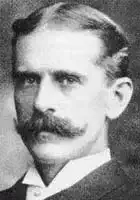
Henry Van Dyke
The Vain King
The Vain King
In robes of Tyrian blue the King was drest,
A jewelled collar shone upon his breast,
A giant ruby glittered in his crown -----
Lord of rich lands and many a splendid town.
In him the glories of an ancient line
Of sober kings, who ruled by right divine,
Were centred; and to him with loyal awe
The people looked for leadership and law.
Ten thousand knights, the safeguard of the land,
Lay like a single sword within his hand;
A hundred courts, with power of life and death,
Proclaimed decrees justice by his breath;
And all the sacred growths that men had known
Of order and of rule upheld his throne.
Proud was the King: yet not with such a heart
As fits a man to play a royal part.
Not his the pride that honours as a trust
The right to rule, the duty to be just:
Not his the dignity that bends to bear
The monarch's yoke, the master's load of care,
And labours like the peasant at his gate,
To serve the people and protect the State.
Another pride was his, and other joys:
To him the crown and sceptre were but toys,
With which he played at glory's idle game,
To please himself and win the wreaths of fame.
The throne his fathers held from age to age
Built for King Martin to diplay at will,
His mighty strength and universal skill.
No conscious child, that, spoiled with praising, tries
At every step to win admiring eyes, ----
No favourite mountebank, whose acting draws
From gaping crowds loud thunder of applause,
Was vainer than the King: his only thirst
Was to be hailed, in every race, the first.
When tournament was held, in knightly guise
The King would ride the lists and win the prize;
When music charmed the court, with golden lyre
The King would take the stage and lead the choir;
In hunting, his the lance to slay the boar;
In hawking, see his falcon highest soar;
In painting, he would wield the master's brush;
In high debate, -----"the King is speaking! Hush!"
Thus, with a restless heart, in every field
He sought renown, and found his subjects yield
As if he were a demi-god revealed.
But while he played the petty games of life
His kingdom fell a prey to inward strife;
Corruption through the court unheeded crept,
And on the seat of honour justice slept.
The strong trod down the weak; the helpless poor
Groaned under burdens grievous to endure.
The nation's wealth was spent in vain display,
And weakness wore the nation's heart away.
Yet think not Earth is blind to human woes ---
Man has more friends and helpers than he knows;
And when a patient people are oppressed,
The land that bore them feels it in her breast.
Spirits of field and flood, of heath and hill,
Are grieved and angry at the spreading ill;
The trees complain together in the night,
Voices of wrath are heard along the height,
And secret vows are sworn, by stream and strand,
To bring the tyrant low and liberate the land.
But little recked the pampered King of these;
He heard no voice but such as praise and please.
Flattered and fooled, victor in every sport,
One day he wandered idly with his court
Beside the river, seeking to devise
New ways to show his skill to wondering eyes.
There in the stream a patient fisher stood,
And cast his line across the rippling flood.
His silver spoil lay near him on the green:
"Such fish," the courtiers cried, "were never seen!"
"Three salmon larger than a cloth-yard shaft--"
This man must be the master of his craft!"
"An easy art!" the jealous King replied:
"Myself could learn it better, if I tried,
"And catch a hundred larger fish a week--"
Wilt thou accept the challenge, fellow? Speak!"
The fisher turned, came near, and bent his knee:
"'Tis not for kings to strive with such as me;
"Yet if the King commands it, I obey.
"But one condition of the strife I pray:
"The fisherman who brings the least to land
"Shall do whate'er the other may command."
Loud laughed the King: "A foolish fisher thou!
"For I shall win and rule thee then as now."
So to Prince John, a sober soul, sedate
And slow, King Martin left the helm of state,
While to the novel game with eager zest
He all his time and all his powers addrest.
Sure such a sight was never seen before!
For robed and crowned the monarch trod the shore;
His golden hooks were decked with feathers fine,
His jewelled reel ran out a silken line.
With kingly strokes he flogged the crystal stream,
Far-off the salmon saw his tackle gleam;
Careless of kings, they eyed with calm disdain
The gaudy lure, and Martin fished in vain.
On Friday, when the week was almost spent,
He scanned his empty creel with discontent,
Called for a net, and cast it far and wide,
And drew --- a thousand minnows from the tide!
Then came the fisher to conclude the match,
And at the monarch's feet spread out his catch ---
A hundred salmon, greater than before --"
I win!" he cried: "the King must pay the score."
Then Martin, angry, threw his tackle down:
"Rather than lose this game I'd lose me crown!"
"Nay, thou has lost them both," the fisher said;
And as he spoke a wondrous light was shed
Around his form; he dropped his garments mean,
And in his place the River-god was seen.
"Thy vanity hast brought thee in my power,
"And thou shalt pay the forfeit at this hour:
"For thou hast shown thyself a royal fool,
"Too proud to angle, and too vain to rule.
"Eager to win in every trivial strife, --"
Go! Thou shalt fish for minnows all thy life!"
Wrathful, the King the scornful sentence heard;
He strove to answer, but he only chirr-r-ed:
His Tyrian robe was changed to wings of blue,
His crown became a crest, --- away he flew!
And still, along the reaches of the stream,
The vain King-fisher flits, an azure gleam, ---
You see his ruby crest, you hear his jealous scream.
In robes of Tyrian blue the King was drest,
A jewelled collar shone upon his breast,
A giant ruby glittered in his crown -----
Lord of rich lands and many a splendid town.
In him the glories of an ancient line
Of sober kings, who ruled by right divine,
Were centred; and to him with loyal awe
The people looked for leadership and law.
Ten thousand knights, the safeguard of the land,
Lay like a single sword within his hand;
A hundred courts, with power of life and death,
Proclaimed decrees justice by his breath;
And all the sacred growths that men had known
Of order and of rule upheld his throne.
Proud was the King: yet not with such a heart
As fits a man to play a royal part.
Not his the pride that honours as a trust
The right to rule, the duty to be just:
Not his the dignity that bends to bear
The monarch's yoke, the master's load of care,
And labours like the peasant at his gate,
To serve the people and protect the State.
Another pride was his, and other joys:
To him the crown and sceptre were but toys,
With which he played at glory's idle game,
To please himself and win the wreaths of fame.
The throne his fathers held from age to age
Built for King Martin to diplay at will,
His mighty strength and universal skill.
No conscious child, that, spoiled with praising, tries
At every step to win admiring eyes, ----
No favourite mountebank, whose acting draws
From gaping crowds loud thunder of applause,
Was vainer than the King: his only thirst
Was to be hailed, in every race, the first.
When tournament was held, in knightly guise
The King would ride the lists and win the prize;
When music charmed the court, with golden lyre
The King would take the stage and lead the choir;
In hunting, his the lance to slay the boar;
In hawking, see his falcon highest soar;
In painting, he would wield the master's brush;
In high debate, -----"the King is speaking! Hush!"
Thus, with a restless heart, in every field
He sought renown, and found his subjects yield
As if he were a demi-god revealed.
But while he played the petty games of life
His kingdom fell a prey to inward strife;
Corruption through the court unheeded crept,
And on the seat of honour justice slept.
The strong trod down the weak; the helpless poor
Groaned under burdens grievous to endure.
The nation's wealth was spent in vain display,
And weakness wore the nation's heart away.
Yet think not Earth is blind to human woes ---
Man has more friends and helpers than he knows;
And when a patient people are oppressed,
The land that bore them feels it in her breast.
Spirits of field and flood, of heath and hill,
Are grieved and angry at the spreading ill;
The trees complain together in the night,
Voices of wrath are heard along the height,
And secret vows are sworn, by stream and strand,
To bring the tyrant low and liberate the land.
But little recked the pampered King of these;
He heard no voice but such as praise and please.
Flattered and fooled, victor in every sport,
One day he wandered idly with his court
Beside the river, seeking to devise
New ways to show his skill to wondering eyes.
There in the stream a patient fisher stood,
And cast his line across the rippling flood.
His silver spoil lay near him on the green:
"Such fish," the courtiers cried, "were never seen!"
"Three salmon larger than a cloth-yard shaft--"
This man must be the master of his craft!"
"An easy art!" the jealous King replied:
"Myself could learn it better, if I tried,
"And catch a hundred larger fish a week--"
Wilt thou accept the challenge, fellow? Speak!"
The fisher turned, came near, and bent his knee:
"'Tis not for kings to strive with such as me;
"Yet if the King commands it, I obey.
"But one condition of the strife I pray:
"The fisherman who brings the least to land
"Shall do whate'er the other may command."
Loud laughed the King: "A foolish fisher thou!
"For I shall win and rule thee then as now."
So to Prince John, a sober soul, sedate
And slow, King Martin left the helm of state,
While to the novel game with eager zest
He all his time and all his powers addrest.
Sure such a sight was never seen before!
For robed and crowned the monarch trod the shore;
His golden hooks were decked with feathers fine,
His jewelled reel ran out a silken line.
With kingly strokes he flogged the crystal stream,
Far-off the salmon saw his tackle gleam;
Careless of kings, they eyed with calm disdain
The gaudy lure, and Martin fished in vain.
On Friday, when the week was almost spent,
He scanned his empty creel with discontent,
Called for a net, and cast it far and wide,
And drew --- a thousand minnows from the tide!
Then came the fisher to conclude the match,
And at the monarch's feet spread out his catch ---
A hundred salmon, greater than before --"
I win!" he cried: "the King must pay the score."
Then Martin, angry, threw his tackle down:
"Rather than lose this game I'd lose me crown!"
"Nay, thou has lost them both," the fisher said;
And as he spoke a wondrous light was shed
Around his form; he dropped his garments mean,
And in his place the River-god was seen.
"Thy vanity hast brought thee in my power,
"And thou shalt pay the forfeit at this hour:
"For thou hast shown thyself a royal fool,
"Too proud to angle, and too vain to rule.
"Eager to win in every trivial strife, --"
Go! Thou shalt fish for minnows all thy life!"
Wrathful, the King the scornful sentence heard;
He strove to answer, but he only chirr-r-ed:
His Tyrian robe was changed to wings of blue,
His crown became a crest, --- away he flew!
And still, along the reaches of the stream,
The vain King-fisher flits, an azure gleam, ---
You see his ruby crest, you hear his jealous scream.
409
Henry Van Dyke
The Proud Lady
The Proud Lady
When Stiivoren town was in its prime
And queened the Zuyder Zee,
Its ships went out to every clime
With costly merchantry.
A lady dwelt in that rich town,
The fairest in all the land;
She walked abroad in a velvet gown,
With many rings on her hand.
Her hair was bright as the beaten gold,
Her lips as coral red,
Her roving eyes were blue and bold,
And her heart with pride was fed.
For she was proud of her father's ships,
As she watched them gayly pass;
And pride looked out of her eyes and lips
When she saw herself in the glass.
"Now come," she said to the captains ten,
Who were ready to put to sea,
"Ye are all my men and my father's men,
And what will ye do for me?"
"Go north and south, go east and west,
And get me gifts," she said.
"And he who bringeth me home the best,
With that man will I wed."
So they all fared forth, and sought with care
In many a famous mart,
For satins and silks and jewels rare,
To win that lady's heart.
She looked at them all with never a thought,
And careless put them by;
"I am not fain of the things ye brought,
Enough of these have I."
The last that came was the head of the fleet,
His name was Jan Borel;
He bent his knee at the lady's feet,--
In truth he loved her well.
"I've brought thee home the best i' the world,
A shipful of Danzig corn!"
She stared at him long; her red lips curled,
Her blue eyes filled with scorn.
"Now out on thee, thou feckless kerl,
A loon thou art," she said.
"Am I a starving beggar girl?
Shall I ever lack for bread?"
"Go empty all thy sacks of grain
Into the nearest sea,
And never show thy face again
To make a mock of me."
Then Jan Borel, he hoisted sail,
And out to sea he bore;
He passed the Helder in a gale
And came again no more.
But the grains of corn went drifting down
Like devil-scattered seed,
To sow the harbor of the town
With a wicked growth of weed.
The roots were thick and the silt and sand
Were gathered day by day,
Till not a furlong out from land
A shoal had barred the way.
Then Stavoren town saw evil years,
No ships could out or in,
The boats lay rotting at the piers,
And the mouldy grain in the bin.
The grass-grown streets were all forlorn,
The town in ruin stood,
The lady's velvet gown was torn,
Her rings were sold for food.
Her father had perished long ago,
But the lady held her pride,
She walked with a scornful step and slow,
Till at last in her rags she died.
Yet still on the crumbling piers of the town,
When the midnight moon shines free,
woman walks in a velvet gown
And scatters corn in the sea.
When Stiivoren town was in its prime
And queened the Zuyder Zee,
Its ships went out to every clime
With costly merchantry.
A lady dwelt in that rich town,
The fairest in all the land;
She walked abroad in a velvet gown,
With many rings on her hand.
Her hair was bright as the beaten gold,
Her lips as coral red,
Her roving eyes were blue and bold,
And her heart with pride was fed.
For she was proud of her father's ships,
As she watched them gayly pass;
And pride looked out of her eyes and lips
When she saw herself in the glass.
"Now come," she said to the captains ten,
Who were ready to put to sea,
"Ye are all my men and my father's men,
And what will ye do for me?"
"Go north and south, go east and west,
And get me gifts," she said.
"And he who bringeth me home the best,
With that man will I wed."
So they all fared forth, and sought with care
In many a famous mart,
For satins and silks and jewels rare,
To win that lady's heart.
She looked at them all with never a thought,
And careless put them by;
"I am not fain of the things ye brought,
Enough of these have I."
The last that came was the head of the fleet,
His name was Jan Borel;
He bent his knee at the lady's feet,--
In truth he loved her well.
"I've brought thee home the best i' the world,
A shipful of Danzig corn!"
She stared at him long; her red lips curled,
Her blue eyes filled with scorn.
"Now out on thee, thou feckless kerl,
A loon thou art," she said.
"Am I a starving beggar girl?
Shall I ever lack for bread?"
"Go empty all thy sacks of grain
Into the nearest sea,
And never show thy face again
To make a mock of me."
Then Jan Borel, he hoisted sail,
And out to sea he bore;
He passed the Helder in a gale
And came again no more.
But the grains of corn went drifting down
Like devil-scattered seed,
To sow the harbor of the town
With a wicked growth of weed.
The roots were thick and the silt and sand
Were gathered day by day,
Till not a furlong out from land
A shoal had barred the way.
Then Stavoren town saw evil years,
No ships could out or in,
The boats lay rotting at the piers,
And the mouldy grain in the bin.
The grass-grown streets were all forlorn,
The town in ruin stood,
The lady's velvet gown was torn,
Her rings were sold for food.
Her father had perished long ago,
But the lady held her pride,
She walked with a scornful step and slow,
Till at last in her rags she died.
Yet still on the crumbling piers of the town,
When the midnight moon shines free,
woman walks in a velvet gown
And scatters corn in the sea.
318
Henry Van Dyke
Reliance
Reliance
Not to the swift, the race:
Not to the strong, the fight:
Not to the righteous, perfect grace:
Not to the wise, the light.
But often faltering feet
Come surest to the goal;
And they who walk in darkness meet
The sunrise of the soul.
A thousand times by night
The Syrian hosts have died;
A thousand times the vanquished right
Hath risen, glorified.
The truth the wise men sought
Was spoken by a child;
The alabaster box was brought
In trembling hands defiled.
Not from my torch, the gleam,
But from the stars above:
Not from my heart, life's crystal stream,
But from the depths of Love.
Not to the swift, the race:
Not to the strong, the fight:
Not to the righteous, perfect grace:
Not to the wise, the light.
But often faltering feet
Come surest to the goal;
And they who walk in darkness meet
The sunrise of the soul.
A thousand times by night
The Syrian hosts have died;
A thousand times the vanquished right
Hath risen, glorified.
The truth the wise men sought
Was spoken by a child;
The alabaster box was brought
In trembling hands defiled.
Not from my torch, the gleam,
But from the stars above:
Not from my heart, life's crystal stream,
But from the depths of Love.
500
Henry Van Dyke
Hudson's Last Voyage
Hudson's Last Voyage
June 22, 1611
THE SHALLOP ON HUDSON BAY
One sail in sight upon the lonely sea
And only one, God knows! For never ship
But mine broke through the icy gates that guard
These waters, greater grown than any since
We left the shores of England. We were first,
My men, to battle in between the bergs
And floes to these wide waves. This gulf is mine;
I name it! and that flying sail is mine!
And there, hull-down below that flying sail,
The ship that staggers home is mine, mine, mine!
My ship Discoverie!
The sullen dogs
Of mutineers, the bitches' whelps that snatched
Their food and bit the hand that nourished them,
Have stolen her. You ingrate Henry Greene,
I picked you from the gutter of Houndsditch,
And paid your debts, and kept you in my house,
And brought you here to make a man of you!
You Robert Juet, ancient, crafty man,
Toothless and tremulous, how many times
Have I employed you as a master's mate
To give you bread? And you Abacuck Prickett,
You sailor-clerk, you salted puritan,
You knew the plot and silently agreed,
Salving your conscience with a pious lie!
Yes, all of you -- hounds, rebels, thieves! Bring back
My ship!
Too late, -- I rave, -- they cannot hear
My voice: and if they heard, a drunken laugh
Would be their answer; for their minds have caught
The fatal firmness of the fool's resolve,
That looks like courage but is only fear.
They'll blunder on, and lose my ship, and drown, --
Or blunder home to England and be hanged.
Their skeletons will rattle in the chains
Of some tall gibbet on the Channel cliffs,
While passing mariners look up and say:
"Those are the rotten bones of Hudson's men
"Who left their captain in the frozen North!"
O God of justice, why hast Thou ordained
Plans of the wise and actions of the brave
Dependent on the aid of fools and cowards?
Look, -- there she goes, -- her topsails in the sun
Gleam from the ragged ocean edge, and drop
Clean out of sight! So let the traitors go
Clean out of mind! We'll think of braver things!
Come closer in the boat, my friends. John King,
You take the tiller, keep her head nor'west.
You Philip Staffe, the only one who chose
Freely to share our little shallop's fate,
Rather than travel in the hell-bound ship, --
Too good an English seaman to desert
These crippled comrades, -- try to make them rest
More easy on the thwarts. And John, my son,
My little shipmate, come and lean your head
Against your father's knee. Do you recall
That April morn in Ethelburga's church,
Five years ago, when side by side we kneeled
To take the sacrament with all our men,
Before the Hopewell left St. Catherine's docks
On our first voyage? It was then I vowed
My sailor-soul and years to search the sea
Until we found the water-path that leads
From Europe into Asia.
I believe
That God has poured the ocean round His world,
Not to divide, but to unite the lands.
And all the English captains that have dared
In little ships to plough uncharted waves, --
Davis and Drake, Hawkins and Frobisher,
Raleigh and Gilbert, -- all the other names, --
Are written in the chivalry of God
As men who served His purpose. I would claim
A place among that knighthood of the sea;
And I have earned it, though my quest should fail!
For, mark me well, the honour of our life
Derives from this: to have a certain aim
Before us always, which our will must seek
Amid the peril of uncertain ways.
Then, though we miss the goal, our search is crowned
With courage, and we find along our path
A rich reward of unexpected things.
Press towards the aim: take fortune as it fares!
I know not why, but something in my heart
Has always whispered, "Westward seek your goal!"
Three times they sent me east, but still I turned
The bowsprit west, and felt among the floes
Of ruttling ice along the Gröneland coast,
And down the rugged shore of Newfoundland,
And past the rocky capes and wooded bays
Where Gosnold sailed, -- like one who feels his way
With outstretched hand across a darkened room, --
I groped among the inlets and the isles,
To find the passage to the Land of Spice.
I have not found it yet, -- but I have found
Things worth the finding!
Son, have you forgot
Those mellow autumn days, two years ago,
When first we sent our little ship Half-Moon, --
The flag of Holland floating at her peak, --
Across a sandy bar, and sounded in
Among the channels, to a goodly bay
Where all the navies of the world could ride?
A fertile island that the redmen called
Manhattan, lay above the bay: the land
Around was bountiful and friendly fair.
But never land was fair enough to hold
The seaman from the calling of the sea.
And so we bore to westward of the isle,
Along a mighty inlet, where the tide
Was troubled by a downward-flowing flood
That seemed to come from far away, -- perhaps
From some mysterious gulf of Tartary?
Inland we held our course; by palisades
Of naked rock where giants might have built
Their fortress; and by rolling hills adorned
With forests rich in timber for great ships;
Through narrows where the mountains shut us in
With frowning cliffs that seemed to bar the stream;
And then through open reaches where the banks
Sloped to the water gently, with their fields
Of corn and lentils smiling in the sun.
Ten days we voyaged through that placid land,
Until we came to shoals, and sent a boat
Upstream to find, -- what I already knew, --
We travelled on a river, not a strait.
But what a river! God has never poured
A stream more royal through a land more rich.
Even now I see it flowing in my dream,
While coming ages people it with men
Of manhood equal to the river's pride.
I see the wigwams of the redmen changed
To ample houses, and the tiny plots
Of maize and green tobacco broadened out
To prosperous farms, that spread o'er hill and dale
The many-coloured mantle of their crops;
I see the terraced vineyard on the slope
Where now the fox-grape loops its tangled vine;
And cattle feeding where the red deer roam;
And wild-bees gathered into busy hives,
To store the silver comb with golden sweet;
And all the promised land begins to flow
With milk and honey. Stately manors rise
Along the banks, and castles top the hills,
And little villages grow populous with trade,
Until the river runs as proudly as the Rhine, --
The thread that links a hundred towns and towers!
And looking deeper in my dream, I see
A mighty city covering the isle
They call Manhattan, equal in her state
To all the older capitals of earth, --
The gateway city of a golden world, --
A city girt with masts, and crowned with spires,
And swarming with a host of busy men,
While to her open door across the bay
The ships of all the nations flock like doves.
My name will be remembered there, for men
Will say, "This river and this isle were found
By Henry Hudson, on his way to seek
The Northwest Passage into Farthest Inde."
Yes! yes! I sought it then, I seek it still, --
My great adventure and my guiding star!
For look ye, friends, our voyage is not done;
We hold by hope as long as life endures!
Somewhere among these floating fields of ice,
Somewhere along this westward widening bay,
Somewhere beneath this luminous northern night,
The channel opens to the Orient, --
I know it, -- and some day a little ship
Will push her bowsprit in, and battle through!
And why not ours, -- to-morrow, -- who can tell?
The lucky chance awaits the fearless heart!
These are the longest days of all the year;
The world is round and God is everywhere,
And while our shallop floats we still can steer.
So point her up, John King, nor'west by north.
We 'l1 keep the honour of a certain aim
Amid the peril of uncertain ways,
And sail ahead, and leave the rest to God.
June 22, 1611
THE SHALLOP ON HUDSON BAY
One sail in sight upon the lonely sea
And only one, God knows! For never ship
But mine broke through the icy gates that guard
These waters, greater grown than any since
We left the shores of England. We were first,
My men, to battle in between the bergs
And floes to these wide waves. This gulf is mine;
I name it! and that flying sail is mine!
And there, hull-down below that flying sail,
The ship that staggers home is mine, mine, mine!
My ship Discoverie!
The sullen dogs
Of mutineers, the bitches' whelps that snatched
Their food and bit the hand that nourished them,
Have stolen her. You ingrate Henry Greene,
I picked you from the gutter of Houndsditch,
And paid your debts, and kept you in my house,
And brought you here to make a man of you!
You Robert Juet, ancient, crafty man,
Toothless and tremulous, how many times
Have I employed you as a master's mate
To give you bread? And you Abacuck Prickett,
You sailor-clerk, you salted puritan,
You knew the plot and silently agreed,
Salving your conscience with a pious lie!
Yes, all of you -- hounds, rebels, thieves! Bring back
My ship!
Too late, -- I rave, -- they cannot hear
My voice: and if they heard, a drunken laugh
Would be their answer; for their minds have caught
The fatal firmness of the fool's resolve,
That looks like courage but is only fear.
They'll blunder on, and lose my ship, and drown, --
Or blunder home to England and be hanged.
Their skeletons will rattle in the chains
Of some tall gibbet on the Channel cliffs,
While passing mariners look up and say:
"Those are the rotten bones of Hudson's men
"Who left their captain in the frozen North!"
O God of justice, why hast Thou ordained
Plans of the wise and actions of the brave
Dependent on the aid of fools and cowards?
Look, -- there she goes, -- her topsails in the sun
Gleam from the ragged ocean edge, and drop
Clean out of sight! So let the traitors go
Clean out of mind! We'll think of braver things!
Come closer in the boat, my friends. John King,
You take the tiller, keep her head nor'west.
You Philip Staffe, the only one who chose
Freely to share our little shallop's fate,
Rather than travel in the hell-bound ship, --
Too good an English seaman to desert
These crippled comrades, -- try to make them rest
More easy on the thwarts. And John, my son,
My little shipmate, come and lean your head
Against your father's knee. Do you recall
That April morn in Ethelburga's church,
Five years ago, when side by side we kneeled
To take the sacrament with all our men,
Before the Hopewell left St. Catherine's docks
On our first voyage? It was then I vowed
My sailor-soul and years to search the sea
Until we found the water-path that leads
From Europe into Asia.
I believe
That God has poured the ocean round His world,
Not to divide, but to unite the lands.
And all the English captains that have dared
In little ships to plough uncharted waves, --
Davis and Drake, Hawkins and Frobisher,
Raleigh and Gilbert, -- all the other names, --
Are written in the chivalry of God
As men who served His purpose. I would claim
A place among that knighthood of the sea;
And I have earned it, though my quest should fail!
For, mark me well, the honour of our life
Derives from this: to have a certain aim
Before us always, which our will must seek
Amid the peril of uncertain ways.
Then, though we miss the goal, our search is crowned
With courage, and we find along our path
A rich reward of unexpected things.
Press towards the aim: take fortune as it fares!
I know not why, but something in my heart
Has always whispered, "Westward seek your goal!"
Three times they sent me east, but still I turned
The bowsprit west, and felt among the floes
Of ruttling ice along the Gröneland coast,
And down the rugged shore of Newfoundland,
And past the rocky capes and wooded bays
Where Gosnold sailed, -- like one who feels his way
With outstretched hand across a darkened room, --
I groped among the inlets and the isles,
To find the passage to the Land of Spice.
I have not found it yet, -- but I have found
Things worth the finding!
Son, have you forgot
Those mellow autumn days, two years ago,
When first we sent our little ship Half-Moon, --
The flag of Holland floating at her peak, --
Across a sandy bar, and sounded in
Among the channels, to a goodly bay
Where all the navies of the world could ride?
A fertile island that the redmen called
Manhattan, lay above the bay: the land
Around was bountiful and friendly fair.
But never land was fair enough to hold
The seaman from the calling of the sea.
And so we bore to westward of the isle,
Along a mighty inlet, where the tide
Was troubled by a downward-flowing flood
That seemed to come from far away, -- perhaps
From some mysterious gulf of Tartary?
Inland we held our course; by palisades
Of naked rock where giants might have built
Their fortress; and by rolling hills adorned
With forests rich in timber for great ships;
Through narrows where the mountains shut us in
With frowning cliffs that seemed to bar the stream;
And then through open reaches where the banks
Sloped to the water gently, with their fields
Of corn and lentils smiling in the sun.
Ten days we voyaged through that placid land,
Until we came to shoals, and sent a boat
Upstream to find, -- what I already knew, --
We travelled on a river, not a strait.
But what a river! God has never poured
A stream more royal through a land more rich.
Even now I see it flowing in my dream,
While coming ages people it with men
Of manhood equal to the river's pride.
I see the wigwams of the redmen changed
To ample houses, and the tiny plots
Of maize and green tobacco broadened out
To prosperous farms, that spread o'er hill and dale
The many-coloured mantle of their crops;
I see the terraced vineyard on the slope
Where now the fox-grape loops its tangled vine;
And cattle feeding where the red deer roam;
And wild-bees gathered into busy hives,
To store the silver comb with golden sweet;
And all the promised land begins to flow
With milk and honey. Stately manors rise
Along the banks, and castles top the hills,
And little villages grow populous with trade,
Until the river runs as proudly as the Rhine, --
The thread that links a hundred towns and towers!
And looking deeper in my dream, I see
A mighty city covering the isle
They call Manhattan, equal in her state
To all the older capitals of earth, --
The gateway city of a golden world, --
A city girt with masts, and crowned with spires,
And swarming with a host of busy men,
While to her open door across the bay
The ships of all the nations flock like doves.
My name will be remembered there, for men
Will say, "This river and this isle were found
By Henry Hudson, on his way to seek
The Northwest Passage into Farthest Inde."
Yes! yes! I sought it then, I seek it still, --
My great adventure and my guiding star!
For look ye, friends, our voyage is not done;
We hold by hope as long as life endures!
Somewhere among these floating fields of ice,
Somewhere along this westward widening bay,
Somewhere beneath this luminous northern night,
The channel opens to the Orient, --
I know it, -- and some day a little ship
Will push her bowsprit in, and battle through!
And why not ours, -- to-morrow, -- who can tell?
The lucky chance awaits the fearless heart!
These are the longest days of all the year;
The world is round and God is everywhere,
And while our shallop floats we still can steer.
So point her up, John King, nor'west by north.
We 'l1 keep the honour of a certain aim
Amid the peril of uncertain ways,
And sail ahead, and leave the rest to God.
308

Henry Lawson
The Wander-Light
The Wander-Light
And they heard the tent-poles clatter,
And the fly in twain was torn –
'Tis the soiled rag of a tatter
Of the tent where I was born.
And what matters it, I wonder?
Brick or stone or calico? –
Or a bush you were born under,
When it happened long ago?
And my beds were camp beds and tramp beds and damp beds,
And my beds were dry beds on drought-stricken ground,
Hard beds and soft beds, and wide beds and narrow –
For my beds were strange beds the wide world round.
And the old hag seemed to ponder
('Twas my mother told me so),
And she said that I would wander
Where but few would think to go.
"He will fly the haunts of tailors,
He will cross the ocean wide,
For his fathers, they were sailors
All on his good father's side."
Behind me, before me, Oh! my roads are stormy
The thunder of skies and the sea's sullen sound,
The coaster or liner, the English or foreign,
The state-room or steerage the wide world round.
And the old hag she seemed troubled
As she bent above the bed,
"He will dream things and he'll see things
To come true when he is dead.
He will see things all too plainly,
And his fellows will deride,
For his mothers they were gipsies
All on his good mother's side."
And my dreams are strange dreams, are day dreams, are grey dreams,
And my dreams are wild dreams, and old dreams and new;
They haunt me and daunt me with fears of the morrow –
My brothers they doubt me – but my dreams come true.
And so I was born of fathers
From where ice-bound harbours are
Men whose strong limbs never rested
And whose blue eyes saw afar.
Till, for gold, one left the ocean,
Seeking over plain and hill;
And so I was born of mothers
Whose deep minds were never still.
I rest not, 'tis best not, the world is a wide one
And, caged for an hour, I pace to and fro;
I see things and dree things and plan while I'm sleeping,
I wander for ever and dream as I go.
I have stood by Table Mountain
On the Lion at Capetown,
And I watched the sunset fading
From the roads that I marked down,
And I looked out with my brothers
From the heights behind Bombay,
Gazing north and west and eastward,
Over roads I'll tread some day.
For my ways are strange ways and new ways and old ways,
And deep ways and steep ways and high ways and low;
I'm at home and at ease on a track that I know not,
And restless and lost on a road that I know.
And they heard the tent-poles clatter,
And the fly in twain was torn –
'Tis the soiled rag of a tatter
Of the tent where I was born.
And what matters it, I wonder?
Brick or stone or calico? –
Or a bush you were born under,
When it happened long ago?
And my beds were camp beds and tramp beds and damp beds,
And my beds were dry beds on drought-stricken ground,
Hard beds and soft beds, and wide beds and narrow –
For my beds were strange beds the wide world round.
And the old hag seemed to ponder
('Twas my mother told me so),
And she said that I would wander
Where but few would think to go.
"He will fly the haunts of tailors,
He will cross the ocean wide,
For his fathers, they were sailors
All on his good father's side."
Behind me, before me, Oh! my roads are stormy
The thunder of skies and the sea's sullen sound,
The coaster or liner, the English or foreign,
The state-room or steerage the wide world round.
And the old hag she seemed troubled
As she bent above the bed,
"He will dream things and he'll see things
To come true when he is dead.
He will see things all too plainly,
And his fellows will deride,
For his mothers they were gipsies
All on his good mother's side."
And my dreams are strange dreams, are day dreams, are grey dreams,
And my dreams are wild dreams, and old dreams and new;
They haunt me and daunt me with fears of the morrow –
My brothers they doubt me – but my dreams come true.
And so I was born of fathers
From where ice-bound harbours are
Men whose strong limbs never rested
And whose blue eyes saw afar.
Till, for gold, one left the ocean,
Seeking over plain and hill;
And so I was born of mothers
Whose deep minds were never still.
I rest not, 'tis best not, the world is a wide one
And, caged for an hour, I pace to and fro;
I see things and dree things and plan while I'm sleeping,
I wander for ever and dream as I go.
I have stood by Table Mountain
On the Lion at Capetown,
And I watched the sunset fading
From the roads that I marked down,
And I looked out with my brothers
From the heights behind Bombay,
Gazing north and west and eastward,
Over roads I'll tread some day.
For my ways are strange ways and new ways and old ways,
And deep ways and steep ways and high ways and low;
I'm at home and at ease on a track that I know not,
And restless and lost on a road that I know.
275
Henry Lawson
The Unknown God
The Unknown God
The President to Kingdoms,
As in the Days of Old;
The King to the Republic,
As it had been foretold.
They could not read the spelling,
They would not hear the call;
They would not brook the telling
Of Writing on the Wall.
I buy my Peace with Slaughter,
With Peace I fashion War;
I drown the land with water,
With land I build the shore.
I walk with Son and Daughter
Where Ocean rolled before.
I build a town where sea was
A tower where tempests roar.
From bays in distant islands,
And rocks in lonely seas,
With unseen Death in silence
I smite mine enemies!
The great Cathedral crashes
Where once a city stood;
I build again on ashes
And breed on clotted blood!
I link the seas together,
And at my sign and will
The train runs on the ocean bed,
The great ship climbs the hill!
For pastime I flood deserts
With water from the rill;
And in my tireless leisure hours
I empty lakes, and fill.
I plumb the seas beneath us
And fathom skies above,
Yet I make Peace for hatred
And I make War for love.
I race beneath the ranges
And sit where Mystery dwells—
Yet mankind sees no changes,
They ask for “miracles!”
I own the world and span its
Lone lands from Pole to Pole;
I live in other planets,
Yet do not know my soul—
The soul that none may fathom,
Whose secrets none may tell,
The soul that none may humble,
The Soul Unconquerable!
I am the God of Ages!
I am the Unknown God!
My life is written pages
Wherever man hath trod.
From bounds of Polar regions,
To where the Desert reigns,
I’ve left my myriad legions
On countless vanished plains.
And I shall reign for ever
On earth while oceans roll,
In shape of man, or woman,
Through my immortal soul;
Yet I can love and suffer,
Be angry, or be mild,
And I can bow me down and weep
Just like a mortal child.
I conquer Death and Living,
And Fiends in shape of men,
For I rejoice in giving
Not to receive again.
For I am Man!—and Mortal!
And Mammon’s Towers must fall,
Though Greed draws all his pencils through
The Writing on the Wall!
The President to Kingdoms,
As in the Days of Old;
The King to the Republic,
As it had been foretold.
They could not read the spelling,
They would not hear the call;
They would not brook the telling
Of Writing on the Wall.
I buy my Peace with Slaughter,
With Peace I fashion War;
I drown the land with water,
With land I build the shore.
I walk with Son and Daughter
Where Ocean rolled before.
I build a town where sea was
A tower where tempests roar.
From bays in distant islands,
And rocks in lonely seas,
With unseen Death in silence
I smite mine enemies!
The great Cathedral crashes
Where once a city stood;
I build again on ashes
And breed on clotted blood!
I link the seas together,
And at my sign and will
The train runs on the ocean bed,
The great ship climbs the hill!
For pastime I flood deserts
With water from the rill;
And in my tireless leisure hours
I empty lakes, and fill.
I plumb the seas beneath us
And fathom skies above,
Yet I make Peace for hatred
And I make War for love.
I race beneath the ranges
And sit where Mystery dwells—
Yet mankind sees no changes,
They ask for “miracles!”
I own the world and span its
Lone lands from Pole to Pole;
I live in other planets,
Yet do not know my soul—
The soul that none may fathom,
Whose secrets none may tell,
The soul that none may humble,
The Soul Unconquerable!
I am the God of Ages!
I am the Unknown God!
My life is written pages
Wherever man hath trod.
From bounds of Polar regions,
To where the Desert reigns,
I’ve left my myriad legions
On countless vanished plains.
And I shall reign for ever
On earth while oceans roll,
In shape of man, or woman,
Through my immortal soul;
Yet I can love and suffer,
Be angry, or be mild,
And I can bow me down and weep
Just like a mortal child.
I conquer Death and Living,
And Fiends in shape of men,
For I rejoice in giving
Not to receive again.
For I am Man!—and Mortal!
And Mammon’s Towers must fall,
Though Greed draws all his pencils through
The Writing on the Wall!
213
Henry Lawson
The Three Kings [1]
The Three Kings [1]
The East is dead and the West is done, and again our course lies thus
South-east by Fate and the Rising Sun where the Three Kings wait for us.
When our hearts are young and the world is wide, and the heights seem grand to
climb—
We are off and away to the Sydney-side; but the Three Kings bide their time.
‘I’ve been to the West,’ the digger said: he was bearded, bronzed and old;
Ah, the smothering curse of the East is wool, and the curse of the West is gold.
I went to the West in the golden boom, with Hope and a life-long mate,
‘They sleep in the sand by the Boulder Soak, and long may the Three Kings wait.’
‘I’ve had my fling on the Sydney-side,’ said a blacksheep to the sea,
Let the young fool learn when he can’t be taught: I’ve learnt what’s good for me.’
And he gazed ahead on the sea-line dim—grown dim in his softened eyes—
With a pain in his heart that was good for him—as he saw the Three Kings rise.
A pale girl sits on the foc’sle head—she is back, Three Kings! so soon;
But it seems to her like a life-time dead since she fled with him ‘saloon.’
There is refuge still in the old folks’ arms for the child that loved too well;
They will hide her shame on the Southern farm—and the Three Kings will not tell.
’Twas a restless heart on the tide of life, and a false star in the skies
That led me on to the deadly strife where the Southern London lies;
But I dream in peace of a home for me, by a glorious southern sound,
As the sunset fades from a moonlit sea, and the Three Kings show us round.
Our hearts are young and the old hearts old, and life, on the farms is slow,
And away in the world there is fame and gold—and the Three Kings watch us go.
Our heads seem wise and the world seems wide, and its heights are ours to climb,
So it’s off and away in our youthful pride—but the Three Kings bide our time.
The East is dead and the West is done, and again our course lies thus
South-east by Fate and the Rising Sun where the Three Kings wait for us.
When our hearts are young and the world is wide, and the heights seem grand to
climb—
We are off and away to the Sydney-side; but the Three Kings bide their time.
‘I’ve been to the West,’ the digger said: he was bearded, bronzed and old;
Ah, the smothering curse of the East is wool, and the curse of the West is gold.
I went to the West in the golden boom, with Hope and a life-long mate,
‘They sleep in the sand by the Boulder Soak, and long may the Three Kings wait.’
‘I’ve had my fling on the Sydney-side,’ said a blacksheep to the sea,
Let the young fool learn when he can’t be taught: I’ve learnt what’s good for me.’
And he gazed ahead on the sea-line dim—grown dim in his softened eyes—
With a pain in his heart that was good for him—as he saw the Three Kings rise.
A pale girl sits on the foc’sle head—she is back, Three Kings! so soon;
But it seems to her like a life-time dead since she fled with him ‘saloon.’
There is refuge still in the old folks’ arms for the child that loved too well;
They will hide her shame on the Southern farm—and the Three Kings will not tell.
’Twas a restless heart on the tide of life, and a false star in the skies
That led me on to the deadly strife where the Southern London lies;
But I dream in peace of a home for me, by a glorious southern sound,
As the sunset fades from a moonlit sea, and the Three Kings show us round.
Our hearts are young and the old hearts old, and life, on the farms is slow,
And away in the world there is fame and gold—and the Three Kings watch us go.
Our heads seem wise and the world seems wide, and its heights are ours to climb,
So it’s off and away in our youthful pride—but the Three Kings bide our time.
275
Henry Lawson
The Stranded Ship: (The “Vincennes”)
The Stranded Ship: (The “Vincennes”)
’Twas the glowing log of a picnic fire where a red light should not be,
Or the curtained glow of a sick room light in a window that faced the sea.
But the Manly lights seemed the Sydney lights, and the bluffs as the “Heads” were
seen;
And the Manly beach was the channel then—and the captain steered between.
The croakers said with a shoulder shrug, and a careless, know-all glance:
“You might pull out her stem, or pull out her stern—but she’ll sail no more for France!”
Her stem was dry when the tide was out, and behind her banked the sand,
Where strong gales come from the Hurricane east and the sun sets on the land.
When the tide was high and the rollers struck she shuddered as if in pain,
She had no hope for the open sea and the fair full breeze again.
She turned her side to the pounding seas and the foam glared over the rails,
It seemed her fate to be sold and stripped, and broken by winter gales.
But they sent strong gear, and they sent the gangs, and they sent her a man who
knew,
And the tugs came nosing round from the Heads to see what a tug could do;
The four-ton anchors they laid to sea in the waves and the wind and rain,
And the great steel hawser they hove aboard made fast to her cable chain.
And then, while the gaping townsfolk stared from the shining beach in doubt,
The crew and the shore-gangs lowered her yards and they hove the ballast out.
(To lie like a strange sea-grave upheaved on the smooth sand by her side)
And they made all ready and clear for the tugs to come on the rising tide.
And so, in the night when the tide was in and a black sky hid the stars,
The shoremen worked at the jumping winch and the crew at the capstan bars.
To seaward the two tugs rose and fell in their own wild stormy glare
And her head came round for a fathom’s length! for a mighty heave was there.
So, tide by tide, and yard by yard, they hove her off the shore
To fit, and load for her ports of call, and to sail for France once more.
Till at last she came with the wild blind rush of a frightened thing set free,
And they towed her round to the Sydney Heads and in from the stormy sea.
And the croakers say, when a man is down, with a shrug and a know-all glance,
Oh, he’ll never get out of the gutter again, he has done with every chance;
But we’ll “haul and heave on the block and sheeve”, wave-beaten and black-rock
hemmed,
And we’ll sail with cargoes that they shall buy, when their ships are all condemned.
’Twas the glowing log of a picnic fire where a red light should not be,
Or the curtained glow of a sick room light in a window that faced the sea.
But the Manly lights seemed the Sydney lights, and the bluffs as the “Heads” were
seen;
And the Manly beach was the channel then—and the captain steered between.
The croakers said with a shoulder shrug, and a careless, know-all glance:
“You might pull out her stem, or pull out her stern—but she’ll sail no more for France!”
Her stem was dry when the tide was out, and behind her banked the sand,
Where strong gales come from the Hurricane east and the sun sets on the land.
When the tide was high and the rollers struck she shuddered as if in pain,
She had no hope for the open sea and the fair full breeze again.
She turned her side to the pounding seas and the foam glared over the rails,
It seemed her fate to be sold and stripped, and broken by winter gales.
But they sent strong gear, and they sent the gangs, and they sent her a man who
knew,
And the tugs came nosing round from the Heads to see what a tug could do;
The four-ton anchors they laid to sea in the waves and the wind and rain,
And the great steel hawser they hove aboard made fast to her cable chain.
And then, while the gaping townsfolk stared from the shining beach in doubt,
The crew and the shore-gangs lowered her yards and they hove the ballast out.
(To lie like a strange sea-grave upheaved on the smooth sand by her side)
And they made all ready and clear for the tugs to come on the rising tide.
And so, in the night when the tide was in and a black sky hid the stars,
The shoremen worked at the jumping winch and the crew at the capstan bars.
To seaward the two tugs rose and fell in their own wild stormy glare
And her head came round for a fathom’s length! for a mighty heave was there.
So, tide by tide, and yard by yard, they hove her off the shore
To fit, and load for her ports of call, and to sail for France once more.
Till at last she came with the wild blind rush of a frightened thing set free,
And they towed her round to the Sydney Heads and in from the stormy sea.
And the croakers say, when a man is down, with a shrug and a know-all glance,
Oh, he’ll never get out of the gutter again, he has done with every chance;
But we’ll “haul and heave on the block and sheeve”, wave-beaten and black-rock
hemmed,
And we’ll sail with cargoes that they shall buy, when their ships are all condemned.
152
Henry Lawson
The Scamps
The Scamps
Of home, name and wealth and ambition bereft—
We are children of fortune and luck:
They deny there’s a shred of our characters left,
But they cannot deny us the pluck!
We are vagabond scamps, we are kings over all—
There is little on earth we desire—
We are devils who stand with our backs to the wall,
And who call on the cowards to fire!
There are some of us here who were noble and good,
And who learnt in ingratitude’s schools—
They were born of the selfish and misunderstood,
They were soft, they were ‘smoodgers’ or fools.
With their hands in their pockets to help every friend
In a fix—and they never asked how:
Beware of them you who have money to lend,
For it’s little you’d get from them now.
There are some of us here who were lovers of old—
In the days that were nearer to God;
The girl was more precious than honour or gold,
And they worshipped the ground where she trod;
But she trampled their hearts and they suffered and knew
How the soul of a woman to read—
They will never again to a woman be true;
Let the girls who may meet them take heed!
There are some of us here who were devils from birth,
Who would steal the eye out of a friend—
But we judge not or blame not the worst on the earth,
For it comes to the same in the end.
There are some of us here who were ruined by wrong—
To whom justice and love came too late—
And they threw them aside and go singing a song,
And they know that their mistress is fate.
We were some of us failures at suicide, too—
We are most of us back from the dead—
But we’ve all found the courage to battle it through,
Till the strength of our bodies is sped:
With a flag that is dyed with our hearts’-blood unfurled,
We are marching and marching afar—
We are comrades of all who are fighting the world,
For the world made us all what we are.
Of home, name and wealth and ambition bereft—
We are children of fortune and luck:
They deny there’s a shred of our characters left,
But they cannot deny us the pluck!
We are vagabond scamps, we are kings over all—
There is little on earth we desire—
We are devils who stand with our backs to the wall,
And who call on the cowards to fire!
There are some of us here who were noble and good,
And who learnt in ingratitude’s schools—
They were born of the selfish and misunderstood,
They were soft, they were ‘smoodgers’ or fools.
With their hands in their pockets to help every friend
In a fix—and they never asked how:
Beware of them you who have money to lend,
For it’s little you’d get from them now.
There are some of us here who were lovers of old—
In the days that were nearer to God;
The girl was more precious than honour or gold,
And they worshipped the ground where she trod;
But she trampled their hearts and they suffered and knew
How the soul of a woman to read—
They will never again to a woman be true;
Let the girls who may meet them take heed!
There are some of us here who were devils from birth,
Who would steal the eye out of a friend—
But we judge not or blame not the worst on the earth,
For it comes to the same in the end.
There are some of us here who were ruined by wrong—
To whom justice and love came too late—
And they threw them aside and go singing a song,
And they know that their mistress is fate.
We were some of us failures at suicide, too—
We are most of us back from the dead—
But we’ve all found the courage to battle it through,
Till the strength of our bodies is sped:
With a flag that is dyed with our hearts’-blood unfurled,
We are marching and marching afar—
We are comrades of all who are fighting the world,
For the world made us all what we are.
257
Henry Lawson
Outback
Outback
The old year went, and the new returned, in the withering weeks of drought,
The cheque was spent that the shearer earned,
and the sheds were all cut out;
The publican's words were short and few,
and the publican's looks were black --
And the time had come, as the shearer knew, to carry his swag Out Back.
For time means tucker, and tramp you must,
where the scrubs and plains are wide,
With seldom a track that a man can trust, or a mountain peak to guide;
All day long in the dust and heat -- when summer is on the track -With
stinted stomachs and blistered feet,
they carry their swags Out Back.
He tramped away from the shanty there, when the days were long and hot,
With never a soul to know or care if he died on the track or not.
The poor of the city have friends in woe, no matter how much they lack,
But only God and the swagmen know how a poor man fares Out Back.
He begged his way on the parched Paroo and the Warrego tracks once more,
And lived like a dog, as the swagmen do, till the Western stations shore;
But men were many, and sheds were full, for work in the town was slack --
The traveller never got hands in wool,
though he tramped for a year Out Back.
In stifling noons when his back was wrung
by its load, and the air seemed dead,
And the water warmed in the bag that hung to his aching arm like lead,
Or in times of flood, when plains were seas,
and the scrubs were cold and black,
He ploughed in mud to his trembling knees, and paid for his sins Out Back.
He blamed himself in the year `Too Late' -
in the heaviest hours of life -'
Twas little he dreamed that a shearing-mate had care of his home and wife;
There are times when wrongs from your kindred come,
and treacherous tongues attack --
When a man is better away from home, and dead to the world, Out Back.
And dirty and careless and old he wore, as his lamp of hope grew dim;
He tramped for years till the swag he bore seemed part of himself to him.
As a bullock drags in the sandy ruts, he followed the dreary track,
With never a thought but to reach the huts when the sun went down Out Back.
It chanced one day, when the north wind blew
in his face like a furnace-breath,
He left the track for a tank he knew -- 'twas a short-cut to his death;
For the bed of the tank was hard and dry, and crossed with many a crack,
And, oh! it's a terrible thing to die of thirst in the scrub Out Back.
A drover came, but the fringe of law was eastward many a mile;
He never reported the thing he saw, for it was not worth his while.
The tanks are full and the grass is high in the mulga off the track,
Where the bleaching bones of a white man lie
by his mouldering swag Out Back.
For time means tucker, and tramp they must,
where the plains and scrubs are wide,
With seldom a track that a man can trust, or a mountain peak to guide;
All day long in the flies and heat the men of the outside track
With stinted stomachs and blistered feet
must carry their swags Out Back.
The old year went, and the new returned, in the withering weeks of drought,
The cheque was spent that the shearer earned,
and the sheds were all cut out;
The publican's words were short and few,
and the publican's looks were black --
And the time had come, as the shearer knew, to carry his swag Out Back.
For time means tucker, and tramp you must,
where the scrubs and plains are wide,
With seldom a track that a man can trust, or a mountain peak to guide;
All day long in the dust and heat -- when summer is on the track -With
stinted stomachs and blistered feet,
they carry their swags Out Back.
He tramped away from the shanty there, when the days were long and hot,
With never a soul to know or care if he died on the track or not.
The poor of the city have friends in woe, no matter how much they lack,
But only God and the swagmen know how a poor man fares Out Back.
He begged his way on the parched Paroo and the Warrego tracks once more,
And lived like a dog, as the swagmen do, till the Western stations shore;
But men were many, and sheds were full, for work in the town was slack --
The traveller never got hands in wool,
though he tramped for a year Out Back.
In stifling noons when his back was wrung
by its load, and the air seemed dead,
And the water warmed in the bag that hung to his aching arm like lead,
Or in times of flood, when plains were seas,
and the scrubs were cold and black,
He ploughed in mud to his trembling knees, and paid for his sins Out Back.
He blamed himself in the year `Too Late' -
in the heaviest hours of life -'
Twas little he dreamed that a shearing-mate had care of his home and wife;
There are times when wrongs from your kindred come,
and treacherous tongues attack --
When a man is better away from home, and dead to the world, Out Back.
And dirty and careless and old he wore, as his lamp of hope grew dim;
He tramped for years till the swag he bore seemed part of himself to him.
As a bullock drags in the sandy ruts, he followed the dreary track,
With never a thought but to reach the huts when the sun went down Out Back.
It chanced one day, when the north wind blew
in his face like a furnace-breath,
He left the track for a tank he knew -- 'twas a short-cut to his death;
For the bed of the tank was hard and dry, and crossed with many a crack,
And, oh! it's a terrible thing to die of thirst in the scrub Out Back.
A drover came, but the fringe of law was eastward many a mile;
He never reported the thing he saw, for it was not worth his while.
The tanks are full and the grass is high in the mulga off the track,
Where the bleaching bones of a white man lie
by his mouldering swag Out Back.
For time means tucker, and tramp they must,
where the plains and scrubs are wide,
With seldom a track that a man can trust, or a mountain peak to guide;
All day long in the flies and heat the men of the outside track
With stinted stomachs and blistered feet
must carry their swags Out Back.
278
Henry Lawson
Joseph’s Dreams and Reuben's Brethren [A Recital in Six Chapters]
Joseph’s Dreams and Reuben's Brethren [A Recital in Six Chapters]
CHAPTER I
I cannot blame old Israel yet,
For I am not a sage—
I shall not know until I get
The son of my old age.
The mysteries of this Vale of Tears
We will perchance explain
When we have lived a thousand years
And died and come again.
No doubt old Jacob acted mean
Towards his father’s son;
But other hands were none too clean,
When all is said and done.
There were some things that had to be
In those old days, ’tis true—
But with old Jacob’s history
This tale has nought to do.
(They had to keep the birth-rate up,
And populate the land—
They did it, too, by simple means
That we can’t understand.
The Patriarchs’ way of fixing things
Would make an awful row,
And Sarah’s plain, straightforward plan
Would never answer now.)
his is a tale of simple men
And one precocious boy—
A spoilt kid, and, as usual,
His father’s hope and joy
(It mostly is the way in which
The younger sons behave
That brings the old man’s grey hairs down
In sorrow to the grave.)
Old Jacob loved the whelp, and made,
While meaning to be kind,
A coat of many colours that
Would strike a nigger blind!
It struck the brethren green, ’twas said—
I’d take a pinch of salt
Their coats had coloured patches too—
But that was not their fault.
Young Joseph had a soft thing on,
And, humbugged from his birth,
You may depend he worked the thing
For all that it was worth.
And that he grafted not but crowed,
You don’t need to be told,
And he was mighty cocky, with
His “Lo!” and his “Behold!”
He took in all his brothers said,
And went and told his Dad,
And then, when someone split on him,
No wonder they were mad.
But still he wasn’t satisfied,
And it would almost seem
He itched to rile his brethren, for
He went and dreamed a dream,
And told it to his brothers straight
(So Genesis believes):—
“Lo! we were working in the field,
And we were binding sheaves,
And my sheaf rose and stood upright,
And, straightway, for a sign,
Your sheaves came round about and made
Obeisance to mine!”
The brethren stared and made comment
In words that were not mild,
And when the meaning dawned on them
You bet that they were wild!
And Joseph left those angry men
To boil and blow off steam,
And ambled, chuckling, home agen
To dream another dream.
“Behold! I’ve dreamed a dream once more!”
He told ’em, frank and free—
“The sun, moon, and eleven stars
Have likewise bowed to me!”
(Perhaps Astronomy has changed
Since Joseph saw the light,
But I have wondered what the sun
Was doing out at night.)
And when they dropped!—you never heard,
In sheds or shanty bars,
Such awful language as escaped
From those eleven stars.
You know how Jacob-Israel loved
His hopeful youngest pup;
But, when he heard the latest dream,
It shook the old man up.
But Joseph talked his father round,
Who humoured every whim
(Perhaps old Jacob half-believed
They would bow down to him):
But, anyway, as always was,
He backed the youngest son,
And sent the others with the sheep
Out to the Check-’em run.
CHAPTER II
Now Jacob, with that wondrous tact
That doting parents show,
Or, anxious for his sons out back,
Sent, of all others, Joe!
To see if it was well with them
(And they were not asleep),
With one eye on his brothers’ camp,
And one eye on the sheep.
He drew a blank on Check-’em run—
Got bushed, too, you’ll be bound.
A certain cove—there’s always one—
Saw Joseph mooning round.
He asked him how it came to pass,
And what it was about,
And said, “They’re trav-lin’ now for grass
In Doothen—further out.”
He also muttered, “Strike me blue!”
While staring at the clothes—
He’d never seen a jackaroo
With such a coat as Joe’s.
He set the nameless on the track,
And scratched his head to think,
But gave it best, and, riding back,
Said firmly, “Strike me pink!”
’Twas blazing hot in Doothen then,
The sweat ran down in streams—
It melted out the memory
Of even Joseph’s dreams!
They’d had some trouble with the sheep,
Some Arabs and a “shirk”—
It was a favourable time
For Joe to get to work.
They saw him coming, “afar off”—
In this case, you might note,
Their eyesight wasn’t wonderful,
Considering the coat.
And what with sheep, and dust, and flies,
And damned shirks in the swim
With sheep stealers, the brethren were
For absenteeing him.
And, add to that, he scared the kine
With his infernal coat—
They trampled on the sheep and swine
And startled every goat.
The brethren had to round up then
As fast as ass could go,
And when they got to camp agen
They’d fixed it up for Joe.
Save poor old Rube—he had the blight,
But, grafting all the same,
He only looked on family rows
As just a blooming shame.
Like many an easy-going man,
He had a cunning soul.
He said, “We will not kill the kid,
But shove him in a hole,
And leave him there to dream o’ things”—
There’s not the slightest doubt
He meant to slip round after dark
And pull the youngster out,
And fill his gourd and tucker-bag,
And tell him “Not to mind”,
And start him on the back-track with
A gentle kick behind.
Some ’Tothersider prospectors
Had been there poking round;
You may depend that Reuben knew
’Twas “dry and shallow ground”.
They dropped young Joseph in a hole—
The giddy little goat—
And left him there, to cool his heels,
Without his overcoat.
(Don’t think that Moses, such a whale
On dry facts, thought it wet
To say, when they’d chucked Joseph in,
It was an empty pit!
So many things are preached and said
Where’er the Bible is
To prove that Moses never read
The “proofs” of Genesis.)
But let’s get on. While having grub,
A brethren sniffed and “seen”
Some Ishmaelites pass through the scrub—
Or O-asses, I mean.
They’d been right out to Gilead—
A rather longish trip—
For camel-loads of balm, and myrrh,
And spicery for ’Gyp.
(I’ve often seen the Afghans pass
With camel strings out back,
And thought ’twas somewhat similar
On that old Bible track.
I don’t know much of balm and myrrh,
Whatever they may be,
But e’en when sheepskins were not there,
I’ve smelt the spicery.)
It was the same in Canaan then
As it is here to-day:
A sudden thought jerked Judah up
For “brofit “ straight away.
The brethren got on one end too
When Judah jumped and said,
“We’ll sell the kid for what he brings!
He’s no good when he’s dead.”
And, to be short, they being Jews—
The “chosing” of the earth—
They sold him to the Ishmaelites
For more than twice his worth.
(Some Midianitish auctioneers
Were also on the job.)
’Twas “twenty bits of silver”, which
I s’pose was twenty bob.
So they most comfortably got
Young Joseph off their hands,
For Ishmael never bothered much
About receipts or brands.
(They spake not of his dreams and cheek,
His laziness, or “skite”;
No doubt they thought the Ishmaelites
Would see to that all right.)
Then Reuben came; he’d been around
To watch the sheep a bit,
And on his way back to the camp
He slipped round by the pit
To give young Joe a drink. He stared,
And, thinking Joe was dead,
He rent his gown like mad, and ran
For ashes for his head.
(As if that would do any good!
I only know that I
Cannot afford to rend my clothes
When my relations die.
I don’t suppose they would come back,
Or that the world would care,
If I went howling for a year
With ashes in my hair.)
You say he counted on a new
Rig-out? Yes? And you know
That Jacob tore his garment too,
So that old cock won’t crow.
Look here! You keep your smart remarks
Till after I am gone.
I won’t have Reuben silver-tailed—
Nor Pharaoh, later on.
The brethren humbugged Reuben well,
For fear he’d take the track,
And sneak in on the Ishmaelites,
And steal young Joseph back,
Or fight it out if he was caught,
And die—as it might be—
Or, at the best, go down with Joe
And into slavery.
Young Simeon slipped into the scrub,
To where the coat was hid,
And Judah stayed and wept with Rube,
While Levi killed a kid.
So they fixed up the wild-beast yarn,
And Hebrews sadly note—
Considering the price of cloth—
They had to spoil the coat.
(There was a yam about old Rube
That all true men despise,
Spread by his father’s concubines—
A vicious strumpet’s lies.
But I believe old Moses was,
As we are, well aware
That Reuben stood in this last scene
The central figure there.)
I feel for poor old Israel’s grief,
Believing all the same
(And not with atheist unbelief)
That Jacob was to blame.
’Twas ever so, and shall be done,
While one fond fool has breath—
Fond folly drives the youngest son
To ruin and to death.
The caravan went jogging on
To Pharaoh’s royal town,
But Genesis gives no account
Of Joseph’s journey down.
I wouldn’t be surprised to hear
He found it pretty rough,
But there’s a bare chance that his hide,
As well as cheek, was tough.
I see them toiling through the heat,
In patches and in dirt,
With sand-grooved sandals on their feet,
And slaves without a shirt—
The dust-caked thirst, the burning ground,
The mad and maddening flies,
That gathered like black goggles round
The piccaninnies’ eyes.
The Ishmaelites had tempers brief,
And whips of hide and gut,
And sometimes, p’raps, for Hagar’s sake,
Gave Joe an extra cut.
When, fainting by the way, he felt
The stimulating touch,
I have no doubt he often wished
He hadn’t dreamed so much.
He didn’t dream much on that trip,
Although he thought a lot.
However, they got down to ’Gyp
In good time, where he got
A wash and rest—he needed both—
And in the old slave-yard
Was sold to Captain Potiphar,
Of Pharaoh’s body-guard.
INTERLUDE
I PAUSE to state that later on
(And it seems worth the halt)
Smart Judah gat into a mess,
Though it was not his fault.
And I would only like to say,
In this most thankless task,
Wives sell to husbands every day,
And that without a mask.
But, what with family rows and drought,
And blessed women too,
The fathers of terrestrial tribes
Had quite enough to do.
They had to graft both day and night,
With no rest, save the last,
For when they were not grafting they
Were populating fast.
CHAPTER III
The Captain was a casual man,
But seemed a shrewd one too;
He got young Joseph’s measure soon,
And saw what he could do.
The Lord was with Joe, Moses said—
I know that Joe had pluck—
But I believe ’twas mostly check,
And his infernal luck.
The Captain made him manager,
Housekeeper, overseer,
And found that this arrangement paid—
That much at least is clear.
And what with merchants, clerks, and slaves,
Joe led a busy life,
With one eye on the maid-servants,
And “Jeames” and Potty’s wife.
The Captain seemed a casual man,
And “’Gyp” was on the glide:
There was a growing tendency
To live and let things slide.
He left all things in Joseph’s hands—
According to old Mose—
And knew not what he had besides
His tucker and his clothes.
I guess he had a shrewd idea,
For it is now, as then—
The world most often makes mistakes
With easy-going men.
The Captain often went away
For quietness and rest,
And, maybe, for some other things—
Well, Potiphar knew best.
Perhaps the missus knew it too—
At least, she should have known—
And Joe was handsome, strange, and new,
And she was much alone.
It seems a funny business now,
But I was never there—
Perhaps so long as cheques came in
The Captain didn’t care.
’Tis strange that Moses, such a whale
On details out of joint,
Should always come, in such a case,
So bluntly to the point.
He says Joe had a goodly form—
Or person it should be—
He says that she cast eyes on Joe,
And she said, “Lie with me.”
It took young Joseph sudden like.
He’d heard, while on the run,
Of other women who could lie,
And in more ways than one;
Of men who had been gaoled or hanged—
As they are here to-day—
(Likewise of lovers who were banged),
And so he edged away.
She never moved, and so he stayed
While she was there to hear,
For his infernal vanity
Was stronger than his fear.
He bragged his opportunity,
His strength, and godliness:
“There is no greater in the house
Than I.” (She made him less.)
’Twas cant to brag of purity
And right in that household,
For what was he if not a slave,
And basely bought and sold?
Unmanly for a man to treat
A love-starved woman so,
And cowardly to humiliate
A spirit thrust so low.
She knew that Joseph was a spy
On her and all the rest,
And this, with his outspoken “scorn”,
Made reasons manifest.
She had her passions (don’t be shocked,
For you have yours, no doubt),
And meant to take young Joseph down
And pay her husband out.
He was a slave, and bought and sold,
And I will say right here
His preaching was too manifold
And glib to be sincere,
When youth and “looks” turn goody-good—
You’ll see it at a glance—
They have one eye to woman’s help
And both on the main chance.
Now, had old Rube been in his place
(All honour to his name),
I’ll swear he would have taken things
Exactly as they came,
And kept it dark—or fought it out,
As the ungodly can—
But, whatsoe’er he might have done,
He would have been a man!
Howbeit, the missus stuck to Joe,
Vindictive, vicious, grim,
And bore his sermons and rebuffs
Until she cornered him. . . .
He left his garment in her hand,
And gat him out of that. . . .
About the merits of the case
I’ll say no more—that’s flat.
(He knew all right what she was at,
And Potiphar was out,
He went alone into the house
When no one was about.
He may have been half-drunk or mad,
He certainly was blind,
To run no further than the yard,
And leave his coat behind!)
But, seeing how our laws are fixed,
If I get in such dirt,
I’ll straightway get me out of that
If—I’ve to leave my shirt.
But I will keep the running up,
If I have common-sense,
Nor stop this side of Jericho
To think of my defence.
Joe should have streaked for Suez straight,
And tried his luck in flight
For Canaan, where they looked on things
In quite another light.
Old Jacob had experience,
And he’d have stuck to Joe.
He was a match for women’s lies
That flabbergast us so.
The missus told the self-same tale,
And in the self-same way,
As our enfranchised females do
In police courts every day.
Too cowardly to breathe a breath
Against the vilest rip,
We send straight men to gaol or death,
Just as they did in ’Gyp.
Now, Potiphar was wondrous mild—
Suspiciously, to say
The least. He didn’t operate
On Joseph straight away.
Perhaps he knew his wife no less
Than Joe, yet had regard
For his own peace and quietness—
So Joe got two years’ hard.
CHAPTER IV
The Lord was with him, Moses said,
Yet his luck didn’t fail,
For he got on the right side of
The governor of the gaol.
Perhaps he’d heard of Mrs P.,
And cases like to Joe’s,
And knew as much of woman’s work
As anybody knows.
He made Joe super-lag—a sort
Of deputy-retained
(The easy-going tendency
In Egypt seemed ingrained)—
Left everything in Joseph’s hands,
Except, maybe, the keys;
And thereafter he let things slide,
And smoked his pipe in peace.
Now Pharaoh had some trouble with
His butler and his cook,
But Pharaoh seemed most lenient
With asses bought to book—
He didn’t cut the weak end off
Each absent-minded wretch,
But mostly sent the idiots up
To “chokey” for a “stretch”.
They found themselves in Joseph’s care,
And it would almost seem
They’d got wind of his weaknesses,
For each one dreamed a dream.
“They dreamed a dream; both of them. Each
Man his dream in one night:
Each man according to his dream”
(And his own dream)—that’s right.
Next morning they made up their “mugs”,
And Joseph, passing through,
Asked them if they were feeling cronk,
And why they looked so blue?
They told him they had dreamed two dreams
(One each), and any dunce
Can understand how such remarks
Would int’rest Joe at once.
And there was no interpreter,
They said—and that was why
Joe said that that belonged to God—
But he would have a try.
I’ve noticed this with “Christians” since,
And often thought it odd—
They cannot keep their hands from things
They say belong to God.
The butler dreamed—or, anyway,
He said so (understand)—
He’d made some wine in Pharaoh’s cup,
And placed it in his hand—
And Pharaoh placed the wine inside,
I s’pose. But, anyways,
There were three branches in the dream,
Which were, of course, three days.
The butler might have one again,
And Joseph, going strong,
By evil chance get wind of it,
And diagnose it wrong!
The cook had been the butler’s mate,
And he thought (was it odd?)
That nightmare students such as Joe
Were safer far in quod.
He did repent him of his fault—
Though it was rather late—
For Pharaoh’s dreams had called a halt,
A reason of some weight.
The butler hoped to score, but ’twas
A risky thing to do,
And you will wonder, later on,
If Joe “forgat” him too.
’Twas plain to any fool, so Joe
Said: “Yet within three days
Shall Pharaoh lift thine head up, and
Restore thee to thy place.
Thou shalt deliver Pharaoh’s cup
Into his hand once more.
(And he shall drink the liquor down
Just as it was before.)
“But promise, when thou art all right,
And nothing is amiss,
To speak to Pharaoh of my case,
And get me out of this.
For I was kidnapped, likewise gaoled,
For nothing that I know.”
(And, granting his celibacy,
’Twould seem that that was so.)
The cook, he was a godless cook,
But quietly he stood,
’Til Joseph’s inspiration came—
And he saw it was good.
And then his dream he did unfold,
All straight and unrehearsed
(Without a “Lo!” or a “Behold!”
Or windmill business first):
“I’d three old baskets on me ’ed—
Now I ain’t tellin’ lies!—
The top ’un full of fancy bread
An’ pork ’n’ kidney pies.
I didn’t bother looking up,
For it was blazin’ ’ot—
There come a flock of crimson crows
And scoffed the bleedin’ lot.”
The cook he was a clever cook,
But he’d been on the spree—
He put the case as man to man,
And put it frank and free.
He patted Joseph on the back,
Told him to go ahead,
And Joseph met the cook half way,
And (man to man) he said:
“Within three days shall Pharaoh lift
Thine head from off of thee,
And he shall hang thee by the heels
To the most handy tree.
A flock of crows shall pick thy bones
(And, to be trebly sure,
His slaves shall pound them up with stones
And use them for manure).”
The butler passed an anxious night—
He wanted matters fixed—
For what if Joe’s prescriptions should
By some fool chance get mixed?
The cook—who was a careless cook—
Wrote scoff words on the wall,
But, when the time was up, he wished
He hadn’t dreamed at all.
And Pharaoh gave a feast—he’d got
Another chef this trip—
And his old butler he restored
Unto his butlership;
But hanged the cook. And after that—
Or this is how it seems—
The butler straight away forgat
Young Joseph and his dreams.
And maybe he was wise, for all
That anybody knows,
He’d seen the headless baker hanged,
And picked clean by the crows.
It struck him, too, when looking back
While calm and free from cares,
That Joseph had an off hand way
Of fixing up nightmares.
CHAPTER V
The gaol did Joseph little good,
Except by starts and fits,
But saved old Egypt for a while,
And brightened up his wits.
And, lest you thought me most unjust
In matters lately gone,
You read and know how holy Joe
Sold Egypt later on.
Her weather prophets were as good
As ours are, every bit,
But Pharaoh took to dreaming dreams,
And made a mess of it.
(And but for that—I do not care
What anybody thinks—
I’d not have lost my overcoat,
And watch and chain, and links.)
Now Joseph’s and the prisoners’ dreams
Were plain as dreams could be,
And more especially Pharaoh’s dreams,
As far as I can see—
The same man who invented them
Could well have read them too,
But any third-rate showman knows
That that would never do.
There must be “Lo’s”, “Beholds”, and “Yets”,
And “It must come to pass”,
’Til floods are gone, and tanks are dry,
And there’s no crops nor grass.
And “Likewise”, “Alsoes”, “Says unto”,
And countless weary “Ands”,
Until Japan sends Chinamen
To irrigate the lands.
And Pharaoh must take off his ring
(The one from off his hand),
To put upon Joe’s little fin,
That all might understand.
And they must ride in chariots,
Have banquets everywhere,
And launch trips up the Hawkesbury,
To see Australia there.
(I dreamed last night that cattle fed
Along the river flats,
They bore the brands of all the States,
And looked like “Queensland fats”.
And lo! a mob of strangers came,
All bones, from horn to heel,
But they had nostrils breathing flame,
And they had horns of steel.
I dreamed that seven sheep were shorn
That went by seven tracks,
And strove to live the winter through
With sackcloth on their backs.
And lo! I dreamed, from east and west
There came two blades of heat—
One blackened all the towns like fire,
Like drought one burnt the wheat.
A black slave and a white slave laid
A golden carpet down,
And yellow guards stood round about,
And he that came was brown.
Men slaved beneath the whip in pits,
Who now slave willingly—
They sold their birthright for a “score”.
Now read those dreams for me!)
But Joseph fixed up Pharaoh’s dreams
As quick as I can tell—
And, for Australia’s sake, I wish
That mine were fixed as well,
And nationalized from trusts and rings
And shady covenants;
But—we have thirteen little kings
Of thirteen Parliaments.
The years of plenty soon run out,
And, from the cricket score,
We’ll turn to face the years of drought
And might-be years of war.
With neither money, men, nor guns,
With nothing but despair—
But I get tired of printing truths
For use—no matter where.
Joe said to seek a wise man out,
And Pharaoh took the Jew—
Adventurers fix up our dreams,
And we elect them too.
I mean no slur on any tribe
(My best friend was a Yid),
But we let boodlers shape our ends,
And just as Pharaoh did.
But Joseph did spy out the land,
If not for his own good
(He only boodled on the grand,
It must be understood).
He made a corner first in wheat,
And did it thoroughly—
No “trust” has ever seen since then
So great a shark as he.
And when the fearful famine came,
And corn was in demand,
He grabbed, in God’s and Pharaoh’s name,
The money, stock, and land.
(He knew the drought was very bad
In Canaan; crops were gone;
But never once inquired how his
Old Dad was getting on.)
CHAPTER VI
And after many barren years
Of spirit-breaking work,
I see the brethren journeying down
From Canaan’s West-o’-Bourke
And into Egypt to buy corn—
As, at this very hour,
My brethren toil through blazing heat
The weary miles for flour.
’Twas noble of our Joseph then,
The Governor of the land,
To bait those weary, simple men,
With “monies” in their hand;
To gratify his secret spite,
As only cowards can;
And preen his blasted vanity,
And strike through Benjamin.
He put a cup in Benny’s sack,
And sent them on their way,
And sent the Pleece to bring ’em back
Before they’d gone a day.
The constable was well aware
Of Joseph’s little plan,
And most indignant when he caught
The wretched caravan.
He yelped: “Have such things come to pass?
Howld hard there! Jerk ’em up!
Put down yer packs from every ass,
And fork out Phairey’s cup!
It makes me sick, upon my soul,
The gratichood of man!
Ye had the feast, and then ye shtole
His silver billy-can.”
They swore that they had seen no cup,
And after each had sworn
They said the sandstorm coming up
Would simply spoil the corn.
They begged that he would wait until
They reached the nearest barn.
He said, “O that’s a wind that shook
The barley sort of yarn!
“(Now I’m no sergeant, understand—
Ye needn’t call me that—
Oi want no sugar wid me sand
Whin Joseph smells a rat.)
Take down yer sacks from off yer backs—
The other asses too—
And rip the neck of every sack—
The boys will see yer through.”
The cup was found in Benjamin’s,
As all the world’s aware—
The constable seemed most surprised,
Because he’d put it there.
“A greenhorn raised on asses’ milk!
Well, this beats all I know!”
And then, when he had cautioned them,
He took the gang in tow.
And when they started out to rend
Their turbans and their skirts,
He said, “Ye drunken lunatics,
Ye needn’t tear yer shirts—
Ye’re goin’ where there’s ladies now,
So keep yer shirts on, mind.
(The Guvnor got in trouble wanst
For leavin’ his behind.)”
And Joseph gaoled and frightened them.
(The “feast” was not amiss:
It showed him most magnanimous
With all that wasn’t his.)
He took some extra graveyard pulls
At his old Dad’s grey hairs,
’Til Judah spoke up like a man—
And spoke up unawares.
Then Joseph said that he was Joe,
With Egypt in his clutch—
You will not be surprised to know
It didn’t cheer them much.
And when he saw they were afraid,
And bowed beneath the rod,
He summoned snuffle to his aid,
And put it all on God.
And now the brethren understood,
With keen regret, no doubt,
That sin is seldom any good
Unless it’s carried out.
For after that heart-breaking trip
Across the scorching sands
They found themselves in Joseph’s grip,
With Benny on their hands.
(Poor Reuben, to persuade his dad
To let the youngster come,
Had left his own sons’ lives in pledge
For Benjamin, at home.
But life is made of many fires
And countless frying-pans—
As fast as we get rid of Joe’s
We’re plagued by Benjamin’s.)
Joe had a use for them, so he
Bade them to have no fear.
He said to them, “It was not you,
But God, who sent me here.
He sent me on to save your lives;
He hath sent you to me,
To see to you and all your wives,
And your posterity.
“The Lord God hath exalted me,
And made me His right hand—
A father unto Pharaoh, and
A ruler in the land,
And likewise lord of Egypt”—
He said a few things more,
And then he got to business straight—
I’ve heard such cant before.
Those who have read will understand
I never mean to scoff,
But I hate all hypocrisy
And blasted showing-off.
How cunningly our holy Joe
Fixed up his tribe’s affairs
For his own ends, and sprang the job
On Pharaoh unawares.
“The fame was heard in Pharaoh’s house,”
Where peace and kindness thrived,
Saying, “Joseph’s brethren are come”
(Joe’s brothers have arrived).
And Pharaoh heard, and was well pleased,
For he was white all through.
(And Moses says, without remark,
It pleased the servants too.)
But Pharaoh promptly put an end
To Joseph’s mummery.
He said, “Send waggons up, and bid
Thy people come to me.
Thou art commanded! Furnish them
With money and with food;
And say that I will give them land,
And see that it is good.”
And Jacob’s sons chucked up their runs
With blessings short and grim,
And Jacob took the stock and gear
And all his seed with him.
They sent the family tree ahead,
And Pharaoh read that same
(They found him very tired, ’twas said,
And misty when they came).
And Pharaoh unto Joseph spake
Most kind, though wearily:
“Thy father and thy brethren all
Are now come unto thee;
And Egypt is before thee now,
So in the best land make
Thy father and thy brethren dwell—
The land of Goshen take;
“And there, unhindered, let them thrive,
In comfort let them dwell,
Apart and free. My people love
All shepherds none too well—
But if thou knowest amongst them men
Of proved activity,
Then make them rulers over all
My flocks and herds for me.”
They brought five brethren unto him,
And he was very kind—
Perhaps he looked those brethren through,
And saw what lay behind.
His head he rested on his hand,
And smoothed his careworn brow,
He gazed on Israel thoughtfully,
And asked, “How old art thou?”
And Jacob told him, and was touched.
He said his days were few
And evil. They had not attained
To those his father knew.
But Jacob only had himself,
And no one else, to thank
If Joe had given his grey hairs
A second graveyard yank.
I think that Pharaoh was a man
Who always understood,
But was content to stand aside
If for his people’s good,
And seem not missed the while. He knew
His merits—and no pride—
And ’twas a grievous day for Jew
And Gentile when he died.
You know the rest of Joseph’s tale,
And well the poor Egyptians knew—
House agent on the grand old scale,
He boodled till the land was blue.
He squeezed them tight, and bled them white—
. . . . .
Until a Pharaoh came in sight
Who didn’t know him from a crow.
The Patriarchs, right back from Dad
To where the line begins,
Were great at passing “blessings” on,
Together with their sins.
Old Noah was about the first—
Cursed Ham till all was blue,
But ’twas with some effect he cursed,
And with good reason too.
And when the time had come to pass
For Jacob to be gone,
He polished up his father’s sins
And calmly passed them on.
He called his twelve sons round his bed
(Lest some good might befall),
He called his twelve sons to be blessed,
And cursed them, one and all
Save Joseph; and the rest had cause
To curse him ere they got
The English, who have every day
More cause to damn the lot.
And if they crossed the Red Sea now,
I guess we’d let them go,
With “Satan hurry Kohenstein”
And “God speed Ikey Mo!”
And lest my Jewish friends be wroth—
As they won’t be with me—
I’ll say that there is Jewish blood
In my posterity.
This verse, I trust, shall profit him
When he has ceased to grow—
My firstborn, who was known as “Jim”,
But whose true name is “Joe”.
AFTERWORD
I’ve written much that is to blame,
But I have only sought to show
That hearts of men were just the same
Some forty centuries ago.
All kindness comes with woman’s love—
That which she claims is due to her—
Not man! not man! but God above
Dare judge the wife of Potiphar.
And Jacob shall be ever blind
To reason and posterity,
In that “fond folly” of mankind
That is born of impotency.
No parents’ love or parents’ wealth
Shall ever fairly portioned be,
Faith shall not come, except by stealth,
Nor justice in one family.
And Joseph proved unto this hour—
Just what he was in Holy Writ—
A selfish tyrant in his power,
And, up or down, a hypocrite.
And Joseph still, whate’er befall,
But gives his place to Benjamin,
And Reuben bears the brunt of all,
Though Judah does the best he can.
The hearts of men shall never change
While one man dies and one is born,
We journey yet, though ways seem strange,
Down into Egypt to buy corn.
Some prosper there, and they forget;
And some go down, and are forgot;
And Pride and Self betray us yet,
Till Pharaohs rise that know us not.
But kindliness shall live for aye,
And, though we well our fate deserve,
Samaritans shall pass that way,
And kings like Pharaoh rule to serve.
We’re fighting out of Egypt’s track—
And, ah! the fight is ever grand—
Although, in Canaan or Out Back,
We never reach the Promised Land.
CHAPTER I
I cannot blame old Israel yet,
For I am not a sage—
I shall not know until I get
The son of my old age.
The mysteries of this Vale of Tears
We will perchance explain
When we have lived a thousand years
And died and come again.
No doubt old Jacob acted mean
Towards his father’s son;
But other hands were none too clean,
When all is said and done.
There were some things that had to be
In those old days, ’tis true—
But with old Jacob’s history
This tale has nought to do.
(They had to keep the birth-rate up,
And populate the land—
They did it, too, by simple means
That we can’t understand.
The Patriarchs’ way of fixing things
Would make an awful row,
And Sarah’s plain, straightforward plan
Would never answer now.)
his is a tale of simple men
And one precocious boy—
A spoilt kid, and, as usual,
His father’s hope and joy
(It mostly is the way in which
The younger sons behave
That brings the old man’s grey hairs down
In sorrow to the grave.)
Old Jacob loved the whelp, and made,
While meaning to be kind,
A coat of many colours that
Would strike a nigger blind!
It struck the brethren green, ’twas said—
I’d take a pinch of salt
Their coats had coloured patches too—
But that was not their fault.
Young Joseph had a soft thing on,
And, humbugged from his birth,
You may depend he worked the thing
For all that it was worth.
And that he grafted not but crowed,
You don’t need to be told,
And he was mighty cocky, with
His “Lo!” and his “Behold!”
He took in all his brothers said,
And went and told his Dad,
And then, when someone split on him,
No wonder they were mad.
But still he wasn’t satisfied,
And it would almost seem
He itched to rile his brethren, for
He went and dreamed a dream,
And told it to his brothers straight
(So Genesis believes):—
“Lo! we were working in the field,
And we were binding sheaves,
And my sheaf rose and stood upright,
And, straightway, for a sign,
Your sheaves came round about and made
Obeisance to mine!”
The brethren stared and made comment
In words that were not mild,
And when the meaning dawned on them
You bet that they were wild!
And Joseph left those angry men
To boil and blow off steam,
And ambled, chuckling, home agen
To dream another dream.
“Behold! I’ve dreamed a dream once more!”
He told ’em, frank and free—
“The sun, moon, and eleven stars
Have likewise bowed to me!”
(Perhaps Astronomy has changed
Since Joseph saw the light,
But I have wondered what the sun
Was doing out at night.)
And when they dropped!—you never heard,
In sheds or shanty bars,
Such awful language as escaped
From those eleven stars.
You know how Jacob-Israel loved
His hopeful youngest pup;
But, when he heard the latest dream,
It shook the old man up.
But Joseph talked his father round,
Who humoured every whim
(Perhaps old Jacob half-believed
They would bow down to him):
But, anyway, as always was,
He backed the youngest son,
And sent the others with the sheep
Out to the Check-’em run.
CHAPTER II
Now Jacob, with that wondrous tact
That doting parents show,
Or, anxious for his sons out back,
Sent, of all others, Joe!
To see if it was well with them
(And they were not asleep),
With one eye on his brothers’ camp,
And one eye on the sheep.
He drew a blank on Check-’em run—
Got bushed, too, you’ll be bound.
A certain cove—there’s always one—
Saw Joseph mooning round.
He asked him how it came to pass,
And what it was about,
And said, “They’re trav-lin’ now for grass
In Doothen—further out.”
He also muttered, “Strike me blue!”
While staring at the clothes—
He’d never seen a jackaroo
With such a coat as Joe’s.
He set the nameless on the track,
And scratched his head to think,
But gave it best, and, riding back,
Said firmly, “Strike me pink!”
’Twas blazing hot in Doothen then,
The sweat ran down in streams—
It melted out the memory
Of even Joseph’s dreams!
They’d had some trouble with the sheep,
Some Arabs and a “shirk”—
It was a favourable time
For Joe to get to work.
They saw him coming, “afar off”—
In this case, you might note,
Their eyesight wasn’t wonderful,
Considering the coat.
And what with sheep, and dust, and flies,
And damned shirks in the swim
With sheep stealers, the brethren were
For absenteeing him.
And, add to that, he scared the kine
With his infernal coat—
They trampled on the sheep and swine
And startled every goat.
The brethren had to round up then
As fast as ass could go,
And when they got to camp agen
They’d fixed it up for Joe.
Save poor old Rube—he had the blight,
But, grafting all the same,
He only looked on family rows
As just a blooming shame.
Like many an easy-going man,
He had a cunning soul.
He said, “We will not kill the kid,
But shove him in a hole,
And leave him there to dream o’ things”—
There’s not the slightest doubt
He meant to slip round after dark
And pull the youngster out,
And fill his gourd and tucker-bag,
And tell him “Not to mind”,
And start him on the back-track with
A gentle kick behind.
Some ’Tothersider prospectors
Had been there poking round;
You may depend that Reuben knew
’Twas “dry and shallow ground”.
They dropped young Joseph in a hole—
The giddy little goat—
And left him there, to cool his heels,
Without his overcoat.
(Don’t think that Moses, such a whale
On dry facts, thought it wet
To say, when they’d chucked Joseph in,
It was an empty pit!
So many things are preached and said
Where’er the Bible is
To prove that Moses never read
The “proofs” of Genesis.)
But let’s get on. While having grub,
A brethren sniffed and “seen”
Some Ishmaelites pass through the scrub—
Or O-asses, I mean.
They’d been right out to Gilead—
A rather longish trip—
For camel-loads of balm, and myrrh,
And spicery for ’Gyp.
(I’ve often seen the Afghans pass
With camel strings out back,
And thought ’twas somewhat similar
On that old Bible track.
I don’t know much of balm and myrrh,
Whatever they may be,
But e’en when sheepskins were not there,
I’ve smelt the spicery.)
It was the same in Canaan then
As it is here to-day:
A sudden thought jerked Judah up
For “brofit “ straight away.
The brethren got on one end too
When Judah jumped and said,
“We’ll sell the kid for what he brings!
He’s no good when he’s dead.”
And, to be short, they being Jews—
The “chosing” of the earth—
They sold him to the Ishmaelites
For more than twice his worth.
(Some Midianitish auctioneers
Were also on the job.)
’Twas “twenty bits of silver”, which
I s’pose was twenty bob.
So they most comfortably got
Young Joseph off their hands,
For Ishmael never bothered much
About receipts or brands.
(They spake not of his dreams and cheek,
His laziness, or “skite”;
No doubt they thought the Ishmaelites
Would see to that all right.)
Then Reuben came; he’d been around
To watch the sheep a bit,
And on his way back to the camp
He slipped round by the pit
To give young Joe a drink. He stared,
And, thinking Joe was dead,
He rent his gown like mad, and ran
For ashes for his head.
(As if that would do any good!
I only know that I
Cannot afford to rend my clothes
When my relations die.
I don’t suppose they would come back,
Or that the world would care,
If I went howling for a year
With ashes in my hair.)
You say he counted on a new
Rig-out? Yes? And you know
That Jacob tore his garment too,
So that old cock won’t crow.
Look here! You keep your smart remarks
Till after I am gone.
I won’t have Reuben silver-tailed—
Nor Pharaoh, later on.
The brethren humbugged Reuben well,
For fear he’d take the track,
And sneak in on the Ishmaelites,
And steal young Joseph back,
Or fight it out if he was caught,
And die—as it might be—
Or, at the best, go down with Joe
And into slavery.
Young Simeon slipped into the scrub,
To where the coat was hid,
And Judah stayed and wept with Rube,
While Levi killed a kid.
So they fixed up the wild-beast yarn,
And Hebrews sadly note—
Considering the price of cloth—
They had to spoil the coat.
(There was a yam about old Rube
That all true men despise,
Spread by his father’s concubines—
A vicious strumpet’s lies.
But I believe old Moses was,
As we are, well aware
That Reuben stood in this last scene
The central figure there.)
I feel for poor old Israel’s grief,
Believing all the same
(And not with atheist unbelief)
That Jacob was to blame.
’Twas ever so, and shall be done,
While one fond fool has breath—
Fond folly drives the youngest son
To ruin and to death.
The caravan went jogging on
To Pharaoh’s royal town,
But Genesis gives no account
Of Joseph’s journey down.
I wouldn’t be surprised to hear
He found it pretty rough,
But there’s a bare chance that his hide,
As well as cheek, was tough.
I see them toiling through the heat,
In patches and in dirt,
With sand-grooved sandals on their feet,
And slaves without a shirt—
The dust-caked thirst, the burning ground,
The mad and maddening flies,
That gathered like black goggles round
The piccaninnies’ eyes.
The Ishmaelites had tempers brief,
And whips of hide and gut,
And sometimes, p’raps, for Hagar’s sake,
Gave Joe an extra cut.
When, fainting by the way, he felt
The stimulating touch,
I have no doubt he often wished
He hadn’t dreamed so much.
He didn’t dream much on that trip,
Although he thought a lot.
However, they got down to ’Gyp
In good time, where he got
A wash and rest—he needed both—
And in the old slave-yard
Was sold to Captain Potiphar,
Of Pharaoh’s body-guard.
INTERLUDE
I PAUSE to state that later on
(And it seems worth the halt)
Smart Judah gat into a mess,
Though it was not his fault.
And I would only like to say,
In this most thankless task,
Wives sell to husbands every day,
And that without a mask.
But, what with family rows and drought,
And blessed women too,
The fathers of terrestrial tribes
Had quite enough to do.
They had to graft both day and night,
With no rest, save the last,
For when they were not grafting they
Were populating fast.
CHAPTER III
The Captain was a casual man,
But seemed a shrewd one too;
He got young Joseph’s measure soon,
And saw what he could do.
The Lord was with Joe, Moses said—
I know that Joe had pluck—
But I believe ’twas mostly check,
And his infernal luck.
The Captain made him manager,
Housekeeper, overseer,
And found that this arrangement paid—
That much at least is clear.
And what with merchants, clerks, and slaves,
Joe led a busy life,
With one eye on the maid-servants,
And “Jeames” and Potty’s wife.
The Captain seemed a casual man,
And “’Gyp” was on the glide:
There was a growing tendency
To live and let things slide.
He left all things in Joseph’s hands—
According to old Mose—
And knew not what he had besides
His tucker and his clothes.
I guess he had a shrewd idea,
For it is now, as then—
The world most often makes mistakes
With easy-going men.
The Captain often went away
For quietness and rest,
And, maybe, for some other things—
Well, Potiphar knew best.
Perhaps the missus knew it too—
At least, she should have known—
And Joe was handsome, strange, and new,
And she was much alone.
It seems a funny business now,
But I was never there—
Perhaps so long as cheques came in
The Captain didn’t care.
’Tis strange that Moses, such a whale
On details out of joint,
Should always come, in such a case,
So bluntly to the point.
He says Joe had a goodly form—
Or person it should be—
He says that she cast eyes on Joe,
And she said, “Lie with me.”
It took young Joseph sudden like.
He’d heard, while on the run,
Of other women who could lie,
And in more ways than one;
Of men who had been gaoled or hanged—
As they are here to-day—
(Likewise of lovers who were banged),
And so he edged away.
She never moved, and so he stayed
While she was there to hear,
For his infernal vanity
Was stronger than his fear.
He bragged his opportunity,
His strength, and godliness:
“There is no greater in the house
Than I.” (She made him less.)
’Twas cant to brag of purity
And right in that household,
For what was he if not a slave,
And basely bought and sold?
Unmanly for a man to treat
A love-starved woman so,
And cowardly to humiliate
A spirit thrust so low.
She knew that Joseph was a spy
On her and all the rest,
And this, with his outspoken “scorn”,
Made reasons manifest.
She had her passions (don’t be shocked,
For you have yours, no doubt),
And meant to take young Joseph down
And pay her husband out.
He was a slave, and bought and sold,
And I will say right here
His preaching was too manifold
And glib to be sincere,
When youth and “looks” turn goody-good—
You’ll see it at a glance—
They have one eye to woman’s help
And both on the main chance.
Now, had old Rube been in his place
(All honour to his name),
I’ll swear he would have taken things
Exactly as they came,
And kept it dark—or fought it out,
As the ungodly can—
But, whatsoe’er he might have done,
He would have been a man!
Howbeit, the missus stuck to Joe,
Vindictive, vicious, grim,
And bore his sermons and rebuffs
Until she cornered him. . . .
He left his garment in her hand,
And gat him out of that. . . .
About the merits of the case
I’ll say no more—that’s flat.
(He knew all right what she was at,
And Potiphar was out,
He went alone into the house
When no one was about.
He may have been half-drunk or mad,
He certainly was blind,
To run no further than the yard,
And leave his coat behind!)
But, seeing how our laws are fixed,
If I get in such dirt,
I’ll straightway get me out of that
If—I’ve to leave my shirt.
But I will keep the running up,
If I have common-sense,
Nor stop this side of Jericho
To think of my defence.
Joe should have streaked for Suez straight,
And tried his luck in flight
For Canaan, where they looked on things
In quite another light.
Old Jacob had experience,
And he’d have stuck to Joe.
He was a match for women’s lies
That flabbergast us so.
The missus told the self-same tale,
And in the self-same way,
As our enfranchised females do
In police courts every day.
Too cowardly to breathe a breath
Against the vilest rip,
We send straight men to gaol or death,
Just as they did in ’Gyp.
Now, Potiphar was wondrous mild—
Suspiciously, to say
The least. He didn’t operate
On Joseph straight away.
Perhaps he knew his wife no less
Than Joe, yet had regard
For his own peace and quietness—
So Joe got two years’ hard.
CHAPTER IV
The Lord was with him, Moses said,
Yet his luck didn’t fail,
For he got on the right side of
The governor of the gaol.
Perhaps he’d heard of Mrs P.,
And cases like to Joe’s,
And knew as much of woman’s work
As anybody knows.
He made Joe super-lag—a sort
Of deputy-retained
(The easy-going tendency
In Egypt seemed ingrained)—
Left everything in Joseph’s hands,
Except, maybe, the keys;
And thereafter he let things slide,
And smoked his pipe in peace.
Now Pharaoh had some trouble with
His butler and his cook,
But Pharaoh seemed most lenient
With asses bought to book—
He didn’t cut the weak end off
Each absent-minded wretch,
But mostly sent the idiots up
To “chokey” for a “stretch”.
They found themselves in Joseph’s care,
And it would almost seem
They’d got wind of his weaknesses,
For each one dreamed a dream.
“They dreamed a dream; both of them. Each
Man his dream in one night:
Each man according to his dream”
(And his own dream)—that’s right.
Next morning they made up their “mugs”,
And Joseph, passing through,
Asked them if they were feeling cronk,
And why they looked so blue?
They told him they had dreamed two dreams
(One each), and any dunce
Can understand how such remarks
Would int’rest Joe at once.
And there was no interpreter,
They said—and that was why
Joe said that that belonged to God—
But he would have a try.
I’ve noticed this with “Christians” since,
And often thought it odd—
They cannot keep their hands from things
They say belong to God.
The butler dreamed—or, anyway,
He said so (understand)—
He’d made some wine in Pharaoh’s cup,
And placed it in his hand—
And Pharaoh placed the wine inside,
I s’pose. But, anyways,
There were three branches in the dream,
Which were, of course, three days.
The butler might have one again,
And Joseph, going strong,
By evil chance get wind of it,
And diagnose it wrong!
The cook had been the butler’s mate,
And he thought (was it odd?)
That nightmare students such as Joe
Were safer far in quod.
He did repent him of his fault—
Though it was rather late—
For Pharaoh’s dreams had called a halt,
A reason of some weight.
The butler hoped to score, but ’twas
A risky thing to do,
And you will wonder, later on,
If Joe “forgat” him too.
’Twas plain to any fool, so Joe
Said: “Yet within three days
Shall Pharaoh lift thine head up, and
Restore thee to thy place.
Thou shalt deliver Pharaoh’s cup
Into his hand once more.
(And he shall drink the liquor down
Just as it was before.)
“But promise, when thou art all right,
And nothing is amiss,
To speak to Pharaoh of my case,
And get me out of this.
For I was kidnapped, likewise gaoled,
For nothing that I know.”
(And, granting his celibacy,
’Twould seem that that was so.)
The cook, he was a godless cook,
But quietly he stood,
’Til Joseph’s inspiration came—
And he saw it was good.
And then his dream he did unfold,
All straight and unrehearsed
(Without a “Lo!” or a “Behold!”
Or windmill business first):
“I’d three old baskets on me ’ed—
Now I ain’t tellin’ lies!—
The top ’un full of fancy bread
An’ pork ’n’ kidney pies.
I didn’t bother looking up,
For it was blazin’ ’ot—
There come a flock of crimson crows
And scoffed the bleedin’ lot.”
The cook he was a clever cook,
But he’d been on the spree—
He put the case as man to man,
And put it frank and free.
He patted Joseph on the back,
Told him to go ahead,
And Joseph met the cook half way,
And (man to man) he said:
“Within three days shall Pharaoh lift
Thine head from off of thee,
And he shall hang thee by the heels
To the most handy tree.
A flock of crows shall pick thy bones
(And, to be trebly sure,
His slaves shall pound them up with stones
And use them for manure).”
The butler passed an anxious night—
He wanted matters fixed—
For what if Joe’s prescriptions should
By some fool chance get mixed?
The cook—who was a careless cook—
Wrote scoff words on the wall,
But, when the time was up, he wished
He hadn’t dreamed at all.
And Pharaoh gave a feast—he’d got
Another chef this trip—
And his old butler he restored
Unto his butlership;
But hanged the cook. And after that—
Or this is how it seems—
The butler straight away forgat
Young Joseph and his dreams.
And maybe he was wise, for all
That anybody knows,
He’d seen the headless baker hanged,
And picked clean by the crows.
It struck him, too, when looking back
While calm and free from cares,
That Joseph had an off hand way
Of fixing up nightmares.
CHAPTER V
The gaol did Joseph little good,
Except by starts and fits,
But saved old Egypt for a while,
And brightened up his wits.
And, lest you thought me most unjust
In matters lately gone,
You read and know how holy Joe
Sold Egypt later on.
Her weather prophets were as good
As ours are, every bit,
But Pharaoh took to dreaming dreams,
And made a mess of it.
(And but for that—I do not care
What anybody thinks—
I’d not have lost my overcoat,
And watch and chain, and links.)
Now Joseph’s and the prisoners’ dreams
Were plain as dreams could be,
And more especially Pharaoh’s dreams,
As far as I can see—
The same man who invented them
Could well have read them too,
But any third-rate showman knows
That that would never do.
There must be “Lo’s”, “Beholds”, and “Yets”,
And “It must come to pass”,
’Til floods are gone, and tanks are dry,
And there’s no crops nor grass.
And “Likewise”, “Alsoes”, “Says unto”,
And countless weary “Ands”,
Until Japan sends Chinamen
To irrigate the lands.
And Pharaoh must take off his ring
(The one from off his hand),
To put upon Joe’s little fin,
That all might understand.
And they must ride in chariots,
Have banquets everywhere,
And launch trips up the Hawkesbury,
To see Australia there.
(I dreamed last night that cattle fed
Along the river flats,
They bore the brands of all the States,
And looked like “Queensland fats”.
And lo! a mob of strangers came,
All bones, from horn to heel,
But they had nostrils breathing flame,
And they had horns of steel.
I dreamed that seven sheep were shorn
That went by seven tracks,
And strove to live the winter through
With sackcloth on their backs.
And lo! I dreamed, from east and west
There came two blades of heat—
One blackened all the towns like fire,
Like drought one burnt the wheat.
A black slave and a white slave laid
A golden carpet down,
And yellow guards stood round about,
And he that came was brown.
Men slaved beneath the whip in pits,
Who now slave willingly—
They sold their birthright for a “score”.
Now read those dreams for me!)
But Joseph fixed up Pharaoh’s dreams
As quick as I can tell—
And, for Australia’s sake, I wish
That mine were fixed as well,
And nationalized from trusts and rings
And shady covenants;
But—we have thirteen little kings
Of thirteen Parliaments.
The years of plenty soon run out,
And, from the cricket score,
We’ll turn to face the years of drought
And might-be years of war.
With neither money, men, nor guns,
With nothing but despair—
But I get tired of printing truths
For use—no matter where.
Joe said to seek a wise man out,
And Pharaoh took the Jew—
Adventurers fix up our dreams,
And we elect them too.
I mean no slur on any tribe
(My best friend was a Yid),
But we let boodlers shape our ends,
And just as Pharaoh did.
But Joseph did spy out the land,
If not for his own good
(He only boodled on the grand,
It must be understood).
He made a corner first in wheat,
And did it thoroughly—
No “trust” has ever seen since then
So great a shark as he.
And when the fearful famine came,
And corn was in demand,
He grabbed, in God’s and Pharaoh’s name,
The money, stock, and land.
(He knew the drought was very bad
In Canaan; crops were gone;
But never once inquired how his
Old Dad was getting on.)
CHAPTER VI
And after many barren years
Of spirit-breaking work,
I see the brethren journeying down
From Canaan’s West-o’-Bourke
And into Egypt to buy corn—
As, at this very hour,
My brethren toil through blazing heat
The weary miles for flour.
’Twas noble of our Joseph then,
The Governor of the land,
To bait those weary, simple men,
With “monies” in their hand;
To gratify his secret spite,
As only cowards can;
And preen his blasted vanity,
And strike through Benjamin.
He put a cup in Benny’s sack,
And sent them on their way,
And sent the Pleece to bring ’em back
Before they’d gone a day.
The constable was well aware
Of Joseph’s little plan,
And most indignant when he caught
The wretched caravan.
He yelped: “Have such things come to pass?
Howld hard there! Jerk ’em up!
Put down yer packs from every ass,
And fork out Phairey’s cup!
It makes me sick, upon my soul,
The gratichood of man!
Ye had the feast, and then ye shtole
His silver billy-can.”
They swore that they had seen no cup,
And after each had sworn
They said the sandstorm coming up
Would simply spoil the corn.
They begged that he would wait until
They reached the nearest barn.
He said, “O that’s a wind that shook
The barley sort of yarn!
“(Now I’m no sergeant, understand—
Ye needn’t call me that—
Oi want no sugar wid me sand
Whin Joseph smells a rat.)
Take down yer sacks from off yer backs—
The other asses too—
And rip the neck of every sack—
The boys will see yer through.”
The cup was found in Benjamin’s,
As all the world’s aware—
The constable seemed most surprised,
Because he’d put it there.
“A greenhorn raised on asses’ milk!
Well, this beats all I know!”
And then, when he had cautioned them,
He took the gang in tow.
And when they started out to rend
Their turbans and their skirts,
He said, “Ye drunken lunatics,
Ye needn’t tear yer shirts—
Ye’re goin’ where there’s ladies now,
So keep yer shirts on, mind.
(The Guvnor got in trouble wanst
For leavin’ his behind.)”
And Joseph gaoled and frightened them.
(The “feast” was not amiss:
It showed him most magnanimous
With all that wasn’t his.)
He took some extra graveyard pulls
At his old Dad’s grey hairs,
’Til Judah spoke up like a man—
And spoke up unawares.
Then Joseph said that he was Joe,
With Egypt in his clutch—
You will not be surprised to know
It didn’t cheer them much.
And when he saw they were afraid,
And bowed beneath the rod,
He summoned snuffle to his aid,
And put it all on God.
And now the brethren understood,
With keen regret, no doubt,
That sin is seldom any good
Unless it’s carried out.
For after that heart-breaking trip
Across the scorching sands
They found themselves in Joseph’s grip,
With Benny on their hands.
(Poor Reuben, to persuade his dad
To let the youngster come,
Had left his own sons’ lives in pledge
For Benjamin, at home.
But life is made of many fires
And countless frying-pans—
As fast as we get rid of Joe’s
We’re plagued by Benjamin’s.)
Joe had a use for them, so he
Bade them to have no fear.
He said to them, “It was not you,
But God, who sent me here.
He sent me on to save your lives;
He hath sent you to me,
To see to you and all your wives,
And your posterity.
“The Lord God hath exalted me,
And made me His right hand—
A father unto Pharaoh, and
A ruler in the land,
And likewise lord of Egypt”—
He said a few things more,
And then he got to business straight—
I’ve heard such cant before.
Those who have read will understand
I never mean to scoff,
But I hate all hypocrisy
And blasted showing-off.
How cunningly our holy Joe
Fixed up his tribe’s affairs
For his own ends, and sprang the job
On Pharaoh unawares.
“The fame was heard in Pharaoh’s house,”
Where peace and kindness thrived,
Saying, “Joseph’s brethren are come”
(Joe’s brothers have arrived).
And Pharaoh heard, and was well pleased,
For he was white all through.
(And Moses says, without remark,
It pleased the servants too.)
But Pharaoh promptly put an end
To Joseph’s mummery.
He said, “Send waggons up, and bid
Thy people come to me.
Thou art commanded! Furnish them
With money and with food;
And say that I will give them land,
And see that it is good.”
And Jacob’s sons chucked up their runs
With blessings short and grim,
And Jacob took the stock and gear
And all his seed with him.
They sent the family tree ahead,
And Pharaoh read that same
(They found him very tired, ’twas said,
And misty when they came).
And Pharaoh unto Joseph spake
Most kind, though wearily:
“Thy father and thy brethren all
Are now come unto thee;
And Egypt is before thee now,
So in the best land make
Thy father and thy brethren dwell—
The land of Goshen take;
“And there, unhindered, let them thrive,
In comfort let them dwell,
Apart and free. My people love
All shepherds none too well—
But if thou knowest amongst them men
Of proved activity,
Then make them rulers over all
My flocks and herds for me.”
They brought five brethren unto him,
And he was very kind—
Perhaps he looked those brethren through,
And saw what lay behind.
His head he rested on his hand,
And smoothed his careworn brow,
He gazed on Israel thoughtfully,
And asked, “How old art thou?”
And Jacob told him, and was touched.
He said his days were few
And evil. They had not attained
To those his father knew.
But Jacob only had himself,
And no one else, to thank
If Joe had given his grey hairs
A second graveyard yank.
I think that Pharaoh was a man
Who always understood,
But was content to stand aside
If for his people’s good,
And seem not missed the while. He knew
His merits—and no pride—
And ’twas a grievous day for Jew
And Gentile when he died.
You know the rest of Joseph’s tale,
And well the poor Egyptians knew—
House agent on the grand old scale,
He boodled till the land was blue.
He squeezed them tight, and bled them white—
. . . . .
Until a Pharaoh came in sight
Who didn’t know him from a crow.
The Patriarchs, right back from Dad
To where the line begins,
Were great at passing “blessings” on,
Together with their sins.
Old Noah was about the first—
Cursed Ham till all was blue,
But ’twas with some effect he cursed,
And with good reason too.
And when the time had come to pass
For Jacob to be gone,
He polished up his father’s sins
And calmly passed them on.
He called his twelve sons round his bed
(Lest some good might befall),
He called his twelve sons to be blessed,
And cursed them, one and all
Save Joseph; and the rest had cause
To curse him ere they got
The English, who have every day
More cause to damn the lot.
And if they crossed the Red Sea now,
I guess we’d let them go,
With “Satan hurry Kohenstein”
And “God speed Ikey Mo!”
And lest my Jewish friends be wroth—
As they won’t be with me—
I’ll say that there is Jewish blood
In my posterity.
This verse, I trust, shall profit him
When he has ceased to grow—
My firstborn, who was known as “Jim”,
But whose true name is “Joe”.
AFTERWORD
I’ve written much that is to blame,
But I have only sought to show
That hearts of men were just the same
Some forty centuries ago.
All kindness comes with woman’s love—
That which she claims is due to her—
Not man! not man! but God above
Dare judge the wife of Potiphar.
And Jacob shall be ever blind
To reason and posterity,
In that “fond folly” of mankind
That is born of impotency.
No parents’ love or parents’ wealth
Shall ever fairly portioned be,
Faith shall not come, except by stealth,
Nor justice in one family.
And Joseph proved unto this hour—
Just what he was in Holy Writ—
A selfish tyrant in his power,
And, up or down, a hypocrite.
And Joseph still, whate’er befall,
But gives his place to Benjamin,
And Reuben bears the brunt of all,
Though Judah does the best he can.
The hearts of men shall never change
While one man dies and one is born,
We journey yet, though ways seem strange,
Down into Egypt to buy corn.
Some prosper there, and they forget;
And some go down, and are forgot;
And Pride and Self betray us yet,
Till Pharaohs rise that know us not.
But kindliness shall live for aye,
And, though we well our fate deserve,
Samaritans shall pass that way,
And kings like Pharaoh rule to serve.
We’re fighting out of Egypt’s track—
And, ah! the fight is ever grand—
Although, in Canaan or Out Back,
We never reach the Promised Land.
160
Henry Lawson
Jack Cornstalk in his Teens
Jack Cornstalk in his Teens
“If not in the Garden, he had in the ark,
To neither the beasts’ nor the passengers’ joy.
Full many a boyish and monkeyish lark,
The sandy-complexioned, the freckle-faced boy.
And down through the ages he rattles the drums,
While armies and nations each other destroy;
The century goes, and the century comes
But he lives on forever, the freckle-faced boy.
All over the world are the lands of his birth;
And when Time and Transgression this planet destroy
He will come to advise the last man on earth
The fatherly, chummy, the freckle-faced boy.”
“If not in the Garden, he had in the ark,
To neither the beasts’ nor the passengers’ joy.
Full many a boyish and monkeyish lark,
The sandy-complexioned, the freckle-faced boy.
And down through the ages he rattles the drums,
While armies and nations each other destroy;
The century goes, and the century comes
But he lives on forever, the freckle-faced boy.
All over the world are the lands of his birth;
And when Time and Transgression this planet destroy
He will come to advise the last man on earth
The fatherly, chummy, the freckle-faced boy.”
239
Henry Lawson
Broken Axletree
Broken Axletree
On the Track of Grand Endeavour, on the long track out to Bourke,
Past the Turn-Back, and past Howlong, and the pub at Sudden Jerk,
Past old Bullock-Yoke and Bog Flat, and the “Pinch” at Stick-to-me,
Lies the camp that we have christened—christened “Broken Axletree.”
We were young and strong and fearless, we had not seen Mount Despair,
And the West was to be conquered, and we meant to do our share;
We were far away from cities, and were fairly off the spree
When we camped at Cart Wheel River with a broken axletree.
Oh, the pub at Devil’s Crossing! and the woman that he sent!
And the hell for which we bartered horse and trap and “traps” and tent!
And the black “Since Then”—the chances that we never more may see—
Ah! the two lives that were ruined for a broken axletree!
“Fate” is but a Cart Wheel River, placed to test us by the Lord,
And the Star of Live Forever shines beyond At Blacksmith’s Ford!
Shun all fatalists and “isms”—heed no talk of “destiny”!
Ride a race for life to Blacksmith’s with your broken axletree.
On the Track of Grand Endeavour, on the long track out to Bourke,
Past the Turn-Back, and past Howlong, and the pub at Sudden Jerk,
Past old Bullock-Yoke and Bog Flat, and the “Pinch” at Stick-to-me,
Lies the camp that we have christened—christened “Broken Axletree.”
We were young and strong and fearless, we had not seen Mount Despair,
And the West was to be conquered, and we meant to do our share;
We were far away from cities, and were fairly off the spree
When we camped at Cart Wheel River with a broken axletree.
Oh, the pub at Devil’s Crossing! and the woman that he sent!
And the hell for which we bartered horse and trap and “traps” and tent!
And the black “Since Then”—the chances that we never more may see—
Ah! the two lives that were ruined for a broken axletree!
“Fate” is but a Cart Wheel River, placed to test us by the Lord,
And the Star of Live Forever shines beyond At Blacksmith’s Ford!
Shun all fatalists and “isms”—heed no talk of “destiny”!
Ride a race for life to Blacksmith’s with your broken axletree.
260
Henry Lawson
Break o’ Day
Break o’ Day
You love me, you say, and I think you do,
But I know so many who don’t,
And how can I say I’ll be true to you
When I know very well that I won’t?
I have journeyed long and my goal is far,
I love, but I cannot bide,
For as sure as rises the morning star,
With the break of day I’ll ride.
I was doomed to ruin or doomed to mar
The home wherever I stay,
But I’ll think of you as the morning star
And they call me Break o’ Day.
They well might have named me the Fall o’ Night,
For drear is the track I mark,
But I love fair girls and I love the light,
For I and my tribe were dark.
You may love me dear, for a day and night,
You may cast your life aside;
But as sure as the morning star shines bright
With the break of day I’ll ride.
There was never a lover so proud and kind,
There was never a friend so true;
But the song of my life I have left behind
In the heart of a girl like you.
There was never so deep or cruel a wrong
In the land that is far away,
There was never so bitter a broken heart
That rode at the break of day.
God bless you, dear, with your red-gold hair
And your pitying eyes of grey—
Oh! my heart forbids that a star so fair
Should be marred by the Break o’ Day.
Live on, my girl, as the girl you are,
Be a good and a true man’s bride,
For as sure as beckons the evening star
With the fall o’ night I’ll ride.
I was born to ruin or born to mar
The home wherever I light.
Oh! I wish that you were the Evening Star
And that I were the Fall o’ Night.
You love me, you say, and I think you do,
But I know so many who don’t,
And how can I say I’ll be true to you
When I know very well that I won’t?
I have journeyed long and my goal is far,
I love, but I cannot bide,
For as sure as rises the morning star,
With the break of day I’ll ride.
I was doomed to ruin or doomed to mar
The home wherever I stay,
But I’ll think of you as the morning star
And they call me Break o’ Day.
They well might have named me the Fall o’ Night,
For drear is the track I mark,
But I love fair girls and I love the light,
For I and my tribe were dark.
You may love me dear, for a day and night,
You may cast your life aside;
But as sure as the morning star shines bright
With the break of day I’ll ride.
There was never a lover so proud and kind,
There was never a friend so true;
But the song of my life I have left behind
In the heart of a girl like you.
There was never so deep or cruel a wrong
In the land that is far away,
There was never so bitter a broken heart
That rode at the break of day.
God bless you, dear, with your red-gold hair
And your pitying eyes of grey—
Oh! my heart forbids that a star so fair
Should be marred by the Break o’ Day.
Live on, my girl, as the girl you are,
Be a good and a true man’s bride,
For as sure as beckons the evening star
With the fall o’ night I’ll ride.
I was born to ruin or born to mar
The home wherever I light.
Oh! I wish that you were the Evening Star
And that I were the Fall o’ Night.
187
Henry Lawson
Beaten Back
Beaten Back
BEATEN back in sad dejection,
After years of weary toil
On that burning hot selection
Where the drought has gorged his spoil.
All in vain ’gainst him, the vulture,
I have battled without rest—
In the van of agriculture,
Marching out into the West.
Now the eagle-hawks are feeding
On my perished stock that reek
Where the water-holes receding
Long had left the burning creek.
I must labour without pity—
I the pick and spade must wield
In the streetways of the city
Or upon another’s field!
Can it be my reason’s rocking,
For I feel a burning hate
For the God who, only mocking,
Sent the prayed-for rain too late?
Pour, ye mocking rains, and rattle
On the bare, brown, grassless plain,
On the shrivelled hides of cattle
That shall ne’er want grass again!
Rush, ye yellow floods, to Murray,
Over thirsty creek-banks foam;
And o’er all, ye black clouds, hurry;
Ye can bring not back my home!
BEATEN back in sad dejection,
After years of weary toil
On that burning hot selection
Where the drought has gorged his spoil.
All in vain ’gainst him, the vulture,
I have battled without rest—
In the van of agriculture,
Marching out into the West.
Now the eagle-hawks are feeding
On my perished stock that reek
Where the water-holes receding
Long had left the burning creek.
I must labour without pity—
I the pick and spade must wield
In the streetways of the city
Or upon another’s field!
Can it be my reason’s rocking,
For I feel a burning hate
For the God who, only mocking,
Sent the prayed-for rain too late?
Pour, ye mocking rains, and rattle
On the bare, brown, grassless plain,
On the shrivelled hides of cattle
That shall ne’er want grass again!
Rush, ye yellow floods, to Murray,
Over thirsty creek-banks foam;
And o’er all, ye black clouds, hurry;
Ye can bring not back my home!
291
Henry David Thoreau
Away! Away! Away! Away!
Away! Away! Away! Away!
Away! away! away! away!
Ye have not kept your secret well,
I will abide that other day,
Those other lands ye tell.
Has time no leisure left for these,
The acts that ye rehearse?
Is not eternity a lease
For better deeds than verse?
‘Tis sweet to hear of heroes dead,
To know them still alive,
But sweeter if we earn their bread,
And in us they survive.
Our life should feed the springs of fame
With a perennial wave,
As ocean feeds the babbling founts
Which find it in their grave.
Ye skies dropp gently round my breast,
And be my corselet blue,
Ye earth receive my lance in rest,
My faithful charger you;
Ye stars my spear-heads in the sky,
My arrow-tips ye are;
I see the routed foemen fly,
My bright spears fixed are.
Give me an angel for a foe,
Fix now the place and time,
And straight to meet him I will go
Above the starry chime.
And with our clashing bucklers’ clang
The heavenly spears shall ring,
While bright the northern lights shall hang
Beside our tourneying.
And if she lose her champion true,
Tell Heaven not despair,
For I will be her champion new,
Her fame I will repair.
Away! away! away! away!
Ye have not kept your secret well,
I will abide that other day,
Those other lands ye tell.
Has time no leisure left for these,
The acts that ye rehearse?
Is not eternity a lease
For better deeds than verse?
‘Tis sweet to hear of heroes dead,
To know them still alive,
But sweeter if we earn their bread,
And in us they survive.
Our life should feed the springs of fame
With a perennial wave,
As ocean feeds the babbling founts
Which find it in their grave.
Ye skies dropp gently round my breast,
And be my corselet blue,
Ye earth receive my lance in rest,
My faithful charger you;
Ye stars my spear-heads in the sky,
My arrow-tips ye are;
I see the routed foemen fly,
My bright spears fixed are.
Give me an angel for a foe,
Fix now the place and time,
And straight to meet him I will go
Above the starry chime.
And with our clashing bucklers’ clang
The heavenly spears shall ring,
While bright the northern lights shall hang
Beside our tourneying.
And if she lose her champion true,
Tell Heaven not despair,
For I will be her champion new,
Her fame I will repair.
223
Lord Byron
Translation From Horace
Translation From Horace
[Justum et tenacem propositi virum, &c.]
The man of firm and noble soul
No factious clamours can control;
No threat'ning tyrant's darkling brow
Can swerve him from his just intent:
Gales the warring waves which plough,
By Auster on the billows spent,
To curb the Adriatic main,
Would awe his fix'd, determined mind in vain.
Ay, and the red right arm of Jove,
Hurtling his lightnings from above,
With all his terrors, there unfurl'd,
He would unmoved, unawed, behold.
The flames of an expiring world,
Again in crashing chaos roll'd,
In vast promiscuous ruin hurl'd,
Might light his glorious funeral pile:
Still dauntless 'midst the wreck of earth he'd smile
[Justum et tenacem propositi virum, &c.]
The man of firm and noble soul
No factious clamours can control;
No threat'ning tyrant's darkling brow
Can swerve him from his just intent:
Gales the warring waves which plough,
By Auster on the billows spent,
To curb the Adriatic main,
Would awe his fix'd, determined mind in vain.
Ay, and the red right arm of Jove,
Hurtling his lightnings from above,
With all his terrors, there unfurl'd,
He would unmoved, unawed, behold.
The flames of an expiring world,
Again in crashing chaos roll'd,
In vast promiscuous ruin hurl'd,
Might light his glorious funeral pile:
Still dauntless 'midst the wreck of earth he'd smile
687
Lord Byron
The Island: Canto III.
The Island: Canto III.
I.
The fight was o'er; the flashing through the gloom,
Which robes the cannon as he wings a tomb,
Had ceased; and sulphury vapours upward driven
Had left the Earth, and but polluted Heaven:
The rattling roar which rung in every volley
Had left the echoes to their melancholy;
No more they shrieked their horror, boom for boom;
The strife was done, the vanquished had their doom;
The mutineers were crushed, dispersed, or ta'en,
Or lived to deem the happiest were the slain.
Few, few escaped, and these were hunted o'er
The isle they loved beyond their native shore.
No further home was theirs, it seemed, on earth,
Once renegades to that which gave them birth;
Tracked like wild beasts, like them they sought the wild,
As to a Mother's bosom flies the child;
But vainly wolves and lions seek their den,
And still more vainly men escape from men,
II.
Beneath a rock whose jutting base protrudes
Far over Ocean in its fiercest moods,
When scaling his enormous crag the wave
Is hurled down headlong, like the foremost brave,
And falls back on the foaming crowd behind,
Which fight beneath the banners of the wind,
But now at rest, a little remnant drew
Together, bleeding, thirsty, faint, and few;
But still their weapons in their hands, and still
With something of the pride of former will,
As men not all unused to meditate,
And strive much more than wonder at their fate.
Their present lot was what they had foreseen,
And dared as what was likely to have been;
Yet still the lingering hope, which deemed their lot
Not pardoned, but unsought for or forgot,
Or trusted that, if sought, their distant caves
Might still be missed amidst the world of waves,
Had weaned their thoughts in part from what they saw
And felt, the vengeance of their country's law.
Their seagreen
isle, their guiltwon
Paradise,
No more could shield their Virtue or their Vice:
Their better feelings, if such were, were thrown
Back on themselves,their
sins remained alone.
Proscribed even in their second country, they
Were lost; in vain the World before them lay;
All outlets seemed secured. Their new allies
Had fought and bled in mutual sacrifice;
But what availed the club and spear, and arm
Of Hercules, against the sulphury charm,
The magic of the thunder, which destroyed
The warrior ere his strength could be employed?
Dug, like a spreading pestilence, the grave
No less of human bravery than the brave!
Their own scant numbers acted all the few
Against the many oft will dare and do;
But though the choice seems native to die free,
Even Greece can boast but one Thermopylae,
Till now, when she has forged her broken chain
Back to a sword, and dies and lives again!
III.
Beside the jutting rock the few appeared,
Like the last remnant of the reddeer's
herd;
Their eyes were feverish, and their aspect worn,
But still the hunter's blood was on their horn.
A little stream came tumbling from the height,
And straggling into ocean as it might,
Its bounding crystal frolicked in the ray,
And gushed from cliff to crag with saltless spray;
Close on the wild, wide ocean, yet as pure
And fresh as Innocettce, and more secure,
Its silver torrent glittered o'er the deep,
As the shy chamois' eye o'erlooks the steep,
While far below the vast and sullen swell
Of Ocean's alpine azure rose and fell.
To this young spring they rushed,all
feelings first
Absorbed in Passion's and in Nature's thirst,Drank
as they do who drink their last, and threw
Their arms aside to revel in its dew;
Cooled their scorched throats, and washed the gory stains
From wounds whose only bandage might be chains;
Then,when their drought was quenched, looked sadly round,
As wondering how so many still were found
Alive and fetterless:but
silent all,
Each sought his fellow's eyes, as if to call
On him for language which his lips denied,
As though their voices with their cause had died.
IV.
Stern, and aloof a little from the rest,
Stood Christian, with his arms across his chest.
The ruddy, reckless, dauntless hue once spread
Along his cheek was livid now as lead;
His lightbrown
locks, so graceful in their flow,
Now rose like startled vipers o'er his brow.
Still as a statue, with his lips coinprest
To stifle even the breath within his breast,
Fast by the rock, all menacing, but mute,
He stood; and, save a slight beat of his foot,
Which deepened now and then the sandy dint
Beneath his heel, his form seemed turned to flint.
Some paces further Torquil leaned his head
Against a bank, and spoke not, but he bled,Not
mortally:his
worst wound was within;
His brow was pale, his blue eyes sunken in,too
And blooddrops,
sprinkled o'er his yellow hair,
Showed that his faintness came not from despair,
But Nature's ebb. Beside him was another,
Rough as a bear, but willing as a brother,Ben
Bunting, who essayed to wash, and wipe,
And bind his woundthen
calmly lit his pipe,
A trophy which survived a hundred fights,
A beacon which had cheered ten thousand nights.
The fourth and last of this deserted group
Walked up and downat
times would stand, then stoop
To pick a pebble upthen
let it dropThen
hurry as in hastethen
quickly stopThen
cast his eyes on his companionsthen
Half whistle half a tune, and pause againAnd
then his former movements would redouble,
With something between carelessness and trouble.
This is a long description, but applies
To scarce five minutes passed before the eyes;
But yet what minutes! Moments like to these
Rend men's lives into immortalities.
V.
At length Jack Skyscrape, a mercurial man,
Who fluttered over all things like a fan,
More brave than firm, and more disposed to dare
And die at once than wrestle with despair,
Exclaimed, 'Gd
damn I'those
syllables intense,Nucleus
of England's native eloquence,
As the Turk's 'Allah!' or the Roman's more
Pagan 'Proh Jupiter!' was wont of yore
To give their first impressions such a vent,
By way of echo to embarrassment.
Jack was embarrassed,never
hero more,
Till on the surf their skimming paddles play,
Buoyant as wings, and flitting through the spray;Now
perching on the wave's high curl, and now
Dashed downward in the thundering foam below,
Which flings it broad and boiling sheet on sheet,
And slings its high flakes, shivered into sleet:
But floating still through surf and swell, drew nigh
The barks, like small birds through a lowering sky.
Their art seemed naturesuch
the skill to sweep
The wave of these born playmates of the deep.
VIII.
And who the first that, springing on the strand,
Leaped like a Nereid from her shell to land,
With dark but brilliant skin, and dewy eye
Shining with love, and, hope, and constancy?
Neuhathe
fond, the faithful, the adoredHer
heart on Torquil's like a torrent poured;
And smiled, and wept, and near, and nearer clasped,
As if to be assured 'twas him she grasped;
Shuddered to see his yet warm wound, and then,
To find it trivial, smiled and wept again.
She was a warrior's daughter, and could bear
Such sights, and feel, and mourn, but not despair.
Her lover lived,nor
foes nor fears could blight
That fullblown
moment in its all delight:
Joy trickled in her tears, joy filled the sob
That rocked her heart till almost HEARD to throb;
And Paradise was breathing in the sigh
Of Nature's child in Nature's ecstasy.
IX.
The sterner spirits who beheld that meeting
Were not unmoved; who are, when hearts are greeting?
Even Christian gazed upon the maid and boy
With tearless eye, but yet a gloomy joy
Mixed with those bitter thoughts the soul arrays
In hopeless visions of our better days,
When all 's goneto
the rainbow's latest ray.
'And but for me!' he said, and turned away;
Then gazed upon the pair, as in his den
A lion looks upon his cubs again;
And then relapsed into his sullen guise,
As heedless of his further destinies.
X.
But brief their time for good or evil thought;
The billows round the promontory brought
The plash of hostile oars.Alas!
who made
That sound a dread? All around them seemed arrayed
Against them, save the bride of Toobonai
She, as she caught the first glimpse o'er the bay
Of the armed boats, which hurried to complete
The remnant's ruin with their flying feet,
Beckoned the natives round her to their prows,
Embarked their guests and launched their light canoes;
In one placed Christian and his comrades twainBut
she and Torquil must not part again.
She fixed him in her own.Away!
away!
They cleared the breakers, dart along the bay,
And towards a group of islets, such as bear
The seabird's
nest and seal's surfhollowed
lair,
They skim the blue tops of the billows; fast
They flew, and fast their fierce pursuers chased.
They gain upon themnow
they lose again,Again
make way and menace o'er the main;
And now the two canoes in chase divide,
Arid follow different courses o'er the tide,
To baffle the pursuit.Away!
away!
As Life is on each paddle's flight today,
And more than Life or lives to Neuha: Love
Freights the frail bark and urges to the cove;
And now the refuge and the foe are nighYet,
yet a moment! Fly, thou light ark, fly!
I.
The fight was o'er; the flashing through the gloom,
Which robes the cannon as he wings a tomb,
Had ceased; and sulphury vapours upward driven
Had left the Earth, and but polluted Heaven:
The rattling roar which rung in every volley
Had left the echoes to their melancholy;
No more they shrieked their horror, boom for boom;
The strife was done, the vanquished had their doom;
The mutineers were crushed, dispersed, or ta'en,
Or lived to deem the happiest were the slain.
Few, few escaped, and these were hunted o'er
The isle they loved beyond their native shore.
No further home was theirs, it seemed, on earth,
Once renegades to that which gave them birth;
Tracked like wild beasts, like them they sought the wild,
As to a Mother's bosom flies the child;
But vainly wolves and lions seek their den,
And still more vainly men escape from men,
II.
Beneath a rock whose jutting base protrudes
Far over Ocean in its fiercest moods,
When scaling his enormous crag the wave
Is hurled down headlong, like the foremost brave,
And falls back on the foaming crowd behind,
Which fight beneath the banners of the wind,
But now at rest, a little remnant drew
Together, bleeding, thirsty, faint, and few;
But still their weapons in their hands, and still
With something of the pride of former will,
As men not all unused to meditate,
And strive much more than wonder at their fate.
Their present lot was what they had foreseen,
And dared as what was likely to have been;
Yet still the lingering hope, which deemed their lot
Not pardoned, but unsought for or forgot,
Or trusted that, if sought, their distant caves
Might still be missed amidst the world of waves,
Had weaned their thoughts in part from what they saw
And felt, the vengeance of their country's law.
Their seagreen
isle, their guiltwon
Paradise,
No more could shield their Virtue or their Vice:
Their better feelings, if such were, were thrown
Back on themselves,their
sins remained alone.
Proscribed even in their second country, they
Were lost; in vain the World before them lay;
All outlets seemed secured. Their new allies
Had fought and bled in mutual sacrifice;
But what availed the club and spear, and arm
Of Hercules, against the sulphury charm,
The magic of the thunder, which destroyed
The warrior ere his strength could be employed?
Dug, like a spreading pestilence, the grave
No less of human bravery than the brave!
Their own scant numbers acted all the few
Against the many oft will dare and do;
But though the choice seems native to die free,
Even Greece can boast but one Thermopylae,
Till now, when she has forged her broken chain
Back to a sword, and dies and lives again!
III.
Beside the jutting rock the few appeared,
Like the last remnant of the reddeer's
herd;
Their eyes were feverish, and their aspect worn,
But still the hunter's blood was on their horn.
A little stream came tumbling from the height,
And straggling into ocean as it might,
Its bounding crystal frolicked in the ray,
And gushed from cliff to crag with saltless spray;
Close on the wild, wide ocean, yet as pure
And fresh as Innocettce, and more secure,
Its silver torrent glittered o'er the deep,
As the shy chamois' eye o'erlooks the steep,
While far below the vast and sullen swell
Of Ocean's alpine azure rose and fell.
To this young spring they rushed,all
feelings first
Absorbed in Passion's and in Nature's thirst,Drank
as they do who drink their last, and threw
Their arms aside to revel in its dew;
Cooled their scorched throats, and washed the gory stains
From wounds whose only bandage might be chains;
Then,when their drought was quenched, looked sadly round,
As wondering how so many still were found
Alive and fetterless:but
silent all,
Each sought his fellow's eyes, as if to call
On him for language which his lips denied,
As though their voices with their cause had died.
IV.
Stern, and aloof a little from the rest,
Stood Christian, with his arms across his chest.
The ruddy, reckless, dauntless hue once spread
Along his cheek was livid now as lead;
His lightbrown
locks, so graceful in their flow,
Now rose like startled vipers o'er his brow.
Still as a statue, with his lips coinprest
To stifle even the breath within his breast,
Fast by the rock, all menacing, but mute,
He stood; and, save a slight beat of his foot,
Which deepened now and then the sandy dint
Beneath his heel, his form seemed turned to flint.
Some paces further Torquil leaned his head
Against a bank, and spoke not, but he bled,Not
mortally:his
worst wound was within;
His brow was pale, his blue eyes sunken in,too
And blooddrops,
sprinkled o'er his yellow hair,
Showed that his faintness came not from despair,
But Nature's ebb. Beside him was another,
Rough as a bear, but willing as a brother,Ben
Bunting, who essayed to wash, and wipe,
And bind his woundthen
calmly lit his pipe,
A trophy which survived a hundred fights,
A beacon which had cheered ten thousand nights.
The fourth and last of this deserted group
Walked up and downat
times would stand, then stoop
To pick a pebble upthen
let it dropThen
hurry as in hastethen
quickly stopThen
cast his eyes on his companionsthen
Half whistle half a tune, and pause againAnd
then his former movements would redouble,
With something between carelessness and trouble.
This is a long description, but applies
To scarce five minutes passed before the eyes;
But yet what minutes! Moments like to these
Rend men's lives into immortalities.
V.
At length Jack Skyscrape, a mercurial man,
Who fluttered over all things like a fan,
More brave than firm, and more disposed to dare
And die at once than wrestle with despair,
Exclaimed, 'Gd
damn I'those
syllables intense,Nucleus
of England's native eloquence,
As the Turk's 'Allah!' or the Roman's more
Pagan 'Proh Jupiter!' was wont of yore
To give their first impressions such a vent,
By way of echo to embarrassment.
Jack was embarrassed,never
hero more,
Till on the surf their skimming paddles play,
Buoyant as wings, and flitting through the spray;Now
perching on the wave's high curl, and now
Dashed downward in the thundering foam below,
Which flings it broad and boiling sheet on sheet,
And slings its high flakes, shivered into sleet:
But floating still through surf and swell, drew nigh
The barks, like small birds through a lowering sky.
Their art seemed naturesuch
the skill to sweep
The wave of these born playmates of the deep.
VIII.
And who the first that, springing on the strand,
Leaped like a Nereid from her shell to land,
With dark but brilliant skin, and dewy eye
Shining with love, and, hope, and constancy?
Neuhathe
fond, the faithful, the adoredHer
heart on Torquil's like a torrent poured;
And smiled, and wept, and near, and nearer clasped,
As if to be assured 'twas him she grasped;
Shuddered to see his yet warm wound, and then,
To find it trivial, smiled and wept again.
She was a warrior's daughter, and could bear
Such sights, and feel, and mourn, but not despair.
Her lover lived,nor
foes nor fears could blight
That fullblown
moment in its all delight:
Joy trickled in her tears, joy filled the sob
That rocked her heart till almost HEARD to throb;
And Paradise was breathing in the sigh
Of Nature's child in Nature's ecstasy.
IX.
The sterner spirits who beheld that meeting
Were not unmoved; who are, when hearts are greeting?
Even Christian gazed upon the maid and boy
With tearless eye, but yet a gloomy joy
Mixed with those bitter thoughts the soul arrays
In hopeless visions of our better days,
When all 's goneto
the rainbow's latest ray.
'And but for me!' he said, and turned away;
Then gazed upon the pair, as in his den
A lion looks upon his cubs again;
And then relapsed into his sullen guise,
As heedless of his further destinies.
X.
But brief their time for good or evil thought;
The billows round the promontory brought
The plash of hostile oars.Alas!
who made
That sound a dread? All around them seemed arrayed
Against them, save the bride of Toobonai
She, as she caught the first glimpse o'er the bay
Of the armed boats, which hurried to complete
The remnant's ruin with their flying feet,
Beckoned the natives round her to their prows,
Embarked their guests and launched their light canoes;
In one placed Christian and his comrades twainBut
she and Torquil must not part again.
She fixed him in her own.Away!
away!
They cleared the breakers, dart along the bay,
And towards a group of islets, such as bear
The seabird's
nest and seal's surfhollowed
lair,
They skim the blue tops of the billows; fast
They flew, and fast their fierce pursuers chased.
They gain upon themnow
they lose again,Again
make way and menace o'er the main;
And now the two canoes in chase divide,
Arid follow different courses o'er the tide,
To baffle the pursuit.Away!
away!
As Life is on each paddle's flight today,
And more than Life or lives to Neuha: Love
Freights the frail bark and urges to the cove;
And now the refuge and the foe are nighYet,
yet a moment! Fly, thou light ark, fly!
530
Lord Byron
Prometheus
Prometheus
Titan! to whose immortal eyes
The sufferings of mortality,
Seen in their sad reality,
Were not as things that gods despise;
What was thy pity's recompense?
A silent suffering, and intense;
The rock, the vulture, and the chain,
All that the proud can feel of pain,
The agony they do not show,
The suffocating sense of woe,
Which speaks but in its loneliness,
And then is jealous lest the sky
Should have a listener, nor will sigh
Until its voice is echoless.
Titan! to thee the strife was given
Between the suffering and the will,
Which torture where they cannot kill;
And the inexorable Heaven,
And the deaf tyranny of Fate,
The ruling principle of Hate,
Which for its pleasure doth create
The things it may annihilate,
Refus'd thee even the boon to die:
The wretched gift Eternity
Was thineand
thou hast borne it well.
All that the Thunderer wrung from thee
Was but the menace which flung back
On him the torments of thy rack;
The fate thou didst so well foresee,
But would not to appease him tell;
And in thy Silence was his Sentence,
And in his Soul a vain repentance,
And evil dread so ill dissembled,
That in his hand the lightnings trembled.
Thy Godlike crime was to be kind,
To render with thy precepts less
The sum of human wretchedness,
And strengthen Man with his own mind;
But baffled as thou wert from high,
Still in thy patient energy,
In the endurance, and repulse
Of thine impenetrable Spirit,
Which Earth and Heaven could not convulse,
A mighty lesson we inherit:
Thou art a symbol and a sign
To Mortals of their fate and force;
Like thee, Man is in part divine,
A troubled stream from a pure source;
And Man in portions can foresee
His own funereal destiny;
His wretchedness, and his resistance,
And his sad unallied existence:
To which his Spirit may oppose
Itselfand
equal to all woes,
And a firm will, and a deep sense,
Which even in torture can descry
Its own concenter'd recompense,
Triumphant where it dares defy,
And making Death a Victory.
Titan! to whose immortal eyes
The sufferings of mortality,
Seen in their sad reality,
Were not as things that gods despise;
What was thy pity's recompense?
A silent suffering, and intense;
The rock, the vulture, and the chain,
All that the proud can feel of pain,
The agony they do not show,
The suffocating sense of woe,
Which speaks but in its loneliness,
And then is jealous lest the sky
Should have a listener, nor will sigh
Until its voice is echoless.
Titan! to thee the strife was given
Between the suffering and the will,
Which torture where they cannot kill;
And the inexorable Heaven,
And the deaf tyranny of Fate,
The ruling principle of Hate,
Which for its pleasure doth create
The things it may annihilate,
Refus'd thee even the boon to die:
The wretched gift Eternity
Was thineand
thou hast borne it well.
All that the Thunderer wrung from thee
Was but the menace which flung back
On him the torments of thy rack;
The fate thou didst so well foresee,
But would not to appease him tell;
And in thy Silence was his Sentence,
And in his Soul a vain repentance,
And evil dread so ill dissembled,
That in his hand the lightnings trembled.
Thy Godlike crime was to be kind,
To render with thy precepts less
The sum of human wretchedness,
And strengthen Man with his own mind;
But baffled as thou wert from high,
Still in thy patient energy,
In the endurance, and repulse
Of thine impenetrable Spirit,
Which Earth and Heaven could not convulse,
A mighty lesson we inherit:
Thou art a symbol and a sign
To Mortals of their fate and force;
Like thee, Man is in part divine,
A troubled stream from a pure source;
And Man in portions can foresee
His own funereal destiny;
His wretchedness, and his resistance,
And his sad unallied existence:
To which his Spirit may oppose
Itselfand
equal to all woes,
And a firm will, and a deep sense,
Which even in torture can descry
Its own concenter'd recompense,
Triumphant where it dares defy,
And making Death a Victory.
534
Lord Byron
Elegy On Newstead Abbey
Elegy On Newstead Abbey
'It is the voice of years that are gone!
they roll before me with all their deeds.'~OSSIAN
Newstead! fastfalling,
onceresplendent
dome!
Religion's shrine! repentant HENRY's pride!
Of warriors, monks, and dames the cloister'd tomb,
Whose pensive shades around thy ruins glide,
Hail to thy pile! more honour'd in thy fall
Than modern mansions in their pillar'd state;
Proudly majestic frowns thy vaulted hall,
Scowling defiance on the blasts of fate.
No mailclad
serfs, obedient to their lord,
In grim array the crimson cross demand;
Or gay assemble round the festive board
Their chief's retainers, an immortal band:
Else might inspiting Fancy's magic eye
Retrace their progress through the lapse of time,
Marking each ardent youth, ordaln'd to die,
A votive pilgrim in Judea's clime.
But not from thee, dark pile! departs the chief;
His feudal realm in other regions lay:
In thee the wounded conscience courts relief,
Retiring from the garish blare of day.
Yes! in thy gloomy cells and shades profound
The monk abjured a world he ne'er could view;
Or bloodstain'd
guilt repenting solace found,
Or innocence from stern oppression flew.
A monarch bade thee from that wild arise,
Where Sherwood's outlaws once were wont to prowl;
And Superstition's crimes, of various dyes,
Sought shelter in the priest's protecting cowl.
Where now the grass exhales a murky dew,
The humid pail of lifeextinguish'd
clay,
In sainted fame the sacred fathers grew,
Nor raised their pious voices but to pray.
Where now the bats their wavering wings extend
Soon as the gloaming spreads her waning shade,
The choir did oft their mingling vespers blend,
Or matin orisons to Mary pald.
Years roll on years; to ages, ages yield;
Abbots to abbots, in a line, succeed;
Religion's charter their protecting shield,
Till royal sacrilege their doom decreed,
One holy HENRY rear'd the Gothic walls,
And bade the pious inmates rest in peace
Another HENRY the kind gift recalls,
And bids devotion's hallow'd echos cease.
Vain is each threat or supplicating prayer;
He drives them exiles from their blest abode,
To roam a dreary world in deep despair —
No friend, no home, no refuge, but their God.
Hark how the hall, resounding to the strain
Shakes with the martial music's novel din!
The heralds of a warrior's haughty reign,
High crested banners wave thy wails within.
Of changing sentinels the distant hum,
The mirth of feasts, the clang of burnish'd arms,
The braying trumpet and the hoarser drum,
Unite in concert with increased alarms.
An abbey once, a regal fortress now,
Encircled by insulting rebel powers,
War's dread machines o'erhang thy threat'ning brow,
And dart destruction in sulphureous showers.
Ah vain defence! the hostile traitor's siege,
Though oft repulsed, by guile o'ercomes
the brave;
His thronging foes oppress the faithful liege,
Rebellion's reeking standards o'er him wave.
Not unavenged the raging baron yields;
The blood of traitors smears the purple plain
Unconqu'r'd still, his falchion there he wields,
And days of glory yet for him remain.
Still in that hour the warrior wish'd to strew
Selfgather'd
laurel on a selfsought
grave;
But Charles' protecting genius hither flew,
The monarch's friend, the monarch's hope, to save.
Trembling, she snatch'd him ftom th' unequal strife,
In other fields the torrent to repel;
For nobler combats, here reservedhis life,
To lead the hand where godlike FALKLAND fell
From thee, poor pile! to lawless plunder given,
While dying groans their painful requiem sound,
Far different incense now ascends to heaven,
Such victims wallow on the gory ground.
There many a pale and ruthless robber's corse,
Noisome and ghast, defiles thy sacred sod;
O'er mingling man, and horse commix'd with horse,
Corruption's heap, the savage spoilers trod.
Graves, long with rank and sighing weeds o'erspread,
Ransack'd, resign perforce their mortal mould:
From ruffian fangs escape not e'en the dead,
Raked from repose in search of buried gold.
Hush'd is the harp, unstrung the warlike lyre'
The minstrel's palsied hand reclines in death;
No more he strikes the quivering chords with fire,
Or sings the glories of the martial wreath.
At length the sated murderers, gorged with prey,
Retire: the clamour of the fight is o'er;
Silence again resumes her awful sway,
And sable Horror guards the massy door.
Here Desolation holds her dreary court:
What satellites declare her dismal reign!
Shrieking their dirge, illomen'd
birds resort,
To flit their vigils in the hoary fane.
Soon a new morn's restoring beams dispel
The clouds of anarchy from Britain's skies;
The fierce usurper seeks his native hell,
And Nature triumphs as the tyrant dies.
With storms she welcomes his expiring groans
Whirlwinds, responsive, greet his labouring breath;
Earth shudders as her caves receive his bones,
Loathing the offering of so dark a death.
The legal ruler now resumes the helm,
He guides through gentle seas the prow of state
Hope cheers, with wonted smiles, the peaceful realm,
And heals the bleeding wounds of wearied hate.
The gloomy tenants, Newstead! of thy cells,
Howling, resign their violated nest;
Again the master on his tenure dwells,
Enjoy'd, from absence, with enraptured zest.
Vassals, within thy hospitable pale,
Loudly carousing, bless their lord's return.
Culture again adorns the gladdening vale,
And matrons, once lamenting, cease to mourn.
A thousand songs on tuneful echo float,
Unwonted foliage mantles o'er the trees;
And hark! the horns proclalm a mellow note,
The hunters' cry hangs lengthening on the breeze.
Beneath their coursers' hoofs the valleys shake:
What fears, what anxious hopes attend the chase!
The dying stag seeks refuge in the lake;
Exulting shouts announce the finish'd race.
Ah happy days! too happy to endure!
Such simple sports our plain forefathers knew
No splendid vices glitter'd to allure;
Their joys were many, as their cares were few.
From these descending, sons to sires succeed
Time steals along, and Death uprears the dart;
Another chief impels the foaming steed,
Another crowd pursue the panting hart.
Newstead! what saddening change of scene is thine!
Thy yawning arch betokens slow decay;
The last and youngest of a noble line
Now holds thy mouldering turrets in his sway.
Deserted now, he scans thy gray worn towers;
Thy vaults, where dead of feudal ages sleep;
Thy cloisters, pervious to the wintry showers
These, these he views, and views them but to weep.
Yet are his tears no emblem of regret:
Cherish'd affection only bids them flow.
Pride, hope, and love forbid him to forget
But warm his bosom with irnpassion'd glow.
Yet he prefers thee to the gilded domes
Or gewgaw grottos of the vainly great,
Yet lingers 'mid thy damp and mossy tombs,
Nor breathes a murmur 'gainst the will of fate.
Haply thy sun, emerging, yet may shine,
Thee to irradiate with meridian ray;
Hours splendid as the past may still be thine,
And bless thy future as thy former day.
'It is the voice of years that are gone!
they roll before me with all their deeds.'~OSSIAN
Newstead! fastfalling,
onceresplendent
dome!
Religion's shrine! repentant HENRY's pride!
Of warriors, monks, and dames the cloister'd tomb,
Whose pensive shades around thy ruins glide,
Hail to thy pile! more honour'd in thy fall
Than modern mansions in their pillar'd state;
Proudly majestic frowns thy vaulted hall,
Scowling defiance on the blasts of fate.
No mailclad
serfs, obedient to their lord,
In grim array the crimson cross demand;
Or gay assemble round the festive board
Their chief's retainers, an immortal band:
Else might inspiting Fancy's magic eye
Retrace their progress through the lapse of time,
Marking each ardent youth, ordaln'd to die,
A votive pilgrim in Judea's clime.
But not from thee, dark pile! departs the chief;
His feudal realm in other regions lay:
In thee the wounded conscience courts relief,
Retiring from the garish blare of day.
Yes! in thy gloomy cells and shades profound
The monk abjured a world he ne'er could view;
Or bloodstain'd
guilt repenting solace found,
Or innocence from stern oppression flew.
A monarch bade thee from that wild arise,
Where Sherwood's outlaws once were wont to prowl;
And Superstition's crimes, of various dyes,
Sought shelter in the priest's protecting cowl.
Where now the grass exhales a murky dew,
The humid pail of lifeextinguish'd
clay,
In sainted fame the sacred fathers grew,
Nor raised their pious voices but to pray.
Where now the bats their wavering wings extend
Soon as the gloaming spreads her waning shade,
The choir did oft their mingling vespers blend,
Or matin orisons to Mary pald.
Years roll on years; to ages, ages yield;
Abbots to abbots, in a line, succeed;
Religion's charter their protecting shield,
Till royal sacrilege their doom decreed,
One holy HENRY rear'd the Gothic walls,
And bade the pious inmates rest in peace
Another HENRY the kind gift recalls,
And bids devotion's hallow'd echos cease.
Vain is each threat or supplicating prayer;
He drives them exiles from their blest abode,
To roam a dreary world in deep despair —
No friend, no home, no refuge, but their God.
Hark how the hall, resounding to the strain
Shakes with the martial music's novel din!
The heralds of a warrior's haughty reign,
High crested banners wave thy wails within.
Of changing sentinels the distant hum,
The mirth of feasts, the clang of burnish'd arms,
The braying trumpet and the hoarser drum,
Unite in concert with increased alarms.
An abbey once, a regal fortress now,
Encircled by insulting rebel powers,
War's dread machines o'erhang thy threat'ning brow,
And dart destruction in sulphureous showers.
Ah vain defence! the hostile traitor's siege,
Though oft repulsed, by guile o'ercomes
the brave;
His thronging foes oppress the faithful liege,
Rebellion's reeking standards o'er him wave.
Not unavenged the raging baron yields;
The blood of traitors smears the purple plain
Unconqu'r'd still, his falchion there he wields,
And days of glory yet for him remain.
Still in that hour the warrior wish'd to strew
Selfgather'd
laurel on a selfsought
grave;
But Charles' protecting genius hither flew,
The monarch's friend, the monarch's hope, to save.
Trembling, she snatch'd him ftom th' unequal strife,
In other fields the torrent to repel;
For nobler combats, here reservedhis life,
To lead the hand where godlike FALKLAND fell
From thee, poor pile! to lawless plunder given,
While dying groans their painful requiem sound,
Far different incense now ascends to heaven,
Such victims wallow on the gory ground.
There many a pale and ruthless robber's corse,
Noisome and ghast, defiles thy sacred sod;
O'er mingling man, and horse commix'd with horse,
Corruption's heap, the savage spoilers trod.
Graves, long with rank and sighing weeds o'erspread,
Ransack'd, resign perforce their mortal mould:
From ruffian fangs escape not e'en the dead,
Raked from repose in search of buried gold.
Hush'd is the harp, unstrung the warlike lyre'
The minstrel's palsied hand reclines in death;
No more he strikes the quivering chords with fire,
Or sings the glories of the martial wreath.
At length the sated murderers, gorged with prey,
Retire: the clamour of the fight is o'er;
Silence again resumes her awful sway,
And sable Horror guards the massy door.
Here Desolation holds her dreary court:
What satellites declare her dismal reign!
Shrieking their dirge, illomen'd
birds resort,
To flit their vigils in the hoary fane.
Soon a new morn's restoring beams dispel
The clouds of anarchy from Britain's skies;
The fierce usurper seeks his native hell,
And Nature triumphs as the tyrant dies.
With storms she welcomes his expiring groans
Whirlwinds, responsive, greet his labouring breath;
Earth shudders as her caves receive his bones,
Loathing the offering of so dark a death.
The legal ruler now resumes the helm,
He guides through gentle seas the prow of state
Hope cheers, with wonted smiles, the peaceful realm,
And heals the bleeding wounds of wearied hate.
The gloomy tenants, Newstead! of thy cells,
Howling, resign their violated nest;
Again the master on his tenure dwells,
Enjoy'd, from absence, with enraptured zest.
Vassals, within thy hospitable pale,
Loudly carousing, bless their lord's return.
Culture again adorns the gladdening vale,
And matrons, once lamenting, cease to mourn.
A thousand songs on tuneful echo float,
Unwonted foliage mantles o'er the trees;
And hark! the horns proclalm a mellow note,
The hunters' cry hangs lengthening on the breeze.
Beneath their coursers' hoofs the valleys shake:
What fears, what anxious hopes attend the chase!
The dying stag seeks refuge in the lake;
Exulting shouts announce the finish'd race.
Ah happy days! too happy to endure!
Such simple sports our plain forefathers knew
No splendid vices glitter'd to allure;
Their joys were many, as their cares were few.
From these descending, sons to sires succeed
Time steals along, and Death uprears the dart;
Another chief impels the foaming steed,
Another crowd pursue the panting hart.
Newstead! what saddening change of scene is thine!
Thy yawning arch betokens slow decay;
The last and youngest of a noble line
Now holds thy mouldering turrets in his sway.
Deserted now, he scans thy gray worn towers;
Thy vaults, where dead of feudal ages sleep;
Thy cloisters, pervious to the wintry showers
These, these he views, and views them but to weep.
Yet are his tears no emblem of regret:
Cherish'd affection only bids them flow.
Pride, hope, and love forbid him to forget
But warm his bosom with irnpassion'd glow.
Yet he prefers thee to the gilded domes
Or gewgaw grottos of the vainly great,
Yet lingers 'mid thy damp and mossy tombs,
Nor breathes a murmur 'gainst the will of fate.
Haply thy sun, emerging, yet may shine,
Thee to irradiate with meridian ray;
Hours splendid as the past may still be thine,
And bless thy future as thy former day.
487