

Poems in this theme
Desire
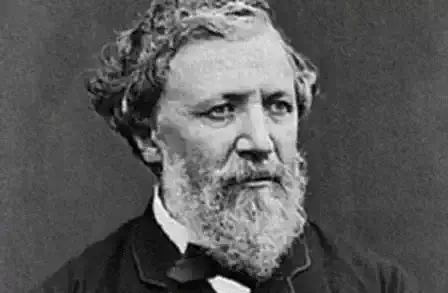
Robert Browning
Now!
Now!
Out of your whole life give but a moment!
All of your life that has gone before,
All to come after it, -- so you ignore,
So you make perfect the present, condense,
In a rapture of rage, for perfection's endowment,
Thought and feeling and soul and sense,
Merged in a moment which gives me at last
You around me for once, you beneath me, above me --
Me, sure that, despite of time future, time past,
This tick of life-time's one moment you love me!
How long such suspension may linger? Ah, Sweet,
The moment eternal -- just that and no more --
When ecstasy's utmost we clutch at the core,
While cheeks burn, arms open, eyes shut, and lips meet!
Out of your whole life give but a moment!
All of your life that has gone before,
All to come after it, -- so you ignore,
So you make perfect the present, condense,
In a rapture of rage, for perfection's endowment,
Thought and feeling and soul and sense,
Merged in a moment which gives me at last
You around me for once, you beneath me, above me --
Me, sure that, despite of time future, time past,
This tick of life-time's one moment you love me!
How long such suspension may linger? Ah, Sweet,
The moment eternal -- just that and no more --
When ecstasy's utmost we clutch at the core,
While cheeks burn, arms open, eyes shut, and lips meet!
364
Robert Browning
Mesmerism
Mesmerism
I.
All I believed is true!
I am able yet
All I want, to get
By a method as strange as new:
Dare I trust the same to you?
II.
If at night, when doors are shut,
And the wood-worm picks,
And the death-watch ticks,
And the bar has a flag of smut,
And a cat's in the water-butt---
III.
And the socket floats and flares,
And the house-beams groan,
And a foot unknown
Is surmised on the garret-stairs,
And the locks slip unawares---
IV.
And the spider, to serve his ends,
By a sudden thread,
Arms and legs outspread,
On the table's midst descends,
Comes to find, God knows what friends!---
V.
If since eve drew in, I say,
I have sat and brought
(So to speak) my thought
To bear on the woman away,
Till I felt my hair turn grey---
VI.
Till I seemed to have and hold,
In the vacancy
'Twixt the wall and me,
From the hair-plait's chestnut gold
To the foot in its muslin fold---
VII.
Have and hold, then and there,
Her, from head to foot,
Breathing and mute,
Passive and yet aware,
In the grasp of my steady stare---
VIII.
Hold and have, there and then,
All her body and soul
That completes my whole,
All that women add to men,
In the clutch of my steady ken---
IX.
Having and holding, till
I imprint her fast
On the void at last
As the sun does whom he will
By the calotypist's skill---
X.
Then,---if my heart's strength serve,
And through all and each
Of the veils I reach
To her soul and never swerve,
Knitting an iron nerve---
XI.
Command her soul to advance
And inform the shape
Which has made escape
And before my countenance
Answers me glance for glance---
XII.
I, still with a gesture fit
Of my hands that best
Do my soul's behest,
Pointing the power from it,
While myself do steadfast sit---
XIII.
Steadfast and still the same
On my object bent,
While the hands give vent
To my ardour and my aim
And break into very flame---
XIV.
Then I reach, I must believe,
Not her soul in vain,
For to me again
It reaches, and past retrieve
Is wound in the toils I weave;
XV.
And must follow as I require,
As befits a thrall,
Bringing flesh and all,
Essence and earth-attire,
To the source of the tractile fire:
XVI.
Till the house called hers, not mine,
With a growing weight
Seems to suffocate
If she break not its leaden line
And escape from its close confine.
XVII.
Out of doors into the night!
On to the maze
Of the wild wood-ways,
Not turning to left nor right
From the pathway, blind with sight---
XVIII.
Making thro' rain and wind
O'er the broken shrubs,
'Twixt the stems and stubs,
With a still, composed, strong mind,
Nor a care for the world behind---
XIX.
Swifter and still more swift,
As the crowding peace
Doth to joy increase
In the wide blind eyes uplift
Thro' the darkness and the drift!
XX.
While I---to the shape, I too
Feel my soul dilate
Nor a whit abate,
And relax not a gesture due,
As I see my belief come true.
XXI.
For, there! have I drawn or no
Life to that lip?
Do my fingers dip
In a flame which again they throw
On the cheek that breaks a-glow?
XXII.
Ha! was the hair so first?
What, unfilleted,
Made alive, and spread
Through the void with a rich outburst,
Chestnut gold-interspersed?
XXTII.
Like the doors of a casket-shrine,
See, on either side,
Her two arms divide
Till the heart betwixt makes sign,
Take me, for I am thine!
XXIV.
``Now---now''---the door is heard!
Hark, the stairs! and near---
Nearer---and here---
``Now!'' and at call the third
She enters without a word.
XXV.
On doth she march and on
To the fancied shape;
It is, past escape,
Herself, now: the dream is done
And the shadow and she are one.
XXVI.
First I will pray. Do Thou
That ownest the soul,
Yet wilt grant control
To another, nor disallow
For a time, restrain me now!
XXVII.
I admonish me while I may,
Not to squander guilt,
Since require Thou wilt
At my hand its price one day
What the price is, who can say?
I.
All I believed is true!
I am able yet
All I want, to get
By a method as strange as new:
Dare I trust the same to you?
II.
If at night, when doors are shut,
And the wood-worm picks,
And the death-watch ticks,
And the bar has a flag of smut,
And a cat's in the water-butt---
III.
And the socket floats and flares,
And the house-beams groan,
And a foot unknown
Is surmised on the garret-stairs,
And the locks slip unawares---
IV.
And the spider, to serve his ends,
By a sudden thread,
Arms and legs outspread,
On the table's midst descends,
Comes to find, God knows what friends!---
V.
If since eve drew in, I say,
I have sat and brought
(So to speak) my thought
To bear on the woman away,
Till I felt my hair turn grey---
VI.
Till I seemed to have and hold,
In the vacancy
'Twixt the wall and me,
From the hair-plait's chestnut gold
To the foot in its muslin fold---
VII.
Have and hold, then and there,
Her, from head to foot,
Breathing and mute,
Passive and yet aware,
In the grasp of my steady stare---
VIII.
Hold and have, there and then,
All her body and soul
That completes my whole,
All that women add to men,
In the clutch of my steady ken---
IX.
Having and holding, till
I imprint her fast
On the void at last
As the sun does whom he will
By the calotypist's skill---
X.
Then,---if my heart's strength serve,
And through all and each
Of the veils I reach
To her soul and never swerve,
Knitting an iron nerve---
XI.
Command her soul to advance
And inform the shape
Which has made escape
And before my countenance
Answers me glance for glance---
XII.
I, still with a gesture fit
Of my hands that best
Do my soul's behest,
Pointing the power from it,
While myself do steadfast sit---
XIII.
Steadfast and still the same
On my object bent,
While the hands give vent
To my ardour and my aim
And break into very flame---
XIV.
Then I reach, I must believe,
Not her soul in vain,
For to me again
It reaches, and past retrieve
Is wound in the toils I weave;
XV.
And must follow as I require,
As befits a thrall,
Bringing flesh and all,
Essence and earth-attire,
To the source of the tractile fire:
XVI.
Till the house called hers, not mine,
With a growing weight
Seems to suffocate
If she break not its leaden line
And escape from its close confine.
XVII.
Out of doors into the night!
On to the maze
Of the wild wood-ways,
Not turning to left nor right
From the pathway, blind with sight---
XVIII.
Making thro' rain and wind
O'er the broken shrubs,
'Twixt the stems and stubs,
With a still, composed, strong mind,
Nor a care for the world behind---
XIX.
Swifter and still more swift,
As the crowding peace
Doth to joy increase
In the wide blind eyes uplift
Thro' the darkness and the drift!
XX.
While I---to the shape, I too
Feel my soul dilate
Nor a whit abate,
And relax not a gesture due,
As I see my belief come true.
XXI.
For, there! have I drawn or no
Life to that lip?
Do my fingers dip
In a flame which again they throw
On the cheek that breaks a-glow?
XXII.
Ha! was the hair so first?
What, unfilleted,
Made alive, and spread
Through the void with a rich outburst,
Chestnut gold-interspersed?
XXTII.
Like the doors of a casket-shrine,
See, on either side,
Her two arms divide
Till the heart betwixt makes sign,
Take me, for I am thine!
XXIV.
``Now---now''---the door is heard!
Hark, the stairs! and near---
Nearer---and here---
``Now!'' and at call the third
She enters without a word.
XXV.
On doth she march and on
To the fancied shape;
It is, past escape,
Herself, now: the dream is done
And the shadow and she are one.
XXVI.
First I will pray. Do Thou
That ownest the soul,
Yet wilt grant control
To another, nor disallow
For a time, restrain me now!
XXVII.
I admonish me while I may,
Not to squander guilt,
Since require Thou wilt
At my hand its price one day
What the price is, who can say?
333
Robert Browning
Love Among The Ruins
Love Among The Ruins
I.
Where the quiet-coloured end of evening smiles,
Miles and miles
On the solitary pastures where our sheep
Half-asleep
Tinkle homeward thro' the twilight, stray or stop
As they crop---
Was the site once of a city great and gay,
(So they say)
Of our country's very capital, its prince
Ages since
Held his court in, gathered councils, wielding far
Peace or war.
II.
Now,---the country does not even boast a tree,
As you see,
To distinguish slopes of verdure, certain rills
From the hills
Intersect and give a name to, (else they run
Into one)
Where the domed and daring palace shot its spires
Up like fires
O'er the hundred-gated circuit of a wall
Bounding all,
Made of marble, men might march on nor be pressed,
Twelve abreast.
III.
And such plenty and perfection, see, of grass
Never was!
Such a carpet as, this summer-time, o'erspreads
And embeds
Every vestige of the city, guessed alone,
Stock or stone---
Where a multitude of men breathed joy and woe
Long ago;
Lust of glory pricked their hearts up, dread of shame
Struck them tame;
And that glory and that shame alike, the gold
Bought and sold.
IV.
Now,---the single little turret that remains
On the plains,
By the caper overrooted, by the gourd
Overscored,
While the patching houseleek's head of blossom winks
Through the chinks---
Marks the basement whence a tower in ancient time
Sprang sublime,
And a burning ring, all round, the chariots traced
As they raced,
And the monarch and his minions and his dames
Viewed the games.
V.
And I know, while thus the quiet-coloured eve
Smiles to leave
To their folding, all our many-tinkling fleece
In such peace,
And the slopes and rills in undistinguished grey
Melt away---
That a girl with eager eyes and yellow hair
Waits me there
In the turret whence the charioteers caught soul
For the goal,
When the king looked, where she looks now, breathless, dumb
Till I come.
VI.
But he looked upon the city, every side,
Far and wide,
All the mountains topped with temples, all the glades'
Colonnades,
All the causeys, bridges, aqueducts,---and then,
All the men!
When I do come, she will speak not, she will stand,
Either hand
On my shoulder, give her eyes the first embrace
Of my face,
Ere we rush, ere we extinguish sight and speech
Each on each.
VII.
In one year they sent a million fighters forth
South and North,
And they built their gods a brazen pillar high
As the sky,
Yet reserved a thousand chariots in full force---
Gold, of course.
Oh heart! oh blood that freezes, blood that burns!
Earth's returns
For whole centuries of folly, noise and sin!
Shut them in,
With their triumphs and their glories and the rest!
Love is best.
I.
Where the quiet-coloured end of evening smiles,
Miles and miles
On the solitary pastures where our sheep
Half-asleep
Tinkle homeward thro' the twilight, stray or stop
As they crop---
Was the site once of a city great and gay,
(So they say)
Of our country's very capital, its prince
Ages since
Held his court in, gathered councils, wielding far
Peace or war.
II.
Now,---the country does not even boast a tree,
As you see,
To distinguish slopes of verdure, certain rills
From the hills
Intersect and give a name to, (else they run
Into one)
Where the domed and daring palace shot its spires
Up like fires
O'er the hundred-gated circuit of a wall
Bounding all,
Made of marble, men might march on nor be pressed,
Twelve abreast.
III.
And such plenty and perfection, see, of grass
Never was!
Such a carpet as, this summer-time, o'erspreads
And embeds
Every vestige of the city, guessed alone,
Stock or stone---
Where a multitude of men breathed joy and woe
Long ago;
Lust of glory pricked their hearts up, dread of shame
Struck them tame;
And that glory and that shame alike, the gold
Bought and sold.
IV.
Now,---the single little turret that remains
On the plains,
By the caper overrooted, by the gourd
Overscored,
While the patching houseleek's head of blossom winks
Through the chinks---
Marks the basement whence a tower in ancient time
Sprang sublime,
And a burning ring, all round, the chariots traced
As they raced,
And the monarch and his minions and his dames
Viewed the games.
V.
And I know, while thus the quiet-coloured eve
Smiles to leave
To their folding, all our many-tinkling fleece
In such peace,
And the slopes and rills in undistinguished grey
Melt away---
That a girl with eager eyes and yellow hair
Waits me there
In the turret whence the charioteers caught soul
For the goal,
When the king looked, where she looks now, breathless, dumb
Till I come.
VI.
But he looked upon the city, every side,
Far and wide,
All the mountains topped with temples, all the glades'
Colonnades,
All the causeys, bridges, aqueducts,---and then,
All the men!
When I do come, she will speak not, she will stand,
Either hand
On my shoulder, give her eyes the first embrace
Of my face,
Ere we rush, ere we extinguish sight and speech
Each on each.
VII.
In one year they sent a million fighters forth
South and North,
And they built their gods a brazen pillar high
As the sky,
Yet reserved a thousand chariots in full force---
Gold, of course.
Oh heart! oh blood that freezes, blood that burns!
Earth's returns
For whole centuries of folly, noise and sin!
Shut them in,
With their triumphs and their glories and the rest!
Love is best.
531
Robert Browning
In A Gondola
In A Gondola
He sings_.
I send my heart up to thee, all my heart
In this my singing.
For the stars help me, and the sea bears part;
The very night is clinging
Closer to Venice' streets to leave one space
Above me, whence thy face
May light my joyous heart to thee its dwelling-place.
_She speaks_.
Say after me, and try to say
My very words, as if each word
Came from you of your own accord,
In your own voice, in your own way:
``This woman's heart and soul and brain
``Are mine as much as this gold chain
``She bids me wear; which'' (say again)
``I choose to make by cherishing
``A precious thing, or choose to fling
``Over the boat-side, ring by ring.''
And yet once more say ... no word more!
Since words are only words. Give o'er!
Unless you call me, all the same,
Familiarly by my pet name,
Which if the Three should hear you call,
And me reply to, would proclaim
At once our secret to them all.
Ask of me, too, command me, blame---
Do, break down the partition-wall
'Twixt us, the daylight world beholds
Curtained in dusk and splendid folds!
What's left but---all of me to take?
I am the Three's: prevent them, slake
Your thirst! 'Tis said, the Arab sage,
In practising with gems, can loose
Their subtle spirit in his cruce
And leave but ashes: so, sweet mage,
Leave them my ashes when thy use
Sucks out my soul, thy heritage!
_He sings_.
I.
Past we glide, and past, and past!
What's that poor Agnese doing
Where they make the shutters fast?
Grey Zanobi's just a-wooing
To his couch the purchased bride:
Past we glide!
II.
Past we glide, and past, and past!
Why's the Pucci Palace flaring
Like a beacon to the blast?
Guests by hundreds, not one caring
If the dear host's neck were wried:
Past we glide!
_She sings_.
I.
The moth's kiss, first!
Kiss me as if you made believe
You were not sure, this eve,
How my face, your flower, had pursed
Its petals up; so, here and there
You brush it, till I grow aware
Who wants me, and wide ope I burst.
II.
The bee's kiss, now!
Kiss me as if you entered gay
My heart at some noonday,
A bud that dares not disallow
The claim, so all is rendered up,
And passively its shattered cup
Over your head to sleep I bow.
_He sings_.
I.
What are we two?
I am a Jew,
And carry thee, farther than friends can pursue,
To a feast of our tribe;
Where they need thee to bribe
The devil that blasts them unless he imbibe
Thy ... Scatter the vision for ever! And now,
As of old, I am I, thou art thou!
II.
Say again, what we are?
The sprite of a star,
I lure thee above where the destinies bar
My plumes their full play
Till a ruddier ray
Than my pale one announce there is withering away
Some ... Scatter the vision for ever! And now,
As of old, I am I, thou art thou!
_He muses_.
Oh, which were best, to roam or rest?
The land's lap or the water's breast?
To sleep on yellow millet-sheaves,
Or swim in lucid shallows just
Eluding water-lily leaves,
An inch from Death's black fingers, thrust
To lock you, whom release he must;
Which life were best on Summer eves?
_He speaks, musing_.
Lie back; could thought of mine improve you?
From this shoulder let there spring
A wing; from this, another wing;
Wings, not legs and feet, shall move you!
Snow-white must they spring, to blend
With your flesh, but I intend
They shall deepen to the end,
Broader, into burning gold,
Till both wings crescent-wise enfold
Your perfect self, from 'neath your feet
To o'er your head, where, lo, they meet
As if a million sword-blades hurled
Defiance from you to the world!
Rescue me thou, the only real!
And scare away this mad ideal
That came, nor motions to depart!
Thanks! Now, stay ever as thou art!
_Still he muses_.
I.
What if the Three should catch at last
Thy serenader? While there's cast
Paul's cloak about my head, and fast
Gian pinions me, himself has past
His stylet thro' my back; I reel;
And ... is it thou I feel?
II.
They trail me, these three godless knaves,
Past every church that saints and saves,
Nor stop till, where the cold sea raves
By Lido's wet accursed graves,
They scoop mine, roll me to its brink,
And ... on thy breast I sink
_She replies, musing_.
Dip your arm o'er the boat-side, elbow-deep,
As I do: thus: were death so unlike sleep,
Caught this way? Death's to fear from flame or steel,
Or poison doubtless; but from water---feel!
Go find the bottom! Would you stay me? There!
Now pluck a great blade of that ribbon-grass
To plait in where the foolish jewel was,
I flung away: since you have praised my hair,
'Tis proper to be choice in what I wear.
_He speaks_.
Row home? must we row home? Too surely
Know I where its front's demurely
Over the Giudecca piled;
Window just with window mating,
Door on door exactly waiting,
All's the set face of a child:
But behind it, where's a trace
Of the staidness and reserve,
And formal lines without a curve,
In the same child's playing-face?
No two windows look one way
O'er the small sea-water thread
Below them. Ah, the autumn day
I, passing, saw you overhead!
First, out a cloud of curtain blew,
Then a sweet cry, and last came you---
To catch your lory that must needs
Escape just then, of all times then,
To peck a tall plant's fleecy seeds,
And make me happiest of men.
I scarce could breathe to see you reach
So far back o'er the balcony
To catch him ere he climbed too high
Above you in the Smyrna peach
That quick the round smooth cord of gold,
This coiled hair on your head, unrolled,
Fell down you like a gorgeous snake
The Roman girls were wont, of old,
When Rome there was, for coolness' sake
To let lie curling o'er their bosoms.
Dear lory,* may his beak retain
Ever its delicate rose stain
As if the wounded lotus-blossoms
Had marked their thief to know again!
Stay longer yet, for others' sake
Than mine! What should your chamber do?
---With all its rarities that ache
In silence while day lasts, but wake
At night-time and their life renew,
Suspended just to pleasure you
Who brought against their will together
These objects, and, while day lasts, weave
Around them such a magic tether
That dumb they look: your harp, believe,
With all the sensitive tight strings
Which dare not speak, now to itself
Breathes slumberously, as if some elf
Went in and out the chords, his wings
Make murmur wheresoe'er they graze,
As an angel may, between the maze
Of midnight palace-pillars, on
And on, to sow God's plagues, have gone
Through guilty glorious Babylon.
And while such murmurs flow, the nymph
Bends o'er the harp-top from her shell
As the dry limpet for the lymph
Come with a tune be knows so well.
And how your statues' hearts must swell!
And how your pictures must descend
To see each other, friend with friend!
Oh, could you take them by surprise,
You'd find Schidone's eager Duke
Doing the quaintest courtesies
To that prim saint by Haste-thee-Luke!
And, deeper into her rock den,
Bold Castelfranco's Magdalen
You'd find retreated from the ken
Of that robed counsel-keeping Ser---
As if the Tizian thinks of her,
And is not, rather, gravely bent
On seeing for himself what toys
Are these, his progeny invent,
What litter now the board employs
Whereon he signed a document
That got him murdered! Each enjoys
Its night so well, you cannot break
The sport up, so, indeed must make
More stay with me, for others' sake.
_She speaks_.
I.
To-morrow, if a harp-string, say,
Is used to tie the jasmine back
That overfloods my room with sweets,
Contrive your Zorzi somehow meets
My Zanze! If the ribbon's black,
The Three are watching: keep away!
II.
Your gondola---let Zorzi wreathe
A mesh of water-weeds about
its prow, as if he unaware
Had struck some quay or bridge-foot stair!
That I may throw a paper out
As you and he go underneath.
There's Zanze's vigilant taper; safe are we.
Only one minute more to-night with me?
Resume your past self of a month ago!
Be you the bashful gallant, I will be
The lady with the colder breast than snow.
Now bow you, as becomes, nor touch my hand
More than I touch yours when I step to land,
And say, ``All thanks, Siora!''---
Heart to heart
And lips to lips! Yet once more, ere we part,
Clasp me and make me thine, as mine thou art!
[_He is surprised, and stabbed_.
It was ordained to be so, sweet!---and best
Comes now, beneath thine eyes, upon thy breast.
Still kiss me! Care not for the cowards! Care
Only to put aside thy beauteous hair
My blood will hurt! The Three, I do not scorn
To death, because they never lived: but I
Have lived indeed, and so---(yet one more kiss)---can die!
He sings_.
I send my heart up to thee, all my heart
In this my singing.
For the stars help me, and the sea bears part;
The very night is clinging
Closer to Venice' streets to leave one space
Above me, whence thy face
May light my joyous heart to thee its dwelling-place.
_She speaks_.
Say after me, and try to say
My very words, as if each word
Came from you of your own accord,
In your own voice, in your own way:
``This woman's heart and soul and brain
``Are mine as much as this gold chain
``She bids me wear; which'' (say again)
``I choose to make by cherishing
``A precious thing, or choose to fling
``Over the boat-side, ring by ring.''
And yet once more say ... no word more!
Since words are only words. Give o'er!
Unless you call me, all the same,
Familiarly by my pet name,
Which if the Three should hear you call,
And me reply to, would proclaim
At once our secret to them all.
Ask of me, too, command me, blame---
Do, break down the partition-wall
'Twixt us, the daylight world beholds
Curtained in dusk and splendid folds!
What's left but---all of me to take?
I am the Three's: prevent them, slake
Your thirst! 'Tis said, the Arab sage,
In practising with gems, can loose
Their subtle spirit in his cruce
And leave but ashes: so, sweet mage,
Leave them my ashes when thy use
Sucks out my soul, thy heritage!
_He sings_.
I.
Past we glide, and past, and past!
What's that poor Agnese doing
Where they make the shutters fast?
Grey Zanobi's just a-wooing
To his couch the purchased bride:
Past we glide!
II.
Past we glide, and past, and past!
Why's the Pucci Palace flaring
Like a beacon to the blast?
Guests by hundreds, not one caring
If the dear host's neck were wried:
Past we glide!
_She sings_.
I.
The moth's kiss, first!
Kiss me as if you made believe
You were not sure, this eve,
How my face, your flower, had pursed
Its petals up; so, here and there
You brush it, till I grow aware
Who wants me, and wide ope I burst.
II.
The bee's kiss, now!
Kiss me as if you entered gay
My heart at some noonday,
A bud that dares not disallow
The claim, so all is rendered up,
And passively its shattered cup
Over your head to sleep I bow.
_He sings_.
I.
What are we two?
I am a Jew,
And carry thee, farther than friends can pursue,
To a feast of our tribe;
Where they need thee to bribe
The devil that blasts them unless he imbibe
Thy ... Scatter the vision for ever! And now,
As of old, I am I, thou art thou!
II.
Say again, what we are?
The sprite of a star,
I lure thee above where the destinies bar
My plumes their full play
Till a ruddier ray
Than my pale one announce there is withering away
Some ... Scatter the vision for ever! And now,
As of old, I am I, thou art thou!
_He muses_.
Oh, which were best, to roam or rest?
The land's lap or the water's breast?
To sleep on yellow millet-sheaves,
Or swim in lucid shallows just
Eluding water-lily leaves,
An inch from Death's black fingers, thrust
To lock you, whom release he must;
Which life were best on Summer eves?
_He speaks, musing_.
Lie back; could thought of mine improve you?
From this shoulder let there spring
A wing; from this, another wing;
Wings, not legs and feet, shall move you!
Snow-white must they spring, to blend
With your flesh, but I intend
They shall deepen to the end,
Broader, into burning gold,
Till both wings crescent-wise enfold
Your perfect self, from 'neath your feet
To o'er your head, where, lo, they meet
As if a million sword-blades hurled
Defiance from you to the world!
Rescue me thou, the only real!
And scare away this mad ideal
That came, nor motions to depart!
Thanks! Now, stay ever as thou art!
_Still he muses_.
I.
What if the Three should catch at last
Thy serenader? While there's cast
Paul's cloak about my head, and fast
Gian pinions me, himself has past
His stylet thro' my back; I reel;
And ... is it thou I feel?
II.
They trail me, these three godless knaves,
Past every church that saints and saves,
Nor stop till, where the cold sea raves
By Lido's wet accursed graves,
They scoop mine, roll me to its brink,
And ... on thy breast I sink
_She replies, musing_.
Dip your arm o'er the boat-side, elbow-deep,
As I do: thus: were death so unlike sleep,
Caught this way? Death's to fear from flame or steel,
Or poison doubtless; but from water---feel!
Go find the bottom! Would you stay me? There!
Now pluck a great blade of that ribbon-grass
To plait in where the foolish jewel was,
I flung away: since you have praised my hair,
'Tis proper to be choice in what I wear.
_He speaks_.
Row home? must we row home? Too surely
Know I where its front's demurely
Over the Giudecca piled;
Window just with window mating,
Door on door exactly waiting,
All's the set face of a child:
But behind it, where's a trace
Of the staidness and reserve,
And formal lines without a curve,
In the same child's playing-face?
No two windows look one way
O'er the small sea-water thread
Below them. Ah, the autumn day
I, passing, saw you overhead!
First, out a cloud of curtain blew,
Then a sweet cry, and last came you---
To catch your lory that must needs
Escape just then, of all times then,
To peck a tall plant's fleecy seeds,
And make me happiest of men.
I scarce could breathe to see you reach
So far back o'er the balcony
To catch him ere he climbed too high
Above you in the Smyrna peach
That quick the round smooth cord of gold,
This coiled hair on your head, unrolled,
Fell down you like a gorgeous snake
The Roman girls were wont, of old,
When Rome there was, for coolness' sake
To let lie curling o'er their bosoms.
Dear lory,* may his beak retain
Ever its delicate rose stain
As if the wounded lotus-blossoms
Had marked their thief to know again!
Stay longer yet, for others' sake
Than mine! What should your chamber do?
---With all its rarities that ache
In silence while day lasts, but wake
At night-time and their life renew,
Suspended just to pleasure you
Who brought against their will together
These objects, and, while day lasts, weave
Around them such a magic tether
That dumb they look: your harp, believe,
With all the sensitive tight strings
Which dare not speak, now to itself
Breathes slumberously, as if some elf
Went in and out the chords, his wings
Make murmur wheresoe'er they graze,
As an angel may, between the maze
Of midnight palace-pillars, on
And on, to sow God's plagues, have gone
Through guilty glorious Babylon.
And while such murmurs flow, the nymph
Bends o'er the harp-top from her shell
As the dry limpet for the lymph
Come with a tune be knows so well.
And how your statues' hearts must swell!
And how your pictures must descend
To see each other, friend with friend!
Oh, could you take them by surprise,
You'd find Schidone's eager Duke
Doing the quaintest courtesies
To that prim saint by Haste-thee-Luke!
And, deeper into her rock den,
Bold Castelfranco's Magdalen
You'd find retreated from the ken
Of that robed counsel-keeping Ser---
As if the Tizian thinks of her,
And is not, rather, gravely bent
On seeing for himself what toys
Are these, his progeny invent,
What litter now the board employs
Whereon he signed a document
That got him murdered! Each enjoys
Its night so well, you cannot break
The sport up, so, indeed must make
More stay with me, for others' sake.
_She speaks_.
I.
To-morrow, if a harp-string, say,
Is used to tie the jasmine back
That overfloods my room with sweets,
Contrive your Zorzi somehow meets
My Zanze! If the ribbon's black,
The Three are watching: keep away!
II.
Your gondola---let Zorzi wreathe
A mesh of water-weeds about
its prow, as if he unaware
Had struck some quay or bridge-foot stair!
That I may throw a paper out
As you and he go underneath.
There's Zanze's vigilant taper; safe are we.
Only one minute more to-night with me?
Resume your past self of a month ago!
Be you the bashful gallant, I will be
The lady with the colder breast than snow.
Now bow you, as becomes, nor touch my hand
More than I touch yours when I step to land,
And say, ``All thanks, Siora!''---
Heart to heart
And lips to lips! Yet once more, ere we part,
Clasp me and make me thine, as mine thou art!
[_He is surprised, and stabbed_.
It was ordained to be so, sweet!---and best
Comes now, beneath thine eyes, upon thy breast.
Still kiss me! Care not for the cowards! Care
Only to put aside thy beauteous hair
My blood will hurt! The Three, I do not scorn
To death, because they never lived: but I
Have lived indeed, and so---(yet one more kiss)---can die!
402
Robert Browning
From 'Pauline'
From 'Pauline'
O God, where does this tend—these struggling aims?
What would I have? What is this ‘sleep’, which seems
To bound all? can there be a ‘waking’ point
Of crowning life? The soul would never rule—
It would be first in all things—it would have
Its utmost pleasure filled,—but that complete
Commanding for commanding sickens it.
The last point I can trace is, rest beneath
Some better essence than itself—in weakness;
This is ‘myself’—not what I think should be
And what is that I hunger for but God?
My God, my God! let me for once look on thee
As tho’ nought else existed: we alone.
And as creation crumbles, my soul’s spark
Expands till I can say, ‘Even from myself
I need thee, and I feel thee, and I love thee;
I do not plead my rapture in thy works
For love of thee—or that I feel as one
Who cannot die—but there is that in me
Which turns to thee, which loves, or which should love.’
Why have I girt myself with this hell-dress?
Why have I laboured to put out my life?
Is it not in my nature to adore,
And e’en for all my reason do I not
Feel him, and thank him, and pray to him—now?
Can I forgo the trust that he loves me?
Do I not feel a love which only ONE…
O thou pale form, so dimly seen, deep-eyed,
I have denied thee calmly—do I not
Pant when I read of thy consummate deeds,
And burn to see thy calm pure truths out-flash
The brightest gleams of earth’s philosophy?
Do I not shake to hear aught question thee?
If I am erring save me, madden me,
Take from me powers and pleasures—let me die.
Ages, so I see thee: I am knit round
As with a charm, by sin and lust and pride,
Yet tho’ my wandering dreams have seen all shapes
Of strange delight, oft have I stood by thee—
Have I been keeping lonely watch with thee
In the damp night by weeping Olivet,
Or leaning on thy bosom, proudly less—
Or dying with thee on the lonely cross—
Or witnessing thy bursting from the tomb!
O God, where does this tend—these struggling aims?
What would I have? What is this ‘sleep’, which seems
To bound all? can there be a ‘waking’ point
Of crowning life? The soul would never rule—
It would be first in all things—it would have
Its utmost pleasure filled,—but that complete
Commanding for commanding sickens it.
The last point I can trace is, rest beneath
Some better essence than itself—in weakness;
This is ‘myself’—not what I think should be
And what is that I hunger for but God?
My God, my God! let me for once look on thee
As tho’ nought else existed: we alone.
And as creation crumbles, my soul’s spark
Expands till I can say, ‘Even from myself
I need thee, and I feel thee, and I love thee;
I do not plead my rapture in thy works
For love of thee—or that I feel as one
Who cannot die—but there is that in me
Which turns to thee, which loves, or which should love.’
Why have I girt myself with this hell-dress?
Why have I laboured to put out my life?
Is it not in my nature to adore,
And e’en for all my reason do I not
Feel him, and thank him, and pray to him—now?
Can I forgo the trust that he loves me?
Do I not feel a love which only ONE…
O thou pale form, so dimly seen, deep-eyed,
I have denied thee calmly—do I not
Pant when I read of thy consummate deeds,
And burn to see thy calm pure truths out-flash
The brightest gleams of earth’s philosophy?
Do I not shake to hear aught question thee?
If I am erring save me, madden me,
Take from me powers and pleasures—let me die.
Ages, so I see thee: I am knit round
As with a charm, by sin and lust and pride,
Yet tho’ my wandering dreams have seen all shapes
Of strange delight, oft have I stood by thee—
Have I been keeping lonely watch with thee
In the damp night by weeping Olivet,
Or leaning on thy bosom, proudly less—
Or dying with thee on the lonely cross—
Or witnessing thy bursting from the tomb!
319
Robert Browning
A Pretty Woman
A Pretty Woman
I.
That fawn-skin-dappled hair of hers,
And the blue eye
Dear and dewy,
And that infantine fresh air of hers!
II.
To think men cannot take you, Sweet,
And enfold you,
Ay, and hold you,
And so keep you what they make you, Sweet!
III
You like us for a glance, you know---
For a word's sake
Or a sword's sake,
All's the same, whate'er the chance, you know.
IV.
And in turn we make you ours, we say---
You and youth too,
Eyes and mouth too,
All the face composed of flowers, we say.
V.
All's our own, to make the most of, Sweet---
Sing and say for,
Watch and pray for,
Keep a secret or go boast of, Sweet!
VI.
But for loving, why, you would not, Sweet,
Though we prayed you,
Paid you, brayed you
in a mortar---for you could not, Sweet!
VII.
So, we leave the sweet face fondly there:
Be its beauty
Its sole duty!
Let all hope of grace beyond, lie there!
VIII.
And while the face lies quiet there,
Who shall wonder
That I ponder
A conclusion? I will try it there.
IX.
As,---why must one, for the love foregone,
Scout mere liking?
Thunder-striking
Earth,---the heaven, we looked above for, gone!
X.
Why, with beauty, needs there money be,
Love with liking?
Crush the fly-king
In his gauze, because no honey-bee?
XI.
May not liking be so simple-sweet,
If love grew there
'Twould undo there
All that breaks the cheek to dimples sweet?
XII.
Is the creature too imperfect,
Would you mend it
And so end it?
Since not all addition perfects aye!
XIII.
Or is it of its kind, perhaps,
Just perfection---
Whence, rejection
Of a grace not to its mind, perhaps?
XIV.
Shall we burn up, tread that face at once
Into tinder,
And so hinder
Sparks from kindling all the place at once?
XV.
Or else kiss away one's soul on her?
Your love-fancies!
---A sick man sees
Truer, when his hot eyes roll on her!
XVI.
Thus the craftsman thinks to grace the rose,---
Plucks a mould-flower
For his gold flower,
Uses fine things that efface the rose:
XVII.
Rosy rubies make its cup more rose,
Precious metals
Ape the petals,---
Last, some old king locks it up, morose!
XVIII.
Then how grace a rose? I know a way!
Leave it, rather.
Must you gather?
Smell, kiss, wear it---at last, throw away!
I.
That fawn-skin-dappled hair of hers,
And the blue eye
Dear and dewy,
And that infantine fresh air of hers!
II.
To think men cannot take you, Sweet,
And enfold you,
Ay, and hold you,
And so keep you what they make you, Sweet!
III
You like us for a glance, you know---
For a word's sake
Or a sword's sake,
All's the same, whate'er the chance, you know.
IV.
And in turn we make you ours, we say---
You and youth too,
Eyes and mouth too,
All the face composed of flowers, we say.
V.
All's our own, to make the most of, Sweet---
Sing and say for,
Watch and pray for,
Keep a secret or go boast of, Sweet!
VI.
But for loving, why, you would not, Sweet,
Though we prayed you,
Paid you, brayed you
in a mortar---for you could not, Sweet!
VII.
So, we leave the sweet face fondly there:
Be its beauty
Its sole duty!
Let all hope of grace beyond, lie there!
VIII.
And while the face lies quiet there,
Who shall wonder
That I ponder
A conclusion? I will try it there.
IX.
As,---why must one, for the love foregone,
Scout mere liking?
Thunder-striking
Earth,---the heaven, we looked above for, gone!
X.
Why, with beauty, needs there money be,
Love with liking?
Crush the fly-king
In his gauze, because no honey-bee?
XI.
May not liking be so simple-sweet,
If love grew there
'Twould undo there
All that breaks the cheek to dimples sweet?
XII.
Is the creature too imperfect,
Would you mend it
And so end it?
Since not all addition perfects aye!
XIII.
Or is it of its kind, perhaps,
Just perfection---
Whence, rejection
Of a grace not to its mind, perhaps?
XIV.
Shall we burn up, tread that face at once
Into tinder,
And so hinder
Sparks from kindling all the place at once?
XV.
Or else kiss away one's soul on her?
Your love-fancies!
---A sick man sees
Truer, when his hot eyes roll on her!
XVI.
Thus the craftsman thinks to grace the rose,---
Plucks a mould-flower
For his gold flower,
Uses fine things that efface the rose:
XVII.
Rosy rubies make its cup more rose,
Precious metals
Ape the petals,---
Last, some old king locks it up, morose!
XVIII.
Then how grace a rose? I know a way!
Leave it, rather.
Must you gather?
Smell, kiss, wear it---at last, throw away!
402
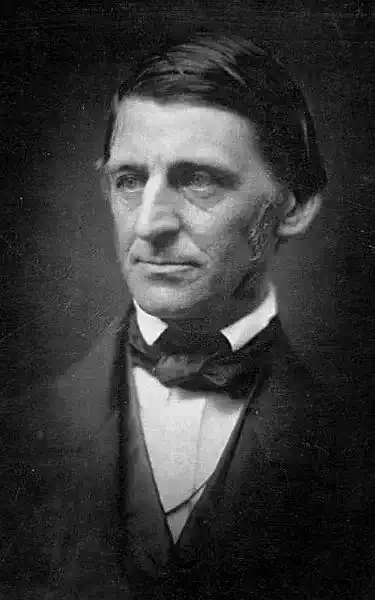
Ralph Waldo Emerson
Rubies
Rubies
They brought me rubies from the mine,
And held them to the sun;
I said, they are drops of frozen wine
From Eden's vats that run.
I looked again,--I thought them hearts
Of friends to friends unknown;
Tides that should warm each neighboring life
Are locked in sparkling stone.
But fire to thaw that ruddy snow,
To break enchanted ice,
And give love's scarlet tides to flow,--
When shall that sun arise?
They brought me rubies from the mine,
And held them to the sun;
I said, they are drops of frozen wine
From Eden's vats that run.
I looked again,--I thought them hearts
Of friends to friends unknown;
Tides that should warm each neighboring life
Are locked in sparkling stone.
But fire to thaw that ruddy snow,
To break enchanted ice,
And give love's scarlet tides to flow,--
When shall that sun arise?
344
Ralph Waldo Emerson
Initial Love
Initial Love
Venus, when her son was lost,
Cried him up and down the coast,
In hamlets, palaces, and parks,
And told the truant by his marks,
Golden curls, and quiver, and bow;—
This befell long ago.
Time and tide are strangely changed,
Men and manners much deranged;
None will now find Cupid latent
By this foolish antique patent.
He came late along the waste,
Shod like a traveller for haste,
With malice dared me to proclaim him,
That the maids and boys might name him.
Boy no more, he wears all coats,
Frocks, and blouses, capes, capôtes,
He bears no bow, or quiver, or wand,
Nor chaplet on his head or hand:
Leave his weeds and heed his eyes,
All the rest he can disguise.
In the pit of his eyes a spark
Would bring back day if it were dark,
And,—if I tell you all my thought,
Though I comprehend it not,—
In those unfathomable orbs
Every function he absorbs;
He doth eat, and drink, and fish, and shoot,
And write, and reason, and compute,
And ride, and run, and have, and hold,
And whine, and flatter, and regret,
And kiss, and couple, and beget,
By those roving eye-balls bold;
Undaunted are their courages,
Right Cossacks in their forages;
Fleeter they than any creature,
They are his steeds and not his feature,
Inquisitive, and fierce, and fasting,
Restless, predatory, hasting,—
And they pounce on other eyes,
As lions on their prey;
And round their circles is writ,
Plainer than the day,
Underneath, within, above,
Love, love, love, love.
He lives in his eyes,
There doth digest, and work, and spin,
And buy, and sell, and lose, and win;
He rolls them with delighted motion,
Joy-tides swell their mimic ocean.
Yet holds he them with tortest rein,
That they may seize and entertain
The glance that to their glance opposes,
Like fiery honey sucked from roses.
He palmistry can understand,
Imbibing virtue by his hand
As if it were a living root;
The pulse of hands will make him mute;
With all his force he gathers balms
Into those wise thrilling palms.
Cupid is a casuist,
A mystic, and a cabalist,
Can your lurking Thought surprise,
And interpret your device;
Mainly versed in occult science,
In magic, and in clairvoyance.
Oft he keeps his fine ear strained,
And reason on her tiptoe pained,
For aery intelligence,
And for strange coincidence.
But it touches his quick heart
When Fate by omens takes his part,
And chance-dropt hints from Nature's sphere
Deeply soothe his anxious ear.
Heralds high before him run,
He has ushers many a one,
Spreads his welcome where he goes,
And touches all things with his rose.
All things wait for and divine him,—
How shall I dare to malign him,
Or accuse the god of sport?—
I must end my true report,
Painting him from head to foot,
In as far as I took note,
Trusting well the matchless power
Of this young-eyed emperor
Will clear his fame from every cloud,
With the bards, and with the crowd.
He is wilful, mutable,
Shy, untamed, inscrutable,
Swifter-fashioned than the fairies,
Substance mixed of pure contraries,
His vice some elder virtue's token,
And his good is evil spoken.
Failing sometimes of his own,
He is headstrong and alone;
He affects the wood and wild,
Like a flower-hunting child,
Buries himself in summer waves,
In trees, with beasts, in mines, and caves,
Loves nature like a horned cow,
Bird, or deer, or cariboo.
Shun him, nymphs, on the fleet horses!
He has a total world of wit,
O how wise are his discourses!
But he is the arch-hypocrite,
And through all science and all art,
Seeks alone his counterpart.
He is a Pundit of the east,
He is an augur and a priest,
And his soul will melt in prayer,
But word and wisdom are a snare;
Corrupted by the present toy,
He follows joy, and only joy.
There is no mask but he will wear,
He invented oaths to swear,
He paints, he carves, he chants, he prays,
And holds all stars in his embrace,
Godlike, —but 'tis for his fine pelf,
The social quintessence of self.
Well, said I, he is hypocrite,
And folly the end of his subtle wit,
He takes a sovran privilege
Not allowed to any liege,
For he does go behind all law,
And right into himself does draw,
For he is sovranly allied.
Heaven's oldest blood flows in his side,
And interchangeably at one
With every king on every throne,
That no God dare say him nay,
Or see the fault, or seen betray;
He has the Muses by the heart,
And the Parcæ all are of his part.
His many signs cannot be told,
He has not one mode, but manifold,
Many fashions and addresses,
Piques, reproaches, hurts, caresses,
Action, service, badinage,
He will preach like a friar,
And jump like Harlequin,
He will read like a crier,
And fight like a Paladin.
Boundless is his memory,
Plans immense his term prolong,
He is not of counted age,
Meaning always to be young.
And his wish is intimacy,
Intimater intimacy,
And a stricter privacy,
The impossible shall yet be done,
And being two shall still be one.
As the wave breaks to foam on shelves,
Then runs into a wave again,
So lovers melt their sundered selves,
Yet melted would be twain.
Venus, when her son was lost,
Cried him up and down the coast,
In hamlets, palaces, and parks,
And told the truant by his marks,
Golden curls, and quiver, and bow;—
This befell long ago.
Time and tide are strangely changed,
Men and manners much deranged;
None will now find Cupid latent
By this foolish antique patent.
He came late along the waste,
Shod like a traveller for haste,
With malice dared me to proclaim him,
That the maids and boys might name him.
Boy no more, he wears all coats,
Frocks, and blouses, capes, capôtes,
He bears no bow, or quiver, or wand,
Nor chaplet on his head or hand:
Leave his weeds and heed his eyes,
All the rest he can disguise.
In the pit of his eyes a spark
Would bring back day if it were dark,
And,—if I tell you all my thought,
Though I comprehend it not,—
In those unfathomable orbs
Every function he absorbs;
He doth eat, and drink, and fish, and shoot,
And write, and reason, and compute,
And ride, and run, and have, and hold,
And whine, and flatter, and regret,
And kiss, and couple, and beget,
By those roving eye-balls bold;
Undaunted are their courages,
Right Cossacks in their forages;
Fleeter they than any creature,
They are his steeds and not his feature,
Inquisitive, and fierce, and fasting,
Restless, predatory, hasting,—
And they pounce on other eyes,
As lions on their prey;
And round their circles is writ,
Plainer than the day,
Underneath, within, above,
Love, love, love, love.
He lives in his eyes,
There doth digest, and work, and spin,
And buy, and sell, and lose, and win;
He rolls them with delighted motion,
Joy-tides swell their mimic ocean.
Yet holds he them with tortest rein,
That they may seize and entertain
The glance that to their glance opposes,
Like fiery honey sucked from roses.
He palmistry can understand,
Imbibing virtue by his hand
As if it were a living root;
The pulse of hands will make him mute;
With all his force he gathers balms
Into those wise thrilling palms.
Cupid is a casuist,
A mystic, and a cabalist,
Can your lurking Thought surprise,
And interpret your device;
Mainly versed in occult science,
In magic, and in clairvoyance.
Oft he keeps his fine ear strained,
And reason on her tiptoe pained,
For aery intelligence,
And for strange coincidence.
But it touches his quick heart
When Fate by omens takes his part,
And chance-dropt hints from Nature's sphere
Deeply soothe his anxious ear.
Heralds high before him run,
He has ushers many a one,
Spreads his welcome where he goes,
And touches all things with his rose.
All things wait for and divine him,—
How shall I dare to malign him,
Or accuse the god of sport?—
I must end my true report,
Painting him from head to foot,
In as far as I took note,
Trusting well the matchless power
Of this young-eyed emperor
Will clear his fame from every cloud,
With the bards, and with the crowd.
He is wilful, mutable,
Shy, untamed, inscrutable,
Swifter-fashioned than the fairies,
Substance mixed of pure contraries,
His vice some elder virtue's token,
And his good is evil spoken.
Failing sometimes of his own,
He is headstrong and alone;
He affects the wood and wild,
Like a flower-hunting child,
Buries himself in summer waves,
In trees, with beasts, in mines, and caves,
Loves nature like a horned cow,
Bird, or deer, or cariboo.
Shun him, nymphs, on the fleet horses!
He has a total world of wit,
O how wise are his discourses!
But he is the arch-hypocrite,
And through all science and all art,
Seeks alone his counterpart.
He is a Pundit of the east,
He is an augur and a priest,
And his soul will melt in prayer,
But word and wisdom are a snare;
Corrupted by the present toy,
He follows joy, and only joy.
There is no mask but he will wear,
He invented oaths to swear,
He paints, he carves, he chants, he prays,
And holds all stars in his embrace,
Godlike, —but 'tis for his fine pelf,
The social quintessence of self.
Well, said I, he is hypocrite,
And folly the end of his subtle wit,
He takes a sovran privilege
Not allowed to any liege,
For he does go behind all law,
And right into himself does draw,
For he is sovranly allied.
Heaven's oldest blood flows in his side,
And interchangeably at one
With every king on every throne,
That no God dare say him nay,
Or see the fault, or seen betray;
He has the Muses by the heart,
And the Parcæ all are of his part.
His many signs cannot be told,
He has not one mode, but manifold,
Many fashions and addresses,
Piques, reproaches, hurts, caresses,
Action, service, badinage,
He will preach like a friar,
And jump like Harlequin,
He will read like a crier,
And fight like a Paladin.
Boundless is his memory,
Plans immense his term prolong,
He is not of counted age,
Meaning always to be young.
And his wish is intimacy,
Intimater intimacy,
And a stricter privacy,
The impossible shall yet be done,
And being two shall still be one.
As the wave breaks to foam on shelves,
Then runs into a wave again,
So lovers melt their sundered selves,
Yet melted would be twain.
426
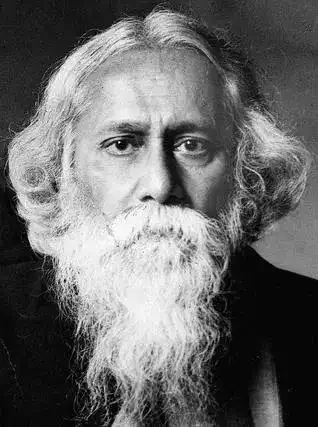
Rabindranath Tagore
When The Two Sisters Go To Fetch Water
When The Two Sisters Go To Fetch Water
WHEN the two sisters go to fetch water, they come to this spot and they smile.
They must be aware of somebody who stands behind the trees whenever they go to
fetch water.
The two sisters whisper to each other when they pass this spot.
They must have guessed the secret of that somebody who stands behind the trees
whenever they go to fetch water.
Their pitchers lurch suddenly, and water spills when they reach this spot.
They must have found out that somebody's heart is beating who stands behind the
trees whenever they go to fetch water.
The two sisters glance at each other when they come to this spot, and they smile.
There is a laughter in their swift-stepping feet, which makes confusion in somebody's
mind who stands behind the trees whenever they go to fetch water.
WHEN the two sisters go to fetch water, they come to this spot and they smile.
They must be aware of somebody who stands behind the trees whenever they go to
fetch water.
The two sisters whisper to each other when they pass this spot.
They must have guessed the secret of that somebody who stands behind the trees
whenever they go to fetch water.
Their pitchers lurch suddenly, and water spills when they reach this spot.
They must have found out that somebody's heart is beating who stands behind the
trees whenever they go to fetch water.
The two sisters glance at each other when they come to this spot, and they smile.
There is a laughter in their swift-stepping feet, which makes confusion in somebody's
mind who stands behind the trees whenever they go to fetch water.
609
Rabindranath Tagore
We Are To Play The Game Of Death
We Are To Play The Game Of Death
WE are to play the game of death to-night, my bride and I.
The night is black, the clouds in the sky are capricious, and the waves are raving at
sea.
We have left our bed of dreams, flung open the door and come out, my bride and I.
We sit upon a swing, and the storm winds give us a wild push from behind.
My bride starts up with fear and delight, she trembles and clings to my breast.
Long have I served her tenderly.
I made for her a bed of flowers and I closed the doors to shut out the rude light from
her eyes.
I kissed her gently on her lips and whispered softly in her ears till she half swooned in
languor.
She was lost in the endless mist of vague sweetness.
She answered not to my touch, my songs failed to arouse her.
To-night has come to us the call of the storm from the wild.
My bride has shivered and stood up, she has clasped my hand and come out.
Her hair is flying in the wind, her veil is fluttering, her garland rustles over her breast.
The push of death has swung her into life.
We are face to face and heart to heart, my bride and I.
WE are to play the game of death to-night, my bride and I.
The night is black, the clouds in the sky are capricious, and the waves are raving at
sea.
We have left our bed of dreams, flung open the door and come out, my bride and I.
We sit upon a swing, and the storm winds give us a wild push from behind.
My bride starts up with fear and delight, she trembles and clings to my breast.
Long have I served her tenderly.
I made for her a bed of flowers and I closed the doors to shut out the rude light from
her eyes.
I kissed her gently on her lips and whispered softly in her ears till she half swooned in
languor.
She was lost in the endless mist of vague sweetness.
She answered not to my touch, my songs failed to arouse her.
To-night has come to us the call of the storm from the wild.
My bride has shivered and stood up, she has clasped my hand and come out.
Her hair is flying in the wind, her veil is fluttering, her garland rustles over her breast.
The push of death has swung her into life.
We are face to face and heart to heart, my bride and I.
487
Rabindranath Tagore
The Kiss
The Kiss
Lips' language to lips' ears.
Two drinking each other's heart, it seems.
Two roving loves who have left home,
pilgrims to the confluence of lips.
Two waves rise by the law of love
to break and die on two sets of lips.
Two wild desires craving each other
meet at last at the body's limits.
Love's writing a song in dainty letters,
layers of kiss-calligraphy on lips.
Plucking flowers from two sets of lips
perhaps to thread them into a chain later.
This sweet union of lips
is the red marriage-bed of a pair of smiles.
Lips' language to lips' ears.
Two drinking each other's heart, it seems.
Two roving loves who have left home,
pilgrims to the confluence of lips.
Two waves rise by the law of love
to break and die on two sets of lips.
Two wild desires craving each other
meet at last at the body's limits.
Love's writing a song in dainty letters,
layers of kiss-calligraphy on lips.
Plucking flowers from two sets of lips
perhaps to thread them into a chain later.
This sweet union of lips
is the red marriage-bed of a pair of smiles.
560
Rabindranath Tagore
Senses
Senses
Deliverance is not for me in renunciation.
I feel the embrace of freedom in a thousand bonds of delight.
Thou ever pourest for me the fresh draught of thy wine of various
colours and fragrance, filling this earthen vessel to the brim.
My world will light its hundred different lamps with thy flame
and place them before the altar of thy temple.
No, I will never shut the doors of my senses.
The delights of sight and hearing and touch will bear thy delight.
Yes, all my illusions will burn into illumination of joy,
and all my desires ripen into fruits of love.
Deliverance is not for me in renunciation.
I feel the embrace of freedom in a thousand bonds of delight.
Thou ever pourest for me the fresh draught of thy wine of various
colours and fragrance, filling this earthen vessel to the brim.
My world will light its hundred different lamps with thy flame
and place them before the altar of thy temple.
No, I will never shut the doors of my senses.
The delights of sight and hearing and touch will bear thy delight.
Yes, all my illusions will burn into illumination of joy,
and all my desires ripen into fruits of love.
470
Rabindranath Tagore
Playthings
Playthings
Child, how happy you are sitting in the dust, playing with a broken twig all the
morning.
I smile at your play with that little bit of a broken twig.
I am busy with my accounts, adding up figures by the hour.
Perhaps you glance at me and think, "What a stupid game to spoil your morning
with!"
Child, I have forgotten the art of being absorbed in sticks and mud-pies.
I seek out costly playthings, and gather lumps of gold and silver.
With whatever you find you create your glad games, I spend both my time and my
strength over things I never can obtain.
In my frail canoe I struggle to cross the sea of desire, and forget that I too am
playing a game.
Child, how happy you are sitting in the dust, playing with a broken twig all the
morning.
I smile at your play with that little bit of a broken twig.
I am busy with my accounts, adding up figures by the hour.
Perhaps you glance at me and think, "What a stupid game to spoil your morning
with!"
Child, I have forgotten the art of being absorbed in sticks and mud-pies.
I seek out costly playthings, and gather lumps of gold and silver.
With whatever you find you create your glad games, I spend both my time and my
strength over things I never can obtain.
In my frail canoe I struggle to cross the sea of desire, and forget that I too am
playing a game.
640
Rabindranath Tagore
Lover's Gifts XIII: Last Night in the Garden
Lover's Gifts XIII: Last Night in the Garden
Last night in the garden I offered you my youth's foaming wine. You
lifted the cup to your lips, you shut your eyes and smiled while
I raised your veil, unbound your tresses, drawing down upon my
breast your face sweet with its silence, last night when the moon's
dream overflowed the world of slumber.
To-day in the dew-cooled calm of the dawn you are walking to
God's temple, bathed and robed in white, with a basketful of
flowers in your hand. I stand aside in the shade under the tree,
with my head bent, in the calm of the dawn by the lonely road to
the temple.
Last night in the garden I offered you my youth's foaming wine. You
lifted the cup to your lips, you shut your eyes and smiled while
I raised your veil, unbound your tresses, drawing down upon my
breast your face sweet with its silence, last night when the moon's
dream overflowed the world of slumber.
To-day in the dew-cooled calm of the dawn you are walking to
God's temple, bathed and robed in white, with a basketful of
flowers in your hand. I stand aside in the shade under the tree,
with my head bent, in the calm of the dawn by the lonely road to
the temple.
522
Rabindranath Tagore
Lotus
Lotus
On the day when the lotus bloomed, alas, my mind was straying,
and I knew it not. My basket was empty and the flower remained unheeded.
Only now and again a sadness fell upon me, and I started up from my
dream and felt a sweet trace of a strange fragrance in the south wind.
That vague sweetness made my heart ache with longing and it seemed to
me that is was the eager breath of the summer seeking for its completion.
I knew not then that it was so near, that it was mine, and that this
perfect sweetness had blossomed in the depth of my own heart.
On the day when the lotus bloomed, alas, my mind was straying,
and I knew it not. My basket was empty and the flower remained unheeded.
Only now and again a sadness fell upon me, and I started up from my
dream and felt a sweet trace of a strange fragrance in the south wind.
That vague sweetness made my heart ache with longing and it seemed to
me that is was the eager breath of the summer seeking for its completion.
I knew not then that it was so near, that it was mine, and that this
perfect sweetness had blossomed in the depth of my own heart.
652
Rabindranath Tagore
Lamp Of Love
Lamp Of Love
Light, oh where is the light?
Kindle it with the burning fire of desire!
There is the lamp but never a flicker of a flame--is such thy fate, my heart?
Ah, death were better by far for thee!
Misery knocks at thy door,
and her message is that thy lord is wakeful,
and he calls thee to the love-tryst through the darkness of night.
The sky is overcast with clouds and the rain is ceaseless.
I know not what this is that stirs in me--I know not its meaning.
A moment's flash of lightning drags down a deeper gloom on my sight,
and my heart gropes for the path to where the music of the night calls me.
Light, oh where is the light!
Kindle it with the burning fire of desire!
It thunders and the wind rushes screaming through the void.
The night is black as a black stone.
Let not the hours pass by in the dark.
Kindle the lamp of love with thy life.
Light, oh where is the light?
Kindle it with the burning fire of desire!
There is the lamp but never a flicker of a flame--is such thy fate, my heart?
Ah, death were better by far for thee!
Misery knocks at thy door,
and her message is that thy lord is wakeful,
and he calls thee to the love-tryst through the darkness of night.
The sky is overcast with clouds and the rain is ceaseless.
I know not what this is that stirs in me--I know not its meaning.
A moment's flash of lightning drags down a deeper gloom on my sight,
and my heart gropes for the path to where the music of the night calls me.
Light, oh where is the light!
Kindle it with the burning fire of desire!
It thunders and the wind rushes screaming through the void.
The night is black as a black stone.
Let not the hours pass by in the dark.
Kindle the lamp of love with thy life.
510
Rabindranath Tagore
Keep Me Fully Glad
Keep Me Fully Glad
II
Keep me fully glad with nothing. Only take my hand in your hand.
In the gloom of the deepening night take up my heart and play with it as you list. Bind
me close to you with nothing.
I will spread myself out at your feet and lie still. Under this clouded sky I will meet
silence with silence. I will become one with the night clasping the earth in my breast.
Make my life glad with nothing.
The rains sweep the sky from end to end. Jasmines in the wet untamable wind revel in
their own perfume. The cloud-hidden stars thrill in secret. Let me fill to the full my
heart with nothing but my own depth of joy.
II
Keep me fully glad with nothing. Only take my hand in your hand.
In the gloom of the deepening night take up my heart and play with it as you list. Bind
me close to you with nothing.
I will spread myself out at your feet and lie still. Under this clouded sky I will meet
silence with silence. I will become one with the night clasping the earth in my breast.
Make my life glad with nothing.
The rains sweep the sky from end to end. Jasmines in the wet untamable wind revel in
their own perfume. The cloud-hidden stars thrill in secret. Let me fill to the full my
heart with nothing but my own depth of joy.
545
Rabindranath Tagore
Innermost One
Innermost One
He it is, the innermost one,
who awakens my being with his deep hidden touches.
He it is who puts his enchantment upon these eyes
and joyfully plays on the chords of my heart
in varied cadence of pleasure and pain.
He it is who weaves the web of this maya
in evanescent hues of gold and silver, blue and green,
and lets peep out through the folds his feet,
at whose touch I forget myself.
Days come and ages pass,
and it is ever he who moves my heart in many a name,
in many a guise, in many a rapture of joy and of sorrow.
He it is, the innermost one,
who awakens my being with his deep hidden touches.
He it is who puts his enchantment upon these eyes
and joyfully plays on the chords of my heart
in varied cadence of pleasure and pain.
He it is who weaves the web of this maya
in evanescent hues of gold and silver, blue and green,
and lets peep out through the folds his feet,
at whose touch I forget myself.
Days come and ages pass,
and it is ever he who moves my heart in many a name,
in many a guise, in many a rapture of joy and of sorrow.
618
Rabindranath Tagore
I Am Restless
I Am Restless
I am restless. I am athirst for far-away things.
My soul goes out in a longing to touch the skirt of the dim distance.
O Great Beyond, O the keen call of thy flute!
I forget, I ever forget, that I have no wings to fly, that I am bound in this spot
evermore.
I am eager and wakeful, I am a stranger in a strange land.
Thy breath comes to me whispering an impossible hope.
Thy tongue is known to my heart as its very own.
O Far-to-seek, O the keen call of thy flute!
I forget, I ever forget, that I know not the way, that I have not the winged horse.
I am listless, I am a wanderer in my heart.
In the sunny haze of the languid hours, what vast vision of thine takes shape in the
blue of the sky!
O Farthest end, O the keen call of thy flute!
I forget, I ever forget, that the gates are shut everywhere in the house where I dwell
alone!
I am restless. I am athirst for far-away things.
My soul goes out in a longing to touch the skirt of the dim distance.
O Great Beyond, O the keen call of thy flute!
I forget, I ever forget, that I have no wings to fly, that I am bound in this spot
evermore.
I am eager and wakeful, I am a stranger in a strange land.
Thy breath comes to me whispering an impossible hope.
Thy tongue is known to my heart as its very own.
O Far-to-seek, O the keen call of thy flute!
I forget, I ever forget, that I know not the way, that I have not the winged horse.
I am listless, I am a wanderer in my heart.
In the sunny haze of the languid hours, what vast vision of thine takes shape in the
blue of the sky!
O Farthest end, O the keen call of thy flute!
I forget, I ever forget, that the gates are shut everywhere in the house where I dwell
alone!
609
Rabindranath Tagore
Beggarly Heart
Beggarly Heart
When the heart is hard and parched up,
come upon me with a shower of mercy.
When grace is lost from life,
come with a burst of song.
When tumultuous work raises its din on all sides shutting me out from
beyond, come to me, my lord of silence, with thy peace and rest.
When my beggarly heart sits crouched, shut up in a corner,
break open the door, my king, and come with the ceremony of a king.
When desire blinds the mind with delusion and dust, O thou holy one,
thou wakeful, come with thy light and thy thunder
When the heart is hard and parched up,
come upon me with a shower of mercy.
When grace is lost from life,
come with a burst of song.
When tumultuous work raises its din on all sides shutting me out from
beyond, come to me, my lord of silence, with thy peace and rest.
When my beggarly heart sits crouched, shut up in a corner,
break open the door, my king, and come with the ceremony of a king.
When desire blinds the mind with delusion and dust, O thou holy one,
thou wakeful, come with thy light and thy thunder
532
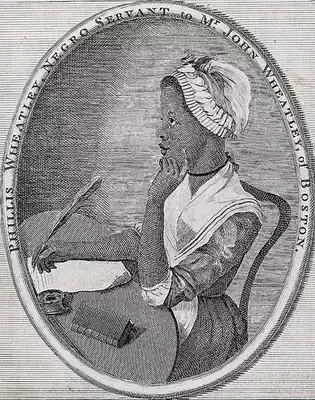
Phillis Wheatley
And veil her charms around.
And veil her charms around.
X.
Why, Phoebus, moves thy car so slow?
So slow thy rising ray?
Give us the famous town to view,
Thou glorious king of day!
XI.
For thee, Britannia, I resign
New-England's smiling fields;
To view again her charms divine,
What joy the prospect yields!
XII.
But thou! Temptation hence away,
With all thy fatal train,
Nor once seduce my soul away,
By thine enchanting strain.
XIII.
Thrice happy they, whose heav'nly shield
Secures their souls from harms,
And fell Temptation on the field
Of all its pow'r disarms!
X.
Why, Phoebus, moves thy car so slow?
So slow thy rising ray?
Give us the famous town to view,
Thou glorious king of day!
XI.
For thee, Britannia, I resign
New-England's smiling fields;
To view again her charms divine,
What joy the prospect yields!
XII.
But thou! Temptation hence away,
With all thy fatal train,
Nor once seduce my soul away,
By thine enchanting strain.
XIII.
Thrice happy they, whose heav'nly shield
Secures their souls from harms,
And fell Temptation on the field
Of all its pow'r disarms!
191
Percy Bysshe Shelley
To...
To...
One word is too often profaned
For me to profane it,
One feeling too falsely disdained
For thee to disdain it;
One hope is too like despair
For prudence to smother,
And pity from thee more dear
Than that from another.
I can give not what men call love,
But wilt thou accept not
The worship the heart lifts above
And the heavens reject not,--
The desire of the moth for the star,
Of the night for the morrow,
The devotion to something afar
From the sphere of our sorrow?
One word is too often profaned
For me to profane it,
One feeling too falsely disdained
For thee to disdain it;
One hope is too like despair
For prudence to smother,
And pity from thee more dear
Than that from another.
I can give not what men call love,
But wilt thou accept not
The worship the heart lifts above
And the heavens reject not,--
The desire of the moth for the star,
Of the night for the morrow,
The devotion to something afar
From the sphere of our sorrow?
433
Percy Bysshe Shelley
To ----
To ----
ONE word is too often profaned
For me to profane it;
One feeling too falsely disdain'd
For thee to disdain it;
One hope is too like despair
For prudence to smother;
And pity from thee more dear
Than that from another.
I can give not what men call love:
But wilt thou accept not
The worship the heart lifts above
And the heavens reject not,
The desire of the moth for the star,
Of the night for the morrow,
The devotion to something afar
From the sphere of our sorrow?
ONE word is too often profaned
For me to profane it;
One feeling too falsely disdain'd
For thee to disdain it;
One hope is too like despair
For prudence to smother;
And pity from thee more dear
Than that from another.
I can give not what men call love:
But wilt thou accept not
The worship the heart lifts above
And the heavens reject not,
The desire of the moth for the star,
Of the night for the morrow,
The devotion to something afar
From the sphere of our sorrow?
449
Percy Bysshe Shelley
From the Arabic, an Imitation
From the Arabic, an Imitation
MY faint spirit was sitting in the light
Of thy looks, my love;
It panted for thee like the hind at noon
For the brooks, my love.
Thy barb, whose hoofs outspeed the tempest's flight,
Bore thee far from me;
My heart, for my weak feet were weary soon,
Did companion thee.
Ah! fleeter far than fleetest storm or steed,
Or the death they bear,
The heart which tender thought clothes like a dove
With the wings of care;
In the battle, in the darkness, in the need,
Shall mine cling to thee,
Nor claim one smile for all the comfort, love,
It may bring to thee.
MY faint spirit was sitting in the light
Of thy looks, my love;
It panted for thee like the hind at noon
For the brooks, my love.
Thy barb, whose hoofs outspeed the tempest's flight,
Bore thee far from me;
My heart, for my weak feet were weary soon,
Did companion thee.
Ah! fleeter far than fleetest storm or steed,
Or the death they bear,
The heart which tender thought clothes like a dove
With the wings of care;
In the battle, in the darkness, in the need,
Shall mine cling to thee,
Nor claim one smile for all the comfort, love,
It may bring to thee.
426